ARAB AND WORLD

Thu 24 Jul 2025 10:54 pm - Jerusalem Time

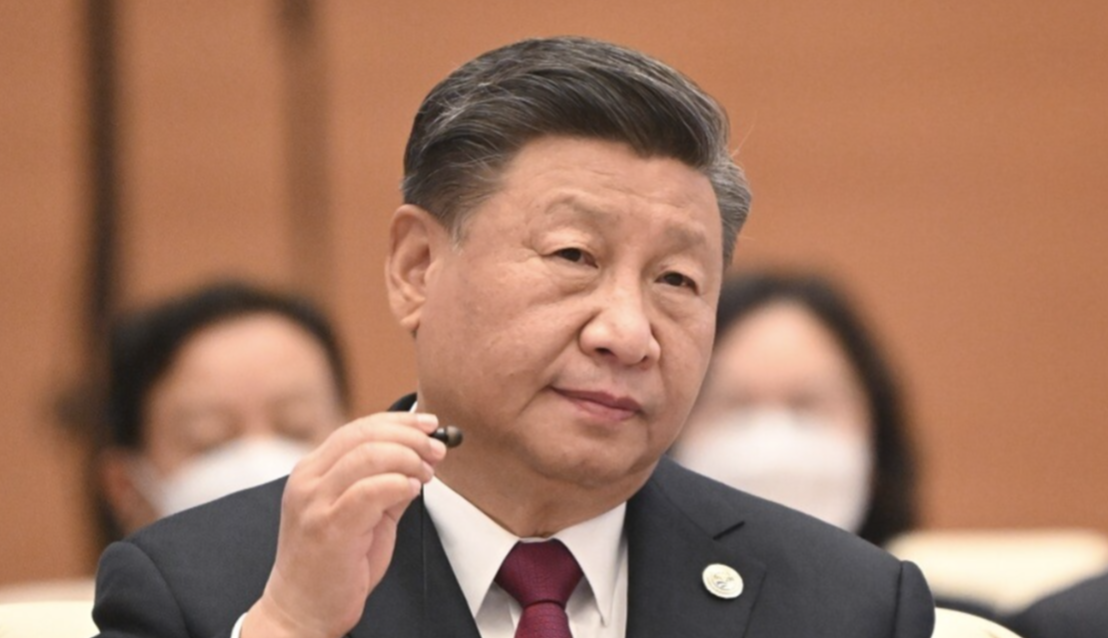
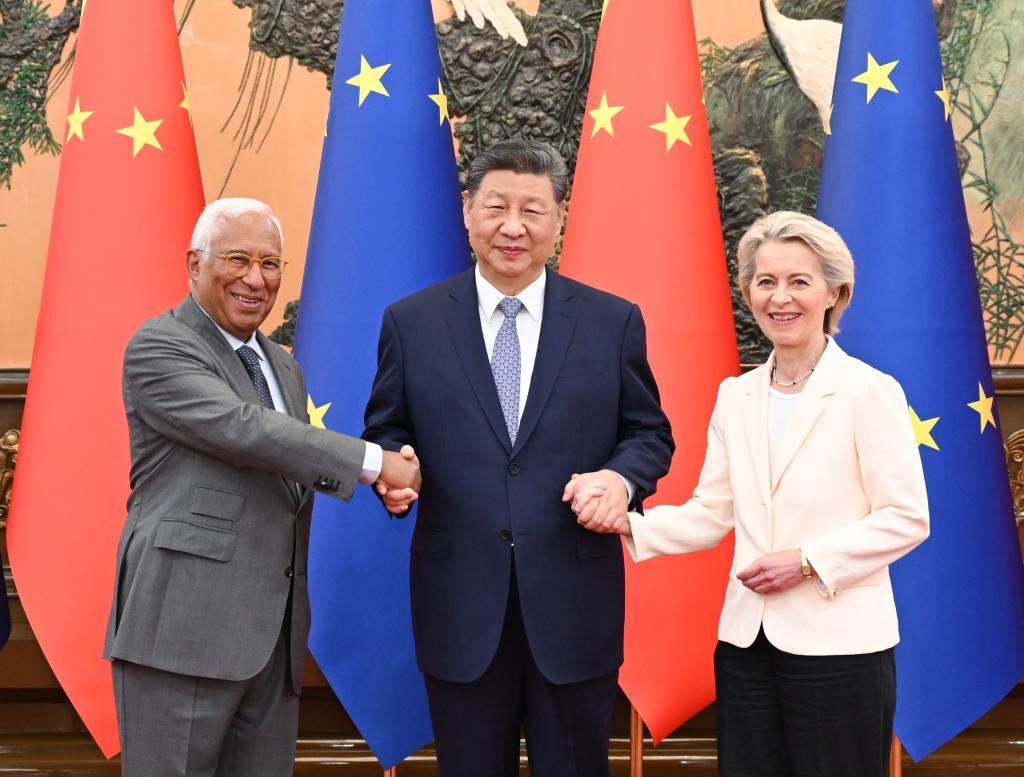
Xi: China and the EU should adhere to openness and cooperation and properly manage differences.

Chinese President Xi Jinping said on Thursday that China and the European Union should adhere to openness and cooperation and properly manage differences.

Xi made the remarks during his meeting with European Council President António Costa and European Commission President Ursula von der Leyen, who are in Beijing to attend the 25th China-EU summit.

He pointed out that history and reality prove that interdependence is not a risk, and that convergence of interests is not a threat. He emphasized that enhancing competitiveness should not be based on building walls or erecting barriers, as disengagement and severing supply chains will only lead to self-isolation.

Xi said that "reducing dependence" should not lead to a reduction in cooperation between China and the EU, adding that the bilateral economic and trade relationship, which is inherently complementary and mutually beneficial, can indeed achieve a dynamic balance through development.

He pointed out that China's high-quality development and openness will provide new opportunities and potential for Sino-European cooperation, calling on both sides to strengthen green and digital partnerships and increase mutual investment and cooperation.

Xi stressed that the EU hopes to maintain openness in its trade and investment markets, refrain from using restrictive economic and trade tools, and create a sound business environment for Chinese enterprises investing and operating within EU countries.

ARAB AND WORLD

Thu 24 Jul 2025 10:23 pm - Jerusalem Time

Macron: I have decided that France will recognize the State of Palestine.

French President Emmanuel Macron announced that his country has decided to officially recognize the State of Palestine, stressing that this decision comes "in fulfillment of our historic commitment to achieving a just and lasting peace in the Middle East."

Macron added that "the urgent need today is to end the war in Gaza and save civilians," referring to the deteriorating humanitarian conditions in the Strip and the need for an immediate ceasefire.

PALESTINE

Thu 24 Jul 2025 10:20 pm - Jerusalem Time

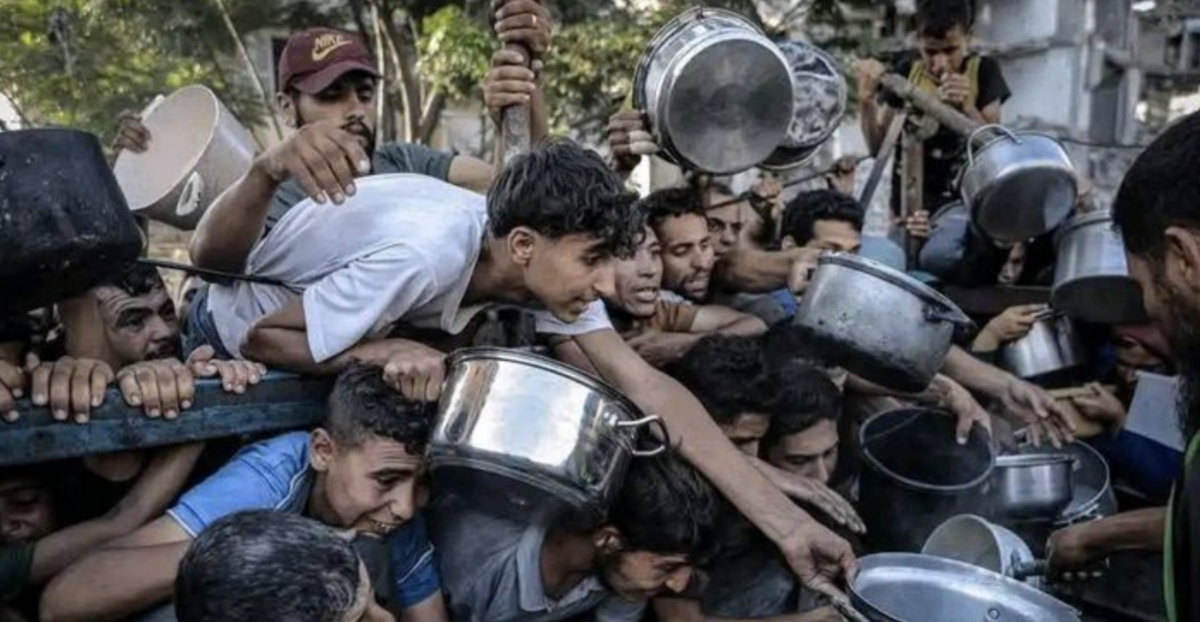
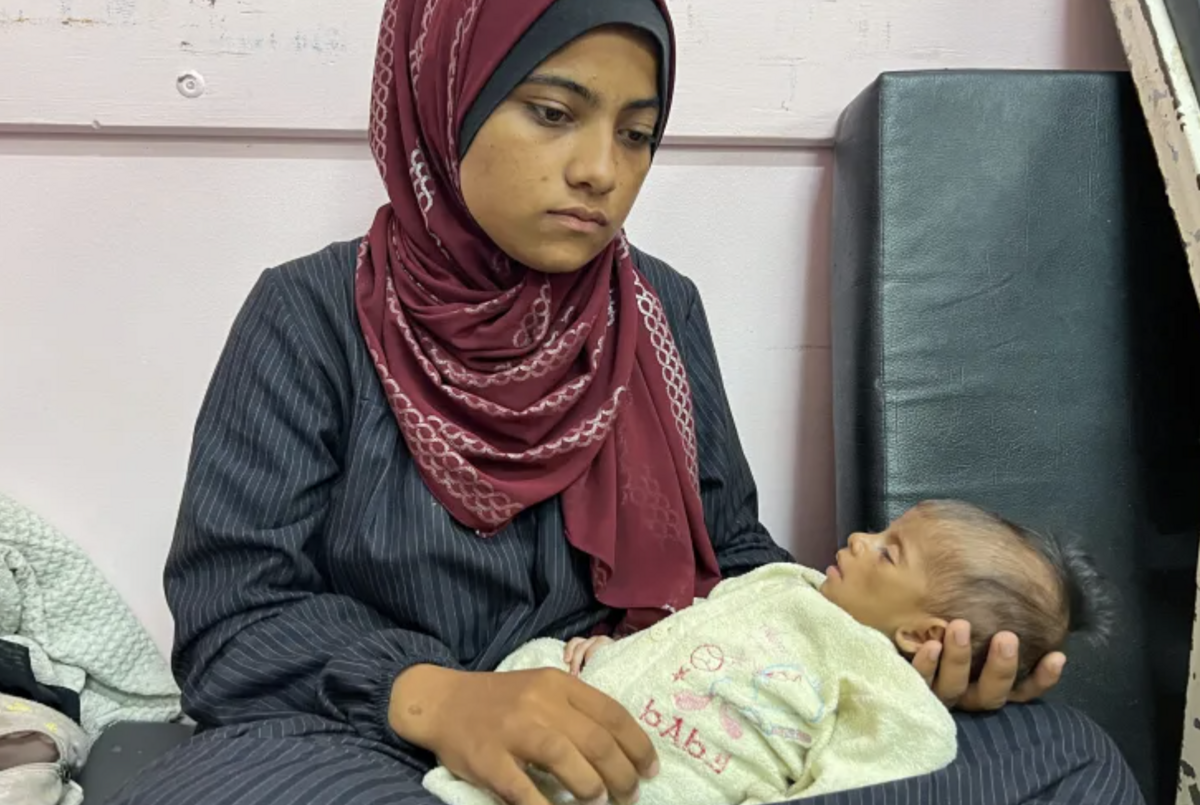
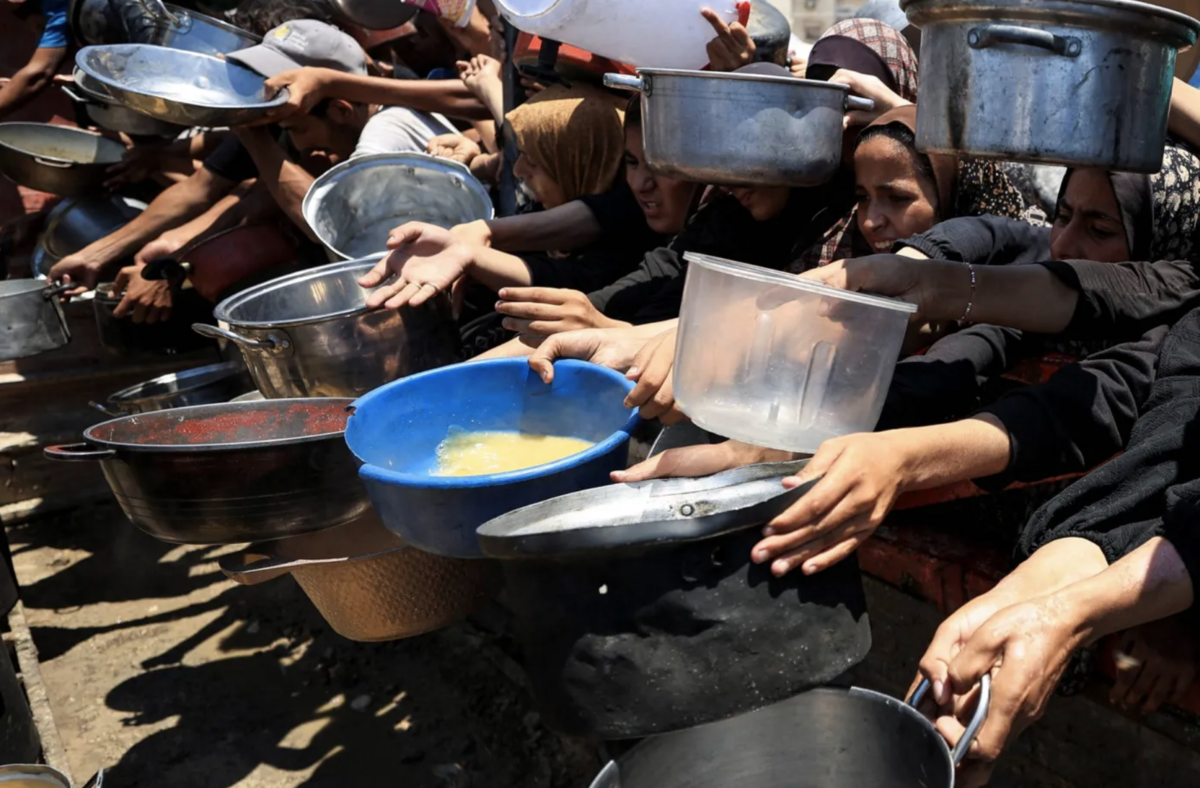
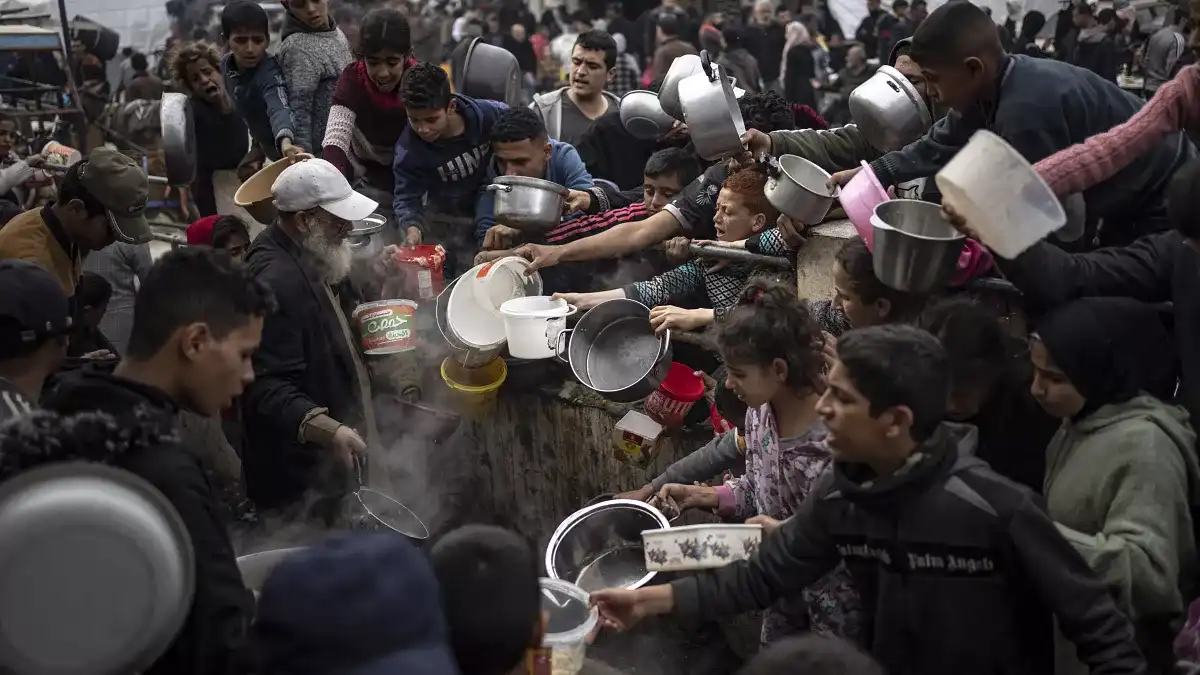
UNRWA: One in five children in Gaza suffers from malnutrition

The United Nations Relief and Works Agency for Palestine Refugees (UNRWA) said that one in five children in Gaza suffers from malnutrition, with cases increasing daily.

UNRWA Commissioner-General Philippe Lazzarini said Thursday that most of the children being received by the agency's teams are emaciated and weak, and are at serious risk of death if they do not receive the urgent treatment they need. He noted that more than 100 people have died of starvation, the vast majority of them children.

He explained that parents are so hungry that they are unable to care for their children, and those who arrive at UNRWA clinics lack the energy, food, or means to follow medical advice. He added that the worsening crisis in Gaza is affecting everyone, including health workers in the war-torn territory.

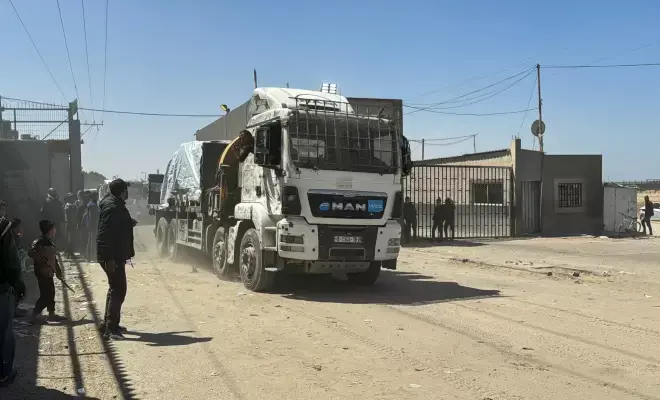
Lazzarini called for allowing humanitarian workers to deliver aid without restrictions and without interruption to Gaza and its people, noting that UNRWA has the equivalent of 6,000 trucks loaded with food and medical supplies in Jordan and Egypt, awaiting permission to enter the Strip.

PALESTINE

Thu 24 Jul 2025 9:06 pm - Jerusalem Time

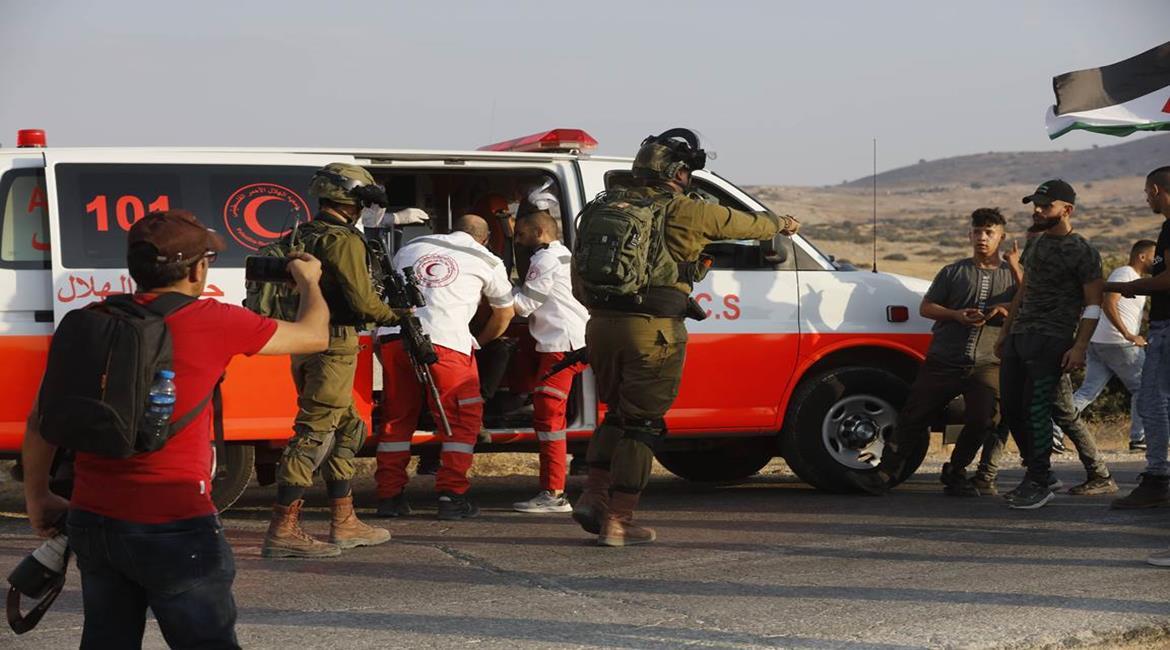
Suffocation injuries during the occupation forces' storming of Al-Khader, south of Bethlehem.

A number of citizens suffered suffocation on Thursday evening, during an Israeli occupation forces raid on the town of Al-Khader, south of Bethlehem.

According to local sources, the occupation forces stormed Al-Khader and took up positions at "Al-Tall" and "Al-Bawaba", and fired tear gas bombs at Al-Rais Street, near the mourning house of the martyrs Ahmed Salah and Mohammed Issa, which led to a number of citizens suffering from suffocation.

It is noteworthy that the town of Al-Khader is subjected to repeated daily raids by the occupation forces, which include the firing of live ammunition, tear gas and sound bombs, creating a state of fear among the citizens, especially children.

PALESTINE

Thu 24 Jul 2025 8:29 pm - Jerusalem Time

The New York Times: This is a cry for the world to pay attention to the famine in Gaza.

A medical official in the Gaza Strip issued a cry in the New York Times, urging the world to pay attention to the famine the people of Gaza are suffering under the siege and Israeli bombardment. He called on the international community to open the door to aid, protect civilians, and demand an end to the devastation.

In an article in the American newspaper, Mohammed Mansour, senior nutrition director at the International Rescue Committee, one of the few organizations still providing aid in Gaza, said that nearly half a million Gazans are suffering from catastrophic levels of food insecurity, in one of the worst hunger crises in the world today.

Mansour added that these people are on the brink of famine, and that approximately 100,000 children and women are suffering from severe acute malnutrition, the most severe diagnosis of food insecurity.

Mansour noted that since the Israeli occupation imposed a blockade on humanitarian aid to Gaza in March, hunger has spread dramatically, especially among infants and young children, and that the situation is worsening.

He added that Gaza's humanitarian infrastructure is completely besieged, and that the food distribution system established by Israel is not functioning amid escalating hostilities, the deaths of hundreds of Palestinians waiting for aid, the closure of crossings, the delays in issuing permits, and the severe shortages of fuel, medical supplies, water, and food.

Mansour spoke about the plight of mothers who arrive at the clinics where they work exhausted, often after hours of walking carrying their malnourished children, asking, "Will my baby survive?" or "Do you have milk or food?"

Mansour acknowledged that it is not always possible to answer these questions, saying that many children in Gaza are suffering from severe hunger that may never recover, and that the supplies of the organization he works for are extremely scarce.

Children are not the only ones starving in the Strip. A number of parents go several days without enough food, sometimes skipping meals so that their children can eat.

severe malnutrition

Mansour said he was deeply moved by the case of a two-year-old boy he tried to help this month. He was suffering from severe malnutrition, and his condition rapidly deteriorated. He died because the medical team had no way to save him.

Mansour recounts that children are not the only ones starving in the Strip. Several parents told him they go several days without sufficient food, sometimes skipping meals so their children can eat, even just a few pieces of bread, if they can find it.

Mansour, a resident of the Gaza Strip, commented on the situation, saying, "They are not just numbers to me. These are people I see every day, people I live with. They tell me: 'We have lost everything, but we cannot lose our children.'"

Regarding his family's suffering, Mansour said their home was destroyed in an airstrike, and they spent months in tents and makeshift shelters, exposed to cold and heat, with little clean water and electricity. He added that markets were almost empty, "Many days, we eat only once. Some days, we don't eat at all."

Amal Aziz

Mansour described his working conditions, saying that most days he works in an overcrowded shelter in Deir al-Balah (central Gaza), doing his best to help people survive, in coordination with other IOM teams across Gaza, despite resource shortages and power outages.

Mansour hasn't seen his mother for months. She lives in the south, closer to Rafah, and needs care. He said he worries about her all the time, but he can't visit her because the roads are unsafe and movement is restricted.

Speaking about his colleagues, he said that each one of them is experiencing personal trauma. Some have lost their homes, others have lost family members, but all are determined to continue carrying out their mission with courage.

Mansour expressed his hope that all children in Gaza would live in a place where they felt safe and cared for, sleeping without fear and with their stomachs full not of crumbs, but of real, nutritious food.

PALESTINE

Thu 24 Jul 2025 8:26 pm - Jerusalem Time

Witkov: We have decided to withdraw our delegation from the Gaza ceasefire negotiations for consultations after Hamas's response.

US President Donald Trump's Middle East envoy, Steve Witkoff, said Thursday that the United States has decided to withdraw its team from the ceasefire negotiations in Doha for consultations.

In a post on his X account, Witkov added that the move came after Hamas's latest response to the mediators' amended ceasefire proposal.

He considered the movement's response "clearly demonstrates a lack of desire to reach a ceasefire in Gaza," noting that his country would consider alternative options for returning the hostages to their homes and attempting to create a more stable environment for the people of Gaza.

He continued, "Despite the great efforts made by the mediators, Hamas does not appear to be coordinating or acting in good faith."


PALESTINE

Thu 24 Jul 2025 7:38 pm - Jerusalem Time

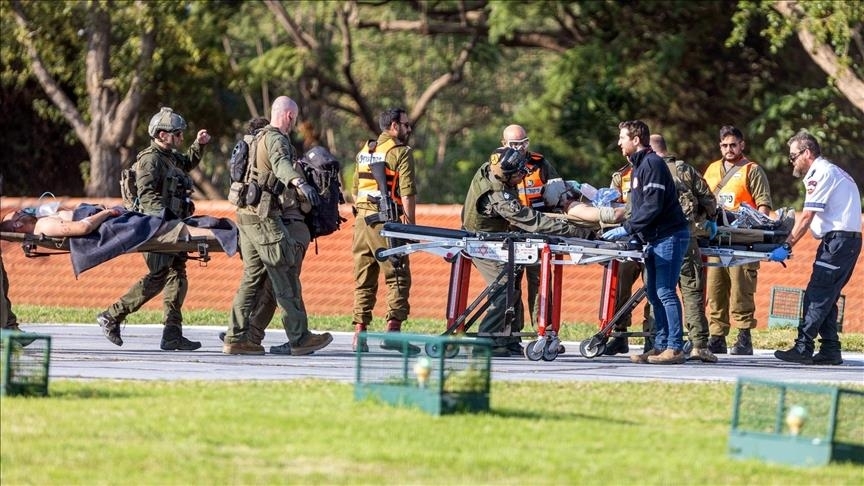
The Israeli occupation army announces that 8 soldiers were injured in an "operational accident" in northern Gaza.

The Israeli occupation army announced on Thursday that eight of its soldiers were injured in an incident it described as "operational" in the northern Gaza Strip.

In a statement published by the private Channel 12, he said that eight soldiers were injured, two of them moderately and six lightly, in an "operational accident" in the northern Gaza Strip.

The Israeli occupation army stated that the injured were transferred to the hospital for treatment, and that their families were informed of the incident.

The term "operational incident" is used by the Israeli military to refer to an incident that does not result from direct engagement, but occurs during a military activity or field mission.

As of Thursday evening, 895 Israeli soldiers had been killed and 6,134 wounded since the start of the war on Gaza, according to military data, which faces local accusations of concealing even greater losses.

Israel imposes strict censorship on the publication of its losses in Gaza and conceals the true death toll, suggesting that the reported numbers are likely to rise.

Since October 7, 2023, Israel has been waging a genocidal war in Gaza, including killing, starvation, destruction, and forced displacement, ignoring all international calls and orders from the International Court of Justice to halt it.

The genocide, backed by the United States, left more than 203,000 Palestinians dead or wounded, most of them children and women, and more than 9,000 missing, in addition to hundreds of thousands of displaced persons and a famine that claimed the lives of many.

PALESTINE

Thu 24 Jul 2025 5:53 pm - Jerusalem Time

Netanyahu recalls his delegation from Doha for consultations after Hamas's response

Israeli Prime Minister Benjamin Netanyahu's office announced Thursday that his country's negotiating delegation had been recalled to the Qatari capital, Doha, for consultations after Hamas submitted its response to the mediators' latest proposal regarding a prisoner exchange and a ceasefire in Gaza.

Netanyahu's office said in a statement: "In light of Hamas's response this morning, it was decided that the negotiating team will return to Israel to continue consultations."

The statement added: "We appreciate the efforts of the mediators, Qatar and Egypt, and the efforts of (US Middle East envoy Steve) Witkoff, to achieve a breakthrough in the talks."

Following the statement, an Israeli official was quick to confirm that the move did not mean the collapse of negotiations.

The Israeli Broadcasting Corporation quoted the unnamed official as saying, "The talks have not collapsed, but rather are a coordinated step between all parties."

He continued, "There are crucial decisions to be made, and that's why the delegation has returned to continue consultations. The momentum remains positive."

Early Thursday morning, Hamas said in a brief statement that "the movement had just submitted its response and that of the Palestinian factions to the ceasefire proposal to our mediator brothers." Netanyahu's office announced that it had received Hamas's response via the mediators, noting that it was being studied.

Netanyahu's office, Hamas, and the mediators did not reveal the content of the response.

However, Channel 12 reported that Hamas demanded "the release of 200 Palestinians serving life sentences for killing Israelis, in exchange for the return of 10 living hostages, in addition to 2,000 other Palestinians arrested in Gaza after October 7, 2023."

She added, "The original proposal, which Israel accepted, included the release of 125 Palestinians serving life sentences, in addition to 1,200 other Palestinians arrested by the Israeli army in Gaza after October 7, 2023."

Tel Aviv estimates there are 50 Israeli prisoners in Gaza, 20 of whom are still alive. Meanwhile, more than 10,800 Palestinians are languishing in its prisons, suffering torture, starvation, and medical neglect, many of whom have died, according to Palestinian and Israeli human rights and media reports.

Since July 6, indirect negotiations have been underway in Doha between Hamas and Israel, mediated by Qatar and Egypt and supported by the United States, to conclude a prisoner exchange and ceasefire agreement.

Hamas has repeatedly affirmed its willingness to release Israeli prisoners "in one batch" in exchange for an end to the genocide and the withdrawal of the Israeli army from Gaza.

The Israeli opposition asserts that Netanyahu, who is wanted by international justice, is seeking partial deals that would allow the war to continue, thus ensuring his continued rule by accommodating the most extreme right-wing faction in his government.

Since October 7, 2023, Israel has been waging a war of genocide in Gaza, including killing, starvation, destruction, and forced displacement, ignoring all international calls and orders from the International Court of Justice to halt it.

The US-backed genocide left more than 203,000 Palestinians dead or wounded, most of them children and women, and more than 9,000 missing, in addition to hundreds of thousands of displaced persons and a famine that claimed the lives of many.

For decades, Israel has occupied Palestine and territories in Syria and Lebanon, and refuses to withdraw from these territories and establish an independent Palestinian state with East Jerusalem as its capital, along the pre-1967 borders.

PALESTINE

Thu 24 Jul 2025 5:29 pm - Jerusalem Time

EU: All options on the table if Israel does not commit to improving aid to Gaza

A European Commission spokesperson said Thursday that Israel has made some efforts to improve the delivery of humanitarian aid to the people of the Gaza Strip, but the situation remains dire.


He added that the European Union is currently assessing the situation, and that all options remain on the table if Israel does not adhere to the agreement reached with the bloc earlier this month to improve the humanitarian situation in Gaza.

This agreement includes a significant increase in the number of daily trucks carrying food and non-food supplies entering Gaza, the opening of several additional crossings in both the north and south of the Strip, and the reopening of Jordanian and Egyptian aid routes.

The government media office in Gaza said today that more than 115 people have died as a result of famine and malnutrition in the Strip, noting that Palestinians in the Gaza Strip need at least 500,000 bags of flour per week to avoid a total humanitarian collapse.

The office added in a report: "The famine has intensified and spread throughout the Gaza Strip governorates, coinciding with the Israeli occupation's complete closure of all crossings for 145 days, preventing the entry of baby formula and humanitarian aid."

The report continued: "We are following with regret the claims being circulated by some activists outside the Gaza Strip about the famine breaking and the entry of hundreds of trucks. We categorically deny these claims, as they are completely unrelated to reality and represent a dangerous alignment with the Israeli occupation's misleading narrative.

The office called on all countries to immediately break the blockade, open the crossings, and allow aid to reach more than 2.4 million people trapped in the Gaza Strip.

PALESTINE

Thu 24 Jul 2025 4:20 pm - Jerusalem Time

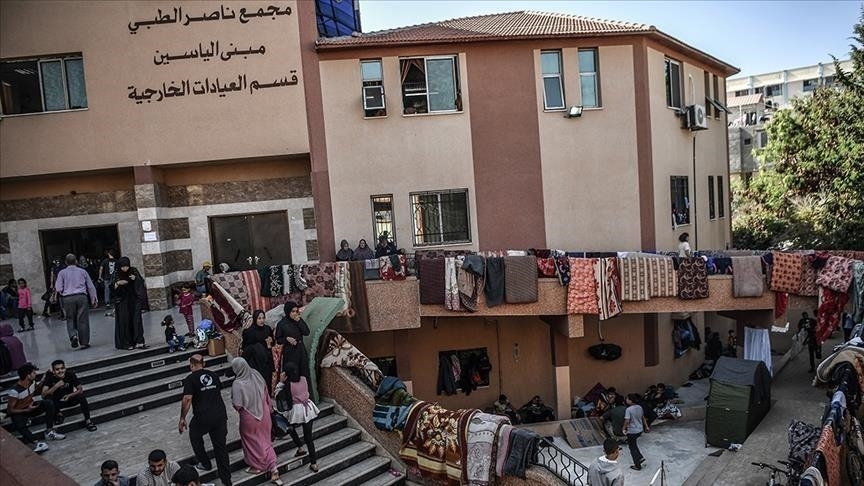
Nasser Medical Complex: Gaza's children suffer from symptoms that have disappeared in the modern era.

Malnutrition among children in the Gaza Strip has reached levels that will continue to have serious health consequences even if the world is able to save their lives by bringing in food, drink, and baby formula.

The children's hospital at Nasser Medical Complex in the southern Gaza Strip is teeming with dozens of children facing death due to malnutrition and the lack of formula milk, the sole food source for infants under six months old.

With the increasing number of cases, hospital administrators have been forced to put children to sleep in the hallways and corridors, while thousands more are outside, finding nothing to prevent them from dying, according to hospital director Dr. Ahmed Al-Farra.

The lack of both types of infant formula poses a dilemma for infants under six months old. Not a single carton of milk remains in the Gaza Strip, and if it is available, it is often expired and costs up to $150, according to what Al-Farra confirmed in an interview with Al Jazeera.

general feeling of frustration

Nasser Hospital is trying to save as many of the children who have arrived as possible using the very small quantities of milk provided by donors and international organizations, while families abroad are seeking alternatives such as water, anise, and chamomile.

All doctors, including foreigners who recently arrived to inspect the situation, are deeply frustrated by the deteriorating conditions of the children, who are exhibiting symptoms no longer present in modern times, such as hair loss, fluid retention, and body atrophy.

Even if the world were able to save these children, Israel would have condemned an entire generation of Palestinians to chronic memory, intelligence, and weight loss, because a child's nervous system develops during the first three years of life, Al-Farra says.

Developing a child's nervous system requires a number of essential elements, such as magnesium, folic acid, and vitamins B, C, and D, all of which are no longer available to children in the Gaza Strip, causing their organs to gradually stop functioning.

Children in Gaza are not dying from chronic illnesses, as Israel claims. All those who have died in recent days, and those currently facing death, are suffering from no illness other than severe malnutrition, according to Al-Farra.

Currently, 11-year-old Seela Barbakh is being treated at Nasser Hospital. She weighs 3.5 kilograms, while her normal weight should be at least 10 kilograms. She is not suffering from any other illness.

Israel has completely banned the entry of baby formula since last March, prompting one family to feed their infant canned milk, resulting in emergency surgery to save him from choking.

Hospital staff are running out of food after the World Kitchen refused to provide them with food two weeks ago, meaning Israel is using "the dirtiest weapon in history: starvation" during this war, Al-Farra said.

The Nasser complex is treating approximately 30 children who have reached the stage of severe malnutrition, while 600,000 children under the age of 10 face starvation, including 60,000 children under the age of six months.

alarming reports

Children cannot tolerate a lack of food because their bodies lack muscle mass. Consequently, their organs begin to gradually shut down after six hours of deprivation. When the condition worsens, treatment requires specific protocols that are not available in hospitals in the Gaza Strip, which do not even have nutritional supplements.

Commenting on the situation, the International Rescue Committee (IRC) on Thursday expressed its alarm at reports of children dying of starvation in Gaza, blaming the blockade as the cause.

Oxfam also said that diseases are spreading in Gaza, while Israel continues to deny people food and water, confirming that waterborne diseases in the Strip have increased by 150%.

The Ministry of Health in Gaza announced 10 deaths due to malnutrition in the past 24 hours, bringing the total to 111 children. The Government Information Office reported 115 deaths due to food and water shortages.

In turn, World Health Organization Director-General Tedros Adhanom Ghebreyesus said that the Gaza Strip is experiencing deadly levels of malnutrition, a day after UN Secretary-General António Guterres asserted that what is happening now is unprecedented in modern times, and that famine is knocking on every door in Gaza.

PALESTINE

Thu 24 Jul 2025 4:15 pm - Jerusalem Time

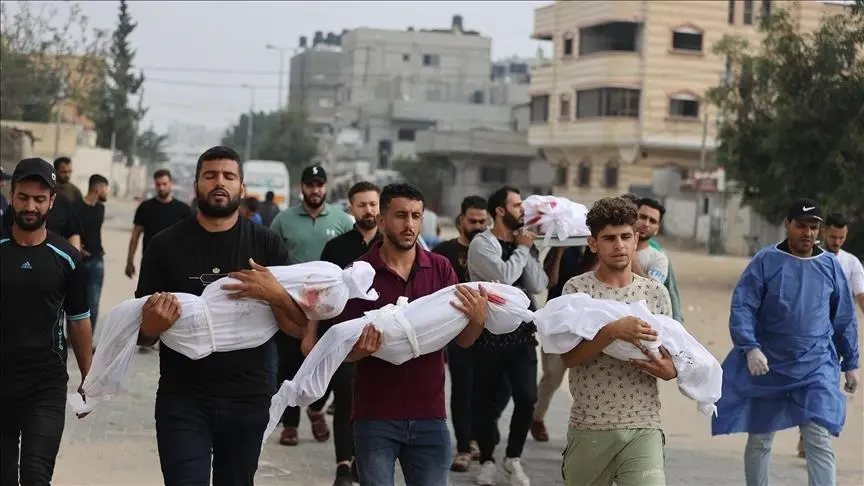
59,587 dead in the Gaza Strip since the beginning of the occupation's aggression

Medical sources reported that the death toll from the Israeli occupation's aggression on the Gaza Strip has risen to 59,587 dead and 143,498 wounded, since October 7, 2023.

In a statement issued Wednesday, it said that the death toll includes 8,447 dead and 31,457 wounded since March 18, when the occupation resumed its aggression on the Gaza Strip following the ceasefire agreement.

It noted that the number of aid victims who arrived at hospitals reached 23 dead and more than 68 injuries over the past 24 hours, bringing the total number of livelihood victims who arrived at hospitals to 1,083 dead and more than 7,275 injuries.

It indicated that 89 dead (including 10 dead who were recovered) and 453 injured people arrived at hospitals during the past 24 hours.

Powered by Froala Editor

PALESTINE

Thu 24 Jul 2025 3:15 pm - Jerusalem Time

President Abbas calls for an end to the war, the entry of aid, and the release of withheld tax funds.

Palestinian President Mahmoud Abbas called for an immediate and permanent ceasefire in the Gaza Strip, the immediate entry of food and medical supplies, and the release of tax funds withheld by the Israeli government.

President Abbas said in a televised address to the people of the Gaza Strip, broadcast on Palestine TV on Thursday evening, "What our people in the Gaza Strip are suffering from in terms of siege, starvation, and deprivation of the most basic necessities of life is a crime that cannot be tolerated."

He added, "Our people are facing the greatest humanitarian catastrophe of our time, amid international efforts that have failed to deter the occupiers. How can the world abandon its humanity?"

He continued: "The starvation and killing our people in Gaza are being subjected to in front of aid centers is a stain on the international community's brow if it does not act immediately to stop this genocide." He emphasized that the continuation of this situation constitutes a war crime for which the occupation bears full responsibility.

The US President called for intervention to allow UN agencies to deliver food and medical aid, urging the international community to find immediate ways to deliver hundreds of thousands of tons of humanitarian aid around the Gaza Strip.

President Abbas reiterated his rejection of all forms of displacement, calling for the complete withdrawal of the occupying forces, enabling the State of Palestine to fully assume its responsibilities, assisting our people in the Gaza Strip in returning to their homes, maintaining security, enforcing the rule of law, and embarking on the reconstruction process with Arab and international assistance.

The President stressed that attempts to impose Israeli sovereignty over settlement sites in the West Bank represent a dangerous escalation and undermine our people's rights to an independent and sovereign state. He called on the international community to reject these violations and recognize the State of Palestine.

He called on our people to unite and show solidarity, and to continue their patience, steadfastness, and unity under the banner of the Palestine Liberation Organization, in order to foil all attempts at displacement and liquidation. He emphasized that the independent and sovereign State of Palestine will be embodied on the land of Palestine, thanks to our unity, steadfastness, and adherence to our legitimate rights.

The President saluted our people in the Gaza Strip and in every inch of our homeland, saying, "Your patience and steadfastness is an honor to us all, and will remain the source of our strength and will."

ARAB AND WORLD

Thu 24 Jul 2025 1:37 pm - Jerusalem Time

Xi meets European Council president, European Commission president in Beijing

Chinese President Xi Jinping met with European Council President António Costa and European Commission President Ursula von der Leyen in Beijing on Thursday.

Following the meeting, the Chinese president said that Beijing and Brussels must make the "right strategic choice," stressing that the two sides can find "common ground" despite their differences, but that they must strengthen "mutual trust."

For her part, European Commission President Ursula von der Leyen confirmed during a meeting with the Chinese leader that "the volume of trade between the European Union and China exceeds two billion euros per day."

Von der Leyen added: "Today, Europe and China are two of the three largest economic and trading powers in the world. Our shared relationship is among the most important and significant. In terms of total trade, the European Union is China's largest trading partner, while China is our third. Our trade volume now exceeds two billion euros per day."

At the same time, the Commission President acknowledged the existence of an "imbalance" in trade between Europe and China and called for making it "more stable and mutually beneficial."

"It is very important for China and Europe that Beijing acknowledges our concerns and offers real solutions," von der Leyen continued.

In turn, European Council President Antonio Costa said, "The European Union wants to cooperate with China in addressing global challenges."

Antonio Costa called on the Chinese side to make tangible progress on trade and economic issues. Ursula von der Leyen said that relations between the European Union and China have reached a "critical turning point."

In recent years, EU relations with China have been marred by so-called "trade wars": Brussels and Beijing accuse each other of violating the principles of transparent and competitive trade, imposing reciprocal tariffs on imported goods, and both sides have filed complaints with the World Trade Organization.

But against the backdrop of deteriorating relations between the European Union and the United States after Donald Trump's arrival in the White House, Brussels has begun talking about the need to improve relations with Beijing.

On the eve of the EU-China summit, which marks the 50th anniversary of diplomatic relations, Beijing imposed final tariffs on brandy imports from the EU.

Powered by Froala Editor

ARAB AND WORLD

Thu 24 Jul 2025 1:25 pm - Jerusalem Time

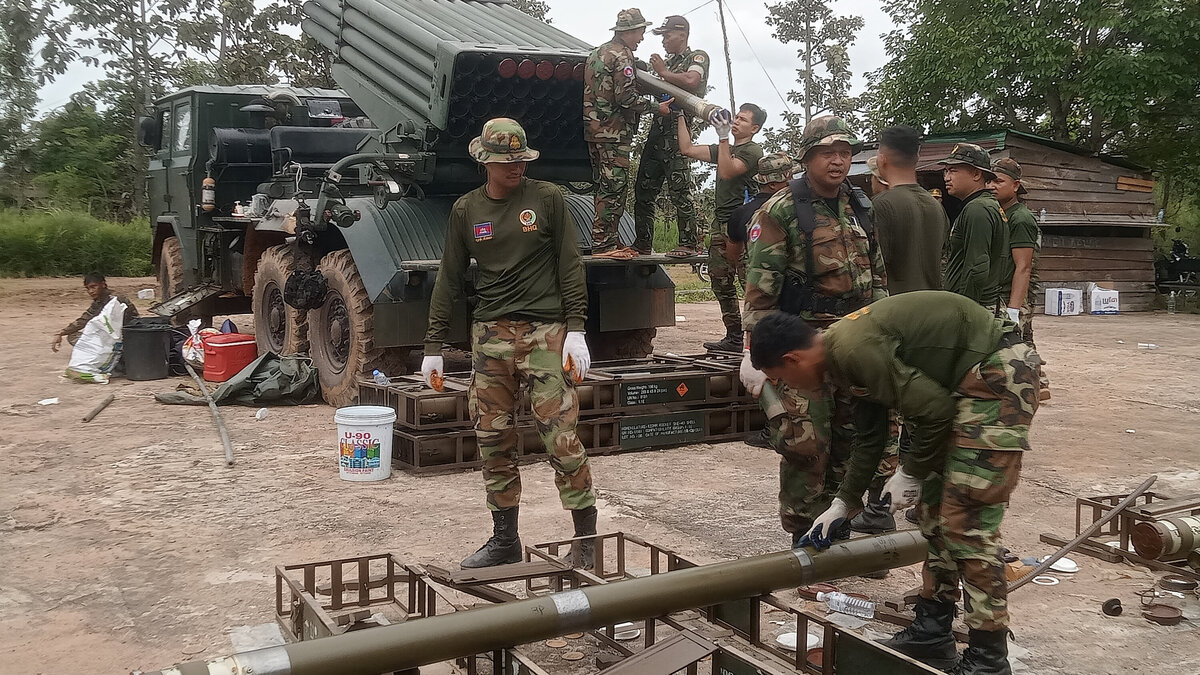
After escalating tensions on the border, Thailand bombs Cambodia.

A Thai F-16 fighter jet bombed targets in Cambodia on Thursday, after weeks of escalating tensions over a border dispute that escalated into clashes that left at least two civilians dead.

Clashes erupted early this morning near the disputed Ta Muan Thom temple along the eastern border between Cambodia and Thailand, about 360 kilometers from the Thai capital, Bangkok.

Exchange of accusations between Thailand and Cambodia

The Thai military said one of six F-16s, which Thailand had prepared for deployment along the disputed border, fired on Cambodia and destroyed a military target.

"We used air power against military targets as planned," Thai military deputy spokesman Richa Sukswanon told reporters. Thailand also closed its border with Cambodia.

The Thai Foreign Ministry, in turn, said that Cambodian forces fired "heavy artillery" at a Thai military base this morning, also targeting civilian areas, including a hospital, resulting in civilian casualties.

"The Royal Thai Government is prepared to intensify self-defense measures if Cambodia continues its armed attacks and violations of Thailand's sovereignty," the ministry added in a statement.

The Cambodian Ministry of Defense, for its part, stated that aircraft dropped two bombs on a road, and strongly condemned "the reckless and brutal military aggression by the Kingdom of Thailand against Cambodia's sovereignty and territorial integrity."

The conflict between the two neighbors escalated

The clashes erupted after Thailand recalled its ambassador to Cambodia late Wednesday and announced it would expel Cambodia's envoy in Bangkok.

Prior to that, another Thai soldier lost a limb within a week as a result of a landmine explosion that Bangkok claimed was recently planted in the disputed area.

For more than 100 years, Thailand and Cambodia have disputed sovereignty over undemarcated points along their 817-kilometer land border, resulting in skirmishes over several years and at least 12 deaths.

Tensions between the two neighboring countries renewed in May after a Cambodian soldier was killed during a brief exchange of fire, which escalated into a full-blown diplomatic crisis and has now turned into armed clashes.

Powered by Froala Editor

PALESTINE

Thu 24 Jul 2025 1:11 pm - Jerusalem Time

The death toll from famine and malnutrition in Gaza has risen to 113.

The Ministry of Health in the Gaza Strip announced, Thursday afternoon, the recording of two deaths due to famine and malnutrition in the Gaza Strip over the past 24 hours.

The Ministry of Health confirmed in a brief statement that the total number of deaths from famine and malnutrition has risen to 113.

PALESTINE

Thu 24 Jul 2025 11:01 am - Jerusalem Time

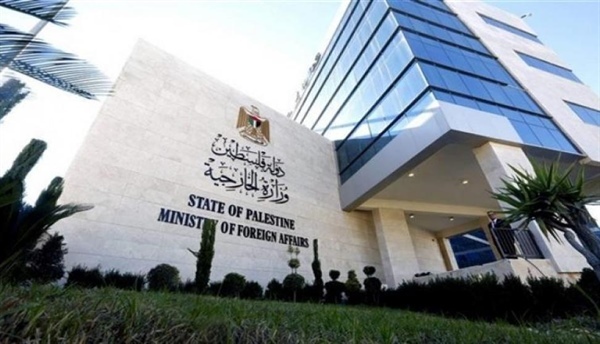
Foreign Ministry: The Knesset's call to annex the West Bank is a new declaration of war against our people and another manifestation of the crimes of genocide and displacement.

The Ministry of Foreign Affairs and Expatriates has asked its ambassadors in all countries, the United Nations, its headquarters, and various organizations to take immediate action with foreign ministries, decision-making centers, and the public to explain and expose the Israeli Knesset's call to apply so-called "sovereignty" over the occupied West Bank and the repercussions of its annexation on the opportunity to implement the two-state solution and the security and stability of the region and the world.

The ministry clarified, in a statement on Thursday, that it has asked its ambassadors, headquarters, and organizations to urge and demand from countries the importance of immediately recognizing the State of Palestine, enabling it to gain full membership in the United Nations, and imposing peace on the occupying state, in accordance with international law, international legitimacy resolutions, and the advisory opinion issued by the International Court of Justice.

The ministry considered this call a declaration of a new war against the Palestinian people and another manifestation of the crimes of genocide, displacement, and annexation aimed at liquidating the Palestinian cause and undermining international consensus on the strategic imperatives of establishing a Palestinian state on the ground, with East Jerusalem as its capital.

The Ministry also considered this call to be a racist colonialist par excellence, an official Israeli recognition of the goals of the crimes of genocide and the consolidation of the separation between the West Bank and the Gaza Strip. It is further proof of the futility of continuing to direct international appeals and demands to the occupying state and the superficiality of betting on the opportunity for it to retreat from its expansionist colonial plans, unless the international consensus on implementing the principle of the two-state solution is linked to international sanctions and deterrent measures that force the Israeli government to stop all forms of its crimes against our people and recognize their just and legitimate national rights.

Powered by Froala Editor

PALESTINE

Thu 24 Jul 2025 11:00 am - Jerusalem Time

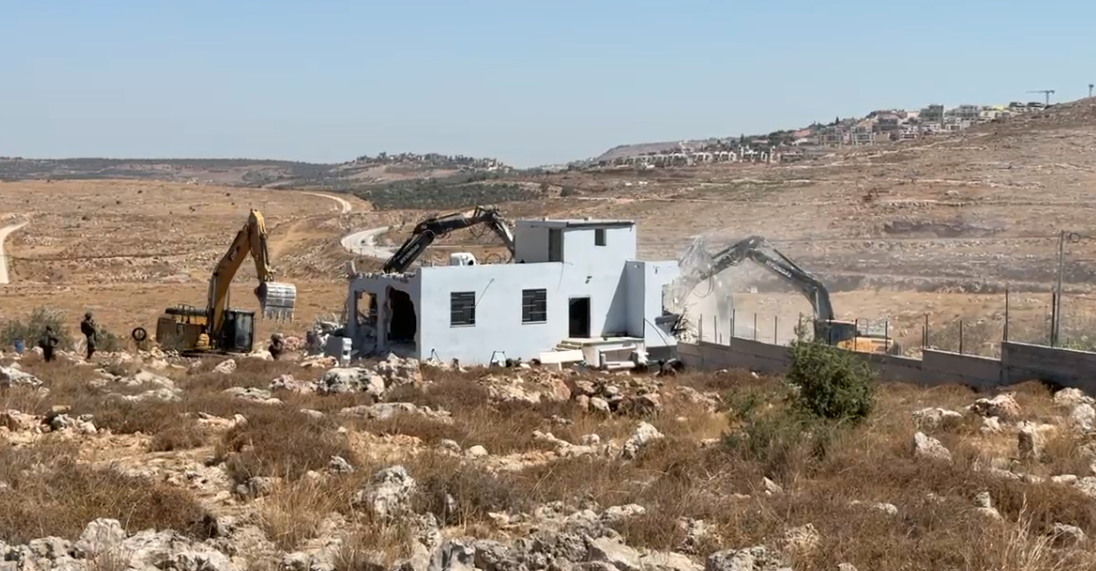
The occupation begins demolitions in Ain al-Hilweh in the northern Jordan Valley.

Today, Thursday, the Israeli occupation forces began carrying out demolition operations in the Ain al-Hilweh area in the northern Jordan Valley.

Local sources reported that the demolition operations carried out by the occupation include residential facilities for citizens, in addition to livestock breeding facilities.

The occupation forces had previously issued demolition notices for a number of facilities in the area. The Tubas Governorate submitted a petition to prevent the demolition. Yesterday, the occupation court rejected the petition and issued a demolition order.

Powered by Froala Editor

PALESTINE

Thu 24 Jul 2025 10:59 am - Jerusalem Time

The occupation forces close the entrances to Tulkarm and tighten their military measures.

Israeli occupation forces tightened their military measures at the entrances to Tulkarm this Thursday morning, as part of their ongoing aggression against the governorate.

WAFA reported that Israeli occupation forces closed the Jabara Gate at the southern entrance to the city, preventing vehicles from passing, while firing live ammunition at them. This sparked fear and anxiety among residents, leading to traffic jams and disruption of movement between the city and its southern villages.

The occupation forces also closed the Anab military checkpoint east of Tulkarm in both directions, completely banning vehicle movement, and isolating the governorate from its eastern towns and the rest of the West Bank governorates.

These measures are part of the siege and restrictions imposed by the occupation authorities on the governorate, as their aggression against the city and its two camps continues for the 179th consecutive day.

Powered by Froala Editor

PALESTINE

Thu 24 Jul 2025 10:09 am - Jerusalem Time

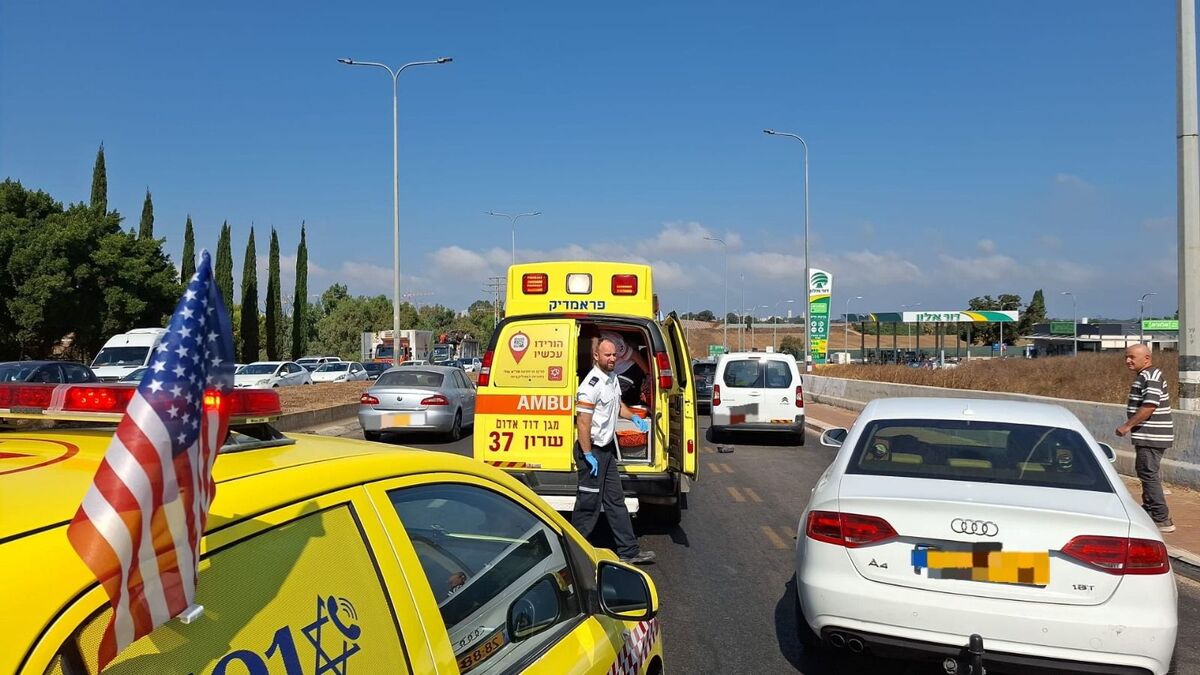
At least nine injured in a car-ramming attack in central Israel

Seven people were injured Thursday morning after being run over by a vehicle at a bus stop on Route 57 at the entrance to the town of Kfar Yona, near the Beit Lid junction, according to Israeli ambulance crews.

Israeli media reported that the driver of the vehicle that ran over a number of people fled the scene. Police are pursuing him and investigating the incident, including the possibility that it was a deliberate act.

Police called in a helicopter for assistance, set up roadblocks in the area, and closed checkpoints leading to nearby areas in the occupied West Bank as they pursued the driver of the vehicle, who fled the scene of the attack near Kfar Yona.

Police found the vehicle used in the attack in an open area near the scene of the incident. They called in Border Guard forces and police dog squads to participate in the search and pursuit, which is still ongoing to locate the driver.

Medical teams stated in a statement that they provided initial treatment to the injured on the spot, without specifying the exact nature of their injuries. Israeli media reported that security personnel were among the wounded.

According to Israeli media reports, two of the injured were in moderate to light condition, while five others sustained minor injuries.

Reports indicated that police forces have begun investigating the incident and do not rule out the possibility of a "deliberate attack," given the presence of military sites in the area.

An initial statement issued by the police stated that they received a report of a "run-over accident at the Beit Lid junction," noting that there were "a number of injured people," and that they were investigating "the background and causes of the accident."

Source: Arabs 48

Powered by Froala Editor

OPINIONS

Thu 24 Jul 2025 9:30 am - Jerusalem Time

Gaza under the guillotine of starvation and the killing of humanity

Mohammed Alloush

Mohammed Alloush

Opinion Writer

In Gaza, the chapters of the tragedy never end, but rather continue as if written in blood and sealed with the seals of international silence and human betrayal. There, one does not need to be on the front lines to die; hunger, thirst, and the collapse of life itself have become instruments of annihilation no less deadly than missiles and bombs.

Those who aren't killed by the occupation in raids are killed by the siege in the details of their daily lives. The Palestinian in Gaza dies slowly, between rationed bites of bread and dry lips longing for a sip of water. He dies while searching for the rest of medicine for a sick child, or for a roof to protect him from the summer heat and the winter cold. Death in Gaza is no longer a fleeting moment, but rather a life process, a daily path that people experience with all their exhausted senses.

Since the beginning of the aggression, the Israeli war machine has not only destroyed homes over the heads of their inhabitants, but has also pursued a systematic plan to destroy the remaining necessities of life. Bakeries have been destroyed, crossings have been closed, aid has been prevented, and a "calorie" policy has been implemented that treats Gaza's residents as numbers, not lives. They are given the bare minimum to sustain them, not life, as if the occupation is saying: Let them breathe, but don't let them live.

In alleys crowded with bodies exhausted by deprivation, mothers huddle around their children, feeding one morsel to four mouths, swallowing tears along with the air saturated with the stench of blood and dirt. In hospitals, patients die because electricity is insufficient to operate respirators, or because medicine is withheld by military decree. In camps, the land has become a temporary cemetery for children who died of malnutrition or dehydration, in an age of globalization and human rights.

What kind of time do we live in, when hunger has become a weapon, and childhood is besieged by emergency laws? What kind of world claims to protect civilians, while leaving a million children in Gaza to suffer from hunger, cold, and fear? Isn't this the naked meaning of slow death? Isn't this genocide being practiced in full view of the "global conscience," which has become damaged, self-serving, or complicit?!

In Gaza today, humanity is being slaughtered on the international stage, and blood is being shed while the Security Council convenes to discuss a "temporary truce" or a "humanitarian ceasefire," as if life can be divided into permissible and forbidden hours.

Palestinians no longer expect justice, which has become, in the eyes of this world, a mythical idea and a mere illusion in the speeches of politicians.

But despite all this, dignity has not died. The Gazan who is starving today does not kneel. The one who bids farewell to his children amidst the rubble of his house does not compromise on his land. And the woman who wipes her tears with the sleeve of her torn shirt still guards the dream of return and freedom. The occupation, no matter how oppressive, cannot kill the Palestinian spirit, which has been battered by massacres and has become more intense, planting roots in the sand that cannot be uprooted by planes.

In Gaza, the groans of the hungry rise to shake the conscience of the world, if it still has one. And in Gaza, a daily epic is written in the language of blood and patience. In it, the martyrs lie, and the hungry wake up to the dream of an unbroken resistance, certain that hunger will not be the end of the story, but rather one of the chapters of the great uprising of a people who do not know defeat. For Gaza does not die... even if the body dies, the dream does not starve.

OPINIONS

Thu 24 Jul 2025 9:29 am - Jerusalem Time

From Mass Action to Collective Impotence: A Critical Reading of the Transformations of Palestinian Consciousness

Malik Zablah

Malik Zablah

Opinion Writer

In recent years, Palestinian society has been experiencing a profound and shocking transformation in its psychological, social, and political structure, reflected in an unprecedented collective retreat. From a consciousness that once embodied a liberation project spearheaded by neighborhoods, camps, and unions, it is now burdened by impotence and hesitation, facing a reality no less dangerous than the major milestones of the occupation in the national memory.

This article seeks to read the Palestinian situation from the perspective of painful questions, questions that are not reassuring, but rather raise the anxiety necessary to understand the situation comprehensively and the pain of a sense of collapse:

How did we move from a popular uprising that broke the monopoly on decision-making and imposed a new reality, to a state of deadly silence in the face of scenes of mass loss?

- What eroded first: references, or people's ability to act?

Is what remains of political culture capable of restoring meaning, or even producing a new horizon?

In confronting these questions, the goal is not to seek quick answers, but rather to open the door to deeper contemplation of the nature of the transformations that have afflicted Palestinian consciousness, obscuring its ability to act and thrusting it into a cycle of endless waiting. We are not only experiencing a crisis of political representation, but also a gradual collapse of the collective structure of meaning, where concepts such as "homeland," "liberation," and "dignity" have become suspended slogans, disconnected from people's daily experience and even threatened with losing their very symbolic presence.

Since the 1987 Intifada, Palestinian society has witnessed the birth of a new popular consciousness, led by grassroots initiatives rather than official institutions. This consciousness has redefined the relationship between leadership and the people, and between identity and the tools of struggle. Neighborhoods, camps, mosques, and unions have become arenas for mass action, transforming everyday tools into platforms for resistance and the public sphere into an open arena for shaping collective consciousness based on engagement and participation, rather than acceptance and compliance.

At that moment, Palestinians were not merely spectators, but rather the center of action. They transcended narrow partisan representation and became part of a broader struggle based on self-organization, a unified collective will, and confidence in the ability to effect change. However, this model did not last long in the face of the profound political transformations that followed the signing of the Oslo Accords in 1993. The agreement was not a transitional settlement, but rather a moment of restructuring the entire Palestinian landscape, based on authoritarian and bureaucratic foundations.

Oslo produced a new elite, politically protected and internationally funded, that replaced the tools of liberation with tools of management. It consolidated the concept of "authority" as an end, not a means, and of "the state" as an entity lacking sovereignty, existing under occupation. With this transformation, the role of the PLO as a unifying representative eroded, and it became a symbolic entity lacking the capacity to encompass all Palestinians. This coincided with the fragmentation of the national geography and the retreat of major authorities, opening the door to a new phase of institutional fragmentation and political vacuum.

But what's more dangerous than the political transformation is the accompanying gradual disintegration of the structure of Palestinian collective consciousness: from a cumulative, resistant consciousness to a confused, fragile consciousness, lacking the cultural and political incubators capable of fortifying it, and finding itself unable to confront, or even dream. This has been fueled by the systematic erosion of the tools of national mobilization, whether through deliberate neglect or policies that marginalized popular action and emptied it of its substance. With the escalation of Israeli aggression, from the Al-Aqsa Intifada to the Jerusalem uprisings, it became clear that the official establishment no longer mobilized the street, but rather controlled its rhythm in a way that did not disrupt the logic of existing stability. This trajectory aligned with the "economic peace" approach, which views calm as an end in itself and replaces collective struggle with the requirements of the international coordination club under the existing occupation.

In this context, popular anger was tamed within bureaucratic, conditional, and controlled frameworks. Protest became subject to approvals, and public spaces were restricted to low ceilings, leading to the erosion of collective awareness as a driving force for change. Instead of moments of engagement serving as catalysts for popular uprisings, they became occasions for entrenching official impotence and deepening a culture of subservience, amid the absence of cultural tools capable of inspiring a spirit of rejection and resistance.

The October 2023 war on Gaza was a revealing moment for these transformations. Despite the scale of the humanitarian catastrophe, the Palestinian street—neither in the West Bank, nor in the interior, nor in the diaspora—did not witness a popular explosion commensurate with the event, as had been expected. The reactions were lackluster, fragmented, and devoid of leadership and vision. This moment revealed the extent of the disintegration of the relationship between the people and the elites, and the depth of the crisis in the structure of consciousness itself, not just in the system of governance or political representation.

But reducing the crisis to the occupation's repression alone is a gross oversimplification. There are internal, cumulative causes that preceded the Gaza moment, most notably the loss of confidence in the political process, the erosion of a unified national identity, and the rise of the discourse of individual survival at the expense of the idea of the group and liberation. The containment of civil society through conditional funding also played a role in emptying institutions of their popular dimension, transforming them from pressure tools to absorption tools. They lost their educational function, became disconnected from their grassroots base, and contributed to the entrenchment of a culture of reception rather than initiative.

Despite the bleak political reality and the disintegration of established authorities, what is growing outside the traditional framework heralds the birth of a resistance consciousness that does not await institutional approval or follow the elites. "Popular resistance movements and independent cultural initiatives" are all indicators of a gradual shift in the structure of collective consciousness, from organizational affiliation to independent action, and from rigid loyalty to free initiative.

It is a consciousness that is nourished by dignity and despair, but it does not retreat, but rather repositions itself in daily, spontaneous and steadfast actions that redefine the relationship with the homeland and test the meaning of liberation in local and societal terms, not just in grand slogans.

However, this new awareness faces structural challenges that cannot be ignored: the persistence of division, the absence of unifying leadership, the tyranny of the occupation, and the closed-mindedness of the authoritarian structure to change. The new generation, which did not live through the era of the uprisings, is experiencing an emotional disconnect from the national project and is confronted by a gap between ambition and possibility, fueled by institutions based on mutual benefit rather than achievement or representation. Ironically, this generation, politically excluded, is itself the largest producer of cultural resistance, granting culture a strategic role in restoring trust and building a new horizon.

Hence, the restoration of the national project begins at the societal level, not at the decision-making centers whose experience and tools have been exhausted. What is required today is to dismantle the structure of division as a symbol of failure, and to liberate the political sphere from the monopoly of obstructive elites. We need a new liberation discourse that restores respect for popular cultural and social action, and transforms popular struggle into a horizon open to initiative and awareness, not to control and slogans. For this project to regain its meaning and strength, it must be transformed into a living daily practice in which all segments of society participate, based on a unified awareness and a shared dream of a free and just future.


OPINIONS

Thu 24 Jul 2025 9:27 am - Jerusalem Time

The Authority... between the hammer of annexation and the anvil of the "day after"

Amin Al-Hajj

Amin Al-Hajj

Opinion Writer

With the return of "day after" scenarios to the forefront of political debate, meetings, statements, and diplomatic maneuvers by the Palestinian Authority have intensified. The latest of these was the meeting between the Vice President and the US Ambassador. This meeting came at a highly sensitive time, following a long period of estrangement - at least publicly - from both Trump administrations. It coincided with the Knesset's vote on a plan to annex the West Bank, a clear message from the occupation that it is proceeding with its strategies, without regard for the Palestinian or international position, and without waiting for anyone's permission.

In light of these transformations, the official Palestinian scene is becoming increasingly fragile and weak. Despite statements about its readiness to administer Gaza after the war, the facts reveal a more complex picture, perhaps the most complex ever; an unprecedented financial crisis, and the ongoing erosion of its legitimacy and popularity, compounded by a complete inability to move forward, even a single step, on the internal file, or agree on a minimal program. Thus, the Authority appears besieged from all sides; between pressure from the occupation, which refuses its return to Gaza and even strangles it financially and politically, on the one hand, and the legacy of chronic division on the other hand, which has transformed Gaza into a semi-independent entity, both in reality and politically.

Yesterday's Knesset vote on the annexation plan is not merely a symbolic step. Although it was merely formal, or more of a declaration of a position, it represents a dangerous shift, revealing an ongoing effort to shrink the remaining political margin available to the PA, both spatially and temporally. It establishes facts on the ground that are impossible to change in the future, at least with current tools. The past two years have demonstrated the PA's limited ability to act and clearly exposed its weaknesses, amid a comprehensive and escalating aggression on Gaza that has lasted 657 days. This aggression has manifested in the destruction of infrastructure, the killing and starvation of civilians, in addition to the ongoing aggression in the West Bank, especially in Tulkarm and Jenin, the unprecedented expansion of settlements and settler violence, and the escalation of forced displacement and home demolitions.

In contrast, the PA appeared to lack any real leverage; its traditional tools had been exhausted, rendering it no longer capable of imposing any conditions, whether in the West Bank or Gaza, or even protecting itself politically. The Sheikh-Huckabee meeting was a reflection of this predicament; a last-minute bet on the "American option," a search for a breakthrough in the dead end, or a financial and political breakthrough. However, these bets will not alter the essence of its structural crisis, especially given the Trump administration's declared bias toward the occupation, which has further complicated the situation and limited its options to an unprecedented degree.

This policy clearly indicates a loss of initiative or the ability to act, in light of fading Arab and international support and growing popular anger. The PA's options have become extremely limited, perhaps confined to remaining in its traditional functional role and clinging to the illusion of a settlement, or a political and popular adventure that restores respect for national identity. However, the reality shows that statements about readiness to take over and administer Gaza do not go beyond media maneuvering, or an attempt to suggest that it is still a major player. The situation, however, demands a radical review, beginning with restoring respect for the PLO and developing a national program that seriously confronts the occupation's policies. Among the possible practical solutions - even if they seem costly - are launching an immediate national reconciliation, forming a national salvation government that unites all Palestinians, rebuilding institutions, and adopting a resistance strategy that confuses the occupation's calculations.

If the situation continues as it is, the Authority will continue to move in a very narrow path, while the occupation continues to impose its facts on the ground and expand its losses day after day. Then it will have no choice but to make a decisive decision to leave the waiting seats and truly integrate with the aspirations of its people and the requirements of the stage. Without that, its time in administering the West Bank or Gaza - if it is achieved - will remain a mere passing scene, or a final chapter in a long and difficult historical era, before the major transformations close the door to the possibility of going back.

ARAB AND WORLD

Thu 24 Jul 2025 9:24 am - Jerusalem Time

Aid organizations hold Israel responsible for "mass starvation" in Gaza

More than 100 aid agencies and human rights organizations, including Save the Children and Doctors Without Borders, warned on Wednesday of a "mass famine" spreading across Gaza, intensifying calls for Israel to lift restrictions on humanitarian aid to the stricken territory.

The joint statement is the latest attempt to draw attention to the worsening hunger crisis in Gaza. It came after the European Union and at least 28 governments, including Israeli allies such as the UK, France, and Canada, condemned the "intermittent distribution of aid" on Monday, saying that civilian suffering had "reached unprecedented levels."

Doctors Without Borders in Gaza reported a "sharp and unprecedented rise in acute malnutrition." The aid group said in its statement that adults are often collapsing from starvation, adding that food stocks and other supplies stored outside the Strip are being prevented from reaching those in need. The Gaza Health Ministry said Wednesday that hospitals recorded 10 deaths from starvation or malnutrition in the past 24 hours, bringing the total number of deaths from hunger since Saturday to 43, according to the New York Times on Wednesday afternoon.

Health experts say deaths from malnutrition are often underestimated, because patients suffering from severe hunger often die from other causes, such as diarrhea or viral infections, that their bodies are too weak to resist.

The United Nations World Food Programme said this week that nearly a third of Gaza's 2.1 million population has gone without food for several days in a row. "People are dying from a lack of humanitarian aid," the statement said.

Israel completely blocked the delivery of aid between March 2 and May 26, when the so-called Gaza Humanitarian Foundation (GHF), an Israeli-American organization, began operating a new system in which people were directed to four crossings controlled by the Israeli occupation army, which has killed more than 1,000 civilians at these crossings, with the participation of American mercenaries contracted by the GHF since the program began in late May.

The United States and Israel reject these accusations, which stem from reports by eyewitnesses, journalists, humanitarian watchdogs, and even Israeli sources.

In response to a question from a Quds correspondent on this point, US State Department spokeswoman Tammy Bruce said on Tuesday that the existing aid system aims to "prevent Hamas from stealing relief supplies," without presenting or citing any evidence that Hamas has stolen relief supplies in the past.

Israel also claimed that the UN was to blame for its failure to distribute supplies already in Gaza. On Tuesday, the Coordinator of Government Activities in the Territories (COGAT), the Israeli government agency that oversees policy in Gaza and the West Bank, announced that approximately 4,500 aid trucks had recently entered the Strip, carrying flour and 2,500 tons of baby food and high-calorie foods.

The United Nations noted that insecurity and restrictions imposed by the Israeli military often make it impossible to deliver food into Gaza. It added that approximately 500 trucks of aid and commercial supplies were delivered to Gaza daily before the war, but that number dropped sharply after the conflict began and has declined even further since Israel broke the truce on March 18.

The Trump administration says its immediate priority is to secure a new ceasefire, given the increased amount of aid entering Gaza during the previous truce.

US State Department spokeswoman Bruce told reporters on Tuesday that the administration's Middle East envoy, Steve Witkoff, was on his way to the Middle East for talks on the war. She added that Witkoff wanted to achieve a ceasefire and a "humanitarian corridor for the flow of aid." The Israeli Foreign Ministry said that by issuing this statement, the aid organizations were hindering the chances of reaching a new ceasefire to end the war, which began when Hamas launched a deadly raid on Israel on October 7, 2023.

"These organizations serve Hamas' propaganda, using their numbers and justifying their horrors, instead of challenging the terrorist organization," the Israeli occupation authorities claimed in a statement on social media.

The organizations signing the statement, which also included CARE, Christian Aid, and Amnesty International, added that the UN-led system that previously managed aid to Gaza had succeeded but had been "prevented from functioning." They added that only 28 aid trucks are now being distributed in Gaza daily.

The organizations added that their staff in Gaza, whose mission is to provide support to civilians, are suffering from such extreme hunger that they risk their lives by joining food queues.

Powered by Froala Editor

PALESTINE

Thu 24 Jul 2025 9:21 am - Jerusalem Time

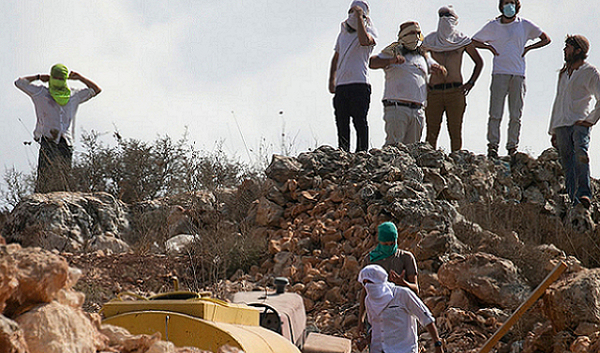
Settlers destroy more than 40 grapevines and shoot shepherds

Today, Thursday, settlers destroyed more than 40 grape trees in Masafer Yatta, south of Hebron.

Media activist Osama Makhamreh said that settlers destroyed fruitful grape trees owned by Nasser Al-Nawaj'a in the village of Susya, in the Masafer Yatta area, and threw stones at his home and abused him.

In the northern Jordan Valley, armed settlers opened fire on citizens grazing their livestock in the Jabaris area of the northern Jordan Valley, forcing them to leave the pastures.

Residents of the northern Jordan Valley are living under difficult conditions due to the terror of armed settlers, who have subjected them to physical assaults, raided their tents, stolen and killed their livestock, and prevented them from grazing.

PALESTINE

Thu 24 Jul 2025 9:07 am - Jerusalem Time

Canada calls for immediate resumption of UN-led aid to Gaza

The Canadian government said that Israeli military operations against civilians and aid workers in Gaza are unacceptable and called for the immediate resumption of UN-led aid distribution in the Strip.

"Israeli military operations against WHO staff and facilities, World Food Programme aid convoys, and the continued killing of Palestinians desperately seeking food and water are unacceptable," the Canadian Foreign Ministry said on Twitter.

"Hunger in Gaza has reached catastrophic levels. We call for the immediate resumption of large-scale UN-led aid," she added.

PALESTINE

Thu 24 Jul 2025 8:58 am - Jerusalem Time

The occupation forces injure a citizen and arrest others in the West Bank.

This morning, Thursday, Israeli occupation forces injured a citizen and arrested others in the West Bank.

In Ramallah, the occupation forces stormed Dura al-Qar’ and arrested Ahmed Mukhtar (19 years old) and the brothers Yahya and Amin Qassem (20 years old) after raiding and searching their homes.

Meanwhile, the occupation forces arrested Qusai Marada from his home in the al-Tira neighborhood in Ramallah. They also stormed the town of al-Mazra’a al-Sharqiya, east of Ramallah, and arrested the child Muhammad al-Zaben (16 years old), Iyad al-Zaben (44 years old) and his son Fathi (18 years old), Malik al-Zaben (18 years old), and Ahmed al-Zaben (19 years old). Clashes erupted between citizens and the occupation forces during their raid on the town, during which they fired sound bombs and tear gas at the citizens, without any injuries being reported.

In Tulkarm, Israeli occupation forces severely beat Amr Hazem al-Ashqar after storming the town of Attil. He was subsequently transferred to Attil Governmental Hospital, where his condition was described as stable.

During their raid on the town, the occupation forces raided a number of citizens' homes, specifically in the "Al-Yasna" neighborhood, vandalizing their contents and interrogating their residents. Among the residents were identified as: freed prisoner Khaled Abu Khazna, freed prisoner Musab Qutaish, and the family of Thaer Qutaish, without any arrests being reported.

In Nablus, occupation forces stormed the city at dawn, raided and surrounded a building in the Al-Makhfiya neighborhood, searched homes, fired live ammunition inside one of the buildings, and arrested Bashar Al-Kilani and his two sons, Iyad and Muhammad.

The occupation soldiers detained a number of the building's residents and interrogated them.

Occupation forces also stormed the New Nablus area, raided a house, and arrested Ibrahim Saad al-Din after searching the house.

In Hebron, the occupation forces raided the town of Beit Ummar and arrested: Wahid Hamdi Zamel Abu Maria (55 years old), Ahmed Khader Abdel Qader Abu Maria (57 years old), Muhammad Munir Akhlil (45 years old), Maher Ibrahim Awda Sabarneh (42 years old), Rashid Ali Issa Awad (25 years old), Qusay Ashraf Ali Sabarneh (21 years old), Musab Al-Zaaqiq, Samer Rabhi Awad, Hamada Samir Abu Ayyash, and Musa Adi.

Media activist Mohammed Awad pointed out that the arrest campaign in Beit Ummar included both released prisoners and prisoners who had only been released a few days earlier. He noted that the occupation forces raided several homes in the town, searched them, ransacked their contents, and smashed their doors and belongings.

The occupation forces also arrested Fadi Abu Juhaisha from the town of Idhna during a raid on the town of Tarqumiya, west of Hebron, and Nader Rashid Tamizi from the town of Idhna at a military checkpoint in the city of Jericho.

The occupation forces also raided the home of Abdul Karim Abu Ramouz and his sister Fawzi in the southern area of Hebron and ransacked their contents.

PALESTINE

Thu 24 Jul 2025 8:53 am - Jerusalem Time

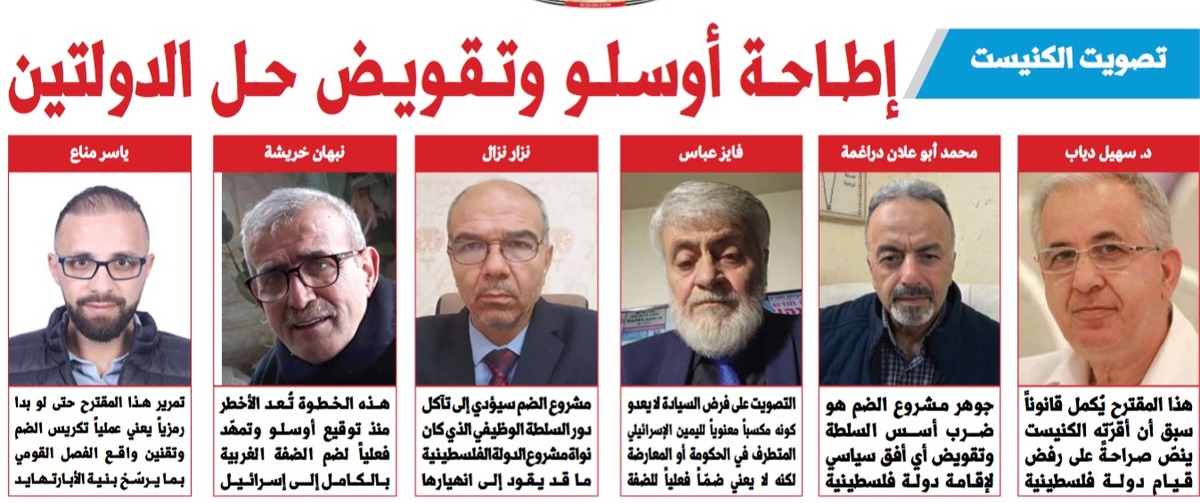
Knesset vote: Overthrowing Oslo and undermining the two-state solution

Dr. Suhail Diab: This proposal complements a law previously passed by the Knesset that explicitly rejects the establishment of a Palestinian state.

Muhammad Abu Allan Daraghmeh: The essence of the annexation project is to undermine the foundations of the Authority and any political horizon for establishing a Palestinian state.

Fayez Abbas: The vote to impose sovereignty is nothing more than a moral gain for the extreme right in the government or the opposition, but it does not mean actual annexation of the West Bank.

Nizar Nazzal: The annexation project will erode the functional role of the Palestinian Authority, which was the core of the Palestinian state project, which could lead to its collapse.

Nabhan Khreisha: This step is the most dangerous since the signing of the Oslo Accords and effectively paves the way for the complete annexation of the West Bank to Israel.

Yasser Manna: Passing this proposal, even if it seems symbolic, practically means consecrating annexation and legalizing the reality of national separation, thus entrenching the structure of apartheid.


Moves are accelerating within the Israeli Knesset to impose so-called full "Israeli sovereignty" over the West Bank. The latest move was a majority vote on a resolution paving the way for the annexation law and the imposition of sovereignty over the West Bank, a move that effectively paves the way for the liquidation of the idea of a Palestinian state and undermines the Palestinian National Authority.

In separate interviews with "I," Israeli affairs experts and writers assert that this approach is not merely symbolic, but rather an extension of previous laws rejecting the establishment of a Palestinian state. It reflects a growing trend toward exploiting the regional situation and employing political and security pressure to prevent the establishment of a Palestinian state and the annexation of the West Bank.

They believe the timing is linked to the Gaza deal arrangements and the appeasement of the extreme right to ensure the cohesion of the Israeli government, while the annexation plans are being used as a bargaining chip with the United States to end any prospect of a two-state solution.

They believe these steps will likely have a profound impact on the overall Palestinian situation, both internally and externally, amid warnings of the collapse of the PA's functional role and its transformation into a service-oriented administration under occupation.

In light of the expansion of legislation and the rhetoric of annexation, calls are mounting to re-examine the entire landscape and unify Palestinian ranks to confront the most dangerous phase since the signing of the Oslo Accords three decades ago, and even since the occupation of the West Bank in 1967.


A clear vision is being arranged at the level of legislation and laws.


Dr. Suhail Diab, a political science professor and expert on Israeli affairs, warns of the danger of the proposed vote on the law currently being debated in the Israeli Knesset, which aims to impose full Israeli sovereignty over the West Bank. He emphasizes that this proposal is not merely symbolic, as it is being promoted, but rather represents an advanced step in a series of steps that have preceded and will follow, within the context of a systematic plan to completely liquidate the Palestinian cause.

Diab explains that this proposal does not come out of nowhere, but rather complements a law previously passed by the Knesset by a large majority of both the ruling coalition and the opposition, which explicitly rejects the establishment of a Palestinian state.

Diab points out that the new annexation plan bears the signatures of 14 ministers from the Likud Party and other coalition parties. It calls for immediate annexation and the extension of Israeli sovereignty over the entire West Bank, revealing a clear vision being formulated at the legislative and legal level.

Diab explained that these legislative steps coincide with ongoing practices on the ground, including raids on Al-Aqsa Mosque and the holding of Talmudic prayers there, repeated and illegal raids on Joseph's Tomb in Nablus and attempts to impose sovereignty over it, as well as advanced steps to Judaize the Ibrahimi Mosque in Hebron, in addition to the widespread and unprecedented settlement expansion throughout the West Bank.

Diab points to the preparation of a new draft law, more dangerous than its predecessors, which aims to restrict the right of self-determination in historic Palestine to Jews alone, effectively ending any prospect of a two-state solution and liquidating Palestinian national rights.

In Diab's opinion, the danger of the current plan to annex the West Bank and impose sovereignty over it lies in the fact that it reflects an escalating political trajectory that exploits the current historical context, even if it is not currently feasible for direct implementation because implementation is in the hands of the Israeli government, which has not yet made an official decision to do so.


Timing of the law's introduction before the Knesset's summer recess


Diab stresses that the mere fact of introducing the law at this time, just before the Knesset enters its summer recess, is linked to two key factors: the nearing of new understandings regarding a deal in Gaza, and the second, the introduction of a step that satisfies the extreme right and ensures the cohesion of the ruling coalition headed by Netanyahu after the announcement of the Gaza deal.

Diab believes that this step will deepen the narrative in the Israeli collective consciousness that the West Bank will remain part of Israel, and will be used as a bargaining chip with the United States to either annex large parts of the West Bank or end the two-state solution with American approval, given the current circumstances in the region.

Diab explains that the continued violation of the Oslo Accords over the years clearly reveals that what is happening is not a coincidence or a symbolic decision, but rather a systematic process.

Diab calls on Palestinian political forces, particularly in the West Bank, to recognize that the imminent danger is not limited to Gaza alone, but rather encompasses the entire Palestinian territory. He believes that whoever decides the battle in the West Bank will decide the essence of the entire Israeli-Palestinian conflict, whether in favor of or against the Palestinian cause. This requires a new vision that places the unity of the land and the people at the heart of any future action.


The movement within the Knesset was preceded by political pressures and demands.


For his part, writer and Israeli affairs expert Muhammad Abu Allan Daraghmeh said that the ongoing Knesset efforts to impose "Israeli sovereignty" over the West Bank—which garnered 71 votes in favor of annexing the West Bank and 13 against—considered a historic move by Israel to impose its sovereignty over the West Bank and prevent the establishment of a Palestinian state.

Draghmeh points out that this movement within the Knesset was preceded by ongoing political pressures and demands, the most recent of which occurred prior to Prime Minister Benjamin Netanyahu's recent visit to Washington, where members of the Settlements Council and Minister Roni Dermer demanded that he seriously work toward annexing the West Bank and imposing Israeli sovereignty over it.

Draghmeh explains that what is happening is still symbolic and informal, but the proposed bill assumes significant political significance, particularly since its passage depends primarily on the religious parties' commitment to supporting the government coalition. This widespread support ensures its smooth passage.

Draghmeh points out that this vote is intended to support the bill and place it on the Knesset's agenda for further consideration. Even if it passes, Wednesday's vote will be symbolic, confirming Netanyahu and the Israeli political echelon's stance toward annexation. However, it will not be binding unless it passes three full legislative readings.


Israel continues to implement annexation on the ground


Draghmeh believes that the occupation government will not officially take the step of annexation without a full American green light, despite the fact that it is continuing to implement the annexation on the ground through settlement expansion and territorial control. He asserts that the declaratory vote that took place was supported and approved by the United States.

According to Draghmeh, Netanyahu may use this card as a winning card during the election period to achieve gains for the Likud party ahead of the upcoming elections.

Regarding the annexation law's impact on the Palestinian Authority, Draghmeh explains that the essence of the annexation project is to undermine the foundations of the Authority and any political horizon for establishing an independent Palestinian state, a position that aligns with the policies of Smotrich, Ben-Gvir, and the Likud Party.

Draghmeh asserts that if such a project is completed and the annexation is officially announced, it will effectively shatter the dream of a Palestinian state and end the political role of the Palestinian National Authority, which originally existed as a transitional phase toward an independent state.

Draghmeh believes that the repercussions of this will be disastrous not only for the PA, but for the entire Palestinian political and field situation.

Draghmeh points out that the occupation is anticipating regional and international developments, particularly regarding Arab normalization, which is closely linked to the existence of a political path toward a two-state solution.

Draghmeh points out that the Saudi position will be key at this stage, as Riyadh rejects any comprehensive normalization without actual progress toward a just political solution.

Draghmeh asserts that the Israeli coalition views the annexation of the West Bank as the culmination of its victories in the "multi-front war," particularly in the West Bank and Gaza Strip, as part of the war's achievements it is attempting to capitalize on domestically and internationally.


Competition in Israel over who is more extreme and fascist


In turn, writer and expert on Israeli affairs Fayez Abbas says that the current competition between the governing coalition and the Israeli opposition has become about who is more extreme and fascist after October 7. He stresses that imposing "Israeli sovereignty" over the West Bank will not change the reality there, as the West Bank has been fully occupied since 1967, and Israel effectively imposes its control over every inch of it without the need for any new Knesset decision.

Abbas believes that the Knesset's decision to vote on sovereignty is nothing more than a moral gain for the Israeli far right in both the government and the opposition, but it does not mean actual annexation of the West Bank.

Abbas explains that Israel, despite occupying the West Bank for decades, has not taken any official steps to annex it, as it did with East Jerusalem and the occupied Syrian Golan Heights. He asks, "What is preventing Israel from annexing it so far?"

Abbas responds that annexing the entire West Bank means that Israel will face the dilemma of losing its Jewish majority within its borders, from the sea to the river. This completely contradicts the essence of the Zionist project, which is based on a Jewish state with a large majority.


Annexation will impose huge obligations on Israel.


Abbas asserts that annexation would impose significant obligations on Israel, most notably the provision of basic services such as education, health, and infrastructure, as well as internal security and granting Palestinians Israeli identity cards and residency rights, as is currently the case in East Jerusalem and the Golan Heights.

Abbas points out that the current form of the occupation grants Israel complete control over the West Bank's resources without incurring any financial costs or service obligations to the Palestinians. He considers the current occupation a "seven-star occupation," with resources being plundered and Israeli goods being sold for billions of dollars annually without any real investment in the occupied territory.

Abbas asserts that Israel will continue its policy of occupation, land confiscation, and the establishment of terrorist outposts without any real intention of annexation, and that the recent decision will have no impact on the Palestinian National Authority at this stage.


Political and ideological ground for more serious measures


For his part, Nizar Nazzal, a researcher specializing in Israeli affairs and conflict issues, asserts that the overwhelming majority vote within the Israeli Knesset to initiate the West Bank annexation project constitutes a new political and ideological foundation, paving the way for more dangerous future measures and steps, including legislation and laws that could lead to actual annexation, particularly of Area C in the West Bank.

Nazzal explains that this plan entails the complete imposition of Israeli law on the settlements, rather than the administration of these areas through the Civil Administration, which would reinforce the reality of the occupation and legitimize it on the ground.

Nazzal believes this move will open the door to a dangerous deterioration in the security situation in the West Bank, especially if the Palestinians understand that this vote effectively means burying the two-state solution and completely eliminating it.

Nazzal points out that this will lead to an actual, rather than a symbolic, escalation, which could manifest in military confrontations or widespread popular movement, particularly in Jerusalem, as well as the possibility of individual attacks against occupation forces and settlers.

Nazzal expects reactions to this dangerous development to be distributed across three main axes: Palestinian, Arab, and international. On the Palestinian level, the next phase may witness a comprehensive reassessment of the relationship with Israel, with Palestinian diplomacy being revitalized in international forums such as the United Nations, the Security Council, and the General Assembly, as well as leveraging its presence in international institutions to pressure Israel.

Nazzal points out that the situation may also require strengthening national unity and activating the role of the Palestine Liberation Organization (PLO) as a legitimate representative, replacing the Palestinian Authority, which is currently being used as an executive tool.


The possibility of mobilizing pressure tools on Israel


On the Arab and Islamic front, Nazzal believes there is a possibility of mobilizing pressure tools on Israel, particularly from countries that have signed normalization agreements with it. This could be achieved by activating economic agreements as a means of pressure, in addition to mobilizing frameworks such as the Organization of Islamic Cooperation and the Arab League to take practical steps.

Internationally, Nazzal expects the Palestinians to activate the role of the International Criminal Court and the International Court of Justice to prosecute Israeli violations, with the rise of global social movements and boycott campaigns such as the BDS movement, which may target settlements and settlers more broadly.

Regarding the fate of the Palestinian Authority, Nazzal points out that the annexation project will erode the functional role of the Authority, which was the core of the Palestinian state project. This could lead to its collapse and its transformation into a mere municipal administration under occupation, which would strip it of its national legitimacy and pose a direct existential threat.

Nazzal believes that the PA will likely consider completely disengaging from Israel if the annexation is implemented. However, such a decision would require Arab and international consensus and could open the door to chaos in the West Bank, potentially leading to the dissolution of the PA, the complete handover of its administrative functions, and the re-internationalization of the Palestinian cause.


A blatant challenge to international law and UN resolutions


Journalist Nabhan Khreisha warns of the danger of the move taken by the Israeli Knesset on Wednesday, when it voted in favor of a draft resolution supporting the imposition of so-called "Israeli sovereignty" over the West Bank, before entering its summer recess.

Khreisha asserts that this step is the most dangerous since the signing of the Oslo Accords, as it effectively paves the way for the complete annexation of the West Bank to Israel, in blatant defiance of international law and UN resolutions, which consider the West Bank occupied territory since 1967.

Khreisha explains that this vote opens the door to highly complex political and legal scenarios that could reshape the Palestinian-Israeli conflict and dispel any remaining bets on a political settlement.

Khreisha points out that the first expected scenario is for Israel to begin implementing the annexation gradually, first by imposing Israeli civil law within the settlements, and then expanding it to include larger areas of the West Bank, exploiting the Palestinian division and the weakness of Arab and regional positions.

Khreisha points out that there is another scenario based on limited Palestinian and Western reactions, which could give Israel the ability to establish a fait accompli and transform it into domestic legal legitimacy, even if it remains internationally unacceptable.

Khreisha warns that these developments could push Palestinians into widespread protests and unpredictable escalation in various areas of the West Bank.


America may provide implicit cover for this move.


According to Khreisheh, the US position under President Donald Trump may provide implicit cover for this move, given the strong alliance between the Israeli right and the current US administration. Despite the possibility of US statements attempting to express reservations, Khreisheh explains that the Trump administration's record, which included recognizing Jerusalem as Israel's capital in 2017 and moving the embassy there, confirms that Washington may view the annexation decision as an Israeli "sovereign matter," further isolating the Palestinian position internationally.

Khreisheh points out that the effort to pass the resolution through three readings, thus making it an effective law, will make the legal status of Palestinians in the West Bank extremely complicated. Israel may offer some residents "residency" status without granting them citizenship, as happened with Jerusalemites. However, the majority of Palestinians will reject this status, which effectively amounts to recognition of the occupation.

Khreisheh asserts that the West Bank could then face a clear apartheid regime, granting full citizenship rights to settlers while Palestinians remain without sovereignty or real political rights.

Khreisha believes that the options available to the Palestinian Authority are limited but decisive, pointing to the possibility of approaching the United Nations and the International Criminal Court to criminalize annexation as a war crime.

Khreisha calls for a review of the agreements signed with the occupation, including the Oslo Accords, and for serious consideration of internal reconciliation with the remaining factions to confront this step with political and field unity.

Khreisheh warns that proceeding with this project will transform the Palestinian Authority into an entity devoid of meaning and real authority. He warns that this could prompt Palestinians to completely rethink the idea of an independent state and the two-state solution, and perhaps even move toward a one-state solution with equal rights—a scenario Israel strongly rejects and seeks to prevent by all means.

A measure that paves the way for future legislative steps.

In turn, writer and expert on Israeli affairs, Yasser Manna, explains that the Israeli Knesset's discussion and vote on Wednesday is not related to a formal vote on a law to annex or impose full sovereignty over the West Bank, but rather aims to place the issue of "imposing Israeli sovereignty over Judea, Samaria, and the Jordan Valley" on the parliamentary agenda.

According to Manna, the vote on the proposed legislation is merely symbolic or declarative, such as the Knesset's call for the government to proceed with the imposition of sovereignty. However, it essentially represents a significant political indicator of the ruling right-wing coalition's orientation.

Manna believes that this measure, while not legally binding, paves the way for future legislative steps of a mandatory nature. He points out that the most likely scenario is what is known as "annexation of the land without the population." Under this path, Israel would impose its legal sovereignty over the entire West Bank, while leaving Palestinians without civil or political rights, through continued military or administrative rule. This is to protect the "Jewish character" of the state and avoid any international legal obligations imposed by formal annexation agreements.

Passing the project would overthrow Oslo and empty the PA of its content.

Manna asserts that this trend is not new, but rather represents a new chapter in a legislative process that has been ongoing since 2009. The Knesset has witnessed dozens of attempts to propose annexation proposals, all documented in the "Legal Monitor" at the Madar Center for Israeli Studies.

Manna points out that the current proposal, submitted by extremist MK Avi Maoz, is expected to be referred to a specialized parliamentary committee to be merged with similar projects.

Manaa asserts that passing this proposal, even if it seems symbolic, would practically mean enshrining creeping annexation and legalizing the reality of national separation, thus entrenching the structure of expanded legal apartheid on the ground.

Manna points out that passing the project into effect could completely overturn the Oslo Accords and empty the Palestinian Authority of its substance, transforming it into an administrative entity devoid of sovereign powers, operating under direct or indirect Israeli security supervision.

In light of this reality, Manna believes the PA will face two paths: either gradual erosion until it disintegrates, or remaining a formal service entity under absolute Israeli control.


PALESTINE

Thu 24 Jul 2025 8:48 am - Jerusalem Time

The genocide continues... the goal is to displace people to build Trump's Riviera.

Mustafa Ibrahim: The delay in reconstruction and the absence of any living environment confirm the existence of a policy to strip Palestinians of their right to land and survival.
Dr. Mansour Abu Karim: Israel uses siege, famine, and negotiations as tools of war to cover up its primary goal of displacing the population.

Dr. Abdullah Nemeh: The occupation government is working to confine Palestinians to narrow areas as part of a project aimed at emptying the land and imposing genocide and displacement.

Wadih Awawdeh: The ongoing massacres and the artificial famine in the Gaza Strip would not have continued without internal Israeli silence.

Dr. Hani Al-Jamal: Israel is using this blockade as a weapon to impose forced displacement on Palestinians and implement a scorched earth policy.

The full cover provided by the US administration under President Donald Trump to the occupying Israeli state is what has kept the war of extermination raging in the Gaza Strip for more than 21 months, causing devastating losses in lives and property. The death toll has approached 60,000, with more than 150,000 wounded, and unprecedented destruction affecting more than 80 percent of buildings and infrastructure.

Contrary to the declared objectives since the beginning of the war of extermination, the occupying state has left no stone unturned in transforming people's lives into a living hell, the latest of which is starvation, in a clearly defined plan aimed at emptying the Gaza Strip of its population, in implementation of the vision of the American president who aspires to turn it into a "Riviera" owned by the United States. This is the vision adopted by the Prime Minister of the occupation, Benjamin Netanyahu, and he is working to implement it on the ground, without regard to the international positions of rejection, and in isolation from everything that is taking place in the negotiations taking place in Qatar between the occupying state and the resistance through mediators.

Writers, analysts, and experts who spoke to "I" said that Israel is using the blockade, famine, and negotiations as tools of war to cover up its primary goal of displacing the population from the Gaza Strip. They pointed out that the delay in reconstruction and the absence of any living environment confirm the existence of an approach aimed at stripping Palestinians of their right to land and survival.

They explained that the occupation government is working to confine Palestinians to narrow areas as part of a project aimed at emptying the land and imposing a reality of genocide and forced displacement. They emphasized that Israel is using this siege as a weapon to force the displacement of Palestinians and implement a scorched earth policy.

They emphasized that the United States is a partner of the occupying state in its war of extermination against the Palestinian people in the Gaza Strip, noting that the ongoing massacres and artificial famine in the Gaza Strip would not have continued without Israel's internal silence.

The widespread destruction in the Gaza Strip is part of a displacement plan.

Writer and political analyst Mustafa Ibrahim said that Israel has never ceased implementing its plans for the forced displacement of Palestinians. These plans began to take shape with the outbreak of the recent war, known as the "war of extermination," which coincided with American pressure on Egypt to open so-called humanitarian corridors.

He added that the conversation that took place at the time between former US President Joe Biden and his Secretary of State was not for a humanitarian purpose, as claimed, but rather came in response to Israeli pressure to deport Palestinians to Egypt, where serious discussions had already begun to implement the deportation.

Ibrahim explained that several plans to displace Palestinians have been proposed within the Israeli government, including one presented by Minister of Strategic Affairs and Intelligence Gila Gamliel, followed by repeated statements from Israeli Knesset members, ministers, officers, and generals.

He pointed out that US President Donald Trump has explicitly spoken about the necessity of displacing Palestinians under the pretext of rebuilding Gaza and transforming it into the "Riviera of the East," confirming that these plans are not a recent development, but are rooted in official Zionist ideology.

He stated that the widespread destruction in Gaza, particularly in cities such as Rafah, Khan Yunis, and the northern Gaza Strip, is part of this plan, with entire neighborhoods destroyed in a way that leaves people unable to even contemplate survival. The delay in reconstruction and the absence of any living environment confirm a systematic approach to stripping Palestinians of their right to land and survival.

Author Ibrahim revealed that Israel recently formed an official body within the military to address displacement issues. Israeli reports indicate that the head of Mossad has been communicating with countries such as Ethiopia, Libya, and some Asian nations to persuade them to accept Palestinian refugees, either through pressure or financial inducements.

He pointed out that approximately 107,000 Palestinians had arrived in Egypt, most of them seeking medical treatment or fleeing the war, and currently reside there, while a large number still wish to return. However, Israel continues to pressure the displacement to continue, supported, unfortunately, by clear American silence or encouragement.

President Sisi's position rejecting the displacement of Palestinians

Ibrahim believes that the Egyptian position, announced by President Abdel Fattah el-Sisi, rejecting displacement and closing the Rafah crossing, has been a major obstacle to the implementation of these plans. Nevertheless, Israel continues its military operations, including Operation Gideon, launched last April, which was accompanied by a stifling blockade and widespread internal displacement of residents of northern and eastern Gaza to Gaza City, which is now home to more than 1.1 million displaced persons.

He added that approximately 800,000 Palestinians currently reside in the Mawasi area near Rafah and Khan Yunis, while the rest of the Gaza Strip is confined to the central area, which Israel calls the "central area."

He pointed out that talk of establishing a humanitarian city there is an attempt to camouflage a plan for mass displacement towards the Egyptian border.

He noted that the idea of displacement is not new, but dates back to the aftermath of the 1948 Nakba and was revived after the 1967 war, when Israeli Prime Minister Golda Meir and her Defense Minister Moshe Dayan unsuccessfully attempted to push Palestinians to emigrate to Jordan and Al-Arish. The late Egyptian President Hosni Mubarak also rejected similar proposals from the Israeli side in 2006 and again in 2018.

Ibrahim concluded his remarks by asserting that "the displacement plans have not succeeded so far, thanks to the steadfastness of the Palestinians despite the killing, destruction, and suffering. However, the harsh conditions they are experiencing make these plans continue, as part of Israel's efforts to achieve its historic goal of emptying the Palestinian territories, especially the Gaza Strip, of their inhabitants, and imposing a mass forced displacement that remains an Israeli dream that has yet to be realized."

Reengineering the demographic reality in the sector

For his part, political affairs researcher Dr. Mansour Abu Karim believes that Israel is using displacement, continuing its military operations, and increasing pressure, blockades, and creating chaos and insecurity to push residents to seek other options.

He explained that this is a systematic policy through which Israel aims to re-engineer the demographic reality in the Gaza Strip and push residents to emigrate away from the Strip.

Dr. Abu Karim pointed out that the ongoing war confirms that Israel's ultimate goal is not to recover prisoners or defeat Hamas, but rather to displace the population of the Gaza Strip, using the declared war aims as cover.

He added: "Israel is using the blockade, famine, and negotiations as tools of war to cover up its primary goal of displacing the population from the Gaza Strip.

He explained that Israel saw Trump's statements earlier this year as an opportunity to raise the idea of displacing large numbers of Gazans to eliminate the demographic bloc that, from its perspective, constituted an obstacle.

Researcher Abu Karim explained that Gaza has transformed over the past few years into a demographic bomb, posing a demographic and security threat to Israel. Israel saw the events of October 7 and their repercussions as a golden opportunity to achieve this goal, whether through displacement, killing, or the imposition of a blockade and famine.

Abu Karim concluded his comment by asserting that Israel, through its continued bombardment of the Gaza Strip for more than 21 months, is seeking to eliminate the demographic burden by any means necessary.

The occupation's practices negatively affect the ongoing negotiations.

For his part, Lebanese political analyst Dr. Abdullah Nehme said that Israel continues to wage a war of extermination and starvation against the Gaza Strip and the occupied West Bank, noting that these practices could negatively impact the ongoing negotiations regarding a ceasefire and prisoner exchange.

He explained that Palestinians in Gaza are being subjected to a systematic genocide and a war of starvation waged by the Israeli occupation government, led by Prime Minister Benjamin Netanyahu, with American support and clear international complicity. This is despite statements issued by entities such as the European Union and international community institutions that merely express condemnation without taking any real action.

Nehme added: "This comprehensive war, which includes bombing, killing, and destruction, along with a medical and humanitarian blockade, aims to subjugate the Palestinian people. The occupation government bears full responsibility for these failed policies practiced against two million Palestinians in the Gaza Strip."

Dr. Nehme stressed the need to immediately halt this war and not allow the continuation of this brutal aggression, which seeks to forcibly displace Palestinians abroad and resettle them in other countries.

He stressed that the occupation government is working to confine Palestinians to narrow areas, as part of a project aimed at emptying the land and imposing a reality of genocide and forced displacement.

He pointed out that the continuation of this approach by the Netanyahu government threatens the negotiating process and opens the door to the possibility of dangerous escalation, which Netanyahu seeks to ensure his continued hold on power and appease the most extreme right-wing faction within his government, which rejects an end to the war.

Lebanese analyst Nehme concluded by saying: "Israel, which has occupied Palestinian lands and territories in Syria and Lebanon for decades, refuses to withdraw from them, rejects the establishment of an independent Palestinian state, and does not believe in the two-state solution.

Israel no longer cares about any humanitarian consideration or public opinion.

For his part, journalist Wadih Awawdeh, a specialist in Israeli affairs, asserted that anything is permissible and possible under an Israeli government that has lost control and no longer cares about any humanitarian considerations or public opinion, whether local or international.

He added, "This government does whatever it wants, and the more its soldiers are killed and wounded, the more brutal its response becomes."

Awawdeh pointed out that the ongoing massacres and artificial famine in the Gaza Strip would not have continued without internal Israeli silence. He said, "If Israelis, as a public, were truly dissatisfied, they would take to the streets. But there are no demonstrations to speak of."

He continued: "When some Israelis talk about the need to stop the war or the killing and starvation, they are not speaking out of moral scruples, but rather out of profit-and-loss calculations: How does this war portray us abroad? How does it harm our economy and our image?"

Journalist Awawdeh explained that what is happening is not limited to Israel alone, but that Western countries have also sided with the system of interests at the expense of the system of values and morals.

He added, "These countries offer Israel verbal statements, but no practical steps or sanctions, unlike what happened with Russia in the Ukraine issue."

Timid European condemnations to absorb anger and drop reproach

He said, "The timid condemnations are only meant to absorb anger or deflect blame. Meanwhile, many of these countries continue to supply Israel with weapons, equipment, and ammunition."

On the Arab level, Awawdeh said, "It is inconceivable that these countries have this level of influence and investment in America, yet are unable to influence Trump or pressure Netanyahu to stop the war!"

He continued, "It seems that narrow calculations are driving positions, even if the Palestinian people die in the Gaza Strip. This is a very dangerous matter that will have strategic repercussions for all Arabs."

Awawdeh warned that this approach could affect everyone: "The next turn could be Syria, the Palestinians, the Iraqis, or the Libyans... No one will be safe. Whoever thinks they are safe will ultimately find themselves humiliated, even if it is not the result of a direct occupation."

"Tent cities" open prisons

In turn, Egyptian political analyst Dr. Hani El-Gamal asserted that Israel's current use of double-faced humanitarian aid is part of a systematic policy of starvation against the Palestinians.

He explained that restricting aid to the Gaza Foundation, whose funding is suspected of being unrelated, resulted in the deaths of more than 1,000 Palestinians, in addition to various injuries, as a result of the rush to obtain this aid.

He added that Israel is disrupting the aid delivery system, primarily the World Food Programme, and obstructing its entry through border crossings, particularly with Egypt, which clearly reflects this deliberate approach.

Al-Jamal pointed out that Israel is using this blockade as a weapon to impose forced displacement on Palestinians and implement a scorched earth policy, not only by transferring the population from north to south, but also by confining them to an area that does not exceed 25% of the Gaza Strip.

He considered this behavior to constitute a flagrant violation of international humanitarian law and the provisions of the Rome Statute, particularly Chapter VII, which stipulates the protection of civilians.

He continued, saying that what Israel is doing represents a systematic approach aimed at expanding settlements at the expense of Palestinian lands and establishing buffer zones inaccessible to Palestinians.

American cover for Israeli practices

Even worse, according to Al-Jamal, is the establishment of "tent cities" that serve as open-air prisons, forcing Palestinians to reside there without the possibility of leaving, in an attempt to impose a new demographic reality.

Al-Jamal emphasized that these policies unfortunately enjoy a degree of American legitimacy, which gives Israel further cover to continue its repressive and expansionist practices.

However, the Egyptian analyst pointed to recent European action, represented by a group of countries declaring their rejection of the Israeli approach. He called for translating these positions into practical steps, such as activating Article 2 of the trade agreement with Israel and freezing it, and applying economic pressure by halting trade, particularly with regard to products originating from the settlements.

Al-Jamal considered that these moves would limit Israel's plan to use an open-door policy to displace Palestinians beyond its borders or impose alternative homelands. Israel has also proposed settling them in countries such as Libya, Ethiopia, Sudan, Uganda, or even Indonesia. These are ideas rejected by the international community and contradict the various Geneva Conventions.

PALESTINE

Thu 24 Jul 2025 8:46 am - Jerusalem Time

No talk!

Like Christmas candles, bodies melt and souls waste away before flowing silently in the streets, in the tents, in front of aid traps, and in the food pantries.

In Gaza, as the famine intensified, hearts reached their throats, journalists' voices became hoarse, the ink in their pens dried up, and their hearts stopped beating under the weight of extreme hunger, which drained their energy and left them unable to speak.

Yesterday, Agence France-Presse announced that its team of ten journalists in Gaza would starve to death. The agency relayed Bashar's last message, posted on his Facebook page, in which he said: "I no longer have the strength to work in the media. My body has become thin, and I can no longer work. My brother died of hunger, and we no longer have the words to explain to the world that we live daily between death by murder and death by starvation."

Bashar's message hit the international agency like an earthquake, reflecting the plight of all the people in the Gaza Strip, who are dying every minute, at a geometric rate of killing and starvation, while the Likud wolf stalls the truce negotiations, completing his mission of exhausting the people, starving them to their knees, and building his dreams on the remains of their children and the ruins of their homes.

PALESTINE

Thu 24 Jul 2025 8:40 am - Jerusalem Time

Dead and wounded in the Gaza Strip amid a famine that is slowly killing citizens

A number of civilians have been killed and injured as a result of the ongoing war of extermination in the Gaza Strip, amid a famine that is slowly killing the population.

In the latest developments/
Martyrs and wounded as a result of the bombing of a residential apartment in the "Al-Salhi" towers in the Nuseirat camp in the central Gaza Strip.

One person was killed and others injured in a house bombing in Al-Bureij camp in the central Gaza Strip.

3 martyrs as a result of the occupation targeting residential towers east of Deir al-Balah in the central Gaza Strip.

A martyr and others were injured as a result of the bombing of the Qastal Towers and those waiting for aid east of Deir al-Balah in the central Gaza Strip.

As the Israeli army continues its bombing operations targeting homes in the Al-Satar area of Khan Yunis, south of Gaza.