ARAB AND WORLD

Sat 26 Jul 2025 9:51 am - Jerusalem Time

A bill supported by the Anti-Defamation League (ADL) threatens to censor critics of Israel.

Free speech advocates on Friday expressed concerns that a new bipartisan bill in the US Congress would force social media companies to censor criticism of Israel on their platforms.

Reps. Josh Gottheimer (D-NJ) and Don Bacon (R-NE) introduced the bill, called the Stop Terrorists Online and Hold Tech Accountable (STOP HATE) Act, at a press conference on Wednesday, along with Jonathan Greenblatt, CEO of the Anti-Defamation League (ADL), a front for the Israel lobby in Washington.

If adopted, the bill would require social media companies to cooperate with the federal government to implement content moderation policies that restrict speech by groups designated as "terrorist." These companies would be required to submit regular reports to the US Attorney General. Companies that fail to comply would be fined $5 million for each day they refuse to comply.

Lawmakers justified the move by citing recent examples of overt anti-Semitism and calls for violence on social media.

"We have seen an increase in anti-Semitic misinformation and hate online in America and around the world," Gottheimer said. "After the shooting outside the Jewish Museum in Washington, D.C., anti-Zionist extremists used social media to call for more violence, posting messages like 'All Zionists burn.' Even artificial intelligence platforms like Grok have posted deeply disturbing content praising Adolf Hitler and Nazism."

"We want to be in a country that clearly states that anti-Semitism or any kind of racism is unacceptable, unacceptable, and unacceptable online, and that we have zero tolerance for it," Bacon said.

However, other statements by the lawmakers make clear that their definition of "antisemitism" goes far beyond expressions of hatred or calls for violence against Jews. As Matthew Beattie writes for the liberal magazine Reason: "Antisemitism was precisely the idea Bacon had in mind, and he made it clear that it included the criticisms of the State of Israel in his book."

At the press conference, Bacon explicitly referred to the recent protests against Israel's starvation policy in Gaza.

"I saw protests here over the last couple of days, and they were hateful, right? They were... you could see the anti-Semitism in their comments and how they treated some of the Jewish members of Congress. I saw it myself," he said.

Bacon did not specify which comments he was referring to. However, Beattie noted that: “Protesters stormed the Congressional cafeteria on July 1st to demand food aid for Gaza, and interrupted Rep. Randy Fine (R-FL)—who called for the ‘starvation’ of Palestinians—during a hearing on campus anti-Semitism last week.” Bacon also suggested that simply voicing opposition to pro-Israel members of Congress, including himself, constitutes anti-Semitism.

"I even saw an article today. It was about me, but talking about the need to oppose pro-Zionist members of Congress, right?" said Bacon, who is known not to be Jewish. "It's all over our social media, and it's unacceptable."

Meanwhile, Gottheimer said the policy is not limited to combating terrorism, but also includes stopping "a widespread disinformation campaign that affects us daily."

Independent journalist Glenn Greenwald, a critic of government efforts to regulate "disinformation," noted that the bill conflicts with the right's supposed commitment to free speech.

"There has been a near-universal consensus on the right for the past decade that censorship by big tech companies is a great evil, especially if it is exercised by the US government at its behest and at its behest," he said on the social media site X. "But that all changed when it came to censorship for Israel."

For its part, the American-Arab Anti-Discrimination Committee, in a statement issued Friday, described the "Stop Hate" law as part of "the ongoing efforts by lawmakers to silence, censor, and restrict freedom of expression in this country at the behest of Israel."

The organization warned that the bill would give the government, in coordination with pro-Israel groups like the Anti-Defamation League, "absolute powers to monitor private social media companies, attack lawful expression, and impose fines of up to $5 million per day if companies fail to silence and censor users."

It's worth noting that this isn't the first time Gottheimer and Bacon have introduced the "Stop Hate" Act. A similar version, introduced in 2023, was defeated in committee.

In introducing this version of the bill, Gottheimer and Bacon were more explicit in their call for government regulation of the media, calling on the Justice Department to require Al Jazeera and its Qatari government-sponsored subsidiary, AJ+, to register as foreign agents.

The two congressmen were also at the forefront of calls for the US government to ban TikTok, which Gottheimer said the Chinese Communist Party uses to "promote anti-Israel and pro-Hamas videos in the United States." They also introduced legislation criminalizing efforts to boycott Israeli products.

It's worth noting that Greenblatt (chairman of the Anti-Defamation League), who spoke alongside lawmakers on Wednesday, explicitly stated that "anti-Zionism is anti-Semitism." Despite being criticized for this position, including by members of the ADL itself, he has continued to reinforce his position.

In a disgraceful exchange during the 2024 outbreak of pro-Palestine protests on college campuses, Greenblatt suggested that students wearing the keffiyeh—commonly worn by Palestinians and their supporters—were doing the equivalent of wearing a Nazi swastika.

Most recently, Greenblatt endorsed the warrantless abduction by US Immigration and Customs Enforcement of Palestinian activist and Columbia University graduate student Mahmoud Khalil, whom he accused—along with other pro-Palestinian protesters—of being agents of foreign governments, likening him to terrorist groups in the Middle East.

The lawmakers' press release Wednesday on the Stop Hate Act cites the Anti-Defamation League's 2024 Social Media Scorecard as evidence that "the five major social media platforms—Facebook, Instagram, TikTok, YouTube, and X—routinely fail to take action on reports of anti-Semitic hate."

This scorecard page includes a quote from Greenblatt, who said, “Social media platforms continue to fall far short of policing anti-Semitic and anti-Israel content.”

It should be noted that after October 7, 2023, the Anti-Defamation League changed its methodology for classifying anti-Semitic incidents to include not only hate speech or threats directed against Jews, but also language expressing "opposition to Zionism."

The proposed "Stop Hate" Act comes at a time when American public opinion has dramatically shifted against Israel's genocidal actions in Gaza. According to a CNN/SSRS poll released last Friday, only 23% of Americans say Israel's actions are completely justified, a 27-point drop from a poll conducted in October 2023, shortly after the October 7 attacks. Another 27% now say these actions are only partially justified, and 22% say they are not justified at all. In October 2023, only 8% said Israel's actions were not justified at all.

In recent weeks, Israeli leaders have publicly called for the mass displacement of two million Palestinians to make way for Jewish settlers. Meanwhile, at least 115 Palestinians—including more than 80 children—have reportedly died of starvation due to Israeli restrictions on the entry of aid into the Gaza Strip. More than 1,000 aid seekers have also been killed, often by Israeli soldiers, at relief sites jointly run by the United States and Israel.

“The First Amendment is supposed to be a cornerstone of American democracy—our shield against government censorship and overreach,” said Abdul Ayoub, director of the American-Arab Anti-Discrimination Committee (ADC). “When members of Congress and state legislators begin compromising our freedoms to accommodate the demands of a foreign government, we lose what makes this country free. We must reject any legislation that threatens our freedom of speech, our conscience, and our right to dissent.”

The largest teachers union in the United States announced the termination of its partnership with the Anti-Defamation League (ADL), citing concerns about the group's pro-Israel stance and its approach to defining anti-Semitism.

The resolution was passed on Sunday, July 6, at the National Education Association (NEA) Representative Assembly in Portland, Oregon, by a majority vote of its 7,000 delegates. The resolution states that the NEA "will not use, endorse, or disseminate ADL materials, such as its curriculum materials or statistics," and "will not participate in ADL programs or disseminate its professional development offerings."

PALESTINE

Sat 26 Jul 2025 9:11 am - Jerusalem Time

Retired US officer: I witnessed war crimes in Gaza

In an interview with the BBC, a retired US Special Forces officer revealed the reason for his resignation from his job with the Gaza Humanitarian Foundation's distribution point security teams in the besieged Palestinian enclave, asserting that he witnessed Israeli forces committing war crimes.

Retired officer Anthony Aguilar said, "I saw Israeli forces firing on crowds of Palestinians" at aid distribution points. He added that he saw troops firing artillery shells at unarmed civilians.

Aguilar asserted that in all his years of service, he had never seen this level of "brutality and the indiscriminate and unnecessary use of force against a defenseless, starving civilian population."

Since late May, the Gaza Humanitarian Foundation has been leading a US-Israeli project to control food distribution in the Gaza Strip, coinciding with Israel's war of extermination.

The United Nations and international humanitarian and human rights organizations have rejected this project, describing it as a tool for killing, displacing, and humiliating Palestinians.

The organization has established four main distribution points, three of which are in the Tel al-Sultan area of Rafah in the southern Gaza Strip, and one on the Netzarim axis, which separates the northern, central, and southern Gaza Strips. American security contractors and private companies are responsible for crowd control and food distribution.

The Ministry of Health in the Gaza Strip has documented the deaths of more than 1,090 Palestinians who were "martyrs of livelihood" and the injury of more than 7,320 others by Israeli occupation forces since the launch of this project.

PALESTINE

Sat 26 Jul 2025 9:08 am - Jerusalem Time

Raids and incursions into citizens' homes in the West Bank

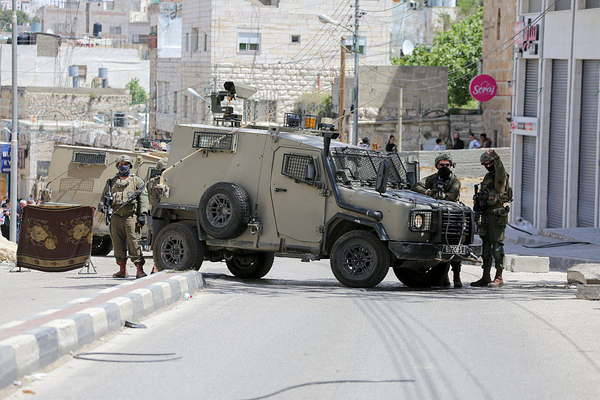
Israeli occupation forces stormed the town of Burqin, west of Jenin, at dawn on Saturday.

Local sources said that occupation forces stormed the town with military reinforcements, raided a number of homes, searched them, and ransacked their contents.

The same sources added that the occupation forces raided the homes of released prisoners, the owners of which were identified as: Abdul Latif Hamada and Sultan Khalouf.

It is noteworthy that the occupation forces frequently raid Khalouf's house under the pretext of searching for him and attempting to arrest him.

In Bethlehem, Israeli occupation forces stormed the town of Beit Fajjar, south of Bethlehem, this Saturday morning, without any arrests being reported.

It is noteworthy that the occupation forces are still holding the body of the martyr Rabi' Muhammad Yusuf Taqatqa (31 years old), who was executed yesterday evening, near the town.

The Factions Coordination Committee in Bethlehem Governorate declared a general strike today in the town of Beit Fajjar and a period of mourning throughout the governorate, in protest against the crime of field executions and in rejection of the policy of withholding the bodies of martyrs.

PALESTINE

Sat 26 Jul 2025 9:03 am - Jerusalem Time

The Red Cross calls for urgent action to stop the worsening suffering in the Gaza Strip.

The President of the International Committee of the Red Cross, Mirjana Spoljaric, called on the international community to take urgent and collective action to end the worsening humanitarian suffering in the Gaza Strip.

"There is no justification for what is happening in Gaza," Spoljaric said in a press statement issued Saturday. "The scale of human suffering and the level of violation of human dignity have exceeded all legally and morally acceptable limits."

She stressed that the continued absence of a ceasefire means further civilian casualties, noting that civilians are suffering from severe suffering due to an indiscriminate war and the resulting deprivation of the most basic necessities of life.

"The ongoing hostilities are mercilessly claiming lives, with children dying from food shortages and families being forced to repeatedly flee in search of nonexistent safety," she added, noting that the ICRC's 350 staff in Gaza face the same dire conditions to access food and clean water.

Spoljaric stressed the need to end this tragedy immediately and decisively, asserting that any political hesitation or justification for the ongoing violations will go down in history as a collective failure to maintain a minimum of humanity in times of war.

It called on states to fulfill their obligations under the Geneva Conventions, ensure respect for international humanitarian law, including refraining from transferring weapons that could be used to commit serious violations, and work to compel parties to the conflict to fully comply with international humanitarian law.

It also called for the urgent resumption of humanitarian aid throughout the Gaza Strip without hindrance or discrimination, the release of all remaining hostages, and the resumption of visits by the ICRC to Palestinian detainees in Israeli detention facilities.

She stressed that saving lives in Gaza is possible if there is political courage to respect the rules of war and ensure the protection afforded to civilians by international humanitarian law.

PALESTINE

Sat 26 Jul 2025 8:58 am - Jerusalem Time

The occupation destroys tens of thousands of tons of aid to Gaza amid a stifling famine.

The Israeli Broadcasting Corporation reported that the occupation army destroyed tens of thousands of relief supplies, including large quantities of food, intended for the residents of Gaza, amid an unprecedented state of famine in the besieged enclave.

The Israeli authority quoted military sources as saying that the destroyed aid included 1,000 truckloads of food and medical supplies.

These sources added, "There are thousands of parcels under the sun, and if they are not transported to Gaza, we will be forced to destroy them."

She claimed that the destruction of humanitarian supplies was caused by a defect in the aid distribution mechanism in Gaza.

The Israeli military's destruction of thousands of tons of aid destined for Gaza comes as the Strip is starving, with famine ravaging its population of approximately 2.3 million.

PALESTINE

Sat 26 Jul 2025 8:53 am - Jerusalem Time

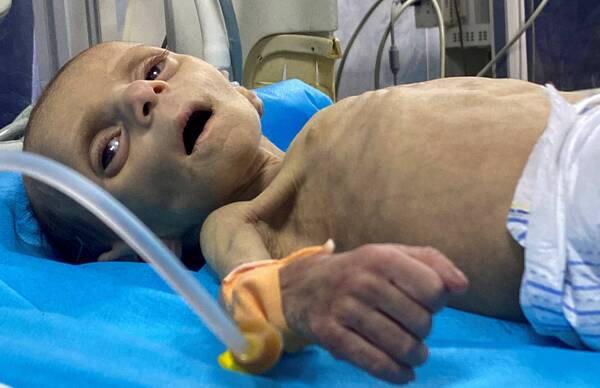
About 84 children and 32 citizens in Gaza hospitals suffer from malnutrition.

The director of the Medical Relief Organization in Gaza said this morning, Saturday, that "approximately 84 children and 32 citizens in hospitals are suffering from malnutrition."

The Director of Medical Relief warned that malnutrition among children has deteriorated to the fifth degree, which could lead to their death.

"Mothers in hospitals are unable to breastfeed due to severe malnutrition," he added.

He noted that the lack of water and sanitation facilities exacerbates skin infections among children.

He pointed out that they had exhausted all resources of medicines and painkillers in hospitals.

OPINIONS

Sat 26 Jul 2025 8:49 am - Jerusalem Time

Trump withdraws from mediation: Netanyahu is cornered and Israel's options are running out.

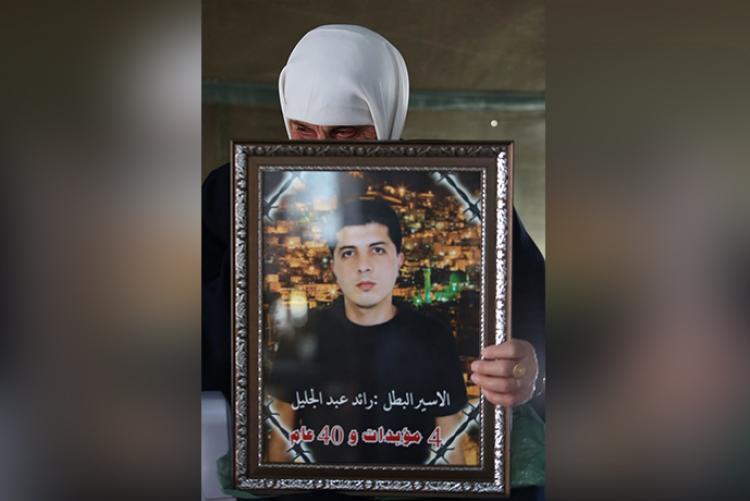
Written by the released prisoner: Raed Abdel Jalil

In a vulgar theatrical performance, former US President Donald Trump issued a bombastic statement announcing the failure of negotiations regarding the war in Gaza and officially withdrawing US mediation. He blamed Hamas and addressed Israel in inflammatory terms: “You have to finish the job and see it through.” Despite the showmanship of this statement, its contents hint at a crucial development: America has lifted the lid on Israel, and Netanyahu is now in a corner, alone in the face of a complex political and security landscape that no longer allows for maneuvering.

From absolute support to disguised abandonment

Trump's speech, while appearing to give Israel the green light to continue its war on Gaza, is, at its core, a clever political reversal of responsibility for the failure. The United States, which has led mediation through multiple channels, is well aware that the Israeli war machine has not achieved any of its stated or hidden objectives, and that continuing to support a war with no political horizon will cost it further moral and diplomatic isolation.

In this context, Trump's statement—whether consciously or not—did not put pressure on the resistance so much as it presented Netanyahu with an unavoidable obligation: You have done everything you wanted, and now you must face the consequences alone.

Israeli admission of failure

What makes this American shift even more significant is that it coincides with explicit admissions from within the Israeli security establishment. Commenting on the stalled negotiations, Ronen Manelis, former IDF spokesman and director-general of the Ministry of Strategic Affairs, said:

“We’ve tried everything… sequential track, parallel track, with and without humanitarian aid, with and without a port, with and without strategy, with overt and covert objectives — so what’s the timeline for moving forward?”

This statement is not merely a complaint about a blurred vision, but rather a frank admission of a lack of options. Israel, which has long boasted of its multiple strategic alternatives, today appears politically and militarily naked. Every scenario has been tried, and all that remains is to explode in the face of decision-makers.

Netanyahu without cover... and without a plan

Given this reality, the Israeli prime minister finds himself in an existential dilemma. After exhausting all means of pressure and coercion, and turning his back on all political initiatives, he turned to Trump for a lifeline, only to be met with the latter's dismissal and his abandonment.

Today, Netanyahu cannot:

• Declare victory, because there is no clear victory.

• Withdrawal, because it will be interpreted as a humiliating defeat.

• Continue, because it is now without real international support.


Thus, the circles were closed on him, and he became a hostage to a policy that he created himself.


The steadfastness of the resistance...and the steadfastness of the negotiator


Amid this unbalanced equation, a pivotal point emerges that is no less important than military action: the steadfastness of the Palestinian negotiator. Just as the resistance fighter perseveres on the ground, so too must those who manage the political battle, for they alone are capable of translating sacrifices into real political gains that guarantee a halt to the aggression, the opening of the crossings, reconstruction, and the achievement of something resembling a moral and political victory.

The bet now is not only on who can endure longer, but also on who has the patience to confront international blackmail.

Blood defies the sword

The war in Gaza has transcended the boundaries of conventional combat and entered a phase of breaking political will. Israel, despite its military superiority, is losing the initiative for the first time, not thanks to its armies, but to a hungry, displaced, and afflicted people who refuse to accept defeat.


What is happening today is a re-formulation of the historical equation: mere force is no longer capable of achieving victory, but rather will, awareness, and the ability to endure are what govern the future of this confrontation.


conclusion


Ultimately, Trump's statements, which were perceived as an escalation, may be an indirect declaration of Washington's withdrawal from a situation over which it has lost control. Netanyahu, who thought he could swallow Gaza with an iron fist, has found himself stuck in a political and military quagmire from which there is no escape and no support.


The generals have spoken, America has raised its hand, and all that remains for Israel is to face the truth: This is a battle that cannot be won by force alone.

Powered by Froala Editor

PALESTINE

Sat 26 Jul 2025 8:46 am - Jerusalem Time

Martyrs and wounded in Israeli raids on the Gaza Strip

Dozens of civilians were killed and injured early Saturday morning when Israeli warplanes bombed various areas in the Gaza Strip.

In the latest developments: 16 martyrs and more than 300 injured arrived at Al-Shifa Hospital, waiting for aid in Zikim.

Medical sources reported that four citizens were killed and others were injured when the occupation forces bombed a residential apartment in the Al-Rimal neighborhood.

The same sources announced the martyrdom of Mohammed Riyad Foura and his wife, Jumana Arif Foura, when debris from a building collapsed on their tent after it was targeted in Gaza.

She noted that a number of injured people waiting for aid arrived at the Al-Shifa Medical Complex in Gaza City after being directly exposed to gunfire in the Al-Waha area.

Meanwhile, Israeli warplanes launched a series of airstrikes targeting various areas of the Shuja'iyya neighborhood, east of Gaza City.

Since October 7, 2023, the Israeli occupation forces have launched an aggression against the Gaza Strip, resulting in the deaths of 59,676 citizens, the majority of whom were children and women, and the injury of 143,965 others. This is a preliminary toll, as a number of victims remain under the rubble and on the streets, unable to be reached by ambulances and rescue teams.

The occupation also commits heinous massacres against those waiting for aid, who are exposed daily to the risk of death due to random bullets and direct targeting. The number of martyrs since the start of the aid distribution points mechanism on May 27, 2005 has exceeded 1,000 martyrs, and hundreds of wounded.

Thus, the aid distribution centers of the Israeli-American Gaza Relief Foundation, a UN-rejected organization, have been transformed into mass killing traps, not to mention the deliberate violation of citizens' dignity, forcing them to flee amid catastrophic humanitarian conditions.

PALESTINE

Fri 25 Jul 2025 9:53 pm - Jerusalem Time

The US Embassy denies reports of the transfer of Gaza residents to Libya.

The US Embassy in Libya has denied media reports of plans or efforts to transfer residents of the Gaza Strip to Libya, stressing that this news is false. In a brief statement published on its official account on the X platform on Friday, the embassy said: "Fake news: The embassy confirms that allegations that the United States is seeking to transfer residents of Gaza to Libya are inflammatory and completely false." The US denial comes after the conclusion of a two-day visit to Libya by the US Special Advisor to the President for Middle East and Africa, Massad Boulos, during which he met in Tripoli last Wednesday with the head of the Presidential Council, Mohammed Al-Menfi, and the head of the interim Government of National Unity, Abdul Hamid Dabaiba. He then visited Benghazi the following day, where he met with retired Libyan General Khalifa Haftar and the Speaker of the House of Representatives, Aguila Saleh.

The US Embassy issued a similar statement on May 18, denying an NBC News report about US plans to transfer Gaza residents to Libya. The embassy said at the time that "the report about alleged plans to transfer Gaza residents to Libya is false." The US channel relied on five sources it said were informed, who reported that the Trump administration was working on a plan to permanently transfer up to one million Palestinians from the Gaza Strip to Libya. The report stated that the plan was under consideration and being discussed with the Libyan side, without naming the Libyan parties involved.

Reports of Washington's intention to support the transfer of Gaza residents to several countries, including Libya, had previously been circulated by international media outlets and were met with negative reactions from Libya. On February 21, the Foreign Affairs and International Cooperation Committee of the Libyan House of Representatives issued a statement rejecting what it described as "involving Libya" in projects aimed at deporting residents of the Gaza Strip. The committee affirmed that the allegations circulating in the Israeli media on this subject are "unacceptable," noting that Libya is not interested in any arrangements related to the resettlement of the Palestinian population on its territory.

On February 6, the two Libyan governments—the interim Government of National Unity in Tripoli and the government appointed by the House of Representatives in the east—issued statements announcing similar positions. The government in Benghazi affirmed its absolute rejection of any attempts at forced displacement or resettlement of Palestinians within Libyan territory and called on the international community to reject such proposals. The government in Tripoli also categorically rejected any policies aimed at changing the demographic composition of the Palestinian territories or transferring the population of the Gaza Strip to other countries, emphasizing its commitment to international legitimacy resolutions and supporting the inalienable rights of the Palestinian people.


Powered by Froala Editor

ARAB AND WORLD

Fri 25 Jul 2025 9:51 pm - Jerusalem Time

Qatar and Egypt affirm their commitment to continuing mediation efforts in Gaza.

The Qatari Ministry of Foreign Affairs announced on Friday that Qatar and Egypt affirm their continued tireless efforts in mediating the Gaza Strip.


The Qatari Foreign Ministry said in a statement: "Qatar and Egypt confirm that some progress has been made in the latest round of intensive negotiations in Gaza, which lasted three weeks."


She added, "Suspending the Gaza negotiations to hold consultations before resuming dialogue is normal in the context of these complex negotiations."


The two countries called for not being swayed by leaks circulating in the media in attempts to influence the course of the negotiations.


Qatar and Egypt affirmed their commitment to continuing mediation efforts in Gaza, leading to a comprehensive ceasefire agreement.


Powered by Froala Editor

PALESTINE

Fri 25 Jul 2025 9:44 pm - Jerusalem Time

A young man was killed by Israeli occupation forces south of Hebron, and his body was seized.

A young man died on Friday evening from wounds he sustained from Israeli occupation forces' bullets, south of Hebron.

The Ministry of Health reported that the General Authority of Civil Affairs informed it of the martyrdom of the young man, Wadih Muhammad Othman Samamra (19 years old), by the occupation forces' bullets near the town of Dhahiriya, and the detention of his body.

Our correspondent reported that the occupation forces stormed the town of Dhahiriya with several military vehicles and raided the martyr's home in the Al-Baha area.

Earlier, security and local sources told WAFA that Israeli occupation forces shot Samamra with live bullets near the Shama settlement, built on the lands of the towns of Adh Dhahiriya and As Samu, south of Hebron, claiming he had attempted to carry out a stabbing attack. They then arrested him while he was wounded. The occupation declared the area a closed military zone and increased its presence in the area.

Our correspondent reported that the martyr Wadih is the brother of the martyr Sand, who was martyred two years ago in the same place.

In parallel with the war of extermination being waged in the Gaza Strip, the Israeli occupation army and settlers have escalated their attacks in the West Bank, including occupied Jerusalem, leading to the martyrdom of more than 1,000 citizens since October 7, 2023, the injury of approximately 7,000, and the arrest of more than 17,000, according to official data.

Powered by Froala Editor

PALESTINE

Fri 25 Jul 2025 5:18 pm - Jerusalem Time

Trump confirms that Hamas does not want an agreement, and Netanyahu: We are studying options to return the hostages.

US President Donald Trump claimed that the Islamic Resistance Movement (Hamas) does not truly want to reach a ceasefire agreement in the Gaza Strip, while Israeli Prime Minister Benjamin Netanyahu confirmed that Israel is considering options for returning the prisoners.

Trump said in remarks today from the White House garden that there will have to be a fight and the elimination of Hamas, as he said, "It doesn't want to reach a deal, and I think it wants to die."

He added that his administration had withdrawn from the Gaza negotiations, which he described as unfortunate, accusing Hamas of not wanting to reach an agreement because it knew what would happen after all the hostages were returned.

He explained that he was aware of the difficulty of recovering the remaining prisoners in Gaza, because their release would deprive Hamas of its remaining bargaining chips, as he put it.

He said he spoke with Netanyahu about sending aid to the Gaza Strip, but declined to go into details, saying, "I can't reveal what I spoke with Netanyahu about, and it was somewhat disappointing."

He noted that "the families of the Israeli prisoners asked him to help return their sons, including the dead, and we did so."

He stressed his disregard for French President Emmanuel Macron's announcement regarding recognition of a Palestinian state, saying it has no weight and his words carry no weight.

Trump made these remarks to reporters at the White House a day after his Middle East peace envoy, Steve Witkoff, said the Trump administration had decided to return its negotiating team to the United States for consultations following the latest proposals presented by Hamas.

For his part, Israeli Prime Minister Benjamin Netanyahu said on Friday that Israel is now studying, with its ally the United States, alternative options for returning prisoners from Gaza, ending Hamas' rule in the Gaza Strip, and ensuring lasting peace for Israel and the region, he said.


Powered by Froala Editor

PALESTINE

Fri 25 Jul 2025 5:16 pm - Jerusalem Time

International news agencies: Our correspondents in Gaza are starving.

  1. Washington - Saeed Erekat

Four of the world's largest news agencies issued a rare joint statement on Thursday, warning that their journalists in Gaza cannot feed themselves due to the US-backed Israeli blockade, while Palestinians continue to starve to death under the siege in the devastated territory.


"We are deeply concerned for our journalists in Gaza, who are increasingly unable to feed themselves and their families," said Agence France-Presse, Associated Press, Reuters, and BBC News. "For months, these freelance journalists have been the world's eyes and ears on the ground in Gaza. Now they face the same difficult conditions as those they report on."


The news agencies added that journalists "suffer deprivation and hardship in war zones. We are deeply concerned that the threat of famine is now one of these risks." They urged "the Israeli authorities to allow journalists to enter and exit Gaza," and stressed "the need for adequate food supplies to reach the population there."


It is noteworthy that in addition to starvation, journalists in Gaza continue to be targeted by the Israeli occupation army. On Wednesday, Walaa al-Jabari, who worked for a local news agency, was killed along with her husband and four children. Al-Jabari was pregnant at the time of her death, and the Government Media Office in Gaza said her death brought the total number of journalists killed by Israel since October 7, 2023, to 231. The news agencies' statement came as the Ministry of Health in Gaza announced the deaths of two more Palestinians from starvation in the past 24 hours. Hunger deaths have increased over the past week, with dozens, mostly children, dying from malnutrition due to Israeli-imposed restrictions and the killing of aid seekers. The Ministry of Health said it had recorded a total of 113 deaths from starvation.


Palestinians in Gaza continue to be shot at while trying to obtain food aid. Since the end of May, more than 1,000 aid seekers have been killed by the Israeli military, most of them near distribution sites run by the US- and Israeli-backed Gaza Humanitarian Foundation (GHF).


Regarding the World Health Organization's announcement on Wednesday that 21 children under the age of five were among those who have died from malnutrition so far this year, and the calls by more than 100 organizations for lifting all restrictions on aid flows, opening all land crossings, and resuming the UN-led humanitarian response, is the United States considering any further steps to increase aid flows to Gaza? State Department Spokesperson Tommy Piggott responded on Thursday by placing the blame on Hamas for causing the current famine.


"Ultimately, our vision is to get nearly 90 million meals into Gaza during a war zone, and to be able to deliver that aid in a way that Hamas doesn't plunder. That's what we saw. We're certainly aware of that - and we certainly want to see an end to the devastation that's been done to Gaza. That's why we saw this commitment to getting aid to those who need it in a way that Hamas doesn't exploit," Pigott said.


He added, "This commitment still stands. It's a commitment from President Trump and Secretary of State Rubio. That's why we supported the Gaza Humanitarian Foundation, and we continue to support it. That's why we saw the distribution of 90 million meals, and that's why we've renewed our commitment to ensuring that aid reaches the people of Gaza in need, and the people of Gaza are Hamas's first victims, as is evident here once again."

Powered by Froala Editor

PALESTINE

Fri 25 Jul 2025 2:15 pm - Jerusalem Time

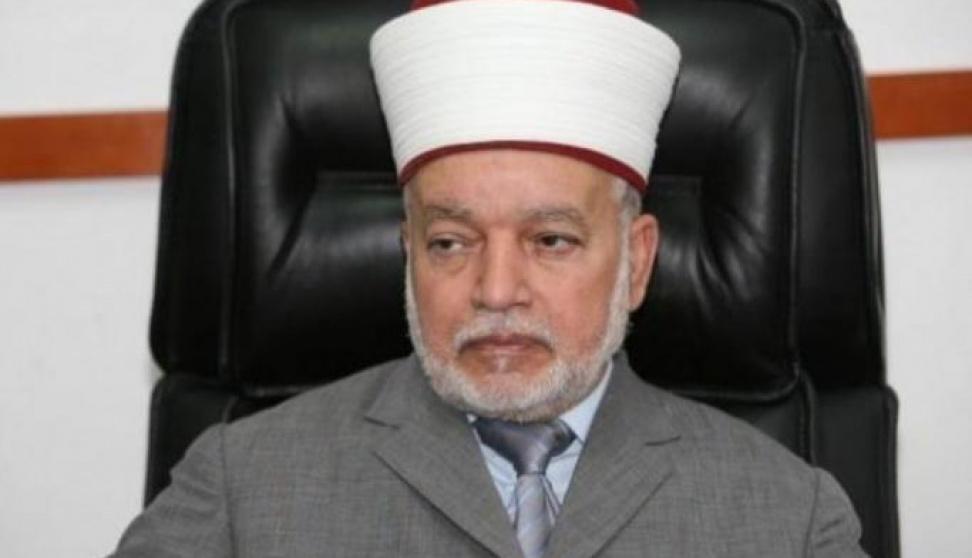
The occupation forces arrest the Mufti of Jerusalem from Al-Aqsa Mosque.

Today, Friday, Israeli occupation forces arrested the Grand Mufti of Jerusalem and the Palestinهian territories, and preacher of the blessed Al-Aqsa Mosque, Sheikh Muhammad Hussein, from inside the courtyards of the blessed Al-Aqsa Mosque in occupied Jerusalem.

The Islamic Endowments Department reported that Israeli police arrested Sheikh Muhammad Hussein after delivering the Friday sermon at Al-Aqsa Mosque and took him to the Mughrabi Gate.

Powered by Froala Editor

PALESTINE

Fri 25 Jul 2025 12:52 pm - Jerusalem Time

Hot water torture and forced drinking: horrific testimonies of the occupation's torture of Gaza detainees.

The Commission of Prisoners' Affairs and the Palestinian Prisoners' Club published new testimonies from a group of detainees from the Gaza Strip who were visited during July 2025. These testimonies once again reflect the unprecedented level of crimes they were subjected to during their arrest and interrogation, in addition to their current detention conditions, the medical violations they face, systematic starvation, and ongoing deprivation and theft inside detention centers and camps. The legal teams obtained these brief testimonies during visits to the following detention centers: Negev, Ofer, Sde Teiman, and Al-Maskobiyya.

Once again, these ongoing testimonies confirm that they represent only a fraction of the hundreds of testimonies documented by detainees in Gaza, who were subjected to torture, abuse, and humiliation, including sexual assault, resulting in the deaths of dozens, while others remain subjected to enforced disappearance. One testimony included prison guards pouring hot water on a detainee's body, and another spoke of detainees being forced to undress and severely beaten. A detainee also reported being forced to drink alcohol, and another was subjected to psychological torture that drove him to attempt suicide after an interrogator informed him of the deaths of his family members. During his visit, it was revealed that his family was fine. Another detainee was attacked by a police dog, causing injury.

Testimonies from inside the detention centers:

Detainee (M.Y.): “They poured hot water on my body.”

Detainee M.Y. said: “I was arrested in February 2024, subjected to field investigation, and then transferred to the Sde Teiman camp for 25 days, then to a camp near Jerusalem, and later to Ofer prison, and then to the Negev prison. Throughout this period, I was subjected to all forms of torture, and even when I was transferred to the Negev prison, hot water was poured on my body. Today, I am detained in the tent section of the Negev prison, where 27 detainees are held in each tent under extremely harsh conditions. We suffer from constant assault, daily starvation, and humiliation. The food is inedible, so we are forced to fast and collect it for one evening meal. We are also denied medical treatment, even for scabies, which the detainees contracted and which worsened due to the lack of hygiene and the lack of preventative and treatment options.”

Detainee (M.Y.): “I was completely stripped and forced to drink alcohol.”

The detainee (M.Y.) said: “I was arrested in February 2024, from the safe passage, then transferred to the Gaza Strip for 25 days, then to a camp near Jerusalem, then to the Ofer camp, where I stayed for 60 days, and then to the Negev prison. In the Gaza Strip, I was beaten with a sharp object, and my wound required metal stitches that remained in my head for 119 days, causing inflammation in my scalp. In the camp near Jerusalem, I was completely stripped and forced to drink alcohol.”

Detainee (H.N.): “I tried to commit suicide after the investigator informed me that my family had been killed.”

The detainee (H.N.) said: “I was arrested in December 2024, through the Civil Administration checkpoint, and was severely beaten and stripped of my clothes. The interrogator told me that the occupation army had killed all of my family members, which caused me a severe psychological crisis that led me to attempt suicide in the cell, had it not been for the intervention of my colleagues. During my visit, the lawyer told me that my family was fine, and I broke down in tears and could not believe what I was hearing.”

Detainee (H.D.): "We live in a state of terror and fear around the clock."

Detainee H.D. said: “I was arrested in October 2024, through the Civil Administration checkpoint, and was subjected to field interrogation. I was then detained in the barracks in the Gaza Strip for 110 days, before being transferred to the Negev prison. We are still living in extremely harsh conditions, and are subjected to daily inspections, assaults, and humiliation. We are forced to kneel with our hands behind our backs during the so-called “number-security check.” Diseases are widespread, and fear and terror are constant, in addition to being denied medical treatment and deliberately starved.”

Detainee (A.W.): “I suffered severe damage to my eyesight as a result of the beating.”

Detainee (A.W.) said: “I was arrested in February 2024, from a school in Khan Yunis, where the occupation army had arrested more than 100 citizens. I was transferred to barracks for 23 days, then to a detention center near Jerusalem, then to Ofer Prison, and later to Negev Prison. During my transfer from Ofer to Negev, I was hit with handcuffs on my head, which led to severe weakness in my vision in my left eye, constant headaches, and loss of balance. I also contracted scabies, which returned after I recovered due to the unsanitary conditions.”

Detainee (Kh.Y.): “My leg was broken and I did not receive any treatment.”

Detainee (K.Y.) said: "I was arrested in December 2023, from a school in the Shuja'iyya neighborhood after being displaced. I was transferred to the barracks in the Gaza Strip, and then to the Negev prison. During my arrest, I was severely beaten, causing a fracture in my right leg. I did not receive any treatment despite the severe pain. I was not even given painkillers. I have difficulty walking and constant pain."

Detainee (H.R.): “A police dog attacked me and bit my foot.”

Detainee (H.R.) said: “I was arrested in October 2024, from Rafah, and was subjected to field interrogation, then I was stripped of my clothes. A police dog attacked me and bit my foot. I was later transferred to the Gaza Strip, where I was subjected to the “disco” interrogation and other interrogations by the intelligence services, then to the Ofer camp, then to the “Moscobiyya” cells, where I was held in solitary confinement for four months, and I was subjected to military interrogations in “Ashkelon”. Just a week ago, I was brutally beaten with batons.”

Key facts about Gaza detainees:

Since the beginning of the war of extermination, human rights organizations have been unable to obtain an accurate figure for the number of people arrested in Gaza as a result of enforced disappearance, but the number is estimated in the thousands.

The testimonies of Gaza detainees are among the most brutal, given the scale of the crimes committed against them.

The occupation established new camps specifically to hold detainees from Gaza, most notably: Sde Teiman, Anatot, Ofer Camp, Naftali, and the Rakefet section under Ramle Prison.

The majority of Gaza detainees are held in the Negev Prison and the Ofer Prison/Camp.

According to the Israeli Prison Service, as of early July 2025, the number of Gaza detainees classified as "unlawful combatants" reached 2,454, the highest number recorded since the beginning of the genocide. This figure does not include detainees held in military camps, but only those under the administration of the Prison Service.

The "Unlawful Combatant Law" constitutes a key tool in legitimizing the crime of enforced disappearance. It violates international law in substance and structure and reinforces the widespread use of torture against detainees in Gaza.

In this context, the Prisoners' Authority and the Prisoners' Club affirm that the occupation continues its genocide and crimes in full view of the world, without any real change that contributes to stopping the genocide and the comprehensive aggression against our people, one of the forms of which are the ongoing crimes against prisoners and detainees. Indeed, the passage of more time in the continuation of the genocide means that the state of impotence that human rights organizations suffer from has gone beyond this expression, and questioning the feasibility of the existence of a human rights system has become our duty, with the expansion of the concept of the state of exception that the Israeli occupation enjoys at the international level.

PALESTINE

Fri 25 Jul 2025 12:43 pm - Jerusalem Time

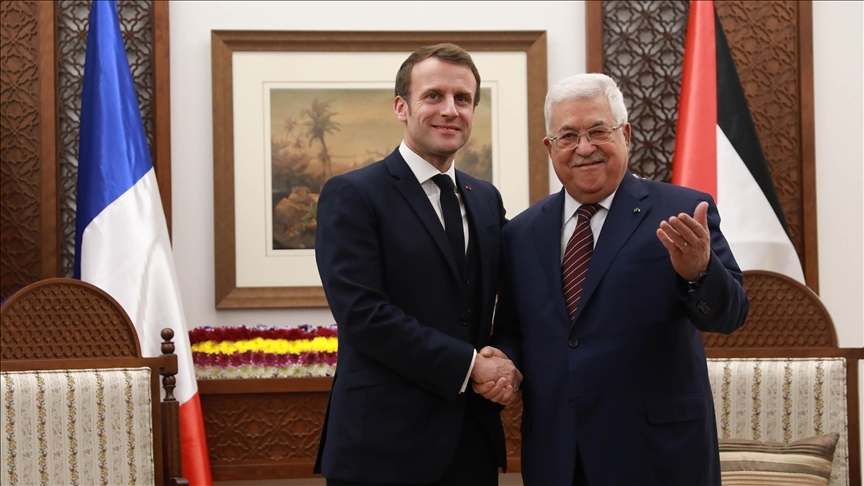
The President welcomes President Macron's decision to recognize the State of Palestine next September.

Palestinian President Mahmoud Abbas welcomed French President Emmanuel Macron's message, in which he confirmed that his country will recognize the State of Palestine during the United Nations General Assembly next September.

The President expressed his appreciation for this courageous step, which will contribute to establishing peace based on the two-state solution in accordance with international legitimacy and international law.

The President expressed his gratitude and appreciation for the Saudi efforts and positions, led by Custodian of the Two Holy Mosques King Salman bin Abdulaziz and his Crown Prince and Prime Minister Prince Mohammed bin Salman, which culminated in France's commitment to recognize the State of Palestine.

The President commended the efforts of the Arab-Islamic Foreign Ministers Committee, including all its members, the International Coalition to Support the Implementation of the Two-State Solution, and all those involved in the working groups and participants in the international peace conference to be held in New York later this month.

He said that this step is a victory for Palestinian rights and reflects France's commitment to supporting the Palestinian people and their inalienable and legitimate rights to their land and homeland, and its commitment to international legitimacy and law.

He stressed that "France's decision represents a contribution from countries that believe in the two-state solution as an option that represents international will and legitimacy, to saving this solution, which is being systematically destroyed by Israeli policies, particularly through the ongoing war of genocide in the Gaza Strip."

The President urged the countries of the world, especially European countries that have not yet recognized the State of Palestine, to recognize the State of Palestine in accordance with the internationally recognized two-state solution based on international legitimacy resolutions, and stressed the importance of supporting the State of Palestine's attainment of full membership in the United Nations.

PALESTINE

Fri 25 Jul 2025 12:42 pm - Jerusalem Time

A child died of his wounds after being shot by the occupation forces last Wednesday in Nablus.

A child died Friday morning from wounds he sustained when Israeli occupation forces stormed the Al-Ain refugee camp, west of Nablus, last Wednesday.

Medical sources told WAFA that 14-year-old Mohammed Khaled Hassan Mabrouk died of a serious injury he sustained in the thigh during the occupation forces' raid on the Al-Ain refugee camp, west of Nablus, on Wednesday.

PALESTINE

Fri 25 Jul 2025 12:41 pm - Jerusalem Time

A child died of famine and malnutrition in the Gaza Strip.

Medical sources reported on Friday that a child died of famine and malnutrition in the Gaza Strip.

Sources at the Baptist Hospital indicated that the child, Abdul Qader Al-Fayoumi, died of starvation and malnutrition, bringing the death toll from famine to 114.

It is noteworthy that cases of malnutrition and famine are arriving at hospitals in Gaza at every moment, as 900,000 children in Gaza are suffering from hunger, 70,000 of whom have entered the malnutrition stage.

It is noteworthy that the United Nations Relief and Works Agency for Palestine Refugees (UNRWA) had warned that malnutrition among children under the age of five had doubled between March and June, as a result of the Israeli blockade of the Gaza Strip.

She explained that UNRWA health centers and medical points conducted approximately 74,000 malnutrition tests for children during this period, identifying approximately 5,500 cases of global acute malnutrition and more than 800 cases of severe acute malnutrition.

PALESTINE

Fri 25 Jul 2025 12:39 pm - Jerusalem Time

10 dead in the ongoing occupation bombing of the Gaza Strip

Ten civilians were killed and others injured on Friday when the Israeli occupation forces bombed several areas in the Gaza Strip.

Wafa News Agency reported that three citizens were killed as a result of the occupation's bombing of the Sudanese area, northwest of the Gaza Strip.

He added that Israeli warplanes launched two separate raids on the Al-Tuffah neighborhood, northeast of Gaza City, killing three civilians and wounding others. Meanwhile, two civilians were killed and others wounded when an Israeli drone bombed a group of civilians near the Salah al-Din Mosque in the Al-Zeitoun neighborhood, southeast of Gaza City.

Two citizens were also killed and others injured when the occupation forces bombed Al-Rimal School west of Gaza City and a tent housing displaced people near the Al-Maslakh area west of Khan Yunis.

Israeli warships fired several shells towards the Gaza City beach, coinciding with intense artillery shelling of the eastern areas of the Zeitoun, Shujaiya, and Tuffah neighborhoods east of Gaza City.

OPINIONS

Fri 25 Jul 2025 12:05 pm - Jerusalem Time

What are the main gaps between the Israeli and the Hamas positions in the negotiations and how to conclude the negotiations positively

Gershon Baskin

July 25, 2025


The bottom line is that Israel and Hamas have goals which are diametrically opposed. Hamas wants to end the war, have a full Israeli withdrawal from all of Gaza, and a very large release of Palestinian prisoners, including all of the prisoners serving life sentences for killing Israelis and all of the Gazan prisoners who have been arrested since October 7, including people who were involved in the killing and pillaging of that horrible day inside of Israel, and the return of international aid according to the parameters that existed during the ceasefire of February-March, with the explicit addition of the reopening of the Rafah crossing for movement of people and goods in both directions. In exchange for Hamas’s demands, Hamas is prepared to release all 50 Israeli hostages at one time. Hamas is prepared for there to be a Palestinian professional civilian government take control of Gaza “with all authorities” (as they say) and that Hamas will not be part of that government.  Hamas has not said that they are willing to lay down their weapons, although in private talks behind the scenes with other Palestinians, they have said that armed Hamas personnel could be absorbed into a new Palestinian police/security force. Furthermore, Hamas has agreed to international supervision of aid distribution including possible international inspections by Egyptian and/or Qatari personnel at the Rafah crossing and inside of Gaza.


Israel does not agree to end the war and therefore it forced the talks to focus on a partial deal for 60 days of ceasefire and the release of half of the living and not living hostages. Israel is prepared to redeploy its forces to the almost the same lines that they held prior to the breakdown of the ceasefire in March, but Israel is not prepared to withdraw from all of Gaza. Israel is not prepared to have the Rafah crossing reopened - at least not controlled anyway by the Palestinians in Gaza or by Hamas. Israel wants the aid distribution to continue to be controlled by the Israeli formed, US Evangelical supported Gaza Humanitarian Foundation which does not have the experience or the capacity to deliver the aid to 2.2 million Gazans. Israel is opposed to releasing 20 Palestinian prisoners serving life sentences for every living hostage. Israel is opposed to guaranteeing that after 60 days the ceasefire would be transformed into a permanent ceasefire, essentially ending the war.  Israel is not opposed to talk about ending the war, even now – but only talk -no action. Israel is opposed to Hamas demanded guarantees from President Trump that Israel would not resume the war after 60 days.


The missing piece in the Gaza puzzle is the Palestinian decision of who and what will govern Gaza instead of Hamas. If there was a Palestinian decision of a viable candidate to form a legitimate Palestinian government who is committed to non-violence, disarming Hamas, peace with Israel based on two states, and someone acceptable to the Gazans, Hamas’s tough positions in the negotiations would crash.   There is a clear failure on the part of the leadership of the Palestinian Authority in determining the governance of Gaza now.  Gaza is Palestinian and will remain Palestinian and part of the Palestinian state. Until Palestinian elections can be held (which according to Abbas will be within 12 months), the responsibility to determine the governance of Gaza is Palestinian - not Israeli, not European and not American. But the person or mechanism selected by the Palestinian President must be someone with the qualifications, the determination, the ability to be accepted by the Gazans and someone dedicated to rebuilding Gaza on the basis of peace with Israel under the solution of two states. It must be someone dedicated to non-violence and to disarming any group in Gaza which is not part of the Palestinian Gazan Government.


This is a Palestinian decision and not mine, but it is no secret that I believe that there is one Palestinian who is legitimate, well known, originally from Gaza, respected internationally, able and willing to do the job, and that is Dr. Nasser Alkidwa. I think that Dr. Nasser should be invited to the White House to get the international backing required to force President Abbas to agree to appoint him as head of the temporary government for Gaza.  Dr. Nasser was the PLO representative in the UN for 17 years.   He served as a PA foreign minister.   He is the nephew of Yasser Arafat which gives him Palestinian public legitimacy.  He signed a joint vision paper with former Israeli Prime Minister Olmert and has presented it in public to more than 30 heads of State and foreign ministers.  He is in the opposition to Mahmoud Abbas because of his strong opposition to autocracy and corruption.  He is living with his French wife in Nice in exile and is planning to return to the West Bank in the near future. Two weeks ago, he was in Cairo holding meetings with representatives from all of the Palestinian factions. This is the missing link that could enable ending the war. Israel would no longer have the real excuse that an Israeli withdrawal leaves Hamas in control of Gaza.  It doesn’t have to be Dr. Nasser – it is the Palestinians’ decision, but that decision needs to be taken now – it should have been taken months ago – but now it is extremely urgent  - if the Palestinians want to bring an end to the war.


If the Israeli-Hamas negotiations were transformed into negotiations for ending the war, the terms of the deal change and the Hamas demands can be viewed differently. There must be a full Israeli withdrawal from Gaza.  Israel can protect Israel from the border.  It is legitimate for Israel to determine a reasonable security perimeter on the Gaza side of the border for a limited time, without Israeli troops inside of Gaza until there is a peaceful government in Gaza with an effective security force. This would be a no-entry zone with the threat of being shot. By the Israeli army from the Israeli side of the border. This is one of the necessary consequences of October 7.  It is also reasonable to demand an effective internationally supervised mechanism for inspection and control of the Rafah border crossing between Gaza and Egypt.   Egypt will refuse to have any international presence on its side of the border, but it is reasonable to have it in place on the Gaza side of the border.  There was an agreement in the past for the Rafah Crossing (back in 2005) – that agreement should be reviewed and modified if necessary or a new agreement should be reached in its place.  There should be no Israeli presence on the Rafah border crossing or dealing with the distribution of aid in Gaza after Israeli withdrawal from Gaza. Goods entering Gaza via Israel can be inspected by Israel to ensure that no weapons are being smuggled into Gaza or the means for producing new weapons.


With regards to the release of Palestinian prisoners – this is a very hard issue for both societies, yet in order to get the hostages home, Israel will have to release prisoners – even those serving life sentences for killing Israelis. My suggestion based on what I also believed during the time of the Schalit deal (although my opinion was not listened to) – the most dangerous prisoners should be released to their homes in the West Bank and not deported to areas outside of the ability to have effective oversight on those released prisoners. If they violate the terms of their release, which means that they if they return to violence or violent activities in any form they can be rearrested by Israel.  In 2014 Israel rearrested 68 former Hamas prisoners in the West Bank for violating the terms of their release. If the released prisoners are deported from the area, Israel loses its ability to have oversight and they become potentially much more dangerous. There is no possibility of bringing home the Israeli hostages without releasing Palestinian prisoners.   That has to be accepted.


Lastly, perhaps Netanyahu and his government expect that continued war will bring Hamas to surrender – this will never happen.  Hamas will never raise the white flag and admit defeat and turn over their weapons to Israel.  The only way of bringing Hamas down is by the will of the Palestinian people with the support of the Arab nations. Remember, not one dollar of money for reconstruction will enter Gaza if Hamas remains in control of Gaza – militarily or in terms of governance. The people of Gaza know this and they hold not only Israel responsible for the destruction of Gaza and their lives, the hold Hamas responsible as well and they don’t want Hamas ruining their lives anymore.


PALESTINE

Fri 25 Jul 2025 8:17 am - Jerusalem Time

Hamas expresses surprise at Witkoff's statements and affirms its commitment to negotiations.

The Islamic Resistance Movement (Hamas) expressed its surprise on Thursday evening at the statements made by US envoy Steven Witkoff, despite what it described as its positive and constructive stance, which was welcomed by the mediators. Hamas affirmed its commitment to completing the negotiations.

The movement stressed that it submitted its final response after extensive consultations with Palestinian factions, mediators, and friendly countries.

Hamas indicated that it responded positively to all the comments it received, reflecting its sincere commitment to ensuring the success of the mediators' efforts and constructive engagement with all initiatives presented, according to the statement.

Hamas also affirmed its commitment to continuing negotiations to overcome obstacles and reach a permanent ceasefire agreement.


ARAB AND WORLD

Fri 25 Jul 2025 8:14 am - Jerusalem Time

US and Israeli anger over France's decision to recognize the state of Palestine

US Secretary of State Marco Rubio expressed Washington's "strong" rejection of what he described as "French President Emmanuel Macron's plan" to recognize a Palestinian state, describing the decision as "reckless."

The US Secretary of State added that this step serves "nothing but Hamas propaganda," as he described it, saying it hinders efforts to "achieve peace."

Israeli officials, led by Prime Minister Benjamin Netanyahu, have attacked the French president's decision to recognize the State of Palestine next September.

In a statement issued by his office, Netanyahu "strongly" condemned Macron's decision to recognize a Palestinian state.

In turn, Israeli Justice Minister Yariv Levin called for imposing Tel Aviv's sovereignty over the settlements in the occupied West Bank.

Defense Minister Israel Katz also attacked the French decision, describing it as "shameful and a surrender to terrorism."


PALESTINE

Fri 25 Jul 2025 8:13 am - Jerusalem Time

A journalist was killed when the occupation forces bombed his tent in Gaza City.

Medical sources announced tonight that journalist Adam Abu Harbid was killed when Israeli warplanes bombed his family's tent in the Yarmouk area of central Gaza City.

The official WAFA news agency reported that the children of journalist Abu Harbid sustained varying degrees of injuries as a result of the bombing. He is displaced from the town of Beit Hanoun in the northern Gaza Strip and is living in a tent in Gaza City.

The occupation forces continue to target and kill journalists in the largest massacre against journalists in modern times. Yesterday, Wednesday, pregnant journalist Walaa al-Jaabari, her five children, and her husband, Amjad al-Shaer, were killed. The intensity of the bombing caused the fetus to come out of her womb.

This brings the number of journalists killed since the beginning of this year until the end of last June to 35.

According to the Journalists Syndicate, Israeli occupation forces have killed 229 journalists since the start of the war of extermination in the Gaza Strip on October 7, 2023.

OPINIONS

Fri 25 Jul 2025 8:08 am - Jerusalem Time

From beheading to breaking the spine...the occupation's new strategy

Fadi Abu Bakr

Over the past decades, the Israeli occupation has failed to eliminate Palestinian national liberation movements through a "decapitation" strategy, which relied on assassinating leaders and destroying organizational structures. Fatah and other factions within the Palestine Liberation Organization (PLO), as well as Hamas and Islamic Jihad, have remained steadfast despite all the blows.

However, Hamas's shift in behavior, particularly through the October 7, 2023 operation, which was politically and strategically ill-considered, provided the Israeli occupation with the pretext it was waiting for to shift to a destructive strategy, which can be called "breaking the backbone." The occupation was no longer satisfied with assassinating leaders or destroying the military and organizational structure, but rather moved towards targeting the entire Palestinian existence through mass killing, starvation, and the systematic destruction of the social and economic infrastructure, with the aim of displacing the population and undermining the foundations of steadfastness, in an attempt to break the collective will and empty the land of its people, under the cover of confronting the "existential threat" promoted by the occupation leaders.

In contrast, the world stands by as a spectator. One betrayal is public, another is hidden. Hamas's decision to immediately engage in the truce agreement in Gaza, no matter how difficult or costly it may be, is now essential to halt the massacre of starvation and the blackmail of mercenaries and warlords. Continuing to confront this war in the Hamas-style way, amidst this scale of destruction and humanitarian catastrophe, is not heroic, but rather political and moral suicide. Halting today does not mean the end of resistance in its broadest and most comprehensive sense. Rather, it is a vital necessity to preserve what remains, begin to rethink the path, and move from a logic of reaction to a logic of balanced political action. Stopping the massacre, preventing displacement, and alleviating the suffering of civilians must be priorities that cannot be postponed, no matter the cost of the decision.

Today, the occupation seeks to shatter the collective will of the Palestinians, but it ignores the fact that this people, having endured successive catastrophes, has been reborn each time. The current battle cannot be resolved solely with weapons. Rather, it requires political acumen, national unity, and a vision that transcends factionalism and reclaims the national project from the rubble, ensuring that it reflects the aspirations and hopes of the people, not the calculations of players in the dark.

Our battle with the Israeli occupation is ongoing and long, but its resolution is not always achieved on the ground. Sometimes, it is achieved through a decision taken with courage and responsibility, to save what remains of life and to keep the flame of struggle burning without devouring its owners.

OPINIONS

Fri 25 Jul 2025 8:07 am - Jerusalem Time

The Knesset's symbolic decision is a legal and political prelude to the actual annexation declaration.

Rasim Obeidat

The Israeli Knesset's decision, taken on Wednesday, July 23, 2025, by a majority of 71 votes, excluding the Arab parties, means that two-thirds of the Knesset members support annexation and Judaization. The decision calls on the Knesset to the government to translate this decision into action on the ground. In practice, this decision is not a surprising step, and although it is merely a symbolic announcement, it upsets the political balance and entails many risks. It constitutes a legal and political prelude to the actual annexation process, which Ben-Gvir and Smotrich preceded with practical steps on the ground, by establishing, legalizing, and expanding more settlement outposts and settlements, even in the heart of the West Bank, dismembering Palestinian land, restricting Palestinian movement on the roads, preventing Palestinian construction in Area C, stripping the Palestinian Authority of its administrative powers over Area B, strengthening religious settlement in the West Bank by establishing synagogues and Jewish cemeteries, and what is known as pastoral settlement, seizing the largest area of Palestinian land, confiscating 24,000 dunams of West Bank land, and carrying out the largest operation of geographic "engineering." And demographics in the northern West Bank, through systematic ethnic cleansing, expulsion, displacement and demolition of entire neighborhoods in the Tulkarm and Nur Shams refugee camps and the Jenin refugee camp, and Smotrich giving the residents of the West Bank a choice between the three worst options: expulsion and displacement outside the borders of Palestine, killing in the field, or remaining as water carriers and woodcutters for Israeli society, after isolating them in scattered islands in the vast Israeli ocean. Let's not forget the decision to change the name of the West Bank to the State of Judea and Samaria, and the non-recognition of the Palestinian people, and the claim that this is an invention less than a hundred years old, and the return of settlements to the four settlements that were evacuated in northern Jenin, in what was known as the disengagement from the Gaza envelope settlements in 2005, the settlements of Homesh, Kadim, Sanur and Ganim.

Israel has also enacted laws, one of which considers the United Nations Relief and Works Agency for Palestine Refugees in the Near East (UNRWA) an illegal organization with which dealings are prohibited. It also revokes all benefits and privileges granted to its members, and prohibits it from operating in areas under Israeli sovereignty.

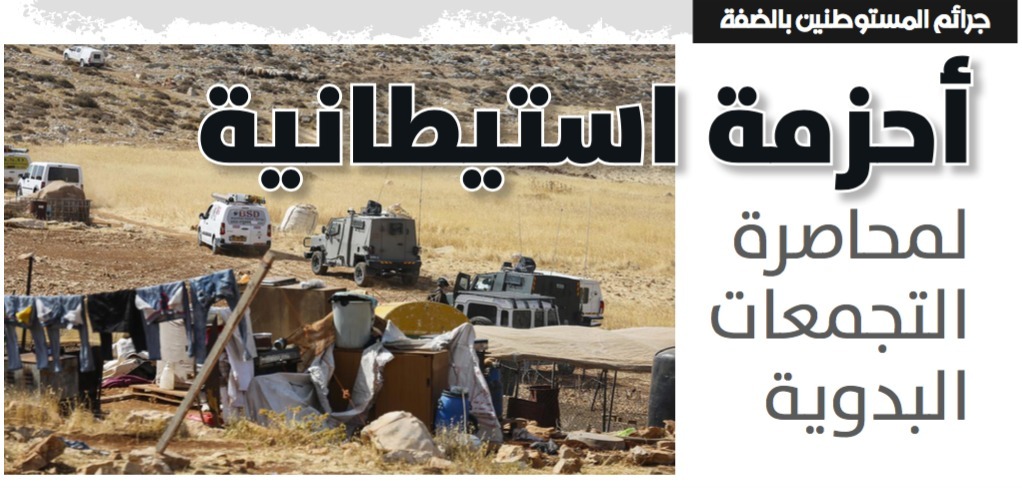
All of this was accompanied by Ben Gvir giving free rein to thugs and settler gangs to launch the most widespread criminal operations against the Palestinians, through the comprehensive invasion of the West Bank and Jerusalem, with daily attacks resulting in deaths and injuries, the destruction and burning of homes and property, the blocking of roads, the theft of crops, the expulsion and displacement of Bedouins from the Jordan Valley, the Masafer Yatta area, and the villages east of Bethlehem from their lands, the demolition of their homes and tents, the killing of their animals, and the burning of their crops and pastures.

The main provisions of the proposal contained in the Knesset resolution stipulate that Jewish settlements in the West Bank and the Jordan Valley be subject to Israeli civil law, including planning and building laws, education, taxes, and court laws.

This means abolishing the reliance on military orders that have been in place in these areas since 1967.

The proposal also explicitly addresses the issue of administrative and security annexation of Jewish settlements, granting Israeli ministries, such as the Interior, Education, and Housing, direct responsibilities for managing settlement affairs.

Referring settlers' legal and administrative cases to Israeli civilian courts instead of the military judicial system.

Let's not forget that this decision encourages the establishment of new infrastructure projects and the expansion of existing settlements, considering them a "natural" part of Israel, which means accelerating the confiscation and settlement processes.

There is also no doubt that this decision has political and international dimensions, and as I mentioned previously, this decision upsets the political balance. When the decision states that cities such as Nablus, Hebron, and the settlements of Shiloh and Beit El express the historical continuity of the Jewish presence in the Land of Israel, and that these areas are part of the historical, cultural, and spiritual homeland of the Jewish people, this text says unequivocally that these settlements are part of the occupying state, and that abandoning them in any future settlement is out of the question.

The move comes in response to pressure from right-wing parties and settlers, who view any delay in annexation as a concession to international pressure.

We realize the symbolism of this decision, because the commencement of the annexation and Judaization operations, the increase in the pace of settlement, and the increase in the number of settlers in the West Bank, in an unprecedented manner, began since the period when Smotrich assumed responsibility for settlement and the powers of the Civil Administration in the West Bank, as well as Ben Gvir’s unleashing of his settlers in a comprehensive war on the cities, towns, villages and camps of our people in the West Bank, and the maps that were displayed on the website of the Israeli Ministry of Foreign Affairs in the Arabic language, and the maps that Netanyahu presented in the sessions of the United Nations General Assembly (78) and (79) show the occupying state as including all of the area of historical Palestine, and parts of Jordan, Lebanon, Syria, Iraq and even parts of Egypt and Saudi Arabia.

Given the apparent alignment between the two extreme right-wing administrations in Israel and the United States, we find Trump adopting the same Israeli terminology and concepts, justifying the annexation of the West Bank by citing Israeli security needs, claiming that Israel is a small state on the map that must expand into Arab geography, and even supporting the Israeli decision to consider the West Bank as "the land of Judea and Samaria."

This decision, although all Palestinian factions, including the presidency, have expressed their rejection of it, and that it unilaterally cancels all United Nations resolutions, including Resolution 2334, which was issued in late 2018, regarding the illegitimacy of settlements and settlements in Jerusalem and the West Bank, which the United States did not object to, and demanded that Israel stop all its settlement activities in Jerusalem and the West Bank, and consider them illegal. This decision also constitutes a blatant and impudent violation of all international laws, charters and agreements, and tarnishes the Oslo Accords. However, all this vocabulary and language are no longer useful in the face of Israeli “encroachment” and “savagery” supported and participated in by the United States, in closing all the gates of a political solution, which open horizons for a solution based on the two-state solution.

It is also no longer feasible to continue to subject the rights of the Palestinian people to the changing American administrations and Israeli governments, nor to impose conditions on those who wish to be part of the organization and to recognize international legitimacy—the very international legitimacy whose institutions, dismissed by Venezuelan revolutionary President Maduro, are ineffective, incompetent, and ineffective in their support of oppressed peoples.

Hence, the Israeli escalation and denial of the legitimate national rights of the Palestinian people, and the denial of their existence, must not be met with continued adherence to the same clichés and terms and the lowering of the ceiling of Palestinian demands, until they are accepted by Israel and America. The experience of the new Syrian regime is the best witness and proof. Whenever Syria concedes a title of sovereignty, they demand a new concession, and whenever they occupy a piece of land, they demand control over new land.

Hence, in light of these serious risks and challenges facing our people, our cause, and our national project, it is imperative to form a Palestinian emergency leadership, in which all colors and components of the Palestinian political spectrum participate, including Hamas, Jihad, the PLO factions, civil society institutions, and popular sectors. This leadership must meet on the basis of a comprehensive political program based on steadfastness and resistance, and launch the Oslo Accords and all its political, economic, and security commitments, including mutual recognition between the PLO and the occupying state. It must also work to implement all decisions issued by the meetings in Moscow, Beijing, and other Arab capitals between the Palestinian political parties, and implement the relevant Central Council decisions.

There is no time for procrastination, delay, or betting on America, the so-called international community, or the countries of the official Arab regime. The priority is to put the Palestinian house in order. There is no time for outbidding, assigning responsibility, bickering, incitement, or counter-incitement. The dangers and challenges facing our cause are very great, and the circle of conspiracy against our people is expanding. Trying what has been tried and tested, such as betting on negotiations and what is known as international legitimacy, will lead to the liquidation and dissipation of our cause, and the expulsion and displacement of our people, especially since these projects are firmly on the American-Israeli table.

OPINIONS

Fri 25 Jul 2025 8:06 am - Jerusalem Time

The hell of captivity in the occupation's prisons... damning testimonies from Gaza reveal chapters of silent genocide.

Ben Maamar Al-Hajj Issa: Algerian writer and political researcher

In the night of Gaza, the wound does not sleep, the pain does not subside, and the death lurking in the bodies of its children does not slumber. While the Israeli occupation continues its open war on everything Palestinian, dark chapters of an ongoing crime are being revealed, one after the other, committed behind the silent walls of detention centers, where the Palestinian human being is crushed under the weight of torture, humiliation, and enforced disappearance. The report issued by the Commission of Prisoners' Affairs and the Palestinian Prisoners' Club on July 24, 2025, is not merely a human rights document, but rather a cry of conscience and a living testimony to the ongoing genocide, not only on the fields of bombing, but also inside the cellars that have been transformed into a laboratory for revenge and the release of hatred.

From the Negev detention center to Ofer, from the Compound to the Sde Teiman camp, Palestinian prisoners face nothing but deprivation, humiliation, and an endless series of physical and psychological torture methods documented by the detainees themselves in chilling testimonies. One detainee was forced to undress and drink alcohol at a camp near Jerusalem; another had boiling water poured over his body in the Negev prison; a third was attacked by a police dog that bit his foot; yet another detainee reported being severely beaten, losing the sight in his left eye and causing him constant headaches and loss of balance. These are not scenes from a terrifying fiction novel; they are the daily reality of Palestinian detainees at the hands of an authority that cares nothing for the law and recognizes no human value.

The pain lies not only in the torture, but also in the psychological warfare waged by the cold-blooded jailers. One detainee was informed by his interrogator that his entire family had been wiped out, prompting him to attempt suicide in his cell, only to discover later that his family was fine. That dividing moment between madness and despair was no coincidence, but rather part of a systematic approach aimed at destroying the soul before the body, and dismantling whatever resistance remains within the heart of the imprisoned Palestinian.

Testimonies confirm that detainees are forced to live in overcrowded tents and harsh environmental conditions, deliberately deprived of food and medical care, and that diseases such as scabies are prevalent, with no attempt at treatment or prevention. Detainees are held in solitary confinement and subjected to daily violent searches and deliberate humiliation. It is a slow, soul-crushing process that leaves little room for nightmares.

Despite the horrific testimonies, what has been recorded represents only a tiny fraction of the greater crime, which goes beyond all reasonable doubt. Thousands of detainees from Gaza have been subjected to the "unlawful combatant" law, the occupation's tool for legalizing genocide, outside any international legal framework. This law does not grant detainees even the most basic human rights, but rather turns them into numbers within a camp, a legitimate target for torture and extortion.

Since the beginning of the war, the occupation has established new camps specifically to hold detainees from Gaza, such as Sde Teiman, Anatot, Naftali, and the Rakefet section under Ramle prison, adding to the chain of slow death in the Negev and Ofer. With each passing day, the number of victims who have died under torture or whose fate remains unknown in the cycle of enforced disappearance increases, amid a suspicious international silence and the complicity of human rights organizations whose very existence is now in doubt.

The question of the effectiveness of human rights institutions has become more than a project, in light of this global moral collapse in the face of the occupation's crimes. What does it mean to issue reports, document testimonies, and expose violations if the oppressor is not held accountable and the victim is not rescued? When will Palestinian pain become worthy of being heard? And when will the state of exception, in which the occupation enjoys a status above the law, above accountability, and above all humanitarian systems, be broken?

This report is not a collection of dry numbers, nor a mere legal observation. Rather, it is a bloody reflection of a reality that brooks no delay. It is a damning document in the annals of humanity, a book of stark pain that is supposed to stir the world from its slumber. But even when consciences awaken, hundreds will have been silently crushed, and time will remain powerless to heal their wounds.

The crime of genocide against detainees is not a separate chapter of the war, but rather an integral part of a comprehensive genocidal project. Remaining silent is no longer an option, because every moment of delay is equivalent to a human life being snatched from them, in the dark, without witnesses, mercy, or justice.

PALESTINE

Fri 25 Jul 2025 8:01 am - Jerusalem Time

Hamas's response: Netanyahu maneuvers to prolong the massacre

Dr. Raed Al-Dabai: It is important for Hamas to be more transparent with the public and the media about what is happening in the negotiating rooms, without compromising the security of the negotiations.

Suleiman Basharat: The Israeli delegation's two-week stay in Doha is an important indicator that the negotiations have not completely collapsed and paves the way for a transition to new phases that offer a glimmer of hope.

Dr. Aqel Salah: Washington is exerting indirect pressure on Hamas through mediators to push it to accept new maps that do not entail a complete withdrawal and do not portray Israel as defeated.

Hani Abu al-Sabaa: Hamas will deal flexibly in this round to convince mediators of its seriousness and deprive Israel of its pretext for continuing the massacres.

Dr. Saad Nimr: The resistance has succeeded in preserving its minimum basic demands without compromising the rights of the Palestinian people, and the ball is now in the court of Israel and America.

Sari Samour: The future of the agreement is tied to American will, and the de-escalation or continued escalation is in the hands of the United States more than any other party.

With Hamas's revised response to proposals for a ceasefire in Gaza and a prisoner exchange, there is renewed hope for a revival in negotiations with Israel, after a long period of stagnation and mutual rejection.

In separate interviews with Al-Quds, writers, political analysts, experts, and university professors say that Hamas's latest response, which was conveyed through intermediaries and officially received by Tel Aviv, demonstrates a new flexibility on the part of the movement in its attempt to break the cycle of siege and famine imposed on Gaza and end the suffering of its crippled residents.

Although the Israeli tone has been less strident this time, writers, analysts, and professors warn that the shift remains limited. The ball remains in the Israeli government's court, which is balancing domestic pressures with the reservations of right-wing parties. Meanwhile, Hamas faces a delicate test of making calculated concessions without compromising its core demands.

They point out that the most likely scenario is a preliminary agreement that could pave the way for a more comprehensive deal, if the mediators succeed in bridging the gap on the most contentious issues, particularly the prisoner issue. Netanyahu is particularly interested in an agreement that would reshuffle his portfolio.

A relative change in the Israeli tone

Dr. Raed Al-Dabai, head of the Political Science Department at An-Najah National University, says that Israel's initial response to Hamas's amended statement Wednesday evening indicates a relative shift in its tone regarding prisoner exchange and truce efforts in Gaza. However, it does not necessarily signify a fundamental shift in Israel's strategy toward a complete end to the war.

Al-Dabai explains that Israel's Channel 12's confirmation that Tel Aviv has received Hamas's response to the proposed prisoner swap and ceasefire and has begun studying it reveals a new, albeit cautious, Israeli approach to the proposed proposals, in contrast to the categorical rejection it has traditionally expressed.

Al-Dabai explains that this partial shift is due to several factors: first, pressures on the ground that have exacerbated the humanitarian crisis in the Gaza Strip, which has been experiencing unprecedented famine conditions for months. Second, pressure from mediators who had previously described Hamas's remarks as unacceptable has clearly shifted their position this time.

Al-Dabai points out that the declared American and Israeli threats to use excessive force if Hamas did not make concessions played a role in creating this limited flexibility.

Al-Dabai points out that the Israeli mood is undergoing a shift driven by explicit American pressure, internal pressure from Israeli public opinion, and the role of Egypt and Qatar in influencing Hamas. This has given Israeli Prime Minister Benjamin Netanyahu the leeway to approach this round of negotiations differently.

Despite this, Al-Dabai emphasizes that the current agreement is nothing more than a preliminary agreement that opens the door to a difficult and costly round of negotiations that will be determined by four main factors: the American position and its intensity, Netanyahu's electoral calculations, especially with the approaching internal Likud elections, the position of the Israeli public, and the positions of Hamas itself.

Hamas's transparency about what is happening in the negotiating rooms

Al-Dabai points out the importance of Hamas being more transparent with the public and the media about what's happening in the negotiating rooms, without compromising the security of the negotiations. He points out that the information leaked often comes from the Israeli side or mediators, not directly from the movement.

Al-Dabai asserts that the most likely scenario is a continuation of the prolonged stalemate, with maps and prisoner names being exchanged without any substantive concessions. He also warns that Netanyahu may exploit any ceasefire in Gaza to advance other issues, particularly in the West Bank.

Al-Dabai points out that the recent Knesset vote to annex the West Bank by an overwhelming majority, while symbolic, carries dangerous implications and reflects the extreme right-wing Talmudic religious discourse that has come to describe Palestinian cities like Nablus, Bethlehem, and Hebron as "Talmudic lands."

Al-Dabai asserts that the challenges ahead will be complex, and that major questions will be raised by Hamas and the Palestinian people regarding the day after Gaza, the future of governance, reconstruction, and the humanitarian situation amid the ongoing occupation and the absence of a comprehensive political solution.

Hamas's response is an updated version of a previous response.

For his part, writer and political analyst Suleiman Basharat says that the response Hamas recently submitted to the mediators and the Israeli occupation is an updated version of a previous response. The movement presented its observations via the mediators, who relayed them to Israel, which initially rejected them. Hamas then resubmitted an amended version that seemed acceptable to the mediators. The ball is now firmly in Israel's court, awaiting an official response.

Basharat points out that these indicators may provide a positive impression regarding the course of the negotiations, but they remain contingent on how Israel interprets this response and its willingness to deal with it with flexibility that opens the door to serious discussion on some points of contention and the achievement of genuine points of convergence.

Basharat stresses that the direction of this phase will become clearer following the upcoming meeting between US envoy Witkoff and Israeli official Dermer in Italy, a meeting that could give the negotiating process additional momentum or reveal the need for more time.

Basharat explains that current conditions within Israel have become more conducive to moving toward an agreement, especially after Netanyahu successfully appeased far-right parties like Smotrich and Ben-Gvir by announcing the commencement of the West Bank annexation project, while also promising the possibility of returning to war later.

At the same time, Basharat points out that the demands of the Israeli army and the soldiers' families have become more urgent to reach a deal that ends this ongoing attrition.

Images of famine in Gaza embarrass Washington and the world

Basharat asserts that the American position has become more pressure-intensive, driven by humanitarian and moral motives, with the escalating images of famine in the Gaza Strip, which are embarrassing to Washington and the entire world. This may prompt a search for a formula to relieve this humanitarian tension.

Basharat points out that Hamas also finds itself facing a pressing humanitarian imperative: breaking the cycle of starvation. This was evident in its demand for the Rafah crossing to be opened in both directions to provide a humanitarian outlet for Gazans, both those leaving and those returning.

Basharat explains that all these indicators make the current situation more ripe than ever, but ultimately, the political decision remains subject to the last-minute calculations of Israeli Prime Minister Benjamin Netanyahu, who holds the key to guiding the final outcome.

Basharat asserts that Netanyahu is now in a better position to advance a potential agreement, especially given the pressure from Likud members who are pushing for an agreement for fear of losing the confidence of the Israeli public before the upcoming elections.

Basharat points out that the Israeli negotiating delegation's continued presence in Doha for two weeks is a significant indicator that the negotiations have not completely collapsed, but rather will continue to explore the details in preparation for moving to new stages. This offers a glimmer of hope that differs from what occurred in previous rounds.

Hamas and Israel desperately need a truce

In turn, writer and political researcher Dr. Aqel Salah asserts that reading the current situation requires starting from two basic principles: First, both Hamas and Israel are in dire need of a truce, but Hamas's need is even greater due to the starvation war that has raged in the Gaza Strip for 144 days, and the continuing scenes of death by starvation, which are putting intense pressure on the movement to end the massacre and seek an agreement that saves face in the eyes of the Palestinian people and commensurate with the enormous sacrifices.

Salah points out that Israel—and Netanyahu at its head—also needs a truce, albeit a partial one that would give it political room to maneuver with the far-right parties. The Israeli army has suffered significant human and moral losses, while Israeli writers and experts speak of discontent, possibly bordering on rebellion, within the ranks of soldiers who realize they are fighting for political, not military, objectives. This is pushing Netanyahu to seek a truce that would give the army a chance to catch its breath and reduce the criticism directed at his government.

The second rule, according to Salah, is that both Hamas and Israel refuse to emerge from the negotiations as defeated. Hamas does not want to give Israel what it failed to achieve militarily during more than 650 days of genocidal warfare. Israel, with American support and some regional actors, is eager to appear victorious, having achieved its war goals and subdued the resistance.

The stalling in the negotiations aims to buy time for Netanyahu.

Salah explains that the current stalling in the negotiations is intended to buy time for Netanyahu, who is seeking to prolong the discussions until the end of this month's deadline, leading up to the Knesset's summer recess. This gives him time to resolve complex equations related to the satisfaction of the United States on the one hand and the satisfaction of his extremist partners, such as Smotrich and Ben-Gvir, on the other. These parties reject any comprehensive deal that might completely end the war.

Salah explains that Washington is exerting indirect pressure on Hamas, via Egyptian, Qatari, and even Turkish mediators, to push it to accept new Israeli maps that do not entail a complete withdrawal and do not portray Israel as defeated.

Despite this enormous pressure, Salah believes that the two sides' need for an agreement will soon lead to a comprehensive settlement, the price of which could be paid by the Palestinian people alone, amidst conspicuous international and Arab silence.

Salah stresses that the Palestinian resistance and the people, who have sacrificed 60,000 martyrs, will not surrender to Israeli intransigence, despite the horrific suffering.

In Salah's opinion, Gaza's steadfastness and patience will remain a pressure factor until an agreement is reached that preserves its fundamental rights without compromising the resistance's strategies. He noted that the Israeli army's own turmoil may hasten the imposition of a compromise that opens the door to a near-term truce, despite Netanyahu's evasive attempts to buy time.

Skeletons and body parts cast a shadow over the negotiations.

For his part, writer, political analyst and expert on Israeli affairs, Hani Abu Al-Sabaa, asserts that the images of skeletons and body parts scattered across the Gaza Strip cast a heavy shadow over the ongoing negotiations to halt the aggression. He explains that Hamas is striving, through mediators, to reach an agreement that will end the killing and siege imposed on the Palestinian people in the Strip, while the far-right Israeli government, headed by Benjamin Netanyahu, continues its policy of killing, destruction and siege with the aim of achieving political gains at the expense of Palestinian blood.

Abu Al-Sabaa explains that Hamas responded to the Israeli position with a clear demand for the occupation army to withdraw to a distance of 800 meters from the Gaza Strip border, while Israel agreed to withdraw to a further distance of 1,200 meters. However, the core of the dispute revolves around the issue of prisoners, as Israel is insisting on releasing some leaders it describes as "senior terrorists," such as prisoner Abdullah Barghouti, while the resistance considers these figures to be national symbols who cannot be excluded from any exchange deal and must be freed unconditionally.

Abu Al-Saba' refers to statements made by the military spokesman for the Qassam Brigades, Abu Obeida, who clearly declared the resistance's readiness to conclude a comprehensive exchange deal based on the principle of "all for all," in addition to a complete cessation of the aggression against Gaza.

Netanyahu will not accept Hamas rule over the Gaza Strip.

Abu Al-Sabaa explains that in this context, the American mediator, Witkoff, is monitoring the mediators' movements after receiving detailed reports on the stages of the indirect negotiations.

Despite the atmosphere of cautious optimism, Abu al-Saba' notes that Israeli Prime Minister Benjamin Netanyahu has publicly declared that he will not accept Hamas rule over the Gaza Strip and will not stop the war as long as the movement controls it. He claims that Hamas is "stealing aid" in the north, despite his own previous declaration that he "crushed the resistance there."

Abu Al-Sabaa believes that this contradiction reveals the true intentions of the Netanyahu government, which is maneuvering to prolong the war to achieve two goals: killing as many Palestinians as possible and forcing those who remain to emigrate under the pressure of hunger and siege.

Abu al-Saba'a asserts that Hamas will be flexible in this round to convince mediators of its seriousness and to strip Israel of any pretext for continuing its massacres of Palestinians in Gaza. He considers what is happening to be the "massacre of the century," to which the world is witnessing with its silence and blatant complicity, even from countries that boast day and night about human rights and democracy.

The ball is now in the court of Israel and the US administration.

Dr. Saad Nimr, a professor of political science at Birzeit University, believes that the Palestinian resistance in this round of negotiations has succeeded in preserving its minimum basic demands without compromising the rights of the Palestinian people. This leaves the ball now in the court of Israel and the US administration, which are considering a response to Hamas before issuing their final positions.

Nimr points out that the United States appears to be the most determined to push both sides toward ending this phase of the war, even if it goes against Israeli Prime Minister Benjamin Netanyahu's wishes. However, Netanyahu is now compelled to proceed in this direction for reasons that go beyond his personal calculations.

Nimer points out that Netanyahu's recent meeting with Eyal Zamir, the Israeli Chief of Staff, was crucial in this context. Zamir conveyed a clear message to Netanyahu that the army was experiencing extreme exhaustion and was in dire need of a ceasefire more than ever.

Nimr explains that the Palestinian resistance has succeeded in escalating its operations in the last two months—specifically June and July—in both quantitative and qualitative terms. In June, approximately 20 Israeli soldiers were killed, dozens more were wounded, and numerous vehicles were destroyed. In July, approximately 15 additional soldiers were killed, while military equipment continued to be destroyed.

New resistance tactics, especially attempts to kidnap soldiers.

Nimr explains that the resistance has adopted new tactics, most notably focusing on attempts to kidnap soldiers, which has further confused the Israeli army, which is now unable to stop these operations.

Nimr asserts that these facts prompted Netanyahu to realize that failure of the negotiations would mean the continuation of the war, with the devastating losses it would entail for his already exhausted army.

Nimr points out that observers' expectations lean toward a positive Israeli response, or at least reopening the door to negotiations to make some minor adjustments, leading to an agreement leading to a ceasefire.

Nimr explains that Netanyahu's calculations are not only military, but also relate to his political survival within his far-right government. He points out that the Knesset's recent decision to annex the West Bank and settlements has given right-wing parties like Smotrich and Ben-Gvir what they consider their "prize," which could make them more flexible in accepting understandings regarding the Gaza Strip and a ceasefire.

Nimr asserts that the continued withdrawal of the occupation army from areas within Gaza is a clear indication of its desire to end the war, but without appearing to be offering gratuitous concessions.

According to Nimr, despite Netanyahu's attempts to suggest he is achieving successive victories, this rhetoric has begun to erode even within the Likud party itself, increasing pressure on him to seek a settlement that preserves minimal gains in the face of the difficult reality on the ground imposed by the Palestinian resistance.

The future of the agreement is in the hands of the US administration.

For his part, writer and political analyst Sari Samour says that the news circulating about the expected agreement on Gaza appears positive so far, but it is not without its caveats and pitfalls, particularly since Israel is interested in prolonging the war and turning it into an all-out massacre.

Samour asserts that Israel is using starvation as a means of further pressure on Palestinians in the Gaza Strip, with clear intentions to impose further destruction and siege.

Samour links the future of the agreement to American will, noting that the key to de-escalation or continued escalation lies with Washington more than any other party. He explains that the most important question is: Does the United States truly desire to halt this bloody war for a relatively long period, or will it be content with temporary solutions that do not exceed a few weeks?

Samour points out that one indicator that could strengthen the chances of reaching an agreement is the arrival of Witkoff, the US envoy known for his pro-Israel stance. Witkoff's meeting with Israeli Ambassador Dermer, also appears likely to be a meeting in Sardinia, which could accelerate the process of concluding an agreement.

Sammour explains that the expected scenarios range across three paths. The first is the pessimistic scenario, which could see Israel reject the proposed recommendations, potentially expanding the scope of the massacres from 100 martyrs per day to multiples of that, amidst complete Arab silence and emergency summit meetings that carry no real threat, such as severing ties with the occupation. He also emphasizes that the threat to navigation in Bab al-Mandab is a real pressure factor on Israel to push it toward a de-escalation.

A scenario for a temporary truce in the devastated Gaza Strip

According to Samour, the second, more optimistic scenario suggests that Israel could reach an agreement that includes a temporary ceasefire in the already devastated Gaza Strip, with the crossings opened, aid flowing in, and the wounded allowed to leave for treatment. International and Arab delegations would also be allowed to enter the Strip. This could be accompanied by a prisoner exchange deal, which would mean a period of relative calm.

The third scenario – the "Lebanese model," according to Sammour – involves freezing the war while continuing bombing and assassinations of specific targets.

Samour points out that this scenario would free up Israel's time for another front, perhaps escalating against Iran or launching operations against the Houthis in Yemen, exploiting the gap in military capabilities between Yemen and Iran.

Samour believes that the coming days will be decisive in testing the sincerity of American policies and their ability to rein in the Israeli right-wing government, while the Palestinian people remain alone in confronting the war machine.

PALESTINE

Fri 25 Jul 2025 8:00 am - Jerusalem Time

Settler crimes in the West Bank: Settlement belts to besiege Bedouin communities

Professor Jamal Harfoush: A systematic Israeli plan to evacuate the land

Palestinian owners and the implementation of forced displacement in stages

Thaer Hanani: Settler attacks and violations have reached their peak in targeting agricultural lands and pastoral areas.

Fakhri Abu Diab: The occupation seeks to empty the Bedouin communities, which constitute the eastern gateway to Jerusalem, and to strengthen the settlements.

Bassam Bahr: Targeting Bedouin communities by establishing "settlement belts" aims to prevent any future Palestinian expansion.

Abu Imad al-Jahalin: After rebuilding what the occupation destroyed, it has resorted since the beginning of the aggression on Gaza to a policy of pastoral settlement.

Aseel Malihat: Settler attacks on Bedouin communities and villages are not random, but rather part of a plan for forced displacement.

Armed settler militias continue their attacks in the West Bank, culminating in the targeting of agricultural lands and Bedouin communities. These attacks are backed and supported by the occupation forces and under the direct supervision of extremist Israeli ministers Bezalel Smotrich and Itamar Ben-Gvir. This is part of a systematic plan to evict Palestinian landowners and implement forced displacement in stages.

Writers and analysts, speaking to Al-Monitor, believe these crimes amount to "ethnic cleansing," and are part of the ongoing, gradual annexation of the occupied West Bank and attempts to empty it of its inhabitants and indigenous people. Meanwhile, settlement expansion and control over more of the State of Palestine's natural resources are being reinforced, thus undermining any possibility of establishing a Palestinian state on the ground with East Jerusalem as its capital.

They stressed the need to pursue these complex crimes, which are punishable by international law. They pointed out that all resolutions and sanctions issued by the international community or states regarding colonial settlements and colonists who commit crimes against citizens, their lands, and their property do not rise to the level of the crime of "ethnic cleansing." They called for deterrent international sanctions against the colonial settlers and their armed militias, as well as against the ministers and officials in the occupation government who provide them with protection, support, funding, and backing.

Escalation in crimes that fall within the framework of "ethnic cleansing"

Professor Jamal Harfoush, professor of scientific research methods and political studies at the Academic Center for Research University, emphasized that "the increasing and accelerating settler attacks in various areas represent part of a systematic plan aimed at evacuating Palestinian land of its legitimate inhabitants, particularly in villages and Bedouin communities, which are considered the first line of defense for the land."

He stressed that "this policy embodies the occupation's intention to implement forced displacement in stages, which is a flagrant violation of international humanitarian law, specifically Article 49 of the Fourth Geneva Convention, which prohibits the forced transfer of populations under any pretext."

Harfoush pointed out that what we are witnessing is nothing more than attempts to tighten control over the land through various tools, such as establishing settlement outposts, destroying the livelihoods of residents, and imposing dire living conditions that force them to leave.

He said, "These crimes fall within the framework of 'ethnic cleansing,' which constitutes a crime against humanity under the Rome Statute of the International Criminal Court."

Regarding confronting the scenario of settler attacks on Bedouin villages and communities, Harfoush stressed that “confronting this scenario requires an integrated strategy at the popular, legal, and media levels, as follows:

At the grassroots level: Strengthen the resilience of Bedouin communities through national initiatives that provide direct support, such as improving infrastructure, providing basic services, and securing livelihoods. Popular campaigns must be launched to encourage residents to cling to their land, regardless of the circumstances.

On the legal level: Documenting every violation against Bedouin communities in a professional and accurate manner, including photographs, testimonies, and reports. These documents constitute legal tools used to file complaints before international courts and the United Nations Human Rights Council.

Calling on the international community, through diplomatic channels, to take practical steps to pressure Israel to stop these practices that violate international law.

On the media level: Exposing the crimes of the occupation and settlers in local and international media, with a focus on telling human stories that highlight the suffering of affected families.

Launching global awareness campaigns to highlight the severity of the violations committed against Bedouin communities and their impact on the Palestinian fabric.

Cooperation with international organizations: Leverage the support of NGOs and UN organizations such as the Office for the Coordination of Humanitarian Affairs (OCHA) to provide immediate protection to the population.

Urging the International Criminal Court to open an urgent investigation into these violations as war crimes.

Harfoush concluded his remarks to "I" by emphasizing that "adherence to land and rights is not limited to the Bedouin communities alone, but rather is a national and international responsibility that requires Palestinian unity and comprehensive support from all the vital forces in the world."

Continuous violations and harassment

Thaer Mohammed Hamed Hanani, coordinator of the Popular Campaign to Defend Khirbet Tana and a member of the Factional Coordination Committee in Beit Furik, Nablus Governorate, believes that settler attacks have reached their peak, targeting agricultural lands and pastoral areas.

For example, he said, the occupation established a herding settler nicknamed "Kobi" on the lands of Khirbet Tana in 2014. This settler began harassing the residents of the village, located east of Beit Furik, by restricting and reducing grazing areas, stealing and poisoning sheep.

He added: This led to a decline in the village's population from 40 families who relied on livestock and grazing in 2014, to 30 families in 2017, and then to just 20 families by 2020.

Hanani confirmed that after October 7, 2023, the pastoral settler escalated his attacks, demolishing caves and tents, severely beating residents, and firing live ammunition at them, forcing them to flee.

He continued, saying: However, thanks to the activities of the Popular Committee for the Defense of Khirbet Tana and the mobilization of the masses, thousands of citizens gathered and performed prayers at the trench dug by the settler "Kobi", which separates Beit Furik from Khirbet Tana.

He stressed that these pressures forced the occupation government to open the road leading to the village, enabling ten families to return there.

However, he noted that these families faced ongoing provocations and harassment, as settler "Kobi" took control of water sources, depriving residents of watering their livestock. He also continued his attacks on the school and mosque in the area, stealing solar panels, a refrigerator, and a water tank for ablution, in addition to completely destroying the school.

Hanani stated that, in a dangerous escalation, "Kobi" attacked the remaining residents with bullets and tear gas, leading to their complete expulsion from the village on January 5, 2025.

He pointed out that Khirbet Tana constitutes half of Beit Furik's area, which amounts to 36,000 dunams, and was considered the food basket for Beit Furik and the Nablus Governorate.

He said that in 2020, in light of the dangers facing Khirbet Tana, a popular committee was formed to defend the village. The committee held prayers in the village's mosque and planted trees in memory of the martyrs. Dozens of large trees bearing the names of the town's martyrs were planted. The committee also worked to support residents and confront settler attacks, sometimes involving physical confrontations.

Hanani emphasized that the Popular Committee's efforts contributed to delaying settlement projects, highlighting the importance of popular action in confronting settlement activity.

However, he added that these activities require broad political support from the Palestinian government, and that every effort should be made, regardless of the sacrifices, to halt the settlement project targeting pastures and agricultural lands.

Hanani emphasized that the loss of these lands is forcing residents to voluntarily migrate to neighboring Arab countries, which calls for serious action to preserve the steadfastness of the Palestinian people on their land.

Increased settler attacks

Palestinian affairs researcher Fakhri Abu Diab confirmed that the frequency of settler attacks has increased, especially in Area C, and specifically in Bedouin communities.

He pointed out that these communities constitute the eastern gateway to Jerusalem, noting that the occupation is working to expand the city into what is called "Greater Jerusalem," which, according to its plans, will encompass 10% of the West Bank.

He stressed that the occupation is seeking to strengthen settlements in the area to create geographic contiguity between them, thus blocking any future possibility of establishing a Palestinian state.

He explained that the occupation is focusing on separating the northern part of the West Bank from the southern part by constructing a belt or wall of settlements in the area between Jerusalem to the east, the Jordan Valley, and the Jericho area.

Abu Diab said that the occupation aims to change the demographic composition of these areas in favor of settlers and to expel Bedouin communities that reside in areas richer in water and animal resources.

He added: This is part of the occupation's policy to strangle and weaken the Palestinian economy.

He explained that the current occupation plans, managed by the so-called "Civil Administration" and the settlement entities, include the displacement and evacuation of Bedouin communities in order to seize Palestinian lands and fragment the Palestinian territories. He noted that the occupation's goal is to eliminate any future possibility of establishing an independent Palestinian state.

Carrying out covert annexations

Abu Diab revealed that the occupation is currently carrying out covert annexation operations by seizing land and displacing residents. He considers the presence of these Bedouin communities an obstacle to its expansionist projects, including the expansion of settlements such as Ma'ale Adumim and Kedar.

He pointed to the occupation's growing appetite with the approaching arrival of a new US administration headed by Trump, who is expected to support annexation and expansion plans. He said, "Despite the international community's opposition, it may remain powerless without US intervention, which will either support Israeli plans or at least turn a blind eye to them, particularly with regard to settler activities."

Abu Diab believes that to confront this scenario, we must focus on strengthening the resilience of the local population by empowering them economically and socially, supporting them to remain on their lands, investing in Bedouin communities through development projects that contribute to their stability and limit forced migration, and developing strategic plans to empower them and strengthen their resilience on their land.

The occupation seeks to force Palestinians to displace

Attorney Bassam Bahar, a specialist in settlement affairs, believes that recently, and particularly over the past year with the outbreak of the war in Gaza, the West Bank has witnessed a daily escalation in settler attacks, which have become noticeably more frequent.

He pointed out that these attacks aim to expand control and impose a fait accompli on the ground, through the construction of caravans, excavations, agricultural lands, and facilities, all to empty Palestinian lands and ensure they are not included in any future negotiations.

He explained that settlers are targeting Bedouin communities and residential areas in the West Bank by establishing "settlement belts."

He said that these settlements hinder the urban expansion of Palestinian villages and cities, whether in East Jerusalem, Ramallah, Bethlehem, Hebron, or elsewhere.

Bahar stressed that the occupation forces do not leave a hill or area in the West Bank without erecting a tent or caravan on it, with the aim of preventing any future Palestinian expansion.

He stated that this targeting extends to attacks on farmers, schools, and homes, as well as the burning of agricultural land and crops, as part of a systematic and deliberate policy to force Palestinians into forced or voluntary displacement.

Distribution of roles between the army and the settlers

Lawyer Bahar added that settlers receive full support and armament from the Israeli occupation, particularly in the West Bank, to confront and threaten the Palestinian population.

He explained that these practices are carried out in an organized manner, with roles distributed between settlers and the Israeli army to ensure control over the lands and implement de facto annexation plans on the ground.

Strengthening unity and developing strategies

To confront the occupation's plans

Concluding his remarks, lawyer Bassam Bahar emphasized that confronting this reality requires a unified Palestinian popular movement on the ground, along with the activation of peaceful popular resistance.

He also called for strengthening national unity and developing national strategies to confront the occupation's plans, which aim to eliminate any chance of establishing a future Palestinian state.

Bedouin communities in the Jerusalem Governorate are steadfast

For his part, Abu Imad al-Jahalin, head of the Abu al-Nuwar Bedouin Communities Committee, said that after the occupation's demolition of Bedouin communities across the West Bank, particularly in the Jerusalem Governorate, and the communities' continued efforts to thwart these operations by rebuilding everything destroyed by the occupation, the latter has resorted to a policy of pastoral settlement since the beginning of the aggression on the Gaza Strip.

He added: "Dozens of settlement outposts have spread, particularly in the eastern areas of Ramallah and Nablus, leading to the displacement of dozens of communities in the northern region."

Al-Jahalin added: Today, in the Jerusalem Governorate, specifically in the eastern slopes of the city, there are many settlement outposts, such as "Boaz" in the Sawahreh desert in the Al-Mintar area, and "Boaz" near Khan al-Ahmar.

He continued: A new settlement point was also established above the Khan al-Ahmar settlement, only 20 meters away from the Khan al-Ahmar school, and another point in the al-Shamis area, about 50 meters away from the Wadi Sa'b settlement.

Al-Jahalin asserted that these outposts aim to displace Bedouin communities by unleashing settler gangs to attack and forcibly displace civilians.

However, he pointed out that thanks to the will and steadfastness of the citizens of these communities, a new catastrophe was not inflicted on the Jahalin Arabs and the Bedouin communities.

He said that these communities continue to confront and resist the settlers, and are steadfast in the Jerusalem Governorate. For example, in the Bir al-Maskub community, we were able to regain control after settlers took over it on May 7, 2024, and remained there for three days. We obtained orders from the occupation courts to evict them.

Abu Imad Al-Jahalin concluded his interview with "I" by saying: "Today it is full of its people, as we succeeded in returning families and rehabilitating homes, and the residents are still there."

An existential threat to marginalized communities

For her part, Aseel Malihat, media officer for the Al-Baydar Organization for the Defense of Bedouin Rights and Targeted Villages, believes that the escalation of settler attacks against Bedouin communities and targeted Palestinian villages poses an existential threat to these communities, which already suffer from marginalization and deprivation of their basic rights.

She said that these attacks are not random, but rather part of a systematic plan that seeks to forcibly displace residents and force them to leave their lands through continuous restrictions, whether through direct violence or occupation policies that deprive them of the most basic necessities of life. She stressed that the clear goal of these practices is to strengthen settlement control over Palestinian lands, especially in Area C, which is a primary target in the gradual annexation project.

Malihat emphasized that what is happening today is not merely a series of attacks, but rather an extension of the occupation's escalating policy of Judaizing the land.

She pointed out that Bedouin communities, which are among the most vulnerable Palestinian communities, are subjected to multiple pressures, ranging from construction bans and the destruction of homes and vital facilities, to the confiscation of land and property, and to organized attacks carried out by settlers under the protection of the Israeli army.

She considered these policies to be nothing more than tools to weaken the resilience of these communities and push them toward forced displacement, which constitutes a flagrant violation of all international laws and conventions.

A catastrophic scenario requires comprehensive action at all levels.

Malihat believes that confronting this catastrophic scenario requires comprehensive action at all levels. To begin, all violations must be documented accurately and systematically, including daily attacks, demolitions, land confiscation, and physical and psychological assaults to which residents are subjected.

She said that evidence-based documentation, whether visual or written, contributes to exposing the occupation's practices at the local and international levels and gives those affected a strong voice before human rights organizations and international forums.

Malihat believes that the media's role is of great importance in conveying the true picture of what is happening in these areas.

She said that the media is a key means of shedding light on the daily suffering of the population and exposing the true face of the occupation's racist policies. She emphasized the importance of leveraging all media outlets, both traditional and digital, to reach the widest possible audience and mobilize international solidarity with these threatened communities.

She stressed that, in addition to the media, legal support is one of the most important tools in confronting these policies.

She said: Legal efforts must be strengthened to defend the rights of the population, whether by appealing to Israeli courts or resorting to international institutions such as the International Criminal Court.

She stressed that Al-Baidar Organization is working hard to provide legal support to the affected population, with the aim of ensuring their right to remain on their lands and countering any attempts to displace them.

She said that strengthening the resilience of the Bedouin communities also requires providing them with direct support at the livelihood and economic levels, and improving their living conditions through the provision of basic services, such as water, electricity, education, and healthcare. This is a crucial step in strengthening their ability to withstand the increasing pressures. The occupation is betting on weakening these communities from within, but providing the necessary support can turn the tide in the population's favor.

Malehat emphasized that these policies cannot be confronted without mobilizing international support for the Palestinian cause in general, and the Bedouin community in particular. She noted that international campaigns targeting UN institutions, human rights organizations, and global public opinion play a fundamental role in exposing these practices and garnering support for the Palestinian cause.

She said that the international community bears a great responsibility to pressure the occupation to halt its ongoing violations and ensure the protection of the rights of the population in accordance with international law.

She pointed out that the resilience of Bedouin communities is key to confronting these occupation policies, and that remaining on the land is the strongest option in the face of forced displacement attempts. She said, "We at Al-Baidar Organization are committed to standing by these communities and providing everything necessary to strengthen their resilience, whether through legal support, media documentation, or international pressure."

She pointed out that the issue is not merely a battle over land, but rather a battle for existence, identity, and rights, and that the Palestinian people have proven time and again that they are capable of persevering no matter how difficult the circumstances. She said: The occupation may possess military power, but it does not possess the legitimacy of its existence on this land, and it cannot break the will of the people who are defending their land and rights.

"We will continue to work with all our energy in the Al-Baidar Organization, relying on our belief in the justice of the cause and the support of all who believe in the Palestinian people's right to life and freedom," Malehat concluded.


ARAB AND WORLD

Fri 25 Jul 2025 7:58 am - Jerusalem Time

Senate Democrats demand US investigation into settlers' killing of Saif Maslouh

Democratic Senator Chris Van Hollen (D-MD) has gathered the names of nearly 30 Democratic senators to urge the Trump administration to investigate the killing of Palestinian-American Saifallah Muslat by Israeli settlers in Mazra'a al-Sharqiya, in the occupied West Bank, on July 11.


In a letter addressed to Secretary of State Marco Rubio and Attorney General Pam Bondi on Thursday (July 24-25), the senators criticized what they described as a “culture of impunity when it comes to incidents of civilian deaths in the West Bank, including Americans.”


Saif Allah Kamel Muslat, 20, of Tampa, Florida, was killed on July 11 while visiting his family in the occupied West Bank. Palestinian health authorities and Muslat's family held Israeli settlers responsible for his death.


Shortly after Muslet's killing, the Israeli military announced it was examining reports of a death during a clash between Israelis and Palestinians in the area. An Israeli military spokesperson said Thursday that the Israeli police and the IDF Military Police Criminal Investigation Division subsequently launched a joint investigation into the incident. A Palestinian Authority spokesperson said (according to the Washington Post) that the PA had not complied with Israeli requests to conduct autopsies and review existing autopsy reports.


The senators' letter, a copy of which was obtained by The Washington Post, was signed by 29 lawmakers, more than half of the chamber's Democrats. No Republicans joined the effort.


Since 2022, Israeli occupation authorities have killed seven Palestinian-Americans in the West Bank, including prominent journalist Shireen Abu Akleh, activist Aisha Noor Izgi Egi, and a 14-year-old boy.


The letter states that the US government "failed in its responsibility to protect American citizens abroad and demand justice for their deaths."


Senator Chris Van Hollen, the lead author of the letter, has called for similar investigations in the past. Van Hollen has emerged as an outspoken critic of settler violence and the Israeli government's response. His office shared responses to similar requests submitted to the administration of former President Joe Biden, showing that officials provided little additional information about the deaths but committed to speaking with the Israeli government about them.


It's worth noting that in a Senate hearing this month to evaluate President Donald Trump's nomination of former White House National Security Advisor Michael Waltz to serve as ambassador to the United Nations, Van Hollen criticized the Trump administration's decision to lift sanctions imposed by the Biden administration on Israeli settlers in the West Bank, whom the US government then considered extremists.


"When you withdrew that executive order, you sent a very bad signal," Van Hollen said at the time.


“We also request that you provide us with an update on the status of any investigations into the deaths of the other six Americans killed since January 2022,” the senators wrote in the letter, “and provide us with a brief account of the actions you are taking to ensure accountability for their deaths and prevent future killings of Americans in the West Bank.”


Palestinian officials in the West Bank and Muslat's family reported that Israeli settlers surrounded the young man after severely beating him on July 11, while he was visiting relatives for a summer vacation. The settlers reportedly prevented ambulances and paramedics from reaching Muslat, and he died before his brother could finally take him to the hospital.


Following news of Muslat's death, the Trump administration stated that the US State Department "has no higher priority than the safety and security of American citizens abroad," but did not elaborate on how it would handle the matter. Following a wave of condemnation, US Ambassador to Israel Mike Huckabee called on Prime Minister Benjamin Netanyahu's government to "rigorously investigate" Muslat's death, describing his killing as a "criminal and terrorist act."


Florida Senators Rick Scott and Ashley Moody, U.S. Representative Laurel Lee, who represents the same congressional district as Musallam (R-FL), and Florida Governor Ron DeSantis, also a Republican, are not silent about the killing of a Florida resident.


An analysis conducted last April by the Washington Institute for Near East Policy, a think tank considered a front for the Israel lobby in the US capital, found that Israeli settler violence had escalated over the past year, rising by 30 percent in the first half of the year compared to the same period the previous year. "At the same time, Palestinian terrorism in the same region declined sharply," according to the analysis.


“The increase in settler violence at a time when Palestinian terrorism is declining lends credence to the assessment that settler attacks are not simply a response to terrorism, as some have claimed,” wrote study author Naomi Newman.

OPINIONS

Fri 25 Jul 2025 7:54 am - Jerusalem Time

When memory is squeezed... between knowledge and nostalgia, between the mill and the dust

Dr. Walid Al-Arid

The book "Sesame Presses: Past and Present" by Dr. Sara Mohammed Al-Shammas has a simple title, but it resembles a stone door leading to an ancient oil press that still turns with love and nostalgia. It is not just the title of an academic study, but the key to a complete memory that purifies the oil of time and pours it over the nation's wounds.

The dedication, however, was not traditional; rather, it carried a deep-seated longing for the land and the people whose seeds were crushed, just as the occupation crushed them. The scent of wet soil wafts from the lines of the dedication, as if the author had dug her hands into the mud to extract an image of her mother or grandmother simultaneously squeezing sesame seeds and singing about the homeland.

Introduction to the book

From the very first sentence, we are faced with an emotional anthem, not just an academic introduction. The researcher says, "It's no wonder that the Palestinian people enjoy a rich cultural heritage of customs, arts, and professions, most notably the sesame-pressing profession."

In another sentence, she reveals her intentions with the sincerity of a lover: “Products such as sesame seeds, tahini paste, and halva are components deeply embedded in Palestinian culture and daily customs.”

Here we read not only about food, but about a love rooted in the earth, in the hands, in the rituals of daily life.

The structure of scientific research in the book's chapters

The book is only 156 pages long, but it is dense with content, meticulously crafted like a stone mill.

1. The rigorous scientific methodology:

- Accurate documentation: from Arab and foreign sources, international reports, and ancient heritage texts.

-Scientific comparisons between sesame cultivation in Palestine and other regions of the world.

-Using economic and cultural analysis tools simultaneously.

Evoking the stages of history from the Canaanite era through the Islamic era, then the Ottoman era, until the occupation.

2. Agriculture as resistance:

In the first chapter, we read:

“Oil extracted from sesame seeds was stored in rock-hewn wells in Jerusalem, as a strategic emergency stockpile.” (p. 10)

Here, the seed becomes a storehouse of resilience, not just food.

3. Sesame in Earth's civilizations:

In the second chapter, the researcher takes us to the Sumerian and Assyrian texts:

“The story of the gods drinking sesame wine after the great battle... is testimony to the fact that oil was a symbol of life, not just for cooking.” (p. 17)

It is as if history itself swears by oil that Palestine was here, and that sesame lived before the occupation was born.

4. Agro-environmental chapter

5. “Sesame is planted in the land where nothing else thrives... just as the Palestinian is born in the camp that grows nothing but dignity.” (p. 27)

5. Identity vs. Erasing:

The researcher says:

"Sesame cultivation and its products have been targeted... as part of Israeli plans to erase Palestinian cultural identity."

In this context, the press turns into a barricade and the oil into a document of resistance that does not dry up.

Conclusion: Oil that illuminates, not just consumes.

As the introduction began with a hymn, the conclusion came with an invitation:

“It is time to document this heritage, not just out of nostalgia, but as part of a project to protect the Palestinian self.”

“Sesame presses should be transformed into living heritage sites, where traditional agriculture is taught and showcased as part of the unarmed Palestinian struggle.”

In this proposal, the spirit of the researcher is revealed as a fighter who not only writes but also calls for life from the heart of clay and fire.

Between the lines:

What cannot be said directly, the writer said in the language of the eyes, between the lines:

It was as if she was talking to her mother when she wrote about the press.

It was as if she was writing a letter to her unborn child when she talked about establishing identity.

As if she were putting her hand on the wall and whispering: “I am not writing about sesame, but about a people who are squeezed every day and do not break.”

List of sources and references:

Rich and comprehensive, it included:

-Archaeological, agricultural and economic studies.

-Historical texts (Sumerian, Assyrian, Islamic, Ottoman).

-International reports on food security.

-Oral heritage testimonies.

-Scientific notes for the second edition:

1. Adding photos and field testimonies: - Interviews with remaining mill owners in Nablus, Gaza, and Rafah. - Photographing and documenting ancient stone mills.

2. Enrich the conclusion with practical recommendations: - Provide a detailed plan for transforming contemporary artefacts into living museums or educational sites. - Propose partnerships with cultural and agricultural institutions to document and pass on the profession.

3. Documentary appendices: - Comparative tables of historical sesame production. - Historical agricultural maps of Palestine and the locations of presses.

In conclusion, this is not a book about sesame... but about the inexhaustible Palestinian nerve.

It is a scientific and poetic testimony that every grain of oil pressed is a piece of land restored.

In this book, Dr. Sarah Mohammed Al-Shammas not only wrote, but also bled with longing and lit a lamp of oil that shines and never goes out.

Anyone who wants to know how agriculture can become resilient and how a small seed can become a whole nation should read this book and keep it in their library as a document of love and knowledge at the same time.

* Professor of Ottoman Documents, Modern Ottoman and Arab History, and Islamic Civilization