PALESTINE

Wed 30 Jul 2025 1:09 pm - Jerusalem Time

Occupation forces arrest three citizens in Jenin

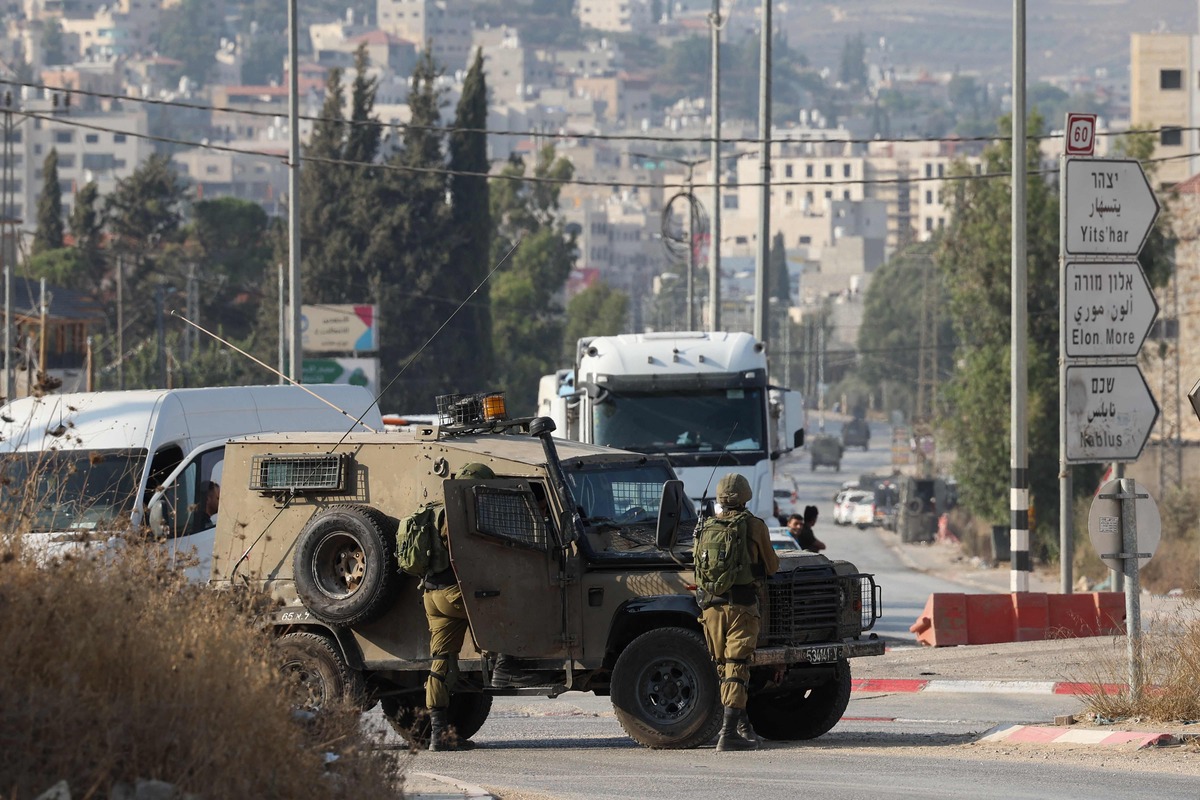
Today, Wednesday, the Israeli occupation forces arrested three young men from the town of Jaba', south of Jenin.

The Prisoners' Club said that occupation forces stormed the town of Jaba' and arrested three young men whose identities are yet to be determined, after raiding their families' homes, searching them, and vandalizing their contents.

The occupation forces stormed Jaba' at dawn today, raided and searched a number of homes, deployed infantry units in the streets, and detained and interrogated a number of citizens.

The occupation has intensified its raids on towns and villages in Jenin Governorate since the start of the aggression on the city and refugee camp of Jenin on January 21st, raiding citizens' homes and properties, detaining a number of them, and arresting a number of young men.

Powered by Froala Editor

PALESTINE

Wed 30 Jul 2025 12:48 pm - Jerusalem Time

The occupation forces demolished a house and a number of commercial facilities west of Hebron.

Israeli occupation forces demolished a house, five commercial barracks, and other facilities in the town of Idhna, west of Hebron, on Wednesday.

Local sources reported that the occupation forces stormed the town of Idhna, west of Hebron, and bulldozers demolished a ground floor house (150 square meters) belonging to citizen Rizq Abdullah Al-Batran, and five shops and commercial barns belonging to each of Farid Muhammad Al-Batran, Munib Muhammad Al-Batran, Fadi Abu Zalta, Osama Salimiya, and Muhammad Issa Awad, in addition to destroying a number of mobile homes, and arrested citizen Awad Faraj Allah after abusing him.

Powered by Froala Editor

PALESTINE

Wed 30 Jul 2025 12:40 pm - Jerusalem Time

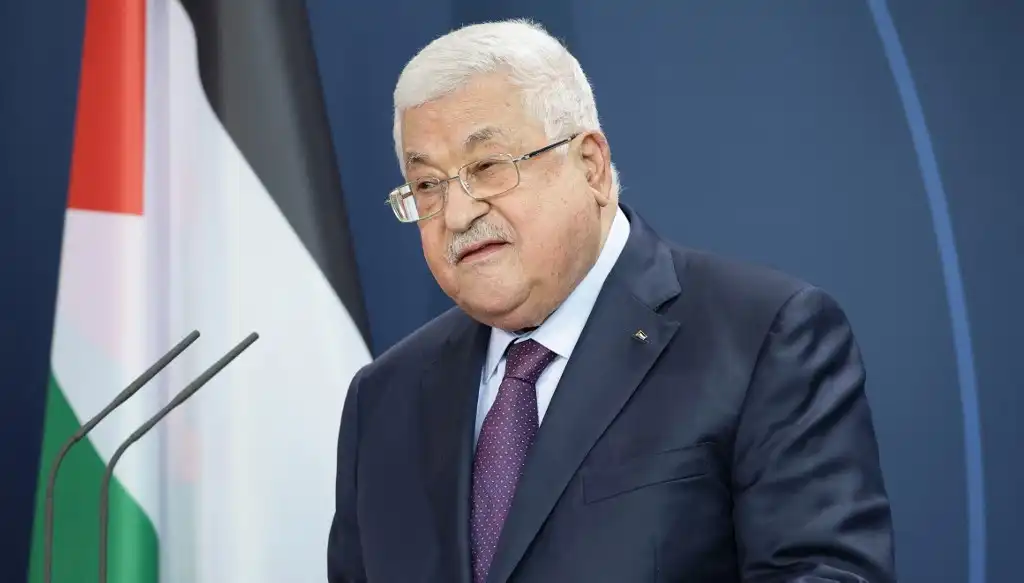
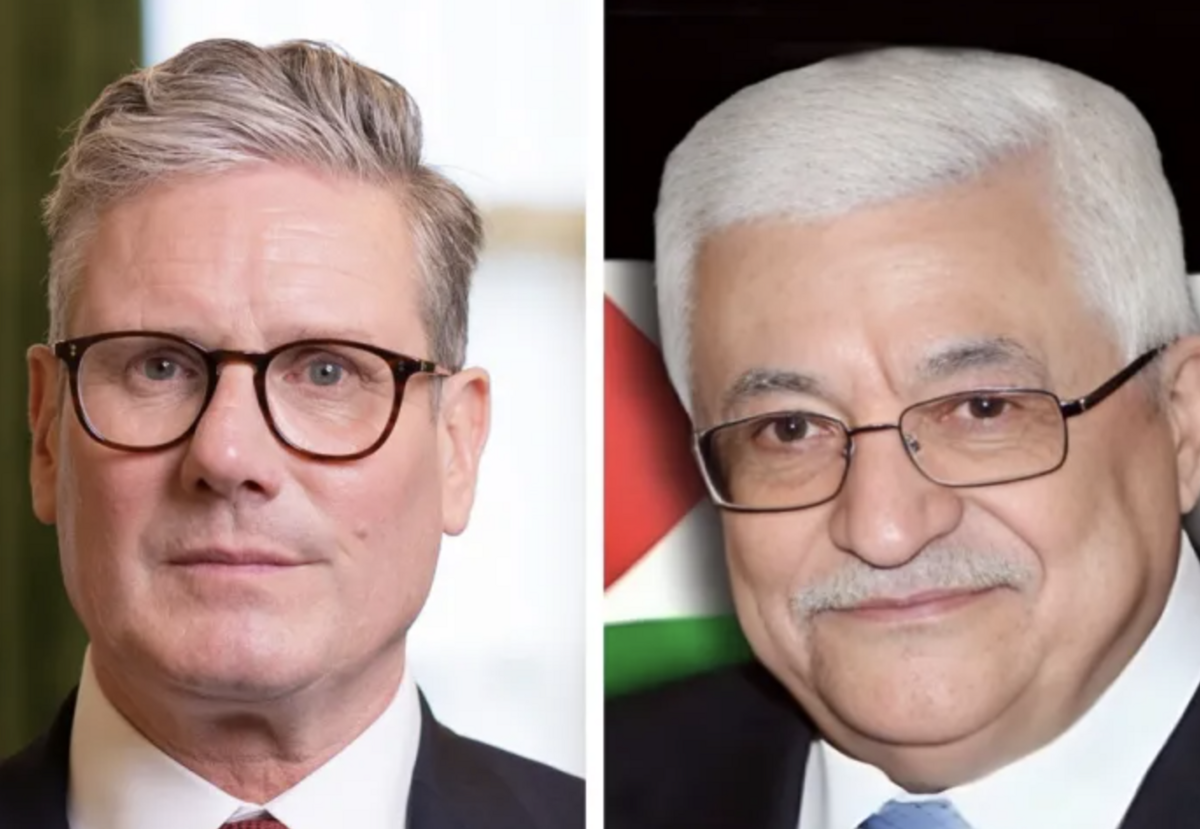
President Abbas welcomes New York's call to recognize Palestine, calling it a "historic step."

President Mahmoud Abbas expressed his high appreciation and welcome, including the New York Public Appeal, to the foreign contributors from: Andorra, Australia, Canada, Finland, France, Iceland, Ireland, Luxembourg, Malta, New Zealand, Norway, Portugal, San Marino, Slovenia, and Spain, whose officials are known for their support for the State of Palestine, and because countries that have not recognized it have recognized the State of Palestine.

President Abbas commended the meeting of the needs of the opposing states, which he had longed for through the vision of a two-state solution and peace based on international law and relevant UN resolutions, and his commitment, including his pledge, to implement this.

President Abbas emphasized that these countries' recognition of the State of Palestine, or their declaration of their intention to recognize it, constitutes a squandering of recognition, a step-by-step move toward achieving a just and comprehensive peace, and strengthens international resistance in protest against the resistance. The Palestinian state, with East Jerusalem as its capital, remains an active state.

He called on other countries to join this call, which is required to advance the political movement based on the two-state solution, including ensuring the commitment of all peoples of the region.

Powered by Froala Editor

PALESTINE

Wed 30 Jul 2025 12:06 pm - Jerusalem Time

The occupation releases Israeli settler who killed a teacher, and the Prisoners' Club considers it "direct incitement."

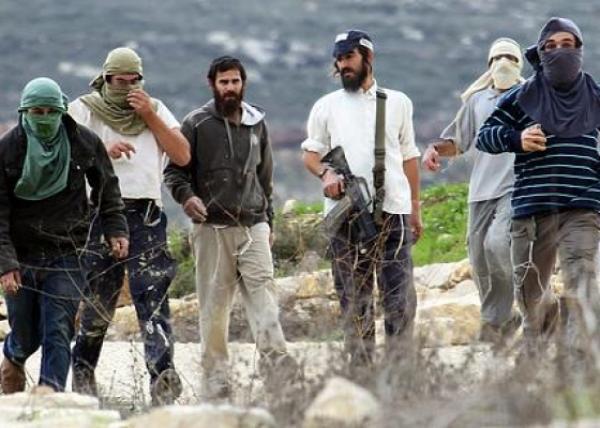
The Jerusalem Magistrate's Court released settler Yanon Levy on Tuesday, accused of killing Palestinian activist and teacher Awda al-Hathalin in the village of Umm al-Khair in the Masafer Yatta area, south of Hebron.

The Magistrate's Court ordered his transfer to house arrest, despite the fact that the murder was documented in video footage and despite Levi's previous inclusion on sanctions lists in the United States, Canada, and the United Kingdom for his involvement in settler terrorism.

Al-Hathalin, 31, was killed on Monday by settler gunfire as residents of Umm al-Khair attempted to stop a bulldozer that had entered their agricultural land accompanied by settlers. Another Palestinian citizen was injured after being attacked with the bulldozer's hammer.


In the same context, the Palestinian Prisoners' Club stated that the Israeli occupation court's decision to release the settler accused of killing the martyr Awda al-Hathalin from Masafer Yatta is further evidence of the functional role played by the Israeli judicial system as one of the primary arms in entrenching Israel's brutal system.

The club explained in a statement issued on Wednesday that this decision perpetuates a policy of impunity and provides legal protection for perpetrators of crimes against the Palestinian people.

The club explained that the occupation's judicial system, including military courts, has been and continues to be one of the most prominent tools employed by the occupation to legitimize its crimes, consolidate its control over Palestinian land and people, and target their existence and fundamental rights through judicial procedures that appear "legal" but are essentially discriminatory, oppressive, and racist.

The Prisoners' Club added that the release of the killer and the scene in which the settler appeared before the court constitute a public incitement message to the settlers to kill more Palestinians.

He pointed out that the decision was not surprising in light of the dozens and hundreds of cases of field executions and deliberate killings carried out by occupation soldiers and settlers without any accountability, which reinforces the policy of impunity and creates an environment conducive to the commission of further crimes.

The Prisoners' Club stressed that the occupation's judicial system has been completely exposed during the ongoing war of extermination against the Palestinian people, pointing out that there is daily evidence confirming the level of racism to which this system resorts. It explained that if the case concerned a Palestinian, the court would have issued a life sentence against him, demolished his home, and collectively punished his family. Meanwhile, as part of the policy of systematic discrimination and apartheid, the occupation forces this morning arrested a number of members of the martyr Al-Hathalin's family in Khirbet Umm Al-Khair in Masafer Yatta.

In this context, the Prisoners' Club reiterated its call on the Palestinian national movement to seriously pursue a strategic decision to boycott the Israeli judicial system, which has perpetuated an unprecedented pattern of brutality since the start of the war of extermination. It also emphasized the need to strengthen human rights and legal efforts at the international level to hold perpetrators of grave violations accountable and end the exceptional impunity enjoyed by the occupation.

The club called on the international community to impose clear sanctions on the occupation authorities, which would place them in a state of legal and political isolation. It emphasized that the continued genocide and widespread crimes against the Palestinian people represent a direct threat to universal human values, and that its impact extends not only to the Palestinians but to all of humanity.

The Prisoners' Club affirmed in its statement that the Masafer Yatta area is a blatant example of the occupation's historical policy of colonialism and forced displacement. In recent years, particularly since the start of the war of extermination, the area has witnessed a marked escalation in systematic attacks, including field executions, the destruction and theft of civilian property, and mass arrests of hundreds of citizens, including women and children. Heavy fines have also been imposed as a condition for the release of detainees, as part of a policy aimed at emptying the land of its indigenous population.

On Tuesday, the occupation court in Jerusalem released settler Yanon Levy, accused of killing Palestinian activist and teacher Awda al-Hathalin in the village of Umm al-Khair in the Masafer Yatta area, south of Hebron.

The court ordered his transfer to house arrest, despite the fact that the murder was documented in video footage and despite Levy's previous inclusion on sanctions lists in the United States, Canada, and Britain for his involvement in colonial terrorism.

Al-Hathalin, 31, was killed on Monday by settler bullets while residents of Umm al-Khair were trying to stop a bulldozer that had entered their agricultural lands accompanied by settlers. Another Palestinian citizen was injured after being attacked with the bulldozer's hammer.

Despite the seriousness of the charges, which included "unintentional killing" and "discharging a firearm," the Israeli police did not object to the decision to release the settler and transfer him to house arrest. They also allowed the settler to meet his family members in the courtroom, an exceptional measure.

Powered by Froala Editor

ARAB AND WORLD

Wed 30 Jul 2025 11:55 am - Jerusalem Time

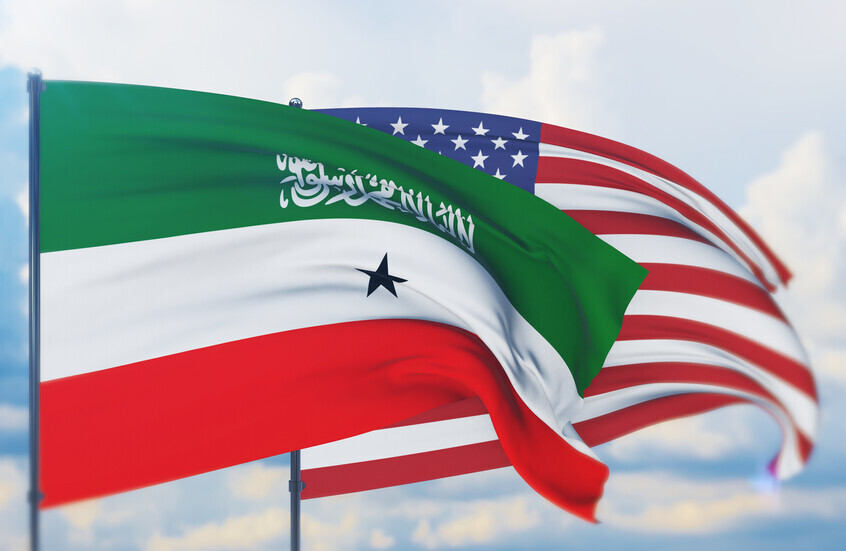
Somaliland makes a tempting offer to Trump in exchange for recognition

Although the United States currently recognizes Somalia's claim to sovereignty over the region, Somaliland's president, Abdirahman Mohamed Abdullahi, is seeking to persuade Washington to support the semi-autonomous region's aspirations for recognition, at a time when competition for Donald Trump's attention is intensifying as Washington and Beijing compete for strategic resources in Africa.
Abdullah, who took power in the breakaway region in the Horn of Africa in 2024, said that talks with the US Embassy in Somalia and the US Department of Defense aim to establish a new partnership in the areas of economic cooperation, security, and counterterrorism.
"We discussed ways and mechanisms for cooperation in the areas of security, trade, and regional stability," the president said in an interview on Monday, noting that the US ambassador to Somalia has visited Somaliland several times in recent months, while US Department of Defense officials visited the region in December.
Although Somaliland has failed to gain international recognition as a sovereign state since declaring its independence in 1991, the region has remained relatively stable while Somalia has suffered from three decades of civil war and an insurgency by armed Islamist groups.
Recognizing Somaliland, a strategically located state, would strengthen the US presence in an increasingly important region, where the Houthis in Yemen have targeted vessels linked to Israel, the United States, and other countries supporting the war in Gaza.
The United Arab Emirates, a close ally of the United States, already operates a port in the Somaliland city of Berbera and controls a nearby airstrip used by military aircraft.
But Washington will also have to consider the implications of recognizing Somaliland, particularly regarding security cooperation with Somalia, where it has played a key role in supporting the government against ISIS and al-Qaeda.
Although US Ambassador Richard Riley and other officials met with President Abdullahi and Somaliland officials to discuss shared interests in the Horn of Africa region, the US State Department confirmed in a statement that Washington is not in active talks with Somaliland representatives regarding a deal to recognize it as a state.
The ministry said that the United States recognizes the sovereignty and territorial integrity of Somalia, including Somaliland, a statement reiterated by the Somali Foreign Ministry.

Source: Bloomberg


Powered by Froala Editor

PALESTINE

Wed 30 Jul 2025 11:13 am - Jerusalem Time

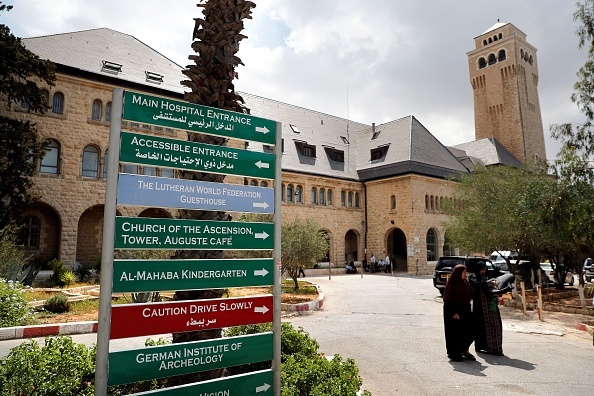
EU and Italy provide €23 million to East Jerusalem hospitals.

The European Union and Italy have contributed €23 million to the Palestinian Authority to support the reimbursement of medical referrals to East Jerusalem hospitals.

This financial contribution is financed by the European Union (€22 million) and the Italian Government (€1 million).

This contribution is part of the direct budgetary assistance package to the Palestinian Authority, identified at the EU-PA High-Level Political Dialogue on 14 April 2025, to support Palestinian recovery and resilience.

This contribution will enable the Palestinian Authority to fulfill its financial obligations to East Jerusalem hospitals, which are currently under pressure due to the ongoing conflict and economic challenges associated with the war in Gaza. It will also help ensure that these hospitals continue to provide essential healthcare services to Palestinian patients in the occupied Palestinian territories.

Since 2013, the European Union and its Member States have supported the Palestinian National Authority with regular contributions to cover medical referrals to East Jerusalem hospitals, which have now exceeded €213 million. These hospitals are an integral part of the Palestinian healthcare system, providing specialized medical services unavailable in public hospitals.

“With this contribution, the European Union and its Member States reaffirm their firm commitment to ensuring access to essential medical services for all Palestinians at a time when the healthcare sector is severely impacted by the ongoing war in Gaza and escalating tensions in the West Bank,” said EU Representative Alexander Stutzman. “We are firmly committed to supporting the Palestinian Authority in its efforts to strengthen and reform its healthcare system, enhancing efficiency and equal access to essential care for all patients. As the health and humanitarian situation in Gaza deteriorates, we call for the reopening of the crossings to enable the delivery of medical supplies to Gaza hospitals and facilitate the evacuation of critically ill patients to East Jerusalem hospitals.”

In turn, the Italian Consul General, Domenico Bellato, said: “This contribution comes at a time when the Palestinian health system is under severe pressure. Through the PEGASE mechanism, patients can access specialized, high-quality care in East Jerusalem, services that are currently unavailable in the West Bank. Italy’s contributions to PEGASE since 2013 reflect its commitment to supporting the Palestinian Authority in its efforts to strengthen and sustain the Palestinian health system.”

Since 2008, most of the European Union's assistance to the Palestinian Authority has been channeled through the PEGASE Direct Financial Support mechanism, supporting the PA's reform process and various national development plans. PEGASE also supports the PA's recurrent expenditures, particularly the salaries and pensions of civil servants, social allowances paid through the cash transfer program, and part of the costs of medical referrals to East Jerusalem hospitals.

Since February 2008, over €3 billion have been disbursed through the PEGASE mechanism by the European Commission and various development partners, most of which are EU Member States. In addition, the EU provides assistance to the Palestinian people through the United Nations Relief and Works Agency for Palestine Refugees in the Near East (UNRWA), as well as a wide range of other humanitarian and development cooperation projects.

Powered by Froala Editor

PALESTINE

Wed 30 Jul 2025 11:00 am - Jerusalem Time

The occupation threatens to demolish all homes in the village of Al-Nu'man, east of Bethlehem.

On Wednesday, the occupation authorities notified the demolition of all homes in the village of Al-Nu'man, east of Bethlehem.

Jamal al-Darawi, head of the al-Nu'man village council, said that Israeli police, accompanied by Israeli occupation officials in Jerusalem, raided the project. The project has been renovated for the third time in a few months since the beginning of the year. Meanwhile, all the refugee homes, 35 of them strong, and 45 apartments, were not ready, with the newest being 35 years old, and the oldest being 75.

Al-Darawi pointed out that a lawyer is following up on the case of the homes, and is racing against time to prevent the occupation from implementing its plan to demolish the homes.

He explained that the company, which established a village council in 2013 to confront the occupation's plans, has a population of 150 people and an area of 1,500 dunams. Resistance has been banned there for 32 years.

Al-Darawi announced that the occupation's ban on construction in the church would force approximately 100 residents to leave in search of housing.

The occupation joined the occupation in displacing the city's residents and annexing it to the borders of the tribal occupation in Jerusalem. For a period of two years, the occupation court approved the imposition of what is known as the "Arnona" property tax on all homes in the village. Six years ago, between 30,000 and 60,000 shekels were paid for each home.

The village of Al-Nu'man is located east of the Bethlehem Governorate, approximately 4.5 km from the city center. It is bordered to the east by the lands of the village of Al-Khas, to the north by the Sur Baher district in occupied Jerusalem, and to the west and south by the city of Beit Sahour.

It indicates that the occupation threatened the homes with demolition on the first day of January 26th, and used it on the tenth of June of this year.

Powered by Froala Editor

ARAB AND WORLD

Wed 30 Jul 2025 10:37 am - Jerusalem Time

Residents evacuated in Japan and the United States after tsunami warnings from a powerful earthquake in eastern Russia.

A powerful 8.8-magnitude earthquake struck off the coast of Russia's far eastern Kamchatka Peninsula on Wednesday, prompting tsunami warnings across the Pacific Ocean, including Japan and the United States.

According to Kamchatka Emergency Situations Minister Sergei Lebedev, the earthquake occurred at a relatively shallow depth of 18 kilometers and generated tsunami waves 3 to 4 meters high in the region.

"Today's earthquake was serious, the strongest the region has seen in decades," Kamchatka Governor Vladimir Solodov said in a video posted on Telegram.

According to the U.S. Geological Survey, the current earthquake is the sixth most powerful earthquake in history, equal in magnitude to the 2010 Biobio earthquake in Chile and the 1906 earthquake in the Esmeraldas region of Ecuador.

Three tsunamis struck the coastal town of Severo-Kurilsk in Russia, which has a population of about 2,000.

Russia's state-run TASS news agency reported that the third wave was "powerful," damaging port infrastructure and sweeping several ships out to sea.

Several people were also injured in Russia, some during evacuations, including a woman who jumped from a window.

The region's Health Minister, Oleg Melnikov, confirmed that all those infected are in "stable condition," and no serious injuries have been reported so far.

Initial images from Kamchatka showed that a kindergarten building in Petropavlovsk-Kamchatsky was damaged by the earthquake.

Wednesday's earthquake was the strongest in the region since 1952, and authorities warned of the possibility of strong aftershocks.

The Geophysical Service of the Russian Academy of Sciences in Kamchatka said that "strong and noticeable aftershocks may continue for at least a month, and their magnitude may reach 7.5."

The first tsunami wave hit the coast of Japan, reaching a height of about 30 centimeters, reaching the coastal city of Nemuro in the northeast of Hokkaido. Japanese authorities had previously warned that subsequent waves could reach heights of up to 3 meters.

Evacuation orders in Japan extended to hundreds of kilometers along its Pacific coast, from Hokkaido in the north to Wakayama Prefecture in the south.

Tokyo Electric Power Company, operator of the Fukushima Daiichi nuclear plant, announced that it had evacuated all employees, confirming that no abnormal signs had been recorded so far.

The Fukushima Daiichi plant was the site of a major nuclear disaster in 2011, following a devastating 9.0 magnitude earthquake and subsequent tsunami that swept across Japan's east coast.

In the United States, parts of Hawaii and Alaska have been placed under the highest warning level, meaning immediate action is needed to protect lives and property by moving to higher ground.

California, Oregon, and Washington were subject to less severe warnings, warning of the possibility of strong ocean currents and dangerous waves.

US President Donald Trump urged Americans to stay in safe places, writing on his Truth Social and X platforms: "Stay strong and safe!"

Reuters reported that some coastal areas in Hawaii are now under evacuation orders, and Hawaii Governor Josh Green addressed residents, saying, "I ask everyone to remain calm, and if you are in low-lying areas, please move to higher ground."

On Maui, American tourist D.L. Scales, who was vacationing in the Wailea area, told the BBC he was stuck in traffic with dozens of other tourists trying to reach safety.

"The situation is relatively calm, and everyone is trying to leave. I don't know exactly where people are going," he added, explaining that "the sirens went off minutes ago, which prompted people to move."

Scales noted that the only people who seemed to be panicking were some tourists.

Seismologist Dr. Lucy Jones told the BBC that tsunamis could damage ports and waterfront properties in Hawaii, and possibly California, but she does not expect them to cause catastrophic loss of life in any part of the Americas.

She added that the height of the expected tsunami waves in Hawaii ranges between 3 and 10 feet (about 1 to 3 meters), while the waves in Santa Barbara, California, are expected to reach between 1 and 2 feet (about 30 to 60 centimeters).

For comparison, Jones noted that some of the 2011 tsunami waves in Japan reached heights of up to 42 feet (about 13 meters).

She explained, "It is not a wave, as some imagine, but rather a temporary rise in sea level."

Powered by Froala Editor

OPINIONS

Wed 30 Jul 2025 10:25 am - Jerusalem Time

From the River to the Sea, on Two States We Agree!

Gershon Baskin

July 30, 2025

International recognition by individual countries of the State of Palestine is an important step and something that I have been calling for and supporting for many years. I have told Heads of State and Ambassadors from countries that claim to support the two-states solution but only recognize one of them, that they need to “put up or shut up”. We have had enough duplicity in the dealing with the Israeli-Palestinian conflict by countries that consider themselves friends of Israel and/or Palestine. If the two-states solution is back on the table, as it seems to be, and if it is the only solution to this conflict that enables the two peoples living on the Land between the River and the Sea (7 million Israeli Jews and 7 million Palestinian Arabs) to achieve a territorial expression of their identity, then recognition by all countries of the world of both the State of Israel and the State of Palestine is essential.

The upcoming (hopeful) recognition of the State of Palestine by France, the UK, Malta, Australia, Canada, New Zealand, and Portugal is very welcome. In reality, this will not change anything for the Palestinian people who will remain under Israeli occupation, but nonetheless it is very important. If 192 Member States of the United Nations recognize the State of Palestine, but Israel continues to refuse to recognize the right of the Palestinian people to self-determination, the occupation will continue. Nonetheless, the recognition of the State of Palestine by those countries that consider themselves allies and supporters of Israel, of Israel’s right to defend itself, of Israel’s right to exist, sends a very important message to the people of Israel (probably not to the present government of Israel which is a disaster for the people of Israel). The message is that the two-states solution is alive and well and while these countries are recognizing the State of Palestine and the right of the people of Palestine to self-determination, it is also a reaffirmation of the two-states solution that grants the same legitimacy for the right of the Jewish people to self-determination in a democratic state (with full equality for all of its citizens) to live in peace with their Palestinian neighbors.

The recognition of the State of Palestine by these countries and others that will follow should also be clear in pointing out the damaging message (to the Palestinian people) of the slogan “From the River to the Sea, Palestine will be Free” because that slogan is against the two-states solution and negates the existence of Israel and the right of Israel to exist. This slogan is in fact an anti-Palestinian slogan because it enables the imagination of a reality in which Israel no longer exists and it is therefore, an anti-peace, anti-two-states solution slogan. There is no one state solution, even if it is offered as the utopian reality of a truly democratic state where Jews, Christians and Muslims live in peace and equality. The conflict between the two peoples living on the land in almost equal numbers has never been about creating the United States of Israel-Palestine. The two people living on the Land have been willing to fight, to die and to kill for more than 100 years for a territorial expression of their identity. They want a solution that recognizes both peoples’ claim that they give their identity to the Land and take their identity from it. Only the two-states solution enables both people the right of self-determination.

The reluctance of both peoples to accept the legitimacy of the claim for the recognition of their national rights and self-determination of the other side is understandable. However, it is time to get beyond that demand for legitimacy of national rights and to finally understand that both people are there, both people have an historical connection to the land, and both people intend to stay on the land as a national entity for a long time to come. This in itself would be a step in the right direction. After October 7 and every day since, the futility of continuing this conflict should be apparent to both peoples and to the entire world. The war in Gaza must be the last Israeli-Palestinian war and from it must emerge the two-states solution with the recognition of both states by the entire international community.

Along with recognition of the State of Palestine, it is time to adopt a new political slogan offered by the Alliance for Two States: From the River to the Sea, on Two States We Agree!

Powered by Froala Editor

PALESTINE

Wed 30 Jul 2025 9:49 am - Jerusalem Time

Is Hamas's civilian influence really beginning to decline in Gaza?

Recently, a clear shift has begun to emerge in the internal landscape of the Gaza Strip. Among the most notable of these changes is the emergence of local armed groups such as the Abu Shabab group, which has begun to assume roles previously reserved for the Hamas government, particularly in the civilian sphere related to organizing society, protecting aid, and monitoring the security situation. These groups do not only operate in the shadows; their presence has become felt on the streets, in aid distribution centers, at checkpoints, and even in direct interactions with the population.

This emerging role raises many questions: Has Hamas's civilian influence truly begun to decline? Are we witnessing the beginning of a split within Gaza between those who maintain security on the ground and those who manage the resistance? It is well known that Hamas has always combined military power with the management of civilian affairs, but now, under the pressure of the blockade, strikes, and losses, it may find itself forced to focus on the military aspect, leaving space for other forces to manage some of the day-to-day details.

The Abu Shabab group, which until recently was not a major player in the public eye, is now making steady progress. Through its role in protecting aid convoys and preventing chaos and theft, it presents itself as an organized force aiming to impose a sense of order, especially in light of the vacuum people feel as a result of the pressure on Hamas institutions. But who stands behind this group? And who supports its actions? These are questions that have yet to be resolved, and the street lacks clear answers.

On the public side, there is a wide divergence of opinion. Part of the population views these actions as necessary, especially in light of the collapse in services and the lack of effective oversight of some civil institutions. This group believes that any entity capable of maintaining security and distributing aid in an orderly manner deserves a chance. Meanwhile, another group is concerned, believing that the entry of unelected groups into the civil administration arena could lead to further chaos, raising questions about the legitimacy of these actors and their agendas, especially in an environment saturated with regional interference.

The question remains open: Is Gaza moving toward a new model that separates military and political action? Is this transition occurring by Hamas's own decision, or is it the result of pressures imposed on it? And what will be the fate of the new groups if the movement's circumstances improve or regional calculations change? This phase is unlike anything that came before, and what is happening today is more than just field arrangements; it is a test of Gaza's ability to adapt to a new political and security reality, shaped by war, interventions, and intertwined interests.

In this climate, Gaza appears to be on the verge of a real transformation. No one knows whether it will lead to stability or further division. What is certain, however, is that roles are changing, new players are asserting themselves, and people are caught between anticipation and experimentation, hoping only that the cost won't be in their daily lives and the security they have left.

Powered by Froala Editor

PALESTINE

Wed 30 Jul 2025 9:13 am - Jerusalem Time

155 environmental violations were committed by the occupation and settlers during the second quarter of 2025.

The Environmental Quality Authority confirmed, in its second government report for 2025, that the occupation and its settlers had occupied a total of 155 areas for the Palestinian environment during the democratic period from April to June of this year, in various northern governorates.

In its report today, Wednesday, it stated that these attacks are being carried out on several targets, most notably the use of water well tactics, attacks on water distribution networks and sewage systems, the destruction of agricultural land, the smuggling of hazardous waste, and attacks on all natural resources, in addition to the establishment of colonial outposts and the financing of agricultural and grazing lands.

He explained that during the second half of this year, the occupation and its settlers destroyed 15 water wells in the governorates of Ramallah, Hebron, Bethlehem, Salfit and Al-Joutoubas, causing severe damage to water resources and contributing to the acceleration of desertification and the diversification of the natural resources.

The Environmental Quality Department also documented 13 attacks on water networks, including the planning of transmission lines in the areas of Nablus, Salfit, Qalqilya, and Jericho, and 6 attacks on sewage networks, highlighting the most prominent discouraging situations, along with the various ones in Qalqilya, Salfit, and Jerusalem, which increase the health risks and negatively impact the general environment.

Accordingly, the Environmental Quality Department documented 35 incidents of total or partial destruction of agricultural land, 45 attacks on roads and infrastructure, to demonstrate our commitment to olive, grape and citrus trees, in addition to systematic construction and bulldozing activities that targeted targets.

A related agreement, a detailed report of 16 targeted attacks on all, represented by the theft of sheep, the destruction of pens, preventing shepherds from accessing pastures, allowing shepherds to access lands, and damaging roads, which warns of a threat to the environmental left in the slope and pasture areas.

The report also presented 15 cases of solid waste and moisture, resulting from the occupation-controlled demolitions in Jerusalem, Salfit, Qalqilya, and Ramallah, and the smuggling of industrial waste from within the 1948 districts into the Palestinian territories, including construction waste, defective tires, and unused tires, which pose a direct threat to human health.

The report touched on 10 additional diverse actions carried out by the occupation forces and their settlers, including the seizure of rich and natural sites, the sabotage of electricity networks, the encroachment of large numbers of residents, the spilling of oil on roads, and the assault of public and private audiences in various areas of Bethlehem, Jericho, Lille, Salfit, Ramallah, and Nablus, as part of a systematic effort to empty the land of its inhabitants.

The environmental quality approach highlighted that various measures extended to include population centers and infrastructure, including electrical networks, health facilities, public parks, and historical and natural sites. These measures are part of a methodology targeting the Palestinian environment and its resources, and are implemented within a small, diverse framework.

The report stated that some of these crimes constitute crimes against humanity, while others constitute war crimes, given the provisions of Articles 7 and 8 of the Rome Statute of the International Criminal Court, which relate to the widespread destruction of infrastructure and complete displacement, as occurred in the Jenin and Tulkarm refugee camps.

Powered by Froala Editor

ARAB AND WORLD

Wed 30 Jul 2025 9:12 am - Jerusalem Time

Netanyahu doesn't want to end the war with the new plan in Gaza.

• Israeli Foreign Minister: We will not accept a state for Hamas through the two-state solution.
• Smotrich: "We will not transfer Gaza from one Arab to another. Gaza is an integral part of the Land of Israel."


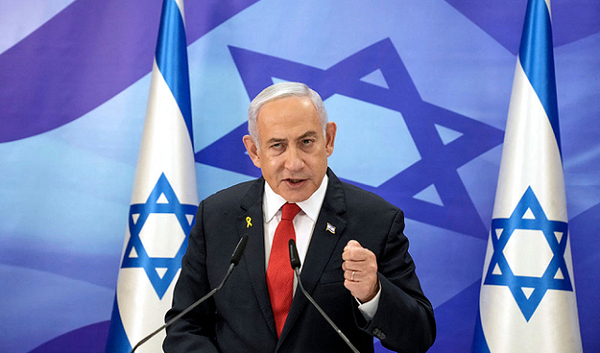
Amid the ongoing war of extermination, killing, and starvation, Israeli Prime Minister Benjamin Netanyahu presented a new action plan for the Gaza Strip during a meeting of the "Small Ministerial Forum" held Monday evening. He said it represents a "change in the Israeli political and strategic approach."
According to the Maariv newspaper, the plan stipulates giving international mediators a new opportunity to persuade Hamas to accept the deal proposal, which was put forward about two weeks ago and which Israel had already approved.
Netanyahu asserted that Israel "will not wait indefinitely," emphasizing that a specific period of time will be given to the other side to provide a positive response that will enable progress in the talks. In the event of refusal or procrastination, Netanyahu announced his government's intention to take unilateral steps, most notably the annexation of territory in the Gaza Strip.
The meeting also proposed establishing a special security and military administration to manage areas to be annexed from the Gaza Strip. This represents a radical shift in Israeli policy, from a strategy of pressure for a settlement to imposing a new reality on the ground in Gaza. Despite implicit warnings, the Israeli political leadership believes there are realistic opportunities for concluding a prisoner exchange deal and a ceasefire, if Hamas demonstrates flexibility in the ongoing negotiations.
Israel's security cabinet held what were described as "sensitive" discussions on the stalemate in indirect negotiations with Hamas over a ceasefire and prisoner exchange, and pressure from European countries to halt the war. However, the cabinet also discussed "drastic military steps, including reoccupying the Gaza Strip or imposing a comprehensive blockade on cities under Hamas control," Channel 12 reported Tuesday.
During the cabinet meeting, he stated that imposing a blockade on the Gaza Strip would include "stopping the entry of humanitarian aid." The channel quoted Israeli ministers as saying that "any attempt to impose an effective blockade requires stopping the entry of aid, including food and electricity, otherwise it will be ineffective."
Israeli Prime Minister Benjamin Netanyahu claimed in an English-language statement following the cabinet meeting that "Israel will continue to work with international agencies, as well as the United States and European countries, to ensure the flow of significant amounts of humanitarian aid into the Gaza Strip."
But Yedioth Ahronoth newspaper quoted Israeli officials on Tuesday as saying that Netanyahu "behaves as if he does not intend to allow a temporary ceasefire to become permanent and end the war in the Gaza Strip."
The newspaper noted that some of the negotiations regarding the agreement are taking place on the island of Sardinia, and that officials from Qatar, Israel, and the United States have held a series of meetings that are continuing despite the fact that Qatari Prime Minister Mohammed bin Abdulrahman Al Thani has left the island.
Netanyahu is attempting to appear to be under pressure from Religious Zionism Party leader and Finance Minister Bezalel Smotrich, who has proposed a plan to the cabinet for the gradual annexation of parts of the Gaza Strip in an attempt to keep Smotrich in the government.
According to Haaretz, the plan stipulates that Israel will give Hamas several days to agree to a proposal for a ceasefire and prisoner exchange. If Hamas rejects the proposal, Israel will begin gradually annexing areas of the Gaza Strip.
In turn, Israeli Foreign Minister Gideon Sa'ar said on Tuesday that Israel rejects any efforts to establish a Palestinian state that includes Hamas, noting that attempts to force Israel to agree to a two-state solution "will not happen."
The minister added that "international pressure on Israel over the past months has allowed Hamas to strengthen its position," warning that the movement's continued intransigence in negotiations could lead to a new military escalation.
The minister noted that "military pressure has succeeded twice in the past in pushing Hamas to sign hostage agreements," adding that Hamas "bears responsibility for Gaza's suffering."
The minister stressed that continued Hamas rule in the Gaza Strip would be a "tragedy for both Israelis and Palestinians," asserting that Israel "will not allow a rift in relations with the United States" and will not yield to "any external pressure to sacrifice its security."
Regarding the humanitarian situation in Gaza, the minister described it as "difficult," but said there were "lies about starvation," noting that Israel was "ready to cooperate with any party willing to participate in airdrops of aid."
Meanwhile, Smotrich announced yesterday morning that he would not withdraw from the government immediately due to Netanyahu's decision on Saturday to allow aid into the Gaza Strip and a daily ceasefire of several hours.
Smotrich opposes this decision, from which Netanyahu's office claimed that Smotrich and National Security Minister Itamar Ben-Gvir were excluded from and not invited. However, Smotrich said in his statement that "it is not right to make political calculations during a war," adding that "we will be tested according to the results – the defeat of Hamas."
Smotrich continued, "We are advancing a good strategic process, and it's not worthwhile to expand on it now. In a short time, we will know if it was successful and where we are headed."
Smotrich rejected Ben-Gvir's proposal that they work together against Netanyahu and form a "blocking bloc" against negotiations with Hamas over a ceasefire agreement to end the war on Gaza and a prisoner exchange. In this context, Ben-Gvir also sought to persuade rabbis to pressure Netanyahu.
Ben-Gvir withdrew from the government following the agreement on a ceasefire and prisoner exchange in January, then returned to the government after Israel violated the agreement and resumed the war in March.
Likud Knesset member Moshe Saadeh revealed a new approach by Netanyahu, which involves imposing direct control over Gaza and establishing a humanitarian zone. Netanyahu speaks of occupying Gaza, establishing a humanitarian city where we will provide energy, food, and healthcare, and then allowing the Palestinians to emigrate.
During a visit to an intelligence unit base, Netanyahu reiterated his commitment to the operation's dual objectives, saying, "We have a job to do: eliminate Hamas and return our hostages. These are two interconnected goals, and we will not abandon them for a moment," Haaretz reported Tuesday.
For his part, Education Minister Yoav Kisch stated that talks on a prisoner swap had completely collapsed and were no longer on the agenda.
"The possibility of returning the kidnapped soldiers through a specific agreement is nonexistent. This is the reality. We must continue to pressure Hamas and look for other ways to release them and subdue the movement," he said in an interview with Israeli state radio.
Kish emphasized that this assessment is not limited to the Israeli position, but is shared by the Qatari and Egyptian mediators, as well as US envoy Witkoff. He explained that the delivery of humanitarian aid to Gaza is primarily aimed at easing international pressure on Israel, nothing more.
On Tuesday, the head of the Religious Zionism Party and Israeli Finance Minister Bezalel Smotrich reiterated his call for settlements in the Gaza Strip, which he described as "an integral part of the Land of Israel." Smotrich's remarks came during a conference held by the Gush Katif Heritage Center to mark the 20th anniversary of the implementation of the Gaza Disengagement Plan.
Smotrich said, "We have been saying for 20 years that this is a wish, and now this is also a realistic plan of action. We did not sacrifice these prices to transfer Gaza from one Arab to another. Gaza is an integral part of the Land of Israel."
Smotrich added, "I don't want to return to Gush Katif (the former settlement bloc in the Gaza Strip). It's too small. This (settlement) should be much bigger and much wider. Gaza allows for big thinking."
He continued, "No one in the world will allow us to wage war and eliminate Hamas and the threat posed by Gaza if we starve two million citizens."
Smotrich addressed the situation in the occupied West Bank, saying, "We are carrying out a revolution there. We are imposing de facto sovereignty, construction through legalization (i.e., the legalization of settlement outposts), confiscations, changing the DNA of the entire regime, and paving roads." He said that the current government will impose official Israeli sovereignty in the West Bank.
In contrast, the families of the Israeli hostages held in the Gaza Strip expressed their growing anger at the Israeli government's performance, accusing it of inaction and abandoning their sons' case.
"The moral devastation taking place in Gaza will be paid for by generations to come," the families said in a statement issued Tuesday. "The Knesset members have abandoned the prisoners, and their case is no longer a priority."
The families emphasized that the government has missed real opportunities to release their sons and insists on ignoring their suffering. These statements come amid the intensification of the Israeli aggression on Gaza and the continued stalling of negotiations regarding a prisoner exchange deal, which is increasing political and popular pressure on the Netanyahu government.


Powered by Froala Editor

OPINIONS

Wed 30 Jul 2025 9:07 am - Jerusalem Time

Starmer's promise in exchange for the Balfour Declaration!

Written by: Dr. Sabry Saidam

Written by: Dr. Sabry Saidam

Opinion Writer

As these words are being written, Britain has taken a step closer to acknowledging its historical guilt over the infamous Balfour Declaration, with Prime Minister Keir Starmer announcing his readiness to recognize a Palestinian state. This announcement was echoed by Foreign Minister David Lammy from the podium of the United Nations.

Although many considered Starmer and his Foreign Secretary's announcement a step in the right direction and a significant historical leap, it did not come without conditions. Rather, it came with the proviso that Britain was prepared to recognize Israel unless it changed the reality in Gaza and its destructive war, allowed aid in, halted land confiscation in the West Bank, and undermined the two-state solution.

Starmer and Lammy's announcement would not have been made without the suffering and struggle of the Palestinian people, the horrific images coming and going from Gaza, the cancerous reality of the colonial settlement in the West Bank, and the ugliness of the war in all its details against the Palestinians led by the reckless political trio in Tel Aviv: Netanyahu, Smotrich, and Ben-Gvir. This position would not have been issued without the growing internal pressure on Starmer's government from the pillars of his party, 230 of whom signed a letter demanding recognition. It would not have been made without the tremendous human pressure to end the Palestinian holocaust and halt the mad war led by the extremist Zionist government. This position would certainly not have been made without France's recent announcement of its intention to recognize Palestine next September during the conference led by Paris and Saudi Arabia. This position would not have been made without the steadfastness of a group of Arab capitals in the face of the horror of displacement, normalization, and subjugation.

A major and important step that was delayed for more than a century, but its conditions lacked momentum and motivation. The Starmer/Lammy promise should not have been accompanied by conditions. If Israel brought in 1,000 trucks of flour tomorrow, would the promise be invalidated and become nothing more than ink on paper?

The politics of bread for dignity, flour for sovereignty, food for freedom, and aid for independence must disappear from the British political lexicon. Today is your day in Downing Street (the seat of the British government in London), so either your promise is decisive or it is not necessary.

There is no more room for maneuvering, evasion, or prevarication. Lamy, who is celebrating his announcement, which was leaked as I wrote these words, based his words on the infamous Balfour Declaration, to remind us and the world that this promise was conditional on preserving Palestinian rights and not changing the reality on the ground. However, Lamy says, this did not happen, which is what prompted Britain to take the decision to recognize. Lamy seemed proud and elated with his announcement, having put in a remarkable effort to achieve this tremendous shift in British policy. Indeed, in the face of the applause of the majority of the members of the General Assembly for the new declaration, he seemed as if he had taken revenge on Britain's colonial past, which had once made his family victims of this colonialism.

Britain did well today, but its action is inevitably incomplete. The happiness, freedom, and independence of peoples are not measured by the amount of aid they receive, nor by the loaves of bread they receive, but rather by the magnitude of the great need to address a deep historical wrong, uphold rights, apply justice, and enforce international law.

Today is your day to make your conditions complementary steps to recognition, not an alternative to it. Today is your day to move away from maneuvering and tactics, for politics is the art of the possible and the art of the impossible. So support the impossible in its implementation, realization, and consolidation, not by burdening it with conditions and pretexts.

A free, independent, fully sovereign Palestine, with a permanent membership in the United Nations, is clear atonement for a sin that has become entrenched, a wound that has festered, and an injustice that has become entrenched. Will Britain do it next September, or will Starmer, in a political slump, swallow his words? We'll just have to wait and see!


Powered by Froala Editor

OPINIONS

Wed 30 Jul 2025 9:06 am - Jerusalem Time

US policy in a dilemma

James Zogby

James Zogby

Opinion Writer

American political parties are in disarray. Instead of being the engines that organize and drive our politics, they have been replaced by bipartisan influencers on social media, nonprofit political groups, and super PACs, the billionaires who fund them and the consultancies that employ them. A few generations ago, political parties organized political life. In many societies, there was an organic connection between parties and their members. Parties provided structure, organization, access, and benefits to those who belonged to them and participated in their activities.

This is no longer the case for most Americans. Today, parties are merely "brands" that voters are required to identify with, and mere fundraising tools for their operations and for consulting firms that now provide so-called "services" such as letter review, voter databases, advertising, and communications. In other words, the relationship between most voters and political parties is largely limited to a loose association with a brand, and the receipt of mail, text messages, social media posts, or robocalls soliciting money or votes.

While these efforts do raise some money, these sums pale in comparison to the hundreds of millions provided by billionaires who fill the coffers of increasingly influential liberal or conservative "non-affiliated" political parties and interest groups, as well as political action committees.

One such liberal independent committee was found to have raised and spent nearly as much money as the Harris campaign spent in the 2024 presidential election (about $1 billion) on campaign messages that sometimes conflicted with the Harris campaign it was supposed to support. Republican independent groups did the same, with one group spending a quarter of a billion dollars targeting Arab and Jewish voters with disinformation campaigns and messages aimed at discouraging them from voting.

Ultimately, the billions spent by campaigns and independent groups overwhelmed voters with contradictory messages that caused confusion and alienation. Even when parties funded consultancies to hire people to engage directly with voters, through door-to-door teams (representatives visiting homes) or telephone calls, these efforts were largely cosmetic and unconvincing because these employees had no organic connection to the voters they were communicating with. This is in stark contrast to decades ago, when the representatives and callers were elected local party leaders who reached out to their neighbors with whom they had personal relationships.

This disconnect in voter communication, the weakness of party infrastructure, and the flood of television, social media, and other forms of digital messaging are some of the reasons why party affiliation has fallen to an all-time low, with 43% of Americans identifying as independents, while Republicans and Democrats are tied at 27% each. Furthermore, parties have lost their role in managing their electoral processes to billionaires and interest groups.

Consider the role they played in defeating Democratic congressmen in the recent elections, or how billionaire donors overrode the will of Democratic voters in the upcoming New York City mayoral race. During the primaries, these groups spent $30 million on propaganda to discredit and defeat progressive candidate Zahran Mamdani.

Now, despite Mamdani's decisive victory as the Democratic Party's nominee for mayor of New York, these billionaires are pooling their money to support an independent candidate in the November election. So far, Democratic officials have not criticized this move. The party has a rule stipulating that consultants who work against voters' Democratic candidates are ineligible for party-funded contracts. However, this penalty has not been applied to those groups that accepted contracts to defeat pro-Palestine Democratic lawmakers, a clear indication of the "official" party's vulnerability to the spending power of billionaires. After losing 1,200 seats in the federal and state legislatures during the Obama administration and suffering defeats in two of the last three presidential elections, I felt a sense of optimism when I read two headlines in the New York Times last week, one of which read: "Democrats Consider Shifting Their 2026 Election Strategy: We Need a Rethink."

It appears that reviews are underway to understand the reasons for the Democrats' defeat. However, after reading the article, it turns out that some of the groups conducting these reviews are the same consulting firms funded by independent spending that are at the root of the problem. Their solutions: more message testing, more use of social media and digital messaging, etc. In other words, "Pay us more and we'll do more research into the causes of the defeat."

No lessons learned. What needs to happen—and remains off the agenda—is for the parties to reform themselves, reconnect with voters, and earn their trust by rebuilding their infrastructure at the state and local levels. There is already a push in this direction within the Democratic Party by some of its newly elected leaders. Thanks to reformers within the party, funding for state parties has increased significantly, while the amounts allocated to outside consulting firms have decreased.

But as long as billionaire-funded groups remain the dominant players in the political process, Democratic reformers will continue to face an uphill battle to regain control of elections and party affairs. Meanwhile, the Republican situation appears hopeless. Donald Trump and his Make America Great Again (MAGA) movement have exploited the party's organizational weakness, forcing it to yield, transforming it into a Trump-owned company. Republicans who opposed Trump's takeover were humiliated and silenced, or defected to form political action committees that focused their resources on anti-Trump advertising campaigns. While some Democrats praised these campaigns, they have had no impact on rebuilding the Republican Party.

The bottom line is that American politics is no longer a struggle between two organized, competing political parties. Rather, it is a competition between entities funded by billionaires waging virtual campaigns in an attempt to attract voters to support their "brands." Until serious efforts are made to regulate the destructive role of big money in politics, this situation, along with voter discontent and alienation, will continue.

Powered by Froala Editor

OPINIONS

Wed 30 Jul 2025 9:06 am - Jerusalem Time

Insistence on survival

Hamada Faraana

Hamada Faraana

Opinion Writer

While the colony’s war minister, Israel Katz, threatens to turn the Gaza Strip into hell, as if he, his colony, his soldiers and his apparatus have not done so, and have not exceeded all humanitarian, moral and legal standards, in killing Palestinian civilians, martyring tens of thousands, wounding many times that number, the majority of whom are children, women and the elderly, and destroying more than two-thirds of the Gaza Strip, he and his fascist extremist president, and their alliance with Ben-Gvir and Smotrich, and their foreign settlers in the Palestinian West Bank, its camps and villages, continue to commit all kinds of atrocities. Netanyahu boasts that he opened the gates for the entry of food, water, essential supplies and medicine to the Gaza Strip, even though he was forced to do so, submissive to the hunger, pain and steadfastness of the Palestinians, and he yielded to them because of the extent of the European pressures and protests: popular, official, parliamentary and partisan, in solidarity with Palestine and in rejection of the colony’s behavior, policies and crimes. These countries that created the colony and adopted its Zionist project on the land of Palestine: Britain, France, Germany, Italy and others, are Leading protests against the colony and its crimes against Palestinian children.

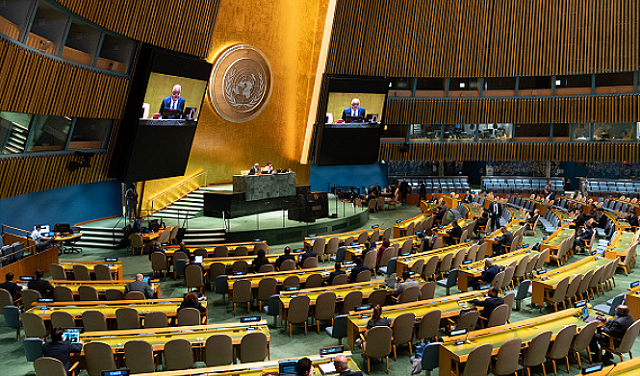
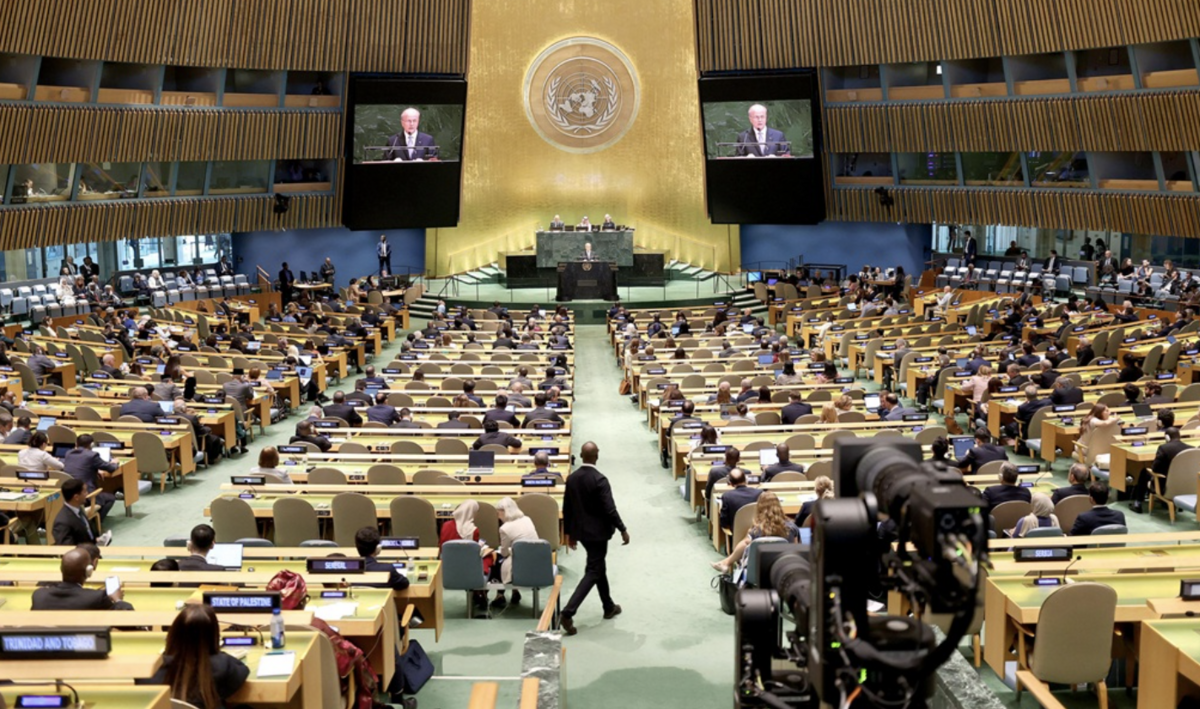
In light of these facts, the Palestine Conference, initiated by Saudi Arabia and France, is being held. This is a unique initiative that has brought all countries of the world, or a majority of them, to express their position, support, and solidarity with Palestine from the podium of the United Nations. It was truly a remarkable day: Monday, July 28, 2025, as Palestine Day, recalling the suffering of its people, supporting their struggle, and affirming their right to freedom, independence, and the end of the occupation.

The struggle of the Palestinian people will not achieve a decisive victory over the Israeli colonial project on Palestinian land, nor will it defeat it. Rather, it is a continuous, gradual struggle, with cumulative achievements in two directions:

The first is the decline of the colony’s status and the exposure of its true nature as a racist, expansionist, colonial colony with fascist behavior, apparatuses, and tools.

Secondly, to advance the status of Palestine and reveal the truth of its cause as a just cause deserving of support, backing, sympathy for its people, and solidarity with their struggle.

In both cases, it proceeds in a gradual, multi-stage manner, as in the case of the Palestinian struggle, which began with its first stage: the birth of the PLO as a national front comprising factions, parties, professional and popular unions, and independent entities, before 1967, and the Battle of Karameh in 1968, in which and during which the Jordanian Arab Army achieved victory, in favor of Palestine and its revolution, and which reaped its results and outcome.

The second stage: the 1987 Intifada, which forced the colonial government to recognize the Palestinian people, the PLO, and the political rights of Palestinians through the 1993 Oslo Accords, which achieved the transition from exile to homeland and the birth of the first Palestinian Authority on Palestinian soil.

The third stage: The Second Intifada in 2000, which forced Sharon to leave the Gaza Strip in 2005, after dismantling settlements and removing Israeli military bases.

The fourth stage: the October 7, 2023, struggle and its repercussions. Just as the three stages had their price, including the assassination of resistance leaders: Yasser Arafat, Ahmed Yassin, Mustafa al-Zubari, and other first-class leaders, here is the unprecedented fourth stage, with the Palestinian people paying a heavy price for what has been achieved, and what could be achieved, in terms of national accomplishments on the road to the fifth stage.

Israel Katz clearly states that the agreement and ceasefire will have strategic consequences. This is why Netanyahu, along with US President Trump, is working to transform Israel's failure in the Gaza Strip into a political victory, following the military failure on the ground and in the field. This explains the intensity of the political confrontations, the hesitation to implement the ceasefire, and the delay in providing the essential needs of the Palestinian people in the Gaza Strip.

The Palestine Conference at the United Nations would not have taken place without:

1- The suffering and pain of the Palestinians, which stirred the world’s feelings, emotions and sympathy, and the transfer of this to political action through this conference, which was initiated by Saudi Arabia and France, and with the approval of the Secretary-General of the United Nations.

2- The extremism and criminal behavior of the colonial government.

Countries of the world are increasingly recognizing the State of Palestine, with France at the forefront, and other countries will follow, which confirms that the struggle and sacrifices of the Palestinian people have results, and the conference

Palestine, which made a memorable day in its favor, is the culmination of these achievements and the political price of these sacrifices.

Journalist Lina Yousef Alian, in a radio interview on Hawa Amman Radio, insisted on describing what is happening between Gaza and New York as: “an insistence on survival,” in response to all the massacres the Palestinian people are being subjected to, and in response to attempts at liquidation and elimination.


Powered by Froala Editor

OPINIONS

Wed 30 Jul 2025 8:56 am - Jerusalem Time

International deficit and addressing the effects of famine in the Gaza Strip

 Sari Al-Qudwa

Sari Al-Qudwa

Opinion Writer

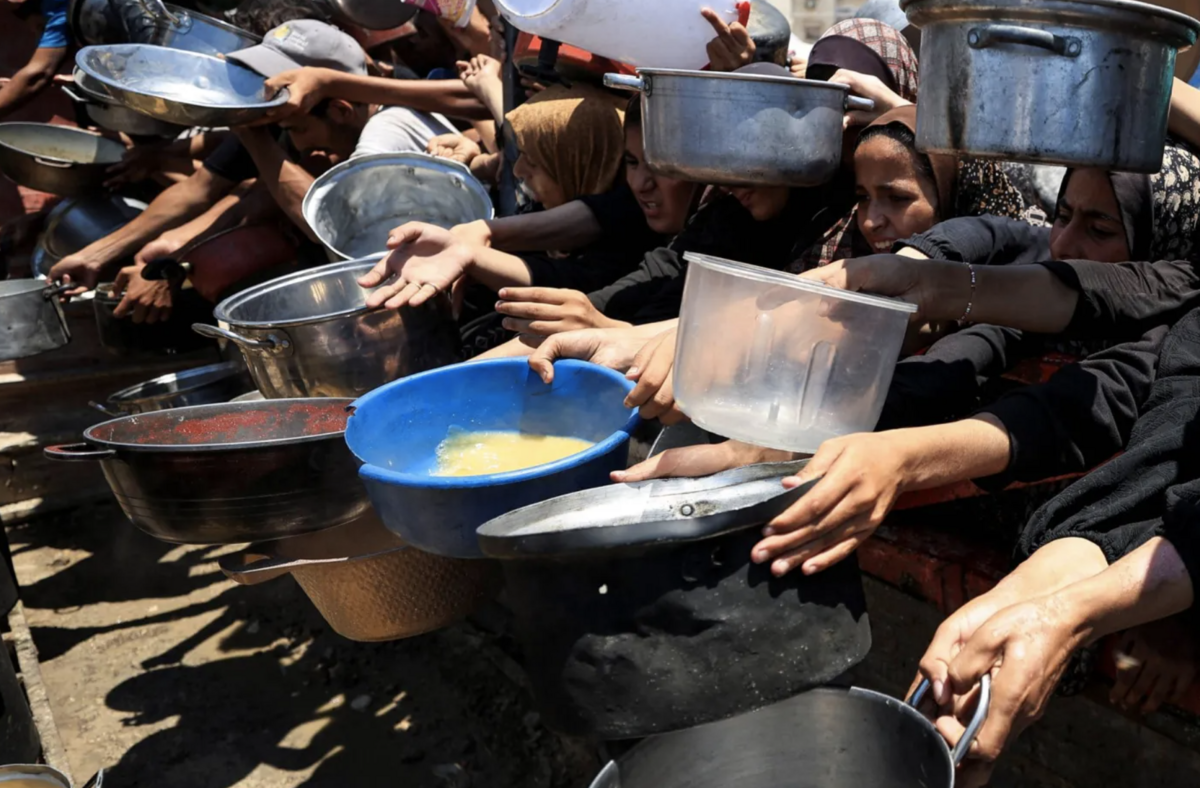
The escalating humanitarian catastrophe in the Gaza Strip has reached unprecedented levels, exceeding in severity the true disgrace of what remains of humanity. The signs of famine, as they have appeared in the south and north of the Strip, have exceeded all expectations and sounded a grave alarm that now threatens the lives of more than two million Palestinians living there.

The Israeli occupation army's announcement of what it calls a humanitarian truce in the Gaza Strip appears to be a partial truce lasting several hours to ensure the entry of aid. This truce applies only to several locations designated by the army, namely densely populated areas hosting thousands of displaced persons, most notably Al-Mawasi and Deir al-Balah.

The 2.2 million residents of the Gaza Strip live on an area of no more than 46 square kilometers, representing no more than 12% of the total area of the Strip. There can only be a real effort to stop the war of genocide and prevent matters from heading towards entrenching the occupation and imposing a fait accompli.

Ending the crime of starvation requires stopping the aggression and breaking the siege. Access to food and medicine to Gaza is a natural right and a humanitarian necessity to stop the catastrophe imposed by the occupation. The occupation government is violating international law by withholding aid to Gaza. The occupation's airdrops of aid are a deceptive move to whitewash its image in the face of the escalating international stance against the oppressive Israeli occupation and to circumvent the demand to lift the siege and stop the policy of starvation. The occupation's plan to control aid through airdrops and corridors represents a management of starvation and puts the lives of civilians at risk. Ending the crime of starvation requires stopping the aggression, breaking the siege, and opening the land crossings for the flow of aid under UN supervision.

The occupation's control over aid has led to the deaths of more than 1,000 people and the wounding of nearly 6,000, in a flagrant war crime. International and popular pressure must continue to break the siege and halt the genocide. The Israeli occupation government cannot continue to deceive the world through incomprehensible measures and entrench its illegal occupation of the Gaza Strip, in flagrant violation of international law.

International reactions to these manifestations have not yet risen to the level of the crimes committed by the occupying forces against Palestinian civilians in the Gaza Strip, particularly those perpetrated at the gates of aid distribution centers. This is being proven and documented daily by numerous eyewitnesses, in full view of the international community.

International organizations must work to ensure sustained aid delivery to halt the accelerating spread of the deadly famine among the more than two million Palestinians living in the Gaza Strip. It remains crucial that the international community shift toward urgent intervention and action to bring about an immediate cessation of the occupation's aggression and ceasefire, as this is the shortest path to ensuring the protection of civilians from all the deadly dangers they face.

The international community's inability to protect and fortify the humanitarian pathway that ensures sustainable relief access to Gaza's citizens highlights the contradiction between positions and rhetoric and actions. The international community must work diligently to achieve a realistic separation between all aspects of the situation in the Gaza Strip and the humanitarian aspect related to the basic rights of Palestinian civilians, including their right to food, water, and shelter, as fundamental principles of human rights.


Powered by Froala Editor

OPINIONS

Wed 30 Jul 2025 8:53 am - Jerusalem Time

Western powers are complicit in crimes against humanity in Gaza.

Alon Ben-Meir

Alon Ben-Meir

Opinion Writer

The West, led by the Trump administration, has enabled the Netanyahu government to commit crimes against humanity and has become complicit in the horrific catastrophe being inflicted on Palestinians in Gaza.

The war in Gaza has crossed many red lines, rendering Palestinian lives worthless, insignificant, and unimportant. Many of the horrific crimes against humanity committed by the Netanyahu government against the Palestinians in Gaza could have been prevented were it not for the almost unconditional and continuous political, economic, and military support of Western powers led by the United States. If that isn't complicity in war crimes committed against tens of thousands of innocent Palestinians, I don't know what is.

Western powers' claims of moral superiority appear to have been completely shattered, as evidenced by the fact that despite much of Gaza lying in ruins and more than 59,000 people having been killed, Western support continues unabashedly. While the majority of the 2.1 million Palestinians are starving to death, supplies of killing machines continue to flow, while suppliers show little loyalty to the worsening humanitarian catastrophe affecting all Gazans.

Before I discuss in detail the indispensable role of the United States in ending the war in Gaza, a brief review of what other Western powers have failed to do is in order.


France, the United Kingdom, and Germany's shortcomings

Western powers, particularly the United Kingdom, France, and Germany, have consistently supported Israel's assault on Gaza, claiming Israel's right to self-defense. Only in the past few weeks have these powers begun to consider addressing the horrific humanitarian crisis in Gaza. They have considered measures—from trade suspensions and sanctions to public criticism and diplomatic efforts—to force Netanyahu to back down.

In addition, the United Kingdom, France, and Canada recently issued a joint statement threatening "concrete responses," including targeted sanctions, if Israel does not halt its renewed offensive and allow unhindered humanitarian access, insisting on immediate improvements in humanitarian access. The United Kingdom and France have also hosted joint international conferences to promote a ceasefire and a two-state solution, and have pledged diplomatic and financial support for peace initiatives.

Unfortunately, Western threats and limited action fall far short of what is desperately needed to end the horrific war crimes committed by Netanyahu and his government. They must impose an immediate embargo on all supplies of military equipment and spare parts, and, as Israel's largest trading partner, freeze all commercial transactions with Israel wherever it hurts. Only by taking these measures can Netanyahu and his corrupt government grasp the full extent of European anger.


US complicity in Netanyahu's crimes against humanity

The United States can exert far greater pressure on Israel than all other Western powers combined. Unfortunately, neither the Biden administration nor the Trump administration has used their enormous influence to compel Netanyahu to end the horrific war that is threatening to destroy what remains of Gaza and nearly wipe out its entire population.

The United States' commitment to Israel's national security has been a given since Israel's establishment in 1948. But 77 years later, despite successive US administrations upholding this commitment, Israel still feels insecure due to the ongoing conflict with the Palestinians. If the United States truly cared about Israel's national security, which it does, it should have alleviated the source of Israel's insecurity by relentlessly pressuring it to reach a peace agreement with the Palestinians, where Israeli national security is paramount.

For decades, successive US presidents, including Trump, have championed the idea of a two-state solution. Despite repeated efforts over several decades to bring peace between the two sides, they have not taken concrete steps to pressure them to accept the only realistic outcome they advocated that could have ended the Israeli-Palestinian conflict.

Neither the Biden nor Trump administrations have once threatened, let alone imposed sanctions on Israel, to halt its indiscriminate bombing of Gaza and its deliberate choking of food, medicine, and water supplies, causing mass starvation. On the contrary, both continued to supply Israel with the weapons and ammunition it requested without reservation.


military aid to Israel

According to the Costs of War Project, which tracks US military aid and spending to Israel since the war began in October 2023, the United States has provided Israel with $22.76 billion in military aid. In January 2025, Trump authorized the export of 1,800 MK-84 bombs, each weighing 2,000 pounds (about a ton), to Israel, which the Biden administration had previously withheld in protest of Israel's actions in Rafah.

Instead of recognizing that this heinous Gaza war only reinforces the notion that only a two-state solution will end the Israeli-Palestinian conflict, Trump offered to seize Gaza to build a “luxury Riviera,” which will only perpetuate the deadly Israeli-Palestinian conflict for another generation.

Instead of disabusing Netanyahu and his government of the illusion of planning to rebuild new Jewish settlements in Gaza, Trump has continued to push the idea of transferring the Palestinians to a third country. This is nothing but music to Netanyahu's ears, and he praises Trump for his "creativity," because nothing will whet Netanyahu and his government's appetite more than seizing more Palestinian land and eliminating the Palestinians once and for all.

Instead of insisting on an immediate ceasefire and a clear exit strategy from Gaza, Trump continues to tread carefully, careful not to anger his political base, especially evangelicals. For these devout Christians, Israel can do no wrong, despite the deaths of thousands of innocent women and children, with hundreds more added to the death toll every week, while Netanyahu destroys Gaza's remaining infrastructure, rendering it uninhabitable.

Now, the Netanyahu government is forcibly displacing Palestinians from Gaza to the south and building a concentration camp over the ruins of Rafah. From there, the government plans to commit mass ethnic cleansing by expelling the Palestinians to a third country. Yes, another 1948-style Nakba is in the works.


Trump can end the war if he wants

Trump's emphasis on a ceasefire as a first step is urgent and necessary, but it must be just that. He must make it crystal clear to Netanyahu that during the cessation of hostilities, he must develop and present an exit strategy for Gaza. The war must cease and not be allowed to resume under any circumstances, and the flow of humanitarian aid must begin immediately in quantities sufficient to prevent mass starvation.

Yes, given Israel's dependence on the United States for many issues, including political cover, economic aid, and military assistance, Trump is in a stronger position than to beg, but rather to demand that Netanyahu adhere to the United States' demand to end this horrific war, the ultimate consequences of which are difficult to even imagine.

Trump, who aspires to win the Nobel Peace Prize, faces a crossroads. One path would see him remain silent in the face of this impending catastrophe, thereby making him complicit before the law in the war crimes committed in Gaza. The other path could help him realize his dream of ending the war in Gaza and starting an Israeli-Palestinian peace process that would lead to the only viable solution—the two-state solution.

Will he rise to the occasion and achieve what all his predecessors failed to achieve?


Powered by Froala Editor

ARAB AND WORLD

Wed 30 Jul 2025 8:50 am - Jerusalem Time

The majority of Americans do not support Israel.

A new Gallup poll indicates that only 32% of Americans support Israel in its war on Gaza, a 10-percentage-point drop from September 2024, as anger continues to mount over atrocities against Palestinians.

The poll, released Tuesday, also showed a significant partisan divide on the issue. Seventy-one percent of respondents who identified as Republicans said they approved of Israel's behavior, compared to 8% of Democrats.

Overall, 60% of respondents said they disapproved of Israeli military action in Gaza.

According to experts, this latest poll reflects a trend toward growing discontent with Israel that goes beyond the war on Gaza, and perhaps cements a generational pattern among young Americans in particular, particularly Democrats, progressives, and even independents, but also some Republicans.

Perhaps one of the most telling signs of change is Georgia Republican Rep. Margo Taylor Greene's Tuesday statement that Israel is committing genocide, becoming the first Republican (and a staunch Trump supporter) to describe Israel's war as genocide.

In a poll, only 9% of respondents under the age of 35 said they approved of Israel's military action in Gaza, and only 6% said they had a positive opinion of Israeli Prime Minister Benjamin Netanyahu.

The study follows a Pew Research Center poll conducted in April, which found that a majority of respondents—including 50% of Republicans under the age of 50—said they had unfavorable views of Israel.

But even as public opinion in the United States continues to shift, Washington's policy of unconditional support for Israel has remained unwavering. Since the start of the war on Gaza in October 2023, the United States has provided Israel with billions of dollars in military aid, in addition to diplomatic support at the United Nations. Both current Republican President Donald Trump and his Democratic predecessor, Joe Biden, have been staunch supporters of the Israeli assault on Gaza, which most human rights groups have described as genocide.

According to reports from the Palestinian Ministry of Health in Gaza, Israel has killed more than 60,000 Palestinians in Gaza and injured more than 160,000, the vast majority of them women and children. It has also imposed a crippling blockade, destroying much of the Strip, reducing its buildings to rubble. The crippling blockade has also caused a deadly famine, with the United Nations saying on Tuesday there is "growing evidence of widespread famine and starvation."

However, the US Congress remains strongly pro-Israel on a bipartisan basis. Earlier this month, a legislative attempt to block $500 million in missile defense support for Israel failed in a 422-6 vote in the House of Representatives.

Experts believe that the average American voter is not particularly concerned with foreign policy, and it has not traditionally been a driving factor in elections. For example, domestic issues such as abortion, the economy, and gun control typically dominate the Democratic electoral agenda. This is in addition to the influence of pro-Israel groups, such as the American Israel Public Affairs Committee (AIPAC), which spent more than $100 million in the 2024 elections to defeat critics of the Israeli government, especially progressives.

Powered by Froala Editor

PALESTINE

Wed 30 Jul 2025 8:41 am - Jerusalem Time

The International Lawyers' Team condemns the occupation's ban on the work of the Jerusalem Lawyers' Office.

The international lawyer Faisal Khazal's team denounced the occupation's ban on lawyers working under the name of occupied Jerusalem, asserting that the occupation's pressure fundamentally contradicts international law and demonstrates its failure to adhere to the policy of population and institutional cleansing it pursues against the Palestinian people.

The team cited in a statement issued by it a number of Palestinians confirming the absence of pressure from the occupation, namely: that East Jerusalem is an occupied territory, part of Israel, and that it is attached to the General Security Council and any International Court of Justice to prevent the ban in particular, in addition to the fact that the ban on the union from not in Jerusalem has become according to the Geneva Conventions, and that the Lawyers’ Office is a legitimate Palestinian institution that is banned by the occupation.

The international lawyers' team affirmed that "the occupation's threats will not deter or deter us from defending the rights of the Palestinian people. The team will continue to resist this oppression before the occupation through all legitimate objectives, including: referring the company to the International Labor Organization and the Human Rights Commission, and pursuing the case before the International Court to prosecute these weapons."

The team addressed a message to the international community, the United Nations, the Special Rapporteur on the situation of human rights, and the Arab League, stating that their silence on these weapons encourages the Israelis to proceed with the legal cultural cleansing of Jerusalem. We call on them to take urgent action and demand these weapons.

Powered by Froala Editor

PALESTINE

Wed 30 Jul 2025 8:39 am - Jerusalem Time

The occupation forces arrested 5 citizens from Nablus Governorate.

Israeli occupation forces arrested five citizens from Nablus Governorate at dawn on Wednesday.

Security sources reported that the occupation forces stormed several neighborhoods in the city and the Ain al-Ain refugee camp, west of Nablus, raided homes, searched them, and ransacked their contents. They arrested Saeed Mohammed Abu Younis and Hamza Mabrouka from the Ain al-Ain refugee camp, and Ahmed al-Bahash from the northern mountain area.

The sources added that the occupation forces stormed the town of Beit Furik, east of Nablus, and arrested citizens Muhammad Bajis Khatatbeh and Muhammad Firas Malitat after raiding and searching their homes.

Powered by Froala Editor

PALESTINE

Wed 30 Jul 2025 8:37 am - Jerusalem Time

Before the General Assembly: Western countries consider recognizing a Palestinian state

A group of Western countries revealed on Wednesday that they are actively considering recognizing a Palestinian state before the UN General Assembly meeting in New York next September, according to Haaretz.

A joint statement by the ministers of these 15 countries stated that recognizing the Palestinian state "is an external step toward achieving the two-state solution," and they called on other countries to join this effort.

Among the signatories to the statement were ministers from countries that have not yet recognized the State of Palestine, such as the Emperor of Vietnam, New Zealand, Portugal, Andorra, and San Marino.

You can also access third-party destinations except for this step, Iceland, Netherlands, Ireland and Spain.

It began completing the Hamas offensive on October 7, and the government called for an immediate ceasefire, including the release of all hostages, as well as the provision of humanitarian aid to the Gaza Strip.

The website discussed the importance of establishing diplomatic relations with Israel, and expressed their willingness to "discuss its integration into the region" in a broad-based majority meeting.

This came within the framework of the "Promoting the Two-State Solution" conference, organized by the United Nations and led by France and Saudi Arabia, and supported by a number of participating countries, including Britain, Qatar, Turkey, and Brazil.

In the same context, Maltese Prime Minister Robert Abela announced that the country would recognize a Palestinian state during the UN General Assembly meetings to halt the work, as this reflects "Malta's commitment to peace in the Middle East."

This aspect aligns with a notable increase in recognition of a Palestinian state, as recently announced by French President Emmanuel Macron and now British Prime Minister Keir Starmer, who are pursuing similar steps if they fail to make significant progress toward improving the political situation in the Gaza Strip.

Powered by Froala Editor

PALESTINE

Wed 30 Jul 2025 8:33 am - Jerusalem Time

Airdrops: Neither helpful nor beneficial

Dr. Ahed Farwana: Airdrops, humanitarian corridors, and temporary ceasefires are attempts to manage the crisis, not solve it, and the Gazans have not seen any fundamental change.

Sawsan Sarour: Recent days have witnessed an unprecedented global campaign against Israel, as the results of its starvation policy in the Gaza Strip begin to emerge.

Dr. Rifat Sayed Ahmed: The airdrops are a cover-up for the crisis, and their coincidence with the killing of people while they were trying to obtain them is a double crime.

Dr. Amal Jabbour: The airdrops represent a political, diplomatic, and humanitarian failure in managing a complex crisis and embody international and Arab incompetence.

Amir Makhoul: The top priority must be saving the lives of the people of Gaza, and there is a real opportunity to use this aid as a means of pressure on Israel.

Ismat Mansour: What we must strive for is continued international pressure to bring in aid in an organized manner, and for the United Nations and its organizations to assume responsibility for distributing it.


The famine in the Gaza Strip, and the high number of deaths due to hunger and malnutrition, have shaken global public opinion. International pressure, particularly from European countries, has been brought to bear on the far-right Israeli government headed by Benjamin Netanyahu. This has brought the issue of airdrops of aid back to the forefront, raising questions about whether this move is actually helping save civilian lives, or whether it is merely a means of playing catch-up, buying time, and easing international pressure on Israel.

Political writers and analysts who spoke to "I" believe that airdrops of aid, although they may partially alleviate the famine, do not constitute a real solution. They stressed that what must be sought is continued international pressure to bring in aid in an organized manner, and for the United Nations and its humanitarian organizations to assume responsibility for distributing it. They consider airdrops, humanitarian corridors, and even temporary truces to be attempts to manage the crisis, not to solve it. They pointed out that the residents of Gaza have not witnessed any fundamental change, and that the state of famine continues to afflict the Palestinian people.

They pointed out that "in the last week, the intensity of diplomatic statements and positions denouncing the policy of starvation and demanding an end to the war and the entry of aid into the Strip has escalated, while Israel's diplomatic position has collapsed globally due to mounting criticism of the way it is managing the war in Gaza, even from its closest traditional allies in Europe, such as Britain and Germany. Therefore, the Netanyahu government declared a "humanitarian truce," under which it allowed a meager amount of aid into the Gaza Strip, whether by airdrop or via a small number of trucks, with the aim of throwing dust in the eyes and trying to escape the state of global congestion and worrying international isolation that Israel has become, which has also affected its citizens in their tourist areas, not just its right-wing government."


An attempt to alleviate international pressure


Dr. Ahed Farwana, a journalist and political analyst specializing in Israeli affairs, emphasized that "the airdrop of aid is the result of significant pressure, particularly from European countries, given the famine in the Gaza Strip. This pressure has begun to mobilize global public opinion due to the high number of deaths and malnutrition suffered by our people in the Strip."

He pointed out that Benjamin Netanyahu is attempting to circumvent these Western calls to end the famine and allow aid into the country, with the aim of easing international pressure on him at this stage.

Farwana added: "The airdrop operation is not new. It occurred last year, but in none of the previous cases did it constitute a real rescue of the humanitarian situation. Rather, it was merely a show-off rather than an actual operation to save people from famine."

He also explained that the so-called "humanitarian corridors" Netanyahu is discussing also fall within the framework of an attempt to alleviate international pressure and claim that he is trying to find solutions to the famine crisis in the Strip. He emphasized that the reality inside Gaza reveals that all of these measures are attempts to circumvent pressure, without leading to any real improvement in the situation.


Entry of goods and aid through international institutions


Analyst Farwana believes that escaping the famine requires bringing in all goods and aid through international organizations, most notably the United Nations Relief and Works Agency for Palestine Refugees in the Near East (UNRWA), given its extensive experience in aid distribution.

He added that people in Gaza, in the early stages of last year's war, were not suffering from the current needs, due to the effective role of UNRWA, which Netanyahu is trying to undermine.

Farwana explained that the airdrops, humanitarian corridors, and even temporary ceasefires are all attempts to manage the crisis, not resolve it. He noted that Gaza residents have not seen any fundamental change, and that the famine continues to plague the Palestinian people.

Regarding international action to halt the massacres and allow the flow of aid, analyst Farwana responded that this depends on the extent to which European countries are convinced that Netanyahu's actions do not represent a real solution, but rather an attempt to buy time and manage the situation without addressing any substantive issues.

He stressed that "if these countries want to uphold their humanity and contribute to saving the Palestinian people, they must realize that what is happening is merely crisis management. Therefore, it is imperative that they increase pressure on the Netanyahu government to allow the entry of all goods and aid."

Farwana concluded his remarks by saying: “The two-state solution conference has a huge task ahead of it, not just humanitarian, but political as well. The issue should not be reduced, in the eyes of European countries, to merely providing humanitarian aid, despite its importance at this stage. Rather, it must be accompanied by political solutions that end the war and establish a real political path, because the absence of such a path means the continuation of the suffering of the Gaza Strip indefinitely.”


A diplomatic "flood" against starvation and genocide


For her part, journalist Sawsan Sarour, an observer and critic of the Israeli political scene, confirmed that recent days have witnessed an unprecedented global campaign against Israel, as the results of its starvation policy imposed on the Gaza Strip begin to emerge. The starvation victims, particularly children, whose images have been featured prominently in various media outlets, particularly in the Israeli and European press.

She said: "Despite the Israeli Foreign Ministry's attempt to deny these images, claiming they were artificially fabricated, and the denial by the Chief of Staff of the Israeli Defense Forces, Eyal Zamir, and even the inability of the "master of propaganda," Israeli Prime Minister Benjamin Netanyahu, to appear before the media, as he had previously done, his media prowess has also faded, and he has failed miserably to refute the horrific images of famine spreading throughout the Gaza Strip."

She continued: "The Israeli scene has been overshadowed over the past week by a dangerous diplomatic deluge, with an escalation in diplomatic statements and positions condemning the starvation policy and demanding an end to the war and the entry of aid into the Gaza Strip, which has been subjected to a strict blockade since March 2."

Journalist Surour sees what Israel is experiencing as an "unprecedented diplomatic crisis" due to its escalation of the war in Gaza. Israel's diplomatic standing has collapsed globally amid mounting criticism of its handling of the war in Gaza, even from its closest traditional allies in Europe, such as Britain and Germany.

She explained that "to ease the pressure on it, Israel declared a 'humanitarian truce,' under which it allowed a meager amount of aid into the Gaza Strip, either by airdrop or via a small number of trucks, with the aim of throwing dust in the eyes and trying to escape the state of global tension and worrying international isolation that Israel has become, which has also affected its citizens in tourist areas outside the country, not just its right-wing government."


Netanyahu creates crises and moves between them..!


Sarour stressed that Netanyahu remains the expert in igniting fires and the failure in extinguishing them. He is the one who creates crises and moves between them without resolving them radically. Sometimes he falls into the traps he has set for others, but in the end, he emerges like a malicious magician, in a new guise, to continue and search for the new area in which to ignite his fire and create his new crisis. All of this is in order to remain in power, no matter the cost and no matter how dire the consequences are for his people and the pillars of the state. Perhaps this is where the idea of a “humanitarian truce” came from.

She stated that according to United Nations organizations, the Gaza Strip needs approximately 600 aid trucks daily, and there are estimates that the daily need during this period of war in Gaza is 10,000 tons of aid, which is equivalent to the load of 1,000 trucks. The United Nations itself announced that the amount of aid expected to enter Gaza is sufficient for the people of the Strip for 3 months, but the Israeli authorities are preventing its entry.

Sarour pointed out that "since the beginning of the airdrops that Israel allowed to be dropped on Gaza, it became clear that their fate was one of four: either they fell into the sea, they fell in combat zones, or they were looted by gangs under the eyes of the Israeli army. Very few reached the starving people in Gaza, not to mention the large number of wounded, noting that eighteen Palestinians were martyred in previous airdrops."


"Air crumbs" won't help.


Journalist Surour considered that "the airdrop, or more precisely the 'airdrops' operation, which consists of a handful and crumbs of aid, in which a number of Arab and Western countries are also participating, will be useless. It is nothing more than a show for the international community to vent, and a make-up for the occupation, to consolidate and engineer the siege, as the Israeli army is planning, in a step that may pave the way for the next phase of the war against Gaza."

She stressed that "the Israeli government neither wants nor is interested in resolving the humanitarian crisis in Gaza, but rather in perpetuating it and managing it in its own way. Perhaps its failure of the negotiations held over 18 consecutive days in Doha was an indication of what it plans for Gaza's future."


The Netanyahu government will not succumb to international pressure without sanctions being imposed on it.


She pointed out that "the actions of some European countries, especially French President Macron's announcement regarding the recognition of the Palestinian state and the subsequent advanced position of Britain, the UN meeting and the decision to establish a Palestinian state, the Israeli government's reaction, which categorically rejects all these striking global developments, and the dripping of aid, whether through airdrops or crossing relief, are all indicators that the far-right government led by Netanyahu is not willing to yield and stop the massacre in Gaza. They will not increase the flow of aid to the people of the Strip, as long as all these pressures are not accompanied by practical sanctions against the Israeli government and its pillars."

Sarour concluded her statement by saying, "The occupation wants to manage the famine in Gaza, not end it. There is only one way to end the famine in Gaza, and that is a comprehensive and general ceasefire in the entire Gaza Strip. This means a comprehensive ceasefire in terms of time and place, a complete opening of all crossings without limiting the number of trucks entering Gaza, and thirdly, for UN organizations to take over the distribution task, as was done in previous years."


Stop the genocide and withdraw the occupation completely from Gaza


For his part, Egyptian strategic expert Dr. Refaat Sayed Ahmed asserted that providing aid via airdrops is a cover for the crisis, not a solution. Rather, it is a form of first-rate Israeli and American procrastination, designed to create the false impression that aid is continuing, which is not true.

He explained that real assistance to the Palestinians lies in halting the ongoing massacres, halting the genocide, and completely withdrawing the occupation forces from the Gaza Strip. Then, the decision should be returned to the Palestinian people the next day, all crossings should be opened to the flow of humanitarian aid, and reconstruction of the Gaza Strip should begin. This is the natural and logical plan.

Sayed Ahmed added: "The simultaneous airdrop of aid, coupled with the killing of people attempting to obtain it, is a double crime—both cover-up and criminality—adding to a series of previous crimes, most notably the massacres that have claimed the lives of nearly a quarter of a million martyrs and wounded during this war."


International action to stop the massacres is still below the required level.


He pointed out that the broad international effort to halt the massacres remains below the required level, saying, "I believe that most of the efforts will be aimed at clearing the conscience, through international conferences in Washington or in some European or even Arab and Islamic capitals. However, they will mostly be aimed at clearing the conscience, not at achieving real action."

Sayed Ahmed stressed that Palestinians today need real steps, starting with halting the massacres, followed by opening the crossings, considering that anything other than that amounts to nothing more than formal conferences.

He said, "We will witness many more conferences of this kind in the coming period, but their outcome will be the same: continued killing and slaughter, with approximately 100 martyrs and hundreds more wounded daily, in addition to continued hunger, thirst, and suffering."

Regarding solutions, Dr. Sayed Ahmed emphasized that action must be taken through political, economic, and even military means by surrounding Arab countries. He explained that this includes steps such as completely severing ties with the United States and Israel, and halting all forms of political and economic normalization.

He stressed the importance of these countries feeling popular and official pressure to halt this decline, noting that one form of pressure should be the threat of force, though it doesn't necessarily have to be used. However, the mere threat of force gives the impression that this nation is still alive and not the dead nation it may currently appear to be.

Sayed Ahmed concluded his remarks to "I" by saying: "The only way now is to sever political and economic normalization with America and Israel, and threaten to use force. Only then might the massacre of the Palestinian people stop."


A direct insult to the people of Gaza and to the Arab people


Jordanian journalist and writer Dr. Amal Jabour believes that the airdrops of aid to the Gaza Strip represent a political, diplomatic, and humanitarian failure in managing a complex crisis and cannot be considered a solution by any humanitarian or ethical standards.

She said: "This mechanism embodies the international and Arab inability to impose effective political solutions, transforming the issue from a tragedy that must be ended into a crisis that can be temporarily contained. The bigger problem is that it constitutes a direct insult to the people of Gaza, who are being bombed, besieged, and starved, only to be showered with aid from the sky as if they were outside of history and dignity."

Dr. Jabour believes that the insult is not limited to the residents of the Gaza Strip, but extends to the Arab people in general, at a time when Arab countries possess vast resources, open ports, and massive logistical capabilities, yet are unable to impose a permanent safe passage for the most basic necessities of life. Furthermore, this method does not guarantee the adequate or regular delivery of aid and lacks even the most basic level of organization and oversight.


Gaza needs to end the war and the siege once and for all.


She stressed that "despite the clarity of the official and popular Arab position calling for an end to the aggression against Gaza, the absence of effective pressure tools, along with the absence of a unified Palestinian position, renders this position politically untranslatable."

Jabour pointed out that "what Gaza needs is not just airdrops and decisions to open the crossings and ensure the flow of aid, but rather an end to the war and the blockade once and for all, and to hold the occupation accountable. This is the true test of the dignity of the Arab people and the credibility of the international community and international law, all of whose moral and humanitarian standards have been undermined by the Gaza wall."


The European effort seems very serious.


Amir Makhoul, an expert on Israeli affairs at the Progress Center for Policy Studies, emphasized that "the European effort appears very serious, with countries such as Britain, France, and Germany considering taking action after US President Donald Trump declared that 'the people in Gaza are hungry, and the children are hungry.'"

He said: "The issue should not be viewed solely in terms of whether aid is provided drip-feeds or not. This aid is essential. The problem lies in the fact that Israel, through its military presence in the Gaza Strip, has built an infrastructure for internal Palestinian fighting and conflict over aid, particularly airdrops, to the exclusion of humanitarian organizations, most notably UNRWA."

Makhoul pointed out that "Israel, in addition, has encouraged the emergence of militias and strengthened regionalism in Gaza, which complicates the delivery of aid."

On the other hand, Makhoul believes there is a real opportunity to use this aid as a means of pressure on Israel, preventing it from exploiting it as a cover for the continuation of the war. Through this aid, Israel is attempting to improve its image in the eyes of international public opinion and buy time while pursuing other projects, including expanding the buffer zone and annexing additional parts of the Gaza Strip.


Marking the end of the "Humanitarian City" project and the "Gaza Humanitarian Foundation"


He stressed that he does not downplay the importance of this aid, but the fundamental question is how it is received by Palestinians in Gaza, and whether it actually reaches those who need it and prevents the deaths of thousands of them. If so, it must be supported, but with the emphasis that this aid signals the end of the "Humanitarian City" project and the "Gaza Humanitarian Foundation," both of which aim to displace people.

Makhoul explained that "the delivery of aid by land has not yet taken place, and that the matter depends on Israel. Egypt is ready from Arish, Jordan is ready via landing, as are the UAE, Saudi Arabia, and Qatar. There is no country in the region that is unable or unwilling to help, but the matter depends on Israel and whether it will open the crossings from the Palestinian side."

He added that the Egyptian side is opening the Rafah crossing, but the challenge is whether Israel will allow the crossing to be opened on its side and allow the entry of aid and the real distributors—that is, international and local organizations, not groups it established for security or political purposes.

He emphasized that this issue remains unresolved and requires additional effort. The first step is to demand media access to Gaza. This must be a universal international demand, because the image conveyed by the media is radically different from what is happening on the ground. This is despite the fact that the media landscape has undergone a major transformation, and the images emerging from Gaza are now beyond Israeli control, leaving Israel besieged by these scenes.

Makhoul concluded by saying, "This situation requires Palestinian political cunning, a more responsible approach to the negotiation process, and not missing the opportunity to conclude a real deal, even while recognizing that the balance of power is tilted in favor of Israel and the United States. However, negotiation is not only the art of logic, but also the art of achieving the possible. Therefore, the top priority must be saving the life of every Palestinian, every day."


Part of the war department


For his part, Ismat Mansour, a journalist specializing in Israeli affairs, believes that providing aid via airdrops is not part of the solution to the crisis, but rather part of managing the war.

He said that this step, in practice, is a tool of war, as Israel feels that the entire world is disturbed and pressuring it due to the images of famine, the scenes of people rushing by the tens of thousands for aid, and the scenes of children dying of hunger.

Mansour added that Israel sought to divert attention from these painful scenes and replace them with images showing the arrival of aid and the unloading of food shipments. It also sought to buy time and legitimize its next steps, especially as the deal negotiations entered a crisis and were on the verge of collapse.

He pointed out that this aid, while it may partially alleviate the famine, does not constitute a real solution, emphasizing that what must be pursued is continued international pressure to ensure the orderly delivery of aid, with the United Nations and its humanitarian organizations responsible for distributing it.

Mansour also stressed the need to separate the issue of humanitarian aid from any pressure Israel exerts on Hamas or from its war against the Palestinian people.


International action is important, and the world is fed up with scenes of genocide and starvation.


He emphasized that the international movement is significant and important, and that the world has grown weary of these scenes. This movement is beginning to show its impact, as it has plunged Israel into an unprecedented crisis in terms of its image and reputation globally, placing it in a state of decline and exposing it to a torrent of condemnation.

Mansour concluded his remarks by saying, "This change in the international stance is due to the heavy price paid by innocent people, and it must be effectively invested in politically and humanitarianly."

Powered by Froala Editor

PALESTINE

Wed 30 Jul 2025 8:30 am - Jerusalem Time

The useful British twist!

After a brief period of introductions, British Prime Minister Keir Starmer yesterday, weeks later, recognized the state of Palestine next September.

Starmer's announcement, coinciding with Foreign Secretary David Lammy's announcement at the two-state solution conference in New York, which came hours after his meeting with the teaching staff at 10 Downing Street, is significant given the empire's offerings, during the era when the sun never set on its colonies, of Palestine as one of its gifts that it did not own and could not dispose of, in the context of what was known as the promise of no to those who did not deserve it.

Starmer's declaration throws into the turbulent international waters the unjust Israeli crimes, in which the level of barbarity is unparalleled in the universe, where starvation must be a tool of genocide in which children's oxides melt and adults faint, in a scene that has become scandalous and aligned and quickly puts pressure on the rogue state, which has cracked the formal sports declines, implemented measures to bring in meager aid, and announced "human truces" - what "bloody truces" - in which entire families are crushed, as happened yesterday in Nuseirat, where the families of Abu Ataya, Siyam, Abu Nabhan and Lahham from the civil registry were supposed to gather.

The British surprise, which implies a belated correction of a historical error, carries unmistakable messages: those icy international recognitions of the State of Palestine have begun to roll in, gaining strength and power, with the British declaration, and before it the French, Spanish, and Norwegian declarations, along with 144 countries that preceded them in recognizing the State of Palestine.

If you want to understand the value of the British-French group, look at the hysterical Israeli responses, which tested its re-emergence on Palestinian concern, which ignited more than one red flag for countries that reject the ideological greed that has taken hold of the ruling right. Starmer expressed this by saying: "Our membership in the Palestinian state stems from our commitment to protecting the two-state solution."

International recognition, even if delayed, builds the international legitimacy necessary for practical steps to reform the two-state solution from the clutches of brutal biblical fundamentalism.

Powered by Froala Editor
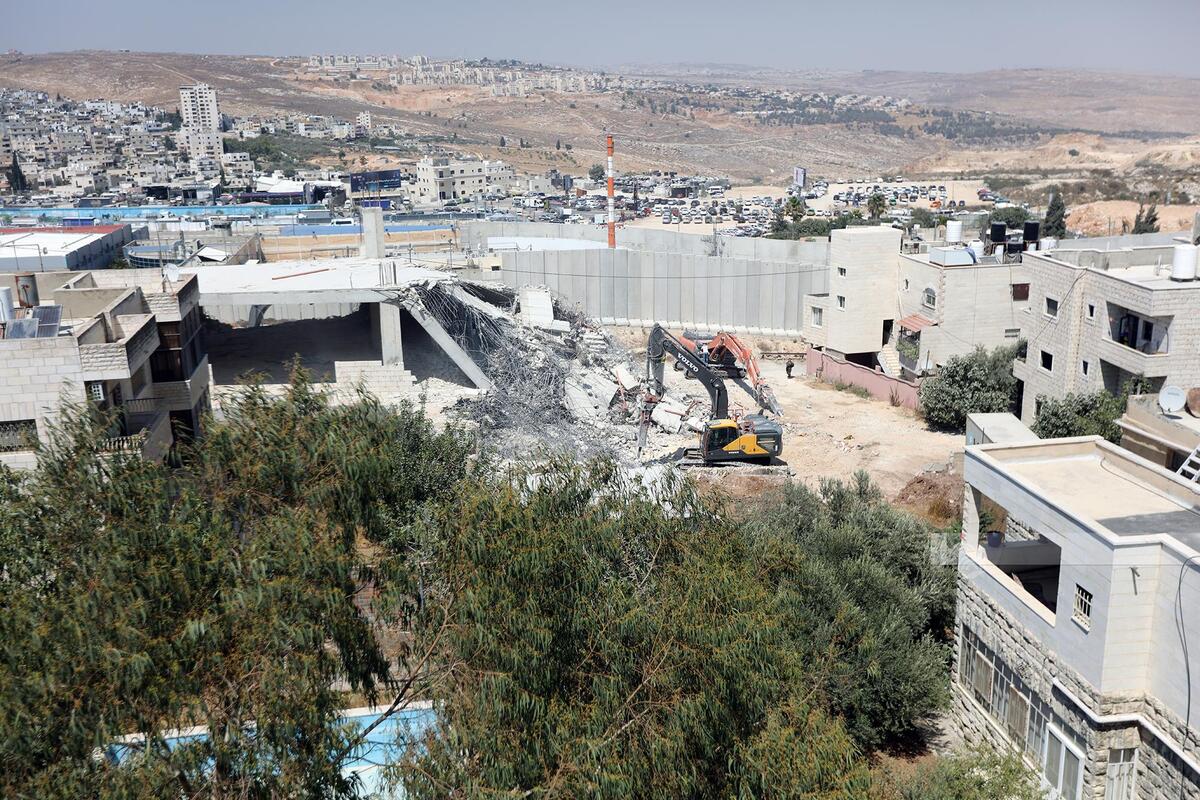
ARAB AND WORLD

Tue 29 Jul 2025 10:24 pm - Jerusalem Time

Trump pledges to "make things right" in Gaza, Netanyahu holds consultations

US President Donald Trump said that Israel and the United States are working together to try to "fix the situation" in Gaza, as famine intensifies in the besieged Palestinian enclave and international pressure mounts for aid deliveries and a ceasefire.

Trump reiterated his comments on the suffering in Gaza on Tuesday, saying the situation there is "very bad, and children are hungry and should be fed."

He added that the United States would work with Israel on food distribution centers in Gaza, but made clear that the Israelis wanted to oversee those centers. He noted that he had discussed the matter with Prime Minister Benjamin Netanyahu, who is wanted by the International Criminal Court on war crimes charges.

"I spoke with Netanyahu two days ago, and he doesn't want Hamas to seize aid," he continued, referring to allegations refuted by a US government review, in which the US Agency for International Development concluded there was no evidence that the Islamic Resistance Movement (Hamas) had seized humanitarian aid.

Meanwhile, the US president distanced himself from Western moves to recognize a Palestinian state, after Britain announced Tuesday that it would recognize Palestine in September unless Israel takes concrete steps to end the suffering in Gaza and bring peace. This announcement comes days after France announced its decision to formally recognize the Palestinian state.

Trump said, "I did not discuss Britain's decision to recognize a Palestinian state," stressing that "the United States does not belong to that camp."

"Starmer and Macron share the same position on Israel, and that doesn't mean I agree with them," he added.

For his part, Netanyahu said that Israel continues to work in every way to "return the hostages," and has not ceased its efforts to reach a deal since the Israeli negotiating team returned from Qatar.

He reiterated his accusations that Hamas was "the obstacle to the deal," while the Israeli opposition and prisoners' families accused him of thwarting attempts to conclude an agreement, at the behest of the most extremist faction within his government.

The Israeli Prime Minister's Office said this evening that Netanyahu held additional consultations on the prisoners' issue, without providing details.

Since October 2023, the Israeli occupation army has been waging a war of extermination against the population of the Gaza Strip. This war has so far resulted in the martyrdom of more than 60,000 Palestinians, the injury of approximately 146,000, and the displacement of nearly the entire population of the Strip, amidst destruction unprecedented since World War II, according to Palestinian and international reports.


Powered by Froala Editor
PALESTINE

Tue 29 Jul 2025 10:14 pm - Jerusalem Time

Occupation forces fire bullets at citizens' homes in Sebastia

Israeli occupation forces stormed the town of Sebastia, northwest of Nablus, on Tuesday evening.

According to local sources, occupation forces stormed the town, fired live ammunition at residents' homes, and forced shopkeepers and tourist businesses to close their doors.

The occupation forces stormed the town this morning as well.

Azem pointed out that the occupation forces have escalated their raids on the town, coinciding with excavation work being conducted in the heart of the archaeological site, as part of their efforts to Judaize the area.

Powered by Froala Editor

ARAB AND WORLD

Tue 29 Jul 2025 9:27 pm - Jerusalem Time

During his call with the President, Starmer announces that Britain will recognize the State of Palestine next September.

Palestinian President Mahmoud Abbas received a phone call from British Prime Minister Keir Starmer on Tuesday evening, informing him that Britain will recognize the State of Palestine in September, before the UN General Assembly convenes, unless Israel takes substantive steps to end the horrific situation in Gaza and commits to a long-term, sustainable peace. This includes allowing the United Nations to resume the delivery of humanitarian aid to civilians in the Gaza Strip without delay to end the famine, agreeing to a ceasefire, and affirming that it will not carry out any annexation in the West Bank.

Starmer affirmed that Britain will continue to work with its key allies to develop a plan for political negotiations and the implementation of the two-state solution. At this time, the British government has decided to send urgent humanitarian aid to the Gaza Strip, transport wounded children from Gaza for treatment in British hospitals, and press for the resumption of aid deliveries through United Nations agencies.

The British Prime Minister extended an official invitation to President Mahmoud Abbas to visit Britain to complete the talks.

For his part, the President thanked the British Prime Minister for this historic position in recognizing the State of Palestine and for working together for peace and stability.

His Excellency stressed that this courageous stance comes at an important historical moment. In this context, we call on countries that have not yet recognized the State of Palestine to do so, in order to give hope that there is a genuine international will seeking to end the occupation and achieve peace based on international legitimacy resolutions and the Arab Peace Initiative, and to establish an independent Palestinian State on the June 4, 1967, line, with East Jerusalem as its capital, to live in security and peace with its neighbors, and to move towards reconstruction.

The President also emphasized the State of Palestine's priority in achieving a ceasefire, allowing aid to enter, stopping starvation, lifting the siege, releasing prisoners and hostages, preventing displacement, enabling the State of Palestine to fully assume its responsibilities in the Gaza Strip, and ensuring Israel's full withdrawal.

On the other hand, His Excellency affirmed that we are preparing for the elections in accordance with the Palestine Liberation Organization's program and its international commitments, emphasizing the need to release Palestinian tax revenues and halt settler terrorism and attacks on Islamic and Christian places of worship.

At the end of the call, it was agreed to continue coordination and joint work and to strengthen bilateral relations between the State of Palestine and Britain at various levels.

Powered by Froala Editor

PALESTINE

Tue 29 Jul 2025 8:28 pm - Jerusalem Time

The Integrated Food Security Phase Classification warns that famine is now ravaging Gaza.

The leading international body on food crises, the Integrated Food Security Phase Classification, or IPC, said in a new warning issued Tuesday that a "worst-case scenario of famine" is currently unfolding in the Gaza Strip, predicting "widespread deaths" without immediate action.

The warning, which has not yet reached the level of a formal declaration of famine, comes in the wake of widespread outrage over images of emaciated children in Gaza and reports of dozens of hunger-related deaths nearly 22 months into Israel's war of extermination on the devastated territory.

According to observers, international pressure prompted Israel over the weekend to announce measures that included daily humanitarian pauses in fighting in parts of Gaza and airdrops of supplies. The United Nations and Palestinians on the ground say that most things have not changed, and that desperate crowds continue to overwhelm transport trucks, emptying them before they reach their destinations.

The Integrated Food Security Phase Classification, or IPC, report said Gaza has been teetering on the brink of famine for two years, but recent developments have "significantly exacerbated the situation," including the "increasingly stringent blockade" by Israel.

The UN-backed Integrated Food Security Phase Classification (IPC) issued several similar warnings during the war in Gaza, including one last May that Israel described as "flawed."

The Israeli occupation authorities responded at the time, saying that "even according to the Integrated Phase Classification analysis," there was no famine in Gaza, and noted that previous IPC predictions of imminent famine had "repeatedly failed to materialize."

However, the situation has deteriorated over the past year to the point that the Integrated Phase Classification issued its highest warning level, without officially declaring famine in Gaza.

Officially declaring famine, which is rare, requires field reports in Gaza, which Israel prohibits, largely preventing officials from accessing and moving within Gaza.

The Integrated Phase Classification has only declared famine a few times - in Somalia in 2011, South Sudan in 2017 and 2020, and parts of Darfur in western Sudan last year.

But independent experts say they don't need an official announcement to know what they're seeing in Gaza. Just as a family doctor can diagnose a patient based on symptoms without having to send samples to a lab and wait for results, so too can we interpret Gaza's symptoms. This is a famine, Alex de Waal, author of "Mass Starvation: The History and Future of Famine" and executive director of the World Peace Foundation, told the Associated Press.

To declare a famine, an area is classified as experiencing famine when all three of the following conditions are met: At least 20% of households are severely food insecure or starving; At least 30% of children between six months and five years of age are acutely malnourished or wasted (too thin for their height); and At least two people, or four children under five, die every day from hunger or the combination of malnutrition and disease.

The report, based on information available as of July 25, stated that the crisis has reached an "alarming and deadly turning point." It added that data indicates that famine thresholds have been reached for food consumption in most of Gaza—the lowest level since the war began—and for acute malnutrition in Gaza City.

The report indicated that nearly 17 out of every 100 children under the age of five in Gaza City suffer from acute malnutrition. The report showed that mounting evidence points to "widespread famine," the collapse of basic health services, and more. According to the United Nations World Food Program, one in three people in Gaza goes without food for days at a time.

Gaza hospitals reported a rapid increase in hunger-related deaths of children under five.

A previous analysis by the International Planning Center in May warned that Gaza would likely fall into famine if Israel did not lift its blockade and halt its military campaign. Its new warning called for immediate and widespread action, warning that "failure to act now will lead to widespread deaths across much of the Strip."

For its part, the World Food Programme warned on Tuesday that the unfolding catastrophe in Gaza is reminiscent of the famines of the last century in Ethiopia and Biafra, Nigeria.

"This (in Gaza) is unlike anything we have seen in this century," Ross Smith, the World Food Programme's emergency director, told reporters in Geneva.

"It's reminiscent of previous disasters in Ethiopia or Biafra in the last century. We need urgent action now," he said, speaking via video link from Rome. While the Integrated Phase Classification has not officially classified the situation as "famine," Jean-Martin Bauer, director of food security and nutrition analysis at the World Food Programme, insisted that "what we are seeing is growing evidence of famine." He added, "All the indicators are clear now."

Israel has imposed varying restrictions on aid throughout the war. On March 2, it cut off the entry of all goods, including fuel, food, and medicine, to pressure Hamas to release the hostages. Israel eased these restrictions at the end of May and moved forward with a new US-backed aid delivery system, the Gaza Humanitarian Foundation (GHF), which has been wracked by chaos and violence. Its four centers are considered a "killing trap for Palestinians," according to experts.

Powered by Froala Editor
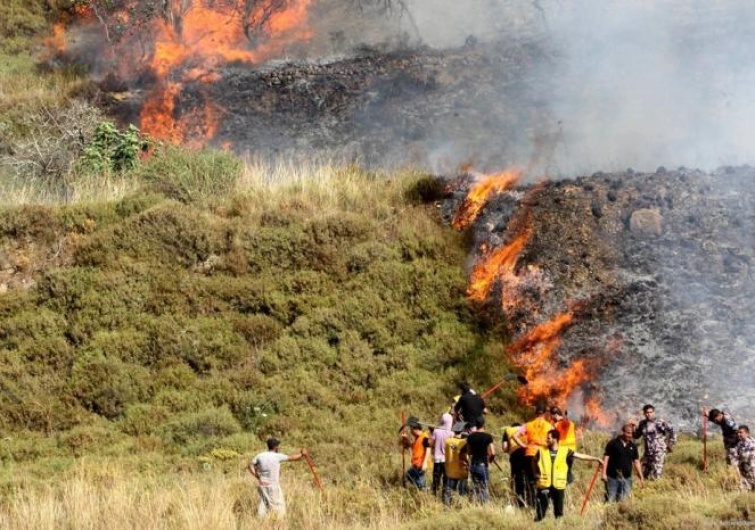
PALESTINE

Tue 29 Jul 2025 8:03 pm - Jerusalem Time

Netanyahu: Israel continues efforts to release hostages despite Hamas's refusal

Israeli Prime Minister Benjamin Netanyahu said on Tuesday that Israel is continuing its efforts to release hostages held by Hamas in Gaza, despite the movement's "rejection," Reuters reported.

Israel is preparing to study a plan to impose a tight blockade on the Gaza Strip, completely dismembering it, and expand the ground operation into various areas, particularly those the army has not previously entered. The plan aims to exert maximum military pressure on Hamas to force it to make further concessions.

ABC News reported that Israeli Prime Minister Benjamin Netanyahu is considering annexing territory in Gaza if Hamas does not agree to a ceasefire plan.

The network quoted a source as saying that annexing territory in Gaza is one of several options Netanyahu is considering if Hamas does not agree to a ceasefire.

Powered by Froala Editor
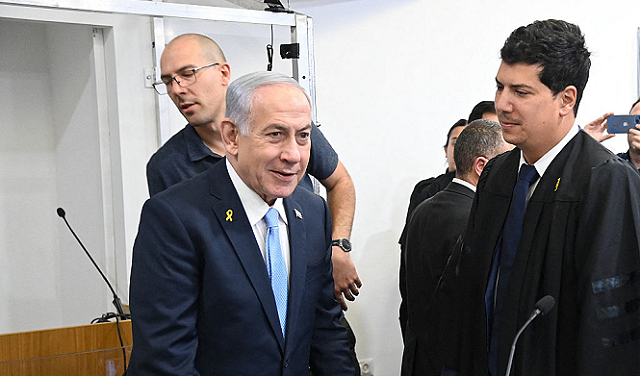
PALESTINE

Tue 29 Jul 2025 7:27 pm - Jerusalem Time

Settlers destroy a nature reserve in Kisan, east of Bethlehem.

Today, Tuesday, settlers destroyed a nature reserve in the village of Kisan, east of Bethlehem.

According to local sources, a group of settlers stormed the Kisan wilderness and destroyed the entire contents of the nature reserve, which covers an area of 100 dunams. These included barracks, trees, surveillance cameras, water tanks, and water wells. They also seized solar panels and electric generators belonging to Hassan Al-Shaalan.

It's worth noting that settlers have recently escalated their attacks on citizens and their property in Kisan, most recently by burning a number of homes in the Deir Alla area and displacing their owners.

Powered by Froala Editor
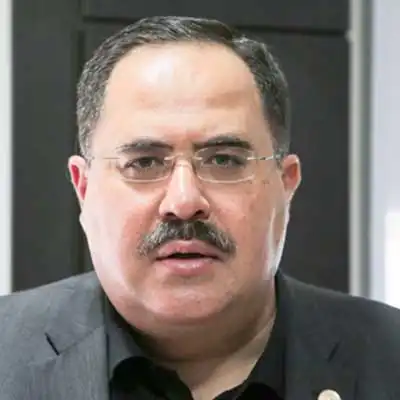
ARAB AND WORLD

Tue 29 Jul 2025 7:05 pm - Jerusalem Time

New York: The UN conference on settling the Palestinian issue and implementing the two-state solution continues.

The high-level international conference on resolving the Palestinian issue through peaceful means and implementing the two-state solution continued for the second day in New York City on Tuesday evening, co-chaired by the Kingdom of Saudi Arabia and France.


Portuguese Foreign Minister: The war must end immediately.

"The war must end, as must the humanitarian crisis, the starvation, and the cycle of violence and destruction," said Portuguese Foreign Minister Paulo Rangel. "We are facing one of the worst and most horrific episodes of violence."

He added that the destruction of Palestinian property and homes in the West Bank, including East Jerusalem, must stop completely, stressing the need to halt settlement construction and end settler violence against civilians.

From the same perspective, the construction of settlements in the occupied territories must cease, and settler violence against Palestinians must stop.

Rangel affirmed his country's full and unwavering commitment to the two-state solution, saying, "That is why, over the past five decades, we have voted in favor of all relevant resolutions, maintained our financial support for UNRWA, and reiterated our full support for the Palestinian Authority and its empowerment."

He stressed that the Palestinian Authority is the only entity sufficient to implement the two-state solution, and condemned any decision by the occupation to annex the West Bank and partially or completely cut off Gaza.

The Portuguese Foreign Minister said: A Palestinian state living side by side with Israel in peace, security, and prosperity is what will bring peace, truth, and peace to humanity. War must end, death, detention, disease, and suffering must cease.


San Marino Foreign Minister: We will soon recognize the Palestinian state.

San Marino Foreign Minister Luca Beccari said: "We meet today not only as representatives of our governments, but as human beings. The Secretary-General spoke of a collective failure to confront the catastrophe unfolding before our eyes in Gaza. There are more than 50,000 lives lost, thousands of children among them."

He noted that "the tragic killing of UNRWA staff and journalists cannot be tolerated. This is not a political crisis, but a test of our shared humanity."

He stressed the demand for an immediate and permanent ceasefire in Gaza and called for the immediate and unhindered entry of aid.

He addressed the San Marino Parliament's unanimous adoption last May of a historic recommendation requiring the government to recognize the State of Palestine by the end of this year, considering that "this is not a symbolic gesture, but rather the product of deep reflection and a position based on principles and values that reject war, uphold the right of peoples to self-determination, and uphold the rule of international law."

He noted that practical recognition began with the Palestinian ambassador submitting his credentials to San Marino, and that the next step will be the appointment of a San Marino ambassador to Palestine.

He also condemned the illegal expansion of settlements in the West Bank, the violence against Palestinian civilians, and unilateral measures that threaten the viability of a Palestinian state, undermining the prospects for peace.

San Marino's foreign minister stressed that the unity of the West Bank and Gaza Strip under the administration of the Palestinian Authority is indispensable for a two-state solution, adding, "We believe that peace is not only possible but necessary if the international community acts based on the Madrid terms and the Arab Peace Initiative."


Andorran Foreign Minister: Peace will only be achieved through a two-state solution

Andorran Foreign Minister Emma Torre Faus noted that UN member states have a moral duty to create the conditions for lasting peace in the Middle East.

She added, "It is time to resolve the Palestinian issue, and this settlement can only be achieved through a two-state solution. Andorra fully supports this solution because it is based on international law."

She noted that Andorra is following with concern the events in Gaza, noting that they constitute a violation of international law, especially with the number of victims reaching approximately 60,000, the majority of whom are women and children, and the resulting catastrophic humanitarian tragedy.

She called for an immediate and permanent ceasefire and support for UN General Assembly resolutions calling for the protection of civilians, unhindered access to humanitarian aid, and the protection of international workers.


Chilean Foreign Minister Calls for Immediate Ceasefire

Chilean Foreign Minister Alberto Van Klaveren condemned the indiscriminate attacks on civilians in Gaza, noting that their suffering is unacceptable.

He added that international humanitarian law sets clear limits even in times of war, and that collective punishment, the destruction of infrastructure, and the denial of humanitarian aid cannot be justified. He added that women, children, and the elderly have been killed while seeking assistance and in places of worship.

He noted that the international community cannot stand idly by. A permanent and immediate ceasefire must be implemented, aid must be delivered, and the path must be paved for a final political solution based on international law and its binding resolutions.

He also praised the mediation efforts of Egypt, Qatar, and the United States, called for continued international funding for UNRWA, and emphasized the importance of strengthening Palestinian institutions.

He stressed that "the two-state solution is not an abstract ambition, but rather a commitment made by the international community more than seven decades ago, and unfortunately today the possibility of achieving this solution is in jeopardy."

He addressed the seriousness of the situation in the occupied West Bank, where violence against civilians continues and illegal settlement activities expand, threatening the prospects for lasting peace.


Iceland's Foreign Minister: The world must recognize the Palestinian state.

"We recognized the State of Palestine as a sovereign and stable state in 2011, and we were the first Western European country to take this step," said Iceland's Foreign Minister Thorgerdur Katrín Gunnarsdóttir.

She added, "Our position today remains as firm as it has been: supporting equal rights for both peoples and the establishment of two states living side by side in peace and security. We are firmly convinced that this is the only way to ensure lasting peace and true stability in the region. We commend France's announcement of its intention to take this step during September here in New York, and we call on other countries to follow suit."

“Unfortunately, the prospects for a two-state solution living side by side in peace have declined over the past decade, and particularly over the past years, because many want to take this solution off the table. We cannot accept that,” the Icelandic Foreign Minister said. “As we gather here this week in New York, we—those present and those absent—must recognize that the situation in the West Bank and Gaza has become unacceptable, unsustainable, and simply unsustainable. We must return to the solution that has been recognized as the only sustainable solution to this thorny issue: the two-state solution.”


South Africa's Minister of International Relations and Cooperation: No peace without protecting the existence of the Palestinian people

South Africa's Minister of International Relations and Cooperation, the Honourable Ronald Uzzi Lamola, said that the right of the Palestinian people to self-determination is guaranteed by international law, but Israel does not care about it.

He added that a week before this conference, a petition was adopted calling for the application of Israeli sovereignty over the West Bank, which would obstruct the two-state solution and allow the continuation of this blatant violation of international law, including UN resolutions and decisions of the International Court of Justice.

Lamola stressed the need to prioritize peace, reject war, and embrace dialogue, calling on all countries to recognize the Palestinian state and define its territorial integrity.

He stressed that peace can only be achieved by preserving and protecting the Palestinian people, calling on the Security Council to take immediate action to protect them, implement a ceasefire, release Palestinian and Israeli prisoners, and begin the reconstruction of the Gaza Strip.


Colombian Foreign Minister: It's time to say "Enough with hunger, war, and destruction"

Colombia's acting Foreign Minister, Rosa Yolanda Villavicencio, said the situation has exceeded expectations, and it is time for everyone to say: Enough with hunger, enough with war, enough with killing and destruction.

She affirmed that Colombia believes in a just political solution to the Palestinian issue, based on the two-state solution, and that Palestine has the right to be a viable entity, enjoying all the entitlements of sovereignty, and capable of protecting its people and defending itself.

She added that Colombia rejects any restrictions on the right to self-determination, has decided to sever diplomatic relations with the regime in Tel Aviv, has halted coal exports, and is participating in efforts to end the famine.

She noted that her country, in cooperation with South Africa, had established the "Lahia" group to advocate for peace, stressing that Colombia believes in actions, not words, and that we must all mobilize efforts and crowds to achieve a just peace.

Bangladesh's Foreign Ministry Advisor: We are experiencing one of the worst genocides of our time

Bangladesh's Foreign Ministry Advisor in the interim government, Mohammad Tawhid Hossain, said that we are living in a time when unity and solidarity are most needed to achieve real progress in the peace and justice process in Palestine.

He added that Bangladesh is clear in its position and feels a responsibility to support the oppressed and uphold the right to self-determination. He emphasized that Bangladesh's solidarity with the Palestinian people is both longstanding and ever-changing, and that peace in the Middle East will only be achieved through justice for the Palestinians.

Hussein stressed that transforming this peace into reality requires overcoming current challenges on the ground, particularly those related to settlement expansion, which is obstructing the establishment of a sovereign Palestinian state.

He pointed out that Israel's violations of international law are unprecedented in their scope and nature, and that what we are witnessing today represents one of the worst genocides of our modern era, something that cannot be tolerated.


Bahraini Foreign Minister calls for an immediate ceasefire

Bahraini Foreign Minister Abdullatif Al Zayani called for an immediate ceasefire in the Gaza Strip, stressing the need to provide relief and humanitarian aid to the population, along with the swift release of hostages.

He stressed that strengthening joint cooperation and overcoming differences are the basis for achieving peace and prosperity in the region, adding, "Together, we can achieve the aspirations of both Palestinians and Israelis."

Al Zayani explained that the summit reflected the leaders' commitment to peace, noting that the conference provided a space for negotiations for all concerned parties and contributed to focusing efforts toward the common goal of peace, prosperity, and stability.

A large number of UN member states, international and regional organizations, specialized UN bodies, and civil society organizations are participating in the conference, which will continue until July 30. The State of Palestine will be represented by Prime Minister Mohammad Mustafa.

The conference comes amidst the difficult circumstances facing the Palestinian people, as a result of the illegal Israeli occupation and its gross violations. It aims to implement UN resolutions and the two-state solution, marking a significant turning point in resolving the Palestinian issue.

It also came in response to a UN General Assembly resolution and the advisory opinion of the International Court of Justice, which affirmed the illegality of the Israeli occupation and the necessity of its immediate end. Its goal is not limited to launching a serious political process bound by a timetable, but also to establishing clear international commitments to support the Palestinian state politically and economically, support the government's reform and development program, and assist the recovery and reconstruction of Gaza after the cessation of the ongoing war of extermination.

The conference is considered a pivotal moment, moving beyond symbolism towards practical steps to implement the two-state solution and confront illegal Israeli policies: from war and starvation in Gaza, to ethnic cleansing in the West Bank, and the settlement and annexation system. It also represents an opportunity to mobilize support for the Gaza Reconstruction Conference and a donors' conference for the Palestinian economy, and to compel Israel to implement the signed agreements, most notably the immediate release of withheld Palestinian funds and a review of the agreements to liberate the Palestinian economy from the imposed restrictions, especially in Area C.

Its most prominent outcomes will focus on collective international action to immediately halt the Israeli aggression on Gaza: halting famine and forced displacement, allowing aid into the country, and ensuring effective protection for the Palestinian people. It will also include commitments from states to take time-bound, irreversible steps, beginning with immediate recognition of the State of Palestine, with the goal of a just settlement based on the two-state solution and leading to the establishment of an independent, sovereign, and viable Palestinian state, in accordance with international law and UN resolutions.

The outcomes will also include direct political and economic support for the Palestinian government and its reform program, including initiating discussions on strategic state projects such as the airport, port, and crossings, ensuring Palestinian access to their natural resources, and finding urgent solutions to release withheld clearance revenues.

The conference will establish a temporary international stabilization mission under the supervision of the United Nations and the Security Council, with regional participation, along with concrete measures to confront settlement expansion, annexation, and the disarmament of settlers.

Economically, the conference will address supporting the development of the Palestinian private sector, removing restrictions on movement and access, fully integrating Palestine into the international financial and monetary systems, working toward full membership in the United Nations and international financial institutions, establishing an international mechanism to monitor the implementation of these outcomes, and ensuring continued international momentum toward the realization of the two-state solution and the establishment of an independent, free, and economically and financially viable State of Palestine. These are not statements, but rather fateful commitments.
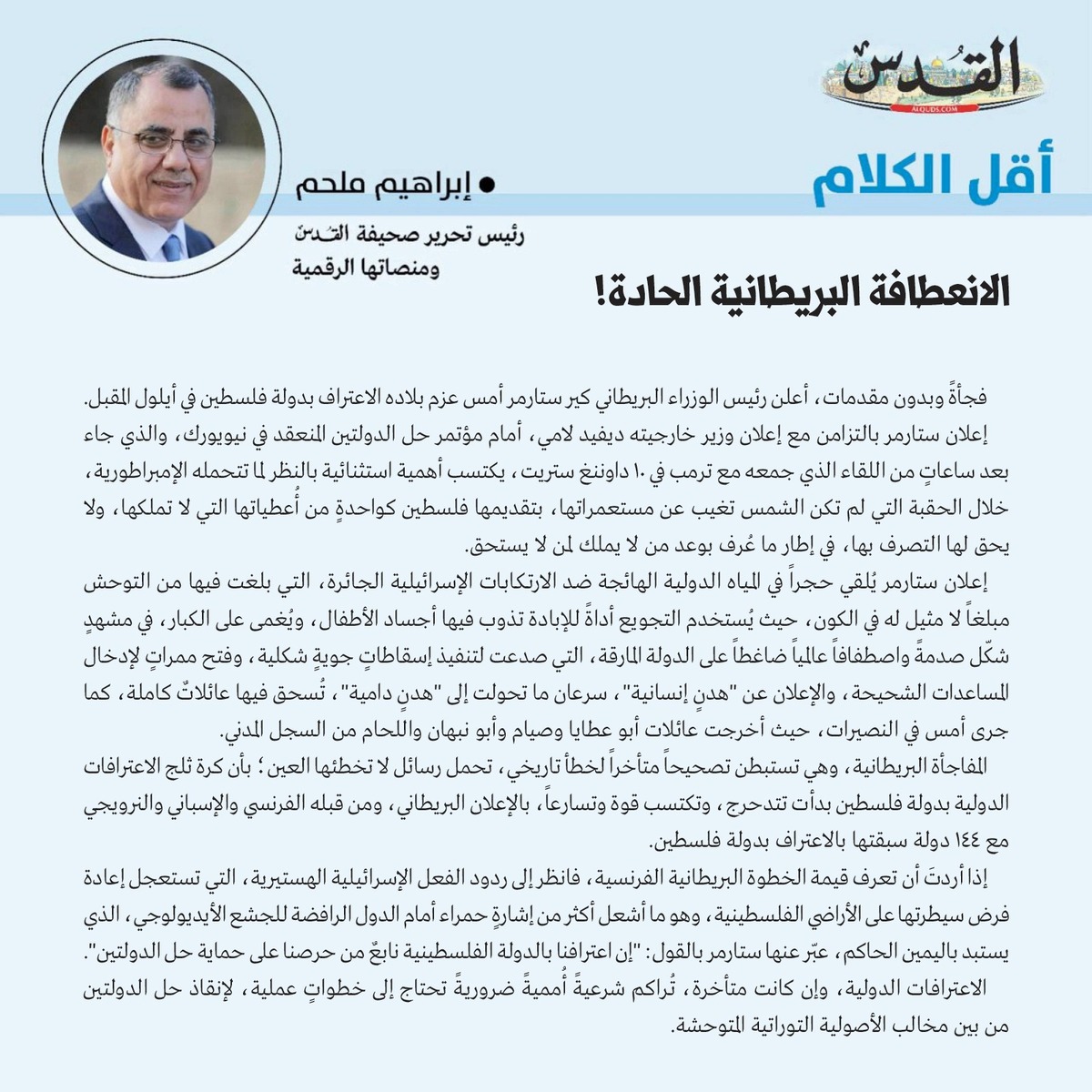
The UN conference on the two-state solution is not just a passing meeting or an additional statement in the archives of international politics. Rather, it is a fateful milestone and a path that will be closely monitored, its outcomes held accountable, and its translation into a political and economic reality that will transform the lives of the Palestinian people and establish a truly independent Palestinian state.

Powered by Froala Editor