PALESTINE

Thu 31 Jul 2025 11:57 am - Jerusalem Time

Al-Aqsa Martyrs Hospital: The situation inside the hospital is catastrophic by all standards.

The administration of Al-Aqsa Martyrs Hospital in Deir al-Balah, central Gaza, stated that the situation inside the hospital is catastrophic by all standards, and that it is facing extremely dangerous health and humanitarian conditions amid the mounting number of wounded and urgent medical needs.

She noted that the number of wounded is in the hundreds as a result of the ongoing aggression, and that the emergency department is unable to accommodate the increasing number of serious injuries. Furthermore, the hospital's inpatient wards are completely full and unable to receive new wounded, while all wards are overcrowded with patients, exceeding the hospital's operational capacity.

She noted that work in the operating rooms had come to a standstill due to a lack of beds. A number of patients remain in the operating rooms due to a lack of space to transport them, at a time when the hospital is experiencing a severe shortage of essential medicines and medical supplies.

The hospital administration called on official, humanitarian, and international agencies to urgently intervene to provide the necessary support, ensure the continuity of healthcare services, and save lives.


ARAB AND WORLD

Thu 31 Jul 2025 11:37 am - Jerusalem Time

Senate votes against arms embargo on Israel despite growing Democratic support

The US Senate late Wednesday rejected a resolution banning US arms sales to Israel, revealing new divisions among Democrats and highlighting growing frustration with Israel's conduct in Gaza.

The first of two votes, pushed by progressive Senator Bernie Sanders, by a vote of 27 to 70, renewed efforts to halt US arms transfers in protest of the Israeli war in Gaza and the worsening humanitarian crisis. Democrats were split on the vote, with 12 new members siding with Sanders. "This resolution is absolutely necessary because the United States will not have credibility in the international community if we do not stand up to this," said Sanders, an independent who typically votes with the Democrats.

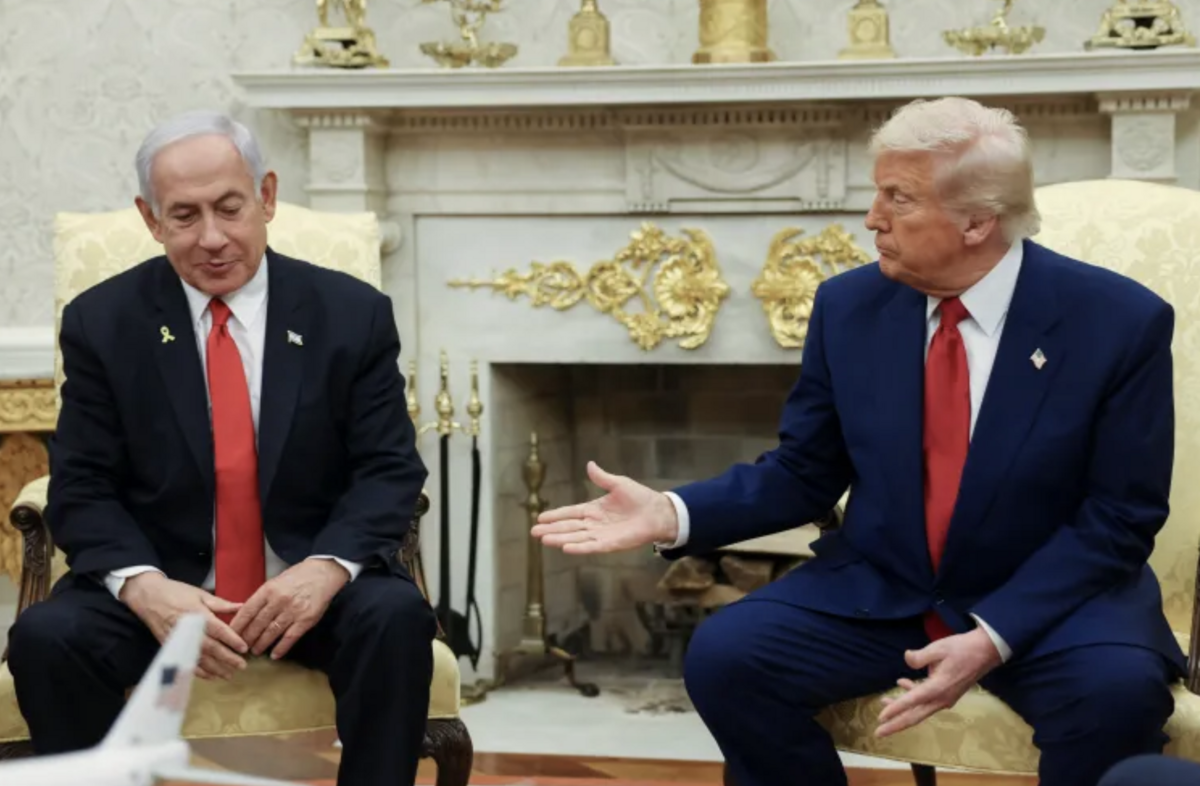
These efforts coincided with growing international outrage, including rare criticism of Israel from President Donald Trump, who this week publicly contradicted Israeli Prime Minister Benjamin Netanyahu's denial that Gaza was facing a hunger crisis. Britain, France, and several other countries have warned that they will recognize Palestine as a state unless Israel takes steps to improve conditions in Gaza and commits to a long-term peace process. This is the third time Sanders has forced a Senate vote to halt Israeli arms sales since late 2024, each time citing Palestinian civilian casualties.

Among the new supporters is independent Maine Senator Angus King, who this week declared that he would no longer support the Netanyahu government because Israel appears to be using starvation as a weapon of war.

"I've had enough," King said in an interview. "I expected Israel to wake up and realize how horrible what they're doing is, and at least release humanitarian aid. But they kept not doing that, and I've reached a point where I've had enough." Other new supporters since April include Senator Jeanne Shaheen (D-NH), ranking member of the Senate Foreign Relations Committee; Senator Jack Reed (D-RI), ranking member of the Senate Armed Services Committee; Senator Patty Murray (D-WA), ranking member of the Senate Appropriations Committee; Senators Tammy Baldwin (D-WI); Lisa Blunt Rochester (D-DEL); Martin Heinrich (D-NM); Jon Ossoff (D-GA); Tammy Duckworth (D-IL); Raphael Warnock (D-GA); Angela Alsobrooks (D-MD); and Sheldon Whitehouse (D-RI).

Last April, the Senate rejected two Sanders resolutions aimed at blocking billions of dollars in arms sales to Israel. At that time, the resolution, which followed the collapse of the Gaza ceasefire, received only 15 senators in support. This was down from 19 senators in November, when a resolution on Israel was backed by 19 senators. One of Wednesday's resolutions would have blocked the sale of 5,000 heavy bombs and 5,000 bomb guidance kits worth $676 million. The other would have banned the sale of tens of thousands of fully automatic assault rifles.

Sanders argued that the arms transfers "clearly violate" US legal requirements for foreign military sales, because Israel has used US-supplied weapons to kill thousands of Palestinian civilians.

Senate Foreign Relations Chairman Jim Risch (R-Idaho) defended the sales, arguing that Hamas, not Israel, is perpetuating the war.

"These are misguided decisions, and if adopted, they would mean abandoning America's closest ally in the Middle East," he said in a speech.

In turn, Sanders said: "This decision is absolutely necessary, because the United States will not have credibility with the international community if we do not confront this matter."


PALESTINE

Thu 31 Jul 2025 10:29 am - Jerusalem Time

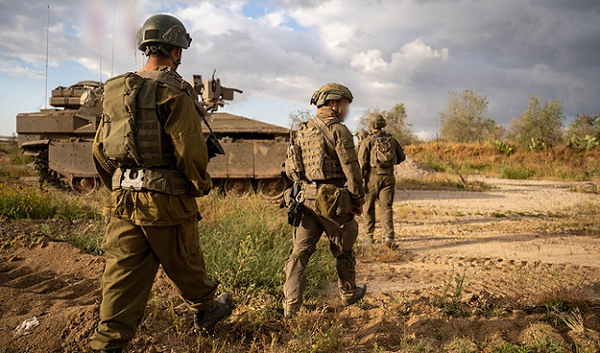
The Israeli army announces the withdrawal of the 98th Division from the Gaza Strip.

The Israeli army announced, this Thursday morning, the withdrawal of several military brigades from the Gaza Strip.

Israeli Army Radio reported that "in light of the stalemate in prisoner negotiations and the end of Operation Gideon, the Israeli army is reducing its forces in the Gaza Strip."

The radio added that the 98th Division had completed its mission in the northern Gaza Strip and left the area.

It noted that the Paratroopers Brigade and the Commando Brigade left the Gaza Strip in recent weeks, with the paratroopers being transferred to security missions in the West Bank, while the commandos were sent to the northern front.

It confirmed that the 7th Armored Brigade had also left the sector.


ARAB AND WORLD

Thu 31 Jul 2025 10:12 am - Jerusalem Time

B'Tselem opens Pandora's Box... 70-page report documents daily genocide

Episode 2


• Statements by Israeli decision-makers wove a narrative that most of the people of the Gaza Strip were responsible for October 7.
• One of the main tasks of the occupation is to prevent self-determination, suppress manifestations of Palestinian identity, and eliminate the idea of an independent state.
• All Gazans, especially children, suffer from physical and psychological trauma of varying degrees of severity.
• Ethnic cleansing in Gaza has become one of the official war goals...and an unprecedented policy of displacement and theft in the West Bank and Jerusalem.
• It cannot be claimed that there are armed fighters inside the hospitals in the Gaza Strip, and this is often raised without providing any evidence.


Ramallah - B'Tselem publishes a 70-page report on the reality of the people in the Gaza Strip, their circumstances, conditions, and the horrors of the war over the course of 666 days of ongoing genocide, which left hundreds of thousands dead, wounded, and hungry.
The report documents mass killings and the creation of catastrophic living conditions that make the Gaza Strip uninhabitable.

———

Report methodology

The purpose of this report is to outline the offensive Israel has been waging since October 2023 against Palestinians in all areas under its control, with a focus on the ongoing genocide against Palestinians in the Gaza Strip.
Over the past 20 months, B'Tselem has collected data, information, and documentation on thousands of incidents resulting in killing, wounding, displacement, forced displacement, the demolition of homes, buildings, and infrastructure, and a long list of other human rights violations perpetrated by the Israeli regime against Palestinians in the Gaza Strip, the West Bank (including East Jerusalem), and inside Israel. In order to reflect the extent of the harm caused to Palestinians, as comprehensively and on a wide scale as possible, this report includes information and data collected from external sources. We chose to rely on these sources for several reasons, including the difficulty of documenting Israel's practices in the Gaza Strip. Since the beginning of the current offensive, Israel has imposed unprecedented restrictions on various organizations and media outlets' access to the Gaza Strip, as part of its efforts to deepen the Strip's isolation from the world. B'Tselem's field researchers in the Gaza Strip, who managed to survive the long months of displacement, suffering, and imminent danger to their lives and the lives of their families, continued to record testimonies from hundreds of Palestinian residents of the Gaza Strip via phone calls and voice messages, even though communicating was a constant challenge.
In keeping with our commitment to maintaining high standards of reliability and credibility, we note that all the information contained in this report, which B'Tselem has not directly investigated and verified, was compiled from the following sources: publications and reports by human rights and aid organizations and UN agencies; journalistic investigations conducted by well-known media outlets committed to journalistic ethics and a methodology of cross-referencing; advisory opinions submitted by international experts in their respective fields; and primary sources, such as witness testimonies and field documentation. In addition, we drew on diverse literature that delves into historical genocidal events around the world, as well as the work of researchers who have documented phenomena occurring during the ongoing war in the Gaza Strip and published their findings in prestigious journals. B'Tselem analyzed all of this information, drawing on years of experience in gathering and verifying information and conducting research into human rights violations.
For all data on Palestinian casualties in the Gaza Strip, this report is based on publications by the Palestinian Ministry of Health in the Strip. These figures, not only considered reliable and relied upon by numerous organizations and researchers, are also conservative compared to the actual number of casualties during the offensive. This is due to the methodology followed by the Ministry of Health in the Gaza Strip when calculating casualties: Regarding the casualties, the Ministry of Health only includes in its lists bodies that arrived at hospital morgues or those whose relatives reported their deaths to the authorities. As a result, the lists published by the Ministry of Health do not include those whose bodies have yet to be recovered from the rubble of destroyed buildings, those whose bodies have not yet been identified, those who were buried in makeshift graves without being reported to the authorities, or entire families who were killed without anyone remaining to report their deaths. The same applies to the wounded, as the lists only include those who were transferred for medical treatment at official medical facilities. Due to the systematic destruction of the health system in the Gaza Strip, many of the wounded are unable to reach, or are themselves reluctant to reach, the few health facilities still operating in the Strip, which are burdened by the massive number of dead, sick, and wounded.
Given the limitations mentioned above, and because the number of cases is massive and unprecedented, this report only partially reflects the extent of the damage inflicted on every aspect of Palestinian life in the various areas controlled by Israel. We believe that documenting and investigating the true extent of the destruction caused by the aggression (which is ongoing as of this writing) will require many years, including estimating the long-term damage—personal, cultural, social, and political—that Palestinians living in the various areas are expected to suffer in the future.


4. Israeli genocide against Palestinians
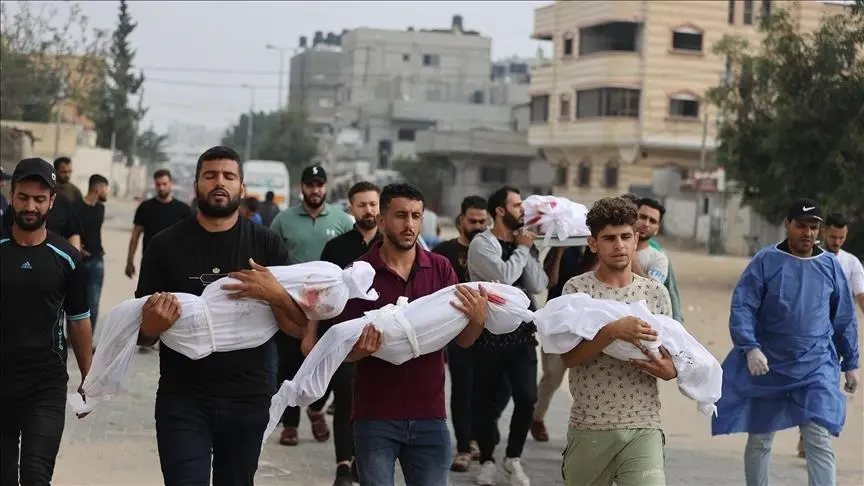
Nearly two years after the start of the Israeli offensive, the Gaza Strip has been largely destroyed. Updated estimates, as of mid-July 2025, indicate that approximately 58,026 people have been killed, the vast majority of them civilians who did not participate in the fighting. An estimated 138,520 have been injured. All hospitals are either destroyed or only partially functioning, as is much of the civilian infrastructure. It is likely that the entire population of the Gaza Strip, especially children, who constitute approximately half of the population, are suffering from varying degrees of physical and psychological trauma. Many more are expected to die or suffer serious physical and psychological damage as a result of the ongoing fighting and the consequences of Israel's deliberate starvation of the population and the denial of humanitarian aid. Since Israel violated the ceasefire in March 2025, hundreds of Gazans have been killed and injured daily—from aerial bombardment, gunfire, and artillery shelling around aid distribution centers, as well as from malnutrition, the concomitant spread of disease in Gaza, contaminated water, and the destruction of medical infrastructure.
This reality is a direct result of Israel's policy in the Gaza Strip since October 2023 and cannot be justified or explained as an attempt to eliminate Hamas's rule and military capabilities in the Strip. Statements by a number of Israeli decision-makers regarding the nature of the attack on the Gaza Strip throughout the period expressed genocidal intentions. These intentions were also embodied in numerous statements made by military commanders of various ranks, soldiers in the field, military and security experts, and Israeli media and intellectuals. All of these expressed a shared view among decision-makers and a significant portion of the Jewish-Israeli public that all, or at least most, residents of the Gaza Strip are responsible for, or at least support, the crimes committed on October 7. Accordingly, and in accordance with the position of many decision-makers and many military commanders and soldiers in the field, the aspiration to eliminate Hamas' rule and military capabilities, along with the need to prevent a recurrence of an event like that of October 7, was translated into an attack on the entire Gaza Strip and its population. The absolute dehumanization of the Gaza Strip's population has led to the fact that their lives are still considered by large segments of the Israeli-Jewish public to be worthless compared to the value of these national goals, and sometimes even completely worthless.
These perceptions were embodied in the nature of Israel's military action in the Gaza Strip. This included, among other things, the massive and indiscriminate bombardment of civilian areas and the use of starvation of over two million Gazans as a weapon of war; attempts at ethnic cleansing, including making ethnic cleansing of the population an official war objective; the systematic destruction of hospitals and other medical facilities—which enjoy special protection under international law—along with much of the civilian infrastructure in the Gaza Strip; and the unprecedented killing of medical and relief workers, civil order personnel, and journalists. In any case, the Israeli claim that Hamas or other Palestinian armed factions were present inside medical facilities and civilian buildings—often made without any evidence—cannot justify or explain such systematic destruction.
The clear picture that emerges from these patterns of action, which we will discuss in detail later, is that of a widespread, coordinated, and deliberate attack on the Palestinian residents of the Gaza Strip, aimed at destroying Palestinian society in the Strip as a population group. Since its inception in October 2023, this policy has enjoyed the support, legitimacy, and normalization of most of Israeli-Jewish society, as well as the Israeli judicial system.
The issue of intent, which constitutes one of the components of the definition of genocide, emerges decisively in light of several aspects: the Israeli leadership's awareness of the foreseeable consequences of the policy of fire and starvation that was implemented; the systematic destruction of civilian infrastructure that sustains life; the decision to continue and even escalate the attack despite countless warnings and evidence of its consequences for the civilian population of the Gaza Strip; and numerous statements by decision-makers that made it clear that Israel was acting against the entire population of the Strip.
The in-depth legal examination of suspicions of Israeli genocide is evident in the Amnesty International report published in December 2024, “You Feel Like You Are Subhuman: Israel’s Genocide Against Palestinians in Gaza,” as well as in the work of Physicians for Human Rights, which is being published today, and in the work of the South African prosecution team, the main findings of which were published in the prosecution document (and in the evidentiary annexes added to it over the months of the attack) submitted to the International Court of Justice (ICJ), as well as in reports submitted by UN experts.
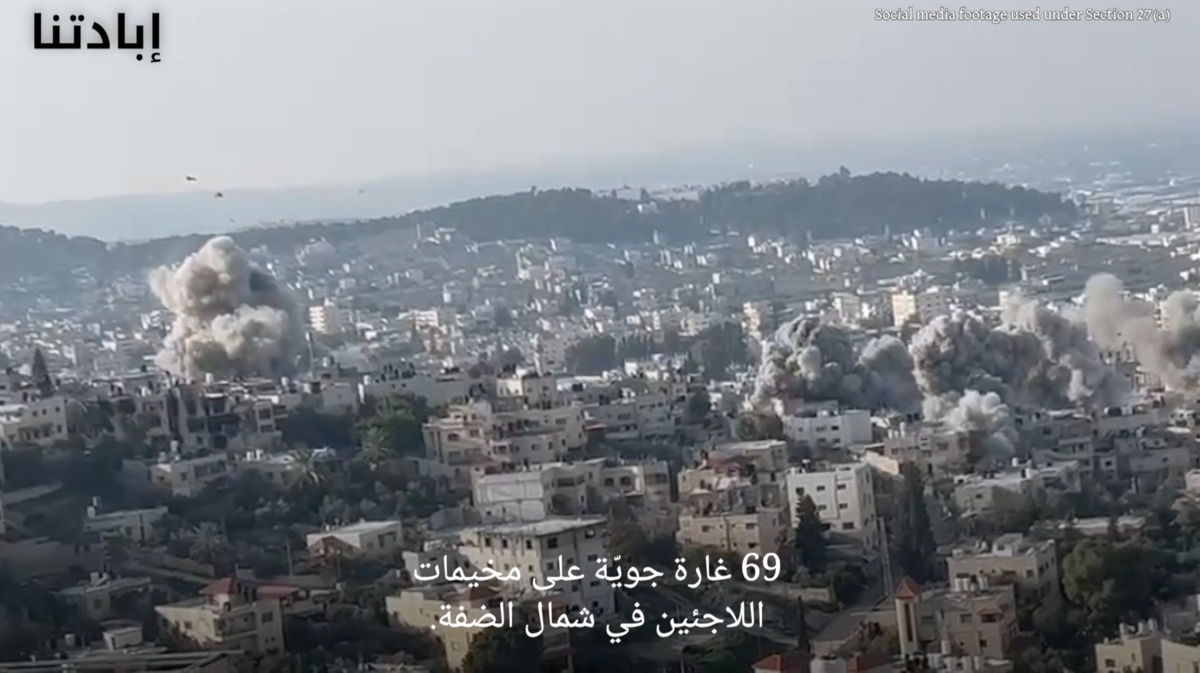
As Israel's genocide against Palestinians in the Gaza Strip continues unabated, it cannot be separated from the escalation of Israeli violence against Palestinians under its control in the West Bank, including East Jerusalem, and within Israel itself. The regime and army carrying out the genocide in the Gaza Strip are the same regime and army that are simultaneously waging a bombing campaign in refugee camps, killing hundreds of Palestinians, and implementing an unprecedented policy of displacement and dispossession throughout the West Bank, including East Jerusalem. This is the same regime that is implementing a similar policy of displacement, dispossession, and neglect in the Negev region, and a policy of intimidation and silencing Palestinian citizens of Israel who want to protest Israel's actions in the Gaza Strip, or simply express solidarity with the suffering of its inhabitants. This is the same regime whose primary mission is to prevent Palestinian national self-determination and suppress expressions of Palestinian identity. All of this indicates that the escalation of Israeli violence in the Gaza Strip is gradually spreading to other areas; That Israeli forces that engage in such violence in one area become more accustomed to and less restrained in engaging in unprecedented violence in other areas as well; and that a society that legitimizes genocide in the Gaza Strip—whether through participation, support, turning a blind eye, or denial—is naturally inclined to grant similar legitimacy to the escalating violence against all Palestinians.
The following pages address the broad assault on Palestinians as a group—first by describing Israel's genocidal practices in the Gaza Strip, but also by describing the escalation of violence against Palestinians throughout the areas under Israeli control, focusing on four main areas: killing, destruction, displacement, and social, political, and cultural disintegration. This is followed by an explanation of how Israel, within the framework of genocide, undermines Palestinian identity by attacking refugees and their refugee status. Finally, we present the main aspects of the effort to dehumanize Palestinians in the Gaza Strip and incite against them.

A. Murder and causing serious bodily and psychological harm.

A.1. Killing and causing severe physical and psychological harm in the Gaza Strip
The death toll from the Israeli military offensive on the Gaza Strip, as of July 2025, has exceeded 58,000 people, according to data from the Gaza Ministry of Health. The breakdown of data released by the Ministry of Health in June 2025 indicates that 10% of the dead were women, 18% were minors, and 5% were elderly. A study published in February 2025 estimated that life expectancy for men in the Gaza Strip fell by 51.6% during the first 12 months of the Israeli offensive, to 40.5 years—a loss of 34.9 years compared to the pre-war average. Life expectancy for women in the Gaza Strip fell by 38.6%, to 47.5 years—a loss of 29.9 years.
A number of studies published over the past year indicate that the above figures represent an incomplete estimate of the death toll, and that the actual number of victims inflicted by the Israeli offensive is likely much higher. The duration and continuity of the offensive, the massive scale of infrastructure destruction, and the restrictions on the entry of relief and rescue organizations into the Gaza Strip are only some of the factors that contribute to this partial estimate, which does not fully reflect the extent of the crimes committed by Israel in the Gaza Strip since October 2023.

A. 1. 1. Air strikes and population evacuation
These figures are a direct result of Israel's open-fire policy, which systematically violates fundamental principles of international law, such as distinction and proportionality. This policy has allowed the military to hit an unprecedented number of civilians not participating in the fighting while attacking targets that Israel has defined as military objectives. In the current offensive, Israel is extensively using unlawful technological tools to create and criminalize targets, enabling attacks based on the judgment of soldiers and secondary military commanders in the field. These practices allow for an increased frequency of attacks at the expense of precautionary measures aimed at minimizing harm to innocents.
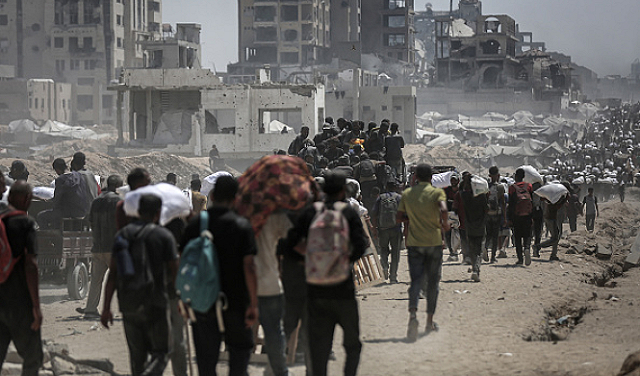
The evacuation orders Israel imposed on civilians in the Gaza Strip—which, under international humanitarian law, are supposed to provide residents with advance warning of airstrikes or military incursions—were often unclear or misleading, and did not allow sufficient time to leave. Furthermore, after informing residents of the need to leave their homes, Israel repeatedly bombed the “safe passages” through which displaced persons were supposed to move toward “humanitarian areas.” Testimonies given to B’Tselem by residents of the Gaza Strip and video footage published in international media revealed scenes of bodies lying by the side of the roads, likely those of displaced persons attempting to leave their homes in the north and head for the “humanitarian areas” in the south.
Living conditions in the "humanitarian zones," which were supposed to be safe for the displaced, were unbearable and were also subjected to systematic bombardment. A BBC analysis found that Israeli attacks on the "humanitarian zone" in Al-Mawasi had intensified since May 2024—the month the displaced were asked to move there. From that month until January 2025, the area was bombed 97 times.
Muhammad Ghurab, 32, a resident of Gaza City who had fled to the al-Mawasi area west of Khan Yunis, gave a testimony to B'Tselem describing an attack he witnessed on July 13, 2024. This attack, which involved two consecutive airstrikes, and which Israel claimed was targeting Muhammad Deif, head of Hamas's military wing, and another senior military wing official, was the deadliest attack on the al-Mawasi "humanitarian zone" in those months. A large number were killed and wounded after the first airstrike. After rescue workers and civilians arrived at the site to try to rescue the wounded, the Israeli Air Force bombed the area again. In total, 90 people were killed and 300 wounded in the two airstrikes.
“Suddenly, a terrifying belt of fire formed [...] The sky was completely covered with clouds, dust, and dirt. People started running in all directions. [...] We started pulling out the injured as best we could. Some had their hands and legs cut off. [...] Some of the injured we pulled out died in our hands. When we went inside to check on the tents that remained, we saw that they were filled with corpses, mostly women and children. What we saw that day, at that hour, was the embodiment of madness. Something incomprehensible. It was as if pieces of hell were falling on us. It really cannot be described, because language is incapable of expressing and will not comprehend the horrors we witnessed. What I am describing here is just a small part of the horrors that took place. [...] Since that day, I have been afraid all the time. I expect at every moment that they will bomb our tents, that they will bomb me and my family.”
In various incidents, fires have been reported to have spread through IDP tent complexes as a result of the intense and violent bombardment. In many documented cases, people burned to death. Ahmed Al-Dalu, 44, a resident of Gaza City, described an airstrike on the IDP camp where his family was staying in October 2024. As a result of the fire that broke out in the tent, his 20-year-old son Shaaban burned to death right before his eyes:
“When I returned to the entrance of the tent, I heard the loud sound of a drone hovering in the sky above us. Its loud sound scared me greatly, and I became anxious and nervous. I asked God to protect us and prayed that nothing bad would happen to us, but I wondered who among us would die tonight. Suddenly, a ball of fire fell on the tent and hit my children. I looked at them and saw that they were not moving, and in an instant I decided to go in and save them. I think my paternal instinct drove me to do so. I threw myself into the fire and managed to pull out Abdul Rahman, Rahaf, Farah, and my wife, who was sleeping next to her. I saw the fire burning the body of Shaaban, who was sleeping on a wooden chair directly adjacent to the point that had been bombed. I saw his face melt from the flames. It was a horrific scene. At that moment, I reached the peak of defeat and brokenness. I told him, “Forgive me, my dear son, but I cannot help you.”
After violating the ceasefire in March 2025, Israel returned to a pattern of aggressive and indiscriminate attacks throughout the Gaza Strip, including "humanitarian zones" and other areas where tens of thousands of destitute displaced persons are concentrated. As of July 14, 2025, the Ministry of Health in Gaza reported more than 7,450 deaths and over 26,000 injuries since the ceasefire was violated.

To be continued tomorrow


PALESTINE

Thu 31 Jul 2025 10:00 am - Jerusalem Time

Netanyahu pushes for the displacement of Gazans to appease Ben-Gvir and prevent the government from disintegrating.

Israeli Prime Minister Benjamin Netanyahu is leading concrete moves to impose what Israel calls a "voluntary migration" of Gaza Strip residents. This is aimed at appeasing extremist minister Itamar Ben-Gvir and ensuring his continued presence in the government coalition if a prisoner exchange deal is not concluded.

According to Yedioth Ahronoth, Netanyahu pledged to Ben-Gvir during a recent meeting that "if a deal is not reached, Israel will begin implementing a plan within a few weeks to displace thousands of Palestinians from Gaza abroad," in an effort to ensure the cohesion of the government coalition.

The newspaper noted that Netanyahu has begun holding regular weekly meetings to follow up on this issue, with the participation of representatives from Mossad, the Foreign Ministry, and other security agencies. He has also issued instructions to accelerate contacts with countries likely to agree to accept refugees from Gaza.

The newspaper quoted a senior government source as saying, "Netanyahu is taking this issue very seriously and is taking practical steps." Another source noted that "contacts have so far resulted in understandings with five countries that have expressed their initial willingness to accept migrants from Gaza."

According to the report, the novelty of this plan is that the population will be displaced through an Israeli crossing into Jordan, rather than through the Rafah crossing and the Egyptian side. The newspaper cited reports that among the countries Israel is in contact with are Ethiopia, Indonesia, and Libya.

The newspaper reported that US Presidential Envoy Steve Witkoff was briefed on these efforts during his meetings with Mossad Director David Barnea, who is currently in the United States.

The report added that Barnea asked the US administration for diplomatic and financial support to encourage these countries to accept the plan, by offering incentives in exchange for receiving Palestinians from Gaza. The newspaper explained that the discussion is about deporting "thousands," not "millions," while stressing that the process is being actively pushed forward and is no longer merely a theoretical idea.

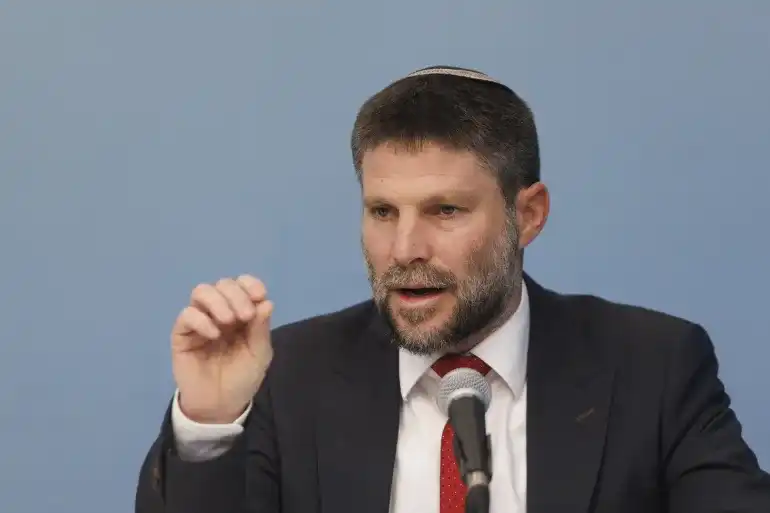
Meanwhile, Netanyahu pledged to Minister Bezalel Smotrich to ensure progress on the plan to annex parts of the Gaza Strip, starting with the "northern security border," if a swap deal fails.

Government sources indicated that Netanyahu still considers the prisoner issue his "top priority," but he also realizes that Hamas's intransigence could lead to the deal's failure, which is why he is working in parallel on the displacement and annexation plans.

To achieve greater coordination with the US administration on these tracks, Netanyahu dispatched Minister Ron Dermer, National Security Council Director Tzachi Hanegbi, and Mossad Director Barnea to Washington for high-level consultations.

The newspaper quoted an Israeli official familiar with the matter as saying, "The issue of voluntary migration was theoretical until now, but it is no longer so. Netanyahu wants to push this path forward if no deal is reached." He added, "There is an ongoing dialogue with the countries, and there is an understanding that if a deal is not reached, the deportation of a number of voluntary migrants will begin in the coming weeks. Not millions, but certainly several thousand Gazans."


PALESTINE

Thu 31 Jul 2025 9:57 am - Jerusalem Time

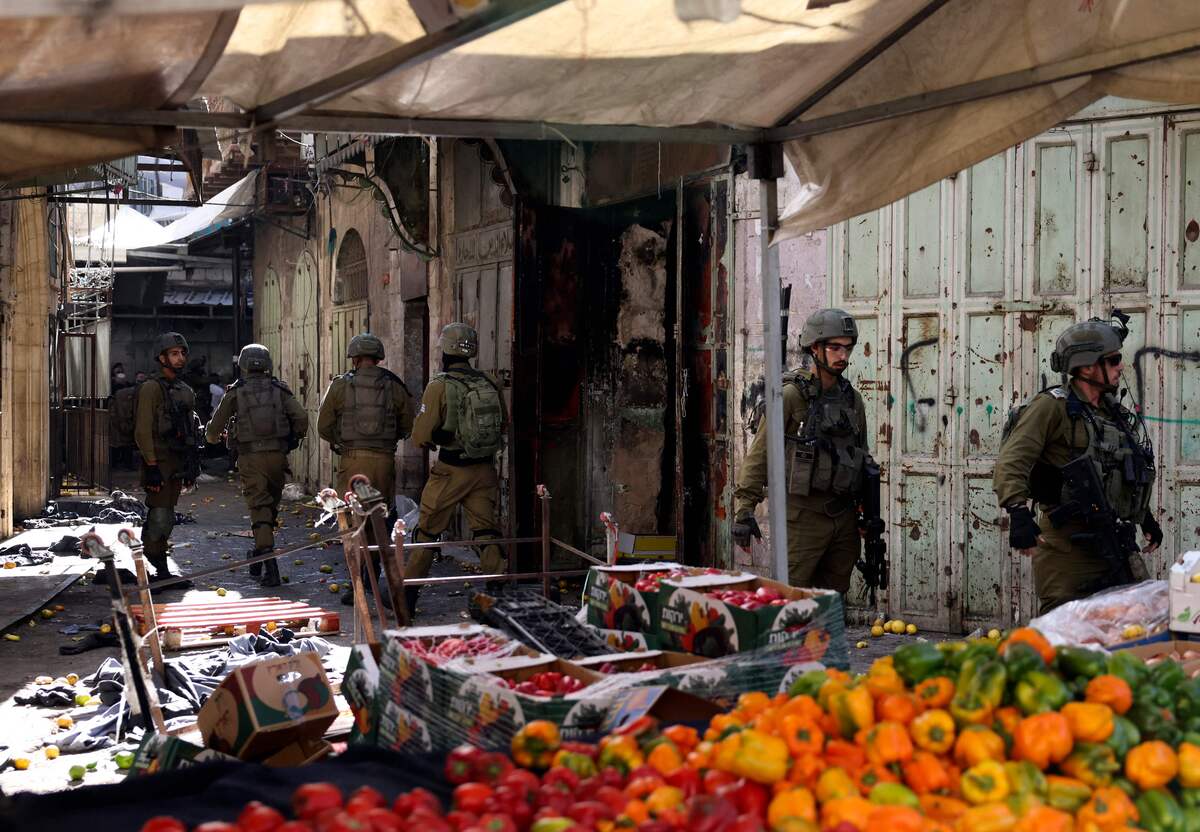
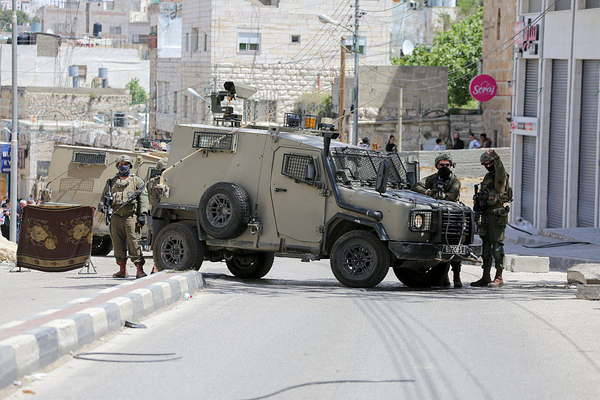
A Palestinian infant was injured and eight citizens were arrested during the occupation forces' raids on several areas in Hebron.

A 6-month-old baby girl suffered from suffocation from tear gas fired by the Israeli occupation forces during their raid on the village of Tabqa, southwest of Hebron, on Thursday. Eight others were arrested from several villages and towns in the Hebron Governorate.

Local sources reported that the occupation forces stormed the village of Tabqa, southwest of Hebron, and raided a number of citizens' homes, and fired tear gas bombs at them, which led to a 6-month-old baby girl suffering from suffocation due to inhaling the gas, and the necessary first aid was provided to her.

According to the sources, the occupation forces stormed several neighborhoods in the town of Beit Ummar, north of Hebron, and raided a number of citizens’ homes, deliberately destroying their doors and contents, using dogs to search citizens’ belongings, and arrested: Awni Ahmed Al-Alami (48 years old) and his son Ahmed (18 years old), the child Nour Khaled Akhlil (17 years old), and Ibrahim Muhammad Adi (35 years old) after abusing him and seizing his vehicle.

In the village of Umm al-Khair in the Masafer Yatta area, local sources reported that the occupation forces stormed the village, raided the homes of citizens, searched them, ransacked their contents, and arrested: Omar Suleiman al-Hathalin, Ajdei’ al-Hathalin, Alaa al-Hathalin, and Omar al-Hathalin.

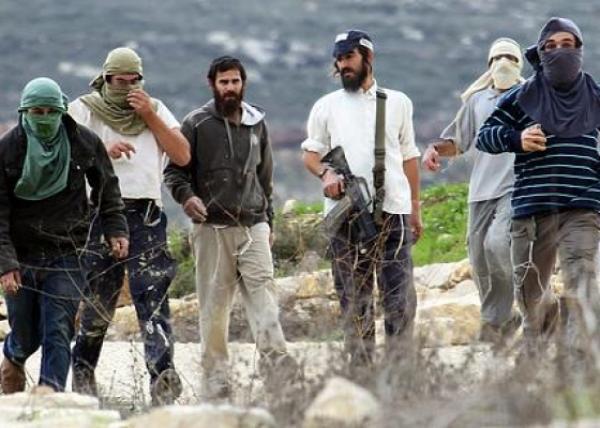
She added that an armed group of settlers attacked Khirbet Maghayer al-Abid, attempted to steal a flock of sheep belonging to Shahada al-Makhamra, and threatened his family with deportation.

It is noteworthy that the village of Umm al-Khair and other villages and residential communities in the Masafer Yatta area are subjected to continuous attacks by the occupation and armed settler groups, which resulted in the martyrdom of activist and teacher Awda al-Hathalin (31 years old) by a bullet fired by one of the settlers at point-blank range last Monday.


PALESTINE

Thu 31 Jul 2025 9:04 am - Jerusalem Time

Nablus: Occupation forces arrest 5 citizens, fill in a water well, and seize a pump.

Israeli occupation forces arrested five citizens from Nablus Governorate at dawn on Thursday.

Local sources reported that the occupation forces arrested two young men after raiding a residential building in the Rafidia area of Nablus, as well as another young man from the city center. Their identities are not yet known.

The occupation forces also arrested two young men, Malek Al-Mohsen from the town of Odla and Ahed Salman from the town of Qusin in Nablus Governorate. They also raided several homes in Balata refugee camp and Al-Lubban Al-Sharqiya, without reporting any arrests.

In the same context, the occupation forces filled in a water well in the town of Beit Dajan, east of Nablus, and also seized a pump.

Local sources reported that occupation forces stormed the town and filled in an artesian well with cement. The well supplies drinking and agricultural water to several homes in the village, causing significant losses for greenhouse owners.

The sources added that the occupation forces seized a water pump near the well.


OPINIONS

Thu 31 Jul 2025 9:02 am - Jerusalem Time

The Two-State Solution Conference: Engineering the Palestinian Landscape Under Fire

Dr. Raed Abu Badawiya

Dr. Raed Abu Badawiya

Opinion Writer

While the Israeli war on the Gaza Strip continues to rage since October 2023, international and regional efforts are intensifying to formulate what has become known as the "day after" the aggression. In this context, talk of the "two-state solution" has returned, not as a just settlement to the historical conflict, but rather as a comprehensive engineering framework for reshaping Palestinian reality in all its components. This return is not innocent, nor does it come in the context of an international response to the rights of an occupied people. Rather, it is being used as a tool to control the Palestinians politically, security-wise, economically, and perhaps culturally, according to a vision formulated outside the national will.

What is being presented today within the framework of the "Two-State Solution" conference is not based on international legitimacy resolutions or inalienable historical rights. Rather, it is based on a restricted and conditional vision that links recognition of the establishment of a Palestinian state to profound internal transformations in the behavior and discourse of the Palestinian government. Here, statehood is not granted as an entitlement, but rather as a conditional reward provided the Palestinians adhere to the new rules of the game: recognition of Israel, renunciation of resistance, and restructuring of their political system under a framework of international controls.

The United States, despite its promotion of the "two-state solution," is not exerting any real pressure on Israel to halt settlement activity or recognize the borders of a Palestinian state. Washington views the re-empowerment of the Palestinian Authority as an administrative means to "fill the vacuum" in Gaza, provided that this authority is reshaped to suit Israel's security perspective first and foremost. Israel, ruled by an extreme right-wing government led by Benjamin Netanyahu, fundamentally rejects the idea of a Palestinian state and insists on maintaining security control from the Jordan River to the sea. All it is proposing is an economic peace conditional on the disarmament of the resistance, without offering any political or sovereign guarantees to the Palestinians.

In this context, the conference being promoted appears to be a complex engineering process targeting Palestinians as a subject of control, not as a partner in the settlement. What is required, first, is the re-establishment of the Palestinian Authority as an administrative entity stripped of its national significance, one that condemns armed struggle even in the context of resisting the occupation, and excludes political forces that reject the Oslo process. Second, security matters in Gaza must be handed over to a "neutral" entity acceptable to Israel, ensuring the "unification of legitimate weapons" and criminalizing resistance as terrorism. Third, reconstruction in the Gaza Strip must be linked to the extent of Palestinian compliance with political and security conditions, thus transforming reconstruction from a human right into a tool for political blackmail. Fourth, a new narrative must be imposed that erases the essence of the Palestinian struggle, beginning with labeling the October 7 operation a "massacre," and extending to amending Palestinian curricula, abolishing rewards for prisoners and martyrs, and imposing a new vision of the "acceptable" Palestinian: obedient, non-resisting, and internationally disciplined.

The danger here lies not only in diminishing the concept of the state and transforming it into an entity with limited sovereignty, subject to strict security and financial dictates, but also in obscuring the vision of liberation and replacing it with a "developmental" vision that deludes Palestinians into believing that economic progress can compensate for the absence of freedom. Worse still, the conference project completely ignores Israel's escalating ambitions in the West Bank, where the occupying authorities are racing against time to expand settlements, Judaize Jerusalem, and impose demographic and geographic realities that undermine any possibility of establishing a contiguous and sovereign Palestinian state. This is taking place amidst the dominance of extremist religious and nationalist forces that explicitly call for the annexation of the West Bank, the displacement of Palestinians, and the end of any form of self-rule.

What is being proposed now is not a settlement to the conflict, but rather an attempt to impose a new reality through military force, politics, and international support. Talk of a "Palestinian state" in this context is merely a cover for a comprehensive control project aimed at dismantling the Palestinian national identity, neutralizing collective consciousness, and creating a new generation of Palestinians divorced from their historical and struggle narrative. This project does not recognize the resistance forces as part of the political fabric, nor the PLO as a comprehensive representative framework. Rather, it promotes a fragile political structure that aligns with donor conditions rather than the aspirations of the people.

Faced with this scenario, it seems urgent to rebuild the Palestinian national project on democratic and inclusive foundations, based on the reactivation of the PLO, overcoming divisions, and a comprehensive critical review of the Oslo process, which has only yielded further political constraint and exposure. There is no path to liberation that can be built on the voluntary relinquishment of the right to defeat the occupation, and no solution can endure without recognizing sovereignty as a right, not as a conditional grant. Statehood is not granted after passing the tests of obedience, but rather is won on the basis of steadfastness and national consensus.

What is being promoted at the two-state solution conference is essentially a process of redefining the Palestinian—not their history and demands, but their identity and the nature of their existence. It is a project of external control over the Palestinians' present and future, imposed by the force of the fait accompli and sponsored by major powers seeking permanent calm, not absent justice. In this context, it becomes imperative that this conference not be viewed as a political opportunity, but rather as a strategic warning calling for the development of a unified Palestinian position that rejects solutions capped by the occupation's conditions and restores consideration for national constants and dignity.


OPINIONS

Thu 31 Jul 2025 8:59 am - Jerusalem Time

Engineering hunger... between empty pots and concentration camps!

Amin Al-Hajj

Amin Al-Hajj

Opinion Writer

In Gaza, hunger is no longer merely the result of a prolonged aggression or a harsh blockade. It has transformed into a complex system of systematic management of bodies and wills. The empty pots lining the doors of Gaza's hospices are no longer just a warning bell for a humanitarian plight. They have simultaneously become a global symbol, echoing in the streets of many cities through the banging of pots in solidarity with the hungry, announcing to the world the occupation's transition from a policy of rapid killing to one of slow destruction of the social fabric and of human existence itself.

We are facing a slow mass death project or the "management" of hunger. If we go back to the roots of the phenomenon, we will find that starvation policies have always been part of the history of colonialism, from Britain in India to the United States in Vietnam, all the way to the Nazi experiments with ghettos and concentration camps, where bread rationing and food control were a tool for subjugation and psychological control before physical annihilation. What distinguishes the situation in Gaza today is that this model has been "developed" and implemented with modern tools, through a tight siege, precise surveillance technologies, an international administration that claims to be humanitarian, and institutions bearing the banner of "relief", but which are run with a racist security mentality devoid of any values, which cannot even be compared to concentration camps in form or content.


This starvation is marketed as a passing scene in a “war on terror,” when in fact it is a social genocide aimed at dismantling the social structure, imposing a struggle for survival among members of a single society, and transforming the hungry into competitors for very limited resources, or for crumbs of aid that pass through the guns of the occupying army, under the supervision of complicit institutions. Here, food itself becomes a tool for control and domination, and a driver of new conflicts between individuals and social, political, and even geographical classes. A new geography is produced that maps out hunger, where some receive a few calories while others are deprived even of the smell of bread.

Its dimensions do not stop at human losses, but extend to create a system of oppression that leads to the dismantling of societal bonds, severing the ties of individuals to their communities. It may push some to become hostile to their own communities and the world, and even to a willingness to become a cheap tool in the hands of their enemy. Over time, it may push a person to give up his dignity, his memory, his land, and his dreams in exchange for a meal that may come, but often never does.

The engineering of hunger leads not only to the death of the body, but also to the death of the sense of the value of justice and belonging, and thus to a tool of extermination more deadly than missiles and bombs, forcing a person out of his homeland "voluntarily", after his homeland was forced out of him.

There are equally dangerous transformations taking place, beginning with the international and regional reaction. Silence is no longer the sole ruler, but rather an active identification with the engineering of starvation. Aid only passes through procedures imposed by the occupation, or through institutions that cover up the humanitarian deficit with reports and statistics that bear no relation to reality. The entry of aid does not mean its arrival, but rather its plunder or destruction. On the other hand, the political and economic elites, including Arab elites, stand helpless or watching. Some of them may participate in building the new system that will turn Gaza into a "testing ground" for the future of the Palestinians.

Looking to the future, this system carries a host of catastrophic risks, not limited to Gaza, but to the region and the world. Attempts to break the spirit of a people and humiliate them will breed generations of anger and bitterness, driven by revenge, who will reproduce the experience in more severe forms, impossible to predict or their consequences, neither spatially nor temporally. This opens the door to endless humanitarian, health, and moral crises. This means we need to redraw the paths of the solution through a trilogy: starting with trusted international institutions undertaking the unconditional delivery of aid; activating the tools of international law to hold accountable those who orchestrate starvation operations and kill the starving; and restoring respect for popular initiatives to break the siege and support Palestinian steadfastness, away from the theatrics and maneuvers we witness from time to time.


Empty pots are not only a symbol of suffering, but a new human test. The most important question remains: Will genocide and starvation engineering prevail, or will our people succeed in reversing the hunger equation and transforming it into a narrative of resistance that breaks the logic of modern concentration camps? They ask, "When?" Say, "Maybe it will be soon."


OPINIONS

Thu 31 Jul 2025 8:59 am - Jerusalem Time

Congressional Letter: An Expression of Human Concern or a Political Shift?

Nabhan Khreisha

Nabhan Khreisha

Opinion Writer

In the context of the ongoing Israeli war on the Gaza Strip, which has entered its twenty-second month with no clear end in sight, signs are emerging that the political earthquake caused by this war is not limited to the Palestinians alone, but is also shaking deeply held convictions within Western institutions, most notably the US Congress. A letter signed by 40 members of Congress, including some of Israel's traditional supporters, was not merely an expression of humanitarian concern; it represents a profound political shift, indicating the erosion of the aura that has long surrounded the occupying state in US decision-making circles. It also indicates a hidden sense creeping into these circles that "Israel" is no longer a permanent strategic asset, but rather an increasingly costly political and moral burden.

The letter addressed to Secretary of State Marco Rubio and Middle East envoy Ben Witkoff was loaded with language unusual in official US discourse toward Israel. When members of Congress state that "the severe humanitarian crisis in Gaza is unsustainable and worsening by the day, hunger and malnutrition are widespread, and deaths from hunger, especially among children, are increasing," they are not referring to natural disasters or natural disasters. Rather, they are describing the direct effects of a deliberate blockade and starvation practiced by an allied country, with official US complicity or silence.

This accurate description of widespread hunger and child deaths cannot be separated from the images that have flooded the media and social media of Palestinian children whose bodies have emaciated to the point of being reduced to skeletons. This description implicitly acknowledges that this war has lost its moral justification in the eyes of even some traditional supporters of Israel, and that continued American political coverage of it is no longer viable, either electorally or humanitarianally.

The letter does more than simply describe the tragedy; it opens the door to a different reading of the entire conflict. When the signatories assert that "there is a viable path to ending this war, returning the Israeli hostages, and reaching a diplomatic solution," they are not merely speaking of a temporary ceasefire; they are reviving the idea of a political solution, even pushing it to the forefront of the debate, after the voices of war and military victory had drowned out everything else. What is striking here is that the call does not come from human rights activists or international organizations, but from representatives within the American establishment itself, indicating a shift in perception: that war is not only immoral, but also strategically counterproductive.

This message cannot be read in isolation from the transnational popular movement that has swept the United States and world capitals over the past few months. Hundreds of demonstrations have taken place in New York, Washington, Chicago, and major university cities, denouncing Israeli starvation and bombing policies and demanding an end to US military support for Israel. This comes amid an escalation in civil disobedience campaigns and open sit-ins at universities and public institutions. These repeated waves of protest, led by a broad coalition of human rights activists, students, and minorities, have begun to have a direct impact on the political mood within Congress and on the calculations of some representatives who realize that ignoring these voices is no longer a safe option in a sensitive election season.

The same effect is beginning to be felt in Western European parliaments, where governments are facing increasing popular and media pressure to break with their policy of favoritism toward Israel and take serious action to halt the massacre of civilians in Gaza. In many cases, recognition of the State of Palestine is no longer presented merely as a statement of solidarity with the Palestinian people, but rather as a necessary political tool to curb Israeli arrogance. This is the case in Britain, where the discourse of recognizing Palestine as a state has begun to circulate in parliament, not as a final solution, but as a warning to Israel that the world is no longer prepared to continue covering up its crimes under the pretext of security.

The ongoing transformations are not isolated, but rather the result of a cumulative process. Since the October 7 attack, Israel has attempted to portray the war on Gaza as an existential battle against "Islamic terrorism," initially succeeding in garnering widespread Western sympathy. But as the war has dragged on, the destruction has spread, and testimonies of civilian casualties have multiplied, the narrative has begun to crumble. No one in the West can speak of "Israel's right to defend itself" without being confronted with images of starving children in Gaza, UN reports of famine and health collapse, or growing international statements about the possibility of genocide.

If we connect this shift with what Gilad Erdan, the former Israeli ambassador to the United Nations, said, the picture becomes clearer. Erdan, known for his hardline stance, bitterly admitted in an interview with the Israeli army radio that he was no longer able to explain "what the end is," and that "there is not enough clarity here." In a state that thrives on the illusion of deterrence and control, this statement is in itself an admission of strategic failure. Israeli politicians do not know exactly what they want from Gaza after nearly two years of bombing and destruction, after thousands of martyrs, the dismantling of civil society, the destruction of infrastructure, and the displacement of the population. The end remains unclear.

Even more alarming is his statement: "We're even starting to lose Republicans." This statement deserves careful consideration. It's well known that the Republican Party has historically been one of Israel's staunchest supporters, not just for moral reasons, but also for ideological, religious, and alliance-based reasons. For Erdan to say that this support is beginning to erode reflects a belated realization in Israel that the battle for consciousness—the ability to continue justifying this war to the American public—has begun to tilt against it, despite all the efforts of propaganda and lobbying.

Hence, the letter issued by the members of Congress, despite its limited number of signatories, reflects more than just a humanitarian stance. It is the beginning of a crack in the traditional wall of support for Israel within Washington, especially given the escalation of academic and economic boycott campaigns and the rising voices of Arab and Muslim communities and progressive Americans who have come to view support for Israel as a stain on their country's image.

It is no exaggeration to say that this message may be one of the outcomes of the most important battle currently being waged: the battle of awareness and public opinion. While Israel continues its war with aircraft and tanks, Palestinians, along with many sympathizers, are waging a narrative battle, investing every image, every testimony, and every voice in an attempt to redefine what is happening in Gaza not as a conflict between "terrorism and the state," but as a colonial war seeking to break an entire people.

This message alone will certainly not stop the war, nor will it push the Trump administration to radically change its policy. But its significance lies in its symbolism and timing. It comes at a moment when Israel is losing its internal cohesion, its leaders are unable to define a clear objective for the war, and the fragility of external support, even from the most loyal allies, is being exposed. It signals the beginning of a new phase in which Israel may witness increasing isolation, and in which advocates of a political solution find an opportunity to reassert their vision on the table.

In other words, the message, which appears to be humanitarian on the surface, has profound political and strategic dimensions. It not only condemns the war, but also questions its feasibility and hints at the need to consider a comprehensive political solution that restores the "two-state solution" not as an ideal option, but as a necessity to stem the moral and political collapse in the Middle East. It is also a warning that continued support for this war could lead to a larger explosion that extends beyond Gaza, threatening what remains of regional stability, undermining the West's credibility in the eyes of the people, and even threatening the unity of the pro-Israel camp from within.

Ultimately, this message may not change the balance of power on the ground, but it certainly shifts the balance of discourse. And this, in a long and complex war like the Gaza war, is by no means trivial.

Powered by Froala Editor

ARAB AND WORLD

Thu 31 Jul 2025 8:52 am - Jerusalem Time

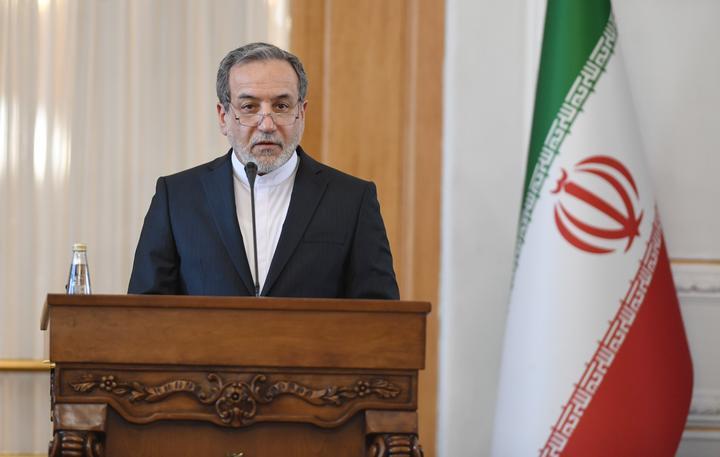
Araqchi: Washington must compensate Tehran before entering nuclear talks

The Financial Times reported on Thursday that Iranian Foreign Minister Abbas Araqchi said that the United States must agree to compensate Iran for losses incurred during last month's war, as Tehran hardens its position and imposes new conditions for resuming nuclear talks with the administration of US President Donald Trump.


OPINIONS

Thu 31 Jul 2025 8:50 am - Jerusalem Time

Israeli university presidents' letter to Netanyahu shatters victimhood narrative

Taisir Khaled

Taisir Khaled

Opinion Writer

The heads of five Israeli universities sent a letter to Prime Minister Benjamin Netanyahu on Monday, demanding that humanitarian aid be allowed into the Gaza Strip. The letter, signed by the president of the Weizmann Institute, Prof. Alon Hen; the president of the Hebrew University, Prof. Asher Cohen; the president of the Technion, Prof. Uri Sivan; the president of Tel Aviv University, Prof. Ariel Porat; and the president of the Open University, Prof. Leo Cory, stated: "We appeal to you to allow the army and other security forces to allow humanitarian aid into Gaza, regardless of any connection to the issue of prisoners and hostages, in order to solve the problem of severe hunger in Gaza, which particularly affects women, most of whom are mothers, as well as children and infants." The heads of other universities, including Reichman University, Bar-Ilan University, Ben-Gurion University, the University of Haifa, and a university illegally established in the settlement of Ariel in the Salfit Governorate in the West Bank, refused to sign the letter. The fact that these individuals refrained from signing the letter does not diminish its value. On the contrary, their failure to sign confirms that Israeli society, including the academic community, is divided between those who fear the consequences of Israeli policy and those who support this policy, which has placed Israel in the dock in an unprecedented manner and shattered the narrative of the victim.

The letter added: "Along with infants and older children, we, the citizens of the state, are watching the catastrophe unfold on our screens, as we see images from Gaza, mostly of infants suffering from hunger and dying from starvation and disease. The release of the hostages is of paramount importance, and their lives are at risk, but a people who were victims of the Holocaust in Europe have a special and unique responsibility to act with all means at our disposal to prevent a severe humanitarian catastrophe for innocent men, women, and children."

The heads of these universities concluded their letter by saying: "We join the statements of Knesset members from various factions regarding the Gaza catastrophe, which contradict clear Jewish values and humanitarian principles, and, on the one hand, the democratic values of the State of Israel. We are talking about a humanitarian catastrophe resulting from actions that could be construed as war crimes and crimes against humanity. The humanitarian catastrophe described in official reports by the United Nations and other international organizations demonstrates that we cannot stand idly by in the face of a humanitarian catastrophe of this kind, the damage of which may be difficult to repair later."

If we start from the content of the letter and the clear acknowledgment it contains that the occupying Israeli state is practicing, in its brutal war on the Gaza Strip, a policy that not only remotely resembles a policy of genocide, but also brings to mind the crimes of the Nazi monster against the Jews, Gypsies, and Slavic peoples in World War II, and the resulting international agreements and treaties that criminalize wars of extermination, then the talk of a “humanitarian catastrophe resulting from actions that may be interpreted as war crimes and crimes against humanity,” and of a “Gaza catastrophe, which contradicts clear Jewish values and humanitarian principles,” on the tongues of an elite group of academics, takes us to the necessity and importance of lifting the cover from the policy of fascists, neo-Nazis, and Kahanists in Israel, and those who provide them with support and cover up their criminal actions. This is not only by providing heavy-caliber death munitions that target civilians, especially children, infants, and women, even in so-called “humanitarian aid centers,” but also by providing them with protection in the United Nations and various international bodies. It goes further by persecuting universities in his country simply for respecting freedom of expression and academic freedom, as is happening in the United States of America, at the hands of the administration of Identifies with fascism and priesthood in the Israeli occupation state.

It remains here to mention the largely absent Palestinian role throughout these events. We ask why our universities, first and foremost, and universities in Arab countries, are absent from the scene. Is there no role for the Council for Higher Education and the universities within the Palestinian Ministry of Education? Is there no role for the Federation of Trade Unions of Palestinian University Workers? The letter from the presidents of a number of Israeli universities has paved the way. Will the presidents of our universities, the Council for Higher Education, and the Federation of Trade Unions of our University Workers present a message to the international community that reinforces the existing state of solidarity with the Palestinian people and condemns and denounces Israeli war crimes? Will they, in turn, offer a strong contribution, stating that the occupying state of Israel is, in reality, a functional state that practices genocide, settler policies, the seizure of Palestinian land and water resources, displacement, and ethnic cleansing? And that the time has come to destroy the idol of worship, whose title is anti-Semitism and whose essence is the monopolization of suffering and the narrative of victimhood?!


PALESTINE

Thu 31 Jul 2025 8:50 am - Jerusalem Time

Israel's new measures are futile in its attempt to end the hunger crisis in Gaza.

The Guardian reported on Wednesday that aid workers confirmed that new Israeli measures - intended to improve the humanitarian situation in Gaza - fall far short of what is needed, and that aid access remains restricted amid the worsening famine facing the population.

The occupation announced the new measures, which went into effect on Sunday, and include daily humanitarian pauses, airdrops of aid, and humanitarian corridors for UN aid trucks. This came after mounting international pressure to alleviate the hunger crisis.

Relief organizations have confirmed that the Israeli occupation's blockade of humanitarian aid in the Gaza Strip is the primary cause of the hunger crisis, which has led to the deaths of 151 Palestinians from starvation, more than half of them in the past 30 days. As the crisis continues to worsen, the Israeli army continues its attacks on the Strip, resulting in the deaths of 48 people yesterday who were trying to obtain aid.

Oxfam's policy officer, Bushra Khalidi, commented on the new Israeli aid measures: "Twenty-one months on, these are mere token gestures. They are theatrical, and in my view, designed to distract from scrutiny. We are being blocked and delayed at every turn."

The occupation claims that the number of aid trucks entering Gaza has increased since the announcement of the new measures, with more than 200 trucks entering on Tuesday, according to the Israeli Customs Authority (COGAT). This equates to about 70 trucks entering daily on average since the end of May.

However, the number of aid trucks remains far short of the 500-600 that the UN said were needed to support Gaza's two million residents, and some relief agencies have indicated that the true scale of the need is now much greater than 600 trucks, given that the Strip's population is facing famine.

"The needs are much greater than they were before the war, but access is actually worse," Khalidi added. "The famine cannot be solved with 10 or even 300 trucks. What we need are not partial solutions, but real, systemic changes."

Residents and medical workers confirmed that they have not yet felt any change in their daily conditions, as malnutrition continues to spread throughout the Strip.

"We hear a lot of news about more aid arriving, but this is just media talk. The situation on the ground has not changed since Sunday. Food supplies have not reached the targeted population," Dr. Nour El Din El Amsi, from the medical team of the non-governmental organization Project Hope, told the newspaper.

He added that malnourished children still come to his clinic daily for food, while the number of his patients is doubling, and that he has run out of "high-energy biscuits" used to treat malnutrition to give them.

Despite the announcement of increased aid measures, humanitarian workers from international organizations reported new bureaucratic obstacles behind the scenes, preventing them from delivering aid to Gaza.

Among these obstacles is the new registration process for international NGOs, which requires non-UN aid organizations to register with the newly established Israeli Ministry of Diaspora Affairs and Combating Antisemitism.

As part of the registration process, international NGOs are required to provide the identity details of their Palestinian staff, which most refuse to do, fearing it would have repercussions for their safety in Gaza and the West Bank.

They point to the high number of humanitarian workers killed by the occupation in Gaza as an indicator of the risks involved in providing information about their employees to the occupation, and it is unclear whether the occupation will allow them to register without providing that information.

Some imports into Gaza by international NGOs that have yet to receive registration from the new Israeli ministry have been indefinitely delayed by Israeli customs, according to humanitarian workers familiar with supply chain logistics in Gaza, as have their own imports. They fear that customs officials will not allow them to import goods into Gaza without registering them with the occupation, jeopardizing their ability to send aid to the besieged enclave.

“While the clear violations on the ground in Gaza have a significant impact on public opinion, the bureaucratic access violations don’t have the same impact on people because they are tedious and complicated, but that’s what’s preventing aid from getting in,” one aid worker told the newspaper.

Requests for clarification from the customs authority have not yielded any answers, which humanitarian workers said is part of a "deliberate policy" to make the entry of aid into Gaza as complicated as possible. They said that customs officials' explanations for the refusal or delay of aid imports into Gaza have been rare, leaving humanitarian workers trying to guess what is allowed in.

The humanitarian worker added that Israeli customs officials were constantly throwing away dates and olives without explanation, and after combining their experiences with other aid organizations, they realized that the common denominator was fruits or vegetables that contained pits or seeds that could be planted.

Later, shipments containing date paste and pitted olives were successfully allowed into the Strip.


PALESTINE

Thu 31 Jul 2025 8:44 am - Jerusalem Time

20 Palestinians dead in the Gaza Strip since dawn today

Today, Thursday, 20 citizens, including 15 aid recipients, were killed as a result of the occupation's targeting of them in the Gaza Strip.

Local sources reported that five citizens were killed when an Israeli drone targeted a tent near the Hayat camp, west of Khan Yunis, in the southern Gaza Strip.

It added that 15 citizens were killed and 65 others were injured, most of them children, when the occupation forces targeted civilian gatherings near the aid distribution point on Salah al-Din Street, south of the Wadi Gaza area in the central Gaza Strip.

Medical sources announced yesterday that the death toll among those waiting for aid who arrived at hospitals had risen to 1,239, with more than 8,152 injured.

The occupation forces have continued their war on the Gaza Strip since October 7, 2023, resulting in the martyrdom of 60,138 citizens and the injury of 146,269 others.


PALESTINE

Thu 31 Jul 2025 8:41 am - Jerusalem Time

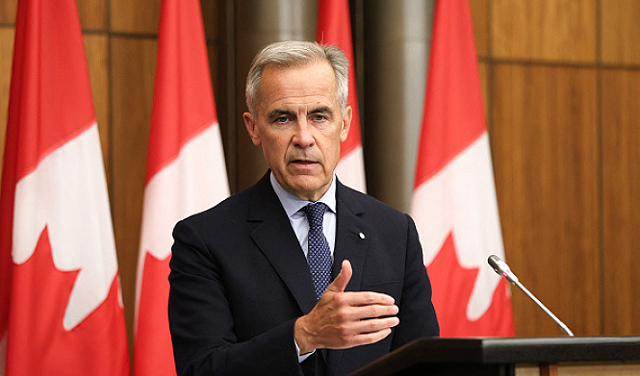
Canada announces its intention to recognize the State of Palestine in September.

In a remarkable diplomatic move, Canadian Prime Minister Mark Carney announced that his country intends to formally recognize the State of Palestine during the 80th session of the United Nations General Assembly in September 2025, with the aim of preserving the possibility of a two-state solution.

During a press conference on Wednesday, Carney explained that this decision is conditional on radical reforms in Palestinian governance, including holding general elections in 2026, with Hamas excluded from participation.

He added, "The reality on the ground, including the widespread hunger in Gaza, makes it clear that the opportunity for a Palestinian state is fading before our eyes."

He pointed out that the decision comes amid accelerating Israeli settlement activity in the West Bank and East Jerusalem, and a vote in the Israeli Knesset calling for the annexation of the West Bank, reinforcing the international trend toward symbolic steps in support of the Palestinians.

He stressed that Canada "condemns the Israeli government's creation of conditions for a catastrophe in Gaza."

The Canadian move came just one day after Britain announced its intention to recognize a Palestinian state by September, unless Israel commits to concrete measures to end the war, allow aid access, and halt its annexation policies.

In contrast, Israel strongly condemned the Canadian decision, describing it as a "distorted international pressure campaign" that could play into Hamas' hands and weaken Israel's position at a sensitive moment.

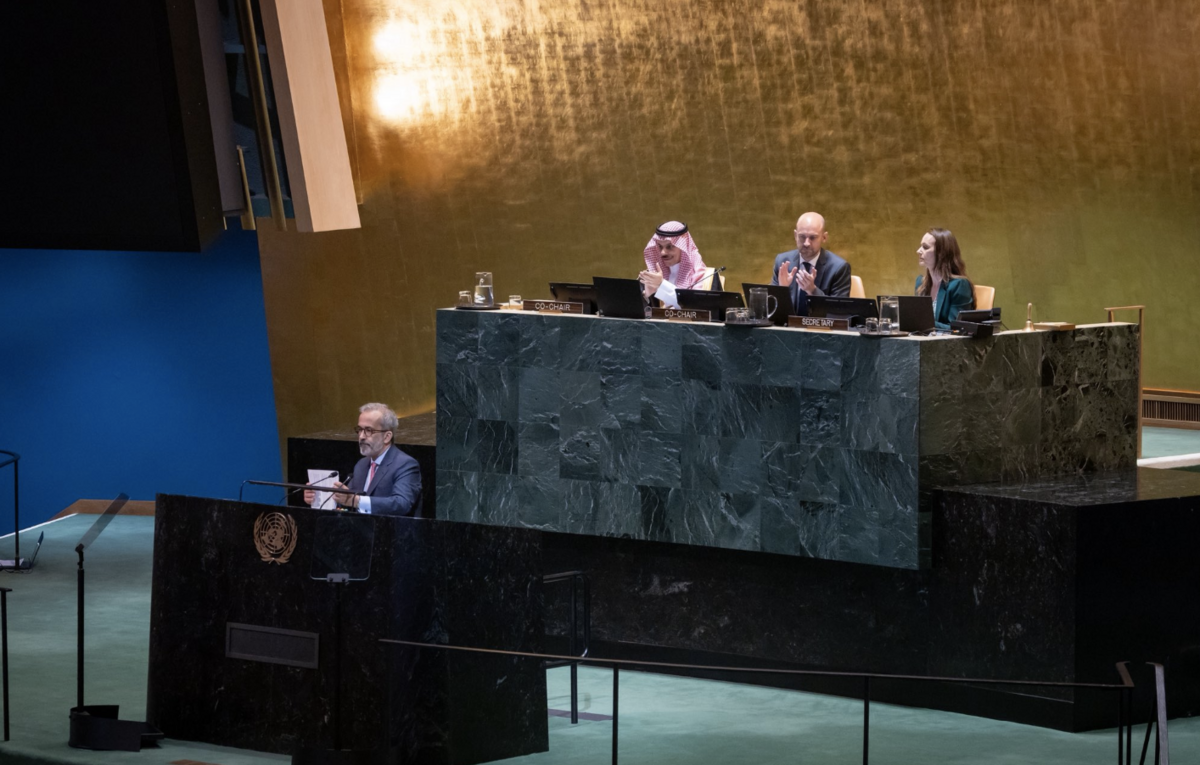
French Foreign Minister Jean-Noël Barrot also revealed that 15 countries had issued a collective call to recognize the State of Palestine, at the conclusion of the two-state solution conference held in New York.

Powered by Froala Editor

PALESTINE

Thu 31 Jul 2025 8:38 am - Jerusalem Time

Trump's New Approach to Gaza: A Cooling Strategy or Escalation?

Dr. Raed Abu Badawi: The current American approach is nothing more than "media management of the crisis," the primary goal of which is to protect Israel from moral and diplomatic exposure to the world.

Khalil Shaheen: Trump still clings to the "Gaza Riviera" plan, which is based on displacement, and seeks to absorb global anger through a formal negotiating scene.

Dr. Tamara Haddad: Moves aimed at restructuring the Gaza Strip, consolidating Israeli military rule, and giving residents the choice between staying or leaving, paving the way for a "Middle Eastern Riviera."

Awni Al-Mashni: Trump has only one course of action left: to stop the war on Gaza after exhausting all other tools and methods, including genocide, starvation, and negotiating conspiracies.

Dr. Mohamed El-Tamawy: Trump is not clearly embracing the path of calm and is instead adopting a "calculated cooling-off strategy" to manage the crisis in a way that neither angers Israel nor embarrasses Washington internationally.

Daoud Kuttab: Media pressure, horrific images coming from Gaza, and the electoral context may push Trump to support a de-escalation approach aimed at improving America's image.


Amid the ongoing crisis in the Gaza Strip, US President Donald Trump is promoting what he calls a "new approach" to dealing with the situation there. However, according to experts and observers, this approach does not reflect a real shift in US policy. Rather, it represents a media façade aimed at beautifying the US position and providing humanitarian cover for the continuation of the war.

According to writers, analysts, specialists, and university professors speaking separately to "I," these statements come amid international warnings of an impending famine, with Washington adopting a humanitarian discourse that is not based on a ceasefire or lifting the blockade, but rather on bartering food for Israeli detainees held in Gaza.

This approach, as writers, analysts, specialists, and university professors point out, reflects a dual policy that oscillates between managing mounting international pressure on Israel and providing cover for broader plans to reshape the demographic and political reality in Gaza. Food aid is used as a pressure tool linked to providing "food security" in certain areas, but not others. This could encourage internal displacement and pave the way for "forced displacement" within a long-term strategic vision.

In depth, writers, analysts, specialists, and university professors believe that the American approach, despite its humanitarian overtones, is inseparable from a broader political project aimed at reengineering the Gaza Strip, whether through economic and humanitarian pressure or through Israeli field measures implicitly supported by Washington.

While the US discourse promotes "humanitarian solutions," writers, analysts, specialists, and university professors assert that this proposal lacks any clear commitment to halting the aggression or guaranteeing Palestinian rights. This raises fundamental questions about the true nature of the "new approach" and whether it is a prelude to a political settlement of the Gaza Strip issue.


A political maneuver aimed at beautifying the American position


Dr. Raed Abu Badawi, a professor of international law and international relations at the Arab American University, believes that US President Donald Trump's announcement of a "new approach to dealing with Gaza" does not reflect a real shift in US policy, but rather represents a "political maneuver aimed at beautifying the US position and providing humanitarian cover for the continuation of the war without direct diplomatic costs."

According to Abu Badawiya, this statement comes amid the ongoing Israeli war on the Gaza Strip and the near-total stagnation of political negotiations. This prompted the US administration to announce an initiative to establish "international food centers" within the Strip, under the pretext of responding to the deteriorating humanitarian situation, particularly in light of UN and European warnings of the imminent threat of famine.

Abu Badawiya believes that the American initiative does not carry any real intention to change the reality of the war or exert serious pressure on Israel.

Abu Badawiya asserts that "talk about a humanitarian approach without a ceasefire or lifting the blockade is in reality a policy of cooling the crisis, aimed at absorbing mounting international pressure, particularly from European capitals, which have increasingly begun to express their dissatisfaction with Washington's silence regarding the humanitarian catastrophe in Gaza."

He emphasizes that US Secretary of State Marco Rubio's statements regarding the "need for new options to end the war" and "recognizing the negotiating stalemate" are not out of step with media coverage of US policy, particularly since these statements linked any real action to the release of Israeli detainees, without addressing basic Palestinian rights or a halt to the aggression.

Abu Badawiya warns that these steps could create a more dangerous reality, as Israel uses this humanitarian cover to advance its "soft forced displacement" project.

Abu Badawiya explains that "the introduction of limited quantities of food aid to some areas in the northern Gaza Strip, in conjunction with the opening of relief corridors to the south, may at first glance appear to be a positive move, but in reality, it may be aimed at encouraging residents to flee, linking their survival to the availability of food or security, thus emptying the northern areas of their inhabitants as a prelude to redrawing the demographic map of the Strip."

Abu Badawiya emphasizes that these movements cannot be separated from the context of war and control, asserting that "any humanitarian initiative is meaningless unless it is accompanied by clear political guarantees that protect the population, ensure a cessation of military operations, and establish a just settlement process."

Abu Badawiya considers the current American approach to be little more than "media management of the crisis," whose primary goal is to protect Israel from moral and diplomatic exposure to the world, given its failure to achieve a decisive military victory, the ongoing prisoner exchange crisis, and the growing international demand to hold its leaders legally accountable.


Implicit partnership in the continuation of the disaster


Abu Badawiya asserts that "American actions, no matter how humanitarian they may appear, are in reality an implicit partnership in the continuation of the catastrophe, unless they are based on a genuine political solution that guarantees Palestinian rights and puts an end to the ongoing aggression."

Abu Badawiya emphasizes that "there is no humanitarian solution to a political problem," noting that separating relief from the siege, displacement from the bombing, and aid from the occupation is a dangerous misrepresentation that could lead to more disastrous consequences in the long run.


Trump pursues a dual policy toward the Gaza Strip


Writer and political analyst Khalil Shaheen believes that US President Donald Trump is pursuing a dual policy toward the Gaza Strip, based on a temporary negotiating tactic centered around "food for prisoners," coupled with a long-term strategic vision aimed at displacing the Strip's residents and imposing full Israeli security sovereignty over the territory. This is consistent with a long-term Israeli plan that re-establishes settlement expansion and gradual annexation.

Shaheen asserts that Trump hinted at his own vision for Gaza and its future, but deemed the timing inappropriate for disclosing it. This reflects "implicit collusion" with Israel, especially given the identical positions of the American and Israeli delegations during the recent negotiations, from which both sides withdrew simultaneously.

Shaheen points out that US behavior toward Gaza demonstrates that Washington is not a neutral mediator, but rather a direct party to the ongoing political and humanitarian battle. This is evident in the fact that a ceasefire has been linked to the release of Israeli detainees in exchange for the entry of limited humanitarian aid distributed according to Israeli conditions. Shaheen describes this as "starvation engineering" through the inhumane Gaza Foundation.

He notes that Trump appears keen to recover the living detainees, due to internal pressure from their families in Israel, while he appears less interested in recovering the bodies of the dead detainees.

Shaheen points out that Hamas continues to demand dual guarantees: a 60-day ceasefire and a guarantee of continued negotiations to end the war. Washington rejects this, reflecting its desire to keep the door open for Israel to resume the war at any moment.

Shaheen explains that Trump still adheres to a strategic plan, the "Gaza Riviera," which involves displacing Gaza's residents abroad, either through humanitarian pressure or through the "Humanitarian City" project being implemented by Israel in Rafah, with the support of the Gaza Humanitarian Foundation, which is being used as a tool to enforce displacement policies as part of a plan of systematic starvation and impoverishment.


Israel prepares Kerem Shalom crossing to facilitate the exit of Gazans


Shaheen points out that Israel is preparing the Kerem Shalom crossing not to bring in aid, but rather to facilitate the exit of Palestinians from Gaza. Israeli officials, led by Netanyahu, repeatedly assert that what is happening in the Strip is fully in line with Trump's vision, despite the absence of any official American denials from either the White House or the State Department.

Shaheen asserts that Trump prefers reaching an agreement that would lead to Hamas's surrender and disarmament, followed by the subsequent expulsion of its leaders and cadres from the Gaza Strip. This would pave the way for the gradual displacement of the Palestinian population, while Israel maintains security control over all of Gaza.

Shaheen points to other indicators that Trump has embraced this vision, including a report published by Haaretz about an Israeli plan that gives Hamas a limited deadline to agree to surrender terms, otherwise Israel will begin annexing the security belt and parts of northern Gaza, as part of a gradual process to occupy the entire Strip. Shaheen described this as a re-creation of the annexation scenario "piece by piece."

Shaheen notes that Israeli government officials, such as Finance Minister Bezalel Smotrich, National Security Minister Itamar Ben-Gvir, and Settlement Minister Orit Struck, are promoting the re-establishment of settlements in northern Gaza, which were dismantled as part of the 2005 disengagement plan. Trump considers this an "unwise move," and has stated this several times.

Shaheen asserts that these policies intersect with what Trump previously proposed in his "Deal of the Century," which called for the establishment of a "Palestinian state" without true sovereignty, under Israeli security control, and with the annexation of large parts of the West Bank.

Today, Shaheen believes this trend has become more extreme, with a clear retreat even from the "Deal of the Century," amid complete American silence regarding Israeli statements calling for the annexation of Gaza and an explicit rejection of the two-state solution.

Shaheen notes that the US State Department considered the conference supporting the two-state solution a "propaganda ploy," while US Ambassador to Israel Huckabee stated that Washington no longer believes in the two-state solution, a complete departure from the policies of previous US administrations.

Shaheen believes that Trump is seeking to absorb global anger through a formal negotiation scenario centered around a ceasefire in exchange for partial aid, provided Hamas agrees to the terms of surrender, without any written guarantees.

Shaheen points out that this scenario may be merely a transitional phase toward a larger strategic goal: imposing Israeli security control over Gaza and forcing the population to migrate en masse or gradually out of the Strip.


hidden political and strategic goals


Writer and political researcher Dr. Tamara Haddad asserts that US President Donald Trump's recent statements regarding a "new approach" to the Gaza Strip ostensibly center on the humanitarian dimension, but at their core, they conceal political and strategic objectives related to the future of the Strip, specifically with regard to Hamas.

Haddad explains that the mechanism for rapidly delivering humanitarian aid to Gaza through limited hours of humanitarian pauses came with a US green light, and that Trump's statements focused on describing the famine in Gaza as "real," in marked contrast to statements by Israeli Prime Minister Benjamin Netanyahu, who downplayed the scale of the humanitarian catastrophe.

Haddad points out that Trump spoke of a humanitarian priority, namely providing food to civilians, establishing feeding centers, and expanding aid distribution without restrictions. However, all of this is a process of managing starvation and paving the way for a broader military plan.

However, according to Haddad, this move carries hidden political dimensions, including easing external pressure on Israel and separating the humanitarian aid issue from political negotiations, particularly those related to the Israeli military's withdrawal from Gaza or a ceasefire.

Haddad believes the goal of this approach is to neutralize aid from being a means of pressure on Israel, allowing it to continue military operations without international impediments.

Haddad believes there is a clear future US-Israeli plan to grant Hamas a short deadline—no more than three days—to accept conditions related to handing over the hostages without an Israeli withdrawal, a request she expects the movement to reject.

Haddad explains that if Hamas rejects the plan, the alternative Trump proposes is to continue the military option until Hamas's presence is completely eliminated, which would lead to further escalation and a large number of casualties.

Haddad points out that statements by Israeli Finance Minister Bezalel Smotrich converge with this trend, as he spoke of a secret plan to deal with Gaza and eliminate Hamas, while also pursuing its members abroad, imposing sanctions, and confiscating their assets.

Haddad asserts that these moves essentially aim to completely restructure the Gaza Strip and reestablish Israeli military rule, with residents given the choice between staying or leaving, as a prelude to realizing the shared US-Israeli vision of transforming Gaza into the "Riviera of the Middle East."

Haddad explains that the goal of bringing in aid is to "manage the starvation, not end it," in parallel with the intensification of military operations, as part of a broader American strategic project to reshape Gaza's political and geographic reality and link it to an American-international project related to the Indian corridor.


The only "new" option now may be to go for a comprehensive deal.


Writer and political analyst Awni Al-Mashni explains that the US administration, in light of its "strategic constraints," may find itself compelled to push for a comprehensive deal to end the war in the Gaza Strip. This is after Israel and the United States reached a dead end, having exhausted all previous tools, including genocide, starvation, and negotiating conspiracies.

Al-Mashni asserts that the American approach, which has always supported Israel in achieving its goals through war, has relied on various methods, including genocide in its most horrific forms, starvation policies, negotiation plots, and intimidation tools such as threats of hell and the lure of illusions such as the "Gaza Riviera."

Al-Mashni believes that these tools have been used in every way, which means that the only "new" option available now may be to move toward a comprehensive deal, something the administration of US President Donald Trump is hinting at in various ways.

Al-Mashni asserts that the United States, which legitimized displacement and considered it a normal procedure, is now facing mounting accusations of complicity in war crimes and genocide in Gaza, not only from the people but also from governments and international institutions. This complicates and constrains the American political position.

Al-Mashni believes that Israel is experiencing a profound crisis, as military escalation has not achieved its political objectives, while de-escalation may undermine its strategic goals. The same situation applies to the United States, which is suffering from a crisis of "excessive power" that has failed to achieve "absolute victory."

"Therefore, Trump's options have become narrow, and he has only one course of action left: stopping the war," Al-Mashni says, suggesting that the new Israeli threats we are currently witnessing, such as crushing the resistance and "opening the gates of hell," are merely preliminary maneuvers to present the ceasefire resolution as "honorable" for Israel.

Al-Mashni asserts that Gaza will heal its wounds, even if it takes a long time and considerable effort. However, the genocide its people were subjected to will remain a political and moral reality from which Israel will not escape, no matter how hard it tries. He believes that the recent French recognition of a Palestinian state may be the first repercussions of this shift, but it will certainly not be the last.


A dual policy in dealing with the Palestinian issue


Egyptian political economy and international relations researcher and political science professor Dr. Mohamed El-Tamawy asserts that US President Donald Trump's recent statements regarding a new approach to the Gaza Strip reveal a dual policy he has adopted in dealing with the Palestinian issue, based on combining political pressure with humanitarian blackmail, without engaging in a genuine de-escalation or pushing toward a comprehensive escalation.

Al-Tamawi explains that Trump's use of the phrase "new approach" does not reflect an actual shift in the American position, but rather serves as a propaganda indicator suggesting renewal, while his true position remains governed by domestic and foreign political equations. According to Al-Tamawi, Trump remains a strategic supporter of Israel, but his recent statements blaming Netanyahu for the starvation in Gaza express an attempt to hold Israel morally responsible for the deteriorating humanitarian situation in the Strip, without reaching the level of real pressure.

Al-Tamawi points out that Trump does not favor a military escalation in Gaza, realizing that any open war at this time could harm American interests and weaken his electoral standing in the future, especially given the decline in popular support for pro-Israel policies within the United States.


Trump uses the Gaza card to achieve domestic gains


In contrast, Al-Tamawi points out that Trump is not clearly adopting a de-escalation approach, but rather is relying on a "calculated cooling-off strategy," which involves managing the crisis in a way that neither angers Israel nor embarrasses Washington before the international community.

Al-Tamawi notes that Trump is using the Gaza card to achieve political gains domestically, by hinting at the possibility of pressuring Israel if the humanitarian crisis worsens. At the same time, he is courting his conservative base with promises of "strong deals," reflecting a high degree of pragmatism in leveraging the Palestinian cause within his upcoming electoral agenda.


Reflection of personal impressions


Writer and political analyst Daoud Kuttab believes that US President Donald Trump's statements regarding the war in Gaza and his intention to adopt a new approach may not necessarily reflect a genuine US policy or actual direction. Rather, they may reflect his personal impressions and the influence of what he sees on global television screens.

"Understanding Trump's statements is not easy, as he often says things that are not directly related to political reality or official plans," the authors say. "However, he made a crucial point: Trump is influenced by the intense media coverage of the famine in Gaza, which has become a major focus of global television broadcasts."

Writers explain that Trump, who is known for his excessive television viewing, may be motivated by a desire to change the negative image that has become blaming Israel in the eyes of international public opinion.

Writers believe that Trump does not appear inclined to escalate at this stage, pointing out that returning to the negotiating track and easing the blockade—even partially—is more in line with his current approach, especially since his election campaign focused on finding solutions to wars, not igniting them.

According to the authors, media pressure and horrific images coming from Gaza, coupled with the US electoral context, may push Trump to support a de-escalation approach, with the aim of improving the United States' global image and lifting the mounting moral burden from its allies in the region.



PALESTINE

Thu 31 Jul 2025 8:35 am - Jerusalem Time

Britain's recognition: atonement for an old sin or a maneuver under the weight of scenes of genocide?

Dr. Jamal Harfoush: This moment may represent a historic opportunity for Britain to review its colonial legacy and assume its historical responsibility toward the Palestinian people.

Akram Atallah: Internal pressures are behind the British trend, including Jeremy Corbyn's intention to establish a political party with the Palestinian cause as its main theme.

Dr. Qusay Hamed: Although the move is evasive, it is an acknowledgment of Britain's historical responsibility for the Palestinian Nakba and the establishment of Israel.

Samir Anabtawi: Starmer's intention to recognize the State of Palestine is an advanced step, but it is still tied to political conditions that prevent its actual implementation.

Dr. Amjad Bashkar: Israel may move toward dismantling the Palestinian Authority as a strategic option to obstruct any international recognition of it.

Adnan Al-Sabah: The only possible and just solution is to implement Resolutions 181 and 194, and the leadership must not accept any other alternatives to any future political solution.

British Prime Minister Keir Starmer's announcement of his intention to recognize the State of Palestine raises controversy over whether it represents a political shift with symbolic and strategic dimensions, or whether it is a political maneuver reflecting mounting internal and external pressure to reconsider British policies toward the Palestinian-Israeli conflict.

In separate interviews with Al-Quds, writers, political analysts, and university professors say that this step, while currently an "intention" not accompanied by implementation but rather conditional on Israel, poses a historic test to London regarding its willingness to assume responsibility for the repercussions of the colonial era, from the Balfour Declaration to its support for Israel in international forums.

They point out that this announcement comes within a changing international context, characterized by growing popular and official support for Palestinian rights, amid mounting Western criticism of Israeli policies in Gaza and the West Bank.

They point out that Britain, which has long adhered to Washington's pro-Israel stance, now appears to be attempting to partially break away from this pattern, perhaps sending a message that it is prepared to adjust its stance to reflect shifts in global public opinion and rising waves of solidarity.

A symbolic and strategic political shift at the same time

Dr. Jamal Harfoush, professor of scientific research methods and political studies at the University of Brazil's Academic Research Center, says that British Prime Minister Keir Starmer's announcement of his intention to recognize the State of Palestine represents a symbolic and strategic political shift, encompassing complex internal and external dimensions.

Harfoush explains that the British announcement came at a precise time, following Starmer's meeting with US President Donald Trump, and cannot be separated from the broader political context. Britain appears to be seeking to regain the initiative in the Middle East and break free from the "total dependence" that has characterized its foreign policy on Washington, particularly regarding the Palestinian-Israeli conflict.

Harfouche believes the timing of the announcement conveys a dual message. On the one hand, it may be an expression of a rejection of continued dependence on the far-right vision represented by Trump, while on the other, it may constitute a "symbolic maneuver" through which London seeks to demonstrate a sense of balance between American pressure and the requirements of international law.

Harfoush asserts that potential recognition should not be viewed as a purely formal or diplomatic measure, but rather as a political and historical correction of the colonial Balfour Declaration, which was the nucleus of the Zionist project in Palestine. He points out that recognition of a Palestinian state has become a moral imperative that falls on Britain, as the party that played the primary role in the tragedy of the Palestinian people.

Recognition must be accompanied by concrete implementation steps.

Harfoush warns that if recognition is not accompanied by concrete implementation steps—such as presenting a project to the United Nations or taking a clear position on the continued Israeli aggression—it will remain a “declaration of intent without binding legal effect” (declaratio voluntatis sine effectu iuris), which does not actually serve the Palestinian cause.

Harfoush emphasizes that serious recognition of the State of Palestine must be clearly defined within the framework of the June 4, 1967, borders, with East Jerusalem as its capital. He asserts that its legal and political impact will be profound if implemented diligently, especially in light of the growing international momentum surrounding the internationalization of the Palestinian cause.

Harfoush believes this moment could represent a historic opportunity for Britain to review its colonial legacy and assume its historical responsibility toward the Palestinian people, and that the world is waiting to see whether London will move from words to action.

A political path independent of the American one

For his part, writer and political analyst Akram Atallah asserts that British Prime Minister Keir Starmer's announcement of his intention to recognize the State of Palestine represents a strategic shift in the British position and reflects London's intention to chart a political course independent of the traditional American path, which has long been characterized by close proximity to Tel Aviv.
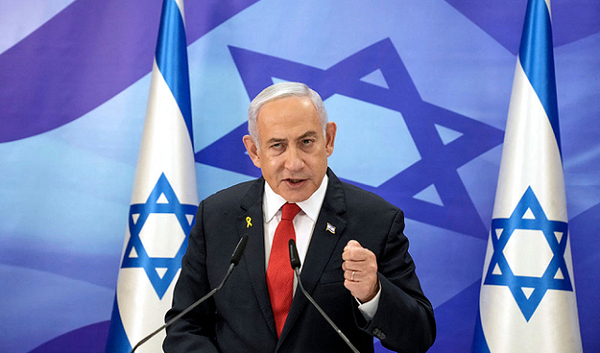
Atallah points out that the British announcement came after a meeting between the British Prime Minister and US President Donald Trump, who acknowledged a "passing discussion" on the issue. However, London later rushed to hold an official government meeting followed by an announcement of its intention to recognize Israel, indicating that Britain is taking a measured stance, not merely a casual reaction.

Atallah believes this move represents a testament to Britain's internationally recognized political acumen, and aims to hold Israel responsible for future political outcomes by imposing conditions "unacceptable to Israel," in an attempt to put the ball in Tel Aviv's court.

Atallah believes that this British approach is not merely a symbolic stance, but rather the result of mounting domestic pressure within Britain, including letters from members of the House of Commons, the Foreign Secretary's push in this direction, and the escalation of popular support for Palestine since the outbreak of the recent war on Gaza.

Correcting "historical injustice"

Atallah asserts that one of the key factors driving Britain to accelerate this trend is the intention of former Labour Party leader Jeremy Corbyn to establish a new political party with the Palestinian cause as its primary focus. This has raised concerns among the Labour Party, given the willingness of some 40 MPs from the party to join Corbyn.

Atallah explains that Britain's move represents a major political shift, given that it was the author of the Balfour Declaration. However, today it may be on the cusp of correcting this "historical injustice" against the Palestinian people.

Atallah asserts that Britain's international influence and standing in Europe and the Commonwealth make its expected recognition of the State of Palestine significant and may encourage other countries to take similar steps.

A "political maneuver" aimed at pressuring Israel

For his part, Dr. Qusay Hamed, a professor of political science at Al-Quds Open University, describes Britain's announcement of its intention to recognize a Palestinian state as a "political maneuver" aimed at pressuring Israel to change its behavior in the Gaza Strip and the West Bank, which has become an embarrassment to the governments that support it in front of their own people.

Hamed points out that this move represents a departure from the traditional pattern of British policy toward the Palestinian issue, which has historically been characterized by unlimited support for Israel, beginning with the Balfour Declaration, followed by continued military and political support, and ending with the refusal to grant the Palestinians observer status at the United Nations.

Hamed explains that today's announcement of Britain's intention to recognize Israel does not represent a fundamental shift, but rather comes within the framework of a British attempt to warn Israel of the damage being done to its image in the eyes of international public opinion, which has come to view it as a state ruled by extremists and practicing genocide, starvation, and displacement in the Gaza Strip and the West Bank.

Hamed asserts that this shift in international perception is forcing Western governments, including Britain, to reconsider their positions, under the weight of growing popular pressure within them.

Hamed explains that Britain's intentions to recognize a Palestinian state are cloaked in a threatening message to Israeli leaders demanding they change their behavior in the Gaza Strip and halt the war and starvation. This means that if Israel changes its behavior, Britain will back down, raising questions about Britain's seriousness in taking concrete steps to change its historical policies.

"The anticipated recognition is not a complete U-turn," Hamed says. "It is an attempt to evade international public opinion and ease popular pressure within Britain."

Recognition must be accompanied by diplomatic and legal transformations.

However, Hamed expects this announcement to encourage other countries to recognize the Palestinian state, which will further isolate Israel internationally, especially in light of the far-right government's policies seeking to abolish the Palestinian political entity in the West Bank and Gaza Strip.

Hamed points out that this move, while a political maneuver, represents a political milestone in Britain's implicit recognition of its historical responsibility for the Palestinian people's plight and its significant role in the establishment of Israel.

Hamed believes that such recognition, if implemented, must be accompanied by diplomatic and legal changes, including upgrading Palestinian representation in Britain to an embassy and opening the door to more formal relations between the two sides.

Hamed asserts that Britain's intention to recognize the State of Palestine should not be understood as a genuine shift unless it is followed by practical steps, such as halting military and political support for Israel, supporting Palestinian diplomatic efforts in international forums, and imposing sanctions on the occupation.

Hamed believes that Britain is trying to redirect the international compass toward a two-state solution, albeit within a pressuring political context rather than out of a sense of historical justice.

Hamed asserts that the fundamental questions remain open: "Will Britain prove its seriousness in the future? And will this be embodied in practical policies that reflect a real change in its position on the Palestinian issue?"

Britain takes an important step, but it is not enough.

For his part, writer and political analyst Samer Anabtawi believes that British Prime Minister Keir Starmer's announcement of his intention to recognize the State of Palestine is a significant step forward, but one that remains tied to political conditions that prevent its actual implementation.

Anbatawi points out that this position followed a similar statement by French President Emmanuel Macron, who announced his intention to recognize Palestine next September. However, London linked the move to an end to the war and famine in Gaza and a return to the political track of the two-state solution.

Anbatawi asserts that the British position represents a form of political balancing act between pressure from the British public, which strongly supports Palestine, and internal parliamentary pressure from ministers and MPs demanding a decisive stance, along with Britain's concern not to cross any red lines in its relationship with Israel.

Anbatawi points out that British Foreign Secretary David Lammy appeared to be more progressive than the Prime Minister in his position, speaking openly about the historical responsibility Britain bears toward the Palestinian people, as the author of the Balfour Declaration and the Mandate Authority, and as the pavement for the establishment of Israel.

Anabtawi believes that the recent meeting between Starmer and US President Donald Trump reflects a clear divergence in orientations. Starmer did not include the issue of recognition in the meeting, while Trump declared that the project was purely British-European, indicating a European attempt to move away from the traditional US policy biased toward Israel.

Anabtawi emphasizes that the anticipated British recognition must be preceded by a clear and decisive stance, including halting arms exports to Israel, threatening economic sanctions, and an explicit demand to halt annexation efforts, whether declared or implemented through settlements and geographic and demographic changes in the West Bank.

Anbatawi believes the British move stems from broad international momentum, pointing to the participation of 143 countries in the recent New York conference calling for a two-state solution, in addition to the growing isolation of Israel and US policy due to the steadfastness of the Palestinian people and the exposure of the occupation's crimes.

Anabtawi asserts that Britain is taking an important step, but it is insufficient. He calls for supportive Palestinian, Arab, and international positions so that these intentions can be transformed into concrete actions that end the Palestinian people's tragedy and enshrine their right to self-determination.

British Declaration in Parallel with the New York Conference

Political science professor Dr. Amjad Bashkar believes that Britain's announcement of its intention to recognize the State of Palestine, in conjunction with the recent French-sponsored New York conference, represents a significant political development, the most significant since 136 countries recognized Palestine at the United Nations in 2012. However, at the same time, it is "politically conditional" and falls within the framework of political blackmail that empties the recognition of its meaning.

Bashkar asserts that what distinguishes this development is that it came from two permanent members of the Security Council: France, which sponsored the New York Conference, and Britain, which announced its intention to recognize Palestine on the condition that Israel's behavior in the West Bank and Gaza changes, particularly with regard to annexation and crimes committed against civilians.

"This British announcement carries deep symbolic significance, given the historical background of British responsibility for the Palestinian Nakba, dating back to the Balfour Declaration in 1917," Bashkar says. "It comes as a surprise, coming from a country that has traditionally been one of Israel's most vocal supporters."

Bashkar points out that Britain typically follows the American path in foreign policy, making this move a partial departure from that pattern.

Bashkar explains that there are three factors behind the British decision: first, internal pressure from parliament, where 255 MPs called on the prime minister to recognize the Palestinian state; second, the ongoing popular movement, which has included massive weekly demonstrations since the start of the war on Gaza; and third, the horrific scenes emerging from the Strip, particularly in recent weeks, of mass starvation and Israeli statements openly calling for depriving Gaza of food as a means of the Israeli government's survival.

Conditional British recognition!

In this context, Bashkar warns that British recognition does not necessarily mean justice for the Palestinians, as it is tied to political conditions such as a ceasefire, rejection of annexation, and the provision of aid. This means transforming the "intention to recognize" into a tool of political pressure and blackmail, as if the Palestinian must prove his "eligibility" for freedom, while the occupier is granted complete immunity.

Bashkar considers the French position to be no less dangerous, as it stipulated that the Palestinian state be demilitarized and that it recognize Israel "fully," without specifying the nature of this recognition, while also assigning it regional security roles.

Bashkar warns that Israel may move toward dismantling the Palestinian Authority as a strategic option to obstruct any international recognition of it, as the only entity capable of representing Palestinians legally and internationally, at a time when Israel is seeking to separate Palestinians from their political and national entity.

Political blindness and selling illusions to the Palestinians

For his part, writer and political analyst Adnan Al-Sabah believes that the positions of Britain, France, and some European countries regarding recognition of a Palestinian state amount to nothing more than "a genuine political deception" aimed at giving Palestinians illusions far removed from reality, without any real commitment or will to change the facts on the ground.

Al-Sabah explains that these positions are part of a broader effort to distract Palestinians with repeated promises, unrelated to concrete steps. He points out that talk of a "Palestinian state" has been a slogan used for decades by US presidents, from Bill Clinton to George Bush and then Joe Biden, without ever being translated into practical reality.

"Everyone talks about the state, but no one defines its location, its borders, or even the mechanisms for establishing it," Al-Sabah says. "Everything that is said is merely illusory admissions that do not reflect any real intention to realize this right."

Al-Sabah believes that the positions of some European countries, such as Britain and France, and what Germany is trying to push for, are a waste of the truth and a departure from the essence of the issue, noting that the British Foreign Secretary's recent statement reflected a profound awareness of the magnitude of the tragedy.

Why haven't you moved since 1948?

But Al-Sabah asks: "If you realize all this now, why haven't you acted since 1948? And where have you been regarding UN Resolutions 181 and 194 throughout these decades?"

Al-Sabah asserts that the international community only implemented the part of Partition Resolution 181 pertaining to the establishment of a Jewish state, while ignoring the Palestinian entity and the international entity (Jerusalem). He asserts that these three entities, defined by the resolution as a Palestinian entity, a Jewish entity, and an international entity, were unified economic entities, without dividing borders. Al-Sabah points out that the basic condition of the Balfour Declaration, which was not to harm the civil and political rights of the indigenous people of Palestine, was completely ignored.

Al-Sabah emphasizes that recognition of a Palestinian state must be based on clear legal foundations, based on international legitimacy resolutions, and not on a selective vision that ignores binding historical decisions.

Al-Sabah says: "It is a shame that these decisions remain suspended, while they are being discussed again today in a weak and postponed manner, instead of being implemented as is."

Al-Sabah affirmed that the only possible and just solution is the implementation of Resolutions 181 and 194, emphasizing that the Palestinian leadership and people must not accept any other alternatives and must firmly adhere to these resolutions as the basis for any future political solution.

Powered by Froala Editor

PALESTINE

Thu 31 Jul 2025 8:23 am - Jerusalem Time

The state is at the end of the road to Calvary!

Despite the clouds of smoke that cloud the horizon, there is a light that flickers among those clouds rushing in like pieces of night, giving hope for the inevitability of the victory of blood over the sword, and for the values of truth, justice, and freedom over the evil tendencies that dominate the leaders of the extreme right as they gang up on the land and the people, like a herd of monsters rushing with all the weapons of destruction they possess, throwing them at the women and children in the tin houses and tents, and continuing to kill, destroy, and starve them until the bone comes out of the flesh.

The free association of countries determined to join the ranks of those recognizing the State of Palestine in September reinforces hope and certainty. The world can no longer tolerate scenes of genocide broadcast live. Protests have escalated in more than one Western capital, generating pressure on authorities and ruling parties, forcing them to adopt unexpected geopolitical positions amidst Israeli obfuscation, deception, and misinformation, which have reached the point of famine denial. Had these positions stemmed from an awakening conscience, it would have been sufficient for their consciences to awaken from their slumber in the first weeks or months of the Holocaust, not nearly two years after the horrific genocide.

The stances of Western countries do not stem from a reawakening of conscience, but rather are a response to the throats wounded by cries of freedom for Palestine in the squares of Western capitals. These voices have continued to resound with the truth despite their demonization and the attack on their anti-Semitism for the sake of the rogue state, which has obtained a free license from the leaders of those countries to continue the genocide, as the British newspaper The Guardian revealed yesterday.

The story began with pressure from MPs on governments, under the influence of their constituents. This was the case in Britain, when 250 MPs from the ruling party took action, demanding a different stance in the face of horrific scenes of starvation, the brutality of which no one could defend.

If Western countries offered Israel a gift, in the form of a rogue state carved out of our land, after World War II, as atonement for its involvement in the Nazi Holocaust, then today those same countries find themselves forced, under pressure from their peoples, and as atonement for their involvement in the genocide, to grant the Palestinian people the state they deserve at the end of a similar holocaust, which those countries had the upper hand in igniting and prolonging.

There is a state coming, inevitably, even if the journey is long at the end of the road to Calvary.


PALESTINE

Thu 31 Jul 2025 8:17 am - Jerusalem Time

A man was killed by Israeli occupation forces during a settler attack in Ramallah.

A young man was shot dead by the Israeli occupation forces at dawn on Thursday in the town of Silwad, east of Ramallah.

Local sources reported that settlers attacked Silwad at dawn today, setting fire to several vehicles and homes, under the protection of the occupation army, which raided the town and fired live ammunition.

The sources indicated that the young man, Khamis Abdul Latif Ayyad, died of suffocation while trying to extinguish fires set by settlers in citizens' vehicles.

Settlers also attacked the villages of Rammun and Abu Falah, setting fire to a number of vehicles and citizens' homes.

Powered by Froala Editor

ARAB AND WORLD

Wed 30 Jul 2025 9:17 pm - Jerusalem Time

The Israeli cabinet meets today, and an expected visit by Witkov may include Gaza.

Israeli media reported that US envoy Steven Witkoff may travel to Israel on Wednesday to hold discussions on the situation in Gaza, coinciding with a meeting of the Israeli security cabinet, while Mossad chief David Barnea visits Washington for talks.

Barak Ravid, a correspondent for the Israeli Walla news site, and the American Axios news site, quoted two informed sources as saying that Witkoff is heading to Israel today "to discuss the humanitarian crisis in the Gaza Strip."

He added that he might also travel to Gaza to visit food distribution centers run by the Gaza Humanitarian Foundation, an entity linked to the killing of more than 1,000 Palestinians and the wounding of thousands more by Israeli military fire. Since late May, the foundation has spearheaded a US-Israeli project to control aid distribution, which the United Nations and numerous international organizations have rejected, describing it as a death trap and a tool for displacing and humiliating Palestinians.

Meanwhile, Israel's Channel 12 reported that the security cabinet's inner body will hold an "important meeting" this evening, without providing details.


These developments come after US President Donald Trump, in a series of statements in recent days, acknowledged that the situation in Gaza is "horrible," asserting that "children are starving," and pledging to deliver aid to the Strip. However, he also indicated that Israeli Prime Minister Benjamin Netanyahu—who is wanted by the International Criminal Court on war crimes charges—wants to oversee food distribution centers.

Axios quoted a US official as saying, "Trump wants to review the humanitarian situation in Gaza to determine how to deliver more aid."

The starvation of Palestinians in Gaza, due to the Israeli blockade and US-backed war of extermination, has recently reached unprecedented levels, according to local and international reports. Deaths from malnutrition and dehydration have increased, with the total number of martyrs reaching 154, including 89 children, according to the Ministry of Health in the Strip.

Meanwhile, Yedioth Ahronoth newspaper quoted sources as saying that the head of Israel's Mossad foreign intelligence agency, David Barnea, is currently visiting Washington for talks.

Since October 2023, the Israeli occupation army—with American support—has waged a war of extermination against the population of the Gaza Strip. This war has so far resulted in the martyrdom of more than 60,000 Palestinians, the injury of more than 146,000, and the displacement of nearly the entire population of the Strip, amidst destruction unprecedented since World War II, according to Palestinian and international reports.


ARAB AND WORLD

Wed 30 Jul 2025 8:10 pm - Jerusalem Time

White House envoy heads to Israel as Gaza crisis escalates

Two US officials familiar with the matter said that White House envoy Steve Witkoff will travel to Israel, his first visit to the region in nearly six months, according to the American website Axios.

This visit comes at a critical time, as Gaza remains mired in a worsening humanitarian catastrophe, and negotiations for a ceasefire and the release of detainees remain stalled.

Witkoff's visit may also include a visit to Gaza, where he is expected to assess operations at aid distribution centers run by the Gaza Humanitarian Foundation (GHF), an Israeli-American organization, according to a US official.

Witkoff was expected to travel to the Middle East last week amid prisoner talks in Doha, but canceled that leg of his trip as negotiations stalled following the sudden withdrawal of Israel and the United States from the talks.

Hamas has repeatedly expressed its willingness to release all remaining Israeli prisoners in exchange for an end to Israel's war and a full withdrawal of Israeli forces from Gaza. Israel estimates that approximately 50 detainees remain in the Strip, nearly half of whom have died.

Israel has killed more than 60,000 Palestinians, most of them women and children, in the Gaza Strip since October 7, 2023.

Last November, the International Criminal Court issued arrest warrants for Israeli Prime Minister Benjamin Netanyahu and his former Defense Minister Yoav Gallant on charges of war crimes and crimes against humanity in Gaza.

Israel also faces a genocide lawsuit at the International Court of Justice over its war on the Gaza Strip.

Powered by Froala Editor

PALESTINE

Wed 30 Jul 2025 7:45 pm - Jerusalem Time

The work of the United Nations conference on settling the Palestinian issue and implementing the two-state solution continues.

The plenary session of the high-level international conference on the peaceful settlement of the Palestinian issue and the implementation of the two-state solution continued this Wednesday evening in the United Nations General Assembly Hall in New York, co-chaired by the Kingdom of Saudi Arabia and France.

Malta's representative: We will recognize the State of Palestine next September.

The representative of Malta noted that his country has consistently supported the inalienable right of the Palestinian people to self-determination.

"For this reason, the Government of Malta has taken a preliminary decision to formally recognize the State of Palestine during the next session of the United Nations General Assembly in September," he said.

He explained that this decision reflects Malta's commitment to international law, justice, and the right of peoples to self-determination.

He added, "We believe that recognition is not just a symbolic measure — it is a concrete step toward achieving a just and lasting peace."

“Such concrete steps are necessary if we are to be true to the spirit of what we are calling for,” he stressed.

Vatican representative affirms Holy See's support for two-state solution

"Jerusalem is a city of universal religious and cultural significance," said Archbishop Gabriele Caccia, the Vatican's permanent observer to the United Nations. He added that it is "holy to Christians, Jews, and Muslims alike." Therefore, he emphasized, "it requires a status that transcends political divisions and ensures the preservation of its unique identity."

In this context, he called for a "special regime with international guarantees" capable of preserving the dignity and rights of all residents of Jerusalem and "believers of the three monotheistic religions," as well as protecting the city's "sacred character and exceptional religious and cultural heritage."

He also expressed his support for the two-state solution, noting that the Holy See recognized the State of Israel in 1993 and the State of Palestine in 2015.

Malaysia calls for halting arms and ammunition supplies to Israel

The Malaysian representative called for "a halt to the supply of weapons, ammunition, and equipment to Israel that enable it to expand and deepen its occupation."

In this context, he noted that his country has banned ships flying the Israeli flag, as well as ships bound for Israel, from docking in Malaysian ports.

"This is another concrete step that all countries can take," he added.

He also stressed that the international community must "unequivocally reject Israel's attempts to undermine the United Nations," including by countering its actions aimed at discrediting, intimidating, and undermining the credibility of UN officials.

He also called for defending and supporting the United Nations Relief and Works Agency for Palestine Refugees (UNRWA).

He added that Israel must be forced to allow unimpeded access to humanitarian aid, stressing, "We condemn the deadly trap called the Gaza Humanitarian Facility, which has caused the deaths of nearly 1,000 Palestinians while seeking food aid."

Belize Representative: Recognizing the State of Palestine is a crucial and necessary step

“While recognizing the State of Palestine is crucial and a necessary step forward, it is only the beginning,” said the representative of Belize.

He stressed that the international community must provide "all possible support" to establish and strengthen Palestinian institutions to enable them to "govern and administer a modern, democratic state living side by side with Israel within secure and recognized borders."

At the same time, he stressed the need for the international community to address the worsening humanitarian catastrophe in Gaza "directly." It must ensure the unimpeded flow of aid and provide Palestine with the financial, material, and technical assistance necessary to support reconstruction efforts.

However, he pointed out that achieving all of this requires a real political process.

"Israel must come to the negotiating table," he said, adding, "Confidence in the region must be restored, but first the violence must stop."

Kenyan representative calls for immediate ceasefire

The Kenyan representative expressed concern that "the absence of decisive and coordinated action," coupled with "hardened positions that perpetuate the status quo as unchangeable," would lead to "prolonged humanitarian suffering and strategic disintegration."

"This conference represents one of the few remaining opportunities to transform consensus into concrete and irreversible steps," he said.

He called for an "immediate ceasefire" in the Gaza Strip and ensuring "the unhindered provision of humanitarian aid."

He also urged the establishment of strong, jointly monitored security arrangements to protect civilians on both sides, "linked to criteria that reinforce the two-state solution roadmap."

He proposed the establishment of a multinational oversight body to monitor compliance, deter, and report transparently to the international community.

He concluded by saying: “The world is watching, and by adhering to three basic pillars — politics, economics, and security — we can establish lasting peace.”

The conference, which concludes today, Wednesday, is being attended by a large number of UN member states, international and regional organizations, specialized UN bodies, and civil society organizations. The State of Palestine will be represented by Prime Minister Mohammad Mustafa.

The New York Declaration, issued by the conference, affirmed the agreement to take concrete, time-bound steps towards a peaceful settlement of the Palestinian issue and the implementation of the two-state solution.

He stressed the need for collective action to end the war in Gaza, ensure Israel's withdrawal from the Gaza Strip, and hand it over to the Palestinian Authority "in accordance with the principle of one government, one law, one weapon."

He stressed that war, occupation, and forced displacement will not achieve peace or security, and that only a political solution can achieve that. He emphasized that ending the Palestinian-Israeli conflict and implementing the two-state solution is the only way to fulfill legitimate aspirations, in accordance with international law.

The New York Declaration emphasized that Gaza is an integral part of the Palestinian state and must be unified with the West Bank. It also emphasized that, following a ceasefire, a transitional administrative committee must be established immediately to operate in Gaza under the umbrella of the Palestinian National Authority.

The declaration affirmed its commitment to mobilizing political and financial support for the Palestinian Authority to help it strengthen its institutional capacities, implement its reform program, and assume its responsibilities throughout the occupied Palestinian territories. It also emphasized the need for the immediate release of withheld Palestinian tax revenues and the establishment of a new framework for the transfer of clearance revenues, leading to full Palestinian control over the tax system, as well as the full integration of Palestine into the international monetary and financial system and ensuring sustainable, long-term banking relations.

He called for preserving the legal and historical status quo at Islamic and Christian holy sites in Jerusalem, and for a commitment to adopting restrictive measures against violent extremist settlers and entities and individuals who support illegal settlements, in accordance with international law.

He called on Israel to issue a clear and public commitment to the two-state solution, including a sovereign and viable Palestinian state, to immediately end violence and incitement against Palestinians, to cease all settlement activities, land seizures, and annexation actions in the occupied Palestinian territories, including East Jerusalem, to publicly abandon any annexation projects or settlement policies, and to put an end to settler violence.

The New York Declaration affirmed that coexistence and normal relations between the peoples and countries of the region can only be achieved by ending the occupation and establishing a sovereign Palestinian state.

Powered by Froala Editor

PALESTINE

Wed 30 Jul 2025 7:35 pm - Jerusalem Time

Netanyahu calls for sending more aid to Gaza

Israeli Prime Minister Benjamin Netanyahu's office called on Wednesday for more aid to be sent to the Gaza Strip.


In a tweet on his official X account, Netanyahu's office said: "Hamas stole food from its own people. Israel took action. We airdropped aid to civilians in Gaza, and we invited other countries to join us." He added: "Some have already done so. We provided the air, secured the airdrops, and made sure the food arrived." He continued: "Any country that truly wants to help is welcome to join us."


PALESTINE

Wed 30 Jul 2025 6:06 pm - Jerusalem Time

Gaza Health: The death toll from the Israeli massacre has risen to 60,138.

The Ministry of Health in the Gaza Strip announced on Wednesday that the death toll from the ongoing Israeli genocide since October 7, 2023, has risen to 60,138 dead and 146,269 wounded.

This came in the Ministry's daily statistical report on the number of Palestinian martyrs and wounded as a result of the Israeli genocide.

The ministry said: "104 dead, including one who was recovered, and 399 injured people arrived at Gaza hospitals over the past 24 hours."

She added, "The death toll from the Israeli aggression has risen to 60,138 dead and 146,269 injuries since October 7, 2023."

The ministry explained that the death toll from Palestinian casualties since Israel resumed its genocide on March 18 has reached approximately "8,970 dead and 34,228 injuries."

Regarding the victims of starving Palestinians, the ministry stated that the death toll among those awaiting aid since May 27 has reached "1,239 dead and more than 8,152 injured."

It noted that hospitals in the Gaza Strip had received "60 martyrs and more than 195 wounded" among those waiting for aid over the past 24 hours.

On a daily basis, the Israeli army fires on Palestinians queuing near aid distribution centers, leaving them between starvation and being shot, according to the government media office in Gaza.

Since October 7, 2023, Israel, with US support, has been committing genocide in Gaza, including killing, starvation, destruction, and forced displacement, ignoring all international appeals and orders from the International Court of Justice to halt it.

In addition to the dead and wounded, most of whom were children and women, the genocide left more than 9,000 missing, hundreds of thousands displaced, and a famine that claimed the lives of many, including dozens of children.


PALESTINE

Wed 30 Jul 2025 5:54 pm - Jerusalem Time

Haaretz: The starvation policy is collapsing, and Netanyahu is yielding to American and international pressure.

Haaretz reported that images of Israel's starvation campaign in the Gaza Strip, which reached US President Donald Trump via Fox News, forced Israeli Prime Minister Benjamin Netanyahu to reverse the policy his government had pursued over the past several months.

In an article on Israel's current situation, the newspaper's prominent military analyst, Amos Harel, said that Netanyahu has succumbed to American and international pressure, most notably from President Trump, who can no longer ignore the images of starving children, leading to a sharp shift in Israeli policy toward the Gaza Strip.

He pointed out that the government, which until recently insisted on maintaining complete control over aid and preventing its entry except through military distribution centers under its supervision, was recently forced to open humanitarian corridors, allow airdrops of aid, and begin coordinating with international organizations such as the United Nations and the Jordanian and Egyptian Red Crescents.

Harel asserts that this shift in Israel's position, even if tactical, reflects a disastrous failure in the policy Israel has been promoting over the past months as a means of pressuring Hamas. However, the policy has ended in a humanitarian catastrophe that has shaken Israel's image globally and prompted even its closest allies to take action.

In an attempt to explain the US president's position, which has remained aligned with Israeli policies, Harel says, "In recent days, Trump has seemed confused and incoherent in his stance on the war on Gaza. At one point, he threatens Hamas, saying its leaders 'want death,' and at another, he demands that Netanyahu stop the humanitarian catastrophe in the Strip. However, he can no longer ignore the horrific images of starving children in Gaza."

"Although Trump is known for his impatience with intelligence reports, he is deeply influenced by what is shown on his favorite network, Fox News," he says. "When the network broadcast gruesome images from Gaza, he began to intervene directly, sending messages to Netanyahu demanding urgent action."

contradictory statements

The military analyst believes that Netanyahu believed, after the Knesset's summer session ended, that he was safe from internal pressures and that his government had secured its survival at least until the end of October. However, developments in the Gaza Strip, particularly the famine that had begun to take on a catastrophic character, turned the tables on him.

He explains that Netanyahu makes many contradictory statements to various parties. He reassured extremist Finance Minister Bezalel Smotrich, who had threatened to withdraw from the coalition in protest over Israeli facilitation of aid deliveries to Gaza, that military victory was imminent. At the same time, he gave the families of the captives limited hope of a deal that would include the release of half of the living hostages (at least 10) and some of the bodies (approximately 15).

Harel highlights the contradiction in Netanyahu's promises to his far-right partners that these concessions are temporary, and that he will soon, after "appeasing Trump," return to launching a decisive attack on Hamas. He asks, "Is it possible for Israel to flood Gaza with aid on the one hand while planning a military offensive on the other?"

Harel points out that this contradiction reflects the fragility of the Israeli position, as the government continues to act as if it controls the course of events, while regional and international realities force it to take hasty steps.

He also points to the diplomatic collapse Israel is facing after Britain and France announced their intention to recognize a Palestinian state at the UN General Assembly meeting next September. He considers this a qualitative shift in Western positions due to the Israeli government's disregard for months of international warnings of an impending famine, a claim even confirmed by some retired generals and government ministers.

Has Israeli policy changed?

The military analyst attempts to analyze the Israeli government's current situation, discussing the position of the Israeli Chief of Staff, Eyal Zamir, who says he supports the prisoner exchange deal and believes the army is capable of containing the threat emanating from Gaza without completely crushing Hamas.

Harel points out that some within the army leadership believe that the experience of southern Lebanon with Hezbollah—which remains stronger than Hamas despite its recent defeat—can be replicated in Gaza: a military presence, with targeted attacks, without full control of the Strip.

If the army's vision is not taken into account, according to Harel, Zamir prefers to pursue a strategy of attrition to besiege a quarter of the Gaza Strip, where Hamas's remaining power is concentrated. Harel also cites a deliberate leak earlier this month about the army's intention to call up reserve fighters for 74 days, as a sign of the high human cost of any comprehensive ground invasion of Gaza.

Harel, on the other hand, highlights the contradictions within this government, which are deepening its crisis. Far-right parties within the government, such as those led by Smotrich and Itamar Ben-Gvir, continue to adjust the war's objectives and timing to serve long-term agendas. He comments, "They came to displace and settle, and they will stay for the eternal war."

He believes that the war on Gaza has become a cover for annexation policies in the West Bank and the relaunch of plans for a judicial coup.


ARAB AND WORLD

Wed 30 Jul 2025 4:42 pm - Jerusalem Time

Smotrich: Israel will continue its occupation of the five hills in southern Lebanon.

Israeli Finance Minister Bezalel Smotrich said on Wednesday that the Israeli occupation army intends to continue its occupation of the five hills in southern Lebanon, stressing that it "will not withdraw from them."

This came in Smotrich's statements during the "Strengthening the North" conference, held with the participation of Israeli civil society organizations in the settlement of Kiryat Shmona (north), according to what was reported by Channel 7.

Smotrich added that "the Israeli army will not withdraw from the five points it is present in Lebanese territory," referring to the disputed areas that have witnessed repeated tensions and military operations in recent months.

The five hills occupied by the Israeli army in its last war are: Al-Hamames, Al-Awida, Jabal Balat, Al-Labouneh, and Al-Aziziya.

The Israeli Finance Minister claimed that "the agreement with Lebanon gave Israel full legitimacy to weaken Hezbollah and effectively prevent it from rehabilitating itself on the border."

The Israeli minister claimed that "there is a high probability that Hezbollah's weapons have actually been destroyed, and that (Iranian Supreme Leader Ali) Khamenei has abandoned them and is no longer interested in rehabilitating them," he said.

He stressed that "the villages destroyed by the Israeli army in southern Lebanon will not be included in the reconstruction process."

These statements come amid escalating tensions on the southern front, and repeated Israeli airstrikes targeting civilian areas despite a ceasefire agreement in effect since late 2024.

On October 8, 2023, Israel launched an attack on Lebanon, which escalated into a full-scale war on September 23, 2024, resulting in more than 4,000 deaths and approximately 17,000 injuries.

On November 27, 2024, a ceasefire agreement between Hezbollah and Israel took effect, but Tel Aviv violated it more than 3,000 times, resulting in 259 deaths and 562 injuries, according to official data.

In defiance of the ceasefire agreement, the Israeli army carried out a partial withdrawal from southern Lebanon, while continuing to occupy five Lebanese hills it captured in the last war, in addition to other areas it has occupied for decades.


PALESTINE

Wed 30 Jul 2025 4:09 pm - Jerusalem Time

Bethlehem: Settlers attack citizens' homes in Wadi Abyan, east of Kisan.

Today, Wednesday, settlers attacked homes in the Wadi Abyan area, east of the village of Kisan, southeast of Bethlehem.

According to local sources, a group of settlers attacked the homes of Nassar Rashaida and his sons, stealing their belongings, including solar cells and zinc panels used for covering and protection, before proceeding to destroy and completely destroy the contents of the homes.

Sources indicated that the settlers had threatened the family two days ago with forcible eviction if they did not leave voluntarily, as part of a systematic campaign of intimidation aimed at forcibly displacing the residents from their lands.

Seven Palestinian families, comprising dozens of individuals including women and children, live in the Wadi Ubayyan area. They are frequently subjected to systematic violations and attacks by settlers, aimed at forcibly removing them as part of a broader plan to seize land and expand the surrounding settlements.

He explained that the latest attack comes just days after the displacement of approximately 15 Palestinian families from a nearby area, an escalating move that reflects a systematic policy to empty the area of its original inhabitants.

The sources called on local and international human rights and humanitarian organizations to urgently intervene to protect the population and put an end to the ongoing settler attacks, which are often carried out under the protection of occupation soldiers. They emphasized that the residents' steadfastness and adherence to their lands is the strongest response to attempts at forced displacement.

For months, the Kisan area and its surroundings have witnessed a marked escalation in settler attacks, including the burning of property, roadblocks, assaults on shepherds, and the prevention of residents from accessing their agricultural lands. This has all been met with international silence regarding the daily crimes committed against defenseless Palestinian civilians.

Powered by Froala Editor

Powered by Froala Editor

PALESTINE

Wed 30 Jul 2025 3:06 pm - Jerusalem Time

The World Food Programme warns of a worsening hunger crisis in Gaza.

The World Food Programme has warned of a worsening hunger crisis in the Gaza Strip, noting that one in three people there spends entire days without food, while approximately 75% of the population faces emergency levels of food insecurity.

The program confirmed that approximately 25% of the Gaza Strip's population is suffering from famine-like conditions, calling for immediate action to avert a large-scale humanitarian disaster.

Powered by Froala Editor

PALESTINE

Wed 30 Jul 2025 2:00 pm - Jerusalem Time

Israel threatens to halt airdrops of aid to the Gaza Strip.

Israel has prevented foreign air forces participating in humanitarian aid drops over the Gaza Strip from allowing journalists to document the massive destruction in the territory.

The Hebrew newspaper Haaretz reported on Wednesday that Israel had issued direct warnings to the participating forces, threatening to halt coordination for airdrop operations if any videos or photos showing the extent of the devastation caused by the war in Gaza were published.

These measures come at a time when Israel is facing increasing international criticism over the worsening humanitarian disaster in the Gaza Strip, amid warnings of widespread famine and severe shortages of basic supplies for the civilian population.

Powered by Froala Editor

PALESTINE

Wed 30 Jul 2025 1:12 pm - Jerusalem Time

The death toll from the famine in the Gaza Strip has risen to 154 dead

The Ministry of Health in the Gaza Strip announced on Wednesday that the death toll from famine and malnutrition in the Strip has risen to 154.

The ministry said in a brief statement, "Gaza hospitals recorded seven deaths in the past 24 hours, as a result of famine and malnutrition."


Powered by Froala Editor