PALESTINE

Thu 06 Nov 2025 8:02 am - Jerusalem Time

For the first time in two years.. The occupation allows international journalists a "limited tour" in Gaza under military escort.. Video

NPR correspondent Daniel Estrin revealed his entry into the Gaza Strip during a rare visit accompanied by the occupying army. The significance of this visit, which took place under tight military supervision, lies in its revelation of the "wide extent of destruction" and the actual division of the territory into two halves: an area occupied by the army and an area under Hamas control, amidst uncertainty surrounding the future of the ceasefire.

The visit came nearly a month after the ceasefire, during which the occupation only allows selected journalists to enter Gaza for short visits accompanied by soldiers. As a condition for the visit, the military censorship of the occupation reviewed the raw audio and visual materials (unproduced) belonging to NPR.

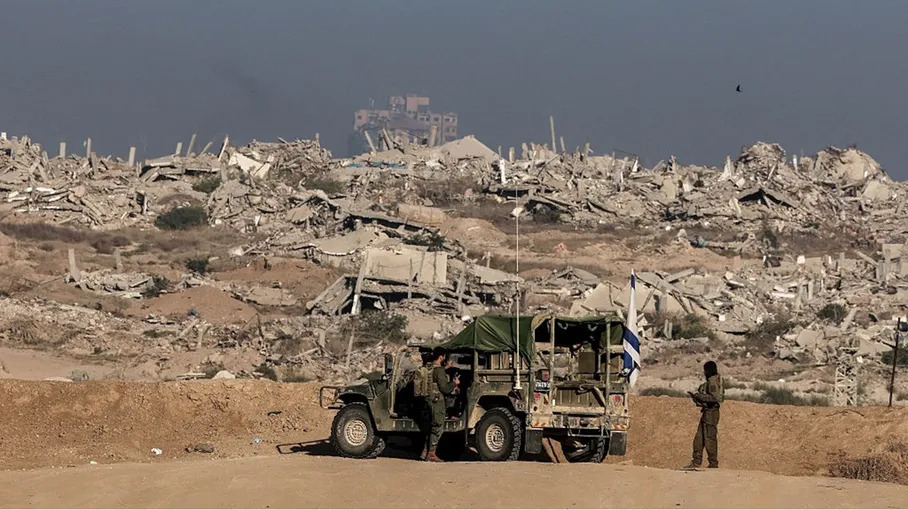
Estrin, who has been accustomed to entering Gaza for reporting for years, described how the features of the old crossing (metal detectors and gates) had disappeared, as he crossed directly through the occupation fence in a military vehicle and, after a few minutes, the delegation arrived at an advanced military point near the "yellow line," the location to which the occupying forces retreated at the start of the ceasefire, preventing Palestinians from returning to it.

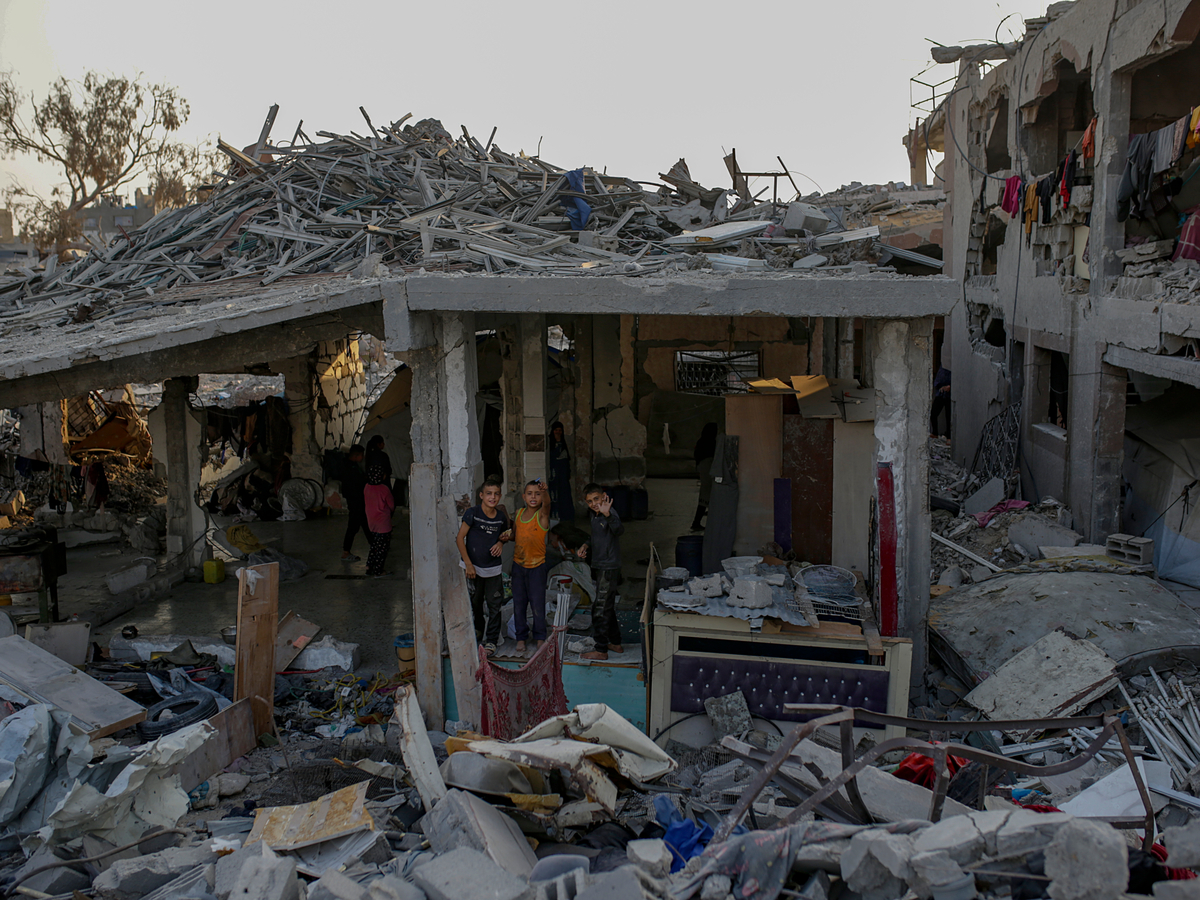
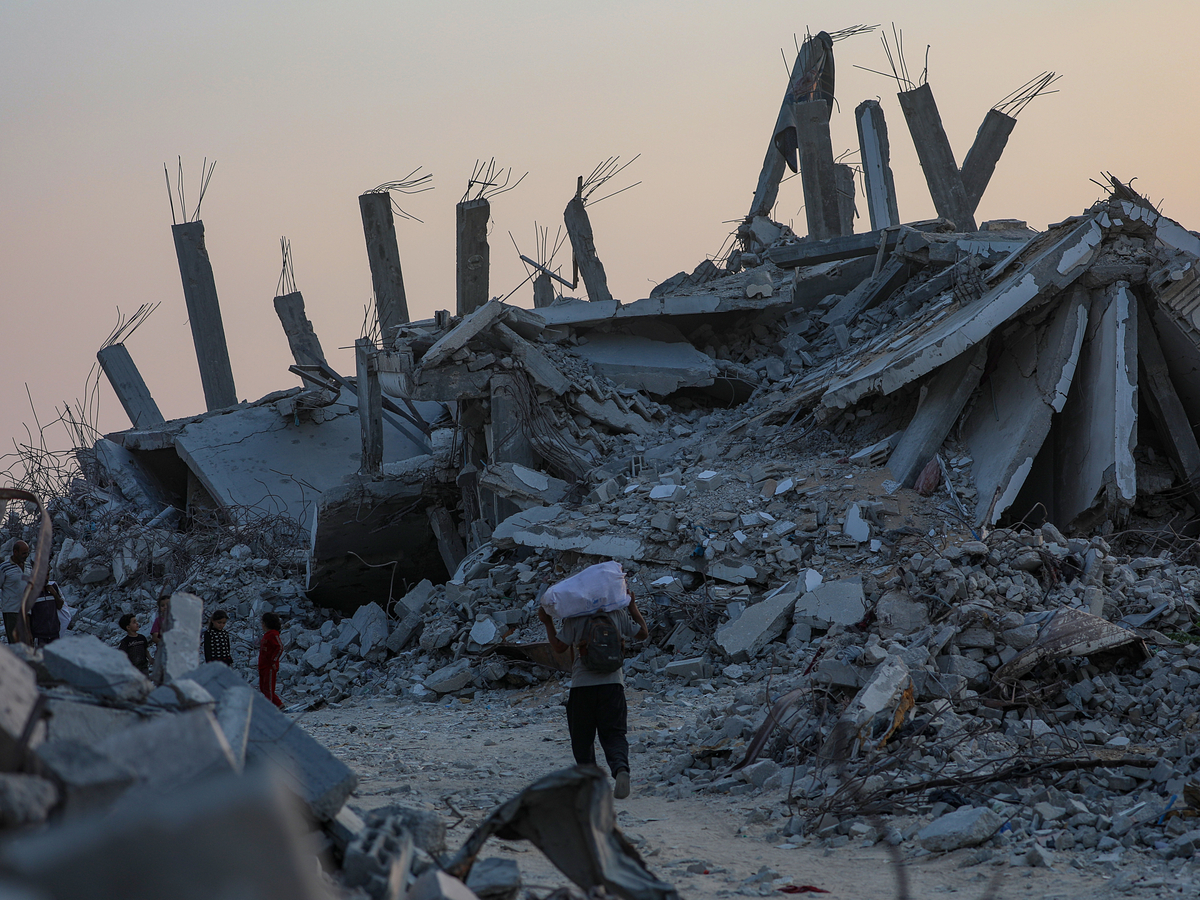
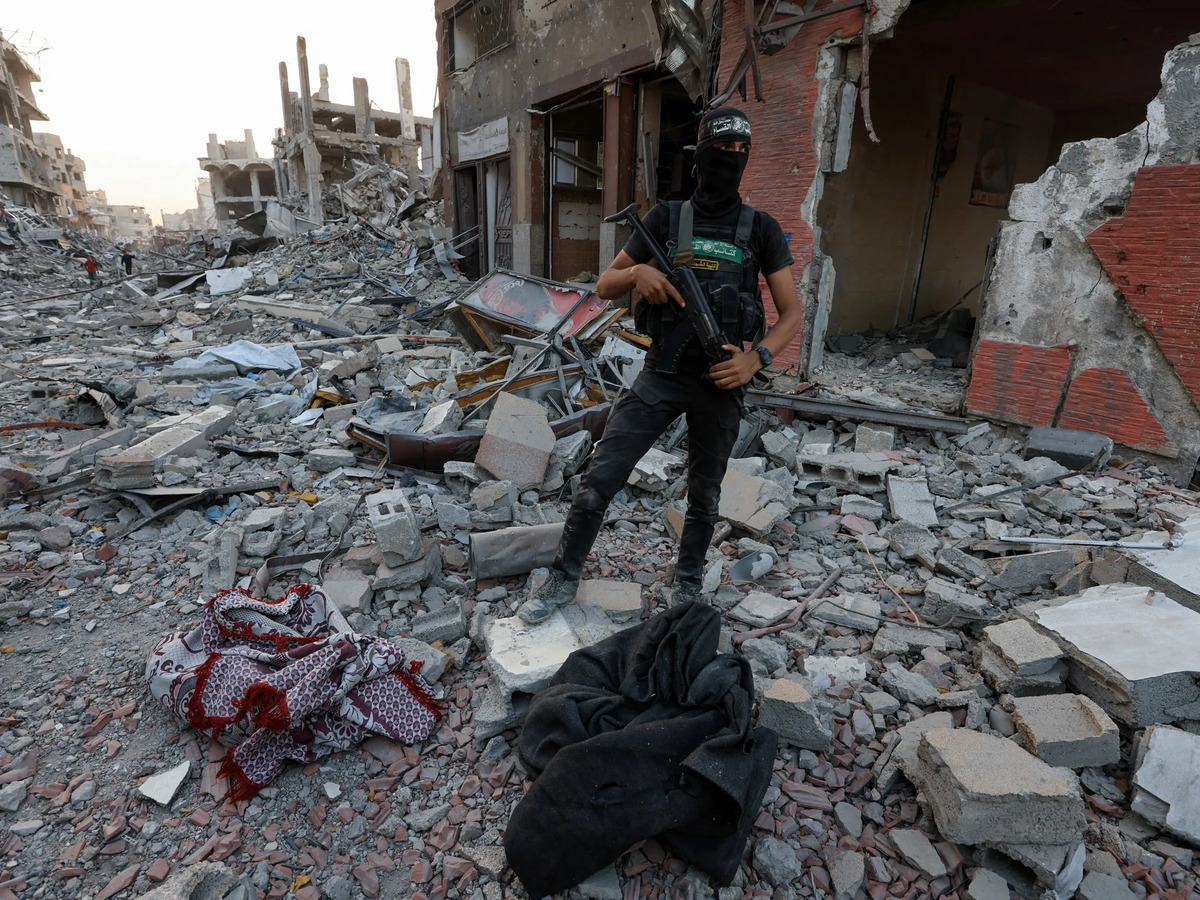
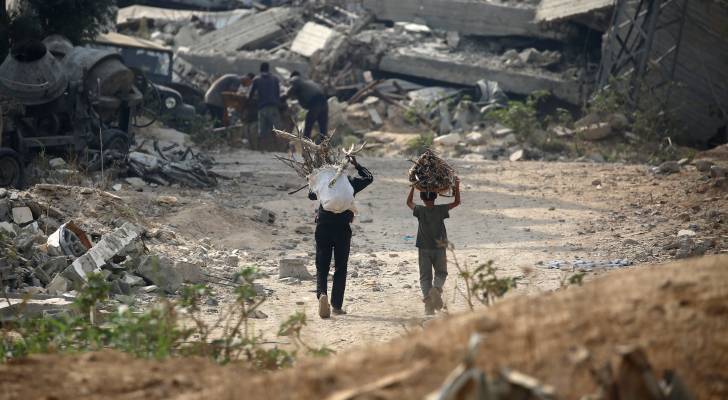
Upon climbing a high dirt mound overlooking the Shuja'iyya neighborhood, the military spokesperson for the occupation, Nadav Shoshani, provided an explanation of the scene. Here, Estrin described his reaction: "Oh my God, oh my God... I feel like my heart is tightening." Estrin described what he saw: "A vast expanse of destruction; I see the tall buildings in Gaza City still standing in the far distance, but around them, piles of concrete, and destroyed schools and homes."

He added: "I can barely see any shrubs or trees, just vast areas of crumbling concrete houses, and concrete beams sticking out of the dirt like long tombstones." The place was enveloped in "complete silence," except for the chatter of the occupying soldiers at the forward base, where Estrin noticed a soldier wearing a shirt that read "Hamas Hunting Club."

Regarding the current situation, Estrin clarified that the occupying forces are still "active" in this half of Gaza (destroying tunnels), and that Hamas is "active too" (reorganizing) in the half designated for Palestinian habitation.

As for the future plan, Estrin reported that spokesperson Shoshani stated that the American plan involves deploying a multinational force and disarming Hamas (after handing over the bodies of the deceased captives), and only then will the occupying army withdraw.

However, Shoshani confirmed: "We would be happy for that to happen immediately... but we are prepared to operate here to protect our civilians as long as that has not happened." In relation to the future trajectory, Estrin questioned whether "this temporary division of Gaza into two parts is the new status quo," likening it to the ongoing occupation of the West Bank for over 50 years.

He noted that Shoshani confirmed the army's readiness to remain "for a long time," citing the strong infrastructure at the base (communication tower, electricity poles, fortified walls). Estrin concluded his report by pointing out the restrictions imposed on the media, stating: "This is the furthest I was allowed to reach; the war is over, but the occupation still does not allow journalists to enter Gaza independently to report directly on how life there has become impossible."

PALESTINE

Wed 05 Nov 2025 11:50 am - Jerusalem Time

Israel imposes conditions that prevent aid from entering Gaza.

Yesterday, Tuesday, Haaretz revealed a new Israeli measure that forced dozens of humanitarian organizations operating in the Gaza Strip and the occupied West Bank to halt their activities.

The newspaper stated that dozens of organizations that had previously received Israeli approval are now being forced to stop their work due to a strict measure, which leaves thousands of tons of food and relief supplies outside Gaza.

It clarified that the measure tightens the conditions for organizations to enter Gaza and the West Bank, requiring them to provide details about their employees and their families, whether they are Palestinians or foreigners.

The new measure was reinstated last March, after the registration of humanitarian organizations was transferred from the Ministry of Welfare to the Ministry of Diaspora, headed by Amichai Shikli (from the Likud party), according to the newspaper.

The role of the Ministry of Diaspora now gives it broad authority to reject organizations' requests.

The newspaper indicated that the ministry has the right to reject an organization if it is found to deny the existence of Israel as a Jewish and democratic state or works to delegitimize Israel, according to its description.

There is an additional reason for rejecting a humanitarian organization's permit, which is its support for "prosecuting Israelis in a foreign country or before an international court," referring to their commission of crimes during the genocide in Gaza.

An organization can also be rejected if one of its employees publicly called for a boycott of Israel during the seven years prior to the registration request, according to the newspaper.

Since the beginning of last September, the Israeli Ministry of Diaspora has announced its rejection of 14 requests out of 100 submitted by organizations, while the remaining requests are still under review.

Some of the organizations that were approved had been working with what was called the Gaza Humanitarian Foundation, an organization established by Israel and the United States last May, which ceased operations last October.

The newspaper stated that without official registration, humanitarian organizations are not allowed to bring food or any aid into Gaza, and their employees cannot obtain entry visas to Israel, which are required to work inside Israel or the occupied West Bank.

The absence of permits also makes it difficult for these organizations to enter or exit Gaza, and they are prohibited from purchasing or transporting equipment through Israel.

Among the organizations that have been waiting for months for an official response are some of the largest institutions in the world, such as Oxfam, Save the Children, and the Norwegian Refugee Council, according to Haaretz.

It added that the organizations doubt their ability to pass the Israeli registration process, as many of them refused to provide lists of their Palestinian and foreign workers' names.

These organizations say that transferring information may violate privacy laws and other laws in their home countries, according to the newspaper.

The newspaper clarified that in recent weeks, Israel has made it more difficult for organizations to bring food and equipment into Gaza through alternative routes.

It also revealed that organizations that did not obtain a permit to bring goods into Gaza resorted to United Nations agencies or other organizations with permits, asking them to bring in the purchased goods, but Israel also prevented this step.

As a result, a large number of equipment and supplies have been stuck in Israel, Jordan, Egypt, and the West Bank, such as beds, tents, plastic coverings, water desalination equipment, insulation materials, winter clothing, personal hygiene supplies, and large quantities of food.

Haaretz quoted the policy director at Oxfam in the Palestinian territories, Bushra Khalidi, stating that this measure is part of a broader Israeli policy that represents collective punishment, making Gaza an unlivable place.

Since the ceasefire agreement came into effect on October 10, according to U.S. President Donald Trump's plan, Israel continues to violate it either by carrying out attacks or preventing the entry of humanitarian aid in the agreed quantities.

According to government statistics, the average number of trucks that have entered since the start of the agreement does not exceed 89 trucks daily out of 600 trucks that are supposed to enter each day to secure the minimum basic needs of the Palestinians.

PALESTINE

Wed 05 Nov 2025 11:47 am - Jerusalem Time

Katz: Our goal is to disarm Hamas and retrieve the bodies... and the army is operating in the "yellow zone" in Gaza.

Israeli Minister of War, Israel Katz, announced today, Wednesday, the field and strategic objectives of the ongoing military operations.

Hebrew media reported Katz saying that "the army is working in Gaza to destroy the tunnels."

He clarified that the forces are focusing on "eliminating Hamas elements in the yellow zone."

Katz then emphasized the ultimate goals of this operation.

PALESTINE

Wed 05 Nov 2025 11:38 am - Jerusalem Time

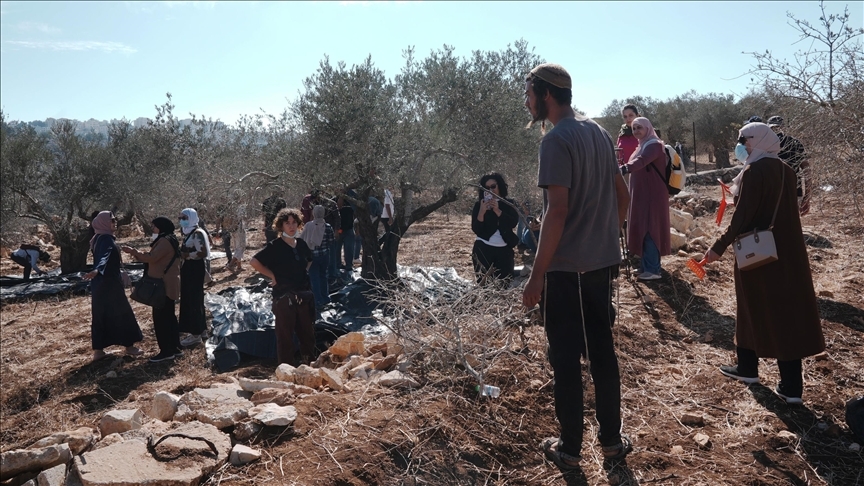
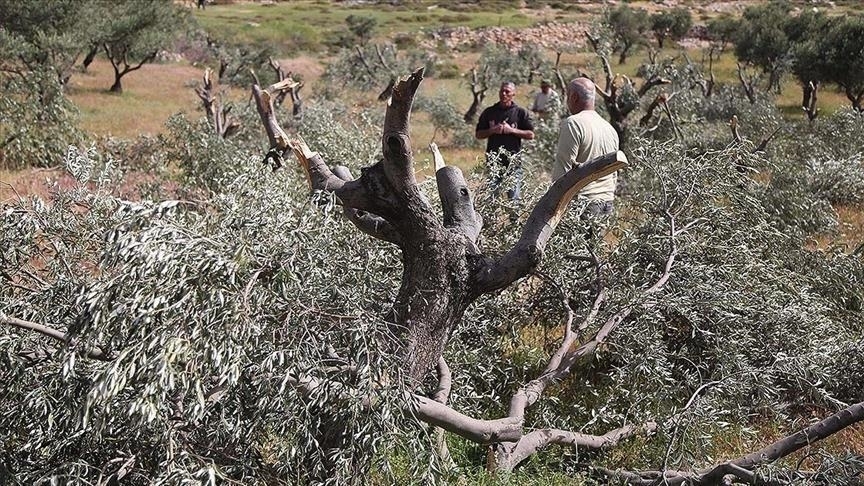
The West Bank.. Israeli settlers uproot and destroy hundreds of trees in Qaryut.

A local Palestinian official stated on Wednesday that Israeli settlers "committed a crime" against the lands of the village of Qaryut in the northern occupied West Bank by uprooting and destroying hundreds of olive trees.

Yousef Sadiq Al-Haj Muhammad, the acting head of the Qaryut local council, reported that Israel allowed Palestinian farmers in the village to access their lands to harvest olives after two years of being denied access.

He confirmed that the Palestinian farmers were surprised to find hundreds of olive trees uprooted and broken. He noted that the relevant authorities coordinated with the Israeli side to allow access to those lands located on the eastern side of the village.

He continued: "We arrived at the site and found hundreds of trees uprooted or cut down in a crime carried out by Israeli settlers."

The same situation was found in the lands on the western side of the village, after they (the owners) were allowed access last Wednesday.

Al-Haj Muhammad mentioned that Israel has prevented the villagers from accessing more than 90 percent of their lands since October 7, 2023.

Activists circulated videos on social media showing the villagers inspecting their agricultural fields in Qaryut, amidst feelings of sorrow due to the destruction that had occurred.

According to data from the Palestinian Wall and Settlement Resistance Commission, the Israeli army and settlers carried out 766 attacks against Palestinians and their properties and sources of livelihood in the West Bank during last October.

The commission added that the attacks ranged "from violent physical assaults, to arrest campaigns, movement restrictions, and intimidation in all its forms, including gunfire."

These attacks fall within a broad wave of Israeli escalation in the West Bank by the army and settlers during the years of genocide in Gaza, resulting in the deaths of 1,065 Palestinians and injuries to about 10,000 others, in addition to the arrest of more than 20,000 Palestinians, including 1,600 children.

PALESTINE

Wed 05 Nov 2025 11:22 am - Jerusalem Time

Airstrikes and the demolition of homes continue as the search for the bodies of the detainees in Gaza

The Israeli army has carried out demolition operations and airstrikes in the southern and central Gaza Strip since dawn on Wednesday, while the search for the bodies of Israeli captives continues amid the obstruction of aid entry.

A correspondent reported that the occupation army executed a massive demolition operation east of the city of Rafah in the southern Gaza Strip and targeted the city with several airstrikes.

In the east of Khan Younis and Gaza City, the correspondent stated that the Israeli army conducted airstrikes, heavy artillery shelling, and demolition operations, also targeting the neighborhoods of Shuja'iyya and Al-Tuffah in eastern Gaza City.

For its part, a website reported that the Israeli army bombed and destroyed buildings east of Khan Younis and launched attacks east of the Al-Bureij camp last night.

In a related context, a correspondent mentioned that a team from the Red Cross and Al-Qassam Brigades headed to the Shuja'iyya neighborhood in eastern Gaza to search for the bodies of Israeli captives, after Israel received the remains of a captive on Tuesday.

Humanitarianly, Haaretz newspaper revealed new Israeli measures that forced dozens of humanitarian organizations operating in the Gaza Strip and the occupied West Bank to halt their activities.

The newspaper stated that dozens of organizations, which had previously obtained Israeli approval, are now being forced to stop their work due to a strict procedure, leaving thousands of tons of food and relief supplies outside Gaza.

It clarified that the procedure tightens the conditions for organizations to enter Gaza and the West Bank, requiring them to provide details about their employees and their families.

The newspaper reported that in recent weeks, Israel has made it more difficult for organizations to bring food and supplies into Gaza through alternative routes.

It explained that organizations that did not obtain permission to bring goods into Gaza resorted to United Nations agencies or other organizations that have permits, asking them to bring in the purchased goods, but Israel also prevented this step.

Since the ceasefire agreement came into effect on October 10 under the plan of U.S. President Donald Trump, Israel has continued to violate it either by carrying out attacks or by preventing the entry of humanitarian aid in the agreed quantities.

According to government statistics, the average number of trucks that have entered since the start of the agreement does not exceed 89 trucks daily out of 600 trucks that are supposed to enter each day to secure the minimum basic needs of the Palestinians.

PALESTINE

Wed 05 Nov 2025 9:31 am - Jerusalem Time

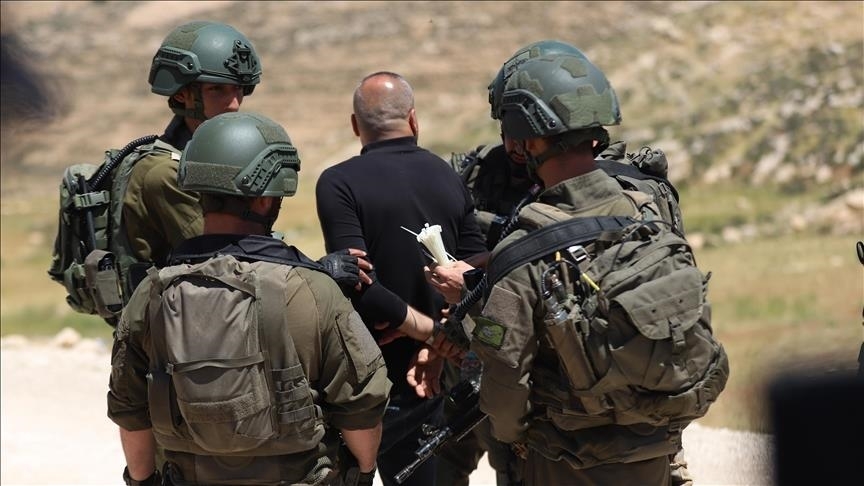
The West Bank.. The Israeli army storms Tubas and arrests 11 Palestinians.

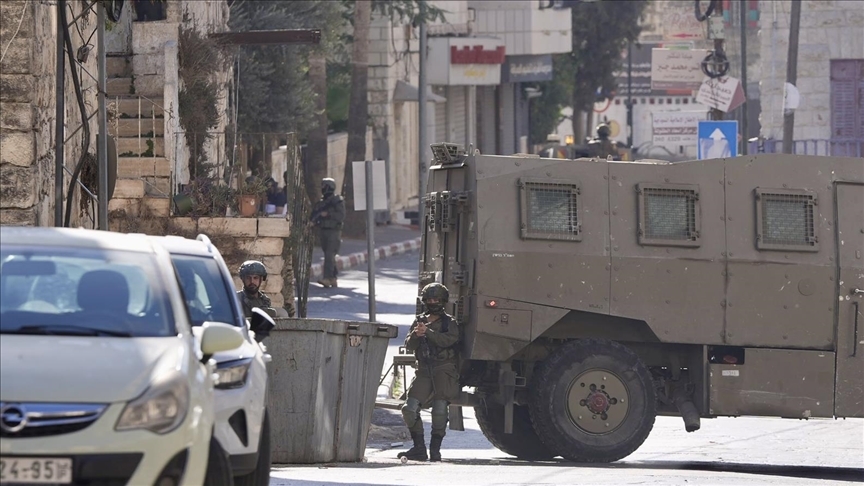
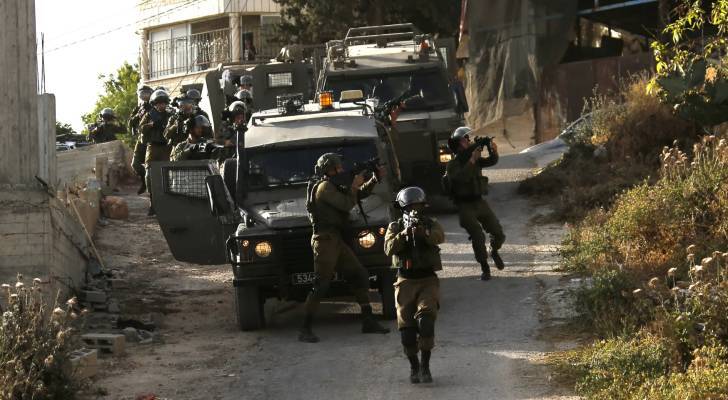
The Israeli army launched a wide-scale military operation in the Tubas governorate in the northern occupied West Bank early Wednesday, resulting in the arrest of at least 11 Palestinians and the suspension of operations in educational and governmental institutions.

Eyewitnesses reported that Israeli forces stormed the city of Tubas and the towns of Tamoun and Aqaba, in addition to the Al-Far'a refugee camp, where they raided citizens' homes and turned several of them into military barracks, initiating search and arrest campaigns.

The witnesses added that the governorate is witnessing a heavy presence of infantry and military vehicles, which continue to raid homes.

For his part, the director of the Palestinian Prisoners Club in Tubas, Kamal Bani Odeh, stated that Israeli forces have arrested at least 11 citizens since the operation began.

As a result, the Tubas governorate announced the suspension of classes in schools, universities, and government offices until the withdrawal of Israeli forces from the area.

In a related context, other cities and towns in the West Bank witnessed sporadic incursions, during which the Israeli army arrested a number of Palestinians, according to local sources.

Over the past two years, coinciding with the Israeli genocide in Gaza, assaults by the army and settlers in the West Bank and Jerusalem have escalated, resulting in the deaths of 1,065 Palestinians and injuries to more than 10,000.

PALESTINE

Wed 05 Nov 2025 7:36 am - Jerusalem Time

U.S. draft requests the United Nations to mandate an international force in Gaza for two years.

The United States has drafted a United Nations resolution that approves a two-year mandate for a transitional governing body in Gaza and an international force to stabilize the sector, according to a document seen by Reuters on Tuesday.

Diplomats said that the draft, which is still under development and may change, has been reviewed by some countries this week, but has not yet been officially circulated to the 15-member Security Council for negotiation.

It is still unclear when Washington intends to circulate it to the Security Council or put it to a vote.

Under the two-page text, the transitional governing body, referred to as the "Peace Council," is tasked with establishing a temporary international force to stabilize Gaza that can "use all necessary measures," referring to force, to carry out its mandate.

The international stabilization force will be responsible for protecting civilians and humanitarian relief operations, securing border areas with Israel and Egypt, and a "newly trained and carefully vetted Palestinian police force," with the international stabilization force being responsible for training and supporting it.

The international force will work to achieve security stability in Gaza, "including through the disarmament of non-governmental armed groups and the permanent dismantling of weapons, when necessary."

The UN resolution draft calls on the World Bank and other financial institutions to facilitate and provide financial resources to support the reconstruction and development of Gaza, "including through the establishment of a dedicated trust fund managed by donors for this purpose."

A spokesperson for the U.S. State Department stated that discussions with Security Council members and other partners on how to implement President Donald Trump's plan for Gaza are ongoing, and refrained from commenting on "allegedly leaked documents."

In a related context, CNN revealed that Israel was hesitant about approving a UN mandate for the international force but backed down under U.S. pressure.

The network quoted a senior Israeli official stating that Israel participated in drafting the resolution and is still trying to influence its content.

The official revealed that the current draft does not include any clause requiring reports to the Security Council, and that Israel wants to maintain that.

The official anticipated that some countries would try to enhance the role of the Security Council in monitoring the work of the international force, and said that Israel seeks to prevent any amendment in this regard.

The next phase of the U.S. president's plan, following a ceasefire, prisoner exchange, and the release of detainees, which will be endorsed by the UN resolution, is the establishment of the Peace Council and the international stabilization force.

According to the draft resolution, the international stabilization force will be deployed under a unified command agreed upon by the Peace Council and in close consultation with Egypt and Israel after reaching detailed agreements on the status of the mission and the forces.

While the Trump administration has ruled out sending U.S. troops to the Gaza Strip, it has spoken with Indonesia, the UAE, Egypt, Qatar, Turkey, and Azerbaijan to contribute to the multinational force.

It remains unclear whether Arab countries and other nations are willing to contribute personnel to that international force, while Israel has repeatedly objected to the deployment of Turkish troops.

PALESTINE

Wed 05 Nov 2025 5:54 am - Jerusalem Time

The Yafat Tomer-Yerushalmi Scandal: An Ethical and Legal Crisis Shaking the Israeli Army

The Israeli occupation authorities arrested former military prosecutor, General Ya'fat Tomer-Yerushalmi, early on Monday, on suspicion of involvement in leaking confidential information related to a video showing soldiers assaulting a Palestinian prisoner in the "Sde Teyman" prison in southern Israel in July 2024.

The police also detained former military prosecutor, Colonel (Res.) Matan Solomesh, on suspicion of prior knowledge of the video leak, in a move that reveals the extent of tension within the Israeli military institution and the depth of the legal and moral crisis shaking it.

The video shows soldiers assaulting the Palestinian prisoner, including sexual acts, which constitutes a blatant violation of international law, particularly the Geneva Conventions that impose protection for civilian detainees from any physical or moral assault.

In her resignation speech last week, Yerushalmi took responsibility for re-sending the video, explaining that her aim was to "counter the false propaganda directed against the military law enforcement authorities."

However, this step sparked widespread controversy in Israel, where officials viewed it as a threat to the army's image, ignoring the actual violations committed by the soldiers against the prisoner.

This incident highlights a deep internal crisis of trust within the Israeli army, as it seems that protecting the public institution's image sometimes outweighs the commitment to legal and moral accountability.

This trend has led to widespread criticism and opened a discussion about the army's ability to hold officials accountable internally, and its impact on the morale of soldiers and the effectiveness of the institution in future operations.

The Israeli policy has also faced internal pressures, as authorities and media focused on the seriousness of the leak on the army's image, while ignoring the violations committed by the soldiers.

Israeli Prime Minister Benjamin Netanyahu condemned the video’s release, describing the incident as "perhaps the most serious public relations attack Israel has faced since its establishment," and announced the opening of an independent investigation.

The crisis comes in the context of the ongoing Israeli occupation of the West Bank and Gaza Strip, with widespread violations recorded against Palestinian detainees, including children and women.

The scandal provides strong material for international pressure, whether through human rights organizations or the United Nations, and redraws the relationship between the army and domestic politics, and between the occupation and the Palestinians, where the absence of accountability exacerbates a culture of impunity and reinforces systematic repression.

The documented violations in the video represent a flagrant breach of the Geneva Conventions and indicate Israel's failure to adhere to international standards against torture and to protect civilians.

The case may open the door to further international legal accountability, including filing complaints before the Human Rights Council, or using evidence in international courts to support investigations into Israeli violations.

The Ya'fat Tomer-Yerushalmi scandal reveals the fragility of the ethical and legal system in the Israeli army, highlighting the conflict of priorities between protecting the institution's image and holding those responsible for violations accountable.

PALESTINE

Tue 04 Nov 2025 2:52 pm - Jerusalem Time

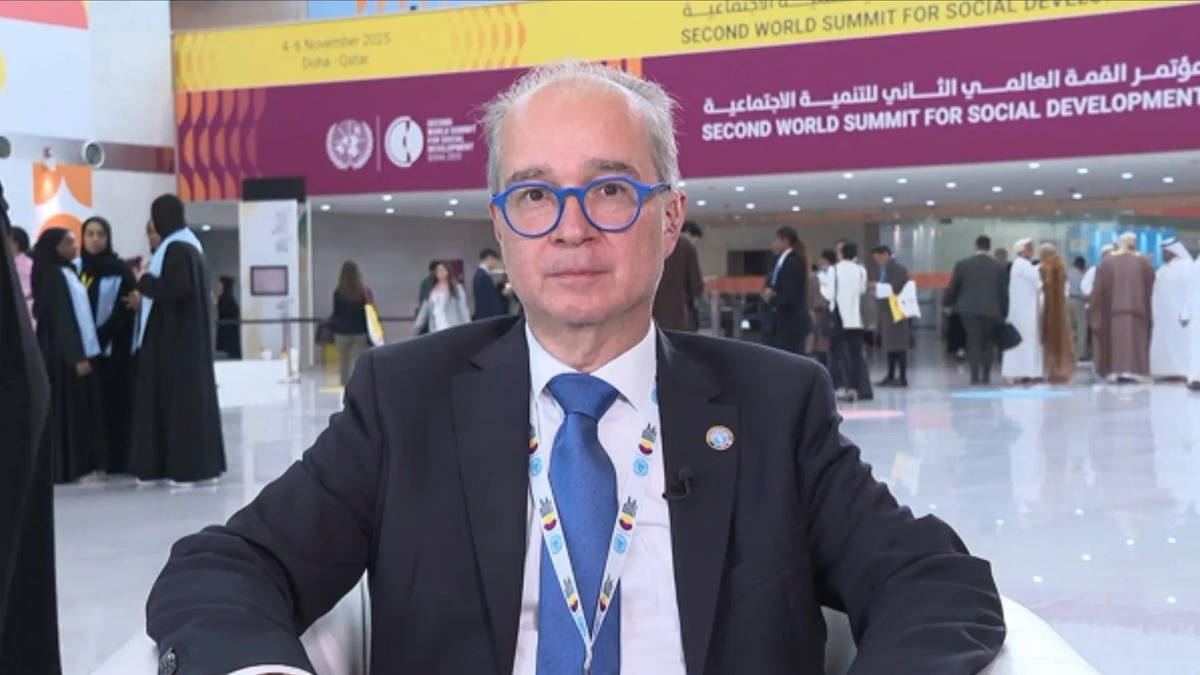
UN official: Efforts to rehabilitate the food sector in Gaza face a huge funding gap.

Stefanos Foushio, the director of the Food Systems Coordination Center at the United Nations, stated that the food system in the Gaza Strip is facing unprecedented damage, noting that between 78% and 91% of agricultural land, farms, and greenhouses have been affected by the war, leading to a sharp decline in local agricultural production, which was a fundamental pillar of food security in the region.

Foushio added, in an interview with Al Jazeera on the sidelines of the World Social Development Summit in Doha, that recent estimates indicate that about 37% of the affected agricultural land could be rehabilitated, providing an opportunity to launch urgent efforts to rebuild the local food system and ensure the sustainability of food supply chains within Gaza.

He emphasized that the continued flow of humanitarian, food, and fuel assistance to the region is a top priority, stressing the need to fully open the crossings and provide suitable conditions to ensure the regular arrival of supplies, so that humanitarian organizations can carry out their operations without interruption.

He explained that what is currently entering Gaza does not meet the needs or the agreed quantities and types, as assistance is limited to carbohydrates and processed materials, while the entry of animal proteins such as meat and fish is prohibited, exacerbating the malnutrition crisis and threatening the health of the population, especially children and the sick.

Foushio pointed out that the United Nations, represented by the Food and Agriculture Organization (FAO), is working with its international partners to prepare a plan for rehabilitating the food system in Gaza in the post-war phase, but these efforts face a significant funding gap.

He indicated that the FAO has issued an international appeal for $75 million to support its plan in 2025, but what has been secured so far does not exceed 10% of this amount, hindering the implementation of rehabilitation programs, enhancing local production, and supporting the livelihoods of farmers.

The UN official confirmed that closing this funding gap is a fundamental condition for launching a new phase of agricultural recovery in Gaza, noting that doubling resources would allow for the acceleration of relief and reconstruction projects, and ensure the sustainability of the food system in one of the most affected regions in the world by humanitarian crises.

PALESTINE

Tue 04 Nov 2025 2:44 pm - Jerusalem Time

Despite the ceasefire.. 78 Israeli violations against journalists in the West Bank and Gaza

The Palestinian Center for Development and Media Freedoms, MADA, documented 83 violations against Palestinian journalists in the West Bank and Gaza Strip during the past month of October, an increase of 17% compared to the previous month of September (72 violations). Most of the violations were committed by Israel, with 78 assaults, while the center recorded 4 assaults on journalists from various Palestinian entities in the West Bank, and one violation by social media companies against Al Jazeera editor Ismail Abu Omar, where the WhatsApp application owned by "Meta" permanently deleted his account on the grounds of violating publishing conditions on his channel, which has over 20,000 followers.

The center stated that the number of violations increased despite the cessation of the genocide war on the Gaza Strip and the implementation of a ceasefire on October 9, with most of the violations classified as serious assaults on media freedoms.

On October 12, journalist Saleh Al-Jafrawi was martyred by gunfire from armed men in the Al-Sabra neighborhood south of Gaza City, becoming the first journalist to lose his life after the ceasefire was announced. On the 19th of the same month, Israel launched dozens of airstrikes on Gaza, claiming to target "sites belonging to Hamas," with one of the strikes hitting the headquarters of Palestine Media Production (PMP) in central Gaza, resulting in the martyrdom of broadcast engineer Ahmed Abu Mateer and injuring photographer Ismail Jabr.

Editor and journalist at Palestine newspaper, Mohammed Al-Munirawi, was martyred during an Israeli bombardment that targeted his tent, where he had sought refuge about two months ago in Al-Nuseirat camp in the central Gaza Strip, on the 29th of last month. Fifteen journalists in the sector managed to uncover the fate of their homes that were demolished or bombed by the occupation forces after the ceasefire agreement came into effect, while the spokesperson for the Israeli army, Nadav Shoshani, incited against journalist Moatasem Daloul through a post on X, describing him as a terrorist and a liar in his media coverage.

The total number of violations against Palestinian journalists in the Gaza Strip reached 24 violations. The Israeli media ban on the entry of international journalists into the sector has been in effect since the start of the war, leaving exhausted local journalists as the only witnesses to cover critical developments, raising concerns about transparency and hindering international efforts to independently assess the situation on the ground.

Most of the violations by the occupation forces and authorities against Palestinian journalists during the past month (54 violations) occurred while covering the olive harvest season, where groups of settlers assaulted Palestinians and prevented them from accessing their lands under the protection of occupation soldiers. The center documented the injury of 8 journalists from live ammunition, sound bombs, and gas to prevent them from covering various events in the West Bank, in addition to cases of arrest.

To prevent these scenes from reaching the world, the occupation assaults journalistic crews and forces them to leave the sites of these events and the villages that are being besieged by all means. On the 10th of this month, Israeli settlers attacked Palestinian farmers while they were harvesting olives in the town of Beita south of Nablus, setting fire to their vehicles, including the vehicle of AFP photographer Jaafar Ashteyyeh, who was beaten and taken to the hospital.

During the coverage of the attack, Wahaab Bani Mflah from Quds News Network and Saja Al-Alami from Al-Ghad TV were injured due to inhaling gas and sound bombs, while Yazan Hamayel from Al-Fajr TV was beaten. The following day (October 11), Israeli authorities extended the closure of Al Jazeera's office in Ramallah for the seventh time for 60 days under the pretext of "incitement and aiding acts of terrorism."

On the 12th of this month, Israel issued or renewed administrative detention orders against 60 Palestinians, including journalists Mohammed Muna and Samer Khweira in the West Bank. On October 19, independent American journalist Jasper Nathaniel was injured by stones when Israeli settlers attacked Palestinians who were harvesting olives in the town of Turmus Ayya in Ramallah.

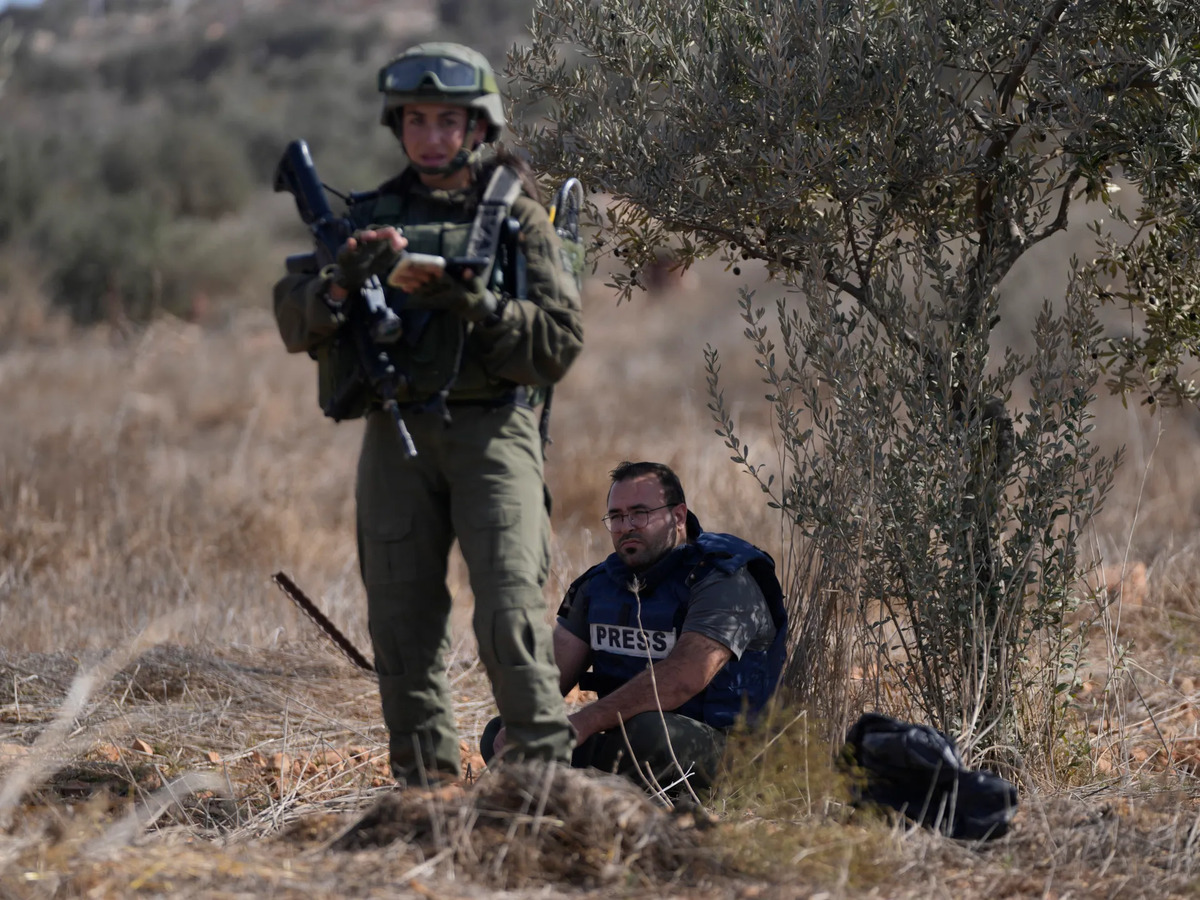
Nathaniel told the Committee to Protect Journalists that he repeatedly shouted "Press... American" while fleeing from the settlers who were chasing him and the Palestinians, but his cries were ignored. MADA noted that the Palestinian Preventive Security Service arrested journalist Sami Al-Sa'i while he was in one of the streets of Tulkarm city, and he was summoned to the public prosecution on charges of "stirring sectarian strife" based on a post on Facebook. He stated that the journalist was subjected to harm, humiliation, and mistreatment

PALESTINE

Tue 04 Nov 2025 1:32 pm - Jerusalem Time

The West Bank.. The Israeli army storms the town of Tamoun accompanied by military reinforcements.

The Israeli army stormed the town of Tamoun, south of the city of Tubas in the northern occupied West Bank, on Tuesday, accompanied by military reinforcements.

Eyewitnesses reported that Israeli special forces invaded the town of Tamoun and positioned themselves around one of the houses.

The witnesses mentioned that the army sent military reinforcements towards the town, coinciding with the sounds of explosions, the nature of which is unknown.

Almost daily, the army invades Palestinian towns and villages in the West Bank, arrests Palestinians, and raids commercial shops.

The assaults by the army and settlers in the West Bank and Jerusalem have escalated since the start of the Israeli genocide in Gaza on October 8, 2023.

The genocide in the West Bank and Jerusalem has killed 1,065 Palestinians and injured about 10,000 others.

The genocide in Gaza has resulted in 68,865 Palestinian deaths and 170,664 injuries, most of whom are children and women.

Despite the ceasefire coming into effect on October 10, Israel has violated it multiple times, killing and injuring hundreds of Palestinians.

LATEST NEWS

Tue 04 Nov 2025 1:31 pm - Jerusalem Time

Dead and wounded by the occupation's bullets east of the Shuja'iyya

A citizen was martyred and another was injured today, Tuesday, by the fire of an occupation drone targeting a gathering of citizens, east of the Shuja'iyya neighborhood in Gaza City.

Since the ceasefire on October 11, the number of martyrs has exceeded 240, with 600 injuries, while 510 bodies have been recovered.

Since October 7, 2023, the toll of the occupation's aggression on the Gaza Strip has risen to 68,865 martyrs and 170,670 injured.

PALESTINE

Tue 04 Nov 2025 12:52 pm - Jerusalem Time

The Israeli army demolishes two houses and agricultural facilities in the center and west of the West Bank.

On Tuesday, Israel demolished two homes and Palestinian facilities in the Ramallah and Jericho governorates in the central and eastern occupied West Bank, claiming 'construction without a permit.'

Eyewitnesses reported that an Israeli force stormed the airport neighborhood in the city of Jericho in the eastern West Bank, demolishing two homes and retaining walls under the pretext of construction without a permit.

The witnesses indicated that the two homes were built on private land and had official documents.

In this context, Israeli bulldozers demolished agricultural facilities in a farm in the town of Bardala west of Ramallah in the central West Bank, for the same reason.

The witnesses noted that the demolition affected an agricultural room, walls, and trees.

According to the Wall and Settlement Resistance Commission, Israel 'carried out 1,014 demolition operations in the West Bank, including East Jerusalem, affecting 3,679 facilities, including 1,288 inhabited homes, 244 uninhabited homes, and 962 agricultural facilities and others, since the beginning of the genocide in Gaza.'

Since the onset of the genocide in Gaza on October 8, 2023, the West Bank has witnessed an escalation from the Israeli army and settlers, resulting in the deaths of 1,065 Palestinians and injuries to about 10,000 others, in addition to the arrest of more than 20,000 people, including 1,600 children.

A ceasefire agreement between Israel and Hamas, which began on October 10, ended the genocide committed by Tel Aviv in Gaza, leaving more than 68,000 Palestinian dead and over 170,000 injured, most of whom are children and women.

LATEST NEWS

Tue 04 Nov 2025 12:47 pm - Jerusalem Time

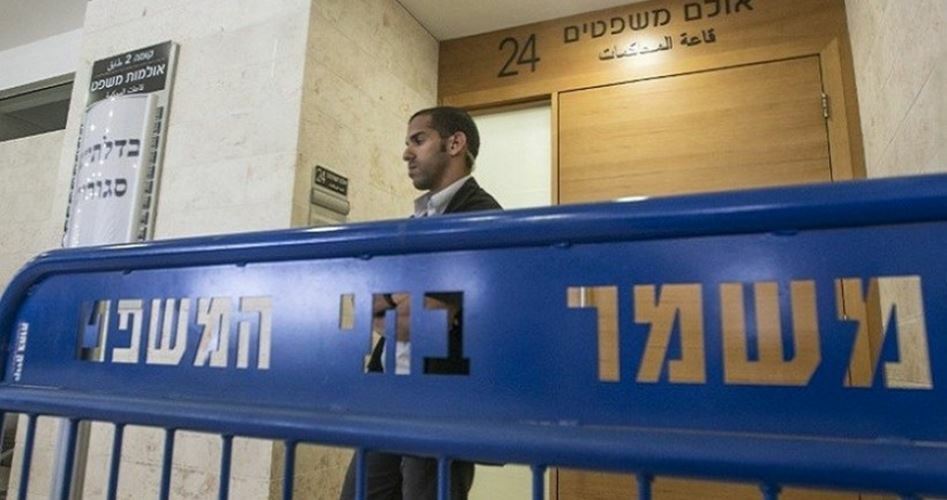
The occupation rejects the appeal against the administrative detention order for 52 prisoners.

Ramallah 4-11-2025 WAFA - Israeli occupation courts rejected the appeal sessions regarding the administrative detention of 52 prisoners.

The Palestinian Authority for Prisoners and Released Prisoners and the Prisoners' Club clarified that the rejection responses to the appeal sessions were received yesterday and today, Tuesday.

Attached is the list of these administrative detainees: Ala' Al-Dweiri/ rejected Ahmad Labateh/ rejected Youssef Daraghmeh/ rejected Mohammed Ghannam/ rejected Falah Sawalmeh/ rejected Thaer Jaradat/ rejected Abdullah Awad/ rejected Omar Al-Turk/ rejected Hassan Al-Shurbati/ rejected Naaman Shahtit/ rejected Mohannad Qamhiyah/ rejected Islam Malhis/ rejected Hashem Jala'ita/ rejected Ismail Bani Matar/ rejected Mahmoud Al-Masalmeh/ rejected Abdullah Zakarneh/ rejected Mohammed Al-Kakhn/ rejected Mahmoud Akhalil/ rejected Mohammed Abu Rab/ rejected Mohammed Ahmed/ rejected Youssef Qassem/ rejected Basel Hussein/ rejected Zain Wadlani/ rejected Suhaib Ahmed/ rejected Tamim Nasser/ rejected Mohammed Abed/ released on 9/11/2025 Nidal Al-Arda/ rejected Aseel Hamadneh/ rejected Saif Shawish/ rejected Saif Naim/ rejected Rateb Tamr/ rejected Louay Al-Jawad/ rejected Majd Abu Rab/ rejected Jihad Kalbouna/ rejected Radwan Hamdan/ rejected Abd Hhashash/ rejected Wisam Ahmed/ rejected Aseel Mahfouz/ rejected Islam Dabayeh/ rejected Sami Al-Aw/ rejected Mahmoud Hhashash/ rejected Aiham Ta'ameh/ rejected Mohammed Azahdi/ rejected Nour Al-Din Rayhan/ rejected Abdullah Mansour/ rejected Baha' Khatib/ rejected Hassan Al-Shurbati/ rejected Ali Qafisha/ rejected Youssef Daraghmeh/ rejected Fares Afghani/ rejected Bashar Badrsawi/ rejected Baraa Sawta/ rejected.

PALESTINE

Tue 04 Nov 2025 12:34 pm - Jerusalem Time

Wikipedia founder intervenes and edits an article about the genocide in Gaza.

The British National website revealed that Wikipedia founder Jimmy Wales intervened to modify the article "Genocide in Gaza" published in the encyclopedia, after describing it as "not meeting Wikipedia standards and needing immediate attention."

The article stated that the genocide in Gaza is the ongoing, deliberate, and systematic destruction by Israel of the Palestinian people in the enclave during the war against them, but Wales considered the wording a violation of the encyclopedia's rules.

As of the time of writing this piece, the article was listed as "protected," meaning it is prohibited from open editing, and no ordinary user can directly modify it. Two notes were written at the top of the article, indicating that "the events mentioned are ongoing and may be subject to rapid and significant changes," with a call for assistance in updating the information provided.

Wales questioned Wikipedia's definition of genocide in Gaza, stating it is a glaring example of the neutrality problem in the famous encyclopedia, adding, "Currently, the introduction and general presentation, in Wikipedia's wording, state that Israel is committing genocide, although this claim is highly disputed."

This intervention sparked anger among Wikipedia editors, and according to National, it was met with outrage from some of the encyclopedia's editors, with one accusing Wales of being "under political pressure and asking us to betray science."

However, the encyclopedia's founder remained steadfast in his position, asserting that external pressures are irrelevant, and considered the neutrality of the article to be disputed, pointing out that it takes an inappropriate stance contrary to the policies and traditions of the encyclopedia, calling for fairness to all relevant opinions.

Another Wikipedia editor responded that there is ongoing debate about whether "mRNA" vaccines cause rapid cancer, and whether U.S. President Donald Trump actually won the 2020 presidential election, questioning Wales, "Do you want us to be bold and edit these articles too?"

Unprecedented external pressure A Wikipedia editor specializing in editing topics related to Palestinian and Israeli affairs for over 20 years stated that there has not been external interest in Wikipedia's coverage of Palestine and Israel as there is now.

He explained that most of what he described as negative attention comes from pro-Israel commentators, and from the X platform owned by American billionaire Elon Musk and others.

Others pointed out that Wales does not control Wikipedia and is just an editor like anyone else, but he relies on his status or fame as the founder of the encyclopedia to promote his views.

In light of the widespread reactions, Wales stated that he did not deny genocide but wanted to clarify that it is not Wikipedia's mission to adjudicate this issue.

The International Association of Genocide Scholars, Amnesty International, B'Tselem, and the United Nations Human Rights Council have confirmed that Israel is committing genocide in the Gaza Strip, while the government of Benjamin Netanyahu - wanted by the International Criminal Court on charges of committing war crimes - denies committing genocide against the Palestinians.

LATEST NEWS

Tue 04 Nov 2025 12:23 pm - Jerusalem Time

Occupation forces attack olive pickers in the village of Shufa southeast of Tulkarm.

This morning, Tuesday, occupation forces attacked a group of olive pickers in the lands of the village of Shufa, southeast of Tulkarem.

The village council reported that the occupation soldiers stormed the agricultural lands in the "Safha Beryeh" area of the village and attacked the farmers while they were harvesting olives, forcing them to leave the land under the threat of weapons.

They arrested the farmer Haitham Azmi Saleh and took him to an unknown location.

Since the morning, several governorates in the West Bank have been subjected to attacks by settlers, protected by the occupation army, against olive pickers.

PALESTINE

Tue 04 Nov 2025 12:04 pm - Jerusalem Time

New escalation.. The Israeli occupation threatens assassinations and a ground maneuver in Gaza.

The security developments in the Gaza Strip continue to dominate discussions within the occupying state, amid accusations directed by the occupation towards Hamas of delaying the return of the bodies of the deceased prisoners, while American officials continue to pressure for the deployment of international forces within the sector.

In contrast, the occupation firmly rejects any participation of forces from Turkey or Qatar, considering that a "red line," while seeking to resume military maneuvers and carry out targeted assassinations within Gaza.

The Israeli website "Walla" predicted a delay in the first phase of the plan to replace Hamas with a multinational force until an understanding is reached between the occupation and the United States, noting that senior American officials in Tel Aviv, including the Chairman of the Joint Chiefs of Staff, General Dan Keen, are trying to influence the Israeli decision-making process regarding the Gaza file.

According to a report by "Walla," sources in the Israeli military establishment clarified that despite the establishment of the "mechanism" in the settlement of Kiryat Gat, senior officials in the American administration realize that without the participation of the occupation army and its precise knowledge of the terrain of the sector, it will not be possible to implement their plan to control it.

The plan includes the transfer of multinational forces to take over governance and impose order under the supervision of a technocratic government alternative to Hamas, with the first phase involving the disarmament of the sector, followed later by the commencement of the reconstruction process.

The report indicated that the Israeli policy towards Gaza, according to the current government's orientations, is based on the continued presence of occupation forces in the area under its control between the "yellow line" and the borders of the sector, with the demarcation of the border line using signs and concrete blocks, and the cleansing of the area from militants and infrastructure above and below ground.

It added that the political and military leadership in Israel has discussed in recent days new steps against Hamas, accusing the movement of deliberately delaying the delivery of the bodies of the hostages.

The report also indicated that the options available to Israel include three main paths: reducing humanitarian aid, controlling additional Palestinian areas that represent more than 54 percent of the area of the sector, and returning to a policy of assassinations targeting resistance leaders, despite American reservations about any measures affecting humanitarian aid.

The report concluded by noting that prevailing estimates in Israeli circles suggest that the political leadership is nearing the issuance of new orders to the army to resume the policy of targeted assassinations, followed by the implementation of a new ground maneuver to control more areas within the Gaza Strip.

PALESTINE

Tue 04 Nov 2025 11:43 am - Jerusalem Time

Military escalation by the occupation in the West Bank accompanied by targeting farmers.

Various areas in the occupied West Bank have witnessed intensified military escalation, manifested in incursions and the positioning of Israeli occupation forces.

The occupation forces stormed the Qalandiya refugee camp and established a presence inside it early in the morning, resulting in security tensions and alertness among the residents.

Simultaneously, the occupation forces advanced into the town of Ya'bad located west of Jenin city, in a move indicating an expansion of military operations to include areas in the northern West Bank.

Serious assaults have been recorded, including targeting Palestinian farmers and their properties.

Palestinian farmers were directly attacked by settlers while they were on their lands in the town of Beit Dajan, east of Nablus in the northern West Bank.

These attacks come as part of a series of repeated assaults aimed at intimidating farmers and obstructing their access to their lands.

PALESTINE

Tue 04 Nov 2025 9:42 am - Jerusalem Time

Cooper: Britain has presented a plan to dismantle Hamas's weapons.

British Foreign Secretary Yvette Cooper stated that her country has proposed a plan to dismantle the weapons of the Islamic Resistance Movement (Hamas), emphasizing that London does not want any Israeli strikes on Gaza, but rather seeks a continuous ceasefire.

In an interview with Channel 4 in the UK, Cooper confirmed that the only way to move from a ceasefire to a just and lasting peace is through a two-state solution.

She stressed that there is no justification for halting humanitarian aid, asserting that it is unacceptable for any child to be starving.

She noted that as a result of the ceasefire and Trump's peace plan, the flow of aid to Gaza is increasing.

The British newspaper "The Mirror" conducted an exclusive interview with British Foreign Secretary Yvette Cooper, in which she stated that the people of Gaza cannot afford to wait for aid.

The minister, who is on her first tour of the Middle East since taking office, emphasized the need to expedite the delivery of aid to the sector.

She pointed out that British aid is being held in Jordan, expressing her determination to ensure its delivery to Gaza.

The situation is worsening, and last week, the World Health Organization confirmed that there has been no significant progress regarding the quantities of food allowed into the Gaza Strip since the ceasefire, nor any noticeable improvement in reducing hunger in the sector, where the situation remains "catastrophic."

Israel has repeatedly cut off aid to the Gaza Strip during the war, exacerbating the dire humanitarian conditions, which, according to the United Nations, has led to famine in parts of the besieged Palestinian territory.

The Gaza Strip has been suffering from catastrophic humanitarian conditions for over two years due to the Israeli genocide that has destroyed most of the infrastructure and pushed more than two million Palestinians to the brink of famine, according to UN reports.

Israel continues to violate the ceasefire agreement in Gaza, which came after two years of genocide that resulted in more than 68,000 Palestinian martyrs and over 170,000 injured, causing damage to about 90% of the civilian infrastructure in the sector, with initial losses amounting to $70 billion.

LATEST NEWS

Mon 03 Nov 2025 12:49 pm - Jerusalem Time

In a new breach of the ceasefire: Two martyrs shot by the occupation north of Rafah.

Two citizens were martyred this evening, Monday, by the bullets of the Israeli occupation army near the al-Barkas area north of Rafah in the southern Gaza Strip.

Several citizens were also injured by the bullets of the occupation army east of the al-Bureij camp in the central Gaza Strip.

The toll of martyrs and injuries since the ceasefire agreement on October 11 has reached 236 martyrs and 600 injured, with 502 bodies recovered, according to the latest statistics published yesterday.

Since October 7, 2023, the toll of the occupation's aggression on the Gaza Strip has risen to 68,865 martyrs and 170,670 injured.

PALESTINE

Mon 03 Nov 2025 12:48 pm - Jerusalem Time

Arrest of the military prosecutor in Israel due to the "Sedi Taiman" leak.

Israeli National Security Minister Itamar Ben Gvir announced the arrest of the resigned military prosecutor Yifat Tomer Yerushalmi as part of the investigation into the leak of a video showing the torture of a Palestinian prisoner at the Sde Teyman detention center, following her disappearance yesterday, Sunday, for several hours, amid speculation about the possibility of her attempting suicide.

Ben Gvir stated in a post on Telegram today, Monday, "In light of the events of last night, it was agreed that the prison service would act with additional vigilance to ensure the safety of the detainee at the detention center where she has been placed under arrest."

Meanwhile, Channel 12 in Israel reported that sources believe the military prosecutor did not attempt suicide and that she tried to dispose of one of her phones in the sea.

A large number of police and army forces conducted extensive searches to locate Yerushalmi yesterday, Sunday, after losing contact with her and news spread about the possibility of her attempting suicide against the backdrop of the incitement campaign targeting her by the ruling right-wing led by Prime Minister Benjamin Netanyahu, who is wanted by the International Criminal Court on charges of committing war crimes in Gaza.

The Israeli army announced last Friday that Yerushalmi had resigned from her position as part of the investigation into the leaked video aired by Channel 12 in August 2024, which shows torture and sexual assault of a Palestinian prisoner by Israeli soldiers at the Sde Teyman camp in the Negev desert.

Israeli media reported that the military prosecutor took responsibility for leaking the video.

The video documented some of what Palestinian prisoners are subjected to in the occupation's prisons, especially as the scope of torture and violations has widened in conjunction with the Israeli genocide war in Gaza over the past two years, during which dozens of prisoners have been martyred in prisons, according to reports documented by Palestinian and international sources.

PALESTINE

Mon 03 Nov 2025 12:22 pm - Jerusalem Time

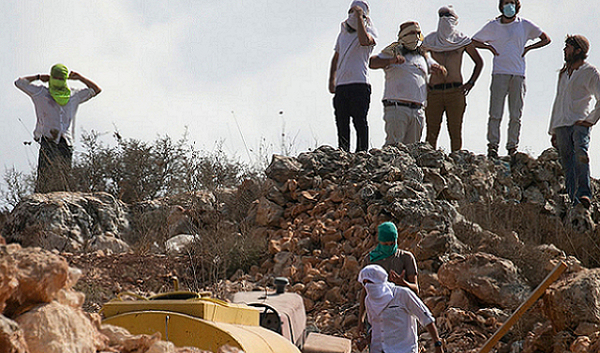
Extremist settlers burn a Palestinian vehicle south of Nablus.

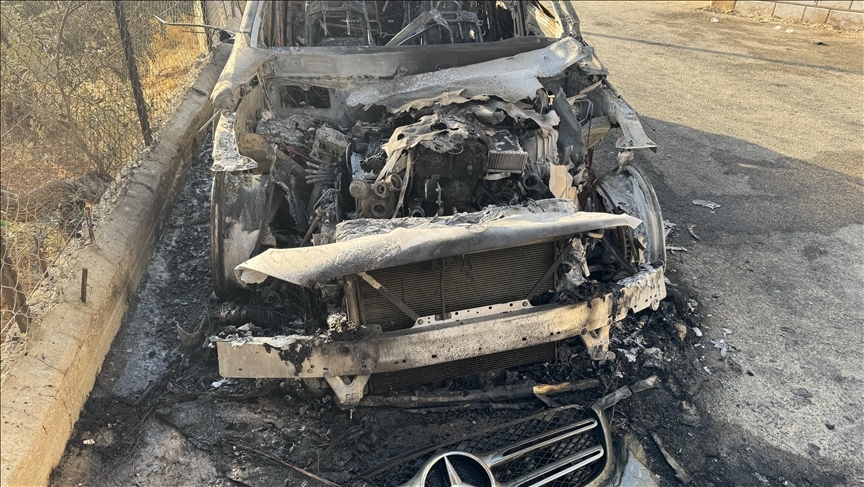
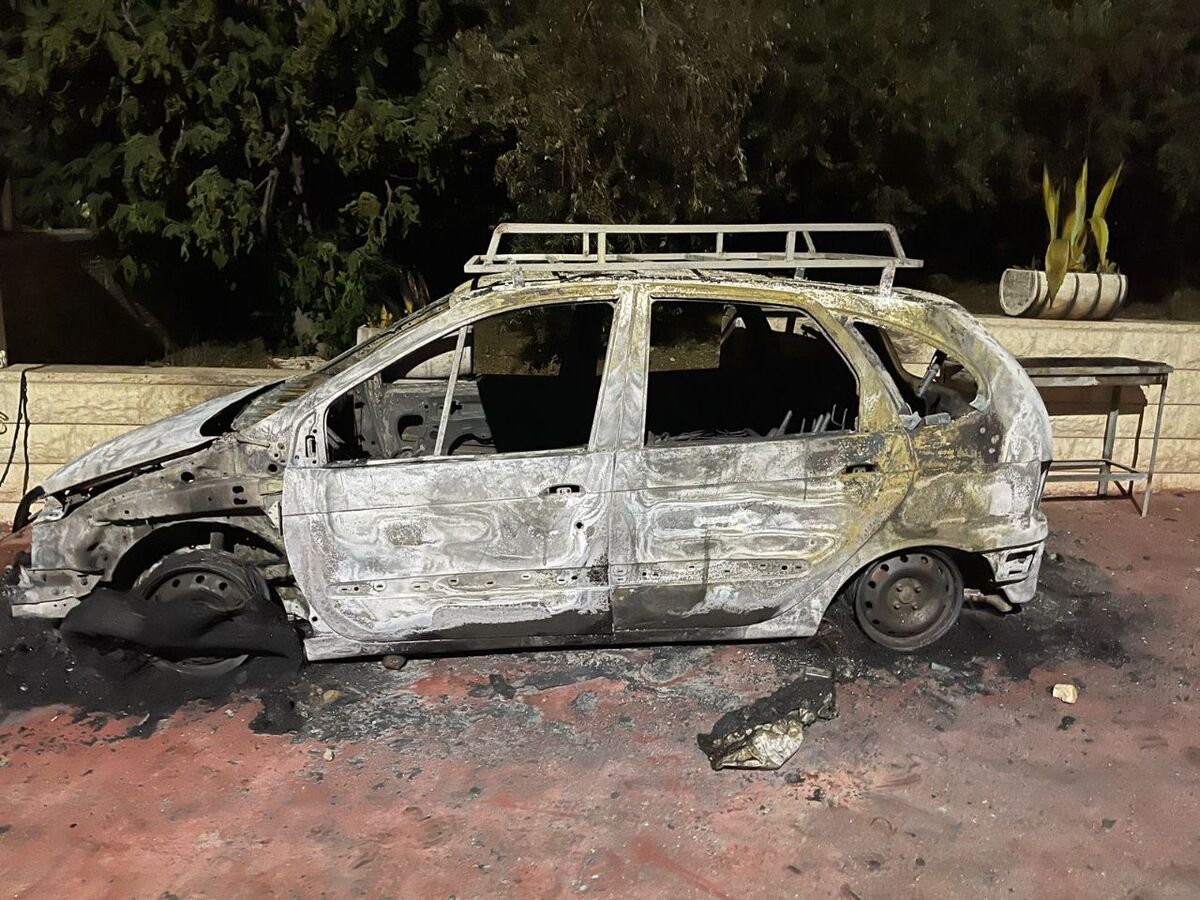
Extremist settlers burned a Palestinian vehicle on Monday in the village of Jorish, north of the occupied West Bank, and wrote racist slogans in Hebrew.

Eyewitnesses reported that extremist settlers attacked the village of Jorish south of Nablus and burned a Palestinian vehicle.

The witnesses indicated that the settlers wrote slogans in Hebrew on the walls of homes before withdrawing.

Typically, the slogans written by settlers on the walls of Palestinian homes and facilities carry racist and threatening connotations against Palestinians and Arabs.

During the past two years, settlers have committed 7,154 assaults against Palestinians and their properties in the West Bank, according to data from the Palestinian Wall and Settlement Resistance Commission.

The commission clarified that these assaults, which occurred alongside the Israeli genocide in Gaza, resulted in the deaths of 36 Palestinians and the displacement of 33 Bedouin communities, in addition to 114 settlement outposts on occupied land.

These violations fall within a bloody escalation in the West Bank, which has resulted in the deaths of 1,065 Palestinians and injuries to about 10,000, along with the arrest of more than 20,000, including 1,600 children, over the past two years.

PALESTINE

Mon 03 Nov 2025 11:54 am - Jerusalem Time

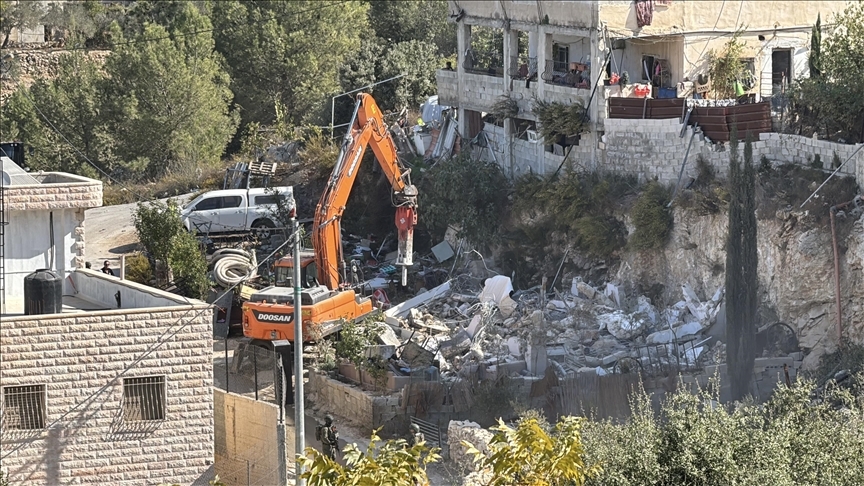
West Bank.. The Israeli army demolishes two houses west of Bethlehem.

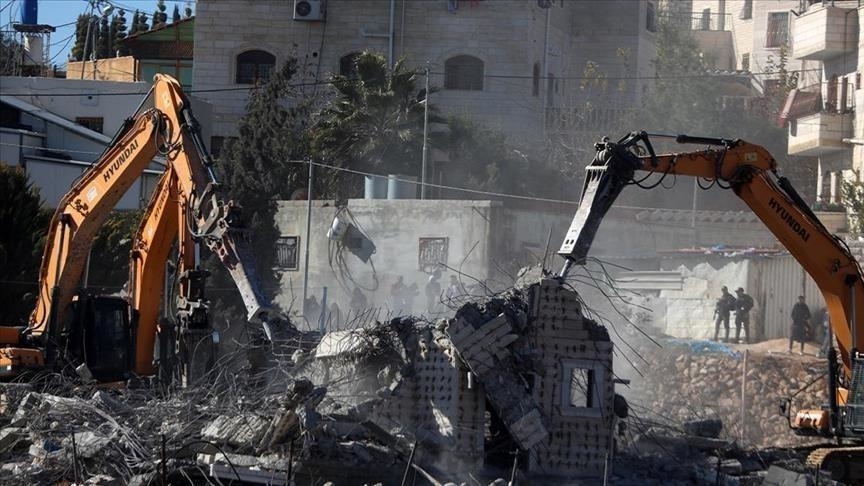
Israeli bulldozers demolished two Palestinian homes on Monday in the village of Walaja, west of Bethlehem in the occupied West Bank, under the pretext of "building without a permit."

The head of the Walaja village council, Khader Al-Araj, stated that "the occupation forces stormed the town and began demolishing two homes there."

Al-Araj indicated that the demolition was carried out amid Israeli military reinforcements that invaded the village and "were stationed in the Ein Jweiza area, which the occupation claims belongs to the municipality of Jerusalem."

He reported that Israel demolished a home that housed 9 people, without allowing them to retrieve their belongings and possessions.

In the same village, Al-Araj clarified that the Israeli forces demolished an apartment located on the fourth floor of a residential building, which he did not name.

He confirmed that the demolition was carried out "under the pretext of lack of permit, without any prior warning."

Al-Araj pointed out that the village is facing an Israeli assault aimed at tightening the noose on the residents and pushing them to live outside it.

Walaja is located on hills overlooking the occupied city of Jerusalem, but the Israeli separation wall has isolated it from the city and cut off dozens of dunams within the wall.

Tel Aviv divides the village into areas that are administratively under the Israeli municipality of Jerusalem, and other areas classified as "C" according to the Oslo Accords, where demolition operations are carried out on both sides under the pretext of building without a permit.

The Oslo Accords classified the West Bank territories into three areas: "A" under full Palestinian control, "B" under Israeli security control and Palestinian civil and administrative control, and "C" under Israeli civil, administrative, and security control.

Area "C" constitutes about 60 percent of the West Bank's area.

According to the Wall and Settlement Resistance Commission, Israel "carried out 1,014 demolition operations in the West Bank, including East Jerusalem, targeting 3,679 facilities, including 1,288 inhabited homes, 244 uninhabited homes, and 962 agricultural facilities and others, since the start of the genocide war in Gaza."

The West Bank has witnessed, coinciding with the genocide war in Gaza since October 8, 2023, an Israeli escalation from the army and settlers, resulting in the deaths of 1,065 Palestinians and injuries to about 10,000 others, in addition to the arrest of more than 20,000 people, including 1,600 children.

PALESTINE

Mon 03 Nov 2025 11:18 am - Jerusalem Time

Meeting in Istanbul to discuss the next phase in Gaza

Foreign ministers from Islamic countries are meeting today, Monday, in Istanbul, Turkey, in a session dedicated to discussing the next phase in the Gaza Strip, following the ceasefire agreement reached based on a plan proposed by U.S. President Donald Trump.

Seven countries are participating in Monday's meeting: Turkey, Saudi Arabia, Qatar, Jordan, the UAE, Pakistan, and Indonesia. Leaders from these countries had previously met with Trump in late September on the sidelines of the United Nations General Assembly in New York, after which Trump announced his plan regarding Gaza.

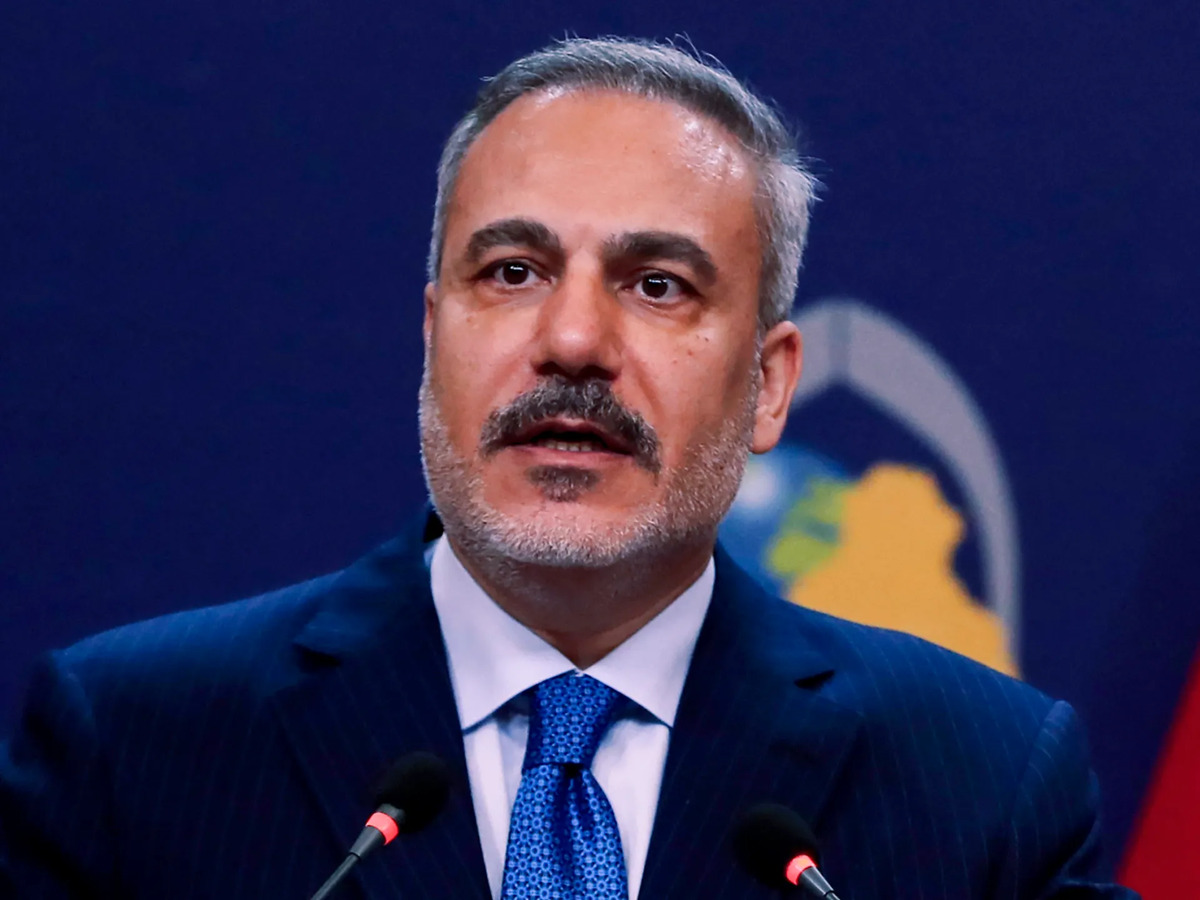
Turkish Foreign Minister Hakan Fidan stated last week that the goal of the Istanbul meeting is to "assess our progress and discuss what we can achieve together in the next phase," considering that "a peace plan is beginning to take shape, and it offers a glimmer of hope for everyone."

Fidan confirmed that the discussions will address questions such as "What are the obstacles to its implementation? What challenges must be overcome? What are the next steps? What will we discuss with our Western friends? And what forms of support are available for ongoing talks with the United States?"

During a forum in Istanbul, he said, "We must put an end to the massacre in Gaza. A ceasefire alone is not enough," reiterating the importance of a two-state solution.

According to sources in the Turkish Foreign Ministry, Fidan will call on Monday for "establishing mechanisms that enable Palestinians to ensure security and governance in Gaza."

Turkey has played a key role in mediating the ceasefire in the Gaza Strip.

Before today's meeting, the Turkish Foreign Minister held talks in Istanbul on Saturday with members of the political bureau of the Islamic Resistance Movement (Hamas) to discuss the ceasefire agreement.

A ceasefire has been in effect in the region since October 10, according to the U.S. president's plan, which has been marred by repeated violations from Israel.

In a later phase, Trump's 20-point plan stipulates the formation of a "temporary international stabilization force to be deployed immediately" in Gaza, which will "provide training and support to approved Palestinian police forces."

The force is expected to be deployed to ensure stability in the region alongside the gradual withdrawal of the Israeli army, and it will primarily consist of troops from Arab and Muslim countries.

ARAB AND WORLD

Mon 03 Nov 2025 9:30 am - Jerusalem Time

Saudi Crown Prince's Visit to Washington: Strategic Ambitions and Delayed Normalization

Saudi Crown Prince Mohammed bin Salman is preparing for a state visit to the United States in mid-November, marking his first trip to Washington in seven years, amid widespread anticipation regarding the visit's agenda and the political and economic messages it carries. While U.S. President Donald Trump promotes the possibility of achieving a "major breakthrough" in the normalization process between Saudi Arabia and Israel before the end of the year, such expectations seem far from reality, as Riyadh focuses on defensive and strategic priorities that do not include opening relations with Tel Aviv at this stage.

American and Saudi sources indicate that the visit will culminate in the signing of a joint defense agreement between the two countries, similar to the security agreement recently concluded by Washington with Qatar. The Kingdom is also seeking advanced "F-35" fighter jets, in addition to civil nuclear cooperation that would grant it partial access to sensitive American technology. These steps reflect a Saudi ambition to redefine the relationship with Washington based on a partnership of equals, rather than the security dependency that has characterized the relationship for decades.

Observers believe that this shift comes in the context of a Saudi realization that the world is no longer unipolar, and that reliance on the American umbrella is no longer a sufficient guarantee for regional security. Nevertheless, Washington still views Riyadh through the lens of economic benefit, especially in the fields of energy and investment, without adopting a comprehensive vision to deal with the profound transformations taking place in the Kingdom. This difference in perspective is considered one of the reasons for the political chill between the two sides in recent years, which the Crown Prince seeks to overcome through this visit.

However, the most intriguing aspect of the visit is the debate surrounding the normalization file with Israel. While Trump continues to hint at a historic agreement being close, Saudi sources confirm that normalization is not on the table in the near term, especially after the Israeli war on Gaza, which left tens of thousands of casualties and brought the Palestinian issue back to the forefront of Arab consciousness. In this context, Washington's attempts to integrate Israel into the region through the "Abraham Accords" appear to be stagnant, as it has become clear that bypassing the Palestinian issue was nothing more than a short-lived diplomatic illusion.

In a statement to The New York Times on Sunday, Saudi commentator Ali Al-Shihabi states that normalization without a "significant and irreversible" Israeli step towards establishing a Palestinian state has become unrealistic. He adds that the Kingdom views normalization as a political leverage that cannot be relinquished without a real counterpart. This position reflects a delayed Saudi realization that the policy of unconditional openness to Israel, as seen in other Gulf states, has not achieved stability or significant strategic gains.

Nevertheless, the Saudi position is not without contradiction. While Riyadh rejects public normalization, Israeli and American sources claim that the Kingdom maintains undisclosed security and intelligence communication channels with Israel. Analysts believe that this dual approach grants the Kingdom tactical flexibility, but at the same time reflects excessive caution that hinders its leadership role in the region. The publicly stated Saudi position supporting a two-state solution has yet to translate into a concrete initiative to revive negotiations or curb escalating tensions.

Domestically, the Saudi leadership faces a challenge between its declared reform ambitions and its restrictive political practices. The "Vision 2030" launched by the Crown Prince aims to modernize the economy and free society from dependence on oil, but it still clashes with the absence of genuine political openness. Some critics point out that the intense focus on economic and technological transformations sometimes comes at the expense of public freedoms and political accountability, which may weaken the resilience of these reforms in the long term.

Washington, for its part, is also dealing with the Saudi Crown Prince with clear pragmatism. After President Biden described him as a "pariah" during his election campaign in the wake of journalist Jamal Khashoggi's murder, his administration has returned to treating him as an indispensable partner in energy and regional issues. This contradiction reveals a deeper crisis in American foreign policy, which oscillates between a values-based discourse and the demands of interests, without being able to formulate a consistent approach towards authoritarian allies in the region.

At the recent investment forum held in Riyadh, discussions focused on artificial intelligence and renewable energy projects, while the topic of Gaza or its reconstruction was notably absent. This neglect, which was not accidental, reflects new priorities within the Saudi leadership that prioritize economic development over traditional political commitments to Arab issues. However, Saudi caution regarding involvement in the Palestinian file does not negate its awareness that regional stability cannot be achieved without a fundamental resolution to this chronic conflict.

The Crown Prince's visit to Washington represents a new chapter in the relationship between the two countries, but it is also a test of both parties' ability to reconcile ambition with interest. Saudi Arabia seeks to establish itself as an emerging power in a changing world, while Washington attempts to rebuild its influence in the Middle East through defense deals and situational

LATEST NEWS

Mon 03 Nov 2025 9:29 am - Jerusalem Time

Colonizers burn a vehicle and write racist slogans in Jorish, south of Nablus.

Colonists burned a vehicle and wrote racist slogans in the town of Jorish south of Nablus early this Monday morning.

Mohammed Haj Mohammed, from the Jorish village council, reported that colonists stormed the northern side of the village and set fire to the vehicle of citizen Mohannad Salem Khalid, which was parked in front of his home.

They also wrote racist slogans on the walls of the house.

OPINIONS

Mon 03 Nov 2025 9:26 am - Jerusalem Time

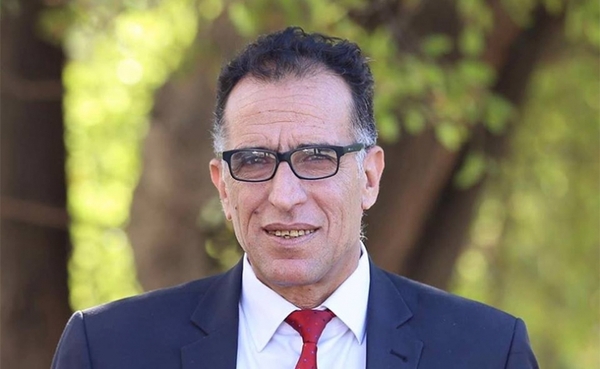
"Hamas" Between Consolidating Authority and Erosion of Legitimacy: An Analysis of the Reality in Gaza After the Ce

Mustafa Ibrahim

Mustafa Ibrahim

Opinion Writer

The recent truce in the Gaza Strip did not succeed in paving the way for a new political phase; rather, it revealed the fragility of the internal Palestinian situation and brought to the surface old practices that confirm that division remains the actual ruler of the Palestinian arena.


Since the ceasefire came into effect on October 10, it has been clear that Hamas exploited the relative calm to reorganize its security and administrative institutions and strengthen its grip on the sector, in the absence of any local forces capable of competing with or limiting its dominance.


A video showing Hamas security forces executing a group of young men from the Dagmash family in the Sabra neighborhood, under the pretext of their collaboration with the Israeli occupation and committing crimes, sparked widespread controversy in Palestinian streets. This incident was not the first; weeks earlier, security groups affiliated with the movement attacked the Al-Majayda family in the Mawasi area of Khan Younis, killing several of its members on the same charges, while Israeli airstrikes killed some members of the force.


These practices recalled Hamas's record of extrajudicial killings and the implementation of public executions during its past years of rule, which constitutes a blatant violation of human rights and legal standards that criminalize any punishment without a fair trial.


Notably, the public debate surrounding these incidents did not stem from a principled stance against extrajudicial killings, but rather from the political division itself: some defended these executions as a "deterrent to chaos and collaboration," while others condemned them based on their political rivalry with Hamas, not from a standpoint of defending the rule of law and the right to life. This, in itself, is a dangerous indicator of the erosion of legal and rights concepts in the Palestinian collective consciousness, under the pressure of division and political alignment.


The truce, which was promoted as an opportunity to rebuild national unity, has practically turned into a new phase of reinforcing the status quo in Gaza. While the Palestinian Authority in Ramallah was preoccupied with its internal files and accused of abandoning Gaza for more than a decade and a half, Hamas was restructuring its governmental institutions, appointing new officials, and imposing a strict security regime on the ground under the banner of "restoring stability."


Thus, the movement invested in the political vacuum to reproduce its authority, not to contribute to building a common national project. The absence of any serious path to end the division has left Palestinian society in a state of political disorientation: there is no real reconciliation, no unified national administration, and not even a clearly defined reconstruction project. The most dangerous aspect of this reality is that it provides Hamas with a constant justification to continue its security grip under the pretext of "maintaining internal security" in the absence of alternatives.


Violations of basic rights, from freedom of expression to the right to a fair trial, continue in Gaza under the pretext of war and chaos, reflecting a pattern that expresses the transformation of the idea of security into an end in itself, while the law is marginalized and dissenting voices are silenced.


Even youth movements and popular initiatives that previously attempted to criticize living conditions or administrative corruption faced repression and persecution.

Despite international criticisms demanding that Hamas stop field executions and acts of revenge, the movement continues to exercise power as a de facto authority, pursuing those it labels as "lawbreakers," imposing taxes and customs fees on traders, and managing its security and civil institutions as if the war had not brought about a fundamental change in the nature of governance. This indicates that the announced halt to executions was merely a political tactic to alleviate international pressure, not a genuine shift in approach.


In light of widespread destruction of judicial and justice facilities, and the absence of an institutional framework for any independent civil system, there does not seem to be a near possibility for real reform or accountability. Hamas currently rules by means of the status quo and benefits from the absence of an alternative and the weakness of the Palestinian Authority in the West Bank.


However, the central question that arises is: Will Hamas remain in power?

The Israeli and international conditions, especially those that have re-emerged in political plans based on the "Trump Plan," aim to completely remove Hamas from the administration of Gaza, replacing it with a new civil or international administration that oversees reconstruction and ensures security for Israel.

However, the ground reality indicates that Hamas remains the only organized force capable of managing people's affairs, even at a minimum level, and any attempt to marginalize it without a real national alternative could mean a return to chaos and internal explosion.

<

LATEST NEWS

Mon 03 Nov 2025 9:25 am - Jerusalem Time

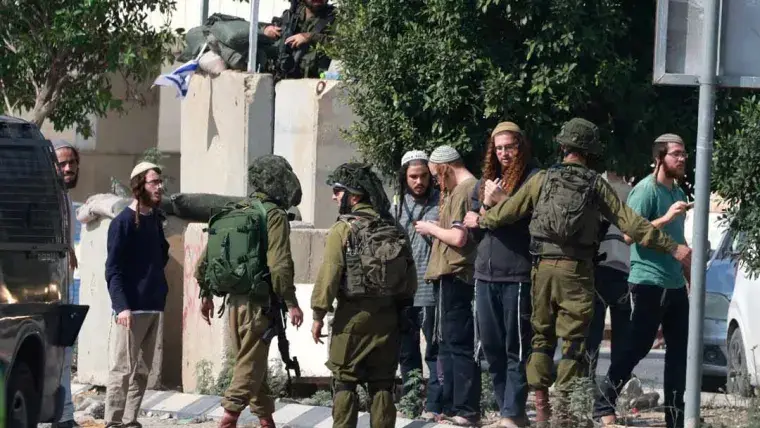
Colonizers attack citizens in Khirbat Mas'ud south of Jenin.

Jenin 3-11-2025 - Today, Monday, settlers attacked the homes of citizens in Khirbat Mas'ud, south of Jenin.

Local sources reported that the occupation forces assaulted the homes and lands of citizens and broke olive trees in Khirbat Mas'ud, in addition to releasing their livestock in the lands of the khirbah and among the homes of citizens.

Yesterday, a group of settlers attacked a house in the khirbah, smashing its windows and doors and hanging the flag of the occupation on its roof.

Khirbat Mas'ud belongs to the Zubda village council and consists of three population clusters: Iraq al-Dawar, Khirbat Faris, and Khirbat al-Qusur, with a population of about 350 people.

The occupation is bulldozing areas adjacent to the colonial outpost established on the mountain, seizing dozens of agricultural dunams in the area, which extends from Qafin to the mountains of Ya'bad south of Jenin.

PALESTINE

Mon 03 Nov 2025 9:23 am - Jerusalem Time

787 assaults against Palestinian citizens during last October

 The Palestinian Labor and Planning Department in the Palestine Liberation Organization issued its monthly report addressing settler assaults, house demolitions, and facilities in the West Bank and occupied Jerusalem. The highlights include: -

First: Settler Assaults

During the month of October, settler gangs carried out (787) assaults against Palestinian citizens and their properties, the highest number ever recorded in a single month. These systematic assaults indicate what the West Bank can expect in the coming months amid the growing influence of the far-right in controlling the Zionist state militarily and politically. This indicates that the West Bank is the core and focal point of the conflict between Palestinian rights and Zionist terrorism.

 These criminal assaults resulted in the martyrdom of young Jihad Muhammad Ajaj (26 years old) from the town of Deir Jarir, northeast of Ramallah and Al-Bireh, due to gunfire from settler gangs.

Meanwhile, (151) citizens were injured with various wounds as a result of assaults involving beatings, gunfire, stone-throwing, and gas spraying, including (14) women and (9) children.

The assaults included (36) shooting incidents, three hit-and-run incidents, while settler gangs destroyed (2210) fruitful olive trees and stole and killed (182) heads of livestock belonging to Palestinian farmers to pressure them and increase their costs of staying on the land. Additionally, (74) vehicles were damaged due to burning or stone-throwing, and settler gangs destroyed and burned (22) houses and agricultural, animal, and service facilities in villages and towns in the West Bank, concentrated in the governorates of Hebron, Jerusalem, Nablus, and Ramallah and Al-Bireh. In the context of pastoral settlement expansion, attempts were recorded last month to establish three settlement outposts in Kafr Qaddum in Qalqilya Governorate, Jabal Juha in Hebron city, and Al-Auja Spring in Jericho Governorate.

The criminal assaults were concentrated in Nablus Governorate (206 assaults), followed by Ramallah and Al-Bireh (192 assaults), Hebron (116 assaults), Salfit (59), Jerusalem (57 assaults), Tubas and the northern Jordan Valley (47 assaults), and Jericho, Bethlehem, and Qalqilya each with (25 assaults), Tulkarem (21 assaults), and Jenin (14 assaults).

Assaults escalated significantly in the past month in both quantity and quality due to the onset of the olive-picking season in the West Bank, as Palestinian families go out to their lands to harvest olives, a large portion of which is located in areas classified as "C." With the expansion of pastoral settlement outposts over the past two years, the area of friction and confrontation with settler gangs has expanded in areas that have seen settlers enter for the first time, some of which are classified as "B" areas. If the policy of establishing pastoral settlement outposts by extremist settlers continues, this indicates that the coming months and years will witness more confrontations, including material, human, and economic losses. These alarming figures signal a warning in the West Bank, and we must seek mechanisms for confrontation and resistance to stabilize citizens on their land and enhance their steadfastness.

Second: House and Facility Demolitions

During October, Israeli occupation authorities demolished (54) houses and facilities in the West Bank and occupied Jerusalem, including (24) houses and (30) facilities, among which were (5) self-demolitions in the neighborhoods of Al-Issawiya, Silwan, Al-Tur, Al-Masara, and Qalandiya, carried out by their owners to avoid paying exorbitant fines. The demolition operations were concentrated in the governorates of Nablus, Hebron, Jerusalem, Ramallah and Al-Bireh, Salfit, Tubas, the northern Jordan Valley, Jericho, and Qalqilya.

As part of the policy of collective punishment, the Israeli occupation forces demolished two houses belonging to the families of martyrs and prisoners whom the occupation forces accuse of carrying out resistance operations in the West Bank, namely the house of prisoner Abdul Rahim Al-Haimoni in Hebron city and the house of prisoner Maher Samara from the town of Bruqin in Salfit Governorate.

Settler gangs continued to vandalize and destroy citizens' facilities in the villages and cities of the West Bank, where the department documented settlers burning and destroying (22) homes and service, agricultural, and animal facilities, including in the villages and towns of Hawara and Duma in Nablus Governorate, the Massafer Yatta gatherings and the town of Surif in Hebron Governorate, the town of Bruqin in Salfit Governorate, the village of Mukhmas in Jerusalem

OPINIONS

Mon 03 Nov 2025 9:20 am - Jerusalem Time

A century and eight years since the Balfour Declaration, and the crime continues..!

Dr. Abdul Rahim Jamous

Dr. Abdul Rahim Jamous

Opinion Writer

On November 2, 2025, the one hundred and eighth anniversary of the infamous Balfour Declaration was marked, while the Palestinian homeland continues to bleed, and its people in Gaza, the West Bank, and Jerusalem are living through the most horrific chapters of the ongoing Nakba, under the fire of continuous Israeli aggression for over a year, surpassing all limits of extermination, destruction, and uprooting, amidst a troubling international impotence and a moral silence that reflects the imbalance of justice in this world that measures with double standards.

From Campbell-Bannerman to Balfour, and from London to Washington, the threads of the same colonial policy extend: a policy that gave birth to the Zionist entity as an advanced base for the Western project in the heart of the Arab region. The Balfour Declaration was not merely a political statement, but a legal and moral crime—a promise from one who does not own to one who does not deserve—paving the way for the birth of the greatest humanitarian tragedy of the twentieth century, the chapters of which continue to repeat today in Gaza, where war crimes, genocide, and ethnic cleansing are committed in broad daylight.

Today, after a century and eight years since that crime, Britain announces its recognition of the Palestinian state. This is a very belated step, but it carries political, moral, and legal significance that cannot be ignored. It essentially represents an implicit acknowledgment of the historical mistake that Britain committed against the Palestinian people, and an admission of its responsibility for the catastrophe that arose from its infamous promise and its mandate policy that handed Palestine over to Zionist gangs. However, this recognition remains incomplete unless it is translated into an official apology, practical compensation, and genuine support for the establishment of the Palestinian state on the borders of June 4, 1967, with East Jerusalem as its capital, and the implementation of Resolution 194 regarding the return of refugees to their homes.

Britain's recognition of the Palestinian state does not absolve it of its historical responsibility, but rather imposes a doubled obligation on it to rectify what its colonial policy has corrupted. It is called upon today to make a genuine atonement for its sin, not through words but through actions, by pressuring the Zionist entity to stop its aggression, end its occupation, and respect international legitimacy decisions that it has mocked for seventy-seven years.

The continuation of Israeli aggression and the open American and British support for it shows that the Palestinian Nakba is not a thing of the past, but a renewed crime committed every day, in the shadow of international complicity and the silence of institutions that are supposed to protect law, justice, and human rights. Therefore, it is the duty of the State of Palestine, along with the living peoples of the world, to take legal and political action to sue Britain for the Balfour Declaration and its consequences, and to hold the Zionist entity accountable for its crimes against humanity.

It is time for the international community to realize that there can be no peace or stability in the Middle East without achieving historical justice for the Palestinian people, represented in ending the occupation, establishing an independent Palestinian state, and the return of refugees to their homeland. Moreover, resistance to occupation in all its forms remains a legitimate right guaranteed by divine laws and international laws, as long as the occupation remains entrenched on Palestinian land.

And Palestine will remain—despite the wounds and destruction—alive and dignified, screaming to the world that its right does not expire with time, and that the Balfour Declaration will remain a stain of disgrace on the foreheads of those who created and nurtured it.

Indeed, God gives respite but does not neglect, and no right will be lost as long as there is a living people demanding it.