PALESTINE

Fri 07 Nov 2025 12:44 pm - Jerusalem Time

Egyptian-British discussions on developments in Gaza and Sudan

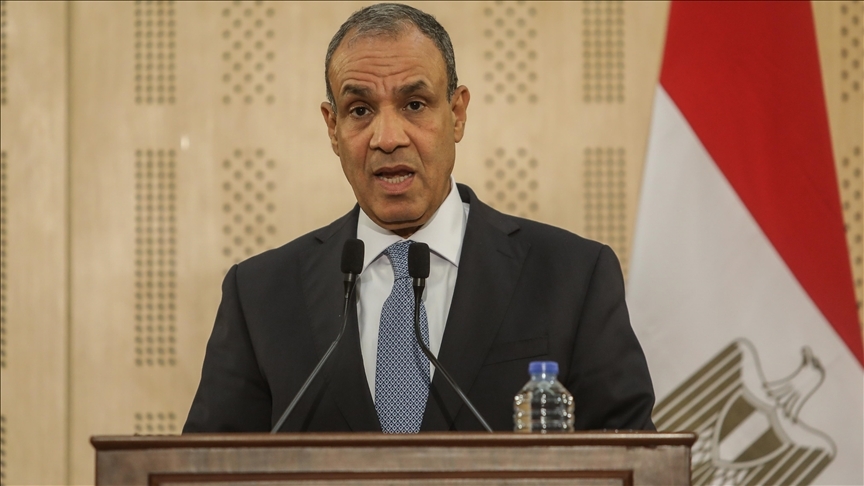
The Egyptian Foreign Minister, Badr Abdel Atti, discussed with his British counterpart, Yvette Cooper, the developments in Gaza and Sudan. This came during a phone call between the two ministers on Thursday, where they affirmed their commitment to developing bilateral relations and exchanging visits between the two countries, according to a statement issued by the Egyptian Foreign Ministry.

The statement clarified that Minister Abdel Atti reviewed the latest developments in Gaza and emphasized the "importance of solidifying the Sharm El-Sheikh peace agreement and working towards transitioning to the second phase of U.S. President (Donald) Trump's plan" to end the war in the sector.

On October 9, Trump announced that Israel and Hamas had reached an agreement on the first phase of his plan for a ceasefire and prisoner exchange, following indirect negotiations between the two parties in Sharm El-Sheikh, with the participation of Turkey, Egypt, and Qatar, under U.S. supervision.

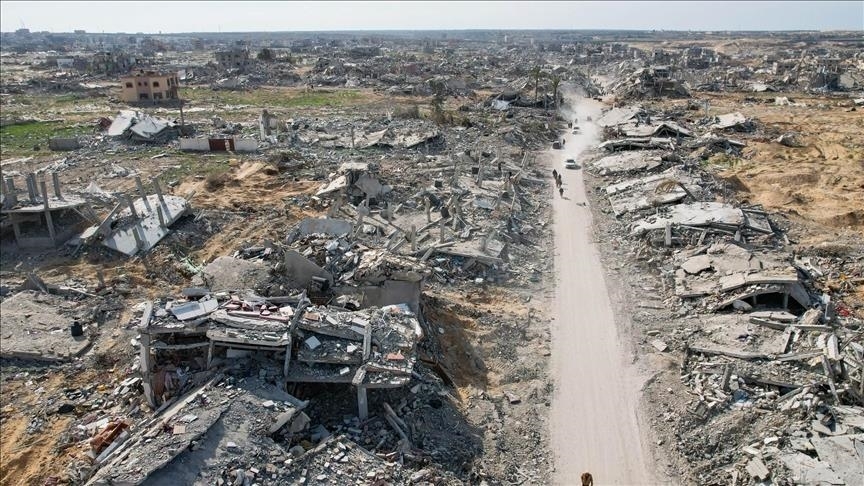
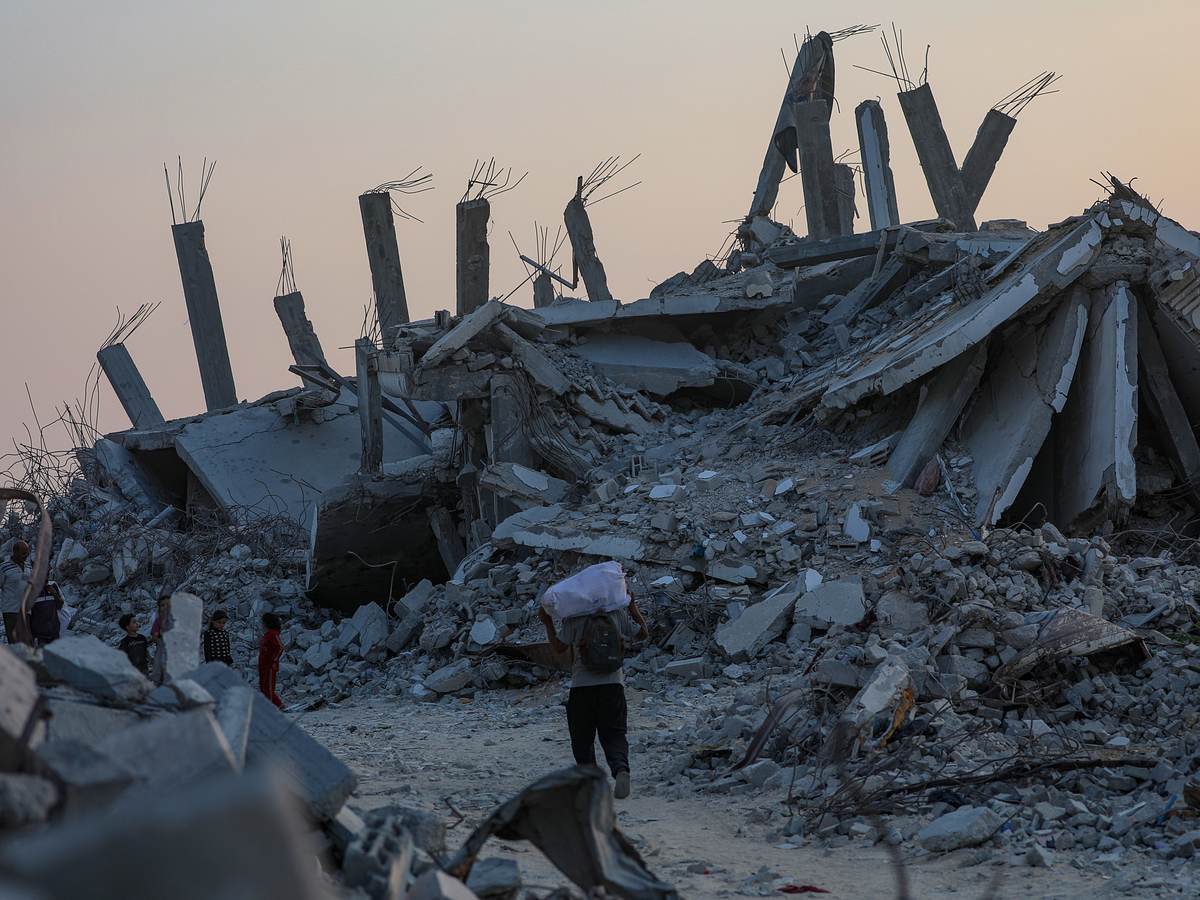
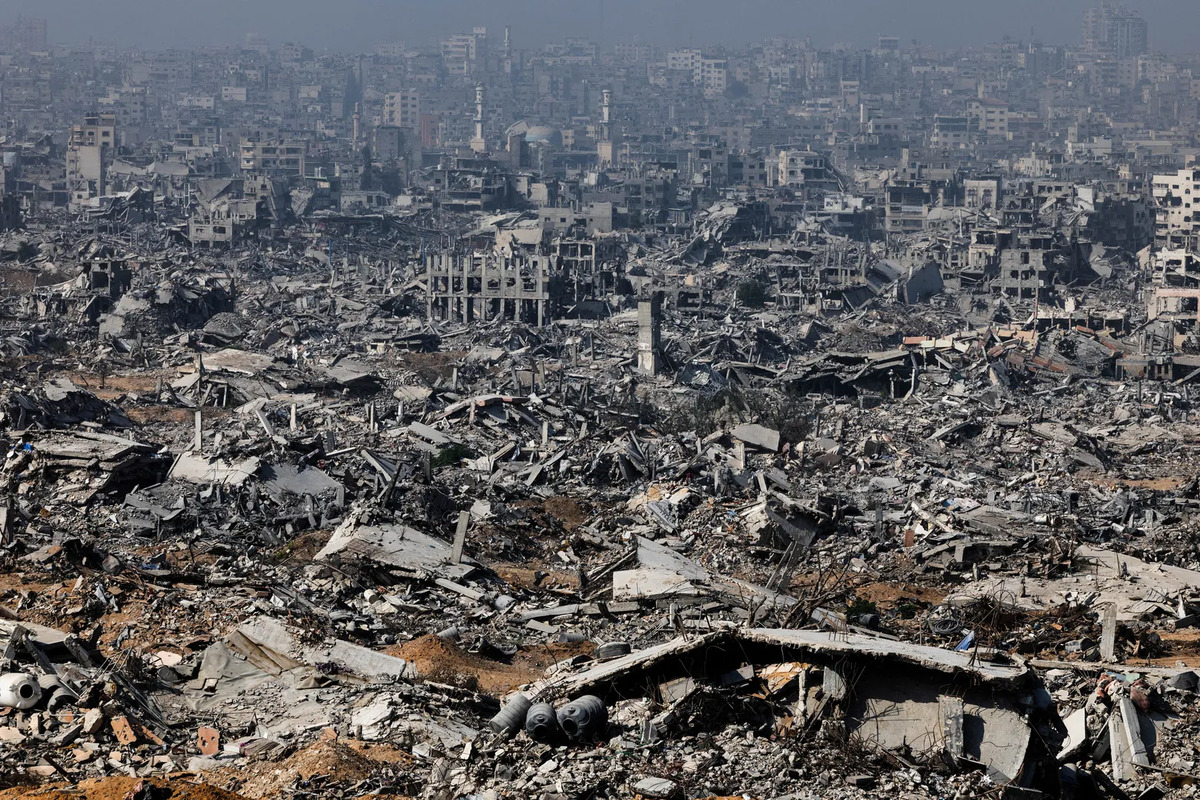
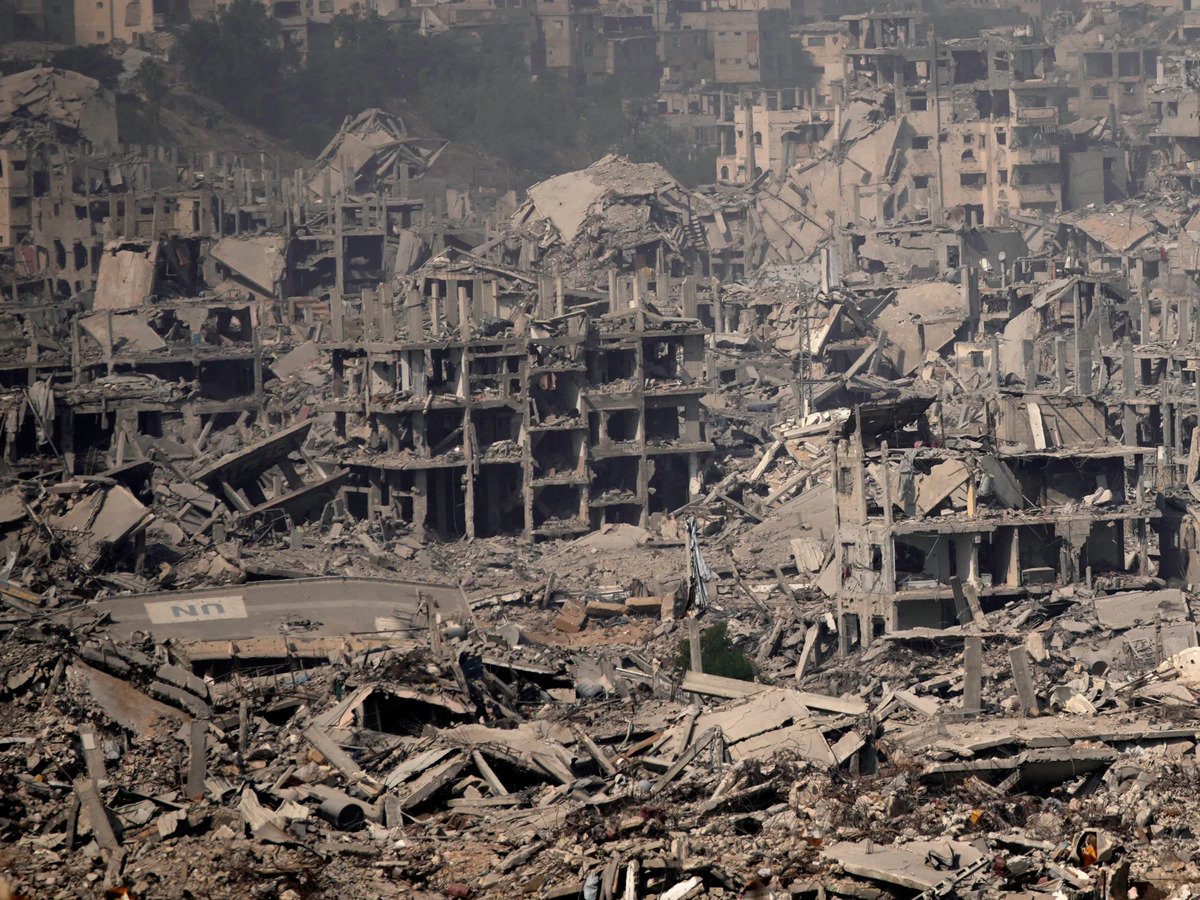
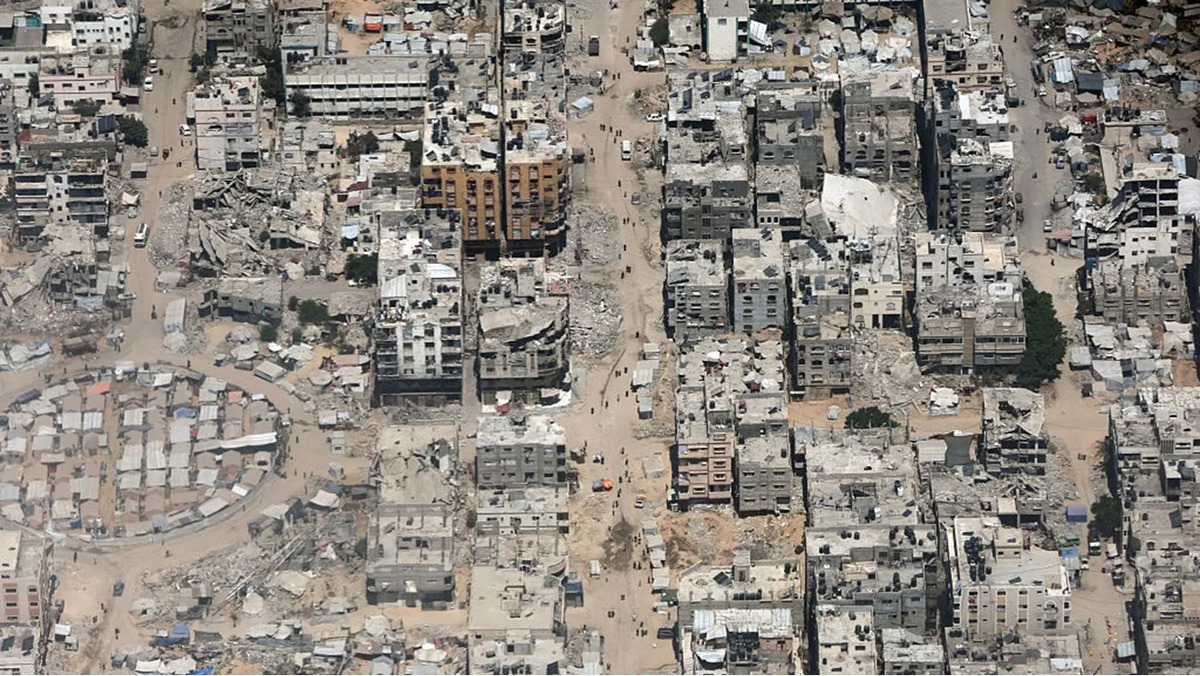
The agreement ended an Israeli genocide supported by the U.S., which began on October 8, 2023, and resulted in more than 68,000 Palestinian deaths, over 170,000 injuries, most of whom were children and women, and destruction that affected 90 percent of the civilian infrastructure in the sector.

Abdel Atti stressed the necessity of international solidarity to alleviate the humanitarian suffering of Palestinians in Gaza and to open a genuine political horizon to achieve the legitimate aspirations of the Palestinian people for the establishment of their independent state.

He praised the "historic step taken by the United Kingdom to recognize the State of Palestine," which occurred on September 22.

The Egyptian minister also reviewed the ongoing preparations for Egypt to host the international conference for reconstruction and early recovery in Gaza, scheduled to take place in Cairo during November.

He expressed his hope for the United Kingdom's active participation in the conference, "as one of the main participating and sponsoring countries," according to the statement.

He confirmed that the conference "will represent a pivotal step in mobilizing international support for reconstruction efforts in the sector and initiating a new path to support stability in the region."

Egypt seeks to activate a plan adopted by the Arab League and the Organization of Islamic Cooperation in March to reconstruct Gaza without displacing Palestinians, which will take five years at a cost of approximately $53 billion.

The United Nations estimates the cost of reconstructing Gaza at about $70 billion, due to the massive destruction caused by the Israeli genocide over two years.

Regarding Sudan, the statement indicated that the two ministers discussed the developments there.

Minister Abdel Atti condemned, according to the statement, "the blatant violations and atrocities that occurred in Al-Fasher," emphasizing the necessity of opening humanitarian corridors to facilitate the flow of humanitarian aid.

On October 26, "Rapid Support Forces" seized Al-Fasher and committed massacres against civilians, according to local and international organizations, amid warnings of entrenching a geographical division of the country.

Meanwhile, the commander of the "Rapid Support Forces," Mohamed Hamdan Dagalo "Hemeti," acknowledged on October 29 that "excesses" had occurred by his forces in Al-Fasher, claiming to have formed investigation committees.

Abdel Atti reiterated his country's "firm position supporting the unity and stability of Sudan and its national institutions."

The Egyptian minister informed his British counterpart about Egypt's efforts within the Quadruple Mechanism to support the ceasefire and reach a comprehensive ceasefire.

He emphasized the necessity of "coordinating regional and international efforts to reach a comprehensive humanitarian truce with guarantees for the flow of humanitarian and relief aid throughout Sudan to alleviate the suffering of the Sudanese people."

On Thursday, the "Rapid Support Forces" announced their agreement to "join the humanitarian truce," which they said was proposed by the "Quadruple" countries consisting of the United States, Saudi Arabia, Egypt, and the UAE.

The "Rapid Support Forces" did not provide details about the terms of the truce or its implementation mechanism, nor was there an immediate comment from the "Quadruple" or the Sudanese army.

This new position of the "Rapid Support Forces" came hours after the announcement by the head of the Transitional Sovereignty Council, Abdel Fattah Al-Burhan, of his insistence on eliminating them.

Since April 2023, Sudan has been witnessing a bloody war between the army and the "Rapid Support Forces," resulting in tens of thousands of deaths and the displacement of about 13 million people.
LATEST NEWS

Fri 07 Nov 2025 12:20 pm - Jerusalem Time

United Nations Office of the High Commissioner for Human Rights: Demolition orders in Umm al-Khair south of Hebron warn of new displacement

The United Nations Office for Human Rights in the occupied Palestinian territory stated that the demolition orders issued by the Israeli occupation authorities on the twenty-eighth of last month in the village of Umm al-Khair in Masafer Yatta, south of Hebron, threaten a new wave of forced displacement.

In a statement released today, Friday, the UN office called on the occupation authorities to immediately halt the collective demolition orders, which target 11 homes and vital community infrastructure in the village of Umm al-Khair.

It noted that the village of Umm al-Khair is home to 35 extended families who have lived there since being expelled from their lands in the Negev during the mass forced displacement of Palestinians between 1948 and 1949, known as the Nakba.

It pointed out that for years, the occupation authorities have subjected the residents of Umm al-Khair to discriminatory land regulation rules, in addition to several rounds of systematic demolition operations of Palestinian buildings that have resulted in the displacement of residents.

The UN office confirmed that the occupation claims that the homes in Umm al-Khair are "illegal" for lacking Israeli building permits, which are impossible for Palestinians to obtain, as is the case in other Palestinian villages in the southern Hebron hills and neighboring areas like Masafer Yatta.

The UN office indicated that, in contrast, settlers are allowed to expand settlements and build new colonial outposts linked to the nearby "Karmeil" settlement.

In September of last year, settlers established a colonial outpost in the middle of Umm al-Khair and intensified their harassment of Palestinian residents to force them to leave.

Despite an Israeli court issuing a temporary order to stop construction and prevent settlers from entering the outpost, the occupation authorities took no action to enforce the order, in stark contrast to the rapid and repeated demolitions of Palestinian buildings.

It clarified that impunity extends to unaccountable settler violence, which has escalated since October 7, 2023.

On July 28, 2025, a known settler shot and killed Palestinian human rights defender Awda al-Hathalin during a protest against the construction of a new colonial road on the community's land.

Al-Hathalin documented the shooting himself, and a video recording from another resident clearly showed the identity of the shooter.

However, the accused was placed under house arrest for only three days, after which he was released without any further consequences.

In 2024, the International Court of Justice concluded that colonial expansion, the demolition of Palestinian homes and properties, restrictions on movement, and discriminatory planning practices have created a coercive environment driving Palestinians to displacement, which constitutes forcible transfer of populations and is considered a war crime.

The Director of the United Nations Office for Human Rights in the occupied Palestinian territory, Ajith Sunghai, stated that the situation in Umm al-Khair represents a model of the escalating wave of Israeli actions aimed at entrenching its annexation of the West Bank, particularly Area C, in violation of international law.

He added: "Time is running out. The international community must exert pressure to protect the residents of Umm al-Khair from the imminent threat of forced displacement, and from any violence or further dispossession of their property."

PALESTINE

Fri 07 Nov 2025 12:20 pm - Jerusalem Time

New Gaza.. Between the Illusion of Peace and the Political Replacement Plan!!

Gaza today is living a mysterious phase in its political and geographical history. After two years of aggression and destruction, the conspiracy did not stop at the limits of war, but rather transitioned to a phase of 'post-war management' under a shiny title of 'reconstruction and peace,' while hiding behind it a new engineering plan for the sector known in political circles as 'the new Gaza.'

Western documents and reports indicate the existence of a broad project to reshape the administrative and economic reality of Gaza, led by the American-Israeli alliance with support from some Arab countries. The basic idea revolves around creating a new reconstruction area managed internationally or through a supervisory body that includes major companies, under what is known as the (GREAT Trust - Gaza Reconstruction, Economic Acceleration and Transformation) initiative.

The idea is presented as a gateway to 'economic peace,' but in reality, it seeks to transform Gaza from a resistant entity into an investment entity under supervision, while maintaining Israeli security control over the crossings and outlets. Leaked reports talk about the 'Gaza Riviera' plan, which envisions building technological cities and tourist areas on the ruins of the destroyed neighborhoods, managed through international partnerships, with a demographic redistribution of the population in a way that facilitates monitoring and control.

The United States holds the political and economic strings of the project and promotes it as a necessary step 'to ensure lasting security in the region.' As for the eight participating or observing countries, likely to include Egypt, Jordan, Saudi Arabia, the UAE, Qatar, Turkey, the United States, and Israel, with European oversight, each has different calculations.

In reality, there is no unified Arab plan, while Washington and Tel Aviv act according to the logic of 'imposing the status quo' through economic projects wrapped in humanitarian phrases. If we liberated the strategic political reading, we could confirm that Israel seeks to shift the conflict from the arena of resistance to the arena of reconstruction, that is, from the battle of liberation to the battle of funding and management.

It is an attempt to create a new reality that keeps Gaza within the 'economic cage,' so that calm is rewarded with aid and steadfastness is punished with deprivation. In this way, 'peace' becomes a tool for reshaping collective consciousness and emptying the cause of its resistant content.

From a legitimate perspective, peace plans should not be built on the concession of a fixed right or the relinquishment of usurped land. Allah said: 'And do not weaken in seeking the people; if you are suffering, then they are suffering as you are suffering, and you hope from Allah what they do not hope.'

'The new Gaza' is not a city to be built, but a battle of awareness to be fought; it can either be a gateway to reviving resistance or a passage to its liquidation.

PALESTINE

Fri 07 Nov 2025 12:16 pm - Jerusalem Time

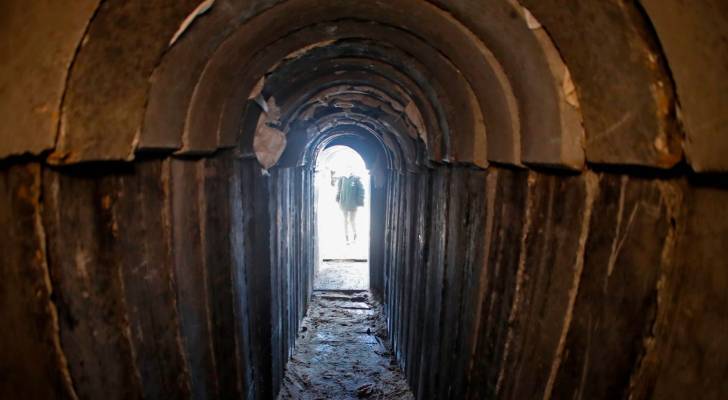
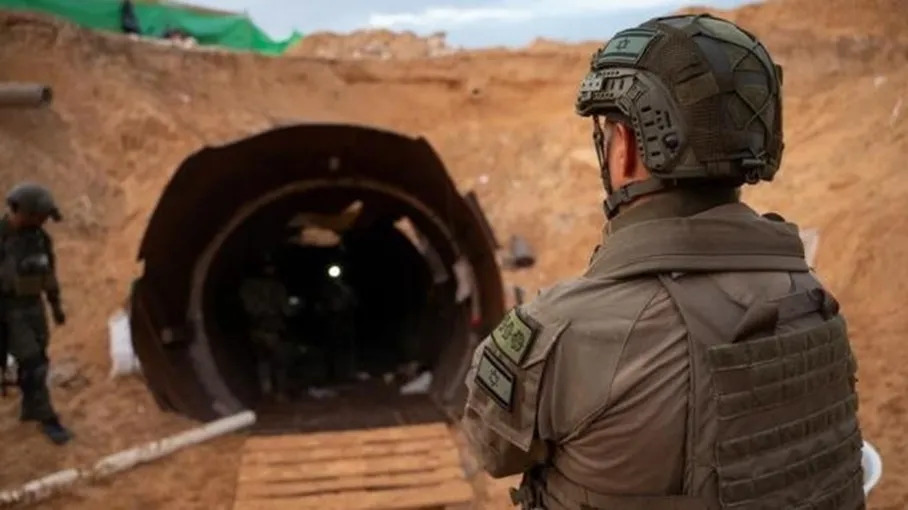
Zamir refuses to deport the trapped Al-Qassam fighters in Rafah, and Katz orders the tunnels to be erased.

Political and military discussions continue in Israel regarding the fate of dozens of Palestinian resistance fighters trapped inside a tunnel in Rafah, southern Gaza Strip, as efforts by mediators intensify to solidify a ceasefire agreement and prevent its collapse again, amid contradictory statements from Israeli officials reflecting internal disagreements on how to handle the issue.

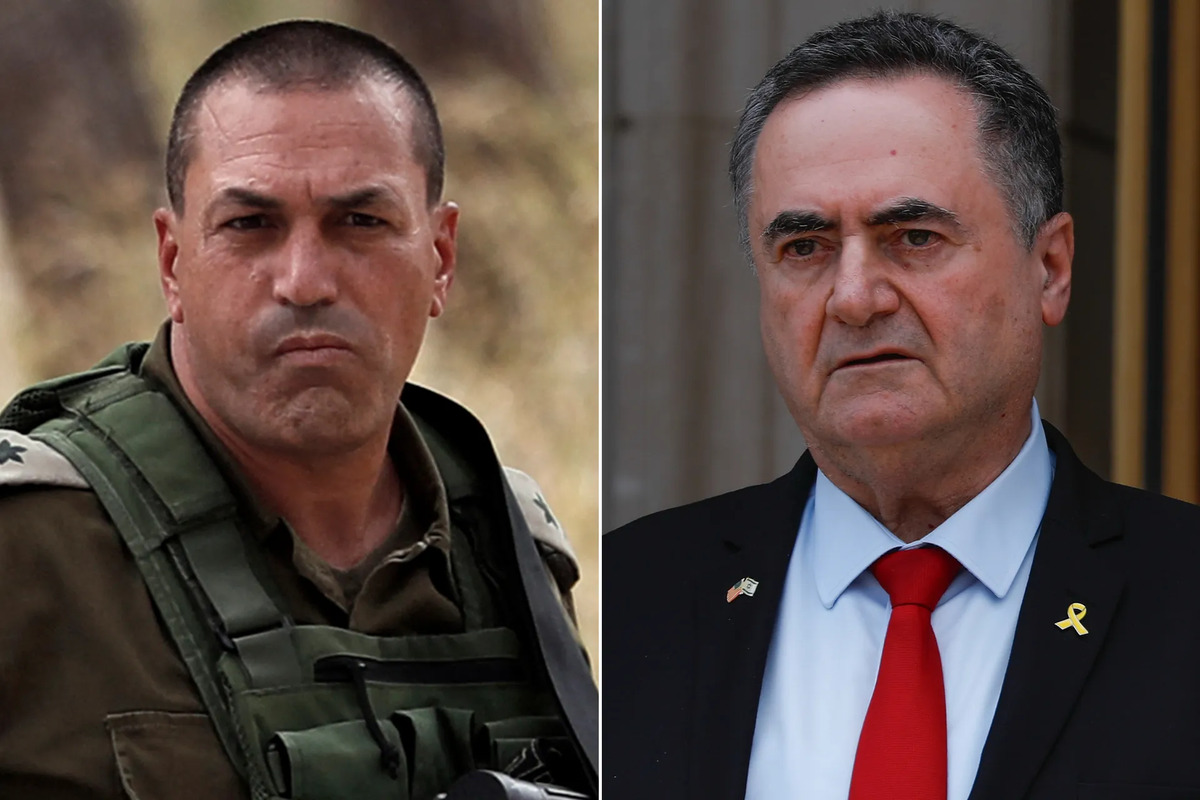
Chief of Staff Eyal Zamir stated during a meeting of the security cabinet that he opposes allowing the deportation of the fighters trapped in the tunnels, emphasizing that "the crisis must end either with their killing or their surrender."

Zamir indicated that he opposes moving to the next phase of the exchange agreement before recovering the bodies of Israeli soldiers held in Gaza, stressing that reconstruction should not be allowed before the complete disarmament of the sector.

Defense Minister Israel Katz revealed during the meeting that the idea of deporting the fighters "was raised previously," but was canceled after he claimed that Hamas had launched attacks during ceasefire periods, resulting in the deaths of three Israeli soldiers.

The Israeli army estimates that the tunnel contains between 120 and 150 fighters from the Izz ad-Din al-Qassam Brigades, the military wing of Hamas, trapped on the Israeli side of the "yellow line."

Earlier, the Israeli Broadcasting Authority reported that the army began mapping the complex tunnel in Rafah, while citing security sources that Israel refrains from attacking it, fearing the loss of information about the deceased Israeli officer Hadar Goldin.

For its part, the Israeli army denied having any information confirming that Goldin's body is inside the tunnel, describing the circulating reports as "false claims that harm his family."

In a related context, Katz announced that he issued orders to the army to "destroy and erase" all of Hamas's tunnels in the Gaza Strip "down to the last tunnel," stating, "If there are no tunnels, there will be no Hamas."

Katz had previously confirmed in statements that the operation to "disarm Gaza" includes the complete elimination of the tunnel network, noting that this issue has become "a central priority in the yellow zone under Israeli control."

These developments come as the sector faces an unprecedented humanitarian disaster following Israel's genocidal war on October 7, 2023, which has so far resulted in more than 68,000 martyrs and 170,000 injured, in addition to widespread destruction affecting 90% of the infrastructure and famine that has claimed hundreds of lives.

PALESTINE

Fri 07 Nov 2025 11:37 am - Jerusalem Time

Washington discusses with Palestinians a draft resolution to form an international force in Gaza.

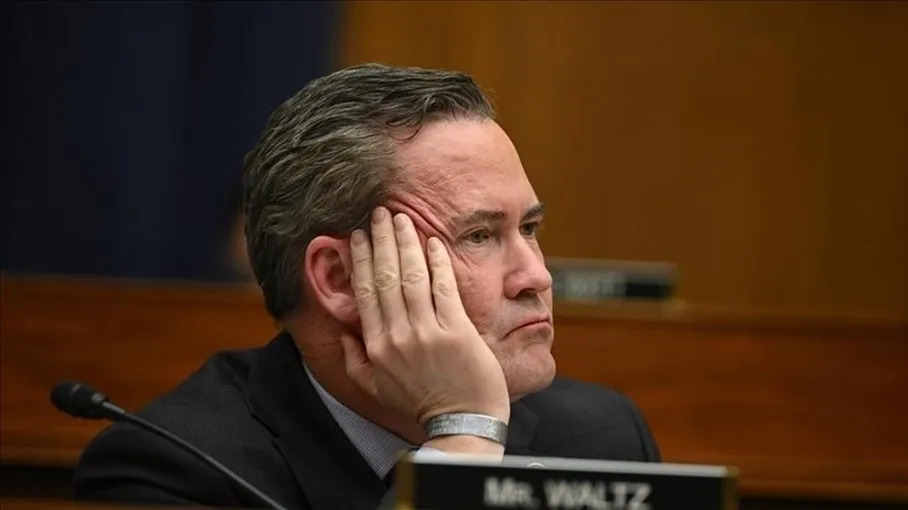
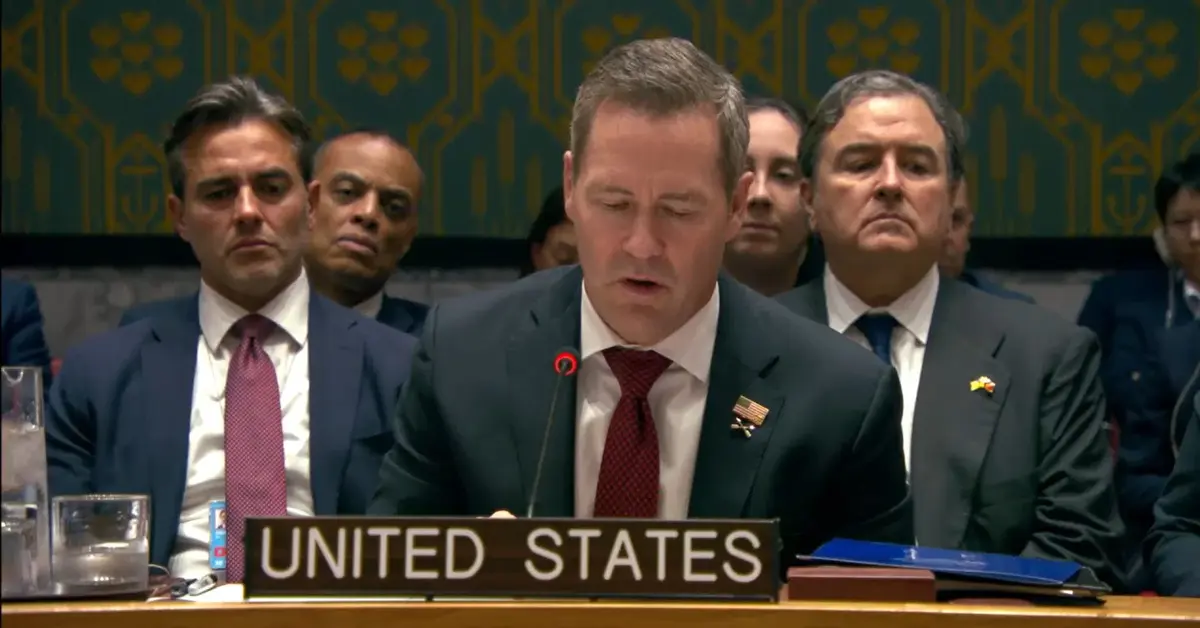
The U.S. Ambassador to the United Nations, Mike Waltz, met with Palestinian diplomats in New York to discuss a draft resolution submitted to the UN Security Council, aimed at establishing an international security force in the Gaza Strip.

Axios reported that Waltz met with Palestinian diplomats in New York City to discuss the draft resolution put forward by the United States to the UN Security Council, and quoted a source familiar with the details of the meeting as saying that the meeting between Waltz and the Palestinian diplomats was positive.

It was noted that the Palestinian delegation took advantage of the meeting to request clarifications on several aspects of the draft resolution.

Axios reported that several European countries, including Britain and France, expressed their desire to give the Palestinian Authority a greater role in managing the Gaza Strip.

It also mentioned that France requested the United States to introduce an amendment to the text of the draft resolution that would allow for an expanded role for the Palestinian Authority in the sector, adding that the United States and Israel expressed their objections to this amendment.

The site quoted American diplomats as saying that Washington expects both Russia and China to attempt to introduce amendments to the draft resolution, but they will not obstruct its passage.

The diplomats clarified that the United States aims to conclude negotiations on the draft resolution and present it for a vote in the Security Council within two weeks.

Axios pointed out that the meeting in New York is part of a series of diplomatic talks aimed at ensuring the alignment of the concerned parties before presenting the draft to the council.

The Hebrew newspaper Yedioth Ahronoth confirmed that Israel is seeking a letter of understanding from the administration of U.S. President Donald Trump to accompany the text of the UN Security Council draft resolution regarding the future of the Gaza Strip.

According to three political sources, the expected resolution includes disarmament of the sector and a mandate for an international force to contribute to its stability.

Meanwhile, Tel Aviv aims for the side letter to ensure clarity regarding the scope of its operational freedom under the wording of the UN resolution.

The newspaper noted that Israel had previously used a similar mechanism in the context of ceasefire agreements in Lebanon, where it was provided with side letters from the United States to define the limits of its operational freedom against Hezbollah.

LATEST NEWS

Fri 07 Nov 2025 11:13 am - Jerusalem Time

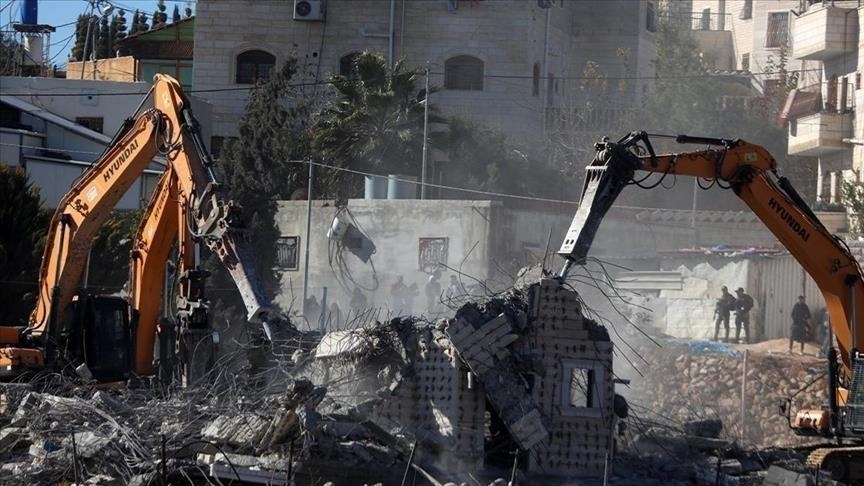
The occupation forces a Jerusalemite to demolish part of his house in Silwan.

The Israeli occupation municipality forced a resident today, Friday, to demolish part of his home in the town of Silwan, south of the Al-Aqsa Mosque.

Local sources reported that the occupation municipality compelled citizen Abdullah Qara'in in the Wadi Hilweh neighborhood of Silwan to demolish a room, under the pretext of lacking a permit.

PALESTINE

Fri 07 Nov 2025 10:38 am - Jerusalem Time

Egyptian media: Mediators are seeking to resolve the issue of Hamas members in Rafah, while Israel remains obstinate.

An Egyptian media outlet reported on Friday that mediators are making significant efforts to ensure the continuation of the ceasefire in the Gaza Strip and to resolve the issue of Hamas members detained within what is known as the 'yellow line' in areas controlled by the Israeli army in Rafah.

This was according to a report published by the 'Cairo News' channel, which indicated that Israel is trying to exploit this crisis to undermine the agreement.

The channel stated that amidst the mediators' efforts between Hamas and Israel to maintain the ceasefire agreement, 'Egypt is seeking to resolve the issue of Hamas members detained inside the yellow line in the Palestinian Rafah area, whom the occupying government is trying to exploit to sabotage the agreement.'

The channel described this crisis as 'the latest, which could threaten the failure of the agreement and a return to square one.'

It is estimated that there are 200 Hamas members in Rafah, which falls within areas controlled by the Israeli army under the agreement, according to the channel, which noted that the movement requested 'a safe passage for them.'

It added: 'This request was met with provocative responses from Netanyahu's extremist ministers.'

On Monday, the Hebrew newspaper 'Haaretz' quoted an unnamed Israeli political source as saying that Prime Minister Benjamin Netanyahu 'will not allow a safe passage for 200 Hamas members' located in areas controlled by the army to territories under Palestinian control.

It noted that Netanyahu's decision came after pressure from National Security Minister Itamar Ben Gvir and Finance Minister Bezalel Smotrich.

The channel confirmed that the political leadership in Egypt 'continues to exert efforts to keep the agreement in effect, to reach the remaining stages that ultimately lead to the reconstruction of the sector.'

The channel mentioned that Egyptian mediators 'proposed a plan allowing the remaining Hamas members in the yellow line to move to other areas of the sector, in exchange for handing over their weapons to Egypt to resolve the issue seen as a threat to the ongoing truce for a month.'

It pointed out that both the Palestinian and Israeli sides have made 'significant progress in the first phase of the plan,' despite Israeli violations of the agreement.

Regarding what the two sides achieved in the first phase, the Egyptian channel stated that this included 'the exchange of prisoners and detainees, and Hamas working diligently to recover the bodies of the remaining Israelis, and the entry of tons of aid daily.'

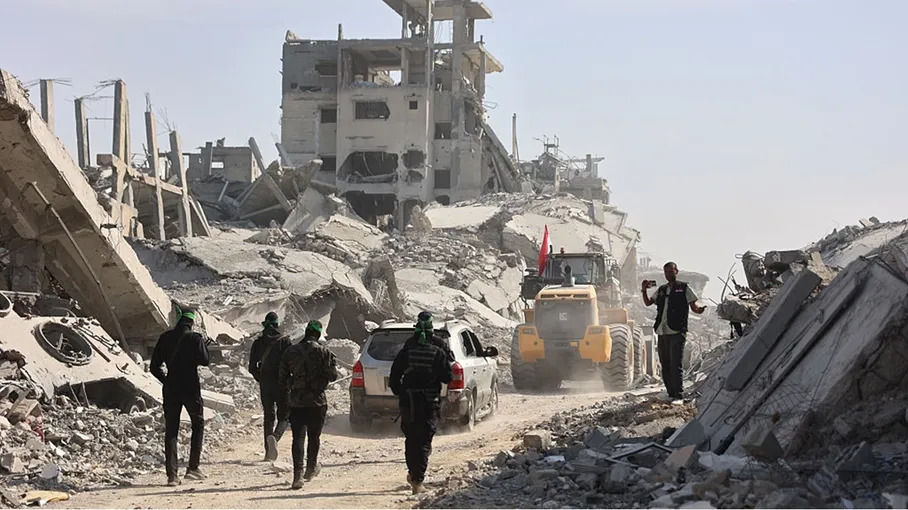
Hamas is facing a crisis in retrieving the bodies of Israeli prisoners from various areas of the sector due to a lack of equipment and heavy machinery and not always being allowed to search in areas under its control according to the agreement alongside teams from the International Committee of the Red Cross.

Despite this, the movement has handed over the twenty living Israeli prisoners and the bodies of 23 prisoners out of 28 since the ceasefire agreement came into effect on October 10, while Tel Aviv previously claimed that one of the received bodies does not match any of its prisoners.

Hamas and the government media office in Gaza have repeatedly confirmed that Israel has committed violations regarding the humanitarian protocol of the agreement, as 'the average number of aid trucks entering daily does not exceed 24 percent, with 145 trucks, out of the number of trucks stipulated in the agreement to enter daily, which is 600 trucks.'

In contrast, the Egyptian channel described the Israeli position as 'stubborn,' and noted that 'Defense Minister (Yoav Gallant) ruled out the idea of removing them from the sector due to accusations against the movement of violating the truce.'

The Egyptian channel confirmed that the Israeli accusations against Hamas of violating the truce 'are baseless.'

Two weeks ago, Israel accused the movement of violating the ceasefire agreement, claiming that its detained members in Rafah fired at an army unit, which Israel took as a pretext to launch an attack on the sector that resulted in the death of 100 Palestinians at the time.

The agreement ended a genocide committed by Israel on October 8, 2023, for two years with American support, resulting in over 68,000 deaths and more than 170,000 injuries, while Israel violated it dozens of times, leading to hundreds of deaths and injuries.

PALESTINE

Fri 07 Nov 2025 10:25 am - Jerusalem Time

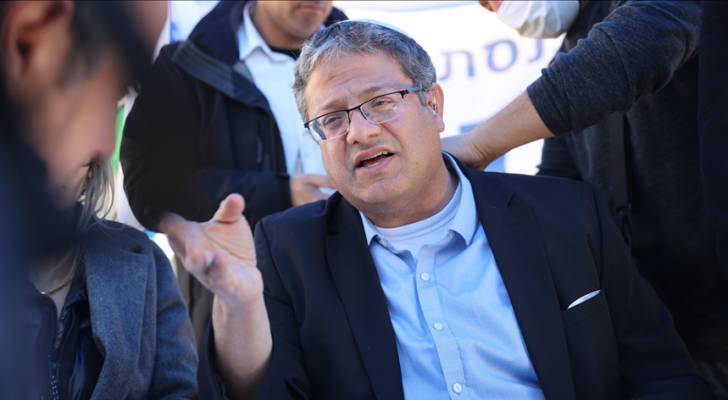
A Palestinian young man confronts Ben Gvir while overseeing demolition orders in the Negev.

In what has been described as a "provocative" move, the Minister of National Security in the Israeli occupation government, Itamar Ben Gvir, on Friday issued orders to demolish and evacuate Palestinian homes in the Negev desert.

During the tour, a young man from the area confronted Ben Gvir, demanding clarifications regarding the demolition policies targeting the Palestinian presence there.

Ben Gvir's response was to accuse the young man of illegal construction, telling him: "You are building without a permit."

Not stopping there, Ben Gvir announced his intention to escalate measures, asserting: "Now I will do what they have not done for thirty or forty years in the Negev, and I will issue demolition orders for anyone who builds without a permit."

These actions come as part of a tightening course adopted by the occupation authorities against Palestinian communities in the Negev.

The area has witnessed repeated demolition operations, justified by the occupation as "unauthorized construction."

In contrast, Palestinian and international human rights organizations view these measures as aimed at reducing the Palestinian presence and attempting to displace the indigenous population.

Local activists confirmed that the confrontation between the young man and Ben Gvir has drawn the attention of international media.

The confrontation was seen as a symbol of the ongoing tension surrounding the demolition issue, amid widespread criticism of the policies applied to the homes of residents in desert areas.

PALESTINE

Fri 07 Nov 2025 9:33 am - Jerusalem Time

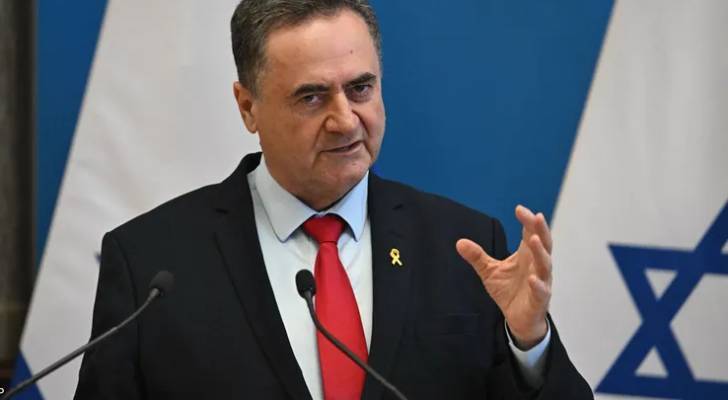
Katz: I issued my orders to the army to destroy all tunnels in Gaza down to the last tunnel.

The Israeli Minister of War (Israel Katz) announced today, Friday, that he has issued clear instructions to the army regarding military operations in the Gaza Strip.

Katz stated in remarks reported by Hebrew media: "I have instructed the army to destroy all tunnels in Gaza down to the last tunnel."

OPINIONS

Fri 07 Nov 2025 9:17 am - Jerusalem Time

Post-Genocide Thinking: From Victim Discourse to Liberation Project

Ramallah - "Al-Quds" dot com

Ramallah - "Al-Quds" dot com

Opinion Writer

The Israeli war on the Gaza Strip has shown that the Israeli colonial system has shifted from the physical destruction of the Palestinian people to complete extermination, breaking the will of the Palestinian people and reconstructing Palestinian society to dismantle its ability to endure, while accumulating economic and social pressure tools aimed at making the Palestinian people hostages to a situation in which they have no choice but to submit or surrender. Viewing what is happening not as an incidental event or a local tactical impasse, but as a comprehensive historical ideological project, is a necessary gateway to understanding the current Palestinian reality.

First: We must reframe the "main issue" from the perspective of dismantling the ideology that underpins genocide, not only as a result of the Zionist movement reaching the peak of its influence, but as an institutional international-capitalist partnership. At a time when the world has been unable, despite broadcasting the massacres on its screens, to stop the crime of extermination, this means that there is more than just a will to aggression; rather, there exists a system of interests that has entered into a decade of complicity with the occupation. This complicity is not only field-based but also includes texts and international agreements that justify or cloak violations in the name of ceasefires or reconstruction, while what is happening is the re-engineering of Palestinian society within the logic of post-extermination.

From here, any approach that does not raise accountability for genocide is not suitable for addressing the Palestinian issue. We must read the texts (agreements, resolutions, statements) as tools in the arsenal of extermination, not as summaries that justify coexistence or waiting.

Second: It is not enough to view the reconstruction in Gaza or the West Bank as humanitarian efforts or aid for survivors; it must be presented as part of the requirements of justice and accountability for the occupation. Reconstruction without accountability becomes a convincing settlement that cloaks the symbolic victory of the occupation and diminishes the strength of popular and political resistance. Therefore, progress in rebuilding the Palestinian political system can only begin from the roots of justice and accountability, continuing the Palestinian struggle internally, and shifting towards greater networking with the global struggle against racism and apartheid, and building international public opinion that treats Palestine as a complete national sovereignty issue and a people entitled to self-determination.

Third: The Palestinian unity movement and partnerships among women, youth, and local institutions are an important strategic entry point for dealing with this comprehensive scene. Youth and women are not merely subjects of a post-trauma phase; they are the cornerstone of rebuilding a resistant national will capable of forming a social base that transcends the transformations of surveillance and trauma into a state of producing the national alternative "producing decisions and positions," placing them at the heart of the equation and granting them the ability to invest this approach in building the Palestinian political system from within.

Fourth: The approach to political struggle must take into account that the international scene is not incidental or surprising, but is interconnected with the global solidarity movement and with the model of qualitative justice that emerged from the rejection of extermination. The state of solidarity with the Palestinian people today is not only a rejection of the occupation or aggression, but a rejection of genocide as a methodology. From here, forming international alliances based on both human and political justice becomes central; these alliances elevate Palestine not as a victim, but as a critical actor, not as one waiting for an international decision, but as one that shapes a decision at the international level tailored on the basis of the principle of Palestinian sovereignty and its soft powers.

Fifth and finally: The national challenge within Palestine is to invest this approach in achieving specific accomplishments: (1) Liberating the national discourse from the logic of donations or "aid" to the logic of rights and duties. (2) Rebuilding the Palestinian political system and the political alternative not as an extension of an existing situation, but as a transcendence of it based on the components of true institutional and popular sovereignty. (3) Transforming justice and accountability into political and legal pressure tools, both internally and externally, targeting the accountability of the occupation and dismantling its economic and social relations with the structures of the Palestinian state and the capitalist world.

PALESTINE

Fri 07 Nov 2025 8:59 am - Jerusalem Time

Settler attacks and a U.S. call to refrain from demolishing homes in the West Bank

Israeli settlers continued their assaults on Palestinians and their properties in the occupied West Bank, especially in the city of Hebron to the south, while occupation forces stormed the Um al-Sharayet neighborhood in the city of Al-Bireh on Thursday evening, firing sound and gas bombs, and assaulted a young man before withdrawing without any reports of arrests.

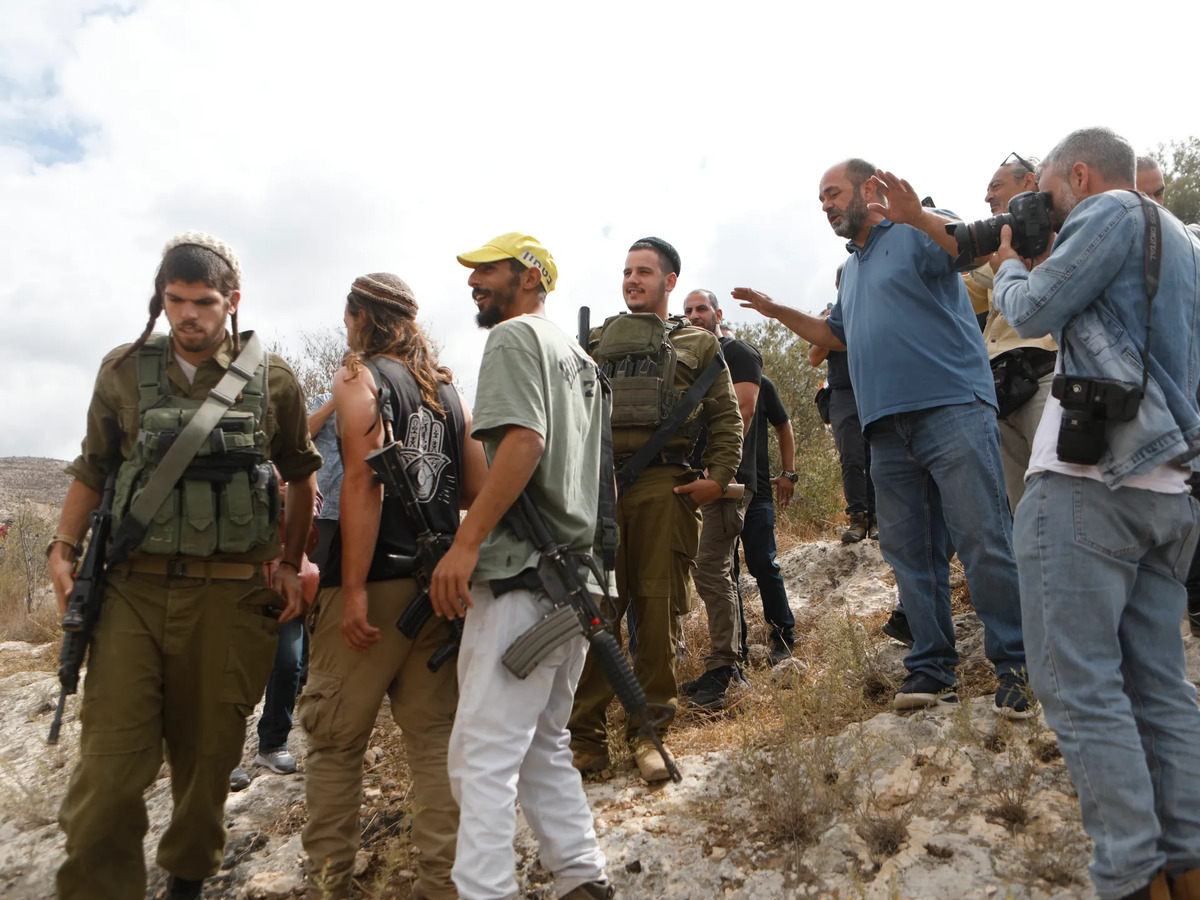
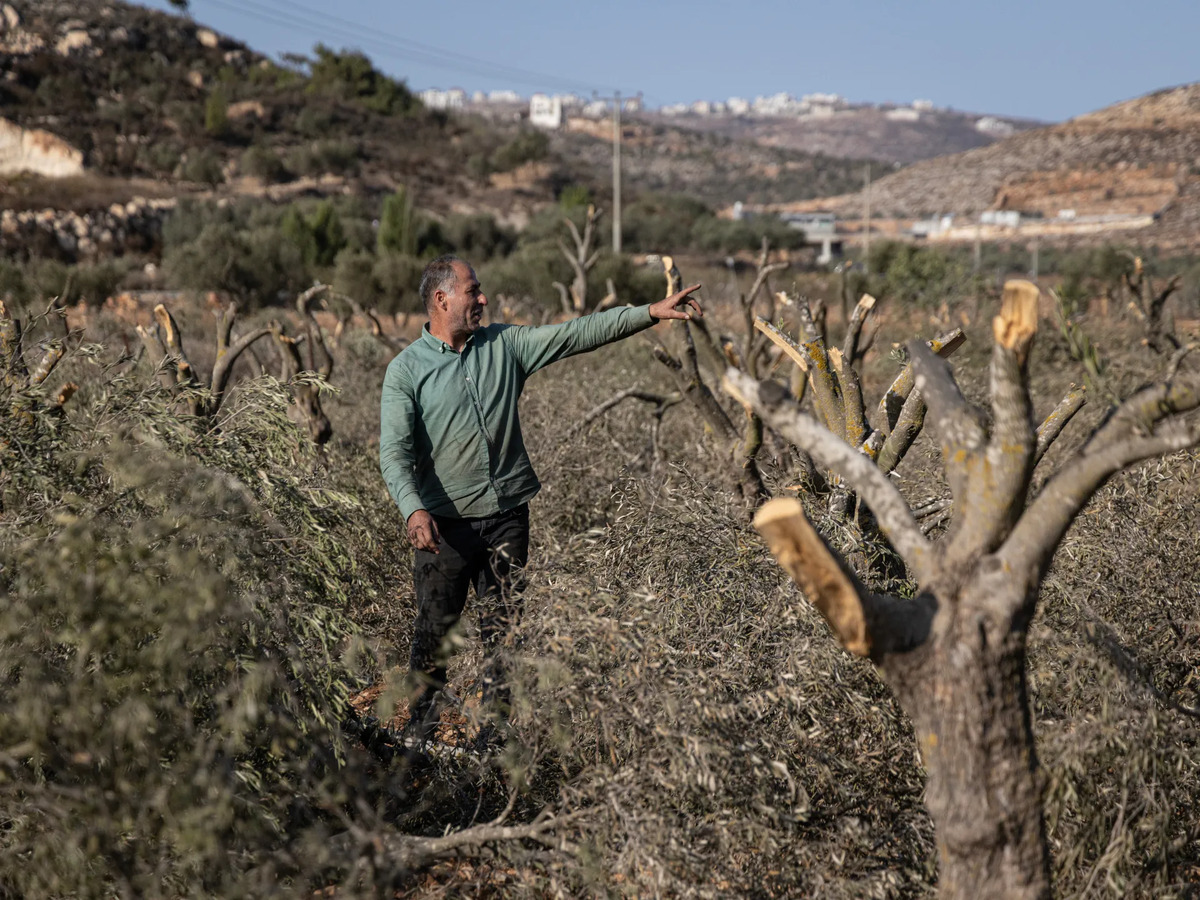
Extremist settlers attacked the village of Susiya in Masafer Yatta south of Hebron, and a reporter stated that settlers assaulted farmers and uprooted olive trees before attempting to attack the homes of the residents. The village is subjected to repeated assaults aimed at seizing agricultural land and expanding settlement outposts.

A Palestinian child was also injured in the face during an assault carried out by settlers in the Khellet al-Natch area east of Hebron. Settlers attacked the area with stones and assaulted Palestinian homes, resulting in the child's injury, and he was transferred to the hospital.

On another note, 104 Democratic members of the U.S. Congress urged Israeli Prime Minister Benjamin Netanyahu—wanted by the International Criminal Court for committing war crimes in Gaza—to abandon plans to demolish homes and a community center in the village of Um al-Khair in the West Bank.

The American lawmakers stated in their message that they are deeply concerned that any further actions by settlers or the government to destroy the village of Um al-Khair threaten the prospects for lasting peace, mutual security, and self-determination for both Israelis and Palestinians.

They added that the demolition orders not only threaten the vulnerable residents of the village but also risk further eroding support for Israel across the American political spectrum.

It is noteworthy that alongside the genocide in Gaza, Israeli assaults by the army and settlers in the West Bank have resulted in the martyrdom of 1,065 Palestinians and the injury of about 10,000 others, in addition to the arrest of more than 20,000 people, including 1,600 children.

PALESTINE

Fri 07 Nov 2025 8:43 am - Jerusalem Time

Trump announces Kazakhstan's joining of normalization agreements.. and speaks about Hamas.

U.S. President Donald Trump stated that the arrival of the international stabilization force in Gaza is very close and that Gaza is doing well at the moment.

He added during a meeting with leaders from Asia that Hamas will have a big problem if it does not act in the way it has committed to, and so far things are going well.

He pointed out that there are countries that have volunteered to intervene if a problem arises with Hamas or any other issue to deal with.

In a different context, Trump said that Kazakhstan is the first country in my second term to join the Abraham Accords and is the first among many countries.

He added, "I had a great call with Netanyahu and the President of Kazakhstan, and more countries are moving towards peace and prosperity through the Abraham Accords."

He further stated, "We will soon announce an official signing ceremony, and there are many other countries seeking to join this power club."

He explained that "there is a lot on the way towards uniting countries for stability and growth."

Regarding Iran, Trump said that it "requested that we lift the sanctions that make it difficult for them to do what they want, and I am open to that."

Kazakhstan announced that it will join the normalization agreements with the occupation, known as the Abraham Accords, in a move described as symbolic given the existing relations between it and the occupying state.

The government of Kazakhstan stated in a statement that "our anticipated joining of the Abraham Accords represents a natural and logical continuation of Kazakhstan's foreign policy path based on dialogue, mutual respect, and regional stability."

PALESTINE

Fri 07 Nov 2025 8:06 am - Jerusalem Time

Itikaf: Hamas has expressed its readiness to hand over its weapons to an international force.

Steve Witkoff, the White House envoy to the Middle East, revealed on Friday what transpired in a meeting held just hours before the signing of the ceasefire agreement in the Gaza Strip on October 9.

Witkoff explained that Hamas had shown a willingness at that time to hand over its weapons to an international security force, noting that the meeting was attended by former U.S. presidential advisor Jared Kushner.

During his speech at the "American Business Forum" in Miami, Witkoff pointed out that the movement had demonstrated an openness to cooperate with the international community regarding a "disarmament and amnesty program."

He confirmed that Washington is working on establishing a framework for a comprehensive plan for economic development and infrastructure in Gaza, which includes providing job opportunities and improving basic services.

The American envoy said, "If Hamas does that, it will realize that our development plan for Gaza is truly wonderful — much better than what has been proposed before."

He clarified that the initiative aims to create a "model" that can later be applied on a larger scale, with the goal of ensuring stability in the region.

In another aspect, Witkoff revealed ongoing American pressure on the Israeli occupation side to allow between 100 to 200 Hamas members trapped in the Rafah tunnels to exit in exchange for handing over their weapons.

He emphasized that this process represents a "model" for implementing the disarmament program.

The envoy noted that there is ongoing coordination with Turkish Foreign Minister Hakan Fidan and Israeli Strategic Affairs Minister Ron Dermer to ensure adherence to international agreements.

These developments come amid a hesitant "Israeli" stance; although Tel Aviv has not completely ruled out the idea during private discussions, Prime Minister Benjamin Netanyahu publicly opposes granting a safe passage to members of the movement.

The United States had previously offered a 24-hour safe passage for fighters trapped in the Rafah tunnels before Hamas later expressed interest in the offer.

PALESTINE

Thu 06 Nov 2025 6:33 pm - Jerusalem Time

The "Rafah Tunnels" file complicates the ceasefire scene in Gaza with American and Turkish initiatives and an Egyptian proposal.

The fate of about 200 fighters from Hamas, trapped inside a network of tunnels in Rafah, represents the most complicated obstacle to solidifying the fragile ceasefire agreement in the Gaza Strip.

While the administration of President Donald Trump and regional players like Turkey intervene in mediation to "defuse this bomb," all proposals collide with a rigid stance from the Chief of Staff of the occupying army, Eyal Zamir, who has linked their survival to one condition: the retrieval of the body of officer Hadar Goldin.

Hebrew media outlets, citing two senior American officials, revealed that the Trump administration proposed a solution to the crisis, considering that the presence of the militants in the tunnels "undermines the ceasefire."

PALESTINE

Thu 06 Nov 2025 4:41 pm - Jerusalem Time

Netanyahu and Trump draw a "Gaza map".. a secret plan to isolate Hamas and exclude it from power.

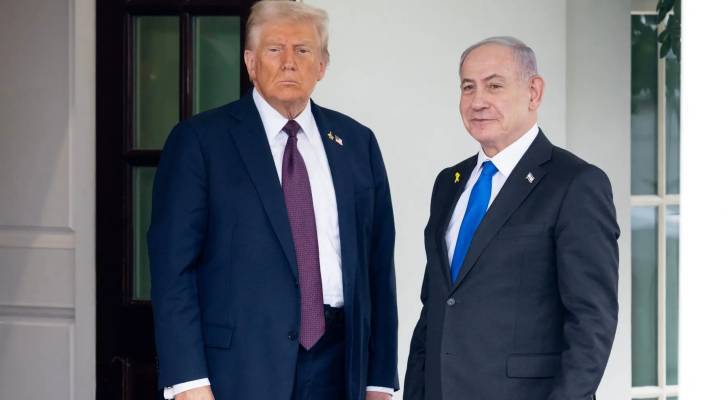
The Prime Minister of the occupying state, Benjamin Netanyahu, revealed the existence of a '20-point plan' prepared in coordination with the team of U.S. President Donald Trump, aimed at isolating Hamas and excluding it from ruling Gaza in the future.

Netanyahu emphasized that the recovery of hostages will not occur under the movement's conditions, asserting the continued presence of occupation forces in the sector to enforce disarmament 'if necessary.' Netanyahu's statements come in the context of increasing discussions about the fate of the Gaza Strip 'for the day after' the war.

He noted that 'everyone assumed we would recover the hostages only under Hamas's conditions,' explaining that this means 'withdrawing from Gaza and allowing them to reorganize,' which the occupying authorities reject.

Netanyahu announced that President Trump and his team, along with Minister 'Ron Dermer,' 'prepared a plan of twenty points that effectively isolated Hamas.' He clarified that this initiative 'seeks to provide an opportunity for an international force to disarm Hamas and exclude it from the future governance of Gaza.'

Regarding coordination guarantees, Netanyahu confirmed that 'the United States has been very clear that the only military forces that will enter Gaza will be acceptable' to the occupation.

In conclusion, Netanyahu affirmed complete alignment in visions with the current U.S. administration, stating: 'I and President Trump think the same way about the Middle East, and we are moving together to achieve our vision.'

ARAB AND WORLD

Thu 06 Nov 2025 4:35 pm - Jerusalem Time

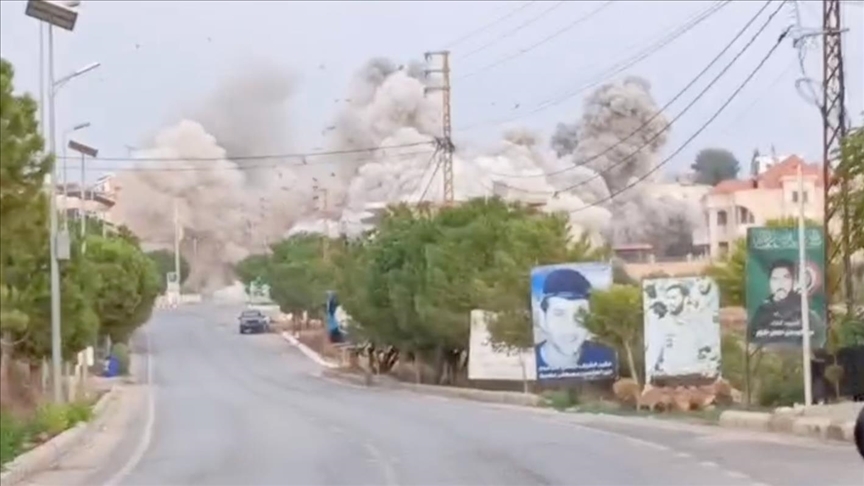
Israeli airstrikes on two towns in southern Lebanon following evacuation warnings.

The Israeli army launched airstrikes on the towns of "Tair Daba" and "Al-Taybeh" in southern Lebanon on Thursday afternoon, following warnings to the residents of these towns to evacuate, marking the broadest warning since the ceasefire in November 2024.

This comes as a continuation of the escalation that Israel is pursuing against southern Lebanon and the repeated violations of the ceasefire in recent times.

The official Lebanese news agency reported that Israeli fighter jets targeted a building in the town of Tair Daba in the Tyre district, in addition to another building in the town of Al-Taybeh in the Marjeyoun district, without mentioning any injuries or fatalities.

The agency added that Israeli drones are flying at very low altitude over Beirut and its southern suburbs.

In contrast, the Israeli army announced in a statement the start of a series of airstrikes in southern Lebanon, claiming to target "military objectives of Hezbollah."

Earlier on Thursday, the Israeli army warned Lebanese residents to evacuate the villages of Al-Taybeh, Tair Daba, and Aita al-Jabal (south), announcing its intention to target "infrastructure" it claims belongs to "Hezbollah," marking the broadest warning since the ceasefire in November 2024.

PALESTINE

Thu 06 Nov 2025 4:23 pm - Jerusalem Time

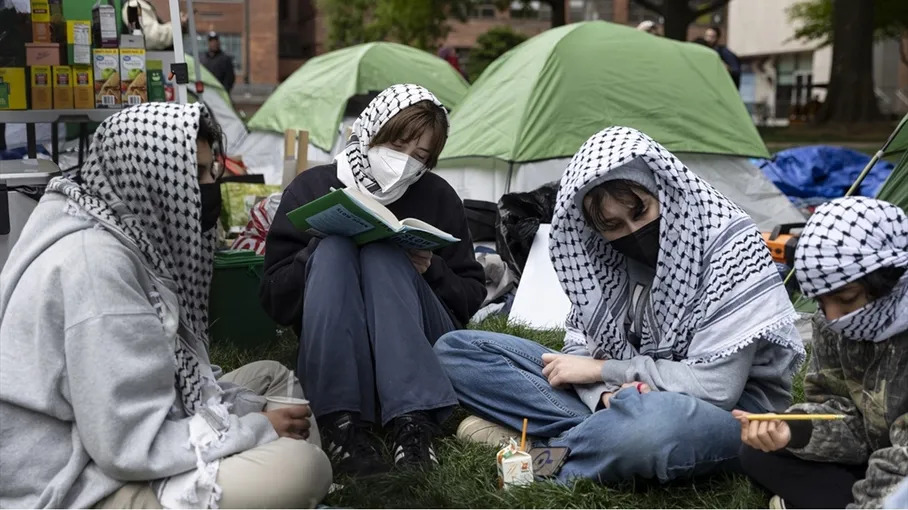
A huge leap in investigations of "anti-Semitism" within American universities after the Gaza war.

American universities have witnessed a significant increase in investigations related to allegations of anti-Semitism since the outbreak of the Gaza war on October 7, 2023. The Guardian published a report by journalist Alice Speri stating that U.S. government investigations into universities regarding allegations of anti-Semitism have risen sharply, with more investigations opened in the last two months of that year than in the previous two decades, according to a report released on Monday and shared exclusively with The Guardian.

The data, collected by the Middle East Studies Association and the American Association of University Professors, which relies on publicly available records, provides a detailed narrative of how historic civil rights legislation—particularly Section 6 of the Civil Rights Act of 1964—has become a key tool for restricting free speech on campus.

According to the report, the Biden administration has used this section, which aims to prevent discrimination in educational institutions, to target pro-Palestinian activism, and it later became the preferred weapon of the Trump administration to threaten universities with billions of dollars in funding cuts and impose its ideological priorities on issues far beyond anti-Semitism.

PALESTINE

Thu 06 Nov 2025 3:32 pm - Jerusalem Time

Israeli concern: The ongoing arrangements for Gaza will allow Hamas to reap the benefits, and we will pay a heavy price for it.

Despite the American promotional momentum surrounding post-war arrangements in Gaza, including the formation of a technocratic government and the deployment of an international Arab force on the borders, and replacing Hamas elements with Palestinian police officers, the prevailing conviction within "Israel" is that no one will be able to dismantle what is known as the "terrifying tunnel city" in the sector.

Israeli orientalist Haim Golovnitzitz, an analyst on Middle Eastern affairs, stated that "there is no doubt about the sincerity of the United States' intentions and the commitment of its president Donald Trump to resolve the Gaza issue, although global American commercial considerations also play a role in this. However, the draft presented by the United States to the Security Council resembles a pyramid scheme, where each party involved is only following illusions."

He explained in an article published by "Yedioth Ahronoth," translated by "Arabi21," that "the details in the American proposal grant Washington and its allies a broad mandate to manage Gaza, through the establishment of an enforcement force operating under the supervision of a peace council, tasked with securing the borders between the occupation and Egypt, training a new Palestinian police force, disarming Hamas, destroying its infrastructure, and preventing its reconstruction, alongside supporting a non-political technocratic committee in Gaza, which will later transfer its powers to the Palestinian Authority after completing the required reforms for implementation."

He noted that "the American plan is well-prepared according to the best traditions, but it lacks realistic feasibility. Trump's plan, which replaced the Egyptian-Saudi initiative, spoke of introducing international and Arab forces to manage the sector and maintain peace, yet the new draft shows the adoption of the Arab-Palestinian position as crystallized during the recent coordination meetings in Cairo and Ankara, which concluded with a unified stance against the entry of any foreign force, even if it is Arab, into the sector, limiting the external presence to maintaining security at the borders only."

He pointed out that "the expected Arab force, which will include participants from Egypt, Indonesia, Qatar, and Turkey, confirmed that its soldiers will not confront Hamas with force, nor will they work to neutralize its tunnels or disarm it, and a 'deceptive' agreement may be reached assuming that the movement hands over its heavy weapons to its brothers."

He added that "the foreign ministers of Arab and Islamic countries revealed at the Istanbul conference the clear truth, which is that no one intends to confront Hamas; rather, the opposite is true; the vast majority seeks to maintain it as a military force, using the Palestinian Authority as a temporary facade, while Hamas continues to manage the scene from behind the scenes."

He emphasized that "the supposed non-political technocratic conference is a continuation of the Trumpian deception, as Hamas officials presented the mediators with a list of 45 non-political candidates on its behalf, and they quickly supported the nomination of Amjad Al-Shawa from Gaza, presenting him as a neutral figure, despite being known for his closeness to the movement and his prominent role in the starvation campaign it organized against the occupation."

He added that "Hamas still controls 50 percent of the sector, except for limited pockets, and it will ultimately determine who manages the sector militarily and civilly.

Although Americans are known for their meticulous planning and operational details, they lack an understanding of the general Arab and Palestinian mood, as recent opinion polls show that 70 percent of the residents of Gaza and the West Bank oppose disarming the resistance at any cost and reject any foreign control over Gaza, including Arab control.

He saw that "the most likely scenario is to hold a technocratic conference in the name of Hamas, with the internationalization of the issue in the Security Council, and the deployment of an Arab force only on the Israeli-Egyptian borders, while Palestinian police officers, most of whom are supporters of Hamas, replace the movement's elements, without dismantling the tunnels or removing the weapons, with continued Gulf financial support for these arrangements.

PALESTINE

Thu 06 Nov 2025 2:26 pm - Jerusalem Time

The Israeli army is training in the Jordan Valley to counter an attack similar to October 7.

The Israeli army will begin a military exercise next Monday simulating the defense against an attack similar to the Al-Aqsa Flood operation launched by the Palestinian resistance against the occupation's bases and settlements in the Gaza envelope on October 7, 2023.

The official Israeli broadcasting authority stated that the Israeli army will start a large-scale military exercise next week, led by the central command, "based on the lessons learned from the events of October 7."

The exercise is part of efforts to enhance readiness to confront the possibility of escalation, infiltration by armed individuals, and operations occurring in the West Bank and the Jordan Valley, according to the authority.

It was clarified that the exercise is scheduled to begin next Monday and will involve two military divisions: the West Bank Division and the Gilad Division (96), lasting for three days.

In addition to units from the Air Force, special units, and forces from the General Security Service (Shabak), as well as police and civil defense forces deployed in the area, according to the authority.

The aim of the exercise is to train all these parties on a diverse range of emergency scenarios to ensure a unified and effective response in the event of any real threat.

The broadcasting authority mentioned that, coinciding with these preparations, a special discussion was held chaired by Chief of Staff Eyal Zamir focusing on the threat of drones, indicating that the exercise may include a simulation of confronting this type of unconventional aerial threats.

PALESTINE

Thu 06 Nov 2025 2:26 pm - Jerusalem Time

Gaza Missing Persons Committee: More than 10,000 dead are still buried under the rubble.

The National Committee for Missing Persons in the genocide against Gaza stated that more than 10,000 martyrs are still buried under the rubble.

Aladdin Al-Aklouk, speaking on behalf of the committee (non-governmental), said during a press conference in Gaza City that the sector "has turned into the largest gathering of graves in the world," pointing out that "about 10,000 Palestinians are still missing under the debris."

He explained that "these martyrs were buried under the rubble of their homes, which have turned into mass graves, without their final dignity being preserved or their bodies being retrieved."

Al-Aklouk added, "We express our shock and strong condemnation of the absence of an effective role by international organizations and humanitarian bodies, especially those concerned with the issue of missing persons, in light of the ongoing escalating humanitarian disaster."

He noted that the committee has followed "with great pain" what he described as the double standards of the international community in dealing with the bodies of Palestinian victims, compared to the attention shown by various parties in retrieving the bodies of Israeli prisoners, which reflects - according to him - "a grave injustice and clear bias against the victims of Gaza."

Al-Aklouk called on Palestinian President Mahmoud Abbas to "activate all political, legal, and logistical channels to pressure for the follow-up of the missing persons file and to care for their families' affairs."

He urged the international community to send specialized teams and heavy equipment and technologies to detect bodies under the rubble, and to conduct DNA tests to identify the victims, and not to leave them among the "missing unidentified."

He also called on the international community to "hurry up the reconstruction, starting with the removal of rubble and the retrieval of bodies."

Since October 7, 2023, Israel - with absolute American support - has committed genocide in the Gaza Strip, resulting in more than 68,000 martyrs and 170,000 injured, most of whom are women and children, and thousands missing under the rubble.

Despite the ceasefire agreement between Hamas and Israel brokered by mediators, the occupation has committed many violations and continues to impose a suffocating blockade on Gaza.

PALESTINE

Thu 06 Nov 2025 2:17 pm - Jerusalem Time

340 Israeli assaults on olive pickers in the West Bank during the month.

The head of the Palestinian Wall and Settlement Resistance Commission, Muayad Shaaban, stated that the Israeli occupation army and settlers have carried out 340 attacks against olive pickers in the occupied West Bank since October of last year until today.

Shaaban mentioned in a statement from the commission that the commission's teams monitored 62 attacks carried out by the Israeli occupation army and 278 attacks carried out by settlers in various areas of the West Bank.

According to the statement, the violations varied, including violent physical assaults, arrest campaigns, movement restrictions, access denial, intimidation and harassment in all its forms, and direct gunfire.

Regarding their geographical distribution, the statement clarified that Ramallah Governorate witnessed 107 attacks, Nablus 94 attacks, while Hebron experienced 38 attacks.

There were also 92 cases of movement restrictions and intimidation of olive pickers recorded, in addition to 59 cases of beating and assault against farmers.

The statement pointed out that the attacks on olive-planted lands since the beginning of the current season have led to the destruction of a total of 1,200 trees, considering the current olive season to be "the hardest and most dangerous in recent decades."

This is due to the Israeli insistence on imposing closed military zones on agricultural lands.

The olive season is one of the most important agricultural seasons in Palestine, as thousands of families rely on it as a primary source of income and livelihood.

According to a report issued by the Palestinian Ministry of Agriculture, the current season is one of the weakest in recent decades, with field estimates indicating that production does not exceed 15% of the normal rate.

According to ministry data, Palestine's olive oil production in 2024 reached about 27,300 tons.

Settler attacks in the occupied West Bank have significantly increased with the onset of the olive season, which begins in the second third of October each year, and constitutes a primary source of livelihood for thousands of Palestinian families.

According to data from the Wall and Settlement Resistance Commission, the Israeli occupation army and settlers carried out 766 attacks against Palestinians, their properties, and their sources of livelihood in the West Bank during last October.

These attacks fall within a broad wave of Israeli escalation in the West Bank by the army and settlers, which has resulted in the martyrdom of at least 1,066 Palestinians and the injury of about 10,000 others over the past two years, in addition to the arrest of more than 20,000 people, including 1,600 children.

PALESTINE

Thu 06 Nov 2025 2:07 pm - Jerusalem Time

The Israeli army demolishes two Palestinian homes west of Jerusalem.

Israeli forces demolished two Palestinian homes on Thursday in the western part of occupied Jerusalem, claiming "construction without a permit."

Eyewitnesses reported that an Israeli force stormed the town of Qatna accompanied by vehicles and bulldozers, and demolished the two homes that were inhabited before the demolition, which had been built about 20 years ago on private land and had official documents.

According to the Wall and Settlement Resistance Commission, Israel "has carried out 1,014 demolition operations in the West Bank, including East Jerusalem, affecting 3,679 facilities, including 1,288 inhabited homes, 244 uninhabited homes, and 962 agricultural facilities, among others, since the start of the genocide in Gaza."

PALESTINE

Thu 06 Nov 2025 1:29 pm - Jerusalem Time

Engineering Starvation.. How Does the Occupation Manage Market Chaos to Sustain the Subjugation of Gaza?

Since the announcement of the ceasefire agreement in the Gaza Strip in mid-October, some changes have emerged in the traditional methods of strict military blockade, starvation, and direct extermination, in order to complete the plans of the Israeli occupation to subjugate the citizens of Gaza.

The updated version of the occupation's policies reinforces the deadly and expelling environment aimed at displacement and imposing surrender under the pressure of starvation through aid management, market control, and monopolizing essential materials.

What draws attention is that dozens of trucks that recently entered Gaza and were observed passing through densely populated areas without any noticeable actual security coordination have been subjected to looting.

PALESTINE

Thu 06 Nov 2025 1:18 pm - Jerusalem Time

Global newspapers: Gaza needs thousands of prosthetic limbs and the Republicans are in great shock.

Global newspapers and websites have highlighted Gaza after the ceasefire and the tragedy of thousands who lost limbs due to the war, in addition to developments in Sudan and the Republicans' loss in the American elections.

A report in the American Wall Street Journal states that the plight of hundreds of fighters from the Islamic Resistance Movement (Hamas) trapped in tunnels has become one of the biggest threats to the ceasefire in Gaza, noting that Arab officials say that how to deal with the trapped has become a point of contention in negotiations, as Hamas wants a safe exit for its fighters.

Security experts believe that Israel fears that killing the trapped will halt Hamas's process of returning the remains of the remaining dead prisoners, so it seeks to capture them instead of killing them, as the Wall Street Journal reports.

The British Independent newspaper highlighted in a report the tragedy of thousands of Palestinians in Gaza who have lost limbs, citing estimates from the World Health Organization that speak of the need for more than 6,000 prosthetic limbs in Gaza, pointing out that Israeli authorities have been preventing the entry of most components for prosthetics since the beginning of the war, while very few specialists are working to provide temporary supports for those who have lost their lower limbs.

The United Nations Office for the Coordination of Humanitarian Affairs stated that the war on Gaza has caused the largest group of children with missing limbs in modern history.

In Israeli newspapers, Haaretz stated in its editorial that Benjamin Netanyahu's government seeks to control the media and suppress journalism, warning that its adoption of a broadcasting bill poses a direct threat to freedom of expression and opens the door to political interference in media broadcasting, which could indeed lead to the production of cheap content or subject channels to the control of the wealthy and powerful.

Regarding Sudan, an article in the American National Interest magazine stated that "Sudan needs a reliable transition from military rule to civilian rule," adding that "the Sudanese people are not asking for miracles, but are yearning for justice, dignity, and a government that rules without plundering."

The article added that "the administration of President Donald Trump should lead a coalition that insists on this principle, and the message must be firm and simple at the same time: the era of generals deciding Sudan's fate is over."

The American Newsweek magazine noted a decline in American support for President Trump's handling of the government shutdown to its lowest levels, as a poll showed that 31% of Americans supported Trump's approach to the ongoing shutdown, while 58% rejected his stance on this matter.

The American New York Times indicated that Republicans were shocked yesterday, Wednesday, after their loss in the elections, raising fears that President Trump and his declining popularity would weaken the party's candidates in next year's congressional midterm elections.

Republicans resorted to blaming - the newspaper adds - the government shutdown and their candidates and the weakness of their electoral rhetoric, and no Republican dared to blame President Trump.

PALESTINE

Thu 06 Nov 2025 12:18 pm - Jerusalem Time

An American proposal to disarm Hamas by exploiting the "tunnel fighters" crisis.

The American site Axios reported from American and Israeli officials that the administration of President Donald Trump is seeking to exploit the crisis of Hamas militants trapped in areas controlled by Israeli occupation forces in the Gaza Strip, in order to develop a model for disarming the movement.

The site stated that American officials have been trying in recent days to narrow the gap regarding the crisis of Hamas militants, adding that Turkish intelligence chief Ibrahim Kalin joined mediation efforts regarding the crisis of the militants at the request of the Americans.

The American site clarified that the Trump administration proposed to Israel that Hamas militants surrender themselves and their weapons to a third party, with Israel granting amnesty to the militants on the condition that they do not return to military activity.

The proposal also stipulates that the militants would then be transferred to areas under Hamas control and that the tunnels would be destroyed.

Axios pointed out that the Trump administration presented the idea to Israel as a potential model for peacefully disarming Hamas.

It quoted an American official saying that the Israeli position is as rigid as usual, but we are in the midst of negotiations, while a second official urged Israel not to allow a tactical issue like the Rafah crisis to undermine a strategic goal like the Gaza agreement.

In contrast, an Israeli official told the site that the government of Benjamin Netanyahu is cooperating with the United States but does not currently agree to all elements of the proposal.

The official explained that the fate of some Hamas fighters in the Rafah tunnels is either death or surrender and detention, and allowing a safe passage for some fighters is conditional on the return of the body of soldier Hadar Goldin.

Earlier, the Hebrew newspaper Yedioth Ahronoth reported that the Chief of Staff of the Israeli occupation army, Eyal Zamir, expressed his willingness to extract about 200 Palestinian militants from the city of Rafah in exchange for the return of Goldin's body, which has been held by the Al-Qassam Brigades since 2014.

Channel 12 also reported that studying a proposal to allow the militants trapped in Rafah to cross the "yellow line" into an area under Hamas control, in exchange for disarming them, sparked anger in political circles and led Netanyahu's office to decide to keep them within the area under Israeli control.

PALESTINE

Thu 06 Nov 2025 12:04 pm - Jerusalem Time

Egypt warns: Assigning an "international force" to disarm Hamas could lead to clashes.

The head of the Egyptian Information Authority, Diaa Rashwan, warned that assigning the proposed international force to be deployed in Gaza with disarming Hamas could lead to armed clashes, emphasizing that no country would accept to bear this task, and stressing that Palestinians would not accept a foreign force taking over the security of the strip or replacing occupation with guardianship.

This came during statements reported by Egyptian media on Wednesday. Rashwan added that Trump's plan to stop the war in Gaza spoke of disarming Hamas or freezing its weapons, and this issue is still under negotiation.

Rashwan continued: "As for the issue of the international force taking over the weapons of the resistance, it places this force in a significant dilemma." This international force is part of Trump's plan, which is the basis for the existing ceasefire agreement between Israel and Hamas since October 10.

The agreement ended an Israeli genocide supported by the U.S., which began on October 8, 2023, and resulted in more than 68,000 Palestinian deaths, over 170,000 injuries, most of whom are children and women, and destruction that affected 90 percent of the civilian infrastructure in the strip.

In September, Trump revealed the main points of his 20-point plan regarding Gaza, which includes stopping the war, a gradual withdrawal of the Israeli occupation army, mutual release of prisoners, immediate entry of aid into the strip, and disarming Hamas.

According to the plan, the Gaza Strip will be under temporary transitional governance by a non-political Palestinian technocrat committee, responsible for managing daily public services and municipal affairs.

Rashwan added: "I do not believe that any Arab or non-Arab country will accept to tackle this matter because it could lead to some clashes and armed confrontations."

He emphasized the importance of distinguishing between the "stability preservation" military force tasked with separating Israel and Hamas during the withdrawal of the Israeli army from Gaza, securing the adjacent settlements from within the strip, and the "Peace Council" that will be headed by U.S. President Donald Trump, which is expected to delegate a committee to manage governance in Gaza.

He noted that mixing the two matters, including the daily management of Gaza, is "confusing for everyone." He added that the proposals leaked from the U.S. draft resolution before the Security Council aim to have a discussion about them from the mediators and key parties with full force.

U.S. media reported on Tuesday that the Trump administration presented a draft resolution to members of the UN Security Council that includes the nature and tasks of the international forces that will operate in the Gaza Strip for no less than two years.

The Axios website quoted an unnamed U.S. official stating that the U.S. administration prepared the draft resolution and sent it on Monday to some Security Council members.

The draft resolution is expected to be put to a vote in the coming weeks with the aim of coming into effect and sending the first units to Gaza by January, according to the source.

The U.S. official clarified that the international force will be "executive" and not "peacekeeping" and will include troops from several countries, tasked with securing the borders of Gaza with Israel and Egypt, protecting civilians and humanitarian corridors, in addition to training a new Palestinian police force.

The draft also includes assigning the international force to destroy the military infrastructure in Gaza, disarm Palestinian factions, and ensure the strip is free of weapons, including disarming the Al-Qassam Brigades, the military wing of Hamas, if this is not done voluntarily, according to the same source.

Rashwan mentioned that Israel is placing conditions that hinder the implementation of the Gaza plan, emphasizing that "Palestinians will not accept a foreign force taking over the security of Gaza, or that occupation be replaced with guardianship."

PALESTINE

Thu 06 Nov 2025 10:58 am - Jerusalem Time

A martyr in the al-Bureij camp as the occupation continues to demolish areas in

Israeli occupation forces continued today, Thursday, their demolition operations in several areas in the north and south of the Gaza Strip, while UNRWA reported that most of its buildings in Gaza City sustained severe damage.

A source at Al-Awda Hospital in Al-Nuseirat (central Gaza) reported that a Palestinian was martyred by the gunfire of the occupation forces while gathering firewood east of the Al-Bureij camp in the central Gaza Strip.

The Israeli army had carried out demolition operations and airstrikes in southern and central Gaza since dawn yesterday, Wednesday, targeting the city of Rafah with several airstrikes.

The "Walla" website also reported that the Israeli army bombed and destroyed buildings east of Khan Younis yesterday, Wednesday, and launched attacks east of the Al-Bureij camp during the night.

For its part, the United Nations Relief and Works Agency for Palestine Refugees (UNRWA) stated that most of its buildings in Gaza City sustained severe damage.

The Al-Qassam Brigades - the military wing of the Islamic Resistance Movement (Hamas) - announced last night, Wednesday, that it handed over the body of one of the Israeli prisoners to the International Committee of the Red Cross, after finding it in the Shuja'iyya neighborhood (east of Gaza City) as part of ongoing understandings between Hamas and the mediators.

The brigades stated in a message on their "Telegram" channel that they found the body of one of the occupation army's prisoners during field search operations they conducted in Shuja'iyya with the participation of a team from the Red Cross and engineering vehicles belonging to the Egyptian committee in the Strip.

Israel is conditioning the start of the second phase of negotiations on receiving the remaining bodies of its soldiers, while Hamas asserts that this process requires significant time and effort due to the massive destruction in Gaza that hinders access to burial sites, demanding that mediators provide equipment and technical personnel to retrieve the bodies from under the rubble.

Since October 7, 2023, Israel - with absolute American support - has committed genocide in the Gaza Strip, resulting in more than 68,000 martyrs and 170,000 injured, most of whom are women and children, and thousands missing under the rubble.

Despite the ceasefire agreement between Hamas and Israel under the auspices of mediators, the occupation has committed numerous violations and continues to impose a suffocating blockade on Gaza.

ARAB AND WORLD

Thu 06 Nov 2025 10:15 am - Jerusalem Time

An American move in the Security Council to promote Trump's proposal for Gaza.

On Wednesday, the U.S. Department of State issued a statement announcing that Ambassador Michael Woltze, the U.S. representative to the United Nations, held a meeting with the non-permanent member states of the United Nations Security Council (E10), which includes Algeria, Denmark, Greece, Guyana, Pakistan, Panama, South Korea, Sierra Leone, Slovenia, and Somalia. According to the statement, which was received by a correspondent from Al-Quds newspaper, Washington welcomed the participation of Egypt, Qatar, Saudi Arabia, Turkey, and the United Arab Emirates in the meeting, in a move described as "embodying regional support" for the new U.S. resolution regarding Gaza.

The statement clarified that the draft resolution aims to welcome the establishment of a "Peace Council" and approve the formation of an "International Stability Force" as outlined in President Donald Trump's twenty-point plan, which was announced by the White House last month as a "comprehensive roadmap" to restore security and stability to the Gaza Strip following a ceasefire. The plan includes the continuation of humanitarian aid, the release of all hostages, and the preparation of conditions for a new civilian administration in the sector under international supervision, with the international force responsible for security and borders during a transitional period. The statement emphasized that "the United States, under the bold leadership of President Trump, will return to achieving results rather than settling for words," stressing that "the historic opportunity to end decades of bloodshed has arrived."

However, behind this optimistic language lies a series of structural and political gaps that raise widespread questions about the realism and sustainability of the U.S. proposal. The first of these gaps relates to the nature of the "International Stability Force" that Washington speaks of without a clear specification of its composition, tasks, or legal reference. Will it truly operate under the umbrella of the United Nations, or will it consist of a voluntary coalition led by the United States? Will it be allowed to deploy in Gaza with Israel's consent, or will its role be limited to monitoring borders and crossings? The absence of these details raises doubts about U.S. intentions and raises fears that the force could become a tool of American influence—or even indirect Israeli influence—rather than a genuine guarantee of security and stability.

On the political level, the plan appears disconnected from the internal Palestinian reality. It does not mention the Palestinian Authority or any Palestinian representative body as a party in the decision-making or implementation process. This neglect is not merely a lack of detail but reflects a vision that treats Gaza as a crisis management arena, rather than as part of a comprehensive Palestinian national project. The absence of a local partner makes any security or administrative arrangements vulnerable to collapse at the first field test, and ignoring the broader political dimension—including the issue of a Palestinian state—turns the plan into a temporary security initiative that does not address the roots of the conflict.

The regional dimension that Washington sought to highlight through the participation of five Arab countries in the meeting seems closer to an attempt to lend formal legitimacy to the project than to express genuine consensus. These countries differ in their positions on Hamas, the future of Gaza, and its relationship with Israel, making the talk of "unified regional support" inaccurate. Many of the participating capitals may have attended the meeting out of diplomatic courtesy or to remain within the circle of U.S. consultations, rather than out of conviction in the plan's feasibility or the fairness of its provisions.

Another contentious aspect is the linkage between humanitarian aid and the release of hostages, a connection that seems practical on paper but involves a dangerous politicization of humanitarian work. Aid that is supposed to be provided based solely on humanitarian need has turned in the proposal into a tool of pressure and negotiation, which contradicts international rules that separate relief from politics. This approach may expose Washington to criticism from humanitarian organizations and place the Palestinian parties in a coercive equation that could increase tension rather than alleviate it.

The promotional aspect that dominates the U.S. statement cannot be overlooked, as it repeats phrases that glorify President Trump's "bold leadership" and the "real results" he promised to achieve. This language does not hide the initiative's connection to the American electoral context, especially with the presidential race approaching. It also seems that the administration seeks to leverage the Palestinian issue as a platform to portray the president as a "peace maker" capable of moving the Middle East, which explains the urgency in presenting the plan before its executive and political elements are complete.

Even if the proposal receives initial support within the Security Council, the issue of implementation remains. The project does not provide a clear vision for funding the international force, overseeing it, or determining its duration of operation. It also completely ignores the subsequent phase of the supposed "stability": who will govern Gaza? How will reconstruction be carried out? What is the position of Hamas or other factions in the new system? These fundamental questions remain unanswered, raising doubts about the plan's ability to move beyond the paper

ARAB AND WORLD

Thu 06 Nov 2025 10:14 am - Jerusalem Time

A U.S.-Palestinian diplomatic meeting at the United Nations for the first time in years.

Diplomatic sources revealed to Axios on Wednesday that U.S. Ambassador to the United Nations, Mike Waltz, held a meeting on Tuesday in New York with Palestinian diplomats to discuss a U.S. draft resolution in the Security Council that calls for the establishment of an international security force in the Gaza Strip. This meeting is considered a rare step in direct communication between the United States and the Palestinian Authority regarding "post-war" arrangements in the sector, which is witnessing frantic efforts to redraw its political and security reality.

The significance of the meeting stems from it being the first direct communication in nearly years between Washington and the Palestinian Authority, following a long period of political estrangement that began during the presidency of former President Donald Trump, when the U.S. administration closed the Palestine Liberation Organization office in Washington and cut off aid to the Authority in protest against its rejection of the "Deal of the Century" plan.

The U.S. draft resolution indicates Washington's intention to create an international stabilization force in Gaza for no less than two years, tasked with maintaining security during a transitional period that is supposed to witness a gradual withdrawal of Israel, alongside implementing reforms within the Palestinian Authority that pave the way for its long-term return to managing the sector.

Washington emphasizes that the Palestinian Authority's participation at this stage will be conditional on substantial reforms in its security and administrative apparatus, while Israel sees any immediate role for the Authority in Gaza as completely unacceptable, whereas Arab and European countries consider the participation of the Palestinian Authority as a key element for the success of any U.S. plan regarding the future of the sector.

According to a source familiar with the meeting between Waltz and the Palestinian diplomats, the atmosphere of the meeting was relatively positive, as the Palestinian delegation requested clarifications on some provisions of the draft resolution and expressed preliminary support for the idea of ending Hamas's rule in Gaza, with the gradual return of the Palestinian Authority to a position of responsibility there.

However, the Palestinian side stressed, in turn, the importance of having the Authority play an active and immediate role in managing the sector, rather than limiting its mission to a later stage after the required reforms are completed. In Ramallah, this initiative is viewed as a test of the credibility of the U.S. shift in dealing with the Authority, more than it is a practical opportunity to re-empower it in Gaza.


Although the Palestinian Authority is not an official party in the drafting negotiations within the Security Council, the positions of some European countries, such as France and Britain, reflect a desire to expand the role of the Palestinian Authority within the final text of the resolution. Diplomatic sources indicated that Paris requested an amendment to the U.S. draft that enhances this role, but Washington and Tel Aviv strongly opposed the proposal, considering that any haste in involving the Authority could hinder general consensus on the plan.

In contrast, the U.S. position estimates that Russia and China may request limited amendments to the text, but these will not reach the point of obstructing the passage of the expected resolution. According to the same sources, Ambassador Waltz briefed representatives of the ten non-permanent members of the council on the details of the draft on Wednesday, in a step aimed at expediting the proposal for a vote within two weeks.

These U.S. moves reflect a notable shift in Washington's approach to the Palestinian issue after years of marginalization. The renewed communication with the Palestinian Authority at this time comes in the context of a U.S. effort to find "post-Hamas" arrangements without getting dragged into direct confrontation with Israel.

The plan is also linked to sensitive regional balances, as countries like Egypt, Jordan, and Qatar view any international force in Gaza as a risky step if it does not guarantee a fundamental and legitimate Palestinian role in managing the sector.

For the Palestinian Authority, its potential participation in any future arrangements represents an opportunity to reposition itself politically and diplomatically, but it realizes that this cannot be achieved without renewing the lost trust with Washington and reaching a broader understanding with active Arab capitals.

It is worth noting that the U.S. draft resolution to form an international security force in Gaza is still in its early stages, but it reopens channels of dialogue between Washington and Ramallah after a years-long estrangement, and puts the Palestinian Authority before a dual test: between the desire to return to Gaza and the ability to achieve that within complex regional and international arrangements that are still taking shape.


PALESTINE

Thu 06 Nov 2025 8:30 am - Jerusalem Time

Trump grants Turkey a central role in the Gaza plan.. and Israel considers it a "security threat"

The Washington Post revealed that U.S. President Donald Trump sees Turkey as a central player in implementing the new American peace plan for the Gaza Strip, following Ankara's success in convincing Hamas to accept a ceasefire agreement, at a time when the Israeli occupation considers this role a “direct security threat” due to Turkey's close relations with the movement.

The newspaper indicates that Washington is seeking to involve Turkey in the reconstruction process of Gaza and within an international force to stabilize the region, while the occupation intensifies its efforts to thwart any Turkish field presence amid a renewed regional struggle for influence in the post-war phase.

Turkey is returning to the forefront after a temporary marginalization following its exclusion from the initial diplomatic efforts; it regained its presence strongly after successfully convincing Hamas to release Israeli prisoners, a key provision in the ceasefire agreement, and agreeing to Trump's plan.

President Recep Tayyip Erdoğan stated that his country bears a “fundamental responsibility” in the reconstruction of Gaza, announcing Ankara's readiness to provide humanitarian aid and participate in an international mission to maintain stability.

Analysts believe that Turkey's participation in the American plan will enhance its position in Washington and grant Erdoğan new domestic political capital as the “leader of the Islamic world.”

However, this role has raised widespread concern in Tel Aviv, where Michael Milstein, the former head of the Palestinian Affairs Division in Israeli military intelligence, said: “The idea of the Turks entering Gaza drives Israelis crazy... Turkey is not an official enemy, but it is certainly not a partner for Israel.”

The Washington Post points out that major shifts in the Middle East over the past two years, including the fall of Bashar al-Assad's regime and a series of Israeli strikes against Iran and Hezbollah, have weakened Iranian influence and opened the door for Turkey's return as a strong regional player.

Erdoğan has also succeeded in building a “pragmatic” personal relationship with Trump, despite previous tensions between the two countries.

Former Israeli ambassador to Washington Michael Oren warns of this shift, saying: “If we get rid of Iran and Hezbollah only to find Turkey, Qatar, and the Muslim Brotherhood in Gaza instead, it will be a security disaster.”

According to the newspaper, Israeli leaders have intensified their moves to thwart any plan that grants Turkey a foothold in Gaza.

Prime Minister Benjamin Netanyahu stated on October 26: “Israel will decide for itself which foreign forces are unacceptable, and this is an agreement we have with our American friends.”

In contrast, U.S. Vice President Jay D. Vance, during his recent visit to Israel, stated that Washington “will not impose foreign forces on our Israeli friends,” but he affirmed that “the Turks have a constructive role in the peace process,” adding: “The path to peace lies in focusing on the future, not the past.”

The Washington Post clarifies that Ankara has hosted dozens of Hamas leaders and members over the past years, including Abdul Nasser Issa, one of the founders of its military wing.

Data from the U.S. Treasury Department indicates that about $500 million of the movement's assets are distributed among companies in Turkey and four Arab countries.

However, Turkish researcher Asli Aydintasbas from the Brookings Institution asserts that Ankara has not allowed Hamas to build a military or financial infrastructure that could be used against the Israeli occupation, explaining that Turkey separates political support for the movement from military action.

However, the occupation rejects this distinction, considering that any support for Hamas serves its military wing.

Before Hamas's attack on October 7, 2023, relations between Ankara and Tel Aviv were witnessing economic and diplomatic improvement, but the war turned the equation upside down.

Since the outbreak of the war, Erdoğan has emerged as one of the fiercest critics of the Israeli occupation, describing Hamas as a “national liberation movement,” and Turkey has joined the lawsuit filed by South Africa before the International Court of Justice accusing the occupation of genocide.

The newspaper believes that Turkey's role in the reconstruction of Gaza carries an attractive economic dimension, as Turkish companies have extensive experience in infrastructure projects and debris removal, qualifying them to participate in projects estimated at tens of billions of dollars.

In contrast, Israeli analysts believe that Turkish organizations, led by the Humanitarian Relief Foundation (IHH), are practicing “symbolic consolidation of the Turkish presence in Gaza.”

The foundation denied these allegations, and its deputy director Mustafa Ozbek stated that “Israeli accusations began after the Mavi Marmara incident in 2010, when Israeli forces stormed the Turkish aid convoy, triggering a major diplomatic crisis between the two countries.”

According to the