PALESTINE

Mon 04 May 2026 7:28 am - Jerusalem Time

Tebboune: Algeria Rejects Foreign Bases and Adheres to the Two-State Solution to End the Conflict

Algerian President Abdelmadjid Tebboune reiterated his country's sovereign constants, emphasizing that Algeria will never allow the presence of any foreign military base on its territory, regardless of the benefiting party. Tebboune clarified that this stance stems from the independence of Algeria's national decision, noting that his country manages its international relations based on the supreme interests of its people, away from military dependence on any external party.

In the context of discussing relations with Washington, the Algerian President indicated that bilateral ties with the United States are witnessing positive and continuous development, with these relations strengthening with every reciprocal official visit. Tebboune recalled the historical role Washington played in internationalizing the Algerian cause during the liberation revolution, affirming that the American side fully recognizes Algeria's strategic weight in the African continent.

Regarding economic investments, Tebboune revealed that American companies have already begun implementing investment projects within Algeria, reflecting increasing confidence in the local business climate. He affirmed that the Algerian state has overcome all obstacles and old ideological frameworks in order to achieve economic development, focusing on attracting investments that serve the interests of the Algerian citizen and support the national economy.

Despite the rapprochement with Western powers, President Tebboune stressed that Algeria remains loyal to its traditional alliances and will not abandon its historical friends, foremost among them Russia and China. He also praised relations with Islamic countries, describing Indonesia as a sister country, which reflects the balance of Algerian foreign policy and its ability to build bridges with various international poles without compromising its principles.

Regarding the Palestinian issue, Tebboune affirmed that global and regional stability will only be achieved through a just and comprehensive solution that guarantees the establishment of an independent Palestinian state on the June 4, 1967 borders. He considered this path to be the only way to end the state of tension in the Middle East, emphasizing that Palestinian rights are inalienable and cannot be bypassed in any future political settlement.

The Algerian President warned against attempts to liquidate the Palestinian issue through military force, describing what is happening as a 'peace of graves' which is nothing more than a war of genocide. He indicated that these practices will inevitably lead their perpetrators to the International Criminal Court, affirming that the Palestinian people exist and will not perish, and that Algeria will remain supportive of them in all circumstances and times.

Tebboune concluded his speech by indicating that the Algerian position supporting Palestine is clear and declared before the international community, including the United States, which fully understands the steadfastness of this position. He clarified that Algeria will continue to exercise its diplomatic role to push for justice for the Palestinian people, based on its belief that true peace is not built on the ruins of victims but on the restoration of legitimate rights.

The Palestinian problem will not find its way to a solution unless there is a Palestinian state on the 1967 borders, after which the world will be in a state of complete calm.

PALESTINE

Mon 04 May 2026 7:28 am - Jerusalem Time

On Press Freedom Day.. Palestinian Journalists Between the Guillotine of Killing and the Absence of Prisons

While the world celebrates World Press Freedom Day, Palestinian journalists find themselves in a direct confrontation with the Israeli killing and persecution machine. The news carriers have turned into tragic stories to be told, after the occupation has inflicted upon them killing, imprisonment, and disappearance behind bars, in a clear attempt to obscure the truth and prevent the documentation of crimes committed against the Palestinian people.

The story of the imprisoned journalist Mohammed Abu Thabet stands out as a living witness to this suffering, as he languishes in occupation prisons, far from his family and five children. His family in the town of Beit Dajan, near Nablus, lives in a state of constant anxiety, amidst the occupation's prevention of visits and the قطع of communication with prisoners, making their news limited to what newly released prisoners convey.

Abu Thabet's mother describes her son's absence as a heavy burden and an irreplaceable void, especially with his children's continuous questions about him. She says that the occupation accused Mohammed of incitement and his journalistic work, asserting that the real goal is to silence anyone who documents violations in the field, a price paid by those who speak freely in Palestine.

For his part, Radwan Abu Thabet, Mohammed's father, believes that the arrest of journalists represents a blatant assault on freedom of expression and international laws that protect media work. He points out that his son was the 'dynamo' of the family and its support, and that his arrest comes within a bitter occupation reality that seeks to muzzle mouths and prevent the Palestinian narrative from reaching the world.

The situation of journalist Hazem Nasser, detained since the end of last July, is no different from his colleague Abu Thabet, as his two children and wife live the bitterness of loss and waiting. Despite the family's accustomedness to repeated arrests, this time seems the cruelest in light of reports of systematic torture and repression that prisoners are subjected to inside prisons.

Hazem Nasser's father speaks bitterly about his child who refuses to celebrate his birthday except in the presence of his father, wondering how to convince a small child of a bitter reality that kidnaps his father behind bars. He confirms that Hazem is still suffering from the effects of a serious injury from occupation bullets he sustained three years ago in Jenin, which increases the seriousness of his health condition.

The Nasser family directs sharp criticism at international and local journalistic institutions, accusing them of not caring enough about the issue of imprisoned journalists. Hazem's father believes that the global system that established a day for press freedom fails to protect Palestinian journalists, and does not even respect the most basic human rights in dealing with their issues.

In a moving symbolic scene, 'Imad', Hazem's son, released a bird he had kept in a cage and named it 'Baba', expressing his hope for his father's freedom. This childish cry encapsulates the tragedy of dozens of families waiting for their loved ones to return from the depths of prisons, where they face detention conditions lacking the most basic human necessities.

According to official data issued by the Palestinian Prisoners' Society and the Commission of Detainees' Affairs, the occupation has killed more than 260 male and female journalists since the start of the aggression on Gaza. Human rights organizations describe these targeting as a 'systematic mass killing crime' aimed at eliminating media personnel who convey the reality of what is happening on the ground.

Statistics indicate that the occupation authorities have detained more than 240 journalists since last October, 40 of whom remain in detention until now. Among the detainees, 20 journalists are under administrative detention, a system that allows the occupation to detain individuals without clear charges or a fair trial based on secret files.

In the Gaza Strip, journalistic work faces existential challenges, as 14 journalists from the Strip are still detained under mysterious circumstances. Reports also confirm the presence of two journalists in a state of enforced disappearance, as the occupation authorities refuse to disclose their whereabouts or fate, raising serious concerns for their lives.

Violations did not stop at arrest but extended to killing inside prisons, as happened with journalist Marwan Herzallah last March in Megiddo prison. Human rights sources confirm that Herzallah was martyred as a result of the slow killing policy and deprivation of necessary treatment, reflecting the extent of the dangers faced by imprisoned media professionals.

The occupation authorities impose 'house arrest' and prevention from working or moving on a number of other journalists, in an attempt to restrict their media activity. These measures aim to create an environment hostile to journalistic work in the Palestinian territories, and to impose strict military censorship on everything published from the field.

In conclusion, World Press Freedom Day remains for Palestinians a day to remind the world of its responsibilities to protect the word and the image. While international slogans calling for media freedom are raised, the Palestinian journalist continues to pay heavy prices with his blood and freedom to ensure that the truth reaches all corners of the earth.

If the world is silent today, tomorrow there will be no one to convey the truth.

ISRAELI AFFAIRS

Mon 04 May 2026 7:28 am - Jerusalem Time

Hebrew Analyses: Field Restrictions Shackle the Israeli Army and Strategic Gains for Hezbollah After the Escalation Round

Hebrew security assessments and journalistic analyses concluded that the latest round of military confrontations in South Lebanon ended with the imposition of fundamental restrictions on the movements of the Israeli occupation army. Sources clarified that the activity of Israeli forces has become confined to specific geographical areas, in contrast to the continued attacks carried out by Hezbollah within direct engagement zones.

The Hebrew newspaper "Israel Hayom" reported that the field results were contrary to official expectations in Tel Aviv, as the confrontation granted Israel's adversary three strategic gains described as "dangerous." These assessments come at a time when Israeli concern is growing about the approach of a new round of comprehensive escalation on the northern front.

The first gain, according to Hebrew analysis, was Tehran's success in imposing a ceasefire by exerting intense political pressure on the American administration. This intervention led to the termination of Israeli military operations before achieving their final goals, solidifying Iran's role as a decisive party in determining the fate of war and peace in the Lebanese arena.

The second gain relates to the strict field restrictions imposed by the agreement on the movements of the Israeli army deep within Lebanon. Israeli forces have lost the freedom of action they previously enjoyed, and their access to strategic areas such as the southern suburb of Beirut has become impossible and prohibited by political and military decision.

Sources indicated that the third and most impactful gain is Israel's forced acceptance of the reality of "limited conflict" within the buffer zone in South Lebanon. This reality allowed Hezbollah fighters to adopt guerrilla warfare tactics and carry out qualitative attacks using booby-trapped drones against gatherings of Israeli forces stationed in border areas.

In contrast, the Israeli army finds itself bound by rules of engagement that prevent it from targeting the party's leadership structures in the capital, Beirut. Although operational orders are issued from command centers there, current understandings have made these centers fortified areas, safe from Israeli air force fire.

Reports warned that this situation has led to a state of permanent attrition in which Israeli forces incur human and material losses on an almost daily basis. Hezbollah exploits this pattern of fighting to strengthen its defensive positions and reorganize its combat ranks, benefiting from the time provided by international pressure for a ceasefire.

On the political level, Hebrew sources described American and Israeli perceptions regarding the Lebanese state's ability to disarm Hezbollah as "illusions" with no basis. They affirmed that the absence of political will and military capability among Lebanese parties makes the idea of disarming the party impossible under current circumstances.

The analysis considered that media statements opposing the party within Lebanon give a misleading impression to the international community and decision-makers in Tel Aviv. The facts on the ground prove that the party remains committed to its military option and its missile arsenal, with no real indications of its retreat or acceptance of withdrawal from the scene.

The newspaper stressed the need for the Israeli military establishment to conduct a comprehensive reassessment of its performance during the previous round to draw lessons. Estimates indicate that the next confrontation with Hezbollah is only a matter of time, and entering it with the same current tools could lead to catastrophic results.

Israeli analysts proposed a radical change in the nature of future military operations, so that they are not limited to striking direct military targets only. Rather, they must extend to include the party's organizational, political, and economic structure, to ensure the undermining of its ability to withstand and continue to manage the battle.

The analysis also called for expanding the targeting circle to include the infrastructure of the Lebanese state that provides a supportive environment for the party's military activities. Proponents of this view believe that pressure on the Lebanese host environment is the only way to raise the cost of war for the party and force it to make real field concessions.

Hebrew sources criticized the mere establishment of a limited security strip in the south, considering that this step did not provide full protection for northern settlements. They affirmed that the experience of pushing party elements northward was partially effective, but it was not completed in a way that ensures the security of northern residents sustainably.

In conclusion, the report warned that the continuation of the current situation will make Israel enter any future confrontation from a position of strategic weakness. While Hezbollah exploits the relative calm to rebuild its capabilities and develop its weapons, the Israeli home front remains exposed to increasing threats that make resolving the conflict more complex and costly.

The current reality has created a state of continuous war of attrition, during which Israeli forces incur almost daily losses, while Hezbollah benefits from this fighting pattern to reorganize its ranks.

PALESTINE

Mon 04 May 2026 7:27 am - Jerusalem Time

Gaza Facing Scenarios of Return to War: Israeli 'Securitization' Strategy and the Trump Administration's Stance

The Gaza Strip is entering a critical phase of political and field ambiguity after more than two hundred days have passed since the ceasefire agreement came into effect, with Israeli threats of returning to a comprehensive military option escalating. These developments come at a time when parties are exchanging accusations about obstructing the terms of the truce, amidst an escalation in air raids and systematic assassinations carried out by the occupation army.

Observers believe that the Israeli threat to resume war is not merely a political maneuver, but reflects a strategy aimed at transforming the temporary military presence into a permanent reality through what is known as the 'securitization' of the Strip. This plan includes building permanent military bases in areas where the army has advanced, and transforming defensive lines into new borders that cut off large areas of Palestinian land.

Field data indicates that the occupation authorities have shifted the so-called 'Yellow Line' by up to 9% deep inside the Strip, leading to the army effectively controlling more than 60% of Gaza's total area. This geographical expansion aims to create a buffer zone that ensures the occupation's freedom of military movement and prevents any future threats from resistance factions.

In the context of internal political calculations, Benjamin Netanyahu's pursuit of fulfilling his electoral promises related to the complete disarmament of Hamas stands out, which he sees as an essential condition for remaining in power. Experts believe that obstructing the arrival of the national committee to administer Gaza aims to maintain the administrative vacuum, thereby justifying the continuation of military operations under the pretext of the absence of a reliable security partner.

For its part, Washington places the 'disarmament knot' as a major obstacle to any progress in the political track, with sources indicating that Hamas's refusal to comply with UN Resolution 2803 hinders international stability plans. These sources confirm that regional and international countries refuse to send peacekeeping forces before ensuring the disarmament of factions and securing the free movement of forces.

On the humanitarian front, Palestinian sources confirm that the occupation has not adhered to any of the commitments related to the entry of aid, as the volume of relief flow remains far below agreed-upon levels. While the agreement stipulated the entry of 600 trucks daily, what actually arrives does not exceed a thousand trucks weekly, exacerbating the suffocating living crisis experienced by the residents.

Palestinian national forces accuse the Israeli side of directly targeting police and civilian cadres to thwart any attempt to achieve internal stability. Despite the factions submitting written pledges to mediators to hand over governance tasks to an independent national committee, the Israeli veto still prevents this committee from carrying out its duties in administering the affairs of the Strip.

With Donald Trump's return to the White House, analyses vary regarding the nature of the green light he might give to Netanyahu, with some believing that Trump might prefer regional diplomatic paths. However, his recent statements calling for focusing on 'war' rather than marginal issues were considered by some as implicit support for completing Israeli military objectives in Gaza.

Political assessments indicate that the Gaza file has receded to second place in American and Israeli priorities in favor of focusing on the Iranian file and the Lebanese front. This decline in priority may give Israel a wider margin to use military force as a continuous pressure tool without facing real international pressure to stop the escalation.

The option of resuming war remains strongly present unless the international community intervenes to impose a real transition from the security logic imposed by the occupation to a civilian political logic. The absence of international will to compel Israel to abide by the terms of the first phase of the agreement opens the door wide to a new round of conflict that may be more bloody than its predecessors.

It is worth noting that the war that erupted on October 7, 2023, left massive destruction affecting about 90% of the infrastructure and civilian facilities in the Gaza Strip. Continuous military operations have resulted in the martyrdom of more than 72,000 Palestinians and the injury of more than 172,000 others, in one of the largest humanitarian disasters in modern history.

In light of these facts, the Palestinian street cautiously awaits the outcome of diplomatic moves in the coming weeks, especially with the expiration of the deadlines set by the occupation for handing over weapons. Gaza remains a 'forgotten arena' amidst major regional conflicts, awaiting a political decision that will end the suffering of millions besieged under the weight of fire and hunger.

Israel needs a prime minister who focuses on war, not trivial matters.

PALESTINE

Mon 04 May 2026 7:27 am - Jerusalem Time

Organizers of pro-Palestine marches in Britain warn of Starmer's threats to undermine freedoms

The British government is facing a wave of sharp criticism from organizers of pro-Palestinian marches, following statements by Prime Minister Keir Starmer in which he hinted at the possibility of banning some demonstrations. The organizers considered these tendencies a direct threat to freedom of expression and assembly guaranteed by British law, warning of the consequences of sliding towards suppressing voices opposing Israeli policies in the Middle East.

Starmer had stated in a radio interview that he might, in certain cases, support a complete halt to some protests, expressing his desire to tighten legal measures against the rhetoric used in the marches. The Prime Minister focused particularly on chants such as 'globalize the intifada,' which some see as an expression of solidarity with the resistance, while others classify it as an incitement to violence.

For his part, John Rees, the national officer of the 'Stop the War' coalition, described the Prime Minister's statements as a 'blatant threat' to democratic rights. Rees emphasized in press statements that British citizens will not stop demonstrating as long as wars and killings continue, stressing that the British government is considered complicit in these events.

Rees pointed out that the message the demonstrators seek to convey is clear: demanding the British government stop supporting policies that ignite strife in the Middle East. He clarified that these protests do not only affect the lives of Palestinians but have become a global public opinion issue affecting the livelihoods of people across different continents.

Regarding the accusations leveled against some participants, Rees downplayed individual violations, stressing that the number of arrests is very small compared to millions of participants. He added that organizers intervene immediately when any inappropriate slogans are detected and ask their owners to stop, which is widely responded to in most cases.

In contrast, the leader of the Conservative Party, Kemi Badenoch, escalated her rhetoric, demanding a comprehensive ban on pro-Palestine marches, claiming they are used as a cover for intimidation. Badenoch alleged that these events promote violence against the Jewish community, which the organizers denied outright, emphasizing the peaceful nature of the movement and its humanitarian goals.

Rees responded to these claims by affirming that there is no threat to the Jewish community from these marches, citing the participation of thousands of British Jews in these events. He clarified that these participants categorically reject the actions of the Israeli government, which refutes the 'antisemitic' characterization of the popular movement.

'Defend Our Juries' organization entered the crisis, demanding a halt to what it described as 'genocide' instead of targeting public freedoms. The organization affirmed in a brief statement that attempts to restrict peaceful opposition will only increase the protesters' determination in their moral stance towards what is happening in the Gaza Strip.

Starmer, for his part, defended his proposals, stressing that the discussion about banning marches is not new or merely a response to recent security incidents. He clarified that the government has been holding continuous consultations with the police for a long time to discuss the 'cumulative impact' of these protests on social peace and communities' sense of security.

On the security institution level, Mark Rowley, the Police Commissioner, expressed reservations about the idea of a temporary ban on marches, describing it as an 'impractical' step. However, Rowley called for granting the police broader and more precise powers to deal with what he described as the 'chaotic and complex laws' currently governing protests.

Rowley revealed previous attempts by some organizers to include Jewish places of worship within the march routes, which the police prevented by imposing strict conditions. The Police Commissioner considered that such proposals send negative messages that could be understood in the context of antisemitism, regardless of the organizers' true intentions.

The Police Commissioner warned of a dangerous mix he described as combining hate crimes and the influence of hostile foreign states, creating an atmosphere of anxiety for the Jewish community. Despite these warnings, organizers insist that their movement is independent and stems from purely humanitarian motives aimed at stopping the aggression.

In conclusion, John Rees rejected any attempt to link individual attacks that may occur in London to pro-Palestine marches, describing this link as 'pure slander.' He affirmed that individuals involved in assault incidents do not represent the Palestinian movement and have not been proven to have participated in any of the marches organized by the coalition.

A ban would strike at the heart of freedom of assembly and freedom of expression in this country, and as long as the killing continues, people will want to make their voices heard by the government.

PALESTINE

Mon 04 May 2026 7:27 am - Jerusalem Time

Areej Al-Saafin.. an artist from Gaza turns the ashes of war into eyes watching the truth

From the heart of the destruction left by the aggression in Al-Bureij refugee camp in the central Gaza Strip, a story of artistic resilience emerges, starring the young Areej Al-Saafin. The plastic artist, who is not yet twenty-six years old, found herself facing a new reality after an occupation airstrike cost her one of her eyes, transforming her life's path from the brush of colors to a struggle for survival and creativity amidst the rubble.

Areej did not surrender to her partial loss of sight or the absence of her artistic tools. Instead, she innovated a means of expression from the harshness of circumstances, turning burnt wood pieces into primitive 'charcoal pencils'. These simple tools became her only weapon to draw her messages on what remained of her dilapidated home's walls, transforming silence and ashes into paintings that tell the details of contemporary Palestinian pain.

The young artist recounts with bitterness how, at the height of the siege and cold, she was forced to sacrifice her previous artworks, burning her old paintings to provide warmth and cook for her family. This cruel act was a turning point, as she later decided to revive art from the very ashes that were used for survival, proving that creativity cannot perish under the weight of fire.

Areej's works took on an intense expressive direction after her injury, with the 'eye' becoming the dominant and central element in all her mural drawings. Al-Saafin explains that focusing on drawing eyes represents a way to release deep psychological trauma and document the moment she lost her full vision of the world, making those drawn eyes a watchful witness to the crimes committed against civilians.

Areej stands today before her wounded walls, holding a piece of black charcoal to tell the world that the truth cannot be blinded, no matter how severe the targeting. It is an artistic battle she fights with one eye, but with a penetrating vision that transcends the boundaries of place, to confirm that art born from the womb of suffering is most capable of burning the world's oblivion and immortalizing the tragedy of Gaza in the memory of history.

This tragedy buried me alive, but I created from the ashes art that looks at the world with one eye that sees more than all.

ISRAELI AFFAIRS

Mon 04 May 2026 7:27 am - Jerusalem Time

Harsh Criticism of Netanyahu: Containment Policy in the North Leads the Occupation Towards a Security Catastrophe

A state of frustration is escalating in Israeli circles due to the growing conviction that the northern front has returned to square one, where it was before the October 7 attack. Observers believe that the intense firepower exercised by the occupation army in southern Lebanon has not succeeded in changing the strategic reality, amidst clear governmental disregard for the suffering of displaced persons from northern settlements.

Sources indicate that Prime Minister Benjamin Netanyahu found in Donald Trump's return and the Iranian nuclear file the ideal pretext to continue the policy of containment and restrained response. Despite Hezbollah's daily rocket launches and targeting of the front line, the government refuses comprehensive escalation, citing the excuse of awaiting international moves that might weaken the party in the future.

Netanyahu's logic relies on the premise that Trump's victory over Iran, whether through war or agreement, will necessarily lead to a radical weakening of Hezbollah. However, his critics believe that this approach reflects an unwillingness to take decisive diplomatic or military steps to end the direct threat on the border.

Analyses confirm that the residents of the North and their problems are not among Netanyahu's current priorities, a conclusion derived from the reality of recent years which have witnessed accumulated neglect. Instead of taking courageous decisions, the political leadership seems to prefer returning to weak response policies that have proven to fail in providing sustainable security for settlers.

On the internal front, the absence of leadership capable of making fateful decisions, away from excuses related to international pressures or regional files, stands out. Netanyahu, who is skilled at promoting what he deems important, has not shown the same enthusiasm when it comes to protecting northern settlements facing daily existential threats.

Reports reveal that the northern protection plan, approved in 2018, remains stagnant without actual implementation on the ground. This long neglect raises major questions about the government's seriousness in protecting its citizens, especially since residents of those areas have spent long periods in shelters with no clear horizon for return.

Netanyahu has consistently ignored the demands of northern residents, especially in the settlement of Kiryat Shmona, where thousands of residents were forced to evacuate. Despite being a vital regional center for services and industry, the government has not put in place a real emergency plan to save it or restore life to it until now.

Front-line settlers feel they have been left to their unknown fate despite repeated promises to disarm Hezbollah and remove the threat from behind the fence. These promises, made by Netanyahu, his defense minister, and the chief of staff, have evaporated in the face of the field reality that imposes new engagement equations that do not serve the occupation's interests.

Information indicates that Israel has once again fallen into the trap of equations that Hezbollah previously imposed, where shelling is met with similar shelling without achieving real deterrence. This field retreat strengthens Hezbollah's power and gives it more room to maneuver and impose its conditions on the ground.

In a related context, sources reported that the Israeli army possessed intelligence information that would allow the elimination of prominent Hezbollah leaders prior to the recent ceasefire announcement. However, the political leadership refused to give the green light for the operation, in adherence to undeclared understandings with international parties, which made Beirut a safe haven for these leaders.

Netanyahu's containment policy, pursued for two decades, always relies on finding justifications for not taking widespread military action. At every stage, a different explanation emerges to justify refraining from confronting threats coming from the North, ultimately leading to an unprecedented erosion of Israeli deterrence.

Netanyahu was supposed to clarify to the American administration that the direct threat on the border cannot be compared to distant threats thousands of kilometers away. The presence of armed individuals and offensive tunnels at zero distance from settlements requires immediate action that cannot tolerate delay or political trade-offs.

The continuation of this approach will ultimately lead the occupation to a major security catastrophe, as the capabilities of adversaries are strengthened in the absence of a clear Israeli strategy. Retreating from declared goals, such as disarming Hezbollah, sends messages of weakness that encourage other parties to escalate their operations.

In conclusion, the residents of the North remain the biggest victims of these hesitant policies, facing an uncertain future in the absence of security. If government priorities do not change radically, returning to abandoned settlements will remain a distant dream amidst the existing threats.

The North and its residents do not interest Netanyahu, and they are not among his top priorities; he has more important matters than them.

OPINIONS

Mon 04 May 2026 7:22 am - Jerusalem Time

Tucker Carlson’s Reckoning: How Israel Hijacked Trump’s Presidency

By: Said Arikat


May 4, 2026


News analysis


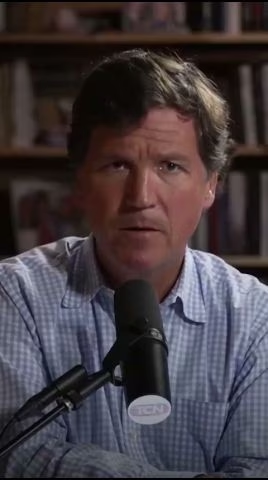
Washington, D.C- In a sweeping and exhaustingly lengthy New York Times interview with Tucker Carlson, the former Fox News host presented what may be his most forceful break yet from President Donald Trump, while advancing a broader argument that American foreign policy has become captive to Israeli interests at the expense of ordinary Americans struggling with economic decline, debt, and social instability.


The interview, published Sunday, May 3rd, centered on Carlson’s opposition to Trump’s decision to attack Iran alongside Israel. Carlson described the war as catastrophic, unnecessary, and contrary to the promises that originally drew him to Trump’s political movement. He repeatedly insisted that the United States had been pressured into conflict not by national interest, but by what he characterized as intense lobbying and influence from Israeli Prime Minister Benjamin Netanyahu and pro-Israel figures inside the United States.


Carlson said he spent years supporting Trump largely because Trump had opposed the Iraq War and criticized regime-change policies in the Middle East. According to Carlson, Trump’s decision to strike Iran represented a betrayal of those principles. He described numerous private conversations with Trump in the lead-up to the conflict, claiming the president appeared reluctant and resigned rather than enthusiastic.


In Carlson’s telling, Trump repeatedly justified the war by focusing on Iran’s nuclear ambitions, asking him whether he wanted Iran to possess nuclear weapons. Carlson replied that while he opposed nuclear proliferation, the more important question was whether another Middle Eastern war would help the United States. He argued it would not, warning that conflict with Iran threatened global energy supplies, destabilized the economy, and risked drawing the United States into another prolonged regional disaster.


The interview’s most inflammatory sections focused on Israel’s role in shaping American policy. Carlson argued that no major figure within Trump’s administration seemed eager for war, and that the real pressure came from outside actors — wealthy donors, media personalities, and pro-Israel advocates. He named media mogul Rupert Murdoch, billionaire donor Miriam Adelson, and conservative commentators including Mark Levin and Sean Hannity as people he believed pushed Trump toward military confrontation.


Carlson went even further, claiming Trump had become a “slave” to Israeli interests because he could not restrain Netanyahu despite publicly calling for cease-fire negotiations. He argued that Israel repeatedly escalated tensions to derail diplomatic efforts and prolong regional conflict. Carlson maintained that Israeli goals and American goals were fundamentally different, insisting that Washington had subordinated its own interests to those of a foreign government.


Throughout the discussion, Carlson returned obsessively to what he sees as the disconnect between elite foreign-policy priorities and the daily concerns of ordinary Americans. One of the interview’s central themes was his rejection of the idea that organizations like Hamas or Hezbollah represent the primary threat facing the United States.


Carlson dismissed what he called the “brainwashing” that places Middle Eastern militant groups at the center of American political discourse. In one of the interview’s most striking lines, he declared that “credit card debt is a much bigger problem than Hezbollah will ever be.” He argued that average Americans are far more threatened by predatory banks, rising living costs, stagnant wages, and economic inequality than by conflicts thousands of miles away.


This economic populism increasingly appears to define Carlson’s worldview. He repeatedly contrasted Washington’s obsession with war and geopolitical struggles against what he described as collapsing economic opportunity at home. Carlson pointed to soaring household debt, housing unaffordability, and shrinking prospects for younger Americans as the real crises facing the country.


He argued that both major political parties have failed ordinary citizens. According to Carlson, Democrats focus excessively on cultural and identity politics, while Republicans have become consumed by foreign wars and ideological loyalty to Israel. He repeatedly accused both parties of ignoring economic inequality and serving wealthy donors rather than voters.


Carlson also expressed sympathy for populist critiques of modern capitalism. Referencing movements such as Occupy Wall Street, he suggested that financial elites and large banks escaped accountability after the 2008 financial crisis while ordinary Americans paid the price. He warned that economic frustration among younger generations could eventually produce political radicalization and social unrest.


The interview also delved into Carlson’s criticism of what he called “Christian Zionism.” He questioned why evangelical Christians in the United States support Israeli policies so fervently and argued that religious belief should not obligate Americans to back military actions they believe are immoral or harmful to their own country.


Carlson rejected accusations of antisemitism throughout the interview, insisting that criticism of the Israeli government is not hatred toward Jewish people. He argued that conflating opposition to Israeli policy with antisemitism suppresses legitimate debate and discourages scrutiny of American foreign policy decisions.


The conversation became even more surreal when Carlson discussed religion and morality. He condemned Trump’s rhetoric toward Iran and Muslims during the conflict, particularly statements made on Easter Sunday. Carlson said mocking religion and threatening civilians crossed a moral line. He also acknowledged discussing whether Trump represented a “false prophet,” though he denied explicitly labeling him the Antichrist.


Despite his sharp criticism, Carlson said his objections to Trump were political and moral rather than personal. He repeatedly stated that he still liked Trump as an individual but believed the Iran war had irreparably damaged his presidency and betrayed the movement that originally elected him.


Perhaps most revealingly, Carlson portrayed himself as someone disillusioned not only with Trump but with the entire American political establishment. He described both Republicans and Democrats as “rotten,” accused Washington of prioritizing foreign interests over domestic needs, and argued that economic inequality and endless war are eroding the foundations of American society.


By the end of the interview, Carlson presented himself less as a conservative partisan than as a populist dissenter — one who believes the greatest threats to Americans are not Hamas, Hezbollah, or Iran, but debt, inequality, financial elites, and a political system he says no longer serves its own citizens.

PALESTINE

Sun 03 May 2026 7:30 pm - Jerusalem Time

Widespread Truce Violation: Deadly Israeli Raids on Southern Lebanon and Warnings of Expanded Targeting

Southern Lebanese areas witnessed a dangerous Israeli military escalation despite the ongoing truce agreement, as the Emergency Health Operations Center of the Lebanese Ministry of Health announced that the total number of casualties from the aggression since last March has risen to 2,679 martyrs and 8,229 injured. Field sources reported the martyrdom of two citizens following an airstrike that targeted a house in the square of the town of Bureiqa, reflecting the occupation's insistence on continuing offensive operations against residential areas.

In the Nabatieh district, one martyr fell and three others were injured, including a child, as a result of a raid that targeted the town of Arabsalim, while artillery shelling hit the town of Mansouri concurrently with intensive airstrikes on the area located between Haris and Kafra. These attacks come as part of a wide wave of escalation that included several districts in southern Lebanon, leading to a worsening of humanitarian conditions and an increase in the number of displaced persons.

Medical personnel were not spared from targeting, as five citizens were injured in raids on the town of Srifa in the Tyre district, among them four paramedics affiliated with the Health Authority who were injured while performing their humanitarian duties near their center. The Lebanese Ministry of Health reiterated its condemnation of these blatant violations of international laws, emphasizing that targeting medical facilities constitutes a direct breach of the Geneva Conventions which provide protection for health facilities.

Media sources from Beirut reported that the occupation continues to carry out its airstrikes without interruption, relying heavily on warplanes and drones to compensate for the decline in ground movements. The sources explained that the geographical scope of targeting has expanded to include villages and towns south of the Litani River, bringing the field situation back to the atmosphere of comprehensive war that preceded the announcement of the ceasefire, and imposing a complex security reality on local residents.

In the context of psychological and field pressure, the occupation army issued 11 new warnings to residents of southern towns on Sunday, including areas previously warned and others entering the targeting circle for the first time, with a noticeable focus on the Nabatieh district. Data indicates that the number of towns affected by military operations has doubled since the start of the truce, as the occupation seeks to impose security control up to ten kilometers deep inside Lebanese territory.

For its part, Hezbollah responded to these aggressions by announcing the execution of military operations targeting gatherings of occupation vehicles and soldiers in the vicinity of Al-Sal'a Heights in the town of Al-Qantara using rocket weapons. The party also confirmed in a statement the execution of a kamikaze drone attack targeting a military gathering in the town of Al-Bayada, emphasizing direct hits among the Israeli forces stationed there.

On the Palestinian front, reports revealed the occupation's creation of what is called the 'Orange Line' in the Gaza Strip, an additional restricted area extending beyond the 'Yellow Line' by up to 500 meters. These measures have led to an increase in the actual military control area of the occupation to include about 64% of the Strip's area, with the establishment of 32 fortified positions and earth berms 16 kilometers long to enhance military presence.

Statistics indicate the martyrdom of more than 800 Palestinians by Israeli fire since the supposed ceasefire began in October 2025, amidst continued field violations in Gaza. UNRWA documented 127 of its facilities located within the areas currently under direct Israeli control, which hinders the provision of essential relief services to hundreds of thousands of displaced and besieged people.

In the context of strategic military movements, the Israeli General Staff transferred regular brigades from the southern Lebanon front towards the Gaza Strip and the West Bank, amidst reports indicating the military leadership's push towards resuming comprehensive fighting. Israeli circles justify the continuation of military operations and the expansion of field control on various fronts by citing the resistance factions' refusal to disarm.

In conclusion, Lebanon and the Strip face an explosive field reality that threatens a complete collapse of fragile understandings, as maps submitted to the United Nations show the occupation's intention to institutionalize its military presence in border areas. Civilians remain the weakest link in this escalation, as repeated targeting and continuous warnings prevent the return to normal life, and place the international community before its responsibilities to protect medical facilities and civilians.

What is happening in terms of targeting medical facilities and paramedics completely contradicts Article 19 of the Geneva Conventions, which guarantees the protection of health personnel in conflict zones.

PALESTINE

Sun 03 May 2026 7:30 pm - Jerusalem Time

Freedom Flotilla Reveals Details of Occupation's Torture of Spanish Activist in International Waters

The Global Freedom Flotilla announced on Sunday that Spanish activist of Palestinian origin, Saif Abu Kashk, was subjected to systematic and severe torture by Israeli occupation forces. The flotilla clarified that Abu Kashk was among those abducted whose boats were seized in international waters while attempting to reach the besieged Gaza Strip.

Human rights sources reported that last Thursday, the occupation army seized more than 20 boats carrying approximately 175 international activists in an act of piracy that occurred in international waters. The activists were forcibly taken for interrogation and trial, a move observers considered a blatant violation of maritime and international laws.

In a judicial development, an occupation court extended the detention of activists Saif Abu Kashk and Brazilian Thiago Avila for an additional two days, at the request of security agencies. This decision came despite international appeals for their immediate release, especially after the revelation of their tragic detention conditions.

The Freedom Flotilla stated in an official announcement that the illegal interception operation occurred less than 80 nautical miles west of the Greek island of Crete. The statement confirmed that Israeli forces abducted 175 civilians from 21 different boats and transferred them to military vessels belonging to their navy.

Testimonies collected by the flotilla indicated that the abducted activists were transferred to the Israeli ship named 'Nahshon,' where they were subjected to a series of physical and verbal assaults. Participants who were later released confirmed that Saif Abu Kashk was subjected to brutal torture while on board the military vessel.

Eyewitnesses reported horrific details of Abu Kashk's screams echoing throughout the ship, as occupation forces deliberately separated him from his colleagues to torture him. The flotilla described these practices as a dangerous escalation and an additional war crime added to the record of ongoing Israeli violations.

The flotilla revealed that the violent interception operation resulted in injuries to 36 international solidarity activists, necessitating their transfer to hospitals immediately upon their arrival at the Greek port of Ierapetra. Medical sources did not disclose the exact nature of the injuries but described them as resulting from the use of excessive force.

The Freedom Flotilla criticized the failure of legal and judicial interventions to prevent the forced transfer of civilians from waters near Greece to Israeli interrogation centers. It considered this incident an extension of the unjust siege policy imposed on the Gaza Strip for many years.

The statement emphasized that the forces practicing the policy of starvation against the people of Gaza are the same ones who tortured international solidarity activists who tried to provide humanitarian aid. It called on the international community and European governments to take a firm stance against these aggressions and demand the immediate release of the detainees.

The flotilla also demanded an international investigation into the role of the Greek authorities who allowed the Israeli ship carrying the abductees to depart from their territorial waters. It stressed the necessity of holding the occupation accountable for its violations of international law, including attacks on civilians in international waters.

For its part, the 'Adalah' human rights center demanded that the occupation authorities immediately disclose the whereabouts of Abu Kashk and Avila, emphasizing that their transfer to Israeli territory was illegal. The center described this operation as 'the abduction of foreign nationals' from international waters not subject to the occupation's sovereignty.

The occupation's Ministry of Foreign Affairs acknowledged the detention of the aforementioned activists and their referral for investigation, while the rest of the flotilla participants were released last Friday. This incident comes amid the ongoing genocide war waged by the occupation on the Gaza Strip since October 2023.

The Gaza Strip has been suffering from a suffocating siege since 2007, which has led to the destruction of infrastructure and turned the lives of millions into a continuous hell. The recent war has resulted in the displacement of approximately 1.5 million Palestinians and the martyrdom and injury of hundreds of thousands, amid international silence regarding this humanitarian catastrophe.

The Freedom Flotilla concluded its statement by affirming that these aggressions will not deter international solidarity activists from continuing their efforts to break the siege on Gaza. It called on all free people in the world to intensify pressure on their governments to stop Israeli crimes and ensure the protection of humanitarian activists.

Horrific testimonies reported Abu Kashk's screams echoing throughout the military vessel while he was subjected to systematic torture after being separated from the rest of the solidarity activists.

ARAB AND WORLD

Sun 03 May 2026 7:30 pm - Jerusalem Time

US Midterm Elections: A Bone-Crushing Battle That Shapes Trump's Second Term

All eyes are on the United States as the midterm elections, scheduled for next November, approach. These elections are considered a real test of the continuity of President Donald Trump's approach. These elections come at a time when the country is witnessing fundamental changes in the political landscape after Trump's return to the White House and the beginning of the implementation of his controversial agenda.

Mindy Romero, director of the Center for Inclusive Democracy at the University of Southern California, described this election as a pivotal and historic moment for both major parties. She affirmed that the stakes have reached unprecedented levels, especially given the sharp division that dominates the American public and political circles in Washington.

The opposition Democratic Party seeks to turn these elections into a general referendum on the current administration's policies, considering regaining control of Congress an urgent necessity. Democratic leaders believe that confronting what they describe as the existential threat posed by Trump's policies is the primary driver for their electoral base at this stage.

Democrats are relying in their campaigns on capitalizing on public dissatisfaction with the current economic situation and the repercussions of strict foreign policies. Sources indicated that the administration's war on Iran led to jumps in fuel prices, which burdened American citizens and increased the cost of daily living.

In contrast, President Donald Trump, 79, is making intensive efforts to ensure that the Republican Party retains its majority in both the House of Representatives and the Senate. Trump aims to secure a safe legislative path for the remainder of his term and avoid any obstacles that the opposition might place before his appointments or executive decisions.

President Trump warned on several occasions that losing control of Parliament would open the door wide for his opponents to begin impeachment proceedings or obstruct his projects. Republicans also fear that Democratic control could lead to widespread parliamentary investigations that could paralyze the administration's movement and hinder the implementation of electoral promises.

The upcoming electoral battle includes fierce competition for all 435 seats in the House of Representatives, in addition to one-third of the seats in the Senate. This election cycle is expected to be one of the most expensive and competitive in modern American history due to the close odds in many swing states.

For her part, political science professor Julia Azari explained that the decline in the president's popularity in recent polls represents a danger sign for the Republican Party. She pointed out that voters often link the president's performance to their vote for his party's candidates, especially in light of dissatisfaction with the economic results that were a cornerstone of Trump's discourse.

In addition to the economic file, immigration issues and the hardline political style emerge as additional pressure factors on the Republican camp in these elections. The administration faces widespread criticism from human rights organizations and opposing political forces who see these policies as deepening the social rift within the United States.

The intensity of the debate surrounding the redrawing of electoral districts is escalating, with Democrats accusing Trump of pressuring to modify maps in red states to enhance his party's chances. In contrast, Democrats have taken similar steps in states like California, creating a state of legal chaos that the Supreme Court may intervene to resolve before voting begins.

These elections represent a pivotal moment for Republicans and Democrats alike amidst unprecedented political division.

PALESTINE

Sun 03 May 2026 7:29 pm - Jerusalem Time

Israeli Obstruction of International Force Entry into Gaza: Freezing Trump's Plan and Efforts to Impose a Reality of Displacement

Media sources revealed a decision by the political level in the occupation state to prevent representatives of the International Stabilization Force from conducting a field tour in the Gaza Strip. This step comes at a time when this force was supposed to begin its duties within the framework of the peace plan proposed by US President Donald Trump, indicating an Israeli retreat from international understandings.

Reports indicated that the prohibited international delegation included representatives from Indonesia, Morocco, Kosovo, Kazakhstan, and Albania, who recently arrived to hold meetings with military officials and representatives of the American leadership. The delegation was planned to head to the city of Rafah in the southern Strip, but high-level political instructions prevented the completion of this field visit.

Observers believe that this prohibition reflects a temporary freeze of the next phase of the settlement plan and aims to keep full field control in the hands of the occupation army. This obstruction is considered part of a broader strategy aimed at preventing any international oversight of Israeli movements within the areas recently infiltrated.

For his part, Hassan Lafi, an expert in Palestinian affairs, affirmed that Israel remains committed to the option of strategic change in the geography and demography of the Gaza Strip. He explained that the option of forced displacement and control over large areas of the Strip remains the optimal solution in the current doctrine of the occupation leaders, away from any international political solutions.

Lafi pointed out that the deliberate slowdown in implementing the ceasefire provisions aims to prevent the return of normal life and obstruct early recovery and reconstruction efforts. This behavior aims to make living in Gaza impossible, thereby pressuring the population to accept displacement options as the only solution to the collapsed living reality.

In a related context, writer Wissam Afifa explained that the occupation is reneging on the requirements of the first phase of the roadmap included in Trump's paper. These requirements include re-entry of trucks at a rate of 600 trucks per day, cessation of military operations and assassinations, and withdrawal to what is known as the 'Yellow Line'.

Afifa clarified that the occupation army has crossed the agreed lines and created new undeclared security zones, called 'Orange Zones', which are open firing zones that prevent the return of displaced persons. This field تجاوز makes the presence of any international force unacceptable to Israel because it would reveal the extent of the violations committed.

Informed sources stated that recent Cairo meetings saw mediators being informed of Israel's refusal to return to the Yellow Line, causing a new negotiating crisis. The occupation is currently trying to reformulate the rules of negotiation in contradiction to the 15-point document that was previously agreed upon with international parties and Palestinian factions.

Data indicates that the occupation is playing the role of absolute controller in the field, ignoring all international laws and political obligations towards the American administration. The prevention of international delegations coincides with the continued prevention of foreign journalists from entering the Strip, in an attempt to obscure the extent of crimes committed against civilians.

Regarding humanitarian organizations, international institutions have become entities complaining about the occupation's continuous disregard for their relief missions. The occupation authorities have imposed new impossible conditions on the work of about 20 international organizations, leading to a major paralysis in the provision of essential aid to the besieged population.

On the ground, the occupation army continues to expand buffer zones and establish permanent military positions in the heart of destroyed residential areas, reinforcing the hypothesis of long-term occupation. These movements undermine any opportunity for a Palestinian administrative authority capable of managing the affairs of the Strip in the next phase.

Official statistics from the Ministry of Health indicate a worsening humanitarian catastrophe, with the number of martyrs since the start of the genocide war in October 2023 rising to more than 72,608 martyrs. The number of injured has also exceeded 172,000, amid a near-complete collapse of the health system due to direct targeting and siege.

Despite the ceasefire agreement coming into effect on October 10, 2025, Israeli violations have not stopped in various areas of the Strip. The occupation uses military force to impose new realities on the ground, exploiting the state of international silence and the absence of real pressure mechanisms to compel it to abide by signed agreements.

In conclusion, it appears that the occupation government seeks to turn Trump's plan into a tool to serve its expansionist goals, by carving out parts of the eastern and northern Strip to secure the settlements surrounding it. This behavior presents the international community with a major challenge to save what remains of opportunities for stability and prevent the continuation of the crime of forced displacement against Palestinians.

The occupation is turning Trump into part of its main plan for displacement and occupation of the greater part of the Gaza Strip to form a security belt for its settlements.

ISRAELI AFFAIRS

Sun 03 May 2026 7:29 pm - Jerusalem Time

Israeli warnings of failure in confrontation with Iran and strategic changes in Syria and Lebanon

Hebrew media outlets quoted a high-ranking officer in the occupation army issuing strong warnings regarding the future of the confrontation with Tehran. The officer clarified that any end to the current operations that does not guarantee the downfall of the Iranian regime or at least its complete disarmament of enriched uranium stockpiles will be considered a grave strategic failure. He pointed out that the retention of nuclear capabilities would allow the regime to resume its program at any time, rendering current military actions of no real long-term value.

In a related context, reports indicate persistence from US President Donald Trump to permanently remove enriched uranium from Iranian territory. However, there is a state of concern within the occupation circles due to what is described as the slow pace of American actions in confronting Iran's complex activities. Security sources believe that Tehran continues its movements in the Arabian Gulf and the Middle East without a real deterrent commensurate with the magnitude of the threat it poses.

On the northern front, the occupation is experiencing a state of anticipation and concern as a result of the continued military operations in the Lebanese arena despite the apparent commitment to ceasefire agreements. Sources confirm that Hezbollah has not stopped launching rockets, drones, and mortar shells daily towards the occupied territories. This reality forces the occupation army to balance the political path led by Washington with the field need for deterrence.

Political circles in Tel Aviv realize the necessity of giving the political process in Lebanon a chance to progress according to the currently proposed American vision. However, the military leadership simultaneously emphasizes the need for violent tactical action to precisely strike Hezbollah's strongholds. This approach requires intensifying intelligence efforts and focused air operations to ensure decisive strikes that fundamentally weaken the party's military capabilities.

Regarding technological developments in the field, fiber-optic equipped drones have emerged as one of the new tactical challenges facing the occupation. Military sources confirm that dealing with this threat should not be limited to pursuing individual drones in the air, but rather requires striking the operating systems and the military formations responsible for them entirely. This approach reflects a desire to cripple the enemy's offensive capabilities by targeting the infrastructure of the drone weapon.

As for the Syrian arena, intelligence reports have monitored movements led by Ahmed al-Shara to rebuild the Syrian army and restore its military capabilities. These movements are working to recover and equip weapons that were not affected by previous destruction operations carried out by the occupation army. This week saw the use of combat helicopters in test flights, indicating an acceleration of the military restructuring pace in Damascus.

The data indicates that the new Syrian army enjoys direct sponsorship and support from Turkey, with a special focus on building an advanced air defense system. It is noteworthy that the new regime in Syria now views Hezbollah as a primary enemy in the current phase, which changes the map of traditional alliances. However, Israeli assessments remain cautious regarding these transformations due to the volatile nature of the region and the potential for sudden changes in loyalties.

The Israeli officer sharply criticized the security policies that preceded the events of October 7, describing them as contradictory and weak. He recalled the mid-2023 period when the occupation maintained complete neutrality and did not move a muscle towards the growing power of the hostile axis in Lebanon and Gaza. He considered that relying on the idea of deterring Hamas was a grave mistake that allowed hostile parties to strengthen their influence and armaments before the eyes of intelligence agencies.

In conclusion of his assessments, the officer stressed the need to exert intense pressure on the American administration to make decisive decisions regarding the Iranian file. Israeli military circles expect Washington to resort to carrying out limited military strikes against strategic targets inside Iran to push it towards abandoning its nuclear ambitions. The occupation warns that the absence of this American military action will inevitably lead to the failure of the regional campaign aimed at curbing Tehran's influence.

The failure of the Iranian regime to fall or the retention of enriched uranium means that we have achieved nothing and failed in the campaign.

PALESTINE

Sun 03 May 2026 7:29 pm - Jerusalem Time

Thirst as a Weapon in Gaza: When a Drop of Water Becomes a Battle for Sovereignty

The Gaza Strip is experiencing a tragic scene that transcends the limits of human logic, where the crisis is not limited to a shortage of resources but extends to be a stark expression of the absence of international political ethics. The systematic destruction of water infrastructure in the Strip reflects a desire to turn the land into a biological prison lacking the most basic necessities of life.

Field data indicates the destruction of about 85% of water facilities and 75% of distribution networks, figures that reflect the scale of the catastrophe that has befallen the Strip. The targeting of about 700 water wells since the beginning of the aggression is not merely a military coincidence, but rather an overt policy of killing that targets the very essence of Palestinian existence.

In Gaza, a sip of water has transformed from an inherent right into a daily act of resistance that drains human energy, especially with water scarcity reaching 90% in some areas. This philosophy based on thirst aims to strip people of their humanity and break their will by depriving them of the most basic rights to survival.

The average share for a single family has decreased to only 7 liters per day, a figure far below the minimum recognized by international organizations for sustaining life. This sharp decline puts hundreds of thousands of families at risk of dying of thirst or contracting deadly diseases due to the scarcity of clean water.

Today, international institutions stand as eyewitnesses to the shutdown of major desalination plants, most notably Al-Hassan plant and Jabalia plants, due to the prevention of fuel and necessary spare parts from entering. This deliberate paralysis of vital facilities pushes the region into a post-ethical phase, where fundamental rights are sacrificed for political balances.

The pollution rate in available water resources has reached 97%, a direct result of deliberately turning Gaza into an environment plagued by intestinal and skin diseases. The collapse of the sewage system and the shutdown of four out of five pumping stations have exacerbated the health and environmental crisis to an unprecedented degree.

The shutdown of pumping stations leads to the daily flow of about 40,000 cubic meters of contaminated water into people's living spaces and streets, threatening an epidemic catastrophe. This reality is not a geographical fate, but rather the result of political decisions aimed at drying up the sources of life and dismantling society from within.

The targeting of water sector workers, as happened with UNICEF technicians last April, proves that there is a determination to eliminate any capacity for technical resilience. Through this strategy, the dominant powers seek to prove that subjugation through scarcity is the shortest path to breaking morale.

Military arrogance is evident in the interception of water blockade-breaking missions, as happened with the international mission in spring 2026, which raises major questions for the international system. The inability to secure a drop of water for a besieged people exposes the falsity of the global human rights discourse that the international community touts in various forums.

Gaza today has become a laboratory that exposes double standards, where it appears that human rights are granted only to those who fall within the strategic satisfaction circle of major powers. The real confrontation in the Strip is a struggle between the will for liberation and a system that uses the keys to life as tools for death and subjugation.

The decision to turn Gaza into a human desert is a conscious decision aimed at making the cost of staying on the land more expensive than people's ability to endure. Planners are betting that hunger and thirst will push the population towards nihilistic choices, ignoring that peoples baptized in blood possess a solid consciousness.

Thirst in the Palestinian consciousness transforms into a symbolic fuel for a revolution of awareness that understands that Gaza's freedom is the true test of the world's conscience in the twenty-first century. Restoring the right to clean water is inseparable from the battle to restore the homeland and full sovereignty over land and resources.

There can be no talk of true liberation under the restrictions that shackle the will of the people and prevent them from managing their water geography and controlling their destiny. The issue of water in Gaza is an issue of lost sovereignty, and working to reclaim it is an essential part of the ongoing Palestinian national struggle.

In conclusion, Gaza, with its thirst and steadfastness, remains a witness to an era lacking justice, but at the same time, it creates a unique model of legendary resilience. The drop of water that a child in Gaza seeks today is the same that will water the tree of freedom in a future that accepts no division or blackmail.

Turning water into a political weapon and a tool for blackmail reflects the impotence of the existing international system, where the share of a single family has decreased to only 7 liters per day.

ISRAELI AFFAIRS

Sun 03 May 2026 7:29 pm - Jerusalem Time

Hebrew Analysis: UAE's Withdrawal from 'OPEC' an Economic Blow Aimed at Tehran

The decision by the United Arab Emirates to withdraw from the Organization of the Petroleum Exporting Countries (OPEC) and the 'OPEC+' alliance has sparked a wave of analyses regarding the profound implications of this move on global energy markets. Press sources reported that this decision goes beyond being a technical regulatory measure, carrying political and economic dimensions aimed at exerting direct pressure on regional parties.

Hebrew reports described the move as a form of 'cold revenge' adopted by Abu Dhabi against Tehran, in response to previous security tensions witnessed in the region. Sources considered that the timing reflects an Emirati desire to use oil leverage as a strategic tool in managing regional conflicts, away from the traditional frameworks of the organization.

Observers believe that this shift came as a result of accumulated security incidents, as the UAE had previously accused Tehran of being behind attacks targeting vital installations on its territory. These events prompted the Emirati leadership to adopt a stricter approach, combining the enhancement of defensive capabilities with the use of economic influence to deter threats.

Emirates' exit from OPEC's production quota restrictions grants it the ability to unconditionally increase oil pumping into global markets. This scenario could lead to an oversupply and a drop in prices, posing suffocating pressure on the Iranian economy, which is already suffering from the severe consequences of international sanctions.

Sources indicate that the Iranian regime, which heavily relies on oil sales to China to maintain its financial stability, will face compounded challenges. An increase in Emirati production could reduce Iran's market share and force it to make greater price concessions, depleting its limited resources.

OPEC, founded in the 1960s, has faced numerous challenges throughout its history, but the withdrawal of an active member like the UAE represents a strong shake-up to the cohesion of the oil cartel. The alliance, which expanded to include Russia within 'OPEC+', now faces the risk of disintegration or loss of control over global price balances.

Analyses confirm that the Emirati move also reflects a desire to break free from close coordination with Saudi oil policies and to build a completely independent economic path. This trend highlights the escalating economic competition between the two Gulf poles, as each country seeks to maximize its sovereign national gains.

In a related context, Abu Dhabi has begun to enhance its geopolitical influence by expanding its presence in strategic and vital areas such as the Red Sea and the Horn of Africa. This move comes within a comprehensive vision aimed at securing trade routes and maritime navigation away from threats that competing regional powers might pose.

Sources also noted that the UAE has strengthened its international security partnerships, including its rapprochement with Israel, as part of a strategy to build alternative alliances. These alliances come amid a growing conviction among Emirati decision-makers of the necessity to diversify security options and not be fully dependent on the American umbrella.

The recent war in the region and rapid transformations have proven to Abu Dhabi the importance of possessing independent and effective pressure tools simultaneously. Withdrawal from international organizations that impose restrictions on economic sovereignty has become a strong option to enhance the state's negotiating position in thorny regional issues.

Sources expect the next phase to witness something akin to a 'pincer movement' against Tehran, where increased oil production will combine with the possibility of tightening control over Iranian export corridors. This dual pressure aims to weaken Iran's ability to finance its regional activities and increase the cost of its foreign policies.

The Emirati shift towards 'independent boldness' is reshaping the balance of power in the Middle East in general, and in the Arabian Gulf in particular. Traditional alliances are no longer the sole driver of policies; rather, direct national interests have become the compass guiding major decisions.

Reports concluded by emphasizing that what is happening is a comprehensive reformulation of the UAE's role as an influential international player in the energy market and regional security. The ability to make surprising and decisive decisions such as withdrawing from 'OPEC' reflects the leadership's confidence in the resilience of the national economy and its ability to cope with fluctuations.

The question remains about the reaction of other OPEC member states to this trend, and the organization's ability to maintain its role as an oil price regulator. Amidst these changes, it appears that the Gulf region is heading towards a new phase of competition that will redraw the map of economic and political influence for years to come.

The UAE has sent a sharp message that its country will not be targeted without a response, using economic tools with global impact.

OPINIONS

Sun 03 May 2026 7:28 pm - Jerusalem Time

World Press Freedom Day... and Gaza, which writes the truth in blood

Washington - Said Arikat - 5/3/2026

News Analysis

As the world celebrates World Press Freedom Day on May 3rd, Gaza and the West Bank once again presented the most tragic evidence of the widening gap between international slogans and the reality on the ground. While Western institutions speak of protecting journalists, freedom of expression, and the public's right to know, Israel continues its open war against Palestinian journalism, through direct killing, systematic targeting, arrests, and the destruction of media institutions, in a clear attempt to silence the Palestinian narrative and prevent the transmission of scenes of destruction and genocide to the world.

Data issued by the Committee to Protect Journalists indicates that the war that erupted on October 7, 2023, has become the deadliest period for journalists in modern history. By late April 2026, more than 260 journalists and media workers had been killed in Gaza, Lebanon, and surrounding areas, including more than 200 Palestinian journalists in the Gaza Strip alone. These numbers do not represent mere professional statistics, but rather reveal the transformation of journalism itself into a direct military target in one of the most documented wars in the digital age.

Palestinian journalists, who found themselves in the heart of famine, bombing, and the complete collapse of infrastructure, were not merely conveyors of events, but became living witnesses to a war of extermination being committed before camera lenses. Many of them were killed in their homes with their families, and others were targeted during field coverage or while in work tents near hospitals and displacement centers, in a recurring pattern that led human rights organizations to speak of clear indications of deliberate targeting.

In Lebanon, the attacks extended to journalists covering border clashes, with estimates ranging from 11 to 27 journalists killed since the start of the war, including Al-Akhbar newspaper correspondent Amal Khalil, who was killed in April 2026 following a cross-border raid, an incident that sparked widespread anger in Lebanese media circles.

Despite the widespread nature of these crimes, Israel continues to enjoy unprecedented political and media immunity. According to reports from the Committee to Protect Journalists, no Israeli official has been held accountable for killing journalists since the beginning of the war. This immunity stems not only from American and Western political cover, but also from international media performance that has treated the targeting of Palestinian journalists as "collateral damage," not crimes that warrant condemnation and accountability.

In a scene reflecting the cruelty of irony, this year's World Press Freedom Day did not pass without new violations. In the early morning hours, occupation forces stormed the home of journalist Islam Amarna in Dheisheh refugee camp south of Bethlehem, and arrested her after a violent raid, joining dozens of Palestinian journalists detained in Israeli prisons. In Gaza, journalists Islam Mansour and Mohsen Al-Azazi were shot by occupation forces while they were in a work tent inside Al-Aqsa Martyrs Hospital in Deir al-Balah.

For his part, the head of the Palestinian Journalists' Syndicate, Nasser Abu Bakr, stated that the International Federation of Journalists is working on preparing a legal document to be submitted to the United Nations, which includes a mechanism to prosecute those responsible for crimes committed against Palestinian journalists. This move reflects a growing realization within international journalistic institutions that what is happening has long since exceeded the limits of "accidental targeting," and has become a systematic policy aimed at silencing independent coverage and preventing the documentation of crimes.

Global Silence and Moral Selectivity

But the tragedy lies not only in the scale of the killing, but in the nature of the global silence surrounding it. If this number of journalists were killed in any other country that Washington classifies as an "adversary," the issue would turn into an open international campaign, and we would see emergency sessions, sanctions, and continuous political and media pressure. However, Palestinian blood, even when it is the blood of a journalist carrying a camera and a press badge, does not seem capable of moving the Western conscience to the same extent. Here, duality is most evident, where press freedom becomes a selective value subject to political calculations, not humanitarian principles.

American Media... Deliberate Absence

It is also striking that many major American media outlets have dealt with the killing of Palestinian journalists with remarkable coolness, as if it were a minor detail in a complex war, not one of the most dangerous crimes against media freedom in the modern era. The names of killed Palestinian journalists are rarely mentioned in headlines, and in-depth investigations or human interest stories, usually given to other victims, are rarely dedicated to them. This disregard not only reflects political bias, but also reveals the limits of American liberal discourse when it comes to Israel, where the values of freedom of expression and human rights become slogans that can be suspended.

Targeting the Narrative, Not Just Individuals

What is happening in Gaza cannot be understood as merely targeting individuals working in the media, but rather as targeting the Palestinian narrative itself. Israel realizes that the image captured by a Palestinian journalist of a hungry child or a destroyed neighborhood is sometimes more dangerous than any weapon. Therefore, the war on journalism appears to be an organic part of the military war, aiming to prevent the documentation of famine, displacement, and mass killing. In an era where an image can expose a crime within seconds, the Palestinian camera has become a target that must be silenced.

Palestine... The School of Journalism Under Fire

Despite the killing, siege, and hunger, Palestinian journalists continue to work in almost impossible conditions. Some sleep in the streets or inside hospitals, and others have lost their families and homes but returned to carry their cameras hours after burying their loved ones. Palestine today has become one of the most dangerous environments for journalistic work in the world, but at the same time, it has transformed into an exceptional model for the meaning of true journalism: journalism that pays the price of truth with blood, and yet insists on continuing.

On World Press Freedom Day, international slogans do not seem sufficient in the face of this scene. Gaza does not need cold statements of solidarity, but rather real accountability for those who kill journalists with impunity. Because a world that allows a journalist to be turned into a legitimate target, and passes over that in silence, does not defend press freedom, but actively participates in burying it.


ISRAELI AFFAIRS

Sun 03 May 2026 6:10 pm - Jerusalem Time

Israeli General Warns of 'Israel's' Demise Before its Centenary, Demands Leadership Overthrow

Major General (res.) Yitzhak Brick issued stern warnings regarding Israel's existential future, asserting that it faces threats that could prevent it from reaching its centenary. In an analysis published by Hebrew media, Brick emphasized the necessity of an immediate and comprehensive change in the political and military leadership hierarchy to save what can be saved.

Brick pointed out that his assessments prior to the current confrontations proved accurate, as the military establishment suffers from deep strategic failures that undermine national security in the short and long term. He considered the lack of a clear vision among decision-makers to have placed the state in an unprecedented historical predicament.

The Israeli general relied on recent intelligence documents indicating Hamas's ability to rebuild its military capabilities at an accelerated pace within the Gaza Strip. He explained that the movement still maintains its civil and field control, exploiting legal and political loopholes left by incomplete military operations.

Brick strongly criticized the army's performance in Gaza, asserting that a decisive victory has not been achieved and will not be achieved given the significant reductions in ground forces over the past decades. He believed that this shortage made it impossible to impose long-term security control, turning the fighting into rounds of attrition without strategic results.

Regarding the northern front, Brick affirmed that Hezbollah has not been militarily defeated; rather, it still retains a massive arsenal of rockets and drones capable of completely paralyzing life in northern Israel. He warned that the army is unprepared to fight a long-term war of attrition on multiple fronts simultaneously.

Brick accused the military establishment of 'arrogance' after it refused to accept technical assistance from Ukraine to counter the drone threat, which negatively impacted defensive capabilities. He noted that excessive focus on the northern front led to a weakening of readiness in other vital areas such as Gaza and the West Bank.

The analysis touched upon the formation of new regional alliances involving major powers such as Turkey, Egypt, and Pakistan, considering this military rapprochement a very alarming strategic development. He expressed concern about the military maneuvers conducted by Egypt in Sinai, indicating that they simulate scenarios of direct confrontation with Israel.

On the Iranian file, Brick stressed that Tehran and its allies will not back down, and any diplomatic agreements might give them enough time to strengthen their nuclear and missile programs. He confirmed that the Israeli defense system showed an inability to intercept some advanced missiles, amidst official obfuscation regarding the shortage of interceptor missiles.

The retired general warned of the erosion of the home front and the escalation of societal divisions that weaken 'national resilience' in the face of crises. He also pointed to the growing international isolation that has begun to affect political circles in the United States, threatening the international cover that Israel once enjoyed.

Brick concluded his vision by emphasizing that the exorbitant economic and human cost of the current war will leave a deep impact for many years, with a massive financial deficit requiring harsh rescue plans. He called for the replacement of the current leadership, which he held responsible for reaching this deadlock, warning that Israel might emerge from this confrontation in a much weaker position than it was.

Israel is heading towards a dangerous existential reality, and the continuation of current policies may prevent the state from reaching its centenary.

PALESTINE

Sun 03 May 2026 6:10 pm - Jerusalem Time

Nablus Bids Farewell to Nayef Samaro.. Martyred in Front of the Hospital at the Moment of His First Child's Birth

The city of Nablus witnessed a harsh human tragedy on Sunday morning, as bullets from the Israeli occupation army assassinated young Nayef Samaro in front of the gate of Rafidia Governmental Hospital. Samaro was not just a passerby; he was a father eagerly awaiting the happy news of his first child's birth, turning the hospital corridor from a place of celebrating life into a scene of sorrow and farewell.

While the martyr's wife was enduring labor pains inside the operating rooms, Nayef stood outside, planning for his upcoming son's future and envisioning the first moments he would hold him. The young father did not realize that the occupation's bullets were closer to him than his awaited child's cry, as he was ambushed by the invading forces' fire, ending his life at the very moment his son's life began.

Field sources reported that the occupation forces carried out a wide-scale incursion into the center of Nablus, accompanied by intense firing of live ammunition, gas bombs, and sound grenades towards citizens. These aggressions led to Samaro's martyrdom and the injury of about 45 Palestinians with varying degrees of wounds, in a new escalation targeting civilians in vital centers and medical facilities.

Inside Rafidia Hospital, the atmosphere was charged with a stark contradiction that only happens in Palestine; at the same time that the medical staff announced the successful delivery and the child's arrival into the world, their colleagues in the emergency department were trying in vain to save his father's life. The child was born an orphan at the very first moment, finding himself facing a world that had lost its balance and the cruelty of an occupation that distinguishes not between joy and pain.

Dozens of Nablus residents and those around the hospital gathered in a state of shock and disbelief immediately after hearing the news of Nayef's martyrdom, as congratulations on the birth turned into heartfelt condolences for his bereaved family. Eyewitnesses described the incident as a full-fledged crime, reflecting the occupation soldiers' disregard for Palestinian lives even in the most sacred and humane moments.

Martyr Nayef Samaro, known among his peers for his persistence in life and love for his family, today joined a long list of Nablus martyrs who died by occupation bullets during repeated incursions. This incident leaves open questions about the fate of a generation born amidst death, growing up to find that their personal story began with a great void left by the forced absence of a father.

The city of Nablus continues to pay heavy prices due to systematic occupation policies, where targeting is not limited to resistance fighters but also affects the simple dreams of ordinary citizens. Samaro's martyrdom confirms that Palestinian steadfastness is embodied in continuing to exist and be born despite continuous attempts to assassinate joy and hope in every alley and street.

In Palestine, birth is not just a beginning, but an early test of the meaning of steadfastness and a long battle with absence and memory.

ARAB AND WORLD

Sun 03 May 2026 6:10 pm - Jerusalem Time

Tehran sets a one-month deadline to resolve negotiations and proposes a comprehensive plan to end the war

Informed sources revealed details of the new Iranian proposal directed to the United States, where Tehran set a deadline of no more than one month to complete negotiations aimed at concluding a comprehensive agreement. This diplomatic move aims to fully reopen the Strait of Hormuz and end the imposed naval blockade, in addition to putting a final and permanent end to military operations in both Iran and Lebanon.

Media reports indicated that Tehran refuses to engage in any new rounds of negotiations related to its nuclear file until the aforementioned agreement is reached and its provisions are implemented. This proposal underwent careful reviews within Iran's senior decision-making circles, where it received all necessary approvals before being sent, thus representing a clear roadmap that includes Iran's red lines regarding any future settlement.

In the context of comparing proposals, sources mentioned that the latest American offer included a call for a two-month ceasefire only, which was met with strong Iranian reservations. The Iranian response focused on the necessity of ending the war comprehensively and definitively, instead of relying on temporary extensions of the truce that do not address the roots of the conflict or guarantee long-term stability in the region.

The provisions of the Iranian proposal included crucial demands such as obtaining international guarantees against future aggression on its territories, and the withdrawal of American forces from surrounding areas. Tehran also stressed the necessity of fully lifting economic sanctions, releasing all frozen Iranian assets abroad, and paying financial compensation for the severe damages resulting from recent military operations.

On the field and navigation level, the proposal calls for the establishment of a new international mechanism to regulate navigation in the Strait of Hormuz to ensure the interests of all parties and end the state of naval tension. Sources confirm that Tehran is committed to addressing all outstanding issues within the specified thirty-day period, emphasizing that the top priority is to close the war file on all fronts, including the Lebanese arena.

The priority must be to fully close the war file, not to manage the conflict through intermittent ceasefires.

PALESTINE

Sun 03 May 2026 6:10 pm - Jerusalem Time

Systematic Looting: How the Theft of Civilian Property Became an Israeli Military Policy?

The violations committed by occupation soldiers in military theaters of operation are no longer mere individual incidents; rather, they reflect a recurring pattern that transcends incidental behaviors to reach the level of a systematic phenomenon. Recent reports have shed light on widespread looting operations targeting civilian property in southern Lebanon, the Gaza Strip, and the West Bank, placing the military establishment before heavy legal and ethical accusations.

In this context, an investigation published by Haaretz newspaper in April 2026 revealed shocking testimonies from soldiers and field officers who participated in ground operations. The testimonies confirmed that looting operations in southern Lebanon were not secret, but rather took place openly and under the eyes of commanders, with stolen items including electrical appliances, household furniture, and even gold bars transported in army vehicles.

One of the participating soldiers described the situation as a 'crazy phenomenon,' noting that soldiers carried stolen goods in their private or military vehicles when leaving the borders without any attempt to conceal them. This scene reflects a complete absence of military discipline and audacity resulting from the certainty of impunity and lack of accountability from higher levels.

Data indicates that military leaders, from battalion to brigade level, were fully aware of these practices but chose silence or merely ineffective verbal reprimands. Observers attribute this laxity to the commanders' desire to maintain the morale of reserve soldiers who had served for long periods exceeding 500 days since the start of the war.

Despite the occupation army's claim that it deals with these incidents seriously, the reality on the ground revealed a stark contradiction, as military police checkpoints, which were designated to prevent looting, were removed. This supervisory vacuum encouraged soldiers to consider civilian property as 'spoils' or items destined for destruction amidst ongoing military operations.

In the West Bank, looting takes on a more complex character, where military action intertwines with systematic settler attacks under the protection of occupation forces. Human rights reports document repeated instances of seizure of money, jewelry, and personal belongings during night raids on homes and commercial establishments in cities such as Bethlehem and Ramallah.

The olive harvest season in the West Bank also serves as a scene for the theft of agricultural crops by settlers, while Palestinian farmers are prevented from accessing their lands. These attacks, often occurring in the presence of soldiers, reinforce an environment that erodes the legal protection of private Palestinian property and turns it into a free-for-all.

In the Gaza Strip, the picture appears even bleaker due to widespread destruction and the difficulty of field documentation in militarily closed areas. Nevertheless, human rights estimates indicate that the value of property seized by soldiers from displaced persons' homes could reach tens of millions of dollars, including cash savings and valuable electronic devices.

Soldiers in Gaza exploited the mass displacement and emptying of entire neighborhoods of their residents to carry out widespread seizures away from the eyes of media scrutiny. Leaked recordings have emerged of soldiers boasting about items they stole from Gazan homes, confirming that the phenomenon is not confined to one front but is an institutional behavior.

Legally, this behavior constitutes a blatant violation of Article 33 of the Fourth Geneva Convention, which absolutely prohibits looting in armed conflicts. The Rome Statute of the International Criminal Court also classifies looting as a war crime, especially when it acquires a systematic or widespread character as documented in these reports.

Israeli military leadership bears direct legal responsibility under the principle of 'command responsibility,' as their knowledge of the crimes and their failure to prevent them or punish their perpetrators makes them complicit. The failure to take deterrent punitive measures sends a message of encouragement to soldiers to continue these violations without fear of prosecution.

Analysts believe that opening an investigation by the military police at the order of the Chief of Staff may be nothing more than an attempt to absorb media outrage and avoid international prosecutions. Previous experiences indicate that most of these investigations end with files being closed without actual charges being brought or looted property being returned to its rightful owners.

The link between what is happening in southern Lebanon, Gaza, and the West Bank reveals a structural flaw in the ethics of the occupation army and its dealings with the property of the 'other.' Looting here is not merely a desire for material gain, but rather part of a policy aimed at stripping residents of their livelihoods and property as a form of collective punishment.

In conclusion, documenting these crimes remains an essential step in building future international accountability files, despite the political obstacles that prevent effective justice. The continuation of these practices confirms that the issue concerns an entrenched military approach that violates all civilian aspects in order to achieve political and military objectives.

Anyone who takes something like televisions, cigarettes, and tools immediately puts it in their car; it's not a secret, everyone sees and understands it.

PALESTINE

Sun 03 May 2026 6:10 pm - Jerusalem Time

The 'Orange Line' Deception: Israel Swallows 64% of Gaza's Area and Prepares to Resume Fighting

International reports and UN organizations have revealed a new Israeli strategy to expand field control over the Gaza Strip by imposing what is known as the 'Orange Line'. This line represents a new military demarcation extending beyond the 'Yellow Line' to which Israeli forces previously withdrew, increasing the area militarily encircled to about 64% of the total area of the Strip.

Media sources reported that the occupation army gradually pushed this line towards the western areas over the past few months, with the control percentage jumping from 53% at the signing of the ceasefire agreement in October 2025 to about 59%, reaching the current percentage that devours nearly two-thirds of Gaza's area.

Recent satellite images analysis showed intensive movements of Israeli vehicles, with yellow concrete blocks being moved to deeper locations within the Strip. These images confirm that the occupation seeks to establish a new geographical reality that goes beyond declared understandings, putting thousands of civilians in direct confrontation with the risk of death.

Sources quoted local residents in Gaza giving shocking testimonies, confirming that they wake up to find military lines have moved closer to their tents and destroyed homes. These residents suddenly find themselves inside 'open fire zones' without prior warning, leading to hundreds of casualties since the fragile truce began.

On the construction front, the Israeli army reinforced its fortifications by building massive earth embankments extending over 16 kilometers, aimed at providing wide viewing angles for snipers and tanks. The occupation also built 32 fortified military sites, seven of which were completed in recent months, indicating a clear intention to turn these lines into permanent borders.

Regarding the secret 'Orange Line', sources revealed that Israel handed over special maps to international relief organizations in mid-March containing this line. The line defines an additional restricted area extending up to 500 meters outside the declared Yellow Line, without Palestinian civilians being informed of its existence or dangers.

The Coordinator of Government Activities in the Territories (COGAT) refused to provide clear answers about the criteria for updating these maps or the reasons for concealing them from the population. An official in the authority merely stated that the boundaries of these areas are subject to continuous operational assessments, which gives the army loose legal cover to target any movement in those areas.

For its part, UNRWA documented the repercussions of this field expansion, noting that Israeli forces continue their intensive military activity in areas such as Jabalia. The agency confirmed that 127 of its facilities are now located behind Israeli lines, requiring complex security coordination to access them and provide services to refugees.

The spokesperson for the UN Secretary-General, Stéphane Dujarric, expressed the organization's grave concern about these developments, confirming receipt of the 'Orange Line' maps. Dujarric clarified that the UN was informed of the need for prior coordination for the movements of relief teams, considering these measures to hinder humanitarian work and increase the suffering of the besieged population.

On the ground, civilians have paid a heavy price for this policy, with more than 800 Palestinians martyred by occupation fire since last October, most of them in areas near the military lines. The list of victims included workers from international organizations such as UNICEF and the World Health Organization, who were targeted while performing their duties in the area between the lines.

In a related context, Hebrew sources revealed pressures exerted by senior officials in the Israeli General Staff to resume comprehensive combat operations in Gaza. These officials believe that 'the mission is not complete' and demand that the current time be used to resolve the confrontation with resistance factions that reject disarmament conditions.

Recent military movements indicate the seriousness of these threats, as the army reduced its forces in southern Lebanon and transferred regular brigades to the Gaza and West Bank fronts. The Southern Command has completed the preparation of its operational plans, awaiting the green light from the political level to return to a full-scale war.

These developments come at a time when the region is witnessing a wide escalation, with the occupation army issuing evacuation orders for 11 towns in southern Lebanon, along with intensified air raids and artillery shelling. This interconnectedness between the fronts reflects an Israeli desire to redraw the security map of the entire region under the guise of ongoing military operations.

The fate of two million Palestinians in Gaza remains suspended between the hammer of a suffocating siege and the anvil of military expansion that shrinks living spaces day by day. Amid the faltering international political initiatives, it seems that the 'Orange Line' is not just a mark on a map, but a new wall added to the large prison of Gaza.

The Yellow Line is a literal and metaphorical indicator that things are not going in the right direction, and we continue discussions to clarify the issue of the Orange Line.

PALESTINE

Sun 03 May 2026 6:10 pm - Jerusalem Time

Drums of War Beat Again: 'The Cabinet' Discusses Resuming Aggression on Gaza and a New Field Reality Devouring the Strip's Area

The omens of a comprehensive confrontation in the Gaza Strip are escalating with the Israeli Broadcasting Corporation's announcement of an upcoming meeting of the Ministerial Security Cabinet 'The Cabinet' this Sunday evening. The meeting aims to discuss the possibility of resuming widespread military operations, despite a ceasefire agreement in effect since last October, which puts the fragile calm on the brink of collapse.

These political moves coincide with military reports indicating that the Israeli General Staff views Gaza as 'an uncompleted mission'. Circles within the occupation army claim that a return to fighting has become a necessity to target what remains of Hamas's military capabilities, especially given the stalled disarmament issue that Tel Aviv stipulates for moving to the second phase of the agreement.

On the ground, informed sources revealed fundamental changes in troop deployment, as the Israeli army withdrew regular brigades from the southern Lebanon front and transferred them to the vicinity of the Gaza Strip and the West Bank. These movements reflect the readiness of the Southern Command to implement new operational plans as soon as the political decision is issued by the government.

In a dangerous development affecting Palestinian geography, occupation forces expanded their control within the Strip by creating what is called the 'Orange Line'. This measure led to the encroachment on additional areas of land where Palestinians were allowed to be present, raising the percentage of the occupied area from 53% to about 60% of the total area of the Strip.

UN sources confirmed the existence of new maps illustrating this geographical encroachment westward, forcing hundreds of displaced families to leave their tents and flee again towards the crowded coastal areas. This expansion was accompanied by a significant increase in the pace of air raids and sniping operations against anyone approaching the new lines drawn by the occupation.

For its part, Hamas considered these daily violations and the policy of 'land grabbing' as a clear disavowal of the obligations of the first phase of the agreement. The movement affirmed in a statement that the occupation seeks to impose a new demographic and security reality that undermines opportunities for stability and the return of displaced persons to their original areas.

Regarding the negotiation process, political sources reported that the movement showed flexibility in discussing comprehensive security arrangements, but linked this to achieving the political rights of the Palestinian people. The resistance rejects the Israeli proposal for disarmament as a precondition, considering that the occupation must first fulfill the requirements of reconstruction and opening crossings.

Observers of Israeli affairs believe that Netanyahu is trying to turn Gaza into a 'compensatory arena' to appease his partners in the far-right. Whenever he faces pressure on other issues, he resorts to escalating the war machine in the Strip to bridge the gap with domestic public opinion, whose polls show a desire for continued military operations.

Voices are rising within the Israeli government, especially from Settlement Minister Orit Strock, who explicitly called for the resumption of military operations within weeks. These calls align with the right's desire to implement forced displacement plans, exploiting the destruction that has affected 90% of Gaza's infrastructure.

Military analyst Amos Harel, in turn, warned that repeated leaks about the growing strength of Hamas are not a coincidence, but rather media groundwork for a new attack. Harel indicated that Netanyahu aims to keep the flame of war burning, especially with the approaching date of the Israeli general elections scheduled for next October.

On the humanitarian front, the residents of the Strip are living in catastrophic conditions amid the continued closure of crossings and the shortage of medicines and basic necessities. Field reports confirm that the policy of starvation and siege is still being used as a political and military pressure tool against defenseless civilians who have lost their property and livelihoods.

Questions arise within the Israeli military establishment about the reserve army's ability to bear the burdens of a new large-scale round of fighting. With the annual service rate for reserve soldiers reaching 80 days, some commanders fear the depletion of human resources and its impact on the army's combat efficiency in the long run.

The new reality that Israel is trying to impose through 'colored lines' aims to tear apart what remains of the geographical unity of the Strip and turn it into isolated enclaves. This plan faces widespread Palestinian and international rejection, as it undermines the foundations of any future agreement and establishes a new phase of bloody conflict.

In conclusion, 'The Cabinet's' decision tonight remains a crucial indicator for the course of events in the coming days, either moving towards a sustainable calm that meets the needs of the population, or sliding again into a spiral of violence that may be the deadliest since the aggression began on October 7, 2023.

The mission in Gaza is not complete, and the army is forced to return and target Hamas due to its continuous refusal to disarm.

PALESTINE

Sun 03 May 2026 6:09 pm - Jerusalem Time

Israeli estimates suggest a resumption of confrontation with Iran and imminent escalation in Gaza and Lebanon

Estimates are growing in Israeli political and security circles that the United States may soon move towards activating the military option against Iran, driven by what is described as President Donald Trump's dwindling patience. These circles believe that ending the current confrontation without achieving the declared strategic goals would constitute a severe loss for Benjamin Netanyahu's ruling coalition, which is banking on dismantling Iran's nuclear project.\n\nThere is a conviction within the occupation government that Iran's exit from the current crisis without strict restrictions would grant it greater confidence and the ability to accelerate the nuclear arms race. This perception is pushing Tel Aviv to press for a shift from economic blockade to direct military confrontation, considering that this would also give it a free hand on the Lebanese front, which is experiencing a state of security confusion.\n\nIn the field context, Israel faces increasing challenges in Lebanon due to drones for which defense systems have failed to find radical solutions. Hezbollah appears to be adopting a different strategy in this confrontation, putting Israel's deterrence prestige to the test, especially after previous agreements failed to achieve the desired stability for the occupation.\n\nAs for the Gaza Strip front, Israeli intelligence reports indicate that the Hamas movement has succeeded in reorganizing its military ranks despite continuous operations for more than two years. This reality has pushed the Netanyahu government to seek an opportunity to restore its image before the Israeli public, especially with the crucial general elections approaching in six months.\n\nIn recent hours, there was a sudden cancellation of a meeting of the ministerial cabinet (the "Kabinett") that was dedicated to discussing the Gaza file, without clear reasons being given. This postponement comes at a time when indicators are increasing that Netanyahu desires to achieve quick field gains to strengthen his political position as a 'master of security' before heading to the polls.\n\nMedia sources quoted military analyst Amos Harel as saying that Trump and Netanyahu fully realize that the war has not yet achieved its objectives. Harel indicated that Trump's recent statements about his dissatisfaction with Iranian offers for a settlement reinforce the hypothesis of a return to intensive aerial operations, an option strongly favored by Netanyahu.\n\nIn the context of field preparations, the United States continues to send more military reinforcements to the region, coinciding with raising the alert level within Israel at both military and civilian levels. These moves reflect a shared understanding between Washington and Tel Aviv that the continuation of the status quo undermines the prestige of both parties and their ability to impose settlement terms.\n\nFor his part, the outgoing commander of the Israeli Air Force, Tomer Bar, warned in closed meetings that failure to resolve the enriched uranium issue would be considered a historical failure of the war. Bar called for a new round of aerial bombardment targeting the Iranian regime and Revolutionary Guard to force them to respond to American and international demands.\n\nOn the other hand, voices within Israel are emerging, warning against being drawn into a 'pathological revenge campaign' that could lead to catastrophic results. Analyst Ksenia Svetlova believes that focusing on the personal and political calculations of Trump and Netanyahu could deepen the crisis, especially with the continued closure of the Strait of Hormuz and rising global oil prices.\n\nIn the Gaza Strip, the field escalation has not stopped, with sources reporting the martyrdom of a Palestinian due to an Israeli drone strike east of Deir al-Balah on Saturday. Occupation forces also carried out widespread demolition operations of residential buildings in the eastern areas of Khan Younis city, indicating the continuation of the scorched-earth policy in the border areas.\n\nThe Hamas movement adheres to its demands regarding the necessity of obliging Israel to implement the commitments of the first phase of the understandings, including opening crossings and introducing humanitarian aid. The movement's spokesman, Hazem Qassem, affirmed that they dealt positively with the proposals of mediators in Egypt, Qatar, and Turkey, holding the occupation responsible for the continuous obstruction.\n\nObservers believe that Netanyahu is trying to escape his internal dilemmas by escalating external fronts, whether in Gaza, Lebanon, or Iran. Electoral calculations play a pivotal role in current security decisions, as the ruling coalition seeks to avoid any agreement that appears to be a surrender to resistance factions.\n\nReports indicate that the gap between Israeli expectations and the reality on the ground remains wide, as military force has failed to definitively resolve the battle. Analysts confirm that relying solely on force without a clear political path in the West Bank and Gaza will ultimately lead to "one big failure," as some military leaders have described it.\n\nIn conclusion, the regional scene remains suspended, awaiting the final decision from the White House, amidst anticipation of the possibility of launching preemptive air strikes. The Palestinian front remains the hottest spot, where military field calculations intertwine with the political ambitions of the occupation leaders at a pivotal stage in the region's history.\n\nLeaving the issue of enriched uranium and nuclear weapons in Iran unresolved means one big failure for the war.

ISRAELI AFFAIRS

Sun 03 May 2026 6:09 pm - Jerusalem Time

'Noose' Cake.. Ben Gvir's Birthday Celebration Sparks Widespread Anger

Israeli National Security Minister Itamar Ben Gvir sparked a massive wave of public and human rights outrage after appearing at his 50th birthday celebration, where he received a controversial symbolic gift. The gift, presented by his wife 'Ayala,' was a cake meticulously designed in the shape of a noose, a clear and direct reference to his absolute support for the legislation of the death penalty for Palestinian prisoners, a policy championed by his far-right party.

The celebration took place last Saturday in an area near the occupied city of Ashdod and was attended by prominent leaders from the Israeli police and prison service officials, in addition to a crowd of far-right activists. Observers considered the presence of official figures at such a celebration to reflect the infiltration of extremist ideology within law enforcement institutions in the occupying state, and their alignment with the incitement rhetoric led by Ben Gvir.

The symbolism was not limited to the cake's shape; it also included the phrase 'Sometimes dreams come true' written next to the noose, reflecting the fervent desire of this movement to turn racist legislative proposals into tangible reality. The Israeli Knesset had made progress in this direction at the end of last March when it approved in preliminary reading a bill allowing the imposition of the death penalty on Palestinian prisoners who carry out operations against the occupation.

This behavior was met with angry reactions on social media platforms, where media personalities and activists described this act as evidence of 'mental illness' and a complete lack of human values. Media sources indicated that celebrating tools of killing at social events reflects the extent of extremism reached by the current Israeli government and its disregard for international laws and conventions that prohibit inhumane treatment.

In the context of comments, activists considered what Ben Gvir and his wife are boasting about today to represent the peak of intellectual and political terrorism, asserting that history always proves that injustice cannot last, no matter how powerful the oppressor. Bloggers stressed that brandishing execution ropes and rejoicing in death expresses an ingrained criminal mentality, warning of the dangerous repercussions of legislating such laws on regional stability and increasing the pace of violence.

It is worth noting that the law on the execution of prisoners faces widespread international opposition and warnings from human rights organizations, which consider it a blatant violation of the right to life and a dangerous escalation against the Palestinian people. Nevertheless, Ben Gvir continues to exploit all platforms, even personal occasions, to promote his agenda, which targets Palestinian existence and calls for tightening the security and repressive grip inside and outside prisons.

Sometimes dreams come true.. a phrase placed next to the noose on Ben Gvir's birthday cake.

ARAB AND WORLD

Sun 03 May 2026 12:48 pm - Jerusalem Time

United States Awaits Crucial Midterm Elections for the Future of Trump's Second Term

The United States is entering the countdown phase for the midterm legislative elections scheduled to take place in six months, a pivotal moment that will largely determine the trajectory of President Donald Trump's second term. These elections come at a sensitive time, two years after the profound changes Trump initiated in the structure of the state and American institutions.

Mindy Romero, director of the Center for Inclusive Democracy at the University of Southern California, described the current stakes as extremely high, considering the results will be a watershed moment in the history of both parties. Observers believe the battle extends beyond mere parliamentary seats to a struggle over the country's political identity in the coming phase.

The Democratic Party seeks to regain control of Congress, considering continued Republican dominance an existential threat to traditional American principles. Democrats focus their campaigns on criticizing the current administration's policies on immigration, the economy, and strained international relations.

In contrast, President Trump, 79, aspires to maintain the parliamentary majority to ensure the passage of the remainder of his ambitious legislative agenda. Trump constantly warns his supporters that losing the majority would open the door for Democrats to initiate impeachment proceedings and obstruct his judicial and administrative appointments.

The upcoming elections in November include the renewal of all 435 seats in the House of Representatives, in addition to 33 out of 100 seats in the Senate. Republicans currently hold a slight numerical advantage, making the competition for each seat a fierce battle between the two political poles.

Recent polls indicate bleak prospects for Republicans, as public dissatisfaction with the president's performance has reached record levels. Julia Azari, a professor of political science, believes that a loss of popularity is usually a strong indicator of the ruling party's weak performance in midterm elections.

A wide segment of Americans suffers from economic disappointment, with many believing that the Republican billionaire's electoral promises have not translated into tangible improvements in their livelihoods. Military tensions with Iran have also led to a significant rise in fuel prices, exacerbating living pressures on voters.

Trump's policies towards immigrants face sharp criticism, with opponents describing them as oppressive and harsh, violating humanitarian values. Despite this dissatisfaction, the Democratic opposition still faces challenges in mobilizing sufficient enthusiasm among its electoral base to ensure a large turnout at the polls.

Azari explained that voters feel general dissatisfaction with the current political trajectory and the performance of both parties equally. However, she expects dissatisfied voters to lean towards Democrats as an alternative option to protest the current White House policies.

The issue of redistricting stands out as one of the most controversial topics in the current campaign, as Trump has taken steps to modify districts in red states. These moves aim to fragment Democratic voting blocs to ensure Republicans win additional seats and strengthen their grip on parliament.

Democrats have not stood idly by, responding with similar measures in states they control, such as California and Virginia. This legal and political struggle over electoral districts reflects the depth of division in American society and each side's attempt to impose rules of the game that serve its interests.

The Supreme Court's decision, dominated by conservative judges, further complicated the scene after limiting safeguards protecting minority representation in electoral districts. Governors of southern states like Louisiana and Alabama have announced explicit plans to redraw districts in a way that reduces Democrats' chances of winning.

Political circles describe this intense competition as creating a state of 'electoral chaos' that raises concerns about the integrity and stability of the democratic process. Experts believe that these structural changes may have a long-term impact beyond the results of the upcoming November elections.

In conclusion, Mindy Romero likened the ambiguity surrounding the American political scene to 'a moving chess game on a rugged rural road.' With only six months remaining, the question remains open about Trump's ability to withstand the wave of dissatisfaction, or the Democrats' success in bringing about the desired change.

The stakes are very high, and these midterm elections will be a pivotal moment for both the Republican and Democratic parties.

PALESTINE

Sun 03 May 2026 12:48 pm - Jerusalem Time

On their World Day.. Palestinian Journalists Face a War of Annihilation and Demands for International Prosecution of Occupation Leaders

Palestinian journalists in the Gaza Strip and the occupied West Bank face complex suffering that extends beyond professional work to targeting their very existence and lives. With the arrival of May 3rd, World Press Freedom Day, media professionals find themselves in direct confrontation with the Israeli killing machine, which has not stopped targeting them since the beginning of the ongoing war of annihilation.

The profession of hardship in Palestine has turned into a blood tax, with statistics indicating the martyrdom of 262 Palestinian journalists since October 2023. This shocking number reflects a systematic policy aimed at obscuring the truth and preventing the transfer of the image of crimes committed against civilians in the Gaza Strip to global public opinion.

The targeting was not limited to individuals but extended to the entire and deliberate infrastructure of Palestinian media. The occupation army destroyed more than 150 media institutions, including radio stations, press offices, and production companies, in an attempt to cut off communication channels and silence the Palestinian narrative that exposes the falsity of the occupation's claims.

In light of this tragic reality, the Deputy Head of the Journalists' Syndicate, Tahseen Al-Astal, affirmed that this year carries a painful and different specificity. He pointed out that the meeting of the International Federation of Journalists in Paris, with the participation of 120 unions, represents a necessary platform to demand urgent international intervention to stop these unprecedented massacres against free speech.

Al-Astal stressed in press statements the necessity of transforming verbal solidarity into practical and tangible measures that make the occupation feel that there is a heavy price for its crimes. He clarified that the responsibility lies with the international community to break the state of impunity enjoyed by the leaders and soldiers of the Israeli occupation army.

The Deputy Head also called for accelerating the prosecution of occupation leaders before the International Criminal Court, demanding the lifting of the immunity provided to them by the American administration. He considered that the pressures exerted on the international court hinder justice and contribute to the continued bleeding of journalists in the occupied Palestinian territories.

Al-Astal noted that the occupation openly boasts about targeting journalists and wages a comprehensive war against them to reshape the reality in the Gaza Strip. He affirmed that restoring the dignity of Palestinian journalists requires rebuilding their destroyed institutions and providing real protection that guarantees them the ability to practice their work without fear of assassination or arrest.

For its part, the Palestinian Journalists' Forum described what is happening as the largest targeting of journalism in contemporary history. The forum affirmed in a statement that journalists represent the first line of defense in confronting aggression, and that the blood of their martyrs has kept the Palestinian truth present despite all attempts to obliterate it.
The forum pointed out that targeting media headquarters and killing those working in them constitutes a blatant violation of the Geneva Conventions and Security Council Resolution No. 2222. It considered that international silence towards these violations is alarming silence that encourages the occupation to proceed with its policy of silencing voices through direct killing.

While the occupation continues to detain about 36 journalists in harsh conditions, the need for an urgent global appeal arises. This appeal must clarify that obstructing the work of the International Criminal Court in prosecuting the killers of journalists is an additional crime added to the record of ongoing Israeli violations.

Despite the bombing, displacement, and destruction, journalists in Gaza, the West Bank, and Jerusalem continue to perform their mission with unparalleled heroism. These professionals embody the highest meanings of steadfastness, as they insist on conveying the news from amidst the rubble, defying all attempts by the occupation to create buffer zones and hide the features of the crime.

The field reality indicates that the occupation seeks to impose a new military reality in the Strip by expanding buffer zones and establishing military sites. In this context, the presence of a journalist becomes an obstacle to the occupation's plans, which explains the intensity of the targeting directed against them in areas witnessing military incursions.

Palestinian journalistic circles demanded that international federations take punitive steps against the occupation, including expelling it from international journalistic organizations. They considered that the continued impunity of the occupation empties World Press Freedom Day of its content and makes international slogans mere words with no basis in reality.

In conclusion, the Palestinian word remains the strongest witness to the war of annihilation, and the Palestinian journalist remains steadfast in his field despite the heavy price. Loyalty to the blood of 262 martyrs of journalism requires international legal action that puts an end to the systematic killing spree and ensures the protection of the remaining guardians of truth.

Journalism is the first line of defense in confronting aggression, and the voice of the Palestinian journalist will remain stronger than all attempts at silencing and assassination.

PALESTINE

Sun 03 May 2026 12:48 pm - Jerusalem Time

Armed Settler Militia War Escalates in the West Bank: (799) Attacks by Settlers and Demolition of (101) Homes and Structures Last April

The Palestinian Liberation Organization's Department of Work and Planning issued its monthly report on settler attacks and the demolition of homes and structures in the West Bank and occupied Jerusalem, highlighting the following:-

First: Attacks by Settler Gangs:

During last April, settler gangs carried out (799) attacks against Palestinian citizens and their properties, an increase of 135% compared to the same period last year 2025.

These bloody Nazi attacks resulted in the martyrdom of six unarmed Palestinian citizens, who were killed while defending their land, villages, and homes against the open war waged by the armed settler army, supported by the Zionist occupation army and political patronage from its extremist fascist government. The martyrs are: Martyr Ali Majed Hammadneh (23) years old from Deir Jarir village, Martyrs Jihad Marzouq Abu Na'im (32) years old and child Martyr Aws Hamdi Al-Na'san (14) years old from Al-Mughayyir village, and Martyr Ouda Atef Awawdeh (26) years old from Deir Dibwan town, all from Ramallah and Al-Bireh Governorate, killed as a result of direct live ammunition while defending their properties and land. In Tubas and the Northern Jordan Valley Governorate, young man Alaa Khaled Sbeih (28) years old from Tayasir village was martyred as a result of being shot by settlers. In Hebron Governorate, child Muhammad Majdi Al-Ja'bari (16) years old was martyred as a result of being run over by a settler while on his way to school at the eastern entrance of Hebron. Thus, the number of martyrs due to criminal settler attacks since the beginning of the year until today has risen to (18) martyrs, most of whom were martyred as a result of live ammunition injuries.
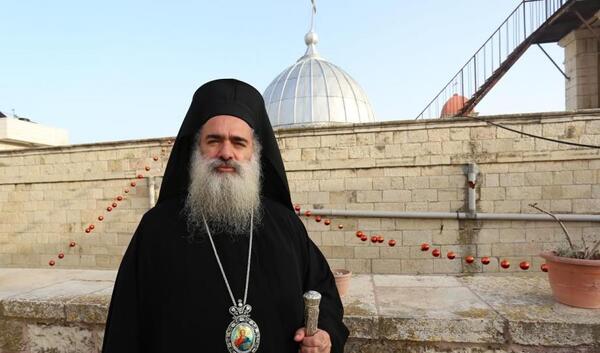
Meanwhile, (97) citizens were injured with various wounds as a result of being attacked by gunfire, beating, and stone-throwing, including (14) children and (13) women.

Attacks included (37) shooting incidents, while criminal settler gangs destroyed and uprooted (2414) fruitful trees, and stole and killed (488) head of livestock belonging to Palestinian farmers with the aim of restricting them and increasing the cost of their presence on the land. Damage was inflicted on (53) vehicles as a result of burning or stone-throwing, while settler gangs destroyed and burned (5) homes and agricultural, animal, and service facilities in Jerusalem and Nablus governorates.

In the context of pastoral settlement expansion, the Department of Work and Planning monitored during the past month attempts to establish (20) new pastoral outposts, the highest number recorded in a month, including areas and villages of Madama, Jalud, Burin, Qabalan, Awarta, Beita, and Aqraba in Nablus Governorate, Aboud, Beit Liqya, and Ain Sinia in Ramallah and Al-Bireh Governorate, Wadi Al-Rakheem, Tal Ma'in, Al-Jawaya, and Umm Al-Khair in Masafer Yatta, Dhahiriya, Shuyukh, and Sa'ir in Hebron Governorate, and Marah Ma'alla, Kisan, and Jib Al-Dhib in Bethlehem Governorate.

Criminal attacks were concentrated in Nablus Governorate (209) attacks, Hebron Governorate (153), Ramallah and Al-Bireh Governorate (150), Bethlehem Governorate (65), Salfit Governorate (61), Tubas and Northern Jordan Valley Governorate (46), Jenin Governorate (40), Jerusalem Governorate (31), Jericho Governorate (22), Qalqilya Governorate (20), and Tulkarm Governorate (2) attacks.

First: Demolition of Homes and Structures:

Israeli occupation authorities demolished (101) homes and structures in the West Bank and occupied Jerusalem last April, including the demolition of (43) homes and (58) structures, among them (23) self-demolition operations in the towns of Jabal Al-Mukaber, Sur Baher, Silwan, Ras Al-Amud, and Al-Sawana in occupied Jerusalem, carried out by their owners to avoid paying exorbitant fines. Demolition operations included the governorates of Jerusalem, Hebron, Ramallah and Al-Bireh, Nablus, Tulkarm, Jenin, Jericho, Salfit, and Bethlehem.

Settler gangs continued to vandalize and destroy citizens' facilities in villages and cities of the West Bank, where the department documented settlers burning and destroying five homes and facilities in Nablus and Jerusalem governorates.

Occupation authorities issued (85) demolition, stop-construction, and confiscation orders for homes and structures, including the governorates of Hebron, Ramallah and Al-Bireh, Jerusalem, Jenin, Nablus, Salfit, Bethlehem, and Qalqilya.

ARAB AND WORLD

Sun 03 May 2026 12:48 pm - Jerusalem Time

Israel expands evacuation orders north of the Litani, Hezbollah targets Avivim with rockets

The Israeli occupation army has taken a new escalatory step in southern Lebanon, issuing immediate evacuation orders for residents of 11 towns located north of the Litani River. These orders go beyond the boundaries of the so-called 'security zone' that Israel defined since the fragile ceasefire agreement came into effect on April 17, indicating the occupation's intention to expand the scope of its ground and air operations.

Field sources reported that the Israeli warnings included villages distributed across the Tyre and Bint Jbeil districts, while the largest number of them were concentrated in the Nabatieh district. The issuance of these orders coincided with an intensification of air raids carried out by warplanes and drones, with shelling hitting the towns of Zawtar Sharqiyeh, Srifa, Al-Shihabiya, Al-Qusaybah, and Al-Duwair, in addition to a direct targeting of the town of Siddiqin via a drone.

In the context of the field response, the occupation army announced the detection of six rockets launched from Lebanese territory towards the settlement of 'Avivim' in the Upper Galilee. Israeli military sources confirmed that air defense systems intercepted five of these rockets, while the sixth rocket fell in an open area without causing human casualties, in an operation that falls within Hezbollah's continuous responses to Israeli transgressions.

The past hours witnessed intense artillery shelling launched from occupation positions stationed in the town of Khiam, targeting the vicinity of the towns of Mansouri, Qleileh, and the hills of Majdal Zoun. Reports from the region indicated that some villages were subjected to heavy shelling even before the official evacuation orders were issued, while shells hit other villages not covered by the warnings at all, leading to a state of panic and forced displacement among civilians.

Regarding destructive operations, occupation forces continued to blow up homes and facilities within the border villages they had infiltrated, particularly in the towns of Shama and Al-Bayadiyah. These operations, according to observers, aim to create a buffer zone devoid of residents and urban landmarks, which represents a continuous violation of international understandings that sought to establish calm in the border region.

This week is considered the most violent on the ground in weeks, with local sources counting more than 60 Lebanese towns subjected to air raids or concentrated artillery shelling. In contrast, Hezbollah has escalated its military operations, targeting gatherings of occupation soldiers within the occupied villages, in addition to announcing the destruction of a number of military and engineering vehicles and artillery positions belonging to the Israeli army.

Field data indicate that the occupation is racing against time as the extended truce period approaches its end, by imposing a new geographical reality in the south. Fears are growing of the situation sliding towards a comprehensive confrontation in light of Israel's insistence on crossing previously drawn red lines, and its disregard for all warnings about the consequences of targeting areas north of the Litani.

Amidst this escalation, Lebanese and international political circles are awaiting the outcomes of these developments, especially with the expansion of displacement from the villages covered by the new evacuation orders. The field situation remains prone to further explosion, as long as the Israeli military machine continues to shell deep into Lebanese territory and expand the scope of its aerial and artillery targeting away from the direct border strip.

The Israeli army is practically expanding the geographical scope of villages targeted by warplanes, and the raids included towns located outside the previously defined security zone.

OPINIONS

Sun 03 May 2026 12:48 pm - Jerusalem Time

When the Nun is Struck... The City is Exposed

In Jerusalem, it's not just a nun's body that is struck, but the very meaning of a city remaining a city is tested. In one of the Old City's alleys, where a nun in her white habit passes quietly, a single violent act is enough to shatter this fragile scene, revealing what accumulates silently: that violence is no longer an exception, but a constant possibility in daily life.The incident in which a Christian nun was injured by a settler is not a fleeting detail in the news record, but a revealing moment that shatters the old illusion that some areas are still outside the scope of targeting. The nun is not a political adversary, nor a voice in a conflict zone. She is, in her deep human meaning, a choice for a peaceful life: service, prayer, and withdrawal from the world's clamor. Therefore, the assault on her is not understood as a casual friction, but as an act directed against a symbol – against the image of peace itself.The numbers here are not neutral. In just three years, attacks on Christians and their symbols in Jerusalem and its surroundings rose from 89 incidents to 155. This is not a natural escalation, but a clear slide. Among these incidents are dozens of physical assaults, and hundreds of daily insults ranging from spitting and curses to harassment. Most dangerously, religious men and women are the most targeted—because they are visible, because their identity is not hidden, but carried on their bodies and walked through the street.However, the real danger lies not in the number alone, but in its significance. Spitting on a monk, or chasing a nun, or attacking a church, are not random acts. They are a complete language. A language that says the other is no longer seen as a human being with full dignity, but as a presence that can be insulted without significant cost. And with the repetition of this language in the public sphere, it transforms from an aberration into a pattern, and from individual behavior into a general atmosphere.The question is no longer whether what is happening is wrong—that is morally settled—but how it became possible in the first place. How was the barrier that separated difference from assault broken? And how did the religious symbol, which is supposed to be outside the conflict, become within the daily targeting circle?From a psychological perspective, these actions are not separate from a deeper structure of tension seeking an outlet. In such environments, the target is chosen carefully: to be different, clear, and less able to retaliate. And the nun, with her habit and silence, meets these conditions. But she is not just an easy target, but an intensified target; because assaulting her gives the aggressor an illusion of control over a meaning, not over a person.Socially, the real danger begins the moment the event loses its uniqueness. When an assault becomes fleeting news, moral sensitivity erodes. What was unequivocally rejected becomes open to interpretation, then to disregard. At this threshold, violence no longer needs justification; it is enough that it has been repeated until people have become accustomed to it.Politically, this scene cannot be separated from its broader context. International reports, including those published by the Associated Press, indicate a link between the escalation of these attacks and a charged atmosphere, and a feeling among some aggressors that they are operating within a margin of tolerance or lack of accountability. And this feeling, regardless of its accuracy, is what transforms the act from an individual incident into a repeatable phenomenon.But the deepest impact is not measured by the moment of the assault, but by what it leaves behind. These incidents do not change the city all at once, but slowly reshape it. They push an entire community to feel vulnerable, turn belonging into a daily burden, and plant the question of survival in a place that, for centuries, was an authentic part of its living fabric.Jerusalem does not need more slogans about its sanctity. It needs a simple and clear test: that people within it are safe, because a city that cannot protect its weakest loses its ability to protect itself. And sanctity that is not reflected in human dignity turns into a suspended idea, with no impact on reality.When a nun is struck in the streets of Jerusalem, she is not the only one harmed. The meaning of coexistence is harmed, the idea of the city is scratched, and an unpostponable question arises: what sanctity can endure if human beings within it are no longer protected?Jerusalem does not lose its sanctity when its stones are touched, but when people within it are humiliated... and that becomes normal.

OPINIONS

Sun 03 May 2026 12:47 pm - Jerusalem Time

Palestinians in the West Bank are treated as if they are in a large prison, and reaching Jerusalem has become a dream

By what right do the occupation authorities impose a ban on Palestinians from the West Bank from reaching Jerusalem, except by obtaining impossible permits, which have become extremely difficult and complicated to obtain these days? Where is the justice in preventing Palestinians, whether Christian or Muslim, from coming to Jerusalem for prayer or work, while military checkpoints stand in wait for Palestinians, preventing them from reaching their holy city? Many these days speak of an impending war, and they ignore and forget what Palestinians in Gaza and the West Bank are subjected to. What is currently happening in the West Bank, and to all Palestinians, is a policy of humiliation, starvation, and abuse, by preventing Palestinians from reaching their work. Many Palestinians in the West Bank have been unemployed for more than two years, living in abject poverty, and suffering from policies of humiliation, starvation, and abuse. Palestinian Christians, residents of the West Bank, are also prevented from reaching Jerusalem, and from reaching their workplaces through which they support their families. A large percentage of Christians, especially young people in the West Bank, suffer from unemployment, poverty, and destitution, and even churches are often helpless and unable to secure the required permits for them. In Christian schools in Jerusalem, there are a number of teachers from the West Bank, numbering in the hundreds, who are distinguished by their giving, culture, and sophistication, and churches are asked to abandon them because the Israeli authorities will not grant them permits to reach their schools in Jerusalem. We are facing a state of siege and isolation for Palestinians in the West Bank, as the Palestinian in all cities, governorates, and towns is intended to be besieged, as if living in cantons separated from each other. For a Palestinian from the West Bank to come to Jerusalem, this has become extremely complicated and difficult, as has moving from one governorate to another, and from one city to another, which has also become extremely difficult and complicated, in light of the closures, gates, and the spread of settlers in more than one place in the Palestinian territories. Where are the human rights organizations in the world from the policy of imprisoning Palestinians, isolating them, and expelling them from Jerusalem? We said at one time that Gaza is the largest prison in the world, but the West Bank has also turned into a large prison; there are Palestinians languishing in occupation prisons, but there is also a large prison in which Palestinians live, and are prevented from freedom of movement and access to their holy sites, jobs, and businesses. Christians in the West Bank live in deprivation, hardship, poverty, and destitution, as is the case for all our people, especially in the Bethlehem Governorate and its cities, where tourism has stopped since the beginning of the war, hotels have closed, and the lack of tourist movement has negatively affected all restaurants and shops in the Bethlehem Governorate. They want to humiliate, starve, and subjugate the Palestinian, and what is currently happening in the West Bank is a war in a different way. Silence in the face of these injustices is not permissible. The Christian churches in this Holy Land must make their voices heard, and this voice must reach all churches and spiritual authorities in this world. The voice of the oppressed and besieged Palestinians must reach everywhere, especially to the leaders and political leaders in this world who turn a blind eye to the suffering of our people and what this oppressed people are subjected to. Surrender and acceptance of policies of isolating Palestinians and expelling them from their holy city as an inescapable reality is not permissible. It is not permissible to surrender to the culture of preventing Palestinians from exercising their natural right to reach Jerusalem and their workplaces, and this is not a generosity or a favor from anyone, for this is a legitimate right that every Palestinian must enjoy. I hope that Palestinians inside will intensify their trips and visits to the West Bank areas, especially the Bethlehem Governorate and other governorates, for whoever is able to reach the West Bank must do so, perhaps such visits will offer something, however simple and modest, to our steadfast people in the West Bank who remain in their land, but steadfastness and remaining require components. May God help our people and our families in the West Bank who have come to live as if in a large prison. A few days ago, a 30-year-old young man from Bethlehem told me: "I have never visited Jerusalem even once, and what I know about Jerusalem is only what I read and what I see in pictures through various social media." So where is the justice in all of this? And reaching Jerusalem has become a dream for many Palestinians who are prevented from freedom of movement and access to their holy city.