







The violations committed by occupation soldiers in military theaters of operation are no longer mere individual incidents; rather, they reflect a recurring pattern that transcends incidental behaviors to reach the level of a systematic phenomenon. Recent reports have shed light on widespread looting operations targeting civilian property in southern Lebanon, the Gaza Strip, and the West Bank, placing the military establishment before heavy legal and ethical accusations.
In this context, an investigation published by Haaretz newspaper in April 2026 revealed shocking testimonies from soldiers and field officers who participated in ground operations. The testimonies confirmed that looting operations in southern Lebanon were not secret, but rather took place openly and under the eyes of commanders, with stolen items including electrical appliances, household furniture, and even gold bars transported in army vehicles.
One of the participating soldiers described the situation as a 'crazy phenomenon,' noting that soldiers carried stolen goods in their private or military vehicles when leaving the borders without any attempt to conceal them. This scene reflects a complete absence of military discipline and audacity resulting from the certainty of impunity and lack of accountability from higher levels.
Data indicates that military leaders, from battalion to brigade level, were fully aware of these practices but chose silence or merely ineffective verbal reprimands. Observers attribute this laxity to the commanders' desire to maintain the morale of reserve soldiers who had served for long periods exceeding 500 days since the start of the war.
Despite the occupation army's claim that it deals with these incidents seriously, the reality on the ground revealed a stark contradiction, as military police checkpoints, which were designated to prevent looting, were removed. This supervisory vacuum encouraged soldiers to consider civilian property as 'spoils' or items destined for destruction amidst ongoing military operations.
In the West Bank, looting takes on a more complex character, where military action intertwines with systematic settler attacks under the protection of occupation forces. Human rights reports document repeated instances of seizure of money, jewelry, and personal belongings during night raids on homes and commercial establishments in cities such as Bethlehem and Ramallah.
The olive harvest season in the West Bank also serves as a scene for the theft of agricultural crops by settlers, while Palestinian farmers are prevented from accessing their lands. These attacks, often occurring in the presence of soldiers, reinforce an environment that erodes the legal protection of private Palestinian property and turns it into a free-for-all.
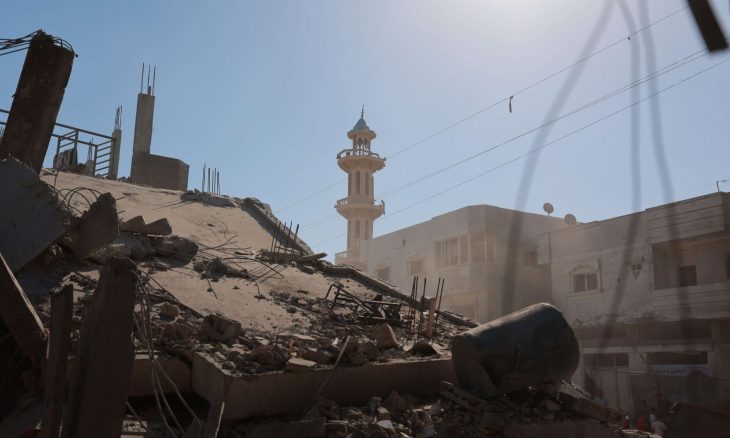
In the Gaza Strip, the picture appears even bleaker due to widespread destruction and the difficulty of field documentation in militarily closed areas. Nevertheless, human rights estimates indicate that the value of property seized by soldiers from displaced persons' homes could reach tens of millions of dollars, including cash savings and valuable electronic devices.
Soldiers in Gaza exploited the mass displacement and emptying of entire neighborhoods of their residents to carry out widespread seizures away from the eyes of media scrutiny. Leaked recordings have emerged of soldiers boasting about items they stole from Gazan homes, confirming that the phenomenon is not confined to one front but is an institutional behavior.
Legally, this behavior constitutes a blatant violation of Article 33 of the Fourth Geneva Convention, which absolutely prohibits looting in armed conflicts. The Rome Statute of the International Criminal Court also classifies looting as a war crime, especially when it acquires a systematic or widespread character as documented in these reports.
Israeli military leadership bears direct legal responsibility under the principle of 'command responsibility,' as their knowledge of the crimes and their failure to prevent them or punish their perpetrators makes them complicit. The failure to take deterrent punitive measures sends a message of encouragement to soldiers to continue these violations without fear of prosecution.
Analysts believe that opening an investigation by the military police at the order of the Chief of Staff may be nothing more than an attempt to absorb media outrage and avoid international prosecutions. Previous experiences indicate that most of these investigations end with files being closed without actual charges being brought or looted property being returned to its rightful owners.
The link between what is happening in southern Lebanon, Gaza, and the West Bank reveals a structural flaw in the ethics of the occupation army and its dealings with the property of the 'other.' Looting here is not merely a desire for material gain, but rather part of a policy aimed at stripping residents of their livelihoods and property as a form of collective punishment.
In conclusion, documenting these crimes remains an essential step in building future international accountability files, despite the political obstacles that prevent effective justice. The continuation of these practices confirms that the issue concerns an entrenched military approach that violates all civilian aspects in order to achieve political and military objectives.
Anyone who takes something like televisions, cigarettes, and tools immediately puts it in their car; it's not a secret, everyone sees and understands it.
Share your opinion
Systematic Looting: How the Theft of Civilian Property Became an Israeli Military Policy?