





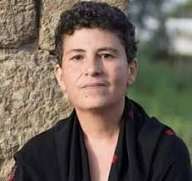

In Jerusalem, it's not just a nun's body that is struck, but the very meaning of a city remaining a city is tested. In one of the Old City's alleys, where a nun in her white habit passes quietly, a single violent act is enough to shatter this fragile scene, revealing what accumulates silently: that violence is no longer an exception, but a constant possibility in daily life.The incident in which a Christian nun was injured by a settler is not a fleeting detail in the news record, but a revealing moment that shatters the old illusion that some areas are still outside the scope of targeting. The nun is not a political adversary, nor a voice in a conflict zone. She is, in her deep human meaning, a choice for a peaceful life: service, prayer, and withdrawal from the world's clamor. Therefore, the assault on her is not understood as a casual friction, but as an act directed against a symbol – against the image of peace itself.The numbers here are not neutral. In just three years, attacks on Christians and their symbols in Jerusalem and its surroundings rose from 89 incidents to 155. This is not a natural escalation, but a clear slide. Among these incidents are dozens of physical assaults, and hundreds of daily insults ranging from spitting and curses to harassment. Most dangerously, religious men and women are the most targeted—because they are visible, because their identity is not hidden, but carried on their bodies and walked through the street.However, the real danger lies not in the number alone, but in its significance. Spitting on a monk, or chasing a nun, or attacking a church, are not random acts. They are a complete language. A language that says the other is no longer seen as a human being with full dignity, but as a presence that can be insulted without significant cost. And with the repetition of this language in the public sphere, it transforms from an aberration into a pattern, and from individual behavior into a general atmosphere.The question is no longer whether what is happening is wrong—that is morally settled—but how it became possible in the first place. How was the barrier that separated difference from assault broken? And how did the religious symbol, which is supposed to be outside the conflict, become within the daily targeting circle?From a psychological perspective, these actions are not separate from a deeper structure of tension seeking an outlet. In such environments, the target is chosen carefully: to be different, clear, and less able to retaliate. And the nun, with her habit and silence, meets these conditions. But she is not just an easy target, but an intensified target; because assaulting her gives the aggressor an illusion of control over a meaning, not over a person.Socially, the real danger begins the moment the event loses its uniqueness. When an assault becomes fleeting news, moral sensitivity erodes. What was unequivocally rejected becomes open to interpretation, then to disregard. At this threshold, violence no longer needs justification; it is enough that it has been repeated until people have become accustomed to it.Politically, this scene cannot be separated from its broader context. International reports, including those published by the Associated Press, indicate a link between the escalation of these attacks and a charged atmosphere, and a feeling among some aggressors that they are operating within a margin of tolerance or lack of accountability. And this feeling, regardless of its accuracy, is what transforms the act from an individual incident into a repeatable phenomenon.But the deepest impact is not measured by the moment of the assault, but by what it leaves behind. These incidents do not change the city all at once, but slowly reshape it. They push an entire community to feel vulnerable, turn belonging into a daily burden, and plant the question of survival in a place that, for centuries, was an authentic part of its living fabric.Jerusalem does not need more slogans about its sanctity. It needs a simple and clear test: that people within it are safe, because a city that cannot protect its weakest loses its ability to protect itself. And sanctity that is not reflected in human dignity turns into a suspended idea, with no impact on reality.When a nun is struck in the streets of Jerusalem, she is not the only one harmed. The meaning of coexistence is harmed, the idea of the city is scratched, and an unpostponable question arises: what sanctity can endure if human beings within it are no longer protected?Jerusalem does not lose its sanctity when its stones are touched, but when people within it are humiliated... and that becomes normal.

Share your opinion
When the Nun is Struck... The City is Exposed