





In a reading published in the Israeli newspaper “Maariv,” Moshe Elad presented an analysis and an Israeli interpretation of the repercussions of recent events in Syria, the advance of Syrian forces in northern Syria, the Syrian forces' control over oil and gas fields, and their internal and regional implications. Elad is an Israeli academic, a lecturer at the Western Galilee Academic College, and a former colonel in the Israeli army. He is known for his political and strategic analyses of Middle Eastern affairs, which gives his reading a dimension that reflects the Israeli security establishment's vision and its deep concerns about the ongoing transformations in the Syrian arena.
The Israeli reading presented by Moshe Elad regarding the Syrian forces' control over oil and gas fields attempts to appear descriptive and realistic, but at its core, it is an anxious reading charged with Israeli strategic concerns more than it is a neutral analysis of an internal Syrian field development. The language used reveals a deep fear of the return of the Syrian state with its central function, not merely a change in control maps or a decline in the influence of one actor or another.
Talking about what happened as “an event of deep regional significance” is not an innocent description but an implicit acknowledgment that one of the pillars of the project to dismantle the Syrian state since 2011 is being shaken, and that control over energy means restoring one of the nerves of sovereignty without which a modern state cannot exist. Israel, which has long bet on Syria remaining a weakened, fragmented state without resources, realizes that oil and gas are not just economic income but a political condition for rebuilding the center, imposing national decisions, and restoring regional negotiation tools.
What is striking in Elad's reading is his insistence on portraying the state's recovery of its resources as a “dangerous” act threatening minorities, while deliberately ignoring the fact that the disintegration of the state and the spread of armed entities is what historically opened the door to massacres and civil strife. The Syrian experience during the war years proved that areas outside state authority were neither safer nor more stable, but rather open arenas for external intervention, tribal fighting, and direct American and Turkish hegemony.
As for attributing the responsibility for the “collapse of the Rojava project” and the David corridor, which Israel dreamed of, to the control of the oil fields, it reveals the analysis's bias rather than its objectivity, because this project, since its inception, was not based on the right to self-determination as much as it was based on a security and military function linked to the American presence and the proxy war against ISIS. When Elad talks about stripping the economic basis of self-rule, he ignores the fact that these resources were never owned by a specific local power but rather a Syrian national wealth that was utilized in the context of an international war against the Syrian state.
In this context, Israeli concern appears regarding the Arab tribes abandoning the Kurdish alliance, not as a concern for stability but as a fear of the collapse of one of the indirect administration patterns that allowed eastern Syria to remain outside the comprehensive national equation. For Tel Aviv and Washington, tribes are not a social actor with national interests but a card that can be used or lost in the game of influence.
As for talking about “Washington's dilemma,” it is in reality a description of the American exposure, as it has become clear that the United States is no longer willing or able to engage in an open conflict to maintain post-ISIS arrangements, and that the “fire separation” policy is not a strategy as much as it is a gradual withdrawal management and an attempt to save face, which explains the feeling of local allies, especially the SDF forces, that they are facing a repetition of American abandonment scenarios from Afghanistan to northern Iraq previously.
At the core of the Israeli reading, the clearest contradiction appears when Elad admits that Israel prefers “controlled instability” over the existence of a unified and strong Syrian state. This sentence summarizes the Israeli security doctrine in Syria, which does not see the state's unity and the restoration of its sovereignty as a factor of stability but as a long-term threat, even in the absence of Assad, and even assuming Damascus moves away from Tehran, because the problem for Israel is not in the identity of the ruling regime in Syria as much as it is in the existence of a state that possesses its decision, borders, and resources.
Therefore, the recovery of the north and the oil fields cannot be read only as an economic or military shift but as a gradual breaking of the functional partition equation that prevailed during the war years, where Syrian geography was distributed among international and regional spheres of influence, and returning these resources to the state necessarily means reopening the question of sovereignty and rearranging the relationship between the center and the peripheries outside American and Israeli conditions.
The Israeli reading, then, is not a warning of chaos as much as it is an expression of fear of stability when it comes on an independent national basis. Stability that is not subject to dismantling or external management is the most disturbing scenario for Tel Aviv, which explains this overt concern about a “strong Syria” even if it comes in a new form and with different faces.
Ultimately, what is happening is not just a battle over oil, but a battle over the meaning of the state in Syria, and over who controls wealth, borders, and sovereignty, which makes this development a subject of close Israeli monitoring, not because it poses an immediate danger but because it signals the end of one phase and the beginning of another in which Syria is no longer just an arena, but is poised to return as a player, even if the road is still long and full of dangers.

OPINIONS
Thu 22 Jan 2026 9:57 am - Jerusalem Time
A Reading of the Israeli Mind on What is Happening in Syria: Between a Project of Hegemony and the Ambition for Partition

ARAB AND WORLD
Thu 22 Jan 2026 9:48 am - Jerusalem Time
Washington turns the page on supporting Kurds in Syria and bets on the new authority
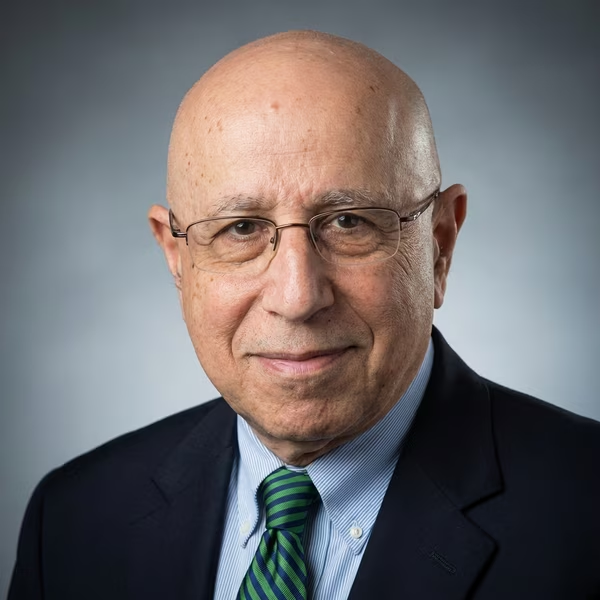
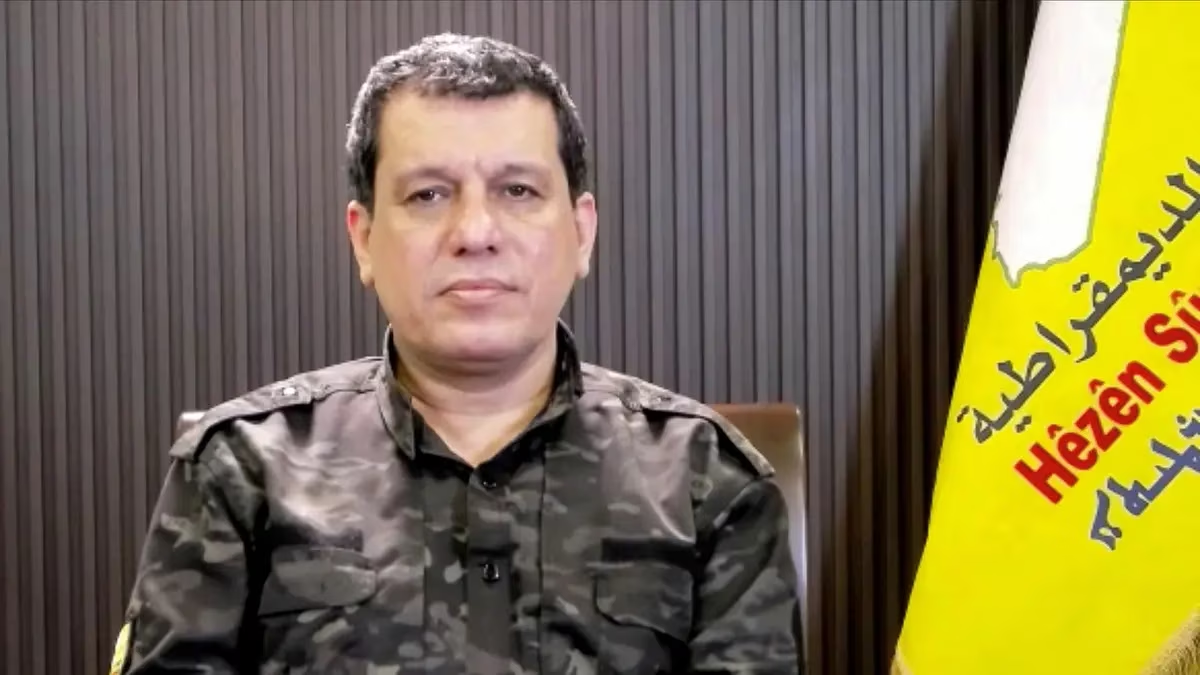
In a remarkable shift in its approach to the Syrian file, the United States has practically announced the end of its military support for Kurdish forces, concurrent with escalating confrontations in the north and northeast of the country between the forces controlling Damascus, which have an Islamist orientation, and local Kurdish forces. This shift reflects increased American involvement in supporting the new Syrian authority led by Hayat Tahrir al-Sham, after years of relying on the Kurds as a key field partner.
US Special Envoy Tom Barrack affirmed that the Kurds have a "real opportunity" to integrate into the new Syrian state, noting that the central government will guarantee them "equal rights" if they accept submission to its authority. Barrack's statements did not focus as much as they did on the justifications for this shift, explaining that Washington's previous support for the Kurds came in the context of the absence of a reliable partner in Damascus during the war on ISIS, a circumstance he said no longer exists today.
According to Barrack, the United States' consideration of "Hayat Tahrir al-Sham" as a party consistent with its security and political interests made continuing to bet on the Kurds an unjustified option from the perspective of the American administration. This new assessment, it seems, has redrawn the map of alliances in Syria, at the expense of field allies with whom cooperation lasted more than a decade.
In contrast, local officials and Kurdish leaders expressed deep shock and disappointment, considering that Washington is "abandoning" them at a critical moment, specifically with the start of Hayat Tahrir al-Sham's attacks on areas that Kurdish forces had controlled with direct American support in previous years. These individuals believe that the decision represents a repetition of a known American pattern in managing temporary alliances.
This is not the first such retreat. In 2019, President Donald Trump's administration allowed Turkey to launch a wide-ranging attack on Kurdish areas, following a US decision to withdraw military support, a move that sparked widespread controversy both inside and outside the United States. It seems that history is repeating itself today, even if the pretexts and contexts differ.
The current move is not without opposition within Washington itself. Republican Senator Lindsey Graham warned Hayat Tahrir al-Sham against continuing attacks on the Kurds, threatening the possibility of reimposing sanctions on Syria if the escalation continues. However, this position seems isolated from the White House's direction, where President Trump publicly expressed admiration for the group's leader, Ahmed al-Sharaa, describing him as a "strong and charismatic personality," in a clear indication of the priority of the relationship with the new leadership in Damascus.
Over the past months, Washington has repeatedly expressed its dissatisfaction with the Kurds' adherence to the self-governance formula, as Barrack stated that the American administration concluded that "federalism is not suitable" in the Syrian case, and that the Kurds must abandon their own political ambitions and fully integrate into the central state.
For his part, Ahmed al-Sharaa gave the Kurds a short deadline to accept the terms of integration, amidst a previous record of political marginalization, which included their exclusion from government positions and the postponement of parliamentary elections in their areas. With the absence of any clear guarantees regarding the form of their future representation, their political fate remains uncertain, at a time when Washington believes that what is offered to them is sufficient to close this file.
The new American stance on the Kurds in Syria reflects a strict pragmatic logic that governs Washington's foreign policy, where alliances are measured by immediate interest rather than by a long record of partnerships. After the Kurds played a pivotal role in defeating ISIS, they are no longer a strategic necessity in the eyes of American decision-makers, which reveals the fragility of the guarantees Washington provides to its non-state allies in conflict zones.
Experts believe that the American bet on Hayat Tahrir al-Sham carries long-term risks, as it grants international legitimacy to a militia that was classified as "terrorist" and whose political structure remains untested. Furthermore, the marginalization of the Kurdish component may open the door to new rounds of instability and undermine any sustainable settlement in Syria. While Washington seeks to simplify the scene by supporting a single center of power, it may later find itself facing complexities even greater than what it is trying to overcome today.
PALESTINE
Thu 22 Jan 2026 9:46 am - Jerusalem Time
Trump launches "Peace Council": Arab support, European reservations, and questions about international legitimacy
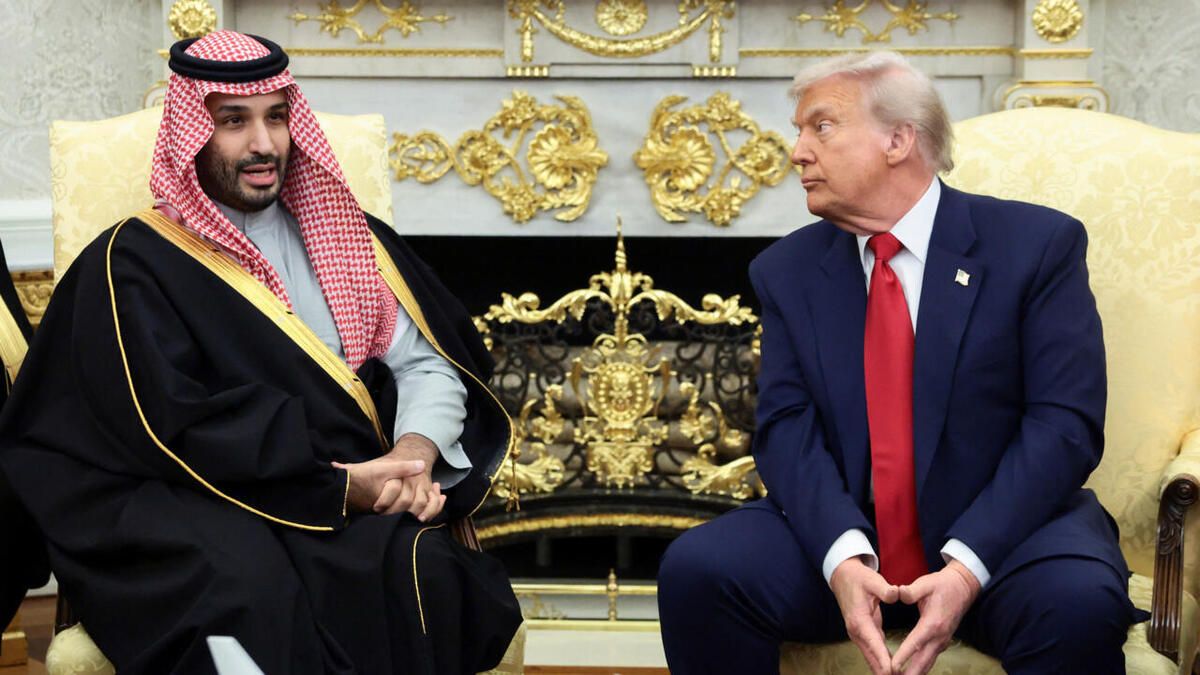
US President Donald Trump is expected to host a special signing ceremony today, Thursday, to launch the "Peace Council," an idea he previously proposed on the sidelines of the World Economic Forum in Davos. Initial data indicates that more than twenty countries have so far accepted to join this council, while the position of key European allies of the United States remains unclear, as none of them have announced a formal commitment. Some countries have even expressed their rejection of the idea or deep reservations about it.
In this context, eight Arab and Islamic countries announced, in a joint statement issued from the Qatari capital Doha on Wednesday, their welcome of Trump's invitation to join the "Peace Council." The statement was issued by the foreign ministers of Qatar, Turkey, Egypt, Jordan, Indonesia, Pakistan, Saudi Arabia, and the UAE, where they affirmed their acceptance of the invitation extended to the leaders of their countries and their agreement to initiate the necessary formal procedures to complete their accession according to the legal and administrative frameworks adopted by each country.
The statement noted that some of these countries, including Egypt, Pakistan, and the UAE, have already begun taking practical steps towards formal accession procedures. The foreign ministers also stressed their support for the political efforts led by the United States, affirming their readiness to contribute to the implementation of the council's tasks as a transitional framework, as stated in the comprehensive plan to end the Gaza conflict, a plan that received the support of the UN Security Council under Resolution No. 2803.
Meanwhile, US Special Envoy Steve Witkoff stated on Wednesday that up to 25 countries have accepted the invitation to join, saying in a television interview (on ABC network) that the number of leaders who responded positively exceeds twenty and may approach twenty-five. According to US officials, invitations were extended over the weekend to more than fifty world leaders, while a White House official expected the number of members to reach nearly thirty countries.
Despite this momentum, the initiative has been met with cautious stances from a number of Washington's allies, who have not shown explicit support for the council or quick acceptance of Trump's invitation, amidst serious questions about the need for a new international body that could be understood as a competitor or alternative to the United Nations. Speaking on Wednesday, Trump described the council as "the most prestigious ever formed," considering that it would do work that the United Nations should have done, adding that cooperation with the United Nations would continue, but at the same time he stressed that the council would be "special" and capable of "achieving peace." When asked if the council could replace the United Nations, he did not rule it out, saying: "Perhaps."
Among the European countries that rejected the idea or expressed significant reservations were France, Norway, and Sweden, while the position of other countries such as Germany, the United Kingdom, and Italy remained hesitant without clear commitment. An invitation was also extended to Russia, which the Kremlin confirmed this week despite the ongoing war in Ukraine. State media quoted Russian President Vladimir Putin as saying that the proposal is primarily related to settling Middle East issues and finding solutions to the urgent problems of the Palestinian people, especially the humanitarian crisis in the Gaza Strip.
The list of countries said to have accepted the invitation includes Israel, Kosovo, the UAE, Hungary, Belarus, Azerbaijan, Egypt, Armenia, Turkey, Pakistan, Qatar, and Jordan. Trump told reporters in Davos that the council is "the greatest council ever formed," adding that everyone wants to join it, and that it includes "controversial" figures who are capable of getting things done and have "tremendous influence." The White House has not released the full list of invited countries, and it remains unclear how many countries will actually sign during the anticipated ceremony on Thursday.
Information indicates that the idea of the Peace Council was first proposed last year based on a two-year mandate from the Security Council, with the aim of managing and reconstructing Gaza, but the draft charter of the council does not directly mention Gaza. According to a copy of the draft reviewed by an American news network, the council is designed to have a much broader mandate as an "international organization" and a "peacebuilding body," seeking to resolve conflicts around the world and secure lasting peace, making it closer to a US-led alternative to the traditional UN model.
The draft also reveals that Trump, who is expected to chair the council, could hold this position for life, as he can continue until he decides to resign, according to a US official. The official added that a future US president may choose to appoint a new US representative to the council. The draft also stipulates that countries that accept the invitation will receive a three-year membership, while permanent membership is granted to countries that contribute more than one billion dollars in cash during the first year. The US administration affirmed that these contributions are "voluntary" and should not be considered as membership fees, stressing that the council will adhere to strict financial oversight and supervision standards if funding is provided.
In a notable development, Putin proposed that Russia pay the one billion dollars from the assets frozen by the United States due to the war in Ukraine. The discussion also included the formation of an executive committee to oversee the council, comprising former British Prime Minister Tony Blair, Canadian Prime Minister Mark Carney, and US Secretary of State Marco Rubio, along with Steve Witkoff and Trump's son-in-law Jared Kushner.
The idea of the "Peace Council" raises a fundamental question about the logic of creating new international frameworks at a time when many countries' trust in global governance institutions is declining. When Trump presents the council as more effective than the United Nations, he is not only criticizing the bureaucracy of the international organization but also hinting at an American desire to possess tools of influence that are faster and less constrained by collective legitimacy. However, this could open the door to polarization rather than consensus.
The accession of influential Arab and Islamic countries gives the council political and symbolic weight, but it also puts these countries to a dual test: how to balance supporting a new international path led by Washington with protecting the independence of their decision and not being dependent on agendas that change with changing US administrations? Previous experiences in the Middle East show that initiatives lacking clear guarantees and transparent mechanisms can turn from peace projects into tools of pressure, especially when crises intensify.
What is most controversial in the proposed structure of the council is the mixing of "peace" and "funding," by linking permanent membership to a huge financial contribution. This condition creates the impression that influence within the council can be bought, not earned through political responsibility or adherence to international law. Moreover, granting lifetime presidency weakens the idea of institutional rotation and makes the council closer to a personal project. Therefore, its legitimacy will remain a constant question.
PALESTINE
Thu 22 Jan 2026 4:25 am - Jerusalem Time
Conference of Palestinians Abroad Denounces US Sanctions and Demands Reconsideration
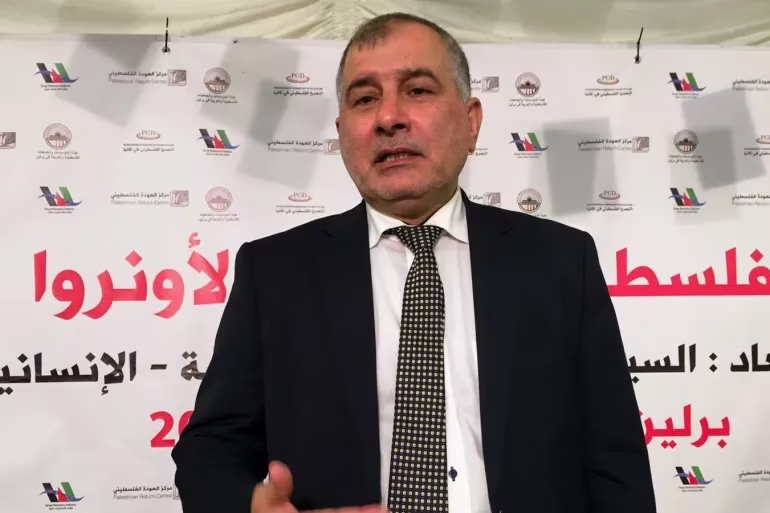
Majed Al-Zeer, Deputy Head of the General Authority of the Popular Conference for Palestinians Abroad, stated that the US administration's decision to include the conference on the sanctions list of the Treasury Department "represents a new and blind persistence of US policy in its absolute support for the Israeli occupation and its arbitrary, illegal, and inhumane policies against the Palestinian people." Al-Zeer affirmed that the decision is considered "an attempt to limit the activities of the Palestinian people and their continuous movement to restore their rights within the framework of international law." Al-Zeer demanded a reconsideration of the "unjust and unfair" decision, as he described it, adding that this American step lacks the minimum legal standards in searching for the truth of what the Palestinian people and their institutions are doing. Al-Zeer clarified that the Popular Conference for Palestinians Abroad is considered "a popular institution operating in the global space wherever the Palestinian people are, organizing activities and events, and its members and affiliates are from all segments of the Palestinian spectrum, its generations, and genders," stressing that it is part of the Palestinian people's movement to work on regaining their rights.
The US Treasury Department imposed sanctions on the Popular Conference in addition to 6 other organizations operating in Gaza.
The United States announced yesterday, Wednesday, the imposition of sanctions on the Popular Conference for Palestinians Abroad, in addition to 6 charities active in the Gaza Strip, accusing them of working for the Islamic Resistance Movement (Hamas). The US State Department said in a statement that these institutions "claim to provide medical care to Palestinian civilians, while in reality they support the Izz ad-Din al-Qassam Brigades, the military wing of Hamas." The statement added that this decision includes "the Popular Conference for Palestinians Abroad, which is listed on the sanctions list for its secret support of the Izz ad-Din al-Qassam Brigades, and its practice of misleading fundraising methods, which undermines aid provided to civilians."
On its website, the US Treasury Department stated that the Popular Conference for Palestinians Abroad is considered "one of the main organizers of recent flotillas that sought to break the Israeli security blockade on the Gaza Strip," claiming that it "was founded and managed by elements of Hamas's International Relations Office, which was headed by Mousa Abu Marzook." The department claimed in its statement that Hamas controls the strategic and tactical aspects of the conference's activity "by placing key figures associated with the movement in key positions throughout the organization." The department mentioned Adel Doughman and Majed Al-Zeer, who held key positions within the conference organization, and had previously been listed by the department on the sanctions list in October 2024. The statement also mentioned that the new decision includes Zaher Birawi, who holds a high position in the organization and is a member of its General Secretariat, and one of its founding members.
The US Treasury Department considered that the Popular Conference provides secret support to the Qassam Brigades.
The department stated in its statement that "Palestinian diaspora individuals have the right to assemble and advocate for their legitimate political causes, and members of the international community, including American citizens, have the right to support these efforts," stressing that it does not impose sanctions on individuals for exercising activities protected under the US Constitution, such as freedom of speech or religious practices and beliefs. However, the department considered that "Hamas, through its strategy of hiding behind civilians and using terrorism to achieve political goals, whether in Gaza or elsewhere, is the one that endangers innocent lives and undermines international efforts aimed at building lasting peace and a prosperous future for all Palestinians," as it described.
It is worth noting that the Popular Conference organization is based in Lebanon for its activities, and has organized several conferences in Turkey that brought together Palestinians from the diaspora, and supported the Freedom Flotilla alliance ships that sailed towards Gaza with the aim of breaking the siege imposed on the Palestinian sector during the two-year Israeli war of extermination since October 2023.
It represents a new and blind persistence of US policy in its absolute support for the Israeli occupation and its arbitrary, illegal, and inhumane policies against the Palestinian people.
PALESTINE
Thu 22 Jan 2026 12:19 am - Jerusalem Time
5 Palestinians injured in an assault by occupation forces in Hebron
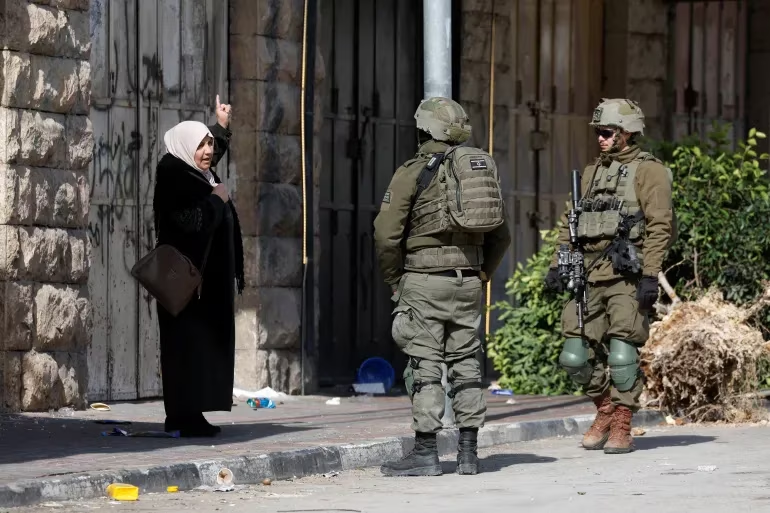
The Palestinian Red Crescent reported today, Wednesday, that 5 Palestinians were injured in an assault by occupation forces during their raid on the Jabal Jawhar area in Hebron. Palestinian sources stated that the occupation forces beat the five Palestinians as they were leaving to buy their food supplies, after news of a temporary lifting of the curfew imposed on residents for 3 days, which resulted in them sustaining fractures and bruises, after which they were transferred to the hospital.
For 3 days, the occupation forces have been carrying out a military operation in Jabal Jawhar and the southern area of Hebron, imposing a strict siege and curfew on citizens, raiding their homes, abusing them, and arresting and detaining a large number of them.
The military operation is being carried out in the Israeli-controlled part of Hebron in accordance with the Hebron Agreement between the Palestine Liberation Organization and Israel in 1997, and concerns neighborhoods around the Old City and the Ibrahimi Mosque.
Since it began its war of extermination on the Gaza Strip in October 2023, which lasted two years, Israel, through its army and settlers, has intensified its attacks in the West Bank, including killing, arresting, displacing, and expanding settlements, in a path that Palestinians warn is paving the way for the annexation of the West Bank to Israel.
This has resulted in the martyrdom of at least 1,107 Palestinians, the injury of about 11,000 others, in addition to the arrest of more than 21,000, according to official Palestinian data.
PALESTINE
Thu 22 Jan 2026 12:19 am - Jerusalem Time
Why is Israel escalating in Gaza and joining the "Peace Council"?
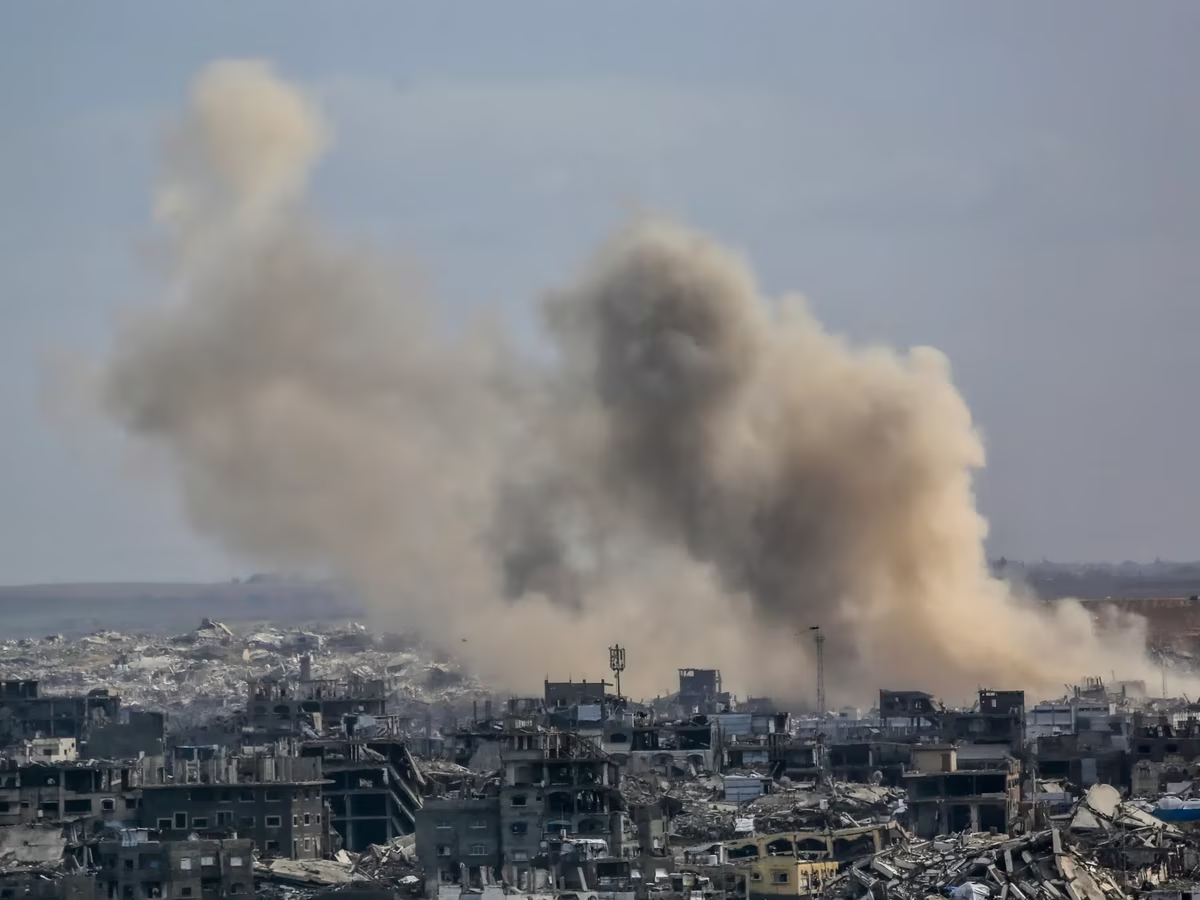
Israel is escalating its military operations in the Gaza Strip at a moment that is supposed to be transitional after Washington announced the start of the second phase of the ceasefire agreement, in a scene that reflects a stark contradiction between the declared political path and the explosive reality on the ground. Israeli shelling that hit various areas in the Strip resulted in the martyrdom of 11 Palestinians, including journalists and children, which analysts considered to carry a multi-directional message where war calculations, disarmament, and post-agreement arrangements intersect.
Mohannad Mustafa, an expert in Israeli affairs, believes that the significance of this escalation lies in Israel's endeavor to normalize the military situation in Gaza, indicating that shelling and killing are becoming routine matters that do not entail political consequences or accountability within the ceasefire agreement. Mustafa pointed out - during his interview with the program "Events Track" - that the occupation army's statement based on "suspicion" of drone use was used as a pretext to justify the killing of Palestinians and journalists, as part of a deliberate ease in using force. According to Mustafa, Israel seeks to keep the option of extensive military operations open in the future, and to prepare mediators, Washington, and the "Peace Council" to deal with this reality as an existing fact.
In the same context, writer and political analyst Iyad Al-Qara described the Israeli escalation as "the worst," with the expansion of violations in Gaza, its north, and Khan Yunis to the south. He affirmed that Israel is practically moving to cancel what is known as the Yellow Zone, and completely clear the areas near the "Yellow Line" by destroying what remains of buildings and infrastructure. Al-Qara went on to say that this systematic destruction falls within preparations for reshaping the geography, either to establish subsequent displacement areas or to solidify facts on the ground that would render any presence of international stabilization forces without real substance.
In contrast, former US National Security Advisor Mark Feivel noted that Israel focuses exclusively on the militarization of Hamas, ignoring equally important elements such as humanitarian relief, a sense of security, local governance, and sustainable security. Feivel warned that ignoring these issues would lead to continued attacks and suffering, regardless of the political frameworks.
In this context, Israel's invitation to join the Peace Council emerged, raising widespread questions. Mohannad Mustafa considered that Prime Minister Benjamin Netanyahu's approval does not stem from a desire to resolve the Gaza crisis, but from his pursuit of gaining the favor of US President Donald Trump and opening a direct channel with him. The Israeli agenda, according to Mustafa, is to thwart the second phase in its current form, and to try to convince Trump to impose a specific deadline for disarming Hamas, considering it the only valuable goal for Israel, while bypassing traditional international institutions and delegitimizing the United Nations.
Netanyahu's plan - according to the expert in Israeli affairs - is based on linking any withdrawal from the Gaza Strip, the opening of the Rafah crossing, and enabling the Gaza management committee to begin its work, to achieving one condition: disarmament. In this regard, Netanyahu has repeatedly reiterated adherence to two conditions for entering the second phase of the ceasefire agreement: the handover of the body of the last Israeli captive in Gaza, and the disarmament of Hamas and the general population of the Strip.
For his part, Al-Qara rejected reliance on the Peace Council, describing it as a framework that offers nothing to Palestinians, but rather empties the second phase of its content, entrenches the Israeli presence, and hinders any administrative or international arrangements in Gaza. As for Feivel, he linked the council's effectiveness to its actual ability to influence, warning against its transformation into a symbolic platform if it does not have clear powers, while emphasizing the necessity of involving Palestinians in any path to governance and stability.
The Israeli escalation is "the worst," with the expansion of violations in Gaza, its north, and Khan Yunis to the south.
PALESTINE
Wed 21 Jan 2026 1:10 pm - Jerusalem Time
Despite being internationally pursued.. Netanyahu joins "Peace Council" led by Trump
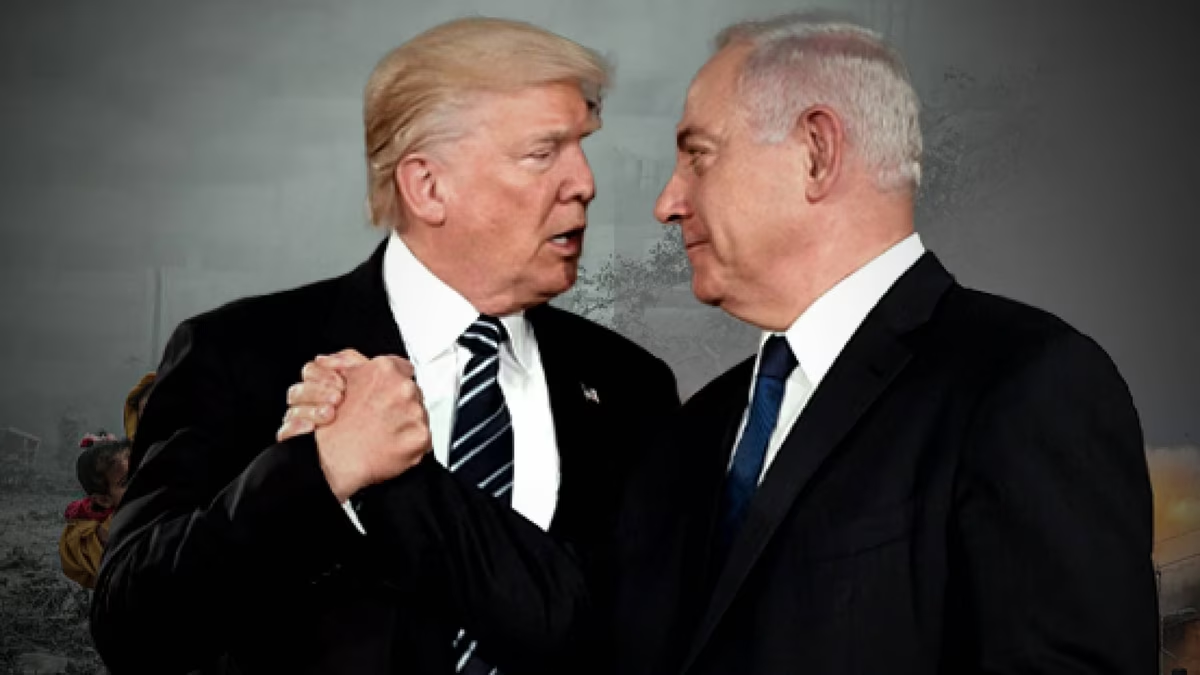
The office of the occupation prime minister, Benjamin Netanyahu, announced on Wednesday his official acceptance of US President Donald Trump's invitation to join what is known as the "Peace Council" concerned with the Gaza Strip.
The office clarified in a statement that "Netanyahu" accepted the invitation, thus becoming a member of the Supreme Peace Council, which is expected to include a number of world leaders.
This step comes at a time when many countries are still reserved or hesitant about joining the council, which "Trump" is expected to officially announce its formation tomorrow, Thursday, on the sidelines of the Davos Economic Forum in Switzerland.
The irony is that "Trump's" invitation to "Netanyahu" to participate in this council came despite the issuance of an arrest warrant against the latter by the International Criminal Court in November 2024; on the grounds of accusations of committing war crimes and crimes against humanity in Gaza.
This membership also coincides with the ongoing trial of the occupation prime minister before the Central Court in Tel Aviv on charges related to bribery, fraud, and breach of trust.
The "Peace Council" defines itself – according to its founding charter – as an international organization aiming to "promote stability, re-establish good governance and the rule of law, and ensure sustainable peace in affected areas."
The council is one of four proposed frameworks for managing the transitional phase in Gaza, alongside: the Palestinian National Committee, the Gaza Executive Council, and the International Stabilization Force.
According to (Times of Israel), Israel joined Argentina, Azerbaijan, Belarus, Hungary, Kazakhstan, Morocco, UAE, Bahrain, and Vietnam in accepting the invitation to participate as founding members.
It is worth noting that these moves come after a devastating war launched by "Israel" since October 7, 2023, which resulted in genocide and more than 242,000 Palestinians killed and injured, and over 11,000 missing, in addition to widespread destruction that wiped most of the Strip's landmarks off the map, thereby ignoring all international resolutions demanding a halt to the aggression.
The irony is that "Trump's" invitation to "Netanyahu" to participate in this council came despite the issuance of an arrest warrant against the latter by the International Criminal Court.
ANALYSIS
Wed 21 Jan 2026 12:28 pm - Jerusalem Time
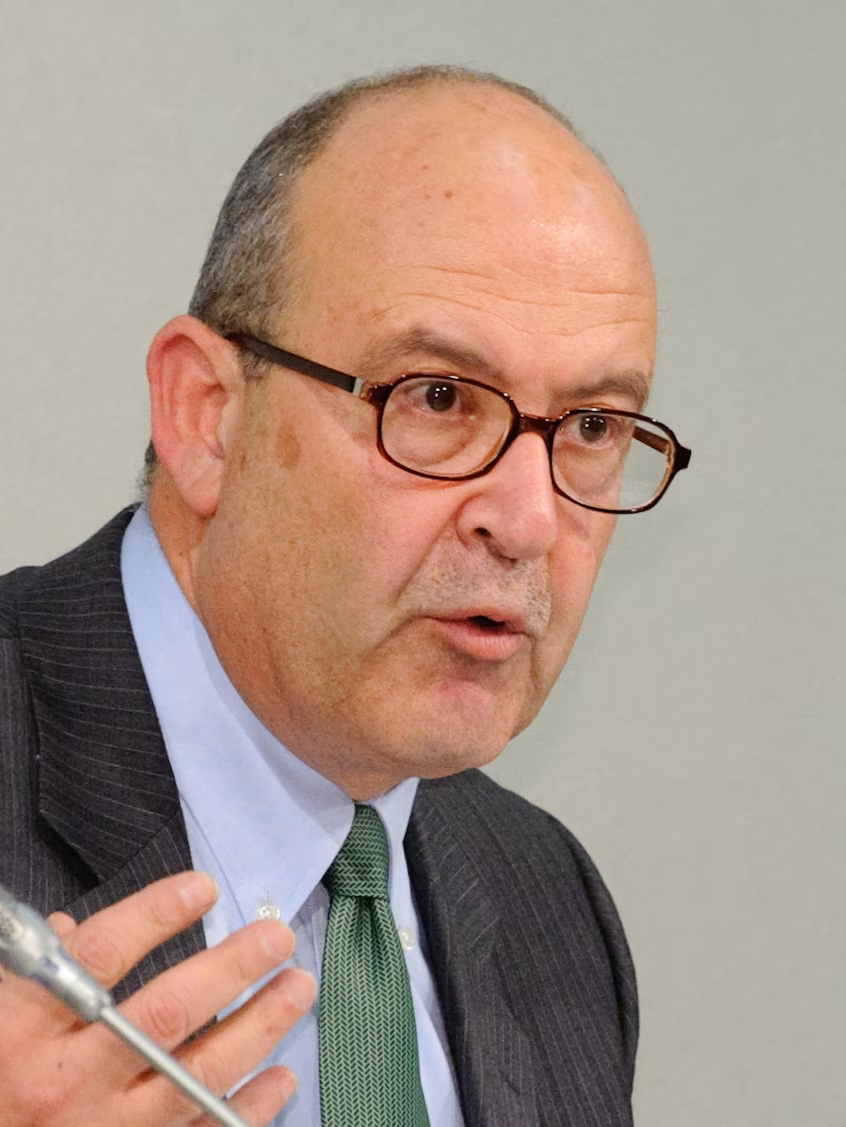
The Third Session of the Political Salon titled: "The Regional and International System: Whither Palestine?"
https://www.youtube.com/live/jfSr0QPPqGk
The third session of the "Political Salon: Palestine 2035", with a dialogue titled: "The Regional and International System: Whither Palestine?" The meeting features: Dr. Ali Al-Jarbawi, Professor of Political Science, interviewed by: Mr. Mohammed Daraghmeh, writer, journalist, and director of Al-Sharq Channel's office in Palestine.
The Department of Political Science and the Master's Program in International Relations, Diplomacy, and Global Security, at the Faculty of Law and Public Administration, held the third dialogue of the Political Salon: Palestine 2035, on Tuesday, January 20, 2026, titled "The Regional and International System: Whither Palestine?". It hosted Professor of Political Science Dr. Ali Al-Jarbawi, and was interviewed by the director of Al-Sharq Channel's office in Palestine, Mr. Mohammed Daraghmeh.
Daraghmeh opened the session expressing his happiness at the presence of such dialogues within Palestinian universities, given that the idea of dialogue platforms is missing in the Palestinian academic and journalistic context, in light of the absence of the Legislative Council and the atmosphere of political life.
The International System and the Idea of Positioning
Al-Jarbawi believes that the rules of the international system have not changed but have become exposed. The international system after World War II was built on the basis of the balance of power, not on the basis of international law, but the major powers were concerned with applying and consolidating the idea of international law at that time, as it suited their interests. After the collapse of the Soviet Union, the United States of America has dominated the scene until today, and what we see today in American foreign policy is an attempt to continue its hegemony over the international system in light of the emergence of competing international poles. Al-Jarbawi indicated that the international system currently crystallizing consists of three main poles: the United States of America, which is a military-economic pole, Russia, a military pole, and China, an economic pole.
Al-Jarbawi explained that the current international system is based on the idea of positioning, meaning that America, returning to the Monroe Doctrine, sees the Western part of the world as an exclusive sphere of influence for it, and this explains its behavior towards Venezuela, and what is happening today in Greenland. China considers the South China Sea and Taiwan Island as areas subject to it, just as Russia, in its war on Ukraine and its expansion in the Arctic, is trying to maintain its sphere of influence. Therefore, Al-Jarbawi stressed that those who will pay the price as a result of this competition between the three poles are the countries of the Global South and European countries.
Al-Jarbawi pointed out that the Palestinian issue in the current international community is a file among a group of other files and issues. The Palestinian issue is no longer of the same importance that distinguished it previously, when it played the role of a disruptive force in the region.
The Regional System and the Absence of Arab Influence
Al-Jarbawi considered that the Arab regional system, specifically, contributed significantly to keeping the Palestinian issue alive in the past, when compared to other issues that did not last long, such as the Armenians, Kurds, and others. But today the Arab regional system is weak and divided, lacking a central Arab power, and Egypt's exit from the Arab-Israeli conflict equation after signing the peace agreement had the greatest impact in causing this weakness. He pointed out that Arab countries today are no longer able to carry the Palestinian issue as before, but rather are trying to get rid of it, and the Palestinian leadership today pins its hopes on the Saudi position rejecting normalization with Israel without reaching political solutions that lead to a political entity.
Al-Jarbawi also touched upon the actors of the current regional system in the Arab region, as he saw that there are three central countries that possess political decision-making that affects the situation in the region: Israel, Turkey, and Iran. As for the Arab countries, they are currently playing only functional roles, and Saudi Arabia may be the only exception due to its religious standing among Islamic countries, as well as its material and oil power.
The Palestinian Future and the Center of Political Entity
Al-Jarbawi explained that the establishment of what is called a technocratic government in Gaza is a starting point for transferring the center of the Palestinian entity from the West Bank to the Gaza Strip, and what is happening during this period, such as the formation of the Peace Council and other steps, aims to form a new vision for the Palestinian future, which is being made by external hands, and its political center will be in the Gaza Strip, and the rest of the West Bank will become subordinate to the center. Al-Jarbawi noted that the countries of the world have reached a stage where they want to end the Palestinian file and get rid of this burden, and America is at the forefront of these countries, but the American position does not align with the Israeli position, although it intersects with it, as American interests in the Arab region are not solely dependent on protecting the Israeli presence.
Al-Jarbawi referred to the situation in the West Bank, as he saw that the current political focus is on the Gaza Strip, and there is no mention of the deteriorating conditions in the West Bank. In this regard, Al-Jarbawi believes that focusing on Gaza means allowing the West Bank to Israel and the settlers, and transforming it into something resembling cantons. What hinders the Israeli plan in the West Bank is the population density, which is difficult to get rid of easily.
Internally, Al-Jarbawi affirmed that the Palestinian political level shows complete agreement with the plans on the table, and the Palestinian political system is in a state of clinical death, and Palestinians themselves always link internal problems and setbacks to an external factor, and evade responsibility. Moreover, Palestinian forces today have become narrow factional interest groups, far from possessing a comprehensive national project. He pointed out that the Hamas movement is a pragmatic movement, and therefore it will work to make some changes in its orientations in order to adapt to the new situation, and it will be qualified in the future to be part of the future political entity.
Al-Jarbawi spoke about some of the problems that may arise in the coming period after the formation of what is called the Gaza Committee, as it is likely that this committee will be given powers and funding that exceed those granted to the Palestinian Authority in the West Bank, in addition to the possibility of extending the influence and functions of this committee to reach the West Bank, and this committee is merely a Palestinian facade implementing decisions dictated to it from outside. As for the Palestinian Authority and its institutions, Al-Jarbawi believed that the presence of the Authority during this period does not pose a dilemma for Israel and its policies in the West Bank; on the contrary, the Authority provides what is called the legal presence for Palestinians, represented by passports and Palestinian identity cards, and this hinders the idea of integrating Palestinians into Israeli society and bearing the burden of that for Israel, and thus indirectly pushing for emigration and departure in a way that Israel does not bear legal responsibility, at least.
The meeting witnessed significant interaction from students and attendees, which gave the dialogue session a participatory character in the discussion and the posing of difficult questions.
OPINIONS
Wed 21 Jan 2026 10:13 am - Jerusalem Time
The Peace Council: A Tool to Reshape the Palestinian Political Landscape
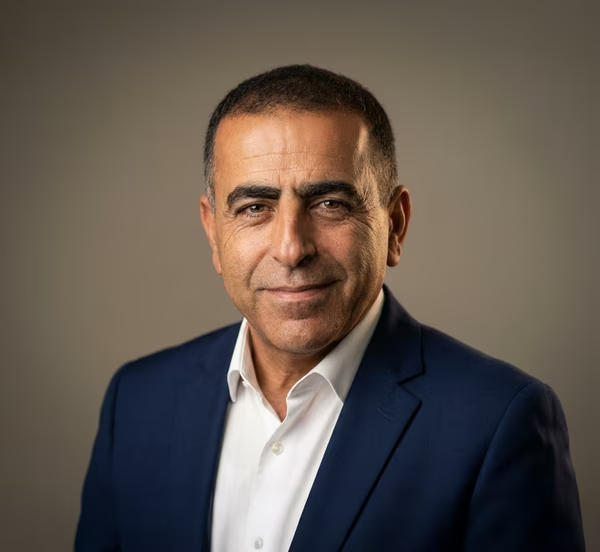

After the recent war, observers' attention is no longer limited to the humanitarian catastrophe in Gaza, but has extended to include the political dimensions that may completely redraw the Palestinian national project. What is happening in the Strip today indicates the beginning of a potential strategic shift that redistributes Palestinian authority, transforming Gaza from a haven of suffering into an institutional center for the Palestinian entity, while the West Bank faces political neglect and gradual marginalization.
The focus on Gaza and its institutional organization under the supervision of the Peace Council is not merely a humanitarian response, but rather a strategic step with broad political dimensions. The current arrangements, supported by Arab and Israeli participation, grant the Council legitimacy to exercise direct oversight over Gaza's administration, akin to a guardianship council that reshapes the trajectory of the Palestinian conflict and ensures no deviation from predetermined goals. This analysis intersects with what Ali Jarbawi discussed in his book "From Expulsion to Autonomy: The Zionist Quest to Bury Palestine," where he explains how Israeli policies after 1967 sought to control the Palestinian entity through a restricted autonomy model, with a gradual shift of the political center of gravity towards Gaza at the expense of the West Bank (Jarbawi, 2023).
Israel's joining the Peace Council reflects the Council's strategic direction, but it does not mean full agreement with all its objectives; Israel seeks to prevent any independent political transformation that might threaten its interests, while ensuring that any Palestinian administration remains within the bounds of Israeli control. In this context, US support for Israel creates a cautious framework that allows the Council to exercise its oversight within strict controls that protect Israeli interests, and provides international political cover that limits any path that might lead to actual political independence.
On the internal Palestinian front, the gradual shift of the national entity's center from the West Bank to Gaza reflects a comprehensive rearrangement of political, economic, and social priorities. After the war, the political capabilities of Hamas and armed resistance were exhausted, reaching the maximum limits of their political influence, while the National Authority and Fatah suffered significant political losses, especially in light of Israel's rejection of any negotiating partner and the escalating wave of popular skepticism that weakened trust in traditional leaders. Within this context, Gaza emerges as the center of the new Palestinian entity, which strengthens its position at the expense of the West Bank, and deepens the feeling of marginalization and exclusion among Palestinians there, thus widening the internal division gap and creating a suitable environment for the establishment of new institutions that rely on international and regional support instead of traditional national legitimacy.
The economic and developmental dimensions of this transformation are no less important than the political dimension. Reconstruction and relief in Gaza are no longer purely humanitarian issues, but have become a strategic political tool, where economic projects and financial aid are subject to the oversight of the Peace Council, which allows for the building of new institutions that align with its vision, and limits the ability of any Palestinian entity to exercise its political independence. The focus on Gaza as an institutional center allows for the use of economic development as a means to reproduce national authority under external supervision, and to solidify Gaza's position as the heart of the new Palestinian project, while controlling resources and their impact on the local community.
On the regional and international levels, the Peace Council plays a pivotal role in redistributing influence within the Palestinian arena. The participation of Arab states grants the Council regional legitimacy and enhances its role as a mediator to control the internal Palestinian conflict, while the Israeli role ensures the protection of its interests and prevents the emergence of an independent Palestinian entity. In contrast, US support for Israel provides international political cover that strengthens the Council's power and its impact on the ground, while maintaining a clear ceiling for its political movement.
The current situation also reflects a psychological and political dimension of great importance among the Palestinian people, who have lost confidence in the leadership of traditional organizations, whether at the level of the resistance option or the political and negotiating path. This political vacuum opens the door for the Peace Council to become a platform for reproducing national authority in a new institutional manner, but within strict constraints that prevent any real political independence. The shift of the political and economic center of gravity towards Gaza imposes a deep restructuring of national identity, where relief and development tools become part of a broader strategy to redraw the Palestinian project in line with Israeli and international interests, which aligns with Jarbawi's (2023) analyses on external control over the development of the Palestinian entity.
We are today at a moment of major transformation in Palestinian politics, which may reproduce the entire political scene. Recent developments open the door for the emergence of new political parties, or the restructuring of existing parties and their transformation into entities that adapt to internal and external realities, and respond to the demands of the Palestinian street that has lost confidence in traditional elites. Future elections may turn into a real platform for reshaping national authority, and giving popular action a direct role in guiding the national project, allowing for the emergence of new leaders who will redraw the future balance of power.
In conclusion, what is happening in Gaza today is not limited to being a humanitarian response to the war catastrophe, but represents a comprehensive strategic turning point in the trajectory of the Palestinian conflict. Gaza is gradually transforming into an institutional center for the Palestinian entity, at a time when the West Bank faces neglect and marginalization, while the Peace Council emerges as a new supervisory and political framework that manages the restructuring process within strict constraints that prevent any real political independence. Relief and reconstruction are no longer merely humanitarian tools, but have become strategic tools for reshaping the Palestinian national project in line with Israeli, regional, and international interests.
PALESTINE
Wed 21 Jan 2026 10:03 am - Jerusalem Time
"Peace Council"... Fears of a Coercive Alternative Based on Force and Money
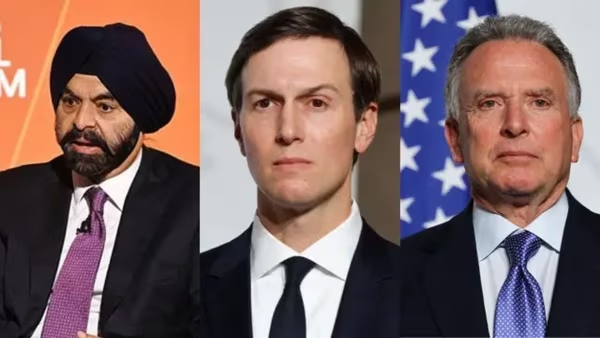
Dr. Ahmed Rafiq Awad: A council of this nature will lead to the creation of an oppressive force that does not adhere to international law and consensus, and dominates global events.
Khalil Shaheen: The formation of the council is not merely a parallel body to the United Nations, but rather an alternative to its role in resolving conflicts and managing global crises.
Dr. Osama Abdullah: Requiring financial payment for political engagement means shifting international relations from their legal and institutional frameworks to a commercial framework.
Suleiman Bisharat: This step is part of a comprehensive vision of the global Zionist movement, through which Trump seeks to dismantle the current international system.
Dr. Abdul Majeed Swailem: UN institutions have come under continuous American pressure, making international law, in the eyes of the new oligarchy, merely a tool for mockery.
Mohammed Al-Rajoub: Trump's proposal goes beyond the issue of funding to an attempt to redefine international legitimacy and sources of power in the global system.
The circulating proposal by US President Donald Trump regarding the so-called "Peace Council," and the condition of paying one billion dollars for countries wishing to join it, is stirring widespread debate in political and academic circles. Warnings are being raised that this step is not only about funding a new mechanism but also affects the core of the international system that has existed for decades, opening the door to redefining concepts of international legitimacy and managing global peace and security outside the framework of the United Nations.
Writers and political analysts, in separate interviews with "Al Quds", believe that the proposed council may represent an attempt to establish an alternative international body with high financial and political flexibility, managed according to the logic of power and deals, personally headed by Donald Trump. This would allow for rapid intervention in conflicts and the imposition of settlements that serve American interests, without adhering to international law or the system of justice and human rights represented by existing UN institutions. Writers and analysts believe that transforming peace into a project conditional on the ability to pay means moving from the principle of sovereign equality to the logic of "he who finances decides."
In the Palestinian context, writers and analysts warn of growing fears that this council could be used to pass solutions that bypass international legitimacy resolutions related to occupation, refugees, and Jerusalem, and to impose political and economic guardianship over the Gaza Strip, and perhaps later over the West Bank, amid the marginalization of the UN role and its declining status. They warn that the success of this proposal, even partially, could entrench a unipolar international system based on dominance and financial blackmail, and lead to the weakening of international multilateralism, with repercussions not limited to the Palestinian issue but extending to the stability of the global system as a whole.
A Dangerous Step
Writer and political analyst Dr. Ahmed Rafiq Awad considers US President Donald Trump's request for countries wishing to join the Peace Council to pay one billion dollars a dangerous step on the international level, indicating that the purpose of these funds is to finance extensive interventions by the council in managing international crises and conflicts.
Awad explains that these funds aim to transform the council into an effective institution capable of imposing its conditions and changing situations in different parts of the world through force or alliances, or by encouraging parties to defect and form new governments.
He clarifies that the council's budget, assumed to be of this size, makes it a tool for rapid intervention and more effective decision-making than the traditional UN system, including legal and humanitarian bodies such as the International Court of Justice, the International Criminal Court, human rights organizations, UNRWA, UNICEF, and the FAO.
A Council That Creates Oppressive Power
Awad points out that the Peace Council, in this form, is an American power council with great flexibility and effectiveness, capable of offering rewards or bribes and changing situations according to US interests. This reflects a new global system that Washington wants to be the sole pole without considering any other international interests or poles.
Awad emphasizes that the formation of the council in this manner will practically lead to the creation of an oppressive force that does not adhere to international law or international consensus, and will dominate global events to serve only American interests.
Awad believes that this step reflects Trump's skepticism about the United Nations and his accusation of its laziness and inefficiency, indicating that the real goal is to establish a global body that does not hinder aggressive American and Israeli policies.
Warnings of a Third World War
Awad warns that the formation of the Peace Council with such massive budgets could lead to significant fluctuations in international affairs and may become one of the factors that increase the likelihood of a widespread global conflict, even a Third World War, if the council is used as a tool for control and intervention in conflicts without any legal or moral deterrent.
He asserts that Trump's previous experience with the kidnapping of Venezuelan President Nicolas Maduro, and the council's aim to settle the conflict in the Gaza Strip, represents a model that Trump wants to generalize to the world, reflecting his determination to reshape the international system according to his own interests, away from any international authority that restricts his movements.
Reshaping the Global System
Writer and political analyst Khalil Shaheen warns that US President Donald Trump's latest move to propose the "Peace Council" is not merely a symbolic endeavor or a peace initiative, but rather part of a broader plan to reshape the global system according to a unipolar vision, focusing on absolute American dominance and the exploitation of other countries' resources for the benefit of the United States.
He points out that Trump's request for countries wishing for permanent membership in the Peace Council to pay one billion dollars is merely one manifestation of the policy of dominance and plunder adopted by the US President, citing what happened with Venezuela, where its president was kidnapped and its resources, especially oil, are targeted, as well as the policies of pressure on Gulf Arab states since the beginning of his term to increase their investments in the American economy without any actual return or protection for regional security.
According to Shaheen, the American proposal to form the council is not merely a parallel body to the United Nations, but seeks to be an alternative to the international organization's role in resolving conflicts and managing global crises, including the implementation of international covenants and agreements aimed at protecting human rights.
Shaheen explains that the proposed council is entirely subject to Trump's will, whether in accepting or excluding countries, or in issuing final decisions that are subject to the approval of the US President, which has angered a number of European countries and raised questions about the fate of the United Nations and its traditional role.
Shaheen touches upon Trump's attempt to gain legitimacy for the Peace Council through the Security Council, affirming that this council, as stated in the American resolution, is practically limited to the Gaza Strip, to oversee the end of the war and reconstruction. However, at the same time, it does not possess any actual UN legitimacy, and even the word "Gaza" is not mentioned in the text of the proposed charter, which indicates that the real goal is to reshape the global system to serve US interests and the slogan "America First," without regard for Palestinian rights or the rights of any other country.
Marginalizing the European Role
Shaheen emphasizes that this plan includes marginalizing the European role and transforming international conflict into a sum of major poles between the United States on one side and Russia and China on the other, which may lead to the dismantling or marginalization of NATO. He points to Trump's continued use of violent methods in managing international conflicts, going beyond the slogan "America First."
Shaheen believes that Trump's recent messages, including his disregard for the Nobel Peace Prize, which he asserted he no longer needed, and the issue of occupying Greenland, clarify that he is no longer interested in diplomatic displays of peace and insists on the option of force as a primary tool to achieve his goals.
Entrenching Guardianship Over Palestinian Affairs
On the Palestinian level, Shaheen warns that the formation of the Peace Council and the Executive Office headed by Mladenov, along with the Palestinian National Committee for the Administration of the Gaza Strip, entrenches direct American guardianship over Palestinian affairs, excluding the Palestinian Authority and Hamas from any effective role, and aims to destroy the Palestinian political entity, marginalize the Authority, and weaken its institutions, thereby threatening the project of an independent Palestinian state.
Palestinian Absence and Creating a Vacuum
Shaheen points out that the Palestinian absence from negotiations and new bodies has led to the creation of a vacuum being filled by American-Israeli formations, which may extend in the future to the West Bank, to include the administration of areas currently managed by the Palestinian Authority, thereby dissolving national identity and eliminating any hope of transforming the Authority's project into an independent state.
Shaheen stresses the necessity for Palestinian political forces to initiate confronting these plans with well-considered steps, starting with the reintegration of civil and security governance institutions in the Gaza Strip, to prevent the imposition of new structures that would lead to the complete exclusion of all components of the Palestinian political system, and to achieve a political balance that gives Palestinians the ability to manage their own affairs.
Shaheen explains that the Palestinians' disregard for previous Egyptian efforts to form a community support committee led to the imposition of these three structures, reflecting the danger of continued absence in developing clear and effective strategies.
Shaheen emphasizes that the risks arising from Trump's policies include the entire international system, and that Palestinians constitute a small part within a broader American vision for re-dominance and colonialism, as the American administration deals with Gaza as a purely American affair, without regard for the role of the Palestinian Authority or the international community, which necessitates immediate action by Palestinians to avoid losing complete control over their political future.
The Logic of the Deal, Not International Legitimacy
Political researcher and academic Dr. Osama Abdullah warns of the deep and dangerous implications of the discussion about former US President Donald Trump's request for countries participating in the so-called "Peace Council" to pay one billion dollars, with this council being promoted as a potential alternative to the United Nations. This cannot be read from a financial perspective alone, but must be understood within Trump's philosophy of managing international politics based on the logic of the deal, not international legitimacy.
Abdullah explains that requiring financial payment to enter an international political framework practically means shifting international relations from their legal and institutional framework to a commercial framework governed by the ability to finance, thereby transforming peace from a political right based on international law into a project conditional on economic capability.
Abdullah believes that this approach reflects an attempt to redefine the concept of peace itself, so that it is no longer linked to ending occupation or respecting UN resolutions, but rather to managing conflict through economic and financial tools.
Abdullah points out that this approach is consistent with Trump's previous proposal in the "Deal of the Century," which treated the Palestinian issue as a development crisis that could be contained economically, not a national liberation issue based on established political and legal rights.
Marginalizing the International System
Abdullah notes that the talk of an alternative council to the United Nations reflects a clear trend towards marginalizing the existing international system instead of reforming it, in the context of a hostile stance towards multilateral institutions, considering them an obstacle to American policy, especially in issues related to Israel.
He explains that the main risks of this path lie in weakening the international legal system and replacing it with selective arrangements managed according to the balance of power and money, which empties UN resolutions concerning the Palestinian issue of their political content, turning them into historical references with no practical effect.
Legitimizing Occupation in a New Form
Abdullah warns that establishing an alternative framework under the name of "peace" may open the door to legitimizing occupation in a new form, by managing the conflict instead of ending it, and offering economic and humanitarian solutions as an alternative to political rights, especially the right to self-determination and the right of return, thereby transforming the Palestinian refugee from a legal rights holder into a humanitarian burden requiring funding.
Abdullah suggests that this proposal will be used in the short term as a political and financial pressure tool on countries, rather than a comprehensive institutional project, but he warns that its development into an actual parallel framework could lead the international system into a dangerous duality, and open the door to the gradual dismantling of UN institutions, with repercussions extending beyond Palestine to the structure of the international system as a whole.
On the Threshold of a New Global Stage
Writer and political analyst Suleiman Bisharat believes that the world stands on the threshold of a new stage, directly dominated by the personality of US President Donald Trump, who seeks to have his personal presence dominate the international arena.
According to Bisharat, Trump's desire to shape this role comes in the context of his feeling of inability to run for a third term, trying to compensate for this by imposing his personality on global policies and controlling the fate of other countries' decisions through economic and political tools.
Bisharat points out that Trump's request for countries and parties wishing to join the new council to pay one billion dollars reflects two intertwined aspects; first, Trump's individual personality, which tends towards dominance and control, and second, the practice of a kind of political blackmail against countries and individuals whose options seem limited in the face of his influence and economic and political power.
Bisharat explains that this step reflects Trump's nature as a dealmaker and investor, transcending traditional values and principles to form alliances and controls that serve his own interests.
Bisharat emphasizes that this step is part of a comprehensive vision of the global Zionist movement, through which Trump seeks to dismantle the current international system, which has been or has become a tool for holding Israel accountable, especially after the war on the Gaza Strip. Bisharat believes that the goal of this process is to protect Israel and strengthen its occupation project, while shaping a new world order that aligns with the interests of Zionist hegemony, leveraging tools of power, political and financial pressure to dismantle any potential international opposition.
Bisharat believes that the next stage holds significant challenges, reflecting a conflict of personal and global interests, and showing the new face of the world that the Trump administration is trying to draw, transcending traditional international laws and redistributing centers of influence according to specific interests and purely investment values.
A Financial Oligarchy Seeking Acquisition
Writer and political analyst Dr. Abdul Majeed Swailem believes that US President Donald Trump's proposal of a "Peace Council" to manage the Gaza Strip represents an attempt to replace the United Nations and the Security Council with an extortionist alternative entirely subject to his will. Swailem explains that Trump has appointed himself the sole president of this council, possessing veto power and deciding everything, which makes any action or decision within this framework entirely dependent on his approval.
Swailem points out that this new formation, which he described as a dual-natured real estate core, includes elements of conservatives and ideologues, but at its core, it is a financial oligarchy seeking to acquire the wealth of nations and control resources, using all possible means, including blackmail and confrontation with traditional allies.
Rebellion Against the Traditional International System
Swailem notes that Trump views traditional international alliances through a new lens based on balances that are no longer linked to previous rules, reflecting a rebellion against the international system, international relations, and traditional alliances recognized since World War II.
Swailem explains that this American approach reflects a complete marginalization of the UN role, which has lost its effective capacity for decades, especially in Palestinian issues, and is only invoked to cover American policies when needed, while being obstructed in any issue that does not serve Washington's interests.
Swailem believes that UN institutions, whether serving Israel or other goals, have come under continuous American pressure, through sanctions, blockade, or restriction, which makes international law, in the eyes of the new oligarchy, merely a tool for mockery.
He points to real-world examples such as what happened in Venezuela, where the United States announced its intention to control the country's oil wealth, while the United Nations took no action, reflecting a slow death of its role and status.
According to Swailem, the Peace Council proposed by Trump comes in this context as an expected step to compensate for the exhausted and marginalized United Nations, and an attempt to restore American dominance on the international stage, while reducing the role of traditional allies and controlling all policies related to international issues, including the administration of Gaza.
Swailem believes that all members of the Security Council, both permanent and non-permanent, realize that the United Nations is fading in terms of its role and status, and that Trump seeks, through the Peace Council, to establish a new model of direct American hegemony, reflecting the "America First" vision and affirming a rebellion against all traditional international standards.
Redefining International Legitimacy and Sources of Power
Academic and researcher in public administration and political science Mohammed Al-Rajoub believes that the circulating discussion about US President Donald Trump's request for countries wishing to participate in the so-called "Peace Council" to pay one billion dollars per country goes beyond being a matter of funding, reaching a deep attempt to redefine international legitimacy and sources of power in the global system, amid news that this council seeks to be an alternative to the United Nations.
He explains that the essence of the idea is not merely to create a new body, but to transform the concept of peace itself into an investment project, where joining the mechanism for managing international peace and security becomes conditional on financial capability, not political representation or adherence to international law. Al-Rajoub believes that this approach reflects a commercial logic in managing international politics, where legitimacy is measured by payment and deals instead of consensus and equality among states.
Producing Hegemony and Circumventing the United Nations
Al-Rajoub points out that the second implication of the American proposal lies in reproducing hegemony in a new form; instead of explicit withdrawal from multilateral institutions, an alternative entity is proposed where the United States controls its financial and political keys, making funding a tool of pressure and exclusion, and those who pay participate, while those who do not pay are excluded from the "peace table."
The third implication, according to Al-Rajoub, relates to the attempt to circumvent the restrictions imposed by the United Nations, especially concerning international humanitarian law and resolutions of international legitimacy related to the Palestinian issue. The proposed council may provide political cover for imposed settlements and redefine peace as the absence of conflict, not the achievement of justice.
Al-Rajoub warns that the greatest danger lies in undermining the multilateral international system, as the United Nations – despite its flaws – is based on the principle of sovereign equality and provides small and weak states with a negotiating voice, however symbolic. Replacing it with a funded council means moving to a "club of the super-rich" where crucial issues are managed by the logic of deals.
Legal Chaos and Multiple Authorities
Al-Rajoub believes that establishing parallel institutions outside the UN framework opens the door to legal chaos and multiple authorities for legitimacy, which may justify military interventions, the imposition of sanctions, and the sponsorship of peace agreements not based on international law.
According to Al-Rajoub, in the Palestinian case, this council could be used to pass solutions that bypass UN resolutions related to occupation, refugees, and Jerusalem, while marginalizing the humanitarian and rights dimension represented by essential UN agencies.
Regarding potential scenarios, Al-Rajoub suggests three paths: practical failure of the council due to widespread international rejection, or international division that increases polarization and deepens the paralysis of the global system, or partial success that imposes a "forced peace path" in some issues, especially in the Middle East, according to the balance of power, not the balance of right.
Al-Rajoub indicates that Trump's request is not a financial detail, but an indicator of a vision that sees international law as a constraint and peace as a deal, warning against the logic of "he who pays decides" as the most dangerous to the international system.
PALESTINE
Wed 21 Jan 2026 8:30 am - Jerusalem Time
Occupation forces blow up residential buildings in Beit Lahia and shell Khan Yunis
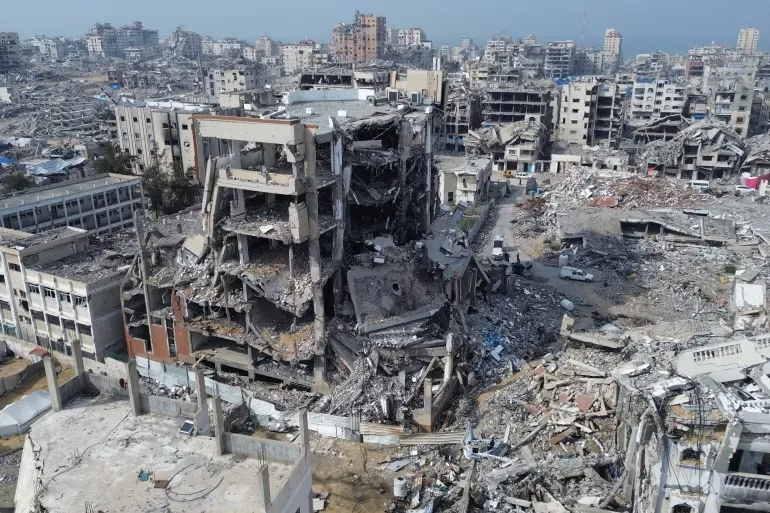
The Israeli occupation army blew up residential buildings in the Gaza Strip early this Wednesday morning, while its artillery shelled several areas in the northern and southern parts of the Strip. Sources said that the occupation army blew up residential buildings east of Beit Lahia in northern Gaza and shelled with artillery areas of its deployment east of Khan Yunis in the south and Al-Bureij in the central Strip. Sources also stated later this morning that an Israeli helicopter fired at the Deir al-Balah area in the central Gaza Strip. Sources had previously reported that the occupation army on Tuesday blew up residential buildings within its deployment areas southeast of Khan Yunis city in the southern Strip.
Hamas also issued a statement on Tuesday listing Israeli violations over the 100 days since the announcement of the ceasefire agreement with Israel, stating that the number of martyrs during the period covered by the agreement reached 483 martyrs, including 169 children and 64 women. The movement said that the number of injured during this period reached 1294, at an average of 13 per day, noting that 96.3% of the martyrs were targeted within the Yellow Line.
Regarding field violations, the Hamas statement mentioned that Israeli violations of the agreement reached 1298, at an average of 13 systematic field and fire violations per day. It also indicated that the occupation carried out 200 operations of blowing up and detonating residential blocks and homes within the Yellow Line, and arrested 50 civilians and fishermen at sea, "in a grave violation of the agreement" according to the statement.
Politically, Hamas spokesman Hazem Qassem said that the movement had provided all its data regarding the body of the last Israeli prisoner and dealt positively with all efforts made to search for it. The Hamas spokesman added that the occupation repeatedly obstructed efforts to search for the body in areas behind the Yellow Line, and clarified that the movement is ready to cooperate with mediators and guarantor states in any efforts that lead to finding the body of the last prisoner.
On the humanitarian front, the Ministry of Health in the Gaza Strip announced on Tuesday the death of a 6-month-old infant due to the severe cold. The Ministry of Health said that the number of child deaths due to cold has risen to 9 since the beginning of winter, and that displaced people in the Gaza Strip are living in tragic conditions due to the lack of shelter components and heating means, which the occupation authorities impose significant restrictions on their entry.
Dr. Muhammad Abu Salmiya, director of the Al-Shifa Medical Complex in Gaza, also announced several deaths among citizens of various age groups, including youth, as a result of the widespread spread of the influenza virus and its variants, which cause severe medical symptoms. Abu Salmiya attributed the causes of deaths and the worsening of cases to the severe deficiency in the immunity of the Strip's residents, in light of the difficult living conditions.
The medical official warned of the danger of a severe shortage of medicines and medical supplies, revealing a complete depletion of cancer drugs, dialysis supplies, and treatments for chronic diseases.
The occupation repeatedly obstructed efforts to search for the body in areas behind the Yellow Line.
ARAB AND WORLD
Wed 21 Jan 2026 7:19 am - Jerusalem Time
Iranian Threat to 'Declare Jihad' if Supreme Leader Targeted
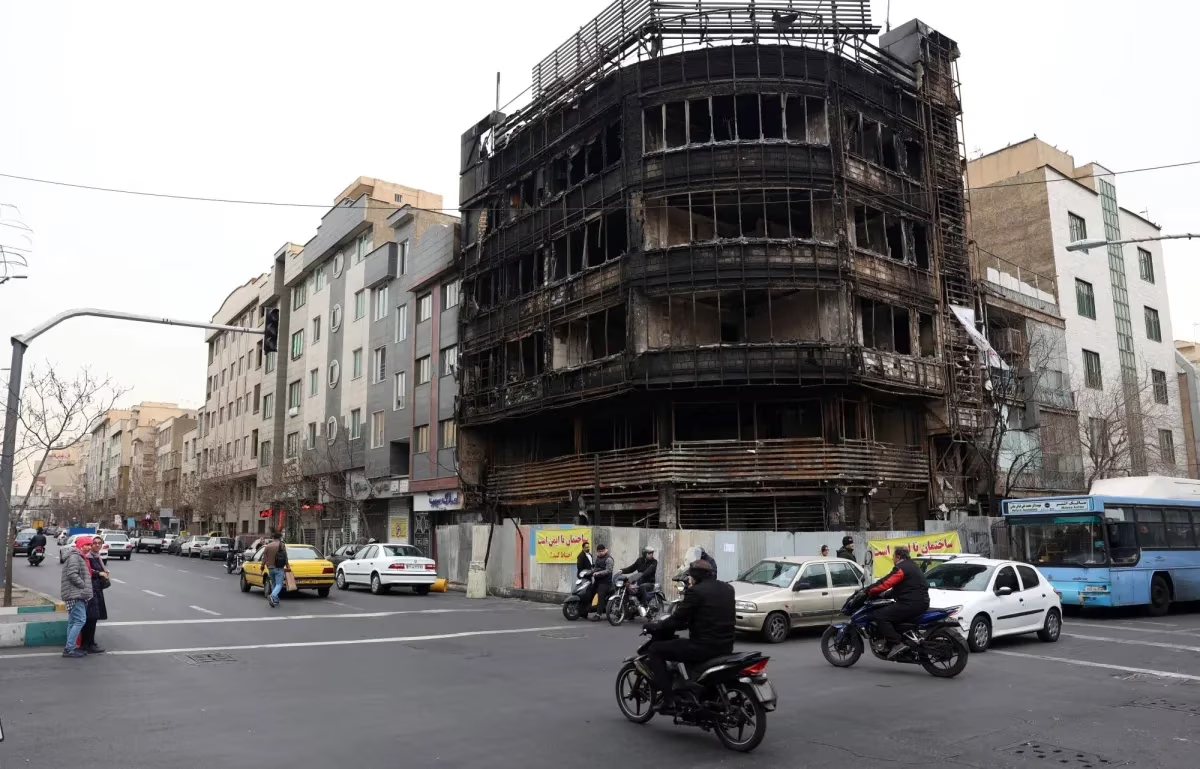
The Iranian parliament threatened to issue a fatwa of 'jihad' if Supreme Leader Ali Khamenei is subjected to any attack, at a time when authorities have expanded the campaign of arrests against protesters amid escalating international pressure.
State media quoted the National Security and Foreign Policy Committee of the Parliament as saying that targeting the Supreme Leader would be considered a "declaration of war" and would lead to the issuance of a "jihad fatwa from religious scholars and a response from the soldiers of (Islam) around the world."
The warning came after statements by US President Donald Trump hinting at the possibility of seeking new leadership in Iran.
On the ground, authorities announced the arrest of dozens of people in Isfahan and the opening of legal cases in Tehran against 25 actors and athletes and 60 cafes on charges related to supporting "incitement to riot and terrorism," with property confiscation.
The United Nations Human Rights Council announced an emergency meeting on Friday to discuss the deteriorating human rights situation in Iran.
Targeting the Supreme Leader will be considered a "declaration of war" and will lead to the issuance of a "jihad fatwa from religious scholars and a response from the soldiers of (Islam) around the world."
PALESTINE
Wed 21 Jan 2026 7:17 am - Jerusalem Time
Hamas: Ready to cooperate on the "last body" file, and "Israel" continues to stall
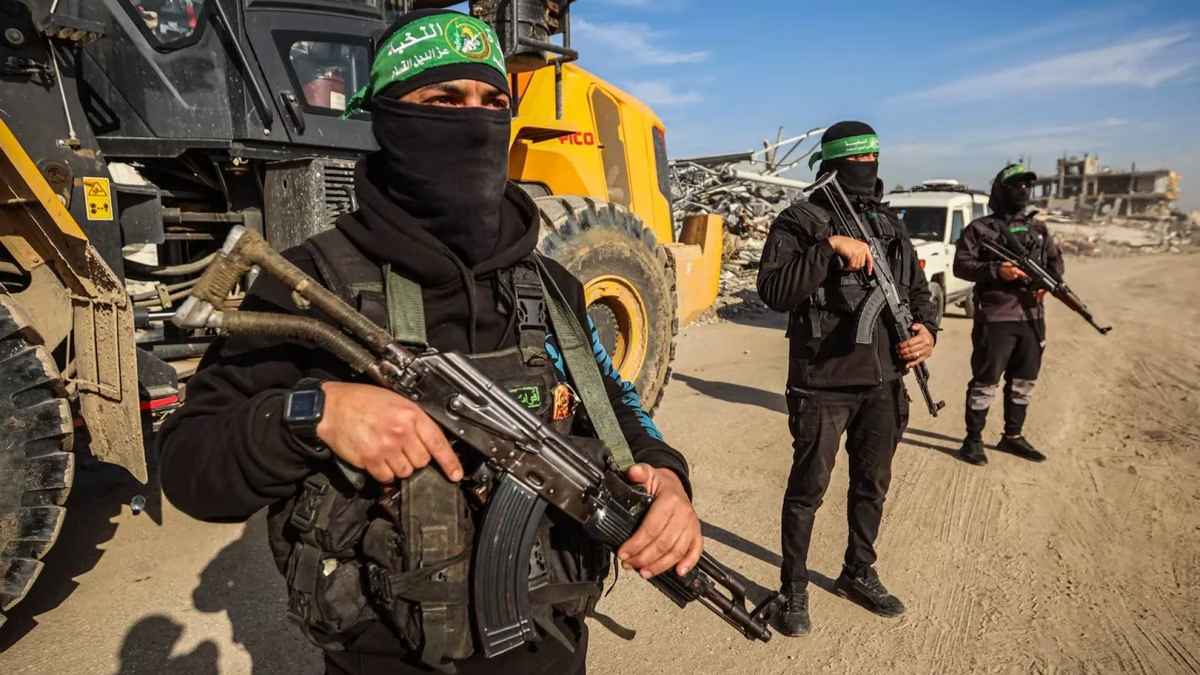
Hamas spokesman Hazem Qassem announced that the movement has provided all available data and information regarding the body of the last detainee held in the Gaza Strip.
Qassem affirmed that the continuous intransigence by the occupation government is the main obstacle preventing the closure of this file, noting that the movement has shown full readiness to cooperate with mediators to overcome this humanitarian and political hurdle.
These statements come at a sensitive time, coinciding with the anniversary of former US President Donald Trump's second term, during which he announced the existence of information about the body's location.
The issue of the captive "Ran Gvili" is the last technical obstacle to completing the exchange programs stipulated in the American plan for de-escalation in the region. Field tensions stem from the policy of imposing restrictions adopted by the occupation authorities in contact areas, where Qassem revealed that the occupation's measures behind what is known as the "Yellow Line" have repeatedly hampered search efforts.
This behavior is seen as part of a broader strategy to consolidate military presence in vital corridors, bringing back regional powers' fears of turning humanitarian files into tools to legitimize the occupation of new areas within the Strip.
Hazem Qassem clarified that the Hamas leadership has dealt with all initiatives with high flexibility, including informing mediators and guarantors of all efforts made.
He stressed that the movement "keeps mediators updated on developments first-hand" and is ready for any genuine effort that leads to finding the body, provided there is serious intent from the other party.
Qassem accused the occupation government of politically exploiting this file, considering that the pretexts of not finding the body aim to evade the commitments of the first phase of the ongoing understandings.
He affirmed that "the ball is now in the occupation's court" to stop Tel Aviv's stalling policy to gain more time and achieve additional security gains.
The continuous intransigence by the occupation government is the main obstacle preventing the closure of this file.
ARAB AND WORLD
Wed 21 Jan 2026 7:15 am - Jerusalem Time
Gaza Peace Council: World countries between welcoming, opposing, and reserved
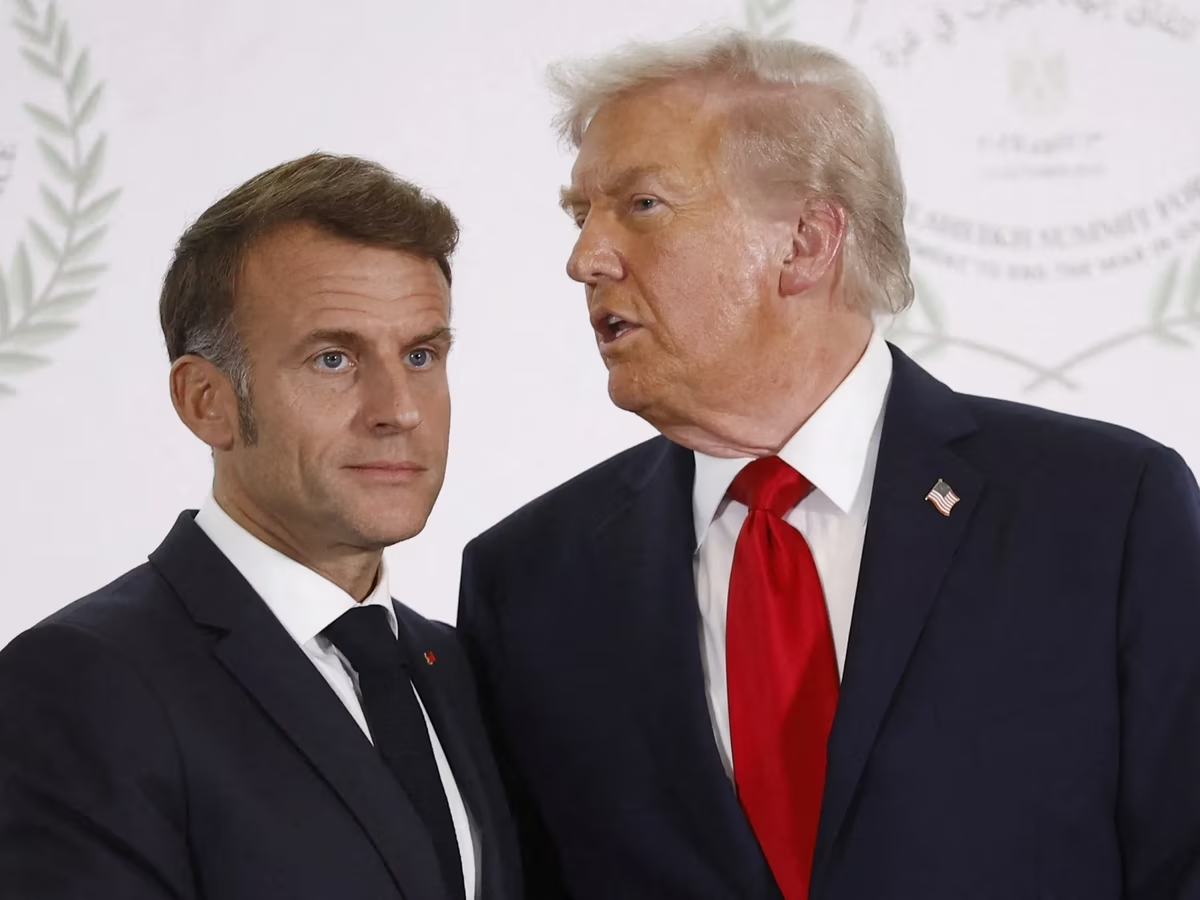
US President Donald Trump is seeking to announce soon the formation of a "Peace Council" under his presidency, whose mission is to strategically oversee the implementation of a comprehensive plan to end the war in the Gaza Strip. However, the council's charter, announced by the White House, outlines global roles for the council that extend beyond the Gaza issue, aiming to "ensure lasting peace in conflict-affected or threatened areas," according to the charter's text. A number of countries have expressed reservations about this council, linking the matter to the possibility that this entity could lead to the formation of a rival or alternative body to the United Nations. The world countries invited by President Trump to join the council were divided between those agreeing to join and those opposing its membership, while other countries preferred to wait before responding to President Trump's invitation, and others expressed reservations about the role Washington wants for this council.
Both Bahrain and the UAE announced today, Tuesday, that they have accepted Trump's invitation to the leaders of the two Gulf countries to join the Peace Council under Trump's presidency. Meanwhile, the Moroccan Ministry of Foreign Affairs announced that King Mohammed VI will join the Peace Council as a "founding member." In Hungary, Prime Minister Viktor Orbán said last Sunday that he accepted the "honorable" invitation from his ally Trump to be a "founding member" of the council. In Armenia, Prime Minister Nikol Pashinyan announced today via Facebook that he accepted the American invitation. Belarusian President Alexander Lukashenko also signed an agreement today to join the Peace Council. Sources reported yesterday, Monday, that the press secretary of Kazakh President Kassym-Jomart Tokayev said that the President received the US invitation to join the Peace Council, and that Tokayev had accepted the invitation.
Sources close to French President Emmanuel Macron reported that Paris "is not committed to accepting" the invitation to join the council at this stage, noting that France believes it is necessary to address international conflict issues within existing multilateral frameworks, primarily the United Nations.
President Trump had previously stated yesterday that he invited his Russian counterpart Vladimir Putin to join the Peace Council, while Moscow said it was seeking to "clarify all details" with Washington before making a decision. Ukrainian President Volodymyr Zelensky stated today, Tuesday, that he received an invitation to join the Peace Council, but "cannot imagine" participating in the council alongside Russia. Meanwhile, Malaysian Prime Minister Anwar Ibrahim stated today that his country would take a cautious stance towards the Peace Council announced by US President Donald Trump, until Israeli attacks on the Gaza Strip cease and humanitarian aid access is ensured. The European Commission said that its president, Ursula von der Leyen, received an invitation from Trump and is reserving her answer, while the German government stressed the need for "coordination" with its partners. A spokesman for the Chinese Foreign Ministry announced that Beijing "received an invitation from the American side," without specifying its position. In Canada, Foreign Minister Anita Anand said, "We are studying the situation. But we will not pay a billion dollars," and the Swiss Foreign Ministry stated that the country would conduct a "thorough analysis" of the proposal and hold consultations before determining its position, and Australia issued a similar stance. While the White House has not published a list of countries invited to join the Peace Council, many capitals have announced that their leaders have received invitations but have not yet declared their position, including: Jordan, Egypt, Turkey, Pakistan, Japan, Greece, Argentina, Italy, Norway, Sweden, Finland, Albania, Argentina, Brazil, Paraguay, Slovenia, and Poland, in addition to India and South Korea.
The council's charter outlines global roles that extend beyond the Gaza issue, aiming to "ensure lasting peace in conflict-affected or threatened areas."
PALESTINE
Wed 21 Jan 2026 7:15 am - Jerusalem Time
Hamas demands pressure on the occupation to facilitate the entry of the technocrat committee into Gaza
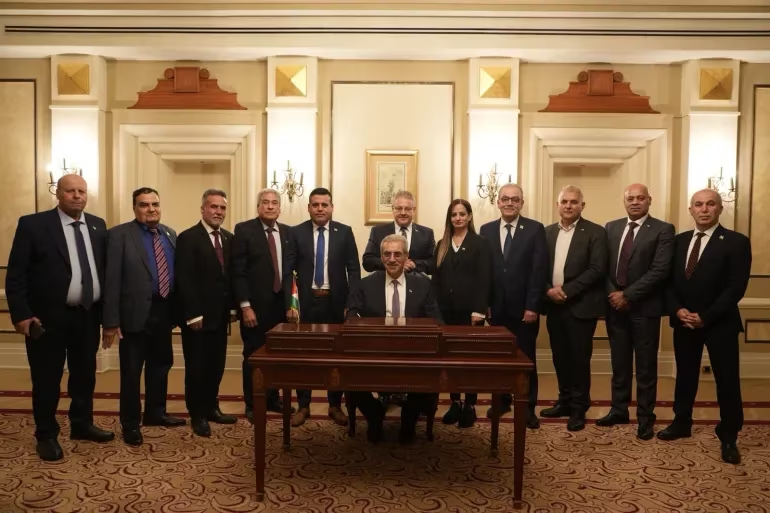
Hamas called on mediators to pressure the Israeli side to allow the national technocrat committee to enter the Gaza Strip to work on the ground, after the occupation authorities prevented committee members from entering through the Rafah crossing. Hamas affirmed that government bodies in Gaza have begun taking measures to facilitate the work of the national committee and hand over the reins of power in the Strip, clarifying that it does not impose any preconditions to ensure the formation of the committee or the start of its work, and said that it expects "professional and independent technical performance."
The government media office in Gaza also confirmed on Monday its readiness to transfer powers to the Palestinian National Committee for the administration of the Gaza Strip, and to complete the handover and takeover procedures, "in a way that ensures an organized transition to institutional work and preserves the rights of employees in the public sector," according to a statement.
The government office said, "Within the framework of ongoing political and administrative developments, and with the announcement of the transition to the second phase, we express our welcome to the Palestinian National Committee for the administration of the Gaza Strip."
It explained that "this committee comes as a step in the context of addressing the administrative and service reality in the Strip, and in line with the priority of a complete cessation of the ongoing aggression against our Palestinian people, ensuring the protection of civilians, and alleviating the humanitarian suffering of our people."
The statement also stressed that government and service work will continue regularly, and that specialized institutions and departments will continue to perform their duties, under exceptional circumstances. Israeli intransigence In contrast, the Israeli mini-cabinet, "the security cabinet," decided yesterday, Monday, not to open the Rafah crossing at the present time, as part of "the confrontation with the United States" regarding the second phase of the American plan, according to the newspaper "Yedioth Ahronoth."
The newspaper quoted a senior Israeli official as saying that "the inclusion of representatives from Turkey and Qatar in the executive council of Gaza was not included in the original understandings between Israel and the United States, and the powers of this new council have not yet been clarified, nor its role."
The Israeli Prime Minister's Office also announced in a statement on Saturday that the announcement of the formation of the executive council for the Gaza Strip, affiliated with the Peace Committee, was made without prior coordination with the Israeli government, considering that this measure "violates the positions and policies it adopts regarding the future of the Strip."
The statement added that Prime Minister Benjamin Netanyahu directed Israeli Foreign Minister Gideon Sa'ar to communicate with his American counterpart Marco Rubio, to discuss this step and clarify the Israeli government's position on it.
Until Friday, the number of approved structures for managing this phase - according to the Security Council resolution - was three: the Peace Council, a Palestinian technocrat committee, and the International Stabilization Force. Then the White House announced on the evening of the same day the addition of a fourth structure under the name "Gaza Executive Council" with the aim of providing comprehensive support for various activities related to governance and service delivery in the Strip. Ali Shaath signed on Sunday the mission statement of the Palestinian National Committee for the Administration of the Gaza Strip (Shaath's account on X) A non-political body The White House had announced that the National Committee for the Administration of Gaza would undertake the tasks of rehabilitating public services, rebuilding civil institutions, stabilizing daily life within the Strip, in addition to laying the foundations for sustainable long-term governance.
The head of the Palestinian National Committee for the Administration of Gaza, Ali Shaath, signed on Sunday the committee's mission statement in his first official action, defining its working principles and frameworks of responsibility. Shaath said that the committee officially began its work from the Egyptian capital, Cairo, in preparation for moving to Gaza and implementing an urgent relief plan.
The Palestinian Technocrat Committee represents the civilian executive arm within the Gaza Strip. It is a non-political committee that manages the daily operations of the civil service and consists of 15 specialized Palestinian figures.
This comes in response to the Security Council resolution, which adopted US President Donald Trump's 20-point plan to end the war of extermination committed by Israel in the Gaza Strip, under its Resolution No. 2803 issued on November 17, 2025.
Hamas does not impose any preconditions to ensure the formation of the committee or the start of its work, and expects professional and independent technical performance.
PALESTINE
Wed 21 Jan 2026 7:11 am - Jerusalem Time
Demolition of UNRWA in Jerusalem.. This is how the occupation assassinates the "living witness" to the tragedy of displacement
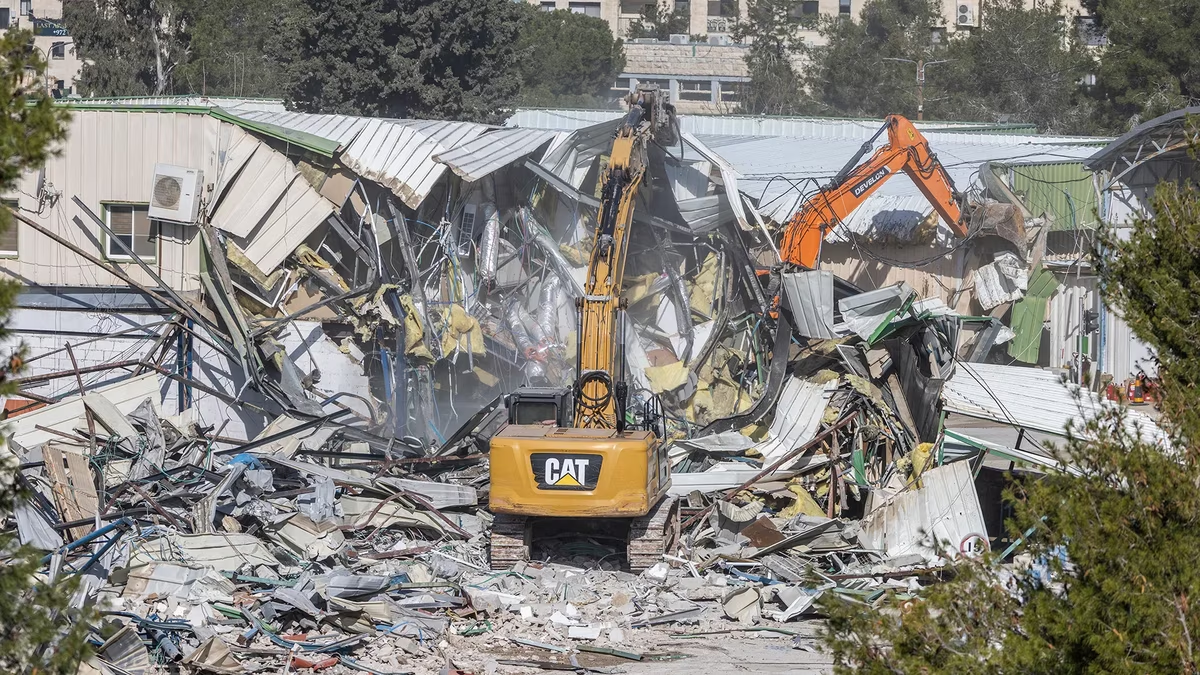
In a move described as undermining the rules of the global order, the Israeli occupation authorities, citing an official and governmental decision, proceeded to demolish the headquarters of the United Nations Relief and Works Agency for Palestine Refugees (UNRWA), in broad daylight and in front of cameras.
According to a report prepared by Azhar Ahmed, the demolition does not target mere UN buildings that are supposed to be internationally protected, but rather represents the culmination of an Israeli legislative and military campaign aimed at ending the existence of the organization, which Israel considers an "existential threat" because it is the living witness to the existence of refugees and displaced persons from a country called Palestine.
The targeting of "UNRWA" goes beyond the construction aspect to an all-out war; while bulldozers continue to demolish headquarters, the Israeli "Knesset" has adopted laws prohibiting the agency's activities and preventing communication with it.
These measures coincide with human targeting that resulted in the killing of more than 270 of the agency's employees during Israel's recent war on the Gaza Strip, in addition to an international incitement campaign that succeeded in pushing major countries to suspend their funding.
The Israeli narrative considers that the agency's existence keeps the refugee issue alive internationally, which Israel seeks to abolish by removing the designation of "refugee" from the descendants of Palestinians who were displaced in 1948.
The roots of "UNRWA" date back to 1949, when it was established by the United Nations General Assembly under Resolution (302) in the aftermath of the "Nakba," to protect and assist Palestinians who were displaced on ethnic grounds, and officially began its work in 1950, linking its history organically to the Palestinian cause.
Although it was established as a temporary agency, the continuation of the occupation and the absence of a just solution prompted the international community to renew its mandate repeatedly, making it an international exception in its commitment to one community of refugees (everyone who lost their home between 1946 and 1948, their children, and their descendants).
UNRWA is today the largest relief organization, providing its services to about 6 million Palestinians in five areas: the Gaza Strip, the West Bank, Jordan, Syria, and Lebanon.
Its services vary between education, health care, and emergency response, and the Gaza Strip, with its eight camps (such as Al-Bureij, Khan Yunis, and Rafah), is the largest arena for its operations.
Israel believes that the demise of the agency means the demise of international responsibility for redressing the Palestinian people, which is rejected by international circles that see the demolition of its headquarters as a demolition of the foundations of international laws that protect UN institutions.
The demolition does not target mere UN buildings that are supposed to be internationally protected, but rather represents the culmination of an Israeli legislative and military campaign aimed at ending the existence of the organization.
ARAB AND WORLD
Tue 20 Jan 2026 7:30 pm - Jerusalem Time
Trump launches "Peace Council" from Davos on Thursday amid international coolness and questions about legitimacy and role

Washington – Said Arikat
US President Donald Trump is preparing to launch one of the most controversial diplomatic initiatives at the Economic Forum in Davos, by organizing a signing ceremony for what is known as the "Peace Council," a new international body that Washington seeks to present as an alternative reference for managing global conflicts, foremost among them the second phase of Trump's peace plan in Gaza. However, this step, intended to be a display of American leadership, appears to be surrounded by widespread international hesitation and increasing skepticism about its true objectives.
According to an official invitation that was circulated and confirmed by a US official, the signing ceremony is scheduled to be held on Thursday at 10:30 AM, with limited attendance from leaders and officials, at a time not without political implications. The choice of Davos, as a global economic platform, reflects the US administration's desire to link peace with governance and investment, but at the same time raises questions about the absence of broader international institutional coverage.
It is worth noting that international concern stems not only from the nature of the nascent council but also from the way Washington seeks to present it. While the council was initially promoted as a mechanism to oversee the administration of Gaza in the post-war phase, the final charter – which international media outlets reviewed – was completely devoid of any direct reference to Gaza, and laden with implicit criticisms of the United Nations, considering that existing institutions "have repeatedly failed" and need a more "bold" alternative.
Invitations to join were extended to dozens of countries, including major and regional powers from Europe, Asia, and the Middle East. A number of leaders confirmed receiving the invitation, but responses ranged from reservation to silence, indicating the extent of hesitation in granting this initiative early political legitimacy. Israel stands out as a special case, as Prime Minister Benjamin Netanyahu received the invitation, but openly expressed his displeasure with the composition of the "Gaza Executive Council," particularly the involvement of Turkey and Qatar in pivotal roles.
According to observers, this Israeli displeasure did not remain within the diplomatic framework, but was translated into direct contacts with Washington, during which Netanyahu expressed Tel Aviv's "surprise" at the formula by which the Executive Council was announced. Despite his attempt to publicly downplay the influence of Qatar and Turkey, the facts indicate that this council will effectively be the body overseeing the administration of Gaza in the post-war phase, which puts Israel in a new equation it had not anticipated.
In parallel, Israeli reports revealed that Netanyahu's government ignored American demands to reopen the Rafah crossing, a step that reflects the extent of the divergence between the two sides regarding the implementation of Trump's twenty-point plan. Israel justifies its position by linking any on-the-ground step to the disarmament of Hamas and the recovery of the last hostage's body, while Washington believes that obstructing the crossing undermines the broader political path.
On the international level, the financial clause in the Peace Council's charter – which stipulates a payment of one billion dollars for permanent membership – constituted a major flashpoint. France explicitly announced its rejection of this condition, considering it contrary to its commitments within the United Nations, a position reflected in its foreign minister's statement to parliament. Similar positions were issued by Canada and Poland, amid fears that the council would turn into a paid club subject to a single political will.
Trump did not hesitate to respond in his usual manner, threatening punitive trade measures against hesitant countries, in a speech that intensified criticisms that see the council as an American attempt to circumvent the existing international system, rather than reform it. In this context, academics and experts warned that the initiative could be interpreted as a "power grab" rather than a comprehensive peace project.
The launch of the Peace Council from Davos reflects Trump's vision of international relations as deals managed by force and financial influence, not through institutional consensus. The condition of payment for membership, and granting the US President almost absolute authority in forming and excluding members of the council, undermines any claim of neutrality or pluralism. This model may attract some countries seeking Washington's approval, but it alienates the majority who see the United Nations, despite its flaws, as the only legitimate framework for managing international peace and security.
In the Palestinian context, the Peace Council appears to be an attempt to re-engineer the post-war phase in Gaza outside traditional references. However, bypassing the United Nations, marginalizing local actors, and imposing controversial executive structures, threatens to reproduce the same legitimacy crises that failed previous initiatives. Sustainable peace is not imposed from above, nor is it managed through closed councils, but requires genuine political and popular acceptance on the ground.
Internationally, the lukewarm response to Trump's initiative reflects a growing awareness that the global system is undergoing a rebalancing, which does not allow for unilateral alternatives to multilateral institutions. Even traditional allies of the United States have become more cautious about engaging in projects that might put them in direct confrontation with their international obligations. In this sense, the Peace Council may turn into a test of the limits of American influence, rather than a coronation.
PALESTINE
Tue 20 Jan 2026 6:38 pm - Jerusalem Time
The Popular National Conference for Jerusalem: Israel's demolition of UNRWA buildings in Sheikh Jarrah is a concrete advanced step to liquidate the refugee issue and the right of return... and a disregard for the international community

The General Secretariat of the Popular National Conference for Jerusalem considered that the Israeli occupation government's demolition today, Tuesday, of buildings belonging to the United Nations Relief and Works Agency (UNRWA) at its main headquarters in Sheikh Jarrah in occupied Jerusalem, is a practical and advanced step on the ground to liquidate all international institutions that symbolize the issue of refugees and the right of return for the Palestinian people who were uprooted from their land and thrown into exile and camps.
The General Secretariat stated in a statement that this arbitrary occupation measure aims to send a message to the international community that Israel is proceeding with its liquidation project for the Palestinian cause, the features of which began to emerge effectively after October 7, 2023, noting that the world, with its suspicious silence, gives Israel the green light to implement this criminal plan without taking into account any international deterrent.
The General Secretariat stressed that the leadership of the extremist Itamar Ben-Gvir in the demolition operation and the military display during it means that the war on the United Nations Relief and Works Agency is taking place with a clear Israeli political decision led by the extreme right in the occupation state, whose outward appearance is Ben-Gvir and Smotrich, and whose inner reality is Prime Minister Benjamin Netanyahu, who derives the legitimacy of his actions, which violate international law, from the United States of America.
The General Secretariat considered that the plan to liquidate "UNRWA" is not new, but rather a declared issue by the occupation state, which launched a wide-ranging attack on refugee camps in the northern West Bank last year, where it destroyed the camps of Jenin, Tulkarm, and Nur Shams and displaced their residents again, while continuing its aggressive military campaign against the Jerusalem camps, foremost among them Qalandia camp, which is subjected to daily incursions by the occupation army, which kills, arrests, and demolishes without any regard for the international community and relevant international resolutions on the refugee issue, especially Resolution 194.
The General Secretariat stated in its statement that the demolition of "UNRWA" facilities and the storming of its headquarters in East Jerusalem and the closure of its facilities directly contradict the advisory opinion of the International Court of Justice issued on October 22 last year regarding "Israel's obligations concerning the presence and activities of the United Nations and other international organizations" in the occupied Palestinian territory; as the court affirmed that Israel, as an occupying power and a member of the United Nations, is obligated to cooperate in good faith with the United Nations, and to ensure full respect for its privileges, immunities, properties, and personnel, and its duty to facilitate the work of United Nations agencies, including "UNRWA", not to obstruct it, dry it up, or subject it to undermining measures. Consequently, the demolition, closure, and accompanying political supervision constitute an actual obstruction of a UN mandate and an infringement on the protection of the property of an international organization, which is a clear contradiction of the duty of "facilitation" emphasized by the court in the occupied territory, including East Jerusalem, according to specialized human rights institutions.
The General Secretariat stated that targeting the "UNRWA" headquarters in Jerusalem specifically aims to permanently control the headquarters and annex it to the sovereignty of the occupation state on the one hand, and on the other hand, the arbitrary measure indicates that Israel is forcibly imposing its sovereignty over Jerusalem and its international and Arab institutions as an advanced step towards resolving the issue of the holy city and blocking any political solution that would lead to making East Jerusalem the capital of the future Palestinian state.
The General Secretariat also warned that the next target for the occupation bulldozers will be the Qalandia Training Institute, known as "Al-Sina'a," which Israeli army forces have raided more than once and given the agency a specific period to evacuate it with the aim of controlling it and establishing Judaization projects inside it under the false slogan of "developing the area by establishing recreational facilities and economic institutions that revive the area," knowing that the actual control of the institute will be by the occupation municipality, which is simultaneously establishing a massive settlement project at Qalandia International Airport, where it has begun building about 9,000 new settlement units in this area, which is crowded with Palestinian refugees.
It is worth noting that the demolition of the agency's buildings in Sheikh Jarrah specifically comes at a time when "UNRWA" has become largely unable to carry out its mandate in the occupied Palestinian territory due to new Israeli laws and procedures, especially with regard to providing humanitarian aid, education, health care, and other essential services that are a lifeline for millions of Palestinian refugees, half of whom are children. This systematic obstruction leads to depriving them of their basic rights and undermining the elements of their survival, especially in the Gaza Strip, where about 2 million refugees face an imminent threat to their lives as a result of policies of starvation and deprivation of medical care and essential life-saving materials, in parallel with the continuation of killing, targeting, causing injuries, and severe suffering.
The General Secretariat of the Popular National Conference for Jerusalem stressed that these measures represent a blatant violation of Israel's obligations as an occupying power and reveal a comprehensive policy aimed at paralyzing "UNRWA's" ability to perform its mandate and forcibly pushing it to withdraw from the West Bank, including occupied Jerusalem, in preparation for re-engineering the demographic and institutional reality in the holy city.
The General Secretariat stressed that international silence on what is happening legitimizes the forcible violation of UN humanitarian work, demanding the activation of international accountability mechanisms, not just verbal condemnations, and putting an end to the policy of impunity that encourages Israel to continue its violations without deterrence. It also called on the international community to compel Israel to fully implement the advisory opinion of the International Court of Justice issued on October 22, 2025, including reopening closed headquarters, restoring electricity and water, stopping any confiscation or demolition of UN property, ensuring the continued unhindered operation of "UNRWA," stopping any measures that obstruct the entry of supplies or the movement of personnel or access to headquarters, and securing safe corridors for UN teams.
PALESTINE
Tue 20 Jan 2026 6:35 pm - Jerusalem Time
Occupation expands control in Khan Yunis and issues immediate evacuation orders to its residents

The southern areas of the Gaza Strip are witnessing a widespread field escalation, considered the most dangerous of its kind since the ceasefire agreement. Israeli occupation forces have begun demolition operations and expanded their control, exacerbating already deteriorating humanitarian conditions, amidst a deadlock in the political path for implementing the agreement's stages. Violations and expansion of the "Yellow Line"
Sources reported that the Israeli occupation army began demolition operations today, Tuesday, of residential homes within its deployment areas in the town of Bani Suheila and its surroundings, east of Khan Yunis. This step came after occupation aircraft dropped leaflets in Arabic, Hebrew, and English on the Al-Raqab neighborhood, containing an urgent message: "This area is under army control, you must evacuate immediately. You are endangering your life."
Sources quoted residents and sources from the Islamic Resistance Movement (Hamas) that this forced evacuation is the first since last October, as the army seeks to expand the area under its control. Residents in the area explained that the occupation expands each time by a distance ranging between 120 and 150 meters within Palestinian areas by extending what is known as the "Yellow Line," confirming that this is the "fourth or fifth" time this expansion has occurred since last month.
In the northern Strip, sources monitored continuous shelling from occupation tanks towards the tents of displaced people in Jabalia البلد, while the Israeli army claimed it targeted "terrorists" who approached its forces, posing a "direct threat" to them. "Severe confusion" and cold victims
Humanitarianly, the new evacuation orders caused a state of "severe humanitarian confusion," according to Ismail Al-Thawabta, director of the government media office in Gaza, confirming that these measures "are part of a systematic policy aimed at intimidating civilians and imposing forced displacement," and increased pressure on limited shelter areas. He added that the new evacuation orders include about 3,000 people.
Meanwhile, the Ministry of Health announced the death of infant Shatha Abu Jarad (6 months) due to the extreme cold, raising the number of child deaths due to frost this winter to 9 deaths. These deaths come amid the lack of basic necessities and heating in tents and shelters, with the occupation continuing to shirk its commitments to open crossings and allow in relief aid and shelter materials.
According to statistics issued by the Palestinian Ministry of Health in Gaza today, Tuesday, the number of martyrs who have fallen since the ceasefire came into effect on October 11th reached 466 martyrs. The total number of martyrs since the beginning of the aggression has risen to 71,551 martyrs, while the cumulative number of injuries has reached 171,372 wounded. Administration Committee and Trump's Plan
On the political front, the gap remains wide regarding the transition to the next phase of the agreement, which, according to "Trump's plan," includes disarming Hamas and an Israeli withdrawal from additional areas, along with arrangements for an internationally supported administration for reconstruction. Meanwhile, the head of the Supreme Council for Tribal Affairs, Husni Al-Mughni, revealed contacts to coordinate the arrival of the "National Committee for the Administration of Gaza" to the Strip soon.
This committee, headed by Ali Shaath, is one of 4 structures stipulated in the US President's plan to end the war, and adopted by the UN Security Council in Resolution No. 2803, issued on November 17, 2025, to undertake daily civil service tasks in Gaza away from political frameworks. Al-Mughni said that the task of this committee is "great" amidst the "enormous" challenges it faces due to the widespread destruction inflicted by the Israeli army on the Strip, adding that "it left nothing of life."
According to data from the government media office in Gaza, Israel destroyed about 90 percent of civilian infrastructure during two years of genocidal war, while the United Nations estimated the cost of reconstruction at about $70 billion.
This area is under army control, you must evacuate immediately. You are endangering your life.
PALESTINE
Tue 20 Jan 2026 2:01 pm - Jerusalem Time
Cold weather kills children in Gaza.. an infant martyred inside a displacement tent

The total number of cold-related child deaths since the outbreak of the war reached 19 cases in a new chapter of severe humanitarian suffering. A Palestinian infant was martyred on Tuesday, affected by the harsh cold waves hitting displacement camps in various areas of the Gaza Strip, amid the ongoing repercussions of the siege and the Israeli war.
Palestinian medical sources reported that the seven-month-old child, Shatha Abu Jarad, passed away inside a tent sheltering displaced people who lost their homes due to the continuous aggression since October 7, 2023; this was amidst a complete absence of heating means and protection from harsh weather conditions.
With the death of the child "Abu Jarad", the number of children who died due to the cold since the beginning of the current winter season in the Strip rises to nine children, while the total number of cold-related child deaths since the outbreak of the war reached 19 cases. It is worth noting that the Palestinian Ministry of Health announced on January 17 that the infant Aisha Ayash Al-Agha (27 days old) died in Khan Yunis, for the same reasons.
In this context, the government media office in Gaza warned that severe cold waves threaten to cause more deaths among the displaced, accusing the occupation of practicing "deliberate neglect" by preventing the entry of humanitarian aid and heating supplies.
On the ground, the occupation forces continue - for the 103rd consecutive day - to prevent the entry of building materials and hinder reconstruction efforts, despite the ceasefire and truce agreement being in effect since October 2025.
The total number of cold-related child deaths since the outbreak of the war reached 19 cases in a new chapter of severe humanitarian suffering.
OPINIONS
Tue 20 Jan 2026 1:52 pm - Jerusalem Time
Gaza Between International Administration and Political Stalemate
The announcement of the formation of the "Executive Committee for the Administration of Gaza" and the International Peace Council, under the direct patronage of the American administration and with personal impetus from President Donald Trump, initially appeared as a qualitative shift in the post-war approach: a transition from the logic of ceasefire to the logic of administration, and from relief to reconstruction. However, the speed of the Israeli reaction, the unity of internal division in Tel Aviv, and the complexities of the regional scene raise a central question: Are we facing the beginning of a new path, or merely a re-production of the crisis with different tools?.
It is noteworthy that the American announcement did not come in a vacuum, but at a highly sensitive political moment: a second phase of the ceasefire agreement, Israeli military and political exhaustion, unprecedented international humanitarian pressures, and a clear American desire to impose a new "political engineering" for Gaza, even if it clashed with the Israeli ally itself.
It seemed there was an early clash between Trump and Netanyahu on the path. The statement from the Israeli Prime Minister's office, which denied any prior coordination with Tel Aviv regarding the formation of the executive committee, was not merely a procedural objection, but a clear political declaration of Israel's practical rejection of the new path. More importantly, this rejection came publicly, indicating the first clear confrontation of this level between Netanyahu and Trump since the latter's return to the decision-making center.
The Israeli objection is inseparable from the composition of the council, especially the inclusion of Turkey and Qatar, two countries that the Israeli security establishment views as political adversaries in the Gaza file. Therefore, it was not surprising that Netanyahu's discourse intersected with the positions of Ben Gvir, Smotrich, and Bennett, despite their internal differences, in rejecting any civilian or international administration of Gaza outside direct Israeli control.
Here lies the essence of the crisis: Israel, or at least its ruling right, does not want an alternative administration for Gaza, but rather wants either a permanent vacuum or long-term military rule, with encouragement of emigration and societal dismantling, while Washington, with Trump's pragmatism, moves towards a functional administration model that prevents explosion without entering the quagmire of direct occupation.
The composition of the "Founding Executive Council" clearly reveals the nature of the American vision, a political-financial-investment administration, rather than a traditional peace initiative. The presence of figures such as Jared Kushner, Marc Rowan, Ajay Banga, and Tony Blair, indicates a shift in thinking from the logic of "conflict resolution" to the logic of "post-conflict management" through financing, investment structures, and linking stability to money, jobs, and infrastructure.
As for the "Gaza Executive Council," it is the field arm that combines security, mediation, influence over factions (Egypt, Turkey, Qatar), humanitarian work (United Nations), and funding and implementation (UAE and private sector). This formula, despite its coherence on paper, carries deep contradictions within it, most notably the absence of Israeli acceptance, and the lack of clarity regarding the actual scope of powers on the ground. As for the European Union, it represents the absent presence and suffers from a silent dilemma, and this needs explanation.
From "Al-Masry Al-Youm"
OPINIONS
Tue 20 Jan 2026 12:45 pm - Jerusalem Time
AI Camp… Where the Dream Begins
Abdul Rahman Al-Khatib
Opinion Writer
The first Artificial Intelligence camp hosted by Lamset Ommi Center in Deir Dibwan and implemented by Aqlama Company was not just a training program for children, but a deep human experience that redefines our relationship with technology. Intensive days, interspersed with practical activities and interactive experiments, transformed AI from a complex term in the news into a tool for play, expression, and discovery in the hands of young children.
Throughout the camp, the program was not limited to technological tracks only, but also included many educational events, sports activities, and recreational activities that gave children space for psychological release and building relationships among themselves. Group games, movement exercises, and simple competitions rebalanced sitting in front of screens and engaging in physical activity, so the child left the hall carrying in their memory an integrated experience: knowledge that develops the mind, play that frees the spirit, and human interaction that promotes the values of cooperation and belonging.
Day One: Breaking the Ice and Building Curiosity
The activities began with introductory games and ice-breaking, not just to set the mood, but to plant the first seed in the child's mind: technology is not something scary. From here, the concept of artificial intelligence was introduced through examples close to their world; how does the phone suggest their favorite videos? And why does the app understand what they say? Amazement was drawn on their faces, because the explanation was formulated in the language of childhood: questions, short stories, and daily situations.
Day Two: Began with a Journey into the World of Programming and Ended with Smart Stories
On the second day, we entered the world of programming. The goal was not to turn children into professional programmers, but to introduce them to the spirit of programming: for the child to understand that the computer does not “think” on its own, but waits for someone to tell it what to do. Simple examples and short codes were tried and executed by the children themselves, and the most beautiful moment was when one of them succeeded in making their small program work, as if they had accomplished a global invention.
As for the artificial intelligence activity on this day, it was about using smart applications to write stories and research, where their small ideas turned into complete texts without losing their childlike spirit.
Day Three: Starting with Microsoft Office and Moving on to Generating Images from Children's Imagination
On the third day, we moved to Microsoft Office applications through practical activities suitable for the participants' ages: writing text, formatting a presentation, and preparing simple tables. The focus was on the concept of “how do I use the tool to serve me?”
In the artificial intelligence activity, children used the Google Gemini platform to generate images, so they wrote descriptions from their imagination and words turned into digital paintings within seconds that reflected the innocence of childhood and the boldness of imagination.
Day Four: Virtual Reality Day: When the Child Sees the Future with Their Own Eyes
Within the camp, the Syndicate of Information Sciences – through a partner institution – implemented a VR virtual reality day. Children wore glasses and entered new worlds with great enthusiasm.
In the activity related to artificial intelligence, they learned about applications that serve society in agriculture, marketing, and industry with examples from their daily lives.
Last Day: Canva and Comic Strips
The camp concluded with training on the Canva platform, supported by artificial intelligence technologies, where children created comic strips and short videos in which they expressed their dreams and ideas with remarkable freedom.
This camp was not just about teaching tools, but about building a new relationship between the child and technology; a relationship based on curiosity, not fear, and on imagination, not indoctrination. The camp concluded with a symbolic and moving moment represented by the distribution of certificates to the participants, where the children expressed their pride in what they had accomplished with genuine smiles of pride, holding in their hands the first official recognition of their ability to understand and create technology, not just consume it. These certificates were more than colored paper; they were an early message that this generation is capable of leading a humane digital future that does not swallow their childhood, but rather learns from it how to smile.
OPINIONS
Tue 20 Jan 2026 12:42 pm - Jerusalem Time
Poisoned Algorithms: How Content Platforms Turn Us into Minds Fed on Digital Fast Food
Sidqi Abudhair
Opinion Writer

Researcher and consultant in media and digital marketing. In an era where information flows are accelerating, algorithms are no longer merely innocent organizational tools, but have transformed into something akin to fast food for the mind; satisfying, momentarily delicious, yet nutritionally poor and toxic in the long run. Today's algorithms are designed to feed our attention, not our consciousness, and to satisfy our instincts, not our critical thinking, just as highly processed foods loaded with carbohydrates and sugars provide quick energy, then leave the body exhausted, unbalanced, and addicted to more.
These “poisoned” algorithms do not produce knowledge, but rather continuous consumption. They do not ask: What does the mind need? Instead, they ask: What keeps it engaged for as long as possible? Content is presented in short, similar, highly stimulating, low-depth doses, addressing the primitive brain responsible for quick pleasure, and marginalizing cognitive areas associated with analysis and complex thinking. The result is a mind full of content, empty of understanding, just like a body full of calories, poor in nutrients.
The analogy with fast food is not just metaphorical, but structural. Just as industrial food companies studied the chemistry of hunger and addiction, algorithm platforms have studied the chemistry of attention and dopamine. Repetition, surprise, controversy, anger, fear – all are digital flavorings added to content to increase its “consumability,” even if it lacks cognitive value. Over time, the mind becomes accustomed to this pattern, losing its capacity for cognitive patience, for reading a long text, or following a complex idea, or tolerating a differing opinion without aversion.
More dangerously, these algorithms do not just weaken thinking, but reshape it. They create cognitive bubbles, returning to us what we like and believe, and excluding what disturbs us or challenges our convictions. Here, the mind becomes like a person who eats the same fast food every day; they think they are full, but in reality, they suffer from cognitive malnutrition. The ability to criticize erodes, the sense of verification weakens, opinions turn into reactions, and knowledge into quick impressions.
In the Palestinian context, as elsewhere, this effect is more clearly visible, because algorithms do not operate in a vacuum, but within politically and psychologically charged environments. Highly emotional content is preferred, shocking images spread faster than deep analysis, and abbreviated narratives take precedence over complex understanding. Thus, the user is pushed, without realizing it, to consume ready-made narratives, instead of building a conscious stance based on knowledge and context.
Resisting these algorithms does not mean withdrawing from the digital space, just as resisting fast food does not mean stopping eating, but rather regaining nutritional awareness. We need a balanced “cognitive diet,” integrating speed and depth, news and analysis, interaction and reflection. We need to train the mind for patience, for asking questions, for systematic doubt, and for breaking the algorithmic addiction that trades our consciousness for fleeting moments of pleasure.
In the end, algorithms are not absolute evil, but they become toxic when left without awareness, without accountability, and without the ability to choose. Just as we learned that the body does not live on sugar alone, we must learn that the mind does not live on trends alone. The mind needs real nourishment, sometimes slow, sometimes not outwardly appealing, but it is the only thing capable of building a conscious human being, not a perpetual consumer.
OPINIONS
Tue 20 Jan 2026 12:01 pm - Jerusalem Time
Economy Without Keys: How We Are Managed by Abundance and Besieged by Decision
Dr. Said Sabry
Opinion Writer
We live a daily paradox that we barely notice. Our cities and villages are full of modern cars, brightly lit shops, and smartphones in every hand. From the outside, the scene looks like a natural picture of a contemporary economy. But behind this facade, a harsher reality hides: our lives are dependent on a tap. A water tap that opens or closes, an electricity breaker that disconnects or reconnects, and a fuel truck that is allowed to pass or is prevented. We own the tools, but we don't have the keys to operate them.
This is “false abundance.” Consumer abundance that conceals deep structural fragility. An economy that appears modern in form, but is inherently impotent, because it does not control the simplest inputs of life: energy, water, and fuel. In this model, economic capacity is not measured by the volume of consumption, but by the ability to continue when this consumption is forcibly stopped.
The problem here is not technical or administrative, but structural par excellence. The Palestinian economy, as it has been shaped over the past decades, was designed to function as a dependent consumer market, not as an independent productive economy. More than 85% of the electricity consumed in the West Bank is purchased from Israel, and the annual electricity bill is estimated at more than three billion shekels, drained from household income and the local economy. The occupation is not managed by checkpoints alone, but also by monthly bills.
In this context, many discussions about “improving networks” or “expanding their capacity” seem incomplete, and sometimes misleading. They assume that the defect is in the network's efficiency, not in its nature, meaning they try to fix a tool that was originally designed to be a control tool. And here lies the biggest trap: every investment in restoring the old network, without changing its logic, is an investment in deepening dependency.
From here, the need arises to re-ask the question from its roots: Do we need a better network, or a different relationship with the network? The thesis is simple in its formulation but radical in its results: the solution does not lie in waiting for international aid to rehabilitate networks over which we have no sovereignty, but in gradually becoming independent from them, by building decentralized alternatives that reduce fragility and expand the margin of decision.
This starts with energy. Reliance on a centralized electricity grid that is managed politically before it is managed technically makes the entire society hostage to a single decision. In contrast, decentralized energy production through solar systems and micro-grids opens up a different horizon. The cost of these systems has decreased globally by more than 80% over the last decade, and the average home system now recovers its cost within two to three years. The paradox is that the bill by which we finance dependency can be transformed into an investment that gives families a minimum level of energy security.
However, the trap of false abundance is clearly evident in the petroleum file. The Palestinian citizen suffers, from time to time, from a sudden shortage in supply, which directly affects transportation, production, and the prices of basic goods. These crises are often not related to the absence of fuel from regional markets, but to the absence of a stable local stock capable of absorbing shocks. Despite talks about plans to establish petroleum depots, the reality is still based on a model that relies on continuous flows without an actual reserve.
In this model, people's lives turn into a state of perpetual waiting: waiting for a truck, an approval, or the opening of a crossing. Any disruption in supply, no matter how short, creates an immediate crisis because the safety margin is almost non-existent. The problem here is not purely technical or financial, but structural. Owning a stock means owning a minimum of stability and decision-making power, which the current framework does not provide.
The same logic applies to gas. There are no real strategic gas reserves, but small operational tanks sufficient for a limited number of days. Any disruption in supply immediately affects homes, bakeries, and hospitals. Again, gas is available in the region, but it is not available as a safety tool, because storage itself is absent.
The scene of false abundance is not complete without stopping at the “bloated cash” in Palestinian banks. On paper, the picture looks reassuring: customer deposits in Palestinian banks exceeded twenty-one billion dollars, a figure that reflects high liquidity. But this abundance, like energy abundance, is restricted. A large part of this liquidity does not turn into productive investment or independent infrastructure, but remains confined within the banking system, seeking security in an economy that lacks decision-making tools.
In contrast, estimates indicate that the consumption of fuel in the Palestinian territories exceeds one billion liters annually. We are facing a large energy market in terms of demand, but it operates without a stable strategic reserve, which means fuel is imported moment by moment, and becomes vulnerable to interruption in any crisis. Again, abundance in numbers, and fragility in reality.
Energy, petroleum, gas, and cash are not separate issues, but different expressions of one model: abundance in form, and fragility in control. Available electricity that can be cut off, nearby fuel that is not guaranteed, and high liquidity that is not utilized. In each case, the problem is not the absence of the resource, but the absence of the keys.
In the end, independence from the network does not mean isolation from the world, but rebalancing the relationship with it. To be part of the system, not its hostages. The real problem is not that we are poor in resources, but that we are poor in controlling them. And we do not need new abundance, but keys. When we have them, abundance transforms from an illusion… into a viable reality.
*International Economic Consultant, and Board Member of International Digital Transformation
OPINIONS
Tue 20 Jan 2026 12:00 pm - Jerusalem Time
The National Committee for the Administration of the Gaza Strip... A temporary rescue opportunity or a test of national identity?
Jamal Zakout
Opinion Writer
In the midst of one of the cruelest moments in contemporary Palestinian history, the idea of forming a national committee to administer the Gaza Strip was proposed, not as a preferred political option, but as an urgent attempt to deal with a deep political and administrative vacuum imposed by the war and its catastrophic humanitarian consequences. At the same time, it is a direct result of the inability of both the Palestinian National Authority and the Hamas movement, and with them the entire national movement, to resolve the most important national entitlement: the formation of a unified national consensus government, despite the declared consensus on this in the “Beijing Declaration.”
From here, the idea of the committee cannot be approached with a logic of preconceived rejection nor with a logic of excessive reliance, but rather as a potential transitional tool, whose success remains contingent on clear conditions, while its failure is linked to its slipping outside the comprehensive national framework. The committee was not proposed because Palestinians chose temporary solutions, but rather imposed on them because they have failed, until now, to achieve the fundamental solution represented by a consensus government that assumes its responsibilities in Gaza and the West Bank together.
The idea came about because both the Authority and Hamas failed, for different reasons, to move from managing the division to ending it. The Authority remained captive to political and security calculations and did not initiate a comprehensive formula that responds to the scale of the catastrophe in Gaza. In contrast, Hamas did not definitively state its position to mediators and public opinion in a way that would open the door for a real, not merely formal, consensus government.
An emergency committee, not a political project
The committee comes in an exceptionally harsh context, where an unprecedented destructive war has left a near-complete collapse in the administrative and service infrastructure, and created an actual vacuum in managing people's affairs. Therefore, it cannot be seen as an alternative political project or a final solution, but rather as a temporary arrangement whose success is measured by its ability to serve the people, prevent the entrenchment of separation, and prepare the ground for the return of the comprehensive national path.
The first opportunity for the committee lies in its direct function: organizing relief, managing basic services, and ensuring a minimum level of regularity in daily life. However, this humanitarian task is not separate from politics; any flaw in transparency, justice, or efficiency is enough to turn the committee from a tool for alleviating suffering into an additional burden. Therefore, the trust of the people and social forces becomes a foundational condition for its success, not a subsequent result.
The danger of turning the temporary into a permanent chapter
However, the committee's ability to function is not determined solely by its internal structure, but also by its surrounding political environment. Israel views Gaza as a separate file and seeks to manage its reality in a way that serves the goal of permanent separation between it and the West Bank. The danger here lies not in the committee's existence itself, but in its transformation into a long-term administrative framework that reproduces the division under a humanitarian title, or in its being trapped within a power struggle between Hamas, seeking hegemony, and the Authority, wishing to impose it as an extension of a non-consensual government. Therefore, the committee's success requires its explicit linkage to the single Palestinian entity, and a clear time limit that prevents the entrenchment of the status quo.
Risks of administration, funding, and the Israeli veto
A highly sensitive question arises here regarding dealing with the existing functional structure: employees of the former Hamas administration, and Authority employees working or suspended since the years of division. This is not just a technical question, but a political-social one par excellence. Gaza has tens of thousands of employees who have accumulated practical experience in harsh conditions, and they cannot be bypassed or excluded without enormous social and administrative costs.
Function: Justice and administrative professionalism, not loyalty
The realistic approach is to separate function from political choice. Any committee seeking success is required to deal with the functional staff as an administrative resource that should be organized, not an arena for settling scores. A transitional formula can be envisioned based on phased integration, professional assignment, and relative neutralization of public office from polarization, until institutions are reunified within a comprehensive national framework.
Related to this is the question of funding and salary payments, which is one of the most sensitive issues. The committee does not have financial sovereignty or self-resources, which makes it hostage to external funding or arrangements with the Authority. Here, funding becomes a double test of relative independence and transparency. Linking spending to clear mechanisms and professional oversight reduces the chances of politicization and enhances the trust of employees and society.
In contrast, the danger arises of Israel's attempt to impose a “veto right” on the administrative structure, whether by controlling the movement of individuals or interfering in the selection of employees, as happened in previous experiences. If this scenario materializes, it will undermine the essence of the committee's national idea. Therefore, rejecting its transformation into a tool for security selection is a fundamental condition for its success, despite the narrow margin of maneuver.
National risks and the meaning of entity
The reconstruction file is no less complex. The question is not only who funds, but who decides, who supervises, and how priorities are set. If this file is managed with a technical logic isolated from national authority, the danger of turning reconstruction into a tool for normalizing separation will remain. However, if it is subjected to a transparent national framework that links relief with institutional rebuilding, it can turn into a political-social lever.
As for the international position, it is governed by delicate balances. The United States shows pragmatism in supporting any arrangement that achieves “stability,” without actual readiness to engage in a path that restores the unity of the Palestinian entity or opens the horizon for self-determination. In contrast, Europeans and a number of active Arab countries, especially Saudi Arabia, along with Egypt, Qatar, and Turkey, can play an important role in ensuring that Gaza is not separated, by pressing for temporary arrangements linked to a comprehensive national path, not an isolated humanitarian administration.
From here, the importance of emphasizing that the committee is temporary and time-bound emerges, and that its existence must coincide with a parallel national path that returns the ball to the Palestinian court. The required path is organized popular pressure to generate a real political will that leads to the formation of a unified national consensus government as soon as possible, which assumes its responsibilities in Gaza and the West Bank together, and restores the unity of decision and institutions.
In conclusion, the people of Gaza should not be left captive to the feeling of betrayal accumulated by years of genocide and siege, nor should they be pushed into isolation as victims separated from their national context. What happened in Gaza is not a local fate, but a general Palestinian wound. Justice for its people is not achieved by managing their isolation, but by returning them politically and morally to the heart of the single Palestinian entity.
Gaza: A national issue, not a humanitarian file
From here, a direct responsibility falls on the living social forces in Gaza, from popular committees and civil society organizations to youth, women's, and trade union activities, to deal with this stage as a moment of pressure, not waiting. What is required is not to defend temporary arrangements for their own sake, but to use them as a tool to impose the entitlement of ending the division and building national unity.
This is what a truth dictates that should not be accepted to continue to be overlooked or ignored, namely that Gaza is not just a humanitarian matter or a temporary administrative file, but it is the heart of the Palestinian cause, and the dignity of its people and the meaning of their sacrifices will not be restored except through the unity of national decision and the unity of the political project, and steadily moving towards the entitlement of self-determination and the embodiment of an independent state.
PALESTINE
Tue 20 Jan 2026 11:51 am - Jerusalem Time
The more it is discussed, the more ambiguous it becomes: What do we actually know about the "Peace Council" established by Trump for Gaza?
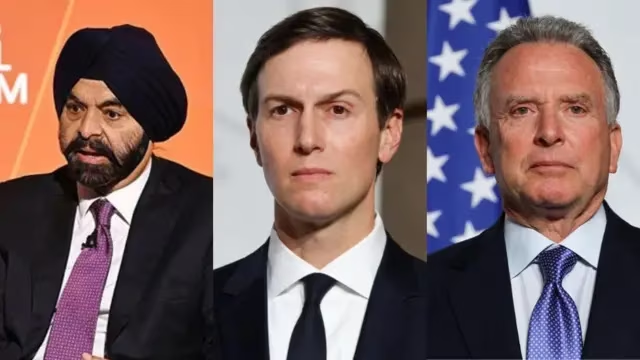
The more statements and leaks there are about the "Peace Council" that US President Donald Trump announced he would establish, the more ambiguous the picture becomes instead of clearer. From the first moment Trump announced his intention to lead this council to oversee the ceasefire in Gaza, it became clear that the project goes beyond a mere temporary mechanism to manage the post-war phase, opening the door to a broader redefinition of international conflict management frameworks.
Over the past few days, dozens of countries have received official invitations to join the new council, including traditional US allies such as Britain, France, Canada, and Saudi Arabia, as well as countries not considered within the American orbit, such as Russia and Belarus. This unprecedented diversity in the list of invitees raised questions about the nature of the council, the limits of its political alignments, and whether it is intended to be a truly inclusive platform or an expanded American influence tool.
A careful reading of the Council's charter, which was attached to the invitations, revealed that Trump's vision is not limited to Gaza alone. The charter states that the Council aims to "secure lasting peace in conflict-affected or threatened areas," meaning its mandate would be expanded to include other global conflicts, under the slogan of establishing "a more flexible and effective international body than existing frameworks."
This ambition was met with sharp criticism, as opponents saw that the Trump administration was practically seeking to establish a parallel entity to the United Nations, dominated by Washington, reflecting the President's distrust of traditional international institutions, which he has long accused of bias and bureaucratic bloat. Although the UN Security Council approved a US-drafted resolution in November granting the Council a cover of legitimacy, doubts about its true intentions have not dissipated.
Under the charter, Trump, as chairman of the Council, enjoys broad and unprecedented powers, including appointing a second executive board, possessing an effective veto right, and even naming his successor. Countries wishing to obtain permanent membership are also required to pay more than a billion dollars in the first year, which opens the door to a huge budget, without sufficient clarity on the mechanisms for monitoring its expenditure.
In the Gazan context, the nature of the Council's executive role remains ambiguous. Despite the absence of direct Palestinian representation in the Council's bodies, it will oversee a group of Palestinian technocrats to manage public services. However, this task seems extremely complex given the on-the-ground division between areas under Israeli control and those controlled by Hamas.
Political sensitivity increased with the formation of subcommittees including Turkey and Qatar, which provoked public Israeli protest, a rare departure from traditional harmony with the Trump administration. Countries like France, on the other hand, openly declared their reluctance to join, considering that the Council's charter raises fundamental questions about respect for the existing international order.
The "Peace Council" cannot be separated from the broader context of Trump's vision for international relations, based on marginalizing multilateralism and replacing it with flexible arrangements subject to the logic of power and money. The requirement of high membership fees and granting the president almost absolute powers suggest a transformation of peace from a legal and moral value into a political project manageable according to the balance of influence. Here, the Council does not appear to be a reformist alternative to the United Nations, but rather a reformulation of hegemony with new tools.
In the Palestinian case, the Council raises additional concerns, as it reproduces the logic of international guardianship without genuine political representation for the people of the land. Technocrats, no matter how efficient, cannot compensate for the absence of national legitimacy. Moreover, linking the future of Gaza to conditional reforms, managed by a body headed by an American president, entrenches a structural imbalance in the peace process, and transforms reconstruction into a tool of pressure, not a human and political right.
PALESTINE
Tue 20 Jan 2026 11:48 am - Jerusalem Time
Guterres's declaration that the Security Council no longer represents the world, an admission of the international system's failure
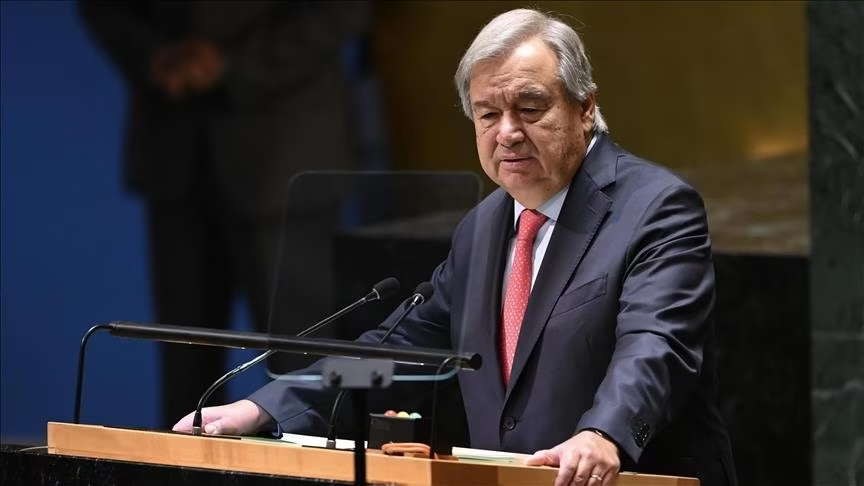
UN Secretary-General Antonio Guterres, in a striking and unprecedentedly sharp statement, declared that the Security Council "no longer represents the world" and has become "ineffective" in performing its primary role of maintaining international peace and security. This declaration was not a fleeting description of a temporary crisis, but a frank diagnosis of a deep structural flaw striking at the heart of the international system, at a moment when destructive wars are proliferating and the ability of international law to curb the logic of force and enforce accountability is declining.
Guterres's words come as the world witnesses a series of open conflicts that have turned into harsh tests for the very idea of collective security. In Gaza, bombing, siege, and starvation continue amidst the Council's inability to enforce a binding ceasefire. In Sudan, the state is disintegrating under the weight of a bloody internal war that largely falls outside the scope of international attention. As for Libya, Yemen, and Syria, their long wars have turned into chronic crises that are managed but not resolved, while the war in Ukraine drains the international system and exposes the limits of deterrence and UN mediation in the face of a conflict between major powers.
In all these cases, the Security Council appears unable to perform its essential role. Resolutions are stalled, projects are vetoed, and statements are watered down to the point of political emptiness. This repeated impotence is no longer an exception, but has become a structural pattern that raises a fundamental question about the utility of the Council in its current form.
Investigating the causes of this paralysis leads directly to the very structure of the Security Council, which remains captive to the post-World War II balances of power. The right of veto, monopolized by five permanent members—the United States, Russia, China, Britain, and France—has transformed from a balancing mechanism into a tool of obstruction. In Gaza, as in Syria and Ukraine, the veto has been used to protect allies or prevent accountability, not to prevent escalation or save civilians.
In recent years, draft resolutions related to ceasing hostilities, protecting civilians, or delivering humanitarian aid have fallen in more than one conflict zone. In Yemen, Sudan, and Libya, crises have been left to fester under slogans of "deep concern" and "calls for restraint," while any real enforcement mechanism has been absent. Here it becomes clear that the Council does not suffer from a lack of reports or information, but rather from direct subservience to power calculations.
The erosion of the international system is not limited to the Security Council's inability to act, but is also manifested in blatant disregard for international law outside its chambers. The attempted kidnapping of Venezuelan President Nicolas Maduro, according to consistent reports, constituted a dangerous precedent carried out in a cross-border security manner, without any regard for the principle of state sovereignty or the immunity enjoyed by heads of state. Notably, this incident was not met with serious discussion within the Security Council nor with clear institutional condemnation, revealing how international law is allowed to be suspended when the violator is an influential party, in a UN silence that amounts to tacit acceptance.
Alongside this functional impotence, a fundamental flaw in representation emerges. The Council does not reflect the political or demographic map of the world whose decisions it affects. Africa, which includes Sudan and Libya and bears the brunt of conflicts, does not have a single permanent seat. The Arab world, which includes Gaza, Yemen, and Syria, is absent from the permanent decision-making center, while Europe retains double representation despite its declining relative global weight.
This flaw in representation undermines the Council's legitimacy and deepens the gap between those who decide and those who pay the price. States and communities experiencing the horrors of destructive wars do not have a permanent voice in the body that determines their fate. As this situation continues, trust in the UN system erodes, and the impression that international law is applied with blatant selectivity becomes entrenched.
Guterres warned that the Security Council's impotence is not confined to its chambers, but reflects on the international system as a whole. When the Council fails in Gaza, Sudan, or Ukraine, states' inclination towards unilateral solutions and alliances outside the UN framework increases. Thus, the logic of collective security recedes in favor of policies of deterrence and force.
Despite repeated calls for Security Council reform, whether through expanding permanent membership or restricting the use of the veto in cases of major crimes, progress remains almost non-existent. Reform is contingent on the approval of the five permanent states, i.e., the very powers that benefit from the existing paralysis, making change indefinitely postponed.
The moral impact of this stagnation is no less serious than its political impact. In Gaza, Yemen, Syria, and Sudan, failure is not measured by the number of postponed resolutions, but by the number of lives left unprotected. And when the highest international body is unable to stop the bleeding of civilians, it gradually loses its ability to claim moral authority.
The conclusion is that the Security Council's crisis is not in an exceptional circumstance, but in a structure that produces and reproduces impotence. Either the Council is rebuilt to reflect today's world and limit the privilege of the veto, or it will continue to erode until it completely loses its role. Then, the wars in Gaza, Sudan, Libya, Yemen, Syria, and Ukraine, and the precedent of the kidnapping of a sovereign head of state, will not be mere isolated events, but permanent symptoms of the collapse of an international system that failed to reform itself.
PALESTINE
Tue 20 Jan 2026 11:22 am - Jerusalem Time
Peace Council... Gaza between managing the "day after" and the risks of political guardianship
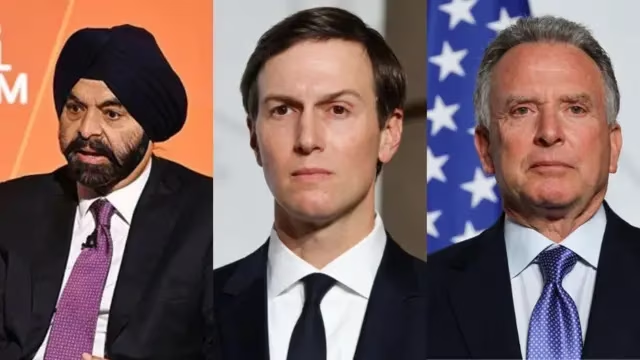
Dr. Hussein Al-Deek: The appointment of an American general who served in Iraq and Syria as commander of the international stabilization forces reveals the essence of the project, which is the disarmament of Gaza.
Akram Attallah: The composition of the council with American presence raises serious questions about Trump's proposals to transform Gaza into a "Riviera".
Nabhan Khreisheh: Forming the council without Palestinian representation may lead to managing Gaza independently of the West Bank, deepening the division and undermining any national project.
Dr. Suhail Diab: The American project is based on the priority of de-escalation in the Middle East, driven by internal conditions without abandoning the imposition of guardianship in Gaza.
Nour Odeh: The executive committee includes figures with clear ambitions, which puts the future of the Palestinian cause, especially the Gaza Strip, at risk.
Sari Sammour: There is a risk of marginalizing Palestinian factions or turning them into "false witnesses" and making the council an entity that acts with the mentality of a "High Commissioner".
After the American announcement of the formation of the so-called "Peace Council" to manage the affairs of the Gaza Strip, questions are increasing about the nature of this new framework and the limits of its role in the post-war phase, amidst fears of political guardianship over the Strip.
Writers, political analysts, specialists, and university professors, in separate interviews with "Al-Quds", believe that the Peace Council, which was presented as an international mechanism for achieving stability and managing reconstruction in the Gaza Strip, at the same time raises widespread fears of the absence of approved international references and the marginalization of the Palestinian role in determining the fate of the Strip and its political future.
According to writers, analysts, specialists, and university professors, the circulating data indicate that the council has an overwhelming American presence, with its connection to executive, administrative, and security committees whose authority stems from that council and is not linked to national legitimacy, which opens the door to scenarios ranging from temporary humanitarian administration, or the consecration of political and geographical separation between Gaza and the West Bank, leading to a form of guardianship that controls security and economic decisions.
They believe that it is not unlikely that the council will achieve some limited gains, such as reconstruction and alleviating the humanitarian crisis, but these opportunities remain conditional on the Israeli position and the absence of a clear political horizon, which makes the "Peace Council" a pivotal station that may redraw the Palestinian scene, either towards fragile stability or towards deepening division.
Marginalization of the Security Council and the United Nations
Dr. Hussein Al-Deek, Professor of Political Science and International Relations and a specialist in American affairs, warns of the profound dangers inherent in the announcement of the so-called "Peace Council" led by the United States to manage the affairs of the Gaza Strip, considering it a very dangerous development at both the international and Palestinian levels, due to its direct marginalization of the role of the UN Security Council and the United Nations, and the usurpation of their powers stipulated in the UN Charter, practically granting them to US President Donald Trump and his advisors.
Al-Deek explains that the most dangerous aspect of this announcement about the council is the transformation of the future of the Palestinian people, and the future of the Gaza Strip specifically, into decisions issued by the US President and the Peace Council he heads, far from any legitimate Palestinian, Arab, or international authority.
Complete dependence on the American administration
Al-Deek points out that the composition of the council and Trump's announced advisors, including figures closely linked to the Zionist lobby and the Israeli government, reflect a clear bias towards the Israeli narrative, which makes the political decision regarding Gaza completely dependent on the American administration.
Al-Deek explains that this reality means, in practice, a direct derogation from Palestinian rights and a usurpation of Palestinian popular and political will, at a time when this council has not received any mandate from the Palestinian people, nor from the Palestine Liberation Organization, nor from the residents of the Gaza Strip.
Return of guardianship and separation between the West Bank and Gaza
Al-Deek believes that the most likely scenario, according to current data, is the return of the Gaza Strip to a stage similar to guardianship or mandate, with the consecration of complete political and geographical separation between the West Bank and the Gaza Strip, so that the West Bank remains under the political umbrella of the PLO, while Gaza's authority is transferred to the Peace Council.
Al-Deek indicates that the so-called "administrative technocrat committee" will be linked to the executive council headed by Nikolay Mladenov, which forms a link between the Peace Council and the Palestinian technocrat committee, within the framework of a new administration for the Strip that is not based on a unified national will.
The essential goal of disarmament
On the security and military level, Al-Deek considers that the US President's announcement of the appointment of an American general who served in Iraq and Syria as commander of the international stabilization forces to be deployed in Gaza reveals the essence of the proposed project, which is the disarmament of the Gaza Strip.
Al-Deek confirms that this goal is the same one announced by Israel since the beginning of the war, and it failed to achieve it by military force, to be passed today through American and international cover.
Al-Deek explains that the political and military decision is now linked to the will of the United States alone, and not to the Palestinian or Arab will, or even to the decisions of the United Nations and the Security Council, which constitutes a strategic danger to the Palestinian cause and the entire national project.
Al-Deek points out that the talk of a Palestinian state on the June 4, 1967 borders is no longer on the table, as the discussion is confined to the future of Gaza, reconstruction, and administrative committees, far from any clear political horizon.
Al-Deek reviews several possible scenarios, including the scenario of failure, if the Peace Council adopts the Israeli narrative and seeks to disarm by force, which could lead to a confrontation between international forces and armed factions, the collapse of the experiment, and a return to the square of escalation.
Potential opportunities to alleviate suffering
Al-Deek points to another scenario, which is to suffice with managing the humanitarian and security situation without real political change, through a temporary de-escalation and limited reconstruction, and postponing the arms issue, within the framework of what he described as a "calm before the storm" period.
Regarding the prospects, Al-Deek believes that there are potential opportunities to alleviate humanitarian suffering, economic openness, and reconstruction, but all of them remain dependent on the Israeli position, lifting the siege, and opening the crossings.
Al-Deek talks about the possibility of rebuilding some trust with some sponsoring international and regional parties, such as Egypt, Qatar, Turkey, and the United States, in addition to the possibility of using this path to rearrange the internal Palestinian house, despite his preference that current developments push towards further division and separation.
Al-Deek emphasizes a number of fundamental dangers, most notably the legitimacy crisis, external control over Palestinian decision-making, the absence of any framework regulating the relationship between the Peace Council and official Palestinian institutions and factions, in addition to the challenge related to disarmament and the absence of a political horizon.
Al-Deek warns that the Peace Council could become a tool to freeze the conflict rather than resolve it, which carries the risk of a new explosion of conflict in both Gaza and the West Bank.
American direction to impose a new reality
Writer and political analyst Akram Attallah believes that the announcement of the so-called "Peace Council" opens the door to complex scenarios, reflecting a clear American direction to impose a new fait accompli on all parties, suggesting that the wheel of the so-called second phase has actually started without waiting for complete Palestinian or regional agreements, despite negative indicators from Israel that warn of obstacles to this phase.
Attallah explains that the series of successive steps, from the formation of the Peace Council initially and its connection to other committees, to the establishment of the Palestinian "Technocrat Committee", through the intermediary committee, to the executive committee headed by Nikolay Mladenov, indicates a strong American impetus driving this path.
Attallah believes that the composition of the council and the nature of its formation reflect an overwhelming American presence, which raises serious questions about the goals of this presence, especially in light of previous proposals launched by US President Donald Trump regarding transforming Gaza into an investment and tourist area similar to the "Riviera" of the Mediterranean coast.
Attallah warns that the continuation of matters in this way could mean the Gaza Strip moving into a state of almost complete American control, with the consequent confiscation of the Palestinians' right to make their independent national decision.
Palestinian retreat from determining their affairs
Attallah confirms that the most dangerous aspect of the current scene is the Palestinians' retreat from the position of the decisive party in their affairs, especially with regard to the Gaza Strip, which raises big questions about the nature of the next stage and what is being prepared for it at the political and security levels.
Attallah questions the Israeli position and how the Israeli government thinks about these arrangements and the claim that they are unacceptable, while Attallah indicates that the success or failure of the Palestinian "Technocrat Committee" is largely linked to Israel's readiness to facilitate its work, whether by opening crossings or providing practical facilities that can reflect on the humanitarian and living reality in the Strip.
Attallah stresses that the core of the problem lies in the nature of the relationship between the Peace Council and the Palestinian Committee, wondering whether the required role of this committee serves Israeli-American interests, or whether it will actually move towards meeting Palestinian interests, including strengthening the unity of the Palestinian people, and maintaining political and institutional communication with the West Bank and the rest of the components of the Palestinian political system.
An opportunity to break the political stalemate... but
Journalist Nabhan Khreisheh believes that the announcement by US President Donald Trump's administration of the formation of the so-called "Peace Council for Gaza" represents a highly controversial step, which carries potential prospects for addressing the post-war phase, but at the same time raises deep risks and challenges that are not limited to Palestinians only, but extend to the entire regional scene.
Khreisheh explains that historical experience with American initiatives, especially those formulated outside the framework of international legitimacy, prompts dealing with this announcement with extreme caution, in light of a previous political record that enshrined Washington's bias towards the Israeli vision at the expense of Palestinian national rights.
Khreisheh points out that the council, in principle, may seem like an opportunity to break the political stalemate and create an international or regional framework for managing the post-war phase in the Gaza Strip, in light of the widespread destruction and unprecedented humanitarian collapse.
Khreisheh explains that the involvement of regional parties such as Turkey and Qatar may, in theory, provide political and financial cover for the reconstruction process, and can also give Palestinians a wider margin of support compared to previous initiatives that were completely biased towards Israel. Khreisheh notes that these two countries have relations with active Palestinian forces and the ability to play a mediating or guaranteeing role in any future arrangements.
However, Khreisheh stresses that these positive prospects clash with a number of fundamental risks, most notably the nature of the council itself, wondering whether it constitutes a real tool for achieving a just peace, or merely a mechanism for managing the crisis in a way that serves Israel's security and reproduces the reality of control and siege in new forms.
Khreisheh believes that the experience of the "Deal of the Century" is still strongly present, and has reinforced the impression that the Trump administration tends to bypass the fundamental rights of Palestinians, foremost among them the right to self-determination.
Khreisheh confirms that the public Israeli objection to the involvement of Turkey and Qatar puts the council before a structural challenge, as Israel may work to thwart any effective role for them or limit their participation to a formal framework, which transforms the council into a regional conflict arena instead of being a platform for a solution.
Administrative separation between Gaza and the West Bank
On the Palestinian level, Khreisheh warns of the danger of marginalizing the Palestinian national will, stressing that forming the council independently of genuine Palestinian representation, or imposing its outcomes as a fait accompli, could lead to managing Gaza separately from the West Bank, thereby deepening the division and undermining any comprehensive national project.
Khreisheh points to three possible scenarios: a formal scenario limited to limited humanitarian administration, a regional conflict scenario that paralyzes the council's work, and a third, less likely but more important scenario, which is the council transforming into a pressing political framework based on international law and giving Palestinians an active role in determining their future.
Contradictory indicators for the next phase
Political science professor Dr. Suhail Diab explains that the announcement of the "Peace Council," the Palestinian National Committee for the Administration of the Gaza Strip ("Technocrat Committee"), and the Executive Coordination Committee of the Peace Council reflects, in form, content, and composition, contradictory indicators for the course of the next phase in the Gaza Strip and the region as a whole.
Diab explains that these steps, on the one hand, express the failure of previous scenarios based on extermination, displacement, and open war, but on the other hand, they open the door to a path fraught with political traps and intrigues.
Diab points out that the current American project is based on the priority of de-escalation in the Middle East, driven by internal electoral and economic conditions in the United States. However, this de-escalation does not mean Washington abandoning its pursuit of imposing political, economic, and investment guardianship over the Gaza Strip, including controlling its real estate future, which portends an escalation of tension in the next phase.
Diab notes that this American priority fundamentally contradicts Israeli priorities, which are based on maintaining the state of war, with a readiness to return to policies of extermination and displacement whenever the opportunity arises, whether driven by electoral motives for Israeli Prime Minister Benjamin Netanyahu or by ideological motives.
Three conflicting scenarios
Diab believes that the scene is heading towards three conflicting scenarios. The first scenario is the American path, which seeks to be the sole political reference for what is happening in the Gaza Strip, through a clear form of guardianship or mandate, considering that the composition of the "Peace Council" directly expresses this orientation.
As for the second scenario, the Palestinian path, according to Diab, is for the "day after" in the Gaza Strip to be purely Palestinian, through a comprehensive national consensus among all factions, and in coordination with the Arab and Islamic depth and mediators, leading to the success of the Palestinian National Committee, and entering into practical entitlements that include withdrawal, opening the Rafah crossing, bringing in aid, and starting reconstruction.
Diab points out that the third scenario is the Israeli path, which seeks to overturn the table and return to war under the pretext of "dismantling Hamas's weapons," taking advantage of Netanyahu's political and electoral need for such an escalation.
Diab confirms that these scenarios will remain in a state of open conflict, and the results of that will determine the paths and prospects for the political and security future in Palestine and the region.
Raising the stakes for the Palestinian scenario
Diab explains that raising the stakes for the Palestinian scenario requires two crucial factors: first, deepening Palestinian-Palestinian consensus, politically, economically, and geographically, between the Gaza Strip and the West Bank, thereby establishing a unified and comprehensive political settlement. Second, the existence of an effective, persistent, and continuously pressing and monitoring Arab-Islamic project, given the link between the Gaza file and broader regional and international projects.
Diab emphasizes that the "Peace Council"'s role is not limited to the Gaza Strip, but rather constitutes a regional chamber for implementing the American strategy in the Middle East, extending from Syria and Lebanon to Yemen and Iraq.
Diab stresses that the extent of deepening Palestinian consensus and the effectiveness of Arab-Islamic action will determine the outcomes of this conflict, unless major developments outside the context occur, such as the possibility of a widespread regional war.
Peace in name only
Writer and political analyst Nour Odeh warns that the announcement by US President Donald Trump's administration of the formation of the so-called "Peace Council for Gaza" represents a step that portends dangerous transformations in the international system and Palestinian politics, considering that the council is essentially "peace in name only," as it seeks to replace the role of the United Nations with a body completely subject to Trump's will and whims.
Odeh confirms that the US President fully determines the council's membership, decides the names of members, their continuity, and the nature of their work, including sending messages to the occupation government's prime minister, Benjamin Netanyahu, about the participation of specific figures.
Figures with clear ambitions
Odeh points out that the executive committee, headed by Nikolay Mladenov, includes figures with clear ambitions, among them an American Jewish businessman known for his hostility towards Palestinians. Jared Kushner and Paul Bremer also participate in the council, who have been developing plans for over a year to transform the Gaza Strip into an investment area for non-Palestinians, which puts the future of the Palestinian cause, especially the Gaza Strip, at risk.
Odeh notes that many of the countries participating in or invited to the council are known for voting against Palestinian rights in the United Nations, and are hostile to Palestinians, such as the governments of Yemen, Argentina, and Paraguay.
Odeh indicates that Trump requires a payment of one billion dollars to guarantee permanent membership, or that the membership of countries be limited to three years with the possibility of replacement later, which reflects the American administration's ambition to subject international work to its hegemony, and perhaps expand the council to include other countries such as Venezuela, in an attempt to overturn the existing international system.
A major threat to Palestinian rights
Odeh believes that these steps represent a major threat to Palestinian rights, as Palestinians are no longer an active party in determining the future of Gaza, and the council threatens to impose an American-Israeli agenda on Palestinian territories.
Odeh explains that the open international scenarios for the council include succeeding in imposing a new system subject to Trump's will, or countries confronting his plans, or the council expanding at the expense of the sovereignty of peoples and national resources.
Odeh points out that the executive council of the Peace Council, which oversees the technocrat committee, is managed by businessmen who think in terms of investment rather than state, with only one woman having relief experience, which raises questions about the possibility of replacing UN relief organizations with private companies, and perhaps the Palestinian people paying the price of their catastrophe, with the possibility of encouraging displacement to facilitate Israel's interests.
Odeh warns that the council may extend to the West Bank in the future, in parallel with the neglect of Palestinian rights, and that national presence is at risk, stressing that this transformation represents a turning point in human history, and requires a different approach to thinking and working at the Palestinian, Arab, regional, and international levels to confront these challenges.
Putting spokes in the wheels
Writer and political analyst Sari Sammour expects that the so-called "Peace Council," the executive council, and the administrative "Technocrat Committee" that have been formed will face a series of deliberate Israeli obstacles, in light of the refusal of the occupation government's prime minister, Benjamin Netanyahu, to this path, considering that the next phase will be characterized by obstruction and putting "spokes in the wheels," even if the work wheel continues to turn for a certain period, sometimes at a slow pace and sometimes at a faster pace.
Sammour explains that the Palestinian side, according to the available data, has fulfilled its obligations, while the Israeli side remains the party that does not adhere to implementation, pointing out that the United States, as usual, tends to side with Israel and will not exert serious pressure on it.
However, Sammour suggests that Washington will not allow Tel Aviv to completely sabotage the path, even if it may turn a blind eye to attempts to disrupt and empty the agreement of its content, as happened in previous experiences.
Continuation of the council for a specified period
Regarding the future of the "Peace Council," Sammour believes that its continuation for a specified period is the most likely scenario, while at the same time warning against exaggerating in asserting that "the temporary will become permanent."
Sammour cites the experience of the American civilian administrator in Iraq, Paul Bremer, who spoke of a long stay and then left after a short period, stressing that political reality is full of surprises, and that modesty in analysis has become a necessity in light of the state of field, political, and geopolitical fluctuations.
Cautious hope for resuming reconstruction
Regarding the positive prospects, Sammour expresses cautious hope for the possibility of resuming the reconstruction process, bringing in humanitarian aid, resuming education in schools and universities in the Gaza Strip, and opening the Rafah crossing to facilitate the travel of the wounded and sick for treatment, in addition to improving health services, removing tens of thousands of tons of accumulated waste, and starting to remove rubble from the streets. Sammour indicates that the realization of these hopes may be partial or complete, depending on political and security developments.
The danger of marginalizing Palestinian factions
In contrast, Sammour warns of serious dangers, most notably the imposition of foreign, non-Palestinian or Arab leaders on the Palestinian people, some of whom carry a colonial legacy, considering this alarming, especially in light of the participation of controversial figures within the council.
Sammour points to the danger of marginalizing Palestinian factions or turning them into mere "false witnesses," and the council becoming an entity that acts with the mentality of a "High Commissioner."
Sammour affirms that the main bet remains on the steadfastness of the Palestinian people and their ability to overcome hardships, and not to lose their sacrifices, in the face of various forms of pressure and imposed guardianship.
PALESTINE
Tue 20 Jan 2026 10:10 am - Jerusalem Time
Supported by the UAE International Aid Agency.. Convoy No. 279 enters Gaza loaded with 266 tons of food and medical aid

New batches of humanitarian aid convoys, as part of Operation "Gallant Knight 3", arrived in the Gaza Strip last week, extending the UAE's humanitarian role in meeting urgent humanitarian needs and supporting Palestinian brethren amidst difficult humanitarian conditions.
Last week, the 279th Emirati humanitarian aid convoy entered the Strip, loaded with 15 trucks comprising 291 shipping pallets, and with a total weight of 266 tons of diverse aid, including food parcels, medical supplies and equipment, in addition to specialized medical devices.
The convoy was notably distinctive, as it included 7 ambulances and a water tanker, which enhances field response readiness and contributes to meeting vital needs, as part of the continuous Emirati humanitarian efforts to support the residents of the Strip.
These efforts are part of an integrated operational system supervised by the Emirati humanitarian aid team in the city of Al-Arish, which includes preparing, sorting, and organizing shipments according to priorities, to ensure their organized and rapid delivery to those in need in Gaza.
Other batches of Emirati aid previously entered, including shelter supplies, such as tents, blankets, tarpaulins, and relief bags, in addition to supplies for the elderly and children, to support affected families and meet basic daily needs.
The UAE reinforces its humanitarian efforts within Operation "Gallant Knight 3" through regular land convoys arriving from Al-Arish to the Gaza Strip, affirming its steadfast commitment to the approach of giving and standing by the Palestinian brethren.
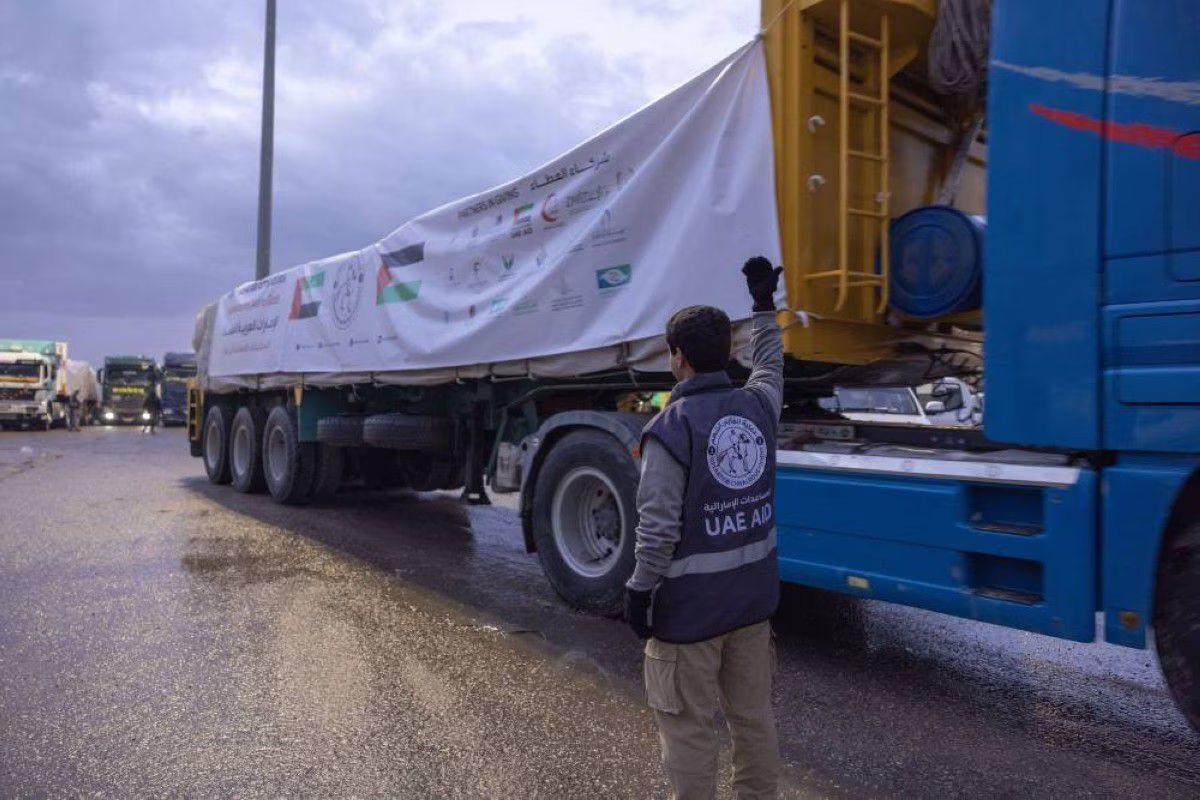
OPINIONS
Tue 20 Jan 2026 9:29 am - Jerusalem Time
Friendly Fire!
Ibrahim Melhem
Opinion Writer
In its worst nightmares, NATO never expected to face an imminent confrontation with its largest member, who threatens to swallow one of its countries, claiming it lacks the ability to defend itself if invaded by its enemies, "China and Russia," even though the dealmaker never stopped flirting with the "Dragon" and courting the "Bear" before turning against Ukraine and becoming one of its "staunchest friends."
Months ago, the alliance conducted an assessment of the challenges facing the "Iron Curtain" and, in light of it, decided to raise its military budget by 5 percent, as part of a defensive doctrine that considers Russia a potential threat to the alliance, before waking up to a threat from within that promises to undermine its pillars, remove the nuclear umbrella from its allies' heads, and demand a "protection bill" with a capriciousness that lacks the slightest sense of responsibility, leaving the alliance facing a financial apparatus that does not hesitate to impose "political tolls."
The "sick man" wanted to find a doctor in Washington to treat his pains, only to find that he had been left to suffer his pains alone after the doctor decided to close the clinic and refrain from providing treatment.
Perhaps the question that arises from this confusing drama is, if Trump does all this to his allies, what can he do to his enemies? The bullet that hit "NATO" from one of its members is greater than what it is wary of receiving from some of its enemies.