PALESTINE

Sat 14 Feb 2026 8:59 am - Jerusalem Time

A Strategic Reading of the Palestinian Resistance's Performance: Al-Aqsa Flood as a Historical Turning Point

An objective evaluation of the Palestinian resistance's performance is a strategic necessity to draw lessons, improve performance, and overcome field shortcomings. This scientific approach aims to protect achievements from distortion attempts led by lurking forces that seek to highlight negatives and ignore the harsh conditions in which the resistance operates.

The resistance in Palestine is characterized by a wave-like behavior that rises and falls but never stops since the launch of the first military organization in 1919. Considering 'Al-Aqsa Flood' as the end of the resistance is a methodological error, as history proves that each wave is usually stronger than the previous one, as happened between the 1987 and 2000 intifadas leading up to the current battle.

Any strategic evaluation based solely on current data or the severity of humanitarian conditions in the Gaza Strip will be inadequate and unsuccessful. One must look at the overall trajectories that caused a violent shock to the very idea of the occupation's existence, its functional role, and the collapse of its moral legitimacy before the entire world.

The battle achieved unprecedented results in terms of reverse migration, with approximately 550,000 Jews leaving in the first six months alone. The Palestinian issue also topped the global agenda, and the number of countries recognizing the State of Palestine rose to 159, placing the occupation in suffocating international isolation.

Before the launch of the Flood, the occupation government sought to implement a 'decisive plan' by accelerating Judaization and annexing Al-Aqsa Mosque and the West Bank. This was clearly evident in Netanyahu's speech at the United Nations two weeks before the battle, when he presented a map that completely eliminated the existence of the West Bank and Gaza.

The decision for Operation Al-Aqsa Flood came to disrupt attempts at a quiet and free erasure of the Palestinian issue amidst a rapidly accelerating regional normalization environment. Despite the heavy costs, the operation proved to the world the impossibility of bypassing the will of the Palestinian people and their right to self-determination.

Observers believe that those who criticize the resistance 'with retrospective wisdom' ignore that the alternative would have been a complete Zionist monopolization of Jerusalem and Al-Aqsa. The resistance assessed the risks according to the available capabilities amidst a suffocating siege and international complicity, and fulfilled its defensive duty to prevent the liquidation of the cause.

Field facts confirm that the resistance was not defeated, as the occupation admitted its failure to achieve its stated goals of crushing its military capabilities. The Israeli army also failed to free a single prisoner by force, and the resistance maintained field control in areas from which the occupation withdrew.

Estimates from informed sources indicate that the resistance was able to replenish its human numbers, as the truce began with it possessing more than 30,000 fighters. This steadfastness prompted Chief of Staff Eyal Zamir to recommend pursuing a political solution due to the absence of a horizon for military decisive action in the Gaza Strip.

Matters should not be evaluated as if the page has been turned, as Palestinian history has witnessed difficult stations in 1948, 1967, and 1982, and each time the resistance rose again. It is a matter of right, justice, and freedom, and the movement of history ultimately moves in favor of struggling peoples.

One must be wary of consecrating the 'catastrophe complex' or attempts at 'consciousness manipulation' that the occupation seeks to entrench by focusing only on the extent of losses. Evaluation in liberation movements stems from the centrality of sacrifice to achieve grand goals, not from the logic of surrendering to the status quo.

The Palestinian resistance is not a narrow local case, but rather the first line of defense for the Arab and Islamic nation in confronting the Zionist project. When it defends Jerusalem and Palestinian identity, it acts on behalf of the nation and places everyone before their historical and moral responsibilities.

International political projects, including the Trump plan, are not an inevitable fate; they carry the seeds of their failure amidst current regional and global changes. What is required is to gather the elements of strength among the Palestinian people and the free people of the world to resume the path of liberation in all its available forms.

In conclusion, critical reviews remain a necessity for building and advancement, provided they do not turn into a demolition tool that serves the enemy's narrative. The epic written by the Palestinian people will remain a great human school in patience, steadfastness, and military and political creativity.

Al-Aqsa Flood was the strongest wave since the establishment of the Zionist entity, and we are now in a state between two waves, and there is no closure of the resistance file.

ISRAELI AFFAIRS

Sat 14 Feb 2026 8:58 am - Jerusalem Time

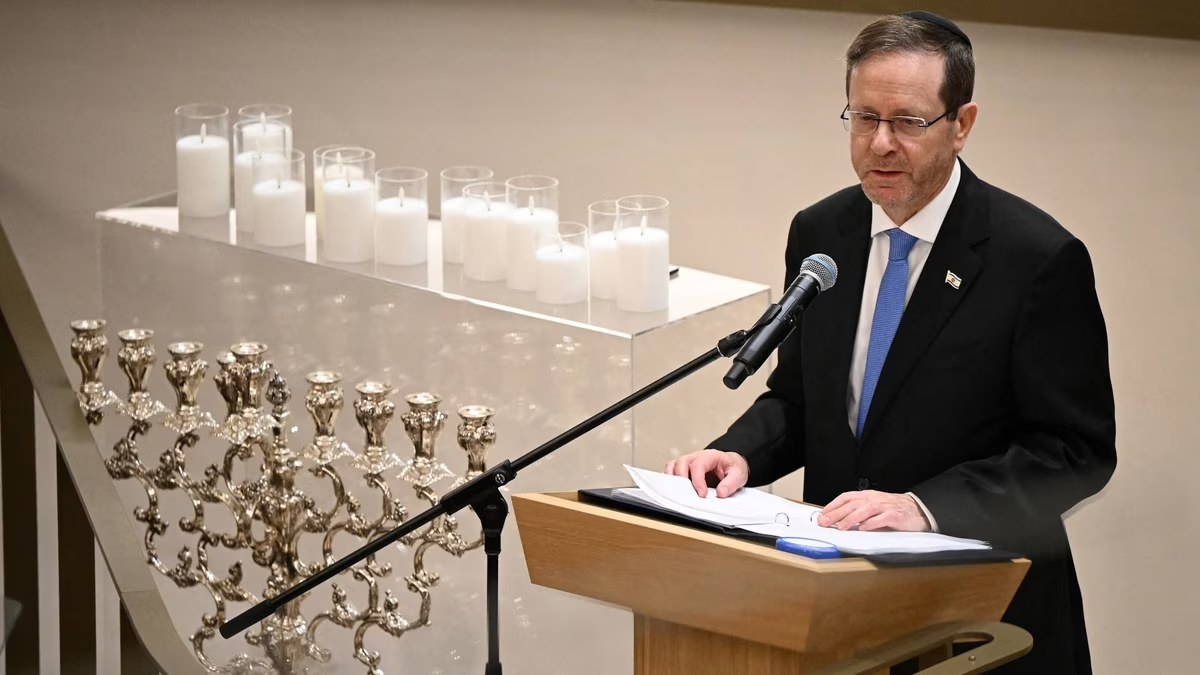
Herzog confirms ongoing review of Netanyahu's pardon request and rejects external pressures

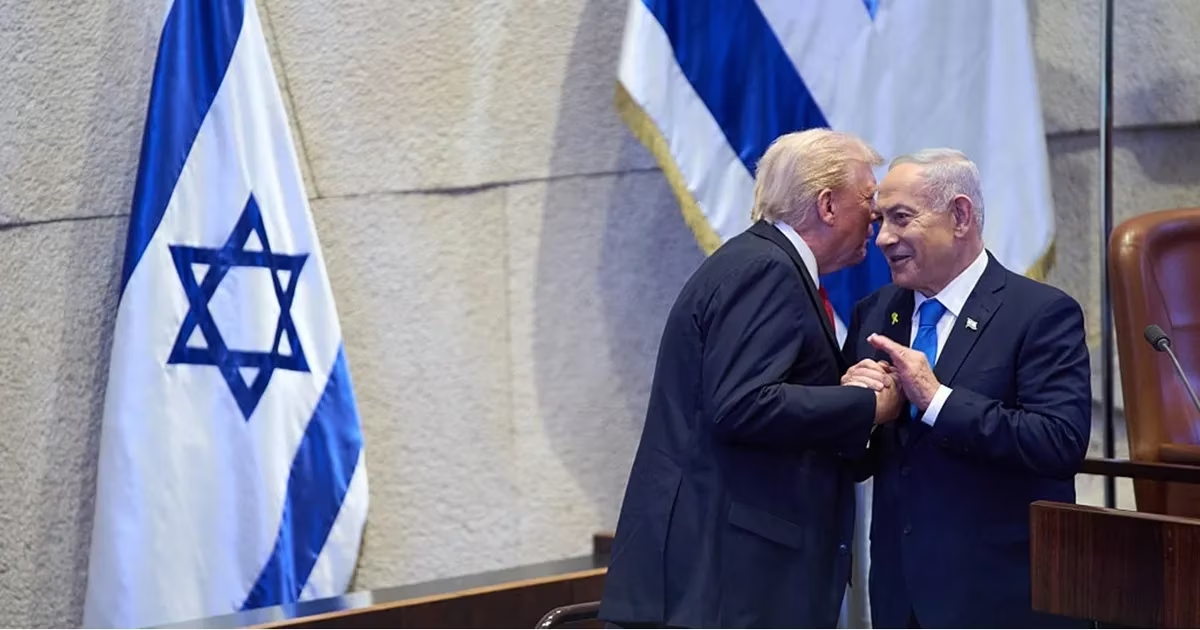
The office of Israeli President Isaac Herzog issued a decisive clarifying statement, confirming that Prime Minister Benjamin Netanyahu's pardon request is still under review and scrutiny. The statement clarified that the presidency is committed to established legal procedures and will not issue a final decision until receiving a detailed legal opinion from the Ministry of Justice. This step comes amid widespread political and legal anticipation regarding the fate of the cases that have pursued Netanyahu for years.\n\nHerzog emphasized in his statement that the presidency will operate with complete independence, free from any external or internal influences or pressures. This statement is seen as an indirect response to the sharp criticism directed by the current US administration regarding the handling of Netanyahu's case. Sources confirmed that Herzog seeks to preserve the prestige of the judiciary and the independence of sovereign decision-making, away from heated political tensions.\n\nUS President Donald Trump had launched a scathing attack on Herzog during a White House press conference, describing his stance as shameful. Trump believes that the trials Netanyahu has faced since 2019 are merely an obstacle to the regional stability Washington seeks to achieve. According to the American view, protecting strategic allies requires overcoming what he described as bureaucratic constraints to complete major understandings.\n\nBenjamin Netanyahu, the first prime minister in the history of the occupation to be tried while in office, faces serious charges including bribery and breach of trust. Investigations focus on three main cases related to accepting luxurious gifts from businessmen valued at hundreds of thousands of dollars. The accusations also include attempts to influence media coverage through deals with press moguls to ensure their political loyalty.\n\nDespite the earlier dropping of one of the cases, the remaining files still pose a significant concern in political and security circles. The US administration believes that the continuation of these prosecutions weakens the internal front of its strongest ally in the region. Washington seeks to push for the closure of these files to ensure that the leadership in Tel Aviv can focus on joint strategic projects.\n\nConversely, there is a state of concern within the occupation authorities regarding the increasing influence of American intervention in internal judicial affairs. Observers fear that Trump's "deal diplomacy" could undermine the independence of Israeli courts. Netanyahu is trying to leverage this international momentum to promote the idea that his pardon represents a "national necessity" dictated by current circumstances.\n\nOn the diplomatic front, Netanyahu recently signed a memorandum to join the so-called "Peace Council" during his meeting with US Secretary of State Marco Rubio. This move reflects the depth of the alliance between Washington and Tel Aviv, as Trump considers any instability in the leadership of the occupation a threat to American interests. Herzog's anticipated decision remains the decisive factor in determining Netanyahu's political and legal future.\n\nThe presidency will operate without any influence from external pressures, and a final decision on the pardon will not be made until the legal opinion from the Ministry of Justice is complete.

ARAB AND WORLD

Sat 14 Feb 2026 8:58 am - Jerusalem Time

Between Military Threat and Diplomatic Maneuvers: Is Washington Heading for a New Strike Against Iran?

Amidst escalating tensions between Washington and Tehran and the faltering of traditional diplomatic channels, the question of a potential US military strike returns to the forefront of the international political scene. Observers believe that the military option is no longer just a bargaining chip, but has become a real possibility in light of recent field movements in the waters of the Arabian Gulf.

Omar Rahman, a researcher at the Middle East Council on Global Affairs, indicated that the wave of diplomatic activity witnessed in regional capitals recently was primarily aimed at avoiding an all-out war. These efforts culminated in indirect talks in the Sultanate of Oman in early February, which the American side described as positive, while Tehran considered them a step forward.

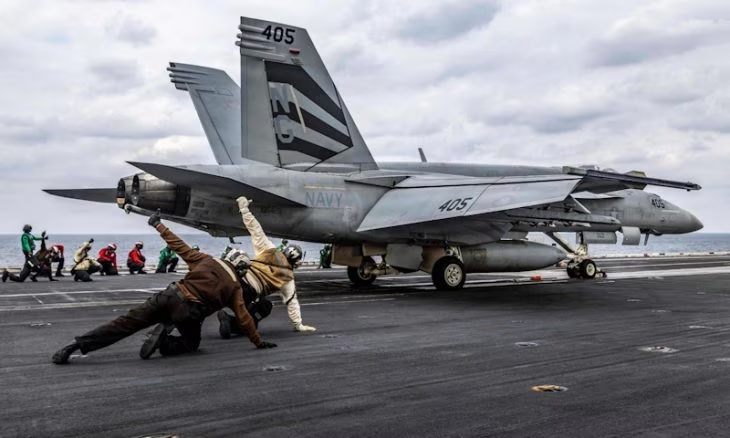
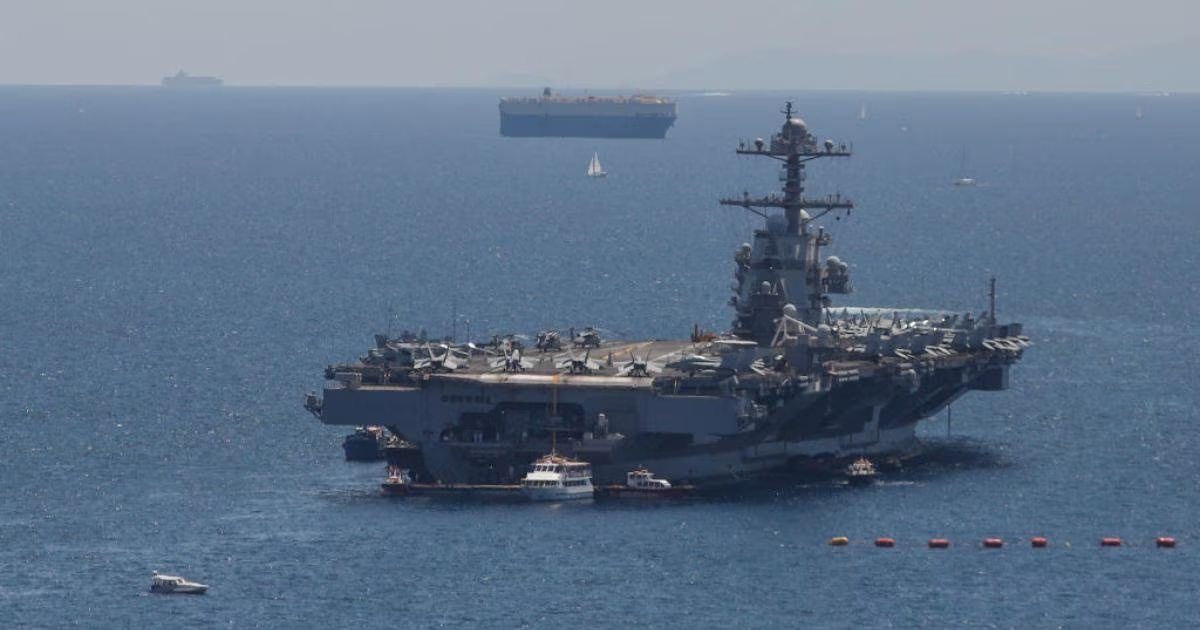
Despite these diplomatic signals, the movement of US naval assets, led by the aircraft carrier 'Abraham Lincoln', paints a completely different picture of the situation on the ground. This massive military buildup could be a prelude to an imminent military operation, or a calculated attempt to intimidate the Iranian leadership and push it to make fundamental concessions on the nuclear issue.

The foreign policy of the current US administration is characterized by improvisation and a lack of clear linear logic, making it difficult to predict the next step. A single decision may carry both a military threat and a negotiating card at the same time, which reinforces the state of strategic ambiguity favored by the White House.

In Washington, a strong and organized hawkish camp is pushing for direct confrontation and regime change in Tehran. This alliance includes neoconservatives and pro-Israel lobbies. They believe that Iran represents the last obstacle to establishing a new regional order dominated by a shared American-Israeli vision.

Israeli Prime Minister Benjamin Netanyahu plays a pivotal role in inciting the US administration, benefiting from his unrestricted access to the White House and his frequent official visits. Netanyahu consistently succeeds in portraying any Iranian move, however limited, as an existential threat requiring a decisive and immediate military response.

In contrast, a broad American current rejects involvement in new costly wars in the Middle East after decades of failed interventions in Iraq and Afghanistan. This popular current pressures the administration to focus on urgent domestic issues, warning that any military adventure could erode the president's popular base.

Trump appears to favor limited and spectacular military operations that do not require a long-term commitment on the ground, such as striking nuclear facilities or swift operations. This strategy allows him to appear strong to his constituents without sliding into the quagmire of chaotic occupation that he fears repeating.

Tehran is well aware that its previous cautious policy was interpreted as weakness, prompting its adversaries to escalate pressure more boldly. Therefore, Iranian leaders are now talking about a preemptive deterrence strategy, threatening uncontrolled responses targeting US interests and energy infrastructure in the region.

Iran's Supreme Leader clearly warned that any attack would lead to a comprehensive 'regional war', aimed at prolonging and internationalizing the conflict to force international powers to intervene. This threat puts the security of Gulf states and global oil markets at risk, which regional powers like Saudi Arabia and Turkey fear.

Iran suffers from suffocating internal pressures, ranging from deep-hitting economic sanctions to water crises and increasing social unrest. Some analysts believe that these crises may encourage Washington to test the regime's resilience through a limited military operation that accelerates the pace of its internal collapse.

In conclusion, war remains an uninevitable option as long as the US president's negotiating instincts seek deals that can be marketed as political victories. Arab mediations, especially Omani ones, continue to search for a formula that preserves Tehran's dignity and grants Washington the necessary appearance of success to avoid a major explosion.

Diplomacy is only useful for the hawkish camp in Washington if it leads to complete Iranian surrender.

ISRAELI AFFAIRS

Sat 14 Feb 2026 8:58 am - Jerusalem Time

The Shattering of Settlement Dreams in Gaza: Frustration Strikes the Far-Right and Accusations of Failure Against Smotrich

Tensions have recently escalated within the Israeli far-right camp, following the evaporation of promises to return to settlement in the Gaza Strip. This has caused deep frustration among the settler base, which had been counting on the war to impose a new demographic reality. Sources reported that ministers of the fascist right in the government are facing sharp attacks from settler leaders, who view the failure to insist on invading Gaza and rebuilding it as an unforgivable 'political sin'.

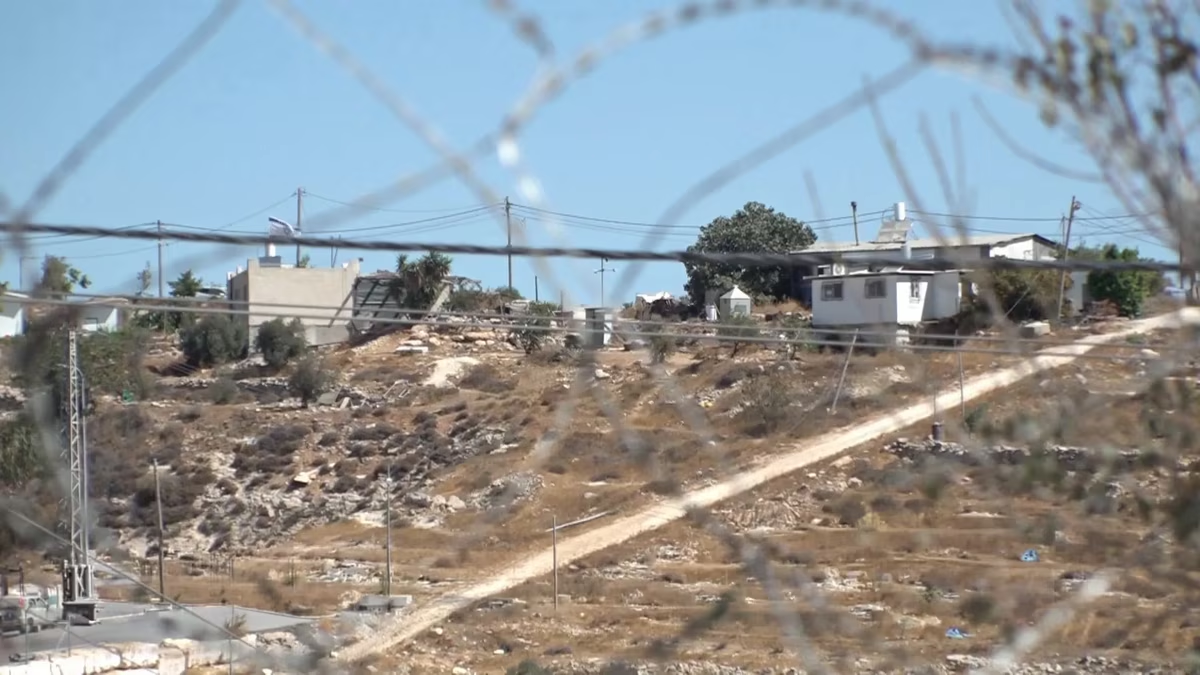
Border areas witnessed field movements by hundreds of right-wing activists, including young families, who attempted to breach the border near Kibbutz Be'eri under harsh weather conditions. These individuals sought to plant trees and lay the first foundations for settlement infrastructure, but army forces intervened to prevent them and forced those who had infiltrated to retreat beyond the Green Line.

These movements were not merely fleeting protests; rather, they reflect an overwhelming desire among residents of former settlements, such as 'Kfar Darom,' which was evacuated in 2005. They have set up temporary trailer camps near Sderot. These settlers await any security loophole or political decision that would allow them to return to the Strip, believing that the army's current military control should immediately translate into civilian settlement.

In the context of internal divisions, Daniela Weiss, head of the 'Nachala' settlement movement, launched a fierce attack on Finance Minister Bezalel Smotrich, holding him responsible for the failure to establish settlement outposts within Gaza. Weiss believes that the leader of religious Zionism reneged on his electoral promises, which negatively impacted his popularity in recent opinion polls that showed his inability to cross the electoral threshold.

Observers link Smotrich's declining popularity to what settlers describe as the 'sin of the spies,' referring to the abandonment of 'the Land of Israel' in Gaza. Despite Smotrich's participation in conferences calling for the Judaization of the Strip, his inability to translate these slogans into tangible reality has put him in direct confrontation with veteran settlers who accept nothing less than complete control.

International political reality strongly imposes itself on the right's ambitions, as expansion plans clash with widespread global opposition that prevents the government from taking official steps in this direction. Sources indicated that despite the right's extensive influence in the ruling coalition, no recognized settlement outpost has been established within the Strip since the events of October 7th, reflecting the extent of the imposed restrictions.

US President Donald Trump's plan emerges as an additional obstacle to the settlers' dreams, as the plan focuses on rebuilding Gaza without mentioning its handover to the Israeli side or allowing settlement there. This American approach, even under an administration described as friendly to the right, represents a decisive blow to the 'Jewish Gaza' project promoted by extremists in the Knesset.

So far, the right's attempts to encourage what is called 'voluntary emigration' of Palestinians, a plan aimed at emptying the land in preparation for receiving settlers, have not succeeded. According to Hebrew reports, the steadfastness of Gazans and the failure of field pressures to push them towards systematic mass displacement have made the idea of settlement a distant prospect in the foreseeable future.

The anger among a thousand settler families who demanded immediate settlement in the northern areas of the Strip, specifically on the ruins of the 'Eli Sinai' and 'Nisanit' settlements, is growing. These individuals believe that the army's control over vast areas extending to what is known as the 'Yellow Line' offers the government a golden opportunity that is being squandered due to political and diplomatic calculations.

Disagreements have not stopped at statements but have extended to include accusations of political betrayal within the Knesset corridors, where right-wing ministers face great embarrassment before their constituents. These ministers try to absorb the anger through fiery statements, but they remain without real effect on the ground due to strict international oversight and ongoing military complexities.

Analysts believe that the gap between the settlers' aspirations and the government's ability to implement them is widening day by day, which could lead to the disintegration of the religious Zionist alliance. The public that elected Smotrich and Ben-Gvir expected a radical change in the settlement map, but found itself facing a reality where the army maintains security control without civilian settlement cover.

The frustration of the far-right reflects the failure of the strategy that attempted to exploit the war to demographically liquidate the Palestinian issue in Gaza. With continued pressure, it seems that the dream of returning to 'Gush Katif' will remain mere slogans raised at conferences, while the field and political reality clashes with a dead end that prevents Gaza from becoming a new settlement area.

Ultimately, settlers find themselves in confrontation with their army and government, as they are prevented from crossing borders and planting trees in lands they consider 'historical heritage.' This field clash reinforces the feeling of isolation among the settlement movement, which has begun to realize that international and local power balances do not allow for a repeat of the West Bank scenario in the Gaza Strip.

The issue of settlement in Gaza remains a ticking time bomb within the Israeli government, threatening the collapse of the coalition if the inability to meet the demands of the far-right continues. With the approach of any political settlement or ceasefire, these pressures will increase, putting Netanyahu and his partners in a dilemma between satisfying the settler base or confronting the international community.

The Judaization project to occupy Gaza and settle in it today clashes with a completely different political reality that prevents the establishment of settlements.

PALESTINE

Sat 14 Feb 2026 8:58 am - Jerusalem Time

Palestinian Finance Minister: 'Earthly solutions have ended' and financial crisis threatens collapse of the Authority

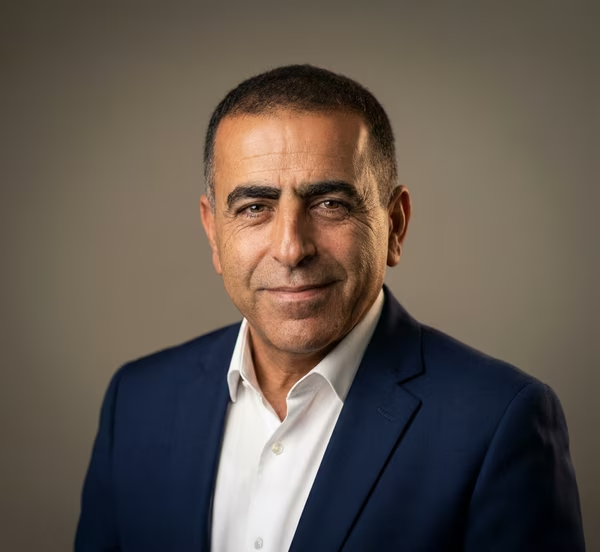
Palestinian Finance Minister, Istifan Salameh, issued unprecedented warnings about the financial reality experienced by the Palestinian National Authority, describing the current stage as having surpassed transient crises to become an existential threat targeting the national project. The minister affirmed in a press briefing that technical and practical options have been completely exhausted, using the phrase 'earthly solutions have ended' to denote the depth of the predicament caused by the occupation's policies of withholding clearance funds.

Salameh explained that the Authority's continued provision of services until now represents a 'miracle' by all standards, noting that any other country would have collapsed if it faced the same financial circumstances. He indicated that the government has become dependent on meager local revenues that do not cover the minimum basic needs, which puts the stability of public institutions at stake in the absence of any horizon for a political or financial solution in the near future.

The minister revealed shocking figures related to public debt, which has jumped to $15.4 billion, explaining that the clearance funds withheld by Israel represent the backbone of revenues, accounting for up to 70%. He pointed out that what was actually received last year did not exceed 1.9 billion shekels out of total entitlements exceeding 10 billion shekels, creating a huge funding gap.

Regarding operational expenses, Salameh mentioned that the monthly local revenues collected by the Authority amount to about 400 million shekels, but the shocking fact is that about 300 million shekels of this goes directly to service the public debt to banks and lending institutions. This means that the remaining amount in the treasury is not enough to cover a small portion of salaries or operational expenses for hospitals, schools, and other vital facilities.

The minister announced harsh austerity measures, including halting all development projects for 2026 and focusing absolutely on essential expenditures that ensure the survival of institutions. He stressed that the battle over clearance funds is a political battle par excellence, as the occupation authorities use money as a weapon to destroy the Palestinian political entity and undermine its ability to endure.

Salameh touched upon the legal pressures in Israeli courts, where the Authority faces 475 lawsuits claiming 'compensation' totaling 65 billion shekels. He considered these cases to represent another front in the financial targeting aimed at bankrupting the Authority and ending it legally and financially, which requires urgent international action to stop this blackmail.

For their part, Palestinian economic experts and activists reacted bitterly to these statements. Expert Mohammed Khbeisa considered that the announced figures reflect the reality of the government's lack of options. Khbeisa pointed out that the allocation of most local revenues to debt repayment puts the Authority in a vicious cycle, especially with the continued withholding of clearance funds for the tenth consecutive month without signs of a breakthrough.

In a related context, economic expert Mu'ayyad Afaneh warned that the government might not be able to maintain the current salary disbursement rate of 60% if the current data persists. Afaneh affirmed that the technical margins through which the Ministry of Finance maneuvered have vanished, which may force it to further reduce the percentage in the coming months, exacerbating the living crisis for citizens.

On the media front, Mu'ammar Arabi called for a change in the rules of engagement with the occupation, considering that the approach of settlement and negotiations has only led the Authority to further weakness and dependence on the occupation's blackmail. Arabi demanded a re-evaluation of the Palestinian cause as a national liberation movement, emphasizing that the solution lies not in technical solutions but in a national leadership that confronts colonialism in all its forms.

Journalists and activists, during and after the conference, proposed a series of internal austerity measures to confront the crisis, including reducing the number of Palestinian embassies abroad and merging non-sovereign ministries. The proposals also included halting new appointments, canceling unnecessary expenses and allowances for officials, and stopping foreign trips that drain the treasury without real benefit on the ground.

Ma'rouf Al-Rifa'i, advisor to the Jerusalem Governorate, called for the necessity of withdrawing government vehicles from civilian and military positions and limiting movement to the absolute minimum necessary. Al-Rifa'i urged the adoption of fully electronic correspondence to eliminate stationery and hospitality expenses, emphasizing that the people expect officials to set an example in austerity during this critical stage.

For his part, lawyer Salahuddin Mousa criticized what he described as a failure in public financial management over the years, considering that the insistence on a massive bureaucratic structure for the Authority is no longer compatible with the battle for existence. Mousa called on the Palestinian President to declare a state of emergency and temporarily nationalize public and private facilities, in addition to issuing a decision to halt debt and interest payments to banks for at least one year.

Observers believed that Minister Salameh's statements might be a prelude to difficult decisions to come, as Professor Misbah Al-Haj Mohammed indicated that 'the doors and windows' have completely closed on Palestinian funding. He considered that the cessation of external support from entities such as Saudi Arabia and Spain, coinciding with the piracy of clearance funds, puts Palestinians before choices where the sweetest is bitter.

In conclusion, the question remains in the Palestinian street about the Authority's ability to withstand these immense financial pressures without a social or political explosion. While some believe that collapse is imminent, others think that the occupation will maintain the Authority's survival in the 'intensive care unit' to serve its security interests, awaiting a political miracle to rearrange the cards.

Earthly solutions have ended... The normal situation is the financial collapse of the Authority, and the continuation of public services represents a miracle reflecting the solidarity of all parties.

PALESTINE

Sat 14 Feb 2026 8:58 am - Jerusalem Time

Israeli Chief of Staff from Rafah: Disarming Gaza and Dismantling Hamas are Non-Negotiable Goals

The Chief of Staff of the Israeli Army, Eyal Zamir, emphasized that the strategic objectives of the ongoing aggression on the Gaza Strip have not changed, clarifying that the top priority remains the complete disarmament and dismantling of the organizational and military structure of Hamas. This came during an inspection tour conducted by Zamir in the city of Rafah, south of the Strip, today, Friday, where he was accompanied by commanders of the Southern Command and the Gaza Division to review the progress of field operations.

Zamir explained that the Israeli forces stationed inside the Strip are on high alert to transition from defensive tasks to offensive operations at any moment. He indicated that the army will not tolerate any security breaches and will systematically work to prevent the Palestinian resistance from regaining its combat capabilities or restoring its infrastructure damaged during the confrontations.

In the context of his review of the field situation, the Chief of Staff claimed that the army had achieved unprecedented military successes by destroying all front-line battalions of Hamas. He affirmed that current operations are focused on deepening clearance operations in controlled areas, with special attention to tracking and destroying tunnel networks and underground infrastructure.

Zamir also pointed out that military units are currently deployed along the security path known as the 'Yellow Line,' and are imposing full control over all entrances and gates leading to the Gaza Strip. He stressed that operations to remove what he described as 'terrorist' infrastructure are continuing according to a specific timetable aimed at ensuring that security threats from the Strip do not return in the future.

The senior military official indicated that all field movements are carried out in full coordination with directives issued by the political level in Tel Aviv. He affirmed that the army leadership has ready plans for military decisive action on various fronts, stressing that the offensive spirit with which operations are managed in Gaza is the same that will be applied in confronting any threats on other fronts.

These statements come as a continuation of previous political stances, as Israeli Prime Minister Benjamin Netanyahu linked, at the end of last January, the start of Gaza's reconstruction with its transformation into a completely demilitarized zone. Netanyahu affirmed at the time that any ceasefire agreement in its advanced stages must ensure the disarmament of Palestinian factions as a basic condition for stability.

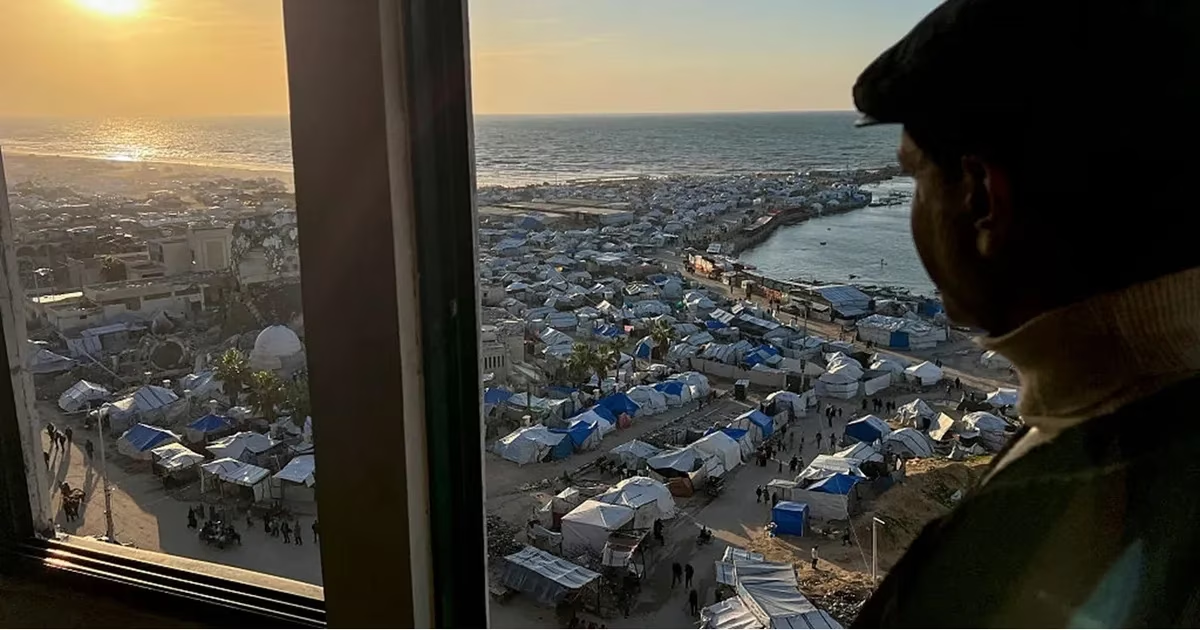
It is worth noting that the provisions of the second phase of the circulating ceasefire proposal include the disarmament of Hamas and other factions in exchange for additional withdrawals by the Israeli army and the start of the reconstruction process. These developments come at a time when international reports indicate that the cost of rebuilding what the war destroyed could reach 70 billion dollars, amidst a bloody toll exceeding 72,000 martyrs and almost complete destruction of vital facilities in the Strip.

What applies to Gaza applies to the rest of the fronts; we will continue to focus and eradicate threats with determination and an offensive spirit.

PALESTINE

Sat 14 Feb 2026 8:58 am - Jerusalem Time

International Reports: Occupation Eradicates Palestinian Communities in the West Bank and US Trends Towards Cautious Diplomacy with Iran

International press reports have warned of a dangerous shift in Israeli policies in the West Bank, asserting that these measures directly aim to undermine any future opportunity for an independent Palestinian state. Sources indicated that the international community's preoccupation with the ongoing aggression in the Gaza Strip has provided cover for settlers to intensify ethnic cleansing campaigns in various areas of the West Bank.

According to human rights data and global newspaper editorials, more than a thousand Palestinians have been martyred in the West Bank since early October 2023, with children making up about a fifth of these victims. These systematic attacks have led to the forced displacement of hundreds of families, resulting in the disappearance of entire Palestinian communities from the map across vast geographical areas.

Observers link the escalating pace of settlement and violations to the approaching Israeli elections scheduled in a few months, as far-right ministers in Benjamin Netanyahu's government seek to impose a new reality on the ground. These moves aim to definitively resolve the West Bank issue by expanding Israeli control and preventing any geographical connection between Palestinian cities and villages.

Regarding US-Iranian relations, political analyses indicate that President Donald Trump's administration is adopting an approach characterized by strict demands that could raise the level of military tension in the region. However, experts believe that Trump's desire remains tactical, aiming to conclude major deals that can be marketed as political achievements, without necessarily sliding into a comprehensive military confrontation.

Attention is turning to the White House to ascertain the final direction, as decision-makers are divided between a 'hawks' faction that sees the necessity of exploiting Iran's current weakness, and a cautious faction that fears US entanglement in a new quagmire in the Middle East. In this context, media sources reported that Washington still prefers the diplomatic path as a first option for dealing with the Iranian nuclear file.

For his part, Israeli Prime Minister Benjamin Netanyahu has expressed a rigid stance towards any potential understandings between Washington and Tehran, asserting that Tel Aviv will not be bound by any agreement that does not guarantee its security interests. This position reflects a potential gap in coordination between the allies regarding how to contain Iranian influence in the region in the coming period.

In a separate context, the digital space in Russia is facing increasing restrictions after the messaging application 'WhatsApp' was blocked, a move described by activists as an attempt to impose comprehensive censorship. Russian authorities are pushing users towards state-backed local applications such as 'Max,' amid fears that these platforms could be used as tools for espionage and security surveillance.

While the world was preoccupied with the genocide in Gaza, settlers in the West Bank intensified an ethnic cleansing campaign that led to the eradication of entire Palestinian communities.

PALESTINE

Sat 14 Feb 2026 8:57 am - Jerusalem Time

The End of Oslo Illusions: Cabinet Decision Solidifies De Facto Annexation of the West Bank

The decision approved by the occupation's mini-cabinet (the Cabinet) on February 8, 2026, constituted a strategic shift that goes beyond routine administrative procedures. This decision represents an explicit political and legal declaration of the end of the transitional phase that began in the 1990s, ushering in a phase of absolute sovereignty of the occupation over all West Bank territories.

Under these new amendments, settlers were given the green light to own land and properties deep within Palestinian communities classified under Areas (A) and (B). The decision also authorized occupation authorities to directly enforce law in these areas, removing the legal barriers that separated military occupation from civil sovereignty.

These steps are part of a systematic strategy to dismantle the political structure of the Palestinian National Authority, a pace that has sharply accelerated since the events of October 7, 2023. The far-right government has exploited the current circumstances to implement the largest demographic and geographic change operation in the West Bank since 1967.

Figures released by international and Palestinian sources indicate the scale of the catastrophe; in 2024 alone, occupation authorities confiscated more than 24,000 dunams (reaching 46,000 according to local sources). These areas were declared 'state lands,' an unprecedented figure equivalent to half of what was confiscated over the past three decades.

Land grabbing operations focused on strategic areas such as the Jordan Valley and the southern Hebron Hills, with the aim of definitively severing Palestinian geographical contiguity. This behavior was not random but aimed at isolating Palestinian population centers and turning them into human enclaves choked by settlements.

Regarding settlement construction, 2023 saw the approval of plans to build more than 12,000 new units, the highest number since 2012. This was accompanied by the advancement of thousands of additional units in the following year, reflecting the occupation's desire to impose facts on the ground that would be difficult to reverse in any future settlement.

The 'legalization' of settlement outposts, previously described as illegal, is one of the most dangerous features of the current phase. Approximately 70 pastoral and agricultural outposts have been recognized, with direct government funding provided to connect them to infrastructure, turning them into strongholds for launching attacks on neighboring villages.

International human rights organizations have documented the forced displacement of more than 47 Bedouin and pastoral Palestinian communities, particularly in Masafer Yatta and the Jordan Valley. These operations occur under the weight of organized terror perpetrated by settlers with direct protection from the occupation army, with attacks exceeding 1,400 violent incidents in one year.

The scorched-earth policy pursued by the occupation includes burning crops, poisoning wells, and preventing herders from accessing their lands. These practices aim to make Palestinian life unbearable, pushing them to forced displacement without the need for direct military expulsion operations.

By abrogating Jordanian laws that protected private property, the occupation opens the door to fragmenting the Palestinian social fabric from within. The planting of settlement outposts in major urban centers makes the idea of a geographically contiguous state a distant political fantasy.

In practice, the Palestinian Authority has transformed from a 'state nucleus' project into a service agency stripped of sovereign powers. With the transfer of civil administration powers to a civilian minister, the transition from temporary military occupation to permanent civil annexation, serving the biblical vision of the ruling right, has been confirmed.

In contrast, the official Palestinian political scene shows a state of helplessness and reliance on traditional condemnations and denunciations. This contradiction between the accelerating reality of annexation and the Authority's behavior, clinging to one-sided agreements, places the Palestinian cause before an unprecedented historical and existential dilemma.

Today, it is essential to conduct a comprehensive review of the political doctrine that governed the past phase and to disengage from the commitments of Oslo. Confronting displacement policies requires rebuilding the internal house on militant foundations that unite the various components of the Palestinian people in facing the existential conflict.

In conclusion, this escalation places the official Arab system before its historical responsibilities, as soft diplomacy is no longer effective. Betting on de-escalation has proven futile in the face of an entity that proceeds with its settlement project, disregarding international laws, which necessitates activating real pressure levers to stop this bleeding.

We are at the moment of the clinical death of the Oslo process, where the occupying state has moved from maneuvering with a temporary status to the final consolidation of de facto annexation.

ISRAELI AFFAIRS

Sat 14 Feb 2026 8:57 am - Jerusalem Time

Former 'Shin Bet' Leaders Attack Netanyahu: Evades Responsibility and Fuels Conspiracy Theories

The political and security arena in Israel has witnessed a new escalation in the confrontation with Prime Minister Benjamin Netanyahu, as five former heads of the General Security Service (Shin Bet), accompanied by 31 retired department directors, sent an unprecedented letter. The letter included direct accusations against Netanyahu of deliberately harming the security establishment and persistently seeking to evade personal responsibility for the failures that preceded and followed the events of October 7, 2023.

Sources reported that former officials in the agency strongly criticized the increasing attacks launched by Netanyahu's close associates and members of the ruling coalition against security personnel. These attacks specifically targeted former Shin Bet head Ronen Bar, as well as a number of officers and employees who were on duty during the attack, which the signatories considered an attempt to undermine confidence in the agency.

The letter warned of the danger of a widespread campaign aimed at spreading conspiracy theories and promoting misleading narratives whose essence is to blame the security establishment alone for the failure. The former leaders affirmed that these moves are not spontaneous, but rather part of a political strategy aimed at protecting the Prime Minister from any future legal or political repercussions.

Signatories condemned the lengthy 55-page document submitted by Netanyahu to the State Comptroller last week, which included excerpts from secret government deliberations. The leaders considered this document to be a one-sided and biased narrative, lacking the lowest standards of professionalism by denying the accused officials the right to respond to the allegations contained therein.

The letter clearly indicated that the purpose of Netanyahu's document is to prepare public opinion, especially his right-wing electoral base, to reject the idea of forming an official and independent investigation committee. The former leaders believe that Netanyahu fears any investigation with broad powers that might reveal his direct role in the policies that led to the collapse of the defense system in the Gaza envelope.

Criticism was not limited to Netanyahu alone, but also included the silence of the current Shin Bet head, David Zini, with the letter demanding that he respond to the false accusations made against the agency and its employees. The signatories stressed the need to counter claims of treason and the dissemination of false information about fictitious meetings with Palestinian leaders, emphasizing that the illegal disclosure of employees' names endangered their lives.

The letter highlighted the ethical disparity between the leaders of the security establishment and the head of government, as prominent leaders such as Ronen Bar and Chief of Staff Herzi Halevi took responsibility and submitted their resignations. In contrast, Netanyahu appears as a solitary figure seeking to evade national obligations with the help of his partners in the government coalition who continue to attack the army and security.

In a related context, a public opinion poll published by 'Maariv' newspaper revealed a severe crisis of confidence among the Israeli public towards its political leadership. The results showed that 47% of Israelis do not believe the narrative promoted by Netanyahu regarding the October events, while the percentage of supporters of his narrative remains at only 28%, reflecting a deep division in the street.

These developments come at a time when Israel continues its genocide war on the Gaza Strip, which has resulted in a heavy toll of victims exceeding 72,000 martyrs and 171,000 injured. The ongoing aggression has led to the near-complete destruction of infrastructure in the Strip, amid international estimates indicating that the cost of reconstruction could reach 70 billion dollars.

Observers believe that the dispute between the security and military establishments on the one hand, and Netanyahu on the other, has reached a deadlock due to conflicting interests. While military leaders insist on the necessity of comprehensive reviews to correct the course, Netanyahu views any investigation committee as a direct threat to his political future and the survival of his far-right government.

The former Shin Bet leaders concluded their letter by warning that continuing this approach will erode public trust in vital state institutions. They affirmed that protecting Israel's security requires leadership that bravely takes responsibility, instead of being preoccupied with tarnishing the reputation of officers who have dedicated their lives to serving the security system.

Netanyahu's document is biased and based on secret materials, and aims to prepare his political base to reject the formation of an official investigation committee.

PALESTINE

Sat 14 Feb 2026 8:50 am - Jerusalem Time

Europe Targets UN Rapporteur Albanese to Undercut Gaza Accountability

February 14, 2026

News Analysis

The United Nations human rights office in Geneva has pushed back forcefully against what it describes as rising political pressure on Francesca Albanese, the UN Special Rapporteur on human rights in the Palestinian territories, as several European governments intensify calls for her resignation. Rights advocates and UN officials increasingly view the campaign not merely as criticism of Albanese’s rhetoric, but as a broader test of whether independent human rights scrutiny can withstand diplomatic backlash when it clashes with the interests of powerful states.


At a UN press briefing, Marta Hurtado, spokesperson for the Office of the High Commissioner for Human Rights, said the office was “very concerned” about the rise in personal attacks, threats and misinformation targeting UN officials, independent experts and judicial actors. Hurtado warned that such tactics divert attention from “grave human rights issues” and undermine the core purpose of mandates created to document violations and pursue accountability.


Special rapporteurs are appointed by the UN Human Rights Council to monitor and report on specific situations, with formal independence from the UN’s administrative structures. That independence is widely regarded as essential to the credibility of UN human rights work. Diplomatic sources note that while member states could, in theory, propose the removal of a special rapporteur, there is no precedent for such a step during an ongoing mandate, and the political hurdles to securing the necessary votes would be significant. This suggests the campaign is aimed less at formal removal than at delegitimizing the mandate itself and warning future investigators.


The current controversy was reignited after Albanese spoke via video link to a forum in Doha, where she referred to a “common enemy” that, in her view, enables Israel to commit “genocide” in Gaza—a characterization forcefully rejected by Israel and its supporters. Albanese later published an unedited version of her remarks on social media, clarifying that she meant the “common enemy of humanity” to be systemic factors, including financial, technological and military networks, that she argues make large-scale violence possible while insulating it from consequences.


European officials responded sharply. Czech Foreign Minister Peter Masincka cited her remarks as evidence of bias and urged her resignation. Germany’s Foreign Minister Johann Wadephul declared her position “indefensible,” while France’s Jean-Noël Barrot called her statements “shameful” and “unacceptable.” Austria and Italy echoed these criticisms, asserting that her rhetoric undermines confidence in her ability to fulfil her UN mandate. The collective nature of the response, critics say, reflects not a dispute over professional standards but a coordinated effort to police the boundaries of permissible speech when Israel is the subject.


Part of the tension also surrounds the evolving discourse over the Gaza death toll. Israeli military sources have, in recent reporting, acknowledged figures similar to those long cited by Gaza’s health ministry—around 72,000 deaths since October 2023—after years of dismissing those tallies as unreliable. This shift marks a notable departure from earlier positions in which Israeli officials questioned the validity of Palestinian casualty figures and emphasized uncertainty about civilian versus combatant identities. While classification remains contested and difficult to verify, the broad convergence on the scale of fatalities has strengthened demands for independent scrutiny.


Albanese’s detractors have sought to frame her language as beyond the pale, pointing to a series of accusations over the years that include allegations of antisemitism, sympathy for extremist causes and controversial comments in the aftermath of the 7 October 2023 attacks. She has challenged those accusations, asserting that many statements attributed to her were distorted or taken out of context. She and her supporters also highlight what they describe as a glaring contrast: the intensity of efforts to discredit her versus the relative restraint displayed by the same governments in directly confronting Israel’s conduct in Gaza.


In a post on X responding to European criticism, Albanese said her critics were making claims about her words “that I never uttered,” adding that their denunciations displayed “ferocity and conviction” not applied to governments whose policies have contributed to extensive civilian suffering. She cited Gaza’s health ministry figures, which report more than 72,000 deaths since the war began—a figure now reflected in multiple independent tallies and widely accepted in international reporting, even as distinctions between combatants and civilians remain disputed.


Israel continues to reject characterizations of its conduct as genocidal, asserting that it takes steps to minimize civilian harm while accusing Hamas of embedding military operations within densely populated areas and using civilians as shields. Israeli military statements also emphasize the complexity of distinguishing between combatants and non-combatants in such an environment. However, human rights experts argue that legal accountability does not depend on perfect casualty classification, but on patterns of conduct, proportionality, intent and the protection of civilians under international law.


The political battle in Geneva has broadened beyond questions of terminology. Many experts see the push to force Albanese’s resignation as a campaign that risks chilling not only her work but the work of future independent investigators who may fear being targeted politically if their findings become inconvenient to influential states. In that sense, the issue is not Albanese alone, but whether the UN’s human rights system can preserve its autonomy when it scrutinizes an ally of the West.


For Europe, the episode underscores the delicate balance between diplomatic alignment and adherence to the principles that underpin the post-World War II human rights architecture. Governments that champion the rule of law in other contexts risk perceptions of inconsistency when they seek to discipline a UN expert for engaging in frank legal analysis of a conflict involving a strategic partner. As the UN warns of the dangers of personal attacks supplanting substantive debate, the broader question remains whether international human rights mechanisms can sustain their independence amid intense geopolitical pressure. The outcome of the dispute over Albanese’s role is likely to resonate well beyond her tenure.

OPINIONS

Fri 13 Feb 2026 3:51 pm - Jerusalem Time

The Palestinian Constitution: From the Logic of Revolution to the Logic of the State

Dr. Ibrahim Nairat

Opinion Writer

At pivotal moments in the history of peoples, discussions about the constitution are not merely legal or formal debates; rather, they become questions about the very shape of the future, political identity, and the ability to manage the state even under the most difficult circumstances. In the Palestinian case, this question returns today with unprecedented urgency, as if attempting to capture a fleeting political moment amidst war, division, and the search for renewed legitimacy. Since the adoption of the Palestinian Basic Law in 2003 and its amendment in 2005, this text has served as a temporary constitution regulating the work of the Palestinian National Authority. However, it remained more of a transitional framework than a permanent social contract. With the legislative council suspended for many years and governance expanding through decree-laws, the structural imbalance in the relationship between authorities began to emerge clearly. Questions multiplied about who holds decision-making power, who oversees, and who is accountable. The discussion about the constitution is no longer a formal matter; it has become linked to the essence of the political system itself.

Then came major transformations, especially in the Gaza Strip, which put the Palestinian system to an existential test. The talk about the “day after” the war, about reconstruction, and about managing a different political and security phase, cannot be separated from the need for a clear constitutional reference. Rebuilding stones is inseparable from rebuilding the framework that governs people. In a reality divided since 2007 between the West Bank and Gaza, it is no longer possible to ignore that two administrative and legal systems have emerged de facto. Any serious discussion about ending the division must pass through the formulation of a new political contract that reunifies institutions under a single, agreed-upon authority.

Nor can the direct impact of wars on public consciousness be ignored. The recent Gaza war was not merely a military conflict; it was a blow that awakened Palestinian thought and forged its political and social consciousness, making the street more aware of the authority's contradictions between the logic of armed resistance and the necessity of state-building. This moment proved that the Palestinian people do not accept partial or evasive solutions, and that any continuation of the armed struggle alone may lead to further setbacks. In contrast, the leadership sees it as an opportunity to radically reconsider the political approach, moving away from armed resistance as the sole option, and giving the alternative path—peaceful resistance and the building of national institutions—a realistic chance to solidify the state's legitimacy and reorder the political system.

However, the issue is not only about internal division or the impact of wars on the street. Since Palestine obtained non-member observer state status at the United Nations in 2012, Palestinian political discourse has increasingly spoken the language of the state rather than the language of the authority. Joining international treaties and organizations reinforced this symbolic and legal shift. But the state, in its modern definition, is not just external recognition; it is also an internal constitutional system that defines the form of government, the nature of the political system, the limits of powers, and the mechanisms of power transfer. Here the question becomes deeper: Are we facing an open-ended transitional authority, or a state that needs a permanent constitution reflecting its political identity?

At the heart of this discussion is the issue of legitimacy. Elected institutions have exceeded their constitutional terms years ago, general elections have not been held, and legitimacy has become based more on political reality than on ballot boxes. The constitution, at this moment, appears as an entry point to re-establish legitimacy on a clear basis: defining presidential and parliamentary terms, organizing elections, and ensuring a real separation of powers. It is not just a legal text, but a framework that redefines the relationship between ruler and ruled.

Nevertheless, the timing is not without its problems. Some argue that discussing a permanent constitution while the occupation continues is to jump over the reality that sovereignty is still incomplete. How can a complete constitutional contract be drafted when borders, crossings, and airspace are not under national control? Others believe that the priority should be relief, reconstruction, and stabilization, not constitutional debates that may seem theoretical in a turbulent field reality. Moreover, the absence of a comprehensive national consensus could turn any draft constitution into a new arena of conflict instead of a bridge to unity.

Indeed, the moment of the Palestinian constitutional debate cannot be understood without including the Israeli factor, especially the role of the Israeli right in politically and security-wise exploiting internal Palestinian contradictions. For years, the right in Israel has built its narrative on a fundamental premise: “There is no Palestinian partner for peace.” This statement was not merely a political description, but a strategic tool for managing the conflict rather than resolving it. With the rise of successive right-wing governments, especially under Benjamin Netanyahu, this narrative became a governing framework for Israeli policy towards Palestinians.

The exploitation of Palestinian contradictions was clear. The division between the West Bank and Gaza, and the duality of approach between building Authority institutions on the one hand, and the continuation of various forms of resistance on the other, provided the Israeli right with ready material to reinforce its discourse before Israeli society and the world. The argument was clear: if Palestinians want a state, they must unify their political decision, disarm factions, stop all forms of armed resistance, and practically prove their commitment to an exclusive negotiation path. In contrast, any continuation of violence or even dual discourse was used as evidence that the “real intention” was not peace, but the management of a long-term conflict.

In this sense, the Israeli right played on the contradiction between the logic of revolution and the logic of the state within the Palestinian experience. As long as the Palestinian project moved in a gray area between national liberation and state-building, it was easy to market it to Israel as an unstable, disunited entity incapable of committing to final agreements. From a right-wing Israeli perspective, trust is not built through political discourse, but through strict security behavior. That is, the acceptable “partner” is one who controls the land securely, prevents any resistance action, and demonstrates full capacity to monopolize weapons. But here a deep paradox emerges: Palestinians live under continuous occupation, while at the same time they are asked to act as a fully sovereign state that controls everything. This is an unequal equation, as the weaker party is burdened with proving its worth, while the stronger party is not obligated to freeze settlements or end unilateral actions on the ground.

In this context, the Palestinian constitutional debate becomes part of a broader battle over the narrative. If Palestinians move towards drafting a constitution that affirms the state's monopoly on weapons, clear political authority, commitment to legal mechanisms in managing the conflict, and renewed legitimacy through elections, this weakens the argument of “no partner,” at least in its formal and legal dimension. But on the other hand, some may see that transforming the political system entirely into a “security control” model to satisfy the Israeli right carries another risk: losing internal balance, weakening national consensus, and turning the constitution into a tool for settling disputes instead of organizing them.

The Palestinian dilemma here is profound: if it adheres to the logic of resistance, it is said that it is not a partner, and if it goes far in the logic of calm and security discipline, it may be accused internally of squandering or betting on a path that has not achieved tangible results for decades. Here, politics intersects with the constitution. The question is no longer just: what is the form of the political system? But: what is the definition of the stage? Is it a stage of open liberation? Or a stage of consolidating a state in formation through legal and diplomatic tools?

In this framework, the Palestinian leadership's realization that the armed resistance approach, despite its historical legitimacy, is politically and media-wise exploited by Israel, and increases the weakness of the Palestinian position on the international stage, led it to repeatedly call for a shift towards peaceful resistance. This call was not merely a moral choice, but a strategic tool to protect the national project, enhance international legitimacy, and provide space for rebuilding Palestinian institutions and arranging the relationship between authorities. Peaceful resistance gives Palestinians an opportunity to focus resources and energy on state-building, drafting the constitution, and strengthening the authority's institutions, while at the same time reducing the Israeli pretext for accusing Palestinians of not being serious in negotiations or not being ready for a stable partner in peace.

This transition from the logic of revolution to the logic of the state is not easy, as it requires overcoming the contradictions between revolutionary legitimacy, which justifies exceptional measures and armed resistance, and institutional legitimacy, which requires clear institutions, stable rules of governance, and democratic mechanisms.

Transitioning from the legitimacy of revolution to the legitimacy of the state means re-formulating the national project within a permanent institutional framework, without abandoning the essence of the struggle, but it imposes control over powers, organizing elections, and establishing clear rules for managing authority, so that exceptions do not become an open rule that poses a danger to the future state.

In this context, the Palestinian constitution becomes more than just a legal text; it is a tool for resetting the political clock, reducing chaos, managing division, protecting institutions, securing legitimacy, and demonstrating the Palestinians' ability to manage a state even under occupation. It is a declaration that the conflict continues, but its management tools are no longer only revolutionary, but also institutional. It is an attempt to create a balance between defending national rights and adhering to the mechanisms of the modern state, and it is a foundational moment that redefines the national project from an institutional perspective, not just a struggle. Amidst regional conflicts, internal division, and the Israeli side's exploitation of contradictions, the discussion about the Palestinian constitution today is not an intellectual luxury, but a strategic necessity for political building, ensuring the legitimacy of institutions, and finding a balanced Palestinian path between legitimate resistance and the potential of a modern state.

The constitution, ultimately, is not just texts or legal articles, but a mirror reflecting the maturity of the Palestinian political experience, a declaration that the national project is capable of overcoming internal divisions and restoring unity of decision, and at the same time a smart tool to confront external powers' exploitation of internal contradictions, in order to preserve the national project, enhance the state's legitimacy, and establish the foundations that will enable Palestinians to manage their future themselves, even under the difficult circumstances of occupation and ongoing division.


PALESTINE

Fri 13 Feb 2026 3:51 pm - Jerusalem Time

The Tragedy of Unidentified Bodies in Gaza: Thousands of Families Await the Fate of Their Children Amidst Occupation Obstinacy

The tragedy of thousands of Palestinian families in the Gaza Strip escalates with the continuous flow of unidentified martyrs' bodies, a file that now burdens approximately 9,500 families who have lost contact with their children. Field sources reported that in recent days, the bodies of 53 martyrs were laid to rest after being handed over by the Israeli occupation authorities via the International Committee of the Red Cross without any clarifying data.

These bodies arrived at burial sites in a state of complete ambiguity, as the Israeli side refrained from providing any details regarding the circumstances of these citizens' martyrdom or the places where they were held throughout the past period. The committees specialized in the missing persons file confirmed that the absence of official information doubles the suffering of the victims' relatives who are searching for satisfactory answers.

For an entire week, Al-Shifa Medical Complex witnessed hundreds of families desperately trying to identify the remains of their children, but shock prevailed due to the severe disfigurement of the bodies. Sources explained that the loss of body parts and their decomposition made visual identification almost impossible in most of the recently received cases.

In an attempt to facilitate the task for the families, the specialized committee resorted to photographing some of the remains and displaying them on television screens inside hospitals, hoping to spot any distinguishing marks that might identify the martyr. Despite these strenuous efforts, the display operations have not yielded tangible results so far, forcing the concerned authorities to proceed with organized mass burials.

Burial operations took place in what has become known as the 'Cemetery of Numbers' located south of Deir al-Balah city, where areas are allocated for unidentified individuals whose families could not be reached. Statistics indicate that more than 450 martyrs have been buried in this cemetery since the ceasefire agreement came into effect on October 10, 2025.

Burial teams face enormous logistical difficulties due to the widespread destruction of infrastructure, which has forced them to use primitive means to build and prepare graves. They rely mainly on stones from destroyed houses and rubble to mark the graves, amidst a severe shortage of building materials and equipment needed to properly prepare the cemeteries.

The bodies were placed inside white bags with sequential numbers on the graves, in a step aimed at preserving the families' rights to conduct DNA tests in the future. Local authorities hope that the necessary technical and laboratory equipment will be available later to enable families to retrieve the remains of their children and transfer them to their family cemeteries.

Since the ceasefire came into effect, the Ministry of Health in Gaza has received the remains of 414 Palestinians through the Red Cross, as part of understandings included in the first phase of the agreement. Official data confirms that before this date, the occupation was holding approximately 735 bodies in secret cemeteries, in addition to hundreds of missing persons whose fate remains unknown until now.

Human rights reports and international media sources indicate that the occupation army alone holds approximately 1,500 bodies of Palestinians from the Gaza Strip in the 'Sde Teiman' camp. These numbers raise great concerns among humanitarian organizations about the nature of the circumstances in which these individuals were killed, and the extent of compliance with international laws regarding the treatment of victims' bodies in armed conflicts.

Palestinian families remain suspended between the hope of finding their children alive in occupation prisons or obtaining their bodies for dignified burial, as visual matching calls continue. These operations rely on examining clothing, height, or old injuries, which remain inadequate given the extent of disfigurement and decomposition affecting the received bodies.

This batch of bodies is the most difficult in terms of identification attempts, as they were buried inside white bags with numbered graves in preparation for future examinations.

PALESTINE

Fri 13 Feb 2026 2:19 pm - Jerusalem Time

Smotrich's Plan to Control the West Bank: New Laws Legalize Settler Ownership and End Palestinian Sovereignty

The pace of Israeli plans aimed at imposing full sovereignty over West Bank lands is accelerating, through a series of legal and administrative measures designed to end any future opportunity for the establishment of a Palestinian state. Recent developments have revealed the approval by the Ministerial Committee for Legislation of laws that terminate the operation of legislation that had regulated land ownership for many decades.

These decisions directly target the Jordanian Law of 1953, which was in force in the West Bank and prohibited non-Palestinians and Arabs from owning land. Although the occupation had introduced previous amendments that allowed settlement companies and associations to own land after 1967, the current step represents a radical shift by completely abolishing the restrictions.

Under the new measures, Israelis will be allowed to own land in the West Bank personally and directly, with land registries opened to the public. Sources reported that this legal change grants settlers tools for direct pressure on Palestinian owners and heirs, opening the door to widespread extortion and threats to seize properties.

In the city of Hebron, these decisions take a more serious turn, as the new powers grant an administrative committee linked to the settlement council almost complete sovereignty over the Ibrahimi Mosque and the Old City. This approach aims to give these areas a religious character to facilitate their conversion into settler properties, with planning and licensing powers effectively transferred to them.

These steps come within a strategic vision led by Finance Minister Bezalel Smotrich, who seeks to unprecedentedly increase the number of settlers in the West Bank. Through this, Smotrich aims to create a solid electoral bloc that ensures the continuity of the national religious right's project and solidifies the reality of annexation on the ground.

The measures were not limited to areas classified as (C), but extended to include expanding Israeli oversight and enforcement powers to reach areas (A) which are administratively and security-wise under the Palestinian Authority. This encroachment includes vital issues such as water, antiquities, and the environment, leading to the erosion of what remains of Palestinian sovereign powers in their city centers.

Legal experts believe that this package of decisions is not merely technical adjustments, but a clear declaration of the de facto annexation of the West Bank and the fragmentation of its geographical unity. The area of 5690 square kilometers is now facing a systematic division policy aimed at isolating Palestinian communities and turning them into enclaves besieged by settlements.

Despite these increasing pressures, Palestinians continue to cling to their lands as the essence of national identity and memory, not just real estate. Palestinian families today face an existential challenge in preserving their properties in the face of an arsenal of military laws that seek to change the face of the region by force of arms and legislation.

This package of decisions entrenches the reality of de facto annexation, where the Palestinian is left alone to face a reality being reshaped by force.

ARAB AND WORLD

Fri 13 Feb 2026 2:17 pm - Jerusalem Time

British Judiciary Overturns Ban on 'Palestine Action' Organization, Government Announces Appeal

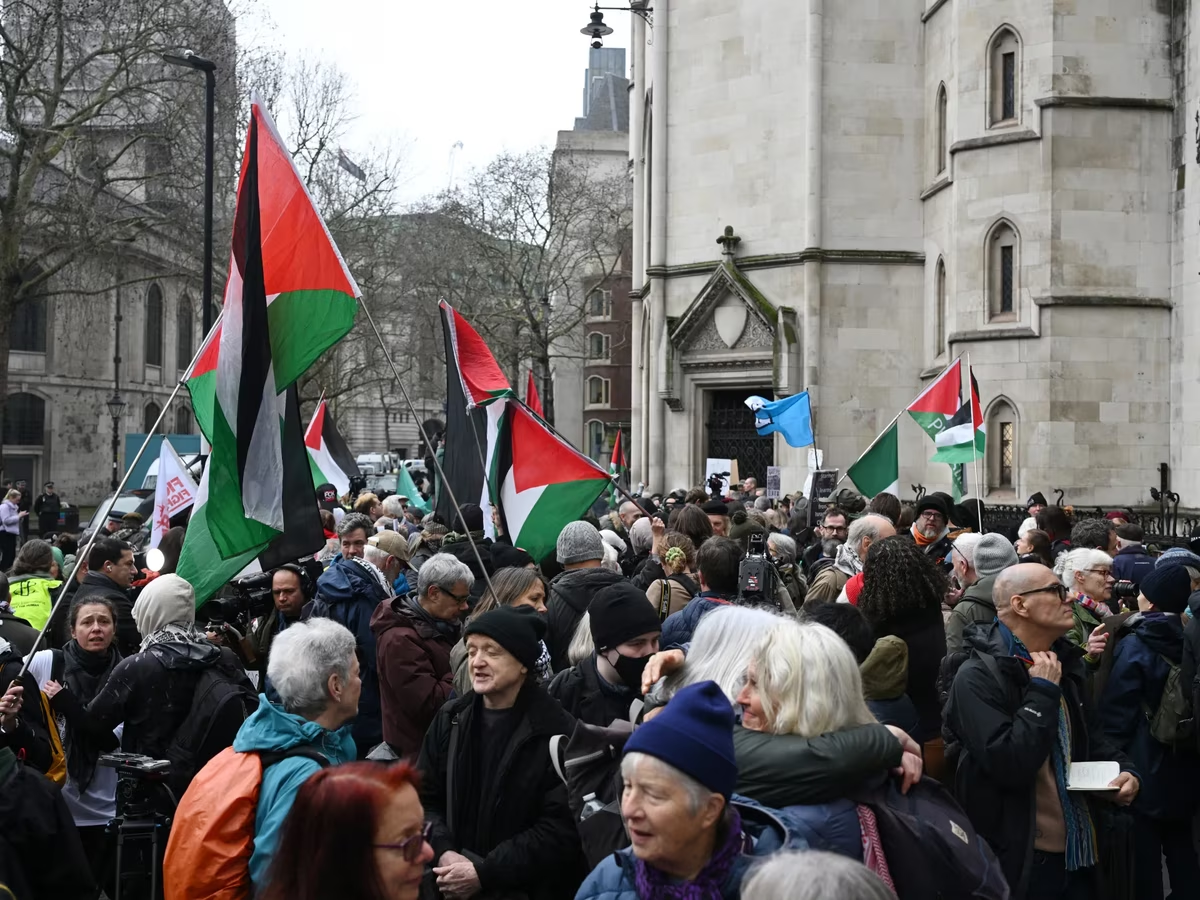
The Supreme Court in the British capital, London, today, Friday, issued a judicial ruling overturning the government's decision to ban the organization (Palestine Action) and classify it as a terrorist organization. This ruling came after a legal challenge filed by one of the founders of the organization, which supports Palestinian rights and has been active in pursuing military manufacturing companies associated with the Israeli occupation within British territory.\n\nJustice Victoria Sharp clarified in her judgment that the ban decision taken by the executive authorities represents a blatant and grave violation of fundamental rights, specifically the right to freedom of expression and freedom of peaceful assembly. The court affirmed that the reasons relied upon by the government in its decision were not sufficient to justify restricting the activities of the organization, which adopts a 'direct action' approach in its protests.\n\nFor her part, British Home Secretary, Shabana Mahmood, expressed her disappointment with the judiciary's decision, emphasizing the government's adherence to its position regarding the organization. Mahmood stated in an official statement that she completely disagrees with the court's assessment that the ban was disproportionate, affirming the ministry's intention to file an official appeal before the Court of Appeal to restore the decision's enforceability.\n\nBritish authorities had imposed the ban on (Palestine Action) last July, following an escalation in its protests targeting facilities belonging to defense companies supplying Israel with weapons. These protests included blocking factory entrances and splashing red paint as a symbol of protest against military operations in the Gaza Strip, which the government at the time considered a violation of the law.\n\nDespite the ruling overturning the ban, the court decided to keep the restrictive measures temporarily in effect, to give legal teams from both sides an opportunity to discuss the next procedural steps. This ruling represents a significant legal victory for solidarity movements in Britain facing increasing restrictions due to their activities against arms trade with Israel.\n\n"The ban led to a grave violation of the right to freedom of expression and freedom of assembly.

ARAB AND WORLD

Fri 13 Feb 2026 2:17 pm - Jerusalem Time

Lebanese Army Commander in Washington: Efforts to Consolidate Military Support Amidst Collapse Challenges and Regional Pressures

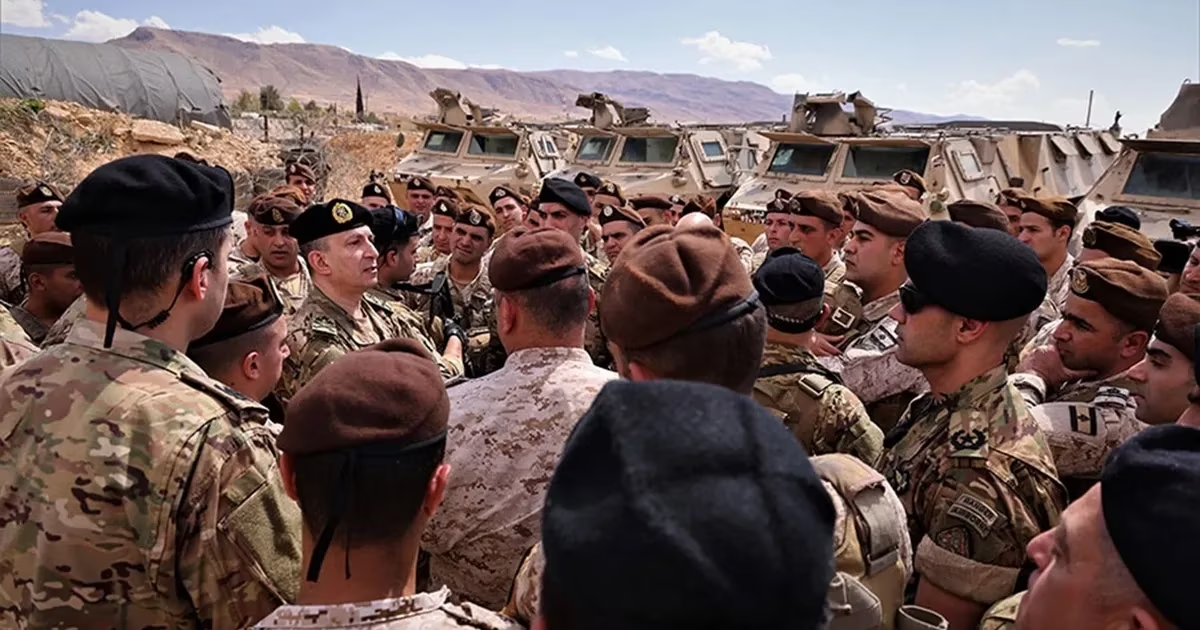
The visit of the Lebanese Army Commander to Washington, the American capital, comes at a highly sensitive time, as political pressures escalate and internal crises deepen in Lebanon. This visit transcended the protocol framework to become a strategic move aimed at re-establishing the military institution's position as a fundamental pillar of stability amidst the erosion of sovereign state institutions.

The discussions held by the Army Commander with American officials included vital files related to the continuation of military support programs, both in terms of qualitative armament and field training. These aids aim to maintain the institution's readiness and the morale of its personnel in light of the economic and financial collapse sweeping the country and affecting all sectors.

The meetings also focused on enhancing the army's capabilities in controlling land and sea borders and combating terrorism, in addition to stabilizing the southern Lebanon region. The Lebanese side affirmed its commitment to relevant international resolutions, emphasizing the necessity of stopping repeated Israeli violations of Lebanese sovereignty.

In contrast, some positions in Washington reflected a traditional approach that raises expectations from the Lebanese state and its military institutions without exerting parallel pressure on Israel. This disparity added a political dimension to the visit, as Lebanon seeks to obtain international guarantees that protect its security and sovereignty in a balanced manner.

The army leadership's stance during the discussions was characterized by balance and clarity, based on the national doctrine that forms the core of the military institution and its constitutional foundation. This doctrine intersects with the content of the presidential oath speech, which rejects the logic of a 'broken sect' and insists on the exclusivity of weapons in the hands of the Lebanese state.

The official Lebanese approach emphasizes the necessity of a complete Israeli withdrawal from the occupied territories and the preservation of national unity as the primary guarantee of stability. From this perspective, the army rejects being turned into a tool in internal or regional conflicts, committing to its constitutional role in protecting the land and the people.

These movements coincide with rapid transformations in the region, where conflict arenas intertwine with stalled negotiation paths in the region. This complex scene makes any internal imbalance in Lebanon susceptible to exaggeration and exploitation by external parties seeking to reshape local balances.

National unity remains an absolute priority that takes precedence over all international considerations, despite increasing pressures to reframe the Lebanese scene according to external approaches. The Lebanese leadership adopts an approach based on strategic patience and avoiding internal confrontation, realizing that any confrontation will only serve fragmentation projects.

This approach intersects with an announced desire from internal parties to avoid sedition, but challenges remain in light of the escalation of financial and economic sanctions policy. These pressures, coinciding with military strikes and near-daily raids, put the containment and de-escalation equation to a very precise and complex test.

In this context, the preparation for the upcoming conference to support the Lebanese Army in Paris next month gains double importance that goes beyond financial support. This conference is seen as an international political framework to re-establish consensus on the necessity of supporting the military institution as the only remaining safety valve.

The effectiveness of international support is linked to the extent of the international community's, especially the United States', willingness to adopt a more balanced approach to the Lebanese file. This requires practical steps that include pressuring Israel to stop its aggressions, and providing a real political umbrella that supports the path of reform and sovereignty in Lebanon.

In the absence of actual American pressure on the Israeli side, the military institution emerges as the only realistic guarantee to prevent the country from sliding into comprehensive chaos. Maintaining the army's cohesion is a national and strategic necessity that transcends narrow political differences in this foggy phase.

The stability of the military institution is the mandatory gateway to protecting the Lebanese state from disintegration and complete collapse under the weight of successive crises. Therefore, the required support for the army is not merely a technical measure, but a political decision aimed at protecting what remains of the state structure.

In conclusion, the Washington visit remains an important stop in the search for a lost balance, as Lebanon seeks to secure international cover that protects its military institution. The bet remains on the ability of this institution to maintain its internal balance amidst regional storms and increasing economic pressures.

The Lebanese military institution represents the realistic guarantee of national unity and civil peace, and the last fortress that prevents the country from sliding into chaos.

PALESTINE

Fri 13 Feb 2026 2:17 pm - Jerusalem Time

Escalation of Settlement Activity in the West Bank: Injuries in Nablus and Displacement of Palestinian Families from the Northern Jordan Valley

The intensity of tensions escalated in various governorates of the occupied West Bank today, Friday, following a series of organized attacks carried out by groups of settlers under the cover and direct protection of Israeli occupation forces. These attacks varied between live fire, night raids, and the erection of military checkpoints, leading to varying degrees of injuries among Palestinian citizens who attempted to confront these attacks.

In Nablus Governorate, specifically in the village of Talfit, a Palestinian youth was shot with live ammunition in the thigh area, while others sustained injuries and bruises as a result of a violent attack by settlers on the outskirts of the village. Medical sources reported that ambulance crews dealt with three field injuries to farmers who were subjected to abuse while on their land, amidst a state of panic that prevailed among the residents of the area.

The attacks in Talfit were not limited to physical injuries but also extended to include the destruction of private property, as several homes and vehicles were pelted with stones and vandalized. Concurrently, occupation forces arrested three young men from the village and provided protection to the settlers by firing tear gas and sound grenades at citizens who tried to protect their homes.

In the neighboring town of Qusra, settlers stormed the Ras al-Ain area, which is witnessing continuous attempts to establish a new settlement outpost on citizens' lands. Settlers attacked farmers and residents under the protection of occupation soldiers, in a move aimed at intimidating residents and preventing them from accessing large areas of their vital agricultural lands.

As for Ramallah Governorate, occupation forces stormed the village of Al-Mughayyir and set up a strict military checkpoint at its western entrance, causing traffic obstruction and detaining dozens of vehicles. Soldiers conducted thorough identity checks of citizens, while military vehicles spread through the village streets to secure the movements of settlers in the surrounding area.

In the town of Turmus Ayya, settler groups bulldozed large areas of agricultural land and uprooted a number of ancient olive trees. This step comes as part of a systematic policy to destroy the Palestinian agricultural sector and expand the influence of settlements established on the town's lands, amidst a complete absence of any legal or international deterrent to these practices.

The village of Kafr Malik witnessed a blatant assault on freedom of worship, as occupation forces stormed the vicinity of a mosque and fired tear gas canisters at worshippers. This assault led to numerous cases of suffocation among citizens, while forces continued to provoke residents by conducting military patrols in residential alleys.

In occupied Jerusalem, a young man was shot by occupation forces near the apartheid wall in the town of Al-Ram and was rushed to the hospital for necessary treatment. Official data from Jerusalem Governorate indicates that this area is subject to direct and continuous targeting, with dozens of injuries and martyrs recorded this year as a result of direct gunfire.

In a dangerous field development in the Northern Jordan Valley, seven Palestinian families in the Al-Meitah community began dismantling their homes and tents in preparation for forced displacement from the area. This difficult decision came as a result of the escalating pace of settler attacks, which reached the point of burning tents and structures, making staying in those areas a real danger to the lives of children and women.

Local sources in the Jordan Valley confirmed that settlers burned tents last night belonging to families who had been previously displaced, in a clear message of intimidation to the remaining residents. These attacks aim to clear the Jordan Valley area of Palestinian presence in favor of pastoral and military settlement expansion, which threatens to displace hundreds of other families in neighboring communities.

According to reports from the Wall and Settlement Resistance Commission, January alone witnessed more than 1800 attacks in the West Bank, the majority of which were carried out by occupation forces. These violations included direct physical assaults, burning of property, preventing farmers from accessing their lands, in addition to widespread demolition operations affecting homes and agricultural structures.

In Hebron Governorate, occupation forces launched a raid campaign targeting a number of homes in the southern area and the town of Dura, resulting in the arrest of four citizens. The arrests were accompanied by destructive searches of homes and terrorization of residents, as part of the collective punishment policy pursued by the occupation authorities against Palestinian villages and towns.

These developments come amidst a comprehensive Israeli escalation in the West Bank since the start of the war on the Gaza Strip in October 2023, where the number of martyrs and detainees has risen unprecedentedly. Statistics confirm that thousands of Palestinians have been arrested and injured, amidst the continued policy of demolition and displacement targeting the Palestinian presence in areas classified as 'C'.

The recent attacks prompted families to make the decision of forced departure after their tents were burned and their lives were directly threatened.

PALESTINE

Fri 13 Feb 2026 11:18 am - Jerusalem Time

After two years under the rubble.. A Palestinian bids farewell to his wife and four twins in one bag in Gaza

In a scene that encapsulates the cruelty of delayed loss and the details of extended pain in the Gaza Strip, citizen Fadi Al-Baba stood in the front rows to perform the funeral prayer for what remained of his family members. This funeral was not a spur-of-the-moment event, but came after two full years of the martyrdom of his wife and four twins due to an Israeli bombing that destroyed their home over their heads during the ongoing war of extermination on the Strip.

The grieving father stood before a small white bag containing the remains of his loved ones, which were recently extracted from under the rubble of the destroyed house, where only bone fragments mixed with the earth's soil remained of their bodies. Al-Baba tried to console himself by standing in the presence of what remained of his family, performing the duty of the final farewell that had been long delayed due to the inability to access the bodies throughout the past period.

This incident sparked a wide and sad echo on social media platforms, where Palestinian activists considered it a living embodiment of the endless tragedies in Gaza. Followers described the scene as an exceptional moment of continuous pain, where years of waiting and the bitterness of loss gathered in one bag, telling the story of a family completely annihilated in a single moment of treachery.

Tweeters spoke about the story of Fadi Al-Baba, who waited for many years with patience and prayer before being blessed with his four children all at once, to be the apple of his eye and his support in life. But the Israeli war machine only granted him a short time with them, before stealing them all along with their mother, turning the big dream into a painful memory and bone remains buried after two years of forced absence.

Bloggers confirmed that two years after the incident did not alleviate the weight of pain in the father's heart, but rather deepened the feeling of injustice and oppression experienced by the people of the Strip. The scene was not just a passing funeral, but a documentation of the extended grief that inhabits the homes of Gaza, where separation remains an open wound that only silent tears can heal, telling what words and reports are unable to describe.

Eyewitnesses explained that the father stood in the first row, burdened with unbearable sorrows, trying to gather his strength to bid farewell to what remained of his children's bodies that were crushed under the concrete rubble. This incident is a harsh symbol of the reality experienced by thousands of Palestinians whose loved ones are still under the rubble, awaiting a moment of farewell that will give them some peace amidst the ongoing aggression.

Activists concluded by emphasizing that Fadi Al-Baba's story is not an isolated case in the Gaza Strip, but rather one of thousands of stories that have not yet been highlighted. Behind every pile of rubble of a destroyed house, there is a story of loss and silence, where civilians face their fate under bombing and siege, and bid farewell to their loved ones in harsh conditions lacking the most basic elements of humanity and dignity.

There are pains that time does not erase, and whose impact does not fade with oblivion, and they remain alive as long as the heart beats.

ISRAELI AFFAIRS

Fri 13 Feb 2026 11:18 am - Jerusalem Time

Trump launches fierce attack on Herzog, demands immediate pardon for Netanyahu

US President Donald Trump launched a scathing attack on Israeli President Isaac Herzog, demanding that he issue a comprehensive presidential pardon for Prime Minister Benjamin Netanyahu to end his legal prosecution on corruption charges. Trump affirmed during an official event at the White House that Herzog should 'be ashamed of himself' for his stance refusing to intervene in the legal process, considering the continuation of the trial an insult to Israeli leadership.

The US President praised Netanyahu's performance during the past period, noting that he made exceptional efforts in managing war affairs and securing Israeli interests. Trump urged the Israeli public to pressure the presidency, emphasizing that not granting a pardon to Netanyahu at this critical time is an inappropriate and shameful act for the Hebrew state.

These statements come after a meeting between Trump and Netanyahu in Washington last Wednesday, the seventh meeting between them since Trump assumed his new term. The bilateral discussions focused on complex strategic issues, most notably ways to curb Iran's nuclear program and confront threats related to ballistic missiles developed by Tehran in the region.

Benjamin Netanyahu is the first prime minister in the history of the occupation to face a criminal indictment while still in office, with his prosecution officially beginning in 2019. Netanyahu completely denies all charges against him, which include bribery, fraud, and breach of trust, considering these cases an attempt at a political coup against him through the judiciary.

Despite Trump's repeated demands for a pardon, the Israeli President's office previously denied any promises to end Netanyahu's legal cases with a presidential decision. Israeli law grants the President the authority to pardon only those who have been convicted and sentenced, while there are no legal precedents allowing the President to intervene to stop ongoing trial proceedings before the competent courts.

Netanyahu's accusations are distributed across three main files: 'File 1000' accuses him of receiving illegal gifts and benefits from businessmen in exchange for government facilities. 'File 2000' and 'File 4000' focus on Netanyahu's attempts to influence the editorial policies of major media institutions, such as the Yedioth Ahronoth newspaper and the Walla website, in exchange for regulatory and financial privileges.

Beyond internal legal crises, Netanyahu faces unprecedented international pressure after an arrest warrant was issued against him by the International Criminal Court in November 2024. The warrant is based on accusations of committing war crimes and crimes against humanity during military operations in the Gaza Strip, which places additional restrictions on his international movements and political future.

The Israeli people should make Herzog ashamed for not pardoning Netanyahu, as it is disgraceful not to issue this decision for a leader who performed greatly in the war.

PALESTINE

Fri 13 Feb 2026 11:17 am - Jerusalem Time

Escalation of Demolition Operations in Khan Yunis and Gaza, and Continued Closure of Rafah Crossing for the Weekend

Field sources reported that Israeli occupation forces have escalated demolition operations of residential blocks and artillery shelling in various areas south and east of the Gaza Strip in recent hours. The systematic destruction operations focused on the eastern areas of Khan Yunis city, where massive explosions were heard resulting from planting explosives in citizens' homes and detonating them remotely.

The sources confirmed that Khan Yunis city is experiencing a complex geographical reality after being effectively divided into two parts, with the occupation army fully controlling the eastern section, while large parts of the western section have been turned into a so-called 'buffer security zone'. Displaced persons in tents within these areas face direct targeting with gunfire and shells to prevent any residential stability there.

In Gaza City, demolition operations did not stop at the southern borders but extended to include the eastern neighborhoods, specifically Al-Zaytoun neighborhood and its surrounding areas southeast of the city. The occupation aims through these operations to expand the scope of the 'yellow area', which are security zones where it imposes absolute control after displacing its residents and completely destroying its infrastructure.

The eastern skies of Al-Zaytoun neighborhood witnessed intense flights of drones that dropped explosive bombs directly on Palestinian homes and the vicinity of Al-Zaytoun Club. These attacks come as part of a series of daily violations of the ceasefire agreement concluded since October 10, 2025, which has not stopped the Israeli killing machine.

At sea, Israeli warships continued to target the Palestinian coast, firing their heavy machine guns indiscriminately off the shores of Gaza City. Despite no casualties in this latest targeting, fishermen and residents face continuous threats that prevent them from approaching coastal areas.

According to Ministry of Health data, Israeli violations since the agreement came into effect have resulted in the martyrdom of 591 Palestinians and the injury of more than 1500 others with varying degrees of wounds. These figures confirm the continued escalatory approach of the occupation despite international understandings, exacerbating the humanitarian and health crisis in all governorates of the Strip.

Regarding the humanitarian situation, aid continues to enter at a pace that does not meet the minimum needs of the population, as the number of trucks has not reached the agreed-upon ceiling of 400 trucks per day. The occupation authorities impose strict obstacles to the entry of medical supplies and reconstruction equipment, in addition to continuing to prevent the entry of fuel necessary to operate vital facilities.

Regarding movement, local sources announced that the Rafah land crossing will cease operations today, Friday, and tomorrow, Saturday, due to the adopted weekly holiday. The crossing currently operates only five days a week, with the number of departures and arrivals remaining at very limited levels that are not commensurate with the volume of accumulated requests.

The most vulnerable groups, such as the wounded, sick, and students, face severe difficulties in traveling, as departures are currently limited to critical medical cases and their companions only. The occupation authorities impose complex security procedures, including the requirement to obtain prior approvals, which hinders the travel of hundreds of people with humanitarian and educational needs.

Human rights reports issued by 'Adalah' and 'Gisha' centers revealed serious violations suffered by Palestinians during their crossing, including abuse, blindfolding, and confiscation of personal belongings. Despite the limited reopening of the crossing at the beginning of this February, Israeli security control continues to impose suffocating restrictions on the movement of individuals and goods.

Khan Yunis city has been effectively divided into two sections, an eastern one controlled by the occupation forces, and parts of the western section falling within what the Israeli army calls a buffer security zone.

ARAB AND WORLD

Fri 13 Feb 2026 11:16 am - Jerusalem Time

Mutual Military Escalation: Dead and Wounded in Russian and Ukrainian Attacks Targeting Ports and Energy Facilities

Ukrainian authorities announced today, Friday, that there were casualties as a result of a new wave of Russian attacks targeting vital facilities in the country. Oleksiy Kuleba, Deputy Prime Minister of Ukraine, confirmed that suicide drones struck one of the main ports in the Odesa region on the Black Sea, resulting in the death of one person and at least six others sustaining varying injuries.

Kuleba explained in statements via the Telegram application that the Russian targeting was not limited to ports but also extended to railway infrastructure in the Dnipropetrovsk region. These attacks are part of Moscow's ongoing strategy to disrupt Ukrainian supply lines and logistics, especially in coastal areas that Kyiv relies on for export operations.

In contrast, Ukrainian forces launched retaliatory drone attacks targeting deep inside Russia, specifically the southern Volgograd region. Local Russian sources reported that the Ukrainian shelling hit residential areas and industrial facilities, leading to civilian casualties and significant material damage to private property and vehicles.

For his part, Andrey Bocharov, governor of the Volgograd region, stated that air defenses dealt with hostile targets, but some drones hit homes in the city and its suburbs. Bocharov confirmed that three injured people were transferred to the hospital for treatment, noting that the attack also targeted industrial sites without disclosing the exact nature of the damage they sustained.

In a related context, field reports revealed that work has stopped at a major oil refinery owned by 'Lukoil' in the Volgograd region, a strategic facility that contributes about 5% of Russia's total oil refining capacity. This halt came after a massive fire broke out last Wednesday as a result of a previous Ukrainian drone attack, which constitutes a blow to the Russian energy sector.

Russian and Ukrainian fronts have witnessed a noticeable intensification of drone raids and long-range missiles recently. This field escalation comes at a time when diplomatic efforts and peace talks, which were taking place with international mediation, have faltered, pushing both sides to try to impose new realities on the ground by targeting economic and military facilities.

Russian forces launched intensive attacks directly targeting port infrastructure and vital railway networks.

OPINIONS

Fri 13 Feb 2026 11:06 am - Jerusalem Time

The Paradox of Power: Why the Most Militarized States Cry Insecurity

February 13, 2026

News Analysis 

One of the most enduring paradoxes in contemporary geopolitics is the persistent self-presentation of the most heavily armed states as existentially insecure. The United States, the world’s dominant military power, and Israel, the most militarized and technologically advanced state in the Middle East, repeatedly portray themselves as besieged, vulnerable, and under constant threat. This discourse endures despite overwhelming empirical evidence of military supremacy, strategic depth, and sustained offensive capacity. The contradiction between material power and narratives of victimhood is not rhetorical excess; it is a structural feature of how power is exercised, legitimized, and shielded from accountability.


The scale of U.S. military dominance is historically unprecedented. For more than two decades, U.S. military expenditure has exceeded that of the next several states combined. When formal Pentagon budgets are supplemented by overseas contingency operations, nuclear weapons modernization, intelligence expenditures, veterans’ obligations, and classified appropriations, total annual military-related spending approaches or surpasses one trillion dollars. The United States maintains hundreds of overseas military installations across more than eighty countries, commands naval fleets in every major ocean, and retains unmatched air, cyber, space, and precision-strike capabilities. Since 2001, it has conducted continuous military operations—through invasions, air campaigns, drone warfare, special forces deployments, and proxy engagements—across multiple regions simultaneously, including Afghanistan, Iraq, Syria, Yemen, Somalia, and Libya. No other state sustains such a permanent condition of global military engagement.


Israel occupies an analogous position at the regional level. Despite its small population and territory, it fields one of the world’s most technologically sophisticated armed forces, enjoys unconditional diplomatic and military backing from the United States, and is widely understood to maintain a significant though undeclared nuclear arsenal, making it the only nuclear-armed state in the Middle East. Since 1967, Israel has militarily occupied the entirety of Palestinian territory beyond the Green Line, including the West Bank, East Jerusalem, and Gaza. Although permanent ground forces were withdrawn from Gaza in 2005, Gaza remains occupied under international law due to Israel’s effective control over its airspace, territorial waters, borders, population registry, and economy. Across these territories, Palestinians have been subjected for decades to one of the most entrenched and brutal systems of military occupation in the modern era, marked by land expropriation, settlement expansion, movement restrictions, mass incarceration, collective punishment, and recurrent large-scale military assaults.


Israel’s occupation extends beyond Palestine. In 1967 it seized the Syrian Golan Heights, later annexing the territory in defiance of international law. Following the collapse of the Syrian state in December 2024, Israeli forces expanded their military presence beyond previously established disengagement lines, further entrenching their control over Syrian territory. Israel also repeatedly attacks Lebanon, routinely violates Lebanese sovereignty, and effectively controls Lebanese airspace. These practices have become normalized features of Israel’s regional military posture, carried out with near-total impunity.


Despite this overwhelming concentration of coercive power, both the United States and Israel consistently frame themselves as uniquely insecure, and/or obsessed with security. This framing functions not merely as political rhetoric, but as a governing doctrine. In the United States, “national security” operates as an elastic and expansive concept, capable of absorbing virtually any perceived challenge—from rival states and non-state actors to political movements and legal constraints. Threat inflation has become a defining feature of U.S. strategic culture, enabling the justification of preemptive wars, global surveillance architectures, sanctions regimes, and regime-change operations. Actors with limited or asymmetrical capabilities are routinely cast as existential dangers, sustaining the military-industrial complex and normalizing perpetual war.


In Israel, the security paradigm is even more deeply embedded in state identity. Security discourse serves as the primary lens through which all political questions are interpreted. Palestinian resistance—whether armed struggle, civil protest, or diplomatic and legal action—is systematically reframed not as opposition to occupation and dispossession, but as an existential threat to the state itself. This logic renders proportionality politically irrelevant and accountability structurally impossible. Israeli military violence is consistently justified as self-defense, while Palestinian resistance is categorically criminalized as terrorism, regardless of context or scale. Within this framework, the occupation itself disappears as a source of violence, replaced by an abstract and permanent threat narrative.


Crucially, insecurity in these cases does not reflect vulnerability but anxiety over control. For both states, security is defined less as freedom from attack than as freedom from constraint. International law, multilateral institutions, human rights mechanisms, and even allied criticism are frequently treated as strategic threats. When power approaches hegemony, any limitation on its exercise is experienced as danger. What emerges is a permanent siege mentality at the apex of military dominance.


This paradox is reinforced by deeper political and psychological dynamics. States whose legitimacy rests heavily on coercion—whether through global military primacy or prolonged occupation—rarely achieve genuine security. The U.S.-led international order relies on an extensive architecture of bases, sanctions, and enforced alignments rather than consent. Israel’s regional posture relies on military supremacy and the continued subjugation or fragmentation of the Palestinian people. In both cases, force manages conflict without resolving its underlying political causes. Power suppresses resistance but does not eliminate it, producing cycles in which dominance intensifies the insecurity it claims to prevent.


The war on Gaza has brought this contradiction into stark relief. International organizations, human rights groups, and legal experts have documented patterns of mass civilian killing, systematic destruction of civilian infrastructure, forced displacement, and the deprivation of basic necessities. A growing body of legal and scholarly analysis has argued that these actions plausibly meet the threshold of genocide under international law, an assessment now the subject of ongoing judicial proceedings. Regardless of final legal determinations, the scale and character of the violence demonstrate how the language of security has been mobilized to justify catastrophic harm against a largely defenseless civilian population.


The invocation of insecurity also performs a disciplinary function within domestic politics. In the United States, questioning military spending or overseas intervention is often framed as naïve, irresponsible, or disloyal. In Israel, dissent from the security consensus frequently results in political marginalization or social exclusion. Fear narrows the range of permissible debate, delegitimizes diplomacy, and renders alternative conceptions of security—rooted in justice, equality, and political resolution—politically suspect.


Ironically, the relentless pursuit of security through militarization has repeatedly produced the opposite outcome. U.S. interventions have left regions fragmented, radicalized, and more unstable. Israel’s perpetual warfare and deepening occupation have entrenched cycles of violence, hardened resistance, and accelerated diplomatic isolation. Military supremacy, untempered by political solutions, produces neither peace nor safety.


The spectacle of the world’s most heavily armed states presenting themselves as perpetual victims therefore raises a fundamental analytical question: whose security is being defended, and at what cost? When security is elevated to an absolute—divorced from legality, accountability, and human consequence—it ceases to function as a protective principle and becomes an ideology of force. In that sense, the loudest declarations of insecurity are not signs of weakness, but symptoms of power unwilling to confront its own responsibility for the conflicts it sustains.

PALESTINE

Fri 13 Feb 2026 9:37 am - Jerusalem Time

Launch of "Here Gaza" Radio: A Palestinian Voice Breaks the Airwaves Siege from Amidst the Rubble

From the heart of suffering and a suffocating siege, a new radio voice named "Here Gaza" has emerged, serving as a microphone that defies silence and breaks the media isolation imposed on the Strip. This radio station is not just a fleeting wave on the airwaves; it is a serious attempt to document the daily testimonies of Palestinians who negotiate death to survive, considering that speaking out in these circumstances is a form of resistance.

The radio station is the fruit of national cooperation and a strategic partnership between the "Palestinian Women's Affairs Technical Committee" and the Media Center at An-Najah National University, with partial funding support from the European Union. This project aims to fill the void left by the systematic destruction of local media institutions by the occupation, to be a platform that sides with humanity and its postponed daily details.

Wafaa Abdul Rahman, the General Director of the Palestinian Women's Affairs Technical Committee, affirmed that the radio begins its broadcast as a triumph for life and memory, at a time when the world is retreating from supporting victims. She explained that the radio content was designed to serve the basic needs of Gaza residents, starting from health and education issues to food and water, with a special focus on the most affected groups such as women and children.

The idea for the radio station was born from the "media blackout" imposed by the occupation during the war of extermination, where journalists were targeted and the headquarters of radio stations and media companies were systematically destroyed. Through this policy, the occupation sought to isolate Gaza to commit silent crimes away from the eyes of cameras, but the will of Palestinian journalists prevented the truth from being obscured.

Wafaa Abdul Rahman, who oversaw the project, experienced the details of the war from Ramallah, while her family hails from Deir al-Balah, which reinforced her understanding of the importance of a continuous local communication medium. Although the idea of the radio existed before the war, field developments necessitated adjusting plans to keep pace with urgent needs and ongoing forced displacement.

The project evolved from merely a radio wave broadcast via An-Najah Radio in Nablus to a full-fledged radio station broadcasting audio and video via FM frequencies and the internet. The television broadcast is expected to include live and direct scenes from various neighborhoods of the Strip, to convey a realistic picture of the extent of the destruction and how residents manage their daily lives.

The morning program "Sabahak Gaza" opens the daily segments, focusing on urgent daily issues such as commodity prices in the markets and the volatile weather conditions. The program also monitors the movement of crossings and restrictions imposed on the travel of the wounded and sick, in addition to tracking road conditions and the difficulty of transportation amidst the destruction of infrastructure.

The radio highlights the work of humanitarian teams in municipalities and civil defense, who work in extremely complex conditions due to the lack of equipment and heavy machinery. Through its reports, the radio criticizes the occupation's refusal to allow the entry of necessary medical supplies to deal with the repercussions of the ongoing war, which exacerbates health and environmental crises in the Strip.

The radio is preparing to launch a special program cycle for the holy month of Ramadan, which will include specialized programs in mental health to help residents overcome trauma. The cycle also includes awareness programs on how to deal with explosives and war remnants, in addition to competitions and prizes aimed at instilling a spirit of hope and recovery among citizens.

The radio's management considers this project part of the process of rebuilding trust and instilling spirit in the people of Gaza, affirming that reconstruction is possible despite all the destruction. The management praised the courage of field journalists, whom they described as the "spearhead" in the battle for truth, and who presented unprecedented professional experiences worthy of academic study.

For her part, broadcaster Yafa Abu Akr recounts her professional experience under fire, affirming that radio work in wartime carries a double responsibility to convey people's pain honestly. She pointed out that being close to the pulse of the street and respecting the listener's mind are the two main pillars of her work in this environment full of immense risks and challenges.

Abu Akr's story reflects the tragedy of the Palestinian journalist, as she lost more than 50 martyrs from her family and loved ones during the ongoing war of extermination. She explained that the war changed her professional and personal concepts, making her more aware of the value of life, especially in the absence of the luxury of separating work and private life under bombardment.

The radio faces significant technical and logistical challenges, most notably the absence of protection guarantees from direct Israeli targeting of headquarters and personnel. To overcome the prevention of equipment entry, the project organizers were forced to install broadcasting devices in the city of Hebron in the West Bank, as the closest geographical point that can cover the skies of the Gaza Strip.

For his part, Dr. Tahseen Al-Astal, Deputy Head of the Palestinian Journalists' Syndicate, indicated that the launch of any media outlet from Gaza is an act of resistance in the face of death. He noted that the occupation destroyed 23 local radio stations and killed 260 journalists, in a desperate attempt to eliminate eyewitnesses and silence the voice of truth that still echoes from amidst the rubble.

We tell stories to live, so that the story is not stolen, the city is not erased, and the voice is not defeated.

PALESTINE

Fri 13 Feb 2026 9:37 am - Jerusalem Time

Israeli Violations in Gaza and Human Rights Condemnation of the Abuse of Palestinians at the Rafah Crossing

The Israeli occupation army escalated its field violations in the Gaza Strip today, Friday, as engineering units carried out extensive demolition operations of residential buildings in the Al-Tahlia area, east of Khan Yunis city. These military movements fall within the areas of deployment of occupation forces specified by previous understandings, raising fears of a geographical change in the region.

In Gaza City, occupation drones launched attacks targeting citizens' homes around the Al-Zaytoun Club, east of the Al-Zaytoun neighborhood, by directly dropping explosive bombs. Field sources confirmed that these targeting incidents occurred in areas outside the agreed-upon army deployment zone, representing a clear violation of the ceasefire agreement in effect since last October.

The aggressions were not limited to land but extended to the Palestinian coasts, where Israeli warships opened fire with their machine guns towards fishing boats and beaches off Gaza City. Despite no human casualties in this naval attack, it caused a state of panic among citizens trying to resume their livelihoods.

On the human rights front, legal institutions within the occupied territories directed sharp criticism at the occupation authorities, demanding an immediate halt to the systematic abuse policies practiced against Palestinians. The 'Adalah' Center and the 'Gisha' Center affirmed in a joint statement that the restrictions imposed on travelers' movement through the Rafah crossing lack any legal cover and aim to restrict the residents.

An urgent message addressed to the Minister of War and the Legal Advisor to the Israeli government clarified that what is happening at the Palestinian-Egyptian border is a process of 'forced displacement' disguised as security measures. The two centers stressed the necessity of canceling all impossible conditions that prevent thousands of those stranded outside the Strip from returning to their homes and families normally.

The occupation authorities had reopened the Palestinian side of the Rafah crossing at the beginning of February, after months of closure since its military takeover in May 2024. However, reports described the opening as 'formal and very limited,' as it is subject to strict security control that prevents the vast majority from crossing.

Field data indicates that the occupation imposes complex prior security approvals for anyone wishing to enter or exit, with a daily quota not exceeding 50 people. This measure has deprived hundreds of wounded and sick people from traveling to receive necessary treatment, and has also left thousands of Palestinians stranded in diaspora countries with no prospect of return.

Human rights organizations conveyed shocking testimonies from returnees who managed to cross, stating that they were subjected to humiliating treatment, including blindfolding and handcuffing for long hours. The testimonies also included confiscation of personal belongings and money, as part of the collective punishment policy practiced by the forces present at the border point.

Reports revealed cooperation between the occupation army and armed groups within the Strip to secure the transfer of some returnees to special interrogation centers under army control. In these centers, citizens are subjected to harsh interrogations and security pressures, including threats of administrative detention or denial of return if they do not cooperate with intelligence agencies.

Human rights organizations concluded their statement by warning against the continuation of these violations that disregard international and humanitarian laws, emphasizing that international silence on these practices encourages the occupation to proceed with turning crossings into tools of torture and political and security extortion against unarmed civilians.

Israeli measures at the Rafah crossing represent a policy of abuse and illegal restrictions that amount to forced displacement.

ARAB AND WORLD

Fri 13 Feb 2026 9:37 am - Jerusalem Time

Washington deploys world's largest aircraft carrier to Middle East amid tensions with Iran

American press reports, citing responsible sources, revealed that the US administration has decided to move the aircraft carrier 'USS Gerald R. Ford', the largest of its kind in the world, towards the waters of the Middle East. This step comes in the context of strengthening the United States' military readiness to confront any potential scenarios, including the possibility of launching military strikes against Iran if diplomatic efforts reach a dead end.

The sources explained that the carrier 'Ford' and its accompanying combat group, which is currently operating in the Caribbean Sea, will begin its journey towards the region without disclosing the precise coordinates of its final destination. This deployment is expected to last for a long period, as officials confirmed that the warships will not return to their main bases in the United States before early May at the earliest.

This military movement will enhance American striking power in the region, as the 'Gerald Ford' will join the 'USS Abraham Lincoln' aircraft carrier already present there. The US Central Command had announced earlier in January that the deployment of the 'Lincoln' comes within Washington's efforts to ensure regional security and stability and confront increasing threats.

For his part, US President Donald Trump stated that the option of strengthening military presence with a second aircraft carrier remains strongly on the table, especially if the ongoing nuclear negotiations do not yield tangible results. Despite this escalatory tone, Trump described the first round of indirect talks hosted by the Omani capital Muscat as very positive, indicating Tehran's desire to reach an agreement.

In contrast, Tehran adopts a cautious stance, accusing Washington and Tel Aviv of fabricating pretexts to interfere in its internal affairs and attempt to change the existing regime. The Iranian leadership has vowed a firm and harsh response to any military aggression that may target its territories, while at the same time emphasizing that any concession in the nuclear file must be met with a complete and comprehensive lifting of the economic sanctions imposed on it.

The core points of contention are concentrated in strict American demands, as Washington insists on a complete and final cessation of all Iranian uranium enrichment activities. The US administration also stipulates the transfer of the entire stock of highly enriched uranium outside Iranian territory as a fundamental guarantee before signing any new framework agreement that ensures the peaceful nature of the nuclear program.

Regarding logistical preparations, information indicates that the US Department of Defense has received directives to prepare additional options, including the aircraft carrier 'USS George W. Bush'. These comprehensive moves reflect Washington's 'maximum pressure' strategy, which combines massive military buildups with diplomatic channels to extract substantial concessions from the Iranian side in the upcoming meetings next week.

We are considering sending a second aircraft carrier to the region if nuclear negotiations with Iran fail.

ANALYSIS

Fri 13 Feb 2026 9:37 am - Jerusalem Time

The Dilemma of Forbidden Recovery: How Elites and External Interventions Hinder the Rise of Arab Nations?

Possessing power, whether for an individual or a state, is not something that is encouraged or applauded on the international stage; rather, it is an arduous journey fraught with risks and pitfalls. The attempt to recover and overcome weakness is, in itself, an embodiment of strength, but it clashes with a political reality that views the rise of collapsed states as a threat to the interests of other powers that thrive on the weakness of their neighbors.

When a state tries to reclaim its sovereignty and control over its resources after years of collapse or war, it finds itself facing multiple swords seeking to delay this recovery. These external forces aim to maintain a state of political fluidity until the beneficiaries complete their plunder and achieve their expansionist ambitions at the expense of the exhausted state.

In the utilitarian political reality, there is no place for romantic discourse that blames powerful nations for not showing mercy to weak nations, as every nation seeks the interest of its people first. Therefore, the cost of weakness and collapse is high, as a troubled state is seen as easy prey or an opportunity to achieve fleeting circumstantial gains in areas such as tourism or trade.

Observers note that recovery in countries like Lebanon, Iraq, and Libya is proceeding at an extremely slow pace, often almost imperceptible. This slowness is not a coincidence; rather, it is the result of an undeclared international strategy aimed at throwing a wrench in the works to prevent any stability that might harm the interests of the powers benefiting from the chaos.

The continuation of fragmentation and tension serves external agendas that view the stability of these countries as a direct harm to their influence, making the cry of 'recovery forbidden' resonate in the corridors of international politics. However, the biggest obstacle is not limited to external factors alone but extends deep into the internal fabric of these afflicted nations.

The shocking role of local political elites stands out as one of the most dangerous obstacles preventing the restoration of national sovereignty, as these elites engage in internal conflicts that fuel division. Instead of working on a unifying national project, these forces contribute to supporting the plans of foreign parties by obstructing national reconciliation projects and prioritizing personal ambitions.

It is not merely a matter of ordinary political differences but reaches the point of 'national self-betrayal' when elites attack each other at a time when the country needs solidarity. This behavior represents a defect in the national immune system, where the forces that are supposed to protect the state become the tool that contributes to the continuation of its ailment and weakness.

The real problem always lies within, where national elites are called upon to prioritize the interest of recovery and state restoration over any other partisan or factional goals. No political party can enjoy true dignity or power under a sick state beholden to external decisions and the systematic looting of its wealth.

In the Libyan case, it is clear how multiple hands and stray bullets prevent the country from escaping the spiral of open looting of its oil wealth. This situation calls for a rapid national awakening to compensate for lost time and protect the future of coming generations who bear a heavy legacy of conflicts in which they were not a party.

In conclusion, the biggest challenge facing the peoples of Iraq, Lebanon, and Libya is how to close the loopholes through which deadly interventions seep, and to work on building a solid internal front. True recovery begins from within, through political self-denial and unifying efforts to reclaim the state's right to power, sovereignty, and a dignified life.

If political elites stab each other in the back and work to create division, this means that the national self is attacking itself, and herein lies the shock and the most dangerous symptoms of the national self's immune system disease.

PALESTINE

Fri 13 Feb 2026 9:37 am - Jerusalem Time

Post-War Wars: Plans to Execute Prisoners and Escalating Violations Against Gaza

The concept of traditional warfare in the Palestinian reality extends beyond direct military confrontation, transforming into a series of systematic political, economic, and psychological pressures. Despite the ethics and controls imposed by international laws, Zionist practices disregard the premise of peace that should follow the cessation of hostilities, as violations continue since the declaration of the ceasefire in October 2025.

Hebrew media sources have revealed serious developments concerning Palestinian prisoners, as the prison service has begun to accelerate procedures for implementing the death penalty. This move comes after the bill proposed by extremist Itamar Ben Gvir passed its first reading in the Knesset, indicating an official trend towards an unprecedented escalation in repressive tools.

Leaked plans include the establishment of a special complex and a secret facility within a prison exclusively dedicated to carrying out executions. The occupation authorities are also working on training specialized personnel and benefiting from international experiences in this context, in a step aimed at legitimizing the killing of prisoners under a legal cover that completely contradicts the Geneva Conventions.

On the humanitarian front in the Gaza Strip, UNICEF warned of an impending health catastrophe for emerging generations, as approximately 320,000 children under the age of five face the risk of severe malnutrition. These figures reflect a tragic reality resulting from the starvation and siege policies imposed by the Netanyahu government as a tool of ongoing warfare.

The suffering has not stopped at the physical aspect but has extended to the mental health of one million Palestinian children who are in urgent need of support due to successive traumas. These policies express deep-seated hatred aimed at destroying the social and psychological fabric of Palestinian society in both Gaza and the West Bank.

Field statistics indicate that the toll of Palestinian blood has reached terrifying numbers, with over 73,000 martyrs and nearly 180,000 injured. What is alarming is the continued fall of victims even after truce agreements, with 570 martyrs recorded in explicit violations of the signed agreements.

The past two years have witnessed the forced displacement of two million people within the Strip, with over 1,630 violations of the ceasefire agreement by occupation forces. Arrest campaigns have also affected more than 18,700 citizens, turning Palestinian areas into open-air prisons lacking the most basic elements of safety.

The occupation authorities use the weapon of money and basic needs to tighten the noose, by preventing the entry of necessary liquidity to run daily life. Hundreds of students are also deprived of joining their scholarships abroad by closing crossings, destroying the future of an entire generation of aspiring youth.

With the onset of winter, suffering intensifies with the prevention of entry of habitable tents and essential heating means for the displaced in the open. These measures clearly aim to raise the cost of Palestinian steadfastness and make life in the Gaza Strip impossible and unsustainable under the weight of deadly weather conditions.

The international silence regarding these crimes gives the occupation a green light to continue being an entity above international law. While the Netanyahu government boasts in the media about the necessity of maintaining security, it practices on the ground the most heinous forms of abuse and systematic killing, far from any real oversight or accountability from the international community.

In conclusion, these continuous violations reveal an inherent inferiority complex that the occupation authorities try to compensate for by inflicting the greatest possible harm on civilians. The unjust laws tailored to target the indigenous people, while settlers and soldiers are granted complete immunity, confirm that the battle is one of existence and steadfastness in the face of a killing machine that does not recognize humanity.

The occupation government is killing all meanings of life in Gaza with malicious tools and methods, exceeding all international and humanitarian laws.

ARAB AND WORLD

Fri 13 Feb 2026 9:37 am - Jerusalem Time

Trump's picks shake the foundations of the capitalist system: 'Greenland' messages and the dismantling of the Atlantic Alliance

Media sources revealed the content of a message sent by US President Donald Trump to the Prime Minister of Norway, Jonas Gahr Støre, which included a harsh tone and unprecedented demands related to international sovereignty. In his message, Trump linked his not being awarded the Nobel Peace Prize to his disengagement from traditional peace paths, emphasizing that his absolute priority had become focused solely on what he deemed appropriate for the supreme interests of the United States.

Trump questioned the legitimacy of Danish sovereignty over Greenland, claiming that 'ownership rights' are not based on written documents but merely on the docking of old ships, which contradicts historical facts and international law. The US President considered complete control over the island to be the sole guarantee of world security, a move that reflects an expansionist tendency towards the territories of European allies.

The message included an implicit attack on the North Atlantic Treaty Organization (NATO), where Trump demanded that the alliance provide tangible services to the United States in exchange for what he described as his exceptional efforts in supporting the alliance since its establishment. Observers believe that this rhetoric represents public pressure to increase European military spending and transform the alliance into a tool that exclusively serves the American agenda.

These developments coincide with the release of the 'United States National Security Strategy' document in late 2025, which outlined a roadmap for strengthening American might and making the nation 'richer and safer.' The document emphasized the necessity of America remaining the greatest power in human history, adopting language characterized by national arrogance and a break with previous diplomatic concepts.

One of the most prominent features of the new strategy is the folding of the concept of 'the West,' which unites Europe and the United States, and replacing it with the term 'Western Hemisphere,' which is limited to the Americas. This shift is an update to the famous 'Monroe Doctrine,' where Washington seeks to prohibit European intervention in its affairs while permitting American intervention in European sovereign affairs, as in the case of Greenland.

Political analysts describe this trend as 'supreme imperialism' that transcends the agreed-upon rules within the global capitalist system, threatening to dismantle Atlantic cohesion. It appears that Trump is using political 'picks' to undermine the economic and political architecture upon which international relations have been built since the end of World War II, preferring a policy of direct hegemony.

On the economic front, the 'distorted ideology' of market fundamentalism led by the White House stands out, where capitalism transforms into a 'super-imperialist' system that relies on the militarization of financial tools. This degradation of the system, as experts see it, leads to fierce conflicts over resources and precious minerals stored in areas like Greenland, regardless of any environmental or legal considerations.

Regarding the climate file, Trump's policies recall his withdrawal from the Paris Agreement in 2017, preferring to 'revitalize the American economy' at the expense of the planet's well-being. Figures indicate that the United States contributes to environmental pollution at rates tens of times higher than its neighbors and allies, while its contribution to global environmental development remains at its lowest historical levels.

The current scene indicates that the capitalist system is now devouring itself due to Trumpian policies that do not differentiate between adversary and ally in pursuit of 'American greatness.' It is as if history is repeating itself through the struggles of major powers over hidden wealth, placing the world in a anxious period characterized by military threats and political blackmail.

The world is not safe without complete and total control over Greenland... I have done more for NATO than anyone since its inception.

PALESTINE

Fri 13 Feb 2026 9:36 am - Jerusalem Time

Settler attacks injure elderly woman in Hebron, increasing number of female prisoners in occupation jails

An 80-year-old Palestinian woman sustained physical injuries on Thursday evening as a result of a brutal attack carried out by settlers in the Masafer Yatta area, south of Hebron city in the occupied West Bank. Activist Osama Makhamreh reported that a group of settlers attacked Khirbet Ghwein and assaulted citizen Mariam Salim Al-Hawamdeh with sticks, necessitating her transfer by ambulance to the hospital for necessary treatment.

In a related context, local sources stated that occupation forces arrested two citizens after an attack by armed settlers on shepherds in the Khallet Amira and Rajoum A'li areas of Masafer Yatta. The sources explained that the settlers chased the shepherds and released their livestock into citizens' fields to destroy crops, before army forces intervened and arrested the two young men, Khalil and Hamza Al-Adra.

Israeli occupation forces raided the town of Dura, west of Hebron, where soldiers fired live ammunition and tear gas canisters at citizens and their properties. Eyewitnesses reported that Israeli forces abused a number of young men and detained them on the spot, and also forced shop owners to close their doors at gunpoint.

In Bethlehem Governorate, ambulance crews recorded numerous cases of suffocation due to inhaling toxic gas during the occupation forces' raid on the town of Husan. Military vehicles were stationed around the municipal stadium and fired a barrage of stun grenades and gas canisters, leading to clashes with young men who tried to confront the raid.

Occupation forces also raided the town of Al-Khader, south of Bethlehem, amidst heavy firing of live ammunition and gas canisters, although no direct bullet injuries were reported. These raids come as part of an ongoing military escalation targeting Palestinian villages and towns to tighten restrictions on citizens' movements.

In the northern West Bank, settlers attacked the town of Beita, south of Nablus, prompting residents to confront them, leading to violent clashes in the area. Following this, occupation forces raided the town to secure the settlers' withdrawal, while other forces arrested a young man from the Harash Al-Saada area in Jenin city during a search and arrest campaign.

Regarding the issue of prisoners, the Palestinian Prisoner's Club announced an increase in the number of female prisoners in occupation jails to 66 Palestinian women, including 3 children who face harsh conditions. The club stated in a press release that the occupation arrested 10 women in the past few days, noting that most arrests were based on charges related to incitement via social media platforms.

The statement affirmed that the occupation continues to target Palestinian women unprecedentedly since the start of the war of extermination on the Gaza Strip, with more than 680 arrests recorded among women. The club indicated that this statistic includes those who are still in detention and does not include dozens of cases from the Gaza Strip that have not been officially documented due to enforced disappearance.

Occupation authorities detain the majority of female prisoners in Damon Prison in northern Israel, while others are distributed among various interrogation and detention centers. Female prisoners in these jails face tragic conditions, including deprivation of basic human rights and essential needs, amidst a systematic policy of tightening restrictions by prison administrations.

The Prisoner's Club revealed that female prisoners are subjected to continuous abuse, including starvation and deprivation of family visits, in addition to physical and psychological torture. The organization warned of the danger of the 'naked search' policy practiced against female prisoners, describing it as one of the most prominent methods of sexual assault and blatant violations of dignity.

Female prisoners also suffer from deliberate medical neglect and deprivation of necessary treatment, which exacerbates the health condition of sick and injured women among them. These repressive measures come at a time when the pace of attacks inside prisons has escalated in conjunction with the comprehensive aggression against the Palestinian people in all their locations.

According to official data, occupation attacks in the West Bank since October 7 have resulted in at least 1,112 martyrs and about 11,500 injured. The total number of arrests has also risen to over 22,000 cases, in a process aimed at undermining Palestinian existence and facilitating settlement expansion operations.

Prisoner institutions' statistics indicate that the total number of prisoners in occupation jails exceeded 9,300 Palestinians as of early February, including 350 children. The prisoner movement is experiencing one of its most difficult historical periods amid a lack of international oversight and the escalation of retaliatory policies pursued by the occupation government.

Observers believe that the occupation's intensification of killing, arrest, and displacement operations in the West Bank paves the way for imposing a new reality aimed at officially annexing the West Bank. These field movements coincide with the ongoing war of extermination in the Gaza Strip, placing the international community before its responsibilities to stop these grave violations against civilians and prisoners.

Female prisoners face tragic detention conditions and are subjected to various forms of violations, systematic deprivation, and denial, including naked searches.

ISRAELI AFFAIRS

Fri 13 Feb 2026 9:36 am - Jerusalem Time

Occupation Army Announces Extensive Military Drills in Eilat Area Thursday Morning

Sources reported that the spokesperson for the Israeli occupation army announced on Wednesday evening the military forces' intention to conduct extensive training drills in the city of Eilat and its surrounding areas, scheduled to begin on Thursday morning.

The military statement mentioned that these drills are part of the approved annual plan for 2026, through which the military establishment aims to enhance field readiness and raise the combat efficiency of units operating in the Southern Region.

Sources noted that residents of the area and travelers on roads leading to Eilat will witness intensive movements of military vehicles and equipment, in addition to hearing explosion sounds resulting from the field exercises. The army emphasized that these drills are routine and pre-planned.

These measures were planned in advance and are not linked to an emergency security event.

ARAB AND WORLD

Fri 13 Feb 2026 9:36 am - Jerusalem Time

Washington Considers Boosting Military Presence with Second Aircraft Carrier in Anticipation of Confrontation with Iran

International press reports, citing responsible sources, indicate that the American administration is moving to strengthen its military grip in the Middle East by deploying a second aircraft carrier. This step comes in the context of ongoing preparations for the possibility of launching military strikes against Iranian targets if diplomatic efforts reach a dead end.

The sources stated that the US Department of Defense has received clear instructions to begin logistical and field preparations to move a major strategic naval asset towards the region. This move aims to send a strong deterrent message to Tehran and ensure the readiness of US forces to respond quickly to any field developments that may arise amid escalating tensions.
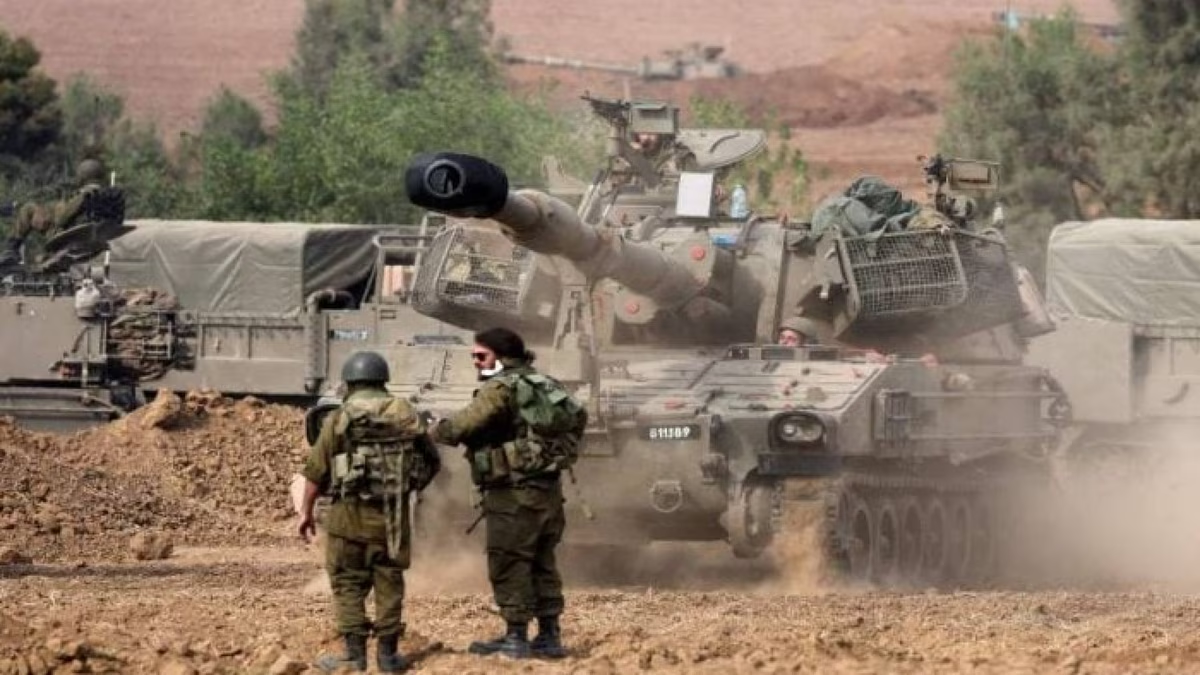
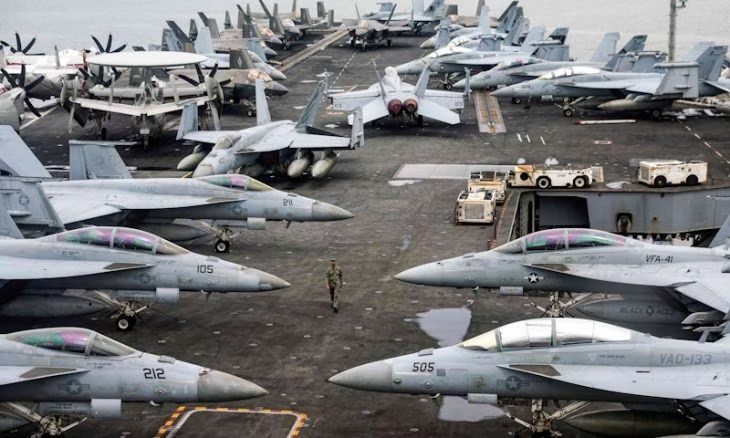
Sources quoted three American officials as saying that President Donald Trump is putting the option of military force on the table as an alternative to stalled negotiations. The officials clarified that the final decision on the move has not yet been officially issued, but military planning is proceeding to avoid any surprise in the event of a collapse of the political path.

If the executive order is issued, the aircraft carrier 'USS George W. Bush' is expected to be moved from the East Coast of the United States. Estimates indicate that the carrier's arrival in the region's waters could take about two weeks, to join the US forces already deployed there.

President Trump had previously stated that he was seriously considering increasing the military buildup in the Middle East as an additional pressure tool on the Iranian regime. The White House links this military escalation to the extent of Tehran's response to American demands regarding its nuclear program and its regional activities, which Washington describes as destabilizing.

It is worth noting that the region is witnessing an intensive American military presence, as the Central Command announced last January the arrival of the aircraft carrier 'USS Abraham Lincoln'. This deployment, according to official statements, aims to support regional security and stability and protect the vital interests of the United States and its allies in international waterways.

Despite the military buildup, Trump described the results of the first round of indirect talks held in the Omani capital, Muscat, as positive. He indicated that the Iranian side showed a desire to reach a new agreement, and a second round of meetings is scheduled for next week to discuss outstanding issues.

In contrast, Tehran adopts a cautious discourse and accuses Washington and Tel Aviv of fabricating pretexts for launching military aggression aimed at changing the political system in the country. The Iranian leadership affirms that it will not stand idly by in the face of any aggression, vowing a decisive and comprehensive response that will affect American interests in the region if it is subjected to any attack.

Iran adheres to its position that all economic sanctions imposed on it must be lifted as a prerequisite for returning to full compliance with the nuclear agreement. Tehran views Western sanctions as 'economic terrorism' targeting the Iranian people and demands international guarantees to prevent Washington from withdrawing from any future agreement.

For its part, the United States insists on strict demands, including the complete cessation of uranium enrichment operations and the dismantling of sensitive infrastructure. Washington also demands the transfer of highly enriched uranium stockpiles out of Iranian territory, which Tehran rejects as an infringement on its national sovereignty and its right to peaceful nuclear energy.

The situation in the Middle East remains open to all possibilities, between the option of de-escalation through diplomacy or sliding into a wide-ranging military confrontation. Regional and international powers are closely monitoring recent American moves, amid fears that the deployment of a second aircraft carrier could ignite the situation in a region already suffering from successive crises.

President Trump is considering sending a second aircraft carrier to the Middle East to prepare for a military operation if negotiations with Iran fail.