






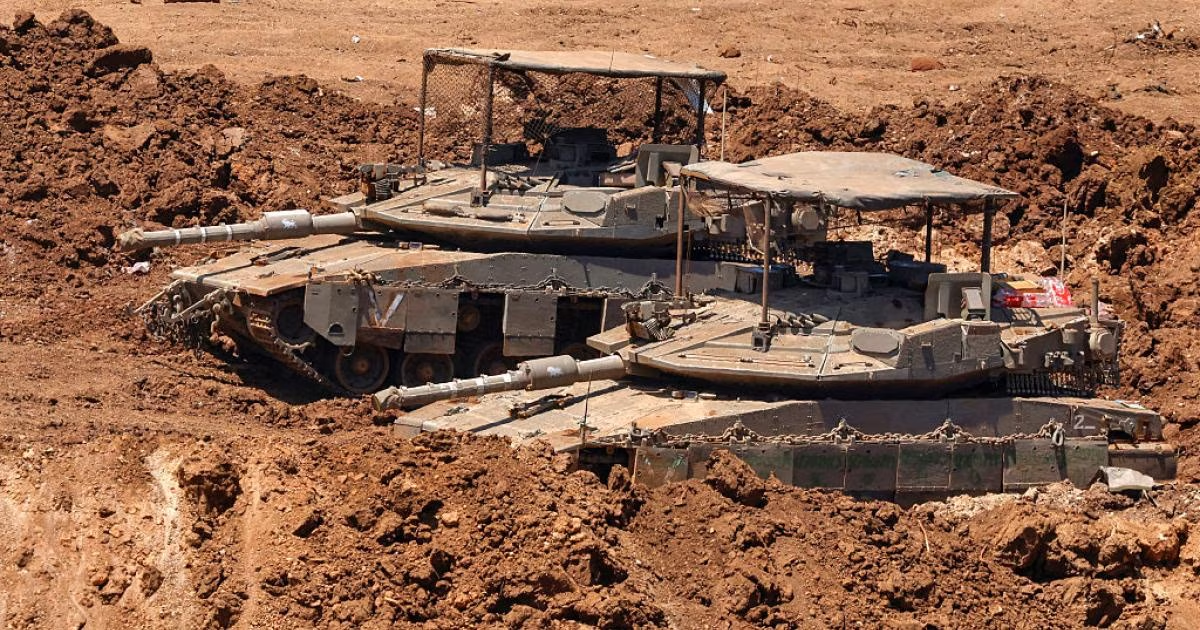
Challenges are escalating for the Lebanese state in its efforts to implement the provisions of the framework agreement with Israel, amidst a wave of continuous field violations and the ambiguity surrounding the mechanisms for the withdrawal of occupation forces from the southern regions. Data indicates significant obstacles preventing the agreement from being translated into tangible reality, especially with the absence of clear timelines.
Sources reported that the Israeli occupation army has not yet begun to implement any actual withdrawal steps that were supposed to start within the initial timeline. The sources confirmed that field military units have not received explicit orders to evacuate the sites included in the agreement, which raises doubts about Israeli intentions regarding de-escalation.
In a related context, media reports revealed the postponement of the withdrawal operation, which was scheduled for Sunday morning, indefinitely, without providing official justifications for this delay. This comes at a time when extreme secrecy surrounds the details of the military annex to the agreement, which was described as secret and does not include precise criteria for the areas the army will leave.
Circulating information indicates that the military annex lacks binding timelines for the withdrawal of Israeli forces or for the disarmament mechanisms of Hezbollah in the border areas. This procedural vacuum raises widespread questions in Lebanese circles about the seriousness of the Israeli side in adhering to the international commitments recently reached.
For its part, the Northern Command of the occupation army proposed withdrawing from three villages: Froun, Al-Ghandouriyah, and Zawtar Al-Gharbiyah, areas that do not originally have a permanent military presence. Observers considered this proposal an attempt to circumvent the essence of the agreement by evacuating secondary points where only raids were carried out without fixed positioning.
The problem of terminology in Israeli discourse stands out, where the focus is on the concept of 'redeployment' instead of a complete and comprehensive 'withdrawal' from Lebanese territories. Israeli sources believe that this wording grants the army the right to return to those sites at any time under the pretext of monitoring the implementation of the agreement's provisions and preventing any security threats.
On the political front, no official comment has been issued from Beirut on the statements by Benjamin Netanyahu and his security minister, Yisrael Katz, regarding the insistence on keeping forces within the so-called 'Yellow Zone'. These statements contradict the Lebanese vision, which presented the agreement to the public as a sovereign step aimed at completely ending the occupation.
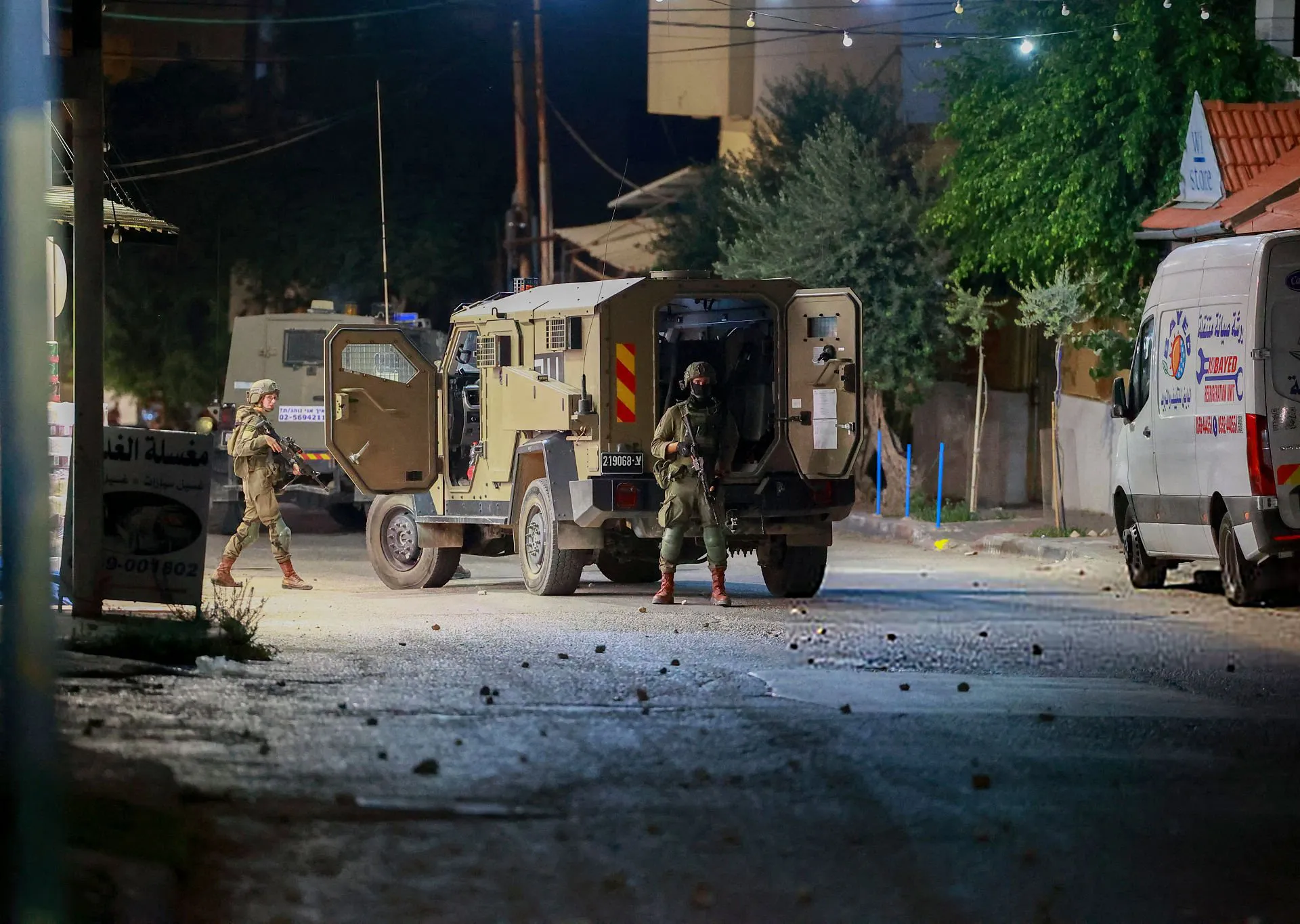
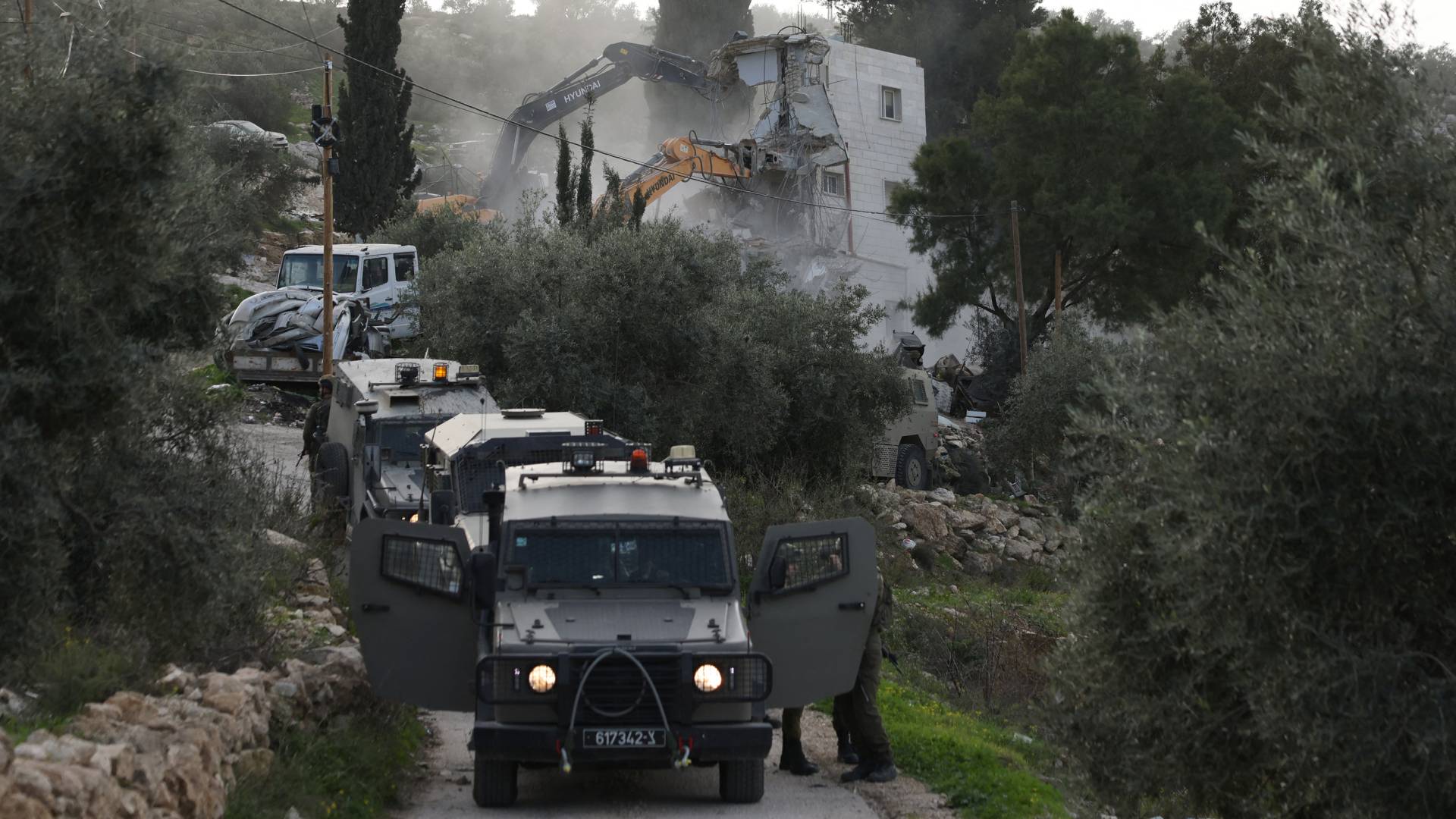
On the ground, Israeli aggressions did not stop despite the announcement of de-escalation, as occupation aircraft launched raids targeting the city of Nabatieh and the town of Meifdoun. Occupation forces also carried out extensive demolition operations of buildings and facilities within the villages of Hadatha and Taybeh, in addition to destroying what they claimed was a strategic tunnel in the town of Majdalzoun.
In contrast, Hezbollah affirmed in a statement that it is closely monitoring all Israeli violations along the border line, emphasizing its full right to respond. However, the party indicated its current commitment to the ceasefire, while at the same time warning against allowing the occupation freedom of movement within Lebanese sovereignty.
Internal debate is escalating in the Lebanese arena after statements attributed to the party considering the agreement 'non-existent' from its ideological and field perspective. In an attempt to contain the situation, Parliament Speaker Nabih Berri is leading intensive regional and international contacts to ensure that fragile understandings do not collapse and to consolidate stability.
As part of regional support, Iranian Parliament Speaker Mohammad Bagher Ghalibaf affirmed during a call with Berri that preserving Lebanon's sovereignty is a fundamental pillar in understandings with international parties. Ghalibaf referred to the activation of a technical committee for de-escalation, including representatives from the United States, Iran, and Lebanon, to follow up on developments.
Questions remain in Beirut about the ability of state institutions to impose their control and implement international commitments amidst this field complexity. With continued disagreements over the interpretation of the agreement's provisions, South Lebanon remains an open arena for all possibilities, awaiting practical steps to end the current state of ambiguity.
Israeli phrasing focuses on the concept of redeployment instead of withdrawal, which allows for later return under the pretext of monitoring implementation.
شارك برأيك
Stalled Implementation of the Framework Agreement: Ongoing Israeli Violations and Ambiguity Surrounding Withdrawal Schedules from South Lebanon