






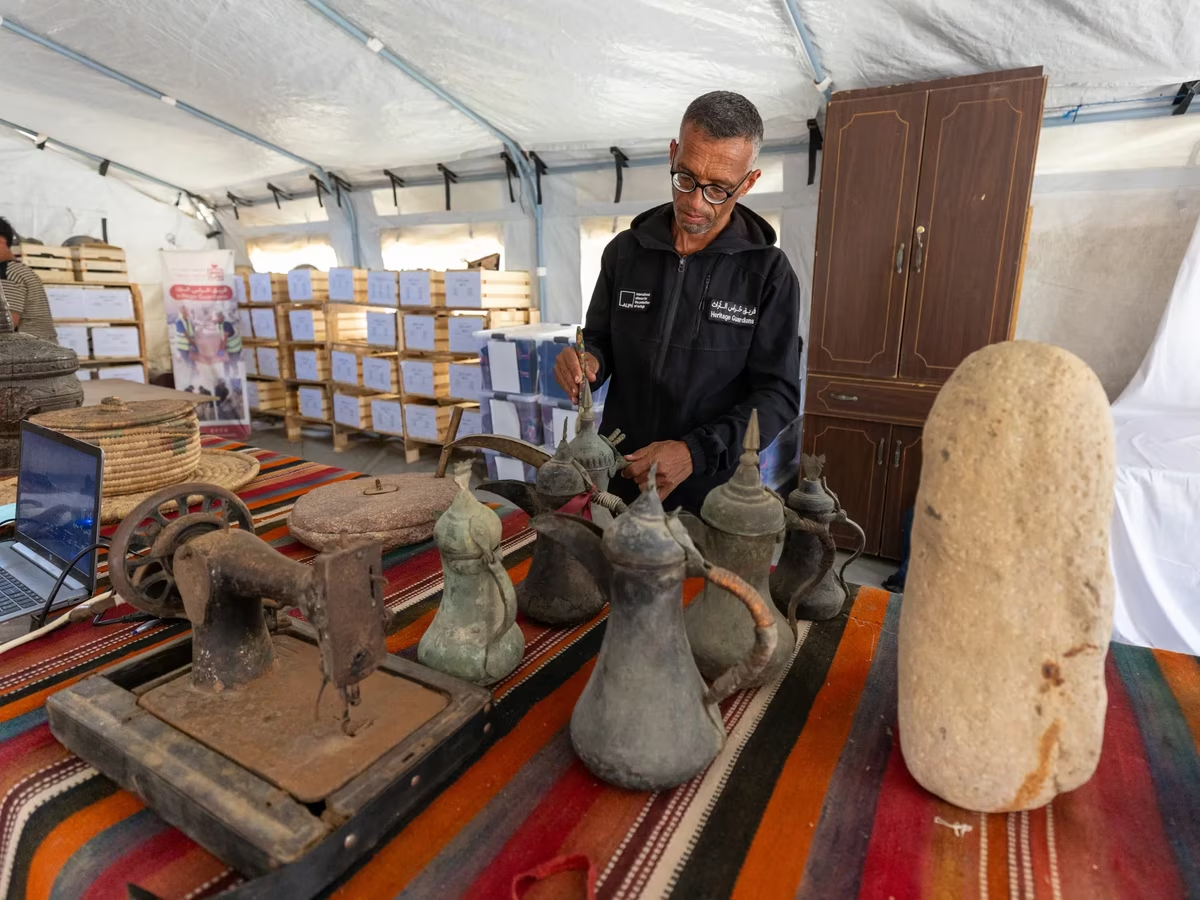
Amidst the widespread destruction witnessed in the Gaza Strip, a volunteer initiative called 'Guardians of Heritage' is active in saving what remains of the historical memory of Palestinians. These volunteers use a simple tent in the Al-Mawasi area, west of Khan Yunis, as their headquarters, where they try to restore artifacts recovered from the rubble.
This initiative belongs to the non-governmental Mayasem Association and primarily aims to collect archaeological artifacts damaged by intensive air raids. The team works to document and archive each piece found before placing it in special wooden boxes for temporary preservation under difficult displacement conditions.
Sources from within the initiative reported that the Israeli occupation did not only target people and stones, but the systematic bombing also extended to museums and historical sites that represent the identity of the land. These efforts are considered a last attempt to prevent the disappearance of the civilizational evidence that has succeeded in the Strip throughout different eras.
Shaima Al-Nattour, Assistant Coordinator of the Heritage Protection Program, explained that the team began to inventory museum collections that were directly bombed. She pointed out that the work is currently focused on extracting artifacts buried under the rubble of destroyed museums and archaeological buildings in various areas of the Strip.
Official estimates indicate the loss of about 3,500 museum pieces since the start of the aggression, including artifacts that were displayed in the famous Al-Qarara Museum. Volunteers face enormous challenges in accessing targeted sites due to ongoing military operations and the danger of moving through the rubble.
The Gaza Strip has a rich civilizational heritage dating back to the Canaanite, Pharaonic, Roman, and Byzantine civilizations, leading up to Islamic eras such as the Mamluk and Ottoman. Through their work, the 'Guardians of Heritage' seek to prove the rootedness of the Palestinian people in their land in the face of continuous attempts at cultural erasure.
So far, volunteers have been able to identify the locations of about 300 additional archaeological pieces that are still stuck under the rubble in conflict areas. However, security restrictions and high danger prevent the team from accessing and safely extracting them at this moment.
Al-Nattour warned that some citizens find artifacts while searching through the rubble of their homes without realizing their great historical value. This ignorance of archaeological value threatens the loss of more irreplaceable heritage treasures if they are not handled professionally.
The current tents in the Al-Mawasi area, which houses nearly 900,000 displaced people, lack the international standards necessary for preserving sensitive antiquities. However, those in charge of the initiative see them as a temporary refuge that protects these pieces from total damage or theft until the war ends.
According to the latest statistics from the Government Media Office, Israeli forces destroyed about 208 archaeological and heritage sites out of 325 sites in Gaza. These cultural losses come within a heavy toll of aggression that has left tens of thousands of martyrs and wounded and unprecedented destruction of infrastructure.
These tents do not protect the artifacts as required, but they give them a chance to survive until a day comes when museums can be restored and heritage preserved in safe places.

شارك برأيك
"Guardians of Heritage".. A volunteer initiative to save Gaza's historical memory from under the rubble of war