






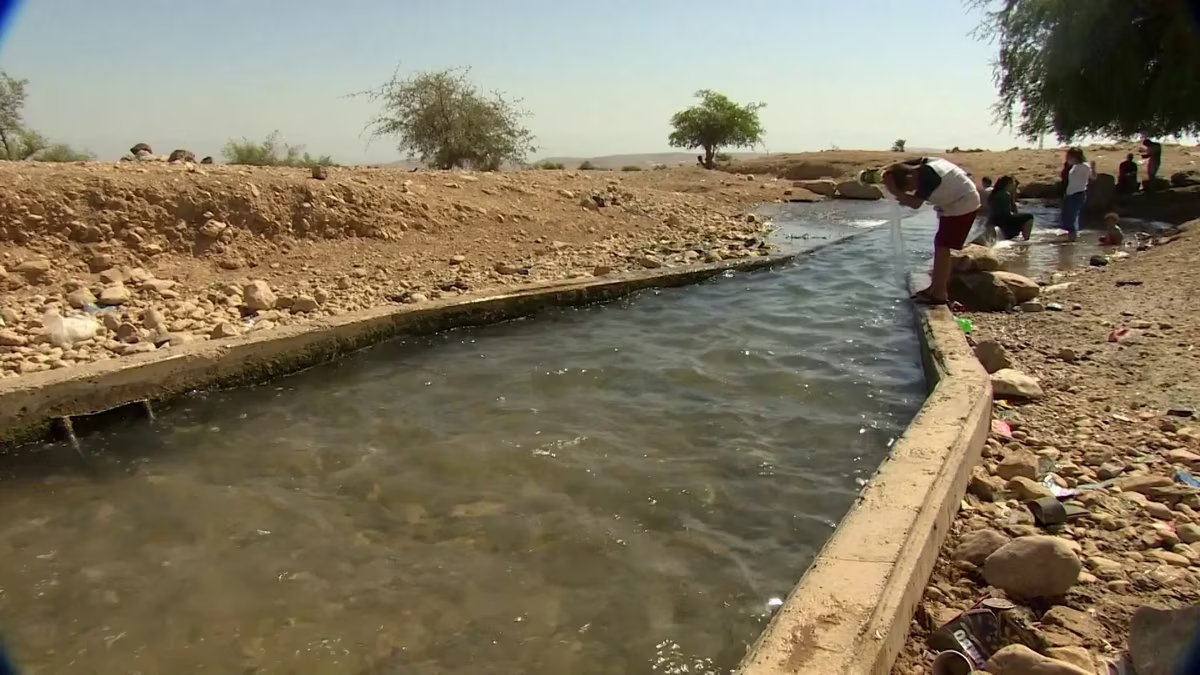
The Atouf plain area, located east of the city of Tubas in the West Bank, is experiencing a suffocating agricultural crisis, where natural drought is no longer the only threat to crops. Field sources reported that the deliberate cutting of water lines supplying the area led to the wilting of vast areas of vineyards and the complete destruction of seasonal crops, amid strict restrictions preventing farmers from accessing alternative sources.
Farmer Dirgham Bisharat recounts the details of his devastating loss, as tons of grapes he had waited all year to ripen turned into dry, worthless branches. Bisharat confirmed that the interruption of irrigation water for three consecutive months not only caused the loss of the current season but also damaged old trees that had been producing for many years, meaning the loss of future production as well.
Financial estimates indicate that the scale of the economic catastrophe exceeds the farmers' ability to cope, as the loss per dunam of grapes reaches about one million shekels, equivalent to approximately 270,000 dollars. These figures reflect a tragic reality experienced by landowners who find themselves facing accumulated debts and an unknown future amid the continuation of systematic thirst policies against Palestinian villages and towns.
In the Al-Ras Al-Ahmar area, the scene is no less bleak, as farmer Lotfi Bani Odeh faces daily challenges related to livestock farming and providing pastures. Bani Odeh explained that the closure of vast areas of land and their conversion into closed military zones, in addition to continuous settler attacks, has forced dozens of families to forcibly leave the area in search of safer livelihoods.
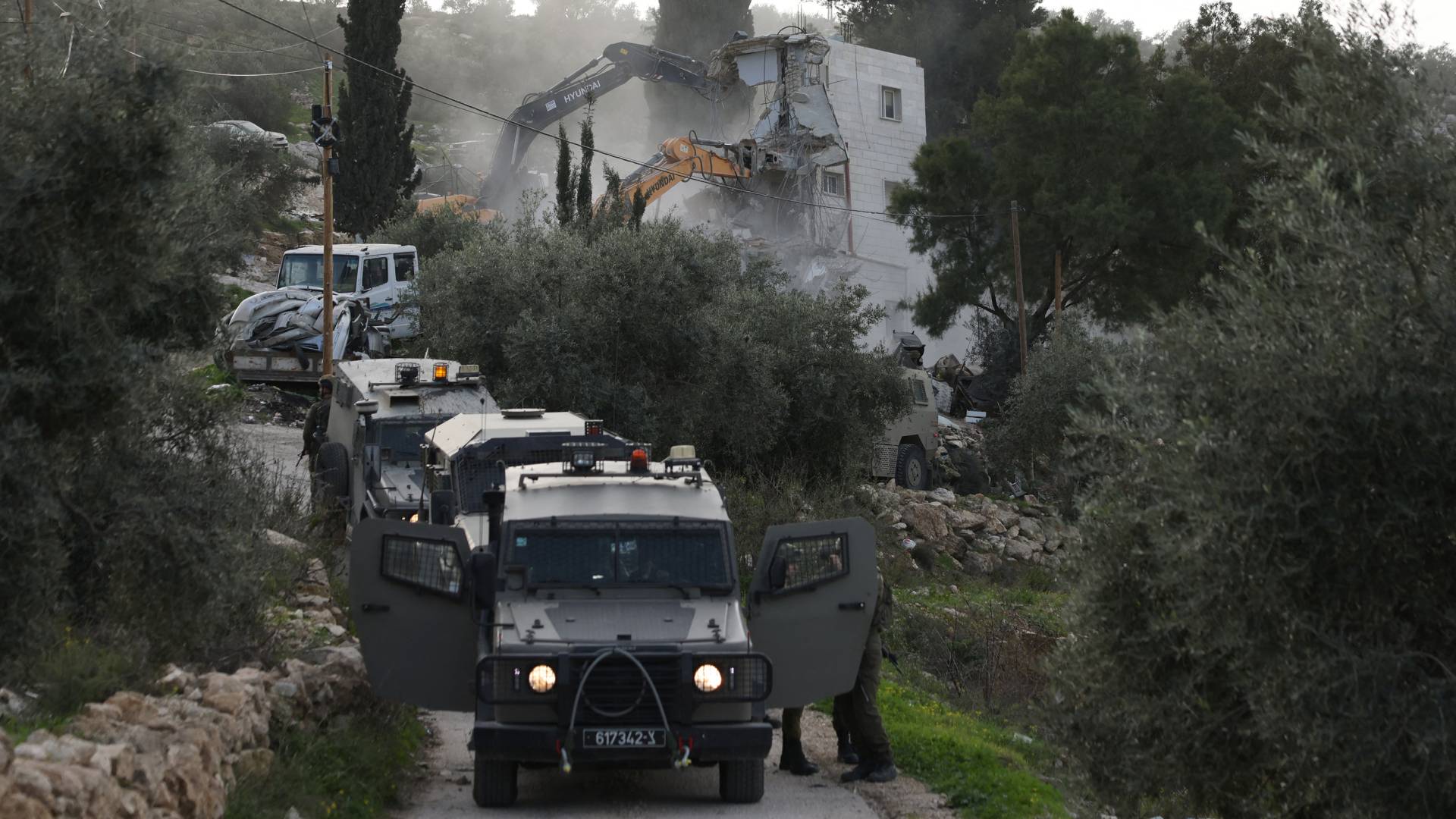
These crises coincide with field movements to construct new settlement and military roads that penetrate the heart of agricultural lands in the Jordan Valley. Local officials warned that one of the roads currently under construction extends for 22 kilometers and is up to 50 meters wide, which will lead to the seizure of thousands of agricultural dunams and the isolation of other areas behind security zones that Palestinians are prohibited from entering.
As for the Auja area, the crisis of discrimination in water resource distribution is most evident, as the area contains dozens of high-flow artesian wells. Despite this water abundance, local sources complain that surrounding settlements receive huge water allocations that exceed their needs, while Palestinian farmers are left to struggle with thirst to preserve what remains of their crops.
The conflict in the Jordan Valley remains a struggle for survival and identity, where the water crisis intertwines with land confiscation policies and security restrictions. Despite all these harsh conditions of settler harassment and declining agricultural production, farmers in Atouf, Tamoun, and various areas of the Jordan Valley continue to cling to their lands, considering that steadfastness in the face of these pressures is the only way to prevent the emptying of the area of its original inhabitants.
The loss per dunam of grapes reaches about one million shekels, and the three-month irrigation stoppage not only killed the harvest season but also destroyed the trees' ability to produce for years to come.


شارك برأيك
Thirst of the Land in the Jordan Valley: Water Cut-off Policies Devastate Farmers' Crops and Threaten Palestinian Existence