






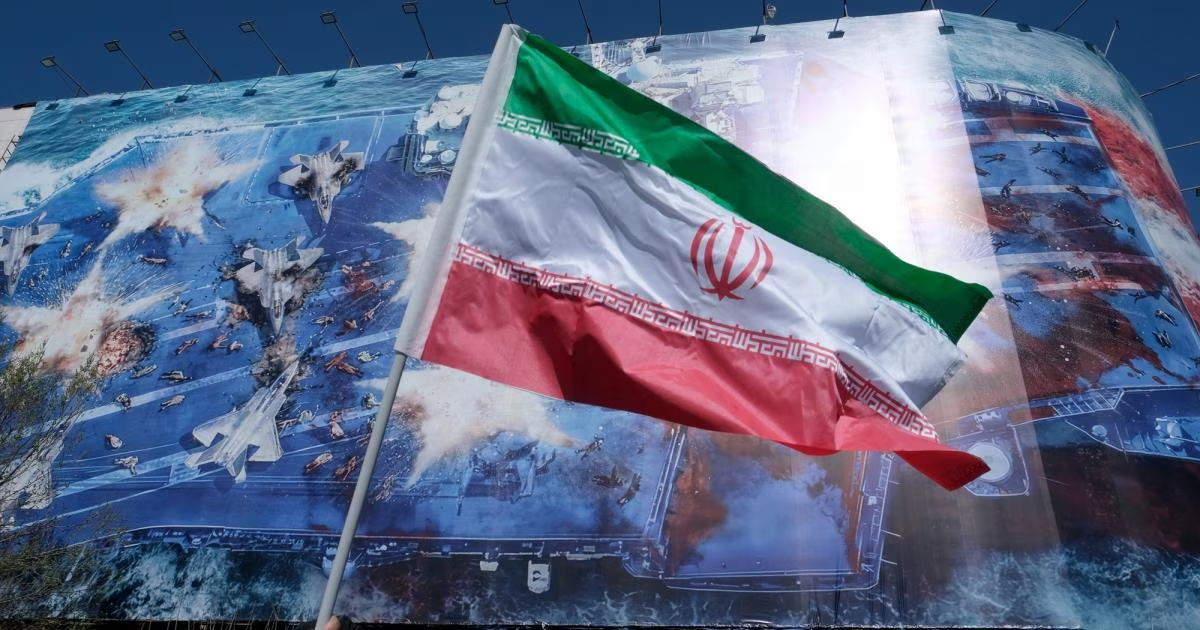
The agreement reached by the United States and Iran to end the war and address outstanding issues has received widespread international and regional welcome. Global capitals hope that this understanding will contribute to solidifying stability in the Middle East and ensuring freedom of navigation in the strategic Strait of Hormuz, opening the door to a new phase of diplomatic cooperation.
Pakistani Prime Minister Shehbaz Sharif had revealed via the 'X' platform that a peace agreement had been reached to end military operations on various fronts, including the Lebanese arena. Sharif clarified that the official signing ceremony would take place in Switzerland on June 19, which was later confirmed by US President Donald Trump, announcing the completion of the agreement with the Iranian side.
For its part, the State of Qatar quickly welcomed the agreement, considering it a fundamental step towards achieving sustainable peace in the region. Doha affirmed in an official statement that addressing outstanding issues, especially ensuring freedom of navigation in the Strait of Hormuz, which has suffered from disruptions since last March, is a priority for enhancing regional and international security.
The Qatari Prime Minister and Minister of Foreign Affairs, Sheikh Mohammed bin Abdulrahman Al Thani, expressed his appreciation for the Pakistani efforts and the international parties that created the conditions for this understanding. Al Thani called on all parties to engage in upcoming negotiations with a positive and constructive spirit, emphasizing that Qatar will remain a steadfast supporter of all initiatives aimed at promoting stability through dialogue.
In the same context, the Qatari Ministry of Foreign Affairs stressed the importance of the will shown by both the American and Iranian sides to resolve differences through peaceful means. The ministry indicated that this agreement will enhance global economic growth by securing international trade routes, appreciating the role of regional partners in de-escalating tensions and bringing viewpoints closer between Washington and Tehran.
At the UN level, United Nations Secretary-General António Guterres described the agreement as a 'decisive step' towards achieving comprehensive peace in the Middle East. Guterres urged the concerned parties to utilize this new momentum to redouble diplomatic efforts aimed at reaching final solutions to existing conflicts, stressing that the negotiation path is the only way to reduce tensions.
In Asia, Japanese Prime Minister Sanae Takaichi announced her country's welcome of the agreement, expressing Tokyo's anticipation for its full and regular implementation. Takaichi emphasized the importance of the effective reopening of the Strait of Hormuz to international shipping, given the strait's utmost importance for global energy supplies and trade movement.
A joint statement was also issued by the leaders of Britain, France, Germany, and Italy welcoming the step, while emphasizing the need for continued diplomatic work to ensure the security of the region. The European leaders stressed in their statement their firm position on the necessity of Iran not possessing nuclear weapons, expressing their readiness to cooperate with Washington, Tehran, and the International Atomic Energy Agency.
For his part, British Prime Minister Keir Starmer focused on the navigation aspect, emphasizing the need to ensure freedom of movement in the Strait of Hormuz without any restrictions or additional fees. Starmer reiterated his country's commitment to working with international partners to prevent the proliferation of nuclear weapons in the region, considering that the new agreement provides an appropriate framework for achieving these strategic goals.
Informed sources reported that the agreement includes detailed provisions related to mechanisms for monitoring the ceasefire and dismantling hotspots of tension in shared arenas. Joint technical committees are expected to begin work immediately after the agreement is signed in Switzerland to set timelines for implementing the obligations of both parties, ensuring no return to military escalation.
Observers believe that this development represents a radical shift in US foreign policy towards the Iranian issue, where the language of negotiation has prevailed over confrontation options. The effects of this agreement are expected to positively impact global energy markets, which have experienced anxiety and anticipation due to continuous threats of closing vital waterways.
Finally, political circles are awaiting June 19 to follow the details of the final document to be signed in Switzerland. The international community relies on the commitment of the signatory parties to the provisions of the memorandum of understanding, to ensure that this agreement transforms from a mere temporary calm into a fundamental pillar of a new and stable regional security system.
The agreement represents an important step towards sustainable peace and enhanced economic growth at both regional and international levels.
شارك برأيك
Widespread International Welcome for US-Iranian Agreement to End War and Secure the Strait of Hormuz