






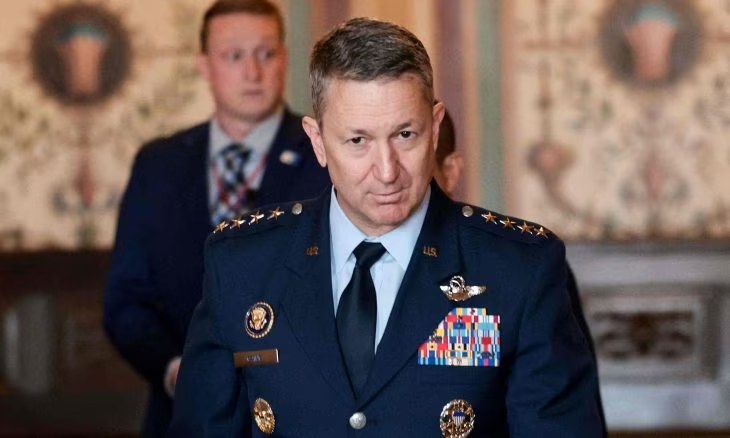
Informed sources revealed details of a secret and urgent visit made by General Dan Kane, Chairman of the US Joint Chiefs of Staff, to the Central Command (CENTCOM) headquarters in Florida late last month. These movements aimed to directly review military plans prepared by the army to send ground forces deep into Iran, in a mission aimed at forcibly seizing quantities of highly enriched uranium.
The sources stated that the extreme sensitivity of these military briefings necessitated General Kane's sudden return from a high-level meeting of NATO officials in the Belgian capital, Brussels. Kane traveled directly across the Atlantic to Tampa on May 19, reflecting the seriousness with which the US administration was dealing with this military option.
Leaked data indicates that the US administration was on the verge of giving the green light to implement this high-risk ground operation. However, the spokesperson for the Joint Chiefs of Staff preferred not to comment on these preparations, remaining silent about the technical details or the proposed timings for the start of the attack.
Following these intensive meetings, General Kane briefed President Donald Trump on all available options and expected scenarios for the ground operation. According to sources, Trump ultimately decided to delay and freeze the plans, after receiving intelligence and military warnings of catastrophic consequences that could result from such an escalation.
The main concerns that prompted Trump to back down were the possibility of a violent and uncontrolled Iranian reaction, which could lead to a long-term war of attrition. The US president also expressed concern that direct conflict could plunge the global economy into a spiral of instability, especially given the existing tensions in international energy corridors.
In addition to economic concerns, the issue of human casualties emerged as a decisive factor in the White House's decision, as military leaders warned of the potential for a large number of casualties among US forces. It appears that situation assessments indicated that the human and political cost of the operation could far exceed the desired gains from controlling nuclear materials.
In contrast, Tehran did not stand idly by, as intelligence reports indicated that Iran had significantly escalated its security measures to protect its stockpile of highly enriched uranium. These measures included complex engineering operations to demolish strategic tunnels and re-fortify sensitive sites to prevent any potential external penetration.
The sources explained that Iranian forces had planted explosive mines at the entrances to vital facilities, making access to the estimated half-ton uranium stockpile extremely complex. These new fortifications raised the level of danger and risk for any force attempting to approach these sites compared to the situation that prevailed a month ago.
Observers believe that these field complexities added a new burden to the Trump administration's proposals aimed at removing and destroying uranium through a political agreement. These developments also raised technical and legal questions about which international body might have the ability or audacity to undertake the task of extracting these materials in a booby-trapped security environment.
On the diplomatic front, the Iranian mission to the United Nations remained silent and did not respond to immediate requests for comment, nor did the White House issue any official statement confirming or denying these leaks. This silence comes at a sensitive time when the region is witnessing intensive diplomatic movements to end the political stalemate.
Despite military planning, President Trump continues to publicly affirm that securing enriched uranium remains a top priority for the United States in any future negotiations. The White House links this issue to other thorny issues, such as the reopening of the Strait of Hormuz, over which Iran exercises effective control over navigation.
These leaks coincide with optimistic statements made by Trump, in which he indicated that Washington and Tehran are close to reaching comprehensive understandings. The US president recently announced that the two sides might sign an agreement very soon, perhaps in the next few days, to end the dispute over the nuclear program.
The enriched uranium file remains the most prominent knot in the American-Iranian talks, as it represents the cornerstone of Tehran's deterrent capabilities. These military details reveal the extent of the gap between the language of threatening force and the field reality that imposes strict restrictions on decision-makers in Washington.
In conclusion, these developments show that the military option, although on the table, always clashes with complex cost-benefit calculations in the Middle East. While positions oscillate between military escalation and diplomatic solutions, all eyes remain on what the coming days will bring in terms of results from the ongoing negotiations behind closed doors.
Trump decided to delay and halted the plans after being warned that such a move could lead to a violent Iranian response that would plunge the global economy into widespread turmoil.
شارك برأيك
Unveiling the details of a canceled US plan to seize Iranian uranium by land