






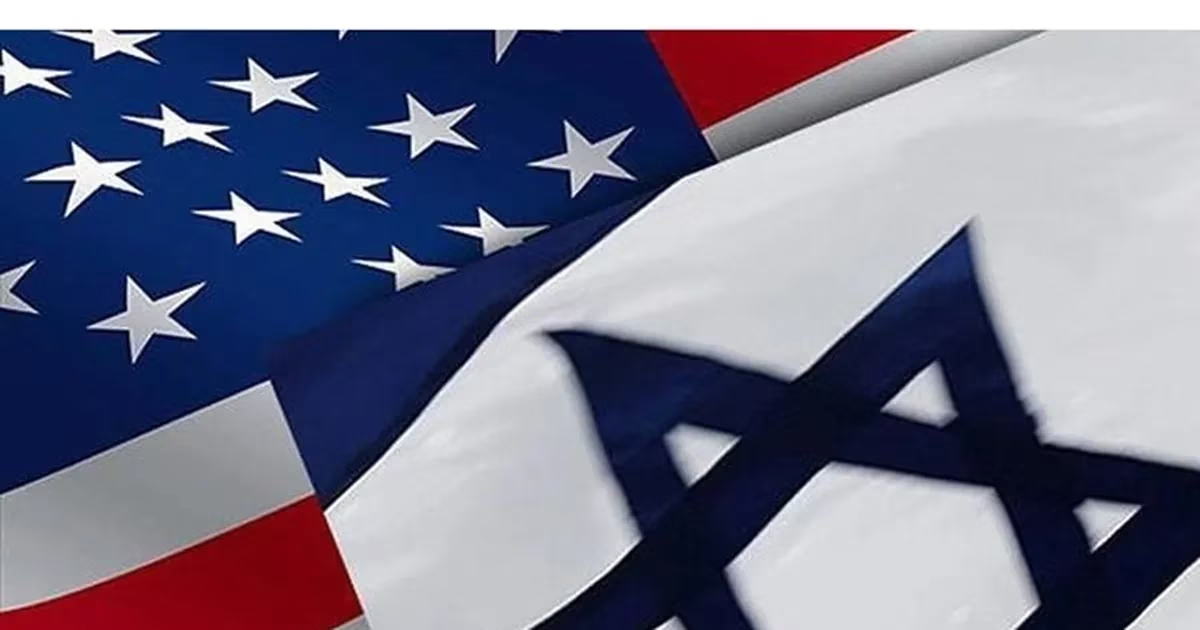
The American political scene is witnessing a fundamental shift in the nature of its stance on the strategic alliance with the Israeli occupation state, as the issue has moved from being a bipartisan consensus to a subject of intense debate. Press sources reported that electoral pressures and changing public opinion trends, especially among young people, have prompted many candidates to reconsider their positions on absolute military and political support.
Reports from the 'Washington Post' indicated that the alliance with the occupation has become a political burden in election campaigns, with unusual questions beginning to emerge about the necessity of stopping arms sales. Sources pointed out that recent opinion polls reflect a growing gap within party bases, threatening the traditional unity on foreign policy in the Middle East.
Recent survey data showed that about 72% of Democrats and 47% of Republicans now view support for the occupation as an issue causing internal crises within their parties. This shift comes at a time when candidates from both sides are running their election campaigns based on promises to reduce or end foreign aid directed to the Israeli occupation.
In the Senate, this division was clearly manifested after 40 Democratic members voted in favor of a resolution introduced by Senator Bernie Sanders aimed at preventing arms sales to the occupation. This number represents a significant jump compared to only 27 members who supported a similar measure last July, indicating a growing trend rejecting current policies.
Pro-occupation groups, such as 'AIPAC,' face increasing challenges after their money and support became a political burden for some candidates in crucial states like Michigan. Observers believe that American voters have become more sensitive to foreign interventions and funding associated with pro-Israel lobbying groups.
Sources quoted military surgeon Adam Hamawy, who is running in the Democratic Party primary, as saying that party leaders had not been listening to the true desires of Americans for a long time. Hamawy affirmed that candidates seeking to win in upcoming cycles will be forced to take more critical stances on the occupation in line with the aspirations of their popular bases.
On the Republican side, former President Donald Trump faces pressure from the 'America First' movement, which believes that involvement in Middle East conflicts contradicts national interests. Prominent right-wing voices have begun to express their dissatisfaction with the Israeli lobby's influence on war and peace decisions in the United States, disrupting the party's traditional calculations.
Statistics indicate that negative views towards the occupation have sharply risen among independents to 51%, while jumping among Democrats to 66%. These figures reflect a deep shift in American collective consciousness, where 47% of citizens now believe that Washington exaggerates its support for the occupation beyond reason.
Generational division stands out as one of the most important features of this stage, with young people under the age of fifty holding more radical positions on Israeli policies compared to older generations. In the Republican Party, 57% of young people hold a negative view of the occupation, a percentage that is more than double that of older members in the same party.
Political consultants believe that the traditional pro-Israel base, represented by Republicans over fifty, is no longer a sustainable political alliance in the long term. Experts explained that Democrats have begun to feel greater political security when taking courageous stances condemning Israeli violations in the occupied Palestinian territories.
In Michigan, the intensity of political discourse escalated, with candidates describing what is happening in Gaza as 'genocide,' considering that silence on these crimes makes a politician lose credibility with the public. These candidates affirmed that voters are looking for leaders who have the courage to stand up against injustice and stop illegal wars.
On the other hand, pro-occupation lobbying groups are trying to regain their influence by spending millions of dollars in primary elections to attack candidates opposed to unconditional aid. These groups often resort to using economic or local issues in their advertisements to avoid controversy over their increasingly unpopular stance on Israel.
Even traditional hawks in the Senate, such as Lindsey Graham, have begun to show openness to reviewing the timelines for US military aid. This change in rhetoric reflects a growing realization that the 'blank check' Israel used to receive is no longer acceptable to American taxpayers who demand domestic priorities.
Sources concluded by saying that the old approach based on the principle of 'Israel is always right' has effectively ended in the corridors of American politics. The special relationship is now subject to international law and political accountability, which represents a historic shift that may reshape Washington's role in the region in the coming years.
The special relationship in which questions could not be asked, laws could not be applied, or blank checks to the occupation could not be stopped, has completely ended.
شارك برأيك
Historic Shift in Washington: Support for Occupation Divides Both Parties and Swings Voter Balance