







The occupied West Bank is facing a new wave of settlement practices that go beyond military field control, reaching what experts describe as 'visual occupation'. These moves aim to impose a new cultural and identity reality through the intensive spread of Israeli religious and political symbols in public spaces and vital areas.
Field reports over the past two weeks have monitored an unprecedented spread of Israeli flags on main roads, in addition to the erection of religious symbols such as the 'menorah' and the Star of David on hilltops and in public squares. These steps come in the context of persistent attempts to normalize the settlement presence and make it an integral part of the daily landscape in the West Bank.
Informed sources reported that these practices fall under the 'visual sovereignty' strategy, which aims to prepare the psychological and political atmosphere for actual annexation and the permanent entrenchment of settlements. These moves coincide with the naming of Palestinian cities and villages with biblical names in an attempt to reinforce the alleged Israeli historical narrative about the region.
In a related context, the Wall and Settlement Resistance Commission revealed a sharp escalation in settler attacks, with approximately 443 attacks recorded since late February. Settlers have exploited the regional unrest to intensify their attacks on Palestinian communities, aiming to terrorize residents and push them towards forced displacement from their lands.
Hassan Breijieh, director of the Wall Resistance Commission office in the southern West Bank, confirmed that what is happening is the use of 'soft power' to impose Israeli sovereignty. He explained that these operations are not spontaneous, but rather an organized plan that enjoys full support from the right-wing government, which provides legal and security cover for the settlers.
Breijieh pointed out that the phenomenon has dangerously evolved to include the takeover of Palestinian public buildings and service facilities and the raising of Israeli flags over them by force of arms. He cited as an example what happened in the town of Huwara, south of Nablus, where educational institutions were stormed, the Palestinian flag was removed, and symbols of the occupation were placed in its stead.
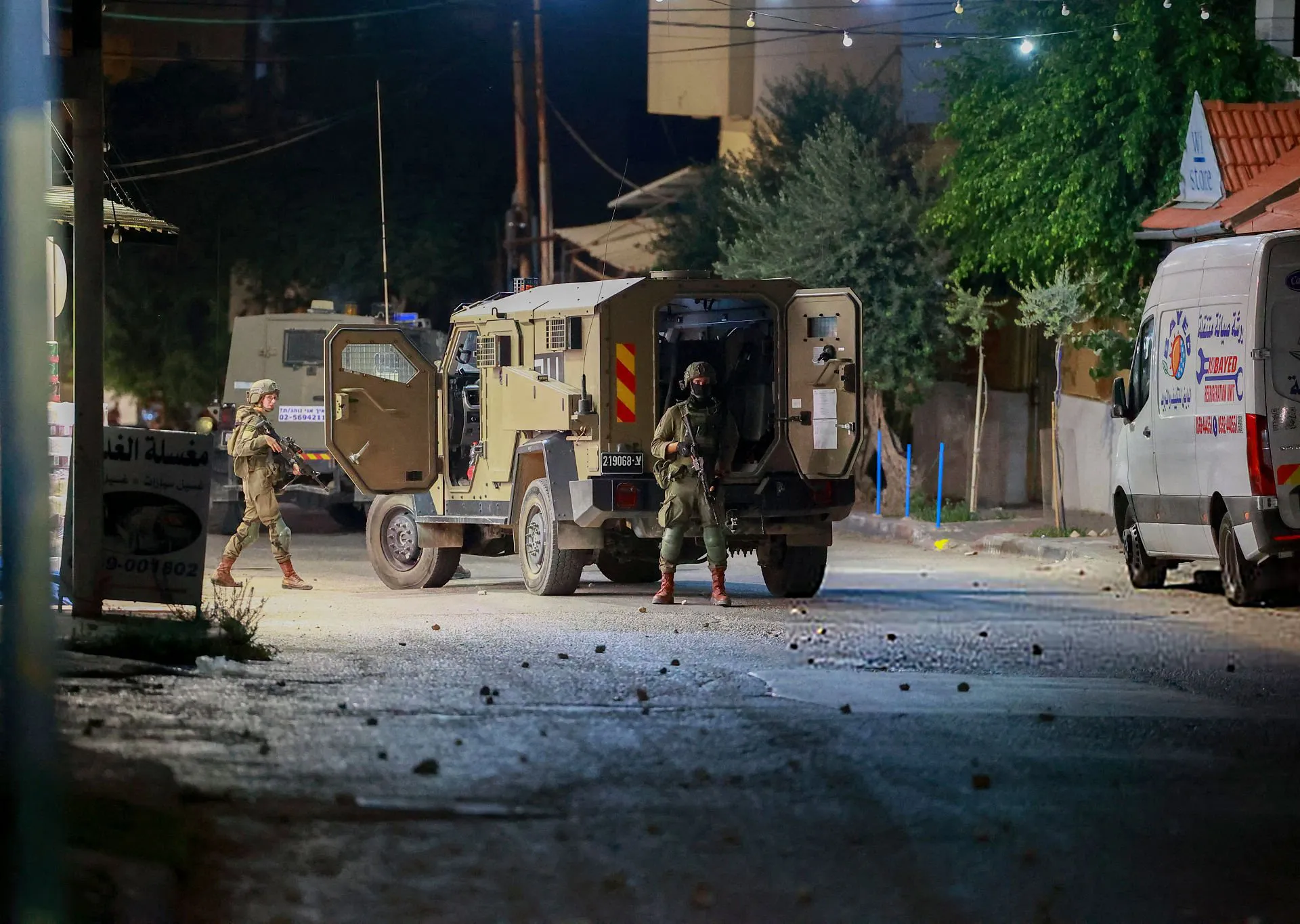
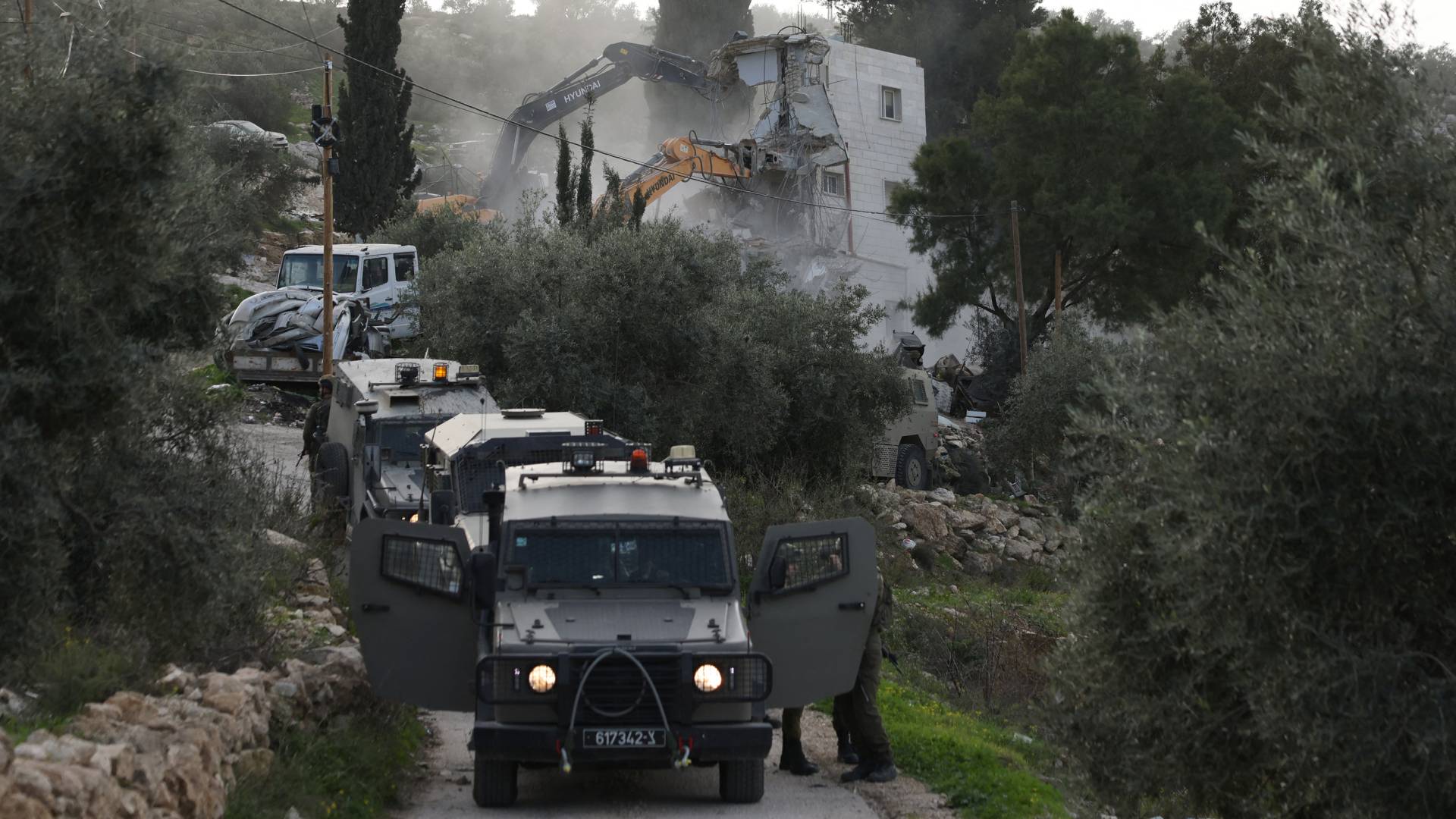
Observers warned that these measures are being carried out under the direct protection of the occupation army and police, which limits the areas of movement and growth for Palestinians. Breijieh stressed that Palestinian steadfastness on the ground remains the only obstacle to completing this project, which aims to liquidate the issue geographically and visually.
For his part, Alaa Rimawi, an expert in Israeli affairs, analyzed this phenomenon, considering that it carries multi-directional political messages. The first message targets Palestinians to frustrate them and make them feel that the land has become part of the Zionist project, while the second aims to strengthen settlers' sense of belonging to the place.
The third message is directed at the international community, through which Israel seeks to impose a 'fait accompli' that will be difficult to change in any future negotiations. Rimawi believes that the ultimate goal is to reach what can be called a 'settlers' state' in the West Bank, by isolating Palestinian communities and encircling them with Israeli symbols.
The religious dimension plays a pivotal role in this strategy, as Palestinian geographical locations are linked to Jewish religious narratives to confer false legitimacy on settlements. This includes changing the names of historical cities, such as naming Nablus 'Shechem' and Hebron 'Hebron', in an attempt to rewrite the geographical history of the region.
This policy also extends to archaeological sites and shrines, such as 'Joseph's Tomb' in Nablus, which settlers claim is a sacred religious site for them. Despite archaeologists' confirmations that the site is only a few centuries old and belongs to a Muslim sheikh's tomb, the occupation insists on using it as a pretext for repeated incursions.
The occupation authorities also use names derived from Arabic and Canaanite roots to name new settlements, in a process of cultural deception aimed at stealing local heritage. An example of this is the 'Brokhin' settlement, which derived its name from the Palestinian town of Broqin, reflecting the depth of attempts to usurp spatial identity.
This 'visual occupation' represents an advanced stage of the settlement project that seeks to transform the West Bank into isolated enclaves devoid of their Arab identity. This policy complements the economic and field pressures exerted by the occupation to reduce the Palestinian presence in areas classified as 'C'.
In conclusion of the scenic reading, it appears that the battle in the West Bank is no longer limited to land ownership alone, but has extended to consciousness and visual memory. Adherence to Palestinian national symbols and the preservation of historical names of sites remain an essential part of popular resistance to confront Judaization schemes.
Through the spread of flags and symbols, settlers seek to entrench their presence on the ground as part of an organized plan led by the right-wing government.
شارك برأيك
Visual Sovereignty: A New Israeli Strategy to Judaize the Public Landscape in the West Bank