







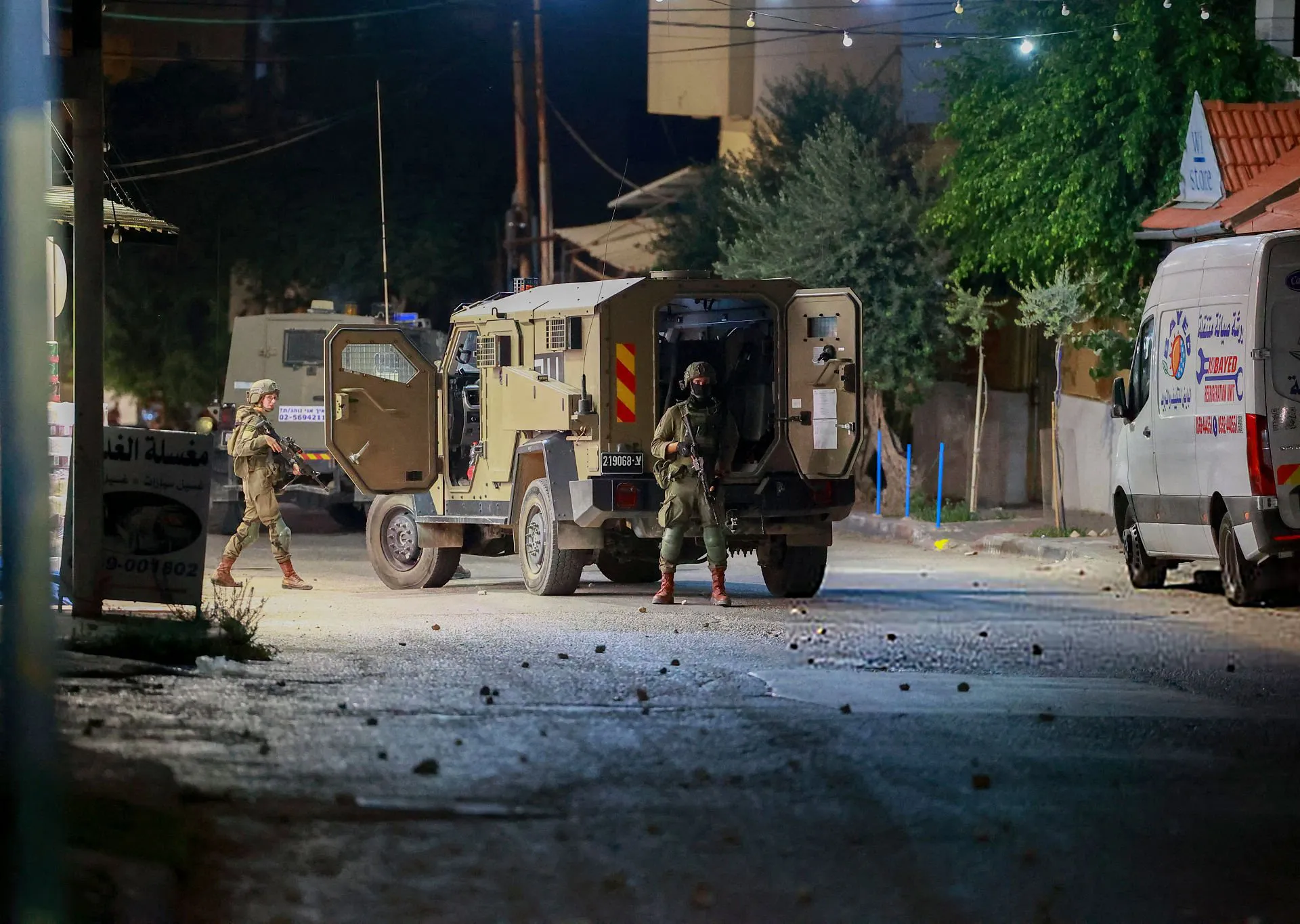
The journey to earn a living turned into a bloody tragedy for the young Palestinian man Yousri Abu Qubaita and his companions, after they were subjected to a violent chase by the occupation army and groups of settlers in an open area south of the West Bank. The incident, which occurred on Wednesday evening in an empty area south of Hebron city, ended with the overturning of driver Abu Qubaita's vehicle and his martyrdom, while eight other workers were injured by occupation bullets and varying bruises.
Eyewitnesses and close relatives of the martyr recounted that the workers used to cross that area to reach their workplaces inside the Green Line, but this time they were surprised by an ambush set by occupation soldiers and settlers who began firing and chasing the vehicles. Diaa Fanash, a friend of the martyr, explained that the bad weather conditions prompted them to try to return, but the settlers' and army's bullets caught them, causing their vehicle to get stuck in a valley and overturn on Yousri as he tried to secure the escape of his companions.
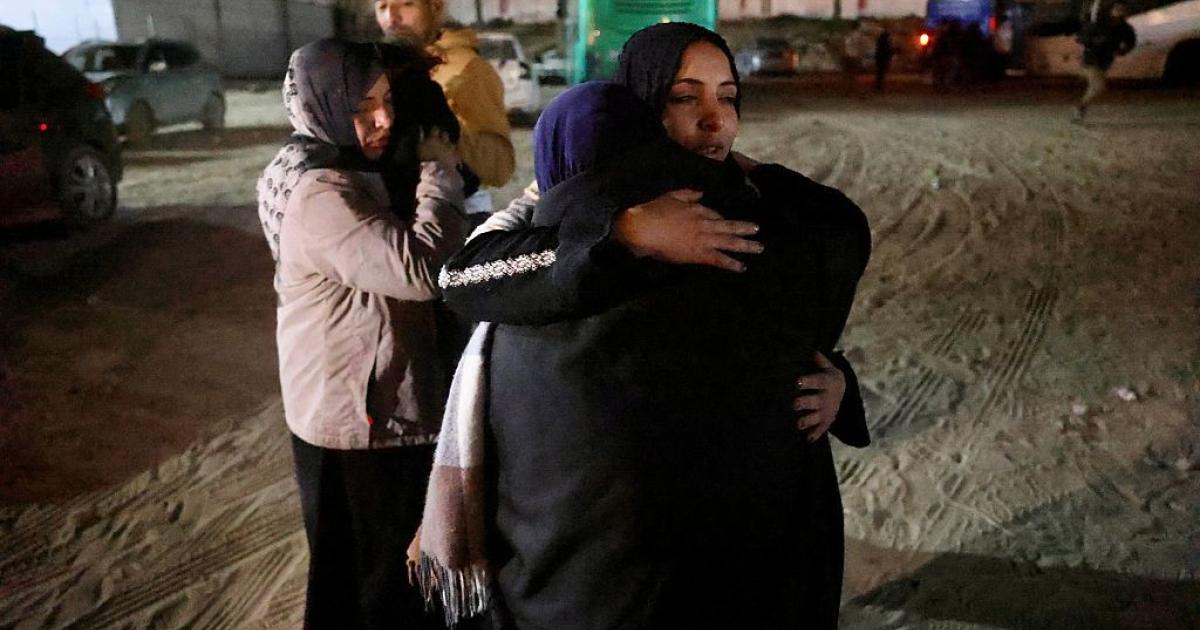
In the family home in Yatta, an atmosphere of sadness and farewell prevailed, where the martyr's father confirmed that his son was striving to provide for his young daughter's daily sustenance amidst the lack of job opportunities in the West Bank. The father pointed out that the risk his son took was a direct result of the economic blockade policy imposed by the occupation authorities on Palestinian workers for many months.
This incident comes in the context of an ongoing Israeli escalation since the start of the aggression on Gaza in October 2023, where the occupation authorities prevent tens of thousands of workers from returning to their jobs. This forced prevention has pushed many to venture through rugged bypass routes, only to find themselves in direct confrontation with live ammunition and systematic abuse by both occupation forces and settlers.
Suffering does not stop at the pursuit in the mountains but extends to workers who succeed in reaching their workplaces, where they are subjected to brutal raid campaigns. Raed Essam, a young man from Salfit, conveyed a harsh testimony about being severely beaten with batons and iron chains by the occupation police in the city of Lod, along with 40 other workers, before being tied up and detained for long hours in humiliating conditions.
Raed described the journey to work as a 'journey of humiliation,' starting with climbing the apartheid wall via ladders placed by brokers for exorbitant sums of money reaching 2000 shekels. He added that workers are forced to pass through water culverts and muddy lands under threat of arms, on a journey that could end with a soldier's bullet at any moment, all to secure their families' future.
For his part, Shaher Saad, Secretary-General of the Palestinian General Federation of Trade Unions, described the targeting of workers as a 'full-fledged crime' aimed at fighting Palestinians in their sole source of livelihood. Saad affirmed that the occupation deliberately pursues workers and shoots at them daily, documenting the injury of thousands and the arrest of hundreds since the tightening of military measures at crossings and the wall.
Union statistics indicate that the number of Palestinian workers inside Israel was about 240,000 before October 2023, while currently about 70,000 are forced to risk entering without permits. This bitter reality has led to the martyrdom of nearly 68 workers and the injury of about 5,000 others by occupation bullets in recent months, in the complete absence of social protection funds.
Economically, Saad revealed that preventing workers from reaching their workplaces for more than 30 months has caused enormous losses estimated at about 27 billion dollars. This huge loss not only affects families but also negatively impacts the overall Palestinian economy, with the monthly loss for the labor sector alone estimated at about 1.35 billion shekels.
Observers and unionists believe that Israel uses 'impoverishment policy' as a political tool to pressure Palestinian society and push young people towards considering emigration. This policy aligns with annexation and expansion plans in the West Bank, where livelihoods are being squeezed to force residents to leave their lands under the weight of need, poverty, and security pursuit.
Regarding the permit system, Israel imposes strict restrictions including 'security checks' and biometric cards, in addition to conditions related to age and social status. This system, updated in 2020 through electronic platforms, primarily aims to tighten absolute security control over the movement of workers and turn them into hostages of political and military decisions.
Data from the Palestinian Central Bureau of Statistics shows that the construction sector attracts the largest proportion of these workers, followed by the agricultural and industrial sectors. Most of these workers come from rural areas and refugee camps in the West Bank, which are the areas most affected by closure policies and checkpoints that cut off Palestinian cities.
The continued targeting of Palestinian workers with bullets and abuse reflects the occupation's mentality that does not differentiate between a civilian seeking work and any other military target. The stories of Yousri, Raed, and thousands of other workers remain a living testament to the sacrifices Palestinians make to stay on their land and provide a decent life for their children under an occupation that does not stop killing.
At the conclusion of the funeral, human rights and union organizations demanded the necessity of providing international protection for Palestinian workers and stopping the crimes of the occupation and settlers against them. Mourners in Yatta stressed that the blood of martyr Yousri Abu Qubaita will remain a curse haunting the killers, affirming that a livelihood stained with blood is the title of the difficult stage the Palestinian people are living through.
My son is an ordinary young man seeking to earn a living for himself and his family, and the difficult circumstances and lack of job opportunities in the West Bank pushed him to take risks in search of work.
شارك برأيك
Dead and Injuries in Pursuit by Occupation and Settlers of Workers South of Hebron