






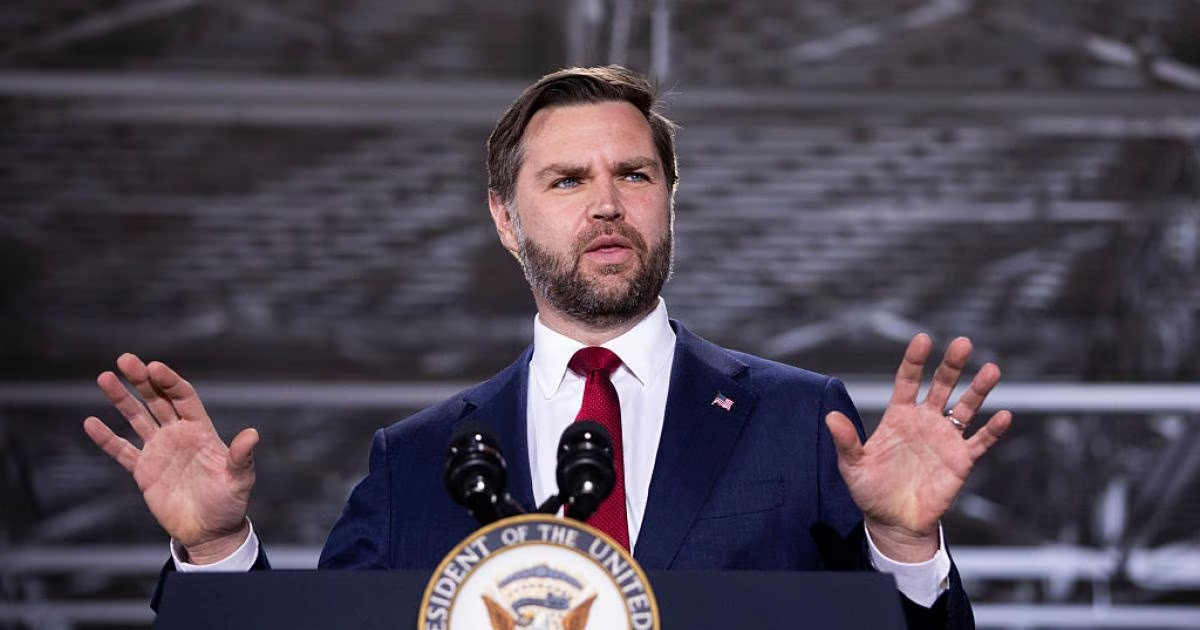
US President Donald Trump confirmed the existence of open negotiation channels with Iran, noting the involvement of his deputy, JD Vance, in these diplomatic efforts. This move is unusual in the corridors of American foreign policy, where sensitive files are typically handled by close advisors like Jared Kushner, raising questions about the nature of the role Vance will play in shaping future understandings.
Despite Trump's assurances, the outlines of his deputy's role still lack clear leadership, with the President describing him as 'involved like others.' Vance's participation gains particular importance given his stated positions against long wars and his strong reservations about any direct military escalation with Tehran, especially the plans discussed in Washington under the name '12-day war.'
In the context of seeking official communication channels, Pakistan emerged as a strong candidate to play a mediating role between the two parties. Trump held a phone call with Pakistani Army Chief Asim Munir, who has a close relationship with the US administration, to strengthen this path aimed at finding common ground away from direct confrontation in the region.
Trump stirred a wave of mystery with his statements about a 'gift' from the Iranians related to the energy sector and the Strait of Hormuz, without disclosing its nature. The US President went further by stating that 'the regime has changed' in Tehran, which contradicts prevailing intelligence and political assessments that do not see a radical shift in the structure of Iranian power so far.
In contrast, there is a state of skepticism in American political and media circles regarding the seriousness of these negotiations. Observers, including Democratic Senator Chris Murphy, believe that Trump's statements may be merely a media tool aimed at calming global energy markets and lowering prices, rather than an expression of a genuine desire to reach a comprehensive nuclear or political agreement.
On the ground, the diplomatic atmosphere contradicts military leaks indicating a potential imminent escalation in the Middle East. Reports from the US Department of Defense speak of the possibility of transferring the 82nd Airborne Division, an elite unit specializing in rapid ground operations, to carry out specific missions aimed at securing airfields and establishing a pressing military presence on the ground.
The data indicates that Washington may form a joint force of five thousand soldiers to strengthen its negotiating position through field power. While the US administration tries to show that it holds the initiative, Tehran insists that it holds the keys to escalation and de-escalation on the ground, leaving the scene open to all possibilities between a comprehensive settlement or military explosion.
Trump: The regime has changed in Iran, and they gave us a gift related to oil, gas, and the Strait of Hormuz.
شارك برأيك
Mystery shrouds US-Iranian negotiations: Vance's surprising involvement and anticipated military movements