





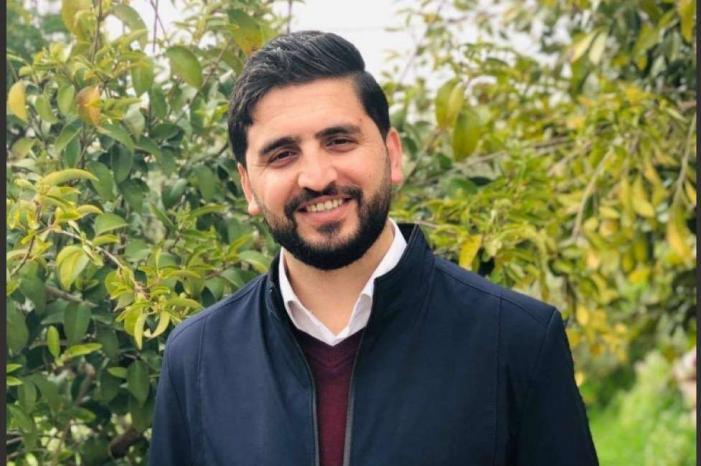
Rizq Atawneh
As the Israeli aggression on the Gaza Strip continues for nearly 22 months, more than two million Palestinians in the Gaza Strip are facing a real famine due to the blockade and the denial of access to food, water, and medicine. This is what UN reports and international relief organizations have described as "the worst humanitarian disaster of the 21st century." This coincides with systematic genocide and bombing targeting civilians and infrastructure, including schools, hospitals, and refugee camps.
Meanwhile, the West Bank is witnessing an unprecedented escalation in ethnic cleansing in the northern West Bank, the Jordan Valley, and Jerusalem, with repeated destruction of refugee camps and forced displacement operations carried out by the occupation army and armed settlers with the full support of the Israeli political and military establishment.
This reality is imposed under a complicit or silent international cover, and at its heart lies the American role as a fundamental pillar in the continuation of this Israeli impunity from any political or legal accountability.
The US-Israeli alliance is not a temporary relationship of convenience, but rather a deeply rooted structural bond, the beginnings of which date back to the founding of the United States itself. This relationship has transcended administrations and parties to become a political and strategic doctrine.
From this standpoint, Washington will not accept, under any circumstances, that Israel suffer a military or political defeat. Should such a threat arise, it will immediately intervene to change the situation, as it did in the October 1973 War when it prevented a complete Egyptian victory over the Israeli army.
Even within legal and diplomatic frameworks, the United States refuses to condemn or hold Israel accountable in the Security Council, using its veto power or obstructing entire international institutions. This behavior is no longer bias; it has become a tool for entrenching the Zionist colonial regime in Palestine.
The United States follows a recurring negotiation strategy in every crisis, based on the following elements: complete monopoly over the negotiation process, preventing any serious role for other international parties that might adopt balanced positions and present Washington as a mediator, while coordinating all items with Israel in advance; implanting impossible conditions in the proposals, leading to a pre-calculated Palestinian rejection, which Washington uses to justify the continuation of the war; buying time for Israel, and in every failed round of negotiations, it is used to improve Israel's position on the ground and weaken the opponent politically; repeating mutual rejection after Palestinian rejection; amending the proposals to give Israel a justification for its own rejection, and so on until a settlement is imposed that is tailored to Israel's needs.
This negotiating policy, which deceives some with slogans of "peace," ultimately leads to the depletion of Palestinian rights and the emptying of the national project of its liberation content. It gradually destroys the Palestinian political entity and transforms the Palestinian Authority into an administrative coordination tool, rather than a liberation project. While the noose tightens in Gaza and the camps in the northern West Bank are demolished, the fruitless negotiations continue under an American umbrella, in complete disregard for the magnitude of the crime being committed against a defenseless people who are being besieged, killed, and displaced before the eyes of the world.
Faced with this imbalanced equation, it becomes imperative for the Palestine Liberation Organization to exercise its role as the sole legitimate representative of the Palestinian people and to reposition itself politically and strategically through the following steps: Rejecting unilateral American sponsorship by declaring a clear political position that rejects any political or negotiation process mediated solely by the United States and mobilizing Arab and international support for this position; Adopting a policy of strategic weaning from the West through political disengagement from Washington, including reviewing diplomatic and financial relations in favor of building alternative international alliances (such as BRICS and the countries of the Global South); Rebuilding the national project by restoring the national liberation program as the basis for political action, transcending the illusion of a state under occupation and focusing on ending the occupation, not managing it; Reviving popular activism and international solidarity by activating the Boycott, Divestment and Sanctions (BDS) campaigns and expanding the prosecution of Israel in international courts; Unifying the energies of Palestinian communities abroad and calling for a comprehensive national conference by launching a comprehensive national dialogue to rebuild the Palestinian political system on democratic and participatory foundations, with the participation of all factions and societal forces.
At a historic moment when famine and genocide in Gaza intersect with ethnic cleansing in the West Bank, and mediation efforts fail, American policy appears to be more than just a tactic; it is a long-term colonial system of governance.
Faced with this reality, the PLO is today required to make major decisions, beginning with breaking its dependency and relaunching the national project as a liberation movement, not as an authority under occupation.

الأربعاء 23 يوليو 2025 9:13 صباحًا - بتوقيت القدس
The Palestinian entity in light of international disintegration and American bias
شارك برأيك
The Palestinian entity in light of international disintegration and American bias