





Workers from the Gaza Strip who are inside the Green Line reported that the occupation police launched a campaign against them.
According to those workers, dozens of those arrested were transferred to cities in the West Bank.

Mon 09 Oct 2023 10:04 am - Jerusalem Time
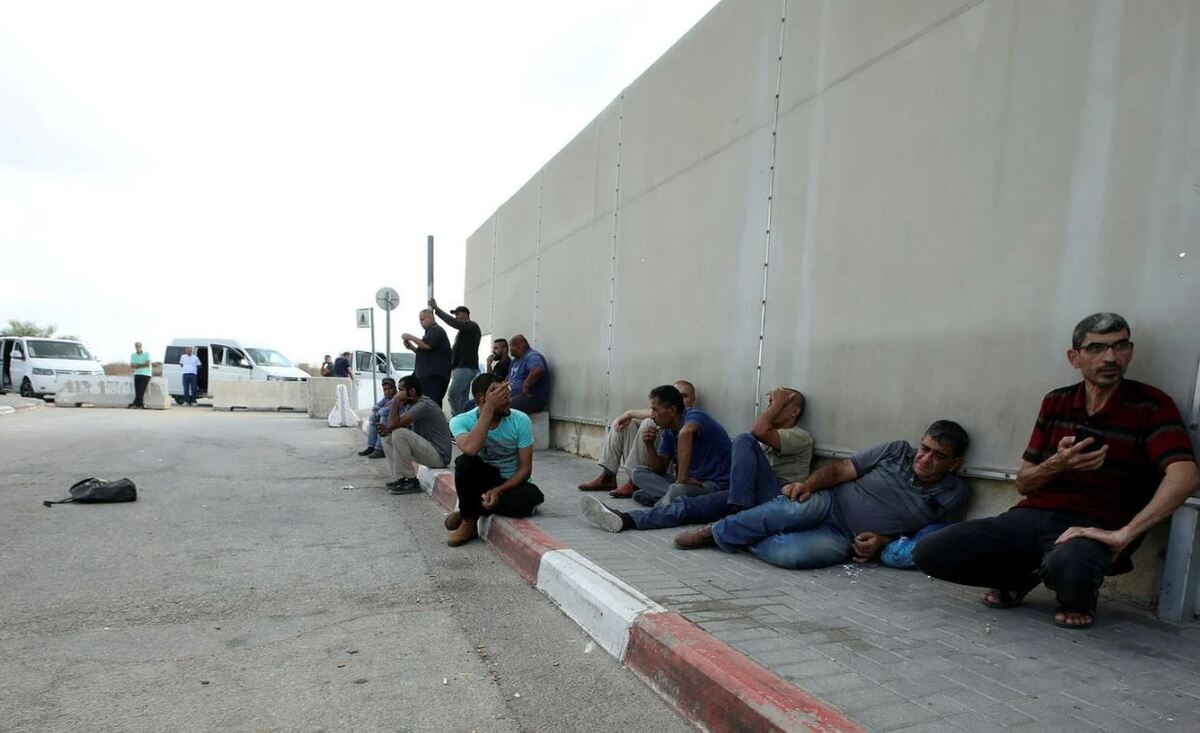
Workers from the Gaza Strip who are inside the Green Line reported that the occupation police launched a campaign against them.
According to those workers, dozens of those arrested were transferred to cities in the West Bank.
Mon 09 Oct 2023 10:02 am - Jerusalem Time
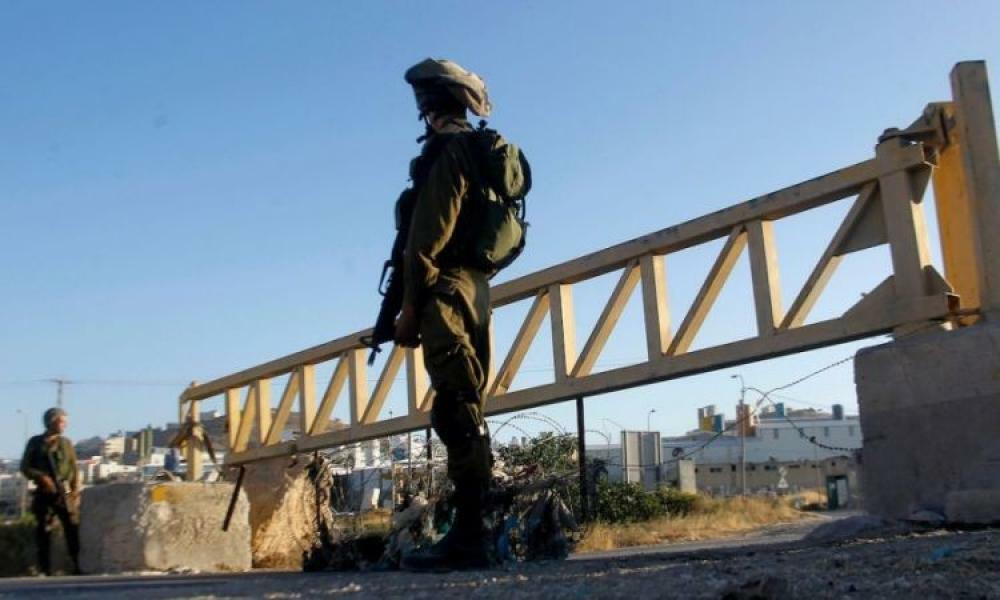
The Israeli occupation forces continue to close the Mount Gerizim gate in Nablus for the third day in a row.
The Samaritan Sect Committee said on Monday that the occupation forces are still closing the main gate at the top of Mount Gerizim and preventing residents of the area from entering or leaving, for the third day in a row, confirming that about 450 citizens are living under siege.
It is noteworthy that the number of Samaritans who describe themselves as guardians of the true Torah is 800 people, half of whom live in Nablus, and the other half in Holon within the 1948 territories.
Mon 09 Oct 2023 9:59 am - Jerusalem Time

Today, Monday, the Israeli occupation forces arrested four citizens from the occupied city of Jerusalem.
According to local sources, the occupation forces arrested the Palestinian citizen Muhannad Abu Rumi, after they raided his house in the town of Al-Eizariya.
The same sources added that the occupation forces arrested three Palestinian citizens from the city of Jerusalem, after they raided and searched their homes: Mahmoud Gharablah, Mustafa Burqan, and Muhammad Hijazi.
Mon 09 Oct 2023 9:53 am - Jerusalem Time

Opinion Writer

It has become necessary, in light of the “Al-Aqsa deluge” battle, and the unrestrained Israeli response, for the Palestinian Authority to take practical steps in terms of ending the destructive division and working on national unity, as it is responsible for the Palestinian people, whether in the West Bank, including Jerusalem, the Gaza Strip, or the Palestinians abroad and in all their locations.
The battle today is vast and calls for national cohesion and demonstrating to the occupying state that our people are united in defending their national rights, as well as the leadership and the rest of the Palestinian factions are united in defending our people in the face of what the occupying state is doing in the Gaza Strip and in the West Bank, including Jerusalem, in terms of crimes, violations, attacks and executions. .
If the occupying state had united in its war on the Gaza Strip, and the opposition declared that it supports the Netanyahu government in this war against the Palestinians, and even agreed to join an emergency government or what is called a national unity government, even though the opposition was claiming that it would not sit in a government with Netanyahu. And with the ministers from the extremist parties that are hostile to the non-religious Israeli parties, why is there not an immediate announcement by the official Palestinian side and all the factions to unite and end the division that has caused the greatest harm to the cause of our people and which the occupying state has exploited to advance its plans to resolve the conflict in its favor and liquidate the Palestinian cause?
It is very shameful that this division remains despite the current circumstances, which are the conditions of war and the widespread Israeli aggression against our people, an opportunity that may be the last, to announce an end to the division and unity, because with national unity it is possible to thwart all the plans of the occupation, and make its war on the Gaza Strip a huge loss for it. After that, it is a loss, and he has no choice but to recognize the national rights of our people and leave the Palestinian land, and that all his plans to resolve the conflict will not benefit him as long as our people are alive and defending these rights, despite the size and magnitude of the conspiracies targeting them, whether by the occupying state or by other countries. The West supports and supports this occupation, especially the United States, which applies double standards and protects the occupying state and supports it with everything in exchange for hostility to our people and describing their struggles as terrorism.
The world has come to an end, issuing statements of denunciation, and resorting to the United Nations, which does not do anything to stop the occupying state alone as long as the United States and the colonial West dominate this organization, and as long as the sword of veto is hanging over the necks of any international resolution in favor of Palestine and against the occupation.
Everyone has no choice but to rely on themselves, and not to rely on the United Nations and others, which are powerless in the face of Western control over them.
As the popular proverb says, “Nothing scratches your skin except your fingernail,” and this is what is currently required. History will not be kind to those who hesitate to achieve national unity, which is needed now more than ever..!
Mon 09 Oct 2023 9:51 am - Jerusalem Time

Opinion Writer

In light of our increasing dependence on technology in all aspects of life, cybersecurity, which relates to protecting systems, networks, devices and digital data from theft or disruption, has become one of the most important challenges facing the world today. With the steady increase in the number and cost of cyberattacks on countries and individuals, it has become necessary to enhance cybersecurity at the global level. With the Internet of Things, and technologies such as deep fakes, machine learning, and artificial intelligence, the vulnerabilities that attackers will attempt to exploit will increase, and it is expected that the number and severity of cyber attacks on individuals, companies, countries, and their national security will double.
During the Cold War, which lasted for decades, and despite the many serious crises that arose between the United States of America and the Soviet Union. However, the theory of nuclear deterrence, based on “mutually assured destruction,” thanks to the capabilities of a second nuclear strike, was able to spare the world from a nuclear war. On the other hand, in our era, which is witnessing the heat of the birth throes of a new international order, and at a time when cybersecurity and its offensive and defensive weapons have become an integral part of the strategic power formations of countries and their armies, the Trump administration in 2018 amended the American nuclear doctrine to include a nuclear response to a cyber attack. strategic.
The cyber attacks on Estonia in 2007 are referred to as the first cyber war, and although there was no declaration of war from the attacker, or any conclusive evidence of the source of the attack, Estonia at the time accused Russia of being behind the attack, which coincided with demonstrations by the Russian minority in Estonia in protest against the transfer of... A monument in the center of the capital, Tallinn, dating back to the Soviet era. The cyber attacks, which continued for three weeks, targeted dozens of Estonian websites such as parliament, ministries, banks, and media organizations, paralyzing the country.
Unlike traditional nuclear deterrence, cyber deterrence lacks the most important element of deterrence theory: “attribution,” that is, the ability to determine the identity and location of the attacker you intend to deter or respond to. Attackers use techniques that make them anonymous and use other or multiple titles for their attacks (attribution gap and therefore accountability gap). To make them worse than nuclear or conventional weapons, cyber weapons are easily accessible, inexpensive, difficult to track and identify, and evolve much faster than their policies and laws. National and international. Security risks in the cyber field are not limited to attacks aimed at disrupting and sabotaging systems, stealing data for espionage purposes, or paying ransom only. Rather, they may also be misleading media campaigns in the cyber field that harm the national security of a country. For example, the United States of America accuses Russia and China (which deny this) of launching misleading media campaigns in cyberspace and social media to influence the results of the presidential and legislative elections in the United States of America. US intelligence agencies expect that such interventions will continue in the future. With the rapid development of methods of deception and falsification, taking advantage of artificial intelligence applications, the US presidential elections next year may witness the peak of foreign interference in the cyber field, putting American democracy and its institutions to the test. Ironically, Russian and Chinese interventions may be conflicting. For example, Russia may prefer a Republican presidential candidate given the Republican Party's position that does not support unlimited support for Ukraine in its war with Russia. As for China, it may prefer a candidate from the Democratic Party for the presidency, given that he is less aggressive than the Republican Party in the attempts of the American states to contain the Chinese rise.
If we return to the example of changing the nuclear doctrine of the United States of America to include responding with a nuclear weapon to a strategic cyber attack. For example, Estonia accused Russia of the 2007 attacks without being able to prove the accusation. An American response to a cyber attack on the command and control systems of nuclear weapons by a country or group that led the United States of America into believing that the attack came from Russia, for example, may put the world on the brink of abyss within a few minutes.
Therefore, the calls and attempts of many countries to establish an international protocol for cybersecurity may seem late and far from reality, given the deep complexity of the cyber field and the absence of international cooperation from great powers such as the United States, China, and Russia. Even if there is an international intention to cooperate to reach such a protocol, there is no hope that this will happen soon compared to previous similar international protocols or agreements, such as the Paris Climate Change Agreement, which entered into force in 2016 after more than 20 years of negotiations.
Certainly, cybersecurity cannot wait in the era of accelerating artificial intelligence. Accordingly, countries may resort, individually or within geographical or ideological alliances, to adopting something similar to their own “Internet” or a multi-layered Internet to protect themselves and their citizens in the cyberspace.
Mon 09 Oct 2023 9:47 am - Jerusalem Time

Opinion Writer

It is difficult to write now about the rolling strategic event, which began on Saturday in the early morning hours with the battle of “Al-Aqsa deluge”. But it has become clear that it is an important historical event in the military, political and strategic sense, and it will have its implications, consequences and results as the dust of the battle settles.
However, some quick notes to think about now. The first of these observations is the repetition of the word surprise and astonishment in all media outlets, in all languages, and on the lips of a very large number of analysts, even though what happened was not supposed to surprise anyone.
What has happened and is happening, up to this moment, is completely in line with the law of physics that we all know, which is that excessive pressure leads to an explosion. Dozens of years of occupation, siege, assassination of leaders, daily killing of people, and violations of the sanctity of the Palestinian people, their property, and their sanctities - all of this could only lead to a reaction, and the real surprise is the endurance of the Palestinian people until they reached the point of explosion.
The second observation is about the Israeli racist mentality, which deals with the Palestinians and Arabs with terrible arrogance. Worse than this mentality is that some Arabs and Palestinians are accustomed to this racism, accepting it and coexisting with it, as if the life of an Israeli person is worth many times the life of a Palestinian person, just as the rights and dreams of the Israeli citizen are equal. His ambitions are all legitimate and acceptable, even those related to expansion, settlement, occupation, and the siege of millions of Palestinians and the destruction of their lives on a daily basis. As for the Palestinian’s right to live in dignity, it is a strange matter and far from reality, as is his right to seek to get rid of the occupation, lift the siege, achieve liberation, and establish his independent state. This racist mentality, its superior discourse and its acceptance, stripped the Palestinian of his humanity, and turned him into a mere worker who dreams of working for Israel and whose highest ambition is to be able to obtain food and drink.
The third observation is the comparison with the October 1973 war. What happened is very far from this war in all its meanings and dimensions. Of course, the element of surprise is shared. What is important here is that Israel and its intelligence are human beings like us, who do not know everything. They can also be prevented from infiltrating our countries, parties, and political movements, if the will is present and we are organized properly, and more than that, if small and besieged Gaza is able to do so, and at this level, then others can do it in a more effective and simpler way.
The fourth observation is about the dimensions of what is happening in the normalization process. Why raise so many questions about the results of this battle over the possibility of normalization with Saudi Arabia? This is really strange! What is the relationship between the two things? Is normalization an interest for the Palestinians, and serves them and advances their interests in any case, or does it not serve them, but rather harm them and their interests? Does normalization require that the Palestinians be weak, submissive, and surrender only to Israeli dictates? Is the strong and resistant Palestinian in need of normalization?
The fifth observation is about the racist Israeli political mentality and the politics of revenge. The US President, Joe Biden, and a large number of other heads of state, gave the green light to Israel to take revenge on all our people in Gaza and to sow destruction without accountability, and now everyone is waiting for Israeli revenge against Gaza, the West Bank, Jerusalem and the Palestinians of 1948, without even specifying how much. Israel and its fascist government have enough Palestinian blood and destruction to feel satisfied. Why is all of this entitled to Israel? Does the Palestinian have the same right? If the matter is a matter of self-interested policies, racism, and double standards in Western countries, why do we, the Arabs and Palestinians, accept being treated in this way?
The sixth note is short and simple, for all those “concerned” with Gaza workers. Let your support for them and express your love and concern for them be through your support for them in building and rebuilding Gaza instead of rebuilding Israel.
The seventh and final note is about the political harvest of this battle. After all the struggle and sacrifices expected in this battle, in order for Gaza, Palestine and its people to benefit optimally from all of this, the resistance must involve the Palestine Liberation Organization with all its components in the political path that the battle will open, and it must also involve the Arab countries. This requires the beginning of coordination to end the battle with the least possible losses and achieve the goals. Managing this file without involving others, Palestinians and Arabs, will necessarily prolong the battle, increase losses, and reduce the possibility of achieving political goals.
From "Arabs 48"
Mon 09 Oct 2023 9:41 am - Jerusalem Time
Opinion Writer
Half a century after the surprise attack carried out by the Egyptian and Syrian armies in Sinai and the Golan on October 6, 1973, which entered history as the October Arab-Israeli War or the October War, which almost liberated all the Arab lands that Israel occupied in the June 5, 1967 war, Had it not been for aborting the results of that war, which was supposed to be liberating as the late President Gamal Abdel Nasser wanted, there would have been a sudden Palestinian ground and missile attack on Israel on October 7, 2023, under the name “Al-Aqsa deluge.”
I can quickly say that whoever chose this time, which coincides with the 50th anniversary of the October Arab-Israeli War, wanted to convey a message that what is happening is a continuation of that war, which some people have emptied of its content and turned it into an "incitation war" that led to the Camp David, Oslo, Wadi Araba and what followed agreements.
In short, it may be too early to talk about accurate predictions, as the operation is continuing and there is talk of dozens of dead and captured Israelis, but what we can say is that we are facing a major event that may lead, at its minimum, to clearing Israeli prisons of Palestinian prisoners, and at its highest, to the outbreak of a major war throughout the region.
But if that war breaks out, the question that arises is: Will there be room to form an investigation committee into the causes of the Israeli shortcomings in today’s battle, similar to the “Agranat” committee that was formed in Israel in the wake of the October 1973 war to investigate the causes of the Israeli shortcomings in that war? Or will it be too late?!
Mon 09 Oct 2023 9:37 am - Jerusalem Time
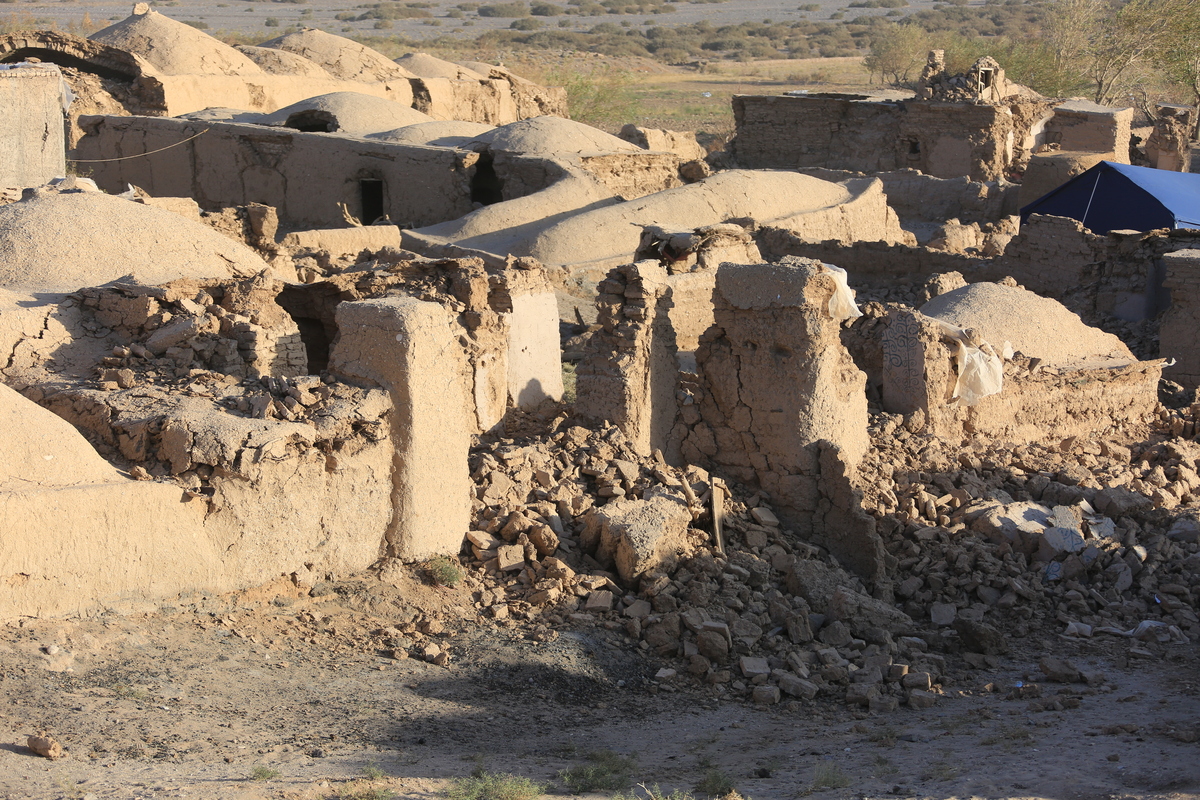
The death toll from the earthquakes that occurred in Herat and neighboring provinces in western Afghanistan has risen to 2,445 people, Herat authorities said on Sunday evening.
The worst-hit area is the Zanda Jan district of Herat, where “13 villages were completely destroyed,” said Mawlawi Musa Achari, director of the Herat State National Disaster Management Authority.
Earlier the same day, National Disaster Management Authority spokesman Mullah Janan Shayeq said that more than 9,200 people were injured during the earthquakes.
According to the China Earthquake Networks Center, two 6.2-magnitude earthquakes struck Afghanistan on Saturday. The first tremor occurred at approximately 11:10 local time (06:40 GMT).
Mon 09 Oct 2023 9:35 am - Jerusalem Time
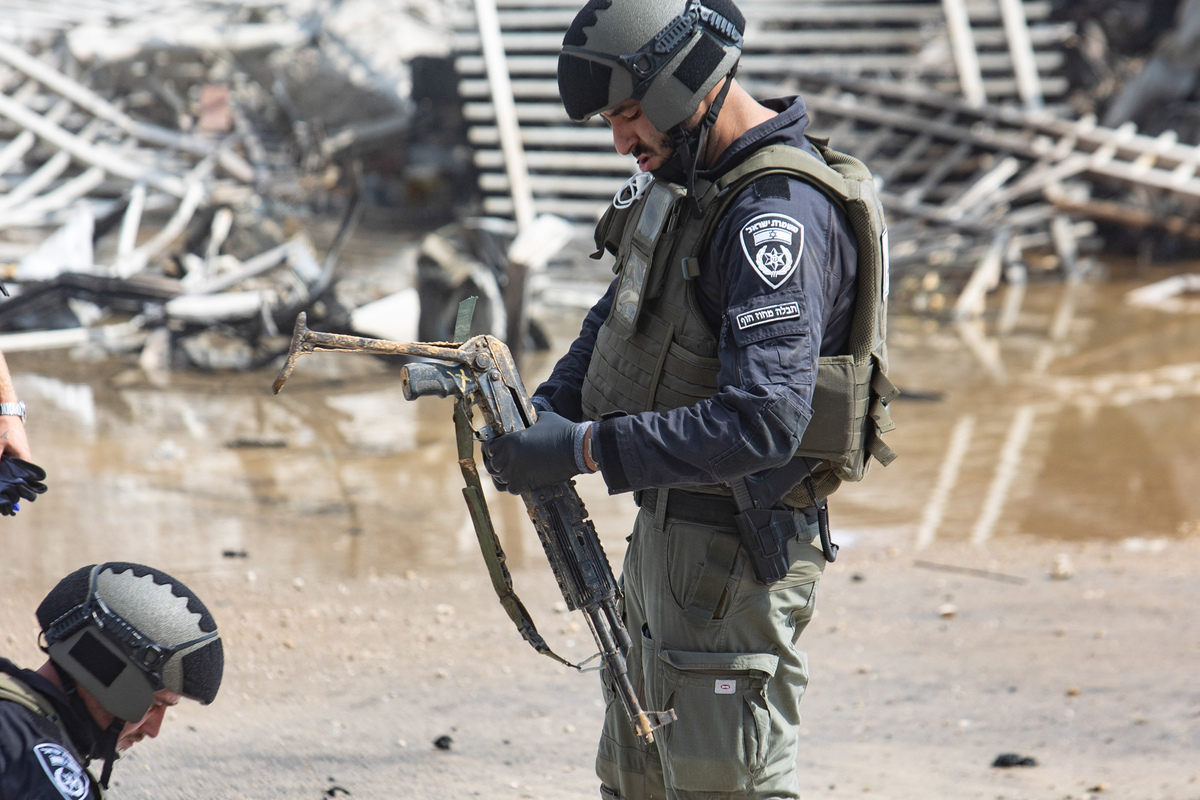
A source in the Hamas movement revealed advanced mediation led by Qatar to conduct an urgent exchange deal with Israel.
The source told Xinhua News Agency, requesting anonymity, that Doha is seeking, with American support, an agreement to release Israeli women captured by Hamas in exchange for Palestinian female prisoners in Israeli prisons.
He added that a Hamas leader informed Qatar that the movement does not object to making the deal, provided that it guarantees the release of all 36 Palestinian female prisoners from Israeli prisons.
No official statement has been issued in Qatar regarding this information yet.
Video clips circulating on the Internet showed armed Hamas members capturing Israeli women in Gaza, including elderly women.
Israeli sources reported earlier that more than 300 missing Israelis have been documented since the start of the current round of fighting between Hamas and Israel.
This prompted Israeli Prime Minister Benjamin Netanyahu today to appoint Reserve General Gal Hirsch responsible for the issue of prisoners and missing persons.
Hundreds of fighters from Hamas and other factions attacked Israeli towns adjacent to the Gaza Strip as part of a surprise attack launched by the Al-Qassam Brigades, the military wing of Hamas, on Saturday on Israel, which it called the “Al-Aqsa Flood.” It included the launching of thousands of homemade rockets and drones, and the storming of dozens of gunmen into Israeli towns adjacent to Gaza.
Mon 09 Oct 2023 9:35 am - Jerusalem Time
Opinion Writer
It is strange that the status of armies in Arab countries, and perhaps “developing” countries as well, and their fluctuating roles, no longer attract the attention of researchers and supposed stakeholders, as was the case in the sixties and seventies of the last century, despite the great importance that those armies still enjoy, and the prescribed roles that they play. She performs it, whether with her heavy presence at times, or with her absence, which is no less heavy at other times.
Perhaps this led to the collapse of the Soviet Union and the dominance of American unipolarity in the 1990s.
And the changes that have occurred in international relations, and even in the nature of the political movement in the state itself, and the belief that matters have become settled for those for whom history has “ended” to the belief that there is no room for any serious change in the other direction, not even in any direction, and therefore there is no need for any Interest in any element of change, including the army in this case, as long as change itself has become “impossible.”
Each army in the region has its own peculiarity. The army’s social composition, its intellectual and ideological structure, its political role, and its relations with the rest of the groups in its society and with the political system in its state are subject to many factors, which have a fundamental relationship to the nature of the state itself, and to the “historical” manner in which it emerged, and By the military and intellectual “school” in which he was raised, and by the strategic and political situation in which the army found itself.
But this “specificity” that characterizes every army in the region does not deny that these armies share many things, just as their countries share, as those countries were subjected in one way or another to colonialism, and also obtained, in one way or another, one form or another of “independence.” Their armies underwent “class” and ideological changes that had many similarities, and those armies achieved few common victories, suffered many common defeats, and at times they understood their national security almost in common, and then abandoned that understanding “almost” in common as well.
The mission of this article is to examine some of the basic changes that have occurred in the situation of the army in the region, the repercussions of those changes on the situation of the “national” state, and the opportunities that the global conflict currently taking place may provide, in order to create a new multipolar world order.
Introducing the army
The army in the region, especially in its early days, was usually described as the homeland's army and the people's army, as it is the comprehensive national institution for all segments and classes of society. Although its largest group consisted of soldiers from the poorest rural backgrounds, its senior officers and senior leaders were mainly composed of members of clans, feudal lords, and aristocrats.
But the group that was considered the elite, and played the most prominent role in the history of the armies of the region, was the one made up of middle and junior officers, which came mainly from the middle classes in the city and the countryside, and was called in socialist literature the “military intelligentsia.”
The armies of the region, which most likely arose with the emergence of the state or earlier, were highly respected. This was also the case with the military profession, which may have inherited part of its respect from the “prestige” enjoyed by the colonial armies during the occupation period.
But the basis for the positive position on the army - and talking mainly about Arab countries - came from its being, at least in the founding period, the largest, and almost the only, employer of young people. It is the comprehensive national institution, a symbol of the unity of the people, a carrier of the ideas of sovereignty and independence, a protector of the state and “the nation,” and it is the most modern and most organized institution in society.
The characteristics of these armies varied from one country to another in the region, depending on the circumstances in which they were established, the form and “function” of the state, and with regard to the armies of the Arab Levant in particular, their role in the wars with Israel. In this context, we can distinguish between three types of armies: those that were established by the colonizers before political independence, those that appeared in the midst of the liberation movement, and the third that appeared after the establishment of the “national” state.
The army and the state
The experience of the Palestinian Authority provided a living model for studying how the state emerged in our region, as well as the emergence of the institutions associated with it, including the armed forces. The birth of power before our eyes, as if we were in a real laboratory, freed us from research, historians, archaeologists, documents and archives, to embody the reality in which the state and its institutions arose, and presented to our generation a “clinical” case that we can, perhaps with a few exceptions, generalize to the rest of the countries of the region.
The nature of the emergence of a state determines the nature of its army. The contemporary Arab state arose in an “ambiguous” relationship with colonialism, and its army also arose with it, or at least, was radically influenced by it in cases where it was present in one form or another.
Colonialism prevented the emergence of a “natural” state in the region, that is, a state that arose as a result of a “social contract” between the ruler and the ruled, just as states are created. Rather, the “security” (coordination) contract was essentially, as well as the political and economic, between the “nominated” ruler and the colonial state, which was The foundation upon which the state and its system were built. Anyone who treats the state in our region as if it were the product of the Jean-Jacques Rousseau “contract,” and not the Sykes-Picot “contract,” is certainly suspect.
As is known, the army constitutes one of, if not the most important, element of the “deep” state. It is closely linked to it. Dissolving the army practically means "dissolving" the state, and the example of Bremer's Iraq is before us. The army is most likely in the shape of its state, or the state is in the shape of its army (there is no difference). The strong state has a strong army, the subordinate state has a subordinate army, the targeted one has its army targeted, the one that has lost its political and moral legitimacy has its army as well, and the one that lives in the pre-state phase, as most of them are. In our countries (to varying degrees), their army is in the pre-army stage, and when the state matures, its army matures.
The army...different roles
After the Palestinian Nakba, and in light of the world order that was formed after World War II, that bipolar system, in which the Soviet Union represented the national liberation movements in the colonial and semi-colonial countries, patriotic and nationalist movements emerged among the military intelligentsia (junior and mid-level officers), led by Some of their countries are against colonial influence, although in many cases they went in a direction hostile to the masses and to political and civil action, as this led to subsequent setbacks.
Things developed later, due to the weakness of the state, or - more precisely - due to the failure of the pre-state to transform into a state, and in light of weak and suppressed civil forces, and the imbalance that occurred in the global system in favor of Western imperialism, the army - and talk about our region - turned, From an army for the state to an army for the regime, then the army took control of the regime to become an army regime.
After America took control of the scene, and the unipolar system was established by eliminating all symbols of the dual world order except what was rare, major transformations took place in the countries of the region and their institutions, and the army was the most prominent and clear in these changes.
It was natural, under the bipolar system, for the regime to be with America and the opposition with the Soviet Union, or vice versa, but in light of the new situation, America is no longer content with the loyalty of the regime but also the opposition as well. It worked to subjugate the state with all its institutions: authority and opposition, regime and civil society, army and parties, secularists and Islamists, left and right.
The United States “accepted” that there would be an authority and an opposition, and that there would be political parties, civil society, and schools of “thought,” but it worked to ensure that the relationship with it would be outside, or even above, any conflict, and if there was to be competition between these, then let it be rapprochement. From her and win her affection. This required the United States not to limit itself to maintaining ties with the regime and its symbols, but rather with everyone. Regimes, peoples, parties, institutions, and individuals. This also required working to change values and beliefs, and all that results from education, media, and “religion”...
One of the most important institutions that the United States was keen to “communicate” with and influence was the army, which it worked to link directly to it, financially, organisationally, ideologically, armament and alliances, in a way that ensured that it would no longer act as a national institution, and instead of the army being a symbol of sovereignty and independence, As a factor in preserving them, it became a title and a tool for abandoning them.
Financially and economically, the United States allocated direct financial “aid” to the army and its leaders, which does not necessarily pass through the state budget and its financial institutions. It also encouraged the involvement of the military institution in “business” and “civilian” businesses, transforming the army from a social class that included representatives of all segments and classes of society, on which the state spent its various resources, into a fully-fledged social class that not only finances itself but also accumulates profits. The rest of the classes of society compete to own the means of production and control the market.
Ideologically, this formed a basis for changing the army’s doctrine and function - here normalization was necessary by transforming the state and its institutions, most notably the army, from a role to a function - so from a basic goal of defending the homeland and the people, the army became without a goal, or with any goal it was “assigned to” except that which it was assigned to. It should be. In terms of the military doctrine, which was summarized by most armies in the region, that Israel represents the main, if not the only, enemy of the nation, this has changed for many, to become the friend and “ally” as well as its army.
In light of normalization with Israel, the armies in the region have lost any strategic or moral justification for their presence, as there will be no wars “after today,” as Sadat said after the 1973 war, unless they are civil wars.
The conclusion here is that, in general, as the armies of the region differ depending on the degree of development of their countries and their strategic situation, there seems to be no hope that these armies will take advantage of the opportunity provided by the historical situation that the world is going through now, as some African armies do.... This The situation is difficult for people and their elites who seek change, and requires greater effort to find other tools to achieve this.
Mon 09 Oct 2023 9:32 am - Jerusalem Time

Opinion Writer

Hamas... called it the Al-Aqsa flood. Israel called its response iron swords.
Leave aside the labels, let's talk about the true description of what happened and is happening. Firstly, it is a war to deter the arrogant Netanyahu and the obsessed leaders of his coalition.
It is a war of response to the Israeli belittlement of the Palestinian people, considering them non-existent and that they can be controlled with some services and facilities.
It is a war of response to the Israeli violation of Palestinian dignity, Palestinian rights, and the Palestinian present and future.
It is a war on the legislation of shooting Palestinians according to the desire of the army, the border guards, and herds of settlers, and the intended legislation is being discussed in the decision-making governmental institutions.
These are some of them on the Israeli-Palestinian level, but on the broader level, it is a war that has completely destroyed the remnants of Oslo that no one dares even talk about anymore.
It is a war that tells the Americans that your excessive pampering of Israeli extremism has resulted in new blood, destruction, new orphans, and new displacement, and this time not only at the level of the Palestinians, but also at the level of the Israelis.
War... changed equations and produced new ones.
This war changed our era and opened another new era. It seemed that everything that happened between October 1973 and October 2023 was just a past of peace, and if it had partially stabilized, it was no longer completely viable.
The official who will not escape conviction is everyone who understood the trampling of Netanyahu’s ministers on the heads of worshipers at Al-Aqsa and considered it self-defense. And everyone understood the settlers’ spitting on Christian clergy as being part of Jewish culture, and this is what I did not say, but rather senior officials in Israel said. What prompted the Israeli writer Gideon Levy to say that Israel spat in the face of the world...
This war...is an explosion of a cauldron that has been boiling for years, which was calmly vented until venting no longer had the ability to prevent the explosion.
This war... its hero, and perhaps its victim at the same time, is Netanyahu, and his army, all those who did not do justice to the Palestinians. They left them prey to a brutal military force that did whatever it wanted with them, and they overlooked sieges from which no Palestinian city, village, or neighborhood was spared.
The Palestinians went on the path to peace when they raised the olive branch before the world, and the enemies of peace, truth and justice insisted on dropping it from their hands. What happened at six-thirty in the morning on October 7 was not just a military operation, but rather the explosion of a cauldron that had been boiling for years, and neither relief nor cooling helped.
Many may claim what happened as an achievement on their part, but the truth is that it is an achievement for a besieged people, against an opponent killed by his arrogance, a unique Gazan achievement par excellence.
Mon 09 Oct 2023 9:27 am - Jerusalem Time

Salama Maarouf, head of the government media office in Gaza, said on Monday that the Israeli occupation intensified its raids last night on various areas of the Gaza Strip, targeting dozens of residential buildings, citizens’ homes, mosques, facilities, service facilities, and schools used as shelter centers, all of which are civilian objects in accordance with international humanitarian law.
Marouf added in a press statement, contrary to the occupation’s claims that it targeted resistance capabilities, in the last hours the occupation army had committed massacres against 15 families, directly bombing their homes without warning, leaving dozens of martyrs and injuries, the majority of whom were women and children, most notably the bombing of a house for the Al-Zaanin family and the martyrdom of 20 citizens. Other than injuries.
Marouf held the occupation responsible for the massacres it carries out against civilians, which are in addition to the crime of siege and collective punishment that the occupier has intensified during its current aggression, which exacerbates the difficult humanitarian reality in the Gaza Strip. like he said.
He added: This difficult humanitarian reality places responsibility on the international community, and requires urgent intervention from its relevant organizations to curb the occupation, which follows a scorched earth policy in densely populated areas, and does not even pay attention to the shelter centers that fly the United Nations logo.
Mon 09 Oct 2023 9:19 am - Jerusalem Time

The Israeli occupation forces continue to close the checkpoints surrounding the occupied city of Jerusalem, for the third day in a row.
According to local sources, the occupation forces continue to close the Qalandiya checkpoints, the Shuafat camp, the checkpoint near the Bilal bin Rabah Mosque, Beit Iksa, and the Al-Jib checkpoint to the movement of Jerusalemites, which led to obstructing the movement of citizens, while allowing entry and exit at the Al-Za’im and Hizma checkpoints only.
In addition, the occupation forces obstructed citizens’ access to the blessed Al-Aqsa Mosque since the morning hours, and allowed only elderly citizens to enter the mosque.
It is noteworthy that the occupation forces imposed a comprehensive closure on the northern governorates yesterday, in light of the rapid developments in the Gaza Strip.
Mon 09 Oct 2023 9:15 am - Jerusalem Time
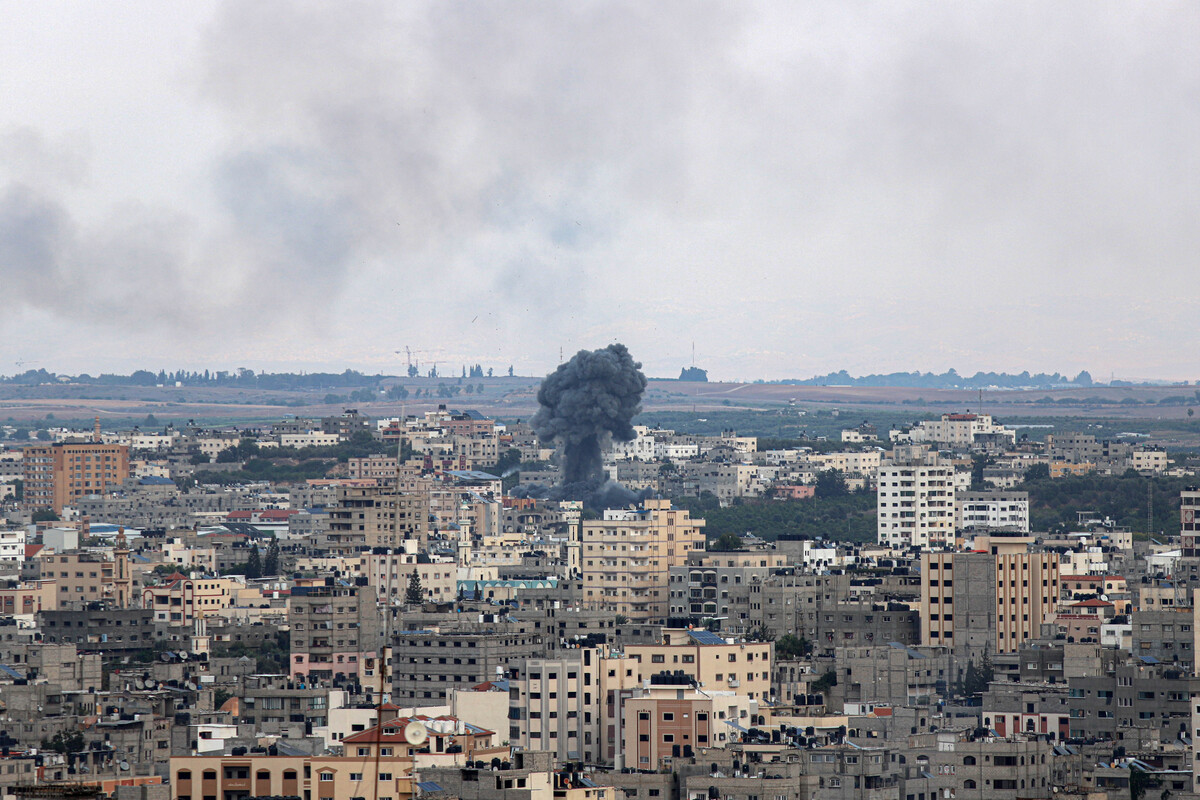
International and Arab reactions to the attack launched by Hamas against Israel early Saturday. Western countries, including France and the United States, described Hamas' operations as "terrorist", stressing Israel's right to defend itself. While Arab countries, including Saudi Arabia, which seeks to normalize its relations with Tel Aviv, called for an end to the escalation and calm.
While the escalation between Israel and Hamas has continued since Saturday, a number of countries, including the United States and France, described the movement’s military operations against Israel as “terrorist.” Arab countries, including Saudi Arabia, urged both sides to stop the escalation and calm down. On the other hand, Iran confirmed that it stands “by the Palestinian fighters until the liberation of Palestine and Jerusalem.”
In the United States, Secretary of State Anthony Blinken said in a statement issued by the ministry, “There is absolutely no justification for terrorism. We stand in solidarity with the government and people of Israel, and offer our condolences to the families of the Israelis who died in these attacks.”
US Secretary of Defense Lloyd Austin said in a statement, “Over the coming days, the Department of Defense will work to ensure that Israel has what it needs to defend itself and protect civilians from indiscriminate violence and terrorism.”
French President Emmanuel Macron announced that he strongly denounces the attacks on Israel, describing them as terrorist.
He wrote on the X platform (formerly Twitter): “I express my full solidarity with the victims, their families, and those close to them.”
For his part, German Chancellor Olaf Scholz described on social media what is happening in Israel "as horrific news... We are deeply shocked by the launching of rockets from Gaza and the escalation of violence. Germany condemns these attacks launched by Hamas and stands with Israel."
British Foreign Secretary James Cleverly wrote in a post on social media: “Britain categorically condemns the horrific attacks launched by Hamas on Israeli civilians. It will always support Israel’s right to defend itself.”
Canadian Prime Minister Justin Trudeau stressed on the X platform that his country "strongly condemns the current terrorist attacks on Israel. These acts of violence are completely unacceptable. We stand with Israel and fully support its right to defend itself."
Arab positions
The Saudi Press Agency said that the Ministry of Foreign Affairs called for an “immediate cessation of escalation” between Israelis and Palestinians.
The ministry said in a statement, “The Kingdom of Saudi Arabia is closely following developments in the unprecedented situation between a number of Palestinian factions and the Israeli occupation forces, which has resulted in a high level of violence taking place on a number of fronts there.”
Egypt warned of "serious consequences" of escalating tensions between Israel and the Palestinians.
The Egyptian Ministry of Foreign Affairs called in a statement to "exercise the utmost levels of restraint and avoid exposing civilians to further risks."
The Kingdom of Morocco, which maintains relations with Tel Aviv, expressed its “deep concern over the deteriorating situation.”
The outbreak of military actions in the Gaza Strip and condemns the targeting of civilians by any party.”
It called for "an immediate cessation of all acts of violence, a return to calm, and the avoidance of all forms of escalation that would undermine the chances of peace in the region."
However, Morocco's Islamist Justice and Development Party, which was the largest in parliament until the 2021 elections, praised the Hamas attack as a "heroic act" and a "natural and legitimate reaction to daily violations."
In a statement, the Qatari Ministry of Foreign Affairs held Israel “solely responsible for the current escalation due to its continued violations of the rights of the Palestinian people.”
She added that Qatar calls on "all parties to stop escalation, calm down, and exercise maximum restraint."
Kuwait expressed its "deep concern" about developments between Israel and the Palestinians, and held Israel responsible for what it called "blatant attacks."
About 250 men and women demonstrated in Al-Irada Square in front of the National Assembly (Parliament) in support of the Palestinians. They criticized Israel and the normalization processes of some Arab countries.
The demonstrators raised the flags of Palestine and Kuwait, wore the Palestinian keffiyeh, and raised banners reading: “Kuwaitis against normalization...yes to resistance, no to bargaining.”
The Emirates News Agency quoted the country's Ministry of Foreign Affairs as saying that the UAE "calls for the exercise of maximum restraint and an immediate ceasefire to avoid dangerous repercussions."
An official statement issued by the Sultanate of Oman stressed that "the international community must intervene immediately to stop the ongoing escalation and resort to the rules of international law."
China Russia
Interfax news agency quoted Russian Deputy Foreign Minister Mikhail Bogdanov as saying that Russia is in contact with Israel, the Palestinians and Arab countries regarding the escalation in the Israeli-Palestinian conflict.
He added, "It is self-evident that we always call for restraint."
The Chinese Foreign Ministry urged relevant parties to "remain calm, exercise restraint, and immediately end hostilities to protect civilians and avoid further deterioration of the situation."
The ministry said, "The main way out of this conflict lies in implementing the two-state solution and establishing an independent State of Palestine."
"We call on all parties to exercise restraint," Turkish President Recep Tayyip Erdogan said during a conference of the ruling Justice and Development Party in Ankara.
"They must refrain from hostilities," he added.
In Iran, the semi-official Student News Agency reported that the advisor to Iranian Supreme Leader Ali Khamenei congratulated the Palestinian fighters.
Iranian television showed footage of members of parliament rising from their seats and chanting, “Death to Israel.”
The agency quoted Foreign Ministry spokesman Nasser Kanaani as saying that the attacks indicate the self-confidence of the Palestinians in confronting Israel.
On the other hand, the United Nations Middle East peace envoy Tor Wennesland said, “This is a dangerous abyss, and I appeal to everyone to step back from the brink.”
international organizations
UN High Commissioner for Human Rights Volker Türk said: “This attack has a horrific impact on Israeli civilians. Civilians must never be the target of attack.”
European Commission President Ursula von der Leyen wrote on the X platform, “I unequivocally condemn the attack carried out by Hamas terrorists on Israel. It is terrorism in its ugliest form. Israel has the right to defend itself in the face of such heinous attacks.”
The Chairperson of the African Union Commission, Moussa Faki Mahamat, said that “the denial of the basic rights of the Palestinian people, especially the rights of an independent, sovereign state, is the main reason for the permanent tension between Israel and the Palestinians.”
He added, "The President urgently calls on both parties to end military hostilities and return, without conditions, to the negotiating table."
Source: France 24/Reuters
Mon 09 Oct 2023 8:58 am - Jerusalem Time

Today, Monday, the Israeli occupation forces launched a massive arrest campaign in various areas of the West Bank.
In Salfit, the occupation forces arrested the citizen Talal Awadallah Abu Asba from the village of Rafat to the west, the citizen Hossam Harb from the village of Iskaka to the east of the city, and the young man Ali Suleiman from Marda.
In Bethlehem, Saleh Hassan Salahat (43 years old) and Habib Salah Qassem (38 years old) were arrested after their homes were raided and searched.
The occupation forces also arrested Ali Yousef Diriyah (20 years old) and Ahmed Falah Thawabta (20 years old) from the town of Beit Fajjar, south of the city, after raiding their families’ home.
In Tubas, the occupation forces raided the home of Omar Hamza Daraghmeh and arrested him and his son Hamza.
In Hebron, the occupation forces arrested four citizens from the town of Beit Ummar al-Madina, after raiding and searching their homes. They are: Ahmed Rashid Sabarneh and his son Youssef, Murshid Muhammad Murshid al-Zaqiq, and Ghazi Muhammad Adi.
Rami Ibrahim Haddush, Ahmed Akram Joudah, and Yazan Muhammad al-Titi from the Al-Fawwar camp were arrested after their homes were raided and searched.
The young man, Hamza Ibrahim Al-Hafi (19 years old), was arrested after his house was raided and searched in the city of Tulkarm.
In Nablus, the occupation forces arrested the citizen Maher Al-Qarib, after they raided his house in the northern mountain of the city.
The occupation forces also arrested the citizen Mahmoud Jabr Labib Haj, after raiding and searching his house in the village of Talfit in the south.
In Ramallah and Al-Bireh, the occupation forces arrested the young man Ahmed Tamlih from the Umm Al-Sharayet neighborhood in Al-Bireh.
Mon 09 Oct 2023 8:31 am - Jerusalem Time
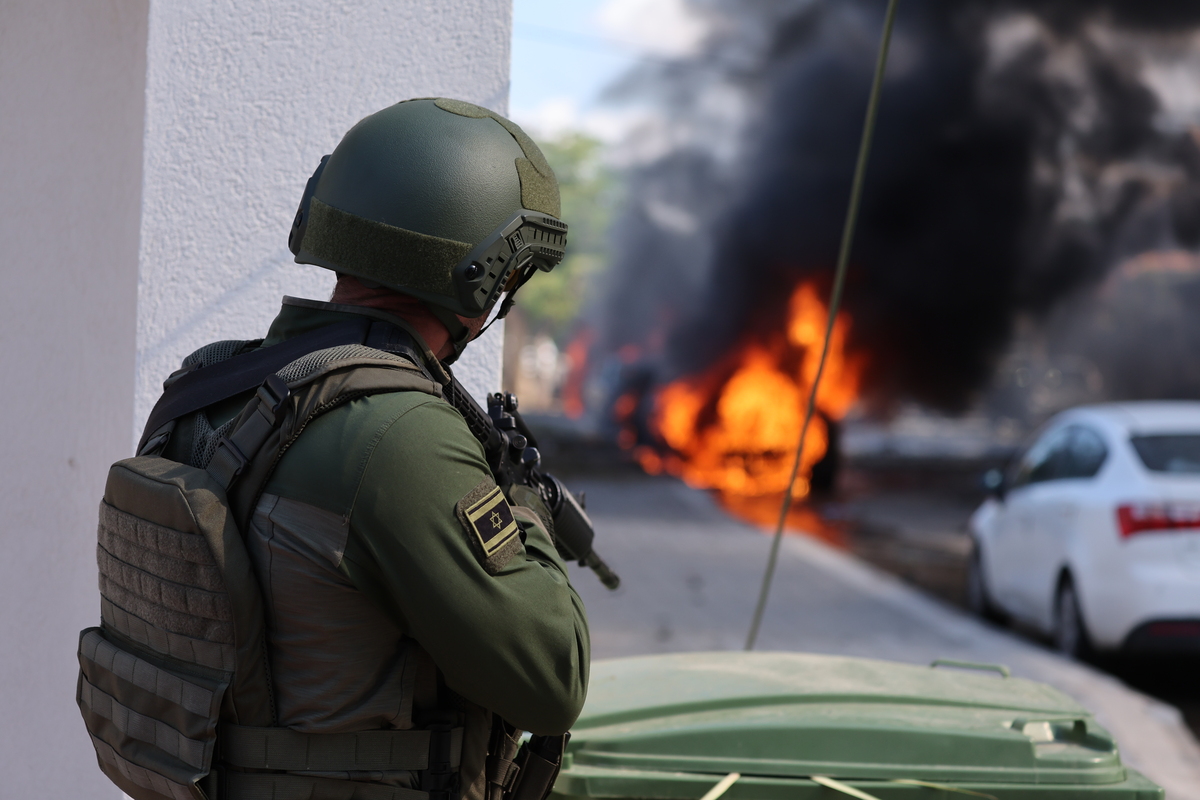
Reuters International published a report based on many sources in the leadership of the Hamas movement, as well as Israeli officials.
The agency quoted a senior Hamas leader as saying that the plan that was implemented was prepared two years ago, and many training sessions were being conducted on it. On the other hand, there was an indication from the movement’s leadership that it wanted economic facilities and money more than others, which is what prompted the Israeli security services to raise such an assessment of the political level.
He stated that his movement was concerned with this step in order to direct its pre-emptive strike.
The Hamas leader said that the movement refrained for quite some time from participating in any of the previous rounds in order to achieve the implementation of this plan.
He added: Hamas was able to create a complete image that it was not ready for a military adventure against Israel. Hamas used an unprecedented intelligence tactic to deceive Israel for several months, by creating the impression that it was not ready to enter into a conflict with Israel while it was preparing for this huge operation. As quoted by Reuters.
Israeli officials admitted that they believed that Hamas was concerned with facilities and economic benefits and not with the conflict, but this concept collapsed, while an Israeli military spokesman admitted that they were wrong with such estimates.
A senior security official admitted that the Israeli security establishment had been misled, and said: They made us believe that they wanted money, and during this time their training was aimed at implementing this plan when they were ready for it. Pointing out that these exercises did not indicate Hamas' intentions or turn on a red light among the security services about what it was planning.
Meanwhile, the Hamas official said that these exercises were taking place openly and in open areas, and that sometimes the Al-Qassam Brigades included members of Palestinian factions to participate in these exercises, the aim of which was to train for such operations by storming settlements with a surprise attack.
The Hamas official revealed that the main element of the plan was to prevent its leakage, and therefore many of the movement’s senior leaders were not aware of it, and that the 1,000 militants who participated in the surprise attack did not know the exact goal of the exercises they conducted until at point zero.
Speaking to Reuters, an Israeli security official admitted that the serious intelligence failure was the belief that Hamas leader in Gaza, Yahya Sinwar, was more interested in managing the Strip than engaging in a military conflict, which prompted Israel to reduce its interest in Hamas.
Meanwhile, Israeli sources said that in addition to the intelligence failure, the readiness of the field forces was very weak, and Hamas exploited this point, especially after transferring many forces from the Gaza border to the West Bank to enhance security and control there.
Mon 09 Oct 2023 7:34 am - Jerusalem Time
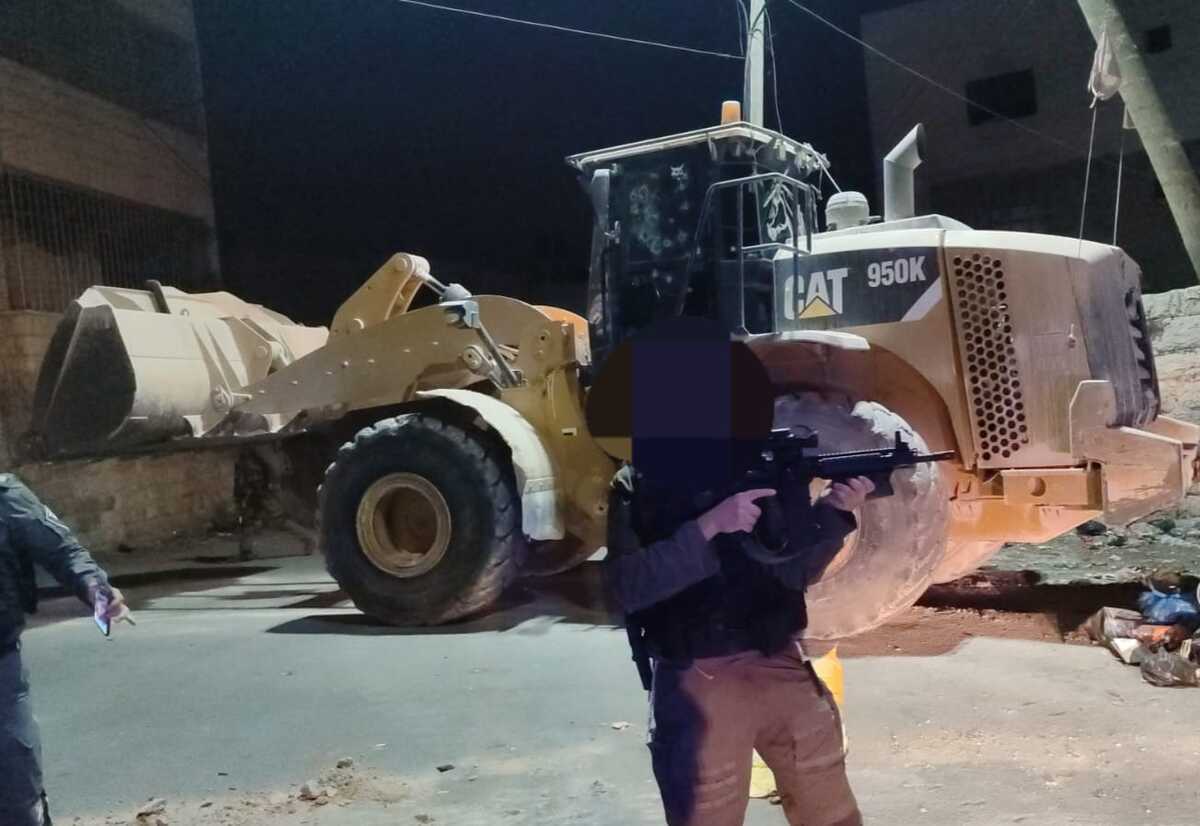
A young Palestinian was shot dead, Monday morning, after a group of Israeli soldiers opened fire on him at a checkpoint in Hebron.
According to the Hebrew channel Reshet Kan, the Palestinian was eliminated after he drove a bulldozer and tried to run over a group of soldiers who were at the checkpoint.
According to the channel, some soldiers who were outside the checkpoint spotted his progress and opened fire on him, killing him immediately.
Mon 09 Oct 2023 7:29 am - Jerusalem Time
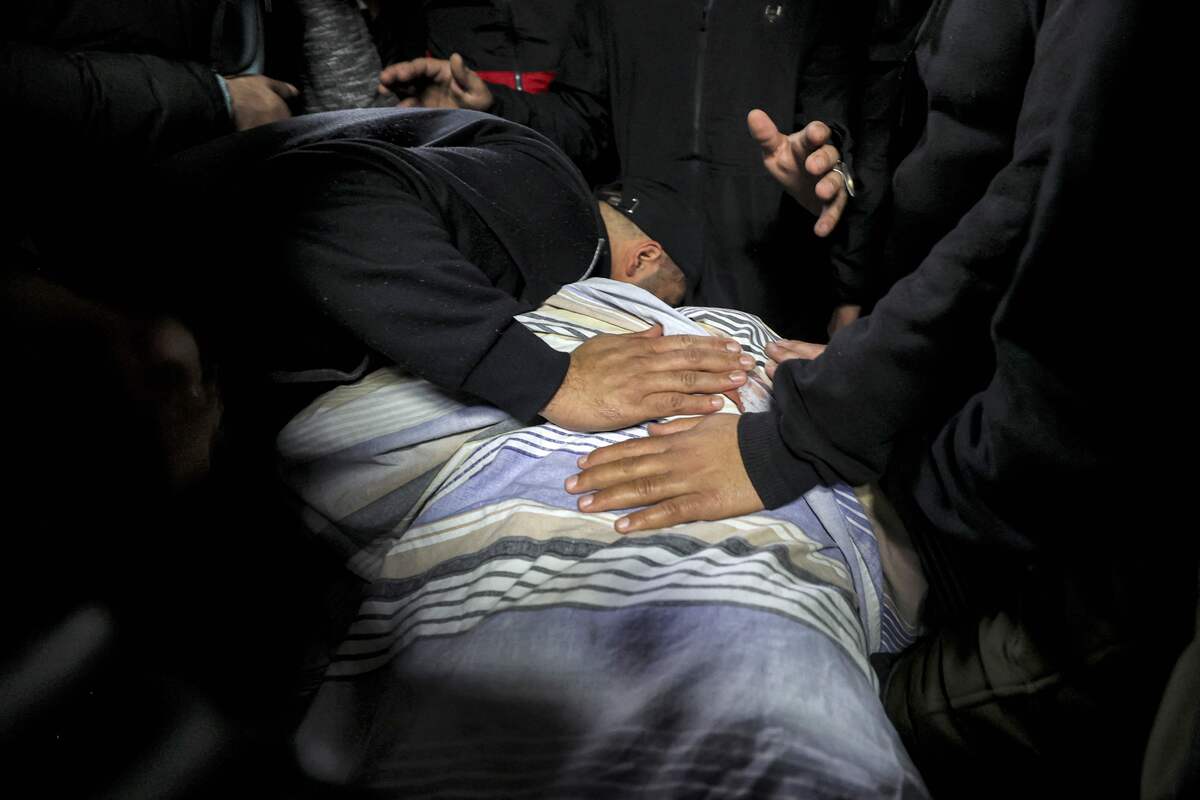
On Monday morning, the boy Adam Al-Julani (16 years old) died as a result of the wounds he sustained last evening during clashes in the Qalandia camp in occupied Jerusalem.
According to the Ministry of Health, with the martyrdom of Al-Julani, the number of martyrs in the camp since yesterday evening has risen to 4.
The Ministry announced the martyrdom of Muhammad Hamid, Amjad Khudair, and Yasser Kasba in the confrontations in the camp yesterday.
Mon 09 Oct 2023 7:27 am - Jerusalem Time
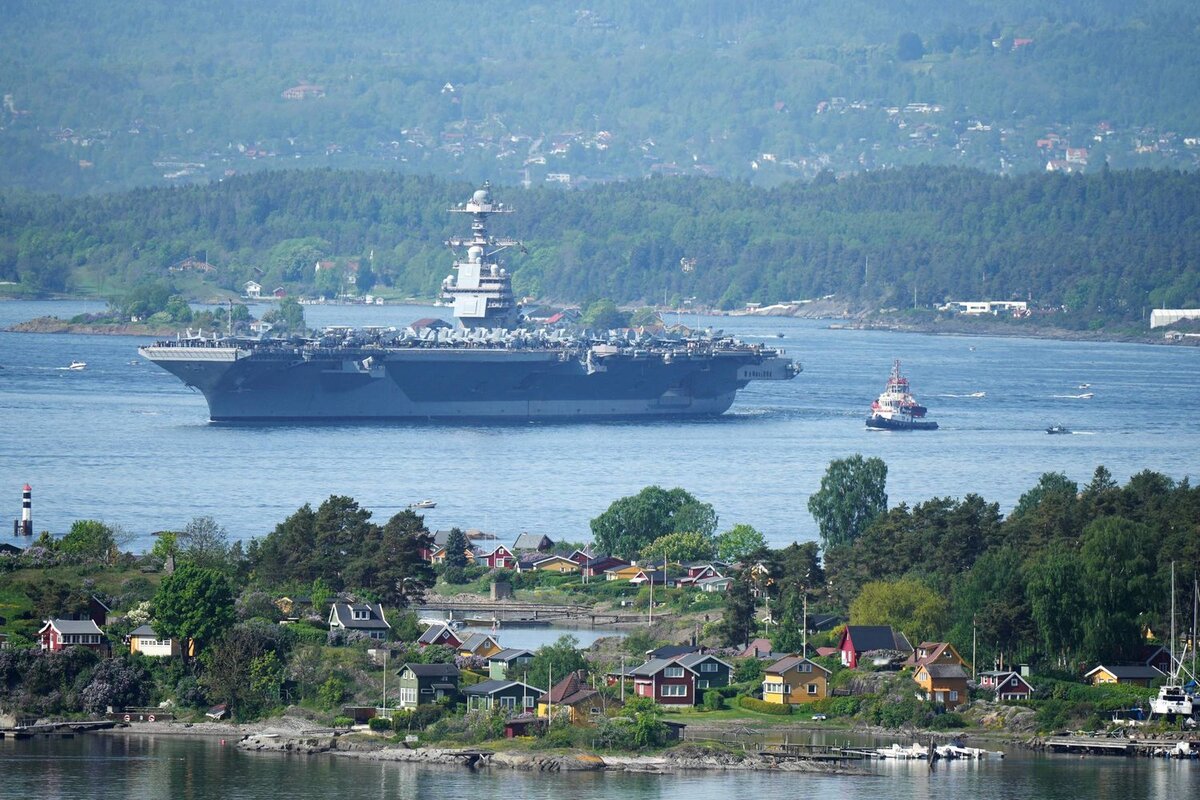
US President Joe Biden informed Israeli Prime Minister Benjamin Netanyahu, during a phone call today (Sunday), that additional American military assistance is on its way to Israel. Today, the Pentagon announced that it will provide ammunition and equipment to Israel and will strengthen American forces in the Middle East in response to attacks launched by the Hamas movement.
US Secretary of Defense Lloyd Austin said in a statement, “The United States government will quickly provide the Israel Defense Forces with additional equipment and resources, including ammunition.” He added that he directed the aircraft carrier USS Gerald R. Ford and its accompanying warships to the eastern Mediterranean, adding that Washington is working to strengthen fighter aircraft squadrons in the region.
He continued: “This includes the US Navy aircraft carrier USS Gerald R. Ford and the Ticonderoga-class guided missile cruiser USS Normandy, in addition to the Arleigh Burke-class guided missile destroyers USS Thomas Hudner, USS Ramage, and USS Carney, and the USS Roosevelt.” He said: “We have also taken steps to strengthen the US Air Force’s F-35, F-15, F-16 and A-10 fighter aircraft squadrons in the region.”
He said that sending American ships, aircraft, and aid to Israel “reflects the strong American support for the Israeli Defense Forces and the Israeli people.”
This announcement comes after a senior US administration official confirmed yesterday that high-level discussions are taking place between American and Israeli officials regarding military aid.
The White House said that national security officials briefed Biden and Vice President Kamala Harris on the situation in Israel early today, and the President and Vice President will continue to receive updated information on developments.
Biden delivered a speech yesterday in which he pledged to provide support to Israel, Washington's main ally in the Middle East, after the surprise attack launched by Hamas, which resulted in the deaths of more than 700 people on the Israeli side.
Mon 09 Oct 2023 7:20 am - Jerusalem Time
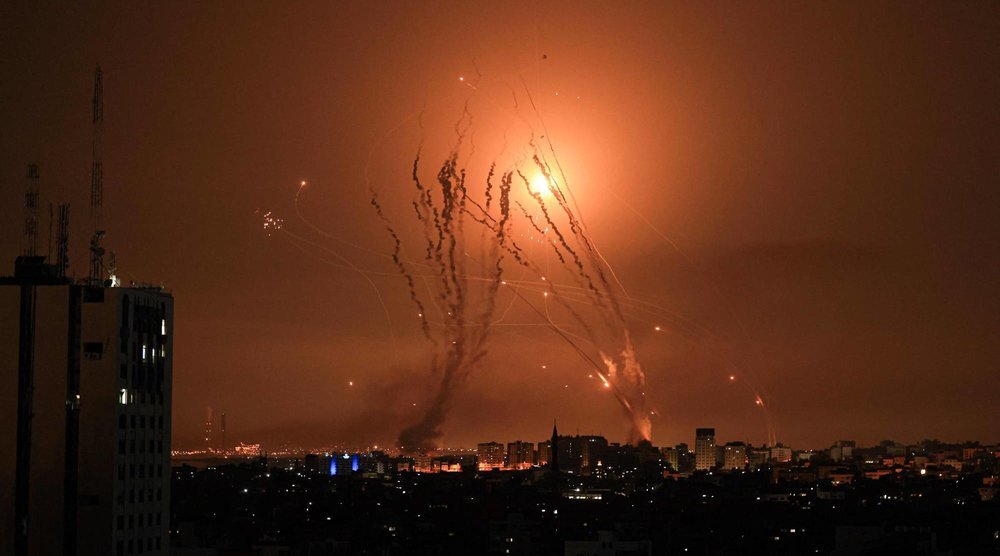
An Israeli military official and an American military official said, at dawn today, that Israel has requested from the United States additional smart bombs and interceptor missiles for the Iron Dome system.
Mon 09 Oct 2023 6:54 am - Jerusalem Time
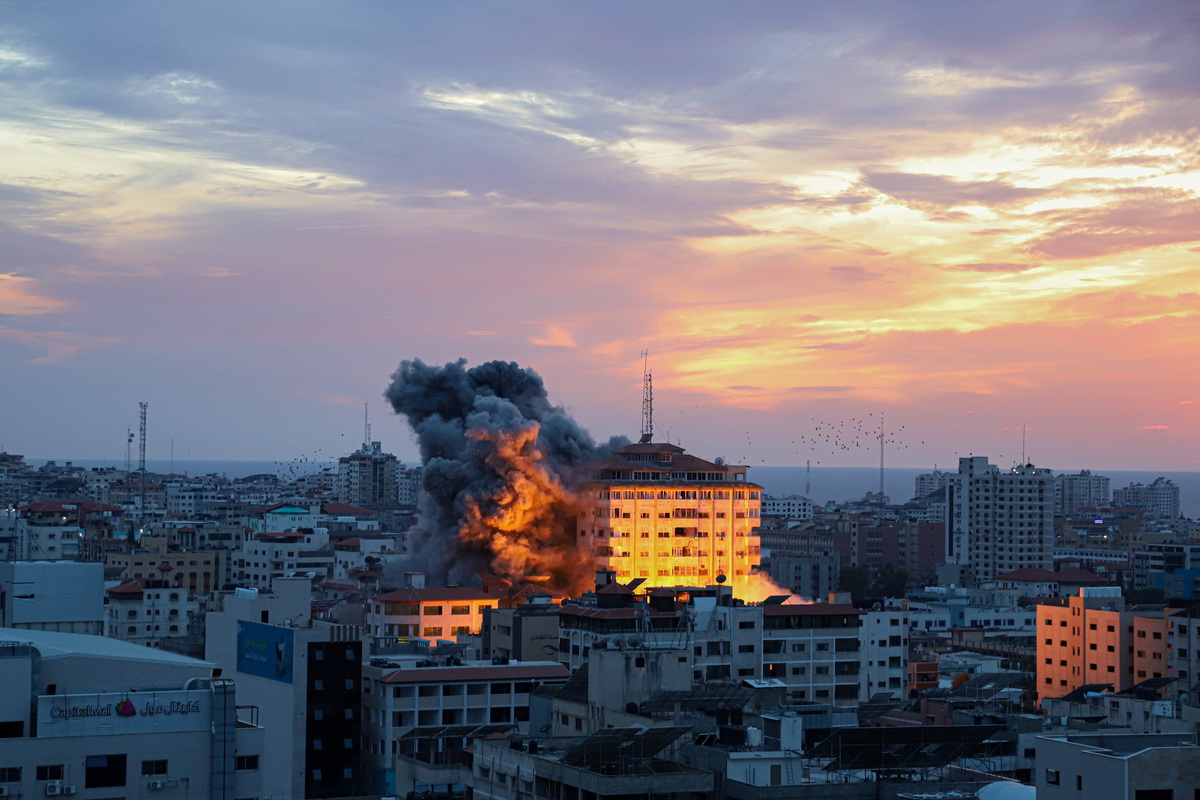
For the third day in a row, the Israeli occupation forces continue their aggression against the Gaza Strip, using their brute military force to target the homes of safe citizens, mosques, streets, infrastructure, and others.
The number of martyrs in the Gaza Strip, according to the latest statistics of the Ministry of Health, was 413 martyrs and more than 2,250 injured.
Among the martyrs were 78 children and 41 women, while 121 children and 140 women were injured out of the total number of casualties.
The night, dawn and morning hours of Monday witnessed a series of violent raids that targeted many homes and mosques, as the occupation forces committed a massacre in Rafah, south of the Gaza Strip, by destroying many homes, leading to the death of 20 citizens.
Here are the latest developments:
- The number of martyrs of the Rafah massacre increased to 21 martyrs.
- The occupation bombed several homes in different areas.
- The occupation bombs targets inside the security passport headquarters in Gaza.
- Injuries as a result of the occupation’s destruction of the Western Mosque in Al-Shati camp.
- Martyrs and wounded as a result of the occupation’s destruction of the Sheikh Ahmed Yassin Mosque, west of Al-Shati camp.
- Israeli raids on agricultural and vacant lands in the Gaza Strip.
- The resistance launches several missiles towards the settlements surrounding the Gaza Strip.
- Violent raids on Al-Shujaiya neighborhood.
- Occupation aircraft destroy several homes in central and northern Gaza Strip.
- Martyrs and wounded in the violent bombing of homes in Rafah.
- Violent raids targeted several homes in Rafah, south of the Gaza Strip.
- Occupation aircraft bombed 3 homes in different areas of the Gaza Strip.
- Israeli raids along the land border strip with the Gaza Strip.
Mon 09 Oct 2023 6:39 am - Jerusalem Time
The major French newspapers covered what they described as the unprecedented attack launched by the Palestinian resistance movement (Hamas) from the Gaza Strip on Israel, although they differed in the angle of dealing with it, as Le Monde saw that it aimed to reshuffle the cards in the conflict with Israel, and Le Figaro followed it by saying that it could frustrate The hoped-for reshaping of the Middle East, while L'Obs magazine was concerned with drawing the first lessons from it, while Liberation headlined that it caused a fatal surprise in an endless conflict.
Le Monde began - in an article written by its veteran correspondent Benjamin Bart - that the date chosen by Hamas to attack Israel was not a coincidence, because it brings back to the Arab imagination, through Hamas forces’ penetration of the fortified fence surrounding the Gaza Strip, what was the Egyptian forces’ crossing of the Bar Lev line. It was fortified 50 years ago, which changed the balance of Israeli-Arab power, and was a shock to the Israeli psyche.
Miserable failure
Although it is too early to guess the exact consequences of this new conflict - according to the author - the scale of the attack carried out by Hamas is not at all proportionate to the operations it has carried out since 2007, which means that the Middle East is witnessing a new political and security earthquake, and that the setback that befell Israel, As it happened in 1973, it is characterized by incredible, symbolic brutality.
The writer believed that the fact that the Israeli political and security establishment remained paralyzed, as if it had been in a state of astonishment all morning, indicates a miserable failure, especially since the Israeli intelligence services did not expect anything to come, even though an attack of this size requires months of preparation. However, Prime Minister Benjamin Netanyahu, who presents himself as As the protector of Israel's protection and security, he must give this catastrophe a personal dimension, and he must be held accountable after the initial shock and loneliness that should prevail for a few days.
The newspaper concluded that the new war in Gaza will have a regional resonance, and may be a direct blow to the Israeli-Arab normalization process, because the images of the bombing of Gaza promise to incite Arab public opinion and attack its leaders, especially those who have established relations with Israel, and thus Hamas’ message to the countries of the region and Western embassies. It is clear that there will be no stability in the Middle East without Palestine.
The writer commented that the extent of the "bloodshed" committed by Palestinian fighters in the towns on the outskirts of Gaza that they entered promised to restore the "terrorist" stigma to the Islamic movement, and he expected that the Palestinian cause would not emerge from this battle victorious in Western public opinion, but a fair number From the Palestinians in the Gaza Strip, the West Bank and the diaspora, they will feel solidarity with Hamas 30 years after the Oslo Accords, when Jewish settlement in the West Bank reached the point of no return, and the extremists in power in Israel did not offer them anything but submission, imprisonment or death.
Wrong horse
In the same context, Le Figaro believed that this unprecedented attack could thwart the hoped-for reshaping of the Middle East, but she focused on the extensions of the conflict that the attack could cause, and commented that the Lebanese Hezbollah congratulated Hamas on its “heroic, large-scale operation,” and said “The leadership of the Islamic Resistance in Lebanon is in direct contact with the leadership of the Palestinian Resistance at home and abroad and is constantly evaluating events and the progress of operations.”
The newspaper asked: Does this mean that “the pro-Iranian militia has an interest in opening a front against northern Israel?” She responded that perhaps not, because Hezbollah, which recently concluded an agreement to share gas reserves in the Mediterranean with Israel - according to the newspaper - did not make a decision to launch simultaneous attacks against the Jewish state, although there is no doubt about the cooperation between it and Hamas.
However, the newspaper saw that Iran has an interest in the outbreak of “Israeli-Palestinian violence,” and responded to this for a simple reason, which it said Tehran does not hide, which is that the Islamic Republic looks dimly at the continued rapprochement between its new ally, the Kingdom of Saudi Arabia, and Israel, and it warned by saying that those who conclude an agreement With Israel, they are "betting on the wrong horse."
As for Loops magazine, it described the “catastrophic situation” in Israel as the most dangerous since the October 1973 War, and said that Israel is in a state of shock and astonishment at this “terrorist” attack, and said, “Israel is preparing for a long war and perhaps a ground invasion of the Gaza Strip,” as researcher David imagines. Successor.
Political science professor Hosni Obeidi, director of the Center for Studies and Research on the Arab and Mediterranean World in Geneva, confirmed that the attack this time will lead to the weakening and marginalization of the Palestinian Authority, because the Palestinian movements have been entered by a new generation determined to take its fate into its own hands, in the face of an Israeli government dominated by the right. Extremist religion and the resigned international community.
For its part, Liberation saw that Hamas's massive attack on Israel caused a deadly surprise in an endless Israeli and Palestinian conflict, and linked it to the October War, which it saw as a strong symbol that fuels fear of a new cycle of "terrible violence," noting that the Hamas attack will put the Israelis in the same situation. Mentality.
Deadly episode
After a quick review of some of the events, the newspaper said - in an editorial written by Dov Alfon - that this is an unnecessary deadly episode in a conflict that feeds on conflicting historical narratives, fostered over the years by two extremely hostile societies, with little in common except a deep sense of injustice. History and exposure to harm.
According to the writer, Israel believed that the withdrawal of all its soldiers and all its settlements from Gaza in 2005, after 38 years of occupation, would put an end to its problems with the 1.6 million Palestinians there, and it was even looking at the continuous launching of rockets from there since Hamas ruled the Strip. It is an act of anger that invites violent retaliation from time to time, but most of the time it is silently tolerated as a symptom of illness best left undetected.
The writer believed that the feeling of the people of Gaza that they are victims stems directly from the miserable living conditions in a crowded, besieged, and poor coastal strip that is only a few kilometers wide. The Israeli soldiers and settlers may have left, but Israel continues to close its borders with Gaza, and is blockading its coasts due to fears of weapons imports. , and controls the airspace, which means that Gaza is still effectively “occupied” and thus the “resistance” maintains its legitimacy.
The newspaper concluded that the geopolitical changes witnessed in recent months place before Hamas and its “Iranian sponsors” - according to the writer - an untenable possibility, which threatens the birth of a “new Middle East” that will leave Iran without legitimacy in the Arab world, which will abandon the people. Palestinians, and Hamas will have succeeded in its bet and slowed down this progress, which will embarrass Israel’s new allies and increase the solidity of the positions of the Israelis and Palestinians in the conflict.
Mon 09 Oct 2023 5:51 am - Jerusalem Time
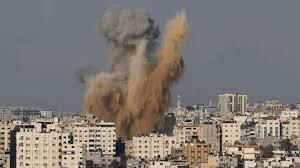
Hamas’s surprise attack on Israel struck a blow to US President Joe Biden’s efforts to secure a grand bargain that normalizes relations between Saudi Arabia and Israel, as the fighting is set to reshape the dynamics of the Israeli-Palestinian conflict. Unlike many of his predecessors, Biden has made no direct effort to foster peace talks between Israelis and Palestinians. Mindful of US failures in this area over many years, his administration has tried to keep a path to a two-state solution open while de-escalating tensions in the region. Formal diplomatic relations between former foes Israel and Saudi Arabia has been the grand prize.
White House national security adviser Jake Sullivan said last month that the US approach to the Middle East had brought historic calm, pointing to American efforts to help broker a truce in Yemen’s eight-year war as one way the US approach had been successful. “The Middle East region is quieter today than it has been in two decades,” he said, adding: “the amount of time I have to spend on crisis and conflict in the Middle East today, compared to any of my predecessors going back to 9/11, is significantly reduced.” The brazen Hamas assault — the worst attack inside Israel since 1948 — may reveal this approach to be misguided. As talks to improve relations between Saudi Arabia and Israel gained momentum, particularly over the summer, tensions between Israel and the Palestinian territories quietly soared.
The occupied West Bank has endured the worst cycle of violence since the second intifada, or Palestinian uprising, of 2005, with Israel conducting almost daily raids there. US efforts to convene talks among the parties in Egypt and Jordan to calm the tensions have done little to stop the killing. Biden administration officials on Sunday said it was too soon to say how their normalization efforts would be affected.
They pledged to press ahead with brokering diplomatic relations between Israel and Saudi Arabia, which they said remained the best path to improve the lives of those in the region.
US secretary of state Antony Blinken said Sunday that there were still challenging issues to work through, “but the result would be, if we were able to get there, a much different path for the region and for the future.” “That’s in stark contrast to the path that’s offered by Hamas: a path of violence, killing, horror, terror, a path that offers absolutely nothing to the Palestinian people.” Before the surprise attacks US officials were working with Israel and Saudi Arabia to determine Palestinians’ demands and what Israel might be willing to offer.
Hamas, the Islamist group that rules Gaza, was not involved in any of the discussions, and all of the parties appear to have underestimated the extent to which the group could play spoiler. Much will depend on how long the fighting goes on, the scale of Israel’s response, and whether other players get involved in the conflict. “You have to just be realistic, the Israeli-Saudi piece of this is now a footnote,” said Aaron David Miller, senior fellow at the Carnegie Endowment for International Peace. “As committed as the administration, and the Israelis and Saudis may be, we’re about to enter an extraordinary period between Israelis and Palestinians.”
US officials were on Sunday still trying to determine the motivations behind the attack and how big a role Hamas supporter Iran may have played. Blinken said the militant group may have sought to derail the talks. “To the extent that this was designed to try to derail the efforts that would be made, that speaks volumes,” Blinken said on ABC. “Right now the focus is on dealing with this attack, dealing with Hamas.”
The broad contours of the agreement under discussion include a US-Saudi defense pact and US assistance with Saudi Arabia’s civilian nuclear program in exchange for Israel taking steps to improve conditions for the Palestinians. The defense pact would probably require a vote from Congress, where the ongoing fighting could complicate what already are challenging political dynamics for any such vote. The House of Representatives is without a speaker after the ousting of Republican Kevin McCarthy.
The deal is the centerpiece of an approach Sullivan said intended to “depressurize, de-escalate and ultimately integrate the Middle East region”.
The US has also sought to decrease tensions with Iran. Washington and Tehran swapped prisoners last month in what officials said could be a confidence-building measure towards talks on Iran’s nuclear program and its destabilizing behavior in the region.
But Iran is Hamas’s main backer and American officials are assessing the extent to which it may have been involved in supporting or directing the weekend attacks. US and Israeli officials are trying to dissuade Iran-backed Hizbollah from joining the fray in Lebanon, which could significantly widen the conflict. Saudi Arabia reacted swiftly to Hamas’s attacks but did not directly condemn them. Riyadh urged “an immediate end to the escalation between the two sides, the protection of civilians and self-restraint”.
It has warned that “matters could explode due to the continuation of the occupation and deprivation of Palestinians’ legitimate rights and repeated provocations against its holy sites”. The statement indicates Riyadh’s frustration with Israel, analysts said. “The Gulf states have been more supportive of the Palestinians than I had anticipated, but there’s definitely a sense that the Israelis have allowed the situation to drag, that this particular government in Israel has made the systemic problems of the Israeli Palestinian conflict worse,” said Michael Stephens, senior fellow at Foreign Policy Research Institute.
He added that the Saudis have felt “let down” by Benjamin Netanyahu, the leader of the most rightwing government in Israel’s history. Both Israel and Saudi Arabia are less likely to have room to maneuver on the question of the Palestinians, analysts said.
Israel will be unable to grant too many concessions to them, especially given the mounting death toll, currently more than 600 Israelis and 300 Palestinians in Gaza, as well as the unresolved question of at least 100 Israeli hostages, which includes Americans.
Saudi Arabia, meanwhile, must also be sensitive to the reaction of the Arab street. Saudi Arabia hosts millions of Muslim pilgrims each year at Islam’s two holiest sites and its stance on Palestinian statehood is of particular importance. “If Saudi Arabia had concerns about popular reactions to such a deal, it must be extremely worried now about any pressure from the US to move ahead, as popular sentiment is strongly pro-Palestinian in the kingdom and much of the Middle East,” said Joost Hiltermann, Middle East Program director for International Crisis Group.
Hiltermann said that, while trade, technology sharing and diplomatic discussions were possible, there were “clear limits on anything one would associate with a real peace”.
Countries such as the United Arab Emirates and Morocco that normalized relations with Israel under the Trump administration “are beginning to find themselves in the type of cold peace that has prevailed between Israel and Egypt, and Israel and Jordan for the past decades,” he said.
Even before Saturday’s attack, the UAE was increasingly wary of how it engaged with Netanyahu’s far-right government and concerned about the violence in the West Bank. In a strongly worded statement, the ministry of foreign affairs said of the latest events: “Attacks by Hamas against Israeli towns and villages near the Gaza strip, including the firing of thousands of rockets at population centers, are a serious and grave escalation.
The Ministry is appalled by reports that Israeli civilians have been abducted as hostages from their homes . . . “The international community must remain resolute in the face of these violent attempts to derail ongoing regional efforts aimed at dialogue, cooperation, and co-existence, and must not allow nihilistic destruction to overtake a region whose people have already suffered enough war and trauma.”
Mon 09 Oct 2023 5:41 am - Jerusalem Time
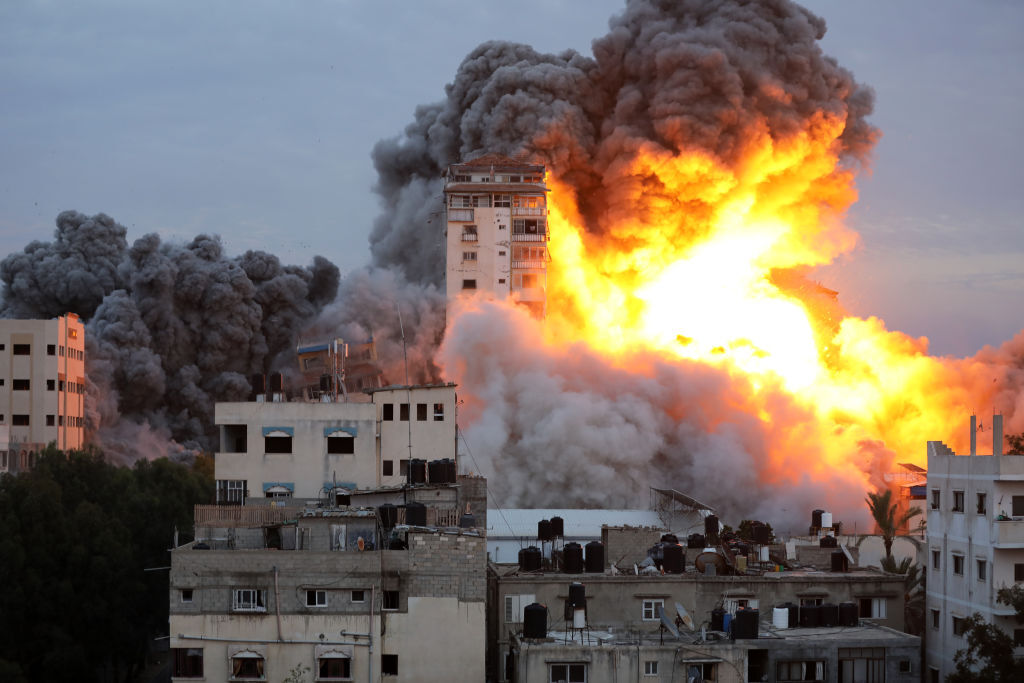
BYSERAJ ASSI
The tragic scenes unfolding in Palestine and Israel are a chilling reminder of the horrors that occupation creates — and the urgency of dismantling Israel’s blockades and apartheid system.
In the early morning hours of Saturday, under a barrage of rockets fired from Gaza, dozens in the Palestinian militant group Hamas broke out of the blockaded Gaza Strip, breached the security barriers, and stormed into nearby Israeli towns, killing hundreds and holding others hostage in an unprecedented surprise attack.
It was a massive operation, hailed by Hamas as “Al-Aqsa Storm.” Saleh al-Arouri, an exiled Hamas leader, said the operation was a response “to the crimes of the occupation.” Hamas urged all Palestinians to join the battle, declaring: “Today the people are regaining their revolution.”
Israel immediately declared a state of war, launching air attacks on Gaza in retaliation, killing over four hundred Palestinians, most of them civilians. Israeli prime minister Benjamin Netanyahu promised to “take mighty vengeance” against Palestinians, calling Gaza a “city of evil” and vowing to turn it into “cities of ruins.” Israeli defense minister Yoav Gallant has already approved a sweeping call-up of reservists.
The tragic scenes unfolding in Gaza and Israel are a chilling reminder that occupation and oppression bear a price. For the truth is that when you imprison two million people in 140 square miles, placing them under a merciless siege with no end in sight, with no way in or out, with drones and rockets buzzing overhead night and day, with constant surveillance and harassment, with scant control over their day-to-day lives — ultimately, the dispossessed will rebel.
The violence was not unprovoked, as the mainstream media has depicted it. It has been brewing and festering in every corner of the country.
In the West Bank, the Palestinian town of Jenin is still reeling from the devastation of a recent unsparing Israeli attack, which left the town a razed ghost land. The small town of Huwara has yet to recover from the deadly horrors unleashed by settlers on its residents.
So far this year, Israel’s military forces have killed over two hundred Palestinians in the West Bank.
To make life hell for Palestinians, settler mobs and far-right gangs, backed and emboldened by Israel’s ultranationalist government, have been sowing terror and wreaking havoc among Palestinians, burning villages and houses, lynching and killing civilians with impunity.
In Jerusalem, Israeli soldiers and security forces have allowed the settler mobs to run amok, evicting Palestinian families by force and occupying their homes. During the Jewish holiday of Sukkot, settlers stormed into the Al-Aqsa Mosque complex in Jerusalem, staging provocative tours, harassing and beating worshippers, and spitting on Christians.
Palestinians in Gaza have been languishing under siege. Squeezed in a narrow strip of land known as the world’s largest open-air prison, Gazans have been under a vicious blockade for nearly two decades, subjected to Israel’s repeated air strikes and raids, military operations and collective punishment. The majority of its two million people still scrape by in cramped refugee camps under unlivable conditions. Former Israeli Defense Forces (IDF) military chief Benny Gantz, referring to Israel’s 2014 invasion of Gaza, has boasted of “bombing Gaza back to the Stone Age.” The IDF describes its tactic in Gaza as “mowing the grass.”
For decades, Israel has demanded the unquestioning surrender of its victims and refused to accept defiance in any form. The message has been unequivocal: democratic tactics are futile. Even when Palestinians embraced nonviolent resistance — strikes, demonstrations, etc. — they were met with brutal force by Israel.
The first intifada, a popular Palestinian uprising that broke out in the Jabalya refugee camp in Gaza in 1987, was brutally crushed by Israeli forces, giving birth to Hamas and other militant groups. In September 2000, Gaza became the symbolic battlefield of the second intifada, when twelve-year-old Muhammad al-Dura was shot dead in his father’s arms at crossroads near Bureij refugee camp in Gaza, becoming the iconic image of the uprising. Over five thousand Palestinians were killed by Israel during the first and second intifadas.
In 2018, when Gaza refugees staged the “Great March of Return” to commemorate the annual anniversary of the Nakba (or “catastrophe,” the mass displacement of Palestinians at Israel’s founding), Israeli forces responded by killing over 150 demonstrators and injuring ten thousand others, including children and journalists, over a six-week span. A United Nations report later concluded that Israeli soldiers and leaders committed crimes against humanity and intentionally used live ammunition against civilians.
Israel’s unbridled brutality in Gaza has produced a generation of Palestinians who have lost faith in nonviolent resistance, thus rendering the latest explosion as tragic as it was inevitable. The young Palestinian men who stormed into Israel from Gaza this weekend acted out of desperation, seeing no way out of the yoke of oppression and the inhumanity of the blockade.
The West Bank, too, is on the verge of explosion. Like Gaza, the West Bank is under siege, with more than half a million people living in over 140 Jewish-only settlements built by Israel on Palestinian lands and homes. Some 3.5 million Palestinians reside in segregated cantons behind Israel’s “apartheid wall” and the newly constructed “Apartheid Road” — and in towns and cities penned between Jewish settlement blocks and a network of segregated roads, security barriers, and military installations. For Palestinians who live there, apartheid signifies not merely segregation, but the inhumanity of life under occupation: the beatings, shootings, killings, assassinations, lynchings, curfews, military checkpoints, house demolitions, evictions, deportations, disappearances, uprooting of trees, mass arrests, extended imprisonments, and detentions without trial.
The ongoing explosion in violence is the ugly reality of Israeli apartheid, the culmination of decades of occupation of a stateless people deprived of basic human rights and freedoms. Unless the root causes are dismantled — the siege lifted, the apartheid system and occupation ended — violence will continue to tragically haunt Palestinians and Israelis for years to come.
Seraj Assi is a Palestinian writer living in Washington, DC,
Mon 09 Oct 2023 5:29 am - Jerusalem Time
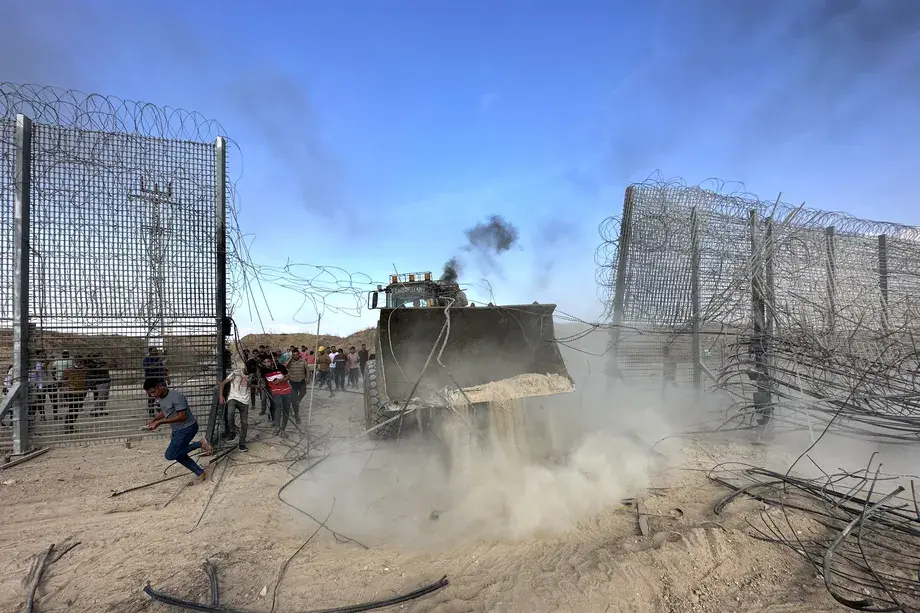
It took Hamas’s deadly attack today to remind Israel, the United States, and the world that Palestine still matters.
The militant group based in occupied Gaza launched aerial attacks and broke through the heavily secured fence into the State of Israel. Hundreds of Israelis have been killed, a historic scale of violence for the country. The Israeli counterattack will inevitably lead to more death and destruction for Palestinians and a tightened occupation.
Here’s what you need to know.
It comes after nearly two decades of the US and world leaders overlooking the more than 2 million people living in Gaza who endure a humanitarian nightmare, with its airspace and borders and sea under Israeli control. The attack comes amid an ongoing failure to grapple with the dangerous situation for Palestinians in the West Bank where Israel’s extreme-right government over the past year has escalated the already brutal daily pain of occupation.
Instances of Israeli security forces and Israeli settlers antagonizing Palestinians through violence are on the rise, from the pogrom on the city of Huwara to a new tempo of lethal raids on Jenin. Israeli government ministers have been pursuing annexationist policies and sharing raging rhetoric; both incite further violent response from Palestinians and appear at a time when new militant groups have emerged that claim the mantle of the Palestinian cause. The now-regular presence of Israeli Jews praying at the Al-Aqsa Mosque in Jerusalem, one of Islam’s holiest sites, have further pressurized the situation. A Hamas commander cited many of these factors in his statement.
But the ongoing reality of the occupation has not featured prominently in US or Arab leaders’ engagement with the region in recent years, even as circumstances for Palestinians worsened.
The question must thus be asked to the Israeli government, the Biden administration, and Arab leaders: How did they forget about Palestinians? How did they so brazenly ignore Gaza?
President Joe Biden has not reversed his predecessor Donald Trump’s policy of putting aside the question of Palestine and instead has exerted immense capital on the normalization of Israel’s relations with Arab states, no matter how extreme the policies of the Israeli government.
In the current US-led diplomatic equation, there is no space for Palestinians, except for talk of minor concessions to ease daily humiliations. Biden said recently, as many of his surrogates often do, that the US remains intent on “preserving the path to a negotiated two-state solution.”
But negotiations between Israel and the Palestine Liberation Organization have been frozen since 2014 under President Barack Obama, and most Palestinian analysts at this point acknowledge that US administrations since President Bill Clinton have engaged in a failed, asymmetrical process that never would have allowed for the conditions of an independent, sovereign state of Palestine.
And so the symbolism of Hamas breaking through Israeli security barriers and wreaking havoc on Israel — including the kidnapping of at least one Israeli soldier as well as civilians — will resonate across Palestine, the Arab world, and beyond.
Israel’s conflicts with Hamas, along with the 2006 Hezbollah-Israel conflict, have largely been rocket and artillery exchanges. Even in decades of large-scale Arab-Israeli wars, the battles were fought outside. “No Arab army has entered the territory of Israel since the 1948 war,” the preeminent Palestinian scholar Rashid Khalidi of Columbia University told me. “This is a huge strategic surprise.”
Israel and the United States have wished away Palestinians. The terrible bloodshed of today’s attacks underscores the cost of doing so.
How Biden missed the plot on Gaza
I’ve been to several Mideast policy conferences this month and spend probably too much of my time interviewing Washington experts and attending lectures on Middle East history.
Palestinians are hardly represented in panels and keynotes. The Biden administration’s key players bring up Palestine as a secondary issue. Gaza does not come up anymore.
But it remains central to how Palestinians and Arabs see Israel-Palestine and the Middle East — and how many Arabs perceive the US role in the world.
Trump exacerbated the hopelessness for Palestinian political rights by cutting the Palestinians entirely out of the process, and instead helped seal normalization deals between Israel and the United Arab Emirates, Bahrain, and Morocco. But the autocratic Arab leaders who made “peace” with Israel never represented their own citizens.
With Biden’s Middle East team prioritizing a long-shot deal between Israel and Saudi Arabia, Biden’s inner circle has avoided talking about Gaza entirely. It’s all the more surprising because the two-week war between Israel and Hamas in May 2021 should have been an indication of Palestine’s enduring centrality to Middle East affairs. But as far as I can tell, there has been no policy reckoning in Washington about that war. No policy reviews.
There was complacency. “The Middle East region is quieter today than it has been in two decades,” Biden’s national security adviser Jake Sullivan said only last week.
It’s not even the first time that someone like Sullivan, who also served as a senior official in the Obama administration, has worked with his Egyptian counterparts to negotiate an Israel-Hamas ceasefire, as he is likely doing now. But now it’s clear that he and others treated Gaza peacemaking as a sideshow. It is not integral to Biden’s approach.
The humanitarian crisis in Gaza, which Hamas administers some level of control over, remains as acute as ever. But because the US has long designated Hamas, the Palestinian militant political group with an Islamist worldview, as a terrorist organization, US officials can’t contact them and must work through third countries. It means that the US knowledge base and expertise on Gaza is not just low — it’s absent.
The Palestine Liberation Organization’s leadership, with Chair Mahmoud Abbas still hanging on at 87 years old, lacks legitimacy among Palestinians. The Palestinian Authority, the body that exercises some administrative control over the occupied West Bank and that Abbas also runs, is seen by Palestinians as a collaboration arm of the Israeli occupation. A grassroots movement of Palestinian youth who engage in violent resistance against the Israeli security state, against settlers, and against civilians has emerged.
Between the radical Israeli government and the sclerotic Palestinian leadership, the Biden administration chose to continue the path of Trump’s normalization deals, with Saudi Arabia as the prize. Biden’s team still states an allegiance to the pursuit of a Palestinian state while doing little more, all which exposes the emptiness of the two-state solution.
What this means for Palestinians
Early on Saturday, Hamas sent bulldozers through the barriers that have hemmed in Palestinians in Gaza from Israel and the rest of the world. That image of resistance to the occupation will be widely circulated in the Arab world, and will endure long beyond this war. Its symbolic power cannot be underestimated.
Gaza is in essence a refugee camp (about 70 percent of those living in Gaza come from families displaced from the 1948 war) and an open-air prison, according to human rights groups. The United Nations describes the occupied territory as a “chronic humanitarian crisis.” Israel has blockaded Gaza since Hamas assumed control of the territory in 2007, and neighboring Egypt to the south has also imposed severe restrictions on movement.
Between them, Israel and Egypt monitor the entry and exit of all people, vehicles, and goods. They have not allowed enough construction materials and humanitarian items into the occupied Gaza Strip to enable the battered territory to rebuild from recurring episodes of deadly Israeli bombardments that are allegedly meant to target Hamas, but that often include civilian death tolls in the very dense territory.
The current Israeli government has aggravated these realities, Khalidi explained, by increasing pressure on the Palestinians on multiple fronts: in Jerusalem, squeezing Gaza, assaults on Palestinian villages by settlers, with settler-politicians leading ministries in the Israeli government; and with annexationist policies like the recent major policy change putting the Israeli civilian government (not the Israeli military) in charge of the occupied West Bank. Hamas’s attacks on Israel won’t change life for Palestinians, and Israel’s government will now use the full force of its advanced military in response. And given Israel’s state of emergency, Prime Minister Benjamin Netanyahu is now in talks with the opposition parties to pull together a unity government for the country. But even if some of the most extreme settler voices currently in the Israeli cabinet are replaced by more mainstream Israeli voices, harsh policies against Palestinians across the West Bank and Gaza will continue.
“This pressure being put on Palestinians — it just assumes that they’re insignificant and they will tolerate any degree of humiliation, and that’s just not true,” Khalidi told me. “If you had lifted the siege of Gaza, you would not have had this happen.”
Now Israelis are experiencing terrible loss and a tremendous sense of danger, and Palestinians living in Gaza will endure more violence, including Israeli troops entering the territories and the extensive bombardment of alleged military sites that typically have a significant civilian toll.
Global powers have been ignoring Gaza, but some in Israel haven’t forgotten.
“The dread Israelis are feeling right now, myself included, is a sliver of what Palestinians have been feeling on a daily basis under the decades-long military regime in the West Bank, and under the siege and repeated assaults on Gaza,” writes the Israeli journalist Haggai Mattar in 972 Magazine. “The only solution, as it has always been, is to bring an end of apartheid, occupation, and siege, and promote a future based on justice and equality for all of us. It is not in spite of the horror that we have to change course — it is exactly because of it.”
By Jonathan Guyer who covers foreign policy, national security, and global affairs for Vox. From 2019 to 2021, he worked at the American Prospect, where as managing editor he reported on Biden’s and Trump's foreign policy teams.
Sun 08 Oct 2023 11:20 pm - Jerusalem Time

Abu Ubaida, spokesman for the Al-Qassam Brigades, the military wing of the Hamas movement, said on Sunday evening that members of the brigades succeeded today in capturing more Israeli soldiers and returning them to the Gaza Strip.
In his speech, Abu Ubaida pointed out that the occupation soldiers were killing their soldiers, some of whom were captured by the Qassams, to prevent them from being captured alive.
He pointed out that Phalange members are still engaged in clashes with the occupation forces, and that some of them have returned to their bases safely.
Sun 08 Oct 2023 10:30 pm - Jerusalem Time

Hazem Qassem, spokesman for the Hamas movement, said on Sunday evening that the United States’ announcement of bringing an aircraft carrier to the region to support the occupation in its aggression against our people is an actual participation in the aggression and an attempt to restore the morale of the occupation army, which collapsed after the Al-Qassam Brigades attack.
Qassem added in a brief statement: These movements do not frighten our people or their resistance, which will continue to defend our people and our sanctities in the Al-Aqsa flood battle.
Sun 08 Oct 2023 9:41 pm - Jerusalem Time
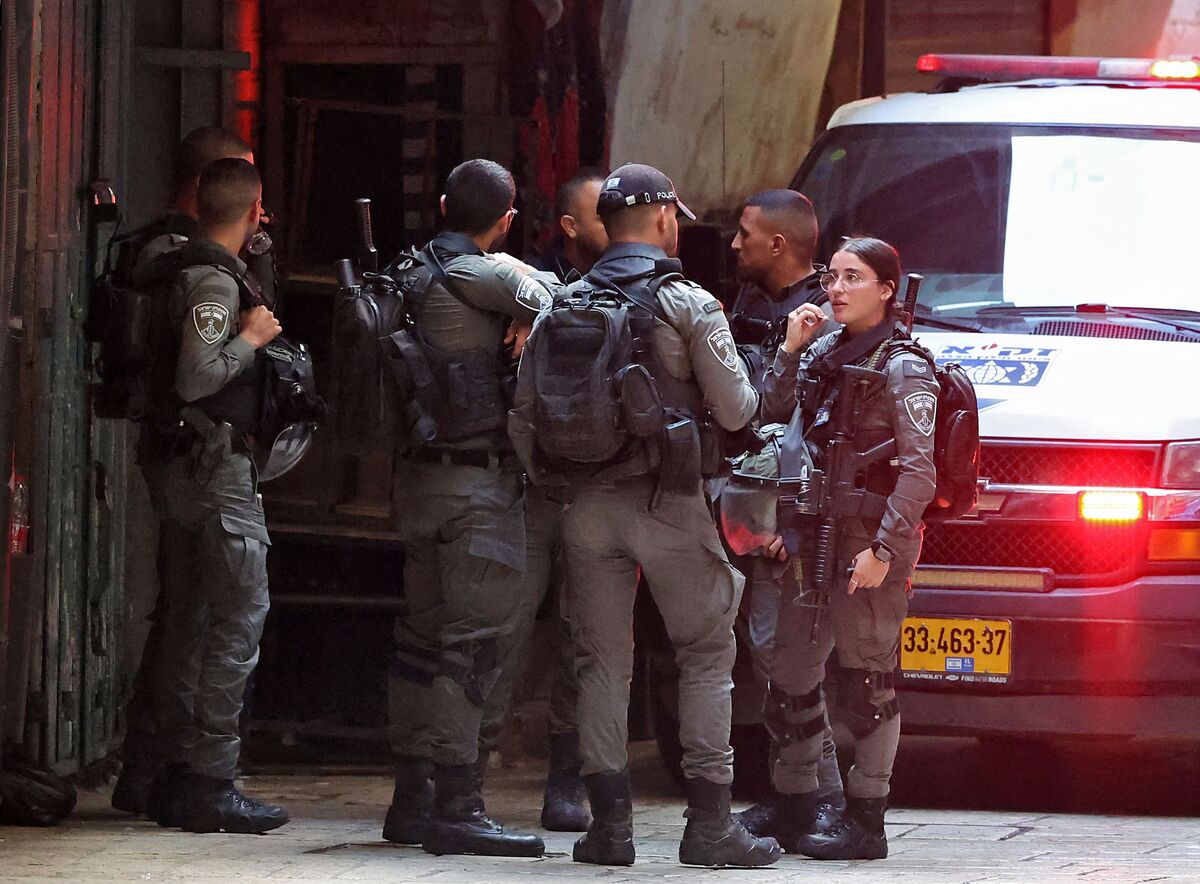
Israeli occupation forces wounded a young Palestinian and arrested another, Sunday evening, in occupied Jerusalem.
According to local sources, the Israeli occupation forces severely beat the young man Firas Al-Atrash in the city of Jerusalem, which led to injuries, while they arrested Al-Maqdisi Samer Al-Safadi from the Bab Al-Asbat area.
In the same context, dozens of citizens suffered from suffocation and were injured by rubber-coated metal bullets during confrontations with the occupation in the villages of Beit Daqo and Beit Ijza, northwest of Jerusalem. Confrontations also broke out near the Qalandiya military checkpoint, which has been closed for two days.
Also, the occupation forces established a military checkpoint in the town of Beit Hanina, north of occupied Jerusalem.
Sun 08 Oct 2023 9:17 pm - Jerusalem Time

The head of the Prisoners and Ex-Prisoners Affairs Authority, Qaddoura Fares, called on Sunday evening the United Nations and all its affiliated agencies, and the International Committee of the Red Cross, to take immediate action to assume their humanitarian and moral responsibilities towards male and female detainees in Israeli occupation prisons.
Fares said, in a press statement, “The data that reaches us from inside prisons and detention centers is worrying and dangerous, as tension are the master of the situation, as retaliatory measures are being imposed on them that include all aspects of life, which began in the prisons of: Ofer, Negev, Megiddo, and Damoun. This is done by implementing punitive and taunting steps, such as reducing the duration of the spree, preventing going out to shower in sections outside the rooms, distributing food, letting out only one prisoner to do this task in a short time, canceling visits by families and lawyers, and resorting to automatic extensions for new detainees for eight days, according to a decision issued by the Minister. Israeli Yariv Levin, seizing electrical appliances, withdrawing television channels, and other measures that became a fait accompli in less than 48 hours.”
Fares stressed the necessity of sending a full international protection mission to Israeli prisons and detention centers, closely monitoring the practices of the prison administration and intelligence, and not allowing them to monopolize our detainees.
He warned against continuing to exploit the ongoing war to harm male and female detainees, and that resorting to reactions and exaggeration in measures on the ground will be met with confrontation and confrontation, whatever the cost.
Fares saluted the male and female detainees inside the occupation prisons, and praised their patience, steadfastness and sacrifices, stressing that “we are living in a new phase,” and expressed his hope that they would all be liberated from the occupation prisons soon.
Sun 08 Oct 2023 8:45 pm - Jerusalem Time
This Sunday evening, a young Palestinian was shot dead by Israeli occupation forces, during clashes that broke out at the northern entrance to the city of Jericho.
According to local sources, the young man, Abdel Halim Abu Sneina, was martyred after being hit by two bullets in the chest and abdomen.
Confrontations had broken out in Jericho at the southern entrances near Aqabat Jabr camp, and the northern entrance near Ain al-Sultan camp.