PALESTINE

Fri 03 Nov 2023 3:29 am - Jerusalem Time

West Bank: 7 Palestinians killed and several injuries by Israeli army

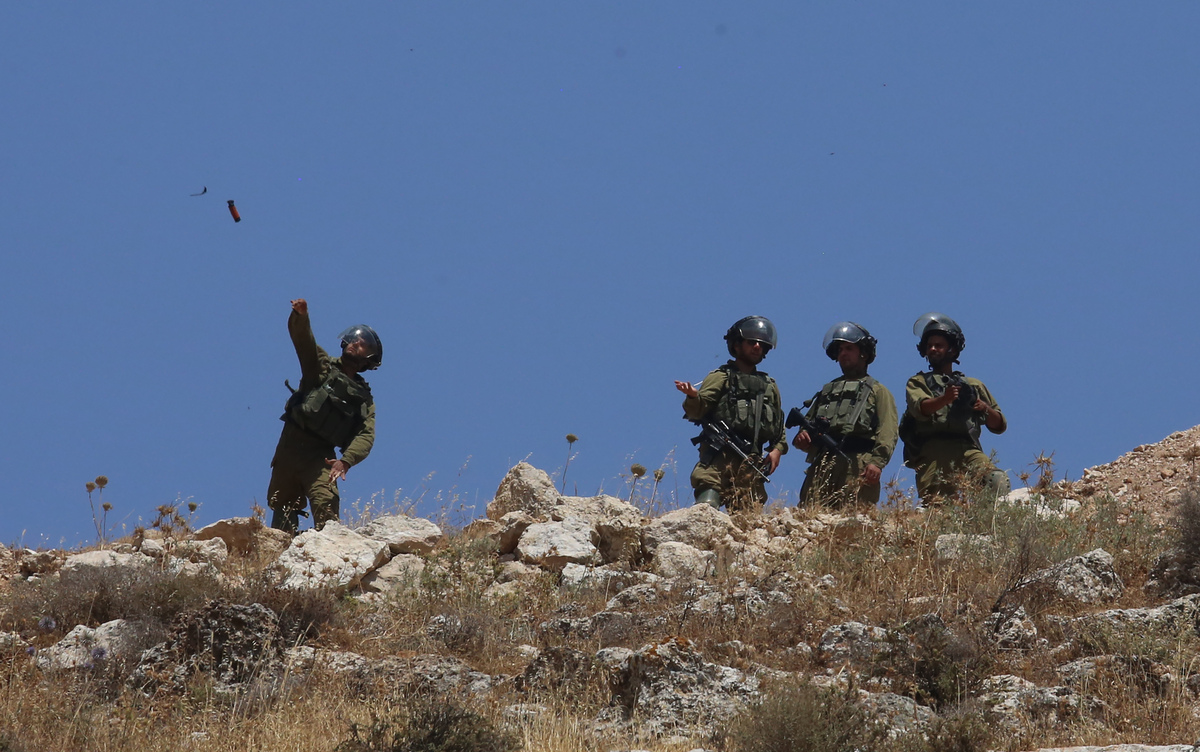
Two citizens were killed and four others were injured, at dawn on Friday, in the renewed Israeli occupation air strikes on the Jenin camp, bringing the number of martyrs in the city and its camp to four, within less than seven hours.


Local sources confirmed that the occupation forces bombed the Jenin camp square, which led to the death of the two Palestinians, Wassim Zyoud and Yamen Jarrar, and twonding four Palestinians, including one in serious condition, which raises the number of injuries in the city and the camp during the last hours to 10.


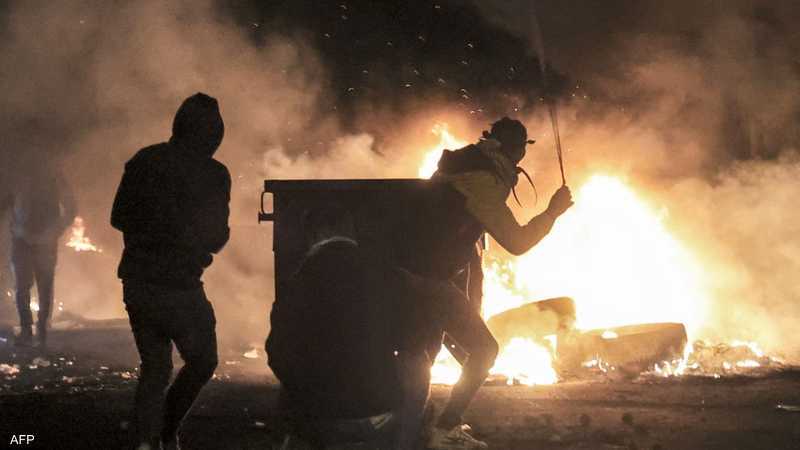
The two young men, Suleiman Muhammad Steiti (31 years old) and Jihad Ibrahim Mustafa Neghnegheyh (26 years old), were killed, and six others were injured by bullets from the occupation forces that stormed the city and Jenin camp more than seven hours ago, amid violent confrontations, and forces are still present on the outskirts of the camp.


In Hebron, two young men were killed by Israeli occupation forces’ bullets during their storming of Al-Fawwar camp, south of Hebron.


In Nablus, Asim Jihad Ramadan died as a result of being shot by Israeli occupation forces in the village of Tal, southwest of Nablus.


Family sources announced the death of Ramadan, who was seriously injured during clashes that took place in the village of Tal the day before yesterday, Wednesday.


Local sources reported that the occupation forces stormed Al-Fawwar camp amid heavy gunfire, which led to the outbreak of confrontations, which resulted in the death of the two young men, Muhammad Saeed Al-Azza and Wadih Yahya Al-Najjar.


With the death of the two young men, Al-Azza and Al-Najjar, the number of killed since last night has risen to seven.

ARAB AND WORLD

Thu 02 Nov 2023 10:29 pm - Jerusalem Time

Washington: There are no indications that Hezbollah is entering “in full force” into the conflict

John Kirby, US National Security spokesman, said on Thursday that the White House is concerned about the attacks launched by Hezbollah on Israeli forces with the exchange of fire and the escalation of violence on the Lebanese border, but there is no indication that the group supported by... Iran is ready to “enter with full force” into the conflict.


Kirby said in a press briefing: “We, and the Israelis as well, are concerned about the ongoing attacks on Israeli forces in the north, but I think we have not yet seen any specific indication that (Hezbollah) is ready to enter with full force” into the conflict.


PALESTINE

Thu 02 Nov 2023 10:24 pm - Jerusalem Time

Palestine TV correspondent Abu Hatab and a number of his family members were killed in Gaza

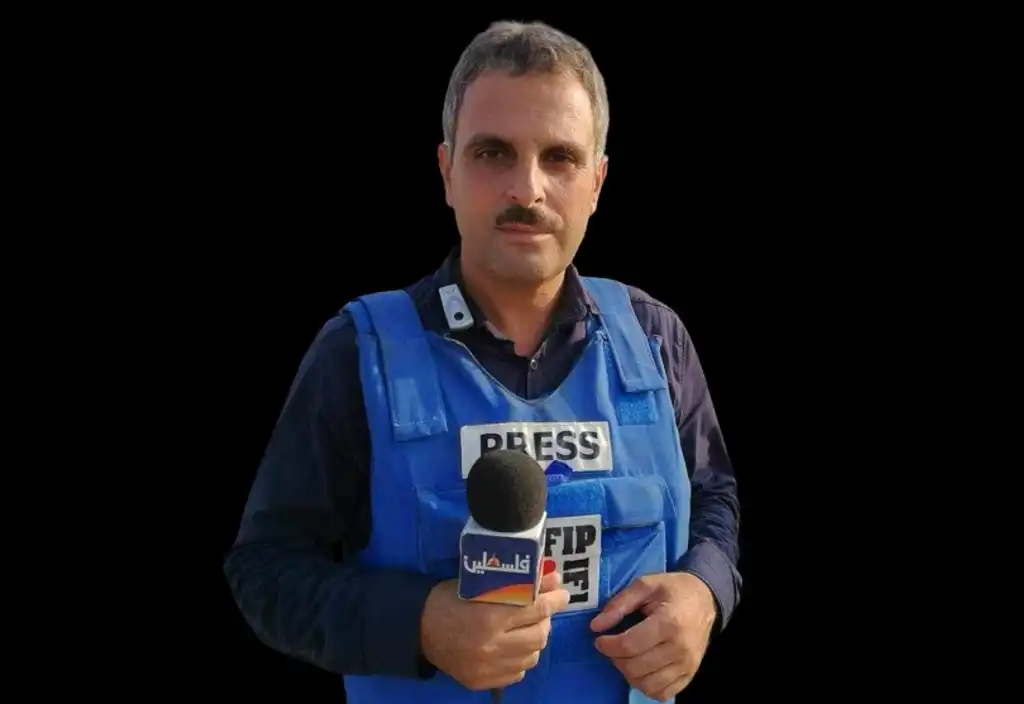
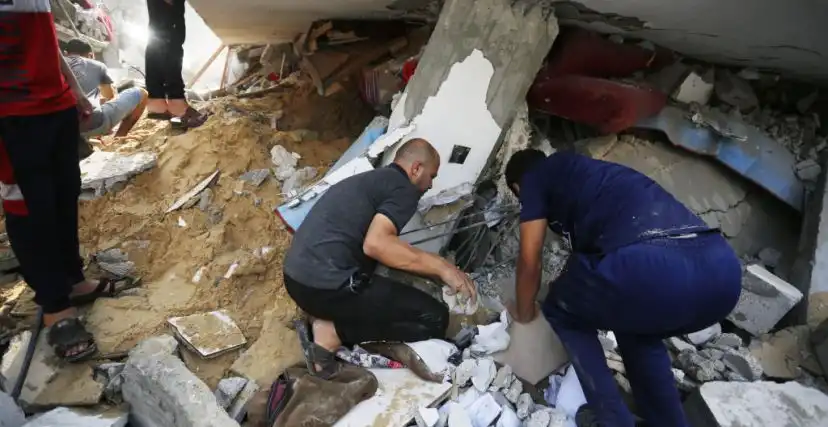
Palestine TV correspondent, colleague Muhammad Abu Hatab, and 11 members of his family were martyred as a result of the Israeli occupation aircraft bombing his house in Khan Yunis, south of the Gaza Strip.


Our correspondent reported that Palestine TV correspondent Muhammad Abu Hatab and 11 members of his family, including his wife, son and brother, were martyred as a result of the bombing of his house in Khan Yunis.


Colleague Abu Hatab was at the helm of his work and delivered daily messages in front of Nasser Medical Hospital in Khan Yunis about the crimes committed by the occupation against our people in the Gaza Strip. He submitted his last message in front of the hospital an hour before his martyrdom.

PALESTINE

Thu 02 Nov 2023 10:12 pm - Jerusalem Time

Israeli Occupation forces storm the city of Jenin

On Thursday evening, Israeli occupation forces stormed the city of Jenin.


According to local sources, special units of the occupation army stormed the city, simultaneously with Israeli occupation vehicles storming the city from various axes.


Sources added that confrontations broke out in several neighborhoods of the city and in the vicinity of the Jenin camp.


OPINIONS

Thu 02 Nov 2023 10:12 pm - Jerusalem Time

Gaza restores the centrality of the Palestinian issue

Ramallah - “Al-Quds” dot com

Ramallah - “Al-Quds” dot com

Opinion Writer

By Dalal Al-Bizri

The entire planet was somewhere else before October 7 (last month), and the Palestinians are a forgotten people, except in the halls of bidding and pretexts, and the idea of the centrality of their Arab cause is fading away. But now, no. The event, from its beginning, triggered an earthquake, the epicenter of which was the Palestinian Gaza Strip. The earth's crust trembled, and a tremendous energy of violence, annihilation, and destruction emanated from within it. What disturbed the balances, beliefs and arrangements that were almost stable, but highly fluid.


Israel existentially. Let us remember: The utopian Zionist ambition, the basis of Israel's existential doctrine, calls for the establishment of a state that gives the Jews a "final, natural and secure" homeland. This doctrine is more shaken today than ever before. And with it, the idea that establishing a Jewish state would make the Jews happy and secure was disturbed. The condition for these two, happiness and security, was for Israel to have a strong state, a modern economy, and a great army. The three received a direct hit.


What happened was that these foundations were shaken on October 7th. There was no Israeli left who did not comment on his method, and from the angle in which he stood, from officials to ambassadors to novelists and intellectuals, who expressed an existential crisis in the literal sense of the word, that is, the crisis of the existence of the Jews on this part of the earth. They expressed their existential crisis in various twisted ways.


The Israeli historian, Yuval Harari, did not escape the conflict that gripped major Israeli heads. All he had to say was to blame the “global left” for a statement he issued that did not refer to “Hamas’ atrocities,” but rather expressed solidarity with the Palestinians. He affirms that “Israel has no intention of killing civilians without accountability,” and ends his speech by comparing Assad and Netanyahu, as the latter will not reach “what the Assad regime did (to the Syrian people) in Homs and Hama.” The few demonstrations in Tel Aviv, demanding an end to the massacre against the people of Gaza, did not raise in this “sensitive” historian the question about this existential dilemma of Israel. The protesting Israeli street, although small, seemed less dogmatic than it was.


The global left, meaning European and American, is witnessing at home the deepest debates, divisions, and historical references


This global left, meaning European and American, is witnessing at home the deepest debates, divisions, and historical references. In France, the two presidents, Charles de Gaulle and Jacques Chirac, emerged from the archives of history, and Gaullists spoke of the honor of the two men defending Palestine, the first by speaking the truth, and the second by confronting the Israeli army in the heart of Jerusalem... the opposite of which the current president utters, “polluting the French conscience.” The French parties were divided between a (moderate) right that likened Hamas to ISIS and said that it was a war of civilizations between the democratic West, Islamists and terrorism, and a center party that reconciled one of its poles with a “balanced” formula: “If Hamas’s barbaric violence is without excuse, it is not with no reason". Among the left-wing parties, most of them in a coalition, they are divided among themselves, between absolute solidarity with the Palestinian people, and solidarity with “reservations” regarding the “Hamas” operation. While the extreme right laughs in its face; His theories about the "clash of civilizations"  are now evident in Gaza in the brightest ways. It proves what its theorists and novelists, who believe in the “Great Replacement” theory, reveal, that Muslims will rule Europe after two or three generations.


In Germany, where the largest European Palestinian community is (80,000), all expressions of support for the Palestinians were initially banned. History was exhumed, and German guilt towards the Jews came as justification for the ban. German Chancellor Olaf Schulz declared on behalf of the majority: “Our responsibility in the Holocaust requires us to defend Israel’s existence and security every minute.”


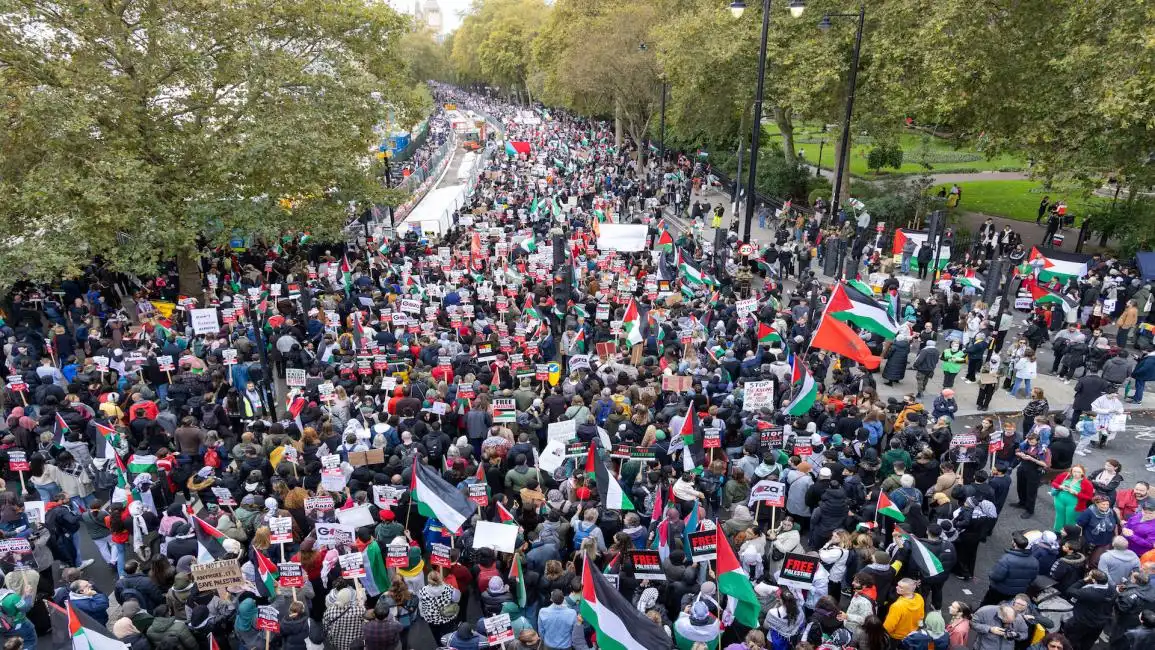
In Britain, which witnessed the largest supportive demonstrations, the British government said that it banned the raising of the Palestinian flag, “because some of them see it as an echo of the Balfour Declaration, which was accompanied by Arthur James Balfour, the conservative British Prime Minister, in the early last century, and it is known that this declaration included” A promise to the Jews to establish the State of Israel in Palestine.


The issue of Palestine has become more central. Not only in awareness or in individual or collective stories, but in the delicate intertwining that the Palestinians have created over the years, between different, far-flung worlds.


In Italy, Belgium, Sweden, Greece... Even “neutral” Switzerland, divisions over Palestine intensified, and there were demonstrations, platforms, and personalities who broke their calm, denouncing and clarifying. The pretext for all these governments is the escalating incidents of “anti-Semitism.” That label does not distinguish between hostility to Israel and hostility to the Jews. The American echo will be loud: thousands of American Jews are demonstrating in solidarity with Palestine. In the last demonstration, two hundred of them were arrested. In Canada, the same thing happens. In every demonstration in its cities, you find rabbis, wearing their traditional dress, along with those wearing the Palestinian keffiyeh, raising slogans of rejection of the establishment of Israel.


In Russia, Putin rubs his hands in joy and optimism. The gift came to him from heaven. The return of this war to the Middle East is good news for him, because it is diverting the world away from Ukraine, in favor of Russia. The position and the opinions loyal to it came to the fore: The West, which speaks about international rights and crimes, is measuring that Western “malice” by “double” standards. 

The war on Gaza is a blessing for Moscow, allowing it to break out of its isolation imposed on it by the "murderous West." Russia has eight hostages held by Hamas, who hold its nationality. It is trying to put on the guise of a strong connection with the Palestinians, so it receives figures from Hamas to search for those hostages. With no use. But it is enough for it to appear at the world without its tanks directed against Ukraine.


This is what is recorded at the “macro” level. Where history and the divisions around it are present: the Holocaust, anti-Semitism, the civilizational war, Islamophobia, the history of the founding of Israel, the history of the Palestinian diaspora, and a huge amount of retrospectives to aborted facts, agreements and peace projects, or to the experiments of other non-Islamic ideologies with this weapon of resistance. What is certain is that we did not capture all the indicators. 


History now moves quickly, as if it were running. Our limited minds cannot capture all the feats or failures of this run. But there is micro, there is also mini. They are Palestinian individuals, scattered throughout the world. In the most remote points of the world. Like the Canadian-Palestinian residing in Calgary, whose name is Tamer Jarada. He was told that 11 members of his family were killed, namely his mother, father, and daughters, while five others remained under the rubble, including his nephews and cousins. He talks about his tragedy in a tape shown on the Canadian News website, which received a huge number of views.


The Palestine issue has been dormant for a long time, and we have forgotten it. We have fled from those who have pretexts to carry it. Today, it has become more central.


The famous Bassem Youssef, who lives in the United States, announces in an interview about the war in Gaza, that he is married to a Palestinian from Gaza, her name is Hala Diab, a doctor, her family is there, and she is worried about them, living under the impact of Israel’s strikes on her. The less well-known Pakistani Hamza Yousef, although he is the Prime Minister of Scotland, announced to the press that he and his Palestinian wife, Nadia Al-Nakla, also from Gaza, were worried about her family who were besieged in Gaza, where they were visiting their relatives. He added that the Israeli authorities asked his wife's parents to leave, "but did not guarantee them safe passage." 


The Palestinian child, Wadih Al-Fayoumi, had a harsher fate than the war. In Illinois, Chicago, a six-year-old boy received 26 stab wounds from his seventy-year-old neighbor, who had been courting him on the eve of the war, and who kept repeating as he stabbed the child, “You Muslims must die!” The mother also received her share of stabbings, and here she is lying in the hospital.


Reactions to the crime were measured. But what is noteworthy is that psychological experts intervened in the matter and began providing advice to families, published by various American websites. Their first question was: “How should parents and teachers talk about the war between Israel and Hamas?” And answer it with a list of tips: address the topic first, listen to what these children are saying, use normal language appropriate for their age, avoid binaries, correct incorrect information, and focus on the children. Finally, review your information and analyzes and take some distance from them.


The Palestine issue has been dormant for a long time, and we have forgotten it. We have fled from those who have pretexts to carry it. Today, it has become more central. Not only in awareness or in individual or collective stories, but in that delicate intertwining that the Palestinians have created over the years, between different, far-flung worlds. We have only described a little of this entanglement that has come to us. 


What is more than this little: either it has not reached our awareness, or it is late because it is still embryonic, or there are secrets that protect it from the light. All this and we did not talk about what entered the minds of the Arab peoples, or left them, after the “Al-Aqsa Flood.”

Source: Al-Araby Al-Jadeed

ARAB AND WORLD

Thu 02 Nov 2023 9:43 pm - Jerusalem Time

5 Lebanese citizens were killed in Israeli raids on the south

The National News Agency in Lebanon announced, Thursday evening, that five citizens were martyred as a result of the Israeli occupation bombing of a number of villages in the south.


The agency reported the martyrdom of four citizens, as a result of the Israeli bombing on the Wadi Al-Saluki area in the Marjayoun district. It also reported the death of a citizen and the injury of another in the Al-Marj Al-Shamali area in Mays Al-Jabal, as a result of an Israeli bombing that targeted civilian homes.


This evening, the Israeli occupation aircraft launched air strikes on a number of villages in southern Lebanon.


Israeli warplanes carried out raids on the outskirts of Tair Harfa, Al-Jebin, the outskirts of Al-Naqoura, Al-Labouneh, Alma Al-Shaab, Al-Dhahira, Wadi Nafha on the outskirts of the town of Zabqin, and the outskirts of the town of Hula. The occupation artillery also targeted the towns of Hanin, Al-Naqoura, and the area between the towns of Tair Harfa, Al-Dhahira, and Khiam. And Shehin.


ARAB AND WORLD

Thu 02 Nov 2023 9:29 pm - Jerusalem Time

Ukraine crisis drags on, Americans begin to suffer 'Ukraine fatigue'

By William Jones


The expose in Time Magazine entitled "The Lonely Fight of Volodymyr Zelenskyy" reveals the real truth of how the American people are now suffering "Ukraine fatigue" after two years of continual fighting and no sign of victory for Ukraine. Enthusiasm for "the Ukraine cause" among Americans has always been rather lame. 

Even those who didn't really fully grasp how that country was being used as a convenient "pawn" by NATO to wage a proxy war against Russia, had little interest in pouring billions into military hardware for Ukraine. 

As the Time Magazine story indicates, even congressmen have begun to tire of the empty rhetoric of victory that the Ukrainian president has been spewing forth. In addition, not even a dent can be made in the dire economic realities facing most Americans on the streets, in the schools, or in their homes, as so many billions of dollars were disappearing, allegedly, into the coffers, of the Ukrainian military effort; but even this cannot be fully substantiated, given the lack of transparency.


The Ukrainian leader, who had been praised to the high heavens on his visit to Washington at the end of last year, and gave a rousing speech to a joint session of Congress, had no such luck when he visited the capital in September. There was no speech to the joint session, and even major interviews with Fox News or with Oprah did not come off. Some of his supporters had even told him that this was not a good time to visit.U.S. 

That same Time Magazine article also goes after the rampant corruption in the Ukrainian government apparatus, something which has been widely known by Ukraine watchers, but has been hidden from the general public by the "happy talk" of the mainstream media. 

The article also indicates that this is not a problem that can be solved simply by the elimination of certain officials, but is endemic to the structure of government in the country.The mass media has, of course, followed suit in the narrative laid out by the political establishment, but even they have had difficulty in explaining the total lack of progress in the much-touted Ukrainian "counteroffensive." Only the determination of the Joe Biden administration and NATO to inflict a significant defeat on the Russian military through their Ukrainian surrogates has kept the issue of support to Ukraine on the table in Washington. 

Yet, the U.S. Congress, which is usually in lock-step with the administration when it comes to supporting America at war, albeit vicariously, is now fairly divided over the issue of money to Ukraine, truly reflecting the even greater division among the American public.

The recent conflict in the Middle East has also thrown a monkey wrench into the well-oiled war machine of the U.S. While the Israeli lobby in Washington has a lot more clout than Ukraine, it's unlikely that Ukraine will prevail if there is a trade-off in the two support packages.

The uncontrolled bombing by the state of Israel of tightly populated areas in the Gaza strip, which has resulted in thousands of casualties over a period of days, including thousands of children, has caused a rip-tide of protest throughout the nation. Even some major Jewish groups in the U.S., filled with horror over the scenes coming out of Gaza, showed their disagreement with the Netanyahu regime and took to the streets – and to the halls of the U.S. Congress.

In a dramatic manner, the child casualties in Gaza, have brought to the fore the ugly face of U.S. policy, not only in the Middle East but also in the heart of Europe. The absence of any strong and vocal peace movement in America, which can counter this insanity, is about to change. The ugly face of the U.S. military-industrial complex has been revealed in the massive bombing of Palestinian neighborhoods.

While the Biden administration is now bending over backwards to convince Congress that they must pass a $105 billion defense bill which combines both aid to Ukraine and to Israel, there is little chance that they will prevail. When the two bills are separated, the portion that goes to Israel will probably pass the Congress, but some commentators think the Ukraine bill may not. 

People have grown weary over the sums of money now being poured into wars. This "phase-change" among the American public could pose a serious impediment to an administration which relies on its war machine to maintain its prestige.


As public outrage grows over the blatant violations of human rights in Gaza, the Biden administration may have to find a new approach to maintain its support in the upcoming elections.

ARAB AND WORLD

Thu 02 Nov 2023 9:19 pm - Jerusalem Time

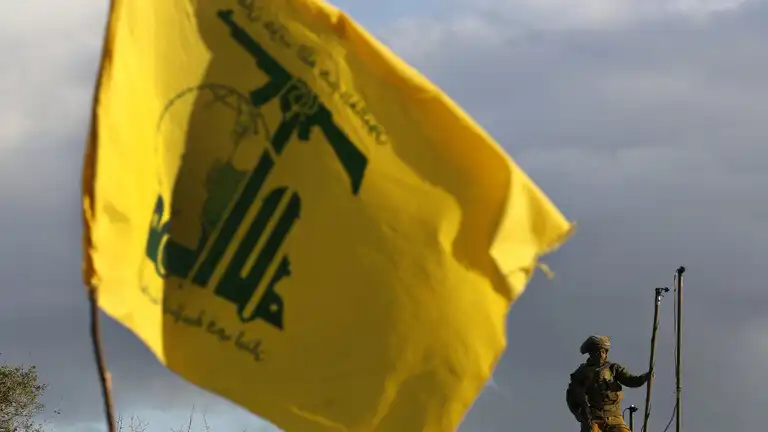
Hezbollah announces targeting 19 Israeli sites simultaneously

The Israeli occupation army announced Thursday that it responded to missiles from Lebanon with a “large-scale strike” on Hezbollah military targets.


The occupation army spokesman, Daniel Hagari, said in a statement, “Army warplanes and helicopters attacked Hezbollah targets in the past few hours in response to the shooting that was carried out from Lebanon earlier today.”


The occupation army statement confirmed that attacks were being carried out against Hezbollah positions “using artillery and tank fire.”


The army added that it also used “IDF artillery fire and tanks.”


For its part, Hezbollah announced the bombing of 19 Israeli sites “simultaneously” on Thursday, on the eve of an expected speech by the party’s Secretary-General, Hassan Nasrallah.


A statement issued by Hezbollah said: “The Mujahideen of the Islamic Resistance attacked simultaneously at 15:30 (13:30 GMT) nineteen Zionist military sites and points with guided missiles, artillery shells, and direct weapons.”


Israel has occupied the Shebaa Farms since the 1967 Middle East war.


It is an area of 39 square kilometers that both Syria and Lebanon say is Lebanese.


In the largest bloody escalation on the border since the 2006 war, Hezbollah fighters have been exchanging fire with Israeli forces since the start of the Israeli aggression on the Gaza Strip following the Al-Aqsa Flood operation carried out by Hamas on October 7.


Hezbollah Secretary-General, Hassan Nasrallah, is expected to deliver his first speech since the start of hostilities tomorrow, Friday.

ARAB AND WORLD

Thu 02 Nov 2023 8:14 pm - Jerusalem Time

WHO: Extension of hostilities into southern Lebanon threatens regional health security

The World Health Organization's Regional Director for the Eastern Mediterranean, Ahmed Al-Mandhari, warned today (Thursday) of the extension of hostilities into southern Lebanon, considering that it exposes more civilians to danger and may threaten the health security of the entire region.


This came in a statement issued by the United Nations Information Center in Beirut today at the end of a visit made by Al-Mandhari to Lebanon to meet with Lebanese officials and employees of the organization to enhance the health system’s preparedness to confront the possibility of the conflict in Gaza spreading to Lebanon.


Al-Mandhari pointed out that the extension of hostilities into southern Lebanon is a cause for concern because it exposes more civilians to the risk of death or injury, and may threaten the health security of the entire region.


He called for a ceasefire in Gaza so that losses and suffering would not worsen.


As part of regional preparedness efforts, Al-Mandhari said, “We are working to ensure that the readiness of the health system in Lebanon is strengthened to deal with mass infections and provide health services to the displaced.”


He noted the World Health Organization's support for Lebanon's plan to establish an emergency operations center in the Ministry of Public Health to "coordinate and support all health preparedness and response activities."


He said that the organization had prepared in advance trauma treatment supplies sufficient for 800 injured people, in 8 public hospitals, to enhance their capacity to accommodate any increase in the number of injured people.


He added that the organization will deliver more trauma and surgical supplies to Lebanon in the coming days, enough for 3,000 injured people, to 30 hospitals to enhance their ability to confront emergencies.


He pointed out that the organization had requested, as part of a regional appeal it launched last week regarding the Gaza crisis, a total amount of $50 million for its efforts to confront the crisis in Gaza, and $10.4 million to support health response efforts in the event that the crisis spreads to Lebanon.


The border between Lebanon and Israel has witnessed on a daily basis since last October 8, due to the impact of the war in Gaza, intermittent bombing and shooting operations between Hezbollah, Palestinian movements, and the Israeli army, which resulted in deaths and injuries on both sides.

PALESTINE

Thu 02 Nov 2023 7:50 pm - Jerusalem Time

Israeli soldiers assault a young Palestinian south of Nablus

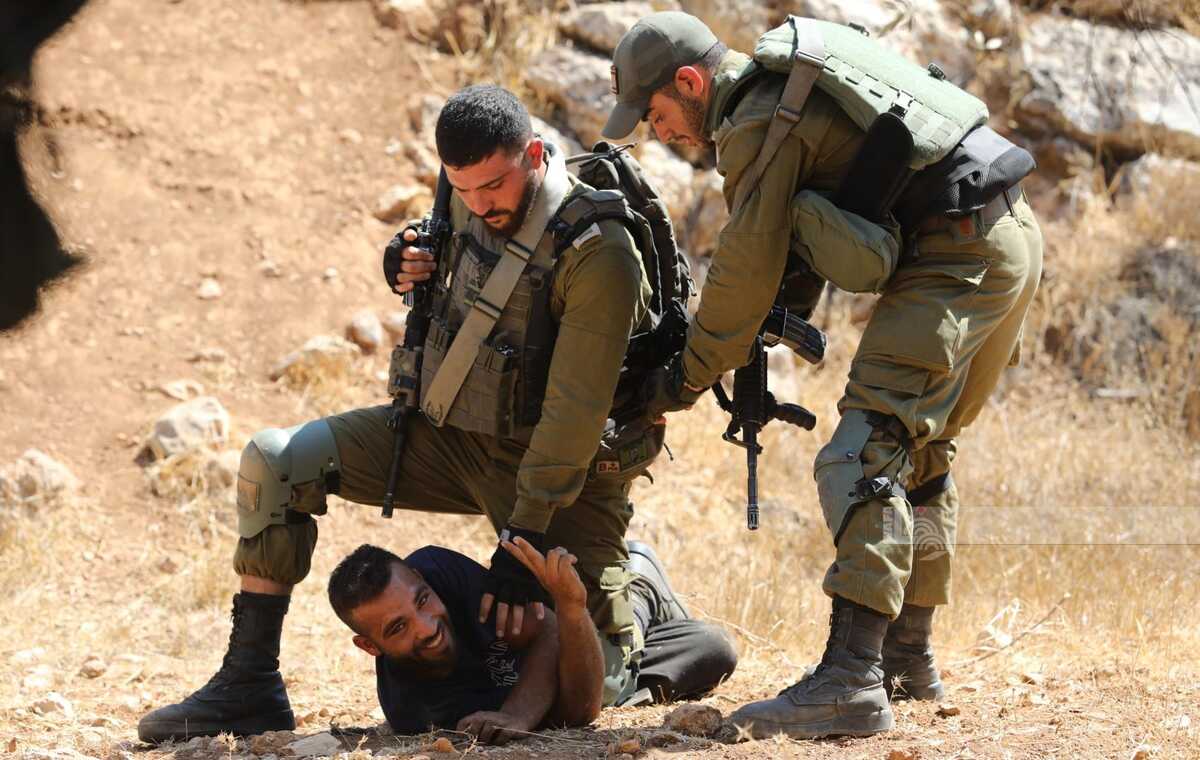
Today, Thursday, Israeli occupation forces attacked a young man near the Awarta checkpoint, south of Nablus.


The director of the Red Crescent Ambulance and Emergency Center in Nablus, Ahmed Jibril, said that the ambulance crews transported a young man (20 years old) to the hospital after the occupation soldiers fatally assaulted him near the Awarta checkpoint.

PALESTINE

Thu 02 Nov 2023 7:16 pm - Jerusalem Time

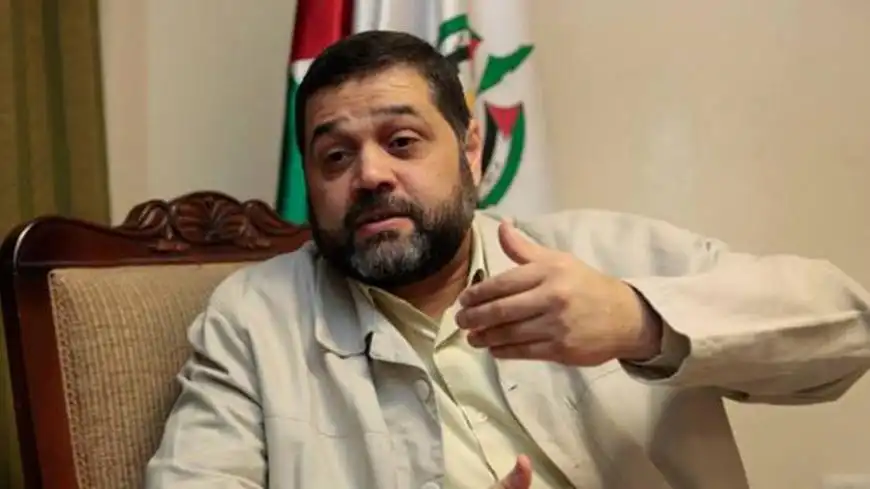
Senior Hamas Leader warns against emptying Gaza and accuses US of supplying Israel with prohibited weapons

Senior leader of the Islamic Resistance Movement (Hamas), Osama Hamdan, accused the Israeli occupation of using internationally banned weapons, and warned against trying to empty the Gaza Strip of its residents by removing the wounded. He also condemned the White House’s statements regarding the future of the Strip.


Hamdan said - in a press conference - that the occupation uses internationally banned weapons in its aggression against Gaza, such as white phosphorus and other weapons that not only kill, but also melt limbs and tear bodies into pieces. He revealed that dozens of martyrs arrived in hospitals with burnt body parts, accusing the American administration of supplying Israel with this weapon to bomb the Palestinians.

ARAB AND WORLD

Thu 02 Nov 2023 6:33 pm - Jerusalem Time

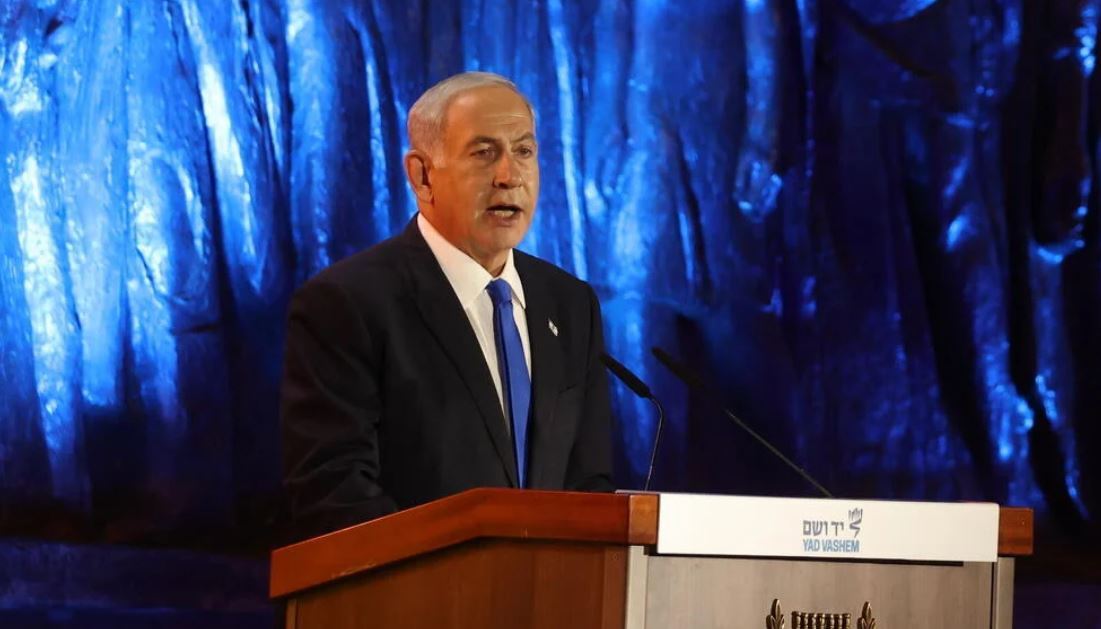
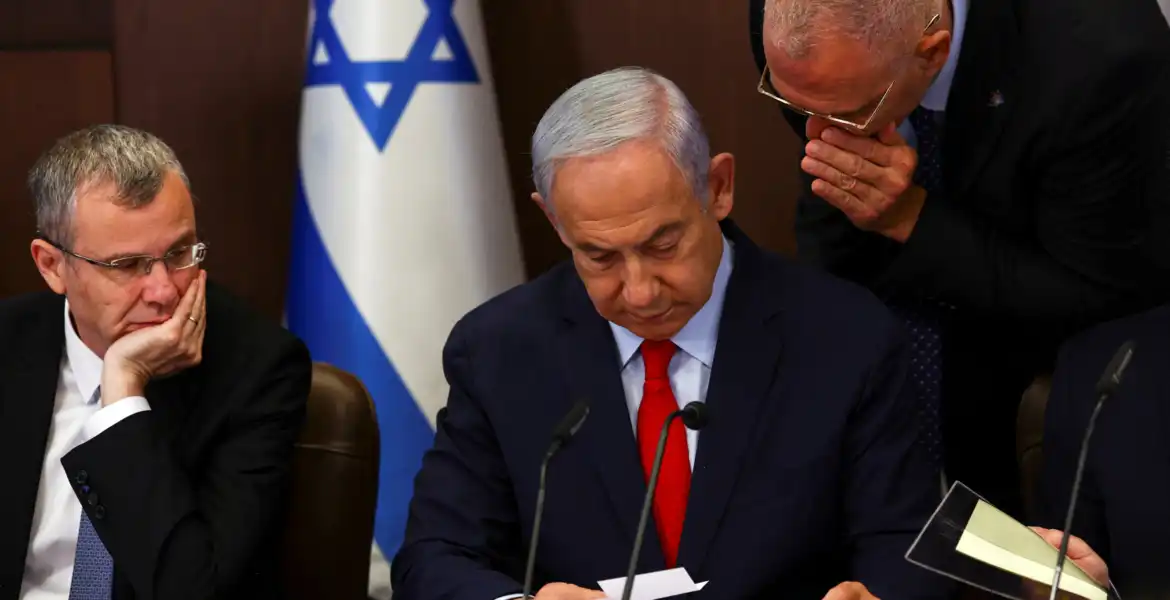
Netanyahu: No decision has been made regarding allowing fuel to enter Gaza

Israeli Prime Minister Benjamin Netanyahu said on Thursday that the occupation army forces penetrated the outskirts of Gaza City as part of their attack in the northern half of the Strip.


He added in a statement issued by his office, “We are at the height of the battle. We achieved amazing successes and crossed the outskirts of Gaza City. “We are making progress.”


Reuters quoted Netanyahu as saying that no decision had been made regarding allowing fuel to enter Gaza.


The Chief of Staff of the occupation army, Herzi Halevy, expressed his readiness, on Thursday, to ease the ban imposed by Israel on fuel for the Gaza Strip during wartime, saying that if hospitals there run out of fuel, it is possible to resupply them with supplies, but under supervision.


Following the Al-Aqsa Flood operation launched by Hamas on October 7, Israel besieged Gaza and launched a counterattack. It allowed the entry of humanitarian aid, but excluded fuel imports, indicating that there was a need to deprive Hamas of it.


Hospitals in the Palestinian Strip are raising increasing alarms about the decline in their electricity supplies.


He added, “We will wait when that day comes (when the fuel runs out). The fuel will be transported, under supervision, to hospitals. “We will do everything necessary to ensure that it does not reach Hamas’ infrastructure, and that it ultimately serves not war aims but real needs in terms of treating patients.”


In a sign that Israel is prepared to escalate the war, including against Hamas's allies in Lebanon and elsewhere in the region, Halevy said the air force is currently using less than half of its capabilities.


He expressed his appreciation for the support of the United States, which sent naval reinforcements to the region.


“This partnership is important,” he said, without going into details. “It can reach issues of dialogue and exchange of intelligence information, and it can also go beyond that.”


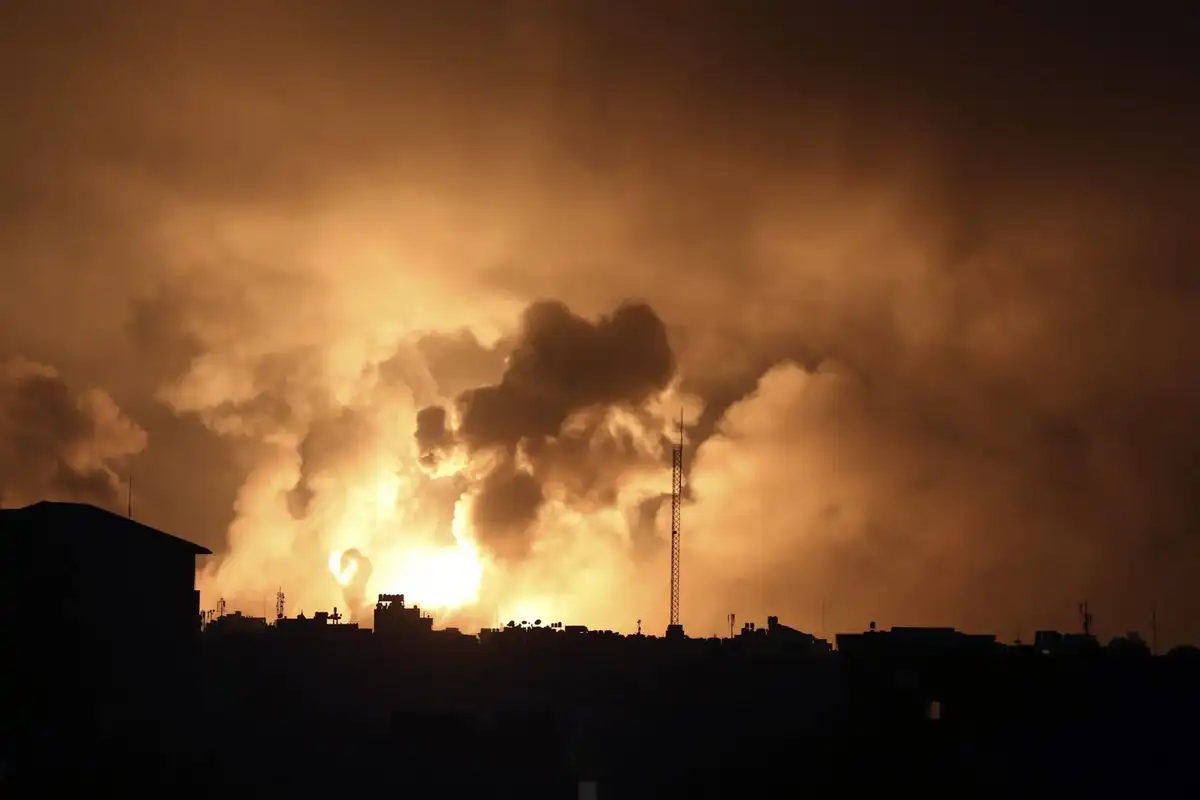
The government media office in Gaza denied the Israeli occupation’s allegations of bombing 12,000 military targets inside the Gaza Strip, stressing that reality proves that the occupation’s targets are residential neighborhoods, the homes of citizens, women and children, and gatherings of citizens in front of bakeries, hospitals and churches.


The office said that it “challenges” the occupation to disclose to the world the nature of these military targets that it claims, because they will be evidence of its lies and falsity.


He added that the occupation admitted to dropping 10,000 bombs since the beginning of the aggression, but estimates say that the amount of explosives dropped on the Gaza Strip exceeds 25,000 tons, which means about 70 tons per square kilometer.


The Ministry of Health in Gaza announced today, Thursday, that the number of dead as a result of the Israeli bombing of the Gaza Strip 27 days ago exceeded nine thousand martyrs.


The ministry reported in a statement that “the number of dead has risen to 9,061, including 3,760 children, 2,326 women, and 32,000 injured.”

PALESTINE

Thu 02 Nov 2023 6:12 pm - Jerusalem Time

A preliminary prisoners exchange deal between Hamas and Israel is on track to be implemented

An informed source close to the Islamic Resistance Movement "Hamas" revealed to Al Jazeera Network today, Thursday, that there is talk about parties mediating to conduct an initial prisoner exchange deal between the movement and the Israeli occupation.


According to the source, international and regional parties are contributing to the completion of the deal, the proposed terms of which include the movement’s release of child, elderly, and foreign prisoners in exchange for the release of all women and children prisoners in the occupation prisons.


The terms also stipulate - according to the same source - the entry of sufficient quantities of humanitarian aid and relief materials into the Gaza Strip.


The source reported that the Israeli occupation was very strict regarding the issue of bringing fuel in, while the movement insisted on bringing it in, and it was agreed that it would allow the entry of sufficient quantities designated for hospitals.


In order to implement the terms of this deal, the occupation demanded the provision of sufficient data on the movement’s prisoners, while Hamas demanded a ceasefire for a period that may extend to a week to allow the required data to be collected about its prisoners and then the exchange process to take place.


The head of Hamas in the Gaza Strip, Yahya Sinwar, announced a few days ago that the movement was ready to immediately implement an exchange deal for all prisoners in Israeli occupation prisons in exchange for prisoners held by the resistance.


Al-Sinwar called on the bodies and institutions working in the field of prisoners to consider themselves in permanent session and to prepare lists of the names of male and female prisoners held by the occupation without exception in preparation for developments in the next stage.


On the Israeli side, Israeli Prime Minister Benjamin Netanyahu had indicated that he had discussed in the War Council a proposal to release Palestinian prisoners in exchange for the release of prisoners in the Gaza Strip, stressing that expanding the ground operation does not contradict Al-Qassam’s idea of liberating prisoners.


Al-Qassam had previously announced that it had captured more than 200 Israelis during Operation Al-Aqsa Flood in the Gaza Strip.


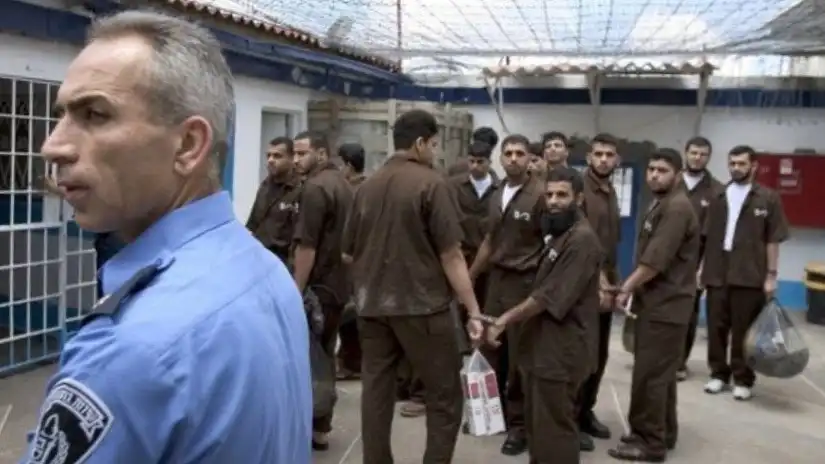
On the other hand, Israel detains about 5,000 Palestinian prisoners, including dozens who have spent more than 20 years in detention, and more than a thousand are detained under administrative detention without being tried or formally charged.

PALESTINE

Thu 02 Nov 2023 5:45 pm - Jerusalem Time

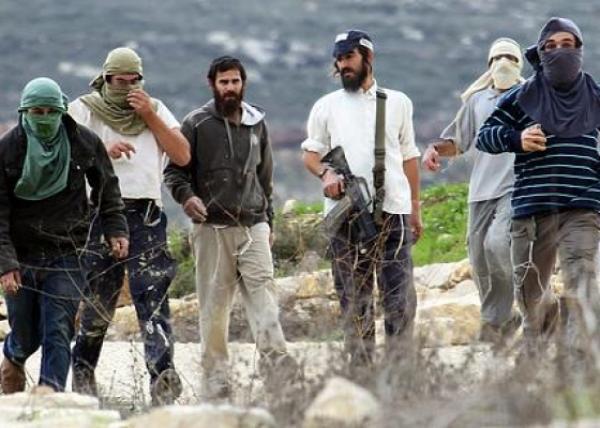
Updated: Attacks by Israeli settlers in the West Bank

Today, Thursday, settlers attacked citizens and their property in the West Bank.


In Hebron, a group of armed settlers attacked a house in Masafer Yatta, south of the city, and destroyed its contents.


According to local sources, a group of armed settlers, protected by Israeli occupation soldiers, attacked his house in the Shaab al-Butm area in Masafer Yatta, and forced his family of nine members, including children and women, to leave the house, before smashing the windows and doors and destroying the furniture in it.


It explained that these attacks aim to pressure and intimidate citizens, and force them to leave their lands and homes and leave those areas, noting that this is the third attack against his family in less than a week.


It confirmed that during the past week, settlers destroyed water tanks, contaminated wells, and uprooted irrigated seedlings, in addition to physical assaults, beatings, and death threats.


In the northern Jordan Valley, settlers attacked the citizen Thaer Abu Rayhan near the “Ru’iya” settlement and destroyed his vehicle, while he was able to survive and escape from them.


In Tulkum, dozens of settlers gathered at the Beit Leed intersection, and spread out on the main Nablus-Tulkarm road, under the protection of the occupation forces. They carried out orgies in the area and attacked citizens’ property, before setting fire to olive trees in the Ramin Plain and the lands of Beit Leed.


ARAB AND WORLD

Thu 02 Nov 2023 5:33 pm - Jerusalem Time

Hezbollah introduces drone weapons

Hezbollah announced the use of two drones in an attack on an occupation army position, in the occupied Shebaa Farms, today.


The party said that its forces launched two marches loaded with explosives towards the Zabdin barracks in the occupied Shebaa Farms.


It added, in a military statement, that the target of the raid was the division headquarters in the barracks.


Hezbollah confirmed that the two drones directly hit the target and caused losses.


This is the first time that the party has introduced drone weapons into the confrontation since the beginning of the “Al-Aqsa Flood” battle.


Earlier, the resistance launched a massive missile strike that targeted settlements and military sites on the border between Lebanon and occupied Palestine.


The party announced that it had targeted the spy system at the “Al-Abad” military site of the occupation army.


PALESTINE

Thu 02 Nov 2023 5:26 pm - Jerusalem Time

Report| Israeli prisoners issue once again become a pressure factor on Netanyahu

Three weeks into the Gaza war, the Israelis have begun to focus on one issue more than others: the fate of Israeli prisoners being held in Gaza. This has made it the most prominent political issue in the Hebrew state currently, especially after the escalation of the movements of the families of Israeli prisoners in recent days.


In the early days of the war on Gaza, relatives of prisoners, especially relatives of civilian prisoners, gathered in Tel Aviv and other cities and tried to draw attention to their plight in mostly quiet demonstrations.


But last weekend, things changed, and the families began demanding the urgent release of the prisoners. Although they did not state that the ground attack on the Gaza Strip endangered the prisoners, they indicated this, according to a report by the British website Middle East Eye.


The families of the Israeli prisoners waited for the appropriate time to expand their movement

It is clear that the families of the Israeli prisoners knew that vocal opposition to the ground attack was not acceptable to the Israeli public determined to take revenge for what happened in the October 7 attack.


Therefore, the families of the prisoners resorted to asking the government and the occupation army to make the issue of returning the prisoners to their loved ones a priority, and then they continued the ground attack and air bombardment on Gaza to subjugate it. It seems that this demand imposed some pressure on the occupation army and on Israeli Prime Minister Benjamin Netanyahu.

Subsequently, the occupation army said that launching a ground attack was the way to force Hamas to ease its conditions in any planned deal, but no one announced the nature of the deal that the Israeli authorities wished to conclude. The occupation army claimed that the negotiation of the prisoners was the reason that the ground incursion that began last weekend was limited in scope, and that the Israeli forces did not penetrate into residential areas or Gaza City itself.


Despite the difficulty of determining the validity of the allegations that the ground operation will increase restrictions on Hamas to the point that it will be forced to accept a deal whose terms agree with the desires of the occupation, the Israeli media accepted what the generals said.


As for Netanyahu, the criticism he received from the families of the prisoners was much more severe, and forced him to meet with some of their representatives on Saturday, October 28. It was said that the meeting was difficult, and that the families spoke harshly to him, accusing him personally of being responsible for the entire disaster.


Families of Israeli prisoners then organized a small demonstration in Tel Aviv, expressing a new demand: "All for all." No one specified what this meant in practical terms, but it was understood that they were demanding the release of all prisoners in Gaza, including occupation soldiers, in exchange for the release of all Palestinian prisoners in Israeli prisons.


Netanyahu did not rule out releasing Palestinian prisoners in return

The exact number of prisoners held by Hamas and other factions in Gaza is not yet known. The occupation authorities have worked to progressively update the total number, and now say that there are 240 prisoners, including about 30 soldiers.


When Netanyahu was subsequently asked about this possibility, he did not rule it out, and said that it was a possibility on the negotiating table, but he refused to go into any details about the matter.


It is striking that the idea of releasing all Palestinian prisoners is considered taboo in Israel, as some of these prisoners are sentenced to life imprisonment for being accused of participating in attacks on Israelis in the occupied territories during the Second Intifada.


He says that he wants to achieve two contradictory goals: crushing Hamas and releasing prisoners

After the October 7 attack on the Israeli settlements surrounding the Gaza Strip, Israel was determined to achieve one goal: to crush the Islamic resistance movement Hamas.


Israel announced that it intends to completely “cleanse” Gaza of Hamas, whatever the means, and even if it means forcing all of the Strip’s 2.3 million residents to flee to Egypt.


But now, the importance of the other goal has begun to rise, and the release of prisoners has also become one of the main goals of the military operation in Gaza.


However, the two goals contradict each other. No one knows how to truly crush Hamas in house-to-house and street-to-street fighting, while seeking to return Israeli prisoners at the same time. It is extremely difficult, if not impossible.


This contradiction puts Israel in a complex dilemma, especially since the intense aerial bombardment that had the largest share so far of Israel's plan in its attack on Gaza has actually led to the death of more than 8,500 Palestinians, including 3,500 children.


It seems that the occupation inflicted limited losses on the resistance

The American New York Times newspaper said that Washington sent dozens of commando forces to Israel to locate prisoners in Gaza.


The Israeli army claims that it killed about 50 high-ranking Hamas members, and “hundreds” of its fighters. But even if we take these allegations seriously, the number of deaths among Hamas has reached about 500 people, which is a small percentage of victims when compared to the number of children killed in the ongoing Israeli attack on the Gaza Strip, and it is also a small number when compared to the estimates. The number of Hamas fighters, which was 30,000 years ago, may have risen to 50,000, and Yahya Sinwar, the leader of Hamas in Gaza, previously said that if Israel had invaded Gaza, it would have faced about 70,000 Palestinian resistance fighters.


The Israeli media does not care much about the world's opinion regarding the massive loss of life caused by Israel's raids in the Gaza Strip, but the reality is that it should care. World opinion is changing, and the United States, London and elsewhere in Europe, as well as in Turkey and across the Arab world, have witnessed massive pro-Palestinian demonstrations.


At the same time, the rhetoric of Western officials has begun to change. Evidence of this is that US National Security Advisor Jake Sullivan publicly urged Israel to protect the lives of civilians in Gaza, a notable change compared to the US administration's absolute support for Israel since October 7.


Fears of destabilizing the Arab regimes allied with America and Hamas embarrass Netanyahu

Pressure on Israel is increasing not only from the West, but also from the Arab world. Attacks have begun to come from Lebanon, Syria, and Yemen, where Iranian agents are located.


Also, the massive ground attack on Gaza threatens to destabilize the ruling regimes in Jordan and Egypt. The United States pays great attention to this matter, as it cares about the fate of its strategic allies in Cairo and Amman much more than it cares about the people of Gaza.


Moreover, it is most likely that the ground attack on Gaza will lead to the death of most of the prisoners, and this will be a collective shock for the Israelis, and Hamas has stated that the Israeli bombing has already killed a significant number of them.


Hamas embarrassed the Israeli government and put pressure on it and Netanyahu with a video in the midst of ground battles, which it published on Monday, October 30, 2023, of 3 Israeli female prisoners who demanded that Netanyahu release them immediately.


One of the female prisoners accused Netanyahu of failure, and said that they bear his political, security, military and governmental failure. She addressed Netanyahu: “You want to kill us, you want to kill everyone, you want the army to kill us. Isn’t it enough that you slaughtered everyone? Isn’t it enough that innocent Israeli citizens were killed on October 7? Release us now, release their citizens.” Release their (Palestinian) prisoners, release us, allow us to return to our families, now now now.”


Israeli Prime Minister Netanyahu responded, describing the video as "cruel psychological" propaganda by Hamas.


Netanyahu said in a post on the “X” platform that Israel will do everything necessary to return the hostages, adding: “I address Elena Trupanov, Daniel Aloni, and Ramon Kirscht, who were kidnapped by Hamas, which is committing war crimes.. I embrace you, our hearts are with you and with the other kidnappers,” stressing: “ We are doing our best to return all kidnapped and missing persons to their homeland.”


The head of the Hamas political bureau, Ismail Haniyeh, said that the Hamas movement presented a vision that begins “with stopping the aggression, opening the crossings and exchanging prisoners, and ending with opening the political path to the establishment of a Palestinian state and the right to self-determination, but Netanyahu is stalling.”


Here is Netanyahu's likely choice, and will it be effective?

For all these reasons, the report of the British website Middle East Eye believes that it is unlikely that Israel will launch a comprehensive ground attack, and it is likely that the occupation forces see that continuing the war at the current pace - bombing and limited ground incursions, and perhaps dividing the Strip into two parts, and advancing to the outskirts of Gaza City - is... Her best choice.


The number of Palestinian casualties will not be long until it exceeds ten thousand, and international pressure will increase.


The Israelis have pledged a long war, lasting at least a few months. The reserve soldiers prepare for their war on this basis. However, an advanced economy like the Israeli economy will not tolerate this conflict continuing for a long time.


Israeli prisoners

Occupation forces raids led to the killing of a number of Israeli prisoners/Anatolia

Projections already indicated that the post-war Israeli economy contracted by 11% this quarter. If the conflict continues for several months, the crisis in Israel will become much worse. High-tech companies may be forced to withdraw their investments and lay off their employees.


This war has not yet witnessed internal unrest like the one we saw in the 2021 war on Gaza, and demonstrations and riots have not broken out in cities mixed between Palestinians and Jews. However, Israel is fraught with dangerous internal tensions. Palestinian citizens of Israel (about 20% of the population) are expelled from their places of work and from the universities where they study, and are attacked if they sympathize with the victims in Gaza. Accusations pursue them simply because they are Arabs or of Arab origin.


On the evening of Saturday, October 28, crowds of Israelis stormed a university residence in the city of Netanya (central Israel), where Palestinian students reside, and began chanting “Death to the Arabs.”


At the same time, the Israeli authorities promised to deliver 10,000 weapons to Israeli settlers in the occupied West Bank, and to ease the regulations imposed on civilians to obtain weapons.

These tensions between different sects of the population in Israel could destroy its economy. Palestinian citizens of Israel (as well as workers from the West Bank) are heavily involved in providing basic services. About a third of doctors in Israel are Palestinians.


If we take these matters into consideration, can Israel really continue its war on Gaza for several months at a time?


The solution is for the international community to intervene or enter into a tragic scenario

For three decades, Netanyahu has bet on preventing the establishment of a Palestinian state separating the West Bank and Gaza, and pitting Hamas against Fatah and vice versa. Things were stable for him, and the plan with which he was dealing with the Gaza Strip was proceeding, until the attack on October 7 occurred.


Hamas remaining in power over Gaza is no longer acceptable to the Israeli people at all. Even if Netanyahu wanted to, it is unlikely that he would be able to manage things in a way that leads to this. Indeed, there is no doubt that he is the most hated person in Israel at the present time. Because he is responsible for the largest disaster the country has witnessed since 1973.


Israel is caught between the desire to keep the prisoners alive by abstaining from a major ground operation, on the one hand, and seeking to continue the bombing campaign to remove Hamas from power, on the other.


Is there a way out of this dilemma? Maybe if the international community intervenes.


The conflict in Gaza has become very much an international conflict, going far beyond the scope of the first and second intifadas and previous rounds of fighting in the Strip. Leaders of Western countries flocked to Israel after the outbreak of war. Some experts believe that this conflict has become an extension of the ongoing war in Ukraine, and Washington's cold war with Russia and China.


Interest in the issue of the Israeli-Palestinian conflict has suddenly returned, after the issue had been forgotten for the past two decades. It seems that Washington - or at least the Joe Biden administration - is no longer convinced that the Israelis are capable of managing the conflict on their own.


Some observers believe that using an international force in Gaza (and perhaps an Arab force) may be an acceptable way to end the fighting for Israel and its people, and perhaps for the Palestinians, and even Hamas.


On the other hand, there is a much more evil path, according to the British website: which is to continue a long fight, seek to displace all Palestinians from Gaza, sacrifice tens of thousands of deaths, and risk a regional conflict that may include Jordan and Egypt, and may threaten the existence of Israel itself, according to the British website.


The website says: “This very bad scenario is possible, and we should not ignore the possibility of it happening. But at the same time, we must hold on to hope, and hope that the international community will intervene before things take their worst course.”

Source: Middle East Eye


ARAB AND WORLD

Thu 02 Nov 2023 5:21 pm - Jerusalem Time
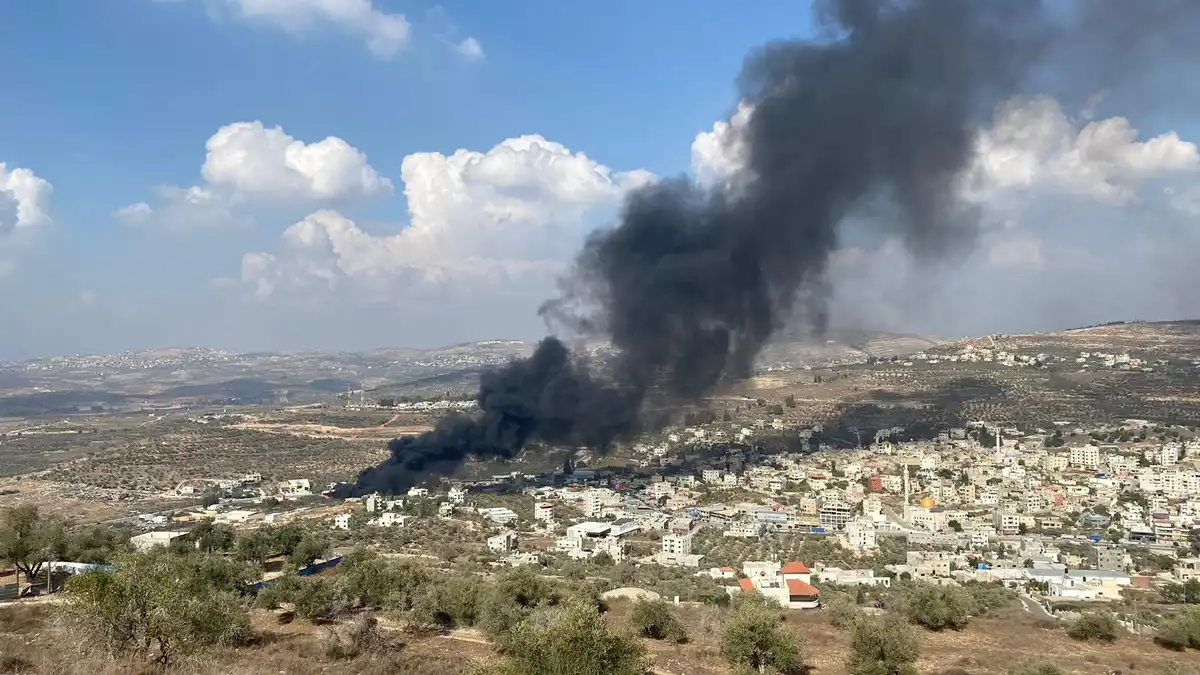
Hundreds of thousands of Israelis are currently unemployed.

el Aviv reveals that 46,000 workers have been laid off since the start of the war


The Israeli Ministry of Labor said, Thursday, November 2, 2023, that about 46,000 Israeli workers have been laid off since the outbreak of the war in the Gaza Strip on October 7, 2023, noting that there are 760,000 Israeli workers who are not working at the present time.


This came, in a statement issued by the ministry, a month after the announcement of unemployment data in the Israeli market amounting to 3.1% of the total workforce.


The Ministry stated that there are 760,000 Israeli workers, or about 18% of the workforce, who are not working at the present time, for three reasons.


The three reasons - according to the ministry - are that Israeli workers and employees serve as reserve forces in the army, live in the vicinity of Gaza, or stay at home with their children.


Last month, Israel summoned approximately 350,000 reserve soldiers, who are employees working in the Israeli economy, which today faces the specter of entering into a recession.


The data does not include numbers for Palestinian workers in Israel, which number approximately 140,000 employees, according to data from the Palestinian Central Bureau of Statistics.


The economy is going through a difficult time

On Monday, October 30, 300 senior Israeli experts warned that the Israeli economy is going through a difficult time, requiring immediate measures to prevent further damage, according to what Anatolia Agency reported from local media.


The Israeli newspaper Yedioth Ahronoth said that economists sent a letter to Prime Minister Benjamin Netanyahu and Finance Minister Bezalel Smotrich in which they wrote: “You do not understand the magnitude of the economic crisis that the economy is facing. You must act differently.”


She also pointed out that economists look at "a difficult time for the Israeli economy today... and measures must be taken to prevent major damage immediately." It was reported that among the signatories were the former supervisor of banks, the general accountant, and the former governor of the Bank of Israel.


For 27 days, the Israeli army has been waging a devastating war on the Gaza Strip, which resulted in the destruction of entire residential neighborhoods and the killing of thousands of Palestinians, most of them civilians, and caused a catastrophic humanitarian situation, according to warnings issued by international institutions.


Since the outbreak of the war, Israel has cut off supplies of water, food, medicine, electricity and fuel to the residents of Gaza, who are about 2.3 million Palestinians who already suffer from extremely deteriorating conditions. As a result of an ongoing Israeli siege since Hamas won the legislative elections in 2006.


ARAB AND WORLD

Thu 02 Nov 2023 4:46 pm - Jerusalem Time

Sunak and Guterres agree on the need to increase humanitarian aid to Gaza

British Prime Minister Rishi Sunak's office said on Thursday that Sunak and United Nations Secretary-General Antonio Guterres agreed on the need to increase the delivery of humanitarian aid to Gaza, according to what Reuters reported.


The two leaders met on the sidelines of their attendance at the last day's talks of the Artificial Intelligence Safety Summit at Bletchley Park in England.


The Prime Minister's spokesman added: "The two leaders... discussed the deteriorating humanitarian situation in Gaza and agreed on the importance of accelerating the increase in the delivery of life-saving humanitarian aid."


He continued: “The Prime Minister and the Secretary-General also agreed on the need to revitalize international efforts to reach a lasting solution to the conflict and make progress towards a two-state solution.”


According to the Ministry of Health in Gaza, the death toll of Palestinians in the Strip rose to 9,061, including 3,760 children and 2,326 women, while the number of injured rose to more than 32,000, as a result of Israel’s attacks since the seventh of last October.


The government media office in Gaza said that the Israeli army has dropped 10,000 bombs since the start of its attacks on the Gaza Strip, and estimates that the amount of explosives dropped exceeds 25,000 tons, which means about 70 tons per square kilometer.

PALESTINE

Thu 02 Nov 2023 4:42 pm - Jerusalem Time

Hamas: Washington's statements about managing the Gaza Strip after the end of the aggression are "impudent"

The Hamas movement said that the White House’s statements regarding working on an international regional consensus to manage the Gaza Strip after the end of the aggression on Gaza are rude and unacceptable, as the free Palestinian people are not the ones upon whom guardianship is imposed.


Hamas added in a statement, today, Thursday, that “the attempts of blatant intervention by the United States to impose a new reality that suits them and the size of the Zionist occupation in the Gaza Strip are completely rejected, and will be confronted by our Palestinian people with all force.”


It pointed out that the decision to arrange the Palestinian situation is the decision of the people, and they alone are able to determine their fate, future and interests.


It continued, “Those malicious American statements and plans are pipe dreams in their minds. Our great Palestinian people and their valiant resistance will prevail in the war against this fascist occupation, and our people will impose their will and seize their rights by force to establish their independent Palestinian state with Jerusalem as its capital.”


The White House said on Wednesday that the United States does not believe that the Palestinian Hamas movement can participate in ruling the Gaza Strip in the future, after the end of the war with Israel.


As previously reported, US Secretary of State Anthony Blinken said on Tuesday that Washington is studying possible alternatives for the future of the Gaza Strip if Hamas is “isolated.”


During a hearing of the Senate Appropriations Committee, Anthony Blinken considered that the status quo in which Hamas is in charge of the densely populated Strip cannot continue, but Israel does not want to manage Gaza either, he said.


ARAB AND WORLD

Thu 02 Nov 2023 4:25 pm - Jerusalem Time

Washington warns any party against getting involved in the Hamas-Israel conflict

Washington has confirmed that one of its most important priorities in the current period is to prevent the expansion of the ongoing conflict between Hamas and the Israeli army in the Gaza Strip, renewing its warning to any party intending to engage in the conflict to think twice before making its decision.


In his response to Asharq Al-Awsat’s question about the Houthi coup group in Yemen’s adoption of targeting several targets in Israel, Samuel Warburg, regional spokesman for the US State Department, avoided answering by saying: “We cannot enter into any hypotheses now, and we do not have any information to share.”


The Houthi group officially claimed targeting several Israeli targets, while Israel announced that it had responded to several missile and drone attacks coming from the Red Sea. The Israeli Navy also deployed several naval vessels in the Red Sea. To preserve its national security, as she put it.


Samuel pointed out that his country stressed from the beginning that “one of our most important priorities is to prevent the expansion of this conflict,” referring to the statement of US President Joe Biden, and that “any party hostile to Israel and thinking about engaging in this conflict must rethink twice before making its decision.” ».


Warburg continued by saying: “We repeat that any party thinking about exploiting this conflict must think twice before taking any step.”


PALESTINE

Thu 02 Nov 2023 4:06 pm - Jerusalem Time

An imminent health disaster in Gaza

Today, Thursday, the Palestinian Ministry of Health warned of an imminent health catastrophe in the Gaza Strip as a result of hospitals being cut off from fuel. The Ministry noted that the occupation forces prevented the evacuation of wounded Palestinians to Egypt to receive treatment.


This came in a statement read by the official spokesman for the Ministry of Health, Ashraf Al-Qudra, in which he said that the occupation forces are still committing massacres one after another in all areas of the Gaza Strip, with a focus on populated areas.


Al-Qudra noted that the occupation committed 15 massacres in the past hours, claiming 256 martyrs so far, bringing the number of massacres committed by the occupation to 965 against families since the beginning of its aggression on the seventh of last October.


Al-Qudra pointed out that the death toll of the aggression amounted to 9,061 martyrs, including 3,760 children and 2,326 women. The aggression also resulted in 32,000 citizens being injured with various injuries, while the Ministry of Health received 2,060 reports of people missing under the rubble, and 1,150 children were missing under the rubble.


Al-Qudra also reminded that the occupation forces continue to target the health system in the besieged Gaza Strip, where 135 health personnel were martyred and 25 ambulances were destroyed, in addition to targeting more than 100 health institutions, and putting 16 hospitals out of service, as well as 32 health care centers as a result of the targeting of the Israeli occupation forces. And running out of fuel.


The Ministry of Health spokesman warned of an imminent health disaster as a result of the stoppage of the main electrical generator in the Indonesian hospital, and the imminent stoppage of the generator in the Al-Shifa Medical Complex, which will have dire health consequences if the hospitals are not supplied with fuel or electricity.


The Ministry of Health also renewed its appeals to all parties to quickly supply the Indonesian Hospital and the Al-Shifa Complex with fuel before “the disaster occurs.” It also appealed to the Turkish President to intervene to protect the Turkish Friendship Hospital and provide it with fuel, and “save more than 10,000 cancer patients in the Gaza Strip, as the hospital is... The only one who cares for cancer patients in the sector.”


The Ministry of Health reiterated its calls on the international community to provide a safe passage for the exit of large numbers of wounded from serious and complex cases, especially those for which treatment is not available within the collapsed hospitals of the Gaza Strip, in addition to providing a safe passage for the flow of aid and medical delegations to enter urgently to rescue the wounded and the sick.


Ashraf Al-Qudra indicated in his press statement that the occupation is preventing the evacuation of the wounded to Egypt from the northern Gaza Strip and its hospitals, by cutting off the roads connecting the northern and southern Gaza Strip, all the way to the Rafah crossing. He noted that the wounded who were approved to be taken out of the Gaza Strip in ambulances are still present. In the Gaza Strip, the occupation prevents their exit by cutting their access routes between the north and south of the Gaza Strip.

PALESTINE

Thu 02 Nov 2023 3:42 pm - Jerusalem Time

Occupation forces storm several areas in the West Bank

On Thursday evening, Israeli occupation forces stormed several areas in the occupied West Bank


In Jenin, the Israeli occupation forces demolished commercial barracks and fruit and vegetable stands at the entrance to the village of Al-Jalama, north of Jenin, and also stormed the village of Deir Ghazala.


The head of the Al-Jalama Village Council, Amjad Abu Farha, said that the occupation forces stormed the villages of Al-Jalama and Deir Ghazala and launched a wide search and combing campaign in the vicinity of the village council in Al-Jalama and Deir Ghazala. Yesterday, the occupation bulldozers demolished six commercial barracks and stalls at the western entrance to the village, near the military checkpoint, and prevented Their owners were able to remove their possessions, the owners of which were known to include Ahmed Zaidat, Imad Shaaban, Ghanem Abu Raya, and Walid Abu Zaho, who were surprised by their demolition.


In Tulkarm, the occupation forces seized surveillance camera recordings from a number of facilities in the town of Balaa, east of Tulkarm.


Local sources reported that the occupation forces stormed a number of establishments and shops on Al-Atara Road, east of the town, and seized camera recordings after detaining their owners.


In Nablus, two citizens were injured, one of them by live bullets, after the Israeli occupation forces attacked them in the town of Huwwara, south of Nablus.


Medical and local sources said that a 55-year-old citizen was injured by live ammunition in the foot as a result of the occupation forces shooting him while he was on his way to his workplace in “Hesba” Beita, and he was transferred to Rafidiya Hospital to receive treatment.


The sources indicated that the occupation forces chased another citizen's vehicle as he passed through the main street in the center of the town, and beat the driver and detained him for several hours before releasing him.

ARAB AND WORLD

Thu 02 Nov 2023 3:21 pm - Jerusalem Time

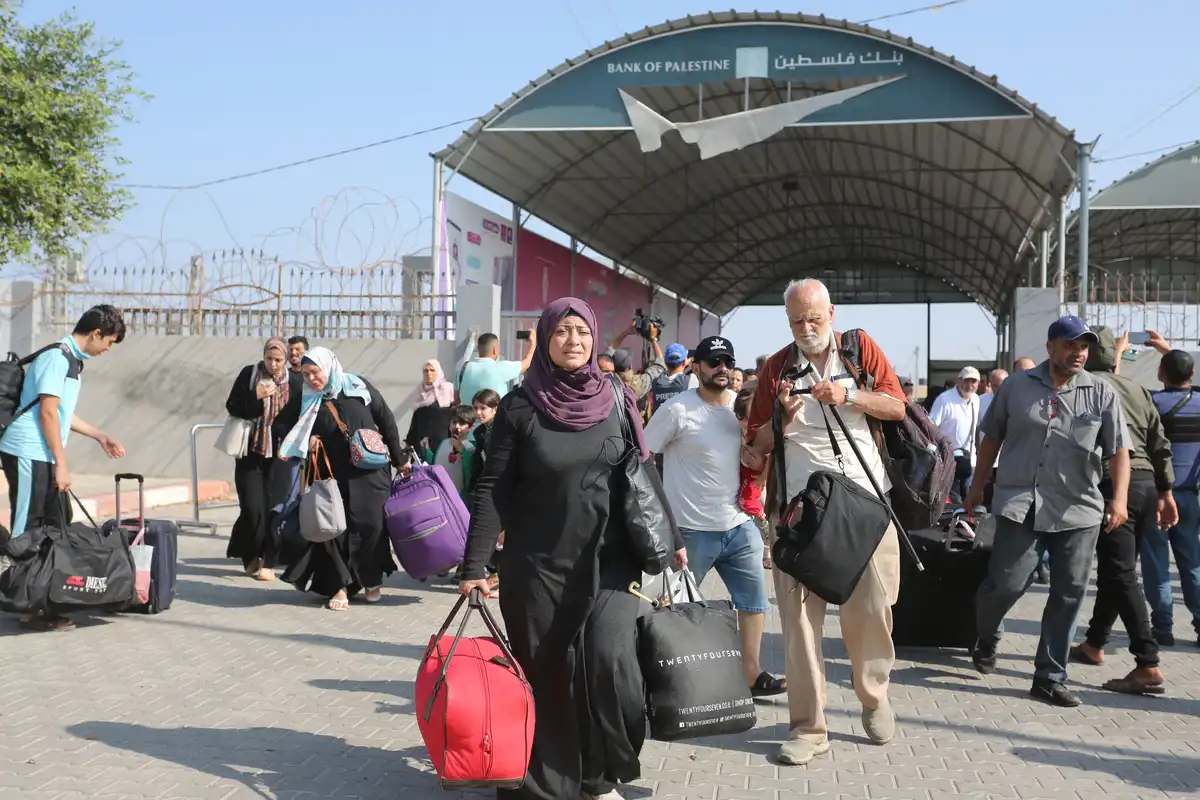
400 people with American citizenship were evacuated from the Gaza Strip to Egypt

400 people with American citizenship arrived today (Thursday) at the Rafah land crossing on board several buses coming from Gaza, in a new batch of foreign nationals being evacuated from the besieged Strip, according to an Egyptian security source.


The source told Xinhua News Agency that 400 people with American citizenship arrived today at the Rafah crossing on board several buses from Gaza.


Yesterday, Egypt received through the Rafah crossing a first batch of foreign nationals in Gaza, amounting to about 345 people.
The Egyptian Ministry of Foreign Affairs confirmed earlier today that there is a plan to receive and evacuate 7,000 people holding the nationalities of more than 60 countries from Gaza through the Rafah crossing.


The Gaza Strip, with a population of 2.3 million people, has been suffering under the weight of continuous Israeli air strikes for the 27th day after the attack by Hamas fighters on southern Israel, which killed about 1,400 people, according to Israeli statistics. While the Ministry of Health in Gaza reported that 9,061 Palestinians have been killed as a result of Israel’s attacks so far.

ARAB AND WORLD

Thu 02 Nov 2023 2:51 pm - Jerusalem Time

Washington refuses to condemn the Jabalia massacre and classify it as a war crime

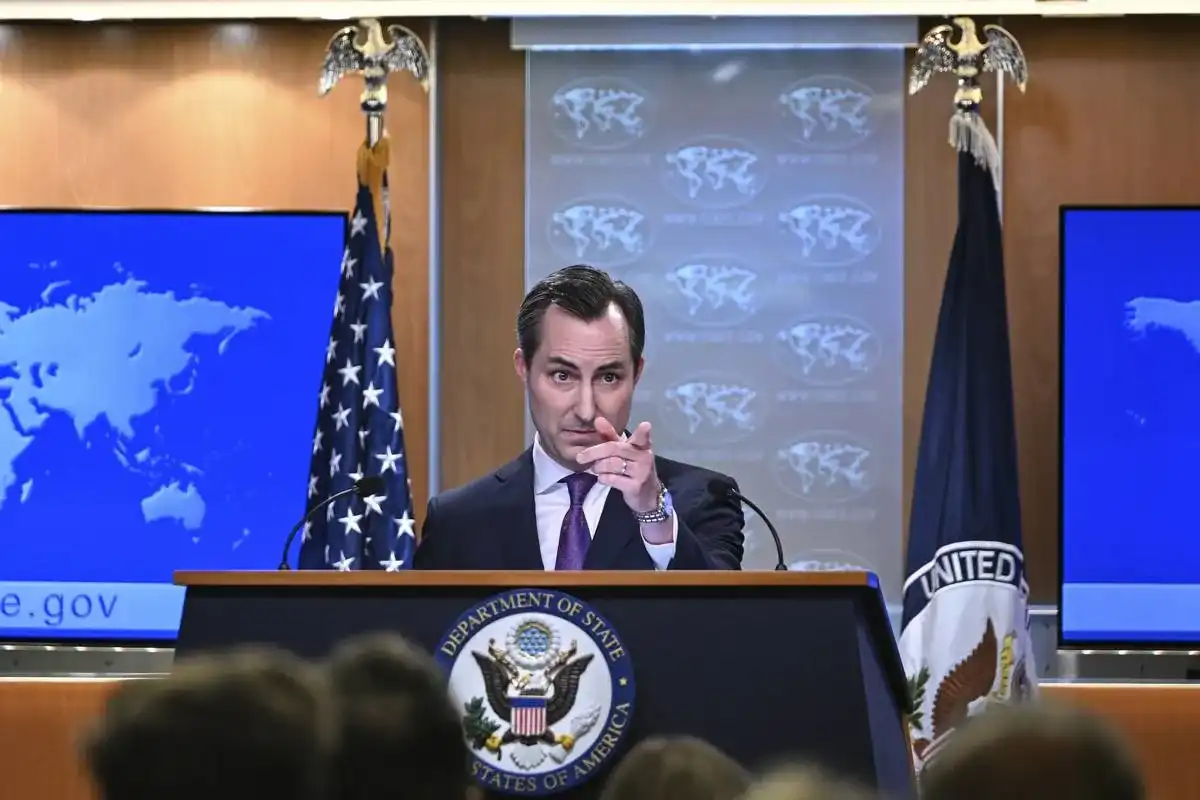
The official spokesman for the US State Department, Matthew Miller, refused to condemn the fierce Israeli attacks on the Jabalia camp in the Gaza Strip, which led to the death and injury of more than 400 Palestinian citizens, most of whom were children and women, as a war crime, only pointing out the administration’s sadness for the innocent victims.


Miller said in response to a question from Al-Quds correspondent in Washington about condemning these Israeli attacks, which Israel acknowledged and justified by targeting a leader of the Hamas movement, and classifying them as a war crime: “I will say that we feel deep sadness at the loss of civilian lives. No matter how many civilians are missing in this raid or "Any other raid, we are obviously disturbed and deeply saddened by every loss of life. This is true whether it is Palestinians or Israelis, and we will continue to make that clear, and we will make that clear to the Israeli government."


Regarding the “Al-Quds” correspondent’s question to Miller that the administration of former President George W. Bush condemned a similar Israeli attack in 2002 when Israel targeted Hamas leader Salah Shehadeh, and the attack led to the death of 14 citizens, Miller said: “I am unable to talk about the assessments conducted by the administration” "20 years ago. I will say that we will continue to directly convince our Israeli counterparts of the need to reduce harm to civilians in all their military activities."


Regarding whether there has been a discussion within the ministry for the Jabalia massacre to assess the administration so far regarding whether Israel is following the rules of war, Miller said: “Once again, I will say that I am unable to provide an assessment of this strike because I am unable to provide an assessment of other individual strikes. “What I will say is that we will continue to discuss with them directly, and we will say publicly, that we expect them to adhere to the laws of war in all of their activities, in all of their military campaigns.”

PALESTINE

Thu 02 Nov 2023 2:50 pm - Jerusalem Time

Military Expert Samir Farraj to Monte Carlo: “Israel did not achieve success in its attack, and military situation is equal between two sides.”

About a month after the start of the Israeli war against Gaza, and days after the start of the ground attack on the Gaza Strip, Israel speaks of successes but points to painful losses, and confirms that it has dealt painful blows to the Hamas movement, but the missile strikes are still targeting major Israeli cities.


This situation raises the question of what Israel has achieved a month after it declared war on Gaza. Military and strategic expert, retired Major General Samir Faraj, in an interview with Monte Carlo International, considered that it is not possible to talk about the success of the Israeli military operation and that the situation on the ground is equal between Hamas and the Israeli army, and he said.


We measure the success of any military operation by two things: the extent of the enemy's destruction, and the capture of hostile territory.


Has Israel seized and occupies parts of it today, and is it under its control? The result is no.

If it had captured Gaza City and Lahia, achieved all of that, and established its forces on the ground, it would have been victorious.


But all that is happening is the continuation of hostilities between the two sides, each of them trying to control and inflict the greatest losses on the enemy.


But we cannot say that Israel achieved success before it seized land, and what it is currently doing is incursions in the morning and withdrawal at night for fear of counterattacks.


As for the Palestinian side, it says that it definitely destroyed enemy equipment and weapons and caused them losses. Therefore, we cannot say that either of them achieved its mission, and therefore the mission or the military situation is still equal between the two parties.

PALESTINE

Thu 02 Nov 2023 2:25 pm - Jerusalem Time

Financial Times: Richard Haas says destroying Hamas is "unlikely to prove doable"

A former diplomat who served in the Bush administration and as president of the Council on Foreign Relations has joined a chorus of elite voices urging Israel against launching a full-scale ground invasion of the Gaza Strip.

Writing in the Financial Times, Richard Haas, who worked as an advisor to former Secretary of State Colin Powell from 2001 to 2003, and then as the United States' special envoy to Northern Ireland, argued that Israel has a right to go after Hamas following its Oct. 7 massacre of more than 1,400 people. Indeed, he said that it meets the criteria of an "obligatory war."

But the right to go after Hamas does not mean all means of doing so are equally desirable, Haas said, cautioning Israel against a maximalist goal of completely eliminating the group. Hass' warning comes after US officials have also begun urging the Israeli government to rethink a ground war, The Washington Post reported Friday.

The Israeli government has repeatedly said a ground invasion is only a matter of time. It recently cut off all communication with people in the Gaza Strip, and has begun at least limited incursions in the north of the territory.

A full-on ground war, Haas wrote, would "generate significant civilian casualties" and "allow Hamas to scapegoat Israel for its own shortcomings." Israel, too, would suffer more casualties, its soldiers trapped in a hellish environment of urban warfare that would hurt the country's image and "make it impossible" for it to seek peace with the likes of Saudi Arabia. It could also expand out of control, leading to a regional conflict.

Given how embedded Hamas is in Gaza, have ruled the territory since winning elections in 2006, destroying the group is also "unlikely to prove doable," Haas wrote.

"The good news is that even if destroying Hamas is not possible, it is not essential. To suggest that Hamas poses an existential threat to Israel is overblown. So, too, is the claim that if Hamas survives, Israel will never again be secure," he wrote.

Haas' approach mirrors the advice US officials are reportedly providing: instead of embarking on an unwinnable ground offensive, continue striking Hamas targets from the air — over two weeks of Israeli strikes have killed a number of senior leaders, as well as thousands of civilians — and conducting "targeted ground raids."

"Humanitarian aid should be allowed to flow into Gaza, possibly abetted with pauses in military operations," Haas wrote, casting this as a way to allow Israel alone to decide when those operations conclude. "Far better that Israel be able to declare success and finish what it set out to do than be forced to stop and accept a ceasefire owing to international pressure."

OPINIONS

Thu 02 Nov 2023 2:15 pm - Jerusalem Time

Gulf Normalization Under Strain as Israel Pounds Gaza

Middle East council for Near East affairs

Middle East council for Near East affairs

Opinion Writer

The countries of the GCC have responded unevenly to the violence that erupted between Hamas and Israel on October 7, in part because of the decision by some to forge relations with Israel three years ago


Since an unprecedented conflict flared between Israel and Hamas on October 7, the Arab Gulf states have been working to de-escalate and prevent the crisis from sparking a catastrophic regional war dragging in Iranian allies such as Hezbollah in Lebanon, armed groups in Syria and Houthi rebels in Yemen. Yet while the GCC states agree on the need for an immediate ceasefire and humanitarian access into Gaza, their individual responses to the crisis have markedly differed. Some have maintained their traditional posture of supporting Palestinian rights and calling for a two-state solution. But those who normalized relations with Israel during the administration of U.S. former president Donald Trump find themselves in an uncomfortable position as Israel pummels the crowded territory and protestors throng the streets across the Arab and Muslim worlds. 


A Sensitive Balancing Act 

The United Arab Emirates (UAE) and Bahrain, which signed the Abraham Accords to normalize relations with Israel in 2020, have cautiously balanced their ties with Israel and the United States against strong pro-Palestinian sentiments among both their citizens and expat populations. The October 17 explosion at the Al-Ahli Baptist hospital in the Gaza Strip, which killed hundreds of Palestinians and wounded hundreds more, forced Abu Dhabi and Manama to adopt a more forceful rhetoric, blaming and “strongly condemning” Israel. Nevertheless, while aligning themselves with their GCC partners, they did not go as far as fundamentally testing their relationships with Israel. This subtle shift in tone may be related to pressure from public opinion over a conflict that has already left thousands of Palestinian civilians dead. 


The other GCC members have been sharper in their condemnation of Israel and its longstanding policies that led to the recent crisis. Qatar, for example, has placed sole blame on Israel for the escalation of violence and for the hospital blast, calling it a “brutal massacre and heinous crime.” Yet Qatar has also played a longstanding role as a go-between Israel and Hamas and has already been instrumental in negotiating the release of two U.S. citizens held by Hamas on October 20.  

Saudi Arabia, for its part, has called for an immediate ceasefire and reactivation of the international Quartet on the Middle East to revive regional peace efforts. Under de facto Saudi leadership, the Organization of Islamic Cooperation (OIC) held an urgent meeting to establish a unified stance against the Israeli aggression. 

This meeting was notable as it was attended by Iran’s foreign minister Hossein Amir-Abdollahian, who also met his Saudi counterpart for a bilateral discussion, seven months after the two regional heavyweights signed a de-escalation deal to end years of tensions.


These meetings were part of an intense flurry of diplomatic efforts by GCC actors, particularly Riyadh and Doha. Gulf officials are deeply concerned about the conflict dragging in Iranian allies such as Lebanon’s Hezbollah and causing further escalation across the region. Saudi Crown Prince Mohammed bin Salman and Iranian President Ebrahim Raisi discussed the crisis in their first phone call since their rapprochement in March. 

Saudi Arabia’s relationship with Israel differs significantly from those of other Gulf countries. Its role as custodian of the two holiest sites in Islam puts its leadership in an extremely delicate situation when it comes to relations with Israel, especially during a crisis partly sparked by Israeli provocations at a third, Jerusalem’s Al-Aqsa Mosque. For Israel, normalization with Saudi Arabia would be a far bigger prize than with UAE or the other GCC states, due precisely to the kingdom’s religious significance, as well as its economic and political clout. If Saudi Arabia were to normalize, other majority-Muslim nations like Indonesia and Malaysia could even follow suit. 


Just weeks before the October conflict, Saudi Crown Prince Mohammed bin Salman told Fox News that “every day, we get closer” to normalization, while adding that the deal must ease the lives of Palestinians. 

The violence in Gaza has likely put that process on ice indefinitely. Perhaps the GCC state most diplomatically engaged in the Gaza crisis has been Qatar. Not only has it vocally opposed Israel’s forcible displacement of Palestinians through indiscriminate bombing and collective punishment, but it has also engaged in shuttle diplomacy to push for an immediate ceasefire and aid deliveries into the besieged territory. 


Foreign Minister Sheikh Mohammed Al-Thani said Qatar defended the decision to keep the Hamas office in Doha open in order to maintain channels of communication and potentially mediate a ceasefire or prisoner exchange. 

The Emir’s highly influential mother, Sheikha Moza bint Nasser, has shared photos of the destruction in Gaza on social media, including a destroyed education center that Qatar helped establish. At the other end of the GCC spectrum, the relatively neutral stances of the UAE and Bahrain reflect considerations around their normalization of relations with Israel. 

The UAE initially called for de-escalation without even mentioning Israel’s occupation. However, as the bombardment of Gaza escalated, the UAE’s discourse shifted to focus on the humanitarian crisis in the territory, announcing $20 million in humanitarian aid. 


The UAE’s permanent representative to the United Nations, Lana Nusseibeh, highlighted the devastating conditions facing civilians in Gaza, adding that, “Hamas does not represent the Palestinian people or the people of Gaza,” while the Emirati foreign ministry said it was “appalled” at the abduction of Israeli citizens. Reports have appeared on social media that U.S. military aircraft had arrived in the UAE to support Israel, but the UAE Ministry of Defense denied these claims, saying the arrivals of U.S. aircraft at the Al-Dhafra base were scheduled months in advance.  


Protests and Donations  

It is likely that the UAE and Bahrain will continue to try and distance themselves from the conflict, emphasizing the humanitarian crisis without pointing fingers at any party. However, as the violence escalates, meeting the delicate balance of upholding commitments with Israel while not openly opposing public sentiment will become increasingly difficult. Even though these countries lack a robust civil society that could influence their foreign policies, their leaderships will strive to avoid provoking public anger both domestically and in the wider region. 

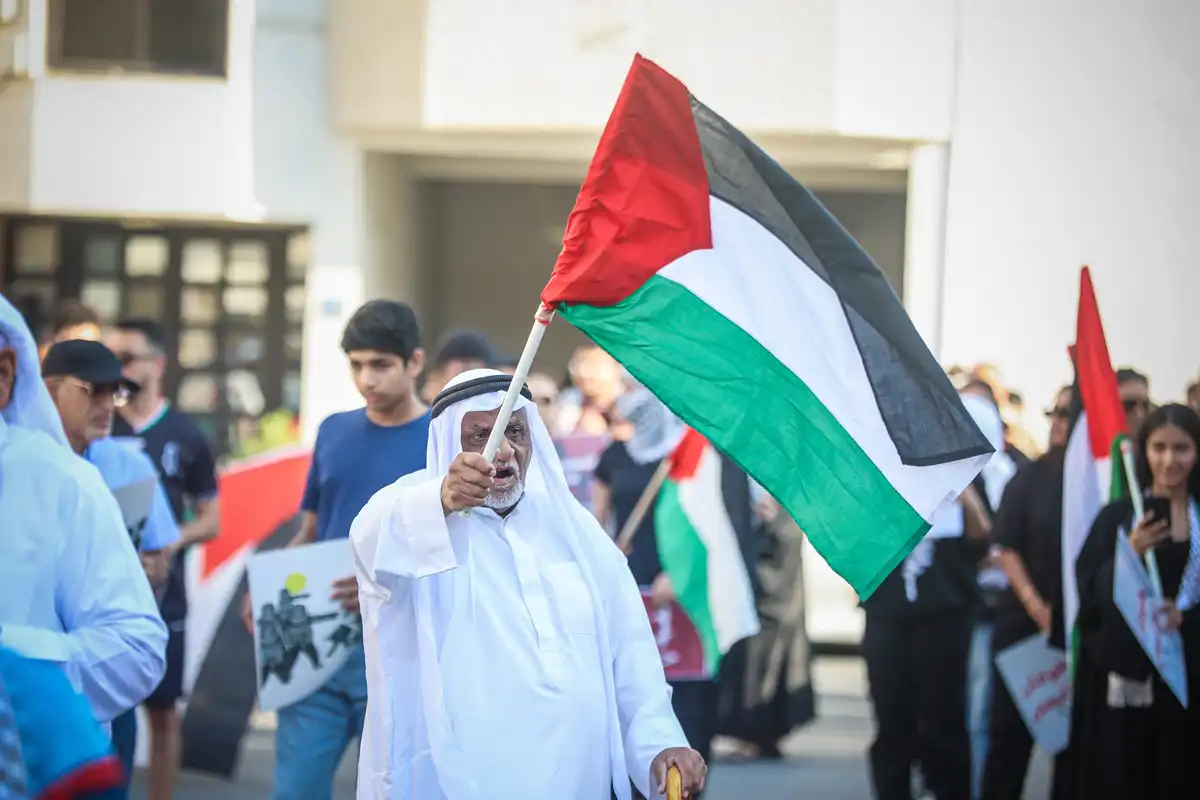
It is worth noting that in Bahrain, demonstrators have staged angry protests not only against the conflict in Gaza but also against normalization with Israel.  Similar rallies have not been reported in Saudi Arabia. 

However, the imam at the grand mosque in Mecca, Islam’s holiest site, delivered an overtly political sermon on October 13, almost certainly approved ahead of time by the authorities. “God, be for the Muslims in Palestine a supporter, helper and defender,” he said. “Have mercy on their dead and give them the rewards of martyrdom.” By contrast, in the UAE, the televised Friday sermon did not mention the Palestinians at all. A scheduled solidarity event in Dubai, “Run for Palestine,” was reportedly “postponed” with no reason given. In Kuwait and Qatar, protests have been more active. Thousands of citizens and residents gathered on October 13 to protest Israel and show solidarity with Palestinians. Kuwait, despite expelling part of its Palestinian population the 1990s over PLO Chairman Yasser Arafat’s support of Iraqi dictator Saddam Hussein’s invasion, has vigorously defended the Palestinian cause and underlined that the country will be the last in the region to normalize with Israel. 


Kuwait’s more pluralist political life has helped shape its policy.  Omanis, including their Grand Mufti Ahmed bin Hamad Al-Khalili, have also protested against the Israeli assault on Gaza and condemned the Arab world’s inability to stop it. Oman, the current chair of the GCC, views the escalation as a consequence of Israel’s illegal occupation and “constant Israeli aggressions in Palestinian cities and villages”.  Alongside their diplomatic efforts, the GCC states have also rapidly amassed donations for aid to Gaza, even as the Rafah border crossing from Egypt stayed shut. At a meeting on October 17, GCC ministers declared $100 million in contributions. 

The Gulf publics have also reached deep into their pockets. Two dozen Kuwaiti non-profits collected $10 million in donations, while the UAE launched a campaign to provide money for reconstruction and other aid to Emirates Red Crescent. Qatar’s Red Crescent Society, which operates inside Gaza, has provided medical aid.  The Gulf Arab states are likely to continue showing solidarity with the Palestinian people and publicly criticizing Israel’s operations against Gaza. 

They will likely also refrain from communicating directly with Israel, at least in public, in order to avoid anger from the street. They may choose to communicate via go-betweens, particularly the U.S., but can also be expected to step up their diplomacy to push for an end to the conflict. The questions that remain are whether any Gulf state can play a significant role pushing Israel towards a ceasefire or become a primary peace broker and be able to determine the region’s dynamics once the dust has settled in Gaza.   


ARAB AND WORLD

Thu 02 Nov 2023 2:11 pm - Jerusalem Time

Bahrain announces the departure of the Israeli ambassador, recalls its ambassador from Israel, and stops economic relations with Tel Aviv

The Bahraini Parliament announced, on Thursday, that the Israeli ambassador had left the Kingdom, in exchange for the return of its ambassador from Israel, in addition to the cessation of economic relations with it.


A statement to the Council stated that these steps come as “a confirmation of Bahraini’s established historical position in support of the Palestinian cause and the legitimate rights of the brotherly Palestinian people,” which the King announced in all conferences and events.


The Bahraini House of Representatives affirmed that "the continuation of the war and military operations, and the continuing Israeli escalation in light of the lack of respect for international humanitarian law, prompts the Council to demand more decisions and measures that preserve the lives and souls of innocent people and civilians in Gaza and all Palestinian areas."


It is noteworthy that Bahrain normalized its relations with Israel within the Abraham Accords of 2020, which were brokered by the United States, and also included the UAE, Morocco, and Sudan.


According to the statement, the Speaker of the Bahraini House of Representatives expressed his pride in King Hamad bin Isa Al Khalifa’s “care and interest in supporting the Palestinian cause, a firm and unwavering position, and the right of the Palestinian people to establish an independent Palestinian state with East Jerusalem as its capital, in accordance with international resolutions.”


PALESTINE

Thu 02 Nov 2023 1:57 pm - Jerusalem Time

Israeli Colonists burn a vehicle and attack Palestinian homes in Deir Sharaf, west of Nablus

Today, Thursday, colonists burned a vehicle and attacked citizens’ homes in the town of Deir Sharaf, west of Nablus.


Local sources reported that dozens of colonists gathered near Deir Sharaf roundabout, attacked citizens' homes near the area, and burned a vehicle belonging to citizen Basil Wawi.


The same sources added that confrontations broke out between citizens and the occupation army near Deir Sharaf roundabout, amid heavy firing of bullets and poison gas bombs, but no injuries were reported.

PALESTINE

Thu 02 Nov 2023 1:32 pm - Jerusalem Time

Israeli army storms Al-Maqasid Hospital in Jerusalem and arrests Gazan patients

On Thursday evening, Israeli occupation forces stormed Al-Maqasid Hospital in the town of Al-Tur in occupied Jerusalem.


Local sources said that the occupation forces surrounded the destinations and prevented those inside it from leaving, before they stormed a section designated for patients who had completed their treatment from the Gaza Strip, and arrested a number of those inside it and from the hospital’s emergency department.