PALESTINE

Mon 06 Nov 2023 7:43 pm - Jerusalem Time

Palestinian Head of Prisoners' Authority calls on the Red Cross to make every effort to stop violations against detainees

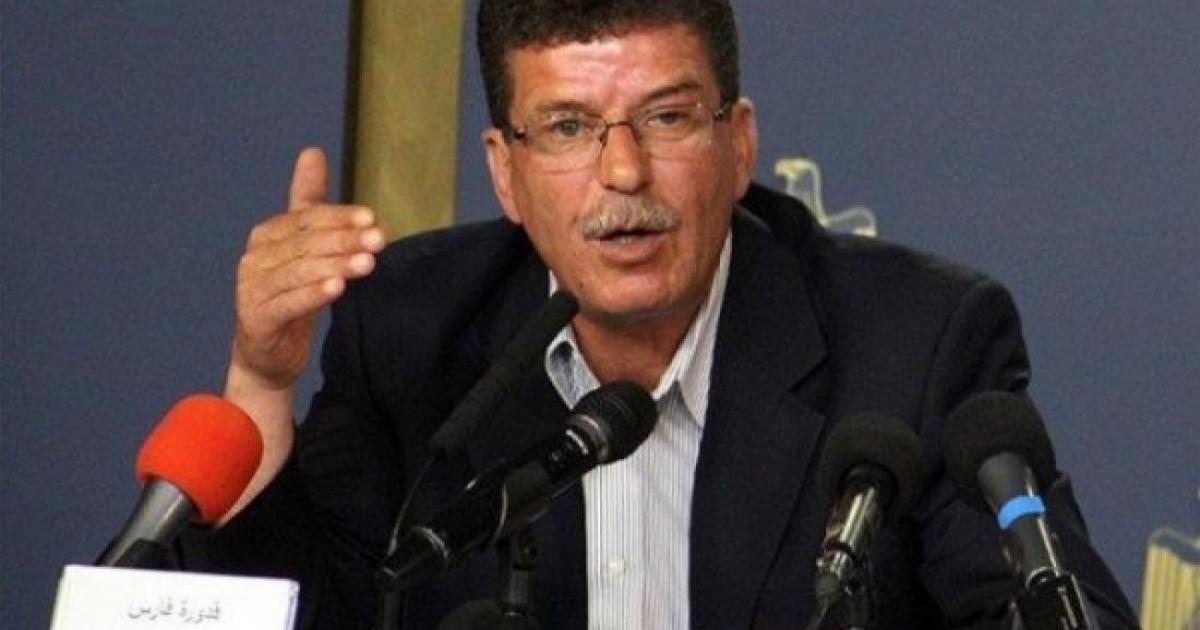
The head of the Prisoners' and Ex-Prisoners' Affairs Authority, Qaddoura Fares, called on the International Committee of the Red Cross to make all possible efforts to stop the Israeli occupation's violations against detainees.


Fares spoke during his meeting today, Monday, with a delegation from the International Committee of the Red Cross, which included: the Protection Coordinator for the International Committee of the Red Cross mission working in Palestine and the occupied territories, Camelia Maltiosi, the Director of the West Bank Offices, Arnoud Mafri, and the Director of the Central Offices, Suha Musleh, about the overall details and developments of the issue of detainees, and the fierce attacks against them, including abuse, attacks, deprivation of rights.


He called for the necessity of working to quickly reveal the numbers and data of detainees in the Gaza Strip, whom the occupying state refuses to disclose and their fate, pointing to the general dissatisfaction with the role of the committee’s mission, and that there is a feeling from institutions working in the field of detainees and their families that negligence costs them more isolation from them.


In the same context, Fares called on the Kingdom of the Netherlands to use its influence on the Israeli state, to stop the aggression against the Palestinian people, stop its attack on male and female detainees inside its prisons, and put an end to the persecution, arrest, and abuse of citizens in the West Bank, including Jerusalem.


This came during his meeting with the Dutch Ambassador to the State of Palestine, Michel Rentenaar, where he informed him of the reality of the catastrophic conditions of the detainees, as a result of the immoral and inhumane practices carried out by the Israeli prison administration and the repression units that have been present inside the departments and in front of the rooms since October 7 until this moment.


He said: “Since the beginning of the war, the detainees have been isolated inside their rooms. All of their possessions, including clothes, blankets, kitchen utensils, and electrical appliances, were taken away. They were deprived of drinking water and showers. Television channels were deleted, radios were confiscated, and newspapers were prevented from entering. They were deliberately insulted and humiliated during the counting and inspection, and the quantities of food were reduced to more than half were treated badly, with daily raids and beatings on them, which reached the point of breaking hands and legs, and executions began, as happened with the two prisoners, Daraghmeh and Hamdan,” stressing that “the most dangerous thing is the carrying of firearms by the police and soldiers of the prison administration and repression units.”

PALESTINE

Mon 06 Nov 2023 7:12 pm - Jerusalem Time

United Nations: A child is killed every 10 minutes in Gaza

The agency said: “Protecting civilians in times of conflict is not an aspiration or an ideal. It is the responsibility of our shared humanity. Civilians must be protected wherever they are.”…

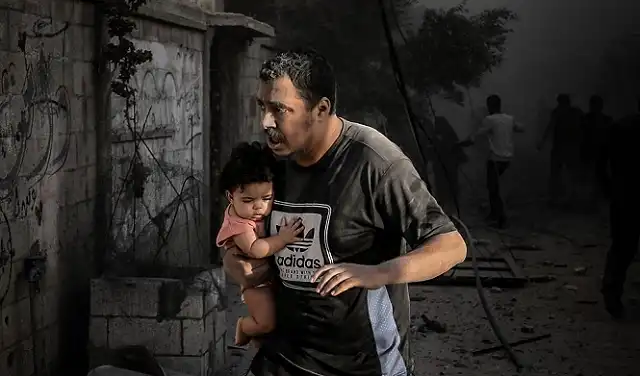
The United Nations Relief and Works Agency for Palestine Refugees (UNRWA) confirmed that “one child is killed and two children are injured every 10 minutes at an average rate in the Gaza Strip,” which has been subjected to intense attacks by Israel since October 7.


This was stated in a post on the UNRWA account on the X platform, on Monday.


The agency said: “Protecting civilians in times of conflict is not an aspiration or an ideal. It is the responsibility of our common humanity. Civilians must be protected wherever they are.”


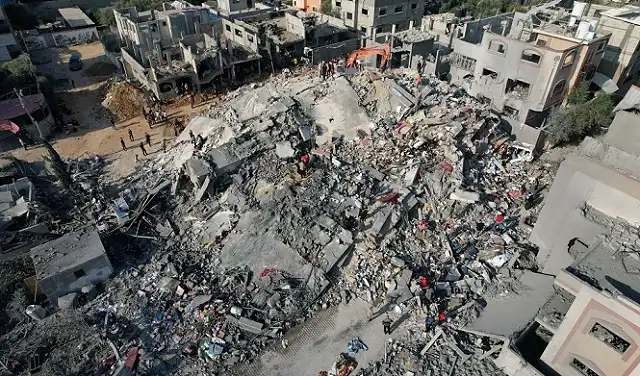
Today, Monday, the Israeli army bombed the third floor of the Rantissi Hospital for Children, west of Gaza City. A spokesman for the Ministry of Health in Gaza said: Israel deliberately targeted the water and solar energy tanks in the Rantissi Hospital, exposing the lives of about 7,000 patients, medical staff, and displaced persons to death of thirst.


For more than a month, the Israeli army has been waging a “destructive war” on Gaza, in which 10,022 Palestinians were martyred, including 4,104 children and 2,641 women, and more than 25,000 others were injured. 153 Palestinians were killed and 2,150 were arrested in the West Bank, according to official Palestinian sources.


PALESTINE

Mon 06 Nov 2023 6:42 pm - Jerusalem Time

With the possibility of concluding a new deal.. What does the chief Israeli negotiator say about the experiences of negotiating with Hamas over prisoners?

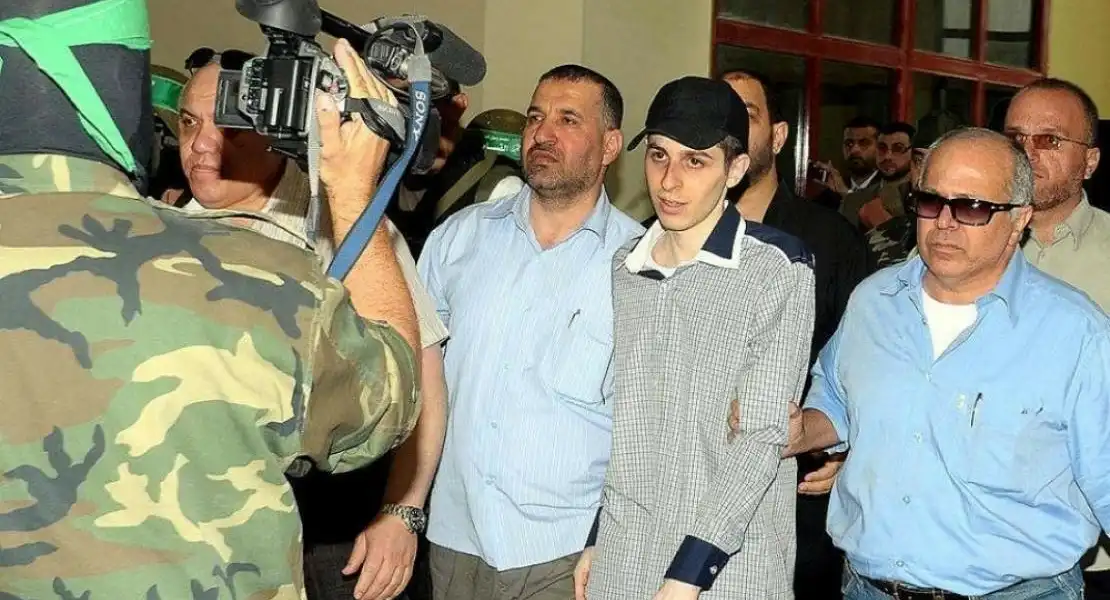
Twelve years ago, David Meidan, an Israeli intelligence officer, found himself standing a few meters away from Ahmed al-Jaabari, the deputy commander-in-chief of the military wing of Hamas and one of the most wanted by the Israeli occupation at the time. The meeting was in Cairo, and the occasion was direct negotiations for the release of Israeli soldier Gilad Shalit, who was captured by Hamas in 2006. Egyptian intelligence officers were the ones passing messages between his room and the room of the Palestinian delegation nearby.


What does the chief Israeli negotiator say about the experiences of negotiating with Hamas over prisoners?

The British magazine The Economist says that Hamas had held Shalit captive for five years when Maidan received the file to negotiate his release in April 2011. Israeli intelligence agents were stranded trying to find out the whereabouts of Shalit, or the members of the group holding him in Gaza. A previous attempt to negotiate Shalit's release with the participation of German mediators had failed.


When Maidan began his mission, he asked Egyptian intelligence which Hamas officials he should talk to, and they advised him to focus on Al-Jaabari. Maidan later realized that Al-Jaabari was the decision-maker in the matter, and then finally learned that Al-Jaabari was the one who was detaining Shalit. Within six months, the Israeli soldier was released in exchange for 1,027 Palestinian prisoners.


Meydan told the British magazine that dealing with a group that operates in extreme secrecy like Hamas requires the first thing to find the appropriate communication channel to communicate with them. “You have to find the appropriate intermediaries in order to gain Hamas’ interest.”


He left the field of work in the Israeli Foreign Intelligence Service (Mossad) in 2012, and worked in private security companies. But he volunteered to return after Operation Al-Aqsa Flood on October 7 to help free the prisoners. American diplomats, trying to recover their citizens, communicate with him constantly. And his old colleagues in the occupation army and the Mossad ask him for advice. His most prominent task at the present time is to work as an informal advisor to the families of prisoners.


Maidan believes that Israel has a moral duty to work to recover any captured citizen. Before the current crisis, he was participating, free of charge, in an anti-Netanyahu campaign demanding the release of an Israeli citizen of Ethiopian origin who had been detained in the Gaza Strip since 2014.


Maidan believes that Israel must return the prisoners detained by Hamas on October 7 “at all costs,” and “even if Israel has to pay a heavy and painful price that includes opening its prisons and releasing all of its Palestinian prisoners (numbering 6,000).” ".


But this sharp position contradicts the position of Benjamin Netanyahu's government, as the Israeli Prime Minister did not meet the families of the prisoners until three weeks after the crisis. It was only after public pressure from the families of the prisoners and non-public urging from former security officials that the release of prisoners was declared a priority.


“You must go immediately to Jerusalem.”

Although Meidan and Netanyahu have worked together before, there is an ongoing disagreement between them. Earlier this year, Maidan participated in mobilizing protests against the so-called “judicial reform” amendments, which opponents see as weakening the judicial authority in Israel, and Maidan considers them a threat to the so-called Israeli democracy. He blames Netanyahu for his failure to prevent the disaster of October 7; Every week, he publishes posts mocking Netanyahu on social media, and says in one of them: “He is devious and deceitful, and refuses to take responsibility. People are angry with him.”


Meydan was born in Cairo in 1955, and his Egyptian-Jewish father ran a textile factory that supplied neckties to the Egyptian army. But after Gamal Abdel Nasser came to power, and hostility toward Israel and the West spread, Meydan's parents decided to move to Tel Aviv. Maidan said: "No one asked us to leave, but we were like many Jews who felt that the country was closing in on them. The conditions around us were tense and unpleasant."


He studied the Arabic language in high school, and later mastered it at Tel Aviv University. He specialized in Arabic language literature and Middle Eastern studies, and his Egyptian accent is so clear that some people think he is Egyptian when speaking Arabic.


When Meidan was a young intelligence officer in the 1980s, he was sent to Cyprus, and participated in planting agents to collect information about the Palestine Liberation Organization led by Yasser Arafat. He contributed to thwarting a Palestine Liberation Organization attack on the Tel Aviv beach in 1985. After his success in managing Mossad agents throughout the Middle East for 20 years, he was assigned a senior position in the Israeli intelligence service, and he supervised secret initiatives to win the friendship of the Arab regimes in the Gulf ( Such as deals to supply advanced technological means and Israeli spyware.


One morning in April 2011, Meidan was attending a graduation ceremony for Mossad agents, when the head of the Israeli intelligence service whispered in his ear that he should “go immediately to Jerusalem,” because Netanyahu wanted him to handle the file to free Shalit.


Difficult access to Jabari

Maidan says that the difficulties he faced in negotiating the release of one prisoner reveal some of the difficulties that are expected to hinder the release of more than 200 prisoners currently held by Hamas. Maidan narrates that he began his work in 2011 to search for an effective channel to negotiate with Hamas, and he did not benefit much from the information collected by Israeli intelligence regarding Hamas leaders, as it did not help him understand their psychological characteristics or understand the nature of the people with whom he was negotiating. On his first day on the job, an Israeli peace activist named Gershon Baskin asked to meet him. Baskin said he had a contact in Hamas who could link Maidan to the movement's military leadership.


Baskin had contacted the two former envoys who supervised the Shalit release file, but they refused to help him, and considered him a fool and a dreamer. As for Maidan, he was more receptive to this cooperation because he believes that “a good intelligence officer must be good at observing, listening, remembering, and not giving in to emotional bias.” Maidan then began exchanging messages through the intermediary provided by Baskin, until the messages through the intermediary reached Al-Jaabari, the deputy military commander of Hamas. In the beginning, the messages were just brief texts, then the scope of communication developed and expanded, until Baskin began transmitting messages using a fax machine, as he described it.


The communication via Baskin channel contributed to consolidating Hamas’s conviction that the Israelis are serious about the negotiation initiative. “Confidence increased gradually, one small step after another,” Maidan said.


Shortly thereafter, Maidan asked the Egyptians to arrange a meeting with Al-Jaabari in Cairo. Al-Jaabari was afraid that the Israelis would kill him while he was driving his car through the Sinai desert to the Egyptian border, so he asked for guarantees of his protection.


The atmosphere of the meeting was not promising at first. Al-Jaabari had spent 13 years of his life in Israeli prisons, and thus he was stubborn and strict in negotiations, and his “demands were endless,” as Maidan put it. The Egyptians sought to ease the atmosphere with small initiatives. Meanwhile, Maidan worked to instill confidence in the Egyptians that he was a person worthy of being relied upon to “adhere to the understandings and agreements that were being reached.” After several sessions, mediation efforts progressed from negotiating the initial principles of the deal to discussing the names of the prisoners who would be released in exchange for Shalit.


Maidan says that this stage was the most difficult in the negotiation process, because many of the men included by Hamas on the list had participated in operations targeting Israelis and high-ranking wanted persons. Maidan claims that he had an advantage over the Palestinian side, and that he knew what Al-Jaabari would ask before disclosing it, as he put it.


So Netanyahu acquiesced

At the time, Netanyahu was under great pressure from within Israel, as unprecedented protests over the high costs of living broke out in Israel that summer. Then the deal provided him with a way out of those pressures, and Maidan reached a deal that included the release of a thousand Palestinian prisoners (including some prisoners whose release sparked great controversy, such as Yahya Sinwar, currently head of the political bureau of Hamas in the Gaza Strip) in exchange for Shalit. Thus, Meydan traveled to Cairo in October to sign the deal.


A week later, Al-Jaabari and Egyptian intelligence officers escorted Shalit to the Rafah border crossing between Gaza and Egypt. Maidan and his team were waiting for him in an Israeli military vehicle. Shalit and Maidan were transferred in an Israeli military helicopter to an air base. Maidan was surprised when the helicopter door opened and found Netanyahu waiting for the young soldier with a press crew. This was an opportunity to take some photos that would attract popular support, and Netanyahu would not miss an opportunity like this.


In October 2012, Meidan spoke at a symposium held at Tel Aviv University about his experience working as a negotiator for the release of prisoners, and he told the students at the time that the internal political crises that Netanyahu was facing contributed to pushing him to accept Hamas’s demands, which were exorbitant. Somehow, someone in attendance recorded Maidan's statements and leaked them to the press, angering Netanyahu. Although Maidan was a candidate to take over the head of the Mossad, Netanyahu did not approve of his nomination. He realized that he no longer had the opportunity to advance in positions in the intelligence service, so he resigned and ended his career in the agency.


“The assassination of Al-Jaabari was wrong.”

A year after Shalit's release, Israel assassinated Ahmed al-Jaabari with a missile strike as he was driving his car in Gaza City. Maidan believes that this "was a wrong decision."


Currently, various parties are supervising the efforts aimed at liberating the October 7 prisoners, including the Israeli occupation army, which collects intelligence information, plans rescue operations, and exchanges information with relatives of the prisoners.


The families of the prisoners formed a committee so that they could work together to promote their demands and put pressure on the government. Most of them want the attacks on Gaza to stop in order to retrieve their children, but a few of them support the continuation of the bombing. Netanyahu appointed someone responsible for the prisoner file. Both Qatar and Egypt are participating in efforts to mediate the release of the prisoners.


Maidan said that some people who offer to help extract prisoners are “sincere and have good intentions,” but some are merely “charlatans” who exploit residents’ fears. Maidan believes that the time factor is very important if some prisoners are destined to remain alive, and therefore spending a lot of time and effort on the wrong communication channels may be costly. Maidan said that the families of the prisoners should "focus their efforts and find the appropriate mediators, whether it is Qatar, Egypt or Turkey."


Maidan had always opposed dividing the exchange deal when he negotiated the release of Shalit, but now he believes that the large number of prisoners requires doing things differently, and “if we cannot reach a comprehensive agreement, let us do it gradually, such that we release, for example, the women and children first.” "To build trust."


Despite the blood spilled in the past three weeks, Maidan believes that trust is possible and must be built between negotiators from Israel and Hamas to negotiate for the prisoners. Yuval Diskin, the former head of the Israeli internal security service Shin Bet, says that this ability to "creatively think" is what makes Maidan a successful negotiator. "He is familiar with Arab culture, and most importantly of all, he is a trustworthy man."


Maidan has suspended his public campaigns in opposition to Netanyahu, but intends to resume them once the war is over. When the Economist correspondent asked him about the most important lesson he learned from his participation in the negotiations to release Shalit, he replied: “Reach an agreement as quickly as you can, because if you delay, it may be too late.”

source: Arabic Post



ARAB AND WORLD

Mon 06 Nov 2023 6:39 pm - Jerusalem Time

Jordan warns against a “declaration of war”: any attempts to displace Palestinians from Gaza or the West Bank are a red line

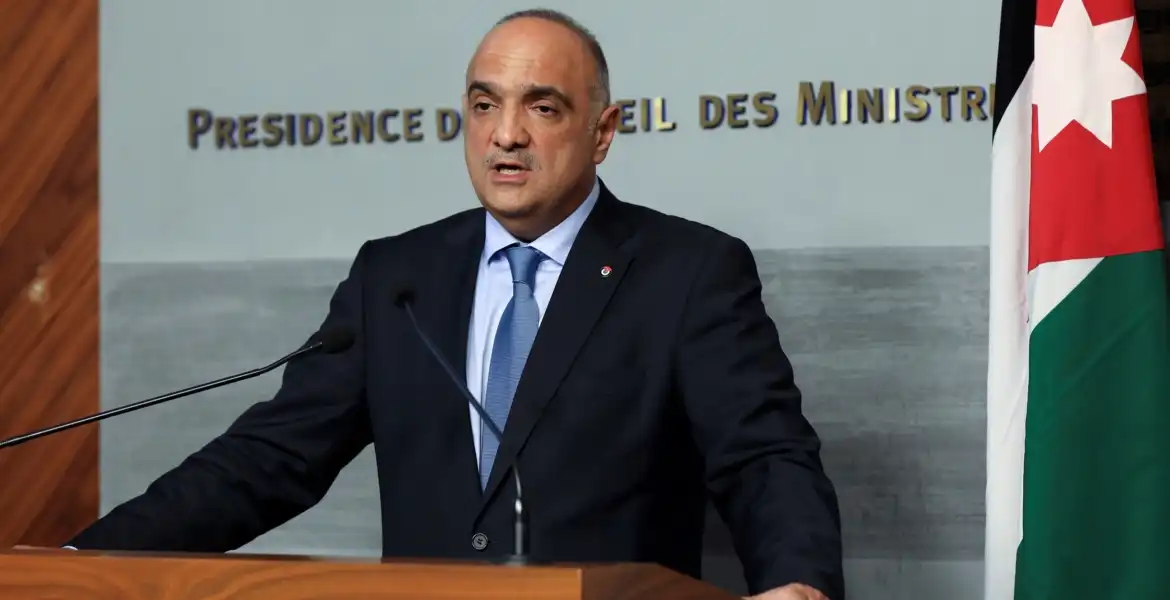
Jordanian Prime Minister, Bisher Al-Khasawneh, said that any attempts to displace Palestinians from Gaza or the West Bank are a red line, and Jordan will consider them a “declaration of war,” according to what Al-Khasawneh stated, Monday, November 6, 2023, during a meeting in the Jordanian House of Representatives regarding the developments. In the Gaza Strip.


The Jordanian official also added that all options are on the table for Jordan within the framework of the gradual stance in dealing with the Israeli aggression against Gaza and its repercussions. He said: “The continuation of the sinful aggression against the Gaza Strip with all its crimes constitutes a violation of international law and international humanitarian law.”


While Al-Khasawneh called for the need to stop the impunity and protection that gives Tel Aviv a license to kill Palestinian civilians, saying that international humanitarian law prohibits and criminalizes targeting and killing civilians without exception, indicating that impunity and silence regarding its violations against Palestinian civilians constitute a shameful double standard.


The Jordanian Prime Minister also added: "We are all at the heart of one man behind His Majesty the King, institutions, parties and citizens, in his honorable positions to support the Palestinian cause and stop the aggression against Gaza. A strong Jordan is the most capable of serving the Palestinian cause," according to what was reported by local media.


Earlier, Jordanian King Abdullah II warned Israel against any attempt to forcibly displace Palestinians, even internally, after Israel issued orders for Gazans to move to the southern part of the Strip, stressing the necessity of opening corridors to bring aid into the Strip.


This came during a meeting between King Abdullah II in Amman and US Secretary of State Anthony Blinken, according to what was reported by the Jordanian News Agency, during a visit to the latter as part of an indefinite tour that he began with Israel and included Qatar.


The Jordanian Ministry of Foreign Affairs also announced, on Wednesday, November 1, that it had summoned the Jordanian ambassador to Israel, and informed Tel Aviv that it would not return its ambassador to the Kingdom, as an expression of Jordan’s position rejecting and condemning the war waged by the Israeli occupation on the Gaza Strip.


The Jordanian newspaper Al-Ghad reported that the Minister of Foreign Affairs and Expatriate Affairs, Ayman Al-Safadi, decided to summon the Jordanian ambassador to Israel to Jordan immediately, and said that this came “as an expression of Jordan’s position of rejection and condemnation of the raging Israeli war on Gaza, which is killing innocent people and causing an unprecedented humanitarian catastrophe.” “It carries dangerous possibilities for its expansion, which will threaten the security of the entire region and international security and peace.”


ARAB AND WORLD

Mon 06 Nov 2023 6:20 pm - Jerusalem Time

The European Union approves 25 million euros in additional aid for Gaza

European Commission President Ursula von der Leyen announced, on Monday, additional aid amounting to 25 million euros for the Palestinians in the Gaza Strip, bringing to 100 million the total humanitarian aid allocated to it by the European Union, according to Agence France-Presse.


During a speech before European ambassadors in Brussels, von der Leyen indicated seeking to establish a sea corridor from Cyprus to transport humanitarian aid on a regular basis to the Gaza Strip.


She stressed that the flow of aid to Gaza from Egypt “is still very limited,” and that the European Union is working to establish other ways. Von der Leyen said it was necessary for Israel to seek “to avoid civilian casualties” in its operation in Gaza. She added: “It is clear that Hamas is using innocent Palestinians and hostages as human shields. It is horrific and absolutely evil.” She continued: “Our hearts bleed over the images of children being pulled out from under the rubble.”


Von der Leyen told diplomats that even as the conflict intensifies, there must be a “vision” for a two-state solution.


She stressed that the basic condition when the fighting stops is that “Gaza will not be a safe haven for terrorists,” and that “Hamas” will not remain responsible for the region. She said: “Various ideas are being discussed on how to ensure this, including the formation of an international peace force with a mandate from the United Nations.”


Israeli forces continued their intensive strikes on the Gaza Strip on Monday, which they launched nearly a month ago, in response to a Hamas attack on Israel on October 7.


The Hamas Ministry of Health in the Gaza Strip announced that the death toll as a result of the ongoing Israeli bombing since October 7 had risen to exceed 10,000 dead.


Israeli Prime Minister Benjamin Netanyahu confirmed his rejection of a “temporary truce without the release of hostages” held by Hamas since its attack, and the Israeli army says they are about 240 people, including foreign citizens.


They were kidnapped during the unprecedented attack launched by Hamas on Israel, the most violent since the establishment of the State of Israel in 1948. More than 1,400 people were killed in this attack, most of them civilians, according to the Israeli authorities.

OPINIONS

Mon 06 Nov 2023 5:45 pm - Jerusalem Time

The crisis in the Middle East, a boon for Russia?

Translation from "Contrepoints" for - "Al-Quds" dot com

Translation from "Contrepoints" for - "Al-Quds" dot com

Opinion Writer

By Cyrille Bret

As tensions rise in the Middle East, Russia appears to be playing a two-sided game. Seeking to divert the spotlight from Ukraine, it attempts to position itself as the essential arbiter of regional peace.


Since the start of the fighting between Hamas and Israel, the Russian Federation has made full use of its very particular position in the Middle East. Its structural links with all the actors in the current crisis allow it to carry out actions and make speeches that no other European country is ready to take on.


On October 26, the special representative of the Russian presidency for the Middle East, Mikhail Bogdanov, received Hamas leaders in Moscow. At the same time, the relationship between Israel and Russia remains strong, maintained in particular through the numerous and influential immigrant community in Israel from the former USSR.


For Moscow, the series of events which began on October 7 constitutes a diversion that borders on a godsend. The war in Ukraine has taken a back seat to media and diplomatic attention, and the Kremlin presents itself as a peacemaker between Israel and Hamas. Can the “Sukkot war” allow Russia to relaunch itself on the international scene while scoring points in its geopolitical standoff with the United States, which it designates as the main culprits for the current chaos in the Middle East? -Orient?


 Exploit a strategic opportunity

For Russian strategy in Europe, this crisis constitutes an unexpected opportunity. It comes at a time when the Federation needs a break from the international mobilization against its military operation in Ukraine. The relative move to the background of the Russian-Ukrainian conflict benefits it directly and massively. If only because Washington sent Israel weapons initially intended for Ukraine…


In the fall of 2023, Ukrainian reconquest efforts are struggling to produce strategic effects. The territories recaptured since the beginning of June by the armies of kyiv are substantial, but remain incommensurate with the 20% of the national territory occupied and illegally annexed by Russia. For Moscow, the crisis in the Middle East allows us to turn the page on the Ukrainian counter-offensive even more quickly in order to make it appear as a non-event.


In addition, the crisis in the Middle East is absorbing the attention and activities of world chancelleries at a time when certain declines in support for Ukraine and Poland are occurring due to the conflict linked to the importation of Ukrainian cereals into Europe. , in the United States in a context of institutional crisis in Congress or in Central Europe such as in Slovakia, where Robert Fico's victory weakens the unity of the EU in its standoff with Russia.


Beyond the leaders, it is also the media and public opinion throughout the world which, currently, are less interested in the Ukrainian theater and the fierce fighting taking place in the Donbass, to focus on the conflict in Middle East, which offers Russia a form of respite.


How Russia will exploit this period of relative media and diplomatic respite will not be immediately apparent. The repositioning of ground troops, bilateral diplomatic campaigns, the mobilization of friends of the Kremlin in multilateral organizations, the development of a new narrative on the war in Ukraine, etc. : all this is being prepared in Moscow. But the effects will only be seen towards the end of the year, notably during President Putin's traditional press conference.


Certainly, Russia will no longer reposition itself as a regional player in Eastern Europe but as a global player, particularly in the Middle East. This is how she submitted a resolution text to the UN aimed at obtaining a ceasefire in Gaza; the rejection of this text, due to the “against” votes of the United States, the United Kingdom, France and Japan, allowed it to strengthen, in the eyes of the so-called countries of the South and, especially, of Muslim states , his posture as leader of the anti-Western camp, concerned with protecting the Gazan civilian population, while denouncing the alignment of Westerners with Israel and going so far as to present itself as a country defending international law.


Mobilize its allies in the region

For Russian Realpolitikers, this crisis also presents the opportunity to mobilize their networks of alliances in the Arab, Turkish, Persian and more broadly Muslim worlds. Even before Vladimir Putin came to power, the Russian Federation has constantly strengthened its relays in the region.


In the Arab world, from 2015, it reactivated the old alliance with the Al-Assad family to literally save the regime in Syria through a crucial military intervention. It has also strengthened its traditional ties with Egypt in the fields of arms, agri-food and energy. Russia cultivated its Algerian ally and regained a foothold in Libya with its support for Marshal Haftar. It has even engaged in cooperation with the Saudi kingdom within the framework of OPEC+.


Beyond the Arab world, it found in Iran a supplier of drones for the war in Ukraine as well as support in international forums. And the rapprochements between the Russian and Turkish presidents are real, even if they should not give rise to the illusion of a solid alliance.


The current crisis allows it to revive these structural alliances around an old issue that took second place in the Muslim world after the Abraham Accords: the Palestinian cause. The specificity of Russia's position in the region thanks to this conflict must be underlined: it is capable of mobilizing its allies across the region's internal dividing lines. And the current crisis, which is reactivating hostility to Israel in Arab, Persian and Muslim opinions in the broad sense, underlines the centrality of an actor of whom Westerners nevertheless wanted to make a pariah.


Here again, the effects of this position will not all appear immediately: it is in the medium term that Russia will try to take advantage of its current position to further challenge the weight of the United States in the region. However, it is certain that the immediate boon can be supplemented by strategic gains in the area: Russia can use the crisis to underline its centrality, to remind its allies that it speaks to everyone and can therefore claim the role of mediator.

On condition, however, that it preserves its relationship with Israel.


Preserve its relays in Israel

If Russia claims an ecumenical position in the Middle East, it is currently handicapped, in Israel, by several factors. Crowd movements in Dagestan, an autonomous republic of the Russian Federation with a Muslim majority, against passengers on a flight from Tel Aviv, were seen with great concern in the Jewish state.


After claiming the role of pioneer in the fight against violent Sunni Islamism, how could Russia claim the role of mediator when it now frequently welcomes Hamas leaders?


Several leaders in Israel fear the strengthening of the Moscow-Tehran-Hamas axis in the context of the Israeli operation in Gaza. The symbiosis between the Islamic Republic of Iran and the Russian Federation is of particular concern to Israel: it can work in favor of moderation of Hezbollah, but it can also contribute to the regionalization of hostilities.


In the crisis, Russia has a lot to lose with Israel. Its relays of influence are multiple: more than a million inhabitants (out of 9 million) come from the former USSR. They constitute the largest immigrant community in Israel and have influential public figures in the political, economic, financial, media and technological fields. Is Russia condemned by its current position to squander its capital in Israel? Many observers believe that bilateral relations between Moscow and Tel Aviv are at an all-time low.


In short, the Russian position in the Middle East finds itself at a crossroads. Either it is content to treat the current crisis as a diversion: it will then take advantage of the media respite and the reduction in diplomatic pressure to further strengthen its positions in Ukraine; either it takes on the role of cementing anti-Israel actors in the Middle East: it will break even further with Westerners mobilized in favor of Israel’s security; or, finally, it chooses the narrow path of potential mediator: it will then be necessary, to be accepted as such by the Israelis, to remedy the numerous tensions in the bilateral Moscow-Tel Aviv relationship.


PALESTINE

Mon 06 Nov 2023 5:26 pm - Jerusalem Time

Israeli army bombing targets the solar panel system in the Al-Shifa complex

The Islamic Resistance Movement "Hamas" said on Monday that the Israeli occupation forces targeted the solar panel system in a building in the Shifa complex in Gaza City.


The bombing targeted the last floor of Al-Quds Hospital in Al-Shifa Medical Complex, which houses hundreds of wounded, displaced, and medical personnel.


The Director General of Hospitals in the Gaza Strip, Muhammad Zaqout, reported that there were martyrs and wounded as a result of the Israeli occupation bombing.


In the latest toll, the Ministry of Health in the Gaza Strip announced that the number of martyrs as a result of the Israeli aggression jumped to more than 10,000.


PALESTINE

Mon 06 Nov 2023 5:18 pm - Jerusalem Time

Israeli settlers close Ain al-Hilweh junction in the northern Jordan Valley

On Monday evening, settlers closed the Ain al-Hilweh junction in the northern Jordan Valley.


According to local sources, about twenty settlers closed the intersection and attacked citizens’ vehicles.


The junction is considered a point of settler attacks against Palestinian citizens, and it leads to several Palestinian gatherings in the northern Jordan Valley.

ARAB AND WORLD

Mon 06 Nov 2023 5:15 pm - Jerusalem Time

Al-Qassam Brigades in Lebanon bombed the occupied city of Nahariya and northern Haifa


The Al-Qassam Brigades in Lebanon announced, on Monday evening, the bombing of the occupied city of Nahariya and northern Haifa in northern occupied Palestine with 16 missiles.


The Al-Qassam Brigades said in a military statement: The bombing comes in response to the occupation’s massacres and aggression against our people in the Gaza Strip.


Israeli Army Radio said that 14 shells were fired towards the border towns with Lebanon.


Sirens sounded in Acre, Nahariya, Ras Naqoura and Shlomi.


The Al-Qassam Brigades had previously announced several times the bombing of the occupation settlements in the context of supporting Gaza and within the Battle of Al-Aqsa Flood.


PALESTINE

Mon 06 Nov 2023 4:51 pm - Jerusalem Time

Prisoner's Club: Israel escalated the arrest of women and holding them hostage

The Prisoners' Club said that the Israeli occupation escalated the arrest of women and holding them hostage, after the seventh of last October, in light of the comprehensive aggression against the Palestinian people.


The Prisoner's Club stated, in a statement today, Monday, that the number of documented cases of detention of women reached more than 60, the majority of whom were later released, after being held hostage, or released on conditions, as happened specifically in Jerusalem, and within the territories of 1948, while Others continue to be arrested on charges related to incitement, in addition to issuing administrative detention orders.


It continued that the Israeli forces used a number of crimes and abusive policies against women, by brutally storming their homes, using all types of weapons, including police dogs, in addition to threatening to kill their children and using obscene words against them. They carried out widespread sabotage and destruction of their homes. Among those arrested were former female prisoners, mothers of prisoners, university students, elderly women, and children.


The Prisoners' Club added that one of the most prominent policies used against female detainees is the crime of holding them hostage, in order to pressure their husbands or children, who are targeted by the occupation, to surrender themselves. The competent institutions have also documented many of these cases in several areas in the West Bank, where this policy was concentrated in the Governorate. Hebron witnessed the highest rate of arrests.


OPINIONS

Mon 06 Nov 2023 4:43 pm - Jerusalem Time

After we weakened Abbas for years, suddenly we want him to rid us of the Gazan mire

Haaretz

Haaretz

Opinion Writer

Shlomi Eldar


The war in the Gaza Strip has not yet ended. In Israel, it is estimated that this war may last several months before Hamas is brought to its knees. This time, unlike other campaigns carried out by the Israeli army in the Gaza Strip, no one is talking about the image of victory. It is unreasonable to achieve victory after “Black Saturday,” even if Yahya Sinwar was arrested and “beheaded.” Even if everyone believed to have succeeded in escaping through the Gaza tunnels, including all members of the movement’s leadership, was “beheaded.” At the military and political levels. Whoever believes this does not know the value of martyrdom among fundamentalist Islam.

After tightening the noose around Hamas' neck, because there is no other way to topple its rule, the "next day" phase will begin. In fact, from now on, before the war ends, there are dialogues between the United States and Israel regarding this day, and they are discovering that they have absolutely no idea who will replace Hamas.

Some people have a fantasy in which the Palestinian Authority forces of Mahmoud Abbas, bestowing their favor on us, will enter the Gaza Strip and restore the authority that was forcefully taken from it in June 2007, in the coup carried out by Hamas. Suddenly, the person Netanyahu describes as a “terrorist,” “supporter of terrorism,” and “encourager of terrorism” has become our dream, and he is the one who will agree to receive the keys to the Gaza Strip, which Israel closed before imposing the siege on the Strip, and then threw the keys away.

Even these days, when we still dream that Abbas is the solution to the Gaza Strip, both Bezalel Smotrich and Itamar Ben Gvir are playing the role of heroes, without realizing the difference between the Authority and Hamas, and any prices Israel paid when it preferred Strengthening Hamas and insulting Abbas. These two men always have a solution to the Palestinian issue. After the leaders of the Israeli security system succeeded in “convincing” Finance Minister [Smotrich] that Israel’s interest lies in transferring the authority’s tax funds to it, his strategic friend, Ben Gvir, wrote on the x [Twitter] platform a tweet saying: “This evening I saw news saying The Palestinian Authority threatens us not to receive tax money if Gaza Strip funds are deducted from it... I call on the Authority to stand firm in its opinion and not accept the money.”

Ben Gvir and Smotrich, and even Netanyahu and Avigdor Lieberman, were not the ones who invented the weapon of stopping the transfer of tax funds to the government. The inventor of this weapon, which we discovered was a double-edged sword, is former Prime Minister Ehud Olmert...

This tax money is not an Israeli grant, but was transferred to the Authority according to an agreement signed between the Authority and Israel on April 29, 1994, in what is called the Paris Agreement, which is a branch of the Oslo II Agreement. According to this agreement, the Palestinian economy is linked to the Israeli economy. While Israel collects taxes related to all goods and raw materials that the Authority imports by air, land, or sea, including the value-added tax, Israel is then committed to transferring the money once a month to the Palestinian Ministry of Finance. More than 60% of the Palestinian Authority's budget comes from tax money. Without this money, the authority will collapse. After Hamas won the parliamentary elections in 2006, Olmert decided to punish Abbas because of the election results, as if the defeat he suffered at that time was not enough, and so, Olmert came to complete the mission...

Then Netanyahu came. The man decided, for internal political reasons, that he must demonize whoever sits in the boycott, because in this way alone he is able to gather the ranks of the Israeli right into his grip, after this right disbanded around him in the 1999 elections, when he lost to Ehud Barak by a large margin...

When Netanyahu returned to power in 2009, he adopted a dual policy. One side of it is to defame Abbas, while at the same time encouraging security coordination between Israel and the authority.

Netanyahu called Mahmoud Abbas the “source of terrorism,” and this nickname spread and succeeded in penetrating even the voters of the left and center movements. There is no one to dialogue with on the Palestinian side. This was the prevailing understanding. This understanding has been cemented in Israeli public opinion. As for the Shin Bet, they closed their mouths. Despite everything, Netanyahu is the prime minister, and they are the men of shadow and silence.

Thus, we now have a strong Hamas in the Gaza Strip, and an authority in the West Bank that is destined to collapse at any moment Israel decides to harass it, or stop transferring tax money...

And now, we have this: Abbas is weak, while Hamas is what we see now: “war criminals.” Thus, after we have weakened Abbas, we still expect him to save us from drowning in the Gazan mire.

One of the old Fatah members, his face wrinkled by wars and disappointments, told me: “Go and tile the sea, you fools.”

PALESTINE

Mon 06 Nov 2023 4:42 pm - Jerusalem Time

3 dead and one critical injury in an Israeli assassination in Tulkarm

Three young men were killed and a fourth was injured, on Monday evening, in an assassination committed by Israeli occupation forces in Tulkarm.


According to local sources, an Israeli special force opened heavy fire on a Palestinian vehicle in Tulkarm, assassinating those inside it, before withdrawing.


The Ministry of Health confirmed the arrival of 3 dead and one critically injured person to Tulkarm Governmental Hospital.


According to media sources, the dear were identified as Izzi al-Din Awad, a commander in the Qassam Brigades, and Jihad Maharaj Shehadeh, commander of the Rapid Response Battalion in Tulkarm.


PALESTINE

Mon 06 Nov 2023 4:33 pm - Jerusalem Time

Report: The Palestinian Authority returns Gaza after the war and complete Israeli security control

“A settlement regarding the governance of the Gaza Strip will be based on local employees and people who do not belong to Hamas, and Arab countries will pump money, and there will be security zones on the outskirts of the Gaza Strip, where Palestinians can be present in order to work in agriculture.”


The military analyst on the Ynet website, Ron Ben Yishai, discussed what he described as an Israeli plan for the aftermath of the war on Gaza. He stressed that Israel has no plan to end the war. He considered that "there is a need to end the fighting in the entire Gaza Strip first, and according to the field results, Israel will decide with the Americans and the United Nations regarding a preliminary settlement of control in the Gaza Strip.


Ben Yishai added that the Israeli plan that he reviewed in his analysis may change significantly, and that the final plan is related to the situation on the ground at the end of the war.

According to him, “a settlement regarding the governance of the Gaza Strip will be based on local employees and people who do not belong to Hamas. In fact, there are entire governing bodies in the Gaza Strip that are still receiving salaries from the Palestinian Authority, 16 years after Hamas took control of the Gaza Strip.”


He continued, "Arab countries will pump money for humanitarian stability, and in the first stage, the Israeli army and the Shin Bet will continue to have security control in the Gaza Strip."


He added that according to the plan being developed in Israel, after that there will be another stage or two “for a permanent settlement in the Gaza Strip, according to which the Palestinian Authority will have civilian control over the Gaza Strip, but the Israeli army and the Shin Bet will have freedom of intelligence action and thwarting (Palestinian operations), like Area B.” In the West Bank, the Americans propose deploying an international police force, not an American one, in the Strip.”


He added that there will be "security zones on the outskirts of the Gaza Strip, where Palestinians will be able to be present in order to work in agriculture, but they will not be able to stay there for a long time and will not be able to carry weapons or establish observation points."


He pointed out, “According to the American demand, the final stage will be political negotiations between Israel and the Palestinian Authority, perhaps within the framework and under the auspices of an international conference. According to the American administration at least, the goal is to reach a situation in which there are two states for two peoples, with a corridor linking Gaza to the West Bank. And in all "Circumstances, it is not expected that the current government will push for real negotiations that achieve the results that the Americans want."


OPINIONS

Mon 06 Nov 2023 4:16 pm - Jerusalem Time

What the day after the war looked like?

Maamoun Fandi

Maamoun Fandi

Opinion Writer

Many conversations deal with the day after the Gaza War, some of them in closed rooms in Washington, Tel Aviv, Brussels, London, and some Arab capitals, others in serious think tanks, and many of them in the media, and most of them start from hypotheses that cannot be scrutinized for a long time, and yet It must be addressed, because the post-war scenarios of the day after the war are not local, but rather have regional and international dimensions.


The day after Israel is perhaps more important than the day after Gaza. The next day for Israel equals, firstly, that the theory of reshaping the Middle East that Israel has adopted since Sharon in 1982 until today has been repeated more than once and has proven its failure. The next day for Israel also cannot erase the fact that the invincible army and the never-sleeping intelligence failed to anticipate the Hamas attack at the level of gathering information, analysis, and reaction in a timely manner. Consequently, the image of Israel’s strength at home and among its global sponsors, the American and European, was severely damaged. Israel, as a tool of regional deterrence and an American investment, has failed. Countries that have bought into the idea that Israel is a regional deterrent force and extended friendship to it will, at best, have great doubts about its capabilities.


The next day for Gaza is the day before October 7, 2023. Hamas will be present, perhaps in its most extreme form on the ground, with the absence of its political wing, which may leave outside it as Arafat left Beirut, but who will rule Gaza?


Israel has explicitly said that it does not want to rule Gaza, and Gaza cannot govern itself, and Egypt refuses to place the responsibility for Gaza on its shoulders for fear of “transfer,” that is, transferring the people of Gaza to Sinai and throwing the problem in Sinai.


So, the day after Gaza is Hamas control, with its military wing and without its political wing. Who can pay the bill for this? This is the result of changing Gaza by force and eliminating Hamas, as envisioned by the Tel Aviv chambers and some capitals. Netanyahu's map that he presented at the United Nations is the same map as Sharon's in 1982. Sharon died and the Middle East remained not the same, but in a worse condition.


We must take thinking to its logical level, with cold, deliberate minds that reflect what we have learned in matters of governance, administration, and the balance of power in a fragile regional system.


The next day in Gaza resembles the day after most failed wars that did not have a political horizon and a specific definition of victory, from America’s war in Vietnam, to the Soviet Union’s war in Afghanistan, to America’s long war in Afghanistan, which began with the idea of eliminating the “Taliban,” and then it ended after two decades with the handover of Afghanistan to the Taliban through international mediation.


Failed wars are a problem, and the price of withdrawing from these wars is more serious, and Israel's withdrawal from Lebanon is only one piece of evidence of the type of what people in closed rooms, who have not received a good education, hallucinate.


The Gaza war will not differ much from the Taliban war. After massive destruction and huge costs, the Israelis will hand over Gaza to Hamas again.


Then what to do? The solution lies in the regional parties clearly confirming that they will pay the bill for the failure of short-sighted perceptions. The first to be affected by this wheel are the countries directly neighboring Palestine, and here I mean Egypt and Jordan, and perhaps Syria to a lesser extent. Decision makers in the Western world must listen to the perceptions written in closed rooms in these countries, the Palestinian neighboring countries, as the people of the region are more aware of the consequences of this humanitarian catastrophe. The professionals in these closed rooms in the region are able to present better perceptions than those brought by Secretary Blinken, or drawn by the people of the “hallucinogenic” closed rooms in Tel Aviv.

ARAB AND WORLD

Mon 06 Nov 2023 4:14 pm - Jerusalem Time

Putin decides to run for president in 2024?

Six sources told Reuters that Russian President Vladimir Putin has decided to run in the presidential elections in March, a move that would keep him in power until at least 2030.


Kremlin spokesman Dmitry Peskov said on Monday that the Russian president had not issued an announcement or statements regarding his candidacy for a new presidential term, and that the campaign had not announced that yet.


Putin took over the presidency from Boris Yeltsin in the last days of 1999, and has actually remained in power longer than any other ruler of Russia since communist leader Joseph Stalin, and also exceeded Leonid Brezhnev's 18-year rule.


Putin turned 71 years old on October 7.


The sources, who requested anonymity due to the sensitivity of the matter, said that news of Putin's decision began to circulate and advisors began preparing for the campaign. One of the sources, who is familiar with the plans, told Reuters news agency: “The decision has been made... He will run.” Another source said that a thoughtful hint about the matter would come within a few weeks, confirming a report published by the Kommersant newspaper last month.


Another source who is also familiar with what is going on in the Kremlin said that the decision had been taken, and that Putin’s advisors were preparing for Putin’s participation in the elections. Three other sources said that the decision had already been made, and that Putin would run in the presidential elections. One of the sources said: “The global scene we are facing is extremely dangerous.”


A foreign diplomatic source, who also requested to remain anonymous, said that Putin made the decision recently, and that the announcement would be made soon.


While a number of foreign diplomats and officials say they expect Putin to remain in power as long as he lives, there has yet to be specific confirmation of his plans to run in the presidential elections in March 2024.


The Kremlin denied reports that Putin was not in good health, describing them as a disinformation campaign spread by the West.

ARAB AND WORLD

Mon 06 Nov 2023 4:09 pm - Jerusalem Time

Reopening the Rafah crossing to evacuate foreigners and the wounded to Egypt

On Monday, the Hamas movement announced the reopening of the Rafah crossing, which connects the Gaza Strip with Egypt, to allow the evacuation of foreigners and dual nationals stranded in Gaza, which has been subjected to Israeli bombing since October 7, according to Agence France-Presse.


The crossing was opened for 3 days (Wednesday, Thursday, and Friday) last week, to allow the evacuation of dozens of injured Palestinians and hundreds of foreign passport holders, before it was closed on Saturday and Sunday, due to a dispute over the crossing of ambulances.


An official Egyptian source told the Arab World News Agency that preparations are underway for the Rafah crossing to receive 30 injured people from Gaza today, Monday, after a three-day suspension, indicating that the crossing will also receive a new batch of dual nationals today. The source confirmed that 30 injured Palestinians are scheduled to arrive at the Rafah crossing from Al-Shifa Hospital in Red Cross ambulances, after providing safe passage for these cars.


He added that preparations are now being made at the crossing to receive these cases scheduled to arrive under the full supervision of the International Committee of the Red Cross. An Egyptian security source told the Arab World News Agency yesterday that Egypt decided to suspend the exit of foreigners and those holding dual nationalities from the Rafah crossing, until safe passage is provided for ambulances carrying injured Palestinians.


The source added that there are ongoing negotiations with the Israeli side, with the participation of international parties, regarding providing safe passage for ambulances and ensuring that they are not bombed.

PALESTINE

Mon 06 Nov 2023 3:28 pm - Jerusalem Time

Israel continues to close checkpoints around Nablus and tighten its procedures

Today, Monday, the Israeli authorities continued to close a number of military checkpoints around the city of Nablus, and tightened their procedures at a number of others.


Local sources confirmed thatIsraeli forces closed a number of checkpoints and tightened their procedures at other checkpoints as part of the siege of the city, separating the north of the governorates from the south, considering Nablus the road connecting the different governorates.


The Israeli forces continue to close the Huwwara military checkpoint, south of Nablus, which is considered one of the oldest checkpoints around the city. It is also spread on the main street of the town of Huwwara, and has prevented the opening of shops and the movement of citizens and vehicles carrying Palestinian license plates through it for more than a month.


Citizens are forced to take side roads, including Awarta Road, which is witnessing a suffocating crisis around the clock.


At a distance of no more than 4 kilometers from the Huwwara checkpoint, the Israeli “Zaatara” checkpoint is located to the south, and Israeli forces closed it towards Huwwara.


Heading west, the occupation forces closed the Shavei Shomron and Deir Sharaf checkpoints, and prevented vehicles bearing Palestinian license plates from passing through them.


To the east of Nablus, the occupation forces suddenly close the “Beit Furik/Beit Dajan” Israeli checkpoint, creating a stifling crisis, and stranding thousands of citizens for several hours before passing through it to enter or exit.


According to local sources, other checkpoints surrounding Nablus are witnessing daily crises due to the tightening Israeli measures against them, as the Israeli soldiers deliberately humiliate and harass citizens, including the 17 military checkpoint in the north, the Al-Murabbaa road, and the “Hamra” checkpoint, which is located north of Nablus, specifically in the area separating it from the city. Jericho is also considered one of the oldest Israeli checkpoints.


Citizens search for alternative and often dangerous side roads to take, most of which are unpaved to reach Palestinian cities and villages, forcing them to spend hours reaching their homes or places of work.


ARAB AND WORLD

Mon 06 Nov 2023 3:20 pm - Jerusalem Time

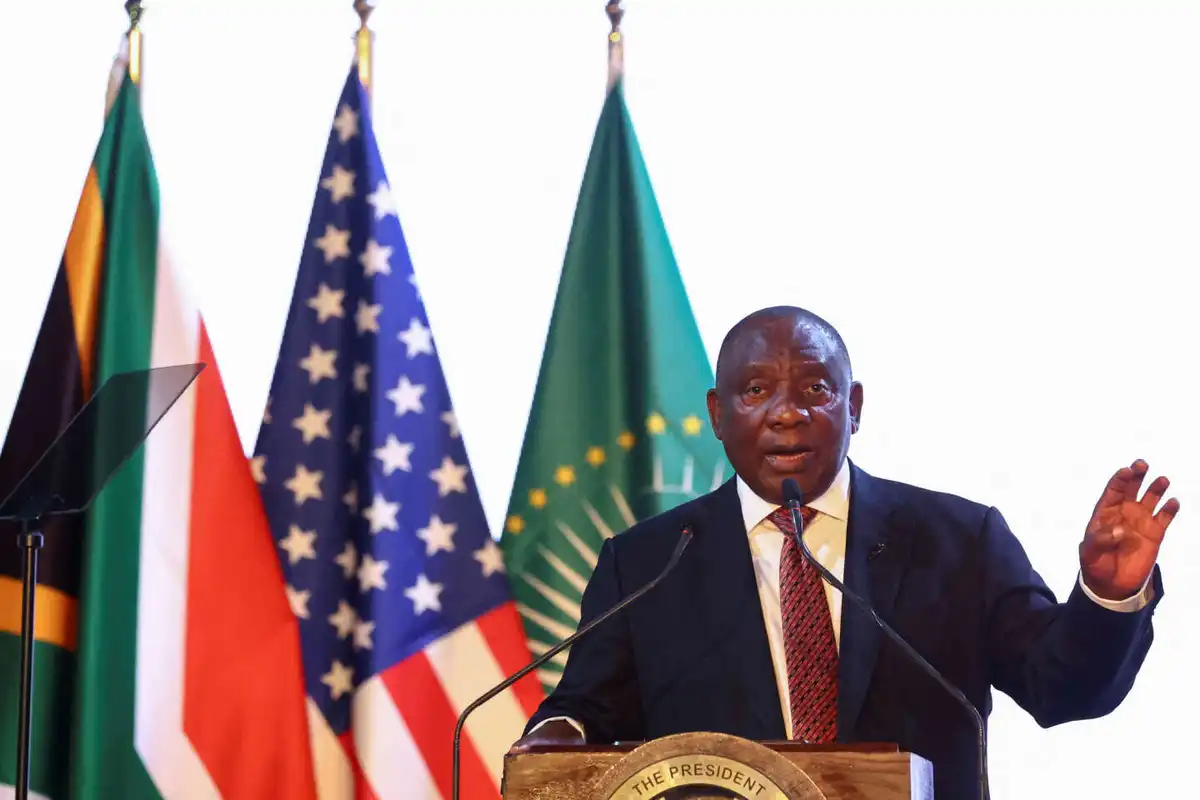
South Africa summons all its diplomats to Tel Aviv for “consultations”

The South African government announced, on Monday, the recall of its diplomats in Tel Aviv for consultations due to the Israeli aggression on the Gaza Strip.


The Minister in charge of Presidential Affairs, Khumbudzo Ntshavheni, said during a press conference, today, Monday, that “the South African government decided to withdraw all its diplomats from Tel Aviv for consultations,” and stressed Pretoria’s “disappointment,” especially with “the continued Israeli bombing of schools and hospitals” in the Gaza Strip.


In turn, Foreign Minister Naledi Pandor said: “We, as you know, are deeply concerned about the continued killing of children and innocent civilians in the Palestinian territories, and we believe that Israel’s response has become collective punishment.”


It added, "We thought it was important to express South Africa's concern as we continue to call for a comprehensive halt to what is happening in the Gaza Strip."


South Africa became the seventh country to recall its chief envoy from Tel Aviv due to the aggression on the Gaza Strip, preceded by Chile, Colombia, Jordan, Turkey, Honduras, and Chad.


ARAB AND WORLD

Mon 06 Nov 2023 2:54 pm - Jerusalem Time

French Prime Minister calls for a humanitarian truce and for Israel to respect international humanitarian law

In a radio interview, French Prime Minister Elizabeth Bourne reiterated France's position on this war, in which it tries to balance what Israel has the right to do and what the Palestinians should not be subjected to. She said:


“At the same time that we say that Israel has the right to defend itself and its right to exist against the Hamas movement, we also say that its self-defense must take place within the framework of respect for international humanitarian law, and that the civilians of the Gaza Strip must not be victims of a Hamas attack.” Terrorist, we cannot confuse the Palestinian people with Hamas.


What France is calling for is a humanitarian truce, and after that we hope that a political solution will be initiated, and this political solution, without a doubt, goes through ensuring the security of Israel on the one hand, and on the other hand by responding to the right of the Palestinians to have their own state.”


PALESTINE

Mon 06 Nov 2023 1:46 pm - Jerusalem Time

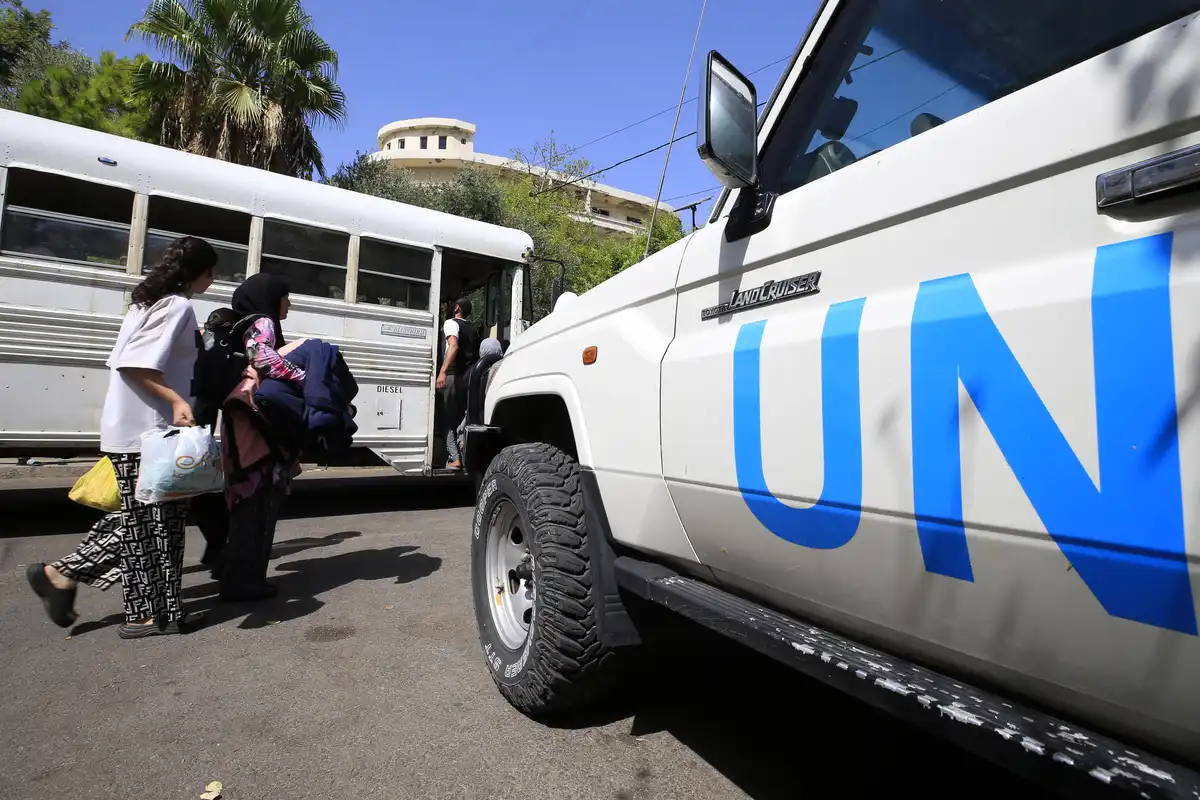
UNRWA announces the killing of 79 of its employees in Gaza

The United Nations Relief and Works Agency for Palestine Refugees (UNRWA) announced on Monday the killing of 5 of its employees in Gaza over the past two days, which brings the number of its employees killed in Gaza since the beginning of the war waged by Israel on Gaza to 79 people.


UNRWA said that, on Sunday evening, it received confirmation of the death of two of its employees, indicating that they were killed on October 24, and that the number of wounded among its employees in the Gaza Strip as a result of the Israeli bombing has reached 24 people since the beginning of the war on the 7th of last month.


The UN agency reported in a statement that 48 of its facilities in various parts of Gaza were damaged by the bombing, and that many of its employees lost their relatives and friends and were forced to flee their homes. Despite this, they continue to work tirelessly to provide humanitarian assistance to the residents of the Strip.


UNRWA said that more than 1.5 million people in Gaza have been displaced from their homes since the beginning of the war, and that nearly half of them reside in 149 of its facilities.


The agency indicated that it lost communication with the vast majority of its team in Gaza during Israel’s cutting off of communications in the Strip yesterday, which is the third time that the occupation has cut off communications during the past ten days.


The occupation army targeted several UNRWA schools, the most recent of which was Al-Fakhoura School in the northern Gaza Strip, which is the largest school in Jabalia camp and houses thousands of displaced people. The bombing led to the death and injury of dozens of displaced Palestinians who took refuge there.


ARAB AND WORLD

Mon 06 Nov 2023 12:55 pm - Jerusalem Time

US Army sends an Ohio-class nuclear submarine to the Middle East

The US Army Central Command said in a post on the “X” platform: “On November 5, 2023, an Ohio-class submarine arrived in the US Central Command area of responsibility,” without further details.


Since Operation Al-Aqsa Flood on October 7 until now, the United States has sent two aircraft carriers, the Gerald Ford and the Dwight Eisenhower, to the region.

ARAB AND WORLD

Mon 06 Nov 2023 12:44 pm - Jerusalem Time

Newspaper: The Israeli attack on Gaza frustrates the White House

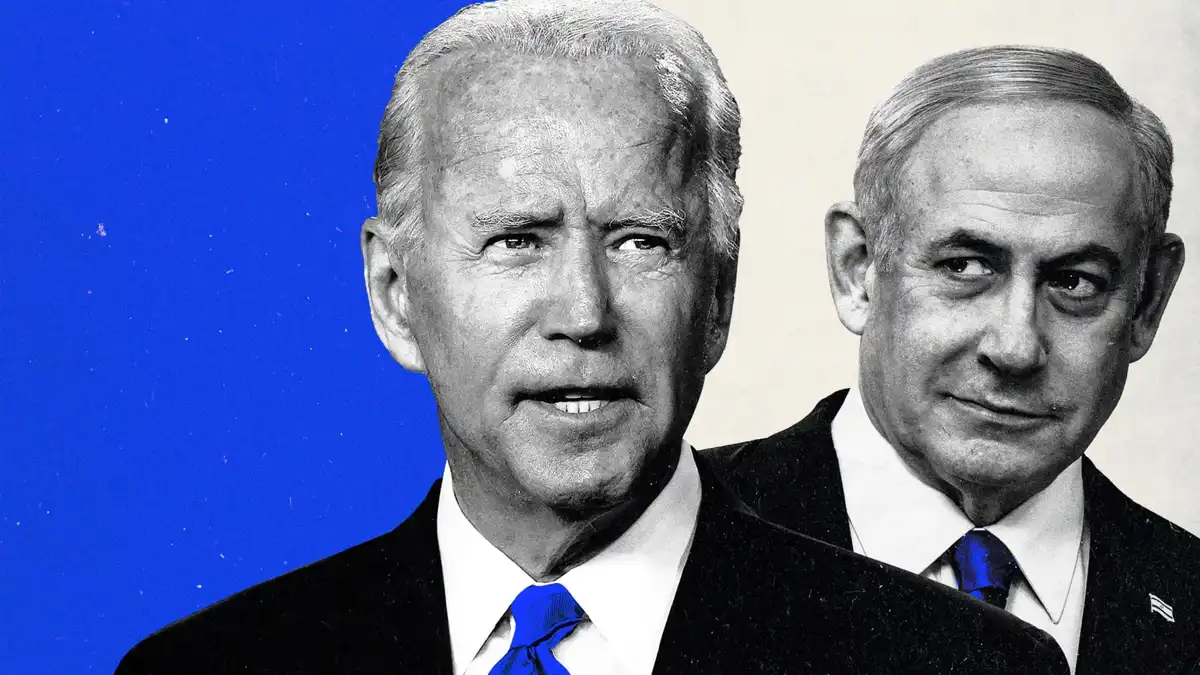
The American newspaper The Washington Post said in a report titled “The White House is frustrated by Israel’s attack, but sees few options.” The White House is frustrated by the Israeli attack, but sees only limited options.

The newspaper close to the Biden administration explained in its report that the United States’ calls for a temporary halt to the bombing have little effect, and the shape of the post-war Middle East is very uncertain.


According to the journalist, the administration of US President Joe Biden has come to feel that it is cornered, and it currently finds itself in a dangerous situation due to the continuation of this war.


According to the newspaper, administration officials say that the Israeli counterattack against Hamas has been severe and extremely costly in terms of civilian casualties, and lacks a coherent end and vision, but they are “unable to exert significant influence on America’s closest allies in the Middle East to change its course.” ".


According to the newspaper, “tension between the American administration and Israel has emerged recently, due to the failure of American efforts to persuade Israel to reduce its counterattack in response to the attack carried out by Hamas on October 7, which left at least 1,400 people dead, according to the Israeli authorities.”


The newspaper explains, "The Biden administration urged Israel to refrain from a ground invasion of Gaza, and specifically asked it to observe proportionality in its attacks, and called for giving a higher priority to avoiding the killing of civilians, and called for a humanitarian truce, but Israeli officials reject all of these calls."


The newspaper says, “The Israeli determination to continue the invasion of Gaza has prompted the Biden administration, as the newspaper indicated, to urgently seek to calm anger in the Arab world by making clear, publicly and privately, that the United States feels deeply saddened by the suffering in Gaza,” but Arab leaders were not “affected” by these guarantees, which makes the shape of the post-war Middle East, and the role of the United States in it, highly uncertain.


Experts believe that tension has begun to increase between the US administration and Israel, coinciding with the increased risk of collision between Washington's two crucial goals: eliminating Hamas and avoiding the outbreak of a regional war.


Experts also believe that “if the war expands to include Lebanese Hezbollah and other Iranian-backed groups, it will pose a serious threat to Israel, increase the risk of international terrorism, and will harm many American interests.”


It is noteworthy that Washington tried to quietly press for a more gradual approach to eradicating Hamas instead of launching a large-scale ground invasion, fearing that such large-scale operations would lead to a huge number of civilian casualties, according to statements from American officials before the start of the ground attack on November 29. the past.


The Washington Post claims that the Biden administration has achieved modest successes in its own discussions with Israel, according to a senior administration official who requested anonymity, including convincing Israel to restore communications and the Internet to Gaza at the end of last month, reopening water taps and persuading it to allow a small number Trucks carrying humanitarian aid enter through the Rafah border crossing in Gaza with Egypt.

When President Biden spoke with Israeli Prime Minister Benjamin Netanyahu last week, “he and his senior aides were able to secure a commitment to set a goal of allowing 100 trucks per day to pass through the Rafah crossing, which American officials say is now being achieved,” according to the newspaper.


However, the newspaper believes that these successes were overshadowed by the miserable failure of the United States to influence the course of the Israeli military campaign. Biden's senior aides have also been frustrated by the lack of clear answers from Israeli officials about the objectives of the operation and what they expect the future in Gaza to look like if they are able to succeed in their goal of destroying Hamas.

ARAB AND WORLD

Mon 06 Nov 2023 12:42 pm - Jerusalem Time

Hebrew Press| Obama slammed by Republican Jewish Coalition after likening 'what Hamas did' to 'unbearable occupation'

Although he allowed that there is no justification for Hamas's Oct. 7 terror attack on Israel, former US President Barack Obama appeared to equate the massacre to what he said was Israel's "unbearable" treatment of Palestinians.


In the interview on Pod Save America, a podcast run by four alumni of Obama's administration, the former president said, "If there is any chance of us being able to act constructively to do something, it will require an admission of complexity and maintaining what on the surface may seem contradictory ideas.


He went on to explain that "what Hamas did was horrific, and there is no justification for it. And what is also true is that the occupation, and what's happening to Palestinians, is unbearable."


Also true, he said, "Is that there is a history of the Jewish people that may be dismissed unless your grandparents, or your great-grandparents, or your uncle or your aunt tell you stories about the madness of antisemitism."


At the same time, he continued, "There are people right now who are dying who have nothing to do with what Hamas did."


"And what is true," Obama continued, "I mean, we can go on for a while."


He said that one can pretend but can't really speak the truth on social media. He added that "nobody's hands are clean" and that "all of us are complicit to some degree."


According to Matt Brooks, CEO of the Republican Jewish Coalition, it is Obama who is complicit.


When Israel faces "a barbaric attack from Hamas, Obama blames Israel," said Brooks.


"It is Barack Obama who is complicit in the death and suffering over the last month in Israel and in Gaza. His policies and those of President Joe Biden put billions of dollars into Iranian coffers, money used to fund and train Hamas and other terrorist groups whose stated goals are the destruction of Israel and the annihilation of Jews," he continued. "Obama's attempt to dilute his own culpability in this situation doesn't change the facts."


Gilead Ini, a senior research analyst at the Committee for Accuracy in Middle East Reporting and Analysis (CAMERA) watchdog, wrote that both the structure of Obama's comments and their timing were "amoral."


"The equivalence between Oct. 7 and a geopolitical conflict (one that's unsolved and no small part because Palestinian rejection of peace) minimizes the horrors of the former," wrote Ini. "We have most months of most years to pontificate about the occupation. Not now," he added.




"On the one hand, children, grandparents, and civilians [were] kidnapped, slaughtered en masse, burned and beheaded a few weeks ago. On the other hand, the land swaps in Olmert's 2008 peace offer left 0.7% difference between Israeli and West Bank lands exchanged. Stop," he said.


"Gaza, by the way, wasn't occupied on Oct. 6," he noted.


According to Israeli philosopher Yoram Hazony, it was Obama's "complexity" theory that led directly to the current situation in the Middle East.


"Yes, he's right about his own 'complicity.' He created this hell with his own hands," Hazony wrote. "Obama's theory of the 'complexity' of the Middle East – from which he concluded that Iran needs to be strengthened so it can 'balance' Israel," led directly to the current crisis, he continued.


Morton Klein, national president of the Zionist Organization of America, called the former president the "Israel-hater-in-chief," and Abraham Foxman, the former Anti-Defamation League leader, called Obama's remark that no one has clean hands "simplistic arrogance."

ARAB AND WORLD

Mon 06 Nov 2023 12:03 pm - Jerusalem Time

Queen Rania of Jordan: “Israel’s allegations are an insult to our minds.” She criticized the accusations of “anti-Semitism.”

Queen Rania Al Abdullah, wife of Jordanian King Abdullah II, wondered: How many people must die before our global conscience wakes up?? Or is this invalid when it comes to the Palestinians?”, in light of the ongoing Israeli aggression against the Gaza Strip, since the seventh of last October.


In an interview with CNN, Queen Rania denounced the "catastrophic humanitarian situation" in the Gaza Strip, and urged a collective call for a ceasefire.


She attributed the basic cause of this conflict to the illegal occupation. The basic reason for this conflict is the illegal occupation... routine human rights violations, illegal settlements, and disregard for United Nations resolutions and international law. “If these core causes are not addressed, you can kill the warrior, but you can’t kill the cause.”


She said: It is infuriating when Israeli officials downplay Palestinian victims under the pretext that they are human shields. In a place like Jabalia, which is one of the most densely populated areas in Gaza, and Gaza itself is one of the most densely populated places on Earth, the death of civilians is not “unintentional.” Or "accidental", rather it is inevitable.


She added: There are about 10,000 martyrs in Gaza since the beginning of the war, about half of them children. These are not just numbers. Every one of these children meant everything to someone.

She emphasized that being supportive of the Palestinians does not mean anti-Semitism. In recent years, the accusation of anti-Semitism has been used as a weapon to silence any criticism of Israel. Defenders or supporters of Israel who cannot defend Israel’s actions or behavior resort to ending the dialogue by equating criticism of Israel with anti-Semitism.

During the interview, Queen Rania refuted Israeli claims that they are doing everything in their power to protect civilians in Gaza, saying: “When 1.1 million people have the choice between leaving their homes, or risking their lives, this is not protecting civilians, but rather forced displacement.” And even the areas that were requested (Israelis) are unable to resort to people - what they call “safe areas” were also bombed.”

She stressed the necessity of an immediate ceasefire, and that Israel must finally realize that if it wants its security, the surest path is peace, as the strongest army, the most capable intelligence services, the Iron Dome, or the separation wall will not protect Israel’s security, as much as peace. I believe this is the path we need to follow now.

"We have a long history of peaceful coexistence. Therefore, it is not about religion, it is about politics," she said.


PALESTINE

Mon 06 Nov 2023 11:59 am - Jerusalem Time

Yasser Arafat Foundation postpones commemoration of 19th anniversary of his death

The Yasser Arafat Foundation announced the postponement of the activities commemorating the 19th anniversary of the martyrdom of founding President Yasser Arafat “Abu Ammar”, including the ceremony to hand over the Yasser Arafat Achievement Award for the year 2023, to a later date, in view of the continued aggression of the Israeli occupation against our people in Gaza and the West Bank.


The Yasser Arafat Foundation said, in a press statement today, Monday, that the activities commemorating the nineteenth anniversary of the martyrdom of Abu Ammar will be limited to a pause to pray for his pure soul and the souls of the martyrs of our people, on Saturday, 11/11/2023, at one o’clock in the afternoon in the shrine square.

ARAB AND WORLD

Mon 06 Nov 2023 11:54 am - Jerusalem Time

The Biden administration's dilemma: continuing to support Israel or withdrawing the "blank check"?

Victor Chalhoub


With the passage of a month since the Gaza War, and exactly a year before the US presidential elections, the administration of President Joe Biden finds itself in a confusing situation, led to by wrong calculations. The Israeli military operation is faltering, and it has become difficult for Washington to market its continuation without a promising horizon, after it turned To a massacre that is raging in the world, especially the world of the Allies.


At the same time, the New York Times poll numbers revealed on Sunday that the president’s electoral situation is faltering, as his predecessor, Donald Trump, is ahead of him in five crucial states, and it is impossible for him to renew his presidency without winning them.


At this stage of the 2020 elections, Biden was ahead of Trump and remained ahead, but now the equation has been reversed, and the president’s open support for the wars in Israel and Ukraine may have contributed to exacerbating the decline in his already declining score for more than one reason, including objection to foreign wars, including the war Gaza, as recent figures revealed.


Barely half of Americans (51%) support supplying more weapons to Israel, and only 50% support the “method” of its military response to Gaza, according to a poll by Quinnipiac University, which is known for the accuracy of its polls in diagnosing the pulse of public opinion.

The president was not helped by his unlimited support for Israel, and these numbers have worrying electoral implications for the administration if the war is prolonged and its costs increase. This was reflected in the form of confusion over the past week, as if Washington was in a dilemma. It is neither able to bet on the promised Israeli military resolution in a not-too-distant time, nor to retract the “blank check” that it gave to Israel under the title of “its right, even its duty, to defend itself,” which practically means authorizing it to take open retaliation to restore dignity and restore balance in the region as it was until last October 6.


“This is its war and this is its decision,” US National Security Advisor Jake Sullivan said last week, contenting himself with other officials with reminding Israel, but without obligating it, that it must “protect civilians as much as possible.” This is an issue that was given mitigating reasons as a justification that wars have “collateral losses - civilian casualties” that are difficult to avoid, according to the Israeli ambassador to Washington, Michael Herzog, who stressed on Sunday that the military operation “is not limited by a time limit, and no one should urge us” to rush its end. , before “accomplishing our mission.”


His words were apparently directed at some American parties that began calling for a “truce,” such as Senator Chris Murphy, or that called for a “ceasefire,” such as Senator Richard Durbin, both of whom are Democrats, close to Biden, and influential in the Foreign Relations and Justice Committees. Two tasks in the Senate.


Arabic reports

Blinken fails to make progress on Gaza administration proposals

About a dozen Democrats in the House of Representatives have pushed for steps of this kind, in addition to a growing number of opinion and military, foreign, and security experts, who still doubt the ability to uproot Hamas. Doubts and fears increased after Israeli Minister Amichai Eliyahu recently called for the use of nuclear weapons, which suggested that resolving the confrontation with conventional war had become an unlikely issue, which necessitated the invocation of this destructive option that may be circulating in the kitchen of Israeli decision-making, even if only as a form of intimidation, similar to the president’s intimidation. Russian Vladimir Putin in his Ukrainian war. There was also renewed fear of the possibility of expanding the war if the military campaign in Gaza continued for a long time.


Against this background and in light of increasing domestic pressure (demonstrations increasing in size and participation in American cities, and even in the conservative South) and international, an urgent visit by Secretary of State Anthony Blinken to the region was decided to conclude a truce, which the administration claimed to “favor,” but the visit It was doomed to failure because it came first as a reaction to relieve pressure, rather than an attempt to catch a breath. On the other hand, because it left the right of veto on the issue to Israeli Prime Minister Benjamin Netanyahu, whose local calculations dictate that the raging war continue, until the goals he set for it are achieved.


It was noteworthy that the senior administration officials, Blinken, Austin and Sullivan, were absent from participating in the important Sunday news programs on the major television networks, as has been the custom in the past four weeks. In a circumstance of this kind, there is no explanation for this absence except that the administration has nothing to offer to justify the continuation of the war, and its lack of seriousness regarding the issue of a truce, which is the weakest of faith. 


That is why it contented itself with the participation of Sullivan's assistant, John Viner, in two programs, to celebrate the success of its efforts to secure the entry of humanitarian aid into the Strip, while promising to increase its flow and repeat the mantra of protecting civilians, in an attempt to turn the branch into the root of the crisis.

Source: Alaraby Al-Jadeed

PALESTINE

Mon 06 Nov 2023 11:54 am - Jerusalem Time

Jerusalem: Israeli army storms Al-Rashadiya School and closes the entrance to Hizma

Today, Monday, Israeli occupation forces stormed Al-Rashadiya School, near Bab Al-Sahira in occupied Jerusalem, and arrested a student.


Local sources reported that the occupation forces stormed the school and arrested the student, Muhammad Youssef Hamed.


The Israeli occupation forces closed the northern entrance to the town of Hizma, northeast of occupied Jerusalem, with dirt barriers.


Local sources in Hizma reported that the occupation forces stormed the town accompanied by a military bulldozer, and closed its northern entrance with dirt barriers.


PALESTINE

Mon 06 Nov 2023 11:49 am - Jerusalem Time

Israeli Minister demands that Palestinians be prevented from picking olives

The Israeli government approves regulations allowing the closure of foreign television channels, claiming that they support the “enemy” during war. A Knesset committee approved a draft law imposing one year in prison on someone who “systematically consumes” resistance videos.


Today, Monday, the Israeli government took steps to confirm that it is following a policy of retaliatory collective punishment targeting Palestinian civilians, in light of the war it has been waging in the Gaza Strip for a month.


The Israeli Minister of Finance and Minister in the Ministry of Defense, Bezalel Smotrich, called on both his Prime Minister, Benjamin Netanyahu, and the Minister of Defense, Yoav Galant, to prevent Palestinians in the occupied West Bank from picking olives.


In a letter he sent to them, Smotrich claimed that “cleared security zones (i.e. free of Palestinians) must be established around the settlements and roads, and Arabs must be prevented from entering them” to access their olive-cultivated lands.


He claimed that “the command of the central region of the Israeli army allows and even obligates the harvesting of olives, by allocating many forces to this mission. This is madness that I can never agree to. I will not agree to another blood being shed on my conscience due to the insistence on not absorbing the events of Bahjat Torah (attack). Hamas in the Gaza Strip on October 7) in Judea and Samaria as well.”


Smotrich demanded that the Mini-Ministerial Council for Political and Security Affairs (Cabinet) discuss, this week, the preparations of the occupation forces in the West Bank in detail, especially “the scenario of reversing the situation by the Palestinian Authority.”


In another step, the Israeli government approved, during a telephone referendum today, regulations that allow inspectors from the Ministry of Communications and the police to close foreign television channels, claiming that they support the “enemy” during the war.


In a third step, the Law and Constitution Committee in the Knesset today, Monday, approved a draft law imposing a one-year prison sentence on a person who “systematically consumes” video clips issued by the Hamas movement and the resistance factions, which include praise for the movement, solidarity with it, and encouragement of its operations, in preparation for voting on the draft. The law passed the second and third readings.


According to the draft law, “consuming publications spontaneously, innocently or for a legitimate purpose is not prohibited.”

ARAB AND WORLD

Mon 06 Nov 2023 11:44 am - Jerusalem Time

Mounting American pressure on Egypt to receive refugees from Gaza is met with rejection from military

A press report reveals a “strict rejection” in the Egyptian military establishment of Washington’s efforts to persuade Cairo to receive refugees from the besieged Gaza Strip, in light of the temptations and facilitations offered by the American administration and Western parties to the Egyptian regime.


US Secretary of State, Anthony Blinken, failed to reach understandings with Arab foreign ministers in Amman, yesterday, Sunday, on “one agreed upon vision” regarding the management of the besieged Gaza Strip after the war that Israel has been waging for 31 days on the Gaza Strip, while He renewed Washington's attempts to pressure Cairo to agree to receive refugees from the Gaza Strip, which was met with "strict rejection from the Egyptian military establishment."


This came according to what Al-Araby Al-Jadeed newspaper reported on Monday, citing Egyptian sources familiar with Cairo’s movements regarding the Israeli aggression, following the meeting that brought together Blinken with his Egyptian, Jordanian, Saudi, Qatari and Emirati counterparts in the Jordanian capital, with the participation of the Secretary of the Executive Committee of the Palestine Liberation Organization.


Blinken failed to discuss options for managing the sector

The sources pointed out that Blinken “failed to reach a single agreed-upon vision, due to the discrepancy in positions between Washington and some Arab parties attending the meeting,” while an Egyptian diplomat who spoke to the newspaper explained that Blinken’s visit to Amman was primarily aimed at discussing “scenarios for managing the Gaza Strip in Following the end of the Israeli aggression.”


He explained that Blinken's efforts were rejected by 3 parties participating in the meeting, and the Egyptian diplomat indicated that "some participants assured Blinken of the impossibility of completely eradicating the Hamas movement from Gaza, which means that the war must end first, so that thinking can begin in light of Its results, and an estimate of the magnitude of the force of the movement at that time.”


The newspaper quoted another source as saying that Cairo had received “a new proposal regarding hosting numbers of residents of the Gaza Strip,” saying that “the new proposal came beyond Egyptian fears, announced through officials in Cairo, about the possibility of those who will move from the Gaza Strip to Sinai representing a subsequent threat to Egyptian security.” If they launch attacks on the Israeli occupation from within Egyptian territory.”


The source explained, "The new proposal included transferring the numbers that could be agreed upon to the west of the Suez Canal by distributing them to the canal governorates, represented by Port Said, Suez, and Ismailia, and not to the east of the canal as was proposed to settle them in Sinai."


The source added, "All of these scenarios are met with strict rejection by the Egyptian military establishment, which refuses to respond to any of the proposals to resettle the population of the Gaza Strip or part of them in Egypt, regardless of the temptations and facilities offered by the American administration and Western parties."


The Al-Araby Al-Jadeed source revealed that “European circles have proposed, over the past few days, providing direct concessions to the Egyptian military establishment, in an attempt to move its position in favor of the proposals to dislocate the Gaza Strip for the benefit of Israel’s security.”


He explained that "Western proposals included supplying the Egyptian army with types of weapons that it had entered into negotiations over during the recent period, including air defense systems and American F-35 fighters, which are the fighters that Cairo had applied to obtain during the era of former US President Donald Trump." But that deal was halted after American circles and Israeli objections rejected it.”


The source stressed that the Egyptian military establishment “still categorically rejects the idea itself, despite the temptations offered to it in this regard,” as he put it. On the other hand, he pointed out that Tel Aviv and Washington “have not lost hope of passing their project aimed at dislocating the Gaza Strip.” And reduce the level of his threat to Israeli security.


Blinken: There will be no ceasefire until the Hamas leaders are eliminated

Returning to the foreign ministers’ meeting in Amman, an Egyptian diplomat said, “The majority of participants in the meeting confirmed that if there was something that could be agreed upon during this meeting, it was to stop the war as quickly as possible.”


He stated that Blinken “responded to that point with the difficulty of Israel stopping the war before arriving and eliminating the leadership of the Hamas movement in the Gaza Strip,” naming a number of them, most notably the head of the movement’s political bureau in Gaza, Yahya Sinwar, and Marwan Issa, who is known as the chief of staff of the Al-Qassam Brigades, the military wing of Hamas. He is also considered the second-in-command in the brigades, in addition to the commander-in-chief of the Al-Qassam Brigades, Muhammad Al-Deif.”


The source said, "The only part that can be said to have been agreed upon among those present is the increase in the number of infected people who must be removed from the Gaza Strip as soon as possible to receive treatment abroad."

PALESTINE

Mon 06 Nov 2023 11:34 am - Jerusalem Time

Israeli reports: US administration will demand that Israel stop the war during the next month

By winter, diseases and epidemics will spread in the Gaza Strip. The entry of the occupation forces into the heart of Gaza City will lead to the martyrdom of a large number of civilians. The occupation is advancing slowly for fear of losses among its ranks and Hamas targeting them with anti-tank missiles


The Israeli army claims that the intensified air strikes on Gaza yesterday were aimed at supporting its ground forces to continue advancing towards other areas, targeting Hamas tunnels in advance and trying to achieve “achievements.”


But Israel's estimates indicate that "Hamas is very far from its breaking point and it is of course not expected to raise a white flag," according to what the Maariv newspaper reported today, Monday.


The newspaper added that Israel expects the war on Gaza to continue for a long time, and its operations inside the Gaza Strip will be slow, claiming that accelerating them will pose a threat to the lives of its soldiers.


The newspaper pointed out that the “weak point” of Israeli forces in the Gaza Strip is the tunnels, “which make the fighting in the built-up area very complex, and while Hamas forces are trying to target the Israeli forces, through the tunnels, and pay them a price with deaths and injuries. Most of Hamas’ tactical successes were achieved by anti-armor shells.” ".


Israel  estimates that hundreds of thousands of Palestinian citizens are still present in Gaza City. In parallel, the Israeli campaign continues against hospitals in the Gaza Strip, claiming that Hamas is using them as shelters.


While Israel intends to move to other areas in the Gaza Strip, which will lead to the continuation of the war on Gaza for many months, the newspaper indicated that these occupation plans may clash with the position of the United States, which informed Israel that it must end the ground incursion within weeks.


According to the newspaper "Haaretz", "At the end of the thirtieth day of the war, it is better not to delude ourselves. Israel does not have unlimited time to fight Hamas. Even when the Prime Minister, the Minister of Security and other officials talk about a battle that will last as long as required, and they pledge to eliminate Hamas and kill Yahya Sinwar, the consequences of the war on the international arena cannot be completely ignored. There, the United States has considerations that it must take into account, despite its unprecedented political and military support for Israel.

The newspaper pointed out that American messages in this regard reach Israel from President Biden, the Pentagon, and Secretary of State, Anthony Blinken. The newspaper quoted Israeli officials familiar with these American messages as saying that the issue of the American administration losing its patience with Israel is “when.” It is estimated that the US administration will express its impatience to Israel during the period between Thanksgiving, on November 23, and Christmas Eve, on December 24.


The newspaper repeated American estimates that the administration is concerned about the lack of an Israeli plan to exit the war on Gaza. It added that Israeli Prime Minister Benjamin Netanyahu has long refused to discuss the situation to end the war.


Israeli  forces are still encircling Gaza City. The newspaper pointed out that “the forces’ incursion into the heart of Gaza City increases the risk of making mistakes. First, while rescuing a force, it will need air support that would target many (Palestinian) civilians. Second, because of the overcrowding in which the fighting is taking place, a larger number of civilians will be targeted.” ".


The newspaper added that the situation in the Strip will become more tragic with the advent of winter. Due to the massive destruction, the Strip will be filled with mud, and it will then be difficult to keep the water and sewage networks running. The bodies of the martyrs are still under the rubble, and this situation threatens the spread of diseases and epidemics. This danger also intensifies in the south of the Gaza Strip due to severe crowding as a result of displacement to this area.


Meanwhile, Israeli raids and artillery shelling on Lebanon, and the killing of civilians in particular, are pushing Hezbollah to escalate its attacks on the border areas. “Maariv” stated that Israeli estimates are that Hezbollah may “further escalate its reactions in the coming days, and according to developments in the war in Gaza. Expanding the firing of rocket shells to a greater range in the north of the country is a very reasonable possibility. If the fighting in Gaza continues for a long time, "The possibilities for further escalation will increase."


According to the New York Times, the Biden administration conveyed messages to Iran and Hezbollah, through regional mediators, including Turkey, that the United States is preparing to intervene militarily in the fight against them if they attack Israel.


Source: Arab48+agencies