PALESTINE

Wed 29 Nov 2023 2:33 pm - Jerusalem Time

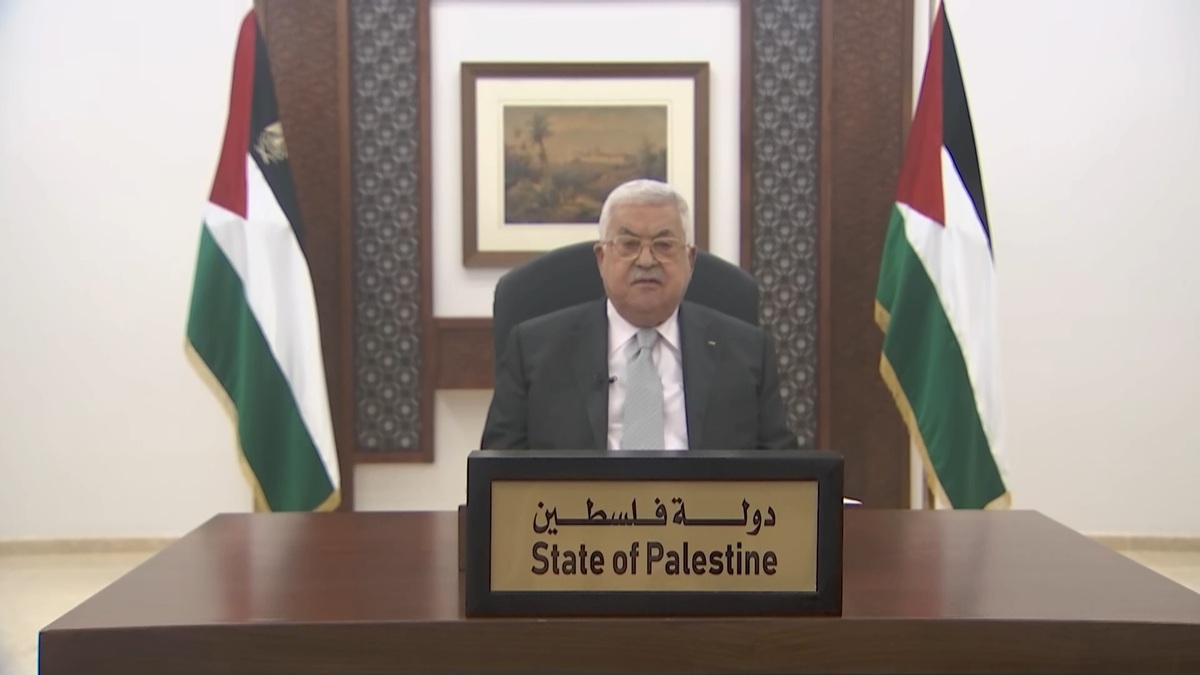
Palestinian President: Absence of Palestinian rights is the root cause for regional escalation

Palestinian President Mahmoud Abbas said today (Wednesday) that the "dangerous escalation in the region" is mainly caused by the absence and neglect of Palestinian rights.


In his speech on the occasion of the International Day of Solidarity with the Palestinian People, which falls today, Abbas stressed that the world “should not stand by and watch what Israel is doing of all kinds of killing, destruction, arrest and displacement against the Palestinian people.”


He urged the search for a radical solution to the Israeli occupation and its presence on the land of the State of Palestine, stressing that "ending the occupation and realizing the rights of the Palestinian people is the only way to maintain regional and international stability, security and peace."


Abbas warned that the Palestinian people in the Gaza Strip "are exposed to an existential threat and the deliberate and systematic targeting of civilians in light of the horrific international crimes committed by Israel, including war crimes and crimes against humanity."


He said that Israel "launched a barbaric aggression, a dirty war of retaliation, and genocidal crimes, targeting innocent people. More than 60,000 Palestinians have been killed and wounded so far, including 70% of children, women, and the elderly, in addition to thousands of victims under the rubble."


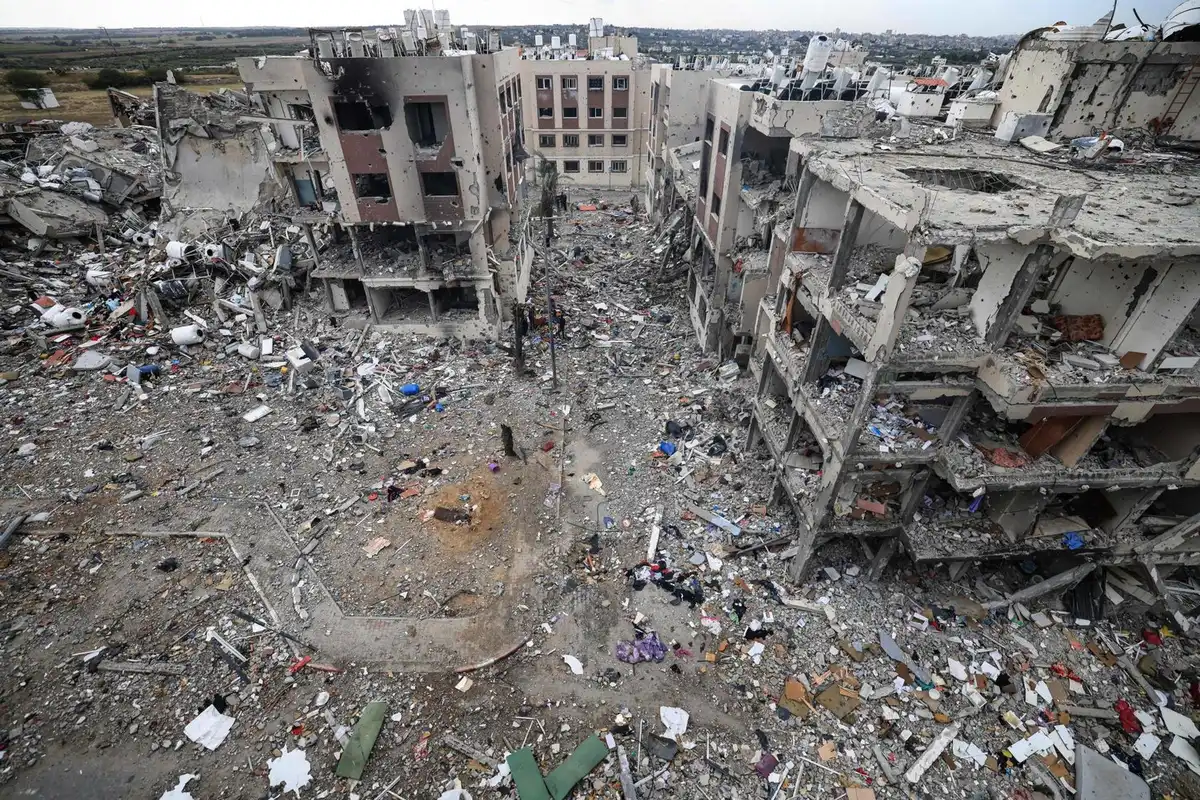
He added, "Entire families were exterminated, and more than 1.7 million Palestinians were displaced in an attempt to implement a new Nakba, in addition to tens of thousands of homes, buildings, facilities, shelter centers, and infrastructure that were destroyed by the Israeli war machine on top of their residents."


Abbas stressed that peace and security "cannot be achieved by stripping the Palestinians of their humanity or demonizing them, nor by crushing the skulls of infants and shedding the blood of children, nor by erasing Gaza, turning it into hell, or reducing its area."


The Palestinian President called on the international community and international organizations to "stop the silent annexation and settlement measures and stop the daily practices of ethnic cleansing and racial discrimination in the entire occupied Palestinian territory."


He also urged that the State of Palestine be enabled to obtain full membership in the United Nations by a Security Council decision, as a first step, in addition to the fact that countries that want to maintain the two-state solution recognize the State of Palestine now and support peace.


Abbas concluded his speech by saying, "It is time to hold an international peace conference, impose international will, reject Israel's intransigence in rejecting this vision, and recognize the right of the Palestinian people to exist and to self-determination."


PALESTINE

Wed 29 Nov 2023 1:49 pm - Jerusalem Time

Four Palestinians, including two children killed during Israeli aggression against Jenin

Al-Quds' correspondent in Jenin reported the death of two leaders of the Jenin Brigade, whose names were at the top of the wanted list, namely Muhammad Jamal Al-Zubaidi (26 years old) and Wissam Iyad Hanoun (27 years old), as a result of an armed clash with the occupation forces that besieged them in the Al-Damj neighborhood.


The occupation forces confiscated the bodies of the two martyrs.

It is noteworthy that Al-Zubaidi is a freed prisoner who was arrested several times on charges of belonging to the Islamic Jihad movement. He has been pursued by Israel for a year and a half. He survived several assassination attempts and was injured several times. He is the brother of Naim Al-Zubaidi, the leader of the shadow groups who was killed during an armed clash a year ago. He is also Zakaria’s Al-Zubaidi cousin one of the heroes of the Freedom Tunnel.


As for Hanoun, he is a liberated prisoner who was arrested many times on charges of belonging to the Popular Front. He was injured several times and refused to surrender himself since Israel chased him. It is reported that his brother Wiam was killed two weeks ago.


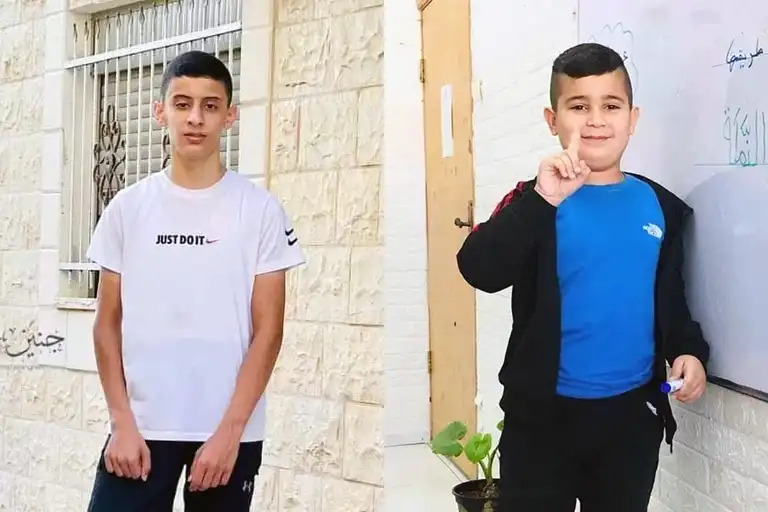
This Wednesday afternoon, two children were murdered by Israeli occupation forces' bullets during their ongoing aggression against the city of Jenin and its camp.


The Ministry of Health said that the child Adam Samer Al-Ghoul (8 years old) and the child Basil Suleiman Abu Al-Wafa (15 years old) were killed by occupation bullets in Jenin.


The Palestinian Red Crescent Society said that its crews transported a dead child from the Basateen neighborhood in the city of Jenin to the hospital after he was hit by occupation bullets.


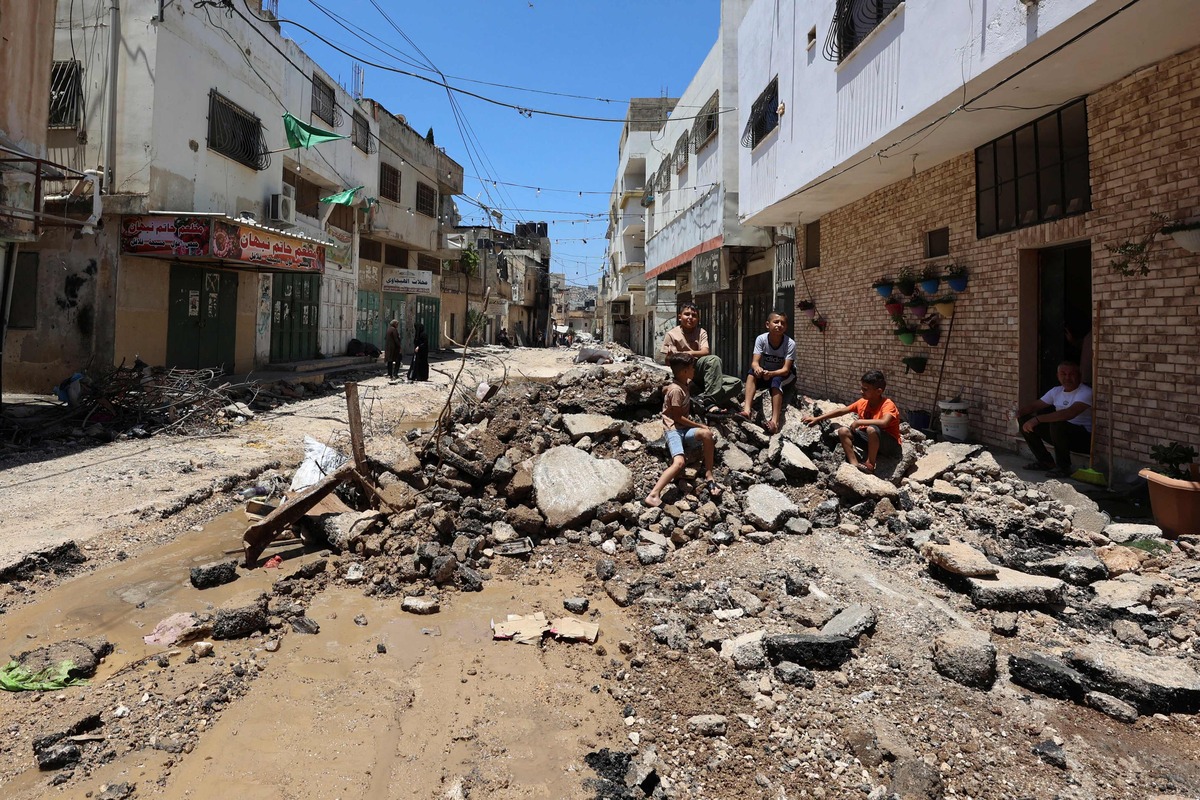
The occupation forces continue their aggression against Jenin camp, where they launched a massive arrest campaign and evacuated citizens in the Damj neighborhood from their homes amid violent confrontations.


Local sources said that the occupation forces, at gunpoint, forced the residents of the Damj neighborhood to evacuate their homes after a massive destruction of homes and streets in the neighborhood, and bombed a house from a drone.


The occupation forces launched a massive arrest campaign in the camp.


The occupation bulldozers also demolished the infrastructure, including water, electricity and sewage networks, and destroyed several vehicles in the camp.


The occupation forces kidnapped one of the injured people from the ambulance while he was being transported to the hospital.


ARAB AND WORLD

Wed 29 Nov 2023 12:39 pm - Jerusalem Time

Hamas leader: We will release Russian detainees in appreciation of Putin's positions

A member of the Hamas political bureau, Musa Abu Marzouk, said on Wednesday that Hamas will release a number of detainees of Russian nationality, outside the framework of the exchange agreement with Israel, which requires the movement to release ten Israeli detainees.


Abu Marzouk added, in his account on the “X” platform: “To date, none of the Israeli men have been released in Gaza, except for Ronnie Krivoy, who is of Russian origin, as a result of the movement’s appreciation for the positions of President Vladimir Putin.”


He continued: "Today, others will be released outside the deal, in appreciation of President Putin's commendable positions."

ARAB AND WORLD

Wed 29 Nov 2023 12:32 pm - Jerusalem Time

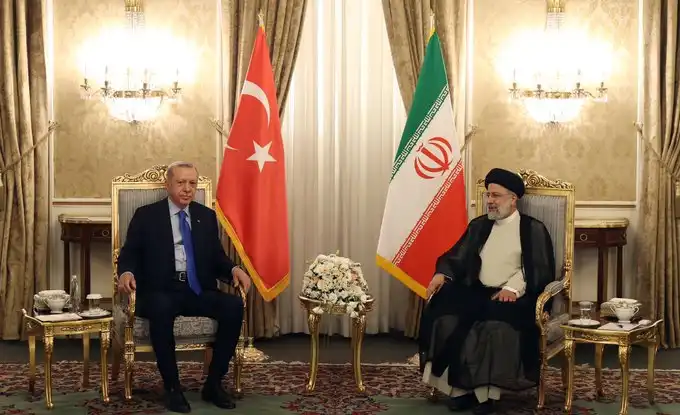
Experts: Turkish and Iranian interests converge in addressing the conflict in Gaza

Turkey and Iran, the two regional powers in the Middle East, are trying to put aside their growing rivalry and seek to reach a common understanding to resolve the ongoing crisis in the Gaza Strip, according to what experts said.


Earlier, the Turkish presidency announced that Iranian President Ibrahim Raisi would not make a previously announced visit on Tuesday to the Turkish capital, Ankara, where Raisi and his Turkish counterpart Recep Tayyip Erdogan were expected to focus on seeking a joint response to the conflict erupting between Israel and Hamas. The reason has not been announced yet.


However, the two presidents held a telephone conversation on Sunday evening, following a telephone conversation that took place a day earlier between senior diplomats from the two countries.


During the conversation, Erdogan highlighted the importance of the "united position" of the Islamic world, especially from Turkey and Iran, against Israeli military operations in the Palestinian territories, the semi-official Anadolu Agency reported.


The pressing Gaza crisis has brought the two neighbors, which have maintained good trade relations, but are at loggerheads in many areas of the Middle East, closer together, analysts said.


In this context, Uytun Orhan, coordinator of Levant Studies at the Ankara Center for Middle East Strategic Studies, said, “The Gaza crisis has allowed the escalating tensions between Turkey and Iran to calm in pursuit of a common goal,” adding, “The conflict (in Gaza) has opened the way for the two countries to reach a common understanding.” 


Sapar Askeroglu, an independent foreign policy analyst based in Ankara, agrees with Orhan's view.


Askaroglu told Xinhua News Agency, "Iran and Turkey share common interests regarding issues related to Palestine. Both countries are not satisfied with Israel's policies, and expressed their discomfort regarding the humanitarian tragedy in Gaza."


At the same time, the two countries also worry that the strong American presence in the Middle East harms their interests in the region, according to Orhan.


Given their shared opposition to the US-led regional and global order, the conflict in Gaza is likely to help bridge the gap between Turkey and Iran, according to analysts.


Tehran hopes that Turkey will be more on the front lines when it comes to addressing the Gaza crisis, according to Askaroglu.
He added, "Now, Iran is studying whether it can work jointly with Turkey, and believes that if the answer is yes, they can change the balance of power in the region."


Since the outbreak of the conflict between Israel and Hamas on October 7, Erdogan has taken a firm stance against Israel, describing the country as a "terrorist state." At the same time, Iran expressed its categorical condemnation of Israel.


On the other hand, Turkey, unlike its Western allies, does not consider Hamas a terrorist organization, while Iran is a strong supporter of the group that controls the Gaza Strip.


Orhan continued that, in general, the Iranians and Turks appear to have similar interests regarding the conflict in Gaza, but there are limitations to this emerging alliance.


He added, "Turkey is a member of the North Atlantic Treaty Organization (NATO), and enjoys close relations with Western countries, while Iran has a long-standing hostility with the West. Therefore, their relationship may be getting closer with regard to Gaza, but their positions are different, and their regional competition is likely to continue."

PALESTINE

Wed 29 Nov 2023 12:03 pm - Jerusalem Time

West Bank: Total number of arrests after October 7 rose to more than 3,325 prisoners

The Prisoners' Authority and the Prisoners' Club said that the Israeli occupation forces arrested at least 35 citizens from yesterday evening until Wednesday morning, in addition to the fact that the occupation, since yesterday evening, has continued to storm Jenin camp, and is carrying out field investigations with dozens of citizens in addition to the continuous raids on citizens’ homes, accompanied by widespread sabotage and destruction, it has not been possible to confirm who the occupation has kept in detention until now.


The Prisoners' Commission and the Prisoners' Club pointed out that among the detainees was the child Karim Ghawanmeh (12 years old) from Jalazoun camp, and according to his family's account: The intelligence officer called his father and told him that he had to bring Karim for investigation, or they would take him, and later his father handed him over to the "Beit El-Askari checkpoint.


Thus, the total number of arrests after the seventh of last October rose to more than (3,325), and this total includes those who were arrested from homes, through military checkpoints, those who were forced to surrender themselves under pressure, and those who were held hostage.


It is noteworthy that the data related to arrest cases includes those who were kept in detention by the occupation, or those who were later released.

ARAB AND WORLD

Wed 29 Nov 2023 11:52 am - Jerusalem Time

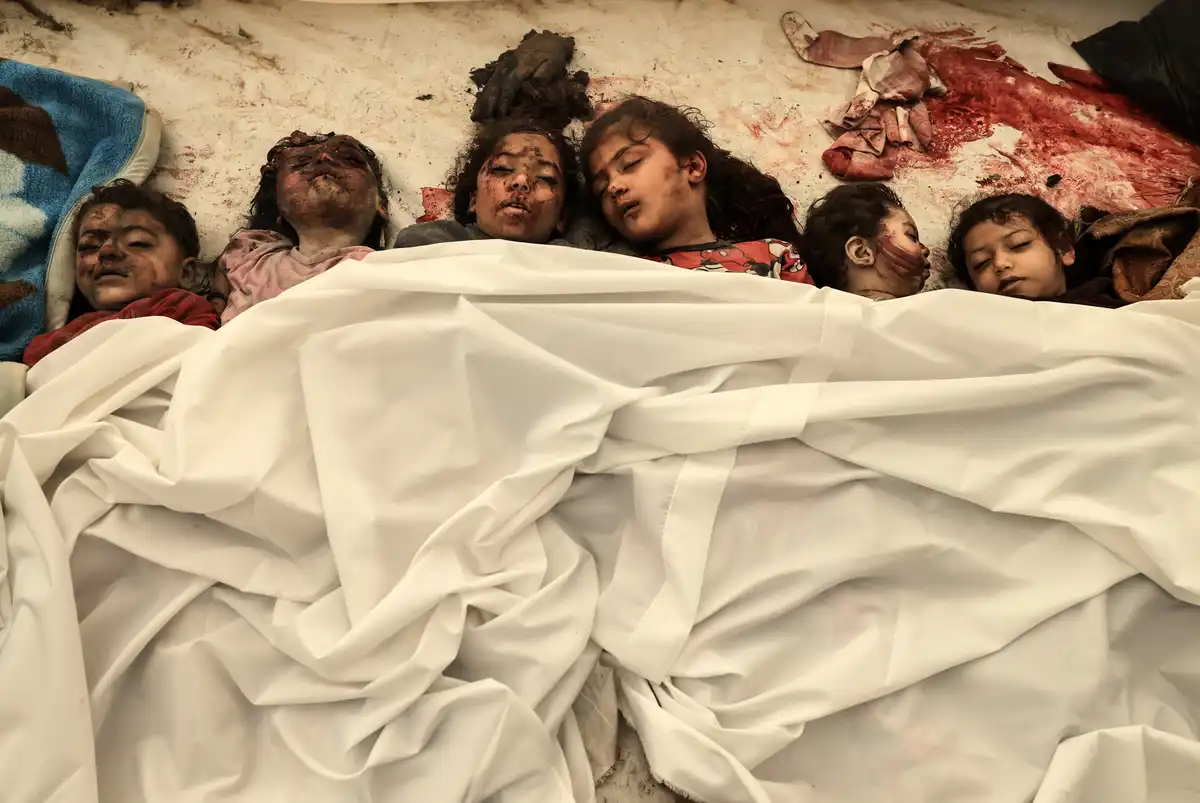
The decomposing bodies of infants in a hospital in Gaza shock the world

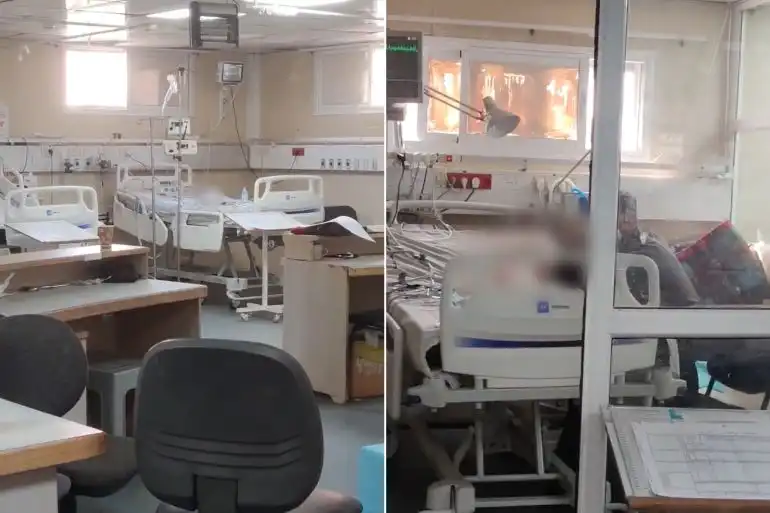
Since the first day of the truce between the Islamic Resistance Movement (Hamas) and Israel in Gaza, the crimes of the occupation began to appear to the world, the latest of which was shocking scenes of decomposing children’s bodies left in Al-Nasr Children’s Hospital in the northern Gaza Strip after Israeli forces forced its staff and patients to evacuate it.


As the truce in Gaza entered its fourth day, Al-Mashhad TV correspondent Muhammad Baalousha was able to enter Al-Nasr Children’s Hospital to be surprised by shocking scenes of decomposing children’s bodies in the care department, and the occupation army prevented them from being removed and buried.


The clip spread quickly on social media platforms, sparking shock and anger. Some tweeters described the scenes revealed by the reporter's as "shocking" and a "crime against humanity." Others asked about the role of human rights and children's rights organizations in pursuing the Israeli occupation army to hold it accountable for its crimes against the people of Gaza, especially children.


For its part, the Euro-Mediterranean Human Rights Observatory confirmed that it documented the discovery of 5 infants dead and in a state of decomposition in the nursery of Al-Nasr Hospital after they were left to their fate 3 weeks ago, in what “may amount to a horrific execution and a crime against humanity.” The Observatory called for the formation of an independent international investigation committee into the incident.


For his part, the director of the hospital, Doctor Mustafa Al-Kahlot, said in a statement to the Euro-Mediterranean Observatory that he sent an appeal to international organizations, including the Red Cross, about the difficult condition of the five children to save their lives, but he did not receive any response.


Al-Kahlot stated that he informed the Israeli army officer who warned them of the final evacuation of the condition of the five children on respirators, stressing that the officer informed him that the army knew about this and would act.


On November 10, a doctor at Al-Nasr Children’s Hospital published a video clip from the Special Care Department, and commented on it, saying, “Al-Nasr Children’s Hospital care without medical staff after the threat of tanks. 


PALESTINE

Wed 29 Nov 2023 11:24 am - Jerusalem Time

Prisoner Etaf Jaradat: The effects of Israeli jailer's beatings still on my body

Ataf Jaradat, one of the female prisoners released from Israeli prisons following her release in the fourth batch as part of the exchange deal between Hamas and Israel, said at dawn on Tuesday that the Palestinian female prisoners “were severely beaten and humiliated after last October 7.”


She added: "After October 7, the female prisoners were isolated, and I personally was beaten until marks were left on my body. We were insulted, leaving us without beds and blankets."


She pointed out that the Israeli authorities tried to break our morale, but they failed.


She continued: "It is as if I am living in a dream. After two years of difficult detention, today I am free and we broke the prison gate despite the occupation's will and with the will of resistance."


She pointed out that conditions in Israeli prisons are very bad, as everything has been withdrawn from the prisoners’ rooms.


She said: "We know that the price of our freedom is very high at the expense of the blood of our people in the Gaza Strip and their homes that were destroyed."


She continued: "I hold my head high for them, and God willing, the day will come when we will see all the prisoners liberated from prisons soon."


Ataf Jaradat (50 years old), from the town of Silat al-Harithiya, near Jenin, in the northern West Bank, has been detained for two years, and two of her sons are in prison.


Since Friday morning, the Gaza Strip has witnessed a temporary humanitarian truce that guarantees a complete ceasefire, against the backdrop of a prisoner exchange agreement and deal concluded between the Palestinian Hamas movement and Israel, under Qatari-Egyptian-American mediation.


By completing the exchange of Palestinian prisoners and Israeli hostages in the fourth batch, Israel will have released 150 Palestinian prisoners from its prisons, in exchange for Hamas releasing 50 Israeli civilians, all of them women and minors.


PALESTINE

Wed 29 Nov 2023 11:20 am - Jerusalem Time

Israel declared Jenin and its camp a closed military zone

Since yesterday, Tuesday, the occupation forces have continued to storm the city of Jenin and its camp, amid the destruction of infrastructure and citizens’ property, and the outbreak of violent confrontations, which resulted in the injury and arrest of a number of citizens.


The occupation forces launched a massive campaign of raids on homes in the eastern neighborhood and in the Jenin camp amid the outbreak of violent confrontations, while the occupation bulldozers continue to destroy the infrastructure in Jenin and its camp, especially in the Al-Damj and Al-Samran neighborhoods, amid intense drone flights.


Meanwhile, the occupation drones bombed a citizen's house with Energa missiles, and bombed a vehicle in the camp, while bulldozers continued to destroy the infrastructure, including electricity and water networks, press drainage, and streets. The occupation forces continued to besiege Ibn Sina Hospital, preventing the wounded and sick from reaching the hospital, according to hospital director Wissam Bakr.


The occupation forces launched a massive arrest campaign in Jenin and its camp, including: the mother of the two prisoners, Nour and Munir Salama, and the wife of Hani Abu Al-Shaker, under the pretext that her son is being pursued, Talal Al-Husri, Nour Al-Din Mansour and his son Abdullah, the wounded Abdullah Zamiro, and the brothers Bassam, Qassam, Hammam Al-Hariri, and Fadl. Qasim Al-Jadaoun.


This morning, the occupation forces continued their military reinforcements to Jenin and its camp.


The occupation forces arrested the young man, Islam Bassam Hoshiya, after storming the town of Al-Yamoun, west of Jenin, and raiding the humiliation of his family.


The director of Al-Razi Hospital, Fawaz Hammad, told WAFA that a young man was shot in the shoulder by the occupation forces, and his injury was described as stable, while earlier, three citizens were injured by occupation bullets.


The occupying army had declared the city of Jenin and its camp a closed military zone and deployed its forces with large reinforcements in several neighborhoods.


OPINIONS

Wed 29 Nov 2023 10:39 am - Jerusalem Time

​The Necessary Peace – The Peace of No Choice

Gershon Baskin and Samer Sinjilawi

Gershon Baskin and Samer Sinjilawi

Opinion Writer

Over the years we have heard all too frequently about the necessary war – the war that we had no choice but to fight. We want to speak about the necessary peace – the one that we have no choice but to accept.


We, like all Israelis and Palestinians, have spent the past 6 weeks in pain, anger, tears, frustration, and fear searching with our minds and souls for some path towards a future for our two peoples  which steers us on a new course – one of living and not dying. Watching the images of death and destruction makes it almost impossible for an Israeli and a Palestinian to sit together and watch the news –zapping between Israeli and Palestinian television channels.  The reporting is so different and the images are from two different realities. Even the two of us who share so many of the same values and same strategic outlook find it difficult these days to look forward without looking back. We have to challenge ourselves to step outside of our own identification with the pain and suffering of our own people. We cannot look at the images on the other side without feeling empathy. We are pained by what we see, neither of us wants to see the human suffering that surrounds us and neither of us can make excuses for the violence which has and is being used against both of our peoples.


Here is what we totally agree on:

 At the end of this horrible war, there must be a new reality created where Palestinians and Israelis are forced to make arrangements that will put an end to the possibility of future wars.


The leaders of Israel and of Palestine must be replaced. They are directly responsible for where we are and how we got here, and we both need new leaders, more connected to the people with greater legitimacy and a commitment to end the Palestinian-Israeli conflict as a first priority. We desperately need new leadership. The international community is looking for an actor that will oversee the reconstruction and govern the Gaza Strip, but let’s be honest: there is no chance that the corrupt, octogenarian, wildly unpopular leadership in Ramallah is up to the task. Furthermore, the strategy of the isolation of Gaza has only brought destruction to Palestinians. We need to connect Gaza to the West Bank and with the rest of the world, and offer Palestinians again a path to a political development.  Replacing the current realities of corruption and destruction with a path to construction.


The horrors of 7th of October and the aftermath do not change the fundamental facts about Israelis and Palestinians. Both will continue to live in this land. Israelis will continue to look for peace but worry about their security, and Palestinians will continue to look for independence which must include human dignity, rights and justice. Israel’s occupation over Palestinians must come to an end. Palestinians must enjoy freedom and dignity.


The West Bank, Gaza, and East Jerusalem are one territorial unit and must be under Palestinian control with one central, agreed upon, democratically elected government of the people of Palestine.


Both the people of Palestine and the people of Israel have the same right to self-determination in a state of their own.


When this war ends, Israel cannot stay in Gaza any longer than the time necessary for Palestinians to take control, with or without an international stabilization force in Gaza for a limited time. Without full international commitment led by the United States which will ensure full Israeli cooperation, Gaza cannot be rebuilt. Without the rapid reconstruction of Gaza with a massive amount of money, there can be no peace. The international community must be fully onboard with Palestinians taking the lead, assisted by the neighboring countries and including direct Chinese involvement with the unique experience of building excellent infrastructure rapidly, efficiently and affordably.


The international community must force Israel and Palestine into a renewed peace process which begins with the recognition of the State of Palestine and its acceptance as a full member State of the United Nations. Both Israel and Palestine will issue their commitment to uphold the Charter of the United Nations. The peace process should be regional and not bi-lateral and should include the countries of the region including: Israel, Palestine, Egypt, Jordan, UAE, Bahrain, Morocco, and Saudi Arabia (and others of they accept the principle of two-states for two peoples and no armed struggle).


When the current fighting ends, when the fear, mistrust and anger cool down, Palestinians and Israelis will come to the conclusion that war has been the wrong choice for decades. The lesson of 7th of October is not of a war of no choice – it is that we have no other option but a peace of no choice.


But such a peace is not inevitable. We need to work to make it happen, Palestinians and Israelis in partnership with the Americans. And to do this we need the necessary tools. We need concerted international engagement, not only during massive military operations and humanitarian crises, but to support a diplomatic process to prevent these wars. President Biden demonstrated unprecedented support to Israelis on and after the 7th of October. He may be the only man throughout history with the credit needed to push the two-states solution. It is in his hands to decide whether he will be the American president that signed the birth certificate of the two-states solution, granting Israelis and Palestinians peace, security, justice, rights and prosperity, or he will be remembered as the President who signed the death certificate of the two-states solution, missing this historical window and condemning Israelis and Palestinians to the endless cycle of bloodshed and misery.


We are not naïve. We are living through a terrible time. But these horrors are precisely why now is the time that Americans, along with all of the OECD countries, together with Israelis and Palestinians must embrace a Peace of no choice.


Samer Sinijlawi is Palestinian political activist born and living in East Jerusalem. He is Chairman of Jerusalem Development Fund 


Gershon Baskin is a political and social entrepreneur who has dedicated his life to peace between Israel and her neighbors. He is a founding member of “Kol Ezraheiha - Kol Muwanteneiha” (All of the Citizens) political party in Israel. He is now the Middle East Director for ICO - International Communities Organization, a UK based NGO.


ARAB AND WORLD

Wed 29 Nov 2023 10:23 am - Jerusalem Time

The New York Times: Biden faces intense anger among his supporters because of his support for Israel

The New York Times newspaper revealed what it described as informed sources who said that US President Joe Biden invited a small group of prominent Muslim Americans to the White House to discuss Islamophobia in America a few weeks after the start of the war on Gaza, noting that disappointment with Biden even included some officials. In his administration.


The newspaper reported that those meeting with Biden told him that his embrace of Israel after the attacks of last October 7 was considered by many to be a green light for the Israeli bombing of Gaza, and they said that his statement in which he questioned the Palestinian death numbers was insulting, highlighting that the fatal stabbing of a Muslim boy aged ( 6 years) Out of Chicago was merely a devastating result of the dehumanization of the Muslim community.


It quoted Wael Al-Zayat, CEO of an organization working to mobilize Muslim voters, who was among those who attended that meeting in Roosevelt Hall on October 26, as saying, “Biden admitted that there may have been mistakes in his speech, and he also listened and showed... Indeed, he sympathized, and promised to take better steps, especially with regard to humanizing the Palestinians.”


In the same context, Minnesota Attorney General Keith Ellison, who also attended the meeting, said that the war had also increased the risks for Americans, explaining that Muslim community leaders had warned Biden that “the suffering of the innocent people of Gaza who are trying to survive in difficult circumstances... "In fact, it has greatly increased the likelihood of Islamophobic attacks in the United States."


The gathering ended with Mr. Biden embracing a woman who lost her brother in a hate crime against Muslims several years ago, but the group left without getting the only thing they came for, which was a promise from Biden to call for a permanent ceasefire.


“There is a feeling that the shock of one people is more important than the shock of another,” says James Zogby, president of the Arab American Institute, which has been surveying the opinions of the Arab community for 27 years.


According to the New York Times, Biden's senior aides, led by White House Chief of Staff Jeffrey Zients, held multiple meetings with angry officials to hear their complaints, and one of these meetings was recently chaired by Mr. Zients, the president's senior advisor, Anita Dunn, and John Finer, the deputy national security advisor, and Director of Public Engagement Stephen Benjamin, the meeting allowed dissatisfied staff to voice their concerns about the president's strategy and rhetoric.


The newspaper pointed out that Biden has long considered himself a champion of Israel and Jewish nationalism, and he has been saying, “You do not have to be Jewish to be a Zionist.” His unwavering support for Israel has, at times, put him at odds with some members of his party, especially among left-leaning coalition members who see the Palestinian issue as an extension of racial and social justice movements.


The newspaper concluded by saying, “When the dust settles and the tears dry, we will have more bodies, more anger, and more extremism.”

ARAB AND WORLD

Wed 29 Nov 2023 9:49 am - Jerusalem Time

"World Health": Aid shipments entering Gaza during the truce are a drop in the ocean

Ahmed Al-Mandhari, WHO Regional Director for the Eastern Mediterranean, said that aid shipments entering Gaza despite the extension of the truce are “a drop in the ocean.”


Yesterday (Tuesday), Al-Mandhari stressed that “requirements and procedures from the Israeli side impede the entry of sufficient quantities of aid,” despite the accumulation of large quantities of medical supplies on the Egyptian side of the Rafah crossing.


He added that before the war, 500 trucks were entering the Gaza Strip daily carrying various types of aid, and so far only 1,600 trucks have entered the Gaza Strip, of which only approximately 400 carried medical supplies and medicines.


He also stressed that the need for medicines "is multiplying in a disturbing and frightening way, with the increase in those injured as a result of attacks, and the increase in injuries among health personnel, as a result of the demolition of infrastructure and the lack of clean drinking water."


Al-Mandhari pointed out that there is a need not only for medicines; but also “medical supplies, including laboratory samples, surgical tools, first aid kits, fluids, and medications for chronic diseases, such as blood pressure, diabetes, and heart diseases, and medications related to surgical operations, such as anesthesia medications,” stressing that the World Health Organization’s stock of medical supplies in Gaza has been almost completely consumed.


The WHO official described the situation in the Gaza Strip as tragic, and said that hundreds of thousands suffer from high blood pressure, diabetes, heart disease, and asthma.


He pointed out that fears at the beginning of the war on Gaza on October 7th focused on patients in hospitals, but now “there is real concern for the remaining health personnel.”


He added: “In Gaza, there are more than two million displaced people who lack shelter, including nearly a million who live in institutions of the United Nations Relief and Works Agency for Palestine Refugees (UNRWA) and lack the basic necessities of life. They have only one bathroom for every 220 people, and one shower unit.” For every 4,500 people.


Al-Mandhari said that acute respiratory diseases were spreading, infecting 100,000, while 70,000 suffered from diarrhea, and skin diseases such as scabies had spread, infecting nearly 40,000 people.


He added that there are about half a million pregnant and breastfeeding women and children who need urgent therapeutic and preventive nutritional interventions.


Al-Mandhari also revealed that before the outbreak of war, there were 7,000 children under the age of five suffering from wasting, and 4,000 suffering from severe wasting. Pointing out that these numbers have now increased by 27 percent, reaching 10,000 children.


He also explained that 450,000 people in Gaza are suffering from mental illnesses, and that the only hospital specialized in treating them in the Strip has stopped working.


He said that the crisis is exacerbated by “the fragility and weakness of the health system in Gaza. Out of 36 hospitals, there are 9 hospitals that operate at partial capacity, sometimes providing simple, basic services, such as first aid, and cannot provide more than this.”


He added that the manpower working in the medical sector in Gaza has declined to 30 percent, which makes the situation worse.


Al-Mandhari pointed out that the lack of fuel hinders the provision of medical services, and gave an example of Al-Shifa Hospital, the largest medical complex in the Strip, which he said needs 17,000 liters of fuel daily: “Now no fuel reaches it.”


He stressed that “the quantities of fuel entering the sector do not meet the needs of health institutions; In addition to the needs of electricity generation, water desalination, communications, and bakeries. Pointing out that with the onset of winter, the need for fuel will increase.


He also expressed his deep concern about hospitals in northern Gaza, saying that they are “suffering real suffering.” Because the Israeli forces obstruct the entry of various types of aid that all international organizations are trying to deliver, and this is a major challenge.”


Al-Mandhari confirmed that during the five days of the truce, more than 4,000 trucks carrying various types of medical aid entered from the World Health Organization and other organizations, such as the Egyptian Red Crescent, as well as countries including Qatar and Turkey.


He pointed out that "the World Health Organization's share of this aid exceeds 60 metric tons of food, treatments and medical aid."


Al-Mandhari called for "urgent, immediate and unconditional entry of all aid into the Gaza Strip, and the provision of the necessary protection for health institutions so that they can carry out their work, in addition to protecting workers in the health sector, otherwise it will be a certain disaster."


The Palestinian Minister of Health, Mai Al-Kaila, had recently warned of “the catastrophic epidemiological and health situation in the Gaza Strip; Especially in shelter centers, such as schools, hospitals, refugee camps, and displaced persons’ gatherings, stressing that they lack the basic necessities of life, such as water, food, and medicines.


OPINIONS

Wed 29 Nov 2023 9:33 am - Jerusalem Time

American public opinion...and the trend towards supporting the Palestinian people

James Zogby

James Zogby

Opinion Writer

Many events that have occurred in the past few weeks point to our frightening reality. When it comes to freedom of expression about events between Israel and Palestine, we are on perilous ground.


It is clear that public opinion has shifted in a more supportive direction for the Palestinian people, especially among the American nation – young people and people of color, and so far, this fact has been recorded mainly in polling data. But with the past six weeks of Israel's brutal assault on Gaza, there has been an outpouring of statements supporting Palestinian rights and opposing Israel's relentless war against the Palestinian people.


It was expected that support for the Palestinian people would be countered by pro-Israel groups. But the ferocity of the pro-Israel counterattacks was alarming. A major American Jewish organization that claims to defend civil rights has called on universities to ban Students for Justice in Palestine (a pro-Palestinian university student activist organization in the United States, Canada, and New Zealand), describing it as anti-Semitic. In an unusual move, the US government called for an investigation into whether the students could be charged with “providing material support to terrorism.” While some students were not careful in their choice of words to express their support for the Palestinians, there was nothing to support the serious charge of “terrorism.” Some universities have responded by banning Students for Justice in Palestine, along with Jewish Voice for Peace, a national organization of progressive American Jewish youth who support Palestinian rights. Despite its Jewish membership, this organization has also been described as anti-Semitic by the same defenders of Israel.


About a week ago, the head of the Democratic Party in a Midwestern state sent a press release condemning officials of the Young Democrats (the largest youth-led political party organization) in a university building in the state. The statement ended with a text that pro-Israel groups insisted on... It is a controversial statement, because instead of saying, “From the river to the sea, Palestine will be free,” they wrote, “Let every Palestinian be free, from the river to the sea.”


Despite the students' efforts, the state party chair accused them of using anti-Semitic language, making Jewish students feel unsafe on campus, and supporting genocide against the Jewish people, and called on them to resign from their elected positions in the Democratic caucus. To justify this harsh response, the president cited the definition of the original phrase, provided by a pro-Israel group.


Last week, the Central American Solidarity Association of Maryland (CASA), a respected community organization in Maryland that advocates for and provides services to immigrants, issued a statement in support of the Palestinian people. The association condemned what Hamas did on October 7, and also condemned the Israeli bombing campaign that claimed the lives of thousands of Palestinian men and women. The Casa statement said that as people of color, they identify with the struggle for justice and freedom because “the Palestinian struggle reflects our victory.”


CASA's solidarity was met with a letter from a group of lawmakers and elected officials in Maryland demanding that the association rescind its statement, describing it as "anti-Semitic." As state legislators who decide the state budget, they more explicitly stated: “This may be a good time to re-evaluate the state’s mechanism for providing financial aid and support to our immigrant community.” Because thousands of immigrant women and men depend on CASA for important services and advocacy, they felt compelled to apologize and rescind the statement. Lawmakers have not yet backed down from their threat to stop funding the association.


Finally, an editorial published in the New York Daily News last week called for the re-establishment of the notorious Jewish Defense League, a move that raises concern and anger. Instead, it passed without comment from elected officials concerned about the spread of hate. The author of the article, a prominent New York philanthropist, praised the founder of the Jewish Defense League, Meir Kahane, and extolled the virtues of the League, claiming that it represents strong Jews and is a firm response to dealings aimed at their safety. The writer ignored the facts that the League had for decades been on the FBI's terrorist list, was a major perpetrator of terrorist violence during the 1970s and 1980s, and was banned in Israel as a racist group that produced the likes of the person who massacred Muslim worshipers at the Ibrahimi Mosque in Hebron, and the person who Prime Minister Yitzhak Rabin was assassinated. That a major American newspaper published such an article without comment indicates how serious the situation is.

PALESTINE

Wed 29 Nov 2023 9:23 am - Jerusalem Time

On the sixth day of Gaza truce, Israel receives a new list of detainees

On the 54th day of the war waged by the occupation against Gaza, the Israeli government received a list of the names of the sixth batch of Israeli detainees who will be released tonight as part of prisoner and detainee exchange deals with the Islamic Resistance Movement (Hamas) and other factions of the Palestinian resistance.


Efforts in Israel to extend the truce

The Israeli Broadcasting Corporation said that there are efforts in Israel to extend the ceasefire after the end of the additional two days of the truce.


It is noteworthy that the Palestinian and Israeli sides have reached an agreement to extend the humanitarian truce in the Gaza Strip for two additional days, under the same previous conditions, namely a ceasefire and the entry of humanitarian aid.


This comes within the framework of the mediation of the State of Qatar, and in partnership with the Arab Republic of Egypt and the United States of America.

ARAB AND WORLD

Wed 29 Nov 2023 9:22 am - Jerusalem Time

Chinese Foreign Minister urges a comprehensive and permanent ceasefire in Gaza

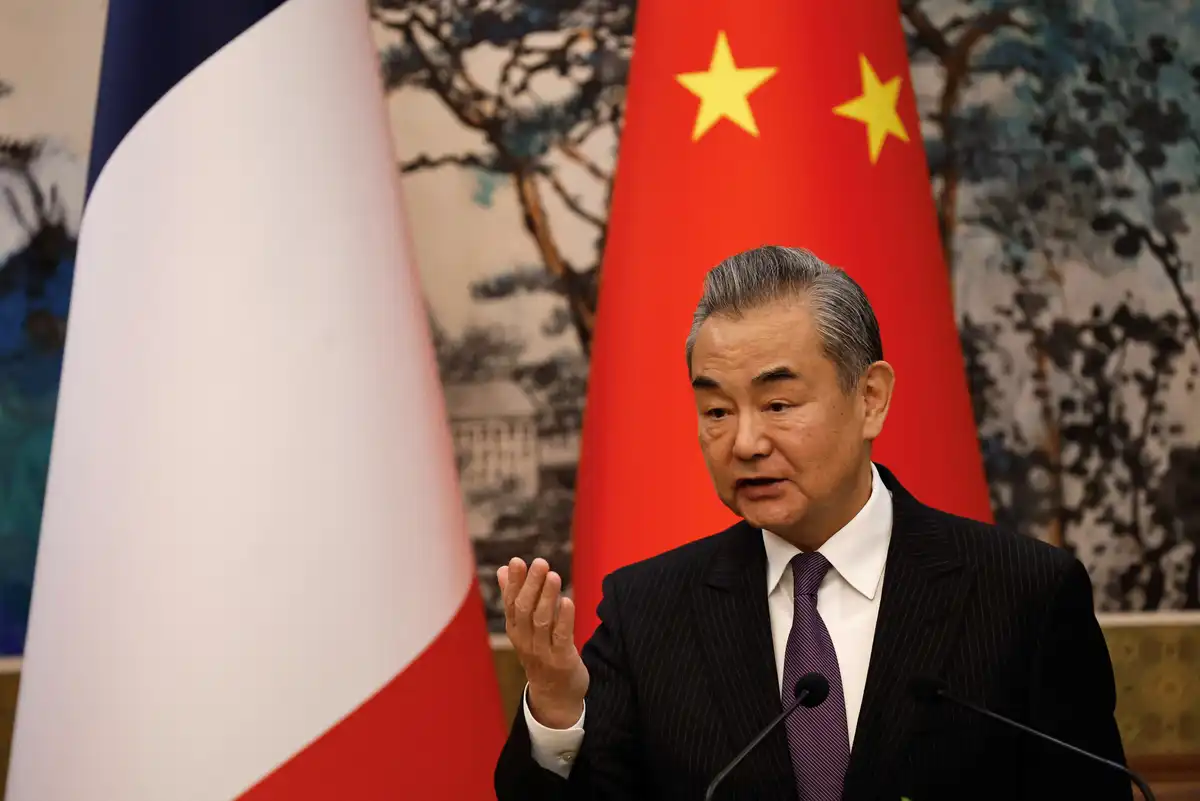
Chinese Foreign Minister Wang Yi said that China and Brazil should seek to achieve a new consensus in the United Nations Security Council, push for a comprehensive and permanent ceasefire between Israel and Palestine, as well as the release of prisoners, and return to the two-state solution as the basic solution to the Palestinian-Israeli conflict. 


Wang, who is also a member of the Political Bureau of the Central Committee of the Communist Party of China, made the comments during talks with his Brazilian counterpart Mauro Vieira.


For his part, Vieira said that the Brazilian side agrees with China's position, noting that the temporary ceasefire must be extended first, and peaceful coexistence between Palestine and Israel must ultimately be achieved through the two-state solution.


He stressed that Brazil is ready to work closely with China to demand that the Security Council take new measures, and to speak with a clear, unanimous voice.

ARAB AND WORLD

Wed 29 Nov 2023 7:50 am - Jerusalem Time

"Wall Street Journal": A long-term ceasefire in Gaza requires difficult concessions

“A long-term ceasefire in Gaza requires concessions that are difficult to accept,” the Wall Street Journal reported, citing Egyptian and Qatari officials.


The Wall Street Journal quoted Egyptian and Qatari officials as saying: “The main mediators in the prisoner and hostage exchange process between Israel and Hamas are pushing both sides to prolong the ceasefire in Gaza beyond the current two-day extension, and to begin talks on a permanent truce that would end the war.” entirely".


The officials told the newspaper, "A long-term ceasefire will likely require Israel and Hamas to make concessions that are difficult to accept, such as exchanging Israeli soldiers for thousands of Palestinian prisoners in Israeli prisons."


The officials told the Wall Street Journal that “this will require Israel to curb its attack on southern Gaza with the aim of seizing the Strip and killing Hamas’ senior leadership,” but the officials explained that “the current temporary truce is working to build the kind of confidence necessary to move forward.”


Today, Tuesday, Qatari Foreign Ministry spokesman Majed Al-Ansari said: “We are working to strengthen the Qatari mediation role to reach a truce and then a permanent ceasefire.”


In a sign of the seriousness of the talks, CIA Director William Burns arrived in Qatar on Tuesday, a US official and a person familiar with the matter told the Wall Street Journal.


He is scheduled to attend the talks, in which David Barnea, head of the Israeli intelligence agency Mossad, and senior officials from Qatar, which has close ties to the political leadership of Hamas, are also expected to participate, according to the newspaper.


Discussions are initially focused on extending the ceasefire for another three days in exchange for 10 hostages each day.


The truce between Hamas and the Israeli government continues for the fifth day in a row after extending it for two days under the same conditions, while awaiting the release of a new batch of hostages and prisoners.


Earlier, the Qatari Ministry of Foreign Affairs announced that the Hamas movement released 69 Israeli prisoners, while Israel released 150 Palestinian women and children, during the first four days of the truce agreement that the two parties reached with Qatari-Egyptian-American mediation, and which entered into force on Friday morning. past.

Source: Sama News

ARAB AND WORLD

Wed 29 Nov 2023 7:44 am - Jerusalem Time

Negotiations in Doha for a permanent ceasefire in Gaza

The official Israeli Broadcasting Corporation said on Tuesday that Qatar is witnessing discussions to conclude a new agreement for a “long-term truce” that includes the release of all detainees in Gaza, including soldiers, and Tel Aviv’s release of Palestinian prisoners “convicted” of killing Israelis.


This came in conjunction with talk in the Hebrew media about discussions in Doha between the heads of the Israeli Mossad, Dadi Barnea, the CIA, William Burns, the Egyptian intelligence, Abbas Kamel, and the Qatari Prime Minister, Sheikh Mohammed bin Abdul Rahman Al Thani, while no official comment was issued on this matter. 


The corporation said: “There is talk about discussions in Qatar, where the head of the Mossad is located, and on the table is a new agreement for a longer truce.” It explained that the agreement being discussed includes “the release of all abductees in Gaza, including men and soldiers.”


It continued: "In return, Israel extensively releases Palestinian security prisoners, including those convicted of killing Israelis."


According to the Commission, the Hamas movement expressed its approval of the broad outlines of the new agreement, but said it wanted a “complete ceasefire,” which Israel has rejected until now, while the movement has not officially commented on the matter.


The head of the Mossad informed Israeli Prime Minister Benjamin Netanyahu of the details of the new agreement being discussed in Doha, according to the same source.


In this context, the Hebrew Walla website said that the talks taking place in the Qatari capital, Doha, on Tuesday, with the participation of the Qatari Prime Minister, Mohammed bin Abdul Rahman, the Director of the CIA, William Burns, and the head of the Mossad, David Barnea, The head of the Egyptian General Intelligence Service, Abbas Kamel, aims to extend the current truce for up to 9 days, in exchange for the release of 50 additional hostages.


Walla also revealed that the discussions in Doha discussed the possibility of drafting a new agreement under which all other hostages held by Hamas, including soldiers, would be released without revealing more details.


The website added that Israel is ready to agree to extend the truce according to the terms of the current agreement, to reach nine days, in exchange for Hamas releasing 10 hostages for every additional day.

Source: Sama News

ARAB AND WORLD

Wed 29 Nov 2023 7:37 am - Jerusalem Time

Chairman of the US Senate Intelligence Committee: “Israel” has lost the world’s sympathy

The Chairman of the US Senate Intelligence Committee, Mike Warner, said that “Israel” has lost the sympathy of people, not in the region, but on a global level.

Waner pointed out in an interview with MSNBC that Israel is facing a major challenge, after it invited more than a million Palestinians to flee from north to south of the Gaza Strip, in light of what is happening now.


He said that it must pay money to the Palestinian Authority, in order to continue the security services it provides, and avoid chaos, as he described it.


He pointed out that he was worried that security personnel in the Palestinian Authority would lose their work and open a new front.


Source: Sama News


OPINIONS

Wed 29 Nov 2023 7:25 am - Jerusalem Time

Alternatives in front of Hamas

Bakr Aweida

Bakr Aweida

Opinion Writer

Between Benjamin Netanyahu’s shouting that ending the Hamas movement and uprooting its roots in the Gaza Strip is an irreversible goal, and between him being forced to negotiate with members of its political leadership, even through Qatar’s mediation, regarding the hostage issue, Israel has opened the gates of hell of genocide and forced displacement against the defenseless people of Gaza. Now that Israeli anger has subsided somewhat, after mothers, children, and grandmothers returned from being detained by the Qassam Brigades in the tunnels, it may be permissible to ask whether Netanyahu’s fault has been healed, or whether the next round of rounds, if the truce suddenly collapses, will be more devastating to him. Who remain of the mothers, children, and grandmothers of Gaza, hostages of a war in which none of them had a hand in igniting its flames, and no one among them was asked for an opinion about it before it exploded?


However, the most important thing is to pose the question to the distinguished gentlemen, the Chairman and members of the Political Bureau of the Hamas movement, whether there is a new perception beginning to take shape in their minds regarding their movement’s approach at various levels, which differs from their visions of the reality before the explosion of the seventh of last month. Logically, it can be assumed that this is possible. The movement's leadership had previously taken a similar measure. This happened six years ago, specifically on May 1, 2017, when Khaled Meshaal, who was then head of the Political Bureau, announced in a press conference in Doha a “new policy principles document,” which included for the first time the movement’s readiness to accept the principle of the establishment of a Palestinian state within the borders of June 4, 1967. In other words, acceptance of the peace path with Israel that began with the signing of the Oslo Accords in 1993.


It is true that the aforementioned document included an affirmation of Hamas’ refusal to recognize the State of Israel, or the peace process based on the Oslo Accords, but it is also true that this refusal falls within the political framework. The movement's leadership knows that accepting the establishment of a Palestinian state in the Gaza Strip and the West Bank of the Jordan River means accepting an existing reality represented by the existence of a state called Israel. In addition to this, something is no less important, which is that this “new policy principles document” includes Hamas’s retreat from the approach of considering the conflict against Israel based on a religious basis. Each of the two matters seemed, at the time, new, and at the same time important, and foreshadowed more than one possibility, the first, and even the most important, of ending the Palestinian division and directing Palestinian dealings with Israel based on a unified front that includes all Palestinian factions.


Unfortunately, it soon became clear that that hope was an illusion. No reconciliation with the Fatah movement took place, despite the signing of more than one reconciliation agreement, and no reform of the situation of the Palestinian Authority in Ramallah was taken seriously. Now all Palestinians, not just the faction leaders, stand at a decisive crossroads. However, the Hamas leadership in particular faces choices that will determine the future of the movement. The most important of these options is its return to the Palestinian embrace that embraces all the factions, that is, the Palestine Liberation Organization. The second is for it to reconsider its regional alliances, and be open to its Arab-Sunni affiliation, which is the basis on which it can trust, and nothing else. Thirdly, reflect carefully on the fact that the all-or-nothing logic has proven futile, and the person paying the heaviest price is the continuation of the people of Palestine, who have continued to pay the heaviest price with their blood, and with the future of their children, since the rejection of the United Nations resolution taken seventy-six years ago. This day (11-29-1947), which established the right of the Palestinians to a state on part of their land. Isn't it time to put the interests of the Palestinian people before the interests of all organizations? indeed.


ARAB AND WORLD

Wed 29 Nov 2023 7:06 am - Jerusalem Time

A noticeable increase in “voices of reason” in Israel calling for an end to the conflict

By Nazir Majli

Amid talk of expanding the truces in the Gaza Strip and increasing prisoner exchange deals between Israel and Hamas, what can be described as “voices of reason” began to grow noticeably louder in Tel Aviv, demanding an end to the warlike rhetoric, and the search for opportunities to end the conflict between the two peoples, and give the mediators room in Washington and the Arab capitals to transform the disaster that the region is experiencing into hope, as usually happens when leaders who are concerned for the interests of their people and the future of emerging generations shine.


These voices are raised by a group of former political and military leaders and opinion writers who are disturbed by extremist rhetoric that is based on revenge and vengeance, and insists on setting goals that its owners know are unattainable, such as “annihilating Hamas,” completely occupying the Gaza Strip, and deporting its people.


Among these leaders, on Tuesday, Ehud Barak, the former prime minister, who served as Minister of Defense in Benjamin Netanyahu’s government and Chief of Staff of the Army, and who is considered the holder of the largest number of military decorations in the history of the Israeli army, emerged. He said that the members of his generation were among those who fought many wars. They knew the meaning of bloodshed, and they saw that there were limits to power. He added, in an article published in the newspaper “Haaretz”, on Tuesday: “In addition to that apparent steel logic, which makes good people think that our security is linked to Israel’s complete and permanent control over the Gaza Strip, this thinking will lead them to the need to control Lebanon, and after that, Syria.” And perhaps throughout the region. The conclusion is that a government headed by Benjamin Netanyahu will lead to significant damage to Israel's strategic position, and to a war that has no endpoint.

This is great harm. Netanyahu must end his role before the consequences of his weakness become irreparable. In the current circumstances, we need a broad national unity government without Netanyahu, Itamar Ben Gvir, and Bezalel Smotrich. Only this government, which will act responsibly and resolutely, free from extraneous and distorting considerations, can guide Israel towards ending the war victoriously.

Barak wrote: “After two months of war, we are approaching the decisive point. The Israeli army has clear achievements in the northern Gaza Strip, but Hamas is far from disintegrating in the south, and it maintains capabilities in the north as well. Completing the goal of destroying the military and authoritarian capabilities of Hamas is very necessary, but this will require many months and perhaps more. The practical clock and the political clock are not synchronized. International legitimacy for action is rapidly running out, and tension even vis-à-vis the United States is building up in closed rooms and could explode. Releasing the kidnapped people is not more important than destroying Hamas, but it is more urgent, and must be given the highest priority. Netanyahu's failure to lead the war lies in the exclusion of the realization that in the situation before us, victory cannot be achieved without a clear position on the next day. Netanyahu is still bound by an unholy alliance with Itamar Ben Gvir and Bezalel Smotrich, the arsonists who are also trying to ignite the West Bank, and they provide him with protection from demands for his immediate removal. But basically, they are exploiting his dependence on them in order to impose the vision of resuming Israel’s full control and assuming responsibility for the Gaza Strip. This process most likely means drowning in the Gaza quagmire, conflict and losses for years, a crisis with the American administration, and jeopardizing relations with Egypt and Jordan, the Abrahamic Agreement, and the opportunity for normalization with Saudi Arabia.

Nahum Barnea, chief commentator in Yedioth Ahronoth newspaper, writes, “Instead of coming out every day with loud statements about liquidating Hamas, it is better to lower the tone. This not only confuses the mind of the Israeli public, but also of the Americans, Egyptians, and Qataris, whom we need to mediate in the deals of the kidnapped people. Credibility is a vital element in negotiations. (Hamas) wanted a ceasefire, so it works for it, but a ceasefire also works for the Israeli army. It allows it to address the flaws and shortcomings that were exposed in the first three weeks of the ground campaign. And, no less important, it allows us to explore issues that have been with us since October 7. Above all, in the matter of the next day. What reality in Gaza is Israel seeking after the situation stabilizes? Can the government, in its current structure, reach the necessary decisions on this issue? “It is very doubtful that it can.”

Under the title: “Enough with the warlike statements,” Dror Yemini wrote in “Yedioth Ahronoth,” saying: “Hamas must be eliminated, uprooted, annihilated. Those who will remain alive from among the men of (Hamas) must stand before the formula A talk on the Nuremberg trials; Because Hamas's ideology is a Nazi ideology in every sense of the word. However, in order to continue the fight, Israel needs international support. It needs the support of tens of millions of people who do not know the situation.

We also need the support of millions in the Arab and Islamic worlds who are not enthusiastic about the Muslim Brotherhood. We need the support of Congress. This is precisely why Israel must break the stalemate and change the rules of the game.


Instead of showy statements about “continuing the war with all force” and “ending the ceasefire,” there is a need to say exactly that Israel does not want the war to continue. Israel proposes a ceasefire. Provided, of course, that the Gaza Strip is demilitarized, all the kidnapped persons are returned, and Hamas activists leave the Gaza Strip. And also on one condition of all – say, stripping the sector, we already know what the response will be. This is exactly what will give Israel strategic superiority in international public opinion. And of course, more time to continue the fight.

Under the title: “There will be no victory, we will not destroy (Hamas), a political initiative is required,” Professor Tom Mahjar writes in the newspaper “Haaretz”: “Perhaps, in an apparently optimistic scenario, Israel will defeat (Hamas) within a few months and its authority will collapse. But in this new reality, the responsibility for continuing control over the Gaza Strip and its residents will fall on Israel. There is doubt whether this strong shock will bring security, and perhaps even perpetuate a permanent situation of fighting and losses, known to us from the Gaza Strip before the separation process and from southern Lebanon. Therefore, it is time to admit that we will not have victory, no matter how many brutal blows we inflict on the Strip and its poor residents. The painful truth is that Hamas, and in its wake Hezbollah, have dragged Israel into a war that began with their offensive initiative and our terrible failure. Military operations will not succeed in changing the political situation in which we find ourselves. So what to do? First, we must work to establish a ceasefire and make a comprehensive deal to release all the kidnapped people, and hold those responsible for the failure accountable as soon as possible. After that, we must commit to establishing a Palestinian state in the West Bank and Gaza Strip in exchange for a long-term ceasefire, approximately 15 years, and work to implement this commitment. This offer will be supported by Arabs, the moderate Arab world and the Palestinian Authority. Hamas will have no choice but to join this initiative, as Hamas leaders previously proposed a similar plan. “The time has come for an Israeli political initiative that stems from the realization that the Palestinian people will not disappear, and the way to live here in safety is through recognition of their rights and legitimate demands for independence.”

Source: Alsharq Al -Awsat


ARAB AND WORLD

Wed 29 Nov 2023 7:04 am - Jerusalem Time

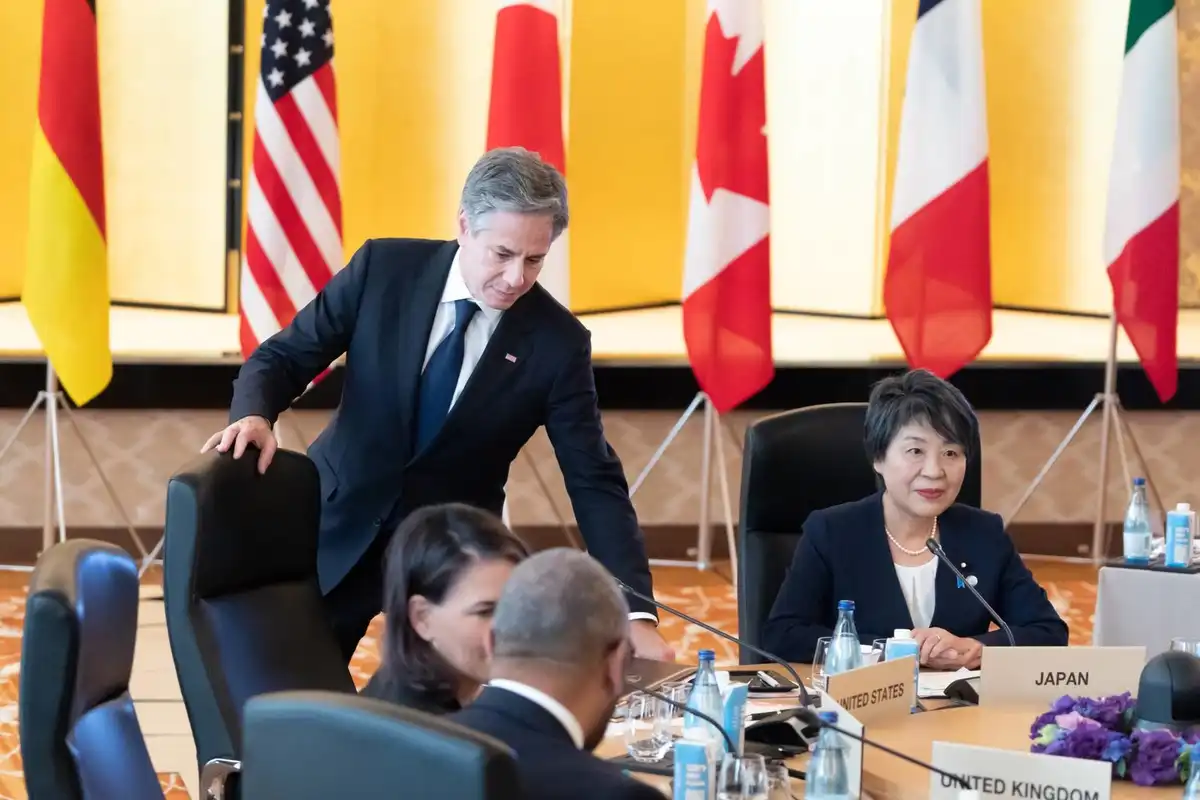
G7 foreign ministers call for extending the truce in Gaza

Today, the G7 Foreign Ministers called for extending the truce in Gaza to increase aid and facilitate the immediate and unconditional release of all detainees.


In a statement, they stressed the need to facilitate the departure of all foreign nationals from the Gaza Strip.


They also affirmed their commitment to working with all partners in the Middle East region to prevent the escalation of the conflict, and to establish a Palestinian state based on the two-state solution.


On the other hand, the statement called on the Yemeni Houthi group to "immediately stop attacks on civilians and threats to international shipping lanes and commercial ships."


ARAB AND WORLD

Wed 29 Nov 2023 6:54 am - Jerusalem Time

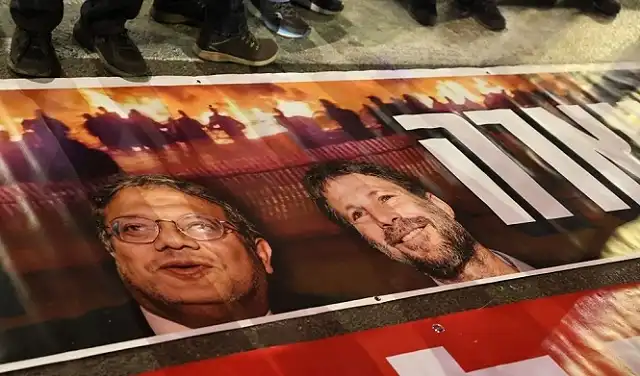
Ben Gvir threatens to dissolve the government.. Smotrich: Stopping the war in Gaza is a “plan to eliminate Israel”

Israeli Finance Minister Bezalel Smotrich said on Tuesday that stopping the war in exchange for the release of all detainees in Gaza is a “plan to eliminate Israel,” while Ben Gvir threatened to dissolve the Israeli government if the war in the Gaza Strip stopped.


On Tuesday, the Israeli Minister of National Security, Itamar Ben Gvir, threatened to dissolve the Israeli government if an agreement was reached that would lead to an end to the Israeli war on the Gaza Strip, while the Minister of Finance, Bezalel Smotrich, considered that stopping the war in exchange for the release of all detainees in Gaza is a “plan to eliminate” Israel."


This came in light of reports of discussions to conclude a new agreement for a “long-term truce” that includes the release of all detainees in Gaza, including soldiers, and the release of a large number of Palestinian prisoners “convicted of killing Israelis.”


In a very brief post, on his account on the “X” platform, coinciding with talk about a possible new agreement for a long-term humanitarian truce in the Gaza Strip, Ben Gvir said: “Ceasing the war equals dissolving the government.”


Earlier Tuesday, Smotrich said that stopping the war in exchange for the release of all detainees in Gaza is a “plan to eliminate Israel,” in a blog post on the “X” platform, in response to the Arab affairs commentator on Israeli Army Radio, Jackie Hoji.


“A proposal will soon be put forward to the Israeli government and society: the release of all hostages, including soldiers, in exchange for an end to the war,” Hoji wrote; “(This) is not on the agenda, not even as a proposal,” Smotrich responded.


The Finance Minister claimed that “there is no discussion on this issue at all,” and added, “This is a plan to eliminate the State of Israel.” He continued, "We will continue until absolute victory and the elimination of Hamas."


In another tweet, Smotrich responded to a post by the political correspondent in the newspaper "Israel Hayom", Sherit Avitan Cohen, in which he said: "(Release) thousands of terrorists in exchange for captured soldiers; (in addition to) a ceasefire or extension of the truce indefinitely."


It added, "Also, the reconstruction of Gaza under Qatari sponsorship; Egypt and Hamas are plotting a deal from hell for Israel." It continued, “Who will stop it?” Smotrich responded by saying, “This will not happen.”

Source: Arab48

PALESTINE

Tue 28 Nov 2023 10:20 pm - Jerusalem Time

Israel released 30 Palestinian women and children prisoners as part of the exchange deal

On Tuesday evening, the Israeli occupation authorities released 30 prisoners, including 15 women and 15 children, from the “Ofer” military prison, located on citizens’ lands in the town of Beitunia, west of Ramallah, and from the “Al-Maskobiyya” prison in occupied Jerusalem, as part of the fifth batch of “Exchange deal.”


The Prisoners' and Ex-Prisoners' Affairs Authority and the Prisoners' Club announced in a joint statement the list of names of the fifth batch of male and female child prisoners who were released today, within the terms of the "humanitarian truce" agreement, and it includes 15 women and 15 children.

PALESTINE

Tue 28 Nov 2023 10:11 pm - Jerusalem Time

160 Palestinian dead bodies were recovered in the Gaza Strip during the past 24 hours

Rescue and ambulance crews and volunteers in the Gaza Strip recovered 160 dead bodies from under the rubble and from the streets and roads, during the past 24 hours, which brings the number of dead since the start of the Israeli aggression on the 7th of last October to more than 15,000, including more than 6,150. children and more than 4 thousand women.


Local sources in the Gaza Strip reported that rescue crews have so far relied on manual and primitive methods to retrieve the bodies of the dead, in light of the lack of machinery and equipment to remove the rubble.


Incomplete data indicate that about 6,500 missing persons are still under the rubble, or their fate is still unknown, including more than 4,700 children and women.


Since the start of the temporary humanitarian truce, last Friday morning, rescue and ambulance crews and citizens have been trying to recover as many bodies as possible, with whatever capabilities they have.


The last five days revealed the horror of the humanitarian catastrophe that befell the Gaza Strip, as 300,000 housing units were damaged as a result of Israeli bombing, from the air, land and sea, including 50,000 housing units that were completely demolished by the occupation.


Despite the “truce,” the occupation prevented citizens displaced to the south of the Gaza Strip from returning to their cities and towns in the north, and the occupation forces stationed on Salah al-Din Street fired bullets at citizens who tried to reach the north to inspect their homes and search for their missing family members, which led to the death of three people. citizens and injuring others.

PALESTINE

Tue 28 Nov 2023 9:40 pm - Jerusalem Time

Prisoners Exchange deal: Hamas releases 10 Israelis and two Thais

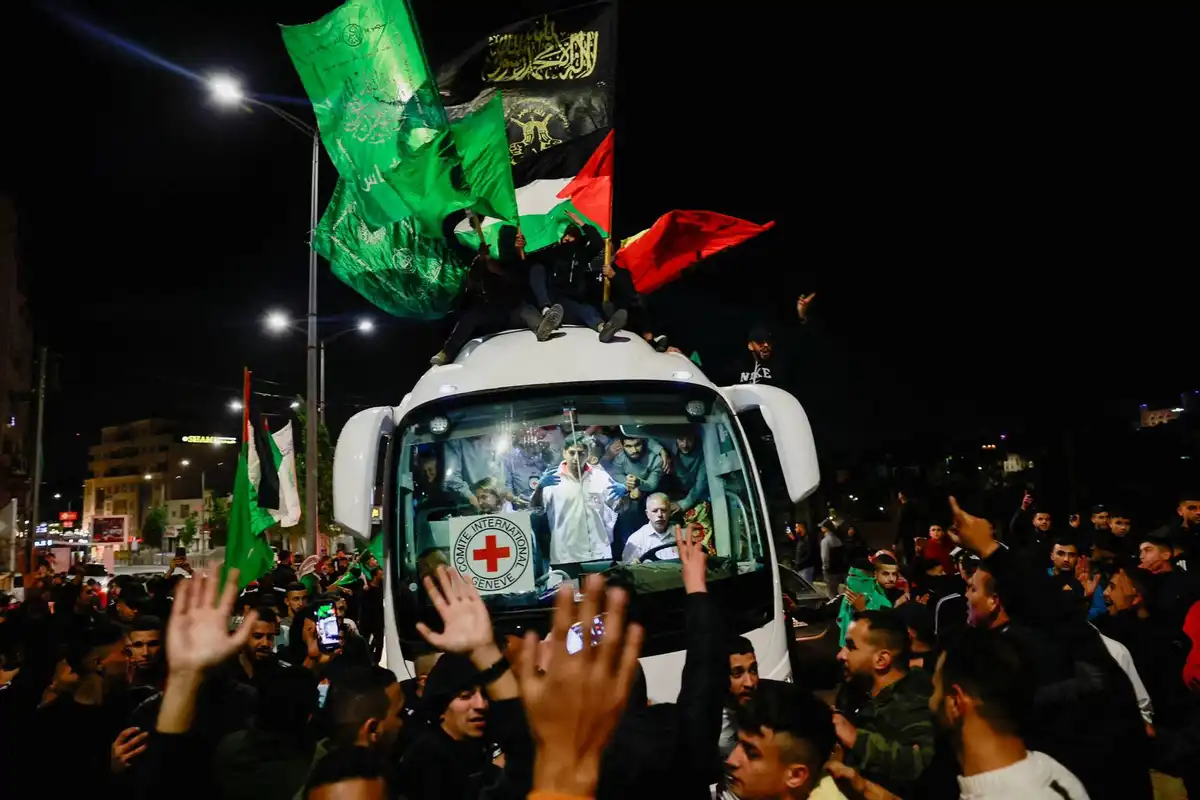
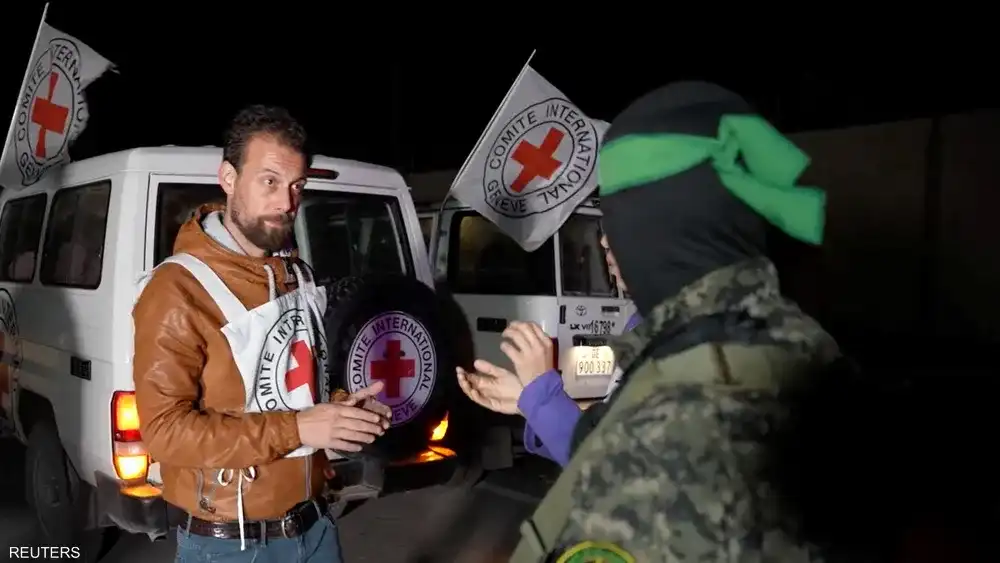
This evening, Tuesday, the Al-Qassam Brigades released 10 Israeli hostages, as part of the fifth batch in the prisoner exchange deal that included the temporary truce agreement in the besieged Gaza Strip. The resistance factions also released two Thais who were detained in the Gaza Strip. The Israeli army confirmed that it received the hostages from the International Red Cross.


The International Committee of the Red Cross confirmed earlier that its teams “succeeded in facilitating the release and transfer of 12 hostages held in Gaza,” which was confirmed by the office of the Israeli Prime Minister, Benjamin Netanyahu, and the Israeli army, in two separate statements. Netanyahu's office explained that the hostages who were released included a minor girl and 9 women, in addition to two Thais.


The spokesman for the Qatari Foreign Minister, Majed Al-Ansari, had explained that the Israelis released from Gaza were “a minor girl and 9 women, one of whom holds Austrian citizenship, 2 from Argentina, in addition to a Filipino citizen,” in exchange for 15 female prisoners, and 15 children and boys from the movement’s cubs held captive in prisons. Occupation.


What is noteworthy about today’s handover operation is the participation of the “Jerusalem Brigades”, the military wing of the “Islamic Jihad” movement, in the handover process, which indicates that some of the hostages who were handed over in the fifth batch were being held by the “Jerusalem Brigades” in the Gaza Strip since the seventh operation. Since last October.


A few hours before the end of the basic truce, Monday, Qatar and the United States announced an agreement to extend it for two additional days, until seven o’clock on Thursday morning, while the Qatari capital, Doha, is witnessing, in the meantime, persistent attempts to extend the truce beyond next Thursday.

PALESTINE

Tue 28 Nov 2023 9:25 pm - Jerusalem Time

Israeli army arrests a Palestinian girl near Sinjil, north of Ramallah

On Tuesday evening, Israeli occupation forces arrested a child near the town of Sinjil, north of Ramallah.


Local sources reported that the occupation forces arrested the child, Lara Yasser Fouad Zubaidi (16 years old), while she was passing through a flying military checkpoint between the town of Sinjil and the neighboring village of Jaljalia.


In this context, the same sources added that the occupation forces stormed the village of Qibya, west of Ramallah, and set up a military checkpoint between it and the neighboring village of Budrus, without any arrests being reported.


It added that confrontations broke out between citizens and the occupation forces after they stormed Jabal al-Tawil in the city of Al-Bireh, but no casualties were reported.

PALESTINE

Tue 28 Nov 2023 9:02 pm - Jerusalem Time

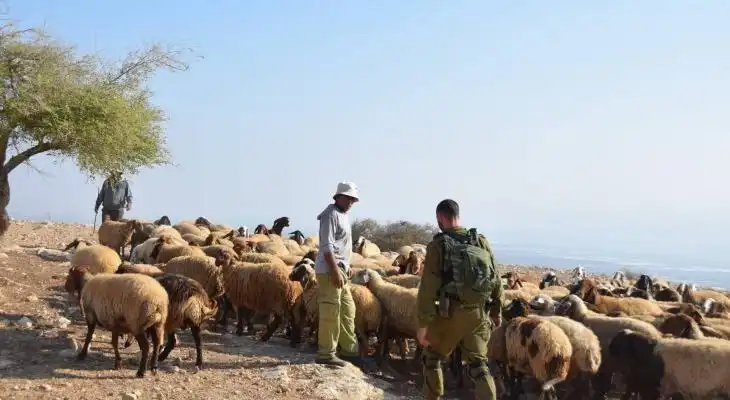
Israeli armed settlers attack the Al-Ma'rajat Bedouins in Jericho and steal their sheep

On Tuesday evening, settlers, protected by Israeli occupation army, attacked Bedouins from a community west of Al-Malihat on Al-Ma'rajat Road, northwest of the city of Jericho, and stole their sheep.


The supervisor of the Al-Baidar Organization for Defending Bedouin Rights, Hassan Mlihat, said that a number of settlers forcefully stormed the homes of citizens in the community, and severely beat the citizens, Muhammad Suleiman Kaabna and Jibril Mlihat. They also looted a number of sheep heads belonging to his brother Jamal Mlihat, and the sheep of Muhammad Kaabna.


He added that the settlers, accompanied by the occupation forces, are still raiding Bedouin homes in the community until now, and are intimidating its residents.

PALESTINE

Tue 28 Nov 2023 8:43 pm - Jerusalem Time

Fifth day of truce: Hamas hands over Israeli hostages to the Red Cross

An Israeli source reported, on Tuesday, that Hamas handed over Israeli hostages to the International Committee of the Red Cross, on the fifth day of the truce.


According to information provided by the Red Cross, “10 kidnapped Israeli women, in addition to two civilians of foreign identity, are on their way to Israel.”


The handover comes within the framework of the release of Israeli and foreign hostages held by Hamas since the October 7 attack, after reaching a truce, brokered by the United States, Egypt and Qatar. According to the Palestinian Prisoners’ Club, 30 Palestinian detainees are also expected to be released on Tuesday, in the fifth operation. An exchange between Israel and Hamas, including 15 women and 15 minors.


The truce between Israel and Hamas was supposed to end on Monday night, but it was agreed to extend it for two additional days, ending on Wednesday night.


It is also likely that the truce will be extended for an additional two days, ending on Friday night, according to what a Sky News Arabia correspondent quoted an informed Israeli source on Tuesday.


The temporary truce stipulates a ceasefire between the two parties, the exchange of Palestinian prisoners and hostages held by Hamas, and allowing more humanitarian aid to enter the Gaza Strip.


Israel has repeatedly confirmed that fighting will resume after the end of the truce with Hamas, even if it is extended for temporary periods.

ARAB AND WORLD

Tue 28 Nov 2023 7:31 pm - Jerusalem Time

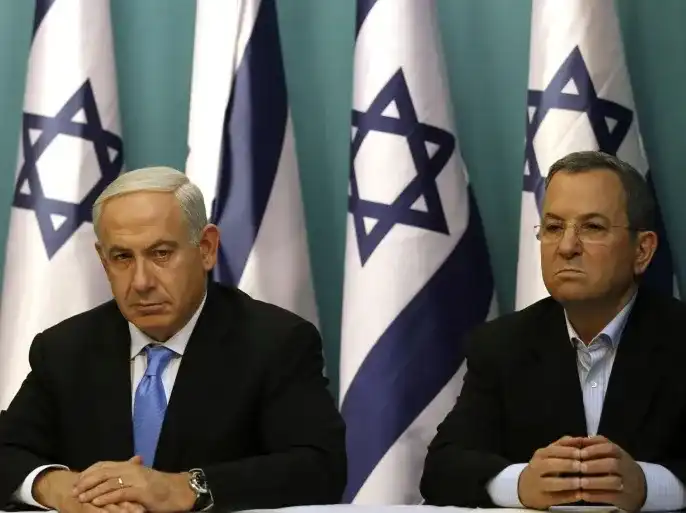
Ehud Barak: Netanyahu is causing serious harm to Israel and leading an endless war in Gaza

Former Israeli Prime Minister Ehud Barak said that his current counterpart, Benjamin Netanyahu, is causing "serious damage to Israel's strategic position" and is leading a war that has no end in the Gaza Strip.

Barak warned against plunging Israel into years-long conflicts and crises with American administrations, amid risks that threaten Israel's relations with the Arab countries with which it has concluded normalization agreements.


In an article in the Israeli newspaper Haaretz on Tuesday, Barak considered that Israel is approaching a decisive crossroads in its war that it has been waging against Gaza since last October 7.


He said that Israeli forces have made significant gains in northern Gaza, but the Islamic Resistance Movement (Hamas) is far from collapsing in the southern Gaza Strip and also maintains some capabilities in the north.


Although he stressed that completing the task of dismantling Hamas's military and administrative capabilities is "critically important," he stressed that the matter will require months or more.


He criticized the lack of harmony between the political vision and military decisions, which increases the pressure on Israel as the war extends, and said that Netanyahu bears responsibility for this imbalance.


He considered that Netanyahu failed to lead the war because of his denial that victory could not be achieved without a clear plan for the next day (after the elimination of Hamas).


An unholy alliance

The former prime minister criticized Netanyahu's association with an "unholy alliance" with National Security Minister Itamar Ben Gvir and Finance Minister Bezalel Smotrich, "who are obsessed with starting fires in the West Bank, and who are protecting him from falling at the present time."


But they are basically exploiting it to impose their ideology that Gaza should return to full Israeli control and responsibility.”


He said that these positions lead to the belief that Israel's security depends on full and permanent Israeli control over the Gaza Strip, "and, by the same logic, to believe that we need to control Lebanon, and after that Syria, and perhaps the entire region."


He considered that the success of this vision would involve Israel in the “Gaza quagmire” and lead to a conflict that would last for years and crises with the American administrations, amid tangible risks to Israel’s relations with Egypt and Jordan and to the Abraham Accords and normalization plans with Saudi Arabia.


Barak stressed that Netanyahu's government "is causing serious harm to Israel's strategic position and is leading a war that has no end," calling for an end to Netanyahu's presidency "before the consequences of his shortcomings become irreparable."


The former prime minister concluded that what is needed in the current circumstances is "an expanded national unity government without Netanyahu, and without Smotrich and Ben Gvir."


Source: Haaretz

PALESTINE

Tue 28 Nov 2023 4:48 pm - Jerusalem Time

Israel seizes 1,500 dunams west of Bethlehem

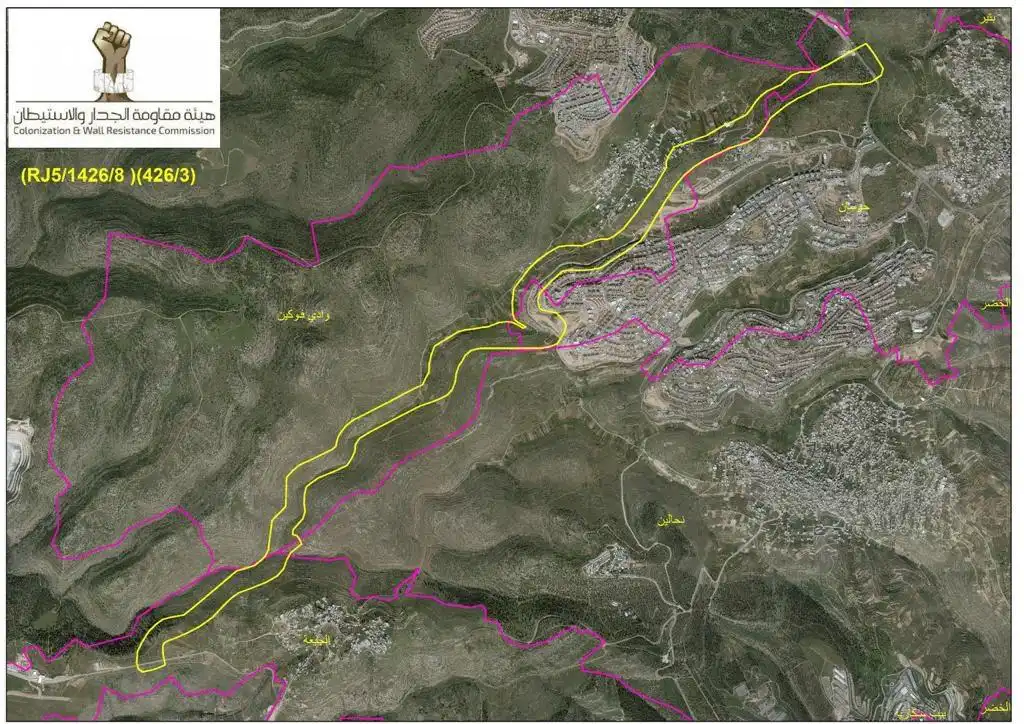
Today, Tuesday, Israeli forces seized 1,500 dunums of land from the villages of Husan, Wadi Fukin, and Al-Jabaa, in the Bethlehem Governorate, for settlement purposes.


The director of the Office of the Wall and Settlement Resistance Commission in Bethlehem, Hassan Barijiyah, reported that the occupation forces had seized, according to a military decision bearing the number RJ5-465-3-8, 1,500 dunams of the lands of Husan, Wadi Fukin, and Al-Jab’a, in favor of constructing a settlement road.


Brijiyeh pointed out that this road will have disastrous effects in terms of stealing and destroying more citizens’ lands, creating setbacks to the settlement road, its negative effects on the Palestinian environment in general, and the clear impact on the western countryside of Bethlehem Governorate.

OPINIONS

Tue 28 Nov 2023 3:58 pm - Jerusalem Time

“The strategic shift that ended Israel’s plans.” Why did Hamas have no other options until October 7?

Translation for "Al-Quds" dot com

Translation for "Al-Quds" dot com

Opinion Writer

The Hamas attack on Israel on October 7 marked the beginning of a series of unexpected events, and it is too early to determine how the attack may shape the future course of the struggle to liberate Palestine.


The massive destruction inflicted on the Gaza Strip and the horrific loss of civilian lives is a painful blow to the Palestinians, reminiscent of the Nakba of 1948. But at the same time the illusion that the Palestinian issue can be put aside while Israeli apartheid continues is shattered. The question of Palestine has returned to the top of the global agenda with a growing awareness of the necessity of addressing it, even if what happened on October 7 has polarized the discussion around it.


This is what Tariq Al Baconi, Chairman of the Board of Directors of the Palestinian Policy Network and an expert at the International Crisis Group, wrote in a lengthy analysis published by the American magazine Foreign Policy, in which he talked about the strategic shift made by the Hamas movement on October 7, and how it ended the Israeli plans to eliminate and overcome the Palestinian cause.


Hamas changes the balance in Gaza

Al-Baconi says that after 2007, Hamas's presence in the occupied territories was limited to the Gaza Strip, where the movement was effectively contained through the use of a tight siege that led to the mass imprisonment of Gaza's Palestinians, who number 2.3 million people. In this containment process, Hamas remained stuck in what I called “violent equilibrium,” where military force emerged as a means to negotiate concessions between Hamas and Israel.


Hamas uses missiles and other tactics to force Israel to ease restrictions on the blockade, while Israel responds with overwhelming force to build deterrence and ensure “calm” in the areas surrounding the Gaza Strip. Through this violence, both entities worked within a framework through which Hamas could maintain its role as a ruling authority in Gaza, even in light of the siege that legitimizes the daily structural violence perpetrated by the occupation authorities against the Palestinians.


Starting in 2018, Hamas began experimenting with different means to change this balance, one of which was through its decision to allow popular protests against Israeli hegemony. The Great March of Return in 2018 was one of the most comprehensive examples of Palestinian popular mobilization.


The protest emerged as a civil society-led effort, and was ultimately supported and managed by a committee comprising Gaza's various political factions, including Hamas. As a ruling authority, Hamas provided much of the infrastructure necessary for mobilization, such as buses to transport young men, and this was a stark departure from the methods Hamas had traditionally used to challenge the siege.


Another shift in the balance occurred a few years later, in 2021, when Hamas used its military arsenal to respond to Israeli aggression in Jerusalem. In the period before Hamas launched the rockets, Israel was actively working to evict families in the Sheikh Jarrah neighborhood from their homes to make way for Jewish settlers to take their homes. This led to widespread mobilization of Palestinians throughout the land of historic Palestine. The State of Israel responded by using force and mass arrests against the protests, which were peaceful, and included prayers around Al-Aqsa Mosque. Israel's efforts to disrupt the protests and advance its colonization of East Jerusalem prompted Hamas to respond with rocket fire.


Hamas' demands go beyond lifting the siege to a force that defends the Palestinians

These examples demonstrate Hamas's efforts to continue the offensive and expand its resistance, to include demands that go beyond lifting the siege. Such a positioning implied a goal of acting as a military force to defend the Palestinians against Israeli colonial violence outside the Gaza Strip, and the basis of these tactics was a clear strategic shift on the part of the movement, to move from submission to containment to a more clear challenge to Israeli hegemony, thus upending the balance that had become Well established over 16 years.


This shift is consistent with Hamas's historical development as a movement that has relied on armed and unarmed resistance, in ebbs and flows, to challenge the Israeli occupation and press for the core demands of the Palestinian struggle, including the right of return, which was central to the 2018 protests. (Hamas's history is full of examples in which I read the political context surrounding it, and at the leadership level of the movement, I changed the strategic direction of the organization, with clear instructions to the military wing to either escalate or calm down.


Al-Baconi says the recent shift to all-out violence is also consistent with the movement's understanding of the role of armed resistance as a negotiating tactic, a tactic the movement has historically relied on to force Israel to make concessions.


The October 7 attack is the next logical step for Hamas

The October 7 attack can be seen as the next logical step for a movement seeking to contain this attack. Some analysts described Hamas' move as "suicidal," given Israel's reaction, or irresponsible, given the number of deaths among Palestinians it led to. Whether any of these descriptions are accurate or not, depends on an analysis of the options available to Hamas, and on how the dust settles. Yet there is no doubt that the attack itself marked a decisive break and, in retrospect, clearly the culmination of all the changes the movement was experimenting with.


The strategic shift necessitated a move from the limited use of missile launches to negotiate with Israel to a comprehensive military attack, specifically aimed at disrupting its containment and the Israeli assumption that it was capable of maintaining the apartheid regime with impunity.


There is no doubt that the October 7 attack exceeded Hamas' expectations, and that Israel initially succeeded in mobilizing Israeli and international public opinion in a way that Hamas may not have fully anticipated. Any major military operation carried out by Hamas with any degree of success - targeting military bases near the fence area between Gaza and Israel and securing a large number of Israeli fighters as prisoners - would similarly shatter the siege model, and provoke an equally devastating Israeli response.


Yet the scale of the deaths prompted a ferocious Israeli response in Gaza, made possible by the carte blanche given to the Israeli government by most Western leaders. Some genocide scholars have argued that the Israeli campaign amounts to ethnic cleansing and intent to commit genocide.


It is unrealistic to argue whether these responses would have occurred if civilians had not been killed or abducted. In both cases, the military attack launched by Hamas and the subsequent acts of mass violence irreversibly shaped the nature of the response against the Palestinians in Gaza, Al-Baconi says.


Hamas had no other options

From a purely strategic military perspective, the only option before the attack, other than using the force available to Hamas, was to remain restricted within the framework of the siege, while Israeli settlers expanded rampant violence in the West Bank and theft of land, and Israeli political leaders changed the status quo around Al-Aqsa Mosque, and Israel obtained Reward with US visa waiver programs and regional normalization agreements to do whatever it wants.


In this climate, the options available to Hamas were to acquiesce to the persistent assumption that the Palestinians had effectively been defeated, and to remain confined and suffocated within their various Bantustans, non-contiguous parcels of territory resembling the “homelands” of apartheid-era South Africa of the same name. Many disenfranchised blacks were relocated to urban areas and ruled by supposedly independent local client regimes, while a white supremacist government continued to exercise military control.


The choice, as Hamas saw it, was between slow death - as many in Gaza say - and fundamentally disrupting the entire equation. Certainly, tightening the noose on Hamas, and the Palestinians more broadly, is in a position where only a strong military attack of this form emerges as a preferred option for the movement. Even before containing Hamas, and specifically since the second intifada, there were many opportunities for diplomatic and political engagement with it.


Between 2005 and 2007, Hamas de facto aligned itself with a political program that, if properly exploited, might lead to the establishment of a Palestinian state alongside Israel and the dismantling of the occupation. This is the position put forward by the movement as part of its election victory in 2006 and its subsequent entry into the Palestinian Authority. This position was later formalized in 2017 in the movement's revised charter, which called for the establishment of a Palestinian state on the 1967 borders, without providing formal recognition of the State of Israel.


America and the West have missed all diplomatic opportunities to deal with Hamas

The Israeli and American refusal to engage in any of the political concessions the movement has made since then, while Israel has consistently been given a free pass to continue its violent occupation and ongoing colonization of Palestinian territories, has undermined any confidence Hamas may have had regarding the international community’s interest in Palestine, or holding Israel accountable or enabling the Palestinians to establish their state on part of historic Palestine.


Much has been written about missed opportunities in engaging with Hamas diplomatically. The events that followed the movement's democratic elections in 2006 were based on a refusal to deal with Hamas's political program, as Israel and the American government preferred to pursue regime change and deal with Hamas militarily, and chose to limit their involvement in the Palestinian file with Israel.


Since then, Israel has portrayed the movement as a terrorist organization, a paradox that has enabled the state to justify the collective punishment inherent in the blockade of the Gaza Strip. This was clearly the strategy chosen by successive governments under Benjamin Netanyahu, who spoke publicly about the benefits to Israel of pursuing a “policy of separation” between the West Bank and Gaza Strip as a means of undermining the prospects for establishing a Palestinian state.

In the absence of any real diplomatic prospects for Hamas, its options were either slow strangulation as the ruling authority in the Gaza Strip, while Israel became cozy with Arab regimes that had all but abandoned the Palestinian cause, or a decisive blow that could fundamentally disrupt the assumption that the Palestinians were defeated and subjugated. And that Israel is able to maintain its apartheid system at no cost.

Hamas acted strategically

Al-Baconi says that Hamas choosing the latter option indicates that it is acting strategically, and remains committed to the belief that it is playing a long-term game. By this logic, even if the military wing of Hamas is completely destroyed or expelled, the movement has already achieved a victory in exposing the weakness and fragility of the Israeli army, which can be exploited in the future by a reconstituted Hamas, or by another military formation in the future on an equal footing and committed to armed resistance as a means of liberation. In other words, disruption itself becomes a field for the emergence of alternative possibilities.


This belief in the long game means that no matter what happens in the short and medium term, and even with the horrific loss of civilian lives in Gaza, Hamas has not only disrupted the structure of its containment, but the idea that Palestinians cannot fight, and are isolated in Bantustans and forgetting them without incurring any cost to the Israelis. This obstruction is of great importance to Israel, and with the support of its Western allies, it believes that the only way to survive this strike is to completely eliminate Hamas.


Israel fails to eliminate Hamas

Israel will fail - and is already failing - in achieving this goal, and regardless of how the battles against Hamas in Gaza unfold now, the movement can already claim to have emerged victorious in the long run, because it has been irretrievably destroyed the false sense of security that Israelis have had since 1948, despite all attempts to present Israel as an invincible and impenetrable state in the region.


But even in the direct battle underway in Gaza now, Israel's chances of victory are slim. As in any asymmetric conflict, guerrilla fighters do not have to lose to emerge victorious, while a strong state will lose if it does not achieve its overall goals.


The goal of eliminating Hamas as a movement is as vague as it is unachievable, for one thing: the movement is much larger than its military wing. It is a movement with a broad and deep-rooted social infrastructure, connected to many Palestinians who do not belong to the movement's political or military programs.


At its core, Hamas is an Islamist movement with roots in regional branches of the Muslim Brotherhood, connected to healthcare infrastructure, educational facilities and charities. If, by eliminating Hamas, Western and Israeli leaders call for the killing of any Palestinian who embraces any form of Islamic ideology, then this is nothing less than a call for the annihilation of the Palestinian people, and we must understand the matter this way.


However, if the goal is to destroy the movement's military infrastructure, this goal is likely to fail in one key way: the disintegration of Hamas' military wing will pave the way for the emergence of other forms of organized resistance, both within Hamas's ideological uniform and otherwise, that adhere to the same ideals using armed force against Israel.


Resistance is continuous feasibility

History has already taught us a lot. Hamas emerged in 1987 on the embers of the historic concession made by the Palestine Liberation Organization. Throughout the late 1970s and early 1980s, the PLO shifted toward conceding the partition of Palestine by recognizing the State of Israel and rejecting the use of armed resistance in pursuit of establishing a Palestinian state. This transformation coincided with the establishment of Hamas as a party adhering to the same principles as the Palestine Liberation Organization before it, couched in an Islamic ideology rather than the secular nationalist ideology that dominated the 1960s and 1970s.


There is an ongoing series of Palestinian political demands dating back to 1948 and before. Whether Hamas is able to remain in its current form or not, it is just a red excuse. Palestinian resistance against Israeli apartheid, armed and unarmed, will continue as long as the system of racism and domination continues.


In essence, this is a system that provides more rights to Jews than Palestinians throughout the land of historic Palestine, divides Palestinians into different legal categories, and fragments them geographically in order to maintain an overall system of domination. At the same time, it prevents the internationally recognized right to allow Palestinian refugees to return to their homes.

The Israeli apartheid model is committed to Jewish supremacy from the river to the sea – a recently criticized phrase that the Israeli right has long used without apology – while the Palestinians remain a dominant people living within the borders of that state, governed in the occupied territories, through illegitimate authorities that are inherently cooperative with the State of Israel.


The October 7th attack was inevitable

To reverse this dynamic, and to back away from Israel's belief that by containing it, Hamas could be pacified as happened with the Palestinian Authority in the West Bank, the movement took a calculated risk with its operation, given that it realistically expected that its military infrastructure would be damaged.
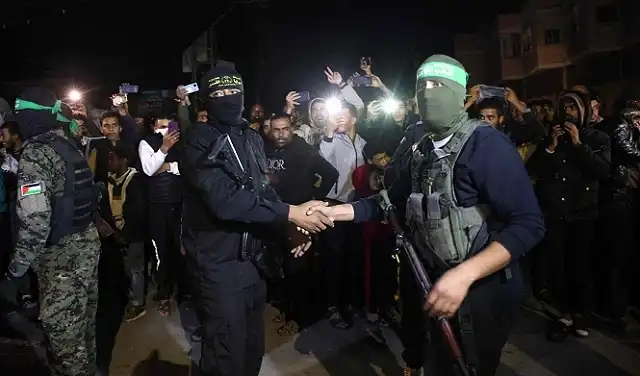
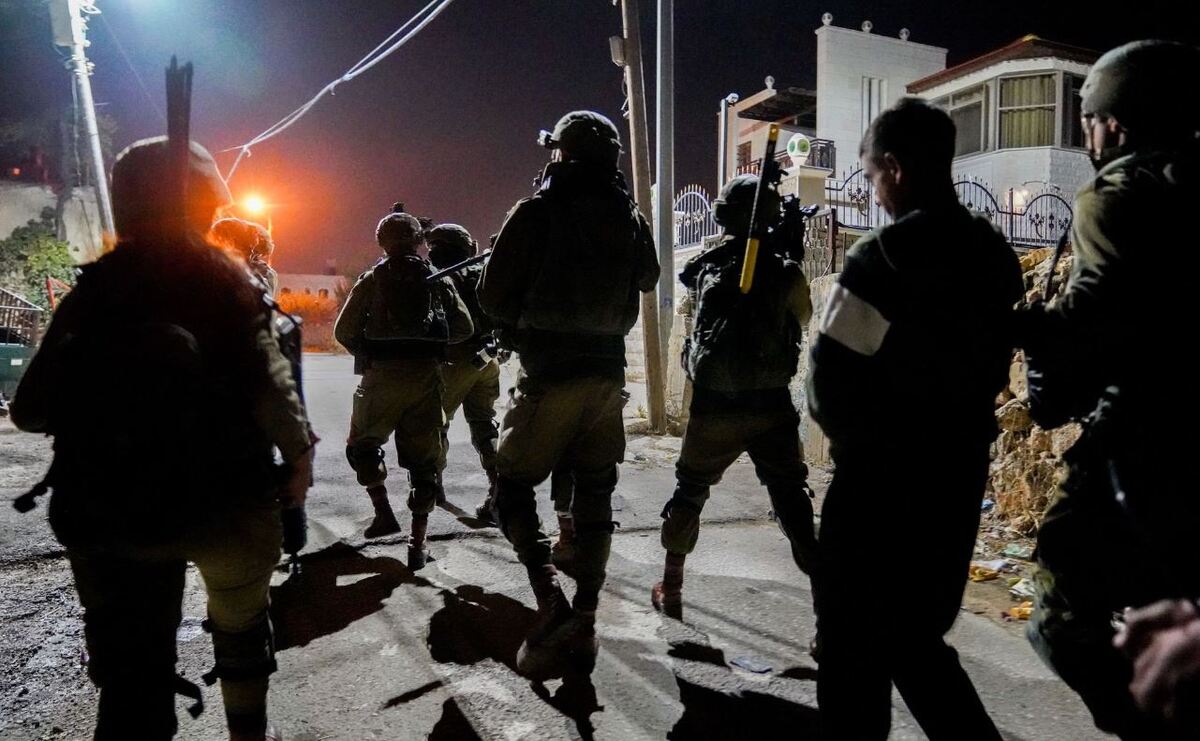

But in the absence of any willingness on the part of the international community to engage with the Palestinians outside such armed tactics, and given Israel's continuing and increasingly violent colonization, this shift toward an expanded military operation by Hamas was ultimately inevitable.


There is another reason that supports Hamas's calculations, which is its ambivalence towards governance, and Hamas was constrained by its role as the ruling authority in the Gaza Strip. When the party ran for elections in 2006, there was a significant degree of organizational conflict over assuming a governing role or even participating in the Palestinian Authority.


Hamas leaders made clear that rather than accepting restrictions on governance under occupation, as Fatah had done through the Oslo Accords, the movement was intent on using its electoral victory to revolutionize the Palestinian political establishment. It emphasized its ability to do so by pointing out that Israel, through its response to the Second Intifada, had destroyed the Palestinian political body, and rendered the Palestinian Authority and the Oslo Accords obsolete.


Hamas spoke of the need to build a resistance society, a resistance economy, and a resistance ideology, through the body of the Palestinian Authority itself, and to use this body as a springboard to the Palestine Liberation Organization, where it could lead, alongside others, to develop a vision for the liberation of Palestine, and to represent all Palestinians outside the occupied territories. 


Al-Baconi says that Hamas victory in the elections, as I claim in my book “Containing Hamas,” was intended to be revolutionary in the direction of the status quo, not to accept it. With no real prospects for establishing a state, Hamas realized that focusing on governance and administration meant beautifying the Bantustan within the Israeli apartheid regime, that there would be no real possibility of liberation or sovereignty, and that the only way forward was to improve the quality of life while remaining subject to occupation. This is indeed the model of the Palestinian Authority in the West Bank, and it could have been a more extreme version of that in the Gaza Strip.


A revolution within Hamas

With the successful Western-backed coup against Hamas, which began shortly after Hamas won the elections and culminated in a war between Hamas and Fatah in 2007, it seemed for a time as if the movement's rule in Gaza had succeeded in pacifying it to the point that it was seizing power. The long period of containment suggests that the movement may have become captive to its electoral success, restricted by its responsibilities in governance, or in other words, quiet. The violent attack of October 7 clearly demonstrated that the movement was using precisely this time to revolutionize the political body, as it had always intended to do.


All this does not mean that Hamas's strategic transformation will be considered successful in the long term. The violent disruption of the status quo by Hamas may have provided Israel with the opportunity to carry out another Nakba, which could lead to a regional conflagration or a blow to the Palestinians that would take a generation to recover from.


What is certain, however, is that there is no going back to the way it was before, and yet this is precisely what Israeli, American and other Western leaders and diplomats are preparing for. The discussion had already shifted to the next day, even as a ceasefire had not been formalized.


All indications point to a US-Israeli decision to try to replicate in the Gaza Strip the successful model - from their point of view - of cooperative Palestinian governance that exists in the West Bank. Instead of engaging in a process whereby Palestinians have the opportunity to choose leaders who represent them and can govern them, Israel and the United States are rebooting an old approach of choosing obedient leaders who can do their bidding and subjugate Palestinians under Israeli control.


This is being done under the slogan of unifying the Palestinian territories, as both parties erase their complicity in facilitating this division until now. The goal of both is not reunification, but rather the pursuit of submissive rule: creating a governance structure in which a leadership governed by compliance with civilian needs, within an overall structure of Israeli military dominance.


Such a goal must deal with the historical reality that Gaza is experiencing as a stronghold of resistance to Israeli apartheid, given that the majority of Gaza’s population are refugees seeking to return to their homes, in what is now known as “Israel.” Facilitating the installation of the authority chosen by Israel and the United States requires nothing less than the destruction of Gaza and the killing of its residents, a policy that is now unfolding.


Hamas has dealt a fatal blow to the Israeli imagination


Apart from the ethical and legal implications there are practical implications. It is difficult to imagine any Palestinian leader or governance structure taking charge of the Gaza Strip after it is destroyed by Israel, as they would be seen as having been sent there on the backs of Israeli tanks. Such leaders will enjoy less legitimacy than the Palestinian Authority enjoys in the West Bank today, which is difficult to imagine.

Such an approach may buy some time, and may lead to something resembling the status quo and a degree of stability, but if any lesson is to be drawn from October 7, it is that this will not be permanent or sustainable, and no ruling entity will be able to ensure security for any Israeli, as long as apartheid exists, any Palestinian government installed in Gaza will rightly be viewed as illegitimate and traitor.


Whatever the “day after” plans are, they will fail, unless they come with Israel held accountable and the apartheid regime dismantled, and it will be clear to all Palestinians that this is just another Bantustan solution, cloaked in humanitarian cover or a renewed commitment to a two-state solution.


In this sense, Hamas has dealt a fatal blow to Israel's fantasy of being able to continue its occupation and siege indefinitely. However, it is not clear whether Israeli political leaders, along with retaliatory violence, have been able to heed this lesson, but grassroots organizers and Hamas' allies and other political and military formations did so.


Whatever comes next and whatever the “Hamas legacy” is written, it is clear that the movement is the one that exploded the illusion that Israel and its allies had held onto for a very long time.


Source: Arabic Post