ARAB AND WORLD

Thu 07 Dec 2023 10:18 am - Jerusalem Time

Chinese Foreign Minister calls for sound China-US relations, and asserts on two states solution

Chinese Foreign Minister Wang Yi (Wednesday) called for sound, steady and sustainable development of China-US relations during a phone conversation with US Secretary of State Antony Blinken at the latter's request.

Blinken thanked Wang for his visit to the US Embassy in China to offer condolences on the death of former US Secretary of State Henry Kissinger.

Wang, also a member of the Political Bureau of the Communist Party of China Central Committee, said Dr. Kissinger has always held that China and the United States, as two major countries, should respect each other, advance together and fulfill their due international responsibilities.

Dr. Kissinger repeatedly stressed that the United States should fully understand the importance of the Taiwan issue to China, Wang added, adding that the diplomatic legacy left by Kissinger deserves to be passed down and developed by future generations.

Wang explained that Chinese President Xi Jinping and his US counterpart Joe Biden held a successful meeting in San Francisco and reached the future-oriented "San Francisco Vision," which is of outstanding importance.

He stated that the current vital task for the Chinese and American sides is to continue the positive effects of the San Francisco summit, achieve the consensus reached by the presidents of the two countries, and enhance the momentum of stability in relations between the two countries.

Wang said this is in the common interest of China and the United States, and also represents the joint responsibility of these two major countries.

Wang reiterated China's official position on the Taiwan issue, urging the United States not to interfere in China's internal affairs, not to support any forces calling for "Taiwan independence" and not to collude with those forces.

The two sides exchanged views on the Palestinian-Israeli conflict, and agreed to maintain communication on the situation in the Middle East.

Wang explained that it is necessary to reach a ceasefire between the two sides as soon as possible.

Wang said that at the crossroads between war and peace, major countries in particular should adhere to fairness and justice, adhere to objectivity and neutrality, be sober and rational, make an all-out effort to calm the situation, and work to prevent a larger humanitarian crisis.

Wang added that any solution to the current crisis in Gaza must not deviate from the two-state solution, and any arrangement related to the future of Palestine must reflect the will of the Palestinian people.

He explained that China believes that the essence of the solution is to respect Palestine’s right to establish a state and self-determination, and to embody the principle of “Palestine is owned, led and governed by the Palestinians,” adding that China is ready to work with all parties to achieve this goal.


Blinken informed his Chinese counterpart of the results of his recent visit to the Middle East and the views of the United States regarding developments in the situation, and agreed on the necessity of implementing the two-state solution.


ARAB AND WORLD

Thu 07 Dec 2023 10:14 am - Jerusalem Time

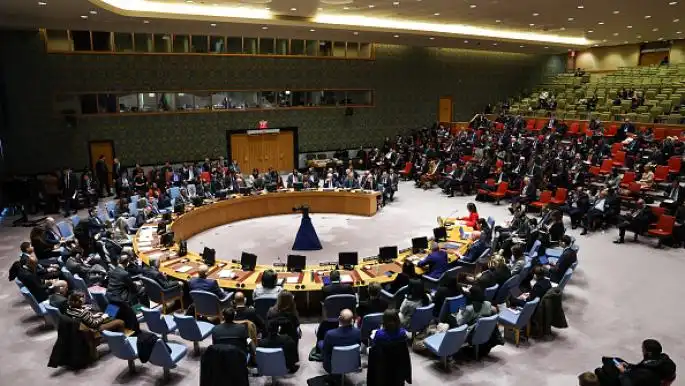
Axios| Security Council meets on Friday to discuss a ceasefire in Gaza after Guterres' rare move

The American website "Axios" said that the UN Security Council is expected to meet tomorrow, Friday, to discuss the war in the Gaza Strip, after UN Secretary-General Antonio Guterres urged him, in a rare step, to use all his influence to prevent a "humanitarian catastrophe" in the Strip.


The website indicated on Thursday that, following Guterres' move, Russia and the UAE called for an emergency meeting of the Security Council on Friday.


The UAE mission to the Security Council presented a draft resolution aimed at a ceasefire in the Gaza Strip, for “humanitarian reasons.” The mission stated, in a statement via “X”, that “the situation in the Gaza Strip is catastrophic and may reach an irreversible point, and we cannot wait any longer.” She continued: "The Council must act decisively to demand a ceasefire for humanitarian reasons."


It continued: "The draft resolution submitted by the UAE enjoys the support of the Arab Group and the Organization of Islamic Cooperation, which is a moral and humanitarian necessity."


The Palestinian Ambassador to the United Nations, Riyad Mansour, on Wednesday, in press statements with the ambassadors of Arab countries, referred to the efforts of member states of the Security Council to draft a new resolution calling for a ceasefire, while emphasizing the need to monitor the implementation of this ceasefire by the United Nations agencies. .


The Secretary-General of the United Nations, António Guterres, sent an urgent appeal to the Security Council, calling for “help in avoiding a humanitarian catastrophe, and calling for the declaration of a humanitarian ceasefire.”


This announcement indicates the rare step taken by Guterres, for the first time since he assumed the position of Secretary-General of the United Nations in 2017, when Article 99 was activated to draw the attention of the Security Council to current challenges that may endanger international peace and security.


Following this step, Israeli Foreign Minister Eli Cohen attacked Guterres, considering that his mandate represents a “threat to world peace.”


Cohen said in a post on “X”, “Guterres’ mandate represents a threat to world peace. His demand to activate Article 99 (of the United Nations Charter) and the call for a ceasefire in Gaza constitute support for the terrorist organization Hamas.”


Israeli Ambassador to the United Nations Gilad Erdan also attacked Guterres, describing his message as a "new moral decadence." Erdan accused the UN Secretary-General of using Article 99 “only to put pressure on Israel.”


This comes as Israel continues its war on the Gaza Strip for the sixty-second day, amid continuing violent bombardment and the threat of expanding the aggression, despite international warnings of the deteriorating humanitarian, health and environmental conditions.

Source: Alaraby Al-Jadeed

ARAB AND WORLD

Thu 07 Dec 2023 9:55 am - Jerusalem Time

Washington is reviewing Amnesty International's accusations of involvement in war crimes

US State Department spokesman Matthew Miller said that the United States is reviewing a report issued by Amnesty International, which stated that “American munitions caused the death of civilians during air strikes in Gaza.”


Miller said in his press conference in response to a question regarding the report, “We are reviewing this report, and as President (Joe Biden) and Secretary of State (Anthony Blinken) have said on multiple occasions, it is a tragedy any time a civilian is killed. We have made clear in our discussions with Israeli leaders that "We are deeply concerned about the protection of civilians in this conflict. We expect Israel to target only legitimate targets and adhere to the laws of armed conflicts. This includes taking measures to reduce the risk of harm to civilians." I've talked before about the real challenges Israel faces because Hamas uses human beings - civilians as human shields.


The organization's report, which was issued on Tuesday, stated that "fragments of American-made joint direct attack munitions" were found "in the rubble of destroyed homes in central Gaza following two raids that killed a total of 43 civilians, including 19 children."


Amnesty International, based on a new investigation, has concluded that the Israeli military used US-made Joint Direct Attack Munitions (JDAM) in two deadly and unlawful air strikes on homes full of civilians in the occupied Gaza Strip. Amnesty International found that these two air strikes were either direct attacks on civilians or civilian objects, or attacks that did not distinguish between military personnel and civilians, and calls for them to be investigated as war crimes.


The organization found distinct fragments of ammunition among the rubble of destroyed homes in central Gaza following two raids that killed a total of 43 civilians, including 19 children, 14 women and 10 men. Survivors of both raids told Amnesty International that they received no warning of an impending raid.


An Israeli air raid on October 10 on the Al-Najjar family’s home in Deir Al-Balah killed 24 people, while another raid on October 22 on the Abu Mu’iliq family’s home in the same city killed 19 people. Both homes are located south of Wadi Gaza, within the area to which the Israeli army ordered residents of northern Gaza to move on October 13.


The organization relied on examinations by weapons experts, satellite images, pictures taken of the destruction occurring at the two sites, and fragments of ammunition found among the rubble, and it is likely that “the bomb that struck the Al-Najjar family’s house weighed 2,000 pounds, which is the equivalent of a ton of explosives. As for the bomb that struck and destroyed the Abu Mu’iliq family "Her house, it likely weighed 1,000 pounds, or half a ton, at least."


“The Israeli military’s use of American-made munitions in unlawful attacks with deadly consequences for civilians should raise alarm bells for the Biden administration,” said Agnes Callamard, Secretary General of Amnesty International. “US-made weapons have facilitated the mass killings of entire extended families.”


According to the organization’s report, “Two families were killed in these two attacks, which constitutes further evidence that the Israeli army is responsible for the unlawful killing and wounding of civilians in its bombing of Gaza.


In the face of the unprecedented number of civilian deaths and scale of destruction in Gaza, “the United States and other governments must immediately stop transferring weapons to Israel that are likely to be used to commit or increase the risk of violations of international law.  


In light of evidence of war crimes and other violations, the United States must follow its laws and policies relating to the transfer and sale of arms, including the Conventional Arms Transfer Policy and the Civilian Casualty Incident Response Guidelines, which together are intended to prevent arms transfers that may facilitate, or contribute harm to civilians and violations of human rights or international humanitarian law, according to the report.


Amnesty International found no indication that there were any military targets at the sites of the two strikes or that people in the buildings were legitimate military targets, raising concerns that these strikes were direct attacks on civilians. In addition, even if the two raids, about which Israel has not yet provided any information, targeted military targets, the use of explosive weapons with wide-area effects in such densely populated areas could make these attacks indiscriminate and do not distinguish between military personnel and civilians. As such, these two attacks should be investigated as war crimes.


In both attacks, bombs from American-made joint direct attack munitions were used. Images of metal fragments from the weapons clearly show the distinct rivets and belt system indicating that they were part of the frame surrounding the bomb body of the Joint Direct Attack Ordnance. In addition, codes stamped on the plates from the two sets of fragments numbered 70P8623527 are linked to “Joint Direct Attack” munitions manufactured by the giant Boeing, and additional codes stamped on the plates indicate that the Joint Direct Attack munitions that killed members of the family Al-Najjar was manufactured in 2017, while the joint direct attack munitions that killed members of the Abu Muailiq family were manufactured in 2018.


The report says: “Amnesty International conducted interviews with six survivors and relatives of the victims of the two attacks, and also analyzed satellite images, which showed destruction at the relevant sites over a period of time consistent with witness accounts. Amnesty International sent questions about the two attacks to the Israeli army spokesman in November 21. No response had been received at the time of publication.


Amnesty International has long been calling on the UN Security Council to impose a comprehensive arms embargo on all parties to the conflict in Gaza and Israel. Amnesty International also urges the Prosecutor of the International Criminal Court to expedite the investigation launched in 2021 into war crimes, and other crimes under international law, committed by all parties.

PALESTINE

Thu 07 Dec 2023 9:53 am - Jerusalem Time

Israeli army arrests at least 42 Palestinians from the West Bank

Today, Thursday, the Israeli occupation forces arrested 42 citizens from different parts of the West Bank, half of whom are Gaza workers.


The total number of arrests after October 7 reached more than 3,640, and does not include those who were arrested from homes, through military checkpoints, those who were forced to surrender themselves under pressure, and those who were held hostage.


The occupation also continues its systematic arrest campaigns, as one of the most prominent established policies, which escalated in an unprecedented manner after October 7th.


It is noteworthy that the data related to arrest cases includes those who were kept in detention by the occupation and those who were later released.


ARAB AND WORLD

Thu 07 Dec 2023 9:51 am - Jerusalem Time

Washington supports a temporary presence of Israeli forces in Gaza after the war

US State Department spokesman Matthew Miller said today (Wednesday) that the United States believes that there will be a “transitional period” during which Israeli forces will remain in the Gaza Strip after the end of combat operations against the Hamas movement, but he stressed that this period should not Be permanent.


CNN quoted Miller as saying in a press conference: “It would not be in anyone’s interest for Israel to leave the Gaza Strip, leaving a security vacuum that could lead to the spread of chaos.”


He continued: “We realize that there will be a need for a transitional period at the end of the war,” but he stressed that the United States will not accept Israel’s reoccupation of the Gaza Strip, or the establishment of a buffer zone inside Gaza, indicating that this violates the principle of not depriving territories.


An informed source had told the Arab World News Agency that Palestinian leaders in decision-making circles in Ramallah are discussing the future of the Gaza Strip, as they are seriously considering the US administration’s hints about a “renewed Palestinian authority” ruling the Strip in the post-Israeli war on the Gaza Strip. The source close to the decision-making circles in the Palestinian Authority said that Palestinian President Mahmoud Abbas opposes the term “renewable authority,” but at the same time he does not oppose carrying out reforms in the authority that meet international standards and requirements.


ARAB AND WORLD

Thu 07 Dec 2023 9:46 am - Jerusalem Time

Newspaper: Blinken informed Israeli officials the need for the conflict to end within weeks

Today (Thursday), the Wall Street Journal quoted American officials as saying that Secretary of State Anthony Blinken informed officials in the Israeli war government last week that the administration of US President Joe Biden believes that the conflict should end within weeks, not months, according to “ Arab World News Agency.


The American officials, who were not named by the newspaper, said that Israeli officials expressed to Blinken their interest in returning to normal life so that the country would not be exposed to an economic blow, but at the same time they did not provide guarantees about the duration of the conflict.


According to the newspaper, an American official said that there is a realization among everyone that the longer this war lasts, the more difficult it will become for everyone.


On the other hand, Blinken said in statements to the American CNN network today that the Palestinian Hamas movement has chosen to end the process of releasing detainees, and said that it must choose to launch this process again.


The network quoted Blinken as saying: “What is clear to me, and what is clear to US President Joe Biden... the choice is in the hands of (Hamas), it has stopped the release of the hostages. “It has backed away from its commitments to Israel and to everyone else involved.”


At the same time, Blinken saw that Israel is taking important steps to provide better protection for civilians in the southern Gaza Strip, and that Israeli forces are responding to his call to act differently in this phase of the war with Hamas than they did in northern Gaza, according to what the American network reported.


PALESTINE

Thu 07 Dec 2023 9:32 am - Jerusalem Time

Bethlehem cancels Christmas celebrations to mourn the souls of the war martyrs

At this time every year, Bethlehem was crowded with Christian pilgrims and tourists visiting the city to celebrate Christmas. Celebrations were held and the Christmas tree, which was considered one of the most important Christmas trees of the year, was lit.

Unusually, the cradle of Jesus Christ, peace be upon him, was not decorated this year with Christmas decorations, including the Bethlehem tree, while Israel continues its war in the Gaza Strip.


Palestinians in the West Bank and Bethlehem in particular say that “there is no Eid this year while Israel continues its war of extermination against the children of the Gaza Strip.”


In the Church of the Nativity, which was built on the cave in which Jesus Christ was born, prayers are held for the children of Gaza, while the square appears almost empty of passers-by and tourists.


Since October 7, 2023, the Israeli army has been waging a devastating war on the Gaza Strip, which as of the evening of the day before yesterday, Tuesday, left 16,248 martyrs, including 7,112 children and 4,885 women, in addition to 43,616 wounded, in addition to massive destruction of infrastructure. It is an “unprecedented humanitarian catastrophe,” according to official Palestinian and UN sources.


The alleys of the Old City and the walls of the most important church for Christians in the world were devoid of any signs of decoration and celebration. Manger Square, which always witnesses active activity and where a Christmas tree is erected every year, seemed almost empty except for local residents.


Bethlehem is a historical city, located in the south of the West Bank. It gains its sanctity from the presence of the “Church of the Nativity,” in which Christians believe that Christ, Jesus, son of Mary, was born on the site on which it was built.

Source: Arab48


Bethlehem, the war on Gaza, the Al-Aqsa Flood, Palestine, Jesus Christ, the Church of the Nativity

PALESTINE

Thu 07 Dec 2023 9:31 am - Jerusalem Time

Israeli War on Gaza: Dozens of Palestinian dead and wounded in ongoing bombing of Gaza Strip

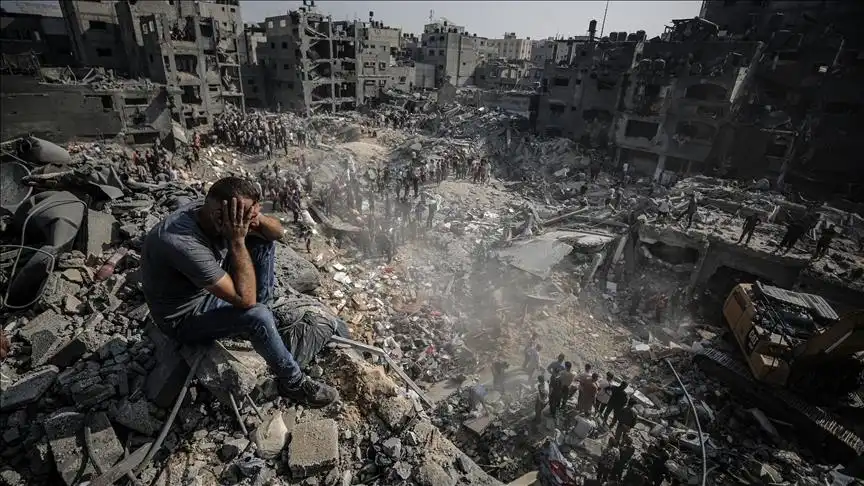
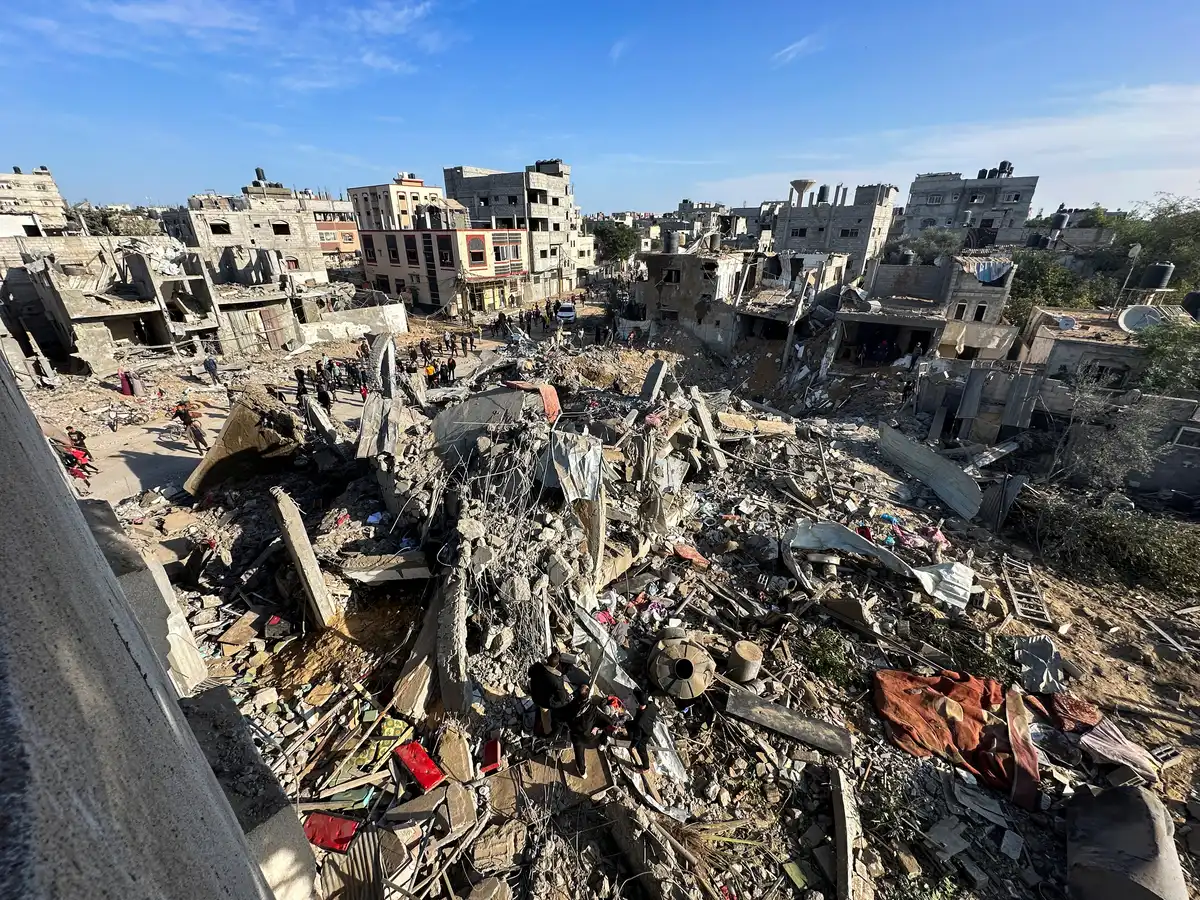
Since dawn today, Thursday, dozens of citizens, including children and women, have been killed, and others were injured, and dozens of homes, buildings, residential apartments, and public and private property were destroyed in the ongoing Israeli occupation bombardment of the Gaza Strip, by land, sea and air.


The official agency reported that an Israeli warplane bombed a mosque in the Al-Daraj neighborhood in Gaza City, resulting in at least 12 deaths, dozens of injuries, and the destruction of a number of nearby homes.


It added that the occupation aircraft bombed homes in the Old City of Gaza City, in the vicinity of the Hammam al-Samra area, Palestine Square, Al-Zawiya Market, and the Jabalia parking lot, which led to dozens of dead and wounded, and ambulances were unable to reach the targeted areas and recover the dead bodies and the wounded, due to indiscriminate shelling.


The occupation's aircraft, artillery, and tanks also bombed homes in the neighborhoods of Al-Zaytoun, Al-Shuja'iya, and Al-Sabra, east of Gaza, resulting in citizens being martyred and wounded.


The indiscriminate bombing targeted the Saraya Junction in the Al-Rimal neighborhood, west of Gaza City, and led to the destruction of a number of residential buildings.


Dozens were also killed and others were injured in the occupation's artillery shelling of two houses in Deir al-Balah in the central Gaza Strip.


The areas south of Khan Yunis also witnessed intense indiscriminate bombardment by aircraft and artillery during the land incursion of the occupation forces. Al-Qarara, Khuza’a, Abasan, and Sheikh Nasser witnessed a series of intense raids, which led to dozens of dead and wounded, and there are still missing people under the rubble, without ambulances being able to reach them. From arrival, due to the seriousness of the situation on the ground, due to the intensity of the bombing.


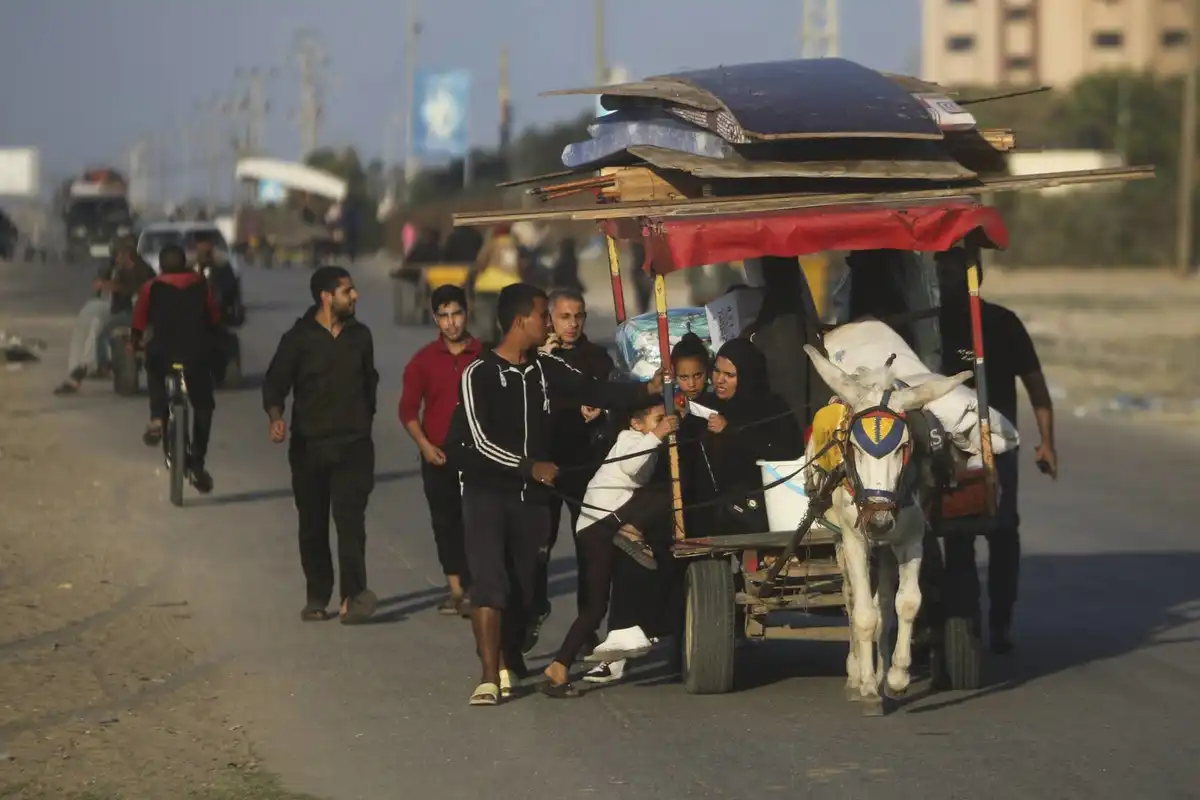
The displaced people in Khan Yunis also live in extremely difficult humanitarian conditions, due to the continuous targeting of the areas, the scarcity of materials, and the difficulty of heading to the city of Rafah, due to the occupation’s targeting of infrastructure and roads, forcing most of them to take rugged roads on foot.


ARAB AND WORLD

Thu 07 Dec 2023 9:26 am - Jerusalem Time

"A sudden shift"... Israeli moves for a new prisoner exchange deal

Informed Egyptian sources spoke of “moves by the Israeli government to initiate a new prisoner exchange deal that includes those with the resistance, whom Israel says number 138 prisoners.”


The Egyptian capital, Cairo, is witnessing movements regarding stopping the Israeli war on the Gaza Strip, as well as examining the possibility of concluding a new exchange deal between Israel and Hamas, according to what Egyptian sources confirmed to Al-Araby Al-Jadeed.

According to Egyptian sources, Israel expects that the understanding with Cairo in any negotiations related to the truce, or others, will be a helpful factor for it, due to geographical factors, but it cannot achieve a final agreement that can be relied upon alone.

An Egyptian source said, "The last few hours have witnessed Israeli movements and contacts with officials in Egypt, with the aim of what can be described as testing the pulse to determine the extent of the possibility of conducting a new partial prisoner exchange deal, which could witness a new temporary ceasefire."


The source explained that “Israeli contacts took place with Egyptian officials, during which the matter was discussed, while Israeli government officials indicated the possibility of conducting a prisoner exchange deal that includes female soldiers, the elderly, and injured recruits, and that they hinted at the same time to the possibility of Tel Aviv responding to the Hamas movement’s demands to release sick and elderly prisoners, and some former prisoners whom Israel describes as having “blood on their hands.”


The Egyptian source attributed what he called the “sudden transformation” to “the amount of pressure imposed on Prime Minister Benjamin Netanyahu, as well as the violent political conflict within the war council, and Netanyahu’s fear that rival political or military leaders would gain points at his expense on the home front, by adopting a supportive position to make the liberation of prisoners a priority.”


The source said, “Egyptian estimates indicate that there are indications of the possibility of returning soon to a deal,” explaining that “the same atmosphere and method that the Israelis followed before the last deal is happening now, from a violent escalation in strikes, and very high-level statements from the political level, not to make deals.” “At the present time, in return, security channels are beginning to open lines of communication with intermediaries.”


He pointed out that "there is great internal pressure on the American administration, with the escalation of bombing and scenes of displacement and deaths of children and civilians." At the same time, he ruled out that “the American green light granted to the Netanyahu government will extend until the end of this December.”


A member of the Knesset from the Likud Party, Avi Dichter, had stressed in previous statements that “Israel’s interest is that Egypt should monopolize the leadership role in mediation efforts, which could lead to reaching an exchange deal with Hamas.”


He said "there is a desire within the Israeli government for Egypt to play the largest role in the issue of mediation, away from the other parties involved in this file."


In this context, Ammar Fayed, a researcher in political science and international relations, said in an interview with Al-Araby Al-Jadeed that the Egyptian presence in the file of mediation in the prisoner exchange deal “comes by virtue of geography, but in theory the negotiations are taking place under the supervision of American intelligence through the Qatari mediator.”


He explained, "If Qatar is able to mediate on its own due to the presence of Hamas leaders there, and enjoys their trust and the trust of the Americans, then the arrangements for any agreement will be where Egypt will be present by virtue of geography."

Al-Araby Al-Jadeed

PALESTINE

Thu 07 Dec 2023 7:34 am - Jerusalem Time

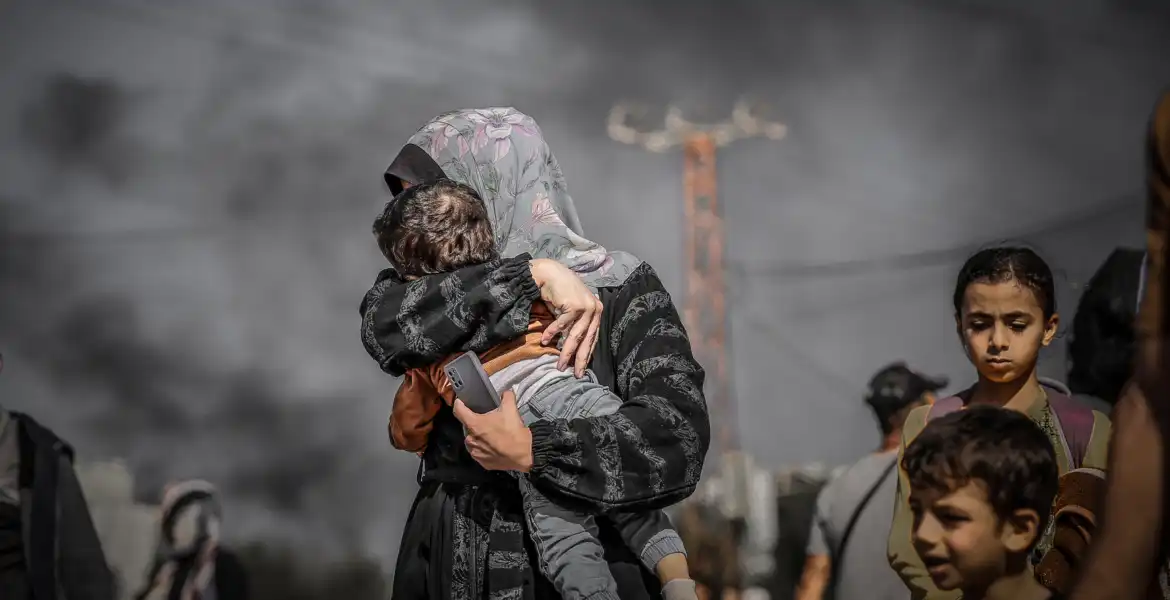
“The Guardian” monitors the tragedy of a displaced woman in Gaza with her infant

A report by the British newspaper The Guardian, published on Wednesday, December 6, 2023, shed light on the tragedy of Rina, one of the displaced women who was forced by the bombing of Israeli occupation aircraft to leave her home in northern Gaza, after her husband was killed and the milk in her breasts dried up with which she was breastfeeding her infant. 


Rina has already lost her husband, Omar, in an Israeli air strike, and now she fears that her infant, Ahmed, will die from illness or cold, inside the freezing tent, located on the Egyptian border, which has become her fifth shelter in about 5 weeks.


There is no safety in Gaza

After Omar died in October, the milk in her breasts dried up, and for the weeks that followed his death, the only constant in her life was the extremely exhausting search for infant formula and clean water, in order to keep her only child alive, while they tried to Flee around Gaza.


Originally from northern Gaza, Rina was one of those who decided to hit the road again.

Rina said: “When we arrived in Khan Yunis, I hoped to find a semblance of safety, or at least an end to the constant sound of Israeli bombings that had terrorized my infant son. Unfortunately, the bombing continued unabated.”


She also explained: “We sought refuge in a house containing more than 60 other displaced people. Water, electricity, and communications services were completely cut off.”


Tragic situation

Any movement would bring worse conditions and more overcrowding in the shrinking corners of Gaza, which Israel says are safe for civilians.


“In Rafah, all we found were tents that were not suitable for human habitation, there were no proper bathroom facilities, and the number of displaced people was overwhelming,” Rina said of her latest stop in the two-month-old displacement saga. “Epidemics are spreading, and conditions are harsh, with extreme cold and no personal belongings.” 


The United Nations estimates that about 4 out of every 5 people in the population have become displaced, and says that the meager aid arriving in Gaza is not sufficient to meet basic emergency needs.


Death of Omar

Two months ago, Rina lived in Beit Lahia, one of the northernmost settlements in Gaza. She, Omar, and Ahmed left their home in the first days of the war launched by Israel on Gaza. They first moved to stay with Umm Rina in another area of Beit Lahia, which they hoped would be a little safer. Then they moved again to her sister’s house, and then to her grandmother’s house.


On October 17, Omar was searching for supplies for his family, when a missile struck a nearby area. A Shrapnel resulting from the explosion ended Omar's life, and tore Rina's life apart.


Rina said: “I cannot comprehend the loss of my husband. Omar is my life, and his loss makes me feel as if I am losing my entire existence. I wished I had died with him. After his death, my emotional state deteriorated, and I was no longer able to breastfeed Ahmed.”


"We don't deserve this pain"

In October, the family ignored Israeli warnings that civilians should leave the northern Strip, because they felt they had nowhere to go. The shelters in the south were overcrowded, and there were attacks there as well.


But as fighting intensified in the north, the family realized they would not be able to access even basic care. Two of Rina's husband's brothers were injured when an Israeli raid targeted a nearby house.

She said: “One of them suffered a head injury, and the other suffered an ear injury. Despite their severe pain, the ambulance crews were unable to reach us.”

When a truce was agreed upon, they decided to leave. Rina left on the fourth day of the truce, carrying her son and a few other things, and headed towards Khan Yunis.


She hoped that this crowded shelter would offer her some protection for her baby. But on December 1, Israel dropped leaflets urging them to act again.


The flyers carried a QR code linked to a map of Gaza, divided into hundreds of large, numbered buildings for evacuation orders, though constant power and communications outages make internet access unreliable.


When Rina was finally able to connect to the Internet, she scanned the QR code and looked at the map. “We were swallowed up by an indescribable sense of terror,” says Rina. They left a short time later, heading to Rafah, exchanging worse conditions for one in which there was slightly less bombing, although Israeli raids also reached them.


Rina tries not to think about what might happen to Ahmed if the bombs that killed his father also ended his mother's life. She says: "I cannot comprehend the idea that my son might be raised as an orphan. He is innocent and does not deserve this suffering or this pain."

Source: Arabic Post

ARAB AND WORLD

Thu 07 Dec 2023 7:31 am - Jerusalem Time

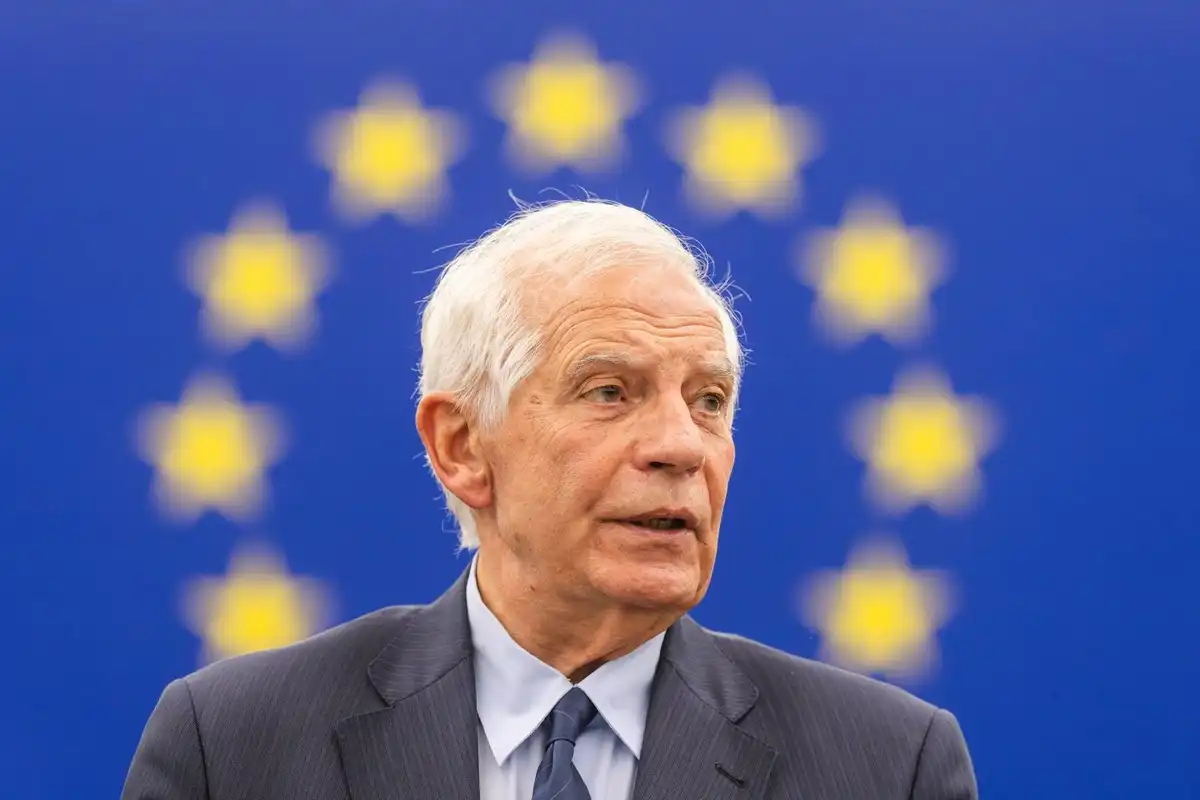
Borrell calls for support for Guterres after he activated Article 99 of the United Nations Charter

European Union foreign policy chief Josep Borrell called today (Thursday) for support for United Nations Secretary-General António Guterres, after the latter activated Article 99 of the United Nations Charter.


Borrell said on the X platform: “I call on the European Union members of the UN Security Council and like-minded partners to support the Secretary-General of the United Nations... The Security Council must act immediately to prevent the complete collapse of the humanitarian situation in Gaza.”


He added: “I also call on Israel to allow all United Nations agencies, including the United Nations Resident Humanitarian Coordinator, Lynne Hastings, to provide urgent support to civilians in the Gaza Strip.”


Borrell stressed that settler violence against Palestinian communities must stop, pointing to the destruction by Israeli settlers of the Zanota School in the West Bank, which he said the European Union built in order to provide an educational opportunity for children there. He described the destruction of the school as a violation of international law.


ARAB AND WORLD

Thu 07 Dec 2023 7:29 am - Jerusalem Time

US Senate obstructed the approval of a huge aid package for Ukraine and Israel

Republican members of the US Senate blocked, on Wednesday, a request submitted by the White House to approve an emergency aid package worth $106 billion, primarily benefiting Ukraine and Israel, because it did not include immigration reforms they demand.


Republicans have staked their vote on moving forward with the approval of this package by including reforms to the immigration policy pursued by the Democratic administration, in a move that represents a severe defeat for President Joe Biden, who had warned Congress that Russian President Vladimir Putin would not stop at the borders of Ukraine, as he could go to confrontation. with NATO.


ARAB AND WORLD

Wed 06 Dec 2023 10:09 pm - Jerusalem Time

Guterres uses Article 99 for the first time to warn the world of the dangers of the Gaza war

United Nations Secretary-General António Guterres sent an unprecedented message to the Security Council regarding the Israeli war on the Gaza Strip, warning of its dangers on a global level. He also warned that public order in the Strip was about to collapse completely.


Guterres said in his message on Wednesday that the war in Gaza “may exacerbate existing threats to international peace and security.”


The Secretary-General relied on the rarely used Article 99 of the Founding Charter of the United Nations, which authorizes him to “draw the attention of the Security Council to any matter that he considers may threaten the protection of international peace and security.”


This is the first time that Guterres has used this substance since he took office in 2017. He said, "We face a grave danger of the collapse of the humanitarian system. The situation is rapidly deteriorating toward a catastrophe that may have irreversible consequences for the Palestinians and for peace and security in the region."


Guterres explained - in the message he addressed to the 15 member states of the Council - that “with the continuous bombing by Israeli forces, and with the absence of shelters or a minimum level of survival, I expect an imminent complete collapse of public order, due to desperate conditions, which makes it difficult to provide humanitarian assistance.” Impossible, even if limited.


He added, "The situation may become worse with the spread of epidemics and increased pressure for mass movements towards neighboring countries."


The Israeli army is waging a devastating war on the Gaza Strip, leaving 16,248 dead, including 7,112 children and 4,885 women, in addition to 43,616 wounded.


Since the beginning of the war, the Security Council has failed to adopt 4 draft resolutions to alleviate the suffering in Gaza, and then in mid-November it adopted a resolution calling for “truces and corridors for humanitarian aid.”


Guterres said in his message that the humanitarian aid passing through the Rafah crossing is insufficient, and he also indicated that the United Nations is unable to reach those who need aid inside Gaza.


"The capabilities of the United Nations and its humanitarian partners have been undermined by supply shortages, fuel shortages, communications outages, and increasing insecurity," he added.


Israeli Foreign Minister Eli Cohen considered the mandate of UN Secretary-General Antonio Guterres a "threat to world peace" after he sent a letter to the Security Council about Gaza to activate Article 99 of the organization's charter.


In an expression of annoyance and anger over what Guterres spoke, Secretary of State Cohen wrote on the “X” platform (formerly Twitter): “Guterres’ mandate poses a threat to world peace.” Pointing out that "his request to activate Article 99 and call for a ceasefire in Gaza constitutes support for the terrorist organization Hamas and an endorsement of the killing of the elderly, the kidnapping of children, and the rape of women."


PALESTINE

Wed 06 Dec 2023 9:49 pm - Jerusalem Time

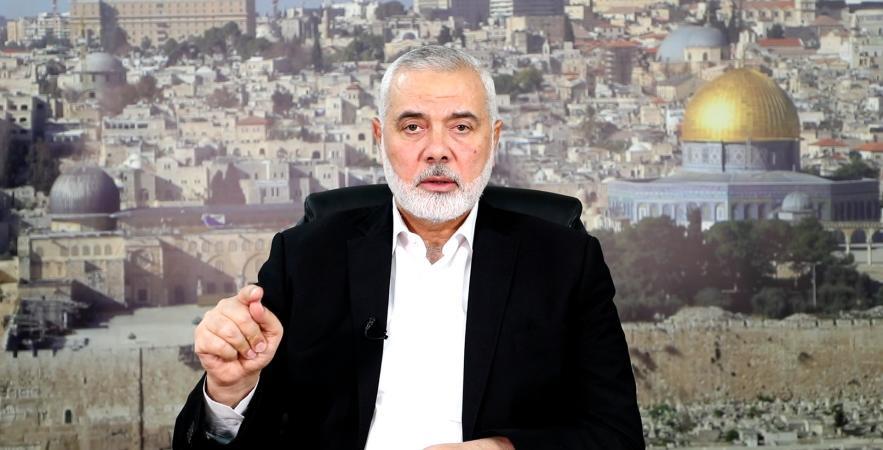
Hamas Leader Haniyeh: We are ready to resume negotiations and exchange all prisoners if Israeli war on Gaza stops

The head of the Hamas political bureau, Ismail Haniyeh, confirmed the movement’s readiness to resume negotiations to exchange all prisoners and reach a comprehensive deal if the Israeli attack on Gaza stops.


But Haniyeh stressed, in an interview with Cairo News Channel, today (Wednesday), that Hamas will not negotiate in light of the Israeli massacres and massacres.


He said: "There is an unprecedented catastrophe at the humanitarian and health levels in Gaza, in light of the policy of suffocation, starvation, and deprivation of the northern Gaza Strip from aid and relief."


He pointed out that the level at which the United Nations works is neither acceptable nor sufficient, and is not commensurate with the scale of the humanitarian tragedy that the sector is going through.


Haniyeh accused Israel of not fulfilling its obligations regarding the exchange of prisoners and detainees, stressing that Hamas respected its pledges regarding the issue of women and children.


In addition, Haniyeh said, “The battle in Gaza is unprecedented, and carried great goals on the size of the Palestinian issue, and on the size of the nature of the conflict that took place between us and this occupation.”


He added: "I can say that a number of goals were accomplished before this battle ended, including, for example, the return of the Palestine issue to the forefront of the world and the forefront of regional and international discussion, after it had declined before this battle in the scale of attention for reasons that time does not permit to list."


He explained that one of the goals that were achieved in this heroic operation was that it struck the concept that this army is considered a legendary and invincible army, despite the great difference in the size of the force, equipment, and equipment that the Israeli army possesses.


He pointed out that “the third goal is to restore respect to the Palestinian issue in its Arab, Islamic and humanitarian dimension, and we followed how our official Arab system, in more than one meeting, whether the international summit in Cairo, the Islamic summit, or the Arab-Islamic summit held in Saudi Arabia, the issue of Palestine was a priority.” All the leaders in these conferences, and these goals have a strategic dimension, carry a specific and clear message: that the Palestinian people want freedom for their land, and to live in dignity on this land, and it is time for the historical injustice to which they have been exposed, from the Nakba until now, to end.


Haniyeh pointed out that since the beginning of this aggression, the Israeli enemy has deliberately attacked all hospitals in northern Gaza, besieged all hospitals in southern Gaza, prevented the entry of medicines and fuel into hospitals, targeted medical staff, and arrested dozens of health system workers.


He explained that in addition to the heinous massacre committed by the occupation in the Baptist Hospital, it can be said that all hospitals in the northern Gaza Strip are out of service, pointing out that the Shifa Medical Complex is not working now, not at a fifth of the capacity, and the insane targeting of the Indonesian Hospital and the massacre of Kamal Adwan Hospital and Al-Awda Hospital, In addition to what hospitals in the southern Gaza Strip are being exposed to, we are facing an unprecedented catastrophe on the humanitarian and health levels, with the northern Gaza Strip being deprived of access to aid and relief operations, including health and medical needs.”

PALESTINE

Wed 06 Dec 2023 9:38 pm - Jerusalem Time

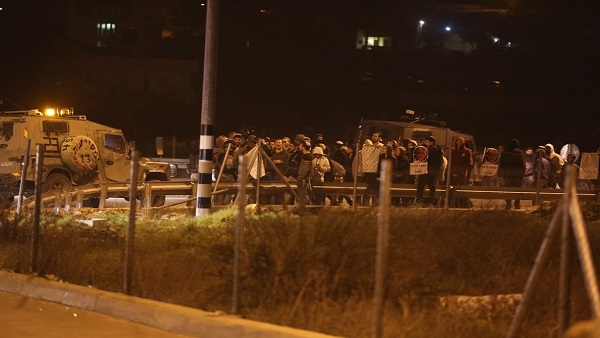
Israeli armed settlers shoot Palestinians' vehicles south of Bethlehem

On Wednesday evening, settlers opened fire on citizens' vehicles south of Bethlehem.


According to local sources, settlers gathered on the main Jerusalem-Hebron street, at the intersection of the “Gush Etzion” settlement, which was established on citizens’ lands south of Bethlehem, and opened fire on citizens’ vehicles passing through the street, but no injuries were reported.

ARAB AND WORLD

Wed 06 Dec 2023 8:22 pm - Jerusalem Time

Emigration of half a million Israelis since October 7

Statistical data from the so-called Israeli Population and Immigration Authority showed that about half a million Israelis have fled since the beginning of the war with the Gaza Strip on October 7th.


Zaman Yisrael newspaper reported that 470,000 Israelis have emigrated from Israel since the beginning of the war, and it is not yet known whether they will return or not.


The data showed a significant decline in the number of Israelis coming to Israel since the beginning of the war, by 70%.


Before October 7, in recent years, Israel is witnessing an increasing trend for Israelis to move to experience life abroad, a trend that turned with the assumption of Benjamin Netanyahu’s government - which relies on the Haredi parties, the religious movement, and the extreme right - to what has become known as “The opposite Jewish immigration.” 


These fears became clear following the data of the “Israeli Central Bureau of Statistics” - regarding the reluctance of Jews from Europe, especially members of the community in France, to come to the country.


According to the results of an opinion poll conducted by the official Israeli radio “Kan” before the war, more than 25% of adult Jews (over the age of 18) are seriously considering emigrating from Israel, while 6% have initiated practical measures to immigrate, due to the penetration of the influence of the Haredi parties and the right-wing religious movement of governance, and the reforms in the judicial system, which some of those surveyed see as a “coup against democracy and the system of government.”


ARAB AND WORLD

Wed 06 Dec 2023 7:11 pm - Jerusalem Time

Tel Aviv Stock Exchange denies the existence of any “conspiracy” before the October 7 attack

The Tel Aviv Stock Exchange said yesterday that the report prepared by two American researchers, which indicates the presence of investors in Israel who may have benefited from their prior knowledge of the attack by the Palestinian Islamic Resistance Movement (Hamas) on October 7, is inaccurate.


Research work conducted by law professors Robert Jackson Jr. of New York University and Joshua Metts of Columbia University alleged that there was a “major conspiracy” through major short-selling of Israeli stocks before the attacks on the New York and Tel Aviv stock exchanges.


They said that “short selling activity has increased significantly over that seen during many other crisis periods” such as the 2008 financial crisis and Covid-19.


They wrote that for investors in Leumi, Israel's largest bank, 4.43 million shares were sold short during the period from September 14 to October 5, generating profits of NIS 3.2 billion ($859 million).


But Reuters quoted the Tel Aviv Stock Exchange as saying that the researchers’ estimates were wrong because the stock prices are listed in agorot, an Israeli financial unit equivalent to one percent of the shekel, which makes the potential short sale profit at only 32 million shekels (one dollar = 3.7243 shekels). .


“I don’t see anything in the data close to what they wrote in the research paper,” said Yaniv Bagot, head of trading at the exchange. “There was nothing unusual in short (short selling) positions on the exchange during the two months before the attack.”


The Israel Securities Authority said in a separate statement that in the days before the Hamas attack, no unusual trading was detected or it would have required further investigation.


On Monday, the Israeli newspaper Haaretz claimed, citing a study by American researchers, that people working in the stock market and financial markets were apparently aware of the attack launched by Hamas on October 7, and they reaped billions of dollars from that information.

Haaretz wondered whether the Hamas movement was behind this and made huge sums of money as a result of these financial bets.

She added that major betting operations took place against Israel in the Tel Aviv and Wall Street financial markets, days before the October 7 attack.

She confirmed that these bets generated billions of dollars.

She pointed out that some people seemed to know in advance about Hamas' plan to attack, which plunged the financial markets.

The newspaper considered that the movement may have benefited financially from the matter.

Source: Sama News

ARAB AND WORLD

Wed 06 Dec 2023 7:11 pm - Jerusalem Time

Netanyahu: Mahmoud Abbas will not rule Gaza during my term

Israeli Prime Minister Benjamin Netanyahu pledged on Wednesday evening that Palestinian President Mahmoud Abbas would not rule the Gaza Strip during his term.


This came in a blog post by Netanyahu via his account on the “X” platform, commenting on what was reported by the “Sky News” network about Abbas’s willingness to hold the Palestinian Authority responsible for governing the Gaza Strip along with the West Bank.


Sky News reported from Palestinian sources that Abbas confirmed the Palestinian Authority's readiness to assume power in Gaza and the West Bank after the end of the war.


Netanyahu said: “As long as I am the prime minister of Israel, this will not happen (Abbas will not rule Gaza).”


He added: "Those who raise their children on terrorism, finance terrorism, and support the families of terrorists will not be able to rule Gaza after eliminating Hamas," as he put it.


As of 16:00 (UTG), there was no immediate comment from the Palestinian presidency regarding Netanyahu’s statements, but the Palestinian president repeatedly stressed that “there is no security or military solution for the Gaza Strip, which is an integral part of the Palestinian state, and cannot be accepted or dealt with.” Plans of the Israeli occupation authorities.


On Tuesday evening, Netanyahu said in a press conference: “The day after Hamas (the end of the war), Gaza must be demilitarized, and there is only one force that can be responsible for that, which is the Israeli army, and i will not be prepared for any other arrangement.”


On Monday, the official Israeli Broadcasting Authority said that Netanyahu informed the American administration that there would be no Palestinian authority in Gaza in the post-war period.


According to the same source, Netanyahu told representatives from the Likud Party, which he heads, in closed meetings this week that he “opposes any Palestinian Authority control over the Gaza Strip after the war,” and he informed the United States and conveyed messages to it that there will be no Palestinian Authority in Gaza after the war. the war".


The authority quoted Netanyahu as telling Likud representatives: “Not only will there not be a renewed Palestinian authority in Gaza after the war, but there will be no Palestinian authority in Gaza at all.”


Netanyahu's statements contradict the position of the United States, which has provided Israel with the strongest possible military and diplomatic support since the outbreak of the war, and which has repeatedly expressed that there must be a "Palestinian authority" after the war in the Gaza Strip.


The Palestinian Authority announced its readiness to return to the Gaza Strip within the framework of a comprehensive political plan, which includes unity between the West Bank, Gaza Strip and East Jerusalem, and in the context of a political solution leading to the establishment of a Palestinian state.


OPINIONS

Wed 06 Dec 2023 6:52 pm - Jerusalem Time

The fighting must stop and prepare for a different government

Ran Adlist

Ran Adlist

Opinion Writer

The security cabinet, which was disintegrating, decided to prefer continuing the fighting over the lives of the kidnapped, at the request of Netanyahu. This step passed, as usual, through Ben Gvir and Smotrich, who were on the verge of losing their audience if the truces led to a ceasefire, as Biden demanded. The pressure exerted by these three is an ordinary political kidnapping, at a time when the state is now the kidnapped one. It is clear from Netanyahu's statements that he not only decided to prefer continuing the fighting over the lives of the kidnapped, but also to curb movements the day after the war.

At this stage in the course of the war, when the Defense Minister publicly separates from the Prime Minister, as well as Gantz and Eisenkot, this means neutralizing Netanyahu from the decision-making process, while the Chief of Staff works according to the directives of the Defense Minister, who coordinates with Gantz and Eisenkot. Netanyahu has the right to express his opinion, and perhaps impose it (as he does regarding the following day).

Insisting on continuing the fight is a hopeless adventure, and declaring the death of every kidnapped person is Sinwar’s response to Netanyahu’s move. If the intelligence news about Sinwar is correct, the Israeli army’s advance will lead to the killing of two kidnapped persons...

Only American pressure, large demonstrations, and the besiegement of Netanyahu's house and coalition members will force them to make the right decisions. Only in this way will the truces be restored, the kidnapped people will return, and the chances of a ceasefire will increase. What is meant is to temporarily submit to Sinwar's tricks in order to extract as many of the kidnapped people as possible, and then deal with him later. The Israeli army's firepower is strong enough to confront the continuation of truces. The state will not collapse, despite Netanyahu's threats. The coalition may collapse, which is not bad.


When Netanyahu was asked about the shooting of Yuval Castleman [the Israeli who killed two Palestinians who carried out an attack at the entrance to Jerusalem, and was then killed by a recruit by mistake], in reference to the distribution of weapons to anyone by Ben Gvir and his group, Netanyahu responded, apologetically, “This is life". How impudent, heartless and cowardly this man, whose primary duty should be to preserve life, sums up his misappropriation of office. How much hypocrisy was poured into the press conference that ended with the phrase, “Together we win.” together? Ben Gvir and his rioters are boycotting the Israeli army, Gallant is boycotting Netanyahu, and Smotrich is confiscating money for the reconstruction of the “Gaza envelope” in order to give it to Ghafni [of the United Torah Judaism party] and Deri [of the Shas party]. Will we win with these people?


Those who have not yet understood why it is necessary to stop the fighting and prepare for another government should tell themselves the story of Yuval Castleman, who was killed by the fire of those addicted to the current atmosphere. It doesn't matter who killed Castleman, he is the product of a toxic rabbinic incubator. But the rabbis are not the problem of the people of Israel. Rather, the problem is those who do not understand why Castleman's killing is linked to the war in Gaza. 

This is a terrifying reminder of why reality forces internal separation on us. Of course, after the war stopped.

Source: Maariv+ IPS

ARAB AND WORLD

Wed 06 Dec 2023 6:50 pm - Jerusalem Time

Financial Times: Israel's air campaign on Gaza is the most violent in history

The British newspaper "Financial Times" said that Israeli Prime Minister Benjamin Netanyahu was frank in expressing what Israel needed to destroy the Islamic Resistance Movement (Hamas) when he told a group of government officials, "We need 3 things from the United States: munitions, then munitions, then munitions."


The newspaper explained - in a report by John Paul Rathbone from London - that Netanyahu, who was concerned that political pressures abroad would hinder US arms shipments, said, “There are huge demonstrations in Western capitals. We need to exert counter-pressure. There have been disagreements with Afzal.” "Our friends."


The newspaper pointed out that Israel consumed huge amounts of ammunition in its war against Hamas in Gaza, and used modern Western weapons, from satellite-guided bombs to laser-guided precision missiles, thus bringing the damage caused by the Israeli attack closer - as military analysts say - and the destruction caused. In northern Gaza in less than 7 weeks, from the damage caused by the years-long comprehensive bombing of German cities during World War II.


The most violent bombing campaigns

American military historian Robert Pape says that Dresden, Hamburg and Cologne are cities whose names recall the most violent bombing campaigns in the twentieth century, and “the name Gaza will also be included as a place where the heaviest conventional bombing campaigns in history took place,” as entire neighborhoods were leveled to the ground.


By December 4, about 60% of the buildings in northern Gaza had been severely damaged, according to analysis of satellite data, meaning the destruction of between 82,000 and 105,000 buildings, despite the Allied bombing of 61 major German cities over the course of Two years ago, it destroyed only an estimated 50% of its urban areas.


The newspaper attributed some of the reasons for the extent of the destruction to the munitions used by Israel, which include 250-pound precision-guided small-diameter bombs, laser-guided Hellfire missiles, and Spike missiles, but among them are also unguided “dumb bombs” of the M117 model. , and 2,000-pound bombs.


Mark Garlasko, a military advisor to the Dutch organization PAX and a former employee at the Pentagon, said that the size of the smart bombs, or so-called joint direct attack munitions, is so enormous that survivors of the explosion said they felt like they were “sliding on liquid ground.” He explained that “the buildings are disintegrating, collapsing, and fragmenting.” Concrete, metal, cell phones, and everything else is blown away by the explosion at supersonic speeds.”


“The only reason I can think of why they would be used is that the Israeli army is trying to destroy Hamas’ network of tunnels, but their widespread use is remarkable,” Garlasco added. Amnesty International this week called for a war crimes investigation into Israel’s use of such munitions. Heavy.


Civil punishment campaign

The second reason for the high level of destruction is the speed and intensity of the Israeli bombing, and military analysts said that the military campaign was based on relaxed targeting rules that allowed a large number of expected civilian casualties to occur, because Israeli officials said from the first moment that their response would be of a completely different magnitude than previous operations. .


In the first two weeks of its campaign, Israel used at least a thousand “air-to-surface” munitions per day, while during the most intense periods of the air campaign it launched in Mosul, Iraq, the United States and coalition forces did not use more than 600 munitions per week, and the pace of bombing increased. Very fast, it takes less than 10 minutes between identifying the target and hitting it with an air strike.


The newspaper concluded that more than 16,000 Gazans were dead before Israel began its southern attack last week. Israel claims that 5,000 of them were Hamas fighters. Military historian Pape said, “Gaza, by all standards, is a severe civil punishment campaign that will be recorded in history as the most violent one.” Of the operations ever carried out using conventional weapons.”


PALESTINE

Wed 06 Dec 2023 6:29 pm - Jerusalem Time

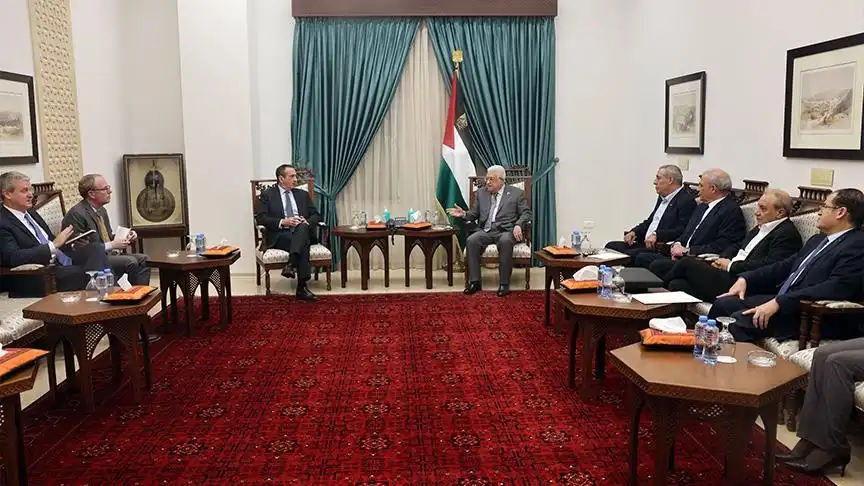
Palestinian President Abbas discusses with the White House envoy the war on Gaza

Today, Wednesday, President Mahmoud Abbas discussed the Israeli war on the Gaza Strip with Philip Gordon, the White House envoy and the National Security Advisor to the US Vice President.


This came in a meeting at the Palestinian presidential headquarters in Ramallah in West Bank.


Abbas stressed to the American official the need for "the American administration's immediate intervention and pressure on Israel to stop its ongoing aggression against the Gaza Strip."


President Abbas said: "The Israeli killing machine has violated all taboos, by targeting civilians, hospitals, and shelter centers, and has not left any safe place for our people to take refuge from these massacres that are being committed without accountability by the international community."


He added, "We will not allow the forced displacement of our Palestinian people, whether in the Gaza Strip or in the West Bank, including Jerusalem."


The president called for "the intervention of the American side to prevent the attacks, murders, house demolitions, and displacement of Palestinian residents in the West Bank, Jerusalem, and the Jordan Valley areas that are witnessing silent and planned annexation by the occupation authorities and settlers."


He stressed the need to "double the entry of relief, medical and food supplies, provide water, electricity and fuel as quickly as possible, and provide the necessary aid so that hospitals and basic facilities can resume their work to treat thousands of wounded and provide their services in Gaza."


Abbas said: “We will not and have not abandoned our people in the Gaza Strip, regardless of the sacrifices. The Gaza Strip is an integral part of the Palestinian state, and the plans of the occupation authorities to separate, occupy, cut off, or isolate any part of the Gaza Strip are completely rejected and will not be.” It is permitted to be implemented.


He added, "Beginning to implement the two-state solution requires Palestine obtaining its full membership in the United Nations by a Security Council decision, and convening an international peace conference, in order to provide international guarantees and a timetable for implementation."


He considered that "peace and security are achieved by ending the Israeli occupation."

PALESTINE

Wed 06 Dec 2023 6:23 pm - Jerusalem Time

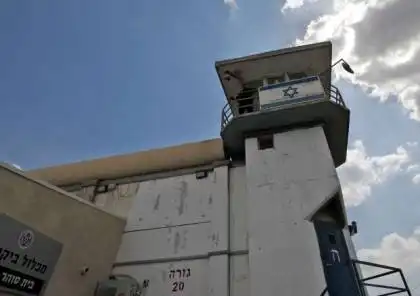
Haaretz: Israel executed 6 Palestinian prisoners during the war

Haaretz - Hagar Shezaf  

Four Palestinians have died in Israeli prisons, and two have died in Israeli army detention centers since the beginning of the war. Haaretz testified that there were bruises on the bodies of two of them. There are testimonies of violence that preceded their death or medical negligence. In one case, the testimony of a released prisoner, along with an autopsy report conducted by a family doctor, indicates that the cause of death of the administrative detainee was often exposure to violence. However, the cause of death has not been determined. The increase in deaths comes against the backdrop of testimonies provided by prisoners and detainees to lawyers and military courts about the violence they were exposed to in prisons, and based on the testimonies of prisoners who were released as part of the deal with Hamas.


Abdel Rahman Marei, a resident of Qarawat Beni Hassan, died in Megiddo prison on November 13 when he was 33, after being administratively detained in February. Ten days later, a post-mortem was conducted at the Forensic Medicine Institute in Abu Kabir, in the presence of a doctor from Physicians for Human Rights, at the request of his family. According to all the autopsy results in the possession of the doctor and which reached Haaretz, it was found that there were traces of beating on Marhi’s chest, and that his ribs and chest bones were broken.


The report also included external signs of beating on his head, neck, back, buttocks, left hand, and hip. He also wrote that because he was in good health and had no previous illnesses, it was likely that the violence he was exposed to and the signs that appeared on his body caused his death. However, it was noted that the cause of death cannot be determined at this stage, and that further examinations will be conducted later that may shed light on the matter. He also wrote that the police report, which was presented to the Institute of Forensic Medicine, showed that Merhi had been forcefully shackled for six days before his death.


Added to the report is the testimony of a prisoner who was released on November 16 from Megiddo prison. He said that he was with Merhi in the same cell, and he provided his testimony to “Physicians for Human Rights” in a phone conversation after his release. According to him, since the beginning of the war, forces from various units affiliated with the Prison Service have been accustomed to entering the prison on Sundays and Tuesdays every week, handcuffing the prisoners’ hands behind their backs and beating them. He said that he witnessed the beating that Marhi was subjected to a few days before he himself was released. “They handcuffed our hands behind our backs and started the beating party,” according to his testimony, which reached Haaretz. “They provoked one of the prisoners, Mar’i, and insulted his father, who had died a short time ago. Mar'i started screaming, then about 15 members of the force attacked him, surrounded him and beat him severely. The beating continued for five minutes, and they focused their beating on his head, then they took him, and we did not know anything about him after that.” A week later, he said, prisoners received news of his death.


The last prisoner to die while in prison was Thaer Abu Asab, from Qalqilya (38 years old). He died in “Katziot” Prison [Negev Desert Prison] on November 18. Abu Assab has been imprisoned in Israel since 2005 on charges of attempted murder. A few days after his death, his family, through lawyer Suleiman Shaheen, submitted a request to investigate the cause of his death, accompanied by the family doctor, claiming that his death was not natural. On the same day, the state responded that the autopsy was performed two days after his death, because the court approved it to be conducted without informing the family and obtaining their consent due to the difficulty of communicating with residents of the “Territories” [the West Bank] during the war. He also wrote that a final report on the cause of his death has not yet been received.


However, in the last days of the release of security prisoners as part of the exchange deal, testimonies were published that shed light on the circumstances of Abu Assab’s death. Last Friday, the media channel “Al-Quds News Network” published an interview with a prisoner named Muhammad Al-Katnani (18 years old) from the Askar refugee camp in the Nablus area, and he is from “Islamic Jihad.” According to him, he was in the same room with Abu Asab. 


He said that Abu Assab died after being severely beaten by the “Keter” unit of the Prisons Service, which is responsible for disturbing order in prisons. He said in a documented interview published on social networks: “They entered the room and started beating us for no reason. 

They took Abu Asab to the toilets, and beat him on the head with a stick. The jailer saw the bleeding from his head, so he continued to hit him on the shoulder until he broke it. Then he hit him a third time and a piece of his head fell to the ground. “We saw something fall between us.” According to him, the jailers left the room after that. “We didn't know what to do. We did everything to keep him from moving. We asked for someone to come to help us,” Al-Katnani said. “We tried to check his pulse, but he had died by then. We covered it with our hands.” According to him, a prison guard arrived at the scene two hours later and noticed Abu Asab lying on the ground. The guards transferred him on a stretcher, and a few minutes later they informed the prisoners of his death.


In October, two others died in prison service detention centers: Omar Daraghmeh (58 years old), a member of Hamas who was administratively arrested two days after the outbreak of the war and detained in Megiddo prison. He died on October 23. Hamas considered his death an assassination. During the arrest procedures, Daraghmeh's lawyer, Ashraf Abu Sneina, told the newspaper that a court session was held on the day of his death, which he attended via video. “The discussion was normal. I asked him: How do you feel? He replied: It's fine. He explained to me that the situation in prison in general is difficult and that the behavior of the Prison Service is violent,” the lawyer said. According to him, a few hours after the session, he was informed of Daraghmeh's death. After his death, the court took a decision to approve the administrative detention order for six months.


The next day, Arafat Hamdan (25 years old) died in Ofer Prison. The Palestinian Prisoners' Authority said that Hamdan was arrested two days before his death. According to his family members, he was diabetic, and they said that the Israeli authorities knew about it. Father Yasser Hamdan, he said

The next day, Arafat Hamdan (25 years old) died in Ofer Prison. The Palestinian Prisoners' Authority said that Hamdan was arrested two days before his death. According to his family members, he was diabetic, and they said that the Israeli authorities knew about it. Father Yasser Hamdan told the newspaper in a conversation that a man from Shin Bet called him and asked him to send medicines. Haaretz spoke with a detainee who was recently released from Megiddo prison. He also suffered from diabetes. According to him, although the prison authorities knew about his illness, he did not receive the medication in an organized manner. “They gave me medication twice when I should have taken it three times a day,” and Dr. Samer, a doctor by profession, said that many of his detainees did not receive the medications they needed.


As Haaretz revealed, two detainees from Gaza died while they were in an army detention camp near Anata, and in Ofer prison in the West Bank. They were Gaza workers. They were arrested after Israel canceled their work permits en masse after October 7, and detained the workers in military detention until they were transferred to the Strip in November. According to testimonies received by Haaretz, Raja Samour (46 years old), a father of four children in Gaza, was suffering from diabetes, and he died because he did not receive the treatment he requested after his arrest in the “Anatot” camp. The second detainee is Majed Zaqoul (32 years old), who - according to Palestinian media reports - was suffering from cancer and lived in the West Bank. Zaqoul's family received news of his death after what he published in the newspaper. While Sammour's family has not yet received any official notification from the authorities about his death. The exact time of their death is unknown; Because the Israeli army did not announce this. Their bodies are still with the army.


The death of prisoners in prisons is in addition to a growing number of testimonies from prisoners who have been released, or written testimonies that have appeared in the minutes of sessions discussing arrests in military courts about the severe violence inflicted on them since the outbreak of the war. In the session held on November 15 regarding an administrative detainee, this detainee said that he had been beaten in Ofer Prison, and that his nose had been broken as a result. He even asked the judge not to end the session without promising him that he would not be beaten again. Due to the complaint against violence, the judge ordered that a copy of the minutes of the session be transferred to the Prison Service and to the Attorney General of the Military Prosecutor’s Office in Judea and Samaria.


The Prison Service responded: “According to the Prison Service’s orders, it was found that the prisoner’s death requires an investigation committee unless there is a police investigation or any other investigative body.” Examinations are now being conducted on prisoners who have died since the beginning of the war, and the procedures have not yet been completed. Therefore, we cannot give details about the circumstances of death at this stage.”

The military spokesman responded: “Two Gazans died while they were in detention in the center of the country. Another detainee died while in prison, and two died while entering the prison, and they died due to a complex health condition upon their arrival to the prison. The circumstances of their deaths are now being investigated. Any allegation raised by lawyers in sessions against violence or any other violation of the rights of accused or suspects is documented in the minutes of the sessions, and appropriate cases are transferred by judicial decision to the Prison Service and other relevant parties for examination.”

Source: Sama News


PALESTINE

Wed 06 Dec 2023 5:39 pm - Jerusalem Time

Parents of Al-Jazeera colleague Moamen Al-Sharafi and a number of his brothers were killed in Israeli bombing of Jabalia camp

Today, Wednesday, the parents of Al Jazeera colleague Moamen Al-Sharafi, as well as a number of his brothers and their children, were killed in the Israeli occupation’s bombing of the Jabalia camp in the northern Gaza Strip.


Al-Sharafi said that the occupation forces threw an explosive barrel at the house to which his family was displaced, which led to the complete destruction of it and the neighboring houses and the death of all its residents, pointing out that the explosion left a deep crater and that the remains of the dead flew into the air.


Al-Sharafi added that his last communication with his family was a voice message from his mother days before her death, expressing to him her longing for him and her hope of meeting him after the war.


He stressed that what hurts him most is that he could not even see his parents after their death, or plant a farewell kiss on their foreheads, or bury them because they were buried under rubble.

ARAB AND WORLD

Wed 06 Dec 2023 5:33 pm - Jerusalem Time

How Biden administration plans for the Gaza Strip after the war?

Politico magazine revealed in a report today, Wednesday, that officials in the administration of US President Joe Biden spent weeks formulating a multi-stage plan for the “post-war” phase in Gaza, which is “based on a vision that requires the Palestinian Authority’s eventual renewed control over Gaza strip".


The report notes that this solution is “an imperfect solution, but American officials view it as the best of the bad options for Gaza, where the war between Israel and Hamas militants has led to the destruction of infrastructure, the killing of thousands of Palestinians and the displacement of more than 1.5 million others. It could also put the United States in a collision course with the Israeli government."


The source, who requested to remain anonymous, said: “This plan depends on wishful thinking, like someone throwing several things at the wall hoping that one of them will stick to the wall.”


It is noteworthy that officials in the State Department, the White House, and outside it have put parts of this strategy in multiple “position papers” and interagency meetings since mid-October, according to what Politico reported, citing American officials, a State Department official, and an administration official familiar with the matter. The discussions did not reveal their names.


Although US Secretary of State, Antony Blinken, and other US administration officials have publicly stated that a “revitalized” Palestinian Authority should run Gaza, they have not revealed details about how this will be done.


The proposal faces rejection from Israeli Prime Minister Benjamin Netanyahu, who has effectively ruled out any future role for the Palestinian Authority in Gaza.


A US State Department official said, "We are stuck. There is a strong political preference for the Palestinian Authority to play a governing role in Gaza, but it has major challenges in terms of legitimacy and capabilities."


According to the “strategy,” the broad vision that emerged from the internal talks is the reconstruction of Gaza in multiple stages once the violent fighting between Israeli forces and Hamas ends. The strategy also envisions the presence of an international force to stabilize the region in the immediate aftermath, followed by a renewed Palestinian authority to take over. Long term power.


Key parts of the plan include increasing security-related assistance provided by the State Department's Bureau of International Narcotics and Law Enforcement Affairs to the Palestinian Authority and allowing a greater role for the US security coordinator, who has a track record of advising Palestinian security forces, said the officials, who insist that "in Ultimately, we want to have a Palestinian security structure in Gaza after the conflict.”


Officials confirmed that the proposed plan is “nascent ideas and is subject to many unpredictable variables,” while a spokesman for the White House National Security Council declined to comment.


It is noteworthy that a source familiar with the developments of the “research” between the officials told the Al-Quds correspondent on Wednesday that he does not expect this plan to be developed “in a manner similar to the Marshall Plan for Europe after the World War, for example, in dealing with the post-war situation with the methodology and methods for effective implementing, as this plan contains moving parts, scattered directions, and a lack of enthusiasm from the Arab countries and other players.”


According to Politico, any strategy proposed by the United States will face several obstacles, including Israeli suspicions and Arab frustration, although regional players and analysts generally agree that Washington will need to play a decisive role in the post-war period.


Perhaps the most difficult immediate challenge is knowing who will play a role in achieving stability in Gaza in the transitional period following the fighting.


Politico quotes an American official as saying, “While the Arab countries seemed hesitant or completely unwilling to send forces to Gaza, some in recent talks seemed more open to the idea.”


The Biden administration has ruled out sending American forces, and one of the ideas that has been circulated is to ask the UAE to help rebuild health facilities or train civil servants.


The American official said, “The United Nations can play a role in Gaza in the post-war phase, at least on the humanitarian front,” while Egypt plays a major role in post-war Gaza, and the Egyptian President, Abdel Fattah al-Sisi’s proposal, that the future Palestinian state be devoid of Weapons with a temporary international security presence,” according to Politico.


But the American official acknowledges that “the big unknown is what will remain of Hamas in Gaza, and even if the group’s numbers are low, their access to weapons could dramatically change the calculations of countries considering sending forces,” and the only thing the United States hopes to see more explicit are condemnations of Hamas by Arab rulers, many of whom secretly hate the armed group and see it as a potential threat to their governments.


The key to convincing many Arab leaders to plan seriously for the post-war era seems to be the assertion that “the creation of a Palestinian state alongside Israel is the ultimate goal.”


The report notes that one of the reasons President Biden and his aides have rejected the call for a long-term ceasefire is that they support the Israeli goal of destroying Hamas. American officials told the site that the United States wants to avoid a governance and security vacuum in Gaza after the war that might allow Hamas to return again. .


It is noteworthy that the American website "Axios" quoted a senior American official as saying that in the talks that took place this week with Phil Gordon, the national security advisor to US Vice President Kamala Harris, Israeli officials were "ready to talk about the future" in Gaza.


The US administration also expressed its concern that Israel might continue its military ground operation in southern Gaza using the same tactics as it did in the northern part of the Strip.


American officials told Axios that Gordon briefed the Israelis on Harris' conversations in Dubai with Arab leaders about what would happen after the end of the war in Gaza, and presented what Harris had put forward publicly about how the US administration views reconstruction, security, and governance in Gaza after the fighting.

PALESTINE

Wed 06 Dec 2023 4:02 pm - Jerusalem Time

Media as a war target: 75 Palestinian journalists and media workers were killed since Oct.7

The Journalists Syndicate said that the Israeli occupation committed hundreds of crimes and serious violations against journalists and media outlets in the West Bank and Gaza Strip, including the martyrdom, wounding and loss of dozens of them, the destruction of their homes and their families, and the destruction of media headquarters.


It explained in a report issued today, Wednesday, that 75 journalists and workers in the media sector were killed, about 80 journalists were injured, and two journalists went missing, while the occupation bombed the homes of the families of 60 journalists, destroyed the headquarters of 63 institutions and press offices, and disrupted the work of 25 local radio stations (24 in Gaza and one in the West Bank), 3 media outlets were closed and restricted, and 43 journalists were arrested, including 41 in the West Bank and two in Gaza, where 30 of them are still in detention, and most of them have been transferred to administrative detention.


The union confirmed in a statement that it is making all its efforts on two levels: the first is to provide what it can of steadfastness and life and the continuation of the work of journalists in the Gaza Strip and to pump out the facts, and the second is to lead the international effort to stop the war of genocide and target journalists and provide protection for them as an urgent mission, and establish the accountability and punishment of the leaders of the occupation. In international courts.


The Syndicate expressed its pride in the journalists who continue their work, while death and brutality surround them from every side, and stressed that the narrative of truth and justice will not disappear, and that the voice of Palestine will remain loud and sublime and will triumph over the machine of killing and aggression.


The Journalists Syndicate considered the statements about the lack of evidence that the occupation intentionally targeted journalists in the genocidal war on Gaza as further evidence of full partnership in the ongoing crime against our people and our journalists, which is an attempt to pass on the occupation’s false narrative that is refuted by the facts on the ground.

OPINIONS

Wed 06 Dec 2023 3:14 pm - Jerusalem Time

Gaza and the Future of Information Warfare

Foreign Affairs

Foreign Affairs

Opinion Writer

By P. W. Singer and Emerson T. Brooking


The Israel-Hamas war began in the early hours of Saturday, October 7, when Hamas militants and their affiliates stole over the Gazan-Israeli border by tunnel, truck, and hang glider, killed 1,200 people, and abducted over 200 more. Within minutes, graphic imagery and bombastic propaganda began to flood social media platforms. Each shocking video or post from the ground drew new pairs of eyes, sparked horrified reactions around the world, and created demand for more. 

A second front in the war had been opened online, transforming physical battles covering a few square miles into a globe-spanning information conflict.In the days that followed, Israel launched its own bloody retaliation against Hamas; its bombardment of cities in the Gaza Strip killed more than 10,000 Palestinians in the first month. With a ground invasion in late October, Israeli forces began to take control of Gazan territory. The virtual battle lines, meanwhile, only became more firmly entrenched. Digital partisans clashed across Facebook, Instagram, X, TikTok, YouTube, Telegram, and other social media platforms, each side battling to be the only one heard and believed, unshakably committed to the righteousness of its own cause.

The physical and digital battlefields are now merged. In modern war, smartphones and cameras transmit accounts of nearly every military action across the global information space. The debates they spur, in turn, affect the real world. They shape public opinion, provide vast amounts of intelligence to actors around the world, and even influence diplomatic and military operational decisions at both the strategic and tactical levels. In our 2018 book, we dubbed this phenomenon “LikeWar,” defined as a political and military competition for command of attention. If cyberwar is the hacking of online networks, LikeWar is the hacking of the people on them, using their likes and shares to make a preferred narrative go viral.


Many of the world’s militaries have acknowledged the growing importance of the information space, although their strategies for navigating it bear different names. Iran’s leaders are investing in “soft war” capabilities. Chinese defense forces place “cognitive” warfare at the center of their planning. The U.S. military has begun to integrate what it awkwardly refers to as “operations in the information environment.” In conflicts where weaponized information has already played a role, from Ukraine to Sudan, familiar patterns emerge. The first is a narrative competition to provoke outrage through a barrage of misinformation and deliberate disinformation. 

The second is a series of attempts to trivialize or co-opt an adversary’s framing of events. The third is a concerted effort by the materially stronger side, which is often at a disadvantage in the online space, to leverage its conventional sources of power (such as air superiority or influence within legal institutions) to take an adversary offline altogether. 

Although the link between conflict and social media is not new, the digital fight has reached new heights in both scale and intensity during the Israel-Hamas war. Not even in Russia’s 2022 invasion of Ukraine was so much real-time data available about every move on the ground. Never has so much falsehood flooded the Internet so quickly, either. The result is a swirling information conflict that turns every act of violence, from a terrorist attack to an airstrike to a firefight on the street, into its own micro-battlefield where the online response from Internet users across the globe both fuels old grievances and drives new acts of violence.


ANGER GOES VIRAL

A torrent of false or misleading information has flooded social media platforms during the Israel-Hamas war. Images of atrocities and mass death, often decoupled from their original context, are shared so widely that their sources are impossible to trace. This virality is not purely a result of social media algorithm design. In a seminal 2013 study, detailed in the journal article “Anger Is More Influential Than Joy,” researchers from Beihang University tracked 70 million messages on the Chinese social media platform Weibo and found that posts eliciting anger reached a considerably greater audience than posts eliciting joy or sadness. Emotion alone was not enough to spur web users to action. But if a report of criminality or injustice left them feeling outraged, they would be compelled to share. In times of war, anyone with an Internet connection can harness this power to provoke.

Fury permeates the narrative battle today to a far greater degree than it did in conflicts between Israel and Hamas in 2012, 2014, or 2021. Part of the explanation comes down to the sheer scale of the violence: within days of October 7, combined Israeli and Palestinian deaths had surpassed that of the second intifada, the Palestinian uprising that lasted from 2000 to 2005. Just as important is the deliberate cruelty of Hamas’s initial attack, whose horror was documented by both Israeli victims and, sickeningly, the Hamas infiltrators themselves. Perpetrators now routinely share proof of their crimes on social media; Hamas’s boastful posts of grisly murders mirrored broadcasting tactics used by the Islamic State, Mexican drug cartels, the Islamophobic Christchurch shooter in 2019, and American insurrectionists on January 6, 2021.Take how both pro-Israeli and pro-Palestinian narratives heavily emphasize the deaths of children. Each side aims to wield a seemingly unimpeachable rhetorical weapon that justifies its actions on the ground. Amid the real tragedy of the loss of innocent lives, however, is a font of false information. In the first month of the Israel-Hamas war, AI-generated images of child casualties circulated as if they were real evidence; an old, decontextualized photograph of a Thai child in a Halloween costume was used to accuse Palestinians of staging child casualties; and most perversely, photos of real dead children were incorrectly presented as fakes, with comments alleging that the corpses looked too doll-like to be authentic.

Misinformation has emanated from all corners. In one case, the Israeli government falsely claimed on X, formerly known as Twitter, that a photo of a dead Palestinian child was fake, only to delete that post without comment or correction after international media pushed back against the claim. In another, Turkey and many Arab governments organized mass demonstrations over a supposed Israeli airstrike that, by the time the protests began, appeared to have been neither an airstrike nor the work of the Israeli military. As governments endorse false or misleading claims, and platforms such as X become sanctuaries for conspiracy theories, the truth becomes ever harder to find. In an interview with the Reuters Institute for the Study of Journalism, the BBC journalist Shayan Sardarizadeh, who tracked dozens of false claims in the first weeks of the war, said “the volume of misinformation” on X “was beyond anything I’ve ever seen.”


INFORMATION TACTICS

Amid this narrative tug of war, the combatants have used targeted influence campaigns, in many cases employing disinformation, to swing the contest in their favor. The goal is to weaken or invalidate the other side’s claims about the conflict. To this end, Hamas has worked to undermine the notion that the Israeli military is competent and capable of defending Israeli citizens. And it has gone beyond just celebrating its own wins and the other side’s losses. Right after the October 7 attacks, for example, Hamas sympathizers amplified false claims that the group had captured high-ranking Israeli generals. Hamas’s supporters simultaneously excused the group’s mass killings and denied its responsibility, asserting that Israel’s own military had killed the majority of Israeli citizens on October 7. As the war proceeded, Hamas produced propaganda videos of the apparent destruction of Israeli armor in close-quarters combat.

Israel’s information challenge is more difficult. Merely declaring that Hamas will lose a conventional military confrontation will help Israel little: Hamas’s military inferiority is already evident to everyone, including Hamas fighters themselves. Israel has also tried highlighting Hamas’s barbarity, including by screening its own supercut of the October 7 massacre for select audiences, including groups in the United States. Yet because Hamas itself documented and proudly shared much of this footage in the first place, both sides are effectively pushing the same message.

Hamas, for its part, has long taken advantage of strong sympathies for the Palestinian people by intermingling its military assets with crowded refugee camps and critical civilian infrastructure. As Israeli operations intensify, Palestinian deaths mount—and so does international anger at the Israeli military. 

In response, Israel has aimed to soften the distinction between Hamas militants and Palestinian civilians. This is why Israel has consistently amplified claims that Hamas uses tunnel complexes beneath Palestinian hospitals and endorsed video and audio recordings that reveal coordination between Hamas militants and Palestinian aid workers. Official Israeli statements have also sought to weaken the credibility of the reported Palestinian death toll, emphasizing that Gaza’s Health Ministry, which provides these numbers, is Hamas-controlled.


TAKING THE FIGHT OFFLINE

Although the rise of digital technologies at first seemed to give nonstate actors an asymmetric advantage in war, states have learned new ways to fight back. Israel began to develop its own counterstrategies in earnest after it lost the “Twitter war” that accompanied its foray into Gaza from late 2008 to early 2009. During that bloody 22-day operation, the Israeli military sought to control conventional media access and coverage but largely ignored the online conversation. 

As widely shared testimonies of Palestinians in harm’s way drove headlines and sharpened international condemnation of the civilian death toll, U.S. pressure on Israel increased. The Israeli military learned that it had ignored the Internet at its own peril.In the current war, Israel has adapted by using its conventional military superiority and vast organizational capacity to its advantage in the battle of information. Israel has strangled Gaza’s communication system, hindering Hamas’s command and control by targeting cellphone towers in airstrikes and denying electricity to Palestinian Internet service providers. By the end of October, Internet traffic across Gaza had dropped by 80 percent. During certain military offensives, Israel cut access entirely. 

The blackout strategy is not new; the Iraqi and U.S. militaries used both cyberattacks and traditional military strikes to block Islamic State militants’ access to the Internet during the campaign to take back Mosul in 2016–17, and the Russian military disrupted Ukrainian Internet access so effectively in its 2022 siege of Mariupol that journalists had to smuggle out photos and videos on memory cards.Shutting down Gaza’s Internet hardly silences critical voices—many pro-Palestinian digital activists live outside the Middle East—but it does prevent a consistent flow of reliable information and firsthand accounts from the conflict zone. This enables Israel to better control the focus, if not the tenor, of online conversation. And when Israeli sources release attention-grabbing videos and images of purported Hamas military facilities, Palestinians on the ground in Gaza have no way to quickly dispute their claims.The loss of connection has additional adverse effects in a world that has become reliant on the Internet. Witness accounts have underscored how losing contact with loved ones heightens the fear that people feel while under bombardment. And when they cannot access news and safety information online, civilians can end up fleeing toward violence instead of away from it, increasing their risk of injury and death.In addition to targeting communication infrastructure, Israel has undertaken an extensive legal and political campaign to pressure social media companies to remove war-related content. In the first month of the fighting, Israel issued roughly 9,500 takedown requests to Meta, TikTok, X, Google, and other services for posts that Israeli authorities say promote terrorism. Some posts contained graphic imagery or violence that celebrates Hamas; others made the list because they featured a song associated with a Hamas faction. The companies complied with 94 percent of Israel’s requests. This success attests to Israel’s ability, as a state actor, to pressure digital platforms. 

Hamas, as a nonstate actor and a proscribed terrorist organization, does not have the same capacity. Nor does the broader Palestinian diaspora, which lacks effective national-level representation.


THE FUTURE OF WAR

The information strategies that Israel, Hamas, and the broader pro-Palestinian community are wielding today will almost certainly influence the wars of tomorrow. A key lesson is that, in these fights, virality can trump veracity. Online debates, including those with limited relation to the truth, will continue to shape the course of offline events by altering public perceptions and guiding official decisions. These information battles will not replace the traditional practices of war, but they are becoming central to how modern conflicts are fought and won.Preparations for the next information conflict are already underway. As one of us (Singer) wrote recently in Defense One, researchers at China’s National Defense University have been studying how the People’s Liberation Army can prevail in so-called cognitive warfare on the way to winning a larger war. Effective tactics, the researchers argue, include engaging in a “discourse competition” that manipulates the emotions of a global audience; a push-pull process of “information disturbance” and “public opinion blackout” that involves seeding desired narratives and ensuring they go viral at critical moments; and “blocking information,” which refers to disrupting an adversary’s digital and physical communications and replacing them with China’s preferred messages. These proposed strategies mirror the ones at play in the current Israel-Hamas conflict. 

The Chinese military will almost certainly use them in any potential war in the Pacific.Not too long ago, it was possible to plan military operations without giving much thought to a real-time social media and communication strategy, just as it was possible to scroll through Facebook without having to dodge first-person combat footage and depictions of wartime atrocities. Any doubt that online information would be a central concern in modern conflict disappeared on October 7. Wars of the future will be information conflicts that span the globe, sustained and aggravated by likes, shares, and lies.


PALESTINE

Wed 06 Dec 2023 3:03 pm - Jerusalem Time

Israel declares a siege of Khan Yunis, and the resistance engages in fierce battles in Gaza

Israeli forces continue to launch air strikes on areas of the Gaza Strip, while the Israeli army is waging ground battles with Palestinian resistance factions in several areas in the besieged Strip.


The Palestinian News Agency said that the Israeli occupation forces committed new massacres last night and at dawn on Wednesday in various parts of the Gaza Strip, especially in the Jabalia camp in the northern Gaza Strip.


The occupation targeted an entire residential square in Jabalia camp, which led to dozens of martyrs and wounded, including children and women, and launched a barrage of phosphorus and smoke bombs towards the center of the camp, which is witnessing a series of intense raids.


The occupation aircraft bombed the Palestine School, west of Jabalia, which shelters displaced people, leading to the death of dozens and the wounding of others.


Also, 10 citizens were killed and others were injured in a bombing that targeted a house on Al-Nafaq Street in Gaza City, and 6 other martyrs were martyred in the bombing of two houses in the Nuseirat camp in the central Gaza Strip, while 3 martyrs were killed and dozens were injured in a raid that targeted a house in the western camp in Khan Yunis.


The Ministry of Health in the Gaza Strip said that Al-Aqsa Martyrs Hospital received 73 martyrs and 123 injured during the past 24 hours. The Ministry also announced the death of 16,248 Palestinians and the injury of 43,616 since the start of the war on the seventh of last October.


For its part, Al-Quds Brigades, the military wing of Islamic Jihad, said that it bombed Israeli army gatherings in the vicinity of the Sheikh Nasser area, east of Khan Yunis, and added that its members were targeting an Israeli special force with an anti-personnel missile in the vicinity of Al-Zalal Mosque, east of Khan Yunis.


The Al-Quds Brigades also bombed Israeli crowds in the vicinity of the Cultural Center in Bani Suhaila with mortar shells, and fired rocket salvoes at the Muftahim settlement.


On the other hand, the Israeli occupation army reported the killing of an officer in the armored battalion in the ongoing battles in the Gaza Strip. It also acknowledged the killing of an officer in a military vehicle overturn accident in southern Israel.


The number of dead in the Israeli army since the beginning of the ground operation in Gaza has reached 85 officers and soldiers. Thus, the total - announced - since Operation Al-Aqsa Flood and the war on Gaza on October 7 last year has risen to 409 officers and soldiers.


Israeli Army Radio said that what it describes as a ground maneuver in northern and southern Gaza will continue for an additional month, according to the assessment of the security system, and that the army will continue to pressure Hamas to resume negotiations on better terms, as it put it.


The ground war in the Gaza Strip began on October 27 in the northern Gaza Strip, but the Israeli army expanded the scope of its operations to include the entire Strip approximately two months after the start of the war on October 7.


Source: Al Jazeera Channel

OPINIONS

Wed 06 Dec 2023 2:58 pm - Jerusalem Time

How the Biden team is planning for a postwar Gaza Strip?

Politico

Politico

Opinion Writer

By Nahal Toosi

Biden administration officials have spent weeks quietly drafting a multiphase postwar game plan that envisions a revamped Palestinian Authority ultimately taking over the Gaza Strip.It’s an imperfect solution, but American officials view it as the best of only bad options for a territory where a war between Israel and Hamas militants has shattered infrastructure, killed thousands of Palestinians and displaced more than 1.5 million others. It also could put the U.S. on a collision course with the Israeli government.

Officials at the State Department, the White House and beyond have been laying out pieces of the strategy in multiple position papers and interagency meetings since mid-October, according to two U.S. officials, a State Department official and an administration official familiar with the discussions.

Although Secretary of State Antony Blinken and others in the administration have publicly declared that a “revitalized” Palestinian Authority should run the strip, they haven’t unveiled details of how that would work. But they’ve already run into resistance from Israeli Prime Minister Benjamin Netanyahu, who has effectively ruled out a future Gaza role for the Palestinian Authority. Israeli officials for the most part are unwilling to discuss much beyond the current war, which was sparked by a vicious Oct. 7 Hamas attack that killed some 1,200 Israelis. Still, the U.S. strategists drawing up the plans keep coming back to the Palestinian Authority, which governs parts of the West Bank but has long been beset by allegations of corruption and inefficiency. It’s the most viable option, they say. “We’re stuck,” the State Department official said. “There’s a strong policy preference for the PA to play a governing role in Gaza, but it has significant legitimacy and capability challenges.” The broad vision emerging from the internal talks is that of a multiphase reconstruction of Gaza once the heavy fighting between Israeli troops and Hamas militants ends. An international force will be needed to stabilize the region in the immediate aftermath, followed by a revamped Palestinian Authority taking over long-term.


Key parts of the plan include increasing security-related aid that the State Department’s Bureau of International Narcotics and Law Enforcement Affairs offers the Palestinian Authority and allowing for a bigger role for the U.S. Security Coordinator, which has a track record of advising Palestinian security forces, the officials said. “Ultimately, we want to have a Palestinian security structure in post-conflict Gaza,” a senior Biden administration official said. All of the officials were granted anonymity to discuss a highly sensitive topic. They stressed that the ideas being floated are nascent and subject to many unpredictable variables. U.S. officials expect the heavy fighting to last several more weeks, at least. A spokesperson for the White House National Security Council declined to comment. Any strategy set forth by the United States will face numerous obstacles, including Israeli skepticism and Arab frustration, even though regional players and analysts generally agree that Washington will need to play a critical role in the postwar phase. “How you get there and what actually exists in Gaza to do that is really, really hard, as there isn’t a clean or easy answer,” one of the U.S. officials said. The planning process is spearheaded by senior National Security Council official Brett McGurk. He is being assisted by Terry Wolff, a veteran of the Defense and State departments now at the NSC. 

Other key figures involved include Barbara Leaf, Dan Shapiro and Hady Amr, who hold key Middle East roles at the State Department. The State Department units that deal with the Middle East and policy planning are involved, but other parts of the government are weighing in as needed. Benjamin Netanyahu has at times called for a new Palestinian governance structure in Gaza while also suggesting Israel should have some sort of general security control.


Perhaps the trickiest immediate challenge is figuring out who will play a role in stabilizing Gaza in an interim post-fighting phase.


While Arab countries have appeared hesitant or outright unwilling to provide troops for Gaza, in more recent conversations some have seemed more open to the idea, the second U.S. official said. The Biden administration has ruled out sending U.S. troops. 

One idea that’s been bandied about is asking the United Arab Emirates to help rebuild health facilities or train civil servants.


The United Nations could play a role in Gaza in a postwar phase, at the very least on the humanitarian front, the second U.S. official said. However, the Israeli government is not a fan of the U.N., viewing it as biased against Israelis. Neighboring Egypt is likely to play a major role in a postwar Gaza. 

Egyptian President Abdel Fattah El-Sisi’s suggestion that a future Palestinian state be demilitarized with a temporary international security presence has made the rounds in Biden administration circles. “The big unknown is what exactly is going to be left of Hamas in Gaza,” the senior Biden administration official said. Even if the group’s numbers are low, their access to weapons could dramatically alter the calculus of countries considering sending troops. 

One thing the United States hopes to see is more clear denunciations of Hamas by Arab rulers, many of whom privately despise the Islamist militant group, which they see as a potential threat to their own governments. 

Hamas wrested control of Gaza away from the Palestinian Authority more than 15 years ago. The key to getting many Arab leaders on board for serious postwar planning appears to be that the creation of a Palestinian state alongside Israel is the ultimate end goal.

The State Department official said American officials are largely motivated by that same outcome, but planning at the moment centers on stabilizing Gaza. One reason President Joe Biden and his aides have refused to call for a long-term cease-fire is that they support the Israeli objective of destroying Hamas, which Washington views as a major obstacle to a two-state solution. The current Palestinian Authority is disliked by many Palestinians, who view it as corrupt, out of touch and weak. It has not held an election in years and is run by 88-year-old Mahmoud Abbas, who has yet to clearly denounce the Hamas attack.

A spokesperson for the Palestinian Authority could not be reached for comment. Abbas is reported to have previously said that the Palestinian Authority won’t take over Gaza on the back of Israeli tanks, meaning it does not want to be seen as a puppet.


Although U.S. officials — including Biden himself — use the word “revitalized” to describe their hopes for a future Palestinian Authority running Gaza, words like “reformed,” “revamped” or “restructured” are probably more applicable. In response to a request for comment from the Israeli government, an Israeli official, granted anonymity to discuss an issue still under review, said “the gap between the United States and Israel is much smaller than what meets the eye.” “Both administrations agree that the PA in its current form cannot govern Gaza,” the official said. “A revitalized, reformed one might be able to do it. But we’re still not in discussions about what exactly this reform should look like.” Still, it’s not clear what — if any — level of change to the Palestinian Authority would satisfy Netanyahu or his political allies. 
Netanyahu has at times called for a new Palestinian governance structure in Gaza while also suggesting Israel should have some sort of general security control. His comments have not always been consistent, but they do not suggest an openness to future Palestinian Authority rule in Gaza.

The Israeli leader has long been accused of intentionally trying to undermine the Palestinian Authority as a way to avoid the creation of a Palestinian state. Netanyahu insists the Palestinian Authority is not a serious partner in the quest for a two-state solution and that it promotes hatred against Jews. That said, it’s also unclear how much longer Netanyahu and his right-wing coalition will be in charge of Israel. Netanyahu is deeply unpopular, with many Israelis blaming him for the Oct. 7 Hamas attack.


U.S. officials expect his eventual departure from the scene, but he’s managed political comebacks before. 

U.S. officials haven’t had as much luck as they’d like in getting Israeli leaders to discuss in a meaningful way what a postwar Gaza will look like, the administration official said. And some analysts and officials in Washington worry that even trying to define what counts as the end of the war will over time become a point of contention between Israel and the United States. It’s not as if someone will blow a whistle and everyone lays down arms.

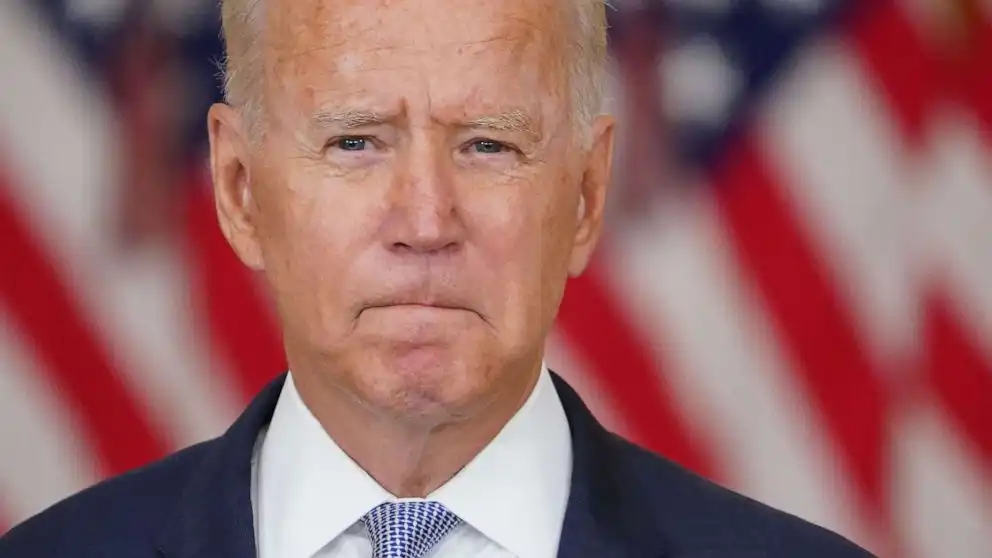
“The Israelis are in no mood to talk about the day after,” the administration official said. “They’re very much focused on today, the day of, so there hasn’t been a whole lot of traction there.” Despite this, there’s virtually no internal Biden administration talk of conditioning U.S. military aid to Israel as a way to pressure the country to agree to some of the ideas under discussion in Washington, the State Department official said. 
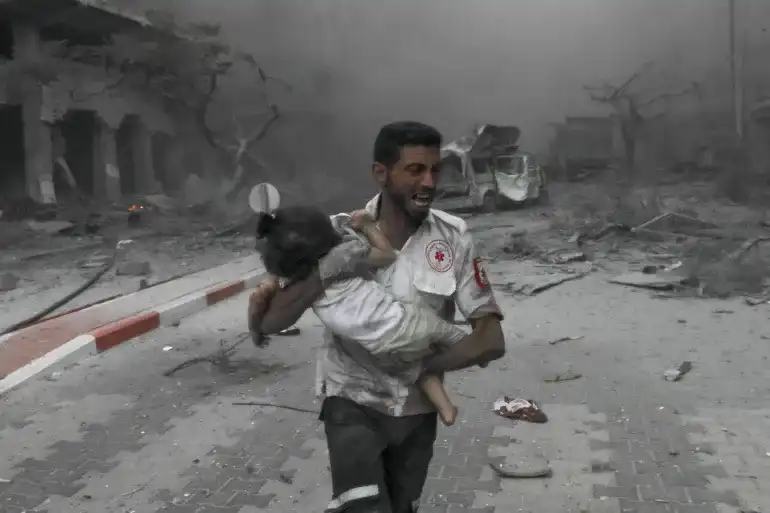
In an interview that aired this weekend on ABC News, Ron Dermer, a top Netanyahu aide, downplayed the idea of a Palestinian state, although he said an eventual political settlement could be reached with the Palestinians. “I know that everybody is racing forward right now to try to establish a Palestinian state. For the people of Israel, they don’t even understand that because we just suffered the equivalent of 20 9/11s,” he said. “And I think the last thing you want to do is send a message to any terror group that the way you’re going to achieve some sort of aim is to perpetrate a massive terror attack.” As it plans ahead, the Biden administration is consulting outside analysts, civil society activists and others, some of whom warned of potential pitfalls.
For one thing, Arab countries in the region cannot even agree among themselves how to approach a postwar scenario, and those are the countries the U.S. hopes will fund any reconstruction. There’s also the U.S. presidential election in 2024. If a Republican wins, they are likely to defer even more to Israel’s wishes, even if that angers America’s Arab partners in the Middle East. 
American officials mapping out the various scenarios are struggling because of the many variables involved. Unlike Russia’s full-scale invasion of Ukraine, which the Biden administration saw coming months in advance, the Hamas attack was a surprise to the U.S. establishment.

Nearly two months in, “people are fried,” the administration official said. The senior administration official sounded a more optimistic note: “We have identified every possible contingency,” the official said. “As things unfold, our hope is to be able to seize the moment.” Brian Katulis, an analyst with the Middle East Institute, a Washington think tank, urged U.S. officials to try to help better organize Arab countries so that they can have a clearer voice in the direction of the conflict. He sympathized with the frustrations of U.S. officials trying to solve the latest puzzle in the decades long Israeli-Palestinian conflict. “It’s sort of like the Choose Your Own Adventure book that you don’t control, because the circumstances will define what the possibilities are,” he said.


ARAB AND WORLD

Wed 06 Dec 2023 2:46 pm - Jerusalem Time

Jewish writers in an open letter: Anti-Israelism does not mean anti-Semitism

In an open letter to the international community published in the online literary magazine N+1 and signed by thousands of artists around the world, Jewish writers expressed their rejection of “the prevailing discourse that considers any criticism of Israel to be anti-Semitic.”


The Jewish writers pointed out in their letter that the concept of anti-Semitism has been used so far “to protect Israel from accountability, to hide the reality of the occupation, and to deny Palestinian sovereignty,” and that the same concept is used today “to justify Israel’s bombing of Gaza, and to silence criticism within the international community.”


Jewish writers stated that they were deeply saddened by Israel's use of "the war against anti-Semitism as an excuse to commit war crimes with the intent of genocide."


They described the Zionist "ideology" as "exploiting the suffering of the Jews in order to undermine the rights of the Palestinian people," stressing that "anti-Israelism does not mean anti-Semitism."


In the open letter, the Jewish writers said, “We defend the dignity and sovereignty of the Palestinian people, through the lessons we have drawn from our bitter history in confronting anti-Semitism.” The writers also affirmed their rejection of the trade-off between "the freedom of the Palestinians and the security of the Jews."


Jewish writers pointed out that the Israeli government is promoting propaganda internally and externally stating that "the struggle of the Palestinians is not directed to obtain rights to land and sovereignty, but rather is directed against the Jews."


The Jewish writers stressed that the United States describes its support for Israel as “protecting Jewish identity,” and said, “Our identity is not a weapon that states can use to impose their authority. We are against the exploitation of our pain.”

UN rapporteurs Alexandra Xanthaki, Farida Shahid, Clement Nyalitsosi Fule and Irene Khan say that the international community equates criticism of Israel with support for anti-Semitism.

They also rejected recent statements made by Israeli and other officials, in which they described criticism of Israel as a form of anti-Semitism.

In a written statement, the rapporteurs stated that “calls for a humanitarian ceasefire in Gaza, or criticism of the Israeli government’s policies and actions are misleadingly linked to support for terrorism or anti-Semitism.”

The statement noted that “a global wave of attacks, retaliation, criminalization and sanctions has targeted those who publicly express their solidarity with the victims of the conflict between Israel and Palestine,” stressing that “this situation constitutes a suppression of freedom of expression and creates an atmosphere of fear that prevents many individuals from participating in public life.” ".

The United Nations rapporteurs stated that artists, academics, journalists, activists and athletes who raise their voices in support of victims of human rights violations are today being subjected to harsh criticism.

Many Jewish organizations around the world oppose Zionism and its practices that led to the expulsion of more than 750,000 Palestinians from their lands in the 1948 war. Anti-Israel Jews defend the right of Palestinians to return to their land, and criticize Zionism, which considers itself “a guarantor of the security of the Jewish nation.”

Critics of Israel lose their jobs

Since last October 7, many well-known names in the world have been dismissed from their jobs on charges of “anti-Semitism.” Because of their criticism of the Israeli war on Gaza.

In this context, American actress Susan Sarandon, who expressed her support for Palestine in the United States, was suspended from working at a talent agency, while Mexican actress Melissa Barrera was excluded from the crew of one of the films being filmed.

While New York Times magazine writer Jazmine Hughes was forced to resign on the grounds of “violating editorial policies” after signing a statement in support of Palestine, and Palestinian photojournalist Hossam Salam was fired from the American newspaper “New York Times” because of his posts on social media sites that expressed Through it, he expressed his support for Palestine.

Canadian journalist of Palestinian origin, Zahraa Al-Akhras, was also dismissed from her work at the Canadian News Agency (Global News), against the backdrop of her publications in support of Palestine.

Many countries accused Israel of committing "genocide" during the war in Gaza (Anatolia)

David Velasco, editor-in-chief of the US-based magazine Art Forum, was fired after the magazine published an open letter rejecting the war on Gaza.

Michael Eisen, a Jew, was also dismissed from his position as editor-in-chief of the academic journal Science; Because of a post on social media in which he criticized the Israeli war on Gaza.

In this context, Jackson Frank, sports correspondent for the Philly Voice news website, based in Philadelphia, USA, was fired from his job after he shared a post on the X website showing solidarity with Palestine.

An investigation was also opened against 6 correspondents working for the Arabic news service affiliated with the British network “BBC”, under the pretext of “violating the institution’s strict impartiality rules” for allegedly “supporting Hamas” on social media, and then the reporters were dismissed from the institution.

For more than 60 days, the Israeli occupation army has launched an aggression against the Gaza Strip, which has claimed the lives of 16,000 Palestinians and more than 42,000 wounded, most of them children and women, in addition to massive destruction of infrastructure and an unprecedented humanitarian disaster, according to official Palestinian sources.


Source: Al Jazeera + Anatolia

PALESTINE

Wed 06 Dec 2023 2:24 pm - Jerusalem Time

Access to food supplies are limited for the residents of Gaza

Every morning, Palestinian Khalil Salman leaves his home in the city of Deir al-Balah in the central Gaza Strip for long hours to buy a bag of flour and basic food supplies for his family members, but he returns with a hidden longing.


The Gaza Strip, which is inhabited by 2.3 million people and is subjected to the bloodiest Israeli war since the seventh of last October, is witnessing its markets and commercial stores being devoid of flour and other materials such as rice, lentils, sugar, salt, and cooking oil.


While moving between shops in Deir al-Balah market, Salman (45 years old) told Xinhua News Agency that the markets are devoid of the basic materials that people live on anywhere.


Salman, who went to neighboring areas in an attempt to buy, adds that residents are facing a major crisis due to the lack of flour, lentils, salt, sugar, and other materials.


While the man appeared angry, he pointed out that providing food and drink is a necessity for the survival of family members, especially children and women.


Al-Salam Mills, the main company specializing in grains and flour in the Gaza Strip, stopped working weeks ago due to the lack of electricity and synthetic fuel needed to operate the machines.


Also, no trucks carrying goods, including basic materials, have entered the Gaza Strip from the crossings controlled by Israel since it declared war on Gaza, which left more than 16,000 dead, according to the Palestinian Ministry of Health.


Palestinian Jihan Khattab is queuing in front of a warehouse of the United Nations Relief and Works Agency for Palestine Refugees (UNRWA) in the Nuseirat camp in the central Gaza Strip, hoping to get a bag of flour.


Late last November, UNRWA began distributing flour to refugee families and citizens in the central and southern regions of the Gaza Strip, with the distributed quotas based on the number of individuals.


A statement issued by UNRWA said that a family consisting of one to three people gets a bag of flour weighing 25 kilograms, while a family consisting of four to six people gets two bags, while a family consisting of seven to ten people gets three bags, while a family consisting of seven to ten people gets three bags. A group of 11 people or more will receive four bags of flour.


According to the statement, the distribution takes place through the UN agency’s centers and with identification documents, noting that it has delivered a total of 47,504 families so far.


Jihan Khattab, a mother of five children, while receiving her share, told Xinhua News Agency that the residents of the Gaza Strip are in dire need of flour as it is the backbone of every home.


Jihan, who complains that her house is devoid of any quantities of food, adds that she received flour on time in order to feed her five children who have been without bread for about two weeks.


The 55-year-old Palestinian woman confirms that the markets are completely devoid of flour, and if available, its price reaches 70 US dollars, after it was ten dollars before the Israeli war.


Due to the lack of flour, electricity, and fuel, the automatic bakeries in the Gaza Strip closed their doors, while young men set up stalls in the popular markets and in front of their homes to prepare bread over a wood fire, each of which eight loaves of bread are sold for $1.50 amid demand from the public.


The World Food Program said that distributing aid in Gaza “has become almost impossible and puts the lives of humanitarian workers at risk,” stressing the need for a humanitarian ceasefire in Gaza.


The global program warned of the dangers of exacerbating the catastrophic hunger crisis that already threatens to exhaust the civilian population, at a time when the Gaza Strip is witnessing a severe shortage in the entry of humanitarian supplies necessary to meet the enormous needs.


According to the United Nations Office for the Coordination of Humanitarian Affairs (OCHA), the distribution of limited humanitarian aid has been limited for days to the city of Rafah in the far south of the Gaza Strip.


In the neighboring Khan Yunis governorate, aid distribution has largely stopped due to the severity of Israeli attacks, while the central governorate has been isolated following restrictions imposed by Israeli forces on movement along main roads.


Access to Gaza City and its north has also been halted since the collapse of the humanitarian truce last Friday between Israel and the Islamic Resistance Movement (Hamas), which lasted for a week.


Since October 7, Israel has been waging a large-scale war against Hamas in Gaza under the name “Iron Swords.”