ARAB AND WORLD

Sat 04 Apr 2026 9:56 am - Jerusalem Time

Martyrs and wounded in a wide Israeli aggression targeting a hospital and infrastructure in Lebanon

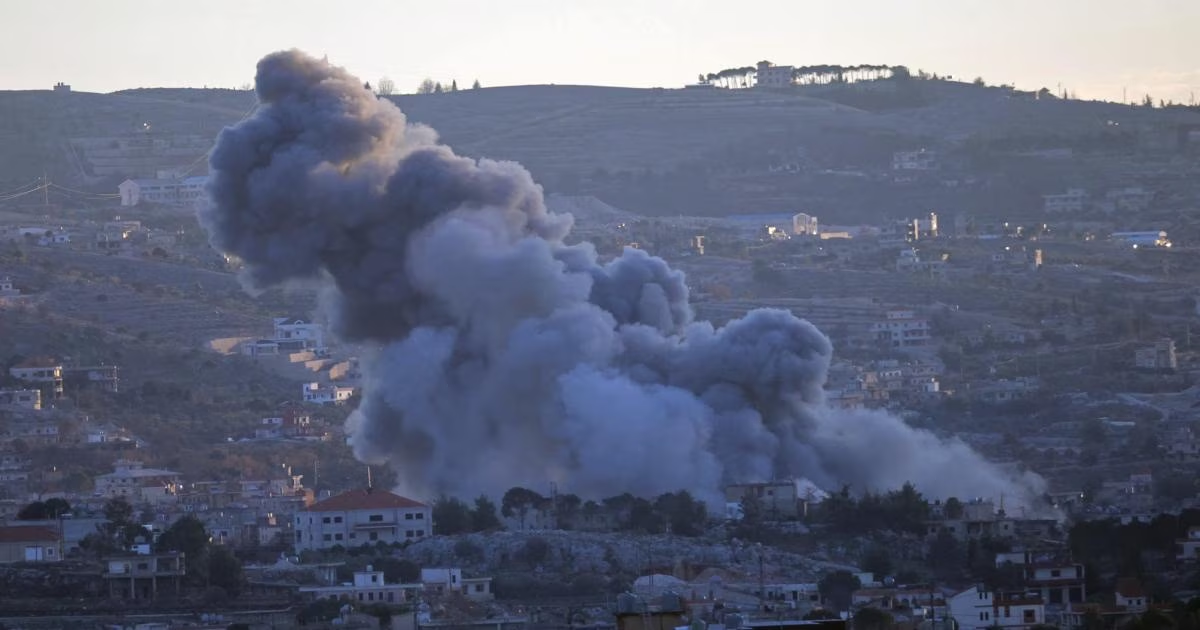
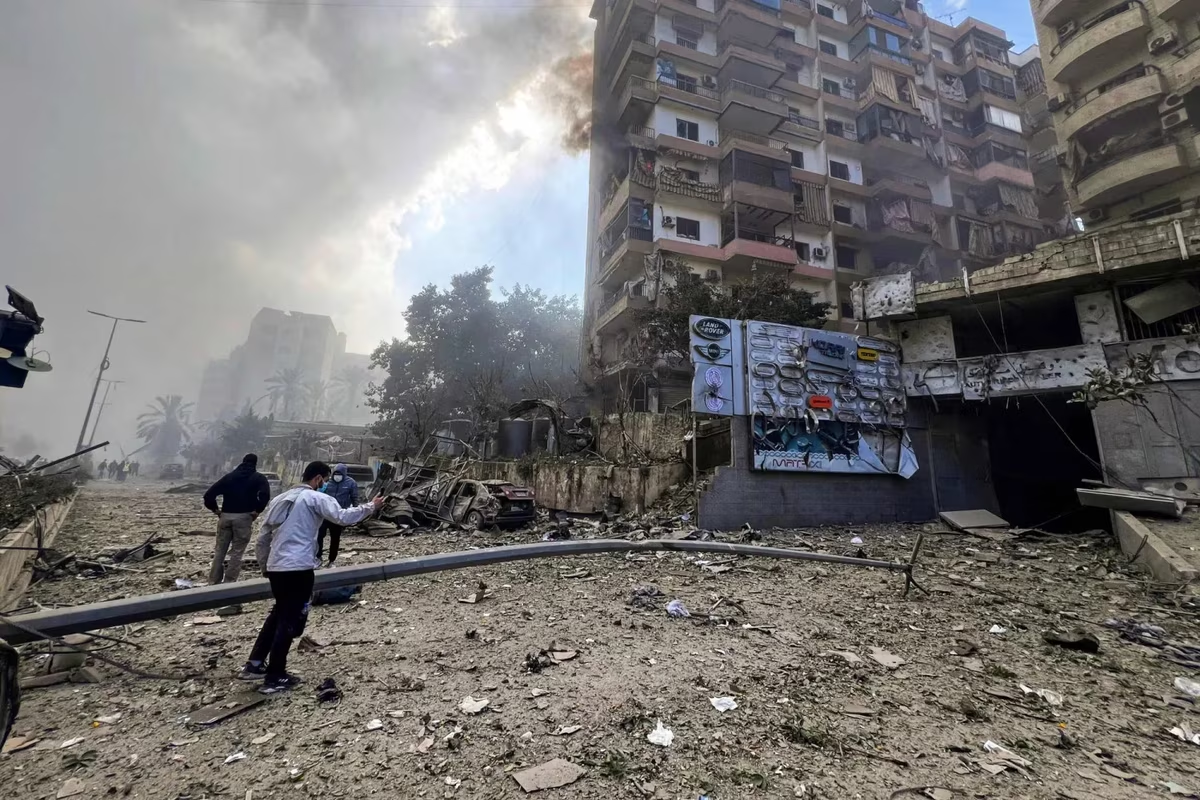
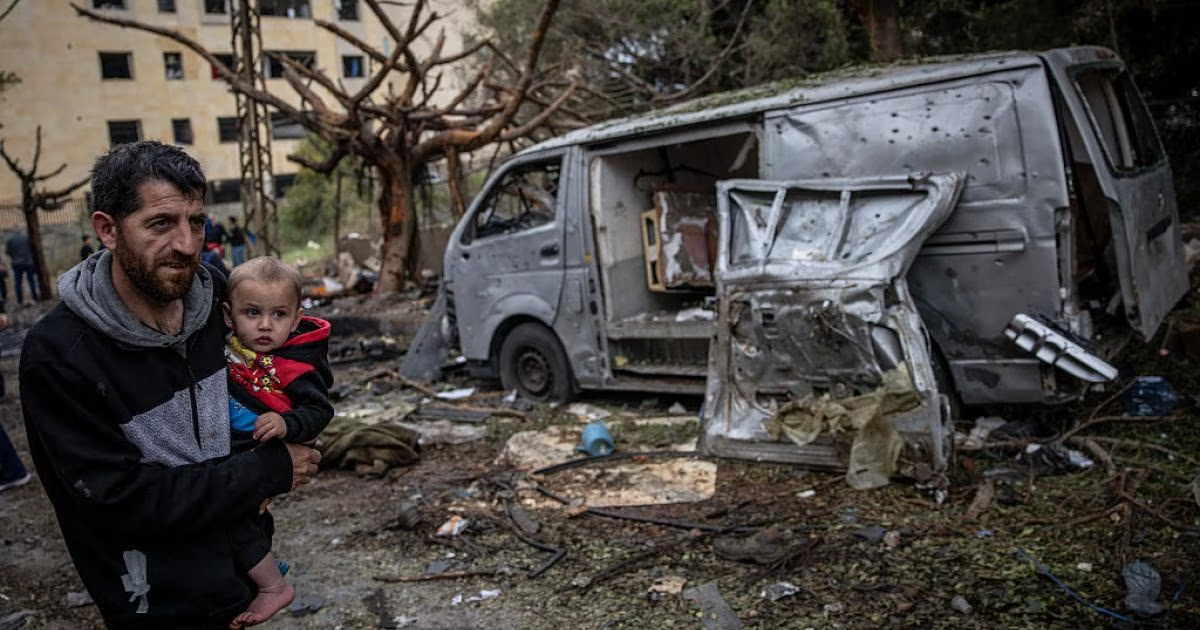
Wide areas in southern Lebanon, the Bekaa, and the southern suburbs of Beirut have witnessed intense Israeli military escalation since dawn on Saturday, as warplanes launched a series of intensive airstrikes. These attacks resulted in dozens of casualties among civilians and ambulance crews, amidst widespread destruction affecting vital facilities and residential buildings.

Lebanon's Ministry of Health announced that at least 32 people were injured, including three paramedics belonging to the Civil Defense, as a result of strikes targeting the Hosh area in the city of Tyre. Medical sources indicated that the shelling caused direct damage to the facilities of the Lebanese-Italian Hospital, but the hospital remained operational and continued to receive the wounded.

In another field development, at least two people were martyred in an airstrike that targeted a motorcycle on the Qadmus road north of Tyre, coinciding with intense shelling that hit the town of Ma'raka. These attacks come as part of the occupation's expansion of its targeting circle deep into Lebanese territory, leading to a worsening of humanitarian conditions in the southern regions.

As for the Western Bekaa region, the occupation forces committed a massacre in the town of Sahmar, where an airstrike targeted the vicinity of a mosque as worshipers were leaving, leading to the martyrdom of two and the injury of 15 others. The town center was also shelled twice in a row, causing panic and widespread destruction to public and private property.

The occupation army deliberately destroyed infrastructure in the Bekaa, as warplanes bombed a vital bridge connecting the towns of Sahmar and Mashghara, completely cutting it off and isolating the areas from each other. A second bridge in the same area was also shelled, in a clear move aimed at paralyzing movement and preventing the arrival of supplies and reinforcements.

In the capital Beirut, violent explosions rocked the southern suburbs at dawn today, with columns of smoke seen rising from the targeted sites that the occupation claimed were Hezbollah infrastructure. This aerial bombardment coincided with ongoing attempts of ground incursions by the Israeli army in several border axes in the south of the country.

Regarding international forces, the 'UNIFIL' mission announced that three of its soldiers were injured, two of whom were described as serious, following an explosion of an undetermined nature inside one of its military bases. This incident comes amidst increasing tensions and risks surrounding the work of international forces deployed in military operations areas in southern Lebanon.

For its part, the Israeli army claimed to have destroyed more than 3,500 military targets in Lebanese territory during the last month, confirming the continuation of its ground and air operations. In contrast, Hezbollah announced the execution of 1,309 various military operations, half of which targeted sites, barracks, and settlements deep inside Israeli territory in response to the ongoing aggression.

In the context of political threats, Israeli Security Minister Yisrael Katz vowed to continue military operations and make the other side pay a heavy price, stressing that military pressure will continue. These statements coincide with warnings issued by the US Embassy in Beirut regarding the possibilities of targeting educational institutions and universities in Lebanon.

Official statistics issued by the Lebanese Ministry of Health indicate that the toll of the ongoing Israeli aggression since the beginning of last March has reached 1,368 martyrs and 4,138 wounded. These figures confirm the scale of the humanitarian catastrophe that Lebanon is experiencing amidst the continued indiscriminate and systematic shelling of populated areas.

Rescue and ambulance teams continue their attempts to retrieve victims from under the rubble in the targeted areas, despite the great difficulties resulting from the continued intensive flight of drones and warplanes. The field situation remains prone to further escalation in the absence of any prospect for de-escalation or a ceasefire in the foreseeable future.

Israeli raids caused material damage to the Lebanese-Italian Hospital in Tyre, yet medical staff continued their work in providing first aid to the injured.
OPINIONS

Sat 04 Apr 2026 9:56 am - Jerusalem Time

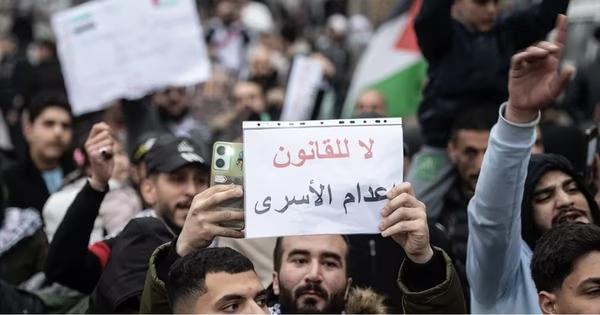
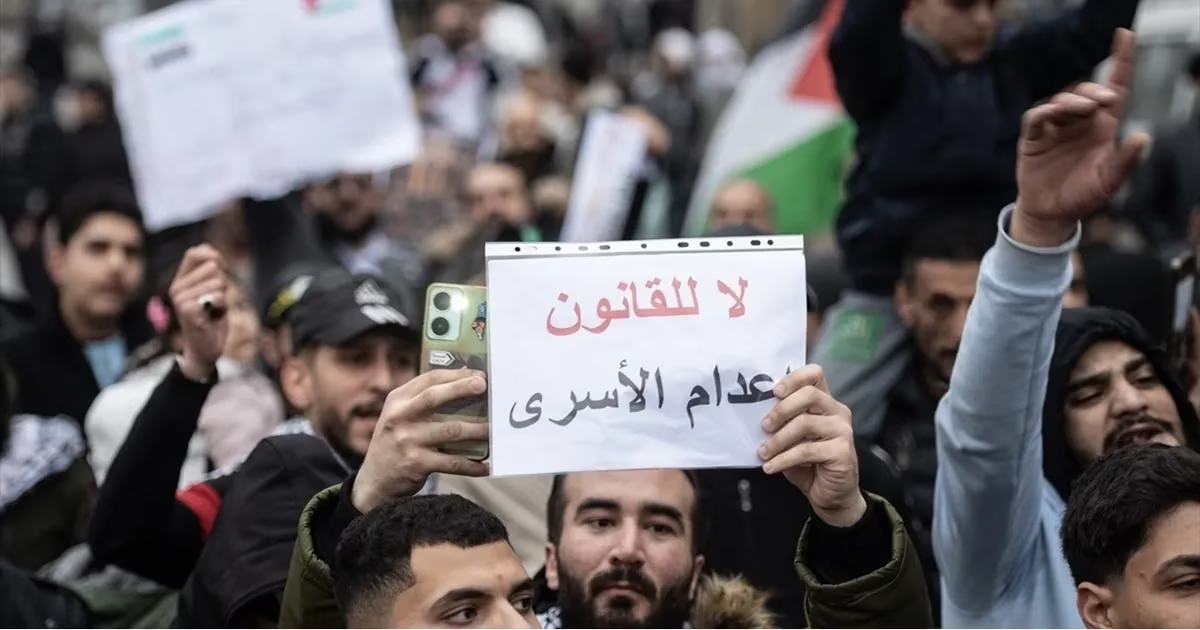
Prisoner Execution Law: Legislating Racism and Entrenching the Fascist Identity of the Occupation

Ramallah - “Alquds ” dot com

Ramallah - “Alquds ” dot com

Opinion Writer

The Israeli Knesset recently approved the Palestinian prisoner execution law, a step that reflects the true face of the occupation's policies based on racial discrimination. This legislation is not merely a criminal procedure; rather, it is a political tool aimed at eliminating the Palestinian presence under flimsy legal pretexts claiming democracy.

Many countries around the world have the death penalty in their constitutions, but the Israeli case fundamentally differs from any other system. The new law is characterized by absolute selectivity, as it was specifically designed to apply to Palestinians only, even in cases where settlers commit more heinous crimes.

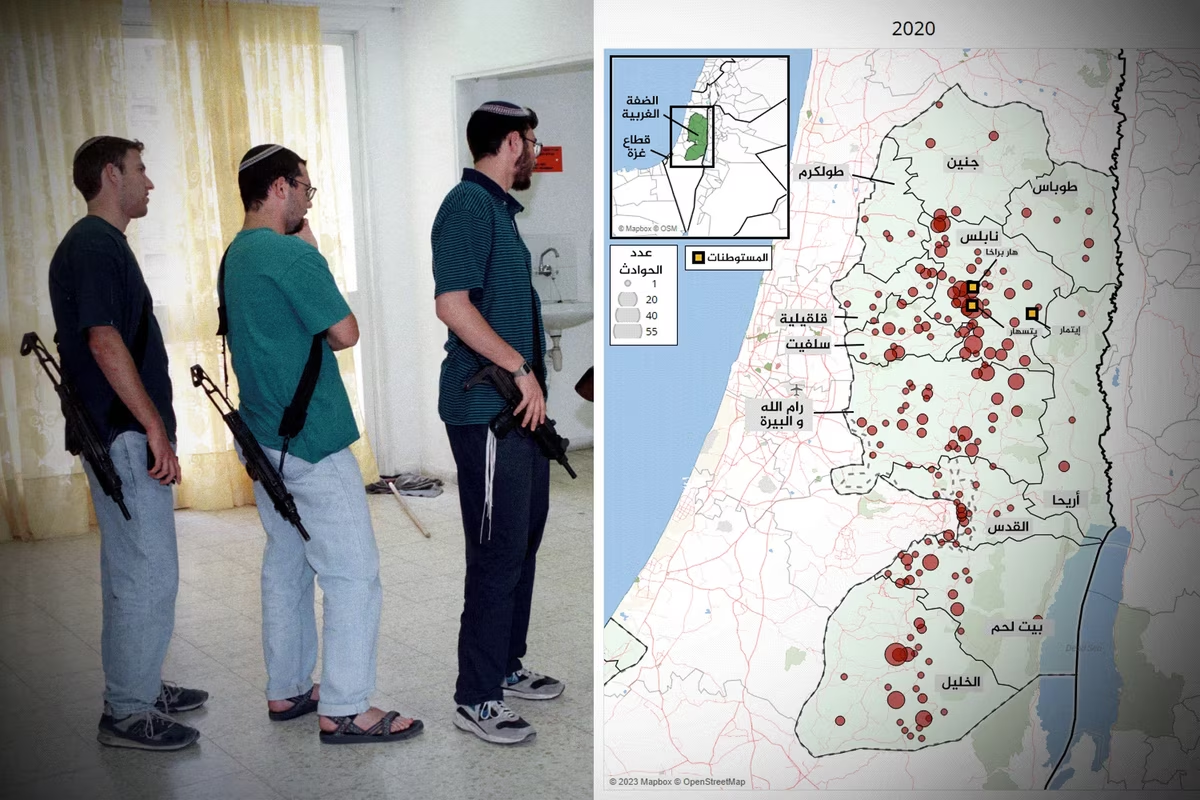
Israeli society lives in an unnatural state, where settlers carry out systematic daily attacks against Palestinians and their property without any legal accountability. These crimes often occur under the direct protection of the occupation army, confirming that the judicial system operates solely to serve the settlement project.

The assassination of journalist Shireen Abu Akleh stands as a living testament to the policy of impunity enjoyed by occupation soldiers. Despite overwhelming evidence, investigations were shelved and forgotten, paving the way for more legislation that legitimizes premeditated murder and abolishes the right to life.

The American stance on this law was, as usual, disappointing, with Washington considering its approval an internal sovereign matter. This support not only provides political protection for the occupation but also constitutes implicit legitimization of the grave violations committed against the Palestinian people under the guise of sovereign independence.

Internationally, condemnations poured in, describing the law as a blatant violation of international humanitarian law and human rights conventions. However, these condemnations remain mere verbal statements lacking real enforcement mechanisms capable of deterring the occupation or imposing economic and political sanctions on it.

The European Union suffers from a state of paralysis regarding decisive decisions due to the consensus mechanism that grants any member state veto power. This hesitation gives the occupation additional space to continue its repressive policies, crossing all red lines set by the international system after World War II.

The ongoing genocide in the Gaza Strip and the escalating violations in the West Bank prove that the occupation does not recognize any international legitimacy. The field practices of starvation, killing, and destruction are perfectly consistent with the racist laws enacted by the Knesset to strengthen the grip of the new fascism.

The current political identity of the occupation is based on an absolute hostile view towards everything non-Jewish, as confirmed by former Knesset officials. This vision transforms the conflict from a political struggle over land into an existential confrontation in which laws are used as tools for moral and physical extermination.

Far-right leaders, led by Itamar Ben-Gvir, celebrate this law as a victory for the approach of force and defiance of the international community. They believe that international laws do not pose an obstacle to the implementation of their plans as long as the field is under their direct military control.

The new law lacks clear definitions of what constitutes a 'terrorist act,' which opens the door wide to vague interpretations targeting all forms of resistance. Under this ambiguity, the occupation can turn any Palestinian national activity into an accusation warranting immediate execution.

Through these legislations, the occupation authorities are trying to test the will of the Palestinian people and break their spirit of resistance through extreme intimidation. However, history proves that policies of oppression and killing have never succeeded in forcing peoples under occupation to surrender.

It is clear to observers of the Israeli political scene that there is no longer a real difference between what was called right and left in dealing with Palestinians. The current competition within Israeli political society is confined to an extreme right and an even more extreme one, closing off prospects for political solutions.

Ultimately, the prisoner execution law remains one link in a long chain of Israeli attempts to end the Palestinian issue through brute force. But the bet always remains on the steadfastness of the Palestinian people and their ability to confront these unjust laws by adhering to their legitimate rights on their land.

Israeli law is not a general law, but rather exclusive legislation directed against Palestinians alone, which strips it of any normal judicial character.

ISRAELI AFFAIRS

Sat 04 Apr 2026 9:56 am - Jerusalem Time

Iranian missile bombardment hits Tel Aviv and Beersheba, causing damage to 17 sites

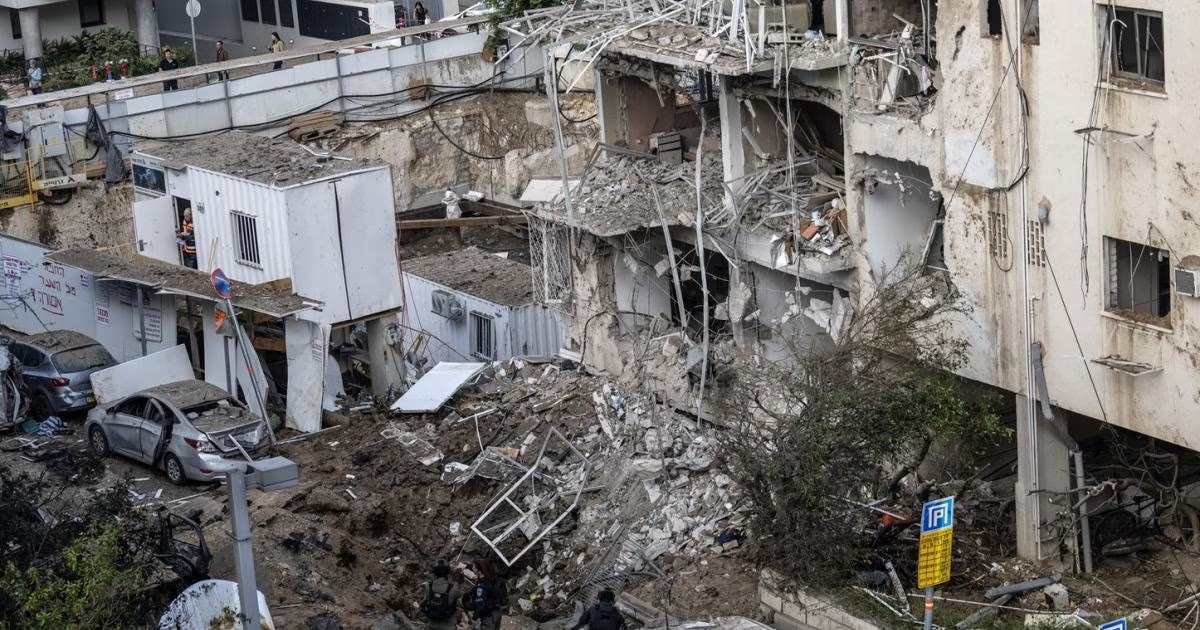
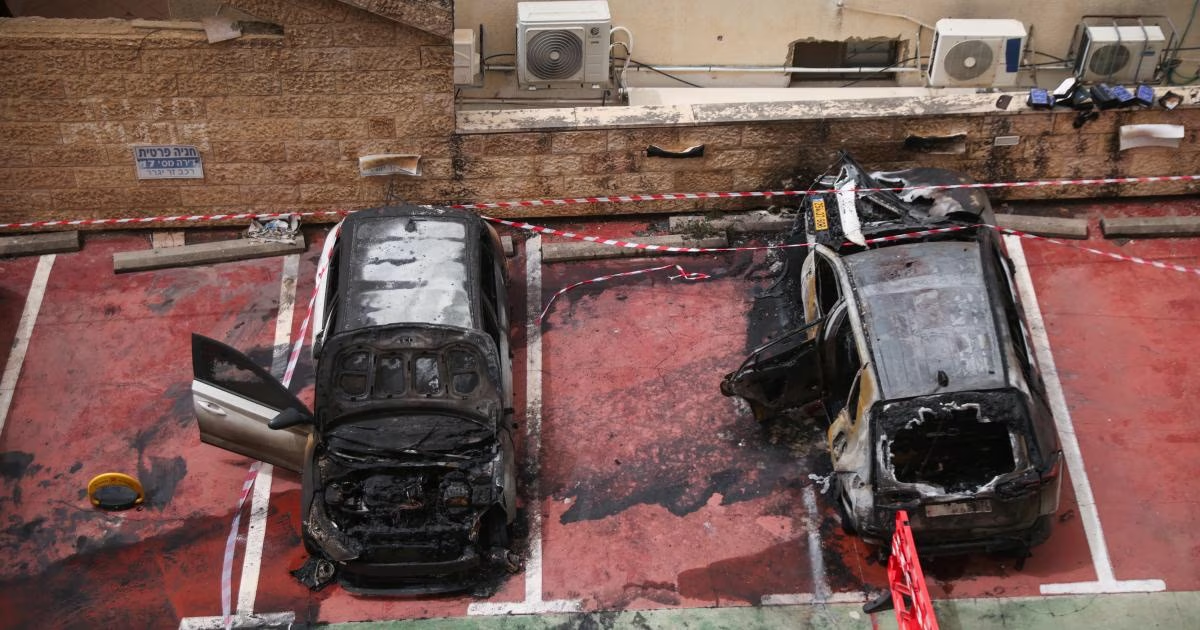
The greater Tel Aviv area witnessed a serious military escalation early this Saturday morning, as official sources reported that about 17 different sites suffered severe material damage. This damage resulted from the fall of cluster warheads from an Iranian missile targeting the area, causing a fire inside a residential apartment and damaging a number of buildings, infrastructure, and main streets.

In a related context, Magen David Adom ambulance crews confirmed that a 45-year-old man was injured in the city of Bnei Brak in the center of the country. Medical sources explained that the injury resulted from flying glass fragments due to the explosions, and he was transferred to the hospital for necessary treatment, with his condition described as minor.

The effects of the attack were not limited to the central region, as press reports stated that a fire broke out in a factory located in the Negev region in southern Israel after it was hit by a direct missile strike. Fire and rescue teams have been working since the early hours of dawn to contain the fire and prevent its spread to neighboring facilities in the industrial zone.

Field sources reported that rescue and police teams, in addition to explosives experts, are deployed in the affected sites to deal with missile remnants. The sources indicated that the use of cluster warheads in this attack doubled the area of destruction, reflecting a development in the nature of weapons used in the current confrontation.

In the Beersheba area, a missile directly hit a factory in the industrial zone located north of the Negev, causing a state of security alert. Despite the force of the explosion, technical reports confirmed that there were no concerns about the leakage of chemical or hazardous materials from the targeted facility, which reassured residents in the surrounding areas.

Media sources acknowledged the failure of air defense systems to intercept the missile, which managed to reach its target with high accuracy. Video clips documented the moment the missile split in the sky and its explosive fragments spread over residential neighborhoods and vital facilities, causing a state of panic among settlers.

The list of damaged sites included direct hits on residential buildings in the Ras al-Ain area, in addition to widespread damage recorded in Ramat Gan and Givatayim. Competent authorities also monitored the fall of fragments and missiles in the Petah Tikva area, where vehicles and public property were damaged by falling fragments.

Haifa and Nahariya in the north had been subjected to similar attacks on Friday evening, where material damage occurred as a result of simultaneous missile launches from the Iranian and Lebanese fronts. The Israeli army confirmed monitoring missile barrages launched towards Haifa, considering it the second attack in less than half an hour in an unprecedented escalation.

Media reports indicated the fall of missile fragments in various areas of Haifa, partially damaging a residential building. Meanwhile, a woman sustained minor injuries while trying to reach a shelter to take cover from the intense missile bombardment targeting the city.

These developments come amid the open military confrontation launched by Israel and the United States against Iran since late February. This war has so far resulted in hundreds of deaths, while Tehran continues to respond by launching waves of missiles and suicide drones towards Israeli targets.

Tehran accuses Israeli and American forces of targeting its interests, stressing that its strikes come in response to continuous aggressions. In contrast, Arab countries condemn the targeting of what Iran describes as 'American interests' on its territory, especially after civilian casualties and damage to non-military facilities.

A state of high alert continues in all Israeli cities with the continuous sounding of sirens and the expectation of more missile barrages. Local authorities are working to assess the extent of economic and material losses resulting from this attack, which is considered the widest in terms of the number of damaged sites in the greater Tel Aviv area.

Field sources confirmed that Israel failed to intercept the missile that directly hit its target, leading to a widespread distribution of cluster warheads in residential neighborhoods.

PALESTINE

Sat 04 Apr 2026 9:56 am - Jerusalem Time

Education Crisis in Palestine: One and a Half Million Students Face Illiteracy and a Lost Future

Approximately 1.53 million students in Palestine face severe challenges that threaten their educational future, warning of the emergence of a generation lacking basic knowledge. This student demographic constitutes nearly a quarter of the population of the West Bank and Gaza Strip, reflecting the magnitude of the societal danger resulting from the disruption of the educational process and its sharp decline in regularity in recent years.

In the Gaza Strip, the ongoing war of extermination since October 2023 has caused a complete halt to the educational process, as the occupation destroyed hundreds of schools and converted the remaining ones into shelters. This reality has deprived approximately 700,000 students of their right to education, leading to the erosion of their basic reading, writing, and arithmetic skills despite their nominal progression to higher grades.

Displaced families in Gaza recount painful stories of their children losing educational skills, with parents indicating that their once-excellent children now suffer from 'disguised illiteracy.' Students who are automatically promoted find a huge gap between their actual level and the imposed curricula, in the absence of books and a suitable learning environment within displacement tents.

The Ministry of Education, in cooperation with international organizations, resorted to establishing 'educational points' inside the tents in an attempt to salvage what could be saved. These points operate on a part-time basis for three days a week, but they do not cover all educational stages, with most being limited to the lower primary level, leaving preparatory and secondary students without options.

Educational supervisors in the shelters confirm a significant spread of illiteracy among young children, with some ten-year-olds unable to hold a pen. Psychological problems and learning difficulties resulting from successive traumas are also prominent, requiring intensive counseling interventions that go beyond merely providing brief academic lessons.

For his part, educational officials in Gaza describe the 'automatic promotion' system as a necessary evil to prevent the complete halt of education for hundreds of thousands of students. The ministry is currently working on two tracks; the first is promotion based on age, and the second is providing remedial materials to try to compensate for the enormous learning loss accumulated over two and a half years.

In the West Bank, the situation does not appear less complex, with 829,000 students suffering from irregular schooling in public schools for two years. The roots of the crisis lie in the financial distress experienced by the Palestinian Authority due to the occupation's piracy of tax revenues, which led to the government's inability to pay teachers' salaries in full.

The financial crisis led to a series of teachers' strikes demanding their rights, followed by decisions to reduce school hours to only three days a week. With the escalation of field events, the ministry shifted to a 'distance learning' system, which exacerbated the educational dilemma that had not yet recovered from the consequences of the previous COVID-19 pandemic.

Families in the West Bank complain about the heavy burden placed on them in following online classes, especially with the curricula being shortened to limited 'educational packages.' For example, the Arabic language curriculum for some basic grades was reduced from 15 lessons to only 6 lessons, which seriously weakens students' academic achievement.

Data from the Palestinian Educational Coalition indicates that the actual school days in public schools in the West Bank did not exceed 50 days during the first semester. This repeated disruption has created a state of 'educational alienation' among students, where students lose the basic concepts that the curriculum was designed to build upon in later stages.

This bitter reality has pushed some affluent families to seek costly alternatives such as private schools or private lessons and educational centers. In contrast, the vast majority of students remain dependent on struggling public schools, deepening the class and educational gap within Palestinian society.

The Undersecretary of the Ministry of Education acknowledges a significant learning loss but links the solution to the necessity of finding a way out of the government's financial crisis to secure teachers' rights. The ministry confirms that current measures such as teaching summaries and the assignment system are merely palliatives to mitigate the impact and not radical solutions to the structural crisis.

Civil society organizations and parent councils propose initiatives to seek additional resources to support teachers and ensure regular attendance, but they have not found their way to actual implementation. Experts warn that the continuation of this confusion will lead to a decline in the quality of Palestinian education, which was historically known for its excellence and strength despite the conditions of occupation.

Saving the educational process in Palestine requires urgent international and local efforts to support the dilapidated infrastructure and protect children's right to learn. Without a comprehensive national plan to compensate for learning loss, an entire generation remains threatened with ignorance and the loss of the cognitive tools necessary to build the desired Palestinian state in the future.

My children have become semi-illiterate; they have forgotten how to read, write, and the multiplication table, and almost everything else due to the long interruption from schooling.

OPINIONS

Sat 04 Apr 2026 9:56 am - Jerusalem Time

Academic dismissed from managing "Middle East Center" at University of Washington for describing Zionism as cancer

Said Erikat

Opinion Writer

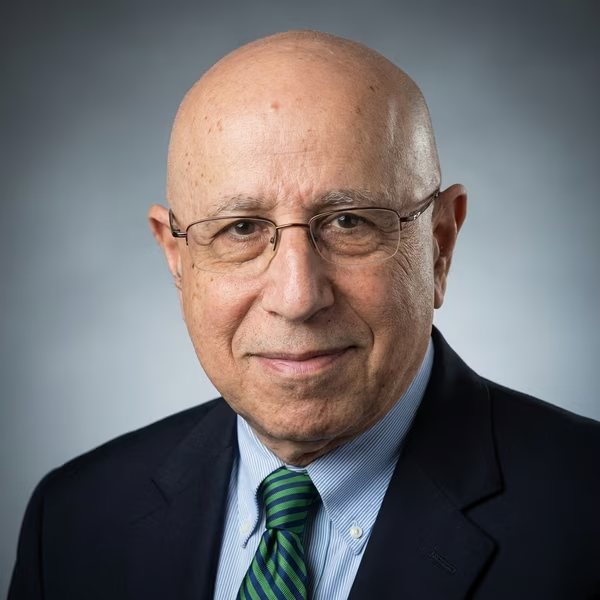
Washington – Said Arikat – 4/4/2026

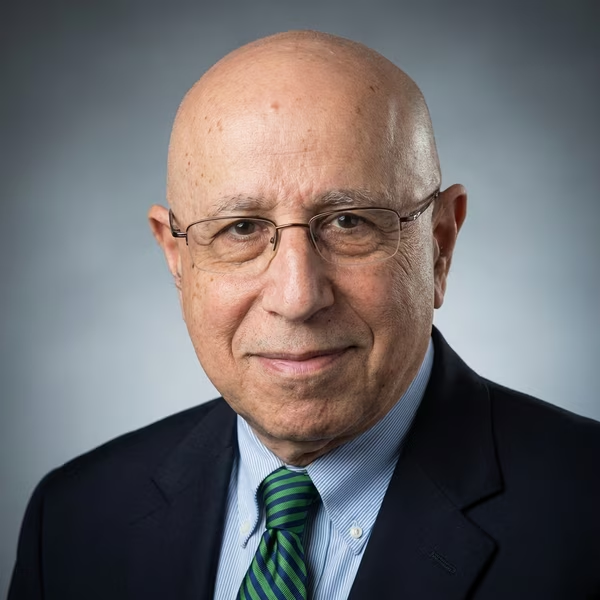
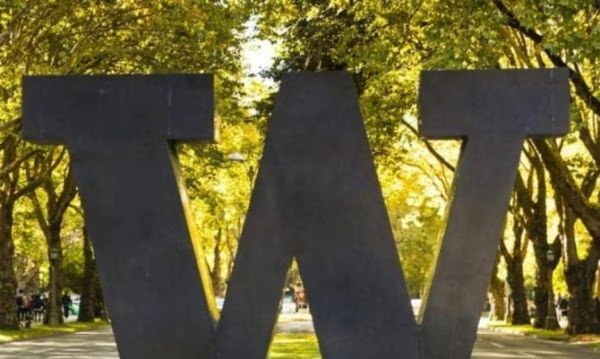
An associate professor at the University of Washington was dismissed from his position as director of the “Middle East Center” after publishing messages via the center’s mailing list that included criticisms of American and Israeli military operations against Iran, and describing Zionism as “cancerous,” according to the “Seattle Times” newspaper.

Arya Fani, a professor at the “Jackson School of International Studies,” explained that he received a notification last week from the school’s director, Daniel Hoffman, of the decision to relieve him of his administrative duties, while retaining his academic position. Fani is currently on sick leave during the current semester.

For its part, the university announced that Hoffman would take over the management of the center during the spring and summer semesters, without providing explanations for the reasons for the decision, citing its commitments related to protecting employee privacy. The student newspaper “The Daily” was the first to reveal the incident.

Fani had taken over the management of the center under a three-year contract starting in 2025, where he oversaw its academic programs and public activities, in addition to community outreach and fundraising efforts.

Fani is from Iran, where he was born and raised before moving to the United States at the age of eighteen. He specializes in teaching modern Persian literature and translation studies. Following the outbreak of the war in Iran, he sent a lengthy message to the center’s mailing list, in which he provided an analysis of the situation, emphasizing that it expressed his personal views.

On March 18, he sent a second message titled “Additional Notes on the War in Iran,” in which he considered that the conflict targets the Iranian state with its various components, accused Israel of committing terrorist acts, and described Zionism as a “malignant tumor.”

Following this message, a pre-supervision mechanism was imposed on the mailing list’s correspondence, which prevented him from publishing new messages. Fani stated that he was unaware of any clear rules governing the use of the list.

According to his account, Hoffman informed him that the content of his messages made some members of the center’s community feel targeted, which made him “unqualified to hold leadership positions.” Requests for comment were referred to the university’s media relations office.

The timing of the decision raised questions for Fani, especially since it came days after statements by university president Robert Jones about a seminar organized by the center on Palestine, during which he stressed the need to manage discussions in a way that does not create an unsafe environment on campus.

The university confirmed that its president was not aware of the dismissal decision in advance and did not participate in making it. In contrast, Fani expressed his disappointment, considering that the move might have a chilling effect on freedom of expression within academic circles.

This issue reflects the growing tension within American universities between freedom of expression and institutional considerations related to a safe and inclusive environment. While universities are supposed to be open spaces for free discussion, administrations face increasing pressure to control discourse that may be interpreted as exclusionary or offensive. In this context, distinguishing between legitimate academic opinion and controversial discourse becomes a complex matter, especially when it comes to sensitive political issues such as the Middle East, where identities and affiliations intertwine with intellectual discussions.

The dismissal decision raises broader questions about the limits of responsibility an academic bears when taking on an administrative position, especially in the context of what is seen as a decline in the margin of freedom of expression within American universities. This debate has escalated against the backdrop of student protests against the Israeli war in Gaza, and the accompanying measures that are sometimes seen as attempts to contain or suppress voices supporting Palestinian rights and calling for an end to the war. These dynamics have increased with Donald Trump's return to the White House in January 2025.

The incident highlights the interplay of digital and political factors in shaping university decisions, within a changing environment that is witnessing a significant decline in freedom of expression. With the escalation of student protests against the war in Gaza, and increasing media and political pressures, concerns have emerged that some institutional measures aim to limit discourse supporting Palestinian rights and calling for a halt to the war. This trend may have been reinforced by broader political shifts, especially after Donald Trump's return to power, and the accompanying tightening of dealing with student activism.

PALESTINE

Sat 04 Apr 2026 9:55 am - Jerusalem Time

Execution Law for Prisoners: Palestinian Authority's Options to Confront 'Legislation of Killing' and Internationalize the Issue

The families of Palestinian prisoners are living in a state of existential anxiety following the Israeli Knesset's final approval of the execution law for prisoners, a legislation that grants the occupation authorities legal cover to carry out death sentences against detainees. Rabia Bilal, an elderly woman from Nablus, embodies this pain, as her son Moaz and three of her grandchildren are behind bars. She considers this law to represent the peak of psychological and physical abuse against prisoners' families.

The law effectively came into force at the end of last March, after receiving parliamentary majority support within the Knesset, exclusively targeting Palestinians convicted of killing Israelis. This legislation comes at a time when the number of prisoners in jails exceeds 9,500, hundreds of whom face life sentences, putting their lives in imminent danger under the guillotine of the new laws.

Prisoners' families confirm that conditions inside prisons have severely deteriorated since October 7, with news of detainees cut off due to visitation bans and lawyers being prevented from communicating. Testimonies from released prisoners indicate that detainees have been subjected to systematic beatings and starvation, to the extent that some refuse to meet with lawyers to avoid the abuse they endure during transport.

On the official level, the Commission of Detainees and Ex-Detainees Affairs affirmed that the issue of prisoners has been placed at the top of the diplomatic priorities for action in international forums. The Commission, through the Ministry of Foreign Affairs and Palestinian embassies, seeks to leverage the global momentum rejecting the death penalty to pressure the Israeli government and halt the implementation of this unjust law.

Legal officials in the Commission explained that action is proceeding on multiple tracks, starting with submitting formal complaints to the UN Special Rapporteur on Human Rights. Work is also underway to prepare comprehensive legal files for submission to the International Criminal Court, despite the field obstacles placed by the occupation to prevent the documentation of violations.

Palestinian legal efforts face severe challenges, most notably the occupation authorities' prevention of international fact-finding teams and representatives of the International Criminal Court from entering Palestinian territories or visiting prisons. This deliberate obfuscation hinders access to facts and provides a fertile environment for the continuation of crimes against prisoners away from international oversight.

Experts in international law believe that the approval of this law represents a structural shift in Israeli policy, where execution moves from being an exception to the center of policy directed against Palestinians. Through it, the occupation aims to redefine the Palestinian fighter as a 'hostile actor' subject to legal liquidation, bypassing all rules of international humanitarian law.

The European arena is considered one of the most important pressure windows available to the Palestinian Authority, given the existence of a partnership agreement linking economic cooperation with Israel to respect for human rights. Palestinian diplomacy can activate this agreement to transform Israeli violations into tangible economic and political costs that pressure decision-makers in Tel Aviv.

Specialists emphasize the necessity of requesting an advisory opinion from the International Court of Justice and activating the role of the Human Rights Council and the UN General Assembly more effectively. Internationalizing the issue and transforming it into a file of individual accountability for Israeli leaders represents a 'raising the cost' strategy that may curb Israeli legislative overreach.

The Palestinian Authority possesses bilateral political tools that can be employed as direct pressure cards, including redefining the contractual relationship with the occupation and reducing security coordination. These steps, despite their sensitivity, fall within a comprehensive national strategy aimed at protecting prisoners from the imminent danger of execution.

Political analysts point out that the danger of the law also lies in the attempt to strip the Palestinian resistance of its national liberation character and transform it into a 'criminal act.' This legal circumvention seeks to break Palestinian will and legitimize the killing of Palestinians under misleading legal pretexts before the international community.

Observers believe that the Palestinian Authority suffers from an inability to confront these policies due to the international and financial pressures it has faced in recent years. Nevertheless, hope remains in global popular movements and international human rights pressure, which may find resonance within the hesitant Israeli judicial institution to implement the law.

Analysts warned that relying entirely on international pressure could be a 'double-edged sword,' as international powers might demand political concessions from the Authority in exchange for intervention in the prisoners' file. This complexity requires building a unified strategy that combines international law, political pressure, and comprehensive media mobilization.

Ultimately, the cry of 'Um Bakr' and the mothers of thousands of prisoners remains the primary driver of the issue, as they await international justice to save their sons from the occupation's guillotine. Confronting the execution law is not just a legal battle; it is a real test of the international system's ability to protect human rights in the face of racist legislation.

The occupation seeks to deprive prisoners of everything, even after they have spent long years, but our hope is placed in God alone in the absence of human justice.

ISRAELI AFFAIRS

Sat 04 Apr 2026 9:55 am - Jerusalem Time

A Reading in the Logic of Displacement: How Does Israel Try to Resolve the Demographic Dilemma in the West Bank?

In an analysis published by Haaretz newspaper, Israeli writer Hagai El-Ad presented a deep critical insight into the ongoing events in the West Bank, emphasizing that the escalating settler violence and systematic displacement operations are not merely isolated incidents or temporary breakdowns. El-Ad believes that these practices represent the core of the Zionist logic, which has sought since its inception to subjugate Palestinians and resolve the conflict over land through force, especially given the inability to achieve a decisive numerical superiority through political means alone.

The analysis indicates that over decades, Israel has managed to impose almost absolute dominance in military, economic, and political fields, and has tightened its control over natural resources and water. However, the demographic concern and the population balance between Palestinians and Jews in the area between the sea and the river remain the challenge that troubles the Israeli establishment, pushing all state agencies, including the army, judiciary, and legislature, to work on reducing the Palestinian presence by all available means.

The article outlines two paths, and no third, for the current Israeli predicament. The first is to recognize the reality of a binational state and the resulting full civil and political equality, an option rejected by Zionism. The second path is to continue the policies of displacement and ethnic cleansing to complete what the Zionist project began in previous stages, leading to a demographic resolution equivalent to the military resolution already achieved on the ground.

In a historical context, El-Ad recalls the Deir Yassin massacre not as an archival event, but as a continuous model linking the commission of massacres with the achievement of forced displacement of populations. He bases this on David Ben-Gurion's speeches in 1949, which revealed the impossibility of combining the idea of 'the complete Land of Israel' and a Jewish state without resorting to forced demographic changes to ensure a clear Jewish majority, which was imposed by force of arms during the Nakba of 1948.

The writer believes that the 1967 war created a new dilemma, as Israel controlled vast areas of Palestinian land without being able to achieve a demographic resolution similar to what happened in the Nakba. This failure to change the demographic balance kept the 'knot' in place, and made current regional wars, whether with Iran or on the northern fronts, mere secondary events that do not touch the essence of the conflict, which is the Palestinian presence within historical Palestine.

El-Ad describes what is happening today in the West Bank, including settler attacks, killings, and destruction of camps, as 'small massacres' aimed at practicing internal ethnic cleansing. This policy relies on uprooting Palestinians from their homes, destroying their livelihoods, and confining them to narrow enclaves, awaiting a political moment or a wartime circumstance that allows this internal displacement to be transformed into a comprehensive mass expulsion across borders, as clearly shown in the destruction policies implemented in the Gaza Strip.

The analysis concludes that Israel is currently not choosing between democracy and binationalism, but rather is engaged in continuous management of a demographic dilemma whose tools range from an apartheid system to explicit ethnic cleansing. El-Ad asserts that 'Deir Yassin' has not ended as an idea, but is the operational name for an Israeli logic that still governs the present, even if the names and technical means used in carrying out displacement operations have changed.

The issue is not a choice between a democratic Jewish state and binationalism, but rather the management of a demographic dilemma that begins with apartheid and ends with ethnic cleansing.

PALESTINE

Sat 04 Apr 2026 9:55 am - Jerusalem Time

Released prisoner Riyad Al-Amour dies in Egypt, President Abbas opens investigation into circumstances

The Commission of Detainees and Ex-Detainees Affairs and the Palestinian Prisoner's Society mourned the released prisoner Riyad Al-Amour, who was deported to the Arab Republic of Egypt and passed away on Friday after a long journey of detention and confrontation with illness. Al-Amour, 55, from the town of Tuqu' in Bethlehem, spent about 23 years in Israeli occupation prisons before being released as part of the recent prisoner exchange deal, after which his medical journey abroad began, ending with his death in an Egyptian hospital.

Palestinian human rights organizations held the occupation authorities fully responsible for Al-Amour's martyrdom, emphasizing that he was a victim of systematic medical crimes and a policy of slow killing. Sources explained that the prison administration delayed for more than a decade in replacing his pacemaker, despite repeated legal and medical warnings about the seriousness of his health condition, in addition to being subjected to severe torture during his arrest in 2002, which caused him to lose hearing in one ear.

In an official reaction, Palestinian President Mahmoud Abbas issued a decision to form an official investigation committee to ascertain the circumstances of the death and determine medical and legal responsibilities. The committee includes leaders from the Fatah movement and the Prisoners' Affairs Commission, as well as representatives from the Ministries of Foreign Affairs and Health. The presidential decision also included the temporary suspension of the medical advisor at the Embassy of the State of Palestine in Cairo until the final results of the investigation are issued.

Al-Amour's death comes at a time when the prisoners' issue is witnessing a dangerous escalation, especially after the Israeli Knesset approved a law allowing the execution of Palestinian prisoners and granting immunity to those who carry out these operations. Reports indicated that the deceased's health deteriorated sharply after undergoing surgery recently in Egypt, where he suffered from a lack of oxygen, leading to his admission to intensive care before he passed away, which necessitated a thorough review of the medical procedures that accompanied his condition since his release from prison.

It is worth noting that occupation prisons still hold more than 9,500 Palestinian prisoners, including women and children, who live in harsh detention conditions lacking the most basic human necessities. About 117 prisoners face the imminent risk of execution under the new Israeli legislation, amid international and local warnings that prisons are turning into arenas for carrying out systematic killings away from human rights oversight.

Al-Amour's death represents a model of the slow killing policies pursued by the Israeli occupation authorities against Palestinian prisoners.

ARAB AND WORLD

Sat 04 Apr 2026 9:55 am - Jerusalem Time

Widespread Escalation: Occupation Destroys Vital Bridges in Bekaa, While Lebanese and Iranian Missiles Strike Northern Israel

On Friday evening, Israeli warplanes launched a series of airstrikes targeting infrastructure in the Western Bekaa region of eastern Lebanon. The bombardment hit two vital bridges over the Litani River, connecting the towns of Sahmar and Mashghara, completely destroying them and cutting off traffic between the two banks of the river.

Local sources reported that the Israeli targeting focused on the main bridge connecting the two towns and the adjacent bridge, in a move aimed at isolating geographical areas from each other. These raids come after threats issued by the occupation army, claiming to prevent the transfer of combat equipment and military reinforcements.

These bridges are considered strategic crossings for residents in the Bekaa region, forming an essential part of the internal road network that villages rely on for their daily commutes and to secure their needs. Their destruction represents a severe blow to civilian and economic activity in those rugged mountainous areas.

This attack brings to mind the destruction of the Dalafa Bridge by the occupation army last March, which was one of the main crossings over the Litani in southern Lebanon. Israel follows a systematic policy of targeting the seven bridges connecting the two banks of the river, most notably the Qasmiyeh, Khardali, and Qa'qa'iya bridges.

In a related context, official data issued by the Lebanese Ministry of Health indicates that the widespread aggression ongoing since early March has resulted in the martyrdom of 1368 people. Medical teams also recorded injuries to more than 4138 people with varying degrees of wounds due to the intensive raids targeting cities and villages.

On the other hand, sources reported that intensive missile attacks and drones launched from Lebanese territory caused widespread destruction in northern Israel. Several shells and missiles fell in the Western Galilee region and the coastal city of Nahariya, causing significant material damage to residential buildings.

Hebrew reports confirmed that a kamikaze drone successfully penetrated air defenses and exploded inside a house in the border town of Metula. The explosion caused extensive damage to the structure of the house and surrounding properties, amid a state of security alert and continuous siren sounds.

Attacks did not stop at the Lebanese border, as monitoring systems detected the launch of three missile salvos from the Iranian side towards targets in northern Israel. These barrages directly targeted the city of Haifa and the Galilee region, prompting thousands of settlers to urgently seek refuge in fortified shelters.

Hebrew media reported that fragments of interceptor missiles and the fall of some shells in the vicinity of Haifa caused injuries among civilians as they rushed to shelters. Material damage was also recorded in several locations due to falling shrapnel and fires that broke out in some open areas.

For its part, the Israeli army claimed that the 'Iron Dome' and 'David's Sling' air defense systems managed to intercept a number of missiles targeting Haifa. The military statement indicated that some missiles fell in uninhabited areas, confirming that this was the seventh barrage recorded since Friday morning.

Despite interception claims, photos and videos circulated on social media platforms showed columns of smoke rising from different locations in the north. These simultaneous attacks caused a near-complete paralysis of public life in the northern cities, with continued warnings of additional drone infiltrations.

Meanwhile, Israeli ambulance crews declared a state of maximum alert to deal with the repercussions of the continuous shelling from multiple fronts. 'Magen David Adom' clarified that it provided treatment to a number of people who suffered from panic attacks or minor bruises during attempts to take cover from the missiles.

Observers believe that targeting bridges in Lebanon represents a new phase of escalation aimed at imposing a land blockade and facilitating infiltration operations or military pressure. In contrast, the missile barrages from Lebanon and Iran reflect an ability to bypass defense systems and strike deep into Israeli strategic depth.

Military operations continue under complex regional conditions, where fronts overlap and the pace of assassinations and mutual targeting escalates. Civilians in Lebanon and in the northern border areas remain the most affected by this escalation, which threatens a comprehensive and long-term confrontation.

Targeting bridges aims to cut off Lebanese areas and prevent the transfer of supplies, which is part of a broader aggression affecting civilian infrastructure.

OPINIONS

Sat 04 Apr 2026 9:44 am - Jerusalem Time

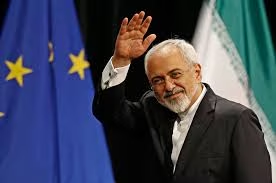
The Hardest Victory: Zarif’s Case for Ending War Through Diplomacy

By: Said Arikat

April 4, 2026

News Analysis

Washington, D.C- In times of war, the language of victory is often loud, emotional, and absolute. It celebrates endurance, defiance, and the ability to withstand overwhelming force. But as Mohammad Javad Zarif—Iran’s former foreign minister—argues in an essay published in Foreign Policy on Friday, April 3, 2026, the true measure of victory is not how long a nation can fight—it is whether it knows when to stop.

Zarif’s argument unfolds against the backdrop of a brutal and unresolved conflict between Iran, the United States, and Israel. His central claim is both simple and deeply counterintuitive: Iran, having endured sustained military pressure without collapsing, has already achieved its most important objective. It has survived. From this perspective, the continuation of war is not a path to greater success, but a risk to what has already been secured.

This framing challenges a powerful current within Iranian public sentiment. After weeks of bombardment, loss, and humiliation, calls for continued resistance carry emotional force. They are rooted not only in the current war but in a long history of grievances—missed diplomatic openings, broken agreements, and punitive sanctions that have shaped Iran’s worldview. Zarif does not dismiss this anger. Instead, he acknowledges it as real, justified, and politically potent. But he also warns that anger, left unchecked, can distort strategic judgment.

What makes Zarif’s essay compelling is precisely this tension between emotion and calculation. He recognizes that for many Iranians, negotiation feels like capitulation, especially when dealing with a counterpart widely perceived as unreliable. Yet he insists that diplomacy is not about trust—it is about leverage. And in his view, Iran now possesses more of it than at any point in recent years.

The war, as Zarif presents it, has exposed the limits of military power. Despite the scale of U.S. and Israeli operations, they have failed to decisively weaken Iran’s core capabilities or destabilize its political system. At the same time, Iran’s retaliatory actions have demonstrated that it can impose costs, even under sustained attack. This mutual inability to achieve decisive victory has produced a familiar but dangerous equilibrium: a stalemate sustained by escalation.

It is precisely this moment, Zarif argues, that creates an opening for diplomacy. The goal should not be a temporary cease-fire that merely pauses the violence, but a more comprehensive agreement that addresses the underlying sources of conflict. He outlines a framework that includes limits on Iran’s nuclear program, the lifting of sanctions, the reopening of critical trade routes, and a mutual commitment to nonaggression.

These proposals are not new, but their significance lies in timing. In earlier negotiations, Iran entered talks under economic pressure and political isolation. Now, Zarif suggests, it can negotiate from a position of resilience. This shift, he believes, could enable a more balanced and reciprocal agreement—one in which concessions are matched by tangible benefits.

Still, Zarif’s vision is not without its contradictions. He argues that Iran’s endurance proves the limits of coercion, yet he calls for compromises that Iran has historically resisted. This raises an important question: if resistance has worked, why change course? Zarif’s answer is subtle but important. Resistance, he suggests, can preserve sovereignty, but it cannot build prosperity. It can prevent defeat, but it cannot secure a stable and prosperous future.

In this sense, his essay is less about ending a war than about redefining national strength. He challenges the idea that security is achieved solely through military capability or ideological steadfastness. Instead, he points to economic integration, diplomatic engagement, and regional cooperation as equally essential components of long-term stability. This is a familiar theme in Zarif’s career, but it carries new urgency in the context of an ongoing conflict.

The obstacles to such a shift, however, are formidable. Trust between Iran and the United States remains deeply eroded. Domestic politics on both sides reward confrontation more than compromise. And the broader regional environment is fragmented, with multiple actors pursuing competing agendas. Zarif acknowledges these challenges, suggesting that external powers may need to play a role in guaranteeing any agreement. Yet even with such guarantees, skepticism will persist.

Perhaps the most striking aspect of Zarif’s argument is its moral dimension. Beneath the strategic calculations lies a simple but profound concern: the human cost of continued war. Infrastructure can be rebuilt, and political positions can shift, but lost lives cannot be recovered. By urging an end to hostilities, Zarif is not only making a geopolitical argument—he is making a humanitarian one.

At the same time, his appeal is pragmatic. Prolonged conflict, he warns, risks expanding beyond its current boundaries, drawing in additional states and deepening regional instability. What is now a contained—if intense—confrontation could evolve into something far more destructive. In that scenario, even a resilient Iran would face costs that no victory could justify.

Zarif’s essay ultimately asks a difficult question: what does it mean to win? If victory is defined as the total defeat of an adversary, then this war has no clear endpoint. But if it is defined as the preservation of sovereignty and the opportunity to build a better future, then Iran may already be closer to it than it appears. The challenge is to recognize that moment—and to act on it.

History shows that many nations have fought courageously in war but failed to turn their battlefield gains into lasting peace. Zarif is warning Iran not to repeat that pattern. He is not calling for surrender, but for strategic thinking—for leadership that recognizes that how a war ends can matter even more than how it begins.

Whether that message will resonate is uncertain. In the heat of conflict, restraint is rarely popular. But as Zarif suggests, the hardest victory is not defeating an enemy—it is choosing, at the right moment, to stop fighting.

OPINIONS

Sat 04 Apr 2026 1:49 am - Jerusalem Time

Decades-Long Permanent Resident Palestinian's Arrest Sparks Legal Controversy: Questions Arise About ICE's Motives and Reliance on Old Israeli Convictions

Washington – Said Arikat – 4/3/2026

The announcement by the US Department of Homeland Security regarding the arrest of Palestinian-Jordanian citizen Salah Salem Sarsour in Milwaukee, Wisconsin, has sparked widespread controversy, amid increasing questions about the timing and legal and political background of the action, especially since the man has resided in the United States for over 32 years and has held permanent residency status for more than 27 years.

According to the authorities' statement, a copy of which was received by Al-Quds newspaper, the arrest operation carried out by Immigration and Customs Enforcement (ICE) in cooperation with the US Marshals Service was based on old accusations dating back to the 1980s, when Israeli courts convicted him of throwing Molotov cocktails and attempting to possess weapons. However, these accusations, issued in the context of the Israeli occupation of the West Bank, raise legal and ethical problems regarding their neutrality and credibility, especially in light of repeated international criticism of the military justice system in the occupied territories.

Although his application for an immigration visa was initially rejected, Sarsour managed to enter the United States in 1993, before obtaining permanent residency in 1998. Authorities claim that he provided misleading information in his immigration file, but this claim comes after decades of his stable residence in the country, without any criminal record on US soil.

Experts believe that reopening a file dating back more than three decades raises questions about the motives for the arrest, especially in the absence of any recent criminal activity. They also indicate that classifying the case as a "national security risk" may reflect a political orientation rather than an action based on an actual and current threat.

In this context, the case is seen as an example of the problematic reliance of US authorities on convictions issued by a foreign military occupation force, which may weaken the legal basis for the measures taken and raise concerns about the politicization of immigration laws and their use as a tool to re-evaluate old cases according to changing standards.

Homeland Security confirmed that Sarsour will remain in detention pending the completion of his deportation procedures, a step that is likely to face legal challenges, especially given the long period he has spent in the United States and his potential ties to his social and family environment.

This case reflects a fundamental problem in how immigration authorities deal with old files that date back to complex political contexts. Reviving accusations from the 1980s, issued by courts under occupation, raises serious questions about justice and the standards used. Moreover, ignoring the person's record within the United States over decades weakens the logic of the current action. It appears that the case goes beyond the legal dimension to touch upon political considerations, raising concerns about the possibility of selectively employing immigration laws to serve changing priorities.

Reliance on convictions issued in a conflict environment, such as the West Bank under occupation, opens the door to deep legal problems related to the reliability of those judgments. Justice in such contexts is often a subject of international debate, both in terms of procedures and guarantees. Therefore, building deportation procedures in the United States on these foundations may expose the legal system itself to criticism. More importantly, this approach may create a precedent that could later be used in similar cases, necessitating a broader discussion about standards of justice.

Politically, this case reflects the escalating use of the immigration file as a tool within a tough security discourse, especially when it comes to people of Middle Eastern origin. While protecting national security is important, expanding this concept to include old cases without indicators of recent threats may lead to counterproductive results. Such measures could undermine trust in institutions and raise concerns within immigrant communities. The real challenge lies in achieving a balance that preserves security without sacrificing the principles of justice and fairness.

ARAB AND WORLD

Sat 04 Apr 2026 1:48 am - Jerusalem Time

Tehran Rejects US Proposal for Temporary Truce, Insists on Field Response Amid Stalled Mediations

Media sources revealed the Islamic Republic of Iran's rejection of a proposal put forward by the United States through a third party, which called for a temporary 48-hour ceasefire. This offer comes at a time when Washington is facing increasing field and political complexities in the region, prompting it to seek a temporary de-escalation solution that was not accepted by the leadership in Tehran.

A high-ranking Iranian official affirmed that his country's official position has been clearly expressed through field escalation and the continuation of military operations against hostile targets. The official clarified that Tehran does not intend to enter into partial agreements or temporary truces, considering that the real response lies in the field to impose new equations that end the ongoing aggression.

For his part, US President Donald Trump downplayed the repercussions of recent military incidents on the course of the negotiation process sought by his administration. Trump indicated in press statements that the loss of an American fighter jet would not change Washington's strategy aimed at reaching an agreement that ends the military confrontation that has been raging for more than a month in the region.

Regarding diplomatic efforts, press reports stated that regional mediation led by Pakistan and other countries has hit a dead end due to the wide divergence in viewpoints. Tehran categorically refused to hold any meetings with American delegations in the capital, Islamabad, describing the conditions and demands set by the US administration as unacceptable and unfair.

In a notable development, Qatar expressed reservations about taking on the role of the main mediator in the current crisis, which further complicated the diplomatic scene and the chances of reaching an early settlement. This Qatari stance comes amid the continued widespread military operations launched by Israeli and American forces against Iranian targets since late February, which have resulted in significant human and material losses.

On the ground, the US military admitted that one of its F-15 fighter jets was shot down by Iranian fire, which represents a qualitative escalation in the direct confrontation between the two sides. Press sources also reported news of a second A-10 attack aircraft crashing in the strategic Strait of Hormuz region, despite the absence of official confirmations from the Pentagon regarding the second incident so far.

The region has been experiencing military turmoil since February 28, with the parties exchanging missile strikes and drone attacks. While the joint forces continue their operations, Tehran responds by targeting military installations and bases, leading to casualties and widespread damage, amid mutual international condemnations and warnings of the region sliding into a comprehensive war.

The Iranian response to the American proposal came on the ground with continued attacks, with a categorical rejection of any temporary agreements that do not meet national demands.

ARAB AND WORLD

Sat 04 Apr 2026 1:48 am - Jerusalem Time

Widespread Iranian Escalation Against Gulf States: One Dead in UAE, Industrial Facility Targeted in Bahrain

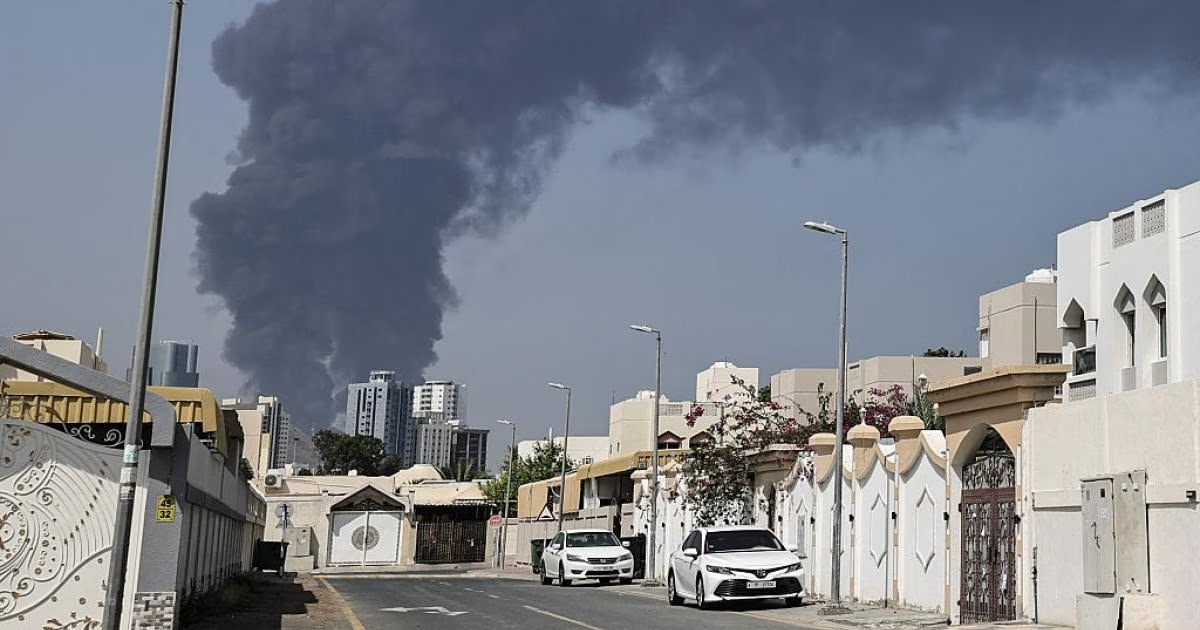
The pace of military tensions in the Arabian Gulf region has escalated unprecedentedly, following a series of intense Iranian attacks targeting vital and civilian facilities in several countries. Official sources in the Emirati capital reported the fall of shrapnel resulting from missile interception operations over the Habshan gas facilities, causing localized fires that led to one death and four others sustaining injuries of varying degrees.

The air defense systems in the United Arab Emirates successfully intercepted an aerial arsenal launched from the Iranian side today, Friday. These interceptions included 18 ballistic missiles, in addition to 4 'Cruise' missiles and 47 suicide drones, in a widespread defensive operation to prevent the projectiles from reaching their strategic targets.

Official statistical data indicates that the scale of military escalation has reached record levels since the outbreak of confrontations, with the UAE recording the interception of a total of 475 ballistic missiles and 2085 drones. These massive figures reflect the continuous military pressure the region is subjected to, and the defensive efforts made to secure airspace and economic facilities.

In the same context, the Kuwaiti army announced the success of its forces in thwarting hostile attacks described as dangerous, targeting the Kuwaiti interior with ballistic missiles and drones. The spokesman for the Ministry of Defense, Colonel Saud Al-Atwan, confirmed that the engineering teams of the ground force professionally dealt with 22 reports related to suspicious objects and remnants resulting from the ongoing military operations.

The Kuwaiti Ministry of Defense clarified that air defenses managed to shoot down nine ballistic missiles and 26 drones directed towards targets within the state during the past twenty-four hours. These developments come amid a state of maximum alert experienced by the Kuwaiti armed forces to secure borders and vital areas from any potential aerial infiltrations.

For its part, Doha entered the defensive confrontation, as the Qatari Ministry of Defense announced the detection and interception of a number of Iranian drones that attempted to penetrate Qatari airspace. Military sources confirmed that the armed forces succeeded in protecting vital facilities and preventing the attack from causing any direct casualties, emphasizing the readiness of Qatari forces to respond to any threat.

In the Kingdom of Saudi Arabia, the Ministry of Defense revealed the destruction of 6 drones in recent hours, as part of joint defensive coordination efforts among GCC countries. Riyadh works closely with its regional allies to strengthen the air defense umbrella capable of dealing with the multiple and continuous threats emanating from Iranian territory.

On another note, the Iranian army officially announced the targeting of an aluminum smelter in the Kingdom of Bahrain, claiming that the facility provides logistical and industrial support to US military forces. This announcement represents a dangerous shift in the nature of declared targets, as major industrial facilities have now become within range, threatening further escalation in waterways and regional economic facilities.

The targeted facility in Bahrain was used to support US military industries, according to Iranian claims.

ARAB AND WORLD

Sat 04 Apr 2026 1:48 am - Jerusalem Time

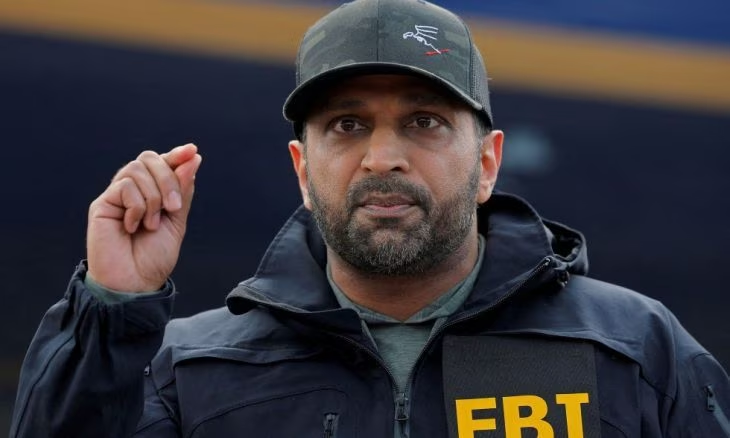
Reports of potential departure of senior Trump administration officials, including FBI director

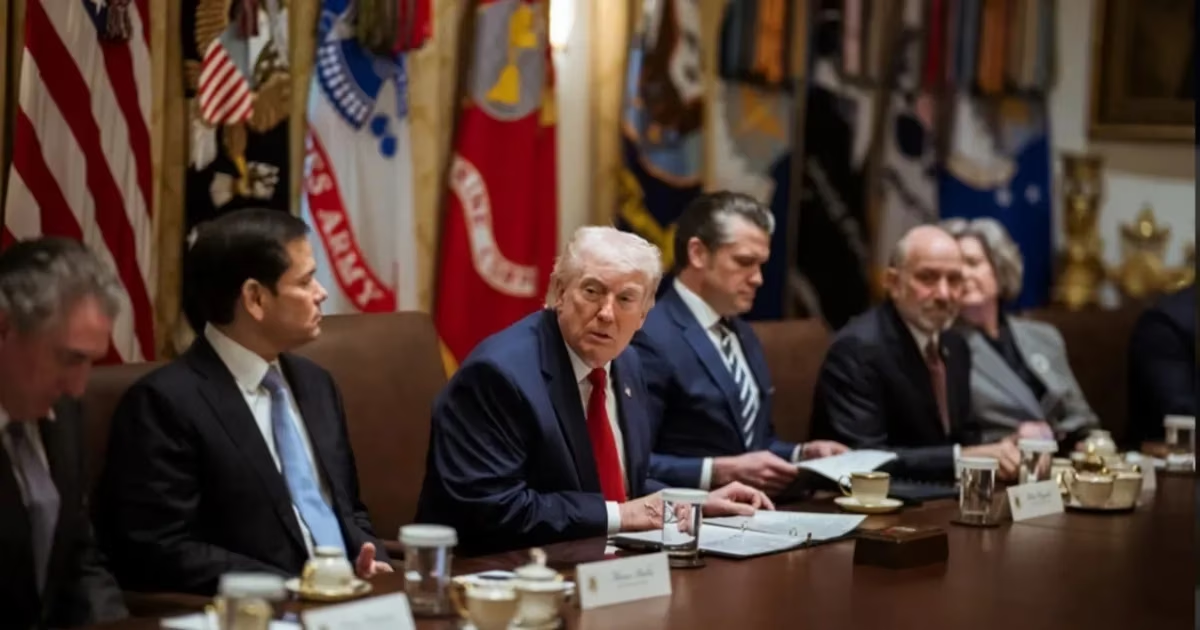
American press reports, citing sources familiar with White House internal affairs, indicated serious internal discussions regarding the future of several senior officials in President Donald Trump's administration. The sources noted that these discussions include the potential departure of Federal Bureau of Investigation (FBI) Director Kash Patel from his position, a move that could reshape the security landscape in the new administration.

According to 'The Atlantic' magazine, the list of officials nominated for departure is not limited to Patel, but also extends to include Secretary of the Army Daniel Driscoll, in addition to Secretary of Labor Lori Chavez-DeRemer. This news comes at a time when the administration is seeking to organize its internal affairs and solidify its policies in various sovereign and service sectors.

Despite these names being widely circulated in political circles in Washington, reports confirmed that President Donald Trump has not made a final decision yet, nor has a clear timeline been set for these potential changes. These movements remain subject to rapid political developments within the corridors of power in the United States.

Discussions revolve around the departure of FBI Director Kash Patel, Secretary of the Army Daniel Driscoll, and Secretary of Labor Lori Chavez-DeRemer, but Trump has not yet made his final decision.

ISRAELI AFFAIRS

Sat 04 Apr 2026 1:48 am - Jerusalem Time

Hebrew Analysis: Trump Faces a Persian Civilization That Does Not Yield to the Logic of Real Estate Deals

Military analyst Alon Ben-David, in the Maariv newspaper, reviewed the historical roots of US President Trump's crisis management style, likening his current reliance on the US military to his old style in Manhattan when he relied on the fierce lawyer Roy Cohn. The writer believes that Trump always seeks an absolute victory that leads to the surrender of the other party, without looking for compromises that ensure everyone wins.

The analysis indicates that Trump today faces an adversary fundamentally different from the mobsters or real estate moguls he used to confront in New York and Atlantic City. Iranians, as descendants of an ancient civilization, possess a strategic vision that differs from concepts of time and victory, which has enabled them to absorb military blows and stand on their feet again despite continuous bombardment.

The current confrontation has proven that Tehran possesses a strategic weapon no less dangerous than a nuclear bomb: the ability to close the vital Strait of Hormuz. This threat puts the entire world in a state of economic pain and makes it difficult for Washington to seize this weapon without engaging in a large-scale naval confrontation requiring capabilities similar to those used in World War II.

Iran's control over the waterways has pulled the rug out from under any American attempt to end the war with a unilateral ceasefire decision. If fighting stops without a comprehensive agreement, Tehran can keep the strait closed to impose its own conditions, placing it in a strong negotiating position against any future diplomatic initiative from the White House.

Trump now finds himself facing choices where the best is bitter. He can either pursue a path of reconciliation and appease the Iranians to ensure the strait's opening, which might harm his political image and legacy as a strong man. The second option is to resort to asymmetric or even unconventional military force in an attempt to bring the regime to its knees, a path fraught with risks and exorbitant costs.

From an Israeli perspective, any scenario ending in an agreement between Washington and Tehran is a catastrophic outcome, as it necessarily means legitimizing the regime's survival and injecting financial liquidity into its coffers. This would allow Iran to rebuild its damaged military capabilities, forcing Israel to confront it again in the near future under potentially less favorable conditions.

Concerns are growing in Tel Aviv about losing the freedom of military action it currently enjoys under the Trump administration, especially since previous wars ended with international pressure affecting the final results. But in this war, the final decision seems to be solely in Trump's hands, who views the current conflict as a personal battle related to himself and his political legacy.

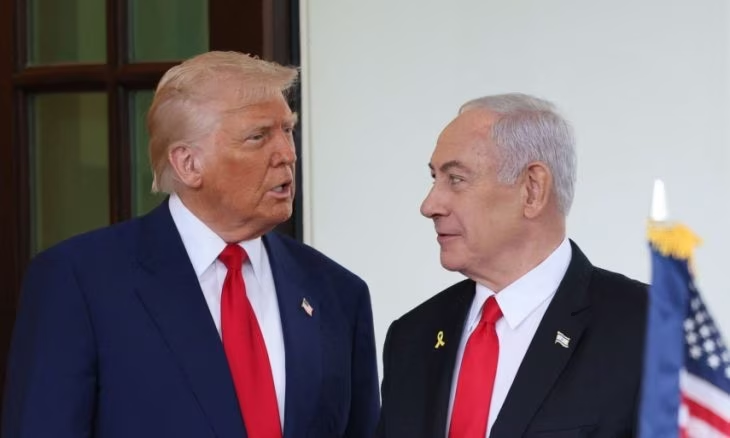
Although Trump listens carefully to Netanyahu, the analysis warns that the Israeli Prime Minister's influence on White House decisions ultimately remains limited. The US President will not hesitate to blame Netanyahu for dragging the United States into a futile war if he feels it serves his domestic political interests or protects his image among voters.

The issue of enriched uranium stands out as one of the strategic goals Trump might seek to achieve to declare victory, as Iran possesses about 440 kilograms distributed across sites in Isfahan, Fordow, and Natanz. If a military operation succeeds in destroying or removing half of this quantity, Trump might consider it a sufficient achievement to withdraw from direct confrontation or move to negotiations from a position of strength.

Destroying nuclear capabilities, even partially, will not necessarily lead to the fall of the Iranian regime or the automatic reopening of the Strait of Hormuz. However, analysts believe that such an achievement could give the US administration the necessary pretext to continue the war through other economic and political means ultimately aimed at changing the regime's behavior or structurally weakening it.

Ultimately, the regional arena appears to be facing a difficult labor, where the ambitions of great powers intertwine with the resilience of regional powers. While Israel awaits the results of this confrontation, the question remains about Trump's ability to balance his desire for quick victory with the complexities of a civilization that does not measure success by the standards of fleeting real estate deals.

Iran is not Manhattan real estate moguls, but a 3,000-year-old civilization with different concepts of time and victory.

PALESTINE

Sat 04 Apr 2026 1:48 am - Jerusalem Time

Syria Rises in Support of Prisoners: Massive Demonstrations Sweep Provinces Condemning Occupation Decisions

A wave of demonstrations and protest vigils in solidarity with the Gaza Strip is escalating across various Syrian provinces, expressing the unequivocal popular rejection of the Israeli occupation's attempts to approve a law for the execution of Palestinian prisoners. The city of Salamiyah in the Hama countryside recently witnessed a massive protest vigil, where participants affirmed the unity of destiny between the Syrian and Palestinian peoples in confronting oppressive policies.

From the very first moments of the Israeli Knesset's announcement of the approval of the execution decision, marches have not ceased in the cities of Damascus, Daraa, Aleppo, Homs, and Hama, extending to Idlib and Latakia. This popular movement has revitalized the Palestinian cause in the Syrian street, confirming that it remains the central issue despite the internal crises the country has experienced in recent years.

Neither the rainy weather conditions nor the cold atmosphere prevented Syrians from coming out in large numbers, especially in areas near the borders with the occupied territories in the Daraa countryside in the south of the country. These field movements carried clear political messages to the occupation, indicating that the tightening of restrictions on prisoners and the aggression against Gaza would ignite an uncontrollable anger in the region.

Political analysts believe that the emergence of these demonstrations during the phase of rebuilding the Syrian state reflects a deep popular awareness of the necessity to support the Palestinian right. Informed sources indicated that the injustice inflicted on the Gaza Strip, coinciding with increased Israeli incursions into southern Syria, has stirred a state of popular ferment that translated into widespread protests.

Observers confirmed that popular friction with the occupation army in the Syrian border areas is not a recent phenomenon, but rather an extension of a history of confrontation. Researchers warned that the continued failure of political negotiations could push the field situation into more dangerous slides, especially with the occupation's insistence on its provocative practices against prisoners.

For their part, researchers at political studies centers considered the decision to execute prisoners an humanitarian provocation that prompts free peoples to act spontaneously. They explained that the Syrian people are rising up from national, religious, and humanitarian standpoints, driven by the Syrian authority's understanding of this popular stance, which expresses an implicit rejection of Israeli barbarism.

On the official level, Syria had recently conducted negotiations, with Syrian President Ahmed Al-Sharaa stating two days ago that there were direct and indirect contacts with the Israeli side. Al-Sharaa clarified that these negotiations have not yet reached a final agreement, leaving the door open for all field and political possibilities in light of the current escalation.

Despite the absence of an announced official stance towards the demonstrations, analysts believe that the movement, whether spontaneous or guided, proves the return of the Palestinian cause to its natural place in the Syrian consciousness. Experts stressed that Syrians support Palestinian rights on a principled basis that transcends the nature of the ruling authority or unforeseen political changes.

In the religious aspect, mosque pulpits in most Syrian cities have turned into platforms for solidarity with Gaza, where preachers focused on the suffering of Palestinian prisoners. Imams called on worshippers to support the Palestinian people through prayer and action, condemning the Israeli decisions that violate all international and humanitarian norms and laws.

These Syrian movements have received a positive echo among Palestinian resistance factions, with Abu Ubaida, the spokesman for the Al-Qassam Brigades, praising the steadfast stances of the Syrian people. Abu Ubaida extended a special greeting from the heart of Gaza to the Syrian masses who chanted for the resistance and Al-Aqsa, considering this solidarity to strengthen the resolve of the fighters in the field.

We extend our greetings to the proud people of Syria, and its masses who came out chanting for the resistance, and in support of Al-Aqsa and the prisoners.

PALESTINE

Sat 04 Apr 2026 1:47 am - Jerusalem Time

New York: Jewish youth's attempt to seize home sparks outrage and comparisons to settlement in Palestine

Social media platforms in the United States were abuzz with a video documenting a strange incident in New York City, where a Jewish youth attempted to seize an occupied home. The youth appeared in the clip carrying a stack of papers that he claimed were official documents proving his ownership of the property, ordering the homeowners to vacate it immediately.

In response, the homeowner vehemently rejected these claims, asserting that the property was his private ownership and that the youth had no connection to it whatsoever. The homeowner described the youth as a "fraudster" attempting to illegally seize others' property, demanding that he leave the premises before the situation escalated further.

The property owner explained during the video that they had called local police to deal with the situation, but the authorities' response was not up to par. He indicated that police officers did indeed arrive at the scene but left without taking any decisive action to deter the youth or end the attempted seizure, which angered the residents.

The homeowner described the person attempting to take over his property as an "Israeli trying to scam," emphasizing that his family would not allow this attempt to succeed no matter the cost. These words resonated widely among followers who considered the incident a dangerous indicator of certain behavioral patterns transferring to American cities.

The incident sparked a massive wave of interaction and comments, with many activists linking what happened in New York to what Palestinians face daily in the West Bank and occupied Jerusalem. Commentators considered the method used by the youth, in terms of claiming official papers and demanding residents leave, to be the same "protocol" followed in settlement operations.

Followers pointed out that the use of judicial orders, which may be forged or based on false historical claims, is a weapon used by settlers to displace Palestinian families. Some warned that the silence of authorities in some countries might encourage the repetition of these models, as if some areas in New York are being treated as an extension of the occupied territories.

This incident comes at a time when the Palestinian presence in occupied Jerusalem, specifically in neighborhoods like Sheikh Jarrah and Silwan, is witnessing a significant escalation in forced eviction attempts. Palestinian families are being forced to leave their homes in favor of settlement associations under heavy security protection, which observers see as an embodiment of a systematic ethnic cleansing policy.

This person is an Israeli trying to scam, and we will not allow this attempt to succeed in any way.

PALESTINE

Fri 03 Apr 2026 8:37 pm - Jerusalem Time

American Acknowledgment of Fighter Jet Downing Over Iran and Conflicting Reports on Crew's Fate

A US official, in press statements today, Friday, acknowledged the downing of a US Air Force fighter jet in Iranian airspace. The official clarified that US forces immediately launched a large-scale search and rescue operation in an attempt to locate the missing crew, amidst a state of ambiguity and conflicting reports regarding their fate.

For its part, the Iranian Revolutionary Guard issued an official statement confirming the success of its advanced air defense systems in intercepting and downing the American fighter jet. The statement indicated that the operation took place in the central region of the country, emphasizing that the aircraft was completely destroyed as a result of the direct targeting.

Regarding the fate of the pilots, international media sources reported that available information indicates the rescue of one crew member and his transfer for necessary treatment. However, the fate of the second crew member remains shrouded in mystery, as monitoring efforts have not succeeded in determining his location to date.

Initial analyses of the wreckage photos circulated by Iranian media suggested that the aircraft might be an F-15, while other technical reports indicated the possibility of it being an advanced F-35. This incident is considered a significant blow in light of the ongoing military escalation in the region for weeks.

Iranian sources reported that US forces carried out incursions into Iranian airspace using 'Black Hawk' helicopters and 'Hercules 130' aircraft to conduct a rescue mission. The sources confirmed that these attempts faced severe difficulties and did not achieve their objectives in recovering the missing pilots.

Local news agencies in Tehran suggested that the American side might resort to providing alternative narratives about the rescue operation to maintain the morale of its forces. These sources considered the capture of American pilots a strong blow to American military prestige in the region.

In an escalatory move, Iranian state television announced a generous financial reward for anyone who contributes to the capture of the downed fighter jet's pilots. This coincided with Fars News Agency's announcement of the start of extensive field sweeping operations by Iranian ground forces in the geographical area specified for the wreckage fall.

For its part, media sources reported that US President Donald Trump received a comprehensive security briefing on the incident and ongoing rescue efforts. The US administration is following the developments of the field situation with concern, especially with the increasing risks of crew members falling into the hands of Iranian forces.

Field reports indicated armed clashes between American rescue helicopters and Iranian forces attempting to control the wreckage site. Unconfirmed reports spoke of the possibility of one of the American helicopters being hit during these violent confrontations within Iranian borders.

Earlier on Thursday, the Revolutionary Guard had announced the downing of another warplane south of the strategic Qeshm Island near the Strait of Hormuz. The Revolutionary Guard described that aircraft as belonging to a coalition including the United States and Israel, reflecting the widening scope of the aerial confrontation.

These developments come in the context of an open war that began on February 28, involving intense exchanges of missile strikes and drone attacks. These ongoing confrontations have resulted in thousands of casualties and caused severe damage to infrastructure and military installations of the warring parties.

Tehran continues to target what it describes as American interests and sites in the region, in response to joint military operations between Washington and Tel Aviv. In contrast, affected countries condemn these attacks, which have targeted civilian assets and led to significant human and material losses in several Arab countries.

Advanced air defense systems belonging to the Revolutionary Guard shot down the American fighter jet in the central part of the country, and the pilot's fate remains unknown due to the complete destruction of the aircraft.

ARAB AND WORLD

Fri 03 Apr 2026 8:37 pm - Jerusalem Time

The Economist: Confrontation with Iran is an American gamble that could hand China the keys to global dominance

The Economist magazine stated in a recent editorial that promoting war against Iran as a tool to change the balance of power in the Middle East could be completely counterproductive. While proponents of military action see it as a means to weaken the Iranian regime and curb its nuclear ambitions, analysis suggests that the ultimate goal is to subjugate China by controlling global energy corridors.

The magazine explained that the American logic is based on demonstrating the ability to control the flow of oil, making the Chinese economy vulnerable to blackmail or strategic pressure. Washington also aims, through this military display, to restore eroded deterrence and prove its field superiority in the face of Chinese hesitation to protect regional allies.

In contrast, experts and officials in Beijing view this war as 'misguided and arrogant,' and a grave strategic mistake that will ultimately drain American resources. According to diplomatic sources, China has chosen to stand aside and observe Washington sinking into a long-term conflict that weakens its global grip.

Chinese leaders believe that American aggression, as they describe it, reinforces President Xi Jinping's vision of the necessity to focus on national security rather than mere economic growth. They believe that American military involvement will create a strategic vacuum in other regions, which China can exploit to enhance its diplomatic and economic presence.

Reports indicated that Beijing views President Donald Trump's reckless threats and the absence of a clear strategy as evidence of the American administration's confusion. Chinese analysts considered that the display of military power clearly contradicts the absence of achievable political goals, putting Washington on a path to inevitable failure.

Political circles in Beijing hope that the war will solidify the narrative regarding the decline of the United States' unipolar power. Washington's entanglement in the Middle East's chaos for many years will inevitably distract its attention from the East Asia region, the arena where China seeks to shape the features of the twenty-first century.

On the economic front, China has worked to fortify itself against any shocks in energy supplies by building a massive strategic crude oil reserve of up to 1.3 billion barrels. This reserve, along with the diversification of energy sources between nuclear and renewable, gives Beijing the ability to withstand any disturbances in the Strait of Hormuz for several months.

Beijing did not stop at defense; it also developed counter-pressure tools, including the threat to restrict the supply of rare earth metals essential for advanced technological industries. China also seeks to dominate the supply chains of pharmaceutical molecules and electronic chips, in addition to its leadership in quantum computing and robotics.

Chinese economic circles expect the war to create major investment opportunities, especially in reconstruction in Gulf countries and Iran after the end of military operations. The concern about the interruption of fossil fuels will also lead to an increase in global demand for Chinese green technology, such as solar panels and advanced batteries.

China may exploit the weakness Trump might face as a result of involvement in Iran to extract trade and political concessions in upcoming summits. Beijing aspires to reach agreements that limit tariffs and export controls, and perhaps push Washington to take a clearer stance against Taiwan's independence and support 'peaceful reunification.'

Despite this strategic optimism, China cautiously monitors the US military's use of artificial intelligence in coordinating complex combat operations. This technological development in the field prompts Beijing to be more cautious in scenarios of direct military confrontation, especially regarding the sensitive issue of Taiwan.

Analysts believe that the decline of the United States, if it continues at this pace, may completely spare China the option of war to achieve its national goals. However, there remain concerns that the continuation of the conflict could cause severe damage to Chinese exports, although other international powers may be more affected.

A blind spot in Chinese analysis is the reluctance to imagine the United States transforming into a 'rebel power' that undermines the existing global order. China, despite its criticism of Washington, has historically benefited from the stability provided by the rules-based international system to develop its export-oriented economy.

In conclusion, China is betting that the chaos created by Washington will ultimately lead to American isolation and a decline in its reliability among allies. However, the possibility remains that the United States could reinvent its role and adapt to the new reality, which could leave Beijing facing unstable global challenges.

Never interrupt your enemy when he is making a grave mistake; this is how Beijing views American involvement in a new war in the Middle East.

ISRAELI AFFAIRS

Fri 03 Apr 2026 8:37 pm - Jerusalem Time

Israeli Analysis: Condemnations of 'Settler Violence' Are Just a Cover for Silent Ethnic Cleansing in the West Bank

Israeli writer and journalist Oren Ziv considered the recent widespread condemnations by officials, ministers, and military leaders regarding what is known as 'settler violence' to be nothing more than a smokescreen aimed at obscuring the harsh truth. Ziv affirmed in an analytical article that this violence fundamentally represents an official policy systematically adopted by Israeli state institutions.

The writer explained that the term 'settler violence' is used as a euphemism to describe organized and planned attacks launched against Palestinians in the occupied West Bank. These attacks primarily aim to force Palestinian residents to leave their lands and facilitate forced displacement in favor of settlement expansion.

The article noted that the escalation of these assaults and murders since the beginning of the recent confrontations has brought the issue back to the forefront of international and local headlines. This escalation prompted far-right ministers and the army chief of staff to issue unusual verbal condemnations, in an attempt to absorb the growing anger.

In the context of the official stance, Ziv pointed out that Prime Minister Benjamin Netanyahu merely conducted security assessments behind closed doors, avoiding public condemnation of these actions as is his custom. Analysts believe that this silence reflects a desire to maintain the governmental coalition that supports the settlement project with all its tools.

The writer believes that these condemnations do not reflect a real change in security or political doctrine, but rather a recurring pattern that emerges when the assaults cause international embarrassment for Israel. These statements usually appear when the state's image abroad is damaged, while Palestinian victims are completely absent from the core of these official condemnations.

The analysis revealed that external pressures, especially from the American administration, played a significant role in triggering this wave of statements. US Secretary of State Marco Rubio demanded that the Israeli government take concrete measures, making it difficult to continue claiming that these attacks are individual acts.

Despite the Israeli establishment's rhetorical acknowledgment of what it calls 'Jewish terrorism,' this acknowledgment remains devoid of any real punitive measures. This is because settler violence is considered an effective tool for the state to achieve demographic and geographical gains on the ground without bearing direct legal responsibility.

Statistics monitored since the end of last February indicate more than 305 incidents of assault in 139 different areas in the West Bank. These attacks resulted in the martyrdom of 7 people and the injury of hundreds, as well as the displacement of entire communities under threat of arms and with the support of settlers wearing military uniforms.

Ziv affirmed that there is close coordination between settlers and security forces, as many of the attackers serve in the army's regional defense battalions. Official condemnations ignore the fact that the army often provides protection to settlers during their assaults, instead of protecting unarmed Palestinian civilians.

The writer concluded that the ultimate goal of this systematic process is to confine Palestinians to narrow urban enclaves and seize open areas. This policy will continue to expand as long as international reactions remain limited to verbal condemnations that do not impose a new reality or stop the silent ethnic cleansing project.

The term settler violence is merely a euphemism for organized attacks launched against Palestinians with the aim of displacing them from their lands.

ISRAELI AFFAIRS

Fri 03 Apr 2026 8:36 pm - Jerusalem Time

The truth about the targeting of Netanyahu's and the US Ambassador's homes: Misleading videos from Lebanon

Fact-checking platforms have observed a widespread circulation of two video clips on social media, whose promoters claim they document moments of Iranian missile targeting of Israeli Prime Minister Benjamin Netanyahu's home and the residence of the US Ambassador in Tel Aviv. These clips have generated significant interaction amidst the escalating military tension in the region, necessitating a thorough examination of their content and their temporal and spatial context.

Sources specialized in tracking fake news reported that the first video, widely circulated, is completely misleading and has no connection to the current reality. Through reverse image searches, it was found that the video is old and dates back to early March 2026, where it originally documented the aftermath of an Israeli airstrike targeting sites within Lebanese territory, not an attack deep inside Israel.

Regarding the second clip, which its publishers claimed showed explosions at the US Ambassador's residence, technical investigations revealed that this claim is baseless. Sources clarified that the video does not depict any targeting inside Israel, but rather documents a violent Israeli raid that targeted a residential building on Hamoud Street in the Aisha Bakkar area of the Lebanese capital, Beirut, several weeks ago.

The digital data for the second clip indicates that it was first published on March 11, 2026, confirming its use in a misleading context far from current events. This type of media disinformation comes within the framework of attempts to influence public opinion by recycling scenes of destruction and past wars and attributing them to contemporary political and military events to increase the intensity of tension.

The circulation of these fabricated clips coincides with the ongoing direct military confrontations between Iran, on one hand, and the United States and Israel, on the other, which have entered their thirty-fifth day. These confrontations are witnessing a continuous exchange of missile and aerial attacks that have resulted in severe human and material losses for all parties involved in the escalating regional conflict.

Digital media experts warned against being swayed by visual materials that lack official sources, especially during times of wars and major crises. Sources emphasized that relying on reverse search techniques and verifying the original dates of the clips remains the most effective way to counter waves of disinformation aimed at confusing issues and falsifying facts on the ground.

The circulated clips are misleading and do not document any Iranian attack; rather, they relate to Israeli shelling that targeted areas in Lebanon last March.

ARAB AND WORLD

Fri 03 Apr 2026 8:36 pm - Jerusalem Time

New York Times: Trump Faces Strategic Dilemma in Iran, Solutions Elusive

Press reports indicate that US President Donald Trump is facing complex strategic challenges in his conflict with Iran, as promises to end military operations within a few weeks appear difficult to achieve. Sources explained that the President has put himself in a dilemma with no easy way out, especially with continued tensions in the Strait of Hormuz and no tangible results from negotiations.

Sources stated that Trump's goals, which are to prevent Tehran from acquiring nuclear fuel and to change the ruling regime, remain elusive given the current data. Despite intense military pressure, Iran has shown a high capacity to withstand economic and military pressures, while maintaining missile capabilities that enable it to target occupation sites.

Global markets experienced a state of skepticism following Trump's recent speech, as oil prices jumped by 8% due to the absence of a clear plan to end the oil tanker crisis. Observers believe that the US President's insistence that the Strait of Hormuz will automatically open at the end of the war did not convince investors who fear a prolonged disruption of global energy supplies.

Analyses indicate that Trump is adopting contradictory paths; while he speaks of an imminent end to hostilities, he simultaneously threatens to return Iran to the Stone Age. This contradiction raises fears of an expansion of the conflict instead of its containment, especially since the American conditions for a solution remain vaguely defined behind closed doors.

Regarding the Iranian domestic front, Trump backed down from his explicit calls for regime change, claiming that change had already occurred with the death of some leaders. Press sources considered this proposition to lack political realism, as changing individuals does not necessarily mean the collapse of the governing structure that has been in place for decades in Tehran.

Trump relies on methods drawn from the real estate world in managing the crisis, attempting to impose a new reality through strong statements and continuous pressure. However, military reality proves that the other party possesses tools to shape the security environment, making Iran's waiting strategy a gamble on the decline of American markets and Washington's withdrawal.

The US administration faces an additional dilemma: securing the Strait of Hormuz and ensuring it remains open to international navigation after the end of military operations. Trump has called on international allies to be courageous and participate in controlling the strait, which was met with clear coolness from European powers who feel marginalized in the decision-making process.

There is widespread anger in European capitals due to Washington's failure to consult its allies before starting the conflict that ignited a global energy crisis. British Prime Minister Keir Starmer clearly expressed this position, emphasizing that his country will not be drawn into a war it does not consider its own, which deepens American isolation on this issue.

Tension between Washington and its allies reached the point where Trump threatened to withdraw from NATO, in response to what he described as the weak contribution of allies. However, leaked videos show the US President's realization in closed rooms of his country's need for international assistance to secure vital waterways in the post-war phase.

In the context of verbal escalation, the term 'return to the Stone Age' emerged as a slogan adopted by the hardline wing of the US administration, led by Defense Secretary Pete Hegseth. This approach reflects a desire to use the utmost lethal force to destroy Iranian infrastructure, which raises widespread international criticism regarding the legality of these attacks.

Experts believe that the current American rhetoric lacks a comprehensive political vision for Iran's future or how to deal with its people away from destructive military options. Instead of presenting an attractive democratic model, the current strategy focuses on hard power, which could lead to counterproductive results that strengthen the internal cohesion of the regime in the face of external threats.

On the international front, China, the largest oil importer, maintained a cautious distance from the conflict, depriving Washington of important international cover for its operations. Leaders in Tehran appear to be betting that internal economic pressures in the United States will eventually force Trump to reconsider his calculations and withdraw from the confrontation.

The challenges facing US forces in the region appear to be unsolvable quickly, as the White House promotes in its public speeches. Whether Trump decides to withdraw in the coming weeks or proceed with escalation, the economic and security consequences will continue to cast a shadow over global stability for a long time.

In conclusion, the situation on the ground remains the final arbiter in this conflict, as Iranian missile barrages continue to target vital sites despite intensive aerial bombardment. This reality puts the credibility of Trump's election promises to end foreign wars at stake and opens the door to complex scenarios that may reshape the map of alliances in the Middle East.

This is not our war, and we will not be drawn into it.

ARAB AND WORLD

Fri 03 Apr 2026 8:36 pm - Jerusalem Time

Katz warns Naim Qassem of 'heavy price' and affirms continued security control over the Litani region

Israeli Defense Minister, Israel Katz, issued a direct and strongly worded threat to the Secretary-General of Lebanese Hezbollah, Naim Qassem, vowing that he would pay a heavy price as a result of the recent military escalation. Katz affirmed in his statements that the intensification of rocket barrages targeting Israeli territory would not go unanswered with a deterrent response affecting the organization's leadership and military structure.

Katz clarified in a video message broadcast on Thursday evening that Hezbollah's attacks coincided with Israelis celebrating Passover, which he considered a provocation warranting severe punishment. He indicated that targeting civilians during their traditional holiday dinner places the party's leadership in the direct and central targeting circle during the upcoming phase.

The Israeli Defense Minister's statements included unprecedented aggressive language, as he vowed to make Naim Qassem meet the same fate as resistance axis leaders who were previously assassinated. He specifically mentioned Hassan Nasrallah and Yahya Sinwar, considering that the fate of the current Hezbollah leadership would be no different from those who preceded them in confronting the Israeli military machine.

Katz stressed that the Lebanese state and Hezbollah's supporting environment would bear the full and dire consequences of the policies pursued by the party's new leadership. He warned that continued rocket fire would lead to an expansion of military operations to include strategic and vital targets in various Lebanese regions without exception.

Regarding the field situation in the South, the Defense Minister affirmed that Israeli forces are systematically working to clear the border area of the presence of Hezbollah fighters and their supporters. He clearly announced that Israel intends to maintain full security control in the Litani region to ensure that rocket threats do not return to northern settlements.

The Israeli official indicated that the strategic objective of the ongoing military operation is the complete dismantling of Hezbollah's military capabilities throughout Lebanon. He explained that the Israeli army possesses the necessary plans and means to reach weapons depots and launch platforms wherever they are found, to ensure the long-term security of Israeli citizens.

For its part, field sources reported that Hezbollah had earlier announced the execution of a series of qualitative rocket attacks targeting military sites and settlement gatherings in northern occupied Palestine. These attacks came at a sensitive time, coinciding with the start of Jewish religious rituals, leading to a state of widespread alert among the Israeli army.

The Lebanese front has been witnessing continuous escalation for months, with the parties exchanging heavy shelling amidst Israeli ground infiltration attempts in border villages. Israel extensively uses its air force to strike what it describes as 'terrorist targets,' while the party continues to counter these attempts through ambushes, sniping operations, and guided missile launches.

Observers believe that Katz's statements reflect Israel's intention to prolong the military confrontation and impose a new security reality in South Lebanon that goes beyond international resolution 1701. Tel Aviv insists that future security arrangements must include a military presence or close monitoring of the area south of the Litani River to prevent the rearmament of the party.

In a related context, Israeli warplanes continue to launch raids on the southern Beirut suburb, the Beqaa, and areas deep in South Lebanon, resulting in massive destruction of infrastructure and residential buildings. Israeli military sources claim that these raids target command and control centers and strategic weapons depots belonging to Hezbollah.

On the political front, these threats raise international concerns about the region sliding into an all-out war that could include other regional parties, amid stalled diplomatic efforts to reach a ceasefire. The Lebanese government calls on the international community to intervene to stop Israeli aggression and protect civilians and national sovereignty, which are subjected to daily violations.

The Israeli Defense Minister concluded his statements by emphasizing that the Israeli army will not stop until it achieves all its declared objectives in Lebanon, indicating that military pressure is the only way to force Hezbollah to retreat. The field scene remains open to all possibilities given the insistence of both parties to continue fighting and achieve gains on the ground.

I have a clear message to Naim Qassem: You and your partners will pay a very heavy price for intensifying rocket fire on Israeli civilians.

PALESTINE

Fri 03 Apr 2026 8:36 pm - Jerusalem Time

Killed and wounded in bloody clashes between militias linked to the occupation in the southern Gaza Strip

Palestinian security sources revealed that violent armed confrontations occurred this Friday afternoon between elements belonging to militias collaborating with the Israeli occupation forces in the central and southern areas of the Gaza Strip. These internal clashes resulted in a number of dead and wounded among the warring groups, amid a state of severe security tension in the areas where these elements hold influence.

The sources explained that the conflict erupted due to a sharp dispute over areas of field control between a militia calling itself 'Free Homeland Forces,' led by Shawqi Abu Naseera and active in eastern Deir al-Balah, and the 'Popular Defense' militia, led by Hussam Al-Astal, known by the nickname 'Abu Seven,' whose activities are concentrated in the eastern areas of Khan Yunis city.

The intensity of the armed clashes was concentrated in the Bani Suhaila area, northeast of Khan Yunis, which is considered a stronghold for the militia elements led by Al-Astal. Machine guns were used in these confrontations, leading to heavy human losses among both parties competing for influence in areas close to the concentration of occupation forces.

Initial local estimates and reports indicate that the number of fatalities from these clashes ranges between 12 and 14 elements from both sides, in addition to others sustaining various injuries. News continues to report on the ongoing state of alert and field tension, with fears of renewed fighting in the absence of any intervention to resolve the conflict by the controlling powers.

It is worth noting that these armed groups operate primarily within what is known as the 'Yellow Line,' which are geographical areas under the direct military control of the Israeli occupation army. These militias move freely under the protection of the occupation, where they are entrusted with security and logistical tasks in areas whose residents have been displaced or isolated from the depth of the Strip.

Earlier Hebrew media reports confirmed that the occupation authorities provide secret support to these groups, including supplying them with rifles, ammunition, and logistical equipment such as fuel and vehicles. Through this support, which costs the army budget tens of millions of shekels, Israel aims to create parallel entities to confront Palestinian national forces and manage field affairs in its favor.

These developments come at a time when the occupation army continues to control more than 53% of the Gaza Strip's area, as part of the ongoing military positioning since the ceasefire agreement last October. These clashes reflect the state of chaos and conflict of interests within groups that depend on direct Israeli support and field protection for their survival.

The dispute arose over the area of control between the 'Free Homeland Forces' militia led by Shawqi Abu Naseera, and another called 'Popular Defense' led by Hussam Al-Astal.

OPINIONS

Fri 03 Apr 2026 5:02 pm - Jerusalem Time

Arab Financial Support for Palestine: From an Act of Solidarity to an Existential Necessity

Amidst escalating political and economic pressures on Palestinians, Arab financial support is no longer merely an item in the records of solidarity; it has transformed into a crucial tool in the daily battle for survival. Between attempts to restrict resources and impose conditions, money emerges as a direct line of defense preventing collapse, carrying implications that extend beyond its material value to deeper political and strategic dimensions.

At a moment when political and economic pressures on Palestinians are intensifying, the discussion of Arab financial support takes on a different meaning and function. It is no longer just a humanitarian contribution or a traditional act of solidarity; it has transformed—in the context of attempts to stifle resources—into a political tool par excellence, perhaps even the most direct and effective form of support at this stage.

At the heart of this reality, Israel's policies of drying up sources of funding for the Palestinian Authority stand out as one of the most prominent tools of direct economic pressure. These policies include withholding clearance funds—which constitute the backbone of the Authority's revenues—or deducting parts of them under political pretexts, in addition to imposing restrictions on movement and trade that hinder economic activity and limit the ability of institutions to generate income. These measures also extend to disrupting vital projects and tightening control over resources and crossings, thereby weakening financial capacity and increasing the fragility of the economic structure in general.

What is described as “drying up sources” policies does not only target budget figures but also strikes at the core of the ability to continue: salaries of employees, the operation of hospitals, keeping schools open, and maintaining a minimum level of daily life. It is precisely here that money enters as a crucial element, not as a luxury, but as a condition for survival.

In this context, Arab financial support appears to be the last line of defense against an attempt to reshape Palestinian reality through economic pressure. When resources are restricted and aid is tied to political conditions, providing liquidity—even at its minimum—becomes a counter-sovereign act, restoring some balance to an already imbalanced equation.

Paradoxically, this type of support, which may seem to have limited impact on the surface, has a deeply sensitive cumulative effect. Paying salaries, for example, does not only mean supporting thousands of families but also maintaining an existing institutional structure and preventing administrative collapse that could open the door to widespread chaos. The same applies to supporting vital sectors: health, education, and basic services—where every dollar turns into a factor of stability.

However, the greater importance of this support lies not only in its direct results but also in its political implications. It expresses an implicit rejection of the logic of economic subjugation and confirms that the Palestinian people are not entirely left to external pressure equations. In this sense, it is not just a financial transfer but a message of stance, even if it comes in a silent form.

Nevertheless, it cannot be ignored that this support still falls short of the challenge. It is often intermittent, linked to political circumstances, or subject to the internal calculations of each state. Moreover, the absence of effective Arab coordination reduces its ability to make a sustainable qualitative difference. Financial support, when it is a reaction and not a strategy, loses much of its power.

Hence, the need arises to redefine this role. What is required is not only to increase the volume of funding but to transform it into an organized tool within a long-term vision: stable budget support, investment in productive projects, building economic safety nets, and reducing reliance on conditional sources. Only then can this support move from being a means “to prevent collapse” to a tool “to build resilience.”

Ultimately, Arab financial support today may be the “strongest possible” given the constraints of reality, but it remains part of a broader equation. Nevertheless, in an era where economic tools are used as weapons, money—in all its simplicity—becomes one of the primary front lines. Not because it resolves the conflict, but because it prevents its resolution at the expense of those who do not have the luxury of collapse.

Thus, financial support transforms from the weakest form of faith to an existential necessity; from an act of solidarity to a pillar of survival. In this transformation lies its true importance.

The question remains open: Will this support turn into a sustainable strategy that enhances resilience, or will it remain merely a temporary response in the face of recurring crises? At a minimum, the Arab position today cannot afford neutrality; rather, the minimum is to stand by the Palestinian people—as a commitment that cannot be postponed or subjected to circumstantial calculations.

OPINIONS

Fri 03 Apr 2026 4:41 pm - Jerusalem Time

Israel in Southern Lebanon: A Strategy of Control Without Occupation and the Risks of Escalation Towards a Wider Confrontation

Washington – Said Arikat – 3/4/2026

News Analysis

In a report by the American newspaper "The New York Times" on Friday, the outlines of a striking shift in Israel's strategy in southern Lebanon are revealed. Military operations are no longer confined to limited responses but are moving towards a more organized and sustainable pattern, aimed at reshaping the security environment along the northern border.

The report indicates that Israel has intensified its targeting of Hezbollah's infrastructure, including weapons depots, command centers, communication networks, and tunnels that are part of its combat capabilities. This approach reflects a transition from a policy of containment to a policy of systematic weakening, thereby limiting the party's ability to initiate or maneuver in sensitive border areas.

In this context, the concept of "control without occupation" emerges, where Israel seeks to impose effective field influence without engaging in direct occupation or declaring a permanent presence of its forces within Lebanese territory. This is achieved through a combination of precise strikes, continuous aerial surveillance, and limited incursions targeting specific objectives before withdrawal, creating a new security reality without incurring significant political and military costs.

The report places particular importance on the technological superiority that Israel relies on in its operations, as it heavily depends on drones and advanced reconnaissance systems, which give it a high capability to gather real-time intelligence. This superiority has contributed to narrowing the gap that previously gave Hezbollah an advantage in a complex geographical environment, characterized by rugged terrain and high population density.

Conversely, the report highlights the escalating humanitarian consequences, as the escalation has led to the displacement of tens of thousands of residents from southern villages, transforming vast areas into semi-civilian-free zones. While this reality facilitates military freedom of movement, it poses ethical and political challenges and increases the fragility of the internal situation in Lebanon, which is already suffering from deep economic and political crises.

Hezbollah's reactions, however, appear carefully calculated, as it continues to carry out limited attacks, including launching rockets and targeting military sites, in an effort to maintain the deterrence equation without sliding into an all-out war. This behavior reflects a keenness to balance the display of power with the avoidance of uncalculated escalation, in light of an awareness of the repercussions of any wide confrontation on Lebanon and the region.

On the international level, concerns about the potential expansion of the conflict are growing, with the United States and European countries seeking to contain the escalation through diplomatic channels. However, these efforts so far seem unable to keep pace with the speed of field developments, opening the door to more complex scenarios if the escalation continues.

The report also indicates that the weakness of the Lebanese state, both militarily and politically, limits its ability to assert its sovereignty in the south, leaving a vacuum exploited by conflicting powers. In this reality, a new field equation is established, based on a fragile balance between a superior military force on one hand, and a non-state actor with long combat experience on the other.

In a deeper reading of these developments, it can be said that the Israeli strategy reflects a transition from traditional deterrence to what can be described as "dynamic deterrence," where the state does not merely demonstrate its ability to respond, but exerts continuous, low-intensity pressure to keep the adversary in a state of constant attrition. However, this pattern carries inherent risks, as it may lead to a gradual erosion of the rules of engagement, and open the door to miscalculations that could ignite a wider confrontation.

The scene in southern Lebanon also reveals a deeper problem related to the absence of an effective state, where the vacuum does not remain neutral but turns into an arena of competition between multiple powers seeking to impose their influence. In this context, borders become areas of security fluidity, where concepts of sovereignty intertwine with deterrence calculations, reflecting a structural crisis in the regional system where the roles of states recede in favor of non-governmental actors.

On the regional level, these developments put the rules of engagement established since 2006 to a real test. If Israel continues to expand the scope of its operations without a proportional response, this could be understood as a redefinition of these rules. However, if Hezbollah decides to break this pattern, the probabilities of rapid escalation become more likely, especially given the increasing interconnectedness between the fronts of conflict in the Middle East, making any potential confrontation have dimensions that extend beyond Lebanese borders to affect regional balances.

Regarding the American position, the United States appears to be facing a complex equation that combines its traditional support for Israel with its desire to prevent the regional expansion of the conflict. On one hand, Washington may see the Israeli strategy as a means to weaken Hezbollah without engaging in an all-out war, which aligns with its goals of reducing Iran's influence. But on the other hand, the US administration fears that gradual escalation could lead to an uncalculated explosion, forcing it into direct intervention or threatening its interests and forces deployed in the region.

The European position, however, is characterized by greater caution, as EU countries view developments from the perspective of regional stability and its humanitarian consequences. While some European capitals understand Israeli security concerns, they fear that the entrenchment of "control without occupation" could undermine international law and deepen the displacement crisis. This concern is likely to push Europe to intensify its diplomatic efforts, and perhaps propose initiatives to revive security arrangements similar to those that followed the 2006 war, with the aim of containing the escalation and preventing it from turning into an open confrontation.

PALESTINE

Fri 03 Apr 2026 4:38 pm - Jerusalem Time

Official warnings of an epidemic catastrophe in Gaza due to rodent spread and environmental degradation

Palestinian Minister of Health, Majed Abu Ramadan, issued a warning cry about the danger of deadly epidemics spreading in the Gaza Strip, as a result of the significant increase in the spread of rodents and rats. The Minister explained that this severe environmental degradation is a direct reflection of the accumulation of tons of waste and rubble without treatment, which has provided an ideal environment for the proliferation of these pests that threaten the lives of hundreds of thousands of residents.

Official sources confirmed that the rodents spreading in displacement centers and destroyed neighborhoods transmit a series of dangerous diseases, either through direct contact or through parasites such as ticks and fleas. Among the most prominent health threats monitored by the ministry are Hantavirus, plague, leptospirosis known as rat fever, in addition to salmonella and tularemia, diseases that could lead to widespread deaths in light of the collapse of the medical system.

This health crisis comes at a time when the Gaza Strip is reeling under the weight of a devastating war since October 2023, which has crushed basic infrastructure and rendered most hospitals out of service. The occupation authorities continue to impose strict restrictions preventing the entry of essential fuel and medical supplies, hindering any local efforts to control the successive environmental crises.

Minister Abu Ramadan directed an urgent appeal to the World Health Organization and relevant international institutions, demanding immediate intervention to introduce rodent control materials and strengthen prevention programs. He stressed that a delay in international response would mean an uncontrollable epidemic outbreak, especially in the absence of the most basic public hygiene requirements in most areas of the Strip.

The Ministry of Health noted that the danger exacerbates the suffering of more than a million Palestinians currently living in dilapidated tents or in the open, putting them in direct confrontation with rodents and insects. These fragile housing conditions make it impossible to implement isolation or individual prevention measures, turning displaced persons' gatherings into potential hotbeds for rapid infection spread.

Regarding the most vulnerable groups, the Minister pointed out that children in Gaza are suffering from accelerating health deterioration, with thousands of permanent disabilities and limb losses recorded as a result of continuous bombardment. This coincides with a severe spread of malnutrition among infants and children, which weakens their immune systems and makes them susceptible to death if infected with any of the rodent-borne diseases.

In conclusion, the Minister of Health ended his statement by calling on the international community to bear its legal and humanitarian responsibilities towards the residents of the Strip, and to take serious action to ensure the provision of health protection and improvement of living conditions. He stressed that the continuation of the current situation poses an existential threat to the future of emerging generations in Gaza, amidst the combination of hunger, disease, and destruction.

The health situation of children is rapidly deteriorating, with thousands of permanent disabilities recorded and the spread of malnutrition, which increases mortality rates.

ARAB AND WORLD

Fri 03 Apr 2026 4:37 pm - Jerusalem Time

Widespread Military Escalation in Southern Lebanon: Infiltration Attempts in Bint Jbeil and Intense Rocket Barrages Towards Galilee

Areas of southern Lebanon witnessed a new wave of intense field escalation today, Friday, as Israeli forces intensified their aerial raids concurrently with repeated attempts to infiltrate by land on several fronts. Field sources reported that warplanes carried out a series of intense raids, the most violent of which focused on the town of Srifa, part of the Tyre district, amidst continuous overflights by fighter jets in Lebanese airspace.\n\nThrough this escalation, the occupation forces seek to exert military pressure to displace the remaining residents in the areas south of the Litani and Zahrani rivers. The aerial operations also aim to cut off logistical supply lines for Hezbollah fighters, especially in the central sector, which is witnessing the most intense clashes since the start of the ground offensive.\n\nField data indicates that the city of Bint Jbeil has become a main axis for current Israeli military operations, as the Israeli army attempts to encircle it from different directions. Attempts to advance are taking place through the towns of Ainata and Aitaroun to the east, and Konin to the north, in addition to the axes of Ain Ebel, Beit Leif, and Rashaf from the western side.\n\nIn response, Hezbollah announced its confrontation of the advance attempts, confirming the targeting of an Israeli military bulldozer with a guided missile at the Liberation Triangle, which connects Bint Jbeil with Maroun al-Ras. The resistance is engaged in fierce confrontations to prevent the attacking forces from gaining control over the strategic entrances to the city and the surrounding border villages.\n\nIn the western sector, Israeli forces are focusing their efforts on establishing a foothold in the towns of Bayada and Shama due to their commanding position overlooking the coastal road. These areas are considered strategic points that allow the occupation to monitor field movements and secure corridors for its ground forces advancing deeper into Lebanese territory.\n\nRegarding the rocket response, Hezbollah has intensified rocket barrages towards the settlement of Kiryat Shmona and various areas in the Galilee Panhandle since the morning hours. Military sources observed at least five rocket salvos within a few hours, targeting assembly points and military supply depots that Israel has converted into launching centers for its operations.\n\nHezbollah statements confirmed the targeting of gatherings of occupation soldiers at the Misgav Am site and the Malkia settlement with direct rocket strikes that achieved precise hits. The operations also included the use of suicide drones that targeted a vital communications node in the settlement of Meilya, reflecting a diversity in offensive tactics.\n\nSources reported that these attacks come within the framework of Hezbollah's strategy to pressure the Israeli government and displace residents of the north in response to the targeting of civilians in the south and the southern suburb. The pace of launches remains high despite the intensity of Israeli raids targeting presumed launch platforms and weapons depots.\n\nFor its part, the Israeli army acknowledged detecting the launch of approximately 150 rocket projectiles from Lebanon during the past twenty-four hours, in addition to aerial incursions by drones. The scope of targets expanded to include deeper areas in the north such as Haifa, Tiberias, Acre, and Nahariya, targeting facilities related to Israeli military industries.\n\nIn the city of Khiam, a cautious calm prevails, interspersed with intermittent artillery shelling, while Israeli forces continue their attempts to infiltrate some neighborhoods without full control over them. The occupation forces in these areas resort to scorched-earth tactics by blowing up residential blocks and bulldozing homes in the towns of Naqoura, Taybeh, and Deir Seryan.\n\nIn the capital Beirut, Israeli drones flew at low altitude over the southern suburb, coinciding with the issuance of forced evacuation orders for several residential neighborhoods. The sound of an explosion resulting from a missile launched by a warplane was heard, which fell in the area amidst difficult weather conditions and dense fog that prevented accurate assessment of the damage.\n\nPolitically, the intensity of official statements decreased due to the official holiday, but Lebanese circles are concerned about Israel's attempts to impose a buffer zone in the south. The Lebanese government warned that these steps constitute a blatant violation of national sovereignty and a breach of international conventions regulating borders between states.\n\nThe Lebanese Prime Minister-designate, Najib Mikati, made urgent international calls, including to UN Secretary-General António Guterres, to discuss ways to stop the escalation. Beirut demands intensive diplomatic efforts to prevent the ground operations from turning into a permanent occupation of parts of Lebanese territory, emphasizing its adherence to relevant international resolutions.\n\n"The Israeli army adopts the tactic of blowing up homes and bulldozing residential neighborhoods in a number of border towns to impose a new reality on the ground.

ARAB AND WORLD

Fri 03 Apr 2026 4:37 pm - Jerusalem Time

Religious undertones shroud the confrontation: How did the American war on Iran turn into a 'holy war' during Trump's era?

The corridors of power in Washington and Tel Aviv are witnessing a remarkable shift in the nature of discourse directed against Iran. The objectives are no longer limited to the nuclear and missile files but have extended to take on a religious character, suggesting the waging of a 'holy war'. These manifestations are evident in President Donald Trump's embrace of religious leaders who participate in official prayers inside the White House, reflecting a state of mobilization with an evangelical Christian facade to support the American administration's military orientations.

On the Israeli side, the scene does not appear different, as Prime Minister Benjamin Netanyahu has intensified the use of biblical references in his speeches since the outbreak of the recent confrontation. This was clearly evident before the Jewish Passover, when he drew a historical and religious comparison between the current war on Tehran and the story of the Israelites' salvation from Pharaoh, in an attempt to lend religious legitimacy to the ongoing military moves.

Although the United States is officially known as a secular state, the conflict with the Islamic Republic of Iran has contributed to bringing religious discourse closer to political orientations in an unprecedented way. Media sources have reported religious celebrations in the White House during 'Holy Week', which included public prayers asking for 'victory' for Trump as the person prepared for this historic moment, which sparked widespread controversy after video clips of these rituals were leaked.

This religious tone acquires double sensitivity given that the parties involved in the conflict represent the three major monotheistic religions that originated in the Middle East. This overlap between belief and military diplomacy places the region before a complex scene that transcends traditional political differences into a conflict of deeply rooted religious identities and values, which increases the difficulty of diplomatic solutions.

US Secretary of Defense, Pete Hegseth, is one of the most prominent figures adopting this hardline religious discourse within the administration. Hegseth has, on official occasions, called for prayer for American soldiers in the Gulf using specific religious formulas, ignoring the doctrinal diversity within the ranks of the US military, which observers considered a departure from established military traditions.

Hegseth bases his vision on texts from the 'Book of Psalms', where he invokes the prayers of Prophet David during his fight against his enemies, likening the current reality to the wars mentioned in the Bible. He also stated in media interviews that he is confronting 'extremists' seeking to acquire nuclear capabilities in preparation for the battle of 'Armageddon', which is the battle of the end times in Zionist Christian belief.

Hegseth's military and intellectual history reinforces this trend. Before taking over the defense portfolio, he served as an infantry officer in Iraq and Afghanistan, and bore tattoos of Christian symbols associated with the time of the Crusades, such as the 'Jerusalem Cross'. He also authored a book titled 'American Crusades', in which he called for the defense of Western civilization against what he described as decline and external and internal threats.

This increasing mixing of religion and politics has drawn sharp criticism from academics and former clerics in the US military establishment. Experts believe that imposing a specific religious vision within a national institution like the military represents an abuse of power and a lack of respect for the diversity upon which the American nation is built, warning of the repercussions of this on the cohesion of the armed forces.

On the international level, the Vatican entered the crisis through statements by Pope Leo XIV, in which he affirmed that God does not love war and cannot be used to justify armed conflicts. This position puts the American administration in confrontation with global religious authorities that reject the politicization of beliefs to serve geopolitical or military objectives.

Despite the criticism, the Trump administration continues to defend its approach, with White House spokeswoman Karoline Leavitt considering prayer for the armed forces a noble act that reflects the values of American society. Leavitt rejected suggestions that this behavior fuels religious conflicts, emphasizing the President's right to practice his rituals and invite others to participate in them.

This trend is set to culminate in a massive gathering in Washington in mid-May, where Trump intends to lead a national prayer aimed at 'rededicating America to God'. Analysts see this event as an official declaration of the shift in American foreign policy towards 'Christian nationalism' which views international conflicts as an extension of religious prophecies.

In contrast, Iran finds itself at the heart of this discourse as an 'Islamic Republic' led by a Supreme Leader who combines spiritual and temporal authority. This juxtaposition in religious discourse between Washington and Tehran transforms the conflict from a competition for regional influence into an open ideological confrontation, where each side sees itself as representing divine will in the face of 'evil'.

The invocation of terms such as 'Crusades' and 'Armageddon' brings to mind bitter historical conflicts and weakens the chances of rational dialogue based on common interests. Observers believe that this verbal escalation could lead to unforeseen military slips, driven by metaphysical convictions that transcend the traditional strategic calculations of states.

Finally, the question remains about the extent of this discourse's impact on Washington's allies in the region and the world, especially those who fear the transformation of political conflict into a comprehensive religious war. While military preparations continue on the ground, the 'holy war' promoted by some parties in Washington and Tel Aviv remains the most prominent title for the next phase in the Middle East.

Our Father, you have raised Donald Trump, you have prepared him for such a moment, and we pray, Our Father, that you grant him victory.

ARAB AND WORLD

Fri 03 Apr 2026 4:37 pm - Jerusalem Time

Beijing warns of continued Strait of Hormuz disruption, describes attacks on Iran as 'illegal'

Chinese Foreign Minister Wang Yi affirmed that the current navigation crisis in the Strait of Hormuz represents one of the direct consequences of the armed conflict with Iran. He clarified in official statements that the stability of this strategic waterway will not be achieved as long as military operations continue in the region, emphasizing the necessity of reaching an immediate ceasefire.

These positions came during a phone call between the Chinese minister and his Saudi counterpart, Prince Faisal bin Farhan Al Saud, during which the two sides discussed ways to de-escalate. Wang Yi called for urgent action to end the hostile acts that have undermined the security and stability of the Arab Gulf states and the region in general.

Diplomatic sources reported that Beijing views the military actions taken against Iran as a departure from recognized international frameworks. The sources indicated that China rejects any attempts to legitimize military operations carried out outside the scope of the UN Security Council's mandate, considering them a threat to peace and security.

In a related context, the Chinese Foreign Ministry described the attacks launched by the United States and Israel as 'illegal' due to their lack of UN authorization. Beijing believes that adherence to UN principles is the only guarantee to protect the rights of medium and small states in the face of major powers in the future.

For its part, the spokesperson for the Chinese Foreign Ministry reiterated her country's position calling for an immediate cessation of the war to avoid a global economic catastrophe. She explained that the continuation of the conflict would lead to dire consequences that are not limited to the parties to the conflict but also extend to global supply chains and energy.

Recent moves indicate Beijing's intensification of its diplomatic efforts through communication channels with various regional and international parties, including Washington. Despite official secrecy, observers believe there are undeclared contacts with the Israeli side aimed at containing the situation and preventing the region from sliding into a comprehensive confrontation.

These Chinese warnings come at a sensitive time when the Strait of Hormuz is witnessing unprecedented tensions affecting international trade. Beijing stresses that the highest priority must be focused on diplomacy and dialogue, away from military solutions that have proven to fail in achieving sustainable stability.

The military operations launched by the United States and Israel against Iran are illegal because they did not obtain authorization from the UN Security Council.