PALESTINE

Tue 07 Apr 2026 3:34 pm - Jerusalem Time

Rare Disease Threatens Lives of Three Sisters in Gaza Amid Continued Closure of Crossings

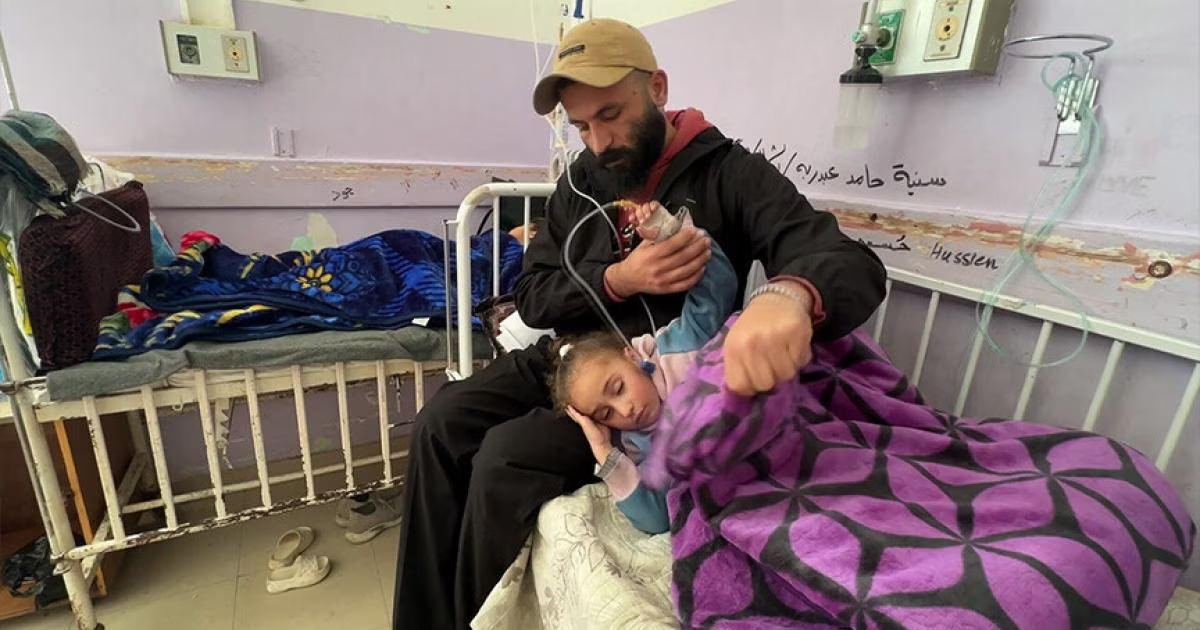
The humanitarian suffering in the Gaza Strip is escalating with the emergence of painful stories of patients afflicted by both disease and siege, as young Masa Al-Khatib and her two sisters face a daily struggle with a rare genetic autoimmune disease that threatens their lives. Their father, Ahmed Al-Khatib, reported that his three daughters have suffered since birth from a severe immune system disorder, leading to chronic infections and significant failure in physical development.

Al-Khatib explained that his daughters' health condition does not respond to any of the treatment protocols available in the Strip's exhausted hospitals, noting that the family has made strenuous efforts to secure a medical exit. Despite obtaining an official referral for treatment abroad through the World Health Organization since early 2024, the continued closure of crossings has prevented them from reaching specialized centers.

For his part, Dr. Iyad Abu Muailaq diagnosed young Masa's condition as suffering from a rare genetic defect that leads to severe weight loss and constant exposure to bacterial and viral infections. Abu Muailaq confirmed that the current medical capabilities in Gaza do not extend beyond providing temporary immune supplements, which are insufficient to stop the continuous deterioration of vital body functions.

Medical specialists stressed that saving the sisters' lives requires precise surgical intervention in the form of a bone marrow transplant, a procedure not technically available in Gaza due to the siege and lack of equipment. Doctors warned that any further delay in performing this operation outside the Strip could lead to uncontrollable complications, putting the girls' lives at risk.

Under these harsh circumstances, the girls' mother spoke about the living challenges that exacerbate the bitterness of the disease, as the family finds it extremely difficult to provide healthy food and essential medicines. She pointed out that her daughters' special health requirements need a sterile environment and intensive care, which is becoming increasingly difficult amid the successive crises experienced by the residents of the Strip.

The family appealed to the international community, human rights organizations, and the World Health Organization for urgent intervention and pressure to open a humanitarian corridor that allows critical cases to travel. These appeals come at a time when medical reports indicate that thousands of patients, including those with cancer and kidney failure, are waiting for their turn on travel lists that remain stalled due to imposed restrictions.

It is worth noting that the health sector in Gaza is under unprecedented pressure due to the severe shortage of essential medicines and medical consumables, making it impossible to deal with rare or chronic diseases. The hopes of the Al-Khatib family remain pinned on an international response that ends their daughters' suffering, in a bitter reality that links the right to life with the opening of closed crossings.

The radical solution is to perform a bone marrow transplant in specialized centers outside the Gaza Strip, and not performing this intervention poses a direct threat to their lives.

PALESTINE

Tue 07 Apr 2026 3:33 pm - Jerusalem Time

Atmospheric Depressions Double the Tragedy of Displaced People in Gaza Amidst Ruined Infrastructure

The chapters of humanitarian suffering for the people of the Gaza Strip are renewed with the arrival of a new atmospheric depression, which clearly revealed the fragility of the living conditions endured by the displaced in dilapidated camps. Field sources from a camp in the Al-Zaytoun neighborhood, southeast of Gaza City, reported that heavy rainwater flooded the narrow passages, turning the lives of thousands into a continuous hell under the weight of bitter cold.

Displaced people in the area confirmed that conditions are worsening with every cold wave that hits the Strip, as stagnant water accumulated in the alleys, leading to an alarming spread of insects and rodents. Citizens are trying by primitive means to alleviate the burden of flooding, but the absence of basic capabilities prevents them from protecting their families from water leaking into temporary shelters.

In testimonies from the heart of the tragedy, one of the displaced explained that the suffering is not limited to the flooding of tents, but extends to a severe shortage of essential bedding and winter clothes. He pointed out that after rainfall, the area turns into a pile of mud and dirt, making living inside these tents impossible in the absence of cleanliness and heating.

For its part, the Palestinian Ministry of Health issued urgent warnings about the serious health repercussions resulting from the accumulation of rainwater in neighborhoods and streets crowded with displaced people. The ministry explained that these water accumulations constitute a fertile environment for epidemics, threatening the lives of citizens, especially children and the elderly who live in tents lacking the most basic safety requirements.

Child Hala recounted part of the tragedy, stating that their tent was completely flooded and her family found no way to drain the water or dry the place, amid a complete absence of rescue or drainage teams. This testimony reflects the general state of helplessness suffered by Palestinian families who found themselves alone in the face of harsh weather fluctuations and collapsed infrastructure.

Citizens demanded the immediate start of reconstruction of the Strip and the provision of alternative housing to protect them from seasonal fluctuations, pointing out that the destroyed infrastructure is no longer able to accommodate the simplest rain showers. The displaced stressed their urgent need for mobile homes (caravans), clothes, and food for children, in light of the inability of local authorities to intervene effectively due to the ongoing siege.

This atmospheric disaster coincides with the Israeli occupation's insistence on reducing the entry of humanitarian aid and basic needs into the Gaza Strip in violation of international laws. Although humanitarian protocols stipulate the entry of a minimum of 600 trucks daily, what is allowed to pass does not exceed 200 trucks, exacerbating the deficit in facing the repercussions of winter.

Our tents were completely flooded due to the accumulated rain, with no party working to drain or remove it from the middle of the camp.

ARAB AND WORLD

Tue 07 Apr 2026 3:33 pm - Jerusalem Time

Killed and wounded in armed clash near Israeli consulate in Istanbul

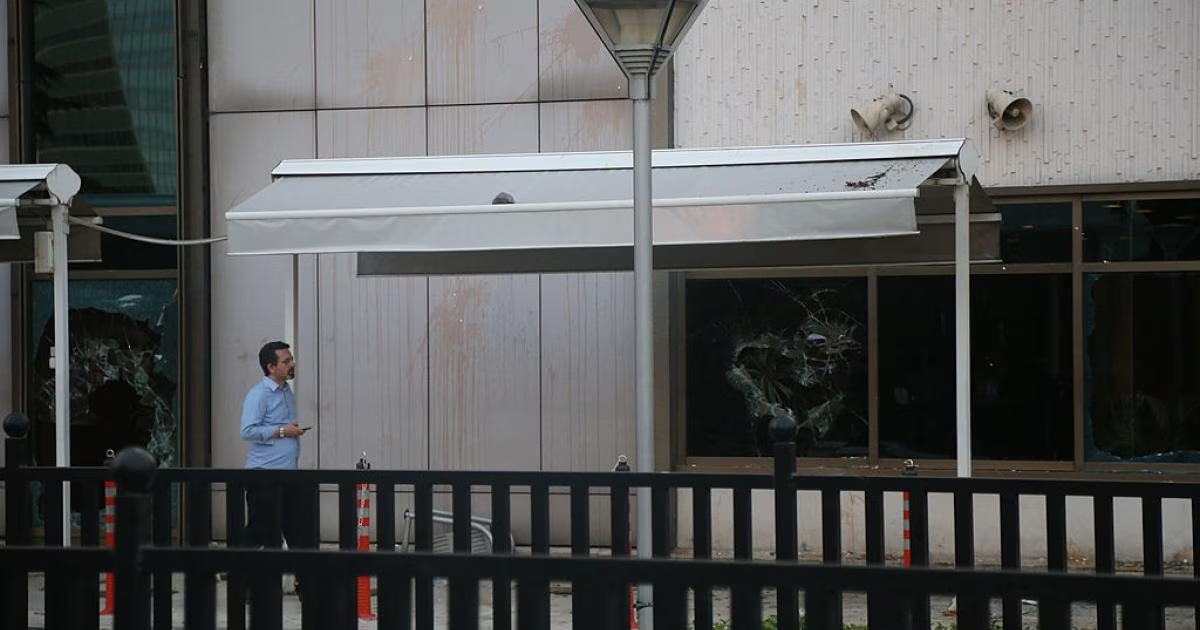
The area surrounding the Israeli consulate building in Istanbul, Turkey, witnessed a violent shooting incident today, Tuesday, resulting in casualties, amidst a security alert at the scene.

Turkish media sources reported that the armed clash led to the death of at least three people, while a fourth person was transferred to the hospital for treatment after sustaining various injuries during the incident that occurred near the diplomatic complex.

Sources quoted eyewitnesses in the area as hearing intense gunfire near the headquarters housing the consular offices, while the motives behind the attack or the identity of the parties involved in the clash are not yet clear.

Gunfire was heard near the building housing the Israeli consulate in Istanbul.

PALESTINE

Tue 07 Apr 2026 3:33 pm - Jerusalem Time

Elderly Palestinian Woman Martyred Following Brutal Assault by Occupation Soldiers in Qalqilya

Elderly citizen Sabriya Shammasneh was martyred early this Tuesday morning, succumbing to severe injuries she sustained as a result of a violent physical assault by Israeli occupation forces in the town of Jayyus, northeast of Qalqilya. Local sources reported that a military force raided the Shammasneh family home in a barbaric manner, where soldiers brutally beat the elderly woman, leading to her transfer to the hospital in critical condition before doctors announced her death due to her severe wounds and bruises.

The crime of killing the elderly Shammasneh coincided with a widespread campaign of abuse launched by the occupation forces in the town of Jayyus, which included raiding and searching a number of homes, destroying their contents, and terrorizing their residents. The military operation resulted in the arrest of young man Osama Al-Qaddoumi before the forces withdrew from the area, as part of a systematic escalation targeting civilians and the most vulnerable groups such as women and the elderly during the violent night raids witnessed in the cities and villages of the West Bank.

In the Gaza Strip, the Israeli war machine continued to claim lives, as 10 citizens were martyred in an airstrike that targeted the vicinity of a school for displaced persons east of the Maghazi camp, following clashes with militias supported by the occupation that attempted to infiltrate the area. Drone aircraft also targeted the clash area with two missiles, while one citizen was martyred and four others were injured, including a medical staff member from the World Health Organization, due to gunfire targeting vehicles on Salah al-Din Street near the Al-Qarara area.

Official statistics indicate a tragic increase in the death toll, with the total number of martyrs since October 7, 2023, reaching approximately 72,302 martyrs, in addition to 172,090 injured. In the past twenty-four hours alone, hospitals received 7 martyrs and 17 injured, amid the continued direct targeting of civilians, including the martyrdom of a child who was riding an electric bicycle in the Sheikh Radwan neighborhood of Gaza City.

Her frail body was unable to resist the pain of the brutal assault carried out by occupation soldiers inside her home.

ISRAELI AFFAIRS

Tue 07 Apr 2026 3:33 pm - Jerusalem Time

War Whales on Wall Street: Suspicious Profits and Trades Preceding Military Decisions Against Iran

Questions are escalating in global financial circles about movements described as 'suspicious' on Wall Street, as these fluctuations coincided with the rapid developments of the war waged by the United States and Israel against Iran. Data indicates that some investors were able to achieve huge profits by exploiting price fluctuations resulting from sudden political and military decisions.

The announcement by US President Donald Trump on March 23 regarding the postponement of bombing Iran stands out as a stark example of this phenomenon, as financial sources observed a massive surge in buying just ten minutes before the statement was issued. This precise timing enabled these investors to reap enormous gains immediately after stock prices jumped following the official announcement, reinforcing the hypothesis of information leakage.

For its part, the news website 'Axios' confirmed the existence of abnormal phenomena in financial markets accompanying the military escalation, pointing to the possibility of trading based on leaked insider information. The site explained that some financial 'whales' may have had prior knowledge of escalatory or de-escalatory steps, which gave them an unfair advantage in the energy and arms markets.

In a related context, the shares of major American defense companies witnessed historical jumps in their market value during a single day of trading in early March. According to data, the market value of 'Northrop Grumman', 'Lockheed Martin', and 'RTX' increased by a total of more than $28 billion, driven by the continuation of military operations against Iranian targets.

The Iranian leadership entered the warning line, with Parliament Speaker Mohammad Bagher Ghalibaf urging investors to be wary of news preceding market openings. Ghalibaf described such news as mere misleading tools aimed at preparing the ground for quick profits, advising traders to make decisions contrary to what these leaks promote.

Suspicions were not limited to unknown investors but also extended to officials in the American administration, as British press reports quoted informed sources saying that Defense Secretary Pete Hegseth made investment attempts in defense companies before the outbreak of the confrontation. Despite the Pentagon's denial of this news, controversy still surrounds the conflict of interest amidst the war.

Observers believe that the 'trader' mentality with which Trump manages international crises contributes to these sharp fluctuations, where political statements are used as economic tools. This policy causes a state of uncertainty in global energy markets, leading to rising oil and gas prices and increased inflation rates that have burdened the global economy.

Economic experts confirm that every war has beneficiaries called 'war whales,' who seize opportunities from the suffering of peoples and the destruction of infrastructure. Experts explained that the current war has revealed a naked economic face, where financial motives are no longer hidden but have become a primary driver of military and political decisions in the region.

In Morocco, economic analyst Mohamed Jadri pointed out that some major powers are pushing for conflicts to increase their arms sales and ensure the flow of profits to their major companies. Jadri considered that the ordinary consumer in various countries around the world is the one who pays the final bill for these conflicts through high living costs and deteriorating purchasing power.

Academic Mohamed Yaouhi also noted that Trump prioritizes the interests of his country and its companies, regardless of the accuracy of his statements. He added that negotiations with Tehran may not begin until Washington feels that its direct economic interests are seriously harmed by the continuation of the conflict.

The United States faces increasing international pressure, especially from Asian countries affected by energy supply disruptions, which may seek alternatives to the dollar in their trade dealings. Analysts believe that continued market manipulation could push Washington's allies, such as Japan, to re-evaluate their strategic alliances to protect their economic security.

The military field has remained ablaze since late February, with parties exchanging missile strikes that hit vital facilities and civilian targets. While operations rooms are busy with military planning, trading rooms in New York are busy monitoring numbers and turning blood and destruction into green figures on stock market screens.

The link between political statements and stock movements reveals an ethical gap in the global financial system, where secret military information becomes a commodity bought and sold. This phenomenon puts the credibility of financial regulatory institutions on the line, given their inability to control trading that precedes major events.

In conclusion, the war on Iran remains an open arena not only for military confrontation but also for settling economic scores and making illicit gains. As the escalation continues, the world awaits what the coming days will bring in terms of surprises that may change the map of economic and political powers in the Middle East and the world.

Beware of what is called news before the market opens, as it is often just preparation for profit-taking... Do the opposite.

OPINIONS

Tue 07 Apr 2026 7:45 am - Jerusalem Time

Hamas Disarmament: Between Political Coercion and Settlement Imbalances

Said Erikat

Opinion Writer

Washington – Said Arikat – 7/4/2026

News Analysis

With the "Peace Council" proposing the disarmament of the Hamas movement within a ninety-day period, efforts to solidify the ceasefire in Gaza are entering a more sensitive and complex phase. The initiative, pushed by the administration of President Donald Trump, appears on the surface to be an attempt to establish a long-term calm, but at its core, it reveals a network of structural contradictions that make its realization on the ground extremely difficult, if not fraught with the risks of re-producing the crisis.

At its essence, this demand reflects a clear absence of balance between the obligations imposed on the parties. Hamas is asked to dismantle its military structure, hand over maps of its tunnels, and abandon the deterrent tools it has accumulated over years, while these steps are not accompanied by binding and equivalent guarantees from the Israeli side, whether regarding a complete cessation of military operations or a comprehensive withdrawal from the Strip. This disparity not only weakens the foundations of trust but also reinforces the impression that the entire process is being managed as a political dictate rather than an equitable negotiated settlement.

According to experts, this imbalance cannot be separated from the broader context of the conflict, where Hamas's weapons, from within its political environment, are viewed as an extension of the idea of "deterrence" in the face of occupation, not as a separate military tool that can be abandoned by a technical decision. Hence, demanding its disarmament without addressing the roots of the crisis, including the blockade, sovereignty, and freedom of movement, seems like an approach that reduces the conflict to its armed manifestations, ignoring its structural causes. In this sense, any security vacuum that might arise from disarmament will not necessarily lead to stability, but may open the door to new forms of tension.

This complexity increases with the time factor, as the deadline set by the proposal—despite being relatively longer—reflects a desire to achieve a political accomplishment within a specific timeframe. However, settlements of this kind are not built under the pressure of timelines but require a cumulative process based on building trust and gradual commitments. Consequently, the time factor transforms from a regulatory tool into an element that could threaten to undermine the negotiation process, as it pushes the parties towards more rigid positions instead of engaging in deliberate concessions.

In a parallel context, another equally important imbalance emerges concerning the "Peace Council's" commitment to its financial pledges, which directly reflects on the credibility of the entire proposal. So far, the promises announced on February 19 have not translated into practical steps, despite the United States pledging ten billion dollars, along with seven billion from the other participants. In response to a question from Al-Quds correspondent, an official in Donald Trump's administration admitted that he did not have updated information beyond what had been previously announced, especially given Washington's preoccupation with its war with Iran, which reinforces doubts about the seriousness of the commitments.

Meanwhile, the linkage between the reconstruction of Gaza and disarmament stands out as one of the most controversial elements of the plan. While reconstruction represents an urgent humanitarian need for the residents of the Strip, using it as a political leverage puts civilians in a vulnerable position, where their basic rights become conditional on the outcomes of negotiations. This intertwining of the humanitarian and political not only raises ethical questions but also threatens to weaken any potential legitimacy of the agreement, as it fosters a feeling that aid is being used as a tool of blackmail rather than a legal and humanitarian obligation.

Benjamin Netanyahu's stance, hinting at the possibility of imposing disarmament by force, adds another dimension of complexity. Instead of creating an encouraging negotiating environment, this rhetoric reinforces a climate of distrust and pushes Hamas to cling to its positions. Amidst ongoing military operations, even during periods of calm, the movement's conviction grows that any strategic concession on the issue of weapons might expose it to a double loss: security and political.

Furthermore, the gap between the pledges regarding the entry of aid into Gaza and what is actually achieved on the ground constitutes an additional factor in weakening the chances of progress. The figures reflecting a limited flow of trucks compared to what previous agreements stipulated give Hamas a justification to question the seriousness of international commitments and reduce its incentives to engage in long-term arrangements that may not be honored.

In light of this, it becomes clear that the demand for Hamas's disarmament, in its current form, cannot be separated from deeper imbalances in the structure of the political process itself. Instead of being part of an integrated path that addresses the roots of the conflict, it is presented as a precondition that rearranges the balance of power without providing sufficient guarantees. While the United States and Israel seek to impose a new security reality, Hamas insists on linking any strategic shift to tangible changes in the terms of the conflict.

Experts believe that any viable approach must transcend the logic of political coercion towards building a gradual negotiating framework based on mutual commitments, clear guarantees, and a relative separation between humanitarian and political tracks. Without this, disarmament will remain a theoretical goal that clashes with a complex reality, and the risk of sliding into a new round of escalation will persist, in an environment where questions of sovereignty, security, and justice have not yet been resolved.

ISRAELI AFFAIRS

Tue 07 Apr 2026 7:45 am - Jerusalem Time

Israeli Strategic Expert Warns: Military Force Alone Will Not Achieve Security Without a Palestinian State

Media and strategic advisor Alon Arnon affirmed that the continuation of Israeli aggression in the region will not lead to real security as long as Palestinians do not obtain their legitimate national rights. He explained in his analysis that conviction is growing within Israeli circles that military force alone cannot protect the home front from continuous erosion.

Arnon pointed out that the conflict management policy pursued by successive governments has begun to collapse in the face of Israel's attrition on seven open combat fronts. He considered that maintaining strategic alliances and preventing economic collapse requires an Israeli realization that the two-state solution represents a fundamental guarantee for future regional stability.

Citing recent history, the strategic expert considered that military arrogance has always been the graveyard of successful political action, as happened in the experiences of Vietnam, Afghanistan, and Iraq. He stressed that superior technological power does not have the ability to extinguish the national aspirations of peoples striving for liberation and independence.

The analysis warned that Israel does not have the ability to withstand multi-sector wars of attrition for long, as its military and social structure was designed for swift and short campaigns. The Israeli economy and reserve army suffer from immense financial and psychological pressures as a result of years of continuous erosion of human and material resources.

Arnon warned that the absence of a political horizon transforms current wars into mere temporary truces preceding more violent and bloody rounds in the near future. He described the continuation of a purely military approach as a dangerous gamble that costs Israel a heavy price in the blood of its citizens and the stability of its society.

The article touched upon the psychological and social effects on the younger generations in Israel, where children grow up in an unhealthy reality characterized by constant fear and a deteriorating sense of personal security. He considered that the current conflict represents a clash between extremist religious visions seeking an eternal war and a realistic perspective that recognizes the importance of civil prosperity.

Arnon believes that recognizing a Palestinian state is not a surrender, as some promote, but a rational decision that blocks the path of forces that thrive on the absence of political solutions. A Palestinian state, from his point of view, is the strongest strategic blow that can be dealt to parties seeking to perpetuate the conflict forever.

The analysis explained that radical transformations in the region and the emergence of regional alliances to confront common threats require a fundamental solution to the Palestinian conflict as a prerequisite. Without this solution, regional alliances will remain fragile and unable to confront the major strategic challenges surrounding the region.

The strategic advisor warned that the absence of a Palestinian state places the Hashemite Kingdom of Jordan on a powder keg, threatening the stability of Israel's longest border. An independent Palestinian state represents a guarantee for the stability of the political system in Amman, which directly reflects on Israeli national security.

Economically, Arnon revealed data indicating that the two-state solution could add about $123 billion to Israel's GDP within a decade. This expected growth comes as a result of stopping the financial bleeding associated with ongoing military operations in the occupied Palestinian territories.

He pointed out that the huge budgets allocated to support army forces in the West Bank are directly deducted from education and health sector allocations. This imbalance in resource distribution threatens the collapse of essential civil services within Israel in the long term due to the heavy economic burden.

Arnon concluded that adhering to the status quo is no longer a viable option in an era of multiple wars and cross-border threats. The financial and psychological cost of maintaining the occupation has exceeded the Israeli society's capacity to endure, requiring a radical change in strategic thinking.

He stressed that military force, no matter how high its peak, cannot be a substitute for a comprehensive political vision that guarantees the rights of all parties. History proves that regular armies always lose if they cannot transform their field victories into a stable and internationally and regionally acceptable political reality.

In conclusion of his analysis, Arnon called on decision-makers in Israel to prioritize rational realism over extremist ideological concepts that are leading the country to the abyss. He considered that time is running out for Israel to make courageous decisions that ensure its survival as a prosperous state in a turbulent regional environment.

The fighter wins if he does not lose, and the regular army loses if it does not win.

ARAB AND WORLD

Tue 07 Apr 2026 7:44 am - Jerusalem Time

Trump admits sending weapons to protesters in Iran and accuses Kurds of confiscating them

US President Donald Trump officially admitted that the United States had shipped large quantities of weapons and military equipment with the aim of delivering them to protesters inside Iranian territory. Trump explained during statements he made on the sidelines of Easter celebrations at the White House that the purpose of this step was to enable protesters to confront the Iranian authorities, which he described in harsh terms, noting that these supplies were part of a broader support plan.

Trump revealed that these military shipments failed to reach their final destination, confirming that the weapons did not reach the hands of the protesters as planned. The US President expressed his strong anger at this logistical failure, hinting that there were intermediary parties that caused the loss of these supplies, which raised questions about the intelligence and security coordination mechanisms followed by Washington in this sensitive operation.

In a related context, Trump directed direct accusations at Kurdish groups in the region, claiming that they were the ones who seized the weapons intended for inside Iran and kept them for themselves. He indicated in a previous media interview that Washington tried to use Kurdish corridors as a channel for transferring weapons, but the results were disappointing after the intermediaries decided to keep the military equipment for their own benefit instead of passing it on.

The US President threatened the parties he accused of confiscating the weapons with dire consequences, stressing that they 'will pay a heavy price' for this action that hindered the American strategy towards the Iranian protests. This harsh tone reflects the extent of frustration in the US administration over the loss of huge military resources that were aimed at changing the balance of power on the ground in confronting the Iranian government.

The roots of these movements go back to the wave of protests that erupted in Iran late last December, which began with livelihood and economic demands before turning into widespread political demonstrations. Trump had made public promises last January to Iranian protesters that 'help is on the way,' which now explains the nature of those aids, which turned out to include combat military equipment.

These confessions raise wide international legal and political repercussions, as they place direct American intervention in Iranian internal affairs under the microscope of international law. They also highlight the complexities of the relationship between Washington and its Kurdish allies in the region, especially after accusing them of betraying American trust and keeping weapons that were intended for secret operations outside the borders of their traditional areas of influence.

We sent weapons, many weapons that were supposed to reach them so that they could fight these villains.

PALESTINE

Tue 07 Apr 2026 7:44 am - Jerusalem Time

WHO suspends medical evacuations from Gaza after one of its staff members was killed

The World Health Organization announced an immediate decision to suspend all medical evacuation activities for patients and injured individuals from the Gaza Strip to the Arab Republic of Egypt via the Rafah land crossing. The organization clarified that this measure will remain in effect until further notice, and comes in response to the deteriorating security conditions that have affected its field staff.

This decision followed a serious security incident on Monday, which resulted in the killing of one of the contracted personnel with the international organization providing vital services within the Strip. The Director-General of the organization, Tedros Adhanom Ghebreyesus, confirmed that the institution is in a state of shock due to this targeting, which threatens the continuity of humanitarian work in the region.

Reports issued by the organization stated that two of its permanent employees were present at the scene of the incident when it occurred, but they did not suffer any physical injuries. Ghebreyesus stressed in his statements that the organization highly values the efforts of its colleagues who continue to work under extremely dangerous conditions to ensure the delivery of healthcare to the besieged population.

The health sector in Gaza is suffering from a near-total collapse due to the ongoing Israeli aggression, making medical evacuations an urgent necessity to save the lives of the injured, cancer patients, and those with chronic conditions. The Rafah crossing is the only remaining lifeline not under direct occupation control on its land borders with the outside world, despite the imposed restrictions.

It is worth noting that Israeli occupation forces had tightened their grip on the Palestinian side of the Rafah crossing during their military offensive in May 2024. Since that date, the crossing has been subject to a near-permanent closure, which has exacerbated the humanitarian crisis and prevented thousands of injured people from traveling to receive necessary treatment abroad.

In conclusion of its statement, the World Health Organization reiterated its demand for the necessity of providing full protection for civilians and workers in the relief and medical sectors in accordance with international laws. Sources indicated that the suspension of evacuations will increase the suffering of hundreds of critical cases awaiting their turn to leave, in the absence of alternative treatments within the dilapidated hospitals in the Strip.

Peace is the best medicine, and we call for the protection of civilians and humanitarian workers who risk their lives to provide care.

OPINIONS

Tue 07 Apr 2026 7:44 am - Jerusalem Time

Global anticipation for 'Trump Time': Will Washington fulfill its threat against Tehran?

Ramallah - “Alquds ” dot com

Ramallah - “Alquds ” dot com

Opinion Writer

The eyes of the entire world are fixed on 8:00 PM Eastern Time on April 7, 2026, a date that has become known as 'Trump Time'. This timing is not just a number on a clock; it is a deadline set by the American president to execute an unprecedented military threat against Iran.

Observers indicate that this threat, which includes 'crushing and obliterating' the Iranian state if it does not yield to American demands, has put the international community on high alert. Major capitals are holding their breath, awaiting what the next few hours will bring in terms of field or political developments.

When the clock strikes eight in Washington, the hands of the clock in Tokyo will have reached 10:00 AM on Wednesday, while residents of Mecca and Moscow will be awaiting the event at 3:00 AM. This time difference reflects the geographical comprehensiveness of the crisis, which has left no spot on Earth untouched in its psychological and economic stability.

In London, it will be one hour past midnight, while Tehran will be in direct confrontation with destiny at 4:30 AM. This global synchronization puts the international system to a real test of its ability to contain military escalation that could change the map of the Middle East forever.

Analysts believe that the 'Trump Time' approach relies on a policy of shock and awe, where the adversary is presented with zero-sum options within a very narrow timeframe. This strategy aims to extract major concessions under the pressure of immediate existential threat, raising questions about Iran's anticipated reaction.

Collective memory, at such moments, recalls symbolic stories of decisive dates that changed the course of history, with some likening this wait to moments of great transformation. The difference here is that the stakes are not Cinderella's slipper or a fairy tale, but the fate of nations and peoples who may find themselves in the midst of a devastating war.

Many are now asking how history will narrate these moments centuries from now, and whether the narrative will be from the perspective of the victor or the vanquished. Fantasies about an 'empire' imposing its will on time and space reflect the extent of hegemony Washington is trying to establish in this critical phase.

Some have used artificial intelligence tools to try and paint an imaginary picture of what might happen, in an attempt to understand the dimensions of the political 'hallucination' dominating the scene. Despite the restrictions imposed by some technology companies on sensitive content, human imagination still precedes reality in predicting disasters.

Iran remains at the heart of the storm, with its leadership awaiting American moves amidst intense internal and diplomatic mobilization to avoid or respond to the strike. The scene appears complex with the intertwining of international interests, especially as powers like Russia and China are monitoring the situation with extreme caution from their capitals.

'Trump Time' has become a term that expresses a state of organized chaos, where international nerves are played with to achieve geopolitical gains. This type of harsh diplomacy redefines international relations and sets international laws aside in favor of brute military force.

As the world awaits 8:00 PM on Tuesday, international calls for de-escalation and prioritizing dialogue to avoid a humanitarian and environmental catastrophe in the Gulf region are increasing. However, the language of threat seems to prevail currently, making it difficult to predict the chances of success for last-minute mediations.

Global press closely follows every statement from the White House, trying to discern whether the threat is serious or part of a broad psychological pressure campaign. In either case, the impact of this threat has already created a rift in the wall of global stability that cannot be easily repaired.

The question remains: Will 8:00 PM pass peacefully, or will the world wake up on Wednesday to a completely new reality it has never known before? The answer lies in the closed rooms of Washington and Tehran, and in the ability of the parties to step back from the brink before it's too late.

In conclusion, 'Trump Time' will remain a landmark in the history of international conflicts, whether the threat is carried out or remains merely a tool of pressure. It is the moment when the world stood 'on one leg' awaiting the decision of one man who has the power to ignite or extinguish the fuse of war.

Everyone is in anticipation and waiting from the east to the west of the Earth, and eyes are fixed only on 'Trump Time' which may change the face of history.

PALESTINE

Tue 07 Apr 2026 7:44 am - Jerusalem Time

Details of an Israeli Military Failure: Hezbollah Ambush Foils Attempt to Cross Litani River

Hebrew media outlets have revealed precise details of a failed military operation carried out by the Israeli occupation army deep in southern Lebanon late last March. Investigations showed that a special force fell into a well-laid ambush by Hezbollah fighters during a failed attempt to cross the Litani River, which led to the mission's failure and inflicted significant human and material losses on the force.

According to media sources citing the military investigation, the operation, which began on March 27, aimed to seize strategic points in the Beaufort area. A joint force participated in this mission, including an elite group from the 890th Paratrooper Battalion along with elements from the 'Yahalom' unit, specialized in engineering and difficult tasks.

The investigations revealed that the Israeli force underwent intensive training and preparations for about 36 hours before the field movement began, including securing logistical equipment and boats for crossing. Upon execution, the forces were surprised by a barrage of mortar shells and rockets launched by Hezbollah fighters with high precision, which deprived the occupation of the element of surprise in the first minutes of the confrontation.

The fierce engagement resulted in the death of Sergeant 'Moshe Yitzhak Hakohain' and the injury of about twenty other soldiers with varying degrees of severity, including field officers who were leading the force. Sources stated that the intensity of the fire forced the commanders into a state of operational hesitation between completing the mission or immediate withdrawal to save the remaining soldiers.

Regarding the withdrawal details, reports indicated that the 'Yahalom' engineering unit was forced to leave the site under heavy bombardment, leaving behind sensitive military equipment including bulldozers and rubber boats. The paratrooper battalion remained in the area for a short period to provide fire cover for the evacuation of the wounded, which was carried out with great difficulty amidst continuous targeting by the resistance.

The Israeli military command decided to halt the entire operation more than an hour after the confrontation began, describing the withdrawal as 'tactical' to preserve the force. This revelation comes amid escalating field tensions and the ongoing aggression launched by the occupation on various areas of Lebanon since early last March.

Statistics indicate that the recent Israeli aggression has resulted in nearly 1,500 martyrs, in a wave of escalation that began after the assassination of the Iranian Supreme Leader and the violation of ceasefire understandings. The occupation army claims that its ground and air operations aim to establish a buffer security zone, but field realities show fierce resistance hindering its progress.

It is worth noting that this failed operation reflects the magnitude of the field challenges faced by the occupation army in its attempts to penetrate southern Lebanon by land, despite air superiority. Sources confirm that leaving military equipment on the battlefield is a professional failure added to the failure to achieve the strategic objectives of the long-planned military operation.

The military investigation showed that the Yahalom unit withdrew from the site, leaving behind military equipment and bulldozers under intense fire.

ISRAELI AFFAIRS

Tue 07 Apr 2026 7:44 am - Jerusalem Time

Death toll from Iranian missile strike on Haifa rises to 4

The Israeli occupation authorities confirmed, early Monday morning, that the death toll from the Iranian missile attack targeting the city of Haifa had risen to four people. This announcement came after rescue teams were able to recover two additional bodies from under the rubble of a residential building that sustained a direct hit yesterday, Sunday.

Earlier, medical sources affiliated with the occupation had indicated that two people were killed immediately after the attack, before others were reported missing at the scene. With search and rescue operations continuing under the rubble, the bodies of the missing were found, raising the final death toll from this specific targeting.

Media sources reported that heavy explosive warheads fell in multiple areas of occupied Haifa, causing widespread fires in various locations. Fire and rescue teams rushed to deal with the raging fires, amid a state of security and military alert in the northern region.

For its part, the occupation police announced that explosives experts had gone to several points in the Carmel area to examine the remnants of the missiles and explosive warheads that had fallen. The police clarified that the attack caused severe damage to a number of residential buildings and vehicles, leading to some facilities being temporarily out of service.

In a related context, the Israeli Home Front activated early warning systems in wide areas, including central Israel, after detecting the launch of missiles from Iran. A state of panic prevailed among settlers as sirens blared, with thousands taking refuge in fortified shelters for fear of direct hits.

Press reports stated that the explosive warheads and shrapnel were distributed across at least 10 locations within the city of Haifa, reflecting the intensity of the missile attack and its ability to bypass air defenses. Sources indicated that the extent of the destruction in some locations was unprecedented compared to previous attacks.

Regarding human casualties, ambulance crews confirmed that 11 Israelis were injured to varying degrees, with one described as very serious due to flying shrapnel. Field treatment was also provided to four other people who suffered severe panic attacks due to the sound of the violent explosions that shook the city.

According to technical data circulated by Hebrew sources, the missile that directly hit the five-story building carried an explosive warhead weighing approximately 450 kilograms. This large weight of explosives explains the partial collapse that occurred in the building and the difficulty of extracting those trapped under the rubble.

Informed sources quoted rescue teams as saying that operations continued throughout the night in complex conditions due to damage to the infrastructure of the targeted building. The sources explained that the delay in announcing the final toll was due to the need to confirm the identity of the bodies recovered early this morning.

This escalation comes amid increasing regional tensions, as the latest attack demonstrated the ability of Iranian missiles to reach vital targets deep within major cities. Political and military circles are monitoring the repercussions of this attack, amid expectations of reactions that could further ignite the situation on the ground.

Rescue teams recovered two bodies early Monday from under the rubble of a building in Haifa that was hit by a direct Iranian missile attack.

ARAB AND WORLD

Tue 07 Apr 2026 7:44 am - Jerusalem Time

Iran Demands Compensation to End War and Open Strait of Hormuz: The Conflict of 'Legal Reparations' and Military Threats

The military confrontation between Iran and the American-Israeli coalition has entered its sixth week, amidst a striking Iranian insistence on placing the 'compensation' issue at the forefront of any potential political negotiations. The Iranian leader, Mojtaba Khamenei, affirmed in his first official statement that his country will not relinquish its right to full reparations for damages resulting from what Tehran described as unlawful attacks.

The Iranian leadership stressed that retaliation for the dead and material losses will remain open until fully achieved, threatening to take unilateral measures to confiscate assets belonging to the aggressor states. Khamenei clarified that the refusal to pay compensation would be met with the destruction of enemy properties of equivalent value, indicating Tehran's intention to escalate qualitative military operations.

In the context of economic pressure, Tehran directly linked the resumption of navigation in the strategic Strait of Hormuz to compensation for its financial losses. Sources reported that a new transit system would be imposed, with a portion of its revenues allocated to cover reconstruction costs, at a time when restrictions remain on Western vessels with rare exceptions.

For his part, Mohsen Rezaei, a member of the Expediency Discernment Council, affirmed that any talk of a ceasefire remains contingent on the lifting of comprehensive sanctions and the payment of compensation. Observers believe that this rigid stance aims to establish a legal characterization of the war as aggression outside international frameworks, obliging the aggressor to financial and legal consequences.

On the diplomatic front, a notable Qatari move emerged in the corridors of the United Nations, where Doha demanded that Tehran bear its full legal responsibilities for the damages resulting from the recent escalation. These moves reflect growing regional concern over the continued closure of vital waterways and its impact on global energy security.

Legally, Iranian demands are based on the 'Responsibility of States for Internationally Wrongful Acts' document issued by the United Nations in 2001, which stipulates the necessity of providing 'full reparation.' This reparation includes restitution (restoring the previous state), financial compensation for human and material losses, and moral satisfaction through an official apology.

Despite the clarity of these rules in international law, they lack direct enforceability unless issued by the International Court of Justice in a binding judgment. Historically, the United States refuses to recognize any decisions that affect its sovereignty or that of its ally Israel, describing international courts as politicized and ineffective platforms.

Considering the historical American record, it is clear that Washington has not paid explicit compensation for wars it described as legitimate, but rather resorted to financial settlements in exchange for land. In the Mexican-American War of 1848, Washington paid $15 million for border demarcation and the annexation of new territories, which was repeated with Spain for the Philippine Islands in 1898.

On the ground, fears are growing that the US administration may resort to tactical nuclear weapons to break the current military stalemate after six weeks of fighting. Former US President Donald Trump had threatened Iran with a military 'hell' if an agreement ensuring the opening of the Strait of Hormuz was not reached within a few hours.

The war has caused severe economic shocks in the region, with Egypt recording an outflow of foreign investments estimated at $9 billion since the start of military operations. The cost of Egyptian energy imports has also doubled to $1.1 billion per month, increasing pressure on government debt, which has exceeded 82% of GDP.

In local markets, the repercussions of the war were reflected in the prices of basic commodities and precious metals, with the price of 21-carat gold in Egypt soaring to record levels of 7150 Egyptian pounds. Experts attribute this rise to the state of uncertainty and disruption in global supply chains due to the closure of waterways in the Gulf.

Iran relies on its resilience on possessing the second-largest oil reserves in OPEC and its ability to disrupt global trade through the Strait of Hormuz. Despite some ships, such as the French vessel (CMA CGM), being allowed to pass recently, navigation remains at the mercy of complex political understandings.

Reports indicate that Iranian forces succeeded in shooting down three American military aircraft during pilot rescue operations described by Washington as daring. These direct clashes further complicate the compensation issue, as each party believes it has the right to claim reparations for its human and material losses.

Ultimately, the gap between Tehran's demands and Washington's refusal seems to portend a prolonged conflict with no immediate prospect of a solution. If international mediations fail to find a middle ground on 'transit fees' in Hormuz, the region may drift towards a comprehensive confrontation that transcends the limits of the current conflict.

We will demand compensation from the enemy, and if they refuse, we will take from their funds as much as we deem appropriate, and if that is not possible, we will destroy their property to the same extent.

ARAB AND WORLD

Tue 07 Apr 2026 7:44 am - Jerusalem Time

Bloody Regional Escalation: Deaths in Erbil, Missile Interceptions in Saudi Arabia, and Anticipation of a UN Resolution on Hormuz

Erbil Governorate, the capital of the Kurdistan Region of Iraq, woke up on Tuesday morning to a new human tragedy, as a civilian couple was killed when an explosive-laden drone fell on their home. Security sources in the region's counter-terrorism apparatus confirmed that the drone came from the Iranian border and fell in the village of Zarka Zawi, affiliated with the Darashakran sub-district.

Erbil Governor Omed Khoshnaw strongly condemned this attack targeting a safe residential area, describing it in official statements as a war crime and a blatant violation of international conventions. This incident comes amidst an unprecedented wave of security escalation hitting the region since the outbreak of direct military confrontations in late February.

In a related context, field sources reported hearing violent explosions on Monday evening around Erbil International Airport, which houses a base for military advisors of the international coalition. Hours before, air defenses announced the thwarting of a missile attack targeting the US Consulate, where four missiles were shot down before reaching their targets.

The attacks were not limited to diplomatic facilities, as the Ministry of Peshmerga announced that its headquarters was subjected to a coordinated attack by four explosive-laden drones on Monday night. In a statement, the ministry criticized what it described as federal silence, demanding Baghdad take practical and serious steps to deter these repeated aggressions that undermine the region's security.

On the southern front, the Saudi Ministry of Defense announced the success of air defense forces in intercepting and destroying seven ballistic missiles that were directed towards the eastern region of the Kingdom. The ministry indicated that the missile debris fell near vital energy facilities, confirming that specialized teams are conducting a precise assessment of the damage caused by the shrapnel.

The spokesperson for the Saudi Ministry of Defense, Major General Turki Al-Maliki, stated that the armed forces continue to confront threats targeting global energy security and civilian facilities. For weeks, the Kingdom has been subjected to intensive missile and drone attacks, with regional parties accused of being behind them to destabilize the region.

Diplomatically, all eyes turn to the corridors of the UN Security Council on Tuesday, where a draft resolution aimed at securing freedom of navigation in the Strait of Hormuz is scheduled for a vote. This move comes after arduous negotiations led by Bahrain with Gulf support to amend the resolution's wording to ensure international consensus against maritime threats.

The latest version of the draft resolution condemns attacks targeting commercial vessels and calls for coordinating international defensive efforts to escort tankers and ensure their safe passage. The text also directly calls on Iran to cease all actions that impede traffic in this vital waterway through which a large portion of global energy supplies pass.

The UN resolution warns that the Council is prepared to take additional stringent measures against any party attempting to undermine freedom of navigation or threaten international trade. These diplomatic moves come at a very sensitive time, as the international community races against time to avoid a full-scale explosion of the situation in the Middle East.

In Washington, US President Donald Trump raised the stakes of his threats, setting a deadline ending Tuesday night for the full reopening of the Strait of Hormuz to international navigation. In statements described as the most severe, Trump threatened to completely destroy Iran if it did not comply with the specified deadline and stop threatening commercial vessels.

The region has been in a state of maximum military alert since the US-Israeli attack on Iranian targets on February 28th. Since then, armed factions in Iraq have been carrying out almost daily attacks targeting what they describe as enemy bases, in response to the strikes their sites have suffered.

Observers believe that the killing of civilians in Erbil and the targeting of energy facilities in Saudi Arabia represent a dangerous shift in the conflict's trajectory, as the human and economic costs have begun to rise significantly. Concerns are growing about the region sliding into a comprehensive regional war whose global repercussions cannot be controlled.

With the Security Council vote approaching and the zero hour set by the White House, anticipation remains the dominant factor in global decision-making capitals. While major powers seek to contain the crisis politically, field developments in Iraq and Saudi Arabia indicate that the language of weapons still dominates the volatile regional scene.

The attack on civilian homes in Erbil constitutes a blatant violation of international law and a full-fledged war crime.

ARAB AND WORLD

Tue 07 Apr 2026 7:43 am - Jerusalem Time

Between Strategic Ambiguity and Cautious Neutrality: How China Navigates its Compass in the War on Iran?

Amidst the escalating pace of the American-Israeli war on Iran, fundamental questions arise about China's true stance on this raging conflict. While digital platforms are abuzz with speculation about secret Chinese support for Tehran, Beijing remains committed to a policy of strategic ambiguity as a rising power competing with American hegemony in the region.

A recent study of the discourse of the Chinese state channel (CGTN Arabic) revealed that the war received only 20% of the news coverage, which is a departure from the usual media practice in major crises. This trend reflects a deliberate editorial policy that prioritizes economic, technological, and development issues over military conflicts.

Beijing's approach to the Iranian crisis maintains international balance and is not affected by momentary changes, preferring not to slide into sharp public positions. The limited publication allows the Chinese administration greater ability to control political messages directed to the world, which is the essence of its digital diplomacy.

It is noticeable that Chinese media discourse avoids focusing on the humanitarian dimensions associated with victims and destruction, preferring to focus on economic and developmental frameworks. This unemotional approach indicates that China does not place the humanitarian file among its political priorities in Middle East conflicts, but rather acts according to calculations of hard interests.

Although China is the most prominent importer of Iranian oil and is directly affected by the closure of the Strait of Hormuz, it avoids showing any signs of economic weakness. Through this apparent cohesion, Beijing seeks to present itself as a resilient state that does not care about challenges, despite the significant pressures imposed by rising global energy prices.

China's current stance towards Iran is consistent with its previous policy in the Ukrainian crisis, where it is keen not to directly engage in conflicts involving Western powers. This continuity in approach confirms Beijing's desire to observe the attrition of major powers while maintaining a safe distance that guarantees it freedom of movement in the future.

Digital analyses showed that Iran is present as a major political actor in Chinese coverage, but in measured proportions that do not suggest direct bias at first glance. In contrast, the presence of the United States and Israel in positive discourse declines, revealing a hidden tendency to support the Iranian narrative in the face of the Western alliance.

The declared Chinese neutrality represents a characteristic of the closed political system that meets the temporary needs of a rising power awaiting the opportune moment to clearly express its positions. Chinese media sources report events without building explicit positions, which contributes to reinforcing Beijing's image as an objective and rational party far from sharp alignments.

On the ground, the war entered its sixth week amidst unprecedented escalation, including Iran targeting sites in the UAE and Kuwait in response to American attacks. Tehran also announced the downing of three American military aircraft during complex operations, further complicating the military scene in the region.

In contrast, US President Donald Trump threatened to make Iran face 'hell' within 48 hours unless an agreement is reached to ensure the opening of the Strait of Hormuz. International concerns are growing about the US administration resorting to the tactical nuclear weapon option to break the military stalemate imposed by Iranian forces on the ground.

Economically, the war caused violent shocks to neighboring countries, with Egypt recording the exit of huge foreign investments estimated at about 9 billion dollars. The cost of Egyptian gas imports also doubled to 1.1 billion dollars per month, and gold prices jumped to record levels due to global uncertainty.

Iran currently controls almost completely the navigation in the Strait of Hormuz, imposing strict restrictions that exclude only Chinese and Indian ships. Recently, the first Western ship belonging to the French company (CMA CGM) was allowed to pass, in a move observers considered an attempt to ease increasing international pressures.

China's tendency to reinforce the negativity of the American narrative towards the war is clearly evident through the distribution of news trends between positive and negative. While Iran is presented in a balanced manner, negativity towards American and Israeli moves stands out, reflecting Beijing's desire to undermine Western influence in a soft way.

In conclusion, China manages its policy in this crisis with a high degree of caution and media professionalism that ensures it strengthens international confidence in its positions. This crisis reveals that Chinese diplomacy relies on strategic patience, awaiting the moment that allows it to transform from a neutral observer to a dominant player in the new international system.

China follows a policy of ambiguity that hides behind it orientations that are not yet ready to be announced, as its discourse shows a hidden bias towards Iran against negativity towards American action.

PALESTINE

Tue 07 Apr 2026 7:43 am - Jerusalem Time

12 Martyrs in Intense Raids on Gaza Strip Since Monday Dawn

Israeli occupation forces escalated their attacks on the Gaza Strip since dawn on Monday, resulting in the martyrdom of 12 people in various areas, with the most intense focusing on the central part of the Strip. Medical sources confirmed that the aerial raids and artillery shelling targeted civilian gatherings and transportation, leading to injuries of varying severity that were transferred to available medical centers.

In field details, the occupation forces committed a massacre in Al-Maghazi camp in the central Strip, where 10 citizens were martyred in a direct targeting of the eastern area of the camp. Local sources stated that the bodies of the martyrs were distributed to Al-Awda Hospital in Nuseirat and Al-Aqsa Martyrs Hospital in Deir al-Balah, amidst harsh health conditions suffered by these facilities.

As for the southern part of the Strip, a citizen was martyred by occupation bullets that targeted two vehicles in the city of Khan Yunis, specifically near Street (5). In Gaza City, a child was martyred as a result of a raid that targeted an electric bicycle in the Sheikh Radwan neighborhood, while civil defense teams are still facing extreme difficulties in recovering other victims from under the rubble due to the continuous shelling and prevention of access to the targeted areas.

The total toll of the occupation's aggression since October 7, 2023, has reached 72,302 martyrs and 172,090 injured.

ARAB AND WORLD

Tue 07 Apr 2026 7:43 am - Jerusalem Time

Israeli-American Readiness for Widespread Strikes Against Iran as Trump's Deadline Nears

The region has entered a highly dangerous phase as the deadline set by US President Donald Trump for the Iranian leadership approaches, with Israel and the United States elevating military coordination to its highest levels. Informed sources reported that the air forces of both countries are finalizing plans to cripple vital infrastructure in Iran should the deadline expire without Tehran responding to American demands.

US President Donald Trump affirmed that ongoing talks have not yielded the desired results so far, emphasizing that the military option is now ready for immediate implementation. Trump clarified in statements from the White House that specific targets include power generation stations, bridges, and strategic civilian facilities, aiming to exert maximum pressure to force Tehran to open the Strait of Hormuz.

For his part, US Secretary of Defense Pete Hegseth stated that air operations would witness an unprecedented escalation starting this Monday, confirming that the strikes would be the most violent since the confrontation began. Hegseth indicated that the intensity of fire would double on Tuesday, coinciding with the expiration of the specified deadline, to ensure the precise achievement of military objectives.

In the context of field developments, the US Secretary of Defense revealed details of the rescue of an F-15 fighter jet pilot who had crashed over Iranian territory last Friday. He explained that the pilot managed to hide and communicate with friendly forces before a complex rescue operation successfully recovered him on Sunday, providing a morale boost to the forces involved in the air operations.

On the other hand, Tehran responded with a sharp escalatory tone, with Iranian Foreign Minister Abbas Araghchi conducting a series of international contacts, including with his counterparts in Qatar and Japan. Araghchi considered American threats to target civilian and energy facilities as a full-fledged 'war crime' and an attempt to annihilate the Iranian people, calling on the international community to intervene to stop this recklessness.

Iranian military leaders stressed that any American or Israeli aggression would be met with an 'earthquake-like' response that would extend beyond Iran's geographical borders to include energy facilities throughout the region. Sources in Tehran confirmed that the Iranian armed forces have established a target bank including vital facilities within the occupied territories, warning that any infringement on Iran's sovereignty would mean the outbreak of a comprehensive regional war.

Tehran maintained its strategic stance on the Strait of Hormuz, considering it a sovereign deterrent that cannot be relinquished under the weight of threats or sanctions. Media sources indicated that Tehran views control over the Strait as a key leverage in the global energy equation, which explains the American insistence on opening it as a prerequisite to avoid military escalation.

In a notable development, Iran's 'Khatam al-Anbiya Headquarters' hinted at the possibility of activating resistance fronts in the region, including threatening to close the Bab al-Mandab Strait through Tehran's allies. This move aims to divert American and Israeli efforts and create an international navigation crisis that would increase economic pressure on the US administration, which seeks to secure global trade routes.

In Tel Aviv, Israeli sources reported that the security establishment is cautiously awaiting the coming hours, amid fears that Trump might back down at the last minute from the decision for a comprehensive attack. Despite this caution, the Israeli Broadcasting Corporation confirmed that the Israeli army is on high alert, awaiting the American 'green light' to commence joint attacks on Iranian targets.

Israeli Prime Minister Benjamin Netanyahu is scheduled to hold a small security meeting with senior army and Mossad commanders to assess the field situation and coordinate next steps with Washington. The meeting will focus on potential Iranian response scenarios and how to protect the Israeli home front from anticipated missile barrages should a major confrontation erupt.

These developments come after approximately 40 days of continuous military operations targeting various Iranian facilities, which sources described as a prelude to the current decisive phase. These operations have resulted in significant losses among Iranian leaders, further complicating the political and military landscape in the region and pushing it to the brink.

It is worth noting that the direct confrontation that erupted in late February resulted in dramatic shifts, most notably the assassination of Supreme Leader Ali Khamenei and a number of senior security officials. This leadership vacuum, despite Tehran's attempts to fill it, has left the Iranian regime facing existential challenges in the face of continuous American and Israeli military pressure.

In contrast, Tehran continued its retaliatory operations by launching swarms of drones and ballistic missiles towards Israeli targets and American bases in the region. Although Tehran affirmed that its strikes target only military interests, field reports indicated civilian casualties in some Arab countries as a result of these missile barrages.

As the zero hour approaches on Tuesday, anticipation remains the dominant sentiment in world capitals, where observers fear that any miscalculation could lead to an uncontrollable regional explosion. All eyes remain on the White House and whether Trump will proceed with his threats to completely destroy Iranian infrastructure in a single night.

Monday will be the day of the most violent air strikes, and Tuesday will be even more intense.

ARAB AND WORLD

Tue 07 Apr 2026 7:43 am - Jerusalem Time

14 Martyrs in a Series of Intense Israeli Raids on Southern and Eastern Lebanon

Lebanese territories witnessed another bloody day on Monday, as at least 14 people were martyred in a series of Israeli airstrikes targeting various areas in the south and east of the country. These attacks come as part of the ongoing military escalation since the beginning of March, with the raids hitting residential areas and vital facilities.

In the Tyre district, official sources reported the martyrdom of three individuals as a result of an airstrike that targeted the town of Tayr Debba, causing widespread destruction at the targeted site. The raids also targeted the town of Al-Hammadiya, where a drone targeted a motorcycle, resulting in the immediate martyrdom of its driver amidst intense overflights by warplanes.

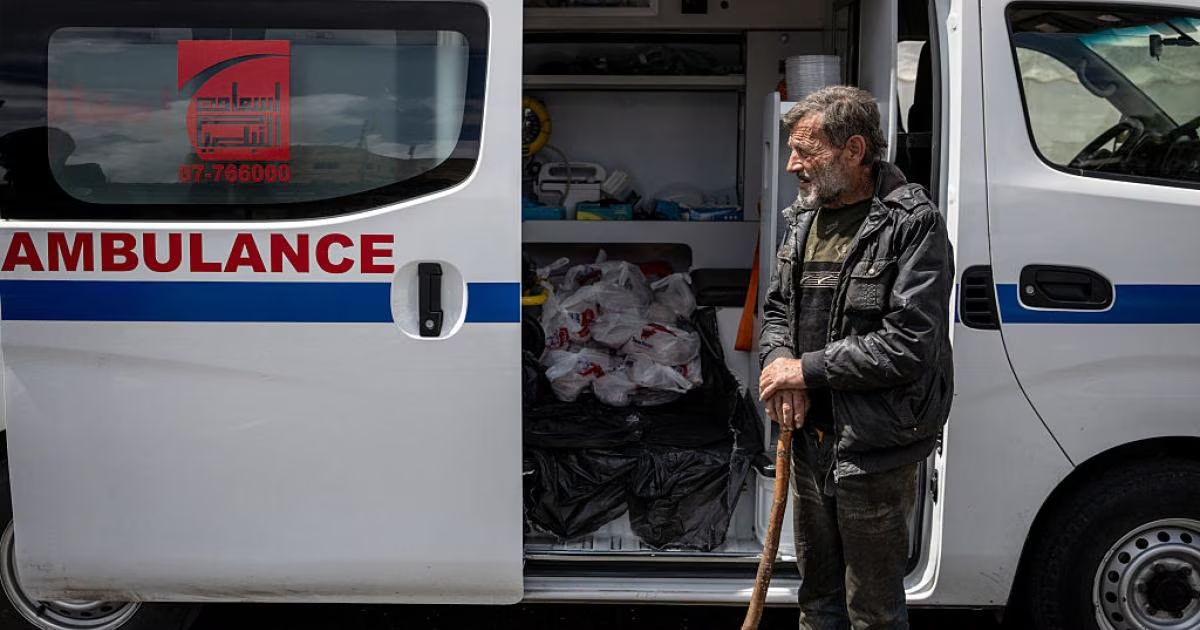
The ambulance sector was not spared from direct targeting, as two paramedics affiliated with the Islamic Health Authority were martyred in a raid carried out by an Israeli drone on the town of Haris in the Bint Jbeil district. In the same town, a second raid led to the martyrdom of two other people, indicating the occupation's intensification of its strikes against medical teams and civilians.

In a related context, the Lebanese Ministry of Health announced the martyrdom of a paramedic from the Al-Risala Health Ambulance Association and the injury of four others with varying degrees of severity. This targeting occurred while ambulance teams were carrying out their humanitarian duties in the town of Siddiqin in the Tyre district, raising the toll of victims among medical personnel.

As for the Nabatieh district, an Israeli drone targeted a civilian car in the town of Kafr Rumman, leading to the martyrdom of four people inside. This coincided with another raid that targeted the town of Burghuz in the Hasbaya district, resulting in the martyrdom of one person and the injury of three others who were subsequently transferred to nearby hospitals.

The raids extended to include the Western Beqaa region, where warplanes carried out a violent raid on the town of Maydoun, causing extensive material damage to properties. These attacks come at a time when the occupation army claims to be targeting Hezbollah sites, while field data confirms civilian casualties in most locations.

In the capital Beirut, Israeli warplanes flew at low altitude over the southern suburb, causing a state of panic among the remaining residents. This overflight was followed by an airstrike targeting a neighborhood, shortly after Israeli warnings were issued demanding residents to evacuate the area immediately.

The occupation army issued new evacuation orders covering more than 40 towns in southern Lebanon, demanding residents to move to areas north of the Zahrani River. These warnings are considered a prelude to new waves of intense shelling, as the areas targeted for displacement constitute about 10% of the total area of Lebanese territory.

For its part, the Chief of Staff of the occupation army pledged to intensify military operations and expand the scope of airstrikes in the coming phase. These threats are accompanied by field movements indicating the occupation's intention to continue military pressure by destroying infrastructure and residential areas in border villages and the Lebanese interior.

According to the latest updates from the Lebanese Ministry of Health, the total number of aggression victims since March 2nd has risen to 1497 martyrs and 4639 injured. Lebanese hospitals are under immense pressure due to the continuous influx of injured, amidst official warnings of a severe shortage of medical supplies and basic necessities.

Hospitals' needs are increasing and challenges are escalating amid continued aggression and rising numbers of victims.

ARAB AND WORLD

Tue 07 Apr 2026 7:43 am - Jerusalem Time

Qatar attacks Iranian 'tampering' with regional security, Trump threatens 'hours of hell'

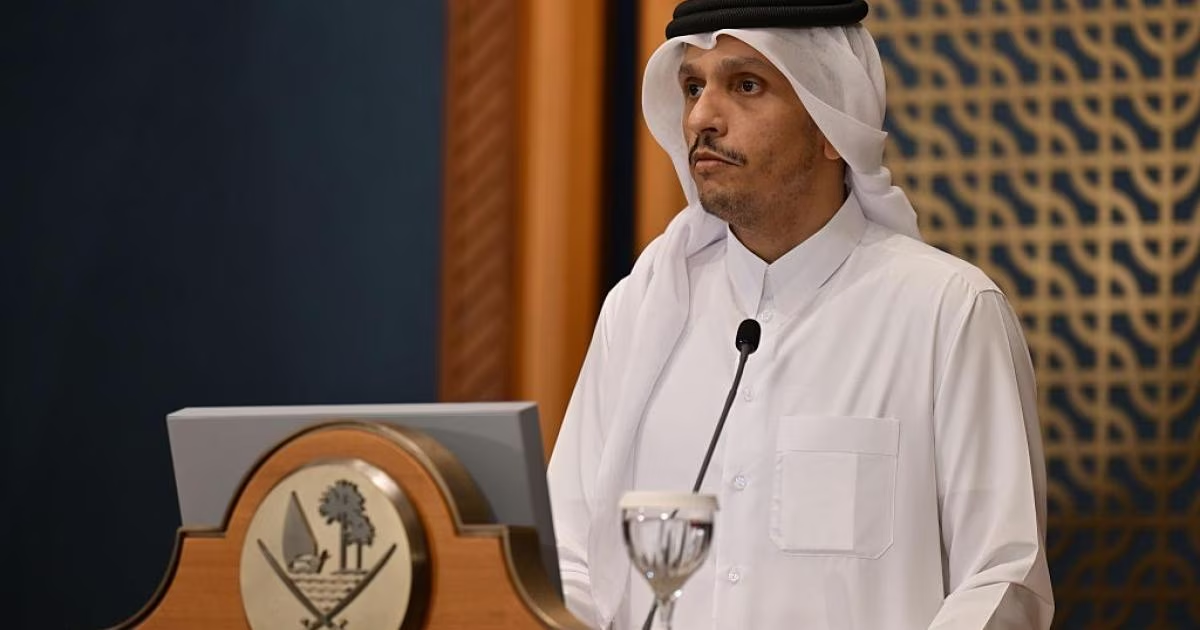
The State of Qatar expressed its strong condemnation of what it described as Iran's continuous targeting of Doha and the countries of the region, stressing that this behavior represents a direct threat to regional security. This came during a phone call received by the Qatari Prime Minister and Minister of Foreign Affairs, Sheikh Mohammed bin Abdulrahman Al Thani, from his Iranian counterpart, Abbas Araghchi, to discuss the accelerating developments in the region.

The Qatari Prime Minister stressed during the talks that a comprehensive and lasting diplomatic solution remains the only option and the optimal path to resolve the current crises. He clarified that escalation towards countries that have chosen neutrality and distanced themselves from armed conflicts is an unacceptable tampering with the stability of the region and the capabilities of its peoples, calling for the necessity of prioritizing the language of reason.

In a related context, the Qatari Ministry of Foreign Affairs affirmed in an official statement that targeting civilian infrastructure and the interests of peoples is a condemned and rejected behavior under any circumstances and by any party. Doha called on all active parties to respect international law and adhere to diplomatic standards to spare civilians the consequences of destructive armed conflicts.

These Qatari warnings come at a time when the relationship between Washington and Tehran is witnessing unprecedented tension, with US President Donald Trump setting a deadline ending on Tuesday evening. Trump threatened to take decisive military action against Tehran if the Strait of Hormuz, which is the global energy lifeline, remains closed.

The US President stated in a very strong tone that the United States has military plans ready for implementation aimed at completely paralyzing Iranian capabilities. Trump indicated that the US armed forces are capable of destroying all vital bridges and power generation stations deep within Iranian territory within a short period not exceeding four hours.

Trump explained in a press conference that the given deadline aims to push Tehran towards a new agreement that guarantees freedom of navigation and regional stability, hinting that power stations will be permanently out of service. International circles are cautiously monitoring the coming hours before the expiration of the American deadline, amid fears of a comprehensive confrontation.

For its part, Doha continues its intensive diplomatic efforts to de-escalate and prevent the region from sliding into a widespread regional war. Sources confirm that the Qatari position focuses on the necessity of protecting the national sovereignty of the Gulf states and rejecting any attempts to drag them into conflicts that do not serve the stability of the Middle East.

Iranian escalation towards countries that have distanced themselves from the war represents tampering with the region's security and disregard for its stability.

PALESTINE

Tue 07 Apr 2026 7:43 am - Jerusalem Time

Ben Gvir storms Al-Aqsa Mosque amid continued closure to worshippers for the 38th day

On Monday evening, Israeli National Security Minister Itamar Ben Gvir carried out a new raid on the courtyards of the blessed Al-Aqsa Mosque, taking advantage of the strict restrictions imposed by the occupation authorities on the entry of Palestinian worshippers. This provocative step comes as the decision to close the mosque to Muslims enters its thirty-eighth consecutive day, depriving thousands of worshippers from performing their religious rituals.

Sources from the Islamic Endowments Department in occupied Jerusalem clarified that Ben Gvir entered the mosque through the Mughrabi Gate and toured its courtyards to the Chain Gate area under intense security guard. This raid is the fifteenth for the far-right minister since he assumed his duties in the current government at the beginning of 2023, reflecting an escalating approach towards holy sites.

For its part, the Ministry of Endowments and Religious Affairs condemned this behavior, describing it as a dangerous measure that violates the religious and spiritual sanctity of Al-Aqsa Mosque, especially in light of its deliberate emptying of worshippers. The ministry stressed in a statement that what the far-right government is doing represents a blatant aggression and a heinous crime aimed at changing the status quo in the holy city.

In a related context, Hamas leader Abdul Rahman Shadid considered that the timing of the raid with the continued closure reflects the occupation's desire to impose full sovereignty and Judaize the place. Shadid pointed out that this organized behavior is one of the most dangerous threats Al-Aqsa has faced recently, as the occupation seeks to leave it an easy prey for repeated settler incursions.

The roots of the current closure date back to February 28, when the occupation authorities used ongoing regional tensions as a pretext to prevent gatherings inside Al-Aqsa Mosque and the Church of the Holy Sepulchre. Despite these restrictions, the Israeli police recently announced that limited prayers would be allowed inside the Church of the Holy Sepulchre only, following a wave of international criticism and European pressure that followed the prevention of senior Christian leaders from celebrating Palm Sunday.

Observers and Palestinians believe that these measures fall within a broader plan to Judaize occupied Jerusalem and erase its Arab, Islamic, and Christian identity. The occupation authorities continue to exploit the current political circumstances to intensify their attacks on holy sites, amid warnings that these provocations could lead to an unprecedented explosion of the field situation in the city.

Ben Gvir's storming of Al-Aqsa amid its continued closure represents an escalation of the occupation's arrogance and its attempts to impose the reality of Judaization and full sovereignty over it.

PALESTINE

Tue 07 Apr 2026 7:43 am - Jerusalem Time

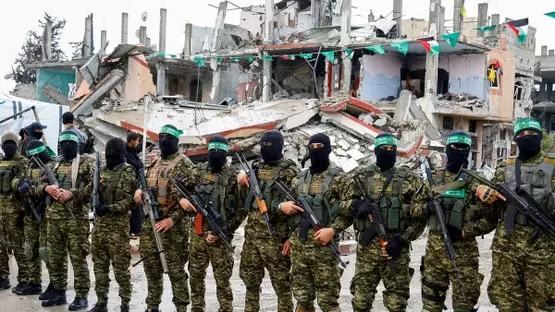
International Peace Council Gives Hamas 90 Days to Fully Disarm

International press reports have revealed an intensive diplomatic move led by the 'International Peace Council' headed by Donald Trump, where the Council issued a formal and decisive ultimatum to the Hamas movement, demanding that it fully disarm. This ultimatum includes a strict timeline aimed at dismantling all military infrastructure in the Gaza Strip, including the complex network of tunnels operated by the movement, as a preemptive step towards any comprehensive political settlement.

These international pressures come as a fundamental condition for moving forward with the comprehensive reconstruction plan for the Strip, which falls under the second phase of the 'October Agreement' previously agreed upon. The plan proposes a timeline that begins with the surrender of heavy weapons and missile systems, in addition to revealing maps of sensitive military sites within a period not exceeding ninety days from the date of the announcement.

According to informed sources, the proposal expands to include the collection of light weapons from individuals and groups through an international financial compensation program dedicated to this purpose. This initiative essentially aims to prepare the ground for empowering a Palestinian administration composed of technocratic competencies to take charge in Gaza, away from any armed manifestations that might hinder the future stabilization process.

Regarding field movements, the international initiative linked the full withdrawal of the Israeli occupation army from urban centers and cities to the actual and tangible commitment to the disarmament process under direct international supervision. The movement currently faces increasing regional pressures to accept these conditions, amidst warnings of new and comprehensive military rounds that Washington might launch if rejection continues, with hints of decisive military options.

On a parallel front, actual arrangements have begun for the formation of what is called an 'international stabilization force' that will be under the command of American military personnel, to ensure that no armed activity returns within the Strip after the agreement is implemented. This development places the Gaza Strip at a historical and fateful crossroads, where the coming weeks will determine the form of governance and security in the region, and the extent of international parties' ability to impose a new political reality that ends decades of armed conflict.

The initiative aims to empower a new technocratic Palestinian administration to take charge of the Strip's affairs, while linking the Israeli withdrawal to the actual commitment to disarmament.

OPINIONS

Tue 07 Apr 2026 7:37 am - Jerusalem Time

Material Strength, Strategic Weakness: Rethinking U.S. Power After Iran

By: Said Arikat


April 7, 2026


News Analysis


Washington, D.C- U.S. President Donald Trump escalated tensions sharply on Monday, issuing a stark threat to Iran: unless Tehran effectively surrenders, Washington would begin, as early as Tuesday night at 8:00 p.m., (Washington time) a campaign to destroy “every bridge, every power station, everything.” The thuggish bellicosity of the statement notwithstanding, the United States does possess such destructive capacity. Yet exercising it would almost certainly trigger a global economic crisis unprecedented in the 21st century, while cementing America’s status—alongside Israel in the eyes of many—as a pariah, lawless power willing to dismantle the norms it once claimed to uphold.


When John Wertheimer appeared on Al Jazeera’s “The Bottom Line” with host Steve Clemons on April 3, 2026, the central question was deceptively simple: will the ongoing war with Iran diminish American power?


It is the kind of question that invites dramatic answers. Wars, especially difficult and protracted ones, are often framed as decisive turning points in the fate of great powers. Yet a sober assessment suggests something far less sensational but analytically sharper: the war in Iran is unlikely to significantly alter the United States’ position in the global balance of power. What it may erode, however, is something subtler and more fragile—America’s credibility, judgment, and ability to translate power into influence.


At the core of this argument lies a foundational insight from structural realism: a state’s power is rooted primarily in material capabilities, including economic strength, technological sophistication, and demographic weight. By these measures, the United States remains extraordinarily resilient. A single conflict, even a costly and poorly managed one, is unlikely to meaningfully dent these structural foundations.


History offers a compelling parallel. The United States suffered a decisive and humiliating defeat in the Vietnam War, a conflict that fractured domestic consensus and damaged Washington’s global standing. Yet this setback did not produce lasting decline. Within less than fifteen years, the United States emerged victorious in the Cold War, cementing its position as the world’s sole superpower. The lesson is clear: even disastrous battlefield outcomes do not automatically reorder the global hierarchy of power. Structural advantages tend to endure across crises and generations.


If the Iran war is unlikely to weaken American power in absolute or relative terms, it is nevertheless exposing a more immediate and consequential vulnerability: the erosion of the United States’ ability to project that power effectively.


Power, after all, is not merely about possession. It is about conversion. It must be translated into influence, deterrence, and leadership. And here, the current moment is far more troubling.


The conduct of the war, combined with the broader foreign policy approach under Trump, raises serious questions about strategic competence. Military setbacks are not merely tactical failures; they are signals. Allies and adversaries alike interpret them as indicators of judgment, reliability, and resolve. When Washington appears unable to achieve its objectives—or worse, unclear about what those objectives are—it invites doubt that lingers long after the fighting subsides and shapes future calculations.


More damaging still is the broader pattern of behavior accompanying the war. The sidelining of diplomacy, the disparagement of allies, and the erosion of international institutions collectively weaken what has long been America’s greatest strategic asset: its network of partnerships.


Power in the modern international system is deeply relational. The United States does not act alone; it operates through alliances, institutions, and shared norms. By undermining these pillars through rhetoric or neglect, Washington reduces its own capacity to mobilize collective action. This is not a marginal cost. It strikes at the very mechanism through which American power has historically been amplified and sustained across regions and crises.


Credibility, often treated as an abstract concept, functions in practice as a form of strategic capital. It shapes how threats are perceived, how assurances are received, and how coalitions are built. The Iran war is steadily depleting that capital—not because the United States is losing power in the traditional sense, but because it is demonstrating inconsistency between rhetoric and results, and between commitments and actions.


This distinction matters. A state can remain materially dominant while becoming politically and strategically constrained. In such a scenario, rivals need not surpass the United States; they need only exploit its self-inflicted limitations, inconsistencies, and strategic overreach in key arenas of competition.


The unfolding situation presents a paradox. The United States is likely to emerge from the Iran war still occupying the top tier of the global power hierarchy. Its economy will remain vast, its military formidable, and its demographic base comparatively stable when measured against other major powers.


And yet, it may find itself less able to shape outcomes, less able to rally allies, and increasingly reliant on costly unilateral action to achieve limited objectives. The architecture of American power will stand, but its usability will be diminished in practice.


The debate sparked on The Bottom Line ultimately underscores a critical distinction often overlooked in public discourse: losing a war is not the same as losing power, but it can mark the beginning of losing influence in ways that are harder to reverse.


The Iran war is unlikely to end American primacy. But it may well redefine how that primacy is exercised, constrained, and perceived across the international system. For a superpower, that difference is everything, shaping the limits of American leadership for years to come.

ARAB AND WORLD

Mon 06 Apr 2026 5:19 pm - Jerusalem Time

Israeli aggression targets the heart of Iran's petrochemical industry, Katz vows more

Israeli Defense Minister, Israel Katz, announced today, Monday, that the air force carried out a military strike, which he described as powerful and extensive, targeting a strategic petrochemical facility in the city of Asaluyeh, located in southwestern Iran. Katz confirmed in an official statement that this facility is the largest of its kind in the Islamic Republic, noting that the attack comes as part of a series of operations aimed at undermining the economic and military capabilities of the Iranian regime.

The Israeli minister explained in a video statement that the targeted facility in Asaluyeh contributed about 50% of the total national production of petrochemicals in the country. He considered that disabling this vital facility represents a paralysis of a large part of the Iranian industry, on which the state relies to provide hard currency and finance various sectors, including military activities.

Coinciding with the Asaluyeh attack, field reports indicated other airstrikes targeting a massive petrochemical complex in the Mahroodasht area near the city of Shiraz in the south of the country. Sources stated that these coordinated attacks targeted vital joints in the energy infrastructure, leading to rising smoke plumes from the targeted sites and widespread disruption of associated essential services.

Katz claimed that the two bombed facilities together produce approximately 85% of Iran's total petrochemical exports, confirming their complete incapacitation due to severe damage. The Israeli official estimated the economic value of these losses at tens of billions of dollars, describing it as a devastating blow that will directly affect the Iranian state budget.

In an attempt to justify targeting civilian and economic facilities, the Israeli Defense Minister claimed that the petrochemical industry is the main driver for financing the activities of the Iranian Revolutionary Guard and building military power. He indicated that destroying these resources aims to dry up the funding sources used by Tehran to develop its armament programs and support its allies in the region.

For its part, official Iranian media acknowledged the attack, with Fars news agency quoting officials in Bushehr province as saying that production units in the Asaluyeh complex were damaged. Iranian sources explained that the bombing directly targeted companies supplying the complex with electricity, water, and oxygen, causing production operations to halt due to the interruption of vital supplies to the main units.

Regarding the attack on the Mahroodasht complex near Shiraz, local authorities confirmed control over a fire that broke out at the site after the airstrikes, claiming that the damage was minor and did not lead to comprehensive destruction of the facility. These statements come at a time when technical agencies are trying to assess the actual extent of the damage and work to restore essential services to the affected industrial complexes.

Media sources from Tehran reported that the targeting of Asaluyeh facilities in the South Pars field was not the first of its kind in recent weeks, as the region has witnessed escalating tensions and an exchange of strikes. Sources indicated that these operations come in the context of reciprocal responses that included targeting oil and gas facilities in several countries in the region, which Tehran accuses of being linked to American and Israeli interests.

Earlier, the Iranian armed forces carried out a series of military operations as part of what they described as the 'True Promise 4' wave, during which they targeted strategic sites in Haifa, Beersheba, and Tel Aviv. Iranian attacks also included drone manufacturing facilities and commercial ships, in addition to harassing a US helicopter carrier in the Indian Ocean to force it away from Iranian coasts.

It is worth noting that this escalation comes amid widespread aggression launched by Israel and the United States against Iran since late February, a conflict that has resulted in thousands of casualties and widespread infrastructure destruction. The beginning of this aggression witnessed a dramatic development with the assassination of Supreme Leader Ali Khamenei in an airstrike, pushing the region to the brink of a comprehensive regional war whose repercussions are still unfolding.

The two facilities, which together produce about 85% of Iran's petrochemical exports, are now completely out of service, a severe economic blow.

PALESTINE

Mon 06 Apr 2026 5:19 pm - Jerusalem Time

Two martyrs in Gaza and Khan Yunis: Occupation continues its violations of the ceasefire agreement

Israeli occupation forces continue their field violations of the ceasefire agreement in effect in the Gaza Strip, as two Palestinians were martyred in separate attacks that targeted the north and south of the Strip today, Monday. Medical and local sources reported that the targeting focused on populated and vital areas, leading to injuries among civilians, including children.

In the details of the aggression, young man Mohammed Daoud was killed and a child sustained various injuries as a result of shelling carried out by an Israeli drone targeting a gathering of citizens in the Sheikh Radwan neighborhood north of Gaza City. Eyewitnesses explained that the drone fired at least one missile at civilians who were trying to go about their daily lives amidst the fragile calm.

In the southern Strip, a Palestinian was martyred and others were injured due to intense gunfire by the occupation army targeting a group of civilian vehicles east of the town of Al-Qarara, northeast of Khan Yunis City. The body of the martyr was transferred to Al-Aqsa Martyrs Hospital in the central region, while Nasser Medical Hospital received the injuries resulting from the attack.

Field sources confirmed that army forces stationed east of Salah al-Din Street opened fire on Palestinian vehicles in an area outside their agreed-upon deployment and control within the terms of the ceasefire. This development represents a serious escalation in the nature of the violations committed by Tel Aviv daily since October 10th.

For its part, the Ministry of Health in the Gaza Strip announced a comprehensive update of the casualties of the ongoing aggression since October 7, 2023, indicating that the number of martyrs has risen to 72,302. The number of injured also increased to 172,090, amidst harsh health conditions suffered by the dilapidated medical system in the Strip.

The ministry explained in its daily report that hospitals received 7 martyrs and 17 injuries during the past twenty-four hours as a result of the ongoing Israeli attacks. Official data indicated that the period following the announcement of the ceasefire alone witnessed the martyrdom of 723 people and the injury of about 1,990 others in various governorates.

In a related context, medical teams noted that they were able to retrieve 759 bodies from under the rubble in recent weeks, confirming that large numbers of martyrs are still under the debris and in difficult-to-reach areas. Ambulance and rescue teams face extreme difficulties in reaching the victims due to continued direct targeting and a lack of necessary heavy equipment.

The total number of martyrs since the ceasefire came into effect last October has risen to 723, amidst continued field violations.

PALESTINE

Mon 06 Apr 2026 5:19 pm - Jerusalem Time

Bloody Israeli raids on southern Lebanon and Tel Aviv admits failure of assassination attempt in Beirut

The South and Nabatieh governorates in Lebanon witnessed a bloody military escalation today, Monday, as Israeli warplanes launched a series of intense airstrikes accompanied by heavy artillery shelling. These attacks resulted in a number of martyrs and wounded, in addition to massive destruction that affected residential neighborhoods and infrastructure in several border and deep towns.

In a remarkable development, the Israeli army radio admitted to carrying out a failed assassination attempt yesterday, Sunday, in the capital Beirut, targeting an element belonging to the Quds Force. This admission comes amid the continuation of aerial operations striking various areas, attempting to reach military or leadership targets deep within Lebanese territory.

On the ground, the Lebanese Ministry of Health announced the martyrdom of four citizens in a raid that targeted the town of Kafr Rumman, while warplanes completely destroyed a residential building in the northern neighborhood of the town of Doueir in the Nabatieh district. The raids also targeted the towns of Siddiqin and Zibdin, while drones targeted the town of Hanaway, exacerbating the humanitarian situation in those areas.

In the context of targeting medical personnel, the Public Health Emergency Operations Center reported that the occupation forces directly targeted a team of paramedics belonging to the Islamic Health Authority in the town of Haris. This attack led to the martyrdom of two paramedics and serious injuries to a colleague, in a blatant violation of international conventions protecting medical teams.

For its part, the Lebanese Ministry of Health condemned these attacks, which it described as systematic against the health sector, affirming that it continues to document these crimes to file lawsuits before international courts. The ministry stressed in its statement the necessity of holding the occupation leaders accountable for their continuous violations of international humanitarian law during armed conflicts.

In the Nabatieh district as well, local sources mourned the mayor of Abba and a police officer in the municipality who were killed in an Israeli raid that targeted the area, in addition to two other martyrs in the same location. Another raid targeted a civilian car in the town of Toul, resulting in the martyrdom of two people and injuries of varying severity to an entire family, including two children.

Field sources reported that the intensity and escalating pace of Israeli raids, especially in the eastern sector, have hindered the work of rescue teams and accurate damage assessment operations. The sources indicated that the town of Hadatha alone was subjected to more than seven airstrikes since the early morning hours, as part of the scorched-earth policy pursued by the occupation.

Regarding ground confrontations, field reports confirmed the stagnation of Israeli army attempts to advance towards the strategic city of Bint Jbeil for more than a week. The invading forces face fierce resistance from Hezbollah elements, who continue to deliver precise strikes against troop concentrations and their vehicles at direct contact points.

Field data indicate that the Israeli ground operation has entered a state of stalemate and stagnation in the areas previously reached by the forces. The occupation army currently relies on destructive methods, including blowing up residential blocks and bulldozing main roads, in a desperate attempt to change the geographical and field reality on the border.

In a related context, Haaretz newspaper quoted sources in the Israeli army confirming that the forces deployed in southern Lebanon have reached their final designated lines according to approved plans. The sources explained that the army is currently leaning towards a defensive deployment option without sliding into a wider ground operation deep inside Lebanese territory.

Despite the reinforcement of military presence in border areas, the Israeli military command is cautious about expanding the ground offensive for fear of incurring additional human losses. The current forces are stationed in fortified defensive positions, with continued reliance on air and artillery weapons to strike targets in Lebanese villages and towns.

In the Tyre district, the town of Majdal Zoun was subjected to heavy artillery shelling coinciding with intense airstrikes that included the western and central sectors of the South. These attacks caused the closure of main roads between villages, increasing the difficulty of displacement or the arrival of relief aid to those besieged in those areas.

Lebanese resistance continues to carry out its defensive operations, as Hezbollah announced targeting concentrations of occupation soldiers in border positions with rocket salvos and artillery shells. These operations come in response to the continuous aggressions against civilians and Lebanese villages, and as an affirmation of the resistance's readiness to repel any new advance attempt.

The scene in southern Lebanon remains open to all possibilities, amid the continuation of violent airstrikes and the occupation's failure to achieve significant ground breakthroughs. Attention is turning to international diplomatic movements, while the field continues to assert itself through the steadfastness of Lebanese villages and the resistance's confrontation of infiltration attempts.

Systematic Israeli attacks on the health sector constitute a clear violation of international humanitarian law, which mandates the protection of medical workers.

OPINIONS

Mon 06 Apr 2026 5:18 pm - Jerusalem Time

The war did not weaken Iran… rather, it may grant it a new position in the world

A month after the outbreak of war between Iran on one side, and the United States and Israel on the other, this confrontation is no longer just a fleeting military event. Instead, it has transformed into a pivotal moment that has reshaped many prevailing perceptions from before its outbreak, and redrawn the mental image of Iran for the world.

In the early days of the war, there was a nearly entrenched perception among many observers and countries that Iran, as a Middle Eastern state, might face a fate similar to what happened in Iraq, Libya, or Syria. This involved intense military pressure leading to the disruption of the regime, followed by its destabilization, culminating in a state of chaos and internal collapse. The prevailing belief was that merely disrupting the regime would be enough to push it towards disintegration.

However, reality turned out to be completely different. Iran did not collapse; instead, it stood firm and demonstrated a clear ability to manage the war wisely, carefully read its adversaries, and deal with their plans intelligently and without confusion. This steadfastness was not merely a military capability but transformed into a psychological and political factor, both internally and externally. Internally, the Iranian regime's conviction that it stands on solid ground and represents a state resistant to defeat was strengthened. As the war continued without a decisive breakthrough against it, this conviction began to solidify further.

Externally, similar convictions began to form—though not fully declared—among many international parties. The world realized that Iran is not just a country that can be easily subdued, but an entity possessing geopolitical components, strategic depth, and demographic weight that cannot be underestimated, making the idea of a swift resolution unrealistic.

In contrast, the United States and Israel entered this war with the aim of singularly demonstrating power and imposing a clear deterrence equation. Israel also sought to drag the United States into a direct confrontation with Iran, as part of a strategy aimed at achieving a swift resolution on the ground and imposing hegemony. But after a month of fighting, the results appear to be more complex than expected. Instead of the war weakening Iran, it has—so far—contributed to solidifying its existence as an undeniable regional power, and perhaps as an international actor that imposes itself on everyone's calculations, making it necessary for the world to deal with it on this basis.

From these premises, Iran's stubbornness on de-escalation issues and its unresponsiveness to mediators' proposals, and even its negotiations from a position of strength, can be understood. The more the United States is drained, the more Iran's strategic and political capital increases. Ultimately, this scene closely resembles the recklessness and miscalculations of Donald Trump and Benjamin Netanyahu in their actions, which gave Iran greater room to act flexibly and achieve gains on the ground.

It can now be said that the American strategy and its plans may backfire. Instead of weakening Iran, it seems they may make it stronger, by giving it a broader strategic dimension at the political and international levels, even though it will continue to face real military and economic pressures. In other words, the war may relatively reduce its military capabilities, but it grants it greater strategic depth, an undeniable international image, and places it on the path to ranking among major powers, and perhaps grants it a new position in the world.

Based on these arguments, and if the United States realizes these dimensions of the war's outcomes, the danger of sliding into a comprehensive war becomes probable, especially if accompanied by direct ground intervention or the use of unconventional weapons, with the possibility of NATO joining the conflict, as its member states will not allow an escalation that threatens their interests or regional stability, which further complicates the scene and transforms the conflict into a wider confrontation.

In this context, the first month of the war shows that Iran has managed to establish itself as an unbreakable state, forcing everyone—internally and externally—to re-evaluate the balance of power in the region. While the attempts by the United States and Israel to drag it towards rapid collapse failed, reality showed that merely using military force against it does not guarantee the desired results.

From this, it can be said that Benjamin Netanyahu's goals of reshaping the Middle East, and Donald Trump's goals of reformulating the international system to serve US interests, may have been achieved "but" not in their favor, but quite the opposite. Iran's steadfastness and the war's demonstration of its adaptability and intelligent management have created a new and opposing scenario to their calculations, causing them concern and dread. Ultimately, this is the natural price of recklessness and underestimating the opponent's strength and strategies in depth.

OPINIONS

Mon 06 Apr 2026 3:47 pm - Jerusalem Time

Revisions in Islamic Political Jurisprudence: Towards Restoring the Nation's Authority and Confronting the Legitimacy of 'Al-Shawka'

Ramallah - “Alquds ” dot com

Ramallah - “Alquds ” dot com

Opinion Writer

The Tunisian researcher and writer Dr. Abdel Majid Al-Najjar continues to present a series of critical and in-depth readings on the structure of Islamic political jurisprudence, questioning the usefulness of adhering to historical interpretations that no longer meet the demands of contemporary reality. Through these revisions, Al-Najjar aims to restore the concept of 'the nation's authority' and its inherent right to choose its representatives, away from the concepts of dominance and coercion that prevailed in later eras.

The revisions primarily address the concept of 'Al-Shawka' (the thorn/military might), which was historically used to install rulers and impose a new political reality, disregarding the will of the people. The researcher believes that this mechanism, in many jurisprudential texts, transformed from an exceptional measure to avert strife into a legitimate rule that legitimizes the rule of the overcomer, thus undermining the nation's role in the political contract.

Al-Najjar points out that the legitimization of 'the rule of coercion' was not present in the early stages of political jurisprudence, such as in Al-Mawardi's writings, but rather emerged and became entrenched among later jurists like Imam Al-Nawawi. These jurists based their views on the necessity of preserving the unity of Muslims and their cohesion, even if the ruler had seized power with his soldiers without a pledge of allegiance or legitimate succession.

The series reviews the roots of this confiscation of the right to choose, referring to narrations from Imam Ahmad ibn Hanbal stating that the imamate is established by coercion and dominance and does not require a contract. Al-Najjar believes that these fatwas were circumstantial, dictated by the political challenges of that time, but over time, they transformed into a permanent legislation lacking strong support from religious texts or the practices of the Rightly Guided Caliphate.

Returning to the texts of revelation, the researcher emphasizes that the Holy Quran made 'Shura' (consultation) a binding principle in managing the nation's affairs, as stated in His saying, 'And their affair is [determined by] consultation among themselves.' This means that the appointment of a ruler, being one of the most important matters for Muslims, must be subject to the principle of popular participation and general consent, not to material or military coercion.

Al-Najjar also cites other verses that assigned the authority of execution and legislation to the nation as a whole, indicating that the ruler is merely an agent authorized by it to implement its will. There are no indications in these texts that grant 'Ahl al-Hall wal-Aqd' (people of binding and loosing) or those with military power an exclusive right to determine the nation's destiny apart from its free collective will.

In a reading of the Prophet's Sunnah, the Prophet's stance during the Hawazin delegation stands out, where he refused to make a decision without consulting the general populace through their 'leaders.' This prophetic behavior establishes the necessity of surveying the opinion of the popular base on crucial issues, which was followed by the Rightly Guided Caliphs in many situations before political practice later deviated.

The article discusses the issue of 'succession' (walayat al-ahd) which was prevalent in political jurisprudence, explaining that some contemporary jurists such as Muhammad Salim Al-Awa and Abd al-Wahhab Khallaf re-adapted it. They believe that Abu Bakr's covenant to Omar, or Omar's to the six, was not a binding contract in itself, but merely a 'nomination' presented to the nation to have its final say through a general pledge of allegiance.

Al-Najjar warns that continued recognition of 'military might' as a legitimate path to governance opens the door wide to tyranny and usurpation of power. Prioritizing the balance of power over the balance of right makes military conflict a means to attain the imamate, which historically led to great corruption and strife far exceeding what the jurists sought to avoid.

The researcher recalls the stance of Imam Ali ibn Abi Talib, may Allah be pleased with him, who insisted that truth and popular consent are the basis of legitimacy. He believes that Imam Ali's insight aimed to block the path to future tyranny, even if adhering to this principle led to temporary harms, because the harm of permanent tyranny is far greater to the nation's entity.

In a related context, Al-Najjar criticizes the absence of independent chapters for public freedoms in inherited political jurisprudence, where most rulings tended to restrict freedom of thought and expression. He cites the stance of Imam al-Haramayn al-Juwayni, who established the obligation to resist those with dissenting opinions with the sword, a trend that left a deep negative impact on the collective consciousness of Muslims to this day.

The article also calls for the necessity of renewing jurisprudence related to 'citizenship,' considering that traditional divisions between believers and dhimmis are no longer compatible with the reality of the modern state. It emphasizes the importance of developing rulings based on equality and justice among all members of society regardless of their ideological affiliations, so that citizenship becomes the basis of rights and duties.

Dr. Al-Najjar concludes his revisions by emphasizing that this renewal is not an intellectual luxury, but an urgent necessity to reform political life in Islamic societies. He believes that this revision is of particular importance for Muslim minorities in the West, who need a political jurisprudence that aligns with the values of participation and freedom prevalent in those societies.

Rebuilding the Islamic intellectual and political foundation on the principles of justice and popular participation is the essential gateway to any true renaissance. Without reviewing these traditional rulings that legitimize tyranny or restrict freedoms, the nation will remain unable to keep pace with global developments and build modern states that respect human dignity and inherent rights.

Legitimizing the mechanism of 'Al-Shawka' in the contract of imamate abolishes the nation's right to choose, and grants this right to the overcomer, which opens a door to tyranny that is difficult to close.

ARAB AND WORLD

Mon 06 Apr 2026 3:46 pm - Jerusalem Time

International mediation efforts to hold direct negotiations between Washington and Tehran falter

International press reports revealed today, Monday, that diplomatic efforts led by mediators from Turkey, Egypt, and Pakistan, aimed at pushing Iran to sit at the negotiating table with the United States, have faltered. These intensive moves aim to reach an agreement that ends the current state of war or at least ensures a temporary ceasefire in the region.

Sources indicated that the American administration showed possible flexibility regarding waiving some of its previous demands in order to make progress in the negotiation process. However, these attempts still face significant obstacles due to the parties' adherence to their initial positions, making it difficult to reach tangible understandings at present.

In a related context, informed officials reported that the Iranian side categorically rejected a proposal to reopen the strategic Strait of Hormuz in exchange for a temporary cessation of hostilities. Tehran believes that the current American demands to end the war are unacceptable and do not meet its minimum political and security conditions.

Tehran informed international mediators that it is unwilling to hold any meetings with American officials in the Pakistani capital, Islamabad, in the coming period. This rigid Iranian stance comes amid a conviction among the Iranian leadership that Washington is not serious about reaching a formula for a permanent and comprehensive ceasefire.

For his part, a high-ranking Iranian official stressed that his country will not succumb to an ultimatum policy or external pressures aimed at extracting field concessions. He affirmed that the proposal to open the Strait of Hormuz cannot be exchanged for a temporary calm, noting that Tehran is currently studying a framework presented by Pakistan but will not rush to make a decision.

Regarding diplomatic initiatives, Pakistan has prepared an integrated framework to end hostilities, which was delivered to both Tehran and Washington in recent hours. This proposal is based on a two-phase approach, the first beginning with an immediate and comprehensive ceasefire, followed by a second phase to draft a final and comprehensive agreement.

Sources indicate that Pakistan is currently acting as the sole and direct communication channel between the two parties in an attempt to bridge views and avoid further military escalation. Mediators are seeking to reach an agreement on all essential elements of the initiative as quickly as possible to formulate them into a formal memorandum of understanding.

Despite both parties receiving the Pakistani plan, doubts still surround the possibility of its actual implementation due to the lack of mutual trust. Informed sources insist that the success of any initiative requires full agreement on all technical and political details before announcing any field de-escalation.

Regional and international capitals are cautiously monitoring the results of these diplomatic moves, especially given the significant impact of the continued closure of the Strait of Hormuz on global energy supplies. The current bet remains on the ability of mediators to find a middle ground that ensures a cessation of fighting without compromising the red lines set by each party.

Tehran will not reopen the Strait of Hormuz in exchange for a temporary ceasefire, and will not succumb to ultimatums or pressure to make a decision.

OPINIONS

Mon 06 Apr 2026 3:46 pm - Jerusalem Time

Efforts to Stop War Between Washington and Tehran via "Islamabad Agreement": Immediate Truce and Comprehensive Negotiations

Said Erikat

Opinion Writer

Washington – Saeed Erikat – 6/4/2026

Reuters quoted an informed source on Monday that Iran and the United States have received a comprehensive proposal to end hostilities, which could take effect immediately and lead to the reopening of the Strait of Hormuz, one of the most vital passages for global oil supplies.

The source explained that Pakistan has prepared a political and security framework to de-escalate, which was exchanged with both Tehran and Washington overnight, and includes a two-phase approach: the first is an immediate ceasefire, followed by negotiations to reach a comprehensive and lasting agreement. The source stressed the need to agree on all elements of the plan on the same day, noting that the initial understanding will be drafted into a memorandum of understanding completed electronically via Pakistan, which currently serves as the primary communication channel between the parties.

Axios had previously revealed ongoing talks between the United States and Iran, with the participation of regional mediators, to discuss a 45-day truce, as part of a two-phase bilateral deal that could lead to a permanent end to the war, based on American, Israeli, and regional sources.

In the same context, the source stated that Pakistani Army Chief, Asim Munir, held intensive contacts "all night" with US Vice President JD Vance, Special Envoy Steve Witkoff, and Iranian Foreign Minister Abbas Araghchi, in an attempt to bridge viewpoints and push the proposal towards implementation.

According to the plan, the ceasefire begins immediately, allowing for the reopening of the Strait of Hormuz, with a grace period of 15 to 20 days to complete a broader agreement. The proposal bears the preliminary name "Islamabad Agreement" and includes a regional framework specific to the Strait, with final face-to-face negotiations organized in the Pakistani capital.

So far, no official comment has been issued by either the American or Iranian sides, and the spokesperson for the Pakistani Ministry of Foreign Affairs, Tahir Andrabi, refrained from making any statements. In contrast, Reuters quoted Iranian officials confirming Tehran's pursuit of a permanent ceasefire, conditioned on guarantees preventing it from future attacks by the United States or Israel, noting that it has received messages through mediators, including Pakistan, Turkey, and Egypt.

The final agreement is expected to include Iranian commitments not to seek nuclear weapons, in exchange for sanctions relief and the release of frozen financial assets. However, two Pakistani sources indicated that Iran has not yet provided a clear commitment to the proposal, despite the escalating pace of political and military contacts.

In the absence of an official response from China, which also supports diplomatic efforts, efforts to contain the escalation continue, especially with growing concerns about disruptions to navigation in the Strait of Hormuz. This comes at a time when US President Donald Trump is publicly pushing for a quick ceasefire, warning of serious repercussions if the conflict continues.

Military escalation has directly impacted global energy markets, with investors anticipating any developments that could affect oil flow through the Strait, increasing price volatility.

The Pakistani initiative reveals a significant shift in regional mediation balances, as traditional powers are no longer solely controlling de-escalation paths. Islamabad's entry as a sole communication channel reflects relative trust from both sides, but it also places it before a difficult test in managing complex balances involving Washington, Tehran, and Beijing. The success of this initiative depends on Pakistan's ability to provide practical guarantees, especially regarding the security of the Strait of Hormuz, which is a crucial element in convincing the parties of the seriousness of the agreement.

The focus on a phased truce reflects an international understanding that ending the war all at once may be unrealistic in the current circumstances. Therefore, the actual goal seems to be to "buy time" to de-escalate and prevent a slide into a wider confrontation. However, this approach carries risks, as a temporary truce could turn into a mere tactical pause exploited by the parties to reposition themselves. The success of the first phase requires strict monitoring mechanisms and clear guarantees to prevent its rapid collapse.

The fate of this agreement is closely linked to the Iranian nuclear program, which remains the most sensitive knot in any settlement. Proposing the equation of "nuclear commitments for sanctions relief" brings back the model of previous agreements, but it faces greater challenges today due to the erosion of trust between the parties. Moreover, the introduction of the factor of releasing frozen assets provides Tehran with a significant economic incentive, but it may provoke internal opposition in the United States, threatening the sustainability of any potential agreement.

OPINIONS

Mon 06 Apr 2026 3:46 pm - Jerusalem Time

The Psychology of the 'Spoiled President': A Reading on Trump's Rise and the Phenomenon of the Sole Leader

Ramallah - “Alquds ” dot com

Ramallah - “Alquds ” dot com

Opinion Writer

American Professor Jeffrey Sachs conveys a grim medical and psychological view of US President Donald Trump's personality, pointing to conclusions by psychiatrists confirming his suffering from a severe mental disorder. These reports describe Trump as an impulsive personality afflicted with megalomania and paranoia, rendering him incapable of making rational decisions, which could push the United States towards catastrophic confrontations.

Trump's scandals and behaviors do not seem strange given his early upbringing and professional background; he is a president who came from the worlds of betting, gambling, wrestling rings, and beauty pageants. This professional path, far from traditional political corridors, made him an exceptional media personality, entering the political scene with tools alien to internationally recognized diplomatic norms.

The article considers Trump a model of the 'psychopath' who does not hesitate to use vulgar language in his speeches, as recently happened on his 'Truth Social' platform. This behavior reflects the image of the spoiled president who sees himself as America's savior, while surrounding himself with an aura of religious and social sanctity that sometimes reaches the point of performing strange promotional rituals.

In comparing the Biden and Trump eras, a sharp division appears in American society regarding identity and values, as Biden sought to adopt controversial social and genetic policies. This direction made broad segments of the 'founding whites' feel threatened, leading them to prefer a president who seeks to change geographical and political maps rather than tamper with genetic and social identity.

The writer likens Trump's situation in America to that of the 'only male' who arrives after a long wait in popular heritage, where he receives excessive pampering that prevents him from political maturity. This leadership style relies on the constant display of power and boasting before adversaries and allies alike, turning international politics into an arena for intellectual adolescence.

This phenomenon is not limited to the United States but extends to other international leaders such as Russian President Vladimir Putin, who is described as a strong man born from suffering. Putin, who restored the glory of the tsars and united the Russian nation, now finds himself stuck in the quagmire of the Ukrainian crisis, a paradox that reflects the limits of individual power in the face of complex realities.

The creation of the 'child president' or spoiled leader is systematically done through media that exaggerates the leader's image and portrays him as the sole savior of the nation after ages of weakness. This reproduction of 'virile' leaders always comes as a reaction to periods of rule described as lenient or hesitant, as happened in the transition from Yeltsin to Putin in Russia.

In the Egyptian scene, the article highlights the shift from a rule characterized by religious piety to a military rule described as harsh, where the writer believes that the media contributed to creating the image of the 'male' for the new ruler. This ruler, who sometimes threatens his opponents with soft language, appears in other situations begging for support from major international powers, specifically from the American administration.

This dependency is evident in the discourse directed at Trump, where he is seen as the sole force capable of stopping wars in Gaza and Iran and securing the basic needs of allied countries. This contradiction between the image of the strong internally and the dependent externally reflects the leadership crisis in the Arab region, which always looks for a 'father' in Washington.

As for northern Syria, the experience of the 'Rojava Kingdom' led by Mazloum Abdi appears as another model of leadership that stands out as a unique case in the history of the Kurdish region. Despite the imported party roots, control over vast areas and great wealth has made this leadership an 'only son' who enjoys exceptional international support under complex regional circumstances.

The phenomenon of the 'awaited male' in politics often leads to leaders remaining in a state of political infancy, where they are controlled by the intoxication of power that surpasses any loss of consciousness in its effect. This self-absorption makes it difficult for these leaders to realize the extent of the dangers they surround their peoples and countries with, given their possession of weapons of mass destruction.

The United States, once known for its established institutions, has transformed into a country whose decisions are reduced to a single individual characterized by vulgarity and impulsiveness in his international stances. This transformation poses major questions to the world about the future of democracy in light of the rise of populist figures who rely on tickling emotions rather than sound political programs.

In contrast, the article presents a vision of other countries accused of theocracy but possessing institutions and consultation, in reference to the disparity between the mental image and political reality. This contradiction clarifies that the true strength of nations lies in the stability of their institutions and not in the charisma of the 'male' leader who may lead his country to the abyss.

In conclusion, the writer warns against being drawn into the creation of illusory leaders who feed on political and social vacuum, considering that the world is living in an era of 'child presidents'. The continuation of this approach to governance threatens the collapse of the international system, where the destinies of peoples become hostage to personal whims and psychological disorders of leaders who do not realize the magnitude of the responsibility placed upon them.

Psychiatrists concluded that Trump suffers from a severe mental disorder, describing him as an impulsive personality incapable of rational thought.