PALESTINE

Sat 26 Apr 2025 5:00 pm - Jerusalem Time

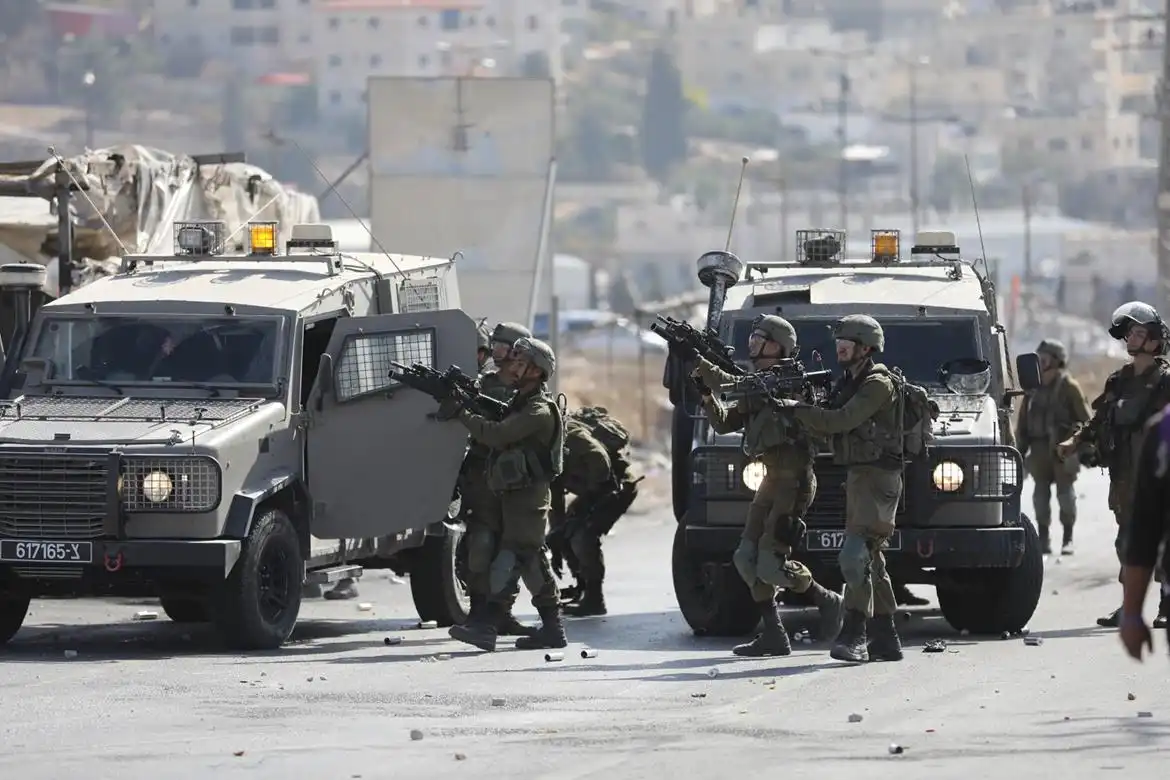
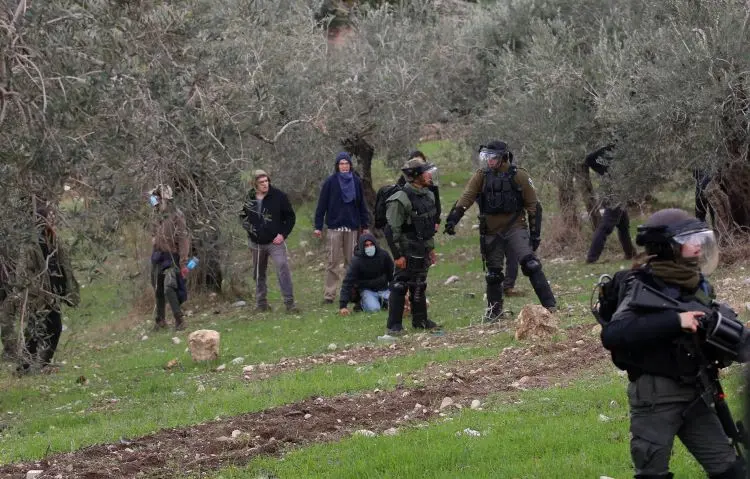
Israeli occupation forces stormed the towns of Dura and Halhul in Hebron.

Israeli occupation forces stormed the towns of Dura and Halhul in the Hebron Governorate on Saturday.


According to local sources, occupation forces stormed the town of Dura in the south, deployed in several streets and neighborhoods, and began firing live ammunition, with no injuries reported.


The sources added that occupation forces also stormed the town of Halhul in the north, raiding several neighborhoods, without any arrests being reported.

PALESTINE

Sat 26 Apr 2025 4:03 pm - Jerusalem Time

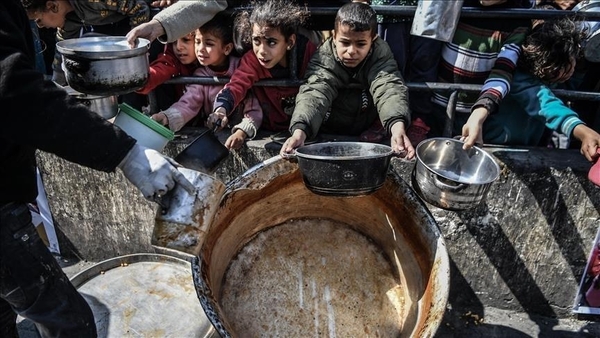
Hamas: Gaza Strip residents have entered a phase of actual famine due to the occupation's siege.

Hamas has confirmed that the Gaza Strip has entered a famine phase, accusing Israeli Prime Minister Benjamin Netanyahu and his "criminal" government of using starvation as a weapon of genocide against the Strip's population.


In a statement, Hamas warned of the disastrous consequences of the comprehensive closure imposed by the occupation government on Gaza, calling for immediate action to end the blockade.


The movement noted that the World Food Programme's announcement that its stocks had run out confirms beyond doubt that the people of Gaza have entered a phase of actual famine.


Hamas called on the international community to take urgent action to stop the mass starvation and end the complete blockade imposed on the Gaza Strip.


Resistance operations

The Al-Qassam Brigades announced that it had killed and wounded members of a special Israeli force after targeting them with shells and machine guns during clashes in the Shujaiya neighborhood in eastern Gaza.

ARAB AND WORLD

Sat 26 Apr 2025 3:32 pm - Jerusalem Time

More than 400 injured in a massive explosion at the Rajaee Port in southern Iran.

Dozens of people were injured on Saturday in an explosion at Rajaee Port in Bandar Abbas, southern Iran.

Iranian state television reported on Saturday a "huge explosion" and fire at a port in Iran's Hormozgan province, more than 1,000 kilometers south of Tehran.

"The explosion occurred in a part of the Shahid Rajaee Port dock, and we are working to extinguish the fire," Esmail Malekizadeh, an official with Hormozgan's Ports and Maritime Administration, was quoted as saying by state television.

He added, "Initial investigations indicate that the explosion was caused by a number of containers stored at Shahid Rajaee Port. We are evacuating the scene and transporting the injured."

A powerful explosion occurred at the port of Rajaee in southern Iran.

"Eighty injuries have been transferred to hospitals so far," an emergency medical service spokesman said.

Later, Tasnim News Agency quoted a spokesman for Iran's Emergency Organization as saying that the number of injured in the explosion had risen to 195.

Later, the spokesman for the Iranian Emergency Organization announced that the number of infected people had risen to more than 400.

An Al Arabiya TV correspondent quoted an eyewitness inside Rajai Port as saying that one building was completely destroyed by the explosion, in addition to extensive damage to buildings in the vicinity.

Mehr News Agency reported that Interior Minister Eskandar Momeni received a preliminary report on the incident during a phone call with Hormozgan Governor Mohammad Ashouri, noting that he ordered an immediate investigation.


In turn, the National Iranian Oil Refining and Distribution Company stated: "Following the publication of news of an explosion and fire in the Shahid Rajaee Port area, we would like to inform you that this explosion was not related to the oil refineries, fuel tanks, distribution complex, or oil pipelines associated with this company in that area, and that the facilities in the Bandar Abbas area are currently operating without interruption."

The statement added: "Rescue and firefighting equipment and machinery from all oil companies present in the region are on standby and offering their services to assist in managing the aforementioned incident, by the Ports and Maritime Organization."

ARAB AND WORLD

Sat 26 Apr 2025 3:29 pm - Jerusalem Time

Israeli AI experiments in the Gaza war raise ethical concerns.

Washington - Saeed Erekat


The New York Times reported in an investigation published on Saturday, April 26, 2025, that in late 2023, Israel aimed to assassinate Ibrahim al-Bayari, a senior Hamas leader in northern Gaza who helped plan the October 7, 2023, attack. However, Israeli intelligence was unable to locate al-Bayari, who was believed to be hiding in a network of tunnels under Gaza.


Therefore, according to the newspaper, "Israeli officers turned to a new military technology enhanced by artificial intelligence, according to three Israeli and American officials familiar with the events," noting that "this technology was developed a decade ago, but had not been used in combat. The discovery of Al-Bayari provided a new impetus to improve the tool, so engineers from Israel's Unit 8200, the Israeli counterpart to the US National Security Agency, rushed to integrate artificial intelligence into it, according to these people."


Shortly thereafter, Israel listened to al-Bayari's calls and tested an AI voice tool, which provided an approximate location of where he was making his calls. Using this information, Israel ordered airstrikes targeting the area on October 31, 2023, killing al-Bayari. More than 125 civilians were also killed in the attack, according to Airwars, a London-based conflict monitoring organization.


The audio tool was just one example of how Israel is using the war in Gaza to rapidly test and deploy AI-powered military technologies to an unprecedented degree, according to interviews with nine American and Israeli defense officials, who spoke on condition of anonymity because the work is classified.


According to the newspaper, two people familiar with the programs said that many of these efforts were partnerships between Unit 8200 conscripts and reservists working for technology companies such as Google, Microsoft, and Meta (Facebook). Unit 8200 created what became known as "The Studio," an innovation center and a place to match experts with AI projects, the people said.


However, even as Israel races to develop its AI arsenal, the deployment of the technology has sometimes led to mistaken identities, arrests, and civilian deaths, according to Israeli and American officials. Some officials have grappled with the ethical implications of AI tools, which could lead to increased surveillance and the killing of other civilians.


European and US defense officials said no other country has been as active as Israel in testing AI tools in real-time combat, offering a glimpse into how these technologies could be used in future wars—and how they could go wrong.


"The urgent need to deal with the crisis has accelerated innovation, much of it powered by artificial intelligence," Hadas Lorber, head of the Institute for Applied Research in Artificial Intelligence at Israel's Holon Institute of Technology and a former senior director at Israel's National Security Council, told the newspaper. This has led to the development of game-changing technologies on the battlefield and advantages that have proven valuable in combat.


But Lorber said these technologies "also raise serious ethical questions." She warned that AI requires checks and balances, adding that humans make the final decisions.


An Israeli military spokeswoman said she could not comment on specific technologies due to their "secret nature." She added that Israel is "committed to the legal and responsible use of data technology tools," adding that the military is investigating the Biari strike and is "unable to provide any additional information until the investigation is complete."


Meta and Microsoft declined to comment to the newspaper, and Google claimed it has "employees serving as reserve personnel in various countries around the world. The work these employees perform as reserve personnel is not associated with Google."


Israel has previously used the conflicts in Gaza and Lebanon to test and develop technological tools for its military, such as drones, phone hacking tools, and the Iron Dome defense system, which can help intercept short-range ballistic missiles.


The newspaper says: "After Hamas launched cross-border attacks on Israel on October 7, 2023, killing more than 1,200 people and taking 250 hostages, the use of artificial intelligence technologies was quickly authorized, according to four Israeli officials. They added that this led to cooperation between Unit 8200 and reservists at the "studio" to quickly develop new artificial intelligence capabilities."


The newspaper quotes Avi Hasson, CEO of Startup Nation Central, an Israeli nonprofit that connects investors with companies, as saying that reservists from Meta, Google, and Microsoft have become a key element in driving innovation in the field of drones and data fusion. He added, "Reservists bring technical know-how and access to key technologies that were not available in the military."


The Israeli military quickly used artificial intelligence to enhance its drone fleet. Aviv Shapira, founder and CEO of Extend, a software and drone company working with the Israeli military, said AI-powered algorithms were used to build drones that identify and track targets remotely.


"In the past, guidance capabilities relied on focusing on the target image. Now, AI can recognize and track the object itself—whether a moving vehicle or a person—with pinpoint accuracy," he said. Shapira said his main clients, the Israeli military and the US Department of Defense, were aware of the ethical implications of AI in warfare and discussed the responsible use of this technology.


Three Israeli officers familiar with the program said that one of the tools developed by The Studio was an Arabic-language AI model known as the Large Language Model. (Plus 972, an Israeli-Palestinian news site, previously reported on the Large Language Model.)


Developers faced difficulty creating such a model due to the scarcity of Arabic data to train the technology. When such data was available, it was mostly in written Modern Standard Arabic, a more formal language than the dozens of dialects used in spoken Arabic.


The three officers said the Israeli military didn't face this problem. The country had decades of intercepted text messages, written phone calls, and social media posts gleaned from spoken Arabic dialects. So, Israeli officers created a large language model in the first few months of the war and built a chatbot to process queries in Arabic. Four Israeli officials said they integrated the tool with multimedia databases, allowing analysts to conduct complex searches across images and videos.


Three Israeli officers told the newspaper that when Israel assassinated Hezbollah leader Hassan Nasrallah last September, the chatbot analyzed responses across the Arabic-speaking world. The technology distinguished between different dialects in Lebanon to gauge public reaction, helping Israel assess whether there was public pressure to launch a counterstrike.


Two officers said the chatbot was sometimes unable to identify some modern slang terms and words translated from English into Arabic. One officer said this required Israeli intelligence officers with experience in various dialects to review and correct its work.


Two Israeli intelligence officers said the chatbot also occasionally gave incorrect answers—for example, returning images of pipes instead of guns. However, they said the AI tool significantly accelerated research and analysis.


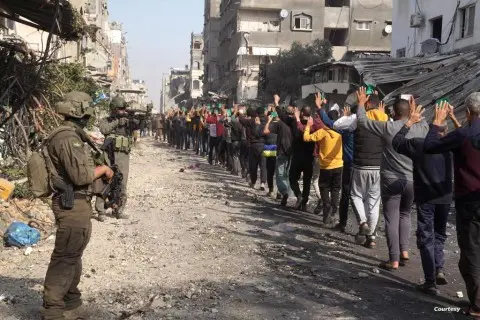
At temporary checkpoints set up between the north and south of the Gaza Strip, Israel also began equipping cameras after the October 7 attacks with the ability to scan and send high-resolution images of Palestinians to artificial intelligence-powered facial recognition software, the newspaper reported.


The system also sometimes had difficulty identifying people whose faces were obscured. This led to the arrest and interrogation of Palestinians who were mistakenly identified by the facial recognition system, according to two Israeli intelligence officers.


Israel also used artificial intelligence to sift through data collected by intelligence officials on Hamas members. Before the war, Israel built a machine learning algorithm—codenamed "Lavender"—that could quickly sort through data to search for low-level militants. It was trained on a database of confirmed Hamas members and was intended to predict who might be part of the group. Although the system's predictions were inaccurate, Israel used it early in the Gaza war to help select attack targets.


There were no greater goals than finding and eliminating Hamas’s top leadership. At the top of the list was Biari, the Hamas commander Israeli officials believe played a pivotal role in planning the October 7 attacks. Israeli military intelligence quickly intercepted Biari’s calls with other Hamas members but was unable to pinpoint his location. So they turned to an AI-powered audio tool that analyzed various sounds, such as stun grenades and airstrikes. Two intelligence officers said that after deducing an approximate location of where Biari had made his calls, Israeli military officials were warned that the area, which includes several residential complexes, was densely populated. They said that an airstrike would need to target several buildings to ensure Biari’s assassination. Approval was given for the operation. Since then, Israeli intelligence has also used the audio tool, along with maps and photos of Gaza’s labyrinth of underground tunnels, to pinpoint the locations of hostages. Over time, the tool has been refined to locate individuals with greater precision, two Israeli officers said.

PALESTINE

Sat 26 Apr 2025 2:08 pm - Jerusalem Time

A young Palestinian died of wounds he sustained two months ago in Beit Furik.

A young man died of his wounds today, Saturday, in the town of Beit Furik, east of Nablus.


Medical sources confirmed that the young man, Ahmed Nasasra (30 years old), died of wounds he sustained about two months ago during clashes with the Israeli occupation forces in Beit Furik.


It is noteworthy that the young man, Nasasra, was married and had one child. He was lying in the Arab Specialized Hospital in Nablus, where doctors announced his martyrdom today.

PALESTINE

Sat 26 Apr 2025 2:07 pm - Jerusalem Time

Trump administration lifts immunity from UNRWA

The administration of US President Donald Trump has decided to lift the immunity of the United Nations Relief and Works Agency for Palestine Refugees (UNRWA), no longer considering it part of the United Nations, which would allow it to be sued in US courts.

This statement came in a legal document submitted by the US Department of Justice to the Federal Court in New York last Thursday, as part of a serious lawsuit against UNRWA accusing it of covering up for employees who participated in the events of October 7, 2023, and demanding exorbitant financial compensation.

This shift reflects the US administration's hardline stance toward the UN agency, especially in light of repeated Israeli accusations against UNRWA.

Since his first term as US President in 2017, President Donald Trump has been working to combat UNRWA and cut its funding, with the aim of eliminating the refugee issue.

UNRWA's legal defense team described these accusations as "not serious," stressing that the agency enjoys legal immunity as a UN agency, a position adopted by previous US administrations.

PALESTINE

Sat 26 Apr 2025 2:06 pm - Jerusalem Time

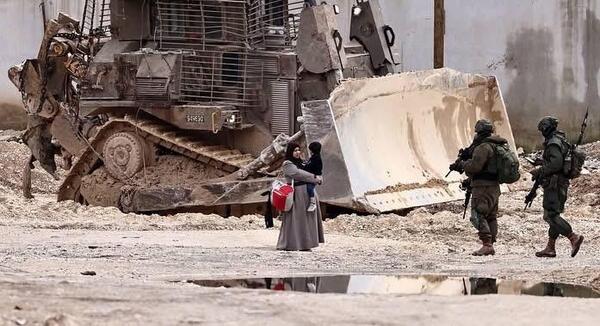
The death toll from the aggression on Gaza rises to 51,495 dead and 117,524 wounded.

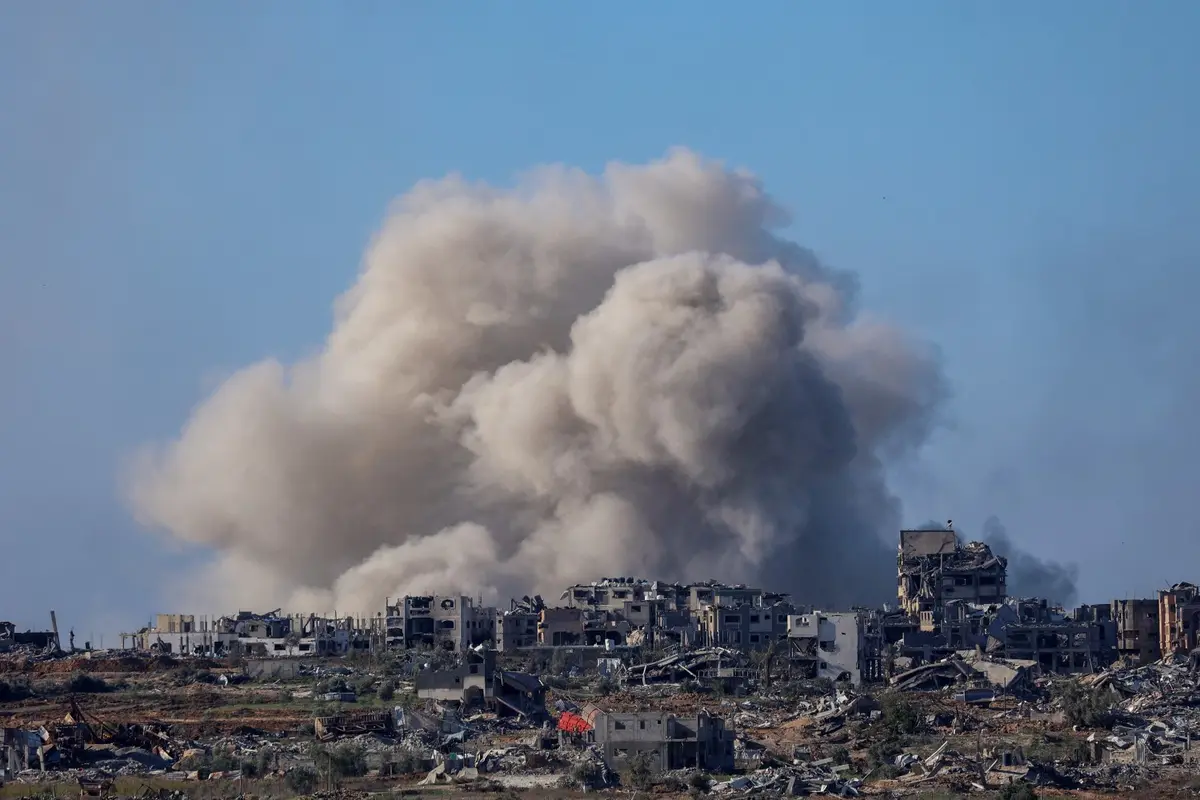
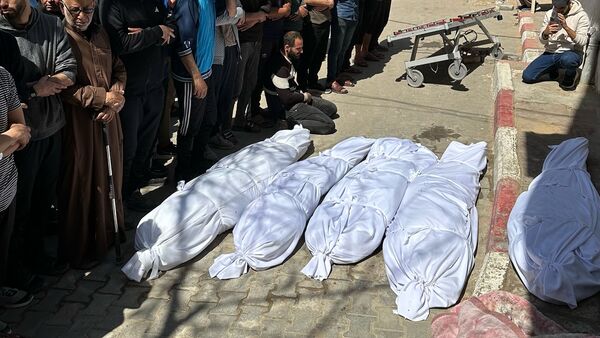
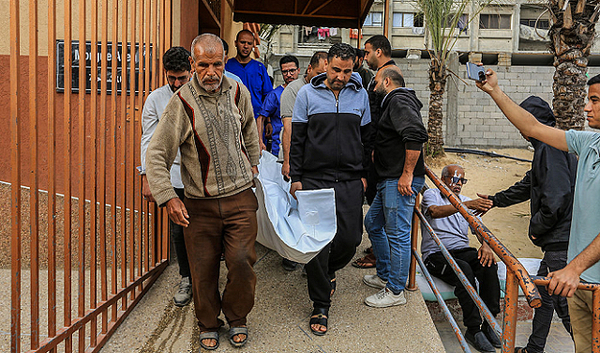
The death toll from the genocidal war and aggression waged by the Israeli occupation forces on the Gaza Strip has risen to 51,495 dead and 117,524 wounded since October 7, 2023.


According to medical sources, the death toll includes 2,111 dead and 5,483 injuries since March 18, when the occupation resumed its aggression on the Gaza Strip following the ceasefire.


The same sources confirmed that 56 dead, including 7 dead who were recovered, and 108 injured, arrived at hospitals in the Gaza Strip during the past 24 hours, while a number of victims are still under the rubble and in the streets, and ambulance and civil defense crews are unable to reach them.

OPINIONS

Sat 26 Apr 2025 11:05 am - Jerusalem Time

Who will stop the war of extermination in Gaza?


Baha Rahal

The war of extermination continues in Gaza with all its brutality and brutality. The bombing and massacres do not stop, and the massacres that have wiped out hundreds of families do not stop. Not a single person remains who carries the family name, its memories, rituals, and inherits its characteristics and features, and the names of those who died and were killed by the fires of the bombing and the bombs of death. Those families have no trace left, and some of them have no graves to preserve their deaths. Rather, they were buried in mass graves with others, and some are still missing under the rubble.

Families were wiped out and erased from the civil registry, while others had some members who survived but were injured, so their limbs were amputated and they became orphans and disabled, helpless and without support in a time of genocide and crushing that spared no child, old man, or elderly person.

Heartbreaking scenes, images broadcast by satellite channels and newspapers of those whose arms were amputated, as if to say no more hugs, and others of those whose feet were amputated when they were only months old. What fates await these desperate children? What future can be merciful to those who found themselves born under the yoke of genocide? What life can they expect with incomplete bodies and lost hopes?

These are the months of the ongoing, brutal and bloody war, and the siege is making the days heavier for the people of Gaza, where there is no water, no medicine, no food, and no life in the midst of the hell of death and war. The people cry out to their consciences and appeal to the world to intervene, but no one hears the call of those in distress. Everyone stands in a corner of neutrality. How ugly this silence and this neutrality are. The worst thing that the people of Gaza are experiencing is this international abandonment of them. How ugly this silent world is and how disgusting this abandonment is.

The most famous war of extermination has done its work. After it wiped out all forms of life, there was no university, no mosque, no hospital, no health center, no school, and no theater. It shattered hopes and aspirations, exposed the falsehood and lies of international law, and revealed the truth about international institutions, the claim of human rights, and other covenants that previously constituted protection and a guarantee for humanity, before the war in Gaza came, and before the world adopted this cowardly neutrality that accepted silence and did not take any actual action to prevent the hell of extermination and stop the war.

Amid the world's silence and the inaction of international and UN institutions, Gaza remains a witness to the betrayal of values and morals, the betrayal of international law, and the betrayal of earthly and heavenly laws. It waits for the human conscience to awaken from its long slumber, to speak a word of truth that will stop the bleeding, and grant its people their right to existence and peace of mind, and their right to escape the scourge of genocide that has turned their lives into a hell that lurks in every corner.

PALESTINE

Sat 26 Apr 2025 9:42 am - Jerusalem Time

9 Palestinians killed in Israeli occupation's bombing of Gaza

Seven civilians were killed and dozens injured early Saturday morning when the occupation forces bombed two homes in the Al-Shati refugee camp, west of Gaza City, and the Al-Sabra neighborhood, south of the city.


Local sources reported that Israeli warplanes bombed a home belonging to the Abu Abdo family in the Shati refugee camp, west of Gaza City, killing three civilians and wounding others.


It added that Israeli warplanes bombed a home belonging to the Al-Khour family on Al-Thalathini Street in the Al-Sabra neighborhood, south of Gaza City. Rescue and civil defense teams were able to retrieve the bodies of four dead and a number of wounded, while a number of others remain missing under the rubble.


The occupation forces' artillery shelled the eastern areas of Gaza City, while simultaneously destroying a large number of homes in the same area.


In northern Gaza:


Two citizens were martyred today, Saturday, when the occupation forces targeted them in Beit Lahia, north of the Gaza Strip.

Local sources reported that an Israeli drone targeted a group of citizens near the Education Roundabout in the northern Gaza Strip, killing two civilians and wounding others.

Medical sources reported that Mustafa Abdel Razek Taha Shurab died of wounds he sustained when the occupation forces bombed a house in the Al-Manara area, east of Khan Yunis, on Friday.

PALESTINE

Sat 26 Apr 2025 8:21 am - Jerusalem Time

UN official: Gaza children are starving


A UN official confirmed on Friday that children in Gaza are starving due to Israel's deliberate starvation policy, which has continued to close the Strip's crossings and prevent the entry of food and other essential goods since March 2.


This came according to what the United Nations Relief and Works Agency for Palestine Refugees (UNRWA) reported from its Commissioner-General, Philippe Lazzarini, in a post on the "X" platform.


"In Gaza, children are starving," Lazzarini said.


He continued: "The Israeli government continues to prevent the entry of food and other essentials. This is a man-made, politically motivated starvation."

PALESTINE

Sat 26 Apr 2025 8:21 am - Jerusalem Time

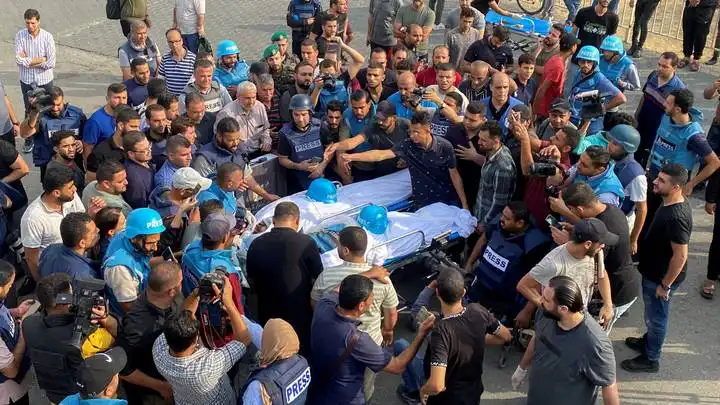
A human rights center in Gaza: Israel's killing of journalists is deliberate and aims to obscure the truth.

A Palestinian human rights center confirmed on Friday that Israel is deliberately killing journalists in the Gaza Strip in order to intimidate them and prevent them from reporting the truth and the genocide it has been perpetrating to the world since October 7, 2023.


The Palestinian Center for Human Rights (independent) condemned, in a statement, "the Israeli assassination of a Palestinian journalist, his wife, and his daughter, who were walking near their home in Deir al-Balah, in the central Gaza Strip."


Earlier on Friday, the Government Media Office in Gaza announced that the number of journalists killed by the Israeli army since 2023 had risen to 212, following the death of journalist Saeed Abu Hassanein, who succumbed to his injuries in a bombing that targeted him, his wife, and his daughter on Wednesday.


The center said: "The continued targeting and killing of journalists on an escalating scale demonstrates beyond doubt that the killings are deliberate and intentional, aimed at terrorizing and frightening them, preventing them from conveying the truth to the world, and obscuring the coverage of the genocide against civilians in Gaza."


He stressed that targeting journalists in Gaza is "an integral part of the genocide in the Gaza Strip."

He explained that the number of journalists killed in Gaza since the beginning of the genocide, including 13 female journalists, is "the highest in the world since the beginning of the census of journalist deaths in 1992."

PALESTINE

Sat 26 Apr 2025 8:18 am - Jerusalem Time

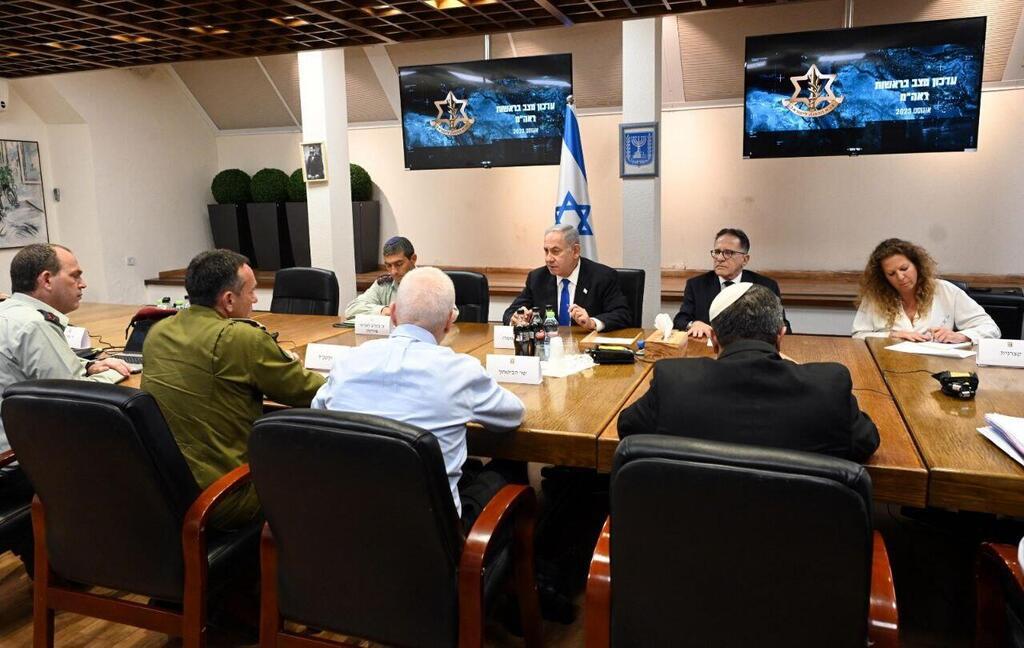
Amid cabinet disagreements, Israel threatens to expand its operations in Gaza.

On Friday evening, the Israeli occupation army warned Palestinians in areas east of Gaza City to evacuate, in an attempt to further escalate the genocide being perpetrated by Tel Aviv in the Strip.

The army announced in a statement: "To all residents of the Gaza Strip located in the New Turkman area (located within the Shujaiya neighborhood) and the northeast of the Zeitoun neighborhood (the area located between the Shujaiya and Zeitoun neighborhoods)."

The statement read: "This is a preliminary and final warning before the attack." The army claimed that Palestinian organizations "carried out operations" against its forces.

He added that "we will attack with extreme force any area used to carry out these operations." The statement called on Palestinians to move toward the western areas of Gaza City.

This comes as the official Israeli Broadcasting Authority reported that the Israeli Chief of Staff has approved new operational plans for combat in the Gaza Strip.


For its part, Israel's Channel 13 noted that the Israeli military recommended that the political level gradually expand the military operation in Gaza.

The Broadcasting Authority indicated that the recommendation includes evacuating residents.

Disagreements in the Israeli cabinet

Meanwhile, meetings of the Israeli Security Cabinet revealed "serious disagreements" between the political echelon and the military regarding Prime Minister Benjamin Netanyahu's government's policies regarding the war of extermination against the Gaza Strip.

Disagreements renewed during the latest cabinet session held on Thursday evening, which ended without a statement, following a similar meeting held on Tuesday evening.

The cabinet is scheduled to meet again next Monday, hoping to bridge the gaps and disagreements between the military and the political echelon regarding the details of the war policies in Gaza and the distribution of aid provided by foreign countries and entities to the residents of the Palestinian enclave.


Since October 7, 2023, Israel has been committing genocide in Gaza, leaving more than 168,000 Palestinians dead and wounded, most of them children and women, and more than 11,000 missing.

On Friday, the Hebrew newspaper Israel Hayom reported that a meeting held Thursday evening saw "serious disagreements" between the military establishment and the political echelon.


She added that although "gaps were bridged during the meeting between the military and the political echelon regarding the distribution of humanitarian aid in Gaza, serious disagreements resurfaced between the heads of the military establishment and the ministers."

She pointed out that the serious disagreements are linked to "the next stages of the military campaign," namely the war of extermination that Israel has been waging against the Gaza Strip for 19 months.

The newspaper revealed that "a heated verbal altercation broke out between the two parties during the session, with participants' voices being raised excessively."

Cutting off aid to Gaza

In this context, the newspaper considered that the failure to reach an agreement between the two parties on the course of the war against the Gaza Strip "requires the Israeli army to once again update the plans it has prepared and return with new proposals consistent with the approach of the government ministers."

Since March 2, Israel has closed the Gaza Strip's crossings to the entry of food, relief, medical aid, and goods, causing a significant deterioration in the humanitarian situation for Palestinians, according to government, human rights, and international reports.

The Israeli government claims it does not want this aid to reach Hamas, while the Israeli military says distributing aid to the population is risky.


Far-right ministers, including Finance Minister Bezalel Smotrich, say that "no aid should be allowed into Gaza at all."

In this regard, Israel Hayom said, "Regarding the issue of supplies, the army presented new plans that are consistent with the principle demanded by the ministers, which stipulates that Hamas will have no possibility of obtaining supplies."

She added that the new plans were prepared "in a way that ensures that the distribution of supplies, if decided upon, will not pose a danger to IDF soldiers."

"Gaza Incursion Strategy"

On another note, the official Israeli Broadcasting Authority clarified on Friday that the cabinet's last meeting addressed "the strategy for the military incursion into the Gaza Strip and the army's plan to intensify the fighting (extermination), which includes seizing additional territory and transferring residents to humanitarian zones."

She said that estimates indicate that the cabinet meeting next Monday "will be crucial in making field decisions."

The Authority quoted an unnamed Israeli political source as saying, "The cabinet also reviewed developments in mediation efforts regarding a prisoner exchange deal during yesterday's meeting."

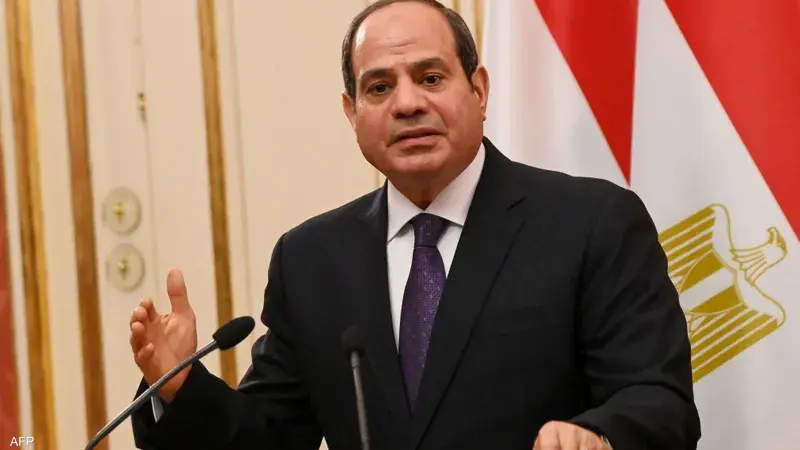
She also noted that despite pressure from some ministers (from the extreme right), including Ben-Gvir and Finance Minister Bezalel Smotrich, for an immediate decision to expand the fighting, the political leadership "prefers to give a chance to the Egyptian initiative, based on the modified formula of US Middle East envoy Steve Witkoff."


The Egyptian formula, according to the Hebrew Authority, calls for "the disarmament of Hamas as a condition for a long-term ceasefire."

Prisoners' families call for a comprehensive agreement

Meanwhile, the families of the prisoners and approximately 143,000 Israelis are calling for a comprehensive agreement to return all prisoners at once, even if it is in exchange for a halt to the war on Gaza. However, the government rejects these calls, insisting that it can force Hamas to accept its position through military pressure, including extensive airstrikes.

Tel Aviv estimates that there are 59 Israeli prisoners in the Gaza Strip, 24 of whom are still alive. Meanwhile, more than 9,900 Palestinians are languishing in its prisons, suffering torture, starvation, and medical neglect, many of whom have died, according to Palestinian and Israeli human rights and media reports.

Hamas has repeatedly affirmed its readiness to negotiate provided there is an Israeli commitment to a ceasefire and a full withdrawal from Gaza, a demand Tel Aviv rejects.


Source: Al Arabiya TV

ARAB AND WORLD

Sat 26 Apr 2025 8:15 am - Jerusalem Time

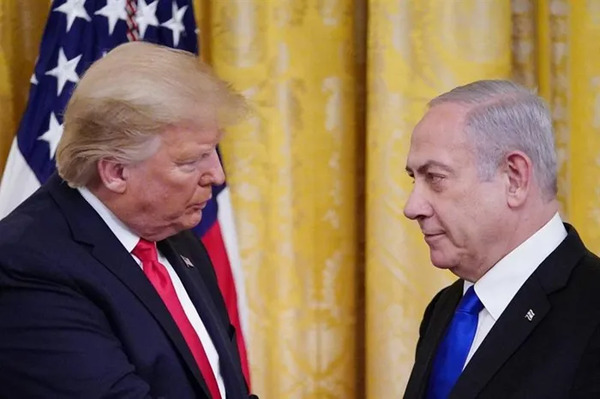
Trump: Israel will not drag us into a war with Iran


US President Donald Trump said he would not be dragged into a war with Iran by Israeli Prime Minister Benjamin Netanyahu, but vowed that Washington could be the "leader of the pack" if diplomacy fails and joint US-Israeli military action becomes necessary to thwart Tehran's nuclear program.


The US President, who reiterated his hope for resolving the issue through negotiations, expressed his openness to meeting with the Supreme Leader of the Islamic Republic or its president.


Trump made the remarks on Monday (April 21) in a wide-ranging interview with Time magazine published on Friday (April 25), a day before his special envoy, Steve Witkoff, and Iranian Foreign Minister Abbas Araghchi arrived in Oman for the third round of nuclear talks in two weeks.


During the interview, Trump predicted that Saudi Arabia would "very quickly" normalize relations with Israel and blamed his predecessor, Joe Biden, for the recent death toll in Gaza because he "lifted all sanctions" on Iran, which "enabled them to fund the Palestinian terrorist organization Hamas." Trump also said in the interview that Ukrainian President Volodymyr Zelensky "understands" that Crimea, which Moscow annexed in 2014, would remain with Russia as part of a potential agreement between the two countries. This comment was published shortly before Witkoff met with Russian President Vladimir Putin in the Kremlin as part of truce talks between Ukraine and Russia.


Additionally, Trump said his administration has reached 200 yet-to-be-announced trade deals, as countries around the world seek to counter the punitive tariffs he announced earlier this month.


When asked by TIME about reports that he recently rejected Israeli proposals for a series of joint strikes on Iranian nuclear facilities, Trump acknowledged that while he did not directly oppose Israel's plans, it "didn't make it comfortable" for them to proceed. "I think we can make a deal without attacking. I hope we can," Trump told TIME, acknowledging, as he has throughout his efforts to bring Iran to the nuclear negotiating table, that military action may be necessary in the future.


Trump repeated, "I didn't make it comfortable for them, but I didn't refuse. Ultimately, I would have given them that choice, but I said I'd rather make a deal than drop bombs."


When asked if he was concerned about Netanyahu being "dragged" into a war with Iran, Trump said the Israeli leader "may go to war. But we won't be dragged into it."


When asked again whether this meant the United States would avoid an Israeli attack on Iran, Trump made it clear that this was not the case.


"You asked him if he would drag me in, as if I would be forced to do so. No, I would voluntarily do so if we can't make a deal. If we can't make a deal, I'll be at the forefront of the group," Trump said. The US president said talks with Iran have made "very good progress" so far. Asked if he would be open to meeting Iranian Supreme Leader Ali Khamenei or President Masoud Pezeshkian, Trump replied, "Absolutely."


Trump, who withdrew the United States in 2018 from the 2015 nuclear agreement between Tehran and world powers, has warned of military action against Iran unless a new agreement is quickly reached to prevent it from developing nuclear weapons.


Since 2019, Iran has far exceeded the limits of the 2015 agreement on uranium enrichment, producing stockpiles far in excess of what the West says is necessary for a civilian energy program and a technical step away from weapons-grade material.


Israel's supporters in Washington, part of the Israeli lobby pushing for a US war on Iran, say Israel is deeply concerned that the United States is close to concluding a "bad deal" with Iran, one that will fail to meet the basic conditions announced by Jerusalem to ensure the regime cannot acquire nuclear weapons. Israel's Channel 12 News, citing Israeli media, reported that Israel believes the negotiations are "very advanced" and that the United States is not sharing enough information with Israel on specific key issues.


Speaking to Time magazine, Trump accused Biden of enabling Iran to build a so-called axis of resistance by easing sanctions imposed by the United States on Tehran during Trump's first term.


When asked who he blamed for the more than 1,000 deaths in Gaza since Israel renewed hostilities there last month, Trump said, "I blame the Biden administration because they allowed Iran to come back into the game without a deal."


"There was no money for Hamas. There was no money for Hezbollah," Trump said. Trump claimed, "When Biden came in and lifted all the sanctions... they started funding terrorism again, including Hamas." Trump also accused the Biden administration of halting the "tremendous success" of the Abraham Accords, a series of normalization agreements brokered by the White House during the first Trump administration between Israel, Bahrain, Sudan, Morocco, and the United Arab Emirates.


"They haven't done anything about the Abraham Accords," Trump said of the Biden administration. "We had four countries there, and everything was ready. We were going to fill it. Now we're going to start it all over again."


Trump, who is scheduled to visit Riyadh next month, told TIME magazine that he believes Saudi Arabia will join the Abraham Accords, adding, "I think they (the kingdom) will do it very quickly."


According to observers, Saudi-Israeli normalization appeared to be approaching before the Hamas attack on October 7, 2023, when two Israeli ministers made unprecedented visits to the kingdom. However, normalization efforts faltered amid the ensuing war, as the kingdom insists on the establishment of a Palestinian state before it will normalize relations with Israel. Trump said the reason he pursued normalization was "because I like Saudi Arabia very much, and the crown prince and the king—I like them all, and they agreed to invest a trillion dollars in our economy."


"I'll go to Qatar next, then to the UAE," Trump said.

PALESTINE

Fri 25 Apr 2025 9:50 pm - Jerusalem Time

Settlers escalate their attacks...and confrontation with them is only a matter of time

Dr. Ahmed Rafiq Awad: An intense settlement war aims to annex the West Bank and displace Palestinians without an official declaration.

Abdullah Abu Rahma: Forming popular protection committees to confront the settlers is important because collective resistance is less harmful than silence and submission.

Hani Abu Al-Sabaa: Netanyahu's government is supporting a "crazy" settlement campaign to displace Palestinians from the West Bank, exploiting international silence.

Dr. Tamara Haddad: International silence encourages settlers to commit more organized and extreme violations, creating a situation in which villages are isolated and promoting the idea of forced displacement.

Suleiman Basharat: The extremist ideological thinking of the settlers, supported politically, makes confrontation with them a matter of time.

Nizar Nazzal: There is a need to adopt a unified national strategy that capitalizes on the divisions within Israeli society and focuses on the Arab heartland.

Amid an unprecedented escalation in Israeli settlement activity in the West Bank, the outlines of a systematic policy aimed at displacing Palestinians and imposing creeping annexation without any official announcement are emerging.

In separate interviews with Al-Quds, writers, political analysts, experts, and officials believe that the repeated attacks carried out by settlers, which have recently escalated with direct support from the Israeli government, have gone beyond individual assaults to become tools for implementing a comprehensive political plan aimed at reshaping Palestinian geography and demographics.

They explain that there has been an increase in the widespread confiscation of land and the legalization of new settlement outposts, along with the rise of the phenomenon of "pastoral settlement," which is occupying vast areas of Palestinian land for the benefit of a limited number of settlers, as part of a new pattern aimed at displacing surrounding villages and creating a repellent environment for their residents.

They point out that these policies are accompanied by the complicity of the Israeli military establishment, which now provides protection to settler militias and facilitates demolition and bulldozing operations.

In contrast, writers, analysts, specialists, and officials assert that the international stance has witnessed a marked decline, with Western responses appearing superficial and lacking real deterrents, reinforcing settlers' sense of impunity.

They assert that this international silence, coupled with Arab apathy, is accelerating the implementation of displacement plans. At a time when the importance of Palestinians activating their role through organized steadfastness and popular resistance is growing, along with urgent legal and diplomatic action to expose these policies and put an end to the "open settlement war."

Unprecedented escalation in the pace of settlement

Writer and political analyst Dr. Ahmed Rafiq Awad warns of an unprecedented escalation in Israeli settlement activity in the West Bank since 2023, describing it as a "settlement war" aimed at displacing Palestinians and effectively annexing the territory, even without an official declaration.

Awad points out that the current Israeli settlement government has confiscated land equivalent to what was confiscated over the past 20 years in just 19 months, along with legalizing 28 settlement outposts and deepening a new pattern known as "pastoral settlement," which relies on allocating vast areas of Palestinian land to just one or two settlers.

Awad asserts that settler leaders are exploiting their presence in the Israeli government to create settler militias supported by weapons, vehicles, and legal protection, while modifying the legal structure to expedite confiscation, construction, and demolition operations.

Awad explains that settler violence has become the primary cause of Palestinian displacement, outweighing the official actions of the Israeli military or Civil Administration.

Awad points out that these policies are supported by Israeli government budgets and a legal and bureaucratic structure aimed at facilitating the control of land and the expulsion of residents.

The international community is silent regarding Israeli violations.

Awad criticizes the international community's silence regarding these violations, noting that European and American condemnations remain superficial and unsupported by effective punitive mechanisms. For example, US sanctions imposed on some settlers have been lifted, and the boycott of settlement products has not translated into concrete action.

Awad asserts that receiving settler leaders in a number of world capitals reinforces their sense of impunity, giving them freedom to act without restraint.

Awad noted that the continuation of the current situation will lead to a "worst-case scenario," whereby the West Bank will be effectively annexed through massive confiscations, the displacement of Palestinians, and the expansion of settlements in all their forms.

Awad calls on Palestinians to be steadfast and confront the situation wisely, choosing their tools of confrontation carefully to avoid unforeseen risks.

Exposing and delegitimizing settlements

Awad calls on the Palestinian Authority to redefine its relationship with Israel and engage international institutions to expose and delegitimize settlement activity.

Awad calls on Arab states to take a firm stance against settlements and to impose restrictions on receiving or dealing with settler leaders, emphasizing that the frustrating behavior of some Arab parties does not serve the cause of settlement or justice.

Awad asserts that the absence of serious international sanctions against the Israeli government and settlers strengthens their ability to implement their plans without deterrence, necessitating urgent Palestinian, Arab, and international action to halt this settlement war.

Attacks aimed at implementing the "decisive" plan

For his part, Abdullah Abu Rahma, Director General of the Popular Action Department of the Wall and Settlement Resistance Commission, warns of a dangerous escalation in the Israeli settlers' war on Palestinian villages in the West Bank. He asserts that these attacks are aimed at implementing the "decisive plan" proposed by Israeli Minister Bezalel Smotrich, with the support of the far-right government.

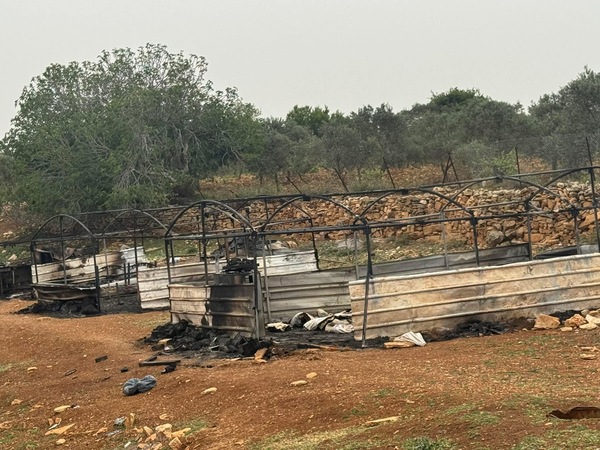
Abu Rahma points out that these attacks, which include stealing sheep, burning property, destroying crops, cutting down trees, and bulldozing land, are carried out daily and openly, often in the presence of the Israeli army and police, revealing the complicity of official institutions.

Abu Rahma explains that violations have been on the rise recently in areas such as Sinjil, Umm Safa, Masafer Yatta, the Nablus area, and the southern West Bank, where thefts are carried out in broad daylight in front of property owners, sometimes accompanied by occupation forces.

Abu Rahma asserts that these attacks are not spontaneous, but rather part of a strategy aimed at destabilizing Palestinians and creating a hostile environment that will force them to leave.

Smotrich's options: emigrate, submit, or die

Abu Rahma points out that Smotrich has set three options for Palestinians: emigrate, submit as servants to the Israelis, or die, revealing the primary goal of internal or external displacement.

Abu Rahma explains that Israeli policies include road closures and the deployment of more than 900 checkpoints, exacerbating the daily suffering of Palestinians.

According to Abu Rahma, these checkpoints force citizens to spend more money, waste their time searching for alternative routes, and put their lives in danger, forcing many to flee villages and Bedouin communities to urban centers in search of safety.

Abu Rahma points out that strategic villages like Umm Safa and Sinjil, located between settlement blocs and settler roads, are under increasing pressure to force their residents to emigrate.

Abu Rahma warns of the muted international response to these violations, noting that the world's focus on the massacres in Gaza has diminished interest in the West Bank, despite the gravity of what is happening, including the displacement operations in the Jenin, Nur Shams, and Tulkarm camps.

Abu Rahma attributes this decline in part to the policies of US President Donald Trump, which have pushed countries to engage in their own economic and political struggles, weakening international solidarity with the Palestinian cause.

Abu Rahma asserts that diplomatic reports previously submitted are no longer met with response, reflecting a state of despair and apathy.

The need for urgent international action and punishment of Israel

Abu Rahma calls for urgent international action that includes imposing sanctions, boycotting Israel, and divesting from it, along with activating the role of human rights organizations and international courts to issue executive decisions, not merely formal condemnations.

On the Arab level, Abu Rahma called for financial and material support to strengthen the Palestinians' steadfastness, emphasizing that remaining on the ground is the "pinnacle of resistance" in the absence of the ability to engage militarily. He pointed out that Palestinian presence is the most powerful weapon to thwart displacement plans.

On the local level, Abu Rahma stresses the need to unify Palestinian efforts and activate popular resistance to support Bedouin villages and communities.

Abu Rahma calls for the formation of popular protection committees to confront settler militias, emphasizing that collective resistance to settler attacks, despite its high cost, is less harmful than silence and submission.

Abu Rahma explains that Palestinian surrender will achieve the Israeli government's extremist goals of displacement, while organized resistance can thwart these plans and galvanize international action.

Abu Rahma calls for organizing popular events and marches in rural areas, not just cities, and for Arab support, both financially and politically. He asserts that unifying Palestinian efforts and rejecting the occupation's policies will enhance the chances of reviving international solidarity and thwarting Israeli displacement plans. He emphasizes that division makes Palestinians an easy target for settlers.

Attacks targeting a wide segment of Palestinians

In turn, writer and political analyst specializing in Israeli affairs, Hani Abu al-Saba'a, says that the unprecedented escalation in Israeli settler attacks against Palestinians in the West Bank is due to the direct support of Benjamin Netanyahu's government.

Abu Al-Saba'a points out that these attacks, which target a broad segment of Palestinians, are part of a "crazy" settlement policy aimed at displacing the population and annexing land, exploiting the decline in international support for the Palestinian cause and the silence and abandonment of the Palestinian cause.

Abu al-Saba' explains that Israeli Finance Minister Bezalel Motrich is providing unprecedented support to settlers, by issuing tenders for the expansion of three settlement blocs and supplying extremist settlers with terrain-optimized vehicles used daily to attack Palestinian farmers.

Abu al-Saba' asserts that these policies escalated significantly after the Israeli army took control of the fighting fronts, unleashing vast land confiscations, establishing new settlement outposts, and intensifying the demolition of Palestinian homes at an unprecedented rate, in a clear attempt to forcibly displace residents.

Abu Al-Saba' refers to President Mahmoud Abbas's statements and warnings that the Palestinian people are facing a "new catastrophe" being perpetrated in front of the world. This is in light of declining international support due to the US president's new policies, which have raised economic and political concerns, prompting countries around the world to become involved in their own internal affairs.

Abu Al-Saba'a points to a wave of persecution in some Arab countries targeting supporters of the Palestinian cause, exacerbating Palestinians' sense of isolation.

Abu Al-Saba' asserts that settler violence may intensify in the coming period, with the aim of emptying vast areas of their inhabitants and expanding pastoral settlements at the expense of Palestinian lands.

Fearing a repeat of the Dawabsheh family burning incident

Abu Al-Sabaa recalls the Dawabsheh family's burning incident, which shocked the world, highlighting the complicity of Israeli courts in acquitting settlers who attack Palestinian property, thus allowing them to escape punishment.

Abu Al-Sabaa calls on the Palestinian people to unite and stand together to confront these attacks, the most recent of which was Wednesday evening's attack in the town of Sinjil.

On the official level, Abu Al-Sabaa calls on the Palestinian Authority to activate the role of its ambassadors around the world to expose the occupation's crimes and to approach international bodies to demand accountability.

Abu Al-Saba'a points out that the occupation is seeking to erase symbolic issues, such as the closure of UNRWA schools in Jerusalem and the demolition of Palestinian tents, in an attempt to erase the living evidence of the occupation.

Abu Al-Sabaa affirms the Palestinians' commitment to their land, saying, "We will not leave. Whoever arrives last should leave first." He emphasized that the steadfastness of the Palestinian people is the strongest response to attempts at displacement and settlement.

Abu Al-Sabaa stresses that the escalation of settlement activity requires urgent international and Arab action to halt these crimes and support the Palestinian right to land and existence.

Settler attacks are not individual acts.

For her part, writer and political researcher Dr. Tamara Haddad says that the dangerous escalation in Israeli settler attacks on Palestinian villages in the West Bank comes in the context of the direct political support the settlers receive from Benjamin Netanyahu's government, particularly from ministers Itamar Ben-Gvir and Bezalel Smotrich.

Haddad asserts that these attacks are not merely individual acts, but rather represent an extended arm of the policies of the ruling extreme right, which believes in the necessity of annexing the West Bank, which they call "Judea and Samaria," to Israel.

Haddad explains that Netanyahu, Ben-Gvir, and Smotrich are giving settlers the embolden and instructions they need to continue their violations, which include land confiscation, the burning of crops and livestock, home demolitions, and the destruction of Palestinian livelihoods, particularly in pastoral areas that rely on agriculture and livestock.

Haddad points out that these practices have led to an escalation in the forced displacement of villagers in many areas of the West Bank, with the aim of expanding the influence of settlements at the expense of Palestinian lands.

Haddad believes that Smotrich declared 2025 to be "the year of settlement and decisiveness," reflecting a strategy aimed at strengthening the Jewish majority at the expense of the Palestinian demographic presence.

Haddad points out that more than 14% of West Bank land has been confiscated under the label of "agricultural land," used for energy projects and settlement expansion, with direct support from settlers as an arm of the occupation army.

Haddad asserts that the absence of international accountability and the international community's silence deepen Palestinians' sense of abandonment, pushing them toward self-reliance and leading to escalating confrontations with settlers and the occupation army.

The authority's responsibility to support citizens' steadfastness

Haddad believes that international silence encourages settlers to commit more organized and extreme violations, creating chaos in the villages, isolating them from each other, and reinforcing the idea of forced displacement.

Haddad explains that these policies increase poverty and unemployment rates and place pressure on the social structure of rural and pastoral communities, making life impossible in the absence of protection from Palestinian factions or the PA.

Haddad calls on the Palestinian Authority to play an active role in supporting citizens' resilience by providing economic support, rehabilitating infrastructure, and reclaiming damaged lands.

Haddad calls for a systematic Palestinian media plan to break the international silence and take diplomatic and legal action to hold the settlers accountable.

Haddad stresses the need to establish popular committees to protect citizens on their own and document violations for submission to international bodies.

Haddad emphasizes that continued international silence and the lack of accountability will lead to an expansion of the conflict and possibly an escalation of popular resistance across broader areas, foreshadowing further escalation in the West Bank if urgent action is not taken.

The settlers are the executive arm of the occupation government.

Writer and political analyst Suleiman Bisharat says that settler groups in the West Bank have become the executive arm of Israeli policies, directly implementing the agendas of the official government led by extremist ministers such as Itamar Ben-Gvir and Bezalel Smotrich.

Basharat explains that the Israeli government provides settlers with all the financial and logistical resources to intensify their attacks, while the Israeli military establishment has shifted from a supervisory role to a full-fledged protector of settlers, which intensifies the frequency of violations against Palestinians.

Basharat points out that the Israeli army, which previously tried to curb settler attacks, now accompanies and protects these groups as they carry out bulldozing operations, uproot trees, direct attacks, and intimidation of Palestinians.

Basharat asserts that this clearly reveals that settlers will become more swift and influential in implementing Israeli policies in the coming period, which will increase the suffering of Palestinians.

Basharat explains that the settlers' attacks are driven by an extremist ideological discourse that aligns with the Israeli government's rhetoric, which aims to eliminate the Palestinian presence.

Basharat asserts that this similarity reinforces a fascist tendency aimed at either forcing Palestinians to surrender to the reality of settlement and occupation, or displacing them.

Basharat identifies two stages of displacement: the first is internal, where Palestinians are forced to move from villages surrounding settlements to urban centers in search of protection; the second is external, where life in cities is restricted and population centers are fragmented, forcing Palestinians to emigrate outside Palestine in search of safety and livelihood.

Re-evaluating Palestinian tools and discourses

Basharat warns that the continuation of these policies, amid regional and international silence, will lead to an inevitable confrontation with the settlers. While this confrontation may not occur today, it is becoming more likely due to the escalation of violations and the closing of the horizon for solutions.

Basharat asserts that the extremist ideological thinking of the settlers, backed by political support, makes this confrontation with them a matter of time.

Basharat calls for a re-evaluation of Palestinian tools and rhetoric to confront this threat, emphasizing that the settlers are not isolated but rather part of a comprehensive Israeli policy.

Basharat calls on Palestinian leaders and parties to develop political programs that treat settlers as tools for the occupation's agenda.

On the Arab and Islamic front, Basharat calls for a supportive stance economically, politically, and media-wise, warning that targeting Palestinians will impact the entire Arab and Islamic world, emphasizing that Arab silence will not serve any regional party.

Basharat stresses the need to change the Palestinian discourse internationally, to be unified and focused on strengthening global pressure to halt the policies of the occupation and settlers.

Basharat asserts that internal divisions weaken national unity, calling for a political discourse that promotes solidarity and effectively addresses the world to expose violations and defend Palestinian rights.

Fearing scenarios similar to the 1948 Nakba

Nizar Nazzal, a researcher specializing in Israeli affairs and conflict issues, warns of a new policy adopted by the Israeli government, the "settler government," to support settler militias in the West Bank. He asserts that their attacks are not individual actions, but rather the implementation of official policies led by extremist ministers such as Bezalel Smotrich and Itamar Ben-Gvir.

Nazzal points out that settler attacks are now targeting major cities like Al-Bireh, not just small rural communities, revealing Israel's intention to impose a new settlement reality.

Nazzal explains that these attacks aim to displace Palestinians by destroying their property, burning their crops, and making their lives miserable, based on a plan to bring 1.2 million Jewish settlers to the West Bank.

Nazzal asserts that this policy undermines UN Security Council resolutions, particularly those criminalizing demographic change, and reflects Israel's belief that the settlement presence prevents "Palestinian terrorism."

Nazzal expects an escalation in attacks on population centers, warning of scenarios similar to the 1948 Nakba, including mass killings and forced displacement.

Nazzal asserts that the suspicious international silence, particularly from the United States and Europe, reflects unlimited support for Israel and a denial of Palestinian rights. He points out that this silence only serves to further the spread of settlements, creating a reality that forces Palestinians to accept the occupation or emigrate.

Intensifying popular resistance

Nazzal rejects the idea that Palestinians will become vanishing "Red Indians," emphasizing that they will not accept a repeat of the Nakba scenario or the abandonment of their land.

Nazzal calls on Palestinians to adopt a unified national strategy that capitalizes on the divisions within Israeli society and the political and military elites.

Nazzal points out that intensifying popular resistance through tools such as civil disobedience, sit-ins, and uprisings, inspired by theories of national liberation, is important for confronting settlement plans.

To strengthen the resistance against settler aggression and their schemes, Nazal calls for a shift toward the Arab world, particularly Saudi Arabia, Jordan, and Egypt, capitalizing on tensions between Europe and America, and forging alliances with global powers like Russia and China to confront American hegemony.

Nazzal asserts that the events of October 7, 2023, marked a turning point that strengthened the Israeli government's support for the settlers, with American support. He warns that the current phase is the most dangerous due to Israel's ambition to re-establish settlements in Gaza.

Nazzal calls on Palestinians to use innovative resistance tools commensurate with the scale of the challenges, emphasizing that national unity is the way to thwart settlement plans.


PALESTINE

Fri 25 Apr 2025 7:33 pm - Jerusalem Time

Two young Palestinians were injured after being run over by an Israeli military jeep in Ya'bad, south of Jenin.

Two young men were injured Friday evening after being run over by an Israeli military jeep in the town of Ya'bad, south of Jenin.


The Red Crescent Society said its crews transported two young men injured after they were run over by an Israeli military jeep while riding a motorcycle in Ya'bad in the south. They were subsequently taken to hospital.


The Israeli occupation army's attacks on civilians in the villages and towns of Jenin Governorate have escalated, coinciding with the 95th consecutive day of aggression against the city and its camp.

PALESTINE

Fri 25 Apr 2025 7:30 pm - Jerusalem Time

WFP announces that food stocks in Gaza have run out.


The World Food Programme (WFP) announced on Friday that it had delivered its last remaining supplies to kitchens preparing hot meals, which are expected to run out completely within days.


The UN agency warned that it may be forced to halt essential aid to families unless urgent action is taken.


"The situation inside Gaza has reached a breaking point once again: people are running out of ways to cope, and the fragile gains made during the brief ceasefire have collapsed," she added.


Kitchens were the only continuous source of food aid in Gaza for weeks, representing a critical lifeline, even though they only reached half the population with a quarter of their daily food needs.


The World Food Programme also supported 25 bakeries, all of which closed completely on March 31 due to a shortage of wheat flour and cooking fuel. Furthermore, food parcels distributed to families—containing two weeks' rations—ran out that same week.


No humanitarian or commercial supplies have entered Gaza for more than seven weeks, as all major border crossings remain closed.


UN agencies and senior officials, including Secretary-General António Guterres, have repeatedly appealed for humanitarian access.


The World Food Programme stated that the closure is the longest Gaza has faced, exacerbating the deterioration of already fragile markets and food systems.


Food prices have risen by 1,400% compared to the ceasefire period earlier in the year, while basic food commodities are in short supply.


This raises serious concerns about malnutrition – especially among young children, pregnant and lactating women, the elderly, and other vulnerable groups.


Meanwhile, more than 116,000 metric tons of food aid – enough to feed one million people for up to four months – are ready and waiting to be brought into Gaza by the World Food Programme and its partners once the borders reopen.


The agency stated: "The World Food Programme urges all parties to prioritize the needs of civilians, allow immediate access for aid into Gaza, and fulfill their obligations under international humanitarian law."


It should be noted that since Israel violated the ceasefire on March 18, and particularly over the past week, brutal Israeli attacks on Palestinians have escalated, resulting in the deaths of a large number of civilians and increasing the risk of the complete destruction of what little infrastructure remains.


The dire living conditions of civilians have been exacerbated by displacement orders and the renewed Israeli blockade of the Gaza Strip, which has cut off the flow of vital aid desperately needed by civilians.

PALESTINE

Fri 25 Apr 2025 7:28 pm - Jerusalem Time

A Palestinian boy was killed by Israeli occupation forces in the town of Salem, east of Nablus.

A child died of his wounds after being shot by Israeli occupation forces on Friday during a raid on the town of Salem, east of Nablus.

Medical sources confirmed the death of the child, Abdul Khaliq Musab Jabour (17 years old), after he was critically injured by occupation bullets in the chest area. He was subsequently transferred to the hospital, and underwent heart and lung resuscitation operations, but the doctors declared him dead.

PALESTINE

Fri 25 Apr 2025 3:52 pm - Jerusalem Time

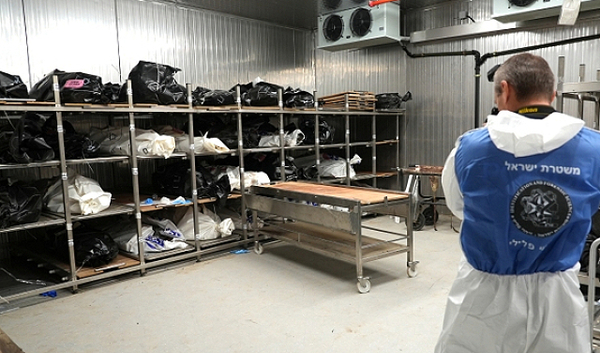
Since October 7: 350 bags of unidentified body parts at an Israeli base

The Israeli military is holding approximately 350 bags containing the remains of individuals killed on October 7, 2023, which have not yet been identified, stored in refrigerated containers at Camp Shura, the main military rabbinate base near the city of Ramle.


The bodies of police officers, rescue workers, and soldiers are being identified at the Shura camp, as happened on October 7. The bodies of Israeli civilians killed on the same day were also brought there. The bodies of Palestinian fighters killed on the same day were also brought there, and after their identities were identified, they were transferred to refrigerated containers at the IDF's Sde Teiman detention facility near Beersheba, the Ynet website reported Friday.


Some of the Israeli bodies were in such a state that identification was difficult, requiring complex DNA testing and other technological means. They were identified only after a relatively long period of time. The bodies that were identified were buried.

Now, according to Ynet, it has emerged that a year and a half after October 7, two refrigerated containers containing hundreds of bags containing human organs have been found at the Shura Camp, which has yet to be confirmed. The Israeli Chief Rabbinate and the IDF Chief Rabbi are requesting further DNA tests to identify the bodies.


These tests are currently on hold because the Ministry of Religious Affairs is authorized to order them, while the ministry's director general, Yehuda Avidan, opposes re-investigating them and is demanding that the remains be buried in a mass grave.

Following October 7, each identified body was placed in a bag, but in some cases, it was later discovered that organs from multiple bodies were contained in the same bag. Some bodies arrived at Camp Shura in a state that was difficult to identify and incomplete, and some were in such a state that complete DNA profiles could not be extracted.


The extracted DNA is compared to the Israeli military's information database, which includes all the information on soldiers who served over the past 20 years. But what happens when the extracted DNA is not present in the military's information database?


About six months ago, Israeli security officials became concerned that Israeli remains had mistakenly arrived in refrigerated containers at Sde Teiman, where the bodies of Palestinian martyrs have been held since October 7. Following this, the Military Rabbinate conducted tests on human organ samples in 1,660 bags at Sde Teiman.


According to Ynet, Israeli bodies were found during these examinations, and it was decided to expand the examinations and add them to the body bags at the Shura camp, bringing the total number to 350. At least 200 of these bags are suspected to contain identifiable organs and possibly Palestinian remains.


There is currently a dispute between the Military Rabbinate and the Chief Rabbinate over who is authorized to conduct the tests, delaying the tests in an attempt to identify the remains.

ARAB AND WORLD

Fri 25 Apr 2025 2:33 pm - Jerusalem Time

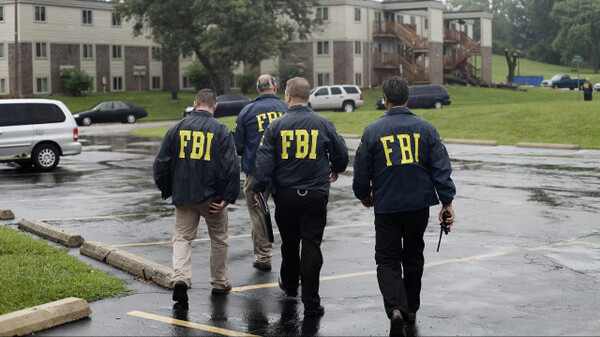
FBI and police raid homes of Palestinian activists in Michigan

The FBI and police raided the homes of Palestinian activists in Michigan on the morning of Wednesday, April 23. The FBI and other law enforcement agencies executed search warrants at multiple homes in Ann Arbor, Ypsilanti, and Canton Township, Michigan, home to the University of Michigan, a university known for its academic heritage and tradition. The raids reportedly targeted several student organizers associated with the Gaza genocide protests at the University of Michigan.


According to Students Allied for Freedom and Equality (SAFE), a pro-Palestinian student organization, security personnel confiscated the students' electronic devices and a number of their personal belongings. Four people were arrested and eventually released.


The Liberation Coalition, a student movement advocating for divestment from Israel, reported that officers initially refused to serve search warrants during the Ypsilanti raid. They were unable to confirm whether Immigration and Customs Enforcement was present during the raid.


“We question the motives behind this morning’s aggressive raids on activists’ homes, which come on the heels of recent abuses of prosecutorial power in Michigan and across our country against pro-Palestinian activists,” said Dawoud Walid, executive director of CAIR-Michigan, in a statement distributed to media. “In any other context, such minor offenses would have been handled by local law enforcement or referred to elected local prosecutors, not escalated to federal intervention. This disproportionate response further fuels the perception that Palestinian, Muslim, and Arab students, and those who stand in solidarity with them, are treated with disproportionate hostility by law enforcement compared to those who harm Muslim Americans.”


According to the organization, an FBI spokesperson in Detroit declined to explain why the arrest warrants were executed, but confirmed that the office of Michigan Attorney General Dana Nessel is handling the matter.


Nessel has declined to confirm whether the raids are linked to Palestinian activism so far, but her office has aggressively targeted the movement. Last fall, Nessel filed criminal charges against at least 11 protesters who participated in the University of Michigan sit-in in Gaza.


A Guardian investigation revealed that members of the University of Michigan's board of trustees pressured Nessel to press charges against students. The report indicates that six of the university's eight trustees donated more than $33,000 to Nessel's campaigns.


After the board members called for action, Nessel took over the cases from local prosecutor Eli Savitt, an extremely rare move, as local prosecutors typically handle such charges.


The Guardian investigation explains: "The University of Michigan's alleged frustration with local prosecutors stems from a campus sit-in in November, in which Ann Arbor police arrested a group of 40 protesters." "Savitt had announced in May that his office would dismiss 36 cases and recommend four of them for diversionary programs, where they faced reduced sentences."


The report continues: "This angered pro-Israel members of the University of Michigan's board of trustees and the police department because they wanted faster and more stringent charges, according to sources familiar with the process..." "They then asked Nessel to take over the cases, and university police sent warrant requests to her office."


It's worth noting that earlier this month, federal immigration agents detained and interrogated attorney Amir Makled, who represents one of the targeted students. Makled, who was returning from a trip to the Dominican Republic with his family, was questioned for 90 minutes but refused to hand over his phone to agents.


"The purpose of searching my phone had nothing to do with terrorism. It was just a chilling effect, and it was imposed to intimidate, in my opinion, the causes I was advocating for," Maklad told NPR after the incident. "I advocate for students. I advocate for immigrants and political dissidents. And I think this was a way to discourage me from taking on those kinds of causes."


The increased repression in Michigan comes amid a nationwide crackdown on pro-Palestinian solidarity by the Trump administration.


In recent weeks, the government has revoked hundreds, perhaps thousands, of student visas, many of them from individuals who protested the genocide in Gaza or publicly criticized Israel.


It is also noteworthy that this week, Senator Ed Markey (D-MA) and Representatives Ayanna Pressley (D-MA), Jim McGovern (D-MA), Troy Carter (D-LA), and Bennie Thompson (D-MI) traveled to an immigration center in Louisiana to meet with Tufts University doctoral student Ramisa Ozturk and recent Columbia University graduate Mahmoud Khalil, who are facing deportation proceedings for their support of Gaza.


“We cannot stand idly by while the Trump administration violates freedom of expression and unlawfully detains people without due process,” Pressley tweeted.

PALESTINE

Fri 25 Apr 2025 2:23 pm - Jerusalem Time

14 Palestinians killed since dawn today... Two martyrs in an Israeli bombing in the northern Gaza Strip.

An elderly man and a woman were killed in Israeli airstrikes and artillery shelling in the northern Gaza Strip.


Local sources reported that the elderly man, Majed Al-Harazin (70 years old), was killed as a result of Israeli artillery shelling on Wadi Al-Arayes Street, east of Al-Zeitoun neighborhood in Gaza City, north of the Strip.


A woman was killed by Israeli quadcopter drone fire in the Al-Qassabeeb neighborhood of Jabalia camp, north of the Gaza Strip.


In Khan Yunis, five people were killed in an Israeli airstrike on a tent housing displaced people belonging to the Abu Ta'ima family in the Mawasi area of Khan Yunis. Child Adam al-Zamili died of severe burns after a fire broke out in their tent in the Mawasi area of Khan Yunis.


In the northern Gaza Strip, the bodies of five martyrs were recovered after yesterday's Israeli bombing of a house in Jabalia al-Balad.


East of Gaza City, young man Hani Al-Zaq was martyred in an Israeli airstrike on the Shuja'iyya neighborhood.


The death toll from the ongoing Israeli airstrikes on the Gaza Strip since dawn on Friday has reached 14.

ARAB AND WORLD

Fri 25 Apr 2025 1:47 pm - Jerusalem Time

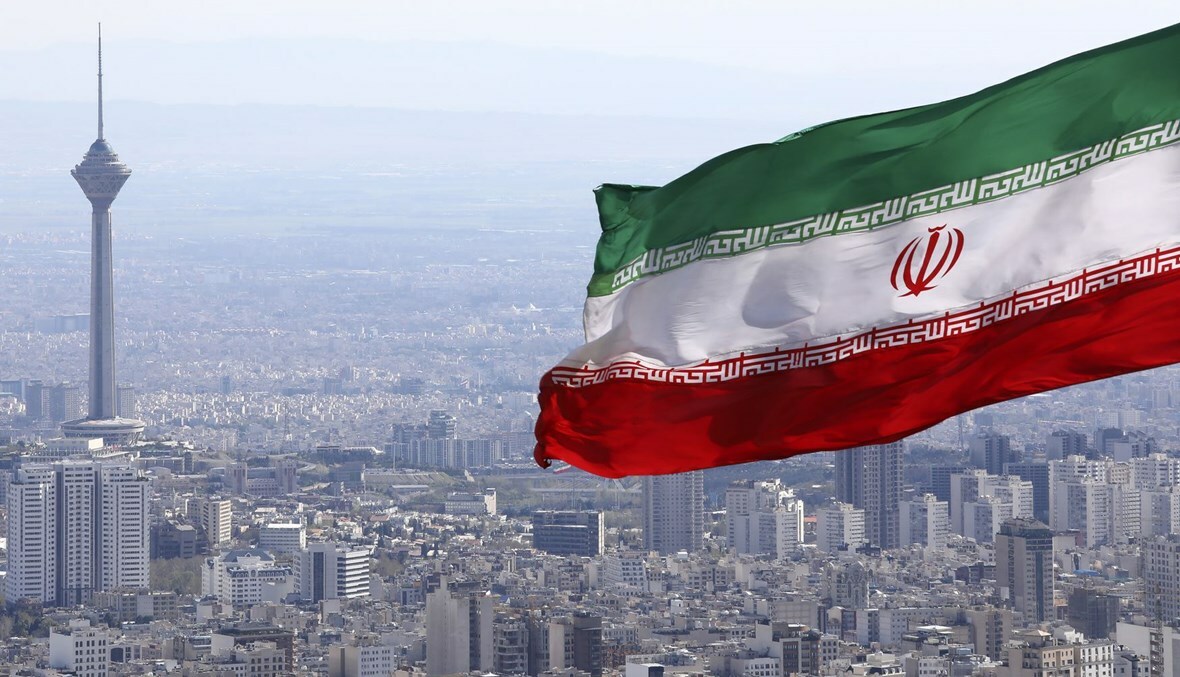
Iranian nuclear: A new round of negotiations between Tehran and Washington in Oman

Iranian Foreign Minister Abbas Araqchi is heading to the Sultanate of Oman on Friday, heading a specialized diplomatic and technical delegation, to conduct a third round of indirect talks with the United States regarding Iran's nuclear program.


This follows two previous rounds in Muscat and Rome, during which the two sides made "progress," according to Iranian and American officials. This new round of negotiations will be held on Saturday, according to Iranian Foreign Ministry spokesman Esmail Baghaei.

The United States will be represented in these talks by US Special Envoy Steve Witkoff, along with Michael Anton, head of the State Department's Policy Planning Division, who will lead the technical component of the talks on Iran's nuclear program.


According to Iran's Tasnim News Agency, Iranian Deputy Foreign Ministers Kazem Gharibabadi and Majid Takht-Ravanchi will participate in the technical talks on the sidelines of the meeting.


Baghaei stated that "progress in the negotiations requires the other side to demonstrate good faith, seriousness, and realism," while Araghchi, in previous statements, emphasized that Tehran would enter the negotiations with "seriousness," calling on the US side to do the same.


US State Department spokeswoman Tammy Bruce indicated that this round would be the first between technical teams from both sides. She noted that the last meeting between Witkoff and Iranian officials in Rome last Saturday ended in an "optimistic" atmosphere, without disclosing any details.


In a related context, Araghchi expressed his willingness to visit France, Germany, and Britain for consultations on the nuclear issue and bilateral relations, following similar consultations with Moscow and Beijing in recent days.

In a post on the X platform, the Iranian Foreign Minister stated that the ball is now in the E3's court (France, Germany, and Britain), emphasizing his country's openness to discussing issues beyond the nuclear issue "in every area of common interest."


For its part, the French Foreign Ministry said it would closely monitor the Iranian announcement and stressed its desire to continue the dialogue. No official responses have yet been issued from Berlin or London.


Araghchi visited China on Wednesday and held talks with Foreign Minister Wang Yi. He also visited Moscow last week, where he met with Russian President Vladimir Putin.


Despite praising the partnership with Moscow and Beijing, he considered his country's relations with the three European capitals to be at their "lowest levels" currently, and accused Israel of attempting to undermine the diplomatic process through continued incitement against Iran.


In contrast, Israeli Prime Minister Benjamin Netanyahu escalated his rhetoric toward Iran on Wednesday, describing it as an "existential threat." He argued that Tehran's possession of a nuclear weapon would put "the fate of humanity" at risk, even as Iran emphasizes the peaceful, civilian nature of its nuclear program.


The resumption of these talks comes amidst the absence of any meaningful impact from the 2015 nuclear agreement, which the United States unilaterally withdrew from in 2018 during Trump's first term, and amid cautious openness to attempts to revive the faltering diplomatic track.

ARAB AND WORLD

Fri 25 Apr 2025 1:00 pm - Jerusalem Time

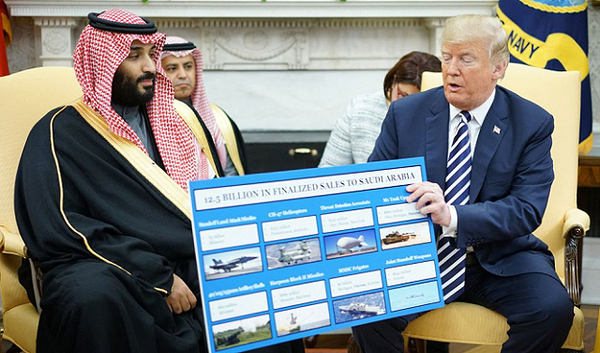
Report: Trump Prepares to Offer Saudi Arabia More Than $100 Billion in Weapons

The United States is preparing to offer Saudi Arabia a package of arms deals worth more than $100 billion, Reuters reported, citing six sources it described as "informed." According to the report, the offer is scheduled to be announced during US President Donald Trump's visit to Riyadh next May.


This package comes after the administration of former President Joe Biden failed to reach a defense agreement with Riyadh as part of a comprehensive deal that included a vision for normalizing relations between Saudi Arabia and Israel.


Biden's proposal included obtaining more advanced American weapons in exchange for halting Chinese arms purchases and restricting Beijing's investments in Saudi Arabia. It remains unclear whether the Trump administration's proposal includes similar requirements.


The agency quoted a US Department of Defense official as saying, "Our defense relationship with Saudi Arabia is stronger than ever under Trump's leadership. Maintaining our security cooperation remains a critical component of this partnership, and we will continue to work with Saudi Arabia to meet its defense needs."


The report noted that during his first term, Trump had celebrated arms sales to Saudi Arabia as beneficial for creating more jobs for American citizens.


Two sources said that Lockheed Martin may supply Saudi Arabia with a range of advanced weapons systems, including C-130 transport aircraft. A source said that the police will also supply Saudi Arabia with missiles and radar equipment.


Four of the sources said RTX, formerly known as Raytheon Technologies, is also expected to play a significant role in the package, which will include supplies from other major US defense companies such as Boeing, Northrop Grumman, and General Atomics.


A Lockheed Martin spokesperson said that foreign military sales are government-to-government transactions, and it is preferred that the U.S. government handle any inquiries regarding sales to foreign governments.


Reuters did not specify the number of new deals in the package. Two sources said many of these deals have been in the works for some time. They explained that, for example, Riyadh first requested information on General Atomics drones in 2018.


One of the sources noted that for the past 12 months, there has been a focus on a $20 billion deal to purchase General Atomics' MQ-9B SkyGuardian drones and other aircraft. Three of the sources said that several defense executives are considering traveling to the region as part of the delegation.


The United States has long supplied weapons to Saudi Arabia. In 2017, Trump proposed arms sales to Saudi Arabia worth nearly $110 billion. By 2018, only $14.5 billion in sales had been initiated, and Congress began to question the deals in light of the murder of Saudi journalist Jamal Khashoggi.


In 2021, during the Biden presidency, a ban was imposed on sales of offensive weapons to Saudi Arabia in response to the Khashoggi murder and to pressure Saudi Arabia to end its war in Yemen, which had caused massive civilian casualties.


Under US law, major international arms deals must undergo review by congressional committees before they are finalized. The Biden administration began to soften its stance toward Saudi Arabia in 2022 following the impact of the Russia-Ukraine war on global oil supplies.


The United States lifted its ban on offensive weapons sales to Saudi Arabia in 2024, as Washington cooperated more closely with Riyadh, amid Israel's war of annihilation in the Gaza Strip, to develop a post-war plan for Gaza.


Three of the sources said that a potential deal to purchase Lockheed Martin's F-35 fighter jets is expected to be discussed, as Riyadh has reportedly been interested in the aircraft for years. However, the sources believe the chances of an F-35 deal being signed during the visit are slim.


The United States guarantees that its close ally, Israel, will receive more advanced American weapons than those obtained by Arab states, giving it what is known as "qualitative military superiority," which Washington guarantees to Tel Aviv in the region.

PALESTINE

Fri 25 Apr 2025 12:32 pm - Jerusalem Time

Settlers uproot trees and attack citizens' property in Hebron

Today, Friday, settlers uprooted a number of olive seedlings and attacked citizens' property in Masafer Yatta.


Media activist Osama Makhamreh said that settlers uprooted a number of olive saplings and vandalized a fence surrounding land owned by the Al-Hathalin family in Khirbet Umm al-Khair in Masafer Yatta.


Settlers also released their livestock into large areas of agricultural crops in Wadi al-Jawaya, owned by the Shawahin family. In the Fateh Sidra area, settlers released their livestock around the home of Farid al-Hamamdeh, provoking the family and erecting occupation flags on citizens' lands in the area.

PALESTINE

Fri 25 Apr 2025 12:25 pm - Jerusalem Time

Israeli Cabinet reconvenes to discuss plans for war on the Gaza Strip.

The Israeli political-security cabinet will hold a new session next week to continue discussions on the next steps in the war on the Gaza Strip.


This came according to what the newspaper "Israel Hayom" reported on Friday, noting that the session may be held, according to estimates, next Monday.


This came after a cabinet meeting held yesterday evening, during which the newspaper reported that understandings were reached between the army and the political leadership regarding the mechanism for distributing humanitarian aid.


The newspaper did not clarify the nature of these understandings, merely stating that they would be implemented if a decision was made to allow aid into the Gaza Strip.


The occupation authorities have been preventing the entry of humanitarian aid into Gaza since March 2, despite the catastrophic humanitarian conditions there.


However, the newspaper reported that the session witnessed sharp disagreements between security chiefs and several ministers regarding the future of military operations and their next stages.


The dispute developed into "sharp verbal altercations and raised voices" during the meeting between the military and political levels, according to Israel Hayom.


As a result, the Israeli military was asked to review the operational plans it had submitted and amend them to align with the majority view in the cabinet, even though ministers were demanding a serious escalation of operations.


Regarding the distribution of aid, the newspaper reported that the army presented updated plans based on the principle insisted upon by cabinet members, which is to "prevent any aid from reaching Hamas."


The army also focused these plans on "reducing security risks to Israeli soldiers" if the aid distribution mechanism were implemented within the Gaza Strip.


Israeli Finance Minister Bezalel Smotrich threatened, during a cabinet meeting held Tuesday, to withdraw from Benjamin Netanyahu's government if humanitarian aid was allowed into the Gaza Strip.


The session witnessed a sharp confrontation between security chiefs and government ministers, led by Smotrich and Yariv Levin (Likud), who demanded that the military assume responsibility for distributing aid.


Accordingly, Netanyahu decided to convene another cabinet meeting on Thursday and asked the military to prepare new plans for distributing aid and present them to the cabinet.


This comes as Israeli Chief of Staff Eyal Zamir threatened on Thursday to tighten the noose on Gaza, despite the actual escalation of the war of extermination in recent weeks.


During a field visit to Rafah to assess the situation, Zamir said, "If we don't see progress in returning the hostages, we will expand our activity to a stronger and more significant step until we reach a decisive outcome."


He stated that they will continue what he called "operational pressure" and tighten the noose on Hamas in Gaza "as needed," as he put it.

ARAB AND WORLD

Fri 25 Apr 2025 12:23 pm - Jerusalem Time

Sisi: Egypt stands as an impregnable barrier against attempts to liquidate the Palestinian cause.

Egyptian President Abdel Fattah el-Sisi said that Egypt, as history has shown, stands as an impregnable barrier against attempts to liquidate the Palestinian cause.


He added in his speech on the occasion of the 43rd anniversary of the liberation of Sinai, today, Friday, that the ongoing war on the Gaza Strip is destroying everything and leaving tens of thousands of victims in a shameful humanitarian tragedy that will remain etched in history.


Sisi stressed that the reconstruction of the Gaza Strip must be carried out in accordance with the Arab-Islamic plan, without any form of displacement.


He reiterated that a just and comprehensive peace will only be achieved through the establishment of an independent Palestinian state in accordance with international legitimacy resolutions.


Sisi continued: "History bears witness that the peace between Egypt and Israel, brokered by the United States, is a model to be emulated for ending conflicts and retaliatory tendencies and consolidating peace and stability."


He added: We look forward to the international community, led by the United States and President Trump, playing the expected role toward a just peace.

PALESTINE

Fri 25 Apr 2025 11:03 am - Jerusalem Time

Israeli occupation continues its aggression on Tulkarm and its camps for the 89th day.

The Israeli occupation forces continue their aggression on the city of Tulkarm and its camp for the 89th consecutive day, and on the Nour Shams camp for the 76th day, amid ongoing field escalation.


Local sources reported that the occupation forces dispatched military reinforcements, including vehicles and infantry units, to the city, its two camps, and its suburbs. They fired live ammunition and sound bombs, raided and searched homes and shops, vandalized their contents, and interrogated those present.


In Nour Shams camp, Israeli infantry units deployed at dawn today in the al-Mahjar neighborhood, firing live ammunition and sound bombs. This comes as the camp continues its tight siege, which has seen the forced displacement of residents of Jabal al-Nasr and Jabal al-Salihin after they were forced to evacuate their homes at gunpoint.


Tulkarm camp is also witnessing a heavy deployment of occupation soldiers, who have wreaked havoc and destroyed the property of its residents after expelling them, leaving the camp empty and devoid of any sign of life. Its entrances are closed with earth mounds and some sections of its neighborhoods with barbed wire.


Meanwhile, Tulkarm is witnessing a daily escalation in the field, with raids and incursions into its neighborhoods and markets. This includes the deployment of foot and mobile vehicles, amid provocative and arbitrary measures against citizens, particularly young men, including detention, abuse, confiscation of their IDs and mobile phones, and, in many cases, arrest.


The occupation forces also continue to seize homes and residential buildings on Nablus Street and the adjacent northern neighborhood, converting them into military barracks after forcibly evacuating their residents. They also position their vehicles and bulldozers around them.


The ongoing Israeli aggression and escalation against the city of Tulkarm and its two camps resulted in the deaths of 13 citizens, including a child and two women, one of whom was eight months pregnant. Dozens more were injured and arrested.


It also resulted in the forced displacement of more than 4,200 families from the Tulkarm and Nur Shams camps, comprising over 24,000 residents, along with hundreds of residents from the city's northern neighborhood after their homes were seized and a number of them converted into military barracks.


The aggression caused widespread destruction to the infrastructure, including homes, shops, and vehicles, which were completely and partially demolished, burned, vandalized, looted, and stolen. 396 homes were completely destroyed and 2,573 partially destroyed in the Tulkarm and Nur Shams camps, in addition to the closure of their entrances and alleys with earth mounds.

OPINIONS

Fri 25 Apr 2025 9:20 am - Jerusalem Time

Have wars become more brutal?

Jawad Al-Anani

Jawad Al-Anani

Opinion Writer

In the poem “The Son of Guidance” by the poet Ahmed Shawqi, he says two verses about war as follows:

War is your right, you have a law... and from the most powerful poisons there is a cure.

If you take a pledge or give it... all your pledges are a pledge and loyalty

War, as Shawqi describes it, is a necessity of life and legitimate when it leads to resolving dilemmas that could not be easily resolved through negotiation. However, once war has laid down its weapons and the warring parties have agreed to a covenant of peace and non-aggression against one another, a person's upright character prevents him from betraying or breaking the covenant he has made.

In 1939, French philosopher Simone Weil published a 24-page treatise on what can be concluded about human nature as described in the Greek poet Homer's epic poem, "The Iliad." Weil demonstrated that the epic seeks to make war more noble because its heroes, such as Achilles, Agamemnon, and Hector, believe in redemption, heroism, and glory. They are more willing to die for these lofty principles than to live because they betrayed or deviated from them.


But her thesis, published in the same year that World War II broke out, 1939, received special attention when Steven Pinker published his book, The Better Angels of Our Nature, in which he concludes that people have become less inclined to war or to the brutality of killing, based on his studies and statistics on wars and the number of deaths in them.

However, some researchers and commentators on Pinker's book have argued that his findings would not have been accepted by the French philosopher Weil, who was more inclined to believe that it was difficult to control the fighting and killing tendency in human nature. This is because most who read her literature believed that she tended to conclude that humans are inherently more violent.

Homer's second epic, the Odyssey, describes the journey of the king of Ithaca, Hercules, on his way back from the war with Carthage, described in the Iliad. We know that Hercules suffered torment and woe during his journey before he was able to return to his palace and his wife, Penelope, who refused to marry those who proposed to her, awaiting her husband's return.

Armenian-American author William Saroyan chose to write a story inspired by "The Odyssey" titled "The Human Comedy," published in 1943 during World War II. The story's hero is named "Homer McCauley," and the city in California is "Ithaca." The story's hero, absent at war, is Homer's brother, Marcus, whose family eagerly awaits his return. Tragedy strikes when Homer receives a letter informing him that his brother Marcus has been killed in action.

Thus, Saroyan chose to embody the tragedy of wars and their impact on people who suffer and are tormented because they are “collateral damage,” the same disgusting term we heard in the horrific wars in Vietnam, Afghanistan, Iraq, the wars in Gaza, southern Lebanon, Syria, and elsewhere.

We are not here to analyze what the Israeli army is doing in Gaza, nor the atrocities and horrific crimes it is committing. However, there is no doubt that global population statistics tell us that the world's population reached its first billion people at the beginning of the nineteenth century. This figure doubled to two billion in 1927, and rose slightly more in 1939 when World War II broke out, killing approximately 3% of the world's population. However, since 1927, the world's population has quadrupled, now exceeding eight billion people.


This world has become more crowded, with the number of megacities rising to 53, home to more than 650 million people. These cities are human jungles, crammed with layers upon layers of unregistered organizations, many of which control the lives of the people. Most of them suffer from overcrowding, overcrowding, poverty, hunger, underground and illegal worlds, and organized and individual crime.

One of the problems of overcrowding is that it is not limited to poverty, unemployment, hunger, and exploitation. Rather, the most important problem is the loss of privacy, people being exposed to one another, and the easy collapse of value systems. Drug users in the lower neighborhoods of these cities consider life to be either a fight or a get killed, which makes their youth, in particular, readily accept killing.

Moreover, the expansion of consumerism, the development of technology, the unequal distribution of income and wealth, and the dominance of the rich in government, or what is known as "plutocracy," is the system that creeps and nests within political structures and controls their decisions. As a result, the world has become more aggressive and susceptible to killing and aggression.

This is also supported by various evidences, namely the large number of wars within countries and between neighbors. Wars between neighbors are either directly due to divergent interests or greed for the neighbor's resources, or they are instigated by major powers, each of which has one neighbor as an ally, while others have another neighbor as an ally. Wars are waged by proxy to avoid confrontations between the major powers themselves. It is said that there are eighty internal and regional wars, some of which are raging, others dormant, waiting for someone to stir their embers and rekindle their flames. It is astonishing that Hollywood has been producing films about the struggle for resources since 1920, such as the films "Dune" and "Sandhills," "Avatar," and others. Some of these films are set in the distant future and on planets other than Earth.

But there are also many stories of conflict over land. Has Hollywood been preparing our minds and reorganizing our thinking to accept that the struggle over resources, minerals, and real estate has legitimate justifications, even if it leads to human death and maiming? Some, like businessman Talal Abu-Ghazaleh, have never stopped predicting an all-out world war. Perhaps his experience on both sides of the Pacific Ocean, in China and the United States, and his trade and service relationships with them, allow him to see what many others fail to see.

But insistent and definitive talk about the imminent outbreak of a third world war requires planning and wisdom. Here, I recall the scientist Albert Einstein, who said: "We used bombers in World War I and the atomic bomb in World War II, and killed millions of people in both. Perhaps we will use astronomy in World War III. Then we will fight World War IV with axes and shovels."


The question I want to ask here is that the people of the Gaza Strip have lost perhaps more than 70,000 martyrs, including children, doctors, paramedics, nurses, men, women, and the elderly, while others are still missing. There is no doubt that the children have seen calamities that cannot be experienced even in the worst nightmares, and they have seen death approaching and avoiding them every hour of the day. What will these children's outlook on life be like when they grow up? Some will say that some of them will be gentle and patient, loving people so that they do not suffer as they did. Others may see them as strict, strong-willed people who do not bow down to the difficulties they are accustomed to and have endured the most bitter of them for more than 520 days now, or perhaps more. What difficulties will stand in their way in the future?

The occupation, oppression, killing, destruction, uprooting of trees, and the demolition of places of worship, schools, hospitals, roads, and infrastructure are beyond comprehension in Gaza and the West Bank. But does this mean that Israel, whose soldiers apply the principle of "kill Palestinian children so they don't kill you in the future," is what makes Israel safer and more secure for its residents?

Many Jewish analysts, both Israeli and non-Israeli, have become convinced that what Netanyahu and his aides and soldiers have done is a destructive act that will ultimately destroy the nation of Israel. All of this may be true, but it is also subject to question.

The Egyptian poet "Mamoun Al-Shennawi" said:

Don't ask me, how many lovers have asked

Does time believe in what it draws hope?

Does the dream of love last long?

Don't ask me, I'm scared and anxious

The moon does not diminish until it is full.

The idea is taken from Abu al-Baqa al-Rundi, who mourned Andalusia in his famous poem:

Everything has a flaw when it is perfect...so don't let a person be deceived by the good life.

This is the world - as I saw it - states... whoever is pleased with one time will be displeased with other times

OPINIONS

Fri 25 Apr 2025 9:19 am - Jerusalem Time

Pope Francis: A Voice of Truth in a Time of War

Sari Al-Qudwa

Sari Al-Qudwa

Opinion Writer

The late Pope Francis took important and honorable positions during the ongoing Israeli war of extermination and aggression against the Palestinian people. He had called on numerous occasions and meetings to stop the war and allow humanitarian aid to reach the Gaza Strip. He also supported a just peace in Palestine based on the two-state solution, describing what was happening in the Gaza Strip as very dangerous. He renewed his calls on numerous occasions to stop the Israeli war of extermination that has been ongoing for more than 15 months. In excerpts from a book published in December of last year, the Pope said that some international experts had said that "what is happening in Gaza bears the characteristics of genocide," adding, "Children have been bombed. This is cruel. This is not war."


The Vatican has repeatedly expressed its rejection of US President Donald Trump's plan to displace Palestinians from Gaza and "seize" the territory, stressing that Palestinians must be allowed to remain on their land, adding, "No to displacement. Everyone who was born and lived in Gaza must remain on their land." It noted that "the US president's plan to seize the Gaza Strip is illogical," and that Palestinians should not be displaced because this would create tensions in the region. The Vatican has called for the establishment of a two-state solution to end the Israeli-Palestinian conflict.

The late Pope Francis criticized the Israeli military campaign in Gaza, describing the humanitarian situation in the Palestinian enclave as "grave and deeply shameful." In his annual address to diplomats, delivered by an aide, Francis appeared to be referring to the deaths caused by the winter cold in Gaza, where there is virtually no electricity, adding, "We cannot accept that children freeze to death because hospitals are destroyed or the power grid is bombed." As the leader of the 1.4 billion-member Catholic Church, the Pope is usually cautious about taking sides in conflicts, but he has recently become more outspoken regarding Israel's military campaign in Gaza.

The extremist occupation government attacked the Pope, harshly criticizing his comments, claiming that the Pope's statements amounted to "disparaging" the term genocide. Israel, meanwhile, accused the late Pope of double standards after the pontiff condemned the bombing of children in Gaza, describing it as "barbaric," following an Israeli airstrike on the enclave that killed seven children from one family. The Israeli Foreign Ministry in the extremist occupation government said in a statement that the Pope's statements were particularly disappointing because they were disconnected from the real and realistic context.

Pope Francis passed away at a time when the occupying government continues its war in the West Bank and threatens to continue the war in the Gaza Strip, disregarding all international appeals, continuing to carry out brutal and bloody massacres, preventing the delivery of aid, and using starvation as a weapon in its war against the Palestinian people, who are demanding their just and legitimate rights.

While the entire world is calling for an end to the massacres and the importance of continuing the calm and respecting the ceasefire, the far-right occupation government is practicing ethnic cleansing and committing massacres by bombing Tulkarm and Jenin camps and its encampment, exterminating dozens of families and children in organized state terrorism and an extension of the war of ethnic cleansing and genocide targeting the Palestinian existence.

OPINIONS

Fri 25 Apr 2025 9:15 am - Jerusalem Time

Have the displacement steps begun?

Baha Rahal

Baha Rahal

Opinion Writer

They write that they left for Jordanian territory, and from there to France. One of them writes on her page that they crossed the river bank on their way to France. Several hundred left Gaza yesterday, and their destination is France, which will receive them and may grant them residency or asylum papers. Some left for medical treatment, and others are graduates, having emerged from the rubble, destruction, and devastation, after the war had destroyed their homes and families.

It's not entirely clear who was behind this move, which leaked to the news and didn't receive much attention for several reasons, including perhaps the desire to embellish it with the term "voluntary migration," as Trump's deceptive statements and lies claim. How can it be voluntary amidst the hell of war and the hell of Gaza, which is still being subjected to unprecedented genocide, and amid a feverish desire for ethnic cleansing and mass expulsion, in accordance with Netanyahu-Trump plans aimed at emptying the Strip of its people and residents, having rendered it uninhabitable and unfit for life?

It becomes clearer day after day that people are being forced to emigrate from the death that is attacking them, and without a doubt they are pursuing this with brutality and racism. The policy of starvation, siege and destruction of everything in Gaza, which has become a piece of ruin, with people under direct bombardment, in shabby tents, without treatment or medicine, and without a drink of water or a morsel of food, is primarily aimed at carrying out ethnic cleansing, and they are pushing for the continuation of the war, in order to achieve the goal they are seeking to achieve.

The displacement did not begin today, but rather began on the first day of the war of extermination. It began with the destruction of hospitals, schools, and universities, with the devastation of infrastructure and the destruction of homes, factories, and businesses, with the siege and starvation that claimed the lives of many. There is nothing more horrific than death from thirst and hunger. All of this happened before the eyes of the world, which saw it in sound and image, and continues to watch with silence and neutrality.

Thus, the question is no longer whether the displacement process has begun, but rather where it will lead, who will be next in line for forced displacement, which groups will leave, and which countries will host people fleeing death and bombardment. Therefore, what has been demanded for some time has not been achieved: stopping this genocide, stopping the war, and allowing the necessary aid that the people need.

What is happening is a real alarm bell and a thudding of the trenches. If the state of silence and neutrality persists, the worst is yet to come. There is nothing on the horizon that suggests an imminent end to this hell, and no signs of mercy to rescue people from the rubble. This is all amid the world's silence and the brutality of the occupation, which continues to commit massacres and bombard displacement camps, while continuing to impose a blockade and prevent the entry of aid.

PALESTINE

Fri 25 Apr 2025 8:57 am - Jerusalem Time

UNRWA: Half a million people displaced again in the Gaza Strip in the last month

The United Nations Relief and Works Agency for Palestine Refugees (UNRWA) announced on Friday that nearly half a million people have been displaced again in the Gaza Strip over the past month, due to multiple evacuation orders issued by the Israeli occupation forces.


UNRWA explained, in a statement published on its official platforms, that the recent displacement has left Palestinians confined to less than a third of Gaza's original area, noting that these remaining areas are "fragmented, unsafe, and almost uninhabitable."


The agency confirmed that overcrowded shelters are suffering from catastrophic conditions, while service providers are facing significant difficulties operating amid a near-total depletion of available resources.