ARAB AND WORLD

Mon 12 May 2025 9:49 am - Jerusalem Time

Cautious optimism after fourth round of nuclear talks between Washington and Tehran

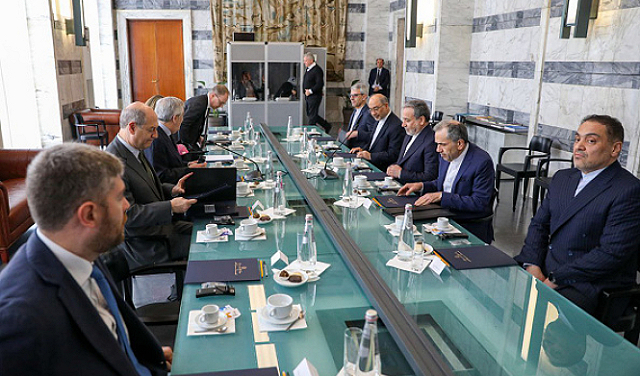
The United States and Iran concluded a fourth round of nuclear talks in the Omani capital, Muscat, amid cautious optimism and assurances from both sides that the dialogue would continue.


Although no decisive breakthrough was achieved during Sunday's sessions, statements issued by both delegations expressed general satisfaction with the progress of the negotiations, raising hopes that a fifth round could be held soon.


Iranian Foreign Minister Abbas Araqchi indicated that Iran is prepared to consider accepting temporary restrictions on the level and volume of uranium enrichment as part of confidence-building measures between Tehran and the West, marking a significant development in Iran's position.


Araghchi described the negotiations as "difficult but beneficial," stressing that his country remains committed to a diplomatic solution.


For its part, the US administration expressed satisfaction with the progress of the talks, describing the latest round as "encouraging." US officials emphasized that the progress achieved paves the way for a more comprehensive agreement addressing the nuclear, humanitarian, and regional issues.


This tour is an extension of diplomatic efforts that have been ongoing for several months, under the auspices of active Omani mediation and with the support of other international parties, including the European Union and Qatar.


The Sultanate of Oman plays a pivotal role in providing a neutral environment to bring the two sides closer together, at a time when regional and international capitals are seeking to curb escalating tensions in the Gulf region.


In contrast, these negotiations face strong opposition from the Israeli government, which views any potential agreement as a threat to its national security.


According to diplomatic sources, Tel Aviv has intensified its contacts with its allies in Washington to pressure them to obstruct any US-Iranian rapprochement that might lead to the easing of sanctions or the revival of the previous nuclear agreement.


In this context, Israeli Prime Minister Benjamin Netanyahu strongly criticized any steps toward a settlement with Tehran, warning that "interim agreements will give Iran more time to develop its nuclear program," as he put it.


Through its political and diplomatic efforts, Israel seeks to thwart any potential final agreement, or at least influence its content to include stricter terms against Iran.


Despite Israeli political obstacles, regional and international mediators continue to push for calm and an understanding that will spare the region further escalation.


International circles are awaiting the results of the next round, which is expected to be decisive in determining the fate of efforts to revive the nuclear agreement and reset relations between Tehran and Washington.

ARAB AND WORLD

Mon 12 May 2025 9:47 am - Jerusalem Time

Norway's sovereign wealth fund sells all its shares in Israeli company Paz over fuel supply to settlements

Norway's sovereign wealth fund, the world's largest, announced it has sold all its shares in Israeli retail and energy company Paz, which owns and operates the infrastructure for supplying fuel to Israeli settlements in the occupied West Bank.


This is the second step of its kind after the Fund's Ethics Council adopted in August a stricter interpretation of the ethical standards for companies that support Israel's operations in the occupied Palestinian territories.


The fund previously exited the Israeli telecommunications company Bezeq in September.


The value of Norway's wealth fund, the world's largest sovereign wealth fund, has jumped to a record 20 trillion kroner ($1.8 trillion), doubling in just five years thanks to oil and gas revenues and rising stock markets.


Established in 1996 as a savings pool for times of crisis, the fund holds about 1.5% of all listed stocks worldwide and has grown to nearly four times Norway's annual GDP, far exceeding original expectations.


The fund's value is similar in size to the annual GDP of Australia, a country with a population five times that of Norway.

PALESTINE

Mon 12 May 2025 9:41 am - Jerusalem Time

Occupation forces begin demolishing a house west of Hebron

This morning, Monday, the Israeli occupation forces began demolishing a house in the town of Idhna, west of Hebron.


Local sources reported that the occupation forces began demolishing a house in the Al-Kassara area, east of the town of Idhna.


The Wall and Settlement Resistance Commission monitored the Israeli occupation authorities' implementation of 73 demolition operations during the month of April, targeting 152 facilities, including 96 inhabited homes, 10 uninhabited homes, 34 agricultural facilities, and others. The operations were concentrated in the Tubas governorate with 59 facilities, the Hebron governorate with 39 facilities, and the Jerusalem governorate with 17 facilities.

OPINIONS

Mon 12 May 2025 9:37 am - Jerusalem Time

Israel at a Crossroads: Occupation, Genocide, and the Death of a Vision

Alon Ben-Meir

Alon Ben-Meir

Opinion Writer

The state that rose from the ashes of millions of Jews who perished in the Holocaust will not continue to exist on the ashes of the Palestinians.

Israel is the realization of a thousand-year-old dream: to be free, to live in peace, to prosper, and to grow in a sovereign homeland. The miracle of its creation, its achievements, and its limitless potential, guided by lofty moral values that left behind fear and dread of the future, are now being crushed before our eyes.

By what measure can Israel confront the death, destruction, cruelty, bloodshed, brutality, and atrocity that continues to rain down on Gaza and the West Bank? Dehumanization, disregard for human life, and cold-blooded revenge and retribution have collectively betrayed the vision of Israel's founders and robbed it of its moral foundation, something that will haunt Israel for generations to come. All Israeli political institutions and the public bear responsibility for the perpetuation of the Israeli-Palestinian conflict and its dire consequences.

No Israeli prime minister has had a more negative impact on the lives and fates of Israelis than Netanyahu. He is a master liar and manipulator, an expert in the art of deception, a selfish narcissist, and corrupt to the core. He has put his own self-interest before the nation's for more than three decades, a fact he shamelessly demonstrated by prolonging the war in Gaza, just to save his ugly political skin.

Netanyahu, and no one else, is the one who brought Israel to the brink of an unprecedented catastrophe. For him, the senseless deaths of Israeli soldiers and tens of thousands of innocent Palestinians, and the abandonment of hostages to their hellish fate, are worth the price, if only to maintain his grip on power.

Instead of seeking new ways to resolve the conflict, Netanyahu has intensified his efforts to serve his grand project of seizing more Palestinian land, something that cannot be achieved through peaceful negotiations and the expulsion of as many Palestinians as possible. He is now using the war in Gaza as a catalyst to achieve his ominous goal, oblivious to the fact that he is destroying Israel as we know it.

To achieve his abhorrent goal, Netanyahu formed the most extreme right-wing, messianic government in history, with many of its ministers calling for ethnic cleansing, including Finance Minister Smotrich, who confirmed the government's intentions by declaring on May 6 that "Gaza will be completely destroyed" and that Palestinians will begin "leaving in large numbers."

These criminal ministers demanded that the war continue, and Netanyahu, the happy warrior who still relishes the illusion of eliminating Hamas and releasing the hostages, was only too happy to comply. Last Sunday, the Israeli security cabinet unanimously approved the invasion of a large part of Gaza. The goal is to establish a permanent military rule and Jewish settlements, and to confine approximately 2.2 million Palestinians to the southern part of Gaza, which represents less than 25% of Gaza's total area.

The fact that such an operation would cause casualties among Israeli soldiers and possibly hostages and would create a catastrophic humanitarian crisis among the Palestinians, in addition to the horrific conditions in which they currently live, does not concern Netanyahu and his fascist government.

The notion articulated by Israeli Defense Minister Israel Katz that the new operation will ultimately defeat Hamas and put irresistible pressure on it to release all the hostages is just another disastrous illusion for which Israel will pay a heavy price. Netanyahu and his government appear to have learned nothing from the horrific 57-year occupation of the West Bank, characterized by relentless violence that has resulted in the deaths of tens of thousands of Palestinians and thousands of Israeli soldiers and civilians.

As the catastrophic war continues to unfold, the so-called religious party leaders who invoke God's name in every sentence, dress themselves in piety, and preach a gospel of care and compassion have never raised their voices in protest against the indiscriminate killing of Palestinians. Shas and United Torah Judaism, led by the hypocrites, shamelessly endorsed the new operation, regardless of the massive destruction and death it would inflict on the Palestinians.

They are largely emulating the bloodthirsty Zalel Smotrich, who declared in a speech in Paris in 2023: “There is no Palestinian nation. There is no Palestinian history. There is no Palestinian language,” which, in his view, justifies the destruction of the Palestinians as a people. They justify the slaughter of Palestinians as if it were blessed by their God. It is no surprise that these fraudsters—who feign fervent faith—allow such massacres of innocent Palestinian men, women, and children. They proudly wear their religious garb while committing crimes against humanity.

They have sacrificed Jewish values and morals in exchange for the government funding they need to run their religious institutions, while refusing to send their sons and daughters to serve in the army. It doesn't matter how many Israeli soldiers are killed, as long as they don't have to mourn the deaths of their children.

The opposition political parties continue to disagree, sometimes agreeing on foreign and domestic issues, but they have never once reached a consensus on how to end the Israeli-Palestinian conflict. They have served Netanyahu well by failing miserably to challenge his strategy of crushing the Palestinians. Instead of rallying public opinion behind a two-state peace agreement that would provide ultimate national security, they have settled for empty criticism of Netanyahu's policies and personality, while the war continues to rage and the prospects for a solution fade, to Israel's detriment.

No one bears more responsibility for the tragic situation engulfing the country than the Israelis themselves, who, ironically, are both the perpetrators of the conflict and the victims, living under the constant threat of war. They have been lied to and misled into believing that the Palestinians cannot be reformed and can only be contained by brute force. They have recklessly swallowed Netanyahu's false argument that a Palestinian state poses an existential threat to them and must be prevented at all costs.

Unfortunately, for the vast majority of Israelis, the occupation has become a way of life. After all, 80% of Israelis were born after 1967. For them, the Palestinian slavery, suffering, deprivation, and humiliation under occupation have had little impact on their daily lives.

They demonstrated en masse for six months against so-called judicial reforms; they continued to demonstrate day after day, demanding the return of the hostages, but they never demonstrated en masse to demand an end to the Israeli-Palestinian conflict. To this day, they remain steadfastly committed to the false narrative of Netanyahu and his criminal gang that an independent Palestinian state poses an existential threat. They have never once demanded from their government an alternative, mutually acceptable peace agreement, at least based on a two-state solution, to end the most violent and longest conflict since World War II.

One might think that after the Hamas attack and the Israeli retaliatory war, the Israelis would pause and demand a solution to this devastating conflict. Instead, they have doubled down and resigned themselves to living with their weapons, convinced that there is no solution. They have forgotten, and overlooked, that 90% of living Palestinians were born under occupation, have little left to lose, and will not cease their violent resistance to Israel until the Day of Judgment.

When will the time come for Israelis to realize that Israel will never be able to control the Palestinians against their will? They must first recognize the terrifying demographic equation. Seven million Jews live in Israel alongside seven million Palestinians in the West Bank, Gaza, and within Israel itself. They cannot enslave the Palestinians indefinitely, no matter how brutal the military rule is, and no matter how many Palestinians are imprisoned, killed, or expelled.

Second, unlike any previous violent conflict, the scale of death and destruction inflicted on Gaza and the West Bank has created a new generation of Palestinians who will live to avenge the loss of their people. For every Palestinian fighter killed, two will emerge to take their place.

Third, although Hamas has been destroyed, Israel will never eliminate it as an idea and a movement. Israel's genocidal military operation in Gaza and Netanyahu's plan to reoccupy it will only validate Hamas's claim that Israel is bent on destroying the Palestinians as a people, which will only intensify their violent resistance, no matter how long it takes.

Every Palestinian will remember that if the women, children, and elderly killed in this brutal war were to form a single line, it would be 15 miles long. Ninety percent of Gaza is destroyed, almost all of its population has been repeatedly displaced, deprived of food, medicine, and drinking water, and thousands are on the brink of starvation. This is a tragedy not only inflicted on the Palestinians, but also on Israel itself, which is destroying the very foundation upon which it stands.

Every Israeli must remember that his country, which rose from the ashes of millions of perished Jews, will not continue to exist on the ashes of the Palestinians. Only two independent states living in peace side by side will save Israel, the Jewish dream of thousands of years.

OPINIONS

Mon 12 May 2025 9:32 am - Jerusalem Time

Between Friedman's speech and Trump's interests, Palestine is a national liberation issue, not a bargaining chip.

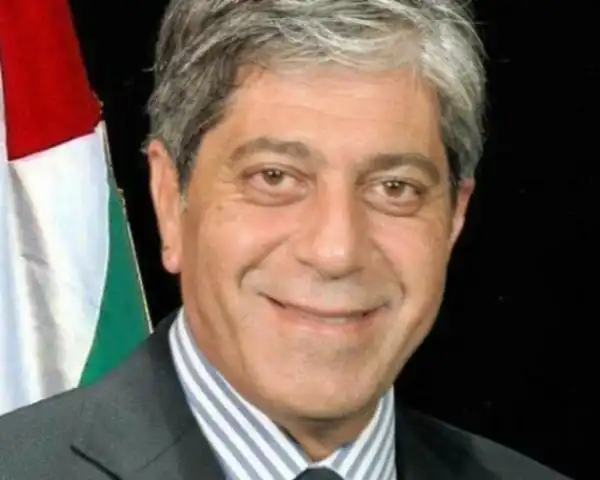
Marwan Emil Toubasi

Marwan Emil Toubasi

Opinion Writer

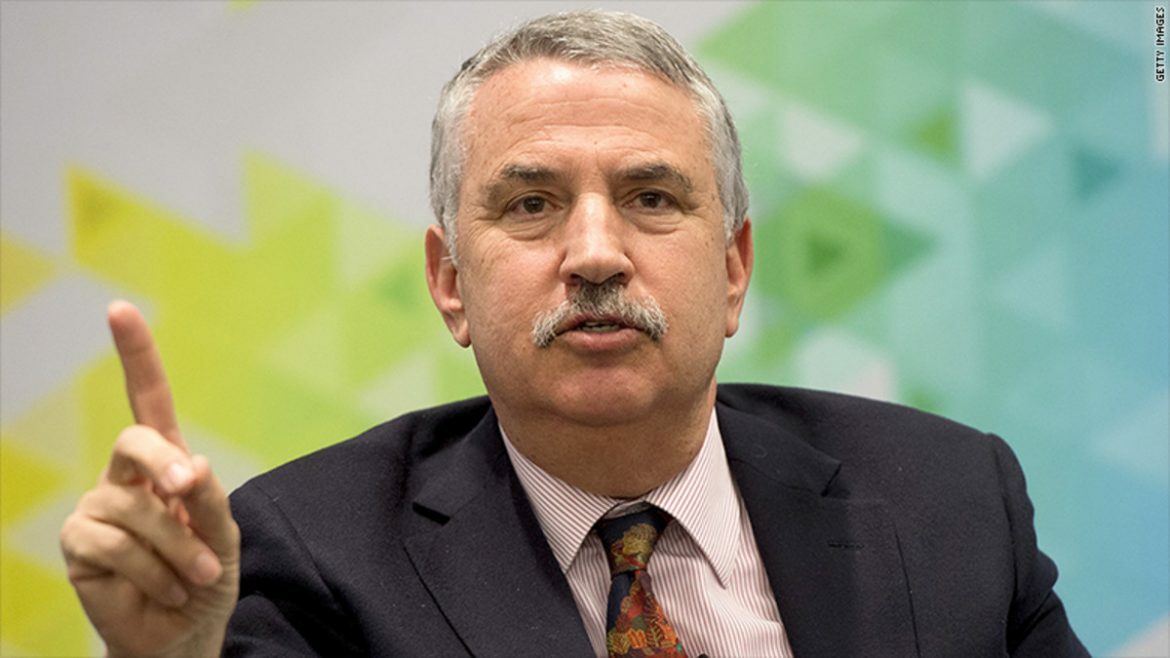
Amid the rapid changes in US policies toward the Middle East, Thomas Friedman's latest article stands out as an indicator of a shift in rhetoric, if not in the substance of policy. Friedman, a longtime advocate of Israel, this time directs his criticism at the Netanyahu government, accusing it of undermining regional alliances and destabilizing the region. This rhetoric, which coincides with the sensitive timing of Donald Trump's regional moves, raises questions about whether Palestine is once again a bargaining chip in the game of grand interests—not in terms of rights but in terms of calculations.

In his article published in The New York Times on May 9, Friedman delivered a clear political message to US President Donald Trump: "This Israeli government is no longer our ally." The article not only criticizes the extremist Israeli policies led by Netanyahu, but also holds it responsible for undermining the American project in the Middle East and pushing toward regional chaos that threatens Jordan and Egypt and destroys what remains of the "two-state solution."

What is surprising in the article is that Friedman, known for his traditional support for Israel, praises what he sees as Trump's independence toward Netanyahu, describing his disregard for him as a step in the right direction. He also notes that the current Israeli government no longer prioritizes security or peace, but rather seeks annexation, displacement, and the consolidation of nationalist and extremist religious supremacist hegemony, threatening the foundations of the US-Israeli-Arab alliance that was established in the 1970s under US auspices.

From this perspective, the article can be read as a media and political introduction to a possible shift in US policy toward the Palestinian issue. When Friedman declares that the Netanyahu government is no longer an ally and notes that Trump's first plan included a form of a deficient and demilitarized Palestinian state, this may open the door for Trump to deliver a "political surprise." This surprise does not necessarily reflect a bias toward our people and their just national cause, but rather seeks to achieve a foreign policy achievement that strengthens Trump's negotiating position during his upcoming visit to Saudi Arabia, the UAE, and Qatar. It also gives him an advantage over the Biden administration, especially in light of the competition with China and Russia and his efforts to control regional resources of oil, gas, minerals, and sea lanes.

Despite my deep doubts about the possibility of Trump proceeding with a serious recognition of a Palestinian state, due to structural reasons within the US-Israeli alliance, most importantly ideological, there are indications that he will use the Palestinian card tactically, the most important of which are:

1. Realigning alliances, as evidenced by Trump's decision to cut off contact with Netanyahu, and perhaps by separating some regional issues from Israeli influence, as evidenced by Washington's talks with Iran and the Houthis.

2. A political pressure card, as Trump may use "conditional recognition" as a domestic and foreign pressure card, or to strengthen currents within the Republican Party that have begun to view Israel as a burden, while at the same time strengthening the position of the Palestinian Authority vis-à-vis Hamas, with which negotiations are being conducted without a commitment to a just solution that ends the settlement occupation.

3. A formal settlement formula: The Trump administration may propose a formal Palestinian state without real sovereignty or clear borders, serving American regional security and limiting Iranian influence, without meeting the definitions of a state under international law.

In this context, Friedman's statements represent an indicator of deeper shifts in the American political mood. At the same time, however, they warn of the danger of repurposing the Palestinian issue within broader regional arrangements involving Saudi Arabia and the Gulf states, and attempts to "re-float" the Palestinian Authority in opposition to other Palestinian forces, as part of a regional project that repositions Washington to serve the New Middle East project, without fundamentally changing the colonial reality imposed on our land.

The danger of these trends lies in the potential for them to be presented as compromise solutions that appear to recognize the state, but in reality, they represent a trade-off of national rights for security and economic understandings, forcing us, the Palestinians, to accept a permanent status quo devoid of national independence, sovereignty, or dignity. Nevertheless, the new discourse could constitute a window of pressure and a political opportunity, if properly utilized by Palestinians, to adhere to national principles, foremost among which are the immediate end of the genocidal aggression, as well as the end of the occupation and settlement activities, the establishment of an independent Palestinian state on the pre-June 4, 1967 borders with East Jerusalem as its capital, and the resolution of the refugee issue in accordance with Resolution 194.


What is required today is not to be deceived by false promises or tactical moves, but rather to formulate a solid national vision that capitalizes on international variables and contradictions to serve our cause, without falling into the trap of "smart policies" that end in normalizing the occupation or accepting coexistence with the status quo.

The current moment, with its variables and contradictions, calls upon the PLO and the entire Palestinian national movement, especially Palestinian youth, to shoulder their responsibilities in renewing the national liberation project and unifying ranks on the basis of inalienable rights and democratic unity. Opportunities for change are not granted, but seized. The real stake lies in our people's awareness and will to transform any political change into a lever for struggle that brings us closer to freedom and national independence, rather than being reduced to the calculations of others or used as pawns in the bargaining market.

OPINIONS

Mon 12 May 2025 9:30 am - Jerusalem Time

Doubts about the intentions and feasibility of the US aid plan for Gaza!

Nabhan Khreisha

Nabhan Khreisha

Opinion Writer

As Israel prepares to launch Operation Gideon, a ground military operation in the Gaza Strip, to completely occupy and "cleanse" the strip of Palestinian fighters after transferring its residents in the north and center to the Rafah area in the south, the United States announced a plan to establish a humanitarian aid fund for Gaza. US envoy Steve Witkoff presented this initiative to the UN Security Council, but during the discussion, he was subjected to sharp criticism from some council members, citing Israel's starvation of Gaza's residents. The plan was also rejected by UN organizations and humanitarian relief organizations, because it is subject to Israeli criteria and mechanisms.

The Gaza Aid Fund, according to the US plan, is based on an innovative operating model that includes the establishment of four safe distribution centers across the Gaza Strip, each serving up to 300,000 people. This means that the fund will cover the needs of approximately 1.2 million people in its first phase, with the potential to expand later to reach two million people. According to the plan, aid will be distributed through safe transportation channels, without any military presence, and under the direct supervision of "independent" security and safety teams whose identity has not been determined. Food parcels, hygiene kits, medicine, and water will be distributed solely based on need and without discrimination. The plan indicates that each meal will provide 1,750 calories, at a price of just $1.31. A food package containing 50 family meals will also be provided for $65, delivered directly to Palestinian families at risk. The plan also stipulates that the humanitarian aid fund will be independent of any political or military entity, and that the Israeli army will not be present at distribution centers, although coordination will be maintained with it to ensure safe humanitarian corridors.

The World Health Organization announced that the US plan, while important in meeting some of the basic needs of Palestinians in the Gaza Strip, falls short of the required health and nutritional standards, as it does not include all necessary health aspects, especially in light of the deteriorating living conditions. Reports indicate that the food, water, and health situation in the Gaza Strip has reached a tragic level, as 95% of flour reserves have been depleted, many families depend on one meal per day, and more than 10,000 cases of malnutrition have been recorded among children, including 1,600 severe cases.

The UN Office for the Coordination of Humanitarian Affairs (OCHA) said in a briefing paper that the most vulnerable civilians may have to walk long distances to reach distribution centers, making it difficult for food to reach those most in need. The UN also noted that the system in place before Israel resumed its attacks after the first truce ended in March 2025 included 400 distribution points, while the US plan significantly reduces this number, potentially depriving large segments of the population of food and other essential supplies. The international organization expressed its fear that the plan could be an indirect means of displacing civilians from northern Gaza, as aid centers are likely to be established in the south, forcing residents to leave the north to obtain food. Tania Hary, executive director of the Israeli human rights organization Gisha, believes that the plan "doesn't appear to be a plan for distributing aid, but rather a tool for further pressure, with the aim of making life in Gaza unlivable."

The US announcement of the humanitarian aid plan was accompanied by deafening silence regarding the US administration's position on the Israeli military plan "Gideon's Wagons," which Israel has announced its intention to launch to permanently occupy the Gaza Strip and force Palestinians to migrate from the north and center of the Strip to its south.

The US plan does not clarify where the aid will be distributed: Will it be distributed to civilians in their current locations? Or will they be gathered in a specific geographic area (for example, Rafah) and distributed there? These doubts are reinforced by Netanyahu's statements announcing an expansion of attacks on Gaza, with more residents being transferred "for their own safety!" This aligns with calls by some members of his right-wing coalition for the "voluntary" displacement of Gaza's residents and the rebuilding of Jewish settlements in the Strip.

The issue was not limited to the US aid plan. It coincided with a Reuters report, based on five sources, stating that the United States and Israel had held consultations on the possibility of Washington assuming temporary administration of the Gaza Strip after the war. The consultations propose the formation of a transitional government headed by a US official to oversee the Strip until it is disarmed and stabilized, and a Palestinian administration capable of governing emerges. Reuters sources said that these consultations are still preliminary, likening them to the Coalition Provisional Authority in Iraq in 2003 after the overthrow of Saddam Hussein's regime.

She added that the proposed administration would employ Palestinian technocrats, excluding both Hamas and the Palestinian Authority. Israel, meanwhile, demanded that reconstruction be limited to specific security zones, that the Gaza Strip be divided, and that permanent military bases be established.

The announcement of the US aid plan coincides with President Donald Trump's visit to Saudi Arabia, Qatar, and the UAE, as part of his efforts to strengthen economic and security ties with these countries and his attempt to expand the Abraham Accords to include Saudi Arabia. However, this expansion is contingent on progress in resolving the Gaza conflict, to which the aid plan may be linked. However, the UAE has expressed its refusal to participate in the current aid mechanism, considering it a tool for military control. Meanwhile, Saudi Arabia held an informal meeting with Arab leaders to discuss alternatives to the Trump plan for Gaza. They emphasized the need for reconstruction, linking it to the establishment of an independent Palestinian state, and rejected any plans to deport the population of the Strip. Hamas also announced its rejection of the US plan, considering it an attempt to bypass it and marginalize its role in the Strip. It accused the United States and Israel of seeking to impose a new reality on the ground.

OPINIONS

Mon 12 May 2025 9:28 am - Jerusalem Time

All efforts to stop the war of extermination and thwart the plans for displacement and deportation

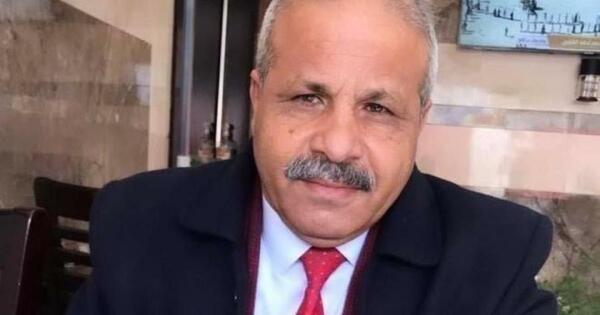
Walid Al-Awad

Walid Al-Awad

Opinion Writer

For the second time in two years, and amidst the ongoing war of extermination and brutal aggression against our people in the Gaza Strip, our Palestinian people commemorate the Great Nakba on May 15th, which befell our Palestinian people in 1948. For 77 years, our Palestinian people have been commemorating this painful anniversary, the repercussions of which they are still experiencing to this day, as it constituted the cornerstone of the displacement of our people from their homeland and represented the starting point for completing the renewed aggression against our people with the aim of uprooting and displacing them completely. This is something that the Zionist movement has been unable to fully achieve since 1948, and today it continues it in the most brutal and violent forms with the aim of displacing our people in a broad ethnic cleansing campaign carried out by the occupying state not only in the Gaza Strip but also in the West Bank, where these campaigns are concentrated on the West Bank camps as well as in the entire Gaza Strip.

In those days, more than 77 years ago, Zionist gangs, with the support of Britain and the emerging imperialist powers at the time, were able not only to steal “a land without a people,” as they called it, but also to plunder a state that had existed on the land, with its various institutions, and to displace its people, who were living in security and peace and striving for their independence, as were the neighboring peoples.

Today, as we commemorate the Nakba, we must instill in the minds of the generations who did not live through the Nakba and its woes the truth that must always be entrenched. This is what the research and study centers that dealt with the Nakba issue and the reliable scientific and historical research they dealt with have addressed: Zionist gangs, with the full support of Britain, stole a homeland and expelled its people in the largest ethnic cleansing operation since World War II. These gangs stole the state of the Palestinian people, which was already in existence and subject at the time to the British Mandate, which violated the text of the Mandate document, which stipulated the necessity of helping the Palestinian people in determining their fate. But Britain, instead of helping the Palestinian people, deprived them of their right to independence, just like the peoples of neighboring countries that were subject to a similar mandate at the time. Britain’s role was not limited to conspiracy and collusion, but rather it cooperated with the Zionist movement, in accordance with the ominous promise of its Foreign Minister, Lord Balfour, to impose all the factors of success to implement the ominous promise, starting with providing weapons and equipment, establishing dozens of training camps for Jewish recruits, facilitating immigration, absorbing tens of thousands of Jews from around the world, and housing them in Palestine, at the same time, practiced all forms of brutal oppression and injustice against the true owners of the land and deprived them of every means to defend their rights in the face of the imminent danger that was escalating before their eyes, so they resisted it with rare courage in an attempt to prevent the Zionist movement from achieving its goals, which unfortunately succeeded in achieving its project of usurping a homeland and displacing its people who became refugees as a result of the Nakba, the effects of which continue to this day, and the occupation is trying to complete it to implement a broad displacement plan for those who remain of its children in their homeland.

Today, as we commemorate the Nakba, we reiterate that Palestine was not a land without a people, as they claim. It was a prosperous country that, until 1945, contained 1,300 villages, cities, and towns, most of which had a population exceeding thousands. Until then, the Zionists had only a few scattered colonies inhabited by hundreds, which they succeeded in establishing with British collusion and fraud, which allowed the arrival of thousands of Jews from all over the world. Under the auspices and training of the British army, they formed the Irgun, Stern, and Haganah gangs, which launched a brutal war and campaigns of extermination and ethnic cleansing against the Palestinian people until they were able, in mid-May 1948, to steal the homeland, which we rightly call the “Great Nakba.” In this tragic Nakba, whose memory we are living these days, they stole the homeland that was established with its institutions and expelled a people who were striving for independence.

In discussing the Nakba and the stolen homeland, it must be emphasized time and again that Palestine was not empty of people, as the Zionists claim, but rather an existing state subject to a hateful mandate that played a conspiratorial role in depriving its people of independence. Various studies and research, especially those conducted by researcher Dr. Salman Abu Sitta, which addressed the conditions of Palestine before the Nakba, confirm that the Zionists established their racist state on the institutions of an existing state. During the mandate, Palestine had 1,700 government facilities, including clubs, buildings, industrial institutions, and others. Palestine was also one of the most advanced neighboring countries in the fields of trade, industry, and agriculture, as it included 500 institutions operating in various fields. Palestine was distinguished by its unique geographical location, which linked neighboring countries with a network of railways. It had 41 train stations and 700 kilometers of railways, in addition to 31 on-site airports, 6,000 kilometers of paved roads, and 37 British army camps, most of which were handed over with their equipment to the invading Zionists, who used them. In their war to exterminate our people and displace them from their homeland.

During that ongoing Nakba, Israel seized 2,000 historical monuments, including mosques, cemeteries, monasteries, caves, and archaeological centers. Palestine was also rich in fresh water resources, with 3,650 water sources at the time. In order to control all of this, the Zionist gangs used all means of genocide, including killing, destruction, rape, and burning people alive, as happened with the people of Tira, Haifa, and others. Day after day, these massacres are being revealed, as happened in the Tantura massacre last year. This has been proven by recent studies, including those issued by some Israeli writers and researchers, that 90% of the Palestinian villages were displaced, whose population represented 52% at the time, under the pressure of exposure to organized military massacres that took place during the existence of the British Mandate and under its protection. With the arrival of May 1948 and the official announcement of the establishment of the occupying state, the remaining 42% of the population was expelled. The expulsion of the remaining 6% was completed after the expenses of the truce that was signed. With the Arab countries that formed the Salvation Army, which did not save anything, Palestine was lost under its watch.

These studies also show that the Zionist gangs committed, in their war against our people, the most heinous massacres known to humanity, destroying more than 700 villages and towns, completely wiping them off the ground. Between 1947 and 1949 alone, they carried out 247 incidents of killing and extermination, including 141 massacres, 70 of which were considered major massacres and 71 medium massacres. All of this shows that the Zionist gangs, through their terrorist practices in 1948, were able to complete the chapters of their conspiracies, which entailed occupying all of Palestine and expelling its people, who became refugees, whose number these days exceeds seven million refugees, who were scattered in various directions to Lebanon, Jordan, Syria, the West Bank, the Gaza Strip, and to many other countries of the world. As you can see today, the occupation continues its war against our people, using the most violent means to achieve what it was unable to fully achieve in 1948, which is to expel our entire people from their land in a renewed, broad cleansing campaign with the aim of uprooting our people and repeating what He did it 77 years ago.

In these days of May, as we commemorate this deep wound in the Palestinian body, the Palestinian people say that despite the wounds and continuous bleeding they have suffered, and despite the aggression, war of extermination, holocaust and starvation that has continued for more than sixteen months, they have not and will not surrender to the facts that the occupying state is seeking to impose, not only as a result of the Nakba that occurred in 1948, but also in an attempt to impose new facts for the second Nakba that it is planning to implement against our people under the weight of blood and destruction that the occupying state is still carrying out in the Gaza Strip and the West Bank.

As we talk these days about the Nakba, we say that the chapters of the conspiracy are still ongoing to liquidate the cause of the Palestinian people, displace them and return them to scattered population groups that lack unified political representation. Therefore, the threads of the conspiracies are still intertwined through the ongoing brutal aggression and attempts to target the unity of the people and the unity of their unified representation represented by the Palestine Liberation Organization. The conspirators are unfortunately relying on the existing state of division to implement their project. This state, which has become a danger to our Palestinian people, requires treatment without procrastination or hesitation.

On the anniversary of the Nakba, it is also necessary to point out the focus of hostile efforts on attempting to liquidate the refugee issue through renewed attempts to abolish UNRWA's role. We note that the Israeli Knesset has enacted numerous laws targeting UNRWA and preventing it from carrying out its work in the Palestinian territories. The aggression has also targeted its employees, headquarters, and work centers. This is in addition to the merger plans that have emerged in recent years, which call for three options: transferring responsibility for the Palestinian refugee file to the High Commissioner for Refugees, placing it under the supervision of the World Bank, or transferring it to the responsibility of host countries and seeking partnerships with other international institutions. Targeting the camps as a living witness to the Nakba, in addition to the attempts to liquidate UNRWA as an international witness to the Nakba that befell the Palestinian refugees, which was established pursuant to Resolution 302 in 1949 as an embodiment of the international community's responsibility towards the refugee issue, requires greater vigilance and caution in dealing with this file and cooperation with the United Nations, host countries, and the refugee community to thwart this and ensure that UNRWA remains in accordance with the mandate granted to it pursuant to Resolution 302.

On the anniversary of the Nakba, the events of which we are living through every moment, especially in the Gaza Strip, everyone with insight and discernment realizes that the plans to liquidate our people’s cause are escalating at a rapid pace across various issues. This, without hesitation, requires accelerating the adoption of urgent national priorities, which are:

First, by stopping the aggression and war of extermination to which our people are being subjected.

Second, thwarting all plans for uprooting and displacement planned by the occupying state.

Third, work to implement the Palestinian-Egyptian Action Plan, which has become an Arab plan adopted by the emergency Arab Summit in Cairo.

Fourth, work immediately to implement the decisions of the recent Central Council and launch a comprehensive national dialogue in accordance with the principles set by the Council, leading to the adoption of a comprehensive Palestinian strategy that safeguards the legitimate national rights of our Palestinian people and improves the investment in the growing international support and solidarity campaigns for our people and the justice of their cause.

On the painful anniversary of the Nakba, whose chapters are renewed with what is more painful, we say time and time again that confronting these accelerating liquidation plans requires viewing the danger and its reality objectively, far from any stubbornness, and the necessity of working seriously to close any loophole that could constitute an entry point for executing the conspiracy, the conspiracy of uprooting and displacement, based on the fact that the people’s remaining on their land is the true guarantee for the survival of the homeland and its return free to its people. Only in this way can we stand firm in the face of the dangers and thwart the conspiracies. Otherwise, the repercussions of the Nakba will continue and its dangers will be more dangerous for generations that may be swept away by the plans of uprooting and displacement if we do not act well.

OPINIONS

Mon 12 May 2025 9:26 am - Jerusalem Time

In the dialectic of primary and secondary contradiction

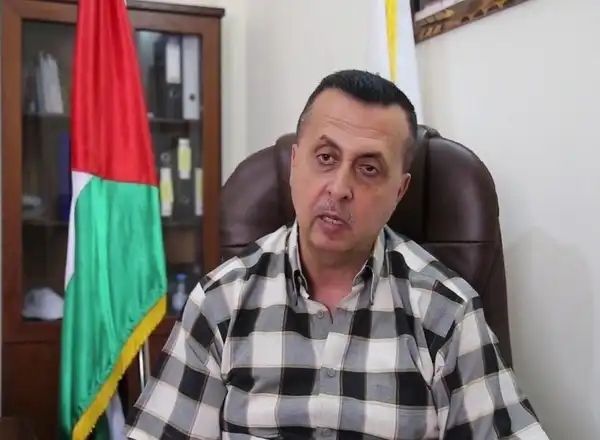
Mohsen Abu Ramadan

Mohsen Abu Ramadan

Opinion Writer

Criticism of the Palestinian Authority leadership in the West Bank and Hamas leadership is on the rise among citizens in both the West Bank and Gaza Strip.

While there are objective reasons behind legitimate criticism, the danger lies in presenting the secondary contradiction, which in this case is the Authority and Hamas, over the primary contradiction, which lies in the occupation and all its consequences of settlement, racial discrimination, and ethnic cleansing.

In the laws of national liberation movements, the main contradiction is embodied in the struggle against occupation because it targets everyone.

In the Palestinian case, the occupation doesn't exclude anyone from its targeting circle. It targets all Palestinian factions and civilians, pushing for displacement and ethnic cleansing in the Gaza Strip, and is attempting to replicate this model in the West Bank. It also plans to undermine the Palestinian Authority financially and fragment it administratively by establishing municipalities to administer cantons and enclaves.

Some citizens believe that the catastrophe that befell the Gaza Strip was caused by Hamas through the October 7, 2023 operation. A number of citizens also believe that the Oslo Accords and the Palestinian Authority's performance led to the loss of the West Bank and the Palestinian cause.

In fact, the occupying state is using these pretexts to continue implementing its colonial, settlement, and racist project at the expense of the Palestinian people. It is using the division to separate the Gaza Strip from the West Bank and undermine the idea of an independent state, which the Zionist Knesset legitimized by adopting a law that considers the Palestinian state an existential threat to the occupying state.

The Palestinian people's awareness of the main contradiction and its prioritization over the secondary contradiction has given rise to a continuous demand, sometimes through popular pressure, to work to end the division and achieve reconciliation and national unity as the law of victory.

A limited minority is trying to carry out a political sorting with the Palestinian Authority in the West Bank and with Hamas in Gaza. While this minority does not constitute a majority, its demands and slogans have dangerous dimensions that may lead to internal strife by fueling the secondary conflict so that it becomes the main one, which pleases the occupation and reinforces its claim that the Palestinian people are not worthy of governing themselves and achieving their right to self-determination.

The national and rational approach lies in working to achieve unity within the Palestinian representative institution and holding general elections to enhance participation in the Palestinian political system.

Any call outside the framework of the comprehensive national dialogue to implement the Beijing Declaration on national unity, including holding elections after stopping the massacre in Gaza, lacks credibility and serves to inflame secondary contradictions rather than the primary contradiction, thus contributing to diverting the compass from its objectives, as everyone is within the circle of targeting a fascist and racist right-wing government that believes in displacement and ethnic cleansing as its program.

PALESTINE

Mon 12 May 2025 9:21 am - Jerusalem Time

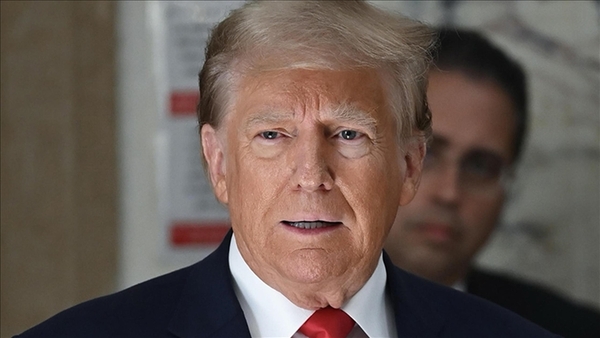
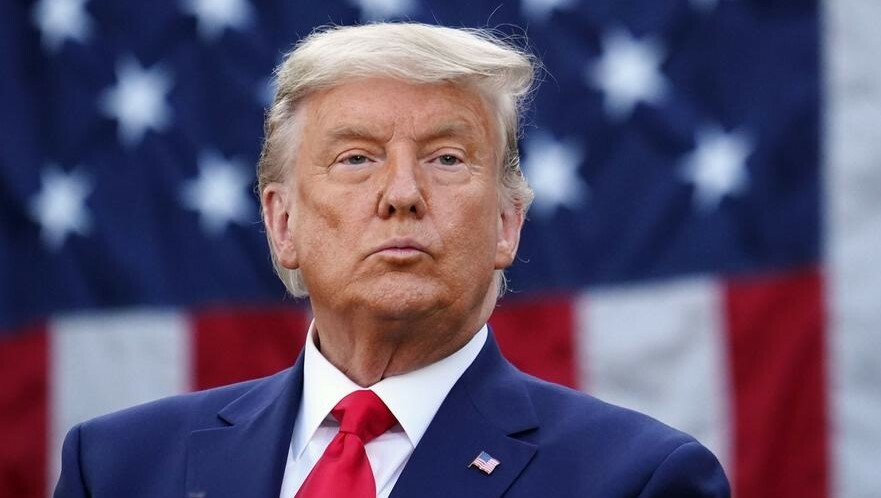
Trump is back, will he keep his promises?

After eight full years, Trump returns to the East, driven by hopes, dreams, and ambitions, to conclude more deals, in a desperate attempt to restore his popularity, which had eroded during the first hundred days of his term. This period revealed a severe lack of human emotions, values, morals, and conscientious impulses, accompanied by symptoms of gluttony and diarrhea, expressed in executive orders driven by a customs instinct that possessed the man who was fickle in his decisions, emotions, and excessive roughness, and who did not differentiate between his friends and his enemies.


During his years of enforced absence from the imperial throne in the White House, much water and blood were shed in the region and the world. His dreams were fulfilled, and his hopes of accumulating more money in a bottomless piggy bank faltered. He even turned against yesterday's allies, throwing Zelensky between the wheels of the Russian train, before reclaiming from him all the weapons his predecessor had provided him, plus interest.


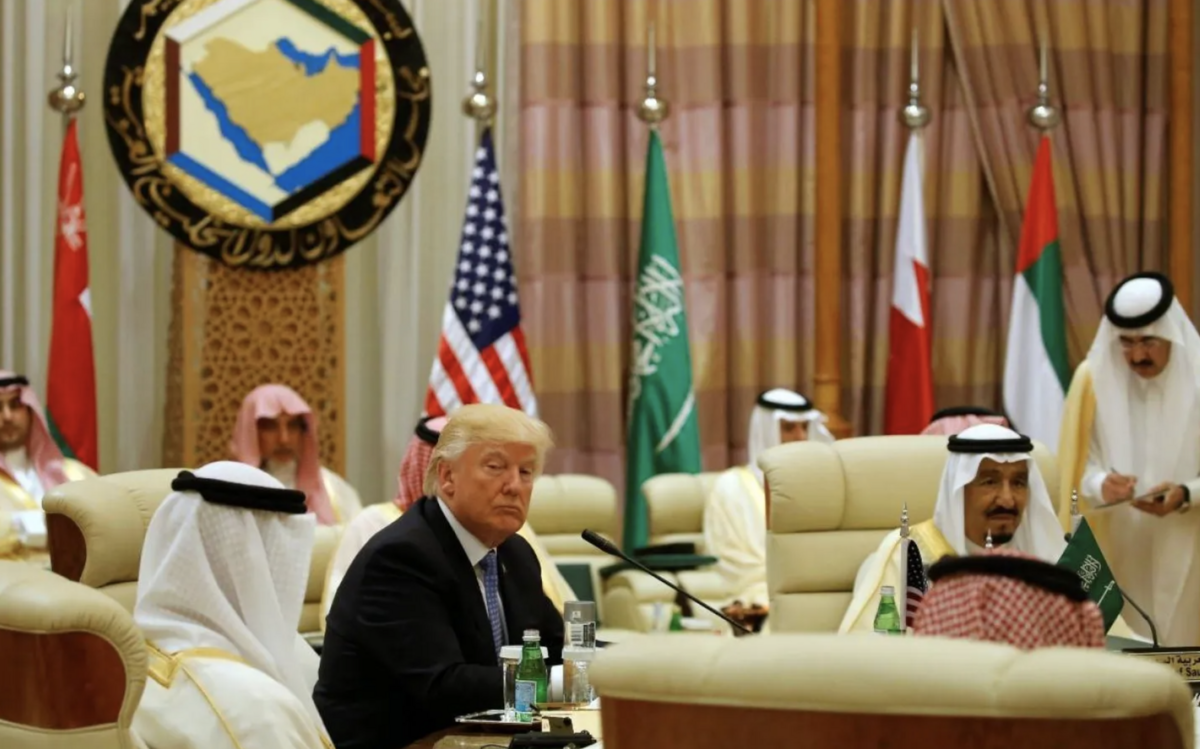
From Tuesday to Thursday, the ambitious, unruly man roams the Arab region, moving between Saudi Arabia, the Emirates, and Qatar, like a traveling salesman seeking to bring benefits, silence the guns, and achieve peace that would fulfill his ambition of winning the Nobel Prize. His first steps began with him turning up his cheek at Netanyahu after discovering that Netanyahu was manipulating him to evade the commitments he promised his hosts in the Kingdom, who stipulated the establishment of a Palestinian state and an end to the slaughter that has been ongoing for six hundred days in Gaza.


Netanyahu wouldn't have needed to issue a statement yesterday ruling out Trump's approval of a Palestinian state had he not sensed that something was moving beyond his control and beyond his radar. Perhaps the potential summit hosted by Riyadh, attended by President Mahmoud Abbas and the Lebanese and Syrian presidents, which Al-Quds exclusively revealed yesterday, indicates that the region is on the cusp of a major transformation of which Netanyahu and his Torah-based coalition will not be a part.


It is imperative to note and commend the Saudi position, which has been far removed from the media hype. Its steadfastness and sound vision regarding the two-state solution and the Kingdom's right to peaceful nuclear energy have succeeded in widening the rift between Trump and Netanyahu. Trump will only take as much from the Kingdom as he gives.

PALESTINE

Mon 12 May 2025 9:14 am - Jerusalem Time

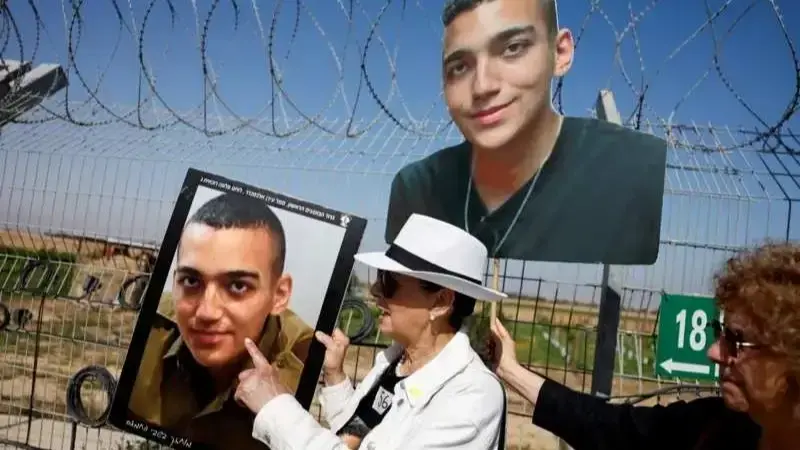
Israeli official: A safe passage will be established to evacuate Idan Alexander from Gaza.

In a significant development related to efforts to release American-Israeli prisoner Idan Alexander, an Israeli official revealed to Axios that Tel Aviv will establish a safe passage for his exit from the Gaza Strip as part of a special humanitarian plan.


The official confirmed that Israel will also implement a temporary ceasefire in specific areas within the Gaza Strip to facilitate the operation.


This statement comes after Hamas announced its willingness to release Idan Alexander, a step US Special Envoy Adam Boehler described as "a positive and important step forward."


Boler, who will be visiting Israel with Idan's mother, expressed his gratitude to US President Donald Trump for his continued support in efforts to repatriate American citizens detained abroad.


According to the Israeli official, negotiations on a plan proposed by US envoy Steven Witkoff—which Israel has accepted—are continuing despite the ongoing military operations.


He explained that Hamas is not receiving any direct compensation for Alexander's release, and that there is no permanent ceasefire at this stage.


However, he noted that if Hamas agreed to Witkoff's plan, the expansion of military operations in Gaza could be postponed to allow for a broader deal.


These developments coincide with a significant US effort led by the Trump administration through its envoys in the region. The White House is seeking to push for a comprehensive deal that includes the release of more prisoners and a temporary ceasefire, amid mounting humanitarian pressures in the Gaza Strip and ongoing Israeli military operations.

PALESTINE

Mon 12 May 2025 9:06 am - Jerusalem Time

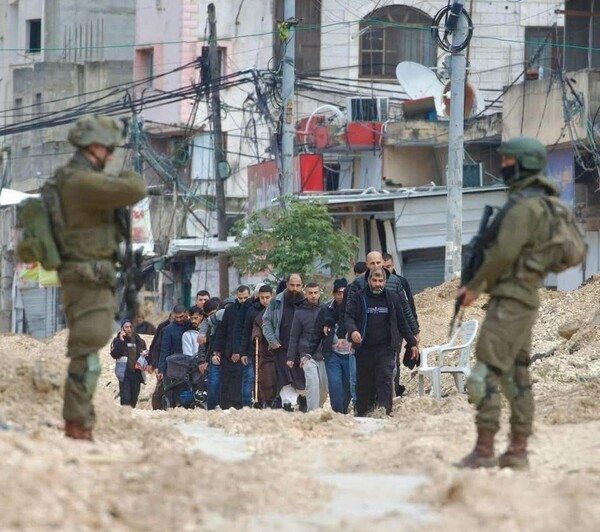
Israeli occupation launches an arrest campaign in the West Bank.

Israeli occupation forces launched an arrest campaign in various areas of the West Bank at dawn on Monday morning.


In Bethlehem, the occupation forces arrested Ahmed Musa Atallah (16 years old) from the city of Beit Sahour in the east, Mahmoud Adel Al-Froukh (57 years old), and Basem Abdul Majeed Kawazbeh (59 years old) from the village of Al-Minya in the east, after raiding and searching their homes.


Other forces arrested Suhaib al-Zabadawi and Muhammad Harsha after raiding their homes in the western neighborhood of the town of Qaffin, north of Tulkarm.


In Nablus, Israeli forces stormed Balata camp, surrounded a house, and arrested Baraq Misheh.


In Hebron, occupation forces arrested Muhammad Adel Al-Froukh and Bassam Kawazbeh from the town of Sa'ir at a military checkpoint in the town of Tuqu', south of Bethlehem.

PALESTINE

Mon 12 May 2025 8:51 am - Jerusalem Time

Trump's mediation to stop the war: an attempt to protect the US arms market and counter Chinese influence

Dr. Hussein Al-Deek: The continuation of the war between India and Pakistan would have threatened the United States' position as the world's largest arms exporter and strengthened China's influence.

Dr. Hassan Ayoub: Continuing the war would have served China's interests by taking advantage of the exhaustion of India and Pakistan and allowing it to strengthen its influence, which explains the American intervention.

Nazzal Nazzal: Washington will reevaluate its military technologies after the air battle demonstrated the fragility of Western weapons compared to Chinese military technology.

Dr. Aqel Salah: Trump aims to bolster his image as a man of peace, especially after his post praising the "common sense and great intelligence" of India and Pakistan.

Dr. Amr Hussein: The US move toward India and Pakistan reflects growing concern about the repercussions for regional stability in South Asia following the recent air battle.

Firas Yaghi: The US intervention was not merely a mediation, but rather a strategic move to protect its interests, affirm Trump's role as a global leader, and weaken Chinese competition.


The recent crisis between India and Pakistan saw swift US intervention to defuse the military escalation between the two nuclear-armed neighbors, a move that raised questions about Washington's true motives.


In separate interviews with Al-Quds, writers, political analysts, and experts believe this move is part of a US strategy aimed at preserving America's standing in light of China's superior weapons in the recent air battle, which revealed new challenges to US global military hegemony.


Some interpret the US intervention as an attempt by the Trump administration to avoid any escalation that might serve Chinese interests, especially given Beijing's ability to exploit the conflict to enhance its regional influence. The air battle demonstrated the superiority of Pakistani aircraft supported by Chinese technology, threatening the position of Western weapons and raising Washington's fears of losing its market share in the global arms industry.


On the political front, some believe that Washington sought to bolster its image as an effective international mediator while protecting its economic and military interests. Furthermore, the success of American mediation in ending the war may be an attempt to contain any regional repercussions that threaten international security, especially in light of the escalating competition between the major powers.


Reducing global conflict hotspots


Dr. Hussein Al-Deek, a writer and political analyst specializing in American affairs, asserts that the rapid American intervention to mediate and end the war between India and Pakistan was driven by the United States' fundamental interests, along with the new Trump administration's vision to mitigate global conflict.


Al-Deek explains that this intervention reflects Washington's strategy to maintain the stability of its traditional allies, India and Pakistan, and prevent an escalation that could threaten international peace and security, especially between two nuclear-armed states.


Al-Deek points out that Pakistan, a traditional US ally, has recently moved closer to China, Washington's strategic enemy, while India remains a strong US ally.


Al-Deek asserts that Washington does not want a war between its allies, as this would weaken its international standing and hinder its focus on the primary conflict with China.


Al-Deek explains that if this war had been directly with China, Washington might have sought to inflame it, but in this case, it worked to quickly extinguish it to protect its interests.

Al-Deek asserts that US Vice President J.D. Vance and Secretary of State Marco Rubio led intensive, secret diplomatic efforts, away from the spotlight, that resulted in a surprising agreement between nuclear-armed neighbors India and Pakistan.


Al-Deek points out that this agreement, which took place behind closed doors, is not temporary but permanent, as the Indian and Pakistani defense ministers are scheduled to meet within days to discuss future arrangements.


Al-Deek asserts that this move is in line with the Trump administration's vision of reducing marginal conflicts, in contrast to previous administrations, particularly Joe Biden's, which Trump accused of fueling wars such as those in Ukraine and Gaza.


Al-Deek points out that the timing of the US intervention was influenced by the superiority of the Pakistani Air Force, supported by Chinese weapons, over Indian forces equipped with US and French systems.


Chinese weapons are superior to American and French weapons.


Al-Deek explains that the recent air battle demonstrated Pakistan's ability to shoot down advanced Indian aircraft and missiles, revealing the reliability of Chinese weapons and the fragility of American and French air systems.


Al-Deek believes that the continuation of the war between India and Pakistan would have "exposed" the power of American weapons, threatening the United States' position as the world's largest arms exporter and strengthening China's influence in the arms market.


Al-Deek asserts that this battle, although it was between India and Pakistan, was an indirect confrontation between the American and Chinese military forces.


Al-Deek points out that China's superiority in neutralizing Indian aircraft, including French Rafale jets, had economic and political dimensions, impacting the global arms trade.


Al-Deek points out that Washington, as an international policeman, seeks to control the pace of conflicts, especially between its allies, leveraging its strong partnerships with Pakistan in the fight against terrorism and with India militarily and politically.


Al-Deek asserts that US intervention has enhanced stability in South Asia and demonstrated Washington's ability to impose its hegemony in managing conflicts between its allies.


Strategic calculations to limit China's influence


For his part, writer and political analyst specializing in American affairs, Dr. Hassan Ayoub, says that the United States' intervention to mediate and end the war between India and Pakistan was driven by strategic calculations aimed at limiting China's growing influence and avoiding the threat of nuclear escalation.


Ayyoub explains that the administration of President Donald Trump, during its first and current terms, has demonstrated a marked retreat from the "Asia Pivot" strategy established by former President Barack Obama and continued by President Joe Biden, which focused on containing China in Central and East Asia, the South China Sea, and the Indian Ocean.


Ayub points out that this decline has left India with the impression that there is a regional vacuum that could be exploited to escalate its historical rivalry with Pakistan, with the aim of imposing regional hegemony.

But Ayub asserts that this Indian behavior, driven by the militant nationalist tendencies of the Bharatiya Janata Party and Prime Minister Narendra Modi, poses a threat to American strategy.


Ayyoub explains that continuing the war would have served China's interests, as it shares borders with both countries and has direct regional interests. China would benefit from exhausting India and Pakistan, allowing it to strengthen its influence and consolidate its presence in the region. This explains why the United States intervened to mediate and reach an agreement to end the war.


Fear of expanding Chinese influence


Ayyoub asserts that the US intervention came to prevent this scenario, as Washington fears that the conflict would lead to greater Chinese expansion and possibly the strengthening of a Russian-Chinese alliance extending southward, threatening the stability of Central and East Asia.


Ayyoub explains that these strategic calculations prompted the Trump administration to intervene urgently to end the conflict, to preserve regional balances and avoid an escalation that could include the use of nuclear weapons.


Ayub believes that the air battle between the two countries revealed the astonishing superiority of Chinese weapons used by Pakistan, particularly its fighter jets, which have successfully shot down advanced Indian aircraft, including French Rafale jets and other Western-made ones.

Ayub describes this superiority as a "wake-up call" for the United States and its allies, as China has demonstrated its ability to offer a superior alternative to Western weapons, strengthening its economic and military alliances through the Belt and Road Initiative, in which China has invested trillions of dollars.


Ayub points out that this development threatens the United States' position in the global arms market and represents a severe blow to India and its hardline Hindu nationalist policies that are hostile to everything non-Indian.


Ayyoub asserts that this military reality prompted Washington to intervene to protect its strategic interests, as the continuation of the war would have led to further exposure of Western weapons to advanced Chinese technology.


Ayyoub explains that the success of US mediation reflects the Trump administration's desire to mitigate regional conflicts that China could exploit, with a focus on directly confronting Chinese influence.


Ayub asserts that this crisis has exposed the fragility of India's aggressive tendencies and contributed to strengthening regional stability. However, it also reveals the significant challenges facing the United States in maintaining its military and economic superiority.


Strategic, economic and nuclear considerations


For his part, Nizar Nazzal, a researcher and expert on conflict issues, says that it is in the United States' interest to prevent a war between India and Pakistan, given strategic, economic, and nuclear considerations.


Nazzal explains that the rapid US intervention to de-escalate the escalation between the two nuclear-armed states stemmed from Washington's fears that the situation could spiral out of control, potentially leading to disastrous consequences for global stability.


Nazzal points out that the outbreak of war in this sensitive region would negatively impact shipping routes, energy prices, and the global capitalist system, in addition to threatening regional security due to the massive nuclear capabilities of both countries.


Nazal believes that the recent air battle between Pakistani and Indian forces was not merely a regional conflict, but rather an indirect confrontation between the West, led by the United States, and China.


Nazal explains that the superiority of the Pakistani Air Force, supported by Chinese J-10 aircraft and advanced air defense systems, has demonstrated its ability to shoot down the advanced French Rafale aircraft used by India with support.

American and French.


Nazzal believes this superiority reveals China's rise as a true competitor to the West in military technology, threatening the position of Western arms in global markets and diminishing its market share.


Nazzal explains that India's air defeat was a "fatal blow" to the pride of American and European military industries, prompting Washington to intervene urgently to prevent further escalation that could strengthen Chinese influence.


Maintaining stability in South Asia


Nazzal points out that US intervention did not begin only after the air clash, but was evident from the outset of the crisis, as Washington expressed early concern about a war between two nuclear-armed states.


Nazzal stresses that the United States seeks to maintain stability in South Asia, especially in light of global tensions that suggest the existence of a “third, precise world war,” including:

Conflicts in Ukraine, Gaza, tensions between Iran and Israel, the Houthis and the West.

Nazzal explains that these conflicts reflect a fierce rivalry between major powers, with Pakistan and India representing one front in this indirect conflict.


Nazzal believes that the United States, under President Donald Trump's leadership, is seeking to de-escalate global fronts, including the Russia-Ukraine conflict, but faces significant challenges in doing so.

Nazzal asserts that Washington's success in de-escalating the conflict between India and Pakistan reflects both sides' awareness of the danger of conventional warfare transforming into an unconventional war that could involve nuclear weapons.


Nazzal explains that any war between these two nuclear powers will not have repercussions limited to Indian geography.

Not only to Pakistan, but it will also extend to the entire world, given the strategic importance of the region.


Nazzal asserts that Washington will reevaluate its military technologies to confront the Chinese challenge, especially after the air battle demonstrated the fragility of Western weapons compared to Chinese military technology.


Nazzal points out that this crisis will have profound repercussions on US defense policies and the nature of future global competition.


Trump aspires to win the Nobel Peace Prize


For his part, writer and political researcher Dr. Aqel Salah believes that US President Donald Trump's intervention to stop the war between India and Pakistan was driven by a combination of American strategic interests and his personal ambitions to win the Nobel Peace Prize.


Salah explains that several factors prompted Trump's swift action, most notably Pakistan's military superiority in the air battle, which revealed the superiority of Chinese weapons over the American and French systems used by India. This prompted India to request American intervention to save face.


Salah points out that Trump's failure to stop the war between Russia and Ukraine dealt him a severe blow, prompting him to seek to restore the United States' image as a global power capable of imposing its will.


Salah believes this intervention sends a message to the Ukrainian president that America is still the stronger player.


Salah asserts that Trump's goal with this move is to bolster his image as a strong leader ahead of his upcoming visit to the Middle East, presenting himself to the Gulf states as a leader capable of starting and ending wars, emphasizing that his voice is heard.


Salah believes that Trump is seeking to cover up his failure to end the war in the Gaza Strip and his inability to compel Israeli Prime Minister Benjamin Netanyahu to accept his vision for a solution.


Salah points out that Trump's ambition to win the Nobel Peace Prize is a key motivation, as he works to end conflicts such as this war, negotiate a peaceful nuclear agreement with Iran, de-escalate tensions between Israel and Turkey, release hostages in Gaza, and facilitate the entry of humanitarian aid.


Salah explains that these steps are aimed at enhancing his image as a man of peace, especially after his post in which he praised the "common sense and great intelligence" of India and Pakistan.


On the military front, Salah asserts that Pakistan's superiority in air combat, thanks to Chinese weapons, has dealt a severe blow to the American and French systems used by India.


Fear of defeat by Western weapons


Salah explains that a continuation of the war would have led to a greater defeat for Western weapons, strengthening China's position as a military and industrial power. The war also led to Pakistan shooting down more than 30 Israeli-made drones, revealing Chinese superiority and endangering American and Israeli industrial secrets.

On the financial front, Salah points out that this superiority threatens the US military industries, which represent a huge source of income for the American economy.


Salah asserts that the continuation of the war would have reduced confidence in American weapons and strengthened China's position in global arms markets, which would have brought military and financial benefits to China. Therefore, the United States transferred secret information to India, possibly related to...

The extent of China's military superiority, to push it to accept the agreement and avoid greater military embarrassment.

Salah asserts that India and Pakistan's possession of nuclear weapons was a decisive factor in Trump's intervention, as he seeks to avoid a nuclear war that could devastate the region and bolster his image as a savior of world peace.


Salah believes that this intervention not only protected American interests, but also served Trump's personal goals in seeking the Nobel Prize, while weakening Chinese influence.

And save the American and Israeli military industries from a potential crisis.


Major shifts in the balance of air power


Egyptian writer, political analyst, and researcher in international and strategic relations, Dr. Amr Hussein, asserts that the rapid US intervention to stop the war between India and Pakistan came in an exceptional context, contradicting Washington's traditional approach to exploiting international conflicts to advance its strategic interests.


Hussein explains that this move reflects growing concern within US circles about the repercussions of military escalation on regional stability in South Asia, particularly after the recent air battle, "the largest in modern times," which revealed significant shifts in the balance of air power in the region.


Hussein points out that the timing of the US intervention carries profound strategic implications, particularly given the remarkable performance of the Pakistani Air Force, equipped with Chinese-made aircraft and missiles, which clearly outperformed the Indian Air Force, which is backed by US and French weapons systems.


Containing Chinese expansion in South Asia


Hussein believes that this superiority may prompt Washington to reevaluate its defense policies in the region, with the aim of preserving its influence and protecting the interests of its allies, especially India, which is a key strategic partner in the face of growing Chinese influence.


Hussein believes that recent US moves may signal the beginning of a restructuring of defense relations between Washington and New Delhi, with a focus on strengthening security partnerships and developing new arms strategies.


Hussein asserts that this move also aims to contain Chinese expansion in South Asia, where Beijing has become a major player in supporting Pakistan's military capabilities. These developments will have far-reaching repercussions for regional and international balances of power.


India is a major economic partner of Washington.


In turn, writer and political analyst Firas Yaghi asserts that the US intervention to stop the war between India and Pakistan reflects President Donald Trump's strategy to de-escalate global conflicts, especially given the close strategic ties that bind the United States to India, one of its closest allies.


Yaghi explains that India is a major economic partner for Washington, through projects such as the India-Europe Corridor announced under President Joe Biden, making any war with Pakistan a threat to US interests and an opportunity for China to enhance its regional influence.

Yaghi points out that Pakistan, despite its proximity to China, maintains positive relations with the United States and has followed Washington's directives on issues such as counterterrorism in Afghanistan.


Yaghi asserts that this dual role made American intervention decisive, as the State Department and the White House led intensive negotiations with both sides to reach a ceasefire. Trump also congratulated India and Pakistan on the agreement, affirming his commitment to promoting global stability.


Yaghi asserts that the Indian-Pakistani air battle, which involved 100 aircraft, revealed the astonishing superiority of Chinese technology, both in air defense systems and the warplanes used by Pakistan. These weapons successfully shot down French Rafale jets, a symbol of European industry, as well as Russian MiG and Sukhoi fighter jets, reflecting an unprecedented superiority over Western and Russian industries.


Major shifts in the arms market in favor of China


Yaghi explains that this superiority has boosted the shares of Chinese companies, raising concerns among the US administration, which fears major shifts in the global arms market in China's favor.

Yaghi asserts that the continuation of the war would have led to further exposure of Chinese weapons, threatening the United States' dominance as the largest arms exporter.


Yaghi points out that countries like Egypt have begun to rely on Chinese weapons for air defense and aviation, reflecting growing confidence in China's military industries.

Yaghi points out that this development poses a strategic threat to the United States, extending to the military sphere, not just in economic and technological competition, where China excels in multiple sectors.


Yaghi explains that this concern prompted Washington to exert strong pressure to end the conflict, as a continuation of the war would have given China an opportunity to demonstrate its military superiority, weakening the position of Western weapons and strengthening Chinese influence in global markets.


Yaghi asserts that the US intervention was not merely a mediation effort, but rather a strategic move to protect American economic and military interests, affirm Trump's role as a global leader seeking stability, and weaken Chinese competition at a crucial time.




PALESTINE

Mon 12 May 2025 8:46 am - Jerusalem Time

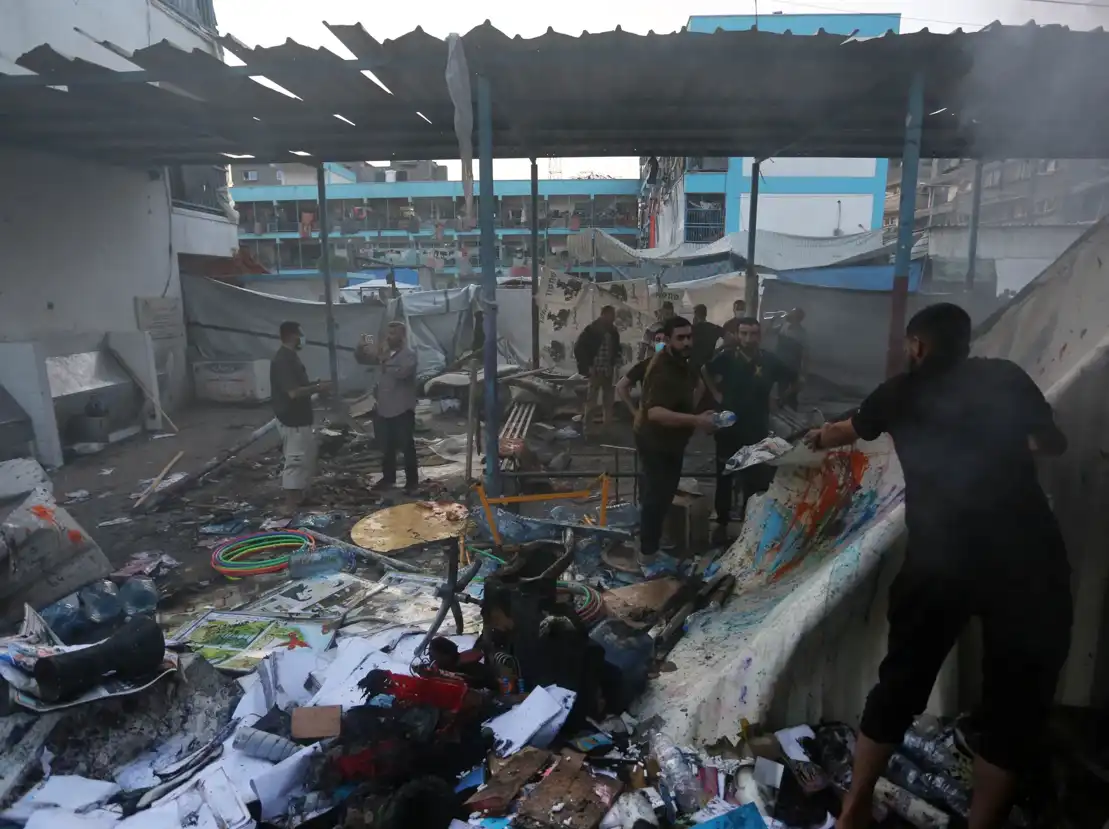
15 dead as a result of Israeli occupation's bombing of a school sheltering displaced people in Jabalia, north of the Gaza Strip.

Medical sources announced that the death toll from the Israeli occupation's bombing of a school housing displaced persons early Monday morning has risen to 15, with a number of injuries reported.


Medical sources added that five children were among the dead, along with several others injured, after Israeli warplanes targeted the second floor of the Fatima Bint Asad School, which houses displaced persons in Jabalia al-Balad, north of the Gaza Strip.


A number of citizens were killed and others were injured after the occupation forces bombed a house near the Hamad al-Hasanat Mosque, west of the Nuseirat camp in the central Gaza Strip.

The occupation army blew up a number of homes in the eastern areas of the Al-Tuffah neighborhood, northeast of Gaza City.


The death toll from the genocidal war and aggression waged by the Israeli occupation forces against the Gaza Strip has risen to 52,829 dead and 119,554 wounded since October 7, 2023.

PALESTINE

Sun 11 May 2025 10:04 pm - Jerusalem Time

Hamas: Israeli soldier with dual US citizenship, Idan Alexander, will be released.

The Islamic Resistance Movement - Hamas - stated that, as part of the efforts being made by the mediating brothers to achieve a ceasefire, Hamas has been in contact with the US administration over the past few days, and that the movement has shown great positivity. The release of the Israeli soldier, who holds dual US citizenship, Idan Alexander, will be part of the steps being taken to achieve a ceasefire, open the crossings, and allow the entry of aid and relief to our people in the Gaza Strip.


The movement affirms its readiness to immediately begin intensive negotiations and to exert serious efforts to reach a final agreement to cease the war, exchange prisoners by mutual consent, and administer the Gaza Strip to an independent, professional body, ensuring continued calm and stability for many years, along with reconstruction and an end to the blockade.


The movement appreciates the tireless efforts made by the mediating brothers in the sisterly State of Qatar and the Arab Republic of Egypt, as well as by the brothers in Türkiye, throughout the past period.


PALESTINE

Sun 11 May 2025 9:32 pm - Jerusalem Time

Injuries in Israeli bombing of Gaza and Khan Yunis

A number of civilians were injured Sunday evening in Israeli shelling of the cities of Gaza and Khan Yunis.


According to local sources, an Israeli drone targeted a group of citizens near the Sheikh Abdullah al-Aybaki Mosque, west of the al-Tuffah neighborhood in Gaza City, injuring three.


The sources added that another drone bombed a tent housing displaced people in the city of Asdaa, northwest of Khan Yunis in the southern Gaza Strip, wounding four civilians.


Since October 7, 2023, the Israeli occupation forces have launched an aggression against the Gaza Strip, resulting in the deaths of 52,829 citizens, the majority of whom were children and women, and the injury of 119,554 others. This is a preliminary toll, with a number of victims still under the rubble and on the streets, unable to be reached by ambulances and rescue teams.

PALESTINE

Sun 11 May 2025 8:51 pm - Jerusalem Time

Netanyahu: We are living through fateful days, and a new deal may be proposed to release detainees.

Israeli Prime Minister Benjamin Netanyahu said in statements reported by Channel 12 that the occupation entity is going through "fateful days" regarding the issue of detainees in Gaza, noting that Tel Aviv supports the process led by US Special Envoy to the Middle East, Steve Witkoff.


According to the channel, Netanyahu revealed the possibility that Hamas might release soldier Idan Alexander as a "goodwill gesture" toward US President Donald Trump.


Netanyahu added that Tel Aviv does not rule out proposing an alternative deal to the US initiative, which might include a smaller number of detainees and less stringent conditions.


In this context, Channel 13 quoted a senior Israeli official describing President Trump's administration team as "chaotic," saying that "the right foot doesn't know what the left foot is doing," and that all decisions are made according to President Trump's whims.


PALESTINE

Sun 11 May 2025 8:02 pm - Jerusalem Time

Statement by a Hamas leader on developments in the truce in Gaza

A Hamas leader revealed the existence of direct, advanced negotiations between the movement and the US administration, focusing on reaching a ceasefire agreement in the Gaza Strip.


The leader explained that these negotiations have been ongoing for several days and cover humanitarian issues, most notably the entry of aid into the Gaza Strip, as well as exploring ways to end the ongoing war.


He pointed out that the talks are witnessing tangible progress, amid ongoing regional and international efforts to end the aggression and achieve a comprehensive ceasefire.


PALESTINE

Sun 11 May 2025 7:57 pm - Jerusalem Time

Israeli settlers attack northwest of Ramallah

Settlers attacked the village of Beitillu, northwest of Ramallah, on Sunday evening.


According to local sources, more than 50 armed settlers attacked the village from the east, assaulting residents who attempted to confront them. No injuries were reported.


The sources added that after residents confronted the settler groups and forced them to retreat, the settlers set fire to lands in the eastern part of the village.

PALESTINE

Sun 11 May 2025 7:33 pm - Jerusalem Time

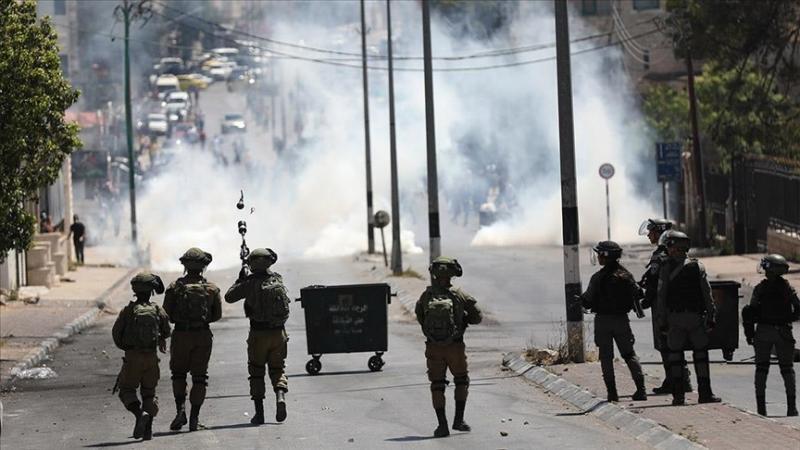
Israeli occupation forces force Palestinian citizens in the eastern neighborhood of Tulkarm to evacuate their homes.

Israeli occupation forces forced a number of citizens in the eastern neighborhood of Tulkarm to evacuate their homes on Sunday evening, marking the 105th day of the ongoing aggression.


According to local sources, occupation forces raided a number of residential buildings in the eastern neighborhood, specifically those adjacent to Tulkarm refugee camp, and forced the residents, who were from the Tarabieh and Abu Safieh families, to evacuate within a short period of time. The residents included women, children, the elderly, and the sick.

The evacuation of citizens coincided with heavy movements of occupation vehicles in the city's main streets, especially the street of the Martyr Thabet Thabet Governmental Hospital and the center of the market, against the flow of traffic. Movements of infantry forces were also observed on Nablus Street, coming from Nour Shams Camp, passing through the entrances to Tulkarm Camp and towards Shuweika Roundabout and Alimi Street, and they obstructed the movement of vehicles and citizens.


ARAB AND WORLD

Sun 11 May 2025 7:12 pm - Jerusalem Time

Trump's ambitious Gulf visit could backfire due to his unwavering support for Israel.

US President Donald Trump begins his first foreign trip of his second administration this week with a tour of the Middle East, seeking to secure investment, trade, and technology deals from friendly, wealthy leaders amid turbulent negotiations over several regional conflicts, including Israel's genocidal war on starving and tightly blockaded Gaza.


According to experts, this Middle East tour is a repeat of his first international tour in 2017, when he was widely praised in the region as a serious leader seeking quick gains and capable of supporting the economic and geopolitical interests of the region's monarchies.


Trump's negotiations in Saudi Arabia, Qatar, and the United Arab Emirates are expected to focus on a number of topics, including oil, trade, investment deals, regional conflicts in Israel, Gaza, and Yemen, negotiations on the Iranian nuclear program, and other issues.


Trump typically pursues his own goals, but that could change next week when he confronts the chaos he is creating in the Middle East. As he begins his three-day tour of Saudi Arabia, the United Arab Emirates, and Qatar, the US president promises great results, but experts believe he is deluded, given that America's reckless, incoherent, and negligent regional policies are failing on all fronts.


Experts believe that Gulf leaders have significant leverage to correct Trump's course, should he decide to use it. He relies on them to an unprecedented degree—far more than he does on Europe—as diplomatic interlocutors, security partners, and financial backers, while "his approach to Palestine, which is facing a second Nakba, is a mixture of prejudice, cruelty, and sheer ignorance. Without Arab assistance, the United States and Israel could remain indefinitely stuck in a devastating political stalemate."


Experts believe Trump realizes he cannot ignore the views of Saudi Crown Prince Mohammed bin Salman and his Gulf counterparts on Gaza, Syria, and Yemen, and that they oppose war with Iran, as previously threatened by the United States and Israel. Trump needs them as allies in his trade and tariff dispute with China. Gulf diplomats also hosted peace talks between Ukraine and Russia, which he personally promoted. He is striving to keep oil prices low and covets billions of dollars in investment deals in the Middle East and arms sales.


Commenting on this issue, The Guardian newspaper says: “However, Gulf support comes at a price. Take, for example, Trump’s hope of extending the so-called Abraham Accords by normalizing Saudi-Israeli relations. Whatever Trump says, Mohammed bin Salman vows that this cannot happen without ensuring progress toward an independent Palestinian state—a prospect rejected by the Israeli government. Mohammed bin Salman has described the killing of more than 52,000 Palestinians in Gaza since October 7, 2023, as “genocide.” In Riyadh, he will therefore exert intense pressure to end the Israeli blockade and restore the ceasefire.”


US-Israeli relations are increasingly strained, with Trump so far refusing calls to include Israel in his itinerary, unconcerned by Benjamin Netanyahu and his far-right allies' plans for a prolonged military occupation of Gaza and the mass expulsion of Palestinians. However, while Trump was supportive two months ago, speaking of building a "Middle East Riviera," he appears to have belatedly realized that peace cannot be built on such illusory concepts.


Netanyahu, who continues to call for devastating US military strikes on Iran to destroy its nuclear program, was caught off guard by Trump's sudden announcement last month of talks with Tehran over its nuclear program. Trump's abrupt reversal last week, in which he ended US airstrikes on Yemen, also caught Israel by surprise, which continues to bomb Houthi fighters. Both policy shifts, and Trump's change in tone on Gaza, follow effective Gulf pressure, experts say.


According to experts, Arab leaders, with Turkey's support, want Trump to curb Israeli military operations in Lebanon, and particularly in Syria, which Israel has repeatedly attacked since the fall of Syrian President Bashar al-Assad's regime on December 8. All six members of the Gulf Cooperation Council support engagement with Syria's interim president, Ahmed al-Sharaa, and his coalition government.


It's worth noting that al-Sharaa (Abu Muhammad al-Julani) says he does not want a conflict with Israel and is focused on reuniting a shattered Syria. His visits to Saudi Arabia, the UAE, and Qatar have yielded generous offers of reconstruction aid. However, unlike Britain and the European Union, Trump has refused to ease sanctions imposed since the Assad era.


The Guardian commented on Sunday: “If Trump wants to secure Gulf support for his broader agenda, he will have to offer something significant in return. That might be reviving the 2015 US-EU nuclear deal with Iran (which he deliberately abandoned in 2018)—while ensuring that Netanyahu and the hardliners in Tehran don’t start another war. Trump might well make this a bold move. He claims to be the “peace president.” This is a chance to prove it.”


There is a growing understanding in Washington (and in Israel) that Trump has backed away from attempting to mediate Israel's war on Gaza. His administration has announced that it will negotiate a new aid distribution agreement without direct Israeli government intervention to renew aid deliveries to Gaza, which is suffering the worst humanitarian crisis since Netanyahu decided on March 18 to violate the ceasefire and resume the war of extermination on Gaza. However, the proposed US mechanism for aid distribution serves Netanyahu's plans to continue the war and occupy Gaza.

PALESTINE

Sun 11 May 2025 7:09 pm - Jerusalem Time

Palestinian-Jordanian talks on a ceasefire and aid deliveries to Gaza

Palestinian Vice President Hussein al-Sheikh discussed with Jordanian Prime Minister Jaafar Hassan the importance of expediting a ceasefire and allowing humanitarian aid into the Gaza Strip, which has been subjected to an Israeli genocide for more than 20 months.


This came during their meeting in the Jordanian capital, Amman, in the presence of Jordanian Foreign Minister Ayman Safadi.


The agency said that Sheikh, who also serves as Vice Chairman of the Executive Committee of the Palestine Liberation Organization, briefed the Jordanian Prime Minister on "developments in the situation in Palestine."


The two sides also discussed "the importance of implementing a ceasefire as quickly as possible and delivering humanitarian aid" to the Gaza Strip.


The Sheikh reiterated his emphasis on "the official Palestinian position that the State of Palestine must assume its civil and security responsibilities, that the occupation forces must fully withdraw from the Gaza Strip, and that the occupation and extremist settlers must cease their attacks on cities, camps, villages, and holy sites in the West Bank, including Jerusalem."


He stressed the importance of "engaging in a political process based on international legitimacy that ends the Israeli occupation" of the Palestinian territories.


The Sheikh conveyed the greetings of Palestinian President Mahmoud Abbas to King Abdullah II of Jordan, "and the appreciation of the State of Palestine and its people for the role played by the Kingdom in stopping the war and aggression against the Palestinian people, delivering humanitarian aid, and supporting the Palestinian people and their just cause."


In parallel with the genocidal war in Gaza, the Israeli army and settlers have escalated their attacks in the West Bank, including East Jerusalem, resulting in the deaths of more than 962 Palestinians, the injury of nearly 7,000, and the arrest of more than 17,000 Palestinians, according to official data.


The two sides reviewed "cooperation relations between the two countries and ways to support and enhance them in all fields," and discussed a number of topics of common interest, according to Wafa.


During the meeting, they also discussed ways to enhance joint coordination regarding the upcoming Arab Summit in Baghdad and US President Donald Trump's visit to the region.


Baghdad is hosting the 34th Arab Summit, scheduled for May 17, according to an announcement by the Iraqi Ministry of Interior.


Trump's highly anticipated visit to the Middle East is scheduled to begin Tuesday and continue through May 16. It will include Saudi Arabia, Qatar, and the UAE, while bypassing Israel.


For his part, the Jordanian Prime Minister affirmed the Kingdom's "firm and permanent position in supporting the Palestinian cause, entrenching the Palestinian people on their land, and achieving their legitimate rights."


He also stressed the need to "continue coordination and cooperation to address the challenges facing the region in the coming period."


Last April, the Executive Committee of the Palestine Liberation Organization (PLO) approved the appointment of Sheikh as Deputy Chairman of the PLO Executive Committee and Vice President of the State of Palestine.


Since October 7, 2023, Israel has been committing genocide in Gaza, including murder, destruction, starvation, and forced displacement, ignoring all international calls and orders from the International Court of Justice to halt the offensive.


This US-backed war left more than 172,000 Palestinians dead and wounded, most of them children and women, and more than 11,000 missing.

ARAB AND WORLD

Sun 11 May 2025 6:33 pm - Jerusalem Time

Saudi Arabia to host Gulf-US summit on Wednesday

The Saudi capital is expected to host the Gulf-US summit, which comes in light of US President Donald Trump's historic first foreign visit to Saudi Arabia, Qatar, and the UAE.


According to Axios, which cited a US official and Arab officials, Saudi Arabia plans to host a summit on Wednesday bringing together the US president and his counterparts, the leaders of the Gulf Cooperation Council (GCC) states. The US president's first official foreign trip reflects the growing importance his administration places on cooperation between the United States and the Gulf states. The summit will be an opportunity for the US president to present his vision for US engagement in the Middle East and define his country's interests in the region.


This summit will be the fourth between the United States and the Gulf Cooperation Council countries, following three previous summits. The first was at Camp David in May 2015, the second in the same month of 2017 in the Saudi capital, Riyadh, with the participation of US President Donald Trump during his first term, and the third in July 2022 with Arab participation, including Egypt, Jordan, and Iraq.


On Sunday, Custodian of the Two Holy Mosques King Salman bin Abdulaziz extended invitations to Gulf leaders to attend the Gulf-US summit in Riyadh.


The Emir of Kuwait, Sheikh Meshal Al-Jaber Al-Sabah, received a written message from the Custodian of the Two Holy Mosques, including an invitation to attend the summit. The message was delivered by the Custodian of the Two Holy Mosques’ Ambassador to Kuwait, Prince Sultan bin Saad bin Khalid. Sultan of Oman, Haitham bin Tariq, also received a written message from King Salman bin Abdulaziz, regarding the invitation to attend the upcoming Gulf-US summit. The message was received by the Omani Foreign Minister during his reception of the Saudi Ambassador to the Sultanate.


King Hamad Al Khalifa of Bahrain also received a written letter from the Custodian of the Two Holy Mosques, including an invitation to attend the summit. The letter was delivered by the Saudi Ambassador to Bahrain, Nayef Al Sudairi.


King Hamad Al Khalifa expressed his thanks and appreciation to the Custodian of the Two Holy Mosques, praising the close and solid historical relations that bind the two kingdoms, and the continuous development of fraternal cooperation and coordination at all levels to achieve all that is good for the two peoples. He also expressed his pride in the good efforts of King Salman in strengthening the bonds of Bahraini-Saudi relations, and in the pioneering role of Saudi Arabia in developing the system of joint Gulf action, deepening the bonds and cooperation between the brothers in the Gulf Cooperation Council countries, and consolidating the pillars of security, stability and peace in the region.


The US State Department confirmed to Asharq Al-Awsat that President Trump's visit "unequivocally reflects the importance and strategic role of Saudi Arabia in the region, as the United States sees Saudi Arabia as a pivotal partner in efforts to enhance regional security and stability." Samuel Werberg, the regional spokesman for the US State Department, added that Washington reaffirms its commitment to working with its regional partners "to find sustainable political and diplomatic solutions to crises, support efforts to calm the situation in Gaza, achieve a permanent ceasefire, and confront activities that threaten freedom of navigation in the Red Sea."

ARAB AND WORLD

Sun 11 May 2025 5:49 pm - Jerusalem Time

The Arab Parliament calls for urgent action to save Gaza's children from starvation.

The Arab Parliament sent urgent letters to the UN Secretary-General, the High Commissioner for Human Rights, and the Executive Director of the United Nations Children's Fund (UNICEF), calling for immediate and effective action to save the children of the Gaza Strip from starvation amid the ongoing Israeli aggression.


Parliament Speaker Mohammed Al-Yamahi affirmed in a statement on Sunday that the humanitarian situation in the Gaza Strip has reached unprecedented levels of hunger, severe malnutrition, and medicine shortages. He pointed out that the population of the Gaza Strip is subjected to a systematic policy of starvation and forced deprivation of food, water, and healthcare, which constitutes a flagrant violation of the Convention on the Rights of the Child and a blatant breach of international humanitarian law, potentially amounting to war crimes and crimes against humanity.


He called for serious international action before it's too late to secure permanent and safe humanitarian corridors and ensure the entry of food and medical aid into the Gaza Strip without delay. He emphasized the need to compel the Israeli occupation to respect its legal and humanitarian obligations towards civilians, especially children.


Al Yamahi indicated that the Arab Parliament will continue its political and legal efforts and actions at the regional and international levels, including within parliamentary frameworks, to end the suffering of Palestinian children and guarantee their right to life, dignity, and a safe childhood.

ARAB AND WORLD

Sun 11 May 2025 5:36 pm - Jerusalem Time

Speculation about Trump's position on US recognition of the State of Palestine


A Gulf diplomatic source, who declined to reveal his name or position, told The Media Line that "President Donald Trump will issue a declaration regarding the State of Palestine and its American recognition, and that a Palestinian state will be established without Hamas."


The source added, "If a US declaration of recognition of the State of Palestine is issued, it will be the most significant announcement that will change the balance of power in the Middle East, and more countries will join the Abraham Accords."


The source confirmed that economic agreements will certainly be present, but many have already been announced, and we may see Gulf countries exempted from customs duties.


But US Ambassador to Israel Mike Huckabee refuted the source's statements on Twitter Saturday afternoon, describing the rumors as "nonsense" and asserting that Israel has no better friend than the United States.


In turn, Ahmed Al-Ibrahim, a former Gulf diplomat, told The Media Line: "I don't expect the summit (between Trump and Gulf leaders) to be about Palestine. Neither Egyptian President Abdel Fattah el-Sisi nor King Abdullah II of Jordan were invited. They are the two countries closest to Palestine, and it is important for them to attend any event like this."


Al-Ibrahim added, "There will be major deals coming, perhaps similar to what happened at the 2017 Gulf-US summit, when the value of Saudi deals exceeded $400 billion. Let's not forget that the UAE announced investments in the United States worth more than $1 trillion, and Saudi Arabia announced investments worth more than $600 billion."


"This is clear because President Donald Trump intends to visit the UAE and Qatar after concluding his visit to Saudi Arabia. These two countries are important economies with significant financial resources and significant investments in the United States," he added. Ahmed Bushouki, a Saudi political analyst, told The Media Line: "This is about major economic deals that will be concluded in Saudi Arabia. US President Donald Trump may have been hinting at this when he called on the American people to 'buy stocks now, before his important announcement in the next two days.'"


A well-informed source who advised on the "Deal of the Century" announced by President Trump at the White House in January 2020 told a correspondent for Al-Quds newspaper that talk of the United States recognizing a Palestinian state along the lines of the model constantly discussed at the United Nations and the Arab League is a fantasy.


“First of all, these are baseless rumors, for a very simple reason: President Trump presented his vision in its entirety in the Deal of the Century five years ago,” said the source, who requested anonymity and currently works for a consulting firm that provides political advice to a Gulf state. “I believe that the text he presented includes frameworks for a Palestinian entity that guarantees Israel’s security, gives it the control it needs over the Jordan Valley, and ensures that Israelis will not be displaced from Judea and Samaria. I don’t think the president is willing to back down from what he himself presented.”


The "Deal of the Century" gives the Israeli occupation authorities the right to seize 33% of the occupied West Bank, including the Jordan Valley.


Regarding news of peaceful nuclear cooperation between the United States and Saudi Arabia to generate electricity in the Kingdom, Saudi Arabia announced a program in 2010, and it has been discussed several times before. International companies are now working on these projects in Saudi Arabia.


Saudi Arabia will host a Gulf-US summit this week during Trump's visit to the Middle East.

ARAB AND WORLD

Sun 11 May 2025 5:05 pm - Jerusalem Time

Disagreements over Iran and Gaza exacerbate tensions between Trump and Netanyahu

When US President Donald Trump took office last January, he and Israeli Prime Minister Benjamin Netanyahu were in complete agreement on how to handle the most pressing issues in their relationship: the war in Gaza and confronting the Iranian threat.


Trump lifted the Biden administration's ban on sending large bombs to Israel. He encouraged Israeli military operations to "eliminate Hamas" in Gaza. He agreed with Netanyahu to confront Iran and its proxies in the region.


But in recent weeks, the relationship between Trump and Netanyahu has become strained as the two leaders have increasingly disagreed over the strategy for confronting these challenges, according to what US officials and Middle Eastern diplomats confirmed to NBC News on Sunday.


The network quoted officials as saying that Trump's approach to Iran is a major point of contention with Netanyahu, as Israel does not want the US president to conclude a nuclear agreement that would grant Iran any uranium enrichment capabilities.


The network explained that Netanyahu was frustrated by Trump's refusal to support military strikes against Iranian nuclear facilities, as Trump believed there might be an opportunity to eliminate the threat of Iran acquiring a nuclear weapon by striking a deal.


Officials noted that one of Netanyahu's advisers told Washington's Middle East envoy that Netanyahu was angry about Trump's remarks on Iran, made on Wednesday, in which he said he had not yet decided whether Iran would be allowed to enrich uranium under the new nuclear agreement his administration is negotiating.


"Israel is concerned about any agreement on this matter," a US official said.


Officials also confirmed that Trump was frustrated by Netanyahu's decision to launch a new military offensive in Gaza, and the US president said in statements that launching a new attack on Gaza would make reconstruction more difficult.


NBC News revealed that the United States is currently pressuring Israel and Hamas to agree to a ceasefire in Gaza.


According to the sources, "Netanyahu was shocked last week by Trump's announcement that he would halt his military campaign against the Iranian-backed Houthis in Yemen after they agreed to a ceasefire on American ships in the Red Sea."


This came after the Houthis attacked Israel with a missile that hit a site near Ben Gurion Airport, Israel's main airport.


Sources said that Netanyahu, shocked by Trump's position, said, "Israel will defend itself alone."


PALESTINE

Sun 11 May 2025 4:34 pm - Jerusalem Time

Israeli occupation forces stormed eastern Jenin.

Israeli occupation forces stormed the village of Deir Ghazala, east of Jenin, on Sunday evening.


According to local sources, occupation forces stormed the village, dispatching infantry units through the streets, and fired live ammunition. They also set up a checkpoint at the entrance to the village of Arabuna, obstructing the movement of vehicles, and searching them.

PALESTINE

Sun 11 May 2025 4:03 pm - Jerusalem Time

Gaza Health: The death toll from the aggression on the Strip rises amid Israeli occupation's ongoing crimes.

The Palestinian Ministry of Health in Gaza announced in its daily statistical report that the number of dead who arrived at hospitals across the Strip over the past 24 hours has reached 19, including one who was pulled from under the rubble. The ministry also reported 81 new injuries as a result of the ongoing Israeli aggression.


The ministry noted that a number of victims remain under the rubble and on the streets, with ambulance and civil defense crews unable to reach them due to the intensity of the shelling and the dangerous situation on the ground.


This brings the death toll in the Gaza Strip since the start of the aggression on October 7, 2023, to 52,829 dead and 119,554 wounded.


The ministry also reported that between March 18, 2025, and today, 2,720 Palestinians were killed and 7,513 others were injured.

PALESTINE

Sun 11 May 2025 3:23 pm - Jerusalem Time

Pope Leo XIV calls for an end to the war on Gaza

Pope Leo XIV called on Sunday for a ceasefire in Gaza, the release of Israeli prisoners held there, and a "just and lasting" peace in Ukraine.


In a sermon delivered from the balcony overlooking St. Peter's Square, where tens of thousands gathered to watch him recite his first prayer since his election, he urged "the world's most important leaders" to stop wars.


Meanwhile, Israeli President Isaac Herzog plans to participate in the official inauguration ceremony for the new pope, claiming that this will "open a new page" between Israel and the Vatican, according to i24NEWS.


It's worth noting that the Israeli ambassador to the Vatican, who is considered a low-level diplomat, attended Pope Francis' funeral, which was attended by world leaders, including US President Donald Trump and his predecessor, Joe Biden, who represented the United States.

This came after escalating tensions between Israel and the Vatican, with Israeli Prime Minister Benjamin Netanyahu and the Ministry of Foreign Affairs not issuing any statements of condolence on the death of Pope Francis. Herzog was the only Israeli official to issue one.

The Israeli Foreign Ministry also deleted social media posts expressing condolences over the death of Pope Francis. The ministry explained this by stating that Pope Francis had strongly criticized Israel's war of extermination in Gaza, asserting that Israel was killing children and committing a possible war crime.
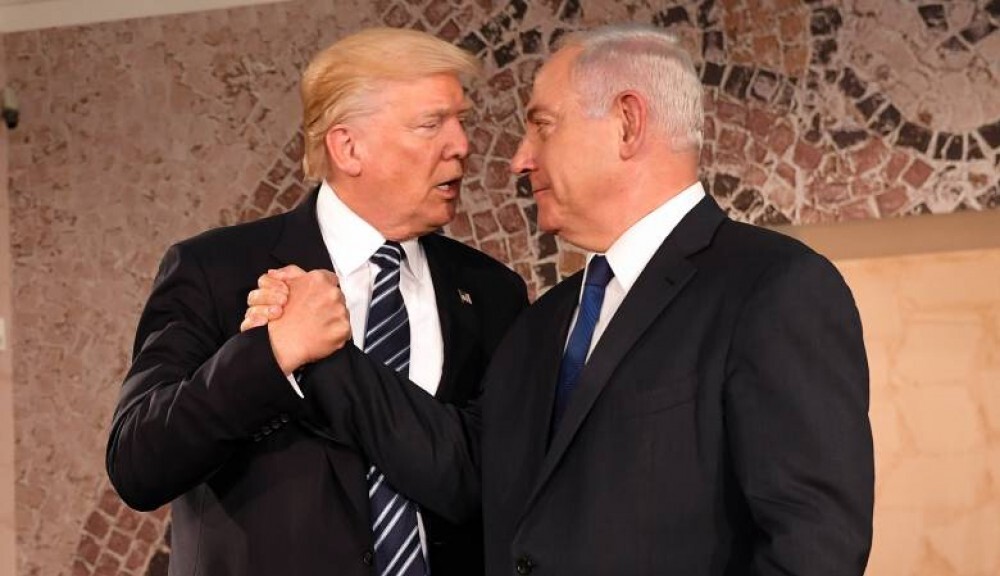
PALESTINE

Sun 11 May 2025 2:42 pm - Jerusalem Time

Suffocation among students during the occupation's raid on Halhul, north of Hebron.

A number of students suffered suffocation on Sunday when Israeli occupation forces stormed the school complex in the town of Halhul, north of Hebron.


Bassam Habr, director of education in northern Hebron, told WAFA that the occupation forces stormed the school complex in the center of Halhul town and fired a large number of tear gas canisters at the schools while the students were inside, causing a large number of them to suffer from suffocation. Some were evacuated by ambulance crews, while others were treated on the spot.


He added that Education Office crews immediately headed to the complex, and students are currently being evacuated from the schools to ensure their safety.

ARAB AND WORLD

Sun 11 May 2025 2:29 pm - Jerusalem Time

Friedman to Trump: Netanyahu is not our ally, but rather a threat to our interests.

Prominent American author and pro-Israel writer Thomas Friedman sent a letter to President Donald Trump in which he expressed his admiration for his recent dealings with Israeli Prime Minister Benjamin Netanyahu. Friedman emphasized that this government is not an ally of the United States and is behaving in a manner that threatens American interests in the region.
In his column in The New York Times, Friedman addressed Trump, saying that his exclusion of Israel from his upcoming Middle East tour, as well as his independent negotiations with Hamas, Iran, and the Houthis, was a clear message that Netanyahu had no leverage over the US president. He indicated that this disregard undoubtedly panicked Netanyahu and his colleagues.
Friedman added that "the Israeli people still see themselves as a strong ally of the American people, and vice versa." However, he added that the current Netanyahu government is by no means a true ally of the United States, as it is the first government in Israel's history whose priority is annexing the West Bank, expelling Palestinians from the Gaza Strip, and rebuilding settlements there, rather than achieving peace with its Arab neighbors.
In his letter to Trump, Friedman emphasized that it is a credit to him that Netanyahu has not allowed his actions to be controlled by him, as he has done with other American presidents. He emphasized the need to preserve the American security architecture that previous presidents built in the region following the 1973 war, which has continued to serve American geopolitical and economic interests, and which Netanyahu is currently seeking to undermine.
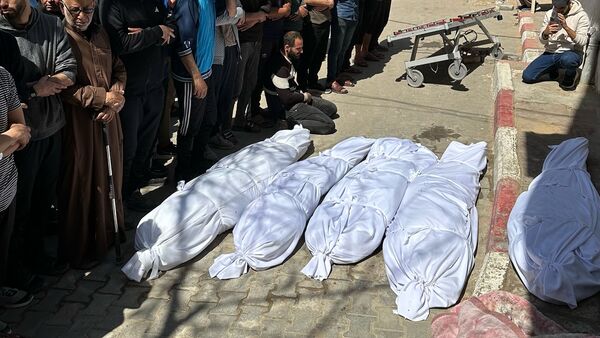
The American writer continued in his letter to Trump, saying, "This security structure was based primarily on an American-Israeli commitment to the success of the two-state solution, a commitment you yourself attempted to advance during your first term through your plan to establish a Palestinian state in Gaza and the West Bank, provided that the Palestinians recognize Israel and accept that their state be demilitarized."
He stated that Netanyahu rejected the US demands because Jewish extremists in his government threatened to bring it down if he did so. Netanyahu himself is keen to retain his position, which guarantees him political immunity and allows him to delay legal proceedings and avoid imprisonment, prioritizing his own interests over those of the United States and even Israel itself.

He continued in his letter that the worst may yet come, as Netanyahu prepares to invade Gaza with the aim of confining the Palestinians to a tight corner between the Mediterranean Sea and the Egyptian border. He is also accelerating the de facto annexation of parts of the West Bank, which will expose Israel to further war crimes charges, charges from which Netanyahu will demand that US President Trump protect him.
After Thomas Friedman harshly criticized Hamas, he said Netanyahu's plan does not aim to create a moderate alternative to Hamas in Gaza under the leadership of the Palestinian Authority, but rather to create a permanent military occupation that would force Palestinians into forced migration, describing it as a new Vietnam on the Mediterranean coast.
Friedman addressed Trump, saying that Netanyahu's plans would inevitably threaten the stability of neighboring countries. He quoted Lee Hans Fixel, a former political advisor at US Central Command, as saying: "The more desperate the Palestinians become, the less willing the region will be to expand US-Arab-Israeli security integration, which could have yielded long-term gains against Iran and China, without requiring significant US military resources to maintain it."
Friedman addressed Trump, saying, "Mr. President, you have good independent instincts about the Middle East. Follow them, or you should prepare for this looming reality: Your Jewish grandchildren will be the first generation of Jewish children to grow up in a world where the Jewish state is considered a pariah state."