PALESTINE

Sun 11 May 2025 1:19 pm - Jerusalem Time

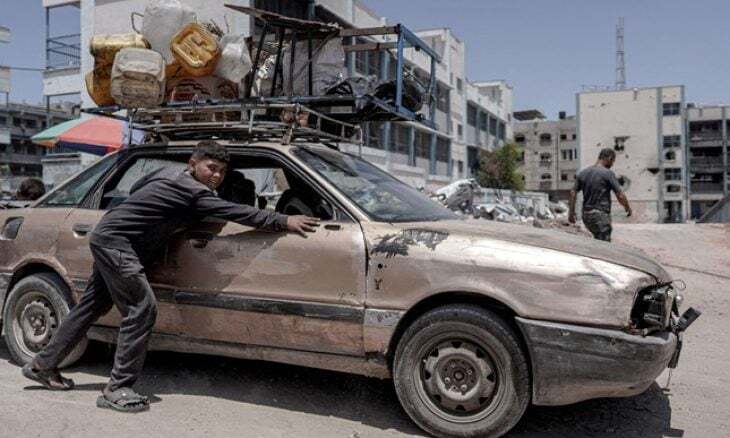
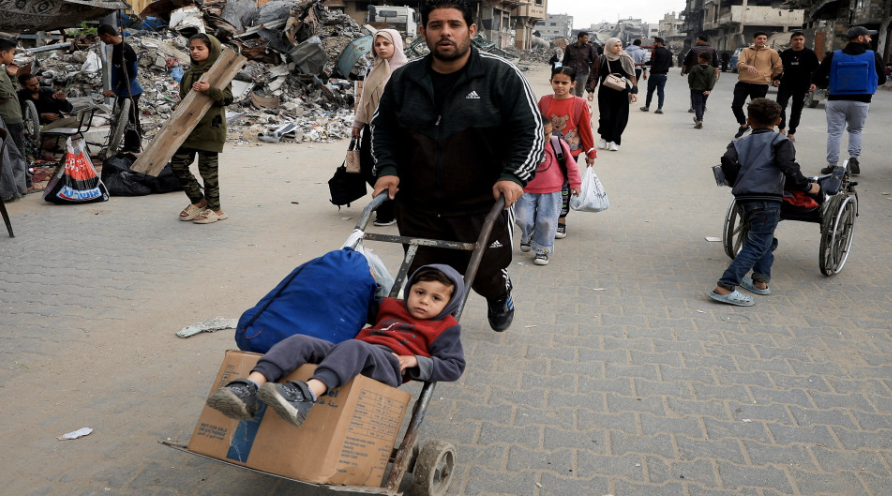
"No diesel or gasoline." Famine has reached Gaza's vehicles, which are threatened with being shut down.

Mohammed Al-Kafarneh to Al-Quds: Cars require huge budgets for fuel, maintenance, oils, bodywork, and painting.

Fouad Harzallah to Al-Quds: In the absence of oversight in Gaza, taxi fares have become a new price every day.

Nasser Marzouq to Al-Quds: Any car with a minor problem, its maintenance cost is a dilemma for the car owner and the mechanic.


Taxis and buses are on the verge of stopping operations in the Gaza Strip due to the depletion of all fuel needed to power these vehicles.


Most taxis and medium-sized buses in Gaza run on diesel, which costs around 60 shekels per liter on the black market. Drivers previously resorted to mixing diesel with cooking oil, known locally as "serj," in an attempt to overcome the high price of diesel. However, even this tactic is no longer effective, as the price of a liter of cooking oil has risen to 80 to 90 shekels.


As for cars that run on gasoline, the price per liter has reached 350 shekels, and even cars converted to natural gas are also threatened with closure due to the high price of gas per kilo, which has reached 280 shekels. The last time gas was supplied was three months ago, meaning that the famine afflicting the Gaza Strip has also reached vehicles that run on diesel, gasoline, and mineral oils.


Diesel and gasoline cars alike


Taxi driver Mohammed Al-Kafarneh told Al-Quds that he has two vehicles operating on the route, one running on diesel and the other on gasoline and natural gas. Both vehicles have now stopped operating due to the high fuel prices, especially since he has raised the fare more than five times in a month. This is no longer beneficial because he will be burning fuel without working, especially since citizens are fed up with the high fare prices, in light of the war and poverty.


Al-Kafarna added: "You can't prefer diesel cars to gasoline or vice versa. Currently, all cars require huge budgets for fuel, maintenance, oils, bodywork, and painting. The best thing for me is to stop operating until fuel is available at a price that matches the means of the driver and passenger."


The fare price is constantly rising.


Citizen Fouad Harzallah has repeatedly complained about the high price of taxi fare. In the absence of oversight in Gaza, taxi fares are now set at a new price every day, and even when fuel is brought in, the price remains high.


Harzallah added to Al-Quds: "Every time they say that if fuel comes in, the fare will decrease. This is not true. The fare remains high under other pretexts, such as maintenance. It's as if citizens are required to repair taxis from their own pockets." He called on the relevant authorities to put an end to this situation.


The cost of car maintenance has increased fourfold.


Mechanic Nasser Marzouq told Al-Quds that the cost of car parts has increased four or five times its normal price before the war. This means that even if a car has a minor problem, the maintenance cost will be a dilemma for the car owner and the mechanic, given the scarcity and high cost of car parts. He continued: "A liter of car engine oil has reached 80 shekels, so what about a car that needs four or five liters?"


Marzouq explained that some car parts are unavailable in the auto parts market and can be replaced with parts from other makes of cars. This applies to Hyundais and Kias, for example. However, this does not apply to other cars that suffer from problems, whether from Israeli bombing or even the poor condition of Gaza's devastated streets. He called for pressure on the occupation to allow the entry of all types of car parts and fuel so that the remaining vehicles do not stop working.

PALESTINE

Sun 11 May 2025 1:12 pm - Jerusalem Time

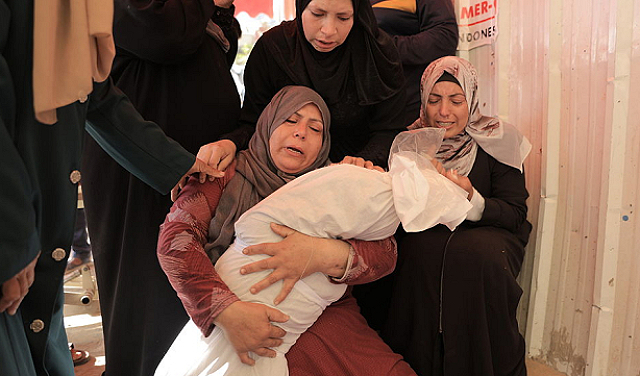
52,829 dead in the Gaza Strip, a non-final toll from the war of extermination.

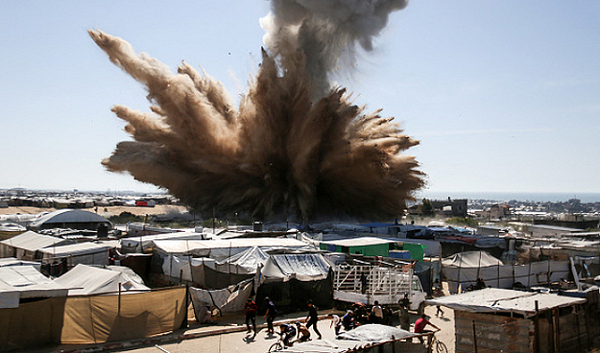
The death toll from the genocidal war and aggression waged by the Israeli occupation forces on the Gaza Strip has risen to 52,829 dead and 119,554 wounded since October 7, 2023.


The Ministry of Health in the Gaza Strip reported that the death toll includes 2,720 dead and 7,513 injuries since March 18, when the occupation resumed its aggression against the Strip following the ceasefire agreement.


Over the past 24 hours, 19 martyrs arrived at Gaza Strip hospitals, including one who was recovered. Eighty-one others were injured, and a number of victims remain trapped under the rubble and debris, as well as on the streets, unable to be reached by ambulances and civil defense teams.

PALESTINE

Sun 11 May 2025 12:09 pm - Jerusalem Time

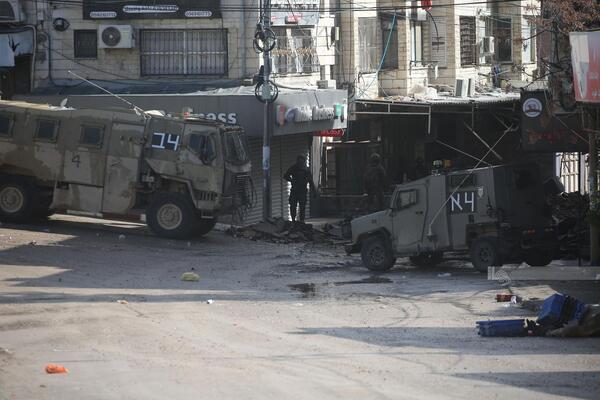
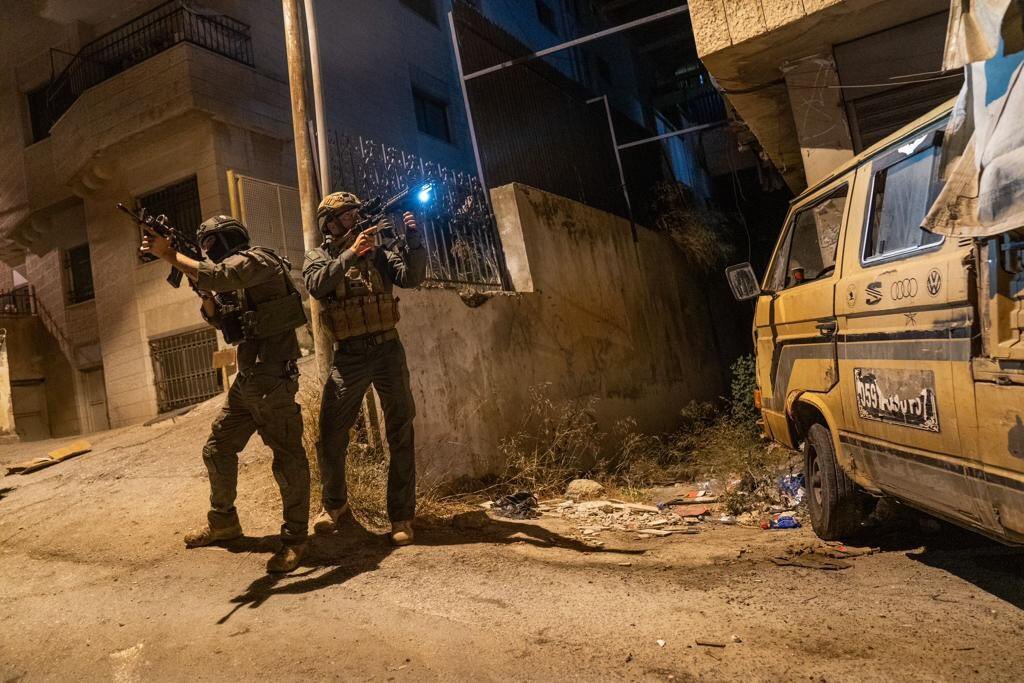
The occupation's aggression on the city of Tulkarm and its two camps enters its 105th day.

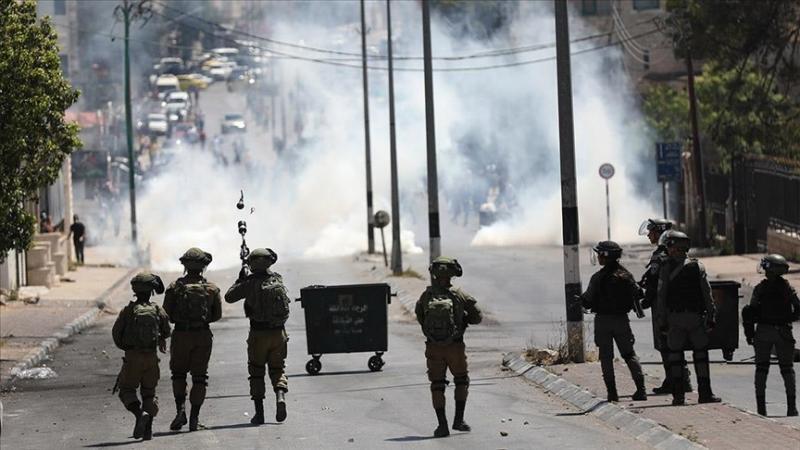
The Israeli occupation's aggression on the city of Tulkarm and its camp has entered its 105th consecutive day, and the 92nd day on the Nur Shams camp, amid a continuous escalation of field raids and the demolition of homes.


Local sources reported that the occupation forces are sending military reinforcements to the city around the clock, patrolling its main streets, sounding their horns provocatively, and obstructing the movement of citizens.


This morning, occupation forces arrested Aseed Dagher from the Shuweika suburb, and detained Abdul Abu Labdeh from Nour Shams camp and Mustafa Al-Kharouf from Al-Salam neighborhood east of the city for a period of time after severely beating them.


Yesterday, Tulkarm witnessed intense provocative movements by its military vehicles and infantry units, accompanied by the heavy firing of sound bombs at passersby. These were noticeably concentrated on Paris Street, the Martyr Thabet Thabet Roundabout, the vicinity of the Martyr Thabet Thabet Governmental Hospital, Gamal Abdel Nasser Square, Al-Haddadeen Street, and the center of the market, where flying checkpoints were set up, obstructing the movement of citizens and vehicles, and subjecting them to inspection, scrutiny, and interrogation.


These forces also raided a number of cafes and shops, arbitrarily closing some of them, and detained young men inside one of the shops, subjecting them to interrogation.


In a related development, Israeli occupation forces are continuing their escalation on the ground in Nour Shams camp, where they blew up four buildings in the Manshiyya neighborhood yesterday, each with at least three floors. The explosions were accompanied by the sound of massive explosions throughout the area, with heavy smoke rising.


Last week, Nur Shams camp witnessed widespread demolition of residential buildings in the neighborhoods of Al-Manshiya, Al-Maslakh, Al-Jami', Al-Eidah, and Al-Shuhada. This comes as part of the occupation's plan to demolish 106 homes and residential buildings in Tulkarm and Nur Shams camps. Tensions remain high in the camp, with residents anticipating a new wave of demolitions.


According to local estimates, the number of buildings demolished by Israeli bulldozers over the past week has reached 15, including apartments whose residents had been evacuated after receiving prior coordination and forcibly displaced during the ongoing aggression.


The occupation forces also continue to seize homes and residential buildings on Nablus Street and the adjacent northern neighborhood, converting them into military barracks after forcibly evacuating their residents. The occupation forces have stationed their vehicles in the vicinity, even though some buildings have remained under occupation control for more than two months.


The occupation's ongoing aggression and escalation against the city of Tulkarm and its two camps has resulted in the martyrdom of 13 citizens, including a child and two women, one of whom was eight months pregnant. Dozens have also been injured and arrested, and the infrastructure, homes, shops, and vehicles have been completely and partially demolished, burned, vandalized, looted, and robbed.


The aggression also resulted in the forced displacement of more than 4,200 families from the Tulkarm and Nur Shams camps, comprising over 25,000 citizens. It also resulted in the complete destruction of more than 400 homes and the partial destruction of 2,573 others. Furthermore, the entrances and alleys were sealed off with earth mounds, transforming them into isolated areas devoid of any sign of life.

PALESTINE

Sun 11 May 2025 11:52 am - Jerusalem Time

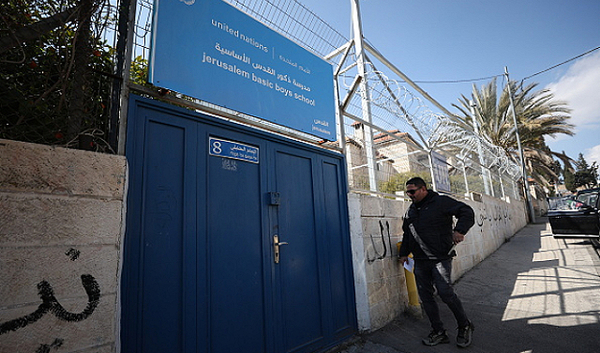
A sit-in at the UNRWA school in Silwan to protest the occupation's closure of the school.

Parents and students staged a sit-in on Sunday at the UNRWA Jerusalem Girls School in the town of Silwan, south of occupied Jerusalem, to protest the closure of the school by Israeli occupation authorities.


The protesters held up slogans including: "Our children have the right to learn. Open the school doors," "There is no alternative place for our children," "The Jerusalem Girls School must remain open," and "Our right to education."


Last Thursday, Israeli occupation forces stormed UNRWA schools in Jerusalem, forcing students, teaching staff, and administrative personnel to evacuate immediately. The decision to close six UNRWA schools came into effect.


The Jerusalem Governorate considered the occupation authorities' closure of UNRWA schools in Jerusalem, where more than 800 male and female students receive their legitimate right to education, a blatant attack on a UN institution that enjoys immunity and privileges guaranteed and protected by international laws and agreements.


The governor added: "This unjust decision constitutes a dangerous escalation in the systematic attack led by the occupation authorities aimed at undermining the role of UNRWA as a gateway to liquidating the Palestinian refugee issue and abolishing the right of return. This constitutes a flagrant violation of international humanitarian law and relevant United Nations resolutions."


For its part, UNRWA stated that the closure of schools in East Jerusalem is a serious violation of the United Nations' privileges and immunities, and a traumatic experience for children who face the immediate loss of their right to education, as the current school year continues until June 20, 2025.


The Ministry of Education and Higher Education also condemned the occupation's closure of UNRWA schools in occupied Jerusalem.


The ministry noted that this attack constitutes a crime against education and is part of a systematic and ongoing assault on education in Jerusalem. It contravenes international norms and laws, most notably the right to education and the Convention on the Rights of the Child.


The Ministry of Education renewed its call for international institutions, primarily UNESCO and UNICEF, to assume their responsibilities and defend refugee children's right to a free and safe education. The Ministry noted that this targeting of other schools will continue if the occupation is not deterred and its war on education in Jerusalem is not halted.


The Organization of Islamic Cooperation (OIC) condemned the Israeli occupation authorities' decision to close UNRWA schools, considering it part of illegal measures and policies targeting the agency's presence and role, particularly in Jerusalem, as part of its unacceptable attempts to liquidate the Palestinian refugee issue and their inherent right of return.


On April 8, the occupation authorities issued a decision to three schools in the Shuafat refugee camp, and one school each in Sur Baher, Silwan, and Wadi al-Joz, prohibiting anyone from entering the school building after May 8, 2025, including principals, teachers, staff, and parents.


UNRWA stated that the occupation's implementation of its decision to close the six schools would deprive 800 children of their right to education, which constitutes a violation of Israel's obligations under international law.


In October 2024, the Israeli Knesset passed a law banning the activities of the United Nations Relief and Works Agency for Palestine Refugees (UNRWA) in Israel.

ARAB AND WORLD

Sun 11 May 2025 11:47 am - Jerusalem Time

War crimes haunt Israeli tourists in Japan

A hotel operator in the Japanese city of Kyoto has required its Israeli clients to sign a pledge not to engage in war crimes before allowing them to stay, an unprecedented move reflecting a civil protest against Israel's ongoing genocide in the Gaza Strip.
The company's CEO, Kishi Ise, told Anadolu Agency that the decision came as a personal and humanitarian response to the massacres committed by Israel in Gaza, noting that the images of children under the rubble prompted him to consider a legal means of protest within Japan, where discrimination and customer rejection are prohibited.
Kishi, who has worked in hotel management for about 10 years, described the Israeli massacres in Gaza as completely unacceptable and in violation of international law.
He explained that he had worked as a teacher for many years, adding, "When I saw the pictures of children in Gaza, I realized that I could not stand idly by and do nothing."
"I was wondering what I could do," Kishi added. "In Japan, discrimination and refusing customers are not allowed, so we created a special procedure for signing this pledge. This is the most we can do within the law."
He pointed out that the hotel management required its foreign clients to pledge not to commit war crimes, as the law prohibits refusing clients.

Pledge document
Regarding the details of the typical booking process, Kishi explained that in the first stage, clients arrive at the hotel with a prior reservation, and during face-to-face registration, they verify their nationality and passport information.
"Then we verify whether the country that issued the passport has committed war crimes registered with the International Criminal Court in The Hague," he added.
"Then we present the client with a pledge stating that he has not been in the military or paramilitary forces in that country during the past 10 years, and has not committed war crimes, and we ask him to sign it," he continued.
The document includes the following pledge: “I have not committed any war crimes that violate international humanitarian law, including, but not limited to, attacks on civilians (children, women, etc.), killing or ill-treatment of those who surrender or are taken as prisoners of war, torture or inhuman treatment, sexual violence, forced displacement or pillage, or any other acts falling within the scope of Article 8 of the Rome Statute of the International Criminal Court.”
Kishi explained that the hotel management has been implementing this measure for six months, noting that all guests have signed the pledge document.
He pointed out that they receive clients from many countries around the world, including the United States, Turkey, and South Korea.
He added that some countries' disregard for and violation of international law should not be overlooked. Of course, these crimes are not committed in Japan, and they are not directly related to our lives or our problems. Nevertheless, international law obliges us all to comply with it.
He added that it is unfair for us in Japan to continue serving Israelis with a smile after everything they have done, so we force tourists coming from countries that have committed war crimes to sign a document stating that they are not involved in war crimes.
Kishi stressed that they are deeply concerned about what is happening in Gaza, noting the importance of unequal treatment of those who abide by international law and those who violate it.

Israeli resentment
Kishi said they received a letter from the Israeli embassy in Tokyo describing the hotel's stance as "discriminatory."
"We posted the text of the letter on social media and tried to respond to the criticism," he added, noting that this measure does not violate any laws and is not discriminatory. Discrimination relates to matters we cannot change, such as nationality, race, or gender, but this measure is a response to Israel's actions.
Kishi described the Israeli attacks in Gaza as genocide, expressing his dismay at the Japanese government's failure to adequately criticize Israel after October 2023.
He said his country's government is sending regional messages of peace rather than placing direct responsibility on the occupation, noting that Japanese foreign policy is conducted in a manner that focuses on the United States.
Kishi pointed out that Israeli Prime Minister Benjamin Netanyahu was not arrested during his visit to Hungary in early April, despite the country being a member state of the International Criminal Court, which has issued an arrest warrant for him.
Since October 7, 2023, Israel, with full American support, has been committing genocide in Gaza, leaving more than 172,000 Palestinians dead or wounded, most of them children and women, and more than 11,000 missing.

Source: Anadolu Agency

PALESTINE

Sun 11 May 2025 10:27 am - Jerusalem Time

UNRWA warns of the disastrous consequences of the blockade imposed on the Gaza Strip.

The United Nations Relief and Works Agency for Palestine Refugees in the Near East (UNRWA) has warned of the risks of prolonging the nine-week blockade of the Gaza Strip, which will have a devastating impact on the humanitarian situation of countless citizens.


UNRWA clarified in a statement published on the "X" platform on Wednesday that it has thousands of trucks ready to enter, and its teams in Gaza are ready to expand the scope of aid delivery operations.


She noted that Israel has been preventing the entry of all humanitarian, medical, and commercial aid into the Gaza Strip for more than nine weeks.


For its part, the United Nations Office for the Coordination of Humanitarian Affairs (OCHA) confirmed in a statement posted on its X account yesterday that "Palestinians are dying in the Gaza Strip, which has been under a complete Israeli blockade for the third consecutive month," as part of a genocide that has been ongoing for more than a year and a half.


He said that 70% of Palestinians in the Gaza Strip are either in areas where Israeli forces are present, under evacuation orders, or both.


He stressed that the United Nations and its partners are ready to intensify aid to the Gaza Strip as soon as the Israeli blockade, which has been in place since March 2, is lifted.


Describing the situation in the Gaza Strip, OCHA said: "Palestinians are dying under a complete Israeli blockade for the third consecutive month."


Recently, Prime Minister Mohammed Mustafa declared the Gaza Strip a famine zone, holding the occupying authorities fully responsible for the deliberate humanitarian catastrophe there.

PALESTINE

Sun 11 May 2025 10:25 am - Jerusalem Time

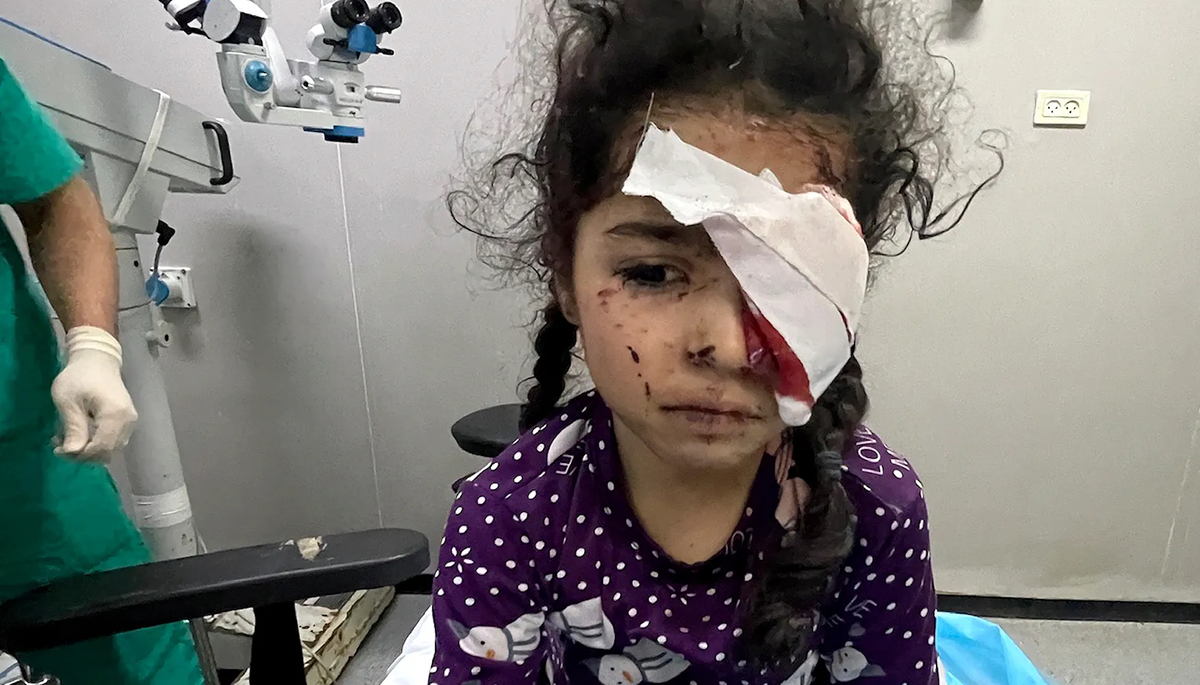
Gaza Health: About 1,500 citizens lost their sight as a result of the war of extermination.

The Ministry of Health in the Gaza Strip said on Sunday that "approximately 1,500 citizens have lost their sight as a result of the war of extermination, and 4,000 others are at risk of losing their sight due to the shortage of medicines and medical equipment."


Dr. Abdul Salam Sabah, director of Gaza's Eye Hospital, confirmed that the health sector is experiencing a serious shortage of consumables and medical equipment for eye surgeries, which has led to a near-total collapse of surgical services, particularly for retinal diseases, diabetic retinopathy, and internal bleeding.


Sabah noted that the eye hospital currently only has three disposable surgical scissors that are frequently used, which increases the risk to patients' lives and prevents them from being saved.


He added: "Many eye injuries caused by explosions require medical supplies such as helium and sutures, which are almost completely depleted."


The director of the eye hospital warned that the hospital is on the verge of losing its ability to provide any surgical services to patients unless immediate and urgent intervention is made by relevant authorities and international organizations.

OPINIONS

Sun 11 May 2025 9:51 am - Jerusalem Time

An entire family in the grip of absence... when the sky bombards memory

Ben Maamar Al-Hajj Issa is an Algerian writer and researcher.

Ben Maamar Al-Hajj Issa is an Algerian writer and researcher.

Opinion Writer

At a dawn unlike any other, and under a sky slumbering with the dreams of the simpletons, the occupation's missiles pierced the ceiling of life in the Al-Karama area north of Gaza City, erasing in a single moment an entire family from the civil registry and from the memory of geography, but etching their names in the conscience of the nation forever. Dr. Rafiq Musa Ayesh, the scholar and physician, ascended with his wife, Iman Mutair, the lady of the house and heart, and their sons, memorizers of the Holy Quran: Engineer Muhammad, Yassin, and Omar, and their two daughters: Dr. Wafaa and Engineer Duaa, each with a story in their own right and a promising future that was not destined to be realized. The house in Al-Karama was not just a building of stone; it was a small temple of knowledge, faith, and perseverance. Every corner of it pulsated with memorized verses, study notebooks, and conversations of the humble, educated family, who saw in knowledge a message, in faith a beacon, and in Palestine a land not to be traded. The planes arrived, carrying indiscriminate death, and carried out their mission in cold blood, as if they were erasing numbers, not people, evaporating a biography, not a clan, and burning memories, not faces, that neighbors and loved ones knew by heart. The Ayesh family was not in danger because they carried a weapon, planned an operation, or embraced resistance fighters, but because they remained in Gaza, persevered, and raised their children to love their homeland, memorize the Book of God, and believe that tomorrow—no matter how delayed—will inevitably come. This crime, like thousands before it, passes on screens as a passing news item, but those who lived the details know that the occupation didn't just bomb a house; it bombed a symbol. It bombed a model of an educated, conservative Palestinian family that contributed to quietly building its society, endured the siege, excelled in education, and remained among the first of the patient. The blood of the Ayesh family will not dry, because they are not merely victims, but martyrs for the values we miss: sacrifice, knowledge, purity, and silent work. The occupation's aircraft targeted everything beautiful in this family at once, as if declaring war on knowledge, religion, family, and hope. But what these aircraft don't know is that blood is indelible, and that the names written in ink on graduation certificates will today be written in blood on the walls of history. The family may be erased from the civil registry, but its name will be repeated in mosques, in poems, and on the tongue of a child who will hear about them twenty years later and decide to follow the path of knowledge and resistance together. Rafiq, Iman, Muhammad, Yassin, Omar, Wafaa, Duaa... these are not just names. These are icons of a single family that represented an entire nation, a single moment that represented a seven-decade-long tragedy, and a single shell that represented the reality of the occupation that some are trying to beautify. As for Gaza, it will go on, carrying their pictures in its streets, remembering them in Friday sermons, and immortalizing them in a memory that does not know forgetfulness, because Palestine does not die, and its people are not defeated, even if they fall as martyrs.

OPINIONS

Sun 11 May 2025 9:40 am - Jerusalem Time

The attack on Jerusalem intensifies, extends and expands

Rasim Obeidat

Rasim Obeidat

Opinion Writer

Every morning, the people of Jerusalem wake up to new calamities. Hardly a day goes by without being targeted. The schools of the United Nations Relief and Works Agency for Palestine Refugees (UNRWA) were stormed by the occupation army, which hung closure orders on their gates, displacing its 800 students and preventing them from completing their academic year. This has social, educational and economic repercussions on the students of these schools, and leaves the fate of their academic year in jeopardy. The academic year is coming to an end, and transferring them from their schools to other schools is not an easy or simple matter, as there are differences in the curriculum and opportunities for their absorption at the end of the academic year, under the multiple educational umbrellas in Jerusalem, where the difference in their reference and curriculum seems minimal.

The attack on UNRWA schools was preceded by another attack on students of higher education institutions, Palestinian universities. The occupation municipality and its department of education issued a decision prohibiting any Jerusalemite student who graduated from Palestinian universities, such as Al-Quds University, Birzeit University, Bethlehem University, An-Najah University, Hebron University, American University - Jenin, and Ahliya University - Bethlehem and Hebron, from joining the government education system in Jerusalem schools. The decision stipulated that they must obtain a university degree from an Israeli educational institution. This is an attempt to empty Palestinian universities of their Jerusalemite students and the Arabs of the 1948 Palestinian territories, under the pretext that these universities have educational and pedagogical content that incites "terrorism," hatred, and malice. What is meant here is the war on awareness, identity, culture, narrative, geography, and history.

This was preceded by a series of raids targeting Jerusalemite institutions, including libraries. Three libraries were raided—one on Salah al-Din Street in Jerusalem twice, and two others in the Old City of Jerusalem—under the pretext of purchasing and selling provocative books related to nationalist concepts and themes.

As part of the war on Jerusalemite institutions, which the occupation aims to weaken civil society and prevent these institutions from providing their services to it and to marginalized groups of children, women, and others, the occupation intelligence raided and summoned a number of members of the Jerusalem Chamber of Commerce and Industry for investigation and confiscated a group of their documents and papers. After that, the headquarters of the Jerusalem Endowment in the city was raided, and some of its employees were summoned for investigation. Then, a decision was issued to prevent it from working in the city and outside it. The pretexts and excuses were that it works for the Palestinian Authority in Jerusalem and violates what is known as the 1994 Middle East Agreement, which prevents the Palestinian Authority from working in Jerusalem.


Let's not forget that the war on the Palestinian demographic presence in the city has escalated in an unprecedented manner. During the first quarter of this year, more than 100 homes, commercial, economic and agricultural facilities were demolished in the city of Jerusalem. On Friday, May 9, 2025, the residents of the Al-Waad building in the Wadi Qaddum area of Silwan, which the occupation and its municipality sought to demolish in 2022, were handed over. However, a series of popular and community activities and events, as well as political and diplomatic movements, made the occupation municipality back down from this decision. The building threatened with demolition includes 12 apartments and is inhabited by more than 85 citizens, most of whom are children and women.

As for the Judaization of Al-Aqsa, the onslaught is escalating and increasing in intensity at an unprecedented pace. There is systematic incitement by the rabbis of the so-called Temple Mount Trustees and extremist ministers such as Ben-Gvir, Smotrich, Amichai Eliyahu, and others. Even the pro-Zionist US ambassador to Israel, Mike Huckabee, has said that efforts must be made to establish what is known as the Third Temple in the heart of Al-Aqsa. We also witnessed the settlement associations and the occupation municipality carrying out extensive excavations in the “Hosh al-Shihabi” area, the “Ribat al-Kurd,” located near Bab al-Hadid, in the western part of Al-Aqsa Mosque. This is the area where these extremist groups seek to establish a Jewish synagogue, which they know according to their Talmudic and Torah concepts as the “Little Wailing Wall,” in order to expand the “Buraq Wall” plaza to accommodate the largest number of Jewish worshippers, and to facilitate sovereignty and control over Al-Aqsa. This Ribat al-Kurd was established by the Mamluk Caliph Al-Muqar Sayf al-Kurd, as the Mamluks were interested from 1270 AD until 1517 AD in establishing religious institutions in Jerusalem, including schools, hospices, corners, ribats, and housing for poor pilgrims coming to Al-Aqsa Mosque for the Hajj, who do not have the money to pay the costs of housing.

Let's not forget that some activists and rabbis, such as Arnon Segal, an activist in these Talmudic and Torah associations, Rabbi Yehuda Wolfensohn, and extremist Minister Ben Gvir, have published images of themselves, using artificial intelligence, bringing Passover animal sacrifices into the Al-Aqsa courtyards, as well as images of the demolition of the Dome of the Rock and the erection of what is known as the Third Temple in its place. One occupation soldier even published a photo of the bombing of Al-Aqsa and the erection of the Temple in its place.

In order to prevent any form of sovereignty or presence of the Palestinian Authority and its symbols in the city of Jerusalem, the occupation has been imposing a series of punitive measures since 2018 against the city's governor, Adnan Ghaith, whether through summonses, investigations, repeated arrests, house arrest, restrictions on movement, or preventing entry to the West Bank, not to mention targeting him in his daily affairs. Such punishments, which have affected many national, religious, and community figures and symbols of Jerusalem, have extended to include the Minister of Jerusalem Affairs, Ashraf al-Awar, whom the occupation prevented from entering the West Bank, and consequently from reaching the ministry's headquarters in al-Ram, for a period of six months. A six-month ban, according to the occupation, has no ceiling and may extend to several years. There is the national leader, Abdul Latif Ghaith, whose ban from entering the West Bank and from reaching his workplace at the Addameer Prisoner Care and Support Foundation has reached eleven years and counting.

We must not lose sight of the demographic war, ethnic cleansing, expulsion and displacement that the occupation seeks to wage, to overturn the demographic reality in the city in favor of the settlers, by expanding the area of Jerusalem to 73 km2, where the settlements southwest of Jerusalem are being annexed to it, "Gush Etzion" and the "Efrat settlement bloc" and the settlements of the city of Jerusalem, reaching the settlements southeast of Jerusalem, the "Ma'ale Adumim" settlement bloc.

The process of isolating Jerusalem from its Palestinian surroundings, geographically and demographically, and establishing settlement outposts in the heart of Jerusalem's neighborhoods and towns, is intended to obliterate and prevent any political solution based on the two-state solution, to prevent the re-division of the city, and to transform Jerusalem's neighborhoods into scattered islands within a vast Israeli environment.

It is a war on the city and on all manifestations of the holy presence in it, above ground, underground, and even in the air.

Jerusalem has received nothing but slogans and statements of support from official Palestinian, Arab, and Muslim authorities, without any concrete action on the ground. The assault on Jerusalem is expected to escalate dramatically, given the evolving situation and preoccupations with the ongoing war of siege, starvation, expulsion, displacement, and killing in the Gaza Strip, as well as the "geographical and demographic engineering" taking place in the northern West Bank.

PALESTINE

Sun 11 May 2025 9:23 am - Jerusalem Time

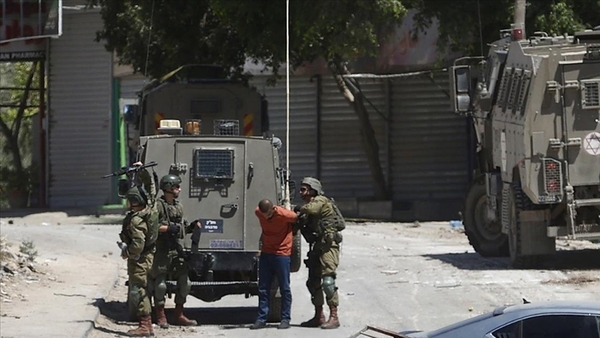
Israeli occupation forces arrest 9 citizens and summon another in Nablus and Bethlehem.

This morning, Sunday, the occupation forces arrested nine citizens and summoned another in Nablus and Bethlehem.


In Nablus, the occupation forces stormed several neighborhoods in the eastern part of the city, and Balata camp, raided a number of homes, searched them, and ransacked their contents. They arrested four citizens, including: Ayesh Ismail Abu al-Aish and his son Hamza, Hassan Marshood and his son Ahmed.


The brothers Ihab, Ahmed, and Bashar Mohammed Badrasawi were also arrested from the Masaken Al-Shaabiya area.


The occupation forces also stormed the town of Beita and arrested the young man, Asid Abdul Fattah Bani Shamsah (18 years old), after searching his house and wreaking havoc on it.


In Bethlehem, occupation forces arrested Rami Muhammad Abd Rabbah (26 years old), from the Deheishe refugee camp in the south, after raiding and searching his family's home.


Clashes erupted in Al-Salam neighborhood, where occupation forces fired tear gas and sound bombs, but no injuries were reported.


The occupation forces also raided the home of Ismail Muslat in the western city of Beit Jala, and handed his son Bahaa a summons to report to the intelligence services.

PALESTINE

Sun 11 May 2025 9:18 am - Jerusalem Time

The hard answer to Trump's riddles!

Thursday passed, followed by Friday, and only tomorrow remains for the appointments Trump has set to launch his "very big" surprises, on the eve of his arrival in the region the day after tomorrow, Tuesday, as a heavy visitor, a vile, tyrannical bully and a voracious collector of investment funds that will be poured into his money-hungry piggy bank, which the man, infatuated with his power and mad arrogance, loves dearly, and devours heritage one by one, as he threatens the orphans, the wounded, and the hungry in the Gaza Strip, stretched out on the spit, with the seizure of their land that they inherited from their ancestors, so that he can accumulate his wealth after he retires and build a "Riviera" on the ruins and the remains of children.


Yesterday, Trump rushed to announce the end of the unfortunate war between the two nuclear-armed powers at 5:00 p.m., not out of concern for world peace, but out of fear of its dangerous repercussions. The war tipped the scales in favor of Pakistani power, armed with smart Chinese aircraft and missiles, against American and French aircraft and missiles, five of which Pakistan managed to shoot down in what military experts described as the largest air battle in modern times. But the man who aspires to be a Nobel laureate at the end of his career has left the children of Gaza to die, killed and burned to death, starving and thirsty in displacement camps and mud houses for nearly 600 days, with American weapons burning their bodies and turning their homes into graves. He has not flinched or shed a tear for the daily death marches, which have surpassed the crimes committed by the Nazis against their criminal murderers during World War II.


It's only a matter of hours before Trump's "happy" surprises for the region are revealed, and all we can do is wait and say nothing!

PALESTINE

Sun 11 May 2025 9:14 am - Jerusalem Time

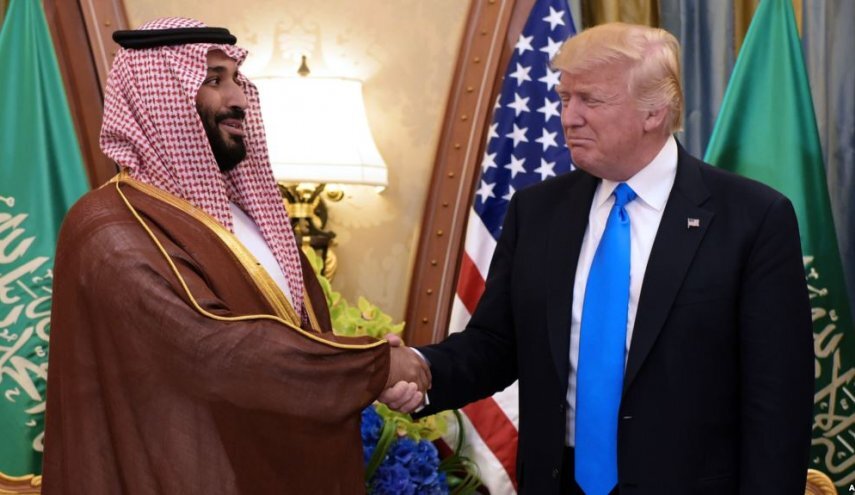
An informed source told Al-Quds: Trump's meeting with the Saudi Crown Prince will include his counterparts in Palestine, Lebanon, and Syria.

An informed source told Al-Quds that the meeting between US President Donald Trump and Saudi Crown Prince Mohammed bin Salman in Riyadh the day after tomorrow, Tuesday, will also include President Mahmoud Abbas, Lebanese President Joseph Aoun, and Syrian President Ahmed al-Sharaa.


The source, who declined to be identified, said the proposal was submitted by Prince Mohammed bin Salman and received Trump's approval.


The source confirmed that Bin Salman is looking forward to Trump's acceptance of the Saudi condition for the establishment of a Palestinian state, noting that achieving this would constitute one of the greatest and most important achievements of Saudi Arabia's active diplomacy. The source did not disclose the outcomes of the meeting related to the region.

PALESTINE

Sun 11 May 2025 9:04 am - Jerusalem Time

Pope Leo XIV succeeds Pope Francis. Palestinians pin their hopes on the new pontiff.

Issa Qassisieh: The constitution of every supreme pontiff who ascends the papal throne as head of the Catholic Church is the Holy Bible and the teachings of our Lord Jesus Christ. Father Ibrahim Faltas: The new pope will follow in the footsteps of his predecessor, Pope Francis, and will pay attention to the Palestinian cause. Bishop

Atallah Hanna: "We pray for the new Pope and wish him success. We hope that His Holiness will pay special attention to Palestine and wounded Gaza." Hania Bitar: "As a Palestinian people, we hope that Pope Leo XIV will have more courage than Pope Francis when speaking about the suffering of the Palestinian people."

Wadih Abu Nassar: I believe that the fact that the new Pope is American does not necessarily mean that he will follow the political line of the United States. Rather, it may mean the opposite.

David Kitab: There are clear indications in the selection of cardinals from among the poor in Peru to lead the Catholic Church.


The different model presented by the late Pope Francis, especially regarding the issues of the marginalized, the poor and the oppressed, and his bold stance on the injustice of the Palestinian people, which he expressed during his first visit to Bethlehem, the birthplace of Jesus Christ, and his prayers for peace in front of the apartheid wall, and during the war of extermination waged by Israel in the Gaza Strip, made the eyes of the Palestinian people turn to the new Supreme Pontiff, Pope Leo XIV, to follow in the footsteps of his predecessor, and to exploit his lofty religious status to pressure the international community and the Western world to pressure the occupying state to stop its open massacre and the war of extermination it has been waging for nearly twenty months, causing heavy human losses and horrific destruction in the Gaza Strip.


Diplomats, clerics, and writers who spoke to Al-Quds confirmed that the new pope will follow the path of his predecessor, Pope Francis, and will prioritize the Palestinian cause. They noted that the constitution of every pontiff who ascends the papacy as head of the Catholic Church is the Holy Bible and the teachings of our Lord Jesus Christ.


They said: "As a Palestinian people and as Christians, we hope that Pope Leo XIV will have more courage than Pope Francis when speaking about the suffering of the Palestinian people." They noted the clear significance of the cardinals' selection of someone who worked among the poor in Peru to lead the Catholic Church.


They added: The fact that the new Pope is American does not necessarily mean that he will follow the political line of the United States. Rather, it may mean the opposite. Every new Pope has his own independent personality. Ambassador Issa Kassissieh, Ambassador of the State of Palestine to the Vatican, said: “Every new Pope who ascends the Holy See has his own independent personality, bringing his own touches and therefore differing from his predecessors. He heads the Vatican State and manages its affairs, directing the team he personally selects, according to his own style, whether in international affairs or in bilateral and multilateral relations on the one hand, or in internal affairs on the other.”


He added, "Pope Francis has prioritized his relations with the Arab and Islamic world and deepened Islamic-Christian dialogue, and his visits to Arab and Islamic capitals are a testament to that. He signed the 'Document of Fraternity' with Grand Imam Sheikh Ahmed al-Tayeb." He noted that during his papacy, he met with President Mahmoud Abbas more than seven times on various occasions, and, most importantly, he was the one who recognized Palestine as an independent state.


Qassisieh believes that His Holiness the new Pope, Leo XIV, will continue in the footsteps of the late Pope Francis in building bridges and deepening dialogue, as stated in his election speech from the balcony of St. Peter's Basilica. We are hopeful that His Holiness will pay attention to the Palestinian cause, listening to the pain and suffering of our people. Our people in Gaza were the first to address him, appealing to him to end their ordeal and suffering.


Implications of the rapid election of the Pope

On the other hand, Qassisieh pointed out that the constitution of every Supreme Pontiff who ascends the papal throne as head of the Catholic Church is the Holy Bible and the teachings of our Lord Jesus Christ, just as Saint Peter, the leader of the apostles, did since the beginning of the Church.


He added: "With regard to ecclesiastical affairs, I believe that His Holiness will address the challenges facing the Church as a whole on several levels, in accordance with the Church's faith and teachings."


Ambassador Qassisieh explained that his swift election by the cardinals, in his view, confirms the consensus among the various factions within the Church to advance its standing and address doctrinal, social, and other challenges with a unified and consensual stance.


He continued, "I was present in St. Peter's Square when the white smoke came out and the moment he came out to present himself to the world.


I believe his first appearance from the balcony offered us many connotations and meanings. My attention was immediately drawn to Leo XIV, who appeared in public wearing the usual vestments of a pontiff, according to papal tradition. This contrasts with what the late Pope Francis did twelve years earlier, in 2013, when he appeared wearing only the white cassock. Instead, the new Pope wore, over the white cassock, the red sash and the red papal vestment with the Holy See emblem, thus emphasizing his adherence to protocol and church tradition.


He also chose, upon his first appearance yesterday, to deliver a speech that served as a roadmap for his papacy. Qassisieh noted that some say the new Pope took this name in honor of Pope Leo XIII, who is famous for his social encyclical (Rerum Novarum), issued on May 16, 1891, which was considered an important document through which he defended the rights of the working class, which at the time suffered from much exploitation and challenges. However, Qassisieh pointed out that His Holiness's name was not widely circulated in the corridors of the Vatican or in the media, and his election came as a surprise to all observers. He emphasized that his election with such speed demonstrated the extent of the cardinals' awareness and keenness to fill the vacancy in the Peter's Chair and to renew the spirit of the Church on the rock of St. Peter.


An open-minded and eloquent man. For his part, Father Ibrahim Faltas, Vicar of the Custos of the Holy Land, said that the new pope will follow in the footsteps of his predecessor, Pope Francis. He noted that his first speech focused on peace and the necessity of achieving it, reflecting his closeness to Pope Francis and his understanding of his goals and orientations. Faltas expressed his hope that the election of the new pope would be a rich addition to the Church, describing him as an open-minded and eloquent man, and affirming that the entire world looks to him with optimism and hope.


The Deputy Custos of the Holy Land confirmed that the new Pope will pay attention to the Palestinian issue, stressing that there is no Pope who has not cared about Palestine, Jerusalem, and the Holy Land. He explained that these issues reside in the heart of every Pope, because they realize that Christianity began from this land, and they know that peace in the world begins in Jerusalem. He cited the words of Pope John Paul II: “Without peace in Jerusalem, there will be no peace in the world.” Regarding the situation in the Gaza Strip, Faltz indicated that the Church is deeply concerned and pained by what is happening there. Faltz expressed his hope that there will be action soon by the Pope regarding Gaza, noting that the new Pope is fully aware of what is happening and will certainly


He will soon speak about Gaza, Jerusalem, and the Holy Land.


A clear position and a bold voice are required to stop the war of extermination.

In turn, Archbishop Atallah Hanna, Archbishop of Sebastia for the Greek Orthodox, congratulated the Catholic Church on the occasion of the election of His Holiness the new Pope, wishing him success in carrying out his spiritual, ecclesiastical, faith-based and humanitarian mission, especially with regard to the voice of the Church, which must be a strong voice calling for justice, freedom and an end to wars and armed conflicts everywhere in this world, especially in Palestine, the Holy Land.

The land of birth, incarnation and redemption.


Archbishop Hanna called for a clear stance and a bold voice from His Holiness to stop the war of extermination being waged against our people in the Gaza Strip. He said, "There must be a clear voice on this issue from all spiritual, legal, and humanitarian authorities in the world."


He added, "We hope that the new Pope will follow the positions taken by Pope Francis, who called for an end to the war, and who was always calling to check on our people in Gaza."


Bishop Hanna affirmed: "We pray for the new Pope, and we wish him success in carrying out his mission and duties in these difficult times and circumstances that are witnessing many complexities in this world. We hope that His Holiness will pay special attention to Palestine, and especially to wounded Gaza.


The new pope is not in agreement with Trump's policies.

For her part, Jerusalemite activist Hania Bitar said that the new Pope, Leo XIV, is not in harmony with Trump's policies or with American policies in general, despite being born in Chicago.


She added: "Even before his election as Pope, Cardinal Leo expressed his opposition to the policy of preventing immigration and the inhumane treatment of immigrants to America. He clearly stated that the person seeking immigration or asylum is a gift that must be cared for, compensated for deprivation, and have the right to life."


Bitar continued, "The new pope strongly believes that a true Christian should love and care for all people in the world, not just white conservatives. Here we ask: How will Trump react to a pope who embraces positions that are completely contrary to his own policies and interests?"


She noted that Pope Leo XIII, who served as pope from 1878 to 1903, was known for his consistent defense of social justice and workers' rights. Today, Pope Leo XIV is reviving this legacy, as, even before his enthronement, he advocated for human rights everywhere and believed that Christians must love people everywhere.


She explained that most of the new Pope's church service was in Peru, a country known for its poverty and simplicity. He lived among the common people and was an integral part of a society that embodied the values of giving and serving the poor before the rich.


The influence of extremist Zionist Christian churches

Bitar continued: "We unfortunately recall some of the empty appearances that characterized previous periods. We saw popes who treated their positions as if they were kings, living in luxury and extravagance, wearing the finest shoes, and behaving with a grandeur that did not reflect the spirit of Christianity. All of this is unacceptable in true Christian teaching."


She added, "Pope Francis, may God have mercy on him, was among the first to abandon these false appearances and direct the Church's resources to serve the poor. Today, Pope Leo XIV is following in Pope Francis's footsteps, believing that his presence in this position is not for show, but rather to serve the poor and marginalized."


She added: "We, as a Palestinian people, hope that he will have more courage than Pope Francis when it comes to speaking about the suffering of the Palestinian people, the torment, the genocide, and everything that this people is facing."


She said: "We, as Christians in the Middle East, suffer from the influence of extremist, pro-Israel Christian Zionist churches, which unfortunately no one is stopping. Israel strives to please them and directs funding towards them, while these churches are completely oblivious to reality."


Bitar added: "Two or three weeks ago, a heated debate took place in the Israeli Knesset over a bill proposed by some members, which stipulates that anyone who speaks about the Christian religion with any Israeli shall be punished with a year in prison, and if the conversation is with a minor under the age of 18, with a two-year prison sentence."


Bitar concluded her remarks by saying, "We hope that these Zionist churches will wake up and see what is actually happening, not only in the genocide of our people, but even in Israel's so-called democracy. We hope that the new pope will have the courage to confront this injustice with love and wisdom."


The Pope was elected within a relatively short period of time.

Wadih Abu Nassar, coordinator of the Holy Land Christian Forum, said: “First of all, as Christians and as Palestinian Christians, we are very pleased with the election of a new pope. We are also happy that the Church elected a pope in a relatively short period of time. This indicates a consensus among the majority of cardinals. As you know, a pope is not elected until he receives at least two-thirds of the votes, and this makes us happy.”


He added: "I am also pleased with the diversity in the Church. Contrary to some speculations that the next pope would be European or from a specific region, today we see this diversity. What also pleases me is that Pope Leo XIV spent part of his life in Peru, among the poor and marginalized, and that he chose for himself a clear motto consisting of two words: hope and reconciliation.


This is extremely important, as we live in a world plagued by crises and wars, yet we still have hope and expectation, and we hope that it will build bridges with all people, in the spirit of reconciliation and love that must prevail over all other considerations.”


Abu Nassar continued: “We have previous experience with Pope Francis, who was Argentine. Although the current Argentine president—whom some consider to be of the Trump school, or perhaps even worse—is characterized by extremism that can be described as madness, Pope Francis did not agree with his policies and did not take any supportive stance on international issues. Therefore, I believe that the fact that the new pope is American does not necessarily mean that he will follow the political line of the United States. Rather, it may mean the opposite, that he will challenge this path on several issues. I understood that even when he was a cardinal, he expressed critical positions towards the American administration on more than one issue.” Regarding the pope’s name,


Abu Nassar explained that "the name Leo was not used in the last century. The last person to bear this name was Pope Leo XIII, who began his papacy in the late nineteenth century and died in the early twentieth century.


I believe the choice of the name Leo is a reference to Leo the Great, the pope who lived in the late fourth century AD and was known for building bridges, both with the emperor and with Attila, the Hun leader who attacked Rome. He confronted the invasion with love and firmness, without resorting to weapons, but rather with dialogue and clarity. I believe this is the vision of the new pope, through his choice of this name.


The Pope does not nominate his successor.

Asked whether the former Pope had nominated his successor, Abu Nassar said, "I don't think so. First, there is nothing in church tradition that indicates that the Pope nominates a successor. The Pope does not direct the cardinals to choose a specific person, and even a small leak in that direction would have been a major scandal. But there is no doubt that the cardinal's closeness to Pope Francis, his previous service in Peru among the poor, and his position as head of the Congregation for Bishops, which appoints the world's most senior clergy, are all factors that contributed to his high esteem among his fellow cardinals. His gentle personality, charisma, and fluency in several languages all contributed to his standing."


At the end of his remarks, Abu Nassar pointed to developments within the Church, saying, "In recent years, we have seen remarkable progress. For example, the election of a pope no longer takes days; this time, it took place in just 24 hours, which is an indication of consensus."


Cardinals have also become more familiar thanks to social media and frequent meetings in Rome. In the past, cardinals didn't know each other well, but today they access social media already familiar with their colleagues, which speeds up the election process and enhances mutual understanding.


Principles of peace, love and communication

In turn, Jerusalemite journalist Daoud Kitab said: "There are clear indications in the selection of cardinals from among the poor in Peru to lead the Catholic Church, which has more than one and a half billion members worldwide."


He added: In his first public statement after his election, Pope Leo XIV opened his speech in Latin, using a phrase familiar to us in the East: “Peace be with you all.” The new pontiff repeated the term “peace” nine times, including his statement that the Church must work for peace and justice.


The book continued: He also focused on the principle of love and unity, repeating a phrase made famous by Pope Francis after stopping in front of the concrete wall built by Israel in the city of the Nativity, Bethlehem, where he said that it is necessary to build bridges, not walls. Pope Leo repeated the phrase "building bridges" twice in his brief speech.


In the footsteps of Pope Francis

The book continued: We are in the presence of a Catholic spiritual leader who will follow the path of Pope Francis, and because of his age (69 years), he will be more active and will visit different regions (we hope that Palestine and Gaza in particular will be among them) of the world to implement what was stated in his speech about peace, building bridges, and unity.


He said: According to the analysis of colleague Wadih Abu Nassar, a specialist in Catholic affairs, the choice of the name Leo, for the first time in more than a century, goes back to Pope Leo the Great, who combined unity, courage, and a spirit of love. It is also known that Leo XIII was a supporter of the poor and workers and supported their right to organize themselves in independent unions.


The book concluded by saying: "We hope that Pope Leo will continue in the footsteps of his predecessor in supporting a just peace based on the right to life and respect for humanity."


PALESTINE

Sun 11 May 2025 8:59 am - Jerusalem Time

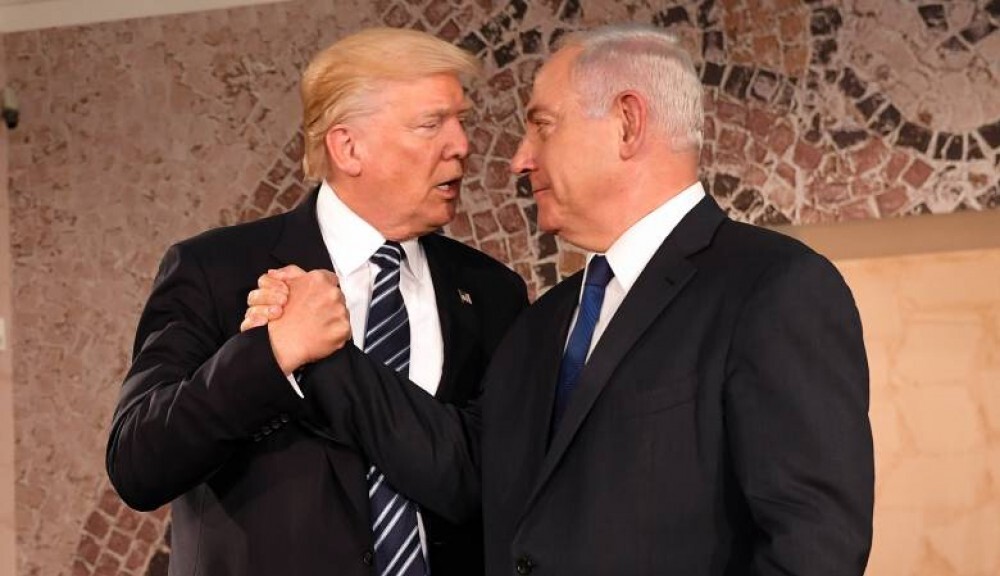
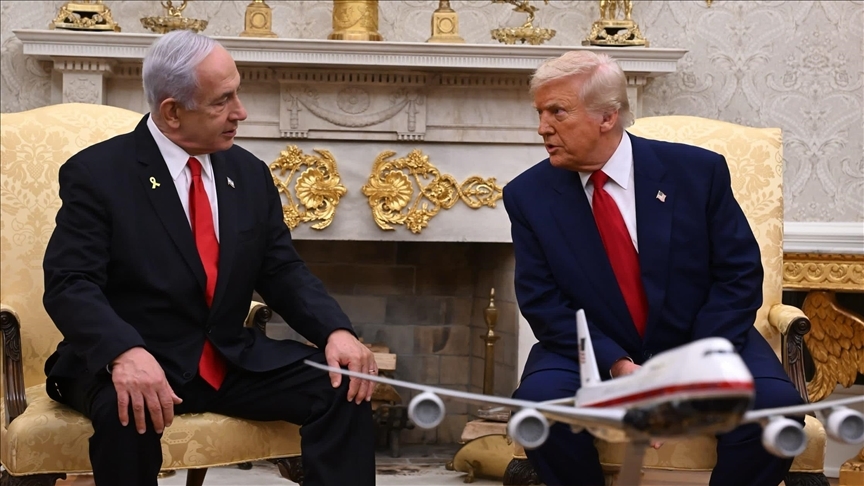
Trump and Netanyahu: Has the dispute reached the point of no return?

Dr. Dalal Erekat: Trump realizes that Netanyahu's continued rule hampers his ambitious project to create a "new regional alliance" that would strengthen American influence in the region.

Dr. Raed Al-Dabai: Confronting Trump could be unexpected and could spell the end of Netanyahu's political career, especially given the volatile Middle East.

Fayez Abbas: Trump has reached a firm conviction that Netanyahu is a "liar and a swindler" who does not keep his promises or make decisions that align with US policy.

Dr. Saeed Shaheen: Zionist influence within the United States is so profound that it makes the idea of severing ties with Israel impossible.

Dr. Suhail Diab: After Trump raised two yellow cards and a potentially devastating red card, Netanyahu may respond by turning the tables.

Muhannad Abdul Hamid: Trump's policy shares with that of Bush Sr. a refusal to submit to blackmail and to control Israel according to American interests through political pressure.


Amidst the unprecedented tensions between US President Donald Trump and Israeli Prime Minister Benjamin Netanyahu, and escalating disagreements over strategic visions for the region, the question is whether these are merely personal differences or whether they will impact their historic alliance.


In separate interviews with Al-Quds, writers, political analysts, experts, and university professors explained that Trump seeks to strengthen American influence through new regional alliances, particularly with the Gulf states. However, Netanyahu insists on pursuing hardline policies that conflict with these priorities, which has recently escalated the dispute.


According to writers, analysts, specialists, and university professors, this gap is no longer merely a tactical disagreement, but has become a burden on American interests, prompting Trump to put an end to Netanyahu.


They explain that the crisis of trust between Trump and Netanyahu is evident in several issues, most notably the Iranian issue, where Trump prefers diplomacy while Netanyahu insists on military confrontation. Washington's secret negotiations with Hamas and its agreement with the Houthis without coordination with Israel have dealt strong blows to Netanyahu and revealed his waning influence over US decision-making. These steps reflect a shift in Trump's policy, as he now views Netanyahu as an obstacle to his economic and security deals with countries in the region. They point out that although the strategic alliance between Washington and Tel Aviv remains a solid pillar, Trump's unpredictable personality and his focus on "America First" threaten Netanyahu's political future. With mounting domestic pressure in Israel and his declining popularity, desperation could push him to dangerous escalation, such as strikes against Iran, which would deepen the crisis. Meanwhile, Trump is exploiting this clash to push for a settlement in Gaza that serves his interests, asserting that the era of blind loyalty to Israel without compensation has come to an end.


A personal dispute, not a retreat from the strategic alliance

Dr. Dalal Erekat, professor of diplomacy and conflict resolution at the Arab American University, says that talk of US President Donald Trump cutting off contact with Israeli Prime Minister Benjamin Netanyahu reflects a personal disagreement, not a retreat from the strategic alliance between the United States and Israel.


Erekat explains that Trump, who provided unprecedented support for Israel during his first term, including moving the US embassy to Jerusalem and recognizing Israeli sovereignty over the Golan Heights, seeks through this announcement to eliminate Netanyahu as a burden on this alliance.


Erekat points out that the dispute between Trump and Netanyahu is not a recent development, but rather dates back to the beginning of their relationship, when Trump felt Netanyahu was exploiting American support to bolster his domestic political position, while ignoring broader American regional interests.


Erekat points out that Netanyahu's policies amount to "a personal project to remain in power at any cost," and that they have become a threat to Israeli democracy, regional stability, and the prospects for a just peace.


Trump thinks like a businessman and a dealmaker.

Erekat asserts that Netanyahu's continued leadership of Israel not only harms the Palestinians but also hinders the restructuring of strategic relations in the region, especially with the growing domestic and international criticism of his hardline policies.


Analyzing Trump's motives, Erekat explains that the US president thinks like a businessman and dealmaker, viewing Netanyahu as an obstacle to his broader interests with the Gulf states and North Africa.


Erekat points out that these countries view Netanyahu's policies—from continued military escalation and settlement expansion to the thwarting of any political solution—as a major obstacle to achieving comprehensive normalization and regional stability.


Erekat asserts that Trump understands that Netanyahu's continued rule hampers his ambitious project to create a "new regional alliance" that would strengthen American influence in the region. In a historical comparison, Erekat draws parallels between Trump's current position and that of former US President George H.W. Bush, who used economic pressure in 1991 to force Yitzhak Shamir's government to participate in the Madrid Peace Conference. Although Trump's motives are not as principled as Bush's, the goal may be similar: to remove an Israeli leader who is obstructing regional balance.


Netanyahu is a threat to Trump's strategic interests.

Erekat asserts that Trump is working to isolate Netanyahu as a political figure who has become a threat to his broader strategic interests. Erekat calls on the Palestinians and the international community to capitalize on this shift in the American position to advance a genuine peace process based on international legitimacy and UN resolutions, away from temporary settlements that serve personal interests. Erekat asserts that removing Netanyahu from the equation has become an American, Israeli, and Arab necessity, especially in light of his extremist policies that undermine any chance of progress on regional issues. Erekat believes that the international community, particularly Britain and Europe, must take serious action to demand the delineation of the borders of the State of Israel in accordance with international law, as an essential step to reviving the two-state solution, guaranteeing the Palestinians' right to self-determination, and ending the legal exception that has allowed the continuation of occupation and settlement activity. Erekat asserts that removing Netanyahu is no longer just a Palestinian demand, but rather a shared international and Israeli interest in achieving genuine peace that serves the stability of the region, rather than serving the survival of a political leader at the expense of its future. Deep disagreements between Trump and Netanyahu For his part, Dr. Raed Al-Dabai, Head of the Political Science Department at An-Najah National University, said that talk about US President Donald Trump severing contact with Israeli Prime Minister Benjamin Netanyahu reveals deep disagreements between the two leaders, without indicating an abandonment of the strategic alliance with Israel, which has remained a functional state serving American interests since its founding. Al-Dabai explains that this disagreement stems from differing views on strategic issues in the Middle East, placing Netanyahu in a fragile political position both domestically and abroad. He points out that the disagreements are manifested in three main axes: first, the Iranian issue, where the Trump administration, with the support of the MAGA (Make America Great Again) movement, is adopting a flexible approach that opens the door to negotiations on the Iranian nuclear program, while Netanyahu insists on a hardline position calling for a direct military strike, considering it an existential necessity for Israel. This contradiction has created a strategic gap between the two sides. Second, according to Al-Dabai, is Trump's sudden decision to cease fire with the Ansar Allah group in Yemen without coordinating with Israel, which has angered Tel Aviv. The MAGA Movement and its Calls for Isolationism. Al-Dabai asserts that US Ambassador Mike Huckabee's statements, indicating that Washington does not need anyone's permission in managing its regional affairs, shocked the Israeli leadership, reinforcing Netanyahu's sense of isolation. Al-Dabai points to the third issue, which is that the influence of the MAGA movement, which advocates an isolationist policy focused on American interests, has led to a rift in relations with traditional allies such as Israel and Europe. This approach has been reflected in ignoring Israeli positions on the Iranian and Palestinian issues. The Trump administration surprised Netanyahu by opening direct channels with Hamas through the special envoy for hostages, Adam Boehler, without full coordination with Israel. Al-Dabai points out that indications of Washington's temporary acceptance of Hamas's military wing remaining in Gaza in exchange for a hostage exchange deal are a proposal that completely contradicts Netanyahu's priorities and threatens the stability of his government coalition. Al-Dabai points to the threats of ministers such as Bezalel Smotrich and Itamar Ben-Gvir to withdraw from the Israeli government, which could lead to the collapse of the government and Netanyahu's political downfall. Al-Dabai believes that Trump's personality as a businessman makes his economic considerations pivotal, as he views Saudi Arabia and the Gulf states as strategic partners capable of pumping massive investments into the US economy. Consequently, Netanyahu is no longer the sole mediator in the region, but has become an obstacle to major US interests. However, Al-Dabai warns against exaggerating expectations of a collapse in the relationship, pointing to Ambassador Huckabee's denial of tensions and his emphasis on the strength of the relationship. Trump is also surrounded by an influential circle of Zionist evangelicals, such as Defense Secretary Pete Hegseth and Ambassador Huckabee, along with non-Jewish Zionist funders of his campaign, which strengthens support for Israel. George H.W. Bush's Pressure on Shamir Al-Dabai notes that leaks indicate Trump's dissatisfaction with Netanyahu's exploitation of him to perpetuate his rule, reflecting a shift in his view of Netanyahu as a person, rather than necessarily of Israel as a state. In a historical comparison, Al-Dabai sees the current situation as similar to President George H.W. Bush's pressure on Israeli Prime Minister Yitzhak Shamir in the 1990s, when he threatened to withhold loan guarantees to push Israel toward the Madrid Conference. Al-Dabai asserts that history does not repeat itself literally, given the changing circumstances. Today, Netanyahu faces internal pressure from a far-right coalition that limits his maneuvering, a strong opposition that accuses him of failure, and a decline in his popularity in opinion polls. Meanwhile, Trump's policies rely on the MAGA movement, which places American interests above all else, even if they conflict with the historical relationship with Israel. Al-Dabai explains that Netanyahu is trying to leverage his influence through Zionist evangelicals and Trump campaign funders, but his success is not guaranteed, especially with Trump's focus on the "America First" equation. Al-Dabai believes that pressure on Netanyahu will recur, not through financial threats as Bush did, but rather through political and diplomatic isolation, which could accelerate the disintegration of his coalition. Al-Dabai indicates that Netanyahu will confront these pressures fiercely, driven by his desire to preserve his coalition and his far-right ideology, which is not dissimilar to the views of Smotrich and Ben-Gvir. However, Al-Dabai warns that confronting Trump, the unpredictable populist president, could spell the end of Netanyahu's political career, especially in light of the volatile Middle East, which increases the risks of any political escalation. Trump has become convinced that Netanyahu is a "liar and a swindler." In turn, writer and expert on Israeli affairs Fayez Abbas asserts that US President Donald Trump has firmly established that Israeli Prime Minister Benjamin Netanyahu is a "liar and a swindler," who does not fulfill his promises or make decisions that align with US policy. Abbas explains that this impression was reinforced in Trump after Netanyahu refused to reach a deal to return detainees and stop the war, despite pressure from Trump. This led him to view Netanyahu as unserious and uncommitted to his commitments. Abbas notes that, based on this assessment, Trump decided to cut off contact with Netanyahu, believing that the latter puts his personal interests above those of the United States. Abbas notes that Netanyahu was shocked by Trump's unexpected decisions, especially his agreement with the Houthis in Yemen to halt bombing in exchange for protecting US ships. Trump described the Houthi leaders as "trustworthy and courageous." This statement, according to Abbas, angered Netanyahu, but he chose to remain silent rather than criticize Trump. Abbas explains that the current situation differs from the era of President George H.W. Bush, who threatened to cut off financial aid to Israel to force it to attend the Madrid Conference in 1991. Trump Doesn't Stop at Threats Abbas explains that Trump, unlike Bush, doesn't stop at threats, but rather makes direct decisions that harm Israel's interests, such as conducting direct negotiations with Iran on the nuclear issue, refusing to lift customs duties on Israeli goods, and reaching an agreement with the Houthis. Most notable, according to Abbas, is the United States conducting secret negotiations with Hamas leaders regarding detainees without Israel's knowledge, a move he describes as a "resounding slap in the face" to Netanyahu. Abbas notes that Trump has canceled the proposal for normalization between Saudi Arabia and Israel, asserting that Riyadh will obtain a civilian nuclear reactor without Israel's involvement in this deal. Trump has also decided to allow humanitarian aid into the Gaza Strip without Israel's approval, which has so far refused to allow the entry of this aid. Abbas asserts that these decisions reflect a radical shift in Trump's policy, as he reorganizes his regional priorities away from supporting Netanyahu, presenting Israel with unprecedented strategic challenges. Trump-Netanyahu disputes transcend politics and become personal. For his part, Dr. Saeed Shaheen, a professor of political media at Hebron University, believes that the escalating crisis between US President Donald Trump and Israeli Prime Minister Benjamin Netanyahu transcends politics and becomes personal, without compromising the organic alliance between the United States and Israel. He points out that Trump's unusual avoidance of visiting Israel reinforces this hypothesis. Shaheen notes that signs of this tension emerged during Netanyahu's recent visit to Washington, where Trump's reception was unusually lukewarm, highlighting economic and political differences between the two men. Shaheen explains that leaks published by the newspaper "Israel Hayom" confirmed the existence of a crisis between the two leaderships, rather than between the two countries, given the intertwined relationship between Israel and the United States, supported by the influence of Zionist lobbies within America. Shaheen points out that statements by US Ambassador to Tel Aviv, Mike Huckabee, attempted to mitigate the severity of this crisis for Israeli society, especially with the approaching agreement with Iran and the conclusion of an agreement with the Ansar Allah group in Yemen without Netanyahu's involvement. Trump sees Netanyahu as arrogant. Shaheen asserts that the expected announcement on Monday, ahead of Trump's visit to the region, regarding a plan to stop the war in Gaza, reflects Netanyahu's loss of trust with the US administration. Shaheen explains that Trump views Netanyahu as an arrogant man seeking to serve his personal interests at the expense of American interests, while Trump focuses on concluding economic and political deals that enhance US influence and financial gains. Shaheen notes that this disagreement complicates the relationship between two leaders who hold conflicting visions: Netanyahu seeks to continue the war to ensure his political survival, while Trump pushes for a de-escalation of the conflict to achieve his economic goals. In a historical comparison, Shaheen suggests that the current situation may resemble the strained relations between Israel and the US in the 1990s during the presidency of Bush Sr., who froze financial support to Israel to halt settlement construction. Settling Conflicts to Make Deals Shaheen points out that Zionist influence within the United States today is much deeper than during the era of George H.W. Bush, coupled with unprecedented American support for Israel, including diplomatic, military, and economic protection for its crimes in Gaza and the West Bank, makes the idea of disengaging from Israel impossible. However, Shaheen asserts that Trump's volatile personality and unique charisma make any scenario possible, including dramatic shifts in the relationship between him and Netanyahu. Shaheen asserts that Trump's economic mindset focuses on settling conflicts to make deals, which is evident in his efforts to stop the war in Gaza through diplomatic means, as US envoy Steve Witkoff pointed out. In contrast, Netanyahu relies on the continuation of the war to strengthen his political survival, widening the gap between the two men and threatening to complicate US-Israeli relations in the near future. The conflict between American and Israeli priorities Professor of Political Science and expert on Israeli affairs, Dr. Suhail Diab says that the unprecedented tensions between US President Donald Trump and Israeli Prime Minister Benjamin Netanyahu could escalate into a "seismic" clash, surpassing the crisis of the Madrid Conference between US President George H.W. Bush and Israeli Prime Minister Yitzhak Shamir. Diab explains that the dispute stems from a conflict between US and Israeli priorities, which presents Netanyahu with difficult choices that could force him to "turn the tables" through dangerous escalation such as attacking Iranian nuclear or economic targets or carrying out extraordinary assassinations, should he be faced with additional yellow cards that could escalate to a devastating red card. Diab points out that current Israeli priorities include eliminating Hamas, recovering Israeli prisoners, striking the Iranian nuclear reactor, and finally reaching a normalization agreement with the Gulf states. In contrast, US priorities, according to Diab, focus on concluding a strategic economic and security deal with the Gulf states, exhausting diplomacy to reach a nuclear agreement with Iran, and calming the hotspots in Syria, Lebanon, and Palestine. The current crisis differs from previous ones. According to Diab, this conflict prompted Trump to raise two "yellow cards" to Netanyahu: the first when he summoned him to the White House to discuss Israeli-Iranian talks, and the second when he concluded an agreement with the Houthis to halt mutual attacks without coordinating with Israel, which Netanyahu considered a strategic transgression. Diab asserts that the current crisis differs from previous ones because it emerges from a position of American weakness, as the United States needs to improve its economy, conclude deals with Saudi Arabia, de-escalate the Middle East, and pursue advanced diplomacy on the Iranian issue. Diab explains that Netanyahu's failure to align with Trump's vision could harm American strategic interests regionally and internationally, as evidenced by the US-Houthi agreement, which was reached without taking the Israeli position into account. Diab asserts that Netanyahu's options are virtually nonexistent domestically and abroad, as abandoning Trump's umbrella would expose Israel to unprecedented local, regional, and international risks. Diab believes that continued tensions may push Trump to raise a "red card" by imposing a deal on Gaza that does not satisfy Israel. This would present Netanyahu with two options: either sacrifice his coalition and political future, or "turn the tables" through a dangerous escalation against Iran, which is likely. Netanyahu may reshuffle the cards. Diab points out that Trump's personality, known for political manipulation and sharp reactions, makes the potential clash more severe than any previous crisis, including humiliating Netanyahu beyond what happened with Ukrainian President Zelensky. Diab believes that Netanyahu, motivated by preserving his coalition, his far-right ideology, and his personal interests, may resort to radical options to reshuffle the cards and perhaps launch strikes against Iran and carry out assassinations inside it, threatening to destabilize the region. Diab asserts that this crisis, with its personal and strategic nature, represents a turning point that could reshape US-Israeli relations in an unprecedented way. A tactical dispute that does not touch the essence of the strategic relationship. Journalist Muhannad Abdel Hamid asserts that the escalating tensions between US President Donald Trump and Israeli Prime Minister Benjamin Netanyahu, and reports by Israeli media outlets, such as Army Radio and Channel 14, regarding Trump's decision to cut off contact with Netanyahu due to the latter's manipulative policy, while the dispute is tactical and does not touch the essence of the strategic relationship between Washington and Tel Aviv, reflect a clear conflict between Trump's and Netanyahu's priorities, placing the latter in a weak position vis-à-vis the US administration. Abdel Hamid points out that Trump, as White House spokeswoman Caroline Levitt stated, is focusing on the release of the Israeli hostages in Gaza as a top priority and has angered Netanyahu by announcing the deaths of three hostages, breaking with Israeli tradition. Abdel Hamid notes that Netanyahu and his extremist government are adopting a policy of escalating the war in Gaza, which aims to expel the population, reoccupy the Strip, build settlements, and annex the West Bank. This puts the lives of the hostages at risk, which is inconsistent with Trump's vision. Abdul Hamid asserts that the Trump administration places great importance on reaching a truce, releasing prisoners, and delivering humanitarian aid before his upcoming visit to the region, through which he is betting on attracting investments and arms deals worth trillions of dollars from the Gulf states. Trump has the upper hand. Abdul Hamid explains that Trump has the upper hand in this dispute, especially since his positions align with the desire of 61% of Israelis, according to opinion polls, to support a prisoner exchange deal and a ceasefire, and with the position of the Israeli opposition, which opposes any planned military attack. Abdul Hamid notes that Netanyahu has a habit of blackmailing the previous US administration by rejecting or obstructing its initiatives without facing consequences, even during Trump's first term. He imposed his vision of excluding the Palestinian issue from the Abraham Accords, annexing Jerusalem and the Golan Heights, and formulating the "Deal of the Century" with the input of a hardline right-wing Israeli faction. Netanyahu also refused to include a solution to the Palestinian-Israeli conflict in a Saudi agreement that the Biden administration was working on, leading to the region's explosion, its destabilization, and the emptying of the peace agreements of their Kissinger-inspired geopolitical and economic content. Abdul Hamid asserts that Netanyahu's selfish interests, which focus on the continuation of the war in Gaza, settlement expansion in the West Bank, a military solution with Iran, and continued escalation in Lebanon and Syria, aim to establish him as the undisputed leader in Israel and prevent the collapse of his government or his trial and imprisonment. However, according to Abdul Hamid, these interests conflict with the goals of Trump, who seeks huge economic gains from the Gulf after his failure in the global customs battle. Decisive Steps to Curb Netanyahu Abdul Hamid explains that to curtail Netanyahu, Trump has taken decisive steps: First, he concluded an agreement with the Houthis to stop the clashes without coordinating with Israel; second, he warned Netanyahu that he would be left alone if he did not support an agreement in Gaza; third, he abandoned the condition of Saudi-Israeli normalization in US-Saudi deals, including nuclear cooperation; and fourth, he continued negotiations with Iran over its nuclear program in a manner that serves American interests, contrary to Netanyahu's desire for a decisive military victory. Abdul Hamid emphasizes that Trump's policy shares with that of Bush Sr. his refusal to submit to Israeli blackmail and his efforts to control Israel in accordance with American interests through political pressure. Abdul Hamid asserts that these steps contradict the prevailing belief that US decisions are subject to the Israeli government, presenting Netanyahu with an unprecedented challenge that could reshape the dynamics of the US-Israeli relationship in the region.

PALESTINE

Sun 11 May 2025 8:47 am - Jerusalem Time

10 Palestinians dead as a result of Israeli occupation's bombing of the tents of the displaced in Khan Yunis.

Ten civilians, including four children, were killed on Sunday when the Israeli occupation forces bombed refugee camps in various areas of Khan Yunis, south of the Gaza Strip.


Local sources reported that an Israeli drone targeted a tent housing the Al-Alami family in the Al-Amal area west of Khan Yunis, killing Moatasem Mohammed Al-Alami, his wife Kinan, and their two children, Mohammed and Nada.


She added that another airstrike, carried out by an Israeli drone, targeted a tent housing displaced persons in the Al-Mawasi area, north of Khan Yunis, killing four members of the Agha family: Abdul Salam Mahmoud Al-Agha, his wife, Nasifa, and their two children, Ayloul and Zeina.


Ahmed Mohammed Nasr Fahjan was killed and seven other civilians were injured in an Israeli airstrike on the Fahjan family's tent near Bir 19, south of Khan Yunis. Another civilian was killed in a drone attack on a bicycle near Doctors Without Borders in Mawasi al-Qarara, northwest of Khan Yunis.


The occupation forces' artillery shelled the town of Abasan al-Kabira, east of Khan Yunis, while heavy gunfire was being launched from the occupation forces' vehicles.

PALESTINE

Sat 10 May 2025 10:11 pm - Jerusalem Time

Euro-Mediterranean Human Rights Monitor: Israeli blockade kills 14 elderly people in Gaza in one week


The Euro-Mediterranean Human Rights Monitor documented the deaths of 14 elderly Palestinians in the Gaza Strip last week due to complications from hunger, malnutrition, and lack of medical care resulting from the comprehensive Israeli blockade of the Strip since March 2.


The Geneva-based human rights monitor said in a statement on Saturday that "a silent death is claiming the lives of the elderly and children in Gaza as a result of deadly living conditions deliberately imposed by Israel, most notably starvation and denial of care, as part of a genocide that has been ongoing for more than 19 months."


He explained that the 14 victims died in various areas of Gaza, where residents are suffering from severe shortages of food, water, and medicine, amid famine and the complete collapse of the health system, exacerbating the suffering of the elderly and sick, leaving them to face death in complete isolation.


Regarding the alleged Israeli-American mechanism for delivering aid to Gaza, the Observatory warned that this mechanism "is a maneuver to extend the illegal blockade by re-presenting the crime of starvation in a misleading form that gives it a false humanitarian character and legitimizes its continued use as a weapon within the ongoing crime of genocide."


On Friday, US Ambassador to Israel Mike Huckabee spoke at a conference at the US embassy in Jerusalem about the launch of "US efforts to deliver humanitarian aid to Gaza," claiming that President Donald Trump "has ordered his team to do everything possible to provide relief to civilians."


"This is a major effort, and it will require partnerships from governments, NGOs, and philanthropists around the world. There are many partners who have already agreed to participate," Huckabee said.


He added, "I would say that the Israelis will participate in providing the necessary military security because this is a war zone, but they will not participate in distributing food, or even in bringing food into Gaza. Their role will remain on the periphery."
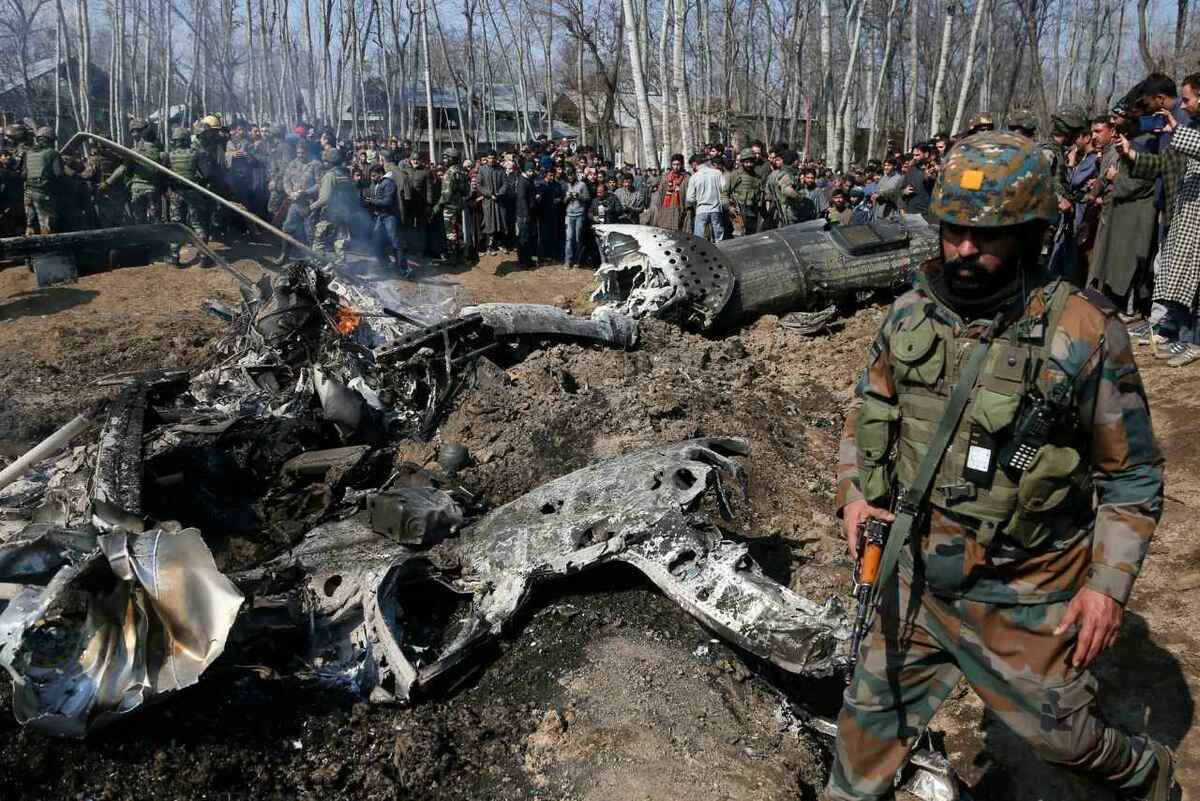


PALESTINE

Sat 10 May 2025 9:35 pm - Jerusalem Time

Israeli occupation forces stormed Al-Khader, south of Bethlehem.

Israeli occupation forces stormed the town of Al-Khader, south of Bethlehem, on Saturday evening.


According to local sources, the occupation forces stormed Al-Khader and took up positions in the areas of Al-Bawaba, Al-Yamama, Abu Sura neighborhood, and Jerusalem-Hebron Street. They fired tear gas and sound bombs, but no injuries were reported.

ARAB AND WORLD

Sat 10 May 2025 9:27 pm - Jerusalem Time

A famous American writer in the New York Times: The Netanyahu government is not our ally

Renowned American author and analyst Thomas Friedman said that Israeli Prime Minister Benjamin Netanyahu's government "is not an ally of the United States."
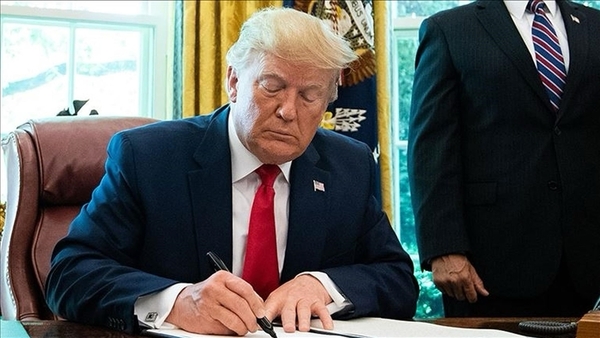

Friedman asserted that Netanyahu is prioritizing his personal interests over those of Israel and the United States.


In an article published Friday in The New York Times titled "This Israeli Government Is Not Our Ally," Friedman addressed a direct message to US President Donald Trump, praising his failure to schedule a meeting with Netanyahu in his upcoming meetings with the leaders of Saudi Arabia, the UAE, and Qatar, viewing it as evidence that he is "beginning to understand a vital truth."


Friedman added that the current Israeli government "threatens core American interests in the region," and that "Netanyahu is no friend of the United States."


He pointed out that Netanyahu "considers Trump naive," and that the US president's administration "has proven to him, through its independent negotiations with Hamas, Iran, and the Houthis, that it is not for sale."


Friedman described the Israeli government as "extreme right-wing," not seeking coexistence with its Arab neighbors, but rather prioritizing "annexing the West Bank, expelling Palestinians from Gaza, and rebuilding Israeli settlements there."


The author noted that Netanyahu's refusal to support a peace plan that would have normalized relations with Saudi Arabia stems from his desire to preserve his political position and avoid prosecution and imprisonment on corruption charges.


He pointed out that Israel could have achieved major strategic gains from a tripartite peace agreement involving the Palestinians and Saudi Arabia, but Netanyahu "sacrificed all of that for his own personal gain."


"He (Netanyahu) has been fooling everyone for two years," Friedman added.


He stressed that "Netanyahu plans to reoccupy Gaza, not to replace Hamas with a moderate alternative, but rather to perpetuate a permanent occupation that will strangle the Palestinians and force them to leave."


Friedman also warned that Gaza could become "a new Vietnam on the shores of the Mediterranean," given the plans being prepared that include the use of excessive force and the widespread destruction of infrastructure. This could lead to "more Israeli leaders being accused of war crimes," according to analysis he quoted from Israeli military expert Amos Harel.


He stressed that "this trend not only threatens Israel, but also harms the United States' allies in the Middle East," especially Jordan and Egypt, which fear that the goal is "to push the Palestinians toward the territories of these two countries."


Friedman also warned that "destroying any hope for the Palestinians will undermine the desire to expand Arab-Israeli-American security integration and weaken Washington's position in favor of Iran and China."


The American writer addressed Trump, saying, "Mr. President, you have good, independent instincts about Middle East issues. Stick to them. Otherwise, you must prepare for the bitter reality that Jews will in the future live in a Jewish state that is ostracized by the world."


At the end of his article, the author quoted the Israeli newspaper Haaretz as saying that more than 52,000 Palestinians were killed in Gaza, including 18,000 children.


He added, "We can continue to ignore these numbers, question their credibility, or justify them with all the tools of denial, evasion, and normalization, but nothing will change the painful truth: Israel is the one who killed them. This happened with our own hands. We must open our eyes and shout at the top of our voices: Stop the war."


The American writer's article echoes a report in the Hebrew newspaper Yedioth Ahronoth on Friday, which claimed that Trump was "fed up" with Netanyahu because of the latter's refusal to act in accordance with Washington's directives regarding the war on the Gaza Strip.


The newspaper explained that Trump and his administration are "simply fed up" with Israel, represented by Netanyahu, "refusing to act in accordance with the United States' vision in the Middle East."


She added that Americans "feel that Israel is putting many obstacles in the way of Trump winning the Nobel Peace Prize."


Trump has previously stated on several occasions that he considers himself eligible to win the Nobel Peace Prize, whether through his efforts to end the war between Russia and Ukraine or his mediation of a broad peace agreement with Israel that includes Palestine and other countries in the region.


The Hebrew newspaper Haaretz quoted an unnamed informed source on Friday as saying that "the Trump administration is exerting intense pressure on Israel to reach an agreement with Hamas before the president's upcoming visit to the region."


Trump is scheduled to begin his visit to the Gulf next Tuesday, which will include stops in Saudi Arabia, Qatar, and the UAE.

PALESTINE

Sat 10 May 2025 8:36 pm - Jerusalem Time

23 civilians killed in Israeli raids on Gaza

Israeli airstrikes overnight and into Saturday killed at least 23 Palestinians in Gaza, including three children and their parents, when their tent in Gaza City was bombed, Gaza officials said.


Israeli bombardment continues amid growing international warnings about Israeli plans to control aid distribution in Gaza, as the Israeli blockade of the enclave, home to more than two million people, enters its third consecutive month.


The United Nations and aid organizations have rejected Israeli efforts to distribute aid, including a plan by a group of American security contractors, former military officers, and humanitarian aid officials calling itself the Gaza Humanitarian Foundation, according to the Associated Press.


The Gaza Ministry of Health said that among the 23 bodies transferred to hospitals over the past 24 hours were those of a family of five whose tent was bombed in the Sabra neighborhood of Gaza City.


Another Israeli airstrike late Friday hit a warehouse belonging to the United Nations Relief and Works Agency for Palestine Refugees (UNRWA) in the Jabalia area in the northern Gaza Strip. Four people were killed, according to the Indonesian hospital where the bodies were transferred.


An Associated Press video showed the destroyed building engulfed in flames.


Several residents, including Hamza Mohammed, reported that the warehouse had been empty since it was bombed and raided several times during the Israeli ground operation in the Gaza Strip last year.

PALESTINE

Sat 10 May 2025 8:25 pm - Jerusalem Time

Israeli Settlers raid Palestinian citizen's tents east of Tubas, and the occupation forces arrest four citizens.

Settlers raided a citizen's tents east of Tubas city, Saturday evening.


Human rights activist Aref Daraghmeh reported that settlers, under the protection of the occupation army, raided the tents of citizen Faisal Masaeed east of Tubas.


In this context, the director of the Prisoners Club in Tubas, Kamal Bani Odeh, said that the occupation forces arrested Jihad Saleh Masaeed, Faisal Muhammad Daraghmeh, Muhammad Ali Daraghmeh, and Kamal Faisal Daraghmeh, from the area.


Many areas in the northern Jordan Valley and the eastern borders of the villages of Tayasir and Aqaba, east of Tubas, are witnessing a continuous presence of settlers, protected by the occupation army.

PALESTINE

Sat 10 May 2025 8:20 pm - Jerusalem Time

The Trump administration increases pressure on Israel over Gaza.

Concern is growing in Israel that US President Donald Trump may force the Israeli prime minister and his government into an imminent agreement on the Gaza Strip, even if it is unsatisfactory to Tel Aviv. Trump may even turn his back on Israel on other issues. Concerns about US pressure have increased following the agreement to activate a new humanitarian aid mechanism for the Gaza Strip.


Official Israeli sources confirmed to various local media outlets that the US administration is exerting significant pressure on Israel to conclude an agreement with Hamas before Trump's expected visit to the Middle East in mid-May, warning that the price will be high if Israel does not end the war.


Israel's Army Radio said Trump was angry because he believed Netanyahu was "playing him." Most Israeli media outlets focused on Saturday on Trump's remarks that the fighting in Gaza was complex and had been going on for 1,000 years, while US envoy Steve Witkoff expanded his team of advisors for the "day after" talks in the Gaza Strip.


Yedioth Ahronoth and Channel 12 quoted the Wall Street Journal as saying that Trump, speaking to donors in Florida last week, acknowledged his growing frustration over the failure to end the war in the Gaza Strip, which poses a major challenge to him, saying that it is difficult to reach a solution because "they have been fighting for a thousand years." Yedioth confirmed that some Trump administration officials also expressed frustration with Israel's intention to expand the war in Gaza.


Witkoff Team Expansion


According to informed sources, Witkoff's expanded team now includes former British Prime Minister Tony Blair and lawyer Alan Dershowitz, who said, "I feel it's more challenging than we thought." Israeli media outlets reported that "Trump will issue a statement regarding a Palestinian state and American recognition of it without the presence of Hamas." However, Israeli sources denied the veracity of that report to Yedioth Ahronoth: "There is no indication of its authenticity, and it appears to be fabricated."


Reports in Israel reflect anger at Trump, anxiety, and a crisis of confidence. Sima Kadmon wrote in Yedioth Ahronoth, "Those who complained this week that Trump sold us out, betrayed us, and turned his back on us need to wake up. To sell out, betray us, and turn your back, you first have to promise something. And the American president didn't promise us anything. Perhaps we heard what we wanted to hear, and perhaps Netanyahu's reaction to Trump's election created exaggerated expectations here."


She added: "We were surprised this week by his promises to the Houthis that America would stop the attack, and now that we've bitten our nails over his dramatic announcement, it's clear, at least for now, that these were just trade agreements, and he didn't say a single word about Israel."


Kadmon believes that Trump doesn't particularly like Netanyahu, seeing him as merely a functional figure. She continued, "There is an inherent tendency among the families of the kidnapped to place their trust in Trump. They realized long ago that the key lies in Washington, not in this government. But Trump is not working for us."


Witkov presented his new initiative, a detailed document of which was obtained by Ynet, which aims to restore humanitarian aid to the Gaza Strip through what he described as a "transparent, independent, and neutral logistical infrastructure," thereby overcoming obstacles that have undermined donor confidence and the efficiency of aid delivery.


Food for 60% of the population


Channel 12 quoted Israeli security officials as saying that this complex step will be implemented within about two weeks. The US-backed Israeli plan to resume the distribution of humanitarian aid in Gaza after an initial period of more than two months will provide food for only about 60 percent of the Strip's population, according to a memo sent to potential donors by the organization running the initiative.


The Gaza Humanitarian Foundation's memo acknowledges that civilians in the Strip "are currently suffering from severe deprivation," but states that the "safe distribution sites" it will establish to distribute aid will initially serve only 1.2 million people, compared to a population of approximately two million.


The memo states that the four safe distribution sites will be "capable of scaling up to cover more than two million people," but does not specify how long the initial phase will last.


Furthermore, the Gaza Humanitarian Foundation acknowledged that each of the safe distribution site initiatives will take time to reach the initial goal of serving 300,000 people. An Israeli official told The Times of Israel that Israel hopes some countries will begin accepting Palestinians, which would help narrow the gap between the initial capacity of the aid initiative and the total population of Gaza.


However, no country has yet volunteered to accept Palestinians. While Israel promotes the option of migration as "voluntary," countries in the region increasingly view it as forced.


The aid distribution centers will be located in a new humanitarian zone being established by Israel in southern Gaza between the Philadelphi Corridor, along Gaza's southern border with Egypt, and the newly established Morag Corridor, about five kilometers to the north. This zone primarily includes the southern Gaza city of Rafah, and entry to the zone will be via Israeli army checkpoints, a move the military hopes will prevent Hamas fighters from reaching the area.


According to the memo, aid will be distributed from distribution centers in boxes containing 50 meals, each containing 1,750 calories, as well as personal hygiene and medical supplies. Officials familiar with the plan said that between 5,000 and 6,000 screened representatives will be allowed to walk to the aid centers once every one to two weeks to receive a food box weighing approximately 18 kilograms for their families.

ARAB AND WORLD

Sat 10 May 2025 8:08 pm - Jerusalem Time

Putin: Gaza Strip is experiencing a humanitarian catastrophe

Russian President Vladimir Putin was quoted by Sputnik news agency on Saturday as saying that the Gaza Strip is experiencing a humanitarian catastrophe, noting that Russia has provided approximately 800 tons of aid to the Palestinians.


The Russian president said that the situation in the Middle East is worsening, noting that Moscow supports the two-state solution.


Putin continued, "We are monitoring the tragic events in the Palestinian territories and are trying to provide ongoing assistance."


Several aid groups told Reuters on Tuesday that dozens of local charity kitchens are at risk of closing, possibly within days, unless aid is allowed into Gaza. Failure to do so would end the last sustainable source of meals for most of the 2.3 million population.


Since March 2, Israel has completely blocked all supplies to the 2.3 million residents of the Gaza Strip, and nearly all food stockpiled during the ceasefire at the beginning of the year has run out. This is the longest closure of its kind the Gaza Strip has ever faced.


The Government Media Office in Gaza explained on Monday that "the stifling blockade and the ongoing closure of crossings have led to a catastrophic deterioration in health conditions and the spread of severe malnutrition, particularly among children and infants. The number of cases arriving at the remaining hospitals and medical centers due to severe malnutrition has exceeded 65,000, out of a total of 1.1 million children in the Gaza Strip who suffer from daily hunger."

PALESTINE

Sat 10 May 2025 7:57 pm - Jerusalem Time

The father of an Israeli prisoner demands that Netanyahu be forced to stop the war and release the prisoners.

The father of an Israeli prisoner who appeared in a video posted by the Qassam Brigades on Saturday called on Israelis to confront Benjamin Netanyahu's government and force it to halt its war of extermination in the Gaza Strip in order to release the prisoners.


Avi Haim, the father of Israeli prisoner Yosef Haim in the Gaza Strip, said on Saturday that "the country's internal problems have distracted attention from the issue of the detainees."


In an interview with the official Israeli Broadcasting Authority, Haim called for "an immediate confrontation with the government to force it to stop the war in the Gaza Strip in order to release the prisoners."


"I feel that public attention has been diverted from the issue of prisoners," he said.


He added, "All the internal problems currently occurring, such as the dismissal of the head of the Shin Bet and the attorney general, are making us forget the prisoners in Gaza."


He stressed that "the government must be confronted and forced to stop the war."


This comes shortly after the Qassam Brigades, the military wing of Hamas, released a video clip of two Israeli detainees, one of whom is ill.


The two Israeli detainees are: Yosef Haim and Elkana Bohbot.


The Al-Qassam Brigades have repeatedly warned, in previous statements, of Israel's procrastination in resuming the ceasefire agreement in Gaza and the risks it poses to the lives of prisoners due to Israel's deliberate bombing of the sites where they are located.


Tel Aviv estimates that there are 59 Israeli prisoners in the Gaza Strip, 21 of whom are still alive. Meanwhile, more than 9,500 Palestinians are languishing in its prisons, suffering torture, starvation, and medical neglect, many of whom have died, according to Palestinian and Israeli human rights and media reports.

PALESTINE

Sat 10 May 2025 6:41 pm - Jerusalem Time

UNICEF: New aid distribution plans in Gaza will exacerbate children's suffering

The United Nations Children's Fund (UNICEF) has criticized new plans proposed by Israel and the United States to take over responsibility for distributing humanitarian aid in Gaza, saying they will exacerbate the suffering of children and families.


"The draft plan presented by Israel to the aid community appears likely to exacerbate the ongoing suffering of children and families in the Gaza Strip," UNICEF spokesman James Elder said in a statement on Saturday.


Elder added that his statement also applies to the new institution, which he believes is part of the same expanded plan.


Aid organizations already reject any plans that would give occupying power Israel a role in distributing aid in Gaza.


“Using humanitarian aid as bait to force people to flee, especially from the north to the south, will leave them with an impossible choice: between displacement and death,” Elder said.


He continued: There is a simple alternative, which is to lift the siege and allow humanitarian aid to enter to save lives.

PALESTINE

Sat 10 May 2025 6:18 pm - Jerusalem Time

Clashes with the occupation forces northwest of Ramallah

Clashes erupted with Israeli occupation forces on Saturday evening in the town of Al-Mazra'a al-Gharbiya, northwest of Ramallah.


According to local sources, an Israeli army force stormed the town of Al-Mazra'a al-Gharbiya, sparking clashes. No injuries were reported.


The sources added that occupation forces also raided the town of Kobar, northwest of Ramallah, without any arrests or raids being reported.

PALESTINE

Sat 10 May 2025 5:51 pm - Jerusalem Time

An injury by Israeli occupation forces' bullets west of Ramallah

A young man was shot by Israeli occupation forces on Saturday evening in the village of Nabi Saleh, northwest of Ramallah.


According to local sources, an Israeli infantry force stormed the village of Nabi Saleh, positioned itself in the center of the village, and opened fire on residents and their homes. A young man was shot in the thigh and taken to the hospital for treatment.


In this context, the occupation forces have continued to close the western entrance to the village of Al-Mughayyir, north of Ramallah, in both directions since the morning hours, preventing citizens from entering and exiting it. This is the only entrance to the village, after the occupation forces closed the eastern entrance after October 7, 2023.

PALESTINE

Sat 10 May 2025 5:30 pm - Jerusalem Time

Palestinian Water Authority: Gaza is dying of thirst


The Palestinian Water Authority warned on Saturday of an imminent humanitarian disaster in Gaza due to the collapse of water and sanitation services as a result of the ongoing Israeli genocide, noting that the Strip has become a "dying of thirst" area.


The Water Authority said in a statement that "85 percent of water and sewage facilities in the Gaza Strip have suffered severe damage, and water extraction volumes have decreased by 70-80 percent."


She pointed out that "the occupation's destruction of infrastructure, power outages, and prevention of the entry of fuel and basic supplies (into the Gaza Strip) has led to a near-total halt in the provision of water services."


The Water Authority added, "Gaza has become a region dying of thirst."


She explained that "the average per capita water consumption in Gaza has dropped to between 3 and 5 liters per day, which is far less than the minimum recommended by the World Health Organization in emergency situations."


The minimum amount recommended by the World Health Organization for emergency response is 20 liters per person per day.


The Water Authority warned of "the spread of diseases resulting from the discharge of wastewater into residential areas and the filling of rainwater basins."


She stressed that "these Israeli policies constitute a flagrant violation of international humanitarian law, including the Fourth Geneva Convention, the Convention on the Prevention and Punishment of the Crime of Genocide, and the Rome Statute."


The Water Authority called on the international community to "take immediate action to halt the aggression, lift the blockade, provide protection for technical personnel, and support the Palestinian government's efforts in emergency interventions and recovery plans in the Gaza Strip."


On Tuesday, Pedro Araujo-Agudo, the UN Special Rapporteur on the human rights to adequate drinking water and sanitation, told Anadolu Agency that the Israeli occupation's destruction of the water infrastructure in the Gaza Strip and its denial of access to clean water are a "silent but deadly bomb."


"The vast majority of Gaza's population either only has very limited access to water, or the water they do have is dangerously polluted," Agudo explained.


He added that the Israeli blockade imposed since October 2023 has included food, water, electricity, and other basic commodities.


The UN rapporteur noted that the crisis spiraled out of control after the Israeli occupation cut off access to fuel needed to operate water purification plants and wells.


He stressed that the deliberate destruction of water systems means using water as a weapon in the war on Gaza.


Based on UNICEF data, Agudo said that diarrhea cases among children under five increased from 40,000 to more than 70,000 during the first week of December 2024.


With full American support, Israel has been committing genocidal crimes in Gaza since October 7, 2023, leaving more than 172,000 Palestinians dead or wounded, most of them children and women, and more than 11,000 missing.


PALESTINE

Sat 10 May 2025 4:49 pm - Jerusalem Time

Israeli occupation forces demolished homes in Nour Shams camp, east of Tulkarm.

Israeli occupation forces blew up residential homes in the Nour Shams camp, east of Tulkarm, on Saturday, coinciding with the ongoing aggression against it for 91 days.


According to local sources, occupation forces blew up three houses in the Al-Manshiya neighborhood of the camp, accompanied by the sound of massive explosions throughout the area and heavy smoke rising.


This escalation comes as a continuation of the ongoing demolition of residential buildings and homes in the camp, specifically in the neighborhoods of Al-Manshiya, Al-Maslakh, Al-Jami', Al-Eidah, and Al-Shuhada. This comes as part of the occupation's plan, announced 10 days ago, to demolish 106 homes and buildings in the Tulkarm and Nur Shams camps, including 48 buildings in Nur Shams camp.


According to local estimates, the number of buildings demolished by Israeli bulldozers over the past week has reached 15, including the apartments they contained. Residents had evacuated the buildings after obtaining prior coordination and forcibly displacing them during the ongoing aggression.


The aggression has forced the displacement of more than 4,200 families from the Tulkarm and Nur Shams camps, comprising over 25,000 residents. It has also completely destroyed more than 400 homes and partially destroyed 2,573. The entrances and alleys have been sealed off with earth mounds, transforming them into isolated, lifeless areas.

ARAB AND WORLD

Sat 10 May 2025 3:41 pm - Jerusalem Time

Trump: India and Pakistan have agreed to an immediate and comprehensive ceasefire.

US President Donald Trump announced on Saturday that India and Pakistan had agreed to an immediate, comprehensive ceasefire, following US mediation, bringing an end to days of escalating hostilities during which the two nuclear-armed neighbours exchanged missile attacks, drone strikes, and artillery shelling, in the worst crisis in decades.


Trump thanks India and Pakistan

"After a long night of talks brokered by the United States, I am pleased to announce that India and Pakistan have agreed to an immediate, comprehensive ceasefire," Trump said in a post on his Truth Social platform, praising the two countries for "using common sense and great intelligence."

Pakistani Foreign Minister Ishaq Dar announced via Twitter on Saturday that Islamabad and New Delhi had agreed to a "ceasefire with immediate effect," following Trump's announcement.

The US announcement came after Pakistan and India exchanged strikes and attacks on each other's military installations on Saturday, prompting the United States to call on the two neighbors to begin talks and defuse the escalating conflict.

ARAB AND WORLD

Sat 10 May 2025 2:32 pm - Jerusalem Time

Jerusalem Post: Trump may recognize the state of Palestine during the upcoming Saudi summit

The Jerusalem Post, citing the American news agency The Media Line, reported that President Donald Trump is likely to announce US recognition of the State of Palestine during the Arab Summit in Saudi Arabia.


According to the newspaper, a Gulf diplomatic source, who declined to reveal his identity or position, revealed to The Media Line that "President Donald Trump will issue a declaration regarding the State of Palestine and American recognition of it, and that a Palestinian state will be established without the presence of Hamas."


The source added, "If an American declaration is issued recognizing the State of Palestine, it will be the most significant statement changing the balance of power in the Middle East, and more countries will join the Abraham Accords."


The source confirmed that economic agreements will certainly be present, but many of them have already been announced, and we may witness the exemption of Gulf countries from customs duties.


For his part, Ahmed Al-Ibrahim, a former Gulf diplomat, told The Media Line: "I don't expect the issue to be related to Palestine. Egyptian President Abdel Fattah el-Sisi and Jordanian King Abdullah II were not invited, as they represent the two countries closest to Palestine, and it would have been important for them to attend any event like this."


Al-Ibrahim continued, "There will be major deals coming, perhaps similar to what happened at the 2017 Gulf-US Summit, where Saudi Arabia announced deals exceeding $400 billion. Let's not forget that the UAE announced investments in the US exceeding $1 trillion, while Saudi Arabia announced investments exceeding these amounts."


US President Donald Trump is scheduled to visit Saudi Arabia next week, marking his first visit to the Middle East since assuming his second presidential term in January 2025.


Trump's Middle East tour, from May 13 to 16, will also include Qatar and the United Arab Emirates. Last Saturday, Axios reported, citing a US official and Arab officials, that Trump plans to participate in a summit with Gulf leaders during his visit to Saudi Arabia.