





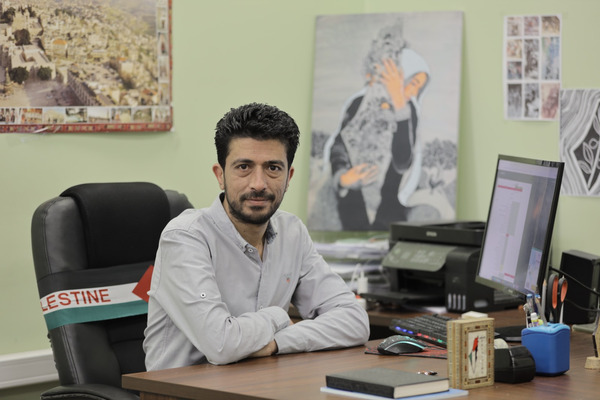
Baha Rahal
This letter will most likely not reach the White House mailbox, and if it does, there's a good chance it will end up in the hands of an employee or a letterbox security guard who will toss it into a trash can, unconcerned with what's written. And if it does make it, language will no longer be a barrier. The world has changed. Language or geography are no longer the barriers between peoples. All US President Donald Trump needs to do is take a picture of the letter, upload it to an artificial intelligence website, and it will read it as if it were written in a language it understands.
Mr. Trump, we in Gaza are not experiencing an ordinary war; we are being annihilated. For more than 584 days, we have been crushed under relentless fire, under a tight siege imposed on all sides, amid an international silence harsher than the American bombs and missiles that your country sends to the occupation. We are suffering from hunger and thirst, and our children have died of hunger, lack of medicine, and the loss of all means of subsistence, in squalid tents and shelters unfit for human habitation.
Mr. Trump, we in Gaza are dying as a result of the war of extermination and revenge pursued by Netanyahu and his racist government. As you know, your country's weapons are the most lethal for killing and slaughtering us, and your country's biased policies provide cover for the occupation and its government in all international forums. Your supportive positions are the reason for the continuation of our extermination and killing. As you know, thanks to your biased policies, the world fears you and your wrath. That is why the positions of countries are neutral, and some support the occupation from behind the scenes. Even friends and some brothers, out of their intense fear of your country, remain silent and have not seriously intervened to stop our extermination.
Mr. Trump, we in Gaza know that you know, and that you have witnessed and continue to witness the massacres and slaughters being committed. This would not have happened without your country's silence and support, both economically and militarily. As you know, the massive support your country has provided since October 2023. Your country has been the most generous supporter, opening its stores in the Middle East and sending warships, aircraft, experts, and soldiers.
Mr. Trump, as you visit our Arab region and are being honored by kings, princes, and Their Highnesses, remember Gaza. You can impose a ceasefire and curb the hateful Netanyahu, who refuses to stop the genocide, citing your country's unlimited support. Will you do it and stop the genocide, so that those who remain alive can escape death?
Mr. Trump, we in Gaza are being killed with your weapons, and the killers are escaping international and criminal courts due to your policies, your support, and the cover you provide at every international and UN forum. This is unfair and unjust. We know that, and we do not expect fair positions from your country. We are aware of its constant, biased, and supportive positions. But you can stop our annihilation with your country's weapons, and allow international courts to try the killers and criminals, so that they do not escape just punishment.
Mr. Trump, we in Gaza know that you are capable of stopping the war of extermination. Will you do so before you leave the Middle East? Or will you continue your silence, ignorance, and unconditional support for the occupation government, which only gives it more power to continue its killing without fear of accountability or punishment? Will you do so, Mr. Trump, and stop the war?
============================
Mr. Trump, we in Gaza are being killed with your weapons, and the killers are escaping international and criminal courts due to your policies, your support, and the cover you provide in every international and UN forum. This is unjust and unfair.

OPINIONS
Wed 14 May 2025 8:55 am - Jerusalem Time
This message may never arrive.
ARAB AND WORLD
Wed 14 May 2025 8:40 am - Jerusalem Time
In private sessions, the Israelis admit that Gaza is on the brink of famine.

The New York Times revealed that while the Israeli government publicly ignored warnings of a severe food shortage after blocking aid deliveries since March 2, an internal analysis concluded that a crisis looms if food supplies are not resumed.
Some Israeli military officials have concluded in private that Palestinians in Gaza face widespread famine unless aid deliveries resume within weeks, according to three Israeli defense officials familiar with the situation in the Strip.
The Israeli occupation authorities insist that their blockade of food and fuel in Gaza does not pose a significant threat to the lives of civilians in the Strip, even as the United Nations and other relief agencies warn that famine is looming.
“But Israeli military officers monitoring the humanitarian situation in Gaza have warned their commanders in recent days that unless the blockade is lifted quickly, many areas of the Strip are likely to run out of food to meet minimum daily nutritional needs, according to defense officials,” the New York Times reported. The officials, speaking on condition of anonymity, told the Times that the situation is dire because expanding humanitarian aid deliveries takes time. Therefore, these officers said, immediate steps are needed to ensure that the aid delivery system is reactivated quickly enough to prevent famine.
The growing recognition within parts of the Israeli security establishment of the hunger crisis in Gaza comes as Israel has pledged to significantly expand the war in Gaza to eliminate Hamas and return the remaining hostages—two goals the occupation has failed to achieve after more than 19 months of war.
Israeli Prime Minister Benjamin Netanyahu said on Tuesday that the Israeli army would resume fighting in the coming days "with full force to finish the mission" and "eliminate Hamas."
Netanyahu's statement came on the same day that US President Donald Trump arrived in Saudi Arabia, as part of his first foreign trip since his re-election.
So far, Trump has not included a visit to Israel in his tour of Saudi Arabia, Qatar, and the UAE, underscoring the growing rift between Trump and Netanyahu, who increasingly disagree on some of the most important security issues facing Israel.
The military officials' analysis revealed a gap between Israel's public position on the complete blockade of aid and its private deliberations. This analysis reveals that parts of the Israeli security establishment have reached the same conclusions as leading aid organizations. They have been warning for months about the dangers of the blockade.
The analysis also highlights the dire humanitarian situation in Gaza: Most bakeries have closed, charity kitchens are shut, and the UN World Food Programme, which distributes aid and coordinates shipments, says it has run out of food stocks.
The Integrated Food Security Phase Classification (IPC), a UN-backed initiative that monitors malnutrition, warned on Monday that famine is imminent in Gaza. In a brief report, the IPC said that if Israel proceeds with its planned military escalation in Gaza, "the vast majority of Gaza's population will be unable to access food, water, shelter, and medicine."
Israeli restrictions on aid to Gaza were one of the most contentious issues during the war. Israel cut off supplies to Gaza on March 2 and broke the ceasefire with Hamas, which remains entrenched in Gaza despite losing thousands of fighters and seizing control of much of the territory during the war, on March 18.
Israel stated that the purpose of the blockade was to limit Hamas's ability to access and utilize food and fuel intended for civilians. In the process, an Israeli Defense Ministry official told the newspaper, Hamas would be more likely to collapse, or at least to release more of the hostages the movement captured during its attack on Israel on October 7, 2023.
The Israeli government has repeatedly asserted that the blockade has not caused a "shortage" in aid to civilians, partly because large amounts of aid entered the Strip during the brief ceasefire.
But aid organizations were quick to warn that civilians would be the primary victims, adding that these restrictions are illegal under international law. These warnings have intensified as civilians say they are eating only one meal a day as food prices have risen sharply. Palestinians interviewed by The New York Times said the price of flour has increased 60-fold since late February.
Specialist officers at the Coordinator of Government Activities in the Territories (COGAT), the Israeli government agency that oversees policy in Gaza and the West Bank, reached the same conclusion as aid agencies. The officers continually assess the humanitarian situation in Gaza by speaking with Palestinians there, checking the latest updates from aid organizations about their warehouse stockpiles, and analyzing the volume and contents of aid trucks that entered Gaza before the blockade.
Then, officers secretly briefed senior commanders on the deteriorating situation, warning with increasing urgency that many in the Strip were just weeks away from starvation. An Israeli general briefed the cabinet last week on the humanitarian situation in Gaza, saying that supplies in the Strip would run out within a few weeks, according to an Israeli defense official and a senior government official. Israel's Channel 13 first reported the ministerial briefing.
Last week, the Trump administration announced that it was working with Israel on such a plan. Israeli officials and aid organizations said it would involve private organizations distributing food from a handful of sites in Gaza, each serving hundreds of thousands of civilians. Israeli military personnel would be deployed around the sites, while private security companies would patrol their interiors.
Aid agencies, including the UN Office for the Coordination of Humanitarian Affairs, rejected the plan, stating that they would not join it because it would put civilians at greater risk. The agency explained that the proposal would force the most vulnerable to walk longer distances to reach the few distribution centers, making it more difficult to deliver food to those most in need. The UN explained that under the current system, there are 400 distribution points. It added that the new system would "significantly reduce operational coverage."
The United Nations also warned that the plan would force civilians to regularly cross Israeli military lines, exposing them to a greater risk of arrest and interrogation. It added that the plan would accelerate the displacement of civilians from northern Gaza, as distribution centers are expected to be located farther south in the Strip.
Israeli officials emphasized that the plan, if implemented, would help the army intercept Hamas fighters and transfer civilians from northern Gaza to southern Gaza. However, they said the goal is not to increase civilian suffering, but rather to separate them from the fighters. Experts in international conflict laws say it is illegal for any state to restrict aid delivery if it knows it will lead to famine.
“Imposing a military siege knowing that it will starve a civilian population is a violation of international law,” said Janina Dell, co-director of the Oxford Institute for Ethics, Law and Armed Conflict at Oxford University.
Dale added that even if there is debate about Israel's obligations to the people of Gaza, "when Israeli decision-makers state that the goal is to extract political and military concessions, this clearly constitutes a war crime."
PALESTINE
Wed 14 May 2025 8:37 am - Jerusalem Time
More than 50 dead as a result of the occupation's bombing of the Gaza Strip last night.
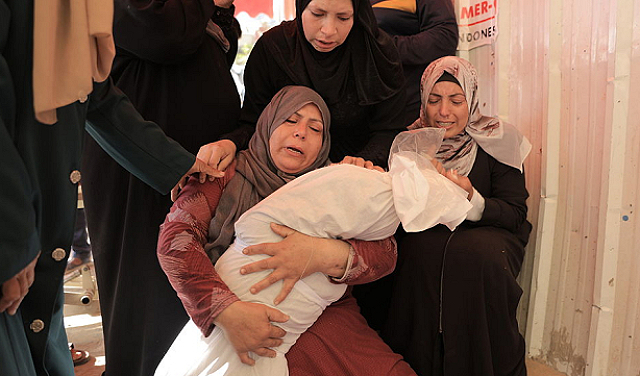
The death toll from Israeli shelling of the southern and northern Gaza Strip since midnight last night has risen to 51, including 45 dead in the northern Gaza Strip.
Local sources reported that the occupation forces launched a series of airstrikes and shelling targeting civilian homes in Jabalia refugee camp and Jabalia al-Balad in the northern Gaza Strip, resulting in the deaths of 45 civilians, most of whom were children and women.
He added that the bodies of the martyrs and the injured were transferred to Al-Awda and Indonesian hospitals, and that most of them were from the Al-Najjar, Suwailem, Muqbil, and Al-Qatnani families. He noted that a number of the martyrs' bodies were still under the rubble of the targeted homes.
In the south, a citizen, his wife, and their two daughters were killed when an Israeli drone bombed a tent housing displaced persons in the Al-Mawasi area, west of Khan Yunis. Several other citizens were also killed when the Israeli occupation targeted the Abu Amouna family's home in the Al-Fakhari area, southeast of Khan Yunis, in the southern Gaza Strip.
Since October 7, 2023, the Israeli occupation forces have launched an aggression against the Gaza Strip, resulting in the deaths of 52,908 civilians, the majority of whom were children and women, and the injury of 119,721 others. This is a preliminary toll, with a number of victims still buried under the rubble and on the streets, unable to be reached by ambulances and rescue teams.
ARAB AND WORLD
Wed 14 May 2025 8:35 am - Jerusalem Time
Confirming what Al-Quds published, Trump will meet with Al-Shara today in Riyadh.
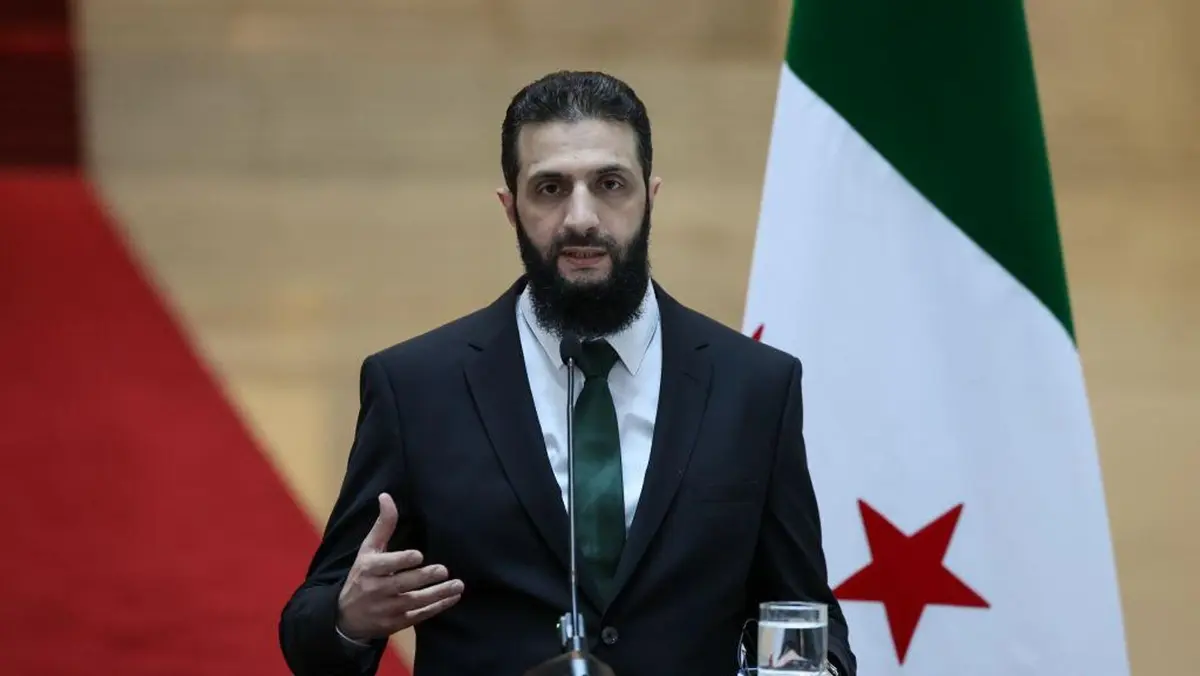
The White House said that US President Donald Trump will meet with his Syrian counterpart, Ahmed al-Sharaa, on Wednesday, according to the Associated Press.
"The President agreed to greet the Syrian President while he was in Saudi Arabia today," the White House said.
Regarding the meeting, a source in the Syrian Foreign Ministry, who requested anonymity, told The National newspaper that Saudi officials proposed a "45-minute meeting" between Trump and Sharaa.
President Trump announced yesterday evening from Riyadh that he had decided to lift sanctions on Syria "to give it a chance."
Al-Quds exclusively reported on Trump's meetings with a number of Arab leaders during his visit to Saudi Arabia, including Sharaa, President Mahmoud Abbas, and the Lebanese president.
Sources expected that the meetings would take place on the sidelines of the historic visit.
PALESTINE
Wed 14 May 2025 8:33 am - Jerusalem Time
Were Mohammed Sinwar and Abu Obeida assassinated?

Were Mohammed Sinwar and Abu Obeida assassinated? Informed sources in the Gaza Strip believe that Israel assassinated Hamas leader Mohammed Sinwar and Qassam Brigades spokesman Abu Obeida in the brutal massacre it perpetrated at the European Hospital in Khan Yunis, which left dozens dead and wounded.
The Israeli newspaper Yedioth Ahronoth reported yesterday that the raid, in which dozens of bunker-busting bombs were used, targeted Mohammed Sinwar, the leader of the Hamas movement in Gaza.
PALESTINE
Wed 14 May 2025 8:30 am - Jerusalem Time
Reports of $100 million in Emirati support: Sheikh meets with UAE Foreign Minister
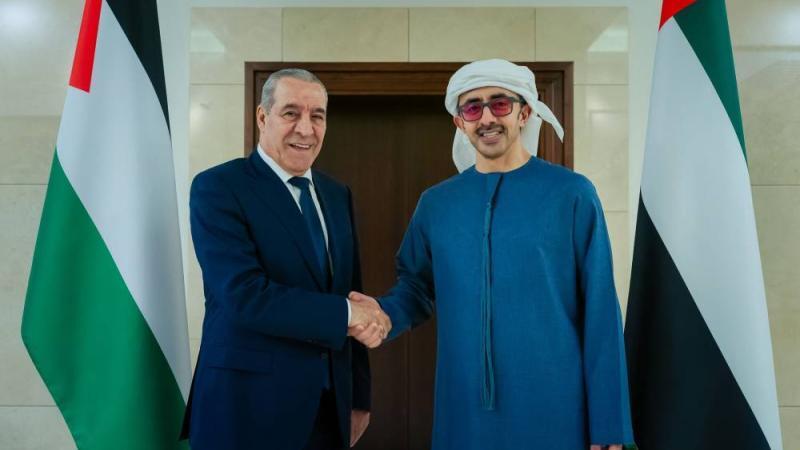
Vice President Hussein Al Sheikh met on Tuesday evening with UAE Deputy Prime Minister and Minister of Foreign Affairs Sheikh Abdullah bin Zayed Al Nahyan.
The Sheikh briefed the UAE Foreign Minister on developments in Palestine, including ways to achieve a ceasefire and deliver humanitarian aid, the need for the Palestinian Authority to assume its civil and security responsibilities, the withdrawal of occupation forces, and the commencement of a political process based on international legitimacy.
The meeting, held in Abu Dhabi, discussed current developments in the region and their various repercussions, particularly the worsening humanitarian crisis in the Gaza Strip, and the importance of intensifying international efforts to address urgent humanitarian needs.
In this regard, the Vice President thanked the UAE for its supportive stance on the legitimate rights of the Palestinian people in international forums, as well as its humanitarian and relief support in Gaza and for hospitals in Jerusalem.
In turn, the UAE Foreign Minister affirmed the UAE's fraternal and historic stances toward the Palestinian people, its unwavering commitment to standing by them, and supporting their legitimate aspirations for sustainable peace, stability, development, and a dignified life.
He pointed out the need for concerted international efforts at this stage to address the worsening humanitarian crisis in the Gaza Strip and build a sustainable humanitarian response to meet the needs of civilians suffering from tragic conditions. He stressed that the UAE will spare no effort in extending a helping hand to the Palestinian people and providing them with the necessary humanitarian support.
Meanwhile, sources told Al-Quds that the UAE promised the sheikh $100 million in financial support to the treasury.
PALESTINE
Wed 14 May 2025 8:26 am - Jerusalem Time
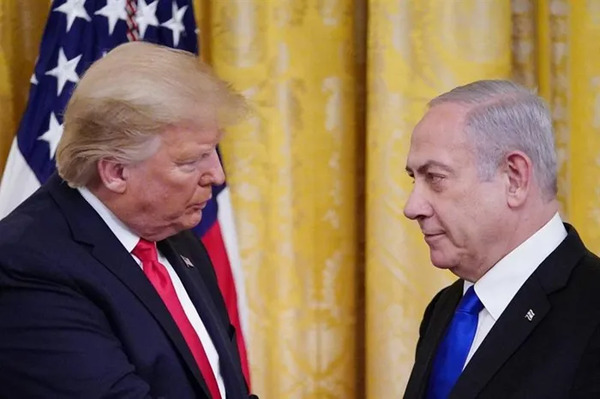
The rift between Trump and Netanyahu is widening... Will Washington succeed in imposing a permanent ceasefire?
Dr. Saad Nimr: Witkov's visit to the region is not limited to the Alexander case and his extradition, but rather aims to discuss a comprehensive plan for a ceasefire.
Antoine Shalhat: The ceasefire in Gaza is a preliminary step, but it does not guarantee the end of the war of extermination or the removal of the specter of displacement.
Hani Abu Al-Sabaa: The region is entering a phase of "silencing the guns" and launching comprehensive political initiatives that include Gaza and the West Bank.
Dr. Raed Abu Badawiyya: The Hamas-US negotiations are a major blow to the relationship between Trump and Netanyahu and reveal an independent American vision for his removal.
Muhammad Joda: The potential truce does not necessarily mean the end of the policy of genocide or displacement, but may simply be an Israeli "rest."
Talal Okal: Netanyahu fears that the US envoy will reach an agreement that will be imposed as a fait accompli, which will put him between the jaws of a pincer.
The region is witnessing intense diplomatic developments that could pave the way for a ceasefire in the Gaza Strip, amid mounting US pressure on the Israeli government to end the war before US President Donald Trump's upcoming visit to several Arab countries.
In separate interviews with Al-Quds, writers, political analysts, specialists, and university professors believe that these pressures come within the framework of the US administration's efforts to achieve tangible progress in the crisis ahead of Trump's visit to the Arab region, especially in light of Israeli Prime Minister Benjamin Netanyahu's disregard for international calls for a ceasefire and the entry of humanitarian aid. However, this comes amid growing Israeli concern about international isolation, especially with the United States entering into indirect negotiations with Hamas, which has shown flexibility by releasing prisoner Idan Alexander, a dual citizen, as a gesture of goodwill.
They point out that the region may witness a transitional phase that includes a temporary "silencing of the guns," but without sufficient guarantees to end the policy of genocide or avert the specter of forced displacement. This leaves Gaza's future hanging between political maneuvering and shifting security equations.
A visit of utmost importance for Trump
Dr. Saad Nimr, a professor of political science at Birzeit University, asserts that US President Donald Trump is exerting significant pressure on the Israeli government, headed by Benjamin Netanyahu, to implement a ceasefire in the Gaza Strip before his upcoming visit to the Arab region, which includes Saudi Arabia, Qatar, and the UAE, as well as meetings with several Arab leaders.
Nimr points out that Trump considers this visit of utmost importance, as his administration seeks to achieve tangible progress in ending the "war of extermination" in Gaza before his visit to the Arab region.
Nimr explains that the meeting between Trump and Netanyahu more than two months ago gave the latter a two-month deadline to fulfill his promises to end the conflict. However, Israel's brutal war against the Palestinian people in Gaza, which has included deliberate starvation and the withholding of aid, has not achieved any tangible results, which has fueled Trump's resentment toward Netanyahu.
Nimr points out that Netanyahu's continued war is aimed at protecting his extremist coalition government, ignoring calls for a comprehensive deal that would include a ceasefire and the entry of humanitarian aid into the Gaza Strip.
In a related context, Nimr commends Hamas's initiative, which responded intelligently to pressure by offering to release soldier Idan Alexander, who holds dual American-Israeli citizenship, as a gesture of goodwill in exchange for Israel's commitment to allowing humanitarian aid into Gaza.
Comprehensive ceasefire plan
Nimr believes this step reflects the resistance's shrewdness in dealing with the current political situation, noting that US envoy Steve Witkoff's visit to the region is not limited to the Alexander case and his handover, but rather aims to discuss a comprehensive ceasefire plan that includes the release of all Israeli prisoners held in Gaza, as well as Palestinian prisoners in Israeli jails, along with the entry of aid and laying the foundations for a permanent agreement.
Nimr asserts that the humanitarian situation in Gaza has reached catastrophic levels, with children suffering from starvation and anemia, while pregnant and breastfeeding women face tragic conditions.
Nimr points out that Trump, who ignored this brutality at the start of the war, now realizes, ahead of his visit to Arab countries, that the continuation of the war will negatively impact his political image, reflecting his own self-interest.
However, Nimr warns that Trump's statements about ending the war may be an attempt to "throw dust in the eyes," but he asserts that American pressure will force Netanyahu to accept a deal that may not fully align with his vision, but rather will align with the interests of the US administration and intermediary states, such as Egypt and Qatar.
Nimr points out that the Israeli protests by the prisoners' families will increase pressure on Netanyahu, especially with Trump's success in securing Alexander's release. This will open the door to a broader deal that guarantees a ceasefire and relief for Gaza, despite the extremist Israeli government's opposition.
Developments are subject to developments in the negotiations.
Antoine Shalhat, a writer and political analyst specializing in Israeli affairs, explains that recent developments point to the possibility of reaching a ceasefire agreement in the Gaza Strip as a preliminary step. However, he warns that this step, despite its utmost importance, does not necessarily guarantee an end to the "war of extermination" or avert the specter of displacement once and for all.
Shalhat points out that these developments are subject to developments in the negotiations and the positions of international parties, especially the United States, in light of US President Donald Trump's upcoming visit to the Gulf states, which will include a meeting with Palestinian President Mahmoud Abbas.
Shalhat asserts that a ceasefire represents a preliminary step that may herald an end to the war or reduce the risk of displacement. However, he emphasizes that achieving these goals requires intensive efforts from international mediators and a firm stance from the US administration.
Shalhat points out that Israel may resort to limited military operations under the pretext of "fighting terrorism," which would mean the continuation of the war in other forms, making halting the genocide and ending the threat of displacement contingent on future developments.
Discussing Trump's recent statements describing the war on Gaza as "brutal," Shalhat believes these remarks may indicate the US president's intention to push for an end to the war.
However, Shalhat points out that the position of the Israeli government, headed by Prime Minister Benjamin Netanyahu, could pose a significant obstacle.
The war to keep Netanyahu's coalition in power
Shalhat explains that, according to Israeli analysis, Netanyahu views the continuation of the war as a guarantee of his coalition's survival and continued rule. Netanyahu considers this a "top priority" that trumps any other priorities, including reaching a ceasefire agreement or planning for the "day after" the war.
Shalhat asserts that the US administration, headed by Donald Trump, has the power to impose a ceasefire on Israel, even if it leads to the disintegration of the Israeli government coalition.
Shalhat points to estimates indicating that Netanyahu may be forced to succumb to American pressure, given Israel's heavy reliance on American support.
However, Shalhat warns that it is difficult to predict the Israeli government's reaction, calling for close monitoring of developments, as ongoing negotiations and the outcome of Trump's Gulf visit will be crucial in determining the course of the crisis.
Shalhat emphasized the urgent importance of a ceasefire, considering it the first step that could pave the way for achieving broader goals: ending the war of extermination and preventing the mass displacement of Palestinians. He called for intensified international efforts to ensure that this step marks the beginning of a lasting path toward peace and stability in the region.
Indications of comprehensive arrangements including the war on Gaza
Writer and political analyst Hani Abu Al-Sabaa believes there are strong indications that the region is on the cusp of comprehensive arrangements that encompass the ongoing war in the Gaza Strip and security and political developments in Syria and Lebanon, under direct US auspices.
Abu Al-Sabaa explains that these arrangements aim to de-escalate tensions and revive political processes, as part of the United States' efforts to maintain its leading role in resolving international conflicts, while focusing on confronting its economic adversaries, most notably China.
Abu Al-Sabaa points to a clear Arab willingness to cooperate with American visions. US Special Envoy to the Middle East Steve Witkoff has conducted extensive shuttle visits to the region, including meetings with key mediators in Qatar, Egypt, and Turkey. These efforts aim to prepare the ground for US President Donald Trump's anticipated visit in the coming days, which requires tangible progress in halting the war in Gaza and providing Arab states with guarantees that the United States will continue to sponsor the peace process.
Abu al-Saba' points out that the United States has, for the first time, entered into direct negotiations with Hamas, despite opposition from Israeli Prime Minister Benjamin Netanyahu's government, which insists on continuing military operations. This is a historic precedent.
Abu al-Saba' draws attention to statements by Hamas leaders, particularly Khalil al-Hayya, the movement's Gaza official, who announced the movement's agreement to release Israeli dual national prisoner Aidan Alexander as a goodwill gesture toward Trump's efforts.
Hamas's positive response to diplomatic initiatives
Abu Al-Sabaa asserts that this step reflects Hamas's willingness to engage positively with diplomatic initiatives under regional and international pressure.
Abu al-Saba'a indicated that the Israeli security and political cabinet will meet to discuss the understandings between the Americans and Hamas, and that they are expected to be approved, despite statements by the Hebrew media asserting that these understandings will not prevent Israel from continuing the war.
Abu Al-Saba' points to Netanyahu's office's claim that the understandings were the result of military pressure on Gaza, which he considers an internal effort to quell criticism of the government.
Abu Al-Sabaa believes the region is entering a phase of "silencing the guns" and launching comprehensive political initiatives that include Gaza and the West Bank, coordinated by the United States, Israel, Europe, and the Arab world.
Abu Al-Sabaa asserts that America's entry into direct negotiations indicates that a comprehensive agreement to stop the war is imminent.
Abu Al-Sabaa points out that the people of Gaza are anticipating a moment of calm and hope for a dignified life, with expectations that Trump's meetings with Arab leaders will yield tangible steps toward reconstruction and reviving political solutions.
Promoting American interests in the Middle East
Dr. Raed Abu Badawi, professor of international law and international relations at the Arab American University, asserts that direct negotiations between Hamas and the United States represent a major political blow to the relationship between US President Donald Trump and Israeli Prime Minister Benjamin Netanyahu. They also reveal an independent American vision that isolates Netanyahu.
Abu Badawiya emphasizes that this move cannot be separated from a broader regional context that reveals an independent American vision aimed at advancing American interests in the Middle East, far removed from traditional coordination with Israel.
Abu Badawiya explains that the current negotiations between Hamas and the United States are not the first, as similar contacts have previously stalled. However, they represent a significant development that reflects strategic shifts.
Abu Badawiya points out that these negotiations coincide with significant progress in US talks with Iran, which are taking place without sufficient coordination with Israel, a surprise to Netanyahu.
Abu Badawiya links these developments to the close relationship Trump announced with Turkish President Recep Tayyip Erdoğan. During a joint press conference, Trump asked Netanyahu to communicate with Erdoğan, describing him as a "friend." Abu Badawiya believes this move represents a blow to Israel's right-wing vision, particularly regarding the Syrian issue.
Containing Iran and strengthening trade relations with the Gulf states
Abu Badawiya asserts that other American steps, such as the relative calm with the Houthis in Yemen, constitute a violation of the traditional strategic relationship between the United States and Israel, reinforcing the impression of Netanyahu's regional isolation.
According to Abu Badawiya, the US administration seeks to impose a comprehensive vision for the Middle East based on containing Iran, concluding calming agreements regarding its nuclear program, and strengthening trade relations with the Gulf states, including Saudi Arabia, which is raising the civil nuclear issue. This vision also includes strengthening relations with Türkiye, while placing the Palestinian issue at the heart of any regional stability.
Abu Badawiya asserts that Trump and successive US administrations understand that any stability in the region requires solutions to the Palestinian issue, even if these are not entirely satisfactory at the present time.
Abu Badawiya expects these indicators to lead to an end to the aggression on the Gaza Strip in the near future, with the possibility of reaching a comprehensive deal that includes a prisoner exchange.
In the medium and long term, Abu Badawiya expects partial American acceptance of Hamas's participation in the political system in Gaza, provided it is not headed by Hamas. He also points to American flexibility regarding Hamas's weapons, with a focus on "controlling" them rather than completely disarming them.
Abu Badawiya points out that there are American trends that could allow for a partial annexation of the West Bank, which would pose a major challenge to the Palestinians.
Abu Badawiya explains that these trends may be part of the price Israel will pay to achieve the American vision.
Expect changes in the Israeli government system
In contrast, Abu Badawiya expects US policy to have internal repercussions for Israel, as Netanyahu's government appears isolated from the US vision, potentially leading to political and popular pressures that threaten its continuity.
Abu Badawiya expects changes to occur in the Israeli ruling system as a result of these changes.
Abu Badawiya points out that Hamas's agreement to release a dual-nationality prisoner without a direct political price reflects strategic flexibility, with expectations that the movement will reap indirect political gains.
Abu Badawiya considers this step an indication of Hamas's willingness to engage positively with the American vision, particularly regarding arrangements for the post-aggression on Gaza. However, he urged caution, warning that the political price for the Palestinian cause could be high, especially in light of American trends regarding the West Bank.
Meanwhile, Abu Badawiya asserts that the American vision conflicts with the aspirations of the Israeli right and requires Israel to pay political costs, most notably ending the aggression against Gaza.
Abu Badawiya anticipates additional political surprises, with a move toward resolving regional crises through political deals and the gradual isolation of the Netanyahu government, which will enhance the chances of change in Israeli and regional politics.
US pressure and the erosion of the Israeli home front
Writer and political analyst Mohammed Joda asserts that the growing talk of an impending truce in the Gaza Strip, both in statements by the Hebrew media and by Israeli Prime Minister Benjamin Netanyahu himself, reflects mounting American and international pressure, coupled with Israel's internal paralysis and the erosion of its domestic front due to the prolonged war.
Joudeh believes that Netanyahu's statement that "fateful days" await Israel indicates a fear of a strategic crossroads: either accept a ceasefire agreement that could weaken his position with his far-right partners, or risk a final military escalation that carries significant political and military risks.
Joudeh explains that a potential truce does not necessarily mean the end of Israel's policy of genocide or displacement, but rather may simply be a "rest" allowing the Israeli government to reposition itself, especially since it has failed to achieve its stated objectives, most notably "eliminating Hamas."
Joudeh points out that Israel may exploit any truce to impose a fait accompli in Gaza, or to prepare for the post-war phase without committing to a permanent cessation of hostilities, raising questions about its long-term intentions.
Joudeh believes that US President Donald Trump's statements regarding the "brutality of the war" in Gaza are a remarkable precedent in Republican discourse, carrying a dual message. On the one hand, they target the American voter, who has begun to show aversion to unconditional support for Israel. On the other hand, they reflect Trump's ambition to win the Nobel Peace Prize, while also signaling to Israel that it no longer enjoys a "blank check" even from its close allies.
A symbolic breakthrough in the US barrier against Hamas
Joudeh believes that Hamas' release of dual national prisoner Idan Alexander is a highly sensitive development, as it demonstrates an indirect understanding between the movement and the US administration, albeit through intermediaries. This could constitute a symbolic breakthrough in the US barrier against Hamas.
Joudeh warns that this step alone will not be enough to conclude a comprehensive agreement to end the war unless it is coupled with an agreement structure that includes a permanent ceasefire, a full Israeli withdrawal, international guarantees against population displacement, the commencement of reconstruction, and the lifting of the blockade.
Joudeh points out that Netanyahu's extremist government poses a major obstacle, as it views the continuation of the war as a means to its political survival and fears that any agreement would be interpreted as a "victory for Hamas."
Joudeh believes that the region is not on the cusp of an end to the war, but rather facing a "rearrangement of its landscape," whereby the truce, if implemented, will be partial and conditional.
Joudeh points out that Trump's real bet is focused on exploiting Gaza as an electoral card and his ambition to win the Nobel Peace Prize, rather than being driven by humanitarian or moral motives.
Joudeh asserts that Netanyahu stands at a fateful crossroads that could determine not only the future of Gaza but also the shape of the Israeli government itself, amidst mounting internal tensions and external pressures.
Trump seeks a diplomatic breakthrough
Writer and political analyst Talal Okal believes that US President Donald Trump's statements about halting the "brutal war" in Gaza, his envoy Steve Witkoff's call for the release of all prisoners, and direct contacts with Hamas indicate a clear rift between the US administration and the government of Israeli Prime Minister Benjamin Netanyahu, who refuses to halt the war.
Okal points out that Netanyahu fears that the US envoy will reach an agreement that will be imposed as a fait accompli, placing him between two "jaws of a stick": either submit to Trump and disintegrate his extremist government coalition, or reject US pressure and deepen the rift with Trump.
Awkal explains that Trump is seeking a diplomatic breakthrough before his upcoming visit to the Gulf, where he will feel embarrassed if he fails to make progress.
Releasing Idan Alexander is a "smart gesture"
Okal points out that Trump, who is focused on US interests and confronting China and its allies, will not tolerate Netanyahu's manipulation and may take shocking positions or actions to pressure the Israeli government.
Okal believes this dynamic will escalate internal pressure on Netanyahu, especially with rising tensions within his coalition.
Okal believes that Hamas' release of dual national prisoner Idan Alexander was a "smart gesture" to ease American pressure, which will contribute to the flow of relief aid to Gaza with American support, perhaps independent of the mechanisms Netanyahu is trying to impose.
Awkal believes the coming days will be fraught with anticipation, especially with Trump's visit, describing him as an "unpredictable president" who puts his country's interests above all else.
ARAB AND WORLD
Tue 13 May 2025 10:09 pm - Jerusalem Time
Riyadh and Washington affirm their commitment to achieving security and peace in the region and the world.
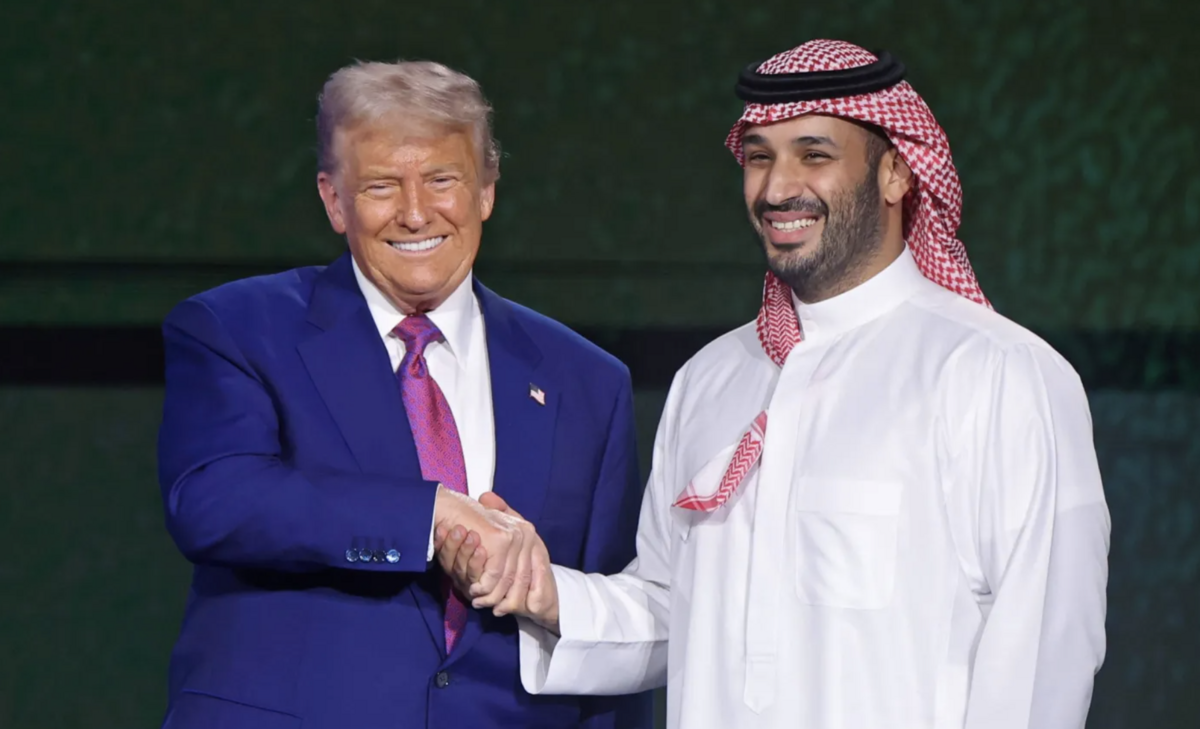
Saudi Crown Prince and Prime Minister Mohammed bin Salman and US President Donald Trump sent messages from Riyadh on Tuesday on all fronts, including investment, politics, and security.
While Prince Mohammed bin Salman stated that "joint work between Riyadh and Washington is not limited to economic cooperation, but extends to establishing security, stability, and peace in the region and the world," Trump believed that a "great dawn" awaits the Middle East if the region's leaders are able to seize this opportunity, describing Saudi Arabia as "the heart of the world."
Crown Prince's speech
During his keynote speech at the Saudi-US Investment Forum, held on the sidelines of US President Donald Trump's visit to Saudi Arabia on Tuesday, Saudi Crown Prince Mohammed bin Salman emphasized that Saudi-US economic relations have been deep-rooted for more than 90 years, spanning energy, knowledge, and innovation. He noted that Saudi Arabia is the United States' largest economic partner in the region, and that "joint investments" are one of the most important pillars of the two countries' economic relations.
The Saudi Crown Prince noted that the potential for partnership opportunities between the two countries amounts to $600 billion, and that the agreements announced at the Saudi-US Investment Forum amounted to $300 billion. He revealed that 40 percent of the Saudi Public Investment Fund's global investments are directed to the United States, highlighting the number of American companies investing in the Kingdom, which now numbers approximately 1,300.
Prince Mohammed bin Salman stated that "Saudi Vision 2030" has succeeded in bringing about an unprecedented economic transformation aimed at "diversifying the economy and empowering the private sector," emphasizing that "joint work between Riyadh and Washington is not limited to economic cooperation, but extends to establishing security, stability, and peace in the region and the world."
Trump's speech
For his part, US President Donald Trump, during his participation alongside the Saudi Crown Prince at the Saudi-US Investment Forum, said that a "great dawn" awaits the Middle East if the region's leaders are able to seize this opportunity, put aside differences, and focus on common interests. He noted that Saudi Arabia is "the heart and center of the world," and that the US economy is the best in the world, except for Saudi Arabia.
Trump affirmed that he would not hesitate to use military force to defend "our allies and friends" in Saudi Arabia. He expressed his appreciation for Saudi Arabia's role in the talks to end the war in Ukraine. He added that "the Saudi Crown Prince is the best representative of our strong allies," and that Riyadh is on its way to becoming a business hub for the entire world.
Trump noted that the people of Gaza "deserve a better future." He affirmed that his country is working to "stop the horrific war there," reiterating that "the war in Ukraine and the October 7 attack would not have happened if I had been president" at the time, and that he is working to stop them. He warned the "West" in this regard not to "get dragged into another unstoppable war."
Trump spoke about Lebanon, considering it "a victim of the policies of Iran and Hezbollah," and expressing his willingness to "help Lebanon build a better future with its neighbors and achieve economic development." He noted that he had heard that the new leadership in Lebanon is "professional and wants the best."
In his speech, Trump sent a message to Iran, saying that if Iran rejected the "olive branch," he would return to confront it through sanctions. He emphasized that he wanted to make a deal with Iran and that it would never obtain a nuclear weapon.
Regarding the Houthis in Yemen, Trump criticized former US President Joe Biden's decision to remove them from the terrorist list. He stated that his forces had launched more than 1,100 strikes against the Houthis, and that the group would not target any US vessels in the Red Sea again.
Trump praised King Salman's reception and hospitality during his previous visit eight years ago, saying he would never forget it. He also praised Prince Mohammed bin Salman's leadership, expressing his personal admiration for his work in "leading a new and modern Middle East." In front of the audience, he asked the Saudi Crown Prince if he slept at night, expressing his astonishment that most aspects of the Saudi economy now outperform oil, and that Saudi Arabia has proven that its critics were wrong over the past eight years.
Trump said that the "architectural genius" he saw in Saudi Arabia was unprecedented anywhere else in the world, noting that Riyadh has become the high-tech capital of the world. He noted that it is wonderful for Saudi Arabia to host the World Cup and other tournaments, saying that the transformations taking place in this region are incredible, as "the future of the Middle East begins here," as he put it. He praised the development of this region "thanks to its people," expressing his admiration for Saudi Arabia's preservation of its traditions and customs while looking to the future. He continued that the partnership between the two countries will remain strong, and that his administration is taking steps to strengthen this partnership.
Prior to their participation in the Saudi-US Investment Forum, Saudi Crown Prince Mohammed bin Salman, Chairman of the Council of Ministers, accompanied US President Donald Trump on a tour of the exhibition accompanying the Saudi-US Investment Forum. They were briefed on major projects of the Saudi Public Investment Fund.
The tour also included viewing models of the Saudi stadiums that will host the 2034 FIFA World Cup. They also listened to a presentation by Aramco CEO Amin Nasser, along with an explanation from the CEO of the Diriyah Gate Development Company. They also viewed a presentation on King Salman Park and the Red Sea Project. They also viewed a number of photos that adorned the exhibition, highlighting the developments in relations between the two countries over the decades.
PALESTINE
Tue 13 May 2025 9:16 pm - Jerusalem Time
The Israeli occupation bombed the European Hospital in Khan Yunis.
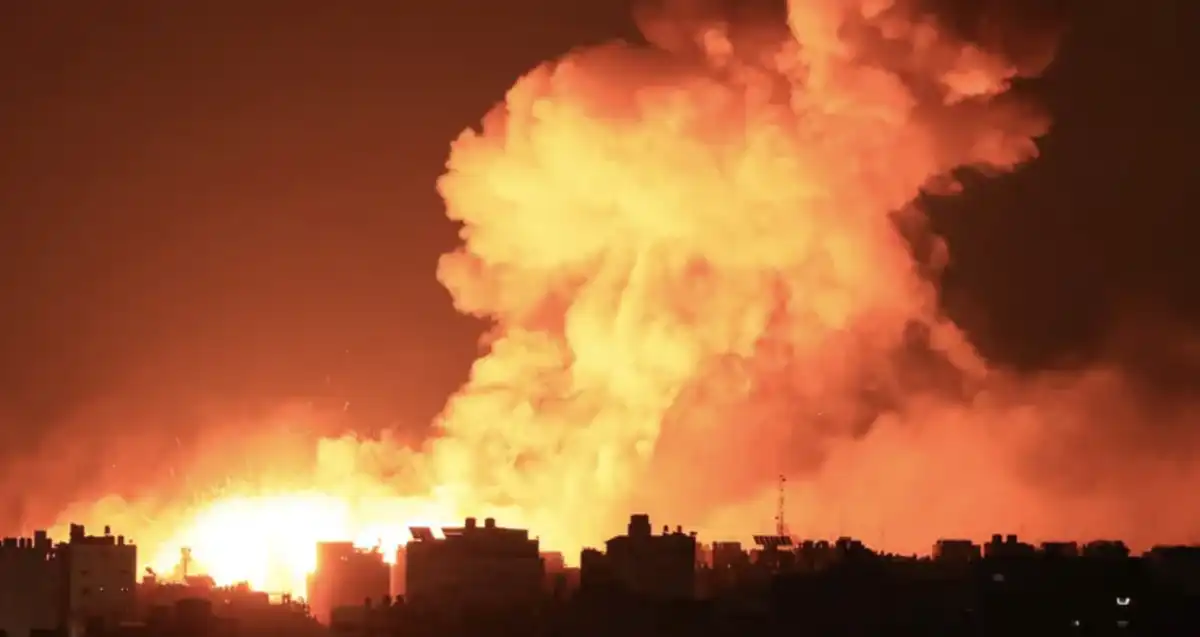
The Israeli occupation army admitted on Tuesday evening to bombing the Gaza European Hospital in Khan Yunis, south of the Gaza Strip. This is the second attack in less than 24 hours targeting a medical facility in the city.
The Israeli occupation army said, in a joint statement with the General Security Service (Shin Bet) published on the X platform, that it "carried out a precise attack a short time ago, targeting Hamas members who were inside a command and control complex built within the infrastructure beneath the European Hospital," it claimed.
There was no immediate comment from Hamas on the Israeli allegations, but it usually denies them.
The Ministry of Health in Gaza said that the European Gaza Hospital was subjected to several violent Israeli raids, and no casualties were reported as a result of the bombing until 16:19 (GMT).
Early Tuesday morning, the Israeli occupation forces targeted Nasser Medical Complex in Khan Yunis, the largest hospital in the Gaza Strip, killing and wounding several Palestinians receiving treatment there, including journalist Hassan Aslih, according to a statement from the government media office in Gaza.
According to the latest data from the Government Media Office in Gaza, released on May 8, 38 hospitals, 81 health centers, and 164 health facilities were destroyed, burned, or put out of service during the offensive.
The Israeli occupation has continued its widespread genocidal war against the Palestinians of the Gaza Strip since October 7, 2023, including killing, destruction, starvation, and forced displacement, ignoring all international appeals and orders from the International Court of Justice to halt it.
This US-backed war left more than 172,000 Palestinians dead and wounded, most of them children and women, and more than 11,000 missing.
ARAB AND WORLD
Tue 13 May 2025 7:31 pm - Jerusalem Time
Trump lifts sanctions on Syria, says Gazans deserve better
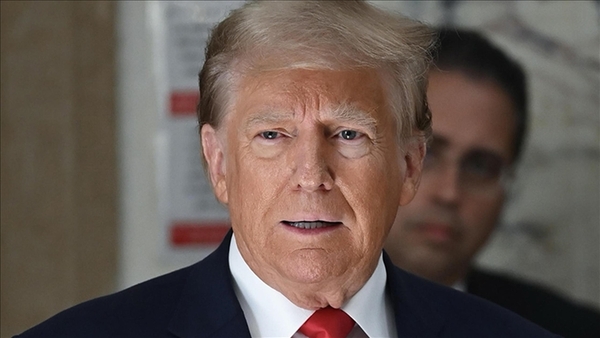
US President Donald Trump concluded his speech at an investment forum hosted by Saudi Arabia by praising his country and promoting himself as a man of peace who does not seek war, despite America's military might. He thus began a four-day Gulf tour focused on signing wide-ranging trade deals with some of the region's richest economies, although some of the agreements his administration praised were in the works before he took office.
Speaking to some of the world's business elite and the Saudi royal family, Trump revisited some of his favorite topics—including the US southern border and his victory in swing states in the November election—presenting a rosy picture of his economic policies. "The United States is the hottest country, except for your country," he told the crowd, referring by name to Crown Prince Mohammed bin Salman, the kingdom's de facto ruler. Trump also reiterated what he said last week: that the United States would halt military operations against the Houthis after the US military launched more than 1,100 airstrikes targeting the group in Yemen since mid-March.
The crowd applauded enthusiastically when Trump announced that he was ordering the end of sanctions on Syria. He said he made the decision "after discussing the situation in Syria with the Crown Prince, your Crown Prince, as well as with Turkish President Erdogan, who called me a few days ago and asked for something very similar."
"Oh my God," Trump added, laughing. "What am I doing for the Crown Prince?"
"The people of Gaza deserve a much better future," Trump said during his speech on Gaza. "But that will or will not happen as long as their leaders choose to kidnap, torture, and target innocent men, women, and children for political purposes."
ARAB AND WORLD
Tue 13 May 2025 7:23 pm - Jerusalem Time
White House: Trump to meet with Sharaa in Saudi Arabia on Wednesday
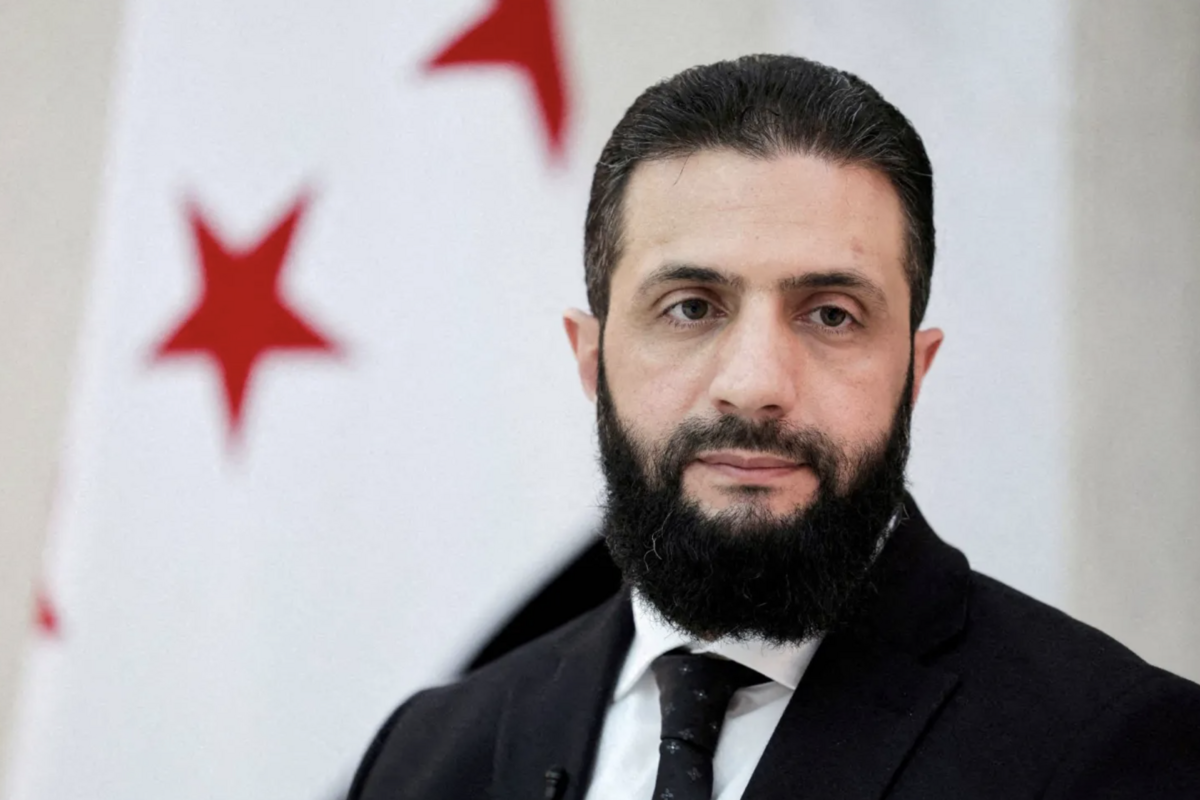
The White House said that US President Donald Trump will meet with Syrian President Ahmed al-Sharaa in Saudi Arabia on Wednesday.
The White House said, "The president agreed to greet the Syrian president during his visit to Saudi Arabia tomorrow," according to the Associated Press.
Sharaa assumed the presidency of Syria for a transitional period after the ouster of President Bashar al-Assad last December, ending a civil war that lasted for nearly 13 years.
On Tuesday, Saudi Crown Prince Mohammed bin Salman bin Abdulaziz, Chairman of the Council of Ministers, discussed with Trump bilateral relations and coordination efforts to enhance the strategic partnership in various fields.
During their co-chairing of the Saudi-US summit at Al-Yamamah Palace in Riyadh, the two sides discussed regional and international developments, issues of mutual interest, and efforts to achieve security and stability.
Trump was accorded an official reception at Al Yamamah Palace, where Arabian horses accompanied his procession, trumpets played to welcome him, and the US and Saudi national anthems were played.
PALESTINE
Tue 13 May 2025 6:48 pm - Jerusalem Time
Hamas reached out to a pro-Trump Palestinian-American activist for secret talks that led to Aidan Alexander's release.
Axios revealed Tuesday that the secret talks that led to Aidan Alexander's release were initiated by a Hamas official and met with Palestinian-American Bishara Bahbah, the former leader of Arab Americans for Trump, according to Israeli officials, a Palestinian official, and a US official who spoke to Axios.
Hamas was looking for a way to persuade US President Donald Trump to exert more pressure on Israel, and the Trump team was determined to secure the release of the last surviving American held in Gaza. Bahbah, the Palestinian-American businessman who helped Trump win over Arab voters in the 2024 elections, became the unlikely mediator.
A Hamas official outside Gaza contacted Bahbah in late April in hopes of initiating a dialogue with Trump envoy Steve Witkoff, according to the website. A senior Israeli official told Axios that this secret channel took some time to emerge, but gained momentum last week.
About 20 messages were exchanged between the two sides via phone calls and text messages to Bahbah over the past two weeks. Bahbah also spoke with Khalil al-Hayya, Hamas's chief negotiator, according to an informed source. Bahbah declined to comment.
With the help of Qatari officials and Bahbah, Witkoff eventually convinced the movement that releasing Alexander "for free" would carry significant weight with Trump.
At approximately 10:00 PM Doha time on Sunday (11/5/2025), Hamas officially agreed to release Alexander.
Witkoff then called Alexander's parents to deliver the news they had waited 583 days to hear. "It was a very emotional call from both sides," Adi's father told Axios.
Israel learned of the secret conversations about Alexander, an IDF soldier, not from the White House, but from its own intelligence services, according to Israeli officials who spoke to Axios.
When Ron Dermer, Israeli Prime Minister Benjamin Netanyahu's right-hand man, was in Washington last Thursday, his American counterparts did not mention the secret channel. An Israeli official said Dermer had to raise the matter himself with Witkoff. Witkoff assured Dermer that talks were underway, but made it clear that Israel would not have to offer anything in exchange for Alexander's release, and that Hamas had not yet agreed.
Alexander's release was the focus of unprecedented direct negotiations between Trump's envoy for prisoner affairs, Adam Boehler, and Hamas leaders in Qatar in March.
It appears that the Israeli government learned about these conversations from its intelligence services, which were spying on Hamas.
At the time, Trump was seeking a deal to release Alexander before his State of the Union address, and Hamas was demanding the release of 250 prisoners held in Israel in exchange.
Those talks reached a dead end three hours before Trump's speech. To this day, Trump's advisors believe that Netanyahu's aides leaked the proposal to the press with the intent of sabotaging it.
Witkoff had put forward a similar proposal last March, which would have seen Hamas release Alexander, and Trump publicly call for a temporary ceasefire and talks on a comprehensive deal, but Hamas rejected the offer, according to Axios.
Over the next few weeks, Israel gradually expanded its war on the besieged Gaza Strip, intensifying its airstrikes and continuing to block all humanitarian aid from entering.
On April 22, Qatari Prime Minister Mohammed bin Abdulrahman Al Thani visited the White House and met with Witkoff and Trump.
He put forward a Hamas-backed proposal for a comprehensive agreement to release all hostages and end the war, but the US message was that a short-term, partial agreement was the only solution available.
When he returned to Doha, Al Thani informed Hamas of this and encouraged it to make a gesture to Trump that might change his position, according to the officials.
Days later, a Hamas official contacted Bahbah.
On Sunday, while in talks with the Iranian foreign minister in Muscat regarding a possible nuclear deal, Witkoff also held phone calls with the prime minister of Qatar to pressure Hamas to conclude the agreement.
According to a Palestinian official, the Trump administration informed Hamas that if Alexander is released, the United States will push for a 70- to 90-day ceasefire—longer than previous offers—in exchange for the release of 10 hostages.
The official in charge of the offer said that negotiations on a final agreement would also begin during the ceasefire, and that the United States, Qatar, and Egypt would guarantee that the war would not resume as long as it continues. The US side did not confirm these details.
When Hamas agreed to release Alexander, Witkoff contacted Netanyahu and Dermer, as well as Alexander's family.
A senior US official downplayed Bishara's role, saying, "He was involved, but indirectly."
When Trump spoke with Netanyahu on Monday, he did not pressure him to end the war or cancel a large-scale ground operation in Gaza that Israel plans to launch once Trump's visit ends, according to Israeli officials. A US official with direct knowledge of the call declined to comment.
"Hamas did not receive any commitments from Trump," an Israeli official said. "They were hoping to make him more supportive, but that doesn't seem to have worked."
Another Israeli official said Hamas took a calculated risk: "They knew they would only get something between US sympathy and a clear statement from Trump. But it was worth the risk to them."
Experts believe that Trump, who is sometimes frustrated by Netanyahu's intransigence, may decide to apply more pressure soon.
Witkov and Israeli negotiators are heading to Doha on Tuesday to resume talks on a broader Gaza ceasefire and prisoner exchange deal.
Israeli officials believe the chances of progress are slim, given that both sides remain entrenched in their positions.
An Israeli official said: "We informed Witkov that he has four days to reach an agreement. After that, we will enter the Gaza Strip in force to occupy it."
PALESTINE
Tue 13 May 2025 6:01 pm - Jerusalem Time
Lazzarini: Israel is using food as a weapon of war against Gaza.
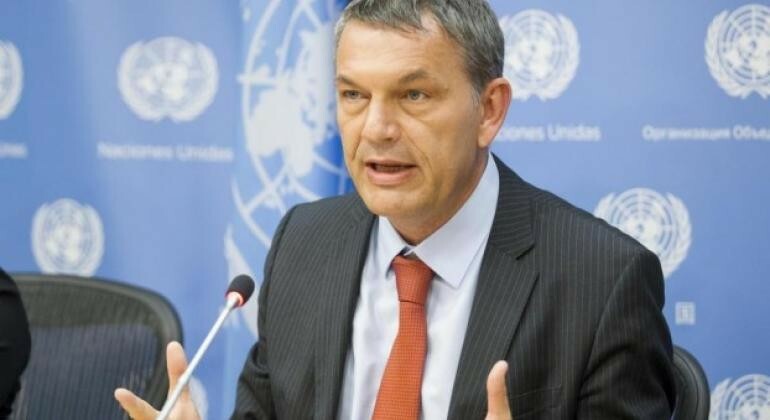
The Commissioner-General of the United Nations Relief and Works Agency for Palestine Refugees (UNRWA), Philippe Lazzarini, said that Israel is using food and humanitarian aid as a weapon of war in the Gaza Strip, describing it as a "war crime."
"I have no doubt that what we have been witnessing for the past 19 months, and particularly in the last two, is the deliberate use of food and aid to achieve political or military objectives in Gaza," Lazzarini added in a statement published on the agency's official website on Tuesday.
He continued, "This amounts to a war crime, and the International Court will issue its assessment, but what we see on the ground confirms this inhumane use."
Lazzarini emphasized that the suffering of Palestinians in the Gaza Strip has reached indescribable levels, saying, "I cannot find enough words to describe the misery and tragedy that the population is experiencing. It has been more than two months without any humanitarian assistance. Hunger is spreading, people are exhausted, and they are hungry. If the situation continues without intervention, people may not die from bombing, but from hunger."
He pointed out that international reports, including the Integrated Food Security Phase Classification report, confirm that Gaza is on the brink of famine, with all of the Strip's more than two million residents—nearly half of whom are children—suffering from severe food insecurity, meaning they are starving due to the Israeli blockade imposed on the Strip.
Lazzarini called on the international community to take immediate action to ensure the entry of humanitarian aid into Gaza, warning that the continuation of the blockade would lead to an unprecedented humanitarian catastrophe.
PALESTINE
Tue 13 May 2025 5:49 pm - Jerusalem Time
Occupation forces stormed the city of Al-Bireh for the third time since dawn today.

Israeli occupation forces stormed the city of Al-Bireh this evening, Tuesday, for the third time since dawn today.
According to security sources, an Israeli army force stormed the Umm al-Sharait neighborhood in the city, sparking clashes. No injuries were reported.
Israeli occupation forces stormed the city twice, at dawn and this morning, patrolling its streets with military vehicles. They arrested two young men, Nour Muhammad Rayhan and Ahmad Shahit, after raiding their homes in the Amari refugee camp. They also demolished the memorial to the martyrs Imad and Adel Awadallah.
ARAB AND WORLD
Tue 13 May 2025 5:17 pm - Jerusalem Time
President Trump's visit to Saudi Arabia in the eyes of Americans
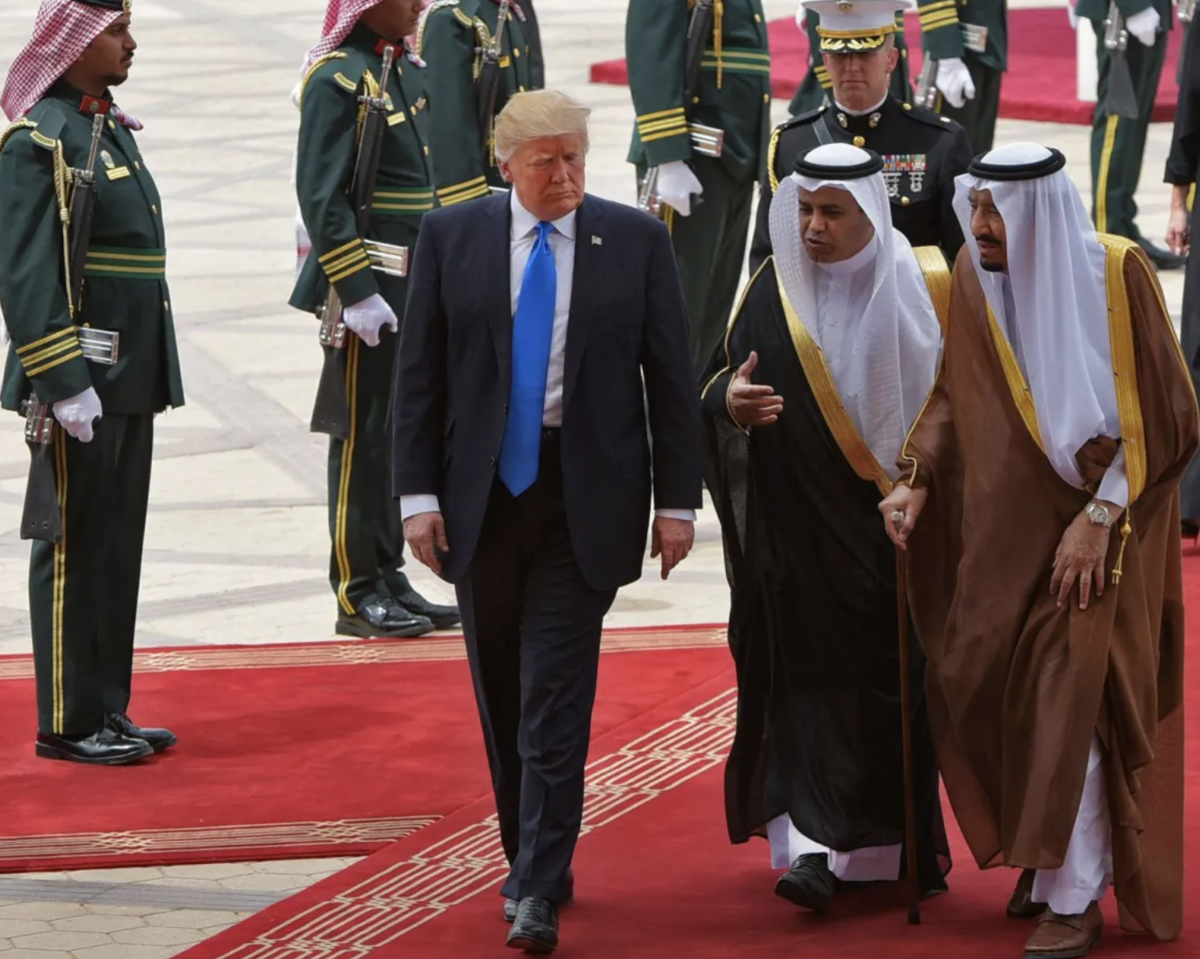
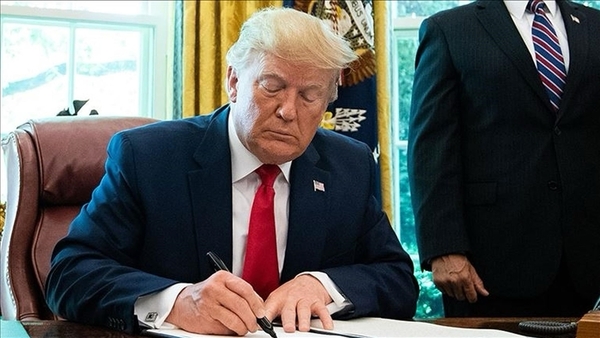
As all eyes turn to Riyadh for US President Donald Trump's visit, much has been said about the importance of this visit, which has been carefully prepared to address the challenges facing the region and the world. But how do Americans view this visit?
White House spokeswoman Caroline Leavitt emphasized the great importance President Trump places on his trip to Saudi Arabia, Qatar, and the UAE, saying, "President Trump seeks to strengthen relations with Middle Eastern countries on his first foreign trip.
Eight years after his first visit, President Trump is once again emphasizing his vision of a prosperous and successful Middle East, where the United States and Middle Eastern countries cooperate to defeat extremism and promote trade.
“This trip highlights how we stand on the cusp of a golden age for America and the Middle East, united by a shared vision of stability, mutual respect, seizing opportunity, and making deals,” Levitt added.
Deals with the Dealmaker
President Trump is accompanied on his visit by senior US officials, including Secretary of State Marco Rubio, Secretary of Defense Pete Hegseth, Secretary of the Treasury Scott Bessent, Secretary of Commerce Howard Lutnick, Presidential Envoy Steve Witkoff, and David Sachs, White House chief of staff on artificial intelligence and cryptocurrency.
He is also accompanied by a high-level delegation of CEOs of major American companies, such as Larry Fink, CEO of BlackRock, the world's largest investment management firm with assets exceeding $10 billion; Stephen Swartzman, CEO of Blackstone Group, one of the largest private investment management firms with assets valued at $1.2 trillion; Jenny Johnson, CEO of Franklin Templeton; Ruth Porritt, CEO of Alphabet; Jane Fraser, CEO of Citigroup; Jeff Bezos, CEO of Amazon; Elon Musk, CEO of Tesla; Mark Zuckerberg, CEO of Meta; Sam Alterman, CEO of OpenAI; and Kelly Ortberg, CEO of Boeing, in addition to representatives of industrial companies and leaders of the technology and artificial intelligence industries.
President Trump's choice of Saudi Arabia as the destination for his first foreign visit during his first term underscores Riyadh's stature and the strong friendship between President Trump, King Salman bin Abdulaziz, and Crown Prince Mohammed bin Salman.
missiles and aircraft
Ambassador Dennis Ross, a senior adviser to the Washington Institute and a leading US negotiator on the Middle East peace process under several Republican and Democratic administrations, says that President Trump views the relationship with the Saudis, Emiratis, and Qataris as extremely important economically and financially for the United States, and that it reflects his priorities more than what could be described as geopolitical concerns. During his first visit to Saudi Arabia in 2017, Trump announced numerous projects worth hundreds of billions, but there was a gap between what was announced and what was ultimately achieved.
The difference with this visit is that there is an intention to conclude deals that will be completed more quickly, because much of the preparatory work was completed during the previous Biden administration, and Trump will be able to complete these deals.
Ross noted that expectations are high for the announcement of defense deals with Gulf states, arms sales, a Qatari purchase of Boeing aircraft, Saudi-American cooperation in artificial intelligence, and cooperation on peaceful nuclear energy programs. He also wants American companies to achieve significant success in the region.
Emile Hokaim, Director of Regional Security at the International Institute for Strategic Studies, agreed, noting that Saudi Arabia has reached a high level of geopolitical maturity, with Riyadh becoming a destination for entrepreneurs and industrialists, the UAE a global hub for finance and technology, and Qatar cementing its position as a valuable diplomatic player on important regional issues.
Jon Alterman, senior vice president for the Center for Strategic and International Studies, notes that “deal-making” will be the overarching theme of the visit, which will give President Trump some victories by concluding trade and investment deals in areas such as artificial intelligence and cryptocurrencies. There will also be extensive discussions about the administration’s talks with Iran, how to ensure that Iranian proxies do not return to the region, the future of Syria, how to move toward ending the war in Gaza, and how to push Hamas to relinquish power. The ongoing instability in Libya, Yemen, and Sudan will also be discussed.
Alterman adds that the Gulf partners will put all these strategic issues and challenges on the president's table, and that President Trump will also present his vision for the US competition with China. Alterman expects President Trump to seek quick victories and gains, and to utilize American economic and military power. He explains that there are fears that the failure of negotiations with Iran will open the door to another option: a military confrontation, which would expose the Gulf states to danger and drag the United States into an open war in the Middle East.
Israel and Gaza
The Israeli war on Gaza is expected to dominate much of the Gulf-US discussions. Dennis Ross ruled out any talk of normalization with Israel before the war in Gaza ends and a credible political horizon for the establishment of a Palestinian state is found. He said that the discussion will focus on what the Palestinians must do to reach a position that allows them to establish a viable state without independent militias. This also requires commitments from the Israeli side. Minister Smotrich cannot be allowed to continue making the establishment of a Palestinian state impossible. This will depend on the type of discussions that President Trump will conduct in the region, and on ending the war in Gaza in a practical way that produces a political horizon for the Palestinians.
In recent weeks, a chill has become apparent between President Trump and Israeli Prime Minister Benjamin Netanyahu, particularly since Trump's trip to the region did not include a visit to Israel, amid anticipation of a US announcement regarding a deal to release hostages and a 45-day ceasefire in exchange for the release of Palestinian prisoners.
Ambassador Dennis Ross emphasized that Trump will not be able to end the war during his visit, and that he will most likely be able to reach a partial ceasefire agreement and release some hostages to avoid unrest during his visit to the region.
He described this move as a major blow to Israel, because Trump has shown he is willing to act completely independently of the Israelis. No administration has ever spoken directly with Hamas, and the Israelis were surprised by these talks, Trump's announcement of direct negotiations with the Iranians, and the agreement with the Houthis. Trump has shown his support for Israel, but he also adopts positions that indicate he is willing to act in a way that reflects what he believes is important to the United States' interests. It will be difficult for Netanyahu to say no to President Trump.
Steven Cook, a senior fellow at the Center for Foreign Relations, believes there will likely be a pause in Israeli military operations in Gaza during the president's visit, pointing to Trump's recent interest in delivering food and humanitarian aid to Palestinians in the Gaza Strip, which Israel has blocked. He says that while the trip is about Trump's economic policies and making deals, there's no way to avoid geopolitics; therefore, US talks with Iran will be high on the agenda. The situation has changed with Saudi Arabia and the UAE establishing better relations with Iran in recent years, but there are concerns about how the money Iran will receive from sanctions relief if a deal is reached.
Saudi intelligence
James Zogby, director of the Arab American Institute, said it was surprising that Trump would not visit Israel on this trip, but it's difficult to predict what the president is thinking, what he will do today and then reverse tomorrow. He may be trying to send a message to Netanyahu: "You don't make the decisions." But is this position permanent, or will it change in two or three weeks from now?
According to a poll conducted by the Arab Institute, Zogby indicated that President Trump enjoys widespread support among Americans for forcing Israel to surrender and imposing sanctions on it if it does not comply with American demands. This contrasts with the polls conducted under former President Joe Biden, where Democrats opposed Israel's actions, called for a ceasefire, and demanded a reduction in American aid as a means of pressure. Republicans, on the other hand, supported Israel at a nearly 100 percent rate. Now, the tables have turned: a large majority of Democrats remain disturbed by Israel's actions, but now a majority of Republicans say the same. The group leading this trend are evangelicals, who have traditionally taken a steadfast supportive stance toward everything Israel does, especially younger evangelicals.
Zogby emphasized that the Gulf states could have a significant role in influencing President Trump's positions on key issues in the Middle East. He said, "I believe that Saudi officials are playing a smart role in dealing with President Trump, and they are not making any concessions to him. They know that Trump wants trade deals and US arms sales, and he wants to attract direct Gulf investment to the United States. Therefore, Saudi officials were extremely smart in striving to achieve a kind of balance between East and West."
Zogby strongly believes that all regional issues related to Lebanon, Syria, and Iran will be on the table, despite the lack of clarity regarding Trump's strategy toward Syria and the steps he intends to take there. He ruled out the possibility of a military confrontation between the United States and Iran, not only because Trump does not want a war that would exacerbate relations with China and Russia and lead to extremely negative repercussions for oil prices, but also from the perspective of the Gulf states' keenness to maintain stability in the region, and they do not want to see a war negatively impact their development plans.
Iran and its nuclear program
Ross ruled out a nuclear arms race in the region, suggesting that Trump would likely discuss Saudi Arabia's peaceful nuclear program, a large part of which the United States might have a role in managing, as happened with the American assistance provided to develop the Saudi oil industry. He said: "We will have to see how this will relate to the negotiations the Trump administration is conducting with the Iranians." “Because Tehran wants a deal, and President Trump wants to make a deal,” he said, regarding reports of a previously unknown secret nuclear facility. He said that this also happened with the Obama administration in 2009, with the discovery of the Fordow facility. “This could actually affect the negotiations and could increase the sense of urgency to reach an agreement. It will certainly add demands to what is required to verify the peaceful nature of the program, to obtain guarantees of access to monitor all sites, including declared and undeclared military sites, and to ensure that nothing secret is going on. If there is no such access, there will be no agreement. I think this will create greater pressure to realize that something has to be done, to reach a diplomatic outcome, and to be prepared to use force if diplomacy does not succeed.”
Regarding the extent of similarity between what the Trump administration could achieve in the new agreement and the agreement concluded by the Obama administration in 2015, Ross said: “It would be different if Iran stopped enriching uranium, and it would be similar if it insisted on enriching uranium. Perhaps the difference would be the tightening of the sunset clause, meaning that whatever is agreed upon would remain in effect forever, or at least for 25 years. There are other possibilities: Iran would be allowed to enrich, but with a smaller nuclear infrastructure than was permitted in the JCPOA, or they would be allowed to enrich on the condition that they send what they enrich abroad, and the decisive point would be enrichment.”
oil
Regarding oil prices and President Trump's desire to lower them to ease inflationary pressures in the United States, which is against the interests of the Gulf states, Dennis Ross indicated that a compromise could be reached for a short-term increase in oil production, allowing the price to continue to fall. The argument that President Trump could make is that this is necessary not only because of inflation concerns, but also to ensure that a recession does not occur, and such a recession would lead to a reduction in demand, leaving OPEC in a bad position.
Clayton Siegel, a researcher with the Energy Security Program at the Center for Strategic and International Studies, noted that oil prices have fallen by about 10 percent, with expectations of a reduction in oil demand. He asserted that President Trump is focused heavily on lowering oil prices, and that increased production by Gulf states would satisfy Trump's ambitions and pave the way for further deals in other areas.
Russian-Ukrainian war
Saudi Arabia played a prominent role in hosting and sponsoring US-Ukrainian and US-Russian talks to find a way to end the war. Despite the US administration's efforts, the situation appears to be significantly complicated, and President Trump has become closer to the Ukrainian position than to the Russian side. Ambassador Ross says that the only thing that will change the equation is for Vladimir Putin to change his behavior. He rejected the idea of a temporary ceasefire, which is an American idea, and he rejected any kind of ceasefire, and he was not prepared to make some concessions. I believe that President Trump realized that if Russia did not make reasonable concessions, it would push him to make a decision to continue supporting Ukraine militarily and to use Russia's $300 billion in assets for reconstruction. I believe that the only thing that could influence Russia's behavior is Putin's perception that the United States has run out of patience with him.
PALESTINE
Tue 13 May 2025 3:59 pm - Jerusalem Time
Gaza Health Ministry: 46 dead in Israeli airstrikes on the Gaza Strip in 24 hours
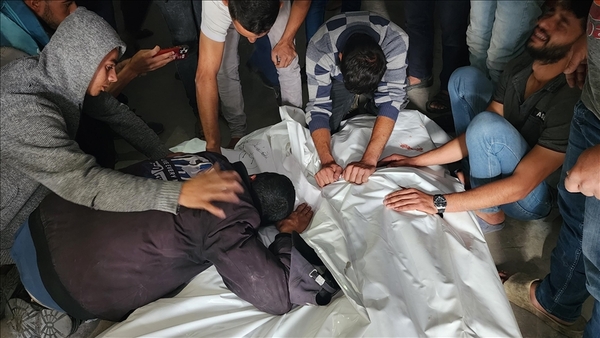
The Ministry of Health in the Gaza Strip announced on Tuesday that 46 dead and 73 wounded people arrived at hospitals in the Strip over the past 24 hours, as a result of the ongoing Israeli aggression.
The ministry explained, in its daily statistical report, that a number of victims remain under the rubble and on the streets, with ambulance and civil defense crews unable to reach them due to the ongoing shelling and the lack of safe corridors.
This brings the death toll from the Israeli occupation's aggression on Gaza since October 2023 to 52,908 dead and 119,721 wounded, including 2,780 martyrs and 7,680 wounded since the occupation resumed its aggression on March 18.
PALESTINE
Tue 13 May 2025 3:06 pm - Jerusalem Time
Qalandia: Occupation forces shoot and beat a young man
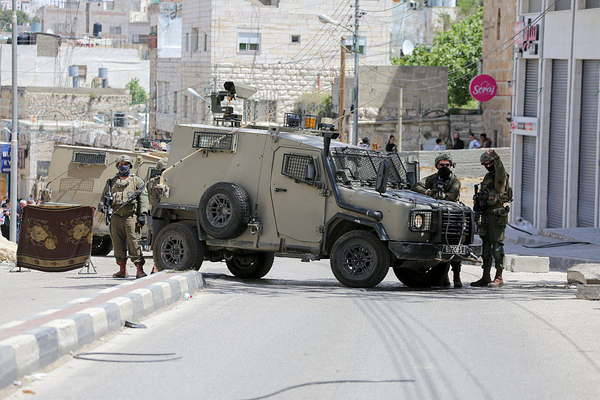
Israeli occupation soldiers assaulted a young man on Tuesday after he was shot at the entrance to the Qalandia refugee camp, north of occupied Jerusalem.
Local sources reported that Israeli occupation forces opened fire at the young man, wounding him in the legs, before attacking him and severely beating him during a raid on the entrance to Qalandia camp.
PALESTINE
Tue 13 May 2025 2:20 pm - Jerusalem Time
Israeli expert: Netanyahu is rapidly approaching a direct clash with Trump
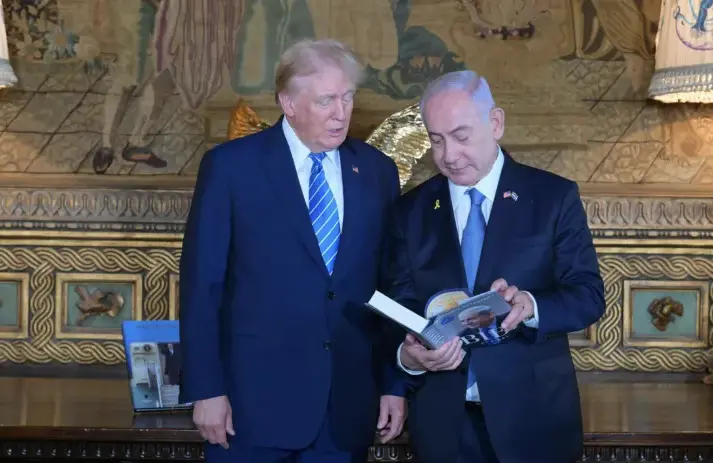
US-Israeli relations, once described as "special," have deteriorated significantly recently, "which could also lead to the end of six decades of deep partnership in values, politics, and strategy that has been growing over the years," according to Israeli expert on American affairs, Professor Abraham Ben-Zvi.
In an article published Tuesday in the Israel Hayom newspaper, Ben-Zvi noted that the impression is that US President Donald Trump and Israeli Prime Minister Benjamin Netanyahu are "rapidly approaching a head-on collision on critical regional and global issues."
He added that "a swift end to the war in Gaza is seen by Trump as a necessary step in shaping and building his legacy as a tenacious leader who tirelessly seeks to resolve, or at least stabilize, serious conflicts and crises," just as he halted the confrontation between India and Pakistan and may succeed in ending the war between Russia and Ukraine.
According to Ben-Zvi, “The Gaza front holds special significance for Trump’s aspirations to appear as a skilled mediator, as this is a necessary condition for advancing an ambitious plan centered on reshaping the entire Middle East based on American hegemony, supposedly based on deals between Washington and the Gulf states.” Through these deals, the Trump administration would provide modern weapons in exchange for massive Gulf state investments in the American economy, “so that, in the White House’s view, a broad strategic and political alliance could be formed that, with American support and backing, could confront the Iranian threat or any other threat that challenges the stability of the alliance being built.”
He considered that "the central link in this alliance, namely Israeli-Saudi normalization, remains incomplete, because the preconditions set by Washington's preferred partners in Saudi Arabia—an end to the war in Gaza and a preliminary Israeli statement on a political horizon for the Palestinian issue—have not yet been met. Benjamin Netanyahu's government has thus far opted for expanding the ground invasion of Gaza, preferring it to entering the new Middle East as a central player."
He continued, "On the eve of Trump's visit to Saudi Arabia, the UAE, and Qatar, which began today, it is no longer possible to hide the widening rifts between the two allies. In effect, the 'special relationship' between Israel and the United States, the importance of which cannot be underestimated, finds itself under a historic pliers: a real threat to these relations is rising from the left wing of the Democratic Party, while at the same time there are tendencies toward isolationism from the isolationist wing of the Republican Party."
Ben-Zvi observed that "all of this led to growing frustration, anger, and disappointment in the White House toward Netanyahu. At the beginning of the crisis, the ultimate expression of frustration was to hint to Netanyahu that he was 'trampling' on American feet on important issues for them, such as announcing negotiations with Iran without consulting Israel, agreeing to a ceasefire with the Houthis while rocket fire at Israel continued, and bypassing Israel in the political campaign in the region."
"Expressions of discontent are now evident, and it seems that Trump and (his special envoy Steve) Witkoff are having difficulty understanding the strategic logic behind Israel's continued entanglement in the Gaza quagmire. This seems to them to be a pointless and pointless fight. Given that we are talking about a president who is quick to anger and verbally abrasive, and who seeks rapid progress and immediate achievements, it is possible to estimate that in response to Netanyahu's intransigence, a major confrontation will emerge."
According to Ben-Zvi, the direct negotiations between the Trump administration and Hamas, which resulted in the release of Israeli soldier Idan Alexander, who holds American citizenship, "are just one of many steps that could further cloud the sky over the special relationship. Later, things could escalate to the point of Hamas being included in the government in Gaza the next day, pursuing a nuclear agreement with Iran without consulting Israel, and endorsing the Saudi civilian nuclear program without an Israeli green light."
Ben-Zvi concluded, "It currently appears that there is a convergence between the Trump administration's understanding of strategic goals and the positions of the broader Israeli public. This reality makes it difficult for Netanyahu to wage a political battle against the current White House similar to the one he waged against the Obama administration. He and his government, who have prioritized their political survival, lack sufficiently broad domestic Israeli support to successfully wage such a battle in the long term."
PALESTINE
Tue 13 May 2025 2:04 pm - Jerusalem Time
The death toll in the Gaza Strip rises to 52,908.
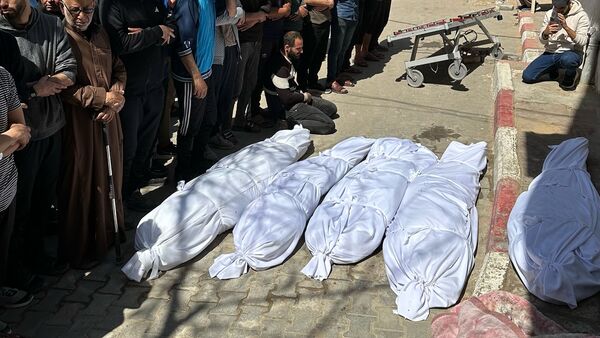
The death toll from the genocidal war and aggression waged by the Israeli occupation forces against the Gaza Strip has risen to 52,908 dead and 119,721 wounded since October 7, 2023.
Medical sources reported that the death toll includes 2,780 dead and 7,680 wounded since March 18, when the occupation resumed its aggression on the Gaza Strip following the ceasefire agreement.
Over the past 24 hours, 46 martyrs arrived at Gaza Strip hospitals, including 31 new victims. Fifteen more were recovered, and 73 others were injured. A number of victims remain buried under the rubble and debris, and on the streets, unable to be reached by ambulances and civil defense teams.
PALESTINE
Tue 13 May 2025 1:16 pm - Jerusalem Time
Israel is pushing for de facto annexation of the West Bank: Bills allowing settlers to purchase land inside Palestinian towns.
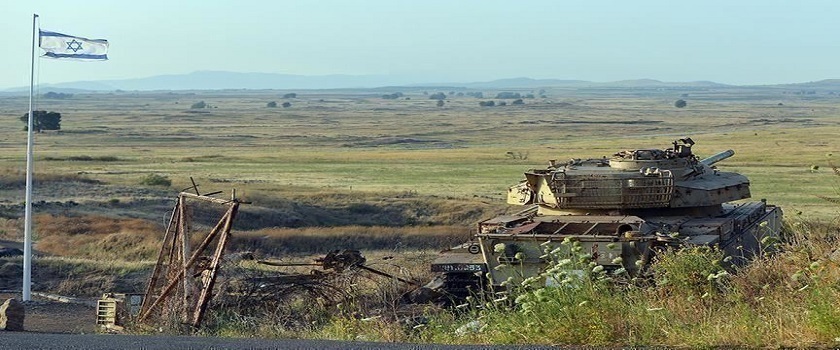
The Israeli government continues to pass a series of laws and measures that consolidate control over the occupied West Bank, in an effort to transform the creeping annexation plan into a permanent legal and demographic reality, with a focus on strengthening settlements and eliminating any remaining Palestinian sovereignty over the land.
The Knesset's Foreign Affairs and Defense Committee is holding deliberations on Tuesday on a new bill titled "Abolishing Discrimination in Land Purchases in Judea and Samaria," which would allow settlers to purchase land within Palestinian cities and towns in the West Bank, and even allow the establishment of settlements outside the official regulatory framework and without direct government oversight, according to Yedioth Ahronoth.
Legislative escalation within the "sovereignty revolution"
This bill is part of a package of legislation pushed by the ruling right-wing coalition parties, aimed at accelerating de facto annexation, amidst the international community's preoccupation, particularly the United States, with the ongoing Israeli war on the Gaza Strip.
In a parallel context, the Knesset's Constitution, Law and Justice Committee approved an amendment last week to adopt the term "Judea and Samaria" as the official name for the West Bank in all Israeli laws. This symbolic step carries legal implications, aiming to legitimize settlements and integrate the West Bank into the Israeli legal system.
Connecting settlements to Israeli infrastructure
The Knesset, in the presence of Energy Minister Eli Cohen, is expected to discuss tomorrow a project to connect settlements in the West Bank to the Israeli natural gas grid, which constitutes an expansion of the imposition of de facto sovereignty over Area C.
Controlling antiquities... and freezing clearing funds
The government is also working to transfer oversight of archaeological sites from the Israeli military to the State Antiquities Authority, strengthening the occupation's control over Palestinian cultural and historical resources. Israel has already begun excavations in the historic town of Sebastia in the northern West Bank, setting a dangerous precedent that paves the way for the transformation of archaeological sites into tools for justifying settlement expansion.
In the financial context, a bill is being discussed to freeze Palestinian clearance revenues, under the pretext of compensating Israel for alleged damages resulting from the theft of Israeli cars. This constitutes an additional punitive measure aimed at financially strangling the Palestinian Authority.
Land ownership registration... and the deepest legal blow
The most dangerous decision recently approved by the Israeli cabinet is a decision allowing the registration of land ownership rights in Area C in the West Bank in the Israeli land registry (tabu), a measure that has not been taken since 1967 and constitutes a clear violation of international law.
According to the decision, any land without official proof of ownership will be considered "state land" and registered in favor of the occupation authorities, threatening thousands of dunams whose Palestinian owners face procedural and legal difficulties in proving ownership.
In a joint statement, Defense and Finance Ministers Yisrael Katz and Bezalel Smotrich said the decision would prevent the Palestinian Authority from implementing parallel registration procedures and strip its documents of any legal validity.
Smotrich: "The Sovereignty Revolution in Judea and Samaria"
Smotrich praised the decision, calling it "a pivotal moment in the government-led revolution for effective sovereignty." He said, "For the first time, Israel is assuming civil responsibility for the area within the framework of permanent sovereignty, beginning with a comprehensive campaign to settle the land and end the PA's attempts to control open areas."
Researchers warn: This is a de facto annexation.
Dr. Yohanan Tzoref, a researcher at the Institute for National Security Studies at Tel Aviv University, described the recent steps as "unofficial annexation," asserting that Israel is now emerging as a state that rejects any political settlement or possible coexistence. He warned of strategic repercussions that could affect Israel's regional and international standing.
Arabs 48
PALESTINE
Tue 13 May 2025 12:56 pm - Jerusalem Time
The PA security forces killed a young man with gunfire in Tubas.

A young man was shot dead by Palestinian Authority security forces in Tubas in the occupied West Bank on Tuesday.
Local sources reported that the slain young man was Rami Zahran, noting that PA security forces deployed around his vehicle after he was killed near the Far'a refugee camp in Tubas.
Palestinian security forces spokesman Anwar Rajab said, "As part of the ongoing efforts by Palestinian security forces to enforce order and enforce the law, while a security force was carrying out an arrest operation against a wanted outlaw in the Tubas Governorate, the force was surprised to come under direct fire from the outlaws, which posed a real threat to the lives of the force members and the security of citizens in the area."
He added, "Faced with this immediate threat, the security force was forced to respond to the source of the fire, in accordance with established rules of engagement. This resulted in the injury of one of the shooters, who was later revealed to be a symbol of the security chaos in the region. He later succumbed to his injuries."
ARAB AND WORLD
Tue 13 May 2025 12:47 pm - Jerusalem Time
In an unprecedented move, the British Parliament commemorates the 77th anniversary of the Nakba in partnership with the Palestinian Embassy.
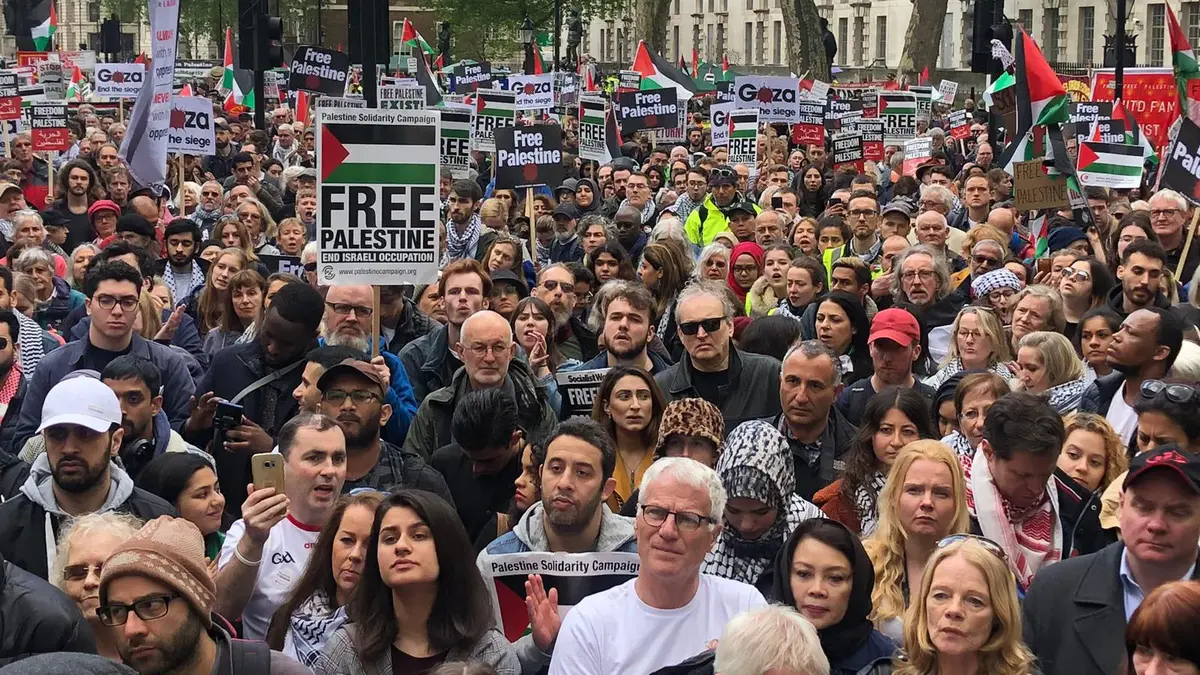
The British Parliament commemorated the 77th anniversary of the 1948 Nakba, in partnership with the Embassy of the State of Palestine, at the Parliament Building in London. The event was attended by a number of members of Parliament from major political parties, along with members of the Arab and foreign diplomatic corps operating in Britain, and representatives of the Palestinian, Arab, and Islamic communities in the United Kingdom.
The event included speeches by: Ambassador of the State of Palestine to the United Kingdom, Husam Zomlot; Member of Parliament for the British Labour Party, Andrew Bex; Member of Parliament for the Conservative Party, Kate Malthouse; and Member of Parliament for the Scottish National Party, Brendan O'Hara.
In his speech, Zomlot said that the Palestinian Nakba is the foundation of the Palestinian struggle for freedom and justice, adding that Israel has violated all legal and moral boundaries through its ongoing massacres against our people in the Gaza Strip, where the number of Palestinian martyrs has exceeded 60,000, while the Israeli occupation forces continue to terrorize and deport tens of thousands of Palestinians in the West Bank, and unleash settlers to attack our defenseless people in East Jerusalem and the rest of the occupied territories.
Zamlot emphasized that the Palestinian people's rights are becoming increasingly clear despite all these massacres and genocide, pointing to the historical, legal, and humanitarian responsibility that Britain bears for the Nakba that befell the Palestinian people at the hands of Zionist gangs in 1948.
He called on the British government not to delay recognizing the State of Palestine and not to abandon its obligations under international law, emphasizing the need for the United Kingdom to play a leading, rather than subservient, role in this context.
Zamlot concluded his speech by emphasizing that the Palestinian people's Nakba only strengthens their resolve and determination to achieve their independent state with Jerusalem as its capital, and that the memory of the Nakba remains a torch carried by generations until liberation and the fulfillment of the Palestinian people's hopes and aspirations.
PALESTINE
Tue 13 May 2025 12:34 pm - Jerusalem Time
Hamas: Alexander's return is the result of serious contacts with the US administration

Hamas said on Tuesday that "the return of Idan Alexander is the result of serious contacts with the US administration and the efforts of mediators," noting that it is not the result of aggression or the illusion of military pressure.
Hamas added in a statement, "Netanyahu is misleading his people and has failed to recover his prisoners through aggression."
Hamas stressed that the return of Idan Alexander confirms that serious negotiations and a prisoner exchange deal are the only way to return the prisoners and stop the war, according to the statement.
PALESTINE
Tue 13 May 2025 12:22 pm - Jerusalem Time
Dead and wounded in the Gaza Strip
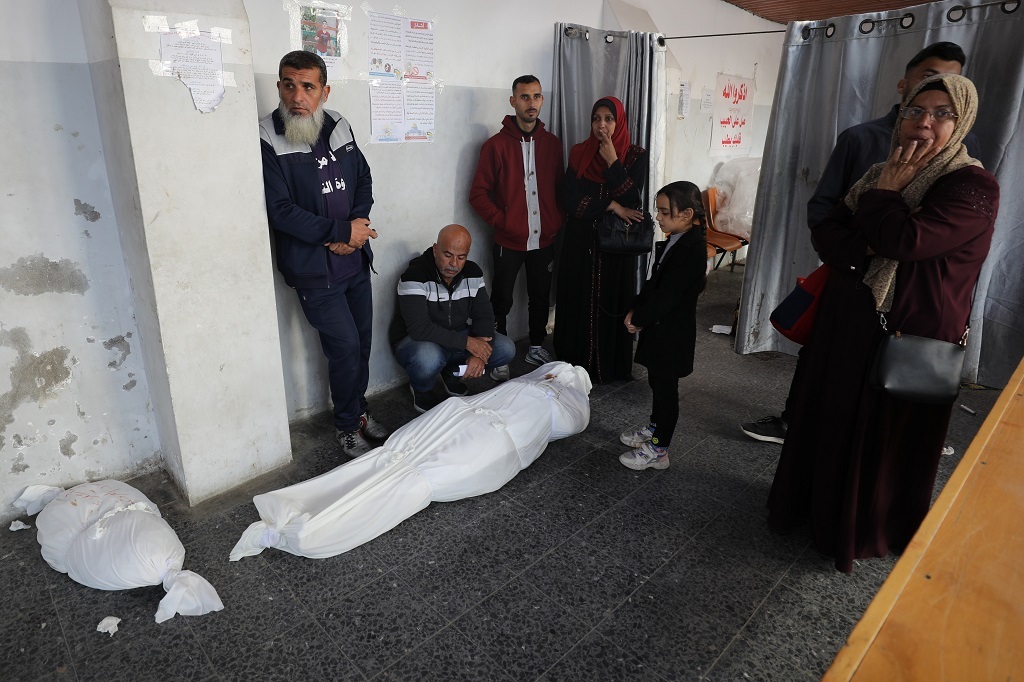
Five citizens were killed and others injured on Tuesday in Israeli airstrikes and shelling across the Gaza Strip.
Medical sources reported that a drone dropped a bomb on a gathering of civilians in the al-Bureij refugee camp in the central Gaza Strip, killing one civilian and wounding others.
The same sources added that a person was killed by a drone strike northwest of the Nuseirat camp.
It pointed out that three citizens were killed in the bombing of the Shuja'iyya neighborhood, east of Gaza City, by Israeli warplanes.
Since October 7, 2023, the Israeli occupation forces have continued their aggression on the Gaza Strip, which has so far resulted in the death of 52,862 citizens, the majority of whom are children and women, and the injury of 119,648 others, according to a preliminary toll. A number of victims remain under the rubble and in the streets, as ambulance and rescue crews are unable to reach them.
PALESTINE
Tue 13 May 2025 11:12 am - Jerusalem Time
UN: The number of daily meals provided to citizens in the Gaza Strip has decreased by 70%.
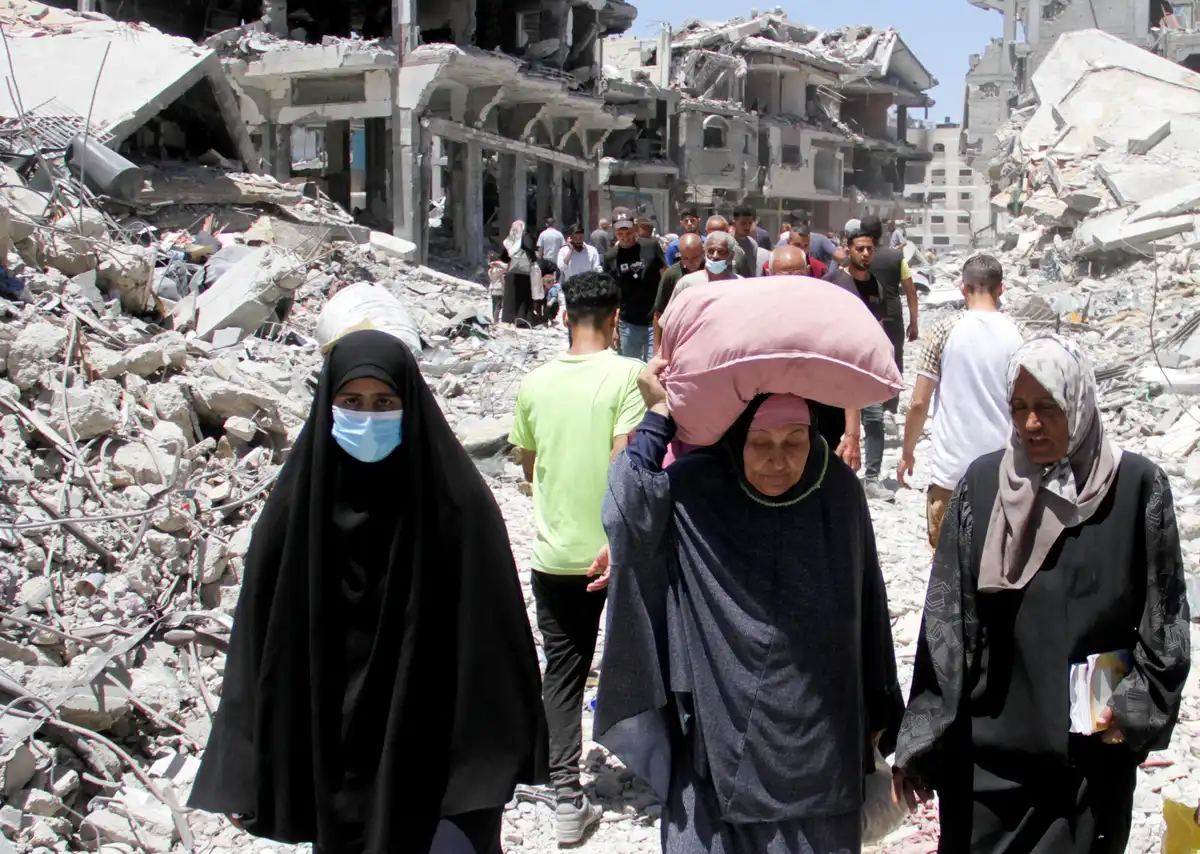
UN spokesman Stéphane Dujarric said the number of daily meals provided to citizens in the Gaza Strip decreased by 70 percent this week compared to last week.
In statements made at a press conference at the United Nations headquarters in New York on Tuesday, he stressed the importance of UN teams entering Gaza and identifying citizens' needs on the ground.
He pointed out that the number of daily meals in the Gaza Strip decreased from 840,000 meals last week to 260,000, a 70 percent decline.
Dujarric stressed that humanitarian aid is not limited to food alone.
He pointed out the need to provide water, health, nutrition, education, and protection services directly to Palestinians in the Gaza Strip.
The UN spokesman warned that fuel is running out in health and water facilities in the Gaza Strip, which Israel has maintained a tight blockade on since last March.
He added: "Healthcare in Gaza is on the brink of collapse, with hospitals facing large numbers of wounded amid a severe shortage of basic supplies, equipment, blood, and medical personnel."
The World Health Organization had previously stated that preventing immediate access to food and essential supplies in the Gaza Strip was causing "further deaths and a slide into famine."
She pointed to the Integrated Food Security Phase Classification (IPC) analysis released on Monday, which stated that 470,000 Gazans are facing "catastrophic levels of hunger (IPC Phase 5)," and that the entire population is suffering from severe food insecurity.
The report also noted that approximately 71,000 children and more than 17,000 mothers are expected to require urgent treatment for severe malnutrition.
ARAB AND WORLD
Tue 13 May 2025 10:51 am - Jerusalem Time
Trump arrives in Saudi Arabia on his first tour of the region since taking office.
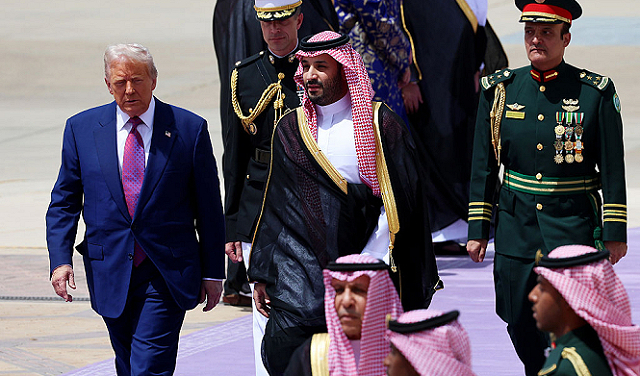
US President Donald Trump arrived in the Saudi capital, Riyadh, on Tuesday, on his first tour of the Middle East since his re-inauguration as US president last January.
Saudi Arabia's Al-Ekhbariya channel broadcast live footage of Trump's plane arriving at King Khalid International Airport in Riyadh.
This tour, which runs from May 13 to 16, also includes Qatar and the UAE. It will be his first trip outside the United States during his second presidential term, although he made a brief visit to Rome to attend the funeral of Pope Francis. The White House confirmed that he is looking forward to a "historic return" to the region.
Eight years ago, Trump also chose Saudi Arabia as the destination for his first foreign trip as president, where he posed for a photo with a glowing crystal and participated in a sword dance.
His decision to bypass his traditional Western allies and travel to the Gulf states once again underscores their growing geopolitical importance, as well as his distinguished trade relations in the region.
In the days leading up to the Gulf trip, the White House played a pivotal role in brokering a ceasefire between India and Pakistan, the release of an Israeli-American hostage in Gaza by Hamas, and another round of nuclear talks with Iran.
These diplomatic initiatives came after Trump's surprise announcement last week that he had agreed to a truce with the Houthis in Yemen, after nearly two months of targeting them with near-daily airstrikes.
The focus of his Gulf tour is likely to be on concluding trade agreements.
Riyadh, Doha, and Abu Dhabi are expected to welcome Trump with a grand welcome, with agreements likely to cover the defense, aviation, energy, and artificial intelligence sectors.
White House spokeswoman Caroline Leavitt said ahead of the visit that "the president looks forward to embarking on his historic return to the Middle East," promoting a vision "in which extremism is defeated rather than trade and cultural exchanges."
The Gulf states consolidated their position as key diplomatic partners during Trump's second term.
Doha remains a key mediator in negotiations between Israel and Hamas, while Saudi Arabia has mediated talks on the war in Ukraine.
In Riyadh, Trump will also meet with the leaders of the six Gulf Cooperation Council countries: Saudi Arabia, the United Arab Emirates, Bahrain, Qatar, Kuwait, and Oman.
Trump's visit to Riyadh has been rumored for months, with Crown Prince Mohammed bin Salman, the de facto ruler of Saudi Arabia, the world's largest crude oil exporter, pledging in January to inject $600 billion into U.S. trade and investment.
In response to the offer, Trump said, "I'm going to ask the Crown Prince, who's a great guy, to increase it to about a trillion dollars. I think they'll do that because we've been great with them."
According to a Saudi official close to the Ministry of Defense, Riyadh will strive to secure the latest American F-35 fighter jets, along with advanced air defense systems worth billions of dollars.
"We will stipulate that the deliveries take place during Trump's term, especially the air defense missiles," the source told AFP.
Efforts to push Saudi Arabia to recognize Israel are unlikely to be at the top of the agenda for this trip, as Riyadh has insisted on the establishment of a Palestinian state before discussing relations with Tel Aviv.
Iran is likely to be a major focus of the visit, following a fourth round of talks in Oman on Saturday that saw relative progress between the two sides.
Last week, Trump announced that he would "make a decision" on the official name the United States would adopt for the Gulf, after media reports indicated that he intended to name the body of water that Iran insists on calling the Persian Gulf the "Arabian Gulf" or "Arabian Gulf."
PALESTINE
Tue 13 May 2025 10:44 am - Jerusalem Time
Field escalation and military reinforcements: The occupation's aggression against Tulkarm and its two camps continues.
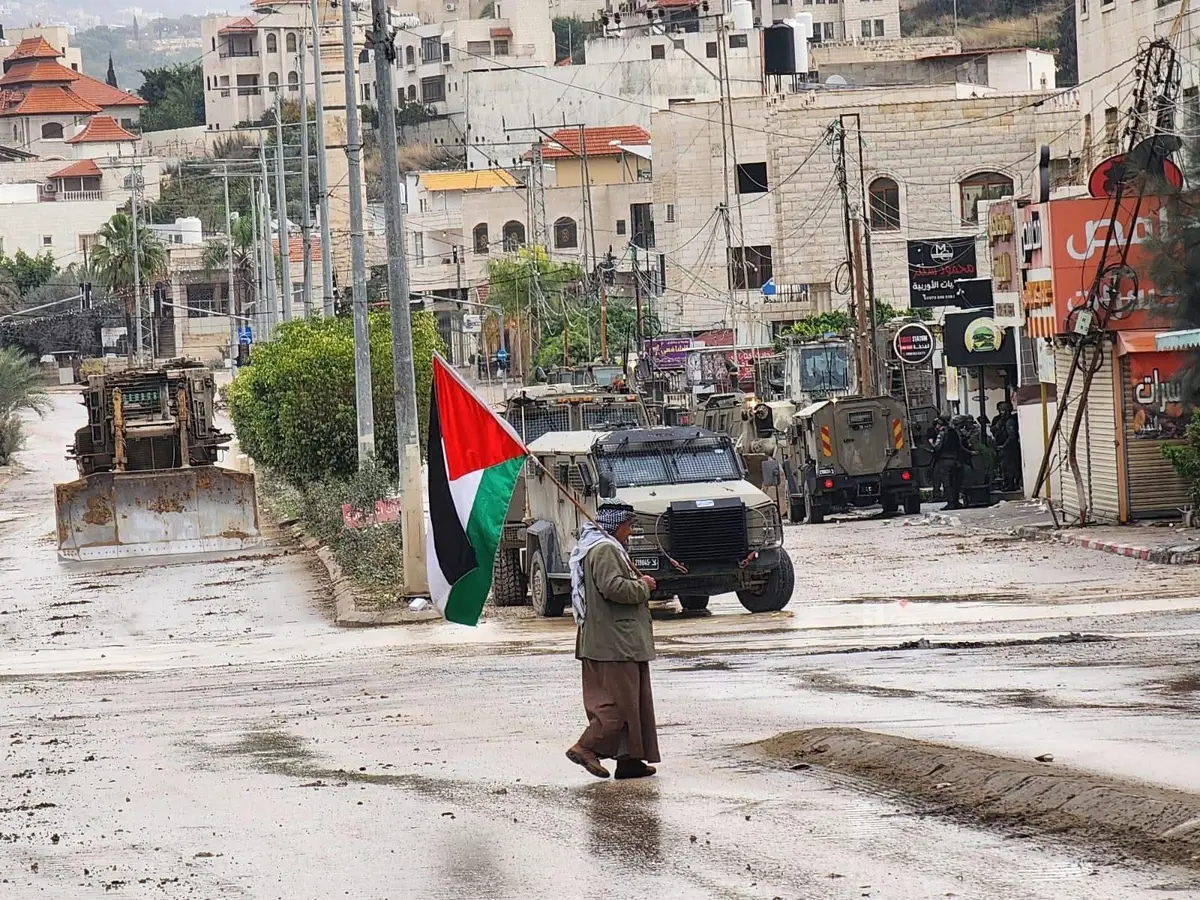
The Israeli occupation forces continue their aggression on the city of Tulkarm and its camp for the 107th consecutive day, and on the Nour Shams camp for the 94th day, amid military reinforcements and ongoing field escalation.
Local sources reported that the occupation forces are sending military reinforcements, including vehicles and infantry units, to the city and its two camps around the clock. They are patrolling the main streets, provocatively honking their horns and deliberately driving against traffic, obstructing the movement of citizens and vehicles.
This coincided with the continued forcing of a number of residents of the eastern neighborhood of the city, specifically the area adjacent to the Abu al-Foul neighborhood in Tulkarm camp, to evacuate their homes, as
Last night, the Zikan family was informed that they had to evacuate their home and given until 8:00 a.m. today. This area is subject to evictions from time to time.
This morning, Israeli occupation forces set up a flying checkpoint around the Jabara Bridge gate at the southern entrance to Tulkarm. They stopped vehicles passing in both directions, checked the IDs of their passengers, and interrogated them.
In a related development, the occupation forces are continuing their escalation in the Tulkarm and Nur Shams refugee camps, under a tight siege, accompanied by the sound of massive explosions throughout the region.
Eyewitnesses reported hearing a massive explosion late last night throughout Nour Shams camp. There is no precise information available about the cause or the extent of the damage caused by the siege and the ban on entry and exit from the camp.
Yesterday and over the past few days, Nur Shams camp was subjected to widespread demolition and bombing of residential buildings in the neighborhoods of Al-Manshiya, Al-Maslakh, Al-Jami', Al-Eidah, and Al-Shuhada. This comes as part of the occupation's plan to demolish 106 homes and residential buildings in Tulkarm and Nur Shams camps. Tension remains high in the camp, with residents anticipating a new wave of demolitions.
According to local estimates, the number of buildings demolished by Israeli bulldozers over the past week has reached 15, including the apartments they housed. Their residents had evacuated the buildings after receiving prior coordination and were forcibly displaced during the ongoing aggression.
The occupation forces also continue to seize homes and residential buildings on Nablus Street and the adjacent northern neighborhood, converting them into military barracks after forcibly evacuating their residents. The occupation forces station their vehicles in the vicinity, while some buildings have remained under occupation control for more than two months.
The ongoing Israeli aggression and escalation against the city of Tulkarm and its two camps resulted in the martyrdom of 13 citizens, including a child and two women, one of whom was eight months pregnant. Dozens were also injured and arrested, and the infrastructure, homes, shops, and vehicles were completely and partially demolished, burned, vandalized, looted, and robbed.
The aggression also resulted in the forced displacement of more than 4,200 families from the Tulkarm and Nur Shams camps, comprising over 25,000 citizens. It also resulted in the complete destruction of more than 400 homes and the partial destruction of 2,573 others. Furthermore, the entrances and alleys were sealed off with earth mounds, transforming them into isolated areas devoid of any sign of life.
OPINIONS
Tue 13 May 2025 9:45 am - Jerusalem Time
The End of the Global Aid Industry

Foreign Affairs
Opinion Writer

By Zainab Usman
Every decade or so, the global aid industry finds that it must transform to survive. During these periods of change, donor countries restructure their aid agencies, shrink or expand their assistance budgets, and lobby for the creation or dissolution of a UN initiative or two. Typically, once the aid industry conforms to the whims of donor countries, the crisis is averted and business continues as usual. Since U.S. President Donald Trump began his second term, the aid industry has found itself at another inflection point. The Trump administration has gutted USAID, the world’s largest development agency, ending 86 percent of its programs, shuttering its headquarters, and terminating nearly all its 10,000 employees. At the same time, the Trump administration has slashed funding for various multilateral initiatives on climate, global health, and education.
Today’s crisis, however, is different from those that came before: this could truly be the end of foreign aid as we know it. For decades, global development—that is, the attempt to improve and save lives of the poor—has been driven mostly by foreign assistance provided by wealthy governments. Some scholars and analysts deride this process as the “aid-industrial complex.” But even advocates of foreign aid have come to see it as an industry, including in their efforts to reform it, which approach its defects as matters of business inefficiency. And now that governments in many rich countries have sharply lurched to the right and taken more skeptical stances on aid, this industry is collapsing. As a result, many charity workers, researchers, and academics will be out of jobs. More important, millions of poor people around the world will suffer.
Proponents of global development now face a choice. They can wait for attitudes in donor countries to shift back toward support for foreign aid at some point in the distant future. Or they can reimagine the entire concept of global development, detaching it from aid and rooting it instead in industrial transformation: helping countries shift from subsistence farming, informal employment, and primary commodity production toward manufacturing and services. In truth, the aid industry was already adrift. Its interventions had become spread too thin and often failed to address the key obstacles that poorer countries faced as they tried to upskill their workers, build energy and transport infrastructure, and access new markets. Raising people out of poverty in Africa, South Asia, and parts of Latin America will not only improve their lives but also allow rich countries to maintain their prosperity by creating new markets, and by now, industrial transformation has a strong track record for improving economies. If proponents of global development do not adjust its methods with the times, it will lose its relevance to rich and poor countries alike.
AID AND ABET?
The foreign-aid industry’s primary commodity is official development assistance (ODA), or money from donors that flows to governments, individuals, or groups in poorer places, either directly—such as through budget support to struggling governments—or through projects run by organizations such as Save the Children, Oxfam, or FHI 360. Governments in rich countries are the primary purveyors of ODA. According to the Organization for Economic Cooperation and Development (OECD), in 2023, governments spent $230 billion on development assistance, compared with $11 billion spent by private foundations. Like any industry, foreign aid has middlemen. But in this business, the middlemen are particularly conspicuous. Third-party entities known as “implementing partners” include international nongovernmental organizations, large private contractors, and consulting firms. If the U.S. government wanted, for example, to distribute fertilizers to small-scale farmers in Bangladesh, they might contract Chemonics, a U.S.-based development contractor, to do it. Indeed, in 2023, Chemonics received the most USAID funds of any of the organization’s contractors: over $1 billion.
Top of Form
Bottom of Form
To take advantage of network effects and economies of scale, implementing partners cluster around the main sites of production of foreign aid, the capitals of the major donor countries: Berlin, Geneva, London, Paris, Rome, and Washington. As a result, very little aid is distributed by organizations or people in poor countries. In 2020, less than nine percent of U.S. aid was administered by recipient governments or firms based in recipient countries, according to Charles Kenny and Scott Morris, researchers at the Center for Global Development. The visibility of middlemen based in rich countries has long provided fodder to detractors who claim that the aid industry operates inefficiently or even unjustly. There is some truth to this critique. According to an analysis by Devex, a news organization, 47 of USAID’s top 50 contractors are located in the United States.
Previous efforts to correct the distortions in the foreign aid industry focused on trying to reduce waste and increase the proportion of aid money that gets to beneficiaries. Ninety countries signed the 2005 Paris Declaration on Aid Effectiveness, an agreement that encouraged reforms such as aligning donors’ objectives with recipient countries’ priorities, harmonizing various development interventions, and involving more partners on the ground. Mark Green, USAID’s administrator during the first Trump administration, tried to reduce recipient countries’ dependence on foreign assistance by building their capacity to plan, finance, and manage their own development. Green’s successor, Samantha Power, aimed to increase the share of funding administered by local organizations based in recipient countries to 25 percent by 2025.
The consensus over how much rich countries should spend on aid and what they should prioritize has shifted over time. A 1970 UN resolution recommended that countries should dedicate 0.7 percent of their gross national income to ODA, but as of 2023, only five countries had reached that goal: Denmark, Germany, Luxembourg, Norway, and Sweden. In the United States, successive Democratic and Republican administrations maintained a broad commitment to foreign aid, although arguments also simmered, even within the industry itself, about the proper goal of aid. Since 2000, when 189 countries agreed to the UN’s Millennium Development Goals, the industry’s main objective has been to reduce poverty; after the Paris Agreement was signed in 2015, many governments embraced the idea that, in addition, aid should also be directed toward fighting climate change.
SUPPLY CRISIS
But behind these recent debates lurked a massive shift in the politics and public norms that had allowed the industry to survive. If one sees aid as a form of philanthropy, then rich countries appear as donors and poor ones as beneficiaries. But if one sees aid as an industry, then rich countries appear as sellers and poor ones as buyers. With their development assistance, rich countries are providing a set of projects and institutional norms to achieve a set of expected outcomes: improvements in material conditions in developing countries that will eventually boost their own economies and security—or, failing that, at least a sense on the part of rich countries that they have tried to make a difference. The role of poor countries is to consume these development projects in the hope of achieving desired outcomes—or, failing that, at least a sense that they might be possible someday.
Now this market is experiencing an unprecedented supply crisis. Around the world, people and politicians in the rich countries that had long bought into the basic idea that providing aid is valuable have become skeptical. The aid industry has, for decades, undergone boom and bust cycles resulting from shifts in the domestic politics of donor countries. What is different this time is a deepening disaffection about the prevailing economic model and the aid paradigm associated with it. Since the global financial crisis of 2008, many donor countries have experienced economic stagnation, slow productivity growth, declining competitiveness, and widening inequality. Citizens of rich countries who no longer feel economically secure are questioning why scarce public funds should be devoted to causes abroad when there are needs at home.
This doubt goes beyond the Trump administration. The United States is not the only donor that is cutting foreign aid: in 2024, eight of the top ten donors within the OECD’s Development Assistance Committee reduced their foreign aid budgets and announced their intention to align international development programs more squarely with their national interests—such as by ensuring that development projects use goods and services produced in the donor country. In 2024, Germany, the world’s second-largest bilateral aid donor, announced a $5.3 billion reduction to its foreign-assistance budget. In February, the United Kingdom announced a 40 percent reduction to its aid budget so that it could focus on defense spending. In March 2025, the Netherlands said it would cut 37 percent of its bilateral aid over five years and scale down its financial contributions to some UN agencies.
Many right-leaning voters in rich countries now see foreign aid as wasteful and excessively focused on promoting causes they perceive as linked to the left, such as climate action, gender equality, or democracy promotion. Voters are more dubious of technocrats, policy wonks, and academics committed to foreign aid. Consequently, even left-leaning politicians, such as the Labour government in the United Kingdom, are slashing aid in response to popular sentiment. According to a February 2025 YouGov poll, 65 percent of Britons are in favor of increasing defense spending at the expense of foreign aid.
BLEEDING OUT
The speed and scale of the policy changes make the crisis facing the aid industry existential. Donor governments are fast destroying the industry’s marketplace of actors in irreversible ways. In January, Trump issued an executive order to freeze all U.S. foreign aid, ostensibly so that the secretary of state could review it to make sure that it is aligned with U.S. interests. Within weeks of the order, the world’s largest bilateral development agency, USAID, functionally ceased to exist, and its destruction unleashed a domino effect.
Dozens of small and midsize nongovernmental organizations are folding. Large organizations that implemented projects for USAID, such as FHI 360, Chemonics, and DAI Global, have terminated some country programs, announced the closure of field offices, and laid off hundreds of staffers worldwide. Multilateral organizations are also suffering from U.S. aid cuts. UN agencies such as the International Organization for Migration, the Joint United Nations Program on HIV and AIDS, the UN High Commissioner for Refugees, and the World Health Organization rely on the United States for 20 to 40 percent of their funding and have been forced to downsize.
This disruption will likely be compounded by funding cuts to universities. The Trump administration has canceled or frozen hundreds of billions of dollars’ worth of research grants to leading American universities, such as Columbia, Johns Hopkins, and Princeton. These cuts will reduce the number of young professionals who are trained in fields related to development, end projects that evaluate the impact of aid, and erode the institutional memory of how aid projects are designed, delivered, and assessed. Entire academic and advocacy fields such as global health, climate action, gender equality, and democracy promotion may collapse.
The short-term impacts of the aid industry’s demise are already appearing, but the long-term effects are unknown. Foreign aid makes up a large percentage of the gross national income of about 25 countries, including Burundi, Liberia, Malawi, Nauru, Somalia, South Sudan, and Yemen. These places have seen the termination of crucial education and health programs. And it is unlikely that private donors can fill the gap, because private philanthropy makes up less than ten percent of annual foreign aid flows tracked by the OECD. Furthermore, American individual and corporate philanthropists—which constitute more than half of the world’s top 40 private donors—may well draw back, wary of retaliation from the U.S. government.
GET RICH QUICK
Foreign aid has rapidly become a sunset industry. But that does not mean that rich countries should give up fighting poverty entirely. It is in the interest of wealthy states to reduce the pressure of migration by trying to improve the economies and stability of countries in Africa, Latin America, and South Asia. Therefore, policy experts, intellectuals, activists, philanthropists, and humanitarians must save global development by decoupling it from the aid industry and anchoring it in a strategy of industrial transformation. A country becomes industrialized when it adopts technology that allows it to mechanize and digitize, leading to increases in productivity and the skills of its labor force. Eventually, an industrialized country’s workers shift from subsistence agriculture toward higher-productivity sectors such as electronics, pharmaceuticals, green technologies, and digital services. And closely associated with higher incomes and employment in these modern industries are social changes such as more women working in formal jobs, more girls in schools, and fewer child marriages.
Industrialization has transformed many once poor societies into prosperous ones. Over the course of several hundred years, countries including China, Germany, Japan, Poland, Singapore, South Korea, the United Kingdom, and the United States got rich by industrializing. Today, Thailand and Vietnam are undergoing industrialization thanks to foreign direct investment in manufacturing industries, good connectivity infrastructure, skilled labor, and expanded access to export markets.
Part of the problem with the aid industry is that its benefits have been spread too thinly across a multitude of domains and not focused enough on productivity-enhancing sectors. To this end, advocates of global development should focus on enabling poorer countries to access cheap development financing for targeted investments in sectors that connect people, such as electricity, telecommunications, and mass transit. Development financing must include efforts to stem illicit financial flows. African countries, for example, lose a combined total of about $90 billion every year to elite corruption, illicit capital flight, and tax evasion by multinational corporations. That is more money than the $60 billion of aid that donor governments used to send to the continent annually. Such waste could be reduced if rich countries tightened their regulations on tax havens and offshore financial centers and if the 138 signatories of the global tax treaty—an agreement reached in 2023 that sets a minimum rate of tax for large corporations—accelerated its implementation.
Very little aid is distributed by organizations or people in poor countries.
Poorer countries also need a stable trading environment to thrive. They need access to export markets in wealthy countries for goods and services they produce. And decades of evidence shows that neither poor nor wealthy countries ultimately prosper from protectionism or autarky. Firms in rich countries, especially those in rapidly changing fields such as artificial intelligence, batteries, drones, and renewable energy hardware, need to be able to sell to growing markets in Africa, Latin America, and South Asia.
Professionals who work in global development will need new codes to guide their efforts to support industrial transformation. These may entail creating new rules to regulate the scramble for critical resources that wealthy countries need to manufacture electronics, such as cobalt from the Democratic Republic of the Congo or copper from Zambia. Ethicists and social scientists around the world must help craft rules for the limits of artificial intelligence, drone warfare, and other ways that new technologies directly interface with human societies.
If proponents of global development embrace industrial transformation as their lodestar, they can help lift people out of destitution while avoiding political blowback. If poor countries industrialize, the entire world will benefit. Global development has the best chance of surviving—and delivering results—if it is seen as more than just charity.
OPINIONS
Tue 13 May 2025 9:45 am - Jerusalem Time
The release of Eidans...is there a breakthrough that will stop the genocide?
Jamal Zaqout
Opinion Writer
Without exaggeration or downplaying, the differences between Washington and Tel Aviv appear to be real. The announcement of a ceasefire between Washington and the Houthis, which did not include Israel, was completed without coordination with it. This was preceded by the announcement of the start of negotiations with Tehran, also without involving Netanyahu in their details. Furthermore, the White House National Security Advisor was dismissed for merely attempting to brief Netanyahu on their content. Now, the release of Idan Alexander has occurred, without Tel Aviv's involvement other than obligating it to observe a ceasefire during his release.
These indicators cannot be underestimated. Despite Israel's status in American policy, in terms of ensuring its security and military superiority, it has apparently decided that its interests in the Middle East are not limited or defined solely by what Tel Aviv wants or rejects. Washington, which acts with an uncompromising concern for Israel's security, views this priority as one of its interests, but not the only one.
The resistance acted intelligently in the issue of releasing the American Idan and the soldier in the occupation army, in an attempt to open a breach in the wall of deadlock designed by Netanyahu, that no deal will end the war without the resistance’s submission to his conditions, which unfortunately some have bet on, and even demanded that the resistance accept it under the pretext of removing pretexts, which in reality means nothing but complete surrender, which gives Netanyahu the opportunity to declare victory on a golden platter over the skulls of the victims, the destruction, and the crimes he committed in the Gaza Strip. If Tel Aviv succeeds in achieving this, it will not stop continuing to implement what Netanyahu calls changing the Middle East, and what it means by displacing the Gazans, proceeding with the annexation plan, dismantling the Palestinian Authority, and imposing Israeli peace by force of racist arrogance on the entire region.
These developments come on the eve of Trump's visit today to a number of Gulf Arab states, starting with Riyadh. During the visit, the US-Saudi agreement will be announced, responding to Saudi demands related to the kingdom's position in US defense policy, arms deals, and the nuclear agreement Riyadh is seeking. This agreement is also being negotiated without further Israeli conditions, and appears to be without normalization at this stage. All of this comes within the context of Trump's absolute and highest priority, represented by his promises to historically revitalize the US economy through the trillions he will receive from Saudi Arabia, the UAE, and Qatar in particular.
It is well known that the Arab states possess important cards in the context of mutual interests with Washington, and that it was possible, and still is possible, to use them to immediately stop the war of extermination, as a step towards rebuilding the Gaza Strip and moving towards a just solution to the Palestinian issue, in accordance with the 2002 Arab Peace Initiative, ensuring Israeli withdrawal from all occupied Palestinian and Arab territories, and enabling the Palestinian people to determine their fate. It is true that achieving this, at this tense moment, requires a rational and pragmatic policy from the Palestinian resistance in the Gaza Strip. In this context, the resistance has provided fundamental and important signals and positions that the leadership of the Palestinian Authority and the leaders of the pivotal Arab states should have seized upon and encouraged, leading to a unified Palestinian position and consensus among the components of the Palestinian people on unifying its comprehensive national institutions, based on the Beijing Agreement, and beginning to form a national consensus government that undertakes to fully address the components of the Gaza file in all its dimensions, and reunifies the comprehensive national institutions at the level of the PLO and the PA, rather than reformulating them merely to appease others.
Is this tension between Washington and Tel Aviv merely a summer cloud, or does it bear the seeds of some balance in Washington's Middle East policy? It is impossible to answer this question with absolute certainty, but in any case, it imposes national Palestinian and Arab responsibilities, in coordination with countries influential in international decision-making, to influence any apparent change, however limited, to halt the war of extermination, uphold the rights of our people, and prevent the squandering of their immense sacrifices.
It is impossible to predict what Trump will or will not announce. He is, as experience has proven, a fickle personality, and he has no fixed principles. However, this does not absolve us from our duties, foremost among which is to stop betting on what pleases Tel Aviv or what does not, and to stop engaging in the game of engineering the Palestinian situation according to this bet. Our approach should be that no voice is louder than the call to stop the war of starvation and genocide to save our people and their ability to survive, without compromise or surrender. Are we capable of doing so?
OPINIONS
Tue 13 May 2025 9:43 am - Jerusalem Time
The release of Idan Alexander: New implications for US politics and Israeli relations
Marwan Emil Toubasi
Opinion Writer

In an unconventional move, Idan Alexander, a US-Israeli citizen who had been held by Hamas in the Gaza Strip, was released yesterday evening. This move, the result of direct negotiations between the United States and Hamas, carries profound political implications affecting various regional issues, from domestic Israeli politics to US-Israeli relations and the roles of several other countries.
What distinguishes this event is that it represents the first publicly announced direct negotiations between Washington and Hamas, which indicates a significant shift in US policies, which have long rejected direct engagement with the movement, considering it outside the framework of political legitimacy. It seems to me that the US administration, particularly under Donald Trump, has come to view direct engagement with parties previously considered "banned" as an urgent necessity for managing complex issues such as Gaza, regarding which Trump has expressed his vision in statements that may be uncertain.
The release deal also reveals a potential American openness to new tools for managing the conflict, including breaking certain political taboos. However, this openness in no way signifies a fundamental shift in the American principled position toward Israel, nor an actual reduction of its central role in America's regional strategy.
This shift in approach does not come out of nowhere, but rather is the result of multi-faceted pressure. On the one hand, there is a clear American effort to maintain a minimum level of "stability" in the region, fearing a renewed explosion that would threaten American interests. This comes after the occupying state assumed its security and military role in the region, continuing its war crimes, which are escalating today in Gaza and making it uninhabitable with American approval and partnership. On the other hand, advanced roles have emerged for some regional parties, such as Qatar and Egypt, which have exerted strong pressure on Hamas and Washington together to expedite the resolution of some humanitarian issues, foremost among them the issue of prisoners and relief in light of the starvation. Furthermore, this mechanism may have been used by Washington as an additional pressure card on the Netanyahu government to push it toward political and security changes that Tel Aviv does not desire, but rather serve Washington's interests.
For Israel, this move comes as Trump is visiting the region without Israel, and at a time when Netanyahu is grappling with complex domestic challenges, including rifts within the ruling coalition, mounting criticism of his security policy among Israelis, and widespread Israeli segments, including within the military establishment, addressing Trump directly as if he were their "president." Alexander's release, through mediation in which Israel was not directly involved, constitutes an implicit challenge to the concept of a "monopoly on security decisions" and increases pressure on the Netanyahu government to modify its approach to both Gaza and the West Bank, as well as its vision for regional arrangements.
However, this development does not mean that the US-Israeli alliance is on the verge of decline. This alliance is based on foundations that go far beyond mere circumstantial coordination or an exchange of interests. There are ideological, religious, security, and strategic dimensions, particularly regarding the shared biblical vision of Jerusalem and the West Bank, which they refer to as "Judea and Samaria," and their right to them; Israel's right to defend itself; and the unconditional support provided by the Christian Zionist movement within the United States, which is reflected in the orientations of most successive US administrations, including the current Trump administration.
What's most important in this scenario, however, is the realization that what's happening doesn't necessarily reflect a change in American goals, but rather in the tools used to achieve "America First." Recent history offers a similar example in the Afghan case, when Washington decided to negotiate directly with the Taliban despite its decades-long designation as a terrorist organization. The result wasn't a change in America's vision for the region, but rather a shift in its methods to serve the same strategic interests, even if this required changes in its relations with its allies.
Thus, the deal to release Idan Alexander represents a link in a broader process undertaken by the United States to reshape the balance of power in the region and employ flexible tools to serve fixed goals. However, this does not negate the fact that these shifts may have an impact on the political system in Israel itself, in light of growing talk within the corridors of American decision-making about the need to "modify the nature of the ruling system" in Israel to align with the "New Middle East" project that Washington seeks to impose to achieve its economic and political interests in the face of other international powers. In this project, Israel is viewed as a functional tool, rather than an independent state, like some other regional regimes.
Ultimately, what appears to be a tactical concession in US policy toward Hamas is nothing more than a reshuffle of the means to achieve the same goals with the PLO, while maintaining the partnership and alliance with Israel as a "state" as a fundamental principle, even if its expression varies in the coming period. This, within US calculations, requires a re-engineering of some of Israel's political structures, including the nature of the regime, as I mentioned, in order to ensure the sustainability of Israel's role as a functional tool in this brutal imperialist system in the world.