ARAB AND WORLD

Sat 17 May 2025 10:39 am - Jerusalem Time

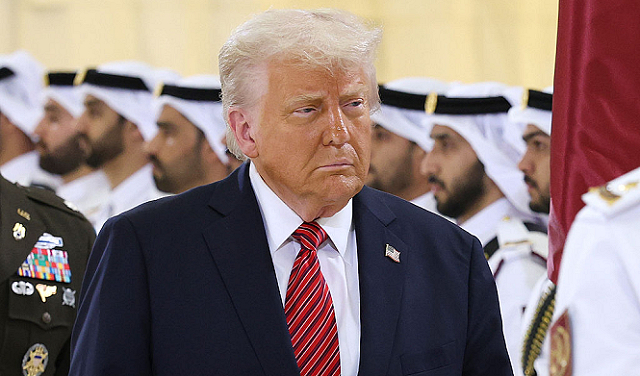
The Trump administration is working on a plan to transfer one million Palestinians to Libya.

NBC News reported Friday that five people familiar with the matter told the network that the Trump administration is working on a plan to permanently transfer up to one million Palestinians from the Gaza Strip to Libya.

Two people familiar with the plans and a former US official confirmed that the plan is under serious consideration, to the point that the administration has discussed it with the Libyan leadership.

These three people added that in exchange for resettling the Palestinians, the administration would likely release billions of dollars in funds frozen by the United States to Libya for more than a decade.

The same three sources reported that no final agreement had been reached, and that Israel had been informed of the administration's discussions.

The network said: "The State Department and the National Security Council did not respond to multiple requests for comment prior to the publication of this article. After publication, a State Department spokesperson told NBC News that these reports were incorrect."

"The situation on the ground is intolerable for such a plan. Such a plan has not been discussed and is meaningless," the spokesman said. Bassem Naim, a senior Hamas official, said the movement, which governs the Gaza Strip, is unaware of any discussions about transferring Palestinians to Libya.

"Palestinians are rooted in their homeland, deeply committed to it, and willing to fight to the end and sacrifice anything to defend their land, their homeland, their families, and the future of their children," Naim said in response to questions from NBC News. "[The Palestinians] are the only party that has the right to decide what to do and what not to do on behalf of the Palestinians, including Gaza and its residents."

Libya has been plagued by instability and political conflict for nearly 14 years since the outbreak of civil war and the ouster of longtime ruler Muammar Gaddafi. Libya is struggling to care for its current population, with two rival governments—one in the west, led by Abdul Hamid Dbeibah, and the other in the east, led by Khalifa Haftar—fighting fiercely and violently for control of the country. The U.S. State Department currently advises Americans against travel to Libya "due to crime, terrorism, unexploded landmines, civil unrest, kidnapping, and armed conflict."

The number of Palestinians in Gaza who will voluntarily leave to live in Libya remains an open question. The former US official said that one idea discussed by administration officials is offering financial incentives to Palestinians, such as free housing and monthly stipends.

Details of when or how any plan to transfer Palestinians to Libya would be implemented remain unclear, and any attempt to resettle up to a million people there is likely to face significant obstacles.

This effort is likely to be very costly, and it is unclear how the Trump administration will seek to finance it. In the past, the administration has stated that Arab countries will help rebuild Gaza after the war there ends, but it has criticized Trump's idea of permanently resettling Palestinians outside the Strip.

In recent weeks, the Trump administration has also looked to Libya as a place to send some of the migrants it wants to deport from the United States. However, a federal judge blocked plans to send a group of migrants to Libya this month.

The transfer of up to one million Palestinians to Libya is likely to increase pressure on this fragile war-torn country.

The most recent publicly available CIA estimate of Libya's current population is approximately 7.36 million. In terms of population, absorbing an additional million people in Libya would be equivalent to absorbing approximately 46 million people in the United States.

The exact location for resettling the Palestinians in Libya has not yet been determined, according to the former US official. Administration officials are studying options for housing them and are exploring all possible methods for transporting them from Gaza to Libya—by air, land, and sea—according to a person directly familiar with these efforts.

Any of these methods are likely to be cumbersome, time-consuming, and expensive.

For example, transporting one million people, at full capacity, would require approximately 1,173 flights on the world's largest passenger aircraft, the Airbus A380. Since there is no airport in Gaza, transporting anyone from there on flights would first require transporting them to an airport in the region. If Israel is unwilling to allow Palestinians to transit through its territory, the nearest airport would be Cairo, about 200 miles away.

Overland transportation from Gaza via Egypt to Benghazi, Libya's second-largest city, located east of the capital, Tripoli, requires a journey of approximately 1,300 miles. Cars typically carry fewer passengers than other modes of transportation. An intercity bus can accommodate approximately 55 people.

Some of the ferries used by the United States to transport civilians across the Mediterranean to escape the Libyan civil war in 2011 can accommodate up to 2,000 people. If these vessels were used—and assuming no refueling and good weather—it would take hundreds of trips lasting more than a day each way for up to a million people to travel from Gaza to Benghazi.

The plan under discussion is part of President Donald Trump's vision for post-war Gaza, which he said on February 4, during a press conference with Israeli Prime Minister Benjamin Netanyahu, that the United States would seek to "own" and rebuild as a "Riviera of the Middle East," according to current US officials, the former US official, and two people directly familiar with these efforts (according to NBC News).

"We're going to take over this piece, develop it, create thousands and thousands of jobs, and it's going to be a source of pride for the entire Middle East," Trump said at the time.

In order to achieve his goal of rebuilding Gaza and turning it into the Riviera of the Middle East, Trump said that Palestinians from there must be permanently resettled to (any) other place.

"Gaza is unlivable right now, and I think we need another place. I think it should be a place where people can be happy," Trump said during a White House meeting with Israeli Prime Minister Benjamin Netanyahu.

Trump set a goal of creating "a beautiful area to permanently resettle people in beautiful homes, where they can be happy without being killed or stabbed to death like in Gaza."

"I don't think people should return to Gaza," he said.

Trump's idea, which surprised some of his top aides, including Secretary of State Marco Rubio, when he announced it, drew criticism from America's Arab allies and US lawmakers from both parties.

"We'll see what the Arab world says, but as you know, it would be problematic on many levels," said Senator Lindsey Graham, a Trump ally and South Carolina Republican, at the time.

In March, the United States and Israel also rejected an Egyptian proposal to rebuild Gaza without displacing Palestinians.

The administration's work on the Libya plan comes at a time when Trump's relationship with Netanyahu has been strained, partly due to Israel's decision to launch a new military offensive in Gaza.

The Trump administration has considered multiple sites for resettling Palestinians living in Gaza, according to a senior administration official, a former US official familiar with the discussions, and a person with direct knowledge of the efforts.

Syria, under new leadership following the ouster of Syrian President Bashar al-Assad last December, is also under discussion as a potential resettlement site for Palestinians currently residing in Gaza, according to a person directly familiar with the efforts and a former US official familiar with the discussions.

The Trump administration has taken steps toward restoring diplomatic relations with Syria. Trump announced on Tuesday that the United States would lift sanctions on Syria and met briefly with the new Syrian president, Ahmad al-Sharaa, on Wednesday.

PALESTINE

Sat 17 May 2025 8:53 am - Jerusalem Time

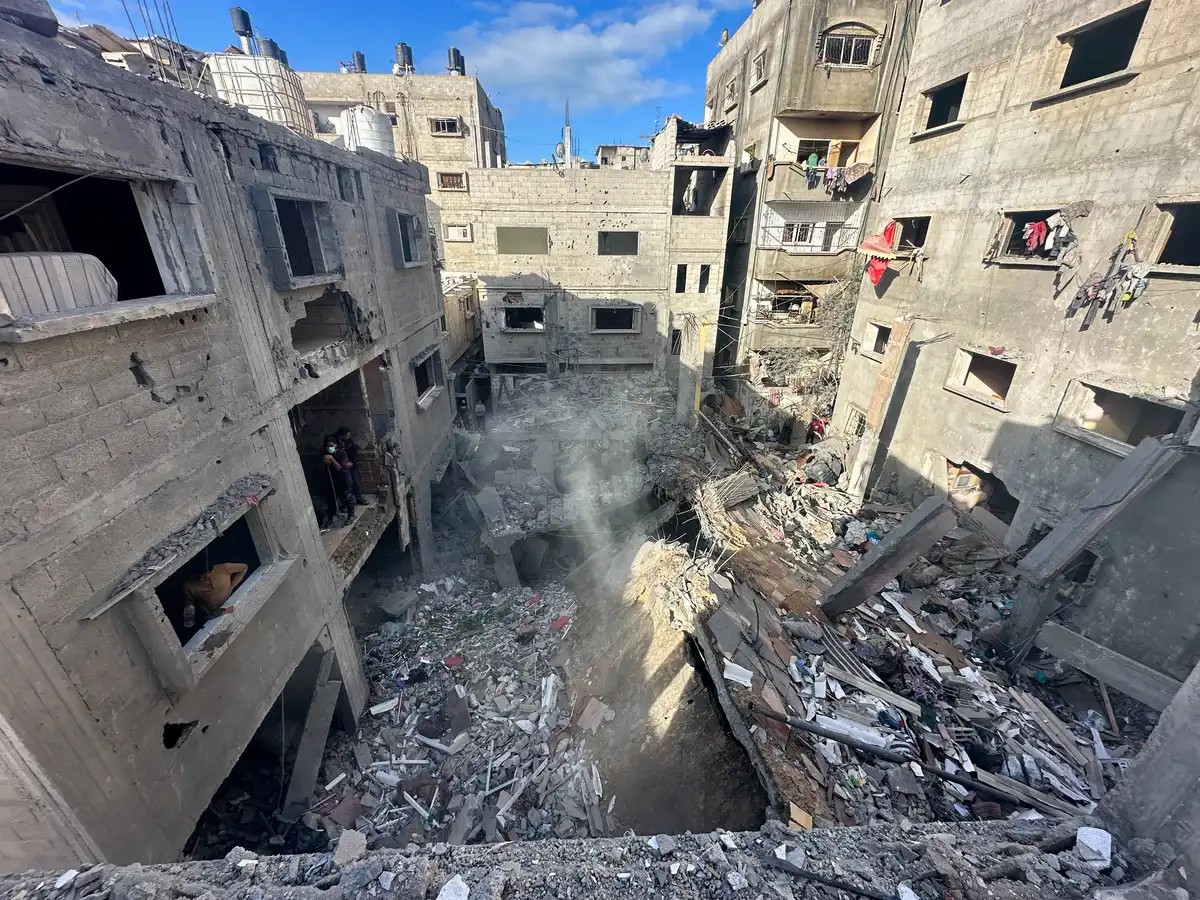
3 dead, including a woman and a child, in a bombing west of Khan Yunis

Three civilians, including a woman and a child, were killed tonight in an Israeli airstrike on Khan Yunis.


WAFA news agency reported that three citizens, including a woman and a child, were killed in an Israeli airstrike on a residential building in the Sheikh Hamad area of Khan Yunis, south of the Gaza Strip.

PALESTINE

Sat 17 May 2025 8:52 am - Jerusalem Time

Jerusalem Governorate: A boy was killed by Israeli occupation forces in the Old City.

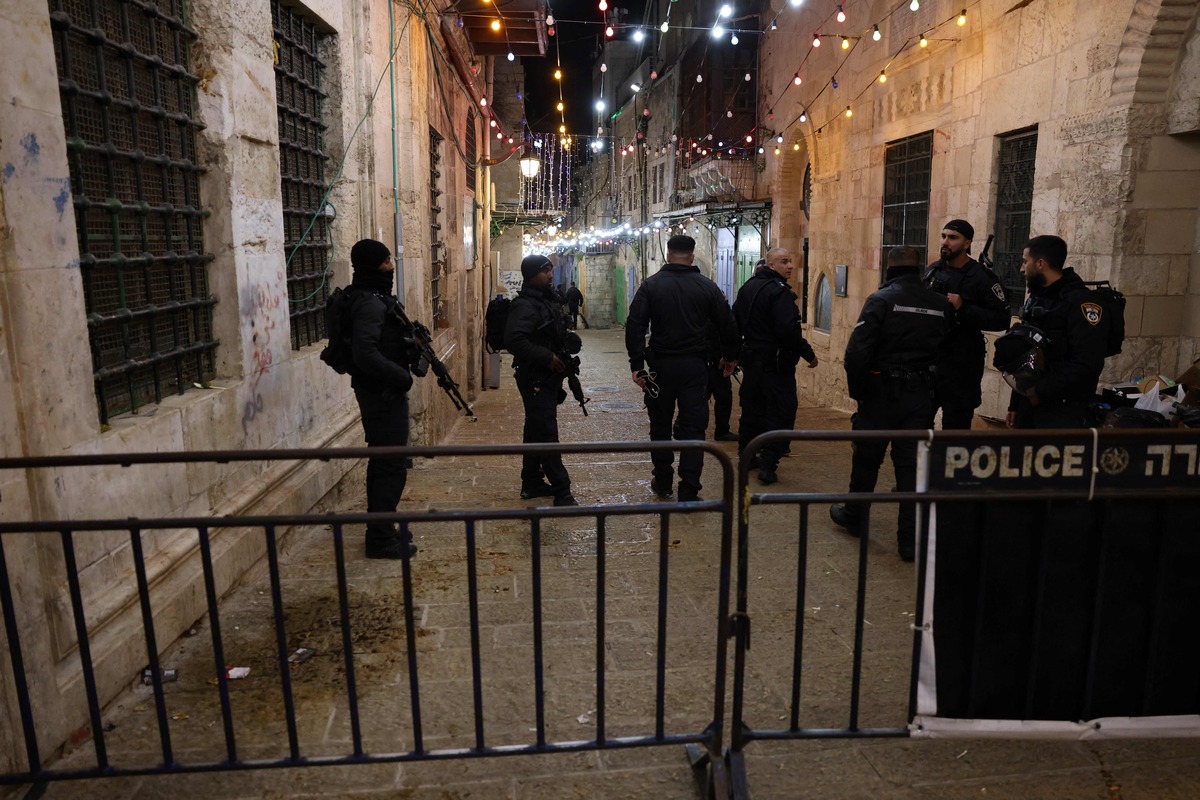
Jerusalemite boy Muhammad Nidal Abu Libdeh was martyred tonight after Israeli occupation forces shot him, leaving him bleeding in the Old City of occupied Jerusalem, near Al-Aqsa Mosque.

The Jerusalem Governorate stated that following the martyrdom of Abu Libdeh, the occupation forces brutally attacked civilians in the vicinity of the site, closed the gates of Al-Aqsa Mosque, and detained worshippers inside for a period of time before reopening the Lions' Gate. As worshippers were subjected to further attacks, including beatings and shoving, upon their exit.


Israeli occupation forces also raided the town of Beit Hanina, north of occupied Jerusalem, and stormed the home of the martyr Abu Libdeh's family. They arrested a number of his family members after searching the house and ransacking its contents.

PALESTINE

Sat 17 May 2025 8:50 am - Jerusalem Time

Baghdad Summit: Crowded Files and Low Expectations


Dr. Ahmed Rafiq Awad: The Baghdad summit cannot be relied upon to achieve a real breakthrough, and Trump's tour has proven that the moderate regime's ability to influence is very limited.

Dr. Hani El Gamal: The success of the summit depends on the extent of Arab countries' agreement on the Palestinian issue and their willingness to prioritize it to prevent the continuation of the war of extermination.

Dr. Munther Hawarat: The hopes pinned on this summit are great, most notably the formation of a unified Arab position that will contribute to halting the aggression on Gaza.

Tawfiq Taama: I am not optimistic about holding the summit because the Arab role is completely absent from Arab issues, especially the Palestinian issue.

Dr. Mukhaimer Abu Saada: The Arab Summit comes at a time of extreme Palestinian danger due to the war on Gaza.


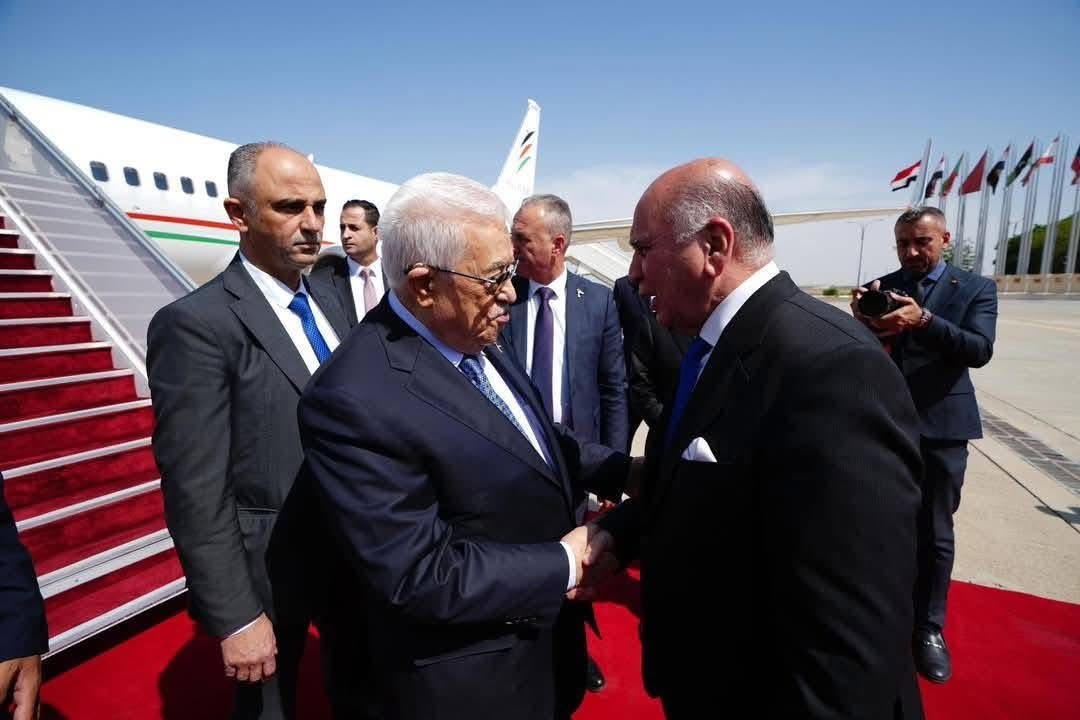
The 34th Arab Summit is being held in the Iraqi capital, Baghdad, today, Saturday, amidst the presence of the largest number of issues on the table for discussion and debate among Arab leaders, both those attending and those sending representatives. The most heated and pressing of these issues is the war of extermination being waged against the Palestinian people, especially in the Gaza Strip and the northern West Bank, which leaves nothing behind. In addition, there are the Syrian, Libyan, Lebanese, and even Iraqi issues, as Iraq, the host country of the summit, is looking forward to restoring its role in the Arab world after nearly 34 years of absence following its occupation of Kuwait, the subsequent wars that led to the fall of Saddam Hussein's regime, and the emergence of the terrorist organization ISIS and its affiliates.

The summit also coincided with the conclusion of US President Donald Trump's tour of the Gulf region, and the "optimism" that prevailed among many circles regarding the possibility that the visit would bring hope for halting the war of extermination in the Gaza Strip and the possibility of initiating a political process that would end the suffering of the Palestinian people.

Writers, analysts, and experts who spoke to Al-Quds emphasized that the Baghdad summit cannot be relied upon to achieve a real breakthrough, noting that US President Donald Trump's tour of the Arab region demonstrated that the moderate Arab regimes' ability to exert influence is very limited.

They said that the success of the summit is linked to the extent of the Arab countries' agreement on the Palestinian issue and their willingness to give it priority to prevent the continuation of the war of extermination, pointing out that the Arab role is completely absent from Arab issues, especially the Palestinian issue.

Major disagreements between Arab parties

Dr. Ahmed Rafiq Awad, head of the Al-Quds Center for Future Studies at Al-Quds University, said that the Arab summit in Iraq could face numerous obstacles, both in terms of form and content.

He explained that attendance may not be at the same level of official and diplomatic representation. Furthermore, there are significant disagreements between various parties in the Arab world, and therefore, there may not be an effective presence.

Awad pointed out that the biggest problem relates to the Syrian president, as there are Iraqi parties that reject his arrival.

He pointed out that Iraq, as a state, may not have good relations with several parties, for various reasons that are obvious to everyone.

On the one hand, Awad wondered whether this summit could lead to results. He said, "I think that is completely unlikely. Why? Because there is a profound change in the region, where the Iranian axis has been significantly weakened, and the axis of moderation has not achieved any significant results, has been unable to fill the huge void, and has not been able to offer a solution or a clear vision to the American and European West.

The Arab Summit will not take effective decisions!

He explained that the Arab plan prepared by the Arab regime was unable to be imposed or persuade the United States, despite all the efforts America had made.

Awad emphasized that US President Donald Trump's tour demonstrated that this moderate regime's ability to influence the region is very limited.

He continued: "At the Baghdad summit, I do not believe it will be possible to make effective decisions or address Arab issues, especially the Palestinian issue.

He said that the Baghdad summit cannot be relied upon to achieve a real breakthrough, especially since, as we mentioned, diplomatic representation there will likely be low.

Awad concluded by saying, "There are major setbacks across the region as a whole, in addition to the desire and intent of the United States and Israel to control the region to a very significant and unprecedented extent."

Many challenges and hot issues

For his part, Dr. Hani El-Gamal, an Egyptian researcher in regional and international affairs, said, "The summit being held in Baghdad, which will be held amid high hopes, unfortunately presents many challenges and hot issues on the table of this special diplomatic summit. Most notable among these are the Syrian, Sudanese, and Libyan issues, as well as the Palestinian issue, which is considered the most volatile."

He added, "We had hoped that the Palestinian issue would be given priority at this summit, so that it would produce clear mechanisms and outcomes for dealing with this crisis, especially after Trump's visit to the Arabian Gulf region, which has not yet yielded tangible results from the United States regarding the crisis in Gaza."

Dr. Al-Jamal continued: "It is true that the statements preceding Trump's tour indicated an American intention to engage more strongly, pressure Israel to allow humanitarian aid into the area, and then enter into ceasefire negotiations. However, to date, no new American proposal has been put forward, other than a return to the Witkoff proposal to impose a temporary, limited humanitarian truce."

The summit comes at a critical time.

He emphasized that the extensive military operations carried out by Israel during the visit confirm a clear gap in understanding between Netanyahu and Trump, as the latter failed to exert maximum pressure on Israel, revealing a divergence in viewpoints between the two sides.

Al-Jamal believes that the summit's success hinges on the extent of Arab states' consensus on the Palestinian issue, their willingness to prioritize it to prevent the continuation of Israel's war of extermination in the Gaza Strip, document Israeli violations in the West Bank, and strive to adopt a decisive Arab position with enforcement mechanisms, whether at the level of international organizations or within the Arab system itself.

He pointed out that the summit faces significant challenges and comes at a more critical time than we anticipated, given the escalating Arab crises in its geographic surroundings, which have negatively impacted Arab strategic national security and threatened not only the stability of the crisis-hit countries but also those of neighboring countries.

Netanyahu may exploit this period to expand his aggression.

He explained how the Sudan crisis, for example, has created a sense of hostility between the UAE and Sudan, and between the countries supporting each side. Similarly, the situation in Syria, and the fear of exporting the radical model to neighboring countries, poses a major challenge. Furthermore, the internal situation in Lebanon, and attempts to strengthen Arab national security and combat terrorism by supporting stability there, have all negatively impacted the possibility of providing effective Arab support for the Palestinian cause.

Al-Jamal believes that Netanyahu may exploit this period, following Trump's historic visit to the Gulf, to expand his military operations unless genuine pressure is exerted on Israel to allow humanitarian aid and return to the negotiating table through mediators.

He added, "It is true that some delegations visited Cairo and Doha and met with American delegations during their stay in Doha, but so far, no positive results have emerged from these consultations."

Al-Jamal concluded by saying, "If this visit concludes without real American pressure on Israel, it will be a golden opportunity for the extremist right-wing government in Israel to intensify its military operations, dry up sources of humanitarian aid in the West Bank, and move to a new phase of settlement construction, which will further embarrass the Palestinian political system."

Iraq regains its regional and Arab presence

For his part, Jordanian writer and analyst Dr. Munther Hawarat said that the 34th Arab Summit is a symbolic diplomatic event. For Iraq, which seeks to restore its regional and Arab presence, this summit represents a major opportunity. The summit's real prospects are to return Iraq to the heart of the Arab order.

Dialogues emphasized that hosting the summit in Baghdad represents regional recognition of Iraq's efforts to recover from a long period of war and division, and marks its return as a political player in the region. This summit also maintains a minimal level of Arab coordination, particularly on some issues, most notably the Palestinian cause, which has long been a unifying issue for Arabs. However, recent developments have witnessed divergent views among Arab countries, and therefore this summit may provide an opportunity to unify opinion, or at least overcome obstacles.

Hawarat added, "There is a possibility of coordination on issues such as Syria, Sudan, and now Libya, which has resurfaced. The summit could also discuss re-coordination in the area of economic integration, despite the significant gap that has become a reality between the various Arab countries."

He believes that this summit could advance regional interests, although it may seem difficult, as disagreements between some Arab countries worsen over time. Nevertheless, hopes for this summit are high, most notably the formation of a unified Arab position that will contribute to halting the aggression on Gaza.

Diawarat pointed out that despite the clear differences in Arab positions, resolving the Gaza crisis, in his opinion, depends on the actions of the two main parties: the United States and Israel. Any Arab party that lacks the real ability to pressure them will be unable to achieve tangible results.

Reconstruction of Syria

He continued: "Another hope that can be built upon is that the reconstruction of Syria could be one of the economic steps that the Arab League might take. In addition, the summit could contribute to promoting Arab electricity interconnection projects, land ports, and other joint projects. However, the reality indicates that matters remain complex."

He pointed out that there are clear challenges, most notably the Arab divisions over several issues, such as the issue of normalization, the relationship with Iran, and the position on the Syrian regime, in addition to the conflicts in Sudan and Libya. Regional powers, such as Iran and Turkey, also have an influence that cannot be ignored. The Gulf position currently appears more unified, which is a credit to the Gulf.

He stressed that security challenges will be strongly present, especially in light of some threats issued in Baghdad against some Arab leaders. Nevertheless, he hopes that matters will move toward calm.

Hawarat also noted that the absence of a number of influential and prominent Arab leaders was another important aspect of the summit, which could weaken the strength of the summit's outcomes and decisions.

A joint roadmap for all Arab parties

For his part, political analyst Tawfiq Taama said, "The summit is being held under the slogan 'Dialogue, Solidarity, and Development,' and comes amid aspirations to draw a joint roadmap among all Arab parties to address the political, security, and economic challenges facing the region, in a serious attempt to strengthen joint Arab action, which has been absent among Arab countries for years."

He stressed that Arab countries face major challenges, amid internal and external disputes. Most notable among these are the ongoing Israeli aggression on the Gaza Strip and its regional repercussions, as well as the ongoing genocide against the Palestinian people. He also emphasized the ongoing tensions in a number of Arab countries, not to mention the economic challenges plaguing the region as a whole. This calls for collective Arab efforts to develop the economy and advance the shared Arab reality.

However, Taama expressed his lack of optimism about the summit being held, saying, "I am not optimistic about the convening of this summit, because the Arab role is completely absent from Arab issues, especially the Palestinian issue."

He asked, "Where is the role of Arab leaders? Where is the role of the Arab League in what has been happening in the Gaza Strip for more than a year and a half? What have these Arab countries offered? In truth, they have offered nothing but betrayal of the Palestinian people, something we have become accustomed to for many years."

Summits of denunciation and condemnation

He said: "The results of the Arab summits we have become accustomed to are: condemnation, denunciation, demands, and pleading with Israel to stop its aggression, and pleading with the Security Council and the United States to stop the massacres. Meanwhile, the Arab countries have forgotten that they have many pressure cards that can be used against the United States and Israel to stop the aggression, massacre, and genocide in the Gaza Strip.

Taama added: "Previous Arab summits have been held, at least two, and what did they offer the Palestinian people? Nothing. Why are the crossings still closed? Is it reasonable for 57 Arab countries to meet and not be able to offer anything to Gaza or the Palestinian cause?"

He emphasized that the Palestinian people have been groaning under occupation for more than 77 years, and today, on May 15, we commemorate the Nakba, amidst successive catastrophes, the most recent and most severe of which was the Gaza catastrophe and the ongoing mass displacement of the Palestinian people in the West Bank.

Taama explained that every time a summit is held, we see a further decline in the status of the Palestinian cause. In my opinion, it would be better not to hold it if its outcomes are insincere or not serious. He emphasized that Arab countries can stop the aggression against Gaza, as they possess numerous leverage points, especially those countries that have normalized relations with the occupation.

America is able to stop the aggression

He pointed out that the United States has the ability to stop the aggression, but has not yet exerted real pressure, and that the Arab countries, in turn, cannot pressure America because they simply do not have the will.

He added, "The strange thing is that in Europe and America, there is unprecedented solidarity. The peoples of the world are standing in solidarity, with the exception of the Arab peoples. Look at American universities: more than 200 or 250 universities have risen up, and despite the harassment, imprisonment, attempts to displace, and daily harassment of students, they have continued their protests."

Taama concluded his remarks by saying that the summit's decisions will not be translated into reality and will not halt the aggression against the Gaza Strip, while Israel will continue its aggression in defiance of Arab states and the international community. He emphasized that the time has come for these Arab and foreign states to take immediate action to punish Israel until it halts its aggression against the Palestinian people.

Low expectations

For his part, Dr. Mukhaimer Abu Saada, a professor of political science at Al-Azhar University in Gaza, emphasized that the Arab summit comes at an extremely dangerous and unprecedented time for Palestine due to the war in Gaza.

He said: There is hope that an Arab strategy will be agreed upon to pressure the international community to stop the war.

Abu Saada believes that Arab countries with relations with Israel should use their influence to stop the war.

But he expressed his regret over the high expectations that the Arab summit would produce, which would not go beyond expressions of condemnation and denunciation of what was happening in Gaza.

Abu Saada said: "Unfortunately, we have reached a stage where the newspapers have dried up and the pens have been removed."

He concluded by saying: "Unfortunately, neither the international community nor the Arab world can stop what is happening."

ARAB AND WORLD

Fri 16 May 2025 10:28 pm - Jerusalem Time

Turkish President calls on Europe to ensure a permanent ceasefire in Gaza

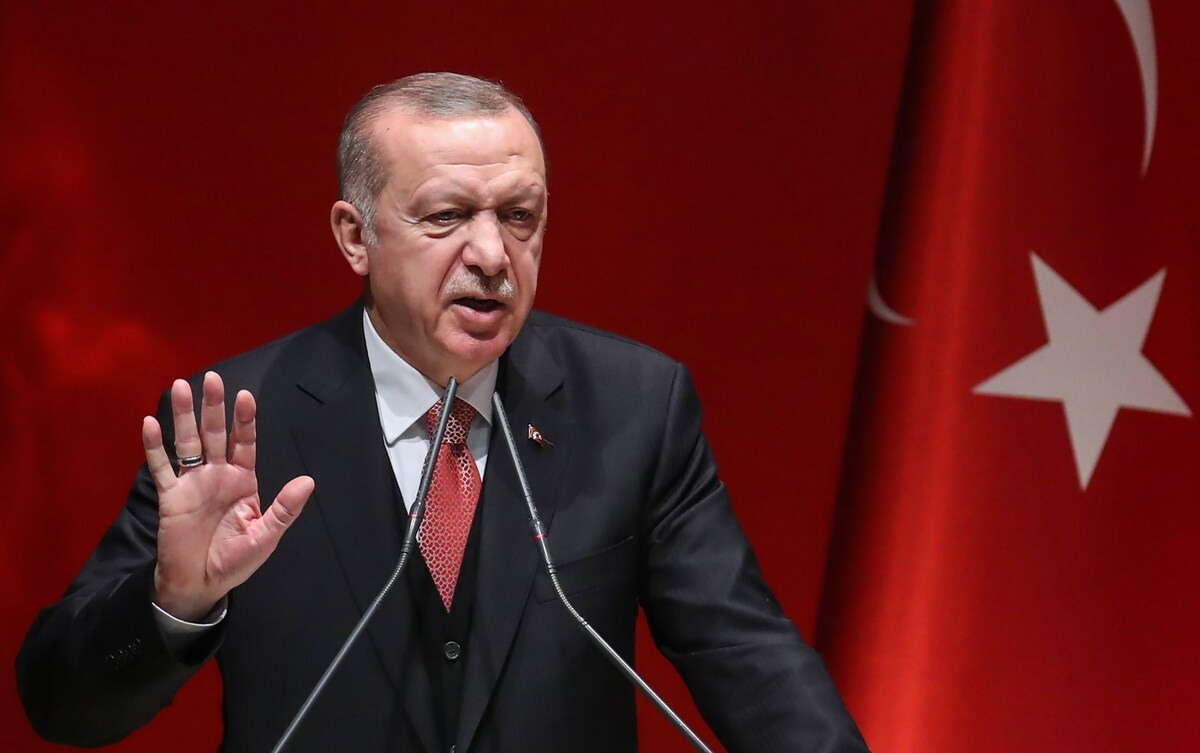
Turkish President Recep Tayyip Erdogan called on European countries on Friday to mobilize all available resources to ensure a permanent ceasefire in the Gaza Strip.

"We expect Europe to show the necessary enthusiasm and interest in achieving a ceasefire in Gaza," Erdogan said in a speech he delivered during his participation in the plenary session of the sixth summit of the European Political Community in the Albanian capital, Tirana.

"We must mobilize all our resources to ensure a permanent ceasefire, deliver humanitarian aid, and make Gaza livable again," he added.

He pointed out the need to establish a fair and comprehensive global governance structure in order to overcome the crisis of confidence in the international arena.

PALESTINE

Fri 16 May 2025 10:26 pm - Jerusalem Time

UNICEF: Israel killed 45 children in Gaza in two days

The United Nations Children's Fund (UNICEF) said that Israeli occupation forces killed 45 children in the Gaza Strip over the past two days, "another devastating reminder that children in Gaza are suffering first and foremost, forced to go hungry day after day and fall victim to indiscriminate attacks."

In a press statement issued on Friday, it called for an immediate end to the daily suffering and killing of children.

For its part, the World Health Organization stated that "Israeli attacks continued to impact healthcare facilities, including the European Gaza Hospital in Khan Yunis, which is now out of service."

She noted that the hospital's closure cut off vital services, including neurosurgery, cardiac care, and cancer treatment, all of which are unavailable elsewhere in Gaza. She added that the closure ends the facility's role as a major medical evacuation center, further straining the already overburdened health system.

PALESTINE

Fri 16 May 2025 10:20 pm - Jerusalem Time

A raid every 4 minutes on Gaza, and more than 100 dead since dawn

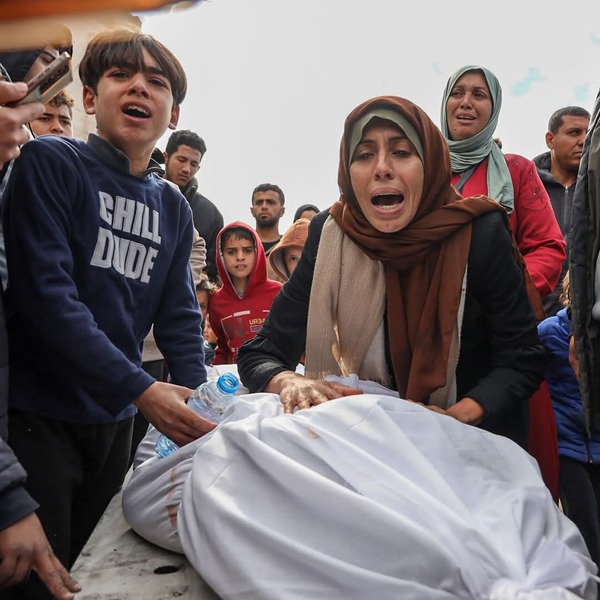
Gaza health authorities reported that 103 Palestinians were killed and more than 200 injured in Israeli attacks on the Gaza Strip since dawn on Friday, while an Israeli newspaper revealed a record number of airstrikes on the Strip.

In a statement, the Ministry of Health in Gaza said that hospitals received 100 dead and 216 wounded in the past 24 hours.

Earlier today, medical sources told Al Jazeera that 75 people had been killed in airstrikes since dawn, 64 of them in the northern Gaza Strip.

The director of field hospitals in Gaza told Al Jazeera that 120 people are missing as a result of the Israeli bombing of the Strip today.


In a shocking figure revealed today, the Israeli newspaper Maariv reported that the rate of Israeli airstrikes on the Gaza Strip today was one every four minutes.

The newspaper noted that the pace of raids is even higher than that recorded on the eve of the ground operation in October 2023.

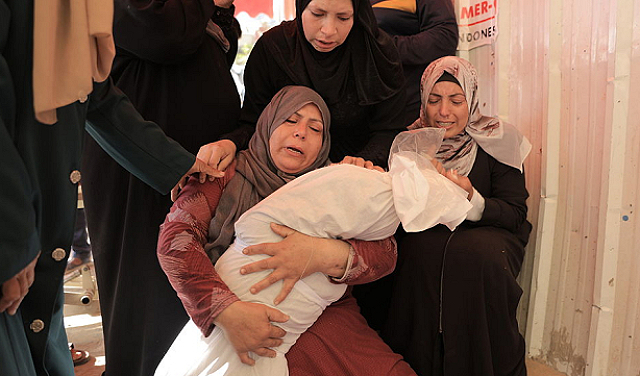
Exclusive photos obtained by Al Jazeera from inside the Indonesian Hospital (northern Gaza Strip) showed bodies of martyrs piled up on the ground, following a series of raids on Beit Lahia and Jabalia camp.

In an update to the death toll and the number of wounded, the Ministry of Health announced that the number of victims of the ongoing aggression since October 7, 2023, has risen to 53,119 dead  120,214 wounded.


OPINIONS

Fri 16 May 2025 6:17 pm - Jerusalem Time

Between Belfast and Gaza: Lessons from Northern Ireland for Palestinians

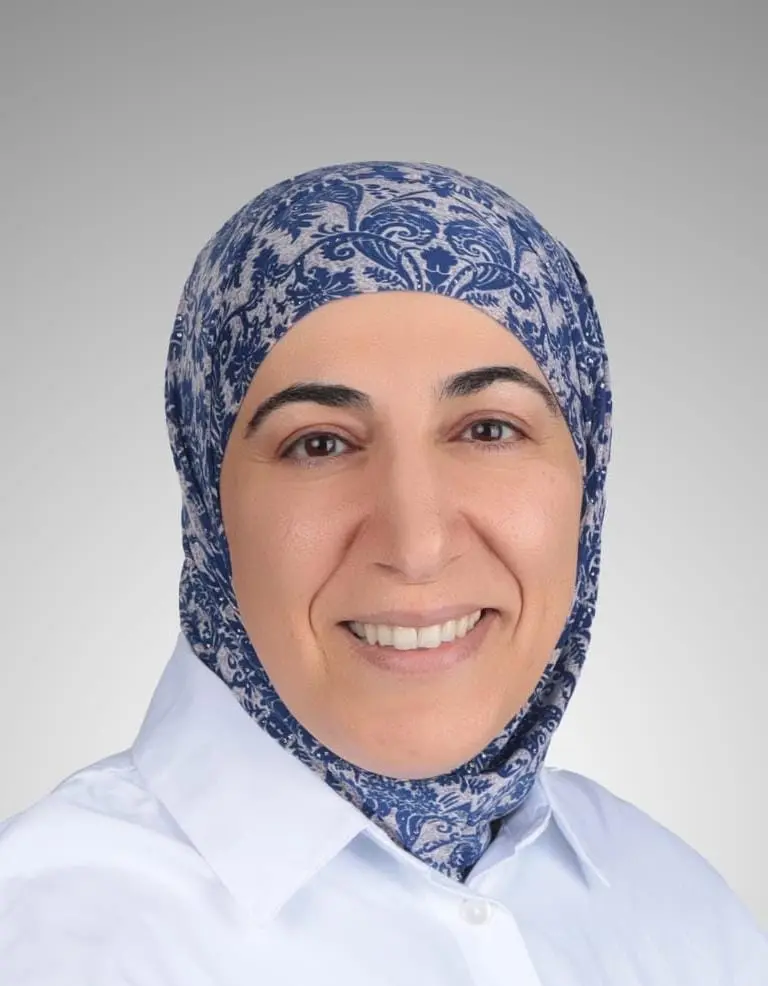
Written by: Dr. Samah Jabr


Northern Ireland experienced a bloody three-decade conflict, known as "The Troubles," which claimed approximately 3,300 lives among a population of less than two million, leaving a legacy of incalculable pain and psychological scars. The roots of this conflict date back to the British colonial era, but it reached its peak in the late 1960s, when tensions escalated between the Catholic community, which demanded unity with the Republic of Ireland, and the Protestant community, which insisted on remaining under the British crown. The conflict was complex: sectarian, political, and colonial, fueled by social grievances and profound inequalities in rights, opportunities, and the vote.


The confrontation took many forms. It began with peaceful protests demanding equality, which were met with violence such as the Bloody Sunday violence, which left 13 demonstrators dead. It then evolved into an armed struggle led by the Irish Republican Army (IRA). This conflict was marked by security crackdowns and mass arrests, including those of children. The conflict officially ended with the signing of the Good Friday Agreement on April 10, 1998, which established new, more equitable rules for power-sharing and the release of security detainees. It redefined the relationship between the various communities in Northern Ireland, and established a mechanism for reconciliation and transitional justice.


While the US government boasts that it sponsored this historic agreement during the Clinton administration, Palestine remains mired in a conflict that is more complex, bloodier, longer, and more consequential, and unfortunately less urgent on the international community's agenda. Despite the apparent differences, the similarities between the two situations reveal learning possibilities—for those who are willing.


Similarities and intersections


Both conflicts arose within a colonial context that sowed division and exacerbated conflicting identities. In Northern Ireland, British authorities practiced discriminatory policies against Catholics in employment, education, and housing, while Palestinians lived under dual legal systems that privileged Israeli settlers at the expense of the country's indigenous population.


Likewise, in both cases, armed resistance emerged as a last resort to chronic injustice: the IRA took up arms after the political horizon had been blocked, just as Palestinian resistance factions have done after the marginalization of Palestinian grievances and the encroachment of the occupation over the past decades. Each reacted according to its own context. The two colonial powers—Britain in Belfast and Israel in the Palestinian territories—resorted to similar techniques of repression: administrative detention, torture, the use of excessive force, and the criminalization of all expressions of protest. Just as Bobby Sand resisted the injustice of Margaret Thatcher's government and died on a hunger strike, Palestinian prisoners resisted Netanyahu's government, and the venerable Sheikh Khader Adnan died on a hunger strike during Ben-Gvir's rule of Israeli prisons.


But there are also fundamental differences. The conflict in Northern Ireland ended with a political settlement that ensured everyone remained on their land and respected the fundamental rights of oppressed groups. In Palestine, however, the conflict with Israel is not simply a dispute over power or social rights, but rather a struggle for existence itself, as settler colonialism sought to displace Palestinians and strip them of their land and history.


Western society has treated the Irish issue as a solvable crisis, exerting constructive pressure and providing a guarantee for agreement. Meanwhile, it has treated the Palestinian issue with a reprehensible double standard, turning a blind eye to injustice and aggression, and granting immunity to the aggressor. As long as racism, Islamophobia, and Western colonial interests in the region obscure the US and European administrations' view of our suffering, we must reject their mediation and rely on the countries of the South, such as South Africa, Brazil, and some Arab and Islamic countries, to be sponsors of future peace negotiations.


long-term psychological impact


The conflict in Northern Ireland has had profound psychological effects that persist to this day, with statistics indicating higher rates of mental illness, alcoholism, and suicide than in neighboring countries. A generation grew up in an environment of chronic violence, amidst the fear of bombings, the trauma of losing loved ones, and a lack of trust in the ruling authorities. After the agreement, it took a painstaking effort to heal: psychological support programs, dialogues between victims and perpetrators, and the integration of memory into educational curricula to prevent a recurrence of the tragedy.


This is a lesson we must learn in Palestine: the political peace process is no substitute for the social peace process, that trauma does not disappear with the end of violence and bloodshed, and that peacebuilding is not limited to politics, but rather requires profound healing of psychological pain and reconciliation with oneself and history.


In Gaza today, with every escape from death, a new story of trauma is brought to life. The horrific images, the loss of loved ones, and the ongoing deprivation all shape a generation bearing scars that may later transform into anger, withdrawal, or utter despair. Healing begins with ending the injustice, acknowledging the suffering, providing possible compensation, and allowing Palestinians to be agents of their own destiny, not just recipients of aid.


We also learn from the Northern Ireland Peace Agreement the following:


1. No peace without justice: The Irish Agreement recognized past injustices and established mechanisms to compensate victims, which must be part of any Palestinian solution.


2. Reconciliation does not mean forgetting: The files of victims, detainees, and violations were opened, not to inflame the situation, but to heal the wounds. This is what Palestine needs, instead of a culture of silence, fear, and forced normalization of pain.


3. Civil society is a key partner in addressing the effects of violence: In Ireland, churches, youth groups, and women played a crucial role in peacemaking. In Palestine, the role of community forces must be expanded to participate in community recovery and building the liberation project.


Undoubtedly, the conflict in Northern Ireland was less violent and complex, but it found its way to a settlement when international political will combined with the possibility of achieving what could not be achieved without armed struggle through negotiations. Then, the pain became an incentive to build a future. In Palestine, the pain and injustice that Western policy ignores remain fuel for the continued struggle, waiting for the world to act to defuse the situation.


We may not soon sign a "Good Friday"-like agreement, but we need a just Friday, a ceasefire that will lift the oppressed from the tunnel of violence to the horizon of dignified negotiations, and from the era of occupation to the implementation of international law and human rights principles.

ARAB AND WORLD

Fri 16 May 2025 5:55 pm - Jerusalem Time

Trump made a fortune from his visit to the Gulf, marginalized Israel, and failed to help Gaza.

Ishaan Tharoor, a distinguished columnist for the Washington Post, noted that by the end of US President Donald Trump's visit to the Middle East, the long-awaited "grand bargain" to bring peace to a troubled region was nowhere in sight. Instead, there were numerous smaller deals.


Trump may be off the hook for his tour of Saudi Arabia, Qatar, and the United Arab Emirates—three oil-rich nations he has held significant sway over for decades, maintaining numerous military bases scattered across the country. In return, Trump spends tens of millions of dollars annually (some say monthly) working with a number of consulting firms in the US capital to exert influence in Washington.


Trump has promoted a series of trade and investment deals concluded with his encouragement. Lucrative agreements were concluded for American weapons, aircraft, and artificial intelligence chips, while Trump, in multiple speeches, extolled the success of these wealthy countries ruled by absolute monarchs.


According to White House data, the three countries have concluded more than $3.4 trillion in contracts and deals with American companies, "which will provide millions of good jobs for Americans."


“On a trip that seemed more about business than geopolitics, Trump still feigned hopes for peace,” Tharoor says. “He extended a hand to Iran, hinting at possible future talks on its nuclear program. He announced a truce with the Houthi rebels in Yemen after authorizing a $1 billion bombing campaign that did not affect the Houthis’ ability to target Israel or shipping in the Red Sea. To the surprise of even some US officials, he announced a halt to sanctions on Syria, a crucial step to bolster the country’s nascent transitional regime. He also denounced the legacy of US intervention in the region.”


According to experts, the signals he sent caused panic in Israel. Before Trump's visit, Israeli media and officials were already pointing to how Trump had sidestepped Israeli Prime Minister Benjamin Netanyahu, a far-right leader close to the US president who had received numerous political gifts from the White House during Trump's first term, from recognizing occupied Jerusalem as Israel's capital and granting him the occupied Syrian Golan Heights, to closing the Palestine Liberation Organization office in Washington, shuttering the US consulate in East Jerusalem, and cutting off aid to the United Nations Relief and Works Agency for Palestine Refugees (UNRWA).


But in his second term, according to Tharoor, Trump's vision of the Middle East is no longer linked to Netanyahu's. The Israeli leader—whose arrest warrant was issued on November 21, 2024, by the International Criminal Court—was not pleased with Trump's overtures to Tehran, his unilateral truce with the Houthis, and his opening to Syria, which Israel has relentlessly bombed in recent months. Trump cited the Abraham Accords—the agreements establishing formal relations between Israel and a group of Arab states—but the accords seemed less central to his efforts this week. For Israel, the prospect of normalization seemed to have been sidelined.


Meanwhile, Israeli forces have been pounding the besieged Gaza Strip. Shelling of alleged Hamas targets has killed hundreds of civilians in recent days. On Thursday alone, local groups reported that Israeli attacks killed more than 100 people. A hospital director in northern Gaza told the Washington Post of one incident in which they received the bodies of 20 children killed on Wednesday. The humanitarian situation remains dire, with one in five people in the Strip facing starvation amid an ongoing Israeli blockade that has prohibited the entry of food, water, and medicine since March 2, in full view of the world.


Netanyahu declared on Tuesday (May 25), the day Trump began his visit to Saudi Arabia, that there was "no way" for Israel to stop its massacre in Gaza, vowing to "finish the job" and completely eliminate Hamas. This message undermined attempts in Doha, Qatar, to resume peace talks between the parties. Netanyahu again came under criticism from the families of hostages held by Hamas, who fear that the prime minister is prioritizing his political interests and his alliance with the far-right Israelis over the suffering of Israelis held in Gaza. On Monday, Trump praised the release of Israeli-American Idan Alexander—the last American citizen held by Hamas—and noted on social media that the decision to return him to Israel was "a step taken in good faith by Hamas." The White House message implied impatience with Netanyahu, whom many see as an obstacle to attempts to reach a permanent ceasefire. Some of Netanyahu's far-right allies have made clear their desire to displace as many Palestinian citizens as possible from the devastated and besieged Strip and to reoccupy it indefinitely.


It's worth noting that President Trump has not abandoned his bizarre plan to take control of Gaza and redevelop it himself. "Gaza has been a land of death and destruction for many years," Trump told reporters. "I have visions for Gaza that I think are very good—make it a freedom zone. Let the United States step in and make it just that—a freedom zone."


Whatever the outcome, the rift between Trump and Netanyahu is fading. “For Netanyahu, who has been accustomed to his settler allies directing his policy in his first term, the new version of Trump’s position must come as a shock,” Ilan Goldenberg, senior vice president and chief policy officer at J Street, a liberal pro-Israel organization in Washington, wrote in an email note. “For Trump, his friends in the Gulf are showering him with deals and benefits—when he looks at Israel under Benjamin Netanyahu and [far-right leader] Itamar Ben-Gvir, he sees nothing but headaches.” These include “endless war” in Gaza, an Israeli political leadership “determined to sabotage talks with Iran,” and an Israel that appears unwilling to make the political concessions necessary before it can integrate more deeply into the region.

PALESTINE

Fri 16 May 2025 3:42 pm - Jerusalem Time

Stalemate in Doha negotiations between Hamas and Israel, lack of any breakthrough

Negotiations in Doha between Israel and Hamas continue amid the absence of any real breakthrough on prisoner exchanges and a ceasefire in the Gaza Strip. Both sides remain steadfast in their positions, according to a report on the Yedioth Ahronoth website on Friday. The report noted that US envoy Steve Witkoff has relinquished the initiative and is struggling to "break the deadlock."


The report stated that "the sudden release of Israeli-American soldier Idan Alexander was a surprise to Israeli security agencies, as they had no prior knowledge of it." It was considered a step that opened what was described as a "transitional phase" before the launch of the large-scale ground invasion within Operation Gideon Arms.


The newspaper quoted a security source as saying that the attacks had an additional objective: to preempt any potential progress in the Doha negotiations that might lead to a ceasefire. He said, "Destroying the entire tunnel network could take years, but targeting the offensive infrastructure and command and control centers is essential to weakening Hamas's capabilities."


The report stated that the escalation of airstrikes since Alexander's release also aims to put pressure on Hamas during the negotiations. It is believed that the impact of the raids may push the movement to show greater flexibility in the talks, a view shared by Israeli Prime Minister Benjamin Netanyahu, who continues to threaten to escalate the aggression on Gaza.


In this context, the newspaper quoted informed sources as saying that US President Donald Trump's Middle East envoy, Witkoff, attempted to break the deadlock by proposing a small deal that would see the release of a number of Israeli prisoners in exchange for a ceasefire lasting between one and a month and a half.


But so far, no agreement has been reached, as Hamas insists on halting the aggression.


The newspaper reported that reports arriving in Tel Aviv indicate that "the negotiations have reached a dead end," with delegations still awaiting Netanyahu's decision on the return of the Israeli negotiating team.


According to Israeli sources, Witkoff "raised his hands" and left the decision to Israel. One source said, "There is no progress in the talks, and there are no positive signs. Hamas rejects the comprehensive deal, and it appears Israel is heading toward expanding the invasion within days. There may be last-minute changes."


The Israeli army is making field preparations, amidst assessments that it has a window of opportunity until the cabinet meeting scheduled for Sunday afternoon.


The Israeli military said in a statement issued today that it had attacked "more than 150 targets" in the Gaza Strip in the past 24 hours, destroying infrastructure in the north and south of the Strip.


ARAB AND WORLD

Fri 16 May 2025 3:02 pm - Jerusalem Time

Trump urges Iran to move quickly in nuclear talks: We have presented a proposal.

US President Donald Trump, concluding his Gulf tour in Abu Dhabi on Friday, said that Iran must quickly make a decision on a proposal put forward by Washington during the nuclear talks between the two countries, or "something bad will happen."


Before leaving the UAE capital, Trump stated that the United States had submitted a proposal to Iran for reaching an agreement.


"They have a proposal, and more importantly, they know they have to move quickly, or something bad will happen," the US president said.


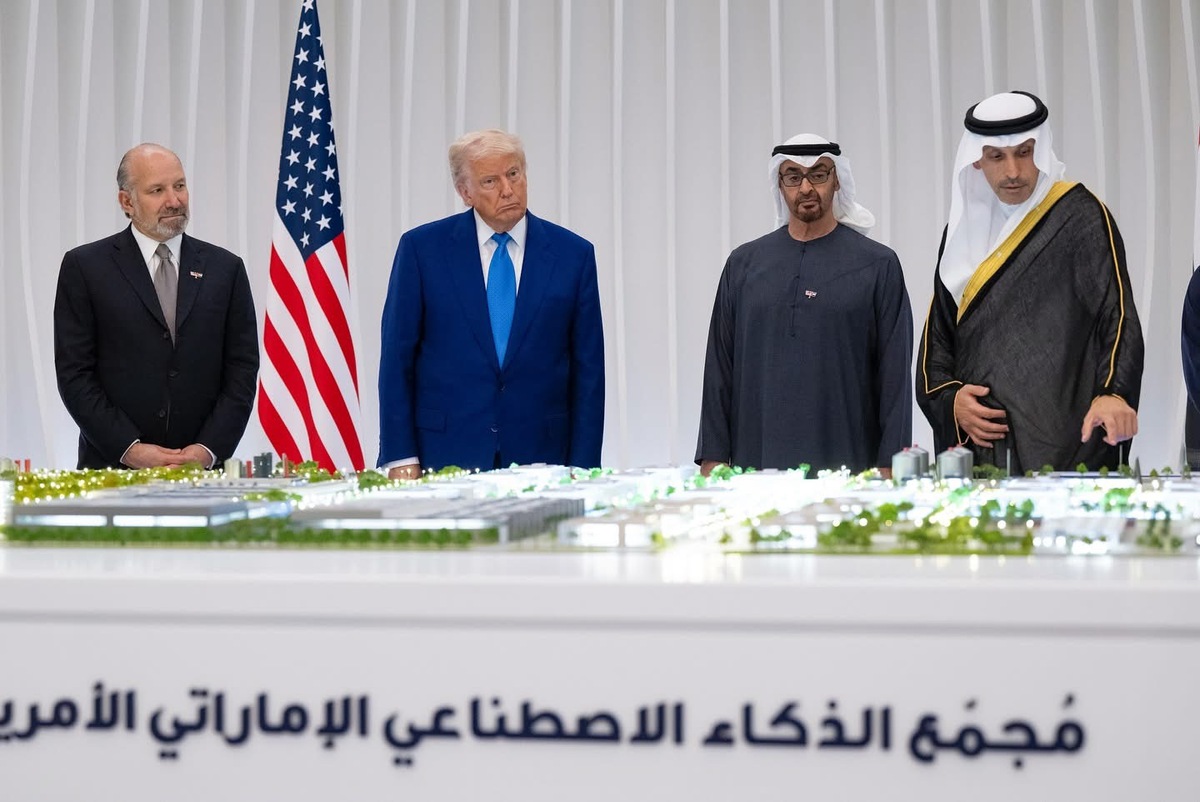
The US President concluded his Gulf tour on Friday in the UAE, following stops in Saudi Arabia and Qatar, during which he concluded billions of dollars in deals and secured an investment pledge from Abu Dhabi exceeding $1 trillion.


Trump concluded a four-day tour that began Tuesday in Riyadh, then moved to Doha, and ended in Abu Dhabi.


Trump's first foreign tour of his second term saw massive deals in various sectors, the lifting of sanctions on Syria, and expressions of optimism regarding the nuclear agreement with Iran.


The US President was warmly received in the three countries, whose leaders Trump praised, saying he and Saudi Crown Prince Mohammed bin Salman had "a lot of affection" for each other. This contrasts sharply with the lukewarm Saudi-US relations that marked the beginning of his predecessor Joe Biden's term.


He also hinted from Qatar that an agreement on Iran's nuclear program was close, which would avoid military action, in an announcement that caused oil prices to fall.


Before leaving the UAE, Trump revisited the Iranian issue, saying that Washington had delivered a proposal to Tehran for reaching an agreement, adding, "They have a proposal, and more importantly, they know they have to move quickly or something bad will happen."


Trump did not announce any progress on the Gaza war during his visit to Qatar, which played a key mediating role in the truce talks. He reiterated in Doha that Washington should "take" the Gaza Strip and turn it into a "freedom zone."


But in Abu Dhabi, he acknowledged that "many are starving" in the besieged Strip, adding, "We will work to solve this problem."


PALESTINE

Fri 16 May 2025 2:58 pm - Jerusalem Time

The occupation forces arrested a young man from Jenin.

On Friday, the occupation forces arrested a young man from the town of Kafr Dan, west of Jenin.


Local sources claim that the occupation forces arrested Nabil Abed, the brother of martyr Saqr Abed, after raiding and searching his home. Abed was killed by Israeli forces last June.


The Israeli occupation's aggression on the city of Jenin and its camp has entered its 116th day, and the occupation is intensifying its raids and arrest campaigns in small towns and villages, searching homes and destroying their contents.

PALESTINE

Fri 16 May 2025 2:39 pm - Jerusalem Time

109 Palestinians killed and 216 wounded in the Gaza Strip in the past 24 hours.

The Ministry of Health in Gaza announced today, Friday, that 109 martyrs (including one recovered martyr) and 216 injuries had arrived at Gaza Strip hospitals in the past 24 hours.


In its daily statement, the ministry confirmed that 93 martyrs and more than 200 wounded have arrived at hospitals since dawn today, as a result of the occupation's massacres and targeting of civilians in the Gaza Strip.


She pointed out that a number of victims are still under the rubble and on the streets, and that ambulance and civil defense crews are unable to reach them.

The Ministry of Health indicated that the death toll from the Israeli aggression has risen to 53,119 martyrs and 120,214 injuries since October 7, 2023.


The death toll and injuries since March 18, 2025 has reached (2,985 martyrs and 8,173 injuries).

PALESTINE

Fri 16 May 2025 2:25 pm - Jerusalem Time

Israeli occupation continues its raids on Bruqin and Kafr al-Dik and detains young men west of Salfit.

Israeli occupation forces continue to storm the towns of Kafr ad-Dik and Burqin, west of Salfit.


Local sources reported that the occupation army set up military checkpoints in the center of the town of Bruqin, imposed a curfew, and detained a number of young men.


A foot force was also deployed on the outskirts of Kafr al-Dik, following a series of house raids and arrests carried out last night.


Since yesterday, occupation bulldozers have continued to level vast areas and pave colonial roads in the area between the towns of Kafr ad-Dik and Burqin.

ARAB AND WORLD

Fri 16 May 2025 1:28 pm - Jerusalem Time

A Lebanese singer offered his services to Israel and was implicated in the assassination of 35 Hezbollah leaders.

Investigations into a young religious singer detained in Lebanon on charges of collaborating with Israel have revealed that he provided Israeli authorities with highly accurate information about Hezbollah leaders, contributing to a series of assassinations targeting more than 35 of the party's leaders, according to the Lebanese online newspaper Al-Modon on Thursday.


According to a judicial source who spoke to the newspaper, the religious singer (M.S.), approximately 30 years old, gathered highly sensitive information due to his close proximity to Hezbollah's inner circle. His father works in the "Radwan Force," while his brother is considered a "martyr" in the party's ranks.


Al-Munshid used his connections to reveal the names of new leaders appointed after previous ones were targeted. He would inform Israel immediately upon the appointment of any official to a new position, with subsequent assassinations carried out during the Israeli war on Lebanon last year.


According to the source, this information contributed to the execution of assassinations between Beirut's southern suburbs and southern Lebanon, targeting dozens of leaders whose identities were known only within narrow party circles. He noted that the information he provided is "difficult" to obtain without a human source "in direct contact with the party environment."


The information indicates that the agent initiated contact with Israeli entities of his own accord in October 2024, following a severe financial crisis caused by stock market losses and mounting debts amounting to approximately $18,000. He claimed to possess information on Hezbollah leaders, requesting money in exchange for disclosing it. He later received $23,000 from the Israeli entities with whom he began dealing.


The judicial source described Al-Munshid as "one of the most dangerous agents" arrested in connection with his dealings with Israel in recent years, given the sensitive information he provided about figures within the inner circle he regularly accompanied, and the resulting human losses.


According to Al-Modon, the case is receiving special attention from the Lebanese judiciary, amid a move to expand the investigation to uncover more details about the type of information leaked by the suspect, particularly after the ceasefire. The verdict is expected to be harsh given the extent of the damage.


The newspaper indicated that security services are investigating another Lebanese national from the south of the country on suspicion of involvement in collaboration. If the suspicions are proven, his case will be referred to the military judiciary. The sources noted that it has not yet been determined whether the new suspect is related to the main detainee, noting that investigations are ongoing to verify the extent of any links between them.

PALESTINE

Fri 16 May 2025 1:26 pm - Jerusalem Time

Trump: Many are starving in Gaza

US President Donald Trump confirmed on Friday the existence of a famine in the Gaza Strip, saying that "many people there are starving," and pledged that his country would pay special attention to this humanitarian situation.


This comes as Israel continues to impose a stifling blockade on Gaza for more than two months, plunging the territory into a state of famine, according to the government media office in Gaza.


"We have to take care of Gaza," Trump told reporters in Abu Dhabi on the sidelines of the UAE-US Business Dialogue. "Many people there are starving."


He added, "We are following the situation in Gaza. We have to care about this. Many people are starving there, and many bad things are happening."


In a significant escalation compared to previous positions, Western condemnations of Israeli practices in the Gaza Strip and the crippling blockade imposed on it have recently intensified. French President Emmanuel Macron denounced the Israelis' prevention of the entry of aid, which had been piling up in the Strip and had been sent by his country and other countries.


In a lengthy interview with the French channel TF1 last Tuesday, he said that the Gaza Strip is experiencing the "most serious" humanitarian crisis since October 7, 2023.


Spanish Prime Minister Pedro Sanchez also described Israel as a "genocidal state" on Wednesday.


Trump also addressed the ongoing peace talks in Istanbul between Russia and Ukraine, saying he would meet with Putin to end the war between Moscow and Kyiv "as quickly as possible, and it's time to do that."

PALESTINE

Fri 16 May 2025 1:19 pm - Jerusalem Time

Settlers attack foreign activists south of Hebron

Today, Friday, settlers attacked three foreign solidarity activists in Masafer Yatta, south of Hebron.


Activist Osama Makhamreh said that settlers assaulted three foreign activists while they were documenting attacks on shepherds and farmers in Susya, Masafer Yatta.


It is noteworthy that settlers carry out daily attacks on shepherds and citizens' property in all remote areas and ruins of the Masafer Yatta area, under the protection of the Israeli occupation army.

PALESTINE

Fri 16 May 2025 12:24 pm - Jerusalem Time

Israeli occupation continues to demolish and blow up homes in Tulkarm and its two camps.

The Israeli occupation forces continue their aggression on the city of Tulkarm and its camp for the 110th consecutive day, while the assault on the Nur Shams camp continues for the 97th day, amid an escalation in the field, home demolitions, and tightened security measures.


Local sources said that Israeli bulldozers demolished more residential buildings in Nour Shams camp yesterday, positioned around the Abu Bakr al-Siddiq Mosque in the center of the camp.


She pointed out that the occupation forces demolished 20 buildings, including their residential apartments, in addition to blowing up other homes during the past week.


She noted that the demolitions took place in the Al-Manshiya, Al-Maslakh, Al-Jami', Al-Ayada, and Al-Shuhada neighborhoods, as part of the occupation's plan to demolish 106 homes and residential buildings in the Tulkarm and Nur Shams refugee camps.


This morning, the occupation forces tightened their restrictions on the city of Tulkarm, particularly on its southern side. They set up a military checkpoint at the southern entrance, specifically around the Jabara Bridge gate, and stopped passing vehicles for long periods of time, searching and checking the identities of drivers and passengers, causing a traffic jam and severe overcrowding in the area.


In recent days, the southern area of Tulkarm has been witnessing provocative measures by the occupation forces, who periodically close the gate of the Jabara Bridge for several hours before reopening it, setting up a military checkpoint, while subjecting vehicles to inspection, abusing their passengers, and obstructing traffic. It is worth noting that this area is considered a main entrance for those coming from the villages of Al-Kafriyat and the rest of the West Bank governorates, especially after the closure of the eastern entrance adjacent to the Nour Shams camp.


In a related development, the occupation forces continue to deploy military vehicles around the clock toward the city and its two camps. They patrol the main streets, provocatively honking their horns, deliberately driving against traffic, obstructing the movement of citizens and vehicles, and frequently erecting flying checkpoints, particularly in the city center.


The occupation forces also continue to seize homes and residential buildings on Nablus Street and the adjacent northern neighborhood, transforming them into military barracks after forcibly evacuating residents. Meanwhile, military vehicles remain stationed in the area, some of which have remained under occupation control for more than two months.


Meanwhile, the occupation continues its stifling siege of the Tulkarm and Nur Shams refugee camps and their surroundings, preventing residents from entering them to check on the homes from which they were forcibly displaced. This is compounded by the firing of live ammunition and sound bombs, especially at night, in addition to systematic attacks on citizens' homes and infrastructure, transforming them into military barracks devoid of any sign of life.


The occupation's ongoing aggression and escalation against the city of Tulkarm and its two camps resulted in the martyrdom of 13 citizens, including a child and two women, one of whom was eight months pregnant. Dozens were also injured and arrested, and the infrastructure, homes, shops, and vehicles were completely and partially demolished, burned, vandalized, looted, and robbed.


The aggression also resulted in the forced displacement of more than 4,200 families from the Tulkarm and Nur Shams camps, comprising over 25,000 residents. It also resulted in the complete destruction of more than 400 homes and the partial destruction of 2,573 others. Furthermore, the entrances and alleys were sealed off with earth mounds, transforming them into isolated areas devoid of any sign of life.

PALESTINE

Fri 16 May 2025 11:46 am - Jerusalem Time

"Education": The occupation launches an aggressive attack on schools in Bruqin and Kafr al-Dik, west of Salfit.

The Ministry of Education and Higher Education said that the Israeli occupation forces have been launching a fierce, aggressive attack on schools in the towns of Bruqin and Kafr ad-Dik, west of Salfit, since yesterday, Thursday.


The ministry reported on Friday that the occupation forces stormed the Al-Munjid private school in the town of Bruqin, and this morning raided the Martyr Mazen Abu Al-Wafa Elementary School for Boys in Kafr ad-Dik, while converting the Al-Salam Kindergarten building in Kafr ad-Dik into a military barracks.


She added that the occupation bulldozers began excavation and digging works near the Burqin Girls' Elementary School.


The ministry noted that these escalating violations against schools and educational personnel in the West Bank, including Jerusalem and Gaza, fall within the context of systematic colonial aggression.


She called on international, human rights, and education organizations to urgently intervene to put an end to these ongoing violations and hold the occupation accountable for its attacks on schools, universities, and educational institutions.

PALESTINE

Fri 16 May 2025 11:40 am - Jerusalem Time

Palestinian Red Crescent: Our crews dealt with dozens of injuries and martyrs on a bloody night in northern Gaza.

The northern Gaza Strip witnessed a violent night of shelling, during which various residential neighborhoods were targeted, particularly in Tel al-Zaatar, Beit Lahia, al-Atatra, al-Sultan, and Jabalia camp, resulting in dozens of injuries and deaths.


In a statement, Dr. Mohammed Abu Rahma, Director of the Emergency and Ambulance Service at the Palestinian Red Crescent Society, said: "Our crews dealt with 135 injuries last night, and transported 20 martyrs. Our work in the northern Gaza Strip was reinforced by two additional ambulances from Gaza, in addition to four vehicles operating in the field there."


He added, "All neighborhoods in the north were targeted, with the most violent attacks occurring in the areas of Tel al-Zaatar, Beit Lahia, al-Atatra, al-Sultans, and Jabalia camp."


The Palestinian Red Crescent also denied reports circulating about any of its vehicles or headquarters being targeted in northern Gaza.

ARAB AND WORLD

Fri 16 May 2025 11:17 am - Jerusalem Time

29 US Senators urge Trump to pressure the occupation to immediately end the siege of Gaza.

Democratic Senator Peter Welch and 28 other members of the US Senate introduced a resolution calling on the Trump administration to immediately end the blockade of the Gaza Strip.


This came in a statement issued by Senator Welch tonight, highlighting the "unprecedented" humanitarian crisis unfolding in the Gaza Strip.


"Children in Gaza are dying of hunger, and we cannot accept or support the deliberate policy of starvation pursued by the Israeli government," Welch said in a speech on the Senate floor, according to the same statement.


The draft resolution called on the Trump administration to use all diplomatic tools at its disposal to end the blockade on food and life-saving humanitarian aid to meet the needs of civilians in Gaza.


Welch continued: "My colleagues and I are introducing a resolution that highlights the fact that children in Gaza are dying of hunger. We are here to discuss with ease what we consider important issues, and we must all do our utmost to end the Israeli blockade and war on the Strip immediately."


He stressed: "We cannot accept or support the deliberate starvation policy pursued by the Israeli government."


Under the draft resolution, the senators expressed grave concern about the ongoing humanitarian crisis in Gaza, including a famine that could kill tens of thousands of children.

PALESTINE

Fri 16 May 2025 11:07 am - Jerusalem Time

Ramallah: A family suffocates during the occupation forces' raid on the village of Nabi Saleh.

A family suffered from suffocation from toxic gas, early Friday morning, during an Israeli occupation forces raid on the village of Nabi Saleh, northwest of Ramallah.


Local sources reported that an Israeli army force stormed the village, firing tear gas canisters. One of the canisters entered Rami Tamimi's home, causing him and his family to suffocate, forcing them to leave the house and sleep outside.

ARAB AND WORLD

Fri 16 May 2025 10:51 am - Jerusalem Time

Trump concludes Gulf tour in the UAE with record deals

US President Donald Trump concludes his Gulf tour on Friday in the UAE, following stops in Saudi Arabia and Qatar, where he announced billions of dollars in deals, a diplomatic opening toward Syria, and optimism about a nuclear agreement with Iran.


Trump's first foreign trip of his second term saw a "record" order for Boeing aircraft worth over $200 billion, a massive arms deal with Saudi Arabia, and the lifting of decades-old sanctions on Syria.


The US President was warmly received in the three countries, whose leaders Trump praised, saying he and Saudi Crown Prince Mohammed bin Salman had "a lot of affection" for each other. This contrasts sharply with the lukewarm Saudi-US relations that characterized the beginning of former US President Joe Biden's term.


Trump is scheduled to attend a trade and business meeting on Friday morning, after which he will tour the Abrahamic Family House on Saadiyat Island in Abu Dhabi, according to local media. The complex, which opened in 2023 and includes a mosque, a church, and the UAE's first synagogue, aims to promote coexistence in the Islamic state.


The UAE was one of the Arab countries that normalized relations with Israel in 2020 under the Abraham Accords, which were brokered by the United States during Trump's first term and also included Morocco and Bahrain.


On Thursday, the US President held talks with his Emirati counterpart, Sheikh Mohammed bin Zayed Al Nahyan, following a tour by Trump of the Sheikh Zayed Mosque, the largest in the country and widely known for its towering white columns and golden-decorated walls.
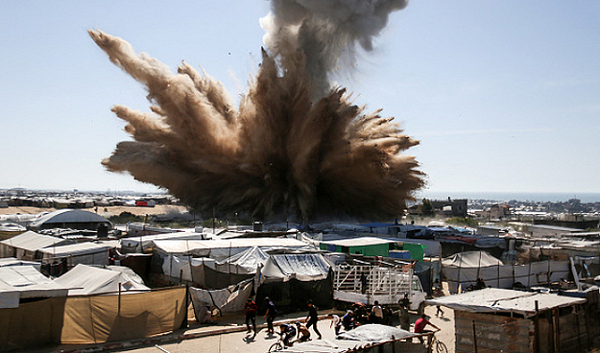

During his stop in Doha, Trump hailed what he described as a "record-breaking" $200 billion deal for Qatar Airways to purchase Boeing aircraft.


He also hinted from Qatar that an agreement on Iran's nuclear program was close, which would avoid military action, in an announcement that caused oil prices to fall.


However, he did not announce any progress on the Gaza war during his visit to Qatar, which played a key mediating role in the truce talks. In a speech in Doha, Trump reiterated that the United States should "take" the Gaza Strip and turn it into a "freedom zone."
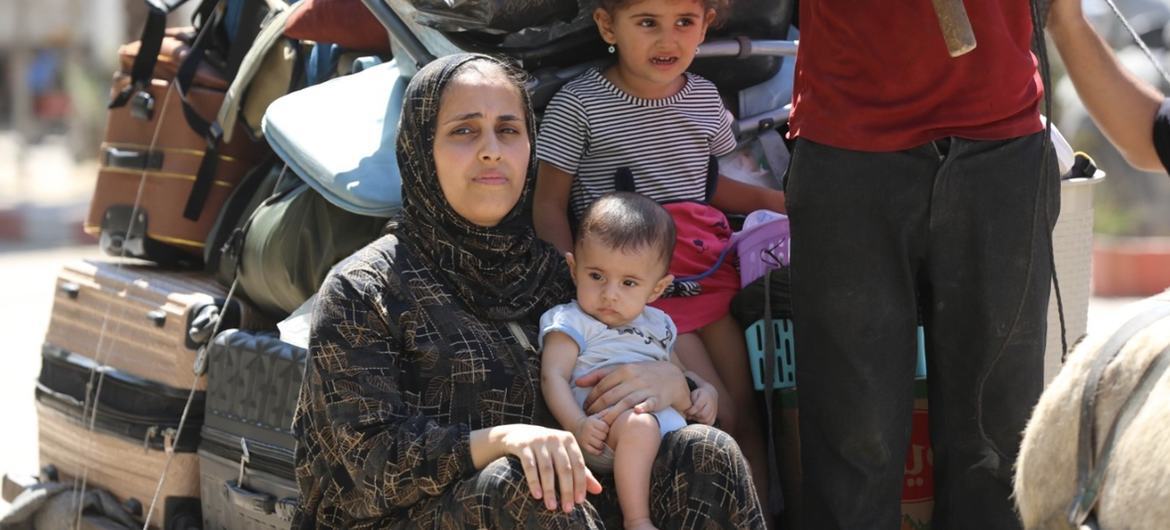

The Saudi leg of the summit included pledges from Riyadh of $600 billion in investments, including an arms deal the White House described as "the largest in history."


The White House also announced that Saudi Arabia's Data Vault will invest $20 billion in AI-related sites in the United States, and that tech companies

Logia, including Google, will invest in both countries.
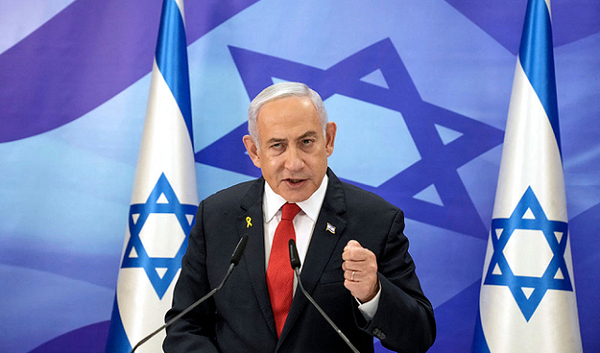

In the first such meeting in 25 years, Trump met with Syrian President Ahmed al-Sharaa in Riyadh and announced the lifting of sanctions on the war-torn country, but in return, he called on al-Sharaa to normalize relations with Israel.


The US president said his Gulf tour had raised "trillions of dollars," but the generosity of Gulf leaders also sparked controversy, with Qatar offering Trump a luxury jet ahead of his visit, in what Trump's Democratic opponents described as blatant corruption.


The UAE's English-language newspaper, The National, reported that the United States and the UAE are working to announce a partnership in artificial intelligence and technology during Trump's visit.


The UAE seeks to lead in technology, particularly artificial intelligence, to diversify its oil-dependent economy.


But these ambitions hinge on access to advanced US technologies, including artificial intelligence chips, which were subject to strict export restrictions and which the UAE president's brother and national security advisor, Sheikh Tahnoun bin Zayed, reportedly lobbied for during a visit to Washington in March.


Earlier this week, the Trump administration reversed several new restrictions enacted by Biden that were due to take effect on May 15 on exports of semiconductors used in artificial intelligence development, which primarily affected China.

PALESTINE

Fri 16 May 2025 10:07 am - Jerusalem Time

Prisoners' families warn Netanyahu that the opportunity to reach a swap deal has passed.

Families of Israeli prisoners held in the Gaza Strip said Friday that the Israeli government is close to missing a "historic opportunity" to recover the captives and stop the war, as attacks on the Strip intensify and US President Donald Trump concludes his Gulf tour.


This came as medical sources in the Gaza Strip reported that more than 100 Palestinians were killed early this morning in a series of violent raids carried out by the Israeli army on areas north of the Strip, amid Israeli preparations to expand ground operations in the territory.


In a statement issued by the Prisoners' Families Headquarters, the families expressed their fear that current developments could lead to Israel's isolation and further entanglement in the war, rather than being part of a broader regional agreement. They warned against "drowning in the Gaza quagmire."


The statement read: "The families of the prisoners woke up this morning with heavy hearts and deep fear, amid reports of intensified attacks in Gaza and the approaching end of President Trump's visit to the region."


He added, "All indications show that the State of Israel is only hours away from missing the century. Instead of recovering all prisoners, participating in a broad regional effort, and stopping the war, Israel may find itself isolated and drowning in the Gaza quagmire."


He continued, "Missed this historic opportunity would be a resounding Israeli failure. Attempts to thwart the initiatives on the table will be recorded in the pages of shame."


"We are living through dramatic hours, hours in which the fate of our loved ones, the fate of Israeli society, and the future of the entire Middle East are being decided," the families said.


She added, "We call on Israeli Prime Minister Benjamin Netanyahu and US President Donald Trump to reach a political breakthrough as soon as possible. Time is running out, the world is watching, and history will record everything."


This comes as negotiations continue in Doha, attempting to achieve a breakthrough in prisoner exchange talks and a ceasefire, amid stubborn resistance to proposals Hamas had previously rejected due to their lack of any guarantees that the war would end.


Israeli sources reported that the decision to expand the war is awaiting approval from the political leadership, while the army is "fully prepared" for the possibility of a broader confrontation, ultimately aiming to "decide the battle against Hamas," as they put it.


Sources indicated that a large number of Israeli forces are currently on the ground, amid a widespread deployment around the Gaza Strip. The sources also indicated that IDF Chief of Staff Eyal Zamir reviewed operational plans during a field visit to the forces on Thursday.


According to Israeli media, the Israeli occupation army's intensive airstrikes on the Gaza Strip have targeted approximately 130 targets, some of which are classified as "field softening" sites aimed at laying the groundwork for a potential large-scale ground operation.

PALESTINE

Fri 16 May 2025 9:56 am - Jerusalem Time

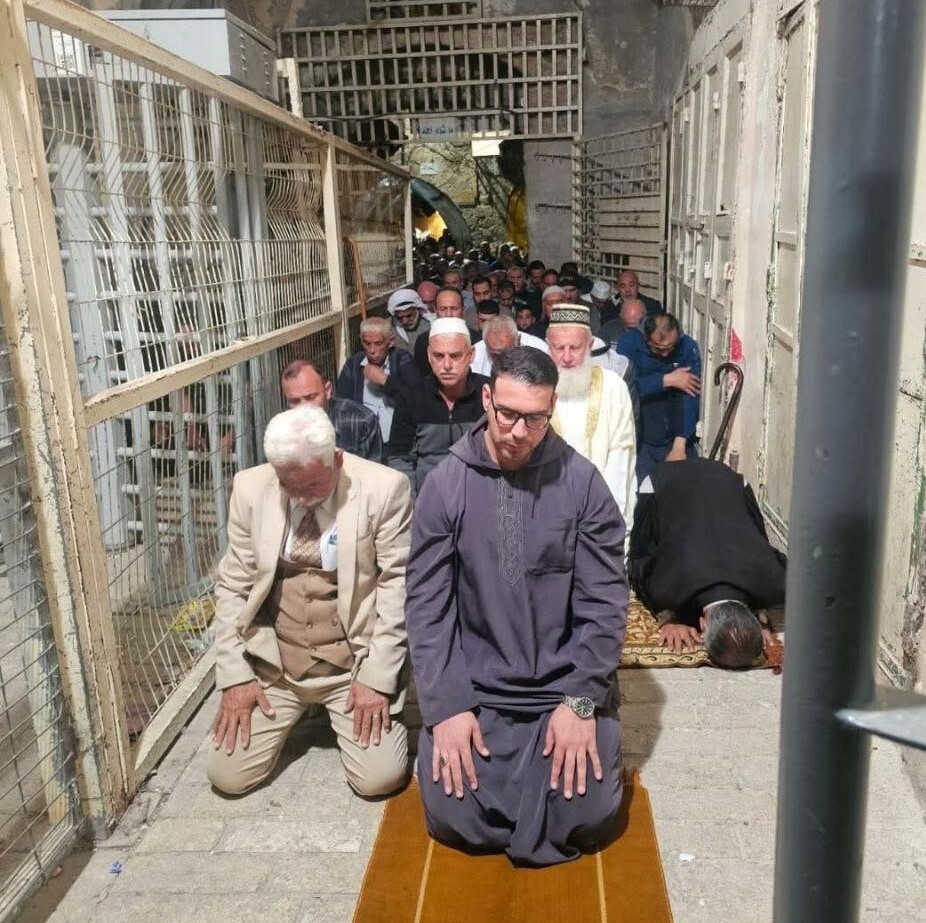
Israeli occupation prevents citizens from performing the dawn prayer at the Ibrahimi Mosque.

Israeli occupation forces prevented citizens from performing the dawn prayer on Friday at the Ibrahimi Mosque in Hebron.


Local sources reported that the occupation forces prevented citizens from performing prayers, fired sound bombs at them, and forced them to pray outside the compound.


The Ibrahimi Mosque has recently been subjected to systematic attacks, including the prohibition of the call to prayer, the prevention of its workers from performing their duties, and the harassment of worshippers through barriers and electronic gates. This is in addition to Judaization projects aimed at obliterating its Islamic character and altering its historical and religious features.

OPINIONS

Fri 16 May 2025 9:45 am - Jerusalem Time

Palestine: From Partition to Ethnic Cleansing... The Nakba Continues

Rafat Qassis

Rafat Qassis

Opinion Writer

On May 15, Palestinians commemorate the 77th anniversary of the Nakba, the Great Catastrophe, when more than 750,000 Palestinians were forcibly displaced from their homeland following the violent establishment of the State of Israel in 1948. This anniversary is not only about recalling a past historical tragedy, but also about confronting the ongoing reality of displacement, occupation, apartheid, genocide, and the erosion of political hope.

The tragedy of Palestine did not begin in 1948. In 1917, the British Empire issued the Balfour Declaration, declaring its support for the establishment of a “national home for the Jewish people” in Palestine, deliberately ignoring the presence and will of the Palestinian majority. This marked the beginning of the systematic Nakba. Britain’s post-World War I colonial policies and the subsequent Mandate (1920–1948) facilitated the mass immigration of European Jewish settlers, the seizure of Palestinian land, and the arming of Zionist militias, while brutally suppressing Palestinian uprisings and political aspirations.

In 1947, the United Nations General Assembly voted on Resolution 181, which recommended the partition of Palestine into two states, one Jewish and one Arab. This was a profoundly irresponsible move: the decision was made without consulting the indigenous Palestinian people, without their consent, and without any serious effort at dialogue between the various parties to preserve the unity and territorial integrity of Palestine. Worse still, the plan granted the Jewish minority, which owned only about 6% of the land, over 55% of historic Palestine. It was never about creating a haven for survivors of persecution, but rather about enabling a European colonial settlement project at the expense of the indigenous population.

Under the weight of European guilt after the Holocaust, international powers supported the influx of European Jewish settlers, not to live in peace with the Palestinians, but to uproot them, seize their land, and erase their national identity. This was not a peace plan, but a recipe for ongoing disaster, and it has already led to a profound catastrophe and catastrophe for the Palestinian people.

The events and massacres perpetrated by Zionist gangs and organizations against the Palestinians in 1948 were not the result of the chaos of war, but rather deliberate and planned acts of ethnic cleansing. More than 500 Palestinian villages were destroyed, thousands were killed, and approximately 750,000 people became refugees. The new state, Israel, quickly enacted racist laws and imposed policies that prevented the return of Palestinians, while bringing in Jewish immigrants to reside in their homes.

Today, evidence—collected by Palestinian historians, and even Israeli historians such as Benny Morris and Ilan Pappe—confirms that what happened was a systematic demographic engineering plan aimed at replacing one people with another and creating a Jewish majority through the forced displacement of the Palestinian population.

The Nakba is not a chapter of the past, but an ongoing daily reality. In the refugee camps of Lebanon, Jordan, and Syria; in the occupied West Bank and under siege and genocide in Gaza; in the discriminatory legal system facing Palestinians inside Israel; in every demolition order, every land confiscation, every checkpoint, and every settler attack.

The Palestinian people have been transformed from a people whose rights were trampled upon to a people who are strangers in their own land. They are now treated as a demographic and political burden by the apartheid state, Israel, and by a world unwilling to acknowledge its complicity and failure of Palestinian victims. The discourse has shifted from talk of justice and a return to "crisis management." Israeli leaders openly talk about how to "reduce" the Palestinian presence and are even exploring countries that might "absorb" them after their expulsion from their homeland. Palestinians are no longer viewed as a people with rights, but rather as a demographic threat to be contained, expelled, or killed.

The ongoing transformation of Israeli society represents a new and dangerous phase. What used to masquerade as democracy is now morphing into an openly fascist ethnostate. From extremist ministers to religious extremists in positions of power, there is little pretense left. Palestinian human rights are being openly violated, international law is being mocked, and the occupation has become a permanent structure, not a temporary state, as it was supposed to be.

This extreme racism in Israeli policy will leave a profound impact not only on its Palestinian victims, but within Israeli society itself. No society can oppress another without also oppressing itself. A nation built on fear, superiority, and impunity cannot enjoy peace, neither with its neighbors nor with itself.

Over the decades, the Palestinians have made numerous concessions. Their acceptance of a state on a small part of their land in 1988, the Oslo Accords in 1993, and the Arab Peace Initiative in 2002—all were painful concessions in the hope of achieving peace.

But Israel rejected all these initiatives and continued to expand settlements, entrench its apartheid regime, and escalate violence and abuses against the Palestinian people. Every "peace process" served as a cover for continued land theft. Meanwhile, the so-called "free international community" provided diplomatic cover, financial and military support, and political immunity to Israel, continuing to perpetuate its narrative of being the victim of Palestinian, Arab, and Islamic terrorism and barbarism.

Internally, the Palestinian leadership is experiencing a profound crisis. The Palestine Liberation Organization (PLO), once a symbol of the national cause, has become marginal. The Palestinian National Authority (PNA) is powerless and lacks any control over the territory, more concerned with maintaining stability and international aid than challenging Israel. Political stagnation, violations of freedoms, and the absence of democratic renewal have eroded its image among the Palestinian public. Severe divisions, corruption, and the lack of a clear vision have weakened the national movement and political parties. If the liberation struggle is to be revived, it must be rebuilt from the ground up, with honesty, unity, and accountability.

The United States and European powers are not spectators. Rather, they are partners in the suffering of the Palestinians. By arming Israel, shielding it from accountability, and promoting normalization with it without justice for the Palestinians, these powers have actively and vigorously supported Israel's apartheid regime.

Western leaders sing the praises of democracy and human rights, but their double standards are blatant. They support Ukraine but abandon Gaza. They condemn war crimes, except when committed by Israel. This hypocrisy exposes the moral and political bankruptcy of the global order.

Another shameful form of silence is the silence of many churches and Christian institutions, especially in the West. While Palestinian Christians suffer alongside their Muslim brethren, many global churches have chosen political neutrality at the expense of the prophetic voice. Where are the bold voices we once knew fighting the injustice of white apartheid in South Africa? Where are the voices that fought dictatorships in Latin America? Where are the voices that supported civil rights movements? Today the Church must choose: Will it be complicit in injustice and occupation, or will it stand on the side of truth and justice?

Palestine is not just a local or regional issue. It is a global moral test. It poses the question: What world are we building? A world governed by justice and equality, or a world dominated by colonialism and white supremacy? Will we allow the international order to collapse and descend into a “Wild West” governed by impunity? Or will we demand a world where human dignity is respected for all? If Palestinian rights continue to be eroded, we are all at risk. If global powers can watch genocide and displacement unfold in real time without taking action, then the very concept of human rights becomes a lie.

With the illusion of the "two-state solution" crumbling, Palestinians must consider a bold and inclusive alternative: a single democratic state in which all citizens, regardless of race or religion, enjoy equal rights. This vision requires a political transformation, but above all, it requires moral courage. It requires decolonization, not just of land, but of minds. Equal rights are not surrender. They are the ultimate demand of a people deprived of everything.

Finally, despite the destruction, there is still an unbreakable strength in the Palestinian spirit. In the steadfastness of Gaza. In the resilience of Jerusalem. In the memory of olive trees and village songs. In the refugee children who still dream of return.

On the 77th anniversary of the Nakba, we mourn. We resist. And we hope. Not a naive hope, but a revolutionary hope. A hope that justice is not dead, that history is not yet concluded. The world must choose: complicity or conscience? Silence or solidarity? Apartheid or equality?

Palestine is watching. So is history.

OPINIONS

Fri 16 May 2025 9:41 am - Jerusalem Time

Trump's Tour: Winners and Losers

Awni Al-Mashni

Awni Al-Mashni

Opinion Writer

Trump's tour of the Gulf is almost over. This tour has a significant number of winners as well as losers, each with their own measure of profit and loss.

America is the biggest and most important winner. The total economic deals are the highest in history, and more than America itself had hoped for. Deals, gifts, and investments are approaching four trillion dollars, and this is making a huge difference to the American economy. This is in addition to the Gulf realigning behind America in a way that has removed all previous obstacles.

With all these gifts, the Gulf states that hosted them bought themselves a position closely behind the American master, even if only formally closer to the Israeli position. They guaranteed a period of protection, support, and endorsement that was not short, and that is all they wanted.

Syria had sanctions lifted and Sharia regained the legitimacy it had been seeking—American legitimacy. This in itself was a major gain for Sharia, and in return, it made significant promises and expressed a willingness to join America's ranks in the region.

Whether Hamas stands by this round of war or not, it has gained a little. There is now chemistry in dealing with it, and a pledge for this was offered in the form of the release of the Israeli-American prisoner. More importantly, this gain is still a card in the wind. Any change, and this is very much expected in the storm that is being stirred up around the Trump-Netanyahu relationship, will throw Hamas far from the center of attention.

There are also losers. The first and biggest loser is Benjamin Netanyahu. He lost his leading position behind Trump, falling far behind. However, Israel did not lose its status as a US protector, and the gap between Israel's standing and Netanyahu's in terms of American interest and support has become significant. Having lost his popular legitimacy, Netanyahu is now losing his American legitimacy, while Israel remains virtually under the US umbrella of protection. The current equation is either Netanyahu moves closer to American Israel to maintain his position, or Israel turns against Netanyahu to preserve its historical relationship with America.

The second loser is the Palestinian Authority. It didn't even enjoy a brief protocol meeting with Trump, and it completely lost its seat even in the spectator stands. This is natural and understandable. Anyone who loses the ability to influence events loses their place in the world of politics. Anyone who cannot present himself as a unified and single representative of his people is ignored, especially if that person is Trump, who can barely see anyone in front of him.

On its path to success, Iran is trying to overcome the devastating war with whatever achievements it can, and to the extent that it can do so, it represents a gain to some extent. Iran, by its very nature, possesses a tremendous amount of pragmatism that enables it to avoid a devastating war, and its margin of maneuver allows for this, especially since such a devastating war would be devastating to more than one party.

In the end, Trump's tour ends, and the ranks behind the American master are reorganized. Even if one side is late or the other advances, the American master has returned to the region in a way that allows him to determine its course until another slogan is adopted.

PALESTINE

Fri 16 May 2025 9:31 am - Jerusalem Time

Witkoff tells mediators that Washington will not force Israel to end the Gaza massacre.

As Israeli Prime Minister Benjamin Netanyahu refuses to end his genocidal war against defenseless civilians in the besieged Gaza Strip, vowing to continue it even if more hostages are released, The Times of Israel reports that US Middle East envoy Steve Witkoff has told Arab mediators that the United States will not force Israel to end the war.


"We will enter in the coming days with all our might to complete the operation... to subdue Hamas," Netanyahu said on Tuesday. "Hamas might say, 'Stop, we want 10 more hostages released.' Fine, release them. We'll take them in, and then we'll enter. But we won't reach a situation where we stop the war."


The Times report also quoted a source who attended a meeting Witkoff held with families of Israeli prisoners held in Gaza last week. The source said Witkoff largely agreed with the Arab mediators' position that Israel's escalation plan would be futile.


It's worth noting that in another meeting with the prisoners' families this week, Witkoff was asked why the United States wasn't forcing Israel to stop. According to a recording of the meeting obtained by Haaretz, Witkoff said, "We are not the Israeli government. We don't disagree. The Israeli government is a sovereign government. They can't tell us what to do, and we can't tell them what to do."


Since the start of the Israeli war of annihilation in Gaza on October 8, 2023, the war has been entirely dependent on US military aid, meaning the United States has the power to pressure Netanyahu to end the massacre and allow humanitarian aid into Gaza, which has been under a comprehensive Israeli blockade since March 2. Instead, according to US reports, Witkoff is proposing a week-long ceasefire agreement that would see the release of a small number of detainees.


In return, Hamas said it was willing to release all hostages at once in exchange for a permanent ceasefire.


Witkoff said that during the week-long truce, the United States will ensure that Israel enters into talks on a permanent agreement, but Hamas is unlikely to agree to an agreement without a prior commitment to a permanent truce. Israel was supposed to enter into talks on a permanent ceasefire under the agreement signed in January, but it refused.


For his part, Bassem Naim, a prominent member of Hamas, confirmed that the movement is in the process of conducting direct talks with the United States.


Bassem Naim told Sky News that Hamas is in "direct contact with some figures in the US administration" regarding conditions for ending Israel's bombing of the Gaza Strip.


Naim revealed that Hamas wants "a prisoner exchange, a complete withdrawal of Israeli forces, allowing all aid into Gaza, and the reconstruction of the Gaza Strip without forced migration."


He also stressed that Hamas is prepared to relinquish control of the Gaza Strip, which it has held since 2006, in exchange for its demands being met.


He added, "We also informed the Americans that we are prepared, once again, to hand over control of the Gaza Strip immediately if an end is reached to this war."


Naim said in a statement on Thursday that allowing aid into Gaza is the "minimum" for negotiations with Israel, which has imposed a strict blockade on the Strip since early March.


Naim emphasized that Gaza "is not for sale," commenting on statements by US President Donald Trump in which he expressed his country's desire to "take" the Strip and turn it into a "free zone."


"Gaza is an integral part of the Palestinian territories, and is not a property for sale on the open market," he said.


US President Donald Trump said Thursday that he wants the United States to "take" Gaza and turn it into a "free zone." Speaking from Qatar, Trump explained, "I have very good ideas for Gaza: make it a free zone," adding, "I would be proud if the United States owned it, took it, and made it a free zone."


But Naim pointed out that "Trump's vision of global calm and a safer and more peaceful world... while commendable in principle, cannot be achieved as long as the war and genocide in Gaza continue."


"Palestinians, like all peoples of the world, have the right to live in freedom and dignity within an independent, sovereign state," he added.


He added that Hamas "expressed, through all its contacts, including with the US administration, its readiness to cooperate constructively with all relevant international parties to achieve an immediate cessation of hostilities and launch a credible political process leading to the establishment of a fully independent Palestinian state."


Naim said, "The minimum requirement for a favorable and constructive negotiating environment is for the Netanyahu government to be obligated to open the crossings and allow the entry of humanitarian aid." He considered that the US administration "is capable of enforcing this humanitarian commitment, which was also a key element in the understandings that led to the release of soldier Idan Alexander," referring to the Israeli soldier with US citizenship who was released by Hamas this week.


Naim stressed that "access to food, water, and medicine is a basic human right and not a subject for negotiation."

PALESTINE

Fri 16 May 2025 9:19 am - Jerusalem Time

Displaced people sleep in the streets as evacuation orders are finalized in western Gaza City.

Raghda Hamdan to Al-Quds: The Islamic University is the last shelter, and we will not leave it except to return to Beit Hanoun.

Ramadan Al-Attar to Al-Quds: We were forced to leave school quickly and spend the night in the street for fear of being targeted.

Abdul Fattah Darwish to Al-Quds: I was evacuated to a hospital bed with the help of my relatives, fearing a repeat of what happened at the European Union.


On Wednesday evening, the Israeli occupation army issued evacuation notices for several areas west of Gaza City. These areas were the areas to which residents from the northern Gaza Strip, specifically Beit Hanoun and Beit Lahia, had fled.


According to the evacuation map, the areas the occupation army has demanded evacuation from are in western Gaza, specifically Al-Shifa Hospital, the Islamic University, a school block in the Al-Nasr neighborhood, and several schools in the Al-Rimal neighborhood. All of these centers are housing displaced persons.


Dozens of wounded and sick people were evacuated from Al-Shifa Hospital, amidst public fears that the army might bomb the hospital, as happened recently at the Gaza European Hospital, which was bombed by Israeli aircraft with explosive belts, killing dozens.


The streets of the western part of Gaza City were also crowded with displaced people who had fled the threatened areas for areas the occupation claims are safe. Most of these displaced people left behind whatever scraps of food and belongings they had left behind, and were forced to spend the night in streets teeming with stray animals, in cold and frightening conditions.

Where do we go?


Raghda Hamdan, who was displaced from Beit Hanoun to the Islamic University, west of Gaza City, told Al-Quds that she will not be displaced again, even if the occupation army attacks the university or its surroundings. She added, "It is enough that we have been displaced 13 times so far. The time for displacement is over, and we will not allow this occupation to control our destinies."


She continued: "Most of the displaced people at the university decided not to leave and to remain there until they return to Beit Hanoun, with the university being the final shelter." She noted that the occupation army, just as it confronts the resilience of the Gazans, surrenders to that resilience.


The occupation's allegations are false.


As for Ramadan al-Attar, a displaced person who fled Beit Lahia to one of the schools included in the Israeli army's evacuation notices, he told Al-Quds that all of the occupation's allegations are false and untrue. The people in the shelters are displaced people who came from the northern Gaza Strip to the western Gaza City.


Al-Attar explained that he was forced to leave school immediately and spend the night in the street with his wife and five children, because, as he put it, he was a cunning enemy who could betray him at any moment and turn his children's bodies into pieces.


The conditions of the sick and wounded are tragic.


Patient Abdel Fattah Darwish said he was evacuated to a hospital bed and was pulled out by some relatives for fear that the Israeli occupation army would bomb the hospital. He then moved away from the hospital's perimeter and headed to another hospital, noting that a state of confusion gripped all the wounded and patients in the hospital.


Darwish confirmed to Al-Quds that the condition of the patients during the evacuation of the hospital was tragic, and that the cause was the massacre at the European Hospital, which the occupation army bombed without prior warning, killing dozens inside and around it. What happened at the European Hospital is beyond the human mind's comprehension or imagination.

PALESTINE

Fri 16 May 2025 9:08 am - Jerusalem Time

Negotiations falter: Netanyahu stalls to prolong the genocide

Dr. Jamal Harfoush: The faltering Doha negotiations are an inevitable result of a series of failures to adhere to the principles of international humanitarian law and Security Council resolutions.

Nihad Abu Ghosh: The Palestinian issue was not raised as a prerequisite by the Arab countries hosting Trump for developing bilateral relations with the US.

Naaman Abed: Netanyahu is stalling negotiations to prolong the aggression against the Palestinians amid the absence of real American pressure.

Dr. Amjad Bashkar: The Trump administration is seeking a truce with a political horizon, the ultimate goal of which is to stop the war, while Netanyahu wants a temporary truce without a commitment to ending the war.

Yasser Manna: Netanyahu aims to impose the "absolute victory" equation to thwart any attempts to reach a permanent ceasefire.

Adnan Al-Sabah: The Palestinian issue is absent from the world's priorities amid the ongoing crimes of the occupation, and therefore we do not see any seriousness in the negotiations.


The faltering Doha negotiations reflect a deep political deadlock, threatening a dangerous escalation that could lead to a new humanitarian catastrophe in the Gaza Strip, given the marginalization of the Palestinian cause.

In separate interviews with Al-Quds, writers, political analysts, experts, and university professors believe this failure adds to a series of failures to adhere to the principles of international humanitarian law, Security Council resolutions, and the Geneva Conventions, which protect civilians. This reality further exacerbates the legal and moral responsibility of international and regional parties, which appear unable to exert real pressure on Israel to push it toward an agreement that would end the brutal war on the Gaza Strip.

They point out that, at the same time, Israeli Prime Minister Benjamin Netanyahu's threats of military escalation continue, with the aim of achieving "absolute victory" and thwarting any attempts at a permanent ceasefire.

They assert that the ongoing negotiations, including the framework of the Witkoff Plan, show a lack of any indication of a permanent ceasefire. Netanyahu insists on a temporary truce that serves his tactical goals, such as the return of prisoners, without committing to ending the war. This truce furthers his expansionist agenda, which aims to render Gaza uninhabitable and prepare it for forced displacement.


UN resolutions have been systematically marginalized.


Professor Jamal Harfoush, professor of scientific research methods and political studies at the University of the Academic Research Center in Brazil, says that the faltering Doha negotiations are simply the inevitable result of a long series of failures to adhere to the principles of international humanitarian law and Security Council resolutions related to armed conflict.

Harfoush points out that this failure increases the legal, political, and moral responsibility of regional and international parties, calling for urgent action to confront the expected escalation.

Harfoush explains that UN resolutions such as (242) of 1967, which calls for Israel’s withdrawal from the occupied territories, (338) of 1973, which calls for a ceasefire, and (1860) of 2009, which affirms the protection of civilians in Gaza, along with Article (3) common to the Geneva Conventions of 1949, which protects civilians in non-international conflicts, constitute legal foundations that have been systematically marginalized.

Harfoush asserts that this failure presents international parties with crucial options to salvage the negotiation process and prevent a new humanitarian catastrophe.

Harfouche proposes several options for regional and international parties, including activating diplomatic pressure tools by issuing binding resolutions in the Security Council, or resorting to the UN General Assembly under the 1950 "Uniting for Peace" resolution, which allows for action if the Council is paralyzed due to a veto.

Harfoush calls for imposing diplomatic sanctions on Israel, considering it the party obstructing the negotiations due to its continued undermining of the negotiating process.


Use of economic and political influence


Harfoush asserts that influential states, such as the Gulf states and the European Union, can leverage their economic and political influence by reevaluating economic and technological relations with Israel and conditioning any future cooperation on tangible progress in negotiations, in accordance with the principle of "political conditionality."

Harfoush stresses the importance of activating international judicial mechanisms, such as submitting files to the International Criminal Court (ICC) relating to war crimes and systematic violations against civilians, believing this could constitute a legal deterrent that supports the negotiating process.

Among the proposed solutions, Harfoush calls for strengthening informal negotiations by expanding indirect dialogue between the parties via neutral mediators or academic and civil society institutions, with the aim of creating a political and psychological environment conducive to formal solutions. He also proposes providing written international guarantees to the Palestinian side to enhance confidence, especially in light of repeated Israeli violations.

Harfoush warns of the seriousness of Israeli Prime Minister Benjamin Netanyahu's threats, describing them as not merely media statements, but rather reflecting an ideological vision that denies Palestinian existence and criminalizes its resistance, in defiance of Article 51 of the UN Charter, which guarantees the right of legitimate defense, and international agreements prohibiting the targeting of civilians.


Three possible scenarios


Harfoush outlines three possible scenarios: the first is a comprehensive escalation, which he sees as the most likely following the failure of the Doha negotiations and Netanyahu's threats of a "fierce war," which could lead to a humanitarian catastrophe and forced displacement, which constitutes a crime against humanity under the Rome Statute. The second is conditional political pressure through limited military operations to blackmail the resistance, and the third is a temporary de-escalation to improve Israel's diplomatic image before resuming escalation later.

Harfoush asserts that a political solution is still theoretically possible, but it is conditional on international will to lift the political siege on the Palestinians and recognize their rights, such as self-determination and the right of return.

Harfoush believes that the coming escalation will not only be military, but also political, legal, and media-related. He warns against attempts to redefine international rules of engagement and empty international law of its substance through double standards, turning the conflict into a battle over the legitimacy of international law itself.


The potential for breakthroughs remains.


For his part, writer and political analyst Nihad Abu Ghosh, who specializes in Israeli affairs, says that talk of a dead end in the negotiations to halt the brutal war on the Gaza Strip is inaccurate, noting that the potential for breakthroughs remains ever-present.

However, Abu Ghosh explains that the success of these breakthroughs in the negotiations depends on the positions of influential powers, most notably US President Donald Trump, who wields significant influence over Congress and possesses strong political momentum at the beginning of his term. Despite his recent visit to the region, there have been no serious indications of tangible progress on the Palestinian issue, which has seemed to be absent from his top priorities.

Abu Ghosh points out that the Palestinian issue was not raised as a primary condition by the Arab countries hosting Trump for developing bilateral relations with the United States, as everyone merely mentioned it in passing and symbolically, without any clear vision.

Abu Ghosh asserts that the Arab states have expressed a commitment to ending the war and halting the genocide against the Palestinian people, but these demands were not linked to binding conditions in the agreements and economic projects concluded during the visit.


The Witkoff Plan lacks any indication of a ceasefire.


Abu Ghosh expresses cautious optimism based on talk of a crisis in the relationship between Trump and Netanyahu. Trump has sidestepped Israel on regional issues such as Iran, the Houthis, and Turkey, in addition to the release of prisoner Idan Alexander, and his repeated statements describing the war as "brutal" and pointless.

However, Abu Ghosh asserts that these indicators have not translated into real American pressure on Netanyahu to end the war, noting that the Witkoff Plan, which is the only framework on the table, lacks any indication of a permanent ceasefire.

Abu Ghosh believes that the US administration could impose this condition if it wanted to, but has so far avoided doing so, reflecting a lack of clear political will.

Abu Ghosh cautions against speculating about the outcomes of unannounced bilateral talks, particularly between Trump and the Emir of Qatar, but notes that Trump has deliberately avoided discussing the Palestinian issue, focusing instead on Iran, Ukraine, and Russia.

Abu Ghosh explains that Netanyahu prefers a scenario that would prolong the war indefinitely, with the goal of rendering Gaza uninhabitable and facilitating displacement by dividing the Strip into separate zones or confining the population to limited areas deprived of the basic necessities of life.


The flexibility of the Palestinian resistance


Abu Ghosh asserts that this scenario serves Netanyahu's expansionist agenda and strengthens his political survival in the face of his domestic opponents, despite growing Israeli opposition. Polls indicate that 75% of Israelis support a ceasefire to return the prisoners.

In contrast, Abu Ghosh points to the flexibility of the Palestinian resistance, which has made significant concessions on the prisoners' issue and expressed its willingness to hand over power to a technocratic body under the supervision of the Palestinian Authority.

Abu Ghosh believes the resistance will reject any proposals that include handing over prisoners without compensation, dismantling the resistance's weapons, or allowing Israel to take control of the Gaza Strip. He believes these conditions are intended to enable the occupation to fully control the Strip and prepare it for displacement.

Abu Ghosh asserts that the resistance will not accept options that prevent Palestinians from returning to their homes or grant Israel the authority to intervene in disarming them, noting that Israel uses the pretext of "dual-use weapons" to impose its control over every aspect of life in Gaza.

Abu Ghosh points to Trump's silence on the displacement plans, his failure to confirm or deny them, and his avoidance of mentioning the Palestinian people's right to freedom and dignity. Abu Ghosh believes that Arab states bear responsibility for not exerting sufficient pressure to extract a clear position from Trump regarding halting the war on the Gaza Strip.


Netanyahu sends negotiating delegations without a mandate


For his part, writer and political analyst specializing in international relations, Noman Abed, believes that Israeli Prime Minister Benjamin Netanyahu's continued procrastination and lies during the ongoing negotiations are aimed at prolonging the aggression against the Palestinian people, in the absence of genuine American pressure.

Abed explains that Netanyahu is sending negotiating delegations without adequate authorization, in an attempt to buy time and continue committing crimes that include murder, reoccupation and settlement expansion, ethnic cleansing, and genocide, with the goal of erasing the Palestinian cause.

Abed points out that Netanyahu's government is based on an ideology of murder and displacement, and that the continuation of the aggression is closely linked to Netanyahu's political fate.

Abed asserts that Netanyahu understands that ending the war would mean the end of his government, and thus his return to court and prison on the charges against him. Therefore, Netanyahu voluntarily rejects any ceasefire agreement, taking advantage of the lack of real pressure from the United States and Western countries.

Abed explains that the United States shows no interest in exerting real pressure on the occupying Israeli state and Benjamin Netanyahu's government to halt its aggression against the Palestinian people. The US believes it has already achieved its economic and strategic interests in the region, including the release of Israeli soldier Idan Alexander, who holds US citizenship, without the need to pressure Netanyahu. On the contrary, the US administration has explicitly declared its unwillingness to take such a step.


Difficult days await the Palestinian people


Abed believes that the current situation portends extremely difficult days ahead for the Palestinian people, as the options available are limited to either continued escalation or a very short truce that will not end the war on the Gaza Strip. The absence of real American pressure on the occupation government allows Netanyahu to continue his aggressive policies without facing tangible international consequences.

Abed points out that Trump adopts a "peace through strength" approach to dealing with various international issues, but excludes the issue of war and the Israeli occupation from this approach. Furthermore, Trump and his team no longer consider the situation in the Palestinian territories to be an occupation.

Abed points out that despite US President Trump's approach to cooling and resolving international conflicts and wars, he has ignored the genocidal war in the Gaza Strip and political solutions to the Palestinian issue that would meet Palestinian aspirations.


International positions are limited to condemnation and denunciation.


Abed points out that international positions have not shifted from mere condemnation and denunciation to imposing economic or diplomatic sanctions on Netanyahu and his government, believing this shift is necessary to force the occupation to change its policies.

Abed points out that Netanyahu portrays himself as a leader who defies American pressure, attempting to transform the occupying state from a functional entity whose decisions are dictated to a state that formulates its own policies, ignoring international will.

Abed warns that the occupation government will continue its aggression against the Palestinian people, with increased assassinations, killings, and starvation, unless it faces real international pressure.

Abed calls on the international community, particularly the American mediator, to work to halt the "massacre" in the Gaza Strip, stressing that this will not be achieved without a clear American will that transcends fear for Netanyahu's political fate, as he relies on continued war and genocide to remain in power.


Netanyahu's strategy to prolong the conflict


For his part, political science professor Dr. Amjad Bashkar asserts that recent statements by Israeli Prime Minister Benjamin Netanyahu reflect an escalation directed primarily at his government and the right-wing bases that comprise the 30% of Israeli society who support the continuation of the war on the Gaza Strip.

Bashkar explains that Netanyahu considers the continuation of the war a "red line" for his government's survival, noting that Netanyahu is seeking a temporary truce that serves Israeli goals, but with conditions that reject a definitive end to the war, revealing his strategy to prolong the conflict.

Bashkar points out that the short-term goal of previous Israeli military operations, which followed ceasefire violations, was to push for a truce that would lead to the release of some of the living Israeli prisoners.

Bashkar explains that Netanyahu is focusing on a truce that would allow for the release of half the prisoners in the first phase, followed by the release of the remaining prisoners by the end of the truce. However, he rejects any proposal, such as Witkoff's, that would include the release of five prisoners followed by negotiations to end the war on Gaza.


The next 48 hours will be crucial.


Bashkar asserts that this refusal reflects Netanyahu's insistence on continuing the war after the truce, a point he reiterates daily in his statements.

Bashkar believes that the next 48 hours will be crucial in determining the course of the next phase, but he emphasizes that the fundamental variable lies in the strategic conflict between the American vision for the Middle East, led by President Donald Trump, and that of Netanyahu and the extreme right. While Netanyahu seeks escalation and direct control as an occupying power, as seen in the West Bank, Gaza, Lebanon, and Syria, Trump is adopting a strategy focused on economic partnerships and calming tensions to achieve stability in the region.

Bashkar explains that the Trump administration is seeking a truce with a political horizon that would include a ceasefire, while Netanyahu wants a temporary truce without a commitment to ending the war.

Bashkar points out that Trump's recent visits to Saudi Arabia, Qatar, and the UAE focused on joint projects, a vision that conflicts with Netanyahu's escalatory approach.


The release of Alexander's sticks and the cracking of the Israeli position


Bashkar points out that the release of prisoner Idan Alexander constituted a "strange paradox" that caused a crack in the Israeli position, particularly regarding plans to expand the military operation in Gaza.

Bashkar explains that Israel was planning a large-scale operation following Trump's visit, including the displacement of residents of northern Gaza to the south, but these plans were suspended and put on ice to make way for new negotiations.

Bashkar asserts that the US administration is seeking a truce with a political horizon leading to an end to the war, while the Israeli government wants a temporary truce without a political commitment to end the conflict.

Bashkar believes Netanyahu faces a dilemma, as the US administration demonstrates an unprecedented determination to create calm in the region, viewing Gaza as the primary flashpoint fueling the conflict.

Bashkar asserts that the continuation of the war contradicts Trump's vision of zeroing out wars, revealing the depth of the disagreement between Netanyahu's escalatory approach and the US administration's vision for Middle East stability.


A fundamental difference in the parties' visions


Writer and Israeli affairs expert Yasser Manna believes the faltering negotiations in Doha reflect a profound political deadlock, stemming from a fundamental divergence in the parties' visions for an agreement on the situation in the Gaza Strip.

Manaa points out that the claim that there is no political horizon may be a hasty assessment, as the current situation is on the verge of a dangerous escalation, which could have catastrophic humanitarian consequences in the Gaza Strip.

Manaa explains that regional parties, most notably Egypt and Qatar, hold the levers of pressure, but appear incapable of sufficiently influencing Israel to push it toward an agreement.

Manna asserts that real pressure should come from the United States, but the US administration's traditional bias toward Israel hinders this role, despite growing domestic opposition to this bias in the United States.

Manaa points out that Israeli Prime Minister Benjamin Netanyahu's threats to resume fierce fighting after US President Donald Trump's visit to the region are not merely idle remarks.

According to Manaa, Netanyahu is seeking to exploit this visit as a political lever that will grant him American legitimacy, albeit symbolic, to launch a large-scale military operation in Gaza.


Imposing the "absolute victory" equation


Manaa believes that Netanyahu's goal, through his pursuit of a broader military operation in Gaza, is to impose the "absolute victory" equation and thwart any attempts to reach a permanent ceasefire.

In his analysis of possible scenarios, Manna warns of a dangerous scenario in which Israeli military operations expand to control additional areas of the Gaza Strip, with the resettlement of the Strip's population in specific areas, paving the way for a policy of forced displacement.

Manaa explains that this scenario could lead to an unprecedented wave of mass displacement, with catastrophic humanitarian consequences threatening the lives of tens of thousands of Palestinians.

The second scenario, which Mana'a considers less likely but still viable, involves temporarily postponing military escalation while awaiting the outcome of US proposals within the framework of the Doha negotiations.


However, Manaa stresses that the possibility of escalation remains high, especially in light of the pressing factors, most notably the US position following Trump's visit to Arab countries.


Manaa asserts that the current situation is manageable, provided there is a solid international political will capable of confronting the challenges and preventing a slide into a new humanitarian catastrophe in Gaza.


The Palestinian issue is absent from the priorities of the international community.


For his part, writer and political analyst Adnan Al-Sabah asserts that the Palestinian issue, including the war of annihilation in the Gaza Strip and the tragedy endured by the Palestinian people in the West Bank, remains absent from the international community's priorities. Therefore, he notes, we do not see any seriousness in negotiations. He points out that US President Donald Trump's recent visit to the region clearly exposed this absence.


Al-Sabah asserts that the political discourse during Trump's visit focused on issues related to Iran, Lebanon, Yemen, and Ukraine, while the Palestinian issue was "lackluster and weak" and did not receive the attention it deserved despite the scale of the humanitarian catastrophe and the crimes committed against the Palestinian people.


Al-Sabah points out that the ongoing negotiations on Gaza are not based on the Palestinian people's aspirations for a definitive end to the war, but rather on a vision aimed at a temporary ceasefire that serves the Israeli occupation's goals, foremost among which is the recovery of the largest possible number of prisoners before the war resumes. He emphasized that this reality is clearly evident in the continued unchanged demands of the occupation, and in the joint speech between Trump and Israeli Prime Minister Benjamin Netanyahu, which focuses on the issue of prisoners and ignores the suffering of the Palestinian people.


The differences between Trump and Netanyahu are just illusions.


Al-Sabah notes that Trump did not mention even a single word about the humanitarian tragedy being experienced by the Palestinians, nor did he address the crimes they are being subjected to. Instead, his speech focused on portraying the Palestinian resistance, including Hamas, as "terrorists," while accusing Iran, Hezbollah, and Ansar Allah in Yemen of supporting terrorism.


Al-Sabah points out that there is no real international or Arab pressure, even diplomatic or soft, on Trump to compel the occupation to halt its crimes.


Al-Sabah considers perceptions of disagreements or a rift between Trump and Netanyahu to be "illusions" that do not reflect reality, emphasizing that the two leaders' shared positions remain valid, with Netanyahu speaking of Trump's vision and Trump repeating his prisoner release rhetoric without any reference to the rights of the Palestinian people.


Al-Sabah asserts that any expectations of a just solution through Trump are "fantasy and have no connection to reality," warning that the occupation is currently postponing a comprehensive escalation to achieve tactical gains in negotiations, but it will not abandon its strategic goals.