OPINIONS

Sun 18 May 2025 9:38 am - Jerusalem Time

The Fatal Flaw of the New Middle East: Gaza, Syria, and the Region’s Next Crisis

Foreign Affairs

Foreign Affairs

Opinion Writer

By Maha Yahya


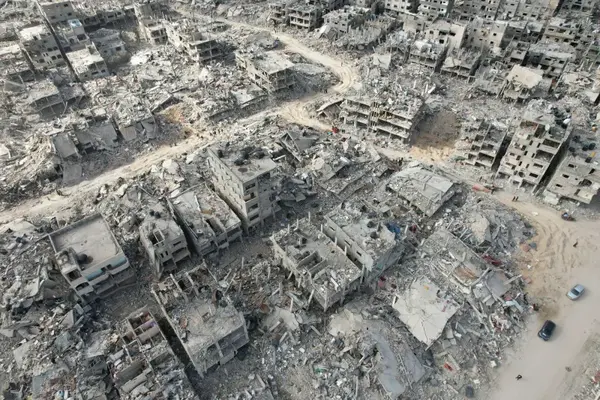
Over the last 15 years, the Middle East has been racked by war, destruction, and displacement. Hundreds of thousands of people have died as fighting raged in Gaza, Lebanon, Libya, Sudan, Syria, and Yemen. Millions more have fled. The violence has rolled back gains in education, health, and income while laying waste to homes, schools, hospitals, roads, railways, and power grids. The war in Gaza has proved especially devastating, setting back the territory’s socioeconomic indicators to 1955 levels. The World Bank and UN organizations have estimated that rebuilding the Middle East and providing enough humanitarian aid will cost between $350 and $650 billion. The UN Development Program has estimated that at least $40 to $50 billion is needed to rebuild Gaza alone.

Offering these shattered societies humanitarian and monetary assistance is critical for the survival of millions, especially in the near term. It is thus deeply concerning that multiple Western governments, including Washington, are curtailing foreign aid and humanitarian assistance. But ultimately, the main obstacle to the Arab world’s reconstruction will not be the lack of funds. It will be political disputes and grievances. The region is filled with failing states. It features competing powers that work to leverage this chaos to their geopolitical advantage. Together, these problems make permanent peace impossible.

The region’s most powerful actors know this. Iran, Israel, the United States, and the Arab Gulf countries have all spent decades trying to shape the region to their liking without addressing the root causes of conflict, and they have repeatedly failed. They have sought security over peace and ended up with neither. And yet their current plans are strikingly similar, at least in spirit, to past efforts. All these countries are committing again to visions of a new regional order in which reconstruction takes place without political settlements. They have put forth lofty proposals—Israeli-Saudi normalization, an economic pact between Iran and the Gulf states—without considering political realities, local dynamics, or other, broader consequences. As a result, their plans will not put an end to cyclical violence. If anything, they will fuel it.

To achieve stability, the war-torn Middle East must shift course. Its powers must stop papering over regional and local divisions and instead do the hard work of addressing them. They need to help fractured societies come together. They must create accountable political institutions and promote systems of transitional justice. They need to support a reconstruction that is part of a broader peace-building agenda. They must create a political framework that actually recognizes the right of Palestinians to self-determination. And they need to figure out how to resolve, or at least better manage, their own differences. Otherwise, it doesn’t matter how much the world spends on reconstruction. The region will remain broken.

Top of Form

Bottom of Form

PROBLEM DODGING

In 1945, Europe lay in ruins. Tens of millions of people had been killed in six years of war. Millions more had been driven from their homes. Many of the continent’s most prosperous cities had been demolished by bombs or shattered by artillery. Regional currencies had collapsed, reducing people to begging and bartering.

In response, the Truman administration called on Washington to dedicate itself to rebuilding the continent. Following the advice of U.S. Secretary of State George Marshall, Congress began passing massive aid packages for Europe’s peoples and communities, spending $13.3 billion (over $170 billion in today’s dollars) on the region. But this money came with conditions. Recipients had to remove most barriers to trade with other European states. They had to adopt policies that increased their exports to the United States and made them take in more American goods. The goal was not merely to reconstruct Europe’s homes, roads, and bridges. It was to bring the continent into the emerging U.S.-led liberal order.

The strategy worked. The recipients of Marshall Plan funds joined the U.S.-led North Atlantic Treaty Organization, committing to collective defense. They enmeshed their economies, paving the way for the European Union. Thanks to these decisions, Europe not only economically recovered from the destruction of World War II but, after centuries of fighting, became one of the world’s most peaceful and prosperous regions.

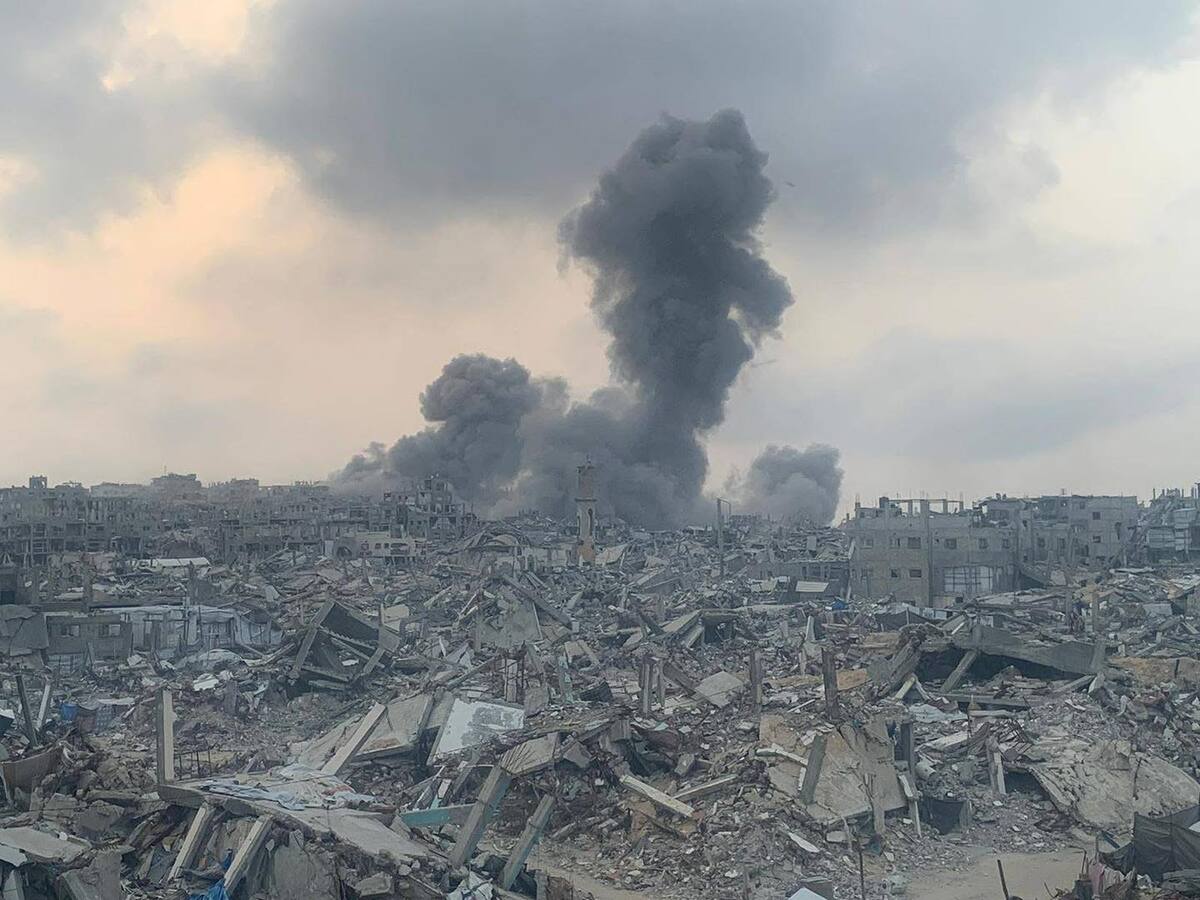
The scale of devastation across the Middle East today resembles that of Europe in 1945. The death tolls are staggering, if not quite as high. Entire economies have been wiped out. National currencies have lost most of their value: the Yemeni riyal has lost 80 percent of its value since 2014. The damage is most visible in Gaza, where, as of late January, the official death toll is over 47,000—likely an underestimate—and where Israeli bombardment reduced around 70 percent of its buildings to rubble in a little over a year. (The UN has projected that it will take more than a decade just to remove the wreckage.) But other countries have suffered similar losses. The 14-year Syrian civil war displaced 12 million people and killed over 600,000; over 90 percent of the country’s residents now live below the international poverty line. In Yemen, more than half the population is now impoverished. Nearly 20 million people there need direct humanitarian assistance. Economic mismanagement and predatory practices have further contributed to economic decline, especially in Egypt, Iraq, and Lebanon.

Israel and the United States cannot bring about peace by sidestepping the Palestinians.

The Middle East needs a Marshall Plan. But unlike in post–World War II Europe, no country is stepping up. There is no single champion for the region, and there is no consensus on how to bring the area out of its quagmire. On the contrary, the Middle East is plagued by disunity and rivalry. The only thing the various American, Iranian, Israeli, Turkish, and Gulf proposals have in common is that they neglect fundamental challenges.

Consider, first, the American approach. Washington believes the foundations of a better Middle East involve weakening Iran, the United States’ primary regional rival, and normalizing relations between Israel and Saudi Arabia in the hope of unlocking new investments. Washington does want to contribute to the rebuilding of Gaza, although it believes the funds should largely come from Arab countries. But the American plan calls for reconstruction to take place without any horizon for a political solution for the Palestinians. Today, Washington’s imaginary Gaza is either a space ethnically cleansed of Palestinians or an ungoverned political vacuum that would somehow remain stable.

The Israelis share this fantasy. But some of them want to be even more belligerent when it comes to Tehran and the Palestinians. Israelis are broadly supportive of the war in Gaza, and even after the January cease-fire, many want to return to bombing. The bellicosity of Israeli leaders has been boosted by their success in weakening Iran and Hezbollah—the Lebanese militia Tehran backs. Israel wants to reconstruct Gaza only after Palestinians have been, in the words of former Israeli security officials Amos Yadlin and Avner Golov, “deradicalized” and have demonstrated they are capable of “effective governance.” Some Israeli officials don’t want to reconstruct it at all.

The Israeli vision is ethically wrong: the Palestinians have an unequivocal right to self-determination. It is also unworkable. Try as they might, Israel and the United States cannot bring about peace by sidestepping the Palestinians. In fact, attempting to do so is what got them here. During Donald Trump’s first term as president, the United States coaxed Bahrain, Morocco, Sudan, and the United Arab Emirates (UAE) into normalizing relations with Israel as part of the Abraham Accords, creating what Trump hoped would be an Israeli-led security, trade, and investment compact. Israel, meanwhile, ramped up settlement construction, increased repression, and expanded its authority over the Palestinian territories. In response, Hamas launched its horrific October 7, 2023, attack. “All the normalization and recognition processes, all the agreements that have been signed [with Israel], can never put an end to this battle,” said the Hamas leader Ismail Haniyeh, in explaining the assault.

The attack sparked a furious Israeli response, which halted progress toward an Israeli-Saudi agreement and prompted Iran and its nonstate partners to jump into the fray. Israel had prevented this “axis of resistance” from causing substantial damage, and the Israel Defense Forces weakened Iran itself. But the Islamic Republic has responded with a peace proposal designed to undermine its nemesis, offering to join with its Arab neighbors in a nonaggression and economic pact aimed, in part, at isolating Israel.

It is true that many in the Arab world view the Islamic Republic as a regional force they need to engage with. And following the Israeli bombing campaigns in Gaza, Lebanon, Syria, and Yemen, the region’s people now see Israel as the Middle East’s most radical and destructive actor. But this does not make Iran’s vision any more realistic. It papers over Iran’s disruptive behavior across the region, including its sponsoring of violent nonstate actors and the resulting lawlessness and state failure. Iran’s scheme does recognize the right to Palestinian self-determination. But Arab countries want an end to regional anarchy, not just an end to the Israeli-Palestinian conflict.

Then there is a vision put forward by the Arab Gulf states—Bahrain, Kuwait, Oman, Qatar, Saudi Arabia, and the UAE—through the Gulf Cooperation Council. It is perhaps the most aspirational. The council’s proposals involve the Gulf countries deepening their own economic integration, establishing joint defense mechanisms, and then somehow resolving the Israeli-Palestinian conflict through a now practically impossible two-state solution. The proposal, like the Iranian one, at least acknowledges that an end to that conflict is the key to achieving regional security. But it lays out no plausible mechanism for reaching a deal. The Gulf state plan also says very little about the other conflicts in the region or how to address them.

At best, these various visions will accomplish little. At worst, they will generate even more conflict, as did the Abraham Accords. By focusing so much on security, they have turned peace into a matter of economic development and force. The Middle East’s powers seem to think that war-torn peoples will be satisfied with new construction—no need for justice, accountability, or good leadership. If people are not satisfied, they can be dealt with through violence: Israel, for example, can arrest and kill Palestinians who demand equal rights. Such assumptions are both dangerous and wrong.

CHAOS REIGNS

At the heart of the region’s troubles are questions of governance. Many countries have fractured or collapsed, with competing centers of power often dominated by particular ethnic or political groups. Nowhere is this dynamic more evident than in Syria, where years of war have weakened relations between the country’s center and its periphery and given rise to a variety of local rulers. Some places are controlled by Kurds. The places where Assad maintained the highest levels of backing were those populated by his community of Alawites. The south is controlled by the so-called Southern Operations Room, a coalition of rebel factions that emerged in 2011 and tend to be less Islamist than other groups. The organization that ultimately drove Assad from power, Hayat Tahrir al-Sham (HTS), is composed of Sunni former jihadists that include non-Syrian combatants. They claim that they will not discriminate against other groups. But since they took Damascus, the country has seen an uptick in revenge killings and mob violence targeting Alawites. Without an inclusive political process, Syria will remain riven by all kinds of divisions.

International involvement has hardened, and will continue to harden, such rifts. The Middle East’s main powers perpetually compete for more regional influence, so when wars occur, those powers often back different groups. In Syria, for instance, Turkey supports HTS and other factions in the north. The United States is helping the Kurds. Jordan and the United Arab Emirates have considerable sway over Syria’s Southern Operations Room. Israel is trying to bolster its ties with Syria’s Druze community and has used the power vacuum to occupy some 155 square miles of Syrian land.

For now, Syria’s factions are keeping the peace. Indeed, in a January 29 meeting, key groups involved in the overthrow of Assad came together to appoint the HTS leader Ahmed al-Shara as the country’s new president. But although Ahmed al-Awda, the leading figure in the Southern Operations Room, sent a representative to this meeting, Awda did not attend. The Kurd and Druze factions boycotted it altogether. With their shared enemy gone, Syrian militias could turn on each other. If they do, Syria’s future might look like Somalia’s present, with different factions controlling various patches of territory. Or it might look like nearby Libya. Syria and Libya are very different countries, but Libya, too, experienced an Arab Spring revolution that pitted multiple armed groups against a longtime dictator. These groups succeeded in toppling Muammar al-Qaddafi in 2011. But once Qaddafi was gone, they began fighting each other for dominance with the support of external actors, including Turkey, the UAE, and a number of European states. Today, rival authorities in eastern and western parts of the country are each backed by different patrons.

Reconstruction cannot fix broken institutions.

After more than ten years of civil war, Yemen, much like Libya, is politically divided between two main rival authorities: the Houthis in the north and the Presidential Leadership Council. (The Houthis control a third of the country’s area and two-thirds of the population.) Here, too, competition between outsiders has furthered conflict. Iran supports the Houthis. Saudi Arabia hosts the Presidential Leadership Council. But the Presidential Leadership Council is itself factious, and external competition leads to contention within it. The UAE, for instance, backs a group that, although part of the council, wants the southern part of Yemen to secede. Emirati-Saudi tensions over the oil-rich Yemeni province of Hadramawt have created further schisms, with Saudi Arabia generally controlling the province’s interior and the UAE dominating the coast. Proxies affiliated with both powers have clashed, and the conflict between them could turn more violent in the months ahead. This chaos has, in turn, enabled al Qaeda in the Arabian Peninsula and other terrorist groups to expand their operations in Yemen’s east and south.

Foreign meddling in the Middle East’s conflicts is clearly bad for peace. But there is a silver lining to all the external involvement. Because the warring parties rely on international patrons, outside actors can push for resolutions. As a result, rapprochement between regional powers—such as the 2023 normalization agreement between Iran and Saudi Arabia—might help tamp down conflict.

But to be effective mediators, regional actors must more thoroughly settle their own differences. The escalating rivalry between Saudi Arabia and the UAE over which of them will be the Middle East’s main Arab political and economic hub is one point of tension, especially when it comes to conflicts in Sudan, Syria, and Yemen. Qatar and Turkey’s support for Islamist actors is creating problems with Egypt, Jordan, Saudi Arabia, and the UAE. And although the Iranian-Saudi rapprochement has softened sectarian divisions, it has not curtailed Iran’s support for repressive nonstate actors. As a result, it can do little to promote regional tranquility.

Even if these countries could fully sort out their rivalries, they could not ensure peace. They would still need to get local powers to implement settlements that rebuild states, ensure the safe return of displaced peoples, and mend torn social fabrics. And there is no guarantee that these actors, hardened by years of war, would comply. The issue of transitional justice, in particular, will be tricky. After fighting, some degree of forgiveness is required for societies to heal. Yet there cannot be broad amnesty, particularly for those responsible for human rights atrocities. At the end of its civil war, Lebanon opted to issue a blanket pardon for all atrocities committed during the 15-year conflict. Doing so, leaders thought, would quickly secure peace and allow the country to rebuild. They also hoped to protect themselves from prosecution. Instead, Lebanon has experienced periodic civil unrest as grievances from the war continue to fester, sometimes at the behest of the conflict’s old leaders. To avoid the same fate, Syria’s new leaders will have to hold key Assad officials accountable for the horrors committed over 54 years of autocratic rule. Failing to do so will only further encourage individual acts of vengeance—which will, in turn, make it hard to secure a durable, peaceful resolution.

NO JUSTICE, NO PEACE

In the Middle East, there is no one-size-fits-all approach to ending conflicts or rebuilding what was lost. The wars plaguing the region share many characteristics, but because they have been going on for years, they have developed their own dynamics. In Lebanon, for example, the challenge is not just rebuilding what was destroyed by the conflict with Israel. It is also about rebuilding a broken political system, trying to get Hezbollah to finally disarm, and strengthening weakened national institutions. Syria, totally ravaged by war, needs an entirely new political settlement. But Syria must not recentralize power, as it did during the Assad era. Whatever resolution emerges has to be supported across the country. It needs to account for local dynamics that materialized during the conflict.

For Gaza, the challenges are even more profound. There may be historical precedent for the scale and scope of the territory’s destruction. Yet unlike other places reduced to ruin, Gaza is not a country. It does not control its borders. It is under siege, cut off from external markets. It lacks all kinds of basic resources, including water, food, and land for agricultural or industrial production. Under such conditions, it cannot be made habitable, let alone economically viable. And there is no clear plan for who will take the lead in rebuilding and then governing it. In the near term, Gaza may need to be administered by a transitional authority established by the UN Security Council: a mechanism that was used to help rebuild parts of the Balkans and Cambodia in the 1990s, when local governance capacity was destroyed. Eventually, it will need to be governed by Palestinians who command democratic support. But right now, no short- or long-term solutions are on offer.

Without political settlements, even doling out reconstruction funds will be difficult. In fact, the provision of assistance could create tension. Domestic and regional actors often manipulate aid deliveries, creating a skewed economy that leaves some people embittered and others emboldened. Political groups could also use aid to empower themselves at the expense of governments.

None of these challenges mean that humanitarian aid groups shouldn’t flood the Middle East’s many shattered places—particularly Gaza—with support. The region has millions of people who are homeless. It has millions more who are starving or require medical care. They need whatever help they can get, and they need it fast.

There is certainly a new Middle East in the making. Yet without a political solution, reconstruction will do little over the long term. It cannot fix the power imbalances, ethnic tensions, or broken institutions that cause ongoing bloodshed. It will not get foreign powers to work together, instead of at cross-purposes. It may help people literally rebuild their homes, stores, and schools. But until there’s a durable peace, those buildings might just come crashing back down when conflict inevitably returns.
OPINIONS

Sun 18 May 2025 9:23 am - Jerusalem Time

Trump's Visit...and the Palestinians' Measure of Success and Failure

Jihad Harb

Jihad Harb

Opinion Writer

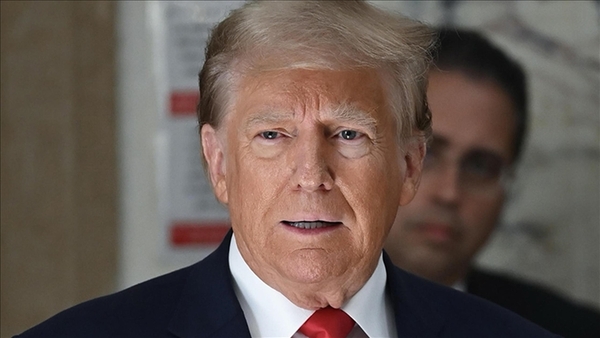
US President Donald Trump's visit to the Gulf states has concluded, bringing to an end the Palestinian expectations and speculation that filled Palestinian and Arab media regarding what the US president would announce during his visit regarding the war on the Gaza Strip. It seems that we Palestinians are deluded by the importance of the Palestinian cause, basing our expectations on the actions of other countries and organizations based on the Palestinian issue; as if the "Palestinian issue" were the center of the universe around which the world revolves, without taking into account the priorities, challenges, and needs of others, the risks facing our Arab and other sister countries, and the strengths and weaknesses of Palestine itself.


Despite widespread awareness of the extent of the pain and suffering caused by the Israeli government's war of extermination in both the Gaza Strip and the West Bank, this awareness can be translated into a number of concerns, measures, and decisions that express the concern of our brothers in the Arabian Gulf for the Palestinian cause. These concerns also take into account the priorities of the Gulf states regarding the imminent dangers, from their perspective, which view Iran as a greater threat than Israel. This is a fact that the Palestinian community is unaware of. This requires Palestinians to understand the interests of the neighboring countries ("the ring countries") and the Arab countries far from the ring countries, and their priorities, within the framework of understanding politics and its necessities, as well as the nature and magnitude of the risks, within the framework of understanding risk management for the national security of each individual state.


In my opinion, the three issues achieved by Trump's visit to the Arabian Gulf fall within the framework of the immediate and long-term interests of the Gulf states: the priority of avoiding the Iranian threat to the Gulf states, on the one hand, and economic leadership through future investment and diversification of these countries' economies, on the other. Concluding defense agreements and developing the military capabilities of the Kingdom of Saudi Arabia, followed by lifting the US blockade on Syria to sever its relationship with Iran, return to the Sunni alliance, and prevent the resurgence of terrorism, are fundamentally aimed at eliminating the Iranian threat. Meanwhile, the agreements related to increasing investment in artificial intelligence and its implications in the UAE, in addition to acquiring a large number of aircraft, are investments in the future. Meanwhile, the agreements to invest more than $2 trillion in the US states aim to increase the diversity of income and revenue sources for these countries in the safest country for investment, the United States of America.


The success or failure of US President Donald Trump's visit to the Gulf states is not measured by Palestinian standards or elitist illusions of imperatives, but rather by a broader understanding of the different interests and priorities of sisterly and friendly countries, and the extent of the Palestinians' weakened strength due to internal division and the inability to unite despite the catastrophe that has befallen them for more than a year and a half, and that they still bet on the justice of their cause or that they are the center of the universe. It is not the extent to which their internal front has solidified at the political and popular levels through political decisions and solidarity among Palestinians with themselves in different geographical locations, or the leadership of popular action according to the nature or capabilities of the action they are attacking there.


OPINIONS

Sun 18 May 2025 9:15 am - Jerusalem Time

Gideon: A Biblical Legend in the Service of Extermination

Amin Al-Hajj

Amin Al-Hajj

Opinion Writer

Amid the ongoing escalation and threats of a comprehensive military operation against the Gaza Strip, the military establishment is circulating a new name for the operation to expand its aggression against the Gaza Strip: "Gideon's Vehicles." At first glance, the name may seem like just another military term in the record of repeated aggression against Gaza. However, it actually carries intense symbolism, linking biblical texts with the colonial security doctrine that Tel Aviv has adopted for seventy-seven years.


In the biblical Book of Judges, Gideon appears as a leader from the tribe of Manasseh, who was entrusted with a divine mission to liberate the Israelites from their Midianite cousins. The story begins with thirty-two thousand fighters, with cowards excluded. They are then tested by drinking at the river, and only three hundred succeed. These are those who “lapped the water with their tongues like a dog,” meaning they drank from the water while standing alert. With this small number, and with a plan based on optical illusions, i.e., torches, and noise, i.e., trumpets, Gideon triumphs over an army superior in number and equipment, under the banner of “divine choice” and “moral superiority.” This story is not just a “religious myth” preserved in books, but has been transformed into a ready-made narrative structure that is reactivated politically and militarily whenever there is a need to give war the character of “holiness” and “divine merit.”


In a striking reflection, the story of Gideon intersects with the story of Saul and Goliath in the Holy Quran. In both stories, the Torah and the Quran, the river – the Jordan River – stands as a dividing line between the many and the elite, between obedience and hesitation, between those who trust in God and those who are defeated by instinct. Gideon and Saul, each in his own way, tested the multitudes until only a few remained with them. The same scene is almost repeated in the Quran in Surat Al-Baqarah, on the tongue of Saul: “God is testing you with a river. Whoever drinks from it is not of me, and whoever does not taste it is of me, except for he who scoops up a handful with his hand.” However, today Tel Aviv distorts this profound symbolism, summoning “Gideon’s chariots” not to lead a battle of liberation, but in a campaign against the children and women of Gaza. How ridiculous the scene seems when it is used to beautify the bombing of homes and the killing of innocents. It is an attempt to sanctify violence, dress colonialism in the garb of religion, and summon “God” to stand with the tank. Therefore, it does not only evoke the symbolism of the victorious elite. And the purifier, but rather employs religious texts to justify its violence, distorting the essence of the message from resisting injustice to practicing murder in the name of God or holiness.


The use of the name Gideon in an Israeli military context was not a new precedent. During the Nakba, the Haganah terrorist gangs called their attempts to seize the Beit Shean area and forcibly displace its Palestinian inhabitants “Operation Gideon.” Today, the name returns in a geographically different, but essentially identical, context: the expulsion of the Palestinian population, the annihilation of those who remained, and the forced reshaping of the demographics, all of which was legitimized in the language of religious texts.


This repeated invocation of biblical myths in military operations is not accidental, but rather part of a colonial cognitive system that frames violence as an extension of a “divine desire,” and always places the Palestinian in the position of a “Canaanite” or “Midian” enemy who must be eradicated. When Tel Aviv gives a military operation a biblical name, it is not only choosing a catchy name, but is entering the battle into the realm of “sanctity,” making war and the extermination of Palestinians a “religious duty,” the Palestinian resistance “impure,” and the international community around us, as if participating in a collective prayer that “blessings” the slaughter. In this way, the religious text is transformed into an “ideological lever” that justifies the killing or abuse of civilians, the demolition of homes over the heads of their inhabitants, and keeping Gaza at the heart of aggression and the darkness of the siege. The irony is that this sanctification is not only practiced in synagogues, but is translated on the ground in operations rooms, targeting documents, and military statements. This happens at a time when the Arabs are striving to present religion as a set of rituals and rites that There is no life in it, it glorifies the ruler and urges the people to obey his command, even if he is tyrannical and disobedient.


But - in reality - the novel is not written from one side. In Gaza, where the aggression is barely "calming down", the language of intimidation no longer has its effect. Palestinian memory, extending from Bisan to Rafah, knows "Gideon" well, not as a prophet, leader, or savior, but as a new symbol of the colonial narrative that has fallen time and again before the steadfastness of resistance and the will to survive.

If, according to the narrative, Gideon's chariots triumphed with three hundred vigilant fighters, Gaza today relies not only on a miracle, but on an entire people standing vigilant in the face of the project of displacement and genocide, knowing that defeat is not measured by the number of martyrs, but by the extent of the capabilities of the owners of the land, who turn the bleeding into a statement and the rubble into a message of survival.


The occupation leaders may like to borrow the myth, and imagine themselves as new writers of the Torah, but Gaza, with its children and women, is writing its founding text, the story of survival, and their vehicles will be swallowed up as the sea swallowed Pharaoh, and it will not find a place for itself in the memory of peoples or the records of history.

OPINIONS

Sun 18 May 2025 9:08 am - Jerusalem Time

Unilateralism

Hamada Faraana

Hamada Faraana

Opinion Writer

On January 18, 2025, before Donald Trump assumed his constitutional powers, and before assuming the presidency of the United States on January 20, 2025, he was able to impose a ceasefire in the Gaza Strip, after Netanyahu responded to him, and did not refuse any of his orders or requests. The ceasefire remained in effect until the aggression, attack, and bloody war were resumed by the colonial forces on March 18, 2025, until now, after the failure of direct negotiations between the American envoy Adam Boehler and the Hamas movement. This failure provided political cover from Trump to Netanyahu to resume the barbaric war on the Gaza Strip, which continues to this day, with greater ferocity.


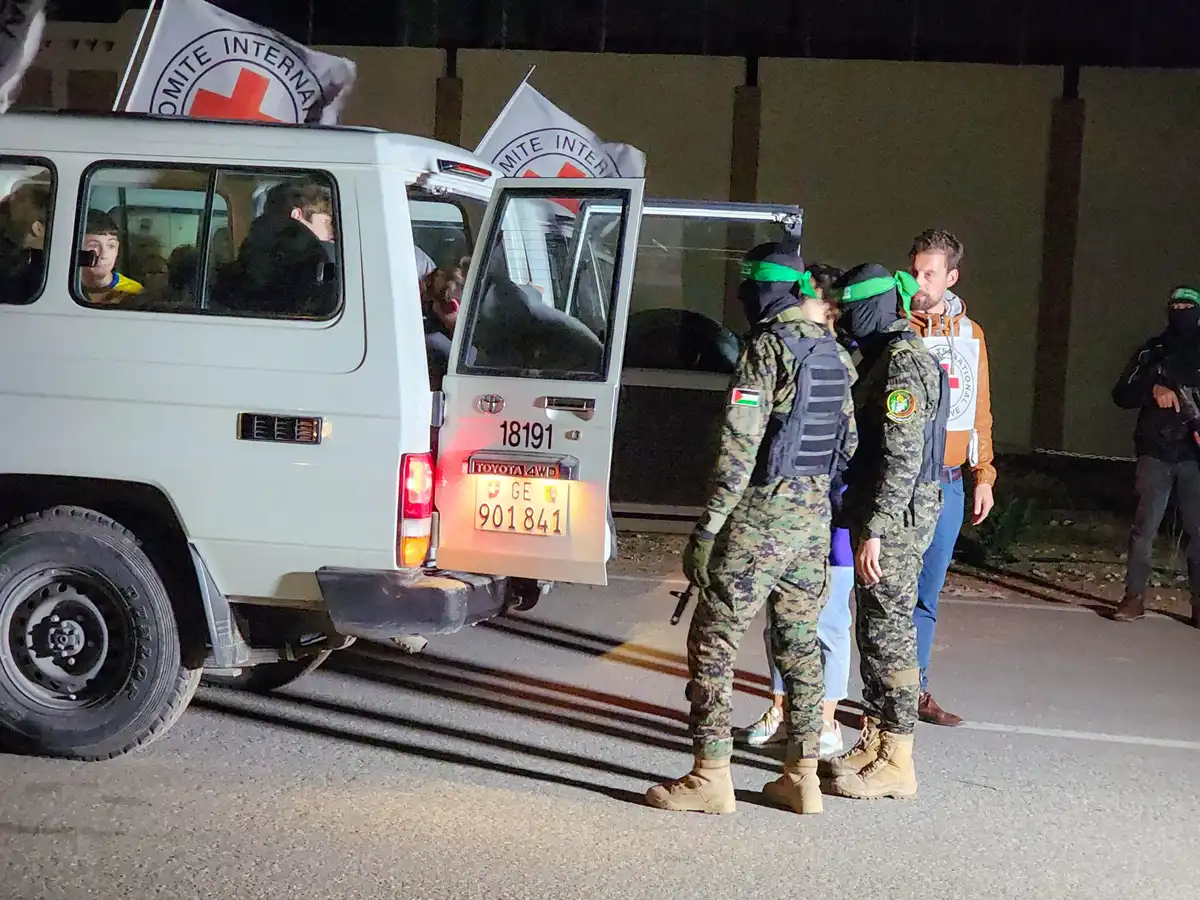
Despite the understandings reached between the US and Hamas delegations, which led to the release of the American-Israeli prisoner, Idan Alexander, in good faith by Hamas on Monday, May 12, 2025, it has not received a response that reflects its willingness to reach an agreement with the Netanyahu government based on the understandings reached with the US delegation: Steve Witkoff and Adam Boehler.


Netanyahu rejected these understandings and refused to respond to the American request. He continues his stubbornness, brutality, ferocity, and racist aggression against the civilian population of the Gaza Strip. He increased his ferocity against them, saying, "I am the one who makes the decision, and the war operations will not stop," because he is committed to the plan set by the small political, security, and military cabinet, "the cabinet," which aims to return the Israeli prisoners, alive or dead, and to end the Hamas movement and force it to surrender. This led to the dissatisfaction of the Qatari mediators, who saw, according to the American website Axios, "that the Israeli negotiating team did not come to Doha to conduct serious negotiations, and did not offer anything new," because it does not have the authority to present any negotiating paper. The impression emerged that "the Israeli negotiating team came to Doha with the aim of sabotaging the talks" and to provide Netanyahu with an excuse to not stop the war and continue it.


Netanyahu accepts a temporary ceasefire pending a prisoner exchange, thereby stripping Hamas of its negotiating card—the prisoners—and potentially resuming its war on the Gaza Strip. In return, Hamas demands a complete ceasefire, an Israeli withdrawal from the Strip under American guarantees, and the reconstruction of what was destroyed by the occupation forces.


Palestinian civilians are paying the price in the Gaza Strip, and no one is truly standing with them, expressing solidarity with them, or making serious efforts to pressure the colonial government or the United States to force Netanyahu to stop his inhumane, immoral, and illegal war against civilians. President Trump is indifferent, and the suffering and pain of the Palestinians are not worth paying for.


Hamas' slogan, "We are the flood, we are the day after," despite its lack of credibility, reflects its continued monopoly over managing the political conflict. Hamas has ignored the importance of the Palestinian Authority's partnership in negotiating alongside it. Thus, it lacks the drive for partnership between Ramallah and Gaza. It does not seek to expand the base of partnership, nor does it work to "involve" the Palestinian Authority in the national battle against the common enemy. Instead, it maintains the monopoly and unilateralism that it offers a free gift to the colony in its monopoly over the Gaza Strip.

PALESTINE

Sun 18 May 2025 9:02 am - Jerusalem Time

Israeli occupation forces launch an arrest campaign, and settlers burn lands in the West Bank.

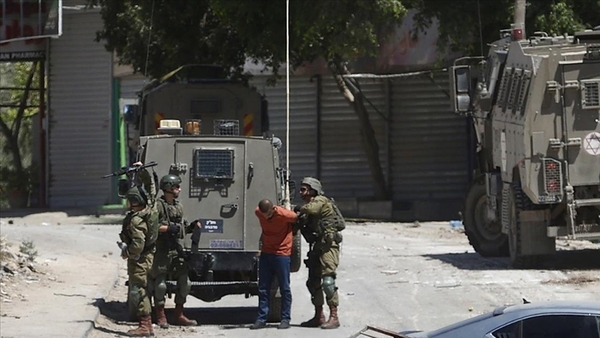
Israeli occupation forces launched a campaign of raids and arrests in the West Bank at dawn and early Sunday morning.


In Bethlehem, the occupation forces arrested two young men, Ahmed Yasser Tarish (24 years old) and Ammar Ali Tarish (23 years old), after raiding their parents' homes and searching them in the town of Za'tara.


The occupation forces also stormed the village of al-Rashayda to the east, fired flares, and raided and searched a number of homes, without any arrests being reported.


In Jenin, occupation forces arrested freed prisoner Yasmine Shaaban after raiding and searching her home in the village of Jalameh.


Yasmine was released as part of the ceasefire agreement in Gaza last January, having been serving a six-year prison sentence following her arrest in 2023.


In Tubas, Israeli special forces arrested Shaddad Fayez Janajra after raiding his home in Wadi al-Far'a and destroying its contents.


In Nablus, the occupation forces arrested the young man, Karim Nasser Hanani, after raiding and searching his home and ransacking its contents in Beit Furik.


The occupation forces stormed the town of Beita, south of Nablus, and Beit Iba, west of the city, and toured several neighborhoods. No arrests were reported.


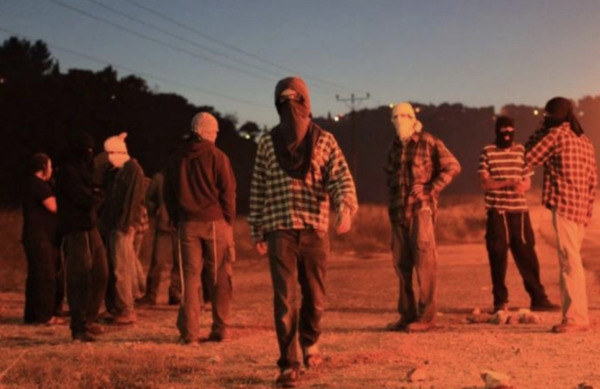
The head of the village council in Duma, Suleiman Dawabsheh, said that settlers set fire to Duma lands from the southwest, causing the fire to spread across hundreds of dunams, some of which were planted with olive trees.


He reported that the Civil Defense crews were able to extinguish the fire and control it.


Dawabsheh pointed out that the greatest threat to the village of Duma is the spread of pastoral settlements, which have spread like a cancer and are eating away at the village's lands. He added that the village is constantly subjected to settler attacks and repeated assaults on citizens and their property.

PALESTINE

Sun 18 May 2025 9:01 am - Jerusalem Time

Israeli occupation killed 200 citizens and displaced 300,000 in 48 hours.

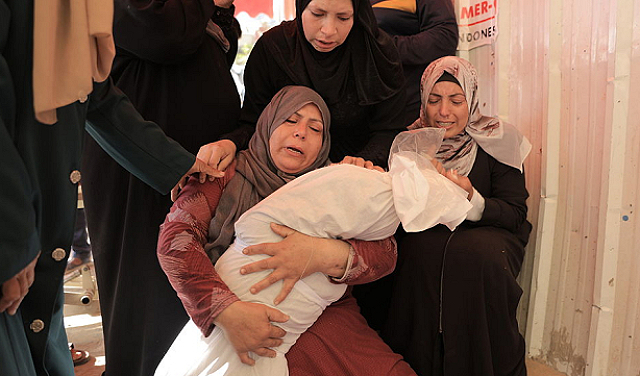
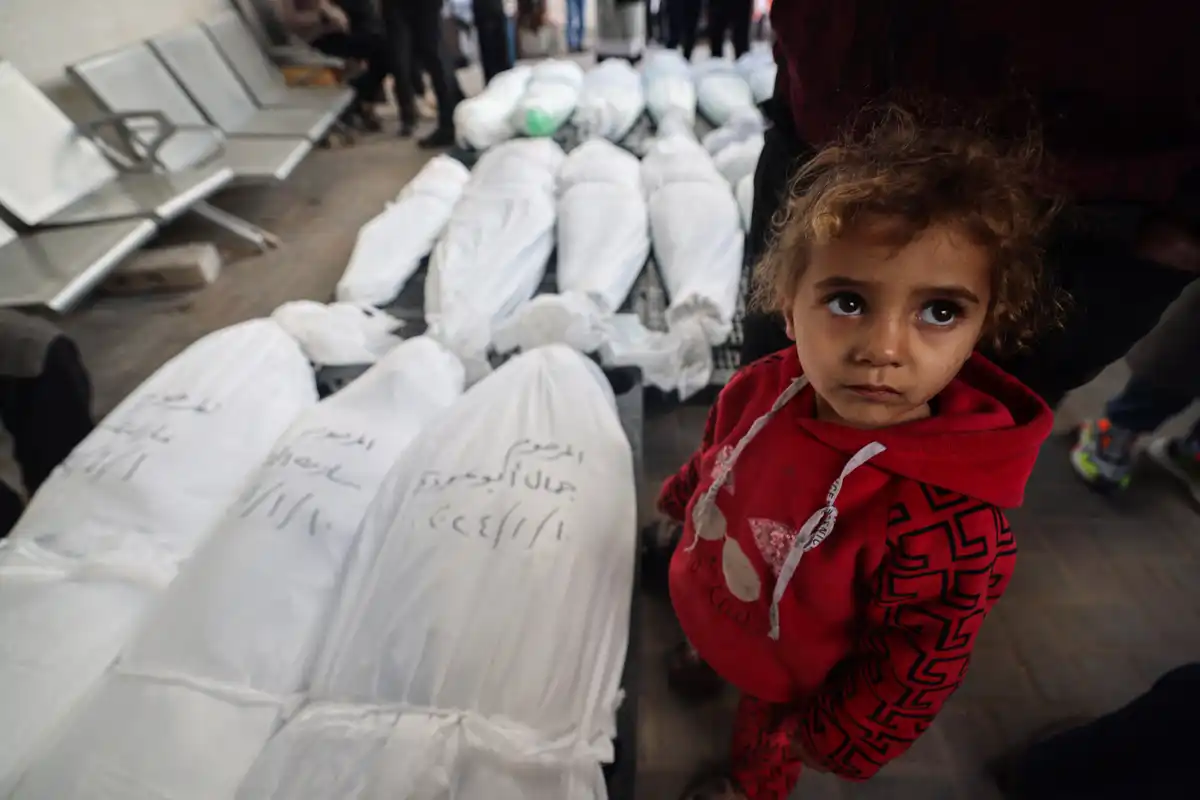
The Government Media Office in Gaza announced on Saturday that the Israeli army had killed more than 200 civilians, forcibly displaced approximately 300,000 others from the northern Gaza Strip to Gaza City, and destroyed nearly 1,000 housing units in just 48 hours, as part of its war of extermination against civilians.


The office said in a statement: "In a new crime added to the Israeli occupation's bloody record, more than 200 dead have been killed in the past 48 hours in the North Gaza Governorate alone, in a series of ongoing massacres."


It added, "The Israeli army also completely or partially destroyed more than 1,000 housing units, forcibly displacing more than 300,000 civilians toward Gaza City, which lacks the necessary infrastructure to house them."


It pointed out that "approximately 140 dead remain under the rubble, due to the occupation army's deliberate prevention of ambulance and civil defense crews from reaching the bombing sites, in a flagrant violation of international humanitarian law."

PALESTINE

Sun 18 May 2025 8:59 am - Jerusalem Time

Hebrew media: A new ceasefire proposal includes the immediate release of 10 detainees.

The Israeli Broadcasting Corporation quoted sources on Saturday evening as saying that a new ceasefire proposal includes the immediate release of 10 Israeli detainees in one batch.


She added that the new proposal includes providing Hamas with a list of the conditions of its detainees on the tenth day.


She also said that the new proposal includes a ceasefire for a period ranging from one to two months.

OPINIONS

Sun 18 May 2025 8:57 am - Jerusalem Time

Gossip on the banks of the Tigris!

Ibrahim Melhem

Ibrahim Melhem

Opinion Writer

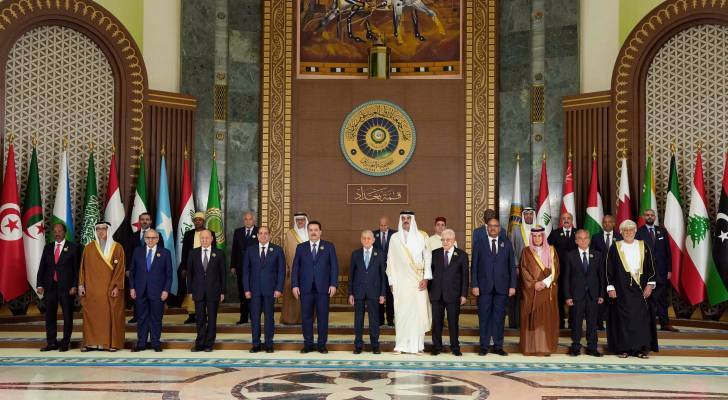
One can't help but smile wryly as one listens to the speeches of the leaders participating in the 34th Arab Summit, which concluded in Baghdad yesterday. A final statement was prepared by those who carefully reproduced or regurgitated the contents of previous statements, spiced up with an additional dose of forbidden emotional charges. The statement emphasized the centrality of the Palestinian cause, the immediate delivery of humanitarian aid, and the need to end the war that has been raging in the Gaza Strip for nineteen months.


In the tradition of meetings of institutions and companies, both small and large, the item on the agenda of the next session regarding the decisions achieved in previous sessions is at the top of the agenda. This stems from a desire to bridge gaps and fill cracks in the surfaces, to prevent the nation from slipping into the cracked wall of the burden of burdens and disappointment, and to work hard to compensate for the shortcomings, make up for the missed opportunities, and build on the achievements made.


In the visible evidence, nothing has been achieved in terms of decisions. What is lost is lost. What is confirmed is confirmed, and what is added to it is added, without scrutiny or review, amidst a complete obfuscation to purify the uneasy souls from the sin of inability that has afflicted the best nation brought forth for mankind.


The summit, which was marked by the significant absence of the nation's leaders, was an opportunity to flex the muscles of eloquent words, and express praise for the warm welcome and generous hospitality of the host country.


Perhaps the strangest thing heard from representatives of the absent leaders is that their absence was due to urgent, compelling reasons, as if there were circumstances more compelling than those the nation is enduring, requiring them to prevail over any urgent concern?!


Gaza was present with the power of honeyed, repetitive words, but this presence does not feed the hungry, extinguish the fire, quench the thirst, relieve the distressed, or heal the wound. The lesson is not in the words, but in what was done and happened.
On its eightieth birthday, the vicissitudes of time appear to have left deep scars on the body of a nation whose university institution suffers from division and weakness, and has lost much weight in the midst of a global landscape in which there is no longer room for laws, regulations, and human values.
The summit ended, and the nation remained as it was on the eve of its convening: fragmented in its positions, incapable of performing its duties, and humiliated by the people.

PALESTINE

Sun 18 May 2025 8:55 am - Jerusalem Time

Israeli escalation in Gaza: Completion of the displacement plan or negotiating pressure through fire?

Dr. Dalal Erekat: The Israeli escalation is not merely a negotiating pressure, but rather an attempt to break the will of the Palestinian people, empty Gaza, and implement an ethnic cleansing plan.
 Muhammad Joda: Israel is using a "pressure with fire" policy to impose a deal that serves its interests and advance its broader strategic project of completely breaking Gaza.
 Daoud Kuttab: The escalation reflects the Netanyahu government's desire for revenge through the utmost violence and destruction, after it felt the Trump administration had dealt it political blows.
 Samah Khalifa: Netanyahu is trying to emphasize that any deals or settlements brokered by Trump will not influence his decisions, and he will not submit to any pressures that do not serve his interests.
 Talal Okal: The Israeli government is seeking to impose the terms of a temporary deal that will not stop the war, but rather ease internal and external pressures on it.


The Gaza Strip is experiencing an unprecedented Israeli escalation, raising questions about whether it is an extension of a systematic genocide project or a pressure tool to impose a negotiated settlement. This is especially true given that the escalation coincided with US President Donald Trump's visit to the region and amid what is said to be a tense relationship between Trump and Israeli Prime Minister Benjamin Netanyahu.
In separate interviews with Al-Quds, writers, political analysts, and university professors believe that the severe escalation, which includes comprehensive bombardment, targeting of civilian infrastructure, and massacres against civilians, indicates a deliberate intent to destroy the foundations of life in the Gaza Strip and break the will of the Palestinian people. This is not simply a matter of pressure during negotiations, even if it comes as a result of pressure during negotiations.
They point out that inhumane tools, such as forced displacement and starvation warfare, reinforce the hypothesis that the goal is to empty Gaza of its population through ethnic cleansing, amid international silence that exacerbates the tragedy.
At the same time, they assert that the escalation also comes as part of an Israeli strategy to exert pressure in negotiations that may relate to a prisoner exchange deal or post-war arrangements.
They point out that the intensive military operations in areas such as Rafah and Khan Yunis, along with tactics such as "burning" areas before advancing, are aimed at forcing the Palestinian resistance to make concessions.
They believe this approach, known as "pressure with fire," seeks to impose Israeli conditions that ease internal and external pressure on the government, while maintaining a policy of impunity that allows Israel to circumvent international law.
Writers, analysts, and university professors assert that the balance between these two goals reveals an internal Israeli crisis, with violence reflecting a political failure to achieve goals through traditional solutions.
They point out that whether the goal is to conclude a temporary deal or advance a long-term genocidal project, the result is a worsening humanitarian catastrophe. There is an urgent need for international intervention to halt this aggression, dismantle the destructive project, and hold those responsible accountable, to ensure the protection of Palestinian rights and end their ongoing suffering.

Continuation of a systematic genocide project

Dr. Dalal Erekat, professor of diplomacy and conflict resolution at the Arab American University, warns that what is happening in the Gaza Strip constitutes a continuation of a systematic genocide project led by the occupying state of Israel.
Erekat asserts that the unprecedented scale of violence, the organized terrorism, the use of advanced weapons, the targeting of civilian infrastructure, and the repeated massacres of civilians are all clear indications that this escalation is not merely a temporary military operation or a negotiating pressure to secure a deal. Rather, it is a deliberate attempt to break the will of the Palestinian people, empty Gaza of life, and implement a systematic plan for ethnic cleansing.
Erekat explains that the occupation uses inhumane pressure tools, including deliberate killing and forced displacement, to force Palestinians to leave or surrender.
Erekat points out that the forced displacement project is still ongoing, supported by military campaigns aimed at making life in Gaza impossible.
Erekat asserts that this escalation may coincide with behind-the-scenes negotiations, where political cards are being used at the bargaining table. However, she emphasizes that Palestinian lives are not bargaining chips, but rather victims of international silence and political complicity that allow this humanitarian tragedy to continue.

Two Israeli messages to the Palestinians and the international community

Erekat asserts that Israel seeks, through this escalation, to send two messages: the first, directed at the Palestinians, stating that "there are no red lines" in the face of their will, and the second, to the international community, expressing Israel's ability to impose new equations by force, without regard for international law or human conscience.
Erekat points out that Israel continues to enjoy impunity, as the international narrative has been shifted to focus on blaming Hamas, rather than confronting the threat of military occupation and its crimes.
In her analysis of the motives behind this escalation, Erekat believes that the brutal violence reveals a deep internal crisis plaguing Israel, reflecting a political failure and a strategic inability to achieve the occupation's goals through traditional means.
Erekat explains that Israeli Prime Minister Benjamin Netanyahu relies on continued military operations to bolster his domestic political standing, at the expense of Palestinian blood and suffering.

The need to act on multiple levels

Erekat calls for action at multiple levels to confront this escalation, stressing that condemnations alone are not enough.
Erekat calls for a restructuring of the Palestinian political landscape, increased international pressure to halt the occupation's crimes, and accountability for the system that enables this genocidal project to continue under flimsy pretexts.
Erekat asserts that the Palestinian humanitarian voice and political rights cannot be silenced by raids, noting that the steadfastness of the Palestinians, along with international legal developments related to holding Israel accountable, constitutes a force that cannot be underestimated.
Erekat stresses that Israel's impunity must end, and that what is required is not only a ceasefire, but also the dismantling of the genocidal project and the accountability of those responsible, to ensure the protection of the rights of the Palestinian people and end the historical injustice they are subjected to.

Part of a comprehensive Israeli strategy

For his part, writer and political analyst Mohammed Joda says that the Gaza Strip is witnessing an unconventional Israeli escalation, exceeding in intensity the bombing and level of destruction witnessed since the war began in October 2023, more than a year and a half later.
Joudeh believes that this escalation is not merely a military response, but rather part of a comprehensive Israeli strategy aimed at changing the demographic and geographic reality in Gaza, while sending multi-dimensional messages to internal and international parties.
Joudeh explains that there are two main possibilities behind this escalation: expanding the policy of genocide and displacement, or using it as a pressure tool to impose an Israeli vision in political-security negotiations.
Joudeh asserts that there are strong indications that Israel is continuing its long-term destructive project, which aims to demographically empty Gaza of its population and destroy all aspects of life there. The high death toll, the massive destruction, the intensity of the bombing, and the systematic targeting of infrastructure all confirm that Israel seeks to bring about lasting change in the Strip.
Joudeh explains that this escalation comes amid a lack of effective international coverage and a marked weakness in diplomatic activity, giving Israel the sense that there is an open window of opportunity to implement its agenda without accountability.
Joudah describes this approach as an attempt to impose a "complex genocide" that includes military, economic, psychological, and demographic aspects, with the potential to push the population toward a "forced migration" scenario.
At the same time, Joudeh believes that the escalation could be a pressure tool to impose harsh Israeli conditions in negotiations related to a prisoner exchange deal or post-war arrangements.

A military tactic to force Hamas to make concessions

Joudeh points out that the intensive Israeli military operations in Rafah, Khan Yunis, Jabalia, and Beit Lahia, along with the implementation of the "Gideon Vehicles" plan, are being used as a tactic to force Hamas to make concessions. Israel also seeks to confuse mediators, such as Egypt, Qatar, and the United States, to advance the negotiations in line with Israel's vision.
Joudeh asserts that Israel is using a "pressure with fire" policy to impose a deal that serves its interests, but at the same time, it is exploiting this escalation to advance its broader strategic project: to completely break Gaza and weaken it as a center of resistance.
Joudeh explains that Israel is seeking to send messages of return through this escalation, which targets multiple parties.
According to Joudeh, Israel wants to send a message to the Israeli interior, where Prime Minister Benjamin Netanyahu's government is trying to demonstrate that it still holds the initiative and is capable of achieving "victory" or at least humiliating Hamas.
Joudeh explains that Netanyahu is using the escalation to distract from his internal political crises, attempting to maintain his hold on power by continuing the war.
In another message sent by Israel to Hamas and the Palestinian factions, it states that it will not cease the war except on its terms, and that any political flexibility from Hamas will only be extracted under fire, not through equal negotiations, Judeh confirms.

Israel is in no hurry to stop the war.

Joudeh points to Israel's message to the international community and mediators, emphasizing that it is in no hurry to stop the war and will not submit to humanitarian or international pressure.
According to Joda, the escalation in Rafah and the south represents a message to Egypt and Qatar, urging them to pressure Hamas to accept Israel's conditions, or Israel will continue to implement its plans unilaterally.
As for the message to the regional environment, including Iran and Hezbollah, Judeh explains that Israel seeks to confirm its ability to manage several fronts simultaneously, and its readiness to confront threats from the north (Lebanon) or far away (Iran).
Joudeh asserts that Israel is acting within a strategic vision that transcends the current moment.
Joudeh stresses that what appears to be a military escalation is in reality a "complex messaging war" that includes internal, negotiating, and existential dimensions.
The ultimate goal, according to Joudeh, is to impose an irreversible fait accompli in Gaza and achieve a political victory that can be marketed internally, regardless of the enormous human cost.
Joudeh warns that this approach could lead to an unprecedented humanitarian catastrophe, in the absence of real international pressure to de-escalate the situation.

An Israeli approach reflects a strategic miscalculation.

Writer and political analyst Daoud Kuttab asserts that the extremist Israeli occupation government, through its unprecedented military escalation in the Gaza Strip, seeks to achieve complex political and military objectives that go beyond the war on the Gaza Strip and beyond its traditional goals.
Writers believe that this escalation, which is taking the form of a war of extermination against the Palestinian people, reflects the Israeli government's desire to exact revenge on the administration of US President Donald Trump by employing extreme violence and destruction in the Gaza Strip, after it perceived Trump as having dealt it political blows.
Writers point out that the Israeli government believes that intensifying its war on Gaza will lead to the elimination of the Palestinian resistance, a goal they describe as illusory.
Writers explain that this approach reflects a strategic miscalculation, as escalating violence will not achieve Israel's political or military goals, but may instead strengthen the resistance's resilience and exacerbate its international isolation.
Writers assert that the extremist Israeli government, rather than seeking diplomatic solutions, is opting for a scorched-earth policy, leading to unprecedented destruction and massive human suffering in Gaza.
The authors explain that this escalation comes amid tensions with the Trump administration, which is viewed as a traditional ally of Israel, but it demonstrates an Israeli attempt to impose its will and defy any potential American pressure for a settlement. They conclude by asserting that Israel is miscalculating, as continuing the war of extermination will not end the resistance but may open the door to further regional escalation and international condemnation.

Netanyahu rejects any settlement that would tarnish his image as a "victorious" leader.

Writer and political analyst Samah Khalifa explains that the unprecedented Israeli escalation in the Gaza Strip, which has surpassed in intensity and devastation what the Strip has witnessed since the beginning of the war 19 months ago, is an attempt by Israeli Prime Minister Benjamin Netanyahu to affirm his rejection of defeat, both externally and internally. This is achieved by his rejection of the "plea" deal that began in 2022 in exchange for his admission of "moral shame." He now rejects any settlement that would tarnish his image as a "victorious" leader, even if it amounts to a "dignified" exit from the judiciary besieging him and ending his political career.
Khalifa asserts that Netanyahu rejects any solution that might end his war in Gaza by admitting defeat, because he seeks to leave a historical legacy as a leader who achieved major victories, rather than being remembered as a defendant in an internal trial that would bring a humiliating end to his career.
Khalifa points out that Netanyahu's primary goal is to implement an "ethnic cleansing project" in Gaza, using a "scorched earth" policy that has transformed the Strip into a battlefield of total destruction. Israel currently occupies 35% of Gaza's territory and continues to expand the "buffer zone."
Khalifa asserts that Netanyahu's acceptance of any settlement, whether a prisoner exchange deal or a ceasefire, will not garner domestic support that would enable him to remain in power unless he obtains external guarantees that constitute a "safety net."
Khalifa doubts Netanyahu will win any upcoming elections unless he once again succeeds in deceiving Israelis with vague promises.

Israeli escalation in response to Trump's directions

Khalifa links the recent Israeli escalation in Gaza to the release of the American prisoner and US President Donald Trump's visit to the Gulf region, suggesting that Netanyahu is trying to send a message that any deals or settlements brokered by Trump will not influence his decisions, and that he will not submit to any external pressures that do not serve his personal interests.
Khalifa asserts that Trump is capable of directing Netanyahu according to his agenda, especially since the Palestinian cause and stopping the genocide in Gaza are not his priorities. On the contrary, Netanyahu's continued policy of total destruction and expanding the occupation serves Trump's interests in the region, who operates with a "two-faced" policy: the face of a "dove of peace" after the release of the American prisoner and the lifting of sanctions on Syria, and the face of a "crow of death" who supports killing and destruction in Gaza to achieve strategic interests.
Khalifa points out that Israel, under Netanyahu's leadership, is seeking to alter Gaza's demographics through forced displacement and systematic destruction, serving its regional expansionist agenda.
Khalifa recalls that the recent intensive bombardment and ground invasions aim to empty the Gaza Strip of its population, paving the way for a new reality that will be difficult to reverse in any future negotiations.
Khalifa points out that Netanyahu will not cease his war unless he achieves a "victory" that will immortalize him in Israeli history, even if the price is the complete annihilation of Gaza. Meanwhile, the international community, particularly the United States, has no real desire to stop this war as long as it serves its geopolitical interests at the expense of Palestinian blood.

A state of "Israeli madness"

Writer and political analyst Talal Okal asserts that the ongoing Israeli escalation in the Gaza Strip, characterized by violent and comprehensive bombardment of all areas, reflects a state of "Israeli madness" resulting from the resurgence of Palestinian resistance operations and their steadfastness in ceasefire negotiations.
Okal explains that this escalation, which includes increasing the death and injury rates, tightening the blockade, and continuing the war of starvation, aims to impose the occupation's terms in a temporary deal that does not halt the war, but rather seeks to alleviate internal and external pressures on the Israeli government, in light of the unprecedented humanitarian catastrophe the population of the Gaza Strip is suffering.
Awkal points out that the intense bombardment, accompanied by displacement and deliberate killings, is part of an expansion of the Israeli military operation, which is no longer just a threat but a reality on the ground.
Awkal asserts that the Israeli occupation army resorts to "burning" targeted areas before advancing in order to minimize its losses and avoid any surprises that the resistance fighters may prepare.

Israeli concern about the resistance's capabilities

Awkal believes this tactic reflects Israeli concern about the resistance's capabilities, which have demonstrated military and negotiating flexibility despite the ongoing war.
In the context of the negotiations, Okal hints that the time available to the Israeli negotiating delegation, with US support, is running out, especially with the escalating international discourse surrounding the humanitarian dimension of the crisis, particularly from the new US administration led by President Donald Trump.
Awkal asserts that this escalation is compounding the suffering of the people of Gaza, as the humanitarian situation is worsening due to the blockade and widespread destruction, necessitating urgent international intervention to halt the aggression and lift the siege.
Okal warns that the continuation of this Israeli approach could lead to a greater humanitarian catastrophe, calling for increased international pressure to compel Israel to halt its aggression and reach a permanent agreement that ends the war and guarantees the rights of the Palestinian people.


PALESTINE

Sat 17 May 2025 10:50 pm - Jerusalem Time

80 Palestinians killed since dawn: Two brothers killed in an Israeli airstrike east of Khan Yunis.

Eighty citizens were killed and others injured as a result of the ongoing Israeli airstrikes on the Gaza Strip since dawn on Saturday, including 34 dead in Gaza City and the northern Gaza Strip, according to medical sources.


In the latest raid, brothers Saleh and Duaa Suleiman Baraka were killed, and others were injured, in two raids launched by Israeli occupation aircraft on a residential tower in Hamad City, northwest of Khan Yunis, and on a house in the town of Abasan al-Kabira, east of Khan Yunis, in the southern Gaza Strip.


Earlier, seven civilians were killed, including three in Khan Yunis. One was shot by Israeli drones, and two others were killed in shelling targeting a gathering of civilians. Four others were killed in the Tel al-Zaatar neighborhood of Jabalia camp, north of the Gaza Strip, when a house was bombed.


The occupation forces bombed an aid warehouse in the city of Deir al-Balah in the central Gaza Strip, killing 10 civilians, including 10-day-old infant Qusay Abu Libdeh, and wounding others. They were transferred to Al-Aqsa Martyrs Hospital in the city.


Medical and local sources reported that the occupation forces killed more than 200 citizens, forcibly displaced approximately 300,000 others from the northern Gaza Strip to Gaza City, and completely or partially destroyed nearly 1,000 housing units within 48 hours, as part of the war of extermination being waged against civilians.


The same sources indicated that "approximately 140 martyrs remain under the rubble, due to the occupation army's deliberate prevention of ambulance and rescue crews from reaching the bombing sites, in a flagrant violation of international humanitarian law."


On Saturday afternoon, the Israeli occupation forces dropped leaflets on areas in the Gaza Strip, threatening to expand its 20-month-long genocidal war in the Strip and launch a new ground invasion.


Since October 7, 2023, the Israeli occupation has been committing genocidal crimes in the Gaza Strip, leaving approximately 174,000 citizens dead or wounded, most of them children and women, and more than 11,000 missing.

PALESTINE

Sat 17 May 2025 10:06 pm - Jerusalem Time

An Israeli settler injures a Palestinian girl in the head in Hebron.

A two-year-old girl fainted and suffered head injuries on Saturday evening after being attacked by a settler in Hebron, in the southern West Bank.


Local and medical sources reported that the girl, Sara Amir Da'na, fainted and suffered bruises after being attacked by an armed settler, under the protection of Israeli occupation soldiers, while returning home with her mother near the Israeli checkpoint at the entrance to Shuhada Street in central Hebron.


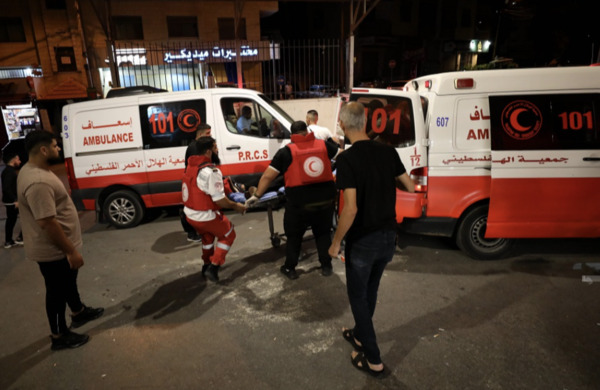
According to local sources, the mother and her daughter were passing by while a group of armed settlers stormed the house. One of the settlers, in his forties, attacked the girl and kicked her on the head, causing her to fall to the ground and immediately faint. She was subsequently transferred by Red Crescent Society personnel to a hospital in Hebron, where her injuries were described as moderate.

ARAB AND WORLD

Sat 17 May 2025 9:54 pm - Jerusalem Time

Thousands of Israelis demonstrate to demand a prisoner exchange deal.

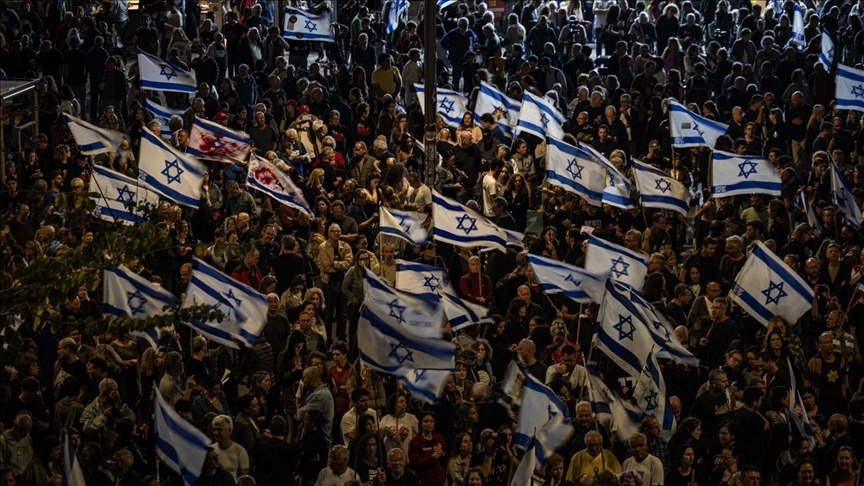
Thousands of Israelis demonstrated across the country on Saturday, demanding that the government headed by Benjamin Netanyahu strike an "urgent deal" with Palestinian factions in Gaza to release their prisoners in the enclave.


The private Israeli Channel 12 reported that thousands of Israelis "are demonstrating across the country to pressure the government to conclude an urgent exchange deal that will lead to the release of the detainees as soon as possible."


For its part, the privately owned Yedioth Ahronoth newspaper reported that thousands of Israelis participated in demonstrations in the cities of Tel Aviv, Rehovot (central Israel), and Haifa (north Israel) demanding the release of prisoners in Gaza, even if it meant halting the war on Gaza.


This comes as Hebrew media outlets report the start of a new round of negotiations in the Qatari capital, Doha, in an attempt to reach a ceasefire and prisoner exchange agreement.

PALESTINE

Sat 17 May 2025 9:51 pm - Jerusalem Time

A Palestinian child was injured by Israeli occupation forces' bullets in Burqa, northwest of Nablus.

A child was shot by Israeli occupation forces on Saturday evening in the village of Burqa, northwest of Nablus.


The Palestinian Red Crescent Society reported that its crews dealt with a 17-year-old child who was injured by live bullets in the hand and transferred him to the hospital, following the occupation forces’ raid on the village.


Local sources reported that gunfire was heard near the "Homesh" settlement, built on village lands. Occupation forces also closed the Jenin-Nablus road near the village entrance, preventing vehicle movement.

PALESTINE

Sat 17 May 2025 9:31 pm - Jerusalem Time

Israeli occupation forces stormed Arraba, south of Jenin.

Israeli occupation forces stormed the town of Araba, south of Jenin, on Saturday evening.


According to local sources, occupation forces stormed the town with infantry units, positioned snipers on rooftops, and seized a vehicle.


She added that the occupation forces fired sound bombs near the Al-Arda office, amid the outbreak of clashes.

ARAB AND WORLD

Sat 17 May 2025 9:26 pm - Jerusalem Time

Trump: I will discuss the ceasefire path with Putin and Zelensky by phone.

US President Donald Trump said on Saturday that he will hold phone calls with his Russian counterpart Vladimir Putin and his Ukrainian counterpart Volodymyr Zelensky on Monday to discuss issues related to reaching a ceasefire between the two countries.


In a post on Truth Social, Trump said he would hold a phone call with Putin on Monday morning, US time.


The US President revealed that the call will address the ceasefire between Russia and Ukraine and trade.


He indicated that he would later hold talks with Zelensky and some leaders of NATO member states.


Trump added, "I hope it will be a productive day, that a ceasefire will take place, and that this war, which should never have happened, will end."


For his part, Kremlin spokesman Dmitry Peskov confirmed that Putin will hold telephone talks with Trump.


"Preparations for the talks are underway," Peskov was quoted as saying by the Russian news agency TASS after confirming the phone call between Putin and Trump.


Istanbul hosted peace negotiations between Russia and Ukraine on Thursday and Friday, which concluded with an agreement to exchange 2,000 prisoners between the two countries.


On Friday, Ukrainian Defense Minister Rustam Umarov said at the conclusion of a tripartite meeting between Turkey, Russia, and Ukraine that the meeting discussed a ceasefire, prisoner exchange, and a possible commander-level meeting.


He added: "We reached an agreement (with Russia) to exchange 1,000 prisoners for 1,000 prisoners."


On May 11, Russian President Vladimir Putin proposed resuming direct negotiations with Ukraine without preconditions in Istanbul, asking his Turkish counterpart, Recep Tayyip Erdoğan, to host the new round.


For his part, President Erdoğan affirmed Türkiye's readiness to host negotiations to achieve a just and lasting peace, while the Ukrainian government welcomed the move.


Since February 24, 2022, Russia has launched a military offensive against its neighbor Ukraine, demanding that Kyiv abandon its membership in Western military entities as a condition for ending the offensive. Kyiv considers this to be "interference" in its affairs.

ARAB AND WORLD

Sat 17 May 2025 8:21 pm - Jerusalem Time

European Council President: I am shocked by what is happening in Gaza

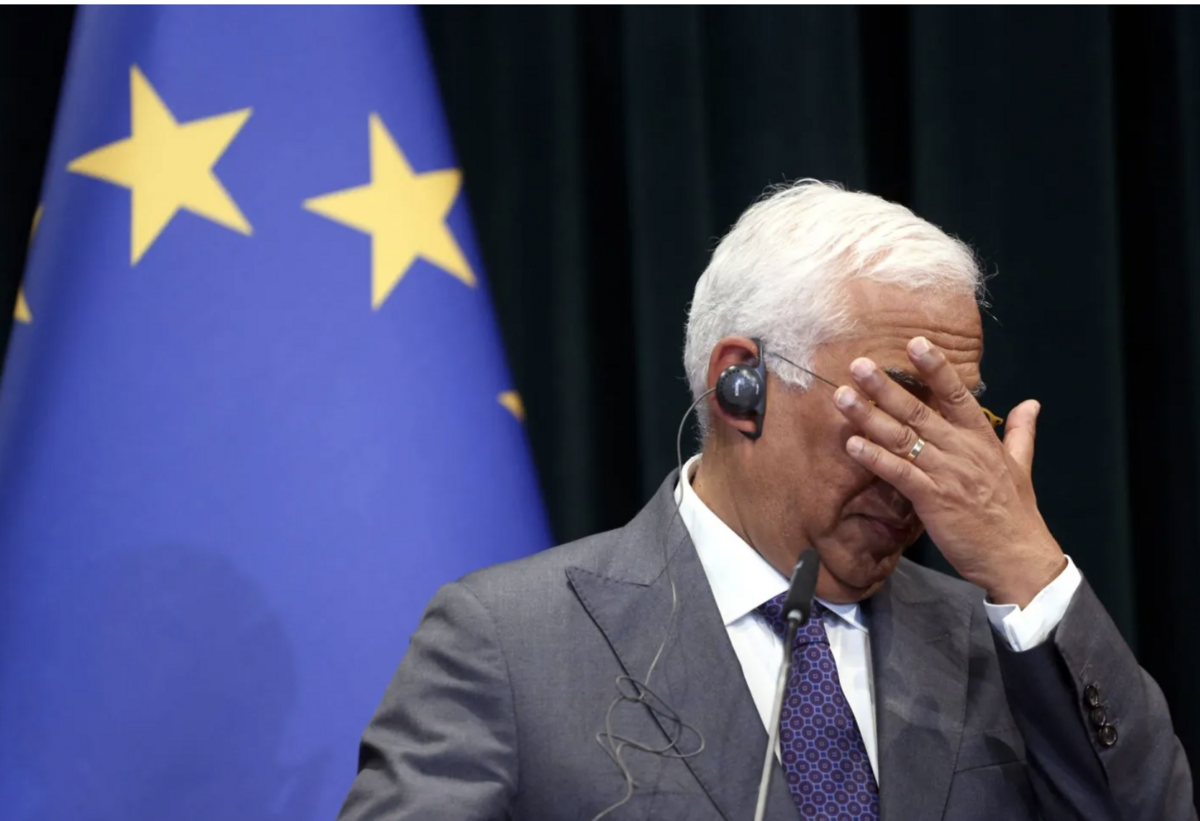
European Council President António Costa expressed his shock on Saturday at the starvation of civilians and the repeated bombing of hospitals in the Gaza Strip.


Via the X platform, Costa called on the Israeli government to lift the blockade on Gaza "now" and ensure unhindered access for humanitarian aid.


The European Council President described the situation in Gaza as a "humanitarian tragedy, where a people are being crushed by a military force, and international law is being repeatedly violated."


Costa's remarks come as the Italian government has intensified its calls for Israel to halt its deadly military strikes on Gaza, with Foreign Minister Antonio Tajani declaring, "Enough with the attacks" on the besieged and devastated territory.


"We can no longer bear to see the suffering of the Palestinian people. Enough with the attacks (on Gaza). Let us reach a ceasefire and release the hostages, but let us leave in peace a people (who have fallen) victim to Hamas," Tajani added, according to his spokesman, during a visit to Sicily.


The Israeli military announced on Saturday that it was expanding its offensive to defeat Hamas in the Gaza Strip, where pre-dawn airstrikes killed ten people, according to the Civil Defense, following several days of deadly bombardment on the devastated and besieged enclave.

PALESTINE

Sat 17 May 2025 8:06 pm - Jerusalem Time

A young man was killed by Israeli occupation forces west of Salfit.

The Ministry of Health announced, Saturday evening, the death of a young man by Israeli occupation forces' gunfire in the town of Bruqin, west of Salfit.


The ministry said in a brief statement that the General Authority of Civil Affairs informed it of the martyrdom of the young man, Nael Sami Abdel Rahman Samara (36 years old), by the occupation forces' bullets in the town of Bruqin, this afternoon.


The occupation forces fired live bullets at the young man, Samara, in the "Al-Balata" area of the town of Bruqin, wounding him, before arresting him while he was injured.


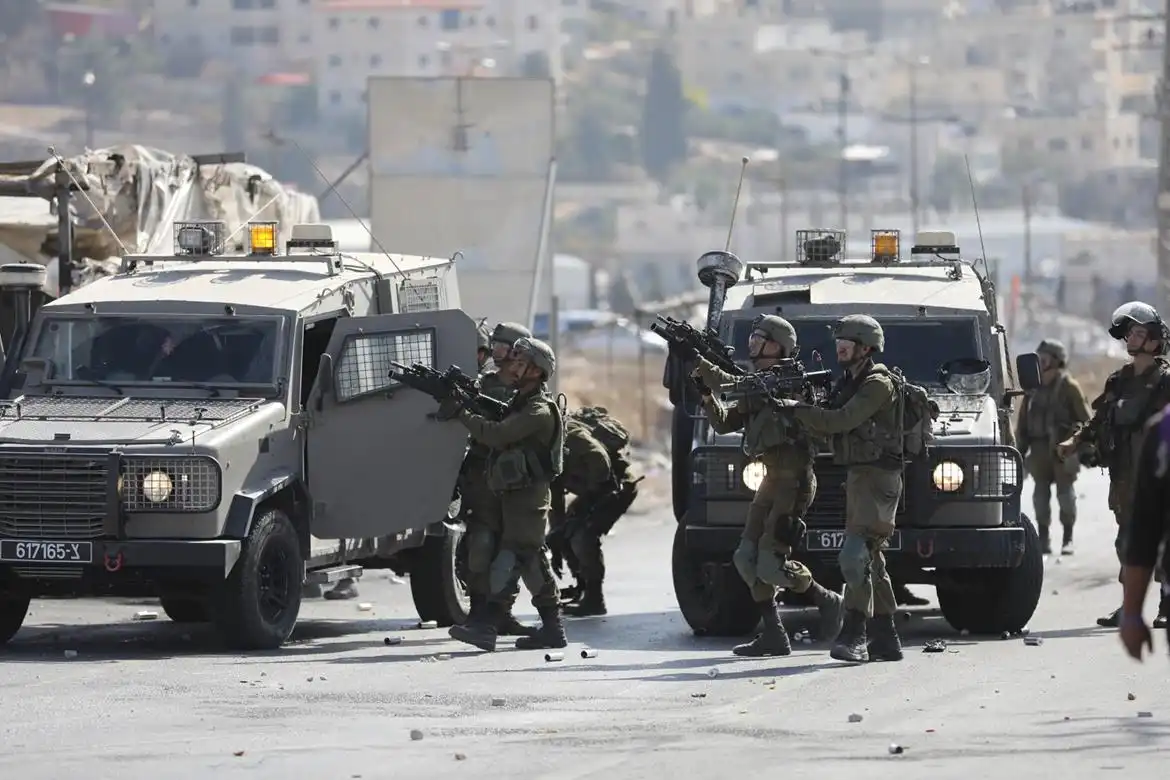
According to local sources, the occupation forces sent additional military reinforcements to the area, amid heavy firing of sound bombs and tear gas, and the detention of dozens of citizens.


For three days now, the occupation forces have continued their aggression against the towns of Bruqin and Kafr ad-Dik, under a tight siege, daily raids, arrests, and land leveling operations near civilian homes.


In parallel with the war of extermination being waged in the Gaza Strip, the Israeli occupation army and settlers have escalated their attacks in the West Bank, including Jerusalem, leading to the martyrdom of approximately 970 citizens since October 7, 2023, the injury of approximately 7,000, and the arrest of more than 17,000, according to official data.

PALESTINE

Sat 17 May 2025 7:56 pm - Jerusalem Time

Israeli occupation targets 68 food distribution centers and shelters in Gaza.

The Government Media Office in Gaza announced on Saturday that the number of food distribution centers and shelters targeted by the Israeli occupation army has risen to 68 since the start of the ongoing Israeli aggression on the Gaza Strip.


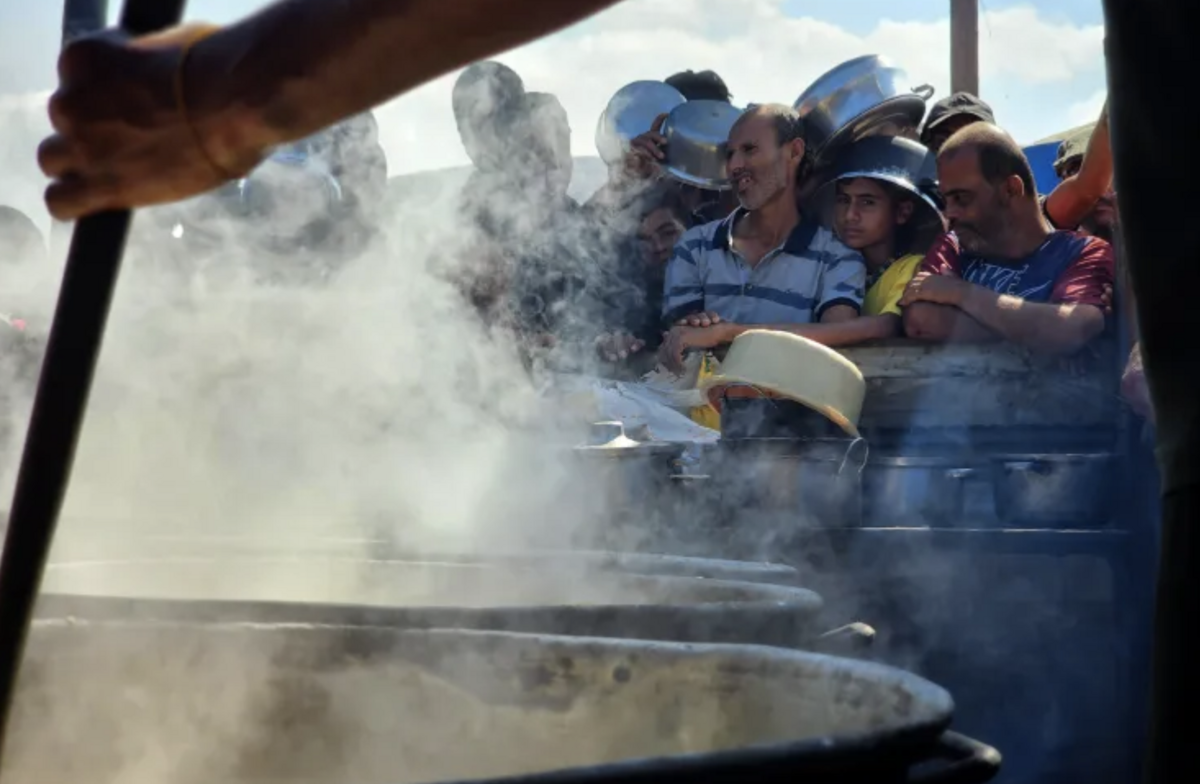
The media office said in a statement that the Israeli occupation army bombed a food aid distribution warehouse in the Deir al-Balah area in the central Gaza Strip, killing five civilians and wounding a large number of others who had gathered to receive humanitarian aid amid a stifling famine affecting all areas of the Strip.


This brings the number of food distribution centers and targeted humanitarian aid to:


39 food and aid distribution centers.

29 food banks provide daily meals to the needy and hungry.


Using food as a weapon of war

These attacks are part of an ongoing policy pursued by the occupation to use food as a weapon of war, in flagrant violation of international and humanitarian laws, most notably the Geneva Conventions, which prohibit the targeting of humanitarian facilities and civilians under any circumstances.


According to a statement from the media office, "This criminal policy has led to the deaths of hundreds of civilians as they attempted to receive food aid from relief centers and hospices, in bloody scenes that reflect the magnitude of the humanitarian tragedy being experienced by a defenseless, besieged people."


This policy also reveals the true face of the occupation, which adopts a policy of genocide and systematic starvation against the Palestinian people in the Gaza Strip.


The media office held the Israeli occupation fully responsible for these heinous crimes, strongly condemning the repeated targeting of relief and social solidarity facilities.


The office called on the international community, the United Nations, the Security Council, and all humanitarian and human rights organizations to take urgent, immediate, and effective action to halt these brutal massacres, provide protection for food distribution centers, open crossings, and ensure the unhindered delivery of humanitarian aid.


He also called on human rights and media institutions to document these heinous crimes and work to hold the Israeli occupation accountable in international courts for its crimes, which amount to war crimes and crimes against humanity.


The statement concluded by stressing that continued international silence amounts to "effective complicity in this slow-motion genocide of a defenseless, besieged people, dying of starvation and bombing before the eyes of the world."


In early March, the first phase of a ceasefire and prisoner exchange agreement between Hamas and Israel, which had gone into effect on January 19, through Egyptian and Qatari mediation and US support, concluded. Israeli Prime Minister Benjamin Netanyahu reneged on the start of the second phase of the agreement and resumed the genocide in the Gaza Strip on March 18.


With American support, Israel has been committing genocide in Gaza since October 7, 2023, leaving approximately 173,000 Palestinians dead and wounded, most of them children and women, and more than 11,000 missing.

PALESTINE

Sat 17 May 2025 7:31 pm - Jerusalem Time

New York University strips student of degree for condemning Israel in graduation speech

New York University on Wednesday withheld a student's diploma after he condemned Israel's war of genocide in Gaza during his commencement speech.


Logan Roussos, valedictorian and senior speaker from New York University's Gallatin School of Individualized Study, delivered his commencement address, saying, "The only appropriate thing to say at this time and for a group of this size is to acknowledge the atrocities currently taking place in Palestine."


“As I reflect on the depths of my heart today as I address all of you,” Rozos told the crowd, “my moral and political commitments guide me” to condemn Israel’s assault on Gaza, which has killed at least 53,000 Palestinians over the past year and a half. “The genocide currently taking place is politically and militarily supported by the United States, paid for by taxpayers, and broadcast live on our phones for the past 18 months,” Rozos added. “I do not wish to speak only for my political views today, but for all people of conscience, and all who feel the moral damage caused by these atrocities.”


Roses' anti-war speech was met with cheers and applause from students throughout the hall. Some in the audience booed Roses, and one person appeared to shout "Bullshit!" from the crowd.


Following Rozos' speech, NYU issued a statement saying it "strongly condemns the choice of a student at today's Gallatin College commencement ceremony... to misuse his role as student speaker to express his personal and partisan political views."


The university said: "He lied about the speech he was going to deliver and violated his commitment to comply with our rules. The university will withhold his diploma pending disciplinary action. NYU deeply regrets that the public was exposed to these remarks and that this moment was stolen by someone who abused their privilege."


As of Thursday morning, Rose's student profile on NYU Gallatin's website appeared to have been removed, with a message saying, "Page or file not found."


Last August, NYU updated its student conduct guidelines to include “code words, such as ‘Zionist’” as examples of discriminatory speech.


"For many Jews, Zionism is part of their Jewish identity. Speech and behavior that violates [the non-discrimination and anti-harassment policy] if it targets Jews or Israelis can also violate national human rights law if it is directed at Zionists," the university said. The updated guidelines came months after anti-war students at NYU and other universities across the country demonstrated in solidarity with Palestine. As a result, NYU called police to campus, resulting in widespread arrests of students and faculty.


Last December, two professors, declared "persona non grata" by New York University, accused the university of escalating its suppression of anti-war speech under pressure from donors, politicians, and pro-Israel organizations.


Professors Andrew Ross and Sonia Busmenter were barred from entering some university buildings. The Papua New Guinean government's statements came after Ross and Busmenter joined a sit-in at the university library demanding the university divest from companies profiting from Israel's war on Gaza.


A few months later, the university canceled a lecture on USAID cuts after deeming it "anti-government." According to Dr. Joanne Liu, a pediatric emergency physician at Saint Justine Hospital and former international president of Doctors Without Borders, NYU's vice president of education contacted her on the eve of her presentation last March to inform her of the cancellation. Liu said the vice president expressed concerns about the content of some of her slides, including those mentioning the Trump administration's cuts to USAID funding, as well as slides mentioning Palestinian casualties in Gaza as a result of the Israeli war on the territory. Liu added that she was informed that the slides relating to Gaza "might be considered anti-Semitic."

PALESTINE

Sat 17 May 2025 6:16 pm - Jerusalem Time

The Palestinian President, before the Arab Summit: We stress the importance of supporting the steadfastness of our people by supporting the State of Palestine's budget and adopting special development programs for it.

President Mahmoud Abbas stressed the importance of supporting the steadfastness of the Palestinian people and government reform programs by activating the Arab financial safety net, supporting the State of Palestine's budget, and adopting development programs specific to Palestine.


In a speech delivered on his behalf by Prime Minister Mohamed Mustafa, before the Fifth Arab Development Summit held in the Iraqi capital, Baghdad, on Saturday, the President stressed the importance of reaching a joint Arab agreement to implement the initiatives and plans presented on the agenda of this summit. He extended his thanks and appreciation to the sisterly Republic of Iraq for hosting this important development summit, and to the General Secretariat of the League of Arab States for its continuous efforts to strengthen joint Arab action. He also thanked the Lebanese presidency of the previous summit.


President Abbas reiterated his commitment to working with brothers and friends around the world to achieve security and stability, end wars, and move toward reconstruction, sustainable development, and the establishment of a just and comprehensive peace, in accordance with international legitimacy resolutions and the Arab Peace Initiative.


Below is President Mahmoud Abbas's speech at the Fifth Arab Development Summit, delivered by Prime Minister Mohammad Mustafa:


His Excellency Brother Abdul Latif Rashid, President of the Republic of Iraq,


Your Majesties, Highnesses and Excellencies,


His Excellency Ahmed Aboul Gheit, Secretary-General of the League of Arab States,


Dear guests,


May the peace, blessings, and mercy of God be upon you,


I extend my thanks and appreciation to the sisterly Republic of Iraq for hosting this important development summit, and to the General Secretariat of the League of Arab States for its ongoing efforts to strengthen joint Arab action. I also extend my thanks to the Lebanese presidency of the previous summit, emphasizing the importance of reaching a joint Arab agreement at this summit to implement the initiatives and plans presented on the summit's agenda.


We meet today under exceptional circumstances facing the region, most notably the ongoing aggression against our Palestinian people, including crimes of genocide, starvation, a stifling blockade, and the systematic destruction of infrastructure. This has set development back years.


The State of Palestine has presented its comprehensive vision for stability and peace, which begins with a ceasefire, the entry of humanitarian aid, the assumption of civil and security responsibilities by the State of Palestine in the Gaza Strip, the withdrawal of the occupying forces, and the immediate commencement of the early recovery phase, including the sheltering of displaced persons and the return of basic necessities of life, and the reconstruction of the Gaza Strip within the framework of the plan adopted at the emergency Arab Summit. This plan will be presented at the international conference for the reconstruction of Gaza, which is being prepared to be held in Cairo upon reaching a ceasefire.


In this regard, we emphasize the importance of supporting the steadfastness of the Palestinian people and the government reform programs we launched about a year ago. This includes activating the Arab Financial Safety Net, supporting the State of Palestine's budget, and adopting development programs specific to Palestine, including support for solar energy, water, agriculture, industry, food security, and digital transformation projects.


In conclusion, we renew our commitment to working with our brothers and friends around the world to achieve security and stability, end wars, and move toward reconstruction, sustainable development, and the establishment of a just and comprehensive peace, in accordance with international legitimacy resolutions and the Arab Peace Initiative.


May the peace, mercy, and blessings of God be upon you.

PALESTINE

Sat 17 May 2025 5:23 pm - Jerusalem Time

Final statement of the Arab Summit: We urge the international community to pressure to stop the bloodshed in Gaza.

The final statement of the Arab Summit, which concluded today, called for the immediate delivery of humanitarian aid to the Gaza Strip, given the ongoing Israeli aggression and the worsening humanitarian situation.


Arab leaders called on Saturday for an end to the war on Gaza and clearly condemned the Israeli occupation's attempts to displace Palestinians from the Strip. This came at the 34th Arab Summit held in Baghdad with the participation of a number of presidents, princes, and representatives of Arab countries.


The statement urged the international community to shoulder its responsibilities and pressure for an end to the bloodshed in Gaza, stressing the importance of urgent action to end the suffering of civilians and provide them with the necessary protection.


The summit was also attended by UN Secretary-General António Guterres, Arab League Secretary-General Ahmed Aboul Gheit, the Organization of the Islamic Conference, the Gulf Cooperation Council, the European Union, and Spanish Prime Minister Pedro Sánchez.


This summit comes approximately two months after an extraordinary summit hosted by Cairo, during which Arab countries adopted a plan to rebuild Gaza without displacing its population.


In addition, the "Baghdad Declaration," a copy of which was obtained by Al Arabiya.net and Al Hadath.net and scheduled to be issued at the conclusion of the 34th regular summit, includes several Arab and regional issues, most notably the Palestinian cause, according to a draft of the declaration.


The centrality of the Palestinian issue

The Palestinian issue was at the forefront of the Baghdad Declaration, which reaffirmed the "centrality of the Palestinian issue."


He called for an immediate end to the war in Gaza and urged the international community, particularly influential countries, to "assume their moral and legal responsibilities to pressure for an end to the bloodshed and ensure the unhindered entry of urgent humanitarian aid to all areas in need in Gaza."


The Baghdad Declaration called on all countries to provide political, financial, and legal support for the joint Arab-Islamic plan for reconstruction and early recovery in Gaza, which was adopted by the emergency Arab Summit in Cairo last March, and by the foreign ministers of the Organization of Islamic Cooperation in Jeddah the same month.


The Baghdad Declaration welcomed the proposals and initiatives put forward by Arab countries to establish a fund for the reconstruction of Gaza.


He stressed the importance of joint coordination to pressure for the opening of all crossings to allow the entry of humanitarian aid into all Palestinian territories.


He also called for a just and comprehensive peaceful settlement of the Palestinian issue, supporting Palestinian President Mahmoud Abbas' call to hold an international peace conference and take irreversible steps to implement the two-state solution, in accordance with the Arab Peace Initiative and international legitimacy resolutions.


He called for the deployment of international protection and peacekeeping forces under the United Nations in the occupied Palestinian territories until the two-state solution is implemented.


He also called on the UN Security Council to take the necessary measures to implement the "two-state solution."


He also called on all Palestinian factions to agree on a comprehensive national project and a unified strategic vision.


The declaration also commended the positions of European countries, Spain, Norway, and Ireland, in recognizing the State of Palestine, and reiterated its support for South Africa's position in the lawsuit against Israel.


The final statement of the Arab Summit in Baghdad emphasized the sanctity of occupied Jerusalem and its status among the heavenly religions.


The statement condemned all Israeli aggression attempts aimed at Judaizing the city, changing its Arab, Islamic, and Christian identity, and undermining the historical and legal status quo at its holy sites.


The statement stressed the need to protect the holy sites in Bethlehem and not to harm their cultural and religious identity.


The statement affirmed support for the Hashemite custodianship of the Islamic and Christian holy sites in Jerusalem, which is assumed by His Majesty King Abdullah II bin Al Hussein, and its role in preserving its Arab, Islamic, and Christian identity.


The statement emphasized that Al-Aqsa Mosque, the blessed Al-Aqsa Mosque compound, which covers an area of 144 dunams, is a place of worship exclusively for Muslims.


The statement also expressed support for the role of the presidency of the Al-Quds Committee and the Bayt Mal Al-Quds Agency, headed by His Majesty King Mohammed VI, King of the Kingdom of Morocco.


Support Syria

Regarding developments in Syria, the declaration affirmed respect for the choices of the Syrian people, with all their components and sects, and commitment to the security and stability of Syria, which are reflected in the security and stability of the region. It also affirmed support for the unity of Syrian territory, rejected all interference in internal affairs, and condemned the ongoing Israeli attacks on Syrian territory, the violation of its sovereignty, and attempts to undermine and destroy its national capabilities.


The declaration also emphasized "the necessity of proceeding with a comprehensive transitional political process that preserves diversity and societal peace, while respecting the beliefs and sanctities of all segments and components of the Syrian people, and rebuilding Syria." In this regard, it welcomed US President Donald Trump's recent announcement to lift sanctions on Syria.


He called for the adoption of a comprehensive national dialogue conference that would include all components of the Syrian people, appreciating the willingness of Iraq, the current Arab League Summit host, to host the conference in coordination with the General Secretariat of the Arab League and Arab countries. This will ensure the realization of Syria's national interest, ensure effective participation, and enhance social coexistence in Syria.


Lebanon's stability

The Baghdad Declaration affirmed support for Lebanon in confronting challenges and preserving its security, stability, and territorial integrity, and protecting its internationally recognized borders against any attacks on them or on the state's sovereignty. It welcomed the municipal elections and encouraged all political entities to reach an understanding, avoid the language of exclusion, and implement the necessary economic reforms.


He also affirmed full solidarity with Yemen in preserving its sovereignty and unity, and supporting efforts to achieve stability and security, end the state of war and division, and find solutions through internal dialogue.


Sudan's unity

He stressed the importance of finding a political solution to end the conflict in Sudan in a manner that preserves its sovereignty, territorial integrity, and the safety of its people. He also emphasized the need to allow safe passage for humanitarian workers. He called on all parties to engage in crisis resolution initiatives, such as the Jeddah Declaration and other initiatives. He also welcomed the statement issued by the Intergovernmental Authority on Development (IGAD), which stipulated the unification of platforms for resolving the crisis in Sudan.


Libyan crisis

The Baghdad Declaration affirmed support for Libya and its resolution of the crisis through national dialogue, in a manner that preserves the unity of the state, achieves the aspirations of its people, and ensures lasting stability. It also rejected all forms of interference in Libya's internal affairs, calling for the withdrawal of all foreign forces and mercenaries from Libyan territory within a specified timeframe. It also called on all parties in Libya to continue the political process and achieve national reconciliation.


Water rights and the condemnation of terrorism

He also stressed the "necessity of establishing a nuclear-weapon-free zone and other weapons of mass destruction in the Middle East, in accordance with agreed-upon terms of reference."


He stressed that water security is a fundamental pillar of Arab national security, emphasizing in this context the importance of supporting the efforts made by Iraq, Egypt, Sudan, and Syria to guarantee their legitimate water rights.


The Baghdad Declaration affirmed the Arab states' firm position in condemning all forms and types of terrorism and associated ideologies, combating organized crime, and combating drugs, human trafficking, and money laundering.


He welcomed Iraq's efforts to confront and combat terrorist presence and threats, and called for the activation of deterrent measures to combat hate speech, extremism, and incitement.


US-Iran talks

The Arab leaders expressed support for the talks between Iran and the United States to reach positive outcomes for the peaceful use of nuclear energy. The declaration also praised the role of the Sultanate of Oman in these talks and reaffirmed its commitment to close cooperation with the United Nations and its specialized agencies.

PALESTINE

Sat 17 May 2025 4:54 pm - Jerusalem Time

UNRWA Commissioner: New aid distribution plans are a waste of resources

The Commissioner-General of the United Nations Relief and Works Agency for Palestine Refugees (UNRWA), Philippe Lazzarini, said on Saturday that new "plans" for distributing aid in Gaza are aimed at diverting attention from the atrocities inside the Strip and are a waste of resources.


Lazzarini warned, via the X platform, that famine is imminent in the Gaza Strip, where residents are dying around the clock, while humanitarian aid remains stockpiled outside the Strip, food will spoil, and medicines will expire.


The UNRWA Commissioner-General called for the lifting of the blockade on the Gaza Strip, the opening of all crossings to allow the entry of humanitarian aid, and the enabling of the UN agency to carry out its mission.

PALESTINE

Sat 17 May 2025 4:21 pm - Jerusalem Time

Gaza Health: The number of dead has risen to 53,272.

A Palestinian was killed and others were injured on Saturday in an Israeli airstrike targeting a house in Khan Yunis, south of the Gaza Strip, as the aggression on the Strip continues for the 225th consecutive day.


Medical sources reported that the death toll from Israeli airstrikes since dawn today has risen to 41, including 26 who fell in Gaza City and the northern areas of the Strip, amid a violent escalation in the pace of bombing.


For its part, the Ministry of Health in Gaza announced that the death toll from the Israeli aggression since October 7, 2023, has risen to 53,272 dead and 120,673 wounded, amid the ongoing blockade and targeting of civilians and residential areas.


PALESTINE

Sat 17 May 2025 4:09 pm - Jerusalem Time

Three citizens were injured in an Israeli attack in the town of Sebastia.

Three citizens were injured on Saturday when Israeli occupation forces attacked them in the town of Sebastia, north of Nablus.


The Palestinian Red Crescent Society reported that the occupation forces assaulted a number of citizens during clashes that erupted in Sebastia, resulting in the injury of three citizens (aged 60, 52, and 35), who were subsequently transferred to the hospital.


Earlier today, settlers burned agricultural crops in the Sebastia-Ramin plain, northwest of Nablus.

PALESTINE

Sat 17 May 2025 3:14 pm - Jerusalem Time

Dozens of dead in Gaza as Israel intensifies its genocide operations

Nearly 60 Palestinians have been killed and more than 130 others injured since midnight, as the Israeli occupation began intensifying its campaign of genocide against Palestinians early this morning, as part of preparations to expand operations and achieve "operational control" over areas of the Gaza Strip.


Marwan Sultan, director of the Indonesian Hospital in northern Gaza, said, "Since midnight, we have received 58 dead and 133 wounded. The situation is difficult and complicated."


He added that there are a large number of people under the rubble, stressing that "the situation is catastrophic."


Medical sources told Al Jazeera that 31 Palestinians have been killed since this morning in the ongoing Israeli bombardment of the Gaza Strip.


For its part, the Ministry of Health in Gaza reported that hospitals in the Strip had received 153 dead and 459 injuries over the past 24 hours, noting that a number of victims remained under the rubble and on the streets, unable to be reached by ambulances and civil defense teams.


Gaza health authorities reported that more than 300 Palestinians have been killed in Israeli airstrikes on the Strip since Thursday, in one of the most intense periods of bombardment since the collapse of the ceasefire last March.


An Al Jazeera correspondent reported that three people were killed and others injured in an Israeli bombardment of a house in the Tel al-Zaatar area in the northern Gaza Strip. The bodies of the martyrs and injured were transferred to the Indonesian Hospital in Beit Lahia, north of the Strip.


Al Jazeera's correspondent in Gaza reported that a number of Palestinians were injured in an Israeli bombardment near the Andalus Tower, northwest of Gaza City. The injured were transferred to the emergency department at Al-Shifa Medical Complex, where doctors described the condition of one of them as critical.


The correspondent said that two Palestinians were killed and four others were injured in an Israeli drone strike on the Ma'an area east of Khan Yunis in the southern Gaza Strip. Six others were killed and others were injured in another strike on the Bani Suhaila town east of the city. The martyrs and injured were transferred to Nasser Hospital in Khan Yunis.


Palestinian sources also reported that three Palestinians were injured in an attack on a tent near the Taiba Towers in the designated "humanitarian" area west of Khan Yunis. Israeli warplanes also launched raids on the town of Al-Qarara, northeast of the city.


In Deir al-Balah, central Gaza, an Al Jazeera correspondent reported that a number of Palestinians were injured in an Israeli airstrike on a tent housing displaced persons near Al-Aqsa Martyrs Hospital.

PALESTINE

Sat 17 May 2025 3:12 pm - Jerusalem Time

Five Israeli soldiers killed and wounded in clashes with Qassam Brigades

The Qassam Brigades said it engaged in machine gun fire with an Israeli force holed up in a house in the Shujaiya neighborhood, killing and wounding two soldiers five days ago.

OPINIONS

Sat 17 May 2025 3:10 pm - Jerusalem Time

Between ideology and pragmatism... it is time to save what remains of Palestine

Ramallah - "Al-Quds" Dot Com

Ramallah - "Al-Quds" Dot Com

Opinion Writer

Alaa Ashour


Amid the blood and rubble spilling across Gaza, and in the face of a merciless war machine, urgent questions arise that must be asked boldly and responsibly. Is it enough to confront Israeli aggression with slogans? Is it enough to continue unequal battles, knowing in advance that they will only lead to more martyrdom and destruction?

A rare leak of the late leader Gamal Abdel Nasser's remarks, in which he discusses the impossibility of military victory over Israel given its international superiority and unlimited support from the United States, brings us back to a pivotal point: Is it time to reevaluate our tools in the conflict? To subject our discourse and practice to the principle of political realism, rather than to ideology that ignores facts?

The genocide taking place in Gaza is a crime by all standards. There is no dispute that Israel is practicing organized state terrorism, seeking to erase Palestinian existence and establish an expansionist colonial reality. However, it is our duty to have the courage to ask: Does the path taken by movements like Hamas serve the Palestinian cause or burden it with more wounds? Do we have the luxury of taking risks when the price is the blood of children and the remains of families?

Political realism does not mean surrender, but rather understanding the balance of power and working within it intelligently and flexibly. It means protecting the human being before the slogan, the home before the platform, and life before ideology.


Gaza has become a harsh testing ground, not only for the imbalance of power, but for the imbalance of reason. When Palestine is reduced to a narrow ideological project, we do not champion the cause, but rather fail it. Defending Palestine is not achieved through recklessness, but through strategy. It is not achieved by raising the bar, but by building the solid foundation upon which any real resistance can stand.

The time for revolutionary rhetoric that ignores reality is over. The time has come for pragmatism that builds on the possible to achieve hope. It's time for wisdom to prevail over enthusiasm, and for the battle to shift from one of direct confrontation to one of awareness, planning, and thoughtful political, diplomatic, and popular accumulation.

Palestinian blood is not cheap, nor is it fodder for political or media consumption. It is time to overcome the division, protect those who remain, and give our cause a chance to survive... not to annihilate it in the name of "resistance" while it is slaughtered in vain.

Palestine needs the voice of reason more than ever, and a leadership that weighs matters with wisdom, not with the impulse of the moment.

The time has come for political pragmatism... for the sake of what remains of the homeland, and for Palestine to remain alive.


PALESTINE

Sat 17 May 2025 3:07 pm - Jerusalem Time

Trump's promise, Vitkov's new proposal, and the deal deadline

The escalating attacks in the Gaza Strip have two aims: to pave the way for Operation Gideon, or to exploit the time remaining until a ceasefire is reached.

Currently, the original proposal by Trump's envoy in Doha has been rejected, as has the new proposal he presented. Israel is preparing for a large-scale military exercise, while Trump said, "Good things will happen in Gaza over the next month."

The release of Idan Alexander came as a complete surprise to Israel and its security establishment, effectively marking a "transitional phase" between the operations carried out by the Israeli military prior to the surprise release and the launch of a comprehensive ground maneuver as part of Operation Gideon's Vehicles.

This phase is being exploited for negotiations under fire, according to statements by Prime Minister Benjamin Netanyahu.

Several days ago, "golden information" arrived about the presence of senior Hamas leaders in an underground compound in the Khan Yunis area. This was the result of an intelligence effort by the Shin Bet, coupled with an operational opportunity. The decision to attack was quickly made and approved at all levels.

Since then, the air force has continued to target high-profile targets and Hamas operatives in the Gaza Strip. The prevailing view is that these raids constitute a prelude to a potential ground maneuver: they assist maneuvering forces, strike Hamas's command and control system, eliminate commanders and militants, and open up axes and areas.

A security source explained that the attacks had an additional objective: to prepare for the possibility of progress in the Doha negotiations, which could lead to a ceasefire.

According to the source, the security establishment's goal is to make the most of the remaining days until the end of a potential war, stripping Hamas of as many assets as possible. "Destroying all the tunnels in the Gaza Strip will take years, but everything related to the offensive tunnels and the locations where the command and control leaders are located is essential in the fight against Hamas and effectively impacts its capabilities," the source said.

The airstrikes, which escalated after the release of Idan Alexander, are also putting increasing pressure on Hamas, coinciding with the talks in Doha.

It is estimated that the more effective and painful the strikes are for Hamas, the more flexible its position will be in the negotiations.

According to informed sources, Trump's Middle East envoy, Steve Vitkov, attempted to break the deadlock in the Doha negotiations by proposing a small deal: the release of some of the kidnapped individuals in exchange for a ceasefire lasting a month to a month and a half.

So far, there is no agreement on this, and Hamas continues to insist on a permanent ceasefire.

Reports reaching Jerusalem indicate that the talks are stalled, with both sides sticking to their positions and awaiting Netanyahu's decision on whether to return the delegation from Qatar.

Sources in Israel added, "Vitkov has put his hands up and left the decision to Israel." His office has not issued any comment.

One source said: "There is no progress in the talks, and there is no optimism. Hamas is not ready for a grand bargain, and it appears now that Israel is heading toward a large-scale military maneuver within days. A change may occur at the last minute."

As reported, the IDF is completing its preparations for the maneuver, and has at least time until the security cabinet meeting on Sunday afternoon.

US President Donald Trump said at noon, at the conclusion of his visit to the UAE, that he did not know whether Netanyahu would be able to secure the release of the kidnapped soldiers. He added, "We will know soon. Their situation is not good. We will cooperate with them on this matter."

He added, "We are looking at Gaza and we have to deal with the situation there. There are a lot of bad things happening." According to him, "a lot of good things" will happen in Gaza over the next month.


Trump did not say whether he would support Netanyahu's plans to expand military activity in Gaza, but he emphasized the humanitarian crisis caused by the war.

"We have to help the Palestinians, too. As you know, there are a lot of people dying of hunger in Gaza, so we have to look at both sides. But we will do a good job," he said.


About (Ynet)

PALESTINE

Sat 17 May 2025 10:49 am - Jerusalem Time

Expanding the ground campaign on Gaza: Negotiating pressure or a strategy to bring down Hamas?


How can the Netanyahu government's decision to expand the ground campaign in the Gaza Strip be explained in light of the faltering negotiations over a prisoner exchange deal between Hamas and Israel? Does this escalatory step fall within the category of negotiating pressure to force Hamas to make concessions and accept a partial deal in line with Israeli demands, or does it constitute a link in the strategy to topple Hamas, which has been the focus and orbit of the war that has been ongoing for more than a year and a half? Could the broad ground campaign develop into a comprehensive invasion of all areas of the Gaza Strip?

Starting; It should be emphasized that the idea of a comprehensive and simultaneous ground invasion of all areas of the Gaza Strip has become isolated and excluded from the contexts of Israeli military thinking and plans for reasons related to its high human cost, which the Israeli army cannot bear after Hamas restored part of the military strength it lost before the exchange deal last January. It is also impossible to obtain an American green light for this step, which would tip the scales and reshuffle the cards, and would mean a widespread clash with the dense population structure deep within the Gaza Strip, which would completely explode the humanitarian situation and would result in loud international criticism. This is in parallel with the existing divisions and conflicting opinions, positions and trends within the political and security institutions within Israel regarding the feasibility and effectiveness of a comprehensive ground invasion and the humanitarian obligations resulting from it. This is in addition to the Israeli economy’s unacceptability of this step, which would lead to a long-term occupation that would drain the general budget for years to come and exhaust the energy of reserve soldiers, which is fading day after day, and who are difficult to recruit for long periods of time. This is in addition to the absurdity of a comprehensive ground invasion after the destruction of most of Hamas’s military strength and capabilities and the movement’s limitation to a war of attrition. The regime is based on setting up traps and field ambushes, and does not yet have an alternative ruler for Gaza on the day after the war.

It appears that the general trend within the Israeli political and security leadership is toward gradually dissolving and eliminating Hamas through various means of pressure, including military pressure on the ground, by escalating the ground campaign in a systematic and calculated manner, avoiding the risk of escalation and a comprehensive ground invasion, which the current circumstances and effects cannot tolerate.

In the context of the new Israeli plan, Israel is heading towards a medium-term, open-ended escalation that relies on expanding the ground incursion into specific areas to tighten pressure on Hamas, specifically the northern and eastern areas of the Gaza Strip in Beit Hanoun, Beit Lahia, Jabalia, the neighborhoods of Al-Tuffah, Shujaiya, Al-Zeitoun, and the eastern governorates of the Middle and Khan Younis, in addition to Rafah, which is completely subject to the broad Israeli ground invasion, so that the Israeli army establishes a security belt along the eastern border of the Gaza Strip, starting from Salah al-Din Street to the Israeli border with the Gaza Strip, while cutting off the north of the Gaza Strip to the end of Jabalia at the Abu Sharkh roundabout and the Al-Tawam roundabout, which means that the Israeli security belt will cut off very large parts of the Gaza Strip.

Thus, the situation on the ground in the Gaza Strip as a whole is being shaped by the complete occupation of Rafah Governorate and the control of the Morag axis between Rafah and Khan Yunis, along with the complete reassertion of control over the Netzarim axis in the central Gaza Strip, and the establishment of a large security belt encompassing the eastern borders of the Gaza Strip, in addition to the northern Gaza Strip Governorate. This is in parallel with the continued aerial and artillery bombardment and the concentrated assassinations that have not ceased throughout the war.

What makes matters even more dangerous is that the areas near the security belt will witness a massive population displacement, as they will be under Israeli fire control. This will effectively confine the residents of the Gaza Strip to the west of Gaza City and the central and western governorates of the Central and Khan Yunis Governorates, with all the resulting massive population congestion and unbearable humanitarian suffering.

Needless to say, the new Israeli plan is not easy to achieve. Military leaders, in particular, are aware that penetrating deep into certain residential areas and neighborhoods, such as Jabalia, al-Tuffah, and al-Daraj, poses significant operational challenges, given the robustness of Hamas's military infrastructure there compared to other areas. This makes achieving the Israeli military objectives of this campaign difficult and arduous, with much bloodshed, body parts, and destruction to be expected.

Given the mounting difficulties facing the Israeli army in areas under full Israeli control, such as Rafah and Beit Hanoun, the traps and ambushes set by Hamas fighters for Israeli forces there, and the current ferocity of the resistance in the eastern neighborhoods of Shuja'iyya and al-Tuffah, this should provide us with a more accurate and comprehensive picture of the difficulties and challenges that await the Israeli army in the new areas of incursion.

However, both the political and military leaderships in Israel are betting on the direct impact that military pressure on Hamas could have on the decision-makers within the Hamas leadership. They see with their own eyes the increasing pain, misery, and suffering of the people of Gaza, and the successive collapses affecting all humanitarian sectors within the Strip. They are betting on the possibility of them abandoning their positions and accepting proposals that meet Israeli conditions and demands.

The most important point in the context of analyzing and interpreting the Israeli military plan lies in the fact that the means of negotiating pressure, adorned with the subjugation of the field and its violent bloody tools, carry within them a fixed strategy to bring down Hamas through systematic mechanisms of dissolution and termination. These mechanisms operate gradually, relying on the time frame to exhaust what remains of Hamas and completely remove its project from the political and field arena.

Undoubtedly, official Israel is no longer content with simply toppling Hamas, which has expressed a willingness to voluntarily relinquish control in favor of an independent "technocratic" committee, as it had hoped during the first months of the war. Rather, the tactical military achievements it has achieved over the course of the long months of the war have tempted it to pursue the goal of bringing down Hamas's project—politically, militarily, and socially—by forcing it to submit to Israeli conditions and demands, which clearly and without any ambiguity signify a declaration of surrender.

There is complete clarity in the features and manifestations of the official Israeli vision for Gaza and its future. It is not true that the Netanyahu government does not have a general strategic vision for the present and future of the Strip. Its goals are complex and intricate, and their implementation and delving into their details and circumstances require a slow and gradual process, despite the obstacles and challenges that beset them. However, it faces a structural and political problem related to the ruling alternative to Hamas on the day after the war. It continues to insist on denying and excluding the Palestinian Authority from the governance and administration scene for political and strategic reasons. However, it will find no alternative but to engage with it and accept its rule, as it is the most experienced and capable of managing Gaza, even if it takes some time.

Finally, the fate of this plan remains inversely linked to the fate of the prisoner swap negotiations over the coming days. The success of the deal, whatever its content, would mean a postponement or perhaps the complete thwarting and termination of this step. Meanwhile, the collapse of the negotiations would lead to the initiation of implementation procedures and phases that would extend over the coming weeks and months, resulting in geographical realities and realities on the ground that may be difficult to overcome easily in any future agreements or deals.


PALESTINE

Sat 17 May 2025 10:41 am - Jerusalem Time

Israeli occupation forces arrested a young man after shooting at his vehicle northeast of Jerusalem.

Israeli occupation forces arrested a young man this morning, Saturday, after shooting at his vehicle near the Jaba' military checkpoint, northeast of occupied Jerusalem.

Eyewitnesses reported that Israeli army patrols pursued a Palestinian civilian vehicle, opened fire on it near the checkpoint, and arrested its driver, whose identity has not yet been determined.

The Israeli occupation forces completely closed the checkpoint and prevented citizens from passing through it, causing a major traffic jam.

-