PALESTINE

Fri 16 May 2025 10:07 am - Jerusalem Time

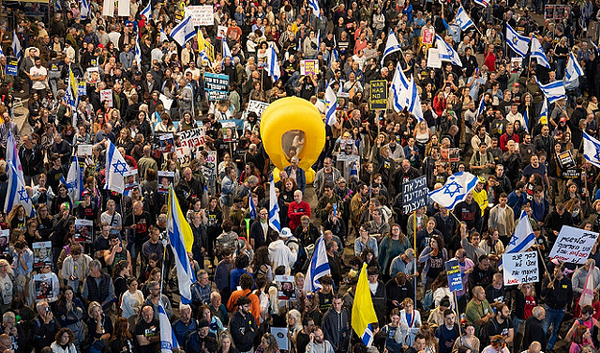
Prisoners' families warn Netanyahu that the opportunity to reach a swap deal has passed.

Families of Israeli prisoners held in the Gaza Strip said Friday that the Israeli government is close to missing a "historic opportunity" to recover the captives and stop the war, as attacks on the Strip intensify and US President Donald Trump concludes his Gulf tour.


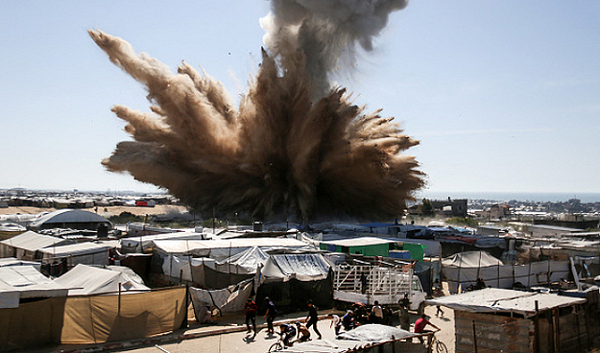
This came as medical sources in the Gaza Strip reported that more than 100 Palestinians were killed early this morning in a series of violent raids carried out by the Israeli army on areas north of the Strip, amid Israeli preparations to expand ground operations in the territory.


In a statement issued by the Prisoners' Families Headquarters, the families expressed their fear that current developments could lead to Israel's isolation and further entanglement in the war, rather than being part of a broader regional agreement. They warned against "drowning in the Gaza quagmire."


The statement read: "The families of the prisoners woke up this morning with heavy hearts and deep fear, amid reports of intensified attacks in Gaza and the approaching end of President Trump's visit to the region."


He added, "All indications show that the State of Israel is only hours away from missing the century. Instead of recovering all prisoners, participating in a broad regional effort, and stopping the war, Israel may find itself isolated and drowning in the Gaza quagmire."


He continued, "Missed this historic opportunity would be a resounding Israeli failure. Attempts to thwart the initiatives on the table will be recorded in the pages of shame."


"We are living through dramatic hours, hours in which the fate of our loved ones, the fate of Israeli society, and the future of the entire Middle East are being decided," the families said.


She added, "We call on Israeli Prime Minister Benjamin Netanyahu and US President Donald Trump to reach a political breakthrough as soon as possible. Time is running out, the world is watching, and history will record everything."


This comes as negotiations continue in Doha, attempting to achieve a breakthrough in prisoner exchange talks and a ceasefire, amid stubborn resistance to proposals Hamas had previously rejected due to their lack of any guarantees that the war would end.


Israeli sources reported that the decision to expand the war is awaiting approval from the political leadership, while the army is "fully prepared" for the possibility of a broader confrontation, ultimately aiming to "decide the battle against Hamas," as they put it.


Sources indicated that a large number of Israeli forces are currently on the ground, amid a widespread deployment around the Gaza Strip. The sources also indicated that IDF Chief of Staff Eyal Zamir reviewed operational plans during a field visit to the forces on Thursday.


According to Israeli media, the Israeli occupation army's intensive airstrikes on the Gaza Strip have targeted approximately 130 targets, some of which are classified as "field softening" sites aimed at laying the groundwork for a potential large-scale ground operation.

PALESTINE

Fri 16 May 2025 9:56 am - Jerusalem Time

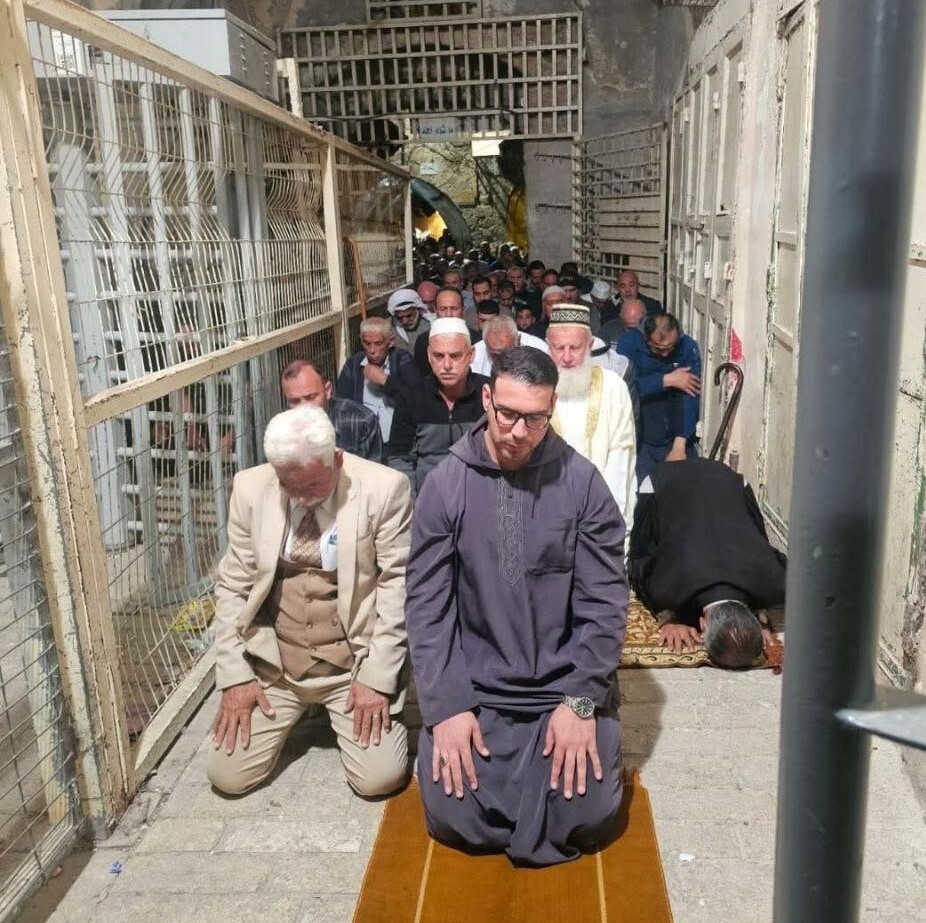
Israeli occupation prevents citizens from performing the dawn prayer at the Ibrahimi Mosque.

Israeli occupation forces prevented citizens from performing the dawn prayer on Friday at the Ibrahimi Mosque in Hebron.


Local sources reported that the occupation forces prevented citizens from performing prayers, fired sound bombs at them, and forced them to pray outside the compound.


The Ibrahimi Mosque has recently been subjected to systematic attacks, including the prohibition of the call to prayer, the prevention of its workers from performing their duties, and the harassment of worshippers through barriers and electronic gates. This is in addition to Judaization projects aimed at obliterating its Islamic character and altering its historical and religious features.

OPINIONS

Fri 16 May 2025 9:45 am - Jerusalem Time

Palestine: From Partition to Ethnic Cleansing... The Nakba Continues

Rafat Qassis

Rafat Qassis

Opinion Writer

On May 15, Palestinians commemorate the 77th anniversary of the Nakba, the Great Catastrophe, when more than 750,000 Palestinians were forcibly displaced from their homeland following the violent establishment of the State of Israel in 1948. This anniversary is not only about recalling a past historical tragedy, but also about confronting the ongoing reality of displacement, occupation, apartheid, genocide, and the erosion of political hope.

The tragedy of Palestine did not begin in 1948. In 1917, the British Empire issued the Balfour Declaration, declaring its support for the establishment of a “national home for the Jewish people” in Palestine, deliberately ignoring the presence and will of the Palestinian majority. This marked the beginning of the systematic Nakba. Britain’s post-World War I colonial policies and the subsequent Mandate (1920–1948) facilitated the mass immigration of European Jewish settlers, the seizure of Palestinian land, and the arming of Zionist militias, while brutally suppressing Palestinian uprisings and political aspirations.

In 1947, the United Nations General Assembly voted on Resolution 181, which recommended the partition of Palestine into two states, one Jewish and one Arab. This was a profoundly irresponsible move: the decision was made without consulting the indigenous Palestinian people, without their consent, and without any serious effort at dialogue between the various parties to preserve the unity and territorial integrity of Palestine. Worse still, the plan granted the Jewish minority, which owned only about 6% of the land, over 55% of historic Palestine. It was never about creating a haven for survivors of persecution, but rather about enabling a European colonial settlement project at the expense of the indigenous population.

Under the weight of European guilt after the Holocaust, international powers supported the influx of European Jewish settlers, not to live in peace with the Palestinians, but to uproot them, seize their land, and erase their national identity. This was not a peace plan, but a recipe for ongoing disaster, and it has already led to a profound catastrophe and catastrophe for the Palestinian people.

The events and massacres perpetrated by Zionist gangs and organizations against the Palestinians in 1948 were not the result of the chaos of war, but rather deliberate and planned acts of ethnic cleansing. More than 500 Palestinian villages were destroyed, thousands were killed, and approximately 750,000 people became refugees. The new state, Israel, quickly enacted racist laws and imposed policies that prevented the return of Palestinians, while bringing in Jewish immigrants to reside in their homes.

Today, evidence—collected by Palestinian historians, and even Israeli historians such as Benny Morris and Ilan Pappe—confirms that what happened was a systematic demographic engineering plan aimed at replacing one people with another and creating a Jewish majority through the forced displacement of the Palestinian population.

The Nakba is not a chapter of the past, but an ongoing daily reality. In the refugee camps of Lebanon, Jordan, and Syria; in the occupied West Bank and under siege and genocide in Gaza; in the discriminatory legal system facing Palestinians inside Israel; in every demolition order, every land confiscation, every checkpoint, and every settler attack.

The Palestinian people have been transformed from a people whose rights were trampled upon to a people who are strangers in their own land. They are now treated as a demographic and political burden by the apartheid state, Israel, and by a world unwilling to acknowledge its complicity and failure of Palestinian victims. The discourse has shifted from talk of justice and a return to "crisis management." Israeli leaders openly talk about how to "reduce" the Palestinian presence and are even exploring countries that might "absorb" them after their expulsion from their homeland. Palestinians are no longer viewed as a people with rights, but rather as a demographic threat to be contained, expelled, or killed.

The ongoing transformation of Israeli society represents a new and dangerous phase. What used to masquerade as democracy is now morphing into an openly fascist ethnostate. From extremist ministers to religious extremists in positions of power, there is little pretense left. Palestinian human rights are being openly violated, international law is being mocked, and the occupation has become a permanent structure, not a temporary state, as it was supposed to be.

This extreme racism in Israeli policy will leave a profound impact not only on its Palestinian victims, but within Israeli society itself. No society can oppress another without also oppressing itself. A nation built on fear, superiority, and impunity cannot enjoy peace, neither with its neighbors nor with itself.

Over the decades, the Palestinians have made numerous concessions. Their acceptance of a state on a small part of their land in 1988, the Oslo Accords in 1993, and the Arab Peace Initiative in 2002—all were painful concessions in the hope of achieving peace.

But Israel rejected all these initiatives and continued to expand settlements, entrench its apartheid regime, and escalate violence and abuses against the Palestinian people. Every "peace process" served as a cover for continued land theft. Meanwhile, the so-called "free international community" provided diplomatic cover, financial and military support, and political immunity to Israel, continuing to perpetuate its narrative of being the victim of Palestinian, Arab, and Islamic terrorism and barbarism.

Internally, the Palestinian leadership is experiencing a profound crisis. The Palestine Liberation Organization (PLO), once a symbol of the national cause, has become marginal. The Palestinian National Authority (PNA) is powerless and lacks any control over the territory, more concerned with maintaining stability and international aid than challenging Israel. Political stagnation, violations of freedoms, and the absence of democratic renewal have eroded its image among the Palestinian public. Severe divisions, corruption, and the lack of a clear vision have weakened the national movement and political parties. If the liberation struggle is to be revived, it must be rebuilt from the ground up, with honesty, unity, and accountability.

The United States and European powers are not spectators. Rather, they are partners in the suffering of the Palestinians. By arming Israel, shielding it from accountability, and promoting normalization with it without justice for the Palestinians, these powers have actively and vigorously supported Israel's apartheid regime.

Western leaders sing the praises of democracy and human rights, but their double standards are blatant. They support Ukraine but abandon Gaza. They condemn war crimes, except when committed by Israel. This hypocrisy exposes the moral and political bankruptcy of the global order.

Another shameful form of silence is the silence of many churches and Christian institutions, especially in the West. While Palestinian Christians suffer alongside their Muslim brethren, many global churches have chosen political neutrality at the expense of the prophetic voice. Where are the bold voices we once knew fighting the injustice of white apartheid in South Africa? Where are the voices that fought dictatorships in Latin America? Where are the voices that supported civil rights movements? Today the Church must choose: Will it be complicit in injustice and occupation, or will it stand on the side of truth and justice?

Palestine is not just a local or regional issue. It is a global moral test. It poses the question: What world are we building? A world governed by justice and equality, or a world dominated by colonialism and white supremacy? Will we allow the international order to collapse and descend into a “Wild West” governed by impunity? Or will we demand a world where human dignity is respected for all? If Palestinian rights continue to be eroded, we are all at risk. If global powers can watch genocide and displacement unfold in real time without taking action, then the very concept of human rights becomes a lie.

With the illusion of the "two-state solution" crumbling, Palestinians must consider a bold and inclusive alternative: a single democratic state in which all citizens, regardless of race or religion, enjoy equal rights. This vision requires a political transformation, but above all, it requires moral courage. It requires decolonization, not just of land, but of minds. Equal rights are not surrender. They are the ultimate demand of a people deprived of everything.

Finally, despite the destruction, there is still an unbreakable strength in the Palestinian spirit. In the steadfastness of Gaza. In the resilience of Jerusalem. In the memory of olive trees and village songs. In the refugee children who still dream of return.

On the 77th anniversary of the Nakba, we mourn. We resist. And we hope. Not a naive hope, but a revolutionary hope. A hope that justice is not dead, that history is not yet concluded. The world must choose: complicity or conscience? Silence or solidarity? Apartheid or equality?

Palestine is watching. So is history.

OPINIONS

Fri 16 May 2025 9:41 am - Jerusalem Time

Trump's Tour: Winners and Losers

Awni Al-Mashni

Awni Al-Mashni

Opinion Writer

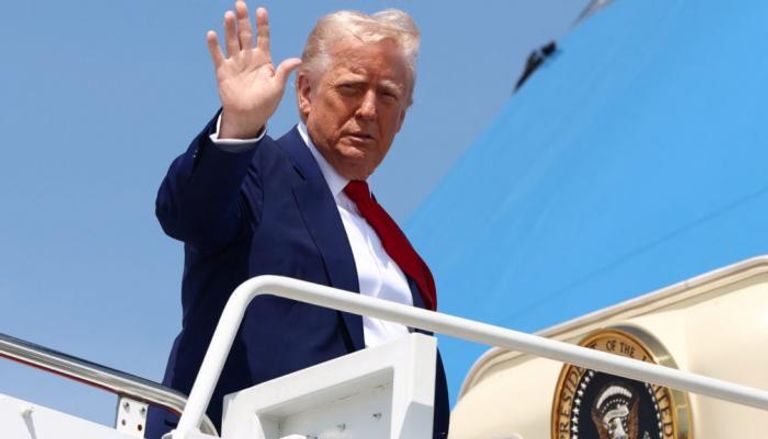
Trump's tour of the Gulf is almost over. This tour has a significant number of winners as well as losers, each with their own measure of profit and loss.

America is the biggest and most important winner. The total economic deals are the highest in history, and more than America itself had hoped for. Deals, gifts, and investments are approaching four trillion dollars, and this is making a huge difference to the American economy. This is in addition to the Gulf realigning behind America in a way that has removed all previous obstacles.

With all these gifts, the Gulf states that hosted them bought themselves a position closely behind the American master, even if only formally closer to the Israeli position. They guaranteed a period of protection, support, and endorsement that was not short, and that is all they wanted.

Syria had sanctions lifted and Sharia regained the legitimacy it had been seeking—American legitimacy. This in itself was a major gain for Sharia, and in return, it made significant promises and expressed a willingness to join America's ranks in the region.

Whether Hamas stands by this round of war or not, it has gained a little. There is now chemistry in dealing with it, and a pledge for this was offered in the form of the release of the Israeli-American prisoner. More importantly, this gain is still a card in the wind. Any change, and this is very much expected in the storm that is being stirred up around the Trump-Netanyahu relationship, will throw Hamas far from the center of attention.

There are also losers. The first and biggest loser is Benjamin Netanyahu. He lost his leading position behind Trump, falling far behind. However, Israel did not lose its status as a US protector, and the gap between Israel's standing and Netanyahu's in terms of American interest and support has become significant. Having lost his popular legitimacy, Netanyahu is now losing his American legitimacy, while Israel remains virtually under the US umbrella of protection. The current equation is either Netanyahu moves closer to American Israel to maintain his position, or Israel turns against Netanyahu to preserve its historical relationship with America.

The second loser is the Palestinian Authority. It didn't even enjoy a brief protocol meeting with Trump, and it completely lost its seat even in the spectator stands. This is natural and understandable. Anyone who loses the ability to influence events loses their place in the world of politics. Anyone who cannot present himself as a unified and single representative of his people is ignored, especially if that person is Trump, who can barely see anyone in front of him.

On its path to success, Iran is trying to overcome the devastating war with whatever achievements it can, and to the extent that it can do so, it represents a gain to some extent. Iran, by its very nature, possesses a tremendous amount of pragmatism that enables it to avoid a devastating war, and its margin of maneuver allows for this, especially since such a devastating war would be devastating to more than one party.

In the end, Trump's tour ends, and the ranks behind the American master are reorganized. Even if one side is late or the other advances, the American master has returned to the region in a way that allows him to determine its course until another slogan is adopted.

PALESTINE

Fri 16 May 2025 9:31 am - Jerusalem Time

Witkoff tells mediators that Washington will not force Israel to end the Gaza massacre.

As Israeli Prime Minister Benjamin Netanyahu refuses to end his genocidal war against defenseless civilians in the besieged Gaza Strip, vowing to continue it even if more hostages are released, The Times of Israel reports that US Middle East envoy Steve Witkoff has told Arab mediators that the United States will not force Israel to end the war.


"We will enter in the coming days with all our might to complete the operation... to subdue Hamas," Netanyahu said on Tuesday. "Hamas might say, 'Stop, we want 10 more hostages released.' Fine, release them. We'll take them in, and then we'll enter. But we won't reach a situation where we stop the war."


The Times report also quoted a source who attended a meeting Witkoff held with families of Israeli prisoners held in Gaza last week. The source said Witkoff largely agreed with the Arab mediators' position that Israel's escalation plan would be futile.


It's worth noting that in another meeting with the prisoners' families this week, Witkoff was asked why the United States wasn't forcing Israel to stop. According to a recording of the meeting obtained by Haaretz, Witkoff said, "We are not the Israeli government. We don't disagree. The Israeli government is a sovereign government. They can't tell us what to do, and we can't tell them what to do."


Since the start of the Israeli war of annihilation in Gaza on October 8, 2023, the war has been entirely dependent on US military aid, meaning the United States has the power to pressure Netanyahu to end the massacre and allow humanitarian aid into Gaza, which has been under a comprehensive Israeli blockade since March 2. Instead, according to US reports, Witkoff is proposing a week-long ceasefire agreement that would see the release of a small number of detainees.


In return, Hamas said it was willing to release all hostages at once in exchange for a permanent ceasefire.


Witkoff said that during the week-long truce, the United States will ensure that Israel enters into talks on a permanent agreement, but Hamas is unlikely to agree to an agreement without a prior commitment to a permanent truce. Israel was supposed to enter into talks on a permanent ceasefire under the agreement signed in January, but it refused.


For his part, Bassem Naim, a prominent member of Hamas, confirmed that the movement is in the process of conducting direct talks with the United States.


Bassem Naim told Sky News that Hamas is in "direct contact with some figures in the US administration" regarding conditions for ending Israel's bombing of the Gaza Strip.


Naim revealed that Hamas wants "a prisoner exchange, a complete withdrawal of Israeli forces, allowing all aid into Gaza, and the reconstruction of the Gaza Strip without forced migration."


He also stressed that Hamas is prepared to relinquish control of the Gaza Strip, which it has held since 2006, in exchange for its demands being met.


He added, "We also informed the Americans that we are prepared, once again, to hand over control of the Gaza Strip immediately if an end is reached to this war."


Naim said in a statement on Thursday that allowing aid into Gaza is the "minimum" for negotiations with Israel, which has imposed a strict blockade on the Strip since early March.


Naim emphasized that Gaza "is not for sale," commenting on statements by US President Donald Trump in which he expressed his country's desire to "take" the Strip and turn it into a "free zone."


"Gaza is an integral part of the Palestinian territories, and is not a property for sale on the open market," he said.


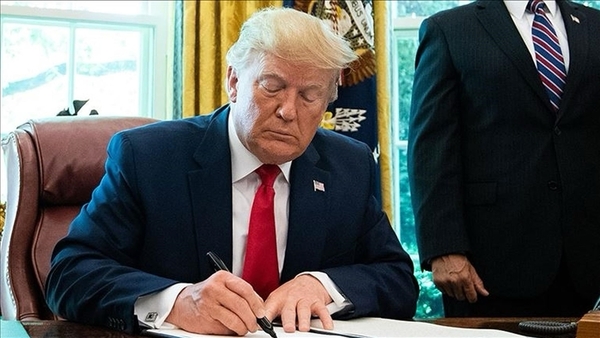
US President Donald Trump said Thursday that he wants the United States to "take" Gaza and turn it into a "free zone." Speaking from Qatar, Trump explained, "I have very good ideas for Gaza: make it a free zone," adding, "I would be proud if the United States owned it, took it, and made it a free zone."


But Naim pointed out that "Trump's vision of global calm and a safer and more peaceful world... while commendable in principle, cannot be achieved as long as the war and genocide in Gaza continue."


"Palestinians, like all peoples of the world, have the right to live in freedom and dignity within an independent, sovereign state," he added.


He added that Hamas "expressed, through all its contacts, including with the US administration, its readiness to cooperate constructively with all relevant international parties to achieve an immediate cessation of hostilities and launch a credible political process leading to the establishment of a fully independent Palestinian state."


Naim said, "The minimum requirement for a favorable and constructive negotiating environment is for the Netanyahu government to be obligated to open the crossings and allow the entry of humanitarian aid." He considered that the US administration "is capable of enforcing this humanitarian commitment, which was also a key element in the understandings that led to the release of soldier Idan Alexander," referring to the Israeli soldier with US citizenship who was released by Hamas this week.


Naim stressed that "access to food, water, and medicine is a basic human right and not a subject for negotiation."

PALESTINE

Fri 16 May 2025 9:19 am - Jerusalem Time

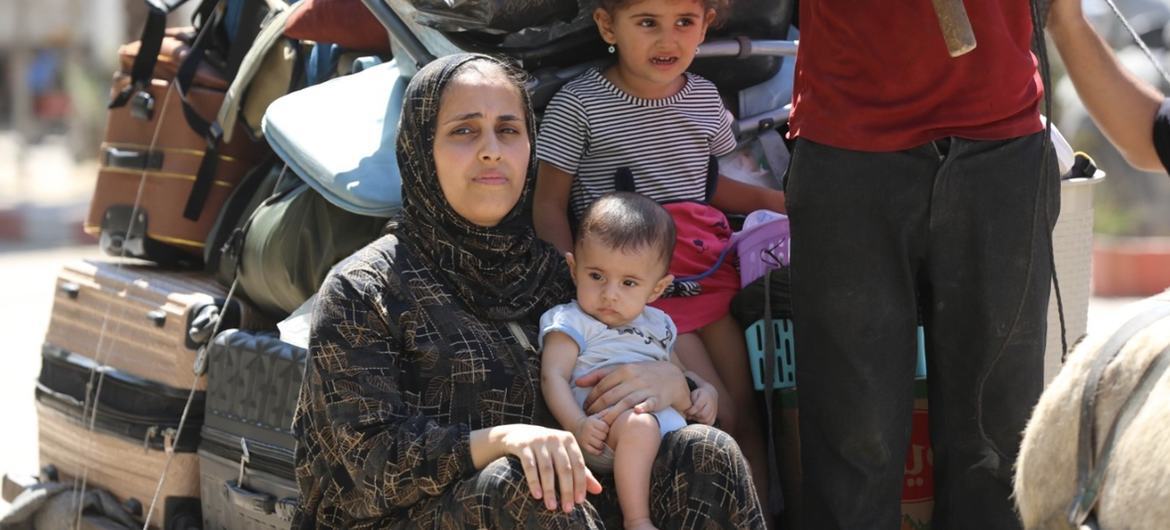
Displaced people sleep in the streets as evacuation orders are finalized in western Gaza City.

Raghda Hamdan to Al-Quds: The Islamic University is the last shelter, and we will not leave it except to return to Beit Hanoun.

Ramadan Al-Attar to Al-Quds: We were forced to leave school quickly and spend the night in the street for fear of being targeted.

Abdul Fattah Darwish to Al-Quds: I was evacuated to a hospital bed with the help of my relatives, fearing a repeat of what happened at the European Union.


On Wednesday evening, the Israeli occupation army issued evacuation notices for several areas west of Gaza City. These areas were the areas to which residents from the northern Gaza Strip, specifically Beit Hanoun and Beit Lahia, had fled.


According to the evacuation map, the areas the occupation army has demanded evacuation from are in western Gaza, specifically Al-Shifa Hospital, the Islamic University, a school block in the Al-Nasr neighborhood, and several schools in the Al-Rimal neighborhood. All of these centers are housing displaced persons.


Dozens of wounded and sick people were evacuated from Al-Shifa Hospital, amidst public fears that the army might bomb the hospital, as happened recently at the Gaza European Hospital, which was bombed by Israeli aircraft with explosive belts, killing dozens.


The streets of the western part of Gaza City were also crowded with displaced people who had fled the threatened areas for areas the occupation claims are safe. Most of these displaced people left behind whatever scraps of food and belongings they had left behind, and were forced to spend the night in streets teeming with stray animals, in cold and frightening conditions.

Where do we go?


Raghda Hamdan, who was displaced from Beit Hanoun to the Islamic University, west of Gaza City, told Al-Quds that she will not be displaced again, even if the occupation army attacks the university or its surroundings. She added, "It is enough that we have been displaced 13 times so far. The time for displacement is over, and we will not allow this occupation to control our destinies."


She continued: "Most of the displaced people at the university decided not to leave and to remain there until they return to Beit Hanoun, with the university being the final shelter." She noted that the occupation army, just as it confronts the resilience of the Gazans, surrenders to that resilience.


The occupation's allegations are false.


As for Ramadan al-Attar, a displaced person who fled Beit Lahia to one of the schools included in the Israeli army's evacuation notices, he told Al-Quds that all of the occupation's allegations are false and untrue. The people in the shelters are displaced people who came from the northern Gaza Strip to the western Gaza City.


Al-Attar explained that he was forced to leave school immediately and spend the night in the street with his wife and five children, because, as he put it, he was a cunning enemy who could betray him at any moment and turn his children's bodies into pieces.


The conditions of the sick and wounded are tragic.


Patient Abdel Fattah Darwish said he was evacuated to a hospital bed and was pulled out by some relatives for fear that the Israeli occupation army would bomb the hospital. He then moved away from the hospital's perimeter and headed to another hospital, noting that a state of confusion gripped all the wounded and patients in the hospital.


Darwish confirmed to Al-Quds that the condition of the patients during the evacuation of the hospital was tragic, and that the cause was the massacre at the European Hospital, which the occupation army bombed without prior warning, killing dozens inside and around it. What happened at the European Hospital is beyond the human mind's comprehension or imagination.

PALESTINE

Fri 16 May 2025 9:08 am - Jerusalem Time

Negotiations falter: Netanyahu stalls to prolong the genocide

Dr. Jamal Harfoush: The faltering Doha negotiations are an inevitable result of a series of failures to adhere to the principles of international humanitarian law and Security Council resolutions.

Nihad Abu Ghosh: The Palestinian issue was not raised as a prerequisite by the Arab countries hosting Trump for developing bilateral relations with the US.

Naaman Abed: Netanyahu is stalling negotiations to prolong the aggression against the Palestinians amid the absence of real American pressure.

Dr. Amjad Bashkar: The Trump administration is seeking a truce with a political horizon, the ultimate goal of which is to stop the war, while Netanyahu wants a temporary truce without a commitment to ending the war.

Yasser Manna: Netanyahu aims to impose the "absolute victory" equation to thwart any attempts to reach a permanent ceasefire.

Adnan Al-Sabah: The Palestinian issue is absent from the world's priorities amid the ongoing crimes of the occupation, and therefore we do not see any seriousness in the negotiations.


The faltering Doha negotiations reflect a deep political deadlock, threatening a dangerous escalation that could lead to a new humanitarian catastrophe in the Gaza Strip, given the marginalization of the Palestinian cause.

In separate interviews with Al-Quds, writers, political analysts, experts, and university professors believe this failure adds to a series of failures to adhere to the principles of international humanitarian law, Security Council resolutions, and the Geneva Conventions, which protect civilians. This reality further exacerbates the legal and moral responsibility of international and regional parties, which appear unable to exert real pressure on Israel to push it toward an agreement that would end the brutal war on the Gaza Strip.

They point out that, at the same time, Israeli Prime Minister Benjamin Netanyahu's threats of military escalation continue, with the aim of achieving "absolute victory" and thwarting any attempts at a permanent ceasefire.

They assert that the ongoing negotiations, including the framework of the Witkoff Plan, show a lack of any indication of a permanent ceasefire. Netanyahu insists on a temporary truce that serves his tactical goals, such as the return of prisoners, without committing to ending the war. This truce furthers his expansionist agenda, which aims to render Gaza uninhabitable and prepare it for forced displacement.


UN resolutions have been systematically marginalized.


Professor Jamal Harfoush, professor of scientific research methods and political studies at the University of the Academic Research Center in Brazil, says that the faltering Doha negotiations are simply the inevitable result of a long series of failures to adhere to the principles of international humanitarian law and Security Council resolutions related to armed conflict.

Harfoush points out that this failure increases the legal, political, and moral responsibility of regional and international parties, calling for urgent action to confront the expected escalation.

Harfoush explains that UN resolutions such as (242) of 1967, which calls for Israel’s withdrawal from the occupied territories, (338) of 1973, which calls for a ceasefire, and (1860) of 2009, which affirms the protection of civilians in Gaza, along with Article (3) common to the Geneva Conventions of 1949, which protects civilians in non-international conflicts, constitute legal foundations that have been systematically marginalized.

Harfoush asserts that this failure presents international parties with crucial options to salvage the negotiation process and prevent a new humanitarian catastrophe.

Harfouche proposes several options for regional and international parties, including activating diplomatic pressure tools by issuing binding resolutions in the Security Council, or resorting to the UN General Assembly under the 1950 "Uniting for Peace" resolution, which allows for action if the Council is paralyzed due to a veto.

Harfoush calls for imposing diplomatic sanctions on Israel, considering it the party obstructing the negotiations due to its continued undermining of the negotiating process.


Use of economic and political influence


Harfoush asserts that influential states, such as the Gulf states and the European Union, can leverage their economic and political influence by reevaluating economic and technological relations with Israel and conditioning any future cooperation on tangible progress in negotiations, in accordance with the principle of "political conditionality."

Harfoush stresses the importance of activating international judicial mechanisms, such as submitting files to the International Criminal Court (ICC) relating to war crimes and systematic violations against civilians, believing this could constitute a legal deterrent that supports the negotiating process.

Among the proposed solutions, Harfoush calls for strengthening informal negotiations by expanding indirect dialogue between the parties via neutral mediators or academic and civil society institutions, with the aim of creating a political and psychological environment conducive to formal solutions. He also proposes providing written international guarantees to the Palestinian side to enhance confidence, especially in light of repeated Israeli violations.

Harfoush warns of the seriousness of Israeli Prime Minister Benjamin Netanyahu's threats, describing them as not merely media statements, but rather reflecting an ideological vision that denies Palestinian existence and criminalizes its resistance, in defiance of Article 51 of the UN Charter, which guarantees the right of legitimate defense, and international agreements prohibiting the targeting of civilians.


Three possible scenarios


Harfoush outlines three possible scenarios: the first is a comprehensive escalation, which he sees as the most likely following the failure of the Doha negotiations and Netanyahu's threats of a "fierce war," which could lead to a humanitarian catastrophe and forced displacement, which constitutes a crime against humanity under the Rome Statute. The second is conditional political pressure through limited military operations to blackmail the resistance, and the third is a temporary de-escalation to improve Israel's diplomatic image before resuming escalation later.

Harfoush asserts that a political solution is still theoretically possible, but it is conditional on international will to lift the political siege on the Palestinians and recognize their rights, such as self-determination and the right of return.

Harfoush believes that the coming escalation will not only be military, but also political, legal, and media-related. He warns against attempts to redefine international rules of engagement and empty international law of its substance through double standards, turning the conflict into a battle over the legitimacy of international law itself.


The potential for breakthroughs remains.


For his part, writer and political analyst Nihad Abu Ghosh, who specializes in Israeli affairs, says that talk of a dead end in the negotiations to halt the brutal war on the Gaza Strip is inaccurate, noting that the potential for breakthroughs remains ever-present.

However, Abu Ghosh explains that the success of these breakthroughs in the negotiations depends on the positions of influential powers, most notably US President Donald Trump, who wields significant influence over Congress and possesses strong political momentum at the beginning of his term. Despite his recent visit to the region, there have been no serious indications of tangible progress on the Palestinian issue, which has seemed to be absent from his top priorities.

Abu Ghosh points out that the Palestinian issue was not raised as a primary condition by the Arab countries hosting Trump for developing bilateral relations with the United States, as everyone merely mentioned it in passing and symbolically, without any clear vision.

Abu Ghosh asserts that the Arab states have expressed a commitment to ending the war and halting the genocide against the Palestinian people, but these demands were not linked to binding conditions in the agreements and economic projects concluded during the visit.


The Witkoff Plan lacks any indication of a ceasefire.


Abu Ghosh expresses cautious optimism based on talk of a crisis in the relationship between Trump and Netanyahu. Trump has sidestepped Israel on regional issues such as Iran, the Houthis, and Turkey, in addition to the release of prisoner Idan Alexander, and his repeated statements describing the war as "brutal" and pointless.

However, Abu Ghosh asserts that these indicators have not translated into real American pressure on Netanyahu to end the war, noting that the Witkoff Plan, which is the only framework on the table, lacks any indication of a permanent ceasefire.

Abu Ghosh believes that the US administration could impose this condition if it wanted to, but has so far avoided doing so, reflecting a lack of clear political will.

Abu Ghosh cautions against speculating about the outcomes of unannounced bilateral talks, particularly between Trump and the Emir of Qatar, but notes that Trump has deliberately avoided discussing the Palestinian issue, focusing instead on Iran, Ukraine, and Russia.

Abu Ghosh explains that Netanyahu prefers a scenario that would prolong the war indefinitely, with the goal of rendering Gaza uninhabitable and facilitating displacement by dividing the Strip into separate zones or confining the population to limited areas deprived of the basic necessities of life.


The flexibility of the Palestinian resistance


Abu Ghosh asserts that this scenario serves Netanyahu's expansionist agenda and strengthens his political survival in the face of his domestic opponents, despite growing Israeli opposition. Polls indicate that 75% of Israelis support a ceasefire to return the prisoners.

In contrast, Abu Ghosh points to the flexibility of the Palestinian resistance, which has made significant concessions on the prisoners' issue and expressed its willingness to hand over power to a technocratic body under the supervision of the Palestinian Authority.

Abu Ghosh believes the resistance will reject any proposals that include handing over prisoners without compensation, dismantling the resistance's weapons, or allowing Israel to take control of the Gaza Strip. He believes these conditions are intended to enable the occupation to fully control the Strip and prepare it for displacement.

Abu Ghosh asserts that the resistance will not accept options that prevent Palestinians from returning to their homes or grant Israel the authority to intervene in disarming them, noting that Israel uses the pretext of "dual-use weapons" to impose its control over every aspect of life in Gaza.

Abu Ghosh points to Trump's silence on the displacement plans, his failure to confirm or deny them, and his avoidance of mentioning the Palestinian people's right to freedom and dignity. Abu Ghosh believes that Arab states bear responsibility for not exerting sufficient pressure to extract a clear position from Trump regarding halting the war on the Gaza Strip.


Netanyahu sends negotiating delegations without a mandate


For his part, writer and political analyst specializing in international relations, Noman Abed, believes that Israeli Prime Minister Benjamin Netanyahu's continued procrastination and lies during the ongoing negotiations are aimed at prolonging the aggression against the Palestinian people, in the absence of genuine American pressure.

Abed explains that Netanyahu is sending negotiating delegations without adequate authorization, in an attempt to buy time and continue committing crimes that include murder, reoccupation and settlement expansion, ethnic cleansing, and genocide, with the goal of erasing the Palestinian cause.

Abed points out that Netanyahu's government is based on an ideology of murder and displacement, and that the continuation of the aggression is closely linked to Netanyahu's political fate.

Abed asserts that Netanyahu understands that ending the war would mean the end of his government, and thus his return to court and prison on the charges against him. Therefore, Netanyahu voluntarily rejects any ceasefire agreement, taking advantage of the lack of real pressure from the United States and Western countries.

Abed explains that the United States shows no interest in exerting real pressure on the occupying Israeli state and Benjamin Netanyahu's government to halt its aggression against the Palestinian people. The US believes it has already achieved its economic and strategic interests in the region, including the release of Israeli soldier Idan Alexander, who holds US citizenship, without the need to pressure Netanyahu. On the contrary, the US administration has explicitly declared its unwillingness to take such a step.


Difficult days await the Palestinian people


Abed believes that the current situation portends extremely difficult days ahead for the Palestinian people, as the options available are limited to either continued escalation or a very short truce that will not end the war on the Gaza Strip. The absence of real American pressure on the occupation government allows Netanyahu to continue his aggressive policies without facing tangible international consequences.

Abed points out that Trump adopts a "peace through strength" approach to dealing with various international issues, but excludes the issue of war and the Israeli occupation from this approach. Furthermore, Trump and his team no longer consider the situation in the Palestinian territories to be an occupation.

Abed points out that despite US President Trump's approach to cooling and resolving international conflicts and wars, he has ignored the genocidal war in the Gaza Strip and political solutions to the Palestinian issue that would meet Palestinian aspirations.


International positions are limited to condemnation and denunciation.


Abed points out that international positions have not shifted from mere condemnation and denunciation to imposing economic or diplomatic sanctions on Netanyahu and his government, believing this shift is necessary to force the occupation to change its policies.

Abed points out that Netanyahu portrays himself as a leader who defies American pressure, attempting to transform the occupying state from a functional entity whose decisions are dictated to a state that formulates its own policies, ignoring international will.

Abed warns that the occupation government will continue its aggression against the Palestinian people, with increased assassinations, killings, and starvation, unless it faces real international pressure.

Abed calls on the international community, particularly the American mediator, to work to halt the "massacre" in the Gaza Strip, stressing that this will not be achieved without a clear American will that transcends fear for Netanyahu's political fate, as he relies on continued war and genocide to remain in power.


Netanyahu's strategy to prolong the conflict


For his part, political science professor Dr. Amjad Bashkar asserts that recent statements by Israeli Prime Minister Benjamin Netanyahu reflect an escalation directed primarily at his government and the right-wing bases that comprise the 30% of Israeli society who support the continuation of the war on the Gaza Strip.

Bashkar explains that Netanyahu considers the continuation of the war a "red line" for his government's survival, noting that Netanyahu is seeking a temporary truce that serves Israeli goals, but with conditions that reject a definitive end to the war, revealing his strategy to prolong the conflict.

Bashkar points out that the short-term goal of previous Israeli military operations, which followed ceasefire violations, was to push for a truce that would lead to the release of some of the living Israeli prisoners.

Bashkar explains that Netanyahu is focusing on a truce that would allow for the release of half the prisoners in the first phase, followed by the release of the remaining prisoners by the end of the truce. However, he rejects any proposal, such as Witkoff's, that would include the release of five prisoners followed by negotiations to end the war on Gaza.


The next 48 hours will be crucial.


Bashkar asserts that this refusal reflects Netanyahu's insistence on continuing the war after the truce, a point he reiterates daily in his statements.

Bashkar believes that the next 48 hours will be crucial in determining the course of the next phase, but he emphasizes that the fundamental variable lies in the strategic conflict between the American vision for the Middle East, led by President Donald Trump, and that of Netanyahu and the extreme right. While Netanyahu seeks escalation and direct control as an occupying power, as seen in the West Bank, Gaza, Lebanon, and Syria, Trump is adopting a strategy focused on economic partnerships and calming tensions to achieve stability in the region.

Bashkar explains that the Trump administration is seeking a truce with a political horizon that would include a ceasefire, while Netanyahu wants a temporary truce without a commitment to ending the war.

Bashkar points out that Trump's recent visits to Saudi Arabia, Qatar, and the UAE focused on joint projects, a vision that conflicts with Netanyahu's escalatory approach.


The release of Alexander's sticks and the cracking of the Israeli position


Bashkar points out that the release of prisoner Idan Alexander constituted a "strange paradox" that caused a crack in the Israeli position, particularly regarding plans to expand the military operation in Gaza.

Bashkar explains that Israel was planning a large-scale operation following Trump's visit, including the displacement of residents of northern Gaza to the south, but these plans were suspended and put on ice to make way for new negotiations.

Bashkar asserts that the US administration is seeking a truce with a political horizon leading to an end to the war, while the Israeli government wants a temporary truce without a political commitment to end the conflict.

Bashkar believes Netanyahu faces a dilemma, as the US administration demonstrates an unprecedented determination to create calm in the region, viewing Gaza as the primary flashpoint fueling the conflict.

Bashkar asserts that the continuation of the war contradicts Trump's vision of zeroing out wars, revealing the depth of the disagreement between Netanyahu's escalatory approach and the US administration's vision for Middle East stability.


A fundamental difference in the parties' visions


Writer and Israeli affairs expert Yasser Manna believes the faltering negotiations in Doha reflect a profound political deadlock, stemming from a fundamental divergence in the parties' visions for an agreement on the situation in the Gaza Strip.

Manaa points out that the claim that there is no political horizon may be a hasty assessment, as the current situation is on the verge of a dangerous escalation, which could have catastrophic humanitarian consequences in the Gaza Strip.

Manaa explains that regional parties, most notably Egypt and Qatar, hold the levers of pressure, but appear incapable of sufficiently influencing Israel to push it toward an agreement.

Manna asserts that real pressure should come from the United States, but the US administration's traditional bias toward Israel hinders this role, despite growing domestic opposition to this bias in the United States.

Manaa points out that Israeli Prime Minister Benjamin Netanyahu's threats to resume fierce fighting after US President Donald Trump's visit to the region are not merely idle remarks.

According to Manaa, Netanyahu is seeking to exploit this visit as a political lever that will grant him American legitimacy, albeit symbolic, to launch a large-scale military operation in Gaza.


Imposing the "absolute victory" equation


Manaa believes that Netanyahu's goal, through his pursuit of a broader military operation in Gaza, is to impose the "absolute victory" equation and thwart any attempts to reach a permanent ceasefire.

In his analysis of possible scenarios, Manna warns of a dangerous scenario in which Israeli military operations expand to control additional areas of the Gaza Strip, with the resettlement of the Strip's population in specific areas, paving the way for a policy of forced displacement.

Manaa explains that this scenario could lead to an unprecedented wave of mass displacement, with catastrophic humanitarian consequences threatening the lives of tens of thousands of Palestinians.

The second scenario, which Mana'a considers less likely but still viable, involves temporarily postponing military escalation while awaiting the outcome of US proposals within the framework of the Doha negotiations.


However, Manaa stresses that the possibility of escalation remains high, especially in light of the pressing factors, most notably the US position following Trump's visit to Arab countries.


Manaa asserts that the current situation is manageable, provided there is a solid international political will capable of confronting the challenges and preventing a slide into a new humanitarian catastrophe in Gaza.


The Palestinian issue is absent from the priorities of the international community.


For his part, writer and political analyst Adnan Al-Sabah asserts that the Palestinian issue, including the war of annihilation in the Gaza Strip and the tragedy endured by the Palestinian people in the West Bank, remains absent from the international community's priorities. Therefore, he notes, we do not see any seriousness in negotiations. He points out that US President Donald Trump's recent visit to the region clearly exposed this absence.


Al-Sabah asserts that the political discourse during Trump's visit focused on issues related to Iran, Lebanon, Yemen, and Ukraine, while the Palestinian issue was "lackluster and weak" and did not receive the attention it deserved despite the scale of the humanitarian catastrophe and the crimes committed against the Palestinian people.


Al-Sabah points out that the ongoing negotiations on Gaza are not based on the Palestinian people's aspirations for a definitive end to the war, but rather on a vision aimed at a temporary ceasefire that serves the Israeli occupation's goals, foremost among which is the recovery of the largest possible number of prisoners before the war resumes. He emphasized that this reality is clearly evident in the continued unchanged demands of the occupation, and in the joint speech between Trump and Israeli Prime Minister Benjamin Netanyahu, which focuses on the issue of prisoners and ignores the suffering of the Palestinian people.


The differences between Trump and Netanyahu are just illusions.


Al-Sabah notes that Trump did not mention even a single word about the humanitarian tragedy being experienced by the Palestinians, nor did he address the crimes they are being subjected to. Instead, his speech focused on portraying the Palestinian resistance, including Hamas, as "terrorists," while accusing Iran, Hezbollah, and Ansar Allah in Yemen of supporting terrorism.


Al-Sabah points out that there is no real international or Arab pressure, even diplomatic or soft, on Trump to compel the occupation to halt its crimes.


Al-Sabah considers perceptions of disagreements or a rift between Trump and Netanyahu to be "illusions" that do not reflect reality, emphasizing that the two leaders' shared positions remain valid, with Netanyahu speaking of Trump's vision and Trump repeating his prisoner release rhetoric without any reference to the rights of the Palestinian people.


Al-Sabah asserts that any expectations of a just solution through Trump are "fantasy and have no connection to reality," warning that the occupation is currently postponing a comprehensive escalation to achieve tactical gains in negotiations, but it will not abandon its strategic goals.


PALESTINE

Fri 16 May 2025 9:06 am - Jerusalem Time

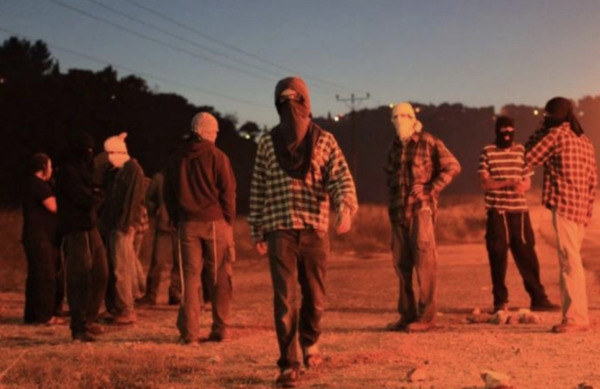
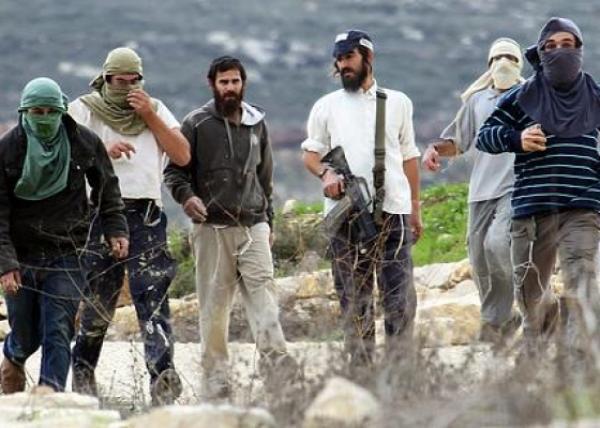
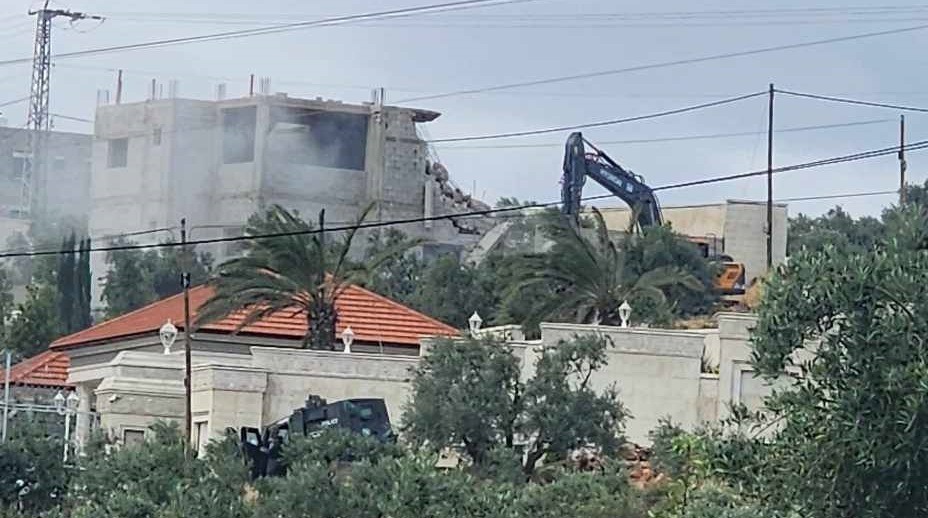
The West Bank is under fire. Settlers burn about 18 vehicles, and the occupation forces arrest citizens.

Settlers set fire to about 17 vehicles belonging to citizens west of Salfit city at dawn on Friday.


Local sources reported that settlers burned workers' vehicles near the "Ariel" settlement, built on lands in the Salfit Governorate.


Settlers also burned the Palestinian flag during their raid on the outskirts of the town of Bruqin, west of Salfit.


It's worth noting that settlers set up a tent on Thursday evening in the area between Sha'ab and Khalayel, northwest of Burqin. Since Thursday morning, these lands have been subjected to extensive leveling and road-building by occupation bulldozers in the vicinity, foreshadowing new colonial plans that threaten citizens' lands and property.


It is noteworthy that the occupation forces continue to raid Burqin, and are conducting thorough searches of citizens' homes, many of which have been converted into military barracks.


In Nablus, settlers set fire to a vehicle in the Masoudiya area, northwest of the city, early Friday morning.


Security and local sources reported that a group of settlers attacked a water well belonging to the Nablus Municipality in the Masoudiya area, and launched incendiary devices at the well and its guard, Karam Nazl, setting his vehicle on fire.


Local sources warned of the settlers' intention to seize the water well that supplies the surrounding villages, in light of their repeated attacks on the area.


The occupation forces also arrested citizen Amin Al-Zaher after raiding and searching his home and ransacking its contents in the Al-Makhfiya neighborhood. The occupation forces also raided several homes east and west of the city.


In Tulkarm, the occupation forces arrested the young man, Muhammad Darar Shahrour (21 years old), after raiding his home in the town of Bal'a.

PALESTINE

Fri 16 May 2025 9:02 am - Jerusalem Time

In a non-final toll, 72 dead have been reported in the Gaza Strip since dawn today.

Medical sources reported on Friday that 72 civilians were killed in Israeli airstrikes on the Gaza Strip since dawn today, 55 of them in the northern Gaza Strip.


In the latest developments: The director of the Beit Hanoun police station, Lieutenant Colonel Zaher Alian "Abu Musab," was killed in the bombing of his home in the Qalibu area, north of Gaza.


Meanwhile, eight civilians were killed and others injured in ongoing artillery shelling targeting displaced people in Ezbet Abd Rabbo, east of Jabalia al-Balad, north of the Gaza Strip.


At least 30 civilians were killed and dozens more wounded early Friday morning in a new massacre perpetrated by Israeli occupation forces in the town of Beit Lahia and Jabalia camp, north of the Gaza Strip.


Local sources reported that Israeli warplanes targeted more than 10 homes, most of them inhabited, in Beit Lahia and Jabalia refugee camp. Approximately 30 bodies have been recovered, while dozens remain missing under the rubble, and ambulances are unable to reach the site due to destroyed roads.


Medical sources confirmed that more than 100 civilians were killed, missing, or injured as a result of Israeli airstrikes targeting inhabited homes in Beit Lahia and Jabalia refugee camp.


A citizen was killed and 13 others were injured when the occupation forces bombed a house in the Al-Sultan neighborhood, west of Beit Lahia, in the northern Gaza Strip.


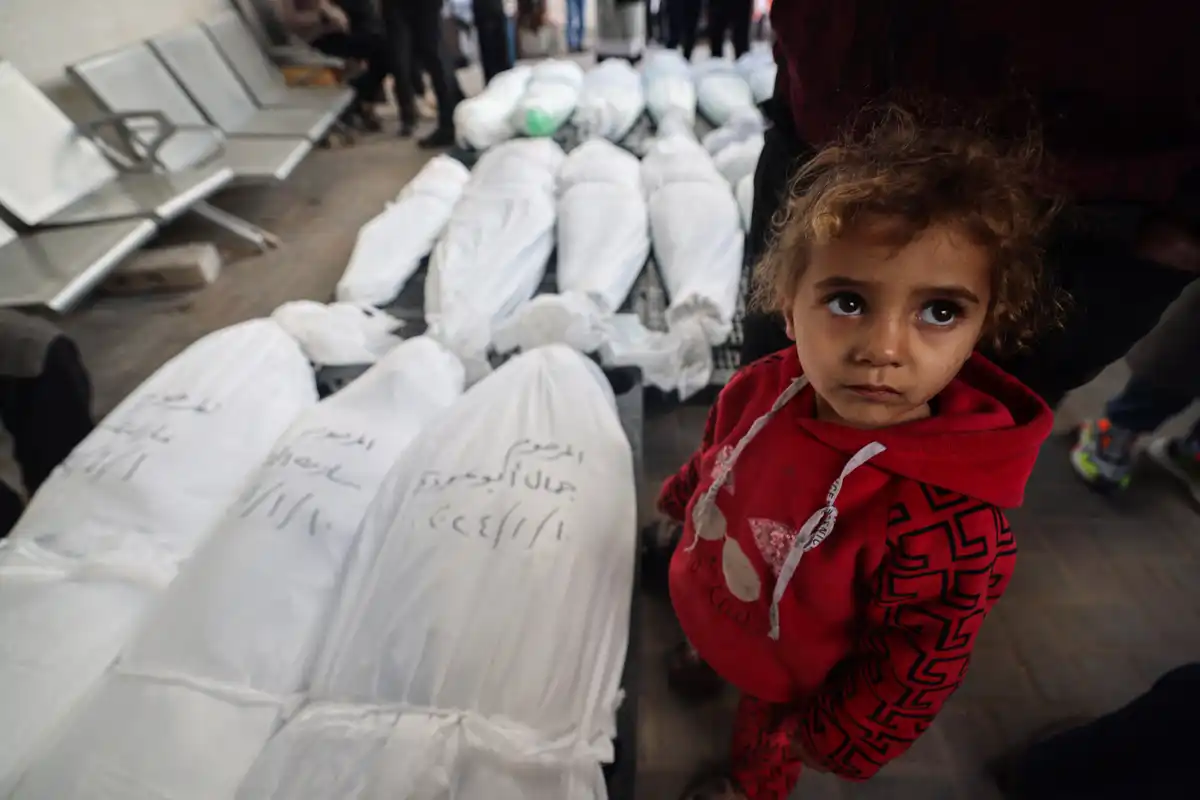
Since October 7, 2023, the Israeli occupation has been committing genocidal crimes in the Gaza Strip, leaving approximately 173,000 civilians dead or wounded, most of them children and women, and more than 11,000 missing.

PALESTINE

Thu 15 May 2025 10:53 pm - Jerusalem Time

Washington announces that humanitarian aid will enter the Gaza Strip by the end of May.

US State Department Spokesperson Tommy Piggott said the US administration expects humanitarian aid to enter the besieged Gaza Strip by the end of this month, and is working to enable the Gaza Humanitarian Foundation to carry out this complex task and establish the necessary mechanisms to implement it.


Responding to a question from a Al-Quds newspaper reporter regarding the latest developments regarding the entry of aid into Gaza, which has not received any aid since March 2, Piggott said, "The United States wants to alleviate the suffering of Gaza's citizens and ensure they receive the aid they need through the Gaza Humanitarian Foundation."


In response to a question from a Jerusalem correspondent regarding a timetable for the entry of this long-awaited aid, given estimates that Gaza is on the brink of famine, the spokesman said at a press conference on Thursday: "We are working to have this aid enter by the end of the month (May)."


Bigot refused to answer questions about the nature of this organization, who is behind it, and whether it is American or Israeli.


It's worth noting that the United Nations announced Thursday that it will not participate in a US-backed humanitarian aid plan for the Gaza Strip, considering it "inconsistent with the principles of neutrality, impartiality, and independence" to which the international organization is committed.


"I have made it clear that we engage in aid operations that are consistent with our core principles," Farhan Haq, deputy spokesman for the UN, told reporters. "We have repeatedly said that this distribution plan is not consistent with our core principles, including those of impartiality, neutrality, and independence, and we will not engage in it."


These statements come as the Gaza Relief Foundation, a Washington-backed organization, prepares to begin operations in the Strip before the end of May. The plan faces widespread criticism from humanitarian and human rights organizations, who fear that aid will be politicized or obstructed.


In the same context, the Foundation called on Israel to allow the United Nations and other humanitarian agencies to resume delivering aid to Palestinians until they are fully operational.


For his part, Israeli Ambassador to the United Nations Danny Danon said that Israel will not fund the new US-led humanitarian operation, but will work to "facilitate and enable it."


In Antalya, Turkey, US Secretary of State Marco Rubio expressed his country's concern over the deteriorating humanitarian situation in Gaza, stressing that "the United States is not indifferent to the suffering of the people of the Strip." He noted that aid has not reached Gaza since March 2, saying, "We are open to any constructive alternatives for delivering aid, provided it is not seized by Hamas."

PALESTINE

Thu 15 May 2025 9:44 pm - Jerusalem Time

Hebrew media: No progress in negotiations regarding a ceasefire in Gaza

Channel 12 reported that US Middle East envoy Steve Witkoff proposed to Qatar the release of a number of detainees—less than ten—without declaring an end to the war, and merely committing to continuing negotiations within a process with clear parameters.


The channel reported that the parties were not convinced by the proposal, while Israeli Prime Minister Benjamin Netanyahu is currently conducting security talks, at the conclusion of which he will decide whether to keep the Israeli delegation in Doha or return it.


For its part, the Israeli Broadcasting Corporation (Kan) reported that Israeli and foreign sources confirm that there has been no progress in the negotiations, despite pressure from the United States and mediators.


Kan added that the occupation is considering reducing the initial phase of the combat expansion plan, so that the forces' missions and scope will be more limited than previously planned. The goal of this review appears to be to give negotiations another chance.


Netanyahu is currently holding limited security talks on the situation in Gaza, with the security cabinet scheduled to meet on Sunday. This comes amid an Israeli threat to expand the fighting if Hamas does not release the detainees, and following US President Donald Trump's visit.


PALESTINE

Thu 15 May 2025 9:12 pm - Jerusalem Time

Israeli media: Air raid sirens sound in large areas after a missile was fired from Yemen.

Sirens sounded in Jerusalem, Tel Aviv, and large areas of central occupied Palestine on Thursday after a missile was fired from Yemen.


For its part, Hebrew media reported that the occupation army detected a missile being launched from Yemen towards occupied Palestine.


The occupation's Home Front Command reported that air raid sirens sounded in central occupied areas and occupied Jerusalem.


The Israeli army claimed that air defense systems were working to intercept a missile launched from Yemen.


PALESTINE

Thu 15 May 2025 8:49 pm - Jerusalem Time

Settlers attack citizens' vehicles and close the road leading to southern Hebron.

Armed settlers attacked Palestinian vehicles on Thursday evening and closed the road leading to the Masafer Yatta area and the Bedouin desert, south of Hebron.


According to local sources, armed groups of settlers, under the protection of Israeli occupation forces, closed the northern entrance to the Masafer and Bedouin areas east of Yatta, which leads to numerous villages, ruins, and population centers. They set tires on fire on the road, attacked citizens' vehicles, and prevented them from passing and reaching their homes.

PALESTINE

Thu 15 May 2025 7:46 pm - Jerusalem Time

Envoy: Israel will not fund new US-led relief efforts in Gaza

Israel's Ambassador to the United Nations, Danny Danon, said Thursday that the Israeli occupation will not fund a new US-led humanitarian operation in the Gaza Strip, but will facilitate and enable it.


These statements coincide with Hamas Political Bureau member Bassem Naim's assertions that allowing aid into Gaza is the "minimum" requirement for negotiations with Israel, which has imposed a strict blockade on the Strip since early March.


He said, "The minimum for a favorable and constructive negotiating environment is to oblige the government (of Israeli Prime Minister Benjamin Netanyahu) to open the crossings and allow the entry of humanitarian, food, and medical aid."

ARAB AND WORLD

Thu 15 May 2025 7:36 pm - Jerusalem Time

Human Rights Watch: Israel's plan to demolish Gaza and confine the population constitutes genocide


Human Rights Watch asserted on Thursday that Israel's plan to demolish infrastructure in Gaza and concentrate Palestinian civilians in tight areas amounts to genocide, calling for an end to military and diplomatic support for Israel and the imposition of sanctions on its officials.


The organization said in a statement that "the Israeli authorities, who have been preventing the entry of food, medicine, and humanitarian aid for more than 75 days, have devised a plan that includes razing residential buildings to the ground and displacing Gaza's residents to a narrow humanitarian zone, unless an agreement is reached with Hamas by mid-May."


She added, "Addressing the deteriorating humanitarian situation in Gaza, resulting from the illegal blockade, escalating forced displacement, and widespread destruction, requires a more effective international response, particularly from the United States, France, Germany, the European Union, and the United Kingdom."


On May 7, Israeli Army Radio revealed a plan promoted by Benjamin Netanyahu's government to distribute aid, aimed at accelerating the evacuation of Palestinian civilians from the northern Gaza Strip.


According to the radio, the plan stipulates that aid distribution be restricted to the city of Rafah in the southern Gaza Strip, a move that would force civilians from northern Gaza to relocate to the south. Distribution centers would be closed once the Palestinians have fully relocated to the south.


Human Rights Watch called on all parties to the 1948 Genocide Convention to do more to prevent further atrocities in Gaza, "including by ending arms sales, military aid, and diplomatic support to Israel, imposing targeted sanctions on Israeli officials, and reviewing and considering suspending bilateral agreements with Israel."


The human rights organization called for support for international accountability efforts against Israel, including the enforcement of arrest warrants issued by the International Criminal Court against Prime Minister Netanyahu and former Defense Minister Yoav Gallant.


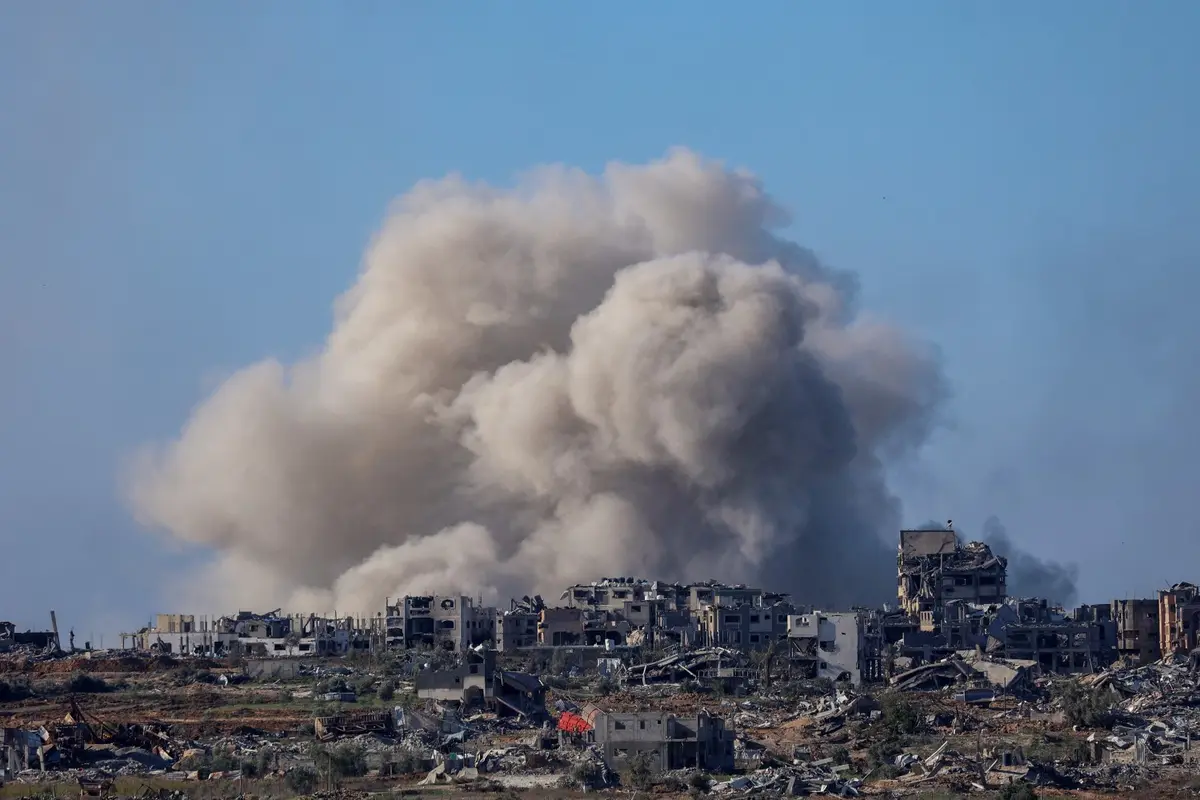
Since the beginning of the war of extermination on October 7, 2023, the Gaza Strip has witnessed systematic demolitions by the Israeli army, targeting thousands of residential buildings and civilian facilities across the Strip.


Local and international reports indicate that the Israeli army is using heavy military equipment and explosive belts to raz entire neighborhoods to the ground, targeting infrastructure including homes, schools, hospitals, water and electricity facilities, rendering vast areas uninhabitable.


“Israeli officials are bragging about their plans to cram Gaza’s two million residents into an ever-smaller area while making the rest of the territory uninhabitable,” said Federico Borriello, interim executive director at Human Rights Watch. “These statements should be a wake-up call in London, Brussels, Paris, and Washington. Israel’s blockade has gone beyond military tactics to become a tool of genocide.”


He added: "When Israel's plan to demolish Gaza's infrastructure is coupled with the systematic destruction of homes, schools, hospitals, orchards, water and sanitation facilities, and the use of starvation as a weapon of war, it constitutes acts that amount to war crimes and crimes against humanity, including genocide."


The 1948 Genocide Convention obliges states parties to use all reasonable means at their disposal to prevent genocide, according to Human Rights Watch.


The organization stressed that "countries such as the United States, Britain, France, and Germany, which have close ties to or influence over the Israeli government, risk legal liability for their failure to take action to prevent genocide in Gaza."


She pointed out that "the International Court of Justice ruled in 2007 that the obligation to prevent genocide applies beyond a state's geographical borders, wherever it can take effective steps to fulfill this obligation, which doubles the moral and legal responsibility of these states regarding what is happening in Gaza."


With American support, Israel has been committing genocide in Gaza since October 7, 2023, leaving approximately 173,000 Palestinians dead and wounded, most of them children and women, and more than 11,000 missing.


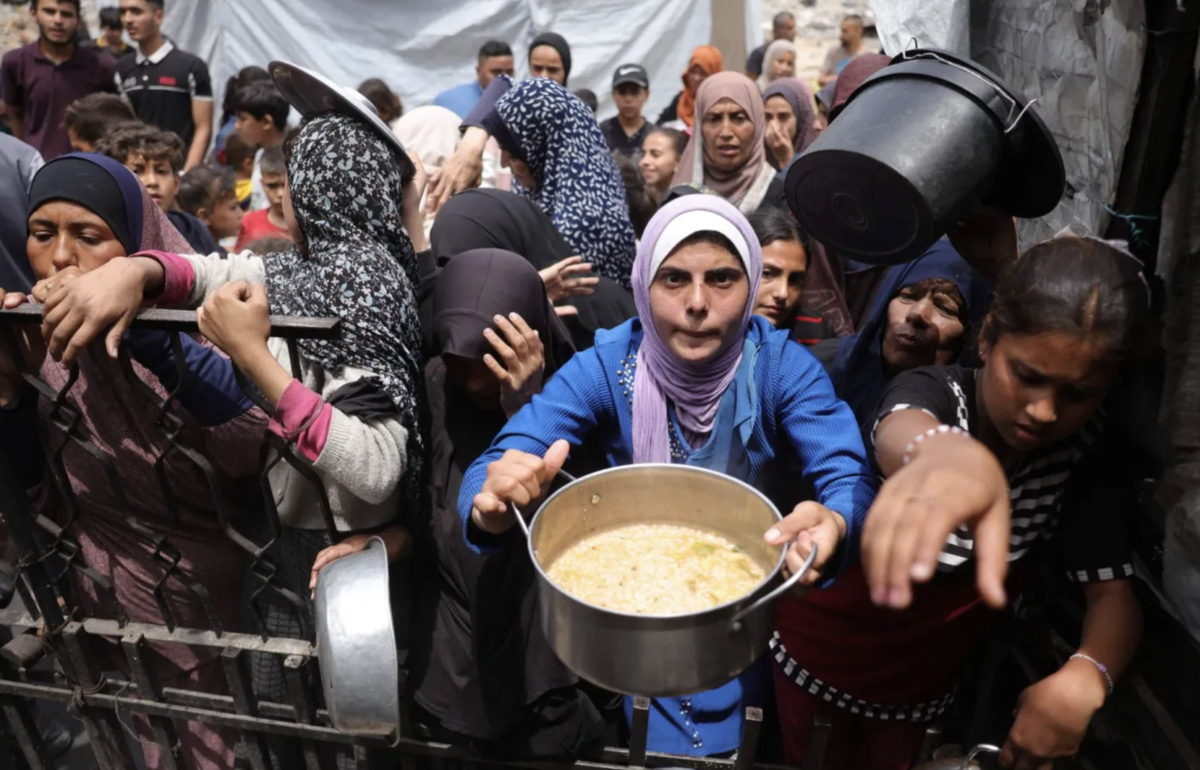
Since March 2, Israel has closed the crossings, preventing any humanitarian aid from entering Gaza, plunging the territory into a state of famine, according to the government media office in Gaza.

PALESTINE

Thu 15 May 2025 7:32 pm - Jerusalem Time

A young man was shot and a woman was arrested following a settler attack on Al-Mughayyir.

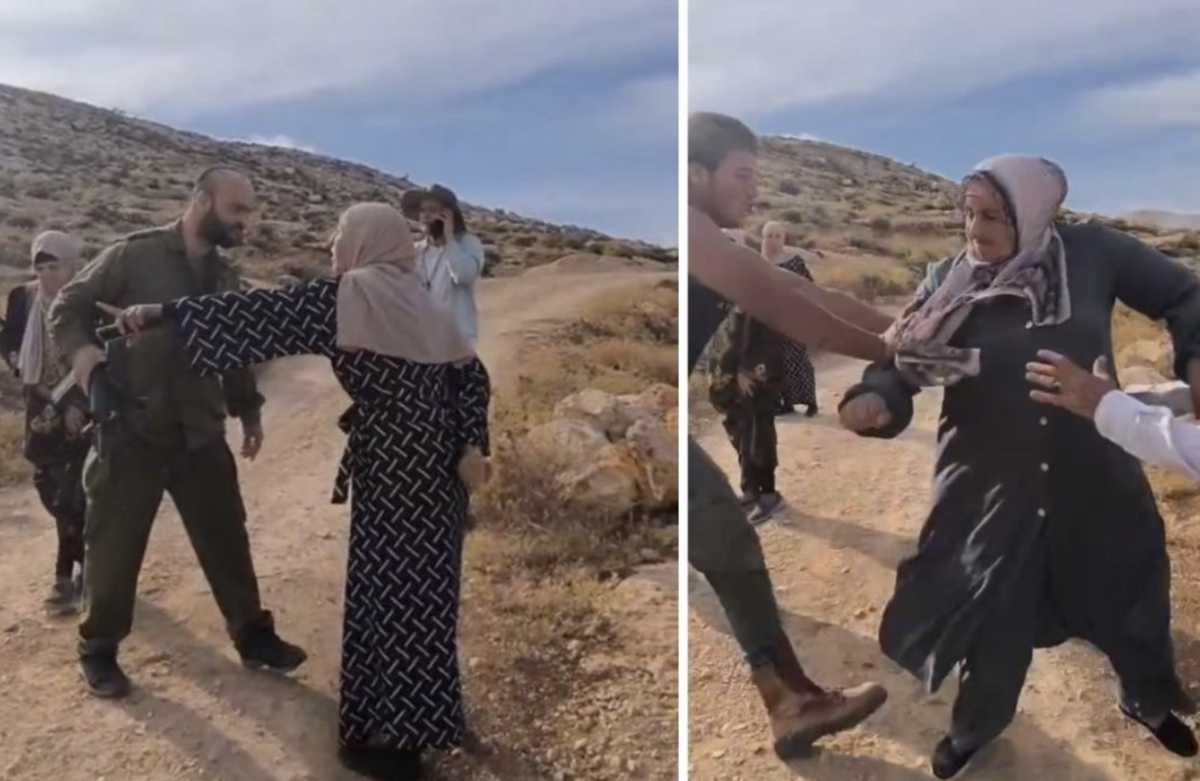
Israeli occupation forces shot a young man with live ammunition and arrested a woman on Thursday while attempting to confront a settler attack in the village of Al-Mughayyir, northeast of Ramallah.


According to local sources, a young man was shot in the abdomen with live ammunition after being targeted by occupation soldiers in the Khalayel area, south of Al-Mughayyir, while confronting settlers who stormed the area and attacked the family of citizen Rizq Abu Naim.


The sources reported that the occupation forces arrested Fatima Abu Naim (30 years old), a resident of Al-Khalayel, who was attacked by the settlers.


The settlers attacked the family of Abu Naim, under the protection of the occupation army, and assaulted a female citizen.


Following this attack, a larger gathering of settlers was observed on the hill opposite the Khalayel area, while villagers were called upon to gather and support the Abu Naim family, fearing a wider attack.

PALESTINE

Thu 15 May 2025 6:01 pm - Jerusalem Time

Hamas warns: Failure to implement understandings with Washington will negatively impact the exchange deal.


Hamas warned on Thursday that failure to implement the understandings reached with Washington regarding the entry of aid into Gaza and a ceasefire "will cast a negative shadow over efforts to complete prisoner exchange negotiations."


The movement said in a statement: "As part of Hamas's commitment to alleviating the suffering of our people by halting the aggression and opening the crossings to allow the entry of humanitarian aid, the positive initiative to release the captive soldier Idan Alexander came in anticipation of the US president's visit to the region."


She added, "We expect, based on the understandings reached with the American side, and with the knowledge of the mediators, that humanitarian aid will begin entering the Gaza Strip immediately, that a permanent ceasefire will be called for, and that comprehensive negotiations will be held on all issues to achieve security and stability in the region, which is what we look forward to achieving."


She added, "However, failure to achieve these steps, especially the delivery of humanitarian aid to our people, will cast a negative shadow over any efforts to complete negotiations on the prisoner exchange process."


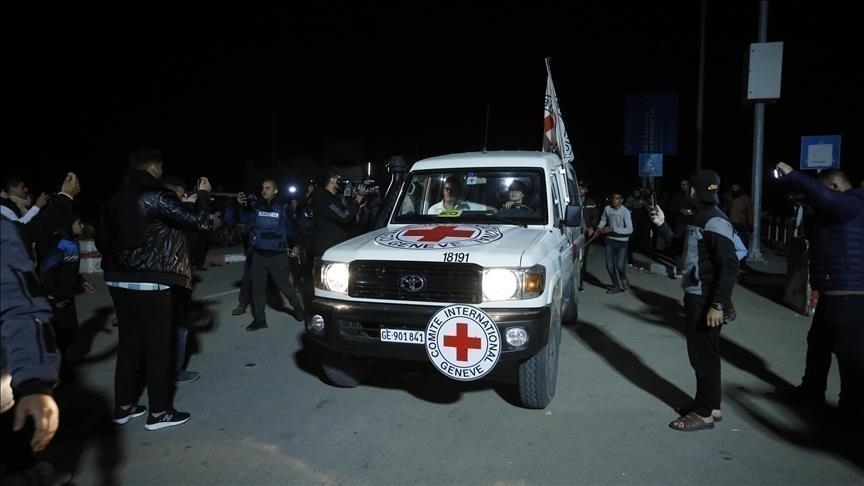
On Monday, Hamas released Israeli-American soldier Idan Alexander, a day before US President Donald Trump's arrival in the Middle East.


The movement said that Alexander's release "came after contacts with the US administration, as part of the efforts being made by mediators to achieve a ceasefire, open the crossings, and allow aid and relief to reach our people in the Gaza Strip."


Hamas' statement coincides with a round of talks currently underway in the Qatari capital, Doha, led by mediators with Israel and Hamas in an attempt to reach a prisoner exchange agreement and a ceasefire in Gaza. Prime Minister Benjamin Netanyahu continues to obstruct the negotiations.


US Special Presidential Envoy for the Middle East Steve Witkoff and US Special Presidential Envoy Adam Boehler are participating in these talks.


In turn, the private Israeli Channel 12 reported on Wednesday that after Alexander's release from Hamas captivity and coinciding with the US president's tour of the Gulf, the Trump administration pushed for a new round of talks on Gaza with the aim of reaching an agreed-upon plan to release the "hostages" (the Israeli prisoners) and end the war.


She added, "Trump wants to see a quick agreement, but so far he doesn't appear to be pressuring Israel to halt its offensive activity in Gaza."


She noted that "Trump's envoys, Witkoff and Boehler, are currently in Doha, along with an Israeli delegation and Hamas representatives, with the goal of securing the release of more hostages and opening broader negotiations that will ultimately lead to an end to the war."


However, the Israeli delegation that arrived in Doha has only a limited mandate, with little room for maneuver, according to the Hebrew channel, which said the delegation "is only allowed to discuss within the framework of the original Witkoff plan."


The Witkoff plan calls for the release of prisoners in two batches, half of them on the first day of the agreement's implementation. Negotiations to end the war will begin throughout the two-month ceasefire, with the remaining prisoners to be released once an agreement is reached.


Since Tuesday, Trump has been visiting the Gulf region, including Saudi Arabia, Qatar, and the UAE. This is his first tour of the region since the beginning of his second term last January.


Over the past three days, Israel has intensified its genocide in Gaza, coinciding with Trump's tour.


In the first three days of Trump's tour, which began Tuesday, the Israeli army killed approximately 260 Palestinians, compared to 78 killed in the previous three days.


These massacres come after Trump's statement that the Palestinian people in Gaza "deserve a better future."


Proven false claims have been circulating in the Hebrew media regarding the easing of the genocidal war during Trump's Gulf tour, which began Tuesday with a visit to Saudi Arabia and continues through Thursday with visits to Qatar and the UAE.

ARAB AND WORLD

Thu 15 May 2025 5:47 pm - Jerusalem Time

Trump promises Gaza a "better future," and Israel responds with "wider genocide."

In a remarkable shift on the ground, Israel has intensified its genocidal campaign in the Gaza Strip over the past three days, coinciding with US President Donald Trump's tour of the region.


In the first three days of Trump's tour, which began Tuesday, the Israeli army killed approximately 260 Palestinians, compared to 78 killed in the previous three days, according to an Anadolu Agency correspondent's monitoring of Ministry of Health data.


This jump demonstrates a systematic escalation in the genocide, in light of the approval by the Security Cabinet to expand the war of genocide that has been ongoing since October 7, 2023.


Over the past few days, Israel has threatened to escalate its war of extermination in Gaza by mobilizing reserve soldiers for a new operation dubbed "Gideon's Wagons."


With American support, Israel has been committing genocide in Gaza since October 7, 2023, leaving approximately 173,000 Palestinians dead and wounded, most of them children and women, and more than 11,000 missing.


** Bloody days


Trump began his tour in Saudi Arabia on Tuesday, then visited Qatar and arrived in the UAE on Thursday.


Since the start of the round, the Israeli military has intensified its strikes on residential areas and civilian facilities, including two major hospitals—Nasser and Gaza European—and the Tawbah clinic and prayer hall in Jabalia, resulting in deaths and injuries.


On the first day of the round, Tuesday, the army issued evacuation notices for seven areas in northern Gaza, including densely populated neighborhoods such as Jabalia, Tel al-Zaatar, Sheikh Zayed, and al-Salam.


Army spokesman Avichay Adraee described the warning as "the last before the attack."


Indeed, the warning was followed by direct shelling that killed and wounded people, including children and women.


The same day also saw shelling targeting Nasser Hospital and the European Gaza Hospital, as well as homes and tents housing displaced persons, resulting in the deaths of approximately 48 people.


On Wednesday, the second day, Israel killed approximately 118 Palestinians in shelling targeting homes, civilian gatherings, and displaced persons' tents. It also issued evacuation orders for residential areas, including four schools housing displaced persons and Al-Shifa Hospital in Gaza City.


Since the third day of Trump's tour on Thursday, Israel has killed approximately 94 Palestinians in airstrikes targeting homes and tents of displaced people, as well as a medical clinic and a prayer hall in various areas of the besieged Gaza Strip.


Israel has been blockading Gaza for 18 years, leaving approximately 1.5 million Palestinians out of a population of approximately 2.4 million homeless after their homes were destroyed in the war of extermination. The Strip is suffering from famine due to Tel Aviv's closure of the crossings to humanitarian aid.


** "A better future"!


While Trump spoke in Saudi Arabia on Tuesday about the "better future" that Palestinians in Gaza deserve, Israel expanded its bombing, genocide, and killing.


This was considered by Palestinians to be a "direct field message" from Israeli Prime Minister Benjamin Netanyahu, aiming to thwart any path to calm or diplomatic pressure for a ceasefire.


On Wednesday, Hamas said, "While mediators are seeking to reach a ceasefire and conclude a prisoner exchange deal, the terrorist Netanyahu, obsessed with revenge, is rushing to escalate his aggression and massacres against innocent civilians."


She stressed that this represents "an attempt to undermine these efforts, in service of his political agenda."


Hamas has repeatedly affirmed its willingness to begin comprehensive negotiations to release Israeli prisoners "in one go" in exchange for an end to the genocide, the withdrawal of the Israeli army, and the release of Palestinian prisoners.


But Netanyahu, who is wanted by international justice, is evading the situation by proposing new conditions, the most recent of which is the disarmament of Hamas, a demand the movement rejects as long as Israel's occupation of Palestinian territories continues.


The opposition and the families of the prisoners say that Netanyahu is continuing his war of extermination in Gaza, deferring to the more extreme right-wing faction within his government to further his own political interests, particularly his ability to remain in power.


** Cover for genocide


Ismail al-Thawabta, director of the government media office in Gaza, told Anadolu Agency that "the significant increase in the number of martyrs killed by the occupation in Gaza coincided with Trump's visit."


Al-Thawabatah considered that "this coincidence confirms once again that these visits are nothing more than a political cover and an implicit signal of further escalation, aggression, and genocide."


He added, "While Trump is making false propaganda statements about a better future for the Palestinians, the Israeli war machine, led by the occupation government, is committing horrific massacres against civilians."


Constants, he added, "The war machine is expanding the scope of genocide and ethnic cleansing against our people, which exposes the falsity of these statements and exposes American complicity in enabling the aggression politically and militarily."


He continued, "Trump's statements, which promote a better future, lose all meaning and credibility in light of the ongoing massacres, the targeting of families, the destruction of infrastructure, and the killing of children and women."


He considered them "blatant attempts to beautify the occupation's image and mislead public opinion."


For decades, Israel has occupied territories in Palestine, Syria, and Lebanon, and refuses to withdraw from them and establish an independent Palestinian state with East Jerusalem as its capital, along the pre-1967 borders.

ARAB AND WORLD

Thu 15 May 2025 5:15 pm - Jerusalem Time

Sharaa pledges to Trump to normalize relations with Israel


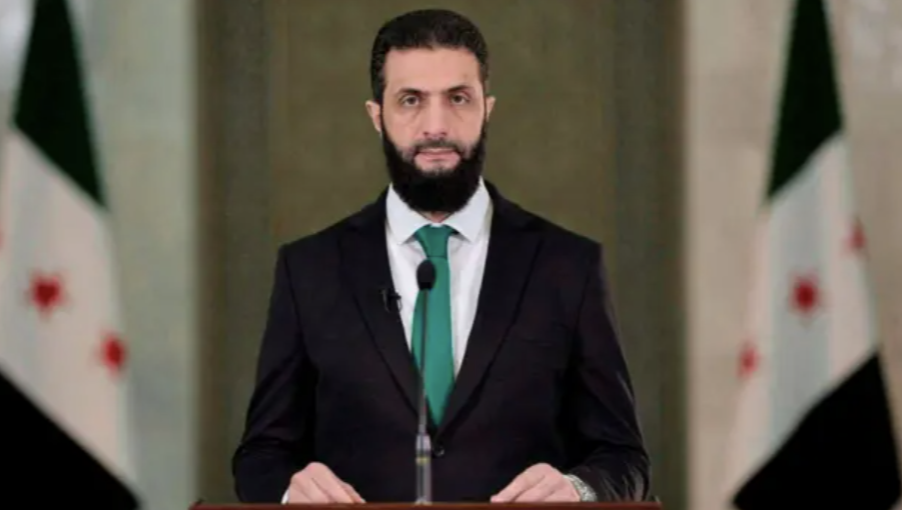
Syrian leader Ahmed al-Sharaa, who formerly led Hayat Tahrir al-Sham and says he has severed ties with al-Qaeda, has pledged to recognize Israel and join the Abraham Accords, which US media outlets say Trump considers his first-term foreign policy achievement.


On Tuesday, US President Donald Trump lifted all sanctions on Syria and called on Sharaa to "recognize Israel and expel Palestinian organizations." In response to a CNN question on his plane to Qatar, Sharaa described him as a "strong, attractive young man."


"He has a real chance to hold it together," Trump added. "I spoke with President (Turkish President Recep Tayyip) Erdogan, who is a good friend of his. He feels he has a chance to do a good job. It's a torn country."


Sharaa, 42, met with Trump—the first high-level meeting between the two countries in 25 years—along with Saudi Crown Prince Mohammed bin Salman and Turkish President Erdogan, who joined them by phone.


Al-Sharaa, who was known as Abu Mohammed al-Julani, said he first needed time to stabilize his country, according to a source close to the talks. Syria remains in turmoil after the Hayat Tahrir al-Sham (HTS) seized power in January.


Speaking in Qatar, where he had traveled after visiting Saudi Arabia, Trump said it was an "honor" to lift sanctions on Syria. He said, "Let's see what happens, and I'm honored to have done that. I thought it was good, and let's see what happens, but we're going to give him a fighting chance."


According to US officials, Sharaa is also considered anti-Iran, which will boost his popularity in Washington. He has previously criticized Tehran's influence in Syria, as well as its proxies, which help destabilize the Middle East.


He stated last year that by toppling former President Bashar al-Assad, he and his army "set Iran's regional project back 40 years."


He told Arab media after the overthrow of Syrian President Bashar al-Assad's regime: "By removing Iranian militias and closing Syria to Iranian influence, we served the interests of the region."


The two leaders met for 33 minutes in Riyadh, Saudi Arabia, on Wednesday, after Trump announced that the United States would lift all sanctions on Syria to give it a "fresh start" and a "chance for greatness" under its new Islamic leadership.


Al-Sharaa spent several years fighting against US-led forces on behalf of al-Qaeda in Iraq. He was arrested for planting a roadside bomb in Mosul in 2006 and spent five years in US custody, including the notorious Abu Ghraib prison.


Trump said he believes Syria will join the Abraham Accords at some point. I think they have to improve themselves. I told him, "I hope they join when things improve." He said, "Yes." But they have a lot of work ahead of them.


When asked if there was any talk of a Trump Tower being built in Damascus—after Sharaa told intermediaries he could offer that possibility—Trump said, "No, I haven't heard of that. We've got to wait a little while for things to calm down, a little while with the country. I think he has the potential—he's a real leader. He led a campaign and he's truly amazing."


Trump called on Syria to cooperate with the United States on terrorism issues, including deporting all "Palestinian terrorists" and assuming responsibility for ISIS detention centers in northeastern Syria.


According to the British newspaper, The Times, Sharaa does not plan to challenge Israel's control of the Golan Heights, the strategically important territory it occupied in 1967, nor the buffer zone its forces established to protect the area as part of a private agreement with Trump to work toward the Abraham Accords.

PALESTINE

Thu 15 May 2025 4:56 pm - Jerusalem Time

A young man was injured by Israeli occupation forces' bullets during clashes in Jalazone camp.

A young man was shot by Israeli occupation forces on Thursday during clashes that erupted in the Jalazone refugee camp, north of Ramallah.


According to local sources, clashes erupted after an Israeli army force stormed Jalazone camp, during which rubber bullets, sound bombs, and tear gas were fired, resulting in a 21-year-old man being shot in the foot with live ammunition.

PALESTINE

Thu 15 May 2025 4:21 pm - Jerusalem Time

Prisoners' Institutions: 3 dead from Gaza in Israeli occupation prisons

Palestinian organizations concerned with prisoner affairs announced on Thursday the deaths of three prisoners from the Gaza Strip in Israeli prisons, bringing the number of "martyrs" in Israeli prisons since the beginning of the genocide to 69, including 44 from Gaza.


This came in a joint statement by the Palestinian Prisoners' Club, the Addameer Association, and the PLO's Prisoners' Affairs Commission, which stated that it had received a response from the Israeli army regarding three prisoners.


The statement said they were: "Martyr Ayman Abdel Hadi Qadih (56 years old), Martyr Bilal Talal Salama (24 years old), and Martyr Muhammad Ismail Al-Astal (46 years old)."

PALESTINE

Thu 15 May 2025 4:03 pm - Jerusalem Time

The Gaza Health Ministry announces the death toll in the Gaza Strip since October 7, 2023.

The Ministry of Health in the Gaza Strip announced Thursday that hospitals in the Strip had received 82 martyrs over the past 24 hours, including five bodies recovered from under the rubble, in addition to 152 wounded as a result of ongoing Israeli airstrikes.


The ministry reported, in its daily statistical report, that the total number of martyrs since the start of the Israeli aggression on the Gaza Strip on October 7, 2023, has risen to 53,010, while the number of injured has reached 119,988.


She explained that the number of martyrs since March 18, 2025, has reached 2,876, while the number of injuries has reached 7,957, in an ongoing escalation that is exacerbating the humanitarian catastrophe in the Gaza Strip.


PALESTINE

Thu 15 May 2025 2:14 pm - Jerusalem Time

Settlers attack citizens' vehicles south of Nablus

Today, Thursday, settlers attacked citizens' vehicles near the town of Al-Lubban Al-Sharqiya, south of Nablus.

Local sources reported that settlers attacked citizens' vehicles and threw stones at them near Al-Lubban Al-Sharqiya, shattering the windshield of a citizen's vehicle.

In the same context, settlers attacked citizens' vehicles and threw stones at them at the Za'tara junction, south of Nablus.

OPINIONS

Thu 15 May 2025 1:52 pm - Jerusalem Time

Every day in the camp is a reminder that the Nakba is not over.

Muhammad Abu Akar, a former prisoner who spent five years in administrative detention.

Muhammad Abu Akar, a former prisoner who spent five years in administrative detention.

Opinion Writer


I was born and raised in Dheisheh camp, a place that was supposed to be temporary, but over time has transformed into a space of ongoing struggle. The camp has never been a neutral or marginal area; it has always been at the heart of the confrontation, from the first intifada to the present day. The generations born in the camp did not inhabit the land from which their ancestors were uprooted, but they inherited a profound sense of displacement and injustice. Although the land may seem abstract to us—because we never actually lived there—it remains the core of the conflict, the link between past and future. The camp, too, is not just a residential space; it is a political space and a living collective memory. With every incursion, arrest, and martyrdom, we become more convinced that being a refugee was not a temporary state, but rather transformed into a way of life of struggle. The camp, which was supposed to be a symbol of the Nakba, has become a symbol of resistance.

In her book, "So Many Enemies: The Palestinian Experience in Lebanon," Rosemary Sayegh describes refugee camps as spaces of isolation and exclusion. This expression reflects the fact that the occupation considers these camps worthless areas, and their residents are treated as insignificant. This space, which is supposed to be a safe haven, is transformed into a place of constant threat, with ongoing incursions by occupation forces.

There is no safe space under occupation; even your own room can become a prison cell. My home, located in the middle of the camp, has been repeatedly raided, and on one occasion, was turned into an interrogation center. Soldiers stormed the house, brought in a group of handcuffed and blindfolded young men, and interrogated us one by one. The Israeli officer clearly stated, "This house will be an interrogation center."

As a family living in the camp, we have witnessed firsthand the effects of the occupation, which has affected all aspects of our lives. We live in constant anxiety, as prison has become part of our family life.

My father has been detained for 23 years, 16 of which have been in administrative detention. My mother was injured by an explosive dumdum shell in the chest, but she shouldered the responsibility of being both a mother and a father, overcoming all the hardships imposed by the occupation. My uncle Mohammed, known as the living martyr, defied death with amazing willpower for three years after being hit by explosive bullets that destroyed all the contents of his abdomen, except for his heart and lungs, before his heart finally stopped. My experience with administrative detention was long and painful; I was detained three times administratively, spending nearly five years without charge or trial.

Administrative detention is not a legal measure, but rather a tool of psychological repression. Its goal is not investigation, but breaking the will. The same interrogator told me during the last arrest: "There's no need to repeat the questions; they're the same." This reveals that the goal is nothing more than moral collapse. We can only address the catastrophic situation of prisoners today, especially after October 7, when repression has intensified, every Palestinian has become a "legitimate target," and the policy of "a good Palestinian is a dead Palestinian" is applied daily.

We are children of the Nakba, but it is not a history we remember, but a present we live. What happened in 1948 continues today, but with different tools. We no longer witness only mass displacement, but live under daily oppression: raids, arrests, land confiscation, random killings... All of this is nothing but an extension of the same colonial pattern, which reproduces the Nakba as a daily reality.
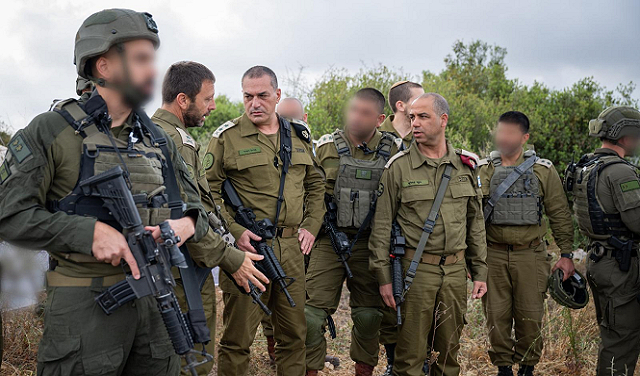
The violence of the occupation has become part of this daily reality, with the army not hesitating to use excessive force against civilians, reinforcing the sense among Palestinian youth that they live in an unsafe and unstable environment. As the aggression escalates, the violence increases dramatically, as Palestinians are viewed as a threat to which anyone who resists the occupation is punished.

The period after October 7 marked a turning point. The occupation revealed its true face, and everything was violated. The camps became persecuted areas. A raid was no longer linked to an arrest or an operation, but rather became a goal in itself, a constant message that we were under control. The economic situation collapsed, unemployment soared, and the social fabric was severely affected. Talk of emigration became a recurring theme, especially among young people, but we live at a crossroads: either stay and resist, or face a difficult and unknown departure.
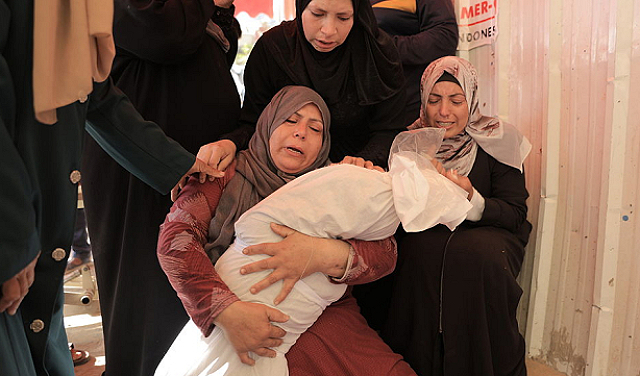
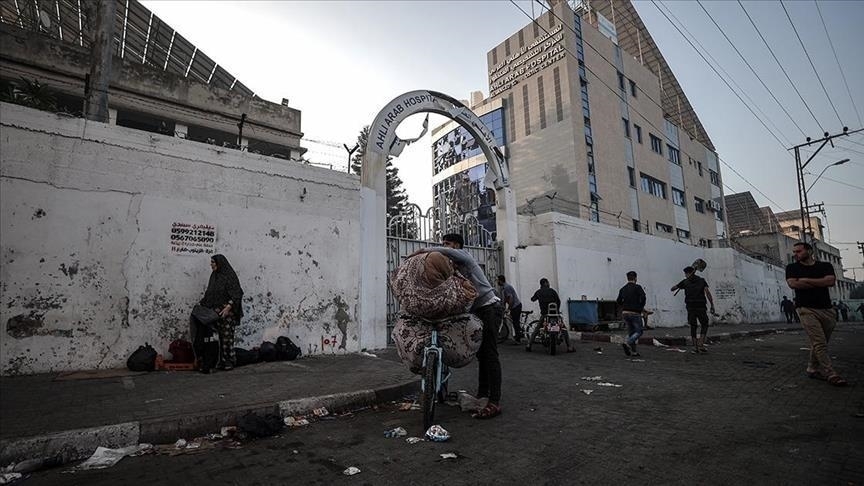
What happened in Gaza has reshaped our consciousness. We no longer believe in the option of "compromise" or coexistence with this colonial regime. All the alliances that have emerged—Western and Arab—have reinforced our conviction that we are alone in this battle, and that there is no choice but to persevere.

Despite all these transformations, the dream of return and freedom has remained present in the Palestinian consciousness across three generations. It has become a form of resistance—a resistance to oblivion, normalization, and despair. Return is not merely a geographical return, but a restoration of rights, dignity, and sovereignty. For me, return is not merely a political possibility, but an internal and moral conviction. The aftermath of October 7 has reaffirmed that this conflict is not just about borders, but about existence itself. We are facing a settlement project that does not even recognize our existence.

But history teaches us that people, even under the harshest occupations, have triumphed. I believe in the inevitability of victory. Victory may not come tomorrow, but it begins when we cling to our dream, protect our memory, and refuse to be erased.


ARAB AND WORLD

Thu 15 May 2025 1:35 pm - Jerusalem Time

Trump: We want to turn Gaza into a "freedom zone"

US President Donald Trump, who is in Qatar today (Thursday), said he wants the United States to "take" Gaza and turn it into a "freedom zone," amid the ongoing war between Israel and Hamas in the Strip.


He added, "I have very good ideas for Gaza, which is to make it a freedom zone... I would be proud if the United States owned it, took it, and made it a freedom zone."

Houthis

The US president also said that his country may resume military operations against the Houthis in Yemen if they launch an attack, following the agreement reached between them under Omani sponsorship in May. He added, "We are dealing with the Houthis, and I think that has been very successful, but an attack may be launched tomorrow, in which case we will return to the offensive."

Iranian nuclear

The US president hinted that an agreement on Iran's nuclear program was imminent, expressing optimism about avoiding a military strike on Tehran's nuclear sites. He said, "I think we're perhaps getting closer to a deal (with Iran)," adding, "Iran cannot have a nuclear weapon."

Istanbul talks

Trump also said he may still travel to Turkey on Friday if talks between Russia and Ukraine make progress.

PALESTINE

Thu 15 May 2025 1:24 pm - Jerusalem Time

Escalation of demolitions in occupied Jerusalem

The Israeli occupation authorities' demolition of citizens' homes in the villages and towns of the occupied Jerusalem Governorate has escalated.


Local sources reported that Israeli municipality bulldozers demolished the home of Mahmoud Omar Abu Teir, a citizen, in the village of Umm Tuba, south of occupied Jerusalem, which had been built for 20 years.


The family explained that they had submitted an application for a building permit, but that the request was rejected on the grounds that "there was no zoning plan for the area."


Local sources added that Adam Shakirat was forced to demolish his home in the town of Jabal al-Mukaber, southeast of the city, to avoid paying hefty fines. The house, which measures 100 square meters, houses eight people.


In the town of Silwan, south of Al-Aqsa Mosque, Israeli municipal bulldozers and equipment demolished a retaining wall belonging to the Bashir family.


Occupation bulldozers also demolished and leveled a residential room and walls in the Al-Buhaira neighborhood in the town of Anata, in addition to uprooting trees and lands and cutting off electricity lines in the area.


The Jerusalem Governorate stated that the demolitions included two temporary rooms provided by the United Nations Office for the Coordination of Humanitarian Affairs (OCHA) as housing assistance for the owners of homes previously destroyed by the occupation forces.


The Wall and Settlement Resistance Commission documented 73 demolition operations carried out by the occupation authorities during April, affecting 152 facilities, including 96 inhabited homes, 10 uninhabited ones, and 34 agricultural facilities. These operations were concentrated in the governorates of Tubas with 59 facilities, Hebron with 39, and Jerusalem with 17.

PALESTINE

Thu 15 May 2025 12:23 pm - Jerusalem Time

The occupation closes Salfit, and Smotrich calls for "copying the Shuja'iyya model" in the West Bank.

Amid the ongoing escalation in the occupied West Bank, Israeli Finance Minister Bezalel Smotrich has escalated his provocative rhetoric, calling for the destruction of the villages of Bruqin and Kafr ad-Dik, near the city of Salfit, allegedly in response to the shooting attack that killed an Israeli settler on Wednesday.


In a tweet on the X platform on Thursday, Smotrich said, "Just as we destroyed Shujaiya and Tel al-Sultan in Gaza, we must destroy the terrorist nests in the West Bank, starting with Burqin and Kafr ad-Dik," in an explicit call for collective revenge and the destruction of Palestinian housing infrastructure.


Meanwhile, since last night, Israeli occupation forces have continued to carry out extensive raids in the towns of Bruqin and Kafr ad-Dik, as well as the city of Salfit. These raids included raids on Palestinian homes, searches, and detentions, in addition to imposing a tight military cordon on the area and closing all main entrances leading to it.


In this context, the Chief of Staff of the Israeli Defense Forces, Eyal Zamir, conducted a field investigation at the site of the armed operation west of Salfit, in the presence of senior military commanders.


During his visit, Zamir ordered the continued curfew and blockade, as well as intensive military operations to pursue the perpetrators of the attack and those he described as "inciting groups."


"We are waging an open battle in Judea and Samaria, and we will continue our thwarting operations using all available tools until we find the perpetrators and hold them accountable," Zamir said, referring to the collective punishment policy pursued by the occupation army in the West Bank.


Local sources reported that Israeli occupation forces imposed strict military measures on Salfit, closing the main roads and entrances to the city, amid a heavy deployment of Israeli soldiers around villages and towns located west of the governorate.


On Wednesday evening, a female settler was killed and two others were seriously injured when the vehicle they were traveling in was directly shot at close range on Route 446 near the Bruchin settlement in the northern West Bank. The attack was carried out by a resistance fighter who then fled the scene in a vehicle.

PALESTINE

Thu 15 May 2025 12:01 pm - Jerusalem Time

82 Palestinians killed in the Gaza Strip since dawn today

The death toll has risen to 82, the majority of them children and women, as a result of the Israeli occupation forces' continued bombardment of various areas of the Gaza Strip since dawn on Thursday.


Local sources reported that Israeli warplanes bombed inhabited homes and tents housing displaced persons in various areas of the Gaza Strip, particularly in the southern city of Khan Yunis. The strikes resulted in dozens of deaths and injuries, as well as widespread destruction to infrastructure and civilian property.


These massacres are part of an ongoing escalation of Israeli aggression, which has not spared children and women, amid the catastrophic humanitarian conditions endured by our people in the besieged Gaza Strip.


The death toll from the genocidal war and aggression waged by the Israeli occupation forces against the Gaza Strip has risen to 52,928 dead and 119,846 wounded since October 7, 2023.


PALESTINE

Thu 15 May 2025 11:09 am - Jerusalem Time

The Ministry of Health in Gaza announces that the European Hospital is out of service.

The Ministry of Health in Gaza announced on Thursday that the Gaza European Hospital was out of service as a result of recent Israeli attacks.


The Ministry of Health said in a statement, "The attack caused significant damage to infrastructure, including sewage lines, damage to internal departments, and destruction of roads leading to the hospital."


She added, "The repeated targeting of the hospital makes it impossible to provide medical care, as it poses a threat to medical staff, the wounded, and the sick."


The Ministry of Health confirmed that the hospital's closure means the cessation of specialized services such as neurosurgery, thoracic surgery, the cardiac catheterization center, cardiovascular surgery, and ophthalmology, which are only available at the European Hospital.


She pointed out that the Gaza European Hospital is the only hospital providing medical follow-up care to cancer patients in the Gaza Strip after the Turkish Friendship Hospital was destroyed.


She noted that the hospital includes 28 intensive care beds, 12 nurseries, 260 inpatient beds, 25 emergency beds, and 60 oncology beds, which are currently out of service. She noted that the hospital's closure would deprive cancer patients of the ability to follow treatment protocols, exacerbating their health conditions.

PALESTINE

Thu 15 May 2025 10:43 am - Jerusalem Time

Israeli occupation forces demolished a house south of Nablus.

Israeli occupation forces demolished a house in the village of Majdal Bani Fadel, south of Nablus, on Thursday.


Local sources reported that occupation bulldozers stormed the southern entrance to the town and began demolishing the home of Bilal Ali Othman, under the pretext of building without a permit.


She pointed out that the occupation forces had notified the house several months ago of its demolition, and that the owner had filed an objection before the occupation court, but was surprised when the occupation forces stormed the house and began demolishing it.


It is noteworthy that the occupation forces carried out 73 demolition operations during the month of April, targeting 152 facilities, including 96 inhabited homes, 10 uninhabited ones, and 34 agricultural and other facilities. These operations were concentrated in the governorates of Tubas with 59 facilities, Hebron with 39, and Jerusalem with 17.