PALESTINE

Mon 19 May 2025 9:03 pm - Jerusalem Time

Washington Post: Trump administration threatens to cut aid to Israel if it does not stop the war on Gaza

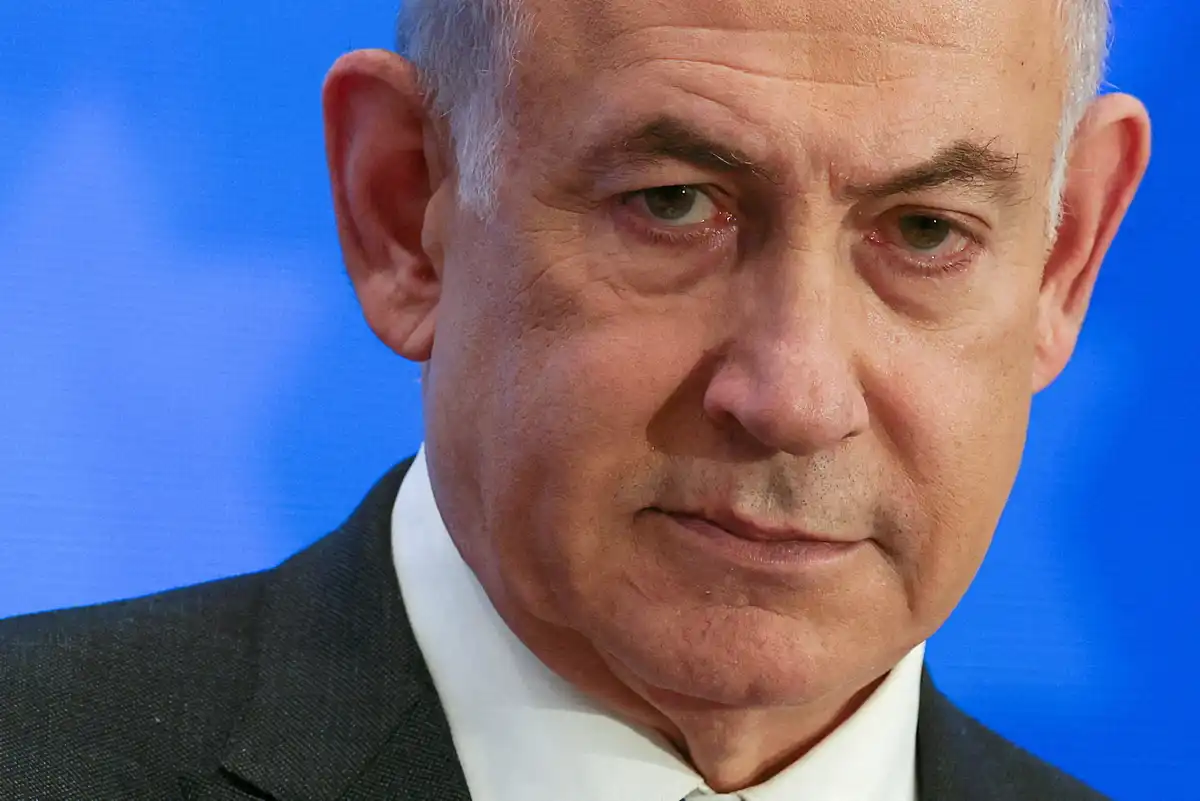
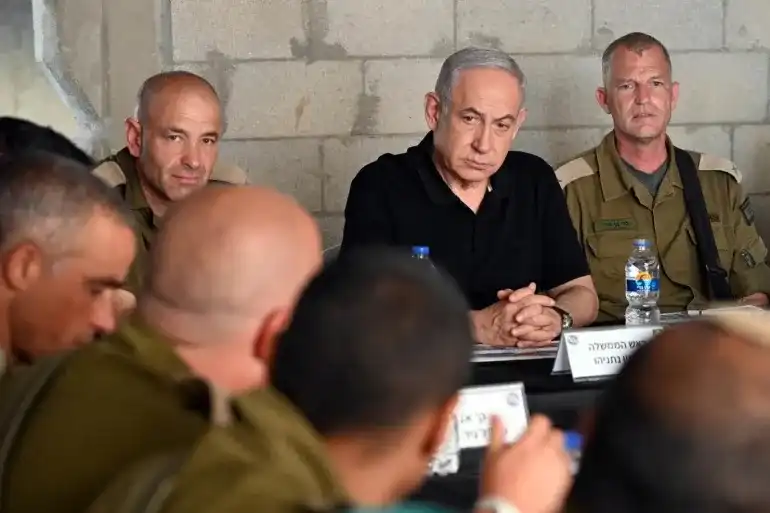
The Washington Post, citing a well-informed White House source, reported Monday evening that the Trump administration had issued an explicit warning to Israeli Prime Minister Benjamin Netanyahu that "if he does not end the war in Gaza, the United States may abandon its support for Israel."


The source, who requested anonymity, said, "Netanyahu has the ability to stop the war, but he doesn't want to do so politically." He added that the US administration now believes that continuing military operations weakens its position and could lead to a deterioration in relations. The source said that US pressure on Israel has escalated in recent days.


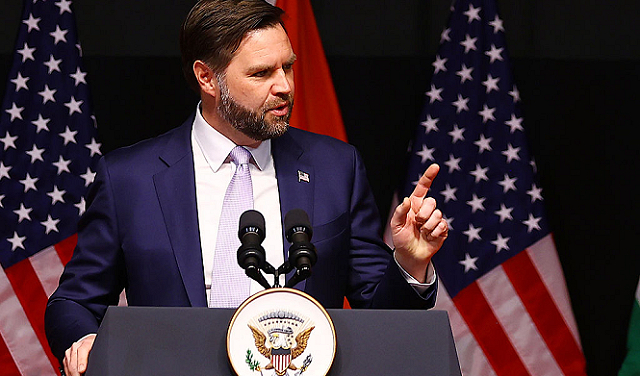
In this context, sources within the US administration revealed to the Israeli website Walla that US Vice President J.D. Vance had intended to visit Israel on Tuesday, but canceled his plan due to the escalation of the Israeli war on the Gaza Strip.


In a related development, Netanyahu decided to keep the Israeli negotiating delegation in Qatar for an additional day, at this stage, according to the Israeli Public Broadcasting Corporation (Kan 11). The channel quoted a senior Israeli official as saying, "The delegation remained a formality, to avoid embarrassing the Americans. It doesn't seem good to return the delegation while Hamas is still present there."


The channel noted that the possibility of reaching a deal remains, but is slim, and that no real progress has been recorded so far in negotiations aimed at reaching a prisoner exchange deal and a ceasefire agreement in the Gaza Strip.


For her part, White House spokeswoman Caroline Levitt stated that the Trump administration "continues to engage with all parties involved in the conflict in the Gaza Strip these days," following talks between Washington and Hamas that led to the release of Israeli soldier Idan Alexander.


She added, "President Trump wants to end the war in Gaza," noting that Trump "continues, personally, to communicate with the relevant parties and has made it clear to Hamas that he wants to see all prisoners released."


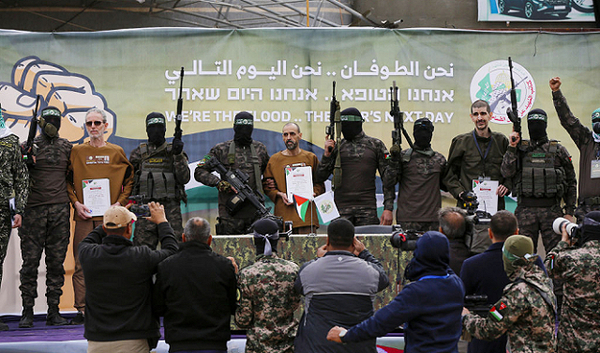
Last week, Hamas released soldier Idan Alexander following direct contacts with the Trump administration. The movement stated at the time that the release was part of "steps being taken" to achieve a ceasefire in the Gaza Strip.


In Israel, there was a state of shock following the revelation of the Trump administration's direct talks with Hamas, initiated by the US president's envoy for prisoner affairs, Adam Boehler.


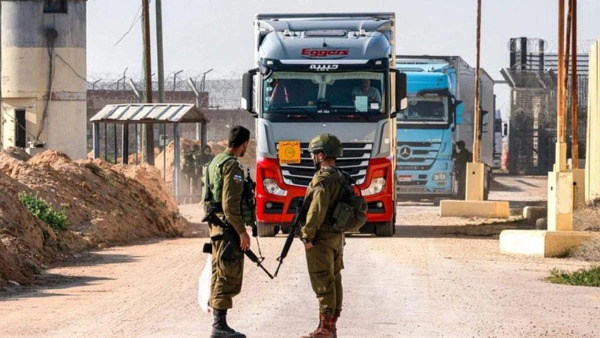
Under pressure from the US administration, particularly Trump, Israel allowed the resumption of humanitarian aid into the Gaza Strip as of today. For the first time in months, five to nine UN trucks entered the Strip after undergoing "strict security screening."


Netanyahu and a number of his ministers had reiterated a firm position in recent weeks that "as long as Hamas holds prisoners, no humanitarian aid will be allowed into Gaza." However, in recent hours, this policy has changed under intense American pressure.

PALESTINE

Mon 19 May 2025 9:01 pm - Jerusalem Time

The Washington Post: Netanyahu bowed to pressure from Washington and allowed aid into Gaza for fear of American abandonment.

The Washington Post, citing an informed source, revealed that Israeli Prime Minister Benjamin Netanyahu decided to allow aid into the Gaza Strip following intense pressure from the United States, which threatened to abandon him if he did not end the war.


According to the source, Netanyahu received a clear message from Washington that continuing military operations would put his relationship with the US administration to the test. The pressure was interpreted as an explicit warning: "We will abandon you if you do not end this war."


These developments come amid mounting international criticism of the deteriorating humanitarian situation in Gaza, amid growing calls for an immediate ceasefire and facilitating aid access.


For its part, Channel 12 reported that the entry of aid into Gaza was the price Hamas imposed on Washington for Alexander's release.


Channel 12 reported that US Middle East envoy Steve Witkoff and US envoy for prisoner affairs Adam Boehler gave their statements against Tel Aviv's wishes, and that Netanyahu was unable to back down.

PALESTINE

Mon 19 May 2025 7:58 pm - Jerusalem Time

Lapid warns of the consequences of reoccupying Gaza, calling it a "strategic mistake."

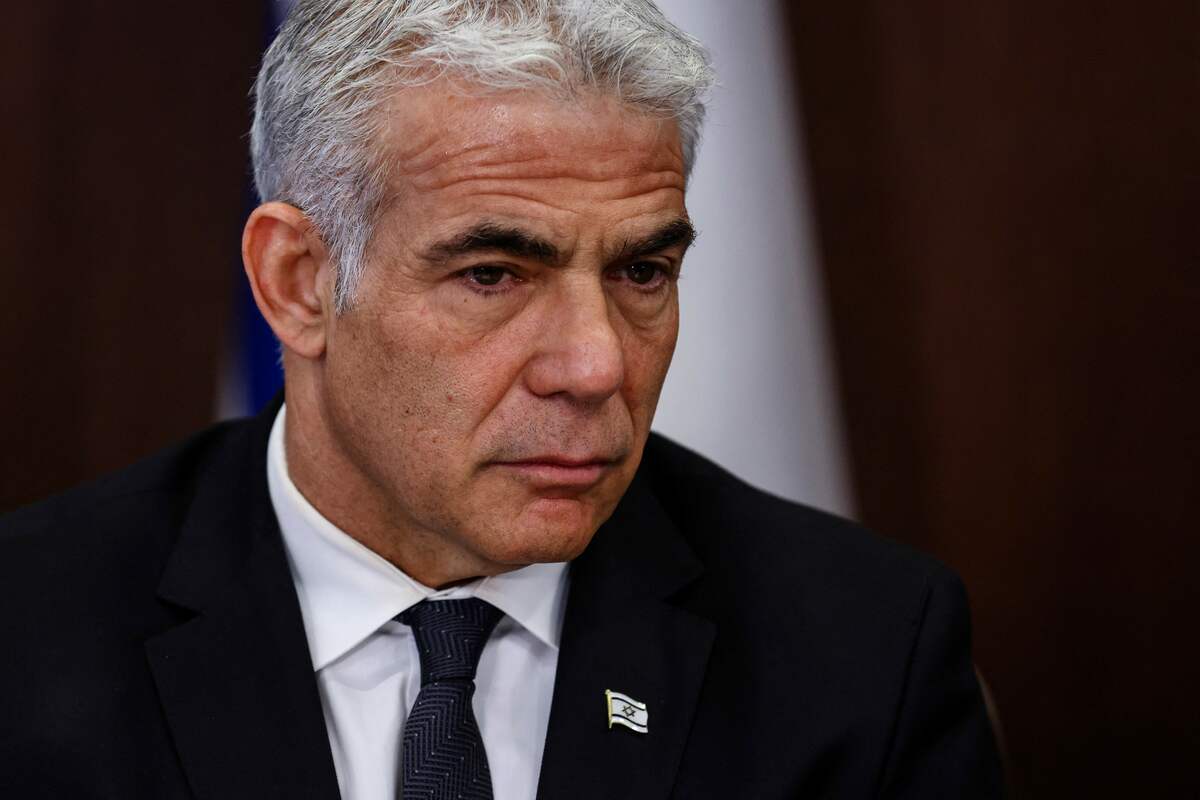
Israeli opposition leader Yair Lapid warned on Monday against reoccupying the Gaza Strip, considering the army's years of immersion in what he called the "Gaza quagmire" a "strategic mistake."


"The Israeli occupation army has been carrying out operations in Gaza for two days, especially in the Khan Yunis area," Lapid said at a press conference. "But the Israeli government is not answering one question: What is the strategy?"


He added, "We all support the elimination of Hamas, but it will not disappear unless an alternative to its rule is presented. What is the Israeli government's plan? Who will replace Hamas and rule Gaza?"


He continued: "If our soldiers are going to be killed and wounded in Gaza every day for three, four, or five years, the government must stop hiding and say so loudly."


"If the tax money we pay now is going to fund the education of Gaza's children and the health system in Gaza for three, four, or five years, the government must stop hiding and say so out loud," Lapid added, referring to plans to occupy the Gaza Strip.


The Israeli opposition leader warned of the consequences of reoccupying the Gaza Strip.


"Causing the Israeli army to be bogged down in the Gaza quagmire for years is a strategic mistake, an economic disaster, and a political tragedy," he said.


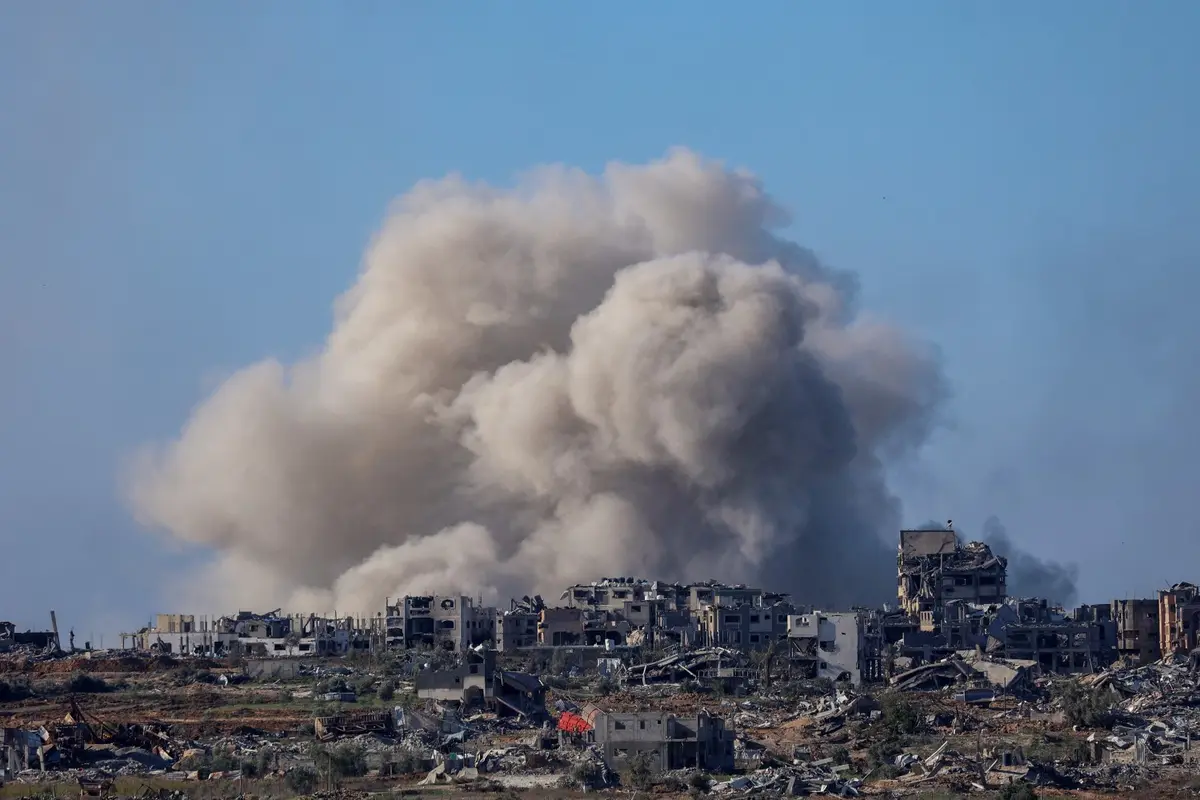
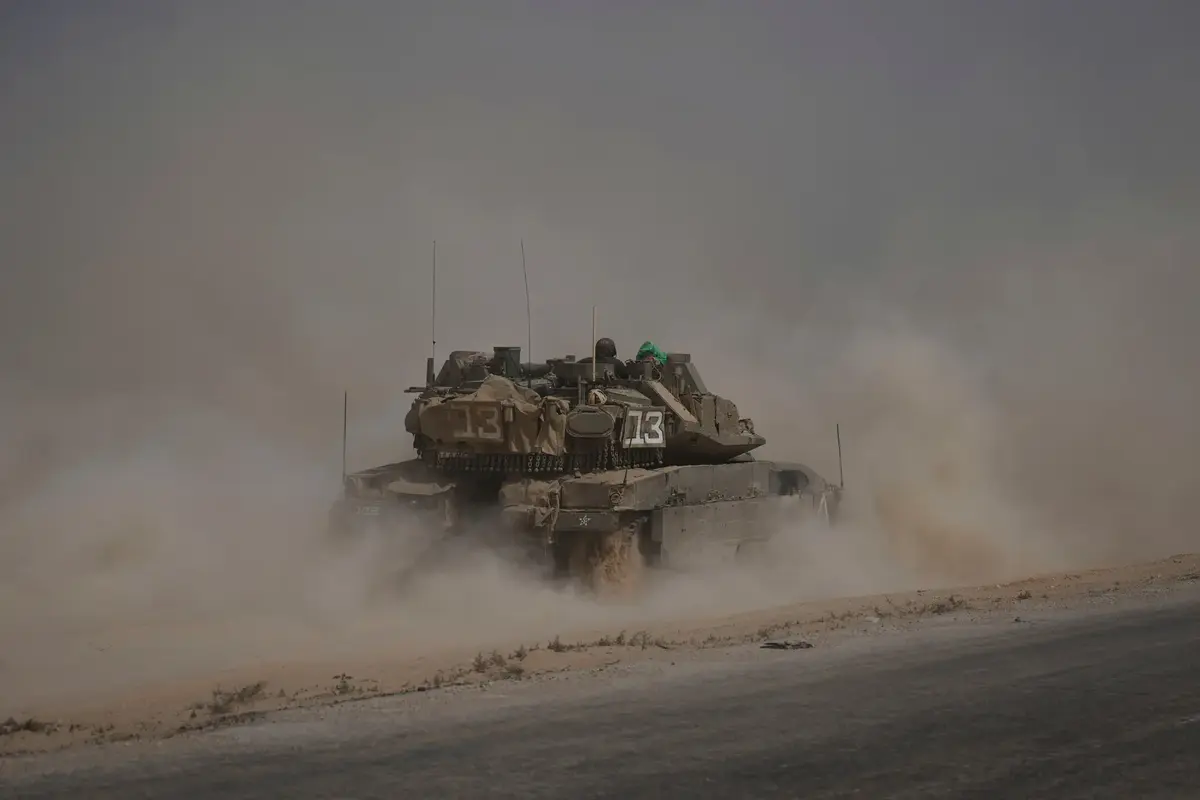
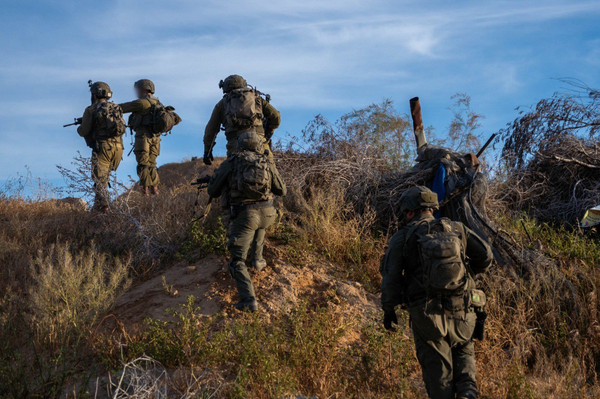
On Monday, Israeli military spokesman Avichay Adraee announced via Twitter that the army had intensified its genocide against Palestinians in the Gaza Strip over the past 24 hours, launching a large-scale ground operation across the northern and southern Gaza Strip as part of Operation Gideon.


In early May, the Israeli Security Cabinet approved the "Gideon Armoured Vehicles" operation plan, and the government subsequently began preparations for it by calling up tens of thousands of reserve soldiers.


The name of the operation carries religious, historical, and military connotations. Israel named one of its bloody operations during the 1948 Nakba "Gideon," which aimed to occupy the Beit Shean area and displace Palestinians from it.


The naming of the expansion of the genocide in Gaza as "Gideon's Wagons" indicates the nature of the occupation intended to be implemented in the Strip.


According to the official Israeli Broadcasting Authority, this operation is likely to continue for months.


It includes "the complete evacuation of all Gaza residents from combat zones, including northern Gaza, to areas in the southern Gaza Strip," and the army will "remain" in any area it "occupies," according to the commission.


Lapid, in turn, called for placing the Gaza Strip under Egyptian administration.


He said, "I have presented a completely different plan. Egypt should be the one to govern Gaza in the coming years, and Israel should make a coordinated effort with the Americans to transfer Gaza to Egyptian control over the next 15 years."


Lapid said that "Egypt knows how to manage Gaza."


He added, "I've done it before. It's not the perfect solution, but it's the best of all the solutions on the table. And the Americans know this, too."


He pointed out that Israel "needs to define a strategy for withdrawing from Gaza as soon as possible, and to sit on the periphery (of Gaza) so that the Israeli army can separate Gaza from the surrounding settlements, and continue the fight against Hamas in what is called 'mowing the lawn', that is, the ongoing fight against terrorism, and transfer Gaza to Egyptian control as quickly as possible," as he put it.


Lapid had previously proposed placing the Gaza Strip under Egyptian administration.


At the time, Egypt rejected Lapid's proposal and insisted on an end to the war, a complete Israeli withdrawal from the Gaza Strip, and the return of the Palestinian Authority to the territory.


Israeli Prime Minister Benjamin Netanyahu has repeatedly stated his opposition to Gaza being under the control of Hamas or the Palestinian Authority, but has refrained from offering an alternative.


Over the past few days, Israel has intensified its genocidal campaign in the Gaza Strip, committing dozens of horrific massacres. This coincided with US President Donald Trump's tour of the region, which included Saudi Arabia, Qatar, and the UAE. During the tour, Trump promised Palestinians in Gaza "a better future and an end to hunger."


Israel has been blockading Gaza for 18 years, leaving approximately 1.5 million Palestinians out of a population of approximately 2.4 million homeless after their homes were destroyed in the war of extermination. The Strip is suffering from a severe famine due to Tel Aviv's closure of the crossings to humanitarian aid.


In early March, the first phase of a ceasefire and prisoner exchange agreement between Hamas and Israel, which went into effect on January 19, 2025, was concluded. The agreement was brokered by Egypt and Qatar and supported by the United States, and the Palestinian movement adhered to it.


But Netanyahu, who is wanted by international justice, evaded the start of the second phase and resumed the genocide in Gaza on March 18, responding to the demands of the most extreme faction within his right-wing government to advance his own political interests, according to Hebrew media.


With full American support, Israel has been committing genocidal crimes in Gaza since October 7, 2023, leaving more than 174,000 Palestinians dead or wounded, most of them children and women, and more than 11,000 missing, in addition to hundreds of thousands displaced.

ARAB AND WORLD

Mon 19 May 2025 7:38 pm - Jerusalem Time

Irish airline threatens to permanently halt flights to Israel

Irish airline Ryanair threatened on Monday to completely withdraw from the Israeli market, saying that continued security threats could force it to halt all flights to and from Tel Aviv.


The Israeli Broadcasting Corporation quoted Michael O'Reilly, CEO of the Irish airline Ryanair, as saying, "The company is seriously reconsidering its continued operations within Israel, in light of the escalating security threats to Israeli airspace."


O'Reilly was speaking at an analyst conference following the release of the company's annual report, it said.


He added, "I think we're starting to lose patience with the situation in Israel, especially with regard to flights to and from Tel Aviv. If the security unrest continues, then frankly, it's better to divert our flights to other destinations in Europe."


He added that "all the company's flights to Israel remain suspended until early June," without definitive confirmation of when they will resume.


Missile attacks carried out by the Yemeni Houthi group on Ben Gurion Airport in May resulted in a wave of flight suspensions by several international airlines due to concerns that aircraft could face security risks during landing or takeoff from Israel.


The Israeli Broadcasting Authority claimed that most foreign companies that suspended flights to Tel Aviv have announced their intention to gradually resume flights over the coming weeks, but Ryanair appears to be taking the most stringent stance so far.


She stressed that "if the company carries out its threat and permanently exits the Israeli market, this will represent a significant blow to low-cost travel options, particularly for travelers to and from Europe."


The Houthis say they are launching missiles at Israel "in support of the Palestinians in Gaza," and that they will continue to do so as long as Tel Aviv continues its war of extermination in the Strip.


With American support, Israel has been committing genocidal crimes in Gaza since October 7, 2023, leaving more than 174,000 Palestinians dead or wounded, most of them children and women, and more than 11,000 missing.

PALESTINE

Mon 19 May 2025 5:24 pm - Jerusalem Time

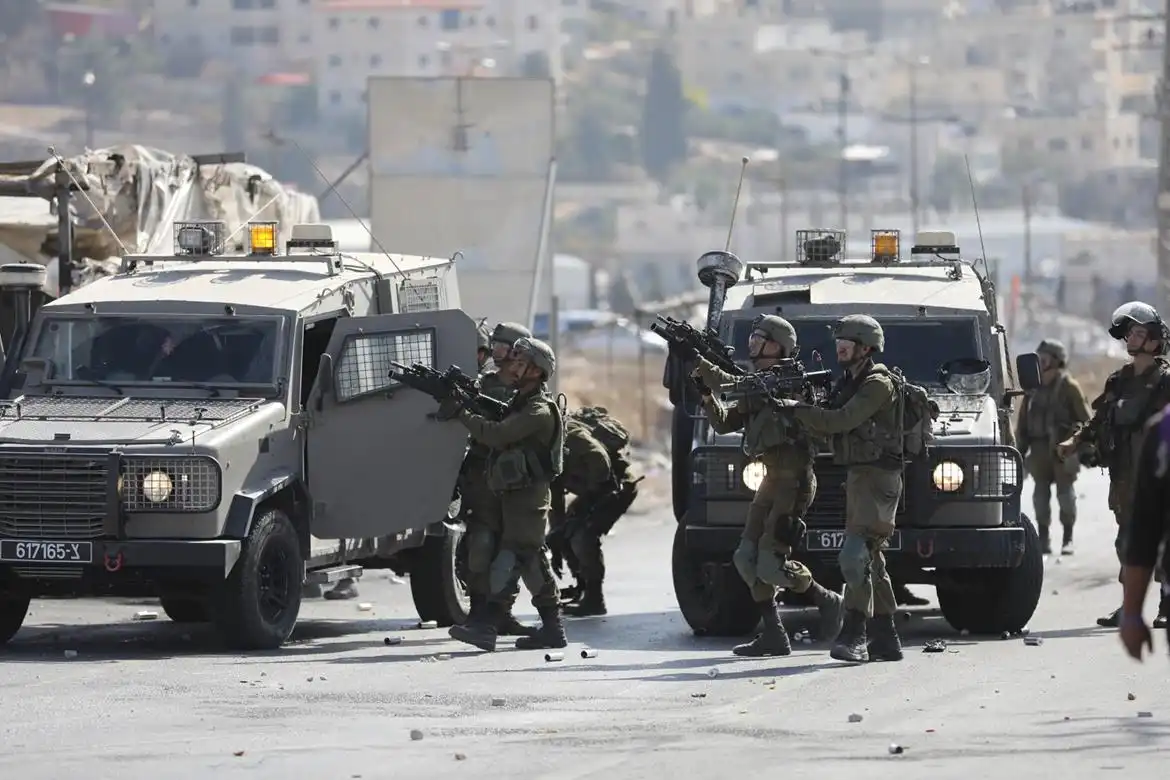
Israeli occupation forces stormed the village of Umm al-Tut, east of Jenin.

Israeli occupation forces stormed the village of Umm al-Tut, east of Jenin, on Monday evening.


According to local sources, occupation forces stormed the village and deployed infantry units in the streets, without any arrests being reported.


The occupation forces also stormed Khirbet Talfit, southeast of Jenin, and raided a number of homes there.


The occupation has intensified its raids on towns and villages in Jenin Governorate since the start of its aggression on the city and refugee camp of Jenin 119 days ago, launching widespread raids, arrests, and detentions of citizens.

PALESTINE

Mon 19 May 2025 2:40 pm - Jerusalem Time

Two young men were injured and a child was arrested in the town of Sa'ir, east of Hebron.

Two young men were shot by Israeli occupation forces on Monday, and a boy was arrested during a raid on the town of Sa'ir, northeast of Hebron.


Local sources reported that the Israeli occupation forces stormed the town of Sa'ir from the Ras al-Aroud area towards the town centre, and arrested the boy Omar Jaradat (16 years old) in front of his house. Two young men were also injured by live bullets in the foot during the raid, and were subsequently transferred to a hospital for treatment.

PALESTINE

Mon 19 May 2025 2:35 pm - Jerusalem Time

US Vice President cancels visit to Israel to avoid being interpreted as support for expanding the war

A senior US administration source said that US Vice President Jay D. Vance has decided not to visit Israel due to the escalation of the war on Gaza, according to the Walla news website on Monday.


The source added that Vance made this decision because he did not want his visit to be interpreted as support from the Trump administration for Israel's decision to launch a large-scale military operation in Gaza, at a time when the United States is pushing for a prisoner exchange and ceasefire agreement.


According to Walla, Vance's decision was not intended to exert overt pressure on Israel, as he cited "logistical reasons" that led to the cancellation of the visit. However, the decision revealed the United States' position on Israel's current policy of expanding the war on Gaza, and the Israeli army's announcement yesterday that five military divisions would participate in the military operation.


The US administration informed the Israeli government the day before yesterday that Vance was considering visiting Israel after attending the inauguration ceremony of Pope Leo XIV, according to what Walla reported, citing Israeli officials.


Talks took place between American and Israeli officials yesterday in preparation for the visit, while Channel 12 reported that Vance may arrive in Israel tomorrow, Tuesday. However, hours later, a White House official, who accompanied Vance in Rome, denied the Channel 12 report in a press release.


The White House official announced that "while the Secret Service made logistical preparations for the possibility of visiting several other countries, no decisions had been made to add stops to the Vice President's travel, and logistical constraints prevented the trip from extending beyond Rome. The Vice President will return to Washington on Monday."


Walla quoted an American official as saying that logistical considerations were not the real reason for Vance's decision not to visit Israel. Rather, during discussions Vance held with members of his staff, fears arose that his visit to Israel now would be interpreted by Israel and the countries of the region as American approval for expanding the war on Gaza. Therefore, Vance decided not to travel to Israel.


Walla pointed out that the background to this is the Trump administration's attempt to push for a ceasefire, prisoner exchange, and the delivery of humanitarian aid to the Gaza Strip with the aim of preventing famine. The decision to deliver aid to the Strip "immediately," announced by Israeli Prime Minister Benjamin Netanyahu during yesterday's meeting of the political-security cabinet, was the result of American pressure.

OPINIONS

Mon 19 May 2025 1:42 pm - Jerusalem Time

Hussein was two minutes late to his family due to the timing of the missile.

Written by Abdul Salam Al-Rimawi

Written by Abdul Salam Al-Rimawi

Opinion Writer

"Two minutes and I'll be back," Hussein asks the driver to wait for him so he can pick up his family from their "unsafe" home, after that one, and take them to another place, supposedly "safer," but...


Hussein "Abu Al-Abd" only needs "two minutes of running" - no time to walk - over the rubble or along a potholed, debris-strewn road to reach his "home," where his wife and children are waiting, terrified by the hovering warplanes and the roar of tanks as they get closer and closer.


"Don't be late, Hussein. You can see how scared the children are. The sound of the tanks is getting closer and the planes are filling the sky."


Hussein quickly and fearfully ran over the piles of rubble to get a car or any vehicle to transport them from this place that was now in the line of fire.


Had the road been less bumpy, Hussein might have returned to his family at the exact moment the shell hit. He would have been lucky enough to join his wife and children on their eternal journey! An additional family would have been added to the thousands erased from the civil registry during this insane war. Hussein survived, but he did not...


If the driver had been a little faster, he wouldn't have had to stop his car "two minutes of running time" after the house that separated him from "Hussein's house", and his chances of escaping death would have been zero.


But the leader of that flying metallic monster in his glass cockpit doesn't care about the children's wishes and the trembling of their bodies, and he quickly pulled the trigger to destroy Hussein's "Abu Al-Abd" house, turning it into a mass grave for the mother and her children. The head of the family escapes this "killing party", perhaps by waiting for another shell in another place and time, or in another mass massacre, or perhaps by waiting for a "blind" bullet to surprise him from a "quad copter" lying in wait for those walking on the paths of pain.


A massive explosion resounds, filling the horizon with dust, smoke, and fire, preventing the driver from proceeding, fearing that another shell might follow, or perhaps the road was no longer passable because of the rubble flying from the force of the explosion. He stopped before that house, “two minutes” from the house where Hussein’s wife and children were waiting, carrying what they “carried” of their “lightest and most necessary” belongings, hoping for survival, as was their fate during nineteen months of killing and starvation.


Hussein jumps out of the car, pleading: “Don’t move from here. I’ll get my wife and kids and come back. I won’t be long. Just wait two minutes. The place is nearby. There’s a house in front of me behind this.”


Hussein ran aimlessly through the chaos left behind by the explosion. He stumbled and fell, got up, and ran again, his heart aiding him: the explosion must have hit the house. And indeed, nothing remained of it but rubble.


As happens after every explosion, the residents rushed to help and removed the rubble with their hands, hoping to pull out survivors from under the rubble.


"I want my children. I swear I didn't take long. I went to get them a car so we can get out of here. I just want one of my children to get out from under the rubble. Please, guys, just get one out for me. Please help me. I just want one of my children to get out."


If only he had listened to his wife and taken his eldest son, Abdul, with him, he would have had one of his sons left..!

ARAB AND WORLD

Mon 19 May 2025 1:35 pm - Jerusalem Time

What role do Israeli universities play in the killing and torture of Palestinians?

Shaima Akram Saidam achieved a score of 99.6% on the 2023 high school exam, earning her the title of first in the literary branch in Palestine. Shaima enrolled at the Islamic University, majoring in English.


Amidst the flurry of news about the genocide in Gaza, the news of the martyrdom of Shaima and her family in the Nuseirat area of the Gaza Strip passes by as if nothing had happened, as if it were just another number added to the list.


Who killed her? With what weapon? Where did the killer form his Zionist identity and terrorist ideology? And with what justification? Perhaps these are questions that lead us to a place that many overlook: Israeli universities, where the minds of the Israeli army are honed. It is also the place where many of the security and military apparatuses that monitor, kill, and torture Palestinians are developed. It is also the place where weapons, propaganda, and justification for destruction are manufactured. Shaima was denied her right to education by an Israeli university structure that produces genocide, apartheid, and the destruction of the Palestinian people.


Israeli universities and research centers are among the most important pillars of the Zionist movement and the Jewish state. These academic institutions build Zionist identity and propaganda, manufacture weapons, justify Israeli policies, apartheid, Israeli aggression, and violations of Palestinian rights, promote settlements, marginalize and refute Palestinian identity, and train army and intelligence units in various specialties.
These Israeli institutions practice discrimination, persecution, and oppression not only against Palestinians, but also against any individual—even a Jew—who defends Palestinian rights and freedoms.

Boycott of Israeli universities
In light of these and other facts, the Palestinian Campaign for the Academic and Cultural Boycott of Israel (PACBI) was established in 2004 to advocate for a boycott of Israeli academic and cultural institutions, as they are a central actor in the suppression and violation of Palestinian rights and freedoms.
Maya Wind's book is a unique and important contribution in this context, demonstrating the involvement of Israeli universities as a primary driver and enabler of violations of Palestinian rights and freedoms, and even considering Israeli university policies as part of a system that perpetuates Israel's racist and settler-colonial policies.
University of California researcher Maya Wind's book centers on the question: Are Israeli universities complicit in the violation of Palestinian rights? She seeks to answer this question by revealing how Israeli universities are deeply intertwined with Israeli systems of oppression. Wind's uniqueness in this context, she says, is that she is a white, Jewish Israeli citizen, which gave her easy access to the Israeli government's military archives and libraries. She was thus able to read official documents, memoirs, and political reports, as well as unpublished studies such as master's theses and doctoral dissertations that were approved by Israeli universities.
In addition to interviews with Palestinian and Jewish students and academics working in Israeli universities, the book consists of two parts, each with three chapters, in addition to an introduction, a conclusion, and an afterword by Professor Robin D.J. Kelly.
Nadia Abu El-Haj of Columbia University introduces the book and reminds readers that Israel is a settler nation-state founded on the expulsion of approximately 750,000 Palestinians from their land. It is a state built on systematic ethnic cleansing. Therefore, Israel should not be described as a democracy.
Indeed, the structure upon which the State of Israel was established and is based is a racist structure based on the denial and exclusion of non-Jews. For this reason, Human Rights Watch and Amnesty International—as well as the Israeli human rights organizations B'Tselem and Yesh Din—declared Israel an apartheid state in 2021 and 2022.
In her introduction to the book, Nadia asserts that there is no such thing as a "democratic Israel" that can be separated from the Palestinian issue. Israel is a settler-colonial state. Its founding commitments and actions, its deeply rooted Zionist political vision, and the work of its institutions and even its political parties, both liberal and illiberal, are racist and anti-democratic to the core.
This racist, exclusionary foundational structure of Israel explains why the vast majority of Israeli academics, and even university administrations and presidents, remain silent, as there is no institutional defense of academic freedom when it comes to Palestinians.
Author Maya Wind confirms these ideas in the book's introduction, noting that university campuses in all territories under Israeli rule are not safe places for Palestinian students, as these universities are not independent but rather an extension of the violence of the Israeli state and its repressive institutions. The author asserts that Israel's apartheid system cannot be fully dismantled without recognizing it as a settler colonial system.
Therefore, the academic boycott is the essential step toward ending this colonialism. As this book demonstrates, all eight Israeli universities directly serve the state and perform vital functions in supporting its policies, thus constituting essential pillars of Israeli settler colonialism.

Academia in the Service of the Israeli Government
For example, Israeli universities collaborate with Israeli arms companies to research and develop technology used by the Israeli military and security services in the occupied Palestinian territories. This technology is then sold abroad as field-tested or "battle-proven."
The author begins by discussing "collusion" and "the experience of subjugation," and how Israeli academic disciplines have been developed to serve the Israeli government and security state, and how they continue to provide financial support for state projects. The author argues that leading departments and professors at Israeli universities, across various disciplines, are intellectually and theoretically subservient to the demands of the Israeli state, as demonstrated by focusing on three disciplines.
First major: Archaeology. All Israeli universities conduct excavations at archaeological sites run by Jewish settler organizations or regional settler councils. This academic major focuses on erasing Arab and Islamic history and is dedicated to expanding Jewish settlements and confiscating Palestinian land.
For example, Israeli universities are conducting excavations in Susya in the southern West Bank, thus directly seizing these Palestinian areas.
Israeli archaeology emerged as an academic discipline ostensibly to assert Israel's continued ancient Jewish presence in Palestine. At the same time, archaeological research was used to obliterate any Palestinian and Arab claims or evidence of presence on this same land.
The author also notes that these excavations constitute a direct violation of international laws and regulations, yet Israeli archaeologists and universities continue to participate in excavations throughout the Palestinian territories under the protection of the Israeli army. Thus, archaeology structurally facilitates Israel's theft of Palestinian antiquities and lands and facilitates their ongoing illegal seizure.
The second specialization: Legal Studies. The author explains that Israel considers the occupied Palestinian territory its laboratory. Given its decades-long illegal rule over the Palestinian people through military occupation, it has developed a body of laws and legal interpretations to justify its permanent military regime.
Israel has created a legal infrastructure to justify extrajudicial killings, torture, and the dissemination of what amounts to disproportionate use of force against civilian populations, which amounts to war crimes. Maya Wind argues that legal studies and the moral philosophy upon which they are based were created to justify violations of Palestinian rights and freedom.
Third Specialization: Middle Eastern Studies. The researcher explains that with Israel's establishment of a military government in the occupied Palestinian territories in 1967, opportunities for academic cooperation with the state were renewed. For example, Hebrew University professors Menachem Milson, Amnon Cohen, Moshe Sharon, and Moshe Maoz served as advisors on Arab affairs to the Israeli military and government.
Milson also served as the first head of the Civil Administration, the Israeli military administration in the occupied Palestinian territories, and oversaw the forced closure of the Palestinian Birzeit University beginning in 1981. Cohen, Sharon, and Maoz served as colonels and worked with the army throughout their academic careers.
The Middle East Studies Department also offers academic programs in regional expertise for soldiers on active duty in elite military units, as well as courses specifically designed for security services. The Hebrew University has offered a BA in Middle East Studies to the General Security Service (Shin Bet) as part of its cadre training.
Thus, Israeli disciplines in the humanities and social sciences were recruited to support Israeli settler colonialism. Archaeology, legal studies, and Middle Eastern studies developed alongside and through the Israeli military occupation.
The author then went on to study a number of Israeli universities, considering them "universities as settlement outposts," established and designed to serve as strategic outposts for the Israeli state project. The Hebrew University in occupied East Jerusalem; the University of Haifa in the Triangle; Ben-Gurion University in the Negev; and Ariel University in the West Bank—all of these institutions constitute key engines of "Judaization" projects in their respective regions.
For example, the author states that in the period leading up to and during the 1948 war, students, faculty, and administrators at the Hebrew University of Jerusalem actively supported the Haganah military organization, treating the campus as a base, conducting military training, and even storing weapons on university premises.
The author argues that for more than a century, Israeli universities have been expanding and enshrining the borders of the Jewish state and "Jewish sovereignty" over all of historic Palestine. These universities continue to play a central role in expanding settlement outposts on Palestinian land, and their libraries are repositories of looted Palestinian books, such as the Hebrew University Library, which houses many Arabic books stolen from Palestinians.
The researcher then turned to the concept of the "scientific security state," demonstrating how the development of Israeli universities was linked to the rise of Israel's military industries. These universities were designed as state-building institutions and were then recruited to support its violent apparatuses shortly after their founding.
Following the founding of the Hebrew University in Jerusalem in 1918, the Zionist movement established two additional institutions of higher education in Palestine: the Technion in Haifa in 1925, and the Weizmann Institute of Science in Rehovot in 1934. The Hebrew University was the Zionist movement's first comprehensive university dedicated to research and teaching in various disciplines; the Technion was designed to be a center for engineering, while the Weizmann Institute was committed to scientific research for state-building.
The researcher demonstrates how Israeli universities and research centers serve as an academic arm of the Israeli security state. These institutes and universities serve the state through research and policy recommendations aimed not only at preserving Israeli military rule but also at undermining the Palestinian rights movement on the international stage.
For example, the daily work of Israeli intelligence officers violates Palestinian human rights, as enshrined in international law and the Geneva Convention. Many soldiers who graduate from Hebrew University's specially designed graduate programs serve in Unit 8200, the largest and most central unit of the Intelligence Corps. Unit 8200 is the army's central collection unit, responsible for collecting all intelligence communications, including phone calls, text messages, and emails. The author concludes the chapter by emphasizing that, far from struggling to transform into civilian institutions, Israeli universities continue to expand their operations not only as military training bases, but also as weapons laboratories for the state.
In the second section of the book, titled "Repression," the author begins by discussing the concept of "epistemological occupation," explaining how Israeli universities systematically prevent critical academic research, teaching, and discussion of Israeli settler colonialism, military occupation, and apartheid.
The author notes that the list of topics forbidden in Israeli universities has expanded with the rise of the far-right's influence and political power over the past two decades. Recently, any criticism of the army or Israeli soldiers has become taboo in Israeli universities. For example, Maya Wind explains that the University of Haifa has two deeply entrenched traditions in Israeli academia: erasing Palestinian academic knowledge production and undermining evidence-based research that exposes Israeli state crimes.
Israeli universities have allied with far-right groups and the Israeli government to restrict and censor research and discourse related to the Nakba, for example. By extension, critical study of the Israeli occupation, apartheid, and settler colonialism is prohibited.
Essential critical debates have thus been excluded from Israeli academia, as Israeli universities define research and discussion of historical and ongoing Israeli state violence as "illegitimate." In doing so, they deny faculty and students not only academic freedom but also the opportunity to debate and intervene in current and future injustices.
The author then turns to the subject of the siege imposed on Palestinian students, revealing the restrictions imposed on Palestinian students' rights to study, express themselves, and protest in Israeli universities. She reveals how university administrations continually restrict the presence of Palestinian students on their campuses and how they collaborate with the Israeli government to deny Palestinian students, especially student activists, basic academic freedoms. The author states that from the moment they enroll in Israeli higher education, Palestinian students have been subjected to criminalization, surveillance, and targeting by their universities, in collusion with the state.
Academic freedom in Israeli higher education does not apply to Palestinian students. University administrations have long demonstrated their subservience to the state, cooperating with it to shield it from criticism and accountability for its military occupation and apartheid regime. The government increasingly censors any discussion of the Nakba and the fundamental injustices perpetrated by the State of Israel, both against the Palestinians it militarily governs in the occupied Palestinian territories and those it considers its own citizens.
Finally, the author clarifies academic complicity with the state against the Palestinians, and that there is currently no movement in Israeli universities calling for severing ties with the Israeli military and security state due to their repeated violations of the inalienable Palestinian right to education and other human rights.
Even progressive organizations operating on Israeli campuses—such as the Joint Democracy Initiative or Academia for Equality, which includes both Israeli Jewish and Palestinian (citizen) faculty and students—have largely failed to address the demands of Palestinian universities. These activist groups have so far refused to endorse Palestinian calls to hold Israeli universities accountable for their complicity in Israel's violations of international law.
Israel views Palestinians, armed with education and unwaveringly challenging the apartheid system, as a threat. Therefore, Palestinian students are subjected to disciplinary hearings, interrogations, and arrests at Israeli universities, in addition to kidnappings, torture, military arrests, and even murders at Palestinian universities. Israeli universities are essential pillars of this system.
Not only does it conduct research, train, and cooperate with Israeli security forces that maintain the military occupation, but it also works alongside the Israeli government to suppress Palestinian students at its universities.
Ultimately, Israeli universities play a direct role in the Israeli state’s suppression of Palestinian student movements for liberation—and in denying Palestinians academic freedom—for more than seventy-five years.
In the book's conclusion, the author asserts that Israel established and built Israeli institutions of higher education on Palestinian land. These institutions were designed to be tools for Jewish settlement expansion and the displacement of Palestinians, and were founded on the model of land-grabbing universities.
Israeli universities not only continue to actively participate in the Israeli state's violence against Palestinians, but also contribute their resources, research, and scholarship to maintain, defend, and justify this oppression. Ultimately, the author calls for a boycott of Israeli universities and insists that there is no academic freedom until it is applied to everyone.
In his closing remarks, Professor Robin D.J. Kelly of the University of California emphasized that the goal of the boycott is to end the occupation, dismantle the apartheid system, respect the UN-enshrined rights of Palestinian refugees, expand civil rights to include all, end military arrests, repeated raids and surveillance of Palestinian institutions, and the deliberate disruption of the educational process.
Israel's apartheid regime would not have survived without the massive financial support, political legitimacy, and legal protection provided by the United States. Annual military funding of $3.8 billion (Israel is the largest recipient of US military aid in history) contributes to the ongoing state violence, repression, and inequality, with little accountability.
Thus, academic Kelly notes that the Israeli apartheid regime could not have persisted without liberal silence in America. He says: The truth is that there will be no true academic freedom in the region without a free Palestine, and there can be no free Palestine as long as universities are under occupation or bastions of Zionism and settler colonialism. As long as the majority of Israeli intellectuals remain silent or do not understand that their freedom is linked to the freedom of Palestine, we will continue to boycott Israeli institutions because, according to Kelly, silence is synonymous with complicity.
This book is of great scholarly value. It is a detailed historical documentation of the complicity of all Israeli universities and research centers, without exception, in the Israeli apartheid system. Indeed, they are one of the state's most important arms in justifying its policies, which violate international norms and laws.
Therefore, this book can be read as an extension, advocacy, and new testimony to the validity of the claims of the Palestinian Campaign for the Academic and Cultural Boycott of Israel (PACBI), founded in 2004, which states that Israeli universities are a fundamental pillar of apartheid and Israeli policies that violate international and humanitarian law.

Source: Al Jazeera + websites



PALESTINE

Mon 19 May 2025 12:27 pm - Jerusalem Time

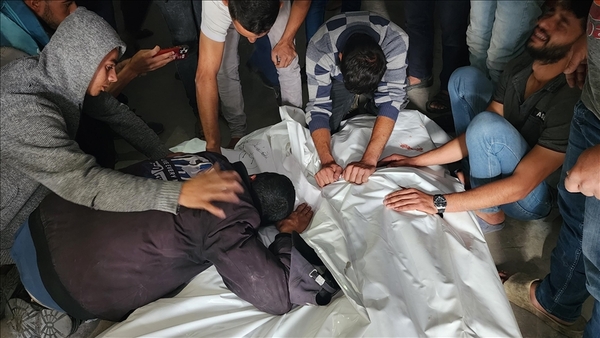
Gaza: 28 Palestinians killed since dawn today

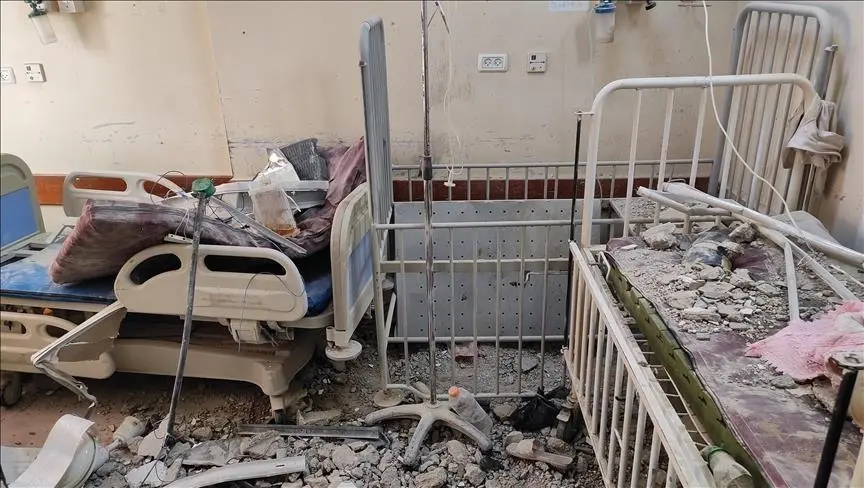
Medical sources announced the deaths of 28 citizens in the Gaza Strip since dawn on Monday, a toll that is not final, while hospitals in the Strip are suffering from a severe shortage of medical personnel and supplies.


In the latest developments on the ground in the Gaza Strip, a citizen and a child were killed, and several others were injured, as a result of an Israeli bombardment that targeted a tent housing displaced persons in the Al-Mawasi area, west of Khan Yunis, in the southern Gaza Strip.


Medical sources reported that the two martyrs were the young man Saleh Nadi Abu Azra (26 years old) and the child Balsam Ahmed Abu Azra (4 years old). They were transferred to the Kuwaiti field hospital along with a number of wounded people who were injured in the bombing.


In a related development, a young girl was declared dead after succumbing to wounds she sustained earlier in an Israeli airstrike on the town of Beit Lahia in the northern Gaza Strip. This comes amid escalating aggression and continued targeting of civilian areas and shelters.


In Gaza City, two civilians were injured by Israeli drone fire in the Tuffah neighborhood, east of the city.


Meanwhile, the city of Khan Yunis, south of the Gaza Strip, witnessed a horrific crime committed by Israeli special forces, who executed Ahmed Sarhan in front of his 12-year-old son, Mohammed.


Following the execution, Israeli forces stormed the family's home, kidnapped Mohammed and his mother, and took them to an unknown location. This scene epitomizes the brutality of the occupation and its ongoing violations against Palestinian civilians, with no regard for the victims' ages or humanitarian conditions.


For its part, the Nasser Salah al-Din Brigades, the military wing of the Palestinian Resistance Committees, announced the death of prominent field commander Ahmed Kamel Sarhan, head of the brigades' special operations unit, during an armed clash with an Israeli special forces force that raided his home in Khan Yunis, south of the Gaza Strip.


The brigades explained that martyr Sarhan engaged in a heroic clash with the invading force, which aimed to arrest him, leading to the operation's failure before he was martyred during the confrontation.


The brigades affirmed in their statement that the failure of this operation represents a blow to the enemy and a desperate attempt in a series of attacks aimed at breaking the will of the resistance and its leaders.


In this context, the director of field hospitals in Gaza explained that the ongoing campaign waged by the occupation army against the health system in the Strip poses a direct threat to the lives of the population.


He pointed out that malnutrition is worsening significantly, affecting all age groups without exception.


The director also stressed that hospitals are suffering from a severe shortage of medical staff, in addition to a significant shortage of the equipment and supplies necessary to provide the necessary healthcare.

PALESTINE

Mon 19 May 2025 12:19 pm - Jerusalem Time

Remains at the doors of the takayas... The aggression is targeting the outlets of life in Gaza.

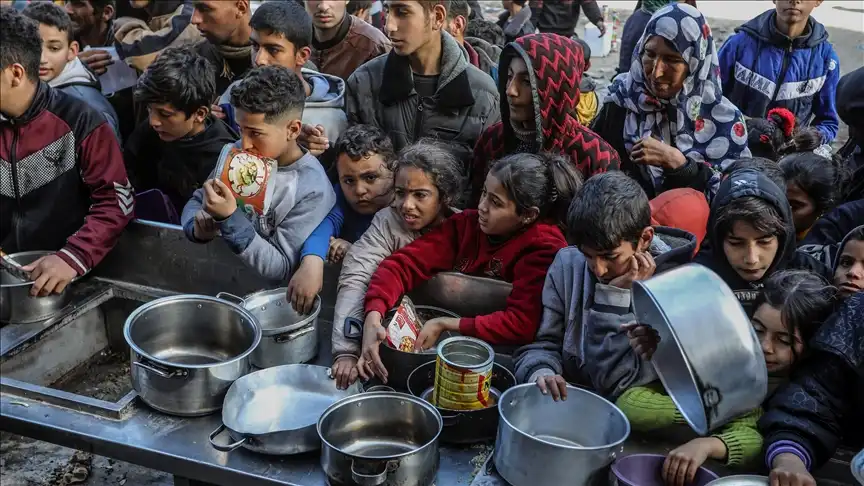
Every night, mothers wait for the hours of darkness to pass, their silence broken only by the sounds of missiles that bombard the displaced without mercy, or the cries of starving children who find nothing but complaints to their mothers who are unable to feed them. The mothers spend the night hoping to knock on the door of a food center or a charitable hospice after sunrise. She goes with her frail body, fighting hunger with an empty vessel in the hope of returning with a full one, not knowing the fate that awaits her efforts. Will she find some food or will a missile surprise her, ending her life and leaving her children without food or even a mother to console them?!


In the Gaza Strip, even crumbs are no longer available to the starving besieged people. There is no way for them to survive, even with a few leftovers. At the gates of the crossings, trucks are piled up with tons of food that is almost rotting after months of the occupation preventing it from entering the Strip. As for inside, some difficult attempts remain through stored food distribution centers and charitable institutions that provide what they can to the hungry. However, this did not satisfy the sadism of the occupation, so it deliberately targeted these centers and institutions.


Since the Israeli occupation resumed its aggression on the Gaza Strip on March 18, warplanes have intensified their bombardment of food centers and charitable institutions, targeting even those returning with bags of flour. This has made the search for food a spiritual adventure, a choice between death by murder or starvation.


68 centers and hospices bombed

In a statement issued the day before yesterday, the Government Media Office said that the number of food distribution centers and shelters targeted by the Israeli occupation has risen to 68, as part of its systematic policy of starving civilians in the Gaza Strip.


The office explained in a press release that the Israeli occupation army bombed a food aid distribution warehouse in the Deir al-Balah area in central Gaza on Saturday, killing five citizens and injuring a large number of innocent civilians who had gathered to receive humanitarian aid amid the famine plaguing the Gaza Strip.


The office reported that the number of field kitchens targeted since the beginning of the genocidal war has reached 68 centers and shelters, including 39 food and aid distribution centers and 29 food shelters that provide daily meals to the needy and hungry.


The statement emphasized that the occupation's criminal behavior, by deliberately targeting relief and social welfare facilities, "confirms beyond a shadow of a doubt that the occupation is using food as a weapon of war, in flagrant violation of all international laws, most notably the Geneva Conventions, which prohibit the targeting of humanitarian facilities and civilians under any circumstances."


The government media official added: “While we condemn these crimes in the strongest terms, and hold the Israeli occupation fully responsible for these heinous crimes, we call on the international community, the United Nations, the Security Council, and all humanitarian and human rights organizations to take urgent, immediate, and effective action to halt these brutal massacres, provide protection to food distribution centers, open the crossings, and ensure the unhindered delivery of humanitarian aid.”


death lines

The Palestinian Center for Human Rights (PCHR) quoted displaced persons as saying that an Israeli drone attacked a tent for displaced persons inside the Al-Amal al-Awda camp in Mawasi, west of Khan Younis, coinciding with a large number of citizens queuing to receive food from the neighboring Al-Quloub al-Rahima hospice. The attack resulted in the deaths of seven citizens, including four residents of the tent: two brothers, the wife of one of them and his daughter, and three others queuing for food, including two children. Twenty-five others were injured, including the hospice owner, a number of its employees, and those queuing for food. The following morning, medical sources at Nasser Medical Complex in Khan Younis announced the death of three of the injured from their wounds sustained in the bombing.


The center narrates the testimony of the owner of the hospice, Muhammad Juma Muhammad Yahya (40 years old), who said: “While we were preparing to distribute food to the displaced people who were queuing up to receive food, suddenly I heard the sound of two very strong explosions, and smoke and dust spread in the area. After that, I saw the hospice workers lying on the ground. I felt pain in my right foot, so I looked at the place of pain and saw my foot bleeding, and I realized that I had been injured. A large number of people were lying on the ground, including women and children.”


Juma continued: “A number of citizens were martyred, and others were injured, including residents of the tent, workers at the hospice, and those queuing for food. When I returned to the hospice, I found some damage, including damage to the water tanks, damage to the six cooking pots, and damage to the cooking utensils.”


Targeting hospices and food centers is part of a comprehensive plan to displace the Palestinian people from the Gaza Strip. This plan targets every aspect of life there, transforming it into a place uninhabitable for its people. At the heart of this plan is the war of starvation, which involves closing crossings, preventing the entry of aid, and targeting everything that could help alleviate the effects of hunger on the Strip's population.


In turn, the UN High Commissioner for Human Rights and the UN Office for the Coordination of Humanitarian Affairs called for the rapid entry of aid into the Gaza Strip, as the situation "has now become horribly abnormal." Seven European countries also called on Israel to lift the blockade on the Strip and end the genocide in Gaza.


UN High Commissioner for Human Rights Volker Türk said in a statement last Friday that there has been a significant increase in Israeli attacks and the death toll in Gaza this week, adding that the intense Israeli attacks have exacerbated the already dire humanitarian situation and called for global action to prevent further casualties.


Turk said that hunger caused by the Israeli blockade is worsening, stressing that "this madness must be stopped."


He stressed that no time should be wasted discussing a US-backed alternative proposal for aid entry into Gaza, noting that the United Nations has a credible plan and 160,000 mobile platforms ready to enter the Palestinian territory now.


Regarding the position of the Israeli occupation and the United States, Turk said: "To those proposing an alternative means of distributing aid, let's not waste time. We already have a plan in this regard."


Turk also stated that the threats of massive attacks, the systematic destruction of entire buildings, the displacement of residents, and the denial of humanitarian aid all point to a push towards permanent demographic change in Gaza, which is contrary to international law and amounts to ethnic cleansing.

OPINIONS

Mon 19 May 2025 12:17 pm - Jerusalem Time

Gaza and the Collapse of the Global Moral Compass

Translation for "Alquds" dot com

Translation for "Alquds" dot com

Opinion Writer

By Jamal Mimouni

In Gaza, one of the most shameful chapters in contemporary history is unfolding: a planned famine, methodically imposed by a military power, under the passive gaze of a supposedly civilized world. For more than two months, more than two million Palestinians have been deprived of food, water, electricity, fuel, and healthcare. Gaza has become a laboratory of cruelty, where hunger is measured with administrative rigor—literally down to the calorie—while the major powers watch silently or fuel the fire by providing bombs and diplomatic support.


The calorie is now the unit of cruelty, alongside the bullet and the bomb. Israel no longer even hides its cynical calculation: how many calories per person? How many grams of protein before collapse? How many days before complete starvation? Human suffering is reduced to Excel spreadsheets. This is not a natural disaster, nor even a side effect of the conflict. It is a deliberate act: deprivation as an instrument of war. Gaza is being intentionally starved.


Since March 2, 2025, the total blockade imposed on humanitarian aid has exceeded all previous levels in severity. By May 16, it had become the longest siege ever recorded in the enclave's history. According to UNICEF and the UN Office for the Coordination of Humanitarian Affairs (OCHA), Gaza's survival capacities have been destroyed: farmland has been bombed, fishing zones have been closed, bakeries have been paralyzed by the lack of flour, fuel, and security.

The most vulnerable—children under two and breastfeeding mothers—are the first victims: 92% of them no longer have access to adequate food. And yet, more than 3,000 aid trucks and 116,000 tons of food remain blocked at the borders, barred from entry by Israel, in violation of the injunctions of the International Court of Justice in the South Africa v. Israel case. This refusal to comply clearly shows that famine is not a consequence of war—it has become war itself.

The crime is neither hidden nor silent—it is being broadcast live.


It is not a matter of ignorance. This is not the 1940s. No one will be able to say, this time, "we didn't know." Everything is visible. Every day, on every screen, we see children dying of hunger, hospitals collapsing, mass graves dug with bare hands. The weapon used here is food, or rather its absence, in clear violation of international law, humanitarian conventions, and the most basic human dignity. UNICEF, UNRWA, the World Food Program, OCHA: all these institutions have sounded the alarm. The UN has officially recognized that Gaza has entered a state of famine. And yet, the trucks remain stuck. This is not a simple siege: it is a slow and public execution of an entire people. A war crime committed in broad daylight, under the neutral gaze of cameras and diplomacy.


Silence is complicity.

The scandal is not only that these horrors are taking place, but that they are tolerated, even excused, by the very people who claim to embody the values of international law and human rights. When it comes to other conflicts, some powers are quick to condemn and sanction. But here? Silence. Not even an official reprimand. Much less any concrete action.

Why? Because the culprit is an ally, a strategic partner, sanctified by the European trauma of the Holocaust, to the point of being considered above all criticism. The result: empty words, phrases calibrated to spare the aggressor, and a shameful choreography of diplomatic cowardice.

Can one still be a "Gaza genocide denier" today?

More and more authoritative voices are denouncing what is happening in Gaza. Omer Bartov, a world-renowned expert on genocide and professor at Brown University, describes the situation as "genocidal politics":

"A systematic attempt to make Gaza uninhabitable and to destroy the structures vital to the physical and cultural survival of a group."

He also highlights the moral bankruptcy of Western countries, which nonetheless pose as champions of human rights. He is not alone. Raz Segal (Stockton University) speaks of a "textbook case of genocide," drawing on statements by Israeli officials explicitly calling for the annihilation of Gaza. Dirk Moses (University of Sydney) and Israeli historian Ilan Pappé evoke a logic of progressive erasure, a mechanism of slow and structural extermination.

Some still avoid the word "genocide" because of its political implications, preferring to speak of "genocidal acts." But the criteria are there, clear, established by the 1948 Geneva Convention:


o Mass murder (more than 60,000 dead)

o Intentional deprivation of food and medical care

o Dehumanization in public discourse

o Destruction of institutions vital to collective survival

The pattern is clear. And yet, as in Rwanda in 1994, as in Srebrenica in 1995, we demand "irrefutable proof" while the bodies pile up. Archives, satellite images, and Israeli parliamentary recordings will one day form a damning dossier. On that day, the world will look back—and judge.


"Never again": a promise broken

The once sacred phrase has been emptied of its meaning. If "Never again" doesn't apply to Gaza—where civilians are starving, bombed, and displaced—then it no longer applies anywhere. The moral foundation of the West, forged in the post-Auschwitz era, is crumbling. What remains is only selective indignation, tinged with geopolitical opportunism.

The failure of moral and religious institutions

Major religious institutions have not been up to the task. From the Vatican to ecumenical organizations, reactions have amounted to lukewarm appeals, as if we were witnessing a simple diplomatic dispute, not a campaign of mass destruction. The International Court of Justice has been ignored; its interim measures trampled underfoot, without the slightest consequence.

In Israel itself, public discourse has descended into indecency. Members of the Knesset now dare to rejoice in the starvation inflicted on children. When a humanitarian doctor expresses the hope that no child will be deprived of painkillers, he is met with laughter. What was whispered yesterday—starving a people as a military strategy—is today cynically claimed.

The Abdication of the Arab World

Arab regimes do not escape condemnation. Their inaction, hidden behind symbolic gestures, reveals their political weakness and moral bankruptcy. Prisoners of their alliances, paralyzed by the fear of losing their power, they have abandoned their own people, even in the most unbearable pain.


History is watching

This moment will be judged. Silence will be remembered. The refusal to act will be recorded, not as prudent neutrality, but as active complicity. When Gaza one day raises its head and writes its own history, what will be remembered? What will our governments, our institutions do? What principles will they have agreed upon? For this is no longer just about Gaza. It is about the international order, its soul. And this soul is dying... slowly... down to the calorie.
PALESTINE

Mon 19 May 2025 11:50 am - Jerusalem Time

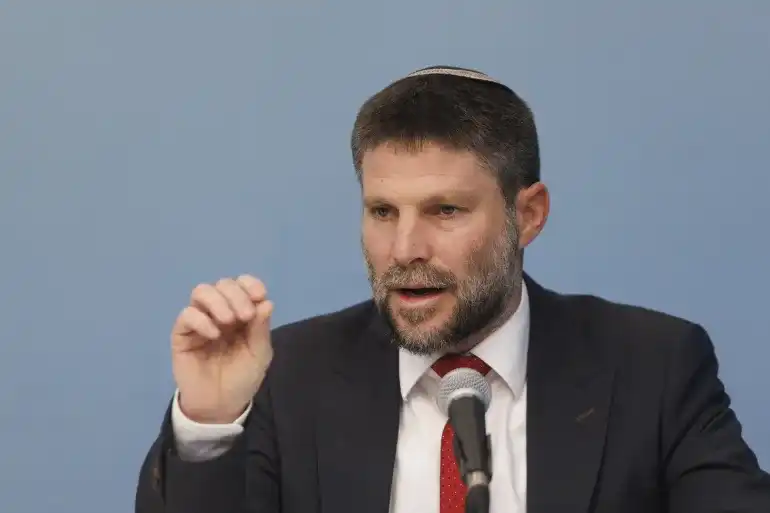
Smotrich: We are facing international pressure, and it may force us to end the war.

Israeli Finance Minister Bezalel Smotrich said on Monday, "We are facing international pressure, and if we continue like this, the international community may force us to end the war."


Smotrich described the entry of humanitarian aid into the Gaza Strip, with Netanyahu's approval, as "absolute madness," claiming that the aid would reach Hamas and that "anyone who says otherwise is lying."


He claimed that previous policies toward Gaza would not be repeated, and that the aid that would be brought in would be limited to the bare minimum of food and medicine.


He continued, "In my opinion, not even water should be allowed into Gaza until the last prisoner is returned."


Smotrich said: "The Israeli army is currently working to 'destroy what remains of the Gaza Strip, which will lead to the elimination of Hamas and the return of the kidnapped soldiers.'"


Concluding his remarks, Smotrich said, "The residents of Gaza will first move to the southern part of the Strip, and from there to other countries," referring to potential deportation plans that have long drawn widespread Palestinian and international rejection.

PALESTINE

Mon 19 May 2025 11:15 am - Jerusalem Time

At least 16 homes demolished in the occupied Negev

Israeli authorities demolished 16 homes in the unrecognized village of al-Sarra in the Negev desert in the 1948 territories on Monday.


Hundreds of police officers were deployed to the area, surrounding the homes and preventing residents from approaching the demolition site.


Suleiman al-Hawashla, director general of the Regional Council for Unrecognized Villages, said, "The demolitions come after the Beersheba Court's decision last Thursday to demolish the village's homes and empty it of its residents."


Al-Hawashleh added to Arab48 that "the demolition operations today target at least 16 homes, while some residents had demolished their homes themselves during the past period."


He pointed out that "about 1,500 citizens from the Azzazmeh tribe live in the village, and the village lacks any infrastructure, including roads, water, electricity, and sewage networks, schools, medical facilities, and more."


Al-Hawashleh continued, "The demolitions are part of the forced displacement policies practiced by the Israeli authorities against Palestinians in the 1948 territories and the Negev in particular, while at the same time plans are being announced to establish new settlements in the region."


Sources from the Regional Council for Unrecognized Villages reported that "over the next two weeks, more than 200 homes in the village of al-Sarra are expected to be demolished, effectively destroying the entire village and uprooting and displacing its residents."

PALESTINE

Mon 19 May 2025 10:54 am - Jerusalem Time

Prisoner exchange negotiations: Netanyahu between US pressure and threats to topple his government

The US administration is pressuring Israel to agree to an agreement proposed by US Presidential Envoy Steve Witkoff, which would release half of the remaining Israeli prisoners and establish a temporary ceasefire. This agreement would then lead to a comprehensive agreement that would include the release of the remaining Israeli prisoners and a cessation of hostilities.


Although the Israeli negotiating delegation is still in Doha, the agreement will not be finalized there, but rather through talks between the Trump administration and the Netanyahu government, according to Amos Harel, a military analyst for Haaretz, on Monday.


According to Harel, Netanyahu is now trying to present the Israeli public with a false image of victory, "which will allow him to justify an interim deal and perhaps keep his partners in the Otzma Yehudit and Religious Zionism parties within the coalition at this stage."


He added, "Witkoff's proposal would enable Netanyahu to safely pass the Knesset's summer session, which ends on July 27. In this case, the government's term would continue until the beginning of the Knesset's winter session, at least at the end of October, and general elections would not be held until the spring of 2026. This is Netanyahu's most important goal at present, and other considerations appear secondary to him."


However, Harel noted that, in the background of all this, "there is the fear expressed by former Israeli security officials that Netanyahu is once again considering launching an Israeli attack on Iranian nuclear facilities, despite the progress in negotiations between the United States and Iran."

Meanwhile, Religious Zionism Party leader and Finance Minister Bezalel Smotrich announced this morning that he would make an "important statement" shortly before noon. Media reports suggested he would address Netanyahu's decision yesterday to allow humanitarian aid into the Gaza Strip without a vote in the political-security cabinet.


Smotrich strongly opposes the entry of aid into the Gaza Strip, claiming last month that "not even a grain of wheat will be allowed to enter the Strip in a way that reaches Hamas. This would be the same mistake made in the first part of the war."


Smotrich later said, "If a single drop of humanitarian aid reaches Hamas, I will leave the government and the cabinet. I cannot live with that, just as I cannot live with the evacuation of settlements. That is a red line for me. I told the prime minister that I do not agree, over my dead body. I will not remain in the government another minute."


Otzma Yehudit party leader and Minister of National Security Itamar Ben-Gvir has also repeatedly expressed his strong opposition to the entry of humanitarian aid into the Gaza Strip.

PALESTINE

Mon 19 May 2025 10:11 am - Jerusalem Time

9 trucks loaded with aid will enter the Gaza Strip today.

The Israeli army announced that nine trucks loaded with humanitarian aid entered the Gaza Strip on Monday via the Kerem Shalom crossing.


According to an army statement released Monday morning, the aid trucks will be headed to charity warehouses inside the Gaza Strip, noting that international organizations will be responsible for distributing them.


The Israeli cabinet approved the resumption of aid deliveries to the Gaza Strip tonight, following international and American pressure over the widespread famine in the territory.


This move comes amid growing calls from relief organizations to facilitate the entry of aid, amid the ongoing blockade and military escalation that Gaza's residents have been suffering from for months.


PALESTINE

Mon 19 May 2025 10:02 am - Jerusalem Time

British Council Announces New Grants for Storytelling, Resilience, and Youth Empowerment in Palestine

Occupied Palestinian Territories—The British Council in Palestine is proud to announce five grants under its new project for storytelling, resilience and youth Empowerment; “Sard” to expand its English and Empowerment work and respond to communities'the growing needs to of empower young people and adults through English language and related life skills development.   


SARD is a programme designed specifically to encourage Palestinians to share their story and the stories of their culture and heritage with each other and with the world. Through this programme, English and the art of storytelling come together as tools for self-expression through different mediums.It was inspired by the stories that came out of projects delivered by partners in our 2024-2025 Language for Resilience programme.


By working with local and UK partners, SARD will reach different communities across Palestine including Gaza, the Northern West Bank and refugee camps. These projects will reach hundreds of youths, supporting their English language learning, to building their resilience and fostering inclusion.


Shahida MacDougall, British Council Director in Palestine, commented “This project is brilliantly and thoughtfully adapted to meet the emerging needs of the Palestinian communities, bringing together diverse local and international stakeholders to work collaboratively and learn from each other, delivering impactful outcomes while capturing the true spirit of the empowerment programme”


SARD will support a range of projects that will be completed by November 2025, including:


Animated Stories from Al-Jalazoun 

This is a creative initiative designed to empower youth in Al-Jalazoun Refugee Camp through stop-motion animation. Developed by MasnaAl-Rusoom Al-Mutaharrika (Almasna) in partnership with Space Foundation, the project offers 14–16-year-old boys and girls the opportunity to tell their stories, reflect on their experiences, and connect with the world using the universal language of animation.   


Amplifying Palestinian Voices: A Literature and Podcast Initiative  

This is a creative education project led by the Tamer Institute for Community Education. Focused on the power of language and storytelling, the initiative aims at providing 200 Palestinian children and young adults in Gaza and the West Bank the tools needed to express their lived experiences using the English language and through podcast production. 


Resilient Voices: Empowering Palestinian Youth Through Digital Storytelling  

Resilient Voices, led by Dr Ahmed Kamal Junina, seeks to support 50 Palestinian youth in Gaza aged 18-30, including those displaced by conflict, through English language training and digital storytelling. The program brings together an experienced team of trainers from Palestine, Australia, Taiwan, and Spain, with extensive expertise in linguistics, education, and mental health.  A public digital archive will preserve these narratives.  


“You Must Live”: A Storytelling Masterclass for Future Palestine  

This programme, led by a core team of Amir Garmroudi and Aisja Hamed, develops and facilitates a programme of storytelling masterclasses in the form of co-learning sessions in English for budding Palestinian storytellers. 


LINEs to the Future (LINEs2F)  

 Led by the University of Glasgow, this is part of the LINESforPalestine project, which has been supporting students and academics in Gaza since early 2024. LINES2F fosters collaboration between undergraduate students at the Islamic University of Gaza (IUG, Palestine) and the University of Porto (Portugal) through sci-fi storytelling and filmmaking. 50 students from Gaza and Porto will work in small, mixed groups to make short science-fiction films guided by online workshops. 

www.britishcouncil.org


OPINIONS

Mon 19 May 2025 9:35 am - Jerusalem Time

Trump after the Gulf is not the same as before

Assas Media

Assas Media

Opinion Writer

By Mowaffaq Harb

In a region often reduced to the vocabulary of security and oil, US President Donald Trump's recent tour marked a remarkable shift in his rhetoric and behavior. Far from the confrontational tone that characterized his previous positions toward Arabs and Islam, Trump appeared calmer, more attentive, more humble, and closer to a deeper understanding of a region steeped in its ancient civilization, rich in its diversity, and complex in its political and cultural makeup.


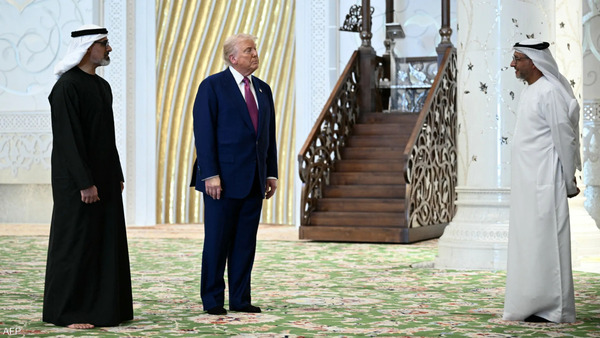
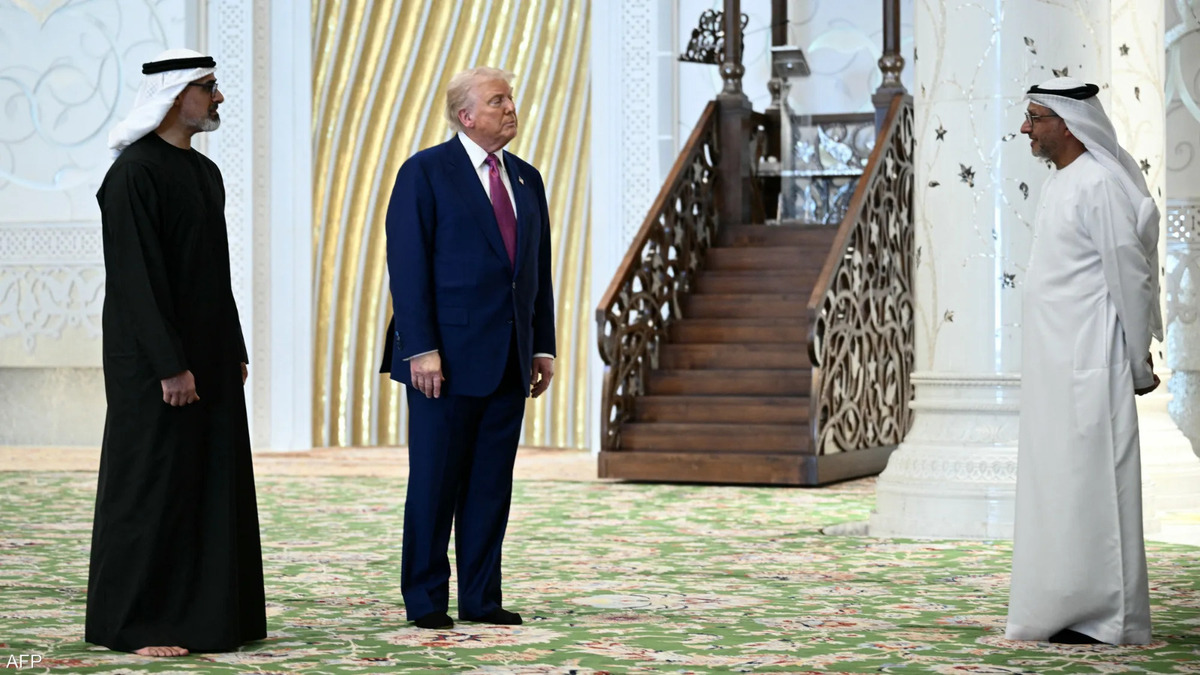
The visit, which included high-level meetings with heads of state and public outings in the Gulf states, seemed to broaden the US president's horizons and push him to reconsider the preconceived notions that have long governed his view of the region. The most prominent symbolic moment came during his visit to the Sheikh Zayed Grand Mosque in Abu Dhabi, where he appeared barefoot under ornate domes and Quranic verses embroidered in gold. This scene was not that of a man challenging tradition, but of a president who seemed like a guest who felt the depth of the moment and the dignity of the place. But what was even more striking was Trump's growing public attraction to the Gulf states themselves, countries that combine modernity and advanced infrastructure with a deeply rooted cultural identity. In the skyscrapers of Riyadh, Abu Dhabi, and Doha, and in the climate of security, sufficiency, and openness to investment, Trump saw a reflection of his vision of "America's greatness" that he wanted to restore: sovereignty, prosperity, and stability under strong leadership that was unapologetic about its interests.

Trump saw in the Gulf leaders partners who understood the language of transactions and aspired to shape history in their own way. His admiration was evident not only in the language of the speeches, but also in the warmth of personal positions, mutual respect, and openness to the Gulf model of governance and development. He seemed to be finding in the Gulf what he lacked in America: tangible achievements, a confident identity, and unwavering leadership. The visit, which included high-level meetings with world leaders and public visits to Gulf states, appeared to broaden the US president's horizons.


Moving Away from Simplistic Approaches

If this trip has opened the door to a personal change, it is not unlikely that its consequences will be reflected in how Trump deals with regional issues during the remainder of his term. His growing understanding of cultural and religious dynamics may push him to move away from the simplistic approaches that have characterized many of his previous policies. We may see a more cautious approach to sensitive issues such as the Palestinian issue, or a different approach to relations with Iran, one that takes into account Gulf concerns rather than being limited to the logic of sanctions and confrontation.


On the other hand, his growing relationship with Gulf governments may translate into greater economic cooperation, new trade and military deals, and perhaps a more integrated role in efforts to bring stability to the region. His fascination with Gulf governance models may be reflected in his domestic discourse, as he may use them as an example of how countries can achieve rapid growth without compromising their security or identity.

Trump, who has always presented himself as a dealmaker before being a politician, may have found in the Gulf a parallel to his personal and political ambitions, as a region rich in opportunities, and even a model for a leadership vision that combines decisiveness and flexibility, authenticity and modernity. If this conviction takes hold within the decision-making halls in Washington, we may witness a completely different American approach to the region in the coming years: one more respectful of tradition and more focused on long-term strategic partnerships.

Trump, who has always presented himself as a dealmaker before being a politician, may have found in the Gulf a parallel to his personal and political ambitions.

Strength in Humility

Some may consider these positions to be merely formal, but in the world of diplomacy, symbolism often precedes policy. When Trump takes off his shoes in a mosque, sits among his interlocutors to listen, not dictate, and sees Gulf cities not only as strategic markets but also as replicable examples, he is hinting at a real shift: power lies not only in dominance, but also in humility and openness. Trump's trip to the Middle East has not only opened doors to politics but perhaps also to his own inner horizons. At a time when the world is torn by doubt and division, this shift, however partial, is not a passing matter.

ARAB AND WORLD

Mon 19 May 2025 9:25 am - Jerusalem Time

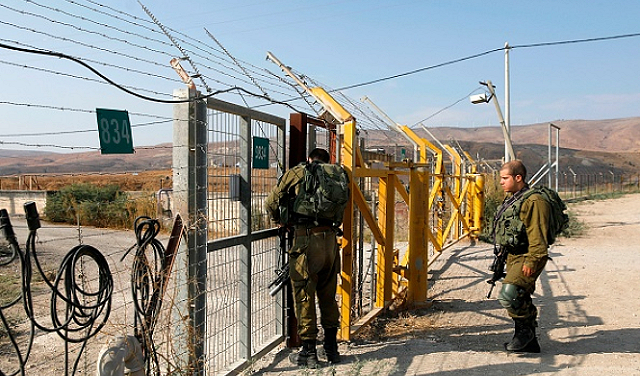
Israel approves construction of a security wall on the border with Jordan.

Israel's security cabinet approved a new plan to build a security wall along the eastern border with Jordan, Israel's Army Radio reported on Monday.


The plan, according to the radio, includes strengthening Israeli control over the Jordan Valley region by establishing settlement outposts, farms, and training camps.


It also includes the establishment of a multi-layered defense system extending 425 kilometers, from the southern occupied Golan Heights in the north to the city of Eilat in the south.


The radio described the project as a "preemptive strike" against what it described as Iran's attempts to turn the eastern border into a "terrorist front," as it put it.


In this context, Israeli Defense Minister Yisrael Katz stated that the construction of the wall represents a strategic step to confront what he considered Iranian attempts to smuggle weapons through Jordan and transform the border into a hostile front, stressing the need to complete the project quickly.


For its part, Hamas condemned the plan, stressing in a statement that building the wall will not provide the occupation with protection from the repercussions of its ongoing crimes against the Palestinian people, their land, and their holy sites.


The statement added that previous security wall projects erected by the occupation had failed to curb the resistance, and that this new wall would not achieve its goals, but would instead strengthen the Palestinian people's resolve to choose resistance as the sole path to liberation.


Last April, Israeli media reported that the Israeli government intended to begin building a new fence along the border with Jordan, under the pretext of halting arms and drug smuggling.


Reports indicate that the project will cost $1.4 billion and will take approximately three years to complete.


The idea for the wall dates back to 2012, when Prime Minister Benjamin Netanyahu ordered military officials to begin planning for a comprehensive fence along the eastern border. In 2015, Netanyahu announced a project to build a wall equipped with advanced sensors, later affirming his intention to "encircle the entire State of Israel with a security fence."


The Israeli Ministry of Defense began preliminary work last November to implement the project, amid escalating Israeli warnings that the border with Jordan was becoming a security threat.


These Israeli actions followed two high-profile attacks in the region last September and October. The first, at the Allenby Bridge crossing, resulted in the deaths of three Israelis and the martyrdom of Jordanian perpetrator Maher al-Jazi. The second, near the Dead Sea, resulted in the injury of two Israelis and the martyrdom of Jordanians Hussam Abu Ghazaleh and Amer Qawas.


The total border distance between Jordan on the one hand, and Israel and the West Bank on the other, is approximately 335 kilometers, of which 238 kilometers are with Israel and 97 kilometers with the West Bank.


The two sides are connected by three main border crossings: Sheikh Hussein, the King Hussein Bridge (Allenby), and Wadi Araba (Yitzhak Rabin). These crossings are subject to closure during times of security tension, as occurred during the ongoing Israeli aggression on the Gaza Strip.

OPINIONS

Mon 19 May 2025 9:11 am - Jerusalem Time

Amid Cease-Fire Talks, Israel Says It Has Expanded Ground Operations in Gaza

New York Times

New York Times

Opinion Writer

Israel aims to press Hamas into releasing hostages and ultimately to destroy the group, but says it will now also allow some aid to enter the enclave. 


By Isabel Kershner

The Israeli military announced on Sunday that its forces had begun “extensive ground operations” throughout the northern and southern Gaza Strip, advancing its plan to move farther into the enclave and seize more land in an intensified campaign aimed at pressuring Hamas amid negotiations for a cease-fire.

At the same time, the Israeli government said it would allow “a basic quantity of food” to enter Gaza. The announcement comes 11 weeks after it halted the entry of all goods and humanitarian assistance in an attempt to force Hamas into accepting a temporary extension of an earlier cease-fire deal that had expired.

President Trump has been clear about the need to avert a looming famine in Gaza and some Israeli military officials had privately concluded that Palestinians there faced widespread starvation unless aid deliveries were restored soon.

Prime Minister Benjamin Netanyahu’s office explained the abrupt reversal in Israeli policy as an “operational need to enable the expansion of the military operation to defeat Hamas,” adding in a statement that the military had recommended the step.

The statement did not say exactly when the resumption of aid would begin, or how or where it would be distributed. Plans for a new American-backed system for distributing aid meant to bypass Hamas have not yet been put into action. 

Details about the renewed offensive were also scarce, and it was not immediately clear how far the Israeli forces would go at this stage, or which areas of Gaza would be most affected.

As of Sunday night, troops had not yet reached the center of major cities like Gaza City and Khan Younis as they did at the height of the initial ground offensive in the fall of 2023 and early 2024. There are also fewer forces in Gaza now than there have been at other times, according to experts, though the military said on Sunday that five army divisions were involved in the offensive, amounting to tens of thousands of soldiers.

Israeli government and military officials have vowed to press ahead with this new stage in the 19-month war until Hamas releases the hostages it is still holding or until the group has been destroyed or forced to surrender.

Israeli warplanes pounded Gaza in recent days to prepare the way for the expansion of ground operations, the military said, adding that the wave of strikes had hit what it described as more than 670 “Hamas terror targets.”

OPINIONS

Mon 19 May 2025 9:01 am - Jerusalem Time

One Hundred Years of Tranquility

Dr. Ahmed Rafiq Awad

Remember the saying that normalization is nothing but accepting the "other's" narrative? This is no longer the case. Normalization is accepting the narrative, getting used to death and destruction, and submitting to the other's conditions and demands. Normalization is more than just "accepting the narrative," as if it were a kind of intellectual debate. Normalization today is what the Knesset member said about religious Zionism, regarding the world's acceptance of the killing of 100 Palestinians without complaint, complaint, or denunciation. Normalization is getting used to scenes of cities being destroyed and wiped off the map. It is the trivialization of meanings, the violation of the law, the insult to humanity, and the contempt of religions. It is also the subversion of standards, the cherry-picking of morals, and the use of slogans to serve policies.
It is no longer a matter of accepting the other's narrative; it has gone beyond that to much more. Normalization is also surrender and submission to hegemony and influence. It is the abandonment of one's role, vision, and interest. It is the normalization of manifestations of familial cuckoldry on social media. It is the normalization of scenes of homosexuality and the celebration of it. It is the acceptance of aggression against Islamic symbols and sanctities. It is the rewarding of the enemy and the punishment of the brother. It is the complete turning away from authentic affiliations in search of dubious protection. Normalization is the abandonment and disavowal of goals and references. It is the pretense of modernity and globalism despite the siege and violation, and the request for protection, funding, and legitimacy from abroad. It is the acceptance of alienation in the school curriculum and the sterility of the university curriculum, and the submission and denial of the national or collective national identity under the pretext of fighting hatred and extremism.
Normalization is the extraction of the fat from the idea, body, and brain. It is the imposition of a settlement by force, and it is hostility, arrogance, and bullying without resistance or even thinking about it.
Normalization means not finding options and eliminating them, not trying again, not relying on our resources, our competencies, and our people. Normalization means accepting whatever is offered to you without discussion or debate, and accepting to be the playing field, not the players.
Normalization is the acceptance of randomness, improvisation, violence, poverty, ignorance, the non-transfer of power, the refusal to allow dialogue, and the conditions and norms of the modern state and the terms of governance.
Normalization in this sense is an intellectual, moral, political, and military defeat, because normalization is the antithesis of a normal relationship. It is nullification, annexation, and annexation on the one hand, and depletion and exhaustion on the other. Normalization is not the establishment of a normal relationship, but rather the true name for a relationship based on coercion and compulsion for the purpose of protection, satisfaction, occupation, or all of these combined.
Nor does normalization lead to beneficial outcomes. It does not lead to further development, stability, and progress. As I said, it is an unnatural relationship. The Palestinian experience is a prime example of this. The occupation thwarted the peace process by announcing annexation and displacement, aborted the resistance process through destruction, and suspended the application of international law so that we would not rely on it or resort to it. The Arab experience in this regard was no better. Normalization led, among other things in the Arab world, to further regional polarization, internecine conflicts, the subjugation of national decisions, and a departure from the region's constants—and I won't say constants other than that. Normalization, in this context, appeared to be a victory for Israel and a major setback for the entire region and everything in it. This calls for a comprehensive review of everything: the regime, culture, the public, and the administrative and labor systems. Normalization has not led to cooperation, partnerships, peace, and settlements, but rather to greater complexity and entanglement. Simply because normalization is a relationship not founded on equality, partnership, and conviction.
This unhealthy relationship is what led, and will continue to lead, to the loss and confusion we are in. This relationship is responsible for the major political rifts that began in the early 1980s. It seems that the facts that are quickly being revealed foretell very old relationships and friendships. And why not? Defeat does not come all at once, but rather is the accumulation of failure, weakness, absence, dependence, and alienation.
I say this on the occasion of the fact that Israel is waging an easy and comfortable war against us. There is no American pressure, but rather continuous and public support, no regional objections, and no sufficient Israeli opposition. Therefore, Israel—for its various reasons—views the continuation of the war as a necessity, not only for the public image, and not only to achieve victory over ghosts, but also because war is a greater demand of Israel. This war, sought by Israel, America, and the colonial West in general, is to bring calm to the region for at least a hundred years. Normalization, in this sense, is an essential part of this endeavor.

..............

Normalization is an intellectual, moral, political, and military defeat, because normalization is the antithesis of a normal relationship. It is nullification, annexation, and annexation on the one hand, and depletion and exhaustion on the other. Normalization is not the establishment of a normal relationship, but rather the true name for a relationship based on coercion and compulsion.


OPINIONS

Mon 19 May 2025 8:59 am - Jerusalem Time

Strategic goals collapsed and the Palestinians found themselves in a "political Bermuda Triangle."

Jackie Hoji

The prolonged armed struggle has yielded no results, negotiations have failed time and again, and diplomacy has remained impotent. Meanwhile, the Arab world has shifted to a new agenda, while Israel continues to consolidate its de facto control over the West Bank and advances a plan to transfer Gaza's residents without paying a political price.
There are moments when an entire history shrinks into a single sense of powerlessness—and that is the state of the Palestinians today. The summits held by US President Donald Trump with the rulers of Saudi Arabia, Qatar, and the UAE seem like the pinnacle of a new era: hundreds of billions of dollars have been invested in arms deals, infrastructure, and economic agreements.
Trump continues to play a pivotal role in shaping a "new American Middle East," aimed at displacing China and curbing Iranian influence. But amid these massive investments and a new vision for the region, one issue remains unaddressed: not even a preliminary plan to deliver humanitarian aid to Gaza has been reconsidered.
The Arab Summit, which began yesterday (Saturday) in Baghdad, like its predecessors over the past two decades, is a continuation of the tradition of empty slogans and phrases that have not translated into action. Representatives of Arab countries are not offering effective pressure mechanisms, nor are they considering taking practical steps towards Israel, while the Palestinian issue—which was ostensibly at the heart of Arab political existence—is pushed to the margins and hidden behind useless rhetoric.
In the current scenario, three strategic failures stand out; the three pillars on which Palestinian hopes were based have collapsed:
1. Armed struggle, described in religious and political discourse as "jihad for the sake of God," and in the Israeli narrative as "terrorism," has lost both its regional and international legitimacy. Resistance factions have not achieved political gains or strengthened popular support, but have instead led to further destruction and suffering for Palestinians.
2. The course of negotiations, from the Oslo Accords, through the Camp David talks and the Taba Conference, to the proposals of former Prime Minister Ehud Olmert, has not led to any tangible progress. Every time the hope of establishing a Palestinian state has come closer, an internal or external collapse has shattered it.
3. The international pillar—represented by UN resolutions, the Hague Court, diplomatic pressure from Europe, and humanitarian channels and human rights organizations—has eroded amid global polarization, regional interests, and new priorities. The "pursuit of justice" has become nothing more than an empty solidarity theater, with Palestinians standing alone on the stage.
Even within Israel, despite some efforts by activists, intellectuals, and a few left-wing politicians, there is currently no real proposal for an alternative solution. The Israeli leadership is entrenching the status quo, benefiting from regional complicity, and seeing no need for a permanent solution. The occupation has become transparent and has ceased to evoke a sense of urgency or presence in public discourse.
The current picture shows the Palestinians stuck in a "political Bermuda Triangle": armed struggle has been ineffective, negotiations have failed, and diplomacy is toothless. Every avenue through which a different future could have been charted has been closed.
The Arab world has changed, the international community is preoccupied with itself, and Israel continues to consolidate its de facto control and apartheid regime in the West Bank, advancing a deportation plan in Gaza without any political price or real threat that could change its course.
The Palestinians' sense of helplessness is not new, but this time it is no longer temporary; it has become part of the reality itself. As with every profound crisis, the current situation may produce an awakening whose scope and repercussions are unpredictable. However, today, the Palestinian people are witnessing the collapse of their strategic goals, in the absence of vision and support, and are left with one resonating question: Where do we go from here?

About Haaretz

...........

The current picture shows the Palestinians stuck in a "political Bermuda Triangle": armed struggle has been ineffective, negotiations have failed, and diplomacy is toothless. Every avenue through which a different future could have been charted has been closed.

PALESTINE

Mon 19 May 2025 8:58 am - Jerusalem Time

A former US official told Al-Quds: Trump will continue his "cold" approach to Netanyahu.

A former US official told Al-Quds correspondent that for now, it appears as though Trump will continue his "cold" approach to his relationship with Netanyahu, even as his aides insist his relationship with the Israeli prime minister remains strong. It also appears as though the US president no longer treats Israel as an indispensable state in the Middle East or the sole democracy in a sea of tyranny.


But according to the former official, who requested anonymity for privacy reasons, "It is unlikely that the United States will change its relationship with Israel. This is a very strong, historical relationship, deeply rooted from the founding of Israel until today, despite the change of American presidents and Israeli leaders."


He added: "Israel and America are a cohesive unit economically, militarily, intelligence-wise, culturally, and heritage-wise, and the United States is Israel's largest supporter. The administration supported Israel with more than $22 billion over the course of 15 months, gave it the green light to brutally and relentlessly bombard Gaza, and prevented the world from condemning Israel in international forums. The Trump administration has continued the same approach, if not worse. In Gaza, it allowed Israel and Netanyahu to violate the ceasefire and allowed Israel to impose a complete blockade on the Gaza Strip, despite widespread international opposition."


According to the former official, "Trump's electoral base fully supports Israel. Every official in the US government fully supports Israel, from the Vice President to the Secretary of State, to the Secretary of Defense, to the Director of the CIA, to his Middle East negotiator, Witkoff, and to Trump's ambassador to Israel, who fully embraces the Israeli position."


In this context, the New York Times reported yesterday that regarding Iran, Gaza, Syria, and Yemen, US President Donald Trump is moving forward with his Middle East policies without Israel, reshaping decades of foreign policy. It noted that when Trump shook hands with the new Syrian president, Ahmed al-Sharaa, and promised to lift sanctions on Syria at the Saudi royal palace last week, it was clear evidence of how Trump's Middle East diplomacy has virtually marginalized Israel.


But there is no indication that the United States is abandoning its historic ties with Israel, or that it will halt its military and economic support for it. During his flight from Riyadh to Doha, Trump dismissed concerns about Israel being marginalized. He told reporters who raised the issue of the estrangement between the United States and Israel, "No, not at all. It's a good thing for Israel to have a relationship like I have with these countries, the countries of the Middle East, almost all of them."


According to the newspaper, "Trump's five-day tour of the Middle East last week highlighted a new dynamic, one in which Israel—and Netanyahu in particular—have become an afterthought. In Saudi Arabia, Qatar, and the UAE, Trump sought to negotiate peace agreements with Iran and Yemen, and struck trillions of dollars in trade deals with wealthy Gulf states. He didn't even stop in Israel."


The newspaper quotes Itamar Rabinovich, the former Israeli ambassador to the United States, as saying: "The general feeling is that attention is shifting, particularly toward the Gulf states, where the money is."

Rabinovich added, "Trump seems to have lost much of his interest in working with Netanyahu to stop the war in Gaza, because he feels there is no point. Netanyahu is sticking to his position and is not backing down. Hamas is not backing down. It seems like a dead end with no hope."

OPINIONS

Mon 19 May 2025 8:58 am - Jerusalem Time

On the anniversary of the Nakba, confronting the truth of what happened is the first step toward justice.

David Kuttab

As our news feeds fill with reports of the latest Israeli airstrikes or diplomatic maneuvers, it's easy to lose sight of the fundamental injustice at the heart of the Israeli-Palestinian conflict. For Palestinians, Nakba Day—commemorated annually on May 15—reminds them of that original sin: the mass displacement of more than 750,000 Palestinians in 1948.
This was not a tragic incident of war, but a deliberate policy of ethnic cleansing that created a state by wiping out an entire people. Entire communities were displaced at gunpoint. Entire villages were destroyed. Families fled with nothing but the clothes on their backs—never to be allowed to return.
Today, Gaza is experiencing a second Nakba. Yet few in the international community know that the majority of Gaza's residents are themselves refugees or descendants of refugees from the towns and villages of southern Palestine. What we are seeing unfolding now is not separate from the Nakba, but rather a continuation of it.
Now, nearly eight decades later, the world must confront not only the consequences of that displacement, but also its reality. This requires more than mere sympathetic statements. It requires an accounting of the facts of what was taken—and from whom.
On Thursday, at the National Press Club in Washington, a Palestinian family presented that story with indisputable documentation. Adel Bseiso, a Palestinian-American, unveiled a treasure trove of meticulously preserved records compiled by his grandfather, Mahrous Mustafa Bseiso. These records include original land deeds, tax records, sales contracts, and correspondence—legal documents documenting the family's extensive land holdings in and around Beersheba, in the Negev region of southern Palestine.
Mahrous, like many Palestinians, believed in building a life through honest work and land management. He transformed desert areas into fertile farms, orchards, and commercial ventures. However, this legacy was violently cut short in 1948, when Israeli forces occupied Beersheba and expelled its Palestinian residents. The Bseiso family, along with tens of thousands of its members, lost everything.
Adel was born in the West Bank city of Al-Bireh and later immigrated to the United States. He grew up with his father, Jawdat Mahrous Bseiso, the promising young heir to the family legacy, who was forever haunted by the events of the Nakba. Jawdat never recovered. Adel recalls: "He would often lose consciousness. He would constantly ask, 'What happened to us? How can everything be taken away and no one held accountable?'"
Answering these questions became Adel's life's mission. His research led him to create the Bseiso Family Archive, now the largest known collection of original land ownership documents from a single Palestinian family displaced in 1948. In 2025, after years of digitization, the archive was officially published online in partnership with Columbia University's Edward Said Program in Modern Arab Studies.
This initiative is not revenge, but recognition. For Adel and thousands like him, justice begins with truth. The Bseiso family is not demanding the impossible, but rather the same demands of any displaced people: recognition, accountability, and dignity.
Palestinians continue to demand a comprehensive and just solution based on international law and fundamental human rights. The right of return, enshrined in UN General Assembly Resolution 194, remains the cornerstone of that vision. Whether through actual return or compensation and resettlement, the principle that no one benefits from ethnic cleansing must be upheld.
But Israel did not stop at refusing to recognize the Nakba; rather, it actively sought to erase its traces by denying the existence of Palestinian refugees. One of the most obvious examples of this campaign is its efforts to delegitimize the United Nations Relief and Works Agency for Palestine Refugees (UNRWA), the sole UN agency dedicated to Palestinian refugees.
For generations, UNRWA has provided education, healthcare, and essential services. It is also a symbol of international recognition and hope for millions of refugees displaced by war and occupation. By seeking to dismantle this agency, Israel seeks to erase the humanitarian lifeline it provides and the legal status of Palestinian refugees. It believes that if UNRWA ceases to exist, the right of return will be cut off with it. This is not just a bureaucratic maneuver; it is an assault on identity, history, and justice.
Despite everything that has happened since 1948—through the 1967 war, the two intifadas, and the devastation since October 7, 2023—the Palestinians have not abandoned their call for a just and comprehensive solution. They are not demanding special treatment; they are demanding that the world fulfill its promises. They are demanding that international law be more than just ink on paper.
The issue of responsibility cannot be postponed indefinitely. Without addressing the root causes of Palestinian displacement, neither the two-state solution, nor a ceasefire, nor any negotiations will be complete.
Any true peace must begin with recognizing who was displaced, how, and by whom.
On this Nakba Day, as Palestinians mark 77 years of loss and resilience, the world must confront an uncomfortable truth: The suffering did not begin on October 7, 2023, or even in 1967. It began in 1948, when one nation was built by uprooting another.
The Bseiso archive is not just a collection of yellowed papers. It is a living challenge to a long-standing historical erasure. It is a testament to the ongoing Palestinian demand—not just for justice, but for truth.

About Arab News

...........

The issue of responsibility cannot be postponed indefinitely. Without addressing the root causes of the displacement of Palestinians, neither the two-state solution, nor a ceasefire, nor any negotiations will be complete.

OPINIONS

Mon 19 May 2025 8:57 am - Jerusalem Time

In the name of the burned bodies!

Issam Bakr

Issam Bakr

Opinion Writer

Issam Bakr

What remains unsaid? Nearly two years have been added to the long years of the siege imposed on a million and a half Palestinians, living the woes of death before their eyes, watching at every moment the fall of a shell or the destruction of a home, and with it the fading hope of life under the rubble of homes and buildings that have been razed to the ground. Is there a description that surpasses a war of extermination? What has not been said, or what remains unsaid in the body of the noisy statements, the glittering sentences and descriptions, and the dictionaries of grammar and morphology that are almost devoid of verbs and do not carry a place for parsing? Calls for help, demands, declarations of positions, fact sheets, numbers and statistics have been covered by international and local institutions. The press and media agencies are all teeming with news and reports describing the scene. You will not find a sentence, position, phrase or statement by an official who did not hesitate in the corridors of decision-making, from the highest international and local platforms, from yesterday's Baghdad summit to the United Nations, to the statements of the forces, factions, associations and local frameworks, combined or separately, to the government and official and unofficial bodies. Has anyone lifted a finger? Has the killing stopped? Did Israel, the oasis of Middle Eastern democracy and the most moral army in the world, respond to these voices?!
Hundreds of questions circulate in the hearts of each of us, laden with worry and exhaustion, keeping people awake at night amidst feelings of despair and shocking and hurtful abandonment, if only there was any humanity left to gather in the face of scenes of death circling every corner of Gaza, carried by "Gideon's Carriages" day and night, continuing to bury bodies under the rubble and bomb hospitals and tents. There really is nothing left to say. We have said everything but without action, without being able to change the picture. The children of Gaza, perhaps those who remain, are tired of waiting. Their eyes are knocking on the unseen and the unknown, and with them the doors of hearts, searching for a morsel of bread that they cannot find. Every day we browse the internet search engine and news websites, we find them in all languages talking about the catastrophe: news, reports, and painful pictures, but we see them and perhaps we are affected for a while, perhaps we shed tears, we suffer as human beings, but we continue with life, our lives, our work, the daily bloody routine. We do not move a finger while we issue demands to the world to intervene, to move. Our consciences shake, and we suffer from helplessness and constant headaches due to our lack of resourcefulness and inability, but we also practice the rituals of life. We eat, drink, and sleep. We open long discussions, competing while they are without food or medicine, without electricity or potable water. The minimum requirements of life have become a dream for them. We compete and discuss secondary and superficial matters while we neglect the most important and serious treatments. We care about positions, titles, and titles, and we do not provide them with a single morsel of bread. With our inability, negligence and preoccupation, while the smell of blood and death fills the place, and we are busy describing the situation, we sometimes pass around responsibility and mechanisms to get out of the current situation. This rarely happens to any people. Crises, disasters and wars, even if the people are divided or even torn apart, unite them, and the disagreement fades away, no matter how deep it is. The group meets, no matter how different they are, to face the situation united, not placing obstacles and disagreement in front of their eyes, while they are in a state of systematic genocide and destruction by an enemy that wants to erase and annihilate them.
Over the past few days, and perhaps this is what prompted me to write this way, we have all been shocked by the sight of limbs and children in tents and what remains of the shelters, the depletion of flour and the rise in prices, everything is burning for the citizen in Gaza, there are no basic commodities, the warehouses are completely empty. The government, through its head, declared the Gaza Strip a famine zone a few days ago, which requires many steps, procedures and follow-up to prevent a disaster, activate response plans and provide the means of survival and existence for the people of Gaza whose dreams are crushed by Gideon's carts, forcing them time after time to forcibly leave from Al-Mawasi, Al-Wasat and Khan Younis to Rafah and from there, after it is no longer a safe place, to North Gaza, Beit Hanoun and Beit Lahia, which are burning with the fire of daily burning. A bite of bread has become a wish! And water is a dream for some. We have all seen the ugliness of the scenes and the enormity of the loss, charred and featureless. No one can say they have not seen the scenes of burned bodies? Other bodies are being ravaged by various diseases, malnutrition, death by starvation, perhaps by oppression, tender bodies unable to move as if bidding farewell to life with the innocence of childhood and the contempt of the silent world, others torn apart by shells, losing their limbs, and mothers tasting the agony of being unable to provide food for these hungry children in a world saturated with pleasures. Is this the meaning of humanity guaranteed by the texts of international conventions, and the minds of those who formulated the system of human rights and international law? A people starving and selling to the world their dignity, pride, honor, patience and pride, left alone and isolated, while the master of the world, Trump, doles it out with beautiful recipes for immigration and departure! And he blesses the practices of the occupation, in which he is a partner, to erase an entire people from existence.
The burned bodies will turn into curses that haunt those who let Gaza down and slap in the faces of those who remained silent and could have done anything but did not. Why has the world really taken action to end the suffering? Is there no international, Arab, or anywhere in this world will to send food aid or allow the entry of aid that has begun to rot at the crossings without being allowed to pass? Is there no one in this free, democratic world who will provide the bodies ravaged by hunger with a drop of water that might save a human life! In the name of these charred bodies whose appearance has been lost and whose features have disappeared due to the fires of bombing and blind hatred, do not continue to remain silent. Do something. Do anything. Life is no longer and was never normal or sustainable! Let us break the lifestyle and get used to what is happening. It is not normal at all and never was. The fire will burn everyone. Israel wants a land devoid of its owners. No one will survive if we do not do what we can. The ground will shake beneath everyone. The lesson and hope from all that is happening is that we are still here, continuing to survive and exist.

..................

Is there no international, Arab, or anywhere else in the world will to send food aid or allow the entry of aid that has begun to rot at the crossings without being allowed to pass?


OPINIONS

Mon 19 May 2025 8:56 am - Jerusalem Time

Silent Annexation: How Is Israel Implementing Annexation in the West Bank Without an Official Announcement?

Nabhan Khreisha

Anyone waiting for Israel to announce its annexation of parts of the West Bank is mistaken. Israel has already begun its gradual, silent annexation, using bureaucratic measures and settlement tools, while keeping the door ajar for the international community. These gradual measures include escalating settlement activity, confiscating land, and demolishing Palestinian facilities. These measures are accompanied by a weakening Palestinian position, with international positions limited to issuing condemnatory statements and calling for a halt to settlement activity, under headlines such as: "Annexation undermines the chances of establishing a definitively independent Palestinian state and pushes the situation toward a long-term apartheid regime." Since Netanyahu's coalition assumed power in late 2022, the West Bank has witnessed an unprecedented escalation in "silent" annexation measures, altering the geopolitics of the West Bank.
Every day, the right-wing Benjamin government announces the annexation of Palestinian land in Area C of the West Bank. The Office of the United Nations High Commissioner for Human Rights stated in a report, "The continued transfer of powers over the West Bank from the military to the government facilitates the expansion of Israeli settlements in the West Bank and the imposition of Israeli sovereignty over them, or over large parts of them." As part of this silent annexation, settlers and the military have paved dozens of unauthorized roads around settlements and outposts, with the aim of connecting them to each other, while obstructing Palestinian movement. At the same time, the Israeli government is intensifying its services to the settlements, institutionalizing patterns of systematic discrimination, including racial segregation, oppression, control, and other inhumane acts against the Palestinian people.
The policy of silent annexation is embodied on the ground by the construction of bypass roads such as the "Sovereignty Road" and the "Fabric of Life" project, which aim to completely isolate the Al-Eizariya area, east of East Jerusalem, and redirect Palestinian movement from a road that passes through the "Jabal al-Baba" area on the outskirts of Al-Eizariya, all the way to Ramallah. Since the appointment of Bezalel Smotrich as Minister of Finance and an official with broad powers in charge of the Civil Administration, settlement projects have been proposed and approved periodically, without being brought to the political level for discussion, as was the case in the past. As part of the policy of silent annexation, the Civil Administration recently transformed approximately 18,000 dunams of West Bank land into areas designated for "settler grazing," particularly in the Jordan Valley. This is accompanied by systematic displacement of Bedouin communities in the Masafer Yatta area, south of Hebron, and in the Jordan Valley.
There is broad consensus among Israelis on the issue of annexation, but the disagreement among them concerns the area to be annexed. Some support the annexation of only the settlement blocs, while right-wing forces and settlers demand the annexation of all of Area C. This debate coincides with the recent approval by the Israeli Security Cabinet of a decision to register land in Area C, which constitutes 60% of the West Bank. This decision prevents Palestinians from being able to prove ownership of their land and prevents similar land registration procedures implemented by the Palestinian Authority. Furthermore, there are vast areas not owned by Palestinians and registered as "state land" belonging to the Israeli occupation. In parallel, the Israeli government is pushing forward with measures to enact a law that would allow settlers to purchase land in the heart of Palestinian towns and cities in the West Bank. A law was also passed requiring the use of the phrase "Judea and Samaria" as an official term instead of the West Bank.
The Israeli right, which salivated when Trump assumed the presidency for a second term and was optimistic about his support and political cover for annexing the West Bank, was disappointed by such a prospect. This was due to indications of “tension” in US-Israeli relations after the Trump administration took steps that were considered a departure from traditional principles of support for Israel. These steps included the US administration’s bypassing of Israel in agreeing with Hamas to release American prisoner Idan Alexander. This was preceded by an agreement with the Houthis to halt attacks on US ships in exchange for a halt to US attacks on them, without Israel’s knowledge and without America even requesting that the Houthis halt their attacks on Israel. There was also the negotiation between Washington and Tehran over the nuclear program, against Israel’s wishes, followed by Trump’s Gulf trade tour and his meeting with Syrian President Sharaa, also against Israel’s wishes.
In light of this, there are several scenarios for imposing Israeli sovereignty over the West Bank, or over parts of it, officially, which differ in their methods and repercussions:
(1) The partial formal annexation of Area C, which comprises approximately 60% of the West Bank and is currently under Israeli security and administrative control under the Oslo Accords. This scenario is likely to materialize if the Trump administration does not oppose it or maintains a neutral position, due to pressure from the Israeli lobby, Christian Zionist institutions, and the Republican Party. However, it will face strong international opposition, particularly from the European Union and Arab countries. The implications of this scenario include the potential collapse of the Palestinian Authority and potential protests by Palestinians that could erupt into street violence.
(2) De facto annexation without an official declaration (the policy of fait accompli), through Israel's continued settlement expansion, land confiscation, legalization of outposts, and land registration without issuing an official declaration of annexation. This scenario is currently being implemented and is less diplomatically costly because it does not directly provoke the international community. However, its repercussions include the erosion of the two-state solution, the creation of a broader structural apartheid regime, the stifling of Palestinian development, and the construction of a permanent reality of control without political representation for Palestinians.
(3) Annexing only the major settlement blocs, by imposing sovereignty over areas such as Ma'ale Adumim, Gush Etzion, Ariel, and Modi'in Illit, while leaving the rest of the West Bank for future negotiations. This scenario has already received implicit support from some international powers, and may be presented as a "middle" solution within a broader settlement plan. However, its repercussions would render the future Palestinian state (if it were to emerge) geographically unconnected, and it would also strengthen the position of the Palestinian opposition, as it would cut off the most important economic and geographical areas from the West Bank.
(4) A comprehensive annexation of the entire West Bank, officially to Israel, including Areas A and B. However, this is unlikely in the near future due to the demographic weight of the Palestinians (approximately 3 million people), which requires redefining "citizenship," either by granting citizenship to Palestinians or imposing an official apartheid regime. The possible repercussions of this scenario include the final end of the two-state solution, widespread confrontations, and massive international and human rights pressure and diplomatic isolation for Israel.
(5) Annexation within an interim agreement with the Palestinian Authority or a third country, through an agreement that may be concluded with the Palestinian Authority (or under international auspices) that recognizes Israel's control over some areas in exchange for political and economic settlements. However, the likelihood is slim given the current political situation and internal Palestinian division. Among the repercussions of this scenario is that it may face widespread Palestinian popular rejection, in addition to undermining the historical justice of the Palestinian people.
The scenario currently being implemented by Israel is "de facto annexation without an official declaration," by taking steps to impose sovereignty over the territory through gradual bureaucratic and settlement tools. Other scenarios depend on the balance of political power within Israel, the American position, and regional and international developments.


.............

As part of the policy of silent annexation, the Civil Administration recently transformed approximately 18,000 dunams of West Bank land into areas designated for "settler grazing," particularly in the Jordan Valley. This is accompanied by systematic displacement of Bedouin communities in the Masafer Yatta area and the Jordan Valley.


PALESTINE

Mon 19 May 2025 8:22 am - Jerusalem Time

An Israeli force infiltrates the Gaza Strip in women's clothing, assassinates a leader in Khan Yunis, and kidnaps his family.

An Israeli special force infiltrated the city of Khan Yunis in the southern Gaza Strip at dawn on Monday, using a civilian vehicle and disguised in women's clothing.


The force stormed a house, executed the head of the household, who was later revealed to be a leader in the Al-Nasser Brigades, and then kidnapped the wife and her children.


The Israeli army carried out a special operation early this morning in the city of Khan Yunis in the southern Gaza Strip, according to a report by the Walla news website, citing a military source. The source confirmed that the operation took place without any casualties among Israeli forces, without revealing further details about its objectives.


For his part, the Israeli army spokesman stated, following the operation, "We are at the height of Operation Gideon, and we are operating throughout the Gaza Strip."


However, eyewitnesses in Khan Yunis provided different accounts, confirming that an Israeli special forces force infiltrated the area disguised as women, boarded a civilian vehicle, and then stormed a house in the heart of the city.


The force executed a Palestinian inside the house, before arresting his wife and children. It later killed another child as it withdrew from the scene.


Following the operation, Israeli warplanes launched more than 30 raids within 40 minutes to secure the withdrawal of the special forces.


The raids were accompanied by heavy fire from helicopters and tanks, resulting in dozens of deaths and injuries.


The raids targeted tents housing displaced people in central Khan Yunis and the pharmaceutical laboratory of the Nasser Medical Complex.


Al-Aqsa TV confirmed the arrival of the body of the martyr executed by Israeli forces to Nasser Hospital, where the martyr's identity was announced as Ahmed Kamel Sarhan.

PALESTINE

Mon 19 May 2025 8:16 am - Jerusalem Time

Hamas denies agreeing to release 7-9 hostages in exchange for a two-month truce.

Hamas denied agreeing to the release of between seven and nine Israeli hostages in exchange for the release of hundreds of Palestinian prisoners from Israeli jails and a two-month truce, as previously reported on Sunday evening.


While CNN quoted an unnamed Hamas official as saying, "We agreed to release 7-9 hostages in exchange for 300 (Palestinian) prisoners and a two-month truce," Hamas leader Sami Abu Zuhri denied agreeing to release nine prisoners in exchange for a two-month truce.


Abu Zuhri asserted that "the occupation is trying to confuse the arena with fake news, in order to pressure the resistance and pass off its crimes."


While Abu Zuhri denied the reports, he affirmed the movement's readiness "to release the prisoners en masse, provided the occupation commits to an international ceasefire."


According to Israeli Channel 12, Israel is demanding that any ceasefire agreement—i.e., a final, not partial, agreement—include the disarmament of Hamas, the removal of weapons from Gaza, the surrender of the movement, and the exile of its leaders.


The channel reported that Israel is offering to release "100 prisoners serving life sentences in exchange for half of the living hostages, and more than 1,000 prisoners arrested after October 7 in exchange for the dead hostages."


Israeli Channel 13 reported that the offer Israel presented to Hamas yesterday, Saturday, includes:

10 live hostages, half of the dead hostages, to be released on the same day.

60-day ceasefire.

Humanitarian aid will be delivered immediately after the agreement is signed.


According to the same report, Hamas's demands are:

US President Donald Trump announces a ceasefire.

Trump personally guarantees that Israel will not resume firing after the hostages are released.

US President Donald Trump's envoy, Steve Witkoff, will sign the agreement himself.


The channel's report stated that Israel agreed to withdraw from the territories it occupied during its operation since the resumption of the war, noting that it was "prepared to discuss ending the war within the days of the ceasefire."


The report also noted that Tel Aviv "will not agree to withdraw from the Philadelphi and Netzarim axes."


According to the Israeli Public Broadcasting Corporation (“Kan 11”), the Israeli proposal presented to the mediators stipulates that:

Half of the living Israeli prisoners are released on the first day.

A sixty-day ceasefire, after which all hostages will be released.

During the ceasefire, the conditions for ending the war will be fulfilled, which include disarming the Gaza Strip and displacing Hamas leaders from it, as part of its end.


Witkov presented a new proposal a few days ago, putting pressure on Hamas and Israel.
According to the Walla news website, White House envoy Steve Witkoff presented an updated proposal to Israel and Hamas "a few days ago" for a prisoner exchange and ceasefire in Gaza, and is "pressuring both sides to accept it," according to an Israeli official and a source the website's report described as familiar with the details.


The report indicated that the Trump administration "is trying to prevent a large-scale Israeli military operation in Gaza, release more hostages, and allow humanitarian aid to enter, to prevent famine and a humanitarian catastrophe."


Although "Israel and Hamas have two negotiating teams in Doha, the real talks on Witkoff's proposal are currently taking place through other channels," the sources said. This comes as Israeli Chief of Staff Eyal Zamir stressed on Sunday that reaching a prisoner exchange agreement with Hamas does not mean an end to the ongoing war on the Gaza Strip, which has been ongoing for more than 18 months. He indicated that the occupation army's operation, dubbed "Gideon's Wagons," will continue until Hamas is defeated and its combat capabilities are broken.


An Israeli military spokesman said Sunday evening that the army would "expand operational control" over several areas in Gaza and work to tear the Strip apart.

He stated that "five military divisions are currently operating in the Gaza Strip," adding that his operations are based on the following principles: "cleansing the area under our control, eliminating the enemy's infrastructure there, both above and below ground, transferring residents from combat zones to other areas, and eliminating Hamas's chain of command."


PALESTINE

Mon 19 May 2025 8:14 am - Jerusalem Time

Arrests, raids, and home demolitions in the West Bank and Jerusalem

Israeli occupation forces continued, on Monday, their campaign of arrests, raids, and demolition of citizens' homes in various areas of the West Bank and occupied Jerusalem.


In Tubas, the director of the Prisoners Club in Tubas, Kamal Bani Odeh, reported that occupation forces arrested the freed prisoner Omar Samir Ahmed Abu Khader after raiding his home.


He explained that the occupation forces searched the detainee's home, as well as the homes of his father and brother, and wreaked havoc on their contents.


In Qalqilya, occupation forces stormed the city and arrested two young men, Moamen Abu Shaheen and Anas Abu Shaheen, after raiding and searching their homes.


In Ramallah, occupation forces, accompanied by a bulldozer, stormed the village of Shuqba and proceeded to demolish the two-story home of Ibrahim Abdel Qader Shalash, which covers an area of more than half a dunam, east of the village.


In Bethlehem, the occupation forces arrested Musa Awad (34 years old) from Jabal Al-Mawaleh, Anas Muhammad Abu Ahour (30 years old) from Al-Saff Street in Bethlehem, Muhammad Khaled Abu Ammar (26 years old), Muhammad Raed Abayat, and Khalil Hassan Al-Nabhan from Wadi Abu Freiha to the east.


Meanwhile, Shadi Muhammad al-Hashlamoun (14 years old) and Ammar Ali Taqatqa (15 years old) were arrested from the town of Beit Fajjar in the south, after raiding and searching their parents’ homes.


The occupation forces also destroyed the shrine of the martyr Atef Abayat in the Wadi Shahin area of Bethlehem.


In occupied Jerusalem, a special force from the occupation army arrested Asem Idris Hamouda, from Al-Qubayba, last night as he was passing through Jaba' roundabout, north of Jerusalem.


The Israeli occupation forces also stormed the town of Yat Anan and raided several homes.


PALESTINE

Mon 19 May 2025 8:05 am - Jerusalem Time

Gaza: Dead and wounded in Israeli raids on the Gaza Strip

Five civilians were killed and others injured tonight in an Israeli airstrike on a house northwest of Khan Yunis, south of the Gaza Strip. The death toll in the past 24 hours has risen to 148.


Five citizens were killed and others injured when the occupation forces bombed the Abu Al-Rous family home in the vicinity of Hamad City, northwest of Khan Yunis.


Medical sources announced the death of one of the wounded inside the Indonesian Hospital in the town of Beit Lahia, north of the Gaza Strip, after being targeted by Israeli drones.


The occupation also bombed a tent housing displaced persons in the Al-Sawarah area, south of the Nuseirat camp in the central Gaza Strip, resulting in a number of deaths and injuries.


The occupation forces surrounded the hospital and opened heavy fire in its vicinity, before bulldozers demolished its northern wall.


The Israeli occupation announced on Sunday evening the launch of a new ground invasion of several areas within the Gaza Strip, marking a dangerous escalation in the ongoing war of extermination that has been ongoing for nearly 19 months.


Since October 7, 2023, the Israeli occupation has been committing genocidal crimes in the Gaza Strip, leaving more than 174,000 dead and wounded, most of them children and women, and more than 11,000 missing, in addition to hundreds of thousands displaced.