PALESTINE

Tue 20 May 2025 8:29 pm - Jerusalem Time

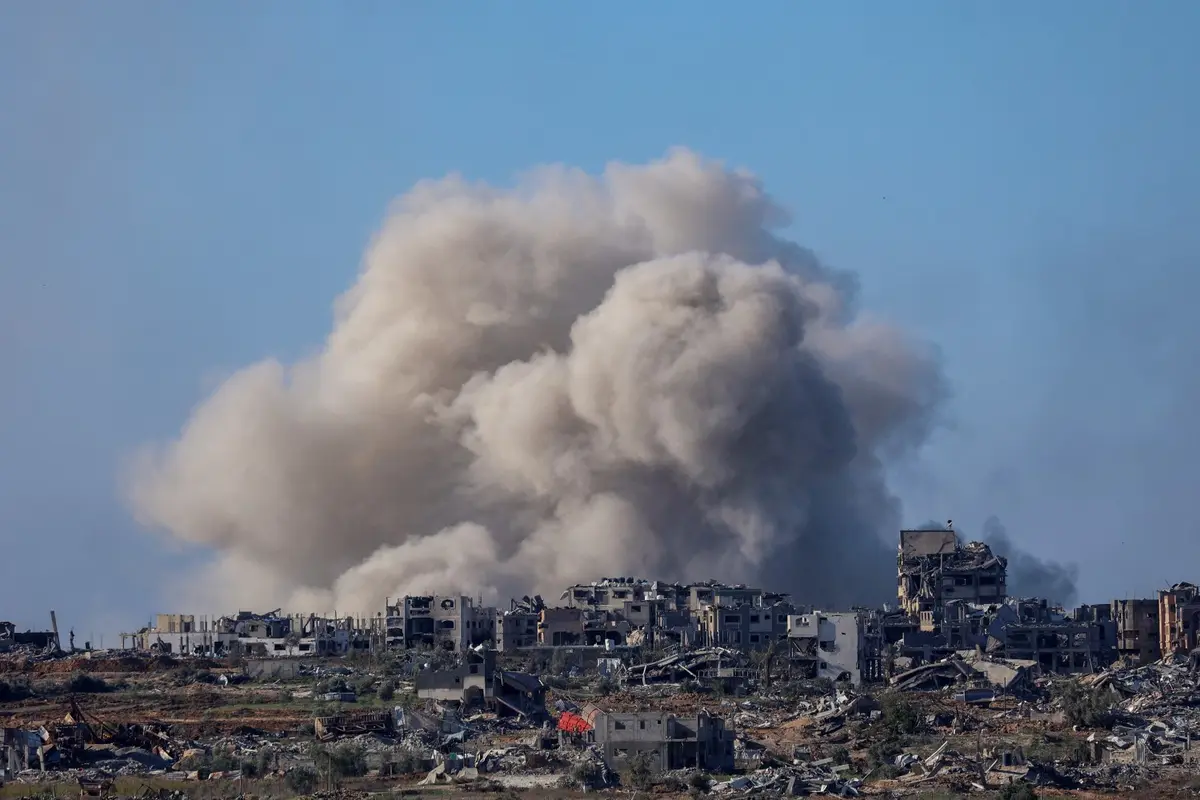
79 Palestinians killed in Gaza and reports of a building collapsing on an Israeli force

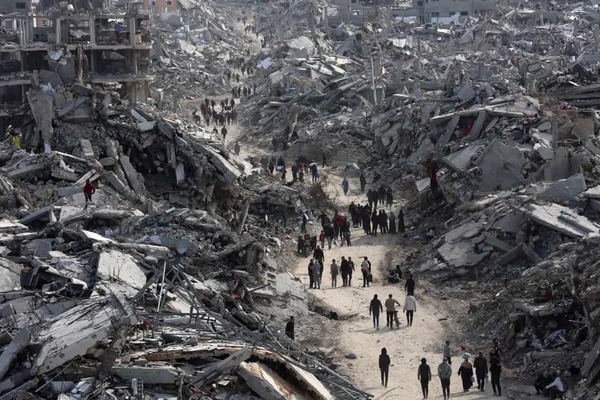
Israeli media reported a new "security incident" in the Gaza Strip amid escalating resistance operations, while occupation forces committed new massacres that have resulted in approximately 80 dead since dawn on Tuesday.


The same sources said that the Israeli military censorship imposed a ban on publishing information about the security incident.


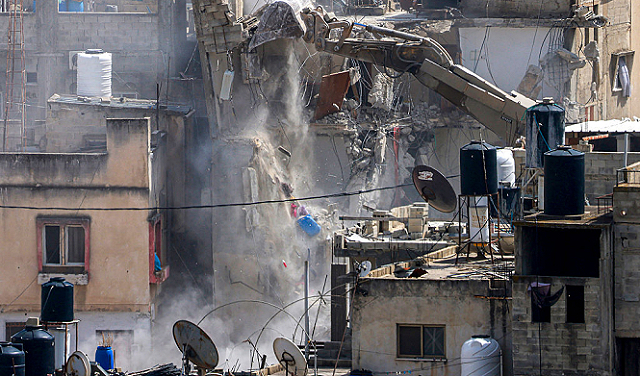
It added that a building collapsed on an Israeli force, seriously wounding two soldiers and moderately wounding a third.


Reports indicate that a soldier may be missing inside the collapsed building, and that rescue teams are working under heavy fire.


This news of potential Israeli military losses comes as the Al-Quds Brigades, the military wing of the Islamic Jihad movement, announced an operation targeting occupation forces east of Khan Yunis in the southern Gaza Strip.


The Brigades said via Telegram that its fighters targeted an Israeli Merkava tank with an RPG anti-tank missile in the Khuza'a area.


She added that the fighters confirmed that a tank had caught fire while it was penetrating the area.


Resistance operations have recently increased in Rafah and Khan Yunis in the eastern areas of Gaza City, as well as in Beit Hanoun and Beit Lahia in the northern Gaza Strip, resulting in the deaths and injuries of several Israeli soldiers.


Palestinian resistance operations are increasing despite the ferocity of the bombing and the deployment of additional forces by the occupation army in the Gaza Strip.


ongoing massacres

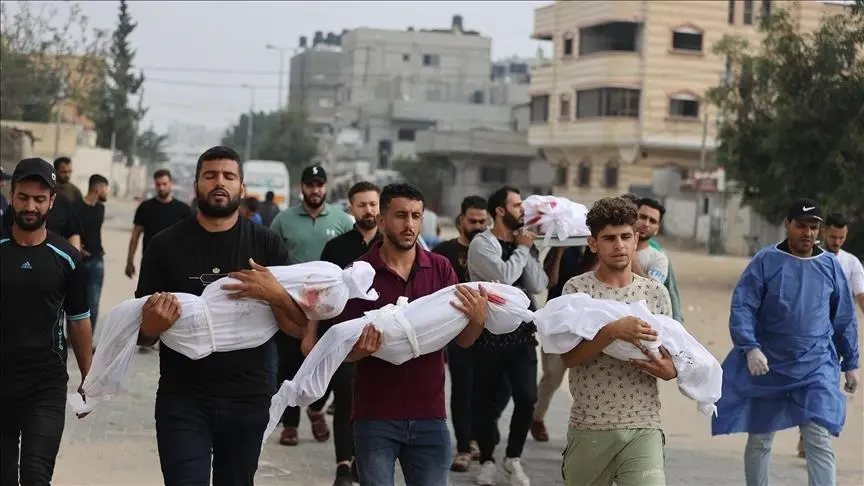
In developments in the aggression, the Ministry of Health in Gaza reported that 79 Palestinians were killed as a result of the Israeli bombing of the Gaza Strip since dawn today.


The ministry said that 87 martyrs and 290 wounded people arrived at Gaza Strip hospitals over the past 24 hours.


Today's martyrs included four who were killed in the bombing of Khalifa School, which was sheltering displaced people in the Beit Lahia project in the northern Gaza Strip.


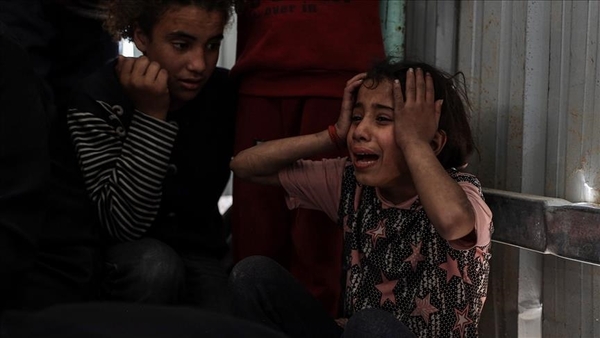
Al Jazeera's correspondent said the bombing also injured dozens, most of them children and women.


Not far from Beit Lahia, an Al Jazeera correspondent reported that Palestinians, including women and children, were killed in an Israeli bombardment that targeted the home of the Al-Maqeed family in Jabalia camp.


Thirteen Palestinians were also killed in an Israeli airstrike on the Musa bin Nusair School, which was sheltering displaced people in the Al-Daraj neighborhood east of Gaza City, early this morning.


Fifteen Palestinians, including women and children, were killed and others injured in airstrikes targeting a gas station west of the Nuseirat refugee camp in the central Gaza Strip, which was crowded with displaced people.


Also in the central Gaza Strip, two people were killed in an airstrike targeting Palestinians west of Deir al-Balah.


The raid came hours after 13 Palestinians were killed when Israeli aircraft bombed a house in Deir al-Balah.


In the southern Gaza Strip, Israeli aircraft launched raids on Khan Yunis and nearby towns, after intensifying their raids on displaced people's tents in the Al-Mawasi area west of the city in recent days.


Israel resumed its aggression against Gaza on March 18, after reneging on the ceasefire agreement. Its attacks have since resulted in more than 3,400 deaths and 9,600 injuries, according to data from the Ministry of Health in Gaza.

PALESTINE

Tue 20 May 2025 7:45 pm - Jerusalem Time

Three Palestinians were injured, one of them critically, by Israeli occupation forces and settlers west of Ramallah.

Three citizens were injured on Tuesday evening by settlers and Israeli occupation forces in the village of Beit Lilo, northwest of Ramallah.


Eyewitnesses reported that settlers from the Halamish settlement and its affiliated settlement outposts attacked the Al-Daher area on the outskirts of the village of Beit Lilo, under the protection of occupation soldiers. They attacked a number of homes, including the home of citizen Muhammad Othman Ziyada, and opened fire on residents who confronted them, which led to the injury of three citizens with live bullets. They were subsequently transferred to Ramallah Hospital, where the condition of one of them was described as critical.


Eyewitnesses added that the occupation forces, who provided protection for the settlers, fired tear gas bombs and assaulted a number of citizens, causing bruises and suffocation.


It is noteworthy that the occupation forces and settlers carried out a total of 1,693 attacks during the past month of April, according to a report issued by the Wall and Settlement Resistance Commission, in a continuation of the ongoing terrorism perpetrated by the occupying state against the Palestinian people, their lands, and their property.


The report indicated that the occupation army carried out 1,352 attacks, while settlers carried out 341 attacks, most of which were concentrated in the governorates of Hebron with 292 attacks, Ramallah and Al-Bireh with 269 attacks, and Nablus with 254 attacks.

PALESTINE

Tue 20 May 2025 7:25 pm - Jerusalem Time

Hamas statement on developments in the Doha negotiations on Gaza

On Monday evening, the Islamic Resistance Movement, Hamas, accused Israeli Prime Minister Benjamin Netanyahu of misleading international public opinion by keeping his negotiating delegation in the Qatari capital, Doha, despite the delegation's lack of actual authority to reach an agreement.


The statement emphasized that the occupation delegation continues to extend its stay "day by day" without engaging in substantive negotiations, explaining that the last serious round of talks had been suspended since last Saturday, which was considered a blatant attempt to falsely pretend to participate in the negotiating process.


The statement rejected Netanyahu's recent statements about the entry of aid into the Gaza Strip, describing them as "an attempt to throw dust in the eyes and deceive the international community." It emphasized that no aid truck has actually entered the Strip to date, including the few convoys that arrived at the Kerem Shalom crossing without being received by any international body.


The statement noted that the escalation of Israeli aggression, the targeting of civilian infrastructure, and the perpetration of massacres against women and children, coinciding with the release of prisoner Idan Alexander, reveals the occupation government's rejection of any genuine settlement and confirms its adherence to the option of war and destruction.


The movement held the occupation government fully responsible for the failure of efforts to reach an agreement, citing statements by Hebrew officials announcing their intention to continue military operations and displace residents, in blatant defiance of international efforts.


At the same time, the statement welcomed the expanding circle of international positions rejecting the aggression and blockade, particularly from a number of European countries, considering these positions to constitute a new condemnation of the occupation's policies and increasing support for just Palestinian demands.


The statement concluded by commending the mediators' efforts and affirming the readiness to continue engaging positively and responsibly with any initiative that halts the aggression, ensures the withdrawal of the occupation, lifts the siege, allows aid into the area, and begins the reconstruction of what was destroyed by the bombing.

PALESTINE

Tue 20 May 2025 7:07 pm - Jerusalem Time

UNRWA criticizes meager aid to Gaza, UN warns of famine

The United Nations Relief and Works Agency for Palestine Refugees (UNRWA) has strongly criticized the meager aid reaching the Gaza Strip, stressing that the population needs massive and sustained support to prevent famine. The European Union, for its part, reiterated its emphasis on the immediate entry of humanitarian and medical aid into the Strip.


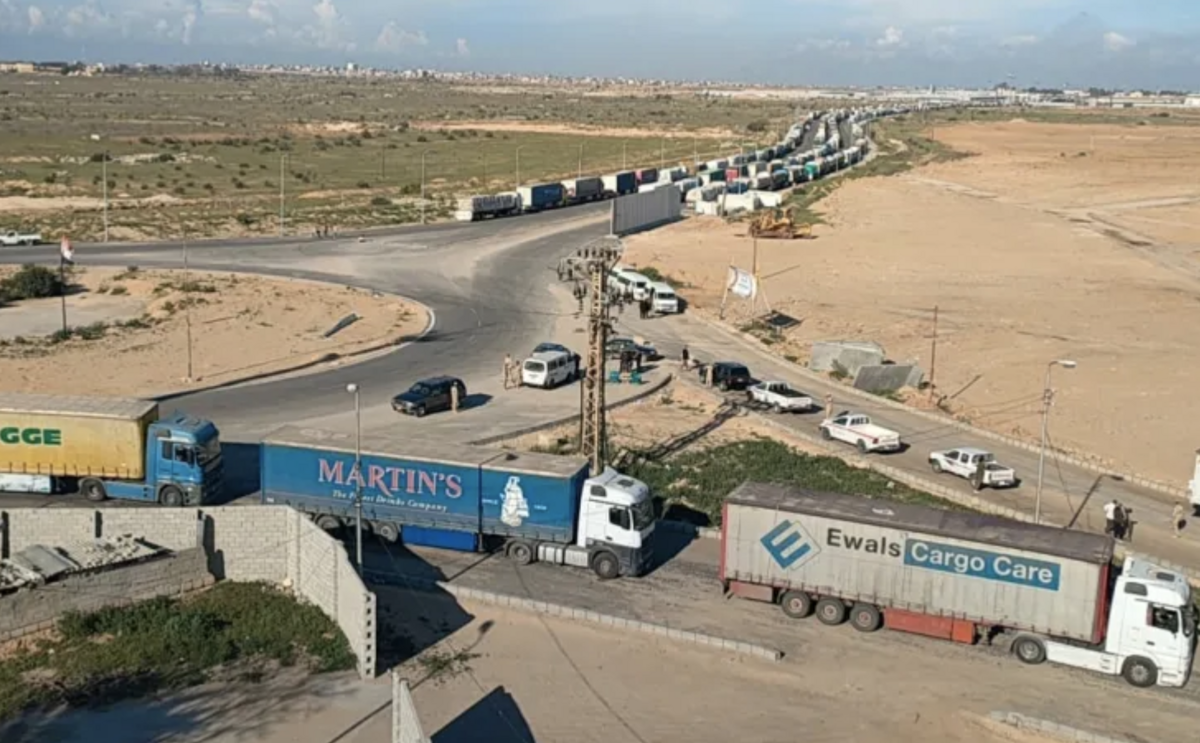
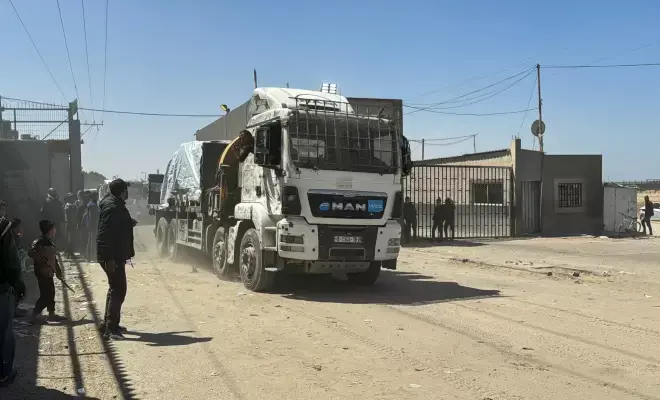
Only five of 11 trucks entered the Gaza Strip on Tuesday through the Kerem Shalom crossing, despite Israel's announcement that it had approved the entry of 100 trucks. A European Union official described this as "a drop in the ocean."


UNRWA Commissioner-General Philippe Lazzarini said, "Israel is exploiting hunger and food for political and military purposes, and Gaza needs massive, unhindered support to ensure the worsening hunger afflicting its population is addressed."


UNRWA warned of the worst humanitarian crisis the Gaza Strip could face since the beginning of the Israeli aggression on October 7, 2023.


The agency added in a post on its Facebook page, "The intensive Israeli bombardment from the air, land, and sea resulted in hundreds of casualties and mass displacement."


She stressed the need for massive, unhindered support to ensure that hunger in Gaza is halted. She called for depoliticizing humanitarian aid because the situation in the Gaza Strip is deteriorating daily and malnutrition is spreading throughout the territory.


advertisement

The agency called for pressure on Israel to allow aid into Gaza.


withholding aid

In turn, a Gaza government official reported that only five aid trucks entered Gaza on Monday.


The government official, who preferred to remain anonymous, told an Anadolu Agency correspondent that none of the aid that entered had been distributed and remained in areas where Israeli forces were present.


He explained that, according to information available from international relief organizations, these trucks contained a very small amount of wheat flour, nutritional supplements, milk substitutes for children, and quantities of shrouds.


He pointed out that these quantities "do not meet the needs of even 1% of the Palestinians in the Gaza Strip for one day, even if they were fully loaded with food."


The Gaza government official considered that Israel was using aid as a "pressure card" and continuing to starve Palestinians in the Strip.


The United Nations confirms that Gaza needs at least 500 trucks of aid and commercial goods daily.


The World Food Programme stated that more than 116,000 tons of food—enough to feed one million people for up to four months—is ready for delivery.


European anger

In a related development, British Prime Minister Keir Starmer called on Israel on Tuesday to increase the amount of humanitarian aid it will allow into Gaza, describing the quantities of food recently allowed into the Strip as "totally inadequate."


During a session of the British House of Commons, Starmer said, "We cannot allow the people of Gaza to face starvation."


EU High Representative for Foreign Affairs and Security Policy Kaya Kallas also reiterated the need to allow humanitarian aid into the Gaza Strip.


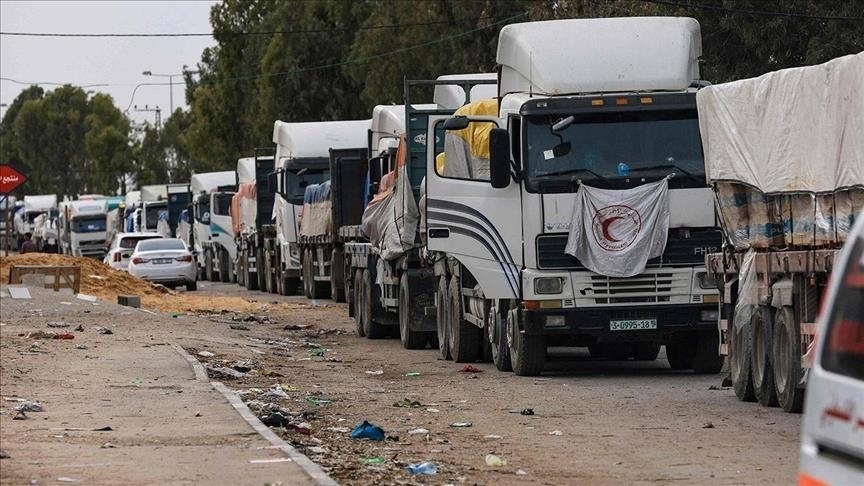
Speaking to reporters in Brussels ahead of a meeting of EU foreign ministers, Kallas noted that thousands of trucks are waiting at Gaza crossings to enter the territory, which is subjected to a stifling Israeli blockade.


advertisement

On Monday, the leaders of Britain, France, and Canada threatened to take action against Israel if it did not halt its military campaign in Gaza and lift restrictions on aid.


A joint statement by the three countries, published by the British government, stated that "the Israeli government's prevention of the entry of essential humanitarian aid to the civilian population is unacceptable and violates international humanitarian law."


Risk of closure

Meanwhile, the World Health Organization said that hospitals in northern Gaza are at risk of complete closure.


The organization added on its X account that intense hostilities and a military presence have continued near the Indonesian hospital since May 18.


She noted that most patients left on their own after the fighting intensified on May 15, noting that reports have emerged of only 15 people remaining, including patients and hospital staff, who are in dire need of food and water.


The World Health Organization warned of a rapidly deteriorating situation at Al-Awda Hospital in the northern Gaza Strip, which is overcrowded with wounded and suffering from a severe shortage of supplies.


The organization called for effective protection of health care, stressing that hospitals should never be militarized or targeted.


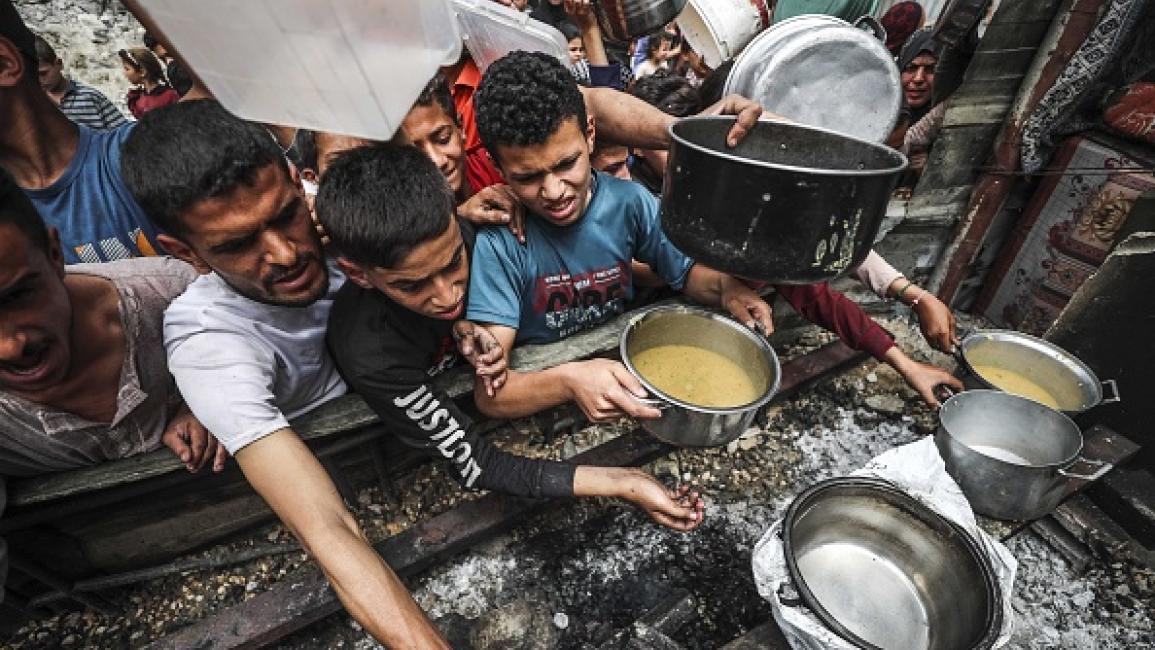
Since March 2, Israel has continued its policy of systematically starving approximately 2.2 million Palestinians in Gaza by closing the crossings to aid supplies piling up at the border, plunging the Strip into famine and claiming many lives.


With full American support, Israel has been committing genocidal crimes in Gaza since October 7, 2023, leaving more than 174,000 Palestinians dead or wounded—mostly children and women—and more than 11,000 missing, in addition to hundreds of thousands displaced.

PALESTINE

Tue 20 May 2025 6:01 pm - Jerusalem Time

WHO: Aid entering Gaza is just a "drop in the ocean"

The World Health Organization's representative in Palestine, Rick Peeperkorn, said that the aid entering the Gaza Strip is only a "drop in the ocean."


During his weekly press conference at the United Nations Office in Geneva on Tuesday, Peeperkorn stressed that "more aid must be allowed into Gaza."


He noted that many people have lost their lives and more than 34,000 have been displaced again due to Israeli attacks on Gaza since May 15.


He added: "Overall, nearly half a million people have been displaced in the Gaza Strip since mid-March. This bloodshed must stop."


Peeperkorn called on Israel to open at least two border crossings into Gaza, simplify and expedite procedures, remove access barriers, and take other necessary steps in this regard.


Peeperkorn stressed that Gaza's health system faces serious challenges, adding that ongoing attacks and severe shortages of supplies are making the situation even more difficult.


He said: "Since October 2023, the World Health Organization has recorded 697 attacks on health facilities in the Gaza Strip. The organization calls for effective protection of health care.


On Tuesday, the United Nations Office for the Coordination of Humanitarian Affairs (OCHA) announced that it had received approval from Israel to allow approximately 100 aid trucks into the Gaza Strip.

PALESTINE

Tue 20 May 2025 4:29 pm - Jerusalem Time

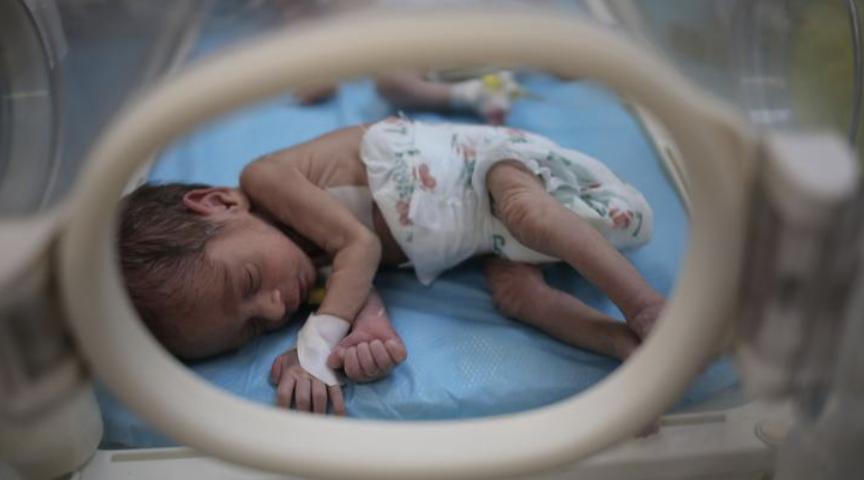
The United Nations warns that 14,000 infants will die in Gaza within 48 hours due to a shortage of aid.

Tom Fletcher, the UN humanitarian coordinator, told the BBC on Tuesday morning that 14,000 infants could die in Gaza within 48 hours if aid does not reach them in time. Five aid trucks entered Gaza on Monday, but Fletcher described this as a "drop in the bucket" and entirely insufficient to meet the needs of the population.


This comes after World Health Organization Director-General Tedros Adhanom Ghebreyesus said yesterday that two million people are starving in the Gaza Strip while "tons of food are being held at the border" by Israel.


The United Nations announced on Tuesday that it had obtained permission to send "approximately 100" aid trucks to the war-ravaged Gaza Strip, as humanitarian aid gradually returns to the territory.


"We have requested and received approval (from the Israelis) for more trucks to enter today, a number that is significantly higher than the number approved yesterday," Jens Laerke, spokesman for the UN Office for the Coordination of Humanitarian Affairs in Geneva, told reporters. "We expect, of course, with this approval, that many of them, and hopefully all of them, will cross today to a point where they can be collected and further into the Gaza Strip for distribution."


In a related development, the leaders of the United Kingdom, France, and Canada on Monday condemned Israel's "horrible actions" in Gaza and warned of joint action if Israel persists. Meanwhile, Palestinians began fleeing Khan Yunis, where Israel ordered residents to "evacuate immediately" ahead of an "unprecedented attack" the military says is targeting Hamas infrastructure.


A recent UN-backed report estimated that one in five people in the Strip are facing famine. The UN released a statement on Monday saying, "Everyone in Gaza is hungry. Without immediate action, nearly a quarter of the population could be pushed into famine. Food aid must be allowed into Gaza now to prevent a catastrophe."


On Sunday, the Israeli occupation authorities decided to resume the entry of a "substantial amount" of food, following mounting international pressure. But Netanyahu responded yesterday to the United Kingdom, France, and Canada for their condemnation of Israel, calling on them to follow Trump's example.


The Gaza Civil Defense Agency said Tuesday that Israel killed at least 44 people in Gaza today. Al Jazeera reported that Israeli forces bombed a pharmaceutical laboratory. Hundreds of people have been killed over the past week, many of them women and children, as Israeli attacks intensify.

PALESTINE

Tue 20 May 2025 4:26 pm - Jerusalem Time

Two Palestinians killed and others wounded in an Israeli bombing west of Deir al-Balah

Two citizens were killed and others injured Tuesday evening when Israeli warplanes bombed a house west of Deir al-Balah, in the central Gaza Strip.


In the same context, Israeli "quadcopter" aircraft targeted ambulances belonging to Al-Awda Hospital in Tel al-Zaatar as they were returning from a mission to transfer patients to hospitals in Gaza, according to a statement from the hospital.

PALESTINE

Tue 20 May 2025 4:05 pm - Jerusalem Time

UN announces approval for the entry of 100 aid trucks into Gaza.

The United Nations Office for the Coordination of Humanitarian Affairs (OCHA) said on Tuesday that it had received approval from Israel to allow approximately 100 aid trucks into the Gaza Strip.


According to the Gaza government, the Strip needs approximately 500 aid trucks and 50 fuel trucks daily to meet the minimum needs of Palestinians.


At a press conference in Geneva, OCHA spokesman Jens Laerke explained: "We asked (Israel) for approval to allow more trucks to enter today, and we did receive that approval, which is much more than the number of trucks allowed to enter yesterday (Monday)."


He added, "We naturally expect, with this approval, that many of these trucks, and hopefully all of them, will be able to cross today to points where they can be received and then head deeper into Gaza for distribution."


When asked about the exact number of aid trucks, the UN spokesman said the figure was "about 100 trucks."


This announcement comes just one day after the United Nations reported that Israel had allowed nine aid trucks to enter Gaza through the Kerem Shalom crossing.


However, Larkey noted that only five of the nine trucks approved on Monday were actually able to enter Gaza, due to logistical complications at the crossing.


He explained that aid trucks undergo multiple stages of transportation at the crossing, including repacking from one truck to another before being allowed to enter.


He added that the five trucks that entered on Monday have not yet been fully released for distribution due to ongoing Israeli oversight procedures.


He continued, explaining, "These trucks were transferred to different levels of Israeli control. The last level, where the trucks are currently located, is still under Israeli control, and we need permission to receive them."


The UN spokesman noted that this authorization was not available until Monday, but the situation changed on Tuesday morning.


He continued: "This morning, we received permission to receive those five trucks. That's as much as I know at the moment. We have permission to receive them, and we also have permission to receive other trucks that may enter today."


For his part, a Gaza government official reported that only five aid trucks entered Gaza on Monday.


The government official, who preferred to remain anonymous, added that none of the aid that entered or is still being distributed in areas where Israeli forces are present.


He explained that, according to information available from international relief organizations, these trucks contained a very small amount of wheat flour, nutritional supplements, milk substitutes for children, and quantities of shrouds.


He pointed out that these quantities "do not meet the needs of even one percent of the Palestinians in the Gaza Strip for one day, even if they were fully loaded with food."


The Gaza government official said that Israel is using aid as a "pressure card" and is continuing to starve Palestinians in the Strip.


UN Emergency Relief Coordinator Tom Fletcher previously described the Israeli authorities' permission on Monday for aid trucks to enter Gaza through the Kerem Shalom crossing as "a welcome development, but it is not enough, as it represents a drop in the ocean of urgent needs."


OCHA and other humanitarian organizations have repeatedly called for safe, sustained, and widespread access to the Gaza Strip, where areas are suffering from severe shortages of food, medicine, and fuel.


Since March 2, Israel has pursued a policy of systematic starvation against approximately 2.4 million Palestinians in Gaza by closing the crossings to aid supplies piling up at the border, plunging the Strip into famine and claiming many lives.


With full American support, Israel has been committing genocidal crimes in Gaza since October 7, 2023, leaving more than 174,000 Palestinians dead or wounded, most of them children and women, and more than 11,000 missing, in addition to hundreds of thousands displaced.

PALESTINE

Tue 20 May 2025 3:15 pm - Jerusalem Time

87 Palestinians killed and 290 wounded in Gaza in 24 hours

The Ministry of Health in Gaza reported on Tuesday that 87 dead and 290 injuries had arrived at Gaza Strip hospitals in the past 24 hours.


In a statement, it said, "The preliminary toll of what has arrived at hospitals since dawn today is 53 dead and more than 50 wounded as a result of the occupation's massacres and targeting of citizens.It pointed out that a number of victims are still under the rubble and on the streets, and that ambulance and civil defense crews are unable to reach them.


She pointed out that the death toll from the Israeli aggression has risen to 53,573 dead and 121,688 injuries since October 7, 2023.


The death toll and injuries since March 18, 2025 has reached (3,427 dead 9,647 injuries).


PALESTINE

Tue 20 May 2025 2:47 pm - Jerusalem Time

Yair Golan: Israel kills children as a hobby...and is on its way to becoming a pariah among nations.


Yair Golan, head of the Israeli opposition Democratic Party, launched a fierce attack on Israeli Prime Minister Benjamin Netanyahu's government, saying it was killing children as a hobby and indicating that Tel Aviv would become a pariah among nations.
In an interview with Israel's Kan Bet radio station, Golan accused his country of "killing children as a hobby."
The Israeli newspaper Yedioth Ahronoth quoted the left-wing opposition politician as saying on Tuesday, "Israel is on its way to becoming a pariah state among nations, like South Africa once was, if it does not return to acting like a rational state. A rational state does not wage war against civilians, does not kill children as a hobby, and does not set goals for population displacement."
"This government is full of vengeful people who lack the morals and ability to manage a country in an emergency," Golan added.
Angry Israeli responses and calls for "rejection"
Angry Israeli reactions to Yair Golan's statements continued, with Benny Gantz, head of the Israeli National Unity Party, calling on him to retract and apologize for his "extremist and false statements," according to what the Israeli newspaper Yedioth Ahronoth reported on Tuesday.
Israeli Defense Minister Yisrael Katz also condemned Golan's statements, saying, "Anyone who makes false accusations against Israel and tarnishes its reputation and the reputation of the IDF during wartime must be removed from public life."
Among those who have condemned and criticized Golan are former Prime Minister Naftali Bennett, National Security Minister Itamar Ben-Gvir, Immigration Minister Avir Sofer, Education Minister Yoav Kisch, and Likud MK Moshe Saadeh.
Unprecedented and significant Gulf pressure
Golan's statements come at a time when the United States is exerting intense pressure on Israel to end the war in Gaza. Sources revealed to Al Arabiya and Al Hadath that the US move came after significant and unprecedented pressure from the Gulf.
The Trump administration had given Israel a choice between ending the war or abandoning it, causing tension in Netanyahu's office over this American warning message.
Europe threatens Israel
This comes as the leaders of Britain, France, and Canada have threatened to take "concrete action" against Israel if it does not halt its renewed military campaign in the Gaza Strip and lift aid restrictions, increasing pressure on Israeli Prime Minister Benjamin Netanyahu.
European countries are discussing the possibility of suspending trade relations with Israel over the Gaza war today, Tuesday, during a meeting of the European Union Foreign Affairs Council in Brussels.
The Netherlands is leading an initiative to review the trade relationship between the European Union and Israel and suspend existing agreements.
The proposal, put forward by Dutch Foreign Minister Caspar Veldkamp, is based on Article 2 of the EU-Israel Association Agreement, which allows the EU to suspend agreements if it deems Israel to be committing serious human rights violations.
Suspending trade relations requires the approval of all 27 EU member states.
UNRWA: The only thing entering Gaza now is bombs.
For its part, the United Nations Relief and Works Agency for Palestine Refugees (UNRWA) reported on Tuesday that the only thing entering Gaza now is bombs, noting that there is no safe place.
In a post on its Facebook page today, UNRWA predicted that the Gaza Strip is likely to face its worst humanitarian crisis since October 2023.
She added: "The intensive Israeli bombardment from the air, land and sea resulted in hundreds of casualties and mass displacement."
UNRWA noted that the Israeli authorities have been closing all supplies to Gaza for 11 weeks.
More than two million Palestinians in Gaza are facing an unprecedented humanitarian crisis due to Israeli restrictions on aid entry since early March, following the collapse of the first phase of the ceasefire agreement signed under Egyptian, Qatari, and American sponsorship in January.


PALESTINE

Tue 20 May 2025 2:27 pm - Jerusalem Time

Palestinian Prime Minister: The occupation has been continuing its bloody crimes in the Gaza Strip for 19 months.

Prime Minister Mohammed Mustafa said that more than 19 months have passed since the ongoing Israeli aggression, which began with a series of bloody crimes for which our people are still paying the price in blood, land, and resources. However, the Palestinian leadership, headed by President Mahmoud Abbas, is working to resolve this major crisis in a way that achieves the highest interests of our people.


During the cabinet session held Tuesday in Bethlehem, the Prime Minister added that all these destructive policies and measures pursued by the occupation aim, first and foremost, to undermine our national project and prevent the establishment of our independent, sovereign Palestinian state with Jerusalem as its capital, and this is what we are working together to thwart.


Mustafa continued: “We begin our session today by saluting our steadfast people everywhere, especially our people in the Bethlehem Governorate. We meet today in the city of Bethlehem, the cradle of peace, in a special session of the Council of Ministers to follow up on the situation in this steadfast governorate, which, like all governorates of the homeland, has not been spared from the occupation’s measures and its ongoing aggression against our people, whether in the beloved Gaza Strip or in the northern West Bank.”


He commended the advanced international positions, particularly the statement issued yesterday by the United Kingdom, France, and Canada, as well as the previous positions and statements issued by friendly European leaders and countries, all of which emphasized the need to halt the aggression, end the famine, allow humanitarian aid in, take practical steps in the event of continued Israeli attacks, and push for a political process that would end the occupation and lead to the establishment of an independent Palestinian state on the ground.


The Prime Minister also thanked the representatives of countries, international organizations, and media outlets who responded to the Ministry of Foreign Affairs' invitation to visit Tulkarm yesterday to see firsthand the reality there and its camps, in light of the ongoing aggression. We are working to organize a similar visit to Jenin tomorrow, as part of a series of ongoing diplomatic efforts to convey the voice of our people to the world, work to end their suffering, lift the injustice against them, and expose the daily crimes they are subjected to at the hands of the occupation.


In the face of this reality, Mustafa said, "We are continuing to strengthen our unity and national solidarity. Our meetings today with various activists in the Bethlehem Governorate, and tomorrow with activists in the Hebron Governorate, come within the context of ongoing government efforts aimed at devoting joint action to accomplishing the tasks facing national institutions and citizens, and aiming to strengthen the steadfastness of our people and unify ranks in the face of occupation and colonialism."


He assured our people that their voices are heard, their steadfastness is a source of pride and honor, and we will continue to work tirelessly and without hesitation to defend our legitimate rights until our people achieve their freedom and our independent state is established on our land with East Jerusalem as our capital.

PALESTINE

Tue 20 May 2025 2:19 pm - Jerusalem Time

UN announces approval for the entry of 100 aid trucks into Gaza.

The United Nations Office for the Coordination of Humanitarian Affairs (OCHA) said on Tuesday that it had received approval from Israel to allow approximately 100 aid trucks into the Gaza Strip.


At a press conference in Geneva, OCHA spokesperson Jens Laerke said: "We requested approval to allow more trucks to enter today, and we received approval. This is significantly more than the number of trucks allowed to enter yesterday (Monday)."


He added, "We naturally expect, with this approval, that many of these trucks will be able to cross today to points where they can be received and then head deeper into Gaza for distribution."


When asked about the exact number of aid trucks, the UN spokesman said the figure was "about 100 trucks."

PALESTINE

Tue 20 May 2025 1:22 pm - Jerusalem Time

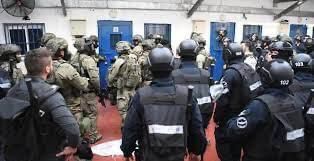
Prisoners' institutions: Israeli occupation is trying to eliminate a group of symbols of the prisoners' movement.

Prisoners' institutions said on Tuesday that the Israeli prison administration is attempting to eliminate a group of symbols and leaders of the prisoner movement in solitary confinement cells.


In a joint statement issued Tuesday, the organization indicated that the occupation regime continues to produce more tools and methods aimed at systematically killing and eliminating leaders of the prisoner movement, in which all occupation agencies participate, through a clear plan.


She noted that the repressive forces are using all kinds of weapons in their attacks on the detainees, in addition to a series of attacks, torture, and terror attacks against them, in an unprecedented manner since the beginning of the genocide.


She explained that she had learned about the reality of the leaders of the prisoner movement through visits by some of the legal teams to them, as they are subjected to attacks beyond description and imagination, and the repressive forces deliberately continue beating them until the blood comes out of their bodies, and use all types of weapons to beat and abuse them, through batons and machetes, in addition to police dogs equipped with iron helmets, and today the majority of them suffer from injuries, bruises and wounds, in addition to their suffering around the clock from pain and aches in their bodies, which deprives them even of their ability to sleep.


The organizations noted that, over the past period, many prisoners serving life sentences, including leaders of the prisoner movement, have been subjected to systematic and repeated attacks, resulting in many of them sustaining various injuries and chronic health problems. They also noted the crime of starvation, which has caused them to suffer from severe emaciation and severe weight loss.


The institutions confirmed that at the end of last March, a group of leaders of the prisoner movement were transferred from the isolation of Ramon Prison to the cells of Megiddo Prison, which was accompanied by systematic attacks and abuse that affected all those who were transferred.


The prisoners' institutions hold the occupation fully responsible for the fate of thousands of prisoners, including leaders and symbols of the prisoners' movement. They also renewed their demand for the international human rights system to move forward in taking effective decisions to hold the occupation leaders accountable for the war crimes they continue to commit against our people, and to impose sanctions on the occupation that would place it in a state of clear international isolation, and restore to the international human rights system its fundamental role for which it exists, and put an end to the terrifying state of impotence that has afflicted it in light of the ongoing genocide and aggression, and end the state of exceptional immunity for the occupying state as it is above accountability, accountability and punishment.


It is noteworthy that since the beginning of the aggression on the Gaza Strip, (69) detainees have been martyred, and they are the only ones whose identities have been announced, in addition to dozens of martyrs whose identities the occupation continues to conceal, specifically the martyrs detained from Gaza, as a result of the systematic crimes that have been monitored by institutions over the past months, which constitute an extension of historical crimes.


It is noteworthy that the number of detainees until the beginning of May of this year has reached more than ten thousand and 100, and this data does not include the number of prisoners and detainees in the camps affiliated with the occupation army, while the number of female prisoners is (37), the number of child prisoners is more than (400), the number of administrative detainees is (3577), and those classified by the prison administration as (illegal combatants) (1846).

PALESTINE

Tue 20 May 2025 1:08 pm - Jerusalem Time

Conflicting accounts emerge about aid entering Gaza for the first time since March.

Conflicting accounts loomed over the entry of humanitarian aid into the Gaza Strip on Monday. While the United Nations said Israel allowed nine trucks into the Strip, Israel reported that it only allowed five trucks in. Meanwhile, the government media office in Gaza denied that any aid had entered, amid a tightening blockade and systematic starvation that has gripped the Strip for more than 80 days.


While the United Nations, through its Emergency Relief Coordinator, Tom Fletcher, stated that Israeli authorities had temporarily allowed it to resume aid deliveries, explaining that "nine humanitarian trucks were authorized to enter through the Kerem Shalom crossing." Fletcher added that "this is a welcome development, but it is not enough, as it represents a drop in the ocean of urgent needs."


Meanwhile, the Israeli authorities, through their coordinator of activities in the Palestinian territories, Ghassan Alian, stated that five UN trucks were allowed to enter the Gaza Strip through the Kerem Shalom crossing. He noted that the trucks were loaded with humanitarian aid, including food supplies for children, "based on directives from the political level."


Alian added that the aid was subjected to a thorough security inspection by the Israeli crossings authority, stressing that "the Israeli army will do its utmost to prevent the aid from falling into the hands of Hamas and to ensure its delivery to the civilian population," he said.


However, these statements contradict the announcement made by the government media office in Gaza, which confirmed that "Israel has not allowed any humanitarian aid into the Strip for nearly 80 days," warning of "systematic starvation threatening the lives of more than 2.4 million Palestinians."


This comes after the Security Cabinet approved the immediate entry of humanitarian aid into Gaza on Saturday evening, following a more than two-month hiatus since the resumption of the war on the Strip, due to intense US pressure on Tel Aviv.


Since March 2, Israel has pursued a policy of systematic starvation against approximately 2.4 million Palestinians in Gaza by closing the crossings to aid supplies piling up at the border, plunging the Strip into famine and claiming many lives.

PALESTINE

Tue 20 May 2025 1:00 pm - Jerusalem Time

Details of an Israeli plan to evacuate the northern Gaza Strip have been revealed.

Israel is attempting to implement a plan to depopulate the northern Gaza Strip by exploiting the distribution of food aid, despite previous plans to force the entire population of the northern Gaza Strip to flee southward since the beginning of the war on Gaza.


The Israeli army is currently setting up four centers to distribute humanitarian aid – food and medicine.


According to the Israeli plan, one of these centers will be established south of the Salah al-Din (Netzarim) axis in the central Gaza Strip, so that residents of the northern Gaza Strip will not have to travel to the southern Gaza Strip, where three other aid distribution centers are already established.


Israeli Army Radio reported on Tuesday that the economic plan stipulates that all residents of the northern Gaza Strip who are heading to the aid distribution center south of the Salah al-Din axis will not be allowed to return to the northern Gaza Strip.


The radio described the plan as a "one-way ticket," which would effectively force residents to flee to areas in the southern Gaza Strip.


The radio added that in this way, Israel intends to accelerate the evacuation of Gazans from the northern Gaza Strip, and that it will be possible to completely empty the northern Gaza Strip of its population.


The radio station noted that throughout the war on Gaza, and at the height of the Israeli ground invasion of Gaza City and other areas in the northern Gaza Strip, "Israel never succeeded in completely emptying the northern area. Despite dozens of evacuation notices issued by the Israeli military to residents, 200,000-300,000 residents remained permanently in the northern Gaza Strip, refusing to move south of the Netzarim axis."


The belief in Israel now, according to the radio, is that this plan will leave Gazans no choice and will force them to flee south.


The radio quoted Israeli security sources today denying Israeli allegations made yesterday that Hamas members had seized five aid trucks entering the Gaza Strip.


Israeli security sources said that Hamas elements "did not seize five trucks that entered yesterday through the Kerem Shalom crossing, which were primarily loaded with food for children. The trucks reached their destinations, some of them to hospitals in the Gaza Strip and others to World Food Programme warehouses."


The same sources added that "Israeli military drones escorted the trucks, but there was no need to use them, as no cells were ever detected attempting to approach or loot the relief trucks."


PALESTINE

Tue 20 May 2025 12:55 pm - Jerusalem Time

Israeli newspaper: Trump's patience is running out and he may demand that Netanyahu set a date to end the war.

The newspaper "Israel Hayom" reported that "Trump's patience with Netanyahu is running out and he may demand that he set a date for ending the war."


The newspaper reported that "due to the stalemate in Doha, the Israeli delegation is returning to Israel today," noting that "Hamas has rejected all American proposals regarding (US envoy Steve) Witkoff's plan."


Israel's Channel 13 quoted an Israeli source as saying, "The return of senior members of the negotiating team for consultations is being considered," noting that "this issue has not yet been decided."


For its part, Doha asserted that the round of negotiations on a ceasefire and prisoner exchange between Hamas and Israel over the past few weeks had not led to any progress due to a fundamental gap between the two sides that had not been bridged.


The Qatari Prime Minister said, "One party is seeking a comprehensive agreement in Gaza, and the other wants a partial agreement," adding, "We have not been able to bridge the gap between them."


He pointed out that Israel is reneging on previous agreements and is actively seeking to prevent an agreement to end the war.


He added, "We are committed to our efforts with our partners to stop the war, release the hostages, and end the tragedy of the people of Gaza," noting that "Israel launched an unprecedented wave of bombing, killing hundreds of innocent people."

PALESTINE

Tue 20 May 2025 11:42 am - Jerusalem Time

The aggression on Tulkarm: 25,000 citizens displaced and 400 homes completely destroyed.

Israeli occupation forces continue their tight siege of the Tulkarm and Nur Shams refugee camps, with occasional gunfire and explosions being heard as the offensive enters its 114th day amid escalating attacks and continuous military reinforcements.


Local sources reported that the occupation forces are preventing residents from returning to their homes, from which they were forcibly displaced, to inspect them or retrieve any remaining belongings. More than 4,200 families, comprising over 25,000 residents, have been forcibly displaced from the two camps.


As the escalation continued, occupation forces completely destroyed more than 400 homes and partially destroyed 2,573 others. They also sealed off the entrances and alleys of the two camps with earth mounds, transforming them into isolated, almost lifeless areas.


Our correspondent said that the occupation forces are sending military reinforcements around the clock, patrolling the main streets and neighborhoods, using provocative horns, driving against traffic, and repeatedly setting up surprise checkpoints, particularly in the city center, Nablus Street, and Shuweika Roundabout in the northern neighborhood.


The two camps' neighborhoods are witnessing a heavy deployment of occupation forces, who have transformed a number of homes into military positions and sniper positions, amid heavy gunfire and the pursuit of anyone attempting to enter the camp or approach their homes.


Nur Shams camp witnessed a demolition campaign targeting residential buildings in its main neighborhoods, affecting more than 20 buildings, including apartments, and damaging neighboring buildings. This is in implementation of the occupation's plan to demolish 106 buildings in Tulkarm and Nur Shams camps, to open up streets and roads and change their geographical features.


In a related development, Israeli occupation forces stormed the Aktaba suburb east of the city at dawn today, deploying in its main and side streets. Israeli soldiers then arrested freed prisoner Saad Othman Basis after raiding his home.


On Nablus Street and the adjacent northern neighborhood, occupation forces continue to seize a number of buildings and residential homes after forcibly evicting their residents and converting them into military barracks. Some of these buildings have remained under occupation for more than two months.


The ongoing aggression has resulted in the deaths of 13 civilians, including a child and two women, one of whom was eight months pregnant. Dozens of injuries and arrests have also been reported, along with widespread destruction of infrastructure, including homes, shops, and vehicles, which have been subjected to demolition, arson, looting, and theft.

ARAB AND WORLD

Tue 20 May 2025 11:30 am - Jerusalem Time

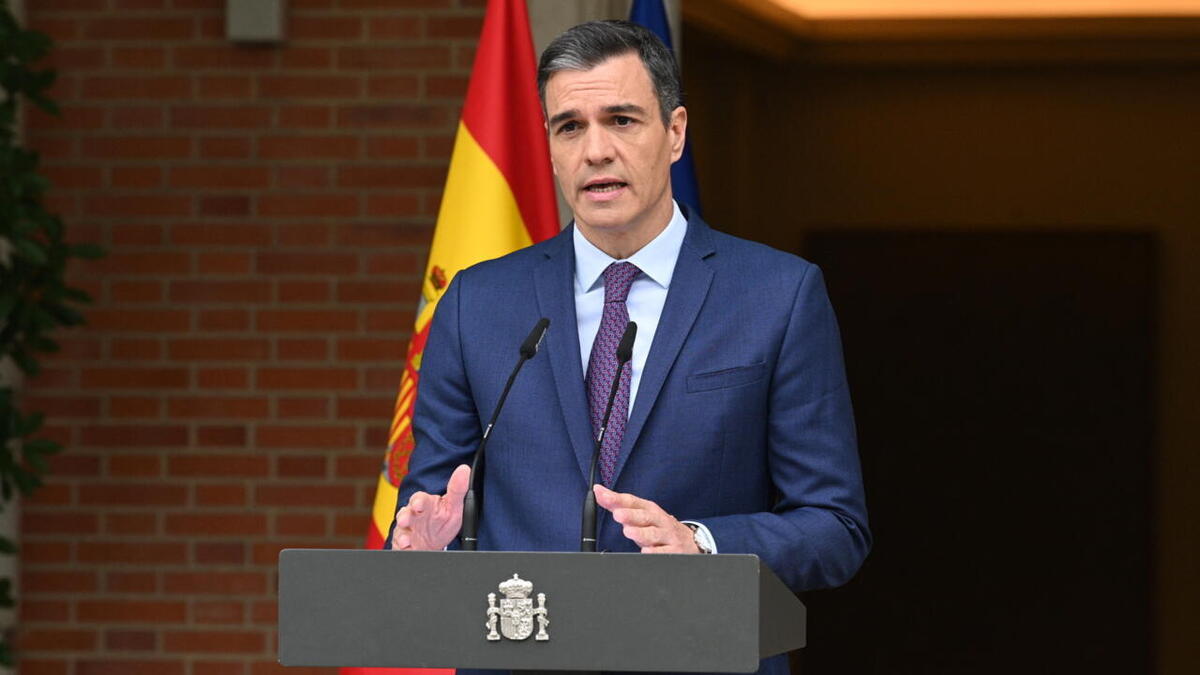
Spanish Prime Minister Calls for Israel's Exclusion from Eurovision

Spanish Prime Minister Pedro Sánchez called for Israel's exclusion from the Eurovision Song Contest, stressing his rejection of double standards in the cultural field, even though his country had awarded Israel the highest public vote.


Spanish Prime Minister Pedro Sanchez said today that Eurovision organizers should exclude Israel from the competition, just as Russia was excluded after its invasion of Ukraine.


"We cannot allow ourselves to have double standards, even in the cultural sphere," he added.


The European Broadcasting Union issued an official warning to Spain on Saturday evening, prior to the final ceremony, following statements made by Spanish commentators Toni Aguilar and Julia Varla during the broadcast of the "introduction card" accompanying the performance of Israeli actress Yuval Rafael.


The two commentators on the broadcast referred to the number of victims in the Gaza Strip, citing UN figures confirming the deaths of more than 15,000 children. They also noted that Spanish state television, RTVE, had last month requested the European Broadcasting Union reconsider Israel's participation in the competition.

The European Broadcasting Union then threatened to impose "painful fines" on Spain if those references were repeated during the final broadcast.

ARAB AND WORLD

Tue 20 May 2025 11:01 am - Jerusalem Time

Qatar's Foreign Minister reveals details of the ceasefire negotiations taking place in Doha.

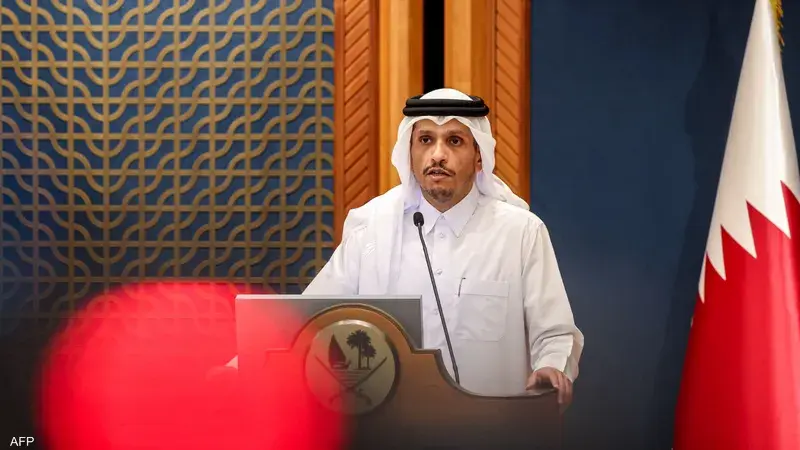
Qatari Prime Minister and Minister of Foreign Affairs Mohammed bin Abdulrahman Al Thani confirmed on Tuesday that the rounds of negotiations held over the past few weeks regarding the war on the Gaza Strip have not led to any significant progress due to the deep gap between the negotiating parties.

"One side is seeking a comprehensive agreement, while the other is clinging to a partial agreement, which has prevented the gap between them from being bridged so far," he said.

The Qatari minister emphasized that "the only way to end the war in Gaza is through negotiations," noting that this conviction has been entrenched in his country over the course of a year and a half of continuous efforts, despite what he described as "political games" that have sabotaged those efforts.

He added, "Since the beginning of the Gaza war, we have tried to mediate an agreement that would end the fighting and return the hostages to their families. We believed that releasing Idan Alexander would be a step toward ending the tragedy, but the response was violent bombing."

The Qatari Prime Minister reiterated that Doha is continuing its efforts with both Egypt and the United States to achieve a ceasefire in Gaza, noting that Qatar will not back down despite "all attempts at blackmail and accusations," and will continue to strive to achieve stability and peace in the region.

The minister addressed the humanitarian situation in the Gaza Strip, stressing that "Gaza is subjected to a stifling blockade, while irresponsible statements are made about the situation there." He added that "the Israeli government continues its violations in Gaza and acts with impunity," considering that "Israel's behavior in Gaza, the West Bank, Syria, and Lebanon is intolerable."

Concluding his remarks, he stressed that the war in Gaza will only end through diplomatic means, and that "resolving the Arab-Israeli conflict is the key to stability in the region, which requires strong leadership capable of making historic decisions."

PALESTINE

Tue 20 May 2025 9:54 am - Jerusalem Time

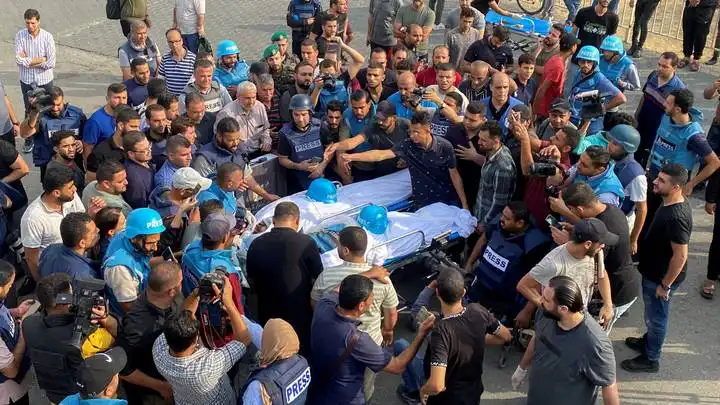
Stories of 5 journalists killed by the occupation in Gaza in one day

On a new morning heavy with the smell of gunpowder and blood, Palestinians woke up yesterday, Sunday, to a new tragedy after Israel targeted five journalists with its war machine at once. Despite this, the scene was not unfamiliar to Gaza, as the occupation has become accustomed to killing journalists in the Strip since the beginning of its war on it 19 months ago.


These five journalists were not just numbers added to the growing list of martyrs. They were witnesses to the massacres and narrators of the stories of the exhausted people under the rubble, while at the same time, like them, trying to save themselves and their families, day by day.


Al Jazeera's correspondent reported that Israeli airstrikes targeted, at dawn on Sunday, journalists Aziz al-Hajjar, Abdul Rahman al-Abdallah, Nour Qandil, her husband, journalist Khaled Abu Seif, and Ahmed al-Zinati, resulting in their deaths along with several members of their families.


journalist engineer

Journalist Ahmed Al-Zinati (35 years old) was an ambitious young man who defied the conditions of the siege and unemployment, and moved from his primary specialization in civil engineering to the world of journalism, after also obtaining a master's degree in business administration with distinction, ranking first in his class.


His close friend, Siraj Abu Hamam, recounts that after the doors to engineering jobs were closed to him due to the blockade, Al-Zinati turned to journalism, working with several organizations, including the Siraj Media Network.


He also wrote for foreign blogs and websites, most notably Tumbler, documenting with audio and video all the humanitarian crises and daily stories of struggle in the Gaza Strip. His blog, which is followed by thousands of people around the world, was a mirror that conveyed the suffering of the people of Gaza in other languages.


Recently, he focused on documenting the famine and humanitarian catastrophe in Gaza, and was deeply affected by the massacres and bombing. He could not bear the news of bloodshed and destruction, and his main concern was to stop this cascade of genocide, Abu Hamam says.


In the first month of the war, Al-Zainati's house in Khan Yunis was subjected to heavy shelling, which led to the martyrdom of his two children, Musa and Khaled, and the serious injury of his wife, while his son, Mohammed, survived. Just four months ago, he was blessed with a new child, whom he named "Khaled" after his lost child. Then, the occupation raids returned again, killing Ahmed, his wife, the pharmacist "Nour Al-Huda Al-Madhoun", and their infant, Khaled.


Abu Hamam says, "Ahmed was a model of hard work and was preparing to earn a doctorate." Mahmoud Al-Aila, another friend of Ahmed's, recounts, "The martyr was keen to expose the occupation's crimes through his work in monitoring and analysis," adding, "He was adept at analyzing open sources and was adept at collecting and dismantling evidence."


The couple and their baby girl

Journalist Nour Qandil and her husband, journalist Khaled Abu Seif, have set an example of professional and marital partnership. Both studied journalism and worked together as a team, filming, editing, and producing documentaries as freelance journalists, covering and documenting human stories for various media outlets.


Muhammad Qandil says that his sister Nour was energetic, passionate, and ambitious, tireless. In addition to her work as a freelance photographer and video editor, she worked in the media and public relations department at Yaffa Hospital in Deir al-Balah until her martyrdom.


Nour and Khaled welcomed their only child four months ago, naming her "September of Peace," coinciding with the negotiations that led to the latest ceasefire in January.


According to Mohammed, the couple were preparing to launch a media project on social media platforms and had recently purchased a laptop to use for editing. However, the Israeli bombing did not allow them time, and they were martyred along with their little girl, burying with them a dream that never saw the light of day.


A friend of the martyr, journalist Diana Al-Maghribi, recounts that she was an active and calm coordinator for the "Al-Thuraya" Media and Communications Café (a non-governmental organization) since 2017. She was ranked first in her class in media studies at the Palestine Technical College, and was known for her "politeness, elegance, and quiet accomplishments," as well as her "deep interest in national issues and resistance."


Journalist and relief worker

Journalist Basil Al-Saqa talks about his friend, the late journalist Abdul Rahman Al-Abadlah, who was born in 1994 and held a diploma in journalism. He said that he worked as a freelance photojournalist and founded an online platform called "Hona Al-Watan," through which he published news, reports, and documentary material.


Al-Abdallah was married and had four children. Despite receiving threats from Israeli intelligence to stop publishing, he continued his work without hesitation. He was targeted by shelling near his home in the town of Al-Qarara, north of Khan Yunis.


Abdul Rahman was not only a journalist, but also a humanitarian. He ran a camp for displaced people, providing them with a hospice, food parcels, and drinking water.


Aziz and family

At Al-Aqsa University, Aziz Al-Hajjar studied journalism and began his career there in 2015, alternating between official and freelance work. He worked for a period with Palestine TV and with various institutions as a freelance journalist.


His friend, Tariq Al-Daqs, says that Aziz was passionate about uncovering the truth and exposing the crimes of the occupation. In addition to his journalistic work, he produced dramatic works for Al-Aqsa TV.


Aziz's martyrdom was horrific. He was killed along with his wife and two of his three children, while his youngest daughter was seriously injured.


Trial of the perpetrators

For his part, Tahseen Al-Astal, deputy head of the Palestinian Journalists Syndicate, said that the massacres against journalists have become systematic, and that the occupation is killing them without deterrence or international accountability.


He stressed that the union has communicated with the International Federation of Journalists and all international parties, demanding the implementation of UN Security Council Resolution 2222, issued in 2015, which stipulates the protection of journalists and the prosecution of occupation leaders before the International Criminal Court.


According to the Syndicate's statistics, the number of journalists killed in the war on Gaza has risen to 217, most of whom were performing their professional duties in a last-ditch effort to convey their people's voice to the world.


PALESTINE

Tue 20 May 2025 9:48 am - Jerusalem Time

The true face of the occupation is revealed in Burqin and Kafr ad-Dik

The occupation no longer needs new evidence or proof to prove the ugliness of its crimes and racism. Its daily crimes are enough to reveal its true face to the world. What is happening in the towns of Bruqin and Kafr ad-Dik, west of Salfit Governorate, is a stark embodiment of this hideous face, as chapters of aggression continue relentlessly, in a scene that reflects the essence of this occupation and the depth of its oppressive and racist policies.
For the fifth consecutive day, Israeli occupation forces continue their assault on the two towns, leaving one martyr in Burqin and dozens of detainees, amid repeated raids on homes and businesses, and widespread destruction of civilian property.
The mayor of Bruqin, Faed Sabra, commented on what is happening: "The extent of the destruction that has befallen the town is unprecedented," noting that the occupation forces deliberately stormed homes, vandalized their contents, and stole gold jewelry, sums of money, and identification documents, in addition to abusing women, children, and the elderly. He stressed that the occupation forces transformed citizens' homes into military barracks after expelling their residents, and that their soldiers took souvenir photos inside them, in a scene that proves that it reflects the weakness of the occupation, the confusion of its army, and its failure to convince the world of its respect for human rights.
Sabra added, "The occupation bulldozers continue to level large areas of land and uproot trees, in an attempt to impose a new reality by force of arms, while sending additional military reinforcements to the area."
He continued, "The municipality of Burqin was not spared from the brutality of the aggression, as occupation soldiers stormed its building and destroyed its contents, including the service center, computers, and vital equipment."
The situation in Kafr ad-Dik is no better, with residents describing the situation as "catastrophic," amid the ongoing policy of collective punishment for the fifth consecutive day, clearly targeting more than 6,000 residents of the town. Citizens said that an atmosphere of terror and fear prevails among residents, especially children and women, who live in a state of constant apprehension and anxiety, fearing sudden raids, vandalism, arrest, torture, and eviction from their homes.
The occupation forces did not stop at their aggression against citizens and their property, but rather extended their aggression to include educational institutions and places of worship. The occupation forces raided the mosques of the two towns on more than one occasion, vandalized their contents, prevented the call to prayer and the establishment of prayers, and used the mosques' loudspeakers to announce the imposition of a curfew.


PALESTINE

Tue 20 May 2025 9:46 am - Jerusalem Time

The international community silently watches the Holocaust as Israel kills, injures, and orphans tens of thousands of children.

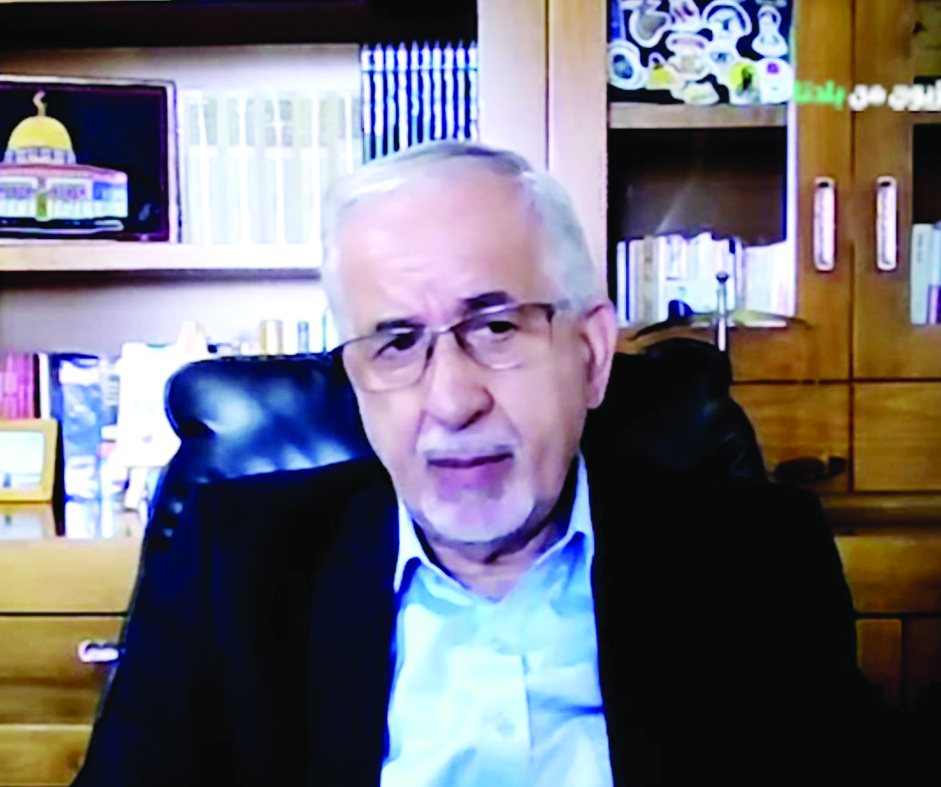
Mustafa Ibrahim: All the brutal crimes, genocide, and plans to displace Palestinians are taking place with American and European approval and blessing.

Adel Shehadeh: Israel, in its intellectual and ideological structure, views the killing of Palestinian children as a duty, given that they are part of the "enemy system"!

Kazem Abu Khalaf: The number of children killed in Gaza exceeds those killed in any other conflict in the world, and 41,000 of them have become orphans.

Dr. Ibrahim Abu Jaber: Extremist thought derives its roots from their religious references, specifically the Talmud, which gives Jews the right to kill, steal, violate honor, and destroy.

Amjad Al-Shawa: Pressuring the occupation is a moral and legal responsibility to save Palestinian children so that the Gaza scene is not repeated in the West Bank.


The premeditated killings committed by the Israeli occupation state in the Gaza Strip, targeting children and their mothers, are unprecedented in their brutality and the weapons used. They represent the highest number of civilian casualties in the history of warfare, both in terms of time and geographical area, which witnessed the daily, open massacre for more than nine months.

The killings were not limited to American weapons of various types and weights, including those intended for destroying fortresses. They also included a policy of tight siege, starvation and thirst, and deprivation of the most basic necessities of life. In addition, there was the ongoing displacement and migration since the beginning of the war of extermination, as well as the diseases that ravaged the young and old in the Gaza Strip.


None of this would have happened without the silence and failure of the international community and the complicity of powerful countries, primarily the United States and the colonial Western powers, with the occupying state in its barbaric war. This is the most hideous embodiment of double standards in dealing with people based on their color and country of origin, which has contributed to the continuation of the catastrophe and tragedy that children, women, and men have been living in the Gaza Strip for nearly two years.

Writers, analysts, and specialists who spoke to Al-Quds confirmed that all the brutal crimes, genocide, and plans to displace Palestinians are being carried out with American and European approval and blessing. They pointed out that the number of children killed in Gaza exceeds those killed in any other conflict in the world, and that 41,000 of them have been orphaned.

They explained that Israel, in its intellectual and ideological structure, views the killing of Palestinian children as a duty, given that they are part of the "enemy system." They noted that the extremist ideology derives its roots from their religious sources, specifically the Talmud, which grants Jews the right to kill, steal, violate honor, and destroy.

They said that pressuring the occupation is a moral and legal responsibility to save Palestinian children so that the Gaza situation does not repeat itself in the West Bank.

The occupation targets all segments of the Palestinian people.

Writer Mustafa Ibrahim said that Israel's old-new policy, which has extended from the Nakba to the present day, targets all segments of the Palestinian people: women, children, men, and the elderly. All of this falls within the framework of a process of "burning out consciousness" and killing the new generation.

He added: Since the beginning of the war, statements have been issued by Israeli war leaders, and the Israeli media has also covered the matter, indicating that young people who grew up since the Al-Aqsa Intifada and were raised under the occupation are the ones carrying out or have carried out operations against the Israeli army, and that some of them participated in the events of October 7.

Ibrahim emphasized that this mentality stems from the Israeli security doctrine, particularly its view of Palestinians, and particularly children. The famous Israeli saying during the occupation of Palestine in 1948 was: "The old die, and the young forget." However, the exact opposite happened, generation after generation. Children grew up and continued to resist the occupation.

He continued: "We witnessed the outbreak of the Palestinian revolution in 1965, and the resistance movements that preceded it, all the way to the systematic killings we are experiencing today, carried out by the occupation forces everywhere."

The case of the child Ahmed Manasra

Ibrahim explained that this approach has always been practiced by the Israeli occupation, even during limited uprisings, such as the "knife intifada" or other forms of popular resistance, where the Israeli response was to kill or arrest. We saw what happened to the child Ahmed Manasra, his arrest, and his suffering in prison for nearly ten years. And the massacres continue, killing children and destroying their futures.

The writer, Ibrahim, pointed out that this ongoing pain stems from a colonial security mentality, and that the world, which watches silently, is complicit in these massacres, especially the United States and central European countries. Despite some statements issued by some European leaders, they are powerless, and they could have done more.

He recalled what French President Emmanuel Macron said in recent days, when he indicated that Israel is committing massacres and starvation against the Palestinians. Yet, Europe, despite this, remains a partner, whether through military support or by supplying Israel with spare parts for aircraft, bombs, and missiles. This also includes political and diplomatic support, under the pretext that Israel is defending its "right to exist."

Ibrahim believes that such statements, issued by Macron and others, are not worth the ink they are written with, as they do not translate into real action. He pointed out that there are existing economic and security partnerships with Israel, and none of the major European countries, such as Germany, France, or Britain, have taken any sanctions against the occupation.

Netanyahu receives immunity despite arrest warrant

He said: "Even when arrest warrants were issued against Netanyahu by the International Criminal Court, countries like France declared that certain world leaders enjoy immunity and affirmed that they would grant Netanyahu this immunity. Netanyahu was also welcomed in countries like Hungary, despite the ongoing massacres."

He stressed that all the statements and appeals we hear from European leaders do not change the fact that they remain complicit in the massacre, and that they are the ones who allowed Israel to violate international law and international humanitarian law.

He added: "After World War II, the nations of the world cooperated to establish an international legal system that would preserve peace and cooperation among peoples. However, Israel, with the support of the United States and Europe, did not abide by the decisions of the International Court of Justice, which ordered an end to the policy of starvation and affirmed that the Israeli occupation is illegal and illegitimate. Despite all the calls to stop the war, the occupying state continues to enjoy broad international political support."

Writer Ibrahim said: "Recently, statements have been issued, such as the Quartet Statement, but they are of no real value as long as the signatory states maintain their political, security, and economic relations with Israel and do not take any real steps, such as freezing agreements or suspending cooperation."

He stressed that the United States' position had been clear from the beginning, as it was the main supporter and primary partner in the ongoing war of extermination.

He explained that the US President's visit to the region yielded nothing but his silence and statements regarding the provision of humanitarian aid, while the Gaza Strip, after more than seventy days, remains under siege, with not even a piece of bread allowed into it.

Ibrahim emphasized that all the brutal crimes, genocide, and plans to displace Palestinians are being carried out with American and European approval and blessing.

An indicator of the criminal nature of the occupation structure

For his part, Israeli affairs expert Adel Shadid said that the execution of Palestinian children in the West Bank and Gaza Strip by various occupation forces is the most significant indicator of the criminal nature of the occupation's structure.


He added, "This structure pays no attention or attention to international law, nor to international conventions and agreements that require the protection of children, whether in times of war or peace."

He explained, "The matter is clear, politically and legally. Without the political and legal cover that the United States provides to Israel, the latter would not have dared to commit these crimes."


However, he added, "However, it cannot be said that the sole motive behind the killings is American support. American protection of Israel in political, judicial, and international institutions is not the only factor, and this argument is inaccurate."

Shadid emphasized that "Israel, in its intellectual and ideological structure, whether political or religious, views the killing of children as a political and military duty, as it considers these children part of the enemy's system. The more they are eliminated, the more pain, suffering, and despair their families feel, which may push them to surrender, raise the white flag, or even emigrate from this country—which is what Israel and the Zionist movement seek."

Killing any Palestinian child is a strategic gain in their view.

He added, "From a demographic perspective, every Palestinian killed is a demographic gain for Israel, which works day and night to tip the demographic balance in favor of the Israelis. Therefore, the killing of any Palestinian child is a strategic gain in their view."

He continued: "If we add to this the religious and ideological dimension, we find fatwas issued by rabbis, such as Rabbi Dov Lior, one of the theorists of the "Jewish Power" group led by Itamar Ben-Gvir, and muftis from the Yitzhar settlement, who consider Palestinian children to be enemies and future murderers, as they describe them. From this perspective, they see the killing of these children as a religious duty."

He pointed to "the celebration in which Minister Ben-Gvir participated in the killing of the child Ahmed Dawabsheh and his family," saying, "That night, it was clear that there was not only a religious fatwa, but also a state of bragging about the killing of Palestinian children."

Regarding the international position, Shadid said, "There are three main parties: The first is the United States, which condemns the situation in the media and outwardly, but in reality, it is the protector, defender, and political cover for Israel.

As for the European side, there is no doubt that it does not accept the killing of children, but its view of the Palestinian, Arab, or Muslim child is not the same as its view of the American, European, or Western child.

As for the Arab position, it is clear: the current Arab regimes place no value on human beings, especially Arabs, and they do not care about what is happening in Palestine.

873 children killed and 2,388 injured since March 18

For his part, UNICEF spokesperson Kazem Abu Khalaf said that no one knows the reason behind these astonishing figures regarding the number of children killed.


He added: Today is the 589th day of the war, the 77th day of the aid embargo, and the 61st day of the resumption of the bombing that began on March 18.


He confirmed that since that date until today, the number of children killed alone has reached 873. According to some reports, the number of children injured during the same period has reached 2,388.


He added: If we add up the number of dead and wounded reported in various reports and divide it by the number of days of war, the daily average number of children killed and wounded since October 7, 2023, is approximately 90 children per day.


If we limit ourselves to deaths alone, the daily rate of child casualties is estimated at 27.9, according to some statistics. In the past two months alone, 950 children have been killed.

60 children died from malnutrition and 17 from cold weather.

He described these figures as "extremely frightening," adding that approximately 60 children died from malnutrition, 17 others from the cold, and lower estimates indicate that more than 41,000 children have been orphaned.


He asked, "No one knows how the so-called indiscriminate bombing that does not distinguish between civilians and non-civilians can be justified, but the numbers speak for themselves."


He continued: "As for malnutrition, it naturally affects children first, and there are reports issued by the stages of integrated food security, one of which was published in May, indicating that 470,000 residents of Gaza are expected to face catastrophic hunger."


He explained, "This is classified as Phase 5, the most critical on the food security scale, and covers the period from May to September. These estimates represent a 250% increase compared to the previous report."


He added, "The report itself confirms that all residents of the Gaza Strip suffer from high levels of food insecurity, and it is estimated that between 60,000 and 70,000 children need immediate treatment for severe malnutrition."


He said: "What is happening in Gaza is very unfortunate and constitutes a test of human conscience.

Every child in the Gaza Strip, without exception, needs psychological support.

Abu Khalaf stressed that the number of children killed in Gaza exceeds the number of children killed in any other conflict in the world during a specific time and geographic period.

"These children are paying the price for a war they did not start and cannot end," he said.

He continued: "Because of what the children of Gaza have experienced, every child in the Strip, without exception, needs psychological support. We don't know, even if the fighting stops and resources are allowed in, whether it will be possible to provide comprehensive psychological treatment. This type of treatment takes a very long time and will certainly not be a complete cure, but it is certainly better than nothing."


He stressed that "children pay the heaviest price in any conflict, especially in Gaza. They have lost two years of school, and 41,000 of them have been orphaned, either by their father or mother."

Abu Khalaf concluded by saying, "Diseases are spreading among them, and thousands of children have lost one or more limbs. The price children have paid in this war far exceeds any other price paid in the war."


An attempt to eliminate the Palestinian race

For his part, Dr. Ibrahim Abu Jaber, an expert on Israeli affairs, said: "So far, in this brutal, aggressive war raging in the Gaza Strip, more than 18,000 Palestinian children and more than 12,000 women have been killed, in addition to the large number of victims in the West Bank.


He added: "The reason for focusing on these groups is an attempt to eliminate the Palestinian generation. They realize that the child will grow up, and as the saying goes, 'Blood does not turn to water.'"

These children will grow up to be a real source of headaches for Israelis, because they saw with their own eyes what happened to their families, relatives, and people.


Abu Jaber pointed out that this extremist ideology derives its roots from the Torah and Jewish religious books, specifically the Talmud, which grants Jews the right to kill, steal, violate honor, and destroy. What is happening today is part of the extremist Jewish doctrine and is considered by them to be "a way of getting closer to God."


Regarding the international community's position, he said: "This is a settled issue. The international community is hypocritical by nature. It is the one that established the Israeli entity through the United Nations General Assembly, and it stands by this entity, despite some media statements that it sometimes issues.

The influence of the Zionist lobby on Western public opinion

The influence of the Zionist lobby and its dominance over Western and global public opinion have a profound impact on shaping Western policies, particularly in the United States and the European Union.


He said: "They view the Jews as perpetual victims, and they believe that they have the right to establish a state and defend it as they wish, because they are surrounded by a 'sea of Arabs,' as they say.

He continued: As for international law, it was primarily designed to serve colonial states, including, of course, the Israeli entity.


Abu Jaber emphasized that, given this situation, the United Nations should be dissolved and replaced by a new international entity, provided that its headquarters are not in any of the major powers, but rather in a Third World country, whether in Asia, Africa, or even Latin America.

He said, "The presence of the United Nations within the United States of America has enabled the latter to control it, especially given that more than two-thirds of its budget is funded by the American treasury.


He added: "What is currently required of Arab and Islamic countries, and countries that stand in solidarity with the Palestinian cause, is to withdraw from the United Nations, completely paralyze its work, and leave it to the major powers that control it, foremost among them the United States of America."

Establishing Israel as a state above the law

He believes that matters are moving in the direction of entrenching the notion that the Israeli entity is above the law, and there is abundant evidence of this. From 1948 to the present day, the United States has used its veto more than 40 times in favor of Israel.


He added: "As for the decisions of international judicial bodies, such as the International Criminal Court and the International Court of Justice in The Hague, they are nothing more than 'ink on paper' due to American pressure."


Abu Jaber pointed out that the Israeli establishment is growing stronger by the day and expanding in the region. We note that some neighboring countries, which have not yet normalized relations with Israel, have gradually begun to enter the path of normalization. I mean Syria, specifically what is known as the "New Syria" led by Ahmed al-Sharaa.


Abu Jaber concluded by saying, "We see complete Arab inability and complete strategic bankruptcy in confronting the systematic killing of children and women, and the destruction of humanity and property. Even if the Palestinians are displaced, I don't expect there to be any real responses commensurate with the magnitude of the responsibility."

An approach that has been going on for decades

Amjad Shawa, Director General of the Palestinian NGO Network, emphasized that the Israeli occupation's targeting of children is not a product of the current war, but rather a decades-long practice of systematically targeting Palestinian children.


He added: "Everyone remembers the scenes of the first intifada, when children's limbs were broken by stones, and the deepening crisis we witnessed at the time and the deprivation of children of their most basic rights.

Even in the most basic rights, such as medical treatment, the occupation often delays and prevents the provision of health care to them, and imposes harsh conditions that affect their development in an environment filled with fear and intimidation.


Al-Shawa continued: "Just as we have previously witnessed attacks by settlers that reached the point of burning children, what we are seeing in this war is an unprecedented escalation in the intensity of the direct targeting of children and their families."


He pointed out that the majority of the martyrs were children, with the number of martyrs reaching approximately 19,000, most of them children. He also noted that the majority of the wounded were also children, who bear the most direct brunt of the war's consequences, including malnutrition, thirst, and disease.

Severe trauma and deprivation of psychological care

Al-Shawa said, "Children also face deprivation of psychological care and suffer severe trauma, in addition to the loss of one or both parents, which has left a large number of orphans and missing persons living in an atmosphere of terror and fear amidst this war. Children are also deprived of education and healthcare, and thousands have had their limbs amputated as a result of the bombing, amid clear systematic targeting."


Al-Shawa expressed his regret that the situation had seriously deteriorated, with children becoming the most vulnerable to hunger, severe malnutrition, and thirst, in addition to being deprived of essential vaccinations.


He said: "Children are trapped in the midst of an environmental and health disaster. Thousands of sick children suffer from diseases such as cancer, kidney disease, heart disease, and other illnesses, without access to treatment. Epidemics are spreading among tens of thousands of them, in the absence of meaningful medical intervention."


He believes that children are also bearing this suffering as the killing continues, while the international community has remained silent since the beginning of the war until today regarding the massacres committed against Palestinian children, women, and families.


Al-Shawa said: "Even fetuses have not been spared from targeting, given the deteriorating conditions caused by displacement. Children are suffering the agonies of life in tents and shelters, which have also become targets of Israeli bombing.


He pointed out that since the beginning of the aggression, the international position has been divided into two camps: one supporting the occupation, and the other remaining silent. In both cases, the occupation has continued to commit its crimes without deterrence.

International voices, but below the required level

Al-Shawa added: "We have witnessed confusion in positions, but as famine and malnutrition worsen, we have begun to hear some voices from international figures and bodies. However, they remain below the required standard and do not rise to the level of a truly global position that requires respect for international law and humanitarian law, including the Fourth Geneva Convention, which deals with the protection of children in conflict."


He recalled a significant UN report that described the Israeli occupation as a "child killer." Despite the abundance of such reports, we have yet to see a genuine and collective international will to condemn the occupation, hold it accountable, or even pressure it to take concrete steps to halt its aggression, especially against children.


He believes that the children of the Gaza Strip are experiencing the most difficult and harshest moments of any humanitarian disaster, and that this will have serious repercussions and consequences in the future if the siege, famine, and daily killings continue.

International parties bear their responsibilities towards children.

He called on all international parties to assume their responsibilities towards this painful humanitarian reality and towards the children who have been deprived of everything and whose conditions have deteriorated to an unprecedented degree.

He said that pressuring the Israeli occupation is a moral and legal responsibility to save Palestinian children, to prevent a repeat of the Gaza tragedy in the West Bank, and to ensure justice for these children by achieving justice and holding the occupation accountable for the crimes committed against them.

He added that the world must not continue to turn a deaf ear to the daily cries of children, whether during bombing or as a result of hunger and disease. No matter how hard the occupation tries to cover up its crimes, the day will come when it will be held accountable. The international community must not be complicit in this crime by remaining silent, but rather commit to implementing the principles of international and humanitarian law.


Al-Shawa concluded by saying: "We are today in an unprecedented phase in world history, the most prominent of which is 'double standards' and a blatant international silence in the face of crimes unprecedented in history."


PALESTINE

Tue 20 May 2025 9:46 am - Jerusalem Time

Demographic Challenges and the Regional Landscape: A Policy Paper for Decision-Makers in Palestine

Israel has moved from the stage of "conflict management" to the stage of "conflict resolution" to liquidate the Palestinian issue once and for all.
The war on Gaza has made the Palestinian issue a global focus, and Palestinian options are narrow but serious if invested properly.
The PLO must be expanded to include all forces, including Hamas and Islamic Jihad, under a unified political program focused on the two-state solution.
A unified transitional government must be formed that reflects the unity of the Palestinian cause and presents itself to the world as a unified voice for the Palestinian cause.
We must move towards "open and flexible international diplomacy" by expanding relations with all international and regional parties, not just the United States.
Activating the Saudi role after the Al-Aqsa flood hindered the liquidation of the Palestinian cause and the displacement of our people from Gaza and the West Bank.
Saudi Arabia has many pressure keys and power cards that it can activate, and it has not yet said its final word on the Palestinian issue.


Since the war on Gaza in October 2023, Palestinian demographics have risen to the forefront of Palestinian national security challenges. On the Israeli side, Palestinian demographics have become the most troubling issue, outweighing all other concerns and components.
Three foundations have been relied upon by the Zionist movement since its inception: the geography of historical Palestine, Palestinian demography, and the sale and marketing of a false narrative to the world, particularly the Western Atlantic. The central goal was "a land without a people, for a people without a land."
Today, 53% of the Palestinian population and 47% of the Jewish population live in historic Palestine. This reality greatly troubles the leaders of the Zionist dream. In an in-depth study by three Israeli researchers at Reichman University in Herzliya, prepared for the Israeli National Security Council in 2022, they described the demographic situation as a "revolution" that will undermine the Zionist dream later on. This is especially true with the decline in Jewish immigration to Palestine and the rise in negative migration from Israel abroad over the past two decades, especially after 2015. This trend deepened significantly with the onset of the judicial coup, and the situation worsened after October 7, 2023.
In contrast, we have witnessed a major shift in Israel's security doctrine, which was based primarily on the following formula: "More Jewish settlements no longer guarantee the individual and collective security of Israeli society!" This doctrine has collapsed in the Gaza Strip, the northern Galilee region along the Lebanese border, and in the West Bank as well. We have witnessed this time and time again.
Given this new situation and a number of military changes in modern warfare, such as the role of drones, ballistic missiles, and other weapons, it was necessary to reformulate a new security doctrine for the Zionist dream on Palestinian soil.

Three stages of looking at Palestinian demographics

First - From the Nakba of 1948 until the Kafr Qasim massacre of 1956.
Israel relied on a combination of: nibbling away at Palestinian geography, systematic ethnic cleansing to displace the indigenous Palestinian population, and selling a false Zionist narrative that was successfully marketed to global public opinion after World War II. During this period, 520 Palestinian towns were completely destroyed, their inhabitants displaced, their landmarks, trees, cemeteries, mosques, and churches destroyed. Not content with that, Israel expanded to occupy Palestinian territory not stipulated in the UN Partition Plan of November 29, 1947, annexing it to "Israel." The most prominent of these areas was the Galilee, extending to the Lebanese-Syrian border. It expanded into the Triangle region, Wadi Ara, and the city of Umm al-Fahm.
Even after the establishment of the State of Israel, the Israeli military continued to expel the population. In 1951, it expelled the residents of Iqrit, Kafr Baram, al-Aramshi, and Sahmata under security pretexts. Israel pledged to return them once the situation calmed down, based on a Supreme Court ruling, but to no avail to this day. Israel committed dozens of massacres after its establishment to intimidate the Palestinians and push them to emigrate, whether by force or by choice. It confiscated the remaining Arab lands in the Galilee, the Triangle, and the coast. Ben-Gurion concluded that a massive expulsion of Arabs was necessary, as the remaining Arabs had become a nuisance to the Israeli establishment. A pretext was needed, and so the opportunity arose to prepare for the tripartite aggression (Israeli, French, and British) against Egypt in 1956, in response to Gamal Abdel Nasser's nationalization of the Suez Canal. Israel exploited this security situation to commit the horrific Kafr Qasim massacre, executing 49 citizens in cold blood and with a pre-arranged decision, according to the court protocols that followed the massacre.
Following the international scandal of the Kafr Qasim massacre, world public opinion rose up against Israel and increased international scrutiny of the massacres, genocide, and ethnic cleansing, especially with the decline of the role and influence of Britain and France in the region, and the significant rise of the American role.
In this era, the balance between geography, demographics, and narrative selling was balanced and equal, with no one superior to the other.

Second - from 1956 to 2015.
After the Kafr Qasim massacre, Israel moved from resolving the national issue to managing the Israeli-Palestinian conflict. It began to downplay Palestinian demographics, while simultaneously increasing its focus on Palestinian geography and continuing to sell a false narrative to gain international legitimacy for its position and policies. During this period, we witnessed the occupation of the West Bank, the Gaza Strip, and Jerusalem following the 1967 aggression, and the beginning of the establishment of Jewish settlements. This was the largest land grabbing operation of that period, even within the 1948 borders. Projects such as the Judaization of the Galilee and the Negev were renewed, leading to the declaration of a general strike on Land Day, March 30, 1976, followed by clashes, martyrs, and injuries in all Palestinian cities and villages within the Green Line. The number of settlers in the West Bank reached 122,000 in 1982, and now stands at approximately 800,000.
The security doctrine during this period was based primarily on "Palestinian geography" and less on Palestinian demographics.

Third - 2015-2025.
In the last decade, major changes have taken place, including at the regional, internal Israeli, and international levels, which have led to the following conclusions:
1. Israel must move from the stage of managing the conflict to the stage of resolving the conflict and liquidating the Palestinian issue.
2. The way to do this is through reaching settlements with the regional axes, not with the Palestinians.
3. Any settlement must be based on complete Israeli hegemony over the entire region.
4. Israel will not allow any axis to compete with it militarily and security-wise in the region, not Iran, not Turkey, not Egypt, and not Saudi Arabia. Israel wants to turn all of them into failed states that will later engage in what has been called the "Abrahamic Peace."
During this period, Israel entered a major political impasse, with five elections in six years, a judicial coup, unprecedented internal divisions, and an economic crisis. The 2021 Battle of Sword of Jerusalem, followed by the Al-Aqsa Intifada, shattered prevailing security and political assumptions and taught Israeli society new things.
The most important Israeli conclusion is that it is impossible to liquidate the Palestinian issue by relying solely on geographical annexation and the establishment of settlements. There must be a way out, and that way out is to deal with Palestinian demographics and employ methods of genocide, displacement, ethnic cleansing, subjugation, displacement, and every means that would eliminate the Palestinian people and bury anyone who raises their voice to demand political solutions that guarantee the right to self-determination and the establishment of an independent state.
The genocide began in Gaza, spread to the West Bank and Jerusalem, and will continue to spread throughout the country and to the diaspora. The goal is for the Palestinians to meet the same fate as the Native Americans in America and Canada.

Adherence to the two-state solution undermines the Zionist dream


Is there a Palestinian strategy to confront this demographic threat?
In my opinion, and based on my understanding of the profound changes within Israeli society after October 7, I recommend examining the following recommendations:
1. Adherence to the two-state solution is the most influential factor in undermining the Zionist dream. Establishing any Palestinian entity within Palestinian geography (the West Bank, Gaza, and Jerusalem) would mark the beginning of the countdown to the Zionist dream.
2. Deepening measures that would enhance geographical, economic, and educational unity between the West Bank, Jerusalem, and the Gaza Strip.
3. Deepening the process of establishing community support institutions, local authorities, and associations that oversee agricultural affairs, as well as international and Arab partnerships for in-kind production projects. All efforts should contribute to strengthening Palestinian citizens' attachment to their land, defending it, and committing to preserving it.
4. Strengthening the internal unity of the Palestinian people, and uniting all Palestinian factions under the umbrella of the Palestine Liberation Organization, based on the two-state solution agenda and international legitimacy.
5. Adopting open international diplomacy to recognize the Palestinian state and engaging with all international axes without exception to support Palestinian rights.
6. Flexibility and careful handling of seismic changes in the region, most importantly ensuring that Palestine does not become a partner or party to any of the axes—neither Turkish, Iranian, or Saudi—but rather influences all axes in favor of the Palestinian cause. Prioritizing the Palestinian agenda over any ideological or factional agenda.
Israel today suffers not only from negative migration, but also from the identity of those who emigrate from Israel abroad. Most studies indicate that most of these people are young, unmarried people, high-tech professionals, and from a brain drain that has expanded significantly since October 7. These factors underscore the depth of Israeli anxiety about the demographic balance in historic Palestine. In contrast, the indigenous Palestinian people are attached to their land, refusing to emigrate despite the genocide, and growing more resilient despite everything they endure.

Palestinian options facing Israeli strategies
Israel, led by Netanyahu and his right-wing coalition, has reached new conclusions following the war on Gaza regarding its approach to the Palestinian issue. The most prominent conclusion is that Israel has transitioned from the phase of "conflict management" to the phase of "conflict resolution," with the goal of eliminating the Palestinian issue once and for all.
There are five strategic steps that Israel is adopting in this context:
First: Erasing the borders between Areas A, B, and C in the West Bank, and extending Israeli military influence over all areas.
Second: Focus on Area C, which contains the majority of settlers and a limited number of Palestinians, making it easier for Israeli control to be imposed over it.
Third: Facilitating the migration of Palestinians, whether by encouraging them to move between areas of the West Bank or by displacing them outside of it if the opportunity arises.
Fourth: The incoming Trump administration will trade the annexation of parts of the West Bank, especially Area C, to Israel in exchange for any solution in the region.
Fifth: A complete shift to the priority of confronting Palestinian demographics as a threat to Israeli national security.
Implementing this plan requires the elimination of any Palestinian political entity, and this is what Israel seeks to achieve by escalating its security and military policies in the West Bank after the end of the war on Gaza.
The war on Gaza has made the Palestinian issue a global focus. In this complex landscape, the options available to the Palestinian Authority are limited, but they are serious if they are properly utilized.
The first of these options is to expand the Palestine Liberation Organization to include all forces, including Hamas and Islamic Jihad, under a unified political program focused on the two-state solution and the establishment of a Palestinian state within the 1967 borders, including the West Bank, Gaza Strip, and East Jerusalem.
The second option is to form a unified transitional government that reflects the unity of the Palestinian cause and presents itself to the world as a unified voice for the Palestinian cause. If it is not possible to form a government in the occupied territories, a "government in exile" could be established as a strategic option to pressure global public opinion, capitalizing on the momentum gained by the Palestinian narrative after the recent war on Gaza.
The third option is to shift to "open and flexible international diplomacy," by expanding relations with all international and regional parties, not just the American track, and engaging with international parties and regional axes, regardless of their proximity or distance to the Palestinian cause and the national rights of the Palestinian people.
Strengthening the Palestinian presence before the European Union
In freedom and independence, there is a need to strengthen the Palestinian presence before the European Union, whose position is showing signs of divergence from that of the United States, as well as Russia, China, and Arab and Islamic countries.
The fourth option, in the regional context, is for the Palestinians to strengthen cooperation with influential Arab countries, especially Saudi Arabia, given its historical, political, religious, and economic standing. The Kingdom of Saudi Arabia is key to any regional project, especially in light of the growing interest of the Turkish and Qatari axis in gas pipelines from the Middle East to Europe. Moreover, Saudi Arabia is setting a key condition for any US regional settlement: the necessity of finding a just solution to the Palestinian issue.
Regarding the regional situation following the Syrian crisis, the decline of the role of the resistance axis led by Iran and Hezbollah, coupled with the rise of the Turkish-Qatari axis, and the benefits Israel and the United States have gained from the new situation.
We must beware that Israel will seek to calm the Lebanese and Gaza fronts in the coming period to focus on the West Bank and Iran via Syria. Israel fears the "domino syndrome" that could spread from Syria to Jordan and the West Bank, prompting it to escalate its security measures in the West Bank.
The Palestinians' success in unifying their ranks and prioritizing the national agenda over any regional, factional, or ideological considerations will strengthen the Palestinian position and prevent Israel from achieving its goals. Palestinians are not required to follow or be part of any of the regional axes. Rather, they must engage with these axes based on how closely each axis supports Palestinian rights, while ensuring the preservation of the independence of Palestinian decision-making.

The Kingdom of Saudi Arabia and the Palestinian issue!!

There is no doubt that the Al-Aqsa Intifada has exposed several prevalent assumptions in the Middle East. It has removed the illusion that peaceful solutions can only come through negotiations and avoiding military resistance. It has also removed the illusion that the United States can be an honest mediator, and it has become clear that it is an active party covering for Israel. It has also removed the illusion that the Palestinian issue can be marginalized and bypassed, and that it can be compensated for by regional peace or even more ambiguous economic peace.

The Kingdom of Saudi Arabia's regional and international economic, political and religious weight carries great importance, and it is considered the most influential regional state.
In recent years, the Kingdom of Saudi Arabia has sought to transform its economic wealth in the oil and energy sectors on several levels, the most important of which are:
First, transforming the Kingdom into a modern, civilized place for the well-being of Saudis, especially the youth, and a capital for global economic investment, attracting investors. Developing major economic sectors, rather than merely relying on oil, is crucial, especially through developing tourism, technology, and artificial intelligence.
Second, the young leadership in Saudi Arabia is well-versed in the regional and international landscape. On the one hand, it doesn't want to place all its cards in the hands of the West, as it has for many years, and on the other hand, it doesn't want to boycott the West. It has begun to embrace multilateralism in its economic relations, from China to Russia, the United States, and Europe. It has joined the BRICS group and begun to adopt more flexible positions toward all parties.
Third, the Kingdom is aware of the importance of its elevated geopolitical position and the political significance of the surrounding waterways. It is also aware of the importance of its position in global trade, and is aware that activating a significant role requires a great deal of security stability and resolving hotspot issues through diplomatic means. We have seen this in the Yemen and Syria crises, as well as in the Saudi-Iranian rapprochement mediated by China.
Fourth, the Kingdom seeks to deepen its pivotal role in leading the Islamic world, particularly the Sunni world, which requires it to adopt broad, consensual positions.

The historical Saudi vision for resolving the Palestinian issue

In light of all this, the Saudi position on the Palestinian issue has gained significant momentum, based on the principle that "the key to regional calm" begins with a just solution to the Palestinian issue, passing through three critical stages:
First, the Kingdom's historical position, which sees the importance of resolving the Palestinian issue with a just solution based on an independent state within the 1967 borders and with Jerusalem as its capital.
Second, successive Saudi initiatives, the most recent of which was in 2002, when the Arab League adopted a historic resolution to the Palestinian-Israeli conflict in exchange for recognition of Israel as a normal, modest state in the Middle East.
Third, after the Al-Aqsa Intifada, Saudi Arabia's role was unprecedentedly activated in support of Palestinian rights, beginning with its rejection of normalization with Israel before the establishment of an independent Palestinian state and the cessation of aggression against Gaza. This stance, objectively speaking, hindered the liquidation of the Palestinian cause and the displacement of our people in Gaza and the West Bank.
Saudi Arabia has many levers of influence and leverage that it can deploy, but it has yet to say its final word on the Palestinian cause and the Palestinian people.
With Trump's election, Saudi Arabia has put forward three main points of contention in its relationship with the Trump administration: the Kingdom is determined to establish a Saudi nuclear reactor for civilian purposes despite Israeli opposition; the Kingdom is determined to maintain the mutual defense agreement with the United States, similar to the agreement with Israel; and the Kingdom is determined that the key to regional stability begins with the establishment of a Palestinian state in accordance with international law.
This position of the Kingdom will ultimately lead to the reduction of Israeli hegemony and the establishment of a stable, multipolar, and balanced region comprised of Saudi Arabia, Iran, Egypt, Turkey, and Israel. Such a region would necessarily undermine the unilateral hegemony that Israel dreams of.
The Kingdom acted wisely before the flood by not rushing into gratuitous normalization with Israel. It was also correct when it pursued rapprochement with the Iranian axis.

................

The Palestinians' success in unifying their ranks and prioritizing the national agenda over any regional, factional, or ideological considerations will strengthen the Palestinian position and prevent Israel from achieving its goals. Palestinians are not required to follow any of the regional axes or be part of them.


PALESTINE

Tue 20 May 2025 9:44 am - Jerusalem Time

"Unknown Fate": The Suspended Stories of Thousands of Missing Persons in the Gaza Strip

At the dawn of the war on October 7, 2023, Mohammed stood in front of the mirror, combing his hair while humming, "A migrant for the sake of God bids farewell to his family." He then applied perfume before bidding farewell to his wife and four children, leaving to participate in the Palestinian resistance's attack on the Gaza Strip settlements, never to return.
After more than a year and a half of this absence, his wife, Alaa, stands in front of the same mirror, with a piece of paper hanging on it, on which she has written, “How narrow life would be without the glimmer of hope.” She still does not know whether her husband is “on earth or in heaven,” as she says, and she is still suffering as a prisoner of that last moment when her husband’s shadow disappeared from before her eyes, and she is reeling between two pieces of news, both of which are bitter: “Is he a martyr or a prisoner?”
She told Al Jazeera Net, "I live in a state of detachment. Sometimes I think it would be easier for him to be a martyr than to suffer the torture of prison. But when I am exhausted by education and consumed by longing, I wish he were a prisoner serving his sentence and then returning to me."
The weight of an unknown fate
Confusion leaves her helpless in front of her children who never stop asking about their father. It is difficult for her to explain to them the meaning of “unknown fate.” She can only answer them with tears and requests for prayers for him. Alaa explains, “My daughter (8 years old) has not given up on her repeated attempts to call her father’s phone every night, which is turned off. She insists that she wants to hear his voice for just one minute.”
As the night drags on, haunted by obsessions and thoughts, her questions become overwhelming: “Even if he is a martyr, will he be a body or will he become bones? Will I be able to say goodbye to him? Will they hand over his body? Will I accept that this will not happen?” asks Alaa, who has been unable to get used to his absence or fill the empty space in his life and the lives of her children, which remain suspended, with no news on the horizon, whatever its content.
Confusion grips the hearts of hundreds of families, desperate to know the fate of their loved ones, whose disappearances occurred for a variety of reasons. However, there are significant incidents in which thousands of Palestinians were lost during the war, beginning with its first day, and including the loss of hundreds while crossing the Netzarim axis separating the northern and southern parts of the Gaza Strip, in addition to the ground invasions of the northern Gaza Strip and the Hamad Hospital in Khan Yunis and the Shifa Hospital in Gaza.
"Contact someone to evacuate us from the house now. Tanks are at the entrance to the house, and the building next to us is burning." This was the content of the last call from Dr. Ahmed Murtaja to his displaced daughter in the southern Gaza Strip, following the Israeli siege of the Al-Shifa Medical Complex compound following a surprise attack by the occupation forces in March 2024. After that, contact with him and her brother, who were together in their apartment next to the hospital, was lost.
Alaa made persistent attempts and contacts with the Red Cross to evacuate them, but to no avail. Their fate has remained unknown ever since. The families of the missing persons are in a state of confusion, especially with the conflicting news and inaccurate information they are receiving from various sources.
Alaa told Al Jazeera Net, "The occupation forces published a video clip of their soldiers storming our house with their dogs. But when my brother came to check on them after the withdrawal, he found the house destroyed, which raised our expectations that they were bodies under the rubble."

Bones without identity
While acquaintances and friends were offering their condolences to Alaa, a prisoner emerged from the Negev prison and announced that he had seen her father, further frustrating their confusion. The family began a search and search for the doctor and his son after receiving repeated reports from released prisoners that they had seen him.
However, the occupation authorities, through human rights organizations, refused to provide any information about their fate and continued to deny their presence in Israeli prisons. This means they were forcibly disappeared, a term given to individuals whose presence in prisons is clearly indicated by eyewitnesses who saw them at the time of their arrest, or by released prisoners who saw them inside prisons. However, the occupation authorities deny this and refuse to provide any information about them.
The rubble conceals another tragedy and a new, featureless face of loss. The rubble contains the remains of thousands of Palestinians, unable to be recovered due to the lack of heavy equipment to lift the concrete ceilings covering their bodies. This has forced Salim Abu Ighbit, three months ago, to dig with his bare hands to rescue 25 members of his family from beneath the layers of their home, which collapsed on top of them after being targeted during the recent invasion of Jabalia last October.
With patience unmatched by that of any human, Salim did not despair of searching for his family. He carried a straw bag in his hands, opening it as he spoke to Al Jazeera Net. “Here I collect the skulls, vertebrae, and bones I recovered from them. Then, when the bag is full, I dig and bury them together in one grave.”
While the eyes of the sole survivor, Salim, could not hide his shock at the state he was living in, when Al Jazeera Net asked him if he could list the bodies he had recovered over the past three months until today, he said, "I do not know how many were buried or who. I did not find a complete body or a skeleton attached together, nor was I able to distinguish one person from another, except for my niece, who had remnants of her black hair, and I recognized my brother from his wallet in the pocket of his worn trousers."
He fell silent, his eyes fixed on the rubble, before continuing, "What hurts me most is that my mother is lost under the rubble. She has no face for me to kiss, no hand to hold."
Saleem's story was not just an individual tragedy, but rather a poignant illustration of hundreds of tragic stories experienced by the people of Gaza, in which the loss transcends the mere meaning of bereavement and extends to despair of finding a trace. There is no farewell, no prayer, no funeral, but rather the ruins of homes that resemble vast cemeteries, which people flock to gather the remnants of memories and the fragments of bodies.


Israeli intransigence
While the government media office revealed to Al Jazeera Net that the number of missing persons during the war on Gaza is estimated at 11,000, including martyrs who never reached hospitals and whose fate remains unknown, a number of Palestinian statistics centers classify those missing under the rubble as outside the classification because their fate is known even if they have not been recovered. Their numbers, according to their statistics, range from 6,000 to 8,000 missing persons.
Ghazi al-Majdalawi, an official in the field research unit at the Palestinian Center for Missing and Exploited Persons, revealed that it is difficult to determine their number or arrive at a final statistic, "as the number will continue to rise with the ongoing military operations in the Gaza Strip."
Al-Majdalawi stressed that the occupation refuses to allow the DNA testing necessary to identify unidentified martyrs before burial, calling on the Ministry of Health to collect unidentified bodies in designated mass graves until DNA testing is available to identify their owners.
He pointed out that 315 bodies were handed over to the occupation in containers by the Red Cross on four separate occasions. They arrived decomposed, with no information about their identity or where they were abducted. This was part of what was declared a search for the bodies of Israeli prisoners, making it difficult to identify them without DNA testing.
He also called on the families of the missing to interact with the missing persons registration links, as they were able to learn the fate of a number of them through continuous searches, and their families were informed of the same.
The center criticizes the lack of serious action on the missing persons issue, calling on international institutions to lead an urgent humanitarian operation to uncover the fate of thousands of missing persons in Gaza, "a right guaranteed by international laws and conventions in conflict zones."


Source: Al Jazeera


OPINIONS

Tue 20 May 2025 9:34 am - Jerusalem Time

Unprecedented political developments

Hamada Faraana

Hamada Faraana

Opinion Writer

Political developments of a revolutionary nature, reflecting the cumulative shifts in the direction of what the Trump administration has sought and is working towards.

First: Agreements with the Gulf states, highlighting their regional role, especially with Saudi Arabia, which is moving towards greater political, economic, military, and security presence, power, and influence. The deal concluded between Washington and Riyadh is the largest historical and international arms deal, including a nuclear reactor, following the bilateral US-Gulf summit.

Second: Reducing the role of the Israeli colony in the Arab region, and preventing it from regional expansion projects as long as the conditions for security and normalization are available to it, and the American omission of the Netanyahu government’s participation, and its failure to inform it in advance of the agreements concluded with: Iran, the Houthis, Hamas, and with Türkiye regarding Syria, and this is due to the following reasons:

1- It has superior capabilities compared to the Americans, which enables it to deliver effective strikes to any party that thinks of confronting it.

2- Removing its opponents or enemies from the list of those capable of delivering painful blows to it, namely: Hamas, Hezbollah, and the Syrian Army.

3- Changing the course of Iranian interests from the Arab region in the west to the Central Asian region in the east, thus ending the state and causes of direct conflict between it and the colony.

Third: Agreement and understanding with Iran, shifting its position from one of American-Iranian hostility to one of friendship and understanding between them, distancing it from its tools and its support for the factions that were affiliated with it in the Arab region.

Fourth: A gradual solution to the Palestinian issue, starting with what was agreed upon between the American delegation and the Hamas delegation, and the approval of the colonial government, on what was agreed upon in Doha, which will be implemented within the next few days, and the establishment of a Palestinian Authority agreed upon by all relevant parties, especially Ramallah, Gaza and Tel Aviv, with Washington, and with prior Gulf approval, so that the Gaza Authority will be procedurally subordinate to the Ramallah Authority, and grant it full independent powers to administer the Gaza Strip.

The development of events is related to the outcomes after October 7, 2023, and its repercussions in Palestine, Lebanon, and Israel, the change of the Syrian regime on December 8, 2024, and the inter-Arab wars that have devastated Iraq, Syria, Yemen, Libya, Somalia, and Sudan, and are still ongoing.

It is also linked to Trump's success, as he seeks to impose his economic and trade policies in favor of the United States, freeze and halt wars, and reach understandings and common ground with Russia, China, and other countries around the world, all of which will have repercussions for our Arab region.

Jordan is distinguished by the fact that we possess three factors that impose stability and reassurance:

First, stable, balanced relations governed by common interests with the United States, Europe, and the Israeli colony, despite differences, disagreements, and priorities, and with neighboring Arab countries: Saudi Arabia, Egypt, Syria, Iraq, and Palestine.

Second, the stable security situation, based on the capabilities of the army and security services, is capable of protecting security and stability politically and criminally, both internally and on the shared borders with neighboring countries.

Third, relations are governed by the principle of Jordanian participation in decision-making institutions, and continuous efforts are being made to expand this as much as possible, through elections and multiple forms of proportional representation, injecting new blood into government institutions and official departments.

Significant developments will emerge on the political scene, with the beginning of a ceasefire in Gaza and the flow of aid to the afflicted and suffering Palestinian people.

OPINIONS

Tue 20 May 2025 9:16 am - Jerusalem Time

Between Gaza and Troy

Nabhan Khreisha

Nabhan Khreisha

Opinion Writer

In the darkness of history, tragedies are repeated and catastrophes resemble one another, as if humanity has never learned from blood or ashes. War, no matter how different its faces, carries within it the same flame and the same cry forgotten amidst the rubble. And between ancient Troy and wounded Gaza, there is a hidden thread of similarity, woven with revenge and spun with wounded pride.


In the Trojan War, immortalized in the Iliad, the spark for the war was a woman, Helen, a symbol of beauty and sin. She was either kidnapped or fled—it made no difference—but that event served as a pretext for buried grudges, a sword drawn in the name of honor, while truth was subject to the whims of kings and gods. The Greeks marched on Troy with ten years of blood—the blood of children, knights, and the elderly—in revenge for a squandered dignity and a woman lost among the palaces of kings.

And in Gaza, in the fall of 2023, the fire exploded once again, not because of a woman, but because of a long history of oppression and occupation, and of a resistance that awakens whenever the enemy thinks it has died down. Israel launched its war of revenge after October 7, with a violence that knows no balance, that doesn't differentiate between a stone and a child, a civilian and a fighter, a hospital and a tunnel. It's as if, like the Greeks in Troy, it sees the other not as a human being, but as a specter to be erased.

Both wars, although in different times and places, carried within them the same madness: the mind of the occupation believes that force restores what it considers right, and it is far removed from right by the time difference between the Trojan and Gaza wars.

In Troy, as in Gaza, walls collapsed, cities fell, but man alone, the innocent, was the fuel of the tragedy.

In the end, Troy remained a legend to be told, a city that fell but whose memory endured. And Gaza, though bleeding, still stands, resisting, and writing its narrative with blood and patience. War is never won, even if someone appears victorious, because truth is not measured by the number of victims, but by the humanity that remains after the smoke clears.

OPINIONS

Tue 20 May 2025 9:04 am - Jerusalem Time

Final terms of the exchange deal, the truce, and the decisive hours

Hamza Al-Bashtawi

Hamza Al-Bashtawi

Opinion Writer

Since May 17, intensive negotiations have been underway without preconditions, facilitated by Egyptian and Qatari mediators, with direct intervention from the US administration via its Middle East envoy, Steve Witkoff. This round of negotiations in Doha is expected to result in an agreement halting the war of extermination in the Gaza Strip, the withdrawal of the Israeli occupation army, the entry of aid, and the commencement of reconstruction.


There are estimates indicating the possibility of achieving these results during this round of negotiations, despite the Israeli army's announcement of the launch of a large-scale military operation dubbed "Operation Gideon." The aim is to pressure the displacement plan and reach a partial deal that guarantees political gains for Netanyahu, while silencing the foreign and domestic voices calling for a comprehensive deal that would halt the war and release Israeli prisoners in the Gaza Strip.


Although Hamas has announced that the phase of partial deals has ended and that the movement's demands have not changed, most notably the cessation of aggression, the withdrawal of the Israeli army, and reconstruction, it is noted that the negotiations are proceeding with a partial deal proposal that includes the release of 10 living Israeli prisoners at once. The day after the deal, half the bodies of the dead Israeli prisoners will be handed over. In return, the Israelis will release 100 Palestinian prisoners with long sentences, in addition to 1,000 prisoners with ordinary sentences. A ceasefire will be implemented for a period of 60 to 90 days, and the immediate entry of humanitarian aid into all areas of the Gaza Strip, starting from the moment the agreement is announced. At this stage, the Israelis agree to withdraw from the areas occupied during what was called Operation "Courage and Sword," with Israeli occupation forces remaining in the Philadelphi corridor and the Netzarim area. During the ceasefire period, negotiations will continue regarding a permanent end to the war and the issue of the resistance's weapons, amidst Israel's prior refusal to provide any guarantees that it will not return to war. This requires international and American guarantees regarding ending the war.


The current deal negotiations are hampered by the divisions within Israeli society, within the government, and within the ranks of the army. Despite announcing the expansion of the military operation in the Gaza Strip, the army is demanding that the political echelon expedite a deal that will release the Israeli prisoners and give the army a chance to confront the significant erosion in its human and moral capabilities. This is in addition to the internal challenges in terms of equipment, plans, and the psychological makeup of the soldiers. Within the army, there is an assessment among senior officers that expanding military operations in the Gaza Strip will not lead to the release of the Israeli prisoners or the defeat of the resistance, but rather to further losses, loss of direction, and failure to achieve objectives.


From here, it can be said that the current proposal is moving toward implementation and may pave the way for a comprehensive deal that includes a permanent ceasefire and a partial lifting of the blockade. However, caution remains due to Netanyahu's constant efforts to thwart this proposal by imposing additional conditions. However, the likelihood of success in this round is high and depends on the US administration's directions, and the coming hours and days are more than decisive in this regard.


PALESTINE

Tue 20 May 2025 8:42 am - Jerusalem Time

Injuries and arrests in the West Bank

A citizen was shot with live ammunition this morning, Tuesday, while others sustained bruises and contusions during a campaign of raids and arrests in various areas of the West Bank.


In Nablus, Palestinian Red Crescent sources reported that a 62-year-old citizen was injured by live bullets in the foot during the occupation forces' raid on Al-Ain refugee camp.


At dawn, Israeli jeeps stormed the eastern part of Nablus and patrolled several streets, without any arrests or injuries being reported.


In Tulkarm, occupation forces arrested two young men, Muhammad Bilal Abu Al-Aoun and Raed Ammar Barakat, after raiding and searching their homes in the town of Anabta.


Meanwhile, these forces arrested the young man, Saad Othman Basis, after raiding his home in the Aktaba suburb. He is a former detainee.


In Ramallah, the occupation forces arrested two young men, Qasem Abdel Salam Al-Barghouthi and Anas Mish'al Al-Barghouthi, during a raid on the town of Kobar, after raiding their homes and ransacking their contents.


In the same context, the occupation forces stormed the towns and villages of Birzeit, Silwad, Jalazone refugee camp, Bil'in, Kharbatha Bani Harith, and Jabal al-Tawil neighborhood in the city of al-Bireh, and raided a number of buildings and citizens' homes.


In Bethlehem, the occupation forces stormed the town of Al-Khader in the south, raided a number of homes, and arrested: Asaad Saeed Subaih, Ibrahim Marzouq Salah and his son Muhammad, Ayham Ahmed Othman Subaih, Muhammad Abu Zaid, Ibrahim Abu Al-Hawa, Adal Abu Ramdan, Othman Jumaa Salah, and Ahmed Ali Issa.


These forces also arrested the boy Hammam Issa Ali Taqatqa (17 years old) from the town of Beit Fajjar in the south.


In Hebron, a group of settlers stormed the home of Akram Sari Abu Subha in Khirbet al-Fakhit in the Masafer Yatta area, and assaulted him and his wife, causing them to suffer bruises and contusions.


They also smashed a vehicle and destroyed cameras at Al-Fakhit School after storming it.

PALESTINE

Tue 20 May 2025 8:39 am - Jerusalem Time

A bloody night in the Gaza Strip... 67 dead in the Gaza Strip since dawn today.

Dozens of civilians, mostly children and women, have been killed and injured since dawn Tuesday, as the Israeli occupation forces resumed their violent bombardment of several areas in the Gaza Strip.


In the latest developments on the ground, medical sources announced the martyrdom of five citizens, including three children, by Israeli drone fire in Khan Yunis refugee camp in the southern Gaza Strip.


Four civilians were killed and others were injured in an airstrike launched by Israeli warplanes on the vicinity of Khalifa School, which houses displaced persons in the Beit Lahia project in the north.


In Gaza City, a woman was killed and others were injured when the occupation forces bombed a residential apartment on Al-Nafaq Street in Al-Daraj neighborhood.


Thirteen citizens were killed when Israeli warplanes bombed the Abu Samra family's home in Deir al-Balah, central Gaza Strip.


Meanwhile, 15 citizens were killed and others injured when Israeli warplanes bombed the Radi gas station west of the Nuseirat camp in the central Gaza Strip.


In Gaza City, 13 citizens were killed and others injured when the Musa bin Nusair School, which houses displaced persons in the Al-Daraj neighborhood in central Gaza City, was targeted.


Meanwhile, a citizen was killed in an Israeli bombardment on Al-Sikka Street in the Al-Zeitoun neighborhood, southeast of Gaza City.


The young man, Ammar Abdo, also died from injuries he sustained in the bombing of the Palmyra intersection two weeks ago.


In the northern Gaza Strip, nine civilians were killed and others injured in an Israeli airstrike on the home of the al-Maqeed family in Jabalia, north of the Gaza Strip.


In the southern Gaza Strip, three people were killed and others injured in an Israeli drone strike on the Al-Manara area east of Khan Yunis.


In a non-final toll, 67 civilians, including children and women, have been killed since dawn today as a result of a series of airstrikes and brutal massacres perpetrated by the occupation forces, which bombed homes and tents housing displaced persons in the Gaza Strip, according to medical sources.


Israeli gunboats are firing at civilian homes in Beit Lahia, north of the Gaza Strip.


Since October 7, 2023, the Israeli occupation forces have launched an aggression on the Gaza Strip, resulting in the deaths of 53,486 citizens, the majority of whom were children and women, and the injury of 121,398 others. This is a preliminary toll, with a number of victims still under the rubble and on the streets, unable to be reached by ambulances and rescue teams.

PALESTINE

Mon 19 May 2025 10:12 pm - Jerusalem Time

22 countries call on Israel to allow full and immediate access for aid into the Gaza Strip.

The foreign ministers of 22 countries, including France, Germany, Britain, Canada, Japan, and Australia, on Monday called on Israel to "re-permit full and immediate access" to Gaza under the supervision of the United Nations and non-governmental organizations.


A joint statement issued by the German Foreign Ministry said that the United Nations and humanitarian organizations "cannot support" the new mechanism for delivering aid to Gaza adopted by Israel.


In this context, the French president and the British and Canadian prime ministers warned that they would not "stand idly by" in the face of the "shameful actions" of the Israeli government headed by Benjamin Netanyahu in Gaza, threatening "concrete steps" if it did not halt its assault on Gaza and allow humanitarian aid to enter.