PALESTINE

Wed 21 May 2025 6:44 pm - Jerusalem Time

European condemnation of Israel's shooting of diplomats in Jenin

European reactions continued to condemn the Israeli occupation forces' shooting of a delegation of European diplomats in the Jenin refugee camp in the northern West Bank on Wednesday. Italy and France decided to recall their Israeli ambassadors.

Israeli occupation forces opened fire directly at European and Arab diplomats during a visit called by the Palestinian Foreign Ministry to assess the situation in the Jenin refugee camp, which has been under Israeli attack for months.

Sources told Al Jazeera that two Israeli soldiers advanced toward the delegation, which included 25 Arab and European ambassadors and consuls, as well as representatives from the European Union and the United Nations Relief and Works Agency for Palestine Refugees (UNRWA), and opened direct fire upon the diplomats' arrival in the vicinity of Jenin camp, leading to the immediate termination of the visit and their withdrawal from the area.

The Israeli military claimed that the diplomatic delegation "deviated from its route" and entered a restricted area in the camp.

The Israeli army said in a statement that soldiers in the area fired warning shots, adding that it "regrets the inconvenience caused by the incident," noting that the shooting resulted in no injuries.

Last January, the occupation army launched a military operation in the Jenin camp as part of a broader offensive on cities and camps in the northern West Bank.

To date, the attack on Jenin camp has resulted in the deaths of dozens of Palestinians, the displacement of 22,000, and the destruction of 600 homes.

Condemnations and diplomatic protest

In response, Italian Foreign Minister Antonio Tajani announced that he had summoned the Israeli ambassador in Rome to obtain official clarifications regarding the events in Jenin.

The Italian Foreign Ministry called on the Israeli government to clarify what happened, stressing that threatening diplomats is unacceptable.

France also described the incident as unacceptable and decided to recall the Israeli ambassador, noting that French citizens were among the members of the delegation that visited the Jenin camp.

European Union High Representative for Foreign Affairs and Security Policy Kaya Kallas condemned Israel's shooting at the European diplomatic delegation in Jenin.

Maxime Prevost, Belgium's Foreign Minister and Deputy Prime Minister, told Al Jazeera he was shocked by Israel's shooting of diplomats.

Brivo added that the diplomats' visit to Jenin was coordinated with the Israeli military and that they traveled in a convoy of 20 identifiable vehicles.

Irish Foreign Minister Simon Harris also expressed his shock at the targeting of diplomats, including two Irish nationals.

In the same context, Norwegian Deputy Foreign Minister Andreas Kravik told Al Jazeera that diplomats must be protected, adding that his country expects Israel to respect their international immunity.

In response, the Islamic Resistance Movement (Hamas) said that the occupation's shooting at 25 ambassadors and diplomats in the Jenin camp was a clear violation of all international norms and conventions.

Earlier on Wednesday, the Palestinian Foreign Ministry condemned the targeting of the diplomatic delegation, describing it as an act of aggression and a serious violation of international law.

PALESTINE

Wed 21 May 2025 5:42 pm - Jerusalem Time

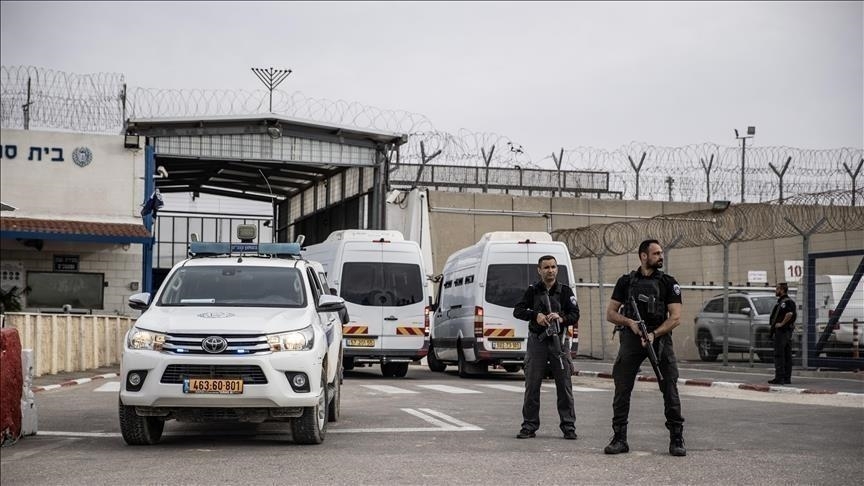
Israeli occupation forces transfer 6 prisoners released in a prisoner exchange deal to administrative detention.

The Palestinian Prisoners' Club said on Wednesday that the Israeli occupation authorities transferred six prisoners released in a prisoner exchange deal with Hamas to administrative detention.

The club stated in a statement that it had recorded the arrest by Israeli authorities of "13 individuals among the ranks of liberated prisoners, who were released as part of the recent exchange deal that took place in January and February of this year" between Israel and Hamas.

The club explained that "the Israeli occupation kept seven prisoners in detention, six of whom were placed under administrative detention (without charge), while an indictment was issued against the released prisoner, Reda Obeid, from Jerusalem."

He pointed out that among the prisoners transferred to administrative detention is prisoner Samah Hijjawi from the city of Qalqilya.

In this context, the Palestinian Prisoners Club's statement noted that "targeting released prisoners through arrests, specifically through the policy of administrative detention under the pretext of a 'secret file,' has been and remains the most prominent policy pursued by the Israeli occupation throughout history, whether for those released in exchange deals or those released after completing their detention period."

In early March, the first phase of a ceasefire and prisoner exchange agreement between Hamas and Israel concluded. The agreement, which took effect on January 19, 2025, was brokered by Egypt and Qatar and supported by the United States.

The exchange deal included the release of 1,777 Palestinian prisoners, along with one Jordanian prisoner, according to a previous statement by the Palestinian Prisoners Club, in exchange for 33 Israeli prisoners, 25 of whom were alive and eight were dead.

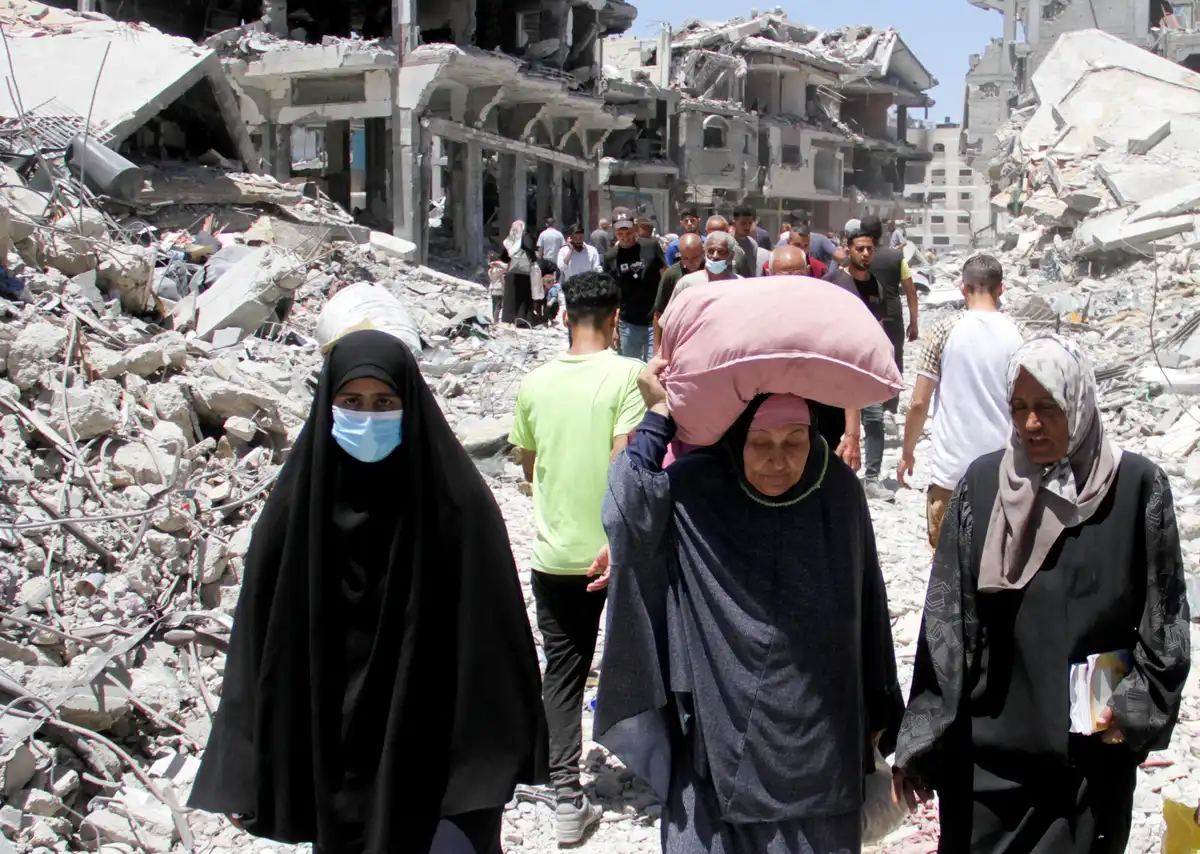
With American support, Israel has been committing genocidal crimes in Gaza since October 7, 2023, leaving more than 175,000 Palestinians dead or wounded, most of them children and women, and more than 11,000 missing, in addition to hundreds of thousands displaced.

Coinciding with the ongoing aggression on the Gaza Strip, the Israeli occupation army and settlers have escalated their attacks in the West Bank, including East Jerusalem, resulting in the deaths of more than 969 Palestinians and the injury of approximately 7,000 others, according to Palestinian data.

PALESTINE

Wed 21 May 2025 4:42 pm - Jerusalem Time

Settlers set fire to lands south of Nablus

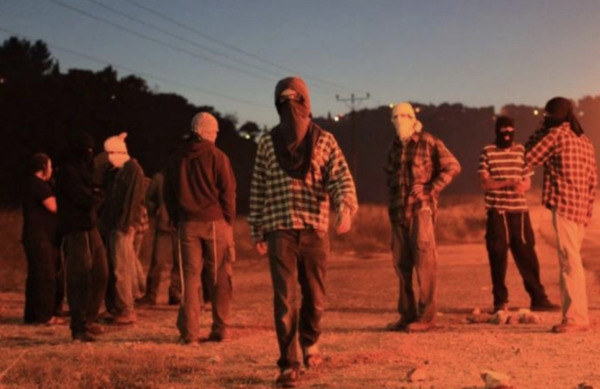
Settlers set fire to lands in the village of Madama, south of Nablus, on Wednesday evening.

According to local sources, settlers attacked citizens' lands on the outskirts of the village of Madama, south of Nablus, and set them on fire.

It's worth noting that settler attacks have escalated recently, including setting fire to citizens' lands in villages in the Nablus Governorate and attacking their property.

ARAB AND WORLD

Wed 21 May 2025 4:35 pm - Jerusalem Time

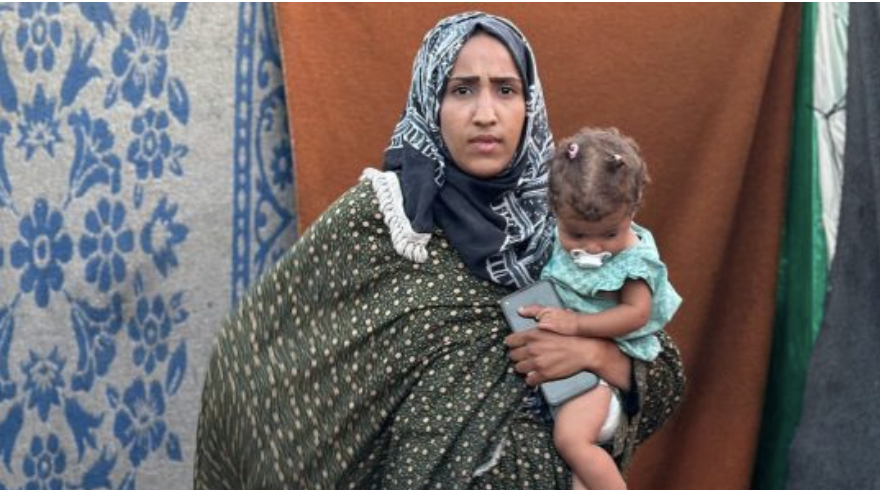
The United Nations condemns the mass starvation of children amid the aid blockade.

The United Nations Committee on the Rights of the Child condemned the continued obstruction of humanitarian aid to the Gaza Strip.

In a statement on Wednesday, it expressed concern over reports that more than 14,000 infants could die within hours if life-saving supplies are not allowed in.

The committee urged the international community to pressure the Israeli occupation to allow immediate and sustainable access to essential food and medical supplies.

"After more than 11 weeks of obstructing humanitarian access, the food security crisis is rapidly deteriorating, with more than 50 children already starving to death and many more on the brink of starvation," the committee said, citing figures from the United Nations Children's Fund (UNICEF) and the World Health Organization. "If the blockade continues, more children will die, and up to 71,000 children under the age of five could suffer from acute malnutrition over the next year."

She added: "The right to food is a fundamental human right, closely linked to the right to life, and therefore non-derogable under international law."

She condemned the ongoing Israeli aggression on the Gaza Strip, adding: "Attacks kill and maim women and children, including the killing of at least 116 children last week, even before accounting for casualties from today's raids. These attacks occur on a daily basis, pushing the humanitarian situation to a critical point. There is no justification for actions that clearly defy international humanitarian law, as well as international human rights law, including the Conventions on the Rights of the Child and the Convention on the Prevention and Punishment of the Crime of Genocide."

The Committee reiterated the importance of the Advisory Opinion of the International Court of Justice issued on 19 July, along with its orders issued on 26 January and 24 May of last year, in the case of South Africa v. Israel, concerning the application of the Convention on the Prevention and Punishment of the Crime of Genocide in the Gaza Strip.

She addressed the findings of her country review of Israel, adopted last September, and urged it to "take immediate action to ensure the right to life, survival, and development of all Palestinian children, stop the killing and injury of children in Gaza, and allow safe and unrestricted access for humanitarian assistance throughout the Gaza Strip."

PALESTINE

Wed 21 May 2025 2:18 pm - Jerusalem Time

Israeli occupation forces opened fire on a diplomatic delegation at the eastern entrance to Jenin camp.

Israeli occupation forces fired live ammunition at a diplomatic delegation on Wednesday as it was at the entrance to Jenin camp to examine the tragic situation there.

Local sources reported that Israeli occupation soldiers stationed in Jenin camp fired live ammunition directly and intensively at the diplomatic delegation while it was in the vicinity of Jenin camp to review the camp's conditions and the siege imposed on it.

She noted that while the delegation was near the iron gate the occupation forces had installed at the eastern entrance to the camp, occupation soldiers opened heavy fire at the delegation and a group of journalists covering the visit.

A diplomatic delegation from Arab and foreign ministries visited the Jenin Governorate headquarters on Wednesday morning and reviewed the situation in the city and camp. The governor gave a detailed presentation on the city's economic situation, the impact of the aggression on the city's basic amenities, commercial losses, and the destruction of infrastructure, in addition to the conditions of the 22,000 displaced persons forced by the occupation to leave their homes in the camp.

The delegation included the ambassadors of Egypt, Jordan, Morocco, the European Union, Portugal, China, Austria, Brazil, Bulgaria, Turkey, Spain, Lithuania, Poland, Russia, Turkey, Japan, Romania, Mexico, Sri Lanka, Canada, India, Chile, France, Britain, and a number of representatives of other countries.

ARAB AND WORLD

Wed 21 May 2025 2:13 pm - Jerusalem Time

CNN: Israel is preparing for a possible strike on Iranian nuclear facilities.

CNN reported Tuesday that the United States has obtained new intelligence indicating that Israel is preparing to attack Iranian nuclear facilities.

The report quoted officials as saying that it is unclear whether Israeli leaders have made a final decision, and that the chances of an attack depend on the outcome of negotiations between the Trump administration and Iran.

A source told CNN that "the chance of an Israeli strike on an Iranian nuclear facility has increased significantly in recent months," and that "the possibility of a US-Iran agreement negotiated by Trump that does not remove all of Iran's uranium increases the likelihood of a strike."

Iranian officials have made it clear that eliminating Iran's uranium enrichment program is out of the question, despite continued calls from US officials.

CNN's report acknowledged that Israel does not have the capability to destroy Iran's nuclear program without US support. A senior US official stated that the United States is intensifying its intelligence gathering efforts in preparation for an Israeli attack on Iran, but another source indicated that Trump is likely to support such a move at this time.

According to the network, an Israeli source said that Israel might launch an attack on its own if the United States and Iran negotiate what it considers a "bad deal."

Another source said that Israel is likely to launch an attack during the negotiations to undermine the chances of an agreement. The source added, "I think they are likely to attack to try to derail the agreement if they believe Trump will accept a 'bad deal.' The Israelis have not hesitated to inform us of this... both publicly and privately."

US President Donald Trump previously refused to support an Israeli attack on Iran's nuclear facilities, preferring diplomacy. However, he conducted the negotiations under the threat of US bombing Iran if no agreement was reached.

The US president is threatening to attack Iran over its nuclear program, even though US intelligence agencies recently confirmed there is no evidence that Iran is developing a nuclear weapon.

PALESTINE

Wed 21 May 2025 2:06 pm - Jerusalem Time

The death toll from the aggression on the Gaza Strip rises to 53,655 dead

The Ministry of Health in Gaza announced that the death toll from the Israeli aggression has risen to 53,655 dead and 121,950 injuries since October 7, 2023.

According to the ministry, 82 dead and 262 injuries were admitted to Gaza Strip hospitals in the past 24 hours.

It pointed out that a number of victims are still under the rubble and on the streets, and that ambulance and civil defense crews are unable to reach them.

IT explained that the death toll and injuries since March 18, 2025 amounted to (3,509 dead 9,909 injuries).

PALESTINE

Wed 21 May 2025 1:40 pm - Jerusalem Time

WHO: Gaza's health system has reached the point of collapse

World Health Organization Director-General Tedros Adhanom Ghebreyesus said on Wednesday that the intensified Israeli ground operations in Gaza and new evacuation requests have pushed the health system beyond the point of collapse.

In a post on Twitter, Ghebreyesus noted that the Indonesian, Kamal Adwan, and Al-Awda hospitals, along with three clinics and four health points, are located within the evacuation zone announced by the Israeli occupation army on Tuesday.

He also pointed out that two other hospitals, four clinics, and six health points are located within one kilometer of the aforementioned area.

Ghebreyesus stated that the European Gaza Hospital and other health facilities in southern Gaza are located within the evacuation areas announced on Monday.

He pointed out that Nasser Medical Complex, Al-Aqsa Martyrs Hospital, five clinics, and 17 health points are located approximately one kilometer from this area.

He continued: "Even if health facilities in Gaza are not attacked or forced to evacuate, attacks on areas there and the presence of soldiers prevent patients from receiving healthcare and prevent the World Health Organization from resupplying hospitals. This could quickly put hospitals out of action."

Ghebreyesus emphasized the World Health Organization's call for the immediate protection of health services, stressing the need to prevent targeting hospitals and to cease hostilities.

PALESTINE

Wed 21 May 2025 1:17 pm - Jerusalem Time

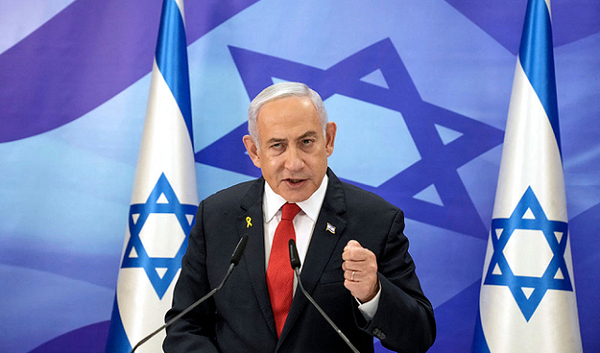
Netanyahu: The war on the Gaza Strip will not continue without support.

Israeli Prime Minister Benjamin Netanyahu said in security consultations that "pressure is increasing from Europe and the United States, and without support, the war cannot continue," Channel 12 reported on Wednesday.

He addressed Washington's warnings to Tel Aviv regarding famine and the ongoing war in Gaza, adding, "They told us we had to decide where we would go."

According to the Israeli report, "Israel has reached a stage where it must make decisions, some of them dramatic. Sometimes these decisions require a price, but there is no escape from this, or we will lose all the achievements made to date."

Israeli officials believe that the negotiations have exhausted themselves, and that the next stage has become clear: "If there are no negotiations, there will be war."

According to Channel 12, the escalation of the fighting in the Gaza Strip is a matter of days or even hours, while Israel continues its military operations with full force, while the goal remains the same: to force Hamas back to the negotiating table.

The report relied on the intense American pressure on all parties, its temporal progression, and the resulting costs, starting with the threat to the lives of prisoners and the continuation of international pressure, which threatens the continuation of Israeli operations.

Three brigades entered Gaza last night.

Channel 12 published a map of the last 24 hours, showing that the Israeli military controls more than 50% of the Gaza Strip. It maintains operational control over some of the territory, while the remaining territory is largely occupied by Israeli forces. Palestinians are devoid of any presence in these areas, as they move between different areas, such as Gaza City and the camps in the central governorate, Al-Mawasi, and Khan Yunis.

As part of its war effort, the Israeli army is seeking to adopt its plan for Rafah, which entails completing the cleansing of the remaining parts of the city and then returning the displaced to tent cities after ensuring the absence of Hamas fighters. At the end of the operation, food distribution stations will await them.

The same report warned that the problem facing military operations is time, with the hourglass ticking and the mediators running out of time, noting the increased pressure on Israel in recent days.

According to Israeli Army Radio, the number of combat troops in the Gaza Strip has increased after additional brigades, including the Hanahal, Golani, and Kfir brigades, entered the Strip last night and joined Operation Gideon's Armored Vehicles.


ARAB AND WORLD

Wed 21 May 2025 12:09 pm - Jerusalem Time

Iran has no clear plan B amid stalled nuclear talks with Washington.

Iranian sources have confirmed that the leadership in Tehran lacks a clear alternative plan should nuclear talks with Washington fail, amid escalating tensions over uranium enrichment.

Sources indicated that Iran may turn to China and Russia as a backup plan, but given the trade war between Beijing and Washington and Moscow's preoccupation with the war in Ukraine, this plan appears fragile and uncertain.

A senior Iranian official said the current strategy relies on avoiding escalation and strengthening ties with allies like Russia and China, while remaining prepared for self-defense. In contrast, Iranian Supreme Leader Ali Khamenei described Washington's demands to ban uranium enrichment as "excessive and insulting," expressing doubts about the possibility of reaching an agreement.

These developments come after four rounds of talks aimed at limiting Iran's nuclear program in exchange for sanctions relief. However, they faltered due to Tehran's refusal to give up its highly enriched uranium stockpile and its refusal to discuss its ballistic missile program, in addition to the lack of trust between the two sides.

The situation is further complicated by the US withdrawal from the nuclear agreement in 2018 and the reimposition of sanctions, which have severely impacted the Iranian economy. This comes amid internal crises related to energy and water shortages, a declining currency, and fears of a potential Israeli attack on nuclear facilities.

Officials emphasized that Tehran has no better option than reaching a new agreement to avoid an internal economic collapse that threatens its rule, given the ongoing US pressure campaign, which includes tightening sanctions and military threats.

For her part, former US negotiator Wendy Sherman said that dismantling Iran's nuclear program and abandoning enrichment is impossible, warning of the possibility of the crisis escalating into war, even though President Trump prefers to avoid conflict.

If the talks fail, Iran is expected to continue circumventing sanctions and selling oil, particularly to China, despite US pressure on Chinese tankers and companies. Analysts warn of the limited support Beijing and Moscow have for Tehran.

On the international level, France, Britain, and Germany have threatened to reimpose UN sanctions if a quick agreement is not reached, with the "snapback mechanism" due to be activated in October, increasing pressure on all parties to find a solution.

PALESTINE

Wed 21 May 2025 12:03 pm - Jerusalem Time

The Gaza Ministry of Health warns of a complete collapse of hospitals.

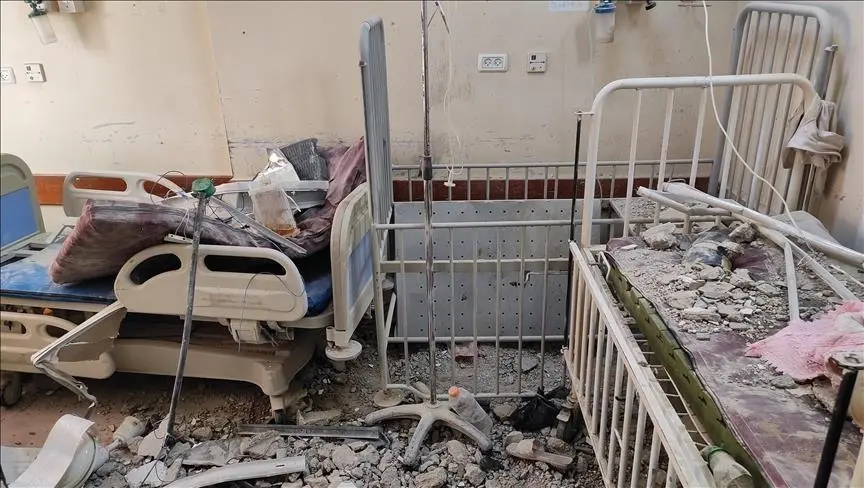
The Ministry of Health in the Gaza Strip confirmed that the Israeli occupation's deliberate targeting of electrical generators is exacerbating the health crisis in the Gaza Strip and threatening the remaining functioning medical facilities, particularly in the northern part of the Strip.

The ministry said in a statement on Wednesday that the occupation is seeking to destroy electromechanical systems to put as many hospitals as possible out of service, noting that the Indonesian Hospital was completely out of service after three of its electrical generators and fuel tanks were bombed.

The ministry added that the health situation in northern Gaza has become catastrophic, due to a lack of resources and a shortage of oil and spare parts needed to operate generators in various hospitals. It explained that the remaining medical facilities are operating on limited quantities of fuel, threatening to disrupt urgent health services for the wounded and sick at any moment.

The Ministry of Health renewed its urgent appeal to the international community and humanitarian organizations to pressure the occupation to immediately allow the entry of generators and fuel, saving the health system from complete collapse.

PALESTINE

Wed 21 May 2025 11:57 am - Jerusalem Time

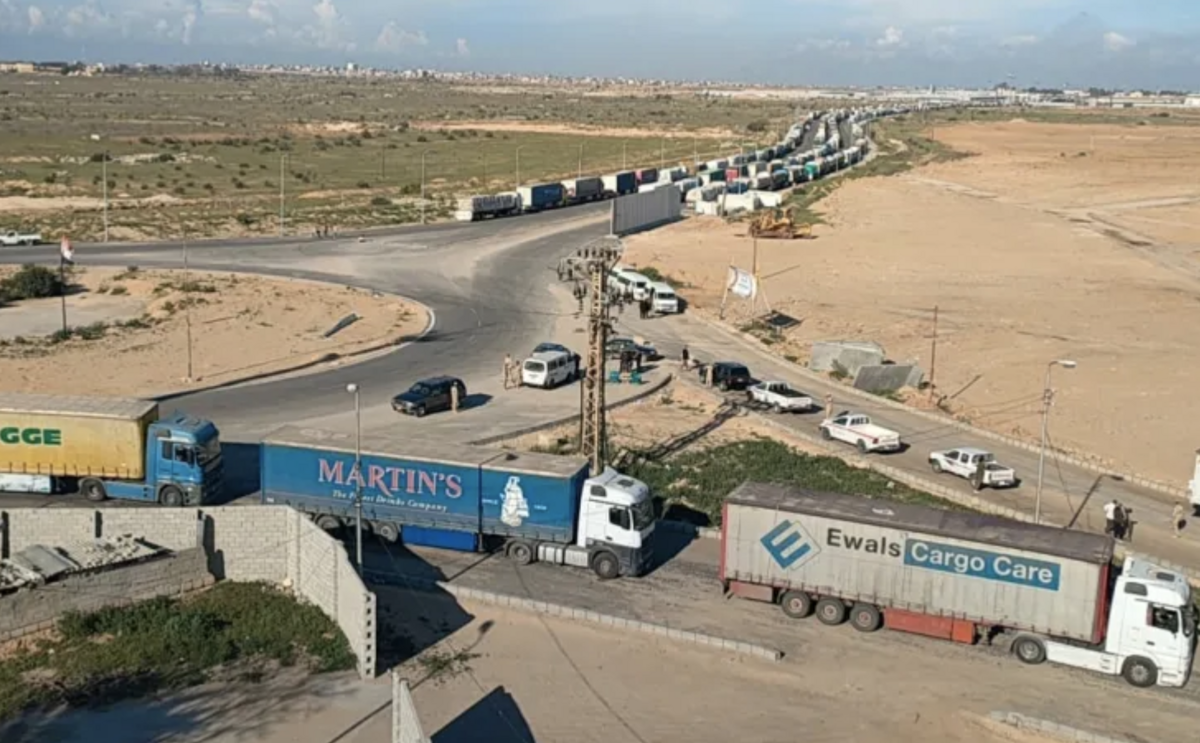
The government office in Gaza denies the entry of aid into the Strip for the third day.

The government media office in the Gaza Strip denied on Wednesday that trucks carrying humanitarian and relief aid had entered the Gaza Strip for the third consecutive day.

The occupation claims it has resumed the entry of aid into the Gaza Strip, after the Israeli cabinet approved it two days ago.

In a statement, the government office considered this a blatant violation and a continuation of the systematic siege and starvation policy being practiced against more than 2.4 million Palestinian civilians living under catastrophic humanitarian conditions.

He said, "The occupation has halted the entry of aid—which it claimed it would allow in last Monday—without any legal or humanitarian justification, at a time when the Gaza Strip is experiencing deteriorating health and living conditions and a severe shortage of food, medicine, and fuel, which portends a worsening humanitarian disaster that threatens the lives of the population."

He added, "This behavior confirms the occupation's deliberate use of food and medicine as a weapon of war against civilians. It has closed all crossings for 80 days, in flagrant violation of international humanitarian law and all humanitarian norms and conventions. This holds it fully responsible for the repercussions of this aggressive policy."

The government office called on the international community, the United Nations, and humanitarian and human rights organizations to take urgent action and pressure the occupation to open the crossings, ensure the flow of aid without delay or hindrance, and work diligently to end the unjust blockade imposed on the Gaza Strip for more than 18 years.

OPINIONS

Wed 21 May 2025 11:35 am - Jerusalem Time

Aid, Negotiations, and Threats

Baha Rahal

Baha Rahal

Opinion Writer

Some aid convoys have entered the Gaza Strip, which, according to international and local observers, are not enough to quell the severe hunger people have experienced in recent weeks, particularly in the Gaza Strip. However, this step could save people from starvation, especially children and the elderly. This is happening while the war of extermination continues, with terrifying days and even more terrifying, fearful, and bombarded nights.

With each day, we find a new chapter of limitless suffering. In the stories of people living on the edge of the rubble of their war-torn homes, there is something that pains the heart, wounds the conscience, and raises within us all questions about the absence of the international, Arab, and humanitarian voice, which, to this day, have been unable to stop the war.

Negotiations in Qatar are oscillating between hope and pain. Sometimes the negotiations falter, and other times news breaks that an agreement is close. Between these two extremes, the people of Gaza live in a state of suspense, hoping for an agreement that will halt the genocide, halt the killing and destruction machine, allow them to catch their breath, and heal their wounds. This is what the people of Gaza are waiting for, after the long months of genocide that have left the Strip a wasteland of devastation and devastation.

While the prospect of reaching an agreement has stalled, the occupation continues its operations under the "Gideon's Chariots" plan, which it announced, and began rolling out in successive stages. This operation is part of a comprehensive plan of genocide, expulsion, and displacement, pushing people southward through the distribution of food and medical aid in the southern Gaza Strip, where the occupation is working to create "dead zones" from which people are forced to leave, facing the harshness of the hunger imposed on them and the severe shortage of food and medicine.

The occupation operations are rolling in with every hour, continuing the acts of destruction and devastation, paving roads, cutting off areas, and isolating them from one another, in the maps of displacement and occupation of the Gaza Strip, according to the vision of the extremist racist madness led by Netanyahu and his aides in the occupation government, such as Ben Gvir and Smotrich. The series of mass killings continues, in massacres that kidnap entire families, and nothing to date has stopped the genocide or lifted the injustice inflicted on the defenseless people, as they swallow the agony and pain, endure hunger and nakedness, and await the moment when the war will stop.

Days pass heavily for the people of Gaza, and moments are a lifetime of loss and wounds. Their eyes and sights are directed toward stopping the massacre, and their hearts are attached to supplication and hope from the Lord of the heavens, for there is no hope from the silent, neutral people.

PALESTINE

Wed 21 May 2025 11:29 am - Jerusalem Time

President Abbas calls on the world to break the siege and deliver aid to Gaza.

Palestinian President Mahmoud Abbas issued an urgent appeal to world leaders regarding the catastrophic and tragic situation in the Gaza Strip.

President Abbas called on world leaders to take urgent and decisive action to break the siege on our people in the Gaza Strip, allow the entry of humanitarian and medical aid by land, sea and air, immediately and permanently halt this aggression, release all detainees and prisoners, ensure a full Israeli withdrawal from the Gaza Strip, and ensure the State of Palestine assumes full responsibility for it. It is no longer possible to remain silent about the crimes of genocide, destruction and starvation committed by the Israeli occupation forces.

He added: "From my position as President of the State of Palestine, of which the Gaza Strip is an integral part, I call on us all to have the courage required to accomplish this task, which is unparalleled at this historic moment. We are hopeful of success in this noble endeavor. This will be a fundamental moment for moving toward reconstruction, halting settlement activity and attacks on our people and holy sites in the West Bank and East Jerusalem, and moving toward implementing the two-state solution in accordance with international law, by ending the occupation and embodying the independence of the State of Palestine with East Jerusalem as its capital."

In this regard, we look forward to the international peace conference in New York next month to implement the two-state solution in accordance with international legitimacy and mobilize efforts to achieve further international recognition and full membership for the State of Palestine in the United Nations.

In this context, we reiterate our welcome for the joint statement issued by the leaders of Britain, France and Canada, as well as for the positions of the European Union countries, the joint statement of the donor countries, and the statement of the Arab-Islamic Ministerial Committee in this regard. They all rejected the policy of siege, starvation, displacement and land seizure, and called for an immediate ceasefire and the immediate and unhindered entry of humanitarian aid through the United Nations and UNRWA, ensuring its access to all areas in Gaza. They also rejected the use of aid as a weapon and political tool by Israel to achieve its illegitimate goals, and moved towards recognizing the State of Palestine.

We extend our sincere thanks to all countries and peoples who call for an end to the war of extermination and the provision of aid to our people.

This appeal represents a call from the State of Palestine, the sovereign state of the Gaza Strip, to allow aid into Gaza through our land, sea, and airspace. It also expresses our full readiness to cooperate with any party willing to take practical steps to end the suffering of our people, break the siege, halt the aggression, and support the Arab-Islamic plan to rebuild Gaza without displacing our people.

This is a crucial historical moment that requires unprecedented and courageous positions, and concerted Arab, Islamic, and international efforts to uphold Palestinian rights, ensure respect for international law, implement international legitimacy resolutions, end aggression and colonialism, achieve independence, and establish peace.

It is time, O world, to end the war of extermination against the Palestinian people. I reiterate that we will not leave, and we will remain here on the land of our homeland, Palestine.

ARAB AND WORLD

Wed 21 May 2025 9:45 am - Jerusalem Time

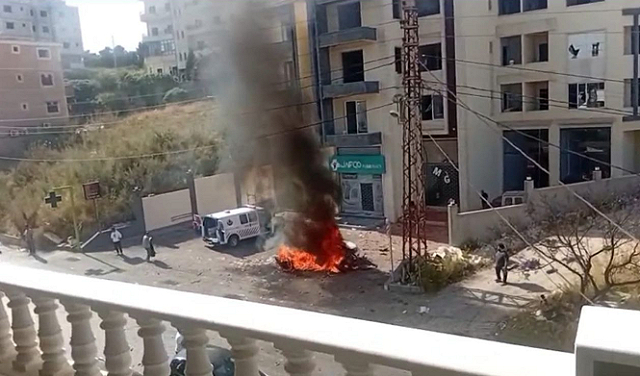
Israeli shelling targets a vehicle in Ain Baal, southern Lebanon.

An Israeli drone targeted a vehicle on the Al-Hawsh-Ain Baar road near Tyre, southern Lebanon, this morning, Wednesday.

Video footage showed the targeted vehicle catching fire and citizens attempting to extinguish it and rescue those inside.

The Israeli army often claims responsibility for the repeated daily shelling of various areas in southern Lebanon, claiming to target and kill Hezbollah members.

On October 8, 2023, Israel launched an aggression against Lebanon, which escalated into a full-scale war on September 23, 2024, resulting in more than 4,000 deaths and approximately 17,000 injuries, in addition to the displacement of approximately 1.4 million people.

Since the ceasefire agreement came into effect on November 27, 2024, Israel has committed at least 2,780 violations, resulting in at least 200 deaths and 491 injuries, according to official data.

While the Lebanese army continues its deployment in the south in implementation of the agreement, Israel has reneged on its commitment to complete its withdrawal from southern Lebanon by February 18.

The Israeli army has partially withdrawn from Lebanon, and its forces continue to occupy five major Lebanese hills within the areas they occupied in the last war.


PALESTINE

Wed 21 May 2025 9:32 am - Jerusalem Time

A new proposal on Gaza: Israeli intransigence obstructs a comprehensive agreement.

Dr. Hussein Al-Deek: The absence of binding international guarantees, especially from the United States, makes reaching an agreement more difficult, thus continuing the suffering of the Palestinians.

Nizar Nazzal: There is a chance for a temporary truce, but a comprehensive agreement is unlikely at the present time.

Dr. Irene Said: Talk of the possibility of reaching an agreement is an attempt to buy time to expand the Israeli military incursion and intensify strikes in Gaza.

Nour Odeh: The possibility of Trump offering guarantees against returning to war is unlikely unless Hamas agrees to harsh conditions.

Dr. Suhail Diab: Israel is facing increasing pressures pushing it toward flexibility, most notably American pressure due to the shift in its stance toward Netanyahu.

Fayez Abbas: Netanyahu is exploiting the limited aid entry into Gaza to buy time and ease international pressure on him.

Amid talk of a new proposal for a ceasefire, albeit a temporary one, it appears that Israeli intransigence and disregard for Palestinian demands to halt the war in Gaza, coupled with Hamas's demand for binding American guarantees to end the aggression, are further complicating the prospects for reaching a comprehensive agreement.

In separate interviews with Al-Quds, political analysts, experts, and university professors believe that Israel, with American approval, is seeking to achieve strategic objectives in the Gaza Strip. Israeli Prime Minister Benjamin Netanyahu is exploiting the limited humanitarian aid flow to ease international pressure on Israel. Talk of negotiations coincides with a military escalation, revealing an intention to buy time.

Writers, analysts, specialists, and university professors predict the possibility of a temporary truce, including the release of a limited number of prisoners. However, a comprehensive agreement remains elusive due to Israel's refusal to withdraw or end the war, exacerbating the humanitarian catastrophe in Gaza as the aggression continues. They cast doubt on the reliability of American guarantees, given Washington's history of breaking agreements.

Hebrew media reported that Israel had presented a new proposal to Hamas, which includes the release of ten living prisoners and half of the bodies in one day, along with a two-year truce, and the beginning of the entry of humanitarian aid immediately after the agreement is signed. The deal also includes Israel's withdrawal from areas it occupied in Operation Courage and the Sword, but it refuses to withdraw from the Netzarim and Philadelphi corridors, and is offering to negotiate a ceasefire during the truce.

In contrast, Hamas is sticking to clear demands, including US President Donald Trump declaring a ceasefire, providing personal guarantees that Israel will not resume the war after the prisoners are released, and Trump's Middle East envoy, Steve Witkoff, signing the deal and shaking hands with Hamas leader in Gaza, Khalil al-Hayya.

The problem is Israel violating the agreements.

Dr. Hussein Al-Deek, a writer and political analyst specializing in American affairs and international relations, says that the new proposal presented to Hamas in the Doha negotiations represents a positive step, but the main obstacle remains the position of Israeli Prime Minister Benjamin Netanyahu and his government, which refuses to stop the war and obstructs agreements.

Al-Deek explains that the problem lies not with Hamas, which has expressed a willingness to negotiate, but with Israel, which is violating agreements and refusing to provide guarantees to end the aggression against the Gaza Strip.

Al-Deek points out that Egyptian, Qatari, and even American mediators have become convinced that Netanyahu is the main obstacle to the negotiations.

Al-Deek asserts that the central issue in these talks is not the number of prisoners, the timetables, or issues such as disarming Hamas, the departure of its leaders, or the handover of the Gaza Strip to the Palestinian Authority, but rather a permanent ceasefire.

Al-Deek says, "Netanyahu refuses to end the war or offer any binding guarantees, and the US administration is unwilling to offer guarantees to stop the war, while Hamas and the Palestinian people insist on ending the aggression as a basic condition."

Al-Deek explains that even if all 58 remaining prisoners held by the resistance are released, Israel will continue the war to achieve its strategic goals, which include controlling large areas of Gaza, establishing settlements, forming an administration loyal to the occupation, and displacing as many Palestinians as possible.

Al-Deek points out that these goals, supported by Netanyahu and US President Donald Trump, face international obstacles, particularly regarding forced displacement, as no country has officially declared its willingness to receive displaced Palestinians from Gaza.

Al-Deek explains that there are American efforts to negotiate with countries, such as Libya, to host approximately one million Palestinians in exchange for releasing billions of dollars frozen from the former Libyan government's assets in American banks. However, all attempts have been unsuccessful so far, confirming the consistency of the American and Israeli positions on the war's objectives.

Excluding a temporary truce or a permanent cessation of war

Al-Deek asserts that the United States continues to negotiate with other countries to achieve this goal, but international and Arab opposition to the displacement has forced Trump to publicly back down from the plan, despite its tacit continuation, as American and Israeli press reports indicate.

In assessing the possibility of halting the war, Al-Deek rules out the possibility of such a halt under the current circumstances, whether through a temporary truce or a permanent ceasefire, noting that this goal may not be achieved unless the Netanyahu government leaves office.

Al-Deek points to Israeli media talk of possible elections within a year, which could alter the political landscape. However, he asserts that the continuation of the war reflects a consensus between the Trump administration and Netanyahu on its objectives, with the exception of displacement, which faces international resistance.

Al-Deek explains that the core issue remains a cessation of hostilities, a demand the Palestinian resistance insists on and one Netanyahu and Israel categorically reject.

Al-Deek warns that the absence of binding international guarantees, particularly from the United States, makes reaching an agreement more difficult, prolonging the conflict and deepening the suffering of the Palestinian people amid Israeli goals aimed at changing the demographic and political reality in Gaza.

Conflict resolution strategy rather than conflict management

For his part, Nizar Nazzal, a researcher specializing in Israeli affairs and conflict issues, asserts that Israel is adopting a strategy aimed at resolving the Palestinian-Israeli conflict once and for all by liquidating the Palestinian cause and the Palestinian people, rather than managing the conflict as it was in the past.

Nazzal points out that Hamas is responding positively to proposals for a ceasefire in the Gaza Strip, but Israel, under the leadership of Prime Minister Benjamin Netanyahu, is adhering to a policy of "temporary truces" and refusing to commit to a comprehensive cessation of hostilities, the primary goal of the Palestinian resistance.

Nazzal asserts that Israel's central goal is to resolve the conflict completely by stripping the Palestinian resistance of its leverage, particularly the issue of Israeli prisoners. Israel also seeks to free Hamas prisoners without making any substantive concessions, such as a ceasefire or a complete withdrawal from the Gaza Strip, which would allow it to resume military operations later.

"Israel is not explicitly saying it will agree to a ceasefire in exchange for the release of all prisoners," Nazzal says. "Rather, it is relying on temporary truces, such as a 50- or 60-day ceasefire, because it does not want a comprehensive commitment to end the war."

Temporary truce to allow humanitarian aid in

Nazzal asserts that there is a chance of reaching a temporary truce that might include the entry of humanitarian aid and the release of a limited number of Israeli prisoners, but that a comprehensive agreement is unlikely at this time.

Nazzal notes that Hamas may accept a limited truce, but will be cautious in reducing the number of released prisoners, aware that Israel will exploit any decrease in its prisoner numbers to intensify its targeting of the Gaza Strip, which will become "empty of prisoners" and thus an easier target for military operations.

Speaking about international guarantees, Nazzal cautions against relying on American and Israeli promises, noting that both parties have a proven track record of reneging on agreements.

Nazzal cites the Doha Agreement of January 17, which Israel signed under American, Egyptian, and Qatari sponsorship. However, Netanyahu backed out of implementing the second phase of the agreement, which included political steps such as withdrawal and a ceasefire.

Netanyahu works for his own personal interests

"Netanyahu is working for his own personal benefit," Nazzal says. "A ceasefire would mean the fall of his government, the collapse of his political future, and even facing prosecution."

Nazzal criticizes the verbal guarantees provided by the United States and its refusal to provide binding written guarantees, saying, "Trump withdrew from the nuclear agreement with Iran in 2018, which shows that relying on American guarantees is a losing proposition."

Nazzal points out that reports of "momentum" in the Doha negotiations, according to Israel's Channel 13, are inaccurate, emphasizing that the main obstacle remains Israel's refusal to stop the war and fully withdraw from Gaza.

Nazzal stresses that the situation remains complex, with a wide gap between Hamas's demands for a comprehensive cessation of hostilities and Israel's rejection of this condition.

Nazzal believes that Israel will resume fighting even if a temporary truce is reached, presenting Hamas with difficult choices, as any concession could weaken its position in the ongoing war against the Palestinian people.

US-Israeli maneuver to uproot Hamas

For her part, Egyptian academic and political analyst Dr. Irene Said explains that the current phase is witnessing a US-Israeli maneuver aimed at uprooting Hamas, emphasizing that this goal remains the primary priority for both Washington and Tel Aviv, at the expense of humanitarian values and international law.

Saeed points out that the United States has ignored the humanitarian catastrophe in the Gaza Strip and has taken no action to rein in its strategic ally, Israel, reflecting a retreat from its purported American values and a disregard for international norms.

Saeed points out that this maneuver is manifested in portraying a clash between US President Donald Trump and Israeli Prime Minister Benjamin Netanyahu, despite the fact that any disagreement between them is limited.

Saeed explains that Trump deliberately avoided visiting Tel Aviv during his recent tour of the Middle East, with the aim of weakening the Gulf states' position in his calls to pressure Netanyahu.

Saeed asserts that the conflicting American and Israeli statements, and talk of a return to negotiations and the possibility of reaching an agreement, are merely attempts to buy time and exploit it to expand Israel's military incursion into Gaza and intensify its systematic attacks against the Palestinians.

Trump is trying to achieve apparent balances.

Saeed believes that the coincidence of talk of resuming negotiations with Israeli orders to expand the war reveals the intentions of both sides.

Even allowing limited humanitarian aid into the country, according to Saeed, reflects Trump's attempt to achieve a superficial balance following his economic tour of the Gulf, which went against political expectations. These steps are little more than tactics to improve Israel's image, while the war continues with no real intention of ending it.

Saeed proposes three parallel paths to resolve the complex situation. The first is implementing the outcomes of the Arab Summit, which are consistent with the decisions of the March 4 Summit and are characterized by their effectiveness and practical applicability.

The second path, according to Saeed, is to strengthen Cairo's efforts to lead the main negotiations in their second phase, while seizing the initiative.

Saeed points to the third path, which involves urgent Gulf action to exert direct pressure on Trump to push him to end the war.

Saeed stresses that these paths require close Arab coordination to confront the US-Israeli strategy.

Saeed stresses that the lack of American and Israeli will to end the war, coupled with the continued military escalation, further complicates the crisis.

Saeed warns that the continuation of these maneuvers will exacerbate the humanitarian catastrophe in Gaza, calling for urgent international and Arab action to halt the aggression and impose just solutions.

Israel and media leaks

For her part, Nour Odeh, a writer and political analyst specializing in diplomatic affairs and international relations, says that mediators are concerned with limiting leaks about the ongoing Doha negotiations regarding the Gaza Strip, while Israel excels at using media leaks to shape a particular narrative that dominates discussions.

Awda believes that talk of an "Israeli proposal" or an "American proposal" overlooks objective factors that indicate a chance for a limited agreement, driven by the United States' active engagement and President Donald Trump's desire to achieve a symbolic achievement in the form of the return of the bodies of four American-Israeli citizens held in Gaza.

Awda points out that this potential agreement will not be comprehensive and will not meet the aspirations of the Palestinian side, especially Hamas, which realizes that a comprehensive ceasefire is not on the table now.

Awda explains that Trump is pursuing his own personal interests through this achievement, alongside his attempt to "save Israel from itself" by easing its international isolation, as evidenced by the limited and insufficient humanitarian aid trucks allowed into Gaza.

Awda believes this move aims to polish Israel's image, which faces accusations of starving more than two million Palestinians, half of whom are children.

Awda warns against relying on Trump's assurances that the war will not resume, questioning his willingness to offer such assurances, which could be interpreted as granting legitimacy to Hamas.

Awda explains that the US administration's statements emphasize strict conditions, including preventing Hamas from governing Gaza, requiring its leaders to leave the Strip, granting Israel the right to target them, and disarming Hamas.

Awda asserts that the United States does not oppose the war or the extent of Palestinian casualties, pointing to its silence regarding the displacement, killing, destruction, and emptying of camps in the West Bank, which reflects the absence of any substantive disagreement with Israel regarding the ongoing "war of extermination."

American and Israeli moves are tactical, not strategic.

Awda explains that the US and Israeli moves remain tactical, not strategic, and do not imply a change in US policy toward the Palestinian issue.

Awda rules out the possibility of Trump offering guarantees that he will not return to war unless Hamas agrees to strict conditions, such as disarming, the departure of its leaders, and its exclusion from governing Gaza.

Awda points to an additional dilemma facing Trump: Israel's refusal to allow any Palestinian party to govern the Gaza Strip, coupled with his renewed talk of displacement and control over the territory, complicates the possibility of reaching a sustainable solution.

Awda asserts that the negotiations are taking place in a vicious circle, with the most that can be expected being a scenario similar to the situation in Lebanon, involving a de-escalation of the war or a temporary truce that allows Israel to retain its ability to attack, assassinate, and bomb.

"Unfortunately, Palestinian, regional, and international factors are still not yet ripe for ending the war," Odeh said, emphasizing that the current situation reflects the ongoing challenges facing achieving a just solution that meets the Palestinian people's need to halt the genocide and begin reconstruction.

The Doha negotiations are a platform for reopening all issues.

Political science professor Dr. Suhail Diab says that the ongoing negotiations in Doha regarding the situation in the Gaza Strip have witnessed qualitative developments. They are no longer limited to discussing specific proposals, such as the Witkoff proposal or the Israeli proposal, but have become a platform for reopening all issues and presenting new options, including the possibility of reaching comprehensive deals or a long-term truce extending to two years.

Diab explains that these negotiations reflect the significant pressures facing both Israel and the Palestinian negotiator, pushing both sides to search for a "magic equation" to resolve the current crisis.

Diab points out that the negotiations are characterized by three major developments. First, the reopening of all points of contention for discussion, something Israel had previously rejected, reflecting a shift in its position under internal and external pressure.

The second issue, according to Dabbab, is Israel's willingness to discuss the terms of a ceasefire, despite its lack of explicit commitment to ending the war, which opens the door to new possibilities.

The third development revolves around the split of negotiations into two tracks: a formal track at the negotiating table, and an informal track involving contacts between Witkov and Netanyahu, and Witkov and Arab mediators. This track is the most effective on issues such as the delivery of humanitarian aid and advancing negotiations toward a possible deal.

Israel faces increasing pressure

Diab explains that Israel is facing increasing pressures pushing it toward flexibility, most notably American pressure resulting from the shift in US policy toward Netanyahu, in addition to Houthi attacks that Israel is unable to confront on a security level.

Diab points out that the Israeli security services are convinced that it is impossible to recover Israeli prisoners alive through military operations, which reinforces the need for a negotiated solution.

In contrast, Diab explains that Palestinian negotiators face similar pressures, most notably the worsening humanitarian crisis in Gaza, which forces Palestinians to consider flexible and creative proposals.

Diab points out that the decline in popular and official Arab support, coupled with internal tensions between Palestinian factions, particularly between Hamas and the Palestinian Authority, further complicates the position of the Palestinian negotiator.

Diab asserts that both parties are negotiating under extremely sensitive circumstances, as if they are "on the brink of a catastrophe" that could lead to disaster if an agreement is not reached.

Given the American, international, and regional need to find a solution, Diab expects progress toward an agreement in the coming hours or days, supported by Western pressure from Britain and France, efforts from Qatar and Egypt, and even contributions from China and other parties.

In outlining a possible solution, Diab proposes a "magic equation" based on three pillars. The first pillar is an indirect truce or partial ceasefire between Israel and Hamas, without discussing whether to end the war or continue it. This formula has been tried before, but it has not succeeded on its own.

The possibility of adopting a model similar to the Lebanese agreement

The second aspect, according to Diab, relates to American guarantees, which should specify the conditions for Israel's return to military operations if the war is halted, indicating the possibility of adopting a model similar to the Lebanese agreement. The United States should also provide guarantees to the Palestinians to prevent Israel from returning to a full-scale war or policies of "genocide," a major Palestinian and Arab concern.

Diab points to the third aspect, which requires Hamas's willingness to discuss sensitive issues such as the "day after" in Gaza, including the future of the resistance's weapons.

Diab expects the negotiations to move toward a three-way agreement, including a direct agreement between Israel and the Palestinians, and side agreements between Israel and the United States, and between Israel and the Palestinians, providing reassurance to each party without conflicting with other agreements.

Despite the challenges resulting from conflicting assurances between the parties, Diab expresses cautious optimism about the possibility of reaching a formula that would enable the parties to "coexist" with the agreement, thus overcoming the current crisis.

Israeli proposals have not changed.

For his part, Fayez Abbas, a writer specializing in Israeli affairs, said that the Israeli proposals presented to Hamas have remained unchanged since the start of the initial negotiations, noting that Israel, under the leadership of Prime Minister Benjamin Netanyahu, refuses to commit to a comprehensive ceasefire in the Gaza Strip.

Abbas explained that the initial agreement included the release of detainees in exchange for a two-month truce, with a plan to move to a second phase that would include the release of all detainees, a cessation of hostilities, and an Israeli withdrawal from the Gaza Strip. Netanyahu rejected this phase, demanding the release of all detainees, living and dead, the disarmament of Hamas, the end of its control over Gaza, and the deportation of its political and military leaders from the Strip.

Abbas points out that Israel has not backed down from its positions, but has intensified its military operations, prevented the entry of humanitarian aid for extended periods, and launched a large-scale ground operation to occupy the entire Gaza Strip. He asserts that Israel has no intention of withdrawing even if a ceasefire agreement is reached and the detainees are released.

Abbas points out that Netanyahu is exploiting the limited aid deliveries to the Gaza Strip to buy time and ease international pressure, but he is paying no attention to world public opinion or UN resolutions as he continues his plan to occupy the Strip and forcibly displace its population.

Abbas explains that this plan faces a major obstacle, as countries refuse to cooperate with a government that includes figures like Itamar Ben-Gvir on the displacement issue.

Netanyahu's desire to take revenge on the Palestinian people

Abbas asserts that Netanyahu's continued war reflects his desire to "take revenge" on the Palestinian people after the October 7 attack, noting that the recent military operations in Gaza lack any clear military significance and are merely aimed at escalating collective punishment.

Abbas explains that US President Donald Trump is the only one capable of forcing Netanyahu to stop the war, but he shows no real interest in doing so.

Abbas considers Trump's statements about the need to allow food into Gaza during his visit to the Arabian Gulf to be nothing more than "lip service" that does not reflect a serious intent to end the conflict.

Abbas asserts that Trump's announcement of ceasefire guarantees may only be possible if he decides to enforce them, as Netanyahu lacks the courage to oppose him.

Abbas warns that the absence of international sanctions on Israel only strengthens its commitment to its occupation plans, making a halt to the war or an Israeli withdrawal unattainable at the present time.


ARAB AND WORLD

Wed 21 May 2025 9:06 am - Jerusalem Time

Rubio says Washington has discussed with some countries the "voluntary" resettlement of Palestinians.

US Secretary of State Marco Rubio said the United States has reached out to countries about accepting "voluntary" resettlement for Palestinians "fleeing the Israeli assault on Gaza."

Israel has again warned the residents of Gaza—who have been completely displaced more than once since the war began on October 7, 2023—that it is moving forward with a new, large-scale offensive. This comes after the Israeli occupation authorities completely blockaded the Strip's access to food, water, humanitarian supplies, and medical equipment since March 2.

US President Donald Trump has repeatedly considered displacing Gaza's two million residents to make way for reconstruction and create a "Middle East River" in the devastated territory.

In response to a question during his testimony before the Senate Foreign Relations Committee, Rubio said, "There is no deportation."

"What we've talked about with some countries is: If someone voluntarily and willingly says, 'I want to go somewhere else for a while because I'm sick, or because my kids need to go to school,' or something like that, are there countries in the region willing to take them in for a while?" Rubio said. "These will be voluntary decisions made by individuals."

Democratic Senator Jeff Merkley (D-Mass.) responded: “If there is no clean water, no food, and bombing is all around you, is this really a voluntary decision?”

NBC News reported on Friday (May 25, 2016) that five informed sources told the network that the administration of US President Donald Trump is working on a plan to permanently transfer up to one million Palestinians from the Gaza Strip to Libya.

Two people familiar with the plans and a former US official confirmed that the plan is under serious consideration, to the point that the administration has discussed it with the Libyan leadership.

These three people added that in exchange for resettling the Palestinians, the administration would likely release billions of dollars in funds frozen by the United States to Libya for more than a decade.

The same three sources reported that no final agreement had been reached, and that Israel had been informed of the administration's discussions.

The network said: "The State Department and the National Security Council did not respond to multiple requests for comment prior to the publication of this article. After publication, a State Department spokesperson told NBC News that these reports were incorrect."

For its part, the US Embassy in Libya denied on Sunday a report that the US government was working on a plan to transfer Palestinians from the Gaza Strip to Libya.

Libya became a failed state following the US-led regime-change war against Libyan leader Muammar Gaddafi in 2011. NBC News insisted that several US officials confirmed that the Trump administration was in negotiations with one of the rival Libyan governments. The report explained: "In exchange for resettling the Palestinians, the administration would likely release billions of dollars in funds frozen by the United States more than a decade ago."

Secretary of State Rubio did not name the countries contacted, but denied that Libya was among them.

Rubio was responding to senators at a Senate Foreign Relations Committee hearing to discuss the situation in Gaza, a nuclear deal with Iran, foreign aid, and lifting sanctions on Syria.

PALESTINE

Wed 21 May 2025 9:02 am - Jerusalem Time

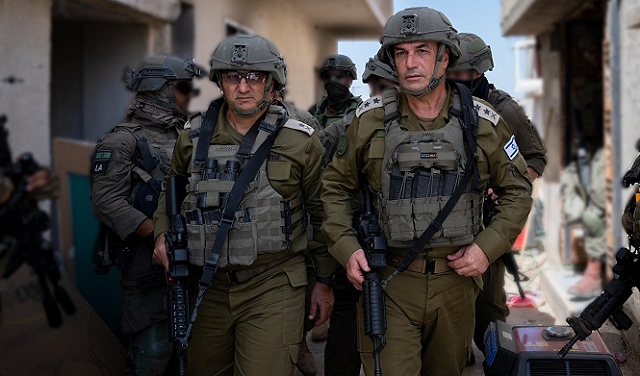
Zamir threatens: We will expand the invasion and occupy more areas of the Gaza Strip.

Israeli Chief of Staff Eyal Zamir said Wednesday that "Hamas will pay the price for its intransigence," threatening to confront it "with firepower, expand the ground incursion, occupy more territory, cleanse it, and destroy the infrastructure until the battle is resolved."

The publication of Zamir's statements coincided with Israeli Prime Minister Benjamin Netanyahu's decision to withdraw several members of the negotiating delegation from Doha, including the coordinator for prisoners and missing persons affairs, Gal Hirsch, and the Shin Bet official known by the initial "M," who are leading the Israeli delegation in the negotiations.

According to the decision, a small technical team will remain in Qatar, in a move aimed at sending a message to Washington that "Tel Aviv is still ready to negotiate." Channel 12 quoted Israeli officials as saying that the Doha negotiations have "exhausted themselves," and that "if Hamas decides to advance, we will be able to move quickly." They stated that keeping the technical teams in Qatar came in response to American pressure.

The Israeli Public Broadcasting Corporation (Kan 11), citing informed sources, noted that the return of the negotiating team leaders from Doha came in light of the lack of negotiating sessions in recent days, a point Hamas had indicated in a statement issued this evening.

An Israeli source said that keeping part of the delegation in Doha is "merely formal" and comes in response to Washington. According to Kan 11, actual talks are currently being conducted directly between US envoy Steve Witkoff and Netanyahu and his Minister of Strategic Affairs, Ron Dermer.

Netanyahu said in a brief statement issued by his office that "Israel has accepted the American offer to return the prisoners, which is based on the Witkoff proposal." He added that the proposal "was recently conveyed to Hamas through mediators, but it continues to be stubborn," he said.

He added that the high-level Israeli negotiating team will return to the country for consultations, "after about a week of intensive talks in Doha," according to his claims. The statement issued by Netanyahu's office stated that a technical team "will remain in Qatar at this stage."

Earlier on Tuesday, Hamas said the continued presence of the Israeli delegation in Doha, despite its lack of authority, was an attempt by Netanyahu to "mislead international public opinion," stressing that "no real negotiations have taken place since last Saturday."

PALESTINE

Wed 21 May 2025 8:58 am - Jerusalem Time

Israeli occupation forces blow up the home of a martyr and demolish another in Hebron and Bethlehem.

This morning, Wednesday, Israeli occupation forces blew up the home of a martyr and demolished another in Hebron and Bethlehem.

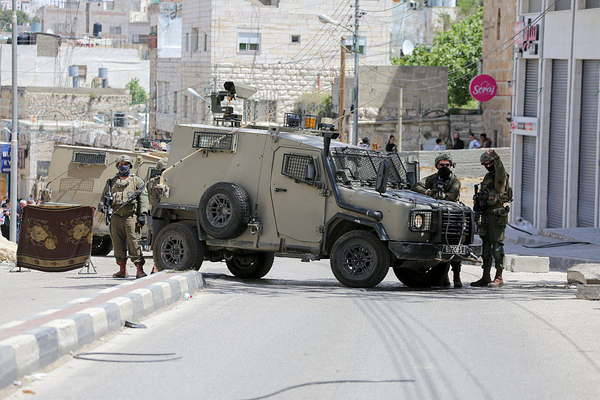
In Hebron, large forces of the occupation army stormed several neighborhoods of the city, and took up positions in the traffic circle area, before bombing the home of martyr Abdul Qader Al-Qawasmi for the second time.
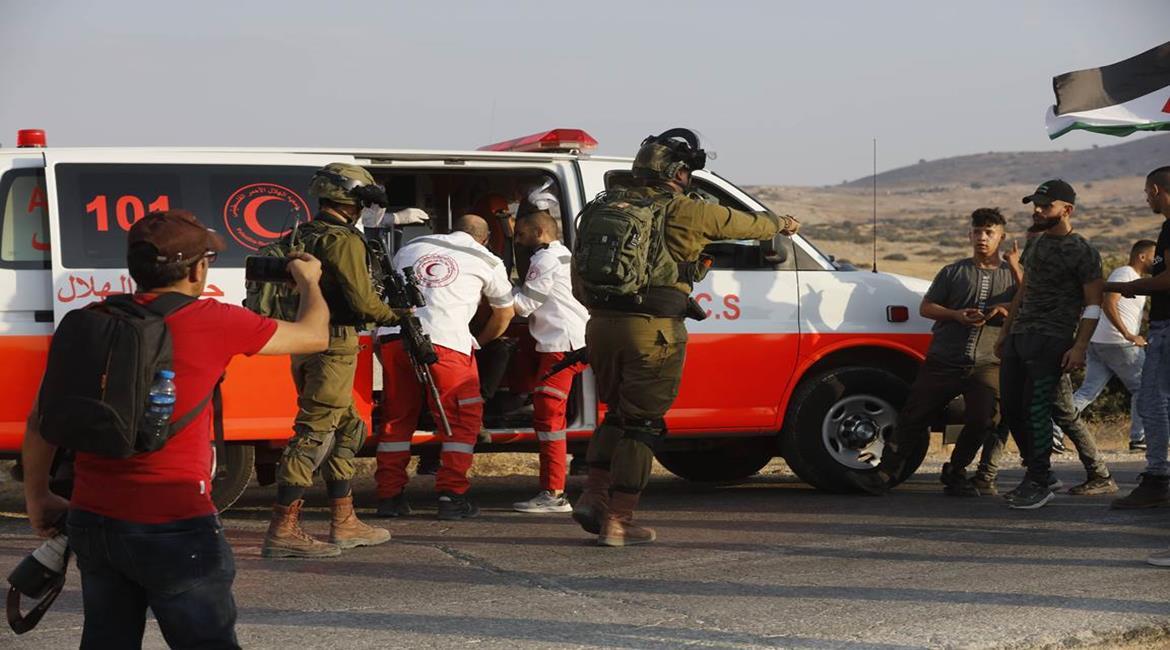
The occupation forces also detained a number of families, prevented access to the area, and set up a military checkpoint at the northern entrance to Hebron.

It is noteworthy that the occupation demolished the home of the martyr Al-Qawasmi on January 21, 2024, who was martyred on November 16, 2023.

In Bethlehem, an Israeli army force, accompanied by military vehicles and bulldozers, stormed the Khallet al-Daliya and Qornet al-Damas areas south of the town of Nahalin, in preparation for a demolition operation.


PALESTINE

Wed 21 May 2025 8:48 am - Jerusalem Time

Injuries and arrests in the West Bank

A number of citizens were injured and arrested, at dawn and this morning, Wednesday, during Israeli occupation forces' raids on various areas in the West Bank.

In Jenin, the Red Crescent Society said its crews transported a 17-year-old boy who was injured in the abdomen during the occupation forces' raid on the town of Qabatiya.

Israeli occupation forces stormed the town, accompanied by military bulldozers, and began bulldozing streets near Al-Zahra Mosque and Abu Al-Rab neighborhood. They also destroyed the infrastructure of several streets, while drones hovered overhead.

The occupation forces arrested Omar Al-Aqraa and his son Mahmoud, Muhammad Imad Abu Al-Rab, and Majed Abu Al-Rab and his son Ihab, while the occupation forces continue to raid and search citizens' homes, detain their owners, and interrogate them on the spot.

In Jericho, the Palestinian Red Crescent Society reported that its crews responded to a young man injured by live ammunition in his hand in the Katif al-Wad neighborhood of Jericho and transported him to the hospital.

The occupation army stormed the Katif al-Wad neighborhood in Jericho and raided a residential building before withdrawing from the city.

In Ramallah, an occupation army force stormed Beitunia and arrested the mother, son, and nephew of prisoner Bader Armoush.

A large force of the occupation army also stormed Jalazone camp and launched an arrest campaign that targeted seven citizens, namely: Muhammad Safi (father of the martyr Ayser Safi), Ayser Raed Safi, Ghassan Riyad Safi, Thaer Ramadan Safi, Rami Muhammad Alian, Abdul Nasser Muhammad Maqdadi, and Muhammad Saher Dabour.

The occupation forces assaulted a number of young men during a raid on citizens' homes in the camp, prevented worshippers from going to dawn prayers, and blew up the doors of a commercial store.

In Qalqilya, occupation forces arrested the young man, Ahmed Jamal Al-Jazzar, after raiding and searching his home.

The occupation forces stormed the city from its eastern entrance, driving their vehicles towards the south and deploying in several neighborhoods, including Al-Qura'an neighborhood and Nablus Street. They also raided a residential building near the Yousef Odeh School.

PALESTINE

Wed 21 May 2025 8:40 am - Jerusalem Time

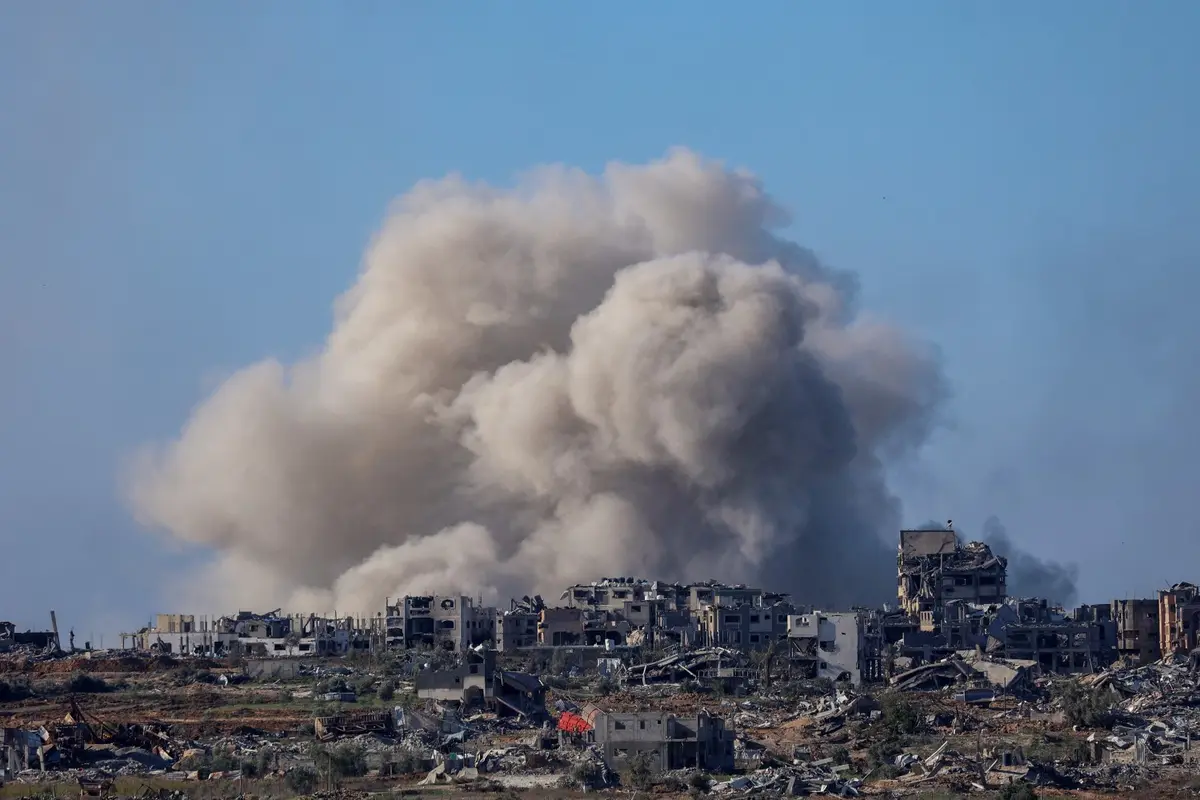
More than 20 Palestinians killed in the Gaza Strip since dawn today

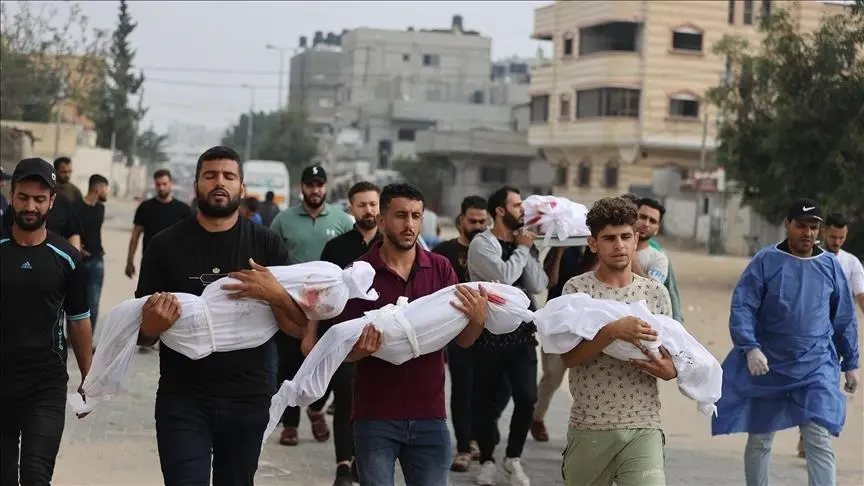
Medical sources announced the deaths of more than 20 citizens, including several children, early Wednesday morning in Israeli airstrikes on various areas in the Gaza Strip.

Local sources reported that 11 citizens were killed and 13 others were injured when the Nabhan family home was targeted on Al-Nuzha Street in Jabalia Al-Balad, north of the Gaza Strip.

Five civilians, including three children, one of whom was an infant, were also killed when Israeli warplanes bombed a house in Deir al-Balah, in the central Gaza Strip.

In the southern Gaza Strip, four citizens were killed and others were injured when Israeli aircraft bombed the Abu Salah family home in the town of Abasan al-Kabira, east of Khan Yunis. Three citizens were also killed in a bombing of a home in the Ma'an area, south of Khan Yunis.

The Israeli occupation army also carried out a bombing operation against a number of buildings west of the town of Beit Lahia, north of the Gaza Strip.

Since October 7, 2023, the Israeli occupation forces have launched an aggression against the Gaza Strip, resulting in the deaths of 53,573 citizens, the majority of whom were children and women, and the injury of 121,688 others. This is a preliminary toll, as a number of victims remain under the rubble and on the streets, unable to be reached by ambulance and rescue crews.

PALESTINE

Tue 20 May 2025 10:28 pm - Jerusalem Time

Gaza: 326 deaths due to malnutrition and medicine shortages, and more than 300 miscarriages during 80 days of blockade.

Medical sources in the Gaza Strip announced the recording of 326 deaths due to malnutrition and medicine shortages, as well as more than 300 miscarriages, during the 80 days (last March 2) of the complete closure and blockade imposed by the Israeli occupation on the Strip.


The sources explained that the following figures were recorded during the 80 days of the complete closure and blockade: 58 deaths due to malnutrition, 242 deaths due to food and medicine shortages, most of them elderly, and 26 kidney patients who lost their lives due to the lack of adequate nutrition and nutritional care.


She stated that more than 300 miscarriages occurred due to a lack of nutrients necessary for the pregnancy to continue.


Medical sources confirmed the failure of numerous blood donation campaigns due to citizens' physical weakness and inability to donate blood. Meanwhile, hospitals in the Gaza Strip are suffering from a severe shortage of blood units as thousands of wounded and injured people are in dire need of emergency surgery.


She pointed out that the Gaza Strip needs 500 aid trucks and 50 fuel trucks daily for vital and medical facilities.


Since March 2, the Israeli occupation has closed the Gaza Strip's crossings to the entry of food, relief, medical aid, and goods.


Since October 7, 2023, the Israeli occupation forces have launched an aggression against the Gaza Strip, resulting in the deaths of 53,573 civilians, the majority of whom were children and women, and the injury of 121,688 others. This is a preliminary toll, with a number of victims still buried under the rubble and on the streets, unable to be reached by ambulances and rescue teams.

ARAB AND WORLD

Tue 20 May 2025 10:16 pm - Jerusalem Time

French Foreign Minister: We are determined to recognize the State of Palestine

French Foreign Minister Jean-Noël Barrot affirmed on Tuesday his country's intention to recognize the State of Palestine, emphasizing that peace and stability cannot be achieved in the shadow of violence and the absence of justice.


"We are determined to recognize the State of Palestine," Barrow said in a press statement, adding that "the current Israeli occupation government is holding Tel Aviv's security hostage," referring to its escalating policies in the Palestinian territories.


He added, "It is not possible to build peace and stability on the basis of violence and injustice," stressing the need to find a comprehensive political solution that guarantees the rights of Palestinians and fulfills their national aspirations.

PALESTINE

Tue 20 May 2025 9:42 pm - Jerusalem Time

Netanyahu orders return of part of Israeli negotiating team from Doha

Israeli Prime Minister Benjamin Netanyahu ordered the return of part of the Hamas negotiating team from the Qatari capital, Doha, on Tuesday, leaving only the technical staff, according to Hebrew media.


The private Israeli Channel 12 reported that Netanyahu "directed the return of part of the negotiating team from Doha, while keeping the technical crews there."


She added that the decision was made after discussions held by Netanyahu with leaders of the Israeli security establishment.


Earlier on Tuesday, Hamas said the continued presence of the Israeli delegation in Doha, despite its lack of authority, was an attempt by Netanyahu to "mislead international public opinion," stressing that "no real negotiations have taken place since last Saturday."


The Israeli delegation in Doha includes officials from the military, the Shin Bet security service, and the Prime Minister's Office, but with limited powers and a mandate to negotiate within the framework of a proposal presented months ago by US Presidential Envoy to the Middle East Steve Witkoff, which Netanyahu rejected, insisting on not halting the war.


The Witkoff plan calls for the release of prisoners in two batches, half of them on the first day of the agreement's implementation, while negotiations on ending the war begin throughout the two-month ceasefire. The remaining prisoners will be released once an agreement is reached.


**Limited representation

In a related context, the Hebrew website Walla quoted an unnamed Israeli official as saying that "some representation of the negotiating team will remain in Doha."


He noted that Netanyahu "has come to the conclusion that the team's continued presence in Doha has exhausted its usefulness in the absence of progress in the talks."


In turn, the private Israeli Channel 13 quoted an Israeli source as saying, "Following the negotiations in Doha reaching a dead end, Netanyahu decided to return senior members of the negotiating team to Israel for consultations while keeping the mid-level teams there."


According to the same source, senior members of the negotiating team, Gal Hirsch, Netanyahu's political advisor, Ofir Falk, and a senior official in the Shin Bet (General Security Service), referred to as "M," will return to Tel Aviv.


In return, "the Israelis will keep representatives from the security establishment in Doha, so as not to close the door to any possibility of progress in the negotiations," according to the same source.


** Ceasefire

The channel claimed that Hamas rejected an Israeli proposal for a prisoner exchange and ceasefire, based on a proposal put forward by Witkoff about two and a half months ago.


The proposal's general outlines include the release of 10 live Israeli prisoners in a single day, along with the return of half the bodies of slain prisoners, in exchange for a 60-day ceasefire in the Gaza Strip, according to the same source.


However, sources familiar with the details of the negotiations told Channel 13 on Monday evening that Hamas has not yet given up its demand that Israel commit to a definitive end to the war.


According to the channel, the Israeli delegation, in accordance with the mandate granted to it by the senior political leadership, refuses to commit to ending the war.


Tel Aviv estimates that there are 58 Israeli prisoners in Gaza, 20 of whom are still alive. Meanwhile, more than 10,100 Palestinians are languishing in its prisons, suffering torture, starvation, and medical neglect, many of whom have died, according to Palestinian and Israeli human rights and media reports.


Hamas has repeatedly declared its willingness to release Israeli prisoners "in one batch" in exchange for an end to the war of extermination, the withdrawal of the Israeli army from Gaza, and the release of Palestinian prisoners.


But Netanyahu, who is wanted by international justice, is evading the situation by proposing new conditions, the most recent of which is the disarmament of Palestinian factions in Gaza, a demand the latter reject as long as the Israeli occupation continues.


** Threats and criticism

For his part, Israeli Chief of Staff Eyal Zamir threatened Hamas, claiming that it had "rejected a proposed proposal."


"Hamas will pay the price for its intransigence," Zamir said in a statement released by the Israeli army on Tuesday evening.


He added, "Hamas will face massive firepower, and we will expand the maneuver, occupy other areas, and cleanse and destroy terrorist infrastructure until it is defeated," he said.


He continued, "If an agreement is reached, the Israeli army will know how to adapt its operations accordingly."


Zamir also addressed statements made by opposition Democrats party leader Yair Golan, who said in an interview with the Israel Broadcasting Authority that "a rational state does not wage war against civilians, does not kill children as a hobby, and does not pursue a policy of population displacement."


Zamir said, according to the statement, that "there is no basis in truth for any statement questioning" what he claimed was "the morality of our actions or the morality of our fighters."


Defending his comments, which have drawn criticism in Israel, Golan asserted earlier Tuesday evening that when Netanyahu's government ministers celebrate the "death and starvation of Palestinian children" in the Gaza Strip, the matter must be addressed.


Since October 7, 2023, Israel, with full American support, has been committing genocide in Gaza, leaving more than 175,000 Palestinians dead or wounded, most of them children and women, more than 11,000 missing, and hundreds of thousands displaced.

PALESTINE

Tue 20 May 2025 9:29 pm - Jerusalem Time

Israeli Settlers attack Palestinian citizens' vehicles northwest of Nablus

Settlers attacked citizens' vehicles northwest of Nablus on Tuesday evening.


According to local sources, settlers threw stones from behind the wall of the Shavei Shomron settlement, built on lands in Sebastia, Naqoura, and Deir Sharaf, at vehicles passing on the road between Nablus and Jenin, shattering the windows of several vehicles.

PALESTINE

Tue 20 May 2025 8:58 pm - Jerusalem Time

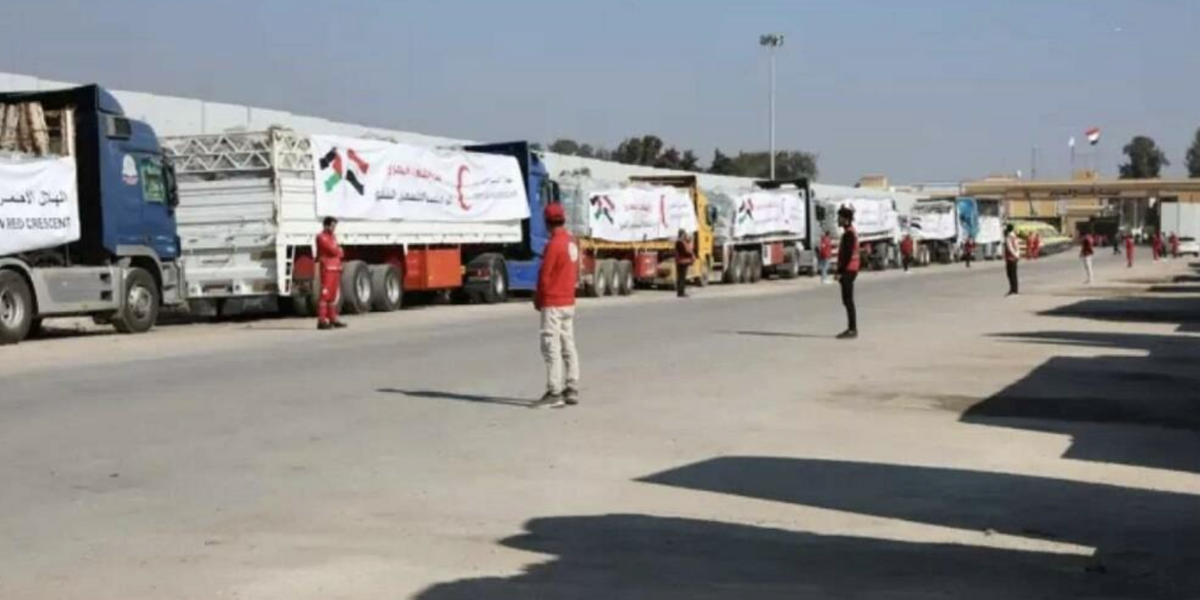
Israeli occupation army claims that 93 aid trucks entered the Gaza Strip.

The Israeli occupation army claimed that 93 UN aid trucks entered the Gaza Strip today.


This comes a day after the United Nations announced that it had received approval to send supplies for the first time since Israel imposed a comprehensive blockade on March 2.


The Coordinator of Government Activities in the Territories (COGAT), the Israeli Defense Ministry body that oversees civilian affairs in the Palestinian territories, announced that "93 UN trucks loaded with humanitarian aid, including bakery flour, baby food, medical equipment, and medicines, were transferred today (Tuesday) through the Kerem Shalom crossing into the Gaza Strip."


Jens Laerke, spokesperson for the United Nations Office for the Coordination of Humanitarian Affairs (OCHA), announced that the international organization had obtained permission from the Israeli occupation to bring approximately 100 trucks of humanitarian aid into the Gaza Strip, without specifying a precise date for their entry.


Read also: Hamas statement on developments in the Doha negotiations on Gaza.


During a press conference in Geneva, Laerke confirmed that only nine trucks carrying UN aid were allowed to enter through the Kerem Shalom crossing on Monday and were actually received on Tuesday, a move UN officials described as "just a drop in the ocean" after 11 weeks of a stifling blockade on the Strip.


Laerke explained that the next step involves receiving the aid by UN teams and then distributing it through the current system, which he described as "proven efficient."


He pointed out that the World Food Programme will distribute four of the trucks, while UNICEF will distribute one of them.


He added that the United Nations had submitted a request for more trucks to enter Gaza on Tuesday, and had received approval, expressing hope that a large number of them would be able to cross into Gaza soon.


Meanwhile, UN warnings are escalating of a worsening humanitarian disaster in the Gaza Strip, amid the ongoing blockade and food shortages.


The Integrated Food Security Phase Classification report, released on May 12, indicated that the population of the Gaza Strip is facing a "critical risk of famine," while the director of the World Health Organization said on Monday that "two million people are suffering from hunger," despite the presence of "tons of food stuck at the border."


Under increasing international pressure, the occupation authorities announced on Sunday that they would allow a limited amount of aid into the Strip. However, they have intensified their air and ground attacks on the Strip, resulting in dozens of deaths and injuries daily.


In the same context, UNRWA spokesperson Louise Waterridge said in a press conference from the Jordanian capital, Amman, that the Gaza Strip has been "under siege for 11 weeks," adding, "All we are doing today is trying to repair the damage done to so many people, but it is too late for so many of them."


International relief organizations stressed that the entry of dozens of trucks in no way meets the massive needs of the population, calling for immediate, safe, and regular access to aid.

PALESTINE

Tue 20 May 2025 8:29 pm - Jerusalem Time

79 Palestinians killed in Gaza and reports of a building collapsing on an Israeli force

Israeli media reported a new "security incident" in the Gaza Strip amid escalating resistance operations, while occupation forces committed new massacres that have resulted in approximately 80 dead since dawn on Tuesday.


The same sources said that the Israeli military censorship imposed a ban on publishing information about the security incident.


It added that a building collapsed on an Israeli force, seriously wounding two soldiers and moderately wounding a third.


Reports indicate that a soldier may be missing inside the collapsed building, and that rescue teams are working under heavy fire.


This news of potential Israeli military losses comes as the Al-Quds Brigades, the military wing of the Islamic Jihad movement, announced an operation targeting occupation forces east of Khan Yunis in the southern Gaza Strip.


The Brigades said via Telegram that its fighters targeted an Israeli Merkava tank with an RPG anti-tank missile in the Khuza'a area.


She added that the fighters confirmed that a tank had caught fire while it was penetrating the area.


Resistance operations have recently increased in Rafah and Khan Yunis in the eastern areas of Gaza City, as well as in Beit Hanoun and Beit Lahia in the northern Gaza Strip, resulting in the deaths and injuries of several Israeli soldiers.


Palestinian resistance operations are increasing despite the ferocity of the bombing and the deployment of additional forces by the occupation army in the Gaza Strip.


ongoing massacres

In developments in the aggression, the Ministry of Health in Gaza reported that 79 Palestinians were killed as a result of the Israeli bombing of the Gaza Strip since dawn today.


The ministry said that 87 martyrs and 290 wounded people arrived at Gaza Strip hospitals over the past 24 hours.


Today's martyrs included four who were killed in the bombing of Khalifa School, which was sheltering displaced people in the Beit Lahia project in the northern Gaza Strip.


Al Jazeera's correspondent said the bombing also injured dozens, most of them children and women.


Not far from Beit Lahia, an Al Jazeera correspondent reported that Palestinians, including women and children, were killed in an Israeli bombardment that targeted the home of the Al-Maqeed family in Jabalia camp.


Thirteen Palestinians were also killed in an Israeli airstrike on the Musa bin Nusair School, which was sheltering displaced people in the Al-Daraj neighborhood east of Gaza City, early this morning.


Fifteen Palestinians, including women and children, were killed and others injured in airstrikes targeting a gas station west of the Nuseirat refugee camp in the central Gaza Strip, which was crowded with displaced people.


Also in the central Gaza Strip, two people were killed in an airstrike targeting Palestinians west of Deir al-Balah.


The raid came hours after 13 Palestinians were killed when Israeli aircraft bombed a house in Deir al-Balah.


In the southern Gaza Strip, Israeli aircraft launched raids on Khan Yunis and nearby towns, after intensifying their raids on displaced people's tents in the Al-Mawasi area west of the city in recent days.


Israel resumed its aggression against Gaza on March 18, after reneging on the ceasefire agreement. Its attacks have since resulted in more than 3,400 deaths and 9,600 injuries, according to data from the Ministry of Health in Gaza.

PALESTINE

Tue 20 May 2025 7:45 pm - Jerusalem Time

Three Palestinians were injured, one of them critically, by Israeli occupation forces and settlers west of Ramallah.

Three citizens were injured on Tuesday evening by settlers and Israeli occupation forces in the village of Beit Lilo, northwest of Ramallah.


Eyewitnesses reported that settlers from the Halamish settlement and its affiliated settlement outposts attacked the Al-Daher area on the outskirts of the village of Beit Lilo, under the protection of occupation soldiers. They attacked a number of homes, including the home of citizen Muhammad Othman Ziyada, and opened fire on residents who confronted them, which led to the injury of three citizens with live bullets. They were subsequently transferred to Ramallah Hospital, where the condition of one of them was described as critical.


Eyewitnesses added that the occupation forces, who provided protection for the settlers, fired tear gas bombs and assaulted a number of citizens, causing bruises and suffocation.


It is noteworthy that the occupation forces and settlers carried out a total of 1,693 attacks during the past month of April, according to a report issued by the Wall and Settlement Resistance Commission, in a continuation of the ongoing terrorism perpetrated by the occupying state against the Palestinian people, their lands, and their property.


The report indicated that the occupation army carried out 1,352 attacks, while settlers carried out 341 attacks, most of which were concentrated in the governorates of Hebron with 292 attacks, Ramallah and Al-Bireh with 269 attacks, and Nablus with 254 attacks.

PALESTINE

Tue 20 May 2025 7:25 pm - Jerusalem Time

Hamas statement on developments in the Doha negotiations on Gaza

On Monday evening, the Islamic Resistance Movement, Hamas, accused Israeli Prime Minister Benjamin Netanyahu of misleading international public opinion by keeping his negotiating delegation in the Qatari capital, Doha, despite the delegation's lack of actual authority to reach an agreement.


The statement emphasized that the occupation delegation continues to extend its stay "day by day" without engaging in substantive negotiations, explaining that the last serious round of talks had been suspended since last Saturday, which was considered a blatant attempt to falsely pretend to participate in the negotiating process.


The statement rejected Netanyahu's recent statements about the entry of aid into the Gaza Strip, describing them as "an attempt to throw dust in the eyes and deceive the international community." It emphasized that no aid truck has actually entered the Strip to date, including the few convoys that arrived at the Kerem Shalom crossing without being received by any international body.


The statement noted that the escalation of Israeli aggression, the targeting of civilian infrastructure, and the perpetration of massacres against women and children, coinciding with the release of prisoner Idan Alexander, reveals the occupation government's rejection of any genuine settlement and confirms its adherence to the option of war and destruction.


The movement held the occupation government fully responsible for the failure of efforts to reach an agreement, citing statements by Hebrew officials announcing their intention to continue military operations and displace residents, in blatant defiance of international efforts.


At the same time, the statement welcomed the expanding circle of international positions rejecting the aggression and blockade, particularly from a number of European countries, considering these positions to constitute a new condemnation of the occupation's policies and increasing support for just Palestinian demands.


The statement concluded by commending the mediators' efforts and affirming the readiness to continue engaging positively and responsibly with any initiative that halts the aggression, ensures the withdrawal of the occupation, lifts the siege, allows aid into the area, and begins the reconstruction of what was destroyed by the bombing.

PALESTINE

Tue 20 May 2025 7:07 pm - Jerusalem Time

UNRWA criticizes meager aid to Gaza, UN warns of famine

The United Nations Relief and Works Agency for Palestine Refugees (UNRWA) has strongly criticized the meager aid reaching the Gaza Strip, stressing that the population needs massive and sustained support to prevent famine. The European Union, for its part, reiterated its emphasis on the immediate entry of humanitarian and medical aid into the Strip.


Only five of 11 trucks entered the Gaza Strip on Tuesday through the Kerem Shalom crossing, despite Israel's announcement that it had approved the entry of 100 trucks. A European Union official described this as "a drop in the ocean."


UNRWA Commissioner-General Philippe Lazzarini said, "Israel is exploiting hunger and food for political and military purposes, and Gaza needs massive, unhindered support to ensure the worsening hunger afflicting its population is addressed."


UNRWA warned of the worst humanitarian crisis the Gaza Strip could face since the beginning of the Israeli aggression on October 7, 2023.


The agency added in a post on its Facebook page, "The intensive Israeli bombardment from the air, land, and sea resulted in hundreds of casualties and mass displacement."


She stressed the need for massive, unhindered support to ensure that hunger in Gaza is halted. She called for depoliticizing humanitarian aid because the situation in the Gaza Strip is deteriorating daily and malnutrition is spreading throughout the territory.


advertisement

The agency called for pressure on Israel to allow aid into Gaza.


withholding aid

In turn, a Gaza government official reported that only five aid trucks entered Gaza on Monday.


The government official, who preferred to remain anonymous, told an Anadolu Agency correspondent that none of the aid that entered had been distributed and remained in areas where Israeli forces were present.


He explained that, according to information available from international relief organizations, these trucks contained a very small amount of wheat flour, nutritional supplements, milk substitutes for children, and quantities of shrouds.


He pointed out that these quantities "do not meet the needs of even 1% of the Palestinians in the Gaza Strip for one day, even if they were fully loaded with food."


The Gaza government official considered that Israel was using aid as a "pressure card" and continuing to starve Palestinians in the Strip.


The United Nations confirms that Gaza needs at least 500 trucks of aid and commercial goods daily.


The World Food Programme stated that more than 116,000 tons of food—enough to feed one million people for up to four months—is ready for delivery.


European anger

In a related development, British Prime Minister Keir Starmer called on Israel on Tuesday to increase the amount of humanitarian aid it will allow into Gaza, describing the quantities of food recently allowed into the Strip as "totally inadequate."


During a session of the British House of Commons, Starmer said, "We cannot allow the people of Gaza to face starvation."


EU High Representative for Foreign Affairs and Security Policy Kaya Kallas also reiterated the need to allow humanitarian aid into the Gaza Strip.


Speaking to reporters in Brussels ahead of a meeting of EU foreign ministers, Kallas noted that thousands of trucks are waiting at Gaza crossings to enter the territory, which is subjected to a stifling Israeli blockade.


advertisement

On Monday, the leaders of Britain, France, and Canada threatened to take action against Israel if it did not halt its military campaign in Gaza and lift restrictions on aid.


A joint statement by the three countries, published by the British government, stated that "the Israeli government's prevention of the entry of essential humanitarian aid to the civilian population is unacceptable and violates international humanitarian law."


Risk of closure

Meanwhile, the World Health Organization said that hospitals in northern Gaza are at risk of complete closure.


The organization added on its X account that intense hostilities and a military presence have continued near the Indonesian hospital since May 18.


She noted that most patients left on their own after the fighting intensified on May 15, noting that reports have emerged of only 15 people remaining, including patients and hospital staff, who are in dire need of food and water.


The World Health Organization warned of a rapidly deteriorating situation at Al-Awda Hospital in the northern Gaza Strip, which is overcrowded with wounded and suffering from a severe shortage of supplies.


The organization called for effective protection of health care, stressing that hospitals should never be militarized or targeted.


Since March 2, Israel has continued its policy of systematically starving approximately 2.2 million Palestinians in Gaza by closing the crossings to aid supplies piling up at the border, plunging the Strip into famine and claiming many lives.


With full American support, Israel has been committing genocidal crimes in Gaza since October 7, 2023, leaving more than 174,000 Palestinians dead or wounded—mostly children and women—and more than 11,000 missing, in addition to hundreds of thousands displaced.