ARAB AND WORLD

Fri 13 Jun 2025 8:28 am - Jerusalem Time

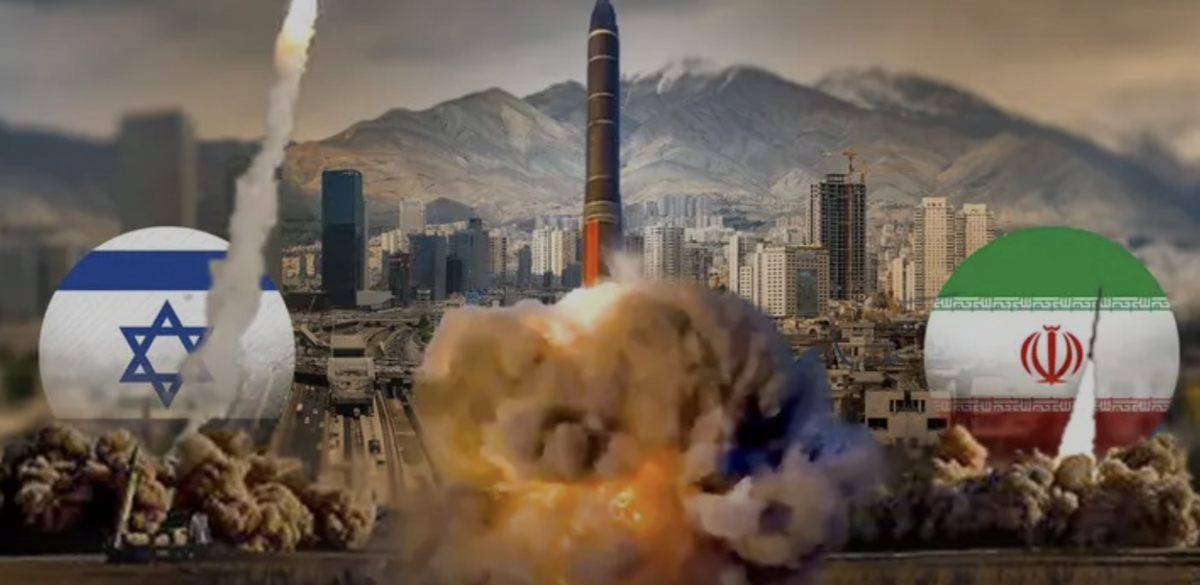
Israel attacks Iran with bombing waves, assassinates Revolutionary Guard commander, and targets nuclear scientists

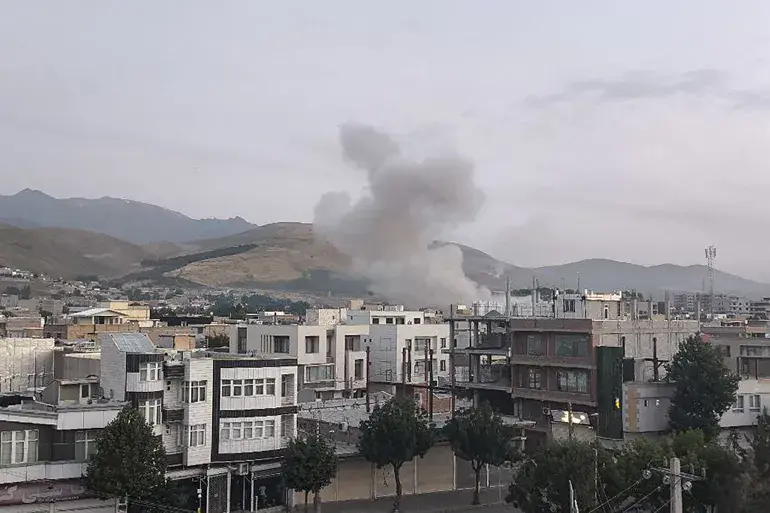
Israeli warplanes attacked sites in the Iranian capital at dawn on Friday. An Al Jazeera correspondent reported hearing loud explosions in various parts of Tehran. Tasnim News Agency reported that the Israeli attack resulted in the death of Iranian Revolutionary Guard Commander Hossein Salami. Israel's Channel 13 reported that the attack included assassination attempts on the Iranian Chief of Staff, Revolutionary Guard commanders, and nuclear scientists. Meanwhile, Israeli media reported that Israeli military aircraft are continuing their bombing and have so far launched four waves of attacks on Iran.

The Walla news website quoted Israeli security sources as saying there was a strong possibility that the Iranian General Staff, including the Chief of Staff and nuclear scientists, were eliminated in the first strike. Meanwhile, a military source told Israeli Army Radio that "Israel carried out its operation in a neighborhood where senior commanders of the Iranian Revolutionary Guard reside." Channel 13 quoted Israeli military officers as saying that "the strike may have achieved better results than expected."

Israel's Channel 12 reported that the attacks on Iran targeted military leaders, military headquarters, nuclear facilities, bases, missile platforms, and scientists.

In the same context, Axios quoted an Israeli official as saying that the Israeli strike targeted several senior Iranian military leaders and top nuclear scientists.

The Israeli military announced that Tel Aviv had launched what it called "Operation Rising Lion," carrying out what it described as an opening strike in the heart of Iran with dozens of aircraft. It emphasized that assassinations in Iran are a key component of the initial strike, as it put it. An Israeli security source also confirmed that the opening strike included air defense targets and surface-to-surface missiles.

Attack for days

CNN quoted an Israeli source as saying, "This is not a one-day attack. We are planning multiple rounds of attacks on Iran."

The source added, "The Israeli government saw an opportunity to carry out this attack militarily and diplomatically."

Channel 13 reported, citing a senior Israeli official, that Tel Aviv is preparing for several days of fighting. Meanwhile, air raid sirens sounded across Israel.

In this context, the newspaper Israel Hayom reported that Israel is attempting to assassinate senior officials in Tehran. Channel 12 reported that senior Israeli officials were transferred to a safe location following the assassination attempt on senior Iranian officials, indicating that the goal of the Israeli operation was to eliminate the Iranian nuclear threat.

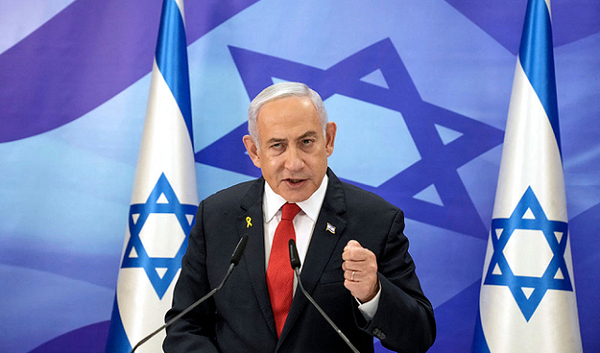
For his part, Israeli Prime Minister Benjamin Netanyahu described the moment as "a pivotal moment in Israel's history," noting that the goal of this unprecedented operation was to strike Iranian nuclear facilities.

Meanwhile, Israeli Defense Minister Yisrael Katz declared an immediate state of emergency and closed airspace following what he described as a "preemptive strike" against Iran. He predicted that Israel and its residents would be subjected to a missile and drone attack in the very near future due to what he called "Israel's actions in Iran."

The Israeli Broadcasting Corporation reported that the security cabinet unanimously approved the decision to attack Iran. Channel 12 reported that government ministers signed a security clearance form to prevent leaks before the attack on Iran.

Israeli Army Radio reported that Prime Minister Benjamin Netanyahu and Defense Minister Israel Katz are overseeing the attack on Iran from a fortified underground headquarters.

For its part, Israel's Channel 14 reported that the decision to launch the attack was made by Netanyahu and Katz three days ago.

The Jerusalem Post, citing Israeli officials, reported that Tel Aviv has detected that "Iran is on the verge of achieving a nuclear breakthrough within a few days."

Israeli radio confirmed that Israel is fully coordinating with the United States.

Sites and assassinations

In Tehran, the Revolutionary Guards confirmed the deaths of their commander, Major General Hossein Salami, along with a number of his colleagues and guards, in the Israeli attack on the Revolutionary Guards headquarters while Salami was carrying out sensitive duties to protect the nation's security, according to an Iranian statement.

The Revolutionary Guards vowed that "the Zionist entity will pay a heavy price for the crime committed with the knowledge of the terrorist American regime," and that "the enemies should expect harsh and humiliating revenge for their crimes against Iran and the Iranians."

Tasnim News Agency confirmed the assassination of nuclear scientists Mehdi Tehranchi and Fereydoun Abbasi in the ongoing Israeli attack on Iran.

Iranian media reported that Ali Shamkhani, advisor to the Iranian Supreme Leader, was injured in the Israeli attack and taken to the hospital in critical condition.

Iranian television also reported unconfirmed reports of the assassination of Mohammad Mehdi Tehranchi, president of Islamic Azad University, and Major General Gholam Ali, commander of the armed forces' Khatam al-Anbia headquarters.

For its part, Fars News Agency reported that the Chief of Staff of the Iranian Armed Forces, Major General Mohammad Bagheri, had been killed, after reports that he was in the operations room and unharmed.

Iranian television announced the killing of five civilians and the wounding of 20 others in the Narmak area, east of Tehran, as a result of the Israeli attack.

The Israeli bombing targeted the vicinity of the Tabriz refinery in northwestern Iran, according to Iranian media, while Israeli media reported a fourth wave of bombing in Tabriz and Kermanshah, targeting missile and drone manufacturing facilities.

Iranian media reported that the Israeli attack also targeted the Ahmadi Roshan uranium enrichment site in Natanz.

The Iranian News Agency reported that the explosions targeted several residential neighborhoods east of the capital. Iranian television reported that columns of smoke were rising from the headquarters of the Revolutionary Guards in Tehran.

Iranian television reported "unconfirmed reports of the Zionist entity attacking Natanz, Khandab, and Khorramabad."

In this context, Tasnim News Agency reported that explosions were heard in several Iranian provinces, including Kermanshah and Lorestan.

Iranian television also reported that some of the sounds heard in Tehran were related to Israeli attacks and others to air defense systems.

The New York Times quoted an Iranian official as saying that the Shahrak Shahid Mahallati neighborhood in Tehran, where senior military commanders live, was subjected to an Israeli attack. The official added that three residential buildings in the neighborhood were destroyed.

Iran's Nour News Agency reported hearing violent explosions in the Mahallati area, northeast of the capital, Tehran.

Al Jazeera's correspondent in Tehran reported hearing six large explosions across the Iranian capital early Friday morning.

Correspondent Omar Hawash explained that the sounds of explosions were coming from eastern Tehran, where the Parshit military site and other Iranian Ministry of Defense sites are located, and from the southwest of the Iranian capital, where the Iranian Revolutionary Guard Corps (IRGC) sites are located.

The Public Relations Department at Imam Khomeini Airport in Tehran announced the suspension of all flights from the airport. Israel's Channel 12 reported that civilian flights on the Tel Aviv route were diverted to Larnaca Airport in Cyprus. An Iraqi government source also reported that Iraqi airspace was closed to all air traffic.

Source: Al Jazeera + American press + Israeli press


ARAB AND WORLD

Thu 12 Jun 2025 10:05 pm - Jerusalem Time

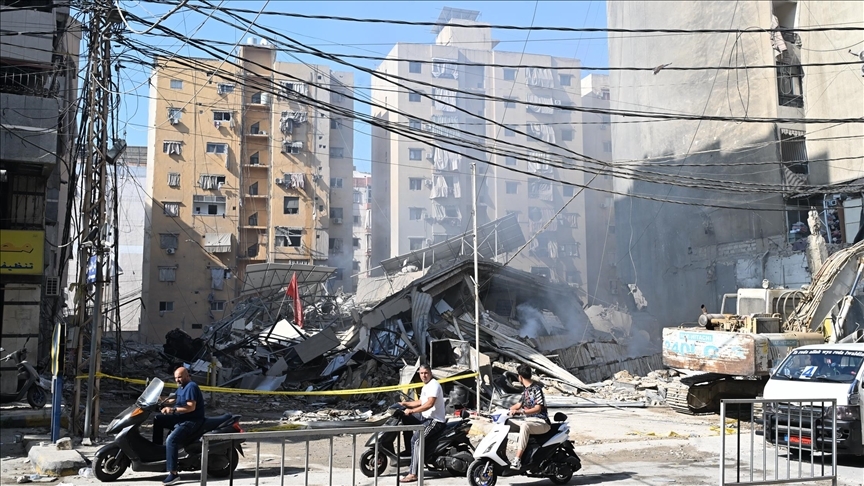
An Israeli drone targeted a motorcycle in southern Lebanon.

In a second attack on Thursday, an Israeli drone targeted a motorcycle with a missile in the Nabatieh Governorate in southern Lebanon, in a new violation of the ceasefire agreement.

The official Lebanese National News Agency said that "a hostile (Israeli) drone attacked a motorcycle with a guided missile on the Nabatieh al-Fawqa road."

The agency did not report any casualties or further details, and there was no immediate comment from the Israeli military regarding the attack.

Earlier on Thursday, a Lebanese citizen was injured in an Israeli drone strike targeting a motorcycle in the town of Deir Siryan in the Marjayoun district in the south of the country, according to the Lebanese Ministry of Health.

On October 8, 2023, Israel launched an attack on Lebanon, which escalated into a full-scale war on September 23, 2024, resulting in more than 4,000 deaths and approximately 17,000 injuries.

Since the ceasefire agreement went into effect on November 27, 2024, Israel has committed approximately 3,000 violations, leaving at least 212 dead and 508 wounded, according to an Anadolu Agency tally based on official data.

In defiance of the ceasefire agreement, the Israeli army carried out a partial withdrawal from southern Lebanon, while continuing to occupy five Lebanese hills it captured in the last war.

ARAB AND WORLD

Thu 12 Jun 2025 9:53 pm - Jerusalem Time

Hebrew media: The army informed Netanyahu that Israel alone is unable to confront Iran.

The private Israeli Channel 13 reported on Thursday that Israeli Chief of Staff Eyal Zamir informed Prime Minister Benjamin Netanyahu that Tel Aviv alone would not be able to confront Iran if a direct war broke out between the two sides.

The channel quoted unnamed informed sources as saying that Zamir, "during discussions he held with the prime minister over the past few days, presented a firm position that Israel cannot act alone (militarily), and that there is a need for full coordination with Washington."

The sources added that "any action against Iran must be fully coordinated with the administration of US President Donald Trump," according to the channel.

An informed source who participated in these sessions told the Hebrew channel that "Israeli Air Force Commander Tomer Bar shares this view with the Chief of Staff."

The sources confirmed to Channel 13 that "there is a dramatic disagreement within the top Israeli leadership regarding Israel's ability to act (militarily) alone, the extent to which American involvement should be in any potential Israeli operation, and the extent of coordination required with the United States."

Tensions in the region have recently escalated, with talks between the United States and Iran over its nuclear program appearing to have reached a dead end, potentially raising the possibility of a military option.

US President Donald Trump said in an interview with the Pod Force One podcast broadcast Wednesday that his confidence has diminished that Iran will agree to halt uranium enrichment as part of a nuclear deal with the United States.

He continued, "I don't see the same enthusiasm among the Iranians to make a deal, and I think they will make a mistake, but we will see."

On Monday, the Iranian Foreign Ministry announced that the sixth round of nuclear talks with the United States will be held next Sunday in the Omani capital, Muscat.

But earlier Thursday, Israeli Heritage Minister Amichai Eliyahu hinted that a potential attack by Tel Aviv on Iran "would be a surprise," according to Yedioth Ahronoth, commenting on US reports of a possible Israeli attack.

In response, Iran announced that it would respond "swiftly and unexpectedly" to Israel and the United States in the event of any attack, according to a "high-ranking" security official quoted by Iran's official Press TV.

The United States, its ally Israel, and other countries accuse Iran of seeking to produce nuclear weapons, while Tehran says its program is designed for peaceful purposes, including electricity generation.

Israel is the only country in the region that possesses a nuclear arsenal, which is not subject to international supervision.

ARAB AND WORLD

Thu 12 Jun 2025 9:01 pm - Jerusalem Time

Trump: Israel is very likely to strike Iran

US President Donald Trump suggested on Thursday that Israel might strike Iran, but stressed that he does not want Israel to do so and expressed his desire to avoid conflict with Tehran.

Trump said on Thursday that it was very likely that Israel would strike Iran. He added, during a press conference, that he did not want to say that such an Israeli strike was "imminent," but that it seemed "likely to happen."

Trump indicated that "something may happen soon in the Middle East." He continued, "I hope to avoid a conflict with Iran, but they have to give us things they are not willing to give." He said, "I want to make a deal with Iran, and we are close to that, and I prefer the friendly path."

Trump confirmed on Wednesday that Washington had evacuated a group of non-essential employees from the Middle East, while the Washington Post reported that the United States was on high alert in anticipation of a possible Israeli strike against Iran.

The Israeli newspaper Yedioth Ahronoth quoted US Ambassador to Israel Mike Huckabee on Thursday as saying that he believes Tel Aviv will not attack Iran without Washington's approval. Huckabee added, "In my opinion, this scenario is unlikely," but he explained that Israel must "make the decision itself."

CBS News, for its part, reported that the Trump administration is considering options to support the Israeli attack, without participating in its leadership. The network quoted a US official as saying that the United States is capable of defending Israel if Iran launches a counterattack.

Axios reported that US envoy Steve Witkoff warned, in a closed-door meeting last week with senior Senate Republicans, that Iran could respond with a "large-scale, high-casualty attack" if Israel bombed its nuclear facilities.

The website quoted a US official and a source familiar with the details as saying that the Iranian response could overwhelm Israeli defenses and cause significant damage.

Israeli sources say the army is on high alert, while Prime Minister Benjamin Netanyahu awaits a "green light" from Trump to act.

Witkoff told Republican senators that Israeli military strikes were on the table "if no agreement is reached."

He expressed his country's concern that Israeli air defenses might not withstand an Iranian response involving hundreds of missiles. He explained that such an attack could result in "a massive number of casualties and significant damage," emphasizing that Iran's missile arsenal poses an "existential threat" no less dangerous than its nuclear capabilities.

According to US intelligence estimates, Iran possesses approximately 2,000 ballistic missiles capable of carrying warheads of up to 2,000 pounds, most of which cover the range of Israel.

US Central Command (CENTCOM) Commander General Eric Kurilla is expected to arrive in Israel next Saturday for talks with political and military officials regarding Iran.

During his testimony before the House Armed Services Committee, Kurilla stressed that any Israeli strike would put US forces in the region at risk.

ARAB AND WORLD

Thu 12 Jun 2025 8:55 pm - Jerusalem Time

Gideon Levy: All of Israel must be punished, we are all Ben-Gvir and Smotrich.

In an article published in Haaretz, Israeli writer Gideon Levy said that the sanctions imposed by five countries on Israeli Finance and National Security Ministers Bezalel Smotrich and Itamar Ben-Gvir are only a "small and sad" step toward ending the massacre in Gaza, and will not stop the war, the occupation, or apartheid.

The governments of Britain, Canada, Norway, New Zealand, and Australia imposed sanctions on the two ministers on Tuesday, June 10.

According to the article, these countries were careful not to punish the two ministers for their actions, but rather for their "disgusting statements," as if to say, "It's not polite to say that Hawara must be wiped out, Bezalel, and shame on you, Itamar, for chanting 'Death to the Arabs!'" Levy said.

The writer commented sarcastically, referring to the "triviality" of the sanctions, as he put it, that Smotrich, who "loves" Scandinavian literature and strolling the streets of Oslo, will no longer be able to visit Norway, while Ben-Gvir will be banned from observing the kiwi bird in New Zealand!

He sarcastically wondered whether the five countries were acting naively or cowardly, and whether the sanctions were merely a formality or whether those who made the decision truly believed they would influence Israeli policies toward Gaza.

acquit others

Levy emphasized that pinning responsibility on Ben-Gvir and Smotrich assumes the existence of "bad guys" and "good guys" within the Israeli government, which amounts to exonerating others and is a form of hypocrisy. According to the article, what is happening in Gaza is not the work of these two ministers alone, but rather the fruit of the policies of an entire government and the society that supports it.

The author pointed out that all those threatening sanctions are also careful to distinguish between the government and the people, as if to say, "Everything that is happening is because of Prime Minister Benjamin Netanyahu and his government, not because of you, dear Israelis."

Levy criticized this position, saying that sanctions should be imposed on the entire government, starting with Netanyahu, who is wanted by the International Criminal Court, and extending to the most junior minister, officer, soldier, and employee who perpetrates massacres in Gaza.

He added that, according to opinion polls, the majority of Israelis support these massacres and even anticipate the implementation of the population transfer plan that may follow them. Therefore, international pressure and sanctions must target Israel as a whole, without exception.

Levy concluded that the problem lies not only with the two extremist ministers, but with Israeli society as a whole, including those who consider themselves moderates, such as the alleged leader of the Israeli resistance, Benny Gantz, who described the sanctions as "a profound moral failure by the world."

Levy sarcastically concluded his article by saying, "Do you understand now, diplomats and decision-makers? In Israel, we are all Ben-Gvir and Smotrich."

PALESTINE

Thu 12 Jun 2025 8:23 pm - Jerusalem Time

Foreign ministers of six European countries call for an immediate ceasefire in Gaza.

A joint statement by the foreign ministers of France, Germany, Italy, Poland, Spain, and the United Kingdom, as well as the EU High Representative for Foreign Affairs and Security Policy, Kaya Kallas, called for an immediate ceasefire in Gaza.

The statement was issued Thursday evening following a meeting held in the Italian capital, Rome, to discuss security in the Euro-Atlantic region and the Russian-Ukrainian war, attended by the Secretary General of NATO and the Ukrainian Foreign Minister.

The European ministers said in their statement: "We will strengthen our partnerships in regions that affect our security to confront instability and promote peace and prosperity, particularly in the Mediterranean, Africa, the Western Balkans, the Black Sea region, and the Middle East and North Africa.

In this context, the statement called for an immediate ceasefire in Gaza, an urgent resumption of aid deliveries to the Strip, and the release of all hostages.

PALESTINE

Thu 12 Jun 2025 7:46 pm - Jerusalem Time

Netanyahu storms the Western Wall accompanied by the Argentine president, guarded by the occupation police.

Israeli Prime Minister Benjamin Netanyahu stormed the Western Wall at Al-Aqsa Mosque on Thursday, accompanied by the Argentine president, who is currently visiting the occupied territories.

Netanyahu and the Argentine president performed Talmudic rituals at the site, amid tight security measures imposed by the occupation forces around Al-Aqsa Mosque, including closures and a heavy deployment of armed personnel.


PALESTINE

Thu 12 Jun 2025 7:40 pm - Jerusalem Time

A young Palestinian was killed by the occupation forces near Jenin.

A young man was killed by Israeli occupation forces' bullets, Thursday, near the city of Jenin.

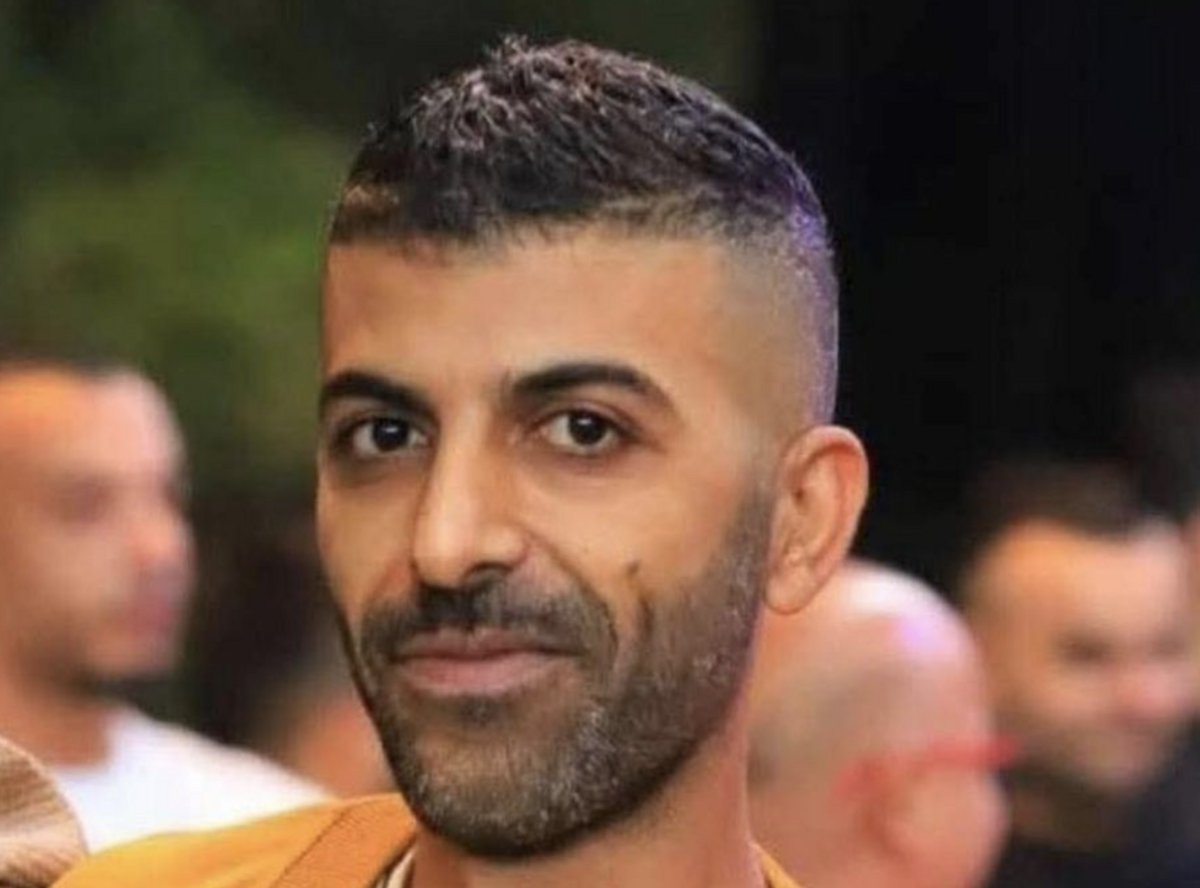
The Ministry of Health reported that the General Authority of Civil Affairs informed it of the martyrdom of the young man, Khaled Munir Abdul Qader Houbi (40 years old), by the occupation forces' bullets near Jenin, and the occupation forces detained his body.

The occupation army claimed that the martyr carried out a shooting attack against the occupation forces near the "Harmish" settlement, which was built on citizens' land near the town of Ya'bad, southwest of Jenin.

Local sources said that the martyr, Houbi, was from the town of Zeita, north of Tulkarm.

In parallel with the genocide in Gaza, the Israeli occupation army and settlers have escalated their attacks in the West Bank, including occupied Jerusalem, since October 7, 2023. These attacks have resulted in the martyrdom of 990 citizens, the latest of whom was the young man, Hobi, the injury of approximately 7,000 others, and the arrest of more than 17,500, according to official data.


PALESTINE

Thu 12 Jun 2025 5:28 pm - Jerusalem Time

7 dead and others wounded in the occupation's bombing of areas in the Gaza Strip

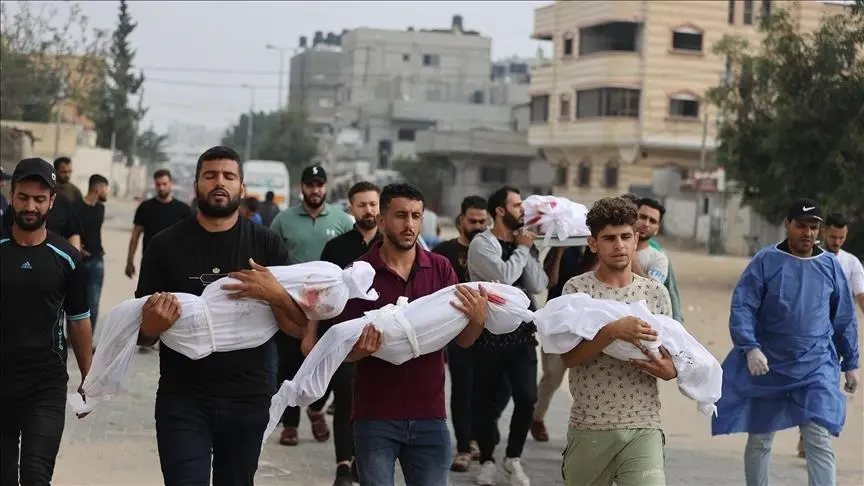
Seven civilians were killed and others wounded in an Israeli airstrike on areas in the Gaza Strip on Thursday.

Medical sources reported that three civilians were killed and others injured in Israeli airstrikes targeting the old Gaza Street in Jabalia al-Balad, north of the Gaza Strip. All were transferred to Al-Shifa Medical Complex.

Four citizens were killed and others were injured when the occupation forces targeted a gathering in the Al-Maqousi Towers area, west of Gaza City.

Israeli warplanes also bombed a house belonging to the Al-Barash family on Old Gaza Street in Jabalia Al-Balad, north of the Gaza Strip.

PALESTINE

Thu 12 Jun 2025 5:19 pm - Jerusalem Time

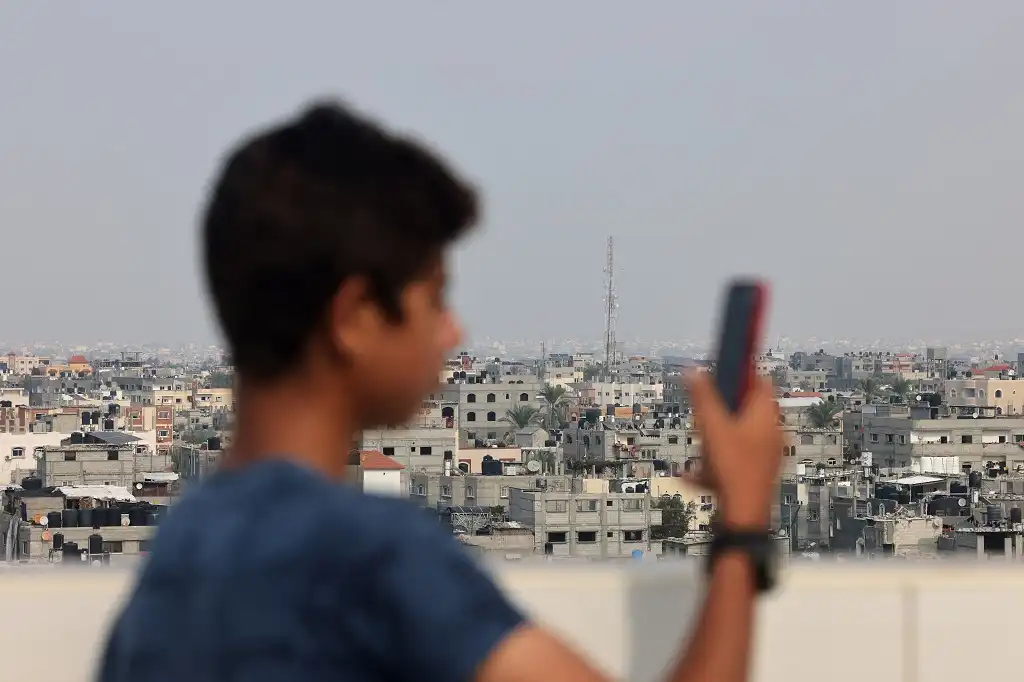
Complete internet and communications blackout in Gaza

The Palestinian Telecommunications Regulatory Commission reported on Thursday that all internet and fixed-line communications services in the Gaza Strip were cut off after the Israeli occupation targeted infrastructure.

The Authority said in a statement that digital isolation in Gaza has escalated as a result of systematic targeting of communications infrastructure, despite numerous previous attempts to repair many of the long-severe and alternative routes.

She added that the southern and central governorates of the Gaza Strip have joined the isolation suffered by Gaza City and the northern Gaza Strip for the second consecutive day, as a result of the continued targeting of communications networks and vital main roads.

The Authority considered this dangerous escalation against the communications infrastructure to threaten to completely isolate the Gaza Strip from the outside world and prevent citizens from accessing essential services, which are vital under the current circumstances, including relief, health, media, and educational services.

The Palestinian Ministry of Telecommunications previously announced that telecommunications companies had resumed operations in the northern and southern Gaza Strip following the ceasefire agreement in Gaza that went into effect in late January.

Over the past months of the Israeli war of extermination in Gaza, the ministry reported in successive statements that telecommunications services in the Strip had been cut off due to fuel shortages and Israeli attacks. Services gradually resumed only to be cut off again for the same reason.

This coincides with Israel's continued devastating war on Gaza since October 7, 2023, leaving more than 180,000 Palestinians dead or wounded, most of them children and women, and more than 11,000 missing.


PALESTINE

Thu 12 Jun 2025 4:56 pm - Jerusalem Time

Occupation forces issue evacuation orders for neighborhoods east of Gaza City

Israeli occupation forces issued orders on Thursday to evacuate the Old City and the Rawda and Tuffah neighborhoods east of Gaza City, in preparation for a "heavy" bombardment.

Since the resumption of the war on March 18, the Israeli occupation army has been issuing near-daily warnings to Gaza residents to evacuate large areas.

The United Nations Office for the Coordination of Humanitarian Affairs (OCHA) said in a report that "people are trapped in shrinking spaces, with 82 percent of the Gaza Strip now within Israeli military zones or subject to displacement orders."

PALESTINE

Thu 12 Jun 2025 4:50 pm - Jerusalem Time

A federal judge rules that Palestinian student Mahmoud Khalil cannot be detained.

Federal Judge Michael Farbiarz, who is presiding over Mahmoud Khalil's case, ruled Wednesday that the Palestinian student and activist from Columbia University cannot be deported or detained, based on an order from US Secretary of State Marco Rubio.

The judge's preliminary injunction will not take effect until Friday, giving the government time to appeal. The judge has kept the preliminary injunction in place until 9:30 a.m. on Friday, June 13, 2025.

"This is the news we've been waiting for for more than three months," Khalil's wife, Dr. Nour Abdullah, said in a statement issued by the American Civil Liberties Union (ACLU), which is among the legal teams involved in the case.

Rubio cited an obscure provision of the Immigration and Nationality Act of 1952 to justify Khalil's removal from the United States, arguing that he posed a threat to national security. He argued that this provision allows the Secretary of State to "determine" whether Khalil should remain in the country.

U.S. District Judge Michael Farbiarz ruled that Khalil could not be deported or detained based on Rubio's order.

Khalil was a student at Columbia University and played an active role in protests against Israel's war on Gaza on the university's Manhattan campus last year.

He was arrested by federal agents on March 8 and has been in detention since then, as he and his lawyers challenged his deportation efforts. The Trump administration accused him of leading "activities aligned with Hamas, a designated terrorist organization."

A Department of Homeland Security spokesperson claimed that Khalil acted to "glorify and support terrorists," a claim that has been proven false.

Khalil, who has not been charged, described the allegations last week as "suspicious and false."

In his decision on Wednesday, the judge said, "His career and reputation are being harmed, and his ability to express himself is being stifled, compounding the irreparable damage."

The Department of Homeland Security also argued that Khalil could be detained because he inaccurately completed his application for permanent residency.

But Farbiarz wrote that this would not be an excuse to keep Khalil in detention.

"The evidence is that legal permanent residents are rarely detained pending deportation" because of these types of omissions, he wrote.

“This strongly suggests that the Secretary of State’s decision is the motivation for the petitioner’s continued detention—not the other charge against him,” Farbiarz wrote.

The American Civil Liberties Union described the preliminary injunction as a "major victory."

Khalil's lawyers called for his immediate release, saying they would not stop fighting until he returned home to his wife and child, who was born during his detention.

“This proves what Mahmoud has asserted from day one—that the government cannot detain or deport him based on Rubio’s statement,” said Ramzi Kassem, co-founder of the Center for Constitutional Rights.

The Department of Homeland Security and the Department of State have not yet commented on the judge's decision.

Khalil was among the first campus protesters targeted by the Trump administration, which pledged to respond to protests over the Gaza war, which Israel has waged since October 7, 2023.

Trump targeted Columbia and Harvard universities, claiming that their efforts to combat anti-Semitism on campuses were insufficient.

Last week, the Trump administration alleged that Columbia University violated the rights of Jewish students and threatened the Manhattan school's accreditation.

ARAB AND WORLD

Thu 12 Jun 2025 4:44 pm - Jerusalem Time

Iran will not give up its right to enrich uranium while Israel prepares to attack it.

A senior Iranian official told Reuters on Thursday that Iran will not give up its right to enrich uranium due to escalating tensions in the region, adding that a "friendly" regional country had warned Tehran of a possible Israeli military strike. The official explained that these tensions aim to "influence Tehran to change its position on its nuclear rights" during talks with the United States on Sunday in Oman.

For its part, the International Atomic Energy Agency announced on Thursday that Iran is not complying with its nuclear non-proliferation obligations, marking the first time the UN agency has issued a resolution against Tehran in 20 years.

The long-awaited vote by the IAEA's Board of Governors in Vienna comes at a time of heightened tensions over Tehran's nuclear program, with US and European officials expressing their belief that Israel may be preparing an imminent military strike against Iran.

The agency confirmed that Iran has consistently failed to provide information about undeclared nuclear materials and activities at multiple locations.

The resolution was introduced by the United States, the United Kingdom, France, and Germany, and passed easily with 19 votes in favor of the resolution out of 35 countries on its Board of Governors. Russia, China, and Burkina Faso voted against the resolution, 11 other countries abstained, and two countries did not vote at all.

This comes as the United States anticipates a possible Israeli attack on Iran. The Washington Post reported that the United States is on high alert in the Middle East, anticipating a possible Israeli attack on Iran. Amid this anticipation, the United States is reducing the presence of its non-essential personnel in the region.

The report noted that "in recent months, US intelligence officials have grown increasingly concerned about the possibility that Israel might choose to strike Iranian nuclear facilities without US approval."

US officials told The Associated Press on Wednesday that the military has allowed the "voluntary departure" of families of US troops from locations across the Middle East.

The United States is also evacuating its staff from its embassy in Iraq. CBS News reported that Israel has informed the United States that it is "fully prepared to launch an operation in Iran," and that US officials are concerned that Iran may respond by striking US sites in Iraq.

The US State Department authorized the departure of non-essential staff from its embassies in Kuwait and Bahrain, giving them the option to leave rather than face mandatory evacuation.

This news came after Iran's defense minister warned that Tehran would strike US bases in the region if a "conflict" were imposed on Iran. Iranian officials had previously stated that they would hold the United States responsible for any Israeli attack, given its extensive military support for Israel.

Previous reports indicated that Israel is considering attacking Iran to disrupt negotiations between the United States and Iran. According to the New York Times, Israeli officials close to Prime Minister Benjamin Netanyahu believe that "the United States will have no choice but to assist Israel militarily if Iran launches a counterattack."

The current tensions come as Netanyahu faces a political crisis, with hardline parties threatening to dissolve the Knesset over the lack of an exemption bill for Israel's ultra-Orthodox Jews, although according to recent reports, the crisis may be defused.

President Trump has also threatened to bomb Iran if he fails to reach a nuclear agreement, and continues to publicly demand an end to Tehran's uranium enrichment program, something Iranian officials reject. In an interview published Wednesday, Trump said he is "less confident" that a deal with Iran is possible. According to a recent report from Axios, Trump has given Iran a deadline of June 12, Thursday, to reach an agreement.

In another indication that the United States may be preparing to take military action or support an Israeli attack on Iran, General Michael Kurilla, commander of U.S. Central Command (CENTCOM), postponed his scheduled testimony before Congress on Thursday due to tensions in the Middle East.

Amid reports of the United States evacuating its embassy in Baghdad, Iran's mission to the United Nations confirmed in a post on Twitter that Tehran is not seeking to acquire a nuclear weapon.

"Threats of 'overwhelming force' will not change the facts: Iran is not seeking a nuclear weapon, and US militarism only fuels instability," the mission said. "Diplomacy—not military action—is the only way forward."

ARAB AND WORLD

Thu 12 Jun 2025 12:16 pm - Jerusalem Time

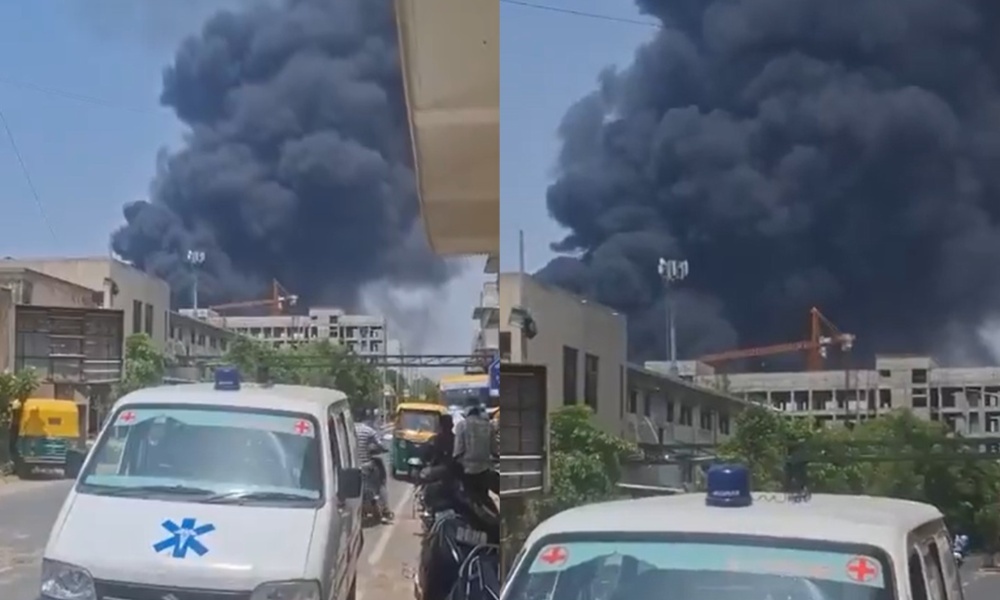
Reuters: Air India plane crashes in Ahmedabad with 242 people on board

An Air India plane crashed at an airport in the western Indian city of Ahmedabad on Thursday, Indian police said.

An aviation source told Reuters that the plane was bound for Birmingham.

Television channels reported that the accident occurred during takeoff. Media reports, citing officials, said that 242 passengers were on board.

PALESTINE

Thu 12 Jun 2025 12:15 pm - Jerusalem Time

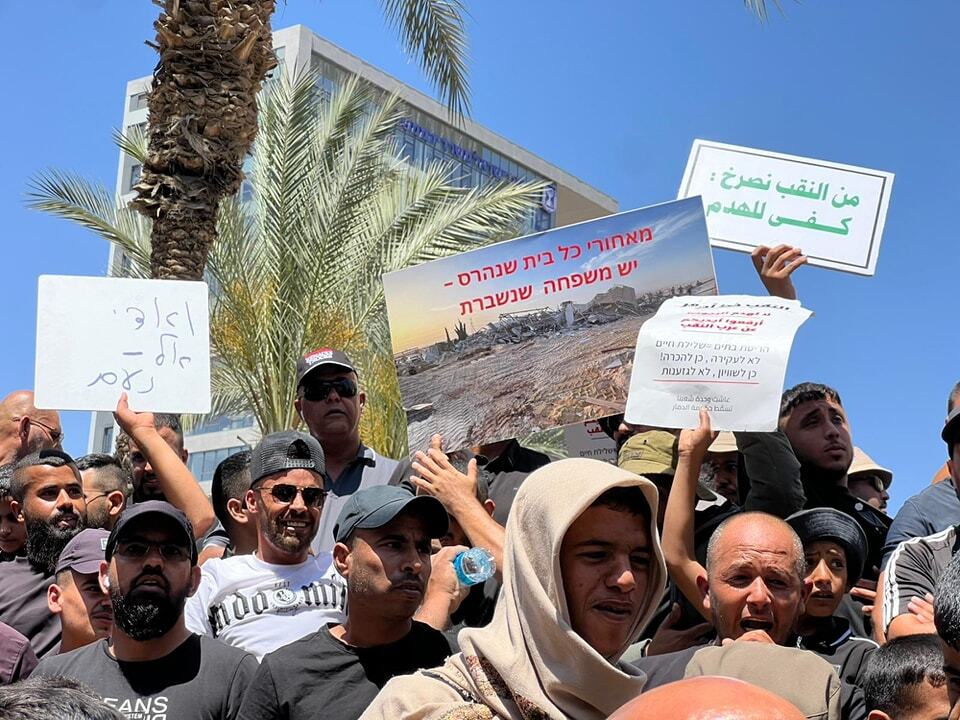
A general strike in the Negev in protest against demolitions and plans for uprooting and displacement.

A general strike swept across Arab local authorities in the Negev region on Thursday in protest against home demolitions and displacement plans pursued by Israeli authorities.

Thousands of Negev residents and members of the Palestinian community participated in a demonstration in front of the government offices and Israeli courts in Beersheba. They raised black flags and banners bearing slogans calling for an end to demolitions and displacement in the Negev and the cancellation of the "Shikli" plan, which aims to uproot Negev residents from their lands and Judaize them.

It's worth noting that Israeli authorities have demolished dozens of homes in the Negev region in recent weeks, and hundreds of homes and thousands of families are at risk of demolition under Israeli plans.

PALESTINE

Thu 12 Jun 2025 11:46 am - Jerusalem Time

For the first time, Israeli ministers call on Netanyahu to end the Gaza war.

Israeli ministers told Prime Minister Benjamin Netanyahu that it is time to end the war in Gaza and that with every passing day the political damage outweighs the operational benefit of the war.

Israel's private Channel 12 reported on Wednesday evening that senior government ministers (whom it did not name) told Netanyahu: "It is time to begin working to end the war" in the Gaza Strip.

She added that these ministers, along with senior government officials, told Netanyahu that with every passing day, the political damage outweighed the operational benefit.

The channel said the Israeli ministers' statements came in the wake of what it called a difficult call between Netanyahu and US President Donald Trump, when the US president demanded an end to the war.

She noted that since October 7, 2023, the possibility of ending the war has not been discussed within the government coalition.

On Tuesday evening, Channel 12, citing unnamed informed sources, revealed new details about the phone call between Netanyahu and Trump on Monday.

She added: "Trump said to Netanyahu in the Monday call some phrases that the US administration had not previously said and that seemed decisive."

According to the channel, Trump clearly told Netanyahu: "I want you to end the war."

War and Response

The Israeli opposition and the families of prisoners in Gaza assert that Netanyahu is continuing the war in deference to the more extreme right-wing faction within his government, to advance his personal political interests, particularly his continued rule.

Hamas has repeatedly declared its willingness to release all Israeli prisoners in one fell swoop, in exchange for an end to the war of extermination, the withdrawal of the Israeli army from Gaza, and the release of Palestinian prisoners.

But Netanyahu, who is wanted by international justice, is evading justice by proposing new conditions, including the disarmament of Palestinian factions, and is currently insisting on reoccupying the Gaza Strip.

With full American support, Israel has been committing genocidal crimes in Gaza since October 7, 2023, leaving more than 182,000 Palestinians dead and wounded, most of them children and women, and more than 11,000 missing, in addition to hundreds of thousands displaced.

Source: Al Jazeera + Anadolu

PALESTINE

Thu 12 Jun 2025 11:45 am - Jerusalem Time

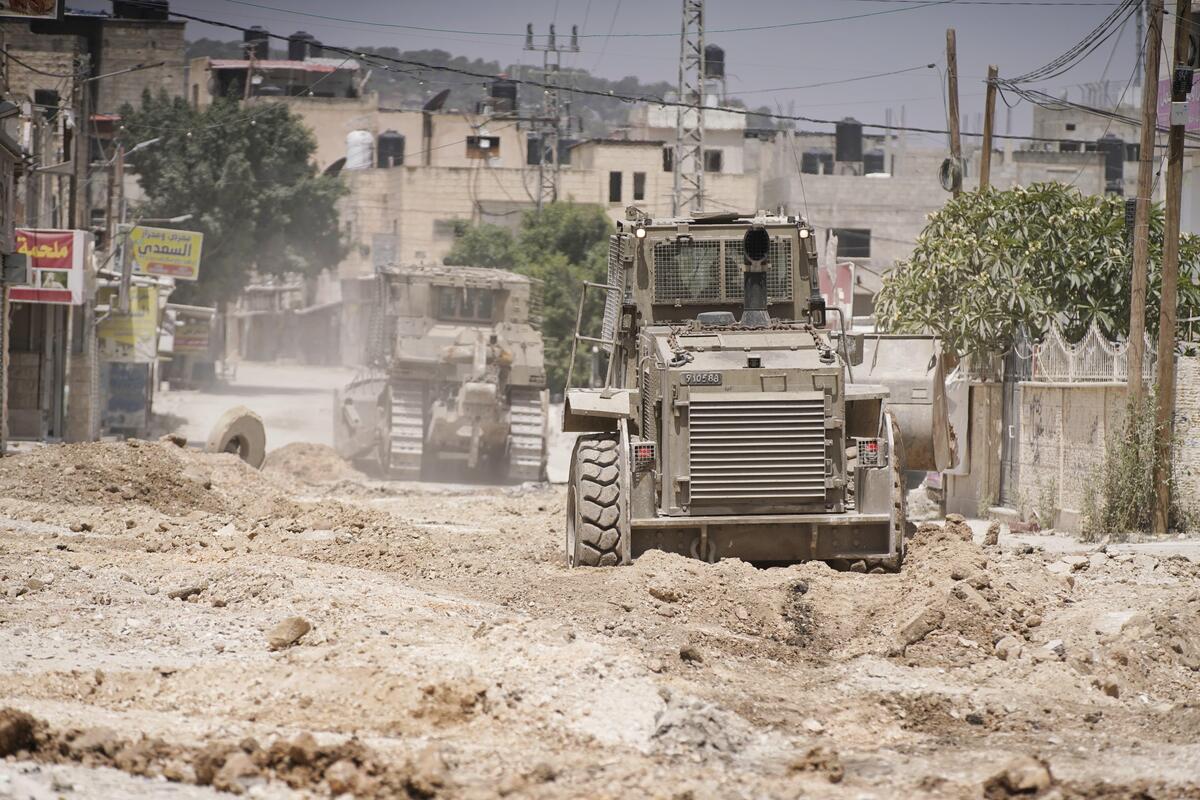
Israeli occupation forces send military bulldozers to Jenin camp in preparation for demolition operations.

Israeli occupation forces deployed military reinforcements and bulldozers to Jenin camp, north of the West Bank, on Thursday.

Local sources reported that the occupation forces sent reinforcements, accompanied by bulldozers, from the Jalameh military checkpoint to the Jenin refugee camp, in preparation for the house demolition operation, which they announced last Monday evening.

The occupation forces announced their intention to demolish 95 homes in several areas of Jenin camp, particularly in the western neighborhood and on Al-Sikka and Abdullah Azzam streets.

According to the Jenin Municipality, occupation forces have completely or partially demolished approximately 600 homes inside the besieged camp since the start of the aggression on January 21.

The camps in the northern West Bank are witnessing a significant escalation in the occupation's aggression, particularly in the Jenin, Tulkarm, and Nur Shams camps, where the number of displaced persons has risen to 50,000. Meanwhile, the occupation forces continue to destroy homes, buildings, and infrastructure, amid plans to alter the structure of the camps and obliterate their features.

OPINIONS

Thu 12 Jun 2025 9:48 am - Jerusalem Time

Gaza... when consciences are buried before the dead!

Amin Al-Hajj

At a time when standards have been reversed, massacres have become numbers, children have become statistics, and blood has become a fleeting or quickly forgotten breaking news item, Gaza stands witness to an unprecedented moral decline, to the insolence of the accomplices, and to the exposure of the nakedness of this world of silent and complicit people.
The issue is not the number of martyrs, nor the size of the rubble, but rather the expansion of the graves, the spread of hunger, and the spread of death, in contrast to the mass burial of consciences. Gaza does not need bouquets of flowers from leaders who have lost the color of their blood, nor statements of condemnation from institutions that have become meaningless, but rather a single living conscience, crying out in the face of this dead world.
Gaza is being bombed, besieged, slaughtered, and yet it remains standing. What has fallen is not Gaza, but rather the masks have fallen, the systems have fallen, and those we - until yesterday - thought were men have fallen!
Where is the nation? Where are the Arabs? Where are the Muslims? Where are those who filled the pulpits with sermons, then fell silent when blood spoke? Where are those who wept one day over the image of a little girl on the beach, then did not bat an eyelid as they saw hundreds of children pulled out from under the rubble, headless, nameless, and without a future?
Gaza, that small spot besieged between death and resistance, has never been too small for its children, women and elderly, but rather has been spacious enough for their dreams, their wounds and their legendary steadfastness. But today it is suffocating, not from the cramped space, but from the vastness of the betrayal, from the Arab and Islamic silence, from capitals crowded with statements but devoid of action, from screens that transmit images but do not stir a conscience or create a stance.
The Arabs have changed, humanity has been distorted, and everything has become subject to redefinition, even the right to life. Only Gaza continues to define itself as it always has: an open wound on an immortal dignity.
In Gaza, people don't just lack bread, they also lack the world's ability to make them feel like human beings. Gazans aren't looking for a less painful death, but rather for a life that recognizes their right to life. And here the tragedy lies: not in the scarcity of food and medicine, but in the absence of recognition, in the collapse of humanity, in the silence of the onlookers.
Gaza did not become too cramped for its people, but what became cramped was what remained of the nation's conscience. Chivalry fell, dignity evaporated, and concepts were shattered, until it no longer saw Gaza as a part of its body. Consciences were killed until silence became a "position," collusion a "policy," and failure a "smartness" or diplomatic "tact." Consciences died until "neutrality" became an honor, and the killing of civilians became an "internal matter."
Amidst this shame and nakedness, Gaza remains the only one that speaks the truth, with its blood, not its words, with the bodies of its children, not its reports, with its steadfastness, not with the world's value-free covenants. Is the nation still a nation? Or is its concept - as we said - one that has grown weary of Gaza? Is there any room left in Arabism for a defenseless resistance fighter? Is there any shame left in humanity at the sight of a child being pulled from under the rubble?
Gaza asks nothing more than to be seen as it is: a fighting spirit, not a number in UN reports. Gaza does not want sympathy, but a stance. It does not need tears, but a conscience that has been revived. Gaza is not cramped for its people, but we are cramped for it.
Gaza... When the graves expand, not only are consciences exposed, but our shame is also revealed, and our names are engraved in the register of failure, so choose a place for yourself!

OPINIONS

Thu 12 Jun 2025 9:46 am - Jerusalem Time

When the body turns into an archive of survival

Maryam Al-Khatib

The tent's roof was nothing but a tattered piece of cloth, but it became a canvas on which the women hung an immortal memory.
Here, torn photos of lost spouses, drawings of children buried under the rubble, and empty medicine jars hang as tombstones.
Every stitch in the tent tells a story, and every hole lets in a light that resembles hope, even if it seems distant.
The tent is not a temporary shelter, but a museum of resistance, a shrine of survival, where Palestinians hang the remains they cannot bury.
Among the thousands of white tents that flooded Gaza, the women's tents emerged as a living archive, preserving what remained of shattered lives.
A woman from Rafah holds an old photo and says, "This is all that remains of my house... I fear it will melt in the rain, so I keep it in my chest."
Scattered inside the tent are the remains of burned birth certificates, a child's shoe that no longer exists, a piece of cloth with the scent of a brother buried under the rubble.
The tent transformed from shelter to memory, from a place of waiting to a place of writing, not with ink, but with what remains.
In Gaza, women's bodies are no longer just targets for bombing, but repositories of memories the world doesn't want to hear.
Dried milk in baby bottles became a document of famine, scars on hands and gray hair became maps of pain, and the songs mothers whispered to calm the terror became unbroadcast recordings of resistance.
Women's bodies bear witness. The wound documents, the breast that finds no milk records hunger, and the womb that grieves for its fetus preserves annihilation within.
As Judith Butler says, the body not only records pain, but bears witness to the structures that created it.
The body here does not ask for pity, but rather records.
In a displacement tent east of Rafah, three women and two girls were killed in a direct attack that targeted the tent they were living in. The women were preparing a meal for their children when the missile fell, completely burning the tent. This painful incident not only tells the tragic story of the loss of life, but also reflects the deliberate targeting of civilians in their most vulnerable places, where the tent's dilapidated roof became a living witness to the violence and pain of war. The tent is not just a shelter; it is a museum that preserves the memory of the voiceless, and the bodies of the women inside it have become a living archive documenting pain and suffering.
International reports show that the targeting of women and girls in Gaza has increased to an unprecedented level.
It doesn't happen by accident. The killing of women is not "collateral damage," it's a systematic policy.
The occupation attacks the female body because it knows that women memorize the story, the language, the infant, the home, and the song.
When a female prisoner is raped, her voice is targeted.
When a woman is prevented from giving birth safely because of hospital bombing, her womb is targeted.
When a pregnant woman dies with her fetus, a future that could have been born is assassinated.
A midwife from Nasser Hospital recounted: "A baby was born under shelling. I placed him on a cold floor covered in cardboard. There was no time for anesthesia or disinfection. I was crying and trying to hold back the crying so as not to confuse him."
In a tent overlooking the sea, I saw a girl holding a piece of charcoal and coloring the tattered canvas wall.
"What are you drawing?" I asked her.
“Dad… because my mother said that what goes out of it never comes back,” she said in a broken voice.
What is happening in Gaza is not just the destruction of infrastructure, but the destruction of a living archive.
When women are killed, narratives, voices, details, language are killed with them.
When a woman's body is targeted, what is erased is the memory itself, as if the occupation wants to erase the story from its roots.
If the first Nakba was recorded in the archives of men, who will record the Nakba of Gaza, when women are killed before children?

About "Writing Site"

..............

The occupation attacks the female body because it knows that women memorize the story, the language, the infant, the home, and the song.

OPINIONS

Thu 12 Jun 2025 9:45 am - Jerusalem Time

Hamas at a crossroads: renewing legitimacy or isolation and absence!!

Counselor Dr. Ahmed Youssef

Hamas is experiencing a pivotal moment in its history, following an ongoing war of extermination that has left Gaza wounded and shattered, the Palestinian people grieving and exhausted by policies of killing, starvation, and siege, while the political landscape remains in a state of coma and death.
In fact, today's battle is no longer just with the occupation, but with time, with legitimacy, and with oneself. The movement, which has long presented itself as the spearhead of resistance, finds itself facing an existential challenge: Will it remain captive to the discourses of the past, or will it dare to renew its discourse, expand its project, and open up to the world with a new face?
The last war proved that the world is no longer the same. In the heart of Western capitals, the Israeli narrative crumbled in the face of a torrent of images, testimonies, and protests. Universities, streets, unions, and free voices… all began to express what had been suppressed for decades: that Palestine is not a religious conflict, but a human tragedy, and that resistance is not terrorism, but an inherent right to confront oppression.
This is precisely where the opportunity lies. The ongoing shift in Western public opinion does not represent an automatic victory for Hamas, but it is a door open to entry if the movement reads the moment wisely. This requires, above all, rebuilding its external discourse. It is time for this discourse to abandon its harsh religious rhetoric and adopt a human rights-based language that addresses the world with its own logic, not the logic of internal mobilization. This requires Hamas to adopt a discourse that demonstrates that it is not a closed entity, but rather a national liberation movement representing a just cause, not a group seeking power or hegemony.
On the political front, Hamas must reposition itself within the Palestinian landscape. The division has not only harmed the national project, but has also undermined the movement's legitimacy. The solution lies not in slogans, but in practical steps, beginning with accepting reform of the PLO, participating in a unified national leadership, and engaging with the idea of a transitional government that would rebuild the political system from its ruins.
As for Gaza, the time has come for a frank review, as a movement cannot demand respect from the world while it is unable to build a model of governance that respects its people.
Accordingly, the gradual withdrawal from managing the sector in favor of a consensual administration does not constitute a retreat, but rather a political maturity that should be credited to the group, redefining its role as a resistance movement, not a de facto authority.
On the international level, Hamas needs a new kind of courage, such as the courage to communicate and open up to all regional and global spaces. The world does not change with slogans, but with partnerships. What is required today is the activation of new tools for confrontation, such as engaging with international human rights organizations, supporting legal measures against the occupation, opening informal dialogue channels with international powers, and intensifying communication with independent Western media. Furthermore, empowering young Palestinian elites—residing in the West—to speak on behalf of the cause from a human rights perspective may be one of the shortest ways to break through the walls of isolation.
In addition, Hamas must develop its media tools. New platforms are not for rhetoric, but for constructing a convincing narrative. It would be wise for the movement to focus on humanitarian issues—such as the blockade, children, and the destruction of hospitals and schools—and reframe its image away from the stereotypes promoted by its enemies.
The movement that insists on standing firm in the field is today called upon to also stand firm in the battle of image, narrative, and transformation, and to realize that this is no longer the time of a single voice, but rather the time of intelligent, pluralistic, and balanced discourse.
In conclusion, Hamas's future will depend not only on the strength of its arm, but also on the flexibility of its mind and the boldness of its political heart. Survival in the post-massacre era is not only granted to the resistance, but also to those who can read the transformation and possess the courage to begin anew without compromising their essence.
Will Hamas rise to the occasion?
The opportunity is still there, but it doesn't have to wait long, it must be seized.

OPINIONS

Thu 12 Jun 2025 9:34 am - Jerusalem Time

Conscience in the dock

In a time of increasing cruelty, when consciences are targeted as much as the body, we are amazed at the world's ability to punish those who show compassion more than those who kill. At the outset of the war of extermination on Gaza, we saw how anyone invited to speak about Palestine in the Western media was tested with a pivotal question: "Do you condemn Hamas?" In Jerusalem, where I live, a respected school principal was questioned for eulogizing a student at her school who was killed by the occupation. I recently heard Al Jazeera correspondent Najwan al-Samri talk about how a Palestinian nurse in the Israeli medical sector was held accountable for wearing black, presumably in mourning for what was happening in Gaza.

In this charged context, the global scene that mocks compassionate voices cannot be ignored. Over the past two days, Donald Trump has once again mocked environmental activist Greta Thunberg, calling her a "very angry woman" who needs to "take an anger management course," repeating his old tactic of bullying those who express strong feelings on moral issues. This kind of rhetoric doesn't just target individuals; it attacks the very value of compassion, aiming to redefine conscience as a weakness and moral outrage as a threat.

In a time of genocide, the Palestinian cause is no longer merely an arena for military and political conflict, but rather a deeper and more dangerous battlefield, one that targets the human spirit and criminalizes empathy for victims. This criminalization, both locally and globally, reprograms the human conscience to be ashamed of itself, or to remain silent for fear of punishment.

When students at American universities such as Harvard and Columbia took to the streets in solidarity with Gaza, they were denied graduation, had job offers revoked, and were harshly attacked by the media, labeling them "supporters of terrorism." In France, demonstrations in solidarity with Gaza were banned, fines were imposed, and demonstrators carrying Palestinian flags were arrested. In Germany, cultural events were canceled, and doctors and artists opposed to the aggression on Gaza were expelled from public institutions simply for expressing sympathy with the Palestinian people.

In the Arab world, despite the fact that "the hearts of the people are with Hussein and their swords are with the Umayyads," some regimes have not hesitated to brutalize and imprison those who demonstrate in solidarity with Gaza for participating in demonstrations in support of Gaza. Even in Palestine, some Gaza sympathizers have been dismissed from their jobs.

This criminalization has not stopped at political or media expression, but has also extended to the humanitarian and medical spheres. The efforts of volunteer doctors to treat the wounded in Gaza have been met with investigation, bans, and security stigma. Charitable organizations have also been banned from delivering aid, allegedly for "funding terrorism," as if providing relief to the hungry and wounded were a crime.

Erosion of conscience and shrinkage of the emotional sphere

Criminalizing empathy not only frightens those who raise their voices, but also affects those who keep their feelings to themselves. It reshapes the human psyche, making individuals afraid of their own tears, reluctant to express their grief, and powerless in the face of others' suffering. This is what psychology calls "emotional suppression," a major factor in the development of anxiety, depression, and other neurotic disorders.

Even worse, the psyche sometimes begins to adapt to this repression through what is known as “emotional numbing,” where the person loses the ability to feel and interact with human pain, and becomes more susceptible to detachment from his feelings, society, and reality, which leads to isolation, withdrawal, and sometimes even savagery.

As for our young people who follow our example, observing adults being punished for their compassion produces moral confusion and existential anxiety, as "good" is redefined as danger and "compassion" as deviance. This deepens their psychological alienation and establishes a society that views values as a luxury with no place in a world of fear and censorship.

How do we decriminalize with courage and poise?

This situation requires us, as mental health professionals, academics, and intellectuals, to reaffirm the centrality of conscience and expose the soft tools of oppression that employ law, media, and education to nip empathy in the bud. We must expand the clinical, private, and public spheres for discussing fear and connect with others who share our feelings and experiences. Fear dissipates when we seek refuge in groups.

At a time when one is forbidden to cry over a child pulled from the rubble, and another who survives bombing only to die of starvation, we must raise our voices not only in defense of Palestine, but also in defense of our threatened humanity. The crime is clear, and silence is nothing but false testimony against our consciences.

The genocide in Gaza is no longer limited to the Gazans or Palestinians alone. Rather, it is a crime that will have a universal humanitarian dimension. It will threaten the social contract between people and touch the very essence of humanity if silence and complicity prevail over our consciences.
Written by: Dr. Samah Jabr

PALESTINE

Thu 12 Jun 2025 9:30 am - Jerusalem Time

The UN General Assembly is voting today on a draft resolution calling for an end to the war on Gaza.

The UN General Assembly is set to vote on Thursday on a draft resolution calling for an immediate, unconditional, and permanent ceasefire in Gaza, after the Security Council failed to adopt a resolution calling for a ceasefire in Gaza following a US veto.

Diplomats expect the 193-member UN General Assembly to approve the text by an overwhelming majority, despite pressure from Israel on the countries voting on the draft resolution.

Thursday's vote also comes ahead of a UN conference next week aimed at giving momentum to international efforts toward a two-state solution.

Last week, the United States vetoed a draft resolution in the UN Security Council calling for the immediate and unconditional lifting of all restrictions on the entry of humanitarian aid into Gaza, and for its safe and unhindered distribution on a wide scale, including through the United Nations and humanitarian partners throughout the Gaza Strip.

The remaining countries on the 15-member council voted in favor of the draft resolution. These efforts come at a time when a humanitarian crisis is sweeping the Gaza Strip, home to more than two million people, and the United Nations is warning of a looming famine. Only a small amount of aid has entered the Strip.

It should be noted that General Assembly resolutions are non-binding, but they carry weight because they reflect the global perspective on the war. Previous calls by the Assembly to end the war have been ignored. Unlike the Security Council, no country has veto power in the General Assembly.

ARAB AND WORLD

Thu 12 Jun 2025 9:28 am - Jerusalem Time

Washington withdraws some of its employees from the Middle East amid escalating tensions with Iran.

US President Donald Trump said on Wednesday that US personnel were being evacuated from the Middle East because it "can be a dangerous place," adding that the United States would not allow Iran to possess a nuclear weapon.

Reuters reported earlier on Wednesday that the United States was preparing to partially evacuate its embassy in Iraq and would allow military family members to leave some locations across the Middle East due to increased security risks in the region, according to US and Iraqi sources.

The four American sources and the two Iraqi sources did not clarify to Reuters the nature of the security risks that prompted this decision. Reports of the potential evacuation led to a more than 4% increase in oil prices.

A US official stated that the State Department had authorized voluntary departures from Bahrain and Kuwait.

The State Department updated its worldwide travel advisory Wednesday evening to reflect the latest developments in the US situation. On June 11, the State Department ordered the departure of non-essential US government employees due to escalating regional tensions, according to guidance.

The US decision to evacuate some employees comes at a volatile time in the region. Trump's efforts to reach a nuclear agreement with Iran appear to have reached a dead end, and US intelligence indicates that Israel is preparing to launch an attack on Iranian nuclear facilities.

"They're being evacuated (from the Middle East) because it can be a dangerous place, and we'll see what happens. We've issued a notice to get out," Trump told reporters.

When asked if anything could be done to de-escalate tensions in the region, Trump said, "They can't have a nuclear weapon. They simply can't have a nuclear weapon."

Iran has consistently stated at the highest levels that it has no intention or plan to possess nuclear weapons.

Trump has repeatedly threatened to strike Iran if the stalled talks over its nuclear program fail, and in an interview published earlier Wednesday (and reported by the Al-Quds newspaper), he said he has little confidence in Tehran agreeing to halt uranium enrichment, a key US demand. Iranian Defense Minister Aziz Nasirzadeh also said on Wednesday that if Iran is attacked, it will respond by striking US bases in the region.

The US Embassy in Kuwait announced in a statement on Wednesday that it "has not changed the status of its employees and remains fully operational."

It is noteworthy that the United States has a military presence throughout the major oil-producing region, with bases in Iraq, Kuwait, Qatar, Bahrain, and the United Arab Emirates.

A US official stated that US Defense Secretary Pete Hegseth authorized the voluntary departure of military family members from locations throughout the Middle East. Another US official explained (to Reuters) that this primarily concerns family members in Bahrain, where most of them are stationed.

A third US official said, "The State Department is planning to conduct an orderly departure from the US embassy in Baghdad. The goal is to do so through commercial means, but the US military stands ready if assistance is requested."

The official Iraqi News Agency quoted a government source as saying that Baghdad had not recorded any security indicators that would require an evacuation.

Another US official said there had been no change to operations at Al Udeid Air Base in Qatar, the largest US military base in the Middle East, and that no evacuation order had been issued for employees or families associated with the US embassy in Qatar, which was operating as usual.

Oil futures rose $3 on reports of the Baghdad evacuation, with Brent crude reaching $69.18 per barrel.

Earlier on Wednesday, the UK Maritime and Transport Agency warned that rising tensions in the Middle East could lead to an escalation in military activity, potentially impacting shipping in vital waterways. It advised ships to exercise caution when sailing through the Gulf, the Gulf of Oman, and the Strait of Hormuz, all of which border Iran.

The British Foreign Office said it is monitoring the situation and will keep its embassy in Iraq under constant review following the US moves.

Iraq, a rare regional partner for both the United States and its arch-foe Iran, hosts 2,500 US troops, even though Tehran-backed militias are linked to its security forces.

Tensions have been escalating within Iraq since the start of the war on Gaza on October 7, 2023, with Iranian-aligned armed groups in the country repeatedly attacking US forces, although the attacks have subsided since last year.

Israel and Iran also exchanged fire twice last year—the first direct attacks of their kind between the region's arch-enemies—as missiles and drones flew through Iraqi airspace.

Israel, a key regional ally of the United States, has also struck Iranian-linked targets across the region, including Iraqi militant groups operating inside Iraq and neighboring Syria. In recent months, the United States has deployed more military assets to the Middle East, including B-2 bombers, which have since been replaced, and extended the deployment of a second aircraft carrier, which has since departed.

The next round of nuclear talks between Iran and the United States is scheduled to take place in the coming days, and Iran is expected to present a counterproposal after rejecting an offer from Washington.

A senior Iranian official told Reuters that the military threat has always been part of US negotiating tactics with Iran.

The official warned that "any military action against Iran, whether by the United States or Israel, would have dire consequences."

Iran's mission to the United Nations posted on its website on Wednesday: "Threats of 'overwhelming force' will not change the facts: Iran does not seek a nuclear weapon, and US militarism only fuels instability."

This statement appeared to be a response to an earlier comment by General Michael "Eric" Kurilla, commander of US Central Command, that he had presented the president with a "wide range of options" to prevent Iran from acquiring a nuclear weapon.

Kurilla postponed his testimony to US lawmakers on Thursday due to tensions in the Middle East, according to other US officials.

PALESTINE

Thu 12 Jun 2025 9:24 am - Jerusalem Time

Abu Shabab Groups: An updated version of Village Links and Antoine Lahad

Dr. Aqel Salah: The most dangerous aspect lies in the long-term political goals of this group, which is to undermine Palestinian national representation.
Naaman Abed: Israel seeks to distract the people of Gaza with internal fighting, tighten the siege, and push Palestinians toward emigration.
Dr. Amjad Bashkar: Israel is engineering chaos in Gaza by supporting armed militias like Yasser Abu Shabab's group.
Majed Hadeeb: Abu Shabab's case is temporary if it continues to be rejected by Palestinians, but it could turn into a dangerous phenomenon if Netanyahu succeeds in creating similar cases.
Dr. Suhail Diab: The goal is to transform these militias into executive entities with broad mandates, forming an alternative leadership aligned with Israeli and American interests.
Imad Musa: Israel's attempts to score a moral victory by recruiting agents like Abu Shabab will not succeed because the Palestinian people possess a deep awareness.


At the height of Israel's ongoing war of extermination on the Gaza Strip, a new Israeli strategy is emerging, based on supporting local militias with the goal of creating "organized chaos," as in the case of the Yasser Abu Shabab group. This strategy is being debated over how to facilitate its consolidation of control and the fragmentation of the Palestinian national structure, in anticipation of the day after the war on the Strip.
In separate interviews with Al-Quds, writers, political analysts, and university professors assert that these militias, which are run with direct support from the Israeli security and political establishment, represent an extension of previous failed attempts in the region, such as the Village Leagues and Antoine Lahad's Army, which were met with widespread popular and national rejection.
Writers, analysts, and university professors explain that Israel, in light of its military and political failure after more than 600 days of war, is seeking to impose alternative bodies to the legitimate Palestinian leadership by promoting armed groups with a nominal civilian character, receiving direct funding and armament, and tasked with security and espionage missions against the Palestinian people and the resistance.
They assert that these groups, which include individuals with criminal backgrounds and operate under Israeli air cover, aim to steal aid, spread terror, and create a false sense of legitimacy for the occupation's "day after Gaza" projects.
However, writers and university professors point out that the public's awareness and rejection of these phenomena, along with popular and factional cohesion, will prevent these groups from becoming a permanent reality. This is especially true given that the greatest danger lies not only in the practices of these militias, but also in their long-term political goals, which seek to undermine Palestinian national representation and impose local proxies loyal to the occupation at the expense of any genuine national project.


Local militias are popularly and politically ostracized.

Palestinian writer and political researcher Dr. Aqel Salah warns of a dangerous phenomenon promoted by Israel: its support for local militias, both popularly and politically rejected, aimed at creating "organized chaos" to serve the occupation's goals, as part of a "war of extermination and starvation."
Salah explains that Israel, with the full support of the United States and the West, has failed to achieve its stated objectives after more than 600 days of aggression against the Gaza Strip, including 90 days of starvation warfare.
According to Salah, Israel is seeking to replicate previous failed experiments, such as the "Village Leagues" in Palestine and the "Antoine Lahad Army" in southern Lebanon. These groups were associated with the occupation but did not find popular or political acceptance and were ultimately eliminated by popular and national resistance.
Salah points out that Yasser Abu Shabab's group in Gaza, a drug dealer and fugitive from justice, is run with direct support from the office of Israeli Prime Minister Benjamin Netanyahu and the head of the Shin Bet.
Salah asserts that this group is nothing more than a security arm of Israel, aiming to create organized chaos by stealing humanitarian aid, blackmailing the population, and creating popular pressure on the Palestinian resistance.
Its missions, according to Salah, include gathering intelligence for the occupation, combing buildings and roads to secure the Israeli army's advance, and fragmenting the social fabric of the Gaza Strip.

Gaining false legitimacy by recruiting young people

Salah warns of the expanding goals of the "Yasser Abu Shabab" phenomenon in the Gaza Strip, which seeks to give a civilian character to a group serving the Israeli occupation by advertising civilian and security positions.
Salah explains that this move aims to attract the sympathy of residents suffering from poverty and deliberate starvation, and to gain false legitimacy by recruiting young men, making it harder for the group to be targeted by the resistance.
Salah points out that the security objective is to gather information on resistance leaders and hostages through categories such as doctors, for the benefit of Israeli intelligence.
Salah points out that this group is raising slogans of "Palestinian statehood" to distort the political system. He calls on the Palestinian Authority and factions to confront this group, which serves the occupation's agenda. He considers it a bargaining chip for Netanyahu regarding the future rule of Gaza, where the Palestinian people are the only losers.
However, Salah believes that this group's influence is limited, as it operates exclusively in areas under Israeli military control, effectively making it part of the occupation forces. Consequently, it will be treated by the resistance in the same way as the Israeli military.

Yasser Abu Shabab's clan disowned him

Salah points out that this group, which consists of individuals with criminal backgrounds linked to drugs, is considered "warmongers" and "war contractors," exploiting the tragic conditions in Gaza for personal gain and to further Israel's goals.
Despite Israel's attempts to market this group internationally as a Palestinian aid-distributing entity, Salah asserts that it violates international law, and that any country that supports it is considered an accomplice in "organized crime" led by Israel.
In a clear indication of popular ostracism, Salah explains that the family and clan of Yasser Abu Shabab, the group's leader, publicly disowned him, reflecting widespread societal rejection of this phenomenon linked to the occupation. He considers this stance part of an ongoing popular resistance against any attempts to impose pro-occupation phenomena, similar to what has occurred in previous attempts.
Salah asserts that the Palestinian people possess sufficient awareness to deal with such groups, especially given the harsh conditions facing the population of the Gaza Strip.
The most dangerous aspect, according to Salah, lies in the long-term political goals of this group. Israel, led by the far-right Netanyahu government, seeks to undermine Palestinian national representation and prevent any Palestinian agreement on political governance of the Gaza Strip.

A pro-occupation front and an alternative to the authority

Salah believes that Israel's primary goal is to impose this group as an alternative to the Palestinian Authority or any national government, serving as a pro-occupation front that serves Israel's agenda in both the Gaza Strip and the West Bank.
Salah warns that the continuation of this phenomenon could have an impact far beyond Gaza. Estimates indicate that Israel, with American support, is planning to settle members of this group in the Egyptian Sinai after the war ends. The goal is to transform them into "bandits" who will intercept any attempts to smuggle weapons into Gaza, posing a direct threat to Egyptian national security.
Salah asserts that what is happening in Gaza has gone beyond a war of extermination and starvation, to which has been added the "war of organized chaos" waged by Israel through this group. Nevertheless, hope remains in the awareness of the Palestinian people and the resistance's ability to confront this phenomenon, especially if a deal is reached with Israel that includes the delivery of aid through humanitarian organizations instead of this group.
Salah emphasizes that the Palestinians will not accept any attempt to impose agents as their representatives, asserting that this group, no matter how widespread, will remain a temporary phenomenon that will end with the end of the war, leaving behind a legacy of ostracism and popular rejection.


A policy of comprehensive siege and systematic starvation

For his part, writer and political analyst specializing in international relations, Noman Abed, asserts that the Israeli Prime Minister Benjamin Netanyahu's government's continued policy of "war of extermination and starvation" aims to exhaust the Palestinian people and destroy their capacity for resilience.
Abed explains that Netanyahu's extremist government is pursuing a policy of total siege and systematic starvation, disregarding international law, the laws of war, or moral and humanitarian principles. Furthermore, the international system remains largely powerless to counter these policies, allowing Netanyahu and his government to continue their "human slaughter" against an entire Palestinian people.
Abed emphasizes that this war serves only the partisan and personal goals of Netanyahu and his "ruling clique," pointing to internal divisions within Israel, where some former Israeli leaders and Israeli society believe the war damages Israel's international image and exhausts the occupation army.
Abed points out that the massacres perpetrated by the Netanyahu government in Gaza, and the horrific scenes broadcast around the world, have affected the global human conscience, leading to a popular uprising in Europe. This uprising has prompted some European leaders and governments to respond, albeit partially and "timidly," to the voices of their people, who have begun to feel disgusted by the policies of the occupying state.

Abu Shabab announces security and civilian jobs for Gazans!

Abed points to attempts by some European countries to distance themselves from the American approach of supporting the Netanyahu government, which is pursuing "brutal policies" in cooperation with the United States.
Abed believes that Yasser Abu Shabab's announcement of security and civilian positions for Gazans within his ranks confirms that Israel is seeking to create another counter to Hamas and other factions in Gaza.
Abed explains that Israel wants this body to play an administrative role alongside its security role, as part of what is called "the day after Gaza."
Abed asserts that Netanyahu rejects any legitimate Palestinian rights, including the right to self-determination, and seeks to diminish the role of the Palestinian Authority and transform the Palestinian government into armed gangs that sometimes clash and sometimes agree, with no aspirations for independent national rule.
Abed explains the existence of a new-old Israeli strategy aimed at fostering chaos in Gaza by creating local militias affiliated with the occupation. Netanyahu seeks to create Palestinian groups that receive orders from Israeli intelligence officers and are marketed as popular forces representing Palestinian families or expressing popular discontent with Hamas rule.
Abed points out that these militias, which resemble previous attempts such as the "Village Leagues" in the 1980s, aim to weaken the Palestinian social fabric and create internal strife.
Abed believes that the militia affiliated with Yasser Abu Shabab in eastern Rafah, which has begun announcing the establishment of civilian administrations in implementation of Netanyahu's plans to control the "day after" in Gaza, cannot be national, regardless of its names or the backgrounds of its members, because it serves the occupation's agenda and operates under its complete security control.

Similar experiences in Palestine and southern Lebanon

Abed emphasizes that the goal of this strategy is to distract the people of Gaza with internal fighting, tighten the siege, and push Palestinians toward "voluntary migration," which is in reality a calculated act of ethnic cleansing.
Abed cites historical experiences that prove the failure of such policies, both in Palestine and in southern Lebanon, where the Palestinian people and their national forces thwarted the occupation's attempts to impose its hegemony through loyalist militias.
Abed asserts that the Palestinian people, despite the hunger and suffering, will remain aware of these plans and will not allow them to succeed in the long term.
Abed warns against any cooperation with these militias, regardless of their motives or affiliations, because they are aligned with the occupation's policies and cannot align with Palestinian national goals.
Abed expresses his regret at the inability of the international system and most countries to confront Netanyahu's policies, which allows him to continue oppressing the Palestinian people, increasing killing and destruction, and pursuing attempts at ethnic cleansing and re-settlement.
Abed calls for concerted internal Palestinian, regional, and international efforts to halt these policies, warning that continued international silence will lead to more deaths and injuries and exacerbate the suffering of Palestinians facing hunger and destruction.
Abed asserts that the Palestinian people, with their awareness and resilience, will thwart the occupation's plans, as they always have, emphasizing the need to confront any attempts to create chaos or internal divisions that serve the occupation's agenda.

Lieberman is the one who exposed Yasser Abu Shabab's group

For his part, political science professor Dr. Amjad Bashkar warns of a deliberate Israeli strategy to engineer chaos in the Gaza Strip by supporting armed groups, such as Yasser Abu Shabab's group, which operates under the occupation's umbrella.
Bashkar explains that this group is the only one so far operating in Gaza with direct Israeli support, noting that it was exposed by former Israeli minister Avigdor Lieberman, who exploited the political dispute with Benjamin Netanyahu's government to reveal Israel's support for the group, in an attempt to highlight the failure of the Israeli political and military establishment to eliminate the Palestinian resistance.
Bashkar asserts that the idea of establishing these groups stems from a proposal made by former Israeli Defense Minister Yoav Galant to Netanyahu, but the latter initially rejected it, insisting that the Israeli army was capable of resolving the battle against Hamas and the resistance on its own.
Bashkar points out that Israel has re-adopted this strategy as an alternative to the occupation army, given its inability to achieve its objectives in Gaza.
Bashkar explains that these groups are being used as a "sacrifice card" to bear the burden of the confrontation instead of the army, with Israel providing them with advanced weapons, air cover, and safe areas under its control.
Bashkar cites an incident that occurred two weeks ago, in which the Palestinian resistance targeted a group of undercover soldiers who turned out to be Israeli army agents. Israel then bombed the area to protect them, revealing its pattern of dealing with such groups.


An alternative administrative and governmental nucleus in the Gaza Strip

Bashkar believes that Yasser Abu Shabab's group is seeking to form an alternative administrative and governmental nucleus in the Gaza Strip, given the current chaos and governmental vacuum.
Bashkar explains that the group is trying to exploit this opportunity to fill the void and attach itself to all administrative and governmental positions in the Strip. He notes that the goal is to create a clear central authority around Yasser Abu Shabab, from which all other tools and entities can branch out and be effectively distributed throughout the Gaza Strip, thus strengthening the group's influence and ability to control.
Bashkar points out that Israel is attempting to revive the "Village Leagues" experiment by harnessing Palestinian tribes as agents of the occupation, but these attempts have failed in the Gaza Strip due to the rejection of the Palestinian people there.
Bashkar asserts that the fate of these current groups will be similar, as they will be targeted by the Palestinian resistance, which may implement a "revolutionary ruling" against them to eliminate them or limit their capabilities, in addition to ostracizing them from Palestinian society.
Bashkar explains that Israel is seeking to engineer chaos in Gaza by exploiting the complex circumstances. The Strip suffers from the absence of security institutions after the martyrdom of tens of thousands, including approximately 10,000 security and civil servants.

Creating a state of panic and security chaos

Bashkar points out that the scarcity of basic resources, such as food and internal security, has created a state of panic and insecurity, enabling these groups to emerge with Israeli support.
Bashkar asserts that Israel, with direct American support, is working to deepen this chaos and weaken the Palestinian people through policies of starvation and murder, where "those who are not killed by bullets are killed by hunger."
Bashkar warns that these groups may increase in number given the occupation's control over large areas of Gaza, the ongoing chaos, and the Netanyahu government's decision to use alternative means to confront the resistance.
Bashkar asserts that the Palestinian resistance, despite its limited resources, will act decisively to curb this phenomenon, even though it may not be able to completely eradicate it due to the complexity of the situation.
Bashkar stresses that Israel will not succeed in its long-term plans, as it has failed in previous attempts, thanks to the steadfastness and awareness of the Palestinian people.
Bashkar asserts that Israel, with American support, is seeking to turn Gaza into a chaotic arena run by local agents, but that the resistance and the Palestinian people will confront these plans.
Bashkar calls for a unified Palestinian position to confront these challenges and work to restore order and security in Gaza as a safety valve against the occupation's attempts to create chaos.


Yasser Abu Shabab is a temporary condition that will end quickly.

For his part, writer and political analyst Majed Hadib warns of the dangers of Yasser Abu Shabab and his armed groups in the Gaza Strip becoming a dangerous phenomenon if Israel succeeds in exploiting it to achieve its political and security objectives.
Hadib asserts that Abu Shabab is not a phenomenon in and of itself, but rather a temporary phenomenon that will quickly end if Palestinian factions continue to reject and disavow him. However, he warns that Israel's and Benjamin Netanyahu's government's insistence on exploiting this situation could turn it into a "family and clan weapon," threatening to plunge Gaza into chaos and internal strife.
Hadib explains that many Palestinian parties were quick to disavow Abu Shabab and his armed groups, including the Palestinian National Authority, the reformist faction within the Fatah movement led by former MP Mohammed Dahlan, and even Abu Shabab's family, who demanded that he surrender to the relevant authorities.
Hadib asserts that the continuation of this unified stance by Palestinian authorities will render Abu Shabab's case a mere passing incident that will quickly end. However, he warns against these parties changing their positions, which would open the door to the case becoming a dangerous phenomenon.
Hadib asserts that this strategy aims to set the Palestinian people back "decades," even to "prehistoric times," where the struggle for sustenance and life is waged through bloodshed and murder, in the absence of any law or order.

Netanyahu has set the people of the Gaza Strip back decades.

Hadeeb points out that Netanyahu, through his ongoing war on Gaza, has already succeeded in setting the Palestinian people back decades through destruction, starvation, and siege, but he is now seeking to exacerbate this decline by creating situations similar to those of Abu Shabab, to perpetuate security chaos and internal strife.
Hadeeb explains that Israel insists on treating Palestinians as individuals or groups without the right to self-determination, rather than as a people with a political cause, a national identity, and aspirations to establish their own state.
Hadib asserts that this plan aims to portray the Palestinians as a people unworthy of statehood, by pushing them toward conflict and chaos.
Hadeeb calls on Hamas to shoulder its responsibility in thwarting Netanyahu's "diabolical" schemes by prioritizing the interests of the Palestinian people and the national cause over the interests of its own organization.
Hadeeb warns that Hamas's insistence on prioritizing the organization's interests over those of the people will turn Abu Shabab's case into a phenomenon, pushing the Palestinian people toward chaos and internal strife, which will serve Netanyahu's purposes.
Hadib explains that the war on Gaza has led to unprecedented suffering, beyond anything witnessed in history, with Palestinian citizens suffering from hunger, destruction, and a complete loss of security and stability.
Hadib points out that the continuation of this situation will lead to moral and social decline as a result of the enormous pressures the people are facing.

Hamas is required to hand over the administration of Gaza to the Palestinian Authority.

Hadeeb calls on Hamas to immediately respond to the demands of the Palestinian people, work to end the deterioration through a deal with Israel, and hand over control of Gaza to the Palestinian National Authority to enforce order and the rule of law, while suppressing any signs of security chaos or the dissemination of family weapons.
Hadib asserts that Abu Shabab's case will remain temporary if the Palestinian authorities continue to reject it, but it could become a dangerous phenomenon if Netanyahu succeeds in creating similar situations and if Hamas insists on prioritizing the organization's interests over those of the people.
Hadib warns that this shift will lead to the absence of law and stability, and that Gaza will return to a "first-person" state where killing and chaos prevail in order to obtain food and water.
Hadib calls for a unified Palestinian position and concerted efforts to preserve the people's identity and dignity, and stresses the need to end the war and reach solutions that protect the Palestinian people from the occupation's schemes.


Israel seeks to exclude the PA and the factions


Political science professor and expert on Israeli affairs, Dr. Suhail Diab, says there are deliberate Israeli attempts to expand the phenomenon of "Yasser Abu Shabab" and others like him in the Gaza Strip, with the goal of creating local groups that serve their narrow interests and contribute to strengthening the blockade and control of the Strip.
Diab believes that Israel seeks, through this phenomenon, to marginalize any Palestinian party, whether the Palestinian Authority or factions such as Hamas and Islamic Jihad, to prevent any movement demanding freedom and independence.
Diab points out that Israel wants parties similar to "Abu Shabab," who are characterized by three characteristics: narrow material interests, a willingness to work according to the Israeli agenda to the end, and a willingness to dispense with them when Israel decides to do so.
Diab draws on failed historical Israeli experiences, such as the experience of the "South Lebanon Army" militia led by Saad Haddad in 1979, and later by Antoine Lahad, through which Israel attempted to create a loyal entity that combined collaboration, narrow interests, and hatred of other parties. Despite the availability of the elements of success in Lebanon, the experiment failed miserably, as did the "Village Leagues" experiment in the West Bank in the late 1970s.
Diab believes that Israel is trying to revive this model in Gaza, exploiting starvation and humanitarian distress to recruit individuals into these groups.
Diab points out that Israel is promoting a media narrative to the world that it is distributing humanitarian aid, while politicizing the military operation and militarizing the distribution of aid through these groups.
However, Diab expects this phenomenon to decline soon, due to the daily scenes of chaos at aid distribution centers, which reveal the role of "Abu Shabab" and others like him in exacerbating the suffering of the population.

The options available to Palestinian citizens are shrinking.

In an analysis of the current situation in Gaza, Diab asserts that the options available to Palestinian citizens are severely diminished due to military operations and the use of starvation.
Diab expects that a very small portion of the population will choose to comply, emigrate, or join groups similar to Abu Shabab, but this will remain limited.
As for the vast majority, according to Diab, they will be forced to confront the occupation by all available means, as their lives and existence are being targeted. This will lead to an escalation of resistance and an increase in Israeli military casualties.
Diab points to the ambitions of these groups to expand their powers in Gaza, not only geographically, but also by assuming security and civilian roles.
Diab explains that this militia seeks to play a security role by announcing its membership in "counter-terrorism units," which are in fact directed against Hamas. It also seeks to play civilian roles, including overseeing the distribution of "military and politicized" aid and expanding into sectors such as health, welfare, and even reconstruction.
Diab believes that Israel's goal is to transform these groups from criminal militias into executive entities with broad mandates, creating an alternative leadership aligned with Israeli and American interests.
Diab calls for increased international solidarity to confront these policies, warning that Israel's continued use of starvation as a weapon will exacerbate the humanitarian crisis in Gaza.


Creating the phenomenon of "agents and traitors" in the sector

In turn, writer and political analyst Imad Moussa warns of Israeli attempts to create a phenomenon of "collaborators and traitors" in the Gaza Strip, citing the recruitment of Yasser Abu Shabab and a group of "psychologically ill" individuals to steal humanitarian aid. This comes as part of the occupation's strategy to tear apart the Palestinian national and social fabric, similar to what French colonialism did during the Algerian Revolution when it recruited traitors against the revolutionaries.
Musa explains that the Israeli occupation, after its military and security failure in Gaza despite absolute American and Western support, has resorted to psychological warfare aimed at breaking the will of the Palestinians.
According to Musa, this war includes systematic genocide, the destruction of infrastructure, and the starvation and deprivation of basic needs by the population to subjugate them.
But Musa asserts that Israel will face a disastrous failure, as it encounters an "unprecedented Palestinian ideological state" that combines a deeply held belief, a willingness to sacrifice, and the exceptional patience of the people of Gaza, who prefer death to betrayal or a life of humiliation.

Temporary tools doomed to fail

Musa points out that the Palestinians' experiences have strengthened their awareness and honed their faith, leaving the occupation "disappointed" in the face of unyielding popular resistance. While Israel possesses a formidable arsenal of destructive weapons, Gazans possess an "immune system" built on faith and resilience, ensuring that resistance continues without raising the white flag.
Musa believes that as a deal or a halt to the war of extermination in the Gaza Strip approaches, Yasser Abu Shabab's handlers have a plan to create a recognized entity, with the aim of providing them with information or carrying out specific missions.
On the international level, Musa expects the mounting pressure to yield results soon, supported by growing Jewish and Western voices against the war of extermination.
Musa points out that Zionist slogans, such as "anti-Semitism" and "Holocaust," are beginning to lose their impact, while the wave of international condemnation and rejection is growing into a "Western flood" against Israeli crimes in Gaza.
Musa asserts that Israel's attempts to score a moral victory by recruiting agents like Abu Shabab will not succeed, because the Palestinian people possess a deep awareness that immunizes them against such schemes, rendering these groups merely temporary tools doomed to failure.




OPINIONS

Thu 12 Jun 2025 9:23 am - Jerusalem Time

Decision plans race against solution plans!

Ibrahim Melhem

Ibrahim Melhem

Opinion Writer

While the crimes of genocide continue unabated in the slaughtered Gaza Strip, and dozens of starving women, children, youth, and elderly are killed daily in front of the traps of illegitimate aid in Rafah and Netzarim, a frenzied attack is taking place simultaneously in the cities, villages, and camps of the West Bank, where the aggressors are seized by a lust for killing, destruction, demolition, confiscation, and deportation, amid weak international positions that encourage the criminals to impose false facts with the power of arrogance more than they deter them and curb their encroachment on the land and the people.
From now until the 17th of this month, the date set for the two-state solution conference in New York, the plans for a decisive outcome are racing against the plans for a solution, in implementation of Smotrich's plans to annex the West Bank. The man obsessed with undermining the authority and imposing control seems to be biting off more than he can digest, according to what is indicated by field evidence of confiscated lands and homes threatened with demolition in villages and in camps that have been violated by bulldozing, which have become empty of their residents, and people are being crammed into the narrowest areas after the villagers' lands were seized, and their cultivation and construction were prevented, as part of plans for geographic and demographic engineering.
While international justice has failed to prevent the genocide in the Gaza Strip, deep doubts surround the expected international positions regarding the recognition of the State of Palestine, based on the two-state solution vision. Meanwhile, the United States has threatened to boycott the countries participating in the conference and condemned the sanctions imposed by five European countries against Smotrich and Ben-Gvir. Through its policies of appeasement and its declared partnership with Israel in its ongoing crimes, America confirms that it is the exclusive sponsor of genocide and the undermining of security, peace, and stability in the region.

ARAB AND WORLD

Wed 11 Jun 2025 10:29 pm - Jerusalem Time

Egypt stresses prior approval for Gaza border visits in support of Palestinians

The Egyptian Ministry of Foreign Affairs confirmed that visits by foreign delegations to the Rafah crossing and border areas adjacent to the Gaza Strip must be subject to prior approval, emphasizing the importance of adhering to the regulatory controls in place since the outbreak of the war on Gaza.

The Ministry of Foreign Affairs clarified in an official statement that those wishing to visit the border areas to express solidarity with Palestinian rights must submit an official request through Egyptian embassies abroad.

Or through foreign embassies in Cairo, or through representatives of organizations to the Ministry of Foreign Affairs. She noted that visits by government delegations and human rights NGOs have already been facilitated under this mechanism.

The ministry stressed that adhering to these regulations is essential to ensuring the security and safety of delegations, especially in light of the delicate situation the region has been witnessing since the beginning of the Israeli aggression. It affirmed that it will not process any requests that do not adhere to the approved official framework.

The Ministry of Foreign Affairs also stressed the need for all visitors to comply with the laws regulating entry into Egypt, including obtaining the required visas or permits in advance.

Meanwhile, Egypt reiterated its unwavering support for the steadfastness of the Palestinian people and its categorical rejection of Israel's gross violations of international law. It called on the international community to increase pressure on Israel to end the blockade of the Gaza Strip and allow the entry of humanitarian aid through all crossings.

In a related context, Egypt welcomed the international and regional positions, both official and popular, that support Palestinian rights and condemn the ongoing Israeli blockade and violations, affirming its continued efforts to end the aggression and alleviate the suffering of more than two million Palestinians in Gaza.

Activists from several countries have announced the organization of the "Resilience Convoy," a solidarity march that will depart from North Africa, pass through Libya, and aim to reach the Rafah crossing on the Egyptian border next Sunday to break the blockade and express solidarity with the Palestinian people.

PALESTINE

Wed 11 Jun 2025 9:56 pm - Jerusalem Time

78 dead in Gaza as Israel continues its massacres against aid seekers

78 Palestinians were killed by Israeli occupation forces in various areas of the Gaza Strip on Wednesday, 44 of whom were waiting for aid.

The Ministry of Health in Gaza said that 57 dead and 363 injured people waiting for aid had arrived at hospitals since this morning.

This comes as Israeli media reported that the air force launched airstrikes on sites in Khan Yunis, south of the Gaza Strip. This came after the Israeli military admitted that two soldiers were wounded in a sniper attack carried out by the resistance east of the city.

The report stated that 123 dead and 474 wounded arrived at Gaza hospitals over the past 24 hours, and that the death toll and injuries since March 18, 2025, has risen to 4,821 martyrs and 15,353 wounded.

A source at Nasser Medical Complex reported that 14 Palestinians were killed by Israeli forces' fire near an aid center west of Rafah.

A medical source at Nasser Hospital reported that a Palestinian was killed by Israeli drone fire in the Batn al-Sameen area, south of Khan Yunis.

Medical sources at the Baptist Hospital said that seven Palestinians were killed in an Israeli bombardment that targeted the Al-Tuffah neighborhood east of Gaza City.

A number of martyrs and wounded arrived at Al-Quds Hospital in the Tal al-Hawa area, south of Gaza City, after Israeli occupation forces opened fire on a number of Palestinians waiting to receive humanitarian aid in the Netzarim axis area, south of the city.

A medical source at Al-Aqsa Martyrs Hospital reported that two Palestinians were killed and others were injured in an Israeli airstrike targeting a number of Palestinians in the city of Deir al-Balah in the central Gaza Strip.

random targeting

The Government Information Office in Gaza accused the Israeli occupation forces of deliberately creating chaos and starving the population of the Strip by directly and indiscriminately targeting civilians seeking food aid.

The office added that the occupation forces are committing clear crimes against starving civilians in various governorates of the Gaza Strip, including direct killings by drones, helicopters, and tanks.

It's worth noting that the Israeli occupation army continues its policy of targeting aid seekers. Yesterday, 20 people were killed and more than 124 others injured while waiting for aid near the Netzarim crossing, south of Gaza City.

The Government Media Office in Gaza announced that the Gaza Humanitarian Foundation "resulted in the deaths of more than 163 civilians, killed by direct fire while attempting to reach food parcels at checkpoints of humiliation and oppression, and the injury of nearly 1,000 other civilians, in just two weeks of its work."

The office added that the organization is spreading lies and falsely claiming that the resistance is threatening it and preventing it from distributing aid. It emphasized that any organization claiming to be a humanitarian organization while implementing military plans cannot be considered a relief organization.

An official with the Gaza Medical Relief Society told Al Jazeera that aid centers have become "death traps," with people dying daily. He explained that injuries occurring directly near aid centers are fatal.

He added that the food distributed at aid centers is very basic and insufficient, and that people are falling into the streets from extreme hunger.

Meanwhile, the daily statistical report of the Palestinian Ministry of Health in the Gaza Strip indicated that the death toll since October 7, 2023, has risen to 55,104 martyrs and 127,394 injured.

Since October 7, Israel, with US support, has been committing genocide in Gaza, including killing, starvation, destruction, and displacement, ignoring international calls and orders from the International Court of Justice to halt the operation.

The war of extermination left approximately 182,000 Palestinians dead or wounded, most of them children and women, and more than 11,000 missing. Hundreds of thousands were displaced, and famine claimed the lives of many, including children, as well as widespread destruction.

PALESTINE

Wed 11 Jun 2025 9:52 pm - Jerusalem Time

Lapid: The war in Gaza could end tomorrow if Hamas lays down its weapons.

Opposition leader in the Israeli entity, Yair Lapid, said that the war in Gaza could stop immediately if Hamas decided to lay down its weapons.

"The war can be stopped tomorrow - if Hamas lays down its weapons, then it can stop, and children will not die," Lapid added in a statement on Wednesday, asking, "Why doesn't the world demand that Hamas stop fighting?"

His remarks come amid the ongoing Israeli aggression on Gaza for more than eight months, amid growing international calls for a ceasefire and the protection of civilians, especially children, from the consequences of the war.


ARAB AND WORLD

Wed 11 Jun 2025 8:20 pm - Jerusalem Time

Fidan and his Saudi counterpart discuss the situation in Gaza and ceasefire efforts.

Turkish Foreign Minister Hakan Fidan and his Saudi counterpart, Faisal bin Farhan, discussed the situation in Gaza and efforts to achieve a ceasefire.
This came in a phone call between the two sides on Wednesday, according to sources in the Turkish Foreign Ministry.

The two sides also discussed preparations for upcoming meetings on the Palestinian issue, as well as preparations for the 51st meeting of the Council of Foreign Ministers of the Organization of Islamic Cooperation, scheduled to be held in Istanbul on June 21 and 22.

Since October 7, 2023, Israel has been waging a war of genocide in Gaza, including killing, starvation, destruction, and forced displacement, ignoring all international calls and orders from the International Court of Justice to halt it.

The genocide, backed by the United States, left more than 182,000 Palestinians dead and wounded, most of them children and women, and more than 11,000 missing. Hundreds of thousands were displaced, and a famine claimed the lives of many, including children.

For 18 years, Israel has been besieging Gaza, leaving approximately 1.5 million Palestinians out of a population of approximately 2.4 million in the Strip homeless after their homes were destroyed in the war of extermination.


PALESTINE

Wed 11 Jun 2025 8:09 pm - Jerusalem Time

Netanyahu: We will continue the war in Gaza until Hamas is eliminated and all detainees are returned.

Israeli Prime Minister Benjamin Netanyahu affirmed on Wednesday that his government will continue its war on the Gaza Strip until the complete elimination of Hamas, emphasizing that its goal is to "undermine Hamas's rule and return all detainees."

Netanyahu said in his statements: "We will undermine Hamas' rule in Gaza and return all the kidnapped soldiers," adding: "The military operations will not stop until we ensure that Hamas no longer poses a threat."

Netanyahu's statement comes as the war on Gaza has been ongoing for more than eight months, amid widespread destruction and a worsening humanitarian crisis in the Strip.