OPINIONS

Tue 09 Jun 2026 11:46 am - Jerusalem Time

The Making of Leadership in Times of Ordeal: How the Nation Regained its Balance Throughout History?

Ramallah - “Alquds ” dot com

Ramallah - “Alquds ” dot com

Opinion Writer

The greatness of nations is not measured by the absence of calamities or defeats in their history, but by their extraordinary ability to rise from the rubble and regain their balance after every upheaval. Islamic history, full of strife and occupations, poses a fundamental question about the secret of this nation's survival and its ability to emerge from the heart of crises towards new effectiveness. The answer lies in a recurring truth; which is the production of exceptional leaders who possess the foresight to read the historical moment and transform existential threats into a project of renaissance.

In the moment following the death of the Prophet (peace be upon him), the Islamic state faced an existential challenge represented by the apostasy movement that threatened to dismantle the nascent entity. Abu Bakr Al-Siddiq did not view the scene as a fleeting political crisis, but as a battle to preserve the message and history. Thanks to his steadfastness and resilience, he was able to make the first major historical transformation, preventing collapse and paving the way for a phase of construction and global expansion.

Following the Great Fitna (civil strife) that tore apart the social fabric, leaders emerged who moved the nation from the spiral of internal conflict to a square of stability and state-building. The goal was not merely to stop the bloodshed, but to restore the minimum unity necessary for the continuation of civilization. This transition paved the way for the emergence of leadership models that focused on institutions and moral values as a fundamental pillar of good governance.

Umar ibn Abd al-Aziz came to provide historical proof that transformation is not made by the sword alone, but by absolute justice and comprehensive reform. In his leadership, he relied on restoring lost trust between authority and society, transforming ethics into a practical political methodology. His experience proved that when justice becomes a method of governance, it possesses a power that surpasses military might in consolidating the pillars of the state and rejuvenating it.

When Jerusalem fell into the hands of the Crusaders, the defeat was not merely military, but an expression of a deep state of disintegration that afflicted the Islamic world. Liberation did not begin with direct confrontation at the walls, but began with the reformulation of collective will and the building of the human being. Imad al-Din Zengi and Nur al-Din Mahmud led an integrated project that focused on knowledge and institutions before embarking on the decisive battle.

Salah al-Din al-Ayyubi was not an isolated phenomenon or a hero who suddenly appeared out of nowhere, but was the ripe fruit of a preparation project that extended for decades. Reducing major transformations to a single battle is an error in reading historical patterns that confirm that victories are made by long-term visions. Salah al-Din was the last link in a long chain of psychological and material construction that restored the nation's self-confidence.

The dramatic scene was repeated with the fall of Baghdad at the hands of the Mongols, where it was believed that Islamic civilization had ended irrevocably under the weight of the shock. But the nation gave birth to Qutuz, Baybars, and Izz al-Din Abd al-Salam, who proved at Ain Jalut that the will to live is stronger than the logic of defeat. The victory was not only military, but a restoration of morale after one of the harshest historical catastrophes.

The nation later moved from the stage of defending its existence to the stage of major civilizational initiative led by Mehmed the Conqueror. The conquest of Constantinople was not merely a geographical expansion, but a declaration of the nation's return to making history by possessing the tools of knowledge and vision. This transformation confirmed that a nation with will can overcome centuries of decline to lead the global scene again.

In the modern era, the Islamic world faced a fierce colonial wave that directly targeted its identity and resources. Leaders such as Omar al-Mukhtar, Izz al-Din al-Qassam, and Abd al-Karim al-Khattabi emerged, who carried the banner of resistance despite the imbalance of material power. These succeeded in keeping the spark of rejection alive, transforming temporary military defeats into fuel for comprehensive national independence movements.

After the fall of the Ottoman Caliphate, the nation entered a phase of political disorientation, direct colonial dependence, and intellectual turmoil. In this phase, a new type of leaders emerged who focused on the battle of awareness and building renaissance from the grassroots. Jamal al-Din al-Afghani and Muhammad Abduh led an intellectual movement aimed at awakening and restoring civilizational reference in the face of Westernization and dependence.

Thinkers and leaders such as Hassan al-Banna, Malek Bennabi, and Maududi continued to work on the question of civilization and the conditions of renaissance in contemporary reality. They realized that defending borders is not enough if the mind is enslaved, so they worked to renew Islamic thought and connect it to reality. The goal was to reconnect the nation with its civilizational project and renew its confidence in its global message after decades of setback.

The common denominator among all these personalities across different eras is the possession of a vision that transcends the current crisis towards future horizons. They possessed the ability to see the opportunities hidden in the heart of ordeals, and to transform moments of fear and despair into energy for work and construction. True leadership is that which knows how to manage crises and transform them into new starting points instead of surrendering to the bitterness of reality.

The reality of the nation today, with its internal conflicts, international pressures, and disintegration, greatly resembles previous historical moments that the nation successfully overcame. History tells us that the future is not made by passive waiting, but by the ability to produce a new generation of transformational leaders. The nation that gave birth to great men in the darkest circumstances still possesses the latent ability to repeat the experience and regain its role.

The fundamental question remains not about the possibility of return, but about the ability to restore the making of leaders who transform weakness into strength. The seeds of renaissance are still alive deep within this nation, and the current ordeals may be the laboratory that forges the coming leaders. Islamic history teaches us that dawn often emerges from the darkest womb of darkness, provided there is will and vision.

The nation may fall ill and weaken, but as long as it is capable of producing leaders of major transformations, it remains a nation that possesses the seeds of renaissance, no matter how severe the storms.

PALESTINE

Tue 09 Jun 2026 11:45 am - Jerusalem Time

Cairo Negotiations and Gaza Escalation: The 'Lines' Conflict and the Weapon Knot Threaten the Truce Agreement

The intensity of tension in the Gaza Strip is escalating with clear Israeli efforts aimed at controlling about 70% of the Strip's area, which coincides with significant complexities in the Cairo negotiations. The new roadmap faces a bitter 'drafting conflict' between the concerned parties, amidst the American administration's preoccupation with other hot regional issues away from the Palestinian matter.

Experts in Israeli affairs believe that the occupation has not actually stopped its military operations, but rather continued a unilateral war based on systematic killing, destruction, and the expansion of military settlement. This behavior comes as a kind of political compensation for Prime Minister Benjamin Netanyahu, who faces severe internal crises due to his failure to achieve a clear military decisive victory on other fronts.

On the ground, informed sources revealed radical changes in military deployment maps, where what was known as the 'Yellow Line', which defines the army's deployment area by 53%, has been crossed. This line has been replaced by the so-called 'Orange Line' which establishes a new reality of control, leading to the erosion of public trust in international political initiatives aimed at ending the conflict.

On the humanitarian front, medical sources in the Gaza Strip announced a heavy toll of Israeli violations since the signing of the last truce agreement in October 2025. The data confirmed the martyrdom of 961 Palestinians and the injury of more than 3000 others, reflecting the fragility of existing agreements and the continued human and material attrition among civilians.

Behind the scenes of politics, the discussion in the Egyptian capital shifted from the provisions of the original Trump initiative to a new proposal known as 'Mladenov's Map' consisting of 15 clauses. The fundamental dispute currently centers on clauses eight and nine, where Israel insists on making the issue of disarmament a central condition, devoid of any political context or guarantees of comprehensive withdrawal.

For their part, Palestinian factions showed flexibility in dealing with proposals to stop the bloodshed, but they set clear conditions regarding the mechanism for dealing with weapons. The factions demand that this file be discussed gradually and concurrently with a full Israeli withdrawal, provided that the weapons are handed over to a national Palestinian entity such as a technocratic government and under direct international supervision.

Diplomatic analyses indicate that the executive tools for truce agreements remain stalled despite the establishment of their infrastructure, due to the delayed arrival of the 'international stabilization force'. This security vacuum prevents the Israeli army from retreating to the recognized borders according to Security Council Resolution No. 2803, keeping the field situation in a state of permanent explosion.

Observers believe that Netanyahu is pursuing a strategy of continuous pressure to impose a worse reality on Palestinians with each day of delay in negotiations. This approach aims to force the resistance to accept harsh conditions, exploiting the declining priority of the Gaza issue on the international agenda preoccupied with oil prices and global economic crises.

Internally, the Israeli Prime Minister fears paying heavy political costs if he moves to the second phase of the agreement, especially with the approaching elections. Netanyahu faces immense pressure from his allies in the far-right, such as Smotrich and Ben Gvir, who reject any withdrawal and insist on continuing policies of displacement and direct occupation.

It is worth noting that the Gaza Strip is experiencing unprecedented destruction affecting 90% of its infrastructure after two years of continuous war, amidst UN estimates indicating that reconstruction requires about 70 billion dollars. Despite ceasefire agreements, residents still face a catastrophic reality with the continued closure of crossings and the choking of essential humanitarian aid flow.

Netanyahu refuses to move to the second phase of the agreement to avoid paying a domestic political price with the approaching Israeli elections and for fear of losing his allies in the far-right.

ARAB AND WORLD

Tue 09 Jun 2026 11:45 am - Jerusalem Time

Yemeni moves, backed by Saudi Arabia, to resume crude oil exports from Hadhramaut

Informed sources revealed extensive moves led by the internationally recognized Yemeni government, with direct support from the Kingdom of Saudi Arabia, aimed at resuming crude oil exports from Hadhramaut province in the east of the country. This step comes after a forced halt to export operations that lasted for about four years, leading to an exacerbation of the financial and economic crises afflicting state institutions.

The sources explained that these new economic arrangements aim to enable the government to restart vital oil and gas sectors to confront increasing pressures and provide the necessary liquidity. Through this step, the authorities seek to secure sustainable financial resources that contribute to alleviating the severity of the livelihood collapse affecting the areas under their control.

In a related context, reports indicated that the Yemeni government is looking to obtain support from the United States of America to secure oil extraction and export operations from the Masila fields in Hadhramaut. This international coordination aims to neutralize oil installations from any potential military threats, especially after the attacks that targeted export ports in late 2022.

On the technical front, government sources reported that the Ministry of Oil received positive signals to begin restart procedures, although no final and decisive decision has been issued yet. The ministry faces technical challenges, as some fields and pipelines leading to Al-Dabba oil port require comprehensive maintenance operations after the long period of停滞.

These moves coincide with a wave of angry popular protests in the interim capital Aden and the city of Mukalla, due to long power outages amid rising temperatures. Citizens expressed their dissatisfaction with the deterioration of basic services by blocking main streets and demonstrating in public squares, demanding radical solutions to the crisis.

The Yemeni government suffers from a significant financial deficit resulting from a decline in public revenues and the cessation of oil exports, which were the most important source for the general budget. This situation has led to irregular payment of public employees' salaries and a deterioration in the value of the local currency, which has doubled the suffering of Yemeni families in various governorates.

According to available data, there are 8 oil sectors still capable of production out of a total of 12 sectors in the country, while 4 sectors are completely out of service and require deep technical interventions. Engineering teams are currently working to assess the damage to strategic transport lines to ensure the safe flow of crude towards export ports on the Arabian Sea.

It is worth noting that the Yemeni economy is experiencing one of its most difficult historical stages due to the scarcity of financial resources and foreign currency, in addition to the extreme difficulties in importing raw materials. The government is betting that resuming oil exports will be a turning point to revive the national economy and improve the level of basic services provided to citizens.

The Ministry of Oil has received positive signals to begin restarting the oil sector, but there is no decisive decision yet.

PALESTINE

Tue 09 Jun 2026 11:45 am - Jerusalem Time

Amputees in Gaza: The Battle for Survival Amidst Scarcity and the Dream of Closed Crossings

Thousands of wounded individuals in the Gaza Strip face a tragic reality after doctors were forced to amputate their limbs to save their lives amidst catastrophic health conditions. Young Ahmed, who aspired to become an architect, today represents thousands of injured people struggling to adapt to their permanent disabilities in an environment lacking the most basic medical and rehabilitation care. The war has transformed the dreams of an entire generation into a daily struggle for movement and survival.

The suffering of the injured begins from the first moments of the decision to amputate, which is often made under harsh conditions due to severe overcrowding in the remaining medical points and a shortage of medicines and antibiotics. Medical sources reported that doctors are sometimes forced to perform complex surgeries with primitive tools and insufficient anesthesia. The wounded also face the risk of serious complications and severe infections at the amputation site, which may necessitate re-surgery at higher levels to prevent the spread of gangrene.

After the wounds heal, the dilemma of obtaining prosthetic limbs arises, as the only specialized center in the Strip has ceased operations due to extensive damage. Strict restrictions on crossings pose a major obstacle to the entry of raw materials and technical components necessary for manufacturing and maintaining prosthetics, depriving amputees, especially children whose body measurements change rapidly, of the opportunity to regain their mobility independence and live their lives normally.

In addition to physical disability, the injured suffer from deep psychological crises, manifested in the phenomenon of 'phantom limb pain,' where the brain continues to send painful signals to the site of the lost limb. These psychological traumas are exacerbated by the loss of the ability to work or support families, especially while living in tents and shelters that are completely unprepared to accommodate people with special needs, deepening feelings of helplessness and severe depression among the injured.

The only hope for these wounded individuals remains dependent on the sustainable opening of crossings to allow them to travel abroad for specialized rehabilitative treatment. The families of the injured and medical organizations appeal to the international community for urgent intervention to provide modern prosthetic limbs and rehabilitation staff, to ensure that these injuries do not turn into permanent disabilities that accompany the victims throughout their lives and deprive them of their right to a dignified future.

"We were sometimes forced to prioritize patients and perform rapid amputations with primitive tools and insufficient anesthesia to save their lives, but post-operative care is the real crisis now."

PALESTINE

Tue 09 Jun 2026 11:45 am - Jerusalem Time

With a body exhausted by paralysis and displacement... a Gazan youth recites the Quran in the streets of the Strip

In the alleys of the Gaza Strip, crowded with displaced people, young Ahmed Ayyoush stands out as a distinctive mark amidst the rubble and tents, moving with heavy steps, dragging a body exhausted by disability and years of war. Ayyoush, who has suffered from right-sided hemiplegia since childhood, refused to retreat into the forgotten corners of tents, choosing instead to let his voice be a companion to passersby in the southern and central areas of the Strip.

Ahmed's journey of suffering began in the Al-Zaytoun neighborhood, east of Gaza City, where his dreams were leveled after his home was completely destroyed by shelling. This loss was not just the loss of concrete walls; it was the beginning of a bitter displacement journey that ended with him and his wife in a modest tent in the Al-Mawasi area in Khan Yunis, where life lacks the most basic necessities for stability.

Ahmed's daily routine begins with the first rays of dawn, as he prepares his simple equipment consisting of a small microphone and a charging battery. He goes out into the streets and narrow passages, reciting verses from the Holy Quran, trying to instill tranquility in souls burdened by worries and fears, transforming his disability into a spiritual energy that roams the streets.

Sources reported that Ayyoush covers long distances, up to 15 kilometers daily, moving between displaced persons' gatherings despite the difficulty of movement and his body's pain. He relies on a strong will that transcends his limited physical abilities during his tours, amidst continuous power outages that make it difficult to charge the battery of his device, which accompanies him like his shadow.

Ayyoush says that his idea is not a profession or a means of earning a living, but rather a voluntary message from which he hopes for reward and recompense, and an attempt to encourage people towards patience and repentance. He believes that the sound of the Quran in the streets gives passersby moments of psychological calm amidst the noise of war and the suffocating congestion that surrounds the lives of the displaced.

The interaction of passersby with Ahmed reflects people's need for spirituality in times of crisis, with some asking him to stop in front of their tents to listen, while others simply offer a grateful smile. This popular acceptance gives him the motivation to continue his daily journey, despite the extreme fatigue he feels when he returns to his tent every evening.

This Gazan youth is keen to choose recitations by reciters who have melodious voices and are widely accepted, such as Sheikh Haitham Al-Dukhin, Yasser Al-Dosari, and Hazza Al-Balushi. Ahmed believes that these voices touch hearts and make people humble, which reinforces the goal of his initiative to spread reassurance among the displaced.

Behind this spiritual scene lie details of a harsh living reality, as Ahmed lives with his wife in a tent that offers no protection from heat or cold, and without a stable source of income. The couple relies on scarce aid provided by charitable organizations or small amounts generously given by benefactors, barely covering the cost of food and battery charging expenses.

Ahmed's disability dates back to a painful fall from the second floor when he was a child, not yet fifteen months old. That incident changed the course of his life forever, but it did not break his resolve, as he struggled before the war to work as a perfume seller in the streets of Gaza to earn his daily living with dignity.

Today, after losing everything, Ahmed has nothing left but his microphone and a long road he travels every day, defying the looks of helplessness and the harsh conditions of war. Ayyoush represents a model of Palestinian steadfastness that manifests itself in the simplest and most impactful ways, affirming that true disability is the disability of the soul, not the body.

As the sun sets, Ahmed returns to the Al-Mawasi area, exhausted, to sit in his tent and prepare for a new day of walking. This young man does not seek fame or false heroism; he is content for his voice to remain present in the space of Gaza, reminding everyone that hope is still possible despite all this destruction.

All day long I wander, I want to earn a reward from God and be a reason for guiding people and planting tranquility in their hearts.

PALESTINE

Tue 09 Jun 2026 11:45 am - Jerusalem Time

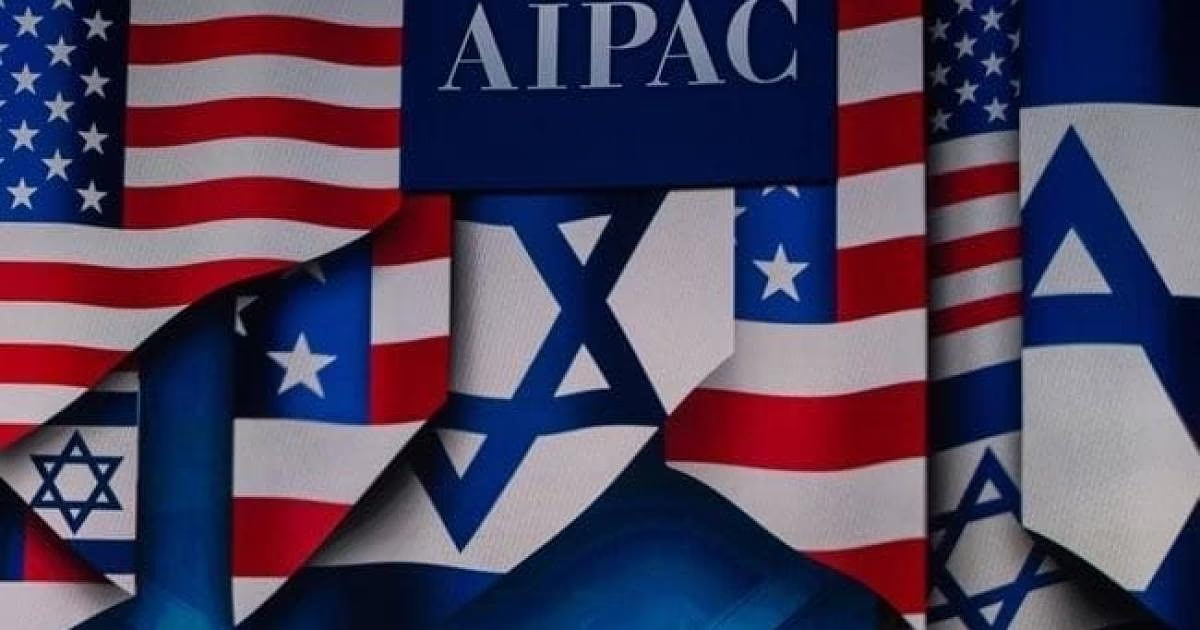
A New Challenge for 'AIPAC': A Rising American Organization to Support Palestine and Undermine Military Aid to the Occupation

Political and security circles in the occupation state are observing with increasing concern the profound shifts within the American arena, where a new political organization has recently emerged, aiming to compete with the American Israel Public Affairs Committee 'AIPAC'. This organization, named 'American Priorities', seeks to attract voters' support for candidates who adopt positions supportive of Palestinian rights and oppose the continuation of unconditional military aid to Tel Aviv.

These developments coincide with preparations for the midterm primary elections in the United States, where the new organization aims to bring as many legislators as possible who are opposed to Israeli policies into the halls of Congress. Observers believe that this trend poses a direct threat to the traditional influence enjoyed by Zionist organizations in Washington over the past decades, opening the door to serious discussions about the utility of security aid.

The figure of Brad Lander, the New York City Comptroller, stands out as one of the interesting political models in this context, as he combines his Jewish identity with sharp criticisms of the Israeli government. Lander, who describes himself as a 'progressive Zionist', did not hesitate to describe the ongoing war on the Gaza Strip as 'genocide', demanding that Israel comply with international law as a fundamental condition for receiving any American military support.

Lander has translated his political positions into practical actions through his office, significantly reducing investments in Israel and boycotting annual events supporting the occupation in New York. Lander justified his boycott by the participation of extremist ministers in the Israeli government, describing Finance Minister Bezalel Smotrich as a 'war criminal', which reflects the growing gap between the progressive wing of the Democratic Party and the Israeli right.

The 'American Priorities' organization was founded to serve as a counterbalance to powerful pro-Israel groups, operating as a political action committee aimed at protecting Democratic candidates from 'AIPAC' pressures. The organization provides a financial 'protective umbrella' for candidates who fear losing funding or being subjected to counter-campaigns due to their critical stances on the occupation, giving them greater courage to express their political views.

This initiative is led by Hannah Partig, a Jewish strategist who played a prominent role in Bernie Sanders' 2020 presidential campaign, lending a professional character to the organization's work. Partig plans to spend approximately $10 million during the current election cycle and has already succeeded in raising $4 million in the organization's first months, with support from donors, mostly from the technology sector.

The organization relies on a diverse base of wealthy donors for its funding, including high-tech professionals of American Muslim descent, who seek to create a balance in American foreign policy. This attempt represents an effort by the progressive wing to emulate the methods of work and grassroots mobilization perfected by pro-Israel organizations for decades, but with goals that serve justice in Palestine.

Although the new organization's budget is still modest compared to 'AIPAC's' massive budgets, its ability to influence specific electoral districts raises serious concerns in Tel Aviv. Israeli sources fear that these efforts could lead to the victory of candidates who fundamentally oppose Israeli security policies, which could complicate the passage of military aid packages in the future.

The strategic importance of these electoral battles lies in the fact that Congress is the only body with 'purse power' in the United States, responsible for approving annual budgets. Every dollar of the permanent aid amounting to $3.8 billion, or emergency grants allocated for systems such as 'Iron Dome', must pass through complex legislative channels requiring the approval of legislators.

In the past, American aid to Israel enjoyed automatic bipartisan consensus from both Republican and Democratic parties, but this reality has gradually faded with the entry of a new generation of legislators. Individual members of Congress, or organized groups, can now introduce legal amendments linking arms transfers to the extent of the occupation's compliance with international laws and human rights, causing a chronic 'headache' for Israeli diplomacy.

These continuous political pressures erode the American administration's freedom to act and move to support Israel without restrictions, as the administration is forced to consider the balances within Congress and its crucial committees. The Foreign Affairs and Appropriations committees are considered among the most important arenas now witnessing hidden conflicts over the future of the military relationship between Washington and Tel Aviv, amid increasing calls for accountability.

Reports indicate that the current battle in the midterm elections directly targets the 'security tap' that feeds the Israeli military machine, which has prompted some circles in Tel Aviv to consider alternatives. Internal Israeli plans have begun to emerge aimed at reducing reliance on American aid over the next decade, recognizing that this support may not remain guaranteed in light of demographic and political shifts in America.

This decline in the occupation's standing coincides with an increase in international reports documenting the commission of war crimes in the Palestinian territories and Lebanon, which further complicates the defense of Israel in public forums. These crimes have placed additional obstacles before Israeli lobbying groups, which found themselves on the defensive against a young generation of Americans who refuse to fund wars with their taxes.

Ultimately, it appears that the American arena is no longer a completely 'safe zone' for absolute Israeli influence, as new forces have begun to impose their agenda on the political decision-making table. The success of the 'American Priorities' organization in achieving its goals could represent the beginning of the end of 'AIPAC's' era of complete dominance, and establish a new phase of more balanced American foreign policy towards the conflict.

The current battle in the midterm elections is now directly aimed at Israel's security tap, and Tel Aviv realizes that this aid may not continue in the future.

PALESTINE

Tue 09 Jun 2026 11:45 am - Jerusalem Time

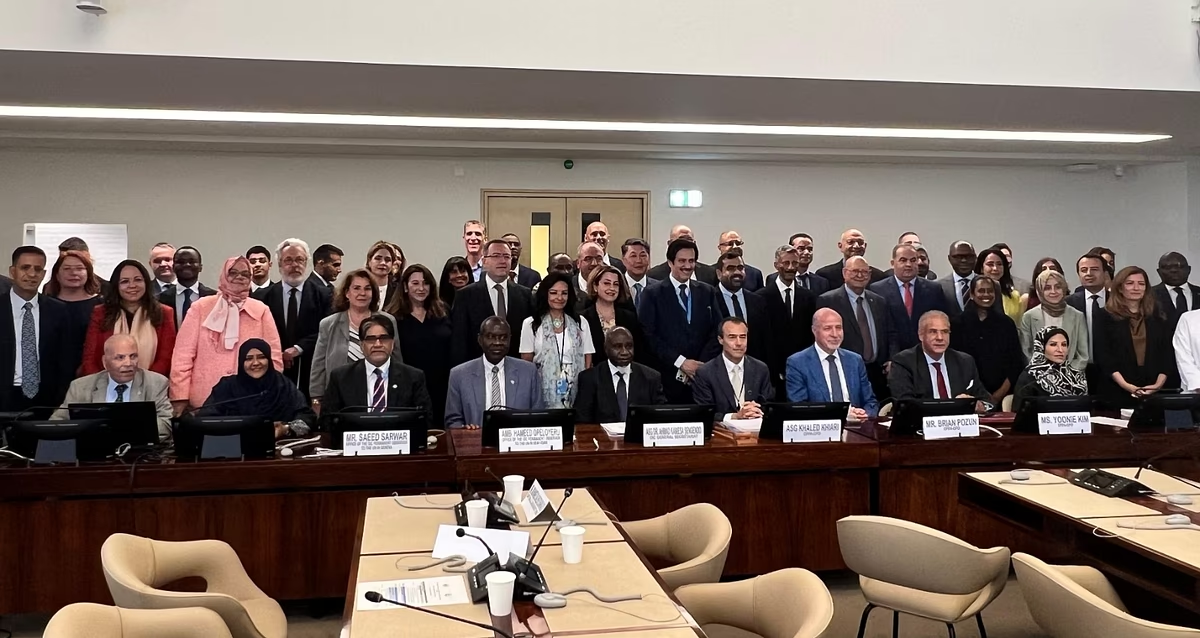
Guterres: The killing of 80 UN staff in Gaza represents the largest toll in the organization's history

The Secretary-General of the United Nations, Antonio Guterres, announced a heavy toll of victims for the international organization over the past year, with 136 staff members losing their lives while performing their professional duties in various parts of the world. Guterres clarified during a formal memorial ceremony that these victims belonged to 32 countries, distributed among 97 civilian staff and 39 individuals from international peacekeeping forces.

In detailing the humanitarian shock, the Secretary-General pointed out that the Gaza Strip alone witnessed the killing of 80 staff members who were working for the United Nations Relief and Works Agency for Palestine Refugees (UNRWA). UN sources confirmed that this number represents the largest human loss suffered by the United Nations in the context of a single conflict or natural disaster since its establishment, reflecting the unprecedented scale of risks faced by international teams.

Guterres spoke bitterly about the circumstances of the killing of these employees, stating that some were targeted with their family members inside their homes or in shelters they believed to be safe. Others fell while carrying out their humanitarian missions inside offices, shelters, and local communities they dedicated their lives to serving, emphasizing that targeting aid workers represents a clear violation of international laws and humanitarian norms.

This announcement comes at a time when the Gaza Strip has reached a ceasefire agreement, two years after a devastating war described by international reports as a war of annihilation. These military confrontations have left widespread destruction affecting nearly 90% of vital facilities and civilian infrastructure in the Strip, causing a near-complete paralysis of public life and the displacement of hundreds of thousands of residents.

Regarding economic and construction assessments, United Nations estimates indicate that the cost of reconstructing what the war destroyed in the Gaza Strip will be very high, potentially reaching about 70 billion dollars. This process requires tremendous international efforts to rebuild residential neighborhoods, health facilities, and educational institutions that were leveled during the long months of intense bombardment.

Guterres concluded his speech by emphasizing the need to protect humanitarian personnel and ensure that these tragedies are not repeated in the future, calling on the international community to bear its responsibilities towards the victims and their families. He stressed that the international organization will continue to fulfill its mission despite the heavy costs, considering that the sacrifices of UNRWA staff in Gaza will remain a testament to the cruelty of the conflict and the necessity of achieving justice.

The number of UN staff killed in Gaza exceeded the number lost by the organization in any other conflict or disaster in its history.

PALESTINE

Tue 09 Jun 2026 11:44 am - Jerusalem Time

Death toll in Gaza rises to a thousand since the start of the 'truce' and 7 more martyred in dawn raids on Monday

Israeli occupation forces escalated their aerial attacks on various areas in the Gaza Strip since the early hours of Monday morning, resulting in the martyrdom of at least seven people and the injury of dozens with varying degrees of severity. The attacks were distributed between targeting civilian gatherings, vehicles, and residential apartments, amidst the continuous intensive overflight of warplanes and drones in the Strip's airspace.

In details from the southern field, medical sources reported the martyrdom of two citizens and the injury of others due to shelling that targeted a group of residents in the Al-Attar area located in the Mawasi of Khan Yunis, an area crowded with displaced people. The death of a third Palestinian was also announced, succumbing to his wounds sustained in a previous shelling, while additional injuries occurred after a civilian vehicle was targeted in the northwestern part of the city.

As for the central part of the Strip, occupation aircraft targeted a group of citizens in the eastern area of Al-Aqsa Martyrs Hospital in Deir al-Balah city, leading to the martyrdom of one Palestinian and a number of injuries. This coincided with another raid in the northern Strip that targeted a gathering of citizens in Jabalia camp, resulting in the martyrdom of three Palestinians and the injury of others who were transferred to nearby hospitals.

In Gaza City, Israeli shelling hit a residential apartment in the Municipality Tower located near Barcelona Park in the Tal al-Hawa neighborhood southwest of the city, causing injuries among residents and extensive material damage to the site. These raids come in the context of a series of targeting that has not stopped despite talks of de-escalation understandings, exacerbating the already deteriorating humanitarian situation.

For its part, the Ministry of Health in Gaza revealed a shocking statistic indicating that the number of martyrs in the Strip has exceeded a thousand since the moment the ceasefire agreement came into effect. The ministry affirmed that the continuation of systematic Israeli raids on residential gatherings and areas claimed to be safe raises the Palestinian death toll daily.

The number of martyrs in the Gaza Strip has exceeded one thousand since the ceasefire agreement came into effect, amidst ongoing aerial raids.

ANALYSIS

Tue 09 Jun 2026 11:44 am - Jerusalem Time

American academic: Lack of accountability for Iraq invasion led Washington to the catastrophe of war with Iran

A professor at City University of New York and editor of 'Jewish Currents' magazine emphasized the necessity of holding Washington seriously accountable for its wars, which he described as bad and failed. In an analytical article in 'The New York Times,' he pointed out that American military involvement against Iran has put tens of millions around the world in direct confrontation with the risk of severe famine.

The writer explained that the repercussions were not limited to abroad but extended to hit the American heartland through an unprecedented increase in inflation rates. He considered these economic outcomes a direct price for political decisions that did not take into account the long-term consequences for global or internal stability.

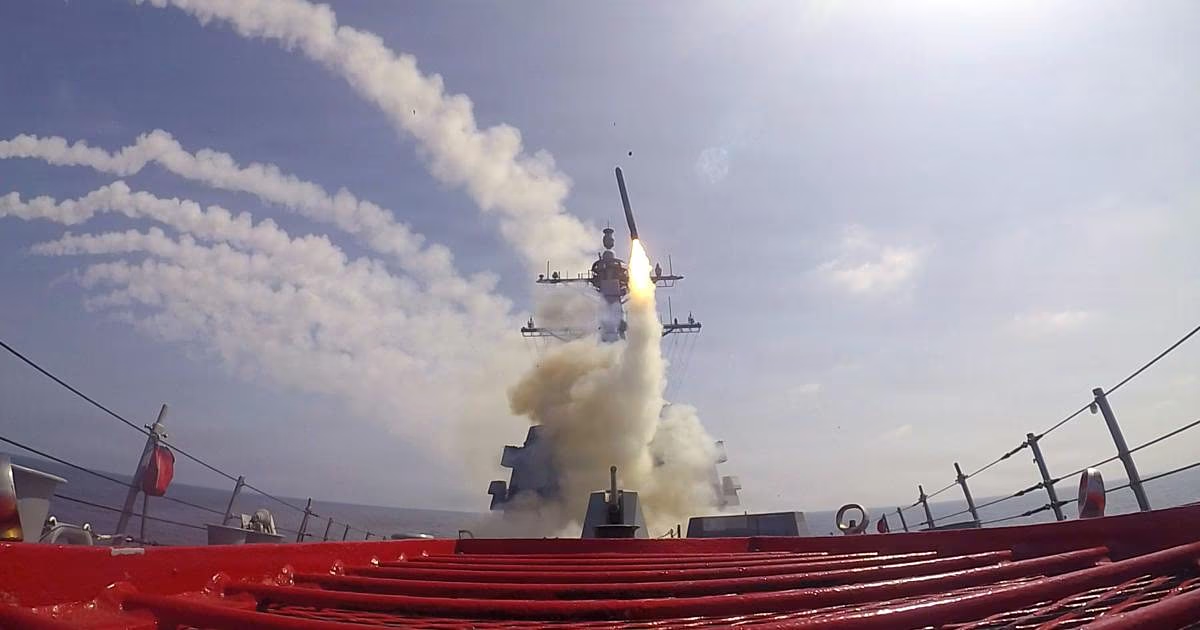
On the humanitarian front in Iran, the academic revealed horrific human losses among civilians, including the killing of more than 100 Iranian children. This tragedy occurred when a Tomahawk missile targeted an elementary school in the town of Minab, reflecting the scale of the humanitarian catastrophe accompanying military operations.

The article noted that none of the strategic objectives set by Washington for this war were achieved on the ground, including the goal of overthrowing the regime. On the contrary, the writer believes that the Iranian government appears stronger today than it was at the outbreak of the first spark of armed conflict.

Tehran, according to the analysis, demonstrated a high capacity to influence global national and economic security by disrupting navigation in the Strait of Hormuz. This action led to a partial paralysis of international trade, demonstrating the limited effectiveness of American military power in imposing its political will without exorbitant costs.

The writer believes that the fate of the current war remains unknown in terms of when and how it will end, but he affirmed one clear truth: American foreign policy will continue to produce similar disasters unless the principle of genuine accountability for those responsible for making war decisions is activated.

The article recalled the 2003 invasion of Iraq, asserting that if the planners of that war had been held accountable, the United States would not find itself in a military conflict with Iran today. The absence of political punishment allowed the repetition of the same strategic errors under different pretexts and justifications in the Middle East.

Looking back at recent history, the academic noted that most Americans realized the mistake of the Iraq invasion by George W. Bush's second term. The public expressed its dissatisfaction by voting for candidates who showed opposition to the war, or at least pretended to do so in their successive election campaigns.

The writer cited Barack Obama and Donald Trump as examples, who exploited the anti-war public sentiment to come to power at the expense of candidates who supported the invasion. Among the most prominent political losers due to their pro-Iraq war stances were Hillary Clinton and the late Senator John McCain.

However, the article criticized the stark contradiction in the appointment mechanism within successive American administrations, where war supporters were rewarded instead of being sidelined. Obama chose Joe Biden as his vice president, and appointed Clinton and John Kerry as Secretary of State, despite their previous votes in favor of the Iraq invasion.

The situation was no different during Donald Trump's era, who chose John Bolton as National Security Advisor, one of the most prominent hawks who pushed for the Iraq invasion. And when Biden became president, he appointed Antony Blinken as Secretary of State, who was his chief advisor when he made his 'catastrophic' decision to support the war in 2003.

The academic considered it difficult to imagine another unjustified war in the Middle East while the coffins of American soldiers were returning from Baghdad and Ramadi. But reality proved that the Iraq invasion only changed public opinion, without fundamentally altering the decision-making mindset in Washington.

The writer described the recent House of Representatives vote to try to stop the war with Iran through the War Powers Act as a belated positive sign. He believes that this step reflects some politicians finally responding to the general public sentiment rejecting involvement in endless military conflicts.

The article concluded by warning that this step remains insufficient unless it is followed by deeper and more comprehensive accountability for those responsible for strategic failure. Without that, future disasters that undermine America's global influence and shake citizens' trust in the internal democratic system must be expected.

Foreign policy disasters will continue unless those responsible are held accountable, and if this accountability had occurred after the Iraq invasion, it would be unlikely that we would be at war with Iran today.

PALESTINE

Tue 09 Jun 2026 11:44 am - Jerusalem Time

Iran announces suspension of its military operations against the Israeli occupation after a 14-hour round of fighting

The Iranian Khatam al-Anbiya headquarters announced on Monday the cessation of military operations against the Israeli occupation, following a round of direct confrontations that lasted for about 14 hours. The headquarters clarified in an official statement that this move came in response to what it described as 'aggressions and atrocities' committed by the Zionist entity in South Lebanon and the southern suburbs of Beirut, stressing that the Iranian armed forces delivered a harsh response in support of the Lebanese people.

The Iranian statement indicated that the current military operations have been suspended, but it carried a strong warning to the occupation and its allies, emphasizing that any continuation of Israeli aggression will be met with more stringent and destructive measures. These developments come at a time when US President Donald Trump called on both Tehran and Tel Aviv to immediately cease the current escalation to prevent the region from sliding into a comprehensive confrontation.

On the ground, informed sources reported that Iran used advanced missile systems in its latest attack, including 'Kheibar Shekan', 'Emad', and 'Ghadr F' models, which are characterized by high speeds reaching 9 Mach. This round comes after a series of Israeli violations of previous agreements, as the occupation carried out three attacks on the southern suburbs since last April, while intelligence estimates indicate that Tehran retains a large part of its missile capabilities despite repeated rounds of fighting.

Regarding humanitarian repercussions, the occupation authorities decided to gradually reopen the Rafah and Kerem Shalom crossings starting today, Monday, after a brief closure imposed by the military escalation. The Kerem Shalom crossing is expected to resume the entry of humanitarian aid and fuel tomorrow, Tuesday, amid ongoing international and human rights criticism of Israeli restrictions that hinder the access of essential supplies to the Gaza Strip and undermine previously signed ceasefire agreements.

The Iranian armed forces announced the suspension of military operations, while emphasizing that if aggressions and atrocities continue, harsher and more crushing measures will be taken.

OPINIONS

Tue 09 Jun 2026 11:43 am - Jerusalem Time

A Reading on the Outcomes of the Lebanese Conflict: Will History Reproduce the May 17th Agreement?

Ramallah - “Alquds ” dot com

Ramallah - “Alquds ” dot com

Opinion Writer

Recently, a series of ideas and questions have been escalating regarding the outcomes of the fierce conflict witnessed in Lebanon. Discussions primarily focus on what is known as the 'day after' the war. The current scene, in many of its aspects, appears to be a continuation or repetition of previous stages in Lebanon's complex political and military history.

In this context, the agreement that resulted from the direct negotiations at the US State Department earlier this month stands out. Observers believe that this agreement bears a strong resemblance to the May 17th Agreement of 1983, raising fears of reproducing formulas of political dependency.

The political landscape in Lebanon is currently divided into four main axes, led by the ruling faction that consolidates its ties with Washington. This faction fully relies on American political penetration to empower it to govern and solidify its influence in the state.

The second faction is described as having a rich history of relations with the Israeli occupation and relying on its army and influence. This party counts on continuous aggression to achieve internal political gains, represented by political models that historically sought to align with external projects.

The third faction consists of traditional forces involved in the sectarian system, most notably the 'Amal' and 'Hezbollah' duo, in addition to leftist and national forces. This alliance represents an extension of the Lebanese National Movement that was active in the mid-1970s to confront isolationist projects.

In contrast, a fourth party emerges, consisting of centrist parties and figures that do not form a unified or consistent current in their positions. These try to balance international pressures and local reality, but they lack a comprehensive strategic vision amidst the raging crisis.

Pro-Western parties adhere to a definition of 'sovereignty' from a perspective aimed at preserving traditional sectarian and confessional balances. This concept of sovereignty entrenches the privileges of specific parties and keeps Lebanon in a state of economic, cultural, and security dependency on the Western system.

The current stage calls for a precise review of policies and approaches regarding the absolute priority of confronting American and Zionist aggression. This review includes forces involved in sectarian power-sharing and those carrying the banner of radical change and reform.

National and leftist forces have undergone an important experience in the field of resistance and liberation, and have achieved much in confronting the occupation. However, the current crisis is likely to worsen more than before, necessitating serious engagement with the new Washington agreement.

Political review should not be an intellectual luxury, but rather a continuous process and an integral part of the national strategy. The goal is to improve popular and political performance, and to get rid of the mistakes that have accumulated over decades of internal and external conflict.

The history of liberation movements shows that popular struggle usually rises against an oppressive internal enemy or external aggression that the authority is unable to repel. In the Lebanese case, the authority often appears complicit with the aggressor, which raises the issue of authority as a central concern.

Looking at the experience of the national resistance 'Jamoul' in 1982, we find that it did not set reaching power as a primary goal despite the clarity of its liberation project. In contrast, the Islamic resistance engaged in the legislative and executive institutions of the state, especially after the Syrian withdrawal from Lebanon.

Today, the resistance faces exceptional challenges, as the occupation continues its brutality in the south while the American patron exerts immense pressure internally. This comprehensive war aims to liquidate Lebanon's resistant past and present and control its sovereign decision.

The current battle is not only military, but an existential battle that requires deep discussion to confront the immense dangers. The necessity today dictates the formation of the broadest national front to confront the aggressor and its partners, which requires developing a clear and comprehensive national action program.

The current great and exceptional dangers necessitate research and review without delay, as the enemy continues its brutality in the south while its American patron consolidates its presence internally.

ARAB AND WORLD

Tue 09 Jun 2026 11:43 am - Jerusalem Time

Trump expects to declare 'complete victory' over Iran within two weeks and warns Netanyahu against unilateral escalation

US President Donald Trump announced that the United States is approaching a decisive moment in its conflict with Tehran, indicating the possibility of declaring what he described as 'complete victory' over Iran within the next two weeks. These statements come at a sensitive time when the region is witnessing the repercussions of a military confrontation that began in late February, and included mutual strikes between Iran on one side and the United States and Israel on the other.

Trump clarified, during a phone call with a political rally supporting Senator Lindsey Graham, that the US administration is currently engaged in negotiations with the Iranian side, describing Tehran's desire to reach an agreement as very strong. According to the US President, the Iranians have shown willingness to make extensive concessions, including completely abandoning their nuclear ambitions in exchange for a mutually satisfactory deal.

The US President expected that this anticipated announcement would lead to major changes in global markets, especially in the energy sector, where he predicted that oil prices would collapse immediately upon the establishment of this 'victory'. Trump considered that the current battle has effectively been decided in Washington's favor, and that the next few days will be merely formal procedures to announce the final results of US pressure.

For his part, JD Vance, the US Vice President, outlined the Trump administration's foreign policy towards the Iranian file, emphasizing that the primary criterion for action is 'America's interests first'. Vance indicated that Washington might take paths different from the Israeli vision if it believes that doing so serves its national security and strategic objectives in the region.

Vance stressed, in press statements, that the fundamental and sole goal of the United States is to ensure that Iran does not possess nuclear weapons under any circumstances. He explained that the administration has worked over the past year and a half to prepare the ground for a permanent and comprehensive settlement that radically ends the Iranian nuclear threat.

Regarding coordination with Tel Aviv, Vance acknowledged the existence of broad common interests with Israel, but noted that the priorities of the two parties may differ in some complex issues. He affirmed that Washington will continue to strive to achieve its own vision for regional stability, whether or not it receives full Israeli acceptance, based on the responsibility for which the President was elected.

In a related context, Trump revealed details of his communication with Israeli Prime Minister Benjamin Netanyahu, where he issued a direct warning against the consequences of excessive military escalation against Iran. Trump informed Netanyahu that continuing to develop the attack could lead to the loss of direct US support, which could leave Israel facing Tehran alone.

Media sources quoted Trump as telling Netanyahu: 'You'd better be very careful what you do, because you might soon find yourself alone.' These statements reflect Washington's desire to curb any regional escalation that could get out of control or hinder the negotiation process that the US President referred to in his talk about 'imminent victory'.

These political developments come against the backdrop of escalating field tensions, as the past hours witnessed a new round of escalation between Iran and Israel. This tension followed Israeli raids targeting the southern Beirut suburb, which prompted Tehran to respond and threaten more operations against targets it described as linked to Israeli and American interests.

It is worth noting that the direct military conflict erupted on February 28, and witnessed Iranian attacks on various sites in response to joint military operations. Despite a temporary ceasefire in April, Trump's recent statements indicate that the US administration believes it has reached a stage of imposing final conditions to end the conflict.

I think we won that battle, but you will truly win it in the next two weeks when we declare complete victory.

PALESTINE

Tue 09 Jun 2026 11:43 am - Jerusalem Time

The Drug Crisis: Financial Hardship Threatens the Health System and Treatment Services

Dr. Muhammad Abu Al-Rub: Financial deficit and health sector strike directly reflected on patients' lives, and efforts are being made to secure urgent support payments. Dr. Yousef Al-Takruri: The continuation of the current situation will lead to a wider collapse of the governmental, private, and non-governmental health sectors, even with temporary solutions. Dr. Ahmed Alian: The syndicate contacted the Union of Arab Pharmacists to explain the extent of the crisis and request support, especially for medicines designated for cancer and dialysis patients. Dr. Muhannad Habash: The pharmaceutical sector faces unprecedented challenges threatening its ability to continue providing medicines and treatments, even with temporary solutions. Dr. Mu'ayyad Afaneh: Technical and temporary solutions are no longer sufficient due to the depth and prolonged nature of the crisis, and limited financial resources restrict addressing the escalating debt gap. Dr. Thabet Abu Al-Rous: The Ministry of Health's debt to pharmaceutical companies and suppliers reaches about 1.3 billion shekels, which has limited their ability to bear further burdens. Firas Jaber: Health has not received the attention it deserves within government spending priorities or its ranking in the general budget, remaining in lower ranks compared to other sectors. Ramallah - Exclusive to "Al-Quds" - The Palestinian health system faces an escalating crisis with the widening scope of shortages in medicines and medical supplies, despite the Ministries of Health and Finance announcing the completion of urgent arrangements to ensure the supply of medicines and medical supplies, at a time when warnings are increasing about the repercussions of this shortage on the ability of hospitals and health institutions to continue providing services to patients. Officials, specialists, and economic experts, in separate conversations with "Al-Quds," indicate that hospitals and healthcare facilities are experiencing unprecedented financial and operational pressures due to the accumulation of financial dues and the decline in the ability to purchase medicines and medical consumables, which has led to the reduction of some treatment services and the delay in providing others, amidst indicators of a decline in the drug inventory of essential and vital items needed by various medical departments. They believe that the current crisis goes beyond being a temporary funding problem, as it is linked to the accumulation of extended financial burdens over years, exacerbated by the continued withholding of clearance funds and the decline in available resources for the health sector. In light of limited alternatives, calls are rising for urgent intervention to provide the necessary liquidity and ensure the continuity of drug supply and protect the health sector from further deterioration. One of the most dangerous financial challenges. The Director of the Government Communication Center, Dr. Muhammad Abu Al-Rub, confirms that the crisis of withholding clearance funds represents one of the most dangerous financial challenges facing the government, explaining that it constitutes about 68% of the total revenues of the Ministry of Finance, pointing out that its continued withholding, as well as Israeli closures and preventing workers from reaching their jobs, directly reflected on a decline in economic performance by up to 30% of the GDP. He explains that this critical financial situation has led to a reduction in the government's ability to operate to only about 10% of its actual or potential revenues, due to the continued policy of full withholding of clearance funds, which has put various vital sectors under unprecedented financial pressures. Abu Al-Rub points out that the health sector is one of the most affected sectors by this crisis, as the government annually spends approximately 700 million shekels on medicines and medical consumables, in addition to about one billion shekels allocated for medical transfers to private hospitals and the private sector within Palestine. According to Abu Al-Rub, the Ministry of Health also bears salaries and operating expenses estimated at about 970 million shekels, making the total annual health expenditure close to the current size of local revenues, which illustrates the depth of the suffocating financial crisis. Abu Al-Rub explains that this financial deficit and the health sector strike directly reflected on patients' lives, through drug shortages and service disruptions, in addition to intermittent strikes by medical syndicates during the past period, which led to the postponement of thousands of surgical operations, including critical cases, and the transfer of many cases that could have been treated in government hospitals to the private sector, which doubled the cost of medical transfers. The government is making continuous efforts. Abu Al-Rub confirms that the government is making continuous efforts, in cooperation with international partners, to secure urgent payments to support the health sector, in addition to today's meeting, Tuesday, of the Minister of Finance with medicine suppliers and providers to reach understandings that ensure the provision of urgent medical supplies. Abu Al-Rub indicates that the government will hold a press conference today, Tuesday, with the diplomatic corps and foreign media, with the aim of highlighting the repercussions of the clearance crisis, and pressing for the release of the withheld funds, and holding the international community accountable for the serious consequences of the continuation of the crisis affecting the health, education, and social services sectors. The health sector is in a dangerous stage. The head of the Union of Palestinian Private and Non-Governmental Hospitals, Dr. Yousef Al-Takruri, warns that the Palestinian health sector is going through its most dangerous stage in years, in light of an escalating financial crisis that has led to a severe shortage of medicines and medical supplies and the disruption of some vital services, stressing that the crisis is no longer limited to providing medicines only, but has become threatening the continuity of hospitals' work and their ability to provide healthcare to patients. Al-Takruri explains that the roots of the crisis date back to previous years, specifically since the Corona pandemic in 2020, when hospitals continued to provide their services despite the exceptional circumstances and the irregularity of their due financial payments. Hospital crisis. Al-Takruri points out that hospitals gradually recovered from the repercussions of the pandemic, but faced a more complex crisis after October 7, 2023, with the continued decline in government revenues and the lack of necessary liquidity to pay financial obligations to the health sector. Al-Takruri notes that private and non-governmental hospitals have responded over the past years to the Ministry of Health's vision aimed at localizing medical services within Palestine, by attracting medical competencies, establishing new departments, and purchasing advanced equipment to reduce the need for treatment abroad, but the continued withholding of clearance funds and the decline in international and Arab support led to a severe shortage of government financial resources, which directly reflected on the government's ability to pay hospitals' dues. Large debt. Al-Takruri explains that the amount of debt owed to private and non-governmental hospitals has exceeded 2.7 billion shekels, which is a dangerous figure, pointing out that many hospitals are unable to pay their employees' salaries, with accumulated employee dues for periods ranging between 12 and 18 months. Hospitals, according to Al-Takruri, also faced successive crises represented by bounced checks due to lack of liquidity, and extensive borrowing from banks until reaching the maximum allowed limits, while banks are now refusing to grant additional loans to the sector. Reduction in receiving referred patients. Al-Takruri confirms that some hospitals were forced during the past period to stop or reduce receiving patients referred by the Ministry of Health, explaining that this decision was not a protest measure, but a direct result of the lack of necessary capabilities to continue. Al-Takruri points out that patients referred by the Ministry of Health represent the largest proportion of cases requiring advanced and costly treatments, such as cancer treatment, heart battery implantation and regulation, cardiac and cerebral catheterization, and radiation and nuclear treatments, services that depend almost entirely on government medical transfers. Depletion of medicines and consumables in hospitals. Al-Takruri notes that the shortage is no longer limited to funding, but has extended to medicines, medical consumables, and spare parts needed for equipment maintenance. Al-Takruri confirms that the depletion of some cancer drugs from a number of hospitals prompted health institutions to suffice with completing the treatment of current patients and not accepting new cases. Other hospitals, according to Al-Takruri, suffer from a shortage of catheter supplies and heart batteries, while major medical devices have broken down due to the inability to purchase spare parts or perform necessary maintenance. Al-Takruri confirms that hospitals have exhausted all available options to face the crisis, starting from the depletion of medicine and supply stocks, through purchasing with deferred checks and borrowing from banks, up to the maximum limits, and working with the minimum available capabilities, but these solutions are no longer sufficient with the continuation and exacerbation of the crisis. Indicators of health system collapse. Al-Takruri warns that indicators of the health system's collapse have already begun to appear with some hospitals going out of service or reducing their operations, stressing that the continuation of the current situation will lead to a wider collapse of the governmental, private, and non-governmental health sectors together, even with temporary solutions, because the scale of the crisis is deeper. Al-Takruri emphasizes that the only available solution is to provide urgent financial resources, either through the release of clearance funds or through emergency external support, in addition to addressing the crisis of medicine suppliers who, in turn, face debts exceeding 1.3 billion shekels, which has led to the disruption of the entire drug supply chain. Loss of resilience factors. Al-Takruri confirms that hospitals are still doing their best to serve patients, but they have reached a stage where the factors of resilience are no longer available, offering his apologies to citizens for any services that were forcibly stopped due to the suffocating financial conditions experienced by the private sector. Al-Takruri stresses that private and non-governmental hospitals are national institutions committed to their humanitarian mission, but the decisions taken are not a choice, but came after exhausting all solutions. Overlapping crises. The Deputy Head of the Pharmacists' Syndicate and Acting Head of the Pharmacists' Syndicate in Palestine, Dr. Ahmed Alian, explains that the current drug crisis overlaps with the repercussions of ongoing partial strikes in the health sector, which include specific working days for doctors and pharmacists, which affected the ease of citizens' access to health services and medicines, especially since a wide segment of citizens rely on government health insurance to receive treatment, which exacerbates the suffering of patients in light of the financial crisis facing the Palestinian Authority. Continuous shortage of medicines in Ministry of Health warehouses. Alian points out that the most pressing problem is the continuous shortage of medicines within the Ministry of Health's warehouses due to the ministry's inability to pay its financial obligations to suppliers and pharmaceutical factories, stressing that citizens are facing increasing difficulty in finding their medicines, while some are forced to search for them in private pharmacies, an option not available to the majority of patients due to difficult economic conditions. Alian explains that the most affected groups by the crisis are patients who depend on biological drugs used in the treatment of cancer, autoimmune diseases, and chronic skin diseases, noting that the prices of these drugs are very high, with some costing thousands of shekels per dose, which limits their ability to purchase them from private pharmacies, especially in light of the economic crisis and delayed salary payments, which threatens the continuity of their treatment. Shortage of dialysis drugs. Alian points out a shortage of some drugs related to dialysis patients, indicating that private pharmacies receive frequent inquiries about these drugs, but their high prices prevent most patients from being able to purchase them. Alian confirms that solving the crisis requires addressing its financial roots by starting to pay the dues of suppliers, local pharmaceutical factories, and importing companies, explaining that many suppliers are facing severe financial distress due to the accumulation of debts owed to them by the Ministry of Health, which has reflected on their ability to continue supplying. Importance of fulfilling obligations. Alian points out that the Pharmacists' Syndicate, in cooperation with suppliers and the Federation of Industries, issued joint statements calling on the government to fulfill its financial obligations to maintain the continuity of the pharmaceutical sector and prevent the collapse of factories and warehouses that constitute a fundamental pillar in providing medicines to the Palestinian market. Regarding the conditions of pharmacists working in the government sector, Alian explains that the syndicate supports their demands for full salaries that ensure a decent life, pointing out that about 330 pharmacists work in the Ministry of Health and face increasing living burdens. Alian confirms that the Pharmacists' Syndicate contacted the Union of Arab Pharmacists to explain the extent of the crisis and request possible support, especially regarding medicines designated for cancer and dialysis patients. Alian explains that the crisis is still ongoing without clear indications of an imminent solution, even if there are temporary or partial solutions, calling for concerted governmental, societal, and private sector efforts to avoid further deterioration and ensure the continued access of medicines and treatments to patients. Unprecedented existential challenges. The Executive Director of the Palestinian Pharmaceutical Suppliers Union, Dr. Muhannad Habash, warns of the exacerbation of the drug crisis in Palestine due to the continued accumulation of debts and financial dues owed by the Ministries of Health and Finance to pharmaceutical companies, factories, and warehouses, stressing that the pharmaceutical sector faces unprecedented existential challenges threatening its ability to continue providing medicines and treatments to both government and private markets, even if there are temporary solutions. Habash explains that the crisis is no longer limited to delayed payment of financial dues, but has turned into a deep structural crisis affecting all links of the pharmaceutical health system, pointing out that companies continued over the past years to supply the Ministry of Health and military medical services with medicines and medical supplies despite not receiving their dues, which led to the accumulation of debt and the health sector reaching a stage where companies are unable to continue importing, manufacturing, and supplying. Lack of serious treatment exacerbated the crisis. Habash explains that the financial crisis between the government and medicine suppliers is not new, but the lack of serious treatment and the accumulation of debts have brought the health sector to a critical stage, noting that adopting different spending priorities and not allocating regular monthly payments to the pharmaceutical sector directly contributed to exacerbating the problem. He points out that the agreement reached in 2023 to pay about 30 million shekels monthly helped stabilize the debt size for a limited period, before payments declined and became irregular and decreased to about 15 million shekels monthly without a clear commitment, which led to the widening of the debt gap and the exacerbation of the shortage of essential medicines. Withholding of clearance funds and lack of financial planning. Habash points out that the withholding of clearance funds by Israel is one of the main causes of the crisis, but the lack of prior financial planning and the failure to allocate real appropriations to cover annual drug tenders exacerbated the existing situation. Regarding the extent of the shortage, Habash confirms that the crisis affected most types of medicines and medical consumables, explaining that Ministry of Health data indicate the depletion of dozens of vital items, including 50 types of cancer drugs, 79 types of laboratory materials, and 250 types of specialized medical supplies used in surgical operations and dialysis, and that 180 types out of 520 types on the essential medicines list have zero balances. Companies' inability to compensate for the shortage. Habash confirms that the current danger lies not only in the depletion of stock, but in the inability of companies to compensate for the shortage through import or manufacturing due to the financial crisis, which threatens Palestinian drug security and endangers the lives of thousands of patients in light of limited available alternatives. Habash stresses that the only solution is to provide urgent financial liquidity and pay part of the accumulated dues to enable companies to resume purchasing and importing operations, and despite the announcement by the Ministries of Health and Finance of providing a financial payment, the crisis is deeper than that. National conference to discuss the crisis. Habash calls for a national conference involving all relevant parties to discuss the crisis and develop practical solutions that ensure the sustainability of the health and pharmaceutical sectors, stressing that maintaining the availability of medicine is a shared national responsibility that requires urgent government intervention to ensure the continued access of treatment to patients and prevent the collapse of one of the most vital sectors in Palestinian life. Clearance crisis and deepening the crisis. The economic expert, Dr. Mu'ayyad Afaneh, confirms that Israel's continued withholding of clearance funds has cast a heavy shadow on the Palestinian government's ability to fulfill its financial obligations, foremost among them paying the dues of medicine and medical supply providers and healthcare providers, which contributed to deepening the crisis facing the Palestinian health sector and reaching unprecedented levels. He explains that the withholding of clearance revenues led to a sharp decline in the financial resources available to the government, after the public treasury lost about 68% of its revenues, as a result of the accumulation of funds withheld by Israel, which amounted to about 5.7 billion dollars. Afaneh points out that this reality created a deep structural financial crisis that reflected on various sectors, foremost among them the health sector, which is one of the biggest sufferers from the liquidity crisis. Accumulation of government arrears. Afaneh explains that the accumulation of government arrears reached critical levels amounting to about 1.3 billion dollars, of which the health sector constitutes a major part, noting that more than 430 million dollars, equivalent to about 1.3 billion shekels, are owed to medicine and medical supply providers, which weakened the government's ability to purchase medicines and secure essential medical needs for citizens. Afaneh confirms that the accumulated debt of the Ministry of Health has had direct effects on the relationship with pharmaceutical companies, suppliers, and healthcare providers, both inside and outside Palestine, as these entities face increasing financial pressures due to delayed payment of their dues, which reflects on their ability to continue supplying and providing the required health services. The increase in the volume of debts, according to Afaneh, also affects companies' ability to cover their operating expenses and pay their employees' salaries, which threatens the continuity of services and medical supplies. Technical and temporary solutions are no longer sufficient. Regarding the exits from the crisis, Afaneh stresses that technical and temporary solutions are no longer sufficient in light of the depth and prolonged nature of the crisis, confirming that the limited financial resources available to the Ministry of Finance due to the Israeli financial blockade make it difficult to address the escalating debt gap. Afaneh calls for urgent international action that includes the international community, sister and friendly countries, and international health institutions to provide emergency financial support that ensures the payment of dues to pharmaceutical companies and healthcare providers, thereby contributing to protecting the health sector from collapse and ensuring the continued provision of treatment services, especially for poor and marginalized groups who primarily rely on government health sector services. 47 billion shekels in PA debt. The economic expert and analyst, Dr. Thabet Abu Al-Rous, warns of the exacerbation of the drug crisis in Palestine due to the continued withholding of clearance funds and the accumulation of public debt, stressing that the health sector is facing unprecedented challenges that may reflect on the Ministry of Health's ability to provide medicines and pay its obligations to suppliers and supply companies. Abu Al-Rous explains that the Palestinian Authority's debt to all sectors has exceeded 47 billion shekels, while the value of withheld clearance funds, according to Palestinian statements, is about 15 billion shekels, which deprives the public treasury of a main financial source it relied on to fulfill its operational and service obligations. He points out that the 2026 budget was officially described as an "existential budget," in light of the government working with very limited financial capabilities that do not exceed about 10% of its actual needs, explaining that the health sector and drug purchases were given priority within this budget, but the suffocating financial crisis limited the government's ability to implement its obligations. Abu Al-Rous explains that the Ministry of Health's debt to pharmaceutical companies and suppliers reaches about 1.3 billion shekels, noting that drug supply companies, as part of the private sector, are no longer able to bear further financial burdens or continue to finance drug supply at the previous pace. Dues of hundreds of millions of dollars. Abu Al-Rous confirms that a large part of the supply companies relied over the past years on borrowing from the banking sector to meet government tenders and provide medicines and medical supplies, but their ability to borrow has reached its maximum limits, which threatens the continuity of supply operations and puts the health system in a real crisis. Abu Al-Rous explains that debt has become the most influential factor in the relationship between the Ministry of Health and the private sector, pointing out that some companies talk about dues reaching hundreds of millions of dollars, which reflects on their cash flows and their ability to continue despite recording accounting profits. Abu Al-Rous notes that the danger is not limited to hospitals or health institutions only, but extends to companies producing and importing medicines, especially in light of the rising prices of some treatments and the increased demand for medicines due to population growth and the spread of diseases and viruses. In-kind aid in the form of medicines. Abu Al-Rous believes that addressing the crisis requires simultaneous political and financial action, starting with pressure to resume European and international support for the Palestinian budget, and accelerating diplomatic efforts aimed at resolving the clearance crisis, stressing that the private sector is no longer able to bear additional burdens. Abu Al-Rous suggests turning to European and Arab countries, Gulf states, and China to obtain direct aid in the form of medicines and medical supplies, which would alleviate the financial burden on the Ministry of Health and ensure the continuity of health services, considering that this option may constitute one of the practical paths to deal with the crisis in light of the continued current financial and political pressures. Clearance funds and development policies. The founder and specialized researcher in social and economic issues at the Social and Economic Policy Observatory (Al-Marsad), Firas Jaber, believes that the drug crisis in Palestine is due to two main factors: the continued withholding of clearance funds by the Israeli occupation, in addition to the financial and developmental policies pursued by successive Palestinian governments towards the health sector in recent years. Jaber explains that the withholding of clearance funds led to the exacerbation of the financial crisis suffered by the Palestinian Authority, which directly reflected on the Ministry of Health's ability to fulfill its obligations to medicine suppliers and companies supplying the health sector. Jaber points out that the accumulation of debts owed by the Ministry of Health, which exceeded one billion shekels, prompted a number of suppliers to refrain from supplying the Ministry of Health's warehouses with medicines, which contributed to the widening of drug shortage gaps and the escalation of the crisis. Jaber explains that the second factor is related to the Palestinian Authority's incorrect policies towards the health sector, both at the developmental and financial levels, explaining that successive governments did not work sufficiently to localize health services or encourage local drug production as much as possible, which kept the sector heavily dependent on imports and external funding. Health has not received the attention it deserves. Jaber confirms that health has not received the attention it deserves within government spending priorities, or its ranking in the general budget, as it remained in lower ranks compared to other sectors, despite the fact that treatment and medicine needs cannot be postponed or treated as expenses that can be delayed. Jaber believes that allocating more resources to the health sector would have mitigated the effects of the crisis even under conditions of austerity and emergency. Jaber points out that the Palestinian Authority's ability to borrow has reached its maximum limits, whether through borrowing from banks or the pension fund or by burdening suppliers with accumulated debts, considering that part of the solution is related to political and diplomatic action to restore clearance funds as a right of the Palestinian people. Lack of pressure to release clearance funds. Jaber confirms that the absence of an organized international campaign to pressure the occupation to release clearance funds is one of the reasons for the continuation of the crisis, considering that there is a clear government shortcoming in this file. Jaber points to the continuation of some non-essential spending at a time when the health sector faces a severe crisis, which reflects a defect in the prioritization of government priorities. Jaber emphasizes the absence of a clear government program to attract Arab financial or in-kind support for the pharmaceutical sector, considering that official performance is still closer to daily business management than to implementing a serious plan to address accumulated crises, foremost among them the drug crisis and the Palestinian health sector.
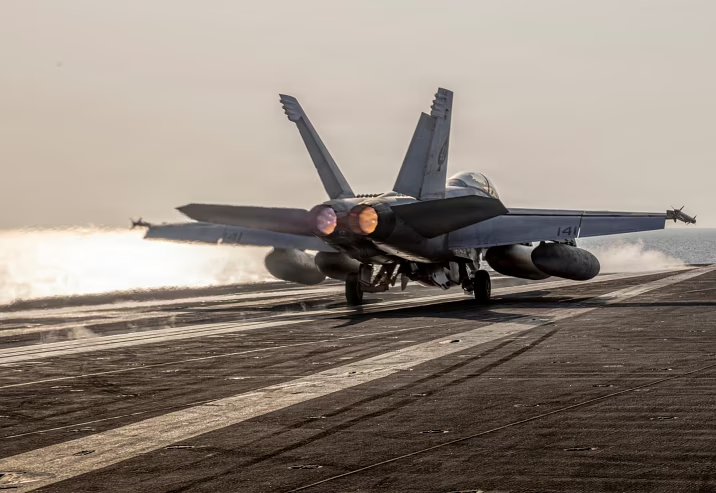
OPINIONS

Mon 08 Jun 2026 10:51 pm - Jerusalem Time

Netanyahu’s Politics of Permanent War


By: Said Arikat


June 9, 2026


News analysis


Washington, D.C- The latest military confrontation between Israel and Iran lasted less than a day. Yet those few hours revealed a great deal about Benjamin Netanyahu’s leadership—and none of it was reassuring.


The episode exposed a prime minister who appears increasingly willing to gamble with regional stability in pursuit of domestic political advantage, a leader whose political future has become so precarious that escalation itself seems to have become part of his political strategy.


When Israel struck Beirut’s southern suburbs following Hezbollah rocket fire, Netanyahu was not simply responding to a security challenge. He was also sending a political message. The target, the timing, and the defiant posture toward American pressure all served a familiar purpose: reinforcing his image as the strongman who refuses to be constrained by allies, critics, or diplomatic considerations.


Reports that President Donald Trump had urged restraint only amplified the significance of Netanyahu’s decision. Once again, the Israeli prime minister appeared determined to demonstrate that he alone would decide how and when Israel uses force.


It is a role Netanyahu has cultivated for decades. But today the performance looks increasingly detached from strategic reality.


The irony is striking. Netanyahu has built much of his political brand on promises of security, deterrence, and strength. Yet under his watch Israel finds itself confronting threats on multiple fronts—from Iran, Hezbollah, the Houthis, and other regional actors. The region is more volatile, Israel is more diplomatically isolated, and its dependence on Washington is more obvious than ever.


What emerged from the latest crisis was not a picture of Israeli dominance but of Israeli limitation. Netanyahu escalated. Iran responded. The risk of a broader regional war grew. Then Trump intervened, and the confrontation stopped.


That sequence tells the real story.


For all of Netanyahu’s rhetoric about sovereignty and independence, it was not Netanyahu who decided when this confrontation would end. It was Washington. Once again, the Israeli prime minister who portrays himself as the master strategist was reminded that his freedom of action remains subject to American approval.


This is precisely the trap Netanyahu has helped create. He repeatedly embraces military escalation while lacking either the strategic leverage or the political courage to see such confrontations through to a clear resolution. The result is a cycle of dramatic shows of force followed by strategic ambiguity, leaving Israel exposed to new dangers while producing few lasting gains.


More troubling still is the possibility that this is no longer merely a consequence of Netanyahu’s politics. It has become the politics itself.


Netanyahu enters every security crisis carrying enormous political baggage. He remains a deeply divisive figure whose legacy has been marked by corruption investigations, assaults on institutional checks and balances, and security failures that shattered public confidence. He faces an electorate increasingly skeptical of his leadership and a political future clouded by uncertainty.


Under such conditions, conflict becomes politically useful.


War changes the public conversation. Security emergencies push questions of accountability into the background. National fear creates rally-around-the-flag effects. Criticism becomes easier to dismiss. A leader under pressure suddenly reclaims center stage as commander-in-chief.


This does not mean every military action is politically motivated. Israel faces genuine security threats, and Hezbollah and Iran bear responsibility for their own actions. But it is impossible to ignore how consistently Netanyahu’s political interests align with continued confrontation and how frequently he appears willing to risk broader escalation despite mounting evidence that military force alone cannot solve Israel’s strategic dilemmas.


What makes Netanyahu’s approach particularly troubling is that it rests on a definition of security that appears increasingly detached from the realities of the region.


For decades, Israeli leaders have justified military operations, occupation, settlement expansion, and coercive policies in the name of security. Yet after years of wars, bombardments, sieges, assassinations, and military campaigns, genuine security remains elusive—not only for Palestinians and Lebanon’s civilians, but for Israelis themselves.


The contradiction is glaring. A state possessing overwhelming military superiority continues to insist that ever more force is required to achieve safety, even as each new round of violence deepens regional instability and fuels future conflict. Security has become less a measurable outcome than a permanent justification for policies that would otherwise be difficult to defend.


Under Netanyahu, this logic has reached one of its most uncompromising expressions.


While presenting himself as Israel’s ultimate protector, Netanyahu has overseen a period in which the prospects for a just and lasting peace have steadily receded. Settlement expansion has continued across occupied Palestinian territory. Palestinian land has been fragmented and absorbed through policies widely viewed internationally as undermining the possibility of a viable Palestinian state. Communities face displacement, restrictions, and a daily reality in which basic rights and freedoms are routinely subordinated to the imperatives of occupation.


The devastation in Gaza has pushed this reality into even sharper focus. Entire neighborhoods have been destroyed. Civilians have borne an immense human cost. Families have been uprooted, infrastructure shattered, and a generation marked by trauma and loss. Whatever one’s assessment of Hamas, the scale of Palestinian suffering has raised profound moral and political questions that cannot be answered simply by invoking security.


Indeed, the central failure of Netanyahu’s project is that it has confused domination with security.


Military superiority can destroy infrastructure, eliminate adversaries, and impose temporary deterrence. It cannot create legitimacy. It cannot extinguish a people’s national aspirations. It cannot erase the Palestinian question. And it cannot provide lasting safety for Israelis while millions of Palestinians remain without sovereignty, political rights, or a credible horizon for self-determination.


The tragic result is a region trapped in a cycle where one side’s security is pursued through the insecurity of another. Palestinians are denied freedom in the name of Israeli security. Lebanese civilians pay the price for regional confrontations. Israelis are told that peace remains impossible and that perpetual mobilization is the only realistic path forward.


Yet decades of evidence suggest the opposite. No people can achieve lasting security through the indefinite subjugation of another people. No military doctrine, however sophisticated, can substitute for a political solution grounded in equality, justice, human dignity, and mutual recognition.


The latest confrontation with Iran exposed the bankruptcy of Netanyahu’s vision. After years of promising security through force, Israel finds itself facing threats on multiple fronts, dependent on American intervention to manage escalation, and trapped in a cycle of conflict that produces neither peace nor stability.


Netanyahu continues to present himself as Israel’s indispensable protector. History may ultimately remember him differently: as a leader who transformed permanent crisis into a governing strategy, who blurred the line between national security and political survival, and who helped entrench a system that denied security, dignity, and self-determination to millions while failing to deliver genuine security to Israelis themselves.


For Netanyahu, political survival and perpetual conflict have become increasingly difficult to separate. That may be the most troubling lesson of all.

PALESTINE

Mon 08 Jun 2026 9:29 pm - Jerusalem Time

Two martyrs and wounded in Israeli raids targeting displaced persons' tents in Khan Yunis

Two Palestinians were martyred and several others sustained varying injuries today, Monday, as a result of an aerial raid carried out by an Israeli occupation army drone targeting a tent sheltering displaced persons in the Mawasi Khan Yunis area, south of the Gaza Strip. Field sources reported that the drone fired at least two missiles at citizens who were in front of their tent in the Al-Attar area, leading to their immediate martyrdom and causing material damage to the site.

In another field development, three Palestinians were injured as a result of Israeli shelling targeting a civilian vehicle traveling on a dirt road near the city of Asdaa, northwest of Khan Yunis. Ambulance crews rushed to the targeting site to transport the injured to nearby hospitals for treatment, amid continuous intensive drone flights over the area.

Areas east and central of Khan Yunis witnessed intense artillery shelling by occupation forces, coinciding with the firing of flare and smoke bombs that covered the sky of the area. These attacks come within the framework of an ongoing military escalation targeting residential areas and displacement zones for citizens who fled military operations in other parts of the Strip.

In the northern Gaza Strip, a Palestinian youth sustained moderate injuries after being directly shot by occupation forces stationed near the Beit Lahia roundabout. Medical sources confirmed that crews dealt with the injury and transported him to a nearby medical point, amid a state of extreme tension prevailing in the border and northern areas of the Strip.

In Jabalia camp, local sources reported that several artillery shells fell near the Halawa camp, which is crowded with displaced persons, causing a state of panic and fear among the families residing there. Artillery shelling continues to randomly target residential blocks and the vicinity of shelter centers, exacerbating the suffering of civilians besieged in those areas.

On the administrative and political level, Israeli occupation authorities announced the closure of all crossings leading to the Gaza Strip, including the Karem Abu Salem commercial crossing and the Rafah land crossing, until further notice. This decision came after recent security developments, threatening to halt the entry of already scarce humanitarian aid and exacerbate the living crisis within the Strip.

Official data indicates that the death toll from the ongoing aggression on the Gaza Strip has risen to 72,971 martyrs since October 2023, in addition to tens of thousands of injured and missing. International organizations continue to warn against the continued targeting of civilians and infrastructure, amid the collapse of the health and service systems in most areas of the Strip.

Occupation forces continue shelling operations and violating understandings in Gaza, with the death toll rising to over 72,000 martyrs.

PALESTINE

Mon 08 Jun 2026 9:28 pm - Jerusalem Time

Turkish Minister's Remarks on 'Jerusalem Province' Ignite Fierce Debate with Israel

The diplomatic arena witnessed a wave of severe tension following statements made by Turkish Interior Minister, Mustafa Çiftçi, in which he expressed his aspiration for the city of Jerusalem to return to Turkish sovereignty in the future. The minister clarified during his participation in a party event in the capital Ankara that he has had an old wish since he was a governor to have the opportunity to administer the 'Jerusalem Province,' even for a short period, affirming his inevitable belief in the realization of this historical scenario.

Çiftçi linked in his speech what he described as the 'liberation' of cities like Damascus, Aleppo, and the Karabakh region, with the future of the city of Jerusalem, which he believes will witness a similar day of freedom under the Turkish flag. The minister stressed that the areas historically belonging to the Ottoman Empire will once again be under the disposal and administration of the Turkish state, while at the same time praising the global leadership role played by President Recep Tayyip Erdoğan.

In contrast, the Israeli response to these statements was not delayed, as Security Minister Yisrael Katz launched a scathing attack, describing these ambitions as 'Ottoman imperial dreams' that will not find a way to be implemented. Katz affirmed in press statements that Jerusalem will remain the eternal capital of Israel, pointing out that his country possesses sufficient strength to defend its sovereignty and confront any external threats targeting the city's status.

The Israeli minister continued his criticisms of the current Turkish leadership, accusing it of overturning the principles established by the founder of the Republic, Mustafa Kemal Atatürk. Katz considered that Ankara's current orientations seek to drag the region towards what he described as 'dark and backward ages,' stressing that Israel is not an empire in decline as some portray it, but rather a strong and capable state.

This verbal altercation comes at a very sensitive time, as relations between Ankara and Tel Aviv have been in an unprecedented state of deterioration since the start of the Israeli aggression on the Gaza Strip. Over the past months, both sides have exchanged a series of harsh accusations, particularly regarding war crimes in Gaza and the stance on Islamic holy sites in occupied Jerusalem.

Observers believe that these statements reflect the depth of the ideological and political gap between the two sides, as Turkey insists on adopting a discourse that links it to its historical roots in the region, while Israel considers these positions a direct threat to its legitimacy. This incident is expected to further complicate diplomatic efforts aimed at calming the situation in the already turbulent region.

I hope God grants me the opportunity to take over the governorship of Jerusalem, even for one day, and I believe that those days will come, and these lands will return under our rule and disposal.

PALESTINE

Mon 08 Jun 2026 9:28 pm - Jerusalem Time

Joint List Negotiations Stalled: Crucial Meeting Thursday to Save Political Unity at Home

Efforts to revive the Joint List of Arab parties within the 48 territories continue to face complex challenges that have so far prevented a final agreement. Despite repeated declarations of a desire for unity, the last meeting held in Nazareth ended without a tangible breakthrough, necessitating the scheduling of additional meetings this week.

Arab parties agreed to hold two crucial meetings next Tuesday and Thursday, in a final attempt to overcome outstanding differences before it's too late. These moves come under widespread popular pressure demanding unified and strong Arab representation within the Knesset to confront the increasing political and social challenges facing the Arab community.

The core point of contention revolves around the nature of the list, as the parties had previously agreed on a 'technical list' formula. This designation, supported by the National Conciliation Committee, aims to grant each party political freedom of action after the elections, whether by remaining in opposition or supporting a specific government coalition according to its interests and vision.

However, the United Arab List, led by MK Mansour Abbas, expressed reservations about the extent to which the other parties would adhere to this principle in actual application. The United List demanded clear guarantees to prevent its leaders from being subjected to 'treason' campaigns if they decided to join an alternative government coalition, convinced of the necessity of influencing from within decision-making centers.

Conversely, the Hadash, Balad, and Arab Movement for Change parties refuse to make prior commitments to governments that have not yet been formed and whose political features are unknown. These parties believe that pledging political positions now is an unjustified concession, especially given the lack of clarity regarding the stances of opposition Israeli parties on the Palestinian issue and the rights of those within the 48 territories.

The last meeting witnessed heated discussions, with MK Ahmad Tibi directly questioning Mansour Abbas on how to deal with sensitive issues such as the incursions into Al-Aqsa Mosque. Tibi affirmed that the three parties had already agreed to the working paper submitted by the Conciliation Committee, calling on the United List to join it to end the political debate and move on to technical matters.

For his part, Mansour Abbas defended his movement's position, emphasizing that the United List has practical experience in political influence away from grand slogans. He explained that his movement seeks understandings that ensure tangible achievements for the Arab community, considering that political work requires a delicate balance between 'averting harm and bringing benefits'.

Balad issued a statement expressing its deep concern about the continued 'procrastination' in the ongoing negotiations. Balad indicated that returning to proposing prior political conditions brings the negotiations back to square one, undermining the efforts made in recent weeks to overcome obstacles to unity.

Balad stressed that the path towards achieving the Joint List must pass through respecting the independence of the parties and their organizational specificity without imposing political guardianship. It called on all parties to act with national responsibility and avoid proposing new conditions that could lead to the fragmentation of the Arab ranks at a delicate historical stage.

In its response to these criticisms, the United List affirmed that it enters negotiations with a clear vision and specific demands aimed at ensuring the stability of any future alliance. The United List criticized what it described as the 'opposition mentality' that merely rejects clauses without offering practical alternatives that serve the interests of the Arab citizen within the 48 territories.

The United List questioned the usefulness of raising the slogan of overthrowing Netanyahu without a clear plan to support a realistic alternative that guarantees the rights of Palestinians within the 48 territories. It considered that the experience of the previous 'change government' proved the necessity of solid understandings to prevent the far-right from returning to power by exploiting political loopholes.

The National Conciliation Committee, headed by the writer Muhammad Ali Taha, is monitoring these developments with concern, trying to bridge the views between the competing poles. The committee believes that failure to form the Joint List could lead to a state of frustration among Arab voters, which could negatively reflect on overall voting rates.

Intensive behind-the-scenes contacts are expected in the coming days to try to draft a final document that satisfies all parties. Efforts are now focused on finding a linguistic and political formula that guarantees the United List 'political security' and the three parties 'national constants' without direct conflict.

Thursday remains the deadline set by the political forces to definitively decide the fate of the Joint List. Either an announcement of the launch of a broad electoral alliance that restores hope to the Arab street, or going to elections with fragmented ranks that could put Arab representation in the Knesset at real risk.

We cannot determine our position on an alternative government that has not yet been born, and it is not known who its participants are or what its policies are regarding our national issues.

ARAB AND WORLD

Mon 08 Jun 2026 9:28 pm - Jerusalem Time

International warnings of a nuclear arms race and expansion of major military arsenals

International researchers have issued serious warnings regarding the current trends of nuclear states towards enhancing their combat readiness, by transferring warheads from central storage to direct launch platforms. A recent report by the Stockholm International Peace Research Institute (SIPRI) indicated that nuclear weapons are playing an increasingly pivotal role in the contemporary international political and security landscape.

According to statistics in the report, the world currently has approximately 12,187 warheads, of which 9,745 are stored and ready for immediate use if necessary. Despite a slight decrease in the total number compared to previous years, the pace of dismantling old weapons has begun to slow significantly in the face of accelerating new manufacturing and modernization operations.

Informed sources reported that the real concern lies in the escalating intensity of nuclear threats despite the slight quantitative decline in global stockpiles. Experts anticipate a shift in the downward curve of stockpiles in the coming years, as the number of warheads is likely to start rising again with advanced weapons entering active service.

The report attributed these risks to the collapse of strategic arms control systems and international agreements that regulated competition between major powers. This erosion of international commitments has created an environment of uncertainty, prompting nuclear states to re-evaluate their military doctrines and rely more heavily on nuclear deterrence.

The United States and Russia hold the lion's share of the global arsenal, jointly controlling about 83% of the world's total nuclear weapons. Each country possesses more than 5,000 nuclear warheads, with ongoing comprehensive modernization programs to keep pace with rapid technological developments in launch systems.

The American modernization program has faced challenges related to planning and funding, which could lead to delays in timelines and significantly increase overall costs. In contrast, Russian programs have suffered some failures in intercontinental ballistic missile tests, affected by economic sanctions and pressures resulting from the ongoing war in Ukraine.

China stands out as the fastest-growing nuclear power currently, working to expand its arsenal at an unprecedented pace compared to other countries. Estimates indicate that Beijing possesses about 620 warheads, with ambitions to bring its intercontinental ballistic missile capabilities to levels close to those of Washington and Moscow by 2030.

On the European front, France and Britain have maintained relative stability in their nuclear stockpiles, with 290 and 225 warheads respectively. However, forecasts indicate a potential increase in the British stockpile in the future, while French presidential orders have been issued to increase nuclear capabilities to enhance defensive sovereignty amid regional changes.

In South Asia, India has increased its nuclear arsenal to 190 warheads, while Pakistan has maintained an estimated stockpile of 170 warheads. Despite the stability of the Pakistani number, the continued accumulation of fissile materials clearly indicates Islamabad's intention to expand its nuclear capabilities over the next decade to address security challenges.
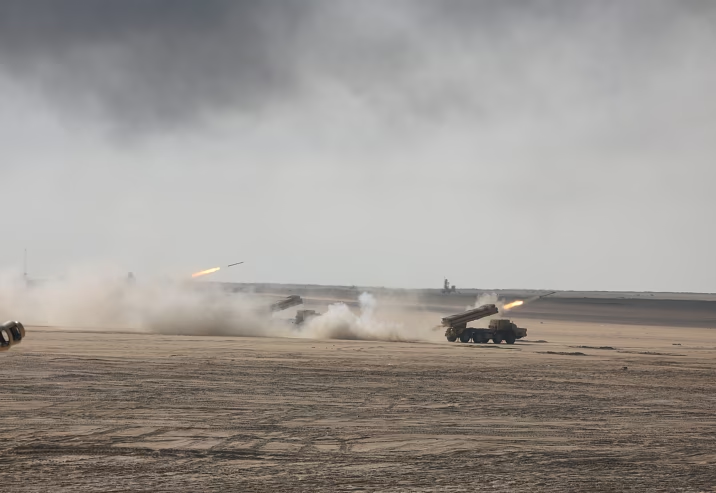

As for the Korean Peninsula, Pyongyang continues to achieve its declared goals of rapidly expanding its arsenal, with the institute estimating it possesses about 60 nuclear warheads. North Korea continues to develop its ballistic missile technologies despite international pressure and sanctions imposed on it, which further complicates the security landscape in East Asia.

Regarding Israel, which follows a policy of nuclear ambiguity and does not acknowledge possessing these weapons, the report indicated that it is actively working to modernize its arsenal. International sources estimate that the Israeli stockpile reached about 90 nuclear warheads at the beginning of this year, with continued development of multiple launch systems.

The report concludes that the world is entering a new phase of the nuclear race characterized by high complexity and danger due to the absence of strategic dialogue. This trend towards the militarization of international politics and reliance on nuclear weapons as a tool of pressure threatens to undermine decades of efforts aimed at arms control and global disarmament.

What is alarming is that despite the decrease in the quantities of nuclear weapons, the level of nuclear risks and threats is significantly increasing.

PALESTINE

Mon 08 Jun 2026 9:27 pm - Jerusalem Time

Trump demands immediate ceasefire from Israel and Iran, reveals negotiations for a final agreement

US President Donald Trump, on Monday, called on both Israel and Iran for an immediate and comprehensive ceasefire, indicating in a post on his 'Truth Social' platform that both parties are already looking for a way out to de-escalate. Trump affirmed that the diplomatic path has not stopped, as intensive negotiations are underway to reach a final peace agreement, while emphasizing that the imposed blockade will remain in place as a pressure tool until the agreement is finalized.

Trump's call comes at a time when the region is witnessing an unprecedented military escalation, with Tehran and Tel Aviv exchanging missile attacks since the early hours of dawn. Sources reported that this escalation occurred despite a direct request from Trump to Israeli Prime Minister Benjamin Netanyahu to refrain from launching additional attacks and to allow an opportunity for the ongoing political efforts behind the scenes.

On the ground, the Iranian Revolutionary Guard announced the execution of missile strikes targeting vital centers within Israel, including the strategic 'Nevatim' and 'Tel Nof' airbases. The Iranian side clarified that these barrages came in response to Israel's targeting of radar sites in three Iranian regions, in addition to the raid that targeted the southern suburb of the Lebanese capital, Beirut, on Sunday evening.

In contrast, Israeli fighter jets launched a series of raids targeting military sites in central, northern, and southwestern Iran, hitting a massive petrochemical complex. An Israeli military official stated that the army has multiple options to deal with Iranian threats, affirming readiness to continue military operations 'whatever it takes' and once political instructions are issued.

Regarding political moves, reports revealed that Trump held a phone call with Netanyahu, described as calm, in which he urged him to exercise caution and not to be drawn into a wide regional confrontation. Accordingly, Netanyahu held urgent security consultations with the small ministerial council 'the Cabinet' early today to discuss American proposals and international mediations led by regional parties.

Media sources quoted Iran's Tasnim news agency warning from a high-ranking military source, who confirmed that Tehran is prepared for a long-term conflict if Israeli escalation continues. The source warned that American interests in the region would not be safe from targeting if Washington directly engaged in supporting offensive operations against Iranian territory.

Inside Israel, shrapnel and missiles fell in various areas including 'Beit Shemesh' west of Jerusalem and the city of Beersheba in the Negev, in addition to the vicinity of the 'Itamar' settlement north of the West Bank. These barrages caused a widespread state of security alert, amidst warnings from the Home Front Command to settlers to remain near shelters as tensions continue.

Diplomatic data indicates active mediations led by Pakistan and Qatar to bridge viewpoints and prevent the situation from fully exploding. Circles within the American administration anticipate the possibility of reaching an initial draft agreement between Tehran and Washington in the coming days, which explains Trump's intense pressure on the Netanyahu government to commit to a temporary calm.

Observers believe that Netanyahu faces dual pressures, as his political survival is linked to the continuation of military operations to avoid internal legal prosecutions, while clashing with Trump's desire to quickly resolve the Iranian issue. Trump had previously stated in interviews with international media that he has the absolute decision-making power in drafting any future agreement with Iran, which puts the Israeli government in difficult choices.

In conclusion, the scene in the region remains suspended between the muzzles of cannons and negotiation tables, as the world awaits the results of the coming hours to determine the fate of de-escalation. With Tehran's insistence on responding to the targeting of its radars, and Tel Aviv's adherence to the right to respond to missile barrages, Trump's call for a ceasefire remains the true test of Washington's influence over its allies and adversaries alike.

Israel and Iran must cease fire immediately, peace negotiations are ongoing, and the blockade will remain in place until a final agreement is reached.

LATEST NEWS

Mon 08 Jun 2026 9:27 pm - Jerusalem Time

Cracks within the Democratic Party: Report reveals growing sense of 'alienation' among Jewish voters

A recent journalistic report has revealed a growing sense of marginalization and alienation among a wide segment of Jewish Democrats within the American Democratic Party. These shifts come amidst deep divisions caused by the ongoing Israeli war on the Gaza Strip, and the accompanying changes in the party's internal political discourse regarding Middle East issues.

The report, prepared by field researchers, clarified that many Jewish leaders and voters now feel that criticisms directed at Israel have exceeded the bounds of traditional political objection. These individuals believe that the current discourse now touches upon Jewish identity in the United States, creating a gap between the party's traditional base and emerging trends that adopt more radical positions towards Tel Aviv.

Political observers warned that these cracks could have a tangible impact on the electoral map in the 2028 presidential elections. Concerns are particularly prominent in swing states such as Pennsylvania, Michigan, and Georgia, where Jewish electoral blocs hold significant voting power capable of deciding results amidst fierce competition between the two major parties.

Media sources quoted Democratic strategist Howard Wolfson as saying that the prevailing sentiment among Jewish Democrats is that their historical political institution no longer provides them with adequate protection. Wolfson indicated that the continuation of this hostile climate might push segments of voters to reconsider their party loyalty and seek political alternatives that guarantee their interests and identity.

Amidst this debate, a number of Jewish figures are emerging as potential candidates to succeed the current leadership, including Pennsylvania Governor Josh Shapiro and Illinois Governor J.B. Pritzker. These individuals face a dual challenge: maintaining the cohesion of the Jewish electoral base while accommodating increasing pressure from the party's progressive wing, which demands stricter policies towards Israel.

Data indicates a significant decline in levels of unconditional support for Israel within the young Democratic base in particular. This generational shift has been clearly reflected in the language of political discourse, as the progressive current has become more daring in criticizing the Israeli government's practices in the Palestinian territories, which some see as a threat to the historical alliance between Jews and Democrats.

Reports highlighted incidents that caused widespread concern, including the appearance of controversial symbols associated with new Democratic candidates in states like Maine. These incidents, along with statements considered antisemitic, have reinforced the fears of Jewish Democrats regarding their future within the party and their ability to influence the formulation of its strategic decisions.

For his part, Democratic Representative Jared Moskowitz affirmed that feelings of fear are once again seeping into American Jewish circles due to the charged political climate. Moskowitz explained that there are signs of some voters drifting away from the party, warning that ignoring these signals could lead to the loss of a voting bloc that has historically been most loyal to Democratic programs.

In a related context, Representative Elissa Slotkin criticized attempts to stereotypically link Jewish donors to political pressure groups, considering that this fuels hate speech. Slotkin emphasized the need to distinguish between legitimate political disagreements about Middle East policies and attacks targeting individuals' religious or national affiliation.

Regarding internal operations, Jewish employees in Democratic institutions revealed their feelings of isolation and the need to constantly defend their personal positions. Former US administration officials indicated that the current political environment is placing unprecedented pressure on Jewish employees, affecting their productivity and their sense of belonging to the political institution.

Despite these challenges, another group within the party believes that talk of a mass exodus of Jews is exaggerated and not yet based on accurate statistical data. They assert that the Republican Party also suffers from structural problems in its relationship with minorities, and that the current debate is a healthy sign of the party's vitality and its ability to review its historical positions.

Many Jewish Democrats feel that the party has become the latest institution to welcome them only to turn into a hostile environment for them.

PALESTINE

Mon 08 Jun 2026 9:27 pm - Jerusalem Time

Discussions in Cairo to Draw a Roadmap to End the Stalemate in the Gaza Agreement

The Egyptian capital, Cairo, hosted an extensive meeting that included high-level officials from the mediating countries, namely Egypt, Qatar, and Turkey, along with representatives from Palestinian factions. The discussions focused on formulating a practical roadmap aimed at completing the implementation of the ceasefire agreement in the Gaza Strip and overcoming obstacles hindering the path to calm.

Informed sources reported that the meeting saw the participation of the head of the Egyptian General Intelligence Service, Minister Hassan Rashad, and the Prime Minister and Minister of Foreign Affairs of Qatar, Sheikh Mohammed bin Abdulrahman Al Thani, in addition to the head of Turkish Intelligence, Ibrahim Kalin. The attendees sought to coordinate regional efforts to push ongoing negotiations towards implementing the second phase of the framework agreement.

The statement issued after the meeting described the atmosphere as 'positive,' with a consensus among the participating parties on the necessity of adhering to the outcomes of the Sharm El Sheikh Peace Summit. Participants also expressed their appreciation for Egypt's pivotal role and the intensive efforts made by all concerned parties to end the humanitarian suffering in the Strip.

The attendees emphasized the importance of all parties assuming their responsibilities to ensure the achievement of sustainable calm, which paves the way for the initiation of large-scale reconstruction operations. Participants considered that the success of this roadmap would directly reflect on improving the deteriorating living conditions of Palestinians facing harsh circumstances.

These diplomatic moves come at a time when mediating parties are striving to break the stalemate that has affected the implementation of the Sharm El Sheikh agreement. Sources confirmed that there is insistence on completing the provisions of the peace plan proposed by US President Donald Trump, with a focus on a smooth transition between the different phases of the agreement.

In a related context, Egyptian Foreign Minister Badr Abdel Aty held a bilateral meeting with his Qatari counterpart, Sheikh Mohammed bin Abdulrahman Al Thani, in Cairo. The two sides discussed ways to enhance joint cooperation and coordinate positions on regional issues, emphasizing the priority of the Palestinian file and safeguarding Arab national security in light of current challenges.

During their meeting, the two ministers affirmed the necessity of implementing the requirements of the first phase of the proposed peace plan, which includes an immediate cessation of military operations. Both sides indicated that adherence to this phase is a cornerstone for moving to more advanced steps that ensure regional stability and the protection of civilians.

The requirements of the first phase, according to the proposed vision, include the entry of large quantities of humanitarian aid and early recovery supplies into all areas of the Strip. The plan also includes starting the rehabilitation of essential infrastructure and hospitals that have been severely damaged by ongoing military operations.

The proposed roadmap stipulates a gradual withdrawal of Israeli forces from populated areas in the Gaza Strip, to enable local authorities to resume their role. It also provides for empowering the National Committee for Gaza Administration to carry out its temporary administrative tasks from within the Strip to ensure the provision of basic services to the population.

Among the discussions, the idea of deploying an international stabilization force emerged, tasked with monitoring the ceasefire and ensuring that the agreement is not violated by any party. This measure aims to create a safe environment that allows the Palestinian people to exercise their right to self-determination, leading to the establishment of their independent state on the June 4, 1967 borders.

Hamas had sent a leadership delegation to Cairo earlier this week to engage in these technical and political discussions. Sources affiliated with the movement stated that the meetings aim to evaluate what has been achieved in the first phase and discuss mechanisms for an immediate transition to the second phase, which includes a broader exchange of prisoners.

The roots of the current agreement date back to the initiative announced by the US President in September 2025, which received initial acceptance from the concerned parties at the time. That initiative included a comprehensive ceasefire, a mutual release of detainees, with a guarantee of 600 aid trucks flowing daily to meet urgent needs.

Despite the Palestinian factions' commitment to the understandings of the first phase, field reports indicated violations and reneging on some commitments. This prompted mediators in Egypt, Qatar, and Turkey to intensify their pressure to ensure that the negotiation track does not collapse and return to a full-scale escalation.

The mediators hope that the current round of discussions in Cairo will lead to a specific and clear timeline for the implementation of all phases of the agreement without partiality. The ongoing bet is on the extent of the field parties' response to the international guarantees provided, and the ability of the mediators to bridge the remaining gaps in the withdrawal and reconstruction files.

The meeting discussed a proposed roadmap for completing the implementation of the agreement in a positive atmosphere, with the aim of achieving sustainable calm and reconstructing the Strip.

PALESTINE

Mon 08 Jun 2026 9:27 pm - Jerusalem Time

Dahlan presents a vision for managing the Gaza Strip during faction meetings in Cairo

Informed media sources revealed that Palestinian leader Mohammed Dahlan intends to present a comprehensive action plan aimed at managing the Gaza Strip, during his participation in the Palestinian faction meetings currently held in the Egyptian capital, Cairo. This step comes amidst intense political activity in the region to discuss the future of the Strip and the administrative and security arrangements required for the next phase.

The sources explained that the vision Dahlan intends to present includes a comprehensive concept for dealing with the current challenges in Gaza, with a focus on governance and local administration mechanisms. These developments coincide with extensive meetings involving representatives of various Palestinian national and Islamic forces, where the deteriorating humanitarian and political conditions in the Strip dominate the agenda.

The circulation of Dahlan's name in the corridors of the Cairo meetings has aroused widespread interest among political circles and observers, given his political weight and history in Palestinian security and political work. Observers believe that presenting such plans at this time reflects the complexity of the Gaza administration file and the need for consensual solutions among the different parties.

Despite the media buzz surrounding these reports, no precise official details have been released yet regarding the plan's provisions or its implementation mechanisms on the ground. The organizers of the meetings in Cairo, as well as the participating factions, have remained silent about these leaks, awaiting the outcome of the official deliberations behind closed doors.

These moves come in the context of intensive regional and international efforts seeking to formulate an acceptable formula for the 'day after' arrangements in the Gaza Strip, ensuring the addressing of escalating humanitarian crises. The question remains about the extent of the Palestinian factions' ability to agree on a unified vision to manage the affairs of the Strip and end the current state of division and political confusion.

The plan includes a comprehensive vision for managing the Strip during the next phase, coinciding with the discussion of complex political and humanitarian issues.

PALESTINE

Mon 08 Jun 2026 9:27 pm - Jerusalem Time

Occupation bullets assassinate the dreams of the boy Muhammad Abu Jayab off the coast of Gaza

The joy of the 16-year-old Palestinian boy Muhammad Abu Jayab was not complete with the diving moments he documented with his own camera off the coast of the Gaza Strip. While he was practicing his hobby in the sea on Sunday, a bullet fired by the Israeli occupation army struck him in the head, turning the scene of joy and play into a tragedy that shook the feelings of Palestinians.

Activists circulated emotional video clips on social media platforms documenting the difficult moments of retrieving the body of the martyr Abu Jayab from the middle of the sea. Palestinian fishermen rushed to retrieve him and transport him by a small boat to the beach of Deir al-Balah city in the central Strip, amidst a state of sadness and popular anger due to the targeting of the boy who posed no threat.

In a related context of maritime violations, field sources reported that the Israeli navy arrested four Palestinian fishermen on the same day while they were working off the coast of Gaza City. These attacks come within a systematic policy pursued by the occupation to restrict fishermen, including direct shooting and destruction of boats to prevent them from securing their daily livelihood.

On the ground, Israeli attacks did not stop at sea, as medical sources confirmed the martyrdom of five Palestinians, including an elderly man and a child, and the injury of 32 others with varying injuries on Monday. These targets were concentrated in various areas north and south of the Gaza Strip, reflecting a continuous military escalation despite existing understandings.

Reports from Gaza indicate that this escalation represents a clear violation of the ceasefire agreement that came into effect on October 10, 2025. Palestinian parties accuse the occupation authorities of deliberately targeting civilians and vital facilities to undermine the state of relative calm and increase the suffering of the besieged population in the Strip.

Regarding the total toll, medical sources in Gaza announced that the number of victims of the ongoing Israeli aggression since October 7, 2023, has risen to 72,980 martyrs. The number of injured has also exceeded 171,000, in an unprecedented humanitarian catastrophe documented by official reports and local news agencies.

The young fisherman Muhammad Abu Jayab went to sea in search of a livelihood to support his family in a time of genocide and hunger, but the sea he sought for life brought him back carried on shoulders.

LATEST NEWS

Mon 08 Jun 2026 9:26 pm - Jerusalem Time

Israeli Airstrike Targets Karun Petrochemical Complex in Southwest Iran

The Israeli army announced on Monday that it had carried out an aerial operation targeting the Karun Petrochemical Complex located in the southwestern region of Iran. This strike comes as part of a new round of direct military confrontations between Tel Aviv and Tehran, with the bombing focusing on destroying industrial infrastructure belonging to the Iranian energy sector.

Military sources reported that the attack resulted in clear material damage to various parts of the industrial complex due to direct shell impacts. Despite confirmation of damage to the facility, official authorities have not yet issued an accurate and comprehensive toll detailing the extent of operational or human losses resulting from this targeting.

The Karun Petrochemical Plant is considered one of Iran's most prominent industrial facilities, located in the strategic Mahshahr area of Khuzestan province. This region holds particular importance as a vital center for chemical and oil industries, making its targeting a direct blow to one of the most important pillars of the Iranian economy linked to the export sector.

The facility is an integral part of the infrastructure associated with the oil and gas sectors, specializing in the production of a complex series of basic chemical materials. These products are used to meet the needs of the local Iranian market, in addition to their pivotal role in supplying the state treasury with hard currency through extensive export operations to foreign markets.

The plant benefits from its geographical location near ports overlooking the Arabian Gulf, which facilitates maritime shipping operations and international logistics. This location has made the Karun Complex a focal point in the petrochemical industrial zone in Bandar Imam Khomeini, which explains the Israeli military's focus on neutralizing these production capabilities.

In terms of production capacity, the plant specializes in producing 'isocyanates,' which are highly reactive and sensitive organic chemical materials. The complex's annual production capacity reaches approximately 80,000 tons, making it one of the first plants to introduce this industrial technology to the Middle East region several years ago.

The materials produced at the Karun Complex are used in a wide range of heavy and manufacturing industries that concern both citizens and industry. Prominent uses include the manufacture of sponges, thermal insulation used in construction, industrial plastics, in addition to their use in manufacturing car parts, home furniture, and artificial leather.

Targeting this complex represents a qualitative escalation in Israel's target bank deep within Iran, as it goes beyond purely military targets to strike economic facilities. International circles are monitoring the repercussions of this attack on the stability of energy markets and chemical supply chains, amidst the ongoing escalating tension in the region.

The aerial operation targeted an industrial site used in the petrochemical sector and resulted in damage to the complex and parts of it being affected.

LATEST NEWS

Mon 08 Jun 2026 9:26 pm - Jerusalem Time

Israeli hints at expanding aggression towards Nabatieh: Military pressure to bypass American 'immunity'

Media sources have revealed extensive movement within the Israeli occupation army's command to pressure the political level with the aim of completing the destruction of infrastructure in strategic areas in southern Lebanon. While estimates indicate understandings that grant Beirut a kind of 'immunity' from intensive attacks, military leaders see the necessity of shifting military weight towards the city of Nabatieh, which represents a significant urban and economic center.

Hebrew reports stated that occupation forces have already begun implementing field operations on the outskirts of Nabatieh, including the use of advanced robots to locate explosive devices and detect armed cells. Major General Rafi Milo, commander of the Northern Command, is leading an initiative aimed at undermining Hezbollah's capabilities in this vital area located between the Litani and Zahrani rivers, considering that controlling it will change the balance of power on the ground.

Israeli military circles view Nabatieh as a target of paramount symbolic and logistical importance, as it houses command headquarters for active military units such as 'Badr Unit'. Sources confirm that the city has, over the years, become a center for managing operations and storing weapons, benefiting from its urban density and its geographical location connecting logistical axes leading to the Israeli border.

Officers in the occupation army believe that delivering a strong blow to Nabatieh will go beyond the direct military impact to reach the popular base, given the city's status as a regional and economic center for Shiites in the south. It is believed that targeting this urban center will represent unprecedented moral pressure, especially since the occupation previously avoided entering into a comprehensive confrontation within major population centers of this size.

In a related context, information available to occupation intelligence indicates that Hezbollah has extensively fortified the underground infrastructure in Nabatieh since the end of the 2006 war. These sources claim that the party exploited the geographical distance from the border to build fortified facilities against air raids, making the proposed ground operation a military challenge that the army seeks to overcome by intensifying field and political pressure.

The attack on the city of Nabatieh will constitute a severe moral blow to the Iranian axis, and will affect the entire area located between the Litani and Zahrani.

PALESTINE

Mon 08 Jun 2026 9:26 pm - Jerusalem Time

Hands and feet tied.. Shocking details about the detention conditions of Dr. Hussam Abu Safiya in solitary confinement

Lawyer Nasser Odeh, representing the detained Palestinian doctor Hussam Abu Safiya, reported that his client is facing extremely harsh detention conditions inside the occupation prisons, where he is deprived of the most basic human rights, including potable water and sufficient food. Odeh explained that the last visit revealed that the doctor remains permanently handcuffed and shackled, despite suffering from chronic diseases that require intensive medical care not available to him in his current detention.

Legal sources indicated that the prison administration transferred Abu Safiya on June 3rd from Naqab Prison to solitary confinement in Nafha Desert Prison, which increased his family's fears about his fate given the قطع communication with him. This escalatory step comes after months of abuse and beatings the doctor was subjected to during transfers between prisons, causing him severe and continuous back and neck pain without proper treatment.

The lawyer described the details of the legal visit as taking place under strict camera surveillance and in the presence of heavily armed guards, with communication via phone from behind a thick glass barrier. He confirmed that these measures, in addition to the short duration of the visit, prevented the prisoner from speaking freely about the details of the violations he is subjected to, fearing further punitive or retaliatory measures by the jailers.

Occupation forces arrested Dr. Hussam Abu Safiya in late December last year while he was performing his professional duty as director of Kamal Adwan Hospital in the northern Gaza Strip. Since then, he has been transferred for detention under the so-called 'Unlawful Combatant Law,' a legislation that allows Israeli authorities to detain Palestinians for indefinite periods without formal charges or clear legal evidence.

Medical and human rights reports indicate a severe deterioration in Abu Safiya's health, as he has lost about 25 kilograms of weight due to the policy of starvation and deliberate medical neglect. The doctor also suffers from heart disease and high blood pressure, in addition to contracting scabies, which has spread in prisons due to poor hygiene and the deteriorating living conditions imposed by the occupation on prisoners.

The Israeli High Court of Justice is scheduled to hear an appeal filed by the legal team on the tenth of this month against the continued detention of Abu Safiya under the Unlawful Combatant Law. International organizations, including the United Nations and the World Health Organization, demand the immediate release of Palestinian medical personnel and the guarantee of their physical and psychological safety in accordance with international Geneva Conventions.

It is worth noting that Dr. Abu Safiya's case highlights the suffering of about 9,500 Palestinian prisoners held in occupation prisons, where they face systematic policies of torture and abuse. Human rights organizations have warned that the continuation of these policies has led to the martyrdom of dozens of prisoners due to deliberate medical neglect and the inhumane conditions imposed by the prison administration since the beginning of the last aggression.

The visit took place in a camera-monitored room, during which Abu Safiya remained handcuffed and shackled, and communication was via phone from behind a glass barrier.

ARAB AND WORLD

Mon 08 Jun 2026 9:26 pm - Jerusalem Time

Leaked British police document describes the occupation army as a 'terrorist organization' and sparks a political storm

Political and security circles in Britain are in a state of turmoil following the leak of an internal policy document issued by the National Association of Muslim Police, which included strong positions regarding the ongoing war in the Gaza Strip. The document, revealed by the British newspaper 'The Telegraph', sharply criticized the Israeli occupation army, describing it as a 'Zionist terrorist group', raising major questions about professional neutrality within law enforcement agencies.

Reports indicated that the leaked paper defended Hamas in the face of what it described as 'unsubstantiated narratives' that spread after the October 7, 2023 attack. The document considered that the circulation of some media reports about widespread violence directly contributed to fueling feelings of hatred against Islam and Muslims in Western societies.

The document, drafted by Khaldoun Qabbani, then Vice President of the Association, went further by considering Zionism a form of hostility towards Muslims. This proposition provoked the indignation of official institutions and Jewish bodies in the United Kingdom, which saw these statements as a blatant deviation from the professional standards that police personnel should adhere to.

In terms of content details, the document questioned the accuracy of Israeli and Western narratives that spoke of large numbers of children killed during the initial attack by Palestinian factions. The paper indicated that some of these figures were later questioned, claiming that only one child's death was confirmed two days after the attack, which contradicts international and UN reports.

The document also included sharp criticism of Western media, accusing it of adopting narratives aimed at 'demonizing Palestinians' and portraying them as perpetrators of atrocities against civilians. The paper used strong language in comparing Israeli practices in the Gaza Strip to the mechanisms of 'dehumanization' used by historical oppressive regimes, referring in the context of comparison to the Nazi Holocaust in Auschwitz.

The sensitivity of this document lies in the role played by the National Association of Muslim Police, as it has cooperative relations with several police forces in England and Wales. The association provides advisory and training services related to personnel matters and worship needs, making its political positions potentially influential on the working environment within the security establishment.

The angry reactions were not delayed, as British Jewish organizations considered the content of the document a direct threat to the integrity of police work in the country. These bodies affirmed that the document contains misleading information aimed at distorting historical facts, which undermines mutual trust between society and security agencies.

For its part, the Campaign Against Antisemitism entered the crisis, demanding that the British Home Office open an urgent and immediate investigation into the circumstances of the preparation and publication of this paper. The campaign called for accountability for those responsible for this content, and a review of the role played by the Association within official police institutions to ensure that security work is not politicized.

Observers believe that this leak reopens the debate about the concept of 'police neutrality' in Britain, especially in light of the sharp societal division regarding the Palestinian issue. Security agencies face increasing pressure to strike a delicate balance between respecting the cultural diversity of their employees and adhering to complete neutrality on thorny international political issues.

Media sources indicated that the document had been briefly published online by 'The Spectator' magazine before being deleted, but its circulation in the British press brought it back to the forefront. This controversy reflects the extent of tensions caused by the war in Gaza on the social and institutional structure in countries supporting the occupation.

In a related context, the Jewish community considered that such positions issued by a body representing police officers contribute to creating a hostile environment for Jews within the security apparatus. It warned that adopting narratives that question the 'Holocaust' or compare it to contemporary events is a transgression of legal and political red lines in the United Kingdom.

Although the Association is a representative body and not an executive one, its influence in providing religious and professional guidance makes its opinions subject to close scrutiny. Right-wing political forces are demanding the necessity of disassociating the Home Office from any associations that adopt positions described as 'extremist' or biased against a party in an international conflict.

To date, no extensive official comment has been issued by the British Home Office regarding the measures taken against the author of the document or the Association in general. However, media and parliamentary pressure may push towards a comprehensive review of all documents and policies issued by professional associations within the police force to ensure their alignment with national laws.

In conclusion, this incident highlights the complexity of the British internal scene in dealing with the repercussions of the Israeli-Palestinian conflict, where internal documents become material for public political debate. The biggest challenge for the British government remains to maintain the cohesion of the security establishment and prevent the infiltration of political divisions into the ranks of its officers.

The document described the Israeli occupation army as a Zionist terrorist group and considered Zionism a form of hatred against Muslims.

ARAB AND WORLD

Mon 08 Jun 2026 9:26 pm - Jerusalem Time

Iran announces cessation of military operations, Israel responds to Trump's request amid warnings of escalation in Lebanon

Iran's Central Operations Room, known as the 'Khatam al-Anbiya' headquarters, announced the end of its military operations against Israel as of this Monday. The statement clarified that this decision came after carrying out what Tehran described as a 'painful' response to previous Israeli airstrikes, while simultaneously affirming its readiness to return to more violent escalation.

Iran's military command warned that any continuation of Israeli aggression, especially in areas of southern Lebanon, would be met with harsher military measures than before. The statement emphasized that the cessation of current operations is linked to the other side's commitment to halting hostile actions that threaten the region's security and stability.

In contrast, media sources revealed that Israeli Prime Minister Benjamin Netanyahu responded to a direct request from US President Donald Trump to halt attacks on Iranian territory. The sources indicated that this Israeli retreat aims to provide an opportunity for diplomatic efforts led by the White House to achieve a comprehensive de-escalation.

Despite the direct de-escalation with Iran, an Israeli official confirmed that military operations in southern Lebanon would continue at full strength in the coming days. The official added that the Israeli army would not hesitate to target the southern suburbs of Beirut if rocket attacks on Israeli towns and settlements continued.

Monday witnessed an important phone call between Netanyahu and Trump, preceding the latter's announcement via social media platforms of both parties' desire to reach an immediate ceasefire. According to informed sources, the call focused on the necessity of containing the situation and preventing the region from sliding into a comprehensive regional war with dire consequences.

For his part, US President Donald Trump stated that Israel and Iran are seriously seeking to end the direct military confrontation. Trump warned that 'ignorance or foolishness' could hinder the final negotiations currently underway, noting that the recent exchange of strikes almost undermined the fragile understandings reached previously.

Trump affirmed in a post on 'Truth Social' that the US blockade imposed on Iranian ports would remain in effect and strictly enforced. He clarified that the lifting of these economic restrictions would only occur after reaching a final and comprehensive deal that guarantees the interests of the United States and its allies in the region.

In Tehran, Iranian President Masoud Pezeshkian affirmed that his country remains strongly engaged in the diplomatic path to end the war in the Middle East. Pezeshkian stressed that Iran's national strength is based on two parallel tracks: military defense and active diplomacy, asserting that his country will not withdraw from either.

These developments come after the renewal of direct confrontations between Tehran and Tel Aviv for the first time since a truce was announced about two months ago. Observers believe that this latest escalation puts international efforts aimed at achieving peace to a real test, especially given the complex field conditions on the Lebanese front.

Pakistan is currently leading active mediation between Washington and Tehran, which began weeks ago coinciding with the announcement of the initial ceasefire. Despite the optimism expressed by the US President about the imminent conclusion of an agreement, the field still witnesses intermittent tensions that threaten to collapse the negotiation process at any moment.

The current conflict is linked to a series of events that began last February, leaving the region in a state of constant alert. International parties are currently seeking to establish new rules of engagement to prevent the recurrence of mutual attacks that targeted the depth of both countries in recent hours.

Anticipation remains the master of the situation, awaiting the outcomes of the ongoing behind-the-scenes negotiations in the coming days. While reports speak of a desire for peace, mutual threats and military operations in Lebanon and the southern suburbs remain pressure factors that could lead to a renewed explosion of the situation.

Defense and diplomacy are pillars of national strength.. We have not left the field nor the negotiating table.

OPINIONS

Mon 08 Jun 2026 8:39 am - Jerusalem Time

Dahiyeh Changes the Rules of Engagement… Trump Sets the Pace and Netanyahu is the Biggest Loser

On the evening of June 7, 2026, the region entered a new phase of escalation after Iranian strikes targeted Israel, in response to the Israeli attack on the southern Dahiyeh in Lebanon. The importance of the event lies not only in the exchange of strikes, but in the context that preceded it, as Iran had previously warned that targeting Dahiyeh would be met with a direct response. When the attack occurred, the response was swift, confirming that it was not a fleeting reaction, but part of a deterrence equation being practically established.

What happened does not represent a complete reversal in the balance of power, but it reflects a clear adjustment in the rules of engagement. The traditional pattern that the region was accustomed to, where Israel initiates the attack and the response comes later within the calculations of “the right time and place,” was tested differently this time. The direct Iranian response carried an important implication: a relative shift in pace from the position of the recipient to the position of the initiator, even if the basic balance of power remained the same.

This move was not isolated from precise calculations of the American position. Washington, despite its commitment to Israel's security, does not seem willing to engage in a wide regional war. The cost of escalation, domestically and internationally, makes the option of containment more present than the option of open war. Therefore, Iran gambled that the United States would support Israel and deter adversaries, but at the same time would work to control the ceiling of escalation and prevent a slide into a comprehensive confrontation.

In this context, an important political angle related to US President Donald Trump emerges. These developments give him an opportunity to show that he is an independent decision-maker, acting according to purely American calculations, not according to Benjamin Netanyahu's pace. If he chooses to contain and control the escalation, he can present himself as someone who holds the decision of war and peace, and prevents the United States from sliding into confrontations that do not serve its direct interests. Thus, “setting the pace” becomes a message of political strength, confirming that the decision in Washington is not managed by proxy.

In contrast, Israel seems more inclined to expand the circle of confrontation, whether to restore the image of deterrence or to redefine the rules of engagement in the region. But this trend clashes with a cautious American ceiling, creating a clear duality: Israeli push towards escalation, versus American control to try to contain it. The result is a continued exchange of strikes within calculated limits, without reaching a comprehensive war.

In this context, Netanyahu appears to be one of the biggest political losers so far. The attack on Dahiyeh was intended to raise the level of deterrence or impose a new equation, but the direct Iranian response, coupled with American containment, limited the Israeli government's ability to turn the escalation into a clear strategic gain. Iran's shift to the position of initiator weakened the narrative of absolute superiority, and made any Israeli military achievement less likely to turn into a decisive political achievement.

Moreover, establishing the equation of “Dahiyeh for a direct Iranian response” adds a new constraint to the Israeli decision, and makes the cost of any future escalation higher and more complex. Instead of expanding the margin of maneuver, Netanyahu found himself in a more restricted regional environment for his movement.

Nevertheless, risks remain. This phase is based on precise estimates of intentions and limits of probability, and any miscalculation could turn containment into a wider explosion. What happened on June 7, 2026, does not represent the end of the conflict, but a reshaping of the balance of deterrence. The equation has not been canceled, but it has become more complex and balanced.

Between Israel's desire for escalation, the United States' efforts to set the pace, and Iran's attempt to impose a new deterrence equation, the region stands at a delicate and sensitive stage. A comprehensive war is not the likely option for most parties, but the continuation of mutual strikes keeps everyone in a continuous test of political will as much as it is a test of military capability.

ARAB AND WORLD

Mon 08 Jun 2026 8:39 am - Jerusalem Time

100 Days into the Strait of Hormuz Crisis: How Has the 'Chokepoint' Reshaped Global Energy and Political Calculations?

Today, the world enters the first hundred days of one of the most complex geopolitical and economic crises in recent decades, as the Strait of Hormuz continues to operate under the weight of unprecedented disruption in maritime traffic. This situation has directly impacted the stability of global oil markets and international trade flows, as well as directly affecting interest rate forecasts and global inflation rates.

According to estimates issued by international research centers, the crisis, which began on February 28, 2026, took the form of an actual and extended disruption of navigation due to mutual military escalation. This blockage led to a sharp decline in ship traffic through a passage that carries about one-fifth of global oil trade, turning military operations into a prolonged attrition.

The crisis went through five main stages, beginning with the 'blockade shock and military surprise' phase, which caused global astonishment and a sudden halt in shipping traffic. It then quickly moved to the 'peak' phase with the influx of US military forces and the soaring cost of operations to record levels, amidst real fears of an all-out war in the region.

These developments pushed international powers towards the third stage, which involved searching for alternative routes and activating land pipelines to compensate for the shortage. Despite the high costs of these alternatives, figures revealed their inability to compensate for one-fifth of the world's oil that usually passes through the Strait, keeping economic pressures strong and persistent.

Last May, the crisis entered its fourth phase, 'fragile de-escalation and navigational maneuvering,' following a truce reached under Pakistani sponsorship on April 8. This period witnessed a strategic shift led by Britain and France, who spearheaded an international coalition of more than 40 countries to coordinate navigation protection tasks and secure transit corridors.

On the ground, these movements translated into the deployment of the British destroyer 'Dragon' and an increase in military funding by £115 million, in parallel with the arrival of the French aircraft carrier 'Charles de Gaulle' in Djibouti. These reinforcements aim to establish a sustainable ceasefire and protect oil tankers from any potential threats in the region.

In contrast, this Western buildup was met with Iranian deterrence and a complex war of nerves, as Tehran announced the readiness of its light 'Ghadir' submarines and fast attack boats. The Revolutionary Guard also conducted ground maneuvers and a show of force, making actual passage through the Strait limited to tankers moving in 'stealth mode' to avoid detection.

With the completion of 100 days, the crisis entered the stage of 'forced coexistence,' where the disruption of the Strait transformed from an emergency event into a semi-permanent variable in international calculations. Central banks, insurance companies, and policymakers began to integrate these risks into their long-term economic forecasts, awaiting a comprehensive political settlement to end the paralysis.

Despite the temporary ceasefire agreement coming into effect, satellite ship tracking data indicates a gap between political promises and reality. Transit traffic still shows a significant decline, while operational risks continue to rise, reflecting shipping companies' lack of confidence in the sustainability of the current de-escalation.

Economically, the repercussions extended to energy, currency, and metal markets, with gold recording high investment demand as a safe haven. At the same time, the dollar moved in a volatile range, affected by inflationary pressures resulting from rising oil prices and the cost of global transportation and shipping, which doubled during the crisis months.

Politically, negotiations are hitting a complex wall of reciprocal conditions, with the Trump administration insisting on the complete dismantling of Iranian nuclear facilities as a condition for any solution. In contrast, Tehran adheres to its nuclear program and links any progress in the navigation file to the release of $24 billion of its frozen funds abroad.

The United States is currently intensifying its economic pressure by imposing new sanctions on 15 entities and 8 vessels involved in transporting Iranian oil. This escalating diplomatic stalemate keeps the Strait of Hormuz a global flashpoint, pressuring the international economy, awaiting a political solution to end the partial paralysis in the global trading system.

The actual disruption of the Strait has transformed from an emergency event into a semi-permanent variable that central banks and insurance companies integrate into inflation and interest rate calculations.