PALESTINE

Wed 10 Jun 2026 8:16 am - Jerusalem Time

Hamas warns against targeting Al-Aqsa Mosque landmarks and calls for general mobilization

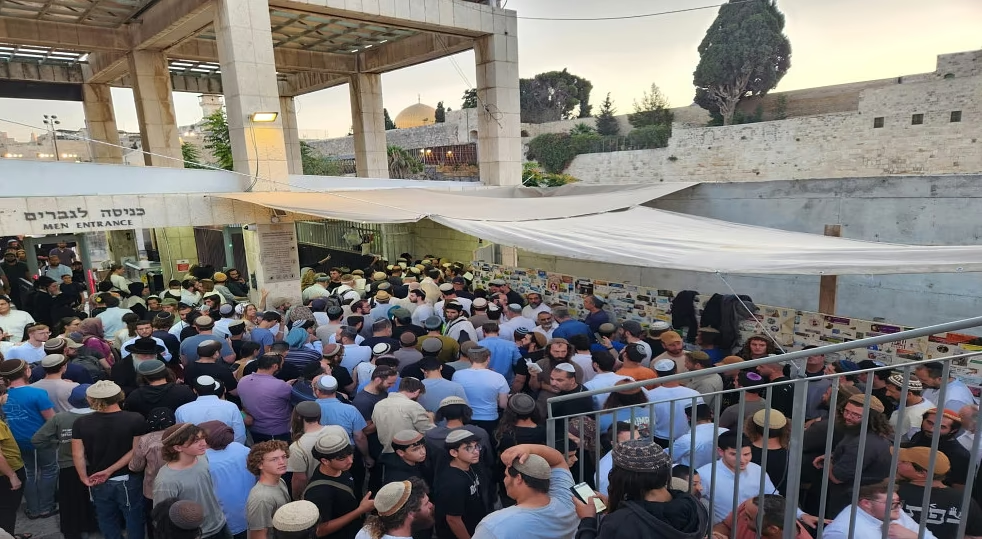
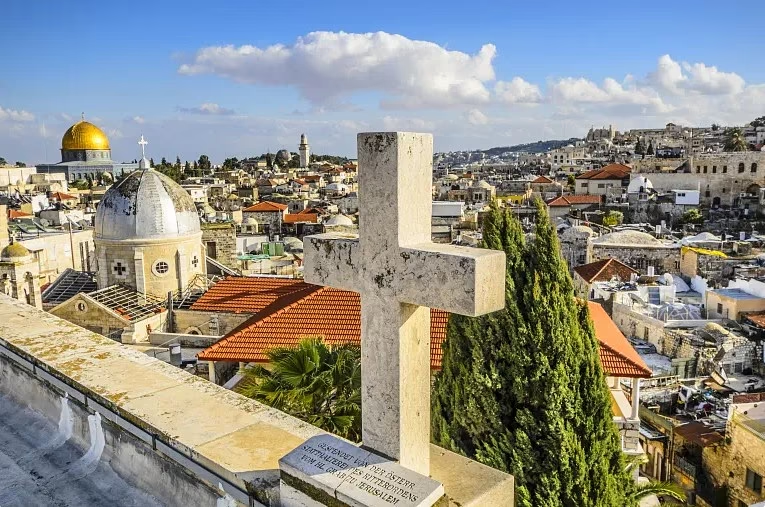
The Hamas movement issued strong warnings against the continued targeting of historical and essential landmarks within the courtyards of the blessed Al-Aqsa Mosque by the Israeli occupation. In a press statement, the movement affirmed that these recent actions, which affected four main landmarks, represent a blatant violation and a dangerous escalation aimed at changing the Islamic identity of the holy sites.

Sources clarified that the new Israeli policy relies on emptying historical landmarks and facilities under flimsy and baseless security pretexts. The latest of these targets was the Dome of Moses, located in the southwestern part of the mosque, which is an integral part of the architectural and historical fabric of the holy place for Muslims.

The movement called on the masses of the Palestinian people to declare general mobilization, intensify their presence in the courtyards of Al-Aqsa Mosque, and travel to it from everywhere. It stressed that popular resistance and an intensified Palestinian presence are the guarantors of thwarting the Judaization schemes that the extremist right-wing occupation government seeks to impose as a fait accompli.

In a related context, reports issued by the International Jerusalem Foundation indicated that the occupation police have escalated the pace of pursuing administrative facilities belonging to the Waqf in recent weeks. The reports showed that the four landmarks targeted were used as administrative headquarters for the Islamic Waqf affiliated with Jordan, which adds a dangerous political dimension to these steps.

Hamas directed an urgent appeal to Arab and Islamic countries to stand by their historical and religious responsibilities towards the first of the two Qiblas and the third of the two Holy Mosques. It demanded immediate diplomatic and political action at all international levels to stop the Israeli encroachment, prevent the desecration of Al-Aqsa Mosque, and prevent the imposition of temporal and spatial division.

The movement also urged scholars, parties, and intellectual currents in the Arab and Islamic world to mobilize material and human energies to support Jerusalem and its people. It affirmed that the Palestinian people will not stand idly by in the face of attempts to obliterate the Arab and Islamic identity of the holy city, and will not surrender to the policies of extremist ministers in the occupation government.

The movement concluded its statement by emphasizing that the circle of popular anger is expanding with every new aggression against Al-Aqsa Mosque, holding the occupation fully responsible for the repercussions. It stressed that historical and religious rights in Jerusalem are inalienable and non-negotiable, and that defending them is a sacred duty that falls on the shoulders of all free people in the world.

The occupation's targeting of four essential landmarks in Al-Aqsa will increase the circle of anger and woes upon this brutal occupation.

OPINIONS

Wed 10 Jun 2026 8:15 am - Jerusalem Time

Hormuz confrontation reveals limits of American deterrence and deepens rift with Israel over Iran

Washington's Message

Washington – Said Arikat – 10/6/2026

News Analysis

The confrontation between the United States and Iran has entered a more sensitive and dangerous phase after the downing of a US Apache helicopter over the Strait of Hormuz, followed by direct American strikes targeting Iranian air defense sites and radars, and an Iranian response with missiles and drones against American targets in the region. While the developments initially appeared to be just another episode of mutual military escalation, their political and strategic dimensions reveal deeper shifts related to the future of the conflict, the limits of Israeli influence within Washington, and the reliance on military force as a means to reshape regional balances.

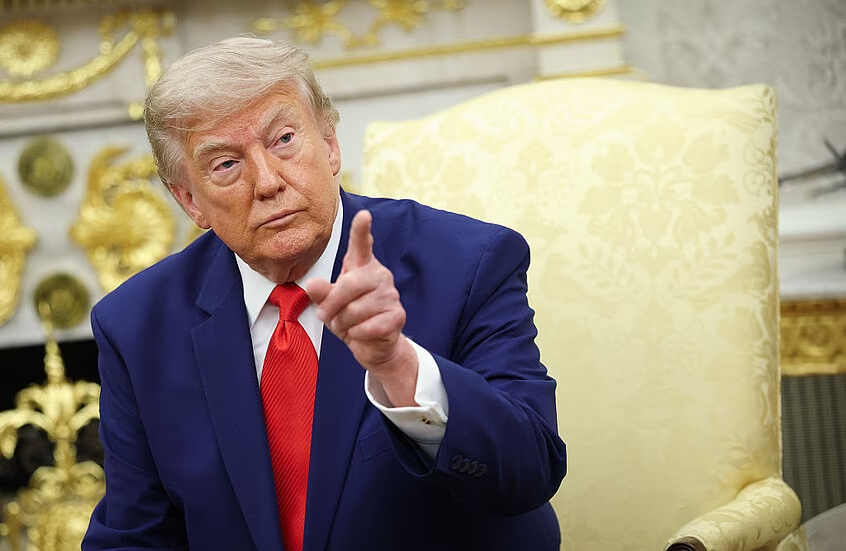
US President Donald Trump quickly blamed Iran for downing the helicopter, confirming the pilots' survival, before ordering military strikes that the Pentagon described as “defensive and proportionate.” Trump affirmed that the response was strong and decisive, emphasizing that the United States cannot allow its forces to be targeted without a response. However, the incident, despite its military symbolism, also revealed the fragility of the security situation in one of the world's most sensitive maritime passages, through which a large percentage of global energy trade passes.

Although initial American investigations suggested the helicopter was subjected to hostile action linked to Iranian means, they did not definitively determine the nature of the incident or whether the targeting was intentional. In contrast, Tehran denied direct responsibility, indicating that the incident might be a result of the intense military tension in the region. However, the conflicting narratives did not prevent the crisis from quickly escalating to a phase of mutual strikes, turning the Strait of Hormuz from an arena of economic and strategic pressure into a direct military engagement zone between the two powers.

This escalation comes at a time when Trump faces a complex political and strategic dilemma. The US President, who built a large part of his political discourse on the promise of ending “endless wars,” finds himself compelled to resort to military force in the Middle East. While he consistently asserts that he does not want an all-out war with Iran, the facts on the ground are pushing his administration to take gradual military steps to maintain the prestige of American deterrence and protect forces deployed in the region.

However, the importance of the crisis is not limited to the American-Iranian dimension. Recent developments have once again highlighted the growing divergences between Washington and Benjamin Netanyahu's government regarding how to deal with Iran and the future of the region. While Israel pushes for tightening military pressure and expanding confrontation fronts, the US administration seems increasingly convinced that political solutions and verifiable and monitorable understandings might be less costly and more effective than engaging in open conflicts with no clear end.

This divergence becomes more significant as US officials continue to affirm that Washington's strategic goal remains to prevent Iran from acquiring nuclear weapons and to reach an understanding that ensures the security of international navigation and regional stability. Vice President J.D. Vance's statement, describing the ongoing agreement being negotiated with Iran as “a great achievement for the American people, whether Israel likes it or not,” reflected a growing trend within the US administration towards separating direct American interests from the political calculations of the Israeli government.

These positions reveal a significant decline in Netanyahu's ability to influence the course of American policy towards Iran compared to previous years. While successive Israeli governments were able at different stages to push Washington towards more hardline options, the current administration seems more inclined to manage the crisis within a ceiling that prevents sliding into a wide regional war. The disagreements that emerged over recent Israeli military operations in Lebanon and Syria have also reinforced the impression that Israeli influence within American decision-making circles is no longer absolute as it once was.

In contrast, the crisis has raised fundamental questions about the effectiveness of the Israeli security approach based on expanding the circle of military confrontations. Despite Israel's immense military superiority and continuous American support, Israel has not been able to achieve lasting stability or end sources of tension in the region. Instead, repeated wars and extended military operations from Gaza to Lebanon, Syria, and Iran have contributed to deepening regional crises rather than resolving them.

Critics of Israeli policies argue that the fundamental problem lies not in a lack of military power, but in the absence of a political solution to the roots of the conflict, and in the continued occupation, settlement expansion, and deprivation of the Palestinian people of their national and human rights. These policies, according to their critics, have not provided security for Israelis, nor have they granted Palestinians the minimum of justice or dignity, but rather have contributed to producing successive cycles of violence and instability.

In conclusion, the Hormuz crisis reveals that military force, no matter how superior, is no longer capable alone of imposing sustainable political outcomes. Iran has demonstrated its ability to maneuver and impose costs on its adversaries despite sanctions and pressures, while Washington has discovered that influence is not measured solely by the size of the military arsenal, but also by the ability to manage crises and forge settlements. As for Israel, which has long presented its military superiority as the primary guarantee of security, it finds itself facing a reality that confirms that true security is not achieved by force alone, but by addressing the political causes that keep the region captive to open conflicts.

The Hormuz crisis reveals that the American administration has begun to view regional stability from a perspective gradually differing from the vision promoted by the Netanyahu government. While Israel believes that increasing military pressure on Iran represents the shortest path to weakening it, Washington seems increasingly convinced that any widespread confrontation could threaten American economic and military interests in the Gulf and the world. From this, one can understand the American insistence on keeping negotiation channels open despite the exchange of strikes. The current disagreement is not only about tactics but reflects a growing divergence in the definition of interests and priorities between the two allies, a divergence that may deepen in the coming period.

Recent developments have also shown once again that Israeli and American military superiority has not succeeded in producing a stable regional security system; rather, excessive reliance on force has contributed to expanding and perpetuating crises. From Gaza to Lebanon, Syria, and Iran, military operations are repeated without being able to remove the political causes of conflicts. Moreover, the continued Israeli occupation of Palestinian territories, settlement expansion, and the deprivation of Palestinians of their national rights undermine any possibility of achieving lasting stability. Therefore, the current crisis appears to be additional evidence that true security cannot be based on military deterrence alone, but on political justice and sustainable settlements that address the roots of conflicts, not just their manifestations.

PALESTINE

Wed 10 Jun 2026 8:15 am - Jerusalem Time

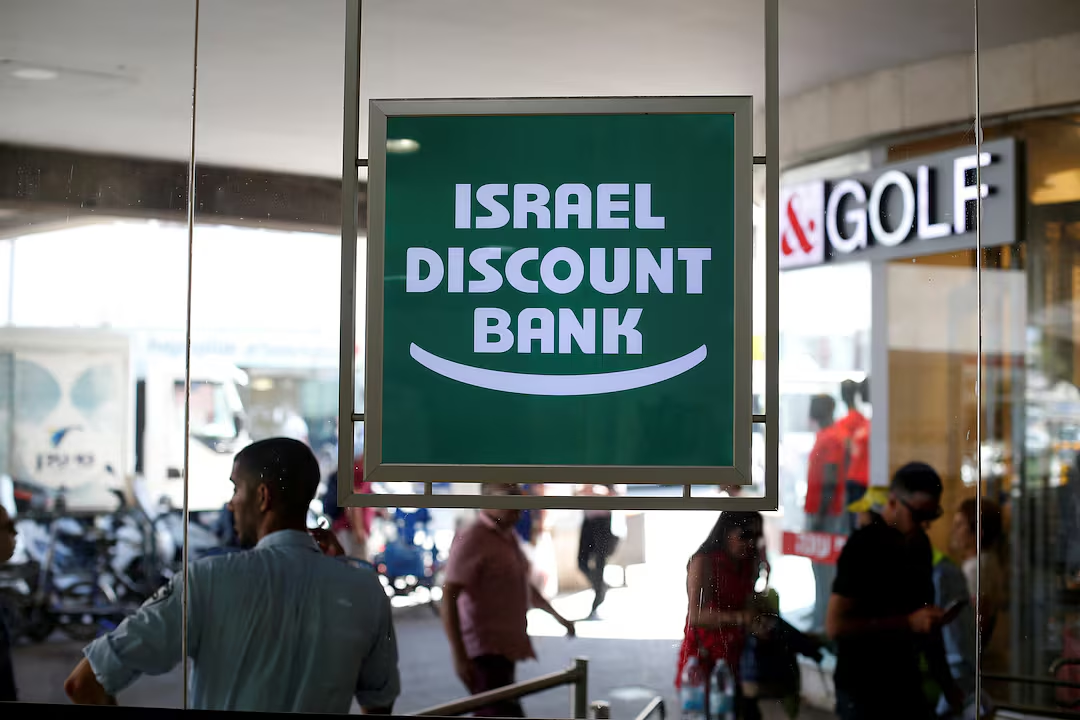
Study warns of financial separation risks: Is digital currency a solution to Gaza's liquidity crisis?

A recent scientific paper issued by Al-Zaytouna Centre for Studies and Consultations discussed the severe cash liquidity crisis afflicting the Gaza Strip, warning of the repercussions of financial separation on the unity of the Palestinian system. The study, prepared by researcher Raed Mohammed Helles, indicated that the ongoing war since October 2023 has extensively destroyed banking infrastructure, leading to unprecedented monetary imbalances in the local market.

The study clarified that the roots of the crisis are not new, but rather stem from structural factors accumulated over years, most notably an excessive reliance on paper currency and weak electronic payment systems. The destruction of bank branches and ATMs, along with communication outages, has led to a near-complete paralysis in citizens' ability to access their accounts and financial savings.

Research sources indicated that the cessation of traditional money flow channels had a catastrophic impact on the money supply, as money transfers from the West Bank and UNRWA staff salary transfers stopped. The prevention of workers from accessing their workplaces and the halt of arrivals from abroad also caused a drying up of liquidity sources that used to feed the markets in the Strip.

This severe shortage resulted in the emergence of serious economic distortions, most notably the rise of cash withdrawal commissions to record levels, burdening citizens. The study also observed a significant expansion of the informal economy and an increase in the phenomenon of hoarding money outside the official banking system, which deprived financial institutions of their ability to manage economic activity.

In light of these conditions, proposals have emerged calling for the adoption of a digital currency or a local electronic financial system as an alternative solution to overcome the paper currency shortage crisis. Supporters of this approach see it as an effective means to facilitate daily transactions and reduce the costs of money circulation amidst the imposed blockade and the destruction of traditional banking facilities.

Conversely, the researcher warned against treating digital currency as a purely technical solution, emphasizing that it carries political and institutional dimensions that could affect the future of the Palestinian entity. The study considered that establishing an independent monetary system in Gaza could lead to the permanent entrenchment of financial and political separation between the Gaza Strip and the West Bank.

The paper addressed the risks of weakening the regulatory role of the Palestine Monetary Authority, which would lose its ability to unify supervision over the financial sector. It also warned that digital transformation might open the door to high levels of external oversight and control over the economic activity of the population through non-national technological platforms.

On the technical front, the study confirmed that the current environment in Gaza does not provide the minimum requirements for the success of any large-scale digital financial project. The ongoing crises of electricity, communications, and internet represent a fundamental obstacle to the stability of digital systems and ensuring their continuous operation amidst the destruction of infrastructure.

The study also pointed to social challenges related to the limited digital financial literacy among broad segments of Palestinian society in the Strip. Added to this is the general lack of trust in electronic systems under complex security conditions, making it difficult to convince the public to fully transition to digital means.

Instead of rushing towards solutions that might further complicate the political scene, the study proposed a set of practical alternatives that operate within the framework of the existing financial system. It called for the necessity of pressing for the reactivation of channels for introducing paper currency into the Strip and rehabilitating damaged bank branches to return to service as quickly as possible.

The paper emphasized the importance of strengthening the role of the Palestine Monetary Authority in managing the crisis, while expanding the use of officially approved electronic payment methods. It considered that developing digital wallets under the Palestinian legal umbrella is the safest path to preserve the unity of financial institutions and prevent the emergence of parallel entities.

The study called for decisive measures to curb the monopolization of cash liquidity and combat the phenomenon of high commissions imposed by some unofficial parties. It believed that reactivating the monetary cycle requires cooperation between the public and private sectors to reduce the costs of financial transactions and facilitate the movement of funds among citizens.

In conclusion, the paper concluded that the liquidity crisis is one of the harshest consequences of the war and blockade, but its treatment should not come at the expense of national unity. It warned that any ill-considered step towards a separate digital currency could serve agendas aimed at permanently separating Gaza from the comprehensive Palestinian system.

The final recommendations emphasized the need to focus on reforming structural imbalances and rebuilding what the occupation destroyed within a unified national vision. Preserving the unity of the financial system remains the safety valve to protect the Palestinian economy from total collapse and ensure the continuity of financial services for all citizens without discrimination.

Establishing an independent monetary system in Gaza could directly impact the financial relationship between the Strip and the West Bank and the nature of existing Palestinian monetary supervision.

ARAB AND WORLD

Wed 10 Jun 2026 8:15 am - Jerusalem Time

Potential US Presidential Candidate Pledges to Deport 100 Million People, Including Naturalized Citizens

Gregory Bovino, a former official with the US Customs and Border Protection agency, has announced his intention to run in the 2028 presidential election with a controversial political platform. Bovino's vision includes a pledge to deport approximately 100 million people from US territory, a number that far exceeds the current number of undocumented immigrants in the country. Observers believe this proposal represents the peak of hardline rhetoric on immigration within American political circles.

The details published on Bovino's exploratory campaign website indicate that deportations would not be limited to those lacking official documents. Instead, the plan would extend to include categories with stable legal status, including immigrants holding permanent residency 'Green Cards' and citizens who have acquired US nationality through naturalization. This move is unprecedented in American political discourse, as it targets citizens who enjoy full constitutional rights.

Sources monitoring US affairs reported that official estimates for the number of undocumented residents in the United States do not exceed a few million people. Consequently, targeting a figure of up to 100 million would necessarily mean emptying the country of a large segment of its population who contribute to the economic and social fabric. This figure has raised major questions about the legal and logistical mechanisms that a presidential administration could follow to implement such a massive plan.

The potential candidate's plan includes extensive structural changes within the Department of Homeland Security and all institutions involved in enforcing immigration laws. Through this program, Bovino seeks to re-engineer security policies to be more stringent in confronting what he describes as demographic challenges. His political discourse directly links the influx of immigrants with changes in the national identity of the United States, which resonates with some right-wing electoral bases.

These statements have been met with a wave of sharp criticism from human rights organizations and constitutional law experts, who described the proposal as unrealistic and a violation of fundamental rights. Critics argue that targeting naturalized citizens for deportation strikes at the core principle of citizenship and creates a state of instability for millions of families. Economic experts also warned that deporting such a massive number would lead to the collapse of vital sectors that rely heavily on immigrant labor and foreign expertise.

In a related context, political analysts believe that Bovino is attempting to replicate previous political experiments that rely on populism and extreme nationalist rhetoric to attract voters. These moves come at a time when the United States is experiencing sharp divisions over issues of identity and borders, making immigration a fertile ground for early electoral tug-of-war. These statements reflect the growing influence of the hardline wing that calls for unprecedented measures to control the demographic composition.

Although the presidential election is still far off, the introduction of such programs places immigration at the forefront of upcoming political discussions. International and local circles are monitoring the extent to which this rhetoric can gain popular momentum in light of the legal challenges it may face in federal courts. Questions remain about the seriousness of these pledges or whether they are merely a propaganda tool to rally support in the early stages of the presidential race.

The plan goes beyond undocumented immigrants to also target permanent residents and naturalized citizens in a radical reshaping of demographic identity.

PALESTINE

Wed 10 Jun 2026 8:15 am - Jerusalem Time

The occupation approves plans to resume aggression on Gaza and Cairo negotiations on the arms file falter

Hebrew media sources revealed that the Chief of Staff of the Israeli occupation army, Eyal Zamir, approved new operational plans aimed at resuming widespread military operations in the Gaza Strip. These military moves come at a sensitive time when the Egyptian capital, Cairo, is witnessing intensive negotiation rounds between Palestinian factions and international mediators to try to stabilize the fragile truce.

The reports clarified that the plans adopted by Zamir were presented by the commander of the Southern Command, Major General Yaniv Asor, who stressed the necessity of imminent military action. Military leaders in the occupation army believe that resuming fighting has become a strategic necessity in the absence of any international force capable of implementing the provisions for disarming the resistance in the Strip.

Israeli security sources claimed that the Hamas movement succeeded during the past months of truce in significantly restoring its military and organizational capabilities. These sources claimed that the movement rebuilt damaged tunnel networks, in addition to reactivating command and control centers that were targeted in previous rounds of escalation.

In the context of field preparations, the occupation army is preparing for the possibility of returning to large-scale fighting, taking advantage of the relative calm on the Lebanese and Iranian fronts. Senior officials in the Southern Command are seeking to accelerate the implementation of these approved plans to ensure that the factions are not given more time to strengthen their defenses.

Despite military pressures, sources indicated that the political leadership in Tel Aviv has not yet given the final green light to launch a widespread attack. However, Prime Minister Benjamin Netanyahu demanded accelerating logistical and field preparations in anticipation of any imminent political decision to expand the scope of operations.

On the ground, the occupation continues its control over what is known as the 'Yellow Line', which isolates large areas of the Gaza Strip and divides it geographically. Through this buffer line, Israel seizes about 60% of the Strip's area, which tightens the noose on Palestinian movements and prevents the return of normal life to the eastern areas.

In the political track, sources following the Cairo talks reported that Palestinian factions showed flexibility regarding the principle of 'confining weapons' in Gaza. The factions agreed that weapons would be under the supervision of an agreed-upon national Palestinian body, as a step to cut off Israeli pretexts for continued aggression.

However, this progress clashes with Israeli intransigence supported by international conditions, as Tel Aviv insists on handing over all weapons to international stabilization forces. Israel bases this demand on the vision put forward by the previous US administration within what is known as the Trump plan, which the factions completely reject.

An informed Palestinian official confirmed that the arms file currently represents the only and fundamental point of contention that hinders reaching a final and comprehensive agreement. He explained that mediators in Egypt, Qatar, and Turkey are trying to bridge the gap through conditional formulations, but the gap remains wide between the resistance's vision and Israeli demands.

For his part, the spokesman for the Hamas movement stated that the movement dealt positively and with high flexibility with the proposals presented by the mediators during the recent meetings. He pointed out that the movement seeks to end the war and ensure national administration of the Strip, confirming the achievement of approaches he described as acceptable were it not for the interventions that hinder implementation.

He stressed that the actual implementation of any understandings requires exercising real pressure on the occupation to stop its continuous violations of the truce. He added that the occupation is required to commit to completing the provisions of the first phase of the agreement before moving to any paths related to the future security of the Strip.

These developments come amid a catastrophic humanitarian reality, as government media office data indicate the death of about a thousand martyrs since the start of the supposed truce last October. These figures reflect the extent of continuous Israeli violations that have not stopped despite the presence of mediators and initial agreements.

Considering the total toll of the ongoing war of extermination since 2023, the number of martyrs has reached about 73,000, most of whom are women and children. The Israeli military machine also destroyed more than 90% of the infrastructure in the Strip, making living there a daily challenge for millions of displaced people.

The scene in Gaza remains suspended between the option of military escalation hinted at by the occupation leaders, and the slim chances of success for the Cairo negotiations. In light of the resistance's insistence on protecting its weapons and the occupation's rejection of any national formula, the possibilities of renewed escalation remain the closest to the field reality.

Israel cannot be content with the current situation given the activity along the buffer lines, and the army will be forced to launch a widespread attack sooner or later.

ARAB AND WORLD

Wed 10 Jun 2026 8:15 am - Jerusalem Time

Military Escalation in the Gulf: Washington Bombs Iranian Targets, Tehran Vows Decisive Response

The Gulf region witnessed a dangerous military escalation between the United States and the Islamic Republic of Iran, following Washington's announcement of a series of airstrikes against targets inside Iranian territory. This military move came in response to the downing of a US 'Apache' attack helicopter during a patrol mission over the strategic waters of the Strait of Hormuz.

In the first official reaction from Tehran, Iranian Foreign Minister Abbas Araqchi affirmed that his country would not stand idly by in the face of any aggression targeting its sovereignty or national security. Araqchi stressed that the Iranian armed forces are fully prepared to respond to any threat, indicating that the time for silence on attacks has passed.

Through a post, the head of Iranian diplomacy considered Washington's recourse to military option as a reflection of its failure to achieve its political agenda through other means. He sent a firm message to foreign forces present in the region, calling on them to leave immediately to ensure their safety, recalling what he described as the tragic fate of invaders in the region's history.

For his part, US President Donald Trump defended the bombing decision, describing the American response as 'very strong' and commensurate with the scale of the targeting that the American helicopter was subjected to. Trump explained in media statements that the United States was forced to act to protect its military prestige and ensure that such incidents do not recur.

Trump had previously revealed that the US military had briefed him on the details of the advanced helicopter's downing, confirming the survival of the two pilots on board despite the complete destruction of the aircraft. The US President indicated that silence on the downing of the 'Apache' was not an option for the US administration under the current circumstances.

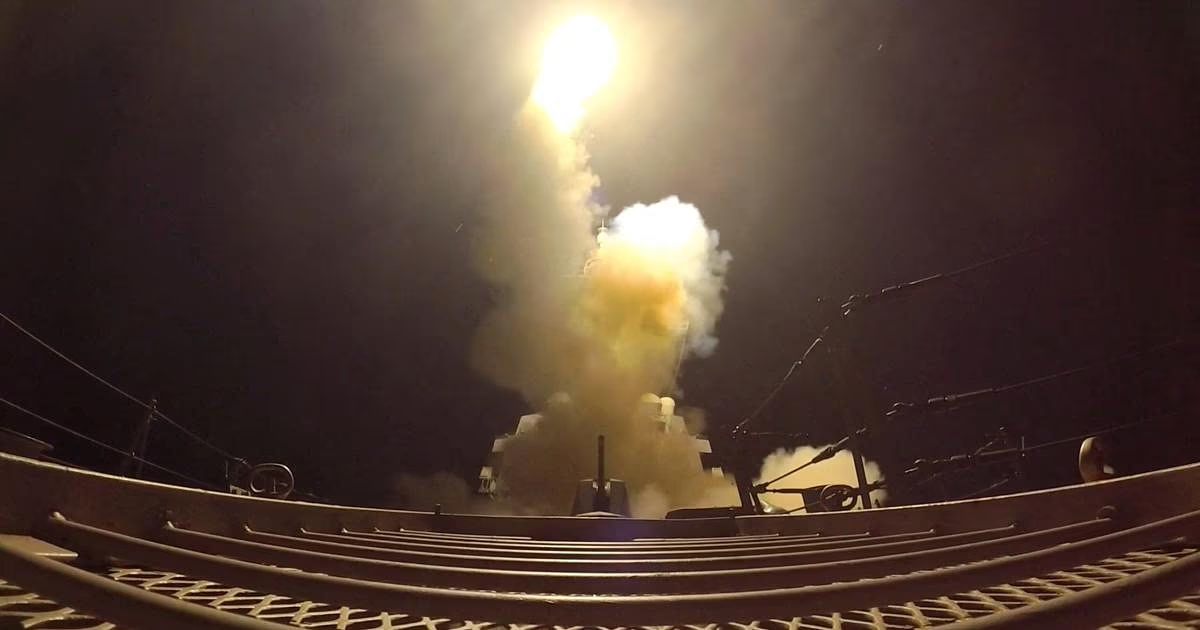
In the field context, the US Central Command 'CENTCOM' announced that military operations effectively began on Tuesday evening, Eastern US time. The military statement described these strikes as falling under the category of 'self-defense,' aiming to undermine Iranian capabilities that threaten navigation and international forces.

US military sources claimed that this operation represents a measured and appropriate response to what they described as 'unprovoked Iranian aggression' in international waters. CENTCOM did not disclose the precise list of targets hit by the bombing, merely stating that they targeted facilities linked to the recent attack.

Coinciding with these statements, media sources reported hearing violent explosions shaking wide areas in southern Iran, specifically in regions near the Strait of Hormuz. News focused on explosions occurring on Qeshm Island and in Sirik city, which caused a state of alert among Iranian civil defense forces.

Local news agencies confirmed that the echoes of the explosions reached the strategic city of Bandar Abbas, which includes vital facilities and important naval bases. A state of anxiety prevailed among local residents with the continued intensive air traffic in the skies of the maritime border region during night hours.

Cautious calm returned to the targeted areas hours after the bombing, as Iranian state television announced the end of the attacks and the return of life to normal in Qeshm and Jask. Despite this, authorities in Tehran have not yet issued any detailed statements regarding the extent of material losses or casualties resulting from the American strikes.

These field developments come at a very sensitive time, as Washington and Tehran are engaged in complex negotiations to end the state of war that erupted last February. These talks have been ongoing since the truce came into effect in April, amidst international hopes of reaching a formula that ends the armed conflict in the region.

Despite the recent military escalation, President Trump showed a degree of political optimism, indicating the possibility of reaching a comprehensive agreement with the Iranian side within a few days. Observers believe that military strikes may be a means of pressure and improving negotiation terms before the final sitting at the table.

These rapid events reflect the complexity of the Iranian-American file, where bullets intertwine with diplomacy in a hazy scene. While the front lines are ablaze with explosions, political channels remain open to try to contain the situation and prevent it from sliding into a comprehensive regional war.

Anticipation remains the master of the situation in the coming hours, awaiting the outcome of the counter-Iranian moves that Araqchi vowed. The international community is cautiously monitoring the extent of both parties' ability to exercise restraint and return to the negotiation path that Trump referred to in his recent statements.

Our mighty armed forces will not leave any attack or threat unanswered, and foreign forces must leave our region if they want safety.

ARAB AND WORLD

Tue 09 Jun 2026 8:47 pm - Jerusalem Time

Washington intercepts Iranian missiles over Israel amid conflicting success assessments

The regional arena witnessed rapid military developments following the Iranian missile attack targeting Israeli territory, with informed sources revealing the direct involvement of US forces in attempts to counter these missile barrages. Reports indicated that Washington used its defense systems in the region to launch interceptor missiles aimed at protecting Israeli airspace and reducing the damage caused by Iranian projectiles.

In statements quoted by international media, a US official confirmed that his country's forces had indeed launched interceptor missiles during the attack last Sunday. The official explained that this step came within the framework of the US commitment to Israel's security, noting that the military operations took place at a very sensitive time of direct confrontation between Tehran and Tel Aviv.

Despite confirmation of the intervention, a state of ambiguity still surrounds the actual results of these interceptions, as military circles in Washington are conducting precise and comprehensive assessments. These reviews aim to determine the accuracy of US interceptor missiles in hitting their targets, and whether they actually succeeded in neutralizing missile threats before they reached their ground targets.

There was a clear discrepancy in official accounts regarding the effectiveness of this intervention, as the US source previously indicated the possibility that no direct interception operation of Iranian missiles had succeeded. This denial contradicted statements issued by military officials in the Israeli occupation army, who spoke of a decisive and direct American role in shooting down a number of projectiles during the attack.

Intelligence estimates indicate that the process of determining 'what hit what' requires additional time due to the intensity of the attack and the multiplicity of defense systems involved in countering it. Washington seeks through these investigations to understand potential gaps in its defense systems and to develop its response to ballistic and cruise missile attacks that may recur in the future.

Incoming reports also confirmed that the United States did not limit itself to the recent intervention, but rather depleted large quantities of its stock of interceptor missiles in the region since the escalation began last February. This continuous logistical and military support aims to strengthen the Israeli defense system, which faces unprecedented pressures due to repeated attacks from multiple fronts.

On the diplomatic and joint military front, Israeli sources revealed the existence of high-level and continuous coordination with the US Central Command 'CENTCOM'. This coordination was evident in the intensive communications conducted by Israeli Chief of Staff Eyal Zamir with US military leaders to ensure the unification of defensive efforts and the exchange of real-time intelligence information.

Sources explained that Admiral Brad Cooper, commander of the US Central Command, was in constant contact with the Israeli side during the night hours that witnessed the Iranian attack. This communication aims to manage airspace in a way that prevents collisions between aircraft and interceptor missiles, and ensures maximum effectiveness in countering attacks coming from the east.

On the other hand, Israeli Prime Minister Benjamin Netanyahu announced a halt to poor Israeli attacks on Iranian targets for the time being. However, no official statement has been issued confirming a ceasefire agreement, leaving the door open for the possibility of renewed confrontation at any moment based on developments on the ground.

International circles are closely monitoring this close military coordination between Washington and Tel Aviv, due to its implications for the balance of power in the region. Observers believe that direct US intervention sends a clear deterrent message to Israel's adversaries, but at the same time places US forces in the direct line of targeting if the conflict expands.

Amid ongoing assessments, questions remain about the ability of joint defense systems to withstand large-scale and coordinated attacks. Technical and engineering teams are currently analyzing data extracted from radars and sensors to determine the trajectories of missiles that successfully penetrated the defensive envelope, and to ascertain the reasons for this partial failure.

In conclusion, the field scene remains prone to further escalation despite the cautious calm that followed the attack, as US and Israeli forces remain on high alert. These developments confirm that US involvement in defending Israel has gone beyond political and logistical support to actual combat participation in the air, which changes the traditional rules of engagement in the region.

Assessments are still ongoing within military and intelligence decision-making circles to determine what hit what in the aftermath of the mutual strikes.

ARAB AND WORLD

Tue 09 Jun 2026 8:46 pm - Jerusalem Time

US military helicopter crashes near Strait of Hormuz, crew rescued

A US Army helicopter crashed in an area near the strategic Strait of Hormuz, international press sources reported early Tuesday. Initial reports confirmed that rescue teams successfully evacuated and secured the military aircraft's crew without any human casualties.

The sources indicated that the true reasons behind the helicopter's crash in this sensitive area remain unclear, as no official statement has been issued specifying whether the incident resulted from a technical or mechanical malfunction affecting the aircraft, or if it was a direct targeting by Iranian fire amid ongoing tensions in the region.

International military circles are monitoring the repercussions of this incident, which comes at a sensitive time when the Strait of Hormuz is witnessing intense military movements. US authorities are expected to launch a comprehensive investigation to ascertain the circumstances of the incident and determine responsibilities.

It was not immediately clear whether the helicopter was shot down by Iranian fire or suffered a mechanical failure.

PALESTINE

Tue 09 Jun 2026 8:46 pm - Jerusalem Time

Contradictory Israeli Accounts Following Infiltration and Clash on Lebanese Border

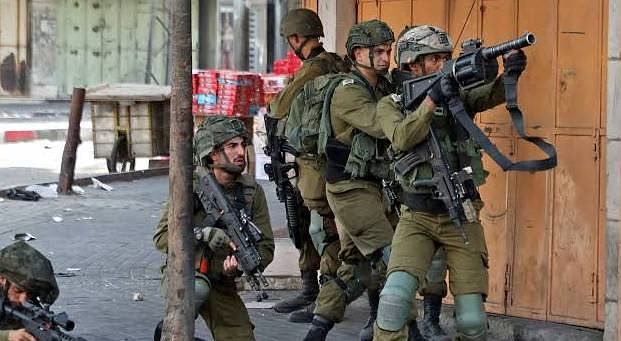
Hebrew sources announced a security incident, described as serious, on the northern border with Lebanon, where the Israeli occupation army claimed to have eliminated two militants after they successfully crossed the border fence. Reports clarified that an armed clash erupted immediately upon the discovery of the infiltration, prompting a widespread alert among forces stationed in the area.

Security sources reported that one of the infiltrators managed to fire directly at an Israeli patrol before being targeted, while no precise information was received regarding casualties among the occupation soldiers. The military command quickly deployed special naval commando units to participate in extensive search operations, fearing the presence of other infiltrators.

The official Israeli narrative witnessed a state of confusion and disarray, as reports conflicted between one or two militants being killed, while no final statement was issued clarifying the details of the operation. This contradiction in information reflects the extent of security pressure on the northern front despite the strict measures imposed there.

This incident comes within a complex field context, as the occupation has continued its ground operations in South Lebanon since 2024, which included the complete destruction of front-line villages. Despite this destructive policy, infiltration and direct engagement operations continue to pose a constant challenge to Israeli intelligence and field capabilities.

Israel had previously established five permanent military points inside Lebanese territory, with the aim of enhancing surveillance and preventing any combat movements near the border. It also expanded the scope of its military operations to reach a depth of about 12 kilometers inside South Lebanon, under the pretext of securing northern settlements and preventing infiltration.

Observers believe that the arrival of armed elements at point zero and their clash with an Israeli patrol deals a strong blow to the official narrative that claimed to have weakened the offensive capabilities of Hezbollah's elite forces. The incident confirms that the military presence of the resistance remains effective and capable of penetrating Israeli fortifications despite continuous aerial and artillery bombardment.

These developments raise fundamental questions within political and military circles in Tel Aviv about the feasibility of the 'buffer zone' that the occupation sought to impose by force of arms. The failure to prevent infiltration indicates that engineering and military measures have not achieved the stated goal of providing absolute security for border areas.

Meanwhile, Hebrew media continues to report initial details indicating that the militants exploited gaps in the surveillance system to reach their targets. Military investigations are currently underway to determine how the border was crossed in an area supposedly under intensive technological and human surveillance around the clock.

In conclusion, the situation on the Lebanese border remains prone to further escalation, especially with the occupation continuing to expand its targeting to include civilian areas and residential neighborhoods far from the front line. This field operation places the Israeli government in a new dilemma regarding the credibility of its promises to safely return northern residents to their homes.

The incident represents a significant embarrassment for the Israeli security establishment, which previously promoted the end of combat forces' presence in border areas.

OPINIONS

Tue 09 Jun 2026 8:46 pm - Jerusalem Time

US-Israeli Disagreement Over Iran Exposes Limits of Netanyahu's Influence, Boosts Chances for Settlement

Washington's Message

Washington – Said Arikat – 6/9/2026

News Analysis

In a new indication of the widening gap between Washington and Tel Aviv regarding how to deal with the Iranian file, US Vice President J.D. Vance affirmed that the ongoing agreement being negotiated between the United States and Iran represents a "major achievement for the American people," whether Israel likes it or not, in a rare statement reflecting the decline in the Benjamin Netanyahu government's ability to impose its security vision on the American administration.

Vance's statements came as US President Donald Trump spoke of an agreement being close to completion within “two or three days,” considering that negotiations had entered their final stages, and emphasizing that the primary American goal is to prevent Iran from acquiring nuclear weapons, not to serve the Israeli agenda or expand the scope of military confrontation in the region.

Vance said in an interview with "Fox News" that the United States and Israel share many interests, but there are also fundamental points of disagreement, explaining that the Trump administration believes that reaching a long-term settlement with Iran serves American interests better than continuing open military confrontation.

He added that the agreement being worked on includes stricter monitoring and inspection mechanisms than the nuclear agreement concluded by former President Barack Obama's administration in 2015, an agreement that Netanyahu worked for years to undermine before succeeding in pushing the first Trump administration to withdraw from it in 2018.

These statements come days after renewed military tension between Israel and Iran, following an Iranian missile attack targeting northern Israel, which followed an Israeli raid on Beirut targeting Tehran's Lebanese ally, despite previous pledges not to target the Lebanese capital.

The Israeli strike on Beirut sparked widespread criticism as another example of the Netanyahu government's disregard for international pressure, and even direct American demands, as it came at a time when Washington was seeking to create conditions for the success of settlement negotiations with Iran and to reduce regional tension.

Despite reports of Trump's anger at the Israeli response and his demand that Netanyahu de-escalate, the US president tried to downplay the extent of the disagreement, affirming that the Israeli prime minister had not defied his directives, and that both parties later reached a mutual ceasefire mediated by the US.

However, the statements from Vance and Trump reveal a different reality: Washington's priorities no longer fully align with the Netanyahu government's calculations, and the American administration views regional stability and nuclear non-proliferation as priorities that supersede the chronic Israeli desire to keep the region in a state of permanent confrontation with Iran.

Failure of the Israeli Intimidation Strategy

Vance's statements clearly reveal that Netanyahu's strategy, based on continuous intimidation regarding Iran, no longer holds the same influence within decision-making circles in Washington. For many years, the Israeli prime minister succeeded in portraying any diplomatic path with Tehran as an existential threat to Israel and the West, but the current American administration seems more convinced that verifiable and controllable agreements are more effective than continuous military escalation. This shift reflects a tangible decline in Netanyahu's ability to direct American policy according to his government's priorities, despite his influence and connections within the United States.

Beirut Pays the Price for Netanyahu's Political Calculations

The targeting of Beirut highlighted the Israeli approach of expanding conflict arenas beyond the Palestinian and Israeli borders. Instead of containing tensions, the Netanyahu government continues to transfer the confrontation to neighboring countries, exposing civilians and infrastructure to serious risks and undermining any diplomatic efforts to de-escalate. It was notable that the strike came despite clear American reservations, which reinforces the impression that Netanyahu uses military operations to achieve internal political gains and protect his political future more than to serve regional security and stability.

Israel's Real Security Crisis

Successive Israeli governments continue to justify their military policies as a guarantee of security, but reality indicates the opposite result. After years of wars, assassinations, and military operations extending from Gaza to Lebanon, Syria, and Iran, Israel has not succeeded in achieving lasting stability or eliminating sources of threat. Rather, these policies have contributed to deepening feelings of hostility and expanding the scope of regional confrontations. Furthermore, the continued occupation and settlement and the deprivation of Palestinians of their basic rights undermine any possibility of building real and sustainable security, and make the entire region hostage to recurring cycles of violence and instability.

PALESTINE

Tue 09 Jun 2026 8:46 pm - Jerusalem Time

Progress in Cairo talks: Unified Palestinian formulation for responding to the roadmap and efforts to overcome the weapons obstacle

The leadership of the Islamic Resistance Movement Hamas announced significant progress in the ongoing round of talks in the Egyptian capital, Cairo, in recent days. The movement affirmed that its delegation, in cooperation with national forces, formulated a responsible and unified response to the provisions of the roadmap presented by mediators to end the war in the Gaza Strip.

Hamas leader Taher Al-Nunu clarified that the current deliberations focus on mechanisms for implementing the ceasefire agreement and completing the files of the first phase of the proposal. He indicated that discussions extend to include establishing the political rights of the Palestinian people and ensuring that the National Administrative Committee assumes its duties in managing the Strip.

Al-Nunu stressed in press statements that the talks prioritize the complete Israeli withdrawal from all areas of the Gaza Strip. The efforts also aim to intensify the urgent flow of humanitarian aid and immediately begin relief and reconstruction operations to ensure the security and stability of citizens.

The movement's delegation in Cairo included prominent leaders headed by Khalil al-Hayya, where a series of intensive meetings were held with mediators and representatives of Palestinian factions. These meetings were characterized by a high sense of responsibility with the aim of reaching an agreement formula that enjoys national acceptance and ends the ongoing aggression.

In a related context, informed sources revealed that mediators are making strenuous efforts to rephrase articles eight and nine of the proposal, which represent the core of the dispute over the weapons file. These articles are considered the main obstacle that prevented reaching final understandings in previous rounds.

Observers believe that the discussions have moved beyond the stage of initial rejection or acceptance, and have shifted to the details of how, when, and what guarantees are required. The participating parties are seeking to find a political solution that balances the requirements of the agreement with maintaining the defensive capabilities of the factions within a national framework.

Palestinian forces adhered to a set of strict determinants, foremost among them the rejection of any infringement on individual weapons under any circumstances. The factions stipulated that any security arrangements be linked to a clear timetable for a comprehensive Israeli withdrawal from the Strip, considering that weapons are linked to national sovereignty.

The Palestinian conditions also included the necessity of ending the phenomenon of gangs and cooperation with the occupation before delving into any details concerning weapons. National forces affirmed that this file must be addressed within a purely internal Palestinian framework, away from any dictates or temporary security arrangements imposed by the occupation.

Data coming from Cairo indicate that the coming hours will be crucial in determining the course of negotiations. The current atmosphere does not suggest a collapse of the dialogue, but rather a serious attempt to bridge viewpoints and build a formula that protects Palestinian constants and gives mediators an opportunity to achieve a breakthrough.

Political analysts considered that the Egyptian role is currently focused on building a bridge to overcome the major obstacle hindering the agreement. It seems that there is a desire to transform the weapons file from a point of conflict into part of a comprehensive political solution that ends the ongoing conflict.

On the other hand, media sources confirmed that the positive atmosphere in the Cairo meetings reflects a genuine Palestinian will to alleviate the suffering of the residents. This approach aims to overcome all technical and political obstacles that may hinder the implementation of understandings on the ground.

According to political assessments, the ball is now in the court of the Israeli side and the American administration to take practical steps. What is required now is to move from the policy of field pressures to the stage of actual commitment to the entitlements imposed by the proposed roadmap.

Observers warn that the failure of this opportunity will hold the occupation and the United States responsible for the continued escalation and lack of stability. Palestinian demands have become clear and framed by national guarantees aimed at protecting the internal front and starting the post-war phase.

Popular and political circles are awaiting the outcome of the next few days, amidst hopes that the new Cairo formulation will lead to a permanent ceasefire. The bet remains on the ability of mediators to convince all parties of the modified formula that guarantees withdrawal and reconstruction.

Cairo is not looking for a new agreement today, as much as it is looking for a bridge to cross over the last major obstacle in the way.

PALESTINE

Tue 09 Jun 2026 8:46 pm - Jerusalem Time

Gaza: 985 Martyrs and Over 3,000 Israeli Violations of the Ceasefire Agreement

The Government Media Office in the Gaza Strip announced the documentation of thousands of Israeli violations of the ceasefire agreement in effect since October 2025. Official data indicated that the occupation committed approximately 3,201 field violations over 240 days, undermining the relative calm that residents in the besieged strip had been anticipating.

These continuous aggressions resulted in the martyrdom of 985 Palestinians, in addition to 3,097 others sustaining injuries of varying severity. Legal and human rights teams also recorded the arrest of 83 citizens since the agreement came into effect, a clear indication of the continuation of military and security operations despite international pledges to de-escalate.

On the humanitarian front, the report revealed the occupation's manipulation of the relief aid file and obstruction of essential needs reaching the population. The occupation only allowed the entry of 52,129 trucks out of 144,000 trucks that were supposed to arrive under the agreement, representing a meager compliance rate of no more than 36 percent.

The terms of the concluded agreement stipulate the necessity of introducing 600 trucks loaded with goods and provisions daily to meet the needs of affected citizens. The agreement also includes the supply of 50 fuel trucks daily, comprising diesel, gasoline, and cooking gas, which has not been regularly fulfilled, exacerbating the energy and basic services crisis in Gaza.

Regarding freedom of movement through the Rafah border crossing, the Media Office indicated that the occupation obstructed the travel of thousands of humanitarian cases and patients. Out of 19,000 Palestinians who were supposed to leave the strip, only 6,488 people were allowed to travel, with a compliance rate of 34 percent, which doubled the suffering of those stranded.

Occupation forces had reopened the Palestinian side of the Rafah crossing last February after occupying it for several months, but movement remained very limited. Local sources reported that those returning to the strip are subjected to systematic harassment, lengthy interrogations, and detention for long hours before being allowed to cross to their homes.

The Government Media Office, in its statement, condemned what it described as the systematic policy of the occupation in targeting the Palestinian people and destroying the components of their lives. The statement held the occupation government fully responsible for the catastrophic deterioration in living and health conditions, calling on international mediators to intervene immediately to compel Israel to implement all terms of the agreement.

It is worth noting that this agreement came after a devastating war that began in October 2023, leaving massive destruction affecting about 90 percent of Gaza's infrastructure. According to official statistics, the war caused the martyrdom of approximately 73,000 Palestinians and injured more than 173,000 others, in one of the largest humanitarian disasters in modern history.

The occupying state did not adhere to the terms of the agreement regarding the entry of aid, as it allowed only 36% of the supposed trucks to enter.

PALESTINE

Tue 09 Jun 2026 8:46 pm - Jerusalem Time

Widespread Western Sanctions Target Smotrich and Settlement Entities, Israel Attacks Decision

Six Western countries have taken an advanced diplomatic and legal step by announcing a package of sanctions against leaders in the settlement movement and Israeli entities involved in violence against Palestinians. This list included ministers in the current Israeli government, led by Finance Minister Bezalel Smotrich, as part of an international reaction to what was described as 'horrific violence' in the occupied West Bank.

Diplomatic sources clarified that the foreign ministers of France, Britain, Canada, Australia, New Zealand, and Norway agreed on the necessity of holding accountable individuals and organizations that fuel tension. France took direct action by banning Smotrich from entering its territory, in addition to targeting 4 leaders of settlement organizations and 21 settlers involved in field attacks.

French Foreign Minister Jean-Noël Barrot affirmed that the decision to ban Smotrich's entry came as a result of his public statements calling for the annexation of the occupied West Bank and the construction of new settlements. Barrot indicated that the Israeli minister is pushing for the economic collapse of the Palestinian Authority and working to re-occupy the Gaza Strip, which undermines the chances of a two-state solution.

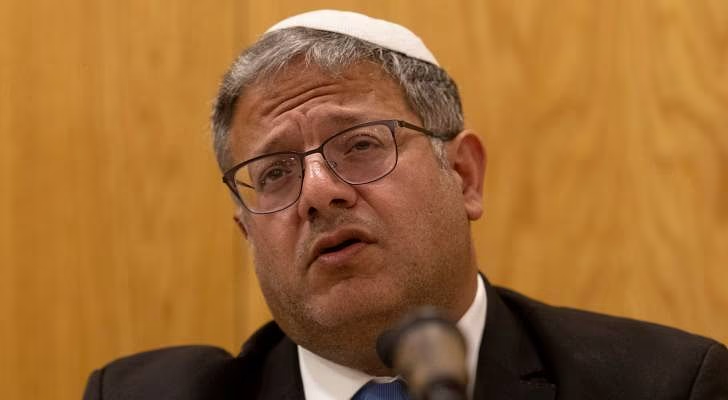
Paris considers that these extremist policies disregard the international consensus committed to peace and stability in the region. Smotrich, who heads the 'Religious Zionism' party, is the second high-ranking official in Netanyahu's government to be banned from visiting France after National Security Minister Itamar Ben-Gvir.

French authorities had prevented Ben-Gvir from entering their territory last month, following his involvement in publishing video clips showing the abuse of international activists. The two extremist ministers form the cornerstone of Benjamin Netanyahu's coalition, who in turn faces international legal prosecutions on charges of committing war crimes and genocide.

In a related context, the British government announced financial sanctions against 6 entities and one individual, on charges of funding and enabling acts of violence carried out by settlers. These measures aim to dry up the sources of funding that allow extremist groups to operate freely and with complete impunity in the occupied territories.

London stressed that illegal settlement expansion has reached unprecedented levels, threatening to deliberately destroy Palestinian livelihoods and homes. The British government called on its Israeli counterpart to curb settlers and prosecute those responsible for crimes committed against civilians.
These coordinated Western moves come after UN reports confirmed the involvement of Israeli security agencies in providing protection to settlers during their attacks. The reports indicated that the absence of internal accountability in Israel prompted the international community to intervene by imposing individual and institutional sanctions.

For its part, the Israeli Ministry of Foreign Affairs quickly issued a strongly worded statement, describing the Western sanctions as 'disgraceful' and unacceptable measures. The Foreign Ministry claimed that these countries failed to protect their citizens from rampant 'anti-Semitism' and are now trying to impose political positions through the gateway of human rights.

The Israeli government considered that targeting its ministers and citizens aims to question 'the right of Jews to live in the land of Israel.' Tel Aviv believes that these sanctions are an attempt at political pressure under the guise of combating violence, affirming its categorical rejection of any interference in its settlement policies.

On the ground, about 750,000 settlers live in hundreds of settlements and unauthorized outposts scattered across the West Bank and East Jerusalem. These settlers carry out systematic attacks, including burning crops and assaulting property, with the aim of pushing Palestinians towards forced displacement and abandoning their lands.

Palestinian observers warn that coordination between the Israeli army and settlers paves the way for an actual and comprehensive annexation of the West Bank. Palestinians believe that these practices aim to definitively eliminate any chance of establishing an independent and geographically contiguous Palestinian state in the future.

These developments coincide with the ongoing bloody war in the Gaza Strip, where the occupation continues to commit daily massacres and impose a suffocating siege. Right-wing forces in the Israeli government support the continuation of military operations and the expansion of settlement areas as part of a strategic vision to impose a new reality.

Finally, Britain and other European countries are threatening to take further punitive measures if there is no tangible improvement in the situation on the ground in the West Bank. Tension remains high with the Israeli government's insistence on proceeding with its settlement plans despite increasing international pressure.

Smotrich openly calls for the annexation of the West Bank and the establishment of new settlements, a policy with severe consequences that the international community cannot accept.

PALESTINE

Tue 09 Jun 2026 8:45 pm - Jerusalem Time

Mehdi Hasan: Freedom of Expression in the West Collapses at the Threshold of Palestine

Writer and journalist Mehdi Hasan, editor of 'Zeteo' website, highlighted the stark contradiction in how Western democracies deal with freedom of expression, asserting in an article published by 'The Guardian' that this theoretically guaranteed freedom becomes subject to negotiation or suppression when it relates to Palestine. Hasan pointed out that the principles long championed by the West, such as the right to offend and protest, have faded in the face of the war in Gaza.

The writer recalled how Western elites fiercely defended Salman Rushdie's novel 'The Satanic Verses' and the offensive cartoons of 'Charlie Hebdo,' considering them the essence of liberal values. However, these same politicians, who appointed themselves guardians of Voltaire's and Orwell's legacy, have turned into fierce opponents of any voice that criticizes Israeli policies or advocates for Palestinian rights.

In Britain, the article observed dangerous shifts, including the government's ban on the 'Palestine Action' group and its classification as a terrorist organization, a decision widely supported by 385 Members of Parliament. This measure opened the door to arrests of clerics, elderly individuals, and people with disabilities, whose only crime was carrying signs condemning what they described as UK-sponsored genocide.

British measures did not stop domestically but extended to preventing prominent American media figures such as Cenk Uygur and Hasan Piker from entering the UK. The Home Office justified this ban with vague terms related to 'public interest,' amidst reports suggesting fears of inciting what is described as antisemitism due to their political stances.

Hasan believes these messages are clear and unambiguous, as the British establishment welcomes certain political issues while fearing others intensely. He stressed that defending freedom of expression must be principled, especially when the expression is controversial, and cannot be reduced to protecting only opinions we already agree with.

In the United States, the writer described the situation as 'more alarming,' where pro-Palestinian voices, especially foreign students, are subjected to the largest attacks in modern American history. He cited a condemnation by a conservative judge appointed by Ronald Reagan, who described the suppression of protesters as a blatant attack on the First Amendment under the guise of vague definitions.

The article touched upon specific cases of students like Mahmoud Khalil and Rumaysa Ozturk, who faced investigations and detentions due to their political opinions, not for engaging in violence. Ozturk's crime, for example, was participating in writing an opinion piece calling on her university to divest from companies associated with the Israeli occupation, which authorities considered an overreach.

Targeting was not limited to non-citizens but also affected native-born American citizens like Hasan Piker, whom Republican Representative Randy Fine described as a 'terrorist' and demanded he be barred from entering the country. These statements coincide with intensive efforts in Congress to pass resolutions aimed at suppressing any criticism directed at Israel in the public sphere.

At the state level in the US, laws criminalizing boycotts of the occupation are spreading rapidly, while universities face immense pressure from donors and lobbying groups to punish protesters. These pressures have led to the destruction of careers for academics and journalists, and the cancellation of cultural and political events simply because they adopt the Palestinian narrative.

Mehdi Hasan questioned how granting unique immunity from criticism to one state in a democratic system can be justified, noting that Israel has strangely become a protected entity. Routine demands such as 'don't bomb hospitals' or 'don't kill children' are cynically reclassified as bigotry or antisemitism.

The writer considered this approach a direct assault on liberal democracy itself, because a society unable to honestly discuss its government's policies cannot govern itself. He warned that the restrictions imposed today on a specific group due to its stance on Palestine will inevitably be applied to other groups and issues in the near future.

Hasan responded to liberals who demand that the left stop focusing on foreign wars and concentrate on domestic issues, asserting that opposing the destruction of Gaza is inseparable from defending democratic freedoms. Complicity in war crimes abroad paves the way for the growth of fascism and authoritarianism at home, a danger that threatens everyone.

The article indicated that authorities in Britain and America resorted to suppression after realizing their inability to win the public debate on Palestine, especially with the shift in popular opinion. Instead of countering arguments with arguments, supporters of Israel in positions of power chose to prevent the debate from happening in the first place through censorship and intimidation.

Hasan concluded his article by emphasizing that the real question is not whether freedom of expression is targeted, but whether citizens will accept the erosion of freedoms that generations fought for. He warned against giving governments the power to define acceptable opinions, because this power will not stop at the Palestinian issue but will encroach upon all civil rights.

The great irony of our time is that politicians who appointed themselves guardians of freedom of expression have become its most ardent enemies when one topic is raised: Palestine.

ARAB AND WORLD

Tue 09 Jun 2026 8:45 pm - Jerusalem Time

Lebanese President: We have no choice but to negotiate, and we seek a non-aggression pact with Israel

Lebanese President General Joseph Aoun announced his full readiness to continue the negotiation process with Israel under the auspices of the United States of America, considering this path to be the only available option to end the conflict. Aoun indicated that he seeks to leverage international and American desire to put an end to military operations and achieve sustainable stability on the borders.

The Lebanese President revealed that tangible progress has been made in the past few days through what he described as arduous negotiations, which led to initial understandings for a ceasefire. This significant breakthrough includes the withdrawal of Hezbollah elements to the north of the Litani River area, as a fundamental step to de-escalate the tense field situation.

Aoun explained that diplomatic efforts are currently focused on drafting a security agreement or a non-aggression treaty that guarantees the safety of both parties, without entering into comprehensive peace negotiations at this time. He affirmed that Lebanon remains committed to the provisions of the Arab Peace Initiative approved at the Beirut Summit in 2002 as a strategic framework for a final solution.

The Lebanese President stressed that the transition from a state of war to peace requires gradual and deliberate steps, starting with ending direct hostilities and establishing security on the borders. He also noted that he does not see the possibility of a direct meeting with the Israeli Prime Minister under current circumstances, preferring indirect diplomatic channels.

Regarding constitutional powers, Aoun affirmed that managing the negotiation file falls within the responsibilities of the President of the Republic according to Article 52 of the Lebanese Constitution. He explained that this move is being carried out in close coordination with the Prime Minister's office and the Speaker of Parliament to ensure a unified national stance aimed at protecting Lebanon's supreme interests.

Aoun touched upon the role of Parliament Speaker Nabih Berri, describing him as a statesman who seeks to end the war through peaceful and diplomatic means. He indicated that Berri is making great efforts to persuade the concerned parties of the necessity of prioritizing the state's interest, while taking into account the delicate political and sectarian sensitivities in the country.

The Lebanese President warned against being drawn into an internal military confrontation with Hezbollah, stressing that dialogue is the only way to address the issue of weapons. He explained that there are efforts to convince all parties that handing over weapons to the state is the real guarantee for the security of the Shiite community and all Lebanese components alike.

In a message addressed to Israeli society, Aoun questioned the futility of continuing wars that have not ended since 1948 without achieving real security. He called on the Israeli side to sit at the dialogue table and prioritize the language of logic, stressing that excessive military force has not and will not provide security for the residents of the northern regions.

Aoun demanded that the Israeli government show a genuine desire to end the conflict and adhere to international agreements, indicating that the Lebanese side is ready and willing to achieve stability. He warned that the absence of political will on the other side would mean the continuation of the cycle of violence from which no one on either side of the border would be safe.

Regarding the relationship with Tehran, the Lebanese President affirmed his country's aspiration to build balanced relations with Iran based on the principle of mutual respect for national sovereignty. He stressed that Lebanon is a sovereign state with legitimate institutions, and any external communication must pass through official channels and without interference in internal affairs.

Aoun sharply criticized interventions that serve regional interests at the expense of Lebanese blood and the destruction of their homes, stressing that the Lebanese people ultimately pay the price. He called on regional powers to realize that Lebanon can no longer tolerate being an arena for settling scores or serving external agendas.

The Lebanese President concluded his speech by affirming his rejection of calls for division or federalism, stressing that the state's duty is to preserve the unity of the national territory. He indicated that Lebanon's history and its pluralistic nature cannot be changed, and that the only solution lies in strengthening state institutions and extending its authority over all Lebanese territories.

It is time for the power of logic to prevail over the logic of force; military solutions will not provide you with safety and security.

PALESTINE

Tue 09 Jun 2026 8:45 pm - Jerusalem Time

European Escalation Against Settlements: Britain Imposes Financial Sanctions, France Bans Smotrich's Entry

The British government announced today, Tuesday, a new package of sanctions targeting seven individuals and entities linked to settlement activity in the occupied West Bank. This step comes within the global human rights sanctions regime, to confront networks suspected of involvement in financing and facilitating systematic acts of violence against Palestinian citizens and their property.

Official sources clarified that the new British measures were taken in close coordination with international partners including France, Canada, and Norway. These joint efforts aim to tighten the noose on financial flows that have enabled extremist settler groups to carry out their attacks without legal deterrence or actual accountability from the Israeli authorities.

London stressed in its statement that the financial structures supporting settler violence are now under international scrutiny, affirming that cooperation with allies will continue to ensure the restriction of these groups' ability to operate. The British government considered that the continuous settlement expansion represents a direct undermining of the chances for achieving a two-state solution and establishing peace in the region.

In a related context, Britain demanded that the Israeli government curb settler violence, which has reached unprecedented levels, including the destruction of homes and livelihoods. It also called for lifting economic restrictions imposed on Palestinians, hinting at taking additional and more stringent steps if the field conditions in the occupied territories continue to deteriorate.

This move coincides with the release of a UN report that revealed evidence indicating direct involvement of Israeli authorities in supporting settler attacks. The report indicated that Israeli forces provided protection to the attackers in several cases that led to the martyrdom, injury, and displacement of Palestinian families from their villages in the West Bank.

For its part, France escalated its tone and measures against the Israeli government, with the French Foreign Minister announcing his country's decision to ban the entry of Israeli Finance Minister Bezalel Smotrich into French territory. The decision also includes four settler leaders known for their involvement in incitement and carrying out hostile acts against Palestinian civilians.

Informed sources from Paris reported that this French move represents an extension of a series of sanctions that began about a week ago with a ban on the entry of National Security Minister Itamar Ben-Gvir. The sanctions against Ben-Gvir came after documenting violations and ill-treatment suffered by French citizens who were participating in solidarity activities with the Palestinian people.

The inclusion of Smotrich and settler leaders on the banned entry list reflects a radical shift in French foreign policy towards the extreme Israeli right. Paris is currently moving within a coordinated framework with Britain and other European countries to ensure unified positions towards the ongoing violations in the Palestinian territories and Lebanon.

The French government faces internal pressure and previous criticism regarding its delay in taking concrete measures against Israeli policies in Gaza and the West Bank. Observers believe that the recent decisions come to solidify the new French stance that seeks to impose a political and legal cost on settlement leaders and their supporting ministers.

Diplomatic relations between Paris and Tel Aviv are also experiencing escalating tension, especially after France's official recognition of the Palestinian state. This French diplomatic momentum has contributed to encouraging other European countries to take similar steps, which has increased the political isolation of the current Israeli government in international forums.

At the European Union level, France is leading a movement to push proposals aimed at completely banning the import of Israeli settlement products from European markets. Paris considers this economic path to be the most effective tool to pressure Israel to stop its illegal settlement activities that violate international law.

In conclusion, these accelerating international moves confirm that the issue of settlements and settler violence has topped the Western sanctions agenda unprecedentedly. It is expected that the coming weeks will witness further coordination between European capitals and Washington to impose additional restrictions on individuals and entities that hinder the path of stability in the region.

Continued illegal settlement expansion threatens the chances of reaching a two-state solution, and those responsible for the violence must be held accountable.

OPINIONS

Tue 09 Jun 2026 8:43 pm - Jerusalem Time

Netanyahu's Strategy and the Dismantling of Fronts: Has Israel Succeeded in Isolating the Lebanese Arena?

Ramallah - “Alquds ” dot com

Ramallah - “Alquds ” dot com

Opinion Writer

Since the outbreak of the major confrontation in the Gaza Strip, the Israeli government, led by Benjamin Netanyahu, has adopted a strategy aimed at managing the conflict through the principle of dismantling the arenas. This vision seeks to prevent the formation of a unified regional front capable of exerting integrated pressure on the occupation simultaneously.

Modern warfare, from the current Israeli perspective, relies on reshaping political and psychological maps, so that each arena is preoccupied with its own internal calculations. The ultimate goal is to make each front separate from its surroundings, thereby weakening its ability to become an active and influential strategic pressure element.

Observers raise questions about the extent of Netanyahu's success in separating the Lebanese arena from the broader regional scene and the developments of the war in Gaza. On the surface, the results appear partially positive for the occupation, as Lebanon has not slipped into a full-scale and open war despite months of escalating tension.

Israel has used multiple tools to keep the clashes in the north within a defined ceiling, including concentrated airstrikes and targeted assassinations. International pressure also played a pivotal role in preventing border confrontations from escalating into a wide-ranging, uncontrollable regional explosion.

The internal Lebanese reality, burdened by severe economic crises and institutional vacuum, contributed to reinforcing the logic of caution among Lebanese parties. These political divisions made the idea of engaging in a full-scale war a highly risky option for the country's fragile stability.

However, analysts believe that reading the scene solely from the perspective of immediate field results may be misleading and inaccurate. True separation between arenas requires dismantling the political and psychological ties that make events in Gaza directly affect Lebanese decision-making, which has not happened.

The picture appears more complex than Netanyahu tries to portray to both the Israeli public and the international community. The confrontations in southern Lebanon were not isolated from their regional context, but rather came within the framework of what is known as the interconnected 'unity of fronts' strategy.

Although each party in the regional axis maintained its own calculations, the symbolic and political interconnectedness remained strong. Israel found itself forced to allocate enormous military and intelligence resources to the northern front, which drained part of its war effort in Gaza.

Netanyahu realizes that the biggest challenge lies not only in the direct military threat but also in the continued idea of interconnectedness between the fronts. When any escalation in Gaza turns into a state of alert in Lebanon, Yemen, and Iraq, Israel enters a multi-directional attrition equation.

Israeli propaganda focused on convincing both internal and external audiences that what is happening in Lebanon is a separate matter that can be managed independently of other issues. But field realities have proven the limits of this gamble, as every escalation in Gaza was immediately reflected on the northern border.

Israel failed to achieve a fundamental strategic goal, which was to restore Lebanon to the state of 'full deterrence' it aspired to. Deterrence means the adversary refraining from action entirely, while the Lebanese front remained present and strong at the heart of daily Israeli military calculations.

Israel achieved some tactical gains by investing in Lebanese popular fears of widespread destruction similar to previous scenarios. Tel Aviv tried to create a gap between the Lebanese popular mood and the requirements of military confrontation through continuous economic and psychological pressures.

Tactical gains differ fundamentally from sustainable strategic achievements in the science of warfare and politics. True separation requires transforming Lebanon into a political space completely isolated from regional equations, something recent developments have shown to be difficult to achieve in the foreseeable future.

In conclusion, it can be said that Netanyahu partially succeeded in controlling the pace of the northern front, but failed to break the strategic link. Lebanon remains part of a larger regional equation, where the ties woven over past decades are still stronger than current attempts at dismantling.

The greatest danger lies not only in missiles but also in the idea of interconnectedness between the fronts remaining alive and active.

PALESTINE

Tue 09 Jun 2026 5:47 pm - Jerusalem Time

Gaza Health Condemns Occupation's Arrest of Red Crescent Ambulance Crews on Salah al-Din Street

The Ministry of Health in the Gaza Strip condemned the Israeli occupation forces' arrest of seven ambulance personnel belonging to the Palestinian Red Crescent Society while they were carrying out their humanitarian duties on Salah al-Din Street, the main artery connecting the governorates of the Strip. The ministry affirmed that this action represents a direct assault on field medical work and a transgression of all immunities granted to medical teams by international conventions.

Medical sources reported that the occupation authorities later released five of the detained paramedics after they were subjected to intense and harsh security interrogation, while two members of the team remain under arrest at this moment. The ministry indicated that these practices aim to disrupt medical rescue operations and obstruct the access of essential ambulance services to the wounded and sick under the current circumstances.

The ministry emphasized in its statement that the continued targeting of the health system and obstruction of logistical teams' movements directly threatens the lives of citizens and constitutes a blatant violation of the rules of international humanitarian law. It called on international bodies to intervene immediately to protect medical teams and ensure they are not subjected to harm while performing their duty to save lives.

The deliberate targeting of medical teams and obstruction of their work constitutes a blatant violation of international humanitarian law and undermines efforts to provide urgent healthcare to citizens.

ARAB AND WORLD

Tue 09 Jun 2026 5:47 pm - Jerusalem Time

US Congressman Demands Investigation into Israeli Attack on USS 'Liberty' After 59 Years

Republican Congressman Thomas Massie has once again shed light on one of the most controversial incidents in the shared military and political history between Washington and Tel Aviv. During an official speech in the US House of Representatives, Massie called for a comprehensive investigation into the Israeli military's attack on the American ship 'USS Liberty' during the 1967 war.

The House chamber witnessed a notable presence of 12 survivors of the incident, who watched from the gallery as the congressman delivered his speech, keen to honor them and acknowledge their heroism. Massie called for breaking the decades-long silence, emphasizing that the time has come to do justice to the victims and their families and to uncover the facts that have been obscured for too long.

The roots of the incident date back to June 8, 1967, when the US Navy destroyer was subjected to a violent air and sea attack in international waters off the Egyptian coast. This assault, carried out by Israeli fighter jets and torpedo boats, resulted in the deaths of 34 crew members and injuries to more than 170 others in a bloody toll.

Congressman Massie asserted in his argument that the ship was on a technical surveillance mission to monitor the results of the Six-Day War and was not carrying any combat weapons for self-defense. He also pointed out that the American flag was clearly flying above the ship's mast, refuting the hypothesis of mistaken identity that the official Israeli narrative adhered to.

Describing the details of the attack, Massie explained that 'Mirage' aircraft launched raids that lasted about 25 minutes, using missiles and 30mm machine guns. The attackers did not stop there but also dropped incendiary napalm bombs on the ship's command bridge to ensure it was completely disabled.

The congressman conveyed horrific testimonies from survivors, stating that Israeli forces directly targeted lifeboats that the crew tried to launch to escape the burning ship. Machine gun fire also struck firefighters who were trying to extinguish fires on the deck, an indication that reinforces the hypothesis of criminal intent in the attack.

Thomas Massie is known for his critical stances on the nature of US-Israeli relations and foreign military funding within the halls of Congress. He has previously opposed several bills aimed at enhancing military integration with Israel, preferring to focus on direct American national interests and transparent accountability.

This move has sparked mixed reactions, with Massie facing accusations of anti-Semitism from some parties, while others considered it a courageous step towards uncovering the truth. The 'Liberty' ship file remains an open wound in the memory of the US Navy, with survivors insisting that the incident was deliberate and not merely a technical error.

The attack was clearly aimed at annihilating everyone on board the ship, as the Israelis targeted lifeboats and firefighters with machine guns.

PALESTINE

Tue 09 Jun 2026 5:47 pm - Jerusalem Time

ICC immediately suspends Prosecutor Karim Khan

The International Criminal Court's (ICC) senior administrative body announced the immediate suspension of Prosecutor Karim Khan, pending a final decision from member states regarding his future in the position. This measure comes in the wake of accusations of sexual misconduct against him, with the body referring the entire file to the Assembly of States Parties, comprising 125 countries, to consider recommendations and take appropriate legal action.

The body, affiliated with the Assembly, clarified that the suspension decision was taken by a qualified majority, emphasizing at the same time that this step does not imply a prejudgment or a final verdict on the merits of the case. A special session is scheduled to be held later to discuss the legal arguments and reports received concerning the alleged conduct of the Prosecutor, to ensure the integrity of the international judicial institution.

The roots of the case trace back to lengthy investigations spanning approximately 18 months, centered on allegations of non-consensual relationships with a lawyer working within his office staff. Informed diplomatic sources reported that the executive office of the body concluded in its report that Khan had committed a serious violation, which prompted the body to officially recommend his removal from his leadership duties at the Court.

In contrast, Karim Khan vehemently rejected these accusations. His legal team issued a statement refuting the justifications for the suspension, describing them as illegal and contrary to established procedures. His lawyers affirmed that the decision lacks tangible material evidence, noting their client's insistence on his complete innocence of all allegations that have affected his professional and personal reputation during the past period.

Technical reports revealed that UN investigators had earlier found what they called a 'factual basis' for the complaint against Khan, supported by eyewitness testimonies. However, a divergence in legal assessment emerged after a separate report prepared by three judges concluded that the currently available evidence does not rise to the level of conclusive proof that would warrant direct conviction without further scrutiny.

The Prosecutor had been on voluntary leave since May 2025, awaiting the outcome of official investigations, which effectively removed him from managing sensitive files in the prosecution office. Khan is the first prosecutor in the history of the International Criminal Court to face a formal suspension decision by the oversight body, placing the Court before an unprecedented organizational and legal test.

It is worth noting that Karim Khan gained global prominence after his historic decision to request arrest warrants for Israeli Prime Minister Benjamin Netanyahu and his former security minister Yoav Gallant on charges of committing war crimes in Gaza. That move sparked widespread anger in Israeli and American circles, with Khan facing political pressure and Washington's sanctions, making the timing of his suspension a focus of international observers.

The decision taken does not constitute a prejudgment of the case's outcome, and a special meeting of member states will be held to consider the final procedures.

ARAB AND WORLD

Tue 09 Jun 2026 5:46 pm - Jerusalem Time

Trump announces 'historic' deal with Iran is imminent and warns Israel of isolation

US President Donald Trump announced that ongoing negotiations with Tehran have reached their final stages, expressing great optimism about the possibility of reaching a formal agreement within a few days. Trump clarified that negotiators from both sides are now putting the finishing touches on an understanding he described as 'very good,' indicating that this agreement could come to light in two or three days if things continue as currently expected.

These rapid diplomatic moves come after a round of direct military escalation between Iran and Israel, where the region witnessed an exchange of missile strikes that raised international fears of a full-scale war. Tehran launched advanced ballistic missiles of the 'Kheibar Shekan' and 'Emad' types in response to the targeting of the southern suburbs of Beirut, before the Iranian 'Khatam al-Anbiya' headquarters announced a halt to military operations after a confrontation that lasted about 14 hours.

In the context of US pressure to contain the situation, press sources revealed the content of a phone call between Trump and Israeli Prime Minister Benjamin Netanyahu, where the US President urged him to de-escalate and avoid steps that could lead to an expansion of the confrontation. Trump was quoted as telling Netanyahu clearly: 'You must be careful, otherwise you will find yourself alone,' referring to the possibility of withdrawing US military cover if uncoordinated escalation continues.

For their part, political analysts believe that the latest round of escalation, despite its seriousness, contributed to accelerating the pace of diplomatic negotiations, as the Iranian strike demonstrated Tehran's possession of effective deterrent capabilities that cannot be ignored. Informed sources indicated that the current US administration does not wish to engage in a new regional war, which prompted it to bypass Israeli reservations and move forward with direct understandings with the Iranian side.

On the ground, Tehran insists on linking any political understanding with Washington to the necessity of stopping the Israeli war on Lebanon, which Tel Aviv rejects, demanding the separation of military tracks. While the Iranian Foreign Ministry confirms that diplomatic channels are still open, Iranian President Masoud Pezeshkian stressed his country's commitment to the negotiation path despite the existing military tensions on the ground.

As part of Iranian preparations, technical reports indicated that Tehran has restored full operational capability at 30 missile sites directly overlooking the strategic Strait of Hormuz, strengthening its negotiating position. These developments coincide with varying intelligence estimates regarding the size of Iran's remaining missile arsenal, with estimates between Washington and Tel Aviv differing on the number of long-range missiles ready for launch.

On the humanitarian and logistical level, the Rafah and Kerem Shalom crossings were reopened in recent hours after a temporary closure imposed by the recent military escalation, allowing the resumption of supply movements. Regional and international parties are now monitoring whether the current truce will become an entry point for a comprehensive political settlement in the region, or if it is merely a temporary respite preceding a new round of direct confrontations.

I told Netanyahu: You must be careful, otherwise you will find yourself alone.

ARAB AND WORLD

Tue 09 Jun 2026 2:10 pm - Jerusalem Time

Tehran conditions de-escalation on ending the war in Gaza and all resistance fronts

Tehran hinted at returning to the option of direct military operations if the security of the Iranian people or any of the parties of the "resistance front" in the region is endangered. Ali Khodarian, a member of the National Security Committee in the Iranian Parliament, clarified that the scope of the Iranian response would include protecting Hezbollah in Lebanon, and resistance forces in the Gaza Strip, Yemen, and Iraq, stressing that any harm to the security of these parties would be met with offensive reactions.

The Iranian official indicated that his country's official position on de-escalation has been clear from the beginning, as Tehran stipulated that any ceasefire agreement must include all arenas related to the current confrontation without exception. He added that the Iranian vision is based on the necessity of confining the negotiation process to one goal, which is the comprehensive end of the war, to ensure regional stability and prevent the occupation from singling out any front.

According to media sources, these Iranian conditions came in response to proposals made by the opposing party during recent rounds of communication. These statements come at a time when the region is witnessing escalating tensions, as Tehran seeks to establish the equation of "unity of fronts" as a fundamental condition for any future political settlement that guarantees an end to the aggression against Gaza and Lebanon.

Iran's condition for accepting a ceasefire was to end the ceasefire in all arenas of the resistance front, and to confine negotiations to ending the war.

OPINIONS

Tue 09 Jun 2026 2:09 pm - Jerusalem Time

The Israeli Opposition… A Partner in Forging Netanyahu's Power

Some Israeli analyses tend to blame Benjamin Netanyahu alone for the continuation of the war and the expansion of confrontations, but this reading ignores a fundamental truth: the Israeli opposition itself was, and still is, one of the most important sources of strength that Netanyahu relies on to survive and endure.According to some Israeli analysts critical of Netanyahu, the opposition, instead of forming a real political alternative or leading a serious accountability process for the government after the failure of October 7, practically contributed to raising Netanyahu's ceiling and provided him with a political and popular safety net. By engaging in the state of Zionist national consensus, it became a protective wall that prevented his downfall at many junctures that could have ended his political future.The opposition could have capitalized on the Israeli anger after October 7 to expose Netanyahu's failure and inability to lead. He is a politician historically known for hesitation and fear of making decisive decisions when their political cost is high. But what happened was the exact opposite, as he succeeded in turning the failure of the army and security agencies into an opportunity to rearrange the balance of power within the occupation state, avoiding personal accountability for the disaster, and even refraining from acknowledging any political responsibility for it.Netanyahu was able to tame the security and military establishment and exploit its failures for his benefit, while the opposition was preoccupied with participating in crisis management more than with holding those responsible accountable. Instead of revealing the extent of political and security failures to public opinion, it preferred to join the general mobilization under the banner of supporting the army and national unity, which gave Netanyahu the time and political cover needed to restore his image.In his relationship with US President Donald Trump, Netanyahu knows well when to retreat and when to advance. He understands the nature of American politics as he understands Trump's personality and calculations. Therefore, even when he faces American pressure, he tries to turn it into domestic political capital.Every confrontation or disagreement with Washington is marketed within Israel as proof of the independence of Israeli decision-making and Netanyahu's ability to say “no” to the American president when it comes to what the Israeli right calls supreme national interests.For this reason, Netanyahu does not treat his disagreements with American administrations as an existential threat. He has engaged in political confrontations with successive American administrations, from Bill Clinton to Barack Obama and Joe Biden, and he realizes that the United States will remain compelled to deal with him as long as he remains prime minister.The real danger for him does not come from Washington, but from losing his position. He knows that leaving the premiership means losing influence and political immunity, and perhaps returning to courtrooms or to the margins of political life. Therefore, he fights all his battles as battles for personal and political survival, not merely disagreements over public policies.For this reason, focusing on Netanyahu's personality becomes essential in any serious political analysis. The decisive factor in Israel is not only the nature of the system or the balance of power, but the person who has the authority to make the final decision. And under Netanyahu, these powers have been concentrated more than ever in the hands of the prime minister.But the responsibility does not fall on Netanyahu alone. The Israeli opposition repeats the same mistake again and again. When the cannons roar, opposing voices recede, and most of their leaders return to align behind the government under the banner of “national unity” or “supporting the army.”With the exception of limited voices such as Yair Golan, genuine criticism disappears, difficult questions are absent, and the political discourse becomes another version of the government's discourse. As for figures like Naftali Bennett, Gadi Eisenkot, Avigdor Lieberman, and others, despite their awareness of the extent of the failure Netanyahu has led Israel into, they hesitate to engage in a real political confrontation with him on issues of war and military escalation, fearing losing voters' support or appearing weak before Israeli public opinion.It seems that the obsession with opinion polls, the number of seats in the Knesset, and the desire to reach power push many opposition leaders to adopt the same security discourse promoted by Netanyahu, instead of offering a different political and strategic alternative. Thus, the competition among them turns into a bidding war over who appears tougher, not a competition over how to extricate Israel from its escalating crises.The result is that Netanyahu succeeds time and again in appearing as the only leader capable of managing crises, while his rivals turn into mere diluted versions of him. Instead of being an alternative to him, they become part of the political environment that allows him to continue and endure.But it is wrong to reduce this outcome to the performance of the Israeli opposition alone. Netanyahu also benefited from the mistakes of Israel's adversaries and enemies. Since October 7, the calculations of the Hamas movement, the performance of Hezbollah, and Iranian policies have contributed, to varying degrees, to providing the environment that allowed him to rebuild his political standing despite his responsibility for the biggest security failure in Israel's history.Instead of the war's outcomes leading to his political downfall, Netanyahu found himself able to exploit the continuation of confrontations and the multiplicity of fronts to convince Israelis that Israel faces continuous existential threats, and that any change in leadership during this phase might carry greater risks.Many forces misjudged how to manage the conflict with Israel, and also misunderstood Netanyahu's ability to exploit wars and crises for his benefit. In many cases, steps that were supposed to weaken him turned into factors that helped him strengthen his political position and reproduce himself as an indispensable leader in the eyes of a large part of Israeli society.Recent years have proven that military strikes alone have not resolved conflicts in Gaza, Lebanon, or with Iran. Despite assassinations, bombings, and continuous escalation, Israel has not achieved the political goals it announced, while security and regional challenges have become more complex. Conversely, the forces confronting Israel have not succeeded in preventing Netanyahu from turning these confrontations into a political lever that reinforces his stay in power.What Israel needs, according to this critical perspective put forward by some voices within it, is not more slogans or new rounds of escalation, but a comprehensive review of the policies that led to this predicament.Wars are not the end of the road, but the beginning of new paths. Success is not measured by the number of targets bombed, but by the state's ability to build a more stable political and security reality.As for the opposition that merely echoes the discourse of power and fears confronting Netanyahu at critical moments, it does not offer a real alternative, but becomes an indirect partner in prolonging his leadership. The irony is that many of his domestic opponents, as well as the Hamas movement, Hezbollah, and Iran abroad, have contributed with their political and military mistakes to strengthening his political position and giving him additional reasons to remain in power, so that the failures that were supposed to accelerate his downfall turned into new opportunities to rebuild his image and strengthen his standing within Israeli society.

OPINIONS

Tue 09 Jun 2026 2:09 pm - Jerusalem Time

Has the division become the formula for "New Palestine"?!

For nearly two decades, the Palestinian division has been treated as an urgent political crisis that, no matter how long it lasted, would eventually find its way to a solution through dialogue, reconciliation, or national understandings. However, what has been witnessed in recent years, and what has become clearer since the war of extermination in Gaza, now calls for an assessment of the accuracy of this assumption. It seems the question is no longer: when will the division end? Rather, are we still talking about a division, or about a new reality being entrenched as a framework through which the Palestinian cause and its political future are being reformulated? The danger of the current moment lies in the fact that the division is no longer merely the result of an internal crisis, but has gradually transformed into a favorable environment for reshaping the Palestinian geopolitical landscape itself. While the West Bank is subjected to a systematic dismantling process through settlement, annexation, and the isolation of cities and villages from each other, and not just the isolation of Jerusalem from its Palestinian surroundings, political, security, and economic arrangements are being proposed in Gaza that, in many aspects, go beyond the temporary nature that is supposed to accompany them. These paths may seem divergent on the surface, but they converge on one result: the entrenchment of separation between the components of the Palestinian people, and the closing of the door to any realistic possibility of an independent and unified Palestinian state, at a time when the dominant forces on the scene show no real action to prevent or even impede this path. Israel has largely succeeded in shifting the focus of international attention from the essence of the Palestinian cause as a cause of a people under occupation, to issues of administration, containment, and stability control. The discussion now revolves around the future of Gaza and its administration, and how to prevent collapse in the West Bank, more than it revolves around ending the occupation and embodying Palestinian national rights. Here lies one of the most dangerous transformations facing the Palestinian cause. National issues are not only defeated by military force, but can also erode when they are redefined and their position in international and regional consciousness is changed. More dangerously, many parties in the region and the world have begun to deal with the division as a stable reality, not a temporary crisis. While Palestinians continued to raise the slogan of ending the division without pursuing approaches that would dismantle it, many policies were built on a completely opposite premise, namely that this reality is here to stay, and that what is required is to adapt to and manage it, not to change it. From here, the essence of the crisis is no longer related to a committee here or a government and authority there, nor even to the absence of elections or the failure of reconciliation, despite the importance of all that. We are facing a crisis that affects the national project itself, and the ability of Palestinians to preserve the unity of their cause, its political representation, and its future vision. This question gains special importance in light of the ongoing arrangements within the Palestinian political system, whether related to the so-called "state constitution" or to the reshaping of national representative institutions and ambiguous "elections" for the Palestinian National Council. The issue here is not about the importance of reform or renewing legitimacies, as these are undisputed national requirements, but rather about the context in which these steps are taking place, the foundations on which they are based, and the outcomes they may lead to, such as entrenching exclusion and division. The rebuilding of national institutions is supposed to be the culmination of a national dialogue and consensus on the nature of the national project, its priorities, and its tools, not a substitute for it. However, when major foundational arrangements are implemented under the existing division, and without broad national consensus, the legitimate question becomes: are we in the process of rebuilding the Palestinian political system, or in the process of entrenching its adaptation to the new realities imposed by the division? The danger of this path increases if the situation shifts from the exclusion of specific political forces or oppositions to the exclusion of broad sectors of society from effective participation in shaping the national future. The crisis then is no longer merely a crisis of political representation, but becomes a crisis of the relationship between the political system and its society, and between national institutions and the idea for which they were established. Despite the catastrophes, defeats, and setbacks they have suffered, Palestinians have possessed a unifying national idea embodied in the project of national liberation and the establishment of an independent state. Today, however, the challenge is no longer limited to the question of the desired state, but extends to a more pressing question: how do we preserve the idea of the state itself from erosion, before the possibility of its embodiment on the ground is lost? States do not collapse only when they lose control over their territories, but when their founding elements disintegrate, especially the unity of geography, the unity of institutions, the unity of the political system, and the unity of the national vision. If current trends continue without radical review, the danger lies not only in the loss of additional parts of Palestinian land, but in entrenching a reality in which Gaza becomes a self-contained entity, and more dangerously, a distorted, expelling, and unsustainable entity, and the West Bank turns into mere isolated and besieged population clusters, while Jerusalem is pushed out of any real political equation. At that point, Palestinians will not be facing a deferred state project, but a reality in which the national cause is being replaced by livelihood, humanitarian, and administrative issues, no matter how important they may be. However, confronting this path does not begin with slogans, nor does it stop at repeated calls for reconciliation. It requires rebuilding the Palestinian national project itself, on the basis of political and democratic partnership, restoring the role of unifying institutions, renewing the legitimacy of the political system, and linking all of this to a national vision capable of uniting Palestinians in the homeland and diaspora around common goals. It also requires moving from managing daily crises to strategic thinking about the future; for peoples engaged in liberation battles, steadfastness is not enough, but they also need to have a clear vision of what they want to be in a decade or two. The battle raging today is not only over the land, despite its fateful importance, but over the political meaning of Palestine itself; will it remain the cause of a people striving for freedom, independence, and self-determination, or will it turn into separate entities and societies, each managed according to different conditions? Therefore, the biggest challenge facing Palestinians is not only to end the division, but to prevent its transformation into a permanent structure that redefines the Palestinian cause and its future. The opportunity to change the course is still available. However, time is no longer a neutral factor in the conflict, but has become one of its active elements. The issue is no longer just about ending a prolonged division, but about preserving the unity of the national cause itself from disintegration and erosion. And perhaps the question is no longer how to end the division, but how to prevent it from becoming the new formula for Palestine, and perhaps a prelude to an attempt to erase it.

PALESTINE

Tue 09 Jun 2026 2:09 pm - Jerusalem Time

Occupation arrests ambulance crew in central Gaza Strip, detains two of them

Palestinian medical sources reported on Tuesday that Israeli occupation forces stopped and arrested seven ambulance personnel belonging to the Palestinian Red Crescent Society. The incident occurred while the medical team was crossing through a military checkpoint set up by the occupation army on Salah al-Din Street, which is the main artery connecting the central and southern areas of the Gaza Strip.

The Ministry of Health clarified that the arrest took place while the paramedics were carrying out their usual humanitarian duties of rescuing the wounded and transporting the sick. The sources indicated that the occupation authorities subjected the seven team members to harsh field interrogations, before deciding to release five of them later, while two paramedics remain in detention in an unknown location.

For its part, official health authorities condemned this military action, demanding immediate international intervention to secure the release of the remaining paramedics and ensure their safety. The ministry affirmed that the recurrence of incidents involving the arrest of medical personnel directly hinders the health system's ability to respond to emergency calls given the current conditions in the Strip.

The sources stressed that these practices constitute a grave violation of the Geneva Conventions, which grant special protection to paramedics and medical facilities in conflict zones. They considered that obstructing the work of ambulance crews contributes to exacerbating the humanitarian crisis and places the lives of hundreds of citizens who need urgent medical care in real danger as a result of the continuous restrictions on relief movements.

Targeting medical teams and obstructing their work constitutes a blatant violation of international humanitarian law and undermines healthcare efforts.

PALESTINE

Tue 09 Jun 2026 2:08 pm - Jerusalem Time

Government warnings of a comprehensive collapse of the Palestinian health system due to financial blockade

The Palestinian government issued strong warnings that the health sector is on the verge of complete collapse, stressing that hospitals and care centers are now unable to provide even the minimum level of services. This came during an extensive diplomatic briefing held at the Ministry of Foreign Affairs headquarters, where the tragic reality experienced by patients in light of the shortage of medical supplies and the exacerbation of the financial crisis was reviewed.

Minister of Health Dr. Majed Abu Ramadan affirmed that the health system is facing unprecedented pressures resulting from the intertwining of humanitarian, operational, and financial crises in all Palestinian territories. He pointed out that the ability of medical institutions to operate has been systematically undermined, especially in the Gaza Strip and the West Bank, including East Jerusalem, making it almost impossible to respond to urgent needs.

The Ministry of Health stressed that the right to treatment is a fundamental right guaranteed by all international conventions and international humanitarian law, which obliges the occupying power to ensure the continuity of health services. The minister warned that targeting medical infrastructure and obstructing the arrival of supplies raises major legal and ethical questions about the extent of the international community's commitment to protecting civilians and medical facilities.

Regarding the field situation, official sources explained that conditions in the Gaza Strip continue to deteriorate rapidly despite talks of a ceasefire, with new casualties daily. The sources added that the scale of the disaster is not limited to the number of dead and injured, but extends to include the widespread destruction that has affected pharmacies, laboratories, and specialized rehabilitation centers.

The Minister of Health revealed shocking figures related to drug stocks, with about 47% of essential medicines, including vital treatments for cancer patients, having run out since last May. This deficit has put thousands of patients, especially children, pregnant women, and those with chronic diseases, in direct confrontation with the risk of death or an irreversible deterioration in their health condition.

The crisis has gone beyond drug shortages to become a public health catastrophe, as a result of the destruction of water networks, the accumulation of solid waste, and the massive overcrowding in displacement centers in the Gaza Strip. Medical authorities warned of the spread of epidemics and infectious diseases among the exhausted population, stressing that the current environment has become an ideal breeding ground for diseases that threaten the lives of the elderly and children in particular.

In the West Bank, the government confirmed that restrictions on movement, the closure of main roads, and repeated settler attacks have hindered the access of medical teams to their destinations. It explained that the delay of ambulances at military checkpoints is not only a logistical obstacle but also causes direct human losses due to the delay in providing first aid.

The diplomatic briefing touched upon the deep psychological crisis suffered by Palestinians as a result of continuous violence, forced displacement, and the lack of a sense of security. Officials pointed out that the effects of psychological trauma will accompany future generations for many years, which requires urgent interventions in the field of mental health, in parallel with surgical and pharmaceutical medical interventions.

On the financial front, Abu Ramadan explained that the detention of Palestinian clearance funds led to an unprecedented state of financial suffocation, threatening the sustainability of salaries and medical purchases. The accumulated debts of the Ministry of Health reached record levels, affecting its relationship with suppliers and private hospitals that provide complementary services to citizens.

The total debt of the health sector reached about 3.8 billion shekels, which is approximately one billion US dollars, distributed between dues to Jerusalem hospitals and pharmaceutical companies. This financial deficit caused more than 726 types of medicines to reach zero levels, meaning their complete absence from the shelves of central warehouses and government pharmacies.

The Ministry of Health warned that more than four thousand cancer patients face an unknown fate due to the interruption of their chemotherapy and radiation treatment protocols. The financial crisis also led to the postponement of thousands of scheduled surgeries and the disruption of primary care services in hundreds of centers in the West Bank, increasing pressure on emergency departments in government hospitals.

Sources indicated that non-governmental and private health institutions, which are a basic pillar of the national system, have already begun to reduce their services and lay off part of their workforce. This decline comes as a result of the government's inability to pay its financial dues to these institutions, threatening the collapse of the private medical sector that supports the public sector.

Despite these harsh circumstances, the Ministry of Health affirmed that it is working with alternative emergency plans to maintain life-saving services at the minimum available level. However, the minister stressed that these temporary solutions cannot last long, considering that the absence of sustainable funding means heading towards a comprehensive collapse whose catastrophic effects cannot be remedied in the future.

For her part, Foreign Minister Farsen Aghabekian called on the international community to take immediate action to release the detained Palestinian funds and stop the systematic violations against health institutions. She stressed that protecting the health sector is an integral part of protecting the Palestinian presence, warning that the repercussions of this collapse will not stop at the Palestinian borders but will affect the stability of the entire region.

The health sector faces an unprecedented intertwining of humanitarian, operational, and financial crises, and the slow collapse ultimately threatens the lives of thousands.

PALESTINE

Tue 09 Jun 2026 2:08 pm - Jerusalem Time

The Public Prosecution condemns the occupation's assault on a number of its members and employees while they were on their way to Jericho

The Public Prosecution condemned the crime committed by the Israeli occupation forces this Tuesday morning against a number of its members and employees on the road linking Ramallah and Jericho, by directly physically assaulting them, detaining and abusing them, and threatening them with field execution by pointing weapons at their bodies, in a scene that reflects a very serious level of disregard for the lives and human dignity of Palestinian civilians, within a systematic repressive behavior that the Palestinian people are subjected to daily at military checkpoints.

It affirmed in a statement that targeting members of the Public Prosecution and its employees while they were on their way to perform their official duties in the Jericho Prosecution, and subjecting them to beating, humiliation and intimidation, constitutes a crime and a grave violation of the rules of international humanitarian law and relevant international conventions on the protection of civilians and workers in the justice sector, and reveals once again the system of organized violence practiced by the occupation forces against the Palestinian people in the absence of any effective international accountability or protection.

The Public Prosecution also affirmed that what its members were subjected to today cannot be separated from the policy of collective punishment and daily violations that the Palestinian people are subjected to at military checkpoints, which include humiliation, abuse, detention, and physical and psychological assault, as part of a continuous escalation that targets the Palestinian individual, his basic rights, freedom and dignity.

It stressed its continued commitment to performing its national and legal mission, despite all the practices and violations that target its members, cadres and justice institutions, and its adherence to the rule of law and the protection of the rights of the Palestinian people.

PALESTINE

Tue 09 Jun 2026 2:08 pm - Jerusalem Time

Gaza: 8 martyrs in 24 hours and arrests targeting fishermen and medical teams

Medical sources in the Gaza Strip announced the martyrdom of 8 Palestinians during the past twenty-four hours, as a result of various Israeli attacks. With this new toll, the number of victims of the genocide war since October 2023 rises to 72,988 martyrs, amid continued field violations targeting civilians and infrastructure in various areas of the Strip.

In a simultaneous field development, the Union of Fishermen's Committees reported that Israeli occupation naval forces attacked Palestinian fishing boats off the coast of Gaza. The operation resulted in the arrest of 9 fishermen and their transfer to an unknown destination, which represents a new escalation against a group suffering from a severe blockade and continuous restrictions on their livelihood at sea.

For its part, the Israeli occupation army claimed to have carried out airstrikes targeting what it described as the main headquarters of the Hamas naval police in the Khan Yunis area in the southern Strip. The military statement claimed that the bombing also targeted three weapons depots that were prepared to carry out attacks against Israeli forces stationed in the area, noting that these sites were used for military planning.

Local sources confirmed that the recent Israeli bombing led to the death of a number of resistance fighters, including the field commander in the military wing of Hamas, Ismail Al-Lahham. These raids come despite the ceasefire agreement that began on October 10, 2025, raising questions about the stability of the calm in light of repeated violations.

Regarding violations against humanitarian personnel, the Palestinian Ministry of Health revealed that the occupation army arrested 7 paramedics belonging to the Palestinian Red Crescent Society. The arrest took place while the medical team was passing through a military checkpoint on Salah al-Din Street, which connects the north and south of the Strip, while they were performing their humanitarian duty of transporting the wounded.

In an official statement, the ministry clarified that 5 of the detained paramedics were released after undergoing harsh field investigations, while two of them remain in detention until now. Health authorities condemned this direct targeting of paramedics, stressing that these practices aim to intimidate medical teams and prevent them from providing necessary emergency services to citizens.

The Ministry of Health stressed that the continued targeting of medical teams and obstruction of their movement constitutes a grave violation of international humanitarian law and the Geneva Conventions. It called on the international community and human rights organizations to intervene immediately to secure the release of the detained paramedics, and to ensure the protection of facilities and workers in the health sector from continuous Israeli attacks.

Targeting medical teams and obstructing their work constitutes a blatant violation of international humanitarian law and undermines healthcare efforts.

PALESTINE

Tue 09 Jun 2026 11:47 am - Jerusalem Time

Netanyahu: We control half of Gaza's area and discovered Hezbollah infrastructure in Beaufort Castle

Occupation Prime Minister Benjamin Netanyahu affirmed that Tel Aviv will not tolerate any attempts by Lebanese Hezbollah to target the interior, residential areas, or military bases. He explained in press statements that the army's field movements will be directly linked to developments on the ground, emphasizing readiness to deal with all escalation scenarios on the northern front.

In the context of ground operations in southern Lebanon, Netanyahu revealed that field forces found massive underground facilities and infrastructure in the Beaufort Castle area. Sources indicated that these fortifications belong to Hezbollah and extend for long distances, reflecting the scale of military preparations that were made in that strategic area near the border.

Regarding the ongoing aggression in the Gaza Strip, the head of the occupation government stated that the army continues to tighten its grip on the Hamas movement at an accelerating pace through various combat axes. Netanyahu claimed that Israeli forces currently exercise effective control over about half of the Strip's area, considering military pressure as the primary means to achieve the declared war objectives.

Netanyahu also expected that the area of military control in Gaza would expand to reach 70% of the total area in the near future, amid continued offensive operations. These statements come at a time when the region is witnessing escalating tensions, amidst reports of continuous breaches and targeting of civilians in various areas of military operations.

Our forces currently control 50% of the total area of the Gaza Strip, and ongoing operations will soon reach 70%.

PALESTINE

Tue 09 Jun 2026 11:46 am - Jerusalem Time

Israel reopens Rafah and Kerem Shalom crossings after temporary closure following escalation with Iran

Israeli authorities decided today, Monday, to reopen the Rafah and Kerem Shalom crossings, designated for the movement of individuals and the entry of humanitarian aid into the Gaza Strip. This decision came after a sudden closure imposed by Israel last Sunday, justified by the military escalation and security tensions witnessed in the region with Iran.

The Israeli Coordinator of Government Activities in the Territories (COGAT) clarified, via an official statement, that the Rafah land crossing will resume receiving limited movement of individuals in both directions. Sources confirmed that operations at the crossing will be subject to previously established mechanisms, with the condition of prior coordination from the Egyptian side and the World Health Organization.

Regarding the Kerem Shalom crossing, the statement indicated that work will resume there starting Tuesday for the gradual entry of trucks and relief aid. This move comes after an assessment of the operational situation and the lifting of some security restrictions imposed following recent Iranian missile attacks on Israeli targets.

Occupation authorities had claimed that the closure of the crossings would not negatively impact the humanitarian situation within the Strip, alleging that the available quantities of food exceeded the needs of the population. However, these claims contradict field reports confirming the Strip's urgent need for a continuous and regular flow of basic and medical supplies.

Operations at the crossings are based on the terms of the ceasefire agreement concluded in October 2025, which explicitly stipulated the opening of the Rafah crossing under the supervision of a European mission and Egyptian-Israeli coordination. The agreement also included increasing the pace of aid to reach about 600 trucks daily, covering food, fuel, and shelter supplies.

Despite these understandings, data indicates that Israel has turned the crossings into a tool for political and military pressure in recent months. International organizations, including Human Rights Watch, have documented a sharp decline in the number of trucks allowed to enter, threatening the collapse of the remaining humanitarian infrastructure in Gaza.

Statistics issued by human rights sources indicate that the average number of incoming trucks has sharply decreased since last February, falling from 4,200 trucks per week to less than 600 trucks. This sharp decline coincided with military operations targeting the Iranian front, exacerbating the living crisis.

In a related context, the Government Media Office in Gaza revealed that more than 3,000 Israeli violations of the ceasefire agreement have been recorded since its signing. The office clarified that the compliance rate for the entry of agreed-upon trucks did not exceed 36%, with only about 50,000 trucks entering out of the 139,000 trucks that were supposed to arrive.

Humanitarian teams face severe difficulties in performing their duties due to Israeli restrictions on the entry of vital equipment such as generators and spare parts. The United Nations Office for the Coordination of Humanitarian Affairs confirmed that this prohibition has led to widespread malfunctions in the health and sanitation sectors and debris removal.

Historically, the Rafah crossing has witnessed a series of repeated closures since the truce came into effect, with Israel linking its opening to complex political and security issues. The crossing remained almost completely closed for long periods before being partially opened in February 2026 for humanitarian cases and the wounded only.

Coordination efforts also suffered successive setbacks, most notably last April when Israel completely closed the crossing, causing the suspension of patient evacuation operations. These measures deprived thousands of injured people from receiving necessary treatment abroad, amidst warnings of an imminent health catastrophe.

All trucks passing through the Kerem Shalom crossing are subjected to precise and complex Israeli inspection procedures, leading to delays in aid delivery for several days. International organizations consider these bureaucratic and security measures to be a deliberate obstacle preventing the satisfaction of the increasing needs of the besieged Strip's residents.

According to press reports, international pressure, especially from the US, played a role in the partial reopening of the crossings in previous periods. However, the total commercial and relief shipments remain significantly lower than pre-latest military escalation levels, keeping the humanitarian situation critical.

In conclusion, observers believe that Israel's 'open and close' policy aims to keep the Gaza Strip in a state of living instability. The crossings remain the only lifeline controlling the fate of millions of Palestinians, in the absence of genuine international guarantees obliging the occupation to open them permanently and unconditionally.

The closure of the crossings will not affect the humanitarian situation, as the quantities that have entered exceed the food needs of the population.