PALESTINE

Mon 21 Jul 2025 12:11 pm - Jerusalem Time

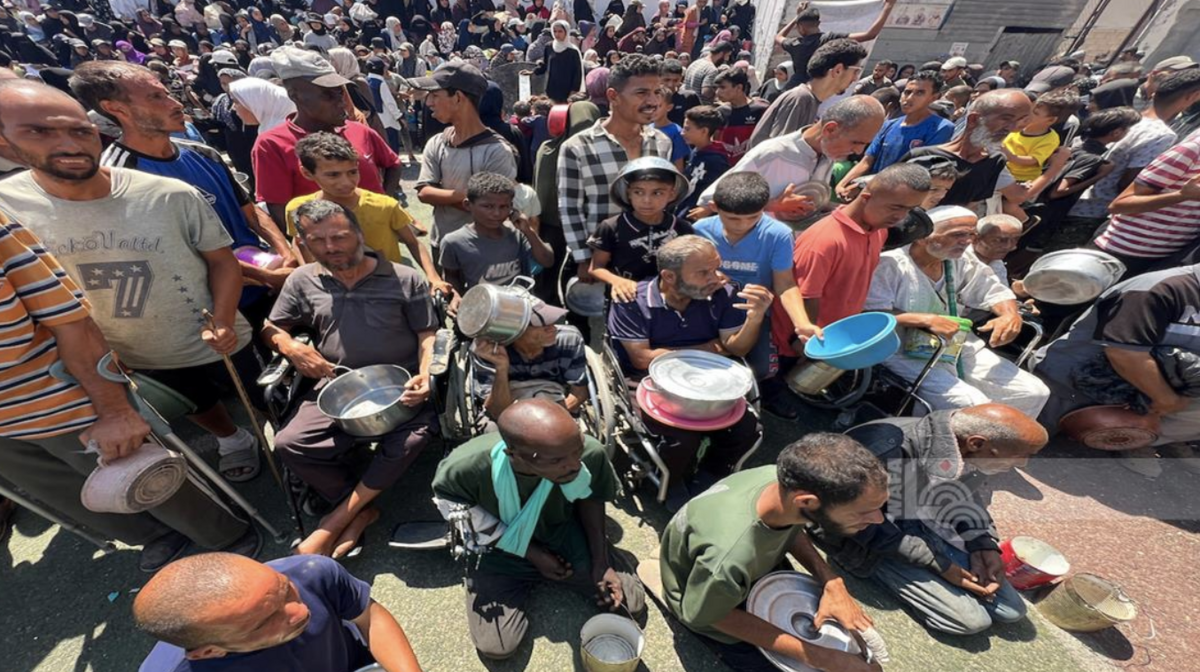
The suffering of families displaced by the war in Gaza: a life of ashes and tents

As the war in the Gaza Strip continues, thousands of families have been forced to leave their homes under bombardment and flee to less dangerous locations, finding themselves facing harsh living conditions in overcrowded shelters or temporary tents lacking even the most basic necessities.

"We left our home without taking anything," says Umm Luay, a displaced woman living with her six children in a shelter in the southern Gaza Strip. "We thought we would return in a few hours, but we've been here for more than a year and a half, without a mattress, without clothes, and with no immediate hope of returning."

In shelters, families share a room or classroom, without privacy, ventilation, or adequate sanitary facilities, exacerbating the suffering of women, children, and the sick. Skin diseases and respiratory problems are widespread due to overcrowding and poor environmental conditions.

Relief organizations confirm that the humanitarian situation inside these centers is worsening by the day, due to a shortage of aid and the difficulty of accessing many areas affected by the ongoing bombing. They explain that some families are living in dilapidated tents or destroyed homes, without clean water or sufficient food.

Displaced families are also suffering from a severe psychological crisis, especially children who live in a constant state of fear. "We try to keep the children busy with simple activities, but the signs of trauma are evident on their faces, and many of them suffer from sleep and speech disorders," says teacher Samar, who works as a psychological volunteer at one of the shelters.

As the war continues, the number of displaced people increases daily, while there are no permanent solutions or clear plans for their return to their destroyed homes. Displaced families are demanding adequate shelter, food and healthcare, and a guarantee of their safe return to their homes after a ceasefire.

While the suffering continues, life in displacement centers remains temporary in name only, but in reality it has become a permanent reality for thousands of families, awaiting the end of the war and clinging to the hope of return, despite the ashes and rubble.

PALESTINE

Mon 21 Jul 2025 11:13 am - Jerusalem Time

Bloody Nights in Gaza: No Sleep Under the Drones

In Gaza, nights are no longer a place of rest. Instead, they have turned into hours filled with terror, the sounds of bombing, and the relentless drone of warplanes. As darkness falls, a new round of bombing begins, with families living moment by moment in unparalleled fear.

"Whenever night falls, we feel closer to death," says Ahmed, the head of a displaced family from the northern Gaza Strip. "We don't sleep, we don't close our eyes, we wait for the sound of the next explosion." He adds that his young children tremble with every explosion and scream unconsciously, as the sound of aircraft has become a daily part of their lives.

The sky over Gaza is lit up at night by the fire of airstrikes, and the land is plunged into darkness by power outages. In this tragic scene, families try to survive, sometimes by fleeing, sometimes by taking shelter between walls that may not withstand the missiles.

"At night, we don't sleep," says Umm Youssef, who lives in one of the shelters. "We watch the sky through the shattered windows, preparing ourselves for any emergency. Even the children no longer ask when the bombing will end. They ask: Who will die tonight?"

As the planes disappear for a while, a heavy silence descends, but it's not a relief. Rather, it's a new fear of a surprise raid, or an unforeseen strike. Even those who weren't physically harmed were psychologically scarred, carrying within them unforgettable nights.

Despite the pain, Gaza insists on surviving, on persevering in the face of bloody nights, ceaseless sounds, and a merciless war. And between each night, hope remains that a new dawn will dawn, without planes, without missiles, and without blood.

PALESTINE

Mon 21 Jul 2025 10:26 am - Jerusalem Time

Israeli channel: The ceasefire agreement and the exchange deal may be completed within days.

The Israeli Channel 10 reported that Israel has presented a new proposal to Hamas regarding arrangements for the deployment of its military forces within the Gaza Strip. Security and political circles believe the movement will respond positively, potentially leading to a decisive breakthrough in the talks within days.

The new maps presented by Israel include significant flexibility, most notably the redrawing of the Morag axis and changes to military deployments in some areas of the Gaza Strip.

A senior military source confirmed to the channel that "the army recommended that the political and security levels move toward an agreement," while maintaining military forces around the Gaza Strip's border towns.

According to the draft agreement, drafted with the participation of international mediators, the deal includes the release of 28 Israeli captives, including 10 living ones and 18 bodies, in exchange for a 60-day ceasefire and the entry of massive humanitarian aid into Gaza under the supervision of the United Nations and the Red Crescent.

The agreement will be implemented in stages:

Day 1: Launching 8 neighborhoods

Day 7: Delivery of 5 bodies

Day 30: 5 more bodies handed over

Day 50: Two prisoners released alive

Day 60: Delivery of 8 bodies

Israel will also cease all military operations immediately after the agreement goes into effect, with air traffic suspended for 10 hours daily, or 12 hours on prisoner exchange days.

On the tenth day of the truce, Hamas will demand information about the fate of the remaining abducted Israelis, while Israel will reveal the details of more than 2,000 Palestinian detainees from Gaza who have been held in administrative detention since the start of the war. Israel will also commit to releasing a large number of Palestinian detainees as part of the deal.

US mediator Steve Witkoff will arrive in Doha if tangible progress is achieved, to consolidate the agreement and resolve outstanding issues.

PALESTINE

Mon 21 Jul 2025 10:23 am - Jerusalem Time

The conditions of sick and wounded prisoners in the Ramleh Prison Clinic are deteriorating.

The Commission of Prisoners' Affairs and Ex-Prisoners reported on Monday that the health conditions of sick and wounded prisoners held in the Ramleh Prison Clinic are deteriorating, due to the lack of intensive medical follow-up for patients whose health conditions are classified as the most difficult among prisoners in Israeli jails.

The Commission explained, in a statement following its lawyer's visit to the prisoners' clinic, that the prisoners complained of the prison administration's procrastination in transferring sick and wounded patients to civilian hospitals for medical examinations and follow-ups, in addition to transferring them from civilian hospitals to the clinic before completing the necessary treatment.

The prisoners also complained about the cramped space in the "recreation" yard, the restrictions on clothing, the lack of supplies, and the poor quality and quantity of food provided. They explained that the prison administration provides the same type of food to all of them, without taking into account the list of permitted foods that doctors provide to patients.

The Commission noted that the suffering of sick prisoners is exacerbated by the prison administration's daily inspections of their rooms, without any regard for their health conditions.

It's worth noting that 18 sick prisoners are permanently housed in the Ramleh Prison Clinic. Many others have also been transferred to various prisons, despite their health conditions.

PALESTINE

Mon 21 Jul 2025 10:22 am - Jerusalem Time

WFP: The humanitarian situation in Gaza has reached an "unprecedented level of deterioration."

The World Food Programme said the humanitarian situation in Gaza has reached an "unprecedented level of deterioration," with people dying from food shortages.

The World Food Programme stated in a press release on Monday that approximately 90,000 children and women are suffering from severe malnutrition, while nearly a third of the population is deprived of food for days on end.

The programme expressed deep concern over the Israeli occupation forces' attack on aid workers yesterday, which resulted in the deaths of an unknown number of civilians simply trying to get food for their families amid the growing threat of famine.

He added that this attack came despite previous Israeli pledges to improve conditions for humanitarian convoys, including ensuring the absence of any military intervention.

The World Food Programme expressed its full commitment to its humanitarian principles of independence, neutrality, and impartiality, emphasizing that these principles form the foundation of the trust the agency builds with the communities it serves.

He stressed that the only way to contain the crisis is through a "massive increase in food distribution operations" to restore people's confidence and allay their fears. He called for an immediate ceasefire and ensuring safe, regular, and systematic access for humanitarian aid throughout the Gaza Strip.

The programme called on the international community to pressure all parties to ensure that aid reaches starving families inside Gaza safely and without hindrance.

According to medical sources in the Gaza Strip, 94 citizens waiting for humanitarian aid were killed yesterday, Sunday, bringing the death toll from the "death traps" since May 27, 2025, to 995 martyrs, 6,011 injured, and 45 missing.

It is worth noting that the ongoing Israeli aggression against our people in the Gaza Strip since October 7, 2023, has so far resulted in the martyrdom of 58,895 citizens, the majority of whom are children and women, and the injury of 140,980 others, in a preliminary toll, as a number of victims remain under the rubble and in the streets, and ambulance and rescue crews are unable to reach them.

PALESTINE

Mon 21 Jul 2025 10:11 am - Jerusalem Time

Doctor Under Fire: Gaza's Health Workers Fight Death

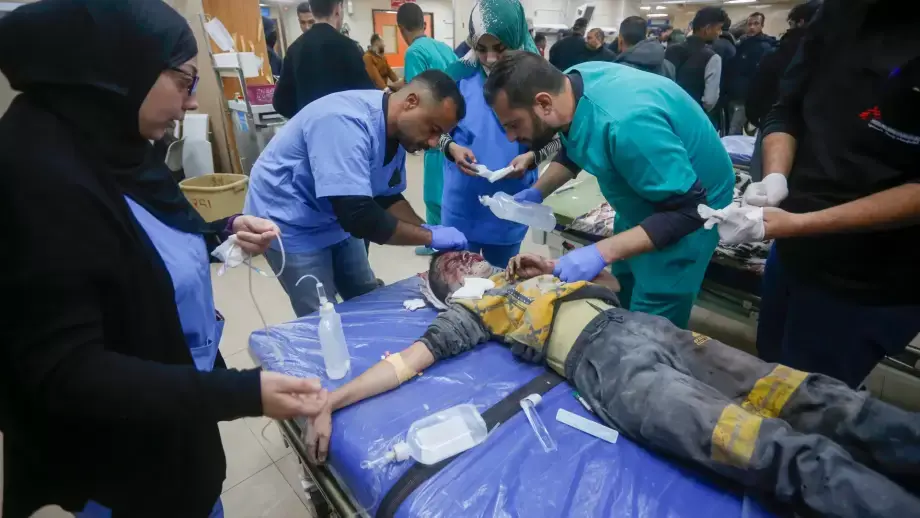
In Gaza, doctors carry more than just their stethoscopes; they carry their lives on their shoulders, waging a daily battle between life and death. Every morning, a doctor doesn't know whether he'll complete his shift or become a new number on the list of martyrs.

Inside the corridors of exhausted hospitals, amidst the sounds of screaming and ambulance sirens, doctors and nurses stand on the front lines, unprotected, unrested, and with virtually no resources. Simple tools, limited supplies, and critical cases arriving one after the other... yet they continue to work like those fighting with their bare hands.

“We risk our lives every moment,” says Dr. Reem, an emergency physician at a hospital in Gaza. “We run under bombardment to save a wounded person, we perform operations in hospital corridors, trembling not with fear, but with pain when we are unable to save anyone.”

A doctor in Gaza knows no peace. There's no time to rest, no time to grieve. Even when one of his colleagues falls, he only has a brief moment of silence, then returns to rescue the others.

In one of the surgical wards, Dr. Sami sat on the floor, his hands covered in blood. He said in an exhausted, calm tone:

“We performed five operations without general anesthesia. All the equipment is almost complete. But the patient cannot wait… and death does not postpone its appointments.”

Despite hospitals becoming direct targets, and despite the loss of colleagues and entire departments under bombardment, medical staff insist on staying put and opening emergency rooms, even with just one respirator or one bed for a new patient.

They are Gaza's health workers, without armor or weapons, fighting with patience, skill, and humanity. They resist death with the lives they give to others, proving to the world that Gaza does not collapse, but rises from the rubble with a bandage, a stethoscope, and a heart beating with giving.

PALESTINE

Mon 21 Jul 2025 9:33 am - Jerusalem Time

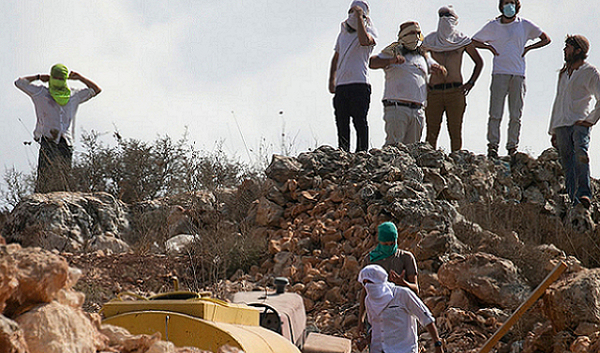
Due to repeated settler attacks, water pumping from the Ein Samia wells has stopped, and the Jerusalem Water Authority issues a distress call.

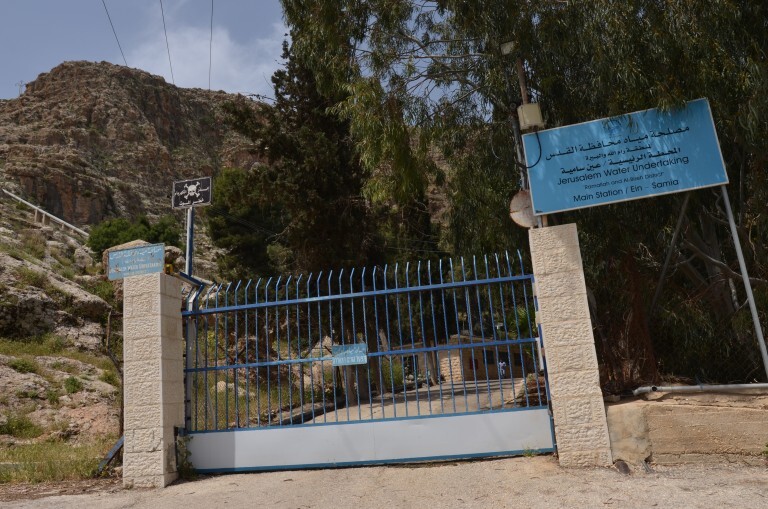
In an unprecedented development, the Jerusalem Water Authority announced a complete halt to water pumping from wells and water stations in the Ein Samia area, east of Kafr Malik, due to escalating settler attacks on vital facilities and installations there.

The utility asserts that its crews have lost technical and administrative control over the entire water system at Ein Samia, as a result of a series of attacks directly targeting electricity networks, pumping equipment, communications systems, and surveillance cameras. This has led to a complete shutdown of operations and the disruption of pumping to dozens of Palestinian villages and towns in the northern and eastern Ramallah and al-Bireh governorate.

The agency confirmed that the region continues to experience disruptions to internet services and communications lines, making it difficult to access or restore stations and ensure the necessary protection for field crews.

The Jerusalem Water Authority calls on all official and human rights organizations, both local and international, to intervene immediately and urgently to halt these dangerous attacks, warning that the continuation of the current situation will cause a humanitarian disaster that threatens to deprive more than 70,000 citizens of their basic right to water.

The Authority also called for international protection of Palestinian water resources and the imposition of real pressure to halt the systematic sabotage of its facilities and its main water sources.

OPINIONS

Mon 21 Jul 2025 9:31 am - Jerusalem Time

Starvation to death

Baha Rahal

Baha Rahal

Opinion Writer

Death by starvation, especially among children suffering from malnutrition and lack of medicine and food, is a stain on the brow of the world, which is witnessing this hideous death and this deliberate killing, due to the ongoing unjust blockade and the ongoing war of extermination and ethnic cleansing. Yet, the world does not rush to implement international laws stipulated in all UN forums, impose a halt to this massacre, and lift the restrictions of the blockade to allow aid to enter. Rather, we see it expressing solidarity with the victim in a weak voice, barely audible, and not taking any serious action to save the people of Gaza from the death that threatens them with annihilation.

Another child died after his body could no longer bear the hunger. He died in the arms of his mother, who wept for his death, wept for her inability to feed him, wept for her weakness and the fragility of her exhausted body, and cursed humanity, which deserved to be cursed because it watched silently, watched in silence, and succumbed to rhetoric and slogans with engorged stomachs and consciences unshaken by all the scenes of death and images of devastation. In the clear image broadcast on satellite channels, a woman, covered in hunger and thirst, fell to the ground in front of the camera, while the reporter was broadcasting live, describing the reality of the situation and the fates of death that threaten the lives of those who remained alive.

The occupation, which insists on pursuing a policy of starvation to death against children, the elderly, and women, to achieve genocide in all its aspects and dimensions, continues to impose its tight siege from all sides, and prevents the entry of medicine and food, while boasting that it is committing the most heinous massacres and killing people through bombing and starvation. What humanity is witnessing today of mass massacres, is unprecedented in its ugliness, nor in this suspicious silence that surrounds it. It is unprecedented in contemporary history, and it has been continuing and ongoing for 654 days.

Death continues to creep in, without mercy, on the people of Gaza, while the world stands by, watching the scene of destruction with eerie silence, as if consciences have died, and humanity has been eroded into corners of fear, interests, and cold calculations.

The continuation of this global silence is not merely complicity, but actual participation in the crime, a direct signature on the mass execution and annihilation that threatens the people of Gaza. If the human conscience does not awaken now, when will it? When will it awaken and stop the crimes, massacres, and genocide?

OPINIONS

Mon 21 Jul 2025 9:29 am - Jerusalem Time

Child-killing Israel is trying to sow the flames of sectarian strife.

Hind Shraideh

Hind Shraideh

Opinion Writer

Child-killing, criminal Israel is attempting to sow the flames of sectarianism by cheaply presenting itself as the "protector of the homeland" in Arab countries, portraying itself as the savior from adversity, the faithful guardian of pluralism from the clutches of "fundamentalist terrorism." It presents itself, with undisguised vileness, as the champion of the rights of minorities like the Druze, using them to achieve its aims under the guise of democratization and rights—the same rights it has repeatedly violated, toppling in Gaza.

Israel also stupidly spreads propaganda that it discriminates against Christians, in order to clear its name with the colonial West and Trump's Christian Zionist entourage. At the same time, it is working hard and vilely to create a borderline extension of a hybrid sectarianism (which I will not name so as not to give it undeserved exposure), claiming to be a Christian group, holding opposites in its hands: the cross of Christ, the symbol of our redemption, and the Israeli flag, the symbol of darkness, tyranny, and the occupation that violates every inch of our Palestine, spreading the propaganda that these two opposites are the same. We shout in the face of "Israel" and the handful of charlatans who have absolutely no connection to our Eastern Christianity, except that they are parasitic appendages, feeding off the assistance of the occupation. They only represent themselves.

All the croaking about Israel's cheap rhetoric is futile and pointless. No matter how much Zionist propaganda tries to promote itself as a whitewash amid its bloodshed, and soften its image for acceptable marketing reasons, we are fully aware of its true nature: a colonial settlement entity, a state that implements an apartheid system par excellence, manipulating the interpretation of verses from the Bible, and politicizing them according to its interests for the purpose of stealing land and expelling Palestinians, Muslims and Christians alike.

The Palestinian Arab Christian presence is an integral part of Palestine, and has been steadfast on the land for thousands of years. It has contributed, continues to contribute, and will always remain a national voice.

As for the recent Israeli occupation targeting of the Holy Family Church in Gaza, and the subsequent apology and boasting about the mistakes, this is not the first bombing of its kind. It is nothing but "stupidity," as Dr. Reverend Munther Ishaq commented. It is a stupor we absolutely do not buy.

Our message is that we will remain a thorn in the side of the occupation, always speaking with our Arab and national identity, which belongs wholeheartedly to our people, no matter how much the colonizer expresses sectarian and malicious sympathy for the bombing of a church or the martyrdom of Palestinians—even if they were Christians—or the attack and destruction by settlers of a Palestinian village—even if its inhabitants were Christians. Perhaps it would be more beneficial for the Zionist Mike Huckabee, who promotes the term "Judea and Samaria" instead of the West Bank, to stop supplying American weapons to an army that specializes in bombing both churches and mosques, and which has killed 60,000 Gazans with Ankle-Sam ammunition in the ongoing crime of genocide. Or, to buy goodwill, he should put an end to the engineered famine directly, or stop arming the settlers who attacked the village of Taybeh with USA-made weapons, instead of feigning solidarity and the charade of "opening a serious Israeli investigation," buying time to commit more crimes.

We look forward, O civilized and cultured one, to holding the occupation accountable for all its crimes. Is your Zionist Christianity sufficient for that?


OPINIONS

Mon 21 Jul 2025 9:24 am - Jerusalem Time

Where did Israel succeed? And where did it fail?

Awni Al-Mashni

Awni Al-Mashni

Opinion Writer

Neither absolute success nor complete failure—this is how the Israeli situation can be described. To accurately assess this assumption, it is necessary to have standards for measurement. The traditional standard in such matters is to approach the set goals and measure their achievement. Here, there is something to be said: The historical goals associated with establishing a state for the Jews in Palestine, legitimizing this state, and normalizing it in the region have been the supreme goals of the Zionist movement for more than a hundred years. However, with the dominance of the biblical and nationalist right in power in Israel, these goals have undergone a fundamental modification. Biblical expansion has become a clear goal in right-wing discourse, and the concession of the democratic discourse in favor of the Jewishness of the state has been transformed into legislation and policies. But, most importantly, the concept of normalizing the Zionist presence in the region has undergone a modification. Instead of normalization through agreements and relations, normalization is achieved through force, meaning the use of Israel's surplus power as a fundamental element to achieve subjugation that leads to normalization. The model taking place in Syria is clear and is mostly understood in this context, as is Lebanon. In Iran, this policy has not succeeded, at least not yet. With this right-wing, nationalistic, and biblical modification of the scale of Zionist goals, the measuring stick must also be modified. Let's see...

In terms of Israeli power equations, there is intelligence success, air superiority, and failure in ground combat. There is a surplus of equipment and a shortage of combat personnel. There are also impressive successes in military tactical performance and a major failure in achieving the strategic objectives of the war. There are dozens, if not hundreds, of glaring and clear examples, which together form a context from which deductions can be drawn. Israel succeeded in bombing whatever it wanted in Iran and in asserting control over Iranian airspace, but it failed to end the Iranian project in all its aspects. It failed to subjugate or overthrow the Iranian regime, it failed to end the Iranian nuclear project, and it failed to end the Iranian missile project. This means success in aviation first and foremost, success in intelligence information, and a failure on the road to leveraging this success to achieve strategic objectives.

In Gaza, Israel has succeeded in destroying Gaza and has failed - so far - to achieve the strategic goal of this destruction, which is displacement. It has also failed in the ground combat. Twenty months of fighting, with elite military divisions and tens of thousands of soldiers armed with the most advanced military technology in the world, have failed to eliminate Hamas. This means that the ground operation has also failed, a failure that blatantly expresses the exaggeration of the higher goals of the war at the expense of limited geo-military capabilities.

In Lebanon, they succeeded in precise and accurate intelligence operations, but they failed to launch a ground invasion of southern Lebanon, even though they subjected Lebanon to an unfair equation to stop the fighting. They are still trying to exploit this equation to subjugate the country politically, and they are still facing great difficulties that may lead to a delayed explosion.

Israel waged war on multiple fronts, and in a scene that reflects the scarcity of personnel, one or more divisions were periodically transferred from the north of the country to the south, and vice versa, and so on, from south to north, from the West Bank to Gaza, and from Gaza to the West Bank. The size of the population and the number of conscripts within the population constitute a strategic military crisis that cannot be compensated for by air superiority, no matter how great. Twenty percent of the population are Palestinians who do not enlist in the army, and more than thirty percent are religious Jews. There is a worsening crisis surrounding their enlistment, and thus the burden of conscription falls on fifty percent of the population. This makes the army's numerical strength far less than Israel's political ambitions. A country with this population and this percentage of conscripts cannot form an offensive army with the ground operational capabilities to achieve its set political goals.

Israel is a small country by all standards. A few missiles have shut down its airports, ports, airspace, cities, institutions, schools, and streets. Therefore, even if its power increases, its territory cannot accommodate this "excessive Israeli obesity in power" nor does it bear the Israeli political and strategic imperial ambitions.

We are faced with a phenomenon not rooted in history, demography, or geography. It is a phenomenon in which fundamental aspects of power are amplified by a substantial external component. This has been evident in all of Israel's wars, which required military air support and diverse assistance from the United States and Europe. This phenomenon has imposed goals beyond its capabilities, and its crisis is thus linked to this description and liable to deepen as long as Israel's strategic objectives are not reprogrammed.

It is true that Israel has achieved breakthroughs on more than one level, and perhaps the most important achievement is the large-scale destruction of the axis of resistance. However, this achievement, despite its importance, remains within the framework of change, meaning that it is subject to change. In light of Israel's policy based on imposing hegemony by force, the legitimacy of this axis is increasing and strengthening because moderate forces in the region have begun to fear Israeli goals. There is no better evidence of this than the fears of Egypt and Jordan, as well as Syria after the fall of the Assad regime. This is on the one hand, and on the other hand, it has not translated politically into fixed data that contribute to consolidating the Israeli position. The US administration is trying to translate this politically in Israel's favor, but it is clashing with the biblical Israeli expansionist calculations that believe in the primacy of expansion over all else.

Ultimately, wars on eight fronts deepen Israel's strategic dilemma, rather than resolve it. Policies of using excess force fail to create strategic successes, despite impressive operational successes. This matter has its consequences, but it takes time, and time is the most effective weapon.

OPINIONS

Mon 21 Jul 2025 9:23 am - Jerusalem Time

The American-Israeli Optimism Plot

Ahmed Rafiq Awad

Ahmed Rafiq Awad

Opinion Writer

For nearly 22 months, we've grown accustomed to Israel and the United States rushing to express cautious, normal, reserved, and unreserved optimism about the imminent arrival of a ceasefire and the release of Israeli prisoners. Good news then pours in, confirming and reinforcing this optimism over the course of a week or two, only for the optimism to fade away without any results. Throughout all of this, of course, the Palestinian side is accused of being hardline and insensitive to Israeli flexibility. Ultimately, the Palestinian side is punished for its lack of flexibility. This "cliché" has been repeated many times over the past period and continues to do so as of this writing. What are the motives, causes, and objectives behind this? Here, we attempt to unpack the features of this phenomenon as much as possible.

First: Expressing and spreading optimism about the imminent reaching of a settlement blinds eyes to the dozens of martyrs who fall in the bombing, burning, and destruction, and in front of distribution centers. All of this becomes mere details or due taxes, because there is optimism. Spreading this atmosphere of anticipation of a settlement carries out a horrific process, which is normalizing the eyes, ears, and heart to the horrific scenes and successive disasters in the Gaza Strip. In other words, the news becomes optimism, not killing and its mechanism. This is a well-known media operation that diverts attention and changes priorities.

Second: There is no connection between the spread of optimism and the reality of the negotiations taking place. This can be proven by the Palestinian side’s denial of what is being said, and the Arab mediators’ refusal to confirm it as well. That is, only the American and Israeli sides are expressing optimism, and this is for local purposes. On the Israeli side, Netanyahu wants to tell his audience that he is serious about negotiating, but the Palestinian side is the one who refuses. As for the American side, he also wants to reap illusory achievements based on bilateral talks with the Israelis first, and the illusion of the possibility of exerting pressure that no one can bear second.

The American optimism is hasty and naive, based on the illusion that no one can refuse his demands or conditions, even though this American has shown on several occasions that he is very weak and subject to the Zionist lobbies in a humiliating manner.

Third: Perhaps the most important goal of the optimism scheme is to demonize the Palestinian side and present it to its audience and the world as extremist, stubborn, and unresponsive to proposals that are theatrically "modified." Optimism here is another means of besieging, demonizing, and exposing the Palestinian side by making it appear as if it is seeking suicide, or as if it is unwilling to admit defeat, or as if it is unyielding to pressure from its friends or those on the ground.

The rush to express optimism and leak news confirming it without evidence or confirmation from other parties means that this optimism is part of the negotiation process, narrowing its scope and transforming it into a media and psychological tool that exerts pressure on all parties, not just the Palestinian side.

Fourth: Using the multi-level optimism trap, which is to buy time to prolong the war, sow discord between the other parties, attempt to blackmail them and pit them against each other, frustrate the public and push them into despair, blame the Palestinian side and hold it responsible for the failure, and present the optimist as a noble human being ready to "make concessions" while the other party is an extremist who rejects "peace."

The optimism trap here also plays a key role in media, political, and security deception, as well as in numbness, frustration, and the spread of chaos and rumors. This is a preferred method for the current Israeli government to hijack and fabricate decisions. It's a method that has been picked up by the families of Israeli prisoners, as well as the street, which constantly accuses Netanyahu of being a "liar."

ARAB AND WORLD

Mon 21 Jul 2025 9:02 am - Jerusalem Time

Growing doubts in the US administration about Netanyahu

The White House expressed concern over Prime Minister Benjamin Netanyahu's decision in Syria, according to officials in the Trump administration on Sunday, describing him as "crazy" and a "misbehaving child," Axios reported.

"Bibi (Netanyahu) is acting like a madman. He's bombing everything all the time," the news site quoted a White House official as saying, using Netanyahu's nickname. "This could undermine what Trump is trying to do."

It's worth noting that Israel began launching airstrikes on Syrian forces advancing into Sweida on Tuesday after local government forces were accused of killing dozens in the Druze city. On Wednesday, the Israeli military bombed key buildings in Damascus.

According to the website, the White House expressed concern about Israeli Prime Minister Benjamin Netanyahu's decisions in Syria, according to what officials in the administration of US President Donald Trump reported on Sunday, describing him as "crazy" and a "child who doesn't behave."

"The feeling is that every day there's something new. What the hell is this?" another senior US official said after an Israeli tank shell hit a church in Gaza, killing three people, in what the Israel Defense Forces described as a mistake.

While Trump did not publicly address the raid on Gaza's only Catholic church, he made an angry phone call to Netanyahu and demanded that he issue a statement expressing his regret for the incident, which Netanyahu did shortly thereafter.

As the US State Department spokeswoman told reporters on Thursday, the president "was not happy," indicating that Trump was angry.

According to a third official who spoke to Axios, there is growing skepticism within the US administration about Netanyahu and his policies, adding that Netanyahu sometimes acts recklessly.

Trump, in an unprecedented and foul-mouthed public address, expressed his frustration with Israel last month when it planned a massive airstrike in response to Iran firing a single missile after a ceasefire that ended the 12-day war.

According to Axios, US Special Envoy to Syria Tom Barrack asked Israel on Tuesday (July 15) to halt its attacks on Syria to allow for diplomacy, and Israel agreed. However, on Wednesday (July 16), Israel launched large-scale attacks in Syria, including on its military headquarters and near the presidential palace.

Israel claimed it was acting in support of the Druze, who constitute a large community in Israel and are seen as a loyal minority, many of whom serve in the Israeli military.

Both Saudi Arabia and Turkey complained to the White House, as did Barak and US Special Envoy Steve Witkoff.

A US official was quoted as saying, "The bombing in Syria caught the president and the White House by surprise. The president doesn't like watching bombs dropped on television in a country where he seeks peace, and he issued a massive announcement to help rebuild it."

"Netanyahu's political agenda is driving his thinking," one official said. "It will prove to be a huge mistake in the long run."

A senior Israeli official told Axios that Trump urged Netanyahu to hold onto Syrian territory early in his term and did not complain about Israeli military operations there.

"The United States wants to maintain the stability of the new Syrian government and doesn't understand why we are attacking Syria because of attacks on the Druze there," the official said. "We tried to explain to them that this is our commitment to the Druze community in Israel."

The Syrian Observatory for Human Rights, a UK-based war monitor, reported that more than 1,000 people have been killed since the violence erupted a week ago, including 336 Druze fighters and 298 civilians from the Druze minority, in addition to 342 government security personnel and 21 Sunni Bedouins.

PALESTINE

Mon 21 Jul 2025 8:50 am - Jerusalem Time

404 attacks in six months: an unprecedented escalation in settler violence in the West Bank.

The Israeli security establishment is monitoring a dangerous escalation in settler violence against Palestinians in the occupied West Bank, amid growing fears of a loss of control, Haaretz reported Monday.

Data compiled by the Israeli organization shows that the first half of 2025 witnessed an unprecedented rise in violent attacks and hate crimes committed by settlers against Palestinians, with 404 incidents recorded from January to June, compared to 286 in the same period in 2024 and 332 in the second half of last year.

According to the newspaper, the attacks are not limited to targeting Palestinians, but also include settler attacks on Israeli security forces. Since the beginning of the war in Gaza, 100 attacks by settlers against soldiers and security personnel have been recorded, including 33 incidents that occurred in the first half of this year.

These figures come in light of high-profile events that received media coverage, such as violent demonstrations outside Israeli army bases, the burning of a security facility in late June, and the attack on a battalion commander near Kfar Malik.

The severity of these phenomena has led to high-level discussions within the army and the Shin Bet, led by Chief of Staff Eyal Zamir, amidst a realization that settlers in illegal outposts, particularly agricultural ones, have become increasingly bold in challenging the state and even attacking its soldiers.

An operations officer in the West Bank noted that he had personally been assaulted by settlers while performing his duties, warning that turning a blind eye to the expansion of agricultural settlement outposts, which have quadrupled since October, has contributed to this security deterioration.

Statistics indicate that the number of attacks perpetrated by settlers against Palestinians or Israeli occupation forces since the beginning of the war has reached approximately 1,350 cases, including approximately 900 classified as Jewish terrorism, 160 of which were pre-planned.

During this period, approximately 320 Palestinians were injured as a result of settler attacks, including 120 this year alone. The number of Palestinian martyrs has reached approximately 970, killed by Israeli occupation forces and settler gangs.

Data from the Israeli security establishment shows that most settler attacks on security forces occurred in agricultural outposts built on private Palestinian land, with direct political support from prominent ministers such as Knesset Speaker Keftel Smotrich and Orit Struck.

While the number of these outposts was approximately 30 before the outbreak of the war, it had risen to approximately 120 by last month, making them hotbeds of chaos and attacks on both Palestinians and occupation soldiers.

In the face of this escalation, the Israeli security establishment warns of the possibility of losing control of the situation if decisive measures are not taken to deter settlers and prevent the expansion of illegal outposts. This comes at a time of heightened tension on the ground and increasing security challenges as the Israeli war on the Gaza Strip continues.

PALESTINE

Mon 21 Jul 2025 8:46 am - Jerusalem Time

The occupation forces injured three citizens and arrested others in the West Bank.

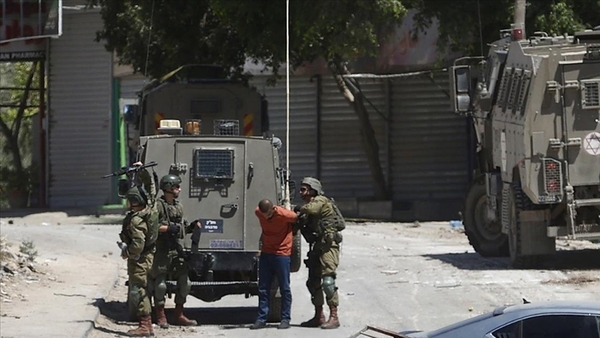
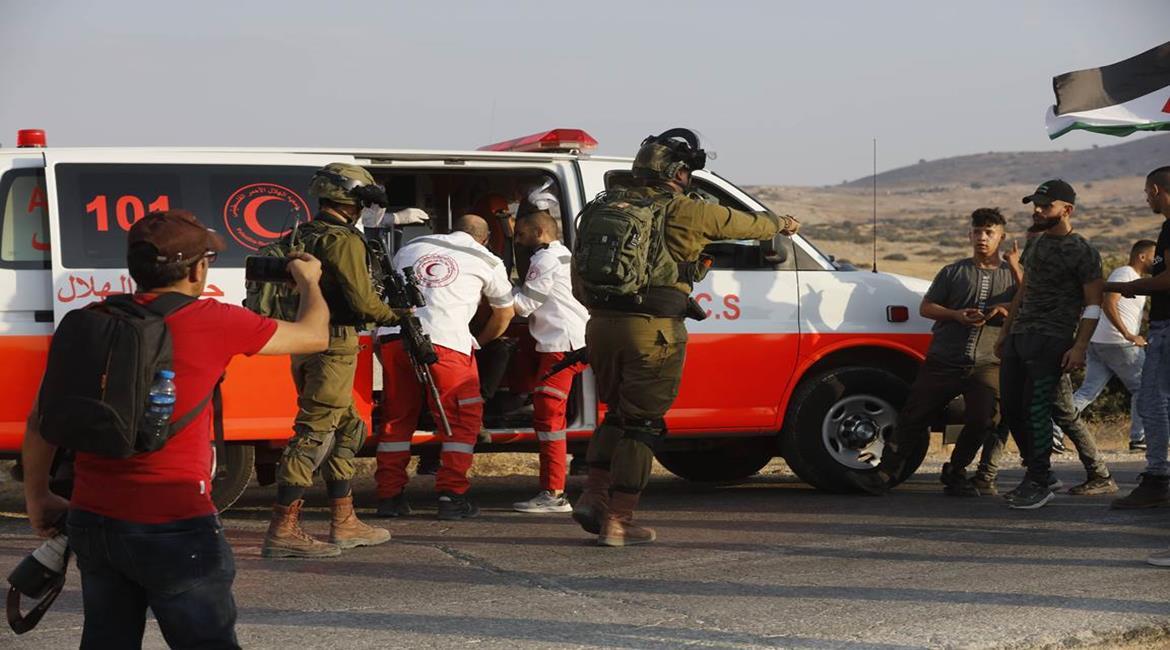
Israeli occupation forces injured three citizens and arrested others during a wide-scale raid campaign in the West Bank at dawn on Monday morning.

In Tulkarm, Red Crescent crews treated three injuries resulting from physical assault by occupation forces, including two elderly men in their 70s and a young man from the suburb. They were all transferred to the Martyr Thabet Thabet Governmental Hospital.

In Hebron, the occupation forces arrested Musa Jibraeel Al-Amur, Muhammad Badr Al-Amur, and Nader Arziqat from the town of Taffuh, Niran Musa Al-Tarwa from the town of Sa'ir, Shaker Ali Salem Balut from the town of Bani Na'im, Youssef Ali Awad, Khader Muhammad Tamizah, and the brothers Moatasem and Moataz Jibraeel Al-Jiyawi from the town of Idhna.

Meanwhile, the occupation forces severely beat and abused a number of detainees during raids on their homes.

In the same context, the occupation forces set up several military checkpoints at the entrances to Hebron and its towns, villages, and camps, and closed a number of main and secondary roads with iron gates, cement blocks, and earth mounds.

In Ramallah, occupation forces stormed Jalazone camp and arrested citizens Hussam al-Ramahi and Musa Fadi Nakhleh after raiding their homes and ransacking their contents.

Meanwhile, other forces stormed the city of Qalqilya and raided the home of Fatah Secretary General Mahmoud Walweel and another home belonging to the Hajj Hassan family, ransacking their contents. No arrests were reported.

In Bethlehem, occupation forces arrested five citizens from the town of Doha, including Yanal and Yazan Amarneh, after raiding their homes, searching them, and vandalizing their contents.

The occupation forces also arrested: Muhammad Maher Al-Shaalan from Beit Sahour, Jalal Muhammad Jalal, and the brothers Lutfi and Abdullah Daamseh from Deheishe refugee camp.

In Nablus, occupation forces stormed the city, raided and searched several homes, ransacked their contents, and arrested brothers Ahmed and Mohammed Abu Saleh from their home on Al-Sikka Street.

Meanwhile, a number of settlers stormed the western part of Nablus, near the entrance to the Ma'ajin neighbourhood.

In Salfit, occupation forces arrested citizen Zarifa Yousef Daoud Al-Deek after raiding and searching her home and ransacking its contents in the town of Kafr Al-Deek.

PALESTINE

Mon 21 Jul 2025 8:37 am - Jerusalem Time

Gaza: 22 dead including 5 aid recipients, since dawn today.

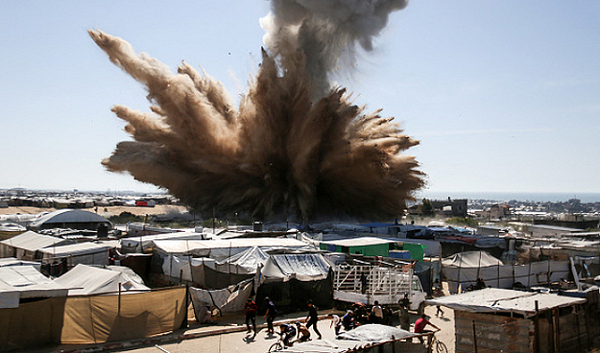
Twenty-two civilians, including five aid recipients, have been killed since dawn Monday, as Israeli occupation forces targeted displaced people's tents, homes, and aid recipients in the northern, central, and southern Gaza Strip with airstrikes, artillery shelling, and gunfire.

Local sources reported that five citizens, including four members of one family, were killed in an Israeli airstrike targeting a displaced persons' tent in the Al-Mawasi area, west of Khan Yunis.

It added that two citizens, one of them a child, were killed and several others were injured in an Israeli airstrike that targeted a tent housing displaced people near the Friends Cafeteria in Mawasi, Khan Yunis.

In the central Gaza Strip, medical sources reported the deaths of two civilians and the injury of others as a result of ongoing Israeli airstrikes, artillery shelling, and gunfire on the southeastern areas of Deir al-Balah.

On Sunday, the occupation forces issued a new evacuation order for large areas of Deir al-Balah, followed by a continued exodus of civilians into other areas last night.

Five civilians were killed and others injured when Israeli occupation forces targeted those waiting for aid near the Netzarim axis, south of Gaza City, late last night.

According to medical sources in the Gaza Strip, 94 citizens waiting for humanitarian aid were killed yesterday, Sunday, bringing the death toll from the "death traps" since May 27, 2025, to 995 martyrs, 6,011 injured, and 45 missing.

In the northern Gaza Strip, medical sources confirmed the arrival of five martyrs and a number of wounded to Al-Shifa Hospital following two attacks by Israeli drones on Al-Nazla Roundabout in Jabalia and Jabalia Al-Balad.

A citizen was also killed and others were injured when Israeli warplanes targeted a residential building on Al-Nasr Street, west of Gaza City. A child was also killed when Israeli warplanes targeted a kindergarten near a camp for displaced persons in the vicinity of the municipal park in the Al-Rimal neighborhood, west of Gaza City.

Later, a citizen was killed and two others were injured when a helicopter bombed an apartment in the Al-Zayigh building near the municipal park in central Gaza City.

Since March 2, 2025, the occupying forces have closed all crossings with the Gaza Strip and prevented the entry of food and medical aid, causing a famine to spread within the Strip.

The World Food Programme said the humanitarian situation in Gaza has reached an "unprecedented level of deterioration," with people dying from food shortages, some 90,000 children and women suffering from severe malnutrition, and nearly a third of the population deprived of food for days on end.

Yesterday, 18 civilians died from hunger and malnutrition, a grave indication of the worsening humanitarian catastrophe facing Gazans as a result of the ongoing blockade and aggression. This brings the total number of deaths from hunger to 86, including 76 children, most of whom are in the northern Gaza Strip.

It is worth noting that the ongoing Israeli aggression against our people in the Gaza Strip since October 7, 2023, has so far resulted in the death of 58,895 citizens, the majority of whom are children and women, and the injury of 140,980 others, in a preliminary toll, as a number of victims remain under the rubble and in the streets, and ambulance and rescue crews are unable to reach them.

PALESTINE

Sun 20 Jul 2025 10:18 pm - Jerusalem Time

UNRWA remains a living witness to the Nakba and represents the international community's commitment to the Palestinian refugee issue.

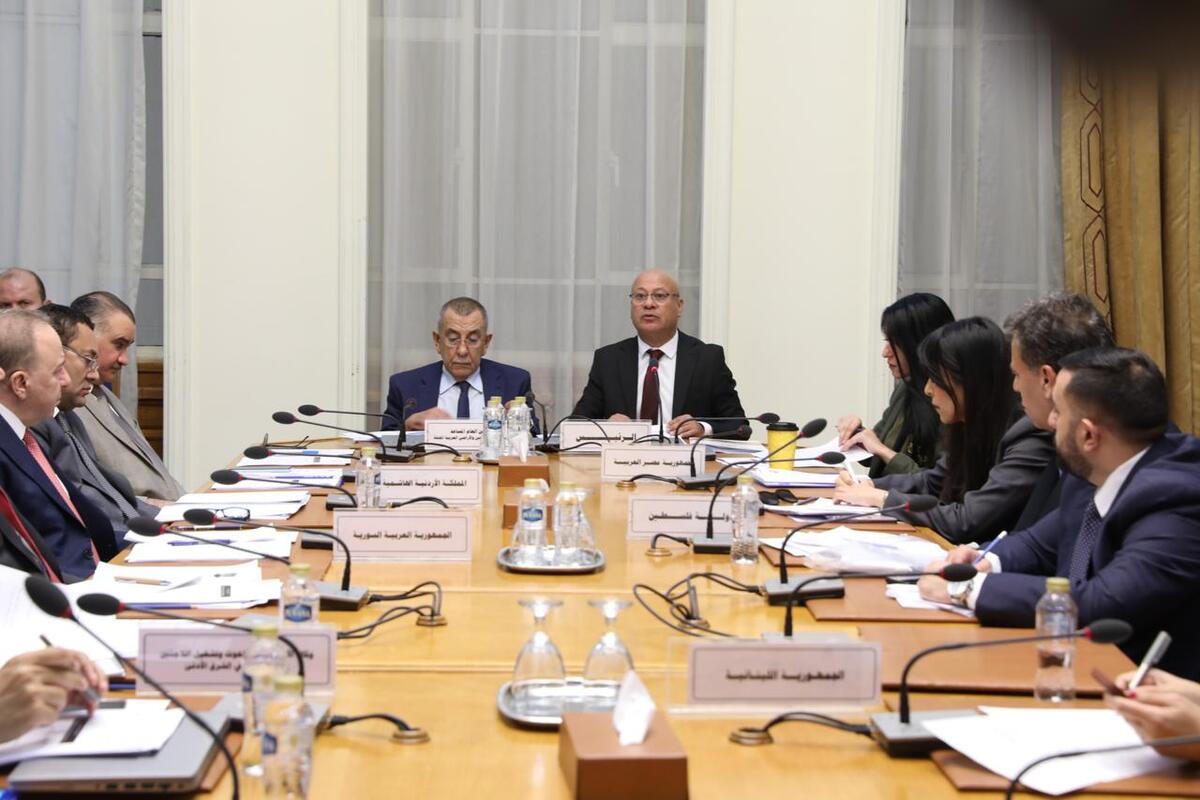
The 113th session of the Conference of Supervisors of Palestinian Refugee Affairs in Host Arab Countries opened today, Sunday (July 20, 2025), with the participation of official delegations from member states from Jordan, Syria, Palestine, Egypt, Lebanon, the Arab League Educational, Cultural and Scientific Organization (ALECSO), and the United Nations Relief and Works Agency for Palestine Refugees in the Near East (UNRWA).

On its first day, the conference discussed the financial crisis facing UNRWA and ways to provide the necessary support. It also discussed securing the necessary mobilization to renew UNRWA's mandate for the next three years, as well as the Arab position on the agency's strategic evaluation report.

The participating delegations stressed the need to support UNRWA financially and politically, confront attempts to liquidate it, and work together to preserve the rights of Palestinian refugees, ensuring their return to their homes in accordance with UN Resolution 194.

Assistant Secretary-General of the League of Arab States, Ambassador Saeed Abu Ali, said that what is happening in Gaza is a full-fledged war of extermination that embodies a resounding collapse of humanitarian values and principles. He added that the situation in the West Bank is no less dangerous, as the aggression has resulted in more than 1,000 martyrs and 7,000 wounded, in addition to the destruction of more than 1,500 buildings in the camps and the displacement of approximately 52,000 refugees in light of the attacks of settlers supported by the occupation army as part of a systematic policy of annexation, Judaization and ethnic cleansing.

Ambassador Abu Ali added that UNRWA "remains a living witness to the Nakba and represents the international community's commitment to the Palestinian refugee issue," warning against attempts to liquidate it.

For his part, Assistant Minister of Foreign Affairs and Director of the Palestine Department, Ambassador Mahmoud Omar, stressed that the meeting is being held at a very delicate and dangerous stage for our cause and the cause of our central region. This bleak atmosphere of killing and destruction requires an immediate and sustainable ceasefire and for the international community to fulfill its moral and humanitarian role in rebuilding the Gaza Strip by beginning to implement the Egyptian-Arab reconstruction plan and supporting the capabilities of the Palestinian National Authority*.

Ambassador Omar added that Egypt has been keen, since the first day of the war, to move forcefully on three tracks: humanitarian, security, and political. It has pushed for mediation efforts to reach a ceasefire to prevent bloodshed, worked to deliver humanitarian and relief aid, and evacuated the wounded for treatment. Now, in cooperation with its partners, it continues to work on formulating arrangements for the next day's management of the Gaza Strip.

Ambassador Omar added that Egypt has always loudly affirmed its categorical rejection of any schemes aimed at liquidating the Palestinian cause through calls to displace the Palestinian people from their lands, such as the proposed humanitarian city, which constitutes a grave violation of international law and undermines the two-state solution.

For his part, Ahmed Abu Holi, a member of the PLO Executive Committee and head of the Department of Refugee Affairs, said that the occupation seeks to undermine UNRWA's work and liquidate the refugee issue through campaigns of incitement and distortion, and the imposition of arbitrary measures on the agency's work, even attempting to establish an "alternative agency" and a "humanitarian city" in Rafah, describing it as a displacement project aimed at liquidating the Palestinian cause.

Abu Holi added that President Mahmoud Abbas's vision, announced at the extraordinary Arab Summit and the UN General Assembly, represents a clear Palestinian roadmap for halting aggression, preventing displacement, reconstructing, and achieving a just peace based on international legitimacy resolutions and the Arab Peace Initiative.

Sahar al-Jubouri, head of the UNRWA Representative Office in the Near East, confirmed that the agency is experiencing its most severe financial crisis since its founding, facing a deficit exceeding $200 million, forcing it to take exceptional measures, such as deferring supplier payments to ensure employee salaries are paid.

ARAB AND WORLD

Sun 20 Jul 2025 9:18 pm - Jerusalem Time

Tens of thousands demonstrate in Morocco and Mauritania against starvation and the war on Gaza.

Several cities witnessed mass demonstrations and protests denouncing the starvation and genocidal policy targeting the population of the Gaza Strip since October 7, 2023.

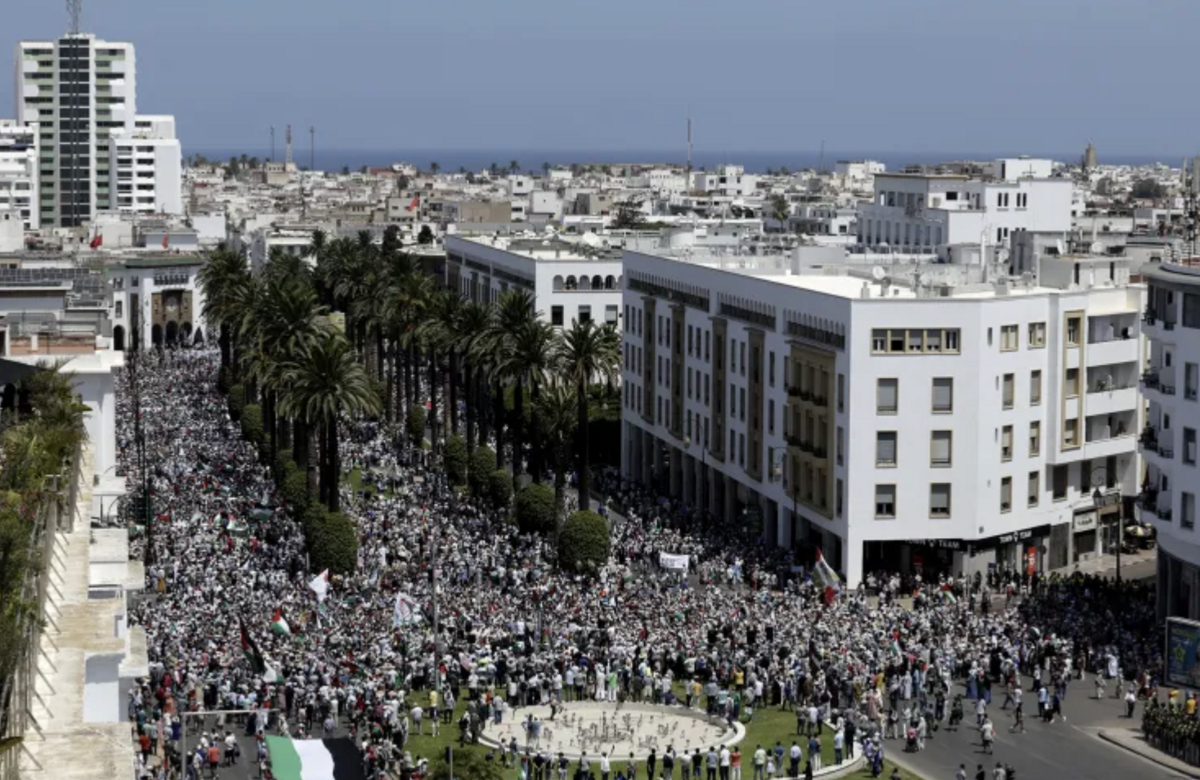
Tens of thousands of Moroccans demonstrated in the Moroccan capital, Rabat, on Sunday to protest the deteriorating humanitarian situation of Palestinians in the Gaza Strip and the ongoing starvation of the territory's population.

The march set off from the historic Bab al-Hadd gate, heading toward the parliament building in the city center, in response to a call for global action against Israeli starvation in Gaza.

Protesters marched along a main street in the center of the capital, waving Palestinian flags and banners calling for an end to the Israeli blockade of Gaza.

Participants in the march, called for by civil society organizations such as the Moroccan Front in Support of Palestine, condemned the failure of international institutions to put an end to the genocide.

Participants chanted slogans such as "Stop the genocide in Gaza," "Shake your voice and say America is responsible," "Palestine is afflicted and the world is a plaything," and "Justice is required, the scales are upside down, and the will is stolen."

Demonstration in Nouakchott

In Nouakchott, crowds of Mauritanians demonstrated on Sunday in front of the US embassy in the capital, Nouakchott, to denounce Israel's starvation campaign against the people of Gaza.

The demonstration came in response to Hamas's call to contribute to the global mobilization and rally to lift the food blockade and the starvation war waged by Israel against the people of Gaza.

The demonstrators raised slogans condemning the siege, starvation, and killing, and demanding an end to what they called the war of extermination and starvation to which the Palestinian people are being subjected.

Participants also raised Palestinian flags and, through slogans and chants, praised the steadfastness of the Palestinian people and their resistance to Israeli aggression.

They expressed their condemnation of US support for the aggression on Gaza and what they described as massacres against the Strip's residents. They also raised slogans demanding the closure of the US embassy in Nouakchott.

Representatives of political parties, civil society organizations, students, and unions participated in the demonstration.

Since the outbreak of the war on Gaza, Mauritania has witnessed mass demonstrations and protests to condemn the war and demand the lifting of the blockade.

Global movement

On Saturday, the Islamic Resistance Movement (Hamas) called for a global movement on Sunday against Israel's systematic starvation policy in the Gaza Strip and its ongoing genocide.

She called on the nation and the free people of the world to engage in a global movement "to save the Palestinian people in the Gaza Strip from death by bombing, hunger, and thirst."

"Let Sunday and the coming days be a cry of rage against the Zionist occupation and against the systematic starvation in the Gaza Strip," she added in a statement.

Today, the Ministry of Health in Gaza confirmed the deaths of more than 900 Palestinians—including 71 children—due to hunger and malnutrition, in addition to 6,000 wounded people seeking a living since the start of Israel's war of extermination on the Strip.

Since March 2, 2025, Israel has closed all crossings with the Gaza Strip and prevented the entry of food and medical aid, causing famine to spread within the Strip.

Since October 7, 2023, Israel has been waging a war of genocide in Gaza, including killing, starvation, destruction, and forced displacement, ignoring all international calls and orders from the International Court of Justice to halt it.

The US-backed genocide left approximately 200,000 Palestinians dead or wounded, most of them children and women, and more than 9,000 missing, in addition to hundreds of thousands of displaced persons and a famine that claimed the lives of many.

ARAB AND WORLD

Sun 20 Jul 2025 9:11 pm - Jerusalem Time

Expert: Palestinian gas off the coast of Gaza could achieve self-sufficiency for the Palestinian state.

Recognizing Palestine as a state would unequivocally establish its right to develop natural gas resources in the Gaza Marine field, according to an expert who worked on the stalled project, The Guardian reported Sunday.

Michael Baron, author of a new book on Palestine's untapped gas reserves, notes that the field could generate $4 billion in revenue at current prices, and the Palestinian Authority would logically receive $100 million annually over 15 years.

He said the revenues "will not turn Palestinians into new Qataris or Singaporeans, but will be their own revenues, not the aid on which the Palestinian economy depends."

It's worth noting that plans to develop the field date back nearly 30 years, during which time legal disputes over ownership have halted exploration. A law firm representing Palestinian human rights organizations sent a warning letter to the Italian state-owned company Eni, urging it not to exploit gas fields in an area known as Area Z, where six licenses have been granted by the Israeli Ministry of Energy.

In their letter, the lawyers point out that approximately 62% of the area lies in maritime areas claimed by Palestine, and therefore, "Israel cannot legally take any exploration rights in areas legally granted to the Palestinians."

Palestine declared its maritime borders, including its exclusive economic zone, when it joined the United Nations Convention on the Law of the Sea in 2015, and outlined a detailed claim in 2019. Israel is not a signatory to the UN Convention on the Law of the Sea.

Baron said that recognition of Palestine, especially by countries with major oil companies registered in their jurisdiction, would effectively end the legal ambiguity and provide the Palestinian Authority not only with a new and secure source of income but also with a regular supply of energy independent of Israel. Since the legal letter, Eni has informed lobby groups in Italy that "the licenses have not yet been issued, and no exploration activities are underway."

Global Witness alleges that the East Mediterranean Gas Pipeline, which runs parallel to the Gaza coast, is illegal because it passes through Palestinian waters and generates no revenue for the Palestinian Authority.

The 90-kilometer (56-mile) pipeline transports gas from Ashkelon in Israel to El Arish in Egypt, where it is then processed into liquefied natural gas for export, including to Europe.

"The 1993 Oslo Accords clearly grant the Palestinian National Authority jurisdiction over territorial waters, subsoil, and the authority to legislate and license oil and gas exploration," Baron said. "Control of natural resources was a key component of Palestinian leader Yasser Arafat's state-building agenda. Israeli exploitation of Palestinian resources was, and remains, a fundamental part of the conflict."

Gas was discovered in the Gaza Marine field in 2000 in a joint venture owned by BG Group, a privatized subsidiary of British Gas, and the Palestinian Contractors Association. The project was intended to use the gas in Gaza's only power plant to end the Strip's persistent energy shortage. In his book, "The Story of Gaza Marine," Baron argues that the fate of the project represents a microcosm of how Israel seeks to increase Palestinian dependence on it while simultaneously seeking to separate Palestinians from Israelis.

The project has faced challenges related to commercial viability and an Israeli court ruling that the water is a “no man’s land,” partly because the Palestinian Authority is not a sovereign entity with clear powers to grant licenses.

The court also did not rule on whether the rights to Palestinian territorial waters clearly established in the Oslo Accords included a Palestinian "exclusive economic zone," an area typically extending 200 miles off the coast. The agreements were intended as an interim arrangement prior to full statehood and therefore did not define the full maritime border.

Territorial waters are usually defined as only 12 or 20 miles from the coast, and Israel has long argued that any license for the Gaza Marine project 20 miles off the coast of Gaza should be viewed as a gift from Israel to the Palestinian Authority, not a right.

After Hamas took control of the Gaza Strip in 2007, Israel, unwilling to let the revenues fall into its hands, obstructed development, prompting BG Group to suspend the project and eventually withdraw. In June 2023, Israel approved plans by the Egyptian gas company EGAS to develop the field, but the war on Gaza began a few months later.

The Gaza Marine field's reserves are estimated at only 30 billion cubic meters of natural gas, a tiny fraction of the more than 1,000 billion cubic meters found in Israeli territorial waters.

Baron argued that Israel possesses its own gas supplies, and as long as a unified Palestinian state is recognized, Israel will have no legal incentive or right to prevent Palestine from exploiting its greatest natural resources.

The debate over private sector investment in Israel's recognized occupation of Palestine was highlighted last week by a report published by the UN Special Rapporteur on Palestine, Francesca Albanese, in which she warned companies against supporting what the International Court of Justice has deemed an illegal occupation. She claims that the ICJ's rulings impose a primary responsibility on companies "to refrain from engaging in and/or withdraw completely and unconditionally from any dealings with Israel, and to ensure that any dealings with Palestinians enable their self-determination." Israel has rejected Albanese's conclusions outright.


ARAB AND WORLD

Sun 20 Jul 2025 8:23 pm - Jerusalem Time

Construction of migrant camps accelerates in America after Republican funding

The Wall Street Journal reported that U.S. Immigration and Customs Enforcement is racing to build camps for migrants across the country after receiving $45 billion in new funding.

The agency aims to increase the capacity of detention centers from 40,000 to 100,000 beds by the end of the year.

The report, citing documents reviewed by the American newspaper, added that the agency is prioritizing large-scale camps at military bases and Immigration and Customs Enforcement (ICE) prisons, including a 5,000-bed site at Fort Bliss, Texas, and other locations in Colorado, Indiana, and New Jersey.

The report stated that senior US officials at the Department of Homeland Security, including Secretary of Homeland Security Kristi Noem, expressed a preference for detention centers run by Republican state and local governments rather than private prison companies.

The White House and Immigration and Customs Enforcement did not immediately respond to Reuters' request for comment.

Noem said last week she was in talks with five Republican-led states to build additional detention sites inspired by the Alcatraz facility in Florida.

"We have a number of other states that are already using the Alcatraz facility as a model for how to partner with us," Noem said at a press conference in Florida, without naming any states.


PALESTINE

Sun 20 Jul 2025 8:01 pm - Jerusalem Time

Lazzarini: Failure to allow aid into Gaza is "complicity"

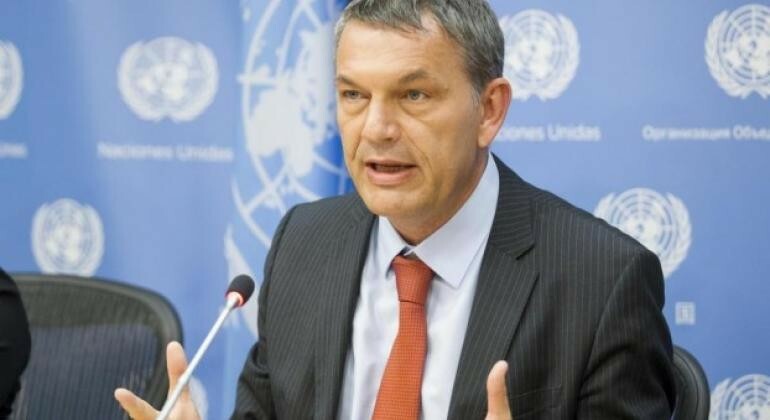
The Commissioner-General of the United Nations Relief and Works Agency for Palestine Refugees (UNRWA) confirmed on Sunday that failure to pressure Israel to allow aid into Gaza is "complicity" in starving Palestinians in the Strip.

In a post on X, Lazzarini shared a sample of a frequently received message from UNRWA staff in the Gaza Strip: "I'm looking for food for my children, but there's nothing."

He commented on this by saying: “We receive daily messages from our hungry colleagues at UNRWA.”

"How can one respond to these messages of despair? It's shameful and doubles my sense of helplessness," he added.

He stressed that "all of this is man-made, with complete impunity (enjoyed by Israel)."

He pointed out that "food is available only a few kilometers away" on the border with Gaza.

He added, "UNRWA alone has sufficient stocks outside Gaza to cover the needs of the entire population for the next three months, but we have not been allowed to bring in any aid since March 2."

Lazzarini stressed that "political will is required" to push Israel to allow aid into the Strip.

He concluded by saying: "Inaction is complicity that makes us lose our humanity."

Earlier today, medical sources in Gaza announced that Israel's starvation policy in the Strip has resulted in the deaths of 86 Palestinians, including 76 children, due to malnutrition resulting from the denial of aid entry into the Strip since October 2023.

She also noted that "18 deaths were recorded within 24 hours due to famine in Gaza."

PALESTINE

Sun 20 Jul 2025 7:46 pm - Jerusalem Time

A number of children suffered suffocation during the occupation forces' raid east of Bethlehem.

Several children suffered suffocation on Sunday evening during an Israeli occupation forces raid on the town of Tuqu', southeast of Bethlehem.

According to local sources, occupation forces attacked a group of children while they were playing football in the vicinity of the municipality, firing sound bombs and tear gas at them, causing several of them to suffocate.

Earlier this evening, the occupation forces stormed the town of Tuqu', and took up positions in the neighborhoods of Al-Sharfa, Al-Amur, the municipality's surroundings, and Khalil Al-Wazir Square.

PALESTINE

Sun 20 Jul 2025 6:40 pm - Jerusalem Time

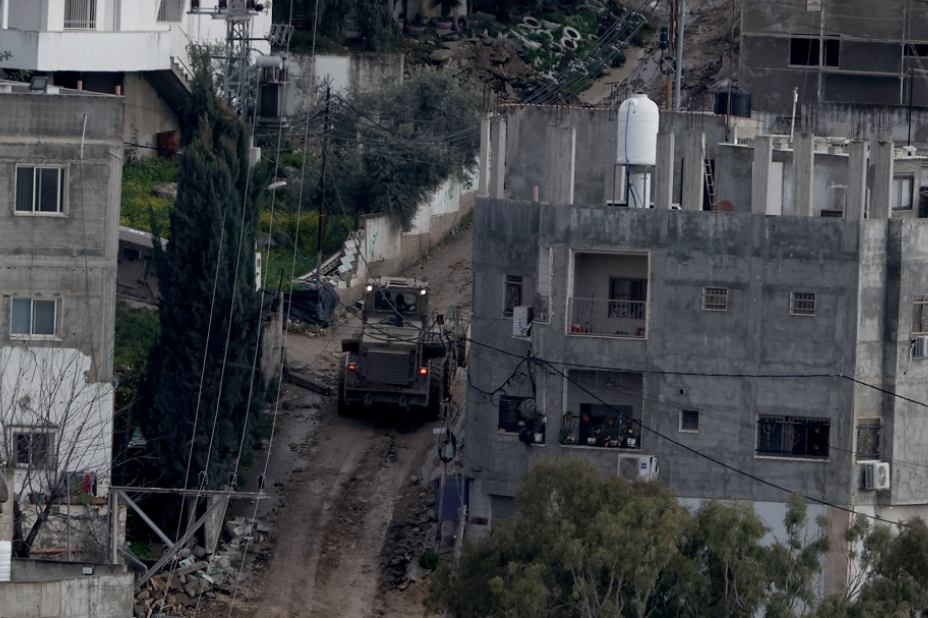
The occupation forces burn homes in Nour Shams camp and continue demolitions in Tulkarm camp.

Israeli occupation forces burned down several homes in the Nur Shams camp, east of Tulkarm, on Sunday evening.

According to local sources, the occupation forces burned a number of homes in the Al-Manshiya neighborhood of the camp, amid a tight siege and ongoing aggression for the 162nd consecutive day. Military vehicles and infantry units are deployed widely, using citizens' homes as military barracks after forcing their residents to evacuate, and are firing live ammunition at anyone who attempts to approach the camp.

In recent weeks, Nur Shams camp has been subjected to extensive demolition operations, including dozens of residential buildings, as part of an Israeli plan to demolish 106 buildings in Tulkarm and Nur Shams camps. 48 of these buildings were demolished in Nur Shams alone, causing widespread destruction and creating wide streets that separated neighborhoods from each other.

In a related development, Israeli bulldozers continued their demolition work in Tulkarm camp, which began last week, at a rapid pace, targeting more residential buildings.

This escalation in Tulkarm camp, which is entering its 175th consecutive day, comes as part of the occupation's new plan to demolish 104 buildings, comprising approximately 400 homes. This comes as part of a series of demolitions that have affected several neighborhoods in the camp over the past few weeks, specifically: Al-Murabba'a, Abu Al-Foul, Al-Shuhada', and Al-Hamam, and have resulted in thousands of families losing their homes.

The ongoing escalation of the occupation has led to the forced displacement of more than 5,000 families from the Tulkarm and Nur Shams camps, representing more than 25,000 citizens. The total destruction of more than 600 buildings and the partial damage of 2,573 homes have also occurred. The entrances to the camps remain closed with barriers, transforming them into lifeless areas. Residents are prevented from reaching their homes or checking on their property, amid direct gunfire targeting anyone who approaches the area.

PALESTINE

Sun 20 Jul 2025 6:20 pm - Jerusalem Time

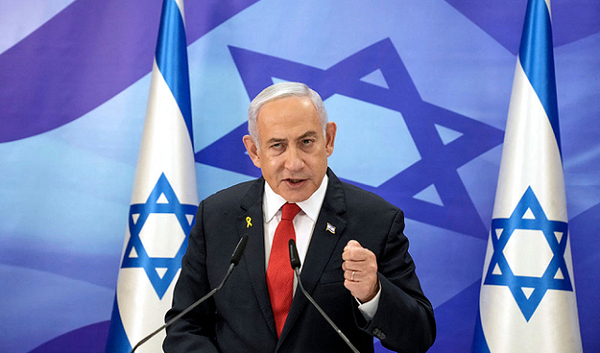
Netanyahu suffers food poisoning, his office reveals details

Israeli Prime Minister Benjamin Netanyahu's office said in a statement on Sunday that he suffered from food poisoning after missing the weekly cabinet meeting.

The statement said Netanyahu fell ill overnight and underwent a medical examination at his home, where he was found to be suffering from gastroenteritis resulting from eating contaminated food, according to The Times of Israel.

The office added that "the prime minister's condition is good," and that he is currently receiving intravenous fluid therapy to compensate for dehydration resulting from the illness.

The statement explained that, "Based on doctors' instructions, the Prime Minister will rest at home for three days, and will manage state affairs from there."

Netanyahu reveals the truth about his cancer diagnosis

Netanyahu is 75 years old and has faced several health issues in recent years. Last December, he underwent a prostatectomy, and in March 2024, he underwent surgery for a hernia. He was also absent from work for several days after contracting the flu, according to the same newspaper.

Netanyahu underwent a pacemaker implantation in 2023.

According to his latest medical report, issued in January 2023, his health condition is "completely normal," and the implanted device is functioning well with no signs of heart rhythm disturbances or other health problems.

PALESTINE

Sun 20 Jul 2025 5:33 pm - Jerusalem Time

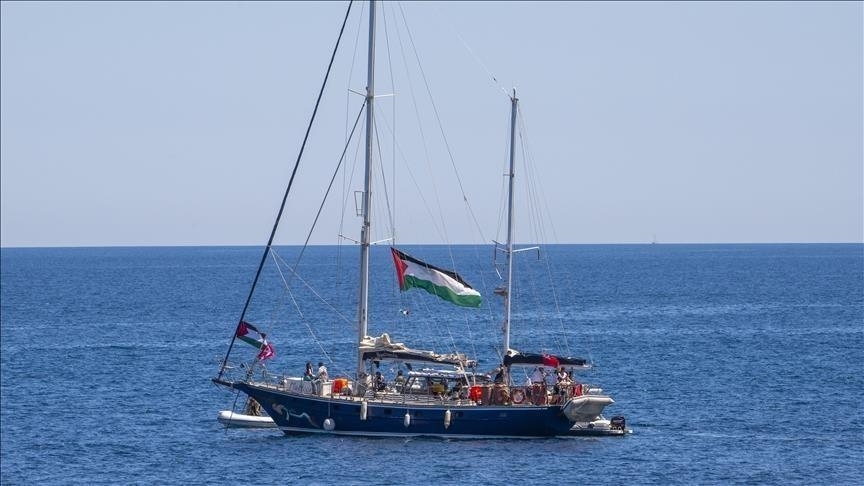
After resolving technical issues, the "Hanthala" ship sails again to Gaza.

The Hanthala ship has re-set sail from the Italian port of Gallipoli towards Gaza, after a temporary halt due to technical issues that have now been resolved. The ship is on a mission to deliver humanitarian aid to the Strip.

The Hanthala ship, which recently joined the Freedom Flotilla, set sail on July 13 from the Italian port of Syracuse, before docking at Gallipoli on July 15 to resolve some technical issues.

On Sunday afternoon, Hanthala left Gallipoli, accompanied by songs and chants from Palestinian supporters.

Some Palestine supporters accompanied the Hanthala ship, carrying 21 activists, on small boats for some time.

It's worth noting that the Gaza blockade-breaking ship, "Al-Dameer," was attacked by an Israeli drone on May 2nd while attempting to sail toward Gaza, causing a hole in its hull and a fire in its bow.

On June 9, the Israeli military seized the "Madeleine," a ship part of the "Freedom Flotilla," in international waters while en route to the besieged Gaza Strip to deliver humanitarian aid. The ship was arrested along with 12 international activists on board. Israel later deported the activists on condition that they pledge not to return.

Since October 7, 2023, Israel, with American support, has been committing genocide in Gaza, leaving more than 200,000 Palestinians dead or wounded, most of them children and women, and more than 10,000 missing, in addition to hundreds of thousands of displaced persons and a famine that has claimed the lives of many.

PALESTINE

Sun 20 Jul 2025 5:15 pm - Jerusalem Time

Pope calls for an end to the "brutality of war" and collective punishment in Gaza.

Pope Leo XIV called on Sunday for an end to the "brutality of war," expressing his deep sorrow over the Israeli raid on the only Catholic church in the Gaza Strip.

Three people were killed and others, including the parish priest, were injured in the attack on the Holy Family Church complex in Gaza City on Thursday.

"I appeal to the international community to respect humanitarian law and the obligation to protect civilians, and to prevent collective punishment, the indiscriminate use of force, and the forced displacement of populations," the Pope said.

Earlier, the Islamic Resistance Movement (Hamas) condemned the Israeli occupation's bombing of the Latin Monastery Church in Gaza, saying that this "represents a new crime committed against places of worship and displaced persons."

The movement said in a statement that the targeting of the church by the occupation comes "in the context of the comprehensive war of extermination against our Palestinian people in all its components."

She considered that "targeting mosques, churches, hospitals, bakeries, water wells, and all civilian facilities constitutes flagrant war crimes."

She called on the international community and the United Nations to stand against these ongoing and unprecedented crimes, "and take immediate action to halt the barbaric aggression and hold the occupation leaders accountable for their crimes against humanity."

The White House also announced that US President Donald Trump expressed his "displeasure" with the raid during a phone call with Israeli Prime Minister Benjamin Netanyahu.

Trump described the incident as a "huge mistake," according to a White House spokeswoman, who added that Trump asked Netanyahu to issue an official statement and explain what happened.

International criticism did not stop at the United States, where French President Emmanuel Macron expressed his "strong condemnation" of the bombing, noting that the church in question is under "France's historical protection."

In a post on the X platform, Macron affirmed his country's solidarity with Palestinian Christians, saying that "the continuation of this war is unjustified," calling for an "immediate ceasefire."

The French Foreign Ministry based its condemnation on 20th-century agreements between France and the Ottoman Empire, which grant France the right to protect certain Catholic religious institutions in the Holy Land.

PALESTINE

Sun 20 Jul 2025 4:03 pm - Jerusalem Time

The death toll from "death traps" has risen to 995 ad, 6,011 injured, and 45 missing.

Medical sources in the Gaza Strip reported on Sunday that the death toll from what have become known as "death traps"—aid distribution areas targeted by Israeli occupation forces—has risen to 995 dead, 6,011 injured, and 45 missing since May 27th.

The sources confirmed that all the victims were civilians who had attempted to access food aid, only for the distribution sites to be turned into killing fields and direct sniper fire by the occupying forces, in flagrant violation of international humanitarian law and human rights principles.

In a related development, a citizen was martyred this evening after being shot by an Israeli Quadcopter drone while he was at a gas station on Al-Hakr Street, south of Deir al-Balah city in the central Gaza Strip.

According to the Ministry of Health in Gaza, the total death toll from the ongoing Israeli aggression on the Gaza Strip since October 7, 2023, has risen to 58,895 dead and 140,980 wounded. This comes amid continued intense bombardment and the prevention of rescue teams from reaching the victims, with many still trapped under the rubble and in the streets, unable to be evacuated due to the dangerous conditions on the ground.

This escalation comes amid a worsening humanitarian crisis in the Gaza Strip, amid UN warnings of an imminent catastrophe for millions of besieged Palestinians. This comes amid continued targeting of shelters and aid distribution areas, the closure of crossings, and the prevention of the entry of relief and medical supplies.

PALESTINE

Sun 20 Jul 2025 3:16 pm - Jerusalem Time

Problems of e-learning in light of weak internet in Gaza

At a time when technology has become a primary means of learning around the world, students in Gaza face double challenges in e-learning, not only due to poor internet service and power outages, but also as a result of the ongoing war, which has exacerbated the suffering and made the educational environment unstable and unsafe.

Ahmed, a high school student, says he faces significant difficulty attending online classes due to poor internet connectivity and power outages. He adds, "Since the start of the war, everything has become more difficult. There's no stable internet, no electricity, and not even the peace of mind to focus on studying."

Teacher Mona confirms that the e-learning process has become virtually paralyzed in many areas, with students unable to access educational platforms or experiencing sudden interruptions during lessons, negatively impacting academic achievement and interaction within virtual classrooms.

With the destruction of infrastructure and the damage to communications networks in some areas due to bombing, families' struggles to provide even the bare minimum for their children's education have increased. Umm Youssef, a mother of three students, says, "We only have one phone that the children alternate between, and we cannot secure consistent internet packages. The war has made things even more complicated."

Educational institutions warned that the continuation of this situation without prompt intervention will lead to a wide educational gap and impact the future of thousands of students. They called for improving the digital infrastructure and providing technical and financial support to students to ensure the continuity of education, even at a minimal level.

As the war continues, e-learning in Gaza remains a fragile experience, with students and teachers struggling to stay connected to education amid harsh conditions, limited resources, and an educational future that appears increasingly uncertain by the day.

PALESTINE

Sun 20 Jul 2025 2:53 pm - Jerusalem Time

Shortages of medicines and supplies in Gaza hospitals: Lives on the waiting list

Amid the ongoing aggression on the Gaza Strip, hospitals face a serious challenge: a severe shortage of medicines and medical supplies. This threatens the lives of thousands of patients and injured people, forcing medical teams to race against time to save lives in nearly impossible conditions.

Dr. Sami, a physician at a Gaza hospital, says, "We are working with limited equipment and performing surgeries with minimal resources. There are critical cases that we cannot treat due to a lack of necessary medications or equipment." He adds that many of the injured require intensive care or specialized medications, but these are currently unavailable.

As the number of wounded continues to rise as a result of daily shelling, operating rooms and intensive care units are severely overcrowded, while many hospitals lack the fuel needed to operate generators, threatening to shut down vital equipment such as ventilators and sterilization rooms.

The Ministry of Health in Gaza indicates that drug stocks have significantly decreased, particularly emergency medications, anesthesia, antibiotics, and medications for cancer and kidney patients. It also warned that the continued blockade and the denial of entry of medical supplies will lead to an imminent "health disaster."

Medical staff are making heroic efforts, with doctors and nurses continuing to work long hours without interruption, even as health centers in some areas are being directly targeted. Nurse Nawal says, "We don't think about fatigue or fear. We only think about how to save the life of an injured person right in front of us, even if it's just with a single bandage."

Despite local and international appeals, the crossings remain closed to the entry of sufficient medical supplies, deepening the crisis. Health sector officials are calling on the international community to take urgent action to pressure for the opening of safe humanitarian corridors and the immediate entry of essential medical supplies.

Amid this deteriorating health situation, Gaza's hospitals remain resilient despite the pain, and emergency rooms are filled with hope as they await shipments of medicine that have yet to arrive, while the voices of patients still await treatment.

PALESTINE

Sun 20 Jul 2025 2:26 pm - Jerusalem Time

Zamir orders significant reduction in reserve call-up orders

Israeli Chief of Staff Eyal Zamir on Sunday ordered a significant reduction in the number of reserve call-ups, following growing criticism among a large number of reservists who were called up for home front duty and failed to report to their units.

The Israeli army called up hundreds of thousands of reserve soldiers at the start of the war. Later, the need to call up reserves diminished, but the army continued to issue call-up orders for reservists, who received compensation for their reserve service while continuing to work at their workplaces, according to the Walla website.

Walla added that criticism has recently been escalating inside and outside the army regarding the "unbearable ease" of issuing call-up orders for reserve soldiers to carry out missions on the home front "unnecessarily."

Subsequently, Zamir decided to reduce the number of such call-up orders and demanded oversight of them across all army units. At the same time, the head of the Manpower Division, David Bar-Kalifa, ordered a reduction in the recruitment of reserve forces, requiring such recruitment to be carried out in accordance with developments on the front lines. He also ordered an expansion of oversight within units, requiring reserve soldiers to fill out a daily form detailing their whereabouts and whether they were at home or at a military base.

Israeli military sources indicated that Zamir and Bar Kalifa's decision will lead to significant spending cuts. The sources said that "these decisions come in the wake of negative trends and a lack of oversight over the number of reserve soldiers needed by various units," according to Walla.

PALESTINE

Sun 20 Jul 2025 2:20 pm - Jerusalem Time

Prime Minister: How can the world accept the death of our people from hunger? This is "unacceptable."

Prime Minister Mohammed Mustafa expressed his astonishment at how the world could accept that things in the Gaza Strip have reached this point, saying: "This is unbelievable and unreasonable. It seems that humanity is on the verge of extinction, and for the world to accept the death of our people from hunger in this century, in this era, is completely unacceptable. We will raise our voices and do everything we can to end this situation, which is unacceptable on a human, political, and moral level."

The Prime Minister added, "We are doing everything we can to save our people in the Gaza Strip and alleviate their suffering as much as possible. In the name of the President and the government, our covenant with our people in the Gaza Strip will not be affected, regardless of the circumstances, pressures, and sacrifices."

Mustafa emphasized that the compass is, first, stopping the bleeding in the Gaza Strip, second, reconstruction, and third, unifying Gaza and its institutions with national institutions so that we can immediately begin reconstruction and establish the state on the ground.

This came during his meeting with the Council of the Palestinian Bar Association, held today, Sunday, at the Jerusalem Center in Al-Bireh, and the Gaza Center via remote communication, in the presence of Minister of Justice Sharhabil Al-Zaim, Secretary-General of the Council of Ministers Dawas Dawas, and a number of former bar association presidents.

The Prime Minister also affirmed the President's vision that we will accept nothing less than a Palestinian state in the Gaza Strip and the West Bank with Jerusalem as its capital, and we will accept nothing less than the unification of Gaza and the West Bank under one regime, one weapon, and one institution.

Mustafa said, "Jerusalem has always been a target, and the West Bank remains a target, but what is happening today in the Gaza Strip is unacceptable by any standard. We affirm our unity, the unity of our ranks, the unity of our word, our institutions, and our unions in order to work together to save Gaza, which is a national matter and a priority."

The Prime Minister added: "The occupation's target today is not only the Gaza Strip, but also the northern West Bank, especially the camps. The refugee issue is a national constant, and we will not abandon it, no matter the circumstances. Our commitment to the camp, defending it, and preserving it with all our might is a national priority. Despite the ongoing incursions, we are trying as much as possible to alleviate the suffering of our people."

He continued: "The unions are an integral part of national work. Hand in hand and step by step, we will achieve all our dreams and national goals. Our visit to the Bar Association is a message of partnership to continue working to achieve more national accomplishments for the justice sector and the nation's institutions. We congratulate the new council and thank the former union leaders for their service to the nation."

For his part, the head of the Palestinian Bar Association, Fadi Abbas, commended the visit, affirming the partnership and cooperation with the government to serve the interests of our people, particularly the rebuilding of the justice sector in the Gaza Strip and the defense of our people's causes before the relevant international courts.