From Vietnam to Afghanistan to Gaza, modern wars fought without political solutions tend to drag their occupiers into moral decline, diminishing returns and the erosion of legitimacy
Would you like us to summarize articles for you?
In 2016, two renowned Harvard historians, Graham Allison and Niall Ferguson, published an ambitious joint article advocating for the establishment of a "Council of Historians" in the White House. As a compelling example of why such a body is needed, they cited the ignorance that surrounded President George W. Bush in the lead-up to the 2003 invasion of Iraq. Bush ignored warnings that his actions would ultimately lead to Baghdad falling under Shi'ite control, effectively handing Iran greater influence in the region.
Bush, who never pretended to be particularly scholarly, might be excused. But when historical ignorance is paired with intellectual arrogance – as in the case of Barack Obama, who dismissed the relevance of the writing of the brilliant and far-sighted Russia expert George Kennan, despite Kennan having outlined U.S. Cold War strategy – the result is a dangerous blindness. In Obama's case, it was a failure to grasp the deep historical bond between Russia and Ukraine.
- 'Netanyahu will never leave Gaza. War is part of the classic authoritarian playbook'
- Netanyahu's attack on the Gaza famine report aims to hide the truth from Israelis
- Leading Israeli author David Grossman calls Gaza war a 'genocide'
Allison and Ferguson coined the term "applied history," an approach that aims to shed light on contemporary challenges by analyzing historical precedents and analogies. They took inspiration from the greatest applied historian of our time: Henry Kissinger.
Kissinger drew on historical analogies and insights (or warning signs) to guide present decisions, always aware that such comparisons can be a double-edged sword. After all, there is a resemblance between a cat and a tiger, but it'd be unwise to confuse the two. Drawing on the post-Napoleonic peace agreements, Kissinger recognized that a stable international order requires legitimacy in the eyes of all major players in the arena.
Top of Form
He was no supporter of national liberation movements like the PLO, and even less so of Hamas's nationalist jihadism. Yet his trademark cold realism led him to acknowledge that revolutionary forces often see the status quo as so hostile to their rights and will do everything they can to overturn it. This was precisely Egypt's stance following its defeat in 1967. France's revanchism after its 1870 defeat and loss of Alsace-Lorraine to Germany is another case in point.
Kissinger ultimately accepted the inevitability of a negotiated outcome with North Vietnam and the Vietcong, recognizing that the war had devolved into a deadly spiral of diminishing returns.
Time, however, reshapes the meaning of events. American capitalism eventually transformed Vietnam, which today is a key U.S. ally in Southeast Asia. Ironically, the same China that once aided North Vietnam in defeating "American imperialism" is now seen as the principal threat. History is full of such diplomatic reversals; there are no eternal enemies. Kissinger also succeeded in setting Egypt and Israel on a path toward peace between equals, not as victors and vanquished. He believed that zero-sum games do not lead to peace. Though he rejected Kant's ideal of "perpetual peace," he understood that war can create unforeseen opportunities for diplomacy and new global orders.
There are no eternal enemies
In 1973, Kissinger again demonstrated this approach. He stopped the Yom Kippur War before it escalated beyond control. He believed that if the IDF had been allowed to starve Egypt's Third Field Army and advance to Cairo beyond Kilometer 101, the result – a "total" military victory – would have precluded any chance of peace. This, he learned from history. Israel's previous "total" victories in 1948, 1956, and the "mother of all victories" in 1967 did not bring peace, but instead intensified the desire for revenge among its enemies.
From the outset, a comparison with other asymmetric wars could have predicted that the idea of a "total victory" in Gaza was a dangerous delusion.
Wolfgang Schivelbusch's book "The Culture of Defeat: On National Trauma, Mourning and Recovery" is an eye-opening study showing how defeated nations rewrite their histories, adopt the mantle of morally superior victims, and sometimes even emulate their victors. One thing they do not do: accept the narrative of defeat. This dynamic is now deeply relevant to Israel, which finds itself trapped in a war that has lost its original purpose and is sliding into self-destruction and moral decay.
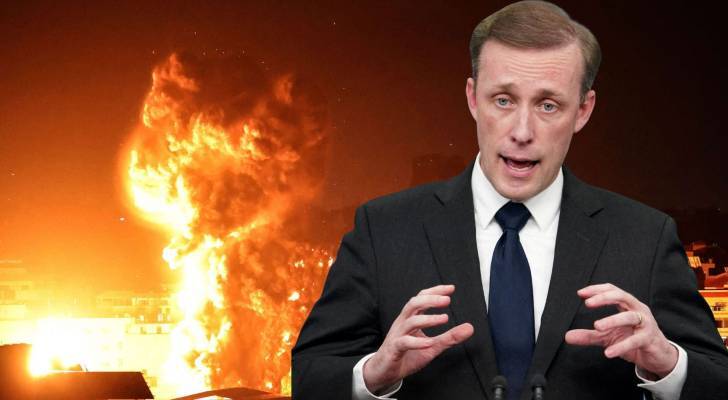
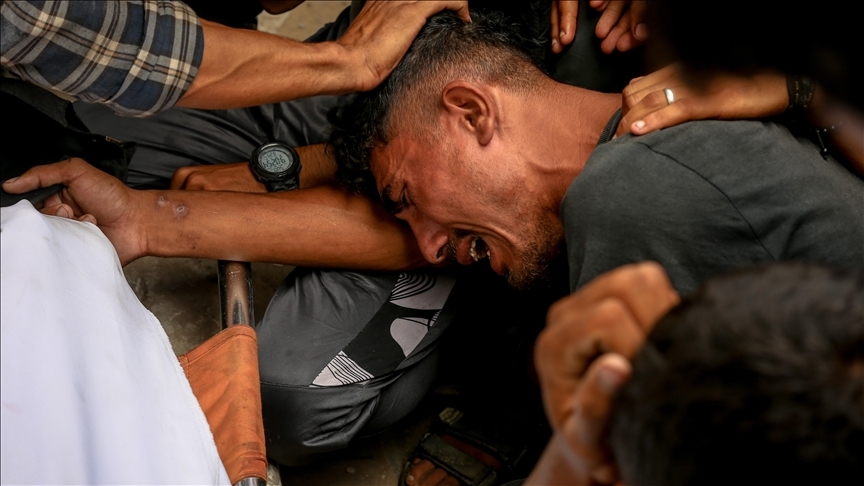
Comparing the Gaza battlefield to past asymmetric wars, it was clear from the outset that "total victory" was a dangerous delusion. A war waged without a clear political objective inevitably succumbs to the same law of diminishing returns that Kissinger warned against. In the absence of a Kissinger-style exit strategy, Israel's current government behaves like a compulsive gambler in a casino, recklessly throwing in more chips – more exhausted soldiers, more hostages left to die, more Palestinian civilian casualties. The result is a growing perception of Israel as the embodiment of evil in the eyes of the world.
This is the same kind of gamble that characterized in American efforts in Vietnam and Afghanistan. In both cases, it proved futile. Military surges failed to change the strategic reality because the battlefield did not allow for the kind of maneuver warfare that conventional armies are accustomed to. More crucially, the enemy – motivated by deep hatred for the invader – has nothing to lose. As the war drags on, they gain international sympathy and spark unrest and fatigue on the home front of the occupying power.
The U.S. lost the war in Vietnam after it lost it on university campuses and in Western public opinion. In Afghanistan, it lost to a jihadist enemy whose indifference to death and casualties no troop surge could overcome. America also could no longer withstand the effect of the destruction it unleashed on public opinion at home. It wasn't just the Russian winter that broke the spirit of Wehrmacht soldiers in Operation Barbarossa; it was also Stalin's endless ability to send fresh divisions into battle from the depths of Russia's vast geography.
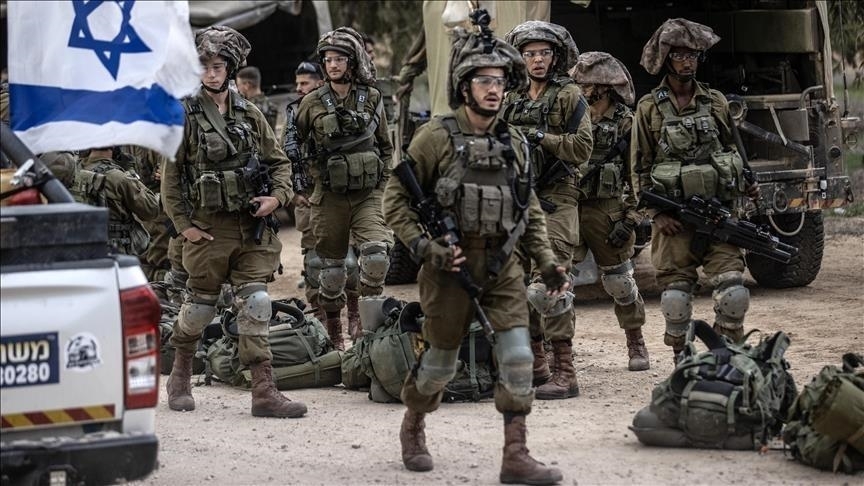
Of course, these are vastly different battlefields. And yet, what must exhausted Israeli soldiers in Gaza think, when – after two years of war – it becomes clear to them that Hamas's force remains essentially unchanged from the start of the war, because it can replenish its ranks through forced recruitment, or through payment and promises of protection from hunger?
Just as in Vietnam, the voices of the "mandarins" are again prominently heard – experts who dissect the campaign with a cold scalpel, disturbingly rational and detached from any moral consideration. So too in the Gaza war. But in wars of this kind, moral judgment is as decisive to the outcome as armored divisions and carpet bombings. In Vietnam, the experts called for destroying infrastructure and bombing mercilessly. One of them, Thomas Schelling – later a Nobel laureate in economics – supported deadly bombings. To his credit, he also said they should be stopped if, after three weeks, it became clear they only enhanced the dynamics of diminishing returns.
In Israel, the suggestions were to starve and to "seize territory" because "that's what hurts Hamas the most." But wars like these are not won on the battlefield; they are won in the public arena. In the past, we used to boast that "Israel's wars will one day be studied in military academies." After the war of October 7, what will be studied is how the weakest of all the members of the ring of fire surrounding Israel since that horrific date is the one who, after two years of bloody fighting, is still standing – and even setting the conditions for ending the war, conditions it has not deviated from since day one.
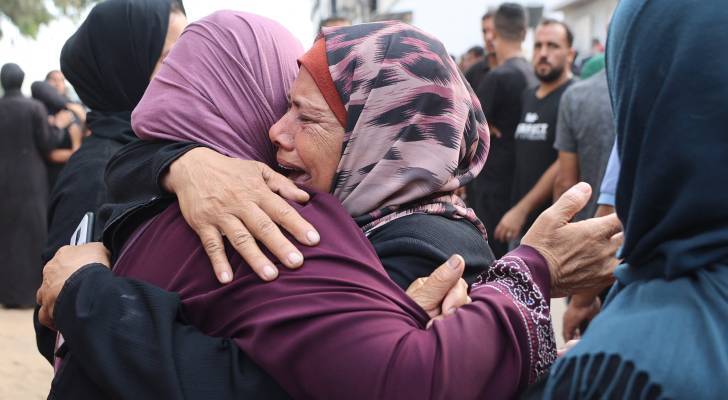
Even if Hamas is "defeated," the blow it dealt to the hated occupier – dragging it into the longest war in its history, inflicting heavy casualties, thousands of wounded, a rising number of soldier suicides, the mass release of high-level Palestinian prisoners, massive economic costs, growing international isolation, the entrenchment of Israel's image as a lawless state, a deepening internal rift, the revival of the Palestinian issue and the suspension of what looked as an imminent normalization of Israel' ties with Saudi Arabia – amounts to a psychological victory that will remain etched in the collective memory of the Palestinian people for many years.
In Israel's blind obsession with increasing those returns in a war against a slippery, invisible enemy, it is committing atrocities that may remain a mark of Cain on the forehead of the Jewish state for years to come.
The Palestinians may have failed at building state institutions, but they have proven their power to turn the heaven Israelis claim to be creating into a hell. If Israel insists on maintaining the occupation, it will be forced to live by the sword indefinitely, intensifying surveillance and intrusion into the lives of the occupied population, driven by the fear that another October 7 may be in the making, whether near Gaza or near Kfar Saba. Israel has failed spectacularly in defining the balance of power and understanding what victory and defeat actually mean in the Gaza war. This is not a matter of semantics. It reflects a fundamental inability to learn from similar past situations, in which the weaker side endured – sustained by a combination of ideological-jihadist motivation, nationalism, and the powerful mobilization of anti-occupation sentiment in asymmetric warfare.
Bottom of Form
Israel has not internalized the nature of today's battlefields, which extend far beyond physical territory. These battlefields now include global public arenas and the chaotic vortex of social media – spaces in which the orchestrator of one of the most atrocious terror attacks in memory, Hamas, is now viewed as an emblem of heroic resistance in its Gaza-Stalingrad.
Sovereign states are always bound to conduct cost-benefit analyses. Non-state actors like Hamas are far less constrained by such calculations. Even a radical regime like Iran's Islamic Republic must exercise some restraint, simply because, as a state, it depends on economic survival and some level of international legitimacy to preserve the Islamic Revolution.
A state like Iran can be deterred. But after two years of war, Israel is still desperately searching for the lever that will bring about "total victory" over Hamas. Hezbollah's dilemma was not very different from Iran's. It was defeated not only because of the decapitation of its leadership and the loss of much of its arsenal, but because it could no longer afford to expose Lebanon to sustained Israeli air force attacks.
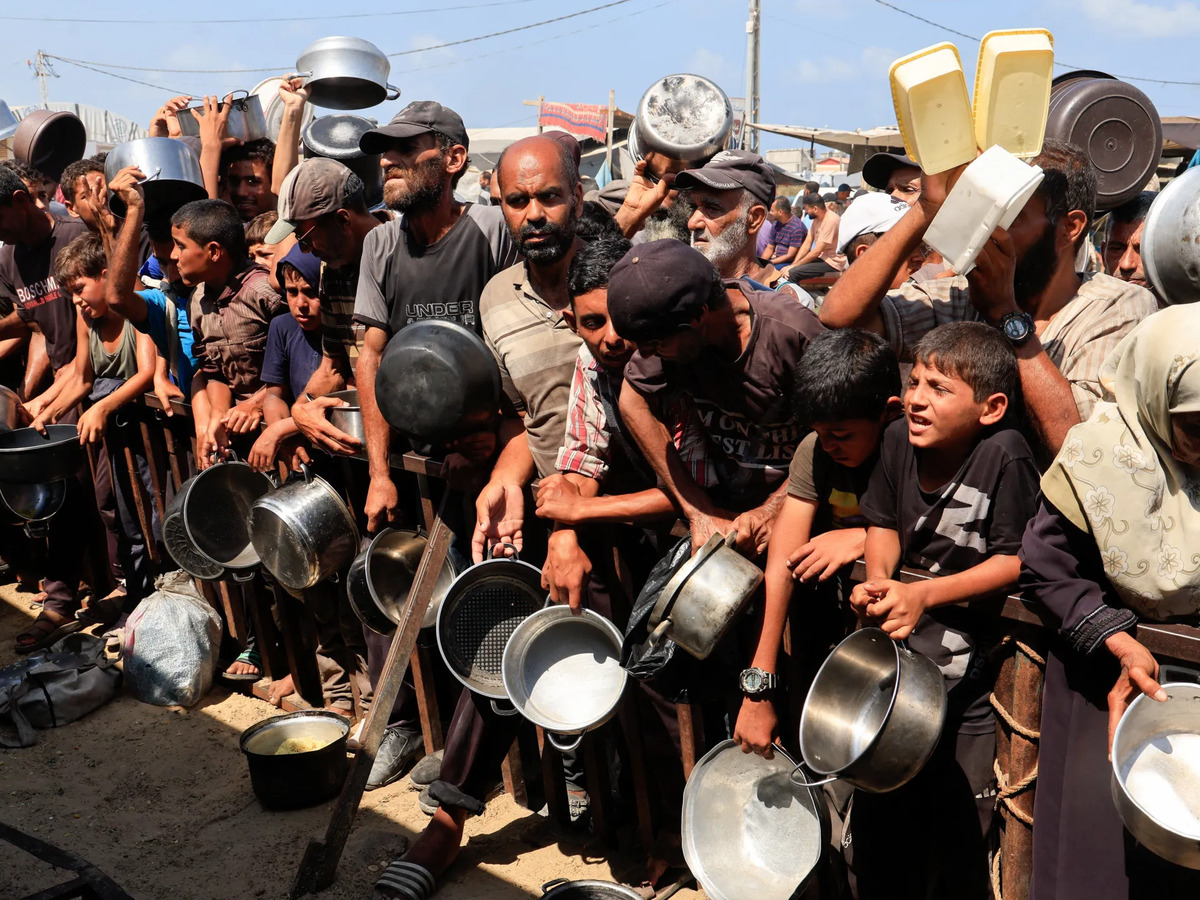
It turns out that sovereignty and statehood can be restraining forces. Hamas has no such constraints. Had Iran suffered 60,000 casualties – civilian and military – as Hamas has, the proportional equivalent would be hundreds of thousands of deaths. The Iranian regime likely would have collapsed. But Hamas continues to fight. Its leadership has been eliminated, its military and civilian apparatus destroyed, yet it knowingly sacrificed its civilian population to mass death and destruction. Its fighters remained protected in tunnels, with ample food – fully aware that the suffering of their people would serve their cause in the court of global public opinion.
"Diminishing returns" may describe the military side of this campaign, but it is a sterile term. In Israel's blind obsession with increasing those returns in a war against a slippery, invisible enemy, it is committing atrocities that may remain a mark of Cain on the forehead of the Jewish state for years to come. Is it possible that the people who endured the Holocaust are now committing the most heinous of crimes – genocide – against their neighbors?
When we see that Hamas remains standing even after the IDF eliminated its leadership in massive, biblical-scale attacks that killed tens of thousands of civilians and children, it is fair to ask: What was the purpose of this moral stain? And when these actions are accompanied by calls for extermination and ethnic cleansing from Israeli government officials – illustrating that the element of intent is also present – is it any wonder that accusations of genocide are gaining ground?
Even if Israel avoids a genocide conviction at the International Court of Justice in The Hague on a legal technicality, the stigma will remain. The genocidal label has already been affixed. True, for all its horrors, Gaza is not Auschwitz, a factory of death killing thousands each day. But the modern legal definition of genocide no longer depends on numbers or method. What matters is the demonstrated intent to destroy a national or ethnic group.
In Srebrenica, "only" 8,000 Bosnian Muslims were killed, yet the International Criminal Tribunal for the former Yugoslavia ruled it was genocide. The wars between Jews and Palestinians, like those in the Balkans, are the kind that invite genocidal madness: a head-on collision between entrenched national narratives, a bitter contest over centuries-old land claims, and the convergence of religious and ethnic communities in the same impoverished geography – where, as one famous line goes, "they unfortunately make more history than they can consume locally."
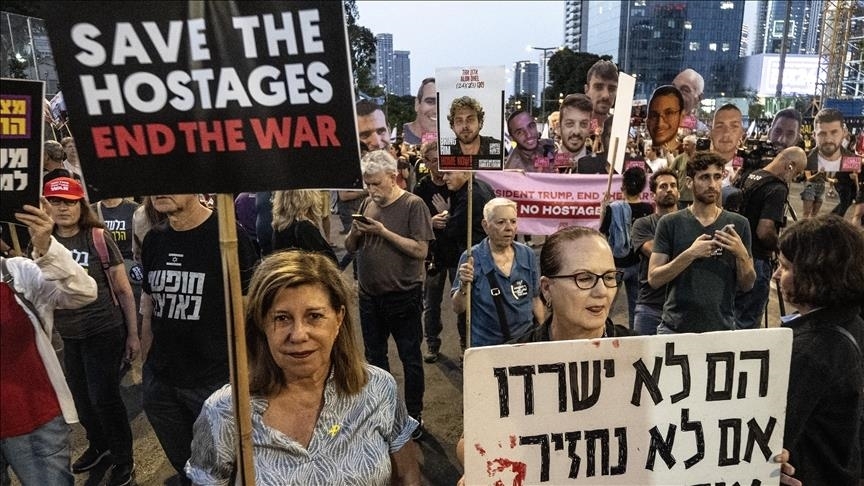
It is painful to watch how desensitized Israelis have become to the tragedy their army is inflicting in their name. This contrasts starkly with how the public in the U.S. and France eventually responded to atrocities committed by their armies in Vietnam, Iraq and Algeria. France left Algeria, as Jean-Paul Sartre noted, "not because of their violence, but because of ours." To Israelis' credit, perhaps, stands a weary and battered society that continues to protest – seeking to stop the regime's tyranny and save the hostages left to starve and die.
A key factor here is the ongoing nature of the conflict, which, in the Israeli view, has outlasted every political solution and left the country facing what it sees as an existential choice: "us or them." The October 7 massacre confirmed this fear. Israelis have also grown accustomed to hearing genocide accusations from critics, who have often applied the term loosely to each round of fighting with the Palestinians. During the First Lebanon War, John le Carré accused Israel of genocide. Nobel Laureate José Saramago compared Jenin during Operation Defensive Shield to Auschwitz. The Guardian claimed that the battle of Jenin was worse than Osama bin Laden's attack on the Twin Towers.
On the reversal of Holocaust roles – the idea that Israel is replicating Nazi Germany's crimes – Thomas Keneally once wrote, "The Holocaust remains for me not a Jewish problem but a European one." There is also the well-known saying, with many attributed origins, that "the Germans (and for this discussion, the Europeans) will never forgive us for Auschwitz."
Yes, one could rightly point out that the hundreds of thousands of civilians killed in Iraq, Afghanistan and Yemen did not lead to their killers being charged with genocide. But the unique status of the Palestinian tragedy in Western consciousness is a fixed reality, an integral part of the "battlefield" where Israelis and Palestinians have clashed for generations. In no other conflict does moral outrage resonate as powerfully. This is due both to the horrific scale of the Palestinian tragedy and to the fact that Jews are its perpetrators.
Indeed, as The Washington bureau chief of Al-Hayat, Joyce Karam, once said: "Muslim killing Muslim or Arab killing Arab seems more acceptable than Israel killing Arabs."
Either way, this is the moment to cut losses – strategically and morally. The post-colonial era has shown that peoples under occupation cannot be ruled forever. Liberation came when colonial powers realized they were caught in a spiral of diminishing returns. Today, Israel stands as the last "white" power ruling over a subjugated people – suppressing them and taking their land.
Israel has failed spectacularly in defining the balance of power and understanding what victory and defeat actually mean in the Gaza war.
There have been many empires, but a regime of total control enforced through invasive surveillance and regulation, as Israel imposes in the West Bank, finds modern parallels only in China's occupation of Tibet or its absolute control of the Uyghur minority. Even there, President Xi Jinping has admitted that the nightmare haunting Chinese leadership is the collapse of the regime, like that of the Soviet Union.
Gaza and the West Bank are not overseas colonies. But it is precisely this proximity – the historical homeland abutting the mother state – that fuels Israeli theocratic fascism and its ideology of Jewish supremacy. Generally speaking, land empires like Germany, Russia and China have historically bred tyranny and racial supremacy. Maritime empires, such as Britain and France, have tended to be more liberal in character, and from them most modern free nations were born.
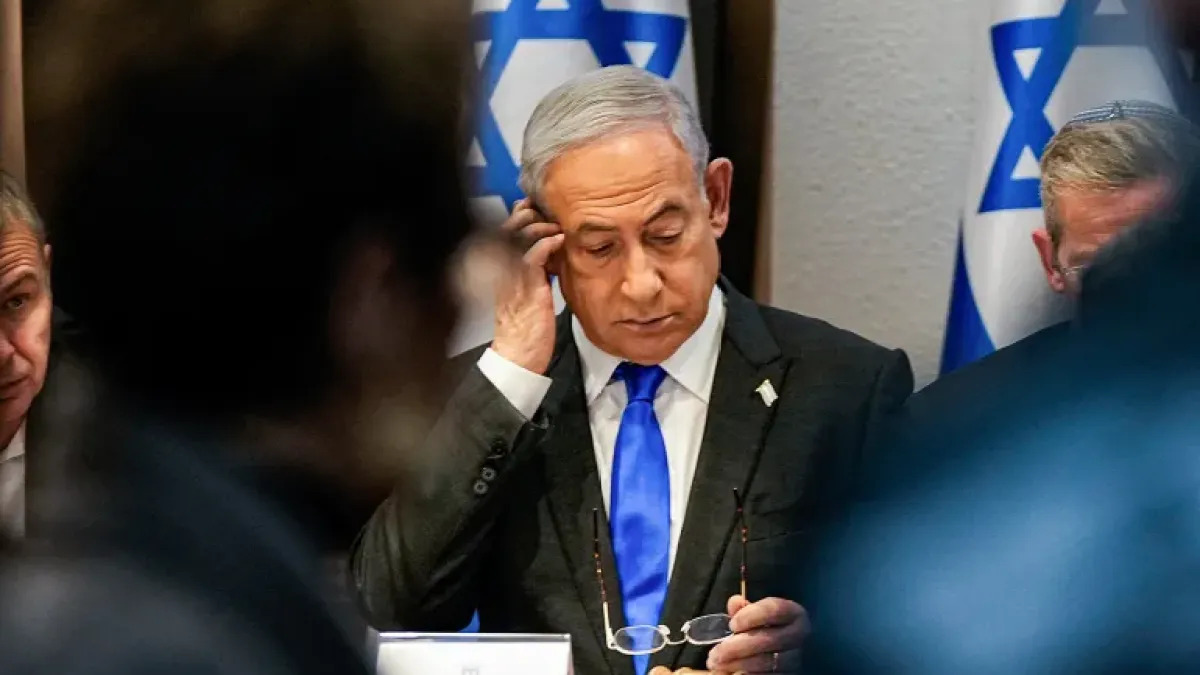
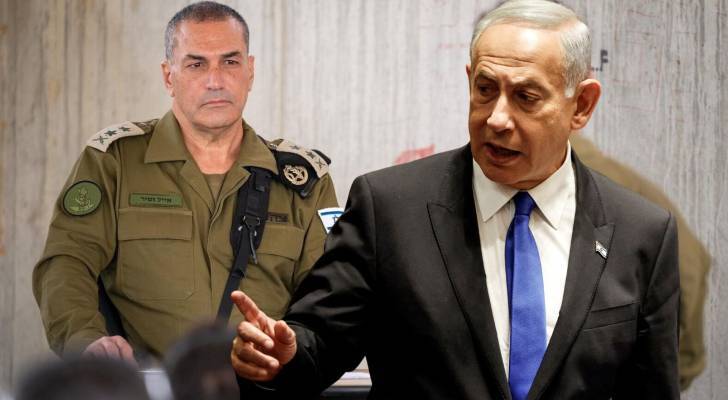
Today's Israel is ruled by a tyrannical colonial regime. It is a system where the election winner takes all. The eternal war has become a "rising yield" project for Netanyahu's government, and under this pretext, he may even attempt to prevent the next elections. Tyranny and the deepening of the occupation are now inseparable. The Gaza war has served as a smokescreen under which the West Bank has turned into a kind of Wild East of uprooting and expulsion. There is no path to ending the occupation without removing the authoritarian government embedded in Israeli political life.
Wars often produce unintended consequences, and not all of them are negative. When Israel launched its counteroffensive in Gaza, it did not anticipate how dramatically the region would shift. The IDF managed to break the Iranian-led regional ring of fire by waging a war it excels at: combining intelligence, air power and a wide range of military capabilities. Now, Israel and the U.S. must decide whether Iran is to be pushed toward accelerating its nuclear program – or nudged toward tactical reconciliation with the West.
Israel also did not imagine that Hamas, an ideological enemy of the two-state solution, would end up placing that very solution back at the center of the global agenda. The Gaza war has made one thing clear: In the absence of a political solution, Palestinians will continue to hold a proven strategic power to derail Israel's dream of regional peace.
Another unintended consequence is that the destruction of Hezbollah's military capabilities has created conditions for Lebanon to reclaim its sovereignty, disarm Hezbollah, and become a state with one government and one army. No one foresaw the fall of the Ba'ath regime in Syria, either. Indeed, a window for Israeli peace in the Levant has opened. These are all opportunities — but complex and far from certain — that only a new government, one freed from the illusion that war and diplomacy are always zero-sum games, can truly put to the test.