OPINIONS

Tue 02 Jun 2026 7:09 pm - Jerusalem Time

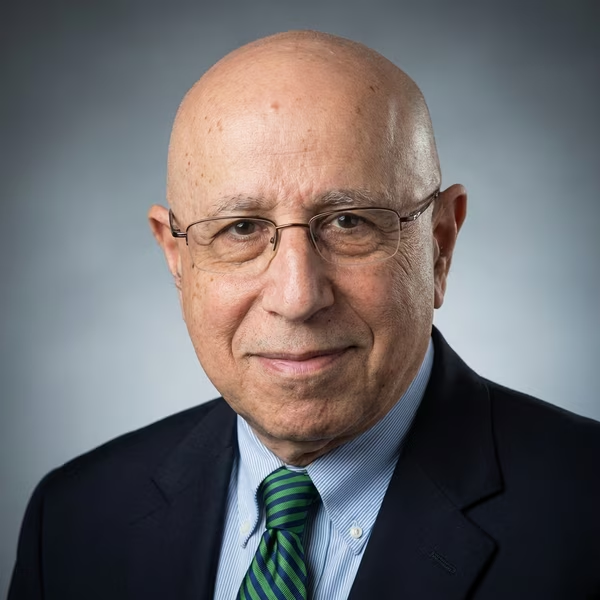
The Tragedy of Voluntary Fall: Adnan Ibrahim and the Travail of Transformation from Enlightenment to Justification

The Arab intellectual scene is witnessing a state of collective shock as masks fall from intellectual and artistic elites who built their glory on the issues of the people. In recent years, these influencers have transformed into soft tools in political propaganda machines, leading to an accelerating autumn of contemporary Arab consciousness.

The case of Dr. Adnan Ibrahim stands out as a unique tragic model in this context, where observers see it as a case devoid of traditional excuses. While living safely in the Austrian capital, Vienna, he voluntarily chose to engage in political paths that serve counter-revolutionary regimes that stifled the dreams of the Arab Spring.

The transformation in Adnan Ibrahim's discourse was not a coincidence or a fleeting slip of the tongue, but rather a path that was quietly formed and coldly formulated. This path began with refining intellectual propositions to suit the whims of power, and ended with the signing of official contracts to assume the position of advisor in the Emirati capital, Abu Dhabi.

Even the horrific traffic accident he suffered in 2019, which kept him away from the scene for two years, did not intercede for him in the moral readings of his subsequent choices. While the accident broke the bones of the body, his critics believe that his subsequent political choices were tantamount to selling his soul in the market of influence and positions.

This transformation evokes the historical story of 'Balaam son of Beor', where the two personalities meet on the same psychological slope despite the distance in time. Both were endowed with abundant knowledge and captivating eloquence, but at a critical moment, they chose to put this knowledge at the service of tyranny, coveting fleeting worldly gains.

The philosophical dilemma lies in how 'enlightenment' transforms from a tool for liberating minds into a means of justifying regime policies. This is clearly evident in the moral selectivity practiced by some elites, where their eyes open to slogans of tolerance but close to the blood of the oppressed and regional wars.

The linguistic analysis of the name 'Balaam' indicates its association with 'gullet', in a symbolic reference to prioritizing material interests and high positions over principles. It is as if all those resonant speeches that charmed millions were ultimately reduced to serving personal gains and positions of power.

The name 'Adnan Ibrahim' carries a bitter irony; while the first name is derived from adhering to truth and steadfastness, some believe he betrayed this derivation. Moreover, the name 'Ibrahim' is now linked in the current political context to the Abraham Accords engineered by the previous US administration for normalization.

This embrace of capitals promoting normalization comes at a sensitive time for the Palestinian cause, specifically the genocide war facing Gaza. The stark contradiction emerges between an intellectual who justifies official policies and the reality of the tragedy experienced by the Palestinian people under the weight of occupation and betrayal.

The capitals of the region are currently run by a deaf authoritarian machine that adopts a decisive screening equation towards intellectuals and scholars. It rewards and bestows gifts upon anyone who grants it legitimacy, while imprisoning anyone who possesses the courage to refuse and adhere to principled stances.

While the reward system welcomes Adnan Ibrahim in air-conditioned halls, dark cells swallow real scholars and intellectuals who refused to compromise. We find names like the poet Abdul Rahman Youssef and others absent in prisons because they refused to be false witnesses to the issues of their nation.

The burning philosophical paradox is that free people are imprisoned within their homelands for their steadfastness, while the protected in his European exile voluntarily enters the corridors of power. Feeding at tables whose prices were paid with the blood of innocents and the freedom of honorable people represents the peak of the intellectual's moral fall.

The digital platforms that these thinkers once led have become desolate after the shocked masses abandoned them due to the fall of their role models. This fall not only affected the reputation of individuals but also contributed to many questioning the constants and values they advocated.

Despite this gloom, the bet remains on the awareness of peoples who may fall ill but do not die, and the embers hidden under the ashes await the moment of resurgence. History does not forgive those who bought God's verses and principles for a small price, and in the end, it is the truth by which men are known, not the other way around.

Truth is not known by men, but men are known by truth; eloquent faces fade, but principles remain steadfast in the face of storms of change.

PALESTINE

Tue 02 Jun 2026 7:09 pm - Jerusalem Time

Freedom Flotillas.. A History of Naval Confrontation to Break the Siege of Gaza and Challenge the Occupation

In recent years, the Mediterranean Sea has become an arena of political and human rights clashes between international activists seeking to break the siege imposed on the Gaza Strip and Israeli occupation forces who use military force to prevent their access. International press reports have reviewed the history of these confrontations, noting that the waters of the Mediterranean have become a stage to test the international community's commitment to maritime and humanitarian laws in the face of Israeli arrogance.

In a recent incident in international waters, a group of boats sent wireless distress calls after being pursued, but nearby countries did not respond to these calls. Armed forces belonging to the occupation quickly stormed the ships, carrying out widespread arrests of passengers and taking them to detention centers, amid horrific testimonies of severe beatings and deliberate humiliation.

Sources reported that the detained activists faced harsh conditions, including electric shocks, the use of rubber bullets, and stun grenades inside the ships, which were turned into floating prisons. Testimonies from survivors also documented cases of sexual harassment and psychological abuse, in an attempt by the occupation authorities to intimidate international solidarity activists and prevent them from repeating attempts to reach the shores of Gaza.

In these events, the role of Israeli National Security Minister Itamar Ben-Gvir stood out. He appeared in a video clip sarcastically rebuking activists, claiming ownership of the land for the occupation. Occupation forces forced dozens of solidarity activists to prostrate themselves in humiliating positions, which observers considered a reflection of the policy of boasting about violations adopted by the current Israeli government towards anyone who supports Palestinian rights.

By May 22nd, hundreds of detainees had been released, giving shocking testimonies about what happened behind bars, including journalists who documented moments when their colleagues lost consciousness due to torture. Human rights reports included at least fifteen cases of sexual assault, raising the level of crimes committed against civilians in the open sea under Israeli security cover.

Palestinian-American lawyer Huwaida Arraf is one of the most prominent founders of this struggle tactic, which began in 2008. She asserts that the goal is not merely symbolic but a direct challenge to the legitimacy of the siege. Arraf believes that these boats, despite their small size, carry a strong political message that rejects the isolation of Gaza from the world and affirms the right of Palestinians to free maritime communication.

The idea of freedom flotillas was born out of the suffering in the West Bank during the Second Intifada, when activists realized that the absence of international accountability encouraged the occupation to go too far. Arraf founded the International Solidarity Movement with the aim of having international witnesses on the ground, hoping that their presence would help deter Israeli violence against Palestinian civilians.

Historically, solidarity activists have paid heavy prices for their stances, as happened with American volunteer Rachel Corrie, who was killed by an Israeli bulldozer in 2003 while trying to protect a Palestinian home from demolition. These incidents did not stop the movement but pushed activists to seek new means of solidarity, the most prominent of which was turning to the sea after the comprehensive land siege on the Gaza Strip was tightened.

In August 2008, the 'Free Gaza' movement succeeded in delivering two small boats to Gaza port for the first time since 1967, in a historic moment that Palestinians received with great enthusiasm. This success prompted the occupation to change its naval strategy, as it began using lethal force and ramming boats to prevent a repeat of the scene of breaking the siege, which embarrassed the Israeli security system.

The movement later evolved to form larger flotillas, such as the Freedom Flotilla led by the Turkish ship 'Mavi Marmara' in 2010, which was subjected to a bloody attack resulting in martyrs and injuries. Since then, the occupation has followed a consistent pattern of intercepting ships in international waters and kidnapping their passengers before they reach the designated area of the naval blockade.

Reports indicate that the complicity of some Western governments and their passivity towards these violations have contributed to the continuation of Israeli violence against activists. While Italy described the Israeli treatment as unacceptable, the United States continued to adopt the Israeli narrative that labels these humanitarian movements as supporting hostile organizations, giving the occupation a green light to continue.

Analysts compare the journeys of freedom flotillas to those of migrants in the Mediterranean, where both face the risk of death or arrest in order to reach a safe haven or freedom. Engaging in this solidarity work strips activists of the protection of their Western passports, placing them in direct confrontation with the machinery of oppression that does not differentiate between a Palestinian and a foreign solidarity activist.

In light of the recent escalation and the genocide war in Gaza, the flotilla movement has regained vitality despite logistical challenges and political pressures exerted by countries like Greece to prevent ships from sailing. Activists believe that international silence regarding the starvation of the Strip's residents makes maritime action an urgent moral necessity that cannot be compromised, no matter the sacrifices.

In conclusion, the freedom flotillas remain a cry in the face of the world's conscience, as volunteers put their bodies in the path of bullets to break Gaza's isolation. Despite criticisms calling for focusing on preventing arms shipments, sailing towards Gaza remains an affirmation that this shore is an integral part of humanity, and that the siege, however long it lasts, will remain an illegal act that must be confronted.

Our small boats will never carry the amount of aid Palestinians need, but our goal is always to challenge the illegal blockade through direct action.

PALESTINE

Tue 02 Jun 2026 7:08 pm - Jerusalem Time

Reshaping the American Role in the Region: Tom Barrack as Presidential Envoy to Syria and Iraq

The US administration's decision to change Tom Barrack's title from Special Envoy to Syria to Special Presidential Envoy for Syria and Iraq has raised widespread questions about the legal and political dimensions of this move. This change comes at a time when relations between Washington and Damascus are undergoing radical transformations, coinciding with Barrack retaining his original position as the US Ambassador to Ankara, the Turkish capital.

Informed sources clarified that this measure primarily aims to overcome legal complexities within the US decision-making circles. Laws governing the work of special envoys require explicit approval from Congress if the official remains in their position for more than one year, which the White House sought to avoid by changing the job title.

Observers believe that the US President preferred to use his direct executive powers to appoint Barrack as a presidential envoy, rather than engaging in lengthy and complex discussions with lawmakers in Congress. This step ensures Barrack's continuity in leading the Syrian file without interruption, while expanding the scope of his duties to include the Iraqi file as well, within a comprehensive regional vision.

In a related context, the US President affirmed that this step aims to enhance strategic cooperation with the governments of Syria and Iraq, praising Barrack's diplomatic performance during the past period. The White House indicated that US relations with both countries are steadily growing, necessitating a high-level diplomatic representation with broad powers.

A notable diplomatic development occurred with a phone call between Syrian President Ahmed Al-Sharaa and his American counterpart, Donald Trump. The call discussed ways to develop bilateral relations and address issues of common interest, reflecting the seriousness of both parties in moving relations to a new phase of direct coordination.

For his part, Farouk Bilal, President of the Syrian-American Council, described the current developments as unprecedented and not witnessed in the region for six decades. He explained that the past year saw diligent efforts from Damascus and Washington to connect government institutions with each other, going beyond traditional diplomatic channels to direct technical coordination.

Bilal pointed out that communication channels are now open between the US State Department and its Syrian counterpart, in addition to similar coordination between the US Treasury Department and the Syrian Ministry of Finance. This level of institutional communication reduced the need for a traditional special envoy position, and necessitated elevating the status to a presidential envoy who oversees these ties.

In a different interpretation, Hisham Nashawati, founder of the 'Syria Road to Freedom' organization, considered the new position a political promotion for Barrack, reflecting the administration's absolute confidence in his abilities. He affirmed that the abolition of the special envoy position and its replacement with a presidential envoy means that Barrack has become the de facto guardian of implementing Trump's vision in the Fertile Crescent region.

Nashawati noted that congressional procedures limit the term of envoys to six months, renewable once, which made the change an administrative necessity to ensure Barrack's continued presence. Instead of appointing a new official, the administration chose to promote the current official to ensure stability in foreign policy towards the Syrian and Iraqi files.

Reports indicate that this change may be related to the end of the 'crisis' status that had accompanied the Syrian file in American circles for many years. The current trend leans towards normalizing institutional relations and dealing with the Syrian state as a strategic partner in the region, away from the previous language of escalation.

In a parliamentary move supporting this trend, Congressman Joe Wilson called for the immediate abolition of Syria's designation as a state sponsor of terrorism. Wilson considered that recent positive developments, especially Barrack's appointment as a presidential envoy, necessitate updating US laws to keep pace with the new political reality.

Analysts believe that merging the Syrian and Iraqi files under the supervision of a single envoy reflects Washington's desire to create a balanced regional bloc that cooperates on security and energy issues. Tom Barrack, described as the architect of modern relations between Washington and Damascus, appears to be the most qualified person to manage this complex balance.

The shift from 'crisis management' to 'partnership building' is clearly evident in the nature of the tasks entrusted to Barrack in his new position, where he will work to strengthen economic and security ties. Sources confirm that the coming period will witness more reciprocal visits and agreements that enshrine this new diplomatic approach of the US administration.

In conclusion, Tom Barrack remains the central link in Trump's policy towards the Middle East, combining fieldwork in Ankara with strategic planning in Damascus and Baghdad. This complex role grants him broad influence to shape the features of the next phase in Arab-American relations in a way that serves the common interests of both parties.

Trump's trust in Tom Barrack qualified him to be the guardian of the US administration's vision for the region and the implementer of its strategy in Syria and Iraq.

PALESTINE

Tue 02 Jun 2026 7:08 pm - Jerusalem Time

Gaza Defies Rubble with Sports Initiative Mimicking 2026 World Cup

National and sports figures in Gaza City announced the launch of a symbolic initiative mimicking the 2026 FIFA World Cup, scheduled to be held in the United States, Mexico, and Canada. This step aims to draw the world's attention to the massive destruction inflicted by the Israeli aggression on sports infrastructure, and to commemorate the martyrs among players and coaches who fell during the ongoing war on the Strip.

Gaza Mayor, Dr. Yahya Al-Sarraj, affirmed during a press conference that Gaza rejects marginalization and insists on conveying its voice to the world through all available platforms. Al-Sarraj pointed out that holding events mimicking the World Cup within the besieged Strip comes as a message of defiance, despite vital facilities being out of service, foremost among them the historic Yarmouk Stadium, which suffered extensive damage, transforming it from a field of football creativity into a witness to the occupation's crimes.

For his part, Ahed Farawneh, Secretary of the Journalists' Syndicate in Gaza, explained that Palestinian sports and media personnel face significant obstacles that prevent them from being present at upcoming international forums. Farawneh compared the strong Palestinian presence in the 2022 Qatar World Cup with the current situation, where the aggression and US restrictions on granting visas have isolated Palestinian athletes from this major global event.

The initiative includes field activities and massive artistic murals of international sports figures who have declared their solidarity with the Palestinian cause, most notably Barcelona talent Lamine Yamal and coach Pep Guardiola. These activities seek to enhance global awareness of Palestinian rights and emphasize that sports in Gaza remain a tool for cultural resistance and asserting existence despite attempts at extermination and displacement.

In a related context, sports sources revealed shocking statistics regarding the targeting of the sports sector, where the Israeli war machine destroyed more than 270 facilities, including clubs, stadiums, and indoor halls. The targeting was not limited to inanimate objects but also affected people, with about a thousand sports personnel, including players, coaches, and administrators, martyred, leading to a complete paralysis of the sports system, whose remaining stadiums have been turned into shelters for thousands of displaced people.

This initiative comes at a time when the residents of the Gaza Strip suffer from a lack of basic necessities of life, yet the insistence on reviving symbolic sports activity reflects the will to survive. The organizers of the event hope that their message will reach the International Federation of Association Football (FIFA) and the international community, to pressure for the protection of Palestinian athletes and to hold the occupation accountable for its systematic targeting of sports institutions.

Gaza refuses to be forgotten, and we insist that it always remains present in all fields despite the siege, pain, and destruction.

OPINIONS

Tue 02 Jun 2026 7:08 pm - Jerusalem Time

Trump's Initiative to Expand 'Abraham': Trading the Iranian File for Normalization and the Inevitability of Regional Security

The Middle East is witnessing profound geopolitical transformations that have put traditional political theories to complex tests, especially with the ongoing tensions resulting from the war in Gaza and direct confrontations between Israel and Iran. Amidst this ambiguity, a surprising diplomatic initiative by US President Donald Trump has emerged, seeking to integrate two contradictory paths into one major deal.

Trump's new vision relies on linking the conclusion of a final agreement to end the conflict with Tehran to a mandatory condition that influential regional countries join the 'Abraham Accords'. This proposed list includes Saudi Arabia and Qatar, in addition to Egypt, Jordan, Turkey, and Pakistan, in an attempt to formulate a regional architecture that guarantees Washington's interests.

Observers believe that this proposal reflects the American administration's desire to achieve a historic accomplishment that ends the drain on resources in Middle Eastern conflicts. The new approach also reveals an American conviction that any security agreement with Iran will not succeed without a broad regional umbrella that ensures its sustainability and involves major powers as guarantors.

Trump affirmed via his 'Truth Social' platform that negotiations with the Iranian side are proceeding in a positive direction, but he did not hesitate to hint at harsh options if the diplomatic path fails. This duality aims to pressure all parties to accept the proposed trade-off between military de-escalation and political gains represented by normalization.

On the ground, recent months have proven that the cost of direct confrontation is very high for the global economy, especially with the paralysis that has affected navigation in the Strait of Hormuz and the Red Sea. This reality has made diplomacy the only available way out for Washington to avoid sliding into a comprehensive war with no decisive victory in sight.

Despite American pressure, Gulf-Iranian relations have shown resilience in the face of escalation storms, with a mutual understanding that the security of both sides of the Gulf is structurally intertwined. This inevitability is based on common economic interests, especially with the region's countries adopting ambitious development visions that require comprehensive security stability.

Saudi Arabia considers regional stability to be the cornerstone for the success of 'Vision 2030' and attracting foreign investments, which requires a zero-problem environment. In contrast, Iran finds opening up to its neighbors a lifeline to break international isolation and alleviate the burden of economic sanctions that have exhausted the state for many years.

However, the Palestinian issue remains the most prominent structural obstacle to Trump's ambitions, as Riyadh refuses to grant the normalization card without a real political price. The Saudi leadership insists on the necessity of a permanent and irreversible path to establish an independent Palestinian state, considering it an essential condition that cannot be bypassed under any circumstances.

Analysts believe that any attempt to bypass Palestinian rights in light of the bloody scenes in Gaza will face widespread popular rejection in the Arab and Islamic worlds. The political stability and popular legitimacy of ruling regimes are closely linked to justice in resolving the Palestinian issue, making jumping over this file an uncalculated gamble.

In addition to the Saudi position, the American initiative faces a wall of rejection from countries such as Egypt, Jordan, and Turkey, which have previous relations with Israel. These countries are currently seeking to de-escalate situations and resolve crises from their roots, rather than engaging in new security alliances that might increase polarization in the Arab street.

The image of the current Israeli leadership has been severely damaged in the collective Arab consciousness as a result of military practices in the Gaza Strip and international legal pursuits. This reality has made the idea of building new strategic partnerships with the current Israeli government extremely difficult, given the high political and ethical sensitivity.

The Middle East is moving towards the necessity of establishing a local collective security system that stems from the region's own needs, away from external dictates. The success of any comprehensive settlement requires direct and sustained dialogue among the four major regional powers: Riyadh, Tehran, Cairo, and Ankara, to share security and economic responsibilities.

Past experiences have proven that relying on external promises that change with changing administrations in the White House does not provide long-term stability. Therefore, moving towards a sustainable regional system passes through the gateway of internal understandings and the recognition that security is a shared local project that cannot be imported as a ready-made commodity.

In conclusion, Trump's demand to expand the Abraham Accords as a condition for an agreement with Iran remains a strategy that suffers from a flaw in understanding the new balances. The key to stability in the region is no longer solely in Washington's hands, but lies in peaceful coexistence between Arabs and Iran and a just solution to the Palestinian issue as a mandatory prerequisite for any true peace.

Security for Riyadh and Tehran has become a single existential bloc that cannot be divided, and any attempt to re-engineer the region by force will only produce more forced interconnectedness.

ARAB AND WORLD

Tue 02 Jun 2026 7:08 pm - Jerusalem Time

Between Electoral Promises and Complex Reality: Why Trump's Strategy in Gaza, Ukraine, and Iran Faltered?

US President Donald Trump finds himself today at a dead end in the most prominent foreign policy issues he promised to resolve quickly. After entering the White House, he discovered that the diplomatic and military victories he heralded in Ukraine, Gaza, and Iran clashed with a geopolitical reality more complex than he had imagined during his election campaign.

Trump is known for his preference for decisive and swift results, keeping models of 'B-2' bombers that participated in military operations against Iranian facilities on his desk. The US President had repeatedly cited Venezuela as a perfect success model for removing adversaries, but this approach has not proven effective in the current international crises that have entered a stalemate.

In the Iranian file, the war reached a stage of stagnation despite Trump's announcement of a ceasefire last April. The President had conditioned the truce on the full and safe opening of the Strait of Hormuz, which has not been achieved as desired, as trade understandings are still under negotiation without fundamental change in Tehran's nuclear and missile programs.

Sources in the US administration describe the ongoing negotiations with Tehran as 'very limited' and potentially long-term. It appears that the Iranian side is betting on a strategy of prolonging negotiations, benefiting from Washington's hesitation to return to a comprehensive military confrontation that does not enjoy widespread domestic support in the United States.

As for the Ukrainian front, Trump's promises to end the conflict within 24 hours of taking office evaporated. More than a year into his presidency, cannons still roar in Eastern Europe, while the President has begun to avoid discussing this issue, which has become an increasing diplomatic burden on his administration.

Secretary of State Marco Rubio expressed his frustration with the pace of talks that are not achieving tangible progress on the ground. Rubio indicated that Washington might not mind relinquishing its mediating role to another party, a clear sign of despair over the possibility of imposing a quick settlement between Moscow and Kyiv.

Informed sources indicate that the Russian side views diplomatic moves led by presidential envoys such as Steve Witkoff and Jared Kushner with coolness. The Kremlin prefers a more stable diplomatic path through official channels and regular working groups, especially given the prolonged vacancy of the US Ambassador to Moscow.

In the Gaza Strip, American celebrations of hostage releases faded in the face of ongoing destruction and the failure of reconstruction plans. Despite Trump's promotion of a plan to transform the Strip into a tourist area with towers and resorts, the reality on the ground indicates that Palestinian factions have not been disarmed and humanitarian suffering continues.

Further complicating the scene in Gaza was the announcement by the Prime Minister of the occupation, Benjamin Netanyahu, of expanding military control over additional areas in the Strip. This approach contradicts American perceptions of a political solution and puts the Trump administration in an awkward position regarding its promises to achieve stability and economic prosperity in the region.

Analysts believe that the gap between Trump's ambitions and the realities on the ground stems from his overconfidence in the ability of military force to impose lasting political outcomes. While Washington is adept at delivering precise strikes against facilities, it lacks the ability to control subsequent political trajectories in sovereign states like Russia and Iran.

Security experts emphasize that foreign policy is a continuous daily management process, not just dramatic announcements or exciting initiatives. Careful follow-up of issues is what makes the difference, which Trump's record seems to lack, as his interest in issues wanes once they enter the complex labyrinths of negotiation.

Specifically on the Ukrainian issue, Trump admitted in private occasions that he underestimated the complexities preventing an agreement. Meanwhile, Ukraine has developed offensive capabilities enabling it to strike deep into Russia, adding new layers of difficulty to any American mediation attempt.

Regarding Iran, the White House's rhetoric shifted from demanding 'unconditional surrender' to seeking formulas that combine pressure and incentives. This shift reflects an implicit acknowledgment of the failure of military strikes to achieve the major political goals set by the administration at the beginning of the escalation.

Observers conclude that the real challenge for Trump is not in winning military battles, but in managing the complex political repercussions that follow. While Gaza remains mired in rubble and Ukraine in the throes of war, the US President faces the reality that 'big deals' are not always made by the language of force alone.

Foreign policy is usually a long and complex process, and what makes the difference is the continuous management of issues, not grand announcements.

PALESTINE

Tue 02 Jun 2026 7:06 pm - Jerusalem Time

Field escalation in Gaza: Martyrs in intense raids and demolition of residential blocks coinciding with Cairo talks

Israeli occupation forces have escalated their field violations of the ceasefire agreement in the Gaza Strip in recent hours, carrying out widespread destruction operations that targeted entire residential blocks. Field sources reported that massive explosions shook the eastern areas of Al-Tuffah neighborhood, east of Gaza City, resulting from intensive demolition operations of buildings carried out by the occupation army, causing shrapnel to fly as far as nearby displaced persons' tents.

In the central Strip, an Israeli drone launched a raid targeting the town of Al-Zawaida at dawn today, resulting in the martyrdom of one person and the injury of several citizens with varying degrees of wounds. This raid comes in the context of a series of aerial targeting that has not stopped despite the announced understandings, exacerbating the state of panic among residents who are trying to return to their normal lives.

The eastern areas of Gaza City, specifically the neighborhoods of Al-Shuja'iyya, Al-Zaytoun, and Al-Tuffah, also witnessed intense gunfire and continuous artillery shelling from Israeli military positions stationed on the border. The occupation forces are exploiting their field control in these areas to carry out extensive bulldozing operations and establish new military fortifications, in a move that reflects an intention to remain for longer periods.

Local sources confirmed that these military movements are taking place within what are known as 'Yellow Line' areas, which were supposed to be evacuated by the occupation army according to the terms of the ceasefire agreement. However, the facts on the ground prove otherwise, as the occupation continues to strengthen its military presence and expand points of contact, disregarding international understandings.

In Khan Yunis city, south of the Strip, a Palestinian citizen was martyred by occupation forces' bullets near Hamad Residential City, northwest of the city. Eyewitnesses stated that occupation snipers stationed in nearby areas are directly firing at anyone moving in that area, hindering the movement of citizens and preventing them from accessing their properties.

Another Israeli raid targeted a civilian car traveling on the strategic Salah al-Din Road, specifically in the area east of Deir al-Balah in the central Strip. Medical sources confirmed the arrival of a number of martyrs and wounded to hospitals as a result of this direct targeting, which falls within the policy of pursuing civilian vehicles on main roads.

Politically, attention is currently focused on the Egyptian capital, Cairo, which is hosting a new and decisive round of talks aimed at consolidating the ceasefire and preventing its complete collapse. Delegations from international and regional mediators are participating in this round, in an attempt to reach a formula that ensures all parties adhere to the agreed-upon terms and stop the bloodshed.

Hamas and other Palestinian factions warned that the continuation of systematic Israeli violations jeopardizes the agreement and undermines the efforts of mediators. The factions indicated that international silence regarding these violations encourages the occupation to continue its crimes, stressing that maintaining the agreement depends on stopping the aggression and a complete withdrawal from the agreed-upon areas.

Mediators from Egypt, Qatar, the United States, and Turkey are seeking to propose new approaches aimed at bridging the gap between the two parties and providing real guarantees for the continuation of calm. This round is considered a 'last chance' to save the political process, especially in light of the increasing popular and humanitarian pressures within the Gaza Strip as a result of the continued siege and intermittent shelling.

According to the latest statistics issued by the Government Media Office in Gaza, the occupation army has committed more than 3076 violations since the agreement came into effect last October. These violations have led to the martyrdom of 939 Palestinians and the injury of about 2889 others, in addition to the arrest of dozens of citizens, reflecting the extent of the ongoing violations of the truce.

Mediators are seeking to reach new approaches to save the agreement and prevent its collapse amid the continued humanitarian and field deterioration.

PALESTINE

Tue 02 Jun 2026 7:06 pm - Jerusalem Time

Warnings of an epidemic catastrophe afflicting Gaza's children amid rodent spread and water pollution

Medical and humanitarian warnings are escalating about an imminent health catastrophe afflicting children in the Gaza Strip, due to severe overcrowding in displacement camps and acute environmental degradation. Medical sources reported that the Israeli occupation's expansion of its field control and the cramming of hundreds of thousands into narrow spaces exacerbate the health conditions of children who have become vulnerable to deadly epidemics.

The Nasser Medical Complex in Khan Yunis, south of the Strip, receives dozens of daily cases suffering from pollution-related diseases, amid a lack of available medical resources. International reports indicate that about 800,000 displaced children are currently suffering from a combination of severe malnutrition and infectious diseases that are spreading like wildfire in the displaced persons' tents.

Dr. Ahmed Al-Farra, director of the Children and Maternity Hospital at Nasser Complex, confirmed that the sector is experiencing an unprecedented environmental crisis after confining the population to less than 40% of Gaza's area. Al-Farra warned that threats to reduce this area to 30% would lead to an uncontrollable epidemic outbreak in the absence of basic necessities for life.

Accumulated waste poses an imminent danger, as it decomposes and its toxic liquids seep into the groundwater reservoir, polluting the only remaining water source for the population. In parallel, the camps are witnessing a terrifying proliferation of rodents and insects that have developed immunity to traditional pesticides, invading the displaced persons' tents and damaging their simple belongings.

Medical teams have observed a widespread انتشار of infectious skin diseases such as scabies, in addition to strange insect bites that cause severe inflammation. More dangerously, cases of 'typhus fever' have appeared, a serious disease that causes severe high temperatures and blood clots that can lead to death if not medically intervened urgently.

The energy crisis plays a pivotal role in the deteriorating health situation, as the complete power outage in the camps leads to the spoilage of the few available foods. Due to the absence of refrigeration, displaced persons are forced to eat food that may be contaminated or spoiled, which increases the rates of food poisoning and acute gastroenteritis among infants and children.

Operating hospitals have experienced immense pressure, with the number of visitors to pediatric departments jumping from 100 cases per day to more than 450 cases in the past twenty-four hours. The number of cases requiring medical overnight stays also increased from 25 cases to about 100 cases, forcing the hospital administration to open additional departments in field hospitals.

Medical staff appealed to the international community and global health organizations for immediate intervention to save the Palestinian people from the systematic destruction of the components of life. Field doctors explained that the occupation seeks, through these environmental and health pressures, to push the population towards forced displacement by making Gaza an uninhabitable place for humans.

For their part, displaced mothers expressed their despair over the living conditions, with Ms. Shaima Moussa confirming that her children suffer from continuous skin infections due to air and water pollution. Meanwhile, Ms. Safaa indicated her constant visits to the hospital to treat her son whose health condition has deteriorated, amid the family's inability to provide the simplest types of medicines or detergents.

The Gaza Strip is experiencing an unprecedented environmental crisis as a result of confining the population to very small areas, which has led to the spread of rodents and epidemics that do not respond to pesticides.

PALESTINE

Tue 02 Jun 2026 7:06 pm - Jerusalem Time

Warnings of an Israeli-American Plan to End Hashemite Guardianship over Al-Aqsa: Is Confrontation Approaching?

British writer and political commentator Peter Oborne highlighted the systematic Israeli escalation towards the blessed Al-Aqsa Mosque, warning of attempts to undermine the historical 'Status Quo' arrangements. Oborne pointed out in an analytical article that current Israeli endeavors are directly supported by influential figures in American circles close to Donald Trump, which puts the Hashemite guardianship at risk.

Analytical insight suggests that targeting the Noble Sanctuary goes beyond being a localized conflict; rather, it represents a threat that could open the door to a comprehensive religious confrontation in the Middle East. The writer believes that Israel has for decades been gradually tightening its grip on the site, citing Ariel Sharon's storming of the compound in 2000 as the beginning of the de facto seizure policy whose chapters we witness today.

Legally and legitimately, Jordanian monarch King Abdullah II is responsible for the maintenance and security of Al-Aqsa Mosque, but field practices reflect a different reality. Field sources reported that Israeli security forces have begun to interfere in the most minute construction and administrative details within the compound, including preventing simple renovation work without prior permission.

Recent press reports revealed a conspiracy led by parties in Washington and Tel Aviv aimed at stripping the Jordanian royal family of its historical role in Jerusalem. This plan, promoted by Jared Kushner and Ambassador Mike Huckabee, includes granting Israel the authority to appoint imams and control the content of Friday sermons, which is a blatant violation of Jordanian sovereignty.

These Israeli moves are based on the precedent of dividing the Ibrahimi Mosque in Hebron, a model that the far-right, led by Itamar Ben-Gvir, seeks to replicate in Al-Aqsa. Ben-Gvir, who considers the terrorist Baruch Goldstein a hero, carries out repeated incursions aimed at imposing a new reality that paves the way for the construction of the alleged 'Third Temple' on the ruins of the Dome of the Rock.

The doctrine of the Israeli internal security service 'Shin Bet' has changed under pressure from Netanyahu's right-wing government, with the agency beginning to align with the aspirations of the religious right. Reports indicated that the new head of the agency, David Zini, showed symbolic signs supporting Jewish control over 'Temple Mount,' ending decades of security caution regarding provoking Muslims.

In the face of these transgressions, the Jordanian monarch faces immense pressure to take a decisive stance that goes beyond the usual diplomatic protest statements. Despite Jordan's economic and security reliance on some agreements, any harm to Al-Aqsa affects the legitimacy of the Hashemite regime, which derives from its prophetic lineage and its historical role in protecting holy sites.

The 'White Paper' issued by Jordan years ago confirms that defending Al-Aqsa Mosque is an 'individual obligation' for every Muslim, and grants the King the right to declare a 'just war.' The document clarifies that the Hashemites have not relinquished a single inch of the 144-dunam area of the sanctuary, and that they are prepared to sacrifice everything to protect it.

Informed sources indicate that King Abdullah II sent clear messages to Washington and Tel Aviv in February 2025, confirming his country's readiness for military confrontation. This threat came in response to Israeli proposals regarding the forced displacement of Palestinians, reflecting Amman's seriousness in protecting its national security and holy sites.

Jordan possesses strategic cards of strength in any potential confrontation, most notably the long and extended border of 400 kilometers with Israel. This border is characterized by rugged mountainous terrain that makes Israeli security control over it almost impossible in the absence of Jordanian security coordination, opening the door to a long guerrilla war.

The Jordanian street is in a state of boiling over due to the genocide in Gaza and the continuous violations in the West Bank, which increases popular pressure on the leadership. Jordanians, including Palestinian refugees, feel a historical responsibility towards Jerusalem, making any military action in defense of Al-Aqsa enjoy broad national consensus.

Experts believe that Israel and the United States may misjudge the Jordanian position, believing that economic pressures will force the King to submit. However, history proves that issues of identity and religion in the region transcend material calculations, and the King may find in confrontation a means to ensure the survival of his legitimacy and his throne against expansionist ambitions.

Sheikh Azzam Al-Khatib, Director of Islamic Endowments in Jerusalem, warned that harming the Hashemite guardianship is harming the faith of two billion Muslims around the world. Al-Khatib stressed that the Hashemites, as descendants of the Prophet, will never allow the identity of Al-Aqsa Mosque to be changed, warning that any change in the Status Quo will ignite a global religious war.

Ultimately, King Abdullah II finds himself facing an existential choice between accepting the fait accompli imposed by the Trump and Netanyahu administrations, or engaging in an unequal confrontation. The future of the entire region, not just the Hashemite dynasty, depends on how this conflict over the holiest Islamic sites in occupied Palestine is managed.

God forbid, if Israel changes the Status Quo, it will lead to a religious war that will extend far beyond Al-Aqsa Mosque.

PALESTINE

Tue 02 Jun 2026 7:05 pm - Jerusalem Time

3 Martyrs in Gaza and Hamas Discusses Occupation Violations of Ceasefire Agreement with Turkish Intelligence

Field tensions escalated in the Gaza Strip on Tuesday, as three Palestinian citizens were martyred and nine others injured due to bombing and shooting operations carried out by Israeli occupation forces. These developments come at a sensitive time as Israel continues its persistent violations of the declared ceasefire agreement, threatening the collapse of the fragile understandings recently reached.

In details of the field attacks, medical sources at Nasser Hospital confirmed the martyrdom of young Ali Yasser Al-Adini, 28 years old, after being hit by a direct bullet to the head fired by occupation soldiers in the Hamad residential city north of Khan Yunis. This incident reflects the continued policy of sniping and targeting civilians in areas with an Israeli military presence despite the ongoing truce.

In the central Gaza Strip, an Israeli drone carried out a raid targeting a gathering of citizens in the Bir Abu Salah area of Al-Zawaida town, resulting in the martyrdom of citizen Khamis Mahmoud Juwaifel (47 years old) and the injury of five others with varying degrees of wounds. The injured were transferred to Al-Aqsa Martyrs Hospital in Deir al-Balah for treatment, amidst warnings of repeated targeting of civilian gatherings by drones.

For its part, the Israeli army admitted to carrying out liquidation operations targeting five Palestinians in the Gaza Strip in recent days, claiming that they were planning to carry out operations against its forces. These claims coincide with the continued demolition of buildings and residential facilities by the occupation army in areas it controls in the north and south of the Strip, in clear violation of the agreement's terms.

On the political track, a high-level delegation from the Hamas leadership, headed by Mohammed Darwish, Chairman of the Leadership Council, held an in-depth discussion session in Turkey with the head of Turkish intelligence, Ibrahim Kalin. The delegation included prominent leaders such as Khaled Meshaal, Khalil al-Hayya, and Zaher Jabarin, where the discussion focused on ways to save the ceasefire agreement from collapse.

Hamas clarified in an official statement that the discussions primarily addressed the escalation of Israeli aggression and the occupation government's denial of its commitments stipulated in the Sharm El Sheikh agreement. The delegation indicated that Israel had not completed the implementation of the first phase of the agreement, and instead escalated daily killing and bombing operations to obstruct any progress in the subsequent phases.

The movement's delegation reiterated its full commitment to the ceasefire agreement, expressing its appreciation for the significant efforts made by mediating parties in Turkey, Egypt, and Qatar. The movement called on the international community to take a clear and decisive stance towards the Israeli denial of the agreement, which was directly guaranteed and sponsored by US President Donald Trump.

The discussions were not limited to the Gaza file only, but the Hamas delegation also reviewed the ongoing crimes in occupied Jerusalem and Al-Aqsa Mosque, warning against accelerated Judaization attempts and repeated incursions. The meeting also touched upon settler attacks in the West Bank and the torture and systematic violations suffered by prisoners inside prisons.

Official statistics from the Palestinian Ministry of Health indicate that the number of victims of Israeli violations since the declaration of the ceasefire on October 10, 2025, has reached 932 martyrs and more than 2,800 injured. The ministry confirms that ambulance crews still face extreme difficulties in reaching victims under the rubble and on the roads due to ongoing military restrictions.

It is worth noting that the Gaza Strip suffers from massive destruction affecting about 90% of its infrastructure as a result of the genocide war that began in October 2023 and lasted for two years with extensive American support. That war left a heavy toll of about 73,000 martyrs and 173,000 injured, the vast majority of whom were children and women, in one of the worst humanitarian disasters in modern history.

In light of this bitter reality, the occupation authorities continue to restrict the entry of essential humanitarian and medical aid, exacerbating the suffering of the besieged population. Anticipation remains the dominant factor regarding the ability of international mediators to compel Israel to stop its aggressions and ensure the continuity of the political agreement and prevent the situation from sliding into a new round of comprehensive confrontation.

We call on the international community to take a decisive stance towards the blatant aggression and the occupation's denial of the agreement sponsored and guaranteed by the US President.

OPINIONS

Tue 02 Jun 2026 10:52 am - Jerusalem Time

Trump confronts Netanyahu: Escalation in Lebanon threatens Iran negotiations

Washington Message

Washington – Said Arikat – 2/6/2026

American website "Axios" quoted informed American sources as saying that a sharp and unusual confrontation occurred between US President Donald Trump and Israeli Prime Minister Benjamin Netanyahu, against the backdrop of the Israeli military escalation in Lebanon. This development reflects the extent of concern within the US administration about the possibility of the ongoing diplomatic process with Iran collapsing and the regional tension expanding.

According to sources familiar with the content of the phone call between the two leaders on Monday, Trump directed harsh criticism at Netanyahu over his threats to expand military operations and target the Lebanese capital, Beirut. Trump considered that this approach not only harms Israel's international image but also threatens the political efforts made by Washington to contain the region's crises.

A US official said that the US President directly informed Netanyahu that any widespread attack on Beirut would lead to further isolation of Israel on the international stage and would give its political and diplomatic adversaries additional pretexts to attack it, at a time when it faces increasing criticism due to the extent of destruction and human losses resulting from its military operations.

The sources indicated that Trump did not hide his displeasure with the way Netanyahu is managing the confrontation in Lebanon, considering that Israeli military actions have exceeded the limits of legitimate deterrence and defense to a policy of escalation that could lead to an uncontrollable regional explosion.

According to information circulating within American circles, the US President reminded Netanyahu of the political support he provided him over the past years, including standing by him during the judicial and political crises he faced within Israel, expressing his annoyance at what he considered an Israeli disregard for broader American strategic interests in the region.

This tension comes at a time when Israel is expanding its ground operations in southern Lebanon, in parallel with threatening to strike targets inside Beirut. American officials confirmed that Trump expressed particular concern about the rising number of civilian casualties and the Israeli army's adoption of military tactics that lead to widespread destruction in order to target specific Hezbollah figures or locations.

Available data indicates that US pressure has succeeded, at least temporarily, in deterring the Israeli government from implementing plans that were under consideration to target sites within the Lebanese capital. Observers considered this as evidence of Washington's continued ability to influence Israeli decisions when they conflict with direct American interests.

This crisis gains additional importance due to its timing with the ongoing negotiations between the United States and Iran. The US administration believes that any major escalation in Lebanon could push Tehran to withdraw from talks or harden its positions, which threatens one of the most prominent issues Trump is banking on in his foreign policy.

Iran had already hinted at the possibility of reconsidering the negotiation process if Israeli operations in Lebanon continued, which prompted the White House to intensify its efforts to prevent the Lebanese front from becoming a factor that undermines the entire diplomatic path.

Although Netanyahu affirmed after the call that Israel would continue its military operations as long as Hezbollah's attacks continued, American sources believe that the Israeli Prime Minister was forced to back down from some of his more escalatory options under direct pressure from the White House.

This escalating debate reflects a growing divergence between the priorities of the two parties; while the Israeli government focuses on expanding its military margin in confronting Hezbollah, the Trump administration seeks to prevent the outbreak of a regional war that could derail its efforts to reshape political and security balances in the Middle East through understanding with Iran.

This crisis reveals that the special relationship between Washington and Tel Aviv does not negate the existence of American red lines when the strategic interests of the United States are at risk. When Israeli escalation directly threatened negotiations with Iran, it seemed that the White House was ready to use its political influence to pressure Netanyahu. The incident indicates that American support for Israel, despite its strength, is not absolute or unconditional. It also reflects a growing awareness within the US administration that the continuation of open regional wars weakens Washington's ability to achieve its diplomatic goals and drains its international influence.

The Lebanese file is no longer separate from the American-Iranian negotiations but has become part of a broader negotiating equation. Tehran views Hezbollah as one of its most important regional leverage cards, and any attempt to weaken it militarily during negotiations will be interpreted as indirect political pressure on Iran itself. Therefore, Washington fears that Israeli escalation could lead to a collapse of trust between the negotiating parties. From this perspective, the Lebanese front today appears to be one of the most influential arenas in determining the future of any potential understanding between Washington and Tehran.

Netanyahu faces an increasingly complex dilemma of reconciling the demands of the Israeli domestic political scene with pressures coming from Washington. On the one hand, he needs to show military resolve to maintain the cohesion of his political coalition and avoid internal criticism. On the other hand, he cannot ignore American pressure due to Israel's strategic reliance on the political, military, and diplomatic support provided by the United States. Therefore, the coming period may witness a continuation of the tug-of-war between the two parties, with Netanyahu attempting to achieve field gains without reaching a confrontation that would anger the White House.

OPINIONS

Tue 02 Jun 2026 10:07 am - Jerusalem Time

Led by Tlaib, a looming House vote to end US support for the Israeli war on Lebanon

Washington Message

Washington – Saeed Erikat – 2/6/2026

News Analysis

In the coming days, the US House of Representatives is preparing to vote on a draft resolution based on the War Powers Act, aimed at ending any American involvement in the Israeli war on Lebanon that has not received explicit authorization from Congress. This move reflects the growing division within the American political establishment regarding Washington's continuous involvement in regional conflicts related to Israel.

This legislative initiative is led by Democratic Representative Rashida Tlaib, of Palestinian origin, who has become one of the most prominent figures of opposition within Congress to Israeli policies and the political and military cover provided by Washington. Tlaib is known for her bold stances in confronting what critics consider a deep-seated bias within the American legislative establishment in favor of Israel. She has not hesitated to challenge the pressures of pro-Israel lobbying groups and defend the rights of Palestinians and Lebanese in legislative forums. From this perspective, she has introduced a draft resolution aimed at ending any American involvement in the Israeli war on Lebanon that has not received congressional approval, including intelligence and military cooperation, which she believes makes the United States a direct partner in the conflict.

The legislative move comes at a time when criticism of President Donald Trump's administration is increasing due to what opponents consider an overreach of executive authority in managing foreign conflicts. These criticisms are based on the War Powers Act of 1973, which imposes restrictions on the President's ability to involve the United States in military operations or support armed conflicts without congressional approval.

According to a memo prepared by Representative Tlaib's office, the Trump administration has not only politically and militarily supported Israeli operations but has also directly participated in decision-making regarding the approval or rejection of certain Israeli military operations in Lebanon, in addition to providing intelligence used in carrying out military attacks and continuous coordination with the Israeli army during the course of the war.

The data relied upon by supporters of the resolution indicate that continued involvement makes the United States an actual party to the conflict, not just an external supporter of Israel. They emphasize that the extent of existing military and intelligence coordination exceeds the limits of traditional support between allies, which puts the American administration in the face of increasing legal and political questions within Congress.

Tlaib states that the Israeli war on Lebanon has resulted in the deaths of more than 3,400 Lebanese since early March, including a large number of civilians, considering that the United States bears part of the responsibility for the continuation of military operations as a result of the support it provides to Israel. The Democratic representative pledged to push the House to vote on ending immediate American involvement in what she described as an "illegal and immoral war" on Lebanon.

The challenge facing the Trump administration is not limited to the Lebanese file. The House is also preparing to consider a separate draft resolution aimed at restricting the ongoing war with Iran and ending related American military operations. This comes amid continued mutual military confrontations between Washington and Tehran, despite talk of a fragile ceasefire that remains threatened with collapse at any moment.

Republicans in the House had previously succeeded in postponing the vote on the resolution concerning Iran before the "Memorial Day" holiday, after it became clear that a number of representatives did not support the Republican leadership's efforts to prevent its introduction. However, the return of Congress to session brought the issue back to the forefront amid escalating popular and political pressures demanding the reassertion of the legislative branch's role in decisions of war and peace.

This legislative move in Washington comes as indications of a potential expansion of the regional confrontation increase if the Israeli war on Lebanon continues. Iranian Parliament Speaker Mohammad Bagher Ghalibaf warned on Monday that Tehran might move to a stage of "direct confrontation with the enemy" if Israel does not stop its attacks on Lebanese territory. Ghalibaf's statements came after a call he made with Lebanese Parliament Speaker Nabih Berri, during which he affirmed that "the continuation of Israeli aggression will not only lead to a halt in ongoing negotiations but will push Iran to directly engage in the confrontation." These statements reflect the increasing interconnectedness between the Lebanese and Iranian arenas and confirm that any additional escalation in Lebanon could quickly turn into a trigger for a broader regional confrontation involving several parties, at a time when intensive diplomatic efforts are being made to prevent the collapse of the fragile calm between Washington and Tehran.

These Iranian threats also add an additional dimension to the debate within Congress, as supporters of the resolution believe that continued American support for Israeli operations in Lebanon not only threatens to prolong the war but could also drag the United States itself into an open regional confrontation that extends beyond the Lebanese conflict. This makes the upcoming vote a real test of the legislative branch's ability to curb the slide towards a wider war in the Middle East.

The importance of this legislative battle is not limited to the war in Lebanon or the confrontation with Iran but extends to the core of the constitutional balance within the American political system. For decades, the powers of successive presidents in using military force externally without clear authorizations from Congress have expanded, taking advantage of emergency situations and open wars. Supporters of the resolution believe that the upcoming vote constitutes a real test of Congress's ability to restore its constitutional powers. Its failure, however, could establish a new precedent allowing the White House to continue managing regional wars through military partnerships and alliances without effective legislative oversight.

The introduction of the draft resolution reveals a significant political shift within Washington, represented by the decline in Israel's ability to maintain the traditional consensus it enjoyed for decades within both the Republican and Democratic parties. Voices critical of unconditional military support have become bolder and more organized, especially among progressive Democrats and a segment of young voters. While the majority in Congress still supports the strategic alliance with Israel, the debate has moved from the political margin to the heart of the legislative establishment, a development that reflects a gradual change in the American political mood towards regional wars and their human costs.

It is worth noting that President Trump faces a growing political dilemma in trying to combine support for Israel with maintaining his image among his political base, which has long advocated avoiding costly foreign wars. The more American involvement in regional conflicts increases, the more criticism mounts accusing the administration of being involved in conflicts that do not enjoy widespread popular support. Moreover, the continuation of military operations in Lebanon and Iran could weaken Trump's rhetoric based on presenting himself as a president capable of ending wars, not expanding them. Therefore, the results of the upcoming vote may have political repercussions that extend beyond foreign policy to internal electoral calculations.

PALESTINE

Tue 02 Jun 2026 10:07 am - Jerusalem Time

Drinking Water Projects Halt...Gaza Strip Threatened by Thirst, Displaced Resort to Sea Again

Exclusive to "Al-Quds" - Salah Skeik - A new crisis is sweeping the Gaza Strip, adding to the series of crises that have hit the Strip since October 2023, as the coastal area located on the Mediterranean Sea will turn into a desert without drinking water by the summer of 2026.

Recently, some drinking water distribution projects to displaced persons' camps in a number of areas of the Strip have stopped. The project consists of 30 water trucks, and each truck carries 15 cubic meters, and this quantity covers about 300 camps daily.

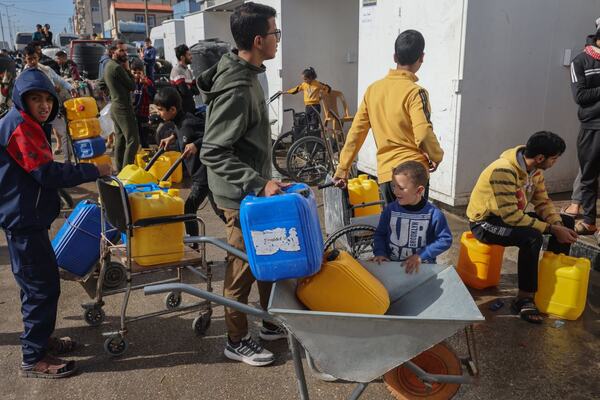
With the onset of summer, the need for drinking water for the displaced doubles compared to winter, when there was also a drinking water crisis. Currently, reliance is placed on water trucks sponsored by some initiatives, which meet only 10% of the daily needs of the displaced, meaning we are facing a new catastrophe added to the catastrophes of the war of annihilation.

Seawater is not a solution

Umm Rami stands in front of her jerry cans, waiting for the water truck that used to come daily. Due to the water shortage, it now visits their camp twice a week, meaning she will have to reduce the amount of water consumed for cooking, bathing, and washing clothes.

Umm Rami said in an interview with "Al-Quds" newspaper that she would resort to what she used to do a year ago, which is filling her jerry cans with seawater, which is salty and unsuitable for drinking, bathing, or washing; she added, "But despite that, I am forced to use seawater for bathing, washing clothes and dishes."

She explained that her three children walk a long distance to reach the beach, and this process is repeated five or six times daily, calling on the countries of the world to alleviate the humanitarian catastrophes in the Gaza Strip, the first and most important of which is the water crisis.

Water and the Third Famine

For his part, Hussam Hamdan, a displaced farmer in the Al-Mawasi area, said that the water crisis sweeping the Gaza Strip will affect the irrigation of vegetables and fruits, meaning that the water crisis will create a food crisis, as Gazans rely on vegetables for their food due to the high prices of other foods and the scarcity of many of them.

Hamdan pointed out in an interview with "Al-Quds" that vegetables constantly need irrigation, and due to the intense heat in the Gaza Strip this year and the lack of sufficient water, many crops will perish, and the Strip's environment will turn into a "deserted" environment, without any international intervention to protect the population or the environment, warning of a third famine due to this reality.

We do not want to be controlled by a despicable settler

As for Mahmoud Al-Ghandour, he stressed that due to the water crisis, neighboring countries are required either to pressure Israel to solve the water problem, specifically "Mekorot" water, or to extend water pipes to the Strip, adding: "We do not want oil or gas... We want to drink water, Arabs, without being controlled by a despicable settler who closes the water tap whenever he wants."

Al-Ghandour added to "Al-Quds" newspaper that Israel wants to maintain this situation in the Gaza Strip and create crises after the genocide and famine, so that Gazans begin to think about migrating to foreign countries, and this is what the settler Finance Minister Bezalel Smotrich said days ago.

He concluded his speech by calling on international organizations working in the Gaza Strip to continue implementing drinking water projects, foremost among them the United Nations Development Programme "UNDP," which has been concerned with providing safe drinking water to the population since the beginning of the war of annihilation.

According to a report published by the United Nations, about 75% of the displaced in the Gaza Strip rely on water transported by trucks, amid a severe deterioration of infrastructure and the continuation of the humanitarian crisis resulting from the ongoing war since October 2023.

The United Nations indicated that more than two and a half years after the outbreak of the war of annihilation, the tents spread throughout the Strip are no longer just temporary shelters for the displaced, but have turned into a harsh daily reality that encapsulates the suffering of hundreds of thousands of Palestinians who have lost their homes, their safety, and all the details of their previous lives.

PALESTINE

Tue 02 Jun 2026 9:41 am - Jerusalem Time

Between the Hammer of Occupation and the Anvil of Fraud.. The Journey from Gaza Becomes an Impossible Miracle

The right to movement for residents of the Gaza Strip has turned into a major humanitarian dilemma, as citizens find themselves stuck between the crippling procedures of the Israeli occupation and organized fraud networks. These networks exploit the residents' desire to escape the difficult reality through sponsored ads promoting fake immigration services on social media platforms.

Field sources reported that the occupation adopts dual policies essentially aimed at pushing the largest possible number of Palestinians towards forced displacement. At the same time, anonymous organizations are active, claiming the ability to facilitate departure procedures in exchange for exorbitant sums of money, exploiting the prevailing state of despair.

One citizen recounted his bitter experience with these entities, explaining that he began searching for an official way to travel online before encountering organizations lacking any clear addresses or reliable contact numbers. He pointed out that ambiguity surrounds the modus operandi of these offices, which rely on undeclared paths that raise suspicion and concern.

Despite some obtaining initial approvals, many withdraw at the last minute due to very high costs and the vagueness of the procedures. This reality leaves thousands of families in a state of anticipation and waiting without a clear horizon for securing a safe and legal exit from the besieged Strip.

In a related context, suspicious entities have emerged attempting to impersonate reputable international organizations to give their operations a false veneer of legitimacy. Human rights sources have warned against falling for these claims, which aim only to extort citizens and seize their savings under the guise of facilitating immigration or asylum.

For its part, the International Committee of the Red Cross categorically denied any connection to these activities or to intermediaries organizing travel from Gaza. The committee confirmed in an official statement that it had monitored multiple cases of fraud that used its name and logo to mislead those wishing to leave the Strip, urging everyone to exercise caution.

Journalist Mohammed Al-Shabat, who follows this issue, confirms that there are organized networks claiming to provide legal consultations and specialized international immigration programs. It later became clear that these claims are baseless, and that those behind them do not possess any official capacity authorizing them to carry out these sensitive tasks.

On the ground, the Rafah and Kerem Shalom crossings remain the only two outlets for the Strip, both subject to strict Israeli security control that regulates the movement of individuals and goods. This absolute control makes the exit process dependent on the occupation's whims and complex security criteria, which increase the suffering of those stranded.

Official data indicate long waiting lists comprising more than 20,000 patients who need urgent medical interventions outside the Strip. In addition to patients, there are thousands of students and foreign residency holders whose interests and futures are disrupted due to the continued closure of crossings or restrictions on movement through them.

Researchers and specialists believe that Israel has been using the travel issue as a tool for political pressure and collective punishment against the residents of Gaza for many years. The continuation of this situation contributes to the exacerbation of humanitarian crises and opens the door wide to parallel markets that feed on people's pain and their desperate need for freedom.

Traveling from the Gaza Strip has become akin to a complex miracle, where the equations of the right to movement intertwine with the restrictions imposed upon it.

PALESTINE

Tue 02 Jun 2026 9:41 am - Jerusalem Time

Netanyahu and the Brink of Explosion: A Reading on the Dimensions of Israeli Escalation Against Lebanon

Political readings indicate that the head of the occupation government, Benjamin Netanyahu, returns to the language of military escalation whenever the internal crises besieging him intensify. It seems that bloodshed has become the last resort to repair his fractured political image and postpone his downfall, which pursues him from within and outside the entity.

What the Lebanese front is currently witnessing is not merely an exchange of fire, but a new chapter in an escalatory project through which Netanyahu seeks to reshape the region's balances by force. This approach comes after the occupation's inability to subdue the region through traditional political and diplomatic channels.

The escalation against Lebanon cannot be separated from the troubled Israeli scene, where Netanyahu is experiencing moments of acute confusion between opposition pressures and rising public anger. The cracks in the security establishment and judicial cases also contribute to pushing him towards military options to shuffle the cards.

War, in Netanyahu's political doctrine, transforms into a tool to reproduce leadership and an attempt to unite the internal front by creating a permanent external enemy. Netanyahu understands that fearful societies are less inclined to accountability, as the sound of rockets usually drowns out the voices of protests demanding his departure.

Expanding the circle of confrontation with Lebanon gives Netanyahu an opportunity to escape forward, presenting himself as the 'protector of Israel.' Although this path may push the entire region towards the abyss, personal calculations for political survival remain the primary driver of his decisions.

Beyond personal calculations, Lebanon represents a real strategic knot in the Israeli security doctrine, which no longer sees it as merely an annoying neighbor. The Lebanese resistance has succeeded in imposing a deterrence equation that has made any comprehensive military confrontation an adventure with uncertain outcomes for the occupation.

The major dilemma for the occupation lies in the erosion of the image of absolute superiority upon which Zionist propaganda has been built for decades. Therefore, Netanyahu seeks to restore this prestige through intensive strikes, assassinations, and the threat of a wide war to break the current balance of deterrence.

The escalation carries regional dimensions that transcend Lebanon's geographical borders, as political sources realize that the region is undergoing a phase of extensive security reshaping. The extended Iranian influence represents a real challenge to the Israeli project, making Lebanon a major arena of conflict for influence and maps.

Netanyahu views southern Lebanon as a gateway to a broader battle concerning the future of the Middle East and its strategic balances. From here, the aggression sends multiple messages to the Israeli interior, to Iran, and to the United States, implying that Israel is still the player capable of igniting the region.

The American factor plays a pivotal role in this context, as unlimited Western support has given the occupation government a sense of impunity. When the international community contents itself with cold condemnation statements, it encourages the occupation to persist in using excessive force against civilians.

Observers confirm that international silence is no longer merely a negative stance, but has become part of the structure of aggression that legitimizes killing and destruction. This complicity threatens to turn the region into an open field for chaos that may not stop at carefully drawn boundaries by the engineers of war.

History confirms that when the Middle East explodes, it does not do so with half-hearted anger, and the fires burning in southern Lebanon may extend to wider maps. Despite this bleak scene, Lebanon shows an exceptional ability to withstand the continuous rubble and destruction.

The conflict with Lebanon remains different for the occupation because it is a confrontation with the idea of rejection and resistance, not just a dispute over geographical borders. Netanyahu realizes that the continuation of the current balance means the beginning of the decline of his project, which he tries to consecrate with brutal military force.

Today, the Middle East stands before frightening questions about the nature of the ongoing escalation and whether it is a prelude to a major war that will redraw the region with blood. Ultimately, civilians remain the only party that pays the price for politicians' ambitions and power rhetoric over the ruins of cities.

Wars are easy to ignite, but no one has complete control over their endings, and Netanyahu is risking a confrontation that may exceed his calculations.

PALESTINE

Tue 02 Jun 2026 9:41 am - Jerusalem Time

Major settlement plan to establish 18 new settlements in the northern West Bank

Media sources have revealed extensive movements led by the so-called 'Regional Settlement Council - Samaria' to launch a massive settlement project named 'The Connection Plan'. This project aims to bring about a radical demographic and geographic change in the occupied northern West Bank by establishing 18 new settlements in strategic areas.

The plan includes the reconstruction of four settlements that the occupation army evacuated in 2005 as part of the famous 'Disengagement Plan', namely Homesh, Sa-Nur, Ganim, and Kadim. This step comes after intensive legal and political efforts to cancel the restrictions imposed on settlers' entry to these areas for nearly two decades.

Sources reported that the Settlement Council has been promoting this return for many months, with the plan including the construction of 14 entirely new settlements in addition to the four reactivated ones. Some of these projects have already received official government approvals, while the remaining sites await final political decisions to begin construction work.

On the ground, the 'Samaria' Council, in cooperation with the 'Amana' settlement movement, has begun forming family nuclei of settlers ready for immediate relocation to the targeted lands. The first phases of actual settlement are expected to begin next summer, as part of an accelerated timeline imposed by the right-wing forces in the government.

'The Connection Plan' is an integral part of a broader strategic vision that carries the slogan 'A Million in Samaria', which aims to raise the number of settlers in the northern West Bank to one million people. This vision relies on canceling all provisions of the Disengagement Law and providing a massive infrastructure capable of accommodating these large numbers of new settlers.

The proposed projects are not limited to residential units only, but also include the construction of integrated urban communities with advanced educational, religious, and Torah institutions. The plan also notes a diversification in the nature of the settlers, as settlements designated for secular individuals, such as 'Mitzpe Yam' and 'Alonei Shomron', will be established to ensure the expansion of support for the project.

This settlement project is being implemented in full and direct coordination with the Ministries of Army, Finance, and Housing in the occupation government, which provides it with official cover and huge budgets. Yossi Dagan, head of the Settlement Council, stated that the goal is to entrench the Jewish presence in the region and prevent any possibility of future withdrawal.

About a month ago, the area witnessed a cornerstone-laying ceremony for the reconstructed 'Sa-Nur' settlement, with the participation of prominent ministers such as Bezalel Smotrich and Israel Katz. The participating ministers considered the return to these areas to be an official government policy aimed at strengthening settlement activity deep within Palestinian territories.

In a related context, estimates by the 'Peace Now' movement indicate that the number of settlers in the West Bank has already exceeded half a million settlers, not including settlers in Jerusalem. These figures confirm the magnitude of the challenges facing the two-state solution in light of the continuous and systematic settlement expansion practiced by the occupation authorities.

For its part, international and UN institutions continue to affirm that all settlement activities in the occupied territories are considered illegal and violate international law and the Geneva Conventions. Despite repeated international demands to stop settlement, the occupation continues to impose new realities on the ground that undermine the chances of establishing a contiguous Palestinian state.

The goal of the plan is to strengthen the settlement presence and provide a practical alternative to the concept of withdrawal from the occupied territories.

PALESTINE

Tue 02 Jun 2026 9:41 am - Jerusalem Time

"Wings of Hope and Light" by Jordanian Razan Al-Rabi: Rephrasing Pain... and a Window That Doesn't Allow Forgetting

It was a few days ago when I received a message from the editor of Al-Ayyam Algerian newspaper, the creative brother Khaled Ezz El-Din, asking me to write a critical review of the novel "Wings of Hope and Light." At first, I thought I would be dealing with another literary text that would pass through memory like any other, reading it with a critic's eye, and quietly leaving it after finishing the reading; but I didn't know that this small message would suddenly open closed doors in my heart, and that it would awaken within me a complete archive of dormant pain, bringing back faces that had disappeared, voices that had faded, and memories that I had long thought time had managed to soothe. I remember remaining for moments staring at the novel's title, while something mysterious slowly crept into my depths. The title alone was enough to disturb my heart, "Wings of Hope and Light"... as if the words came laden with the souls of those who had passed through here in pain, then left behind an emptiness that nothing could fill. His message seemed simple on the surface, but to me, its impact was profound; he told me of his desire to publish critical readings of this novel due to its deep human dimensions dealing with cancer patients and their psychological and existential suffering, and how hope can be born even from the heart of pain. As soon as I started browsing the novel, the tape of memory rewound all at once... Time took me back to my late friend, the dear sister Maha Abu Surour, whom this cursed disease snatched away less than a month ago. I remembered her laughter, her passion for life, her noble human presence, and how she resisted pain with a smile like light. She loved life in a way that made those around her believe that a beautiful soul is not easily defeated, even as it silently erodes. Then memory suddenly jumped to other faces that had departed in the same way... faces we had loved for a long time, then cancer snatched them without mercy, leaving unfillable voids in the heart. And at the forefront of all these was my mother... my beloved who passed away four years ago after a painful journey with the disease. I lived with her every detail of that heavy journey from the moment the disease was first discovered, through chemotherapy sessions, bodily changes, moments of fatigue, and up to the last moment she bid farewell to life. I watched her clinging to hope every day, and how she loved life in a painful way, as if she feared leaving behind the things she loved. She believed in healing even in the harshest moments, and she spoke of the coming days as if they were very near, while the disease slowly and painfully stole her from us, unseen. For all this... I initially wanted to apologize for writing this review. I felt that the novel would not just be another literary text for me, but rather a direct confrontation with memory, with loss, and with those faces that never left my heart. But after long hesitation, I realized that writing about it would be a form of loyalty. So I wrote... I wrote to immortalize the memory of my mother, and the soul of my dear sister Maha Abu Surour, and for everyone who endured this pain with patience and love, then departed, leaving an indelible mark on our souls. And I also wrote because this novel does not only speak of illness; it speaks of the human being who stands naked before their fragility, yet still tries to love life, and to illuminate the darkness of others, even if their heart is heavy with pain. Hence, this reading came mixed with memory, pain, loyalty, and a deep belief that true literature is that which makes us see ourselves within its pages. The novel "Wings of Hope and Light" by the writer Razan Nawaf Hilmi Al-Rabi is a humanitarian and emotional work that leans on pain as a passage to light, and makes the suffering of cancer patients a narrative material pulsating with life, awareness, and hope. The writer Razan Nawaf Hilmi Al-Rabi is considered one of the young Arab literary voices that have begun to emerge in the field of humanitarian and social novels with a psychological and emotional character. Her name has recently been associated with the publication of her novel "Wings of Hope and Light," which dealt with the issue of cancer patients and their psychological and human suffering in a language dominated by contemplative sensibility and a spiritual dimension. According to available information, Razan Al-Rabi is from Jordan and also works in teaching Arabic, which explains the presence of emotional literary language in her texts, and her reliance on rhetorical images and poetic structures. Her style also shows a clear inclination towards humanitarian literature that focuses on psychological pain, the internal transformations of characters, questions of life and death, and the value of hope in the face of brokenness. Her novel "Wings of Hope and Light" has been described as belonging to contemporary social humanitarian literature, as it views cancer as a complete existential experience that reshapes the human being from within, and pushes them to review the meaning of life, relationships, and self-awareness. By tracing the novel's language and structure, prominent features in Razan Al-Rabi's literary experience can be observed, among them: - Her reliance on emotional narration more than event-driven narration. - The use of the duality of light and darkness as a symbol of psychological transformation. - Focusing on the emotional human dimension of the characters. - Using transparent language saturated with luminous and emotional metaphors. - An inclination towards motivational and contemplative discourse that gives the text a spiritual character. The writer also seems interested in highlighting the role of writing as a means of resistance and psychological healing, which is clearly evident in the character of "Salma," the novel's protagonist, in whom writing transforms into an act of internal salvation. The novel was published by Al-Sara Initiative for Printing and Distribution, and came in (174) pages within contemporary social literature. Despite her recent presence in the novelistic scene, Razan Al-Rabi's experience reveals a clear human sensitivity and an interest in literature that touches upon harsh human experiences, especially those related to loss, illness, and psychological resilience, which makes her writing closer to "literature of human solace" that seeks to give the reader a sense of hope and the ability to continue despite pain. The novel, although seemingly a story of a cancer patient, is at its core a novel about the human being when pushed to the brink of their fragility, suddenly discovering that life is greater than pain, and that the soul is capable of creating light even in the darkest moments. The novel "Wings of Hope and Light" by the writer Razan Nawaf Hilmi Al-Rabi is based on a human narrative structure that transcends the concept of therapeutic novel or illness novel to a wider and deeper space, as the illness experience within the text transforms into a philosophical and spiritual passage that re-examines the meaning of humanity, the usefulness of pain, and the soul's ability to repair itself even in the most fragile moments. Hence, the true value of the novel lies in the narrative event alongside its emotional power, and in its ability to transform individual experience into a general human question that touches the reader from within. From the very first moment the eye falls on the title of the novel "Wings of Hope and Light," the reader feels that they are facing a text that tells a story and seeks to build a dense symbolic world in which words transform into luminous beings, and pain transforms into a spiritual material that reshapes the human being from within. The title, in addition to performing an identifying function, represents the major interpretive gateway through which the reader enters the psychological and human space of the novel. The writer Razan Nawaf Hilmi Al-Rabi did not choose her words arbitrarily, but rather built her title on three adjacent symbolic pillars: "Wings," "Hope," and "Light," a trinity that establishes from the outset the idea of spiritual soaring and internal triumph over the fragility of the body. In a time when human experience intensifies between the fragility of the body and the pressure of consciousness, the novel "Wings of Hope and Light" emerges to place the human being in a naked confrontation with their utmost limits, so illness is no longer a medical event; rather, it transforms into a comprehensive existential experience that re-dismantles the self's relationship with itself and with the world. The novel opens from its very first threshold to the question of meaning in the moment of brokenness, at a time when grand certainties recede in favor of an internal anxiety that seeps into the details of daily perception, so the body becomes a field of threat, time an unstable space, and identity a structure capable of continuous reshaping. In this context, meaning is established within the deep psychological dimension of the characters, and narration transforms into a mechanism for understanding internal turmoil more than a mere transmission of events. The illness experience here acts as a catalyst for self-disclosure, as the character is forced to reconsider their relationship with pain, with death, with others, and with the future, making the novel closer to a literary study in the formation of consciousness under existential pressure. The importance of this text is manifested in its rephrasing of the concept of hope as a complex psychological structure that forms within the moment of collapse, appearing as an internal mechanism for reorganizing psychological chaos and preventing the complete disintegration of the self. The therapeutic dimension also intertwines with the symbolic dimension, which works to transform language, narration, and human relationships into means for rebuilding meaning within a constantly shaken world. Hence, the psychological approach to the text gains its importance, as it allows for the uncovering of the deep layers of the narrative experience, and understanding how the character transitions from a state of brokenness to a state of gradual adaptation through a path where anxiety intertwines with consciousness, pain with reinterpretation, and absence with an attempt to regain presence. In this sense, the novel offers a reflection on the human being who is forced to reinvent themselves within the harshest experiences of existence. The novel "Wings of Hope and Light" is based on a narrative structure that can be read from a psychological perspective that works to deconstruct Salma's inner world and reshape it in the context of a severe illness experience in which the narrative is formed to trace complex psychological transformations where trauma intertwines with consciousness, collapse with rebalancing, and anxiety with attempts at adaptation. The psychological experience begins at the moment of illness discovery, as the shock manifests as a sudden penetration of the previously stable psychological structure, causing an internal collapse that affects the sense of control and certainty. In this context, the feeling of physical and psychological security disintegrates, and consciousness begins to enter a state of turmoil ranging from denial, bewilderment, and confusion. This stage can be understood in light of the psychological concept of trauma as a moment when the event exceeds the psychological apparatus's ability to absorb, opening the way for a radical reorganization of the self. As the illness experience continues, the narrative moves to a deeper level of psychological analysis, represented by the formation of existential anxiety. Fear is no longer linked to physical pain as much as it expands to include fear of loss, identity change, and the exposure of bodily limitations. Here, the perception of time changes, and the future becomes a source of threat instead of a field for extension, while the present intensifies as a moment laden with consciousness and fragility. This transformation reflects a radical reshaping of the relationship between the self and time, making time a pressing element that constantly reproduces anxiety. Hope also crystallizes as a complex psychological defense mechanism rather than a simple emotional state. It works to reorganize internal chaos by transforming the painful experience into a possibility for continuation, an ability to coexist with pain, and to reinterpret it within a psychological structure seeking balance in the form of psychological transcendence that allows the self to remain in the face of threat without complete collapse. Salma's character takes a gradual psychological path based on oscillation between brokenness and rebuilding, passing through a series of emotional transformations in which feelings of fear, rejection, acceptance, and the search for a new meaning of existence intertwine. This gradual progression reflects the nature of psychological adaptation to chronic traumas in which balance is achieved through a long process of internal re-evaluation, so the previous identity gradually disintegrates and a more conscious identity of its fragility is formed, more capable of adapting to the new reality. Illness in the novel represents a revealing element of the character's deep psychological structure, as the occurrence of pain re-dismantles the self's internal and external relationships, and the body transforms into an object of consciousness instead of being a natural extension of it, creating a state of bodily alienation, so the self becomes in a position of continuous monitoring of its body, and this separation between the self and the body reflects a deep psychological tension that reshapes the character's perception of their existence. Human relationships play a crucial role in restoring psychological balance within the text through the character of Youssef, who appears as a psychological support element that contributes to alleviating the intensity of internal anxiety without turning into an external rescue force. The relationship between him and Salma is based on emotional companionship, not on direct solutions, which reflects the nature of social support that has become an essential factor in psychological adaptation to illness, and this type of relationship reproduces the concept of healing as a participatory, not individual, process. In contrast, secondary characters play a symbolic role in expanding the psychological experience. The child Laila represents a model of innocence not conditioned by pathological awareness, which creates a psychological contrast that highlights the impact of the illness experience on the formation of perception. As for the psychological support characters, they contribute to highlighting the idea of collective healing as a space where individual pain intersects with shared human experience. Illness in the novel manifests as a tool for reorganizing consciousness; it reveals the limits of human strength and redefines the relationship between humans, their bodies, and their time. This revelation leads to a slow rebuilding of the self through which pain transforms into a cognitive element that contributes to producing a new, deeper awareness of human fragility. Writing also appears within the text as a psychological mechanism for organizing internal experience; it works to rephrase pain and transform it into a controllable meaning. From this perspective, writing becomes a form of symbolic therapy that allows for the alleviation of psychological tension and the rebuilding of self-control. As for the narrative time, it takes a non-linear psychological form and is measured by the intensity of the emotional experience, so time expands or contracts depending on the psychological state, which reflects the nature of subjective time in psychology, whereby temporal perception becomes dependent on the emotional state, not on objective sequence. In light of this analysis, the novel can be seen as a literary representation of the psychological adaptation process to traumatic illness, in which psychological defense mechanisms intertwine with identity reconstruction to reshape the self's relationship with the world. Through this transformation, it is revealed that hope, human relationships, and writing are deep psychological mechanisms that contribute to the continuation of the self and the reproduction of its meaning within an experience that constantly threatens this meaning. After this extension imposed by memory on the reading, the novel "Wings of Hope and Light" became a text approached with a critic's eye on the one hand, and a space where writing intersects with human experience in its most fragile and honest moments on the other. The distance between the reader and the text receded, and I found myself in a state of quiet recall of faces that never left my heart despite their absence, for the novel reopened doors I thought had been closed long ago. And the title was the beginning of a slight internal confusion, like the tremor of memory suddenly recalled, so "Wings of Hope and Light" seemed to carry more than just words, pointing to that hidden thread that connects humans to their lives when paths narrow, and survival becomes an unseen act of silent resistance. As the reading progressed, the fictional character was no longer separate from reality, as Salma's features began to intertwine with images I knew well, with faces that had gone through the same experience of pain, and with stations of loss that left their mark within without fading. At that point, illness became a general human condition that recurs in different forms, but leaves the same effect on the soul, that tension between the fear of fading and the desire to continue. The presence of hope in the novel crept in quietly, a subtle state like light passing over a tired wall; it did not lift the pain, but it changed the way it was viewed, for suffering itself can be seen from another, more merciful, less harsh angle. And at that precise moment, meaning began to form outside the text, and within the reader's personal experience, so reading intertwined with memory without a clear separation between them. With each page, time seemed softer, and the novel rearranged the feeling of what had happened; voices intersected between past and present, and absent faces reappeared for a brief moment, reminding that love does not end with absence, and that human impact is not erased even when its owners depart. At the moment the reading reached its end, that deep silence remained, following the confrontation with something greater than words. I felt that the novel left a small window open to the inside, a window that does not allow forgetting, but grants a slight ability to understand, and to coexist with the unforgettable. Writing about this text has become a form of human response to an experience that touches the essence of existence, for some texts do not end on the last page, but continue quietly within, reshaping the way life is viewed without announcing it. The reading ended on the evening of Saturday, May 9, 2026 - near a window overlooking a silent city breathing slowly between light and shadows - I write my signature to capture a fleeting moment in time before it quietly withdraws - I feel a warm inner calm like the reassurance that comes after long contemplation; to give the heart a chance to hear itself before it departs.

PALESTINE

Tue 02 Jun 2026 9:41 am - Jerusalem Time

Occupation forces storm Al-Quds University and conduct field investigations with students

Military vehicles belonging to the Israeli occupation army stormed the campus of Al-Quds University in the town of Abu Dis, located southeast of occupied Jerusalem, this Monday morning. Local sources reported that heavily armed soldiers spread throughout the university facilities, causing panic among students and faculty. They stopped a number of students and subjected them to field investigations before the forces withdrew from the area without any arrests being made inside the university campus.

In the context of the ongoing restrictions on Jerusalemites, occupation forces launched an arrest campaign targeting a Palestinian woman at the eastern entrance to the town of Al-Isawiya, where her private vehicle was confiscated and she was taken to an unknown destination. The forces also arrested four young men while they were passing through the Al-Zaim military checkpoint north of the city. This coincided with the tightening of military measures and the establishment of additional checkpoints around the town of Hizma, which significantly obstructed the movement of citizens.

For his part, Ma'rouf Al-Rifai, spokesman for the Jerusalem Governorate, warned of the danger of systematic Israeli escalation inside the blessed Al-Aqsa Mosque. He explained in press statements to media sources that the intensification of incursions and allowing the raising of Israeli flags represents an attempt to impose a new temporal and spatial reality, primarily aimed at seizing the powers of the Islamic Endowments and asserting full control over the holy sites.

Al-Aqsa Mosque courtyards witnessed widespread violations yesterday, as hundreds of extremist settlers stormed the mosque from the Mughrabi Gate under tight security protection. Sources reported that the invading groups reached the Dome of the Rock area, raised Israeli flags, and chanted the official anthem, coinciding with the performance of Talmudic rituals and provocative tours throughout the prayer area, reflecting the extent of the Judaization campaign the holy city is subjected to.

Raising Israeli flags in Al-Aqsa and expanding incursions come within the framework of imposing a new reality and undermining the powers of the Islamic Endowments.

PALESTINE

Tue 02 Jun 2026 9:41 am - Jerusalem Time

British surgeon reveals systematic targeting of children by snipers in Gaza

Prominent British surgeon, Professor Nick Maynard, gave a shocking medical testimony about the humanitarian and medical conditions in the Gaza Strip, confirming his observation of deliberate and systematic targeting patterns carried out by occupation army snipers against children and civilians. Maynard, who previously served as head of surgery at Oxford University Hospitals, explained that these conclusions were based on his direct examination of hundreds of cases during his voluntary work in the Strip's hospitals.

The British surgeon, who worked with the 'Medical Aid for Palestinians' organization, stated that his field experience included Nasser Medical Complex in Khan Younis and Al-Aqsa Martyrs Hospital in the central region. He pointed out that medical teams repeatedly observed an abnormal frequency of injuries arriving at operating rooms, where bullet wounds were concentrated in vital areas of children's and adolescents' bodies in a highly alarming manner.

According to the testimony, hospitals on certain days received large numbers of injured individuals with direct shots to the head, neck, or abdomen, which are precise injuries that cannot be described as random. Maynard added that these targeting incidents significantly increased in areas near humanitarian aid distribution points and gatherings of civilians searching for a livelihood, reinforcing the hypothesis of deliberate sniping.

The British professor addressed the enormous surgical challenges faced by doctors, noting that the severe malnutrition suffered by children in Gaza often made saving their lives almost impossible. He explained that many complex surgical operations failed due to the weak ability of emaciated bodies to recover or heal deep wounds caused by explosive bullets.

Maynard's testimony was not limited to field injuries; he also conveyed horrific testimonies from his Palestinian doctor and nurse colleagues who had been arrested. These cadres reported after their release that they had been subjected to various forms of ill-treatment and physical and psychological torture inside Israeli detention centers, including deliberate targeting of sensitive areas of their bodies to leave permanent marks.

These statements sparked a wide wave of interaction on social media platforms and human rights forums, where observers considered them an additional document of condemnation added to the record of international reports documenting violations against the health system. Maynard's testimony gains particular importance given his prestigious scientific standing in Britain and his long experience in dealing with complex surgeries in conflict zones.

These facts come at a time when international warnings continue about the collapse of what remains of the health system in the Gaza Strip as a result of the siege and continuous targeting. Medical sources confirm that the testimonies of foreign doctors returning from Gaza have become a fundamental pillar in understanding the scale of the humanitarian catastrophe facing civilians, especially the most vulnerable groups such as children and women.

The nature of these injuries and their recurrence in sensitive and identical locations in children suggests clear deliberate targeting.

PALESTINE

Tue 02 Jun 2026 9:40 am - Jerusalem Time

For the first time in Gaza.. The final examination for the Palestinian Board in Psychiatry was held

The administration of Al-Shifa Medical Complex announced an unprecedented medical and educational achievement in the Gaza Strip, where the final examination for the Palestinian Board in Psychiatry was organized for the first time within the Strip. The examination ceremonies were held in full coordination with the Palestinian Medical Council in Ramallah via 'Zoom' video conferencing technology.

Medical sources confirmed that this event represents a fundamental pillar in the development of specialized Palestinian human cadres, emphasizing that investing in the Palestinian individual is the ultimate goal of the health system. This success comes amidst severe challenges facing the health sector as a result of the siege and continuous aggression.

For his part, the Director-General of the General Administration of Mental Health and head of the Scientific Committee, Abdullah Al-Jamal, explained that holding this examination is the culmination of the efforts of the first cohort in this precise specialization. Al-Jamal considered this step to be the first fruit of the Palestinian national training program directly supervised by the Medical Council.

The halls of Al-Shifa Medical Complex witnessed the two female doctors, Safaa Shaqoura and Mai Abdel Aal, taking the examination, making them the first two candidates to obtain this higher specialized certificate from within the Gaza Strip. This progress reflects the determination of female medical competencies to excel in complex scientific fields despite all obstacles.

A specialized scientific committee, including Dr. Yasser Al-Shaer and Dr. Amal Abu Abada, supervised the examination process. Field follow-up was also carried out by Dr. Tawfiq Salman, responsible for the Examinations Committee in the Palestinian Medical Council for Psychiatry, to ensure integrity and academic standards.

The Scientific Committee expressed its deep appreciation to the office of the Palestinian Medical Council in Gaza, which accompanied the trainee doctors throughout their preparation period. Officials praised the efforts made to organize and ensure the success of the examination committees under the exceptional circumstances experienced by the medical sector in Gaza.

This academic achievement comes at a time when the health sector is suffering from systematic targeting that has affected both facilities and medical personnel. This targeting has led to an exacerbation of humanitarian crises and a sharp deterioration in health services provided to citizens due to a lack of resources and equipment.

Official statistics issued by the Ministry of Health indicate that the occupation army has killed more than 1701 medical personnel since October 2023. These figures reflect the magnitude of the sacrifices made by the Palestinian health sector in order to continue providing medical and educational services.

Despite these heavy human losses, medical institutions in Gaza insist on continuing training and higher education programs to ensure that hospitals are supplied with rare specializations. Psychiatry is considered one of the vital specializations urgently needed by Palestinian society due to successive psychological traumas.

The successful holding of the Board examination in Gaza sends a strong message about the ability of Palestinian institutions to overcome geographical division and work in a spirit of teamwork. Doctors in Gaza affirm that the path of knowledge will not stop, and that building specialized cadres is the optimal response to attempts to ignorant and destroy society.

Our capital is the Palestinian individual, and we will continue to invest in them as long as we live.

PALESTINE

Tue 02 Jun 2026 9:40 am - Jerusalem Time

Settlement movements to establish a new outpost north of Jericho and widespread Palestinian condemnation

Local sources and Palestinian media reported on Monday that groups of settlers began carrying out extensive bulldozing operations in preparation for establishing a new settlement outpost in the Al-Auja area north of Jericho. These field movements come in the context of escalating intensive settlement activity witnessed in the Jordan Valley areas of the occupied West Bank, with the aim of tightening control over natural resources and open spaces.

Human rights sources quoted Hassan Malihat, the general supervisor of the 'Al-Baydar' organization for the defense of Bedouin rights, as saying that large numbers of settlers stormed the area, reinforced by heavy equipment and bulldozers. Malihat explained that this step aims directly to impose a new colonial reality on the ground and to restrict Palestinian communities that depend on these lands for grazing their livestock and securing their livelihoods.

Malihat pointed out that the Al-Auja area already suffers from the presence of seven previous colonial pastoral outposts, which are used as strategic tools to control vast areas of Palestinian land. He warned that the intensification of these outposts threatens the historical Palestinian presence in the Jordan Valley areas and pushes towards isolating villages and towns from their natural and geographical surroundings as part of a systematic policy of settlement expansion.

The Al-Auja area has special strategic and environmental importance, as its name is linked to a historical water spring located within an area classified as a nature reserve, which has made it a constant target for settlement projects. The area has faced repeated attacks for years aimed at seizing water sources and encircling the Bedouin population, in an attempt to entrench the policies of de facto annexation and forced displacement pursued by the occupation authorities.

For his part, Hamas leader Mahmoud Mardawi stated that the establishment of this new outpost represents a dangerous escalation in settlement activity and a blatant challenge to all international laws and warnings. Mardawi affirmed in a press statement that these repressive measures will not succeed in changing the identity of the Palestinian land or granting legitimacy to the settlement presence, but will rather lead to an increase in popular anger and adherence to national rights.

Mardawi called on the Palestinian people to strengthen their presence in the areas targeted by settlement and to remain there to protect them from confiscation, demanding that international and human rights institutions move from condemnation to action. He stressed the need to take practical steps to hold the occupation accountable for its continuous violations that disregard all international conventions that consider settlement a war crime.

It is worth noting that the West Bank is witnessing an unprecedented acceleration in the pace of settlement construction and the legalization of random outposts, despite widespread international criticism from the United Nations and most countries of the world. These parties consider all settlement activities in the territories occupied in 1967 to be illegal and to impede any future opportunities for achieving stability or establishing a geographically contiguous Palestinian state.

The establishment of the new settlement outpost represents a dangerous escalation and is part of the occupation's attempts to impose facts by force in defiance of international warnings.

PALESTINE

Tue 02 Jun 2026 9:40 am - Jerusalem Time

Palestinian Youth Martyred After Ramming Attack South of Bethlehem

The area near the 'Gush Etzion' settlement bloc, located south of Bethlehem, witnessed a ramming attack carried out by a Palestinian youth this Sunday evening. Field sources reported that a Palestinian vehicle sped towards a group of settlers and occupation soldiers stationed at the location, resulting in several direct injuries among them before the military forces present intervened.

The operation resulted in four settlers sustaining injuries of varying degrees, with two of them described as serious. Occupation ambulances rushed to the scene to transport the injured to nearby hospitals. Following the incident, occupation forces imposed a tight security cordon around the area and began extensive search operations and road closures leading to the settlement bloc.

For its part, the Palestinian Ministry of Health confirmed the identity of the perpetrator, stating the martyrdom of Amjad Jawad Abdul Fattah Al-Natsha, a resident of Hebron. Al-Natsha's martyrdom came after occupation soldiers fired a heavy barrage of live ammunition at his vehicle immediately after the ramming attack, leading to fatal injuries from which he died at the scene.

In political reactions, the Hamas movement praised the operation, considering it a natural response to the settlement policies and repeated aggressions against the Palestinian people and their land. The movement stated in a communiqué that these operations prove the occupation's failure to break the will of the resistance, emphasizing that plans aimed at displacing Palestinians or annexing their lands will be met with increasing popular anger at all points of contact.

The movement also clarified that the blood of martyrs and the sacrifices of Palestinian youth are the guarantee to thwart Judaization projects targeting holy sites and established national rights. It affirmed that the escalation of resistance in the West Bank sends a clear message to the occupation that stability will not be achieved as long as aggression and siege continue, and that the Palestinian people are committed to defending themselves by all available means.

The operation confirms that our Palestinian people will not be intimidated by the crimes of the occupation and the brutality of the settlers, and will not stand idly by in the face of continuous aggression.

PALESTINE

Tue 02 Jun 2026 9:40 am - Jerusalem Time

Civil Defense in Gaza Faces Risk of Total Collapse After 90% of its Vehicles Were Destroyed

The Civil Defense apparatus in the Gaza Strip is facing a state of institutional demise as a result of systematic Israeli targeting that has affected its infrastructure, with field reports indicating the destruction of about 90% of its vehicles and heavy equipment. This crisis comes at a time when the demand for rescue services is escalating due to the high intensity of Israeli targeting of civilians, in addition to the increasing frequency of fires inside overcrowded displaced persons camps housing hundreds of thousands of citizens.

Ahmed Radwan, media director for Civil Defense in Rafah, stated that the system is on the verge of complete cessation of operations, explaining that most of the vehicles deployed in the Strip are effectively out of service. Radwan confirmed that the tight siege has prevented the entry of any ambulance or rescue equipment since the ceasefire agreement came into effect last October, exacerbating the inability of crews to respond to repeated distress calls.

Western areas of Khan Yunis city are witnessing increasing field complexities, with sources reporting that the occupation carries out an average of three raids daily targeting tents and residential apartments despite the declared truce. These attacks coincide with a wave of fires breaking out in displaced persons gatherings, as residents are forced to use alternative and dangerous materials such as wood and plastic for cooking due to the complete lack of cooking gas and fuel.

In a recent tragic incident, fires consumed at least five tents in the Roni Street area of Mawasi Khan Yunis, resulting in varying injuries among the displaced, most of whom were children. These incidents reflect the security and living fragility experienced by approximately 700,000 displaced persons crowded into a narrow geographical area between Mawasi Khan Yunis and Rafah Governorate, which is classified as one of the most densely populated areas in the world.

Civil Defense leadership has been forced to adopt a coercive priority system reflecting the extent of the deficit, where top priority is given to rescue operations resulting from occupation targeting, followed by fires and accidental incidents, while medical transport and birth cases come last. This arrangement practically means that many humanitarian calls go unanswered, threatening the lives of thousands of patients and injured individuals who have no means of transport to the remaining medical centers.

Official Civil Defense bodies held the Israeli occupation fully responsible for the paralysis of international organizations' work within the Strip, noting that the Red Cross and UN organizations provide only 10% of actual needs. These institutions face strict Israeli restrictions and conditions that hinder the movement of their crews and prevent the entry of necessary equipment, leaving Civil Defense alone to face burdens that exceed its human and material capabilities.

In terms of human losses, the apparatus has lost more than 48% of its specialized personnel, including martyrs, injured, and prisoners, in addition to the complete destruction of 14 vital centers. Despite the display of international civil protection emblems on 56 vehicles targeted by the occupation, this did not prevent their direct shelling while performing their humanitarian duties, amidst international demands for opening a safe humanitarian corridor to allow the entry of rescue equipment to save what can be saved of civilian lives.

The institution is on the verge of complete cessation, and approximately 90% of Civil Defense vehicles in the Gaza Strip have either been destroyed or disabled during the war.

PALESTINE

Tue 02 Jun 2026 9:40 am - Jerusalem Time

40 Military Points and 8 New Sites.. Satellite Images Reveal Occupation's Expansion in Gaza Despite Ceasefire

Recent satellite images, taken up to May 2026, have revealed the continued expansion of the Israeli military presence within the Gaza Strip, contrary to the terms of the ceasefire agreement signed seven months ago. Field analyses of the captured images showed the establishment of new military sites and the development of existing ones, with the addition of fortifications, trenches, and areas designated for the deployment of heavy machinery.

Sources observed the presence of 40 Israeli military points distributed across the geography of the Strip, including 8 sites that were entirely established after the ceasefire agreement came into effect in October 2025. These points are strategically located near separation and control lines, enhancing the occupation army's ability to stifle Palestinian population centers and control their movement.

Comparing images taken in October 2025 and May 2026 indicates that the occupation exploited the period of calm to strengthen its military infrastructure. The new sites included two areas in northern Gaza, one site in Juhor ad-Dik, two sites in the central region, in addition to 3 sites in Khan Yunis city in the south.

In the Juhor ad-Dik area, east of Gaza City, areas that were open in October 2025 had transformed into an emerging military base by May 2026. Sequential images showed that engineering works and earth embankments began in March 2026, confirming that construction took place during a period that was supposed to see a gradual withdrawal.

As for the town of Beit Lahia in the northern part of the Strip, images revealed the completion of the external structure of a new military site and its equipping with advanced internal facilities. Work on this site began in November 2025 and gradually developed until it became an organized military point capable of permanently accommodating combat units and military vehicles.

In a blatant violation of sacred sites, satellite images showed the establishment of a military point in Khan Yunis city directly on the ruins of the Eastern Cemetery. Field preparations at this site reveal large areas for the deployment of vehicles and structures that may be used as operational facilities or sleeping quarters for soldiers and operations officers.

It was not limited to newly established sites; the changes also included a significant expansion of military points that were already in place when the agreement was signed. In one base east of Gaza City, the total area increased by up to 70%, with the addition of new defensive fortifications and the reorganization of internal pathways to facilitate vehicle movement.

In the central region, images detected the excavation of deep trenches around military sites, a step that clearly indicates the occupation's intention to prolong its field presence and secure its forces against any potential attacks. These engineering works reflect a strategic direction towards transforming temporary points into permanent and heavily fortified bases.

The Netzarim Corridor stands out as one of the most important military strongholds, with images detecting the presence of 3 military sites around it to ensure the continued separation of the northern part of the Strip from its south. This deployment gives the occupation army full fire and field control over key movement corridors, hindering the return to normal life for Palestinian citizens.

These data confirm that Israel has not adhered to the gradual withdrawal provisions stipulated in the American initiative proposed by Donald Trump. Instead of evacuating sites, they have been reinforced with infrastructure including internal roads, earth embankments, and meeting areas, suggesting that the army is preparing for a long-term stay within the Strip's borders.

This military expansion comes at a time when field violations continue, with the Ministry of Health recording the martyrdom of 929 Palestinians since the ceasefire agreement came into effect last October. These figures reflect the fragility of the agreement amidst ongoing Israeli military operations and the construction of new bases within residential neighborhoods.

According to official statistics, the total toll of the comprehensive Israeli aggression since October 2023 has risen to over 72,000 martyrs and 172,000 injured. Images show that the current military presence surrounds populated areas, threatening to increase this toll if any new confrontations erupt from these bases.

Observers believe that these engineering movements aim to impose a new geographical reality that will be difficult to change in any future political negotiations. The construction of 40 military points means transforming the Gaza Strip into a militarily fragmented area, where each area is under direct control from surrounding bases, undermining any chance for genuine Palestinian sovereignty.

With construction work continuing as observed up to the date of the last image in May 2026, the number of military sites is likely to increase in the coming weeks. This reality presents international mediators with the challenge of compelling the occupation to adhere to the agreed-upon withdrawal schedule and preventing Gaza from becoming a permanent military barracks under the guise of a ceasefire.

The Israeli military presence within the Strip has not receded as stipulated by the agreement; instead, it has seen a remarkable expansion through the establishment of more organized and sustainable infrastructure.

PALESTINE

Tue 02 Jun 2026 9:40 am - Jerusalem Time

3 Children Injured and Widespread Settler Attacks Target Agricultural Lands in the West Bank

A Palestinian vehicle was subjected to a violent attack by a group of settlers on Monday evening while passing near the 'Shilo' settlement, which is built on citizens' lands south of Nablus city. Local sources reported that the settlers intercepted the vehicle and pelted it directly with stones, resulting in injuries among its occupants.

The assault resulted in varying degrees of injuries to three children who were inside the vehicle. A 14-year-old child sustained a head injury from a stone, and his condition was described as moderate. Two other children suffered minor injuries due to flying shattered glass fragments, and all were transported to the Sinjil Medical Center for necessary treatment.

In a parallel escalation, settlers set fire to vast areas of olive-planted agricultural lands between the towns of Turmus Ayya and Abu Falah, northeast of Ramallah. Eyewitnesses stated that the fire consumed a large number of ancient trees in the area amidst desperate attempts by residents to control the blaze.

Israeli army forces intervened in the area to provide protection for the attacking settlers after citizens confronted them and forced them to retreat. Instead of extinguishing the fire, Israeli forces prevented Palestinian civil defense teams from reaching the site, which led to the expansion of the fire and increased material losses.

Nablus Governorate was not spared from these attacks, as settlers set fire to agricultural lands in the village of Duma, south of the city. The fires were concentrated near the village entrance, causing damage to dozens of olive trees, which constitute a primary source of livelihood for Palestinian families in that rural area.

In eastern Ramallah, farmers reported that settlers destroyed agricultural crops by releasing their livestock to graze on private citizens' lands. This step is part of a systematic policy to pressure farmers and force them to abandon their lands in preparation for their seizure for settlement expansion.

West Bank cities and villages have witnessed an unprecedented escalation in settler and army attacks since the start of the aggression on the Gaza Strip in October 2023. These attacks vary between direct killing, arrest, and the daily destruction of infrastructure and private and public property.

According to official data published by the Government Media Office, more than 1,168 Palestinians have been martyred in the West Bank since October 7th. Medical teams also recorded injuries to approximately 12,666 others, amid continued military incursions into Palestinian camps and cities.

Statistics also indicate the arrest of nearly 23,000 citizens in recent months, in addition to the displacement of 33,000 from their homes as a result of demolition policies and military pressure. These figures confirm the scale of the fierce attack targeting the Palestinian presence in all governorates.

Settler attacks continue under legal and military cover from the occupation authorities, which prevent residents from defending themselves or their property. Observers warn that giving settlers free rein in the Palestinian countryside will lead to further security and humanitarian deterioration in the region.

Occupation forces stormed the area to provide protection for the settlers and prevented civil defense teams from reaching the fire site to extinguish it.

PALESTINE

Tue 02 Jun 2026 9:40 am - Jerusalem Time

Iran suspends negotiations with Washington, stipulates cessation of aggression against Lebanon to resume dialogue

The Islamic Republic of Iran announced today, Monday, the suspension of all channels of dialogue and exchange of messages with the United States of America, which were taking place through international mediators. This sudden decision came amid escalating Israeli military operations in Lebanon and the ongoing war in the Gaza Strip, which brought the initial understandings between Tehran and Washington to the brink of complete collapse.

Media sources close to decision-making circles in Tehran reported that the Iranian negotiating delegation decided to stop exchanging messages due to the non-observance of ceasefire conditions on various fronts. The sources confirmed that the Iranian side views the continuation of Zionist attacks on Lebanon as a fundamental breach of the commitments that preceded the start of indirect dialogue rounds.

Iranian officials stressed that returning to the negotiating table is organically linked to the immediate cessation of all hostile military operations in Gaza and Lebanon. Iranian conditions also included the necessity of the withdrawal of Israeli occupation forces from all territories they recently infiltrated in southern Lebanon, considering that the 'resistance front' must give its approval to any future agreement.

For his part, Iranian Foreign Ministry spokesman, Ismail Baqaei, affirmed that his country considers a ceasefire in Lebanon a 'fundamental condition' for any agreement aimed at ending the ongoing regional conflict. Baqaei clarified in a press conference that Tehran will not hesitate to take the necessary measures to protect its national security and support its allies in confronting what he described as continuous aggression.

In a related context, Iranian Foreign Minister, Abbas Araghchi, stated that any understanding with Washington must be comprehensive and indivisible, covering all inflamed fronts. Araghchi held the United States and Israel fully responsible for the consequences of violating the truce in effect since last April, pointing out that the fronts are interconnected.

On the ground, the Israeli occupation army issued urgent warnings to evacuate residents in the southern suburb of Beirut, threatening to resume heavy shelling of the area, which is considered a stronghold of Hezbollah. These threats come after a period of relative calm witnessed in the Lebanese capital, indicating an Israeli intention to expand the scope of military operations.

In Washington, the American administration adopts a different view, demanding that Hezbollah must first cease fire as a preemptive step for any de-escalation in Beirut. The Israeli government, with the support of US President Donald Trump, opposes any official link between the course of negotiations with Iran and the ongoing military operations against Hezbollah in Lebanon.

Recent hours witnessed a direct escalation between Tehran and Washington, as the US Central Command (CENTCOM) announced the execution of 'defensive' strikes targeting radar facilities in southern Iran. US military sources said these strikes came in response to the downing of one of its drones over international waters in the strategic Strait of Hormuz region.

Iran's Revolutionary Guard responded by announcing the targeting of a military base used by US forces to launch attacks against Iranian territory, without disclosing its precise location. This coincided with an announcement by authorities in Kuwait of the interception of missiles and drones flying in its airspace, reflecting the widening scope of direct confrontation between the two parties.

Reports indicate that the latest American proposal conveyed by President Trump includes extending the ceasefire for an additional sixty days. The proposal includes provisions related to reopening the Strait of Hormuz to international navigation and setting a new timeframe for resuming negotiations on Iran's nuclear program, which Tehran views with extreme caution.

In this context, the Speaker of the Iranian Parliament, Mohammad Bagher Ghalibaf, affirmed that his country will not sign any agreement that does not fully and clearly guarantee the rights of the Iranian people. He clarified that the top priority at present is to end the war and stop the bloodshed, away from complex technical issues that may take longer.

These developments reflect a state of cultural and political divergence in crisis management, just as Iranian cinema, with its realism and sadness, differs from American cinema, which glorifies individual heroism. While the Iranian film 'A Hero' focuses on moral values and historical connection, American films like 'Hero' tend towards happy endings and action, which is evident in the current divergence of political views.

Observers believe that the Strait of Hormuz has become Iran's political 'nuclear bomb' in this confrontation, as Tehran uses its influence in the waterway to pressure the global economy. This comes at a time when President Trump continues to emphasize the enormous economic losses Iran incurs daily as a result of sanctions and military tensions.

The regional scene remains suspended between faltering diplomacy and military escalation that threatens an all-out war, amid each party's insistence on its preconditions. With the continued Israeli shelling of southern Lebanon, the chances of reaching an imminent agreement recede, opening the door to scenarios open to all possibilities in the Middle East.

A ceasefire between Iran and the United States is, without any ambiguity, a comprehensive ceasefire on all fronts, including Lebanon.

PALESTINE

Tue 02 Jun 2026 9:40 am - Jerusalem Time

Britain bans entry of American media personalities Cenk Uygur and Hasan Piker due to their stances on Israel

The British Home Office unexpectedly announced the cancellation of entry visas for American leftist commentators Cenk Uygur and Hasan Piker, preventing them from participating in cultural and political events scheduled to be held in London and Oxford. A brief statement from the ministry indicated that the presence of the two figures in the United Kingdom might not serve the public good, without providing additional details about the nature of the alleged threats.

British authorities affirmed that the ban decisions are based on accurate assessments of potential risks to society, noting that the door theoretically remains open for submitting new visa applications in the future. However, the official statement did not touch upon any political implications, contenting itself with the general legal framework that grants the government the authority to exclude individuals based on its security assessments.

In contrast, Cenk Uygur, founder of 'The Young Turks' news network, presented a completely different account, asserting that he was prevented from boarding the plane to London due to his declared stances on Israel. Uygur questioned, via social media platforms, the seriousness of the West in protecting freedom of expression when it comes to criticizing Israeli policies in the Palestinian territories.

For his part, the famous influencer Hasan Piker went further, accusing the British government of succumbing to direct pressure from the Israeli side to cancel his visa. Piker considered this measure a systematic targeting of voices that highlight the crimes committed in the Gaza Strip and criticize the political influence of pro-occupation lobbies in Western capitals.

These developments coincided with reports revealing an intense pressure campaign by pro-Israel organizations within Britain, demanding Piker's exclusion from the international 'South by Southwest' festival. These organizations accused Piker of promoting hate speech, accusations he vehemently denies, describing them as attempts at character assassination.

The duo was supposed to participate in a discussion panel at the prestigious Oxford University, in addition to their appearance at a prominent technology and media festival that brings together an elite group of global influencers. The event organizers clarified that hosting Uygur and Piker aimed to promote diversity of viewpoints, emphasizing that the platform does not necessarily endorse the speakers' opinions.

Observers believe that the British decision falls within a broader context of restricting activists and media personalities who adopt anti-Israeli policies since the events of October 7th. Criticism directed at the British government has escalated, with human rights activists considering the use of 'public good' as a pretext for the ban to open the door to the politicization of security measures.

It is worth noting that Cenk Uygur, 56, is one of the most prominent progressive media figures in the United States, and has entered the political arena by running for president as a Democrat. His news network is known to millions of followers who derive alternative analyses from it to the official narratives prevalent in traditional media.

Hasan Piker, 34, has built a massive fan base among the youth generation through the 'Twitch' platform, where he presents daily live broadcasts that boldly address political issues. Piker is dubbed the 'voice of the leftist internet generation,' and has recently raised concerns among traditional elites in the Democratic Party due to his increasing influence on young voters.

Media sources indicate that British authorities fear that Uygur and Piker's statements could fuel social tensions, especially given the sharp division in the country over the war in Gaza. These sources claim there are concerns about an increase in antisemitic incidents as a result of rhetoric that links Israeli policies with financial and political influence.

The debate over freedom of expression in Britain was not limited to domestic concerns but extended to include statements from former American officials, such as Donald Trump and J.D. Vance, who criticized the decline of freedoms in the United Kingdom. The ban on Uygur and Piker reinforces these fears, especially since the ban affected internationally known media personalities.

In an attempt to justify its position, government sources indicated that the ban policy is not directed against any particular political current, citing the ban of 11 far-right activists earlier this year. However, critics believe that comparing far-right activists with progressive media personalities is a misleading comparison aimed at justifying the suppression of voices critical of Israel.

The question remains about the extent of the impact of these decisions on Britain's image as a country that respects pluralism and freedom of opinion, especially since the ban targeted individuals whose involvement in any illegal acts has not been proven. Researchers believe that this step could lead to counterproductive results, as it increases the popularity of Uygur and Piker and confirms their narrative about the existence of political censorship.

In conclusion, the ban on Uygur and Piker represents a new station in the ongoing conflict between Western authorities and rising progressive currents that challenge traditional foreign policies. With the war in Gaza continuing, it seems that the British arena will remain a stage for more legal and political confrontations over the limits of what can be said in the public sphere.

I was prevented from boarding the plane to London because of my criticism of Israel, are we still free?

ARAB AND WORLD

Tue 02 Jun 2026 9:40 am - Jerusalem Time

Documents reveal British security failure in appointment of former Washington ambassador and his relationship with Epstein

Newly published official documents in the British capital, London, have sparked a wave of political controversy after revealing that the government bears full responsibility in the case of the appointment of the former ambassador to Washington, Peter Mandelson. Reports indicated that the appointment came despite prior security warnings regarding his controversial ties to the late sex trafficker Jeffrey Epstein, which puts the selection criteria for sovereign positions under scrutiny.

Journalistic sources indicated that the British government did not take the necessary measures to address the serious security concerns that accompanied Mandelson's nomination for this high diplomatic post. Leaked information confirmed that the former ambassador effectively failed to pass the official security screening procedures that precede appointment, yet his installation as the United Kingdom's ambassador to the United States proceeded.

The roots of the crisis go back to a close relationship between Mandelson and Epstein, who was involved in widespread international sexual exploitation scandals that shook the foundations of the global elite. The documents reveal that this relationship was not merely a casual acquaintance, but included serious protocol and security breaches that have raised suspicions among intelligence and oversight agencies in Britain for many years.

In shocking details dating back to 2009, it was revealed that Mandelson, who was then serving as Secretary of State for Business in Gordon Brown's government, sent a confidential internal cabinet document to Epstein. This illegal act prompted the British police at the time to open a criminal investigation against the former minister, which further fueled suspicions about the nature of Epstein's influence over British officials.

Against the backdrop of these successive developments and escalating political and media pressure, Mandelson was forced to resign from his position in 2025. This resignation came after his continued presence in the diplomatic corps became a significant political burden on the government, especially with the emergence of new details about how he bypassed the security scrutiny to which senior officials are subjected.

For his part, British Prime Minister Keir Starmer admitted that he was fully aware of the nature of Mandelson's relationship with Jeffrey Epstein before the decision to appoint him ambassador to Washington. This admission sparked a wave of parliamentary questions about the integrity of appointment standards, and how a person surrounded by security and criminal suspicions was allowed to represent the country in the most important global capitals.

The British government is currently facing demands to open a comprehensive and transparent investigation into how official security checks were circumvented in favor of influential political figures. Observers believe that this scandal could lead to a comprehensive review of all recent diplomatic appointments, to ensure that such failures, which affect national security and Britain's international reputation, are not repeated.

The British government did not address serious security concerns related to Mandelson's appointment to a sensitive position despite his failure in the security screening.

LATEST NEWS

Tue 02 Jun 2026 9:39 am - Jerusalem Time

Trump announces agreement to de-escalate between the occupation and Hezbollah

US President Donald Trump revealed the success of mediation efforts in reaching an agreement to halt the mutual military escalation between the Israeli occupation army and Lebanese Hezbollah. Trump clarified in official statements that the new understandings guarantee an immediate ceasefire from both sides, indicating that military movements targeting the Lebanese capital have completely ceased.

The US President affirmed that Israeli military units that were en route to Beirut have been ordered to withdraw and return to their previous positions. This development followed a phone call described by Trump as 'very fruitful' with the head of the occupation government, Benjamin Netanyahu, during which mechanisms for stabilizing the truce and preventing the region from sliding into a comprehensive confrontation were discussed.

In a related context, Trump indicated that communication channels were opened through high-level representatives with Hezbollah's leadership, resulting in the group's agreement to commit to halting offensive operations. Under this agreement, the occupation authorities pledged not to launch any new attacks on Lebanese territory in exchange for Hezbollah ceasing to target Israeli sites, paving the way for relative stability on the northern border.

On the regional diplomatic front, Trump revealed that the US administration is engaged in accelerated negotiations with the Islamic Republic of Iran to reach broader understandings. The US President expressed optimism about the progress of these behind-the-scenes talks, extending his thanks to those following and interested in this complex issue, which the international community is cautiously anticipating.

This surprising announcement comes hours after intense field tension, where Iran issued strong warnings to residents of northern occupied Palestine to evacuate immediately. Tehran had linked these threats to any potential Israeli targeting of the southern suburbs of Beirut, considering that repeated violations of previous peace agreements necessitated a deterrent response before the recent American mediation intervened.

Israeli forces will not head to Beirut, and any forces that were on their way there have already been turned back.

OPINIONS

Tue 02 Jun 2026 9:39 am - Jerusalem Time

Forgotten Financial Rights of Palestinians: The File Unopened for 78 Years

In politics, there are rights seized by force, rights reclaimed by law, and rights lost because they are forgotten.

Over the past decades, Palestinians have fought battles of land, identity, refugees, prisoners, and settlements, but another question has remained in the shadows, as if outside the national agenda:

What happened to the Palestinian financial rights and assets that existed before 1948?

To some, the question might seem secondary given the occupation, siege, settlement, and aggression faced by the Palestinian people, but in reality, it is a question linked to the essence of national and historical justice. Peoples do not only lose their homelands; they can also lose their money, institutions, endowments, and economic rights when the state is absent and the legal structure protecting these rights disintegrates.

Before the Nakba, Palestine had an emerging economy, financial and administrative institutions, endowments, public assets, and funds deposited within the financial system that existed during the British Mandate. With the major political transformations in the region, much of the discussion about the fate of these rights and assets disappeared, and the file remained surrounded by more questions than answers.

The real problem is not the lack of definitive answers yet, but rather that we have not made sufficient institutional national effort to even ask the questions.

In the world of international law, narratives are not enough, political stances are not enough, and emotional speeches are not enough. What creates rights are documents, what preserves them is documentation, and what reclaims them is organized legal action.

Therefore, the issue should not begin with accusing this party or that, nor with making undocumented financial estimates, but rather with launching a comprehensive national project for research, investigation, and documentation.

The question that should be asked of Palestinian institutions today is not: What is the value of historical Palestinian assets?

But rather: Do we even have a unified national registry for these rights?

Is there a national database that collects information related to Palestinian funds, deposits, endowments, and public assets dating back to before 1948?

Is there a specialized legal committee working permanently on this file?

If the answer is no, then the problem lies not only in the loss of rights but also in the absence of a national structure capable of protecting them.

Recent international experiences offer important lessons. Many countries and peoples that were subjected to colonialism did not begin their battles by reclaiming money or property, but rather by first building accurate legal files based on archives, records, and historical documents.

Therefore, the first step required from Palestinians is not to file a lawsuit before an international court, nor to approach the United Nations, but to establish an independent national body to inventory and document historical Palestinian financial rights.

A body that includes historians, economists, lawyers, accountants, and specialists in international archiving, whose mission is to search Palestinian, British, Ottoman, Arab, and international archives, and collect everything related to Palestinian financial assets and rights before the Nakba.

This step alone is sufficient to move the issue from the realm of speculation to the realm of facts.

The second step is to protect any potential rights from future loss by establishing a sovereign fund for historical Palestinian rights.

Some might ask: How can we establish a fund for money that has not yet been recovered?

The answer is simple.

The fund is not just a financial container, but a legal and institutional framework to protect future rights and ensure their transparent and independent management if they are ever recovered.

History teaches us that some peoples succeeded in recovering their financial assets, but later failed to manage them, and the wealth was lost again, but in different hands.

Hence, thinking about managing funds should be part of thinking about recovering them.

The third step is to internationalize the issue within the framework of global colonial justice.

Today, the world is witnessing an increasing discussion about the responsibilities of historical colonial powers towards the peoples under their control. Demands are escalating for the return of looted property, artifacts, money, and historical rights in Africa, Asia, and Latin America.

In this context, Palestinian financial rights should not be viewed as an isolated Palestinian file, but as part of a global issue related to historical justice and fairness among peoples.

Transforming the file into an international justice issue gives it broader legitimacy and removes it from the narrow political tug-of-war.

But before all that, we must acknowledge a fundamental truth:

The greatest danger to historical Palestinian rights is not only those who hold them or refuse to recognize them, but the possibility that they will erode due to forgetfulness, neglect, and the absence of institutional action.

Rights do not only expire legally by statute of limitations, but they can practically expire when there is no one to defend, document, and follow up on them generation after generation.

Therefore, I call upon the Palestinian Monetary Authority, the Ministry of Finance, academic institutions, and legal and economic research centers to launch a national initiative to establish the first comprehensive Palestinian registry of historical financial rights and assets.

For there may be something worth searching for among the forgotten archives, and there may be something in neglected documents that reopens files closed decades ago.

Ultimately, it is not just a matter of money.

It is a matter of national memory.

And a matter of legal sovereignty.

And a matter of a people's right to know what they owned, what they lost, and what they can reclaim.

For what is documented is not lost, and what is legally protected remains alive, even if it waits for many decades to return to its owners.

M. Ghassan Jaber