PALESTINE

Sat 21 Mar 2026 5:03 am - Jerusalem Time

Lazzarini warns of UNRWA collapse: Israel will bear humanitarian consequences in Gaza

Philippe Lazzarini, Commissioner-General of the United Nations Relief and Works Agency for Palestine Refugees (UNRWA), issued strong warnings about the agency's future, stressing that its continuity is now at stake. Lazzarini indicated in an official letter that the cessation of the agency's services would place the occupying state under a legal and practical obligation to assume all humanitarian tasks within the Gaza Strip, which represents a radical shift in the management of the current crisis.

These statements come at a very sensitive time, as Lazzarini is preparing to leave his post on March 31 without a permanent replacement yet. He addressed his letter to the President of the United Nations General Assembly, explaining that UNRWA may not be able to continue its operations in the near future, which threatens the stability of the region and increases the suffering of millions of Palestinian refugees who depend entirely on its services.

The Commissioner-General reviewed the extent of human and material losses suffered by the agency, stating that the two-year ongoing war in Gaza resulted in the killing of more than 390 of its staff members. He also touched upon the field violations, which included the destruction of the agency's offices in occupied East Jerusalem, considering that targeting a UN entity represents a blatant violation of international law and a challenge to the entire international community.

In the context of political pressure, Lazzarini drew attention to recent Israeli legislation approved in October 2024, which prohibits the agency's activities and prevents any official contact with its officials. These laws aim to undermine the historical role of UNRWA, which was established in 1949 to care for the affairs of Palestinian refugees, thereby deepening the humanitarian crisis and creating a dangerous administrative and legal vacuum in the occupied territories.

Regarding funding, the agency continues to suffer from the repercussions of Washington's decision to freeze its financial contributions since the beginning of 2024, following Israeli allegations against a limited number of employees. Despite international efforts to restore the agency's budget, the absence of American support, which represented the largest share, has placed UNRWA in a state of permanent financial deficit that threatens to halt the distribution of food aid, medical and educational services.

Lazzarini stressed that UNRWA's role is not limited to relief aspects only, but is a fundamental pillar for any future peace plan in the region. He warned that the absence of urgent political and financial support from UN member states will inevitably lead to regional instability, and will make it impossible to protect the fundamental rights of Palestinians under the current circumstances.

Regarding the transitional phase, UN sources confirmed that the British Christian Saunders will temporarily assume the duties of Commissioner-General starting early April. Saunders will lead the agency during one of its most difficult historical periods, as he faces the challenge of maintaining the organization's organizational structure in light of the Israeli ban and dwindling available financial resources.

The collapse of UNRWA will force Israel to assume its humanitarian responsibilities in Gaza, with far-reaching consequences for Palestinian refugees.
ISRAELI AFFAIRS

Fri 20 Mar 2026 7:28 pm - Jerusalem Time

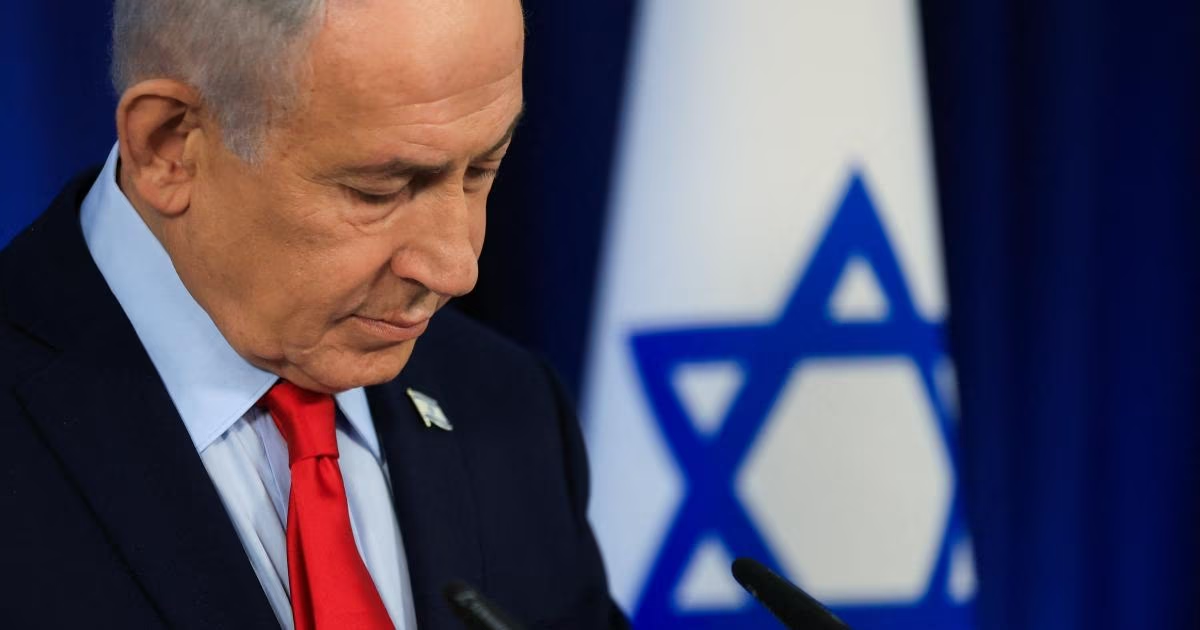
Netanyahu's statements about Christ and Genghis Khan ignite international and religious outrage

Israeli Prime Minister Benjamin Netanyahu caused a massive wave of international controversy following recent statements in which he compared Jesus Christ to the Mongol leader Genghis Khan. Netanyahu based his remarks on the vision of historian Will Durant, considering that material power and cruelty often triumph over moral principles in the course of history if societies fail to protect their existence.

These words came at a sensitive time characterized by escalating military and political confrontation between Israel and the United States on one hand, and Iran on the other. Observers considered that this discourse reflects the philosophy adopted by the current Israeli government in managing its regional conflicts, based on the principle of survival of the fittest and marginalizing human values in favor of military decisive action.

Social media platforms quickly turned into an arena for condemning this comparison, with critics and tweeters seeing it as a direct insult to the Christian religion and a mockery of a spiritual symbol followed by billions of people. Many comments considered that equating the symbol of peace and tolerance with a military leader known for his historical massacres represents a major moral and diplomatic blunder for the Israeli Prime Minister.

For his part, Iranian Foreign Minister Abbas Araghchi entered the crisis, describing Netanyahu's statements as an expression of 'public contempt' for Christianity. Araghchi pointed to the stark contradiction in Netanyahu's discourse, which relies heavily on the support of Christian Zionist currents in the United States, while belittling Christ in his historical analyses.

The Iranian official added that glorifying a figure like Genghis Khan, whose name is associated with destruction and mass killing, clearly reveals the mentality that is managing the current war in the region. Araghchi described Netanyahu as acting with the mentality of a 'war criminal' who disregards sanctities or international norms, which increases regional tension.

In an attempt to absorb the anger, Netanyahu published a clarification on his 'X' account, denying any deliberate insult to any religion, stressing that his speech was merely a historical citation to analyze the nature of the conflict between what he described as good and evil. He claimed that Christians within Israel enjoy full protection, and that his goal was to draw lessons from history about the necessity of possessing power to defend societies.

On the Palestinian side, the statements did not pass without a response, as the Committee of Churches affirmed that Israeli practices on the ground are consistent with these statements, accusing the occupation of destroying the historical Christian presence in Palestine. The committee stressed that targeting churches and Christian institutions in Gaza and Jerusalem proves that this philosophy based on force is actually being applied to displace Palestinians of various affiliations.

Christ has no superiority over Genghis Khan, because history shows that power and cruelty prevail over morality if societies cannot defend themselves.

ARAB AND WORLD

Fri 20 Mar 2026 7:28 pm - Jerusalem Time

Iranian Leader Denies Targeting Turkey and Oman, Announces 'Resistance Economy' Slogan

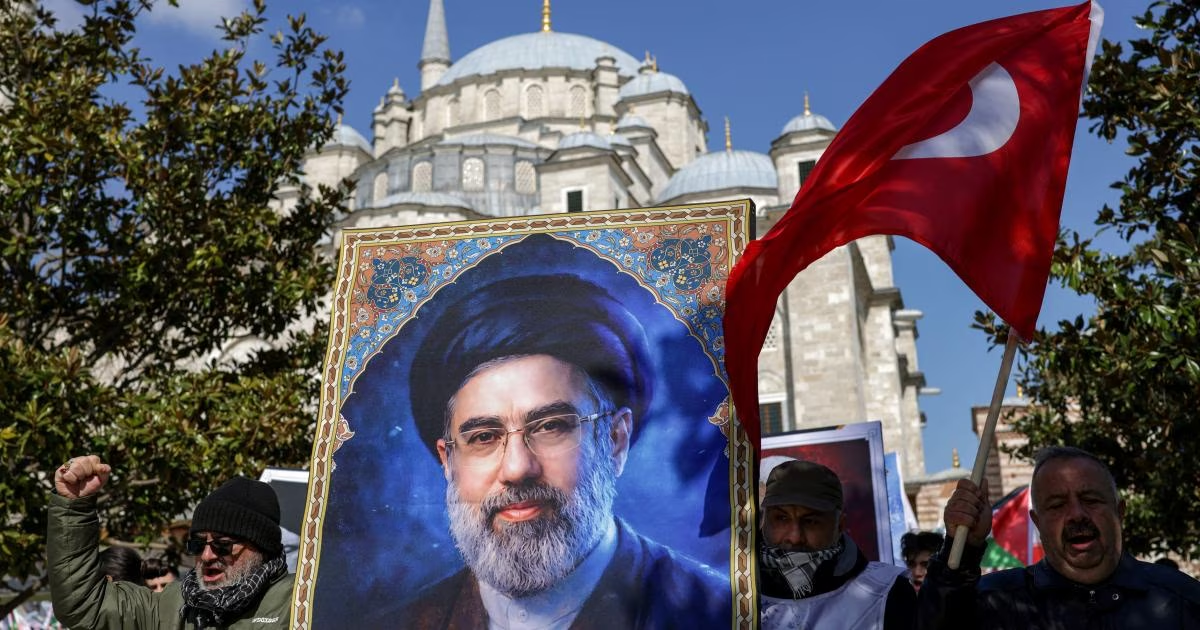
Iranian Supreme Leader, Mojtaba Khamenei, affirmed that the Iranian people have shown a high level of vigilance in confronting what he described as 'American incompetence,' which has become clearly evident recently. Khamenei clarified that the Islamic Republic is currently experiencing what he called the 'third war,' indicating that this confrontation is a result of the despair of external powers regarding the possibility of mobilizing the Iranian street or inciting internal protests that serve their agendas.

The Iranian leader emphasized in his statements that the strategic goal of the enemies is to try to control the country's resources and work to fragment and divide it. He added that the Iranian internal front possesses strength and breadth that exceeds the adversaries' perceptions, calling for national solidarity to thwart these schemes that target the state's entity and its political and geographical unity.

Regarding regional relations, Khamenei categorically denied that the recent attacks targeting territories in Turkey and the Sultanate of Oman originated from Iranian armed forces. He affirmed that Tehran's consistent policy is based on respecting the sovereignty of neighboring countries and not harming their security, emphasizing a firm belief in the importance of strengthening diplomatic and security ties with Iran's geographical surroundings.

Domestically, the Supreme Leader called on local media to be wary of being drawn into hostile media narratives that aim to undermine national unity. He urged journalistic institutions to avoid excessive focus on weaknesses that adversaries might exploit, considering that the media battle is no less important than other confrontations in preserving the country's stability.

On the economic front, Khamenei announced that the government is currently formulating a comprehensive remedial plan aimed at extricating the economy from its current crises and improving citizens' living conditions. He raised the slogan 'Resistance Economy in the Shadow of National Unity' as the title for the next phase, considering self-reliance as the only way to confront continuous external pressures.

These moves come at a time when the Iranian economy is suffering from severe challenges, with inflation rates exceeding 50 percent, along with a significant rise in the prices of basic goods and fuel. This crisis is exacerbated by strict American sanctions targeting the energy sector and oil exports, which has led to a sharp decline in the value of the local currency and a shortage of foreign exchange reserves.

It is worth noting that these statements come amid an atmosphere of escalating regional tension, especially after a series of airstrikes carried out by the United States and Israel against Iranian targets. Through these positions, Tehran seeks to affirm the steadfastness of its military and political stance, while trying to contain the economic and social repercussions of the international pressures imposed on it.

The front line in Iran is much larger than the enemy's mentality and perceptions, and we are committed to not harming neighboring countries.

OPINIONS

Fri 20 Mar 2026 7:28 pm - Jerusalem Time

The Iranian War of 2026: Unveiling the Historical Project and Symbolic Conflict at the Heart of the Middle East

On February 28, 2026, the streets of Tehran were shaken by the sound of massive explosions, as columns of smoke rose from the presidential palace and high-security headquarters, signaling the beginning of an all-out war that was not conventional, but rather a true moment of revelation for the Iranian regime's project and its political and religious doctrine in the region. The military strikes were not merely a reaction to external pressure, but came in the context of a long-standing conflict, revealing the regime's fragility in the face of its internal challenges and external threats from the United States and Israel.


Historical Background and Regime Doctrine


Since the Iranian Revolution in 1979, the regime's political doctrine has been based on integrating political power with religion, adopting a main axis: hostility towards Sunni Arabs and rejection of Western hegemony over Iran. Over the past four decades, the regime has used this hostility to strengthen the position of the Revolutionary Guard and expand Iran's influence in surrounding Arab countries, from the Gulf and Yemen to Syria and Iraq, exploiting sectarian divisions to its advantage.

Internally, the Iranian regime built its symbolic legitimacy on a dual equation: consolidating power through religious ideology, and demonstrating regional power at the expense of its regional adversaries, especially Sunni Arabs. This doctrine was used internally to strengthen the regime's cohesion, and even to justify its regional interventions to the Iranian people, who often viewed external hostility as far removed from their daily interests.


Iran's Conflict with Israel and America


For three decades, Israel and the United States tried to deal with Iran within policies of deterrence and negotiation. In the 1990s, Netanyahu, since his early membership in the Knesset, began to portray Iran as a permanent nuclear and military threat to Israel and the region. With the shift in the balance of power after the 2015 nuclear deal, and the escalation of American sanctions during the Trump administration, the conflict became clearer, especially after the assassination of Qassem Soleimani in 2020.

Israel relied on what is known as the “war between wars” to gradually strike at the capabilities of adversaries, without sliding into an all-out confrontation, benefiting from Iranian hostility towards Arabs to undermine Iranian influence in the region. However, with the events of October 2023 and the attacks on Israel, and the development of the Iranian military program, the conflict became more intense and clear, leading to a rapid slide towards an open confrontation.


The Iranian War of 2026: Unveiling the Symbolic Strategy


What distinguished the war in 2026 was the regime's targeting of Sunni Arab countries in the Gulf and Jordan, even amidst direct confrontation with the United States and Israel. This orientation revealed that hostility towards Arabs is not secondary, but rather represents a central pillar of the regime's doctrine and regional project. The strikes were not only to weaken military adversaries, but to enhance symbolic and political influence internally, and to achieve religious legitimacy derived from sectarian conflict, especially against Sunni Arabs.

In this war, Iran emerged as both an oppressed and an aggressor party: oppressed in the face of American and Israeli strikes, and an aggressor against Sunni Arabs. Nevertheless, the regime realizes that the Arab street will not unite against it due to the balances of regional interests, especially in the face of Israel and America, which made the strikes on Arabs a means to enhance its symbolic legitimacy, rather than a direct war against an actual political competitor.


Limits of the Regime's Goals and Strategic Retreat


Over time, the regime's unrealistic goals began to fall one after another. Instead of focusing on regional hegemony, the focus became on defending the land and maintaining internal cohesion, a stage that can be described as an “awakening and retreat to Iran's natural sphere.” This retreat serves the strategic goals of the United States and Israel, but it will not be fully achieved until the regime falls or is changed internally.

The war showed that hostility towards Sunni Arabs, despite being an internal symbolic tool, faces the limits of military and political reality, and that Iran has been forced to deal with American and Israeli interests in the region, while trying to exploit any weakness in Arabs to achieve internal symbolic goals.


Repercussions of the War on the Region and the Iranian Street


The Iranian War of 2026 revealed the regime's weakness in the face of its adversaries, exposed its internal conflicts, and exposed its true priorities, which are no longer hegemony, but survival and internal cohesion. Hostility towards Arabs, which was part of its historical project, appeared as a symbolic tool rather than a real strategic tool. At the same time, the bigger question remains: Can the regime maintain its internal legitimacy without the fundamental change imposed by military and political reality?

In the end, war is not just a fleeting confrontation between states, but a mirror that reveals the historical Iranian project, the limits of its ambitions, and the symbolic stakes that govern its internal and regional policies. The regime, which the conflict pushed into a defensive retreat on its own territory, will continue to seek to strengthen its symbolic and ideological authority, but the next stage will determine whether this authority can endure, or whether the fall of the regime is the only way to achieve true stability in the region.

PALESTINE

Fri 20 Mar 2026 7:27 pm - Jerusalem Time

Occupation prevents Jerusalemites from Eid prayers in Al-Aqsa and assaults worshippers

Sadness and forced calm overshadowed the occupied city of Jerusalem on the first day of Eid al-Fitr, as the usual celebrations were absent due to the occupation's tightened security grip and its prevention of worshippers from reaching the blessed Al-Aqsa Mosque. The city's streets and the alleys of the Old City appeared empty of the crowds that used to revive Eid rituals in the mosque's courtyards, turning Eid into a day of oppression and pain.

Field sources reported that occupation forces continued to close the entrances to Al-Aqsa Mosque and prevented entry since the early morning hours, a measure that has been ongoing since the outbreak of recent military confrontations about three weeks ago. This reality was clearly reflected on the faces of hundreds of citizens who gathered in front of the Old City gates in a desperate attempt to reach their first Qibla.

Citizen Wajdi Muhammad Shweiki described the atmosphere as extremely painful, pointing out that depriving Muslims of prayer in the third holiest site represents a catastrophic situation that extends beyond Jerusalem to all Muslims in the world. He affirmed that confiscating the right to worship on this blessed day deepens the bleeding Palestinian wound due to the ongoing war.

Since the start of the military escalation 21 days ago, the occupation authorities have imposed strict restrictions, including preventing entry to holy sites in the Old City, including the Buraq Wall, the Church of the Holy Sepulchre, and the Noble Sanctuary. Israeli security agencies cited security reasons for imposing a ban on gatherings of more than fifty people in these vital areas.

Over the past few days, a number of worshippers tried to break the imposed siege by performing prayers near the Old City walls under close surveillance by police officers. However, these attempts were often met with physical assault and forced removal, in an attempt to prevent any Palestinian gathering inside or around the city's historical center.

With the dawn of Eid, small groups of men and youth arrived carrying their prayer mats, trying to approach the gates while chanting Eid takbeers and shouts of testimony. Occupation forces confronted these groups with excessive force and fired tear gas canisters to disperse them and prevent them from gathering in the squares leading to the mosque.

Despite the continuous repression, worshippers insisted on remaining in their places, which eventually prompted the occupation police to allow them to perform a quick prayer in the middle of the street. An imam led the worshippers from a plastic chair in the middle of the road, a scene that embodies the suffering of Jerusalemites and their insistence on practicing their rituals despite the security restrictions.

The scene did not end with the conclusion of the prayer, as occupation forces pursued the worshippers as they left the area through the narrow alleys and assaulted some of them. Eyewitnesses described the scene as unusual and desolate, especially when compared to previous years when more than a hundred thousand worshippers flocked to the Al-Aqsa courtyards.

For his part, Ayman Abu Nijm, a resident of Beit Hanina, pointed out that the original intention is to perform prayers inside Al-Aqsa Mosque and not in the surrounding streets. Abu Nijm affirmed that this period is the longest in the history of closures that the mosque has been subjected to, indicating an unprecedented escalation in the occupation's policies towards holy sites.

Citizen Ziad Minna expressed his deep sadness, explaining that the beginning of Ramadan promised good, but the closure of the mosque and the outbreak of war turned joy into a choke. He added that sadness and oppression have become the dominant feature for the city's residents who feel isolated and deprived of their most basic religious and national rights.

In contrast, a spokesperson for the occupation police claimed that security forces allowed prayers to be held in the street without direct intervention initially, despite the state of high alert. He claimed that the intervention only came when the crowds exceeded the permitted numbers and tried to storm the Old City, alleging that the measures aim to protect the public from missile threats.

These developments come amid the ongoing war and bombardment, making this year's Eid al-Fitr one of the most difficult Eids for the city of Jerusalem. Al-Aqsa Mosque remains hostage to military measures that prevent thousands of Palestinians from accessing it, amid international silence and an escalation in the pace of daily violations.

This Ramadan is sad and painful due to the confiscation of Al-Aqsa Mosque, and what is happening represents a catastrophic situation for Palestinians and Muslims in general.

ARAB AND WORLD

Fri 20 Mar 2026 7:27 pm - Jerusalem Time

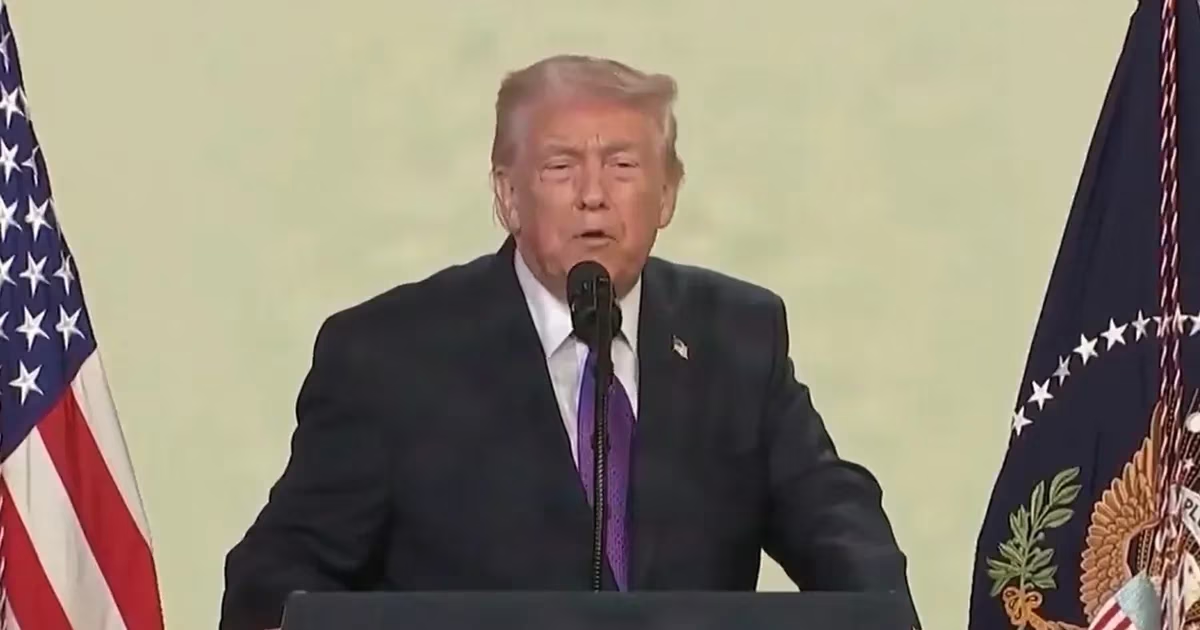
Sharp decline in Trump's popularity among independents and low confidence in his economic and foreign policies

The results of a recent opinion poll conducted in mid-March 2026 revealed a sharp decline in confidence levels in US President Donald Trump, especially among the independent voting bloc. Data released by YouGov in cooperation with Yahoo showed that only 27% of independent voters approve of the President's performance, while an overwhelming majority of 70% expressed their dissatisfaction, indicating a growing crisis of confidence towards the current administration.

Regarding domestic issues, Trump faced widespread criticism in his management of livelihood crises, with the cost of living issue recording the lowest levels of public approval, with only 17% support compared to 77% opposition from independents. General economic policies were not in a better state, as they received the support of 24% of participants, while 71% expressed their dissatisfaction with the financial and economic directions currently pursued by Washington.

Regarding foreign policy and security issues, the results showed widespread rejection of the administration's handling of the Iranian issue, with the approval rate reaching 27% compared to 62% of opponents. This coincided with a general decline in the evaluation of American diplomacy, as foreign policy recorded only 24% approval, which reflects public concern about engaging in international conflicts or controversial strategic decisions.

On the other hand, media sources indicated a previous poll conducted by Reuters/Ipsos that revealed deep fears among the American public of the possibility of a direct military confrontation. The data showed that about 65% of citizens believe that the President may issue orders to launch a large-scale ground war against Iran, a step that is supported by only 7% of the public, which highlights a large gap between the administration's directions and voters' expectations.

Despite this decline in specific issues, Trump's overall popularity maintained relative stability at around 40%, a slight increase from the polls that followed the joint military operations between the United States and Israel against Iran in late February. These studies included large samples from various parts of the country to ensure the accuracy of the results, with a margin of error not exceeding three percentage points in most statistical estimates.

Trump's policies regarding the cost of living recorded the lowest levels of support among independents, not exceeding 17 percent.

LATEST NEWS

Fri 20 Mar 2026 5:41 pm - Jerusalem Time

Iran threatens US and Israeli leaders with international pursuit and intensifies missile strikes

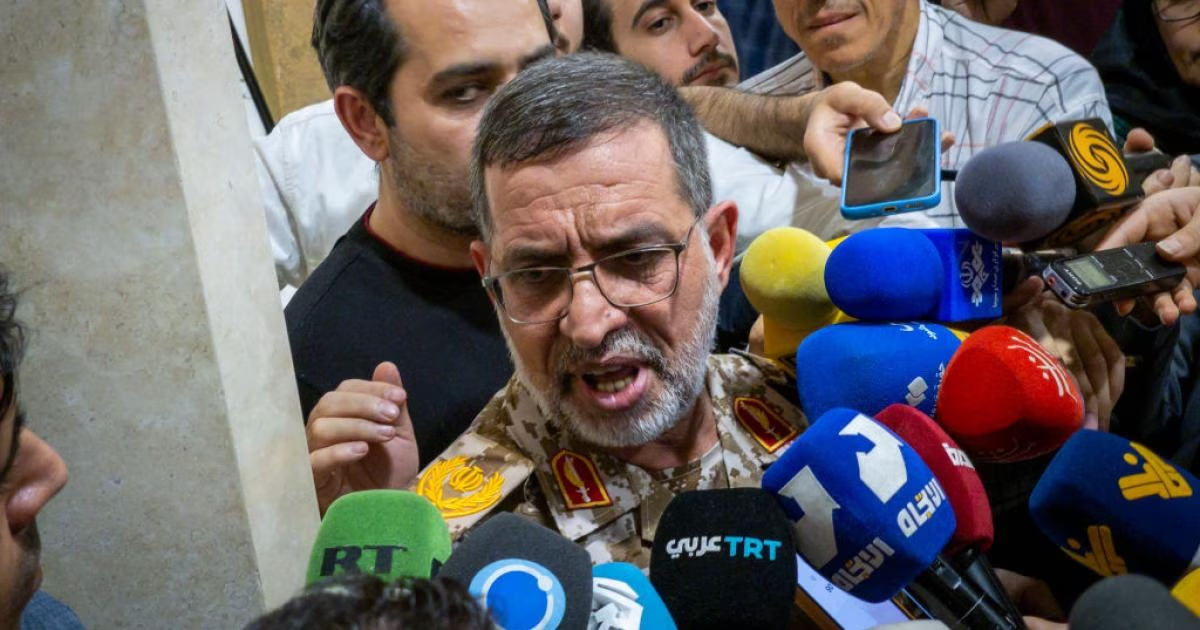
The Iranian army issued strong warnings today, Friday, threatening to pursue US and Israeli officials and military leaders around the world. The spokesman for the Iranian Armed Forces, Abu al-Fadl Shakarji, confirmed that his country's agencies are closely monitoring the movements of leaders, soldiers, and pilots, emphasizing that the pursuit will not be limited to military fields but will reach them wherever they are.

Shakarji explained in statements reported by official media that Iranian threats will include civilian and tourist facilities frequented by these officials, including parks and international resorts. He pointed out that the intelligence available to Tehran makes these locations unsafe for them anymore, in a remarkable shift in the scope of direct confrontation between the parties.

On the ground, military sources revealed that the Haifa refinery was hit by a 'Nasrallah' missile, coinciding with widespread targeting of satellite stations and Israeli radar systems. These strikes come as part of a new wave of escalation aimed at undermining the American narrative that previously promoted the erosion of Iranian missile capabilities, reflecting a decline in the credibility of statements from Washington.

In a related context, the northern and central fronts in Israel are witnessing attacks described as 'combined,' where missile barrages are coordinated between Iran and Hezbollah. This strategy relies on launching intense waves of Hezbollah missiles, with a range exceeding 300 kilometers, to deplete and engage Israeli air defense systems, creating gaps that allow advanced Iranian missiles to pass through.

Iranian missiles used in these attacks are characterized by high speeds and superior maneuverability in their final stages, which increases their destructive power and makes interception difficult. Local sources reported that these attacks are no longer limited to Tel Aviv but have extended to include vital targets in both southern and northern areas, expanding the circle of fire unprecedentedly.

Despite official Israeli secrecy, field reports indicate that the extent of destruction and losses resulting from these strikes far exceeds what military censorship announces. Sources confirm that restrictions on publication attempt to downplay the impact of missile attacks that hit strategic targets, amid the ongoing military escalation in the region.

From now on, parks, resorts, and tourist and entertainment centers around the world will not be safe for you.

PALESTINE

Fri 20 Mar 2026 5:41 pm - Jerusalem Time

French efforts in Lebanon falter, increasing reliance on decisive American intervention

A state of anticipation is escalating in political circles in the Lebanese capital, Beirut, regarding the possibility of initiating a direct negotiation process with Israel. These questions arise at a time when information is conflicting about the identity of the international party capable of sponsoring this complex file, amidst indications of a decline in French effectiveness versus growing hopes placed on the American role.

French President Emmanuel Macron acknowledged that any move towards direct negotiations still faces the necessity of obtaining explicit approval from the Israeli side. Macron considered that the key to the solution remains in Tel Aviv's hands, reflecting Paris's limited ability to impose a diplomatic agenda without broad regional and international consensus.

In a related context, the Élysée revealed the absence of a comprehensive French plan or an official proposal that includes mutual recognition at present. This admission places recent French moves within the framework of exploring intentions and testing the waters, rather than being a mature political initiative capable of making a real breakthrough in the wall of the field crisis.

French Foreign Minister Jean-Noël Barrot had held a series of intensive meetings with senior officials in the Lebanese state to discuss ways to de-escalate. However, the conclusion of the tour without official statements or tangible results reinforced the impression that the French mission faces complexities that exceed the diplomatic tools currently available to Paris.

Informed sources indicate that the French approach sought to achieve a gradual path beginning with disengagement between the Lebanese front and the Iranian file. This vision aims to reach a sustainable ceasefire agreement that paves the way for subsequent political negotiations, but these ambitions clash with the reality of the explosive military field.

These proposals face a fundamental obstacle, which is the limited control of the Lebanese state over war and peace decisions in light of the existing balances. Sources believe that linking military paths to regional alliances makes it difficult for the Lebanese government to respond to international demands without a radical change in the balance of power on the ground.

In the face of this diplomatic stalemate, the official Lebanese orientation has clearly begun to lean towards Washington as the only player capable of exerting effective pressure. Lebanese Prime Minister Nawaf Salam expressed this orientation by demanding that the American administration intervene directly to end military operations and impose a path for comprehensive de-escalation.

In a message addressed to US President Donald Trump via international media, Salam affirmed that the United States possesses the necessary tools to decide the direction of the conflict. He stressed the necessity of a decisive American role that goes beyond mere traditional mediation to reach radical solutions that end the ongoing conflict on the southern borders.

The Lebanese scene remains hostage to international tug-of-war, awaiting what the coming days will bring in terms of movements in the White House. In the absence of international consensus, the possibilities of negotiation remain suspended between the conditions of the Israeli occupation and the ability of the major powers to formulate a political exit that spares the region further escalation.

Any direct negotiations between Lebanon and Israel remain conditional on Tel Aviv giving the green light.

OPINIONS

Fri 20 Mar 2026 5:41 pm - Jerusalem Time

"Sowing the Seeds of Disorder: How War Aims to Overthrow Power in Iran"

On the morning of February 28, 2026, the streets of Tehran were shaken by the sound of massive explosions, and columns of smoke rose from the presidential palace and other security headquarters. This was the beginning of the all-out war launched by the United States and Israel against Iran, a war that was not merely a traditional military confrontation, but an attempt to reshape power and legitimacy within the Islamic Republic.

Following a series of assassinations targeting first-tier leaders, including Supreme Leader Ali Khamenei, Secretary of the Supreme National Security Council Ali Larijani, and Security Advisor Ali Shamkhani, in addition to senior commanders of the Revolutionary Guard and Basij forces, the regime suffered direct blows to its symbolic and political pillars. The fall of these figures created a leadership vacuum and a gap in symbolic legitimacy, as new leaders do not automatically inherit the symbolic capital that grants them widespread internal acceptance, increasing the likelihood of tension and conflict within the hierarchy of power.

The Iranian regime faces a continuous challenge in balancing influence among the Revolutionary Guard, the religious establishment, and the official political structure. The absence of a unifying figure to maintain this balance could transform implicit coordination into open conflict, leaving the door open for an unstable redistribution of power.

From a strategic perspective, the war was not merely a military confrontation or the elimination of leaders, but a process to weaken the regime from within and disrupt its continuity. Iran had maintained its political and security balance for decades, avoiding any direct provocation that would justify an external attack. However, the war began without a direct cause, crossing red lines and creating a new context that allowed for dealing with Tehran in a way that was previously impossible.

The series of assassinations of top leaders was not merely a military tactic, but a strategic blow to weaken symbolic legitimacy and disrupt internal power networks, opening the way for potential shifts in the political balance and the emergence of new forces within Iran. Israel explicitly declared that this series would not stop, targeting senior political, military, and intelligence officials, sowing doubt and fear within leadership circles and increasing the likelihood of internal tension and conflict.

The impact of the war cannot be understood without considering the deep disconnect between the regime's discourse and the sentiments of the Iranian people. The regime bases its policies on a revolutionary and symbolic narrative: hostility towards the West, defense of Palestine, and Iran's role as the protector of Shias in the region, relying on religious and political beliefs that prioritize external matters over internal ones. However, the Iranian citizen sees this hostility as uninspiring and not representing their direct interests. For them, the war means rising prices, resource shortages, deteriorating job opportunities, and an increase in social and economic instability.

The experiences of Iraq, Syria, Libya, and Yemen serve as a model for what could happen to Iran. Citizens fear that the United States and external powers will not commit to protecting them, and that they will leave once their strategic objectives are achieved, leaving the country to face the consequences of the war alone. When asked about the reasons for this destruction, they find that the official narrative is based on a religious and revolutionary logic far removed from national reality, and does not explain their daily suffering or national interests. The result: the reasons for the people to stand with the regime disappear, and any leadership vacuum or disruption in power becomes an opportunity for the opposition to reorganize itself and transform social discontent into a real political force capable of challenging the official narrative.

From this perspective, it is clear that the war was not merely a military confrontation, but an attempt to redefine the relationship between the regime and the people and to disrupt the internal balance of power. The Iranian regime today stands at a critical juncture: strengthening its grip on power to ensure its short-term continuity, or risking opening the door to opposition and internal conflicts in the medium term. The next phase will determine the shape of the revolutionary spirit and the future of power, and the extent of the regime's ability to restore its symbolic and political balance or the possibility of new conflicts erupting within its upper echelons.

In conclusion, the war represents a strategic turning point that redefines power in the Islamic Republic, and sows the seeds of change within Iran at all levels, whether through disrupting the hierarchy of power, influencing symbolic legitimacy, or expanding the space for internal opposition that can exploit the disconnect between the official narrative and the imagination of the Iranian people.

ANALYSIS

Fri 20 Mar 2026 3:40 pm - Jerusalem Time

Coordination Breakdown or Repositioning? Trump-Netanyahu Dispute Over the War on Iran

Said Erikat

Opinion Writer

Washington - Said Arikat - 20/3/2026

News Analysis

The divergence in positions between Donald Trump and Benjamin Netanyahu regarding the targeting of Iran's "South Pars" gas field marks a significant turning point in the course of the war with Iran, which has lasted twenty days and was initially characterized by close coordination between the two sides. This dispute, while seemingly tactical on the surface, reflects a deeper difference in risk calculations and strategic objectives, raising serious questions about the cohesion of the alliance in managing a complex and multi-dimensional conflict in a highly sensitive region.

This issue gains particular importance because the attack on an energy facility the size of "South Pars" was not merely a limited military operation, but a step with broad economic and geopolitical repercussions. Iran responded by targeting energy infrastructure in other Middle Eastern countries, leading to a rapid regional escalation and a significant rise in global energy prices. This rise did not occur in a vacuum; it increased pressure on global economies and prompted US allies in the Gulf to express their concern, demanding that Washington play a more balanced role in curbing the escalation.

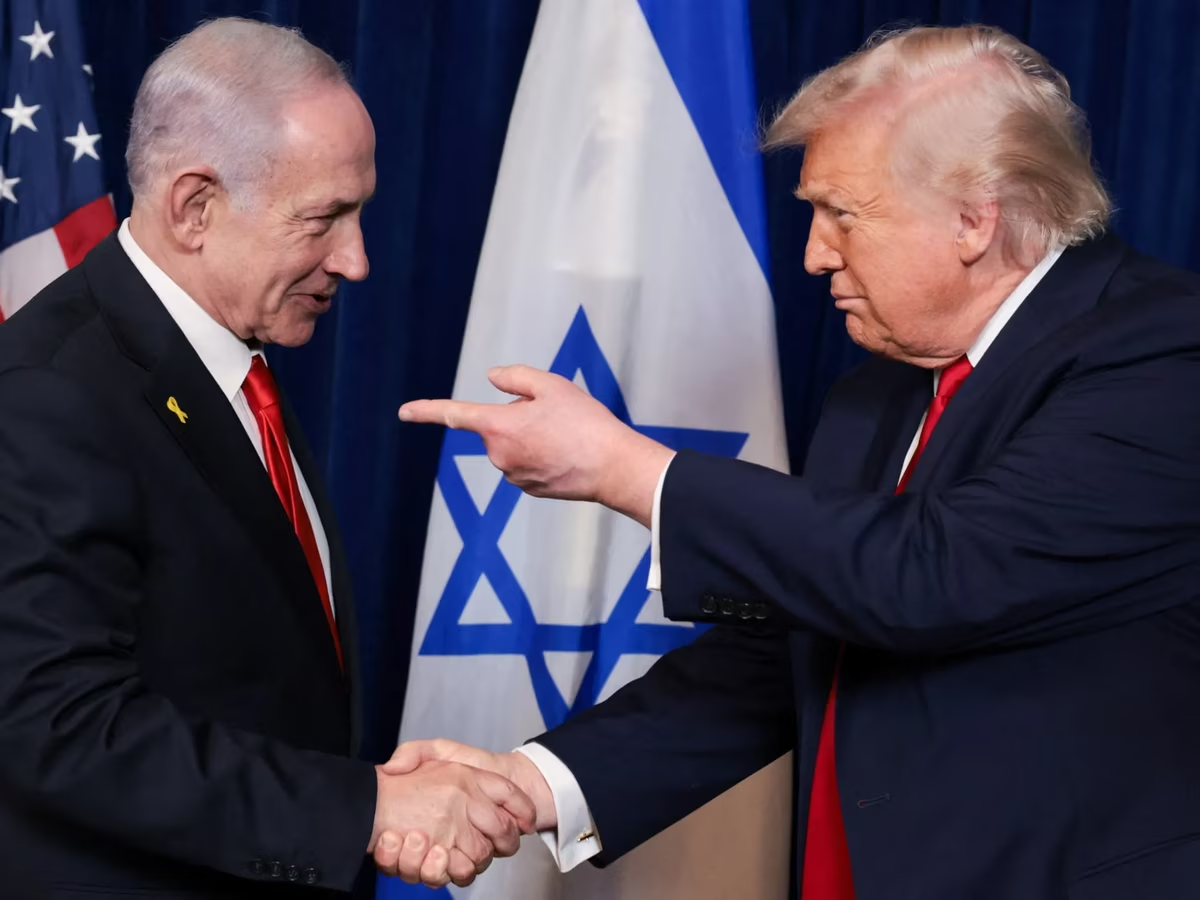
In this context, Trump's statements during a meeting in the Oval Office confirmed American reservations about the Israeli decision. He clearly indicated that he had not supported the attack, and had even asked Netanyahu not to carry it out. This statement reveals a gap in decision-making mechanisms between the two allies, as Israel appears willing to act unilaterally on issues it deems vital to its security, even without full American approval. In contrast, Netanyahu tried to downplay this divergence, emphasizing continued coordination and describing the relationship as very close, while acknowledging that Israel made the decision independently.

This divergence raises a fundamental question about the nature of leadership in this alliance: Is the United States truly leading, as Netanyahu asserts, or has Israel begun to act with a wider margin of independence amidst the complexities of the conflict? The answer to this question goes beyond the event itself, touching upon the essence of the relationship between the two parties at a moment of real test.

The dispute between Trump and Netanyahu also reflects a divergence in the philosophy of conflict management, where Trump tends to control the pace and avoid sliding into uncalculated escalation, while Netanyahu adopts a more offensive approach based on preempting threats. This divergence is not entirely new, but it became more apparent in this crisis due to the sensitivity of the targeted objective. Striking a strategic energy facility is not only seen as a military strike, but as a move that could redraw the rules of engagement and lead to a chain reaction that is difficult to contain.

From another perspective, this dispute can be read as a message directed to regional and international parties. Trump's statements may aim to reassure Washington's allies in the Gulf that the United States does not support uncontrolled escalation, while Netanyahu seeks to maintain Israel's deterrent image. This divergence in messages reflects an attempt by each party to address a different audience, adding another layer of complexity to the scene and making it difficult to interpret the positions as mere fleeting tactical differences.

In the longer term, this dispute may have a direct impact on the outcomes of the war with Iran. If the divergence in sensitive decisions continues, it could weaken the common front, giving Iran an opportunity to exploit the divisions. Conversely, this dispute might push both parties to redefine the limits of their coordination, ensuring greater clarity in decision-making. In either case, what happened indicates that the alliance, despite its strength, is not immune to deep strategic divergences.

Experts believe that the dispute between Trump and Netanyahu cannot be viewed as a fleeting incident, but rather as an indicator of deeper shifts in how the conflict with Iran is managed. While each party seeks to achieve its security and political objectives, the greatest challenge remains maintaining a delicate balance between coordination and independence. This balance, if disrupted, may not only affect the course of the war, but also the shape of the entire regional order, at a moment characterized by an unprecedented degree of fragility and tension.

PALESTINE

Fri 20 Mar 2026 3:40 pm - Jerusalem Time

Occupation bulldozes agricultural lands and uproots ancient trees east of Ramallah

Occupation military vehicles, today, Thursday, carried out widespread bulldozing operations targeting citizens' lands in the village of Ain Yabroud, located east of Ramallah city. Local sources reported that a military force supported by a heavy bulldozer stormed the eastern area of the village, and began destroying vast agricultural areas located near bypass road No. '60'.

Activist Jihad Al-Qaq confirmed that the bulldozing operations affected about 20 dunams of land owned by the villagers, where the occupation forces deliberately uprooted and destroyed dozens of ancient olive trees. Al-Qaq explained that these practices directly aim to prevent Palestinian farmers from accessing their fields, which threatens their primary source of livelihood and serves the expansionist plans in the region.

These attacks come in the context of a comprehensive Israeli escalation against Palestinian land, as official reports issued by the Wall and Settlement Resistance Commission revealed shocking figures related to last month's violations. The commission recorded more than 1965 attacks during February, ranging from physical assaults to vandalism of property and agricultural facilities in various governorates of the West Bank.

In details of settler terrorism, statistics indicated that settlers alone carried out about 355 acts of sabotage and theft, resulting in the destruction, uprooting, and poisoning of more than 1300 trees, the vast majority of which were olive trees. These figures reflect a systematic war targeting trees and stones to displace Palestinians from their lands and facilitate their control for the benefit of settlements.

Ramallah governorate topped the list of areas most affected by these attacks, as the governorate lost 731 trees as a result of the attacks by the occupation and its settlers, followed by Bethlehem, Hebron, and Nablus governorates. The occupation authorities continue to impose military closures on large areas under the pretext of security reasons, a policy that essentially aims to provide the necessary cover for the expansion of the settlement project at the expense of Palestinian rights.

The occupation seeks, through bulldozing operations in the eastern area of Ain Yabroud village, to deprive farmers of access to and exploitation of their lands.

ARAB AND WORLD

Fri 20 Mar 2026 3:40 pm - Jerusalem Time

Trump demands Netanyahu stop targeting Iranian energy facilities, Tehran vows unprecedented response

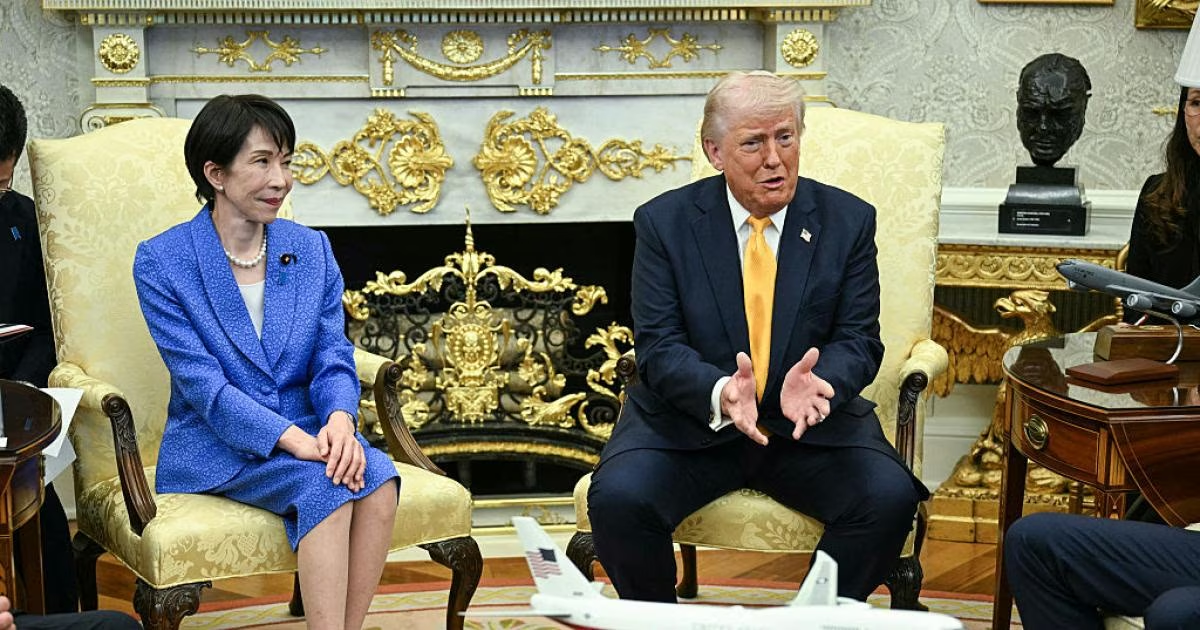
US President Donald Trump announced on Thursday that he had made a direct request to Israeli Prime Minister Benjamin Netanyahu to immediately cease targeting energy facilities within Iranian territory. Trump's statements came during his reception of Japanese Prime Minister Sanae Takayishi in the Oval Office, where he assured reporters that Netanyahu had responded to this request and would not repeat such operations in the near future.

Israeli officials revealed that the recent attack carried out by the occupation army on gas facilities in Iran's South Pars field was coordinated with the US administration, despite ruling out its repetition for now. The officials explained that this attack led to a dangerous escalation in the region, as Tehran launched retaliatory air attacks targeting energy infrastructure in several Middle Eastern countries, thus expanding the scope of the confrontation that has been ongoing for weeks.

In an attempt to disavow direct consequences, Trump indicated via social media platforms that Washington was not aware in advance of the specific details of the attack on the gas field. The US President added that Israel had pledged not to target Iranian gas fields again, unless Tehran first targeted vital facilities in Qatar.

Israeli sources likened the current situation to previous attacks that targeted Iranian fuel depots, which the American side had then tried to distance itself from. US Secretary of Defense Pete Hegseth had previously stated that those operations were not American in origin, indicating that there is sometimes a divergence in target selection between the two allies.

Iranian retaliatory attacks caused severe damage to the world's largest gas plant in Qatar, in addition to targeting a major oil refinery in Saudi Arabia. Authorities in the United Arab Emirates were also forced to temporarily close some gas facilities as a precautionary measure due to escalating military tensions in the Gulf waters.

Informed sources in the region reported that Gulf countries rushed to request official clarifications from the Trump administration regarding the nature of the sudden Israeli attacks. One country contacted the US Central Command, which denied prior knowledge of the attack, creating a state of diplomatic and military confusion regarding the true level of coordination between Tel Aviv and Washington.

In a related context, Trump's special envoy, Steve Witkoff, continued to communicate with leaders in the region to clarify that the attack on the Pars field was not a joint military operation. However, Witkoff acknowledged that Washington had prior information about Israeli intentions, despite not being directly involved in the planning or field execution of the airstrike.

Despite the absence of an official Israeli announcement of responsibility, intelligence reports confirm close coordination in general air operations between the two sides. Officials' statements reveal that strategic objectives may differ, with Israel focusing on eliminating Iranian leaders, while Washington prioritizes the destruction of Iranian missile and naval capabilities.

For his part, Iranian Foreign Minister Abbas Araghchi issued a strong warning, emphasizing that Tehran would not adhere to any policy of restraint if its vital facilities were subjected to new attacks. Araghchi stressed that the previous Iranian response used only a small fraction of the available military capabilities, and that any future escalation would be met with full and unprecedented force.

The Iranian minister explained that the only reason his country had previously exercised restraint was in response to international demands to de-escalate and prevent the region from sliding into a full-scale war. He considered that targeting energy infrastructure represents a crossing of red lines and a direct aggression that necessitates an overwhelming response targeting all parties involved in the aggression.

In conclusion of his statements, Araghchi described the bombing of fuel tanks in Tehran as an act of 'environmental genocide' that caused long-term damage to the population and the biosphere. These developments come amid a state of international anticipation for what will happen in the Middle East, with continued political and military tensions between major and regional powers.

I informed Netanyahu that he must not attack Iranian energy facilities, and he will not do so again.

ISRAELI AFFAIRS

Fri 20 Mar 2026 3:39 pm - Jerusalem Time

Fires in Haifa refinery and Israeli blackout on losses from Iranian missile strikes

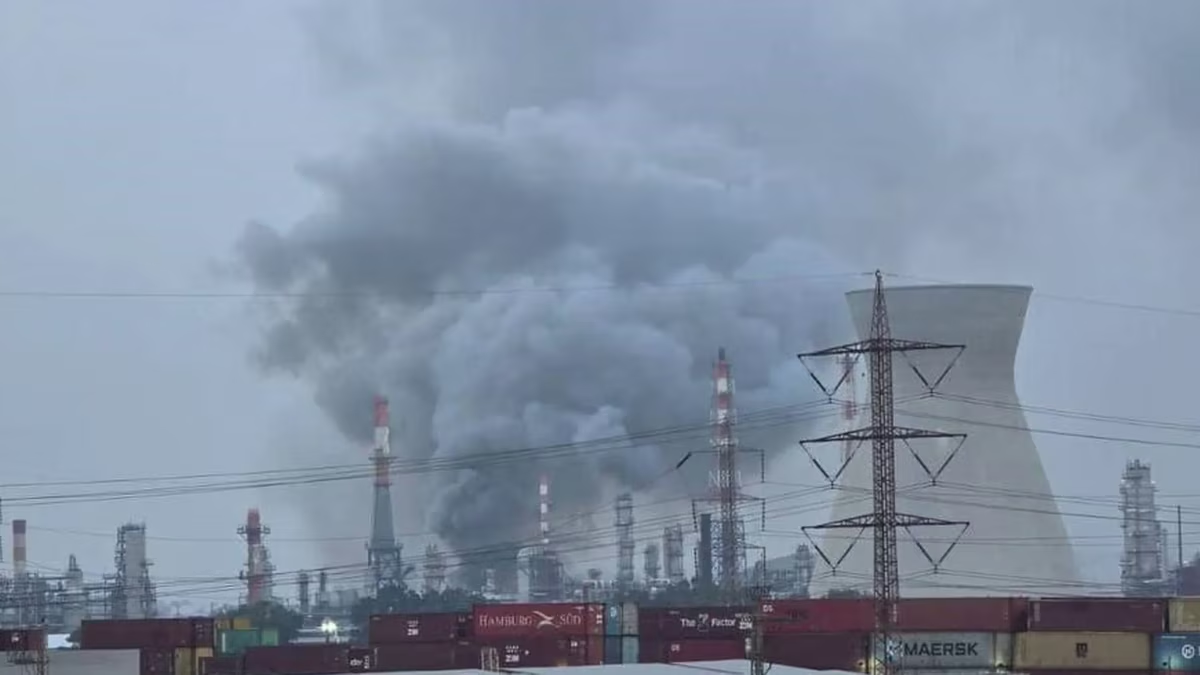
The intensity of the field confrontation between Iran and Israel escalated with missile attacks reaching deep into vital and strategic facilities. Field documentation showed a massive fire breaking out in the Haifa refinery, which is a key pillar in the energy and petrochemical industries, amidst clear conflicting official Israeli accounts regarding the true extent of the damage.

Media sources reported that the refinery was directly hit by an Iranian missile, while the Israeli army merely indicated that shrapnel fell in areas in the north of the country. This coincided with the launch of intense missile barrages targeting economic and population centers in Haifa, Tel Aviv, and Ashkelon, keeping air raid sirens in a constant state of alert.

Field data indicates that the latest attack was of a different nature, as fragmented or cluster missiles carrying multiple warheads were used. This tactic primarily aims to disperse the capabilities of air defense systems, as it is difficult to intercept all explosive fragments falling in scattered locations instead of a single point.

Bombing was not limited to the city of Haifa but extended to sensitive sites in Ashdod and its seaport, in addition to the city of Ashkelon, which includes a vital oil terminal. Observers believe that targeting Ashkelon carries symbolic and strategic dimensions, due to its connection to the historical oil pipeline from Eilat, reflecting a desire to systematically strike energy infrastructure.

Military readings indicate a shift in Iranian tactics from a policy of quantitative 'missile saturation' to 'effective precision strikes'. A single missile now has the ability to cause widespread destruction, posing unprecedented technical and operational challenges to defense systems in protecting sensitive facilities.

Amidst this escalation, a significant gap emerges between what eyewitnesses report and the official narrative imposed by Israeli military censorship. Authorities follow a policy of selective blackout, focusing on damage in civilian areas while withholding information related to military sites and airbases that may have been hit.

Initial figures reveal a massive amount of material losses, with more than 12,000 compensation claims filed so far by settlers and affected parties. This number reflects the widespread destruction that affected private property and public facilities as a result of successive missile barrages.

According to available data, about 8,000 buildings were damaged to varying degrees, most of them concentrated in the greater Tel Aviv area and the coastal city of Ashkelon. These damages represent a heavy economic cost that directly pressures the public budget and raises questions about the effectiveness of current defensive fortifications.

Despite attempts by Israeli Energy Minister Eli Cohen to downplay the strikes and describe them as limited, the field reality indicates otherwise. Cohen confirmed work to restore electricity to affected areas, in an attempt to absorb public anger and reassure the anxious Israeli public.

Analysts believe that continued targeting of infrastructure will necessarily lead to increased internal pressure on the Israeli government. These pressures are not limited to the financial aspect but also extend to public confidence in the army's ability to provide the necessary protection for major strategic facilities.

These events bring to mind previous experiences in which Israel was slow to admit that sensitive sites such as Ben Gurion Airport and airbases had suffered direct hits. It seems that the policy of concealing losses aims to prevent the other side from assessing the accuracy of its strikes and achieving moral victories in the ongoing war of wills.

In conclusion, Haifa Bay, with its strategic port and major industrial complexes, remains in direct danger, with continued threats of expanding the circle of fire. Field assessment operations are ongoing to determine the final damages, amidst expectations of an increase in the bill of losses with each new round of escalation.

The use of fragmented missiles aims to disrupt Israeli air defense systems, as it is difficult to fully intercept multiple warheads.

PALESTINE

Fri 20 Mar 2026 3:39 pm - Jerusalem Time

Injuries and Vehicle Arson in Settler and Occupation Forces Attack on Abu Falah Village

Abu Falah village, located northeast of Ramallah city, witnessed a violent attack this Thursday evening by settlers under heavy protection from Israeli occupation forces. Local sources reported that groups of settlers stormed the outskirts of the village and assaulted citizens' properties, leading to widespread confrontations in the area during which residents tried to repel the assault.

The field confrontations resulted in several injuries among Palestinian citizens from rubber-coated metal bullets, while dozens suffered severe suffocation due to the occupation forces firing a barrage of toxic gas and tear gas canisters. Settlers also completely burned a private vehicle belonging to one of the village residents before army forces intervened to secure the attackers' withdrawal and provide them with security cover.

In a related context, the Wall and Settlement Resistance Commission revealed in its latest report a dangerous escalation in the pace of settler terrorism during the past month of February. The commission documented a total of 1965 attacks carried out by occupation forces and settlers in various West Bank governorates, indicating a systematic approach aimed at restricting Palestinians and displacing them from their lands.

According to statistical data issued by the commission, the occupation army carried out 1454 direct attacks, while settlers launched 511 attacks, most of which were concentrated in Hebron governorate with 421 attacks. Nablus, Ramallah, and Jerusalem governorates followed in terms of attack intensity, reflecting a state of security chaos led by settlers amid international silence and military complicity on the ground.

Groups of settlers targeted the outskirts of the village and set fire to a citizen's vehicle, leading to the outbreak of confrontations.

ARAB AND WORLD

Fri 20 Mar 2026 3:39 pm - Jerusalem Time

Similar to the Gaza scenario... Occupation soldiers document their tampering with displaced people's homes in southern Lebanon

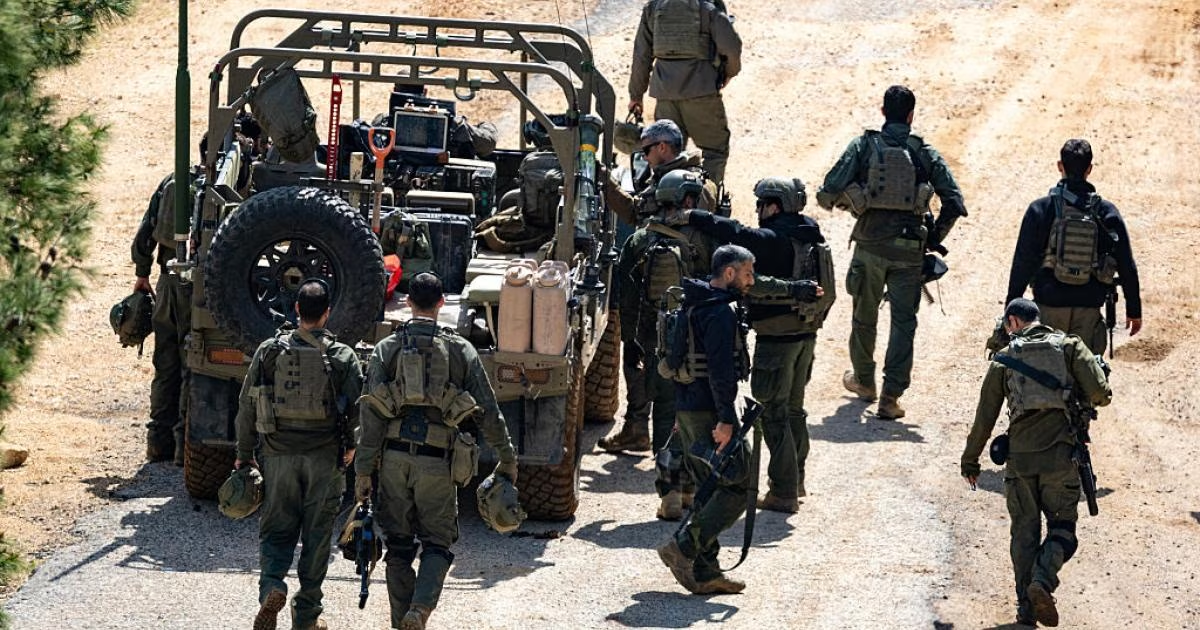
Activists circulated videos on social media platforms documenting violations by Israeli occupation army soldiers inside the homes of displaced citizens in the Marjayoun region of southern Lebanon. The scenes showed soldiers deliberately vandalizing furniture and personal belongings, in a move that reflects the continuation of the systematic destruction policy of civilian property during ongoing military operations.

Sources reported that the video clips revealed behaviors described as retaliatory, where soldiers deliberately smashed the contents of homes that were empty of their owners due to shelling and displacement. The violations did not stop at material destruction but also included mocking the personal privacy of residents, which sparked a wave of widespread condemnation across the digital space.

In one of the clips, a soldier appeared displaying personal clothes belonging to a displaced woman named 'Majda', uttering sarcastic remarks claiming she left 'souvenirs' for the invading forces. These actions brought back to mind a series of similar videos published by occupation soldiers during their incursions into the neighborhoods of the Gaza Strip, which included looting jewelry and wearing Palestinian women's clothing.

Field reports indicate that these practices are not isolated incidents but appear to be a repeated approach followed by soldiers in the areas they reach, as one of the elements clearly stated in the video: 'We like to destroy their villages.' This statement reflects the mentality with which military operations are managed in targeting the infrastructure and social fabric of border areas.

It is worth noting that the Gaza Strip has witnessed similar practices documented by the soldiers themselves since October 7, 2023, including the theft of safes and historical artifacts and the complete destruction of residential blocks. These developments in southern Lebanon confirm the expansion of violations affecting civilians and their property in the absence of strict international oversight over the conduct of the occupation army in the field.

There is something, which is that we like to destroy their villages.

ARAB AND WORLD

Fri 20 Mar 2026 3:39 pm - Jerusalem Time

New York Times: Trump and Republicans' Hostility Towards Muslims Undermines US National Security

American journalistic sources have confirmed that the policies and rhetoric adopted by President Donald Trump and prominent members of the Republican Party are not limited in their risks to Muslim communities within the United States, but extend to putting US national security at stake. The 'New York Times' explained in an editorial that the escalating wave of systematic hatred against Muslims requires a firm stance to disavow it, pointing to the stark contradiction in the current administration's claims of protecting religious freedoms.

The newspaper stated that the Trump administration seeks to portray itself as a protector of religious rights by establishing specialized committees and increasing funding for religious schools, but these efforts explicitly exclude Muslims. While facilities are provided for other beliefs, Muslims face rhetoric characterized by overt hostility, as Trump previously stated publicly, 'I think Islam hates us,' which has been reflected in his policies since his first election campaign.

The sources touched upon a series of 'hateful' statements issued by Republican leaders, including Senator Tommy Tuberville's description of Islam as a 'deviant cult' rather than a religion. Extreme positions also emerged from Representative Randy Fine, who explicitly called for the deportation of Muslim immigrants and the revocation of their citizenship, and Representative Andy Ogles, who considered that there is no place for Muslims in the American social fabric, which reinforces the state of division.

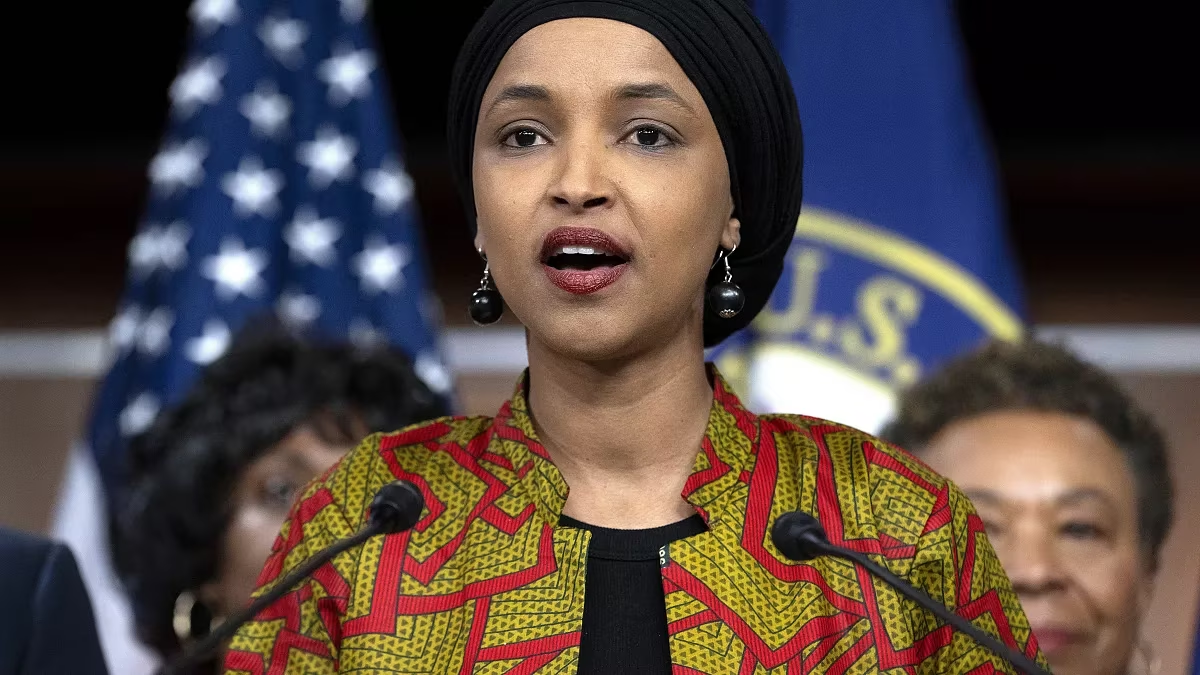
Muslim politicians in Congress were not spared from Trump's direct targeting, as he described Representative Ilhan Omar as 'garbage' and demanded a halt to receiving immigrants whom he described in terms that demean their human dignity. This pattern of targeting extends to Somali and Afghan communities, whose reputations are collectively tarnished based on individual incidents, leading to repressive practices and field violence against civilians.

The newspaper indicated that this hostility practically translates into legislation and laws aimed at restricting the lives of Muslims based on illogical fears of 'Sharia law.' In Texas, Governor Greg Abbott signed laws prohibiting what he called 'Sharia compounds,' claims that the newspaper described as absurd and false, emphasizing that American Muslims are law-abiding and do not seek to impose their beliefs on the state's legislative system.

The analysis considered that these legislative moves in states like Texas and Florida mimic anti-Catholic laws that prevailed centuries ago, and are primarily aimed at finding a political 'scapegoat.' The newspaper stressed that millions of American Muslims are an integral part of society, serving in the military and paying taxes, and many of them chose the United States specifically because of the promises of constitutional protection for freedom of belief.

The newspaper quoted testimonies from Muslim citizens living in a state of constant anxiety, with some fearing entering mosques or displaying their religious identity in public places. Mona Qafil, director of a family services organization in Texas, said that many left their homelands seeking safety in a country they thought respected diversity, but fear has returned to haunt their daily lives due to inflammatory political rhetoric.

Observers believe that Trump's contempt for Muslims falls within a broader pattern of intolerance that includes Latinos and transgender people, which has led to a significant increase in hate crimes according to FBI data. Despite the administration's claims of combating anti-Semitism, the newspaper pointed to Trump's alliance with figures who promote hatred against Jews themselves, revealing a double standard in political criteria.

In a comparative context, the newspaper clarified that criticizing the Israeli government's policies towards Palestinians is not anti-Semitism, just as condemning violent extremism does not mean targeting an entire religion. It affirmed that the established American principle must be based on holding individuals accountable based on their personal behavior, not on their religious or ethnic identity, which the current Republican rhetoric ignores.

The 'New York Times' warned that the most dangerous repercussions of the 'new Islamophobia' lie in its harm to Washington's strategic interests, especially amid tensions with Iran. Anti-Islam statements give the impression that any political or military conflict is a 'war against religion,' which complicates diplomatic efforts and turns global public opinion against the United States in Muslim-majority countries.

The report also warned that this intolerance weakens America's standing with its strategic partners such as Saudi Arabia, Turkey, and the United Arab Emirates, as these allies find it difficult to deal with an administration that despises the beliefs of their peoples. Undermining these relationships serves the interests of competing powers and diminishes Washington's influence in the vital Middle East region.

The newspaper recalled the approach of former President George W. Bush, who, despite criticism of his policies, made sure to visit a mosque a few days after the September 11 attacks to affirm that Islam is a religion of peace. Bush then stood with Muslim leaders to declare that terrorism does not represent the religion that brings comfort to a billion people, a position that completely contradicts Trump's confrontational approach.

The editorial concluded that the attacks launched by Trump and his allies against Muslims are 'shameful and full of lies,' and warrant comprehensive national condemnation that transcends partisan affiliations. Preserving American constitutional values requires protecting all citizens regardless of their creed, because neglecting the rights of one group paves the way for undermining the rights of all.

Continued inflammatory rhetoric not only threatens civil peace within the United States but also gives extremist groups a pretext to reinforce their narrative about 'the West's hostility towards Islam.' Accordingly, confronting this rhetoric is an urgent security necessity to protect America's image and vital interests in an increasingly complex global system.

Trump and his Republican Party are not interested in protecting the religious rights of Muslims; rather, they show overt hostility towards Islam that threatens social cohesion and the country's foreign interests.

ISRAELI AFFAIRS

Fri 20 Mar 2026 3:39 pm - Jerusalem Time

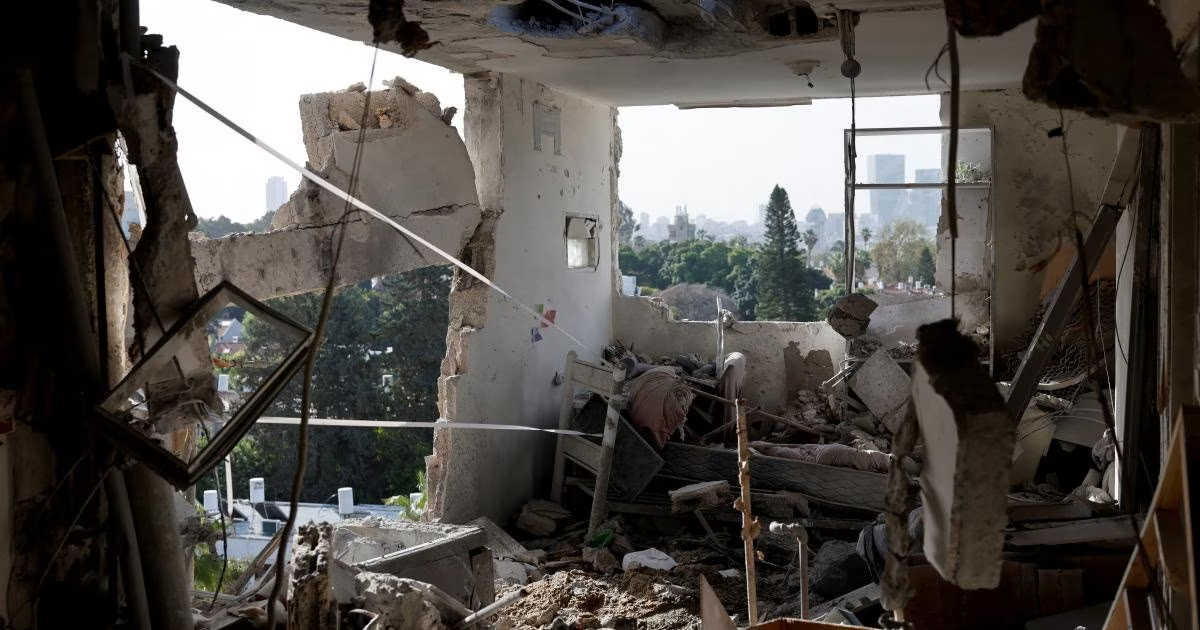
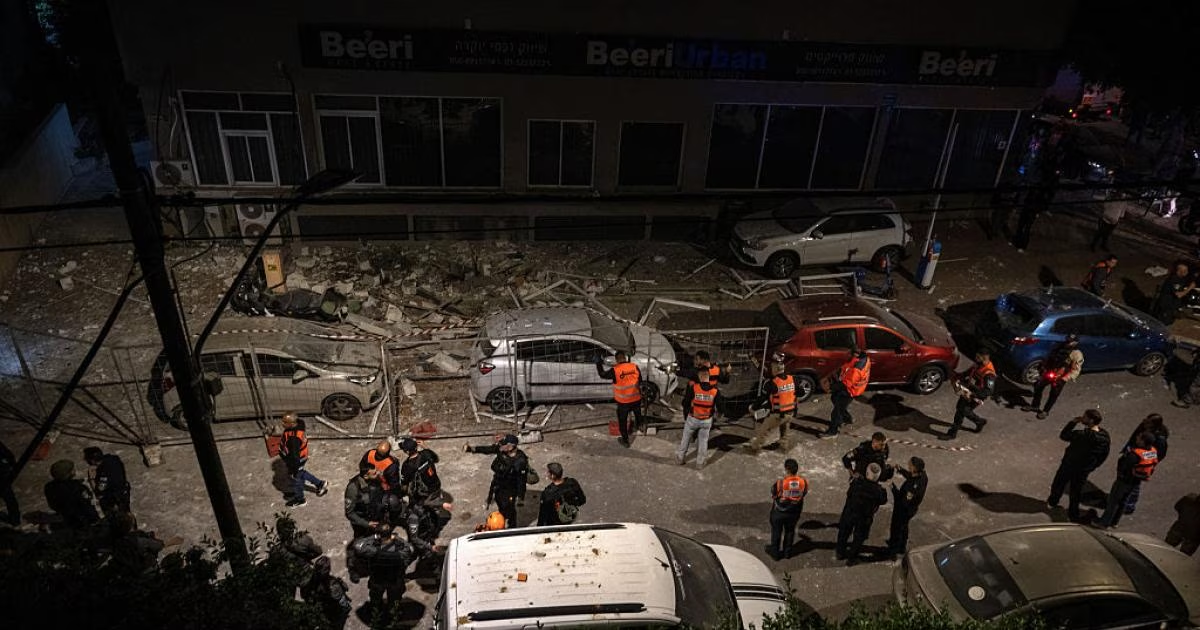
Injuries and widespread damage in Tel Aviv due to cluster missile shrapnel

The Tel Aviv area and its surroundings were subjected today, Saturday, to a series of intense Iranian missile barrages, resulting in human casualties and extensive material damage in several locations. Field sources reported that sirens blared across a wide area, including the center and the occupied Golan, prompting thousands of settlers to immediately flee to shelters and fortified rooms.

Explosions were witnessed in the sky as air defense systems attempted to intercept incoming missiles, but large shrapnel fell in populated areas. Ambulance crews confirmed at least nine injuries in the city of Rehovot, near Tel Aviv, with most cases involving the inhalation of dense smoke from fires.

Reports indicated that the attack was characterized by the use of cluster missiles, a technology that increases the area of destruction and complicates air defense tasks. These explosive warheads fell in vital locations in the cities of Rehovot and Petah Tikva, which are about 20 kilometers from the heart of Tel Aviv, reflecting the effective range of these barrages.

These missiles consist of dozens of small submunitions, each weighing between two and three kilograms, but possessing high destructive power upon impact. This explosive shrapnel caused widespread fires inside residential apartments and multi-story buildings, with plumes of smoke seen rising from several neighborhoods.

Fire and rescue teams worked for long hours attempting to control the fires that erupted in private properties and public facilities. Simultaneously, ambulances continued to transport the injured to nearby hospitals, with expectations of an increase in the number of affected individuals as field inspections of the targeted sites continued.

Technical data indicates that this type of weapon poses an exceptional challenge to the 'Iron Dome' and 'David's Sling' systems, due to the multiplicity of small targets emanating from a single missile. This multiplicity explains why explosive parts reached the ground despite the efficient activation of interception systems in the air, leading to direct damage.

Regarding the home front, residents adhered to prevention instructions and headed to public and private shelters, as a state of panic prevailed due to the repeated sound of explosions. Many families remained inside fortified areas for long periods, fearing a renewal of missile barrages described as the most intense in a long time.

In a related context, a shortage of shelters emerged in Arab towns within the Green Line, raising a wave of concern and protest among residents there. These areas lack adequate defensive infrastructure compared to major cities, making their inhabitants more vulnerable to risks in the event of shrapnel or direct missile impacts.

Local authorities continue to assess the extent of damage to infrastructure and electricity networks in the affected areas, while the military and security alert status remains. These developments come amid a rapidly escalating field escalation that places the region before open scenarios, with continued mutual threats and the expansion of targeting scope.

Cluster missiles fragment into dozens of small explosive warheads, making their complete interception a significant challenge for air defense systems.

PALESTINE

Fri 20 Mar 2026 3:39 pm - Jerusalem Time

Tragedy in Beit Awwa: Missile Shrapnel Turns Beauty Salon into a Mourning Tent, Claiming the Lives of 4 Female Martyrs

The atmosphere of preparation for Eid al-Fitr in the town of Beit Awwa, located southwest of Hebron, turned into a comprehensive national tragedy after death targeted a gathering of women in a beauty salon. While the women were preparing to welcome Eid with renewed spirits, shrapnel from an interceptor missile pierced the metal roof of the salon, transforming the place into a scene of blood and destruction.\n\nMedical sources and eyewitnesses confirmed that the incident resulted in the martyrdom of four women, including pregnant women, in addition to injuring more than ten women with varying degrees of wounds. Deep sorrow cast a pall over all the homes in the town that had been preparing for joy, only to suddenly find themselves in a solemn funeral procession bidding farewell to some of its daughters.\n\nInjured Hadeel Masalmeh, 24, recounts the terrifying moments she experienced inside the salon, where she was working with her partner, the martyred Sahera Masalmeh. Hadeel says that the electricity suddenly cut out and visibility was lost, only to discover later that her partner Sahera had died immediately after the shrapnel fell on the 'caravan' they used as their workplace.\n\nThe tragedy did not stop at Sahera but extended to the young woman Aseel Masalmeh, who was undergoing a beauty session at the time of the incident, where she was martyred while two months pregnant. Hadeel, who suffered shrapnel wounds to her face and body, insisted on leaving the hospital despite her injuries to bid a final farewell to her companion and professional dream.\n\nIn another home of the Masalmeh family, mother Hanan Ghattashe is experiencing the shock of losing her 27-year-old daughter Amal, who dreamed of completing her postgraduate studies in accounting. Amal, who was also pregnant, went to prepare herself for Eid with her child, but the occupation's shrapnel was faster than her dreams, leaving behind children bitterly wondering about their mother's absence.\n\nThe mother-in-law of the martyred Amal describes the state of brokenness the family is experiencing, noting that Amal's husband had bought her Eid clothes that she would never wear. She explained that explosions rang out a few minutes after Amal left the house, beginning a search for her in clinics and hospitals before the news of her martyrdom was confirmed.\n\nAs for the family of the martyred Mays Masalmeh, they were waiting for her return to celebrate her twenty-second birthday, as Mays had promised her family to prepare a cake for the occasion. Instead of celebrating, the family received the body of their daughter, who died in the same incident, ending promises of joy under the rubble of the destroyed salon.\n\nField reports indicate that the town of Beit Awwa lives in constant anxiety due to its geographical location surrounded by Israeli settlements such as 'Shikaf' and 'Amatzia'. The town, like other Palestinian villages, lacks any protective infrastructure or shelters, making residents vulnerable to the risks of interceptor missiles constantly falling over their heads.\n\nThe Ministry of Interior stated in a press release that preliminary investigations proved that the destruction and deaths resulted from the direct impact of interceptor missile shrapnel hitting the fragile metal roof of the salon. Iron Dome systems are positioned adjacent to Palestinian towns, without regard for the safety of Palestinian citizens during aerial interception operations.\n\nFor his part, the director of Beit Awwa Municipality, Mohammed Masalmeh, affirmed that the calamity that befell the town is immense and unprecedented, emphasizing the danger of the absence of official information about the locations of interception platforms. He added that this ambiguity prevents local authorities from providing accurate guidance to citizens to ensure their safety in light of ongoing military threats.\n\nA state of anger prevails in the Palestinian street amidst accusations against the occupation of deliberately directing interception systems to drop their shrapnel over populated areas. Incidents of shrapnel falling have recurred in several towns such as Kafr Qasim and Jaljulia during the past forty-eight hours, indicating a dangerous pattern of disregard for civilian lives.\n\nObservers believe that Israeli defense systems treat Palestinian villages and towns as 'open areas' devoid of inhabitants, allowing missiles to be detonated over them. This treatment is a new aspect of racial discrimination, where the protection of settlements is prioritized over the lives of Palestinians in the West Bank and inside Israel.\n\nLarge crowds in the Hebron governorate mourned the bodies of the four female martyrs in a solemn military and popular funeral that set off from Dura Governmental Hospital. Mourners raised slogans condemning the ongoing crimes against the Palestinian people, demanding international protection for unarmed civilians who are killed in their homes and workplaces.\n\nWith the burial of the martyrs, the beauty salon in Beit Awwa remains a witness, with its traces of blood and destruction, to a tragedy that will remain etched in the town's memory. Eid has turned into an open mourning, and new Eid clothes remain hanging in closets, reminding orphans and grieving mothers of loved ones snatched by death in a moment of treacherous missile attack.\n\n"We worked and dreamed of growing and succeeding together, I can't believe she left and abandoned me halfway.

ARAB AND WORLD

Fri 20 Mar 2026 3:39 pm - Jerusalem Time

Switzerland and Sri Lanka adhere to neutrality, rejecting US and Iranian military requests

Swiss authorities have officially announced the suspension of all export licenses for weapons and war materiel destined for the United States of America, following the ongoing military escalation and reciprocal attacks with Iran. The government confirmed in a statement that this decision strictly adheres to the country's historical policy of neutrality, noting that it is impermissible to supply weapons to any party involved in active international armed conflicts.

In a related context, Sri Lankan President Anura Kumara Dissanayake revealed his country's rejection of a request from Washington to deploy warplanes on Sri Lankan territory this month. Dissanayake explained to Parliament that Colombo seeks to distance itself from the escalating tensions in the Middle East, emphasizing that maintaining sovereignty and neutrality is a top priority in dealing with conflicting international powers.

Technical details of the US request included Washington's desire to transfer two fighter jets equipped with eight anti-ship missiles from its base in Djibouti to Mattala International Airport in southern Sri Lanka. This operation was scheduled to take place between March 4 and 8, but the Sri Lankan presidency decisively rejected it to prevent its territory from becoming a launchpad for military operations.

Coinciding with the US move, Tehran submitted a similar request to allow three of its warships to dock in Sri Lankan ports during their return journey from military exercises in India. The Sri Lankan President affirmed that his country treated both parties equally, rejecting the Iranian request simultaneously with the US rejection, to avoid siding with any party in the ongoing conflict.

On the humanitarian front, official sources reported that Sri Lanka is still hosting 32 Iranian sailors who were rescued after their ship was targeted off the Sri Lankan coast earlier. Coordination has taken place with the Iranian side to repatriate the bodies of 84 crew members from the ill-fated ship, while President Dissanayake affirmed that his country distinguishes between humanitarian obligations and involvement in military alliances.

Regarding the repercussions of maritime incidents related to the conflict, reports indicated that a second Iranian ship suffered a technical malfunction while returning from India, with Sri Lanka receiving its crew to provide necessary assistance. In contrast, Indian authorities granted asylum to the crew of a third Iranian ship, amidst international anticipation for the fate of the sailors and increasing tensions in the vital waterways of the region.

Export of war materiel to countries involved in an international armed conflict with Iran cannot be permitted for the duration of the conflict.

ARAB AND WORLD

Fri 20 Mar 2026 3:38 pm - Jerusalem Time

Washington threatens Tehran with expanded assassinations in a third message to stop the war

Diplomatic sources in the Iranian Foreign Ministry reported that the American administration sent a new warning message to Tehran, the third of its kind in the past few days. The sources explained that the message, conveyed through a regional mediator, included an explicit request to stop the ongoing military operations, noting that Washington has raised its pressure this time by threatening to expand the circle of assassinations targeting senior Iranian leaders if the refusal continues.

In response, Tehran affirmed its adherence to its position rejecting a ceasefire without achieving its announced preconditions by the political leadership. Iranian officials stressed that American pressure and security threats will not deter the state from its path, considering that any de-escalation must fully and clearly guarantee Iranian national interests, away from the policy of dictates and direct threats pursued by Washington.

For his part, Iranian President Masoud Pezeshkian outlined his country's official position, emphasizing that ending the conflict caused by the United States and Israel requires full recognition of Iran's legitimate rights. Pezeshkian added that Tehran demands financial compensation for damages resulting from the attacks, in addition to obtaining binding international guarantees to prevent the recurrence of any future aggression against Iranian territory or its leaders.

These field developments come amid an unprecedented military escalation that began since late February, where American and Israeli forces launched a series of raids and operations that resulted in the deaths of hundreds. According to reports, these operations included the assassination of high-ranking figures, most notably Supreme Leader Ali Khamenei and a number of prominent security officials, pushing the region to the brink of a comprehensive and open confrontation.

On the ground, Tehran continues its military response by launching barrages of ballistic missiles and drones towards Israeli targets and American interests in the region. These attacks have targeted vital facilities and civilian assets, including airports and ports in several Arab countries, which has sparked a wave of international and local condemnations, amid fears of the conflict spiraling out of control and turning into a widespread regional war.

There will be no end to the war before Tehran's declared goals are achieved, and the only way to a solution is the recognition of our rights and the provision of international guarantees against any future aggression.

ARAB AND WORLD

Fri 20 Mar 2026 3:38 pm - Jerusalem Time

Ground Intervention Scenarios: Is Washington Planning to Seize Iran's Kharg Island?

The American administration is currently considering a range of escalatory options against the Islamic Republic of Iran, prominent among them being the possibility of direct control over Kharg Island or imposing a tight military blockade on it. These moves come within the framework of pressures aimed at reopening the Strait of Hormuz and ensuring the flow of international navigation, as revealed by international press reports today, Friday.

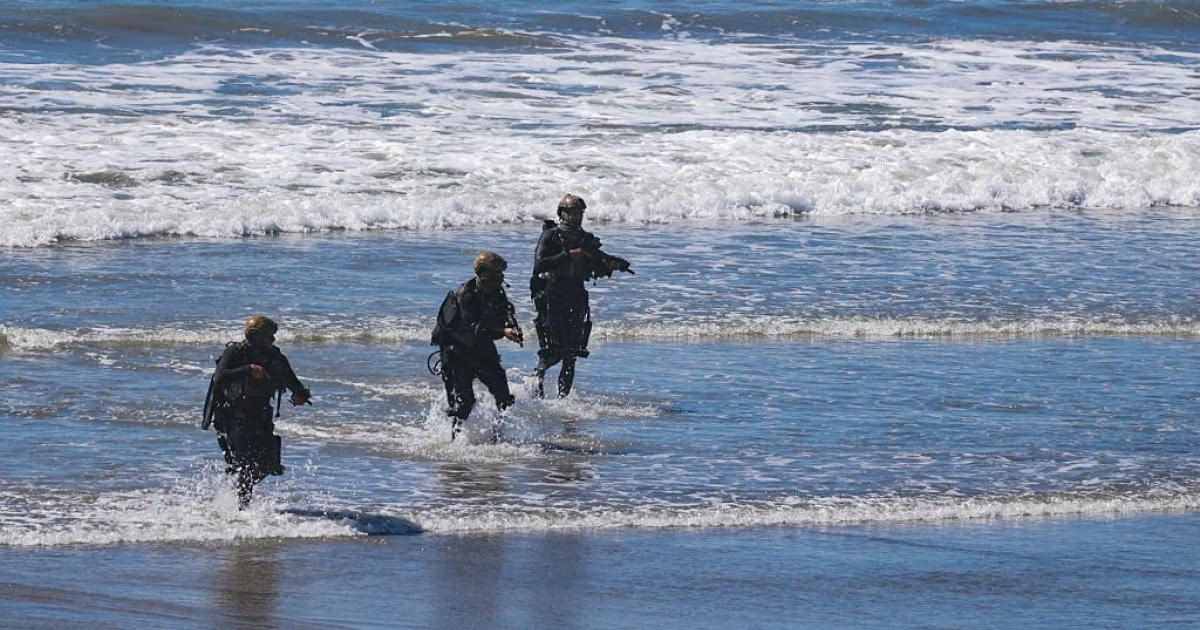
Military sources reported that current field movements reflect an American readiness for advanced combat scenarios, which may include conducting amphibious landings at strategic locations. Kharg Island is considered a vital target due to its being the main artery for Iranian oil exports, making its control a devastating blow to the Iranian national economy and the state's ability to finance itself.

In the context of reinforcements, a group of amphibious ships departed from the west coast of the United States heading towards the region, comprising about six combat ships and approximately 8,000 soldiers. These units have also been equipped with 'F-35' aircraft, attack helicopters, and advanced missile systems to ensure qualitative superiority in any potential confrontation.

The arrival of approximately 2,200 US Marines to the region reinforces the hypothesis of preparation for limited-scale ground operations. Despite official statements denying any immediate intention for ground intervention, observers see this as part of Washington's 'strategic ambiguity' policy to keep all options open for decision-makers.

Any military landing operation requires achieving complete and absolute air control, which is what continuous airstrikes targeting military infrastructure and air defense systems aim for. However, Iranian defenses have shown an ability to create field surprises, most notably the targeting of a fifth-generation aircraft, which puts American military technology to a real test.

Tehran relies on an unconventional warfare doctrine in confronting external threats, aiming to draw attacking forces into a long-term war of attrition. This strategy could inflict significant human and material losses on US forces if they decide to proceed with the option of ground intervention or establish permanent presence points within Iran's complex geography.

Over the past three weeks, US and Israeli forces have intensified their airstrikes targeting missile launch platforms and vital ammunition depots. Despite the intensity of these attacks, reports indicate that they have not yet succeeded in fully neutralizing Iranian missile capabilities, as Tehran still retains the ability for precise and effective retaliation.

Newly developed missiles have entered the confrontation arena, including the 'Nasrallah' missile, which has a range of up to 2,000 kilometers and a superior ability to maneuver and resist electronic jamming. This qualitative development in the Iranian arsenal raises the cost of any military adventure targeting vital facilities and makes the protection of American bases in the region an extremely difficult task.

The American-Israeli target bank has undergone a radical shift in the recent phase, moving from targeting traditional military sites to striking infrastructure and economic facilities. The scope of operations has also expanded to include distant areas such as the Caspian Sea, in an attempt to cut strategic supply lines and tighten the military and political noose on the Iranian leadership.

US military movements reflect a readiness for advanced field scenarios, including the possibility of an amphibious landing on the strategically important Kharg Island.

ARAB AND WORLD

Fri 20 Mar 2026 3:38 pm - Jerusalem Time

Iran mourns IRGC spokesman Brigadier General Ali Mohammad Naeini after aerial targeting

The Iranian Revolutionary Guard Corps (IRGC) announced today, Friday, the death of its official spokesman, Brigadier General Ali Mohammad Naeini, due to airstrikes that Tehran described as having been carried out by the United States and Israel. In an official statement issued through its electronic platforms, the Guard clarified that Naeini died at dawn on the last day of the holy month of Ramadan, describing the operation as a treacherous terrorist attack that targeted one of its most prominent media and military cadres.

Iranian state television confirmed the news of Naeini's martyrdom, noting that in addition to his duties as official spokesman, he held the position of Deputy Head of the Public Relations Department in the military institution. The official statement did not reveal the exact location that was targeted or the technical details of the operation, merely indicating its timing in the early hours of dawn.

Brigadier General Ali Mohammad Naeini was considered one of the most influential media figures in the IRGC over the past two years, where he led the scene in discussing regional escalation files and direct confrontations. He was known for his frequent appearances to showcase Iranian missile capabilities and explain strategic response options amid escalating tensions with the Israeli occupation and the American administration.

The deceased was born in the city of Kashan and had a distinguished academic and military career, having obtained a doctorate in strategic management and a master's degree in defense management. In addition to his military duties, Naeini worked as a university professor and headed the College and Institute of Social and Cultural Sciences at Imam Hussein University, affiliated with the IRGC, and has numerous publications in the fields of management and defense.

Naeini's career with the IRGC began decades ago, where he held leadership positions in propaganda and culture during the Iran-Iraq War, including Deputy of Propaganda on the Najaf front and command. He later progressed through cultural and media positions to serve as cultural advisor to the IRGC commander, in addition to his duties as cultural deputy in the Basij forces.

In July 2024, a decision was issued to appoint him as Deputy for Public Relations in the IRGC, a position that paved the way for his prominence as the institution's official spokesman. Since then, Naeini has become the most prominent voice commenting on major military operations, especially the series of 'True Promise' operations that targeted Israeli depth in response to previous assassinations.

Days before his death, Brigadier General Naeini made press statements in which he affirmed that the IRGC's weapons system remained fully ready and was not affected by hostile attacks. He then indicated that Iran had used only a small part of its advanced missile arsenal, warning that any crossing of red lines would be met with unprecedented responses.

The IRGC mourned Naeini's career, which spanned more than four decades, spent protecting the revolution and documenting what is called the 'Sacred Defense' and confronting soft warfare. The statement considered that the role he played during the 'True Promise 2, 3, and 4' operations will remain etched in the history of the military institution as a model of altruism and media and field jihad.

This assassination operation comes at a time when the region is experiencing a state of maximum alert, with parties exchanging threats of widespread retaliatory strikes. Sources reported that Naeini's departure represents a loss for the IRGC's strategic communication apparatus, given his long experience in managing media crises and formulating Iranian military discourse in international forums.

Brigadier General Naeini was martyred during the heinous criminal terrorist attack committed by the Zionist-American camp at dawn.

ISRAELI AFFAIRS

Fri 20 Mar 2026 3:38 pm - Jerusalem Time

Security Breach in 'Iron Dome': Israeli Soldier Arrested on Suspicion of Spying for Iran

Israeli authorities revealed today, Friday, a highly serious security case involving the arrest of a reserve soldier serving in the Air Force, on suspicion of involvement in espionage activities for Iranian intelligence. Sources reported that the detainee was working within the 'Iron Dome' system operating unit, which is the cornerstone of Israeli air defense, allowing him access to highly sensitive military data and locations.

According to a joint statement issued by the police and the Shin Bet (Israel Security Agency), the detainee is named Raz Cohen, 26 years old, and a resident of Jerusalem. The statement clarified that the arrest came after extensive secret investigations that proved his involvement in committing 'security crimes' affecting the state's sovereignty and national security through his direct contact with hostile intelligence elements.

Investigations showed that Cohen was fully aware of the identity of the parties he was dealing with, as his communication with Iranian operators continued for several consecutive months. The soldier received specific instructions to carry out various security tasks, including collecting and transferring technical and operational information he obtained due to his military position, in exchange for financial sums transferred to him through different methods.

Following the conclusion of the preliminary investigations, an official indictment was filed against the arrested soldier, while military censorship continues to impose strict restrictions on the publication of details of the leaked information. Fears prevail within the security establishment regarding the potential extent of damage that could be inflicted on the efficiency of defense systems if their technical details reach the hands of adversaries, especially in light of current tensions.

Sources indicated that this incident holds exceptional importance compared to previous espionage cases revealed recently, given the soldier's sensitive position within the air defense network. The sources pointed out that recent months have witnessed an escalation in Iran's attempts to recruit citizens and military personnel within Israel, where security agencies have monitored several cases in which financial motives were exploited to carry out surveillance and field information gathering operations.

For their part, the Shin Bet and the police renewed their warnings to the Israeli public about the dangers of interacting with unknown parties via social media platforms, emphasizing that Iranian intelligence is actively operating in the digital space to hunt for potential targets. Security agencies stressed that they will continue to work firmly to thwart any attempts aimed at harming the security of vital installations or recruiting human elements for hostile parties.

These developments come at a time when the region is witnessing an unprecedented military escalation since late February, with Israel and Iran exchanging missile strikes and drone attacks. These direct confrontations have resulted in casualties on both sides, making any intelligence breach in air defense systems a direct threat to the existing military balance in the ongoing state of war.

This case is more sensitive compared to previous cases, given its connection to a central air defense system, which may raise the level of potential security repercussions.

ISRAELI AFFAIRS

Fri 20 Mar 2026 3:38 pm - Jerusalem Time

Israel's Losses in 19 Days: Thousands Injured and Economic Cost Exceeds $6 Billion

The Israeli Ministry of Health announced an increase in the number of injured Israelis to 4,099 since the outbreak of military confrontations on February 28. Medical sources clarified that the past twenty-four hours alone witnessed the registration of 150 new injuries transferred to hospitals for necessary treatment.

According to the health statement issued this Friday morning, hospitals are still receiving 80 cases, including one in a very critical condition and eight cases described as serious. The data also indicated 11 moderate cases and 60 minor injuries, reflecting the significant pressure on the Israeli medical system.

Regarding the details of the recent injuries, sources stated that among the 150 injured who entered hospitals since Thursday morning, there are two cases in serious health condition and two moderate cases. Minor injuries predominated among the rest, with 136 cases, in addition to 10 cases treated for shock and panic resulting from the shelling.

For its part, Hebrew press reports revealed the killing of 21 Israelis since the start of the operation, which the army named 'Lion's Roar'. Sources confirmed that the numbers of dead and injured are likely to increase given the continued intense missile barrages targeting Israeli depth and vital sites.

On the ground, media sources admitted the failure of air defense systems to intercept 26 cluster missiles, whose warheads managed to hit 150 different locations. This technical failure led to the expansion of destruction in the targeted areas and an increase in confusion among field forces.

In an initial assessment of the extent of material damage, economic reports indicated that about nine thousand residential buildings and facilities were damaged to varying degrees due to the concentrated Iranian shelling. The damage also affected more than three thousand cars and vehicles, placing the Israeli government before a huge compensation bill for settlers and those affected.

As for the financial cost of military operations, specialized economic sources estimated that the war cost the Israeli treasury about $6.4 billion during the first 19 days alone. This cost is among the highest historically, considering the short duration and the intensity of military use of advanced weapons.

Reports clarified that daily spending on military operations exceeds one billion shekels, equivalent to $322 million, including jet fuel and smart munitions. Dozens of fighter jets participate in these operations, carrying out daily raids, in addition to refueling aircraft provided by the United States to support the war effort.

Estimates indicate that the budget allocated for managing this war is about $12.5 billion, an amount that could quickly run out if the confrontation continues at the same pace. These figures are limited to direct military expenditures, without accounting for the paralysis that affected productive sectors and the decline in GDP.

Amidst these escalating losses, the occupation army imposes strict military censorship on media outlets to prevent the circulation of precise details about targeted sites or the true extent of casualties. Security officials warn citizens against publishing videos that might reveal vulnerabilities in air defenses or boost the morale of the other side.

These are direct defense costs only, without accounting for civilian expenses or the loss in GDP caused by the war.

ARAB AND WORLD

Fri 20 Mar 2026 3:38 pm - Jerusalem Time

Widespread Regional Escalation: Attacks Target Vital Facilities in Bahrain and Kuwait, Intensive Aerial Interceptions in Saudi Arabia and UAE

Vital facilities in the Kingdom of Bahrain and the State of Kuwait were subjected to a series of aerial attacks early this Friday morning, leading to fires and damage to economic infrastructure. The Bahraini Ministry of Interior clarified that a fire broke out in a warehouse belonging to a private company due to falling shrapnel resulting from air defenses intercepting an attack described as Iranian aggression, confirming that fire brigades brought the situation under control without human casualties.\n\nIn Kuwait, the National Petroleum Corporation announced several fires at the strategic Mina Al-Ahmadi refinery, following its direct targeting by suicide drones. Official sources indicated that the attacks caused material damage to some production units, prompting the administration to preemptively shut down several of them, while technical teams continue to assess the extent of the damage to ensure the continuity of oil operations.\n\nFor its part, the Kuwaiti army confirmed that air defense systems intercepted two successive waves of missile and drone attacks that began in the early hours of dawn. Military authorities emphasized the readiness of the armed forces to deal with any threats that penetrate national airspace, in light of the maximum state of alert in the region due to the ongoing military escalation.\n\nIn a related development, the Saudi Ministry of Defense announced the success of its forces in intercepting and destroying 20 drones launched towards the Kingdom's territory. The ministry explained that one of these aircraft was shot down in the airspace of the northern Al-Jawf region, while the rest of the hostile targets were dealt with and destroyed in the skies of the Eastern Province before reaching their presumed targets.\n\nIn the United Arab Emirates, the media office of the Dubai government reported that the loud noises heard in various parts of the emirate were the result of successful aerial interception operations. Sources confirmed that air defenses were able to neutralize hostile targets with high efficiency, noting the stability of security conditions and the normal course of life in all vital facilities.\n\nThese rapid field developments come within the context of an escalation that began on February 28, with Tehran launching widespread attacks under the pretext of targeting American interests in the region. Despite Iranian claims, field facts indicate damage to Gulf civilian and economic facilities, which has sparked a wave of international condemnations and demands for an immediate cessation of these hostile acts.\n\nOfficial documented statistics until last Wednesday evening indicate that the scale of attacks launched from the Iranian side reached unprecedented levels in just 18 days. At least 4192 rockets and drones were detected, in addition to the participation of fighter jets in some operations, which places the region before serious security challenges threatening the stability of global energy supplies.\n\n"The fire at the Al-Ahmadi refinery resulted from hostile attacks by several drones, and precautionary measures were taken to shut down some units to ensure safety."\n

ANALYSIS

Fri 20 Mar 2026 5:17 am - Jerusalem Time

Ilhan Omar and Democrats Reject Funding for War on Iran

Said Erikat

Opinion Writer

Washington - Said Arikat - 20/3/2026

News Analysis

In a move that could redraw the balance of power between Congress and the executive branch, Congresswoman Ilhan Omar (from Minnesota) announced that any American funding for a war on Iran would not pass easily. These statements come as President Donald Trump prepares to request an additional $200 billion to support military operations, but Omar and her Democratic allies in the House of Representatives, if not all of them, have collectively declared their refusal to provide a blank check for war, considering that continued conflict would multiply human and economic losses without achieving any strategic gains.

Omar believes that the funds intended for weapons and airstrikes could serve more pressing priorities within the United States, such as healthcare, education, and food aid for vulnerable communities. In her public statements, she emphasized that "bombs do not build peace," and that relying solely on force would only lead to more regional tensions. Her stance is not new; rather, it is part of a long trajectory to strengthen Congress's role in overseeing presidential military actions, based on the War Powers Act, which grants Parliament the right to determine foreign policy priorities and monitor the use of military force.

The rejection by Omar and Democratic members of Congress is not limited to the legal dimension but extends to the economic and social repercussions of war. Spending hundreds of billions on an ongoing conflict will increase the fiscal deficit and place a heavy burden on taxpayers, at a time when citizens need vital social programs that enhance internal stability. Omar's call to redirect funds towards health, education, and food aid reflects a long-term economic vision, prioritizing the interests of the American people, and raising serious questions about the priorities of American policy, especially in light of an endless war and escalating risks on the regional stage.

The war on Iran also carries serious humanitarian dimensions. Joint airstrikes between the United States and Israel have resulted in civilian casualties and infrastructure destruction, complicating future diplomatic solutions. Omar and her allies assert that resorting to military options instead of negotiation fosters hostility and reduces opportunities for long-term peaceful settlements, emphasizing that American foreign policy cannot be based on force alone, and that effective conflict management requires integrating diplomacy and adherence to humanitarian laws to avoid creating crises that extend for years, increasing regional instability, and placing the United States in the face of growing internal and international criticism.

American domestic politics also play a significant role in the opposition to funding. Democrats in the House of Representatives feel that continued war could lead to widespread public discontent and might affect the party's credibility, especially with increasing questions about the utility of the war and whether it serves national security or narrow partisan interests. Omar believes that Congress must put an end to ill-considered military policies and send a clear message to the administration that funding is not an absolute right, and that democratic oversight is not just a slogan but a constitutional duty that protects the nation and ensures the wise use of public resources.

The rejection of war funding by the majority of Democrats also reflects a growing conviction that "eternal wars" do not achieve security, and that diplomatic solutions and investment in economic and social development are more effective in the long run. Omar's stance is not merely a partisan position but a call to rethink American policy priorities at all levels, and an affirmation that Congress's role in overseeing military operations must be decisive, and that the American people have the right to know how their money is used, and to ensure that resources are not wasted on endless conflicts.

In conclusion, it appears that the confrontation between the executive branch and Congress will continue against the backdrop of military funding requests, and that Congresswoman Ilhan Omar and her Democratic allies are prepared to exert all means of pressure to prevent millions of dollars from being transferred from the American people's treasury to ongoing, endless wars. This legal, political, and humanitarian battle at the same time may be an indicator of a broader shift in American policy, where Congress seeks to reclaim its constitutional role in overseeing the executive branch, and to affirm that protecting civilian lives and citizens' interests must come before any military agenda.

ARAB AND WORLD

Fri 20 Mar 2026 5:16 am - Jerusalem Time

American Poll: Majority of Voters Oppose Attacks on Iran, See Them as Serving Israeli Interests

The results of a recent public opinion poll in the United States have revealed a significant shift in voters' attitudes towards the ongoing military escalation against Iran. Data published by the Policy Project of the Institute for Understanding the Middle East, in cooperation with the 'Demand Progress' organization, showed that a wide segment of Americans has become suspicious of the true objectives behind these joint attacks between Washington and Tel Aviv.

According to the released figures, approximately 56% of respondents believe that military operations against Iranian targets primarily serve Israeli interests. In contrast, the percentage of those who see these attacks as a direct American national interest did not exceed 29%, reflecting a significant gap between the official view of the American administration and public perceptions.

Regarding the general stance on the war, 53% of voters expressed their explicit opposition to American attacks on Iran, while 43% showed their support for these military actions. These results indicate a state of public division, but they clearly lean towards rejecting involvement in a direct military conflict that could have widespread regional and international consequences.

The poll also shed light on the political implications of this war domestically in the US, with 43% of participants stating that the likelihood of their support for the Republican Party decreased as a result of the recent attacks. In contrast, 31% of voters affirmed their continued loyalty to the party led by President Donald Trump, indicating that foreign policy towards the Middle East could become a crucial electoral pressure point.

Age emerged as one of the most important determinants of attitudes towards the conflict, as the poll showed a sharp generational divide within American society. 68% of voters under the age of 45 expressed their desire to see a political candidate who works to reduce support for Israel, while 56% of older age groups still prefer to give absolute priority to supporting Tel Aviv and strengthening its alliance with Washington.

Regarding the extent of allies' influence, 43% of participants believed that Israel has an influence that exceeds normal limits on the formulation of US foreign policy. Despite this, 41% of respondents believe that this level of influence is 'appropriate,' which reflects an intellectual struggle over the independence of American decision-making amidst successive crises in the region.

This poll comes at a time when the region is witnessing unprecedented escalation since the start of military operations on February 28, which resulted in the killing of hundreds of people, including high-ranking Iranian leaders. Tehran continues to respond by targeting what it describes as American interests and Israeli sites, amid international warnings of the situation spiraling into an uncontrolled, full-scale war.

56% of American voters believe that attacks on Iran primarily serve Israel's interests, compared to only 29% who believe they serve Washington.

PALESTINE

Fri 20 Mar 2026 5:16 am - Jerusalem Time

Widespread Field Escalation: Hezbollah Targets Occupation Gatherings with Rockets and Artillery in Southern Lebanon

Field sources announced at dawn today, Friday, that Hezbollah carried out a series of intensive rocket and artillery attacks, targeting positions and gatherings of the Israeli army in various areas of northern Israel and southern Lebanon. Military statements confirmed that the shelling targeted movements of occupation vehicles in the border area of the Taybeh project, where the resistance used heavy artillery shells to achieve direct hits.

In a simultaneous field development, rocket volleys targeted a gathering of occupation soldiers in the garden of Maroun al-Ras town, located in the central sector of southern Lebanon. The operations also included concentrated rocket shelling targeting vehicles and soldiers in the Khazan Hill area, located between the towns of Adaysseh and Mays al-Jabal, as part of attempts to confront Israeli ground movements.

On the northern front of the occupied territories, sirens sounded in the settlements of Manara and Margaliot after they were subjected to a rocket barrage launched from Lebanese territory. These strikes come as part of the party's strategy to expand the scope of retaliation for Israeli air raids that continuously target Lebanese villages and towns.

The party revealed in its field reports the use of explosive devices in qualitative operations carried out during the past 48 hours, where a device was detonated on an Israeli military bulldozer in the Taybeh project. Another device also targeted a gathering of infantry in the town of Ayta ash-Shab, indicating an escalation in the pace of defensive operations at direct contact points.

Thursday evening witnessed a peak in military operations, as the party announced the execution of 26 diverse attacks using rockets and kamikaze drones. These attacks targeted facilities belonging to Israeli military industries companies, in addition to settlement gatherings and strategic military sites in the border depth.

In a related context, the Lebanese Ministry of Health issued a tragic update on the toll of the ongoing Israeli aggression since the beginning of March. Official data reported the martyrdom of 1001 people and the injury of 2584 others, as a result of the violent raids that targeted the southern suburbs of Beirut and wide areas in the Beqaa and the South.

Analytical sources believe that the party's continued launching of rockets and expanding their geographical range aims to create a new balance of deterrence in light of increasing political pressures. The sources explained that these operations seek to prove the resistance's ability to continue the battle despite the severe blows suffered by its leadership and organizational structures.

For its part, Israel continues its military operations with international green light, as it seeks to impose a buffer zone in southern Lebanon and cross the Litani River. These military movements aim to turn the border areas into scorched earth to ensure that residents or fighters do not return to them in the foreseeable future.

Political estimates indicate that Israel does not find the time suitable now to sit at the negotiating table, but rather prefers to continue military pressure to weaken the Lebanese state. The occupation seeks to enter any future negotiations with Lebanon in a state of political and economic exhaustion, which strips it of its basic cards of strength.

The spark of the recent escalation began on March 2, when the occupation launched widespread raids followed by a ground incursion the next day. These moves came despite previous understandings for a ceasefire, which led to an unprecedented explosion of the military situation in the region.

On the regional level, the scope of the confrontation expanded to include multiple fronts, as sources linked the escalation in Lebanon to the ongoing aggression against Iran since the end of February. Military operations on that front resulted in thousands of casualties, both dead and wounded, threatening a comprehensive regional war.

In light of this complex scene, southern Lebanon remains an open arena for all possibilities, with Hezbollah's insistence on continuing its military operations. Sources confirm that the coming days will be decisive in determining the course of the confrontation, whether towards de-escalation or sliding into a wider ground confrontation that includes new areas.

These military operations come in defense of Lebanon and its people in the face of ongoing Israeli aggression.

PALESTINE

Fri 20 Mar 2026 5:16 am - Jerusalem Time

Gaza's Children on Eid.. Stolen Childhood and Toys from the Rubble of Displacement

On the eve of the third Eid al-Fitr that passes over the Gaza Strip amidst the ongoing war, Yazan Abu Shanab finds himself sitting on a rough mat on a cold pavement next to a temporary dwelling his family made from old wood and worn fabrics in the Al-Mawasi area of Khan Yunis. This place, lacking the most basic necessities of life, does not resemble real tents; rather, it is more like a small shack trying to shelter family members who have lost everything.

On that pavement, Yazan and his sister play with an empty plastic box they found among the debris, turning it over in their hands as if it were a precious treasure, in the absence of the real toys and bicycles they were accustomed to in previous Eids. The child watches passersby in the narrow streets crowded with displaced people, while repeatedly opening and closing his plastic box in a scene that encapsulates the loss of Eid rituals and their transformation into mere distant memories.

With a broken tone, Yazan says that he used to look forward to Eid to buy new toys, but this year his family bought nothing due to his father losing his livelihood as a result of the ongoing war of extermination. The money that is barely available is only enough to secure essential sustenance, making buying clothes or toys a distant dream amidst the comprehensive economic collapse.

This bitter reality is not limited to Yazan alone but extends to thousands of children who have replaced the passion for choosing toys from markets with searching for primitive alternatives on pavements. As Eid approaches, Gaza appears burdened by years of siege and starvation, where manifestations of joy have disappeared, replaced by deep sorrow and mental distraction that dominates the faces of young and old alike.

In the sandy alleys of the camps, children are content with simple physical games after balls, bead guns, and dolls have disappeared from their reality. No one talks about 'Eidiya' (Eid money) anymore, which used to represent the peak of their happiness, as the top priority for displaced families has become securing a sip of water or a loaf of bread to sustain the little ones.

Local sources reported that the idea of buying new clothes is now classified as an 'impossible luxury' for many families living below the extreme poverty line. Bilal Badriya, a displaced family head, explains that the insane rise in prices has made buying the simplest vegetables a heavy burden, asking bitterly how to provide for Eid necessities amidst this exorbitant cost.

Away from Yazan's tent, Lina Al-Dahdouh stands in a long queue in front of a water distribution point, holding a small bucket instead of the Eid dress she dreamed of. Lina watches her father patiently filling plastic containers, realizing that her daily tasks in displacement have stolen her childhood and the sparkle of the days leading up to Eid.

Lina remembers how she used to accompany her mother to crowded markets to choose her new clothes, but today her main concern is filling jars from distant points and carrying them to the tent. The war has imposed a reality where securing basic needs is a daily battle that takes precedence over any desire to celebrate or rejoice.

As for Adam Al-Salmi, he wanders among the tents with features covered in despair, asserting that 'Eid no longer exists' after the swings and playgrounds he used to frequent were destroyed. Adam bitterly points to Al-Yarmouk stadium and recreational areas that have turned into rubble, explaining that the absence of safe play areas has confined children to tents and destroyed areas.

In the few markets that are still operating, activity appears dull and lacks the usual Eid decorations, with sales focused only on essential food items. Traders confirmed to our sources that most citizens merely inquire about prices and then leave sadly, as purchasing power has completely vanished for the vast majority of the Strip's residents.

Even simple household traditions like preparing Eid cakes have disappeared from most homes and tents, due to the sharp rise in the prices of flour, sugar, and oil. The scent that used to characterize Gaza's alleys before Eid is absent this year, leaving room for the smells of firewood and destruction, which deepened children's sense of loss and deprivation.

For his part, Amjad Al-Shawa, director of the NGO Network, affirmed that this Eid is the most difficult ever, as children face unprecedented harsh humanitarian conditions. He pointed out that the widespread destruction of infrastructure and the economy has made families completely unable to bring smiles to their children's faces on this religious occasion.

Al-Shawa stressed that the suffering is not only material but also a loss of a healthy social environment, as schools have turned into overcrowded shelters and public parks have disappeared. This transformation has made Eid an additional reminder of the human and material losses suffered by Palestinians during the long months of war.

Children in Gaza remain stuck this Eid between beautiful memories of past Eids and a painful reality imposed by the siege and aggression, awaiting a time when their lives return to normal. Under these circumstances, the joy of Eid remains postponed in the Gaza Strip, awaiting a new dawn that ends the tragedy of displacement and restores children's right to play and safety.

This year's Eid will not be like previous ones; children in Gaza are learning early how to replace their toys with small things they find by chance on the pavements of displacement.

PALESTINE

Fri 20 Mar 2026 5:16 am - Jerusalem Time

Between Rubble and Sky.. A Palestinian Family Fights for Survival in a Stairless Building in Al-Shati Camp

In the heart of the ravaged Al-Shati refugee camp, northwest of Gaza City, the tragedy of housing manifests in its most horrific forms within a destroyed building lacking stairs, where the family of citizen Jihad Miqdad has made the fourth floor their shelter. This building, which appears as a structure groaning under the weight of war, now embraces the family's dreams, suspended between the silence of the ruins and the fear of sudden collapse at any moment.

Jihad Miqdad, known as Abu Muhammad, recounts harsh details of the displacement and return journey during the war of extermination, where he received a threat of forced eviction from the occupation army, forcing him and his family to leave without belongings or food. A short time after their displacement, he returned to find his neighbors' homes razed to the ground, while his own home remained a concrete skeleton, lost between life and death, lacking light and safety.

The family describes living in this place as a daily test of patience, where the simplest life tasks have turned into a real risk. The process of fetching water from the tanks in the street requires an arduous journey to carry it up to the fourth floor via the remnants of the shattered staircase, putting family members in constant confrontation with the danger of slipping and falling.

The Miqdad children, whose faces have lost the sparkle of play, have become more proficient in the language of silence than anything else, while existential questions about their unknown future haunt them. These little ones live in isolation imposed by the war, surrounded by cracked walls and hanging balconies without protection, making every movement inside the house an unsafe adventure with unpredictable consequences.

In his statement to media sources, Abu Muhammad explained that the family suffered unspeakable bitterness, ending up sleeping in the streets before returning to this wreckage. He pointed out that the house has become dilapidated and extremely worn out, with no stairs to ascend and no lighting to illuminate the darkness of the nights they spend in constant anticipation.

For her part, Fatima Miqdad recounts the moments of terror she experienced when her foot slipped while trying to hang laundry on the damaged balcony. Fatima felt at that moment that her life was fading into thin air, confirming that the fear of falling now haunts both adults and children alike in this crumbling building.

Fatima confirms that the family's demands are simple and do not exceed the desire to obtain a 'caravan' or a mobile room to protect them from the danger of collapse, but these dreams clash with the stubbornness of the occupation. She adds bitterly that the desire to stay is what keeps them steadfast in this place, despite the loss of safety and the transformation of living into a daily test of hunger and thirst.

The building housing the family is nothing more than a concrete structure consisting of four floors that suffered massive partial destruction, leading to the complete disappearance of the stairs. The cracked walls and open balconies lack the most basic necessities of life, while the wreckage of the neighbors' elevator stands out as an additional threat that could lead to the collapse of the roof at any moment.

The story of the missing stairs in this house encapsulates the story of a people who have climbed the ladder of suffering to its utmost, as the family is forced to use a primitive wooden ladder to transport their basic needs. Abu Muhammad says that carrying heavy water gallons and climbing with them represents a significant physical and psychological burden, especially with the building shaking and defying gravity.

Field data indicate that the house stands on resilient pillars despite all the destruction, with the family sleeping with their eyes fixed on the sky, not in search of stars but in fear of the roof falling. Abu Muhammad warns that the weight of the destroyed elevator motor resting on the roof of their apartment represents a ticking time bomb that could end their lives in a moment of inattention.

On a general level, UN estimates indicate that about 92% of housing units in the Gaza Strip will have been damaged or completely destroyed by early 2026. This bitter reality has left hundreds of thousands of families without real shelter, exacerbating the suffering of the population amid the harsh winter and the ongoing blockade that prevents reconstruction.

Despite the ceasefire agreement entering into force last October, which stipulated facilitating the entry of shelter aid, the reality on the ground proves otherwise. The occupation authorities impose strict restrictions on crossings and prevent the entry of caravans and temporary housing, which represent a lifeline for thousands of displaced families.

Relief sources report that dozens of trucks loaded with shelter materials remain stuck for long days under the pretext of security concerns, hindering the implementation of the truce provisions. This deliberate obstruction has turned international agreements into incomplete promises, leaving families like the Miqdad family hostage to rubble and bitter cold without a near horizon for a solution.

The caravan, prohibited from crossing, remains a postponed dream for the Miqdad family, who find themselves forced to choose between the open air and a roof that could collapse at any moment. It is a story of Palestinian steadfastness, manifested in clinging to life above the ruins, awaiting a near relief that will end the chapters of this ongoing tragedy.

This wreckage might be slightly better than the street... We pray to God to ease our burdens and those of the entire Muslim nation.