ARAB AND WORLD

Sat 21 Mar 2026 3:05 pm - Jerusalem Time

Washington Considers Military Options to Seize Iranian Uranium Stockpile

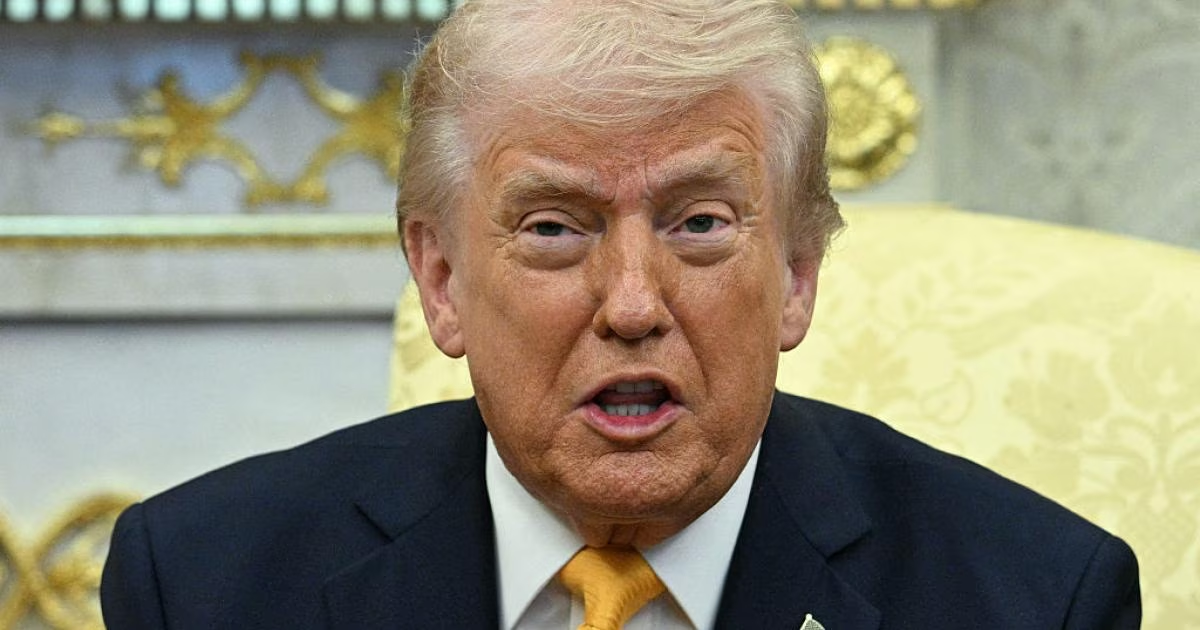
Decision-making circles in the United States are witnessing a dramatic shift in dealing with the Iranian nuclear file, as the issue has moved from diplomatic negotiation tables to a bank of potential military targets. Media reports indicate that US President Donald Trump is seriously considering strategic options aimed at securing or extracting sensitive nuclear materials possessed by Tehran.

Leaked information suggests that US plans focus on the possibility of involving the Joint Special Operations Command (JSOC), the most secretive and specialized forces in the US military. These units are entrusted with high-risk missions that require extreme precision, especially concerning handling weapons of mass destruction and strategic materials in hostile environments.

This move comes amid growing international concern, as the International Atomic Energy Agency announced its inability to locate approximately 400 kilograms of highly enriched uranium. This disappearance followed airstrikes targeting three Iranian nuclear sites last June, creating an intelligence and security gap that raises concerns for Washington and its allies.

For his part, Rafael Grossi, Director General of the International Atomic Energy Agency, expressed deep skepticism about the feasibility of any limited military action against Iranian facilities. Grossi explained that the Iranian nuclear program is not just a single facility, but an integrated and complex system built and distributed over decades in multiple, fortified geographical locations.

Recent satellite images have detected intensive Iranian defensive movements, including filling tunnel entrances at vital nuclear sites with massive amounts of soil and concrete. These steps are clearly aimed at obstructing any ground attempt to access sensitive materials, making any airborne operation or ground assault a complex and extremely difficult task.

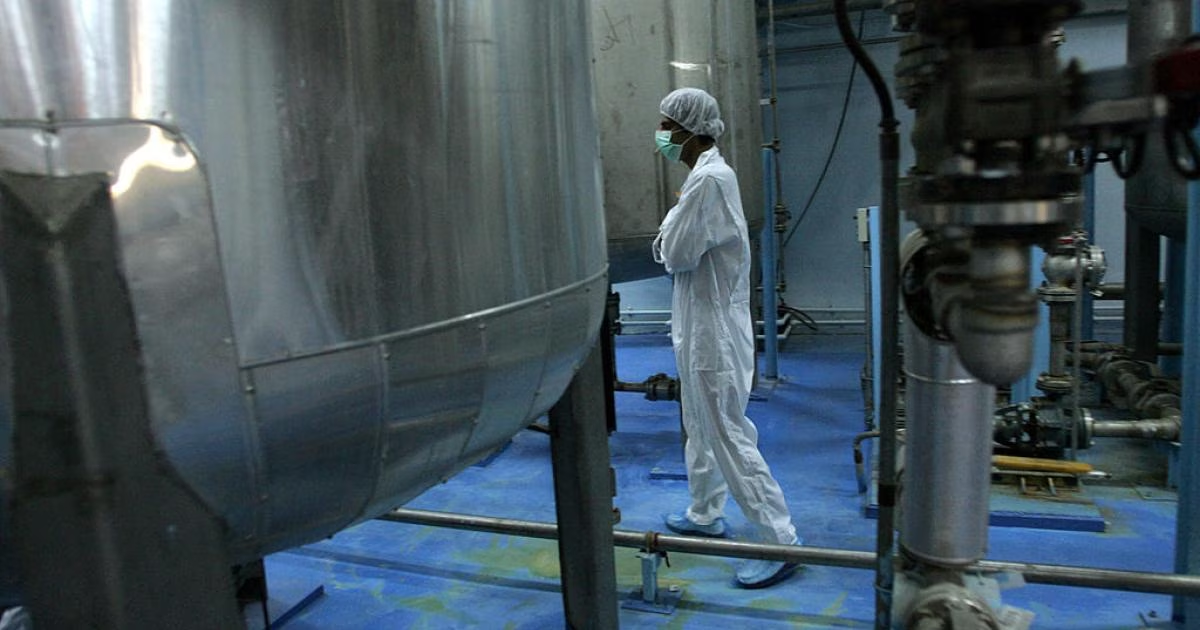
Nuclear physics experts confirm that handling highly enriched uranium requires special equipment due to the weight of the cylinders in which these materials are stored. Each cylinder weighs approximately one hundred pounds and is designed with reinforced casings, making its rapid transport under combat fire an unprecedented logistical challenge for attacking forces.

In the context of military analysis, media sources reported that the Iranian side transferred an estimated 441 kilograms of enriched uranium during recent periods of escalation. These quantities were distributed into cylinders, each 70 centimeters long, which facilitates their concealment and distribution in underground facilities that are difficult to penetrate.

Military analysts believe that the presence of approximately 22 nuclear cylinders distributed in fortified locations means that airstrikes alone will not be sufficient to neutralize the nuclear threat. This reality forces military planners to consider ground landing operations involving engineering teams and nuclear experts, a scenario that carries the risks of a comprehensive regional war.

On the political front, Tehran insists that its nuclear program is for peaceful purposes only, categorically denying any pursuit of nuclear weapons. Iranian officials have warned that any aggression against their sovereignty or vital facilities will be met with a 'shattering' response that extends beyond the immediate geographical boundaries of the conflict.

It appears that the nuclear file has now become the decisive point in the long conflict between Washington and Tel Aviv, on one hand, and Tehran, on the other. With the decline of diplomatic solutions, the probabilities of sliding into a military confrontation that could completely redraw the geopolitical map of the Middle East are increasing.

Any American ground intervention to control uranium requires extremely precise intelligence coordination, which US and Israeli intelligence agencies may be banking on. However, the risk remains that Iran could exploit any attack to accelerate its steps towards acquiring full nuclear deterrence capabilities as a reaction to the existential threat.

In conclusion, observers believe that current US trends reflect a strategic desire to undermine Iranian influence and control the balance of power in the region. The coming days remain pregnant with possibilities, as the world awaits whether Washington will risk implementing a 'nuclear seizure' operation or remain within the framework of military pressure.

The Iranian nuclear program is a complex system built over decades, and eliminating it through limited military action is of doubtful success.
ARAB AND WORLD

Sat 21 Mar 2026 3:05 pm - Jerusalem Time

Widespread Arab and Islamic Condemnation of Israeli Aggression in Southern Syria

A group of Arab and Islamic countries expressed their strong condemnation of the military raids carried out by the Israeli occupation army against military installations in the southern region of Syria. Official statements affirmed that these attacks represent a clear violation of Syrian sovereignty and an assault on the foundations of regional security and stability, warning of the consequences of continuing these aggressive policies in light of widespread international silence.

Qatar, Saudi Arabia, Egypt, Jordan, and Kuwait all stressed that the absence of an effective international deterrent encourages Israel to continue its violations of international law and the United Nations Charter. These countries called on the UN Security Council to intervene immediately to compel the occupation to stop its repeated aggressions and to ensure the protection of Syria's territorial integrity and regional safety from any external interventions aimed at destabilizing it.

For its part, diplomatic sources clarified that the Israeli raids, which came under the pretext of responding to events in Sweida, constitute a blatant violation of the Disengagement Agreement signed in 1974. The sources indicated that these military movements increase tension in the Middle East and hinder efforts aimed at finding political solutions to existing crises, affirming full support for Syria's right to protect its security.

In a related context, the Turkish Ministry of Foreign Affairs described the Israeli attack as a 'serious escalation' that threatens peace and security in the entire region. It affirmed that targeting Syrian sites represents an unacceptable violation of international laws, stressing the need to respect the country's sovereignty and territorial integrity, and to prevent Israel from exploiting current circumstances to expand the scope of its military operations beyond its borders.

In turn, the Syrian government accused the occupation authorities of pursuing a systematic escalation policy aimed at interfering in its internal affairs and undermining attempts to restore economic stability. Damascus affirmed that these aggressions come at a sensitive time when the region is experiencing a wave of turmoil, considering that the continued occupation of the Golan and the exploitation of Syria's internal crises are part of a broader Israeli plan to impose control and dominance.

The continuation of these violations reflects the absence of an effective international deterrent and contributes to the escalation of chaos in the Middle East.

ISRAELI AFFAIRS

Sat 21 Mar 2026 3:05 pm - Jerusalem Time

Former Israeli Security Official: The Gap Widens Between 'Absolute Victory' Slogans and Complex Military Reality

Colonel Talia Lankri, former head of the Israeli National Security Directorate, affirmed that there is a growing gap between public expectations and the actual military reality amid ongoing confrontations on multiple fronts. She explained that terms used by the political leadership, such as 'final elimination' and 'total destruction,' do not align with the complexities of the security field faced by the army.

Lankri pointed out in an analysis published by 'Yedioth Ahronoth' that coordinating expectations between leadership and the public is a fundamental condition for resilience in long wars of attrition. She considered that these wars do not usually end with a swift and decisive victory, but rather with extended operations aimed at weakening and deterring, leading to political settlements that ensure long-term stability.

The former security official stressed that organizations like Hamas and Hezbollah are not merely military entities with infrastructure that can be destroyed, but are fundamentally an idea, a deeply rooted ideology, and a broad social and political network. Accordingly, significant military achievements, no matter how powerful, do not necessarily lead to the complete disappearance of these organizations from the scene.

Lankri cited the principle of military thinker Carl Clausewitz, who views war as a continuation of politics by other means, emphasizing the necessity of translating field achievements into clear political objectives. She warned that government promises of 'complete victory' create disappointment among the Israeli public when they encounter the reality that the enemy is still capable of initiative.

Sources mentioned that the political discourse portraying reality as a process of complete elimination of the threat often stems from narrow partisan interests aimed at appealing to voters' emotions. She added that this discourse negatively impacts public trust in the security system, especially when witnessing contradictory field realities, such as the continued intense rocket barrages targeting the Galilee and northern areas.

Regarding realistic goals, Lankri clarified that the objective should focus on inflicting continuous damage to military capabilities, reducing war means, and dismantling the chain of command. She considered success to be preventing direct threats, such as preventing a repeat of the October 7 scenario, and not necessarily completely erasing the organization's existence.

In the northern arena, Lankri identified the main goal as pushing Hezbollah's 'Radwan Force' beyond the Litani River to ensure the security of border settlements. She affirmed that this path requires a comprehensive strategy that also targets the 'head of the octopus' in Iran to weaken the ability of regional proxies to operate and coordinate against Israeli interests.

She noted that military operations in Gaza and Lebanon ultimately aim to create buffer zones and reduce risks to the home front, but these remain temporary solutions. She emphasized that true stability will only be achieved through stable political agreements, as military force alone is incapable of ensuring a permanent and comprehensive elimination of security threats.

Colonel Lankri concluded that victory in modern wars against armed organizations is not a pivotal moment where a flag is raised, but rather a continuous process of attrition of capabilities. She called on the Israeli leadership to adopt a more realistic discourse that maintains public trust, instead of being swayed by slogans that could lead to national frustration upon discovering the complexities of strategic reality.

War is a continuation of politics by other means, and when the government promises complete victory while the reality is gradual weakening, a gap arises that undermines public trust.

PALESTINE

Sat 21 Mar 2026 3:05 pm - Jerusalem Time

Guterres warns against 'Peace Council' becoming Trump's personal project outside Gaza reconstruction framework

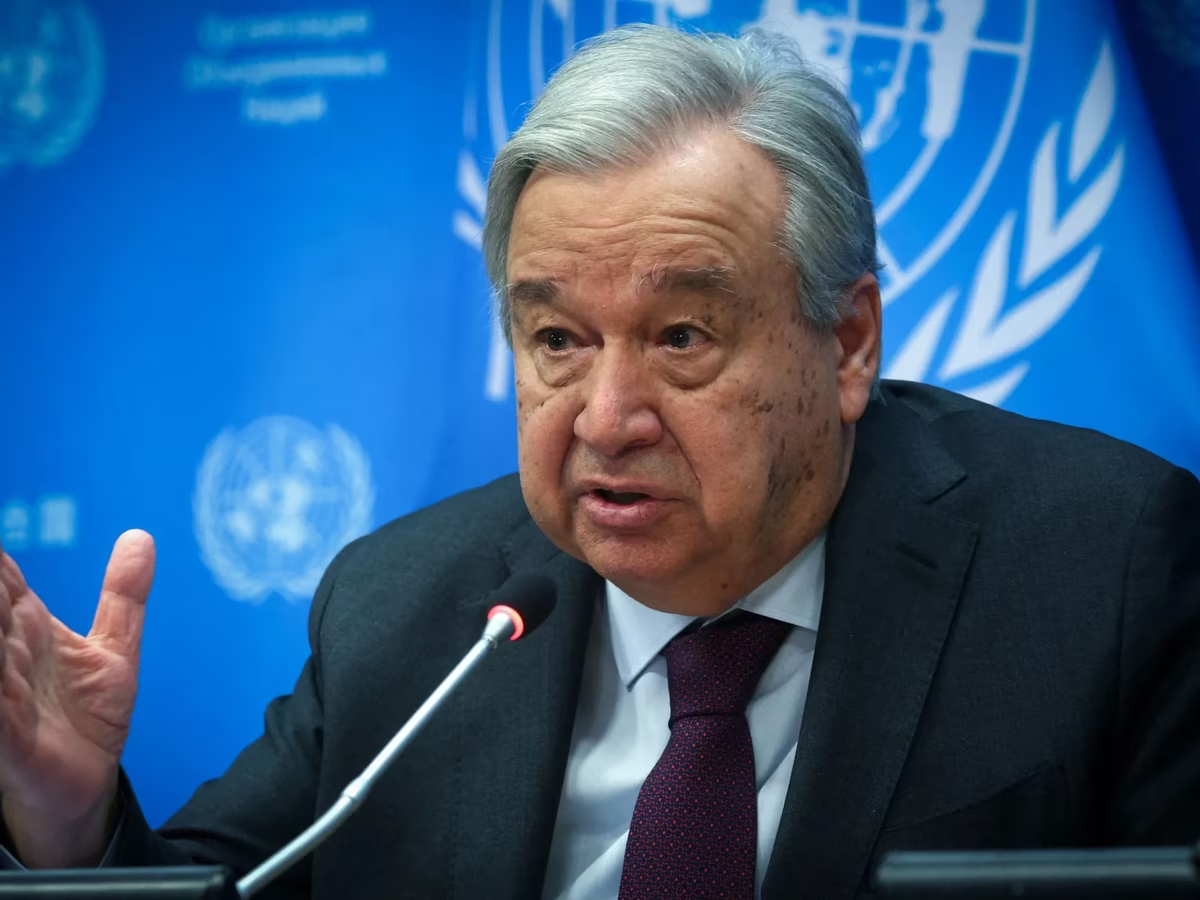
UN Secretary-General António Guterres expressed conditional welcome for the stated goals of the 'Peace Council' launched by US President Donald Trump, specifically regarding the funding of the Gaza Strip reconstruction plan. Guterres clarified that focusing on repairing destroyed homes and rehabilitating Palestinian infrastructure represents an urgent need consistent with the international community's direction, but he simultaneously warned against the council's tasks expanding into other political areas.

Guterres emphasized in press statements the necessity of limiting the council's efforts to the technical and funding framework of reconstruction, criticizing any attempts to operate outside this scope as 'personal initiatives' lacking collective endorsement. He considered that deviating from the objectives approved by the UN Security Council weakens the legitimacy of international actions and transforms them into tools for individual control instead of consensual solutions.

US President Donald Trump announced the launch of the 'Peace Council' on January 22nd during an official ceremony held in Davos, Switzerland, where he signed its charter in the presence of international leaders. The council, according to Trump's vision, aims to address major global challenges beyond the ceasefire in Gaza, with his continuous emphasis that the new entity does not seek to be a substitute for the UN organization.

Speaking to media sources, Guterres affirmed that he sees no necessity for this council's existence outside the context of the Gaza reconstruction plan approved by the Security Council, describing it as 'not an effective means of managing' complex international crises. He indicated that current cooperation with the structures established by the council is limited to aspects that serve approved UN objectives, warning against the dominance of Trump's personal vision in managing sensitive issues.

The Secretary-General called for strict adherence to the principles of international law and the values of the UN Charter when proposing any new peace initiatives, considering that clarity in these principles is the foundation for the success of any diplomatic effort. He added that addressing the serious problems facing the world requires integrated institutional work that does not rely on complete control by one party, but rather on multilateral cooperation.

Guterres strongly defended the pivotal role of the United Nations in resolving international conflicts, citing complex crises such as navigation security in the Strait of Hormuz, where the organization can play a role in de-escalation and protecting waterways. He also recalled the organization's successful mediation in the 'Black Sea Initiative' which secured the export of grains and fertilizers, as evidence of the ability of international institutions to achieve tangible results away from individual actions.

These statements come amidst increasing pressure from Trump on his Western allies to participate in securing the Strait of Hormuz and sending warships to escort oil tankers, a request that has been met with rejection from several countries. Trump has accused some allies of 'ingratitude,' reflecting a growing gap between the American vision for crisis management and the UN approaches represented by Guterres at this critical stage.

Everything outside of Gaza reconstruction is President Trump's personal project, in which he has complete control over everything, and this is not an effective way to address serious problems.

ARAB AND WORLD

Sat 21 Mar 2026 12:25 pm - Jerusalem Time

New attack targets Natanz nuclear facility, Tehran sets conditions for ending the war

The Atomic Energy Organization of Iran announced today, Saturday, that the Natanz uranium enrichment facility was subjected to a new attack carried out by American and Israeli forces. The organization clarified that precautionary measures taken previously prevented any leakage of radioactive materials, stressing that this targeting represents a clear violation of the Nuclear Non-Proliferation Treaty.

As the military confrontation entered its twenty-second day, field sources reported hearing violent explosions that shook wide areas in Iran, including Dezful in Khuzestan province, Bandar Abbas in Hormozgan, and the city of Yazd. These developments come amid an unprecedented escalation targeting infrastructure and vital facilities deep within the country.

Media sources reported additional explosions in the city of Karaj in the east of the country and Isfahan, amid unofficial reports indicating that the bombing extended to include Qazvin and Ramsar. These explosions coincided with the sound of fierce clashes in the eastern regions, especially in Sanandaj, the capital of Kurdistan province, and Hamadan province.

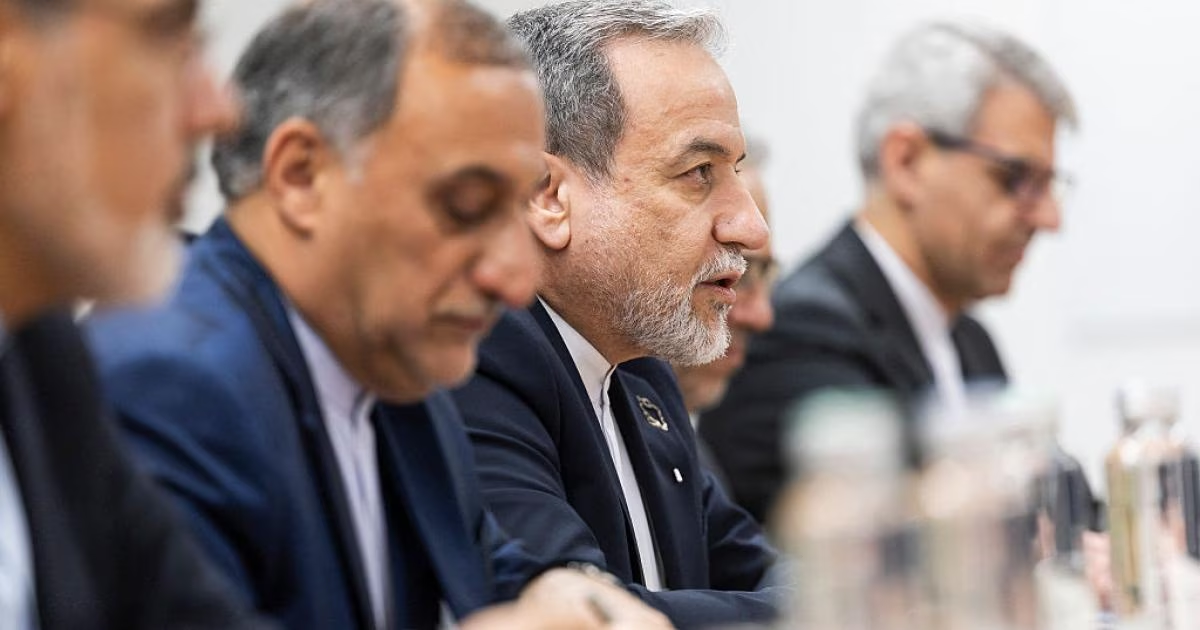
On the political front, Iranian Foreign Minister Abbas Araghchi affirmed that his country is open to any serious initiative to stop the war, but he set specific conditions for it. Araghchi explained in press statements that Tehran does not accept a temporary ceasefire, but insists on a complete, comprehensive, and permanent end to military operations.

The Iranian minister stressed that his country will continue to defend its sovereignty for as long as it takes, as long as the necessity to deter aggression remains. He indicated that the United States has not yet shown any real willingness to resolve the crisis or offer serious proposals for a political settlement.

Araghchi demanded the necessity of providing decisive international guarantees against the recurrence of short war scenarios or repeated aggressions that the country witnessed last year. He also affirmed Iran's right to full compensation for the material and human damages it suffered as a result of the recent attacks.

Regarding international navigation, Araghchi explained that Iran has not completely closed the Strait of Hormuz, but has imposed strict restrictions on ships belonging to countries involved in the attack. He indicated that any ship wishing to pass must coordinate in advance with the Iranian authorities to ensure a safe passage for it amid the current tensions.

The foreign minister revealed the start of talks with the Japanese capital, Tokyo, regarding the possibility of securing the passage of Japanese ships through the strait on the condition of direct coordination. This step reflects Tehran's desire to manage the strategic waterway in accordance with national security requirements and emerging military circumstances.

Araghchi's statements intersect with previous official positions expressed by officials in the Iranian parliament and government, in which they emphasized the strategic importance of the strait. Observers believe that Tehran seeks to consolidate its control over waterways as a political and economic pressure tool in the post-war phase.

On the economic front, technical reports revealed that Iran benefited from the sharp rise in global energy prices to secure additional financial resources. Data from 'Kepler' company indicated that Tehran has a huge stockpile of up to 187 million barrels of oil loaded on tankers ready for export.

Estimates indicate that the Iranian treasury achieved gains of about $8.7 billion as a result of price jumps, without the need to raise current production levels. This financial surplus enhances the state's economic resilience in the face of military pressures and imposed international sanctions.

In a related context, Tehran categorically denied American claims about the existence of huge Iranian energy reserves that could be pumped to lower global prices. Iranian sources described these statements as inaccurate and aimed at manipulating global gas and oil markets, far from the reality on the ground.

Tehran plans to impose new standards and conditions on maritime transport crossing its territorial waters, especially those belonging to countries that impose sanctions on it. The Iranian parliament is currently discussing draft laws that grant the armed forces broader powers in managing maritime traffic to serve national interests.

In conclusion, the field and political scene in Iran remains open to all possibilities with the continuation of attacks on nuclear facilities. The Iranian leadership insists that any political solution must pass through international recognition of its sovereign rights and compensation for the losses it incurred during the past three weeks.

We do not seek a temporary ceasefire, but demand a complete, comprehensive, and permanent end to the war with guarantees against the recurrence of aggression and compensation for all damages.

ARAB AND WORLD

Sat 21 Mar 2026 12:24 pm - Jerusalem Time

White House Confusion: Trump's Shifting War Goals in Iran Spark Controversy

The American administration is experiencing a clear divergence in defining the ultimate goals of the war it is waging in cooperation with Israel against Iran, as observers have noted continuous changes in the political rhetoric of President Donald Trump and his senior officials. Critics believe that this fluctuation reflects the absence of prior planning for the conflict and its potentially serious geopolitical repercussions in the region, especially with the overlap of objectives between weakening regional influence and overthrowing the regime.

The outlines of this trend began on February 28, when Trump addressed the Iranian people directly via social media, urging them to take control of the government and overthrow their rulers. Trump considered the major military operations led by Washington and Tel Aviv to be a historic opportunity for Iranians that might not recur for generations to come, describing the military action as a means to empower internal change.

In parallel with calls for political change, the US administration focused on the military aspect, with Trump pledging to deny Tehran nuclear weapons and completely destroy its arsenal of ballistic missiles. Official sources confirmed that the plan includes leveling the missile industry and eliminating the Iranian naval fleet, under the pretext of protecting allies in Europe and US forces stationed abroad from imminent threats.

Despite Trump's assurances that Iranian missiles could soon reach American soil, intelligence reports and military experts questioned these claims, considering them to lack scientific accuracy. Technical sources indicated that the Iranian missile program still needs years before it poses a direct threat to the American heartland, recalling the pretexts that preceded the invasion of Iraq in 2003.

In early March, the war's timeline began to show significant contradictions, with Trump initially stating that operations might take only four weeks, then later raising expectations to five weeks or more. The US President indicated from inside the White House that forces were ahead of schedule, emphasizing that Washington possessed unlimited ammunition supplies, allowing it to successfully wage long-term wars.

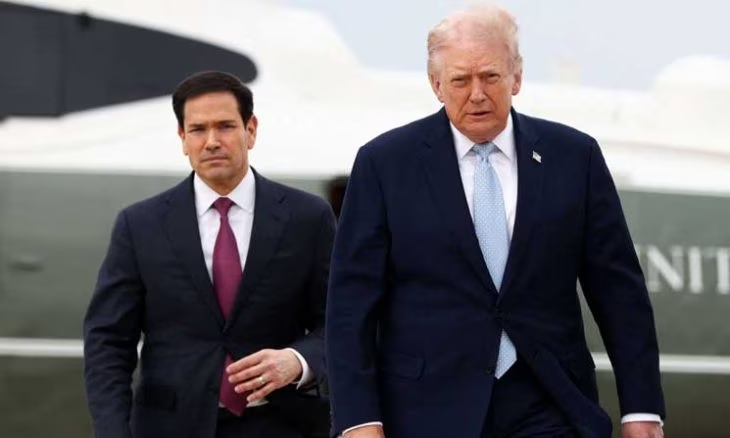
For his part, Secretary of State Marco Rubio presented a different narrative for the outbreak of the conflict, suggesting that Israel's determination to attack Iran unilaterally was what prompted Washington to intervene directly. Diplomatic sources explained that the US administration preferred to launch preemptive strikes in coordination with Tel Aviv to avoid greater losses among US forces if Iran retaliated against a unilateral Israeli attack.

However, Trump contradicted his Secretary of State's statements, claiming that he was the one who pushed the Israeli side to military action, not the other way around, based on information that Tehran was about to initiate an attack. This contradiction in official narratives raised questions about the centrality of decision-making in Washington and the extent of actual coordination between the White House and the State Department in managing the war file.

The Department of Defense entered the fray of statements through Secretary Pete Hegseth, who set purely technical objectives of destroying Iranian security infrastructure and offensive capabilities. Hegseth stressed that the mission focuses on neutralizing the threat of missiles and the naval fleet, without delving into political details related to the nature of the ruling regime in Tehran, which showed a gap in rhetoric between Defense and the White House.

On March 6, Trump raised the bar for political demands to their maximum, announcing via his online platforms that he would not accept any political settlement or agreement with Iran that did not include 'unconditional surrender.' This hardline stance closed the door to any potential international mediation and placed the conflict in a zero-sum framework that does not accept compromises, further complicating the field and diplomatic scene.

Between March 8 and 11, there was extreme confusion regarding the assessment of war outcomes, with the Secretary of Defense describing it as 'just the beginning,' while Trump emerged the next day to say that the war was 'almost over.' When journalists confronted Trump with this contradiction, he replied that the war could be considered to have begun and ended simultaneously, claiming numerous victories but not enough to close the file permanently.

By mid-March, Trump began to soften his rhetoric towards the Iranian interior, admitting in a television interview that his call for Iranians to overthrow their regime faced significant obstacles due to civilians' lack of weapons. This relative retreat reflected a belated realization of the difficulty of achieving internal political change through air strikes and external military operations alone, without an organized armed opposition on the ground.

The US Department of Defense, for its part, tried to reconcile the temporal contradictions through statements by Hegseth, who affirmed that Washington would not commit to a specific timeframe for ending operations. The Secretary clarified that the final decision to stop the war rests solely with President Trump, when he decides that military objectives have been fully achieved, which leaves the door open for continued military attrition for an unknown period.

In the latest developments, Trump hinted via 'Truth Social' at the possibility of ending the great military efforts - as he described them - soon, considering that the objectives are within reach. However, he surprised observers with another statement confirming that he does not wish to sign a ceasefire agreement, indicating Washington's intention to end combat operations unilaterally without making any legal or political commitments.

These ongoing contradictions in the US administration's statements continue to raise concerns among allies and international observers alike, as there is no clear post-war vision. As military operations continue, the question remains whether Washington has a real exit strategy, or if it is drifting behind momentary decisions that change with President Trump's media positions.

There will be no agreement with Iran except on unconditional surrender.

ARAB AND WORLD

Sat 21 Mar 2026 12:24 pm - Jerusalem Time

Report: Iran Targets 'Diego Garcia' Base in Indian Ocean with Long-Range Ballistic Missiles

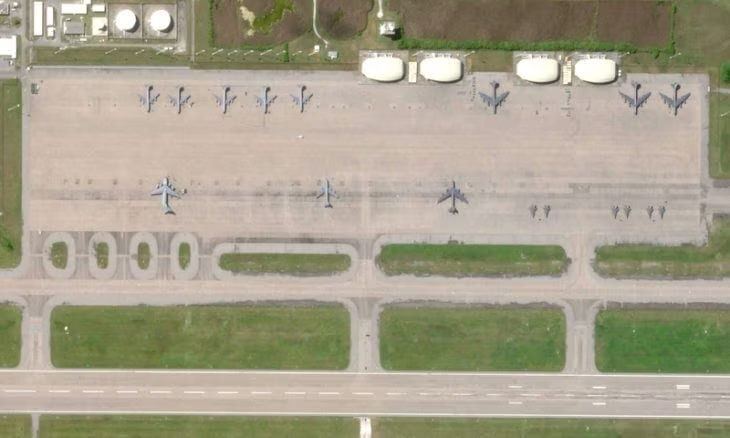
International press sources, quoting American officials, reported that Iran recently launched two ballistic missiles targeting the joint US-British military base on 'Diego Garcia' island, located in the central Indian Ocean. This operation is a significant military development, as the base is approximately four thousand kilometers from Iranian territory, exceeding the previously declared range of Iranian missile capabilities.

Reports clarified that the missile attack did not hit the specified targets within the strategic base, as one of the missiles suffered a sudden technical malfunction during its flight phase, leading to its fall. Meanwhile, a US warship stationed in the region launched an SM-3 interceptor missile to counter the second missile, and it is not yet definitively clear whether the interception succeeded in destroying the target in the air.

The US Department of Defense (Pentagon) declined to provide any official comment on these reports, but military observers see this move as a clear Iranian message about its missiles' ability to reach vital distant points. Tehran had previously stated through its Foreign Minister Abbas Araghchi that the range of its missiles was limited to 2000 kilometers, but this targeting proves its possession of technology that exceeds these limits by double.

Diego Garcia base, located in the Chagos Islands, is considered one of the most important military bases in the world, used by US forces as a primary launch point for heavy bombers and advanced military equipment. The base has played a pivotal role in major military operations led by the United States in Asia, including extensive air campaigns in Afghanistan and Iraq over the past decades.

These developments come amidst political complexities surrounding the future of the island, as Britain recently agreed to return the Chagos Archipelago to Mauritian sovereignty after decades of British control. However, the agreement stipulated that London would retain the right to lease the military base in Diego Garcia to ensure the continuation of joint defense operations with Washington, a decision that faced sharp criticism from US President Donald Trump.

Security experts believe that Iran's use of medium-range ballistic missiles outside the Middle East represents a shift in regional and international rules of engagement. Estimates from American research centers indicate that Tehran has indeed succeeded in developing an arsenal capable of reaching a range of 4000 km, while Israeli intelligence estimates had set a ceiling for these capabilities at only 3000 kilometers before this incident.

Politically, the report sparked a wave of analyses about Iranian motives at this time, with some seeing it as an attempt to deter American movements in the Indian Ocean. Western circles fear that Iran's success in developing intercontinental missiles could strengthen its negotiating position in the nuclear file, especially with the continued uranium enrichment at high levels that concern the international community.

In a related context, President Trump strongly criticized British tendencies to relinquish sovereignty over the Chagos Islands, considering the base a fundamental pillar of US national security in the face of increasing threats. Trump had previously hinted at the possibility of using capabilities stationed at the base to repel any potential Iranian attacks, emphasizing the need to maintain full control over this strategic location.

In conclusion, this targeting opens the door to questions about the effectiveness of air defense systems in protecting distant bases, and the readiness of joint forces to confront unconventional missile threats. Major capitals are cautiously monitoring upcoming reactions, amid fears of military escalation that could extend from the waters of the Gulf to the depths of the Indian Ocean, threatening international shipping lanes and global security.

The launch operation reveals that Tehran possesses missiles with a longer range than previously thought, as it targeted a location 4000 kilometers away.

ARAB AND WORLD

Sat 21 Mar 2026 12:24 pm - Jerusalem Time

Trump announces the approaching end of major military operations in the Middle East

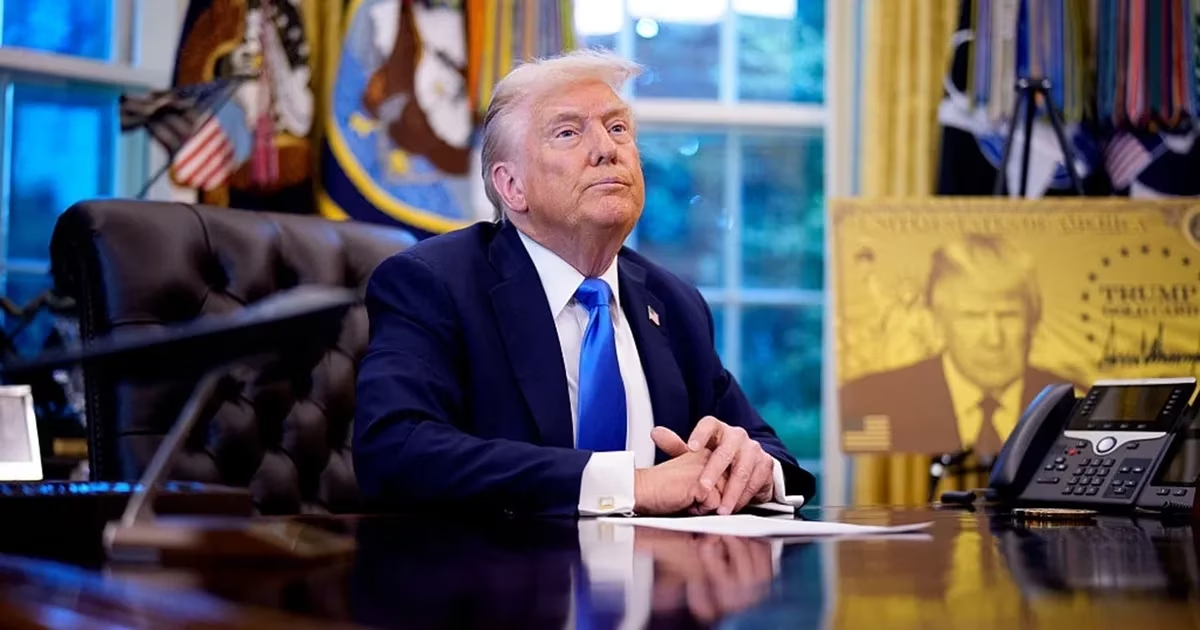
US President Donald Trump revealed the American administration's intention to end large-scale military operations in the Middle East, indicating that the United States is very close to achieving its strategic goals. Trump explained that these efforts primarily focused on confronting what he described as the terrorist regime in Iran and undermining its military influence in the region.

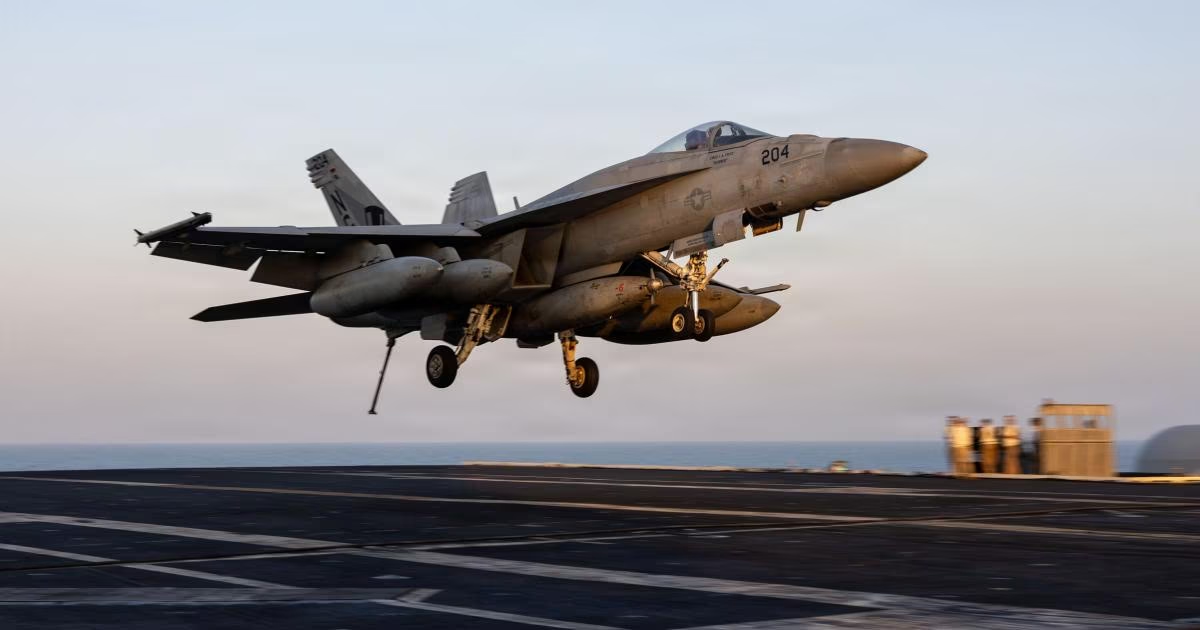
The US President stressed that military operations succeeded in completely weakening Iran's missile capabilities, including launch platforms and the infrastructure of defense industries. He also noted that the American strategy included neutralizing Iranian naval and air forces, in addition to destroying air defense systems to ensure the superiority of allies and prevent any future threats.

Regarding the nuclear file, Trump affirmed Washington's strict commitment not to allow Tehran to possess any nuclear capabilities under any circumstances. He indicated that the United States would maintain a military posture that allows it to intervene quickly and decisively to respond to any Iranian attempt to cross red lines in this sensitive file.

On the regional security front, Trump reiterated that protecting allies is at the top of American foreign policy priorities, specifically mentioning Israel, Saudi Arabia, Qatar, the UAE, Bahrain, and Kuwait. He explained that Washington is committed to providing the highest levels of security support to these countries to ensure regional stability away from Iranian threats.

In a related context, Trump addressed the issue of navigation in the Strait of Hormuz, considering that the responsibility for securing and monitoring this waterway lies with the countries that actually use it, especially since the United States no longer relies on it. He expressed his country's readiness to provide military assistance to those countries if requested, considering that the task would be easy after eliminating the threats posed by the Iranian regime.

We will always remain in a position to respond quickly and forcefully if Iran attempts to approach possessing nuclear capabilities.

ARAB AND WORLD

Sat 21 Mar 2026 12:24 pm - Jerusalem Time

Guterres proposes international initiative to secure Strait of Hormuz and welcomes 'Peace Council' role in Gaza reconstruction

The Secretary-General of the United Nations, António Guterres, revealed the international organization's aspirations to play a pivotal role in defusing escalating tensions in the Gulf region. Guterres clarified that the UN is considering launching an initiative aimed at protecting freedom of navigation in the Strait of Hormuz, thereby ensuring the stability of global energy supplies and avoiding direct military confrontations.

Guterres indicated in press statements that the UN is currently conducting intensive contacts with key stakeholders, including the Gulf Cooperation Council and the European Council. These moves aim to build international consensus supporting a comprehensive plan to de-escalate tensions in the strategic waterway, which is witnessing unprecedented tensions.

The Secretary-General cited the success of the UN's previous mediation in the 'Black Sea Initiative,' which enabled the export of grain and fertilizers during the Russian-Ukrainian conflict. Guterres believes that applying a similar model in the Strait of Hormuz may be the only way to secure the passage of commercial ships away from political and military tug-of-wars.

Guterres affirmed the existence of specialized working groups specifically established to study the mechanisms for implementing this initiative on the ground. However, he stressed that the organization prefers direct work and close coordination with the United States and other international powers to ensure the success of any future agreement concerning navigation security.

Regarding communication with the American administration, Guterres denied holding any direct talks with President Donald Trump since the outbreak of military confrontation with Iran. He clarified that he is currently content with communicating with other officials within the American administration, without disclosing their identities or the nature of the issues being discussed.

The Secretary-General warned that recent US military strikes against Iranian targets are consistent with a strategy seeking to draw Washington into a wide regional war. He considered that this goal has already been achieved, leading to a complex overlap in regional and international strategies in the Syrian, Iraqi, and Iranian arenas.

Guterres believes that the key to ending the current crisis remains in the hands of the White House, where an American decision to halt military operations could open the door to a comprehensive de-escalation. He added that President Trump has the ability to convince the concerned parties that military objectives have been achieved, paving the way for a diplomatic path.

These UN moves come after Tehran's decision in early March to restrict navigation in the Strait of Hormuz, in response to what it described as American-Israeli aggression. Iranian authorities threatened to target any ship attempting to cross the strait without prior coordination, raising widespread international concern about the future of oil trade.

The Strait of Hormuz is a vital artery for the global economy, with approximately 20 million barrels of oil passing through it daily, representing a large share of global consumption. The recent tension has led to a jump in shipping and insurance costs, as well as a significant rise in global energy prices, threatening an economic recession.

In a separate context, Guterres touched upon the 'Peace Council' recently launched by President Trump, welcoming its stated goal of funding the reconstruction of the Gaza Strip. He affirmed that the UN is actively cooperating with the Council's affiliated structures on aspects related to building homes and Palestinian infrastructure destroyed by the war.

Despite this cooperation, Guterres described the 'Peace Council' as a 'personal project' of the American President, in which he exercises complete control over all decisions. He expressed reservations about this approach, considering that it may not be the most effective way to address serious international crises that require institutional action.

Guterres concluded his remarks by emphasizing the need to adhere to international law and the principles of the UN Charter in any peace initiative that is put forward. He affirmed that these values remain the basis for any sustainable solution, noting that the UN will remain committed to its role as a guarantor of international legitimacy despite the challenges posed by individual initiatives.

My main goal is to find out if it is possible to create conditions in the Strait of Hormuz similar to what they were in the past through an international initiative.

PALESTINE

Sat 21 Mar 2026 12:24 pm - Jerusalem Time

Strategic Escalation: Iran Targets 'Diego Garcia' Base in Indian Ocean with Ballistic Missiles

Official media sources reported that the Iranian missile force carried out an unprecedented targeting operation against the 'Diego Garcia' military base, located in the heart of the Indian Ocean. The sources clarified that the attack was carried out by launching two medium-range ballistic missiles, in a move described by Tehran as a strategic message proving the ability of its missile systems to reach targets beyond previous intelligence estimates.

For its part, international press reports confirmed the attack, indicating that the two missiles were launched towards the base, which is considered one of the most important joint British and American military bases. These reports quoted officials in Washington as saying that the Iranian missiles did not succeed in hitting their direct targets inside the base, which is approximately four thousand kilometers from the Iranian coast.

According to the technical details of the operation, one of the missiles suffered a technical malfunction that led to its failure immediately after launch, while the second missile faced an interception attempt by the US Navy. A warship stationed in the region launched an 'SM-3' missile to counter the Iranian projectile, while military sources did not definitively confirm the success or failure of the interception operation.

Military observers believe that this attack represents a radical shift in Iranian military doctrine, as it is the first practical use of ballistic missiles targeting Western interests outside the traditional Middle East. This step reflects Tehran's desire to prove its ability to threaten strategic American bases in the Indian Ocean, which puts the security of waterways and distant bases under new pressure.

The distance covered by the two missiles raises serious questions about the true range of the Iranian missile arsenal, especially since Tehran had previously announced its commitment to a range not exceeding 2000 kilometers. Targeting a base 4000 kilometers away indicates that actual capabilities may have doubled from what Iranian Foreign Minister Abbas Araghchi stated earlier this year.

These developments are consistent with previous assessments by some American research centers that warned of Iran possessing missiles capable of reaching a range of 4,000 kilometers. In contrast, Israeli estimates tended to suggest that the maximum range of operational Iranian missiles was limited to 3,000 kilometers, which the recent operation practically refuted.

The Diego Garcia base, located in the Chagos Islands, is a fundamental pillar of US military operations in Asia and the Middle East. US forces have used this base as a primary launch point for their heavy bombers during previous military campaigns in Afghanistan and Iraq, making it a target of high strategic value.

Britain had recently reached an agreement to return the Chagos Islands to Mauritian sovereignty, while ensuring the continued operation of the military base under American and British administration. This decision faced sharp criticism from US President Donald Trump, who stressed the utmost importance of this facility in confronting regional threats.

In previous statements, Trump hinted at the possibility of using the Diego Garcia base and military airfields in Britain to launch preventive or deterrent strikes against the Iranian regime. Trump described the island as 'extremely strategic,' considering it the first line of defense and the primary platform to repel any potential attack launched by what he called the 'extremely dangerous regime' in Tehran.

This escalation comes at a time when the region is witnessing increasing tensions, as the targeting of the Indian Ocean opens a new front of confrontation that transcends the usual geographical boundaries of the conflict. International circles are awaiting the American and British reaction to this development, which may lead to a comprehensive re-evaluation of air defense systems in bases far from direct conflict zones.

The targeting is an important step that shows that the range of Iranian missiles exceeds what the enemy previously imagined.

LATEST NEWS

Sat 21 Mar 2026 12:24 pm - Jerusalem Time

Iranian Cluster Missiles Strike Tel Aviv, Intensifying Targeting of Dimona's Vicinity

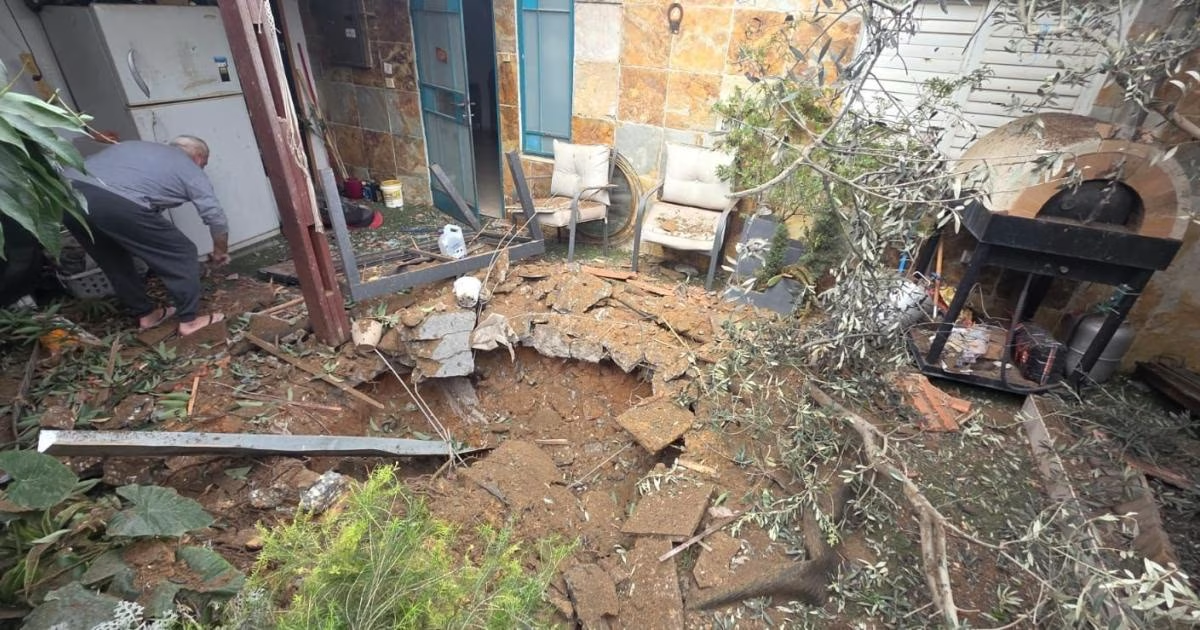
Media sources reported severe material damage to buildings and properties in the Rishon LeZion area of Tel Aviv, following the impact of a cluster missile launched as part of intensive Iranian offensive waves. Field documentation showed columns of smoke rising from the targeted sites, while Israeli police confirmed dealing with shrapnel and missiles that fell in various areas in the center of the country.

In a rapidly escalating field development, sirens blared in the city of Dimona and the Negev and Dead Sea regions, following the detection of new missile barrages launched from Iranian territory. These attacks come within the framework of what Iranian television announced as the execution of the seventieth wave of 'True Promise 4' operation, which targets vital sites deep within Israel.

Field data indicates that Iranian targeting has notably focused on strategic facilities, with three aircraft at 'David Ben Gurion' Airport recently revealed to have been damaged by cluster warhead shrapnel. The Israeli army imposes strict military censorship on the nature of the damaged sites, attempting to downplay the extent of strategic losses incurred by its airbases.

In the city of Haifa, reports revealed severe financial losses estimated at approximately two million dollars due to the targeting of oil refineries and the port over the past two days. The missile strikes caused widespread fires and destroyed parts of the port's infrastructure, reflecting the accuracy of the hits despite Israeli media attempts to obscure the extent of the damage.

Eastern suburbs of Tel Aviv, specifically in 'Kiryat Ono' and 'Elad,' witnessed the fall of cluster warheads that directly damaged buildings and vehicles and left a deep crater in a main road. Sources also observed a missile passing over the skies of occupied Jerusalem heading towards eastern Tel Aviv, which activated alarms in wide areas that had not seen similar escalation for some time.

Israeli security officials warned of the danger of Iran's attrition strategy against the home front, emphasizing that repeated attacks aim to destabilize the psychological stability of settlers. The 'Yedioth Ahronoth' newspaper reported fears of a state of 'apathy' that might affect the Israeli public due to the prolonged missile barrages, which could lead them to ignore shelter instructions.

Sirens were activated more than 40 times over the past forty-eight hours, covering areas from north to south. These attacks were distributed between missile barrages launched from southern Lebanon and others directly from Iran, with military sources recording the launch of approximately 20 heavy Iranian missile salvos during this short period.

In the context of the military response, the Israeli army announced that it carried out airstrikes targeting sites in the Iranian capital, Tehran, describing them as qualitative military targets. Concurrently, warplanes launched intense raids on the southern suburb of Beirut, hitting residential areas after immediate evacuation orders were issued to residents in those neighborhoods.

A state of anticipation prevails in the Upper and Western Galilee regions, where sirens continue to blare in anticipation of drone infiltration or the fall of missile shells from the northern front. Israeli medical sources have not reported any human casualties so far, noting that most of the recorded damages are material damages to infrastructure and private property.

Observers believe that the intensification of targeting of Dimona carries extremely dangerous political and military messages, given the high sensitivity this area represents in Israeli security doctrine. The repeated alarms there indicate Iranian insistence on penetrating air defense systems in the most fortified areas, which puts Israeli defensive technology to a difficult test.

The Israeli leadership faces increasing internal pressure to ensure the security of the home front amid the exhaustion suffered by settlers due to prolonged stays in shelters. The Israeli Home Front Command continuously calls for strict adherence to instructions, warning that any complacency could lead to significant human casualties given the use of cluster missiles.

In conclusion, scenes from Tel Aviv and Haifa show that the direct confrontation has entered a new phase of bone-breaking, where missiles are no longer content with distant military targets but have reached the heart of economic and residential centers. Israeli military censorship remains the only obstacle to knowing the true extent of the damage inflicted on vital facilities in the Negev and the center.

The repeated siren activations in Dimona raise serious questions about the nature of the strategic targets that Iranian missiles seek to reach.

ARAB AND WORLD

Sat 21 Mar 2026 12:23 pm - Jerusalem Time

Strategic Shift: Saudi Arabia Opens King Fahd Air Base to US Forces in Confrontation with Iran

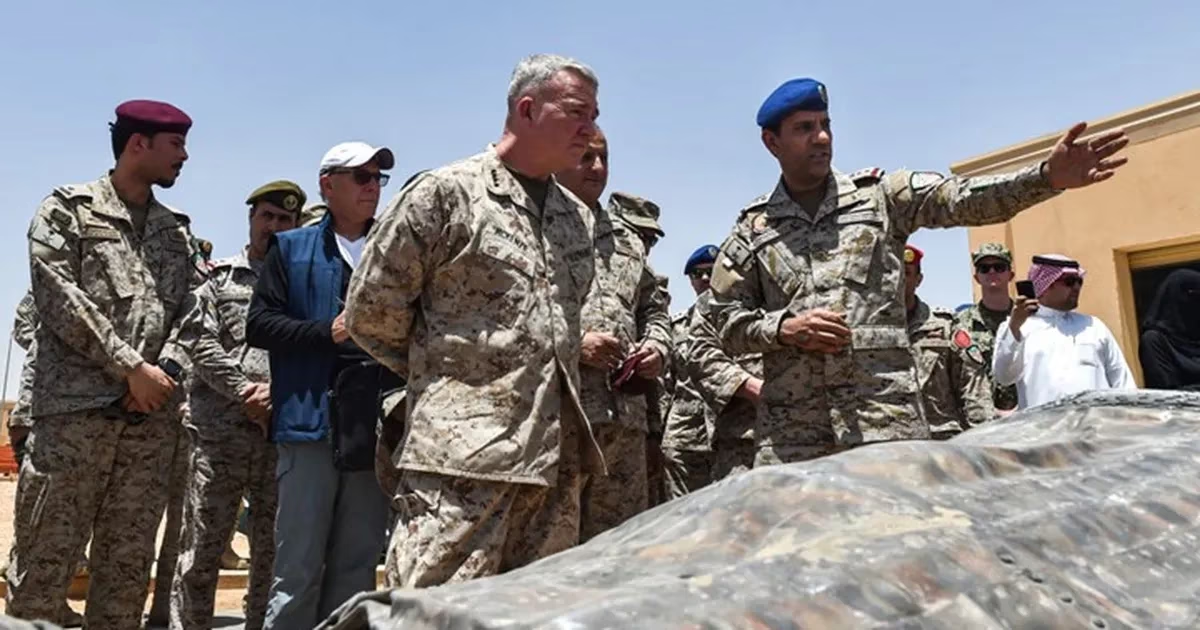
Western diplomatic and military sources have revealed a striking development in the regional conflict, as the Kingdom of Saudi Arabia has agreed to open King Fahd Air Base in Taif to American forces. This move aims to enhance Washington's operational capabilities amid the open military confrontation with Tehran, indicating a shift in Saudi strategy towards direct military involvement.

Reports clarified that the selection of King Fahd Air Base was due to its excellent strategic location, which places it beyond the range of Iranian drones compared to other bases such as Prince Sultan Air Base. The base also gains additional importance due to its proximity to Jeddah, which has become a vital alternative logistical hub amid the disruptions affecting maritime navigation through the Strait of Hormuz.

In a related context, American sources revealed that the United Arab Emirates has shown remarkable readiness to deal with a long-term war scenario that could last up to nine months. The sources indicated that Abu Dhabi is no longer pressuring for a swift end to the conflict but is currently focusing on strengthening its defense systems to counter continuous missile and aerial threats.

Military data indicates the extent of damage suffered by the region's countries since the outbreak of operations on February 28, with Emirati defenses successfully intercepting hundreds of ballistic missiles and thousands of drones. This escalation has prompted Gulf states to re-evaluate their previous stances, which stipulated that their territories should not be used as launching points for direct attacks against Iranian territory.

Qatar was not far from the repercussions of this conflict, as its energy facilities were subjected to what were described as the most violent attacks, directly targeting the vital Ras Laffan refinery. Qatari Energy Minister Saad Al-Kaabi stated that the resulting damage could take years to repair, noting that about 17% of Qatar's natural gas production was affected by this targeting.

For its part, the Sultanate of Oman adopts a different stance, calling for de-escalation and withdrawal from the conflict, with its Foreign Minister Badr Al-Busaidi warning against falling into the 'trap' of eternal war. Al-Busaidi considered that the United States is sinking into a conflict that does not achieve real gains for its allies, calling for the necessity of clarifying the catastrophic risks of continuing this confrontation on regional stability.

In contrast, Saudi Foreign Minister Prince Faisal bin Farhan's statements affirmed the seriousness of Riyadh's position, describing the Iranian attacks as 'atrocious' and directly threatening regional security. Bin Farhan stressed that the Kingdom reserves its full right to respond to these threats, including resorting to military options to protect its sovereignty and interests.

Observers believe that Gulf states today find themselves facing a complex dilemma, balancing the necessity of deterring the Iranian regime with avoiding a comprehensive war that could destroy everything. Political experts indicate that Riyadh and Abu Dhabi have realized the difficulty of coexisting with continuous threats aimed at closing vital waterways and disrupting global energy supplies.

The Strait of Hormuz remains at the heart of this difficult equation, with five global oil supplies passing through it, making it a strategic leverage point for all parties. US President Donald Trump's administration seeks to rally broad international support to secure this waterway, relying heavily on the pivotal role that Gulf states can play in this regard.

Despite the military facilities granted, Riyadh is trying to maintain a delicate thread of diplomacy, based on previous agreements mediated by China in 2023. This policy, described as 'walking a tightrope,' aims to enhance military deterrence without definitively closing the doors to dialogue with its Iranian neighbor.

Military analysts warn that any direct and widespread involvement in combat operations could open fronts whose end cannot be predicted, especially given the disparity in conventional and unconventional military capabilities. However, the continued targeting of oil infrastructure in the Gulf could push these countries to make tougher decisions that go beyond merely providing logistical support.

As the war enters its fourth week with no clear horizon for a solution, global capitals await the outcome of upcoming field and political movements. The air base in Taif and the shifts in Gulf positions remain a strong indicator that the region is heading towards a reshaping of security alliances to confront current challenges.

Riyadh's stance has shifted towards supporting American action as a means to deter Iran from its repeated attacks on regional security.

ARAB AND WORLD

Sat 21 Mar 2026 12:23 pm - Jerusalem Time

Four Major Questions Shaping the Escalation in the War on Iran

The direct military confrontation between the United States and Israel on one side, and Iran on the other, has entered its second month amidst increasing indications of a widespread field escalation. Visions diverge between Washington and Tel Aviv regarding the ultimate goals of this war, with fundamental questions emerging that may determine the outcomes of the conflict in the next phase.

The Strait of Hormuz stands out as one of the most urgent and impactful issues on global economic stability due to its extreme strategic importance. Approximately 20% of the world's oil supplies, mostly destined for Asian markets, pass through this vital waterway, making any disruption an international crisis par excellence.

Sources reported that Tehran has already begun threatening ships it classifies as hostile targets, with extensive use of naval mines observed in the region. These moves have led to a state of partial paralysis in international navigation, causing sharp jumps in global energy prices.

Reports indicate that the continued closure of the strait poses an obstacle to US President Donald Trump's ambitions to declare a swift victory and end military operations. Observers believe that what happens in this waterway will be the decisive factor in determining the duration of the current war.

On the ground, the question of a potential US ground intervention remains, despite the extreme caution shown by the US administration towards this option. Despite the deployment of thousands of Marine soldiers to the Gulf region, a decision for a full-scale invasion has not yet been officially made.

Military scenarios speak of the possibility of joint special forces conducting precise infiltration operations targeting fortified Iranian nuclear facilities underground. These hypothetical operations aim to seize sensitive nuclear materials and prevent Tehran from using them as a final bargaining chip in the conflict.

Military plans prioritize controlling strategic locations such as Kharg Island, as it is the main outlet for most of Iran's oil exports. This move aims to completely dry up Iranian funding sources and pressure the military leadership to reopen the Strait of Hormuz under international supervision.

The Iranian nuclear program represents the most prominent target of the air and ground operations led by Washington and Tel Aviv since the outbreak of the confrontation. Despite the fierce strikes that targeted vital facilities, the fate of Tehran's highly enriched uranium stockpile remains shrouded in mystery.

Israeli sources confirm that Iran has already lost its technical capability to enrich uranium as a result of the destruction of the necessary infrastructure. However, the United States seeks, through military force or coercive negotiations, to ensure the complete destruction of this stockpile to guarantee it will not be revived in the future.

Declared US objectives include the complete destruction of Iranian naval capabilities and the neutralization of ballistic missile programs that threaten regional interests. Washington also seeks to cut off all supply and funding lines reaching groups and organizations allied with Tehran in the Arab region.

Regarding the Iranian internal situation, great ambiguity surrounds the identity of who is governing after the assassination of Supreme Leader Ali Khamenei in previous airstrikes. His son, Mojtaba Khamenei, has emerged as a potential successor, amidst conflicting reports about his health and the extent of his control over state institutions.

Sources reported that US President Donald Trump refused to recognize the legitimacy of Mojtaba Khamenei's assumption of power, considering him an extension of the previous regime. At the same time, Israel threatens to target him directly, emphasizing that the elimination of top leaders is an integral part of its military strategy.

Officials in Washington and Tel Aviv acknowledge the difficulty of identifying the actual decision-making center within Tehran at present due to the state of internal confusion. While Israel explicitly aims for regime change, Trump merely calls on the Iranian people to revolt, without fully committing to making regime change a final goal.

The coming days will reveal the extent of international parties' ability to contain the conflict or slide into a comprehensive regional war that spares nothing. With continued military and economic pressure, the bet remains on the resilience of the Iranian internal front against successive strikes and the loss of historical leadership.

As long as the Strait of Hormuz remains closed, US President Donald Trump cannot declare victory and end the war, even if he wanted to.

OPINIONS

Sat 21 Mar 2026 12:23 pm - Jerusalem Time

The Philosophy of 'Tyranny' in American Politics: Is 'MAGA' Rebuilding Hegemony Through Force?

Ramallah - "Al-Quds" Dot Com

Ramallah - "Al-Quds" Dot Com

Opinion Writer

The slogan 'Make America Great Again' (MAGA) has historical roots dating back to the era of the late President Ronald Reagan, before Donald Trump revived it as a cornerstone of his election campaigns. This slogan reflects an American desire to restore economic control, which began to falter since the discovery of the 'dollar trick' in the 1970s, when countries around the world realized that Washington was printing its currency without real gold backing.

French President Charles de Gaulle's stance in 1970 was a major turning point when he refused to exchange gold for American paper, threatening the collapse of the American economy had it not been for the intervention of oil-producing nations. Through the 'petrodollar' agreements, energy sales were linked to the American currency, giving Washington a lifeline that lasted for decades, enabling it to exert wide global influence.

Current American policies, especially among the neoconservative movement, are based on the philosophy of Leo Strauss, who legitimizes what is called 'natural tyranny'. This school of thought believes that a powerful elite has a natural right to rule the majority and control the destinies of peoples, which explains the successive administrations' reliance on military force to secure energy sources and rare minerals.

The intensity of this 'tyranny' increases as the United States feels its global position declining and rival powers like China emerge, threatening the American economic throne. Observers point out that the existential panic over the decline of the American star is pushing Washington to impose exorbitant tariffs and attempt to 'siphon' money from other countries to cover the public debt deficit, which has exceeded $38 trillion.

Former National Security Advisor Zbigniew Brzezinski, in his book 'Second Chance,' warned against squandering historical opportunities to lead the world, calling for building alliances with competitors. However, American presidents chose to ignore these recommendations, preferring to build a massive military arsenal and control strategic passages under flimsy pretexts such as weapons of mass destruction or combating terrorism.

In the Middle East, Israel stands out as a primary arm of this policy, as Washington seeks to transform it into a regional superpower dominating its neighbors. The Israeli government, led by Benjamin Netanyahu, adopts the theory of 'power care,' asserting that diplomatic agreements are only achieved through overwhelming military and technological superiority.

The features of this alliance are evident in Trump's decisions that granted Israel sovereignty over the occupied Syrian Golan, a move reflecting the logic of 'giving' to those who do not own. Statements by American officials, such as Ambassador Mike Huckabee, also reinforce this trend by invoking biblical texts to justify the occupation of Palestinian and Arab lands between the rivers.

The current confrontation with Iran is a new link in a series of wars aimed at reshaping the Middle East to serve common Israeli and American interests. This plan seeks to strip the region's countries of any real defensive capabilities, while maintaining Israeli nuclear superiority as the sole guarantee for controlling the so-called 'New Middle East'.

Despite these ambitions, the Trump administration faces sharp internal divisions, even within the 'MAGA' movement itself, due to entanglement in Netanyahu's regional wars. A segment of supporters believes that returning to foreign wars represents a betrayal of the 'America First' promises that advocated avoiding international conflicts and focusing on domestic affairs.

Ultimately, the conflict between the will of 'tyranny' and global historical transformations remains, as the world no longer easily accepts unilateral hegemony. While Trump and Netanyahu try to impose a new reality by force, global public opinion realizes that regional stability cannot be built on the ruins of peoples' sovereignty and historical rights.

The right of the powerful to rule is a principle derived from ancient philosophies that grant the elite the right to control and suppress the common people.

ARAB AND WORLD

Sat 21 Mar 2026 12:23 pm - Jerusalem Time

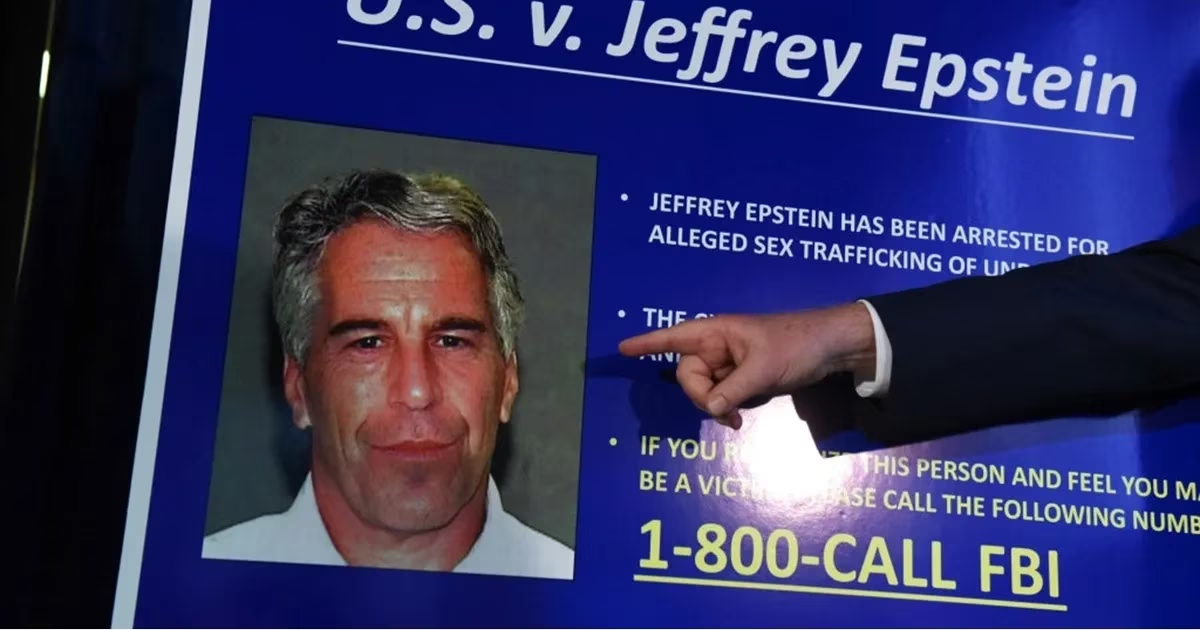
In tears.. Norway's Crown Princess apologizes for her relationship with Jeffrey Epstein: I was deceived

Princess Mette-Marit, wife of the Crown Prince of Norway, expressed her deep regret and profound remorse for her friendship with the late businessman Jeffrey Epstein, who was convicted of sex crimes. These statements came in an official attempt to contain the repercussions of a major scandal that has shaken the foundations of the Norwegian royal family recently.

The Princess appeared in a tearful and emotional television interview with the official broadcaster, where she confirmed that she had fallen victim to a systematic manipulation and deception by Epstein. She added clearly that she wished she could turn back time to erase any trace of this encounter that caused a diplomatic and public crisis.

These developments follow the US Department of Justice's release of millions of documents and files related to Epstein's case, a step that caused widespread global shock. These documents revealed a complex network of relationships Epstein maintained with prominent figures in Norway, including politicians, diplomats, and businessmen.

Leaked files showed precise details about the nature of communication between Mette-Marit and Epstein, as the relationship continued for a long time even after his official conviction in 2008. This information caused great embarrassment to the royal institution, especially since the conviction was related to crimes of soliciting minors.

Despite the Princess reaching the age of fifty-two and no direct criminal charges being brought against her, public and political pressure pushed her to issue an official apology. She directed this apology to King Harald and Queen Sonja in a statement issued early last February, in an attempt to mitigate the intensity of criticism.

New US documents revealed that the relationship was deeper and more extensive than previously thought or reported in old media coverage. This revelation prompted the Norwegian Prime Minister to take an unusual step by publicly reprimanding the Princess, demanding her to provide comprehensive clarifications to the public.

Data extracted from the files indicate that Crown Prince Haakon's wife maintained communication channels with Epstein between 2011 and 2014. These communications included private visits that were not announced at the time, raising questions about the nature of these meetings and the extent of the palace's knowledge of them.

Among the most prominent details reported in the documents is the Princess's stay at Epstein's private residence in Palm Beach for four full days during a private trip she made in 2013. This specific piece of information is considered one of the most controversial points, given the timing, which came years after Epstein's criminal practices were exposed.

The Norwegian royal family is currently seeking to restore its image before the public after these shocking confessions that placed the Princess at the heart of an international storm. The question remains about the extent to which these belated apologies can close one of the most sensitive cases in the history of the modern Norwegian monarchy.

"I was manipulated and deceived, and of course, I wish I had never met him."

OPINIONS

Sat 21 Mar 2026 12:16 pm - Jerusalem Time

Gaza Deferred: When Disarmament Replaces Urgency

By Said Arikat – March 21, 2026


News Analysis

Washington, D.C- Gaza is no longer at the center of international urgency. Even as its humanitarian catastrophe deepens, it has slipped into the margins of global policymaking—particularly in Washington, where strategic bandwidth is increasingly consumed by higher-order concerns. A newly circulated proposal, advanced by a so-called “Peace Council” with regional mediators and tacit Israeli backing, captures this shift with unsettling clarity: disarmament first, reconstruction later. The framing is not incidental; it reflects a broader reordering of priorities in which Gaza is treated less as an emergency than as a problem to be sequenced, managed, and deferred.


The plan outlines a phased process lasting six months or more, beginning with the dismantling of heavy weapons—rockets, launchers, tunnels—before moving to small arms. In parallel, a newly formed Palestinian police force would assume control of “cleared” areas. Hamas members who comply would receive conditional security guarantees, excluding those accused of prior attacks. The architecture is familiar: security consolidation as the gateway to stability. It is a model that privileges control over immediacy, process over urgency, and risk mitigation over human need.


But the sequencing is the story—and the problem. By making reconstruction contingent on full disarmament, the proposal subordinates urgent humanitarian relief to a slow, uncertain political process. Gaza’s civilians, already facing severe shortages of food, water, and medical care, are effectively cast as collateral in a negotiation they do not control. There are no credible safeguards for their protection while the process unfolds, nor assurances that it will succeed. The burden of waiting is placed squarely on a population that has already exhausted its capacity to endure.


This is a narrow, securitized reading of a fundamentally political crisis. It treats weapons as the cause rather than the symptom. Absent a credible political horizon for Palestinians, disarmament risks becoming an end in itself—one that may temporarily quiet violence without addressing the conditions that produce it. In that sense, the proposal does less to resolve the conflict than to stabilize it at a lower intensity. Stability, under such conditions, becomes a substitute for justice rather than a pathway toward it.


The gaps are not only conceptual but institutional. The introduction of a new Palestinian security force raises unresolved questions about legal authority, chain of command, and its relationship to the Palestinian Authority. In a fragmented political landscape, legitimacy is not a technical detail—it is the difference between enforcement and collapse. Without it, any new force may struggle to function, let alone endure. Worse, it may deepen internal divisions, adding another layer of contestation to an already fractured governance structure.


Then there is the matter of money. Despite rhetorical commitments from Washington about mobilizing billions for reconstruction, no meaningful funding pipeline has materialized. The hesitation is telling: donors appear unwilling to invest without prior security guarantees, even as those guarantees depend on the very stability reconstruction is meant to create. The result is a circular logic that traps Gaza in permanent deferral—no rebuilding without disarmament, no disarmament without rebuilding. In practical terms, this translates into prolonged devastation and a growing credibility gap between promise and delivery.


All of this unfolds against a broader strategic backdrop. For the United States, Gaza has become a secondary file, eclipsed by the war on Iran and the wider architecture of regional deterrence. The preference is clear: manage the crisis through intermediaries, limit direct exposure, and avoid the political costs of deeper engagement. In practice, that means less pressure, fewer resources, and diminished urgency. It also signals to other actors that Gaza can be handled incrementally, rather than decisively.


This is not a temporary lapse; it reflects a structural shift. In an era of great-power competition, chronic humanitarian crises struggle to compete for attention unless they threaten wider instability. Gaza, despite its volatility, is increasingly viewed as containable. That perception—whether accurate or not—carries consequences. It creates space for half-measures, for process without progress, for proposals that manage symptoms while deferring solutions. Over time, such an approach risks normalizing crisis as a condition rather than confronting it as a failure.


The disarmament initiative fits squarely within this pattern. It offers the language of stabilization without the substance of resolution. By bracketing the humanitarian emergency and conditioning relief on maximal security compliance, it reinforces the very imbalance that has long defined international engagement with Gaza. It also shifts the moral burden onto those least able to bear it, asking civilians to wait for political outcomes that remain uncertain and contested.


The question, then, is not whether disarmament is desirable, but whether it can meaningfully precede dignity, governance, and political horizon. Experience suggests otherwise. Without addressing the lived reality of Gaza’s population, any security-first framework risks fragility at best, failure at worst. Sustainable calm cannot be engineered in isolation from the conditions that give rise to instability in the first place.


As talks continue in Cairo, the underlying issue remains unchanged: can there be sustainable calm without immediate relief and credible political direction? Or will Gaza remain what it has now become in global capitals—a crisis to be managed, postponed, and periodically revisited, but no longer truly prioritized? The answer will determine not only the trajectory of Gaza, but the credibility of an international system increasingly defined by what it chooses to ignore.

ARAB AND WORLD

Sat 21 Mar 2026 5:06 am - Jerusalem Time

Trump attacks 'NATO' allies, calls them cowards for refusing to participate in securing the Strait of Hormuz

US President Donald Trump launched harsh and sharp criticism at the United States' allies in the North Atlantic Treaty Organization (NATO), describing them as 'cowards'. This attack came against the backdrop of member states' refusal to respond to American demands for direct military support to secure the Strait of Hormuz, which has witnessed escalating tensions since the outbreak of military confrontation with Iran.\n\nTrump, in statements via his 'Truth Social' platform, considered that the Western military alliance possesses no real power apart from American support and leadership, describing it as a 'paper tiger'. He pointed out that allies are evading their responsibilities in protecting vital waterways, even though the task required of them does not involve significant military risks, according to his assessment.\n\n The US President explained that securing the Strait of Hormuz is an urgent necessity for the stability of global markets, considering that opening the strait represents a simple military maneuver that would have curbed the insane rise in oil prices. He added that the allies' failure to play this role puts global energy security at risk, stressing that Washington will not forget this negative stance from its partners.\n\nIn a related context, six major international powers, including France, Britain, Germany, and Japan, had expressed initial readiness to contribute to securing navigation in the region. However, this readiness does not seem to have translated into immediate practical steps that meet the aspirations of the American administration, which seeks to impose complete control over the strategic waterway amid ongoing military operations.\n\nThe Strait of Hormuz is suffering from a state of near-complete paralysis in commercial navigation due to Iranian countermeasures and escalating military tensions. This passage represents a major artery for the global economy, as about a fifth of crude oil and liquefied natural gas supplies flow through it to various countries around the world, making its disruption a full-blown international crisis.\n\nThe roots of the current crisis date back to February 28, when US and Israeli forces launched widespread military strikes targeting sites inside Iran. Tehran responded with a series of attacks and military movements in the Gulf region, leading to the ignition of the naval front and an unprecedented disruption of oil tanker traffic.\n\nThe current US administration's positions fluctuate between hinting at Washington's sole ability to protect its interests and secure international passages, and pressuring allies to share the costs and consequences of the war. Trump's latest attack deepens the gap between Washington and its traditional allies, at a time when the world faces severe economic repercussions due to rising energy costs.\n\n"NATO without the United States is a paper tiger... cowards, and we will not forget.

ARAB AND WORLD

Sat 21 Mar 2026 5:06 am - Jerusalem Time

Two dead in Israeli raids on southern Lebanon, Hezbollah documents targeting of occupation armored vehicles

The Israeli occupation army escalated its aggression on southern Lebanon on the morning of the first day of Eid al-Fitr, as its warplanes launched a series of intense airstrikes targeting residential areas. Field sources reported that a raid targeted a house in the town of Bavlieh in the Tyre district, leading to the martyrdom of two citizens and the injury of a third, coinciding with heavy artillery shelling that targeted villages and towns in the central and western sectors.

Israeli airstrikes included the towns of Ainata, Sultaniyah, and Hanin in the Bint Jbeil district, in addition to Debaal and Kafr Tibnit in the Nabatieh district, in a wave of escalation that coincided with the early morning hours. These developments come amid the expansion of regional confrontations that began early this month, leaving severe human and material losses in the region.

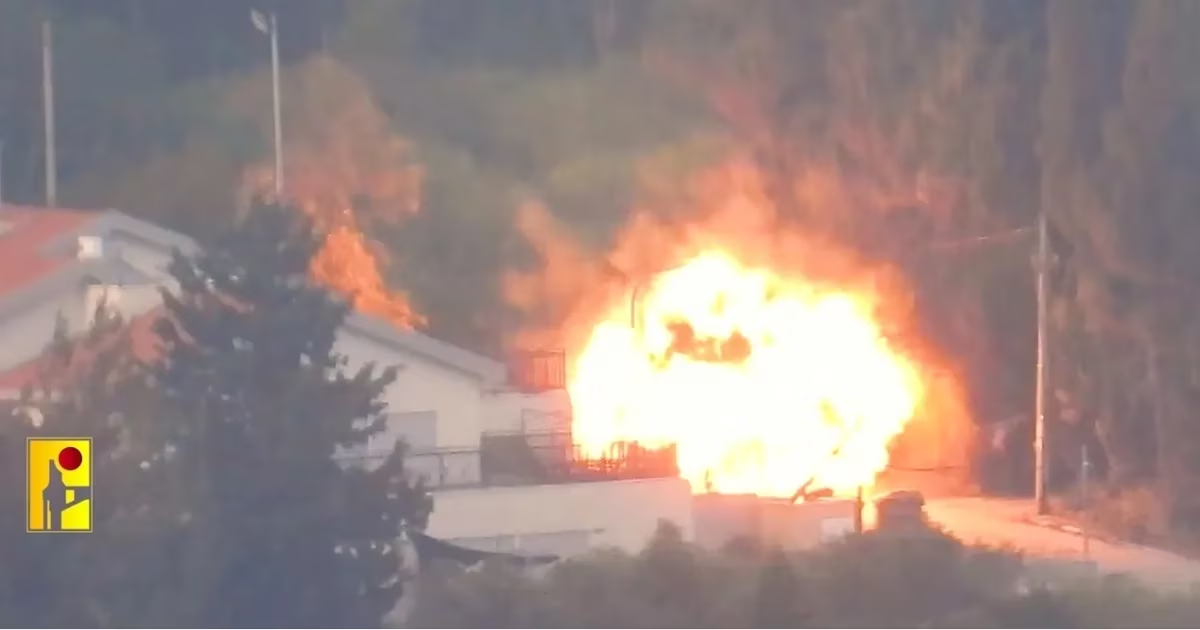
For its part, Hezbollah announced the execution of a series of qualitative attacks using missiles and kamikaze drones, targeting sites and gatherings of occupation forces along the border with occupied Palestine. The party published video clips documenting the precise targeting of Israeli armored vehicles in the Fqaani Heights area north of the town of Taybeh, an operation described as mimicking the strategic ambushes that occupation tanks were subjected to in the July 2006 war.

Field statistics indicate that the ongoing military escalation since late February, which included multiple fronts, has resulted in the death of at least 1332 martyrs and the injury of more than 15,000 people, amid warnings of the region sliding towards a comprehensive confrontation in light of continued airstrikes and mutual military operations.

The scenes published by Hezbollah of targeting armored vehicles in the Fqaani Heights bring back memories of the Merkava tank massacre in the 2006 war.

ANALYSIS

Sat 21 Mar 2026 5:05 am - Jerusalem Time

Between Disarmament and Reconstruction: Gaza Outside International Policy Priorities

Said Erikat

Opinion Writer

Washington - Said Arikat - 21/3/2026

News Analysis

Amidst rapid regional transformations, the Gaza Strip appears to be gradually receding from the forefront of international attention, despite the ongoing and unprecedented humanitarian tragedy its residents are enduring. In this context, a new proposal has emerged, presented by the so-called "Peace Council" in cooperation with regional mediators to Hamas, which stipulates setting a timeline for its gradual disarmament. However, this proposal, which has received Israeli approval, raises profound questions about the priorities of international actors, especially the United States, for whom it has become clear that Gaza is no longer among its political priorities, but rather a deferred issue amidst broader strategic concerns.

The proposed framework suggests a process extending over six months, beginning with the dismantling of heavy weapons such as rockets, launchers, and tunnels, before moving on to light weapons, with the deployment of a new Palestinian police force in areas that are "cleared" of weapons. The proposal also includes security guarantees for Hamas members who agree to surrender their weapons, with the exception of those suspected of involvement in previous attacks. This approach seems to aim at creating a new security reality in the Strip, paving the way for reconstruction and the return of some form of stability, albeit gradually and conditionally.

However, a critical reading of this proposal reveals a clear imbalance in the balance of priorities. While the focus is on disarmament as a prerequisite for reconstruction, the catastrophic humanitarian conditions experienced by Gaza's residents, who face severe shortages of food, water, and healthcare, are being ignored. Furthermore, linking reconstruction to complete disarmament holds civilians hostage to a complex political process that may take a long time, without real guarantees of success, or clear mechanisms to protect civilians during this transitional phase.

This approach reflects a narrow security understanding of the crisis in Gaza, where the problem is reduced to the presence of weapons, ignoring the political and humanitarian roots of the conflict. Focusing on disarming Hamas without providing a clear political horizon for Palestinians reproduces the same conditions that led to the current explosion. Moreover, the absence of real pressure from mediating countries, especially Qatar and Turkey, weakens the chances of the initiative's success, making it closer to an attempt to manage the crisis rather than resolve it, which perpetuates the stalemate instead of overcoming it.

In the same context, a legal and administrative problem arises regarding the mechanism for implementing this proposal, especially concerning the introduction of a new Palestinian police force without clarity on its legal authority or its relationship with the Palestinian Authority. The proposal largely ignores the existing legal structure in Gaza, raising questions about the legitimacy of these arrangements and their ability to endure in a complex and divided political environment. Furthermore, any new security force may face challenges in popular acceptance and field effectiveness.

On the other hand, the absence of actual funding for reconstruction plans reveals a significant gap between political rhetoric and practical reality. Despite American statements about mobilizing billions of dollars, financial resources remain unavailable, reflecting international reluctance to invest in Gaza before strict security conditions are met. This approach not only prolongs suffering but also reinforces the local population's loss of confidence in the utility of any political process, and fuels feelings of frustration and uncertainty.

These developments come at a time when major powers, especially the United States, are preoccupied with other regional issues, such as tensions with Iran, which explains the decline in interest in Gaza. The US administration appears to prefer managing the crisis through mediators, rather than direct involvement, which is reflected in the weak political and financial pressure to push the parties towards a comprehensive solution. Furthermore, Washington's strategic priorities have shifted towards more pressing issues from its global security perspective.

The decline in Gaza's priority in American policy is not merely a tactical matter, but reflects a broader strategic shift in global priorities. Amidst competition with major powers and Washington's focus on international security issues, chronic humanitarian crises become less prominent in decision-making circles. This shift leaves a political vacuum that regional powers may fill in ways that do not necessarily serve the stability of the region or the interests of the local population, threatening to prolong the crisis instead of containing it.

In light of the above, it can be said that the disarmament proposal, despite its promises of reconstruction and stability, lacks a comprehensive vision that addresses the roots of the crisis in Gaza. Moreover, ignoring the humanitarian dimension and linking aid to strict security conditions reflects an imbalance in the international community's approach, and confirms that the Strip is no longer at the forefront of global concerns. While negotiations continue in Cairo, the most important question remains: Can sustainable peace be achieved without a real address to the suffering of the population, or will these initiatives remain mere temporary attempts to manage a constantly escalating crisis, in the absence of a real political will for change?

ARAB AND WORLD

Sat 21 Mar 2026 5:05 am - Jerusalem Time

Dead and wounded in a raid on Al-Ghandouriya, and the occupation renews its shelling of the southern suburbs of Beirut

Israeli occupation forces escalated their aerial and artillery attacks on Lebanese territories this Saturday dawn, as an airstrike targeted a house in the town of Al-Ghandouriya, affiliated with the Bint Jbeil district. The attack resulted in the martyrdom of one citizen and the injury of two others with varying degrees of wounds, as rescue teams managed to pull them from under the rubble after the house was completely destroyed.

In a simultaneous field development, Israeli warplanes launched a series of violent raids on the southern suburbs of Beirut, targeting multiple residential areas. These raids came just hours after Israeli threats demanded residents of seven entire neighborhoods to evacuate their homes immediately, causing panic and mass displacement of residents in the late hours of the night.

Field sources reported that heavy artillery shelling resumed on the outskirts of the town of Naqoura in the Tyre district, leading to severe material damage to properties. This shelling coincided with intensive overflights by reconnaissance and drone aircraft in the skies of southern Lebanon, to monitor field movements and identify new targets for the ongoing aggression.

For its part, the Israeli occupation army issued a statement confirming the execution of widespread attacks in the Lebanese capital, Beirut, claiming that they target military facilities belonging to Hezbollah. The statement did not clarify the extent of human or material losses resulting from these raids, merely indicating that they come within the framework of ongoing military operations on the northern front.

Forced evacuation orders issued by the spokesman for the occupation army included the neighborhoods of Haret Hreik, Ghobeiry, Laylaki, and Hadath, in addition to Burj al-Barajneh, Tahwitat al-Ghadir, and Chiyah. Human rights sources considered that these repeated warnings aim to displace residents and destroy civilian infrastructure under flimsy security and military pretexts.

This escalation comes amid unprecedented regional tension, which began since late February following the aggression that targeted Iran and led to the killing of Supreme Leader Ali Khamenei. These events have directly reflected on the Lebanese arena, as the ceasefire understandings that had been in effect since November of last year collapsed.

Hezbollah had carried out targeting operations against military sites in northern occupied Palestine earlier this month, in response to what it described as repeated Israeli aggressions and the assassination of leaders. This was followed by Israel expanding the scope of its aerial operations to include Beqaa, the South, and the Suburbs, leading to the beginning of a limited ground incursion into border areas.

Official statistics indicate that the toll of the ongoing Israeli aggression on Lebanon has exceeded 1021 martyrs, while the number of injured has risen to more than 2641. Military operations have also caused the displacement of hundreds of thousands from their villages and cities, amid difficult humanitarian conditions and a severe shortage of relief and medical supplies.

Israeli aircraft continue to target residential buildings and public facilities, leading to widespread destruction of infrastructure and religious institutions in various Lebanese regions. Reports from the field confirm that the shelling does not differentiate between military and civilian targets, further complicating the humanitarian situation in the country, which is already suffering from accumulated economic crises.

Israeli planes launched a violent raid at dawn on a house in the town of Al-Ghandouriya, resulting in one martyr and two injured.

OPINIONS

Sat 21 Mar 2026 5:05 am - Jerusalem Time

Between the Iranian Threat and Israeli Aggression: Attempts to Reshape Arab Consciousness

Ramallah - "Al-Quds" Dot Com

Ramallah - "Al-Quds" Dot Com

Opinion Writer

The Arab region is witnessing intense attempts to reframe the political narrative of current crises, with a focus on one party to serve specific agendas. The Iranian threat to the Gulf states and the Arab region is a tangible reality that cannot be disputed, and it has manifested in missiles and blatant interference in the internal affairs of several countries.

However, transforming this real threat into a pretext to absolve Israel of its crimes is a political and moral falsification that cannot be accepted. Portraying the occupation as a victim in this conflict contradicts the facts of history and reality, which prove that Israel is the primary instigator of fires in the Middle East.

There is a noticeable state of confusion among some when discussing Israeli responsibility; while they raise their voices in condemnation of Tehran, they stammer when it comes to Tel Aviv. This contradiction reveals a desire to direct attention solely towards Iranian missiles, while ignoring preemptive Israeli strikes and the deliberate expansion of the war's scope.

Arab memory is undergoing a deliberate process of perforation, where people are intended to forget the initial spark that Israel always ignites. There is a deliberate confusion between interpreting events and justifying them; refusing to erase Israel's destructive role does not necessarily mean aligning with or defending the Iranian project.

The current political climate is gradually leaning towards normalizing silence on Israeli violations, which paves the way for accepting the occupation as a partner in the region. This path represents a dangerous attempt to reshape Arab consciousness to see only one threat and turn a blind eye to the other threat that endangers its existence.

On the ground, military confrontation has intensified since late February, with Iranian military leaders vowing to pursue Israeli and American officials. This escalation was not limited to statements but included targeting vital facilities such as the Haifa refinery and Israeli radar stations.

Forces allied with Iran used complex offensive tactics to engage Israeli air defense systems, allowing high-speed missiles to reach their targets. Amidst this military pressure, Israeli censorship continues to impose a complete blackout on the extent of human and material losses incurred by the home front.

The recent security breach, involving the arrest of a soldier from the Iron Dome system on charges of spying for Tehran, reflects the depth of the intelligence conflict. Soldier Raz Cohen transmitted sensitive security information in exchange for money, placing the efficiency of Israeli defense systems under scrutiny.

Attempts to recruit agents within the Israeli military establishment via social media platforms have become a major concern for security agencies in Tel Aviv. This infiltration proves that the confrontation has shifted from the direct military field to a war of minds and complex intelligence information.

In contrast, observers believe that the normalization paths taken in recent years did not take into account the pulse of Arab peoples who reject the occupation. For this reason, official silence regarding Israeli aggressions appears as a deep gap separating regimes from the aspirations of the street, which still views Israel as the primary enemy.

The real challenge today lies in maintaining a balanced political vision without sliding into justifying the actions of one party at the expense of the other. The Arab region is caught between two jaws, and one threat cannot be confronted by falling into the embrace of the other equally deadly threat.

Israel's current strategy relies on exploiting the phobia of Iran to expand its influence in Arab capitals under the guise of security alliances. This strategy ultimately aims to liquidate the Palestinian issue and transform Israel into a dominant and accepted power in the regional fabric.

Arab intellectual and political elites must confront attempts to falsify consciousness that seek to portray Israel as a potential ally against Iranian expansion. Hostility towards Iran should not be a justification for silence on the massacres committed in Gaza and the West Bank or the continuous settlement expansion.

In conclusion, the stability of the region will not be achieved by replacing one danger with another, but by a unified Arab vision that rejects all forms of external interference and occupation. True Arab consciousness is one that understands the magnitude of the threats surrounding it without losing its moral and political compass towards its central issues.

What is required of Arabs today is to maintain a sharp memory with Iran, and a perforated memory with Israel, as if crises always begin from reaction and not from the initial spark.

PALESTINE

Sat 21 Mar 2026 5:05 am - Jerusalem Time

Gaza's Orphans on Eid: Childhood Burdened by Responsibility, Memories of Loss Haunt Survivors

The scent of Eid cookies wafts from the rooms of the displaced at the Al-Amal Institute for Orphans in central Gaza City, but it brings no joy to eleven-year-old Ghazal Al-Kabariti. This scent now evokes sad memories of a family and a home of which only rubble remains, after Ghazal lost her parents and four siblings in a raid that targeted their displacement site.

Ghazal describes her state on Eid with brief words, saying 'No Eid.' The occasion that once meant her father's voice and her mother's laughter has completely vanished. On January 29, 2024, an Israeli raid destroyed the girl's life in the Al-Rimal neighborhood, making her the sole survivor among twenty members of her family.

Ghazal now lives with her elderly grandmother, who holds Egyptian citizenship and is trying hard to compensate her granddaughter for the immense loss. The grandmother bitterly says that she has nothing to offer but her embrace, expressing her helplessness in the face of the needs of a child who lost all elements of safety and joy at an early age.

In another aspect of the tragedy of orphanhood, the story of Nibal Halayqa, who is not yet seventeen, stands out. She suddenly found herself in the role of a surrogate mother. Nibal, who lost her parents and older sister in a bombing that targeted the Al-Shuja'iyya neighborhood, now bears the daily life details of her four younger siblings.

Nibal says she was forced to accept the description 'orphan' despite hating the word, as she abandoned her teenage dreams to care for her siblings. She is the one who wakes them up, feeds them, washes their clothes, and even the Eid clothes that her parents used to buy, she now searches for them in the exhausted markets to make her little ones happy.

Nibal faces challenges beyond her years. She tries to preserve family traditions that disappeared with her mother's passing, such as cooking 'feseekh' and ma'amoul. Despite her lack of experience in these rituals, she enlists the help of her neighbors in the shelters to try to create an atmosphere similar to what they lived before the war.

Behind Nibal's strong facade hides a deep pain, which she expresses by saying that parents cannot be replaced in any way. The girl misses having sisters to confide in, and she asserts that constant worrying about her siblings' future deprives her of sleep, in a reality that lacks the most basic elements of stability.

In the adjacent rooms, the tragedy repeats with Umm Hussam, who cares for three of her orphaned grandchildren. The children only cry whenever they see preparations for Eid. The grandmother recounts that the children do not ask for toys or clothes, but rather insist on asking about their parents who died under the rubble of their homes.

Nidal Jarada, director of the Al-Amal Institute for Orphans, indicates that the nature of work at the institution, which was founded 77 years ago, has changed dramatically. The institute, which used to receive orphans individually, has now become a shelter for thousands of displaced people, where orphans live with their remaining relatives in cramped spaces lacking privacy.

Figures released by the institute reveal an unprecedented humanitarian catastrophe, with approximately 47,000 new orphans registered during the current war of extermination. The total number of orphans in the Gaza Strip is estimated to be between 65,000 and 70,000 children, a figure that reflects the extent of social devastation left by the aggression.

Among these orphans, more than 4,000 children have lost both parents, leaving them adrift without direct support. More than 3,000 children have also lost their mothers, which doubles the suffering of extended families trying to fill the emotional and material void amidst harsh living conditions.

Psychological specialist Safaa Hijazi explains that double orphans suffer from a 'severed sense of security,' making them susceptible to conflicting emotions of sadness and guilt. A child in Gaza may feel guilty if they try to be happy on Eid, as if their joy represents a betrayal of the memory of their deceased parents.

These children suffer from severe psychological symptoms including nightmares, hypervigilance, and sudden fits of anger resulting from successive traumas. Hijazi believes that the absence of usual Eid customs increases psychological tension, emphasizing the need to provide a safe environment that acknowledges their feelings and supports them.

These humanitarian tragedies come at a time when official data indicates the martyrdom of 72,000 Palestinians and the injury of approximately 172,000 others since October 2023. Most of these victims are women and children, leaving a deep wound in the fabric of Palestinian society that will take generations to heal.

Parents cannot be replaced... I am an orphan of both parents, and although I hate this word, I was forced to say it.

ARAB AND WORLD

Sat 21 Mar 2026 5:04 am - Jerusalem Time

By the Numbers.. Massive Drain on US Budget in Military Confrontation with Iran

The US budget is facing unprecedented pressures with the escalating military confrontation with Iran, as Department of Defense (Pentagon) estimates indicate that more than 15,000 targets within Iranian territory were targeted in the first two weeks alone. These operations come as part of a large-scale military escalation that has led to a rapid depletion of financial and military resources allocated for overseas operations.

According to analysts at the Center for Strategic and International Studies (CSIS), the war bill is increasing at a rate of up to half a billion dollars per day, a figure that reflects the intensity of fire and the scale of military deployment. Pentagon officials have informed lawmakers in closed sessions that direct costs exceeded $11.3 billion during the first six days of military operations.

However, these official figures may not reflect the full reality of the conflict, as informed sources reported that government estimates often only cover the cost of expended ammunition. These statistics do not include major logistical costs such as expenses for deployed troops, medical care for the injured, or even the cost of replacing warplanes lost during air battles.

By mid-March, cumulative estimates indicate that the total cost has exceeded $18 billion, with operations continuing at a high pace. The most expensive weapons in the US arsenal dominated the early hours of the war, leading to a rapid erosion of strategic missile stockpiles and advanced defensive systems.

Data indicates that the United States used more than 300 'Tomahawk' missiles during the first six days, at a total cost of $1.2 billion, with each missile costing $3.5 million. This heavy consumption later forced the military command to shift towards using less expensive and shorter-range weapons to conserve strategic reserves.

In terms of air defense, costs reached record figures as a result of US attempts to intercept counterattacks, with Washington spending approximately $5.7 billion on interceptor missiles alone. This massive expenditure came in response to about 2,500 drones and missiles launched by Iran in retaliation for US attacks targeting its facilities.

In addition to ammunition costs, US forces recorded direct combat losses estimated at approximately $1.4 billion, plus daily operational costs of $27 million. These figures illustrate the financial burden imposed by direct confrontation in the Middle East on the US treasury, which is already burdened with international obligations.

Research centers relied on Department of Defense budget documents for fiscal year 2026 and Congressional Budget Office data in their analysis to ensure the accuracy of the announced figures. These documents reveal that costs not included in the basic budget, such as troop mobilization and repair of damaged military infrastructure, deepen the financial crisis associated with the war.

The biggest challenge facing the Pentagon remains how to compensate for the severe shortage of defensive systems and radars that were depleted during the first days of 'Epic Fury' operation. Experts believe that the damage to the diversity and availability of the US arsenal may take years to recover, regardless of the political path the conflict may take in the future.

The war bill is escalating by about half a billion dollars daily, and initial estimates are limited to ammunition costs without medical care costs and replacement of lost aircraft.

ARAB AND WORLD

Sat 21 Mar 2026 5:04 am - Jerusalem Time

Trump rules out ceasefire, considers gradually reducing military operations against Iran

US President Donald Trump, on Friday, revealed a new direction for the American administration, which involves studying the gradual reduction of military operations against the Iranian regime. Trump explained via his 'Truth Social' platform that the United States is approaching the achievement of its strategic goals in the region, which allows for a review of the large military efforts currently being exerted in the Middle East.

Despite talk of reducing operations, the US President categorically ruled out the possibility of reaching a ceasefire at this stage. Trump assured reporters before heading to Florida that he sees no point in stopping the fighting while American and Israeli forces are on track to achieve complete 'victory' and fundamentally weaken Iranian capabilities.

In a related context, American media sources reported that Washington is about to send additional reinforcements of Marine Corps 'Marines' to the Middle East. These military movements come amid increasing speculation about the possibility of an imminent ground operation targeting strategic locations within Iranian territory or its vital surroundings.

Press reports indicated that the American administration is seriously considering the option of controlling the strategically important Iranian island of 'Kharg'. This potential step aims to exert maximum pressure on Tehran to force it to reopen the Strait of Hormuz and ensure the unimpeded flow of global energy supplies.

During an event held at the White House attended by Naval College students, Trump praised what he described as the great successes of the military operation, which entered its fourth week. The US President emphasized the strength of the American army and navy, considering that there is no force on earth capable of defeating them in a direct confrontation.

Trump's recent statements were characterized by a kind of contradiction regarding the timeline of the conflict, as his promises varied between a very near end to the war and an assertion that the army is not in a hurry. This fluctuation reflects the complexity of the field and political landscape in dealing with the Iranian file and its regional and international repercussions.

Regarding navigation security in the Strait of Hormuz, Trump reiterated his position that the United States does not directly rely on this waterway for transporting its oil. However, he expressed his country's willingness to assist other countries that use the strait if those countries request support to secure and monitor it against potential threats.

The US President sharply criticized Washington's allies in NATO, describing them as 'cowards' for refusing to participate in securing waterways. Trump considered that the alliance without American leadership and support is nothing but a 'paper tiger' incapable of facing real military challenges.

Trump affirmed that securing the Strait of Hormuz is a simple military maneuver that allies could have carried out to reduce the risks of rising global oil prices. He added that their refusal to help despite the low risks involved in the operation is something the American administration will not forget in its future dealings with these partners.

Sources indicate that the current US strategy focuses on delivering strong blows to the Iranian regime to ensure the elimination of the threats it poses in the region. Trump believes that intense military pressure is the only way to ensure long-term stability, away from diplomatic solutions that he sees as ineffective at present.

International circles are cautiously monitoring these developments, especially with the increasing American military buildup in the region and Washington's hinting at specific ground operations. These statements raise fears of the conflict expanding and turning into a comprehensive regional confrontation that could affect the stability of the global economy and energy markets.

In conclusion, the American position remains suspended between the desire to reduce long-term military commitments and the necessity of militarily resolving the confrontation with Iran. Trump's statements confirm that Washington will not accept anything less than achieving all its declared goals, which makes the option of de-escalation out of reach in the near future.

I don't want a ceasefire, no one stops fighting when they are literally annihilating the other side.

ISRAELI AFFAIRS

Sat 21 Mar 2026 5:04 am - Jerusalem Time

Hebrew Newspaper: Israel Deepens Humanitarian Catastrophe in Gaza and Obstructs Aid Delivery

Hebrew press reports confirmed that the humanitarian catastrophe in the Gaza Strip has reached unprecedented levels as a result of the Israeli authorities' insistence on imposing strict restrictions on the flow of essential aid. The sources clarified that the risk of famine is rapidly expanding, coinciding with a near-complete collapse of the health system, where hundreds of thousands of displaced people face harsh conditions inside dilapidated tents lacking the most basic necessities of life, such as potable water or sanitation networks.

Data issued by the Civil-Military Coordination Center revealed a sharp decline in the number of trucks entering the Strip, by as much as 80% since the outbreak of confrontation with Iran. During the first week of escalation, only 590 trucks were allowed to enter, a very small number compared to the weekly average of over 4200 trucks before the war, which led to insane jumps in the prices of basic goods and the depletion of medicines and medical supplies.

Regarding the medical file, Israel continues to prevent the evacuation of thousands of patients and wounded who require urgent surgical interventions not available in the Strip's destroyed hospitals. Since February 28, the Israeli authorities have refused to allow critical cases to leave for hospitals in East Jerusalem and the West Bank, even though they represent the last hope for saving the lives of children and adults suffering from injuries or chronic diseases.

On the ground, reports monitored the continuation of near-daily military attacks targeting various areas in Gaza under the pretext of pursuing wanted individuals, operations that often result in civilian casualties. Statistics indicate that since the ceasefire agreement came into effect on October 11, 667 martyrs have fallen and more than 1800 others have been injured by Israeli army fire, putting the calm at risk.

The analytical reading of the scene concluded that Israel is suffering from increasing international isolation, as its name has become internationally associated with war crimes and genocide, especially after the issuance of an international arrest warrant against Benjamin Netanyahu. The sources called for immediate action to lift the siege, allow international organizations to operate freely, and begin a serious political process with the Palestinian Authority to reconstruct what the war destroyed and ensure long-term stability.

Israel gains nothing from the continuation of this catastrophe, neither morally nor politically, and its name has become synonymous with terms of genocide.

ARAB AND WORLD

Sat 21 Mar 2026 5:04 am - Jerusalem Time

Bipartisan American Alliance Against Wars and Exposing the Secrets of the 'Epstein' Case

California Congressman Ro Khanna revealed the outlines of a new political alliance aimed at uniting anti-war forces and advocates for working-class rights. Khanna explained that this alliance seeks to integrate the progressive agenda with the aspirations of former President Donald Trump's voters who feel disgruntled with current policies.

The Democratic Congressman affirmed that the core issues that can bring together these disparate parties include exposing the impunity of elites from legal punishment and opposing continuous military interventions in the Middle East. Khanna believes that imposing progressive taxes on immense wealth is a fundamental pillar for achieving social justice and uniting the American public.

In his discussion of regional tensions, Khanna warned of the profound and far-reaching repercussions of any military conflict with Iran, noting that the current political vision lacks a clear horizon. He added that the effects of such wars would persist long after combat operations cease, especially concerning infrastructure destruction and the loss of mutual trust.

Khanna, who has held his seat in Congress since 2017, indicated that his experience working on Jeffrey Epstein's files gave him a strong impetus to continue his oversight approach. Last year, through a joint effort with Republican Congressman Thomas Massie, he succeeded in compelling authorities to release thousands of secret documents related to the case.

The Congressman considered that cooperation with Republicans on issues such as opposing war and exposing the moral corruption of elites proves the possibility of transcending traditional partisan division. He affirmed that his next goal is to move forward with legislation imposing taxes on the wealthy, despite realizing that this might upset some funders and voters in his district.

Khanna recalled his initial interest in the Epstein case during Trump's first term, when reports from survivors of sexual assault began to emerge publicly amidst attempts to cover them up. He admitted that he did not give the matter enough attention initially, but investigative journalistic coverage revealed to him the extent of government negligence in protecting victims.

The Congressman stressed that the U.S. Department of Justice had failed survivors in previous stages, which prompted him to delve into parliamentary investigations to ensure accountability. He explained that his field visits to factory towns and areas that voted for Trump revealed to him that the Epstein case symbolizes injustice for many ordinary Americans.

According to data revealed by Khanna, over three million files have been released so far, which is half of the documents related to the Epstein network. He described this action as a necessary 'moral reckoning' for the United States before its citizens and the entire world, to ensure that such crimes are not repeated.

Khanna called for the expansion of investigations to include influential figures who provided substantial financial support to Epstein despite knowing about his suspicious activities. He emphasized that those accused of human trafficking and rape must face public and fair trials, away from any political protection or financial influence they may possess.

The Congressman clarified that his role is not limited to making prejudgments but focuses on ensuring full transparency and leaving the final word to the judiciary and the American people. He stressed that 'cover-ups' represent a blatant violation of the law that cannot be tolerated, especially when it concerns public figures and official institutions.

Khanna criticized the fact that members of Congress have to make strenuous efforts to uncover information that should be publicly available under the principles of transparency. He called for the immediate release of the remaining secret files related to the case, considering that concealing the truth fuels conspiracy theories and undermines trust in state institutions.

Observers believe that Khanna's actions reflect a desire within a wing of the Democratic Party to adopt a more populist discourse focused on fighting the traditional 'establishment.' This approach aims to win back working-class voters who have shifted to the Republican camp over the last decade due to their feelings of economic marginalization.

In conclusion, Khanna affirmed that building trust, restoring the ability to generate energy, and repairing what misguided policies have destroyed will take a long time. However, he stressed that the first step begins with acknowledging mistakes and confronting the elites responsible for catastrophic decisions, both domestically and abroad.

These statements come at a time when the American political scene is experiencing sharp polarization, making Khanna's call for a bipartisan alliance widely noted. Through this path, the Congressman seeks to offer a political alternative focused on livelihood issues and criminal justice, away from narrow ideological conflicts.

Exposing elite impunity, opposing Middle East wars, and imposing taxes on immense wealth would unite progressives with disgruntled Trump voters.

ARAB AND WORLD

Sat 21 Mar 2026 5:03 am - Jerusalem Time

Radical Shift in Washington: How Trump Broke Decades of 'Containment' to Declare All-Out War on Iran?

For half a century, Washington's political doctrine settled on considering Iran the greatest enemy, yet dealing with this animosity remained constrained by 'containment' without sliding into open military confrontation. With Donald Trump's arrival in his second term, this strategy fundamentally changed, as hawkish rhetoric paved the way for dragging the United States into an all-out war that his predecessors dared not wage.

Sources reported that Secretary of State Marco Rubio expressed the entrenched view of the American system towards Tehran, considering that the decisions of the Iranian leadership stem from purely ideological religious foundations. This perception made the idea of reaching a sustainable diplomatic agreement almost impossible in the mind of the new decision-maker, reinforcing the inclination towards a direct military option.

Historically, major events such as the 1979 hostage crisis and support for armed groups in the region fueled the continuous animosity between the two countries. Despite this heavy legacy, successive presidents from both Democratic and Republican parties maintained policies of diplomatic isolation and economic pressure as alternatives to armed conflict, whose risks were considered grave and unpredictable.

Reports indicate that previous administrations repeatedly ruled out military options after in-depth intelligence studies warned of uncontrollable regional repercussions. However, the current Trump administration decided to break this tradition, considering that the 'maximum pressure' policy initiated in the first term was not sufficient to achieve American strategic goals.

In June 2025, US forces launched an aggression that lasted nearly two weeks, directly targeting Iranian uranium enrichment facilities in an attempt to undermine the nuclear program. This military escalation coincided with rounds of negotiations described as unserious, as Washington was maneuvering diplomatically while preparing for a decisive strike.

Tensions escalated with Trump's military buildup following internal protests in Iran last January. The White House's promises to provide 'assistance' to protesters sent clear messages that the ultimate goal was no longer merely to modify Iranian behavior, but explicitly focused on regime change in Tehran.

Diplomatic moves led by Trump's envoy, Steve Witkoff, and his son-in-law Jared Kushner, were merely a cover for the phase preceding the joint US-Israeli attack. According to informed sources, these moves were not actually aimed at avoiding war, but were part of a deceptive strategy that preceded the widespread military operations in February 2026.

February 28, 2026, marked a historic turning point, as air strikes and operations targeted Supreme Leader Ali Khamenei and senior military and political leaders. This mass assassination of the Iranian leadership put an end to decades of 'proxy wars' and shifted the conflict to a direct confrontation on Iranian soil for the first time.

Looking back at Trump's first term, he had already begun to undermine diplomatic solutions by withdrawing from the 2015 nuclear deal. Despite his advisors' opposition at the time, Trump insisted on describing the agreement as the 'worst in history,' paving the way for ending any chance of peaceful coexistence or technical understanding regarding the nuclear file.

Qassem Soleimani's assassination in 2020 was a test of red lines, but it remained confined to Iraqi territory and did not extend into Iran. At that time, Trump was still adhering to part of the traditional deterrence policy, preferring not to be drawn into an all-out war that could affect his political and economic ambitions.

Even under President Joe Biden, attempts to return to the nuclear deal continued without success, as diplomatic desire clashed with internal constraints in Washington and rigidity in Tehran. This accumulated diplomatic failure was exploited by Trump in his election campaign to promote the idea that military force was the only way to end the 'Iranian threat.'

Analysts believe that Trump's decision to wage war will have dire global consequences that extend far beyond his presidency, especially with the collapse of the state structure in Iran. The transformation from a 'rational, albeit dangerous state,' according to previous intelligence assessments, to a target for total destruction, places the region before an unknown future.

US domestic politics played a pivotal role in this escalation, as Democrats feared appearing weak before Iran even while supporting the nuclear deal. This competition for 'hawkishness' within Washington narrowed the space for diplomatic maneuvering and legitimized the more extreme options adopted by Trump in his second term.

In conclusion, what is happening today represents the embodiment of Trump's vision based on destroying the old rules of American foreign policy. Instead of the containment practiced by his predecessors, Trump chose confrontation, which may reshape the map of the Middle East, but at a human and political cost that international powers may not be able to bear.

Trump's decision to choose war over diplomacy represents a radical shift that leads the United States down a path that will not resolve the Iran crisis but will exacerbate its global consequences.

ARAB AND WORLD

Sat 21 Mar 2026 5:03 am - Jerusalem Time

Washington Welcomes Lebanese Presidency's Initiative for Direct Negotiations with Israel to End War

The United States of America has officially expressed its support for Lebanese President Joseph Aoun's initiative, aimed at opening direct negotiation channels with Israel to halt the military operations ongoing for nearly three weeks. The US Ambassador to Beirut, Michel Issa, affirmed that Washington appreciates the courage of the Lebanese presidency in deciding to sit at the negotiating table, considering this step essential to end the armed conflict that has gripped the country since early March.

Ambassador Issa's statements came after a meeting with Maronite Patriarch Bechara Boutros al-Rahi, where Issa stressed that political solutions require mutual concessions, or what he described as 'give and take'. He indicated that Israel's continued military strikes place the Lebanese state before a crucial decision regarding its stance on meeting with the Israeli side under fire, emphasizing that sustainable peace cannot be achieved without direct contributions and official meetings.

The initiative proposed by President Aoun on March 9 is based on four main axes, starting with establishing a comprehensive and immediate ceasefire on all fronts. The initiative also includes a controversial clause providing for logistical support to the Lebanese army to enable it to disarm Hezbollah and dismantle its caches and depots, in preparation for direct negotiations under international auspices to ensure border stability between the two sides.

In the diplomatic context, President Aoun reiterated his call for de-escalation during his meeting with French Foreign Minister Jean-Noël Barrot in Beirut, stressing that negotiation is the only way to protect Lebanon from total destruction. For his part, French President Emmanuel Macron entered the crisis, announcing Paris's readiness to host these talks and facilitate their procedures, provided Lebanon receives the 'green light' from the Israeli side to begin the political process.

Despite French openness to mediation, Macron drew a red line regarding the issue of official recognition of Israel, ruling out any proposals leading to this path for the time being. This French position comes in response to American media reports that spoke of a draft proposal pushing for full normalization of relations between Beirut and Tel Aviv as part of a comprehensive ceasefire deal.

On the other hand, Israeli positions remain rigid, as Israeli Foreign Minister Gideon Sa'ar previously affirmed that his government has no intention of conducting any direct negotiations with the Lebanese state at present. Observers believe that the gap remains wide between Lebanese aspirations for a political solution and the field objectives that Israel seeks to achieve before sitting at any hypothetical negotiating table.

Lebanon is experiencing a state of anticipation amid the escalating aggression that erupted following regional tensions, including confrontations between Israel and Iran. With the relatively diminished French role in the face of the strong rise of American mediation, the fate of Aoun's initiative remains dependent on Washington's ability to pressure Tel Aviv to accept the principle of direct negotiation with the Lebanese government and its Prime Minister, Najib Mikati.

Things cannot be resolved without give and take, and Lebanon must decide whether it can meet with the Israeli side while military operations continue.

ARAB AND WORLD

Sat 21 Mar 2026 5:03 am - Jerusalem Time

NATO ends its military presence in Iraq and transfers its forces to Europe

The North Atlantic Treaty Organization (NATO) announced today, Friday, the complete withdrawal of its forces involved in the advisory mission in the Republic of Iraq, in a surprising move that reflects the escalating security tensions in the region. This decision comes amidst the repercussions of the direct military confrontation with Iran, whose effects have begun to extend to wide areas in the Middle East, imposing new logistical and security challenges on the international forces present there.

In an official statement issued by the Alliance's Supreme Command, US Air Force General and Supreme Allied Commander Europe, Alexus Grinkevich, expressed his appreciation for the Iraqi and international cooperation that facilitated the evacuation of personnel. Grinkevich affirmed that all Alliance personnel were safely transferred from Iraqi territory to European bases, praising the high professionalism shown by the men and women working on the mission during these exceptional circumstances.

Informed sources within the Alliance revealed that the withdrawal operation included hundreds of soldiers who were undertaking non-combat missions in the country, and they were fully directed to the European continent to ensure their safety. This collective step comes after Alliance member states, including Spain, Poland, and Croatia, individually initiated the withdrawal of their military units from the Gulf and Middle East region, justifying it by the exacerbation of the armed conflict surrounding Iran.

Despite the departure of forces from Iraqi territory, the Alliance clarified that its advisory mission has not officially ended, but will continue to manage and coordinate its operations through an alternative military headquarters located in the Italian city of Naples. The statement stressed that the Alliance's role in Iraq is limited to providing technical and training advice to local security forces, and aims primarily to enhance the defensive and institutional capabilities of the Iraqi state, away from any involvement in direct combat operations.

These rapid military movements indicate a radical shift in the strategy of international powers towards presence in hot contact zones, especially with the increasing risks resulting from the expansion of the war. The international community is closely monitoring the repercussions of this withdrawal on the security balance in Iraq, at a time when the Iraqi government is striving to maintain the stability of its security institutions amidst the political and military storms sweeping the region.

I would like to thank the Republic of Iraq and all allies who helped safely transfer NATO personnel from Iraq to Europe.

ARAB AND WORLD

Sat 21 Mar 2026 5:03 am - Jerusalem Time

Behind the Scenes of the Final Moments: How the Diplomatic Path Between Tehran and Washington Collapsed Before the Big Explosion?

International press reports have revealed complex details of the nuclear negotiations that took place between Tehran and Washington prior to the outbreak of the current military confrontation. Sources indicated that the diplomatic path witnessed sharp fluctuations with changing American demands and the Iranian side's adherence to its sovereign positions, ultimately leading to a stalemate followed by a comprehensive military explosion in the region.

Political sources reported that fundamental questions still surround the objectives of the Israeli-American war against Iran, which has entered its third week. American officials claimed during negotiation rounds that Tehran was on the verge of possessing a nuclear weapon, accusing Iranian negotiators of boasting about their technical capabilities, which Washington considered a pretext for launching preemptive strikes to prevent a potential Iranian attack.

Negotiations held last February saw significant progress with Omani and Qatari mediation, as regional parties sought to push for a peaceful solution behind the scenes. Regional sources expressed their deep concern about the sequence of events that led to the collapse, noting that reaching a permanent solution has become extremely difficult given the current situation.

Iran and the United States had held five rounds of negotiations to resolve nuclear disputes, but these talks suffered a major setback in June 2025. At that time, Israel launched a surprise attack, in which Washington participated by bombing three key nuclear sites, leading Tehran to view American diplomacy as a cover for specific military operations.

Despite the lack of trust, Tehran agreed to return to the negotiating table in Muscat earlier this year, with Qatar emerging as a crucial player in facilitating agreement on the agenda. High-ranking Iranian sources confirmed that Washington initially accepted two basic conditions: limiting negotiations to the nuclear file only, and abandoning the demand for zero enrichment within Iranian territory.

The first meeting between Iranian Foreign Minister Abbas Araghchi and the American delegation, which included Steve Witkoff and Jared Kushner, witnessed frank discussions. Araghchi expressed his readiness to reach a final agreement with full authority, while the American delegation hinted for the first time at the possibility of accepting a certain level of uranium enrichment within Iranian facilities.

One of the most prominent points of contention was Iran's stockpile of 60% enriched uranium, which amounted to approximately 440.9 kilograms, a quantity theoretically sufficient to produce ten nuclear bombs. Although the American side considered the disclosure of these figures a kind of threat, Tehran stressed that it aimed to highlight the extent of concessions that could be made.

Sources indicated that the lack of technical expertise among the American delegation annoyed Iranian negotiators, as Araghchi had to explain the technical differences between reactors and enrichment facilities. In contrast, Kushner tried to introduce economic dimensions to the negotiations, proposing an 'economic complement' to any political agreement reached between the two countries.

As negotiations moved to Geneva in mid-February, Britain entered the mediation line through National Security Advisor Jonathan Powell. Despite the initial positive atmosphere, the American delegation surprised its Iranian counterpart with new demands related to dismantling the 'Fordow, Isfahan, and Natanz' facilities that had been previously bombed, and building alternative above-ground centers.

Tehran rejected this demand, considering it an attempt to make its facilities exposed and easily destructible in any future confrontation. Both parties summoned the Director General of the International Atomic Energy Agency, Rafael Grossi, who confirmed that international inspection is not affected by the location of the facility, whether underground or above ground, which embarrassed the American negotiating position at the time.

In an attempt to salvage the path, Iran presented a proposal that would ensure no accumulation of enriched uranium by converting it directly into solid fuel under full international supervision. The two parties initially agreed on six guiding principles, including lifting sanctions, economic cooperation, and peaceful coexistence, with a promise to draft an initial draft at the subsequent meeting.

The last round on February 26 witnessed severe tension with increasing American military buildup in the region, as Araghchi warned that failure would mean a return to war. Despite the length and seriousness of the session, Washington escalated its demands to freeze enrichment for up to ten years after a direct call with Trump, which Tehran considered a retreat from understandings.

Despite progress in other technical files and an agreement to continue discussions in Vienna, Arab and international optimism quickly evaporated. Mediators confirmed that the American delegation had promised that there were no plans for an imminent military attack, which proved to be untrue just hours after the end of the Geneva round.

The diplomatic path ended dramatically less than 48 hours after the last Geneva meeting, following the assassination of Supreme Leader Ali Khamenei in an Israeli raid in Tehran. This development led to the collapse of all communication channels and the launch of the comprehensive war that diplomacy had desperately tried to avoid for the past months.

Araghchi to Witkoff: If we fail today, you will attack again and we will defend ourselves, and no one will win, then you will return to the table and perhaps you will not find anyone to negotiate with.