ARAB AND WORLD

Sun 29 Mar 2026 2:02 pm - Jerusalem Time

Conflicting US Intelligence Estimates on Iran's Missile Stockpile Amid Intense Military Movements

Recent US intelligence reports have revealed significant gaps in information regarding Iran's missile capabilities, despite ongoing military operations against Tehran. Security sources in Washington admitted that current estimates on the remaining missile stockpile and the ability of Iranian facilities for rapid manufacturing lack the required accuracy, complicating military deterrence calculations in the region.

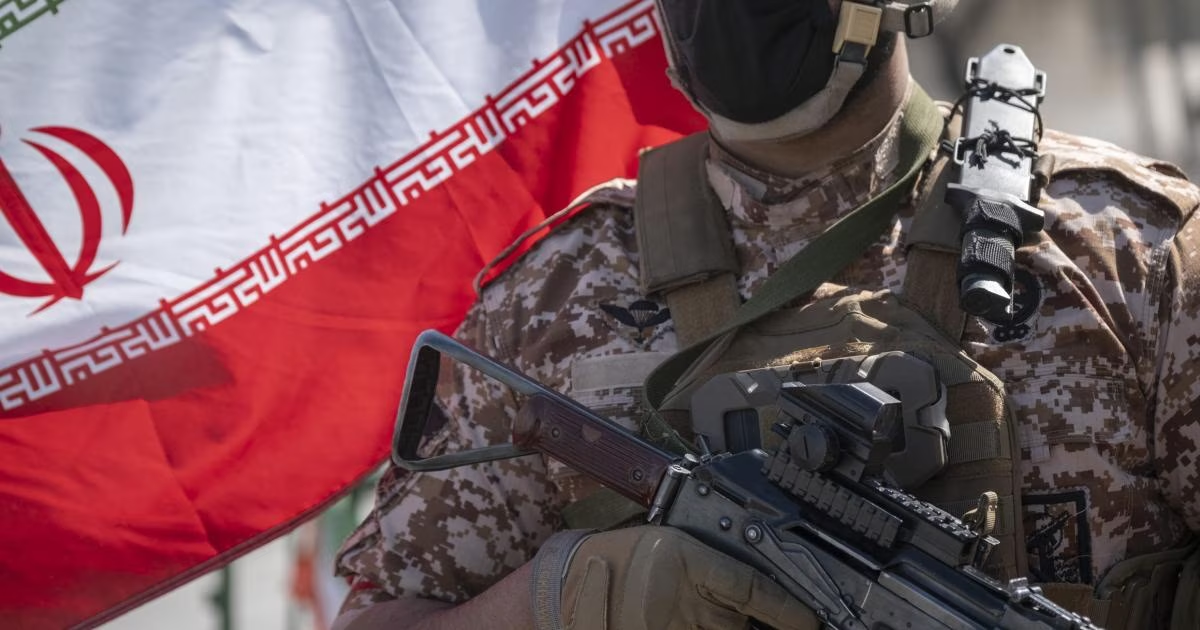
Despite the belief within US military circles that they have succeeded in destroying nearly two-thirds of Iran's missile arsenal, intelligence officials warned of 'fog' surrounding field data. This ambiguity also extends to the expected timelines for any potential Iranian reaction, which keeps the US Central Command in a constant state of alert to face unexpected scenarios.

Meanwhile, the US administration is witnessing a noticeable divergence in political and military rhetoric regarding the crisis; President Donald Trump tends towards the option of negotiation while ruling out a comprehensive ground invasion. In contrast, the State Department and the White House adopt a sharper tone, with the presidential spokesperson hinting at readiness to wage a 'fierce war' if Tehran does not back down from its nuclear ambitions and regional threats.

On the ground, press reports confirmed the monitoring of intense US military movements, including the transfer of elite units specialized in qualitative ground operations to the Middle East. These movements coincide with the arrival of approximately 10,000 additional troops to the region, amid expectations of more military reinforcements to ensure combat readiness for any imminent ground or air escalation.

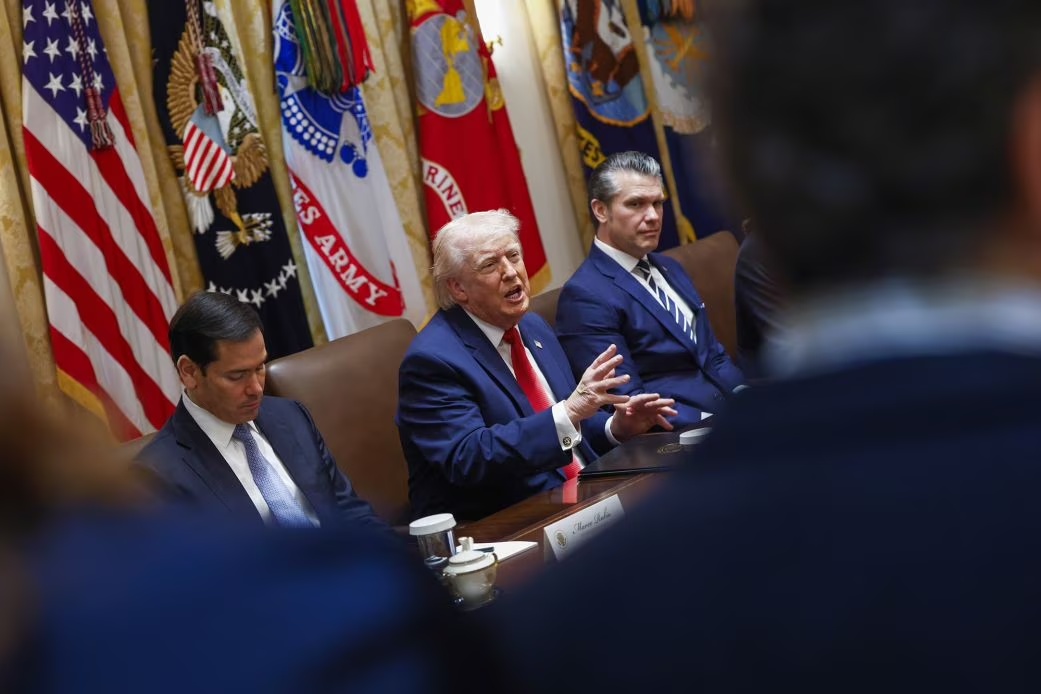
For his part, Secretary of State Marco Rubio stated that the United States is capable of achieving its military objectives and war aims within a short period not exceeding two weeks. Rubio indicated that these objectives can be achieved without necessarily deploying large-scale ground forces, which partially contradicts leaks speaking of plans for a 'knockout blow' being prepared by the Pentagon.

Information leaked through international media platforms indicates that the US Department of Defense is finalizing a comprehensive offensive plan that may include an unprecedented aerial bombing campaign. This plan aims to permanently cripple Iran's defensive and offensive capabilities, while keeping the option of limited ground intervention on the table as part of the knockout blow strategy.

This escalation comes in the context of the open confrontation that began on February 28, which witnessed assassinations targeting senior leaders in the Iranian hierarchy, led by Supreme Leader Ali Khamenei. These strikes led to a radical change in the rules of engagement, as Tehran responded by launching waves of missiles and drones towards Israeli and American targets.

Regionally, Iranian attacks targeting American interests in Arab lands have caused a state of anxiety and tension among neighboring countries, especially in the Gulf region. Some of these strikes resulted in civilian casualties and damage to non-military facilities, which prompted widespread condemnations from Arab capitals that reject turning their territories into an arena for settling international scores.

Available data on Iran's stockpile, manufacturing capabilities, and speed of missile production remains inaccurate.

PALESTINE

Sun 29 Mar 2026 2:02 pm - Jerusalem Time

Fears Haunt Families of Gaza Prisoners as 'Execution' Law Nears Approval in Knesset

The intensity of anxiety is escalating in the homes of Palestinian prisoner families in the Gaza Strip, as the Israeli Knesset's General Assembly approaches a final vote on a bill to execute prisoners. This legislation, which is in its final stages, has caused increased terror among families who already suffer from a lack of news about their sons and their harsh detention conditions.

In Gaza City, the elderly 'Abu Ibrahim' embodies the tragedy of hundreds of families, as he awaits the fate of his son Mohammed, detained for two years. The grieving father says that news of the new law has intensified their suffering, especially given the occupation's refusal to disclose any official information about his son's charges or current place of detention.

Earlier, the Knesset's National Security Committee referred the bill for a vote in its second and third readings, to become effective before the Passover holiday in early April. The law specifically targets Palestinian prisoners accused of participating in killings, while exempting Israelis accused of similar crimes against Palestinians.

Testimonies from released prisoners reaching families reveal a tragic reality inside prisons, including continuous torture and deliberate medical neglect. Families believe that the occupation, which practices slow killing through deprivation of treatment, now seeks legal cover to carry out official executions in cold blood.

Israa, the wife of prisoner Ahmed, describes the moment she heard about the legislation's progress as a 'heart uprising and oppression,' affirming that she tries to hide this news from her young children to protect them from the shock. The family clings to faint threads of hope received through released prisoners, in the absence of any official communication channels with detainees for many long months.

In a related context, Alaa, the wife of prisoner (M.R.), recounts how the law became an impenetrable barrier to her desire for life, especially since her husband was arrested during the storming of Al-Shifa Hospital. She bitterly wonders how to explain this fate to her children, while the family is still healing from the wounds of her eldest son's martyrdom in previous events.

For his part, Thaer Shreiteh, spokesperson for the Commission of Detainees and Ex-Detainees Affairs, affirmed that the execution of prisoners has been an actual practice for years and is not a new one. He explained that the current attempt aims to legitimize what happens in 'human slaughterhouses' and army camps, especially since the start of the recent war on the Gaza Strip.

The Commission's data reveals the documentation of 89 execution cases inside Israeli detention centers over the past two years for prisoners whose identities were known, while the fate of dozens remains unknown. Shreiteh believes that the law aims to provide a legal loophole for killings that occurred under torture, and to later claim they were carried out according to the law.

According to human rights analyses, Israeli Prime Minister Benjamin Netanyahu seeks to appease the extremist wing of his government coalition, specifically the 'Jewish Power' party. The issue of prisoners is used as fuel for political propaganda and to ensure the survival of the ruling coalition, exploiting the international community's preoccupation with successive regional crises.

Lawyer Nadine Abu Arafa, specializing in prisoner affairs, conveyed a state of extreme anticipation inside prisons, where detainees repeatedly ask questions about the nature of the law and its implementation mechanisms. She indicated that prisoners from the Gaza Strip are the most psychologically affected by these threats, due to their exposure to exceptional and harsh patterns of isolation and classification.

The bill stipulates that the death penalty will be carried out by hanging, under the supervision of wardens who enjoy full criminal immunity and complete secrecy of their identities. This clause raises widespread human rights concerns about prisons turning into arenas for settling scores away from any real judicial or international oversight.

Currently, more than 9,500 Palestinian prisoners are held in occupation prisons, including thousands administratively detained without clear charges, and more than 1,200 classified as 'unlawful combatants.' These legislative moves come at a time when policies of repression and abuse inside prisons have escalated unprecedentedly since October 2023.

Families of prisoners have issued urgent appeals to the international community and human rights organizations to intervene immediately and stop this 'legislative madness.' These families emphasize that international silence on these laws gives the occupation a green light to commit more crimes against defenseless prisoners whose protection is guaranteed by international laws.

In conclusion, faith and steadfastness remain the last refuge for the mothers of prisoners, as expressed by the mother of prisoner Osama, who arms herself with patience in the face of Ben Gvir's threats. Families stress that these laws, despite their harshness, will not break their will to demand the freedom of their sons and their safe return despite all the grim circumstances.

Have mercy on the prisoners of Gaza... Press for their relief, we fear that these unjust laws will steal what hope we have left.

PALESTINE

Sun 29 Mar 2026 2:02 pm - Jerusalem Time

Tragedy in Shuja'iyya: A Palestinian Mother Bids Farewell to Her Two Sons Two Years After Losing Their Brother

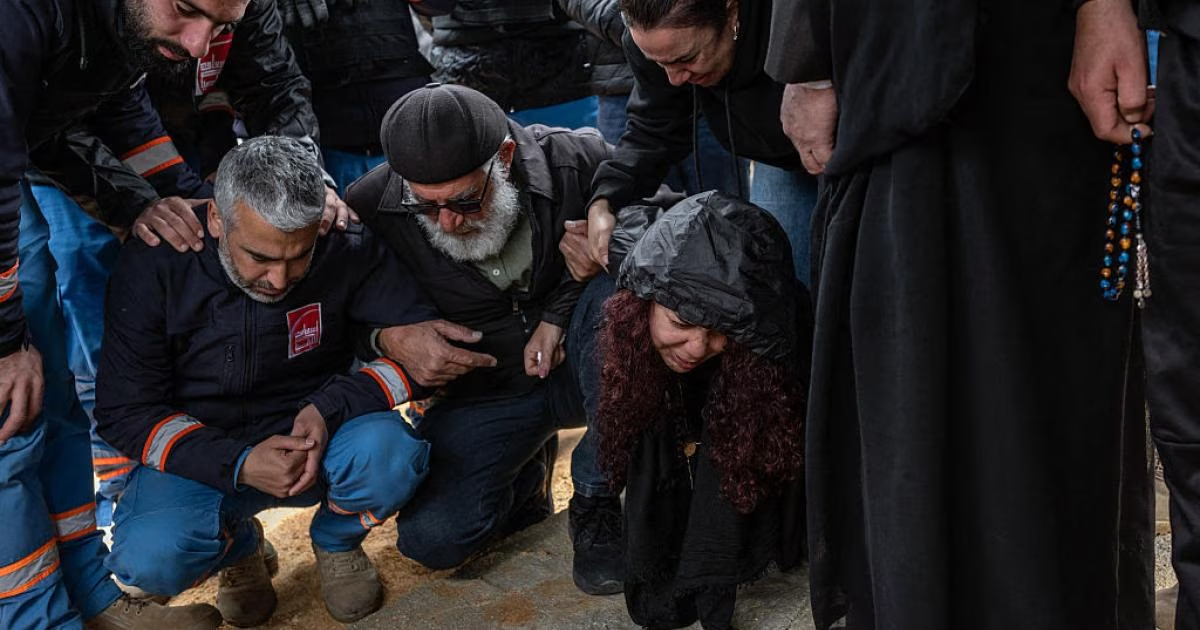
The Shuja'iyya neighborhood, located east of Gaza City, witnessed a new human tragedy embodying the cruelty of continuous loss, as a Palestinian mother returned home to find her two sons, Fahmi and Sa'ed Qaddoum, had died from Israeli occupation forces' bullets. This shocking scene was not the first for this bereaved family, as the mother had previously lost a third son about two years ago, making this incident a symbol of the successive pains afflicting Palestinian families.

Activists circulated a video clip on social media platforms documenting the moment the mother discovered the martyrdom of her two sons, and the clip spread like wildfire amidst a state of overwhelming sadness and anger. Followers saw in the mother's screams and the details of the incident a vivid picture of the bitter reality experienced by the residents of the Gaza Strip, where war leaves no room for survivors except to deal with a memory burdened with absence and renewed pain.

Tweeters and activists expressed their shock at the cruelty of the scene, describing it as one of the most difficult moments a human can witness, as this family's story encapsulates Gaza's continuous pain. Comments affirmed that what happened was not just a fleeting incident, but a reflection of a daily reality imposed by the occupation on civilians, where homes that are supposed to be safe turn into stages of tragedy.

Observers pointed out that the recurrence of these tragedies has made the stories of bereaved mothers a constant part of the daily scene in the Strip, amidst a feeling of international helplessness to stop these violations. Every day, new mourning houses open and martyrs and wounded are recorded, deepening the sense of the weight of grief in light of the continuation of military operations and the unprecedented deterioration of living and service conditions.

The war, which has not yet subsided, continues to claim the lives of young people and leave families in direct confrontation with death and bitter waiting. Local residents believe that what is happening is no longer just news conveyed through screens, but a reality they live with all its painful details, where numbers no longer express the magnitude of the catastrophe as much as the faces of the victims and their truncated human stories do.

On the ground, this incident comes at a time when the region is witnessing continuous escalation despite repeated announcements of calm. Sources confirm that Israeli violations of the ceasefire agreement, which came into effect in mid-January of this year, have not stopped, but have taken an escalating turn targeting civilians in various areas of the Strip.

Documented statistics indicate that the number of Israeli violations since January 19, 2026, has exceeded 2000 violations, leading to the martyrdom of about 690 Palestinians and the injury of hundreds with varying degrees of wounds. These figures show that political agreements have not yet succeeded in providing the necessary protection for citizens who face the risk of death at every moment.

In light of this harsh reality, Gaza residents find themselves forced to live with pain as an integral part of their daily lives, awaiting a real end to their suffering. The story of Fahmi and Sa'ed Qaddoum's mother remains a witness to a bloody historical period, where the dreams of youth are lost under the weight of bullets, and mothers are left to face their fate with loss and loneliness.

What happened to the mother in Gaza is an unending tragedy, as she finds herself once again facing pain that repeats with every new loss.

PALESTINE

Sun 29 Mar 2026 2:01 pm - Jerusalem Time

8 Dead in Khan Yunis and Escalation of Occupation Violations of Ceasefire Agreement on its 171st Day

The occupation army escalated its bloody attacks on the city of Khan Yunis in the southern Gaza Strip, resulting in the martyrdom of eight Palestinians in a blatant violation of the standing ceasefire agreement. Medical and field sources reported that dawn on Sunday witnessed airstrikes targeting two Palestinian police checkpoints, leading to the martyrdom of six citizens, including three security personnel and three displaced persons, among them a girl, in addition to others sustaining various injuries.

In a related context, medical teams announced the martyrdom of the young man Muqbel Mohammed Barbakh, 15 years old, after he was targeted by occupation bullets at the Bani Suheila roundabout. The injured Raed Abu Harb also succumbed to his previous wounds. These deaths add to a heavy record of violations, as government agencies have documented 2,073 breaches of the ceasefire agreement since its beginning on October 11, 2025, leading to the martyrdom of approximately 692 individuals during the supposed truce period.

On the ground, the war machine did not stop at airstrikes but also included intense artillery shelling targeting the eastern areas of the Strip, coinciding with gunfire from warships towards the beaches of Khan Yunis and the tents of displaced persons. Military helicopters also carried out heavy fire sweeping operations east of Al-Bureij refugee camp, exacerbating the panic among thousands of families living in dilapidated shelters and under the rubble of destroyed homes.

On the humanitarian front, the occupation continues to tighten its suffocating siege by closing crossings and preventing the entry of essential medical and relief aid, threatening a health catastrophe and a real famine that endangers the lives of two million Palestinians. In occupation prisons, suffering continued with the announcement of the martyrdom of prisoner Marwan Fathi Harzallah in Megiddo prison, raising the number of martyrs from the prisoner movement since October 7, 2023, to 89 martyrs, amidst Israeli legislative trends to approve a law for the execution of prisoners.

The ceasefire agreement entered its 171st day burdened with field violations and a strict siege affecting more than two million Palestinians in the Gaza Strip.

ARAB AND WORLD

Sun 29 Mar 2026 2:01 pm - Jerusalem Time

"Sharpie" company refutes Trump's account of personally negotiating prices for signature pens

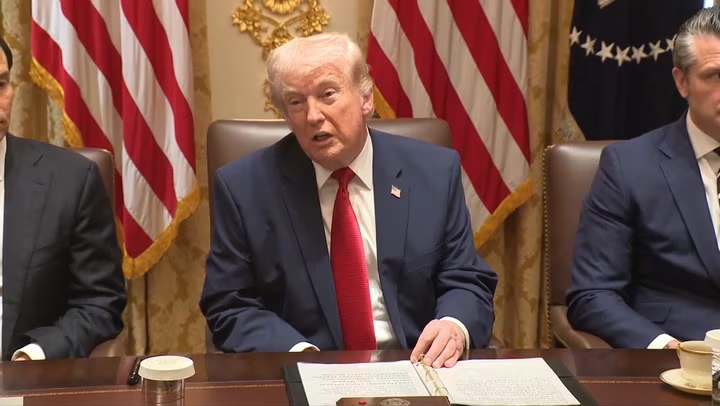
US President Donald Trump's narrative about his eagerness to save public money faced direct skepticism from the famous "Sharpie" company. During a cabinet meeting, Trump recounted a lengthy story about personally negotiating to obtain custom pens, claiming he succeeded in reducing their cost to about five or six dollars per pen instead of getting them for free.

Trump spent a significant portion of the official meeting boasting about his negotiation skills, displaying the black pen he was holding to those present. He noted that despite the pen's quality, he was not satisfied with the prominent display of the company's logo when signing major deals, such as fighter jet contracts worth trillions of dollars.

According to the account provided by Trump, he contacted a company official and asked him to modify the pen's appearance to be more formal and suitable for presidential status. He claimed that the official offered to paint the pen black and add a gilded drawing of the White House with the President's signature, suggesting they be provided as a free gift to the White House.

The US President claimed he rejected the free offer and insisted on paying for the pens from the government budget, asking the official about a price that would satisfy him. Trump claimed he suggested paying five dollars per pen, which the other party agreed to, according to his lengthy speech during the session dedicated to discussing administrative issues.

In contrast, "Newell Brands," the parent company of the "Sharpie" brand, quickly issued a clarifying statement refuting these claims entirely. A company spokesperson confirmed to media sources that there was no record or information supporting such a conversation between the President and any of the company's officials or representatives.

This discrepancy in narratives comes at a time when Trump is trying to highlight his austerity policies and reshape federal institutions. His speech included sharp criticism of the renovation operations of the Federal Reserve headquarters and the John F. Kennedy Center for the Arts, attempting to use the pen story as a model for his approach to managing government expenditures.

We have no information about the described conversation, and we are proud to be a beloved and trusted brand worldwide.

ISRAELI AFFAIRS

Sun 29 Mar 2026 2:01 pm - Jerusalem Time

Former Israeli National Security Advisor: Three Strategic Mistakes Preventing Iran's Defeat

The intensity of internal debate in Israel has escalated as the military confrontation with Iran enters its second month, with voices of doubt emerging regarding the ability to strategically resolve the battle. Observers believe that the euphoria that accompanied the initial strikes has begun to recede in favor of growing concern about the war's outcomes and its long-term economic and security costs.

Reserve General Giora Eiland, former National Security Advisor, stated that Israel and the United States fell into a trap of miscalculations since the start of operations. Eiland explained that the first mistake is the wide gap between the declared goals of the war and the available means to achieve them, likening the situation to Napoleon's failed campaign in Russia.

Eiland pointed out that the second mistake lies in underestimating Iran's ability to close the Strait of Hormuz, where a naive belief prevailed that destroying the conventional fleet would incapacitate Tehran. He stressed that Iran possesses a massive arsenal of drones, naval mines, and missiles that can paralyze global shipping and exacerbate international crises.

The former advisor emphasized that the third miscalculation is the complete reliance on air power without engaging in a widespread ground campaign. He explained that the absence of ground operations, and the failure of attempts to recruit regional forces like the Kurds for this purpose, limited the results to material destruction without bringing about a change in the strategic awareness of the Iranian leadership.

Security sources confirmed that Iran has been preparing for this confrontation for four decades, building missile cities and fortified military bases deep underground. This preparation makes it difficult to eliminate its military capabilities through air attacks alone, which explains the continuation of the confrontation despite the intensity of Israeli and American fire.

In a related context, Eiland warned against being drawn into the Lebanon front without a clear vision for the end, considering that Israel has fallen into a war of attrition trap in the north. He noted that Hezbollah, which possesses a massive missile arsenal, is still capable of putting large areas under fire despite the strikes that targeted its strategic capabilities.

On the other hand, Tzachi Hanegbi, the resigned National Security Advisor, adopts a more optimistic view, calling for continued military pressure to break the balance of terror. Hanegbi believes that the United States' insistence on achieving a military resolution may eventually force Tehran to make fundamental concessions that were not on the table before the outbreak of the war.

Economically, researcher Benny Sabti believes that the Iranian regime faces the risk of imminent collapse due to declining oil revenues and frozen funds abroad. He explained that Tehran suffers from a deficit in providing basic and food needs for its citizens, which could lead to a popular uprising that overthrows the ruling authority under the weight of the living crisis.

Despite these expectations, analysts believe that betting on the collapse of the regime from within may be an uncertain gamble at present. The Iranian people, according to some interpretations, may rally around their leadership in the face of external threats, especially if clear, internationally supported political alternatives are not available.

Israeli circles fear damage to relations with Washington if the war fails to achieve its desired goals against the nuclear and missile programs. A narrative prevails in some American circles that Tel Aviv was the one that lured the United States into this direct and costly confrontation.

Israel possesses a nuclear deterrent force estimated at 80 to 400 warheads, but this force remains outside the calculations of the current conventional confrontation. Its economy, with a national output of 400 billion dollars, has also begun to feel the pressures of the ongoing war on multiple fronts including Gaza, Lebanon, and the West Bank.

The Israeli military establishment considers Iran to be the mastermind behind five hostile fronts surrounding it, making the confrontation with it an existential battle. However, field control in the West Bank through hundreds of military checkpoints consumes a large part of the army's and security forces' efforts.

The question remains about how to end this war, as Iran insists that any future negotiations must be limited to the nuclear file only. Tehran refuses to include its ballistic missile program or its regional influence in any agreement, which completely contradicts Israeli and American demands.

Ultimately, it seems that the true measure of success lies in strategic outcomes, not in the number of destroyed targets. If military and economic pressures fail to change Tehran's behavior, the region may remain stuck in a long spiral of attrition that does not serve the stability of any party.

Tactical successes do not amount to a strategic gain, and air strikes do not affect the enemy's convictions and sovereign decisions.

ARAB AND WORLD

Sun 29 Mar 2026 2:01 pm - Jerusalem Time

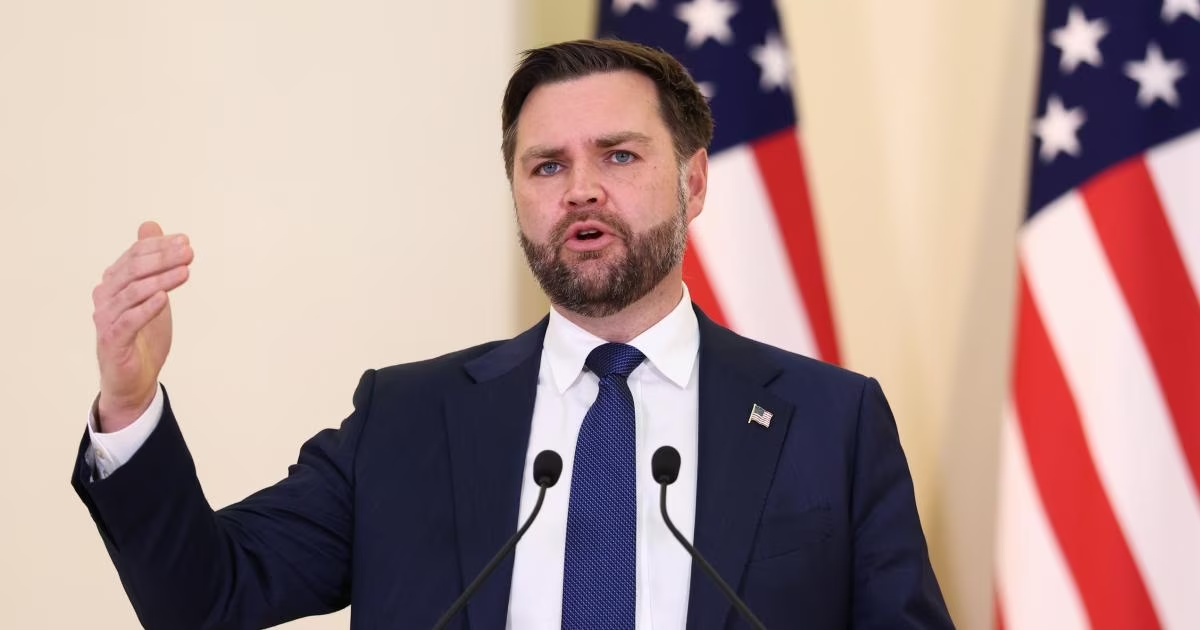
Vance tops 'conservative' poll as preferred candidate to succeed Trump in 2028

The results of an unofficial opinion poll conducted during the annual Conservative Political Action Conference revealed that US Vice President J.D. Vance topped the list of preferred choices among the Republican Party's popular base. Vance received the support of about 53% of the more than 1,600 participants in the poll, strengthening his position as a potential successor to President Donald Trump in the next election cycle.

In second place came current Secretary of State Marco Rubio, who garnered 35% of the votes of participants in the gathering hosted in Grapevine, Texas. This conference is a vital platform for conservative representatives and activists, reflecting the pulse of the right-wing current within the Republican Party and its future directions regarding political leadership in the United States.

Although this type of poll is not a decisive or binding indicator for determining the party's final candidate, it provides an accurate reading of the trends of supporters of the 'MAGA' movement. These results gain double importance given that President Donald Trump is currently serving his second and final term, which constitutionally prevents him from running for a third term in 2028.

President Trump had previously remained silent in early February regarding the escalating debate about the identity of his political successor, refusing to favor any of the proposed names. Attention is primarily focused on the duo Vance and Rubio, who represent the new generation of leadership in the party, amidst anticipation of Trump's final stance, which could change the balance of power at any moment.

Informed sources within the Republican Party indicate that Marco Rubio, the former senator from Florida, may again seek to enter the presidential race after his previous experience in 2016. Rubio had then lost the primary competition to Donald Trump, but he later managed to build a close relationship with the current administration, enabling him to assume the sovereign foreign affairs portfolio.

The American political scene remains open to all possibilities as the end of the current term approaches, with presidential hopefuls seeking to win the favor of Trump's solid electoral base. Vance, in this context, represents the natural extension of 'America First' policies, which explains the gap he achieved in the latest poll compared to his rivals within the conservative camp.

The poll provides insight into the trends of the most important supporters of President Donald Trump's 'Make America Great Again' movement.

ARAB AND WORLD

Sun 29 Mar 2026 2:00 pm - Jerusalem Time

Million-strong protests sweep the United States condemning Trump's policies and his war in the Middle East

Major American cities and all fifty states witnessed a massive wave of protests on Saturday, with millions taking to the streets to express their categorical rejection of President Donald Trump's policies. The protesters' demands varied, ranging from condemning the current administration's authoritarian tendencies and rejecting repressive measures against immigrants, to calling for an end to the ongoing war in the Middle East.

The 'No Kings' movement, the organizer of these events, announced that the number of participants reached an unprecedented record in the history of modern American protests. The movement confirmed in an official statement that at least eight million people gathered at more than 3,300 demonstration points, reflecting the widespread public anger.

Figures released by the organizers indicate a significant increase in the pace of mobilization, with this round seeing an estimated one million more participants compared to last October's protests. The number of demonstrations also increased by about 600 additional events, while official authorities have not yet issued any estimates of the crowd size.

Participation was not limited to political activists; celebrities and stars led the front lines in cities like New York and Minneapolis. International actor Robert De Niro and singer Bruce Springsteen joined the protesters, considering that the current administration's policies threaten the country's fundamental constitutional values.

These popular movements come at a sensitive political time, as the war in the Middle East led by Trump in alliance with Israel has entered its second month. These field pressures also coincide with the approaching midterm elections scheduled for next November, putting the administration in a real predicament.

In the capital, Washington, thousands gathered near the White House, raising slogans condemning systematic lies and demanding change. An elderly participant stated that street anger is gradually increasing, emphasizing that continuing these policies will lead to an imminent social and political explosion.

In Michigan, chants focused on the slogan 'No Kings, No Immigration Administration, No War,' a clear reference to the rejection of the broad powers exercised by the president. Protesters held signs calling for peace and demanding an end to foreign military operations that drain the country's resources and fuel conflicts.

In New York City, actor Robert De Niro led a massive march, warning that Trump represents an 'existential threat' to public freedoms and national security. De Niro called in his speech for urgent action to stop what he described as constitutional overreaches that no other American president has ever committed.

Protest organizations chose Minneapolis as a main center for mobilization, given that it had previously witnessed violent government campaigns against immigrants. The neighboring city, St. Paul, saw about 200,000 demonstrators take to the streets, a scene reflecting the residents' solidarity with the victims of federal violence.

Minnesota Governor Tim Walz participated in the events, extending special thanks to the residents for standing up against what he described as the 'emerging dictator.' Walz considered that the state would remain an impregnable fortress for defending democracy in the face of policies attempting to undermine the rule of law.

For his part, Senator Bernie Sanders launched a scathing attack on the president, describing him as a 'narcissistic and corrupt' figure lacking credibility. Sanders affirmed to the crowds that the American people would not accept a president who daily works to undermine the Constitution and destroy the democratic institutions upon which the country was founded.

On the international level, the United States was not alone in this movement, as European capitals such as Rome, Athens, and Madrid witnessed solidarity marches. In contrast, President Trump chose to distance himself from these charged atmospheres, spending his day playing golf at his private club in Florida.

No president has posed such an existential threat to our freedoms and security as Trump does, and he must be stopped immediately.

ARAB AND WORLD

Sun 29 Mar 2026 2:00 pm - Jerusalem Time

Regional Escalation: Kuwait, Saudi, and UAE Defenses Repel Widespread Attacks, Revolutionary Guard Targets 'Alba'

Kuwait, the UAE, and Saudi Arabia announced today, Sunday, that their territories were subjected to a series of missile attacks and suicide drones. These rapid field developments come at a time when the Israeli-American aggression against Iran has entered its thirtieth day, leading to an expansion of military confrontations to include vital targets in the region.

Kuwaiti military sources reported that the country's air defense systems successfully intercepted and destroyed hostile targets in the sky, confirming that the sounds of explosions heard were a result of successful interception operations. The Kuwaiti army later clarified in statements that it dealt with three consecutive waves of attacks targeting different locations, emphasizing the readiness of the armed forces to protect the country's security.

In the Kingdom of Saudi Arabia, the Ministry of Defense confirmed the interception and destruction of about 10 booby-trapped drones in the past few hours, with no casualties. The competent authorities are working to monitor launch sources and fully secure Saudi airspace to ensure the safety of facilities and civilians in border and internal areas.

For its part, the UAE Ministry of Defense revealed that it had repelled missile and drone attacks described as coming from Iranian territory. The ministry indicated in an official statement that air defense systems effectively dealt with ballistic missiles and 'cruise' missiles, in addition to drones that were attempting to penetrate UAE airspace.

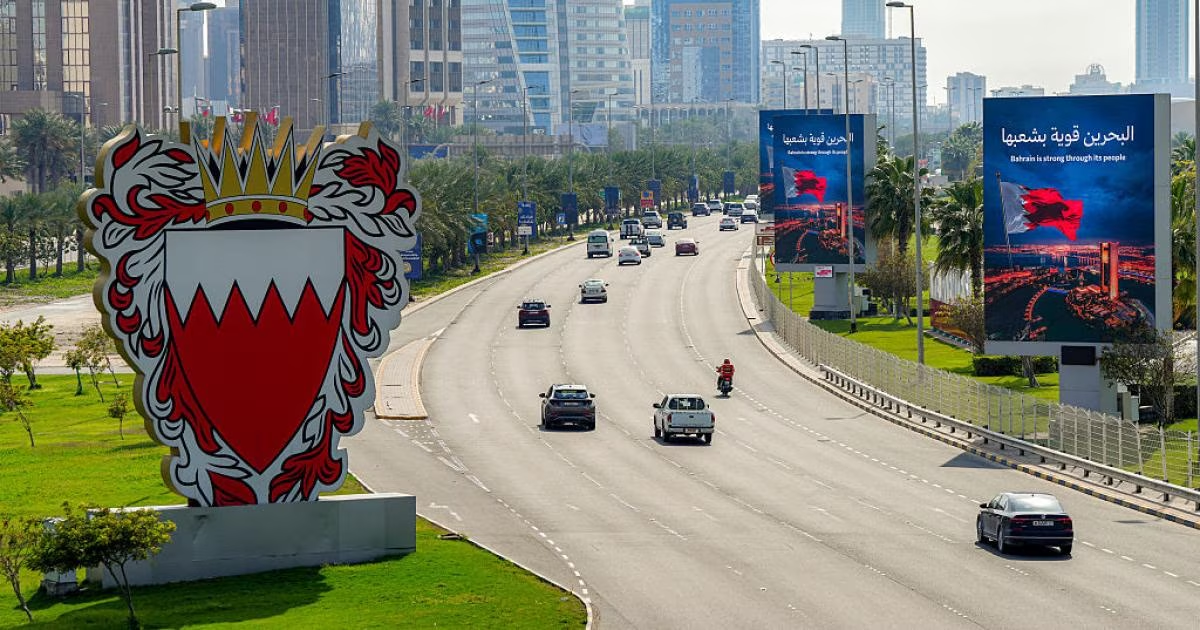
In the Kingdom of Bahrain, a state of alert prevailed after sirens were sounded across the country, with the Ministry of Interior calling on citizens and residents to immediately head to shelters and safe places. Although the Ministry of Interior did not directly disclose details of the attack, these measures usually coincide with the detection of imminent aerial threats targeting Bahraini depths.

Regarding material losses, Aluminium Bahrain 'Alba' announced that its industrial facilities were subjected to a direct attack, resulting in two minor injuries. The company confirmed in a statement quoted by official sources that it is currently conducting a comprehensive assessment of the extent of technical and structural damage to the smelter, which is one of the largest aluminum smelters in the world.

In a significant development, the Iranian Revolutionary Guard announced its full responsibility for the attack that targeted 'Alba' company in Bahrain, in addition to another attack on Emirates Global Aluminium 'Emal'. The Revolutionary Guard justified these targeting by stating that these companies play a pivotal role in supporting American military industries through strategic partnerships and investments.

Bahrain's 'Alba' company is already suffering from severe operational pressures, having announced in mid-March a 19% reduction in its production capacity. This decline is due to significant disruptions in supply chains and maritime transport resulting from Iran's closure of the strategic Strait of Hormuz since the outbreak of confrontations last February.

The region has been experiencing a state of open warfare since February 28, with parties exchanging missile and aerial strikes daily. Tehran asserts that it targets what it describes as American interests and sites in Arab countries in response to the attacks it is subjected to, which Gulf countries consider a blatant assault on their sovereignty and national security.

Targeted countries have condemned these repeated attacks on civilian assets and economic facilities, demanding international intervention to stop this escalation. Sources warned that continued targeting of energy and industrial infrastructure in the Gulf could lead to catastrophic repercussions for the global economy and essential metal supplies.

Alba company confirms that the Iranian attack resulted in two minor injuries, and we are currently assessing the extent of the damage to the facilities.

ARAB AND WORLD

Sun 29 Mar 2026 2:00 pm - Jerusalem Time

Pentagon Studies Plan for Ground Operation in Iran Targeting Kharg Island and Strait of Hormuz

Media sources, quoting US administration officials, revealed that the Department of Defense is finalizing plans for a potential ground operation targeting the Iranian interior. These plans primarily focus on seizing the strategic Kharg Island, the country's main oil export hub, which would give Washington immense economic and military leverage.

Military estimates indicate that this operation would not take the form of a full-scale invasion, but rather a time-limited intervention that could extend for two months. The proposed strategy relies on integrating elite special forces units with infantry brigades to carry out precise and rapid missions to paralyze Iranian defensive capabilities in coastal areas.

The anticipated military move aims to neutralize Iranian threats to international navigation in the Strait of Hormuz, as Washington seeks to destroy missile systems and weapons that threaten oil tankers. Kharg Island is considered a vital target as it is the outlet for more than 90% of Iranian oil exports, and controlling it would mean cutting off Tehran's financial lifeline.

For her part, White House spokeswoman Karoline Leavitt affirmed that the Pentagon is fulfilling its professional role in presenting all available military options to the Commander-in-Chief of the Armed Forces. Leavitt clarified that the existence of these plans on the discussion table does not mean that President Donald Trump has given the green light for implementation, but rather falls within the framework of preparing for all scenarios.

In a related context, President Trump kept the door open to all possibilities, indicating in previous statements that he prefers the element of surprise in dealing with such sensitive issues. Trump affirmed that if he decides to take the step of ground intervention, he will not announce it in advance, which increases the strategic ambiguity surrounding US movements in the region.

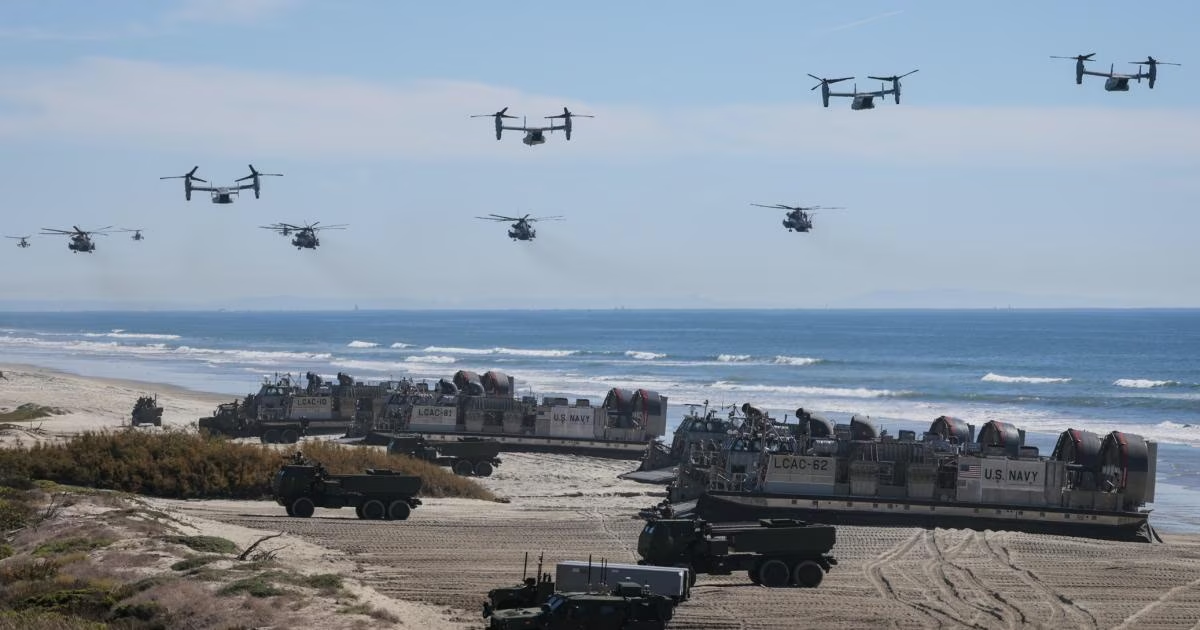
On the diplomatic front, Secretary of State Marco Rubio tried to calm allies' concerns during G7 meetings, affirming that Washington is not currently seeking a large-scale ground operation. However, these statements contradict the field movements represented by the arrival of the assault ship 'USS Tripoli' and the reinforcement of US forces with thousands of additional troops in the Middle East.

These plans face significant field challenges and risks, which military reports have warned about, especially regarding the safety of US soldiers in the face of Iranian coastal defenses. These developments come at a time when there is increasing talk of a widespread strike that may precede any announcement of a political victory, with the task of securing navigation in the Strait of Hormuz left to the international community at a later stage.

The ongoing preparations do not necessarily mean that the President has made a final decision on military ground action.

ARAB AND WORLD

Sun 29 Mar 2026 2:00 pm - Jerusalem Time

JD Vance Leads Negotiations to End War with Iran Amid Rising Tensions with Netanyahu

US Vice President JD Vance has emerged as a pivotal figure in Pakistan-led diplomatic efforts aimed at reaching an agreement to end the state of war with Iran. These moves come at a time when Vance's relationship with the head of the occupation government, Benjamin Netanyahu, is experiencing tangible tension, reflecting a divergence in strategic visions regarding regional issues.

Observers believe that Vance's selection for this role is a calculated tactical step by the Trump administration, aimed at sending reassuring messages to allies concerned about economic repercussions, while at the same time presenting an interlocutor with less extreme stances on military action compared to other names like Steve Witkoff or Jared Kushner.

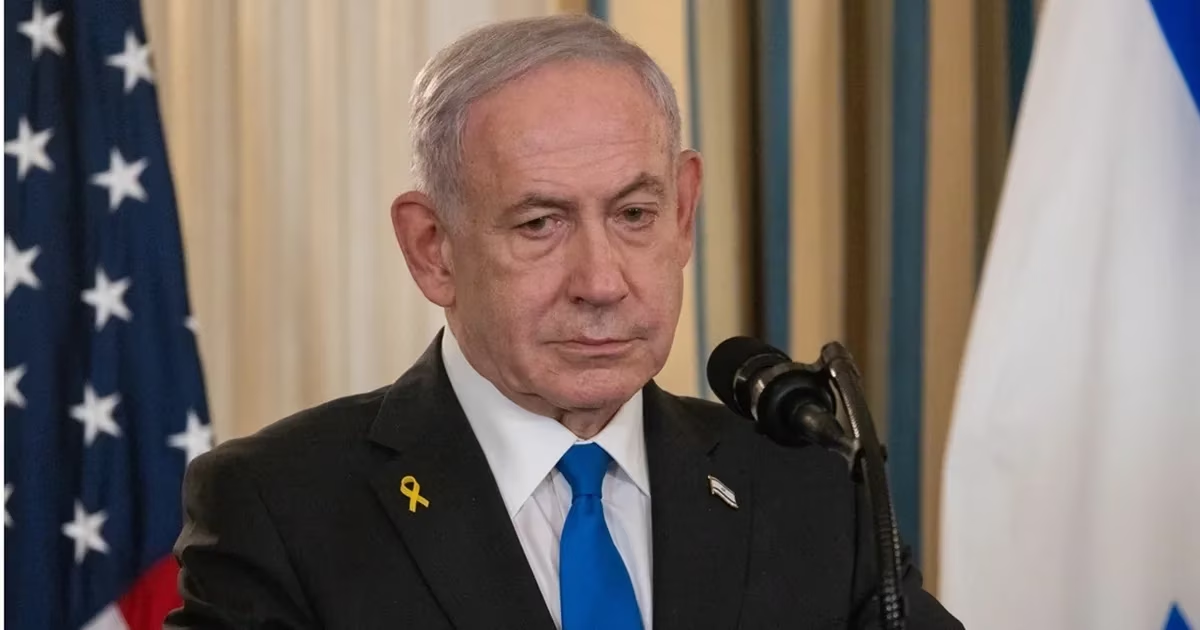
In the context of deep disagreements, sources revealed a heated phone call between Vance and Netanyahu, during which the US Vice President sharply criticized the Prime Minister of the occupation, accusing him of presenting overly optimistic assessments about the course of the war and attempting to push the United States towards direct military involvement.

Domestically in the US, Vance faces widespread criticism due to his association with currents described as extremist. A report by 'The Telegraph' pointed to his praise for the book 'Unhumans,' which adopts exclusionary language towards political opponents. This trend has raised concerns about the rise of radical thought within the decision-making circles of the White House.

Vance's relationship with controversial media figures, such as Tucker Carlson, has also exacerbated polarization, especially after his statements that were considered appeasing to extremist views. Vance defended these positions, considering them part of a necessary dialogue within the new American right, which his critics see as crossing traditional red lines.

In response to reports indicating Tehran's preference for negotiating with Vance, Andrew Surabian, a close associate of the Vice President, described these reports as coordinated propaganda attempts aimed at weakening the US administration's position. Surabian affirmed that Vance operates according to a vision that puts American interests first, free from any external influences.

The 'MAGA' base supporting Trump is experiencing sharp divisions over how to deal with war and peace issues, with media and political figures exchanging harsh accusations regarding their stance on Israel and Iran. This internal conflict reflects a state of confusion in determining the strategic priorities of the United States in the coming phase.

The question remains about Vance's ability to balance his ambitions to lead historic negotiations with Iran with the necessity of maintaining the cohesion of the electoral base that demands certain concessions. Vance's success in this mission could reshape the map of alliances in the Middle East, or lead to further isolation for Netanyahu and his government.

If the Iranians cannot make a deal with Vance, they will never get a deal; he is the best option available to them.

OPINIONS

Sun 29 Mar 2026 7:58 am - Jerusalem Time

Israel and the Security Complex: An Existential Obsession Beyond Military and Nuclear Power

Ramallah - "Al-Quds" Dot Com

Ramallah - "Al-Quds" Dot Com

Opinion Writer

Despite seventy-five years since its establishment, and reaching advanced levels of economic and military power, Israel continues to live in a state of existential security anxiety unmatched by any other country. This obsession comes at a time when Tel Aviv enjoys strategic protection from the United States, possesses a nuclear arsenal estimated at hundreds of warheads, in addition to a national income exceeding 400 billion dollars, which makes its security justifications deeply questionable.

Israel has long invested in claims of an existential threat from neighboring countries, but this wall practically collapsed after peace and normalization agreements with several Arab countries, and the decline of the traditional military threat from the region's armies. Nevertheless, Israeli circles quickly invented new enemies or exaggerated regional rivals like Iran, to push major powers towards military confrontations that serve its expansionist interests and ensure its qualitative superiority.

In the Iranian file, Israeli contradiction is clear; while Israel possesses immense nuclear capabilities, it launches international campaigns to prevent Tehran from acquiring a peaceful program, and previously succeeded in pushing the US administration to withdraw from the nuclear agreement. This behavior reflects a desire to keep the region in a state of instability, ensuring the continuation of Israeli military intervention in the regional depth under the pretext of 'self-defense'.

On the ground, Israel exercises direct occupation of the West Bank, supported by militias of armed settlers numbering over half a million, facing an unarmed people besieged behind hundreds of military checkpoints. This reality proves that the security Israel seeks is not merely border protection, but a tool to perpetuate control over Palestinian land and prevent the establishment of an independent state, by turning cities and villages into isolated 'islands'.

Israeli security reports constantly speak of the erosion of deterrence power, pointing to five active fronts including Gaza, Lebanon, Syria, the West Bank, and Iran, in an attempt to justify repeated military operations. Its sources resort to exaggerating the capabilities of the resistance in Gaza or claiming that Hezbollah possesses chemical weapons, to create international cover that allows it to use tons of explosives in its swift and continuous wars.

This behavior, stemming from the 'psychological illness of security obsession,' has two main motives; the first is to continue politically and militarily blackmailing the Western world to achieve the dream of a regional 'superpower'. The second is an attempt to convince the international community of the impossibility of withdrawing from the occupied territories in the Golan and Palestine, by portraying the surrounding areas as permanent threats that can only be contained by military control or by turning them into buffer zones.

Ultimately, Israel remains an unnatural state in its own eyes before others, because it refuses to integrate into its surroundings by ending the occupation and adhering to international legitimacy resolutions. Instead of living as a peaceful state like its neighbors, Tel Aviv chooses to remain in a spiral of security obsession, trying to combine two irreconcilable opposites: the continued occupation of others' lands, and the expectation of achieving permanent security and peace.

Israel is trying to do the impossible by combining two opposites: continued occupation and achieving absolute security.

PALESTINE

Sun 29 Mar 2026 7:58 am - Jerusalem Time

6 killed in Israeli Raids Targeting Police Posts West of Khan Yunis

Israeli occupation forces escalated their aerial attacks at dawn today, Sunday, as intensive airstrikes targeted Palestinian police posts in the Al-Mawasi area, west of Khan Yunis city in the southern Gaza Strip. Field sources confirmed that the intense shelling led to the destruction of the targeted sites and the rise of smoke columns in the area, which is crowded with displaced people.

Medical sources reported that the attack resulted in the martyrdom of 6 people, including three members of the police force who were carrying out their duties in securing the area, in addition to a number of injuries of varying severity. The bodies of the martyrs and the injured were transferred to nearby hospitals amidst a state of panic among citizens living in displacement tents.

This field escalation comes in the context of a series of continuous Israeli violations of the ceasefire agreement that came into effect on October 10, 2025. Despite the declared calm, Israeli aircraft and artillery have not stopped carrying out localized strikes in different areas of the Strip, threatening the collapse of fragile understandings.

Saturday witnessed similar attacks, where Israeli army forces killed three Palestinians, including two brothers, in shelling and shooting operations targeting various areas. These attacks coincide with ground military movements in areas that are still under Israeli control according to the terms of the latest agreement, exacerbating the suffering of the besieged residents.

Official statistics issued by health authorities indicate that the number of victims of Israeli violations since last October 11 has risen alarmingly, reaching 691 martyrs and more than 1876 injured. These figures show the extent of field violations practiced by the occupation forces, far from adhering to the terms of international de-escalation.

It is worth noting that the Gaza Strip is living through the aftermath of a devastating war that erupted on October 7, 2023, and lasted for two years, leaving more than 72,000 martyrs and about 172,000 injured. The widespread military operations also caused the destruction of nearly 90% of the infrastructure and vital facilities, leaving the Strip facing an unprecedented humanitarian crisis in modern times.

Israeli shelling resulted in the martyrdom of 6 Palestinians, including 3 police officers, and injuries to several others.

ARAB AND WORLD

Sun 29 Mar 2026 7:58 am - Jerusalem Time

Pentagon preparations for 'limited' ground operations inside Iranian territory

International press reports have revealed intensive movements within the US Department of Defense (Pentagon) to prepare for potential ground operations inside Iranian territory. These preparations come amid escalating regional tensions and Washington's efforts to strengthen its military grip in the Middle East by deploying thousands of additional troops.

Media sources quoted US officials as saying that the current plans do not aim to launch a full-scale invasion of the Islamic Republic, but rather focus on carrying out precise raids and qualitative operations. Special operations forces and infantry units are expected to carry out these missions, which may continue for several consecutive weeks.

Military estimates indicate that any ground incursion will expose US forces to serious security risks, especially with the threats posed by Iranian drones and ballistic missiles. Improvised explosive devices and ground fire also stand out as key threat elements that field units may face if ground penetrations are carried out.

Meanwhile, positions within President Donald Trump's administration vary between hinting at military escalation and a desire to open channels for negotiation. The White House spokeswoman affirmed that the administration is ready for all scenarios, including direct confrontation, if Tehran does not respond to demands regarding its nuclear program.

For his part, Secretary of State Marco Rubio made striking statements in which he indicated the possibility of achieving US military objectives within a short period not exceeding two weeks. Despite his exclusion in those statements of the need for ground forces, other intelligence reports spoke of preparing a 'knockout blow' that includes a widespread bombing campaign.

The US administration is currently considering a proposal to deploy approximately 10,000 additional troops to the region to support existing military formations. These reinforcements aim to provide the necessary cover for potential operations and ensure the security of vital US interests in international waterways.

Discussions within decision-making circles in Washington included the possibility of controlling Kharg Island, which is the main artery for Iranian oil exports in the Arabian Gulf. The plans also included launching raids on strategic coastal areas near the Strait of Hormuz to destroy weapon platforms that threaten commercial and military navigation.

Informed sources explained that the proposed timelines for these operations are characterized by speed, as some military leaders believe they can be completed within weeks. While other estimates set a time limit of up to two months to ensure the achievement of all field objectives and the dismantling of targeted offensive capabilities.

On the ground, the US Central Command announced the arrival of the amphibious assault ship 'USS Tripoli' to the waters of the Middle East. This ship is an advanced helicopter carrier, and leads a combat group comprising approximately 3,500 Marines and sailors ready for rapid deployment.

The question remains about the extent to which President Trump will go in adopting these bold military plans or contenting himself with a part of them as a political pressure tool. International circles are awaiting the White House's final decision, at a time when military buildups are increasing, threatening a confrontation that could change the balance of power in the region.

President Trump is ready to wage a fierce war if Tehran does not back down from its nuclear program and its continuous threats.

ANALYSIS

Sun 29 Mar 2026 7:58 am - Jerusalem Time

Between Announcing Achievement and Escalation Indicators: Washington Heads for Withdrawal from Iran Amidst Rising Regional Risks

Said Erikat

Opinion Writer

Washington – Said Arikat – 29/3/2026

News Analysis

At a highly sensitive time, US Vice President JD Vance announced that the United States is on the verge of ending its military operation in Iran, confirming that "most, if not all, objectives have been achieved," and that withdrawal is imminent. Vance's statements came during a podcast interview with conservative political commentator Benny Johnson, where he sought to present a decisive and reassuring picture of the operation's progress, indicating that the US administration does not intend to engage in a long-term military presence within Iran.

Vance clarified that the US President believes the primary mission has been accomplished, adding that "there is a strong argument" to be made that all military objectives have indeed been met. He noted that the remaining period of operations would be short, aimed at ensuring that these strikes would not need to be repeated in the near future. In this context, he stressed that Washington is not seeking to remain in Iran for a year or two, but rather operates on the principle of "rapid achievement then withdrawal."

The Vice President's statements also had economic dimensions, as he linked the end of military operations to his predictions of lower fuel prices, considering the current rise as merely a "temporary reaction" to what he sees as a short-term conflict. This linkage reflects a clear awareness of the American public's sensitivity to energy prices and an attempt to preempt any internal repercussions that could negatively affect the administration.

Conversely, on the ground, indicators reveal a more complex picture than Vance attempts to portray. The Houthi group in Yemen, supported by Iran, announced the launch of a missile towards Israel early Saturday morning, a move it described as a response to the continued targeting of what it calls the "axis of resistance." While Israeli authorities confirmed no casualties, the implications of the attack extend beyond its immediate results, indicating a widening scope of regional tension.

According to the Houthi statement, the attack targeted "sensitive military sites" in southern Israel and came in response to strikes that hit infrastructure in Iran, Lebanon, Iraq, and the Palestinian territories. A prominent Houthi official, Mohammed Mansour, also hinted at the possibility of closing the Bab al-Mandab Strait, one of the world's most important maritime passages, through which about one-eighth of global trade passes, opening the door to dangerous economic and security escalation scenarios.

Vance's statements reflect a clear attempt to contain the political narrative of the war, presenting it as an operation with limited objectives and duration, despite field indicators suggesting otherwise. The recent history of US military interventions shows that "imminent withdrawal" often turns into a long-term commitment due to the complexities of reality. Moreover, talk of achieving all objectives seems closer to internal mobilization rhetoric, aimed at reassuring public opinion, rather than an accurate description of the changing situation on the ground.

The link between military operations and fuel prices reveals an internal priority no less important than the stated strategic goals. The US administration recognizes that any sustained rise in energy prices could become a heavy political burden, especially in a sensitive electoral environment. However, this gamble remains fraught with risks, as the widening scope of regional conflict, or the threat to vital maritime passages, could lead to counterproductive results, pushing prices higher instead of lower.

The Houthi threat to close the Bab al-Mandab Strait highlights the fragility of global maritime security amidst the current escalation. Such a step, if realized, would not only affect the warring parties but would extend to the entire global economy, disrupting supply chains and raising shipping and insurance costs. Furthermore, the involvement of non-state actors in the deterrence equation complicates escalation calculations, making it difficult to contain the crisis within a specific geographical or political scope.

In light of these developments, the official narrative presented by Washington about the imminent end of operations does not fully align with the facts on the ground. Mutual escalation, the widening scope of responses, and the threat to strategic passages are all factors indicating that the conflict may be in its early stages, not its end. Between the rhetoric of "achievement and withdrawal" and the reality of "escalation and entanglement," the region remains open to multiple possibilities, far exceeding what political statements declare.

Given the current data, the end of the war seems closer to a "frozen conflict" than a clear resolution. Washington may seek to establish a temporary deterrence equation through limited strikes followed by undeclared understandings, ensuring a temporary curbing of Iran's nuclear program without completely dismantling it. In contrast, Tehran may adopt a strategy of absorbing strikes while activating its regional proxies to maintain leverage. This scenario keeps tension at a low to medium level, with intermittent flare-ups, and transforms the conflict into a long war of attrition managed politically rather than militarily resolved, without a clear official end being announced.

ARAB AND WORLD

Sun 29 Mar 2026 7:57 am - Jerusalem Time

Revolutionary Guard threatens to target Israeli and American universities in the region

The Iranian Revolutionary Guard issued a strongly worded statement threatening to launch attacks targeting Israeli and American universities spread across Middle Eastern countries. This escalation came after reports confirmed that Iranian academic facilities were subjected to airstrikes described by Tehran as aggressive, indicating that the conflict has moved to a stage of targeting educational and scientific institutions.

Media sources reported that Iran University of Science and Technology in the capital Tehran was bombed on Saturday morning, causing widespread destruction to its facilities. The official statement accused American and Israeli forces of being behind this attack, considering that the repeated targeting of Iranian universities gives Tehran the full right to retaliate in kind against the academic interests of both parties in the region.

The Revolutionary Guard set a condition to avoid retaliatory operations, demanding that the American administration issue an official statement condemning the bombing of Iranian universities before noon on Monday, March 30. The statement affirmed that failure to respond to this demand would make all universities belonging to the occupation and the United States in the West Asia region legitimate military targets for Iranian forces.

In the context of field warnings, the Iranian military command issued an urgent advisory to teaching staff, students, and employees working in American universities in the region. The statement emphasized the necessity of staying at least one kilometer away from these headquarters, to ensure their safety in the event of the expected missile or air strikes being carried out.

Field data indicates that the targeted University of Science and Technology is one of the most prominent research centers in Iran, where its activities focus on advanced nuclear technology research. Observers believe that its targeting falls within attempts to undermine Iranian scientific and technical capabilities, which Washington and Tel Aviv accuse of being linked to the military program.

The escalation was not limited to facilities but also included human resources, as sources recalled the assassination of academic Saeed Shamghadri, a faculty member in the Electrical Engineering Department at the same university. Shamghadri was killed on March 23rd after an attack targeted his home, exacerbating the state of security and academic tension in the country.

The region has been witnessing an open military confrontation since late February, with Israel and the United States launching a series of intensive raids on Iranian territory. These operations have resulted in significant human losses, including high-ranking security officials, amid reports of a deteriorating leadership situation in Tehran as a result of these successive strikes.

For its part, Tehran continues to respond by launching barrages of ballistic missiles and suicide drones towards targets inside Israel. Iran has also expanded its targeting to include what it describes as vital American interests in several Arab countries, leading to civilian casualties and severe material damage that has sparked widespread international and regional condemnation.

In light of this explosive scene, the international community awaits the expiration of the deadline set by the Revolutionary Guard, amid fears of the war expanding to include unprecedented civilian and academic targets. These threats further complicate diplomatic efforts aimed at de-escalating the situation, at a time when the option of direct confrontation appears to be dominant on the ground among all parties.

All universities of the occupation regime and American universities in the West Asia region are legitimate targets for us in response to the targeting of our scientific institutions.

PALESTINE

Sun 29 Mar 2026 7:57 am - Jerusalem Time

Post-mortem extermination.. Systematic obliteration of graves and destruction of Palestinian memory in Gaza

Palestinians in the Gaza Strip are facing a new chapter of suffering that transcends the boundaries of death, as cemeteries have been subjected to widespread bulldozing and obliteration. Abdul Rahman Abu Askar from Jabalia camp recounts his shock upon returning to the Beit Lahia project cemetery, only to find that the landmarks of his loved ones' graves had completely disappeared under the tracks of Israeli tanks. No tombstones or trees remained to indicate the burial places of his brothers and uncles, which intensified the pain of loss and deprived the family of their right to honor their memory.

This forced disappearance of grave markers is not limited to Jabalia alone, but has extended to most areas of the Strip that have witnessed ground incursions. Residents stand helpless before vast areas of bulldozed land that have swallowed the remains of their relatives, turning cemeteries into empty spaces devoid of any physical evidence. Local testimonies describe the scene as an attempt to erase the historical and social presence of Palestinians even after their passing.

In Khan Yunis, sources reported shocking testimonies about the Austrian cemetery, where graves were subjected to systematic destruction, including the exhumation of bodies and their desecration. Eyewitnesses reported seeing bodies with severed limbs or disfigured faces, suggesting they were transferred for medical examination inside Israel before being returned. These practices reflect a blatant violation of the sanctity of the dead and a transgression of all international norms and laws that protect human dignity.

Sources confirmed that the Israeli army piled the recovered bodies on top of each other before reburying them collectively and haphazardly with bulldozers. This action made it impossible for families to identify their children, forcing some to establish temporary cemeteries among the displaced persons' tents. This tragedy highlights the psychological and social challenges facing the living in their search for peace for their dead.

According to data documented by the Euro-Mediterranean Human Rights Monitor, about 93.5% of Gaza Strip cemeteries have been completely or partially destroyed since the start of the aggression. The Monitor explained that this systematic targeting falls within the ongoing crime of genocide and aims to sever the historical link to the land. Statistical analysis of 62 official cemeteries revealed that most of them are completely out of service due to direct shelling and bulldozing.

Rammy Abdu, Chairman of the Euro-Mediterranean Monitor, pointed out that grave desecration operations, as happened in Al-Batsh cemetery, resulted in the mixing of the remains of hundreds of dead. Abdu considered this behavior to be deliberate destruction of the crime scene, especially in cases where their owners are suspected of having been subjected to extrajudicial executions. Concealing forensic evidence directly hinders any future international investigations aimed at holding those responsible for the violations accountable.

These actions go beyond mere direct killing to affect the elements of the group's survival and its spiritual and social identity. Human rights activists believe that the destruction of cemeteries is an attempt to erase the collective Palestinian memory and undermine the symbolic structure of society. Human rights organizations are calling on the International Criminal Court to include these incidents as independent crimes within its investigations into war crimes and crimes against humanity.

For his part, Ziad Obaid, an official in the Ministry of Endowments, explained that most of the destroyed cemeteries are located in border areas or far from city centers, making them vulnerable to direct targeting. He stressed that the loss of these cemeteries has created a severe crisis in burial places, pushing citizens to harsh choices. Burial in homes, public squares, and markets has become a recurring scene that expresses the limited options available to residents.

These violations have scattered families even in their deaths, as bodies were transferred from northern Gaza to be buried in central and southern areas. This forced displacement of the dead adds an additional burden on their relatives who find it difficult to access the graves of their loved ones due to military checkpoints. The cemetery crisis has become a humanitarian challenge that requires urgent international intervention to protect what remains of the dignity of the dead.

In the face of this destruction, civil defense teams work according to professional protocols to try to document what remains of the violated bodies. Procedures begin with field inspection, monitoring traces of exhumation, and documenting changes that have occurred to the cemetery. These efforts aim to preserve the dignity of the dead and provide a database that may help families in the future to identify their loved ones through distinguishing marks.

Mohammed Al-Mughayer, an official in the Civil Defense, explained that they follow a special coding and numbering system for bodies found in bulldozed cemeteries. Clothing and personal belongings are documented, and samples of the remains are taken before reburial in specific locations. These technical procedures are the last attempt to preserve a thin thread of hope in identifying identities in the future.

Unknown bodies are kept in forensic refrigerators for a limited period to allow families to identify them through documented photos. If this is not possible, they are transferred to the 'Cemetery of the Unknown' in Deir al-Balah, where they are buried according to Islamic law with accurate maps of their locations. This work represents a strenuous effort in light of the lack of technical and laboratory capabilities necessary for accurate forensic examination.

The 'memory obliteration' policy pursued by the Israeli army places the international community before its legal and moral responsibilities. The violation of the sanctity of graves is not merely a military act, but an assault on human dignity guaranteed by the Geneva Conventions and the Rome Statute. Human rights activists are calling for the formation of specialized international investigation committees to document these crimes on the ground before more evidence is lost.

Abdul Rahman and thousands of other Palestinians remain in a state of anticipation and pain, awaiting the moment they can place a tombstone bearing a name and a picture. The battle to preserve cemeteries in Gaza is a battle over narrative, history, and existence, where the occupation seeks to erase the trace, while Palestinians cling to every speck of dust that contains the remains of their ancestors.

These are not just graves, but memory and souls, how can they disappear like this? They have broken our hearts again as if the loss has been repeated.

PALESTINE

Sun 29 Mar 2026 7:57 am - Jerusalem Time

Deadly Escalation in Lebanon: 1189 Martyrs Since the Start of the Aggression, Hezbollah Sets Deadly Ambushes for the Occupation

The Lebanese Ministry of Health announced the martyrdom of 10 citizens and the injury of 12 others in an initial toll from two raids carried out by the Israeli occupation air force on Saturday evening, targeting the towns of Deir al-Zahrani and Kafrtibnit in the Nabatieh district in the south of the country. These new massacres come in the context of a continuous escalation that has led to the martyrdom of 47 people and the injury of 112 others in the past twenty-four hours alone.

Official data issued by the Lebanese health authorities revealed that the total number of martyrs since the start of the Israeli aggression on March 2 has risen to 1189 martyrs. Reports indicated that among the victims were 124 children and 86 women, reflecting the extent of direct targeting of civilians and residential areas in various Lebanese governorates.

On the ground, Hezbollah announced the execution of 32 diverse military operations on Saturday, targeting positions, gatherings, and movements of the Israeli occupation army. The resistance used advanced missiles, kamikaze drones, and artillery shells in its attacks, affirming that these operations come in response to continuous aggressions and the targeting of symbols and civilians.

In a rare official admission, the Israeli occupation army confirmed the injury of 9 of its soldiers, including two high-ranking officers, due to rocket barrages launched from southern Lebanon. Hebrew media sources reported that the injuries occurred among a force stationed in the border areas, without disclosing the severity of the injured's health condition.

A qualitative development occurred in the skies of Western Bekaa, where sources reported that resistance fighters confronted a manned reconnaissance aircraft of the 'RC12' type. Defensive fire forced the enemy aircraft to leave Lebanese airspace and retreat, in a move aimed at limiting the occupation's espionage capabilities and intelligence gathering deep inside Lebanon.

Regarding the destruction of vehicles, resistance data documented the targeting of 7 'Merkava' tanks and one 'Hummer' military vehicle using guided missiles. These targets were hit in the towns of Qantara, Dibel, and Bayada, where sources confirmed direct hits that led to the burning and destruction of a number of these vehicles and casualties among their crews.

The resistance's strikes extended to the strategic depth of the occupation, targeting the 'Mishar' base, which is the main intelligence headquarters for the northern region. The shelling also hit the 'Dado' base, the headquarters of the northern region command, and the 'Nashrim' base located southeast of Haifa, activating sirens over wide areas.

In details of the ground operations, Hezbollah revealed that an Israeli force was lured into a well-planned ambush at 'Baydar al-Faqani' in the border town of Taybeh. Sources explained that the Israeli force, which attempted to advance towards the Litani River, fell into a 'killing zone' prepared in advance by the fighters, where they were targeted with a barrage of shells and missiles.

Field reports confirmed that clashes in the ambush area continued for long hours, forcing the occupation army to request air reinforcements and launch dense smoke bombs. Israeli helicopters were seen attempting to evacuate the dead and wounded from the battlefield under intense covering fire, in an attempt to limit the heavy human losses suffered by the advancing force.

In the town of Bayada, resistance fighters engaged in fierce close-range clashes with an Israeli force entrenched inside a house, inflicting direct casualties among them. The confrontations also included the western outskirts of the town of Shama and the Al-Hazan area in the town of Qantara, where light and medium weapons were used to repel attempts at ground infiltration.

On the other side of the border, settlers in occupied northern Palestine experienced a day of terror, as residents of Acre, Haifa Bay, and Galilee were forced to take shelter 16 times. Hebrew media acknowledged that the pace of rocket and drone launches had not subsided since midnight on Friday, completely paralyzing movement in the major northern cities.

The resistance's rocket barrages directly targeted the settlements of Malkia, Avivim, and Shlomi, causing extensive material damage to properties. Field sources indicated that the shelling also included newly established artillery positions of the occupation in the town of Arab al-Luweiza and radar sites in Bayada, to disrupt the Israeli army's surveillance and artillery capabilities.

Current data indicate that the Israeli occupation is facing fierce and unexpected resistance in the limited ground infiltration axes it began in early March. Despite heavy air cover and alleged American participation in the operations, Israeli ground forces continue to suffer continuous attrition in lives and equipment on the front line of the border.

The humanitarian situation in Lebanon remains in continuous deterioration with the ongoing air raids targeting infrastructure and residential homes in the South, Bekaa, and the Southern Suburb. Ambulance and civil defense teams continue search operations for missing persons under the rubble, amidst international warnings of the conflict's expansion and its transformation into a comprehensive regional war.

The ambush area in the town of Taybeh turned into a killing zone, resulting in casualties among the Israeli force that the occupation attempted to evacuate under intense covering fire.

PALESTINE

Sun 29 Mar 2026 7:57 am - Jerusalem Time

Documents Reveal 'Mossad' Plot to Displace Thousands of Gazans to Paraguay: History Repeats Itself

A lengthy investigative report by journalist Ben Reiff, deputy editor of the Hebrew magazine '972+', uncovered astonishing details of a secret plan led by the Israeli Mossad intelligence agency in the late 1960s. The plan aimed to displace tens of thousands of Palestinians from the Gaza Strip to Paraguay in South America, in an attempt to change the demographic composition of the occupied territory.

The investigation was based on a podcast series titled 'Palestinians in Paraguay' and official archival documents, which revealed an attempt to expel 60,000 Palestinians. The details of this plan intersect chillingly with current Israeli policies towards the Gaza Strip, especially after two years of war and widespread destruction currently witnessed in the Strip.

The chapters of deception began in September 1969, when the Mossad lured about 20 young Palestinian men to travel through an Israeli airport, deceiving them into believing they were heading to Brazil for work with attractive salaries. The fictitious program was managed by a travel agency called 'Batra,' and promised salaries of up to $3,000 per month and the possibility of their families joining them later.

Instead of arriving in Brazil, the young men found themselves in Paraguay's capital, Asunción, under the rule of dictator Alfredo Stroessner, without work, housing, or knowledge of the local language. The investigation confirmed that these men were stripped of their true identities and given identity cards with random professions before being left in completely isolated rural areas.

Talal Al-Dimasi, one of the survivors of that deception, recounts how he was explicitly threatened with the expulsion of his entire family if he did not join the program, describing it as a threat disguised as economic opportunities. Documents reveal that Israel agreed to pay $33 for each displaced person to the Paraguayan government, with an advance payment of $350,000 for the first 10,000 people.

The plan aimed to empty the Gaza Strip of a large percentage of its youth, as the population at the time did not exceed 400,000. Although the actual number of deportees remained unclear, Israeli documents dated May 1969 confirm that the project targeted a wide segment of Palestinian society in Gaza.

The operation did not last long due to the resistance of the displaced themselves and the harsh conditions they faced, which led some of them to flee to neighboring countries. In a dramatic turning point, Talal Al-Dimasi and his companion Khaled Kassab stormed the Israeli embassy in Asunción in 1970 to confront the ambassador, resulting in the death of the ambassador's secretary and injuries to others.

This clash caused a wide media uproar, and despite attempts to portray it as a political assassination, the trial revealed to the world the details of the secret 'Paraguay plot.' This public revelation forced the occupation authorities to completely halt the program, after the two young Palestinians spent years in prison during which they were subjected to assassination attempts.

The investigation links these historical events to current Israeli policies that seek to maximize control over the land while reducing the number of Palestinians. The author points out that this approach has continued since the Nakba of 1948 and the Naksa of 1967, where the strategy of displacement remains present in the Israeli security and political mindset.

These plans resurfaced strongly after the events of October 7, 2023, when Israeli officials put forward proposals for the deportation of Gaza residents under the guise of 'voluntary migration.' The investigation referred to statements by ministers such as Bezalel Smotrich and Itamar Ben-Gvir explicitly calling for the establishment of offices to organize the emigration of Palestinians abroad.

The investigation quoted Prime Minister Benjamin Netanyahu as saying that the destruction of homes in Gaza would lead to a clear outcome: emigration. '972+' magazine revealed recent operations suspected of being an extension of this approach, including organizing trips to transport Palestinians from Gaza to various countries without prior coordination with those countries.

Last November, the investigation tracked a mysterious flight that transported 153 Palestinians from Ramon Airport in the Negev to South Africa via Kenya. The passengers did not know their final destination and were not provided with accommodation, and it turned out that the flight was organized by a group called 'Al-Majd Europe' owned by an Israeli-Estonian businessman with an official license.

Despite the intense bombing and the destruction of 90% of the infrastructure in Gaza to force residents to leave, the investigation confirms that the mass displacement project is facing a dismal failure. The current Palestinian steadfastness recalls the failure of the 'Paraguay plan' in the 1960s, as Gazans refuse to leave their land despite all attempts to make the Strip uninhabitable.

The investigation concludes that the 'Paraguay plan' was not an isolated historical incident, but an early model for policies that are repeated in different forms to this day. Despite Israeli insistence on reducing the Palestinian presence, history proves that attempts at mass displacement always collide with the unwavering Palestinian will to survive.

By my actions, I saved 60,000 Palestinians who would have been deported to Paraguay… They remained in their homeland.

PALESTINE

Sun 29 Mar 2026 7:57 am - Jerusalem Time

Martyrdom of prisoner Marwan Harzallah in Megiddo prison and the rising list of martyrs of the prisoner movement

The General Authority for Civil Affairs announced on Saturday the martyrdom of Palestinian prisoner Marwan Fathi Hussein Harzallah inside Israeli occupation prisons. The authority clarified that it had informed the relevant official bodies, including the Commission of Detainees and Ex-Detainees Affairs and the Palestinian Prisoners' Society, of the details of the martyrdom of the 54-year-old prisoner.

Human rights sources reported that the martyr Harzallah, a resident of Nablus city in the northern West Bank, died in 'Megiddo' prison, located in the northern occupied territories. The occupation had arrested Harzallah on January 8, 2026, where he suffered from harsh detention conditions coinciding with the escalation of systematic violations against detainees.

With Harzallah's death, the number of martyrs of the Palestinian prisoner movement whose identities have been announced since the start of the genocide war in October 2023 rises to 89 martyrs. Statistics indicate that among these martyrs, 53 detainees from the Gaza Strip died as a result of torture and deliberate medical negligence.

Historical data from the Palestinian Prisoners' Society indicates that the total number of martyrs of the prisoner movement since 1967 has reached approximately 326 martyrs. These figures are limited to martyrs whose identities have been verified and whose martyrdom circumstances have been documented by specialized human rights institutions, amid fears of a larger undeclared number.

For its part, the Prisoners' Information Office considered Harzallah's martyrdom a new link in the chain of systematic killing and enforced disappearance crimes practiced by the occupation authorities. The office affirmed that these practices come within a policy aimed at physically liquidating prisoners through continuous torture and abuse away from international oversight.

Palestinian sources stressed that these crimes amount to war crimes that require urgent international action to hold the occupation leaders accountable. They pointed out that the shameful international silence provides the occupation with political and judicial cover to continue its policies of starvation and deliberate medical negligence against thousands of detainees.

In a related context, prisoner institutions warned of the danger of the Palestinian prisoners' execution bill recently passed in the Israeli Knesset. The institutions described this legislation as an unprecedented escalation that directly threatens the lives of prisoners and disregards all international humanitarian laws and conventions.

The Knesset's National Security Committee had approved the bill in its final reading, in preparation for its presentation to the General Assembly for a final vote next week. This law aims to legalize direct killings of prisoners, which portends the most dangerous phase for the fate of Palestinian detainees in prisons.

These developments coincide with the ongoing widespread Israeli attacks in the West Bank, which have resulted in the martyrdom of 1137 Palestinians and the injury of thousands of others since October 2023. Arrest campaigns have also peaked, with the number of detainees reaching approximately 22,000 Palestinians, living in conditions lacking the most basic human necessities.

Human rights organizations called on the international community and humanitarian institutions to assume their legal and moral responsibilities to stop these escalating violations. They called for the necessity of sending international investigation committees to examine the conditions inside Israeli prisons and to work for the release of prisoners who face the daily risk of death.

The death of martyr Harzallah inside prisons adds to the continuous record of occupation crimes against prisoners, as part of a systematic killing and enforced disappearance policy.

ARAB AND WORLD

Sun 29 Mar 2026 7:57 am - Jerusalem Time

Vance announces achievement of military objectives in Iran and targeting of water facility in Khuzestan

Local authorities in Iran's Khuzestan province revealed that a vital facility was subjected to an aerial attack carried out by American and Israeli forces, targeting a strategic water reservoir in Haftkel city. The assistant governor of Khuzestan for security affairs, Waliullah Hayati, clarified that the targeted facility has a capacity of about 10,000 cubic meters, confirming that the attack caused no human casualties.

The Iranian official reassured citizens that the bombed reservoir was designated for reserve use only, indicating that drinking water supplies in the region were not affected and did not experience any interruptions. This incident comes in the context of a large-scale military escalation witnessed in Iranian territories for weeks as a result of joint operations by Washington and Tel Aviv.

For his part, US Vice President J.D. Vance announced that the ongoing military operations in Iran have achieved the vast majority of the objectives set by the military leadership. Vance indicated in press statements that coordination with the Israeli side led to the neutralization of sensitive capabilities that posed a direct threat to regional and international security.

Vance affirmed that President Donald Trump intends to continue military pressure for a specified period to ensure there is no need to return to such operations in the near future. He stressed that Washington's strategic goal is to prevent Tehran from developing a nuclear weapon and to reduce its military influence that threatens American interests.

Regarding economic repercussions, the US Vice President described the noticeable rise in fuel prices as a natural and temporary result of the ongoing military operations. Vance expected energy markets to stabilize and prices to fall once the military mission ends and US forces leave the region soon.

The region has been witnessing an intense conflict since late February, with American and Israeli forces launching intensive attacks, while Tehran responds by firing barrages of missiles and drones. The mutual shelling has affected several strategic points, leading to a state of security and political alert throughout the Middle East.

Sources reported that the Iranian counter-attacks targeted sites that Tehran described as American bases and interests in some neighboring Arab countries. These attacks drew widespread condemnation from the affected countries, which called for an immediate cessation of aggressions and sparing civilian targets the ravages of armed conflict.

On the navigation front, tensions caused severe disruptions after Iran announced restrictions on ship movement in the strategic Strait of Hormuz since early March. Tehran threatened to target any tanker passing through the strait without prior coordination, leading to a significant jump in marine insurance costs and global oil shipping.

The Strait of Hormuz is the main lifeline for the global economy, with about 20 million barrels of crude oil flowing through it daily to international markets. The threat of its closure has raised serious concerns about a comprehensive global energy crisis, amid the continuous rise in inflation rates and the impact on global supply chains.

Major capitals are cautiously monitoring the course of the current military confrontation, amidst international calls for de-escalation and avoiding a slide into a comprehensive regional war. With military operations continuing, the scene remains open to all possibilities, especially with Washington's insistence on achieving its full objectives before withdrawal.

We have achieved all our military objectives, and we will continue to work for a period so that we do not have to do so again for a very long time.

PALESTINE

Sun 29 Mar 2026 7:56 am - Jerusalem Time

Houthis announce second missile attack on Israeli targets in southern Palestine

Yemeni sources reported on Saturday evening that the Houthi group carried out a second military operation targeting sites belonging to the Israeli occupation, as part of a new escalation that the group called the 'Battle of Holy Jihad.' The group's military spokesman, Yahya Saree, explained that the attack was carried out using winged missiles and suicide drones.

According to the military statement issued by the group, the strikes focused on vital and sensitive military targets located in the southern regions of occupied Palestine. The sources confirmed that the operation achieved its precisely drawn objectives, noting that this move comes in response to the continued crimes and massacres committed by the occupation in the region.

The military spokesman indicated that this attack coincided with widespread military movements by regional powers, aimed at enhancing coordination among the various resistance fronts. He stressed that the group's armed forces are working within a unified vision to support the resistance in Palestine, Lebanon, Iraq, and Iran to confront Israeli schemes.

In a related context, the group vowed to continue its military operations in the coming days, asserting that the attacks will not stop until the comprehensive Israeli aggression ceases. The group considered these operations a religious and moral duty towards peoples subjected to direct targeting by the Israeli war machine.

The group had announced earlier on Saturday the execution of its first military operation since the start of the current escalation, using long-range ballistic missiles. That operation targeted military sites described by the group as 'sensitive,' confirming that the Israeli interior is now within the direct targeting range of its forces.

The Houthi military leadership warned against any attempts to form international alliances led by the United States aimed at protecting the occupation or targeting the axis supporting Palestine. It affirmed that 'hands are on the trigger' for direct intervention if Iran or any of the countries of the Axis of Resistance are subjected to a large-scale military attack.

The speech also included a strong warning against the use of the Red Sea as a launching point for hostile operations against Islamic countries or to impose a new blockade on the Yemeni people. The group clarified that any move in this direction would be met with a decisive military response that would completely change the course of operations in the region.

The group concluded its statement by emphasizing that the theater of military operations imposes a new reality that requires preparation for all possibilities, including expanding the scope of confrontation. The group linked the stability of the region to the cessation of Israeli military escalation and the lifting of the blockade on peoples affected by American and Israeli policies.

Our operations come in support of the resistance fronts in Palestine, Iraq, Lebanon, and Iran, and to confront the Zionist scheme in the region.

ARAB AND WORLD

Sun 29 Mar 2026 7:56 am - Jerusalem Time

Fareed Zakaria: Trump's Contradictions on the Iranian File Undermine American Credibility and Create a Global Crisis

American journalist Fareed Zakaria, in an article published by the Washington Post, considered President Donald Trump's policies towards Iran to be a diplomatic disaster of his own making. Zakaria compared Trump's current floundering to former President Barack Obama's 'red line' mistake in Syria, noting that Obama's retreat at the time now seems more rational and wise given the magnitude of contradictions plaguing the White House today.

The article highlighted the threat Trump issued last week via social media platforms, giving Tehran 48 hours to fully open the Strait of Hormuz without conditions. Trump threatened, in case of non-compliance, to strike and destroy Iranian power plants, starting with major facilities, in an escalation that observers described as potentially igniting a comprehensive and uncontrollable regional confrontation.

Despite Iran's explicit refusal to comply with these threats and the continued closure of the strait, Trump's reaction was completely contrary to his previous promise. The American president unexpectedly announced a five-day postponement of military strikes, speaking of 'fruitful talks' with the Iranian side, which Tehran quickly and completely denied, putting the American administration in an embarrassing position.

The retreat did not stop there; Trump extended the truce for an additional week and a half, making his statements subject to changing and unstable standards before the international community. Zakaria believes that Trump's positions, whether raising tariffs or threatening to destroy gas fields, change within a few days, causing allies and adversaries alike to lose the ability to predict the next American move.

In a striking paradox, Trump announced on one day that the war was 'almost over,' only to return hours later and confirm that the victories achieved were insufficient and that he would not back down until a crushing defeat of the enemy was achieved. He also expressed his willingness to negotiate with Iranian leaders, before retracting again under the pretext of their deaths in military operations carried out by American and Israeli forces, which reflects a state of inconsistency in crisis management.

In a related context, previous reports indicate that American discourse towards the region has taken on a sharp ideological character, with the American Secretary of War describing the current conflict as resembling 'the Crusades.' This trend reflects the evangelical West's use of religious discourse as a tool to strip Arab peoples of their material and spiritual wealth, an extension of an orientalist ideology that historically paved the way for European colonialism in the region.

Analysts believe that modern Europe and the United States employ religious violence and accuse others of it, while monopolizing human rights discourse to justify military interventions. These powers view those belonging to the region as an Islamic bloc in an existential struggle, regardless of their political orientations, which explains the enthusiastic support shown by some of Trump's supporters for the current war despite their previous opposition to Middle East wars.

Zakaria asserts that the fundamental problem is that Trump may not find an easy way out of this war, given Iran's military capabilities that enable it to inflict severe damage on the global economy. While Trump's supporters see this contradiction as 'strategic genius' aimed at confusing adversaries, experts believe that policy fluctuations result from market disturbances and narrow internal political considerations that do not serve long-term national interests.

The article concluded by noting that American credibility has turned into something like a 'strange television show,' where the president tries to resolve crises that were essentially born from his reckless statements. After previously hinting that protecting the Strait of Hormuz was not Washington's concern, he returned to make it the focus of a global conflict, amidst praise from businessmen who previously criticized the instability of government policies and their negative impact on markets.

Obama's retreat from the red line in Syria now seems wiser compared to what has happened since the start of the Iranian war and the erratic nature of Trump's positions.

PALESTINE

Sun 29 Mar 2026 7:56 am - Jerusalem Time

Injuries and Arrests in Masafer Yatta Following Attacks by Settlers and Occupation Forces

A Palestinian teenager and a foreign solidarity activist sustained varying injuries on Saturday evening, following an attack carried out by groups of settlers in the Masafer Yatta area, south of Hebron city. Medical sources from the Red Crescent Society confirmed that their teams provided first aid to the injured, who suffered severe beating and pepper spray, noting that one of the injured was a teenager not exceeding sixteen years of age.

In details of the assault, local sources reported that settlers attacked the family of citizen Mohammed Abdul Rahman Al-Jabareen in the eastern part of the village of Sha'ab al-Butm. The attack resulted in injuries to the teenager Suhaib Raed Badawi, who sustained bruises and contusions throughout his body, in addition to the injury of a foreign activist who was present at the scene to document the ongoing violations against the residents.

Concurrently, occupation forces stormed the 'Abu Shaban' area in Masafer Yatta and launched an arrest campaign targeting four Palestinian citizens. These arrests followed sheep herders confronting an attack by settlers on their pastures, where army forces provided protection to the aggressors and pursued and arrested the residents, taking them to an unknown destination.

Reports issued by the Wall and Settlement Resistance Commission indicate a dangerous escalation in the pace of settler attacks, with more than 440 attacks recorded in the last month alone. These systematic attacks aim to pressure Palestinians in Area 'C' to forcibly displace them from their lands for the benefit of illegal settlement expansion.

The occupied Palestinian territories have been experiencing a state of severe tension since late February, amidst the integrated roles of the occupation army and armed settlers. These violations vary between direct killing, demolition of residential and agricultural structures, and preventing farmers from accessing their lands, amid warnings of Israeli plans to annex large parts of the West Bank.

It is worth noting that statistics from human rights organizations indicate the martyrdom of 1137 Palestinians in the West Bank since October 8, 2023, while the number of injured has exceeded 11,000. Arrest campaigns have also escalated unprecedentedly, affecting about 22,000 citizens, under harsh detention conditions imposed by the occupation authorities inside prisons.

Settlers have exploited the current situation to intensify their attacks on Palestinian villages and communities, with the Wall Resistance Commission recording 443 attacks within one month.

ARAB AND WORLD

Sun 29 Mar 2026 7:56 am - Jerusalem Time

Trump threatens to restructure NATO: 'Pay for influence' and disenfranchise non-compliant members

U.S. President Donald Trump is moving towards imposing radical changes in the structure of the North Atlantic Treaty Organization (NATO), aiming to link political influence and decision-making power to the size of each member state's military spending. According to press reports, Trump is exploring a new model known as 'pay for participation,' which could lead to stripping allies who do not meet the required financial standards of their sovereign rights within the alliance, including participation in war and peace decisions.

These moves come amid growing frustration within the U.S. administration over the failure of some European countries to meet Washington's defense demands. Informed sources confirmed that the new proposal sets a high spending ceiling of 5% of GDP, considering that countries that fail to achieve this figure should not have a voice in decisions related to expansion, joint operations, or the activation of the collective defense clause known as Article Five.

In a related context, the idea of withdrawing U.S. troops from Germany has returned to the White House's discussion table, a step that reflects the seriousness of Trump's re-evaluation of external military commitments. Observers believe that this approach represents direct pressure on Berlin and other European capitals to immediately increase their defense budgets, especially with the upcoming Ankara summit scheduled for later this year.

For his part, NATO Secretary-General Mark Rutte acknowledged that leaders would be forced to present concrete plans to reach the new spending target during the upcoming summit. Although all alliance countries currently adhere to a minimum of 2%, the new American ambitions place immense pressure on the budgets of countries such as Britain and Spain, which face economic difficulties in increasing their military allocations.

Sources indicate that the spark that ignited this American anger was the allies' refusal to send warships to participate in securing the Strait of Hormuz. This stance led Trump to question the utility of traditional alliances, considering that some countries benefit from the American security umbrella without making actual contributions to sensitive international crises.

Regarding field movements, sources reported that the U.S. Department of Defense has already begun taking steps that reflect this new approach, as Congress was notified of the intention to transfer $750 million that was allocated for arming Ukraine. These funds will be used to replenish U.S. military stockpiles, in a clear indication of prioritizing national interests over allied commitments.

Regarding tensions in the Middle East, diplomatic reports revealed that Secretary of State Marco Rubio informed G7 leaders of Washington's expectations regarding the duration of a potential conflict with Iran. According to American estimates, a military confrontation could last between two and four weeks, indicating preparations for an intense and rapid operation.

In parallel with these statements, the White House is considering strengthening its military presence in the region by sending an additional 10,000 troops, supported by squadrons of fighter jets and armored vehicles. These forces will join the thousands of paratroopers and marines currently deployed, raising U.S. combat readiness to unprecedented levels in the region.

Military analyses indicate that these reinforcements could be a prelude to a ground operation targeting Iran's Kharg Island, which is the main artery for oil exports in the country. This potential move aims to cripple Tehran's economic capabilities and secure international shipping lanes, which explains Trump's dissatisfaction with the lack of European and British support on this issue.

In conclusion, it appears that the relationship between Washington and London is experiencing silent tension, especially after the restrictions imposed by Keir Starmer's government on the use of Diego Garcia base. This tension reinforces the Trump administration's conviction of the need to redefine alliances based on direct interests and the ability to execute, away from the traditional protocols that have governed NATO for decades.

Any country that does not spend 5 percent of its GDP on defense should not have a vote within NATO.

ARAB AND WORLD

Sun 29 Mar 2026 7:56 am - Jerusalem Time

The Occupation Escalates its Aggression on Lebanon: Systematic Targeting of Hospitals and Dozens of Martyrs and Injured

The Lebanese Ministry of Health announced a new bloody toll due to the ongoing Israeli aggression, with 47 people martyred and 122 others injured in the past twenty-four hours. With these numbers, the total death toll since the beginning of March has risen to 1189 martyrs, amidst an escalation in air raids and military operations affecting various Lebanese regions.

Official reports issued by the Ministry revealed that among the martyrs were 124 children and 86 women, reflecting the heavy human cost of attacks targeting residential areas and civilian facilities. In a related context, the Lebanese army mourned one of its members, Muhammad Mufid Tufaili, who was martyred following an airstrike that targeted the town of Deir al-Zahrani in the Nabatieh region in the south of the country.

In a press conference held to highlight Israeli violations, Minister of Health Rakan Nasser al-Din affirmed that the health sector has become a direct target of the aggression, with 51 medical personnel and ambulance workers martyred. Nasser al-Din explained that these targeting aims to paralyze the state's ability to provide emergency medical care to the injured and displaced under the current circumstances.

The Minister pointed out that the attacks directly affected 9 hospitals, leading to the complete closure of 5 of them and their being out of service due to the damage they sustained. The Ministry also monitored 18 targeting of ambulance centers and damage to 48 medical vehicles, which constitutes a blatant violation of international laws that grant special protection to medical facilities during times of conflict.

The Lebanese government intends to take international action to confront these crimes, as the Ministry of Health confirmed that it is preparing a comprehensive legal file to submit to the UN Security Council. This move aims to document the systematic attacks on the health system and demand that the international community hold the occupation accountable for its deliberate targeting of paramedics and hospitals.

On the ground, sources reported that the occupation expanded the scope of its aerial aggression to include the southern suburbs of Beirut and wide areas in the Beqaa and the South, coinciding with attempts at ground incursions that began on March 3rd. These developments come after the collapse of previous understandings, leading to an explosion of military situations on multiple fronts, including mutual strikes and political assassinations.

In response, field operations continued in response to Israeli aggressions, with military groups targeting positions belonging to the occupation army in border areas. Field sources confirm that the current escalation is the most severe in years, as the occupation insists on continuing to destroy Lebanese infrastructure amidst international silence regarding the targeting of medical teams.

The Ministry will submit a complete legal file to the Council of Ministers in preparation for filing a complaint with the Security Council regarding Israeli aggressions against the health sector.

PALESTINE

Sun 29 Mar 2026 7:56 am - Jerusalem Time

Child injured and Palestinian family suffocated in settler attack south of Hebron

Field sources reported that child Suhaib Raed Badawi sustained various bruises and contusions on Saturday evening, after being subjected to a brutal assault by groups of settlers in the Masafer Yatta area, south of Hebron. These attacks occurred under the direct protection of the occupation forces, who provided cover for the settlers while they targeted residential and pastoral communities in the area, leading to clashes and assaults on citizens and their property.

In the village of 'Shaab al-Butm' in Masafer, settlers attacked the family of citizen Muhammad Abd al-Rahman al-Jabarin using toxic pepper spray, causing severe suffocation to family members, a foreign activist, and a woman, requiring field intervention. These attacks come amidst a frantic wave of settlement escalation aimed at displacing Palestinians from their pastoral lands and expanding settlement outposts surrounding the city of Hebron.

On the ground, occupation forces arrested four citizens from the 'Abu Shaban' area following an attack targeting shepherds in the area. The detainees are Ismail Awad, Jaber Muhammad Alian Awad, and the brothers Saif and Karam Tawfiq Alian Awad. The occupation forces deliberately pursue shepherds in these open areas to reduce the grazing areas available to Palestinians, in a step aimed at undermining the local economy based on livestock.

In a related context, a recent report issued by the Wall and Settlement Resistance Commission revealed a dangerous escalation in the pace of settler attacks, with approximately 443 attacks documented in just one month. The commission explained that these operations are highly organized and carried out in coordination with the occupation army, and include the use of live ammunition and the burning of property and agricultural facilities to impose new demographic realities in the West Bank.

According to the commission's statistical data, Nablus Governorate topped the list of violations with 108 attacks, followed by Hebron Governorate with 99 attacks, and then Ramallah and Al-Bireh with 76 violations. The scope of these attacks also extended to include Bethlehem, Jerusalem, Salfit, Jericho, and Qalqilya governorates, reflecting a comprehensive strategy to intensify pressure on the Palestinian presence throughout the occupied territories.

This systematic tightening aims to push residents to leave their pastoral lands and empty the area of its original inhabitants.

ISRAELI AFFAIRS

Sun 29 Mar 2026 7:56 am - Jerusalem Time

International Warnings of Deterioration in the Israeli Economy and Forecasts of a Sharp Rise in Debt

Media sources reported that the Israeli economy faces increasing structural challenges that cannot be resolved on military battlefields, as financial markets have begun to reflect a reality different from security aspirations. Despite an initial 7% jump in the Tel Aviv Stock Exchange at the beginning of the confrontation with Iran, these gains quickly evaporated, bringing indices back to almost zero.

The 'Tel Aviv 90' index officially entered a technical correction phase after falling 10% from its recent peak, sending negative signals to international investors. Analysts believe this decline reflects a growing conviction that military achievements do not guarantee economic stability, but may instead lead to the long-term depletion of state financial resources.

In a related context, Fitch credit rating agency maintained Israel's rating at A, but attached a negative outlook, frustrating the Ministry of Finance's hopes for an improved rating. This stance indicates that the agency expects further deterioration in Israeli financial indicators, especially in the absence of a clear horizon for ending costly military operations.

The international agency predicted that Israel's debt-to-GDP ratio would reach approximately 72.5% by 2027, a very high percentage compared to the pre-war period. These figures significantly exceed the average for countries with similar credit ratings, which stands at only 56%, placing additional pressure on the public budget.

Economic estimates indicate that the actual budget deficit for 2026 will exceed government forecasts of 4.9% to reach approximately 5.7%, in line with the Bank of Israel's estimates. This increase is primarily due to increased military spending and the costs of reserve mobilization, as the government approved the possibility of calling up 400,000 soldiers when absolutely necessary.

Reports warned that internal political instability in Israel contributes to a state of financial extravagance and indiscipline in public resource management. Experts believe that the continuation of this approach could lead to an economic disaster if the local crisis coincides with disruptions in global energy markets or an international economic recession.

Despite the strengths of the Israeli economy, such as its advanced technology sector and defense industries, demographic and educational problems remain unresolved. Sources confirm that repeated wars deepen these structural crises and delay necessary investments in infrastructure and essential civilian services.

It appears that the optimism that prevailed in official Israeli circles at the beginning of the escalation has collided with a bitter economic reality imposed by the language of numbers and accumulated debts. The war, which began as a show of force, is now imposing financial burdens whose effects may extend beyond 2028, weakening international confidence in the government's ability to act with financial responsibility.

Reports concluded that Fitch's decision represents a real wake-up call for decision-makers in Tel Aviv, as military superiority does not necessarily translate into financial stability. With increasing reports of markets being negatively affected, the occupation finds itself facing the dilemma of balancing military ambitions with preserving what remains of economic resilience.

The Israeli stock market is no longer a safe haven for investment, and grim reality has replaced the excessive optimism that prevailed at the beginning of the war.

PALESTINE

Sun 29 Mar 2026 7:55 am - Jerusalem Time

Under the guise of regional escalation.. escalating settler attacks and military complicity in the West Bank

International media sources reported an escalation in the pace of settler attacks in various parts of the West Bank, exploiting the preoccupation with regional escalation and the ongoing war. Reports documented a brutal attack targeting a 75-year-old Palestinian man inside his home, a clear indication of the expanding scope of targeting to include civilians in their residential areas.

In a related context, a journalistic team was harassed and detained by occupation forces while attempting to document field violations. Sources indicated that the behavior of soldiers on the ground now reflects a dangerous alignment with settler ideology, as statements from soldiers clearly calling for revenge were observed, raising serious questions about troop discipline and their complicity in attacks against Palestinians.

For its part, the occupation army attempted to disavow these practices by claiming that the soldiers' behavior represents a deviation from established military standards, announcing the initiation of internal investigations. However, the occupation did not provide any clarifications regarding the continued growth of random settlement outposts or the actual measures to stop the growing wave of violence that threatens to completely ignite the situation in the West Bank.

The soldiers' actions do not align with expected standards, and we have opened an investigation into the incident.

OPINIONS

Sun 29 Mar 2026 4:58 am - Jerusalem Time

Trump’s Iran War Is Colliding With Political Reality


By: Said Arikat

March 29, 2026

News Analysis

Washington, D.C-One month into Donald Trump’s war against Iran, the most consequential front may not lie in the Persian Gulf but in Washington. There, the first visible fractures in Republican unity are beginning to surface. What initially appeared to be a controlled projection of American power is rapidly revealing itself as something far less coherent: a conflict shaped by strategic contradiction, fiscal indiscipline, and rising political risk.

At the center of the unease is a contradiction the administration has yet to resolve. Even as it escalates militarily—deploying thousands of additional U.S. troops to the region—the White House has simultaneously eased sanctions on Iranian and Russian oil exports in an effort to contain domestic fuel prices. The result is not strategic calibration but policy dissonance: the United States is effectively helping sustain the revenues of the very adversaries it is confronting. On Capitol Hill, that contradiction has not gone unnoticed.

Senior Republicans have begun, cautiously but unmistakably, to signal discomfort. Jerry Moran (R-KS) has questioned the logic of granting financial relief to hostile powers in the midst of an active conflict. Thom Tillis (R-NC) has warned that such policies risk strengthening adversaries under the guise of market stabilization. Even John Kennedy (R-LA)—rarely inclined toward open friction with the White House—has publicly grappled with the optics of sanction waivers that benefit both Tehran and Moscow.

These concerns are not isolated. They reflect a deeper problem: the administration has failed to define a coherent objective for the war. Is the aim deterrence, containment, or regime change? Each carries distinct implications for military commitment, financial cost, and political risk. Yet lawmakers emerging from classified briefings report not clarity but confusion. Mike Rounds (R-SD) has hesitated to endorse even a debate over a new authorization for the use of military force, while Nancy Mace (R-SC) has emerged from briefings more opposed to ground troop deployments than before. When briefings intended to reassure instead deepen skepticism, the problem is not presentation—it is substance.

That strategic ambiguity is compounded by mounting fiscal alarm. The administration is expected to request roughly $200 billion in emergency war funding—an extraordinary figure that would compress, into a single package, costs comparable to years of spending on past conflicts. Yet the Pentagon has not provided Congress with a detailed proposal, leaving lawmakers to contemplate a massive appropriation without clear cost projections or a defined timeline. Even typically supportive Republicans are signaling that such a request, absent transparency, will not pass without scrutiny.

The procedural maneuvers now under consideration underscore the depth of the political bind. Roger Wicker (R-MS) and others have floated the idea of folding Iran war funding into a partisan reconciliation bill, effectively bypassing Democratic opposition. But reconciliation is a blunt legislative tool, designed for budgetary adjustments—not for authorizing and sustaining war. Using it in this context would not only strain institutional norms but also expose Republican lawmakers to direct electoral accountability for a conflict that lacks broad public support.

That exposure may be the administration’s most immediate vulnerability. Public opinion remains, at best, ambivalent. While segments of the Republican base express conditional support for limited military action, that backing declines sharply when the prospect of escalation is introduced. At the same time, broader polling suggests that voters remain far more concerned with inflation and the cost of living than with another open-ended military engagement in the Middle East. Asking Congress to approve a $200 billion war package under these conditions is not merely a policy gamble—it is a political one.

Democrats have seized on the administration’s disarray, but their critique resonates because it reflects concerns increasingly voiced, if more cautiously, within Republican ranks. Chuck Schumer (D-NY) has described the administration’s approach as incoherent, arguing that waging war while facilitating adversaries’ oil revenues reveals a lack of strategic discipline. The charge is difficult to dismiss when echoed, even implicitly, by members of the president’s own party.

Meanwhile, efforts by Tim Kaine (D-VA) to force repeated war powers votes are steadily increasing pressure on Republicans to clarify their positions on the legality and scope of the conflict. Thus far, only Rand Paul (R-KY) has consistently broken with his party. But the absence of a broader revolt should not be mistaken for genuine consensus. It reflects a familiar dynamic: reluctance to confront a president of one’s own party—until the political costs of silence begin to outweigh the risks of dissent.

That tipping point may be approaching. Wars sustained by ambiguity and executive fiat tend to erode legislative support over time, particularly when they lack a compelling narrative of necessity or success. The Iran conflict, as currently framed, offers neither. It is a war without a clearly defined objective, financed through improvised trade-offs, and justified by arguments that shift as quickly as the conditions on the ground.

For now, Republican leaders appear intent on holding the line, betting that internal divisions can be managed and political fallout contained. But this is a short-term strategy confronting a long-term problem. The deeper the United States becomes militarily entangled, the harder it will be to reconcile the administration’s competing priorities—lower energy prices, sustained pressure on Iran, and domestic political stability.

In that sense, the strain now visible on Capitol Hill is not an anomaly; it is an early warning. The contradictions embedded in Trump’s Iran policy are no longer abstract. They are operational, fiscal, and political—and unless they are resolved, they will not merely complicate the war effort. They will define it.