PALESTINE

Tue 07 Apr 2026 4:30 pm - Jerusalem Time

Human Rights Institutions: Occupation Detains 9600 Palestinian Prisoners, Including Hundreds of Children and Women

Palestinian institutions specializing in prisoner affairs announced that the Israeli occupation authorities continue to detain more than 9600 Palestinian prisoners in their prisons until the beginning of April 2026. These statistics are based on official data issued by the Prisons Administration, documented in a joint statement by the Palestinian Prisoner's Club, Addameer Foundation, and the Commission of Detainees and Ex-Detainees Affairs affiliated with the Palestine Liberation Organization.

The human rights report clarified that among the total prisoners, there are at least 84 women and about 350 minor children, with most children being detained in 'Megiddo' and 'Ofer' prisons. These figures reflect the continued policy of targeting the most vulnerable groups in Palestinian society and their disappearance behind bars in harsh conditions that lack the lowest international standards.

In a significant development, the number of administrative detainees recorded an unprecedented jump to 3532 detainees, which is the highest percentage compared to categories of sentenced or awaiting trial prisoners. Administrative detention is a punitive policy practiced without clear charges or fair trials, turning hundreds of Palestinians into hostages of military intelligence decisions.

The sources also revealed the presence of 1251 detainees classified as 'unlawful combatants,' a law used by the occupation to legitimize the detention of Palestinians for long periods without effective judicial oversight. The institutions confirmed that this number does not include all detainees from the Gaza Strip who are held in secret camps belonging to the Israeli army, away from human rights monitoring.

The data indicated that this controversial legal classification now also includes Arab detainees of Lebanese and Syrian nationalities, without disclosing their exact numbers. Human rights organizations warned against the systematic expansion in the use of these legal designations to circumvent the basic rights of prisoners guaranteed by the Geneva Conventions and international humanitarian law.

Since October 8, 2023, human rights sources have monitored a dangerous escalation in the pace of violations inside prisons, including systematic torture, starvation policies, and deliberate medical neglect. These repressive measures have led to the martyrdom of dozens of prisoners inside detention centers, amid international accusations against the occupation of committing crimes that may amount to genocide.

The number of administrative detainees reached about 3532 people, which is the highest percentage compared to convicted and awaiting trial prisoners.

OPINIONS

Tue 07 Apr 2026 3:37 pm - Jerusalem Time

Postponement.. Does it withdraw or ignite the fuse!

Dr. Ibrahim Melhem

Editor-in-Chief

The least said, the extension announced by Trump was not the first, and it will not be the last in the sequence of "deadlines" that multiply from the "magician's bag" in the painful "finger-biting" game for all involved, even if capabilities, potentials, tactics, and budgets vary. Everything has become permissible for those who are fascinated by killing, destruction, and plundering the wealth of others, as he did in the "Caracas raid" early last January, with a sterile surgical operation, during which he did not lose a single drop of blood. On the "brute force list" that Trump put on the multiplication table, dozens of bridges, power stations, electricity, schools, universities, research institutes, companies, factories, airports, and all arteries of life, to return the country to the Stone Age. The goal is to destroy Iran, not change the regime, and transform the Persian plateau into scattered islands and entities, gnawed by sectarian and ethnic strife to join neighboring entities that suffer from ignorance, famine, poverty, and insecurity. Through "experimentation" and "creative chaos," America practices sabotage operations that undermine the ability of peoples to develop and advance, and to possess knowledge that no one else should acquire, except with its permission and under its strict supervision. One American official said, "Washington makes hundreds of wrong decisions until it reaches one correct decision"… and I add to his words that it reaches it late after having paid exorbitant prices. After Tehran officially announced its rejection of the temporary truce that extends for 45 days, as stipulated in the Pakistani paper submitted to the two warring parties, only a few hours remained to distinguish "the white thread" from "the black thread" from "Trump's hell," which he threatened the Iranians with crushing their capabilities with his brute force, and controlling their wealth, to double his wealth with it.. He repeated it three times yesterday.. "I will choose to control oil as I controlled it in Venezuela… and the Iranians will be happy with the continuation of the strikes, and they will be sad if I stop them," this is thuggery in its modified version, when war turns into an "investment," and sends feelings of "joy, happiness, and gratitude" to its victims!

ISRAELI AFFAIRS

Tue 07 Apr 2026 3:36 pm - Jerusalem Time

Pete Hegseth.. The 'War Secretary' Reshaping US Military Doctrine with Crusader Tattoos

Pete Hegseth stands out as one of the most controversial figures in President Donald Trump's second administration, having transitioned from media screens to leading the world's most powerful army. With a physical build reflecting his background as a former basketball player, Hegseth embodies Trump's new vision for the military establishment, which has abandoned the name 'Defense' to reclaim the title 'Department of War'.

Hegseth was born in Minnesota in 1980, served in the National Guard as a major, and participated in military missions in Iraq, Afghanistan, and Guantanamo. This relatively limited field experience did not prevent him from ascending to the top of the military hierarchy, relying on his absolute loyalty to Trump and his continuous appearances as an analyst on Fox News.

Hegseth's appointment faced fierce resistance in the US Senate, with the decision passing by only one vote, cast by Vice President J.D. Vance. Objections focused on his lack of sufficient administrative experience to lead millions of service members, in addition to previous accusations related to his personal conduct and his stances on women in the military.

Hegseth bears symbols on his body reflecting his deep ideological convictions, most notably the 'Deus Vult' or 'God Wills It' tattoo, a slogan historically associated with the Crusades. He also recently appeared with a tattoo of the word 'infidel' in Arabic, raising widespread questions about the nature of the doctrine he is trying to instill in the ranks of the US armed forces.

Since taking office, the 'War Secretary' has embarked on a wide-ranging purge within the Pentagon, including the dismissal of senior military leaders, most notably General Charles Brown. These moves, according to informed sources, aim to get rid of leaders who adopt 'diversity and inclusion' policies and replace them with leaders who pledge personal loyalty to the President.

The change was not limited to names but extended to the visual and verbal identity of the institution, as Trump signed an executive order to reinstate the name 'Department of War,' which was adopted before 1947. Hegseth considered this change to send a strong deterrent message to the world, affirming that the United States is prepared to adopt an offensive approach to protect its interests.

Hegseth issued strict orders to reduce the number of generals and admirals by up to 20%, considering that the inflation of senior ranks hinders combat effectiveness. He also emphasized formal discipline, demanding military leaders maintain physical fitness and shave their beards, in an attempt to restore what he described as the traditional 'warrior spirit'.

Hegseth's religious leanings raise concerns in international circles, especially with his extensive use of evangelical rhetoric during military operations against Iran. The Secretary called on the American people to pray for victory 'in the name of Jesus Christ,' which critics considered a departure from the secular traditions of the US military and marginalization of its members from other religions.

Pope Leo XIV criticized this trend without directly naming Hegseth, warning against distorting the Christian message and using it to justify dominance and wars. The Pope affirmed in his sermons that invoking the name of Christ in the context of armed conflicts is completely unacceptable and contradicts the essence of faith, which calls for peace.

On the security front, Hegseth faced sharp criticism after reports confirmed he leaked sensitive military information through unsecured messaging applications. The Pentagon's oversight body revealed that he discussed details of airstrikes on Yemen via the 'Signal' app, exposing forces involved in operations to serious security risks.

This administrative turmoil coincided with the dismissal of National Security Advisor Mike Waltz, who was involved in leaking live intelligence information to journalists via chat groups. These incidents reflect a state of indiscipline within Trump's inner circle, despite their public emphasis on the need to adhere to strict military rules.

Amid escalating tensions with Iran, Hegseth took a surprising step by requesting the resignation of the Chief of Staff of the Army, General Randy George. Observers described this timing as very poor, as the dismissal comes at a time when the military institution needs stability and unity to make crucial strategic decisions.

Analysts believe that Hegseth's 'reward and punishment' policy based on political loyalty may weaken the US military's efficiency in the long run. The dismissal of experienced leaders such as Admiral Lisa Franchetti and Admiral Linda Fagan reflects a desire to break institutional constraints in favor of absolute executive authority.

His project to restructure the US military under the name 'Department of War' remains a true test of the ability of American institutions to withstand radical changes. While the Secretary boasts of his tattoos and hardline rhetoric, international circles await the repercussions of this offensive doctrine on global security stability in the coming years.

My main mission is to restore the warrior culture to the Pentagon and cleanse the institution of the woke ideologies that have weakened our fighting power.

ISRAELI AFFAIRS

Tue 07 Apr 2026 3:36 pm - Jerusalem Time

Fears within the occupation army leadership of sliding into a complex operation in southern Lebanon

Hebrew press reports, citing sources in the occupation army, indicated that the military leadership is expressing growing concern about being drawn into a complex field situation in southern Lebanon. The sources clarified that the penetrating forces currently do not intend to advance northward, despite the Northern Command continuing to amass more military reinforcements on the front.

The sources pointed out that military units have already reached what is known as the 'front line' previously defined by operational plans. This geographical scope includes Lebanese villages located approximately ten kilometers from the Litani River, where the occupation seeks to establish its strongholds.

Army leaders believe that the current deployment primarily aims to secure settlements in northern occupied Palestine from anti-tank missile fire. Current operations also aim to thwart any infiltration attempts by Hezbollah fighters towards border areas, while avoiding a broader confrontation.

Reports spoke of serious concerns within the military establishment regarding the strategic link between the Iranian and Lebanese fronts at present. These sources believe that continued American involvement in a direct confrontation with Iran for a long period could hinder the occupation's ability to end the war in Lebanon unilaterally.

The occupation army has deployed four full military divisions to participate in ground operations, including all regular brigades in addition to a widespread call-up of reserve forces. These movements come amid increasing field pressures to secure the security belt that the occupation seeks to impose in the border region.

Military sources revealed that the leadership presented several options to the political level before the escalation began, ranging from limited operations to a 'broad decisive' plan. The decision ultimately settled on implementing the scaled-down plan currently underway, to avoid heavy human and political costs that could result from a full-scale invasion.

Recently, a clear gap has emerged in the media and political discourse between army commanders and ministers in the Israeli government. This disparity became evident after statements by a senior officer who indicated that disarming Hezbollah was not among the direct goals of the current war, which the army later rushed to deny.

Sources in the Northern Command stated that the contradiction between military intelligence assessments and politicians' statements contributes to the erosion of Israeli public trust in the operation's objectives. Field officers warn that raising political expectations may not align with the complex reality faced by forces on the ground.

For his part, Army Chief of Staff, Eyal Zamir, affirmed that the strategic objective is focused on transforming the area south of the Litani River into a completely demilitarized zone. However, it was noted that Zamir avoided giving categorical commitments to disarm Hezbollah throughout Lebanese territory, reflecting a cautious military realism.

Field data indicate that the occupation army is trying to balance achieving tangible security gains with avoiding getting bogged down in a new Lebanese 'quagmire'. Military circles fear that the absence of a clear political horizon could turn the military operation into a long-term attrition for regular and reserve forces.

Warnings continue within decision-making circles in Tel Aviv that Hezbollah still retains missile and tactical capabilities capable of inflicting losses on Israeli armor. This prompts the military leadership to demand greater clarity in political objectives to avoid repeating previous experiences in Lebanon that ended without real decisive action.

In a related context, Israeli security agencies are closely monitoring international reactions and diplomatic moves aimed at a ceasefire. Sources believe that any future agreement must ensure strict security arrangements that prevent the return of armed manifestations to areas from which the army withdrew or controlled.

The biggest challenge facing the occupation remains how to separate military and political tracks amidst the intertwining regional issues. Reports confirm that the coming days will be crucial in determining whether the army will be content with the current lines or will be forced to expand its operations under the pressure of the field reality.

There is a gap between military intelligence assessments and political statements, leading to an erosion of public trust.

OPINIONS

Tue 07 Apr 2026 3:36 pm - Jerusalem Time

Gaza Administrative Committee: Entrenching Division and Undermining National Representation

Fears of creating a national alternative to the Palestine Liberation Organization are no longer mere hypotheses or theoretical analyses; they have transformed into a political reality imposed on the ground with the announcement of what is called the “Gaza Administrative Committee.” The manner in which the members of this committee were chosen, far from any comprehensive national consensus—whether at the level of the Authority, the PLO, or the factions—and in parallel with clear coordination with external parties and the occupation forces, places us before one of the most dangerous attempts aimed at reshaping the Palestinian political reality since 1948. Suspicious Inputs… and Catastrophic Outputs Scrutiny of the mechanism for forming this committee reveals that the real goal has no connection to the relief or humanitarian dimension being promoted; rather, it goes beyond that towards formulating an updated model of “village leagues,” but this time with regional and international cover. More dangerously, there are explicit demands from the occupation and the United States to hand over all weapons—whether the weapons of the factions, or the weapons of families, or even the personal weapons of Authority members to an international body (i.e., to the occupation). This scenario brings to mind the Sabra and Shatila massacres of 1982, where the same plan was executed: a right-wing government led by Menachem Begin at the time, with the intervention of US envoy Philip, replaced civilian and armed resistance with a “committee” in exchange for handing over weapons, leaving the field to loyal militias such as the South Lebanon Army and the Phalanges. Today, the same scenario is being replayed, but led by Benjamin Netanyahu and coordinated by the current US envoy, Tekoff, in an attempt to reproduce the experience of “administrative committees” in exchange for emptying armed resistance of its capabilities and separating Gaza from its national project. Any handover of weapons in this manner is a painful repetition of history. Therefore, if anyone is to be allowed to possess weapons, it should only be the National Authority and its legitimate apparatuses, in a way that preserves security and political balance and ensures the protection of the Palestinian people and their national project. Targeting Legitimacy… Not Factions It is wrong to reduce the danger of this committee to targeting a specific faction, such as Hamas or others; the issue is deeper and more dangerous. The essence of this project aims to undermine national legitimacy represented by the Palestine Liberation Organization and the National Authority. Imposing an administrative committee as a fait accompli practically represents the beginning of the “post-PLO” phase, and the gradual stripping of recognition from the sole legitimate representative of the Palestinian people. If this experiment succeeds in Gaza, its generalization in the West Bank will only be a matter of time, which is consistent with the declared proposals of Israeli right-wing currents. Maximum Pressure: Engineering Alternatives Under Blackmail This step comes amidst unprecedented pressures on the Palestinian leadership, whether through financial blockade or field escalation, in an attempt to weaken its ability to manage the scene. This reality is intended to create a state of political and administrative vacuum, to be filled by these “imposed” committees, to appear to the citizen as a salvific solution to daily crises, while in reality they are an entry point for reshaping political awareness and loyalty away from the comprehensive national framework. The Duty of the Moment: Unity or Collapse In the face of this challenge, there is no longer room for gray positions; rather, a set of urgent national imperatives emerges: 1. A decisive stance on the committee: The PLO must lead a broad political and media effort—locally, regionally, and internationally—to delegitimize this committee and demand its members withdraw immediately. 2. Producing a consensual formula: The real response to “external appointment” projects lies in accelerating the achievement of a genuine national partnership that includes all forces, thereby restoring credibility to the unity of political decision-making. 3. Defending national legitimacy: Protecting the PLO today, despite all observations, is protecting the comprehensive framework and the entire Palestinian national project. Conclusion We are at a pivotal moment that does not tolerate hesitation. The “Administrative Committee” project does not target a specific party, but rather affects all Palestinians. Any reliance on achieving narrow gains in this context will only be a direct contribution to undermining the national house. Uniting behind a comprehensive national stance that rejects imposed alternatives and entrenches Palestinian legitimacy is the last available option to preserve what remains of the national project, before it dissipates under the guise of “self-administration” linked to the will of the occupier.

ARAB AND WORLD

Tue 07 Apr 2026 3:34 pm - Jerusalem Time

Widespread Israeli-American Aggression Targets Energy Facilities and Infrastructure in Iran

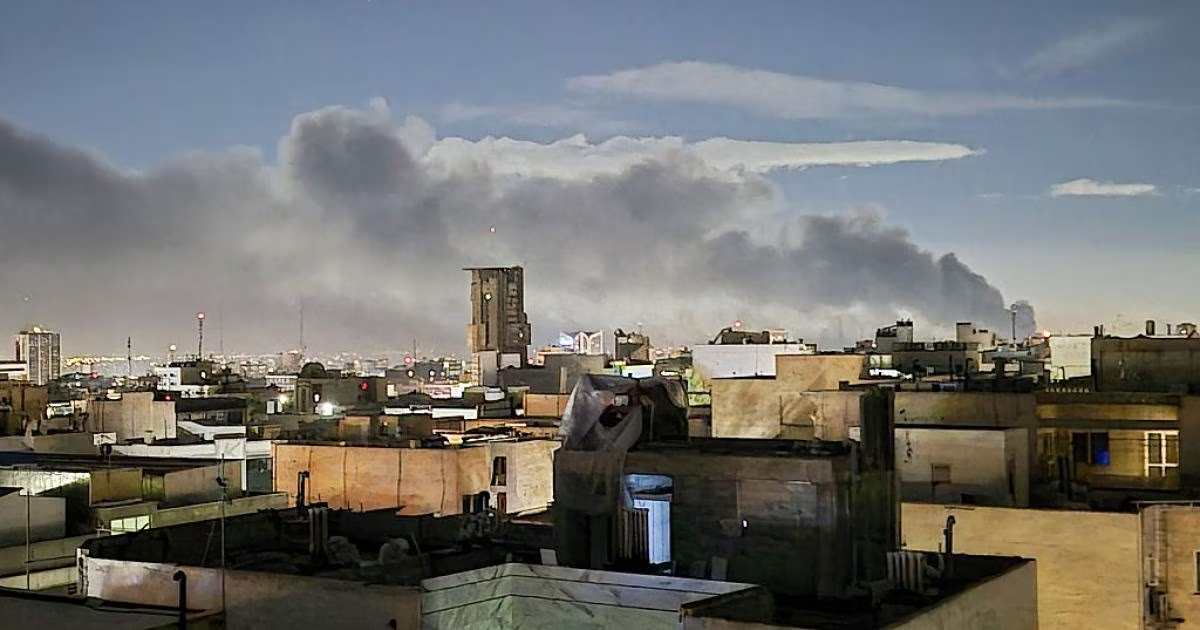
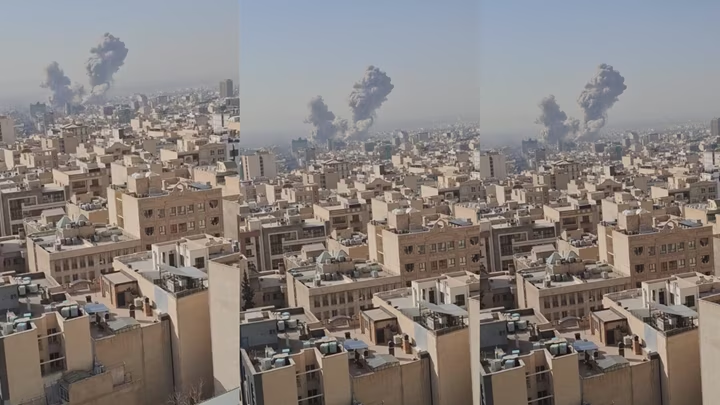
Since the early morning hours of Tuesday, Iranian territories have witnessed a violent wave of joint airstrikes carried out by Israeli and American aircraft, targeting vital centers and energy facilities in various regions. Field sources reported hearing massive explosions shaking the strategic Kharg Island, coinciding with concentrated strikes on the city of Karaj, west of the capital Tehran, leading to widespread power outages in residential and industrial neighborhoods.

The scope of the targeting expanded to include transportation infrastructure, with shelling hitting major bridges and railways in the heart of the country. Local authorities in Qom province confirmed that a vital bridge outside the city was directly hit, while the city of Mashhad announced a complete suspension of train movement due to security threats and damage to the national transportation network.

In a significant escalation, Isfahan province was subjected to airstrikes targeting the Yahya Abad railway bridge, which resulted in casualties among civilians and workers at the site. These attacks come after explicit warnings issued by the Israeli army to Iranian citizens to stay away from train stations and railway networks, in a prior indication of expanding the scope of military operations.

The capital Tehran was not spared from the attacks, as local sources reported successive explosions in the Shahriar area, in addition to an airstrike targeting the Pardis area. According to preliminary information, the strike on Pardis led to the death of six people, including three children, as well as extensive destruction to residential buildings surrounding the bombing site.

In another bloody toll, Alborz province announced the death of 18 people and the injury of 24 others due to targeting populated areas, raising the number of civilian casualties in this wave of escalation. Medical sources described the condition of some of the injured as critical, amidst a large mobilization of rescue and ambulance teams in various cities affected by the aerial bombardment.

These attacks recorded a precedent by targeting a Jewish synagogue in the capital Tehran, which observers considered a dangerous shift in the nature of the chosen targets. This shelling coincided with a state of intense anticipation prevailing in the Iranian street, amid the continued intensive flight of warplanes and drones over sovereign and military facilities.

For its part, the Israeli army issued a statement claiming the destruction of a petrochemical complex in the city of Shiraz, southwest of the country, claiming that the facility was used to manufacture materials used in the production of ballistic missiles. The statement indicated that the operation aims to undermine Iranian military capabilities and prevent the launch of long-range missiles that threaten regional security.

On the economic front, official Iranian media confirmed severe damage to petrochemical production facilities belonging to the Pars Economic Zone in the city of Asaluyeh. This region is considered one of the most important pillars of the Iranian economy, and targeting it represents a strong blow to the energy sector and oil exports in the country, which is already suffering from international pressures.

These rapid field developments come just hours before the deadline set by the American president for the Iranian administration to reach a political agreement and open the Strait of Hormuz to international navigation. It appears that the failure to reach diplomatic understandings has pushed towards a direct military option in which the United States is openly participating alongside Israel.

In the center of the country, the city of Kashan was subjected to strikes targeting railway lines, leading to a complete halt of transportation and shipping in this vital artery. Reports from various Iranian provinces continue to monitor the extent of the destruction left by the raids, amidst official silence from the political leadership regarding the nature of the expected response to this widespread aggression.

The attack aimed to expand strikes on Iranian military capabilities, including ballistic missile system sites used to launch missiles towards Israel.

PALESTINE

Tue 07 Apr 2026 3:34 pm - Jerusalem Time

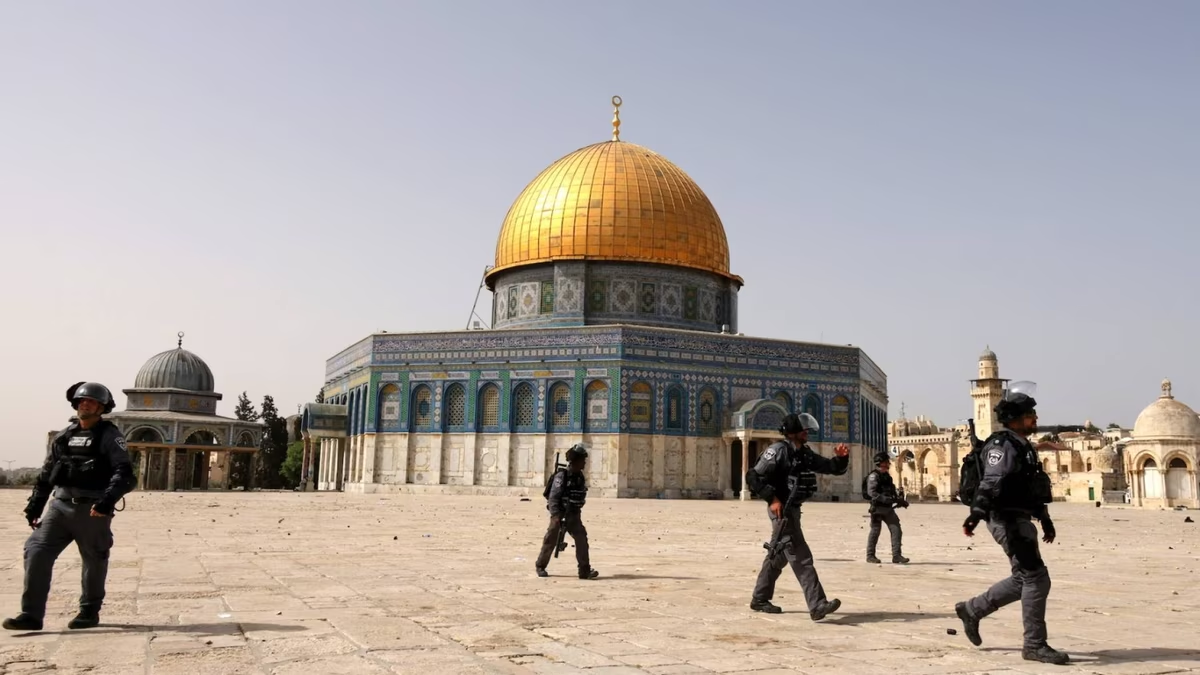
For the 39th day.. The occupation continues to besiege Al-Aqsa and the Church of the Holy Sepulchre amid settler calls for animal sacrifices

The Israeli occupation authorities continue to impose their siege on the blessed Al-Aqsa Mosque and the Church of the Holy Sepulchre in occupied Jerusalem, as the closure entered its thirty-ninth consecutive day. The occupation's security agencies cite the imposition of a state of emergency and current security conditions to justify preventing worshippers from accessing places of worship, in a move aimed at isolating the Old City from its surroundings.

The Jerusalem Governorate confirmed in an official statement that the occupation forces have reinforced their military presence around the Noble Sanctuary (Haram al-Sharif) and deployed additional checkpoints at the gates of the Old City. These strict measures aim to restrict Jerusalemite citizens and prevent them from performing their religious rituals, amidst a state of escalating tension in the historic city's alleys.

In a new provocative move, the extremist Israeli National Security Minister, Itamar Ben-Gvir, stormed the courtyards of Al-Aqsa Mosque from the Mughrabi Gate under heavy security protection. This provocative visit is part of a series of incursions carried out by the right-wing minister, with local sources recording about 14 incursions by him since he took office early last year.

These field developments coincide with incitement calls launched by the so-called 'Temple groups,' coinciding with the Jewish 'Passover' holiday, which extends until April 9th. These groups called on their supporters to intensify mass incursions into Al-Aqsa Mosque, with threats of slaughtering 'sacrifices' within its courtyards in a blatant challenge to the feelings of Muslims.

For its part, sources reported that the occupation seeks to exploit the pretext of the closure to impose a new political and security reality aimed at the temporal and spatial division of Al-Aqsa Mosque. In response, popular and Jerusalemite calls have escalated for mobilization and steadfastness at the nearest available points and military checkpoints surrounding the Old City to break this unjust siege.

Palestinian religious and official authorities warned of the dire consequences of continuing to close Islamic and Christian holy sites, considering it a grave violation of international laws that guarantee freedom of worship. These parties indicated that the occupation is racing against time to implement Judaization plans and change the Arab and Islamic identity of the holy city under the guise of security conditions.

National activities in Jerusalem called on the international community and human rights organizations to intervene immediately to stop these violations and provide the necessary protection for the holy sites. They stressed the need to pressure the occupation government to fully reopen the gates of Al-Aqsa and the Holy Sepulchre, holding it fully responsible for any escalation that may result from these repressive policies.

The continued closure of holy sites represents a blatant violation of freedom of worship and an escalation aimed at changing the historical and legal status in Jerusalem.

OPINIONS

Tue 07 Apr 2026 3:34 pm - Jerusalem Time

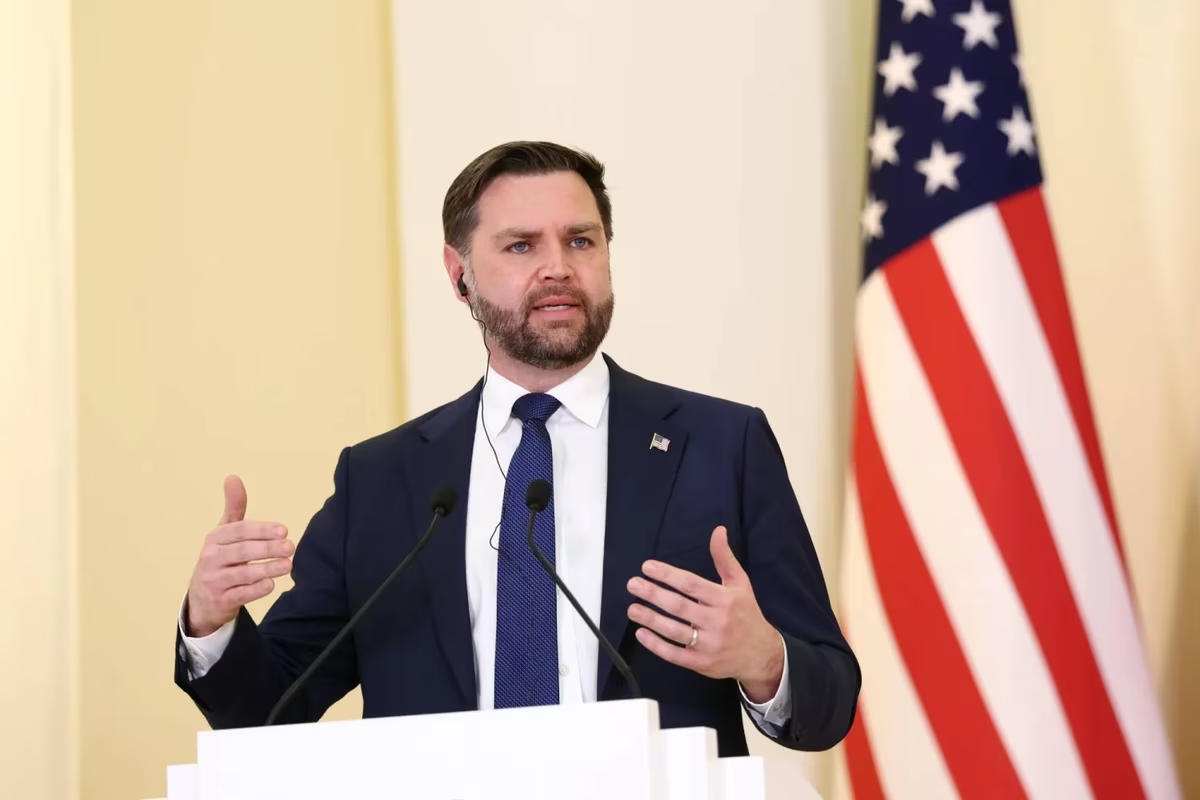
Vance on the Negotiation Line with Tehran: Between Diplomacy and Military Threat

Said Erikat

Opinion Writer

Washington – Saeed Erikat – 7/4/2026

US Vice President J.D. Vance is poised to engage in sensitive negotiations with Iran, should indirect communications pave the way for direct meetings. These back channels are currently being managed by President's Special Envoy Steve Whitkoff, with the participation of Jared Kushner, amidst predictions that Vance could be pushed to the forefront if tangible progress is made, according to Politico magazine, citing informed sources.

This arrangement reflects an attempt by the Donald Trump administration to reallocate roles within the national security team, giving Vance a prominent position in managing one of the most complex files. Despite the ambiguity of the specific demands from the Iranian side, indications suggest that Washington is seeking to test opportunities for de-escalation in parallel with continued military pressure.

White House spokeswoman Anna Kelly affirmed that the administration has an “exceptional team” including Vance and Secretary of State Marco Rubio, noting that ongoing efforts are focused on exploring the possibility of reaching an agreement. However, she simultaneously stressed that the US military would continue its operations, amid explicit threats issued by Trump to inflict widespread destruction on Iran if it did not respond to American demands within a specified timeframe.

This diplomatic movement comes at a highly sensitive moment, where signals of de-escalation intersect with potential military escalation. Secretary of Defense Pete Hegseth announced preparations to carry out “unprecedented” strikes, while Trump himself admitted the lack of clarity regarding the final path of the crisis, between containment or explosion.

Although Vance has remained relatively out of the media spotlight, he has played an active role behind the scenes, including communicating with international mediators. In this context, he contacted Pakistani Army Chief Asim Munir, coinciding with Islamabad's move to propose a 45-day ceasefire initiative, in an attempt to find a diplomatic solution to the crisis.

In parallel, Trump continued to exert public pressure, setting a deadline for Iran to reopen the Strait of Hormuz, and affirming the continuation of negotiations. He also did not hesitate to employ his usual style, publicly joking with Vance, holding him responsible for the success or failure of any potential agreement, a gesture reflecting the magnitude of the stake in his role.

Vance's involvement in this file is seen as an extension of his previous stances against what are known as "forever wars," despite his current support for military actions. The White House was keen to deny any impression of his marginalization during the early stages of the conflict, affirming his participation in intensive national security team meetings, as part of a media strategy aimed at unifying messages in a highly volatile situation.

The potential push of Vice President J.D. Vance to the forefront of negotiations reflects a striking shift in the White House's crisis management style, combining quiet back channels with escalatory public rhetoric. This apparent contradiction is not new in American politics, but it reaches its peak here with the coupling of military threat and the opening of a negotiation window. On one hand, this approach gives Washington additional leverage, but on the other hand, it creates a state of strategic ambiguity that may lead Tehran to question the seriousness of the diplomatic path, complicating the chances of reaching a quick settlement.

The Pakistani role as a potential mediator highlights the expanding circle of international actors seeking to contain the crisis, a development that reflects a growing awareness of the danger of the situation sliding towards a wider regional confrontation. However, the success of this path remains contingent on the willingness of both parties to make tangible concessions. Previous experiences indicate that mediating initiatives often clash with maximum demands, especially when coinciding with military escalation. Therefore, the Pakistani initiative may constitute an opportunity, but it is not a guarantee to stop the escalation.

Donald Trump's contradictory statements—between threatening to “send Iran back to the Stone Age” and admitting the unclear direction of the crisis—reveal a state of uncertainty within American decision-making circles. This oscillation may be a negotiating tactic, but it also carries risks of miscalculation, especially in a militarily charged environment. In this context, the role of figures like Vance becomes crucial in attempting to strike a balance between the escalatory tendency and the need for a diplomatic exit, a delicate balance that may determine the course of the crisis in the coming days.

PALESTINE

Tue 07 Apr 2026 3:34 pm - Jerusalem Time

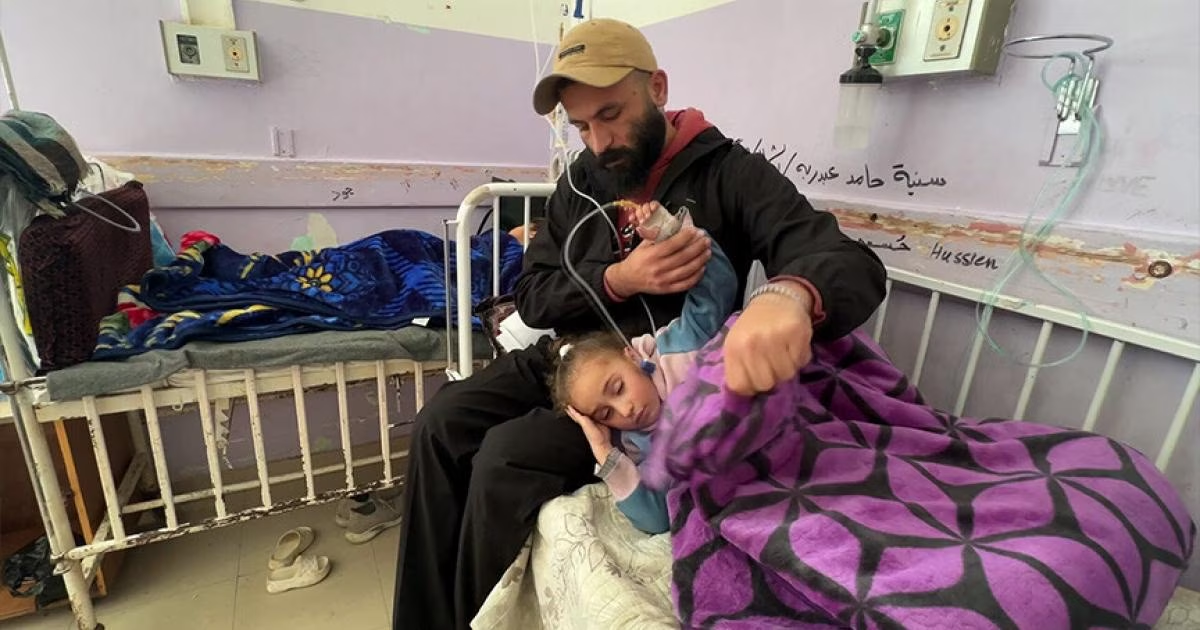
Rare Disease Threatens Lives of Three Sisters in Gaza Amid Continued Closure of Crossings

The humanitarian suffering in the Gaza Strip is escalating with the emergence of painful stories of patients afflicted by both disease and siege, as young Masa Al-Khatib and her two sisters face a daily struggle with a rare genetic autoimmune disease that threatens their lives. Their father, Ahmed Al-Khatib, reported that his three daughters have suffered since birth from a severe immune system disorder, leading to chronic infections and significant failure in physical development.

Al-Khatib explained that his daughters' health condition does not respond to any of the treatment protocols available in the Strip's exhausted hospitals, noting that the family has made strenuous efforts to secure a medical exit. Despite obtaining an official referral for treatment abroad through the World Health Organization since early 2024, the continued closure of crossings has prevented them from reaching specialized centers.

For his part, Dr. Iyad Abu Muailaq diagnosed young Masa's condition as suffering from a rare genetic defect that leads to severe weight loss and constant exposure to bacterial and viral infections. Abu Muailaq confirmed that the current medical capabilities in Gaza do not extend beyond providing temporary immune supplements, which are insufficient to stop the continuous deterioration of vital body functions.

Medical specialists stressed that saving the sisters' lives requires precise surgical intervention in the form of a bone marrow transplant, a procedure not technically available in Gaza due to the siege and lack of equipment. Doctors warned that any further delay in performing this operation outside the Strip could lead to uncontrollable complications, putting the girls' lives at risk.

Under these harsh circumstances, the girls' mother spoke about the living challenges that exacerbate the bitterness of the disease, as the family finds it extremely difficult to provide healthy food and essential medicines. She pointed out that her daughters' special health requirements need a sterile environment and intensive care, which is becoming increasingly difficult amid the successive crises experienced by the residents of the Strip.

The family appealed to the international community, human rights organizations, and the World Health Organization for urgent intervention and pressure to open a humanitarian corridor that allows critical cases to travel. These appeals come at a time when medical reports indicate that thousands of patients, including those with cancer and kidney failure, are waiting for their turn on travel lists that remain stalled due to imposed restrictions.

It is worth noting that the health sector in Gaza is under unprecedented pressure due to the severe shortage of essential medicines and medical consumables, making it impossible to deal with rare or chronic diseases. The hopes of the Al-Khatib family remain pinned on an international response that ends their daughters' suffering, in a bitter reality that links the right to life with the opening of closed crossings.

The radical solution is to perform a bone marrow transplant in specialized centers outside the Gaza Strip, and not performing this intervention poses a direct threat to their lives.

PALESTINE

Tue 07 Apr 2026 3:33 pm - Jerusalem Time

Atmospheric Depressions Double the Tragedy of Displaced People in Gaza Amidst Ruined Infrastructure

The chapters of humanitarian suffering for the people of the Gaza Strip are renewed with the arrival of a new atmospheric depression, which clearly revealed the fragility of the living conditions endured by the displaced in dilapidated camps. Field sources from a camp in the Al-Zaytoun neighborhood, southeast of Gaza City, reported that heavy rainwater flooded the narrow passages, turning the lives of thousands into a continuous hell under the weight of bitter cold.

Displaced people in the area confirmed that conditions are worsening with every cold wave that hits the Strip, as stagnant water accumulated in the alleys, leading to an alarming spread of insects and rodents. Citizens are trying by primitive means to alleviate the burden of flooding, but the absence of basic capabilities prevents them from protecting their families from water leaking into temporary shelters.

In testimonies from the heart of the tragedy, one of the displaced explained that the suffering is not limited to the flooding of tents, but extends to a severe shortage of essential bedding and winter clothes. He pointed out that after rainfall, the area turns into a pile of mud and dirt, making living inside these tents impossible in the absence of cleanliness and heating.

For its part, the Palestinian Ministry of Health issued urgent warnings about the serious health repercussions resulting from the accumulation of rainwater in neighborhoods and streets crowded with displaced people. The ministry explained that these water accumulations constitute a fertile environment for epidemics, threatening the lives of citizens, especially children and the elderly who live in tents lacking the most basic safety requirements.

Child Hala recounted part of the tragedy, stating that their tent was completely flooded and her family found no way to drain the water or dry the place, amid a complete absence of rescue or drainage teams. This testimony reflects the general state of helplessness suffered by Palestinian families who found themselves alone in the face of harsh weather fluctuations and collapsed infrastructure.

Citizens demanded the immediate start of reconstruction of the Strip and the provision of alternative housing to protect them from seasonal fluctuations, pointing out that the destroyed infrastructure is no longer able to accommodate the simplest rain showers. The displaced stressed their urgent need for mobile homes (caravans), clothes, and food for children, in light of the inability of local authorities to intervene effectively due to the ongoing siege.

This atmospheric disaster coincides with the Israeli occupation's insistence on reducing the entry of humanitarian aid and basic needs into the Gaza Strip in violation of international laws. Although humanitarian protocols stipulate the entry of a minimum of 600 trucks daily, what is allowed to pass does not exceed 200 trucks, exacerbating the deficit in facing the repercussions of winter.

Our tents were completely flooded due to the accumulated rain, with no party working to drain or remove it from the middle of the camp.

ARAB AND WORLD

Tue 07 Apr 2026 3:33 pm - Jerusalem Time

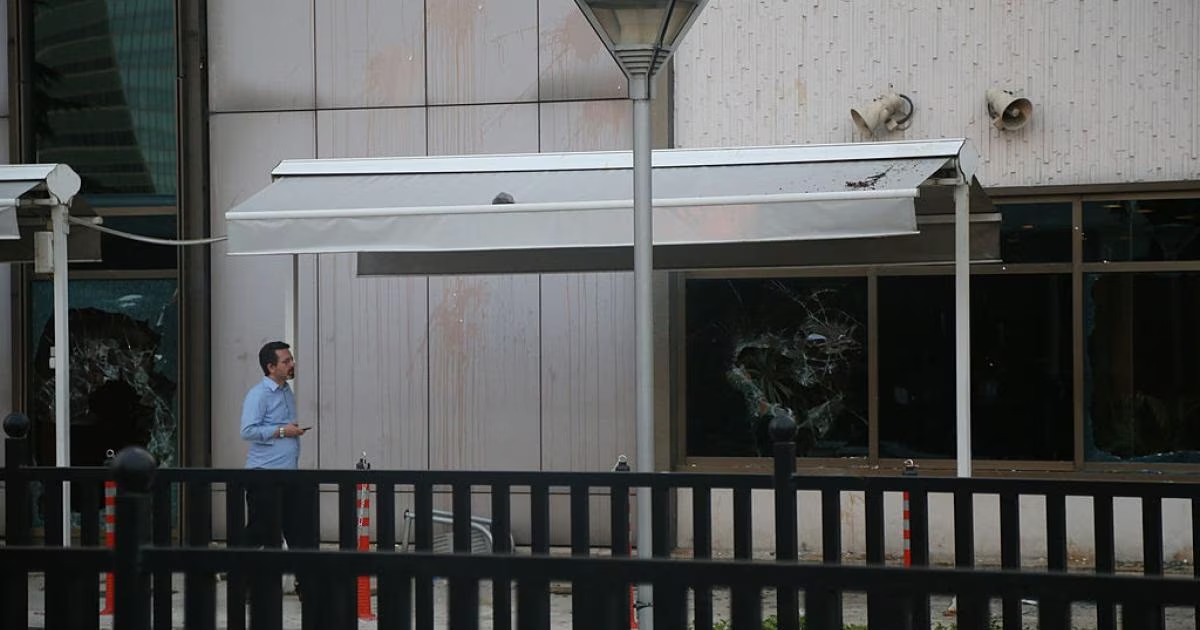
Killed and wounded in armed clash near Israeli consulate in Istanbul

The area surrounding the Israeli consulate building in Istanbul, Turkey, witnessed a violent shooting incident today, Tuesday, resulting in casualties, amidst a security alert at the scene.

Turkish media sources reported that the armed clash led to the death of at least three people, while a fourth person was transferred to the hospital for treatment after sustaining various injuries during the incident that occurred near the diplomatic complex.

Sources quoted eyewitnesses in the area as hearing intense gunfire near the headquarters housing the consular offices, while the motives behind the attack or the identity of the parties involved in the clash are not yet clear.

Gunfire was heard near the building housing the Israeli consulate in Istanbul.

PALESTINE

Tue 07 Apr 2026 3:33 pm - Jerusalem Time

Elderly Palestinian Woman Martyred Following Brutal Assault by Occupation Soldiers in Qalqilya

Elderly citizen Sabriya Shammasneh was martyred early this Tuesday morning, succumbing to severe injuries she sustained as a result of a violent physical assault by Israeli occupation forces in the town of Jayyus, northeast of Qalqilya. Local sources reported that a military force raided the Shammasneh family home in a barbaric manner, where soldiers brutally beat the elderly woman, leading to her transfer to the hospital in critical condition before doctors announced her death due to her severe wounds and bruises.

The crime of killing the elderly Shammasneh coincided with a widespread campaign of abuse launched by the occupation forces in the town of Jayyus, which included raiding and searching a number of homes, destroying their contents, and terrorizing their residents. The military operation resulted in the arrest of young man Osama Al-Qaddoumi before the forces withdrew from the area, as part of a systematic escalation targeting civilians and the most vulnerable groups such as women and the elderly during the violent night raids witnessed in the cities and villages of the West Bank.

In the Gaza Strip, the Israeli war machine continued to claim lives, as 10 citizens were martyred in an airstrike that targeted the vicinity of a school for displaced persons east of the Maghazi camp, following clashes with militias supported by the occupation that attempted to infiltrate the area. Drone aircraft also targeted the clash area with two missiles, while one citizen was martyred and four others were injured, including a medical staff member from the World Health Organization, due to gunfire targeting vehicles on Salah al-Din Street near the Al-Qarara area.

Official statistics indicate a tragic increase in the death toll, with the total number of martyrs since October 7, 2023, reaching approximately 72,302 martyrs, in addition to 172,090 injured. In the past twenty-four hours alone, hospitals received 7 martyrs and 17 injured, amid the continued direct targeting of civilians, including the martyrdom of a child who was riding an electric bicycle in the Sheikh Radwan neighborhood of Gaza City.

Her frail body was unable to resist the pain of the brutal assault carried out by occupation soldiers inside her home.
ISRAELI AFFAIRS

Tue 07 Apr 2026 3:33 pm - Jerusalem Time

War Whales on Wall Street: Suspicious Profits and Trades Preceding Military Decisions Against Iran

Questions are escalating in global financial circles about movements described as 'suspicious' on Wall Street, as these fluctuations coincided with the rapid developments of the war waged by the United States and Israel against Iran. Data indicates that some investors were able to achieve huge profits by exploiting price fluctuations resulting from sudden political and military decisions.

The announcement by US President Donald Trump on March 23 regarding the postponement of bombing Iran stands out as a stark example of this phenomenon, as financial sources observed a massive surge in buying just ten minutes before the statement was issued. This precise timing enabled these investors to reap enormous gains immediately after stock prices jumped following the official announcement, reinforcing the hypothesis of information leakage.

For its part, the news website 'Axios' confirmed the existence of abnormal phenomena in financial markets accompanying the military escalation, pointing to the possibility of trading based on leaked insider information. The site explained that some financial 'whales' may have had prior knowledge of escalatory or de-escalatory steps, which gave them an unfair advantage in the energy and arms markets.

In a related context, the shares of major American defense companies witnessed historical jumps in their market value during a single day of trading in early March. According to data, the market value of 'Northrop Grumman', 'Lockheed Martin', and 'RTX' increased by a total of more than $28 billion, driven by the continuation of military operations against Iranian targets.

The Iranian leadership entered the warning line, with Parliament Speaker Mohammad Bagher Ghalibaf urging investors to be wary of news preceding market openings. Ghalibaf described such news as mere misleading tools aimed at preparing the ground for quick profits, advising traders to make decisions contrary to what these leaks promote.

Suspicions were not limited to unknown investors but also extended to officials in the American administration, as British press reports quoted informed sources saying that Defense Secretary Pete Hegseth made investment attempts in defense companies before the outbreak of the confrontation. Despite the Pentagon's denial of this news, controversy still surrounds the conflict of interest amidst the war.

Observers believe that the 'trader' mentality with which Trump manages international crises contributes to these sharp fluctuations, where political statements are used as economic tools. This policy causes a state of uncertainty in global energy markets, leading to rising oil and gas prices and increased inflation rates that have burdened the global economy.

Economic experts confirm that every war has beneficiaries called 'war whales,' who seize opportunities from the suffering of peoples and the destruction of infrastructure. Experts explained that the current war has revealed a naked economic face, where financial motives are no longer hidden but have become a primary driver of military and political decisions in the region.

In Morocco, economic analyst Mohamed Jadri pointed out that some major powers are pushing for conflicts to increase their arms sales and ensure the flow of profits to their major companies. Jadri considered that the ordinary consumer in various countries around the world is the one who pays the final bill for these conflicts through high living costs and deteriorating purchasing power.

Academic Mohamed Yaouhi also noted that Trump prioritizes the interests of his country and its companies, regardless of the accuracy of his statements. He added that negotiations with Tehran may not begin until Washington feels that its direct economic interests are seriously harmed by the continuation of the conflict.

The United States faces increasing international pressure, especially from Asian countries affected by energy supply disruptions, which may seek alternatives to the dollar in their trade dealings. Analysts believe that continued market manipulation could push Washington's allies, such as Japan, to re-evaluate their strategic alliances to protect their economic security.

The military field has remained ablaze since late February, with parties exchanging missile strikes that hit vital facilities and civilian targets. While operations rooms are busy with military planning, trading rooms in New York are busy monitoring numbers and turning blood and destruction into green figures on stock market screens.

The link between political statements and stock movements reveals an ethical gap in the global financial system, where secret military information becomes a commodity bought and sold. This phenomenon puts the credibility of financial regulatory institutions on the line, given their inability to control trading that precedes major events.

In conclusion, the war on Iran remains an open arena not only for military confrontation but also for settling economic scores and making illicit gains. As the escalation continues, the world awaits what the coming days will bring in terms of surprises that may change the map of economic and political powers in the Middle East and the world.

Beware of what is called news before the market opens, as it is often just preparation for profit-taking... Do the opposite.

OPINIONS

Tue 07 Apr 2026 7:45 am - Jerusalem Time

Hamas Disarmament: Between Political Coercion and Settlement Imbalances

Said Erikat

Opinion Writer

Washington – Said Arikat – 7/4/2026

News Analysis

With the "Peace Council" proposing the disarmament of the Hamas movement within a ninety-day period, efforts to solidify the ceasefire in Gaza are entering a more sensitive and complex phase. The initiative, pushed by the administration of President Donald Trump, appears on the surface to be an attempt to establish a long-term calm, but at its core, it reveals a network of structural contradictions that make its realization on the ground extremely difficult, if not fraught with the risks of re-producing the crisis.

At its essence, this demand reflects a clear absence of balance between the obligations imposed on the parties. Hamas is asked to dismantle its military structure, hand over maps of its tunnels, and abandon the deterrent tools it has accumulated over years, while these steps are not accompanied by binding and equivalent guarantees from the Israeli side, whether regarding a complete cessation of military operations or a comprehensive withdrawal from the Strip. This disparity not only weakens the foundations of trust but also reinforces the impression that the entire process is being managed as a political dictate rather than an equitable negotiated settlement.

According to experts, this imbalance cannot be separated from the broader context of the conflict, where Hamas's weapons, from within its political environment, are viewed as an extension of the idea of "deterrence" in the face of occupation, not as a separate military tool that can be abandoned by a technical decision. Hence, demanding its disarmament without addressing the roots of the crisis, including the blockade, sovereignty, and freedom of movement, seems like an approach that reduces the conflict to its armed manifestations, ignoring its structural causes. In this sense, any security vacuum that might arise from disarmament will not necessarily lead to stability, but may open the door to new forms of tension.

This complexity increases with the time factor, as the deadline set by the proposal—despite being relatively longer—reflects a desire to achieve a political accomplishment within a specific timeframe. However, settlements of this kind are not built under the pressure of timelines but require a cumulative process based on building trust and gradual commitments. Consequently, the time factor transforms from a regulatory tool into an element that could threaten to undermine the negotiation process, as it pushes the parties towards more rigid positions instead of engaging in deliberate concessions.
In a parallel context, another equally important imbalance emerges concerning the "Peace Council's" commitment to its financial pledges, which directly reflects on the credibility of the entire proposal. So far, the promises announced on February 19 have not translated into practical steps, despite the United States pledging ten billion dollars, along with seven billion from the other participants. In response to a question from Al-Quds correspondent, an official in Donald Trump's administration admitted that he did not have updated information beyond what had been previously announced, especially given Washington's preoccupation with its war with Iran, which reinforces doubts about the seriousness of the commitments.

Meanwhile, the linkage between the reconstruction of Gaza and disarmament stands out as one of the most controversial elements of the plan. While reconstruction represents an urgent humanitarian need for the residents of the Strip, using it as a political leverage puts civilians in a vulnerable position, where their basic rights become conditional on the outcomes of negotiations. This intertwining of the humanitarian and political not only raises ethical questions but also threatens to weaken any potential legitimacy of the agreement, as it fosters a feeling that aid is being used as a tool of blackmail rather than a legal and humanitarian obligation.

Benjamin Netanyahu's stance, hinting at the possibility of imposing disarmament by force, adds another dimension of complexity. Instead of creating an encouraging negotiating environment, this rhetoric reinforces a climate of distrust and pushes Hamas to cling to its positions. Amidst ongoing military operations, even during periods of calm, the movement's conviction grows that any strategic concession on the issue of weapons might expose it to a double loss: security and political.

Furthermore, the gap between the pledges regarding the entry of aid into Gaza and what is actually achieved on the ground constitutes an additional factor in weakening the chances of progress. The figures reflecting a limited flow of trucks compared to what previous agreements stipulated give Hamas a justification to question the seriousness of international commitments and reduce its incentives to engage in long-term arrangements that may not be honored.

In light of this, it becomes clear that the demand for Hamas's disarmament, in its current form, cannot be separated from deeper imbalances in the structure of the political process itself. Instead of being part of an integrated path that addresses the roots of the conflict, it is presented as a precondition that rearranges the balance of power without providing sufficient guarantees. While the United States and Israel seek to impose a new security reality, Hamas insists on linking any strategic shift to tangible changes in the terms of the conflict.

Experts believe that any viable approach must transcend the logic of political coercion towards building a gradual negotiating framework based on mutual commitments, clear guarantees, and a relative separation between humanitarian and political tracks. Without this, disarmament will remain a theoretical goal that clashes with a complex reality, and the risk of sliding into a new round of escalation will persist, in an environment where questions of sovereignty, security, and justice have not yet been resolved.

ISRAELI AFFAIRS

Tue 07 Apr 2026 7:45 am - Jerusalem Time

Israeli Strategic Expert Warns: Military Force Alone Will Not Achieve Security Without a Palestinian State

Media and strategic advisor Alon Arnon affirmed that the continuation of Israeli aggression in the region will not lead to real security as long as Palestinians do not obtain their legitimate national rights. He explained in his analysis that conviction is growing within Israeli circles that military force alone cannot protect the home front from continuous erosion.

Arnon pointed out that the conflict management policy pursued by successive governments has begun to collapse in the face of Israel's attrition on seven open combat fronts. He considered that maintaining strategic alliances and preventing economic collapse requires an Israeli realization that the two-state solution represents a fundamental guarantee for future regional stability.

Citing recent history, the strategic expert considered that military arrogance has always been the graveyard of successful political action, as happened in the experiences of Vietnam, Afghanistan, and Iraq. He stressed that superior technological power does not have the ability to extinguish the national aspirations of peoples striving for liberation and independence.
The analysis warned that Israel does not have the ability to withstand multi-sector wars of attrition for long, as its military and social structure was designed for swift and short campaigns. The Israeli economy and reserve army suffer from immense financial and psychological pressures as a result of years of continuous erosion of human and material resources.

Arnon warned that the absence of a political horizon transforms current wars into mere temporary truces preceding more violent and bloody rounds in the near future. He described the continuation of a purely military approach as a dangerous gamble that costs Israel a heavy price in the blood of its citizens and the stability of its society.

The article touched upon the psychological and social effects on the younger generations in Israel, where children grow up in an unhealthy reality characterized by constant fear and a deteriorating sense of personal security. He considered that the current conflict represents a clash between extremist religious visions seeking an eternal war and a realistic perspective that recognizes the importance of civil prosperity.

Arnon believes that recognizing a Palestinian state is not a surrender, as some promote, but a rational decision that blocks the path of forces that thrive on the absence of political solutions. A Palestinian state, from his point of view, is the strongest strategic blow that can be dealt to parties seeking to perpetuate the conflict forever.

The analysis explained that radical transformations in the region and the emergence of regional alliances to confront common threats require a fundamental solution to the Palestinian conflict as a prerequisite. Without this solution, regional alliances will remain fragile and unable to confront the major strategic challenges surrounding the region.

The strategic advisor warned that the absence of a Palestinian state places the Hashemite Kingdom of Jordan on a powder keg, threatening the stability of Israel's longest border. An independent Palestinian state represents a guarantee for the stability of the political system in Amman, which directly reflects on Israeli national security.

Economically, Arnon revealed data indicating that the two-state solution could add about $123 billion to Israel's GDP within a decade. This expected growth comes as a result of stopping the financial bleeding associated with ongoing military operations in the occupied Palestinian territories.

He pointed out that the huge budgets allocated to support army forces in the West Bank are directly deducted from education and health sector allocations. This imbalance in resource distribution threatens the collapse of essential civil services within Israel in the long term due to the heavy economic burden.

Arnon concluded that adhering to the status quo is no longer a viable option in an era of multiple wars and cross-border threats. The financial and psychological cost of maintaining the occupation has exceeded the Israeli society's capacity to endure, requiring a radical change in strategic thinking.

He stressed that military force, no matter how high its peak, cannot be a substitute for a comprehensive political vision that guarantees the rights of all parties. History proves that regular armies always lose if they cannot transform their field victories into a stable and internationally and regionally acceptable political reality.

In conclusion of his analysis, Arnon called on decision-makers in Israel to prioritize rational realism over extremist ideological concepts that are leading the country to the abyss. He considered that time is running out for Israel to make courageous decisions that ensure its survival as a prosperous state in a turbulent regional environment.

The fighter wins if he does not lose, and the regular army loses if it does not win.

ARAB AND WORLD

Tue 07 Apr 2026 7:44 am - Jerusalem Time

Trump admits sending weapons to protesters in Iran and accuses Kurds of confiscating them

US President Donald Trump officially admitted that the United States had shipped large quantities of weapons and military equipment with the aim of delivering them to protesters inside Iranian territory. Trump explained during statements he made on the sidelines of Easter celebrations at the White House that the purpose of this step was to enable protesters to confront the Iranian authorities, which he described in harsh terms, noting that these supplies were part of a broader support plan.

Trump revealed that these military shipments failed to reach their final destination, confirming that the weapons did not reach the hands of the protesters as planned. The US President expressed his strong anger at this logistical failure, hinting that there were intermediary parties that caused the loss of these supplies, which raised questions about the intelligence and security coordination mechanisms followed by Washington in this sensitive operation.

In a related context, Trump directed direct accusations at Kurdish groups in the region, claiming that they were the ones who seized the weapons intended for inside Iran and kept them for themselves. He indicated in a previous media interview that Washington tried to use Kurdish corridors as a channel for transferring weapons, but the results were disappointing after the intermediaries decided to keep the military equipment for their own benefit instead of passing it on.

The US President threatened the parties he accused of confiscating the weapons with dire consequences, stressing that they 'will pay a heavy price' for this action that hindered the American strategy towards the Iranian protests. This harsh tone reflects the extent of frustration in the US administration over the loss of huge military resources that were aimed at changing the balance of power on the ground in confronting the Iranian government.

The roots of these movements go back to the wave of protests that erupted in Iran late last December, which began with livelihood and economic demands before turning into widespread political demonstrations. Trump had made public promises last January to Iranian protesters that 'help is on the way,' which now explains the nature of those aids, which turned out to include combat military equipment.

These confessions raise wide international legal and political repercussions, as they place direct American intervention in Iranian internal affairs under the microscope of international law. They also highlight the complexities of the relationship between Washington and its Kurdish allies in the region, especially after accusing them of betraying American trust and keeping weapons that were intended for secret operations outside the borders of their traditional areas of influence.

We sent weapons, many weapons that were supposed to reach them so that they could fight these villains.

PALESTINE

Tue 07 Apr 2026 7:44 am - Jerusalem Time

WHO suspends medical evacuations from Gaza after one of its staff members was killed

The World Health Organization announced an immediate decision to suspend all medical evacuation activities for patients and injured individuals from the Gaza Strip to the Arab Republic of Egypt via the Rafah land crossing. The organization clarified that this measure will remain in effect until further notice, and comes in response to the deteriorating security conditions that have affected its field staff.

This decision followed a serious security incident on Monday, which resulted in the killing of one of the contracted personnel with the international organization providing vital services within the Strip. The Director-General of the organization, Tedros Adhanom Ghebreyesus, confirmed that the institution is in a state of shock due to this targeting, which threatens the continuity of humanitarian work in the region.

Reports issued by the organization stated that two of its permanent employees were present at the scene of the incident when it occurred, but they did not suffer any physical injuries. Ghebreyesus stressed in his statements that the organization highly values the efforts of its colleagues who continue to work under extremely dangerous conditions to ensure the delivery of healthcare to the besieged population.

The health sector in Gaza is suffering from a near-total collapse due to the ongoing Israeli aggression, making medical evacuations an urgent necessity to save the lives of the injured, cancer patients, and those with chronic conditions. The Rafah crossing is the only remaining lifeline not under direct occupation control on its land borders with the outside world, despite the imposed restrictions.

It is worth noting that Israeli occupation forces had tightened their grip on the Palestinian side of the Rafah crossing during their military offensive in May 2024. Since that date, the crossing has been subject to a near-permanent closure, which has exacerbated the humanitarian crisis and prevented thousands of injured people from traveling to receive necessary treatment abroad.

In conclusion of its statement, the World Health Organization reiterated its demand for the necessity of providing full protection for civilians and workers in the relief and medical sectors in accordance with international laws. Sources indicated that the suspension of evacuations will increase the suffering of hundreds of critical cases awaiting their turn to leave, in the absence of alternative treatments within the dilapidated hospitals in the Strip.

Peace is the best medicine, and we call for the protection of civilians and humanitarian workers who risk their lives to provide care.

OPINIONS

Tue 07 Apr 2026 7:44 am - Jerusalem Time

Global anticipation for 'Trump Time': Will Washington fulfill its threat against Tehran?

Ramallah - “Alquds ” dot com

Ramallah - “Alquds ” dot com

Opinion Writer

The eyes of the entire world are fixed on 8:00 PM Eastern Time on April 7, 2026, a date that has become known as 'Trump Time'. This timing is not just a number on a clock; it is a deadline set by the American president to execute an unprecedented military threat against Iran.

Observers indicate that this threat, which includes 'crushing and obliterating' the Iranian state if it does not yield to American demands, has put the international community on high alert. Major capitals are holding their breath, awaiting what the next few hours will bring in terms of field or political developments.

When the clock strikes eight in Washington, the hands of the clock in Tokyo will have reached 10:00 AM on Wednesday, while residents of Mecca and Moscow will be awaiting the event at 3:00 AM. This time difference reflects the geographical comprehensiveness of the crisis, which has left no spot on Earth untouched in its psychological and economic stability.

In London, it will be one hour past midnight, while Tehran will be in direct confrontation with destiny at 4:30 AM. This global synchronization puts the international system to a real test of its ability to contain military escalation that could change the map of the Middle East forever.

Analysts believe that the 'Trump Time' approach relies on a policy of shock and awe, where the adversary is presented with zero-sum options within a very narrow timeframe. This strategy aims to extract major concessions under the pressure of immediate existential threat, raising questions about Iran's anticipated reaction.

Collective memory, at such moments, recalls symbolic stories of decisive dates that changed the course of history, with some likening this wait to moments of great transformation. The difference here is that the stakes are not Cinderella's slipper or a fairy tale, but the fate of nations and peoples who may find themselves in the midst of a devastating war.

Many are now asking how history will narrate these moments centuries from now, and whether the narrative will be from the perspective of the victor or the vanquished. Fantasies about an 'empire' imposing its will on time and space reflect the extent of hegemony Washington is trying to establish in this critical phase.

Some have used artificial intelligence tools to try and paint an imaginary picture of what might happen, in an attempt to understand the dimensions of the political 'hallucination' dominating the scene. Despite the restrictions imposed by some technology companies on sensitive content, human imagination still precedes reality in predicting disasters.

Iran remains at the heart of the storm, with its leadership awaiting American moves amidst intense internal and diplomatic mobilization to avoid or respond to the strike. The scene appears complex with the intertwining of international interests, especially as powers like Russia and China are monitoring the situation with extreme caution from their capitals.

'Trump Time' has become a term that expresses a state of organized chaos, where international nerves are played with to achieve geopolitical gains. This type of harsh diplomacy redefines international relations and sets international laws aside in favor of brute military force.

As the world awaits 8:00 PM on Tuesday, international calls for de-escalation and prioritizing dialogue to avoid a humanitarian and environmental catastrophe in the Gulf region are increasing. However, the language of threat seems to prevail currently, making it difficult to predict the chances of success for last-minute mediations.

Global press closely follows every statement from the White House, trying to discern whether the threat is serious or part of a broad psychological pressure campaign. In either case, the impact of this threat has already created a rift in the wall of global stability that cannot be easily repaired.

The question remains: Will 8:00 PM pass peacefully, or will the world wake up on Wednesday to a completely new reality it has never known before? The answer lies in the closed rooms of Washington and Tehran, and in the ability of the parties to step back from the brink before it's too late.

In conclusion, 'Trump Time' will remain a landmark in the history of international conflicts, whether the threat is carried out or remains merely a tool of pressure. It is the moment when the world stood 'on one leg' awaiting the decision of one man who has the power to ignite or extinguish the fuse of war.

Everyone is in anticipation and waiting from the east to the west of the Earth, and eyes are fixed only on 'Trump Time' which may change the face of history.

PALESTINE

Tue 07 Apr 2026 7:44 am - Jerusalem Time

Details of an Israeli Military Failure: Hezbollah Ambush Foils Attempt to Cross Litani River

Hebrew media outlets have revealed precise details of a failed military operation carried out by the Israeli occupation army deep in southern Lebanon late last March. Investigations showed that a special force fell into a well-laid ambush by Hezbollah fighters during a failed attempt to cross the Litani River, which led to the mission's failure and inflicted significant human and material losses on the force.

According to media sources citing the military investigation, the operation, which began on March 27, aimed to seize strategic points in the Beaufort area. A joint force participated in this mission, including an elite group from the 890th Paratrooper Battalion along with elements from the 'Yahalom' unit, specialized in engineering and difficult tasks.

The investigations revealed that the Israeli force underwent intensive training and preparations for about 36 hours before the field movement began, including securing logistical equipment and boats for crossing. Upon execution, the forces were surprised by a barrage of mortar shells and rockets launched by Hezbollah fighters with high precision, which deprived the occupation of the element of surprise in the first minutes of the confrontation.

The fierce engagement resulted in the death of Sergeant 'Moshe Yitzhak Hakohain' and the injury of about twenty other soldiers with varying degrees of severity, including field officers who were leading the force. Sources stated that the intensity of the fire forced the commanders into a state of operational hesitation between completing the mission or immediate withdrawal to save the remaining soldiers.

Regarding the withdrawal details, reports indicated that the 'Yahalom' engineering unit was forced to leave the site under heavy bombardment, leaving behind sensitive military equipment including bulldozers and rubber boats. The paratrooper battalion remained in the area for a short period to provide fire cover for the evacuation of the wounded, which was carried out with great difficulty amidst continuous targeting by the resistance.

The Israeli military command decided to halt the entire operation more than an hour after the confrontation began, describing the withdrawal as 'tactical' to preserve the force. This revelation comes amid escalating field tensions and the ongoing aggression launched by the occupation on various areas of Lebanon since early last March.

Statistics indicate that the recent Israeli aggression has resulted in nearly 1,500 martyrs, in a wave of escalation that began after the assassination of the Iranian Supreme Leader and the violation of ceasefire understandings. The occupation army claims that its ground and air operations aim to establish a buffer security zone, but field realities show fierce resistance hindering its progress.

It is worth noting that this failed operation reflects the magnitude of the field challenges faced by the occupation army in its attempts to penetrate southern Lebanon by land, despite air superiority. Sources confirm that leaving military equipment on the battlefield is a professional failure added to the failure to achieve the strategic objectives of the long-planned military operation.

The military investigation showed that the Yahalom unit withdrew from the site, leaving behind military equipment and bulldozers under intense fire.

ISRAELI AFFAIRS

Tue 07 Apr 2026 7:44 am - Jerusalem Time

Death toll from Iranian missile strike on Haifa rises to 4

The Israeli occupation authorities confirmed, early Monday morning, that the death toll from the Iranian missile attack targeting the city of Haifa had risen to four people. This announcement came after rescue teams were able to recover two additional bodies from under the rubble of a residential building that sustained a direct hit yesterday, Sunday.

Earlier, medical sources affiliated with the occupation had indicated that two people were killed immediately after the attack, before others were reported missing at the scene. With search and rescue operations continuing under the rubble, the bodies of the missing were found, raising the final death toll from this specific targeting.

Media sources reported that heavy explosive warheads fell in multiple areas of occupied Haifa, causing widespread fires in various locations. Fire and rescue teams rushed to deal with the raging fires, amid a state of security and military alert in the northern region.

For its part, the occupation police announced that explosives experts had gone to several points in the Carmel area to examine the remnants of the missiles and explosive warheads that had fallen. The police clarified that the attack caused severe damage to a number of residential buildings and vehicles, leading to some facilities being temporarily out of service.

In a related context, the Israeli Home Front activated early warning systems in wide areas, including central Israel, after detecting the launch of missiles from Iran. A state of panic prevailed among settlers as sirens blared, with thousands taking refuge in fortified shelters for fear of direct hits.

Press reports stated that the explosive warheads and shrapnel were distributed across at least 10 locations within the city of Haifa, reflecting the intensity of the missile attack and its ability to bypass air defenses. Sources indicated that the extent of the destruction in some locations was unprecedented compared to previous attacks.

Regarding human casualties, ambulance crews confirmed that 11 Israelis were injured to varying degrees, with one described as very serious due to flying shrapnel. Field treatment was also provided to four other people who suffered severe panic attacks due to the sound of the violent explosions that shook the city.

According to technical data circulated by Hebrew sources, the missile that directly hit the five-story building carried an explosive warhead weighing approximately 450 kilograms. This large weight of explosives explains the partial collapse that occurred in the building and the difficulty of extracting those trapped under the rubble.

Informed sources quoted rescue teams as saying that operations continued throughout the night in complex conditions due to damage to the infrastructure of the targeted building. The sources explained that the delay in announcing the final toll was due to the need to confirm the identity of the bodies recovered early this morning.

This escalation comes amid increasing regional tensions, as the latest attack demonstrated the ability of Iranian missiles to reach vital targets deep within major cities. Political and military circles are monitoring the repercussions of this attack, amid expectations of reactions that could further ignite the situation on the ground.

Rescue teams recovered two bodies early Monday from under the rubble of a building in Haifa that was hit by a direct Iranian missile attack.

ARAB AND WORLD

Tue 07 Apr 2026 7:44 am - Jerusalem Time

Iran Demands Compensation to End War and Open Strait of Hormuz: The Conflict of 'Legal Reparations' and Military Threats

The military confrontation between Iran and the American-Israeli coalition has entered its sixth week, amidst a striking Iranian insistence on placing the 'compensation' issue at the forefront of any potential political negotiations. The Iranian leader, Mojtaba Khamenei, affirmed in his first official statement that his country will not relinquish its right to full reparations for damages resulting from what Tehran described as unlawful attacks.

The Iranian leadership stressed that retaliation for the dead and material losses will remain open until fully achieved, threatening to take unilateral measures to confiscate assets belonging to the aggressor states. Khamenei clarified that the refusal to pay compensation would be met with the destruction of enemy properties of equivalent value, indicating Tehran's intention to escalate qualitative military operations.

In the context of economic pressure, Tehran directly linked the resumption of navigation in the strategic Strait of Hormuz to compensation for its financial losses. Sources reported that a new transit system would be imposed, with a portion of its revenues allocated to cover reconstruction costs, at a time when restrictions remain on Western vessels with rare exceptions.

For his part, Mohsen Rezaei, a member of the Expediency Discernment Council, affirmed that any talk of a ceasefire remains contingent on the lifting of comprehensive sanctions and the payment of compensation. Observers believe that this rigid stance aims to establish a legal characterization of the war as aggression outside international frameworks, obliging the aggressor to financial and legal consequences.

On the diplomatic front, a notable Qatari move emerged in the corridors of the United Nations, where Doha demanded that Tehran bear its full legal responsibilities for the damages resulting from the recent escalation. These moves reflect growing regional concern over the continued closure of vital waterways and its impact on global energy security.

Legally, Iranian demands are based on the 'Responsibility of States for Internationally Wrongful Acts' document issued by the United Nations in 2001, which stipulates the necessity of providing 'full reparation.' This reparation includes restitution (restoring the previous state), financial compensation for human and material losses, and moral satisfaction through an official apology.

Despite the clarity of these rules in international law, they lack direct enforceability unless issued by the International Court of Justice in a binding judgment. Historically, the United States refuses to recognize any decisions that affect its sovereignty or that of its ally Israel, describing international courts as politicized and ineffective platforms.

Considering the historical American record, it is clear that Washington has not paid explicit compensation for wars it described as legitimate, but rather resorted to financial settlements in exchange for land. In the Mexican-American War of 1848, Washington paid $15 million for border demarcation and the annexation of new territories, which was repeated with Spain for the Philippine Islands in 1898.

On the ground, fears are growing that the US administration may resort to tactical nuclear weapons to break the current military stalemate after six weeks of fighting. Former US President Donald Trump had threatened Iran with a military 'hell' if an agreement ensuring the opening of the Strait of Hormuz was not reached within a few hours.

The war has caused severe economic shocks in the region, with Egypt recording an outflow of foreign investments estimated at $9 billion since the start of military operations. The cost of Egyptian energy imports has also doubled to $1.1 billion per month, increasing pressure on government debt, which has exceeded 82% of GDP.

In local markets, the repercussions of the war were reflected in the prices of basic commodities and precious metals, with the price of 21-carat gold in Egypt soaring to record levels of 7150 Egyptian pounds. Experts attribute this rise to the state of uncertainty and disruption in global supply chains due to the closure of waterways in the Gulf.

Iran relies on its resilience on possessing the second-largest oil reserves in OPEC and its ability to disrupt global trade through the Strait of Hormuz. Despite some ships, such as the French vessel (CMA CGM), being allowed to pass recently, navigation remains at the mercy of complex political understandings.

Reports indicate that Iranian forces succeeded in shooting down three American military aircraft during pilot rescue operations described by Washington as daring. These direct clashes further complicate the compensation issue, as each party believes it has the right to claim reparations for its human and material losses.

Ultimately, the gap between Tehran's demands and Washington's refusal seems to portend a prolonged conflict with no immediate prospect of a solution. If international mediations fail to find a middle ground on 'transit fees' in Hormuz, the region may drift towards a comprehensive confrontation that transcends the limits of the current conflict.

We will demand compensation from the enemy, and if they refuse, we will take from their funds as much as we deem appropriate, and if that is not possible, we will destroy their property to the same extent.

ARAB AND WORLD

Tue 07 Apr 2026 7:44 am - Jerusalem Time

Bloody Regional Escalation: Deaths in Erbil, Missile Interceptions in Saudi Arabia, and Anticipation of a UN Resolution on Hormuz

Erbil Governorate, the capital of the Kurdistan Region of Iraq, woke up on Tuesday morning to a new human tragedy, as a civilian couple was killed when an explosive-laden drone fell on their home. Security sources in the region's counter-terrorism apparatus confirmed that the drone came from the Iranian border and fell in the village of Zarka Zawi, affiliated with the Darashakran sub-district.

Erbil Governor Omed Khoshnaw strongly condemned this attack targeting a safe residential area, describing it in official statements as a war crime and a blatant violation of international conventions. This incident comes amidst an unprecedented wave of security escalation hitting the region since the outbreak of direct military confrontations in late February.

In a related context, field sources reported hearing violent explosions on Monday evening around Erbil International Airport, which houses a base for military advisors of the international coalition. Hours before, air defenses announced the thwarting of a missile attack targeting the US Consulate, where four missiles were shot down before reaching their targets.

The attacks were not limited to diplomatic facilities, as the Ministry of Peshmerga announced that its headquarters was subjected to a coordinated attack by four explosive-laden drones on Monday night. In a statement, the ministry criticized what it described as federal silence, demanding Baghdad take practical and serious steps to deter these repeated aggressions that undermine the region's security.

On the southern front, the Saudi Ministry of Defense announced the success of air defense forces in intercepting and destroying seven ballistic missiles that were directed towards the eastern region of the Kingdom. The ministry indicated that the missile debris fell near vital energy facilities, confirming that specialized teams are conducting a precise assessment of the damage caused by the shrapnel.

The spokesperson for the Saudi Ministry of Defense, Major General Turki Al-Maliki, stated that the armed forces continue to confront threats targeting global energy security and civilian facilities. For weeks, the Kingdom has been subjected to intensive missile and drone attacks, with regional parties accused of being behind them to destabilize the region.

Diplomatically, all eyes turn to the corridors of the UN Security Council on Tuesday, where a draft resolution aimed at securing freedom of navigation in the Strait of Hormuz is scheduled for a vote. This move comes after arduous negotiations led by Bahrain with Gulf support to amend the resolution's wording to ensure international consensus against maritime threats.

The latest version of the draft resolution condemns attacks targeting commercial vessels and calls for coordinating international defensive efforts to escort tankers and ensure their safe passage. The text also directly calls on Iran to cease all actions that impede traffic in this vital waterway through which a large portion of global energy supplies pass.

The UN resolution warns that the Council is prepared to take additional stringent measures against any party attempting to undermine freedom of navigation or threaten international trade. These diplomatic moves come at a very sensitive time, as the international community races against time to avoid a full-scale explosion of the situation in the Middle East.

In Washington, US President Donald Trump raised the stakes of his threats, setting a deadline ending Tuesday night for the full reopening of the Strait of Hormuz to international navigation. In statements described as the most severe, Trump threatened to completely destroy Iran if it did not comply with the specified deadline and stop threatening commercial vessels.

The region has been in a state of maximum military alert since the US-Israeli attack on Iranian targets on February 28th. Since then, armed factions in Iraq have been carrying out almost daily attacks targeting what they describe as enemy bases, in response to the strikes their sites have suffered.

Observers believe that the killing of civilians in Erbil and the targeting of energy facilities in Saudi Arabia represent a dangerous shift in the conflict's trajectory, as the human and economic costs have begun to rise significantly. Concerns are growing about the region sliding into a comprehensive regional war whose global repercussions cannot be controlled.

With the Security Council vote approaching and the zero hour set by the White House, anticipation remains the dominant factor in global decision-making capitals. While major powers seek to contain the crisis politically, field developments in Iraq and Saudi Arabia indicate that the language of weapons still dominates the volatile regional scene.

The attack on civilian homes in Erbil constitutes a blatant violation of international law and a full-fledged war crime.

ARAB AND WORLD

Tue 07 Apr 2026 7:43 am - Jerusalem Time

Between Strategic Ambiguity and Cautious Neutrality: How China Navigates its Compass in the War on Iran?

Amidst the escalating pace of the American-Israeli war on Iran, fundamental questions arise about China's true stance on this raging conflict. While digital platforms are abuzz with speculation about secret Chinese support for Tehran, Beijing remains committed to a policy of strategic ambiguity as a rising power competing with American hegemony in the region.

A recent study of the discourse of the Chinese state channel (CGTN Arabic) revealed that the war received only 20% of the news coverage, which is a departure from the usual media practice in major crises. This trend reflects a deliberate editorial policy that prioritizes economic, technological, and development issues over military conflicts.

Beijing's approach to the Iranian crisis maintains international balance and is not affected by momentary changes, preferring not to slide into sharp public positions. The limited publication allows the Chinese administration greater ability to control political messages directed to the world, which is the essence of its digital diplomacy.

It is noticeable that Chinese media discourse avoids focusing on the humanitarian dimensions associated with victims and destruction, preferring to focus on economic and developmental frameworks. This unemotional approach indicates that China does not place the humanitarian file among its political priorities in Middle East conflicts, but rather acts according to calculations of hard interests.

Although China is the most prominent importer of Iranian oil and is directly affected by the closure of the Strait of Hormuz, it avoids showing any signs of economic weakness. Through this apparent cohesion, Beijing seeks to present itself as a resilient state that does not care about challenges, despite the significant pressures imposed by rising global energy prices.

China's current stance towards Iran is consistent with its previous policy in the Ukrainian crisis, where it is keen not to directly engage in conflicts involving Western powers. This continuity in approach confirms Beijing's desire to observe the attrition of major powers while maintaining a safe distance that guarantees it freedom of movement in the future.

Digital analyses showed that Iran is present as a major political actor in Chinese coverage, but in measured proportions that do not suggest direct bias at first glance. In contrast, the presence of the United States and Israel in positive discourse declines, revealing a hidden tendency to support the Iranian narrative in the face of the Western alliance.

The declared Chinese neutrality represents a characteristic of the closed political system that meets the temporary needs of a rising power awaiting the opportune moment to clearly express its positions. Chinese media sources report events without building explicit positions, which contributes to reinforcing Beijing's image as an objective and rational party far from sharp alignments.

On the ground, the war entered its sixth week amidst unprecedented escalation, including Iran targeting sites in the UAE and Kuwait in response to American attacks. Tehran also announced the downing of three American military aircraft during complex operations, further complicating the military scene in the region.

In contrast, US President Donald Trump threatened to make Iran face 'hell' within 48 hours unless an agreement is reached to ensure the opening of the Strait of Hormuz. International concerns are growing about the US administration resorting to the tactical nuclear weapon option to break the military stalemate imposed by Iranian forces on the ground.

Economically, the war caused violent shocks to neighboring countries, with Egypt recording the exit of huge foreign investments estimated at about 9 billion dollars. The cost of Egyptian gas imports also doubled to 1.1 billion dollars per month, and gold prices jumped to record levels due to global uncertainty.

Iran currently controls almost completely the navigation in the Strait of Hormuz, imposing strict restrictions that exclude only Chinese and Indian ships. Recently, the first Western ship belonging to the French company (CMA CGM) was allowed to pass, in a move observers considered an attempt to ease increasing international pressures.

China's tendency to reinforce the negativity of the American narrative towards the war is clearly evident through the distribution of news trends between positive and negative. While Iran is presented in a balanced manner, negativity towards American and Israeli moves stands out, reflecting Beijing's desire to undermine Western influence in a soft way.

In conclusion, China manages its policy in this crisis with a high degree of caution and media professionalism that ensures it strengthens international confidence in its positions. This crisis reveals that Chinese diplomacy relies on strategic patience, awaiting the moment that allows it to transform from a neutral observer to a dominant player in the new international system.

China follows a policy of ambiguity that hides behind it orientations that are not yet ready to be announced, as its discourse shows a hidden bias towards Iran against negativity towards American action.

PALESTINE

Tue 07 Apr 2026 7:43 am - Jerusalem Time

12 Martyrs in Intense Raids on Gaza Strip Since Monday Dawn

Israeli occupation forces escalated their attacks on the Gaza Strip since dawn on Monday, resulting in the martyrdom of 12 people in various areas, with the most intense focusing on the central part of the Strip. Medical sources confirmed that the aerial raids and artillery shelling targeted civilian gatherings and transportation, leading to injuries of varying severity that were transferred to available medical centers.

In field details, the occupation forces committed a massacre in Al-Maghazi camp in the central Strip, where 10 citizens were martyred in a direct targeting of the eastern area of the camp. Local sources stated that the bodies of the martyrs were distributed to Al-Awda Hospital in Nuseirat and Al-Aqsa Martyrs Hospital in Deir al-Balah, amidst harsh health conditions suffered by these facilities.

As for the southern part of the Strip, a citizen was martyred by occupation bullets that targeted two vehicles in the city of Khan Yunis, specifically near Street (5). In Gaza City, a child was martyred as a result of a raid that targeted an electric bicycle in the Sheikh Radwan neighborhood, while civil defense teams are still facing extreme difficulties in recovering other victims from under the rubble due to the continuous shelling and prevention of access to the targeted areas.

The total toll of the occupation's aggression since October 7, 2023, has reached 72,302 martyrs and 172,090 injured.

ARAB AND WORLD

Tue 07 Apr 2026 7:43 am - Jerusalem Time

Israeli-American Readiness for Widespread Strikes Against Iran as Trump's Deadline Nears

The region has entered a highly dangerous phase as the deadline set by US President Donald Trump for the Iranian leadership approaches, with Israel and the United States elevating military coordination to its highest levels. Informed sources reported that the air forces of both countries are finalizing plans to cripple vital infrastructure in Iran should the deadline expire without Tehran responding to American demands.

US President Donald Trump affirmed that ongoing talks have not yielded the desired results so far, emphasizing that the military option is now ready for immediate implementation. Trump clarified in statements from the White House that specific targets include power generation stations, bridges, and strategic civilian facilities, aiming to exert maximum pressure to force Tehran to open the Strait of Hormuz.

For his part, US Secretary of Defense Pete Hegseth stated that air operations would witness an unprecedented escalation starting this Monday, confirming that the strikes would be the most violent since the confrontation began. Hegseth indicated that the intensity of fire would double on Tuesday, coinciding with the expiration of the specified deadline, to ensure the precise achievement of military objectives.

In the context of field developments, the US Secretary of Defense revealed details of the rescue of an F-15 fighter jet pilot who had crashed over Iranian territory last Friday. He explained that the pilot managed to hide and communicate with friendly forces before a complex rescue operation successfully recovered him on Sunday, providing a morale boost to the forces involved in the air operations.

On the other hand, Tehran responded with a sharp escalatory tone, with Iranian Foreign Minister Abbas Araghchi conducting a series of international contacts, including with his counterparts in Qatar and Japan. Araghchi considered American threats to target civilian and energy facilities as a full-fledged 'war crime' and an attempt to annihilate the Iranian people, calling on the international community to intervene to stop this recklessness.

Iranian military leaders stressed that any American or Israeli aggression would be met with an 'earthquake-like' response that would extend beyond Iran's geographical borders to include energy facilities throughout the region. Sources in Tehran confirmed that the Iranian armed forces have established a target bank including vital facilities within the occupied territories, warning that any infringement on Iran's sovereignty would mean the outbreak of a comprehensive regional war.

Tehran maintained its strategic stance on the Strait of Hormuz, considering it a sovereign deterrent that cannot be relinquished under the weight of threats or sanctions. Media sources indicated that Tehran views control over the Strait as a key leverage in the global energy equation, which explains the American insistence on opening it as a prerequisite to avoid military escalation.

In a notable development, Iran's 'Khatam al-Anbiya Headquarters' hinted at the possibility of activating resistance fronts in the region, including threatening to close the Bab al-Mandab Strait through Tehran's allies. This move aims to divert American and Israeli efforts and create an international navigation crisis that would increase economic pressure on the US administration, which seeks to secure global trade routes.

In Tel Aviv, Israeli sources reported that the security establishment is cautiously awaiting the coming hours, amid fears that Trump might back down at the last minute from the decision for a comprehensive attack. Despite this caution, the Israeli Broadcasting Corporation confirmed that the Israeli army is on high alert, awaiting the American 'green light' to commence joint attacks on Iranian targets.

Israeli Prime Minister Benjamin Netanyahu is scheduled to hold a small security meeting with senior army and Mossad commanders to assess the field situation and coordinate next steps with Washington. The meeting will focus on potential Iranian response scenarios and how to protect the Israeli home front from anticipated missile barrages should a major confrontation erupt.

These developments come after approximately 40 days of continuous military operations targeting various Iranian facilities, which sources described as a prelude to the current decisive phase. These operations have resulted in significant losses among Iranian leaders, further complicating the political and military landscape in the region and pushing it to the brink.

It is worth noting that the direct confrontation that erupted in late February resulted in dramatic shifts, most notably the assassination of Supreme Leader Ali Khamenei and a number of senior security officials. This leadership vacuum, despite Tehran's attempts to fill it, has left the Iranian regime facing existential challenges in the face of continuous American and Israeli military pressure.

In contrast, Tehran continued its retaliatory operations by launching swarms of drones and ballistic missiles towards Israeli targets and American bases in the region. Although Tehran affirmed that its strikes target only military interests, field reports indicated civilian casualties in some Arab countries as a result of these missile barrages.

As the zero hour approaches on Tuesday, anticipation remains the dominant sentiment in world capitals, where observers fear that any miscalculation could lead to an uncontrollable regional explosion. All eyes remain on the White House and whether Trump will proceed with his threats to completely destroy Iranian infrastructure in a single night.

Monday will be the day of the most violent air strikes, and Tuesday will be even more intense.

ARAB AND WORLD

Tue 07 Apr 2026 7:43 am - Jerusalem Time

14 Martyrs in a Series of Intense Israeli Raids on Southern and Eastern Lebanon

Lebanese territories witnessed another bloody day on Monday, as at least 14 people were martyred in a series of Israeli airstrikes targeting various areas in the south and east of the country. These attacks come as part of the ongoing military escalation since the beginning of March, with the raids hitting residential areas and vital facilities.

In the Tyre district, official sources reported the martyrdom of three individuals as a result of an airstrike that targeted the town of Tayr Debba, causing widespread destruction at the targeted site. The raids also targeted the town of Al-Hammadiya, where a drone targeted a motorcycle, resulting in the immediate martyrdom of its driver amidst intense overflights by warplanes.

The ambulance sector was not spared from direct targeting, as two paramedics affiliated with the Islamic Health Authority were martyred in a raid carried out by an Israeli drone on the town of Haris in the Bint Jbeil district. In the same town, a second raid led to the martyrdom of two other people, indicating the occupation's intensification of its strikes against medical teams and civilians.

In a related context, the Lebanese Ministry of Health announced the martyrdom of a paramedic from the Al-Risala Health Ambulance Association and the injury of four others with varying degrees of severity. This targeting occurred while ambulance teams were carrying out their humanitarian duties in the town of Siddiqin in the Tyre district, raising the toll of victims among medical personnel.

As for the Nabatieh district, an Israeli drone targeted a civilian car in the town of Kafr Rumman, leading to the martyrdom of four people inside. This coincided with another raid that targeted the town of Burghuz in the Hasbaya district, resulting in the martyrdom of one person and the injury of three others who were subsequently transferred to nearby hospitals.

The raids extended to include the Western Beqaa region, where warplanes carried out a violent raid on the town of Maydoun, causing extensive material damage to properties. These attacks come at a time when the occupation army claims to be targeting Hezbollah sites, while field data confirms civilian casualties in most locations.

In the capital Beirut, Israeli warplanes flew at low altitude over the southern suburb, causing a state of panic among the remaining residents. This overflight was followed by an airstrike targeting a neighborhood, shortly after Israeli warnings were issued demanding residents to evacuate the area immediately.

The occupation army issued new evacuation orders covering more than 40 towns in southern Lebanon, demanding residents to move to areas north of the Zahrani River. These warnings are considered a prelude to new waves of intense shelling, as the areas targeted for displacement constitute about 10% of the total area of Lebanese territory.

For its part, the Chief of Staff of the occupation army pledged to intensify military operations and expand the scope of airstrikes in the coming phase. These threats are accompanied by field movements indicating the occupation's intention to continue military pressure by destroying infrastructure and residential areas in border villages and the Lebanese interior.

According to the latest updates from the Lebanese Ministry of Health, the total number of aggression victims since March 2nd has risen to 1497 martyrs and 4639 injured. Lebanese hospitals are under immense pressure due to the continuous influx of injured, amidst official warnings of a severe shortage of medical supplies and basic necessities.

Hospitals' needs are increasing and challenges are escalating amid continued aggression and rising numbers of victims.

ARAB AND WORLD

Tue 07 Apr 2026 7:43 am - Jerusalem Time

Qatar attacks Iranian 'tampering' with regional security, Trump threatens 'hours of hell'

The State of Qatar expressed its strong condemnation of what it described as Iran's continuous targeting of Doha and the countries of the region, stressing that this behavior represents a direct threat to regional security. This came during a phone call received by the Qatari Prime Minister and Minister of Foreign Affairs, Sheikh Mohammed bin Abdulrahman Al Thani, from his Iranian counterpart, Abbas Araghchi, to discuss the accelerating developments in the region.

The Qatari Prime Minister stressed during the talks that a comprehensive and lasting diplomatic solution remains the only option and the optimal path to resolve the current crises. He clarified that escalation towards countries that have chosen neutrality and distanced themselves from armed conflicts is an unacceptable tampering with the stability of the region and the capabilities of its peoples, calling for the necessity of prioritizing the language of reason.

In a related context, the Qatari Ministry of Foreign Affairs affirmed in an official statement that targeting civilian infrastructure and the interests of peoples is a condemned and rejected behavior under any circumstances and by any party. Doha called on all active parties to respect international law and adhere to diplomatic standards to spare civilians the consequences of destructive armed conflicts.

These Qatari warnings come at a time when the relationship between Washington and Tehran is witnessing unprecedented tension, with US President Donald Trump setting a deadline ending on Tuesday evening. Trump threatened to take decisive military action against Tehran if the Strait of Hormuz, which is the global energy lifeline, remains closed.

The US President stated in a very strong tone that the United States has military plans ready for implementation aimed at completely paralyzing Iranian capabilities. Trump indicated that the US armed forces are capable of destroying all vital bridges and power generation stations deep within Iranian territory within a short period not exceeding four hours.

Trump explained in a press conference that the given deadline aims to push Tehran towards a new agreement that guarantees freedom of navigation and regional stability, hinting that power stations will be permanently out of service. International circles are cautiously monitoring the coming hours before the expiration of the American deadline, amid fears of a comprehensive confrontation.

For its part, Doha continues its intensive diplomatic efforts to de-escalate and prevent the region from sliding into a widespread regional war. Sources confirm that the Qatari position focuses on the necessity of protecting the national sovereignty of the Gulf states and rejecting any attempts to drag them into conflicts that do not serve the stability of the Middle East.

Iranian escalation towards countries that have distanced themselves from the war represents tampering with the region's security and disregard for its stability.

PALESTINE

Tue 07 Apr 2026 7:43 am - Jerusalem Time

Ben Gvir storms Al-Aqsa Mosque amid continued closure to worshippers for the 38th day

On Monday evening, Israeli National Security Minister Itamar Ben Gvir carried out a new raid on the courtyards of the blessed Al-Aqsa Mosque, taking advantage of the strict restrictions imposed by the occupation authorities on the entry of Palestinian worshippers. This provocative step comes as the decision to close the mosque to Muslims enters its thirty-eighth consecutive day, depriving thousands of worshippers from performing their religious rituals.

Sources from the Islamic Endowments Department in occupied Jerusalem clarified that Ben Gvir entered the mosque through the Mughrabi Gate and toured its courtyards to the Chain Gate area under intense security guard. This raid is the fifteenth for the far-right minister since he assumed his duties in the current government at the beginning of 2023, reflecting an escalating approach towards holy sites.

For its part, the Ministry of Endowments and Religious Affairs condemned this behavior, describing it as a dangerous measure that violates the religious and spiritual sanctity of Al-Aqsa Mosque, especially in light of its deliberate emptying of worshippers. The ministry stressed in a statement that what the far-right government is doing represents a blatant aggression and a heinous crime aimed at changing the status quo in the holy city.

In a related context, Hamas leader Abdul Rahman Shadid considered that the timing of the raid with the continued closure reflects the occupation's desire to impose full sovereignty and Judaize the place. Shadid pointed out that this organized behavior is one of the most dangerous threats Al-Aqsa has faced recently, as the occupation seeks to leave it an easy prey for repeated settler incursions.

The roots of the current closure date back to February 28, when the occupation authorities used ongoing regional tensions as a pretext to prevent gatherings inside Al-Aqsa Mosque and the Church of the Holy Sepulchre. Despite these restrictions, the Israeli police recently announced that limited prayers would be allowed inside the Church of the Holy Sepulchre only, following a wave of international criticism and European pressure that followed the prevention of senior Christian leaders from celebrating Palm Sunday.

Observers and Palestinians believe that these measures fall within a broader plan to Judaize occupied Jerusalem and erase its Arab, Islamic, and Christian identity. The occupation authorities continue to exploit the current political circumstances to intensify their attacks on holy sites, amid warnings that these provocations could lead to an unprecedented explosion of the field situation in the city.

Ben Gvir's storming of Al-Aqsa amid its continued closure represents an escalation of the occupation's arrogance and its attempts to impose the reality of Judaization and full sovereignty over it.

PALESTINE

Tue 07 Apr 2026 7:43 am - Jerusalem Time

International Peace Council Gives Hamas 90 Days to Fully Disarm

International press reports have revealed an intensive diplomatic move led by the 'International Peace Council' headed by Donald Trump, where the Council issued a formal and decisive ultimatum to the Hamas movement, demanding that it fully disarm. This ultimatum includes a strict timeline aimed at dismantling all military infrastructure in the Gaza Strip, including the complex network of tunnels operated by the movement, as a preemptive step towards any comprehensive political settlement.

These international pressures come as a fundamental condition for moving forward with the comprehensive reconstruction plan for the Strip, which falls under the second phase of the 'October Agreement' previously agreed upon. The plan proposes a timeline that begins with the surrender of heavy weapons and missile systems, in addition to revealing maps of sensitive military sites within a period not exceeding ninety days from the date of the announcement.

According to informed sources, the proposal expands to include the collection of light weapons from individuals and groups through an international financial compensation program dedicated to this purpose. This initiative essentially aims to prepare the ground for empowering a Palestinian administration composed of technocratic competencies to take charge in Gaza, away from any armed manifestations that might hinder the future stabilization process.

Regarding field movements, the international initiative linked the full withdrawal of the Israeli occupation army from urban centers and cities to the actual and tangible commitment to the disarmament process under direct international supervision. The movement currently faces increasing regional pressures to accept these conditions, amidst warnings of new and comprehensive military rounds that Washington might launch if rejection continues, with hints of decisive military options.

On a parallel front, actual arrangements have begun for the formation of what is called an 'international stabilization force' that will be under the command of American military personnel, to ensure that no armed activity returns within the Strip after the agreement is implemented. This development places the Gaza Strip at a historical and fateful crossroads, where the coming weeks will determine the form of governance and security in the region, and the extent of international parties' ability to impose a new political reality that ends decades of armed conflict.

The initiative aims to empower a new technocratic Palestinian administration to take charge of the Strip's affairs, while linking the Israeli withdrawal to the actual commitment to disarmament.

OPINIONS

Tue 07 Apr 2026 7:37 am - Jerusalem Time

Material Strength, Strategic Weakness: Rethinking U.S. Power After Iran

By: Said Arikat


April 7, 2026


News Analysis


Washington, D.C- U.S. President Donald Trump escalated tensions sharply on Monday, issuing a stark threat to Iran: unless Tehran effectively surrenders, Washington would begin, as early as Tuesday night at 8:00 p.m., (Washington time) a campaign to destroy “every bridge, every power station, everything.” The thuggish bellicosity of the statement notwithstanding, the United States does possess such destructive capacity. Yet exercising it would almost certainly trigger a global economic crisis unprecedented in the 21st century, while cementing America’s status—alongside Israel in the eyes of many—as a pariah, lawless power willing to dismantle the norms it once claimed to uphold.


When John Wertheimer appeared on Al Jazeera’s “The Bottom Line” with host Steve Clemons on April 3, 2026, the central question was deceptively simple: will the ongoing war with Iran diminish American power?


It is the kind of question that invites dramatic answers. Wars, especially difficult and protracted ones, are often framed as decisive turning points in the fate of great powers. Yet a sober assessment suggests something far less sensational but analytically sharper: the war in Iran is unlikely to significantly alter the United States’ position in the global balance of power. What it may erode, however, is something subtler and more fragile—America’s credibility, judgment, and ability to translate power into influence.


At the core of this argument lies a foundational insight from structural realism: a state’s power is rooted primarily in material capabilities, including economic strength, technological sophistication, and demographic weight. By these measures, the United States remains extraordinarily resilient. A single conflict, even a costly and poorly managed one, is unlikely to meaningfully dent these structural foundations.


History offers a compelling parallel. The United States suffered a decisive and humiliating defeat in the Vietnam War, a conflict that fractured domestic consensus and damaged Washington’s global standing. Yet this setback did not produce lasting decline. Within less than fifteen years, the United States emerged victorious in the Cold War, cementing its position as the world’s sole superpower. The lesson is clear: even disastrous battlefield outcomes do not automatically reorder the global hierarchy of power. Structural advantages tend to endure across crises and generations.


If the Iran war is unlikely to weaken American power in absolute or relative terms, it is nevertheless exposing a more immediate and consequential vulnerability: the erosion of the United States’ ability to project that power effectively.


Power, after all, is not merely about possession. It is about conversion. It must be translated into influence, deterrence, and leadership. And here, the current moment is far more troubling.


The conduct of the war, combined with the broader foreign policy approach under Trump, raises serious questions about strategic competence. Military setbacks are not merely tactical failures; they are signals. Allies and adversaries alike interpret them as indicators of judgment, reliability, and resolve. When Washington appears unable to achieve its objectives—or worse, unclear about what those objectives are—it invites doubt that lingers long after the fighting subsides and shapes future calculations.


More damaging still is the broader pattern of behavior accompanying the war. The sidelining of diplomacy, the disparagement of allies, and the erosion of international institutions collectively weaken what has long been America’s greatest strategic asset: its network of partnerships.


Power in the modern international system is deeply relational. The United States does not act alone; it operates through alliances, institutions, and shared norms. By undermining these pillars through rhetoric or neglect, Washington reduces its own capacity to mobilize collective action. This is not a marginal cost. It strikes at the very mechanism through which American power has historically been amplified and sustained across regions and crises.


Credibility, often treated as an abstract concept, functions in practice as a form of strategic capital. It shapes how threats are perceived, how assurances are received, and how coalitions are built. The Iran war is steadily depleting that capital—not because the United States is losing power in the traditional sense, but because it is demonstrating inconsistency between rhetoric and results, and between commitments and actions.


This distinction matters. A state can remain materially dominant while becoming politically and strategically constrained. In such a scenario, rivals need not surpass the United States; they need only exploit its self-inflicted limitations, inconsistencies, and strategic overreach in key arenas of competition.


The unfolding situation presents a paradox. The United States is likely to emerge from the Iran war still occupying the top tier of the global power hierarchy. Its economy will remain vast, its military formidable, and its demographic base comparatively stable when measured against other major powers.


And yet, it may find itself less able to shape outcomes, less able to rally allies, and increasingly reliant on costly unilateral action to achieve limited objectives. The architecture of American power will stand, but its usability will be diminished in practice.


The debate sparked on The Bottom Line ultimately underscores a critical distinction often overlooked in public discourse: losing a war is not the same as losing power, but it can mark the beginning of losing influence in ways that are harder to reverse.


The Iran war is unlikely to end American primacy. But it may well redefine how that primacy is exercised, constrained, and perceived across the international system. For a superpower, that difference is everything, shaping the limits of American leadership for years to come.