ARAB AND WORLD

Mon 06 Apr 2026 5:19 pm - Jerusalem Time

Israeli aggression targets the heart of Iran's petrochemical industry, Katz vows more

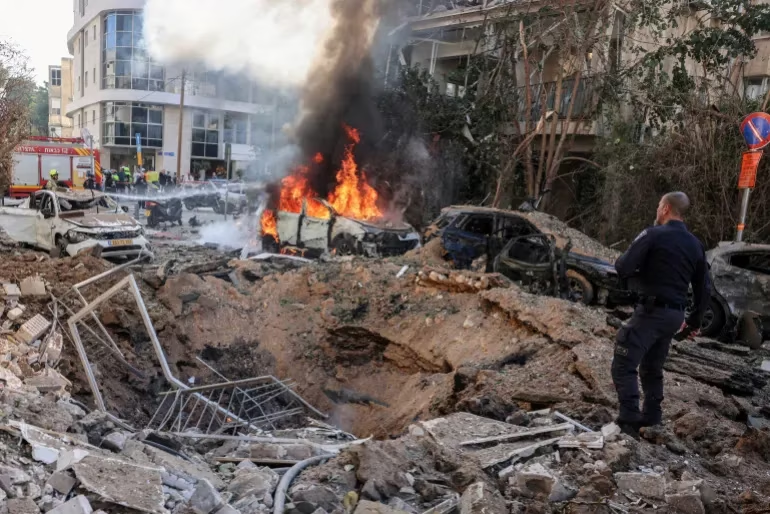
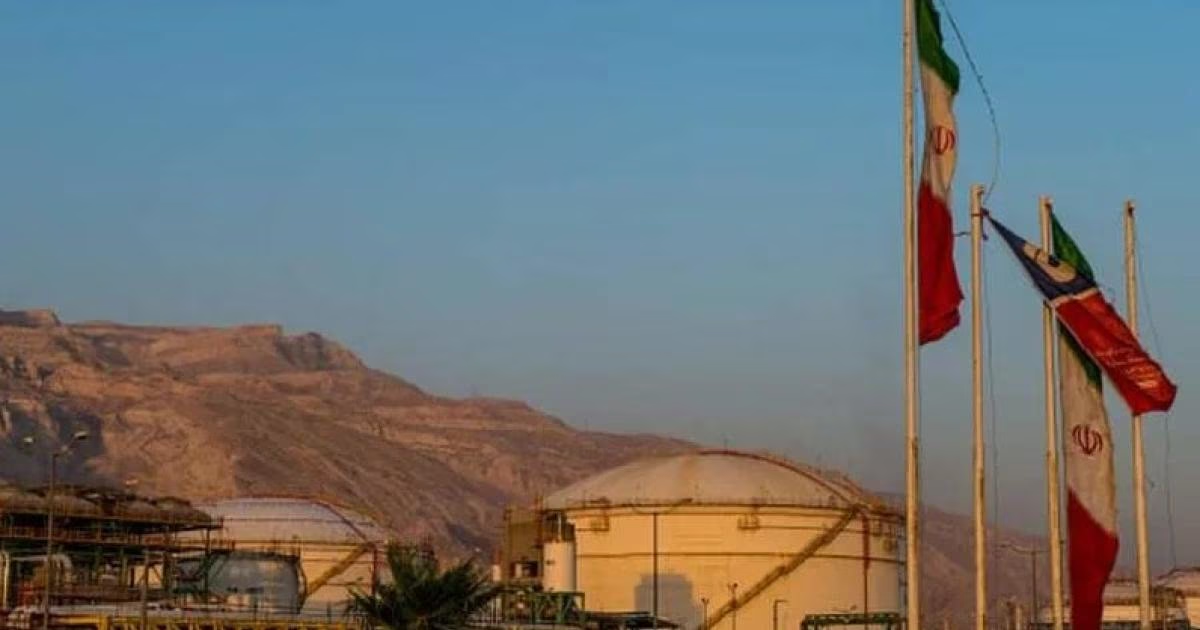
Israeli Defense Minister, Israel Katz, announced today, Monday, that the air force carried out a military strike, which he described as powerful and extensive, targeting a strategic petrochemical facility in the city of Asaluyeh, located in southwestern Iran. Katz confirmed in an official statement that this facility is the largest of its kind in the Islamic Republic, noting that the attack comes as part of a series of operations aimed at undermining the economic and military capabilities of the Iranian regime.

The Israeli minister explained in a video statement that the targeted facility in Asaluyeh contributed about 50% of the total national production of petrochemicals in the country. He considered that disabling this vital facility represents a paralysis of a large part of the Iranian industry, on which the state relies to provide hard currency and finance various sectors, including military activities.

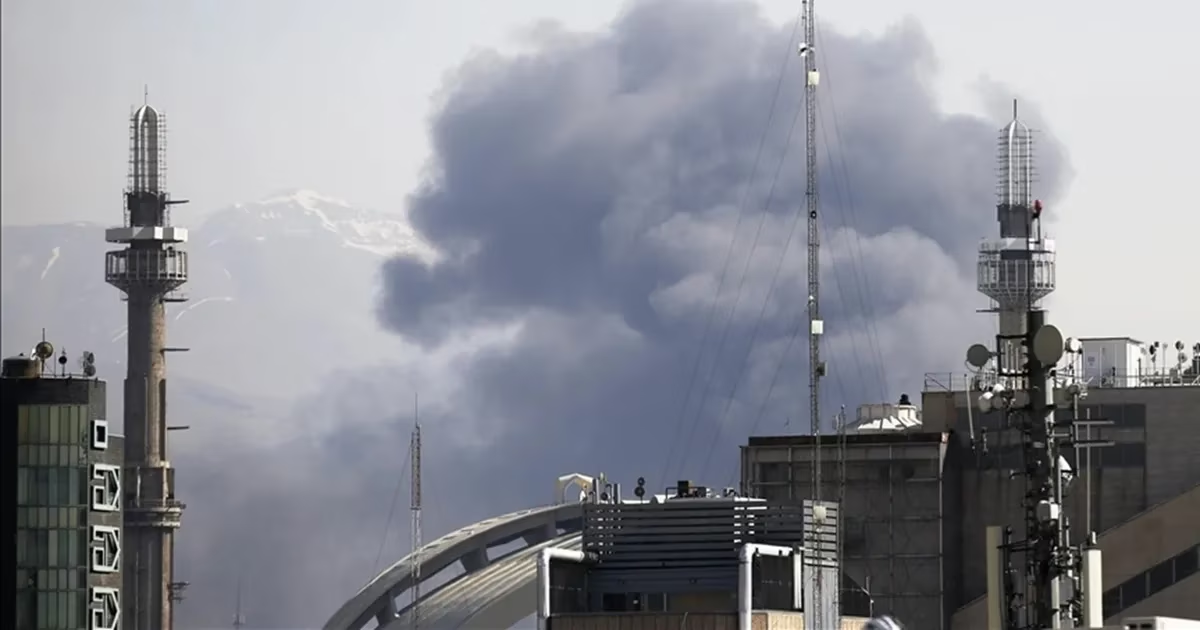
Coinciding with the Asaluyeh attack, field reports indicated other airstrikes targeting a massive petrochemical complex in the Mahroodasht area near the city of Shiraz in the south of the country. Sources stated that these coordinated attacks targeted vital joints in the energy infrastructure, leading to rising smoke plumes from the targeted sites and widespread disruption of associated essential services.

Katz claimed that the two bombed facilities together produce approximately 85% of Iran's total petrochemical exports, confirming their complete incapacitation due to severe damage. The Israeli official estimated the economic value of these losses at tens of billions of dollars, describing it as a devastating blow that will directly affect the Iranian state budget.

In an attempt to justify targeting civilian and economic facilities, the Israeli Defense Minister claimed that the petrochemical industry is the main driver for financing the activities of the Iranian Revolutionary Guard and building military power. He indicated that destroying these resources aims to dry up the funding sources used by Tehran to develop its armament programs and support its allies in the region.

For its part, official Iranian media acknowledged the attack, with Fars news agency quoting officials in Bushehr province as saying that production units in the Asaluyeh complex were damaged. Iranian sources explained that the bombing directly targeted companies supplying the complex with electricity, water, and oxygen, causing production operations to halt due to the interruption of vital supplies to the main units.

Regarding the attack on the Mahroodasht complex near Shiraz, local authorities confirmed control over a fire that broke out at the site after the airstrikes, claiming that the damage was minor and did not lead to comprehensive destruction of the facility. These statements come at a time when technical agencies are trying to assess the actual extent of the damage and work to restore essential services to the affected industrial complexes.

Media sources from Tehran reported that the targeting of Asaluyeh facilities in the South Pars field was not the first of its kind in recent weeks, as the region has witnessed escalating tensions and an exchange of strikes. Sources indicated that these operations come in the context of reciprocal responses that included targeting oil and gas facilities in several countries in the region, which Tehran accuses of being linked to American and Israeli interests.

Earlier, the Iranian armed forces carried out a series of military operations as part of what they described as the 'True Promise 4' wave, during which they targeted strategic sites in Haifa, Beersheba, and Tel Aviv. Iranian attacks also included drone manufacturing facilities and commercial ships, in addition to harassing a US helicopter carrier in the Indian Ocean to force it away from Iranian coasts.

It is worth noting that this escalation comes amid widespread aggression launched by Israel and the United States against Iran since late February, a conflict that has resulted in thousands of casualties and widespread infrastructure destruction. The beginning of this aggression witnessed a dramatic development with the assassination of Supreme Leader Ali Khamenei in an airstrike, pushing the region to the brink of a comprehensive regional war whose repercussions are still unfolding.

The two facilities, which together produce about 85% of Iran's petrochemical exports, are now completely out of service, a severe economic blow.

PALESTINE

Mon 06 Apr 2026 5:19 pm - Jerusalem Time

Two martyrs in Gaza and Khan Yunis: Occupation continues its violations of the ceasefire agreement

Israeli occupation forces continue their field violations of the ceasefire agreement in effect in the Gaza Strip, as two Palestinians were martyred in separate attacks that targeted the north and south of the Strip today, Monday. Medical and local sources reported that the targeting focused on populated and vital areas, leading to injuries among civilians, including children.

In the details of the aggression, young man Mohammed Daoud was killed and a child sustained various injuries as a result of shelling carried out by an Israeli drone targeting a gathering of citizens in the Sheikh Radwan neighborhood north of Gaza City. Eyewitnesses explained that the drone fired at least one missile at civilians who were trying to go about their daily lives amidst the fragile calm.

In the southern Strip, a Palestinian was martyred and others were injured due to intense gunfire by the occupation army targeting a group of civilian vehicles east of the town of Al-Qarara, northeast of Khan Yunis City. The body of the martyr was transferred to Al-Aqsa Martyrs Hospital in the central region, while Nasser Medical Hospital received the injuries resulting from the attack.

Field sources confirmed that army forces stationed east of Salah al-Din Street opened fire on Palestinian vehicles in an area outside their agreed-upon deployment and control within the terms of the ceasefire. This development represents a serious escalation in the nature of the violations committed by Tel Aviv daily since October 10th.

For its part, the Ministry of Health in the Gaza Strip announced a comprehensive update of the casualties of the ongoing aggression since October 7, 2023, indicating that the number of martyrs has risen to 72,302. The number of injured also increased to 172,090, amidst harsh health conditions suffered by the dilapidated medical system in the Strip.

The ministry explained in its daily report that hospitals received 7 martyrs and 17 injuries during the past twenty-four hours as a result of the ongoing Israeli attacks. Official data indicated that the period following the announcement of the ceasefire alone witnessed the martyrdom of 723 people and the injury of about 1,990 others in various governorates.

In a related context, medical teams noted that they were able to retrieve 759 bodies from under the rubble in recent weeks, confirming that large numbers of martyrs are still under the debris and in difficult-to-reach areas. Ambulance and rescue teams face extreme difficulties in reaching the victims due to continued direct targeting and a lack of necessary heavy equipment.

The total number of martyrs since the ceasefire came into effect last October has risen to 723, amidst continued field violations.

PALESTINE

Mon 06 Apr 2026 5:19 pm - Jerusalem Time

Bloody Israeli raids on southern Lebanon and Tel Aviv admits failure of assassination attempt in Beirut

The South and Nabatieh governorates in Lebanon witnessed a bloody military escalation today, Monday, as Israeli warplanes launched a series of intense airstrikes accompanied by heavy artillery shelling. These attacks resulted in a number of martyrs and wounded, in addition to massive destruction that affected residential neighborhoods and infrastructure in several border and deep towns.

In a remarkable development, the Israeli army radio admitted to carrying out a failed assassination attempt yesterday, Sunday, in the capital Beirut, targeting an element belonging to the Quds Force. This admission comes amid the continuation of aerial operations striking various areas, attempting to reach military or leadership targets deep within Lebanese territory.

On the ground, the Lebanese Ministry of Health announced the martyrdom of four citizens in a raid that targeted the town of Kafr Rumman, while warplanes completely destroyed a residential building in the northern neighborhood of the town of Doueir in the Nabatieh district. The raids also targeted the towns of Siddiqin and Zibdin, while drones targeted the town of Hanaway, exacerbating the humanitarian situation in those areas.

In the context of targeting medical personnel, the Public Health Emergency Operations Center reported that the occupation forces directly targeted a team of paramedics belonging to the Islamic Health Authority in the town of Haris. This attack led to the martyrdom of two paramedics and serious injuries to a colleague, in a blatant violation of international conventions protecting medical teams.

For its part, the Lebanese Ministry of Health condemned these attacks, which it described as systematic against the health sector, affirming that it continues to document these crimes to file lawsuits before international courts. The ministry stressed in its statement the necessity of holding the occupation leaders accountable for their continuous violations of international humanitarian law during armed conflicts.

In the Nabatieh district as well, local sources mourned the mayor of Abba and a police officer in the municipality who were killed in an Israeli raid that targeted the area, in addition to two other martyrs in the same location. Another raid targeted a civilian car in the town of Toul, resulting in the martyrdom of two people and injuries of varying severity to an entire family, including two children.

Field sources reported that the intensity and escalating pace of Israeli raids, especially in the eastern sector, have hindered the work of rescue teams and accurate damage assessment operations. The sources indicated that the town of Hadatha alone was subjected to more than seven airstrikes since the early morning hours, as part of the scorched-earth policy pursued by the occupation.

Regarding ground confrontations, field reports confirmed the stagnation of Israeli army attempts to advance towards the strategic city of Bint Jbeil for more than a week. The invading forces face fierce resistance from Hezbollah elements, who continue to deliver precise strikes against troop concentrations and their vehicles at direct contact points.

Field data indicate that the Israeli ground operation has entered a state of stalemate and stagnation in the areas previously reached by the forces. The occupation army currently relies on destructive methods, including blowing up residential blocks and bulldozing main roads, in a desperate attempt to change the geographical and field reality on the border.

In a related context, Haaretz newspaper quoted sources in the Israeli army confirming that the forces deployed in southern Lebanon have reached their final designated lines according to approved plans. The sources explained that the army is currently leaning towards a defensive deployment option without sliding into a wider ground operation deep inside Lebanese territory.

Despite the reinforcement of military presence in border areas, the Israeli military command is cautious about expanding the ground offensive for fear of incurring additional human losses. The current forces are stationed in fortified defensive positions, with continued reliance on air and artillery weapons to strike targets in Lebanese villages and towns.

In the Tyre district, the town of Majdal Zoun was subjected to heavy artillery shelling coinciding with intense airstrikes that included the western and central sectors of the South. These attacks caused the closure of main roads between villages, increasing the difficulty of displacement or the arrival of relief aid to those besieged in those areas.

Lebanese resistance continues to carry out its defensive operations, as Hezbollah announced targeting concentrations of occupation soldiers in border positions with rocket salvos and artillery shells. These operations come in response to the continuous aggressions against civilians and Lebanese villages, and as an affirmation of the resistance's readiness to repel any new advance attempt.

The scene in southern Lebanon remains open to all possibilities, amid the continuation of violent airstrikes and the occupation's failure to achieve significant ground breakthroughs. Attention is turning to international diplomatic movements, while the field continues to assert itself through the steadfastness of Lebanese villages and the resistance's confrontation of infiltration attempts.

Systematic Israeli attacks on the health sector constitute a clear violation of international humanitarian law, which mandates the protection of medical workers.

OPINIONS

Mon 06 Apr 2026 5:18 pm - Jerusalem Time

The war did not weaken Iran… rather, it may grant it a new position in the world

A month after the outbreak of war between Iran on one side, and the United States and Israel on the other, this confrontation is no longer just a fleeting military event. Instead, it has transformed into a pivotal moment that has reshaped many prevailing perceptions from before its outbreak, and redrawn the mental image of Iran for the world.

In the early days of the war, there was a nearly entrenched perception among many observers and countries that Iran, as a Middle Eastern state, might face a fate similar to what happened in Iraq, Libya, or Syria. This involved intense military pressure leading to the disruption of the regime, followed by its destabilization, culminating in a state of chaos and internal collapse. The prevailing belief was that merely disrupting the regime would be enough to push it towards disintegration.

However, reality turned out to be completely different. Iran did not collapse; instead, it stood firm and demonstrated a clear ability to manage the war wisely, carefully read its adversaries, and deal with their plans intelligently and without confusion. This steadfastness was not merely a military capability but transformed into a psychological and political factor, both internally and externally. Internally, the Iranian regime's conviction that it stands on solid ground and represents a state resistant to defeat was strengthened. As the war continued without a decisive breakthrough against it, this conviction began to solidify further.

Externally, similar convictions began to form—though not fully declared—among many international parties. The world realized that Iran is not just a country that can be easily subdued, but an entity possessing geopolitical components, strategic depth, and demographic weight that cannot be underestimated, making the idea of a swift resolution unrealistic.

In contrast, the United States and Israel entered this war with the aim of singularly demonstrating power and imposing a clear deterrence equation. Israel also sought to drag the United States into a direct confrontation with Iran, as part of a strategy aimed at achieving a swift resolution on the ground and imposing hegemony. But after a month of fighting, the results appear to be more complex than expected. Instead of the war weakening Iran, it has—so far—contributed to solidifying its existence as an undeniable regional power, and perhaps as an international actor that imposes itself on everyone's calculations, making it necessary for the world to deal with it on this basis.

From these premises, Iran's stubbornness on de-escalation issues and its unresponsiveness to mediators' proposals, and even its negotiations from a position of strength, can be understood. The more the United States is drained, the more Iran's strategic and political capital increases. Ultimately, this scene closely resembles the recklessness and miscalculations of Donald Trump and Benjamin Netanyahu in their actions, which gave Iran greater room to act flexibly and achieve gains on the ground.

It can now be said that the American strategy and its plans may backfire. Instead of weakening Iran, it seems they may make it stronger, by giving it a broader strategic dimension at the political and international levels, even though it will continue to face real military and economic pressures. In other words, the war may relatively reduce its military capabilities, but it grants it greater strategic depth, an undeniable international image, and places it on the path to ranking among major powers, and perhaps grants it a new position in the world.

Based on these arguments, and if the United States realizes these dimensions of the war's outcomes, the danger of sliding into a comprehensive war becomes probable, especially if accompanied by direct ground intervention or the use of unconventional weapons, with the possibility of NATO joining the conflict, as its member states will not allow an escalation that threatens their interests or regional stability, which further complicates the scene and transforms the conflict into a wider confrontation.

In this context, the first month of the war shows that Iran has managed to establish itself as an unbreakable state, forcing everyone—internally and externally—to re-evaluate the balance of power in the region. While the attempts by the United States and Israel to drag it towards rapid collapse failed, reality showed that merely using military force against it does not guarantee the desired results.

From this, it can be said that Benjamin Netanyahu's goals of reshaping the Middle East, and Donald Trump's goals of reformulating the international system to serve US interests, may have been achieved "but" not in their favor, but quite the opposite. Iran's steadfastness and the war's demonstration of its adaptability and intelligent management have created a new and opposing scenario to their calculations, causing them concern and dread. Ultimately, this is the natural price of recklessness and underestimating the opponent's strength and strategies in depth.

OPINIONS

Mon 06 Apr 2026 3:47 pm - Jerusalem Time

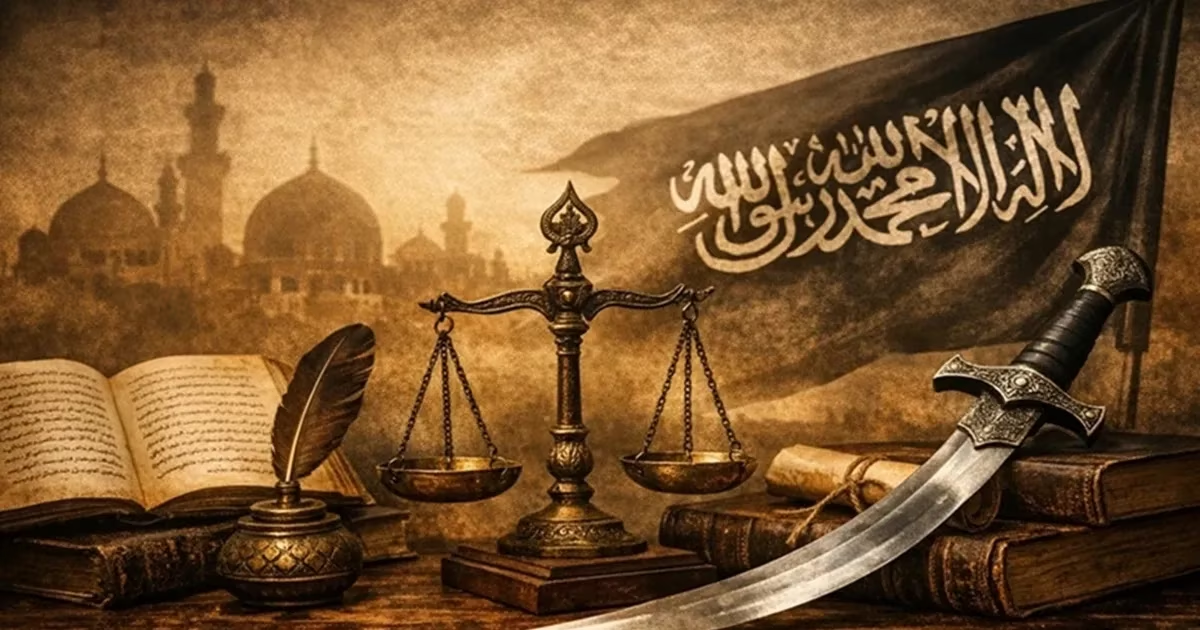
Revisions in Islamic Political Jurisprudence: Towards Restoring the Nation's Authority and Confronting the Legitimacy of 'Al-Shawka'

Ramallah - “Alquds ” dot com

Ramallah - “Alquds ” dot com

Opinion Writer

The Tunisian researcher and writer Dr. Abdel Majid Al-Najjar continues to present a series of critical and in-depth readings on the structure of Islamic political jurisprudence, questioning the usefulness of adhering to historical interpretations that no longer meet the demands of contemporary reality. Through these revisions, Al-Najjar aims to restore the concept of 'the nation's authority' and its inherent right to choose its representatives, away from the concepts of dominance and coercion that prevailed in later eras.

The revisions primarily address the concept of 'Al-Shawka' (the thorn/military might), which was historically used to install rulers and impose a new political reality, disregarding the will of the people. The researcher believes that this mechanism, in many jurisprudential texts, transformed from an exceptional measure to avert strife into a legitimate rule that legitimizes the rule of the overcomer, thus undermining the nation's role in the political contract.

Al-Najjar points out that the legitimization of 'the rule of coercion' was not present in the early stages of political jurisprudence, such as in Al-Mawardi's writings, but rather emerged and became entrenched among later jurists like Imam Al-Nawawi. These jurists based their views on the necessity of preserving the unity of Muslims and their cohesion, even if the ruler had seized power with his soldiers without a pledge of allegiance or legitimate succession.

The series reviews the roots of this confiscation of the right to choose, referring to narrations from Imam Ahmad ibn Hanbal stating that the imamate is established by coercion and dominance and does not require a contract. Al-Najjar believes that these fatwas were circumstantial, dictated by the political challenges of that time, but over time, they transformed into a permanent legislation lacking strong support from religious texts or the practices of the Rightly Guided Caliphate.

Returning to the texts of revelation, the researcher emphasizes that the Holy Quran made 'Shura' (consultation) a binding principle in managing the nation's affairs, as stated in His saying, 'And their affair is [determined by] consultation among themselves.' This means that the appointment of a ruler, being one of the most important matters for Muslims, must be subject to the principle of popular participation and general consent, not to material or military coercion.

Al-Najjar also cites other verses that assigned the authority of execution and legislation to the nation as a whole, indicating that the ruler is merely an agent authorized by it to implement its will. There are no indications in these texts that grant 'Ahl al-Hall wal-Aqd' (people of binding and loosing) or those with military power an exclusive right to determine the nation's destiny apart from its free collective will.

In a reading of the Prophet's Sunnah, the Prophet's stance during the Hawazin delegation stands out, where he refused to make a decision without consulting the general populace through their 'leaders.' This prophetic behavior establishes the necessity of surveying the opinion of the popular base on crucial issues, which was followed by the Rightly Guided Caliphs in many situations before political practice later deviated.

The article discusses the issue of 'succession' (walayat al-ahd) which was prevalent in political jurisprudence, explaining that some contemporary jurists such as Muhammad Salim Al-Awa and Abd al-Wahhab Khallaf re-adapted it. They believe that Abu Bakr's covenant to Omar, or Omar's to the six, was not a binding contract in itself, but merely a 'nomination' presented to the nation to have its final say through a general pledge of allegiance.

Al-Najjar warns that continued recognition of 'military might' as a legitimate path to governance opens the door wide to tyranny and usurpation of power. Prioritizing the balance of power over the balance of right makes military conflict a means to attain the imamate, which historically led to great corruption and strife far exceeding what the jurists sought to avoid.

The researcher recalls the stance of Imam Ali ibn Abi Talib, may Allah be pleased with him, who insisted that truth and popular consent are the basis of legitimacy. He believes that Imam Ali's insight aimed to block the path to future tyranny, even if adhering to this principle led to temporary harms, because the harm of permanent tyranny is far greater to the nation's entity.

In a related context, Al-Najjar criticizes the absence of independent chapters for public freedoms in inherited political jurisprudence, where most rulings tended to restrict freedom of thought and expression. He cites the stance of Imam al-Haramayn al-Juwayni, who established the obligation to resist those with dissenting opinions with the sword, a trend that left a deep negative impact on the collective consciousness of Muslims to this day.

The article also calls for the necessity of renewing jurisprudence related to 'citizenship,' considering that traditional divisions between believers and dhimmis are no longer compatible with the reality of the modern state. It emphasizes the importance of developing rulings based on equality and justice among all members of society regardless of their ideological affiliations, so that citizenship becomes the basis of rights and duties.

Dr. Al-Najjar concludes his revisions by emphasizing that this renewal is not an intellectual luxury, but an urgent necessity to reform political life in Islamic societies. He believes that this revision is of particular importance for Muslim minorities in the West, who need a political jurisprudence that aligns with the values of participation and freedom prevalent in those societies.

Rebuilding the Islamic intellectual and political foundation on the principles of justice and popular participation is the essential gateway to any true renaissance. Without reviewing these traditional rulings that legitimize tyranny or restrict freedoms, the nation will remain unable to keep pace with global developments and build modern states that respect human dignity and inherent rights.

Legitimizing the mechanism of 'Al-Shawka' in the contract of imamate abolishes the nation's right to choose, and grants this right to the overcomer, which opens a door to tyranny that is difficult to close.

ARAB AND WORLD

Mon 06 Apr 2026 3:46 pm - Jerusalem Time

International mediation efforts to hold direct negotiations between Washington and Tehran falter

International press reports revealed today, Monday, that diplomatic efforts led by mediators from Turkey, Egypt, and Pakistan, aimed at pushing Iran to sit at the negotiating table with the United States, have faltered. These intensive moves aim to reach an agreement that ends the current state of war or at least ensures a temporary ceasefire in the region.

Sources indicated that the American administration showed possible flexibility regarding waiving some of its previous demands in order to make progress in the negotiation process. However, these attempts still face significant obstacles due to the parties' adherence to their initial positions, making it difficult to reach tangible understandings at present.

In a related context, informed officials reported that the Iranian side categorically rejected a proposal to reopen the strategic Strait of Hormuz in exchange for a temporary cessation of hostilities. Tehran believes that the current American demands to end the war are unacceptable and do not meet its minimum political and security conditions.

Tehran informed international mediators that it is unwilling to hold any meetings with American officials in the Pakistani capital, Islamabad, in the coming period. This rigid Iranian stance comes amid a conviction among the Iranian leadership that Washington is not serious about reaching a formula for a permanent and comprehensive ceasefire.

For his part, a high-ranking Iranian official stressed that his country will not succumb to an ultimatum policy or external pressures aimed at extracting field concessions. He affirmed that the proposal to open the Strait of Hormuz cannot be exchanged for a temporary calm, noting that Tehran is currently studying a framework presented by Pakistan but will not rush to make a decision.

Regarding diplomatic initiatives, Pakistan has prepared an integrated framework to end hostilities, which was delivered to both Tehran and Washington in recent hours. This proposal is based on a two-phase approach, the first beginning with an immediate and comprehensive ceasefire, followed by a second phase to draft a final and comprehensive agreement.

Sources indicate that Pakistan is currently acting as the sole and direct communication channel between the two parties in an attempt to bridge views and avoid further military escalation. Mediators are seeking to reach an agreement on all essential elements of the initiative as quickly as possible to formulate them into a formal memorandum of understanding.

Despite both parties receiving the Pakistani plan, doubts still surround the possibility of its actual implementation due to the lack of mutual trust. Informed sources insist that the success of any initiative requires full agreement on all technical and political details before announcing any field de-escalation.

Regional and international capitals are cautiously monitoring the results of these diplomatic moves, especially given the significant impact of the continued closure of the Strait of Hormuz on global energy supplies. The current bet remains on the ability of mediators to find a middle ground that ensures a cessation of fighting without compromising the red lines set by each party.

Tehran will not reopen the Strait of Hormuz in exchange for a temporary ceasefire, and will not succumb to ultimatums or pressure to make a decision.

OPINIONS

Mon 06 Apr 2026 3:46 pm - Jerusalem Time

Efforts to Stop War Between Washington and Tehran via "Islamabad Agreement": Immediate Truce and Comprehensive Negotiations

Said Erikat

Opinion Writer

Washington – Saeed Erikat – 6/4/2026

Reuters quoted an informed source on Monday that Iran and the United States have received a comprehensive proposal to end hostilities, which could take effect immediately and lead to the reopening of the Strait of Hormuz, one of the most vital passages for global oil supplies.

The source explained that Pakistan has prepared a political and security framework to de-escalate, which was exchanged with both Tehran and Washington overnight, and includes a two-phase approach: the first is an immediate ceasefire, followed by negotiations to reach a comprehensive and lasting agreement. The source stressed the need to agree on all elements of the plan on the same day, noting that the initial understanding will be drafted into a memorandum of understanding completed electronically via Pakistan, which currently serves as the primary communication channel between the parties.

Axios had previously revealed ongoing talks between the United States and Iran, with the participation of regional mediators, to discuss a 45-day truce, as part of a two-phase bilateral deal that could lead to a permanent end to the war, based on American, Israeli, and regional sources.

In the same context, the source stated that Pakistani Army Chief, Asim Munir, held intensive contacts "all night" with US Vice President JD Vance, Special Envoy Steve Witkoff, and Iranian Foreign Minister Abbas Araghchi, in an attempt to bridge viewpoints and push the proposal towards implementation.

According to the plan, the ceasefire begins immediately, allowing for the reopening of the Strait of Hormuz, with a grace period of 15 to 20 days to complete a broader agreement. The proposal bears the preliminary name "Islamabad Agreement" and includes a regional framework specific to the Strait, with final face-to-face negotiations organized in the Pakistani capital.

So far, no official comment has been issued by either the American or Iranian sides, and the spokesperson for the Pakistani Ministry of Foreign Affairs, Tahir Andrabi, refrained from making any statements. In contrast, Reuters quoted Iranian officials confirming Tehran's pursuit of a permanent ceasefire, conditioned on guarantees preventing it from future attacks by the United States or Israel, noting that it has received messages through mediators, including Pakistan, Turkey, and Egypt.

The final agreement is expected to include Iranian commitments not to seek nuclear weapons, in exchange for sanctions relief and the release of frozen financial assets. However, two Pakistani sources indicated that Iran has not yet provided a clear commitment to the proposal, despite the escalating pace of political and military contacts.

In the absence of an official response from China, which also supports diplomatic efforts, efforts to contain the escalation continue, especially with growing concerns about disruptions to navigation in the Strait of Hormuz. This comes at a time when US President Donald Trump is publicly pushing for a quick ceasefire, warning of serious repercussions if the conflict continues.

Military escalation has directly impacted global energy markets, with investors anticipating any developments that could affect oil flow through the Strait, increasing price volatility.

The Pakistani initiative reveals a significant shift in regional mediation balances, as traditional powers are no longer solely controlling de-escalation paths. Islamabad's entry as a sole communication channel reflects relative trust from both sides, but it also places it before a difficult test in managing complex balances involving Washington, Tehran, and Beijing. The success of this initiative depends on Pakistan's ability to provide practical guarantees, especially regarding the security of the Strait of Hormuz, which is a crucial element in convincing the parties of the seriousness of the agreement.

The focus on a phased truce reflects an international understanding that ending the war all at once may be unrealistic in the current circumstances. Therefore, the actual goal seems to be to "buy time" to de-escalate and prevent a slide into a wider confrontation. However, this approach carries risks, as a temporary truce could turn into a mere tactical pause exploited by the parties to reposition themselves. The success of the first phase requires strict monitoring mechanisms and clear guarantees to prevent its rapid collapse.

The fate of this agreement is closely linked to the Iranian nuclear program, which remains the most sensitive knot in any settlement. Proposing the equation of "nuclear commitments for sanctions relief" brings back the model of previous agreements, but it faces greater challenges today due to the erosion of trust between the parties. Moreover, the introduction of the factor of releasing frozen assets provides Tehran with a significant economic incentive, but it may provoke internal opposition in the United States, threatening the sustainability of any potential agreement.

OPINIONS

Mon 06 Apr 2026 3:46 pm - Jerusalem Time

The Psychology of the 'Spoiled President': A Reading on Trump's Rise and the Phenomenon of the Sole Leader

Ramallah - “Alquds ” dot com

Ramallah - “Alquds ” dot com

Opinion Writer

American Professor Jeffrey Sachs conveys a grim medical and psychological view of US President Donald Trump's personality, pointing to conclusions by psychiatrists confirming his suffering from a severe mental disorder. These reports describe Trump as an impulsive personality afflicted with megalomania and paranoia, rendering him incapable of making rational decisions, which could push the United States towards catastrophic confrontations.

Trump's scandals and behaviors do not seem strange given his early upbringing and professional background; he is a president who came from the worlds of betting, gambling, wrestling rings, and beauty pageants. This professional path, far from traditional political corridors, made him an exceptional media personality, entering the political scene with tools alien to internationally recognized diplomatic norms.

The article considers Trump a model of the 'psychopath' who does not hesitate to use vulgar language in his speeches, as recently happened on his 'Truth Social' platform. This behavior reflects the image of the spoiled president who sees himself as America's savior, while surrounding himself with an aura of religious and social sanctity that sometimes reaches the point of performing strange promotional rituals.

In comparing the Biden and Trump eras, a sharp division appears in American society regarding identity and values, as Biden sought to adopt controversial social and genetic policies. This direction made broad segments of the 'founding whites' feel threatened, leading them to prefer a president who seeks to change geographical and political maps rather than tamper with genetic and social identity.

The writer likens Trump's situation in America to that of the 'only male' who arrives after a long wait in popular heritage, where he receives excessive pampering that prevents him from political maturity. This leadership style relies on the constant display of power and boasting before adversaries and allies alike, turning international politics into an arena for intellectual adolescence.

This phenomenon is not limited to the United States but extends to other international leaders such as Russian President Vladimir Putin, who is described as a strong man born from suffering. Putin, who restored the glory of the tsars and united the Russian nation, now finds himself stuck in the quagmire of the Ukrainian crisis, a paradox that reflects the limits of individual power in the face of complex realities.

The creation of the 'child president' or spoiled leader is systematically done through media that exaggerates the leader's image and portrays him as the sole savior of the nation after ages of weakness. This reproduction of 'virile' leaders always comes as a reaction to periods of rule described as lenient or hesitant, as happened in the transition from Yeltsin to Putin in Russia.

In the Egyptian scene, the article highlights the shift from a rule characterized by religious piety to a military rule described as harsh, where the writer believes that the media contributed to creating the image of the 'male' for the new ruler. This ruler, who sometimes threatens his opponents with soft language, appears in other situations begging for support from major international powers, specifically from the American administration.

This dependency is evident in the discourse directed at Trump, where he is seen as the sole force capable of stopping wars in Gaza and Iran and securing the basic needs of allied countries. This contradiction between the image of the strong internally and the dependent externally reflects the leadership crisis in the Arab region, which always looks for a 'father' in Washington.

As for northern Syria, the experience of the 'Rojava Kingdom' led by Mazloum Abdi appears as another model of leadership that stands out as a unique case in the history of the Kurdish region. Despite the imported party roots, control over vast areas and great wealth has made this leadership an 'only son' who enjoys exceptional international support under complex regional circumstances.

The phenomenon of the 'awaited male' in politics often leads to leaders remaining in a state of political infancy, where they are controlled by the intoxication of power that surpasses any loss of consciousness in its effect. This self-absorption makes it difficult for these leaders to realize the extent of the dangers they surround their peoples and countries with, given their possession of weapons of mass destruction.

The United States, once known for its established institutions, has transformed into a country whose decisions are reduced to a single individual characterized by vulgarity and impulsiveness in his international stances. This transformation poses major questions to the world about the future of democracy in light of the rise of populist figures who rely on tickling emotions rather than sound political programs.

In contrast, the article presents a vision of other countries accused of theocracy but possessing institutions and consultation, in reference to the disparity between the mental image and political reality. This contradiction clarifies that the true strength of nations lies in the stability of their institutions and not in the charisma of the 'male' leader who may lead his country to the abyss.

In conclusion, the writer warns against being drawn into the creation of illusory leaders who feed on political and social vacuum, considering that the world is living in an era of 'child presidents'. The continuation of this approach to governance threatens the collapse of the international system, where the destinies of peoples become hostage to personal whims and psychological disorders of leaders who do not realize the magnitude of the responsibility placed upon them.

Psychiatrists concluded that Trump suffers from a severe mental disorder, describing him as an impulsive personality incapable of rational thought.

OPINIONS

Mon 06 Apr 2026 3:46 pm - Jerusalem Time

The Autumn of Unipolarity: Towards Sovereign Engineering in a Multipolar World

Ramallah - “Alquds ” dot com

Ramallah - “Alquds ” dot com

Opinion Writer

History does not appear as a calm river, as some imagine, but rather as the product of difficult labor from silent earthquakes accumulating within empires until they reach the moment of truth. Today, we are not merely observing a military withdrawal or a fleeting diplomatic retreat; rather, we are witnessing a structural crack in a system that long believed it represented the end of history.

History has awakened to write a new chapter, influenced by the dust of Eastern conflicts and the collapse of dominant currency thrones. The blade of absolute deterrence has broken on the rock of a new reality, as the secrets of power have leaked from the hand of the monopolist who believed technology was exclusive to their genes, reaching the hands of rising and empowered forces.

International prestige is no longer measured solely by the size of traditional military budgets, but by the intelligence of innovation that has challenged the pride of aircraft carriers. This transformation heralds the birth of a new regional security formulated by self-determination, far from external tutelage or dependence on major powers that have begun to lose their control.

In financial corridors, the paper empire is experiencing its final autumn, as the dollar has begun to lose its luster as a whip for international sanctions. The fires of inflation and accumulated debts are pushing the world towards a search for real assets and new economic spaces led by the rising Eastern poles on the global stage.

Transitioning from a debt-based economy to a resilience-based economy represents the core of the next phase, where there is no sovereignty for those whose decisions tremble behind global stock market screens. True sovereignty lies in linking the earth's resources to the decision of an independent national mind, far from the fluctuations of markets controlled by traditional powers.

However, the greatest danger does not come only from outside, but from the internal weakness that gnaws at the central nerve of the United States' power. While Washington tries to extinguish the raging fires at the world's edges, the fires of internal polarization are unprecedentedly igniting within its social and political fabric.

The division within the United States has reached a stage of existential deadlock, where constitutional institutions have become unable to mend the deep societal rift. This erosion from within threatens the imperial structure, hinting at a bleak horizon marred by the specter of bitter internal clashes that weaken the ability for global leadership.

In this scenario, foresight is not complete with observation alone; it requires the courage for self-engineering to transform strategic exposure into a sovereign fortress. This demands decisive procedural paths that begin with departing from the square of permanent dependency towards functional parity in international relations with all parties.

Diversifying partners in light of the rising Eurasian dawn is a strategic necessity for Arabs to be partners in formulating new international rules. The region should not remain merely an arena for the clash of major powers, but an actor that asserts its interests in a world that no longer recognizes a single pole.

Financial liberation represents the second pillar in this engineering, through organic disengagement from declining currencies and the establishment of inter-exchange platforms. Relying on the true value of resources protects people's savings from the expected major crash in the old global financial system.

Localizing survival is the third side of the triangle of existence, as it must be realized that bread, weapons, and digital code are the basis of sovereignty. He who does not produce his weapons remains hostage to the decision of the external supplier, and he who does not own the seeds of his land remains dependent on the ports of others and their political will.

The current imperial retreat leaves a huge geopolitical vacuum that represents a final warning siren for regional powers. This vacuum must either be filled by a sovereign bloc that possesses the mastery of science and protects its data with national algorithms, or everyone will remain waiting for a new master to fill the vacuum according to their own interests.

The sun of tutelage has set, and opportunities for true independence have emerged. History, in its great upheavals, shows no mercy to the hesitant or those standing on the threshold of waiting. Doors open only to those who possess the insight to read the threads of dawn and prepare for a multipolar world that is not managed by dictates.

The next decade is the final testing ground for national will. Either participate in formulating the rules of the new era or remain merely an echo of others' conflicts. Sovereignty today is a condition for survival in an international jungle that respects only those who possess the keys to their food, medical, and digital security.

Sovereignty today is not a luxury, but a condition for survival in an international jungle that respects only those who possess the keys to their food, the secret of their medicine, and the code of their digital security.

ARAB AND WORLD

Mon 06 Apr 2026 3:46 pm - Jerusalem Time

Experts: Europe refuses to engage in a 'ground adventure' against Iran and fears energy and migration repercussions

Experts in international and political affairs believe that European capitals will not be drawn into any direct ground confrontation against Iran, despite the increasing pressure exerted by the administration of US President Donald Trump. This assessment comes at a sensitive time with the approaching deadline set by Trump for Tehran regarding the Strait of Hormuz, amidst fears of a military escalation that could go beyond airstrikes to a ground intervention.

Professor and researcher at the Sorbonne University, Mohamed Hneid, explained that there is a categorical European rejection of participating in what he described as 'the unilateral American adventure'. He pointed out that some countries have taken strict sovereign stances by refusing to allow their airspace to be used for the passage of military aircraft or to carry out landing operations, expressing their unwillingness to engage in a conflict in whose details they were not consulted.

Hneid considered that the deteriorating economic situation in the old continent, and the depletion of resources in the Russian-Ukrainian war, makes it impossible for Europe to open a new front. European countries believe that their interest lies in stopping current wars and addressing their internal problems, such as the rise of the far-right and fierce trade competition with China and the United States.

In the context of analyzing American policy, Hneid pointed out that Washington has historically involved its NATO allies in its ground wars to reduce human and material costs on itself. He cited what happened in Afghanistan, Iraq, and Syria, where allies bore the consequences of military interventions that were primarily aimed at strengthening American hegemony over resources and international decision-making.

Regarding economic threats, the researcher noted that Trump's attempts to entice Europe by controlling Iranian oil on 'Kharg' island will not succeed in changing the European position. Trade relations between the two sides are already strained due to the tariffs imposed by Trump, and any military escalation will inevitably lead to a cut in energy supplies and an exacerbation of the living crisis in Europe.

For his part, the former advisor to the Tunisian Minister of Foreign Affairs, Manar Mohamed Al-Skandrani, affirmed that Europe has learned lessons from its bitter past experiences with American administrations. He explained that Europeans feel that Washington abandons them as soon as its interests are achieved, and sometimes even blames them for failures, as is currently happening in the Ukrainian file.

Al-Skandrani noted the radical shift in American decision-making during the Trump era, where it moved from a cumulative institutional framework to an erratic individual decision. This shift makes it difficult for European countries, which rely on established institutions and strict international law, to follow a leadership whose next steps or ultimate goals cannot be predicted.

Al-Skandrani warned that any ground war on Iran would open the doors to regional chaos wide open, leading to unprecedented waves of migration towards European shores. He considered that geography imposes a different reality on Europe than the distant United States, as any disturbance in the Middle East immediately reflects on the security and stability of the old continent.

Regarding the Israeli role, the former advisor pointed out that Tel Aviv seeks to dismantle major regional powers such as Iran, Turkey, and Egypt to impose its full hegemony. He believes that the 'Greater Israel' project does not require direct geographical occupation as much as it requires transforming surrounding countries into weak and warring entities, which Europe realizes the danger of to its interests with the Arab world.

Al-Skandrani stressed that the battle with Iran is not only military, but an existential battle related to global energy security and the vital Strait of Hormuz. Any disruption in navigation in this strait would mean an economic catastrophe for Europe, which is already suffering from an unprecedented energy crisis, making participation in the war a completely irrational step.

He explained that the current European position is not due to military weakness, but rather a precise rational calculation of supreme strategic interests. Europe realizes that being drawn behind the American-Israeli vision at this time would mean economic and political suicide, especially in light of the existing tensions with Russia on its eastern borders.

Experts also pointed out that lobbies associated with major companies may try to pressure some European governments, but political elites have begun to realize the extent of the damage. Absolute support for American projects no longer benefits European peoples, but rather increases their isolation and exacerbates their internal and social crises.

The analysis concluded that the geographical and political gap between Washington and Brussels is widening regarding the Iranian file, as Europe sees diplomacy and de-escalation as the only way to maintain its security. In contrast, the American administration continues to pressure through the language of threats and sanctions, which puts the historical alliance between the two sides of the Atlantic to a real and unprecedented test.

Finally, the question remains about Europe's ability to withstand these pressures if the spark of confrontation actually ignites. However, current indicators confirm that the major capitals of the continent will not provide a 'blank check' for any ground military action that could end in a humanitarian and economic catastrophe for which only the European peoples will pay the price.

Europe realizes that this war is not its war, it has no stake in it, and entering a conflict of this magnitude does not serve its strategic interests.

ANALYSIS

Mon 06 Apr 2026 3:46 pm - Jerusalem Time

Between professional vision and 'stands' fanaticism.. How does the Arab street read the Iranian-Israeli confrontation?

The region is witnessing an unprecedented military escalation as the confrontation between Iran, on one hand, and Israel and the United States, on the other, enters its fifth week. Field sources reported intense raids on Sunday night and Monday dawn targeting strategic sites and residential neighborhoods in Tehran, Isfahan, and Qom, resulting in dozens of casualties, including children, amidst the ongoing war that began on February 28th.

Amidst this military dust, a sharp division emerges in the Arab street that transcends traditional political analysis, reaching a stage akin to a 'great sedition'. Each side believes its position is the absolute truth, transforming the existential conflict into something resembling football matches between 'Al-Ahly and Zamalek', where there is no room to hear the other opinion or accept pluralism in media discourse.

Major media institutions face a tremendous challenge in maintaining their professional balance in front of an audience that demands their viewpoint be fully adopted. While some attack the hosting of figures who align with the Iranian vision, others launch a counter-attack when voices critical of Tehran's policies appear, putting news platforms in direct confrontation with accusations of treason and loss of credibility.

The culture of 'cheering' has moved from the stands to the screens, where viewers now seek what satisfies their political whims, not what conveys objective truth. This behavior has turned the political analyst into a mere echo of public desires, as if news programs have become political versions of 'listeners' choice' programs, which threatens the essence of journalistic work based on uncovering facts.

On the ground, reports revealed the killing of 13 people in an attack targeting the Baharestan residential area, in addition to the killing of the commander of the Air Defense College in Isfahan. These bloody developments increase the intensity of polarization, as those affected by previous Iranian policies in Syria and Iraq find it difficult to sympathize with Tehran, while others believe that the Israeli danger is the sole threat that must be confronted.

Statistics issued by the Pentagon indicate that more than 11,000 targets inside Iranian territory have been struck since the start of operations. Despite this enormous military pressure, sources confirm that Tehran still retains the ability to repair its missile facilities and reactivate bunkers within hours, despite the daily missile launch rate dropping to less than 40 missiles.

The current crisis has revealed a fragility in collective awareness regarding the concept of 'news' and 'opinion'. Social media platforms have contributed to turning every page owner into a political analyst who rejects news simply because it does not align with their preferences, which opens the door wide to the spread of fake news and the loss of direction in evaluating current events away from emotions.

In comparison with previous crises such as the invasion of Iraq, it appears that the public was more mature in accepting other opinions despite the bitterness of defeat. Today, however, the intensity has reached the point of direct incitement against journalists and institutions that try to adhere to professional rules, which reflects a decline in public dialogue tools within Arab societies.

Intellectual elites play a negative role in this scene, as some of them are swept away by demagoguery to gain public favor or settle personal scores. Instead of rationalizing the debate, these individuals contribute to formulating accusations of treason and collaboration, which deepens the gap and makes it impossible to build a unified Arab vision towards the accelerating regional challenges.

Despite the scathing criticism, major news channels still dominate viewership, proving that the public, despite its anger, knows deep down where to find reliable news. The biased viewer looks for a 'mouthpiece' that represents them, but returns to professional platforms to know the reality of military and political developments on the ground.

Finding excuses for some tense positions seems logical given the historical wounds in the region; the Syrian whose country was destroyed or the Iraqi who suffered from interventions cannot be forced to see the scene with one eye. However, turning this suffering into a tool to suppress professional media work ultimately serves the enemies of the nation who benefit from the fragmentation of awareness.

Iran, for its part, has given its opponents objective justifications through its regional policies that have raised the concerns of neighboring countries. Had it adopted a different policy, it might have pulled the rug out from under those inciting against it, and would not find itself today in confrontation with a camp that sees 'American and Israeli evil' as a parallel or even less severe threat than its own.

Amidst the continued civilian casualties, as happened in the targeting of Sharif University's gas station and the disruption of services to entire neighborhoods in Tehran, the need for media that honestly conveys human suffering without engaging in axis conflicts increases. Truth is the first casualty in wars, and professionalism is the only remaining shield to protect it.

In conclusion, this war remains a difficult test not only for military capabilities but also for the ethical and professional system in the Arab world. It is either a slide towards destructive 'populism' that negates reason, or adherence to journalistic values that differentiate between conveying reality and promoting agendas, in a time when honesty has become a rare commodity amidst the noise of missiles and statements.

This battle seems to need a 'mouthpiece' rather than a media platform that tries to be bound by the rules of professional practice amidst a division resembling the fanaticism of football stadiums.

ARAB AND WORLD

Mon 06 Apr 2026 3:45 pm - Jerusalem Time

Jan Morris in a New Biography: Literary Genius and Human Contradictions Behind the Legend

A recent critical reading shed light on the new biography of the late British historian and writer Jan Morris, prepared by writer Sara Wheeler under the title 'Jan Morris: A Life'. This biography reveals the features of an exceptional personality who managed to engrave her name in the memory of world literature, yet remained burdened with deep human contradictions that affected her immediate surroundings.

Morris's career began in the mid-20th century when she was known as James Morris, where her star shone as an adventurous journalist for 'The Times'. Her name was historically associated with the global scoop she achieved when covering the first successful ascent of Mount Everest in 1953, an achievement that opened the doors to widespread fame for her.

Morris's ambitions did not stop at field journalism; she transitioned to become one of the most prolific writers, especially in the fields of history and travel literature. Her works exceeded fifty books, characterized by a unique narrative style and an exceptional ability to describe places and analyze the cultural identities of peoples and cities.

The 1970s marked the most prominent turning point in Morris's personal and professional life, as she made the decision to undergo gender transition, which she later documented in her famous book 'Conundrum'. This book was not just an autobiography; it became rich material for cultural and social debate in Britain and beyond, placing her in confrontation with diverse intellectual currents.

Despite the fame she gained as an advocate for what she called 'the religion of kindness', the new biography reveals a different side of Morris in her private dealings. According to family testimonies included in the book, her children suffered from her domineering behavior and emotional absence, which created a large gap between her public image as a gentle writer and her reality as a mother.

Her daughter, Suki, described the experience of motherhood with Morris in harsh words, indicating that individual ambition and self-focus always overshadowed family obligations. These testimonies redraw the features of the literary legend and confront the reader with questions about the human cost paid by creators in order to achieve their selves.

In contrast, the long and complex marriage between Morris and her wife Elizabeth stands out as one of the most astonishing and enduring aspects of her life. Their relationship continued despite all radical transformations, in a unique blend of emotional commitment and loyalty to old vows, as Elizabeth dedicated her life to preserving the family unit.

The exchanged letters cited in the biography indicate a deep love between the two parties, but this love did not prevent the emergence of sharp tensions resulting from Morris's desire to break free from traditional constraints. This relationship reflects the nature of the internal conflicts experienced by those around Morris in light of her continuous transformations.

The critical reading of the biography concludes that Morris was an exceptionally complex personality, who cannot be confined to molds of veneration or condemnation. She was the great writer who inspired millions, and at the same time, the human being who placed her personal success above all else, making her human image appear fragile in the face of the brilliance of her achievements.

The biography raises a fundamental question about the role of literature when it becomes a means of expressing shocking identity conflicts with human nature. Can creativity stemming from sharp psychological conflicts remain inspiring for future generations, or does it remain confined to the individual experience of its author and her own contradictions?

Considering the Western context in which Morris grew up, we find that she challenged a traditional patriarchal society that imposed strict restrictions on women's identity and status. Her literary achievements at that time represent a rare experience in breaking historical constraints, which contributed to opening new horizons for understanding the female experience in the West.

The development that women have achieved in Western societies today was not a coincidence, but rather the result of the accumulation of sacrifices by women like Morris and others. Nevertheless, the feminine dimension in her writings remains a محور of creativity, as she used her own experience to explore the human self in a depth that transcends traditional frameworks.

When comparing Morris's experience with Arabic literature, we find interesting intersections with female writers such as Nazik Al-Malaika, Fadwa Touqan, and May Ziadeh. These writers also faced societies that imposed restrictions on freedom of expression, and were forced to engage in bitter internal struggles between their personal ambitions and the social obligations imposed on them.

Ultimately, Jan Morris's experience remains a living example that genius does not protect its owner from error or contradiction. Whether in the Western or Arab context, true creativity is that which dares to reveal the fragility of the human soul and transform suffering into works that transcend the boundaries of time and place.

As Jan Morris's achievements expanded, the fragility of her human image and her emotional gap with her surroundings increased.

PALESTINE

Mon 06 Apr 2026 3:45 pm - Jerusalem Time

Visual Sovereignty: A New Israeli Strategy to Judaize the Public Landscape in the West Bank

The occupied West Bank is facing a new wave of settlement practices that go beyond military field control, reaching what experts describe as 'visual occupation'. These moves aim to impose a new cultural and identity reality through the intensive spread of Israeli religious and political symbols in public spaces and vital areas.

Field reports over the past two weeks have monitored an unprecedented spread of Israeli flags on main roads, in addition to the erection of religious symbols such as the 'menorah' and the Star of David on hilltops and in public squares. These steps come in the context of persistent attempts to normalize the settlement presence and make it an integral part of the daily landscape in the West Bank.

Informed sources reported that these practices fall under the 'visual sovereignty' strategy, which aims to prepare the psychological and political atmosphere for actual annexation and the permanent entrenchment of settlements. These moves coincide with the naming of Palestinian cities and villages with biblical names in an attempt to reinforce the alleged Israeli historical narrative about the region.

In a related context, the Wall and Settlement Resistance Commission revealed a sharp escalation in settler attacks, with approximately 443 attacks recorded since late February. Settlers have exploited the regional unrest to intensify their attacks on Palestinian communities, aiming to terrorize residents and push them towards forced displacement from their lands.

Hassan Breijieh, director of the Wall Resistance Commission office in the southern West Bank, confirmed that what is happening is the use of 'soft power' to impose Israeli sovereignty. He explained that these operations are not spontaneous, but rather an organized plan that enjoys full support from the right-wing government, which provides legal and security cover for the settlers.

Breijieh pointed out that the phenomenon has dangerously evolved to include the takeover of Palestinian public buildings and service facilities and the raising of Israeli flags over them by force of arms. He cited as an example what happened in the town of Huwara, south of Nablus, where educational institutions were stormed, the Palestinian flag was removed, and symbols of the occupation were placed in its stead.

Observers warned that these measures are being carried out under the direct protection of the occupation army and police, which limits the areas of movement and growth for Palestinians. Breijieh stressed that Palestinian steadfastness on the ground remains the only obstacle to completing this project, which aims to liquidate the issue geographically and visually.

For his part, Alaa Rimawi, an expert in Israeli affairs, analyzed this phenomenon, considering that it carries multi-directional political messages. The first message targets Palestinians to frustrate them and make them feel that the land has become part of the Zionist project, while the second aims to strengthen settlers' sense of belonging to the place.

The third message is directed at the international community, through which Israel seeks to impose a 'fait accompli' that will be difficult to change in any future negotiations. Rimawi believes that the ultimate goal is to reach what can be called a 'settlers' state' in the West Bank, by isolating Palestinian communities and encircling them with Israeli symbols.

The religious dimension plays a pivotal role in this strategy, as Palestinian geographical locations are linked to Jewish religious narratives to confer false legitimacy on settlements. This includes changing the names of historical cities, such as naming Nablus 'Shechem' and Hebron 'Hebron', in an attempt to rewrite the geographical history of the region.

This policy also extends to archaeological sites and shrines, such as 'Joseph's Tomb' in Nablus, which settlers claim is a sacred religious site for them. Despite archaeologists' confirmations that the site is only a few centuries old and belongs to a Muslim sheikh's tomb, the occupation insists on using it as a pretext for repeated incursions.

The occupation authorities also use names derived from Arabic and Canaanite roots to name new settlements, in a process of cultural deception aimed at stealing local heritage. An example of this is the 'Brokhin' settlement, which derived its name from the Palestinian town of Broqin, reflecting the depth of attempts to usurp spatial identity.

This 'visual occupation' represents an advanced stage of the settlement project that seeks to transform the West Bank into isolated enclaves devoid of their Arab identity. This policy complements the economic and field pressures exerted by the occupation to reduce the Palestinian presence in areas classified as 'C'.

In conclusion of the scenic reading, it appears that the battle in the West Bank is no longer limited to land ownership alone, but has extended to consciousness and visual memory. Adherence to Palestinian national symbols and the preservation of historical names of sites remain an essential part of popular resistance to confront Judaization schemes.

Through the spread of flags and symbols, settlers seek to entrench their presence on the ground as part of an organized plan led by the right-wing government.

ARAB AND WORLD

Mon 06 Apr 2026 3:45 pm - Jerusalem Time

Iran War: Proposal for 20-day ceasefire and injuries in Haifa due to rocket attack

The widespread military confrontation launched by the United States and Israel against Iran has entered its thirty-seventh day, amidst a remarkable escalation on the ground and political movements behind the scenes. Informed sources revealed a proposal that includes a two-phase plan aimed at temporarily halting combat operations for up to 20 days, in an attempt to contain the escalating conflict.

On the ground, Iranian media sources announced the execution of a rocket strike targeting sites deep within Israeli territory. Hebrew sources confirmed that the rockets caused material damage and human injuries, with 11 injured individuals transported to hospitals in the city of Haifa after a rocket directly hit a populated area.

These developments come at a sensitive time in the war, as international pressure to reach a formula to end hostilities is increasing, while mutual rocket barrages continue to shape the explosive field situation between the warring parties.

Media sources reported that 11 people were injured with varying degrees of severity after a rocket fell in the occupied city of Haifa.

PALESTINE

Mon 06 Apr 2026 3:45 pm - Jerusalem Time

On Palestinian Child's Day: Human rights organizations demand an end to the systematic targeting of children in occupation prisons

Three Palestinian human rights organizations have issued an urgent appeal to put an end to what they described as the 'systematic targeting' practiced by the Israeli occupation authorities against Palestinian childhood. The Prisoners' Affairs Commission, the Palestinian Prisoners' Society, and Al-Dameer Foundation, in a joint statement on the occasion of Palestinian Child's Day, demanded the immediate and unconditional release of all minors held in Israeli detention centers.

The human rights sources confirmed that child prisoners are subjected to grave violations and harsh detention conditions that lack the most basic human necessities, considering these practices a blatant violation of the International Convention on the Rights of the Child. The statement stressed that the continued detention of children constitutes a crime against humanity that requires urgent international action to hold the occupation leaders accountable for these transgressions.

Official statistics indicate that occupation forces have arrested more than 1,700 children in the West Bank governorates since the start of the genocide war on October 7, 2023. Approximately 350 children remain in detention to this day, facing difficult psychological and physical conditions inside cells that lack healthcare and educational provisions.

The human rights report described the moments of arrest as a deliberate 'first shock,' often beginning with violent raids on homes in the early hours of dawn amidst soldiers' shouts and intimidation of families. Children are led away with their hands bound and eyes blindfolded, leaving deep and long-lasting psychological effects on their development and future behavior.

In a serious development, the organizations revealed that the number of children held under 'administrative detention' has reached unprecedented levels in the history of the prisoner movement, with their number reaching 180 children by the end of 2025. These children are thrown behind bars without formal charges or fair trials, based on what is called a 'secret file' that denies the defense access to it.

The targeting is not limited to detention but extends to a comprehensive war of extermination in the Gaza Strip, where updated reports indicate the martyrdom of approximately 21,283 children since the aggression began. Children and women constitute more than 60% of the total war victims, reflecting the occupation's deliberate targeting of the most vulnerable groups in Palestinian society.

Regarding injuries, more than 44,000 children suffer from varying injuries, including 10,500 children who sustained permanent disabilities that will accompany them throughout their lives, in addition to 1,000 cases of limb amputations. The tragedy is exacerbated by the deaths of 157 children due to malnutrition and systematic starvation, and 25 children who died as a result of the harsh cold in displacement tents.

Concerning the educational reality, the aggression has resulted in the destruction of 90% of educational facilities in the Gaza Strip, depriving approximately 700,000 students of their right to education during the current academic year. This systematic ignorance is accompanied by the need for one million children in the Strip for intensive psychological and social support to cope with symptoms of depression and anxiety resulting from the horrors of war.

In the West Bank, the past two years have seen the martyrdom of 237 children by occupation bullets, coinciding with an escalation in demolition operations, forced displacement, and settlement expansion. These figures come at a time when children constitute about 43% of the total Palestinian society, meaning that the occupation directly targets the demographic future of the Palestinian people.

The human rights organizations concluded their statement by emphasizing that international silence regarding these crimes gives the occupation a green light to continue its violations. They called on the international community and UN institutions to exert real pressure to ensure the protection of Palestinian childhood and compel Israel to respect international laws that protect minors in conflict zones.

The detention of Palestinian children in occupation prisons is an unlawful violation that amounts to war crimes and crimes against humanity under international law.

PALESTINE

Mon 06 Apr 2026 3:45 pm - Jerusalem Time

Injuries and Burning of Homes and Vehicles in a Wide Settler Attack South of Nablus

Ten Palestinian citizens were injured early Monday morning as a result of a series of attacks carried out by groups of settlers on towns located south of Nablus city in the northern occupied West Bank. The attacks focused on the village of Al-Lubban Al-Sharqiya and a neighboring Bedouin community, where settlers used physical violence and set fire to citizens' properties under indirect protection from field conditions.

Yacoub Owais, head of the Al-Lubban Al-Sharqiya village council, stated that settlers targeted a Bedouin community north of the village, resulting in injuries, two of which were transferred to the hospital for treatment. Owais explained that the attackers set fire to about ten vehicles and two homes, with one home completely consumed by the flames, amid attempts to steal sheep from the area.

In a related context, another group of settlers stormed the town of Qusra, where they set fire to a Palestinian vehicle before dozens of young men from the town confronted them. Field confrontations erupted, forcing the settlers to withdraw from the area, amidst an escalation in the pace of these attacks targeting Palestinian villages and communities adjacent to settlements since October 2023.

In parallel with the settler attacks, Israeli occupation forces tightened their military measures in the Hebron Governorate, closing all entrances to the town of Beit Ummar with earth mounds. The forces fired tear gas and sound bombs heavily inside the town's neighborhoods, declaring it a closed military zone, which completely hindered the movement of citizens.

In the Tulkarm Governorate, occupation forces carried out a raid in the town of Deir al-Ghusun to the north, resulting in the arrest of young Ahmed Qa'dan, known as 'Al-Jazairi,' after searching his home and tampering with its contents. Local sources reported that the military force stormed the town at dawn and took the detainee to an unknown destination, as part of a campaign targeting activists and young men in the area.

The arrest campaign also extended to the Ramallah and Al-Bireh Governorate, where occupation forces raided the Al-Masyoun neighborhood and arrested 23-year-old Mo'men Afana. In the town of Kober, north of Ramallah, 30-year-old Mohammed Faraj Zibar was arrested after his home was stormed and thoroughly searched, while forces detained four children in the Jabal Al-Taweel area of Al-Bireh for several hours before releasing them.

These developments come amid a continuous escalation in the cities and villages of the West Bank, with statistics indicating that more than 1140 Palestinians have been killed and about 11750 others injured since October 7, 2023. These figures coincide with widespread arrest campaigns that have affected nearly 22,000 citizens, amidst warnings from international organizations regarding the worsening humanitarian and security situation.

Observers believe that the systematic settler attacks aim to displace Bedouin and rural communities and expand settler control over Palestinian lands. These attacks vary between killing, injury, and systematic demolition of homes, placing the international community before its responsibilities to stop the ongoing violations against unarmed civilians in the occupied territories.

Settlers attacked a Bedouin community and assaulted citizens, also setting fire to vehicles and homes and attempting to steal livestock.

ARAB AND WORLD

Mon 06 Apr 2026 12:44 pm - Jerusalem Time

Assassination of the Head of Iran's Revolutionary Guard Intelligence in a US-Israeli Raid

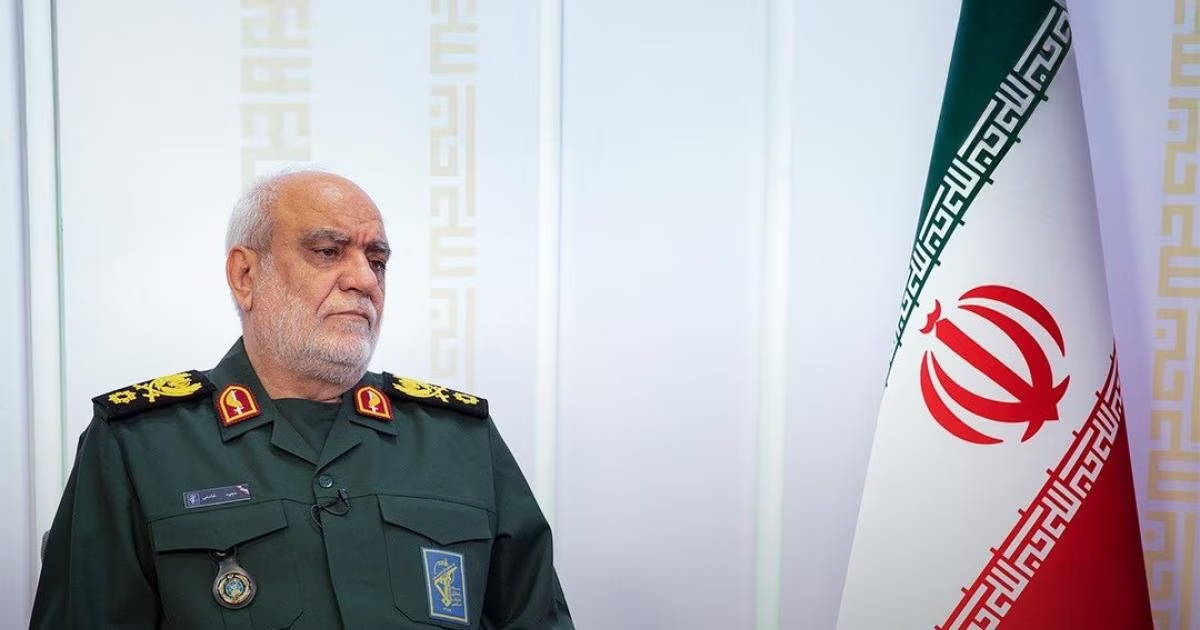
The Iranian Revolutionary Guard officially confirmed the killing of Major General Majid Khademi, who served as the head of the Guard's intelligence organization, as a result of airstrikes carried out by US and Israeli forces early this Monday. The military statement issued by Tehran described the attack as a terrorist and criminal act targeting one of the country's most prominent security minds, emphasizing that Khademi represented a fundamental pillar in Iran's defense system.

The late Major General had assumed the duties of heading the intelligence apparatus on June 19, 2025, succeeding Major General Mohammad Kazemi, who was also killed in previous Israeli airstrikes. This operation comes amidst an unprecedented military escalation in the region, with recent strikes targeting vital centers belonging to the Iranian military command.

Khademi was considered one of the rare intelligence figures who combined long field experience with high academic achievement, having spent nearly half a century in service to the military establishment. He rose through sensitive positions that enabled him to oversee the most complex security files, making him a constant target for intelligence agencies hostile to Tehran throughout the past decades.

According to official sources, Major General Khademi's resume includes his leadership of the 'Information Protection' organization affiliated with the Revolutionary Guard, in addition to leadership roles in the Iranian Ministry of Defense. He also enhanced his standing as a strategic expert by obtaining two doctorates in national security and defense sciences, which qualified him to lead structural transformations in the intelligence apparatus during the last year.

The Revolutionary Guard's statement indicated that Khademi's security legacy will remain a 'strong barrier' in the face of external threats surrounding the Islamic Republic. The military leadership considered his absence a great loss, but at the same time affirmed that security institutions are capable of overcoming this blow and continuing their missions in protecting the system and the homeland.

These field developments come in the context of the open confrontation that began since late February, which resulted in thousands of deaths and injuries among Iranians. These confrontations have affected the highest echelons of power in Iran, including the assassination of the late Supreme Leader Ali Khamenei and a number of senior political and military leaders in the country.

Reports from Tehran indicate that Khademi's killing may lead to new changes in Iranian security tactics, especially since the man was responsible for sensitive files related to countering foreign espionage. International circles are awaiting the nature of the potential Iranian response to this operation, which targeted the head of the intelligence pyramid during one of the most critical periods in modern Iranian history.

The roles and achievements recorded by Khademi will remain immortal and a strategic reference for the Iranian intelligence community.

ARAB AND WORLD

Mon 06 Apr 2026 12:44 pm - Jerusalem Time

Diplomatic Movement to End the War: A Two-Phase Pakistani Proposal on Tehran's Table

Responsible sources revealed intensive diplomatic efforts led by Pakistan to reach a formula that ends the current military confrontation, as Tehran received a two-phase proposal for a ceasefire. A senior Iranian official confirmed that his country is carefully studying the offer, while emphasizing the Islamic Republic's rejection of reopening the Strait of Hormuz in exchange for only a temporary truce, given Tehran's lack of conviction in Washington's seriousness for a permanent cessation of hostilities.

The Pakistani proposal, which represents the only channel of communication between the two parties, relies on a gradual approach that begins with an immediate and comprehensive ceasefire as a first step to build trust. This step is supposed to be followed by the signing of an initial memorandum of understanding that establishes a final and comprehensive agreement to be completed within a period ranging from 15 to 20 days, ensuring an end to the state of tension in international waterways.

Leaked information indicates that the initiative includes essential provisions related to the Iranian nuclear file, where the option of Tehran abandoning its program in exchange for a full lifting of economic sanctions imposed on it is proposed. The proposal also includes the release of all frozen Iranian assets abroad, points that are still subject to extensive deliberations within decision-making circles in Iran and no final agreement has been reached on them yet.

On the diplomatic front, sources reported that the Iranian capital witnessed extensive activity in recent hours, as Foreign Minister Abbas Araghchi held a series of contacts with his counterparts in the region and the world. These moves aim to explain the Iranian position and clarify the conditions Tehran sets for accepting any political settlement that guarantees its sovereign rights and ends the ongoing state of hostility.

The sources clarified that the official Iranian position is based on the premise that the other party initiated the military escalation, and therefore Tehran rejects any formula that appears to be a surrender or a retreat from national constants. The Iranian leadership affirms that any American attempt to achieve political gains that it failed to extract on the battlefield will be met with outright rejection, considering that time pressures will not affect the quality of the decision made.

Tehran stipulates in its vision for a final solution that the cessation of war must be comprehensive for all fronts related to the conflict, to ensure that confrontations do not resume in other areas in the future. Iran also demands the inclusion of a clear clause regarding the payment of financial and in-kind compensation for the enormous losses inflicted on its infrastructure and facilities as a result of the military operations launched by hostile forces during the past period.

Despite the momentum surrounding the Pakistani proposal, Tehran has not yet issued any official statement confirming receipt of the draft or setting a date for a final response. Extreme caution prevails in Iranian political circles, where observers believe that the devil is in the details, especially regarding the mechanisms for verifying the lifting of sanctions and guarantees that Washington will not withdraw from any future agreement.

If the proposal is accepted, the Strait of Hormuz is expected to witness an immediate resumption of international navigation, which will alleviate the global energy crisis caused by the war. Regional and international powers are awaiting the results of this mediation, which could constitute a historic turning point in the course of Iranian-American relations, or lead to further escalation if the parties fail to bridge their views on outstanding issues.

Iran will not succumb to pressure to set deadlines or make decisions under duress, and what Washington failed to achieve on the ground it will not gain through politics.

OPINIONS

Mon 06 Apr 2026 12:44 pm - Jerusalem Time

Wild Ambiguity!

Dr. Ibrahim Melhem

Editor-in-Chief

Less talk. Until 8 PM tomorrow, Washington time, 2 AM Wednesday, Palestine time, Trump extended the deadline he set for Iran, which was scheduled to end this evening, before showering it with "hell" if it did not respond to his conditions included in the fifteen-point "surrender document," which Tehran had previously rejected, and responded yesterday by rejecting the ultimatum. The world stands on tiptoe today, holding its breath, awaiting what the eccentric man will do, his face fluctuating in the sky of the crisis that has entered its second month, with no sign of de-escalation on the horizon, while ambiguity shrouds the option of a "ground invasion" with which the "real estate mogul" threatens Kharg Island to control it and obtain immense wealth, as he said. In a post resembling him, the "inflated ego" tweeted yesterday with abusive words, threatening Tehran with difficult days ahead, according to a timeline that begins with bombing energy facilities and destroying bridges, before returning the country and its people to the Stone Age. While opinion polls indicate his popularity is eroding, his temperature rises, his anger increases, his uproar accelerates, and his nervousness intensifies, so he dismisses the Attorney General for her role in exposing Epstein's files, and overthrows Chief of Staff "Randy George" in favor of strengthening the position of the "Fox News anchor" he brought in to compete with the generals in managing the most complex conflicts on the ground. The overthrow of the professional general conceals a conflict with the ignorance, recklessness, and madness that governs and controls decision-making in the White House, and with those who lead the great power with "incantations" and "political sorcery" and rush into the battle of "Armageddon." Hundreds of planes and warships and tens of thousands of soldiers have completed their positioning in the region, signaling a wide ground campaign, similar to the one Iraq was subjected to in 2003, with the aim of creating "soft zones" in the vast Persian plateau. The pre-Islamic poet Zuhair bin Abi Salma said: "And war is nothing but what you have known and tasted, and it is not about the rumored حديث." And an ancient military commander who experienced wars and lived through their horrors said: "All pre-prepared military plans fall with the firing of the first bullet."

ARAB AND WORLD

Mon 06 Apr 2026 12:44 pm - Jerusalem Time

Widespread Criticism of Trump Following 'Obscene' Threats to Iran and Use of Religious Rhetoric

The intensity of criticism directed at US President Donald Trump has escalated within political circles in Washington, following posts he published on social media platforms that included language described as obscene towards Iran. The threats were not limited to verbal aspects but also included explicit warnings of targeting vital Iranian facilities and infrastructure, including bridges and power generation stations, should Tehran continue to reject American demands.

Informed sources reported that this harsh tone provoked the indignation of both Trump's allies and adversaries, with observers considering it a departure from the customary diplomatic protocol of the presidency. Democratic Party representatives believe that this approach reflects a state of deep frustration within the current administration due to the faltering efforts to extract substantial concessions from the Iranian side regarding its controversial nuclear program.

For his part, the Senate Minority Leader launched a scathing attack on the President, describing his recent statements as evidence of a loss of control over foreign political discourse. In the same context, Senator Chris Murphy warned that such threats open the door to a comprehensive military confrontation that could lead to a large number of casualties, emphasizing the need to return to sound diplomatic paths.

Opposing voices within the Republican Party were not absent from the scene, as a number of party leaders expressed their concern about the impact of this language on the global perception of the United States. Media sources indicated that a segment of American voters has become disgruntled with the use of profanity in official speeches, asserting that the presidency requires a decorum that reflects the prestige of the state and its international standing.

Furthermore, the use of religious symbolism in military contexts sparked a new wave of controversy, especially after describing the rescue of an American pilot in Iran as an 'Easter miracle.' This description, echoed by Trump and senior officials in his administration, was considered by critics an attempt to imbue military operations with a sacred character, raising serious concerns about the intertwining of religious doctrine with strategic military decision-making.

Human rights and religious organizations condemned this trend, warning of the danger of exploiting religious sentiments to justify armed conflicts or incite violence against other countries. These organizations affirmed in separate statements that the involvement of religion in political conflicts represents a dangerous precedent that could lead to deviations in the doctrine of the US military and the orientations of field commanders in conflict zones.

In light of these developments, American lawmakers called for an official investigation into reports indicating the infiltration of extremist religious interpretations within some military circles to justify the option of war. These parliamentary moves come in an attempt to put an end to what opponents describe as 'the politicization of religion' and its use as a tool to pass political and military agendas that could drag the region into an uncalculated conflict.

These statements mean a readiness for further escalation and additional casualties in the region.

ARAB AND WORLD

Mon 06 Apr 2026 12:43 pm - Jerusalem Time

Pakistani Mediation to End the Conflict: A Two-Phase Plan to Open the Strait of Hormuz and Ceasefire

Informed sources revealed that both Tehran and Washington have received a diplomatic plan aimed at ending mutual hostilities, with expectations of it coming into effect within the next few hours. This initiative primarily aims to secure the reopening of the Strait of Hormuz to international navigation and prevent the region from sliding into a comprehensive and destructive confrontation.

The sources clarified that Pakistan played a pivotal role in drafting this political framework, having delivered the draft to both parties during the past night hours. The Pakistani vision relies on a gradual strategy, starting with an immediate and comprehensive ceasefire as a confidence-building step, followed by detailed negotiations to reach a final agreement.

The incoming reports emphasized the necessity of reaching a final agreement on all terms of the plan today to ensure that diplomatic efforts do not collapse. The initial understandings are to be formulated into a formal memorandum of understanding, with Islamabad overseeing the completion of its legal and political procedures as the sole channel of communication.

In a related context, international press reports indicated that the United States and Iran, with the participation of regional mediators, are discussing a parallel proposal that includes a 45-day humanitarian and military truce. This timeframe aims to provide a suitable environment for negotiating a permanent end to the war, away from the pressures of field military operations.

The first phase of this proposal includes a complete freeze on all offensive activities, with the possibility of extending the truce if the parties show seriousness in reaching radical solutions. The second phase focuses on drafting a peace treaty or security agreement that ensures no return to military escalation in the near future.

These rapid diplomatic moves come under significant time pressure, especially after recent statements by US President Donald Trump, which carried a clear tone of threat. Trump had set a deadline ending Tuesday evening, demanding the full opening of the Strait of Hormuz or facing strikes targeting vital infrastructure.

Observers believe that Pakistani mediation represents the last chance to avoid direct confrontation, especially since it enjoys relative acceptance from the conflicting parties due to its ability to accurately convey messages. Global capitals are awaiting the results of these deliberations, given the extreme strategic importance of the Strait of Hormuz in global energy supplies and the stability of the international economy.

Despite cautious optimism, challenges remain regarding the technical details of the ceasefire and the international monitoring mechanisms that may be imposed later. The gamble now is on the extent of the leadership's response in Tehran and Washington to the draft agreement, and their ability to make mutual concessions that end the current state of tension.

All elements must be agreed upon today, and the initial understanding will be drafted as a memorandum of understanding to be finalized through Pakistan.

OPINIONS

Mon 06 Apr 2026 8:17 am - Jerusalem Time

Public Rejection of Iran War Escalates in the United States as it Enters its Sixth Week Amid Fears of Conflict Expansion

Said Erikat

Opinion Writer

Washington – Said Arikat – 4/6/2026

As US military operations against Iran continue since their launch on February 28, 2026, under the name "Operation Overwhelming Fury," recent opinion polls reveal an unprecedented widening of American opposition to this war, as it enters its sixth week, an indicator reflecting a growing gap between the US administration's policies and domestic public opinion.

According to poll data published in early April, this war is among the US military operations that have generated the most public rejection since their inception in modern history. A CNN poll conducted on April 1 showed that about 66% of Americans oppose, to varying degrees, the decision to resort to military action against Iran. A joint poll by Reuters and Ipsos also showed that two-thirds of Americans prefer a swift end to military intervention, even if the stated objectives are not fully achieved.

These results reflect a general trend towards caution regarding involvement in a prolonged conflict, especially with rising concerns about the possibility of sending ground troops, an option that President Donald Trump's administration has not ruled out yet. Data indicates that more than 75% of Americans oppose the deployment of ground troops in Iran, a clear indication of the historical sensitivity associated with extended wars in the Middle East.

In the same context, a Pew Research Center poll showed that 40% of Americans believe the war makes the United States less safe, compared to only 22% who believe it enhances the country's security, reflecting a decline in confidence in the effectiveness of current military operations.

Reasons for Escalating Opposition

Observers link this public rejection to several intertwined factors, primarily direct economic repercussions. Global oil prices have seen a sharp rise since the outbreak of the conflict, which has been reflected in fuel prices within the United States, exceeding $4 per gallon in late March, increasing living pressures on citizens.

The ambiguity surrounding the US strategy also contributes to public anxiety, as estimates indicate that about 67% of voters believe the administration lacks a clear plan to manage or end the conflict. This concern is exacerbated by warnings of broader regional repercussions, especially amid tensions related to the Strait of Hormuz, a vital artery for global energy supplies.

Field Developments and Political Escalation

On the ground, recent days have witnessed a remarkable escalation in political and military rhetoric, with President Trump giving Iran a deadline ending on Tuesday, April 7, to reopen the Strait of Hormuz, threatening "severe" consequences, including targeting vital infrastructure such as power plants and bridges.

In contrast, estimates of human casualties within Iran vary, but human rights reports, including those published by the "Hrana" agency (concerned with human rights), indicate thousands of deaths since the start of operations.

Regarding military operations, US forces announced on April 5 their success in rescuing a crew member of an F-15E aircraft, who had been lost inside Iranian territory since Friday, in an operation described as complex and sensitive.

Despite President Trump's announcement of the operation's success, its behind-the-scenes details revealed a heavy price paid by the United States, represented by the bombing and destruction of two of its most advanced aircraft. While US commando teams successfully reached and secured the pilot, the force faced a fatal obstacle after the front wheels of two military transport aircraft sank into the sand of the desert runway, according to the American account revealed by the New York Times.

After desperate attempts to free the two aircraft, forces were forced to request alternative planes. Before withdrawing at sunrise, American fighters bombed and completely destroyed the stranded aircraft.

The decision was governed by an extremely sensitive "strategic necessity." The Wall Street Journal explained that the destroyed aircraft were MC-130J models, highly advanced aircraft, each costing more than $100 million.

This exorbitant material cost to save a single individual opened the door to a more serious strategic question in military decision-making circles: If Iran's sands cost America hundreds of millions of dollars and nearly thwarted a limited rescue operation, what price will Washington pay if it decides to launch a large-scale ground attack?

This development comes amid continued airstrikes and growing fears of the conflict escalating into a broader regional confrontation, which could involve multiple parties in the Middle East, exacerbating anxiety within and outside the United States.

The widespread public rejection of the war with Iran reflects a structural shift in the American public mood towards the use of military force, especially after bitter experiences in Iraq and Afghanistan. Americans are now more inclined to measure the cost of wars not only by strategic criteria but also by their direct economic and social repercussions. The absence of a clear and achievable goal also reinforces doubts about the utility of this conflict. This shift may impose increasing constraints on decision-makers in Washington and limit their ability to continue open-ended military operations without genuine and sustained public support.

The economic dimension also plays a central role in shaping public opposition to the war, as rising fuel and basic commodity prices directly link foreign policy to the living conditions of the American citizen. With increasing reliance on global energy, any disruption in the Strait of Hormuz becomes a direct threat to the American economy. This interconnectedness enhances public sensitivity to external crises and makes it difficult for the administration to justify continued military operations without providing a clear vision for reducing economic damage or ensuring market stability in the short and medium term.

The recent escalation in American rhetoric, especially the threat to target Iranian infrastructure, reflects a transition from limited military pressure to a strategy that may carry risks of conflict expansion. Such steps could push regional parties to engage directly or indirectly, opening the door to a multi-front war. In the absence of a clear international consensus, Washington may find itself facing increasing diplomatic isolation. This scenario raises serious questions about the US administration's ability to achieve its goals without sliding into a long and costly political and military conflict.

PALESTINE

Mon 06 Apr 2026 8:17 am - Jerusalem Time

Washington and Tel Aviv's Goals in the War on Iran: A Struggle for Influence and the Future of the Regional Order

International calls from opinion leaders and humanitarian organizations are escalating to stop the war waged by the United States and Israel on Iran and Lebanon, amidst widespread destruction threatening the stability of the entire region. As the war enters its sixth week, the true motives appear to go beyond the declared slogans, with Washington's desire to curb the growing Chinese influence, which relies primarily on Iranian oil supplies, becoming prominent.

Observers believe that US President Donald Trump recognizes the strategic importance of Tehran as the owner of the second-largest oil reserves in OPEC and the main supplier to major Asian powers such as Japan and South Korea. Therefore, targeting Iran essentially represents an American attempt to restore unipolarity and absolute control over global energy markets and their supply routes.

On the ground, Iran's closure of the Strait of Hormuz has paralyzed the movement of more than 20% of global oil exports, posing a real dilemma for the US administration. Despite Trump's calls for NATO countries to undertake the task of forcibly opening the strait, hesitation prevails in military circles for fear of sliding into an all-out confrontation with uncertain outcomes.

Through this war, the United States seeks to achieve five strategic objectives, foremost among them overthrowing the political regime in Tehran and dismantling its military capabilities. Washington also aims to undermine Iran's allies in Palestine, Lebanon, Iraq, and Yemen, to ensure the protection of Israeli and American interests in the vital West Asian region.

The nuclear file stands out as one of the primary drivers of the conflict, with Washington demanding a complete halt to the uranium enrichment program and control over Iran's estimated 450 kilograms of enriched uranium. The US administration also seeks to dismantle the long-range ballistic missile system, which has become a direct threat to American bases and their allies in the region.

In the context of economic restructuring, the American plan aims to integrate a 'demilitarized' Iran into the international economic system to control its rare mineral resources. This coincides with efforts to establish the India-Middle East-Europe Economic Corridor (IMEC), connecting India to the Gulf states and Europe via Israel, to serve as a strategic alternative to routes controlled by Tehran.

For his part, Israeli Prime Minister Benjamin Netanyahu faces increasing internal pressure, having attacked the Supreme Court for allowing anti-war demonstrations in Tel Aviv. Netanyahu considered these movements to weaken the home front at a sensitive time, comparing the freedom to demonstrate with the restrictions imposed on religious rituals during Passover.

Field sources reported that Israeli police used force to disperse protest gatherings, resulting in the arrest of 17 people and a demonstrator suffering a heart attack requiring urgent medical intervention. These protests reflect a decline in public confidence in the war's trajectory, after opinion polls showed a significant drop in support compared to the beginning of military operations.

Amidst the current military stalemate, reports indicate that Trump may face extremely dangerous options, including greenlighting the use of tactical weapons or weapons of mass destruction. These extreme options aim to force the Iranian leadership to submit to American conditions, despite warnings of their catastrophic ethical and political repercussions for the US administration.

Political readings suggest that Iran has so far managed to absorb the initial shock of the war, relying on cyber and military capabilities that surprised Western intelligence circles. Experts believe that Tehran may have set a 'strategic trap' for its enemies, exploiting their ignorance of the extent of defensive capabilities it has developed during years of siege.

On the regional level, mediation efforts led by countries such as Turkey, Pakistan, and Egypt failed to bridge the gap between Washington and Tehran, as negotiations reached a dead end. The Iranian side insists on rejecting American conditions, affirming its readiness for a long-term confrontation that may witness new military surprises on the ground.

Analysts believe that the failure to achieve a quick resolution could lead to a resounding political defeat for Trump and his Republican party in the upcoming midterm elections in November. Netanyahu faces the same fate, as the continuation of the war without tangible results threatens the collapse of his ruling coalition and the fall of his government in the elections scheduled for October.

The current conflict represents a historical turning point that could lead to the birth of a new world order, ending the era of unipolarity led by the United States. If Iran withstands, it may emerge from this confrontation with a greater ability to impose its conditions, including imposing sovereign fees on navigation in the Strait of Hormuz to compensate for its losses.

In conclusion, the region faces open scenarios, where major economic interests intertwine with geopolitical ambitions, in a war described by observers as a 'bone-crushing battle' that will define the contours of influence in the Middle East for decades to come, amidst global anticipation of what the coming days will bring in terms of field and diplomatic developments.

The raging confrontation is not merely a struggle to protect interests, but a strategic attack aimed at building a new regional order under broader American hegemony.

ARAB AND WORLD

Mon 06 Apr 2026 8:17 am - Jerusalem Time

Mystery surrounds Trump's disappearance from public view as White House denies hospitalization

A state of widespread controversy has prevailed across social media platforms and international media outlets regarding the health status of US President Donald Trump, following unconfirmed reports suggesting his presence at the 'Walter Reed' National Military Medical Center. These suspicions arise amid an unusual absence of the President from the public scene since the middle of last week, which has opened the door to multiple interpretations about the reasons for this sudden disappearance.

The intensity of speculation was further fueled by the exceptional measures taken by the White House on Saturday evening, where the US administration informed accredited reporters and photographers of a decision to ban coverage or photography of the President's departure from his residence. This measure coincided with Trump remaining in Washington and not heading to spend his usual weekend, which observers considered an indicator of an emergency that prevented the President from appearing directly before the cameras.

In contrast, Steven Cheung, the White House communications coordinator, quickly denied all rumors related to the President's deteriorating health or his hospitalization for treatment. Cheung affirmed in press statements that Trump continues his official duties intensely inside the Oval Office, emphasizing that his agenda is busy with files that serve the American people during the current Easter holiday.

For his part, John Bolton, the former National Security Advisor, offered a different reading of the situation, suggesting that Trump's absence might be due to psychological pressures and a state of political 'panic'. Bolton explained in statements to American media that recent military developments, represented by the downing of two aircraft and the loss of an American pilot in Iran, have put the administration in a critical predicament requiring difficult decisions.

The US President has not appeared publicly since the speech he addressed to the nation last Wednesday evening, which prompted his political opponents to question his mental state and his ability to manage current crises. Despite this visual absence, his activity on social media platforms has not completely ceased, as he directed sharply worded warning messages to the Iranian leadership via his private platform.

Trump indicated in a post on his 'Truth Social' platform on Saturday morning that 'time is running out' for Tehran, in a clear reference to the ongoing military escalation in the region. However, analysts believe that relying solely on text messages without field appearances reinforces the hypothesis of a health or security impediment preventing the President from direct communication with the public and the press.

Political circles in Washington are awaiting any anticipated official appearance to break the state of ambiguity surrounding the White House, especially with increasing public pressure to know the truth. Reports from informed sources continue to suggest that the coming hours may witness a more detailed clarification about the President's activities to end the wave of rumors that has swept American and international circles.

No president has ever worked harder than President Trump for the American people, and he is working tirelessly in the Oval Office.

ANALYSIS

Mon 06 Apr 2026 8:17 am - Jerusalem Time

Five Motivations That Favor Escalation in the Military Confrontation with Iran

As the war on Iran enters its sixth week, the strategic question arises about the trajectory of this confrontation and its future in light of the complex field data. Tehran has managed to absorb the initial military shock, thwarting the bets on a quick resolution promoted by US President Donald Trump and Israeli Prime Minister Benjamin Netanyahu.

Current indicators confirm that the Iranian regime has not fallen nor has it submitted to the new American conditions, and the bet on street movements or the activity of separatist organizations has not achieved the desired results. This resilience has put the American administration in front of difficult choices, especially with the Iranian military power remaining active and capable of maneuvering.

Today, the war faces three main paths: either a unilateral American declaration of the end of operations, reaching an agreement through difficult negotiations, or continuing to escalate and expand the scope of the conflict. Although a political solution remains the most likely path in the long run, current data does not support this direction soon.

There are factors that might push Trump to consider ending the war, including internal pressures and severe economic consequences, especially the threats facing energy supplies through the Strait of Hormuz. However, these pressures do not seem sufficient to force the White House to retreat, especially given its commitment to Israel's security.

The negotiation path, however, seems stalled due to the absence of common ground and mutual distrust between Washington and Tehran so far. Despite mediation efforts by regional countries such as Turkey, Egypt, and Pakistan, mutual messages have hit a dead end due to reciprocal conditions.

The first factor driving escalation is the failure to achieve the stated strategic objectives of the war, primarily undermining Iran's nuclear and missile program. From a military perspective, stopping operations now means admitting failure to change Tehran's regional behavior or overthrow its political system.

The second factor relates to the 'narrative of victory,' where both Trump and Netanyahu need to present a tangible achievement to their domestic fronts before any electoral challenges. Stopping at the current situation does not give either of them a chance to claim a decisive victory, which makes them lean towards the option of continuing to extract greater concessions.

The multiplicity of fronts constitutes the third factor complicating the scene, with Lebanese Hezbollah and other forces in the region effectively entering the confrontation. This interconnectedness between fronts makes any bilateral agreement between Washington and Tehran difficult to achieve without addressing intertwined and highly sensitive regional issues.

In contrast, Iran's internal and leadership situation shows unexpected cohesion after the initial strikes, which gave it the ability to regain the initiative. The Iranian leadership believes that continued attrition may strengthen its negotiating cards, especially regarding global economic pressure by disrupting maritime navigation.

The fifth and final factor is the Israeli position, which fears any sudden 'flip' in President Trump's decisions. Netanyahu is striving with all his might to ensure the continuation of military momentum and narrow diplomatic options, fearing an agreement that does not fully meet Israeli security aspirations.

The divergence of interests between Washington and Tel Aviv regarding the conditions for ending the war opens the door for further field escalation to impose new realities. Israel is pushing to exploit the historic opportunity to strike Iranian capabilities in an irreparable way, which requires more time than the deadline Trump might grant.

Regionally, neighboring countries are watching the outcomes of this conflict with extreme caution, fearing a slide into a comprehensive regional war that spares no one. The international isolation that Washington suffers in this war further complicates the situation, but it has not prevented it from continuing military pressure so far.

Considering these combined factors, the chances of de-escalation seem very slim in the foreseeable future, and the likely scenario is an increase in the intensity of mutual strikes. The absence of direct and effective communication channels makes military miscalculation a potential spark for expanding the scope of the confrontation to include other international parties.

In conclusion, the war on Iran is likely to continue and escalate regardless of verbal threats or announced deadlines. The current scene indicates that the two aggressor parties are stuck in a strategy that does not guarantee them a quick victory, while Tehran is betting on the factor of time and the attrition of its adversaries.

Iran realizes that it cannot defeat the United States militarily, but Washington and Tel Aviv are also incapable of achieving a decisive and complete victory.

PALESTINE

Mon 06 Apr 2026 8:16 am - Jerusalem Time

Political Earthquake in Washington: Absolute Support for Israel Becomes an Electoral Burden Within the Democratic Party

The repercussions of the ongoing war on the Gaza Strip have begun to impose a new political reality within the United States, where absolute support for Tel Aviv is no longer a consensus as it once was. With the clear emergence of genocidal features, the movement has shifted from American streets and student demonstrations to the corridors of decision-making in Washington, creating a deep division within the Democratic Party.

International press reports indicate that the language of Democratic Party leaders in Congress has shifted towards a stricter stance on Israeli policies, particularly regarding settlement expansion and military operations. This change reflects increasing internal pressures demanding an end to political dependency that could drag the United States into broader regional confrontations, especially with Iran.

Notable positions have emerged from influential Democratic figures, including Gavin Newsom, who did not hesitate to describe Israel as an 'apartheid state,' directing sharp criticism at Prime Minister Benjamin Netanyahu. These statements reflect unprecedented boldness in calling things by their names within the American political elite, which had avoided such descriptions for decades.

For his part, Senator Chris Murphy held the Israeli side responsible for attempting to embroil Washington in direct military conflicts in the region, warning of the cost of this entanglement. Observers believe that this discourse represents a growing trend that rejects prioritizing Israeli interests over American national security and the strategic interests of the United States.

The shift was not limited to the progressive wing alone but extended to include prominent Jewish figures who were considered pillars of traditional support, such as Rahm Emanuel and J.B. Pritzker. These individuals announced their distancing from 'AIPAC,' considering that this lobbying group no longer represents the orientations they wish to be associated with under current policies.

In a related context, Representative Alexandria Ocasio-Cortez continues to lead a strong opposition front within Congress, accusing Israel of committing massacres and systematic genocide in Gaza. These accusations resonate widely among the younger generation in the Democratic Party, who now view the Palestinian issue from a human rights and social justice perspective.

Recent opinion polls reinforce this trend, with an NBC News poll revealing shocking figures for the traditional establishment, as 67% of Democrats expressed sympathy for Palestinians. In contrast, the percentage of those who view Israel positively dropped to only 13%, a sharp decline of about 34% compared to last year.

Political analysts believe that this radical change in popular bases will directly affect the electoral map for 2028, where candidates will find themselves forced to balance the legacy of traditional support with the demands of a new generation that rejects funding wars. Blind support has become a 'political trap' threatening the professional future of many aspiring to high office.

At the level of public interaction, questions are increasing about the price the United States pays for this alliance, with sources indicating that the public debate has begun to shift towards financial and moral accountability. Activists believe that continuing this approach could isolate the United States internationally, and they liken the world's view of it to a negative historical view of previous regimes.

In conclusion, it appears that the American political scene is heading towards redefining its relationship with the Middle East, where Israel is no longer the 'sacred cow' that cannot be touched. The increasing pro-Palestinian demonstrations and the adoption of their slogans within progressive circles confirm that the change is not just a passing wave, but a structural transformation in the identity of the modern Democratic Party.

Support for Israel is now out of the ordinary within the modern Democratic Party, and the political discourse is changing in an unprecedented way.

PALESTINE

Mon 06 Apr 2026 8:16 am - Jerusalem Time

8 Martyrs in Raids on Beirut and Metn, Hezbollah Targets Military Barge with Cruise Missile

The intensity of field tensions in Lebanon escalated with the death of eight martyrs and the injury of dozens in a new wave of Israeli airstrikes targeting populated areas. Medical sources reported that the shelling focused on the Jnah area in Beirut's southern suburbs, as well as the Ain Saadeh hills in the Metn district, leading to widespread property destruction and panic among civilians.

Regarding the details of the deadly toll, official sources confirmed that the Jnah area raid alone resulted in the martyrdom of five people, including a girl under fifteen years old and two Sudanese nationals. The raid also caused injuries to 52 others, including eight children, who were transferred to nearby hospitals for necessary treatment.

In the Metn district, warplanes targeted the Ain Saadeh hills area, resulting in the martyrdom of three citizens, including two women. Field reports indicated that the shelling also caused three injuries among women, while rescue teams continue to remove rubble and search for potential survivors in the targeted sites.

According to data from the Lebanese Ministry of Health, the total number of victims of the ongoing Israeli aggression since early March has risen alarmingly. Official statistics recorded up to Sunday evening the martyrdom of 1461 people and the injury of 4430 others, amid continuous violent shelling targeting Lebanese villages and towns daily.

On the ground, Israeli warplanes launched a series of intensive raids, totaling eight, on various neighborhoods in Beirut's southern suburbs since the morning hours. The targets included the neighborhoods of Ruwais, Bir Hassan, Musharrafieh, and Hay Madi, reflecting an expansion of Israeli military operations deeper into Lebanese territory.

In response, Hezbollah announced an escalation of its military operations, confirming 23 qualitative attacks against Israeli targets since dawn on Sunday. The most prominent of these operations was targeting a military barge in the Mediterranean Sea using a naval 'cruise' missile, after a precise monitoring and tracking operation that lasted for several hours.

Hezbollah clarified in its statement that the targeted barge was stationed 68 nautical miles off the Lebanese coast and was preparing to carry out attacks. While the party confirmed achieving a direct and accurate hit, Hebrew media sources claimed that the shelled vessel belonged to the British Navy, which contradicts the Lebanese narrative.

Regarding ground and border confrontations, Hezbollah intensified its shelling of northern settlements, targeting the settlements of Nahariya and Metulla with successive rocket salvos. It also announced targeting ten gatherings of occupation soldiers and vehicles, including sites in the Malkia settlement and the Ajal plateau, in addition to fierce clashes in the towns of Ainata and Khiam in southern Lebanon.

The operations also included targeting nine military sites and strategic infrastructure, including the Meron air surveillance base, the Zar'it barracks, and a logistical base belonging to the occupation army. Rocket barrages hit the settlements of Yesud HaMa'aleh, Ma'alot-Tarshiha, Katzrin, and the occupied city of Safed, activating sirens dozens of times.

For its part, Hebrew sources acknowledged material damage after a drone launched from Lebanon fell on a house in the 'Shomrat' settlement in northern occupied Palestine. This coincided with sirens sounding in a wide area of the Upper and Western Galilee, amid a state of security and military alert among occupation forces to confront the increasing attacks.

We targeted an Israeli military barge 68 nautical miles off the Lebanese coast with a naval cruise missile after precise monitoring.

PALESTINE

Mon 06 Apr 2026 8:16 am - Jerusalem Time

Gaza aggression death toll exceeds 72,000 martyrs amid continued siege under the rubble

Medical sources in the Gaza Strip revealed today, Saturday, a new and painful update to the toll of victims of the ongoing aggression, as the number of documented martyrs rose to 72,291, while the number of injured reached 172,068 since October 7, 2023. These figures come amid the continuation of military operations targeting civilians and infrastructure in various areas of the Strip.

According to official data issued by hospitals, medical facilities received two martyrs and 25 new injuries during the past twenty-four hours. Statistics also indicated that the period following October 11 alone witnessed the martyrdom of 715 and the injury of 1,968 others, while teams were able to recover 756 bodies from various areas that had been bombed earlier.

The sources warned that the announced figures do not reflect the true extent of the tragedy, due to the presence of hundreds of victims trapped under the rubble of destroyed buildings or whose bodies are lying in rough roads. They confirmed that civil defense and ambulance crews face a complete inability to reach these areas due to the field restrictions imposed by the occupation and the continuation of direct targeting, which makes the final enumeration of victims an almost impossible task at present.

A number of victims are still under the rubble and in the streets, as ambulance and civil defense crews are unable to reach them.

ARAB AND WORLD

Mon 06 Apr 2026 8:16 am - Jerusalem Time

Trump sets 'Tuesday' deadline for Iran: Imminent agreement or total destruction of facilities

A state of ambiguity and anticipation overshadowed the international political scene following a brief post by former US President Donald Trump on his 'Truth Social' platform, in which he set a decisive time at 8:00 PM Tuesday, Eastern Time. This announcement came at the peak of the ongoing military escalation between Washington and Tehran, opening the door to widespread speculation about the nature of the next step, whether it would be an announcement of a sudden diplomatic agreement or the beginning of a comprehensive destructive phase.

These developments come in the context of the open military confrontation that began on February 28, with Israeli and American forces launching military operations against Iranian targets. In response, Tehran continues its retaliations by launching barrages of missiles and drones towards the occupied territories, in addition to targeting what it describes as American interests in the Arab region, which has led to casualties and severe material damage.

According to media sources, the time set by Trump corresponds to midnight Wednesday GMT, and comes after a series of contradictory statements he made to American media. While he hinted in his interview with 'Axios' at the possibility of reaching an imminent agreement with the Iranian leadership by Tuesday, he later confirmed to 'Fox News' that there was a good chance of achieving a diplomatic breakthrough in the coming hours.

However, the tone of diplomatic optimism quickly turned into severe threats, with Trump vowing to 'blow up everything' in Iran and take full control of its oil resources if negotiations failed. In statements to the 'Wall Street Journal', he stressed that Tehran would face dire consequences, including the loss of all power stations and vital facilities in the country if it did not back down from its current positions.

Trump directly linked his threats to the necessity of reopening the Strait of Hormuz to international navigation by the specified deadline on Tuesday evening, describing it as the 'hour of truth'. He wrote in a harsh tone, warning Iranian officials of the consequences of continuing to close the strait, asserting that the alternative would be living in an unimaginable military 'hell', as he put it in his recent posts.

In another widely debated post, Trump described Tuesday as 'the day of power stations and bridges', indicating that the anticipated strikes would be in a single package and would be unprecedented in the history of contemporary conflicts. This escalatory language reflects the extent of pressure exerted by the American side to impose new conditions on the ground before the expiration of the deadline set by the former president.

For its part, Tehran was not slow to respond to these threats, with Iranian Parliament Speaker Mohammad Bagher Ghalibaf warning that the entire region is at risk of burning due to what he described as Trump's reckless moves. Ghalibaf considered that these policies reflect complete subservience to the orders of Israeli Prime Minister Benjamin Netanyahu, warning of the repercussions of any uncalculated military adventure.

In a related context, the Iranian Central Military Command issued a statement describing Trump's ultimatum as an 'incapable, tense, and unbalanced' act, affirming the readiness of the armed forces to deal with any emergency. The statement indicated that such threats would not deter Tehran from continuing its defensive strategy in the region, describing the former US president's statements as an expression of political confusion.

Major General Ali Abdollah Ali Abadi, commander of the Khatam al-Anbiya Central Headquarters, also stated that 'the gates of hell' would open on American forces if any military folly was committed against Iranian facilities. Ali Abadi affirmed that the Iranian response would be swift and comprehensive, and would not be limited to one front, further complicating the field and political scene hours before the anticipated deadline.

World capitals are awaiting the outcome of the coming hours, amid fears of the region sliding into a comprehensive regional war that transcends the limits of the current confrontation. While some hope that Trump's threats are merely a tool of pressure to achieve negotiating gains, field movements and mutual military statements indicate that all possibilities remain on the table for escalation.

Open the damn strait, you crazy bastards, or you will live in hell.

PALESTINE

Mon 06 Apr 2026 8:16 am - Jerusalem Time

Easter Burdened with Wounds: A Siege on Jerusalem and Regional War Drums Loom Over Christian Celebrations

Christians around the world, on Sunday, observed Easter and Palm Sunday according to both Western and Eastern calendars, in an atmosphere overshadowed by fears of expanding regional conflicts. Pope Leo XIV of the Vatican called on leaders of the international community to adopt the option of peace, criticizing the international indifference towards thousands of victims who fall daily due to raging wars.

In St. Peter's Square in the Vatican, the Pope presided over the Easter Mass for the first time since his ascension to the Holy See in May of last year. In his message, he affirmed that true peace cannot be imposed through instruments of war or the logic of force, but is achieved only through sincere dialogue and human encounter that transcends the desire to control others.

His Holiness warned of the danger of becoming accustomed to scenes of violence and surrendering to the results of hatred generated by armed conflicts. He pointed out that the world has become oblivious to the dire economic and social consequences afflicting peoples, calling for a global awakening of conscience to end the divisions that fuel the fire of conflicts in several regions of the world.

In the Palestinian territories, the city of Bethlehem witnessed varied celebrations, where churches following the Western calendar observed Easter, while Eastern churches celebrated Palm Sunday. The main Mass was held in St. Catherine's Church for Latins, adjacent to the Church of the Nativity, with the presence of priests and worshippers who offered prayers for the end of the ordeal.

In the occupied city of Jerusalem, the usual joyful manifestations were absent due to the strict military measures imposed by the Israeli occupation authorities. Occupation forces prevented thousands of Palestinian Christians from reaching the Church of the Holy Sepulchre, after setting up checkpoints and iron barricades in the alleys of the Old City and on the roads leading to the holiest Christian sites.

Local sources reported that Israeli police subjected the few worshippers who were allowed to pass to precise and provocative inspections. These restrictions come at a time when the occupation authorities continue to close the blessed Al-Aqsa Mosque and the Church of the Holy Sepulchre for the thirty-seventh consecutive day, leading to a complete paralysis of religious life in the city.

The Latin Patriarch of Jerusalem, Cardinal Pierbattista Pizzaballa, was forced to hold Easter Mass behind closed doors inside the Church of the Holy Sepulchre with a very limited number of clergy present. Eyewitnesses described the atmosphere inside the Old City as a military barracks, where occupation forces prevented worshippers who gathered outside from entering, awaiting an opportunity to pray.

On the northern front, Christians in southern Lebanon are living in tragic conditions under the weight of siege and mutual shelling between the Israeli army and Hezbollah. Christian-majority villages, such as the border town of Debel, face almost complete isolation as a result of ongoing military operations that have turned the holiday into an occasion for steadfastness and survival.

Field sources reported from residents of the border villages that the sounds of explosions did not subside throughout the holiday hours, forcing residents to stay in their homes and rely on scarce humanitarian aid. Despite these circumstances, residents affirmed their determination to remain on their land and perform their religious rituals with the simple means available under shelling.

These field developments come amid an escalation of military confrontation that began in late February, casting a dark shadow over all aspects of life in the region. This tension was clearly reflected in the movement of pilgrims and religious tourism, which completely stopped in the holy cities due to security risks.

It is worth noting that the coincidence of the Western and Eastern holidays in April 2026 was supposed to be an occasion to unite prayers, but the political and military reality imposed a different agenda. The calls for peace that emanated from the Vatican, Bethlehem, and Jerusalem remain pending, awaiting international action to end the cycle of violence plaguing the region.

Peace is not imposed by force, but by dialogue, and not by the will to control others, but by encountering them.