ISRAELI AFFAIRS

Tue 21 Apr 2026 2:17 pm - Jerusalem Time

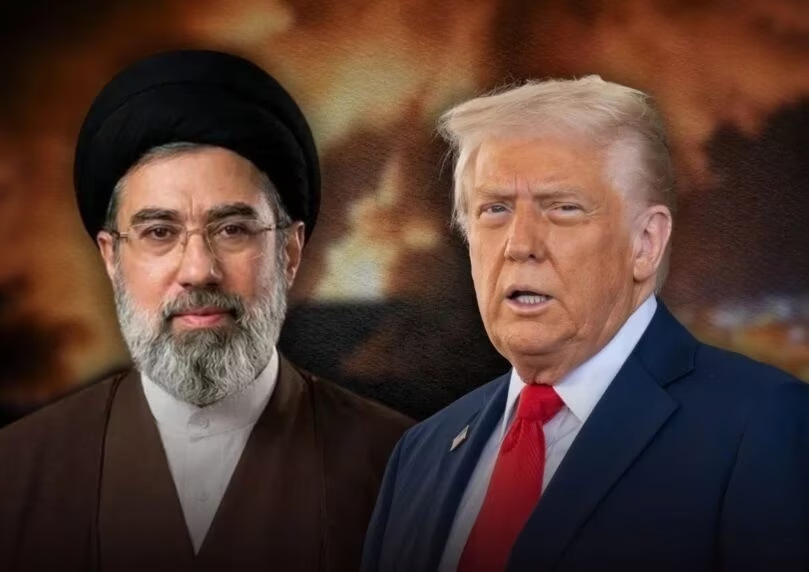
Israel Awaits Islamabad Negotiations: Betting on Failure and Preferring War

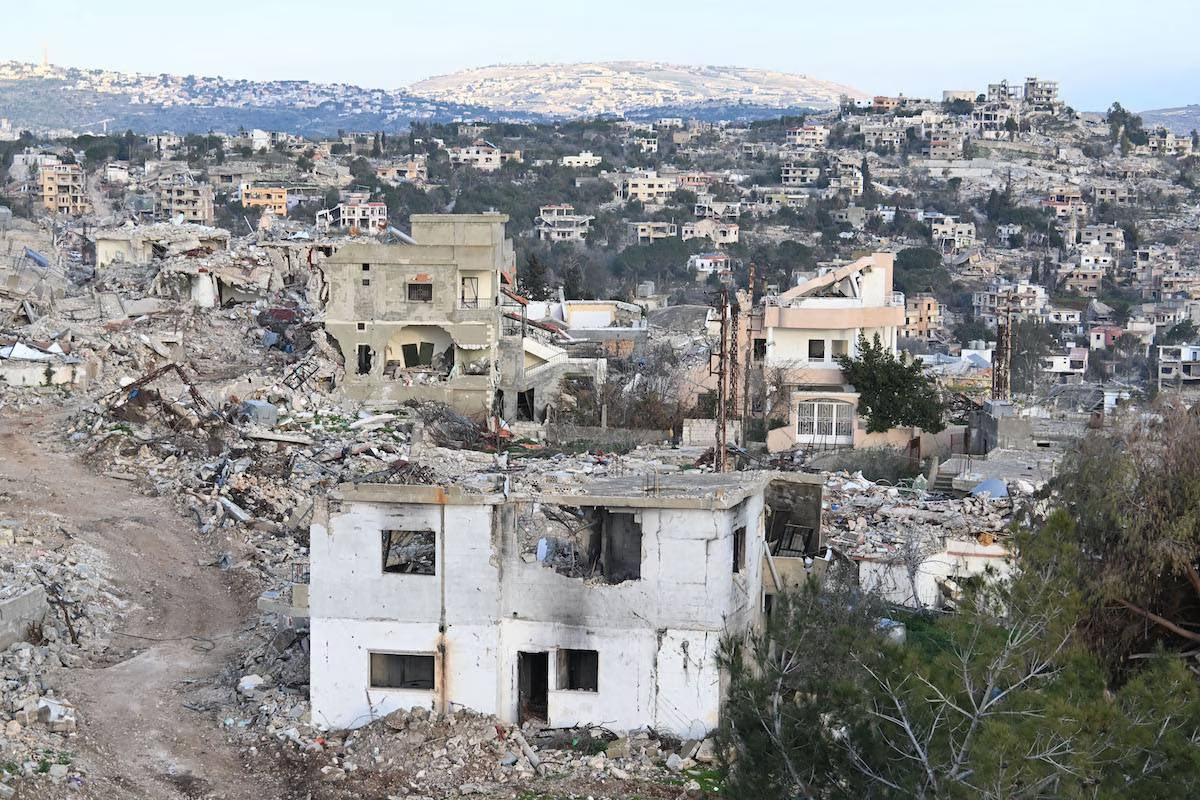
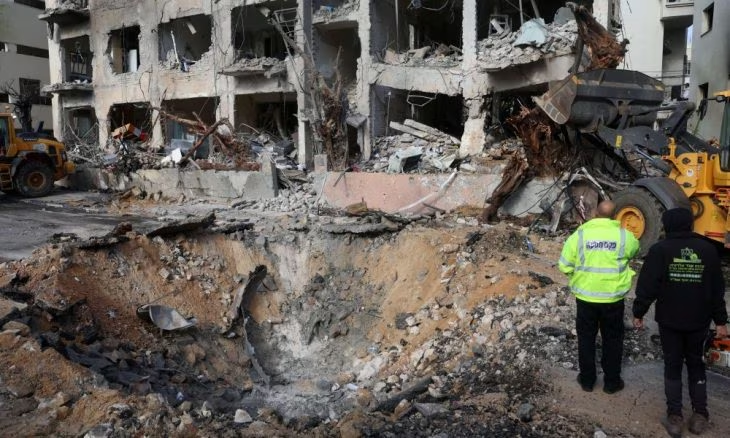
The eyes of the international community are turning towards the Pakistani capital, Islamabad, where crucial negotiations are underway, aiming to end the ongoing nightmare of bloodshed in the region. In contrast, strong voices within official and unofficial circles in Israel hope for the failure of these deliberations and the inability to reach any agreement that would end the state of conflict.

The ruling coalition led by Benjamin Netanyahu believes that any understanding between the United States and Iran represents a devastating strategic loss for Israel. This stance stems from the conviction that the Iranian regime remaining resilient and capable of self-restoration poses a future existential threat that cannot be accepted under any circumstances.

The Israeli government considers reaching an agreement without achieving the full military objectives of the war to be a disaster at the domestic political level. Netanyahu and his allies fear facing a 'day of reckoning' in the upcoming elections, where the specter of political downfall haunts the coalition leaders if the confrontation with Tehran is not decisively resolved.

The desire for continued fighting is not limited to the political level but extends to broad sectors of Israeli society. Opinion polls indicate that about 60% of Israelis support resuming military operations on the Iranian and Lebanese fronts to ensure long-term deterrence.

Former National Security Advisor, Meir Ben-Shabbat, affirmed that blowing up the negotiations without a settlement is a preferred option over any agreement that might be reached. Ben-Shabbat warned that extending the current truce might give the Iranians an opportunity to improve their terms and strengthen their leverage in future negotiation rounds.

Ben-Shabbat noted in his analysis that the three possibilities outlined since the first day of the truce remain strongly in play. These scenarios range from achieving a comprehensive agreement, extending the current ceasefire, or a full return to the square of war and direct confrontation.

Sources reported that the escalation in official statements and the reinforcement of military forces in the region do not necessarily mean a move towards war. However, these moves are used as pressure tools to influence the quality of gains and to formulate a narrative of resilience for the public on both negotiating sides.

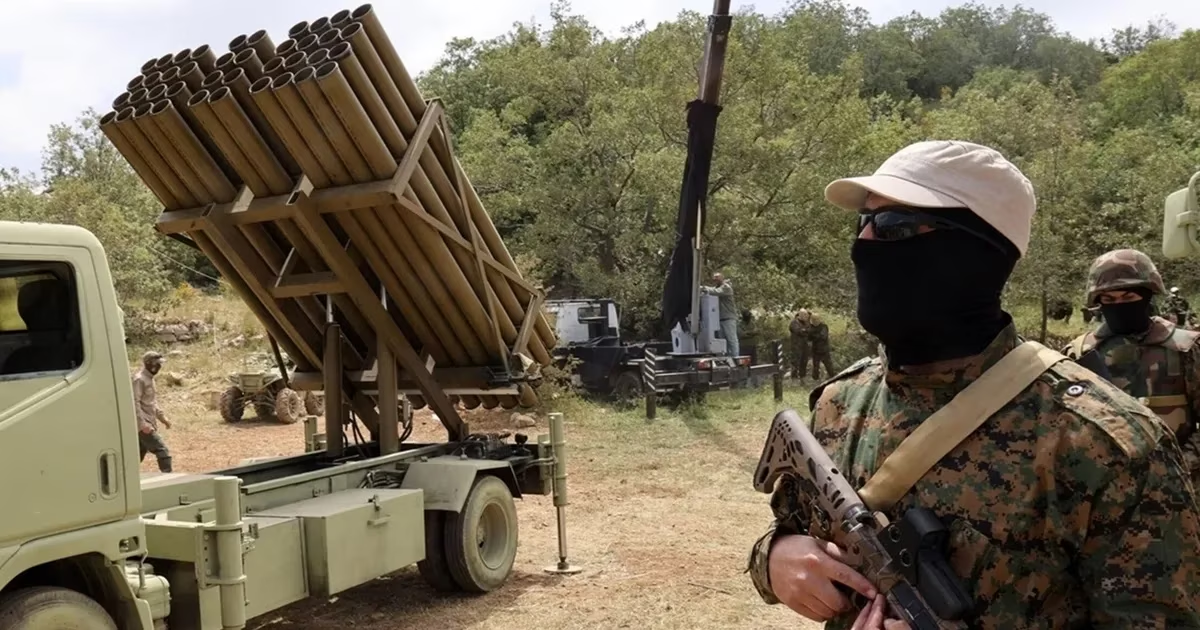
Israeli analyses emphasize the need to prepare for the possibility of renewed fighting, especially after the revelation that Tehran retains missile capabilities described as dangerous. Observers believe that the ceasefire in Lebanon strengthened the link between the Lebanese and Iranian fronts, making any threat from one linked to the other.

A preferred scenario for some Israeli circles emerges, which involves changing the nature of military objectives if the war resumes under a Trump administration. This vision centers on shifting from striking military capabilities to targeting the functional capacity of the Iranian state, including energy and electricity facilities and bridges.

This proposed military approach aims to paralyze Iran as a state entity for a certain period, which could lead to a fracture in the regime's internal cohesion. Analysts suggest that these living pressures would erode the regime's legitimacy and lead opponents to the streets amid the government's inability to perform its duties.

Israel expresses grave concern about reports of a US proposal to establish an aid fund for Iran worth $250 billion. This proposal is viewed in Tel Aviv as a lifeline that Tehran eagerly awaits to restore its economy, which has been exhausted by sanctions and wars.

Israeli officials believe that the Iranian regime emerging with massive financial resources will not change its nuclear ambitions but will reinforce its conviction of the necessity of possessing nuclear weapons. They see the only solution as exercising unilateral pressure against Tehran while it is in its current state of weakness.

Media sources reported that the ceasefire in Lebanon was imposed on Israel by direct pressure from the new US administration. Despite official attempts to portray the agreement as the beginning of a historic peace, doubts still prevail within Israel's security and military establishment.

Military analyst Amos Harel agrees with assessments indicating that the collapse of the Islamabad negotiations is the ideal outcome for Netanyahu. Reports confirm that cabinet members are awaiting the opportune moment to complete what they describe as the mission of definitively destroying the capabilities of Hamas, Hezbollah, and Iran.

Renewing the war on Iran or blowing up negotiations without a settlement are preferred options for Israel over any agreement that might offer Tehran a lifeline.

ARAB AND WORLD

Tue 21 Apr 2026 2:17 pm - Jerusalem Time

American moves in Islamabad and pressure from the Revolutionary Guard on Tehran's negotiators

Informed sources reported that the Pakistani capital, Islamabad, will witness intensive diplomatic activity, as US Vice President, De Vance, is scheduled to arrive by Tuesday morning. This visit comes within the framework of international efforts to hold direct talks with the Iranian side, aimed at drafting a final agreement that would lead to an end to the ongoing war.

In a related context, reports citing diplomatic sources indicated a state of procrastination in the Iranian position in recent hours. This procrastination, according to sources, is due to pressure exerted by the Revolutionary Guard on the negotiating delegation, with the aim of pushing it towards taking more radical and hardline positions on the terms of the anticipated agreement, which reflected a state of internal conflict over the ceiling of possible concessions.

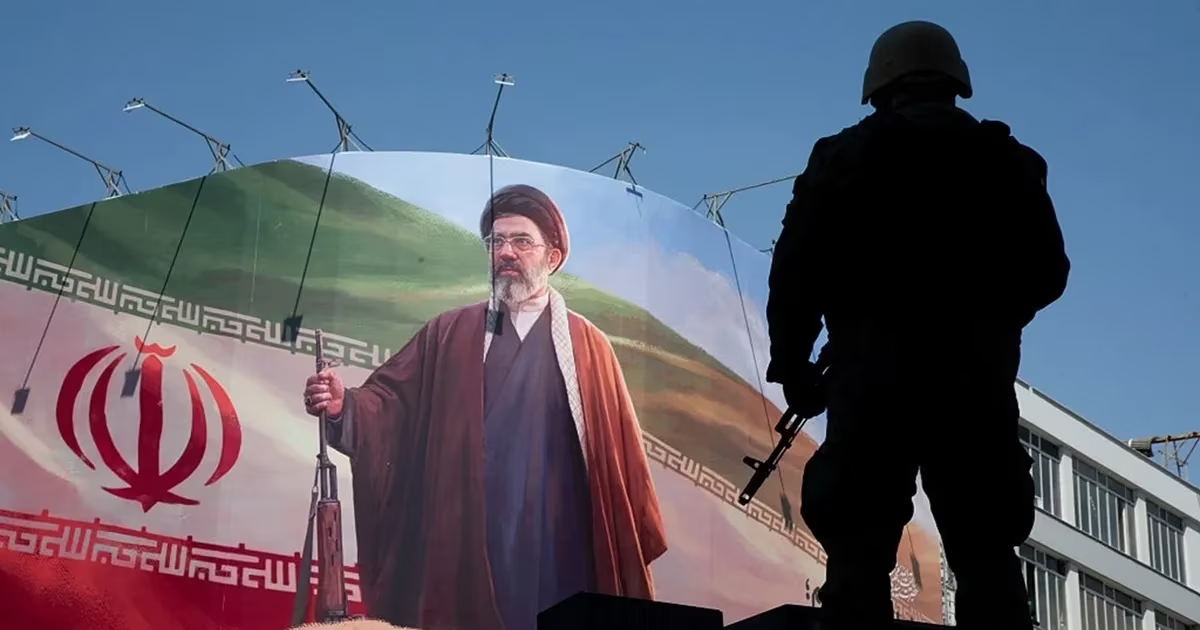
Regarding the supreme leadership in Tehran, sources confirmed that the negotiating team remained in a state of anticipation for final directives from the Iranian Supreme Leader. The delegation had already received the 'green light' on Monday night, paving the way for the start of the crucial round of talks in Pakistan, amid international hopes that these moves would lead to a de-escalation of military tensions in the region.

The Iranian team awaited the green light from the Supreme Leader, and it came on Monday night.

OPINIONS

Tue 21 Apr 2026 2:17 pm - Jerusalem Time

The West Bank… Cost-Free Occupation and a People Paying the Price

What is happening in the West Bank is no longer merely a traditional occupation based on direct military control; rather, it has evolved into a more dangerous and cunning model, which can be described as a "cost-free occupation." This model allows the occupation to practice all forms of oppression—killing, arresting, confiscating land, and restricting people—without paying a real price, neither politically, nor security-wise, nor even economically. In this reality, the occupation moves with almost absolute freedom, raiding cities whenever it wishes, setting up checkpoints wherever it desires, and reshaping geography and demography according to its interests, while the Palestinian is left alone in a daily confrontation with a comprehensive system of oppression.Life in the West Bank is no longer measured by indicators of apparent stability, but by the accumulated suffocation in its small details: the worker prevented from reaching his job, the student detained at a checkpoint for hours, the farmer deprived of his land, and the family living under the threat of invasion at any moment… all these images reflect a complex reality, where oppression is no longer an exceptional event but has transformed into a permanent state. Economically, the ability to endure erodes with the narrowing of livelihoods, and socially, a state of anxiety and uncertainty deepens, while the sense of security dwindles to its lowest levels.However, the danger of this scene lies not only in the occupation's practices but in the political environment that allows it to continue in this comfortable manner. Here, the problematic role of the Authority emerges, which is supposed to be the first line of defense for society, but instead becomes part of an equation that eases the burden on the occupation, rather than strengthening the people's resilience. An administrative and security reality is established that ensures the stability of Israeli control at the lowest possible cost.This transformation makes the occupation more capable of expanding without organized resistance or real pressure, as it no longer needs permanent deployment or to bear the consequences of directly managing the population, as long as there are others performing this function on its behalf. Here lies the cruel paradox: a people living under the harshest forms of control, under a political structure incapable of protecting them, and even contributing—directly or indirectly—to the reproduction of this reality.The most dangerous aspect of "cost-free occupation" is that it does not merely perpetuate control but works to dismantle society from within, by exhausting it economically and psychologically, and undermining its trust in all existing frameworks. With the continuation of this model, confrontation becomes more complex, because the challenge is no longer just ending the occupation, but dismantling the structure that allows it to be comfortable and sustainable.In the West Bank, the question is no longer just how the occupation ends, but how it became so cost-free. Between an increasingly aggressive occupation and an Authority whose function and legitimacy are eroding, the Palestinian faces a harsh equation: either break this reality with all its complexities, or surrender to the gradual suffocation that does not kill all at once, but slowly consumes life until the last breath.

OPINIONS

Tue 21 Apr 2026 2:17 pm - Jerusalem Time

Assault on Christian Symbols

In response to the overthrow and assault on the symbol of Jesus Christ by an Israeli settler soldier, Jerusalem Archbishop Atallah Hanna described this behavior as carrying implications of racial hostility towards all that is Christian, Muslim, and Arab. He said: "Whoever assaults Christian symbols is the same one who assaults Islamic symbols, and he is the same one who kills people, and killing people is no less important than targeting religious symbols." Archbishop Atallah Hanna concluded by saying: "They do not believe in peace, nor in brotherhood, nor in partnership; rather, they are racist in their dealings with Christian clergy and with Islamic clergy. They are the ones who prevented prayer in Al-Aqsa Mosque and in the Church of the Holy Sepulchre. They are a foreign occupation that infringes upon our rights, our dignity, and our faith, but that will only increase our determination to remain and stand firm on the Holy Land." Israeli Zionist recklessness and extremism are an expression of "insolence," deluding themselves that oppression and force, and suppressing the other, are the way for the colony to survive and for its project to succeed on the land of Palestine, and from there extending to the Arab East with hegemony, dominance, and unilateralism. The leaders of the colonial project deluded themselves that they would be outside the conclusion of those who preceded them among the colonizers. They did not learn from the hegemony of Great Britain, whose sun never set on its colonies, and from France and its defeats in the colonies of West Africa, and the United States and its retreat from Vietnam and the Southeast Asian region, and the Soviet Union, which lost its political and value balance, leading to its defeat in Afghanistan. And so, the end of the Israeli Zionist expansionist colonial project, as it was unable to benefit from the agreements, understandings, and common denominators that were reached and signed, especially with the Palestinian people through the gradual, multi-stage Oslo Agreement, and they killed the Oslo partners, Yitzhak Rabin and Yasser Arafat, and the bet on the interim agreement failed, leading to the prevention of the two-state solution on the land of Palestine. The Zionist left failed and lost its power to act after the Labor Party had 42 seats in the Knesset, only to fall to 4 seats in the November 2022 elections. The path of the Israeli right, allied with extremist Jewish religious parties, has worked and continues to work assiduously and cumulatively to abolish the manifestations of the Oslo Agreement with the aim of eliminating the two-state solution and maintaining the Israeli solution as dominant: one Zionist Israeli state from the sea to the river, coupled with diligent work to make the land of Palestine expelling its people and original owners. The power of the extremist Israeli right and its repeated, continuous crimes against Palestinians first, and then against Lebanese and Syrians, and its infringement on the security and sovereignty of many Arab countries, has not granted it security, stability, or legitimacy, and here is the legitimacy of force, previously supported by Europe and later by America, dissipating among European peoples and the streets of their capitals and parliaments, and strongly among the youth of the American Democratic Party, and to a lesser extent among the youth of the Republican Party. A clear indication of the change and awareness sweeping through European and American societies, not to mention the peoples of Asia, Africa, and Latin America.

OPINIONS

Tue 21 Apr 2026 2:16 pm - Jerusalem Time

Turning over the soil in "Fatah Land"!

Dr. Ibrahim Melhem

Editor-in-Chief

The least that can be said is that in about three weeks from now, the "Fatah" movement will hold its eighth conference, which comes several years late from its predecessor; years of necessity dictated by internal disputes, wars, and political storms that have swept over the movement's strongholds in the homeland and the diaspora.However, the holding of this year's conference, even if the circumstances and conditions that the movement and the homeland are going through are not ideal, constitutes an existential necessity, given that the keffiyeh worn by "Fatah", and which it has made a universal movement representing the last clusters of hope under which the oppressed, the sorrowful, the afflicted by the enormity of loss, and the pained and hungry in the tents seek refuge from "the gloom of the scene and the bad outcome."In times of crises, disasters, and wars, people suppress their anger and rationalize their criticism of national movements, but it will not be long before a flood of questions opens up that needs convincing answers, regarding the existential challenges facing the entire cause, due to the mistakes committed by these movements, and "Fatah", like all national action factions, bears a part of the responsibilities, but it is the largest part by virtue of its weight, past, present, and future, and by virtue of the hopes placed on the owner of the first shot.It is Fatah's right to be fascinated with itself, as the owner of the first bullet, but this fascination does not exempt it from its responsibility to ward off the last bullet from its people, a task that requires national reviews, not for the purpose of accountability and assigning responsibility, but rather to ensure that catastrophic mistakes are not repeated, to correct performance, and to solidify the ranks with a national unity free from any supra-Palestinian agendas.Today, "Fatah" faces historical responsibilities, as the safety valve for the cause, which obliges it to zero out internal differences, build bridges, and embrace the dissenting before the agreeing within it, and in all national action factions, and to help the struggling among those factions to recover from their stumbles, and for the comprehensive movement, above all, to be keen on turning over its soil, weeding its garden, and streamlining its performance, by opening windows for the sun to allow generations to compete, with respect and appreciation for the early pioneers who carried the movement on their shoulders and bled their wounds in its early years, and for the coming days to be like a "body shop" to fill the cracks in the roofs to prevent leakage from their ceilings… There is no option today for "Fatah"; it is either success, or success.

OPINIONS

Tue 21 Apr 2026 2:16 pm - Jerusalem Time

The Calculated Clash Between the United States and Iran: To What Extent Has the Pattern of Hostility Been Broken and a Stable System of Mutual Deterrence Established?

The idea that a prolonged conflict can be broken through a “calculated shock” is not new in political history, but it remains one of the most sensitive and complex ideas, as it always stands on the fine line between reshaping the regional order and sliding into wider chaos. In the case of chronic tension between the United States and Iran, we are facing an extended model of “conflict management” rather than resolution: decades of indirect deterrence, proxy wars, undeclared confrontations, and blurry red lines constantly tested without being fully crossed.

This pattern was not a product of weakness, but rather a result of precise strategic calculations. Confronting a country the size of Iran, with its geographical and demographic depth, its network of regional relations, and its ability to respond disproportionately across multiple arenas, made any thought of a comprehensive war an extremely costly option. Therefore, successive US administrations preferred a policy based on containment and deterrence, keeping the conflict within a relatively low level of escalation, through indirect economic and military tools, proxy wars, and constant tension management without reaching a breaking point.

However, this very “inconclusiveness” is not without cumulative cost. A state of continuous hostility without a comprehensive war gradually produces an environment of slow attrition: a permanent arms race, chronic regional tension, and an expansion in the maneuvering space for non-state actors who find in this ambiguity room for influence. Thus, the situation turns into an unstable equation: no one achieves a decisive victory, but everyone loses stability.

From this perspective, the shift being discussed, especially in the context of more impulsive policies attributed to the Donald Trump administration, can be understood as an attempt to break this entrenched pattern. The idea here is not to go to a comprehensive war, but to raise the level of friction to a degree that forces both parties to directly test the limits of power. Instead of calculations remaining theoretical or based on uncertain estimates, there becomes practical friction, even if limited, revealing each party's ability to withstand, respond, and impose a threat ceiling.

This shift cannot be understood solely as escalation, but also as a process of managing escalation itself. What emerged in this context was the ability of the United States, as the main active power, to keep the war within “controlled” limits and prevent it from spiraling into a comprehensive war. At the same time, Iran showed equally important behavior: precisely calculated responses, controlled escalation, and avoidance of sliding into reckless reactions despite pressures and escalatory statements. This mutual behavior was not merely self-restraint, but a result of a practical mutual understanding of the danger of losing control.

More importantly, this interaction produced something akin to “unwritten rules of engagement” that formed during the testing itself, not before. And here a pivotal point emerged: that the war or friction did not get out of control, but rather transformed into a space for redefining the limits of possible action. In this sense, Iran was no longer merely a targeted or contained party, but became a regional actor whose responses were precisely calculated, giving it the position of an “unignorable peer” without implying recklessness or slippage. In return, this dynamic reshaped Washington's own calculations, to deal with Iran as a power whose ability to influence and deter cannot be underestimated.

Within this framework, the United States also played an additional role that was not limited to direct confrontation, but also to regulating the regional rhythm, including managing Israel's behavior and preventing its slide into uncalculated escalation. This role made Washington not only a party to the conflict, but also a regulator of the limits of its escalation, thereby maintaining the ability to control its overall trajectory.

This “forced clarity” that arose from mutual testing reshaped the logic of deterrence itself. Instead of being based on assumptions, it became based on actual experience. Each party became more precisely aware of the other's limits: what can be endured, what can be responded to, and what can lead to a comprehensive escalation. Here, ambiguity turns into clarity, but it is a clarity fraught with risks, because it produces stability based on experience, not on trust.

In this context, drawing an analogy to the post-1973 October War experience between Egypt and Israel becomes analytically tempting. Before that war, there was a pattern of attrition and unresolved hostility. But the war itself broke the stalemate, redefined the balance of power, and later paved the way for the Camp David Accords, which established a relatively stable system of relations, even if it remained cold in nature. However, the fundamental difference is that the US-Iranian situation is more complex, because it is multi-arena, including the Gulf, Iraq, Syria, Lebanon, and maritime passages, in addition to non-state actors capable of escalating beyond the direct control of states.

Despite these differences, the scenario that logically emerges in this analysis is the transition from a managed conflict to a tested conflict, and then to a stable system of mutual deterrence. In this system, traditional peace is not achieved, but implicit rules are formed: clear red lines, non-overlapping spheres of influence, and communication channels, even informal ones, to avoid misunderstanding. Over time, this could lead to an “extended cold peace,” where trust is absent, but the probabilities of comprehensive war are reduced.

However, this path cannot be considered inevitable. There are structural risks that could return it to chaos: miscalculation that could turn limited friction into widespread escalation, the autonomy of proxies who could drag parties into unintended confrontations, internal political changes that could redefine strategic calculations, and finally, a breakdown of deterrence if any party feels that the other has lost the ability or will to respond.

In the end, what is forming is not just a military or political confrontation, but a transitional moment in the nature of the regional order itself: from a long hostility managed by ambiguity, to a hostility tested by friction, and from hypothetical deterrence to experienced deterrence. If this transformation succeeds in establishing its rules, it could lead to long-term stability based on managing power instead of denying it. If it fails, breaking the pattern could become the beginning of a new and more complex cycle of repeated escalation.

In this sense, the essence of the conflict lies not only in the balance of power, but in the ability to transform the test of power itself into a structure of stability, rather than it becoming a prelude to a long-term unraveling.

OPINIONS

Tue 21 Apr 2026 8:34 am - Jerusalem Time

Democrats and Israel: A Deep Transformation Confusing Washington and Redrawing Alliances

Washington – Said Arikat – 21/4/2026

News Analysis

The traditional relationship between the American Democratic Party and Israel is undergoing a rapid transformation, after decades of being one of the entrenched certainties in American politics. Forty out of 47 Democratic senators recently voted in favor of halting an arms deal to Israel, a move considered the most significant yet in the decline of the old consensus based on unconditional support.

This shift does not merely reflect a fleeting disagreement over Benjamin Netanyahu's government, but rather indicates a deeper change in the political mood within the Democratic base, where broad segments of voters now view the war in Gaza as a pivotal moment that has led to a re-evaluation of Israel's image and its regional role, as well as the limits of American support for it.

Recent polls show that about 80 percent of Democrats or those leaning towards them hold a negative view of Israel, compared to a much lower percentage a few years ago. This means that Democratic politicians can no longer ignore their electoral base, especially with the upcoming presidential elections approaching.

This shift has extended to figures from swing states and presidential hopefuls, such as Mark Kelly, Ruben Gallego, Jon Ossoff, and Elissa Slotkin, confirming that the issue is no longer confined to the progressive wing, but has become a broader trend within the party.

In contrast, party leaders, such as Chuck Schumer, are still trying to maintain a middle ground: criticizing Netanyahu and his policies, while adhering to Israel as a strategic ally. However, this equation seems more difficult as the gap between leadership and the base widens.

Three Stages of Transformation

The rift began during Barack Obama's tenure, when disagreement with Netanyahu escalated over settlements and the Iranian nuclear deal. Then came the Gaza war after the October 7 attacks, making Israel a daily topic in the media and on social media platforms, where initial feelings of sympathy turned into widespread anger due to the scale of destruction and human losses.

As for the third stage, it came with the return of Donald Trump and the escalation of confrontation with Iran, as many Democrats linked Netanyahu and Trump, which deepened the aversion to Israel among segments that were previously more inclined to support it.

Where is the Party Heading?

Within the Democratic Party today, there are three main trends: the first wants to impose conditions on military aid, the second calls for a complete halt to direct military funding, and the third goes further by demanding political and economic sanctions similar to those imposed on the apartheid regime in South Africa.

In contrast, there is a liberal Zionist current that still sees the necessity of maintaining the American-Israeli alliance, but after reformulating it and linking it to a political solution for the Palestinian issue. As for the more leftist current, it believes that the problem is structural, and that disengagement between Washington and Tel Aviv has become a strategic and moral necessity.

The Democratic shift towards Israel is not only due to Gaza, but also to a demographic and cultural change within the American party itself. Younger generations are more sensitive to issues of justice and human rights, and less connected to traditional Cold War narratives. Moreover, the party's ethnic and religious diversity has made its view of the Middle East less biased towards the old vision. Therefore, what is happening is not a temporary wave of anger, but a long-term reshaping of the party's foreign identity, whose effects will appear in the upcoming elections and American strategic decision-making.

The major dilemma facing Israel is that losing the Democratic Party is more dangerous than any temporary disagreement with a Republican or Democratic administration. The relationship with Washington has always been based on bipartisan consensus, not on the mood of a single administration. If Israel becomes a partisan issue associated only with Republicans, it loses one of its most important diplomatic strengths. This explains the growing concern within its supportive circles in the United States, because politicizing the relationship threatens its historical sustainability in the long run.

As for Arabs and Palestinians, this shift does not necessarily mean an imminent American upheaval in policies. American institutions, influential lobbies, and congressional balances still impose clear limits on any radical change. But it opens a new political window that can be built upon through a rational and organized discourse that addresses American society in the language of rights and interests. Major changes often begin with a shift in public opinion, then gradually move to institutions and decision-makers.

In conclusion, Israel is no longer a settled issue for Democrats as it once was, but has become an open and contentious file. If the party returns to the White House in 2028, it may find itself forced to make unprecedented decisions regarding the future of this historic alliance.

OPINIONS

Tue 21 Apr 2026 8:33 am - Jerusalem Time

The Paradox of Assassinations: Why is Intelligence Accuracy Absent in Gaza but Present Abroad?

Ramallah - “Alquds ” dot com

Ramallah - “Alquds ” dot com

Opinion Writer

In mid-September 2024, the Lebanese arena witnessed one of the most complex intelligence operations, where more than three thousand 'pager' communication devices belonging to Hezbollah elements were detonated. Data revealed that the operation was carried out through a precise penetration of the supply chain, planting explosive materials that were activated simultaneously, resulting in thousands injured and dozens killed at a precise timing.

Operations did not stop there; they were followed by the assassination of Hezbollah's Secretary-General, Hassan Nasrallah, in a fortified underground facility. Military sources used special bombs capable of penetrating reinforced concrete layers up to eight stories deep, based on accurate intelligence that enabled the precise identification of the leadership meeting location.

In the context of external operations, the 'Epic Fury' operation targeting the Iranian interior stood out, where Unit 8200 and the Mossad agency relied on years of meticulous monitoring of leaders' lifestyles. This monitoring included hacking traffic cameras and tracking personal guards' schedules, leading to the use of 'Sparrow' missiles capable of hitting very small targets from vast distances.

These operations demonstrate the occupation's possession of a superior technological system and the ability to reach complex targets underground and in fortified capitals. However, a major paradox emerges when the scene shifts to the Palestinian territories, where this alleged 'genius' disappears, replaced by a scorched-earth policy and indiscriminate destruction of residential neighborhoods.

Field statistics indicate that about 85% of the victims of the aggression on Gaza are civilians, with entire residential blocks being wiped out under the pretext of targeting a single fighter. This disparity raises fundamental questions about why the technical accuracy that the occupation boasts about abroad is absent when it comes to the Palestinian interior.

In the West Bank, the same scene is repeated, where officials claim inability to identify resistance fighters, which prompts them to use excessive force and destroy infrastructure. This claim completely contradicts the capabilities shown by the occupation in pursuing its adversaries across continents and penetrating the most complex security systems in the region.

This contradiction reveals a premeditated intention to carry out a systematic genocide against the Palestinian people, aiming to make the land an uninhabitable environment. The real goal is not intelligence incompetence, but the desire to displace Palestinians and empty the land through the exercise of extreme violence and collective intimidation.

Testimonies from within the Israeli security establishment, such as Sima Shine's statements, confirm that success in using force generates an appetite for further expansion and oppression. Accordingly, Palestinian resistance is used as a continuous pretext to implement expansionist agendas, proving that the issue is essentially about political will, not technical capability.

It is not a matter of capability, but essentially a matter of will and intent to carry out genocide.

OPINIONS

Tue 21 Apr 2026 8:33 am - Jerusalem Time

Between Hollywood and Holy Books: How War Leaders in Washington Confuse Movies and Religious Texts?

Ramallah - “Alquds ” dot com

Ramallah - “Alquds ” dot com

Opinion Writer

Contemporary wars witness an intensive use of religious discourse by political leaders to justify policies of enslavement or extermination, where religion is inserted into conflicts primarily aimed at controlling wealth. Since the events of October 7, 2023, a clear trend has emerged among Benjamin Netanyahu and American military officials to invoke texts from ancient books to support their military might, despite the interpretations of falsification and distortion that these texts are subjected to, serving war agendas.

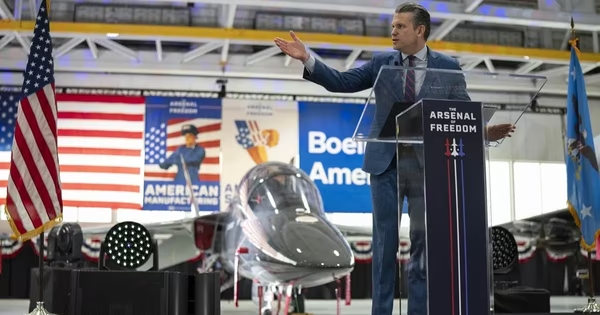
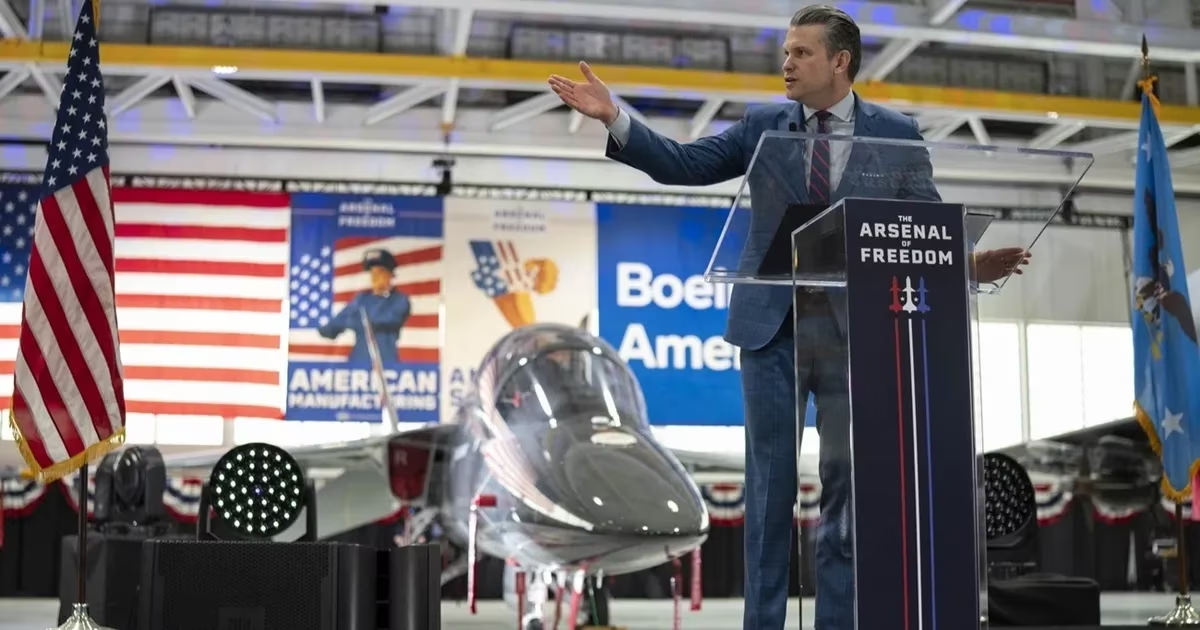
In a striking incident that reflects the shallowness of religious culture versus cinematic tyranny, US Secretary of War 'Pete Hegseth' read a text he attributed to the 'Book of Ezekiel' during a religious conference at the Pentagon, speaking with great emotion about the necessity of fighting the enemy and expelling them from their land. However, the surprise was that the mentioned text was not biblical, but a famous excerpt from the American action film 'Pulp Fiction,' which the film's hero Samuel Jackson used to recite decades ago.

It seems that officials in the American administration, influenced by Hollywood culture, have begun to confuse cinematic narratives with religious scriptures, as these individuals have not actually read the books of Ezekiel or Isaiah, which speak of building the temple. Instead, they appear as young men enamored with movies, memorizing the dialogues of their heroes and invoking them in critical political and military contexts, which reflects a dangerous overlap between art, reality, and religion in the mindset of decision-makers.

This association with acting is not new to the White House, as presidents who mastered the art, such as Ronald Reagan, or sought it, such as Donald Trump, who now contents himself with giving 'extra' roles to his ministers in real wars he wages across continents, have entered it. This trend has caused artistic matters to intertwine with religion, to the extent that some even contend with supreme religious authorities like the Pope, believing that their own vision is the absolute truth and anything else is error.

What Islamic holy sites in noble Jerusalem are subjected to, in terms of abuse and falsification of heritage, is a direct result of chronic distortion in extremist religious readings, which parallels American transgressions affecting all humanity. The painful irony lies in the existence of a preserved Quran that does not find its way to full application by its followers, while others cling to distorted and ideologized texts and apply them strictly to achieve their political goals.

What is disheartening is that we have a preserved, undistorted Quran and we do not apply it, while they have distorted books, with their premeditation and determination, and they apply them.

PALESTINE

Tue 21 Apr 2026 8:33 am - Jerusalem Time

Martyrs in Khan Yunis shelling and Hamas discusses arrangements for the second phase in Cairo

Medical and field sources in the Gaza Strip announced, on Tuesday dawn, the martyrdom of three individuals as a result of an airstrike carried out by Israeli occupation aircraft on the city of Khan Yunis in the southern part of the Strip. The spokesman for the Civil Defense explained that the shelling targeted a vital area near the Al-Zagzoq intersection in the Al-Amal neighborhood, leading to casualties and destruction at the scene.

Local sources documented the arrival of the martyrs' bodies at Nasser Medical Complex, where a state of sadness and anger prevailed among the victims' families who gathered to bid farewell to their loved ones. Reports indicated that the targeting struck a police checkpoint in the city, as part of a series of attacks targeting infrastructure and security in populated areas.

On the political front, the Hamas movement revealed that its leadership is engaged in a series of intensive meetings and consultations in the Egyptian capital, Cairo. These discussions are taking place with the presence of mediators and representatives of Palestinian factions, with the aim of following up on the implementation of the remaining commitments from the first phase of the previously concluded Sharm El Sheikh agreement.

In an official statement, the movement affirmed that it attaches great importance to preparing for discussions related to the second phase of the plan proposed by US President Donald Trump. Hamas stressed that it is dealing flexibly and positively with all proposals that guarantee the rights of the Palestinian people and lead to a comprehensive cessation of aggression.

Regarding the field situation, sources indicated that the occupation continues to systematically violate the ceasefire agreement that came into effect on October 10th. These violations vary between aerial and artillery shelling and limited incursions, threatening the stability of the fragile understandings reached through international mediation.

According to statistics from the Palestinian Ministry of Health, the number of martyrs since the beginning of the supposed truce has exceeded 775, in addition to more than two thousand injured. These figures show the extent of the ongoing escalation despite official announcements of a halt to major military operations in the Strip.

For its part, the government media office in Gaza reported that the occupation army has committed about 2,400 violations of the agreement since its inception, including killings, arrests, siege, and starvation. These practices aim to pressure the popular base of the resistance and obstruct relief and reconstruction efforts urgently needed by the residents.

These developments come amidst a heavy toll left by the ongoing two-year genocide war, with the Ministry of Health recording the martyrdom of more than 72,553 Palestinians. These figures reflect the unprecedented humanitarian catastrophe experienced by the Strip amidst the continued direct targeting of civilians and vital facilities.

The Hamas movement concluded its statement by affirming the continuation of negotiations with mediators to overcome the obstacles placed by the occupation in the way of implementing the agreements. The movement is expected to submit its final response to the proposed proposals after completing internal consultations with its leadership and with the rest of the Palestinian national action factions.

Hamas and the Palestinian factions have dealt responsibly and highly positively with the proposals submitted with the aim of reaching an acceptable agreement.

PALESTINE

Tue 21 Apr 2026 8:33 am - Jerusalem Time

The 'Settler-Soldier' Deception: How the Occupation Legitimizes Systematic Killings in the West Bank

The occupied West Bank villages and cities are facing an unprecedented wave of settler attacks that have gone beyond vandalism to reach systematic killing. These operations are carried out under a thick cover of misleading military narratives aimed at protecting the perpetrators from international and local legal prosecution, reflecting a clear policy of role-swapping between the occupation army and extremist settler groups.

Deir Jarir village, east of Ramallah, stands out as a stark example of this policy, where on April 11th, the young man Ali Hamadneh was assassinated. Field sources reported that four settlers attacked the entrance to the village, where two of them fired live ammunition directly at a group of young men, fatally wounding Hamadneh, who fell on the spot before being transported by a civilian vehicle.

In an attempt to legitimize the crime, the occupation army quickly issued a statement claiming that a 'reserve soldier' fired in self-defense after being pelted with stones. However, eyewitness testimonies completely refuted these claims, confirming that there was no military presence in the area at the time of the incident, and that the killer was a known settler who had been living in a nearby outpost for several months.

Not content with the killing, the occupation authorities extended their violations to the martyr's family during the mourning ceremonies in an attempt to break their will. Local sources reported that military vehicles stormed the vicinity of the mourning house, and soldiers provoked the mourners by playing loud music through loudspeakers and smashing a number of parked vehicles, in behavior that reflects the extent of psychological intimidation practiced against Palestinians.

Ali Hamadneh's family revealed pressures exerted by occupation intelligence through phone calls aimed at falsifying facts and solidifying the narrative that the killer was a 'soldier'. These attempts aim to give the crime a security character and avoid classifying it as a settler attack, despite prior knowledge of the identity of the settler who carries out repeated attacks against farmers and residents of the area almost daily.

For its part, the human rights center 'B'Tselem' indicated that this ambiguity in identifying the perpetrators is a deliberate and calculated tactic by the Israeli security establishment. Settlers are integrated into reserve forces to enable them to commit violence in their civilian capacity, then obtain legal immunity in their military capacity, which makes the superficial 'weapon confiscation' procedures merely attempts to whitewash the image of the occupation before the international community.

In a related political context, Israeli Energy Minister Eli Cohen acknowledged that the Netanyahu government is moving forward with the implementation of 'de facto annexation' of West Bank lands. This statement reinforces fears of transforming field attacks into a political reality aimed at forcibly displacing Palestinians and changing the demographic map of the region, in blatant defiance of all international laws that consider settlements illegal.

Official data issued by the Wall and Settlement Resistance Commission indicates a frightening escalation in the pace of violence, with more than 1800 attacks recorded in March alone. These attacks were distributed between direct settler attacks and military operations by the army, leading to widespread property destruction and the seizure of vast areas of Palestinian land under flimsy security pretexts.

Since early October 2023, the West Bank has entered a spiral of escalating violence resulting in the martyrdom of more than 1149 Palestinians and the injury of thousands with varying degrees of wounds. These figures coincide with widespread arrest campaigns targeting nearly 22,000 citizens, indicating a comprehensive strategy aimed at restricting the Palestinian presence in all areas of contact with settlements and random outposts.

The identity of the killer is deliberately ambiguous; most residents of settlement outposts are reserve soldiers who play the role of the violent settler and the militarily protected soldier simultaneously.

ISRAELI AFFAIRS

Tue 21 Apr 2026 8:33 am - Jerusalem Time

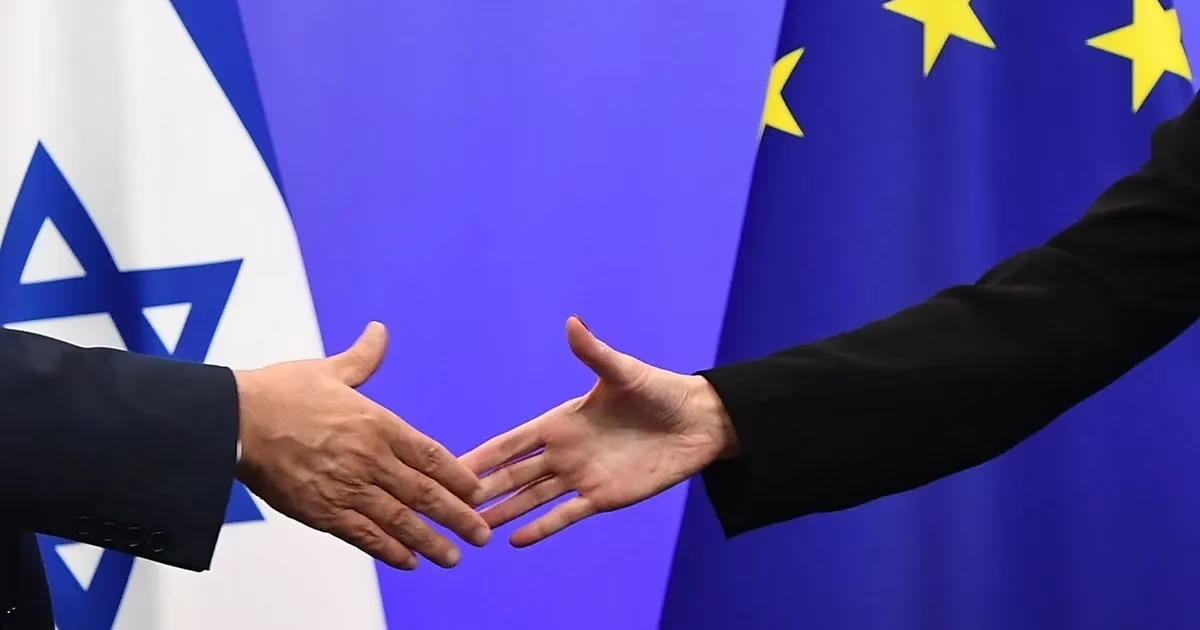
Israeli Calls to Disengage Strategically from Europe and Turn Eastward

A state of anxiety is escalating within Israeli political and diplomatic circles due to what is described as increasing isolation on the European continent, where anti-occupation stances are no longer mere fleeting events but have transformed into a structural context. Observers believe that years of crimes committed against Palestinians have led to growing waves of popular solidarity that have begun to exert their weight on the decisions of official European governments in an unprecedented manner.

In this regard, former Israeli Ambassador to Washington, Michael Oren, stated that monitoring anti-Tel Aviv European actions has become exhausting due to their intensity and frequency. Oren pointed out that the recent decision by Italian Prime Minister Giorgia Meloni to suspend the defense treaty with Israel represents a devastating blow, especially since Meloni was considered one of the closest remaining allies on the continent.

Oren explained in an analysis published by Hebrew media that the Italian move comes within a series of punitive measures that included suspending arms sales and preventing Israeli companies from participating in major defense exhibitions. He also noted that the recognition of a Palestinian state by several European countries reflects a radical shift in the political stance of the continent, which was historically more balanced in Middle East conflicts.

Tension between the two sides peaked in February 2026, coinciding with joint US-Israeli airstrikes targeting facilities in Iran. Although European criticism initially focused on the administration of President Donald Trump, European leaders showed remarkable firmness by refusing to use military bases or European airspace to carry out these attacks.

European stance was not limited to military aspects but extended to include sharp political condemnations from prominent leaders such as Spanish Prime Minister Pedro Sánchez. Sánchez described Israeli operations as intolerable criminal acts, calling for a comprehensive international trade boycott of Israel to pressure it to stop its aggressive policies.

For his part, French President Emmanuel Macron joined the front of critics, condemning what he described as indiscriminate attacks launched by Israeli forces on Lebanese territories. Sources indicated that French discourse has almost entirely ignored the threats facing northern settlements, focusing exclusively on the humanitarian consequences of Israeli military operations.

The former Israeli diplomat believes that this hostility cannot be separated from the desire of some Europeans to evade historical responsibility for the Holocaust by accusing Israel of committing genocide. He considered that accusing Israel of ethnic cleansing against Palestinians has become a convenient way for some governments to overcome the historical guilt complex towards Jews.

In light of this reality, Oren stressed the necessity for Israel to begin a national strategy to gradually and thoughtfully reduce its dependence on Europe in the coming years. He called for shifting the compass of foreign policy eastward, specifically towards the rising powers in Asia that do not impose complex political or moral conditions in their bilateral relations.

The proposed vision includes strengthening strategic alliances with India and other Asian countries, in addition to diversifying partnerships in the African and South American continents. Proponents of this approach believe that these regions offer immense economic and security opportunities away from the pressures of European parliaments and human rights organizations that pursue Israeli officials.

Despite the call for political rupture, analysts suggest maintaining technological and economic communication channels with a limited number of countries that still show some degree of friendship, such as Germany, Bulgaria, and Greece. However, this cooperation should remain confined to technical frameworks without relying on these countries as political allies in major crises.

The shift eastward requires a complete reformulation of the Israeli diplomatic system that has invested for decades in Western capitals. Observers emphasize that the failure to convince European public opinion of the justice of the Israeli narrative necessitates seeking alternatives in geographical spaces that still view Israel from a purely pragmatic interest perspective.

Reports indicate that the security establishment in Tel Aviv has already begun studying the long-term implications of losing European support, especially in the fields of scientific research and intelligence exchange. However, the move towards India and Africa remains fraught with challenges due to strong international competition and extensive Chinese and Russian penetration in those regions.

Ultimately, it seems that the Israeli political elite has begun to accept the idea that the 'golden age' of relations with Europe has irrevocably passed. Oren cites the Italian artist Andrea Bocelli's saying that there is a time for welcoming and a time for farewell, emphasizing that the moment of political farewell to the old continent has indeed arrived.

This strategic shift, if officially adopted, would represent the biggest change in Israeli political doctrine since the establishment of the state, moving from being a 'Western outpost' in the Middle East to an entity seeking its legitimacy and alliances deep within the Asian and African continents.

It is time to literally change direction eastward, and reduce our dependence on a continent that is no longer a trustworthy ally.

ISRAELI AFFAIRS

Tue 21 Apr 2026 8:32 am - Jerusalem Time

Cracks in Israeli Society: A Moral Crisis in the Army and Political Confusion Pledging Decisions to Washington

While the Israeli government attempts to market the war as an arena for restoring deterrence, analyses from security and intellectual elites within Hebrew society paint a completely different picture. These readings do not merely observe military failure but delve into the structure of the military establishment and the mood of a society now suffering from deep rifts and questions about the utility of excessive force.

Reuven Gal, the former chief psychologist of the Israeli army, warned of a severe moral collapse striking the ranks of the fighting forces, describing soldiers as the silent victims of this crisis. Gal affirmed that the events of October 7th were not merely a security failure but revealed a breakdown in values and culture that left officers and soldiers feeling deeply frustrated and betrayed their principles.

In his analysis, Gal pointed out that symptoms of moral injury have begun to appear clearly among an increasing number of military personnel, a deep wound hidden behind official propaganda. This erosion of trust within the military establishment threatens the cohesion that Israel has long boasted of, describing its army as the 'most moral' in the world.

For his part, writer Gideon Levy expanded the circle of criticism to include Israeli society as a whole, considering that the crisis has gone beyond military conduct to how the public deals with the idea of continuous death. Levy believes that there is a state of normalizing loss and glorifying sacrifice, which reflects a defect in society's perception of the limits of power and the ability to continue in the cycle of violence.

Regarding the West Bank file, historian Gideon Avital Epstein directed direct accusations at the military leadership, holding Eyal Zamir fully responsible for the escalation of settler violence. Epstein described what is happening as 'Jewish terrorism' that is sponsored or condoned by the army and police, making the lives of Palestinians a daily hell.

Epstein warned that the involvement of soldiers in protecting or participating in settler attacks puts Israel at risk of international prosecution for committing crimes against humanity. This path, as he described it, reflects a moral decline that transforms the military establishment into a tool to serve extremist settlement agendas, far from any legal standards.

On the strategic level, military analyst Yoav Limor considered that more than 900 days of fighting have not yielded any real victory on any of the open fronts. Limor explained that Israel has lost the initiative, as its fateful decisions are now being cooked in the corridors of Washington instead of Tel Aviv.

Limor described direct American intervention, and preventing Israel from carrying out certain military operations, as a public insult to Israeli sovereignty. He concluded in his vision that the Hebrew state is gradually transforming into something resembling an 'American protectorate' that cannot move without a green light from the White House.

In a related context, former Colonel Talia Lankry affirmed that the military objectives set for the war, such as disarming Hezbollah, were unrealistic from the start. Lankry stressed that the absence of a clear political vision makes any military achievement merely a drain on resources without reaching a real end to the conflict.

Lankry believes that trust between the leadership and the public is a strategic resource that has been squandered during this long confrontation due to unachievable promises. This confusion in setting goals has led to prolonging the war without a political horizon that ensures the stability of military results on the ground.

In turn, former military intelligence chief Amos Yadlin admitted that the ceasefire in Lebanon was a necessary step, even though it was forcibly imposed on the Israeli government. Yadlin explained that the army had exhausted most of its operational objectives, and that continuing to fight without political cover would have led to counterproductive results.

Yadlin criticized the policy of deception practiced by the government towards the Israeli people by offering illusory military promises that cannot be translated into reality. He called for the necessity of recognizing the limits of military power and seeking diplomatic paths to extricate Israel from the state of permanent attrition it is experiencing.

All these opinions converge at one point: the existence of a huge gap between the official discourse promoting victory and the troubled reality on the fronts and internally. The confusion of the political leadership and the expansion of expectations have ultimately led to a state of strategic disarray that threatens the independence of Israeli decision-making.

In conclusion, these testimonies from within the Israeli establishment show that the biggest challenge facing Israel is not only military but a crisis of identity and leadership. Between the collapse of military values and the pledging of political decisions to external powers, it seems that Israeli society is heading towards a harsh review of the results of wars without a compass.

What was revealed on October 7th was not just an operational failure, but a cultural and moral failure that led to a moral collapse within the army ranks.

PALESTINE

Tue 21 Apr 2026 8:32 am - Jerusalem Time

A day after his wedding.. an Israeli drone ends the life of a young man in Khan Yunis

The joy of the Palestinian young man Darwish Al-Attal did not last more than twenty-four hours after his wedding, when a drone belonging to the Israeli occupation surprised him with a missile that led to his immediate martyrdom. Field sources reported that the bombing targeted a checkpoint belonging to the Palestinian police in the western area of Khan Yunis city, south of the Gaza Strip, resulting in Al-Attal's death and damage to the site.

In a related context, the northern Gaza Strip witnessed new attacks, as occupation forces opened fire on citizens in the Al-Faluja area of Jabalia camp on Monday evening. The attack resulted in varying injuries to a number of Palestinians, who were subsequently transferred to hospitals for treatment, while medical sources confirmed that the condition of one of the injured was very critical due to a direct hit by occupation bullets.

Regarding the total toll of the aggression, health authorities announced an increase in the number of victims to 72,553 martyrs and 172,296 injured since the beginning of the war. Official data showed that the past twenty-four hours witnessed the registration of two martyrs and 22 injuries, amid the continued artillery and aerial bombardment targeting various areas of the besieged Strip.

The occupation assassinated the joy of the young man Darwish Al-Attal just one day after he entered the golden cage, following a treacherous raid that targeted his vicinity in Khan Yunis.

PALESTINE

Tue 21 Apr 2026 8:32 am - Jerusalem Time

The 'Medical Denial' Weapon.. How Does the Occupation Turn the Right to Treatment in Gaza into a Tool of Blackmail?

The humanitarian crisis in the Gaza Strip is escalating as the right to treatment and healthcare, a necessity guaranteed by international law, is transformed into a tool for blackmail and political pressure. Field data reveals that medical evacuations for the injured and sick are no longer subject to purely professional standards, but have become hostage to severe security complications imposed by the Israeli occupation.

According to the latest data issued by official sources, there are more than 22,000 patients and injured individuals within the Strip who urgently need to travel abroad for treatment. These injured individuals face a tragic reality amidst the inability of local hospitals to provide the necessary specialized care due to the widespread destruction of health infrastructure.

Statistics indicate that nearly 19,000 of these cases have already completed all administrative and medical procedures and received official referrals. However, these cases remain stuck, awaiting approval from the occupation authorities to leave the Strip, making these approvals a matter of life or death for the patients.

The crisis is not limited to the health aspect but extends to the academic sphere, where more than 1,000 male and female students are deprived of enrolling in their universities outside Gaza. Despite these students meeting all legal requirements, the restrictions imposed at the crossings prevent them from completing their educational journey.

Sources reported that the current pace of travel through the crossings does not meet the minimum growing humanitarian needs. The sources warned that the continuation of the current situation means that addressing the accumulated waiting lists could take years, a time that critical and cancer patients do not have.

Patients in Gaza go through a long and exhausting series of procedures to obtain permission to leave, including security checks and administrative approvals from multiple parties. These processes often remain open-ended without a specific timeframe, leading to delays that extend for months, during which the patient's health condition may deteriorate.

Medical reports have recorded a sharp decrease in the number of patients being evacuated daily in recent periods, which is completely inconsistent with the scale of the catastrophe. This deliberate slowdown turns administrative dysfunction into a critical factor in determining the fate of patients suffering from severe injuries or complex heart diseases.

Involving security considerations in a purely medical pathway raises deep ethical and legal issues for the international community. The right to treatment must remain conditional only on the health status, away from any political contexts or pressures exerted by the occupation against unarmed civilians in the Gaza Strip.

Continuous aggression has led to a near-complete collapse of the health system, with international organizations such as 'Doctors Without Borders' documenting a sharp decline in the availability of medicines and equipment. The incapacitation of most major hospitals has made medical evacuation the only and necessary option to save thousands of lives.

As a result of this systematic procrastination, hundreds of patients have lost their lives, including a large number of children who died while waiting for a travel permit. Human rights reports confirm that the actual number of deaths may be much higher than what is documented due to the difficulty of monitoring under continuous bombardment.

Every death resulting from delayed medical evacuation represents a dismal failure of the international system to protect fundamental human rights. The delay in granting permits is not merely a technical procedure, but a recurring pattern that leads to catastrophic outcomes that could have been avoided if humanitarian will were present.

There is a clear shortcoming by international powers and UN organizations in exerting real pressure on the occupation to open safe medical corridors. Despite some partial responses from countries that have received a limited number of injured, these efforts remain insufficient given the escalating scale of the tragedy.

The World Health Organization emphasizes the urgent need to increase the number of patients allowed to leave and accelerate the pace of security approvals. However, international political calculations continue to hinder decisive decisions that compel the occupation to respect humanitarian laws and the Geneva Conventions.

In conclusion, the medical evacuation crisis in Gaza remains a testament to the stark contradiction between international humanitarian slogans and the bitter reality on the ground. Saving what can be saved requires immediate intervention to secure the patients' right to treatment, away from the policies of siege and blackmail practiced by the occupation.

Medical evacuation in Gaza has transformed from a humanitarian path to save lives into a complex issue governed by security and political considerations imposed by the occupation.

ARAB AND WORLD

Tue 21 Apr 2026 8:32 am - Jerusalem Time

Trump: New deal with Iran will surpass '2015 nuclear deal,' no truce extension without understanding

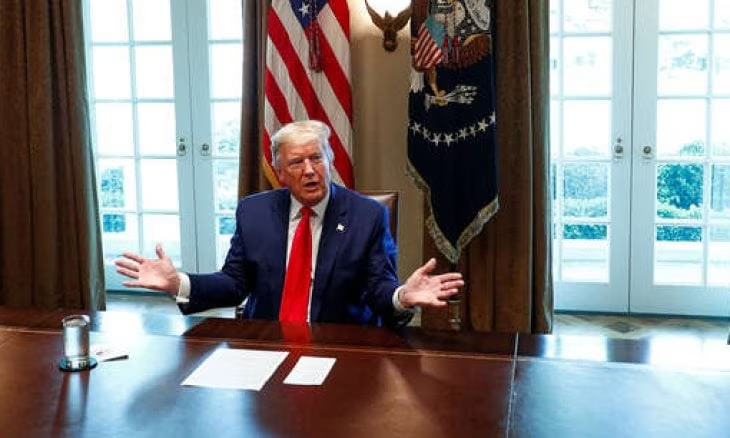
US President Donald Trump affirmed that the current administration is working on drafting a new nuclear agreement with Iran, describing it as being 'much better' than the deal concluded in 2015. Trump clarified that the current negotiations represent a historic opportunity to correct what he described as past mistakes and achieve a stricter understanding that guarantees American national security.

In a post on social media platforms, Trump attacked the old agreement, known as the Joint Comprehensive Plan of Action, considering it one of the worst deals ever concluded. He indicated that the new agreement would overcome the security loopholes that existed in the version signed by the Obama and Biden administrations previously.

On the ground, the US President warned that the current temporary ceasefire would not last forever without tangible results at the negotiating table. Trump described the possibility of extending the truce without reaching a final agreement as 'highly unlikely,' placing significant time pressure on the negotiating parties.

Media sources quoted Trump expressing optimism about the possibility of a swift diplomatic breakthrough, as he expressed hope for signing the agreement as soon as possible. The US President also showed flexibility regarding the possibility of a direct meeting with Iranian leaders if real progress is made on outstanding issues.

Meanwhile, the Pakistani capital, Islamabad, is hosting rounds of indirect negotiations between Washington and Tehran under intensive Pakistani governmental patronage. Pakistani mediation seeks to bridge viewpoints and prevent the collapse of the fragile calm that followed direct military confrontations in the region.

For its part, Tehran has not issued an official confirmation regarding sending a high-level delegation to participate in this round, but informed sources indicated an initial Iranian readiness. The Iranian leadership is monitoring US moves with extreme caution before making a final decision on the level of representation in the Islamabad talks.

In the context of diplomatic efforts, a senior Pakistani government official affirmed that his country is doing its utmost to ensure the presence of both parties at one table within the next two days. The official indicated that Islamabad had received 'positive signals' from the Iranian side, suggesting their desire to explore the political path despite existing tensions.

On the other hand, Iranian statements emerged setting conditions for the continuation of the diplomatic path, as Iranian Foreign Minister Abbas Araqchi informed his Pakistani counterpart of serious obstacles. Araqchi considered what he described as continuous American violations of the ceasefire to threaten undermining the chances of success in the negotiations.

The Iranian minister explained that his country is currently studying all aspects of the situation before determining its next step in the political process, emphasizing the need for full adherence to the calm. These statements come at a sensitive time when international pressure is increasing to prevent the region from sliding into a comprehensive and open confrontation.

Reports indicate that Pakistani mediation is not limited to the diplomatic aspect only but also includes military communication channels aimed at consolidating the ceasefire on the ground. Islamabad is trying to leverage its balanced relations with both parties to prevent any military friction that could undermine the political efforts currently being made.

These moves come within broader international efforts to end the state of tension that followed previous military confrontations involving regional and international parties. Anticipation prevails in global political circles for what the next few days will bring, especially with the approaching deadline set by Trump for the truce.

Observers believe that Trump's statements aim to implement a policy of 'maximum pressure' mixed with the desire to achieve a quick diplomatic victory before the deadline expires. If these efforts succeed, the region may witness a major strategic shift that ends decades of hostility and nuclear tension between Washington and Tehran.

The deal we make with Iran will be much better than the Joint Comprehensive Plan of Action drafted by Barack Obama and Joe Biden.

ARAB AND WORLD

Tue 21 Apr 2026 8:32 am - Jerusalem Time

Tehran accuses Washington of obstructing diplomatic path, Trump insists on 'total blockade'

The Iranian Ministry of Foreign Affairs announced that Minister Abbas Araghchi held a phone call with his Pakistani counterpart, Ishaq Dar, during which he affirmed that current American actions are hindering any progress in the diplomatic path. Araghchi clarified that Tehran is currently studying all aspects of the situation to make a decision on the next steps, emphasizing that repeated violations by Washington weaken the chances of reaching a peaceful solution.

For his part, US President Donald Trump reiterated his hardline stance towards Tehran, confirming that he would not lift the blockade imposed on Iranian ports unless a new and comprehensive agreement is reached. Trump indicated via his 'Truth Social' platform that this blockade is causing severe damage to the Iranian economy, estimating daily losses at approximately $500 million, which he described as a figure the regime cannot bear.

In the context of field movements, informed sources reported that an American delegation is on its way to the Pakistani capital, Islamabad, to participate in a new round of negotiations. This step comes at a time when Tehran insists that lifting the naval blockade is a fundamental and indispensable condition for participating in any direct or indirect talks with the American side.

Events are accelerating as the deadline set by Trump approaches, as he told international news agencies that the ultimatum directed at Iran to sign the agreement expires on Wednesday evening, Washington time. The US President warned that failure to respond to American demands would mean directly targeting vital Iranian facilities, while ruling out any extension of the current truce.

On the analytical front, political observers believe that indicators are increasing towards holding a final round of negotiations despite the limited time remaining. Experts point out that the diplomatic option is still preferred by both parties to avoid sliding into a comprehensive military confrontation, despite the 'brinkmanship' policy pursued by both the White House and Tehran at these critical moments.

Pakistan plays a pivotal role in trying to bridge the views between the two adversaries, making strenuous efforts to resume dialogue and avoid a new round of fighting in the region. Islamabad believes that stability serves the interests of the Gulf states and the entire region, which has prompted it to enhance security measures in the capital in preparation for receiving the negotiating delegations.

Internally, Iran is witnessing a divergence of views between a current pushing for the completion of negotiations, represented by President Masoud Pezeshkian and his diplomatic team, and another current showing rigidity towards American intentions. However, the hardline current does not entirely oppose the principle of negotiation, but rather seeks to raise the ceiling of Iranian conditions to ensure tangible economic gains in exchange for any political concessions.

In a dangerous field development, Trump announced that an American destroyer fired on the Iranian ship 'Tosca' after it ignored orders to stop while attempting to break the naval blockade. He explained that the operation resulted in a breach in the ship's engine room and its complete control, which was met with an official Iranian pledge to respond to this military escalation.

Internationally, Moscow entered the crisis, calling for restraint and maintaining the existing truce between Washington and Tehran. The Russian Foreign Ministry stressed in a statement the need to continue diplomatic efforts under Pakistani patronage, warning that the situation getting out of control could lead to an armed confrontation whose consequences for international peace and security cannot be predicted.

These tensions have directly reflected on global markets, with oil prices recording a significant rise due to fears of the closure of the Strait of Hormuz or disruption of energy supplies. In contrast, global stock exchanges witnessed a decline in their shares with increasing uncertainty about the future of stability in the Middle East and its impact on the global economy.

Islamabad, the Pakistani capital, is experiencing a state of security alert, as authorities have closed main roads leading to meeting centers and deployed military reinforcements and barbed wire. These measures are to secure the delegations participating in the anticipated negotiations, amidst international hopes that this round will succeed in defusing the escalating crisis.

Anticipation remains the order of the day until Wednesday evening, as the coming hours will determine the course of the relationship between Washington and Tehran for years to come. Either a political settlement will be reached that lifts the blockade and ends the tension, or a direct military confrontation will ensue that could ignite the entire region in light of explicit American threats to target Iranian depth.

Continued American violations of the ceasefire constitute a major obstacle to the continuation of the diplomatic process.

ARAB AND WORLD

Tue 21 Apr 2026 8:32 am - Jerusalem Time

Israeli Escalation Violates Truce in Lebanon: Injuries in Nabatieh Raid and Tanks Destroyed in the South

Lebanese medical sources reported that six citizens sustained various injuries as a result of an airstrike carried out by Israeli occupation aircraft today, Monday, targeting the town of Qa'qa'iyat al-Jisr in the Nabatieh district of southern Lebanon. This raid comes amidst a temporary truce that began last Thursday, but the field is witnessing repeated violations that threaten the stability of the fragile agreement.

Local sources stated that an Israeli drone directly targeted the vicinity of the Litani River basin in the same town, causing a state of panic among residents who are trying to check on their properties. Concurrently with the aerial bombardment, the occupation army carried out extensive demolition operations in the town of Shemaa in Nabatieh, and another in the area between the towns of Al-Qusayr and Al-Qantara in the Marjayoun district.

In a related context, the Disaster Risk Management Unit in the Lebanese government serail revealed shocking figures related to the displacement crisis, where the number of displaced people in shelters exceeded 117,000. The periodic report clarified that the officially registered displaced families amounted to more than 30,000 families, suffering from difficult humanitarian conditions amidst ongoing military threats.

The total death toll from the Israeli aggression, ongoing since early March, has risen to 2,387 martyrs, in addition to approximately 7,602 people injured with various wounds. These figures reflect the extent of human and material destruction caused by the intensive military operations on Lebanese villages and towns, especially in border areas.

For its part, the Israeli occupation army renewed its strict warnings to Lebanese citizens against returning to their homes in about 80 villages and areas in the south, considering them closed military zones. This measure aims to prevent civilians from accessing areas that still have an Israeli military presence or field sweeping operations.

In a field response to these movements, Hezbollah announced the destruction of four Israeli tanks in various areas of southern Lebanon using explosive devices it had planted earlier. The party affirmed that these operations come within the framework of a natural response to repeated Israeli violations of the ceasefire agreement and the incursion of occupation forces into Lebanese territory.

The occupation army claimed in an official statement to have carried out attacks targeting those it described as 'saboteurs' in the Bint Jbeil area, alleging that they violated the truce understandings and approached the front defensive line. The statement indicated that the air force intervened to eliminate these elements after they were monitored by the Paratroopers Brigade, claiming to remove a direct threat to the forces stationed there.
Israeli media discussed the so-called 'Yellow Line,' which is an imaginary security strip drawn by the occupation army inside Lebanese territory with a depth of up to 10 kilometers along the Blue Line. Through this line, the occupation aims to define the areas of deployment of its forces and prevent any Lebanese movements within this range, which Lebanon considers a violation of national sovereignty.

On the political front, Lebanese President Joseph Aoun affirmed that the Lebanese state seeks, through the anticipated direct negotiations, to permanently establish a cessation of hostilities. Aoun clarified that the top priority is to end the Israeli occupation of the southern regions and ensure a complete withdrawal of forces, noting continued coordination with the American mediator in this regard.

In contrast, opposing stances emerged regarding the direct negotiation path, with MP Hassan Fadlallah considering that Lebanon's interest lies in moving away from this path, which might impose unacceptable concessions. Fadlallah stressed the refusal to offer any political or security prices to the occupation, affirming that the resistance will remain vigilant against any Israeli attempts to impose a new reality under the guise of the truce.

Field reports indicate that the occupation army exploited the truce days to carry out demolition operations of homes and facilities in border villages, which further complicates the future return of displaced people. These operations are part of the 'scorched earth' strategy pursued by the occupation to secure its northern borders at the expense of inhabited Lebanese villages and towns.

The temporary ceasefire agreement, which came into effect for ten days, remains threatened with a complete collapse amidst mutual escalation and accusations of violating the agreed-upon terms. International and local circles are awaiting what the coming days will bring in terms of diplomatic efforts to try to transform this fragile truce into a permanent and comprehensive ceasefire.

The goal of the anticipated direct negotiations with Israel is to cease hostilities and end the occupation of its forces in areas in the south of the country.

PALESTINE

Tue 21 Apr 2026 8:31 am - Jerusalem Time

International Legal Action Before the International Criminal Court to Confront Occupation Violations Against Prisoners

A team of international lawyers, including legal experts from Morocco, Palestine, and France, has initiated intensive legal proceedings before the International Criminal Court and European courts. These actions aim to confront the systematic violations practiced by the Israeli occupation authorities against Palestinian detainees in prisons and detention centers.

The legal team submitted two official memoranda to the Prosecutor's Office of the International Criminal Court. The first focused on the issue of prisoners and the documented physical and sexual assaults they are subjected to. The second memorandum was dedicated to challenging the prisoner execution law recently approved by the Israeli Knesset, considering it a blatant violation of international conventions.

Moroccan legal expert Abdelmajid Marari explained that the prisoner execution law lacks any international legal legitimacy and is absolutely null and void. He pointed out that this legislation directly conflicts with the established principles in the 1949 Geneva Conventions, which prohibit the execution of prisoners without fair and independent trials.

Marari emphasized, during an international seminar held in the Belgian capital Brussels, that the common Article 3 of the Geneva Conventions imposes essential guarantees for the protection of detainees. He affirmed that the Rome Statute of the International Criminal Court provides the necessary legal basis to prosecute those responsible for these discriminatory legislations.

The legal expert warned that the seriousness of this law extends beyond the direct threat to the lives of Palestinian prisoners to affect the prestige of international humanitarian law. He considered that the silence of the international community might encourage other parties to openly rebel against humanitarian rules under the pretext of national security or combating terrorism.

The legal team proposed five parallel international tracks to hold accountable the Israeli Knesset members involved in legislating this law. These tracks are distributed between international prosecution, activating United Nations mechanisms, in addition to a parallel diplomacy track to pressure global decision-making centers.

In a related context, the Moroccan capital Rabat witnessed a massive popular march in solidarity with Palestinian prisoners and condemning the ongoing occupation crimes. Thousands of citizens participated in the march, raising slogans demanding freedom for detainees and an end to the genocide war in the Gaza Strip.

Palestinian Ambassador to Morocco, Jamal Al-Shobaki, affirmed, during his participation in the march, the importance of continuous Moroccan support for the struggles of detainees. He pointed out that popular rallying around the issue of prisoners strengthens their steadfastness in confronting the Israeli repression machine inside dark prisons.

For his part, Aws Al-Rimal, head of the Al-Tawhid wal-Islah movement, stated that Moroccans consider the issue of prisoners a national cause par excellence. He explained that defending Al-Aqsa Mosque and the rights of Palestinians stems from deeply rooted doctrinal and faith dimensions among the Moroccan people that are not affected by political changes.

Moroccan activists and human rights defenders criticized the occupation's continued commission of crimes against humanity, disregarding all international resolutions. They affirmed that solidarity marches are a message to the world that peoples will not forget the rights of the Palestinian people and will not remain silent about the war of starvation and siege.

Local sources indicated that solidarity activities in Morocco are part of a series of ongoing movements since October 7th. These activities aim to maintain popular momentum supporting the Palestinian resistance and condemning international silence regarding the massacres committed in Gaza and the West Bank.

In Brussels, the international seminar organized by the European Alliance for the Support of Palestinian Prisoners received widespread attention from civil and human rights institutions. Participants discussed ways to further internationalize the issue of prisoners to ensure that occupation leaders do not escape punishment for committed war crimes.

The participating lawyers in the action concluded that it is necessary to unify efforts between Arab and international legal teams to submit comprehensive files to the International Criminal Court. They affirmed that the legal battle is no less important than the field in exposing the face of the occupation and cornering it in international judicial forums.

The prisoner execution law represents a threat to the entire international legal system, and adherence to humanitarian law is not an option from which states choose what suits them.

OPINIONS

Tue 21 Apr 2026 8:26 am - Jerusalem Time

Israel’s One-State Reality: The End of a Diplomatic Fiction


By Said Arikat

April 21, 2026

News Analysis


Washington, D.C. — In a recent and unusually candid discussion, columnist and podcast host Ezra Klein interviewed two prominent scholars of Middle East politics: Shibley Telhami of the University of Maryland and Marc Lynch of George Washington University. Their exchange did not merely revisit another cycle of violence. It exposed the collapse of one of the most durable fictions in modern diplomacy: the claim that Israelis and Palestinians remain on a credible path to two states living side by side.


What emerged instead was a far starker truth. The two-state formula, repeated for decades by American presidents, European diplomats, and international institutions, has been emptied of substance. In practice, a one-state reality already exists. One power controls the entire territory between the Jordan River and the Mediterranean Sea. That power is Israel. The millions of Palestinians living under that control do so without equal rights, equal protections, or equal political standing.


This reality is no longer hidden by maps or slogans. Palestinians in Gaza, the occupied West Bank, East Jerusalem, and inside Israel itself live under separate legal and administrative systems designed to fragment their identity and restrict their freedoms. They face differing degrees of exclusion, surveillance, dispossession, and dependency. Israeli Jews, by contrast, enjoy full political rights and freedom of movement across the same land.


Telhami and Lynch are not polemicists. They are veteran scholars whose conclusions arise from years of studying public opinion, institutions, and regional politics. Their central point is simple: settlement expansion, military domination, and systematic territorial fragmentation have destroyed the material basis of Palestinian sovereignty. The language of peace survives, but the possibility it once described has largely vanished.


During the Oslo years of the 1990s, many believed a Palestinian state might genuinely emerge. Institutions were being built. Negotiations, however flawed, appeared to move forward. Palestinians could imagine independence as something tangible rather than rhetorical. International diplomacy still possessed credibility.


That period is over.


The second intifada, repeated wars, collapsing trust, and the steady rise of Israel’s hard right transformed the landscape. Settlements spread across strategic hilltops and valleys. Bypass roads linked settlers while bypassing Palestinians. Checkpoints, walls, closures, and military zones carved the West Bank into disconnected enclaves. Gaza was sealed under blockade, its economy strangled and society trapped. The Palestinian Authority remained, but largely as an administrator without sovereignty.

Yet Washington and much of Europe continued to speak as though the diplomatic process had merely stalled. Invoking a future Palestinian state became a convenient way to avoid confronting the unequal regime already entrenched in the present. The promise of tomorrow served to excuse the injustices of today.


Then came the Hamas attack of October 7, which Israel said killed 1,200 Israelis, including soldiers and civilians. The atrocity shocked Israeli society and intensified genuine fears. But Israel’s response did not revive peace. It unleashed catastrophic destruction on Gaza. Tens of thousands of Palestinians were killed, and over 150 thousand wounded and maimed. Entire families vanished beneath rubble. Neighborhoods were erased. Hospitals, schools, refugee camps, universities, water systems, and civilian infrastructure were shattered. Hunger, disease, and displacement became instruments of war.


For Palestinians, the message was unmistakable: even the most basic human rights — safety, shelter, food, movement, medical care, and life itself — could be suspended collectively. For much of the Israeli public, however, this devastation was tolerated, defended, or openly cheered as necessary punishment. That broad social consent is among the conflict’s darkest realities. It suggests the crisis is not only governmental policy, but a deeper moral hardening within Israeli society itself.


Meanwhile, in the West Bank, settler violence intensified, often under the protection or indifference of state authorities. Land seizures accelerated. Villages were attacked. Olive groves were burned. Families were driven from their homes. What had long been called temporary occupation now appears plainly permanent. Temporary systems do not last for generations while continuously expanding.


The result is a hierarchy of rights. Palestinian citizens of Israel vote, yet face entrenched discrimination in land allocation, resources, and national belonging. Palestinians in East Jerusalem hold residency that can be revoked. West Bank Palestinians live under military law without citizenship. Gazans have endured siege and mass destruction. Across all these categories, Palestinians remain governed but not equal.


Israel and its defenders invoke security, and security threats are real. Armed groups, rockets, regional hostility, and the trauma of October 7 cannot be dismissed. But no legitimate security doctrine can permanently justify denying millions of people political rights and basic dignity. Collective punishment does not create safety. Domination does not create peace.


Indeed, Israel’s military supremacy may be undermining the very security it seeks. Force can imprison a population, but it cannot erase national consciousness. Airstrikes can destroy buildings, but not demands for freedom. Repression can delay reckoning, never prevent it.


Klein’s conversation also highlighted a profound shift inside Israel. Ultranationalist and openly supremacist currents once considered fringe now shape the political center. The old question — whether Israel could remain both Jewish and democratic while ruling millions of disenfranchised Palestinians — is being answered in practice. Ethnonational control is prevailing over democratic principle.


For decades, American politics refused to face this transformation. Benjamin Netanyahu was often treated as the problem rather than as the expression of a broader consensus. U.S. administrations continued funding, arming, and shielding Israel diplomatically even as prospects for partition disappeared before their eyes.


Only two coherent futures remain: real partition into two viable sovereign states, or one state with equal citizenship for all. What cannot endure morally or politically is the present arrangement — one sovereign power, one territory, and two radically unequal systems of life.


The illusion is ending. The question is whether world leaders will continue protecting it, or finally confront the reality already in plain sight.

ANALYSIS

Tue 21 Apr 2026 12:09 am - Jerusalem Time

Trump Does Not Object to Meeting Iranian Leaders, Confusion Over Fate of Negotiations

Washington – Said Arikat – 20/4/2026

US President Donald Trump said on Monday that he "does not object" to meeting Iranian leaders, expressing confidence that the anticipated talks between Washington and Tehran would proceed in Islamabad, even though Tehran has not yet decided on its participation. Trump's statements came at a highly sensitive moment, coinciding with an escalation in naval confrontation and the approaching end of the fragile ceasefire between the two parties.

In an interview with the New York Post, Trump said he would not object to meeting the Iranian leadership if they wished, adding that he has "very competent people" to negotiate. However, this conciliatory tone seemed to contradict escalating field policies pursued by Washington at the same time, reflecting a familiar duality in international crisis management.

In contrast, the United States had fired upon and detained an Iranian cargo ship as part of its blockade of Iranian ports, prompting Tehran to threaten retaliation. Trump had also previously threatened to destroy Iranian infrastructure, including bridges and power plants, if Tehran did not agree to a new deal. Between the rhetoric of threat and the rhetoric of openness, the American message appears confused, even lacking strategic coherence.

Iranian Foreign Ministry spokesman Ismail Baqaei announced that his country had not yet made a decision regarding participation in Tuesday's round, stressing that Tehran would not change its stated demands and would not accept a policy of deadlines or ultimatums. He added that the United States talks about diplomacy but engages in behavior that contradicts any serious negotiation.

For his part, Iranian President Masoud Pezeshkian expressed initial support for the idea of negotiation, but stressed that dealing with Washington must be done with extreme caution, considering that sanctions and the blockade prove that the United States is reproducing previous patterns of "betrayal of diplomacy," according to Iranian official media.

Islamabad talks gain special importance because they come just one day before the end of the two-week ceasefire in the ongoing war between the United States and Israel on one side, and Iran on the other. The absence of Israel from these talks, despite being a key party to the conflict, raises serious questions about the utility of any understandings that might result.

In this context, Pakistan appears determined to make the meeting a success, having intensified its contacts with both the American and Iranian sides, and deployed about twenty thousand police, paramilitary forces, and army personnel in and around the capital. It also imposed extensive security measures and traffic restrictions in Islamabad and Rawalpindi.

Pakistani Interior Minister Mohsin Naqvi met with US Chargé d'Affaires Natalie Baker, where the two sides discussed security arrangements and strengthening bilateral relations. Baker, according to official statements, praised Pakistan's role in de-escalating regional tensions and facilitating dialogue.

Later, Reuters quoted a senior Iranian official as saying that Tehran was "positively considering" participating in the talks, but he stressed that no final decision had been made. He also confirmed that Iran's missile program and defensive capabilities are not on the table for negotiation, meaning that one of Washington's most prominent demands remains outside the discussion.

However, the broader picture indicates that the crisis goes beyond a mere disagreement over a negotiating agenda. The American administration seeks to impose an equation based on military pressure and economic blockade, then demand that the opposing party sit at the table under unequal terms. This formula has proven its limited effectiveness over past decades, especially with countries that consider their national security non-negotiable.

Trump's statements once again reveal a personal tendency in managing American foreign policy, where complex issues are reduced to the president's mood and daily statements. Instead of a clear institutional strategy, relations with Iran seem hostage to conflicting media messages: threat in the morning, openness in the evening. This pattern not only confuses adversaries but also weakens the trust of allies, making any negotiating path fragile from its inception. Successful diplomacy requires clarity and continuity, not political improvisation governed by American domestic calculations and media showmanship.

Washington insists on presenting itself as a mediator and peacemaker, while at the same time continuing to use tools of blockade and naval power. This contradiction empties American discourse of its credibility, because those who impose economic strangulation and detain ships cannot easily claim neutrality or good faith. Perhaps the deeper problem is that the United States still deals with the Middle East with a dictatorial mindset, ignoring that regional power balances have changed, and that deterrence tools are no longer exclusive to one party as they once were.

The choice of Islamabad as the venue for the talks reflects a growing trend towards moving crisis management away from traditional Western capitals. But it also reveals Washington's declining ability to bring adversaries under its direct umbrella. When the United States needs regional mediators to facilitate dialogue with its adversary, this is an indicator of the erosion of its political influence, even if its military superiority remains. Should this round fail, it will solidify the image of a superpower that possesses weapons but is unable to produce stable settlements.

PALESTINE

Tue 21 Apr 2026 12:08 am - Jerusalem Time

Gaza: Rodents and snakes attack displaced persons' tents amid warnings of an imminent environmental catastrophe

Displacement areas in the Gaza Strip are facing a worsening environmental and health crisis with the widespread proliferation of insects and rodents, which have begun to attack citizens' tents unprecedentedly. This phenomenon coincides with the accumulation of thousands of tons of solid waste that the Israeli occupation has prevented from being transported to main landfills since the aggression began, turning shelters into pollution hotspots.

Local sources reported that many citizens, especially children and the elderly, have suffered from rodent bites and harmful insect stings in temporary displacement areas. Displaced persons confirmed that the danger of these creatures has significantly increased with the receding cold waves and the beginning of rising temperatures, which has driven rodents out of their burrows to search for food inside the tents.

In the coastal area extending between Deir al-Balah and Khan Yunis, displaced persons recount tragic stories of rodents sharing their dilapidated tents. One displaced person from the northern Gaza Strip says that they previously faced crises of hunger and thirst, but today they face a new danger in the invasion of mice and rats, against which traditional preventive measures are no longer effective.

Residents fear the spread of deadly diseases such as 'plague' due to direct contact with these rodents, which reach their belongings and limited food. Many families have been forced to dispose of scarce food quantities after confirming that rodents had reached them, exacerbating the suffering of food insecurity in the camps.

In the Al-Mawasi area west of Khan Yunis, fears are growing with the approach of summer that venomous snakes will emerge from their sandy burrows due to the intense heat. Citizens indicate that last year saw several cases of deadly snakes appearing among the tents, which causes double terror for families living in open and unprotected areas.

Displaced persons spoke of being forced to frequent hospitals and medical clinics to obtain treatments for their children who suffered rodent bites that caused severe inflammation. They confirm that their homes, destroyed by the occupation, provided them with protection and safety, while the current tents lack the minimum elements of fortification against reptiles and pests.

For their part, municipalities and local councils explained that they are forced to transport waste to temporary landfills located within areas not under direct military control. These areas do not exceed 45% of the total area of the Strip and are now overcrowded with more than two million people, making control over temporary landfills almost impossible.

The prolonged war has led to the formation of high hills of accumulated waste near displaced persons' gatherings, contributing to the spread of skin diseases and infectious epidemics. These hills are an ideal environment for the reproduction of insects and rodents, which easily move into nearby tents, in the absence of regular spraying and control operations.

In this context, Dr. Munir Al-Barsh, Director-General of the Ministry of Health, stated that displacement camps have transformed from shelters into environments that generate deadly epidemics. Al-Barsh indicated that statistics show that nearly half of the displaced persons suffer from various skin diseases, due to the absence of the minimum elements of human life and public hygiene.

In turn, Ahmed Al-Soufi, head of the Joint Services Council for Waste Management, warned of an imminent collapse of the solid waste management system in the central and southern governorates. Al-Soufi affirmed in a press conference that the crisis has gone beyond the humanitarian dimension to become an environmental catastrophe that directly threatens the lives of residents, especially with the continued prevention of access to border landfills.

Al-Soufi pointed out that the occupation authorities have strictly prevented the entry of chemical materials designated for insect and rodent control for many months. This deliberate prevention has contributed to the proliferation of pests in huge numbers, which calls for urgent international action to enable municipalities to carry out their essential tasks in protecting public health.

For its part, the United Nations Office for the Coordination of Humanitarian Affairs (OCHA) confirmed that rodents and pests are spreading in about 80% of the assessed displacement sites. The international organization warned of an increase in cases of skin diseases, emphasizing the urgent need to introduce hygiene supplies and necessary chemical materials for control.

In a related context, the Human Center for Democracy and Rights expressed its deep concern about the deteriorating health and environmental conditions in the Strip. The center affirmed that the accumulation of rubble and untreated waste constitutes a fertile environment for the spread of rats, portending a humanitarian catastrophe that could spiral out of control if immediate intervention is not made.

The human rights center stressed that the right to a clean environment and good health is a fundamental human right guaranteed by international conventions. It called on the international community to pressure the occupation to lift the blockade on environmental equipment and allow the transfer of waste to designated landfills away from overcrowded population centers.

Displacement camps in Gaza are no longer just places of refuge, but have become diseased environments that generate epidemics.

ISRAELI AFFAIRS

Tue 21 Apr 2026 12:08 am - Jerusalem Time

Occupation of the Dead Sea: Israeli arrangements to launch the largest LGBTQ+ festival in the region

Attention is turning to the Dead Sea region in June 2026, as the Israeli occupation state prepares to launch the 'Pride Land' festival, classified as the largest demonstration for the LGBTQ+ community in the Middle East. According to Hebrew press sources, this event aims to transform the desert region into a vibrant celebratory hub, in a move that reflects the occupation's efforts to enhance its image in this context.

The festival's construction plan includes preparing a vast space comprising about 15 hotels, a group of beach resorts, and large event halls. The central arena dedicated to artistic and musical performances will operate around the clock, providing a comprehensive experience for participants expected to flock from different areas, amidst significant logistical reinforcements in the heart of the desert.

In addition to the celebratory aspects, the festival organizers seek to integrate cultural and artistic dimensions through dedicated complexes and diverse workshops. The organizers also plan to allocate spaces for families, including children's activities, in an attempt to present a model of a 'gay city' that brings together multiple generations in one environment, as confirmed by the production team.

For his part, Aaron Cohen, the main producer and founder of the project, stated that the investments allocated for this festival amounted to millions of dollars, including the complete acquisition of hotel facilities for several days. Cohen pointed out that the goal is to build an integrated city from scratch that provides a vibrant experience starting from morning tranquility to the hustle and bustle of musical celebration nights.

This Israeli move seeks to establish the Dead Sea region as a global and permanent tourist destination for the LGBTQ+ community, and to expand the scope of these events beyond their traditional center in Tel Aviv. The organizers confirm that the choice of this strategic location aims to enhance tourist presence in new geographical areas, with a focus on attracting diverse categories of tourists under the guise of entertainment events.

We invested millions of dollars, bought entire hotels for four days, and built a city from scratch in the heart of the desert.

ARAB AND WORLD

Tue 21 Apr 2026 12:08 am - Jerusalem Time

Trump conditions lifting of blockade on comprehensive agreement, US delegation awaits arrival of Iranians in Islamabad

US President Donald Trump reiterated that any future understanding his administration might conclude with the Islamic Republic of Iran would be stronger and more comprehensive than the previous nuclear deal drafted by the Obama and Biden administrations. Trump clarified that the goal of this move is to ensure long-term stability that is not limited to the Middle East and Israel, but extends to the European continent and the United States of America.

In an escalating tone, the US President warned of the consequences of failing to sign a new agreement, indicating that military options remain strongly on the table. Trump threatened to target vital infrastructure in Iran, including power plants and bridges, should what he described as Iranian intransigence towards American diplomatic initiatives continue.

On the ground, informed sources reported that a high-level American delegation is preparing to depart for the Pakistani capital, Islamabad, for a new round of negotiations. These movements come as part of Washington's efforts to bring a permanent end to the armed conflict that erupted in late February, before the expiration of the scheduled ceasefire deadline.

For its part, Tehran is setting strict conditions for returning to the negotiating table, insisting on the necessity of lifting the US naval blockade imposed on its ports as a preemptive step for any negotiation. The Iranian leadership believes that the continued economic and military pressure contradicts American claims of a desire to reach peaceful diplomatic solutions to the current crisis.

In a related context, press reports quoted diplomatic sources as saying that Iran has informed international mediators of the possibility of sending a negotiating team to Pakistan next Tuesday. Despite these signals, the official Iranian position remains cautious, with the Iranian Foreign Ministry describing the current situation as ambiguous due to what it calls repeated American violations of the truce.

Iranian Foreign Ministry spokesman, Ismail Baqaei, criticized recent US policies, considering the detention of Iranian cargo ships a clear violation of existing understandings. Baqaei added that his country has not yet made a final decision regarding participation in the next round, holding Washington responsible for obstructing the diplomatic path through its actions on the ground.

In Islamabad, the Pakistani government is making strenuous efforts to play an effective mediating role between the two parties to ensure that the negotiation process does not collapse. Pakistani officials expressed cautious optimism about their ability to persuade the Iranian side to sit down with the American delegation, confirming that they have received initial positive signals from Tehran in this regard.

Pakistani diplomacy seeks to bridge viewpoints as the deadline for the ceasefire set by the White House approaches, as Islamabad considers regional stability a vital interest. Intensive contacts are underway around the clock between the three capitals to ensure that talks begin on schedule and to avoid a return to military escalation.

Observers believe that Trump's insistence on not lifting the blockade until a comprehensive agreement is signed presents negotiators with complex challenges requiring mutual concessions. While Trump refuses to succumb to any internal or external pressures, Tehran demands tangible economic guarantees before committing to any new restrictions on its program or regional influence.

International circles are awaiting what the coming hours in Islamabad will bring, as it will become clear whether Pakistani efforts will succeed in bringing the two adversaries to one table. The chances of success remain dependent on the flexibility of both parties in dealing with thorny issues that extend beyond the nuclear framework to include regional security and freedom of navigation.

The blockade on Iran will not be lifted unless an agreement is reached that guarantees peace for Israel, the Middle East, and Europe.

PALESTINE

Tue 21 Apr 2026 12:08 am - Jerusalem Time

Ibrahim Al-Arjat.. Occupation bullets assassinate the dreams of Rafah Services star in Gaza

Palestinian player Ibrahim Al-Arjat, star of Khidmat Rafah Club, never imagined that his great football ambitions would suddenly stop at the limits of a dilapidated medical bed. After years of shining on Palestinian pitches, his life turned into a series of pains and surgeries following an injury from occupation army bullets during the ongoing war on the Gaza Strip, imposing a harsh reality on him far from the green rectangle.

Al-Arjat, 27, recounts the details of the moment that changed the course of his life, as he was forced, under the weight of hunger and famine that swept the Strip, to head to aid distribution centers to secure food for his family. At that time, occupation bullets targeted him with three direct shots in his foot, necessitating urgent surgical intervention to save his leg from amputation amidst catastrophic health conditions.

Medical sources reported that Al-Arjat's condition initially required the installation of external iron fixators, before he underwent another complex operation to convert them to internal fixation. However, the player still suffers from a clear deviation in his right foot, which threatens his ability to play sports in the future, and even makes normal walking a major daily challenge for him.

Al-Arjat's suffering is compounded by the complete collapse of the health system in the Gaza Strip, where he faces a severe shortage of medicines and essential supplies to monitor his condition. The injured player is forced to deal with his wounds himself inside his modest tent, due to the difficulty of accessing hospitals and the lack of safe transportation amidst the continuous shelling and destruction of infrastructure.

Al-Arjat described the past period as a state of near-complete paralysis, as he remained bedridden for many months without being able to change his body position or attend to his basic needs without assistance. This condition was not just physical pain, but also immense psychological pressure on a young man who aspired to represent the Palestinian national team and raise his country's name in international forums.

From the vibrant stadiums of Rafah, Ibrahim moved to live in a dilapidated tent in the Al-Mawasi area west of Khan Yunis city, after the Israeli war machine completely destroyed his home. Displacement was not the end of the tragedy, as Al-Arjat lost many family members and relatives, including children, in raids that targeted their displacement locations, adding unhealing moral wounds to his physical injury.

Despite the harsh circumstances and the loss of loved ones, Ibrahim still clings to a glimmer of hope of returning to his normal life, and repeatedly appeals to sports and human rights organizations. The player demands the necessity of facilitating his exit from the Strip to receive specialized treatment abroad, as the besieged Gaza hospitals lack the necessary capabilities to perform the complex corrective operations he needs.

Ibrahim Al-Arjat's story represents a model for hundreds of Palestinian athletes targeted by the war, turning their dreams of professionalism and international representation into nightmares of injuries and displacement. Al-Arjat's dream today remains as simple as it is elusive under the siege: to be able to stand on his feet again without assistance, away from the whizzing of bullets and the sound of explosions.

My goal at this stage is no longer professionalism as much as the ability to walk normally again.

ISRAELI AFFAIRS

Tue 21 Apr 2026 12:08 am - Jerusalem Time

Smashing a statue of Christ in southern Lebanon sparks a storm of criticism within Israel

Political criticism intensified within Israel following the circulation of video clips showing an occupation army soldier smashing a statue of Jesus Christ in the town of Deir Syriac in southern Lebanon. The soldier used a pickaxe to demolish the religious symbol, a move that sparked angry reactions, prompting political circles to warn of the growing manifestations of religious extremism within the combat units operating in the field.

In this context, Knesset member Gilad Kariv launched a scathing attack on the military establishment, stressing that the army is not making sufficient efforts to eradicate the slogans of hatred and racist practices that are appearing frequently. Kariv pointed out that these behaviors are not just individual incidents, but rather an indicator of the infiltration of extremist ideologies into the ranks of soldiers without real deterrence from the leadership.

Kariv commented on his official accounts on social media platforms, explaining that the army's haste to open an investigation into the Deir Syriac incident is a good step but not enough. He considered that surprise at the occurrence of such incidents in the current political climate is out of place, given the absence of serious accountability for behavioral and value transgressions in the field.

For its part, the Israeli army issued a brief statement confirming that the incident is under investigation by the competent authorities, stressing that appropriate disciplinary measures will be taken against those involved. However, the statement did not reveal the identity of the soldier or the unit to which he belongs, which observers considered an attempt to absorb popular and international anger without addressing the root causes of the problem.

The Knesset member linked what is happening in southern Lebanon to government policies in occupied Jerusalem, where he pointed out that Christian clerics are subjected to daily insults and spitting in the Old City. He criticized the government's silence regarding these attacks, which take place under the eyes of the security forces, which reinforces the feeling of impunity among extremists.

Kariv directly pointed the finger at National Security Minister Itamar Ben-Gvir, recalling previous statements by the latter in which he called for burning churches. He said that the presence of figures with this ideology at the top of power and within the security cabinet grants legitimacy to the racist practices carried out by soldiers or settlers alike.

Kariv also criticized what he described as 'double standards' within the military establishment, where strictness is applied to secondary issues such as the dress and modesty of female recruits, while hate speech is overlooked. He believes that this disparity in treatment reflects a deep imbalance in the moral and professional priorities of the Israeli army at present.

Knesset member held Prime Minister Benjamin Netanyahu fully politically responsible for this deterioration, considering that he is the one who made extremists natural partners in running the state. He added that the alliance with figures such as Ben-Gvir and Benzi Gopstein led to the transformation of racism and extreme nationalism into a mainstream current that enjoys political protection.

Political sources confirmed that this incident caused diplomatic embarrassment, especially since it affects religious symbols in a country already suffering from the ravages of war. Israeli circles fear that these clips will incite global Christian public opinion against the ongoing military operations on the northern front.

In conclusion, observers believe that the incident of smashing the statue in Deir Syriac is the 'tip of the iceberg' in the crisis of values afflicting the army, as extremist messages have openly infiltrated military units. Human rights and political bodies are demanding the necessity of a comprehensive review of field behaviors and ensuring that such violations targeting holy sites are not repeated.

What is happening reflects a severe crisis of values within the army that is not receiving sufficient leadership response, and it is a direct result of the current leadership's policies.

OPINIONS

Mon 20 Apr 2026 6:42 pm - Jerusalem Time

The Gazafication of Lebanon: How Israel Exports Destruction—and Washington Protects It


By: Said Arikat


April 20, 2026


News Analysis


Washington, D.C- The so-called ceasefire between Israel and Lebanon began collapsing almost as soon as it was announced. Officially, the guns are quieter and diplomats are celebrating restraint. On the ground, however, a darker reality is emerging: Israel appears to be extending into southern Lebanon the same system of control, displacement, and devastation it refined in Gaza. What is taking shape is the Gazification of Lebanon.


The clearest sign is Israel’s imposition of a “Yellow Line,” a military demarcation zone cutting through southern Lebanon and placing broad areas under direct Israeli coercive power. In Gaza, similar lines fragmented communities, blocked displaced civilians from returning home, and transformed large swaths of land into de facto free-fire zones with little accountability.


That model is now moving north.


Israeli officials describe the line as a temporary ten-kilometer “security buffer zone.” But such language conceals more than it explains. “Buffer zone” suggests mutual safety and temporary necessity. In practice, it often means occupation by another name: one side controlling movement, dictating access, demolishing property, and reserving the right to kill or detain at will.


That is increasingly the reality in Lebanon.


Reports indicate civilians approaching the newly declared line have come under fire, while Israel frames such incidents not as violations of Lebanese sovereignty or ceasefire terms, but as legitimate enforcement. This inversion has become central to Israeli military doctrine: unilateral force is normalized, while opposition to it is criminalized.


Meanwhile, demolitions continue. Homes in southern Lebanese towns—particularly in places like Bint Jbeil, long marked by repeated wars—are reportedly being destroyed under the banner of a ceasefire. What kind of ceasefire permits one side to keep razing civilian neighborhoods while presenting itself as the injured party?


The answer is clear: a ceasefire without enforcement is not peace. It is organized violence managed through diplomatic language.


Yet the deeper issue is not Israel’s conduct alone, but the impunity that sustains it. Israel has learned it can redraw boundaries by force, reinterpret agreements unilaterally, and devastate civilian infrastructure with little cost. That lesson was taught, financed, and repeatedly reinforced by the United States.


Washington remains Israel’s essential shield: at the United Nations through vetoes and diplomatic cover, through weapons transfers and military aid, and through the automatic invocation of “self-defense” regardless of scale or proportionality. Republican and Democratic administrations alike have treated Israel as exempt from standards imposed on every other state.


When Russia seizes land or creates “security zones,” Washington invokes sovereignty and international law. When Israel pursues structurally similar or harsher policies, the language suddenly shifts to security dilemmas and regional complexity. This double standard is not merely hypocritical—it is destabilizing. It teaches allies that law is selective, force negotiable, and civilian suffering politically manageable.


Lebanon now risks becoming the next proving ground for that doctrine.


The tragedy is sharpened by Lebanon’s own collapse. The country is already burdened by economic ruin, political paralysis, institutional decay, and the scars of successive wars. Southern communities have barely recovered from previous conflicts. For many families, displacement is not an exception but a recurring condition of life. To impose a new militarized zone on these communities is not a tactical necessity—it is the deliberate deepening of national trauma.


Israel’s defenders routinely cite Hezbollah’s presence near the border to justify virtually any level of force, as though the existence of an armed adversary authorizes collective punishment. But the bombardment of civilian towns, destruction of homes, and creation of open-ended control zones are not acts of security. They are instruments of domination. Such policies punish entire populations for realities they did not create, destroy prospects for moderation, and guarantee future rounds of violence.


This is what Gaza should have taught the world.


Instead, Gaza became a template: a territory carved up by barriers, civilians repeatedly displaced, neighborhoods reduced to rubble, humanitarian norms hollowed out, and foreign leaders insisting the catastrophe was regrettable but necessary. If that formula is now being replicated in Lebanon, the region is not moving toward peace—it is being reorganized around permanent war.


The United States bears singular responsibility because it alone possesses real leverage over Israel. It provides arms, intelligence cooperation, financial support, and diplomatic immunity. If Washington demanded verifiable ceasefires, respect for Lebanese sovereignty, and consequences for violations, Israeli calculations would shift quickly.


Instead, American policy remains trapped in an old reflex: protect first, question later—if at all.


That posture harms not only Palestinians and Lebanese civilians; it harms the United States itself. It fuels regional resentment, corrodes Washington’s claims to defend international law, and ties it to military practices much of the world increasingly rejects. Every village destroyed with American weapons, and every ceasefire emptied of meaning by American silence, further erodes U.S. credibility.


A real ceasefire in Lebanon would require an immediate halt to attacks by all parties, withdrawal from unilaterally imposed military zones, international monitoring, reconstruction assistance, and serious diplomacy based on mutual security rather than imposed force. It would also require Washington to stop mistaking alliance management for moral surrender.


The Gazification of Lebanon is not inevitable. It is a political choice—Israel’s to execute, America’s to underwrite, and the world’s to either accept or oppose.


As always, the price will be paid not by those who designed it, but by civilians forced to live beneath it.

ISRAELI AFFAIRS

Mon 20 Apr 2026 2:56 pm - Jerusalem Time

Disappointment in Occupation Circles: Hezbollah Not Defeated, Dependence on Washington Restricted the Army

The intensity of criticism directed at the head of the occupation government, Benjamin Netanyahu, is escalating following the announcement of a temporary ceasefire in southern Lebanon. These accusations focused on the complete delegation of the security of northern settlers to the United States, which transformed Israeli decision-making into a state of absolute dependence on Washington, which now controls the course of military operations.

Hebrew media sources reported that the price Israel is paying for this support is granting Washington veto power over the movements of the occupation army in Lebanon. This political entanglement has led, according to observers, to restricting the forces' ability to deliver decisive blows, and made field movements hostage to a phone call from the White House.

With the truce in effect, television screens captured scenes of Hezbollah elements returning to the border areas in southern Lebanon, where they waved yellow flags over bridges previously targeted by Israeli aircraft. These scenes broadcast a state of complete silence and disappointment within Israeli circles that were expecting different results from the military operation.

Analysts in the Hebrew press described the truce as 'hasty,' asserting that the image that emerged at dawn on Friday was an unofficial declaration of the failure of the war's objectives. While Hezbollah elements were firing in celebration, settlers in the Galilee were leaving public shelters with mixed feelings of fear and uncertainty.

Reports indicate that thousands of residents in northern settlements spent two full months underground in harsh conditions, only to return to their homes without real guarantees of their protection. The state, according to media confessions, failed to fulfill its promises to provide sustainable security for these settlers who now feel abandoned.

In a related context, what is described as the 'Fourth War in Lebanon' ended without achieving any clear military decisive outcome on the ground, which puts the political and military leadership in the dock. Experts believe that mutual blame between the political and military levels will not absolve anyone of responsibility for the failure to break Hezbollah's military power.

Sources quoted soldiers in the occupation army who returned from the northern front with disturbing testimonies about the combat capabilities of Hezbollah fighters. The soldiers confirmed that the party exploited previous periods of calm to rehabilitate itself militarily in a way that exceeded expectations, making the recent confrontations more fierce than previous wars.

Field testimonies clarified that Hezbollah fighters showed combat ferocity and high organization in the field, which surprised the invading forces who faced fierce resistance. It appears that the party succeeded in overcoming air strikes and building a defensive and offensive system capable of rapid recovery away from bureaucracy.

Analyzes confirm that Israel has lost its strategic independence since the events of October 7th, as major decisions are now being cooked up in the corridors of Washington. This shift has made American army officers, in coordination with their Israeli counterparts, the ones leading operations behind the scenes in Gaza and Lebanon alike.

Despite attempts by Netanyahu and the American administration to portray the results as achievements against regional influence, the reality on the ground indicates the opposite. Statements about 'expelling Hezbollah' away from the borders clash with the reality of its elements' rapid return and their public presence immediately after the cessation of air raids.

It appears that there are attempts to cover up the absence of a decisive decision through media noise and talk of tactical victories that do not change the strategic reality. In the midst of this political conflict, the issue of northern residents stands out as one of the biggest failures, as they were left without clear plans for reconstruction or compensation for their losses.

Half of the residents of the northern areas suffer from insufficient protection, as their future plans have collapsed due to ongoing security threats despite the truce. This situation has created a sense of bitterness among settlers who believe that their government sacrificed their security for international political calculations that do not serve their direct interests.

Complete dependence on Washington prevented the army from delivering 'real blows' that would have been capable of changing the balance of power, according to the right-wing perspective in Israel. The question remains about Israel's ability to regain the initiative in the presence of an American 'veto' that takes into account Washington's broader regional interests.

In conclusion, these developments show that the current round of conflict has not ended the threat, but perhaps postponed it while giving Hezbollah a new opportunity to restore its capabilities. The northern front remains open to all possibilities in the absence of a radical solution that guarantees the safe return of settlers to their homes permanently.

Israel effectively lost its independence since October 7th, as its political leadership entrusted the security of northern settlers to the United States.

PALESTINE

Mon 20 Apr 2026 2:56 pm - Jerusalem Time

Shocking UN Toll: Occupation Kills a Woman in Gaza Every 30 Minutes

UN Women, in a recent and shocking report, revealed the extent of the humanitarian tragedy experienced by women in the Gaza Strip, documenting the martyrdom of over 38,000 women and girls during the ongoing Israeli war of extermination. These statistics cover the period from October 2023 to December 2025, reflecting a systematic targeting of the most vulnerable groups in Palestinian society.

The figures in the UN report indicate a terrifying reality that surpasses comprehension, with an average of 47 female martyrs per day. This accelerated pace of killing has caused a wave of astonishment in international human rights circles, especially with the massacres continuing despite months of partial ceasefire announcements.

The report, titled 'The Cost of War in Gaza on Women and Girls,' detailed the number of victims, clarifying that among the martyrs were more than 22,000 women and 16,000 girls. The suffering did not stop at killing but extended to include about 11,000 injured with severe wounds leading to permanent disabilities that will accompany them for life.

The UN body affirmed that these numbers do not represent the full truth but are the minimum documented, as thousands of bodies are still trapped under the rubble of destroyed homes. The complete collapse of the health system and information systems in the Strip has also restricted the efforts of field teams in accurately counting all victims.

In a scene that embodies the depth of the tragedy, field sources documented civil defense crews transferring the remains of 80 martyrs from the 'Shheiber' family from temporary graves to Sheikh Shaaban cemetery. These victims had been martyred in previous Israeli raids, and their bodies awaited proper burial amidst the harsh conditions of war.

For his part, Moez Doreid, the Regional Director of UN Women for Arab States, described the impact of the aggression as 'devastating' at all social levels. Doreid explained that the war did not only claim lives but forcibly reshaped the structure of the Palestinian family, placing immense burdens on the shoulders of survivors.

The UN official pointed out that tens of thousands of families in Gaza now depend entirely on women for sustenance and managing life affairs. These women face suffocating economic challenges and continuous security risks, in the absence of basic resources and the destruction of the Strip's infrastructure.

Despite relative calm during some periods, field reports confirm the continuation of killings and direct targeting of women and girls in recent months. This reality has prompted international officials to demand the full implementation of a ceasefire and comprehensive international protection for civilians.

UN demands emphasized the necessity of introducing humanitarian aid into the Gaza Strip on a large scale and without any Israeli restrictions. International bodies consider the continued siege a slow death sentence for thousands of women suffering from malnutrition and lack of necessary medical care.

Immediately after the report's release, social media platforms were flooded with a wave of widespread anger, as activists and human rights advocates criticized the report's wording, which avoided clearly naming the perpetrator in its main headlines. Followers considered that overlooking the direct responsibility of the occupation in the headlines contributes to diluting the international crime committed against Palestinians.

In response, writer Aseel Rad indignantly questioned the identity of the killer who claims the lives of 47 women daily, asserting that silence on naming Israel is complicity in covering up the crime. Journalist Silvina Sterin Pensel also described what is happening as the 'most terrifying genocide' that the world fails to stop.

For his part, former Palestinian Health Minister Basem Naim considered these shocking figures as conclusive evidence of 'coercive social engineering' practiced by the occupation. Naim affirmed that the systematic targeting of women aims to destroy the Palestinian social fabric, which falls within the definitions of genocide.

Official statistics issued by the Ministry of Health in Gaza indicate that the total number of martyrs has exceeded 72,000 since the start of the aggression in October 2023. The ministry confirms that the largest proportion of these martyrs are children and women, proving that civilians are the primary target of Israeli military operations.

The UN report concluded by warning that the continuation of the current situation will lead to social and health catastrophes that cannot be remedied in the near future. The international community remains facing a real test to hold those responsible for these crimes accountable and ensure they do not escape punishment before the competent international courts.

The war has reshaped the structure of families in Gaza, with women now taking on the responsibility of supporting tens of thousands of families amidst escalating economic conditions and risks.

ISRAELI AFFAIRS

Mon 20 Apr 2026 2:55 pm - Jerusalem Time

Preemptive Strike Scenarios: Will Israel Repeat the 1967 Model with Turkey?

Questions are escalating in research and strategic circles about the future of balances in the Middle East region, in light of the emergence of hypothetical scenarios indicating the possibility of the Israeli occupation resorting to what is known as a 'preemptive strike'. These analyses come at a time when the region is witnessing increasing tensions, prompting research centers to anticipate the possibility of Tel Aviv taking military action if it feels a direct existential threat.

Research sources, through an extensive analysis by American researcher Michael Rubin, reported that the idea of a preventive strike remains theoretically on the table within the context of assessing current regional tensions. The analysis indicated that some strategic scenarios raise the possibility of Israel taking large-scale military action if threats reach a level that the Israeli leadership considers an existential danger that cannot be ignored.

The study published on the '19FortyFive' website was based on a prominent historical model, the 1967 war, when Israel launched a surprise attack on Egypt and other Arab countries. The author considered this model to be the primary reference for understanding how Israel makes decisions to take military action to neutralize what it describes as imminent threats before they occur.

The analysis clarified that the current political climate brings to mind the rhetorical escalation that preceded major wars in the region, citing historical comparisons dating back to the 1950s and 1960s. Sources indicated that the escalating tone of hostility between regional parties contributes to reinforcing hypotheses of direct military confrontation in the near future.

The article touched upon the factors that prompted Israel to decide on war in 1967, most notably the closure of the Strait of Tiran and the Suez Canal to Israeli navigation. Analyses considered that these steps, along with military mobilization at the time, were the main impetus for launching the rapid preemptive attack that changed the map of the region.

Sources indicated that the concept of 'existential threat' still sparks wide debate among historians and legal experts around the world. While international law lacks a precise definition of the term 'imminent danger,' states often place their national security above rigid legal or academic considerations.

The researcher believes that Israel operates in a highly complex regional environment, where surrounding countries possess strategic and geographical depth many times greater than its own area. This geographical difference imposes complex security calculations on Israeli decision-makers, making the idea of transferring the battle to the enemy's territory always a preferred option.

The analysis emphasized that the narrow geographical area in vital regions within Israel makes it more sensitive to any military movements in neighboring countries. Hence, the 'defense by offense' strategy adopted by the Israeli military establishment to confront what it sees as potential threats from rising regional powers such as Turkey.

The study confirmed that talk of a preemptive strike against Turkey currently falls within the framework of 'strategic assumptions' rather than actual political decisions taken. The purpose of these readings is to try to understand the potential paths of conflict in light of the rapid geopolitical changes sweeping the Middle East.

Sources indicated that the mutual political statements between Ankara and Tel Aviv increase the intensity of strategic concern for both sides. Although a direct confrontation may seem unlikely in the foreseeable future, military calculations put all possibilities on the table to avoid any strategic surprises.

The analysis clarified that Turkey's growing military power and its active regional role represent a new challenge to traditional Israeli calculations. This challenge prompts Western think tanks to question the limits of mutual deterrence and how to manage crises between two countries with advanced military capabilities.

The author considered that invoking the Six-Day War model aims to highlight the Israeli military doctrine that does not hesitate to initiate an attack. However, current international conditions differ radically from those in the 1960s, making any military adventure fraught with unprecedented risks.

The website concluded in its analysis that these hypothetical scenarios reflect the depth of tension in the region and the reopening of the debate about the balance of power. The excessive sensitivity in the regional environment makes any movement or statement a potential spark for changing the rules of engagement that have been in place for decades.

In conclusion, the question of the possibility of a preemptive strike remains dependent on the evolution of field and political threats. Strategic studies continue to warn that miscalculation by any party could lead the region to slide into a comprehensive confrontation that exceeds current expectations.

States treat the issue of survival as a priority that transcends theoretical or academic considerations in international law.